25 Living Room and Kitchen Combo Ideas That Maximize Space
Small homes can feel tight, but the right layout can change everything. A living room and kitchen combo is not just about saving space. It is about creating a home that feels open, bright, and easy to live in. If you often feel like your space looks crowded or disconnected, you are not alone. Many people struggle to balance cooking, relaxing, and hosting in one shared area.
1. Use a Soft Color Flow to Connect Both Space
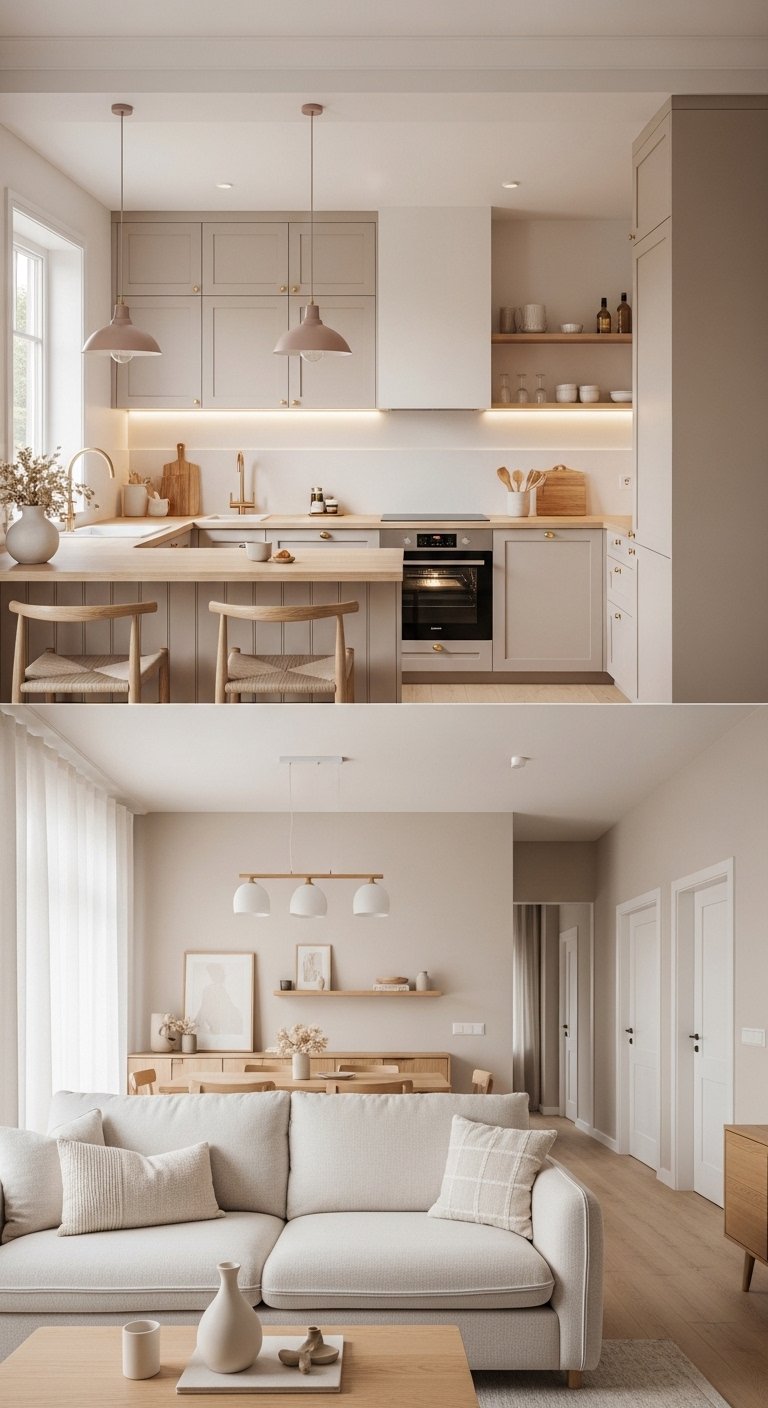
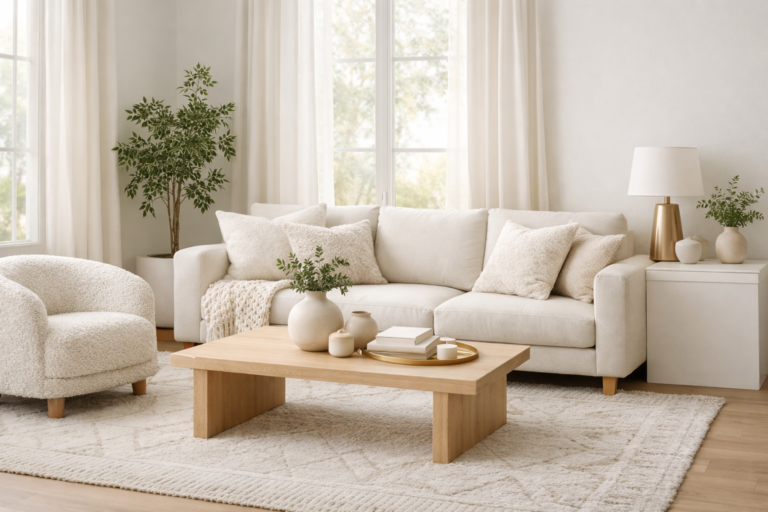
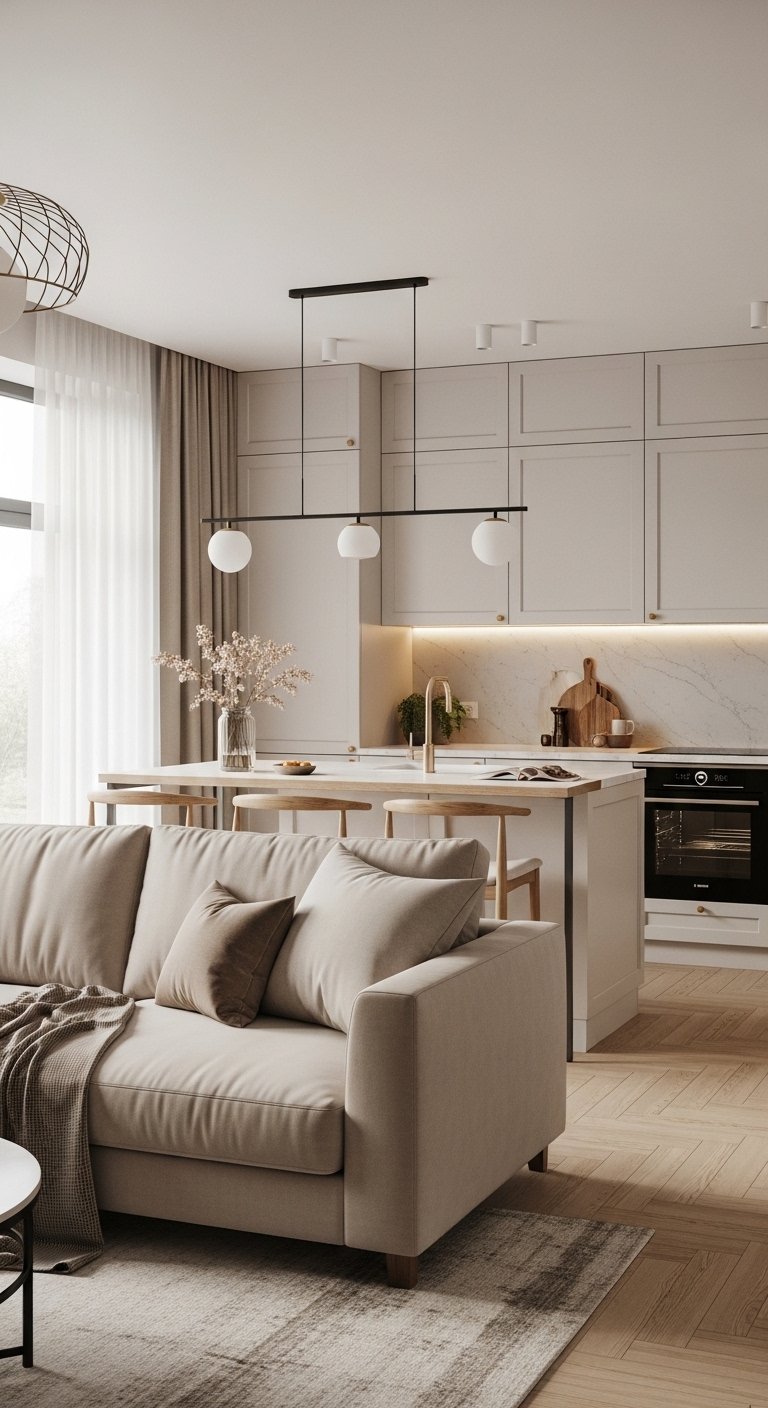
Start by using a soft, continuous color palette across your living room and kitchen combo. This creates a smooth visual flow that makes the space feel larger. Choose one main color like warm beige, soft gray, or light cream, and repeat it in both areas. For example, match kitchen cabinets with your sofa tones or use similar shades in curtains and backsplash tiles.Add small contrast through textures instead of bold colors. A matte wall finish paired with glossy tiles or a linen sofa next to smooth cabinets adds depth without breaking the flow. Keep lighting warm and even so both areas feel connected at all times of day. This idea works best when you avoid sharp color breaks and focus on calm transitions that guide the eye naturally through the space.
2. Define Zones with a Statement Rug
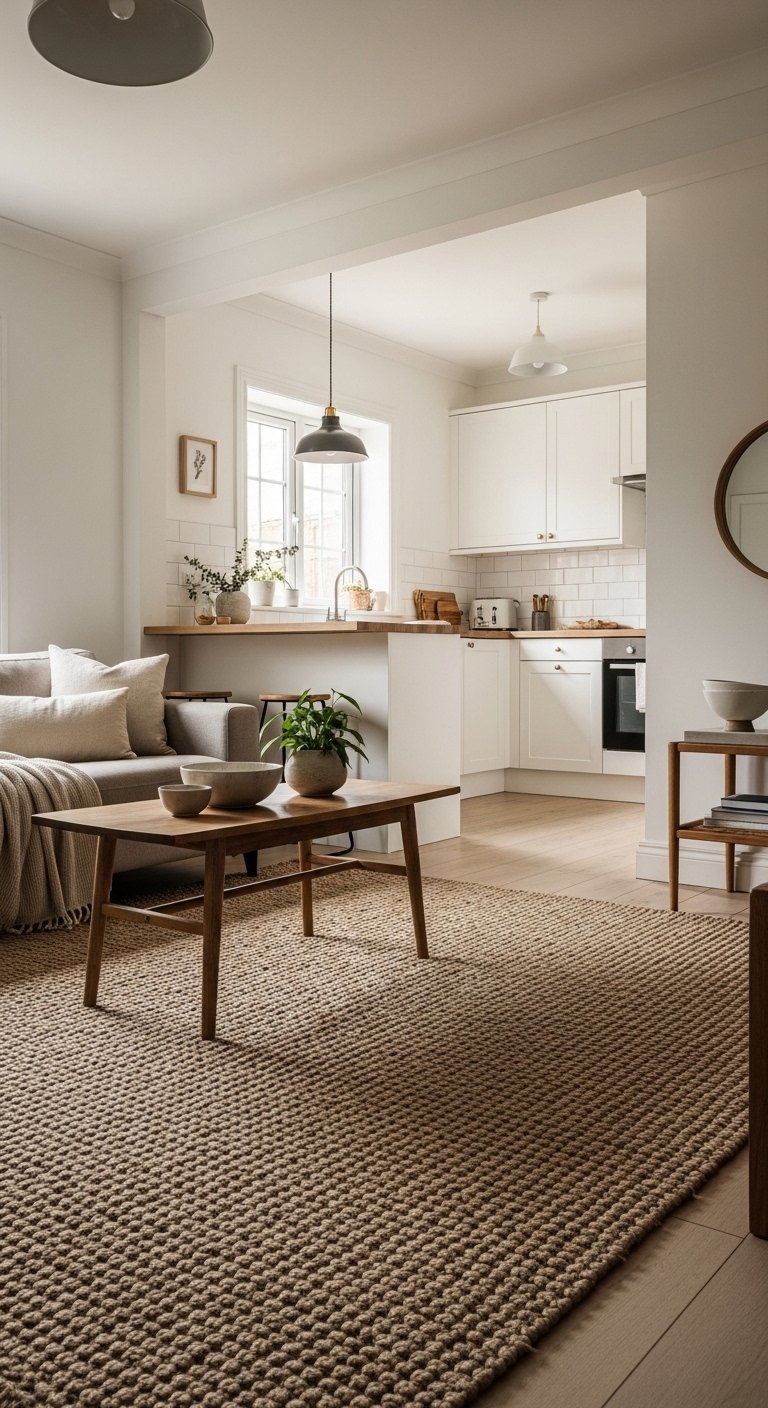
A large rug can quietly divide your open kitchen living room layout without using walls. Place a textured rug under the seating area to mark the living space. Choose natural materials like jute or soft woven fabric to add warmth while keeping the look light.The key is size. A small rug makes the room feel broken, but a large rug that fits under all furniture creates a clear zone. Keep the kitchen flooring simple so the rug stands out as the main divider. You can also match rug colors with small kitchen details like bar stools or dishware for a subtle connection.Use lighting to support this zone. A floor lamp over the rug adds a cozy feel, while brighter lighting in the kitchen keeps the work area clear. This simple idea creates structure without closing off your space.
3. Install a Slim Kitchen Island with Hidden Storage
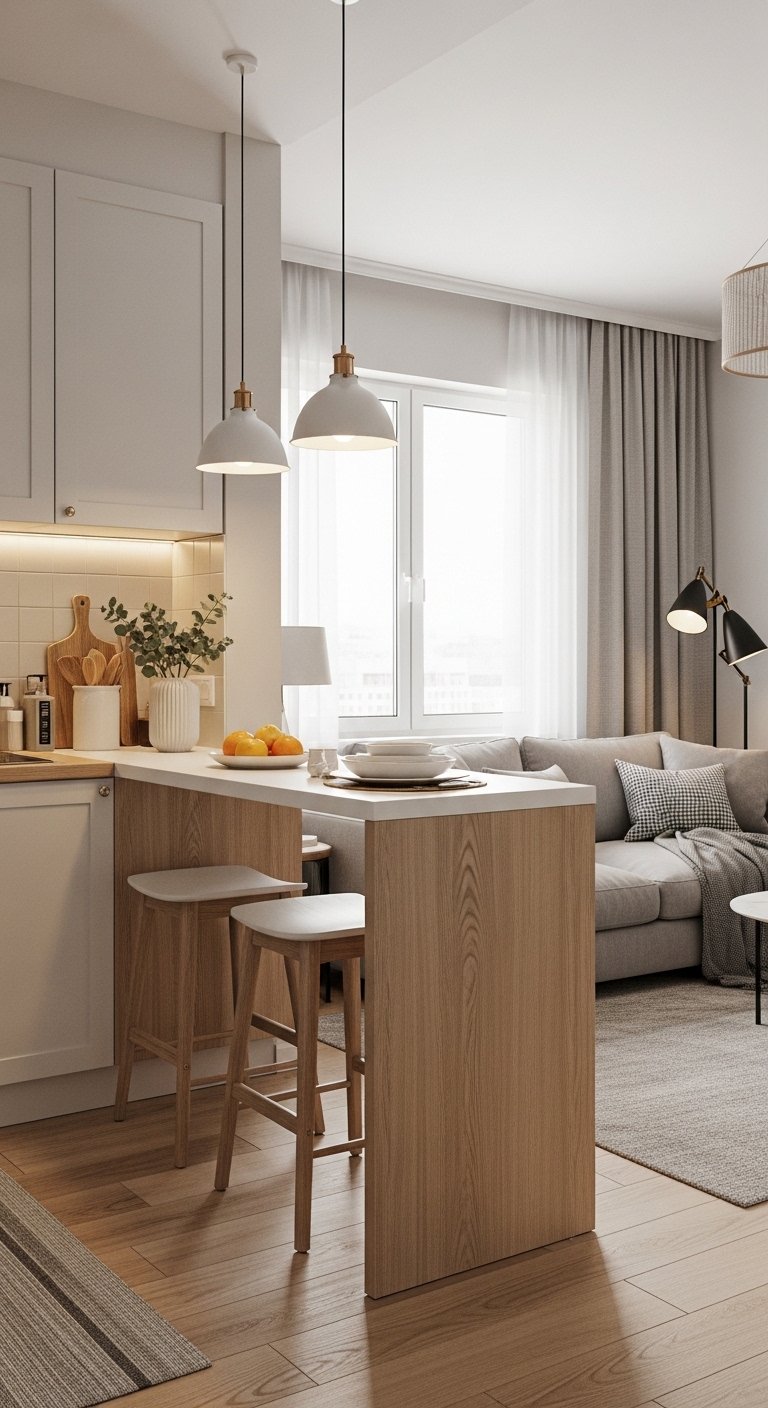
A narrow kitchen island works as a smart divider while adding function. In a small living room kitchen combo, space matters, so choose a slim design with built-in storage. Use it to store cookware, small appliances, or even books and decor on the living side.Keep the surface clean and uncluttered. A light wood or white finish helps reflect light and keeps the area feeling open. Add two simple stools to turn it into a quick dining spot without crowding the room.For a modern touch, mix materials. A wooden base with a stone top adds texture without feeling heavy. Use pendant lighting above the island to highlight the space and create a visual anchor. This idea blends both areas while giving you extra storage and seating in one compact design.
4. Create a Visual Divider with Open Shelving
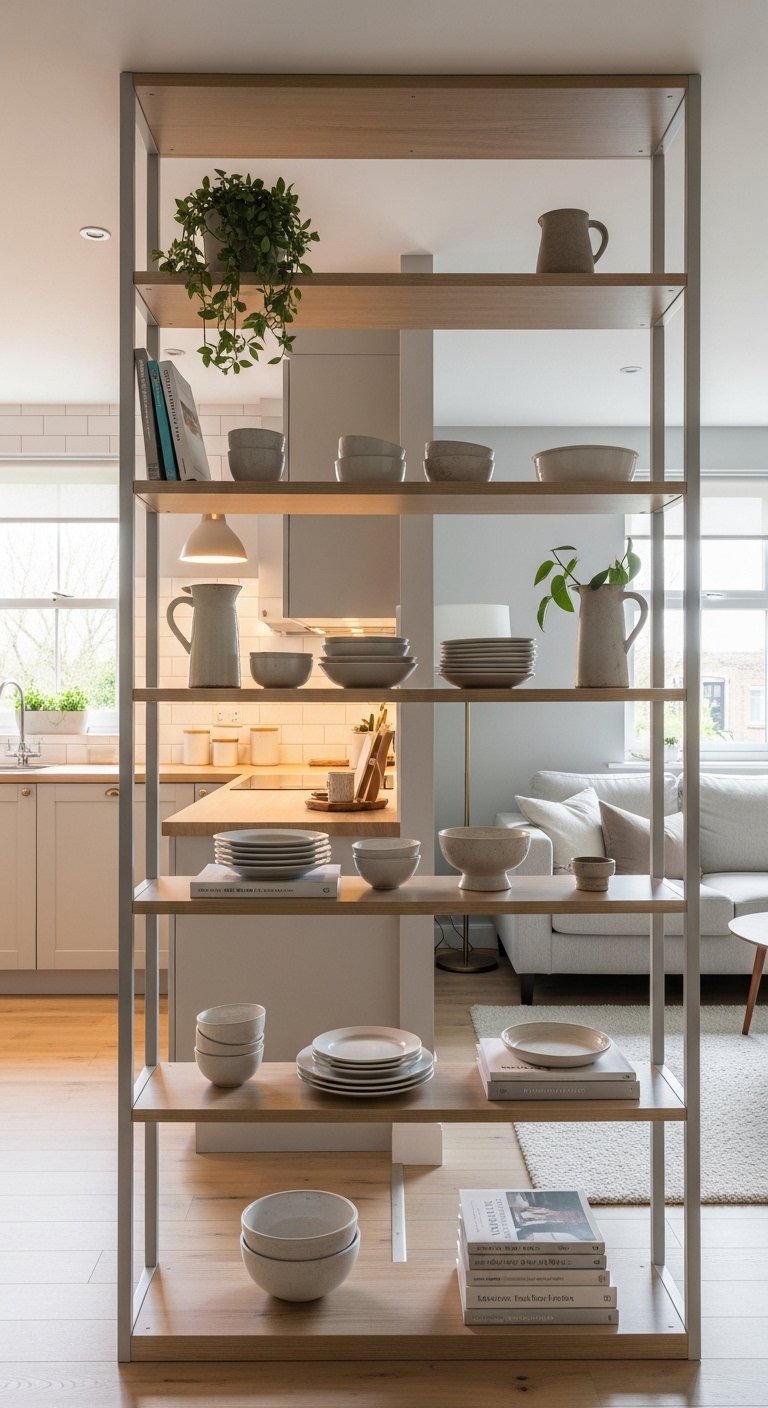
Open shelves can separate your living room kitchen combo while keeping the space airy. Instead of a solid wall, use a tall, open shelving unit that lets light pass through. This keeps both areas connected but still defined.Style the shelves carefully. Mix practical items like bowls or jars with decor such as books, plants, and small art pieces. Stick to a simple color palette so the shelf looks clean and not crowded. Use light wood or metal frames for a modern feel.Place heavier items on the lower shelves and lighter decor above to keep balance. This idea works well in small spaces because it adds storage without making the room feel closed. It also gives you a chance to show your personality while keeping the layout functional.
5. Match Lighting Fixtures for a Cohesive Look
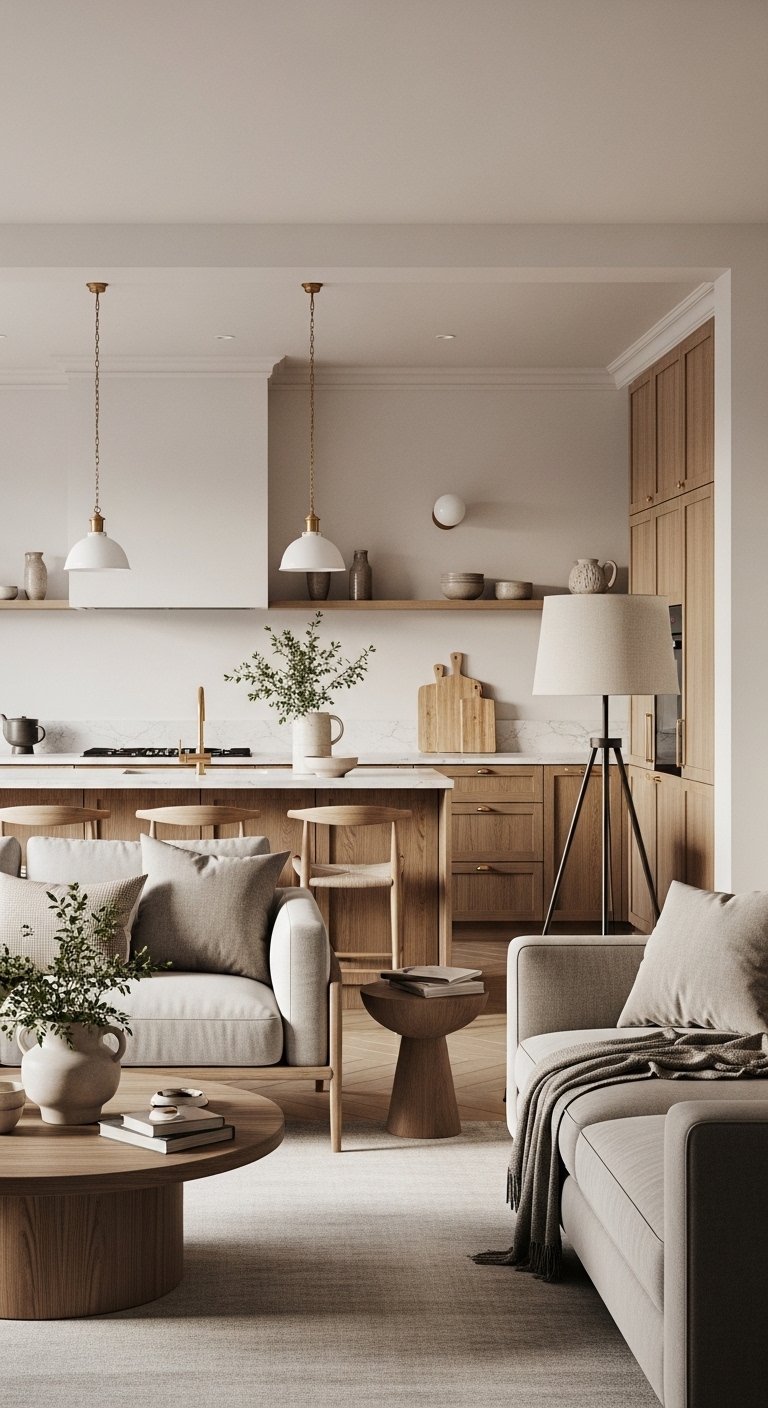
Lighting can tie your entire open concept living and kitchen together. Instead of using completely different styles, choose fixtures that share a common element. This could be the same metal finish, shape, or color tone.For example, use pendant lights in the kitchen and a floor lamp in the living area with matching finishes like brushed gold or matte black. This creates a subtle link between both spaces. Keep the lighting warm to make the room feel inviting.Layer your lighting for function and mood. Bright lights in the kitchen help with cooking, while softer lighting in the living area creates comfort. Adding dimmers can give you control over the atmosphere. This idea makes your space feel planned and balanced without needing extra decor.
6. Use a Two-Tone Cabinet and Furniture Strategy
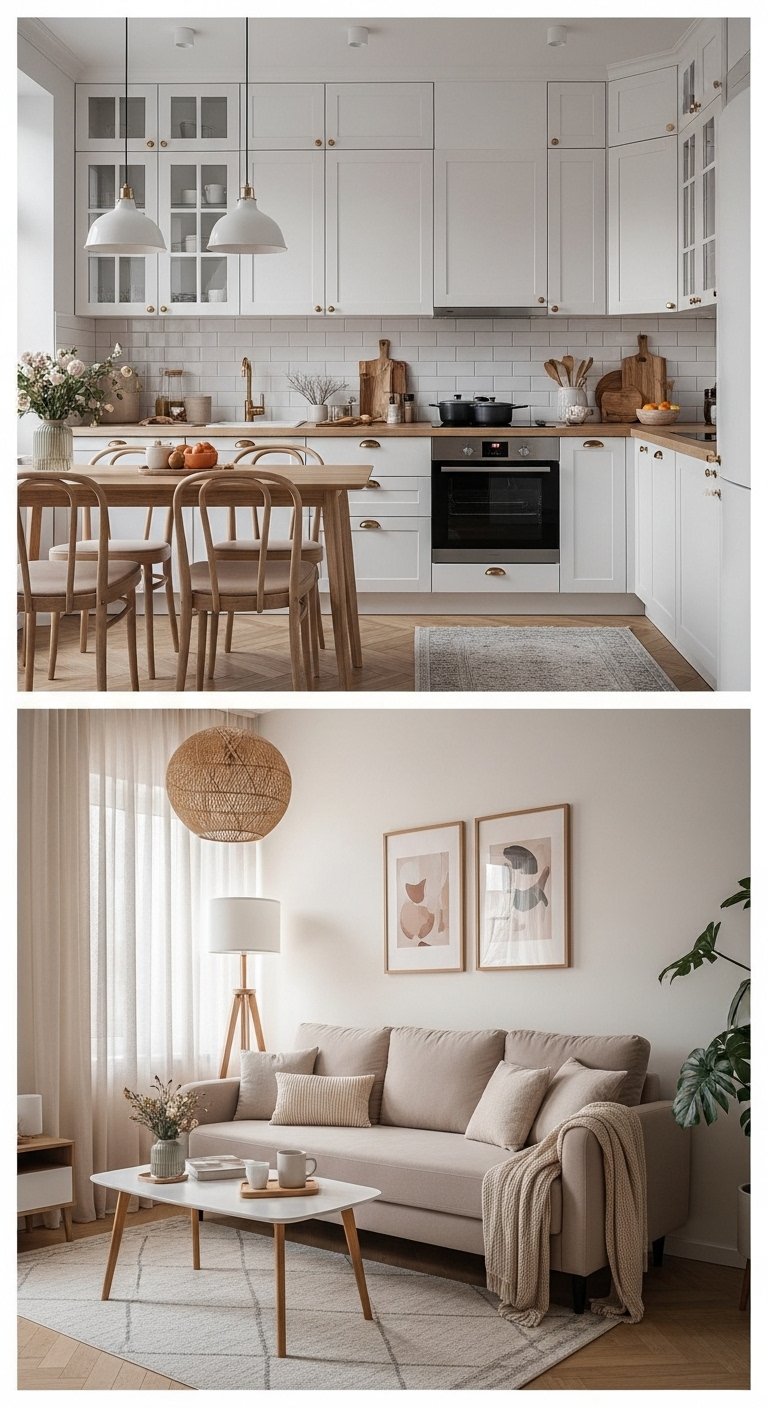
A two-tone design helps define areas in your living room kitchen combo without adding walls. Choose one color for kitchen cabinets and another for living room furniture, but keep them complementary. For example, pair soft white cabinets with a warm tan sofa.Repeat small accents of each color in both areas. Add cushions that match cabinet tones or kitchen accessories that reflect your sofa color. This creates a connection while still showing clear zones.Use texture to enhance the look. Matte cabinets with soft fabric furniture create contrast without visual clutter. Keep the overall palette calm and balanced so the room feels open. This method gives structure to your layout while keeping everything visually connected and stylish.
7. Float Your Sofa to Create a Natural Divider
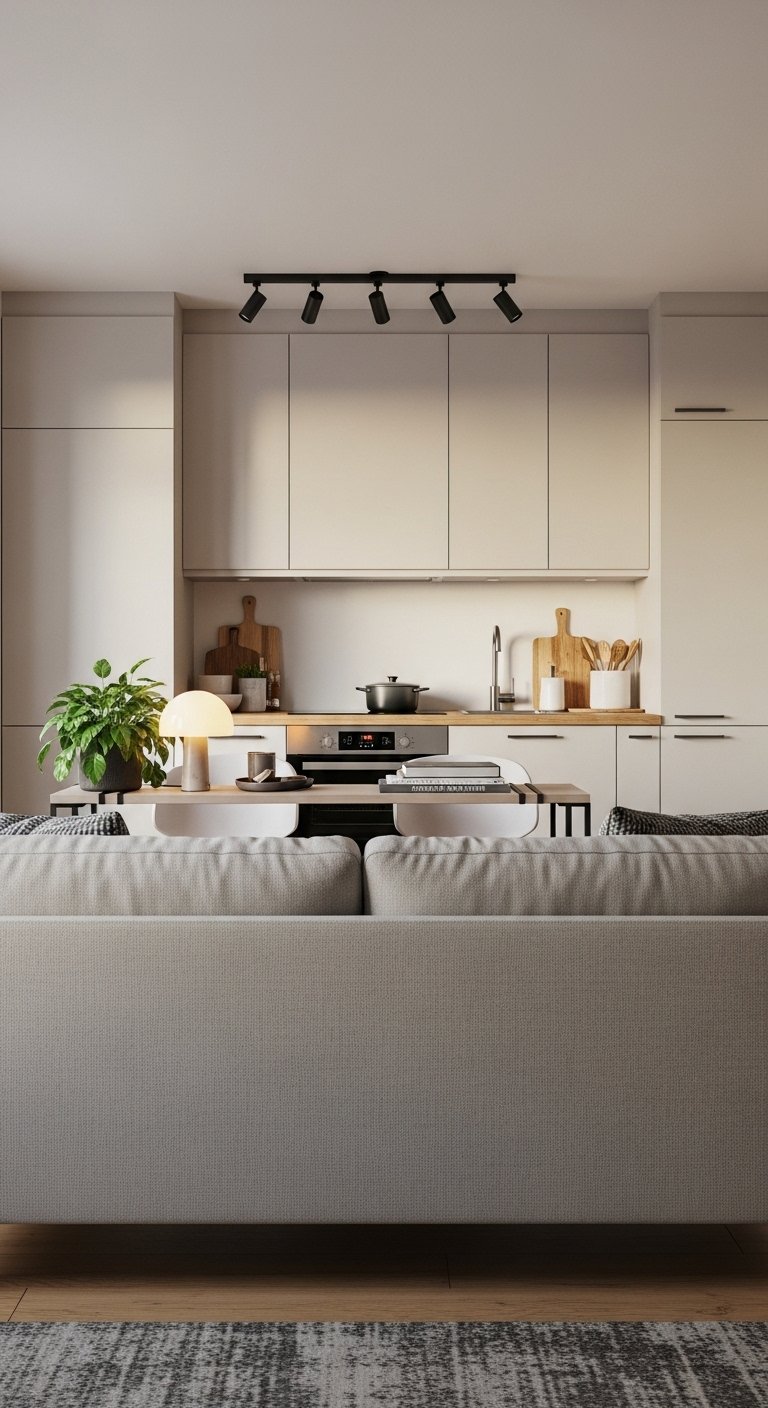
Instead of pushing your sofa against the wall, place it in the center of your small open living kitchen to act as a divider. The back of the sofa creates a clear boundary between the living and kitchen areas.Choose a sofa with a clean, simple back design since it will be visible from the kitchen side. You can place a narrow console table behind it for extra storage or decor. Add a small lamp or a plant to soften the look.Keep enough walking space around the sofa so the room does not feel blocked. This layout improves flow and makes the space feel more intentional. It also helps separate activities like cooking and relaxing without using any physical barriers.
8. Blend Materials for a Seamless Transition
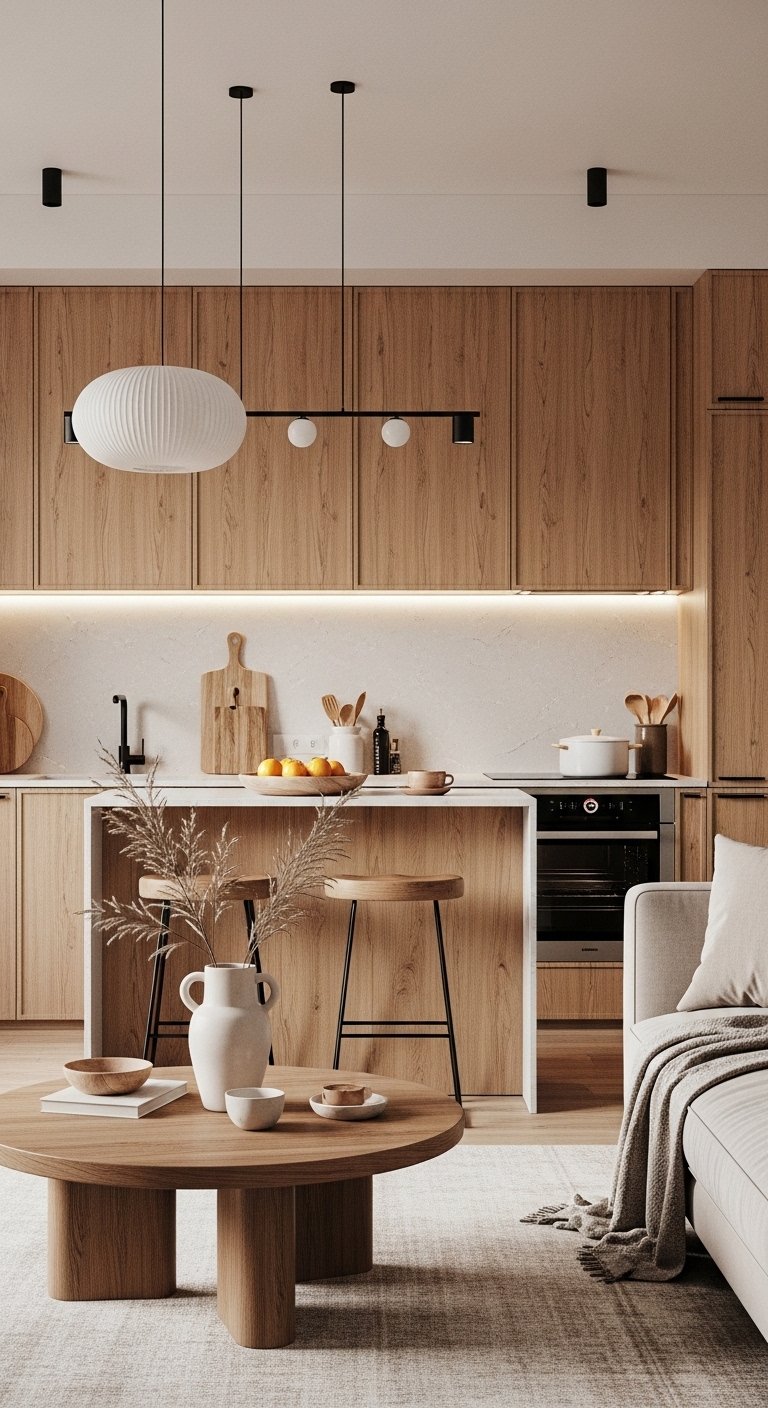
Using similar materials in both areas helps unify your living room and kitchen combo. For example, if your kitchen has wooden cabinets, bring that same wood tone into the living room through a coffee table or shelves.You can also match metal finishes. If your kitchen uses stainless steel or brass, repeat that in light fixtures or decor. This creates a subtle but strong connection across the space.Balance hard and soft materials to keep comfort. Combine smooth countertops with soft fabrics like cushions or curtains. This mix adds depth while keeping the room cozy. The goal is to make the transition between both areas feel natural and effortless without sharp changes.
9. Use Vertical Space for Smart Storage
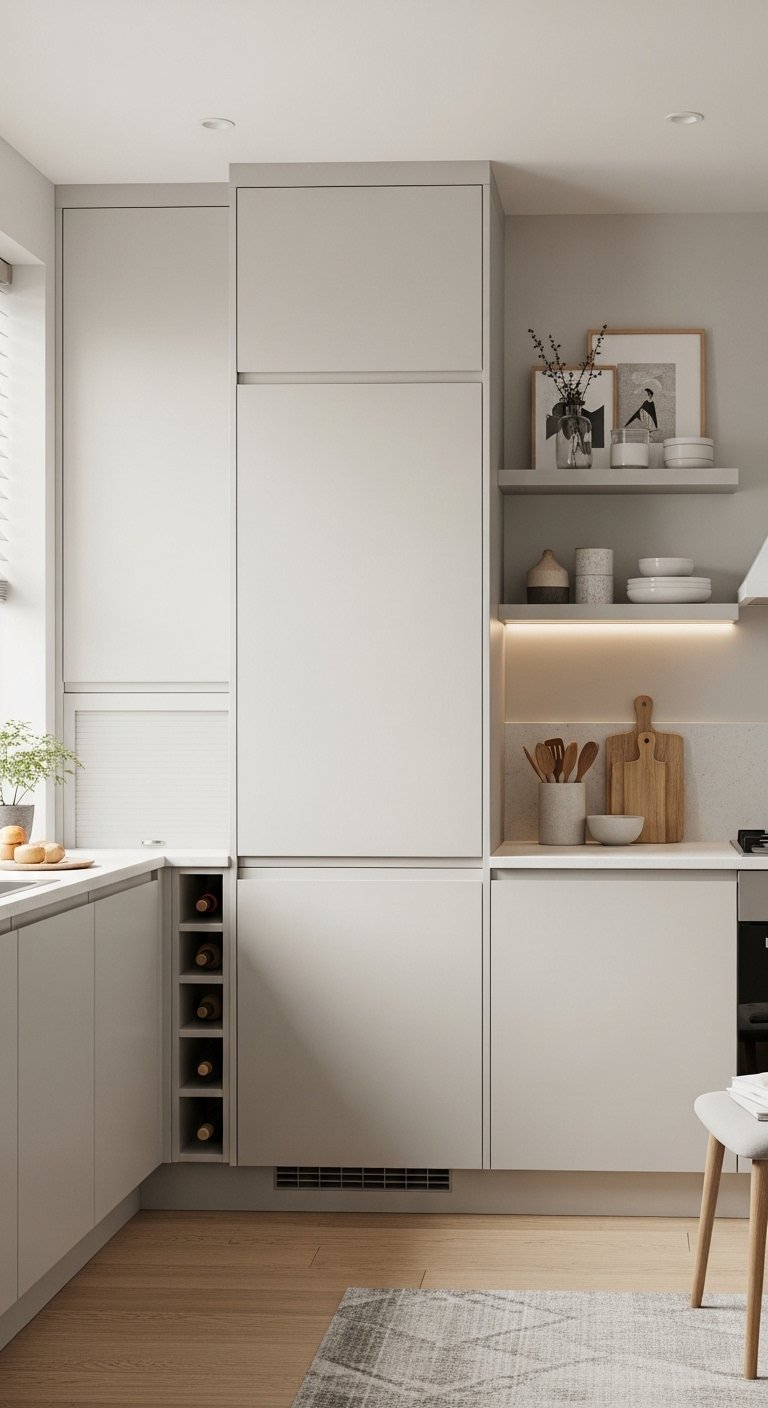
When floor space is limited, go up. Vertical storage is perfect for a small living room kitchen combo. Install tall cabinets or shelves that reach close to the ceiling. This draws the eye upward and makes the room feel taller.In the living area, use wall-mounted shelves for books, decor, or plants. In the kitchen, use vertical cabinets to store less-used items. Keep the color of these units light so they do not feel heavy.Avoid overcrowding shelves. Leave some empty space to keep the look clean and breathable. Add soft lighting like wall sconces to highlight vertical lines. This idea maximizes storage while keeping your space open and visually balanced.
10. Keep Furniture Light and Multi-Functional
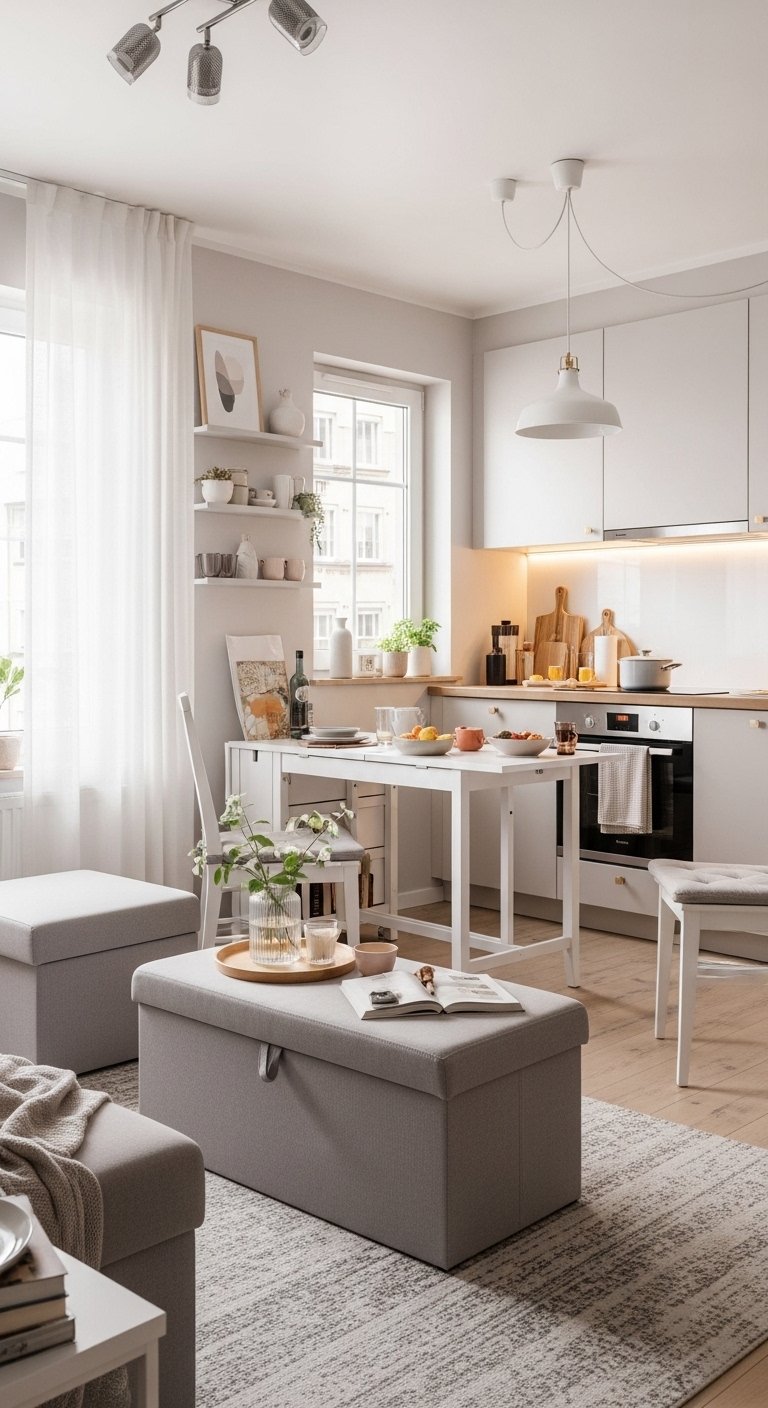
Choose furniture that serves more than one purpose in your open kitchen living room design. A storage ottoman can hold blankets while acting as extra seating. A foldable dining table can expand when needed and stay compact daily.Use furniture with slim legs and light colors to keep the room airy. Avoid bulky pieces that block light or movement. Glass or acrylic tables are great because they almost disappear visually.Arrange furniture in a way that keeps clear pathways. This improves flow and makes the space easier to use. Multi-functional pieces help you do more with less, which is key in small combo spaces. This approach keeps your home practical, stylish, and easy to live in. Use a Ceiling Design to Separate Without Walls
11. Use a Ceiling Design to Separate Without Walls
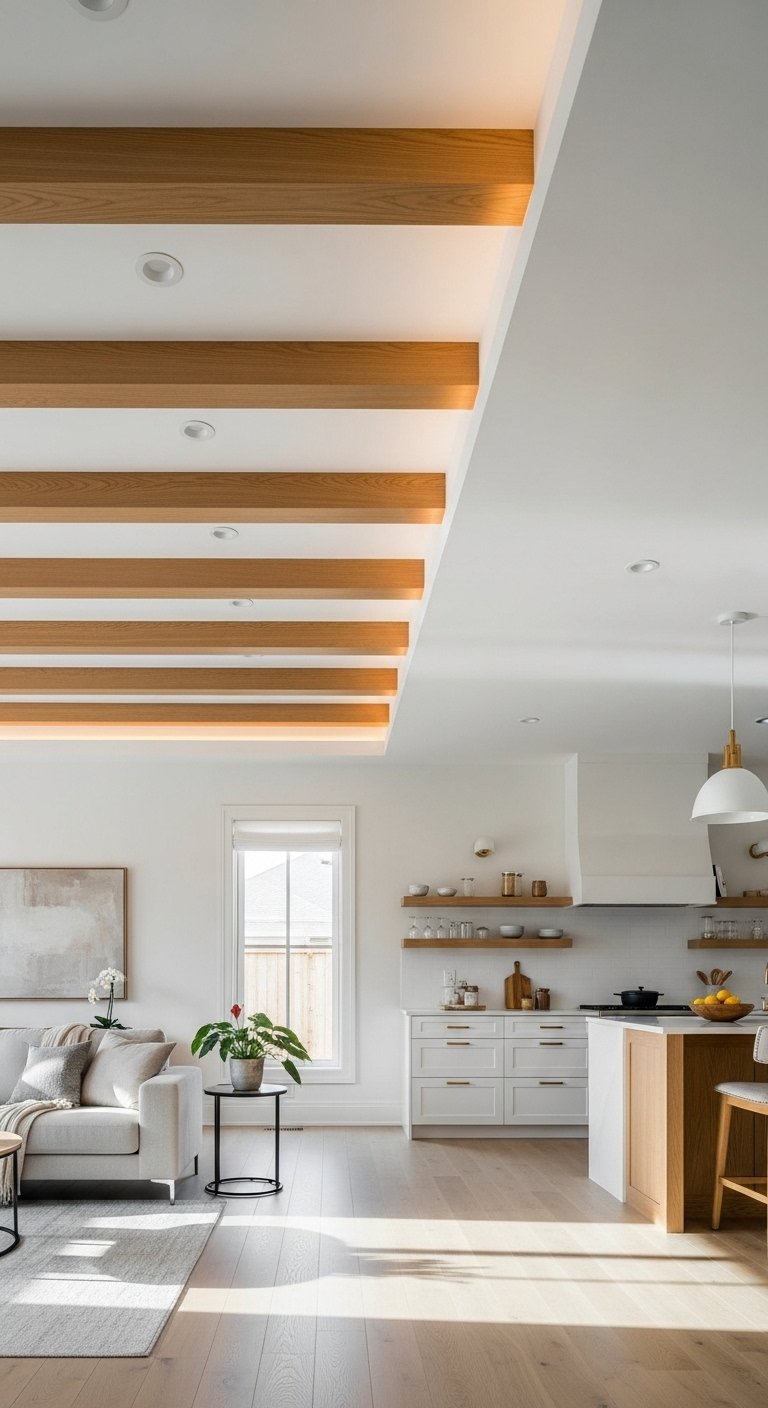
A smart ceiling design can define your living room and kitchen combo without taking up any floor space. Try using a subtle drop ceiling or wooden beams above the living area while keeping the kitchen ceiling plain. This creates a visual boundary that feels natural and open.You can also use different lighting layouts. For example, install recessed lights in the kitchen and a soft pendant cluster in the living area. This change in lighting style helps the eye understand where each zone begins and ends.Keep colors light so the ceiling does not feel heavy. Soft white or pale wood tones work well. This idea is perfect if you want a clean look while still creating structure. It adds depth and interest without making the room feel smaller or crowded.
12. Add a Compact Dining Nook Between Spaces
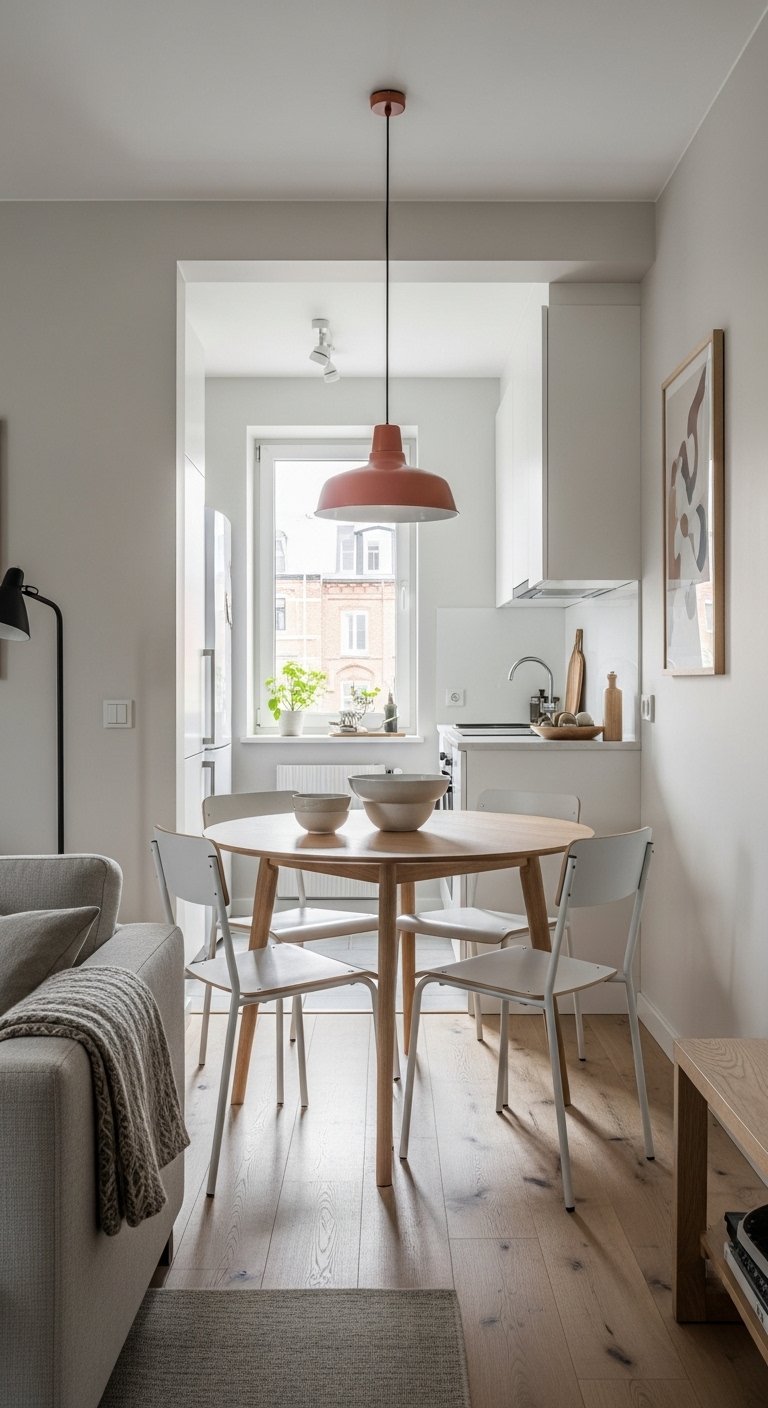
A small dining nook can act as a gentle bridge in your open kitchen living room layout. Place a round table between the kitchen and living area to connect both spaces. Round shapes work best because they allow easy movement around them.Choose light wood or white finishes to keep the space bright. Pair the table with slim chairs or even a built-in bench along the wall to save space. Add a soft cushion or textured fabric to make it cozy.Use a simple pendant light above the table to anchor the nook visually. Keep decor minimal, like a small vase or bowl. This setup gives you a functional dining space while naturally linking both areas together in a smooth and practical way.
13. Use Glass or Acrylic Pieces to Reduce Visual Weight
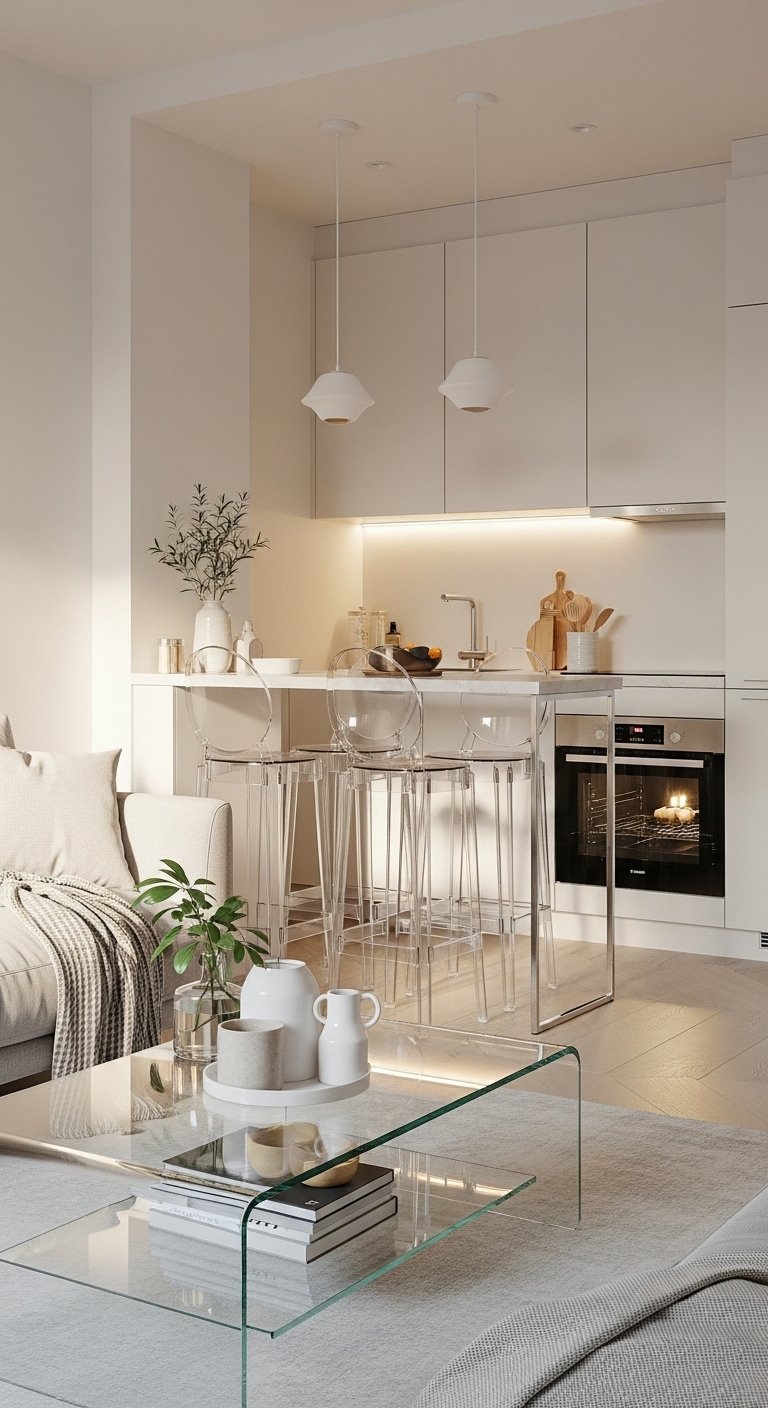
Heavy furniture can make a small living room kitchen combo feel crowded. Instead, use glass or acrylic pieces that keep the space visually light. A glass coffee table or clear bar stools allow light to pass through, making the room feel more open.These materials blend easily with any color scheme. They do not block views, which helps both areas feel connected. Pair them with soft textures like rugs or cushions to balance the look.Keep shapes simple and clean. Avoid overly decorative designs so the space stays calm and uncluttered. This idea works especially well in small apartments where every inch matters. It creates the feeling of more space without removing any functionality.
14. Create a Feature Wall That Spans Both Areas
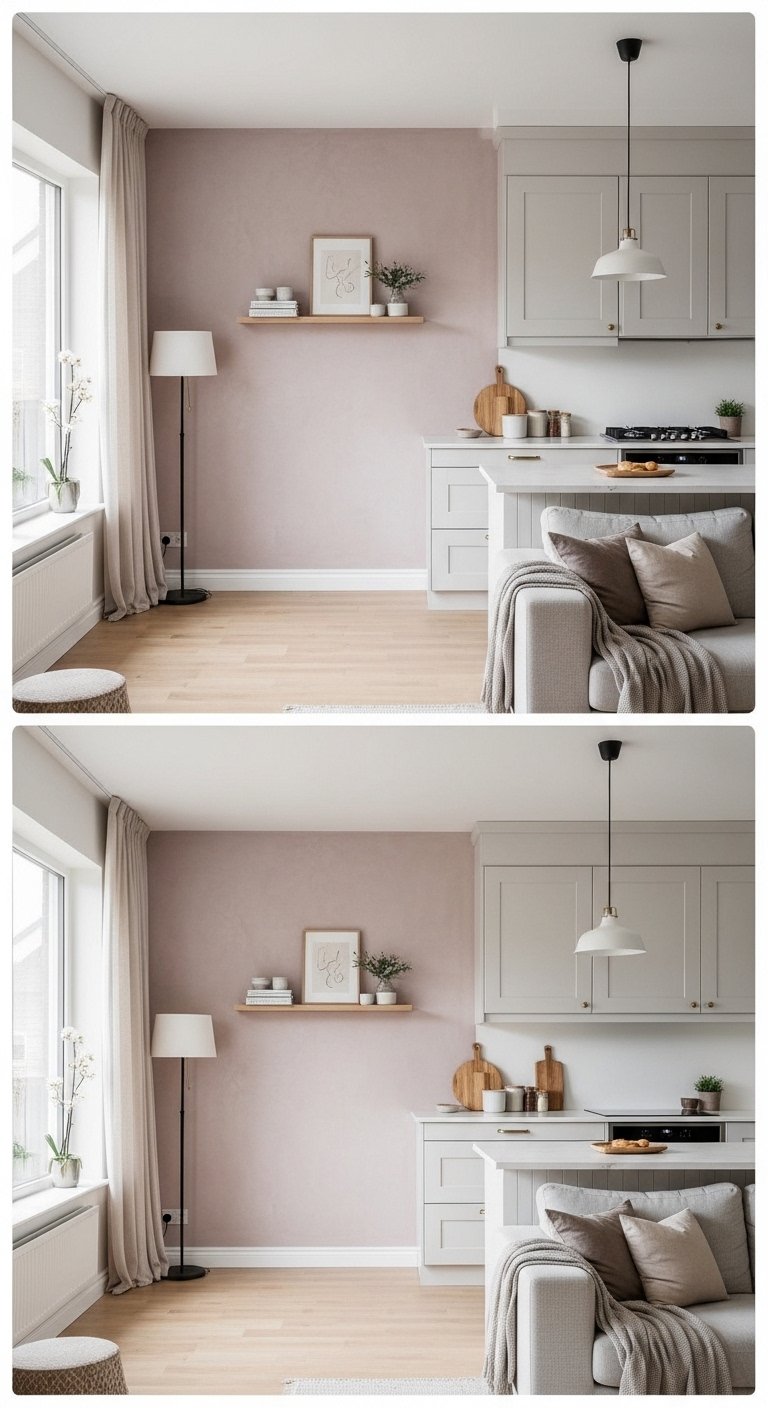
A single feature wall can unify your living room and kitchen combo beautifully. Choose one wall that runs through both spaces and treat it as a continuous design element. You can use textured paint, subtle wallpaper, or wood panels.Keep the pattern soft and not too bold so it does not overwhelm the room. Light tones with gentle texture work best. You can add open shelves or simple art pieces along this wall to enhance the look.Make sure the colors connect with both kitchen and living elements. This creates a strong visual link across the space. It also gives your home a focal point that feels intentional and stylish without needing extra decoration everywhere else.
15. Use Sliding Panels for Flexible Separation
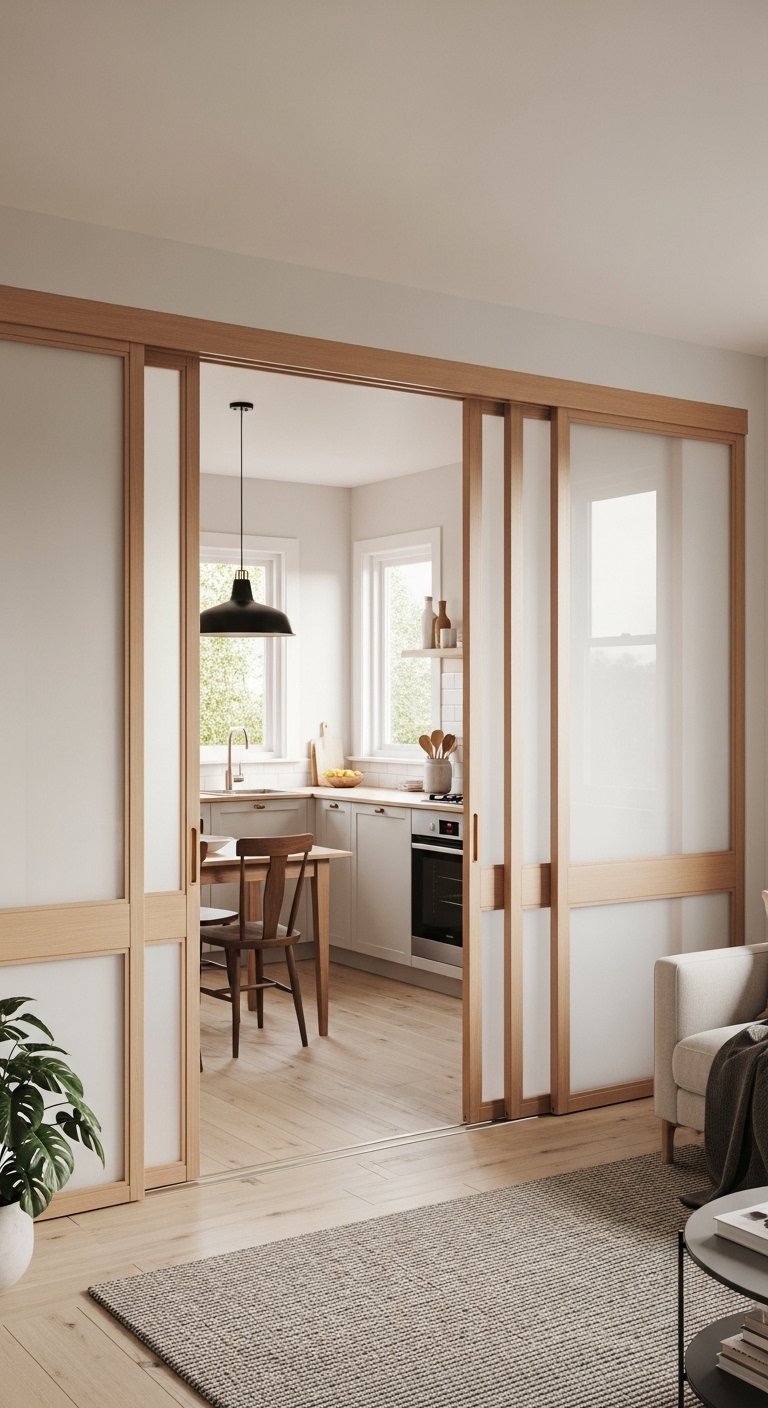
Sliding panels give you the option to separate your open concept living and kitchen when needed. Choose lightweight panels in wood, frosted glass, or fabric. They can stay open most of the time and close only when you want privacy or to hide kitchen mess.Install them on a simple track system so they move smoothly without taking extra space. Keep the design minimal so they blend with your overall style. Neutral tones work best to keep the room feeling open.This idea is perfect for people who want flexibility. You get the openness of a combo layout with the option to divide spaces when required. It adds function without permanent changes to your layout.
16. Align Furniture with Kitchen Lines
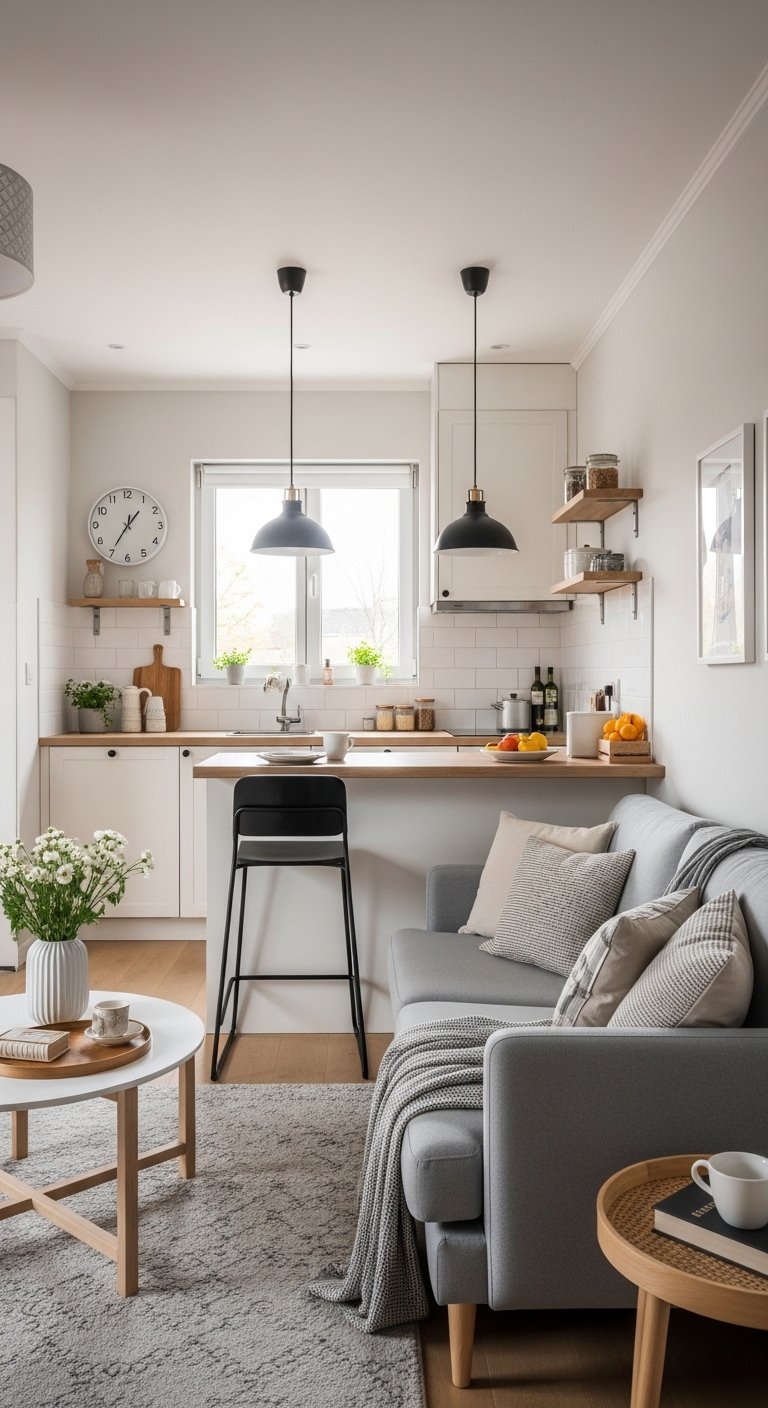
Creating alignment between furniture and kitchen elements can make your living room kitchen combo feel organized and intentional. For example, place your sofa parallel to the kitchen counter or island. This creates clean visual lines that guide the eye.Match the height of furniture where possible. A sofa back that aligns with the kitchen counter height creates a balanced look. Keep spacing even to avoid a crowded feel.Use similar shapes in both areas. If your kitchen has straight, clean lines, choose furniture with a similar style. This creates harmony without needing extra decor. This simple alignment trick makes the space feel well-designed and easy to navigate.
17. Add Plants to Soften the Transition
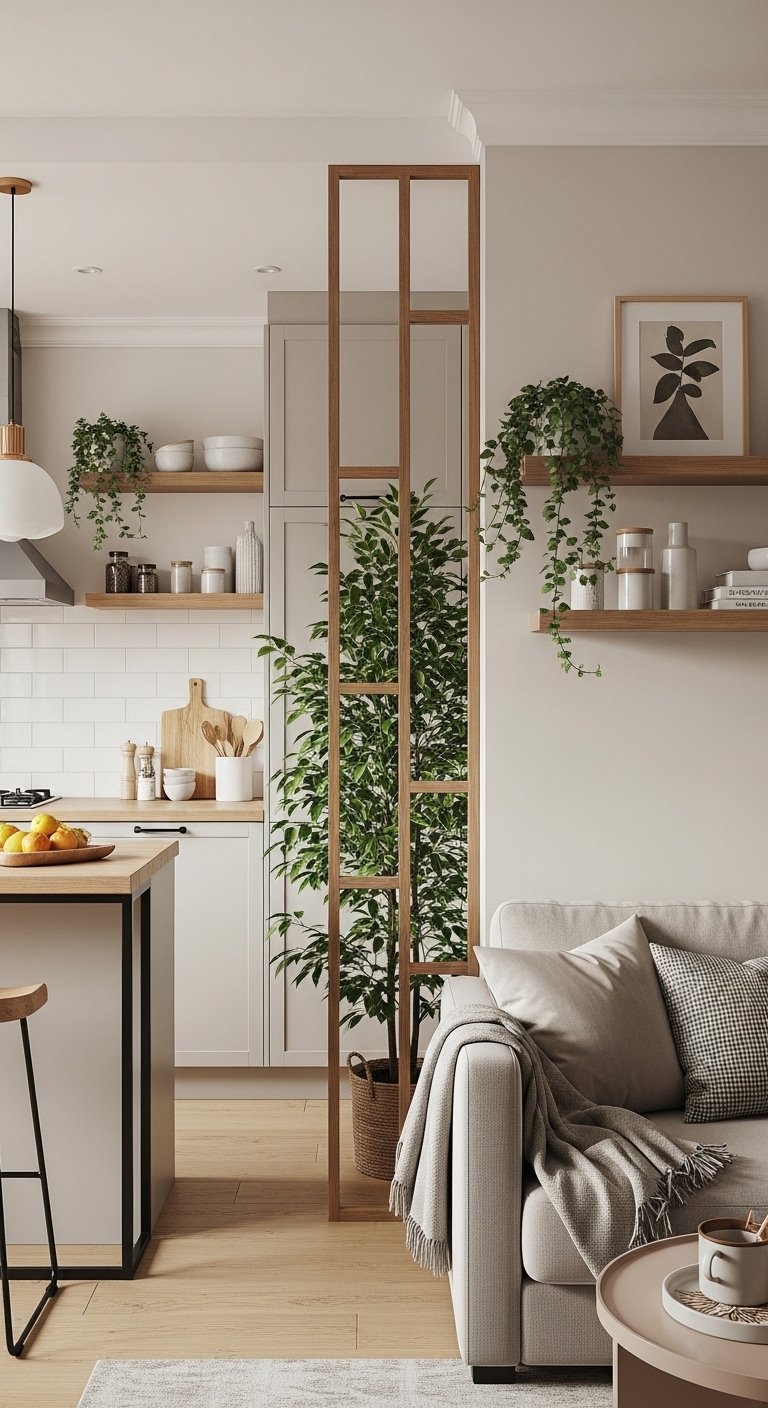
Plants can naturally connect your small open living kitchen while adding freshness. Place medium-sized plants at the edge where the kitchen meets the living area. This creates a soft visual boundary without blocking space.Choose plants with simple shapes and green tones that match any style. Use similar pots in both areas to keep the look consistent. You can also place small herbs in the kitchen and a larger plant in the living area for balance.Natural light makes plants look even better, so place them near windows if possible. This idea adds life, color, and texture without clutter. It also makes your home feel calm and inviting.
18. Use Built-In Seating Along a Wall
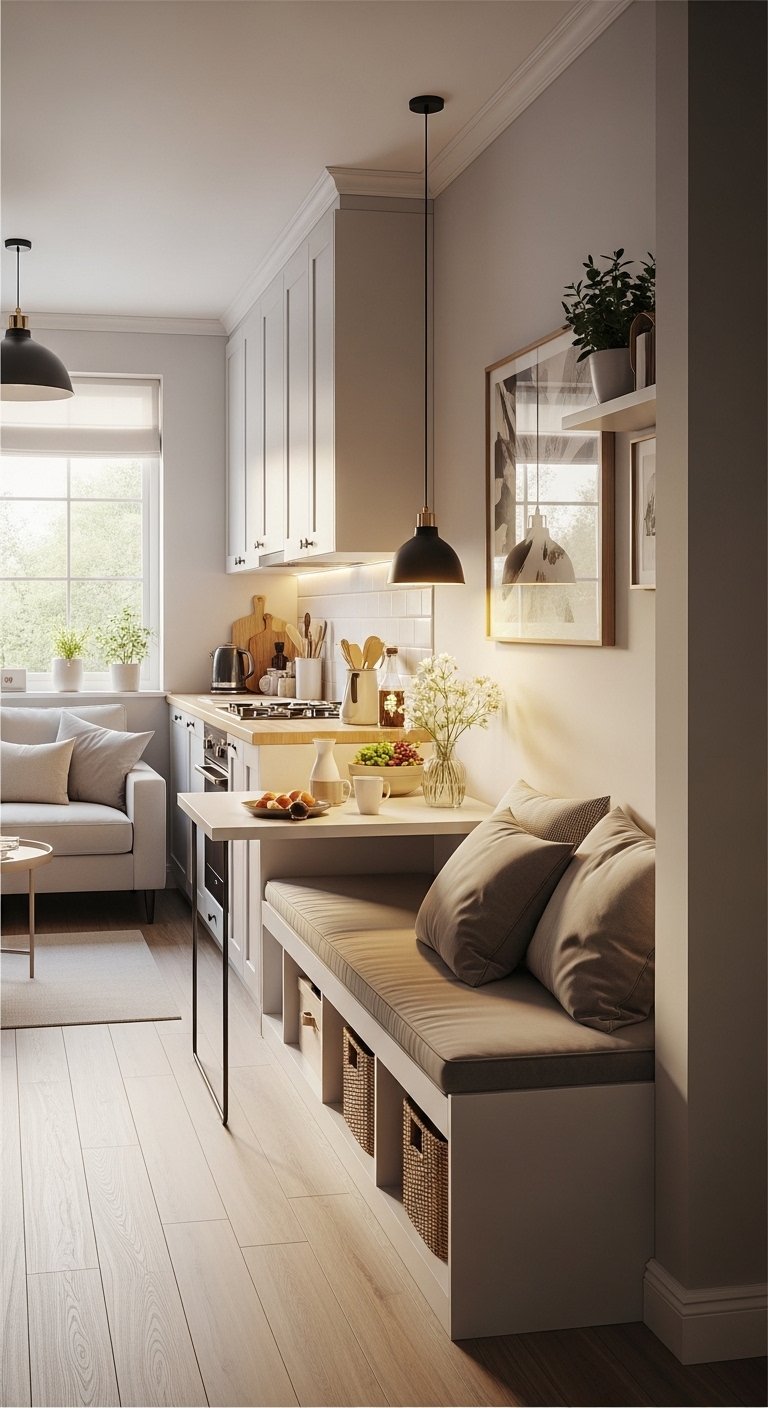
Built-in seating is a smart way to save space in a living room and kitchen combo. Install a bench along a wall that can serve as both dining seating and extra lounging space. This reduces the need for multiple bulky chairs.Add soft cushions and neutral fabrics to keep it comfortable. You can include hidden storage under the bench for extra function. Keep the design simple so it blends with both kitchen and living styles.Pair the seating with a small table or place it near your dining nook. This idea works well in narrow spaces where flexibility is important. It keeps the layout open while adding practical seating that does not take up too much room.
19. Keep a Consistent Floor Finish for Flow
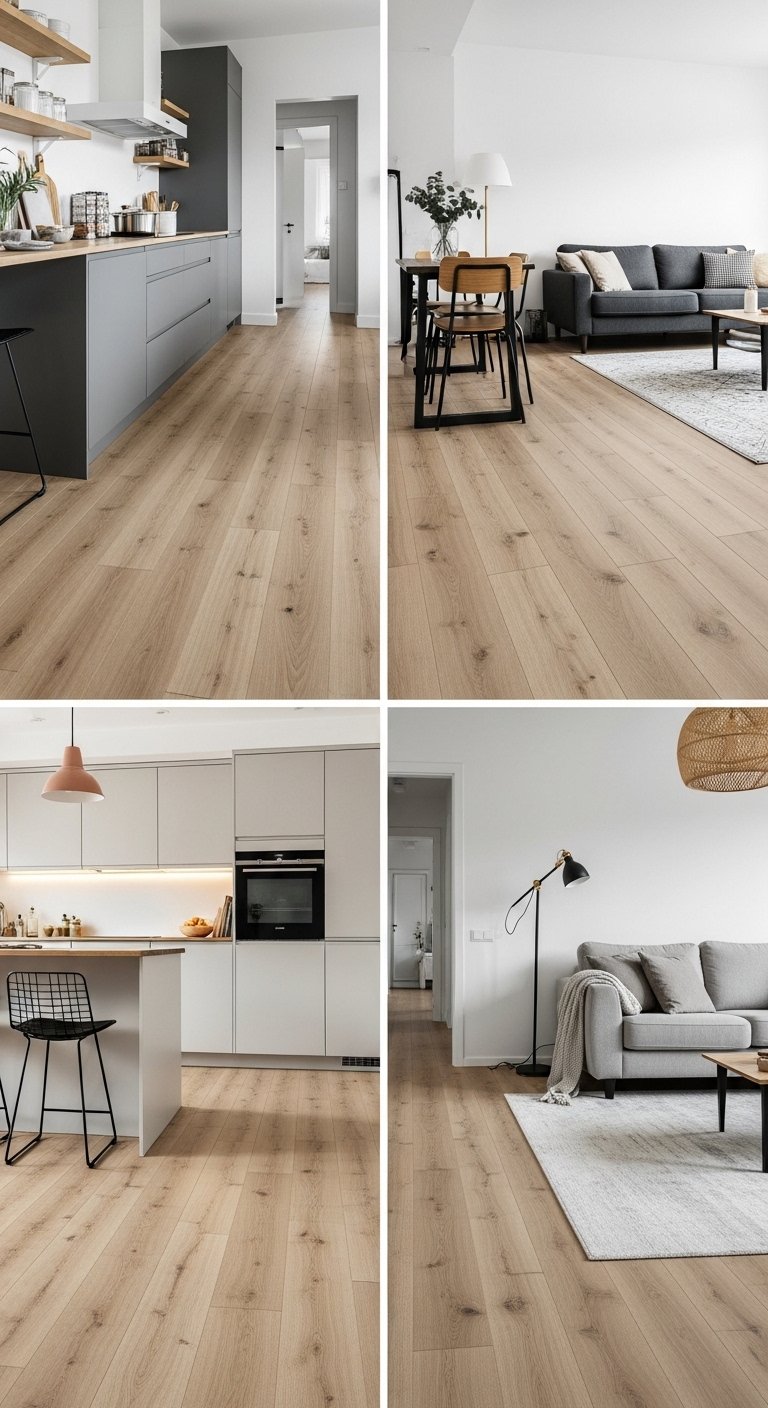
Using the same flooring throughout your open kitchen living room design helps the space feel larger and more connected. Choose one material like light wood, vinyl, or tile and run it across both areas.Avoid changing flooring styles between the kitchen and living room, as this can break the flow. Instead, use rugs or furniture placement to define zones if needed.Keep the finish light or neutral to reflect more light and make the room feel airy. Matte finishes work well because they hide wear and feel natural. This idea creates a smooth, uninterrupted look that makes your home feel bigger and more cohesive.
20. Use Wall-Mounted Lighting to Free Up Space
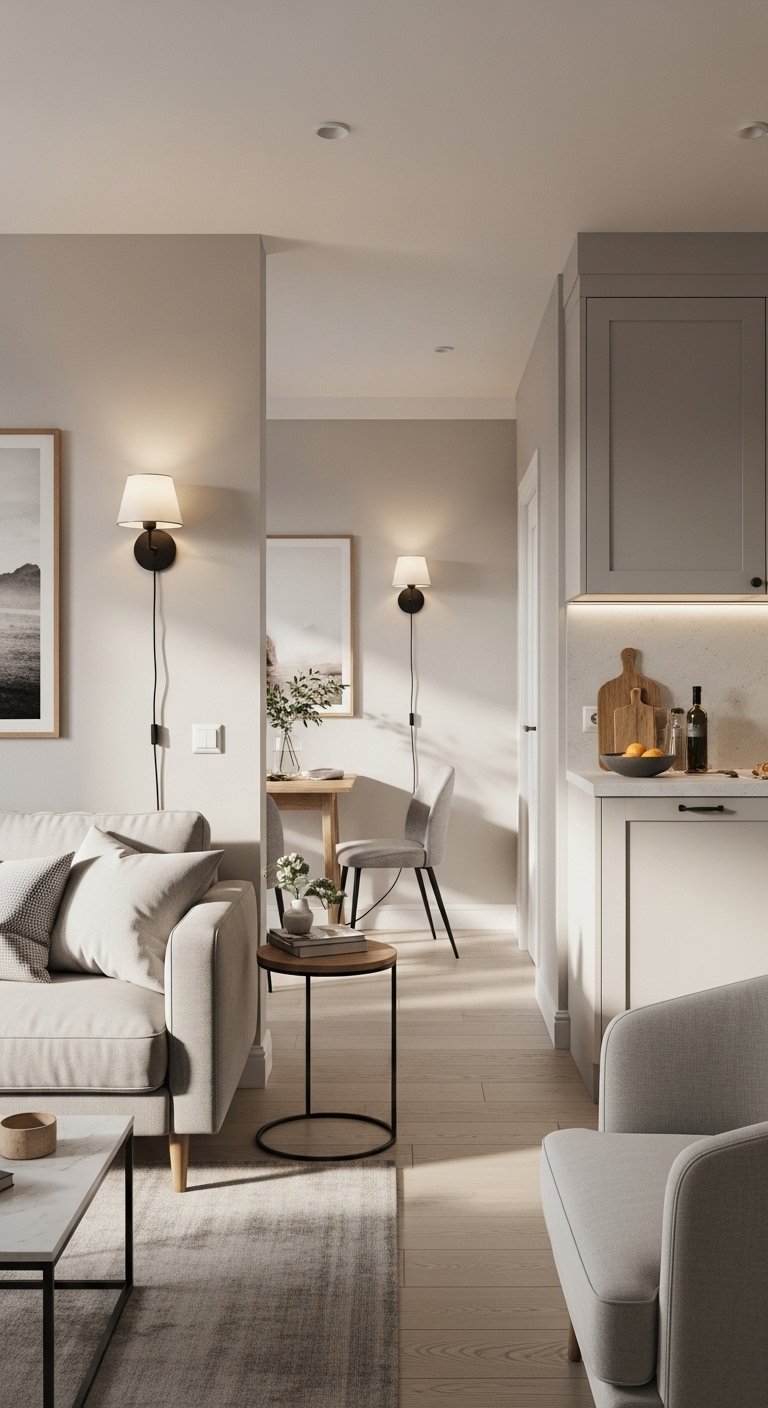
Wall-mounted lighting is a smart choice for a small living room kitchen combo because it saves floor and surface space. Install sconces in the living area instead of using bulky floor lamps. This keeps pathways clear and open.Choose simple designs that match your kitchen lighting style. Warm light tones create a cozy feel, while adjustable fixtures add flexibility. You can direct light where you need it without cluttering the room.in the kitchen, under-cabinet lighting can match the warmth of your wall lights. This creates a balanced lighting plan across both areas. This idea keeps your space functional while maintaining a clean and uncluttered look.
21. Use a Low Partition for Subtle Separation
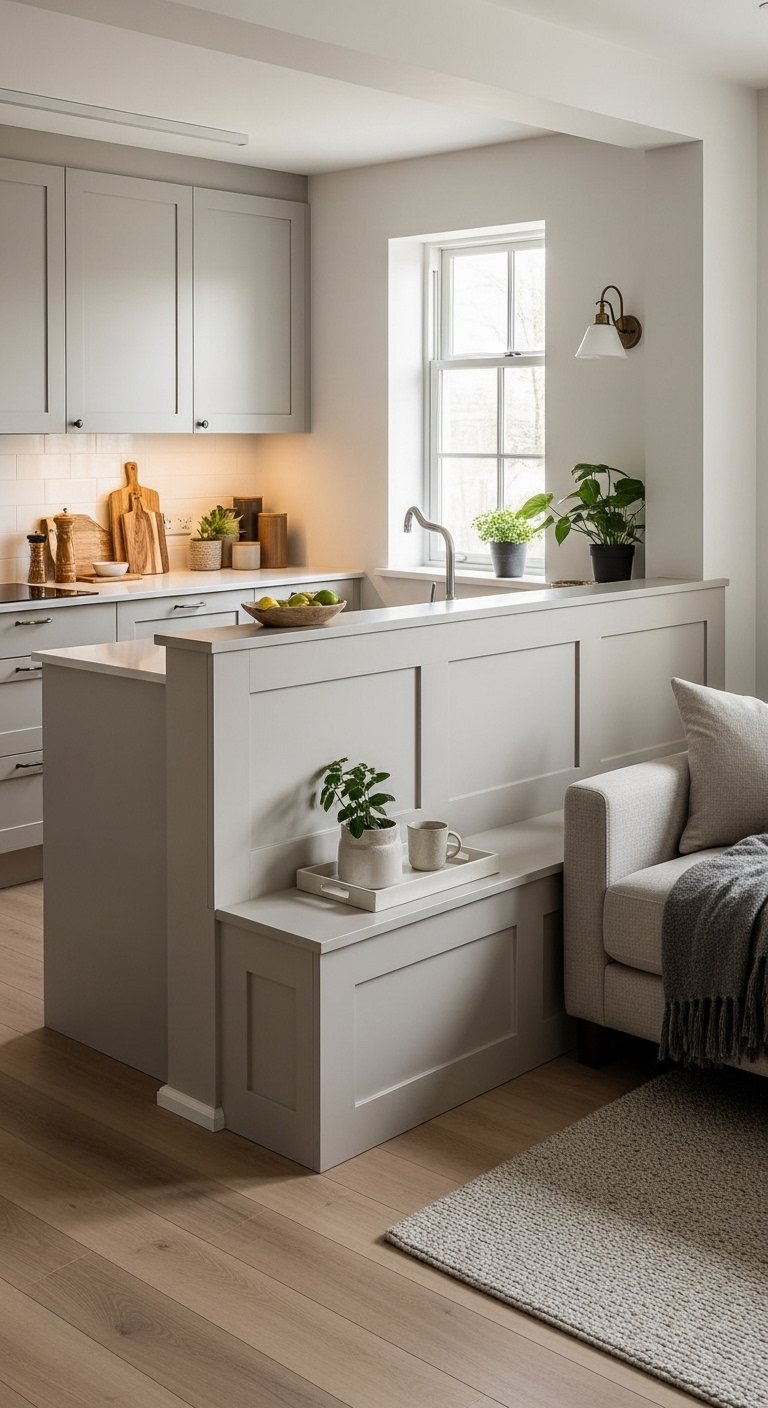
A low partition can gently divide your living room and kitchen combo while keeping the space open and bright. Choose a half-wall or a low cabinet that does not reach full height. This keeps sightlines clear but still creates a sense of structure.You can use the top surface for decor like a small plant, books, or a simple tray. Keep the design light in color so it does not feel heavy. A smooth finish or soft wood texture works best for a calm look.Place the partition where the kitchen ends and the living area begins. This creates a natural boundary without blocking movement or light. It is a simple and practical way to organize your layout without making the space feel smaller.
22. Create a Unified Color Accent Thread
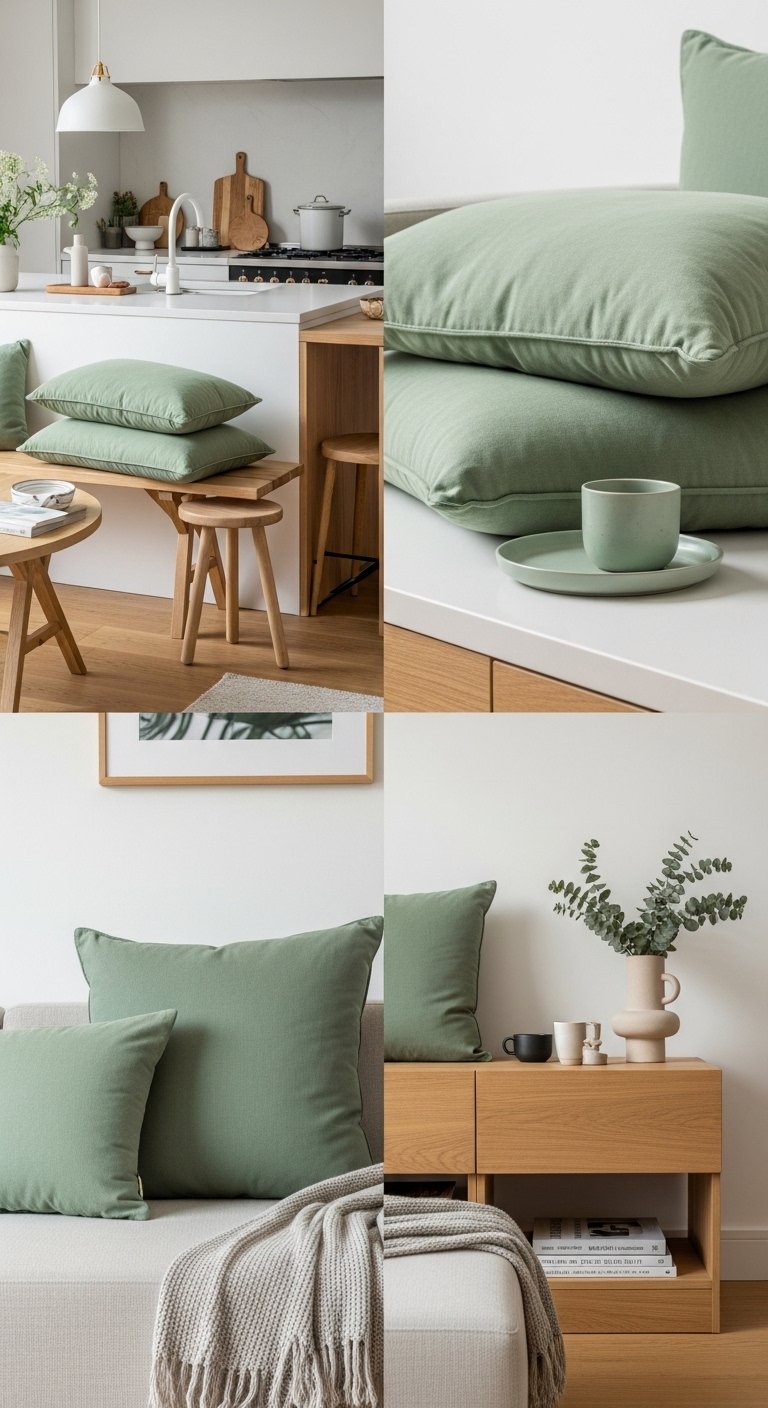
A shared accent color can tie your open kitchen living room layout together in a subtle but powerful way. Pick one accent shade like soft green, muted blue, or warm terracotta and repeat it in small details across both areas.Use this color in cushions, kitchen towels, small decor items, or even a few cabinet accents. Keep it light and balanced so it does not overpower the space. The goal is to create a visual thread that connects everything.Pair the accent with neutral base colors to maintain an open feel. This idea works well because it adds personality without clutter. It also makes your space feel thoughtfully designed and easy to style over time.
23. Add Mirrors to Reflect Light and Space
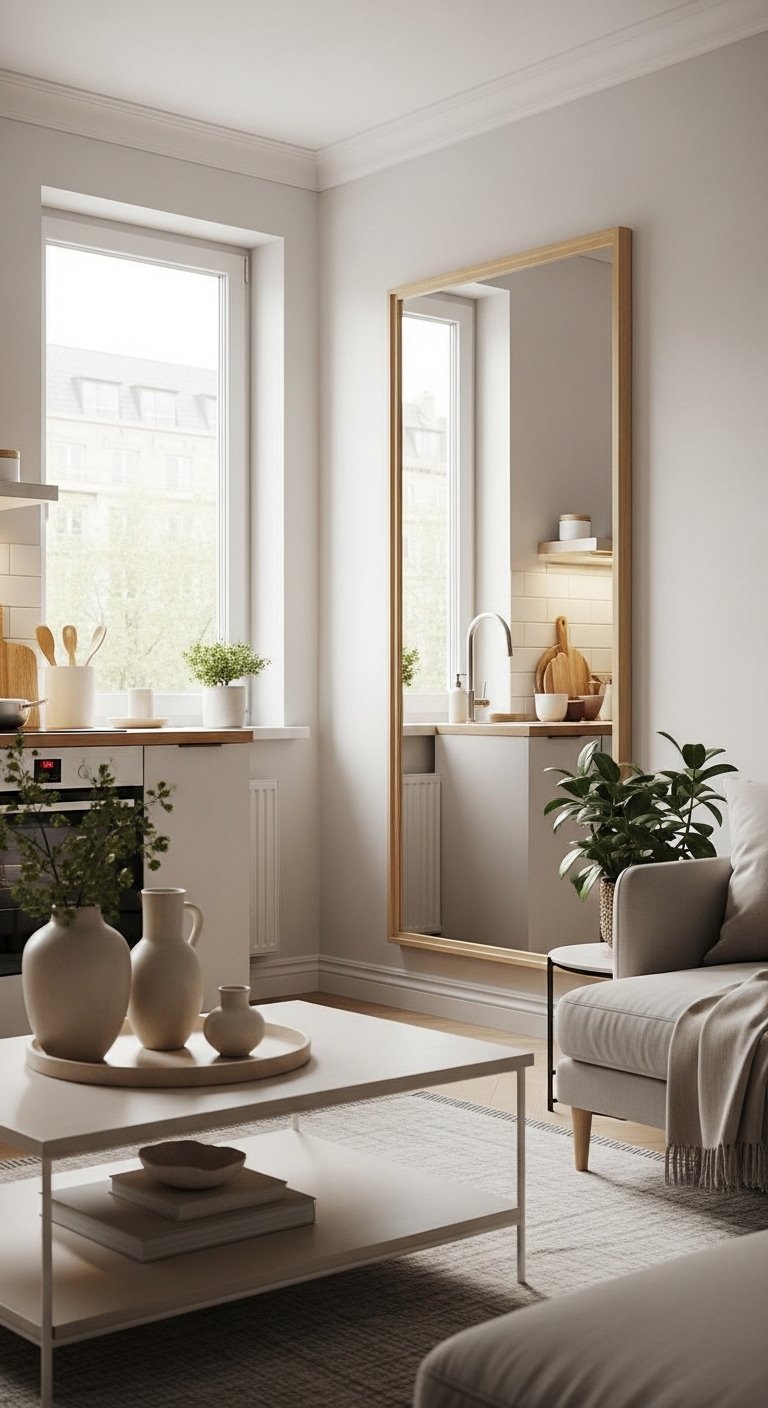
Mirrors can make your small living room kitchen combo feel much larger by reflecting light and views. Place a large mirror on a wall that faces a window or light source. This helps spread natural light across both areas.Choose a simple frame that matches your overall style. Thin metal or light wood frames work best to keep the look clean. Avoid heavy or overly decorative designs that can feel bulky.You can also use mirrored decor pieces like trays or cabinet finishes in small amounts. This adds brightness without overwhelming the space. Mirrors are one of the easiest ways to open up a room while keeping it stylish and functional.
24. Keep Countertops Clear for a Clean Look
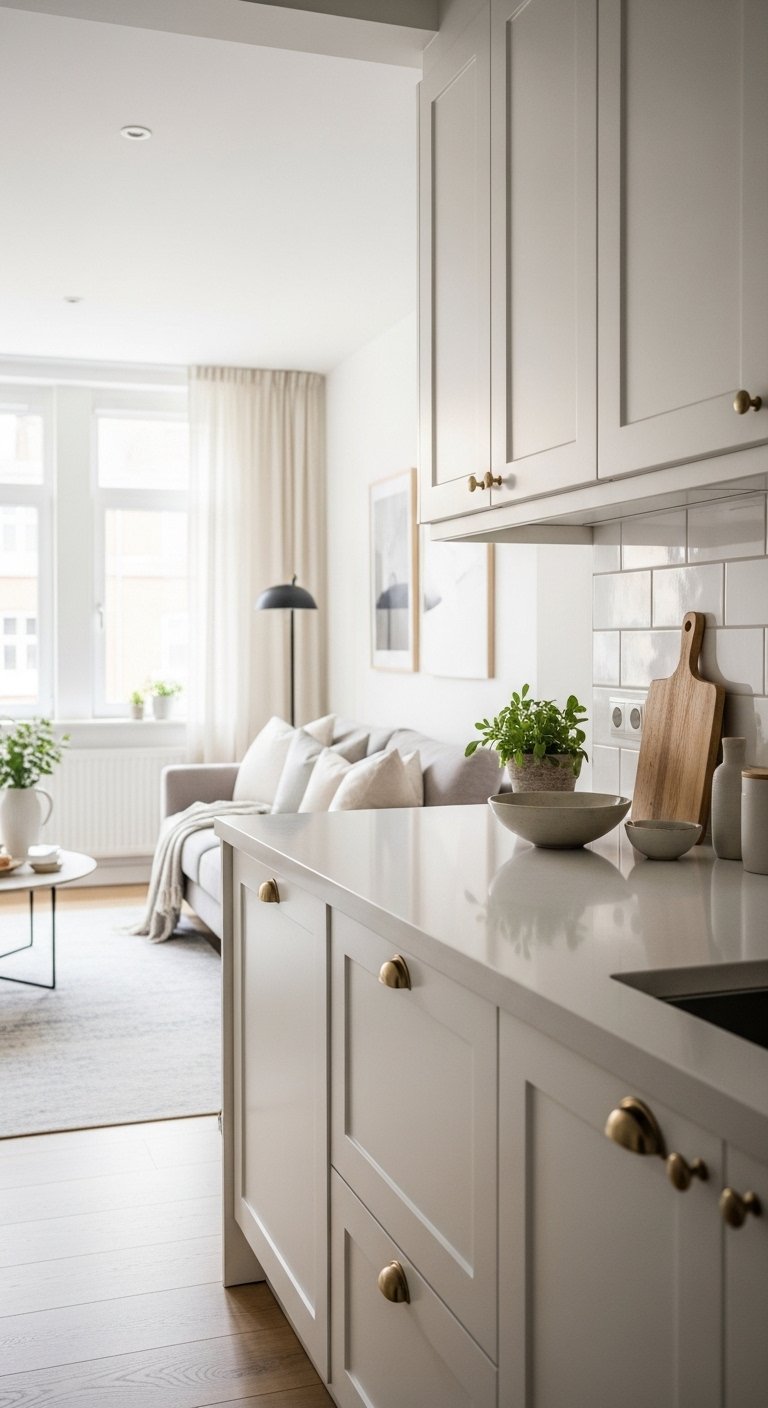
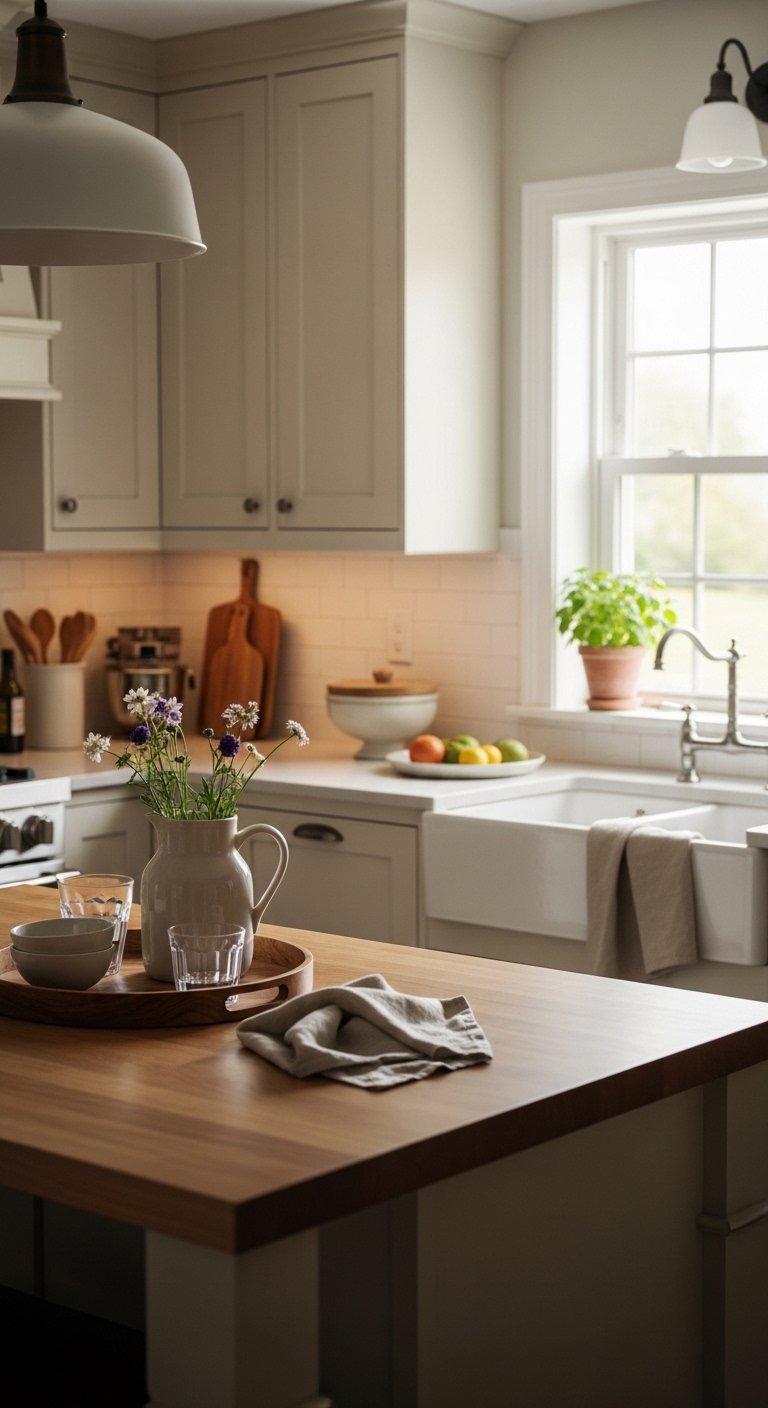
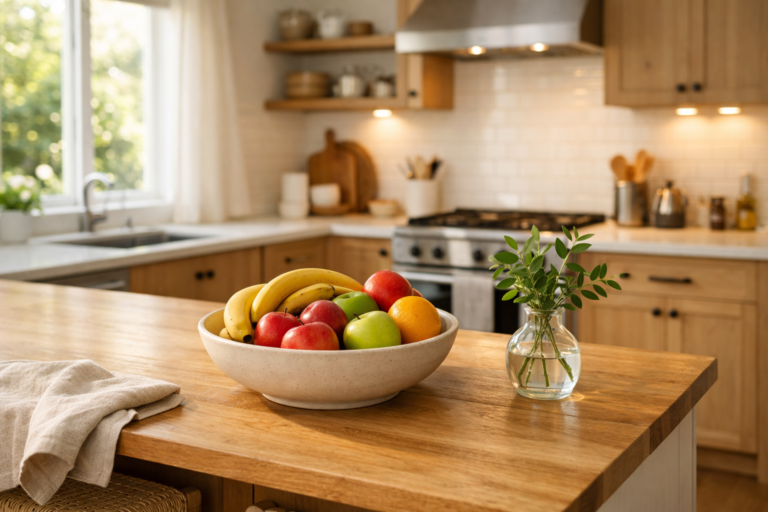
Clear surfaces are key in a living room and kitchen combo because clutter can quickly make the space feel smaller. Keep your kitchen countertops as open as possible by storing items inside cabinets or drawers.Only display a few essential or decorative items like a small plant or a simple bowl. This keeps the kitchen looking neat and visually calm. A clean kitchen helps the entire space feel more organized.Extend this idea to the living area as well. Keep coffee tables and shelves lightly styled. This creates a smooth, uncluttered flow between both spaces. A clean environment not only looks better but also makes daily living easier and more enjoyable.
25. Use Soft Curtains to Add Warmth Without Blocking Space
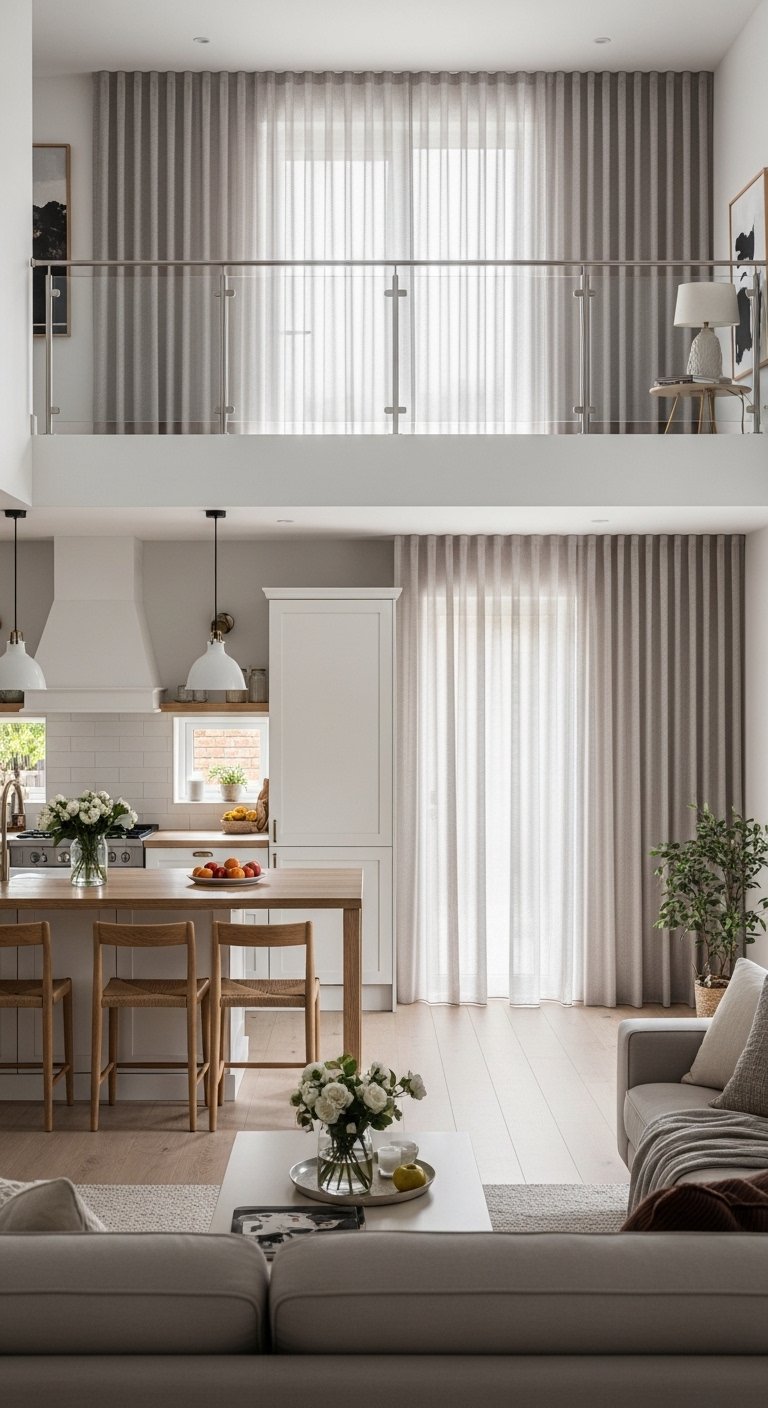
Soft curtains can enhance your open concept living and kitchen without making it feel closed. Choose light, airy fabrics like linen or sheer cotton that allow natural light to pass through.Use neutral tones such as white, cream, or soft gray to keep the room bright. Floor-length curtains add height and make the space feel larger. Let them hang freely without heavy layering.Place curtains near windows or even as a soft divider if needed. They move gently and add a cozy feel without taking up space. This idea adds texture and warmth while maintaining the open and airy look that makes combo spaces work so well.
Conclusion
Creating a smart and stylish living room and kitchen combo is all about balance. When you use color flow, light materials, clever layouts, and multi-functional pieces, even a small space can feel open and comfortable. Each idea in this guide focuses on real solutions you can apply without major changes.Start with one or two ideas that fit your space and build from there. Small updates like better lighting, cleaner surfaces, or improved layout can make a big difference. Save your favorite ideas, try them step by step, and create a home that feels both practical and beautiful every day.