
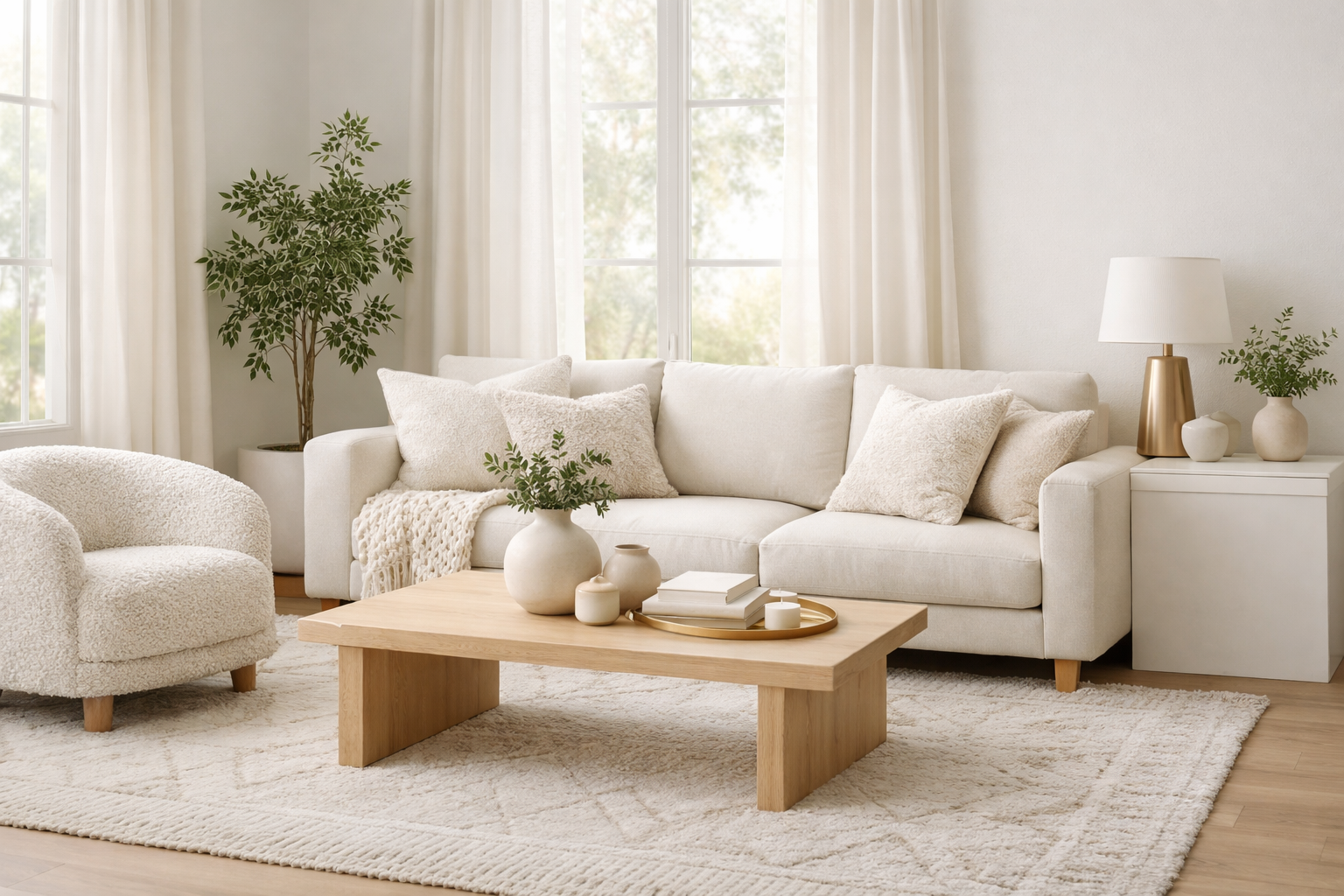
24 White Living Room Décor Ideas That Never Go Out of Style
A white living room never feels outdated when you style it with intention. It looks clean, calm, and endlessly flexible, but only if you avoid making it feel flat or lifeless. The secret is not just using white, but how you layer tones, textures, light, and materials to bring the space to life.
In this guide, you will find fresh and practical ideas you can actually use. Each idea focuses on real details like fabric choices, lighting tricks, layout decisions, and smart combinations that make a white space feel warm and inviting. If you want a living room that looks bright, modern, and easy to refresh anytime, these ideas will help you build it step by step.
1. Layer Soft White Tones for Depth
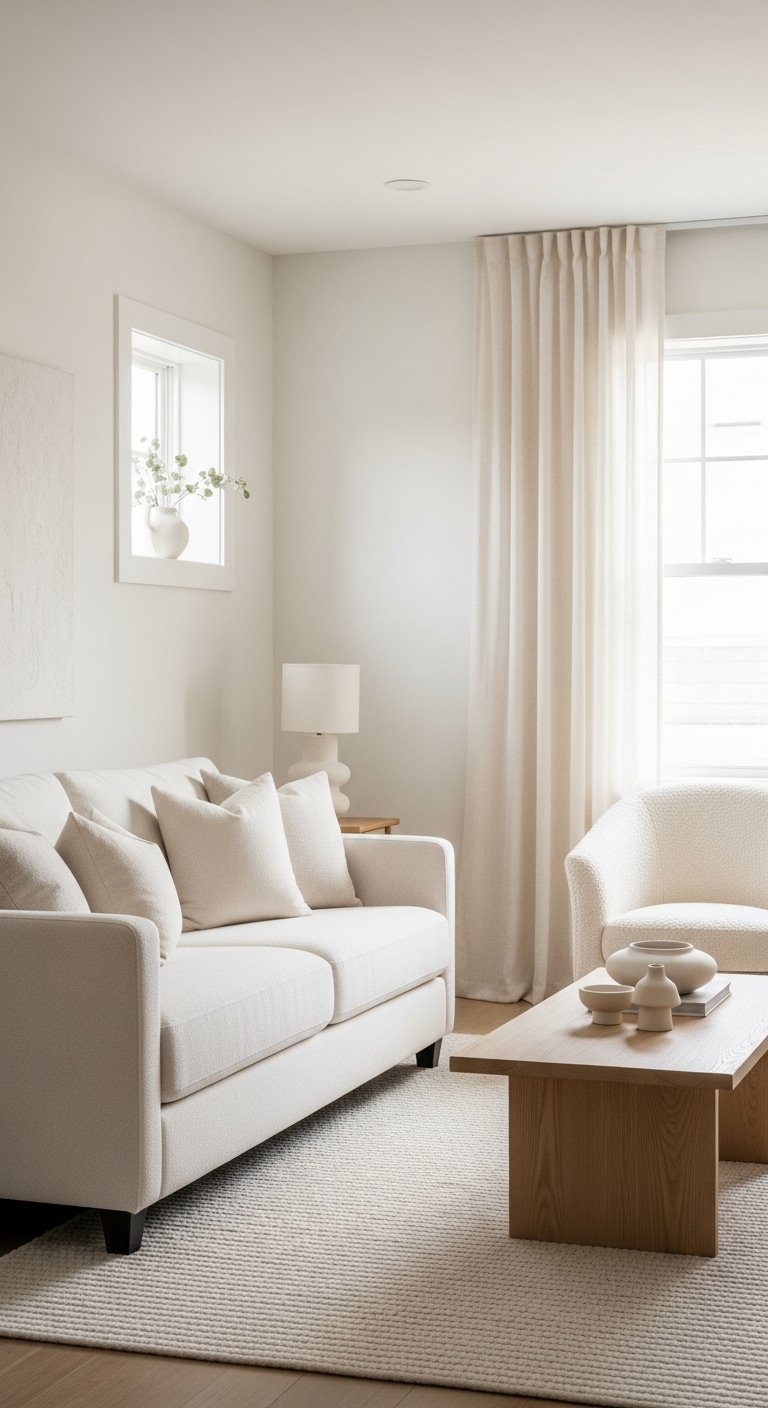
Start with multiple shades instead of using just one flat white, because a single tone can make the room feel cold and unfinished. Choose creamy white for walls, then bring in an ivory or off-white sofa to create a soft visual shift. Add linen curtains in a slightly warmer undertone so light filters through gently instead of looking harsh. Use a boucle armchair or textured ottoman to introduce depth through fabric rather than color. A wool or cotton rug with a subtle pattern helps anchor the seating area without breaking the palette. Keep wood finishes light, such as oak or ash, to maintain warmth. Use warm lighting with soft yellow undertones so the whites feel cozy at night. This layered approach builds dimension and keeps the room visually interesting without adding bold colors.
2. Add Natural Wood to Warm Up the Space
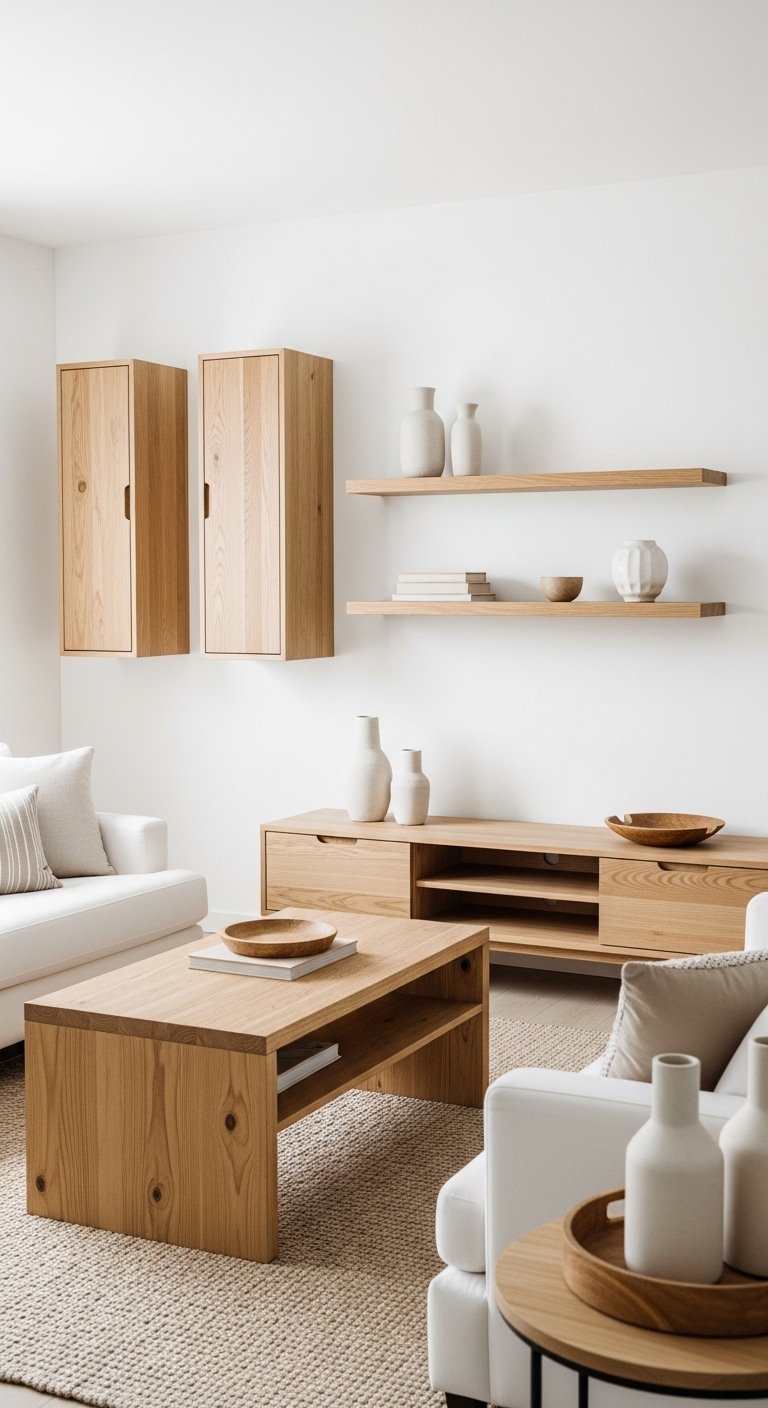
Bring in natural wood elements to balance the crispness of a white living room and make it feel more inviting. Choose a light wood coffee table or a media unit with visible grain to add organic texture. Floating wooden shelves can display simple décor while also breaking the monotony of plain white walls. Mix finishes slightly by pairing matte wood with soft satin surfaces to avoid a flat look. Even small touches like a wooden tray, picture frame, or stool can create warmth without overwhelming the space. Pair these elements with neutral fabrics like cotton and linen to maintain a soft, cohesive feel. Keep the wood tones light to medium so they complement the white rather than compete with it. This combination creates a calm, grounded atmosphere that feels natural and timeless.
3. Use Textured Fabrics Instead of Plain Ones
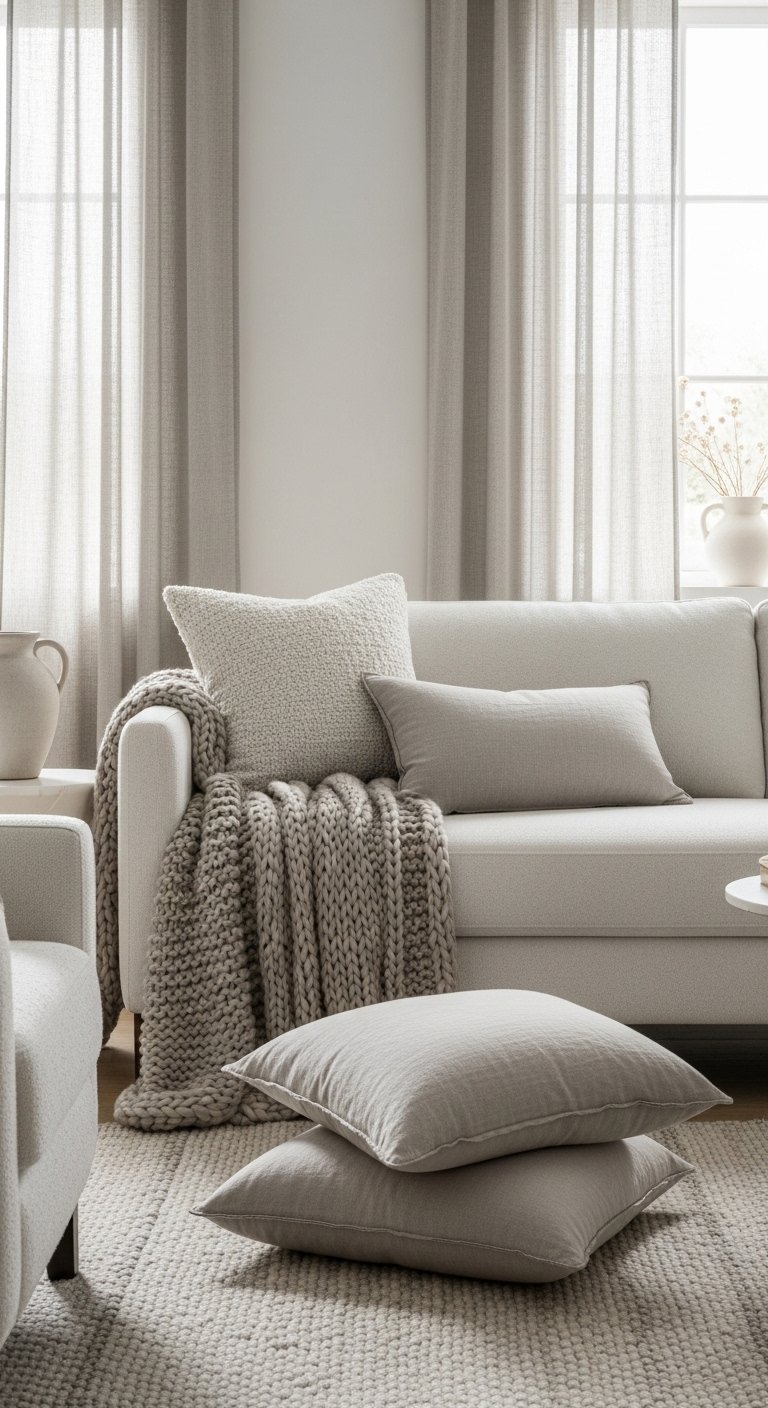
Focus on texture instead of color to make a white living room feel rich and comfortable. Replace flat fabrics with materials like boucle, chunky knit, linen, and soft cotton blends. A textured sofa or accent chair instantly adds depth without changing the color palette. Layer throw pillows in different fabrics so each piece feels unique while still blending visually. Choose curtains with a subtle weave or slightly sheer finish to allow natural light to move through the space beautifully. Add a rug with raised patterns or soft ridges to create dimension underfoot. These textures catch light differently throughout the day, which makes the room feel alive and dynamic. Keep everything within soft white and neutral tones so the focus stays on how the materials feel, not on bold contrasts.
4. Introduce Subtle Contrast with Black Accents
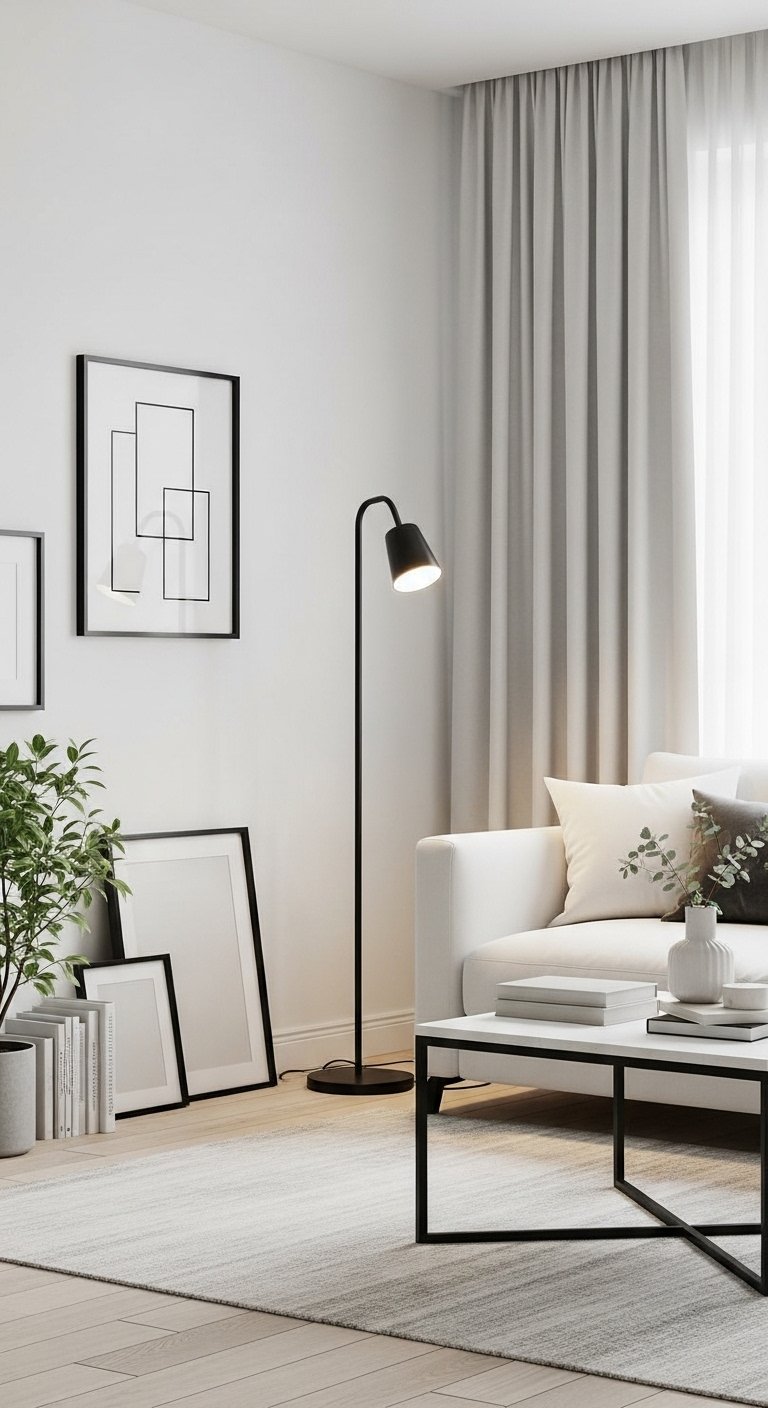
Add small black accents to give your white living room structure and definition. This contrast helps prevent the space from looking washed out or overly soft. Use thin black frames for artwork, a sleek floor lamp, or minimal hardware on cabinets and shelves. A black metal base on a coffee table or side table can anchor the seating area without making it feel heavy. Keep the accents simple and spread them evenly so they feel balanced rather than concentrated in one spot. Pair these elements with soft textures like linen and wool to maintain warmth. Avoid using too much black, because the goal is to highlight the white, not overpower it. This technique works especially well in modern interiors where clean lines and sharp details enhance the overall look.
5. Style with Greenery for a Fresh Look
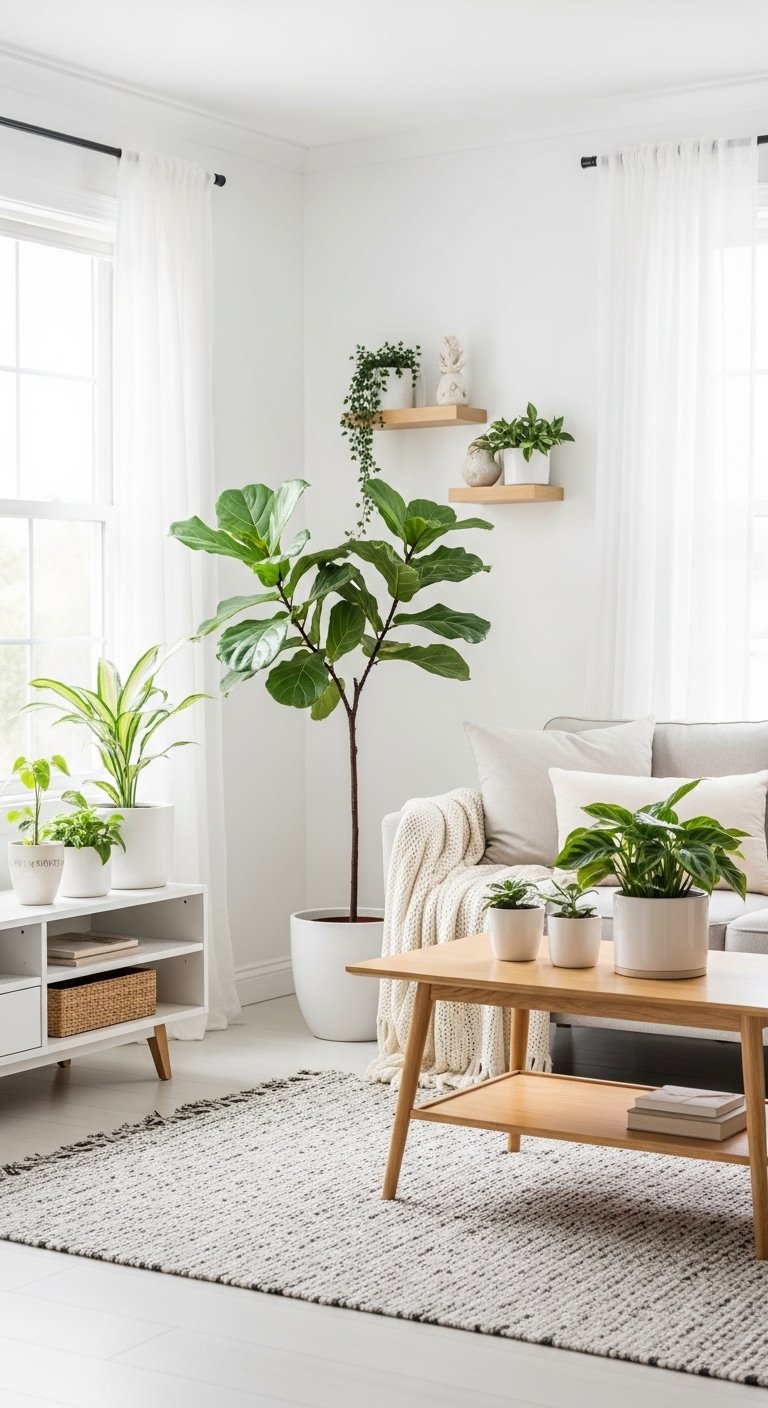
Introduce indoor plants to bring life and energy into a white living room. The natural green tones create a soft contrast that feels fresh and calming without disrupting the neutral palette. Choose plants with different leaf shapes and sizes, such as tall fiddle leaf figs, small potted herbs, or trailing vines. Place them in white, clay, or light stone planters to keep the look cohesive. Position a larger plant in an empty corner to fill space naturally, and add smaller ones on shelves or coffee tables for balance. Natural light enhances the greenery, so place plants near windows where possible. This simple addition makes the room feel more lively and connected to nature while still maintaining a clean and timeless aesthetic.
6. Layer Sheer and Heavy Curtains for Soft Light Control
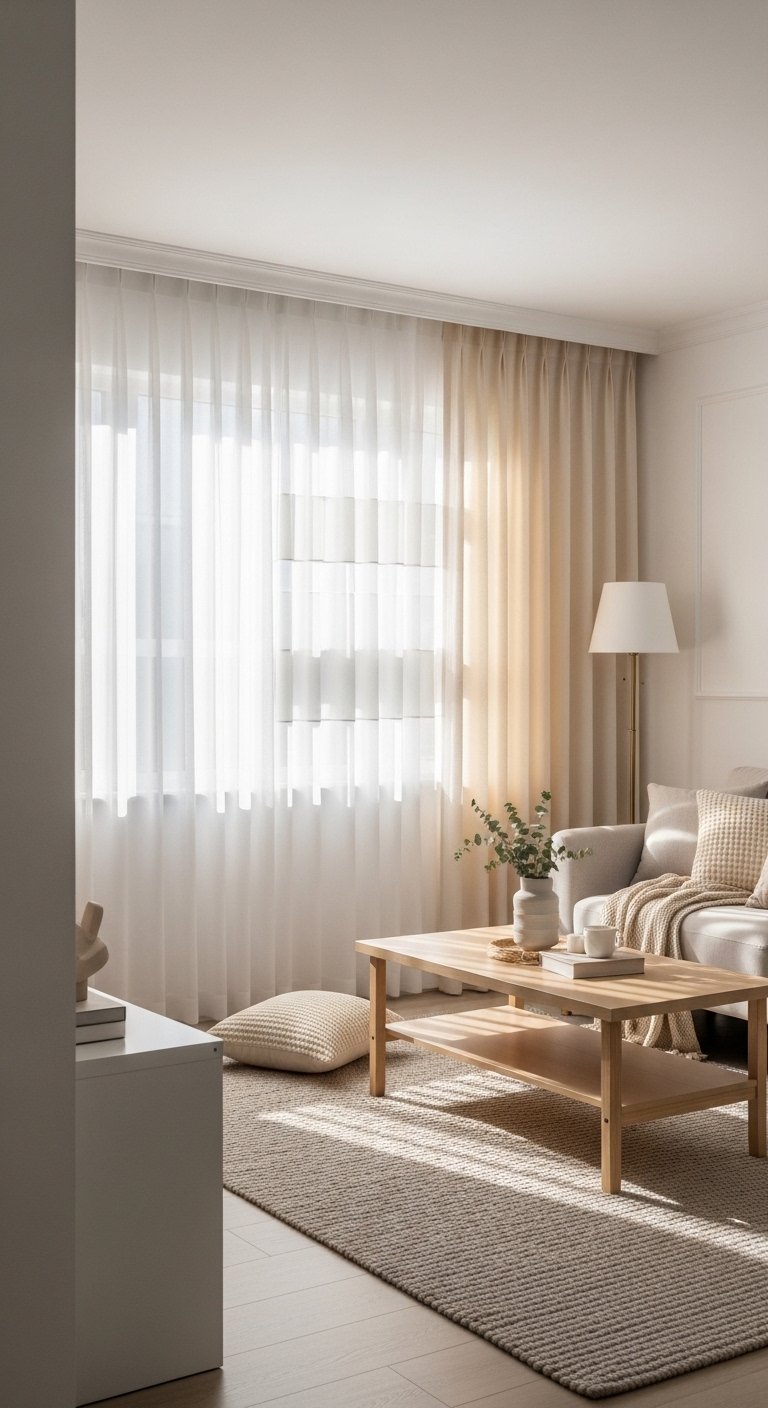
Control natural light by combining sheer and heavier curtains in soft white tones. Start with sheer panels to let daylight filter through gently, creating a soft glow across the room. Then add thicker curtains in a slightly warmer white or cream to provide privacy and block harsh sunlight when needed. This layering adds depth to the windows without introducing new colors. Choose fabrics like linen for sheers and cotton or blended textiles for heavier drapes to keep the look relaxed. Hang the curtains higher than the window frame to make the ceiling feel taller. Let them fall fully to the floor for a clean and elegant finish. This setup not only improves lighting control but also adds movement and softness to the overall space.
7. Mix Glossy and Matte Finishes for Subtle Variation
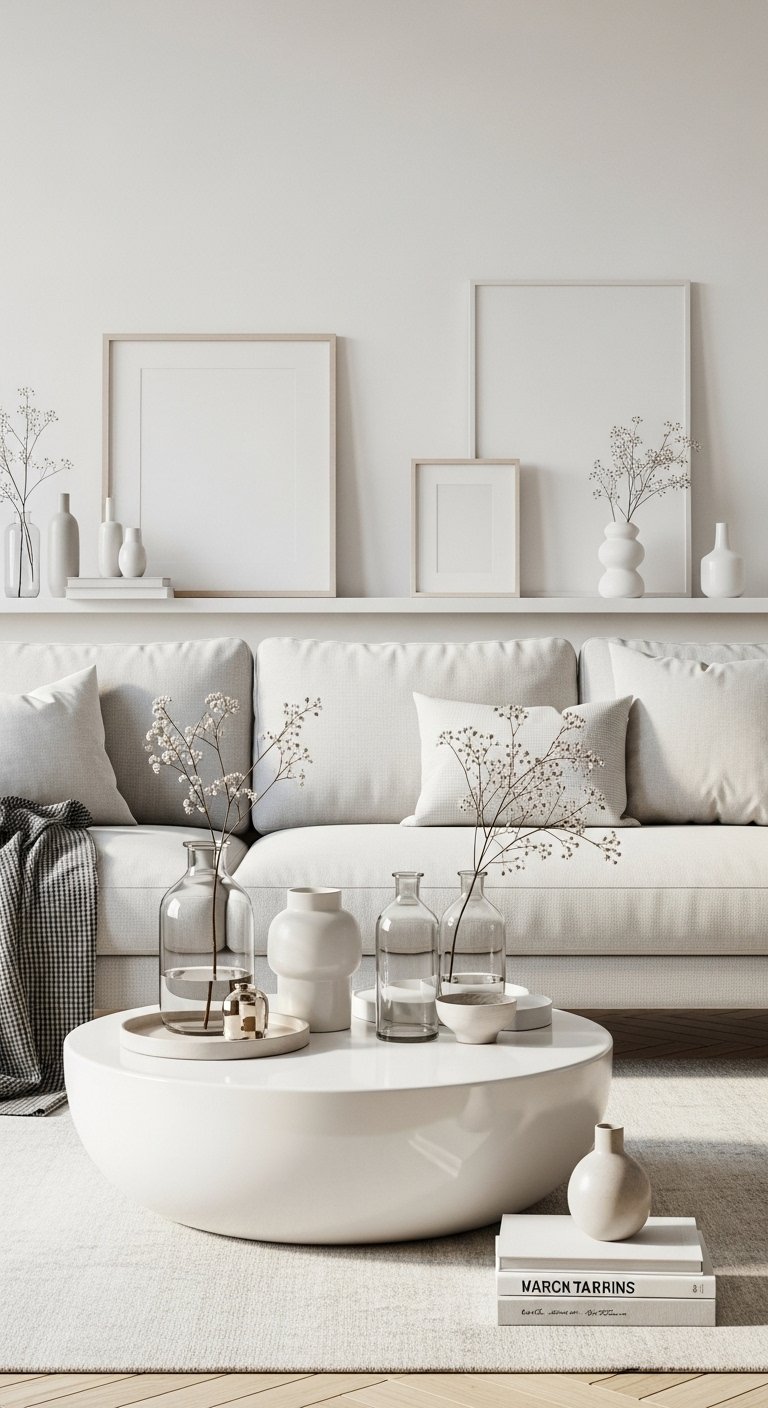
Create visual interest by combining glossy and matte surfaces within the same white palette. Use matte walls or furniture as a base, then introduce glossy elements like ceramic vases, lacquered trays, or polished side tables. This contrast reflects light differently across the room, making the space feel more dynamic without adding color. For example, a matte sofa paired with a glossy coffee table creates a balanced look. Keep the finishes evenly distributed so one area does not feel heavier than another. Even small details like a shiny lamp base or a soft matte planter can enhance the overall effect. This technique works especially well in modern spaces where clean surfaces and subtle contrasts define the style.
8. Use Statement Lighting as a Focal Point
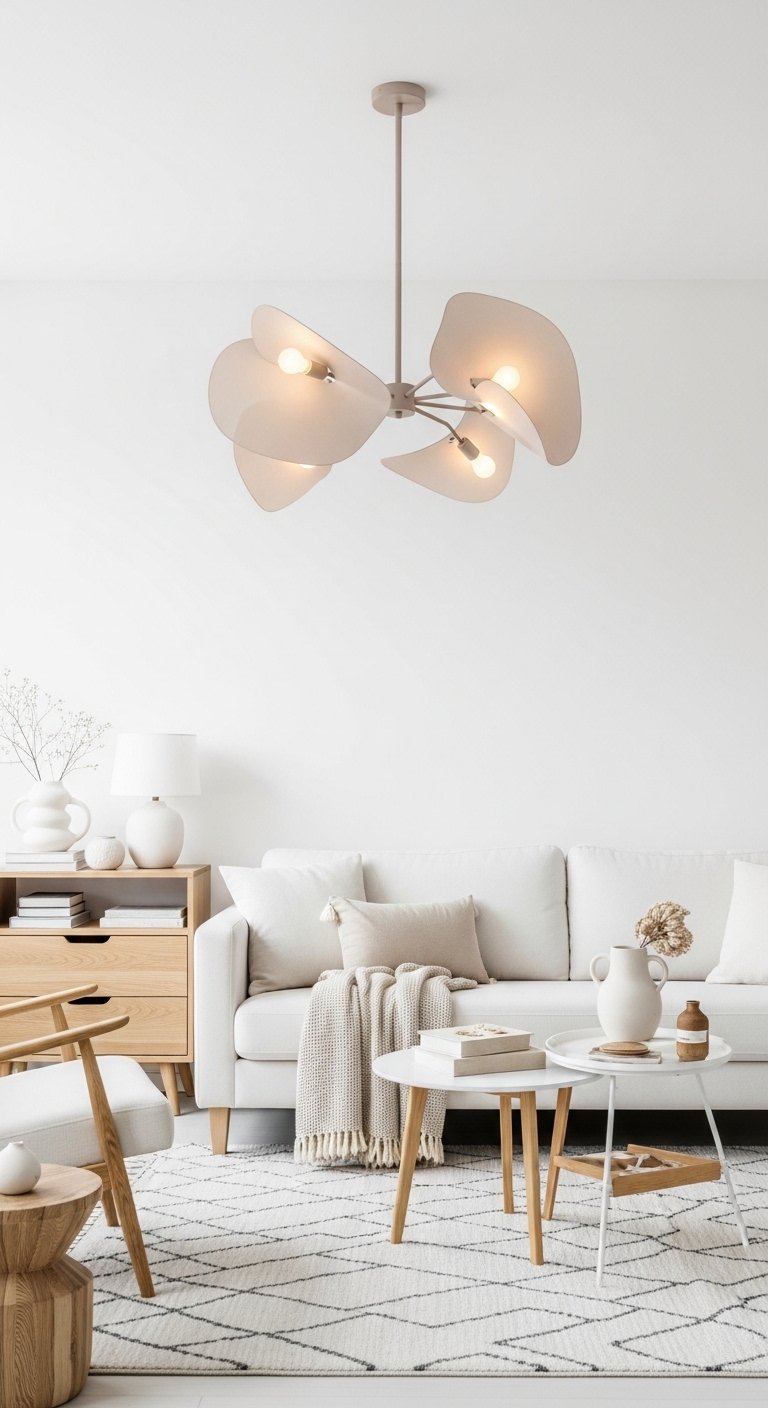
Make lighting a central feature instead of just a functional element. Choose a statement piece like a sculptural pendant light, a soft-glow chandelier, or a modern floor lamp in neutral tones. This adds personality to a white living room while keeping the color palette intact. Look for designs with interesting shapes, curves, or layered materials like glass and fabric. Place the lighting fixture where it naturally draws attention, such as above the seating area or in a central position. Use warm bulbs to maintain a cozy atmosphere, especially in the evening. This approach ensures the room does not feel plain, because the lighting itself becomes a visual highlight that enhances the overall design.
9. Add a Large Neutral Rug to Define the Space
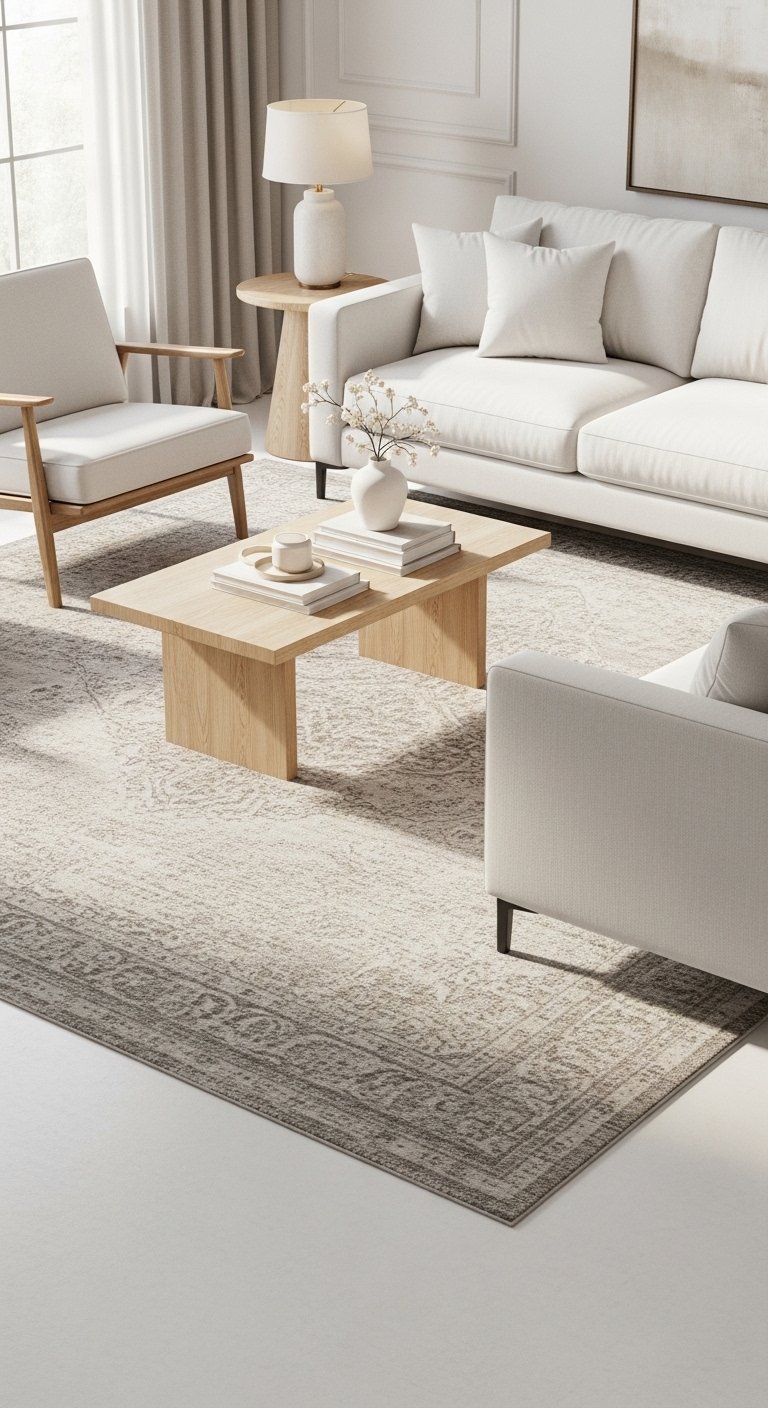
Ground your seating area with a large rug in soft white or neutral tones. This helps define the layout and makes the room feel more complete. Choose a rug with a subtle pattern, woven texture, or slight tonal variation to avoid a flat look. Make sure the rug is large enough so at least the front legs of your furniture sit on it, creating a connected layout. Materials like wool or cotton blends work well because they add softness and durability. A well-chosen rug also improves comfort and reduces echo in the space. Keep the tones consistent with the rest of the room so everything feels cohesive. This simple addition can transform an open area into a structured and inviting living space.
10. Incorporate Soft Metallic Accents for Elegance
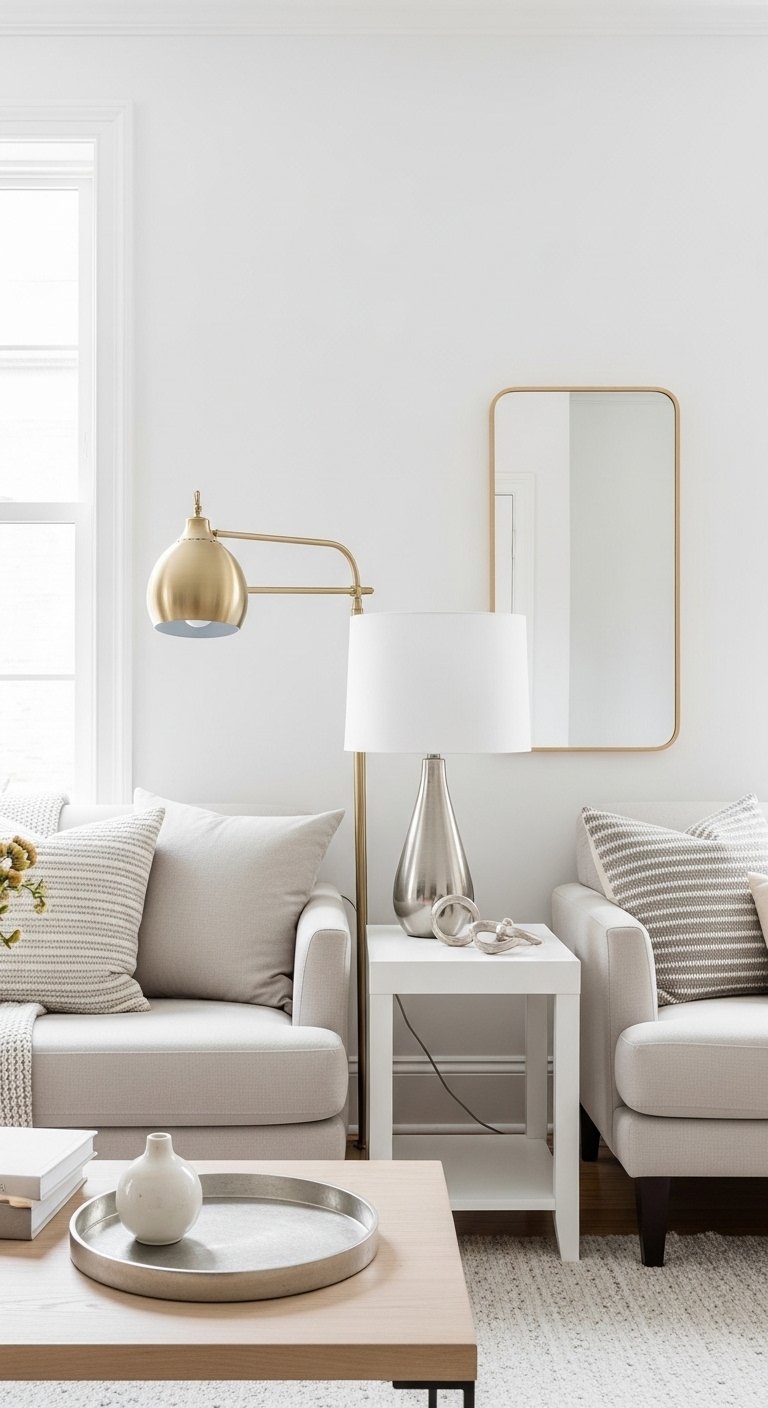
Introduce soft metallic elements to elevate the look of a white living room without overpowering it. Choose finishes like brushed gold, champagne, or soft silver instead of overly shiny metals. Use them in small details such as lamp bases, tray décor, or thin-framed mirrors. These accents reflect light gently and add a touch of warmth and elegance. Pair metallic pieces with matte and textured surfaces to keep the balance natural. Avoid using too many metallic items, because a few well-placed pieces create a more refined effect. This approach works especially well in both modern and classic interiors, as it adds a subtle layer of sophistication while keeping the overall design calm and timeless.
11. Create Depth with a White-on-White Gallery Wall
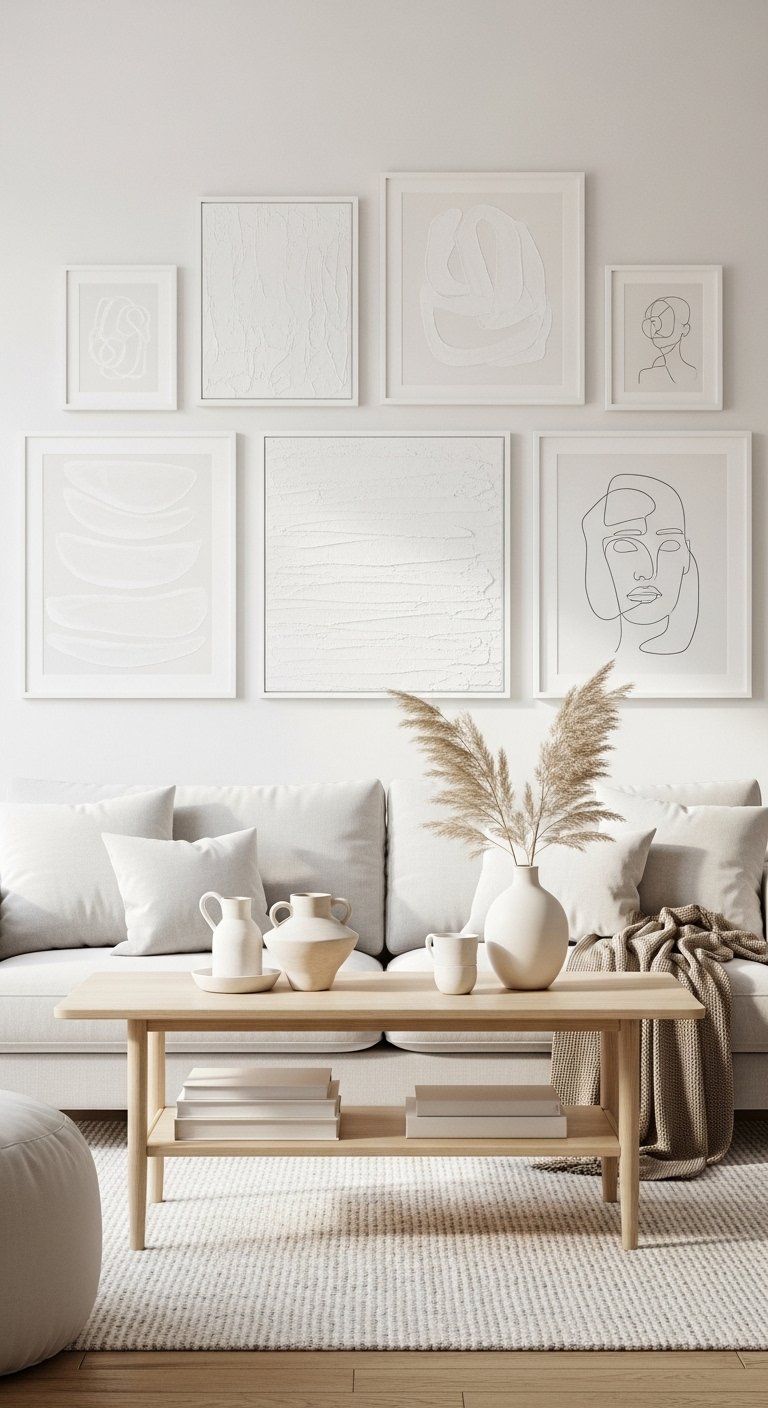
Design a gallery wall using white frames, soft artwork, and subtle textures to keep everything cohesive while adding visual interest. Choose art pieces with light sketches, abstract patterns, or embossed details instead of bold colors. Mix frame sizes but keep them in similar tones like matte white or off-white to maintain harmony. Add depth by including canvas pieces, paper textures, or even fabric art. Arrange the layout slightly asymmetrical for a relaxed feel. This setup keeps the wall from looking empty while still preserving the calm, airy vibe. The key is variation in texture and layout rather than color, which makes the display feel curated and timeless.
12. Use Built-In Shelving for a Clean Look
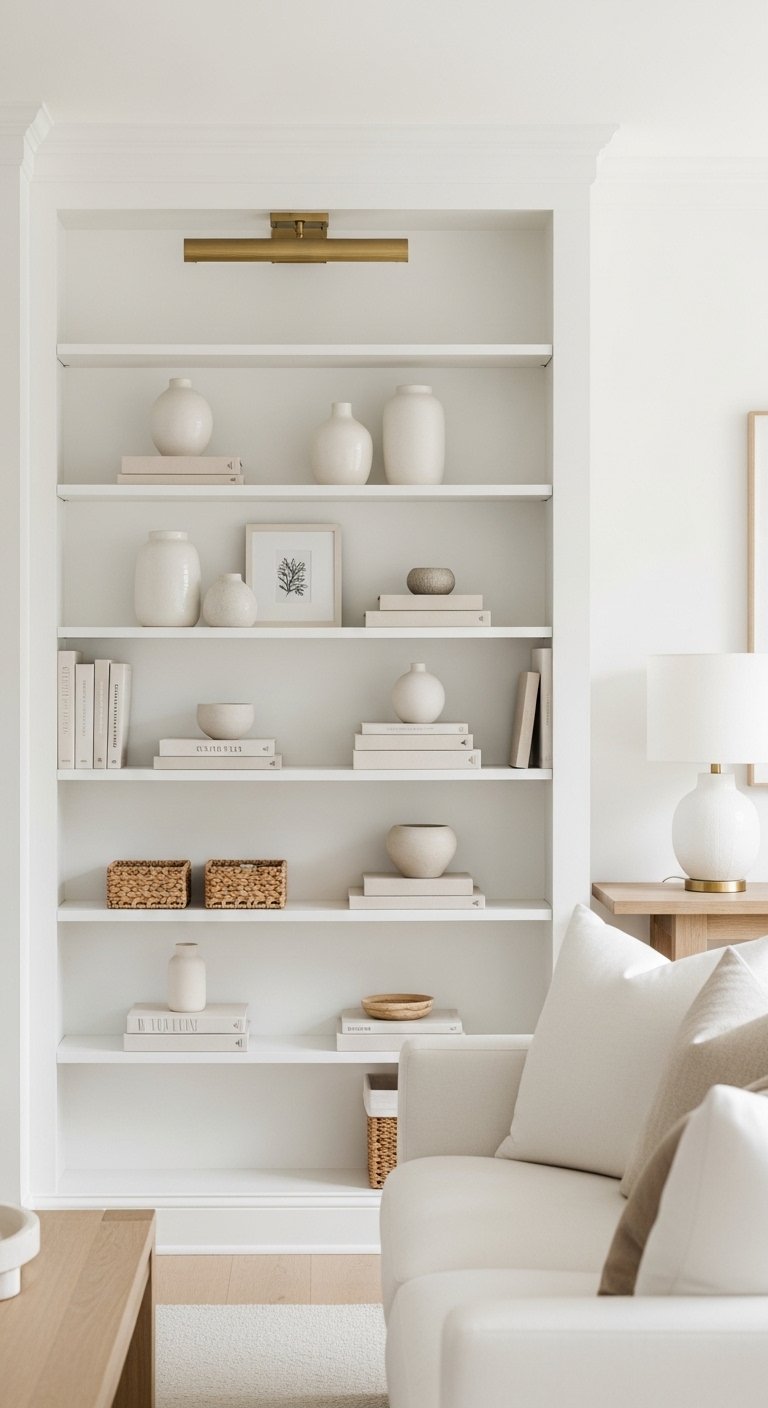
Install built-in shelves painted in the same white tone as your walls to create a seamless and polished appearance. This design removes visual clutter and makes the room feel larger and more organized. Style the shelves with a mix of books, ceramics, and small décor items in neutral tones. Leave some empty space between objects to maintain a light and breathable look. Add a few textured elements like woven baskets or stone pieces to break monotony. Built-ins also provide practical storage without disrupting the flow of the room. This idea works especially well in smaller spaces where every inch matters.
13. Introduce Curved Furniture for Softness
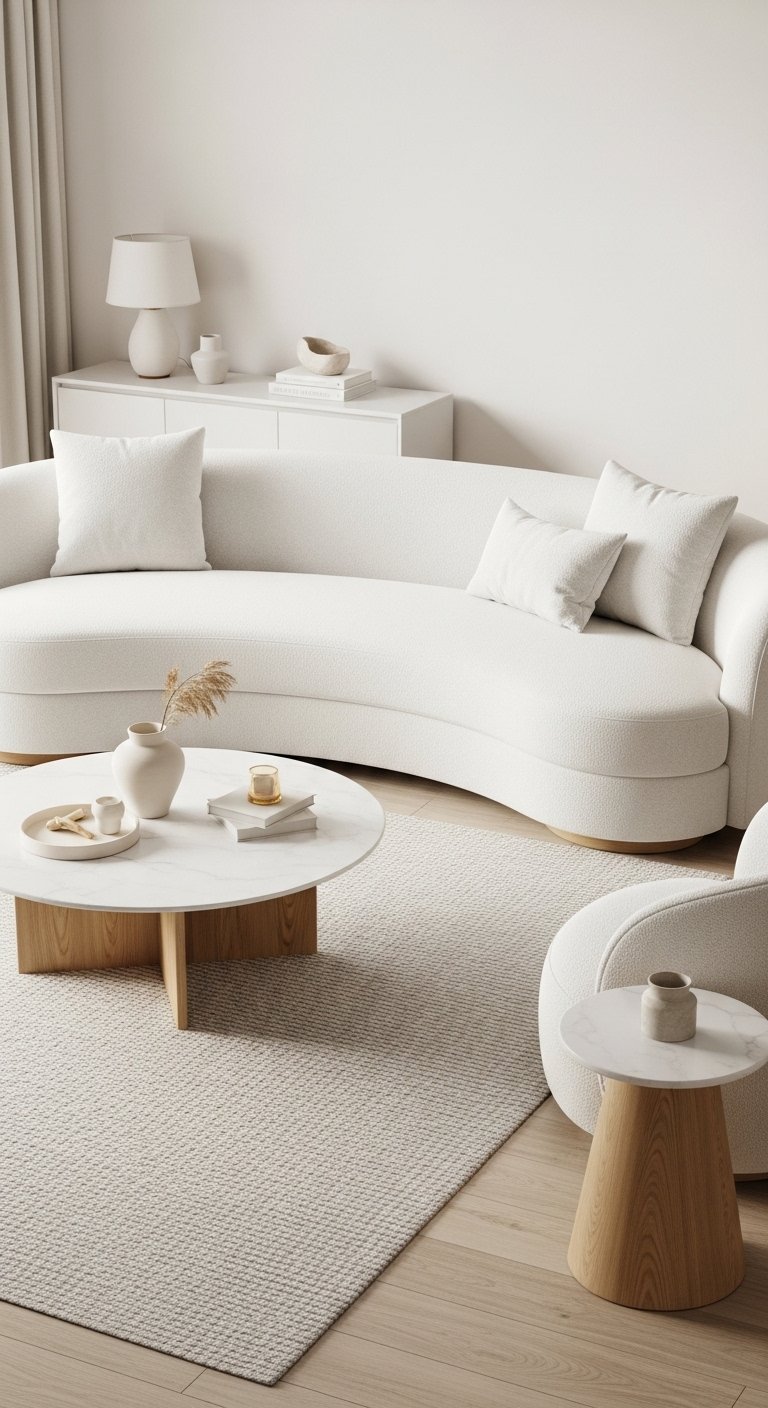
Balance straight lines with curved furniture pieces to make the room feel more inviting. Choose a rounded sofa, circular coffee table, or curved armchair in soft white fabric. These shapes create a gentle flow and reduce the rigid feel that white interiors can sometimes have. Pair curved pieces with simple linear elements like a rectangular rug or straight shelving to maintain balance. The mix of shapes keeps the space visually interesting without adding color. Soft curves also improve movement within the room, making it feel more comfortable and natural. This approach works well in both modern and cozy living room styles.
14. Highlight the Ceiling with Subtle Design
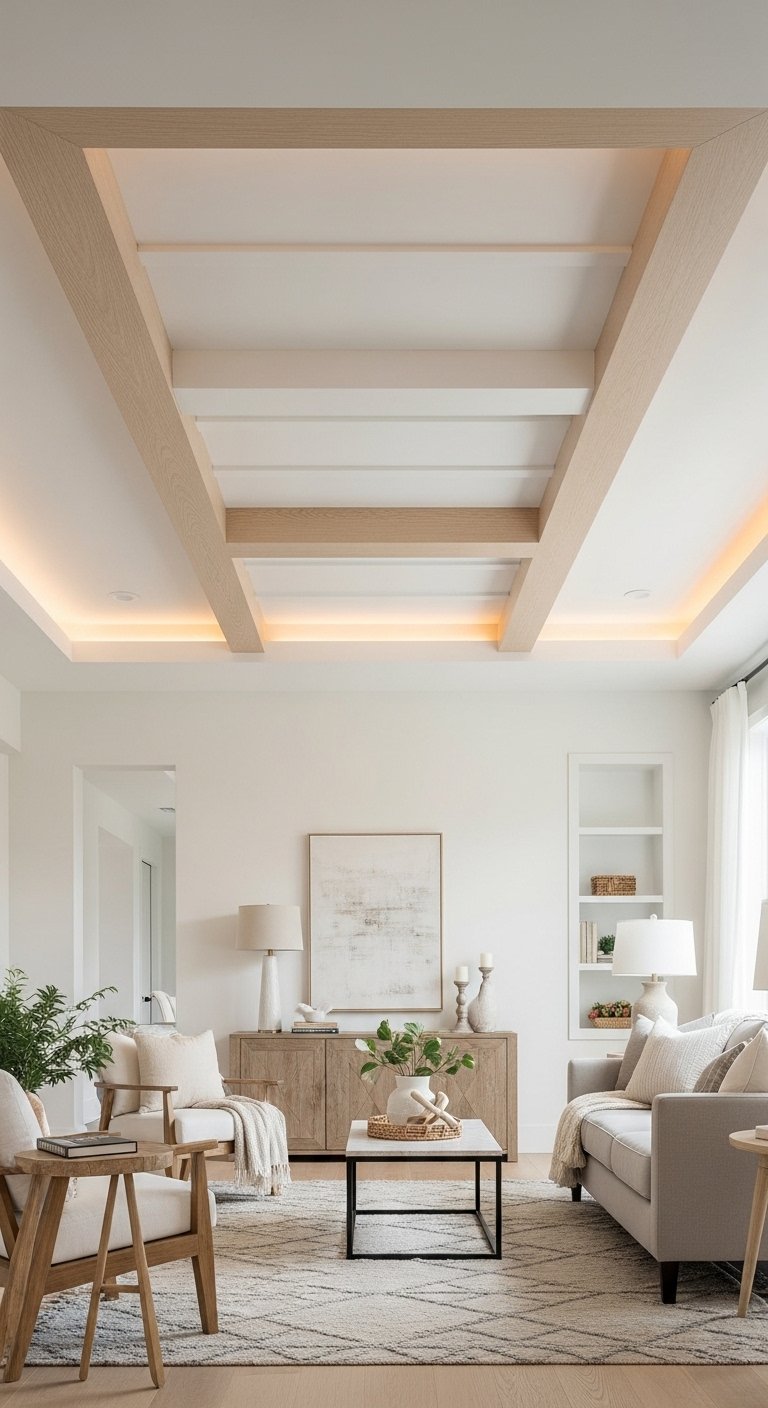
Draw attention upward by adding a subtle ceiling detail in your white living room. Use light wood beams, soft paneling, or a faint textured finish to create interest without changing the color scheme. A slightly different shade of white on the ceiling can also add depth. Pair this with warm lighting that spreads evenly across the surface to enhance the effect. This technique makes the room feel taller and more complete. It works especially well in spaces with high ceilings but can also elevate smaller rooms by adding an unexpected design layer that feels elegant and thoughtful.
15. Use Layered Lighting for a Cozy Atmosphere
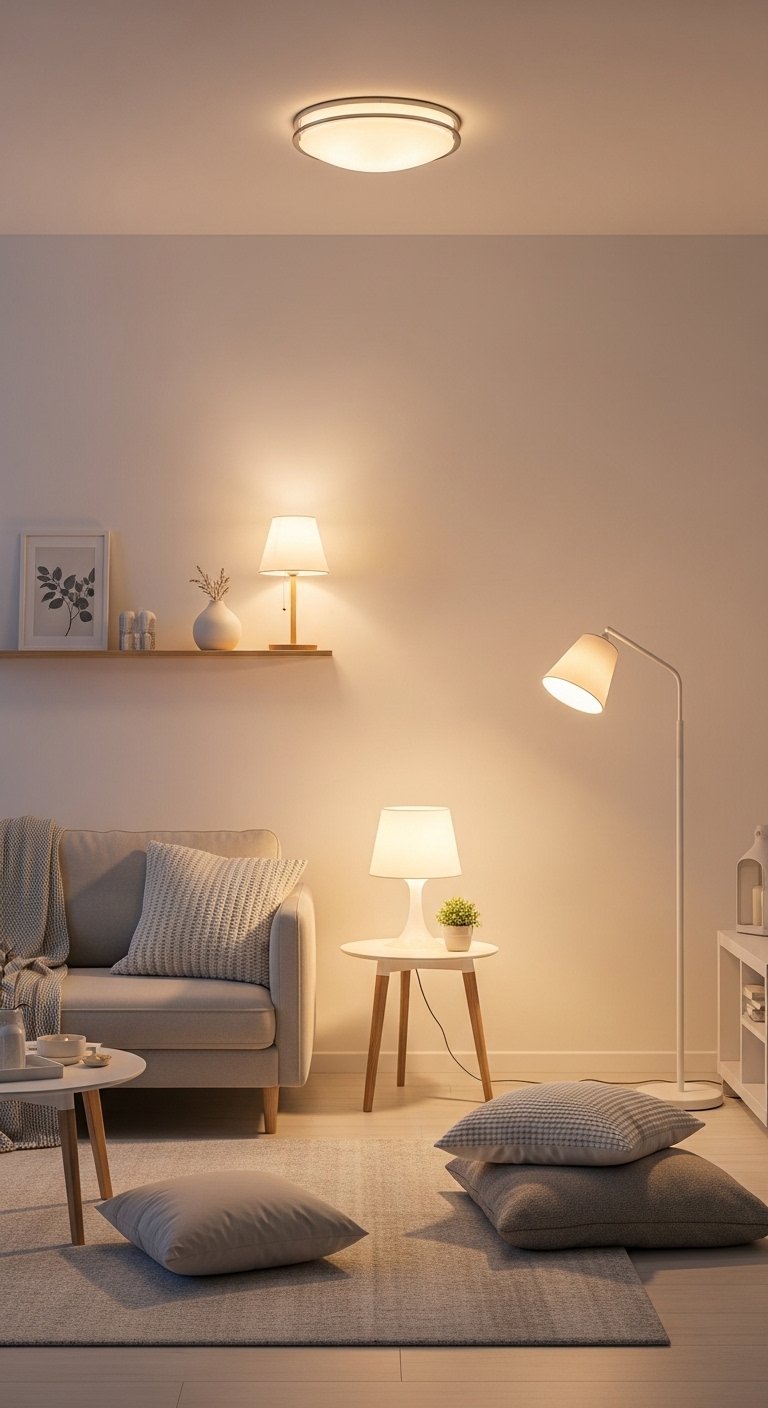
Combine different types of lighting to make your white living room feel warm and functional throughout the day. Use ceiling lights for general brightness, table lamps for focused lighting, and floor lamps to fill darker corners. Choose warm-toned bulbs to avoid a harsh or clinical feel. Place lights at different heights to create depth and balance. For example, a low table lamp paired with a taller floor lamp adds variation. This layered approach allows you to adjust the mood easily, from bright and airy during the day to soft and cozy in the evening. Lighting plays a key role in making white spaces feel comfortable.
16. Add Subtle Patterns Through Textiles
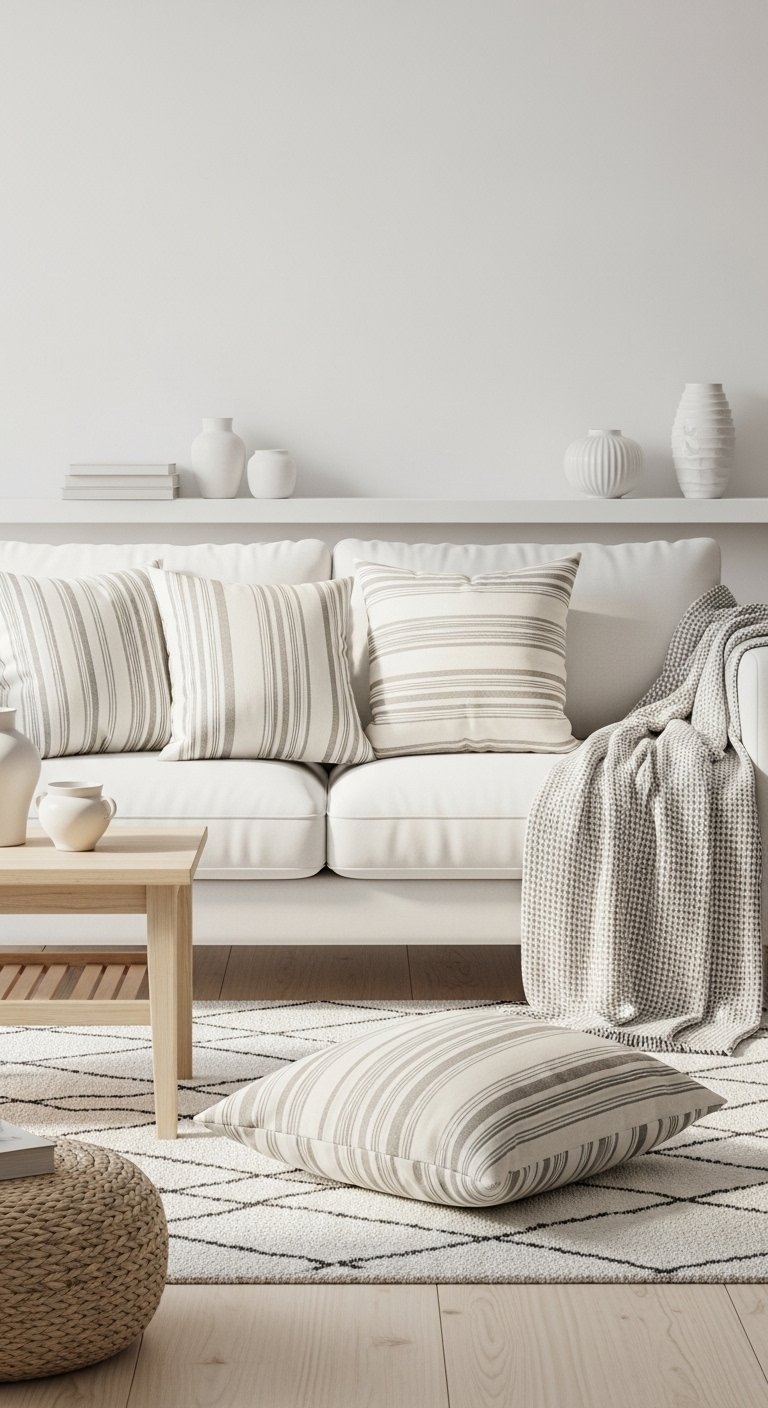
Introduce gentle patterns through cushions, rugs, or throws to add personality without overwhelming the white palette. Choose designs like soft stripes, minimal geometric shapes, or faded prints in neutral tones. Keep the patterns low contrast so they blend naturally with the rest of the room. Layer different patterns carefully by varying scale, such as pairing a larger rug design with smaller cushion details. This adds visual interest while maintaining a calm and cohesive look. Patterns help break the uniformity of white and make the space feel more lived-in and inviting without introducing bold colors.
17. Incorporate Glass Elements for Light Reflection
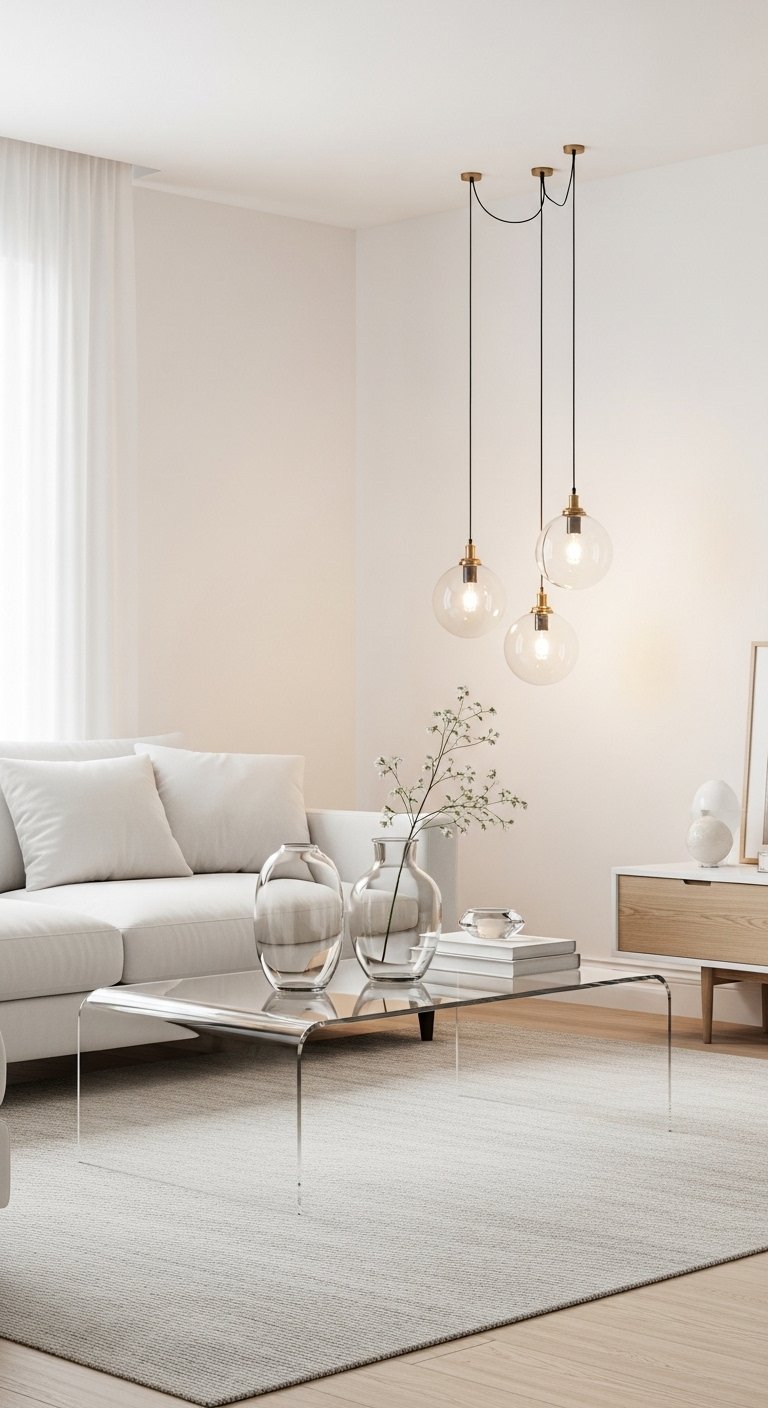
Use glass furniture or décor pieces to enhance the brightness of a white living room. Items like a glass coffee table, clear vases, or transparent lamps allow light to pass through and reflect around the space. This makes the room feel more open and airy. Pair glass elements with soft textures like linen or wool to balance the look. Keep the shapes simple and clean to match the minimal aesthetic. Glass works especially well in smaller rooms because it reduces visual weight and helps maintain an uncluttered feel while still adding a modern touch.
18. Use Large Mirrors to Expand the Space
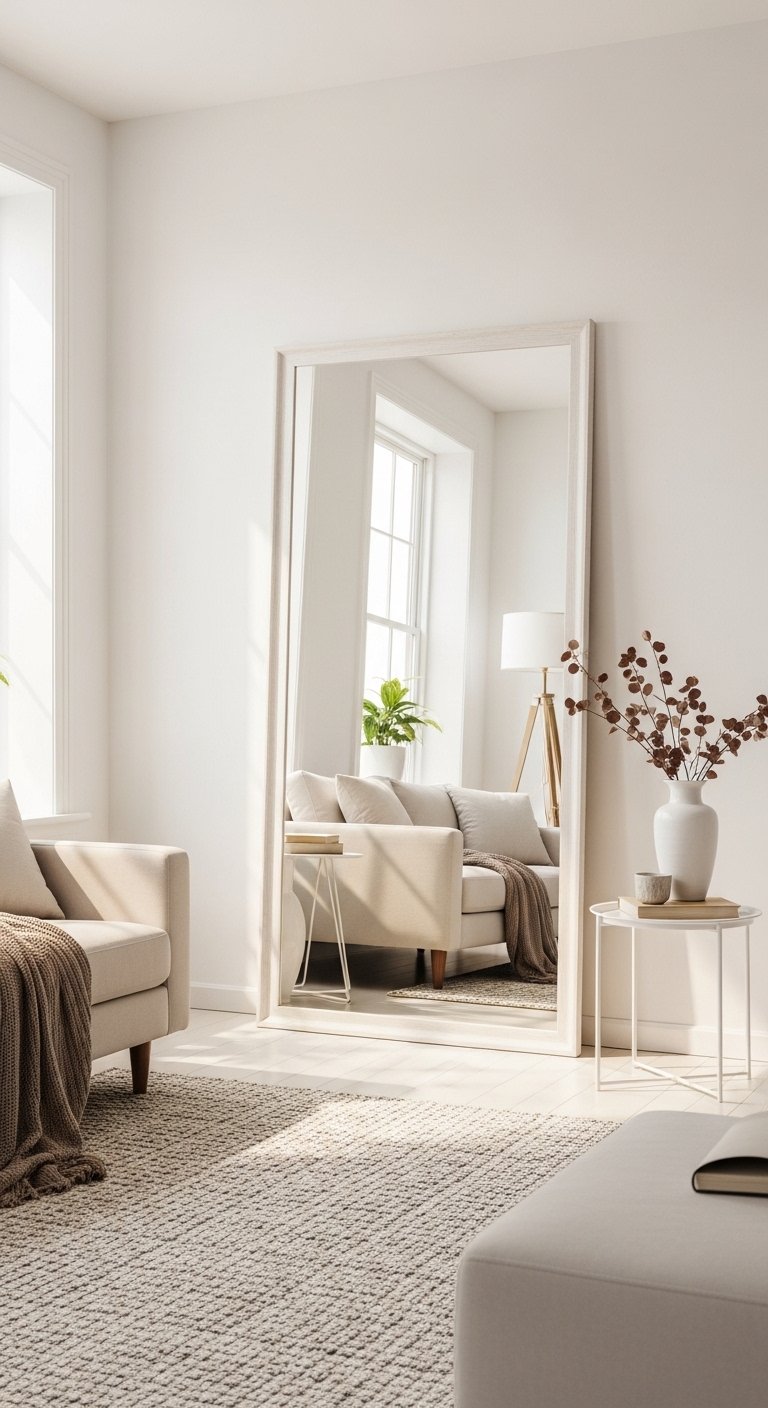
Place a large mirror in your white living room to reflect light and create the illusion of more space. Position it opposite a window to maximize natural light or behind a seating area to add depth. Choose a frame in white, wood, or soft metallic tones to keep it cohesive with the design. A floor-length mirror leaning against the wall can create a relaxed and stylish look. Mirrors also help brighten darker corners and make the room feel more open. This simple addition can transform how the space feels without requiring major changes.
19. Keep Furniture Low for an Airy Feel
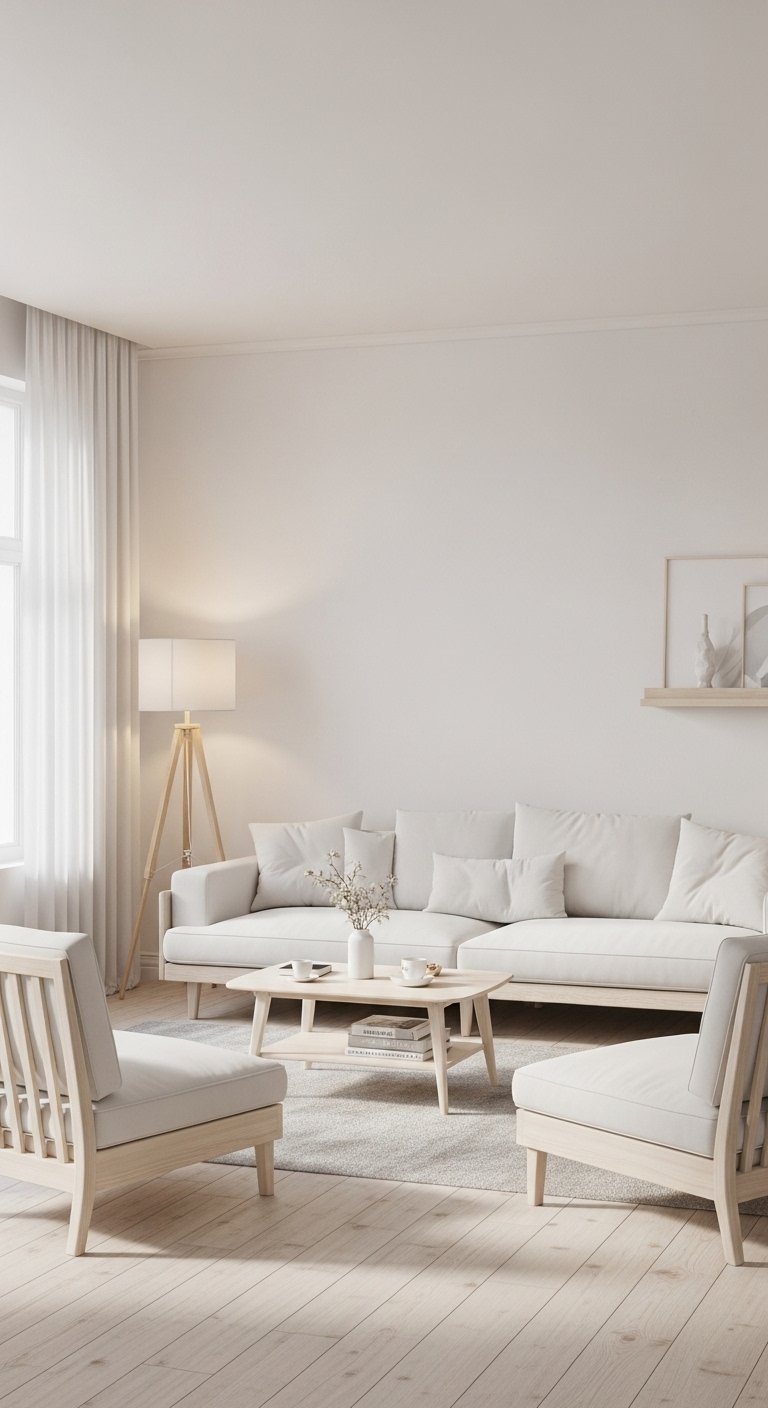
Choose low-profile furniture to make your white living room feel more open and spacious. Sofas with shorter backs, low coffee tables, and minimal seating arrangements create a horizontal flow that enhances the airy look. This design allows more wall space to remain visible, which makes the room feel larger. Pair low furniture with tall elements like plants or lamps to maintain balance. Keep the layout simple and avoid overcrowding the space. This approach works particularly well in smaller living rooms where maximizing openness is important.
20. Add Woven Elements for Natural Texture
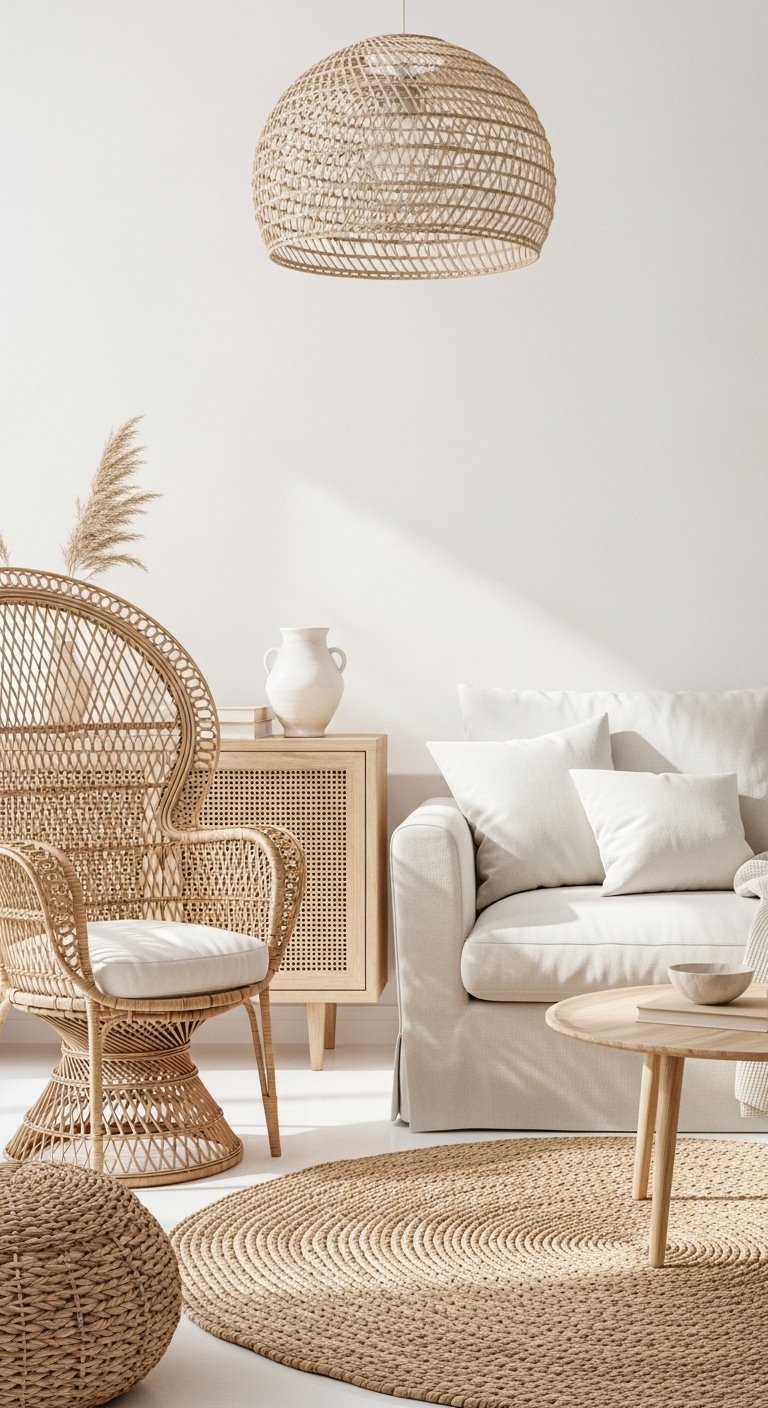
Bring in woven materials like rattan, wicker, or jute to add warmth and texture to a white living room. Use items such as a woven basket, light fixture, or accent chair to introduce an organic feel. These materials contrast beautifully with smooth white surfaces and create a more relaxed atmosphere. Pair woven pieces with soft fabrics like cotton and linen to keep the look balanced. Keep the tones light and natural so they blend easily with the white palette. This combination adds depth and makes the room feel more grounded and inviting.
21. Create a Cozy Corner with Layered Seating
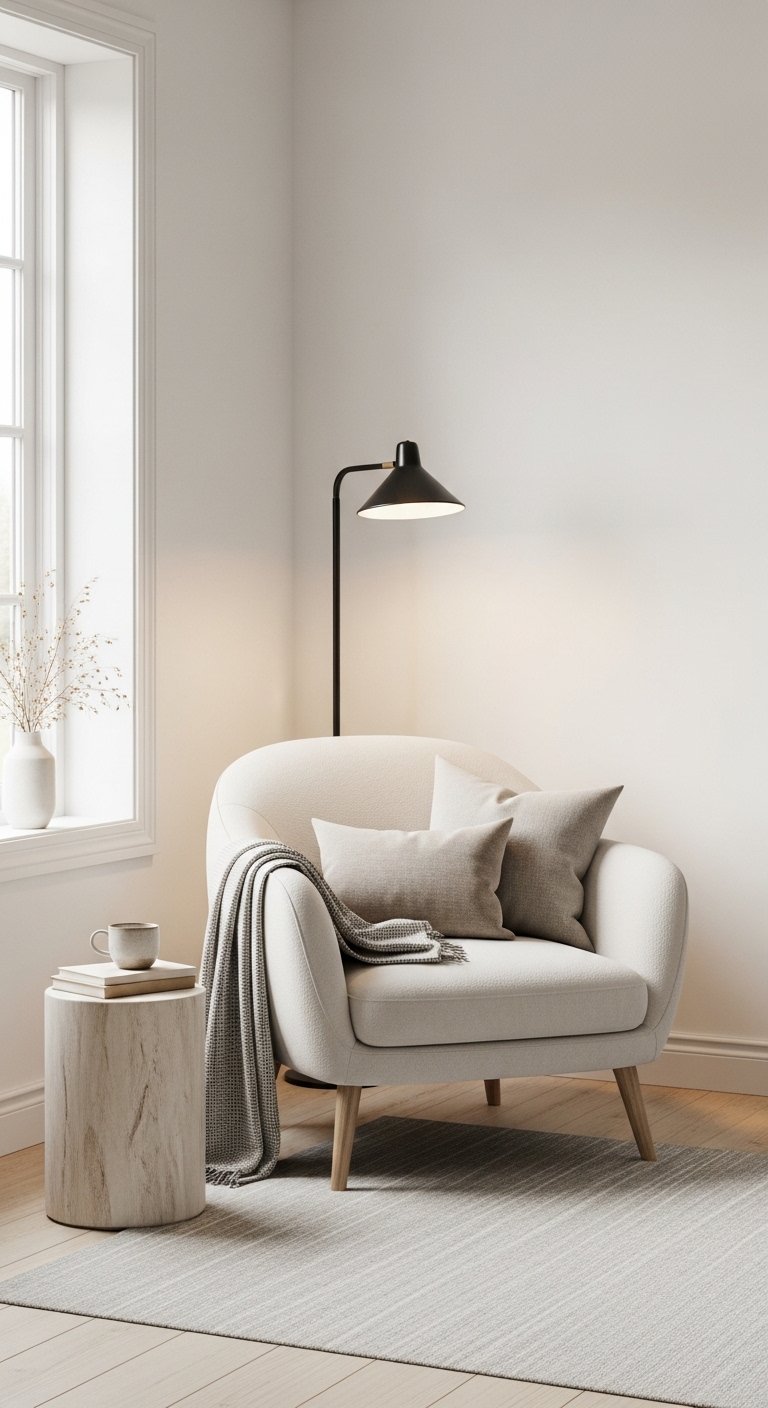
Design a small seating corner within your white living room to make the space feel more functional and inviting. Place a soft armchair in off-white or cream near a window or quiet corner, then add a small side table in light wood or stone. Layer a textured throw and a couple of cushions to enhance comfort. Use a floor lamp with warm light to define the area and make it usable in the evening. This setup creates a personal spot for reading or relaxing without disrupting the main layout. Keep the tones consistent so the corner blends naturally with the rest of the room while still feeling like a distinct and cozy zone.
22. Use Minimal Décor with Intentional Placement
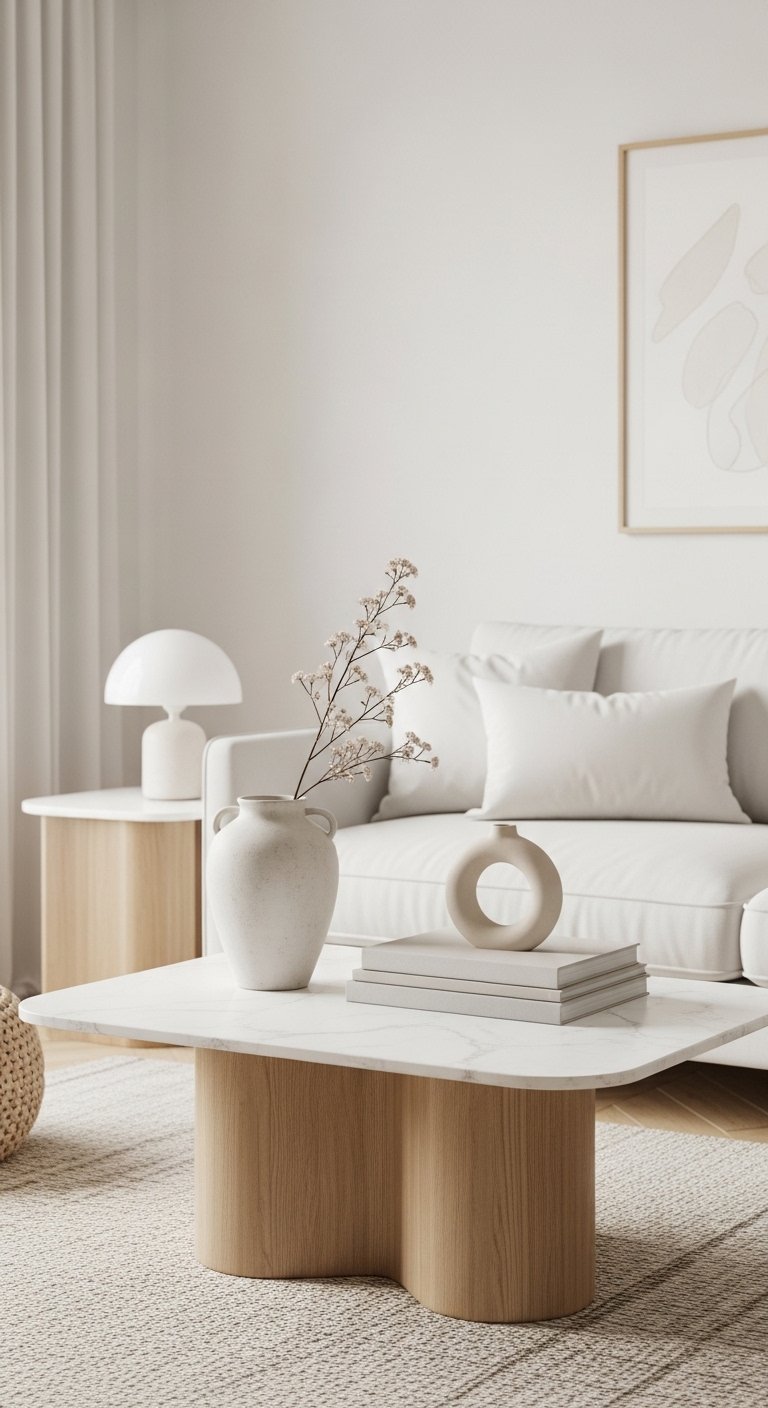
Keep décor minimal but meaningful to maintain a clean and timeless white living room. Instead of filling every surface, choose a few well-designed pieces and give them space to stand out. Place a ceramic vase, a stack of neutral books, or a sculptural object on a coffee table or shelf. Focus on balance and spacing so the room feels calm rather than empty. Group items in odd numbers and vary their heights for a natural arrangement. This approach reduces visual clutter and highlights each piece more effectively. A thoughtfully styled space always feels more refined than one filled with too many small items.
23. Blend Soft Stone Elements for a Luxe Feel
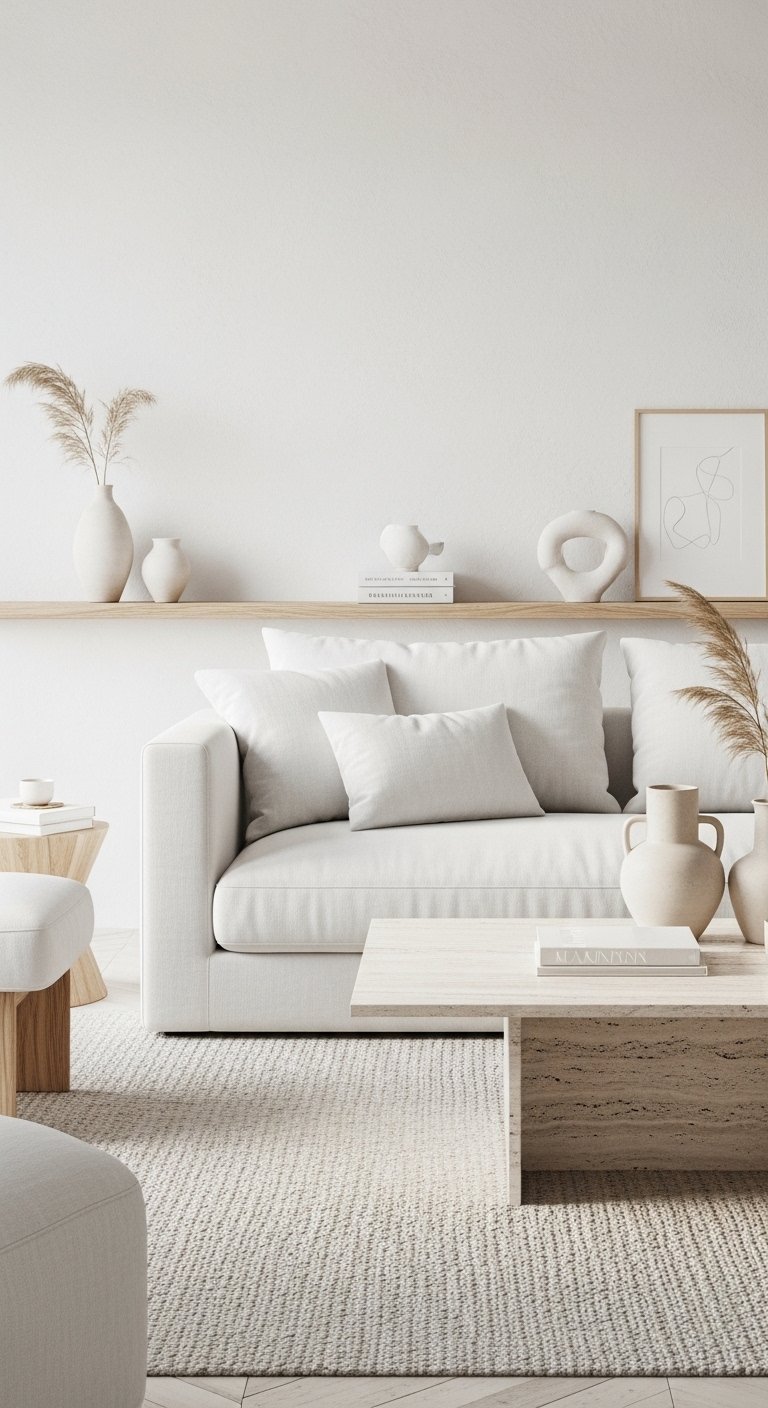
Introduce subtle stone elements like marble, travertine, or limestone to elevate the look of your white living room. Use a stone-top coffee table, side table, or decorative tray to add a natural yet refined texture. These materials often have gentle veining or tonal variation that adds depth without introducing strong colors. Pair stone surfaces with soft fabrics like linen and boucle to keep the overall feel balanced and comfortable. Avoid overly polished finishes and choose softer, matte textures for a more modern look. This combination brings a quiet sense of luxury while still keeping the space relaxed and timeless.
24. Keep the Layout Open and Breathable
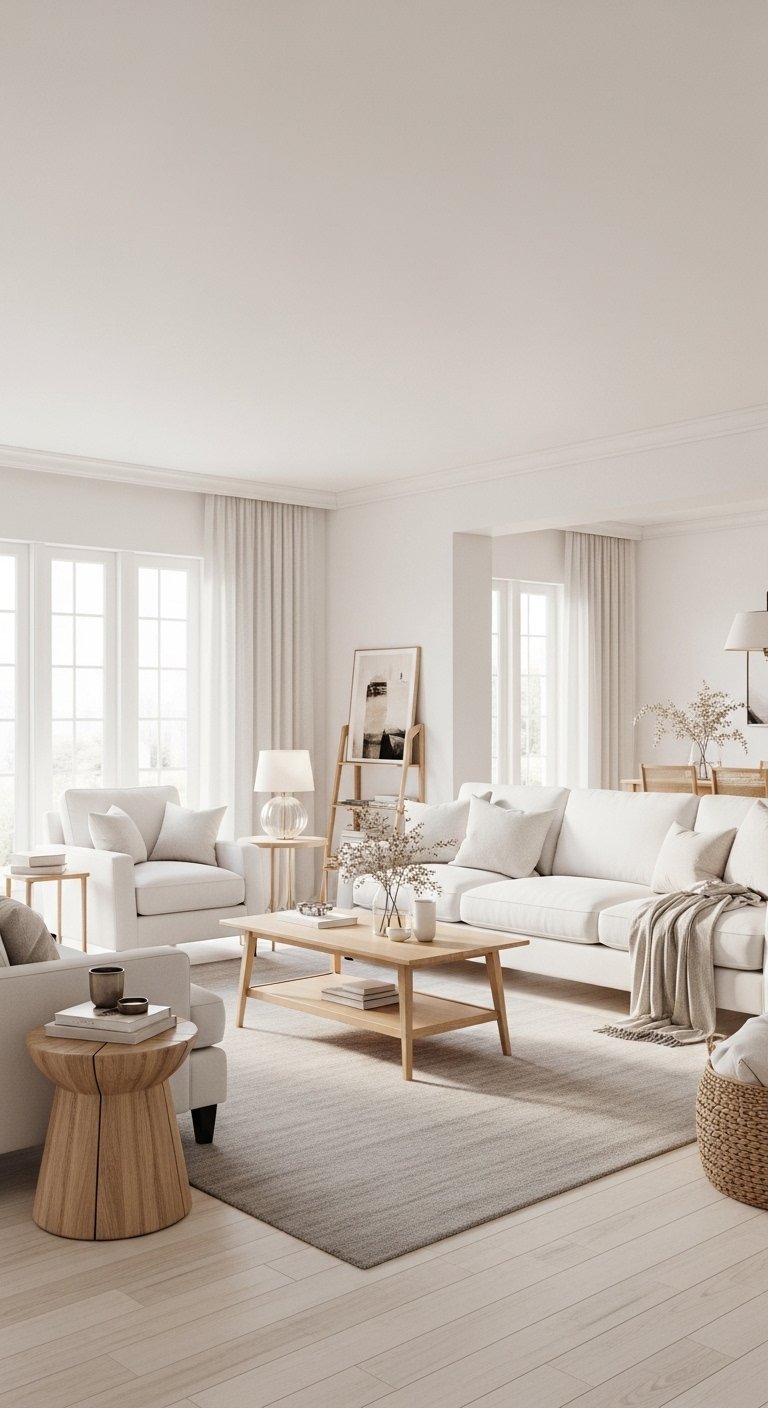
Arrange your furniture in a way that allows easy movement and maintains a sense of openness. Avoid pushing everything against the walls; instead, create a balanced layout with clear pathways. Leave some negative space between furniture pieces so the room feels light and uncluttered. Use a central rug to anchor the seating area while keeping the surrounding space open. This layout makes the white palette feel even more airy and spacious. It also improves functionality, making the room more comfortable for daily use. A breathable layout ensures that the design stays timeless and adaptable to future changes.
Conclusion
A white living room works best when you focus on depth, texture, and thoughtful details instead of relying on color. By layering tones, mixing materials, and using light strategically, you can create a space that feels warm, stylish, and never boring. Each idea in this guide gives you a practical way to enhance your space without making it complicated.
Start small by trying one or two ideas, then build gradually as you see what works best in your home. Save your favorite ideas, experiment with textures, and adjust the layout until the space feels right for you.