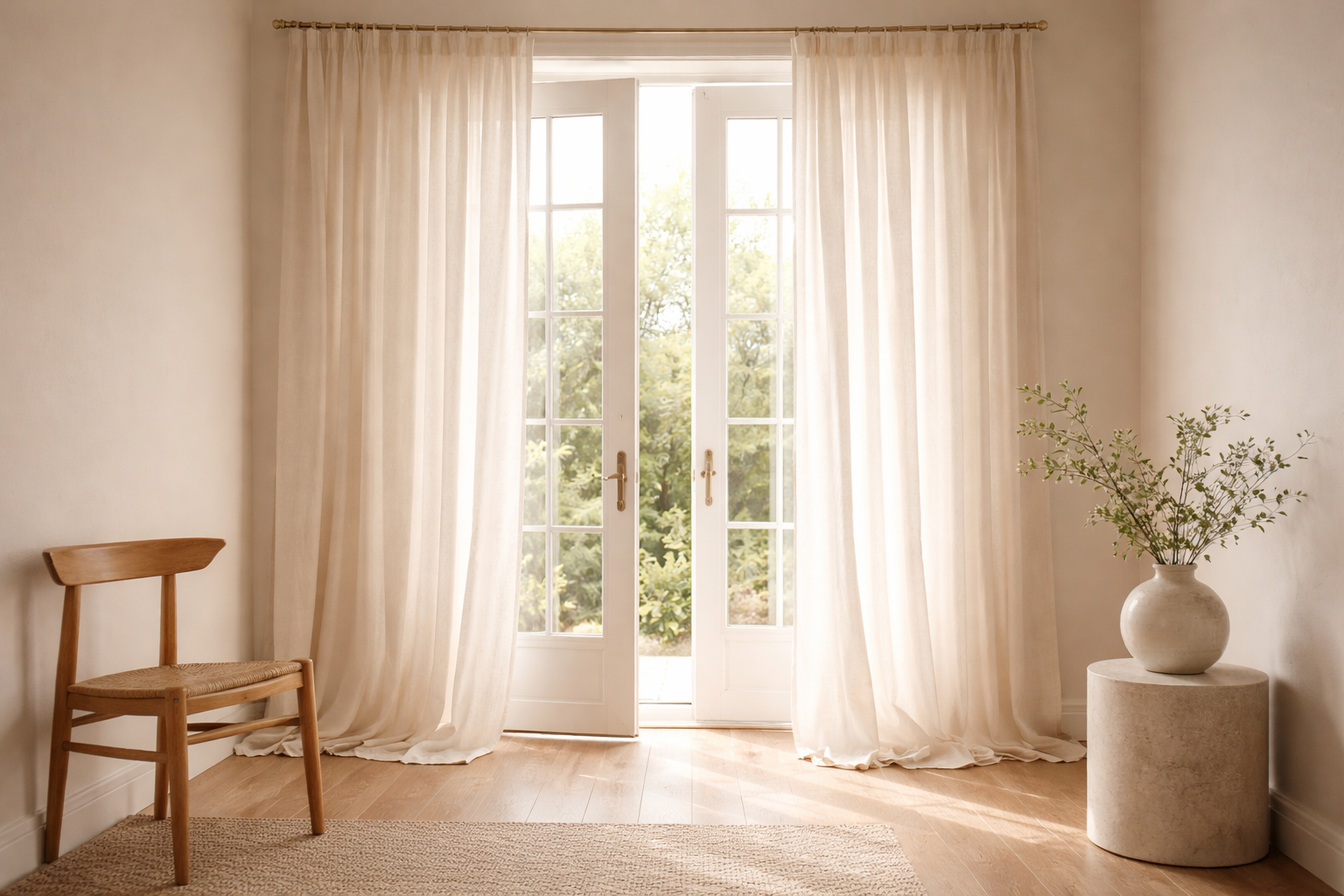
20 French Door Curtains Ideas for Elegant Privacy and Light Control
French doors deserve more than basic curtains. If your current setup feels ordinary, it is time to try ideas that feel fresh, creative, and truly eye-catching. This guide shares unexpected and smart curtain concepts that most people do not think about, yet they work beautifully in real homes. You will discover ways to play with light, mix unusual textures, and create privacy without making your space feel closed. Each idea is designed so you can actually use it, not just admire it. If you want your doors to feel stylish, unique, and Pinterest-worthy, these ideas will give you something different and exciting to try.
1. Light Diffusion Layer with Soft Shadow Casting Fabric
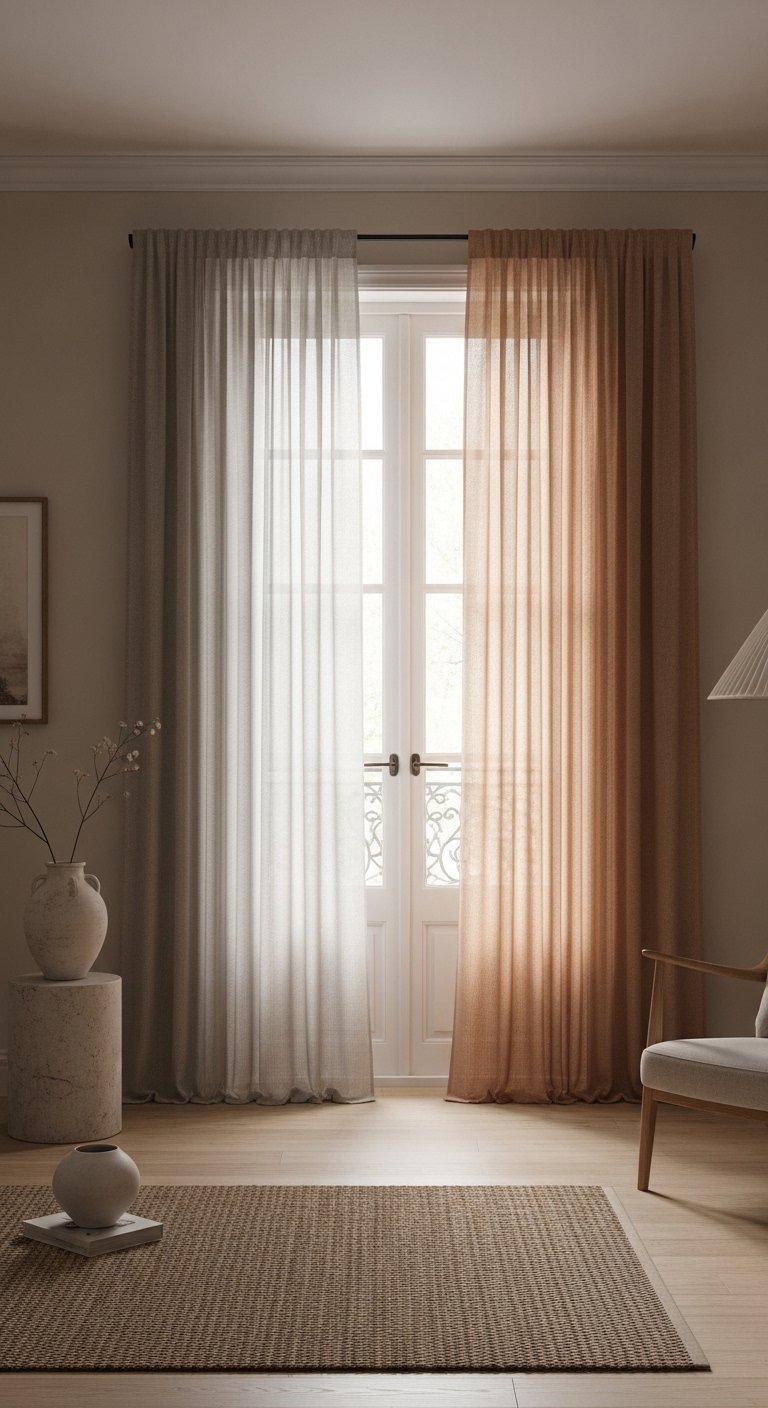
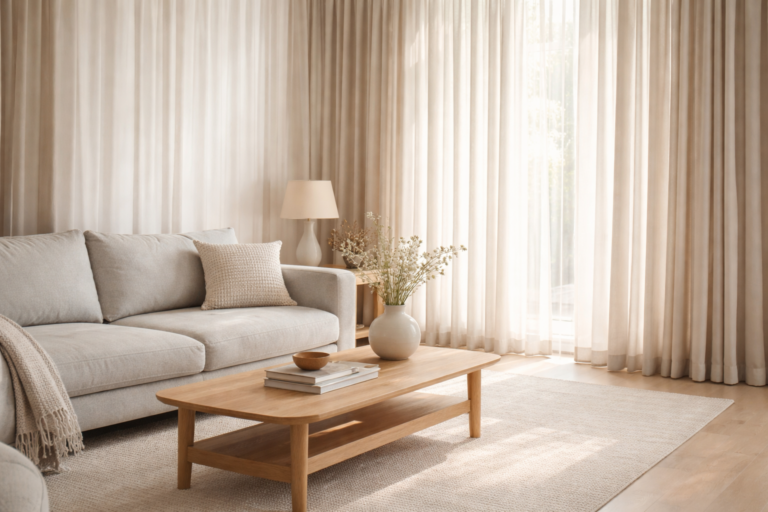
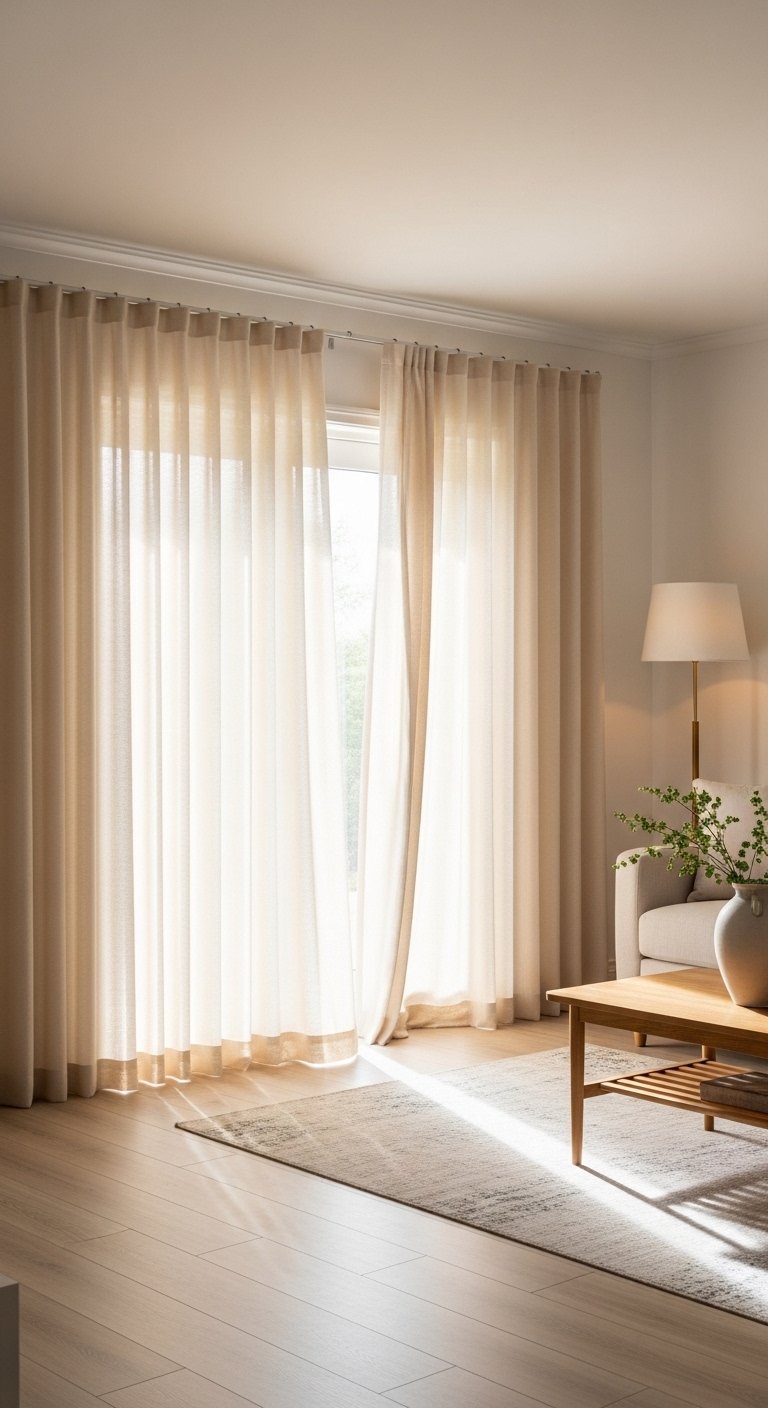
Instead of using plain sheer curtains, choose a fabric that slightly bends light and creates soft shadow patterns inside the room. This type of curtain uses a slightly uneven weave, so when sunlight passes through, it produces a calm and shifting shadow effect on your floor and walls. During the morning, the shadows feel soft and stretched, while in the evening they become warmer and deeper. This idea gives you privacy without fully blocking visibility, while also adding a natural movement that changes throughout the day. It works best in neutral tones like warm white or light sand so the shadows remain gentle and not distracting. This approach turns your curtain into something interactive rather than just functional, making your French doors feel alive and visually engaging.
2. Dual Tone Reversible Curtains for Mood Switching
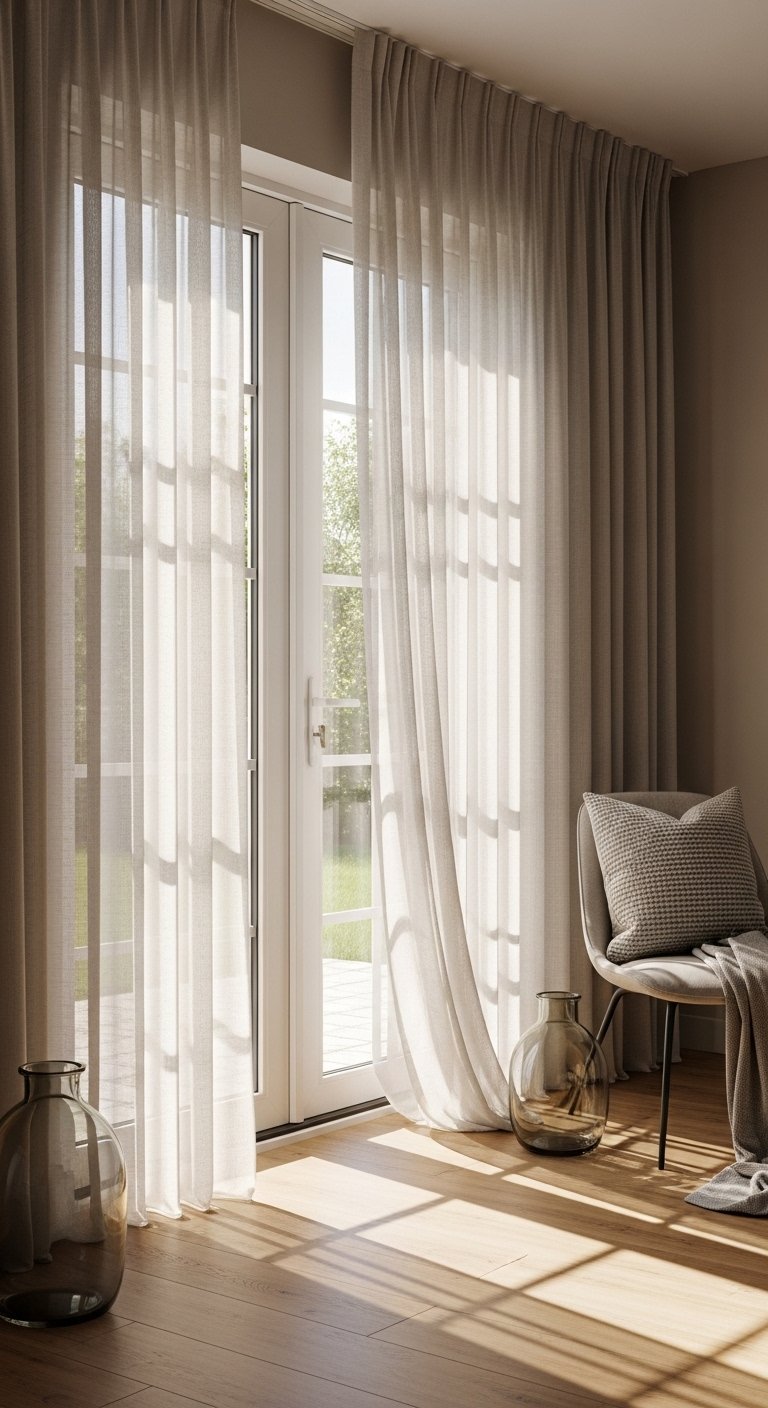
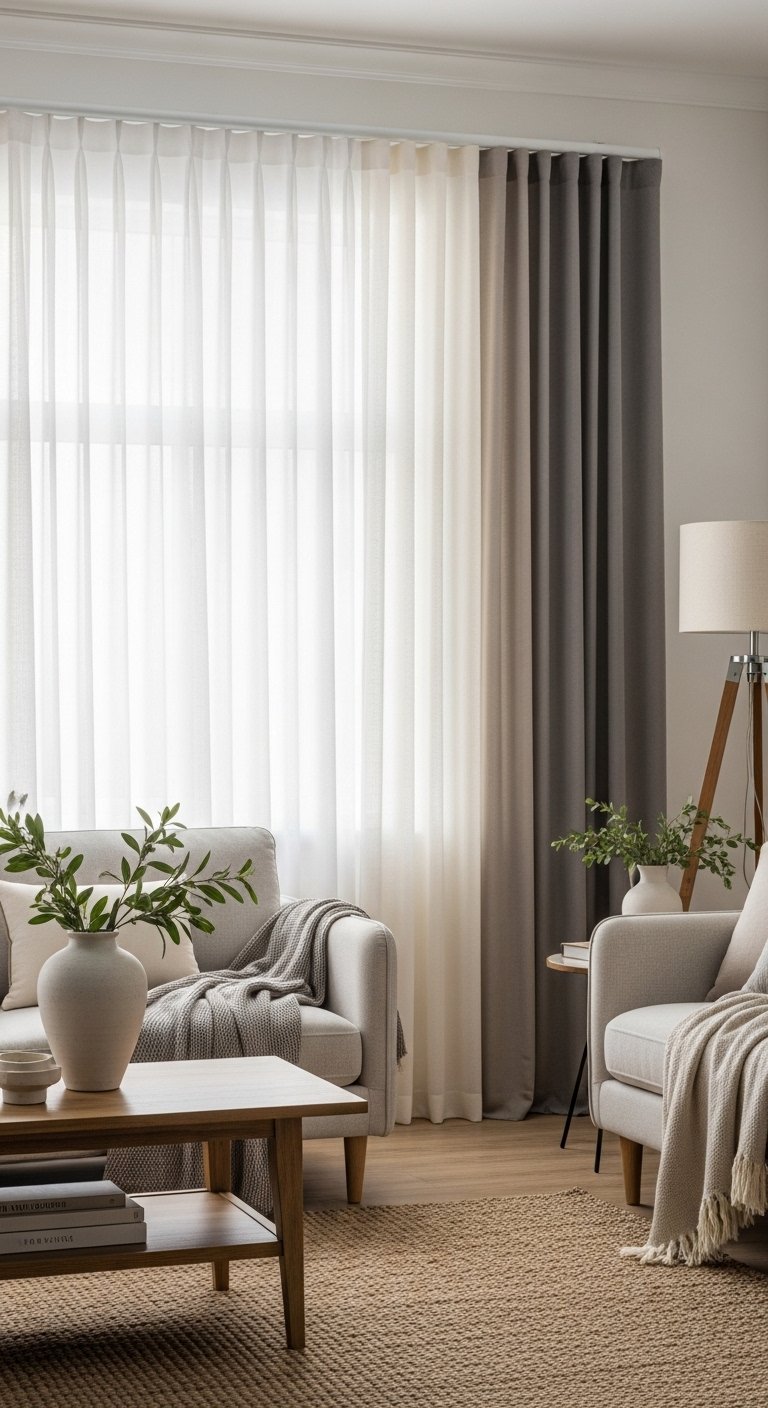
Create a curtain setup that can be flipped or rotated to show a different color tone depending on your mood or season. One side can be a soft neutral like cream, while the other side can carry a deeper tone like olive or muted blue. By simply adjusting how the curtain hangs or folds, you can change the entire feeling of your space without replacing anything. This idea is especially useful for people who like refreshing their interiors without spending much. It also helps control light differently, since darker tones absorb more light while lighter tones reflect it. The result is a flexible design that feels new every time you adjust it, making your French doors a dynamic part of your room instead of a fixed element.
3. Angled Curtain Hanging for Directional Light Control
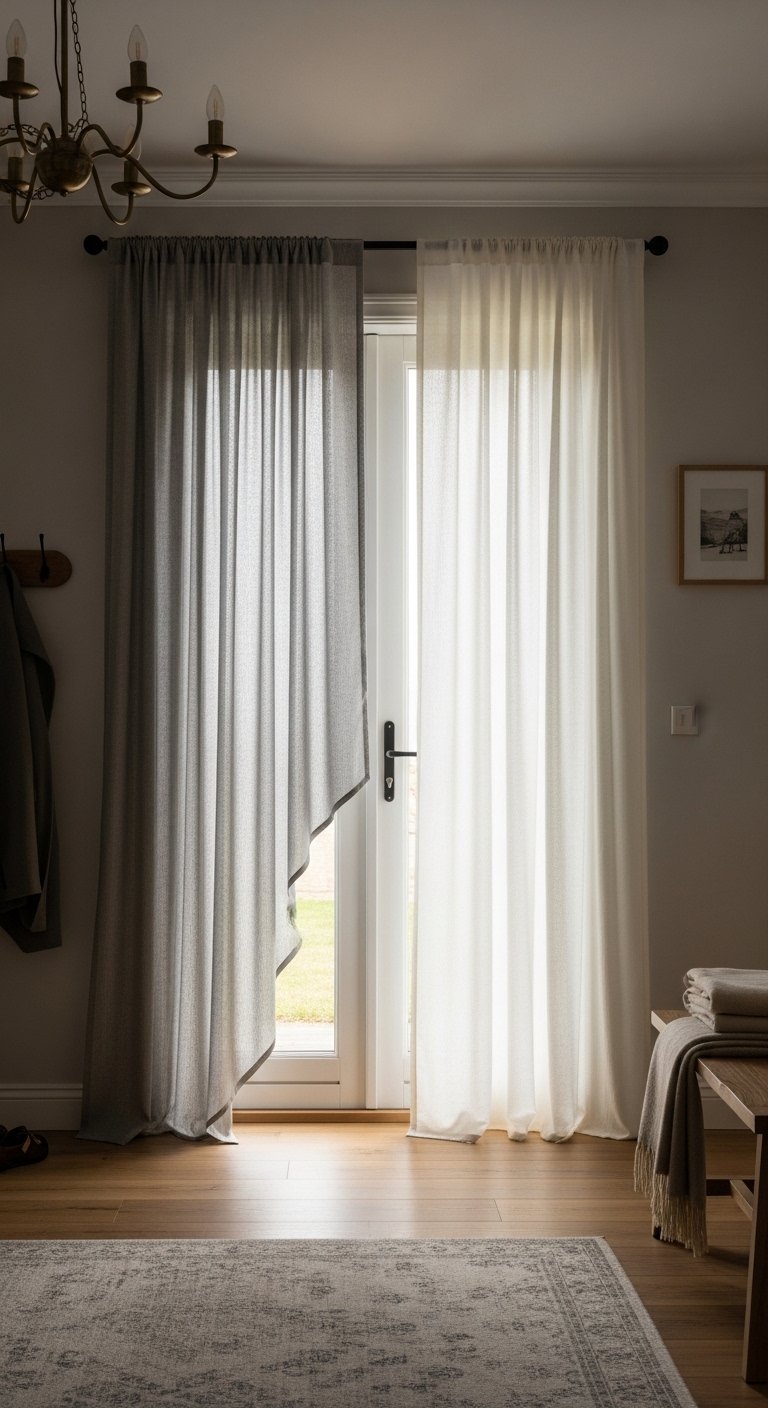
Instead of hanging curtains straight down, install them at a slight angle so one side sits higher than the other. This allows sunlight to enter from a specific direction while still covering the rest of the door. It is a subtle change, but it completely transforms how light spreads across the room. You can guide sunlight toward a seating area or keep it away from screens and workspaces. This idea works beautifully in rooms where natural light needs to be controlled more thoughtfully. Choose lightweight fabrics so the angle looks soft and natural rather than stiff. The result feels modern and creative, giving your French doors a custom-designed look that most people never think about.
4. Layered Transparency Curtains with Adjustable Overlap
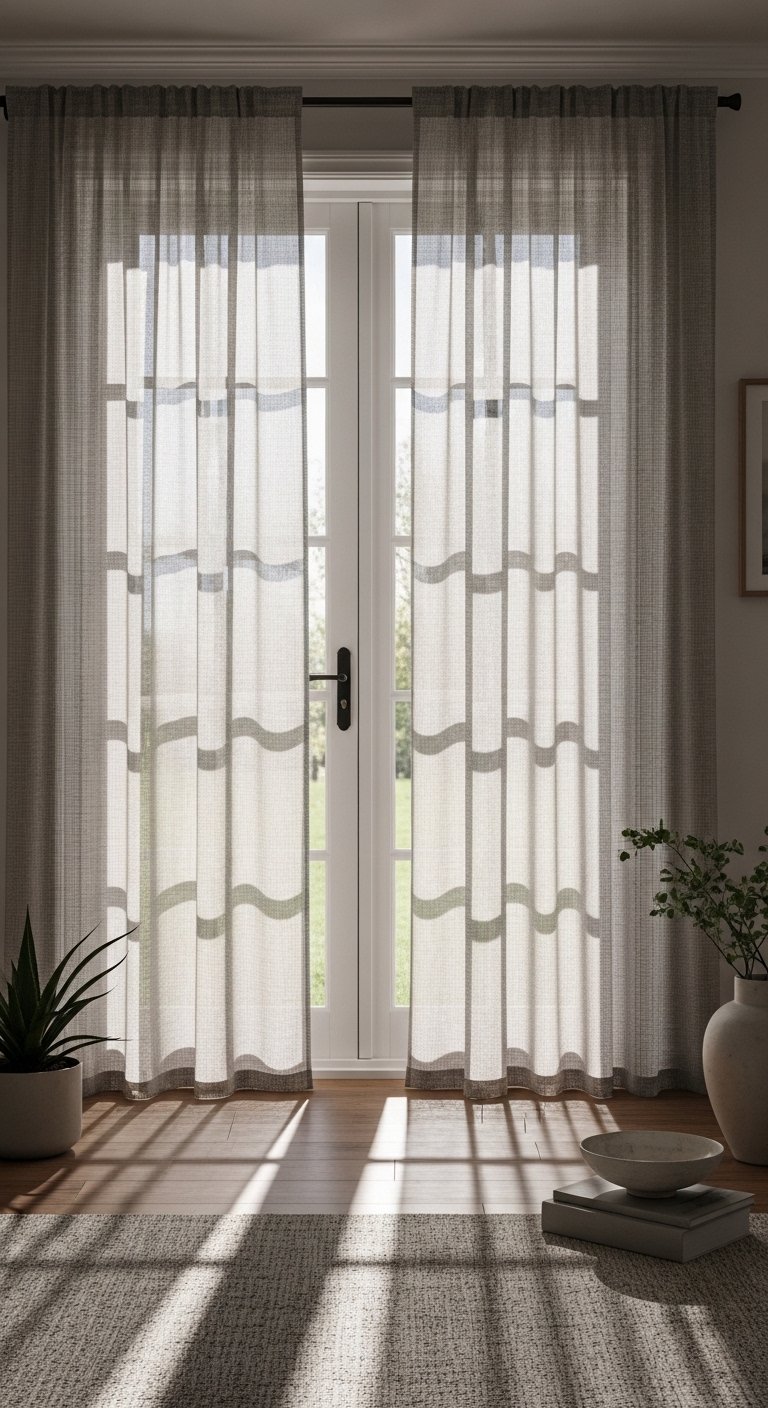
Use two sheer panels with slightly different transparency levels and overlap them in the center. By adjusting how much they overlap, you can control how much light enters and how visible the outside view remains. When fully overlapped, the space feels more private and softly dimmed. When slightly separated, light flows in more freely while still maintaining coverage. This idea gives you a sliding scale of privacy without needing heavy curtains. It also creates a layered visual effect that feels soft and elegant. Using similar tones like off-white and pale gray keeps the look cohesive while still allowing the layers to be noticeable.
5. Textured Fabric with Raised Patterns for Light Play
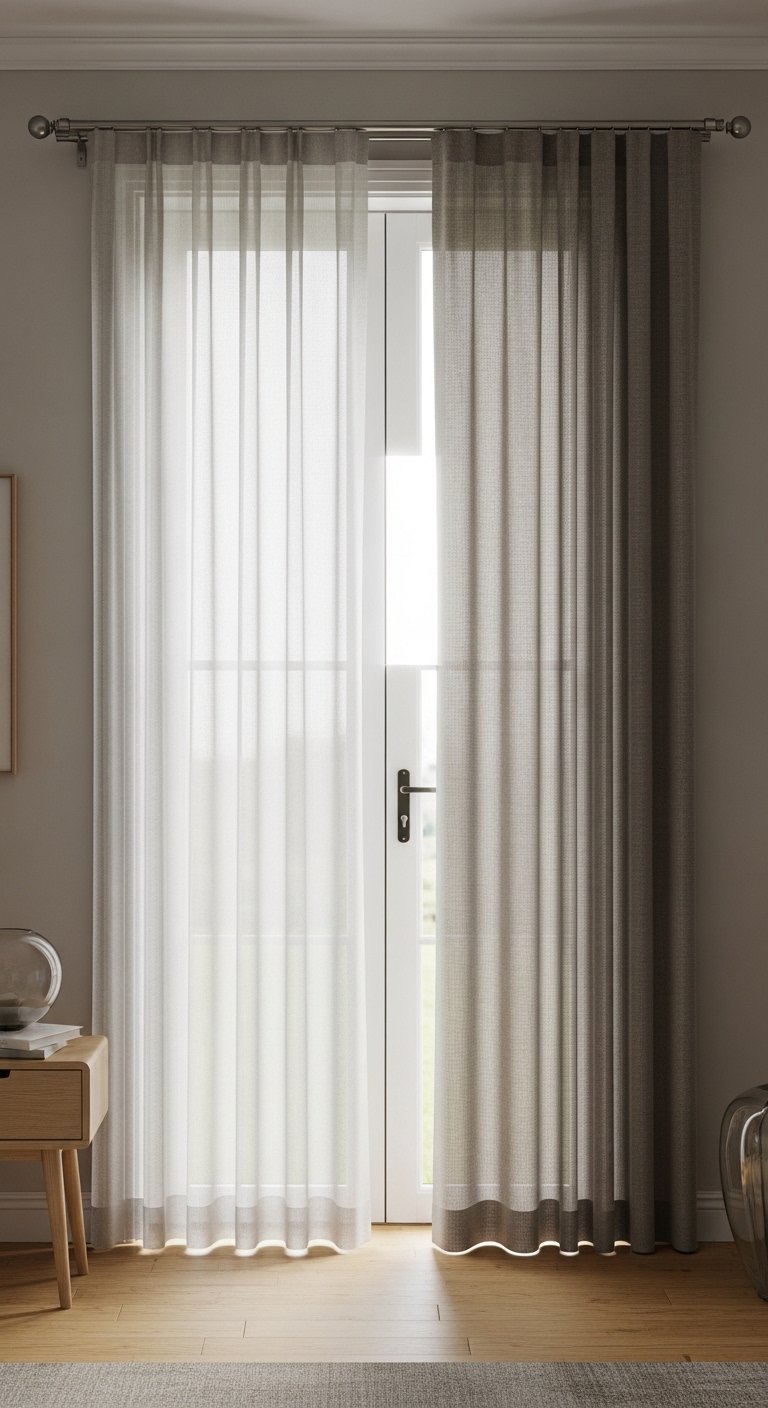
Choose curtains that include raised patterns or slightly embossed textures rather than printed designs. These textures interact with light in a unique way, creating highlights and shadows that shift as the day changes. Unlike flat patterns, raised textures add depth without making the curtain look busy. This works especially well in spaces that feel too plain and need subtle interest. Stick to neutral colors so the texture becomes the focus instead of color. When sunlight hits the raised areas, it creates a soft glowing effect that feels calm yet refined. This idea brings quiet luxury to your French doors without making them look heavy or decorative.
6. Split Movement Curtains with Independent Flow Panels
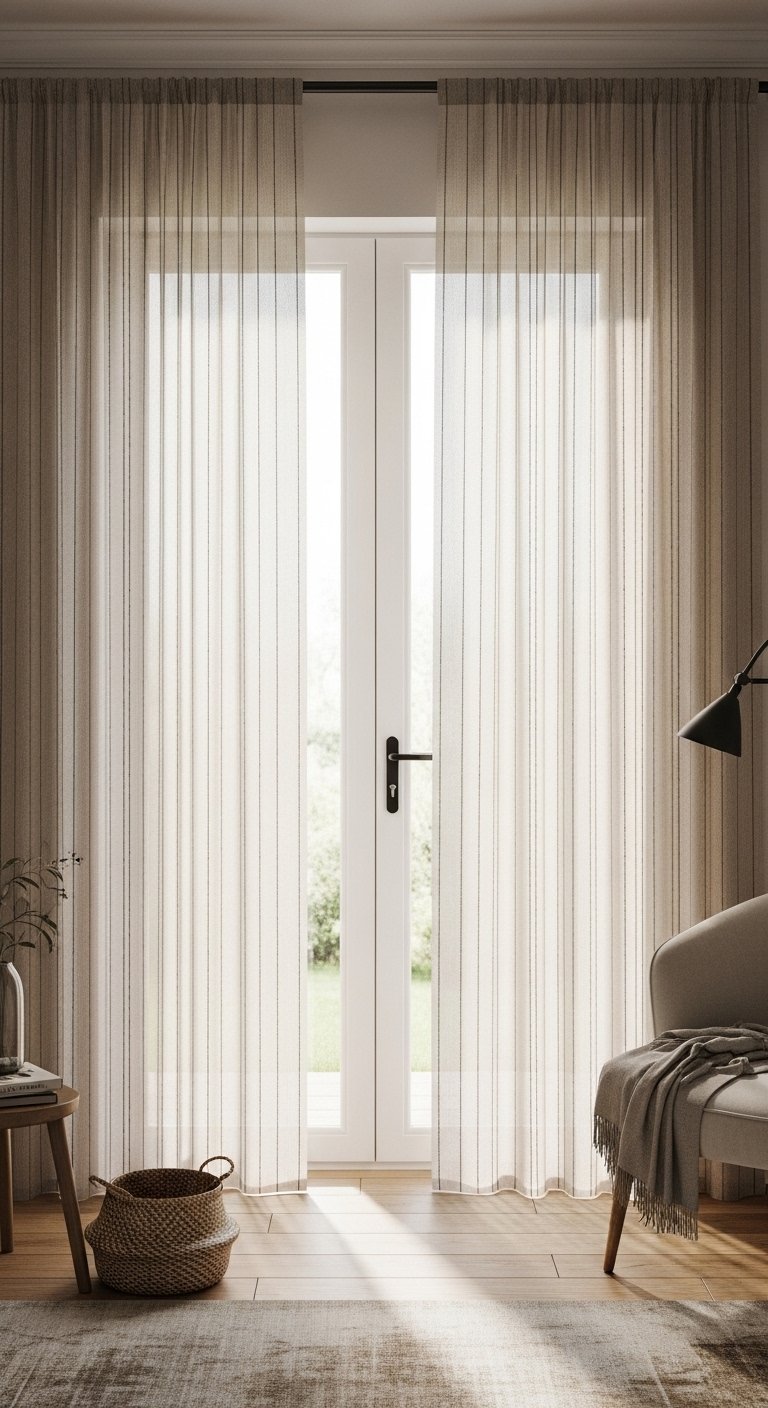
Design your curtains so each panel moves independently in a more fluid way rather than opening as a single unit. This allows you to adjust small sections at a time instead of the entire curtain. For example, you can open only the top section slightly while keeping the lower part closed. This gives you very precise control over light and privacy. It also creates a layered movement that feels more natural and less structured. Use soft fabrics that respond well to airflow so the panels move gently. This idea adds a sense of motion and flexibility, making your French doors feel more dynamic and responsive to your needs.
7. Subtle Color Shift Curtains Based on Light Angle
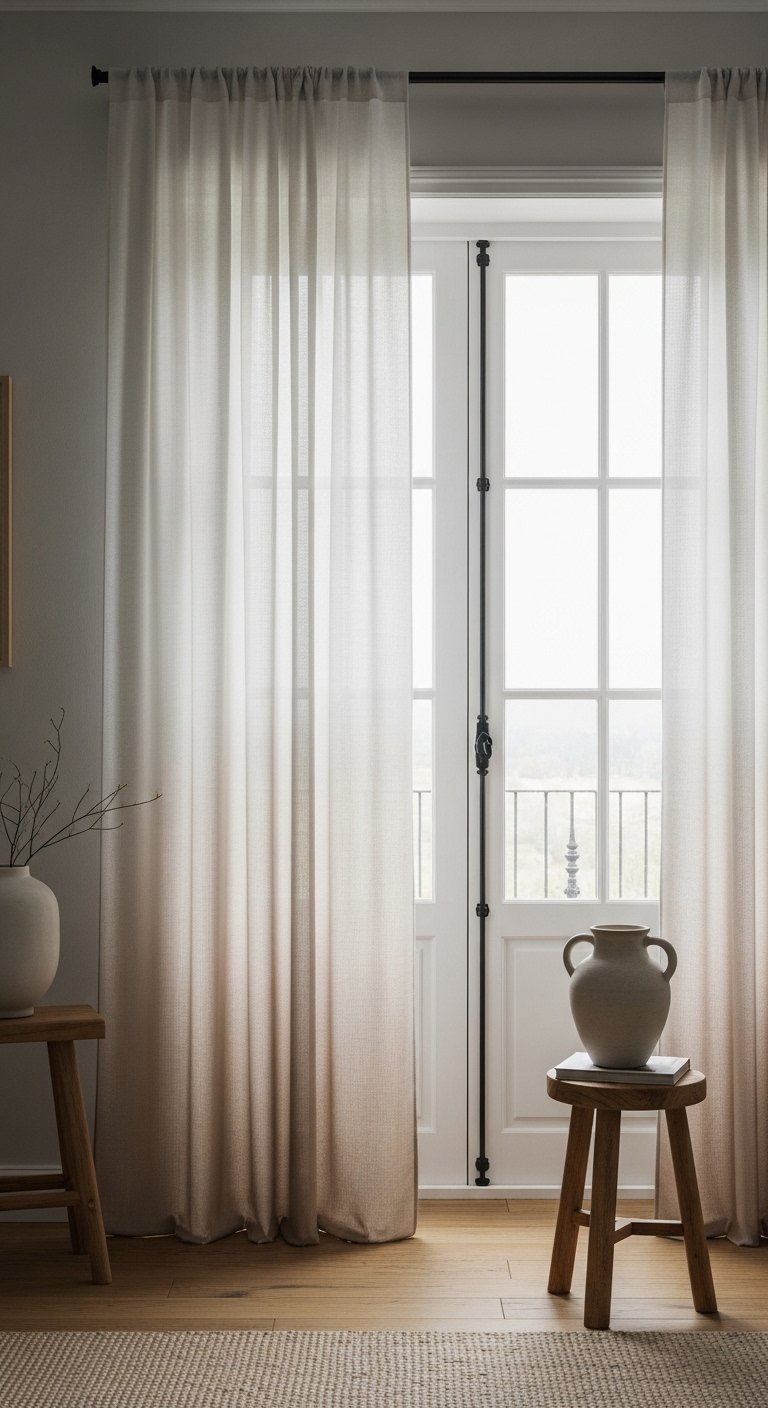
Use fabrics that appear slightly different in color depending on how light hits them. These are not bold color-changing materials but soft tone-shifting fabrics that move between shades like beige and gold or gray and silver. During the day, natural light highlights one tone, while indoor lighting reveals another. This creates a gentle transformation that keeps your space visually interesting without being obvious. It works best in calm color palettes where the shift feels elegant rather than dramatic. This idea adds depth and uniqueness, making your curtains feel more alive and responsive to the environment.
8. Soft Framed Curtain Layout with Inner Border Detail
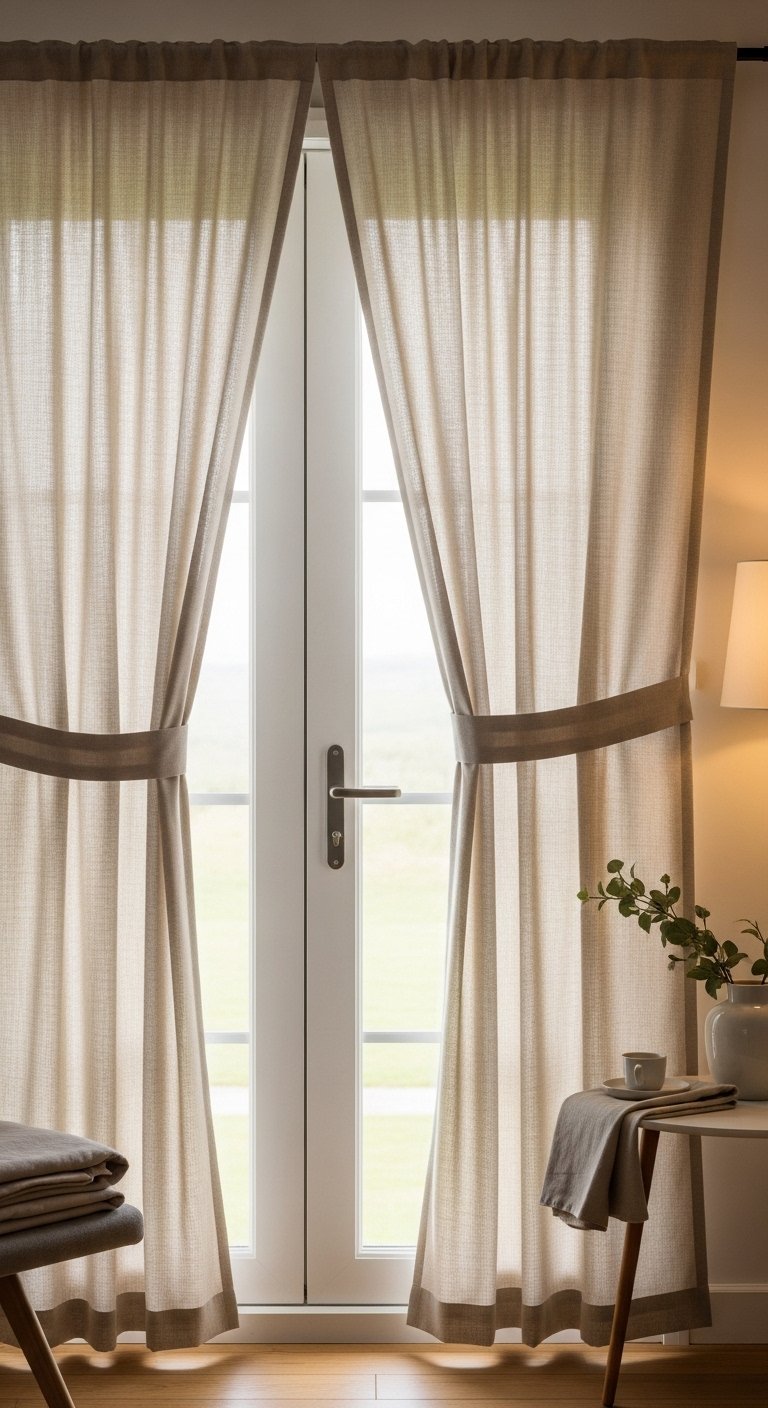
Instead of plain curtain edges, add a thin inner border in a slightly darker or contrasting tone. This border runs along the inside edge of each panel, framing the glass area of the French door. It creates a structured look without needing heavy designs. The border draws attention to the shape of the door while keeping the overall style simple. Choose subtle contrasts like cream with soft brown or white with light gray. This idea feels tailored and intentional, giving your curtains a custom-made appearance that stands out in a quiet way.
9. Light Filtering Fabric with Micro Perforation Effect
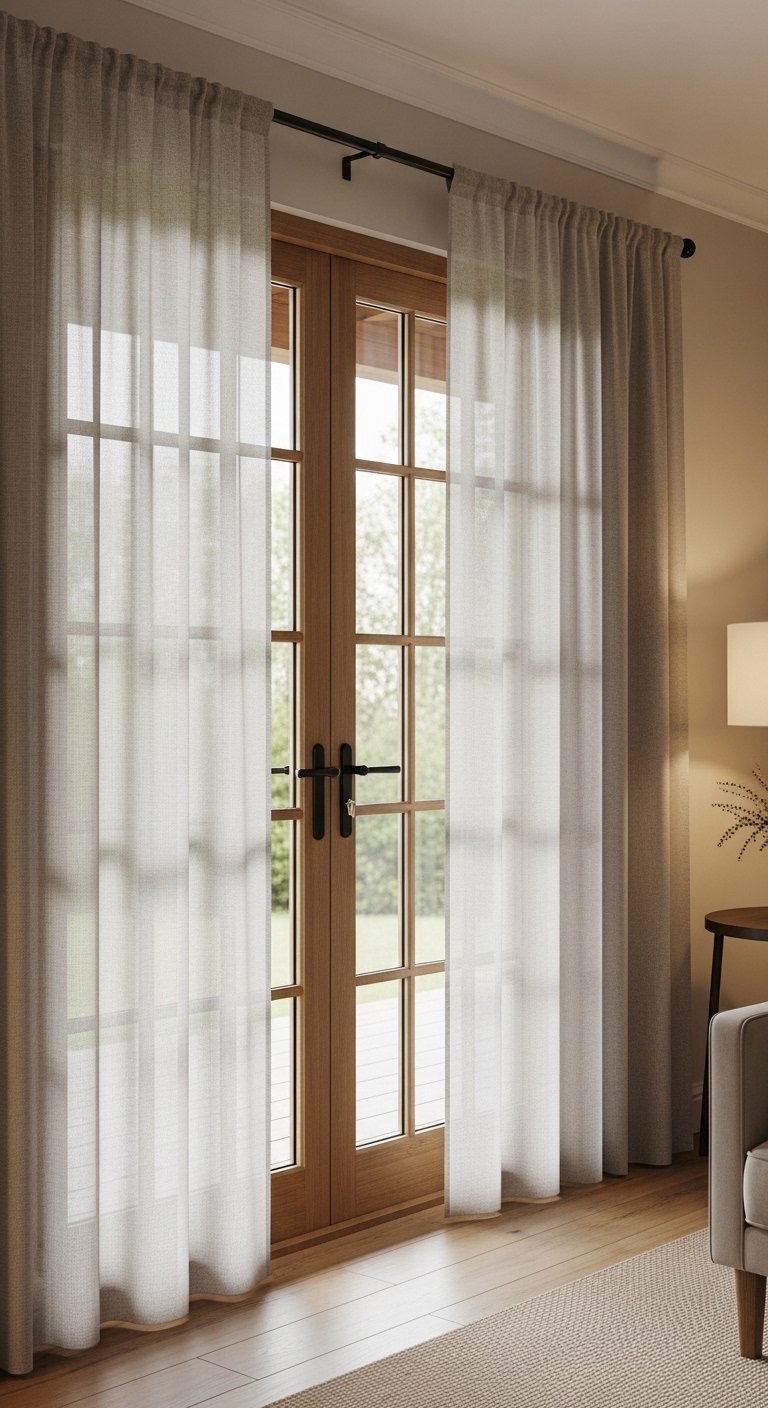
Use curtains designed with tiny, almost invisible openings that allow controlled light entry. These micro perforations soften harsh sunlight while still keeping the room bright. From a distance, the fabric looks solid, but up close it reveals a delicate texture. This creates a balance between openness and privacy that feels modern and smart. It works especially well for doors facing strong sunlight where full sheers feel too exposed. The light that enters feels diffused and even, reducing glare while maintaining brightness.
10. Multi Layer Soft Fold Curtains with Depth Effect
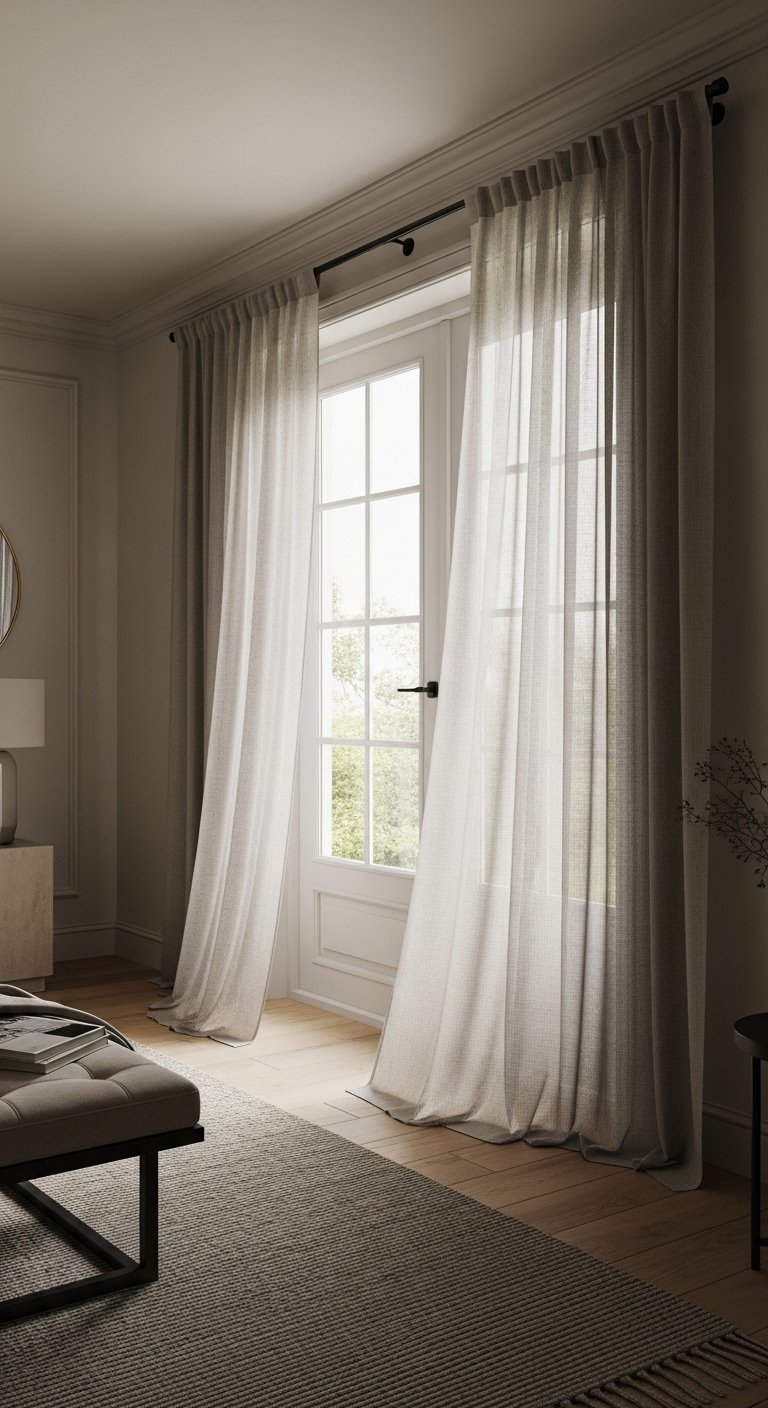
Create depth by using three very light layers instead of one or two. Each layer should be slightly different in tone, such as white, ivory, and soft beige. When layered together, they create a rich and dimensional look without adding heaviness. Light passes through each layer differently, creating a soft gradient effect across the room. This makes your French doors feel more luxurious and thoughtfully designed. The layers also allow flexible privacy control depending on how you arrange them. This idea feels elegant and high-end while still being easy to achieve with simple materials.
11. Directional Sheer Panels that Guide Sunlight
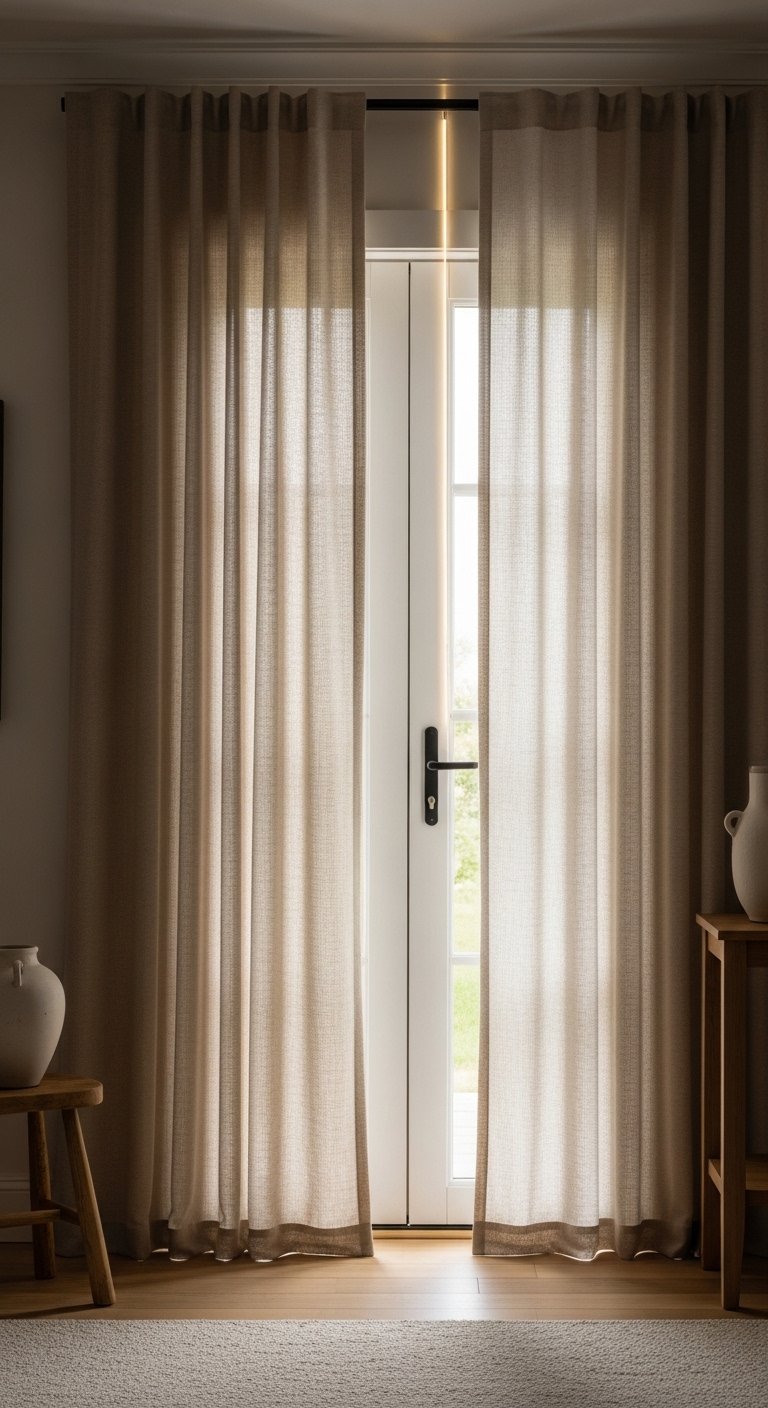
Create a setup where sheer panels are placed in a slightly curved or guided track instead of a straight rod. This allows you to gently direct how sunlight enters your room rather than letting it spread randomly. By adjusting the curve, you can push light toward a wall for a soft glow or toward a seating area for warmth. The fabric should be very light, like airy voile, so it bends naturally along the curve. This idea feels almost architectural because it shapes light like a design element. It works especially well in rooms where sunlight is strong and you want to soften it without losing brightness. The result feels calm, controlled, and visually unique in a way most curtain setups never achieve.
12. Soft Layer Curtains with Hidden Warm Tone Lining
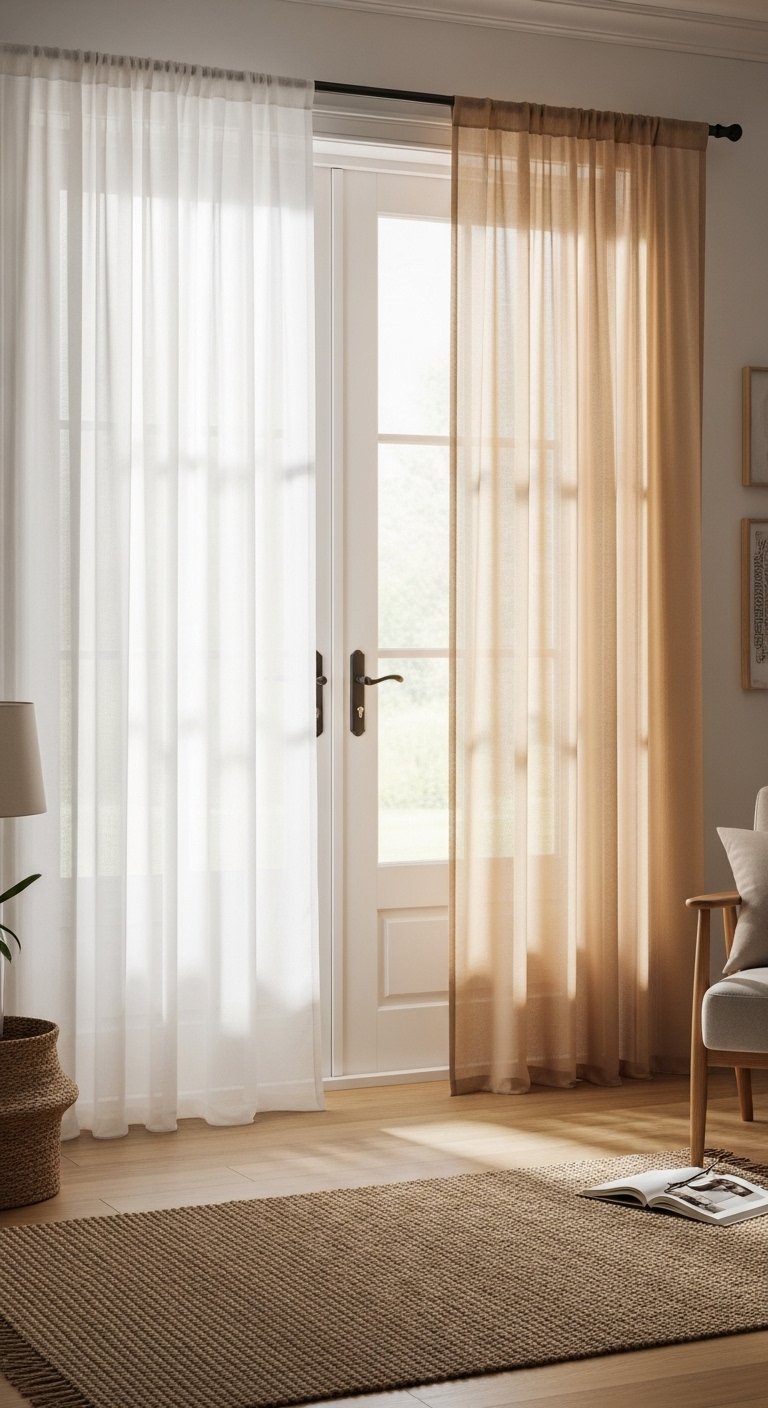
Add a hidden lining behind your curtain that carries a warm undertone like soft peach or golden beige. From the front, the curtain looks neutral, but when sunlight passes through, it creates a warm glow inside the room. This subtle warmth makes your space feel more inviting, especially during cooler seasons. The effect is not obvious, but it changes the mood of the entire room. It works beautifully in living spaces where you want light to feel cozy instead of harsh. This idea blends function and atmosphere in a way that feels natural and refined.
13. Floating Panel Curtains with Minimal Contact Design
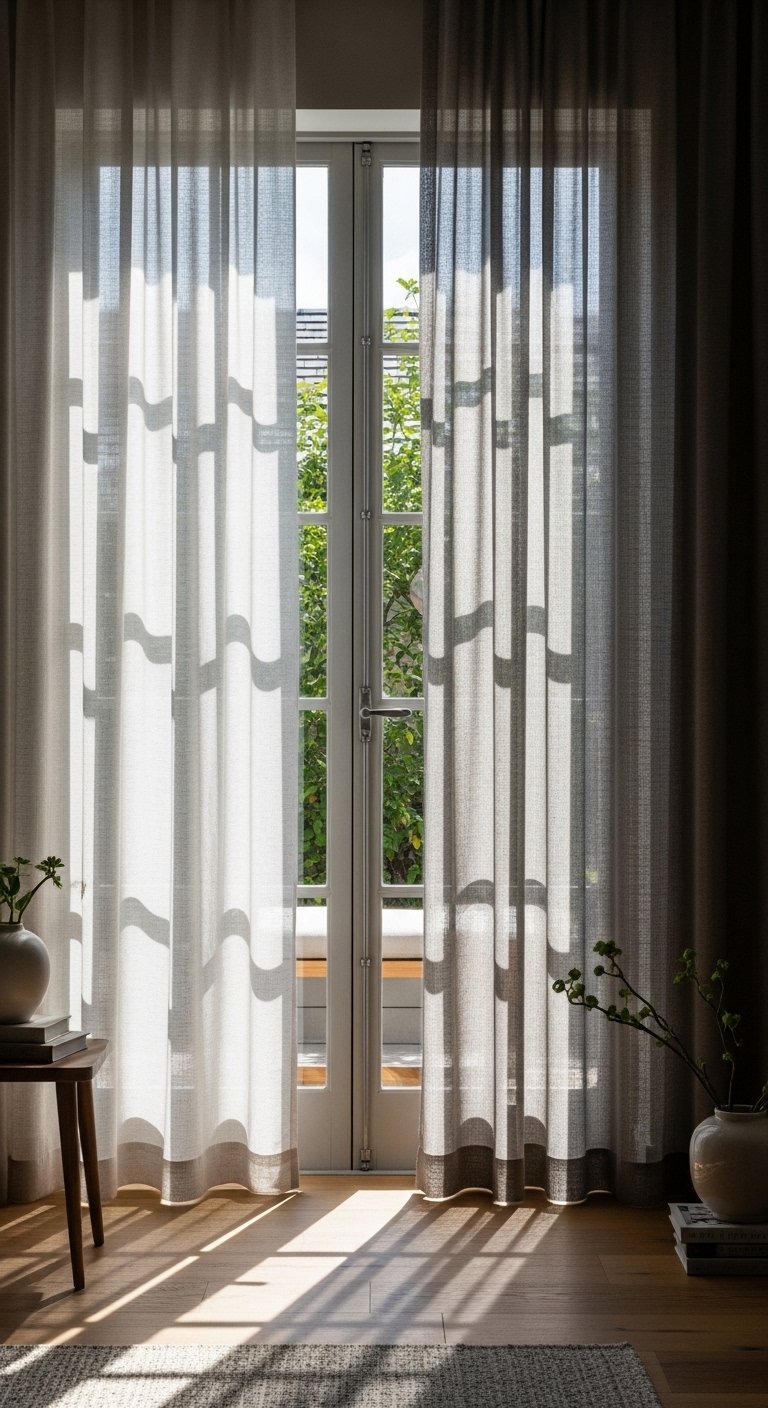
Install curtain panels so they barely touch the door surface, leaving a slight gap between fabric and glass. This creates a floating effect that feels light and modern. The gap allows air to move freely, which helps the curtains shift gently and naturally. Use soft but structured fabrics so the panels keep their shape without clinging. This idea works well in contemporary spaces where clean lines matter. It also reduces the feeling of heaviness that traditional curtains sometimes create, making your French doors look more open while still offering privacy.
14. Dual Direction Opening Curtains for Zoned Privacy
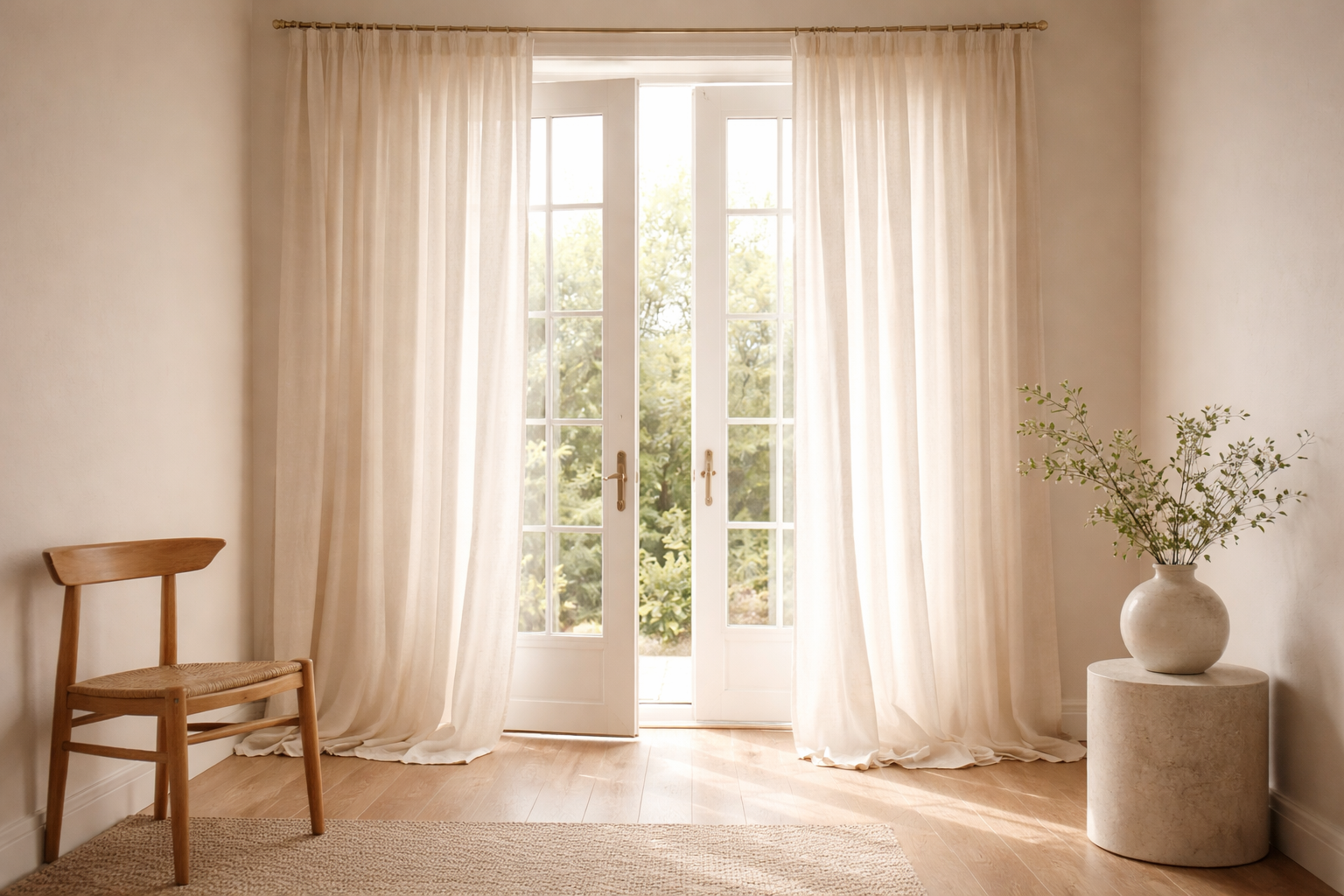
Instead of opening curtains only from the center, design them to open from both the center and the sides. This gives you multiple ways to control privacy. You can keep the middle closed while opening the edges slightly, or do the opposite depending on your needs. This creates zones of light and privacy across the door rather than a single open or closed option. It feels more flexible and thoughtful, especially in busy areas where light needs change throughout the day. Choose soft neutral fabrics so the movement remains smooth and visually balanced.
15. Textured Sheer with Layered Thread Density
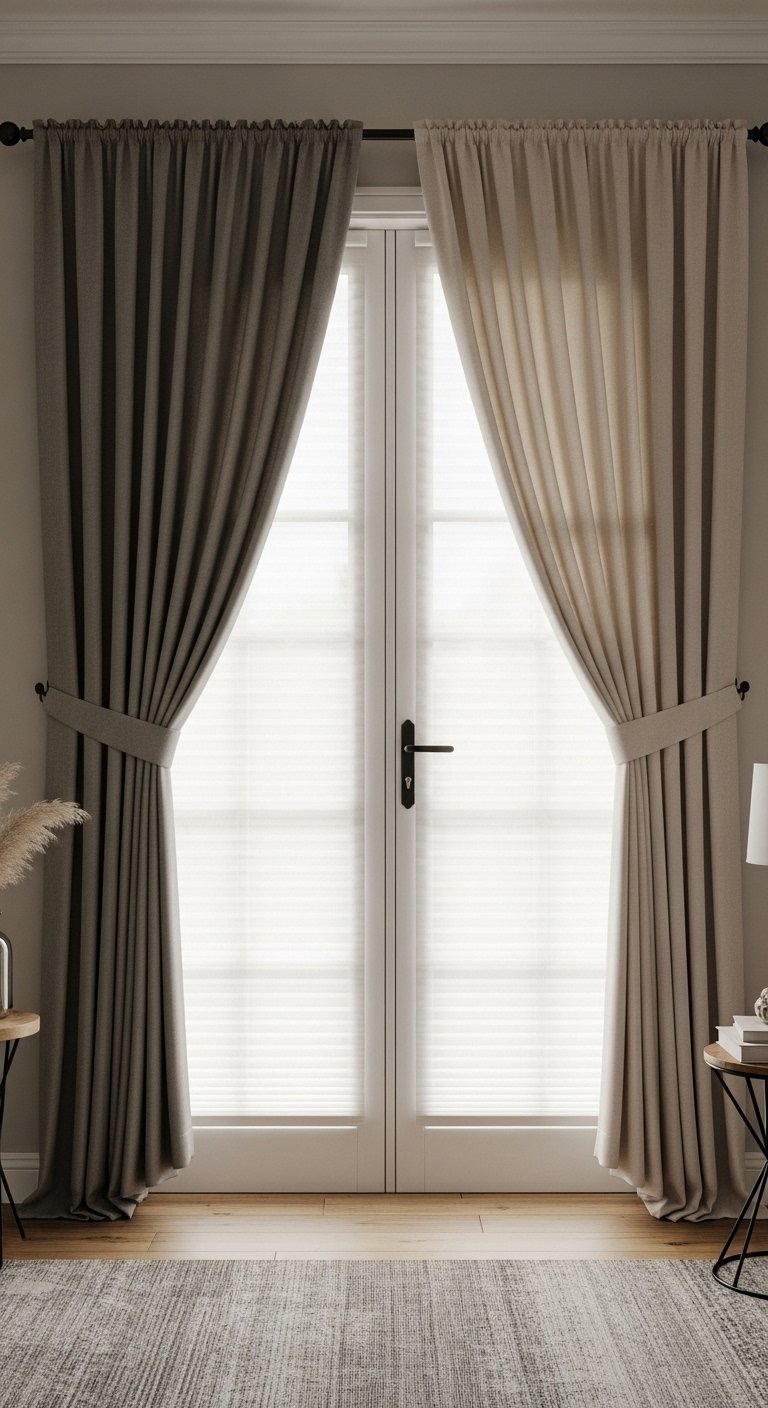
Use a sheer fabric that has varying thread density across its surface. Some areas are slightly thicker, while others remain very light. This creates a natural variation in how light passes through the curtain. The result is a soft, cloud-like effect where light appears stronger in some spots and softer in others. It feels organic and calming, almost like filtered sunlight through leaves. This idea adds depth without using patterns or bold colors, making it perfect for spaces that need subtle visual interest.
16. Soft Fold Curtains with Weighted Bottom Balance
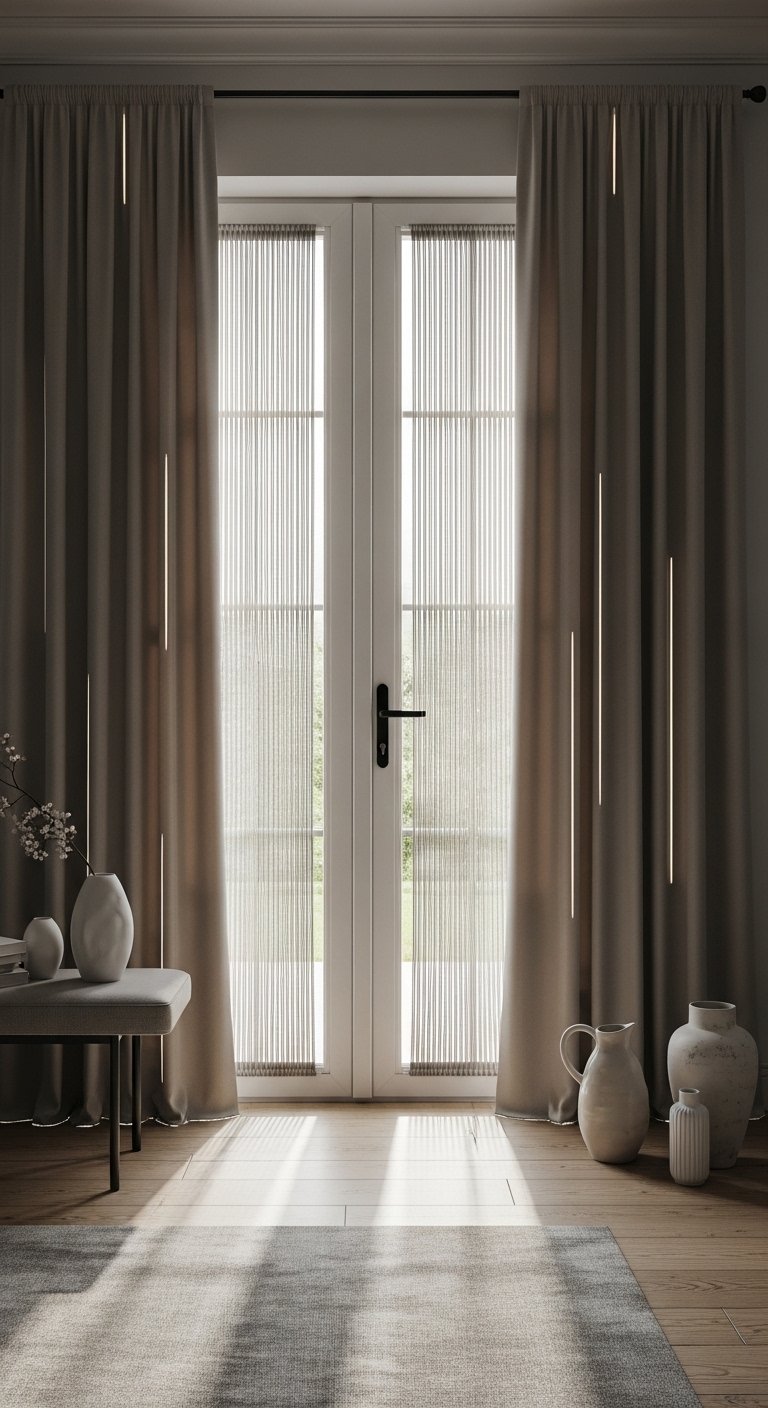
Add a gentle weight to the bottom edge of your curtains so they fall perfectly straight without constant adjustment. This small detail makes a big difference in how polished your curtains look. The added weight keeps the fabric from moving too much, which is ideal for French doors that open often. It also helps maintain clean lines and even folds. Use lightweight fabrics so the weight feels natural and not heavy. This idea improves both function and appearance in a simple but effective way.
17. Light Channel Curtains with Narrow Vertical Openings
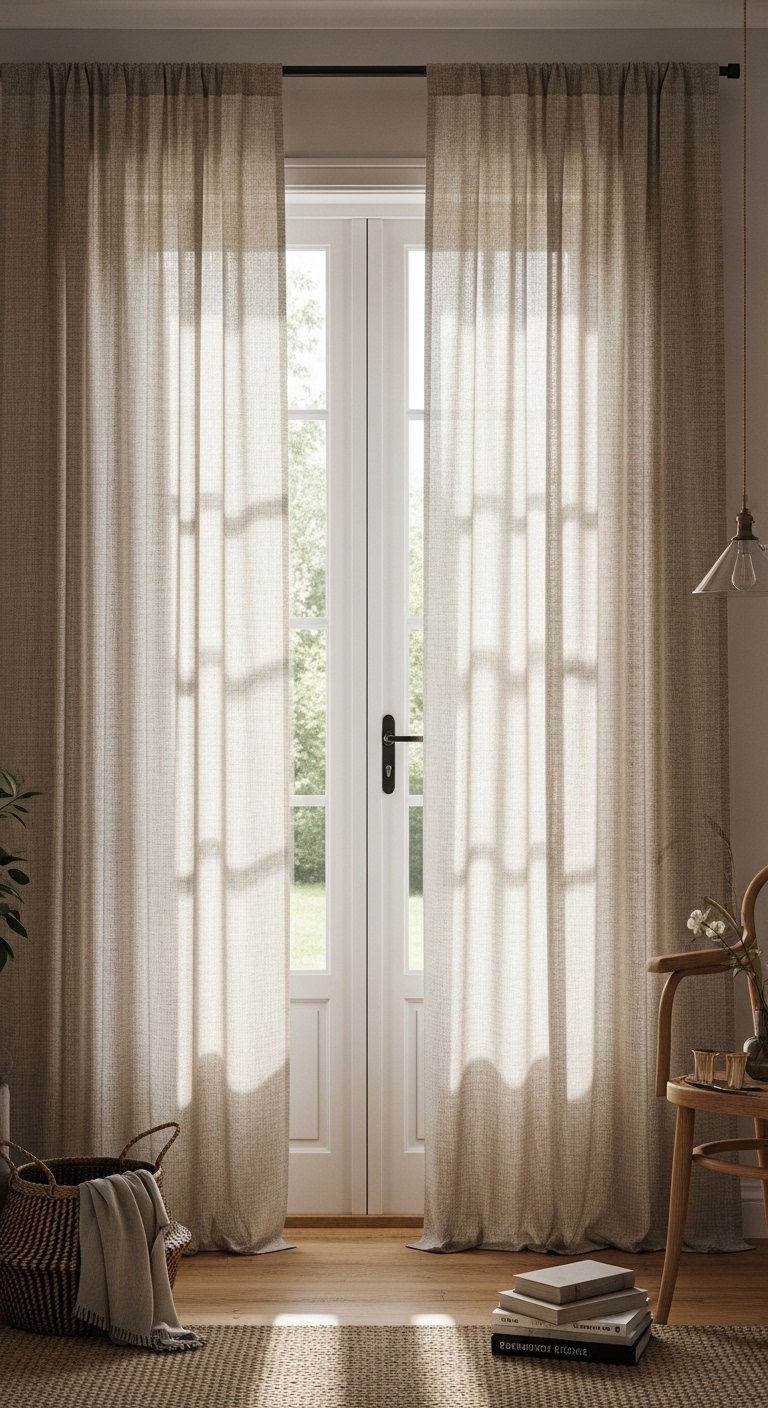
Design your curtains with very narrow vertical openings spaced evenly across the panel. These openings allow thin streams of light to pass through, creating soft lines of brightness inside the room. It feels modern and artistic without being bold. The lines of light shift slightly throughout the day, adding movement and interest. This idea works well in minimalist spaces where small details create the overall effect. It gives you privacy while still letting in controlled amounts of light.
18. Soft Gradient Layer Curtains with Overlapping Shades
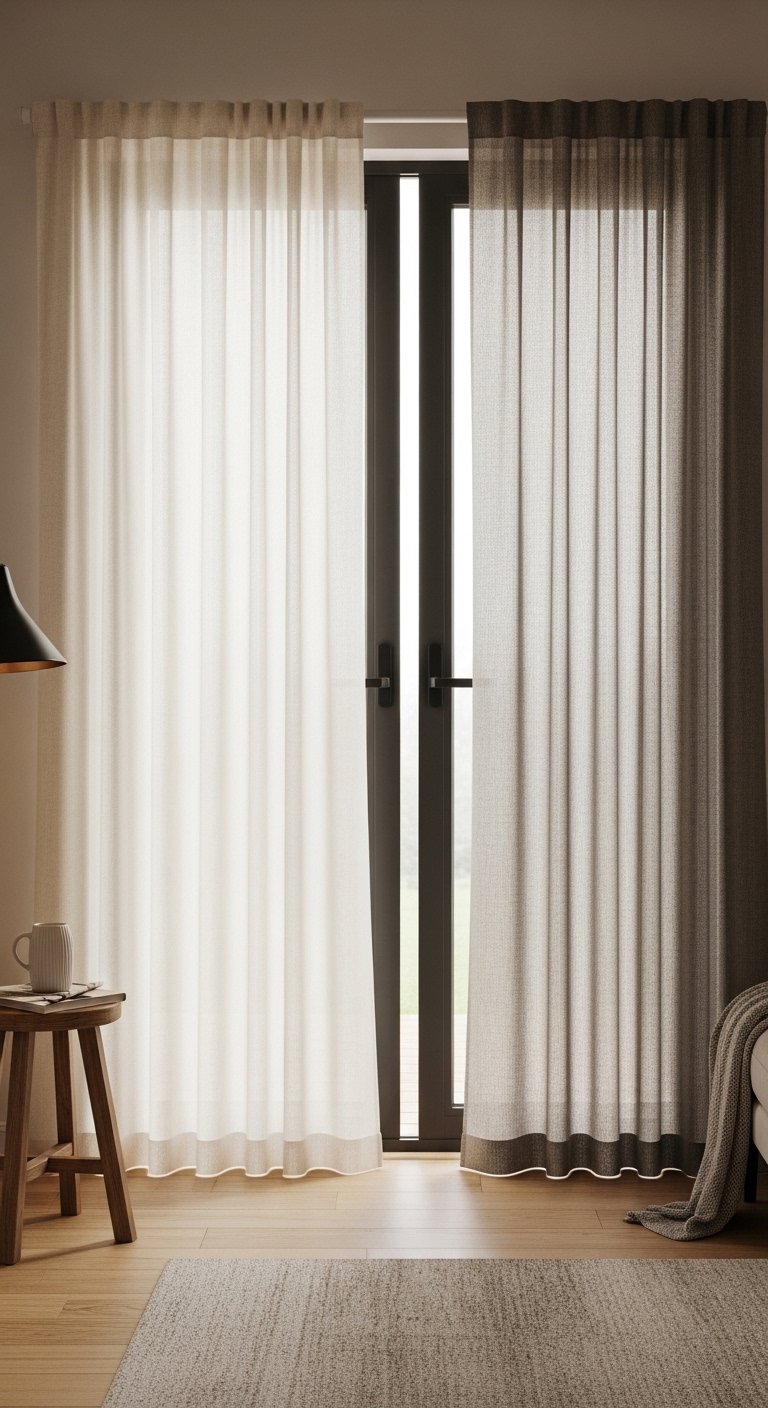
Use multiple curtain layers in slightly different shades of the same color and overlap them unevenly. This creates a gentle gradient effect without needing printed fabric. For example, combine soft beige, warm sand, and light taupe. The layers blend visually while still showing depth. As light passes through, each layer softens the next, creating a calm and balanced atmosphere. This idea feels elegant and thoughtfully designed, perfect for spaces that need a soft and cohesive look.
19. Natural Fiber Blend Curtains with Light Texture Variation
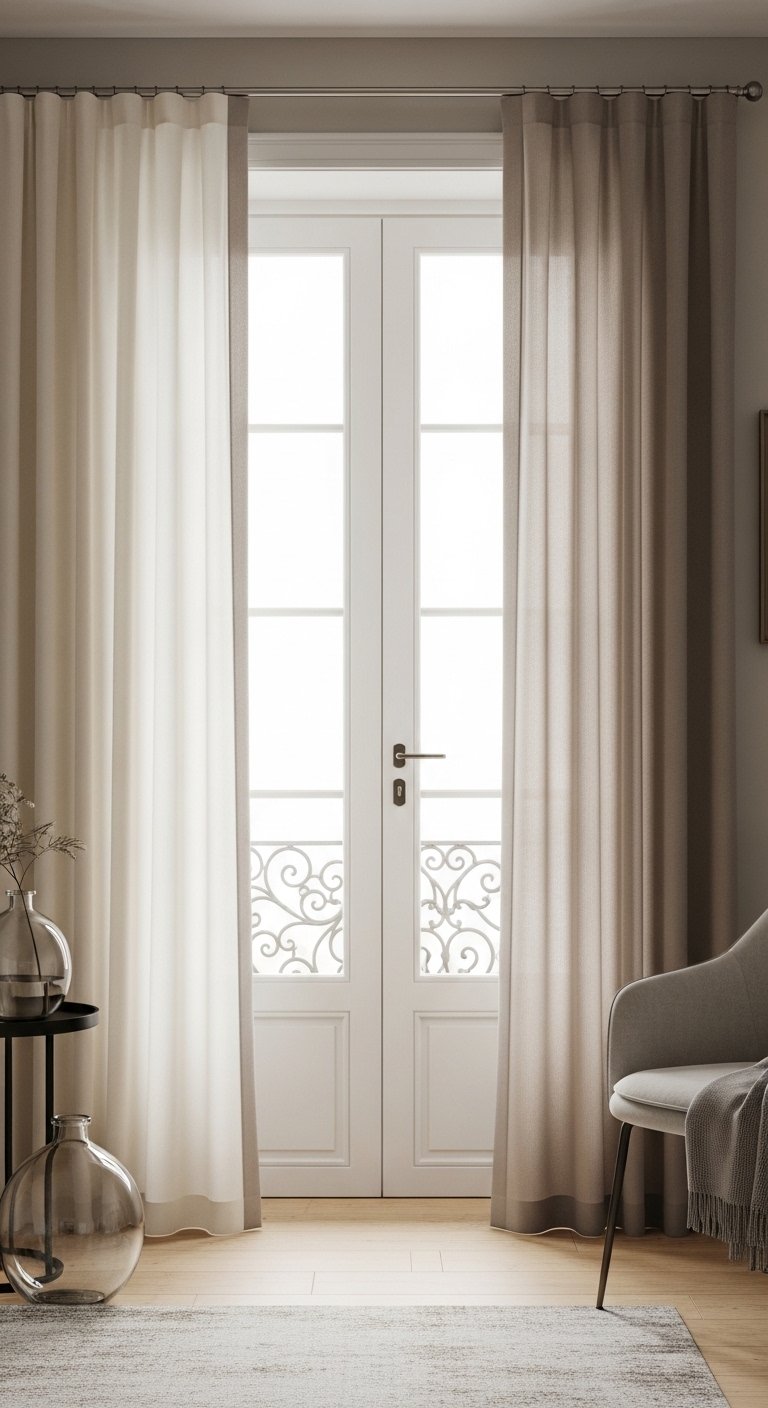
Choose curtains made from a blend of natural fibers like cotton and linen that show slight variations in texture. These small inconsistencies create a more organic and relaxed appearance. When sunlight hits the fabric, it highlights these variations, adding depth without needing patterns. This idea works well in spaces that aim for a natural and grounded feel. It keeps your French doors stylish while still feeling comfortable and lived-in.
20. Framed Curtain Layout with Outer Light Border Effect
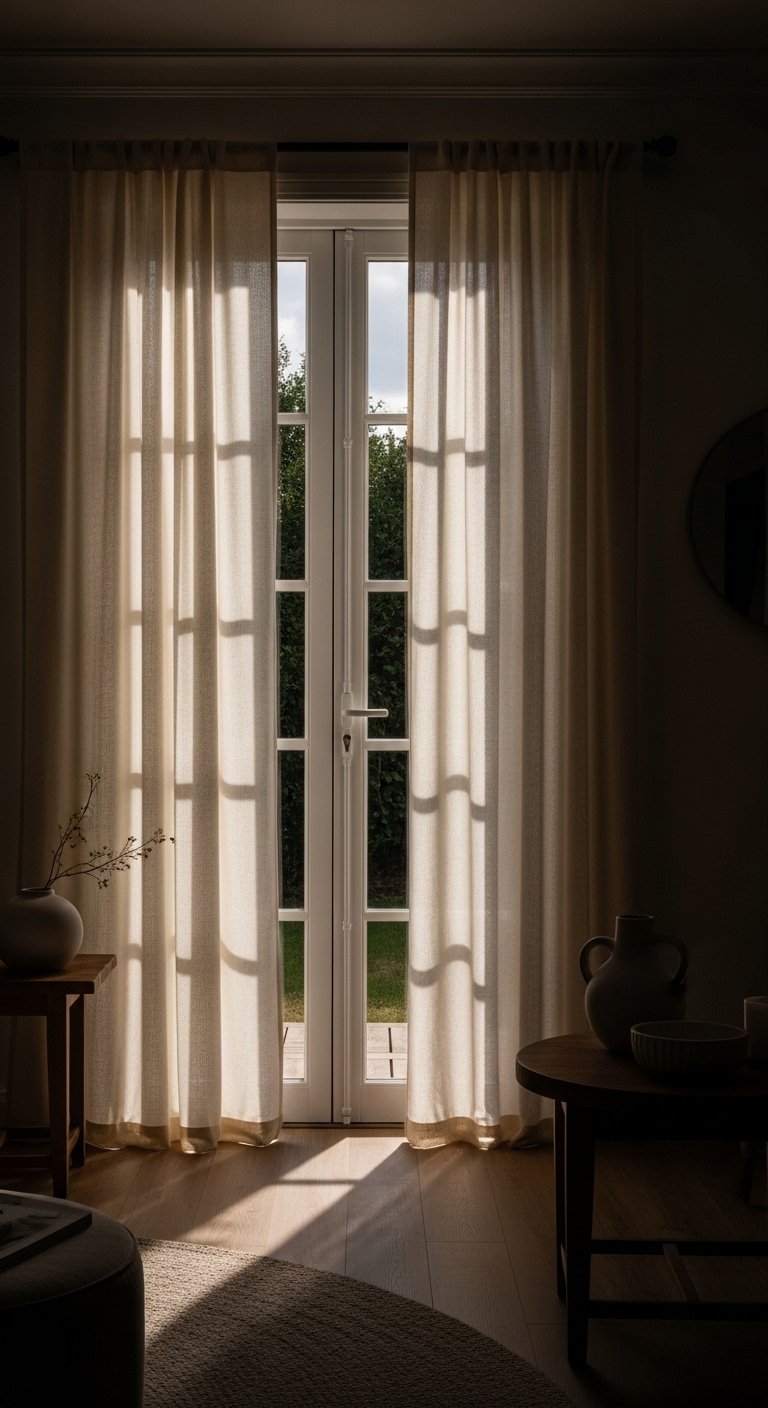
Arrange your curtains so they leave a very thin gap along the outer edges of the door. This allows a small amount of light to enter around the frame, creating a soft border of brightness. It highlights the shape of the French doors while still keeping the main area covered. This idea adds a subtle glow that feels intentional and refined. It works especially well in darker rooms where even a small amount of extra light makes a difference. The effect is simple but visually striking in a quiet and elegant way.
Conclusion
The best French door curtain ideas are not always the most common ones. When you start thinking about how light moves, how fabric feels, and how small details change the mood, you can create something truly unique. These ideas give you new ways to control privacy while also making your space look more thoughtful and refined. Try one concept or combine a few to create your own style. Save the ideas that stand out to you and start transforming your French doors into a feature that feels both functional and beautifully designed.