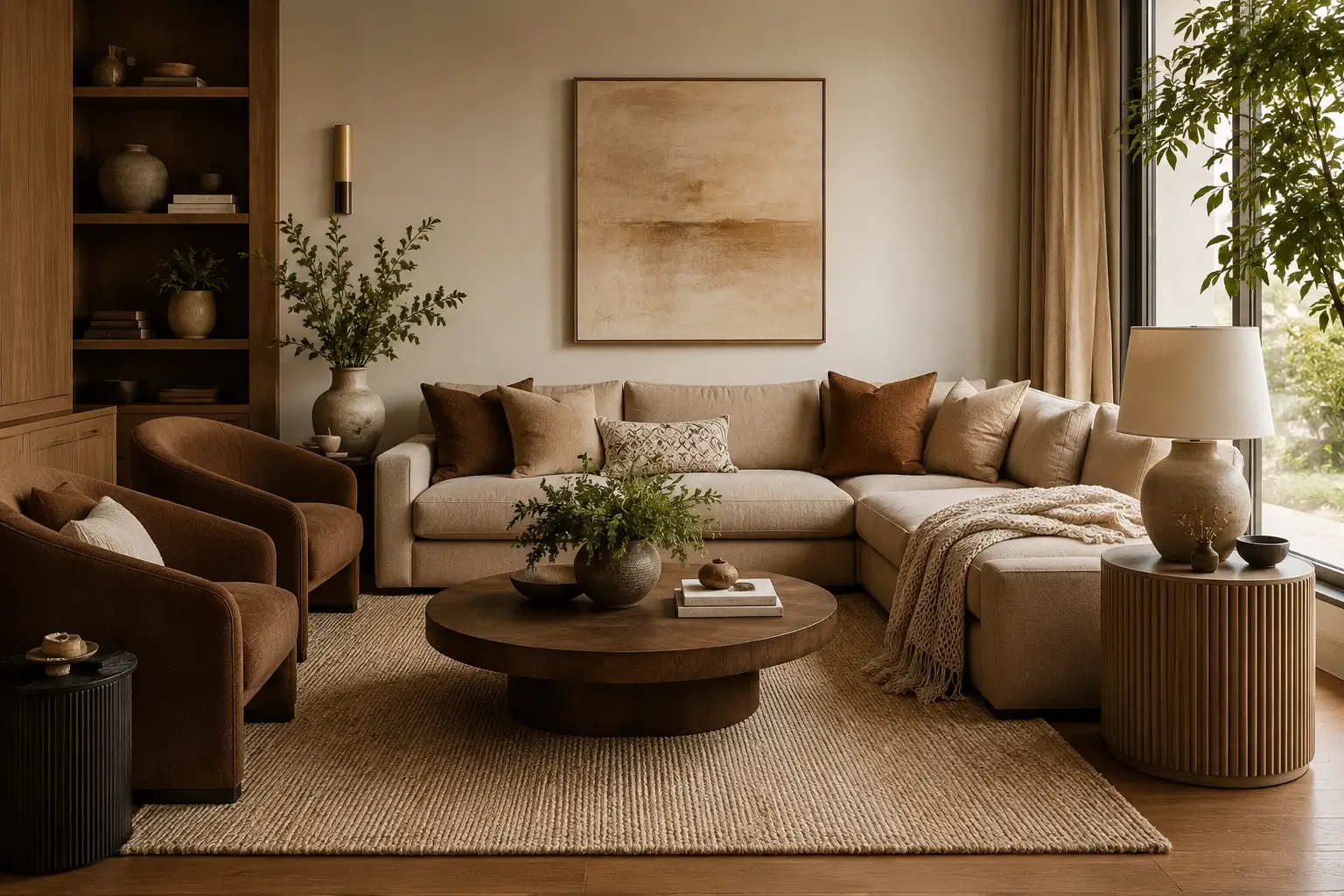
21 Brown and Beige Living Rooms With Effortless Style
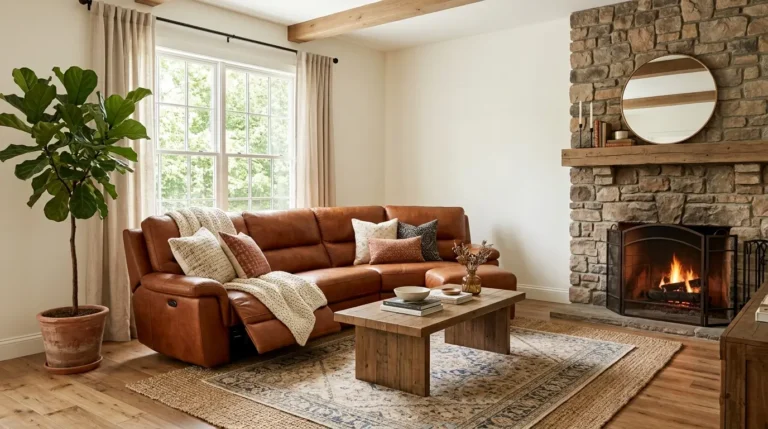
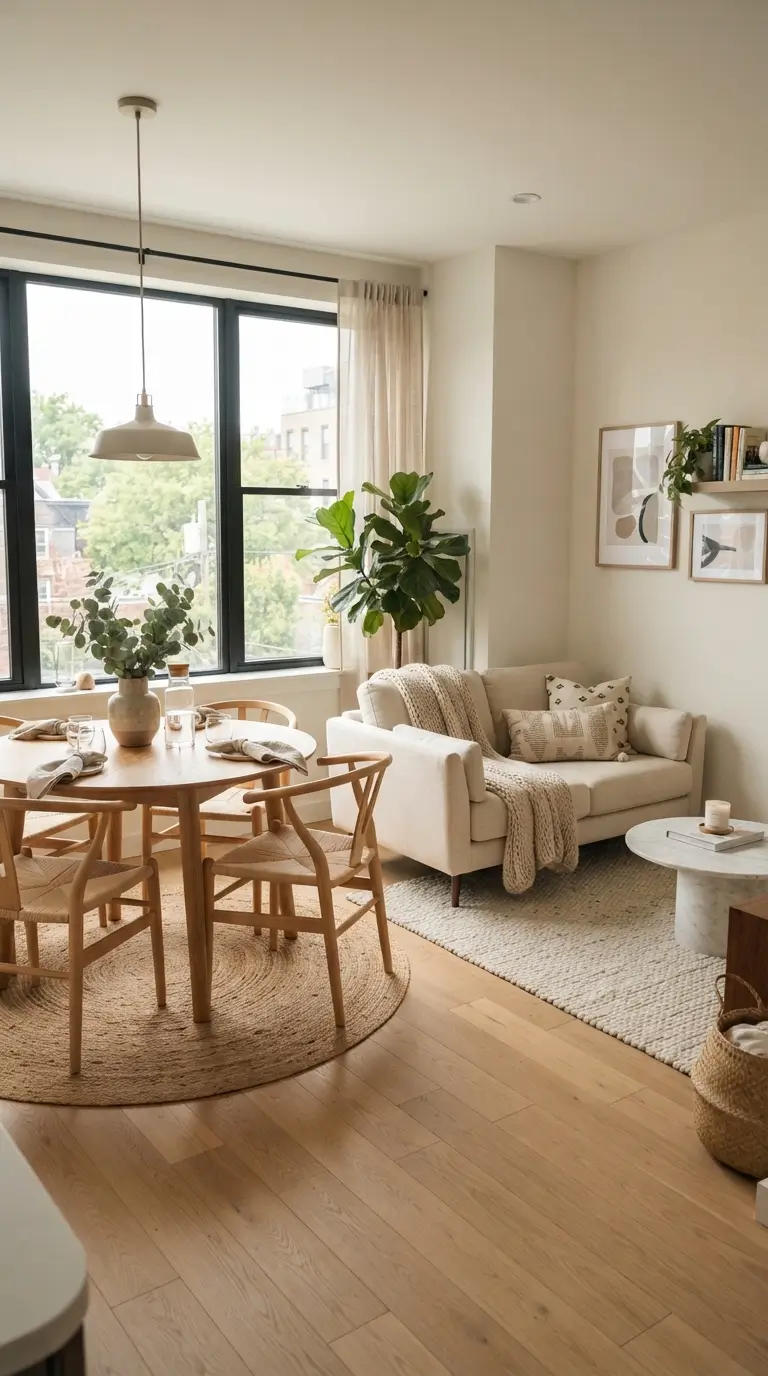
A brown and beige living room can go one of two ways: genuinely warm and layered, or flat and forgettable. The difference almost never comes down to which exact shades you pick. It comes down to texture, tonal variation, and how you mix materials like leather, wood, and wool together.
This guide covers 21 real ways to build a brown and beige living room, and each one includes something practical: a pairing ratio, a cost range, a care note, or a styling formula, so you’re working from a plan instead of guessing at swatches.
Pick 2-3 ideas that fit your existing furniture before buying anything new. This palette rewards restraint more than most.
Quick Idea Overview
| # | Idea | Best For | Investment Level |
|---|---|---|---|
| 1 | Chocolate Brown Sofa with Cream Accents | Anchoring the whole room | High |
| 2 | Tonal Beige Layering Method | Any living room | Low |
| 3 | Camel Leather Accent Chair | A single statement piece | Medium-High |
| 4 | Textured Rug Layering | Grounding the room | Low-Medium |
| 5 | Mixed Wood Tone Furniture | Rooms with existing pieces | Low |
| 6 | Bouclé Beige Sectional | Soft, tactile seating | High |
| 7 | Rattan and Wicker Accents | Light, natural texture | Low-Medium |
| 8 | Brown Velvet Throw Pillows | Fast styling refresh | Low |
| 9 | Warm Taupe Wall Paint | Setting the room’s base tone | Low |
| 10 | Linen Beige Curtains | Softening natural light | Low-Medium |
| 11 | Brown Leather Ottoman Coffee Table | Function plus warmth | Medium |
| 12 | Jute Rug Base Layering | Natural texture underfoot | Low-Medium |
| 13 | Cream Bookshelf Styling | Personalizing shelving | Low |
| 14 | Brass and Brown Accent Combo | Elevated, warm accents | Low |
| 15 | Chunky Knit Beige Throw | Instant coziness | Low |
| 16 | Brown-Toned Gallery Wall | Personal wall styling | Medium |
| 17 | Woven Storage Baskets | Function plus texture | Low |
| 18 | Textured Grasscloth Wallpaper | Statement wall texture | Medium-High |
| 19 | Beige Drapery with Brown Trim | Custom curtain detail | Low-Medium |
| 20 | Warm Stone or Ceramic Lamp Bases | Small material upgrades | Low |
| 21 | Greenery in Terracotta Pots | Softening hard surfaces | Low |
Now let’s break down each idea, with the details you need to build it in your own space.
1. Chocolate Brown Sofa with Cream Accents
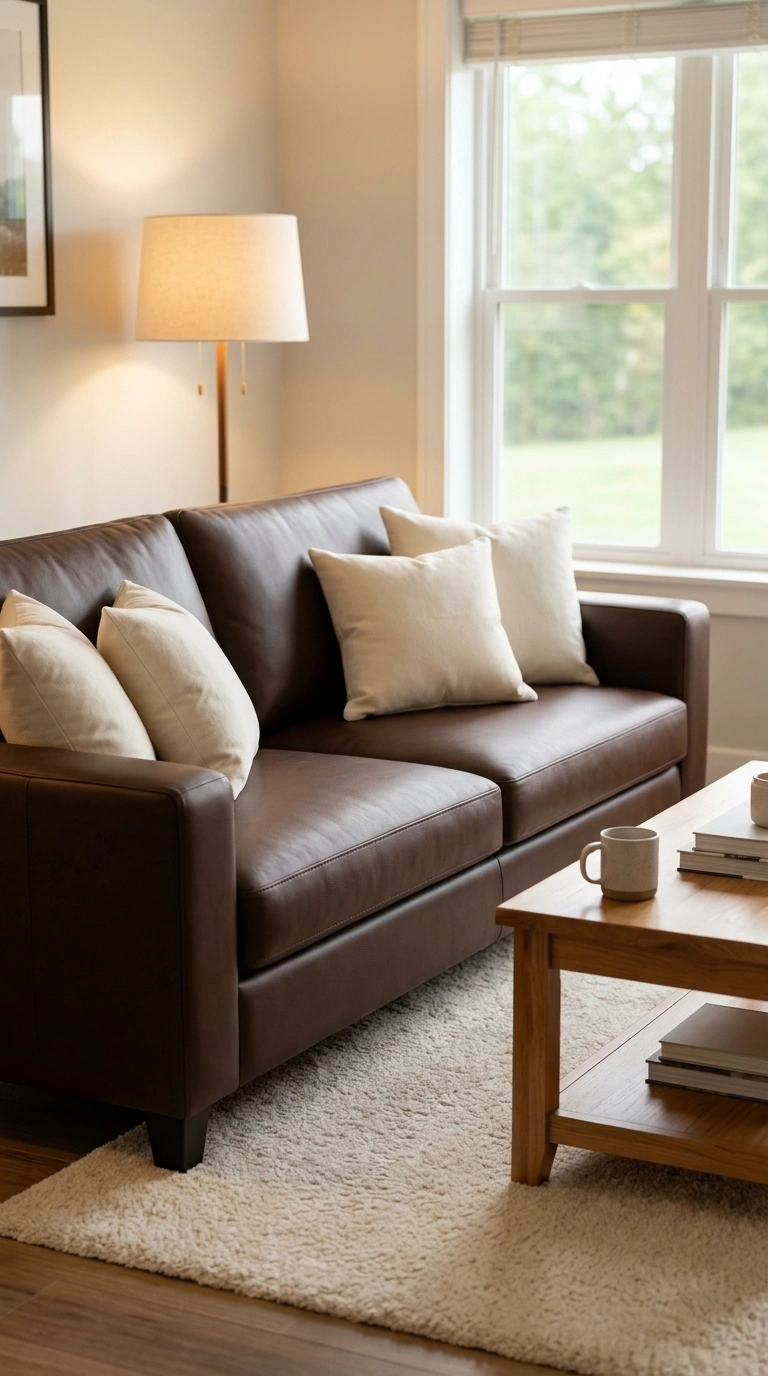
A deep chocolate brown sofa anchors a living room with real visual weight, and pairing it with cream throw pillows, a cream throw blanket, and lighter wall tones keeps the room from feeling heavy or dark overall.
A simple pairing ratio:
- 40% deep chocolate brown (the sofa itself)
- 40% cream or warm ivory (walls, an area rug, or a second seating piece)
- 20% mid-tone accents (wood furniture, brass hardware, or a patterned throw)
Without the cream counterbalance, an all-brown room can feel like a dim cave rather than a warm, inviting space.
2. Tonal Beige Layering Method
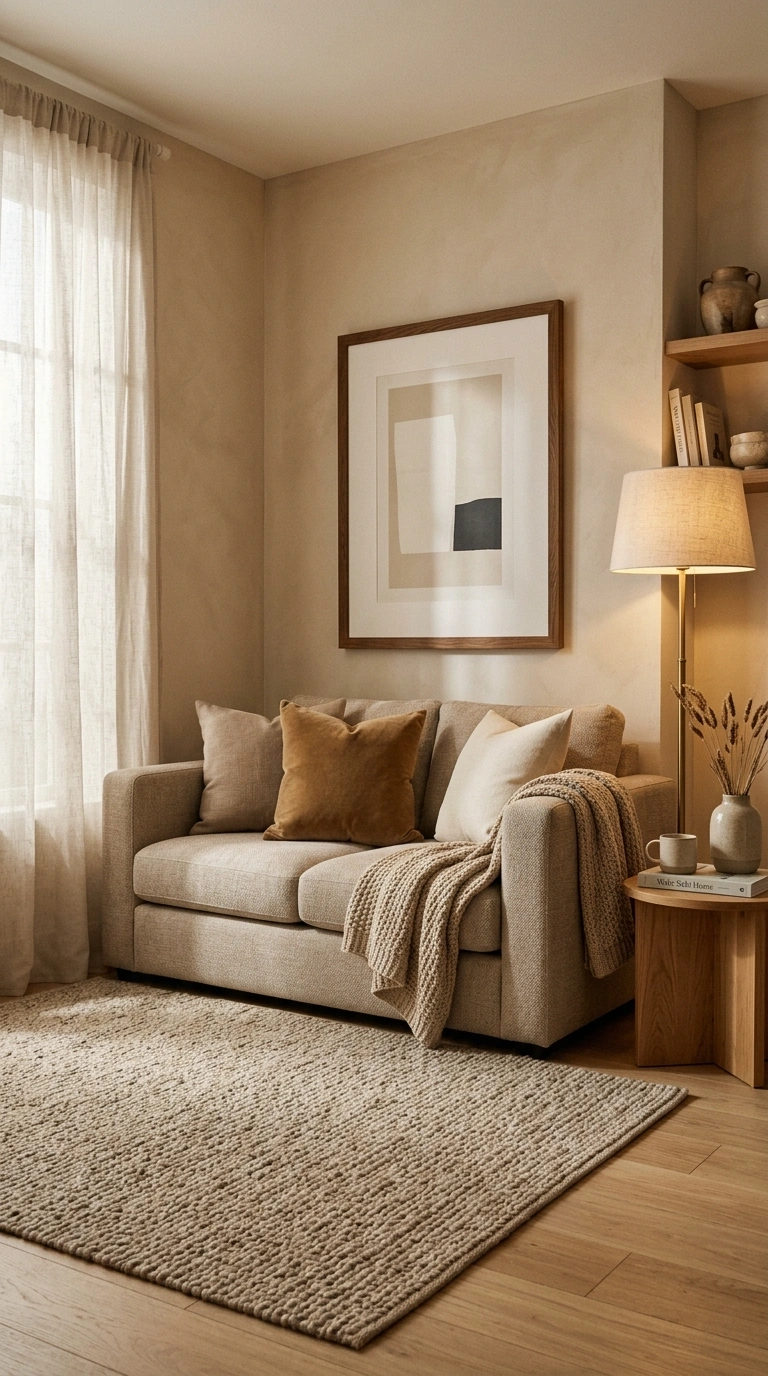
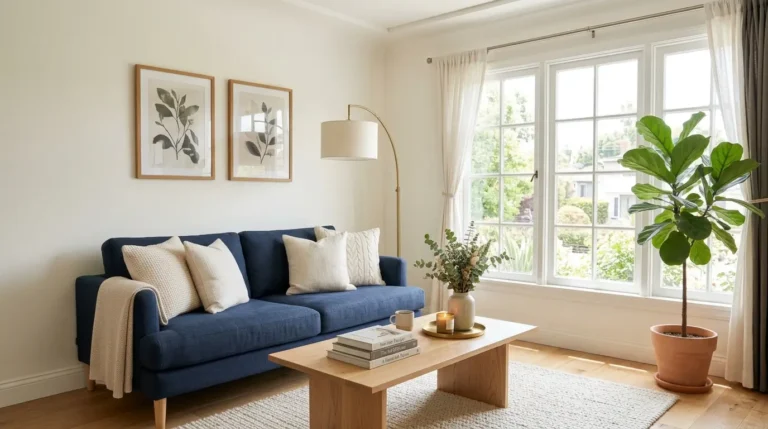
This is the foundational technique behind a beige room that feels layered instead of flat: using three depths of the same beige family across the room, rather than one flat shade everywhere.
| Depth | Where to Use It |
|---|---|
| Lightest beige | Walls and ceiling |
| Mid-tone beige or taupe | Sofa, rug, or curtains |
| Darkest beige or brown | Small accents: a frame, a vase, a throw pillow |
A room using only the lightest tone throughout is what typically reads as flat or builder-grade. Layering three depths, even within the same neutral family, is what makes a beige room look intentional.
3. Camel Leather Accent Chair
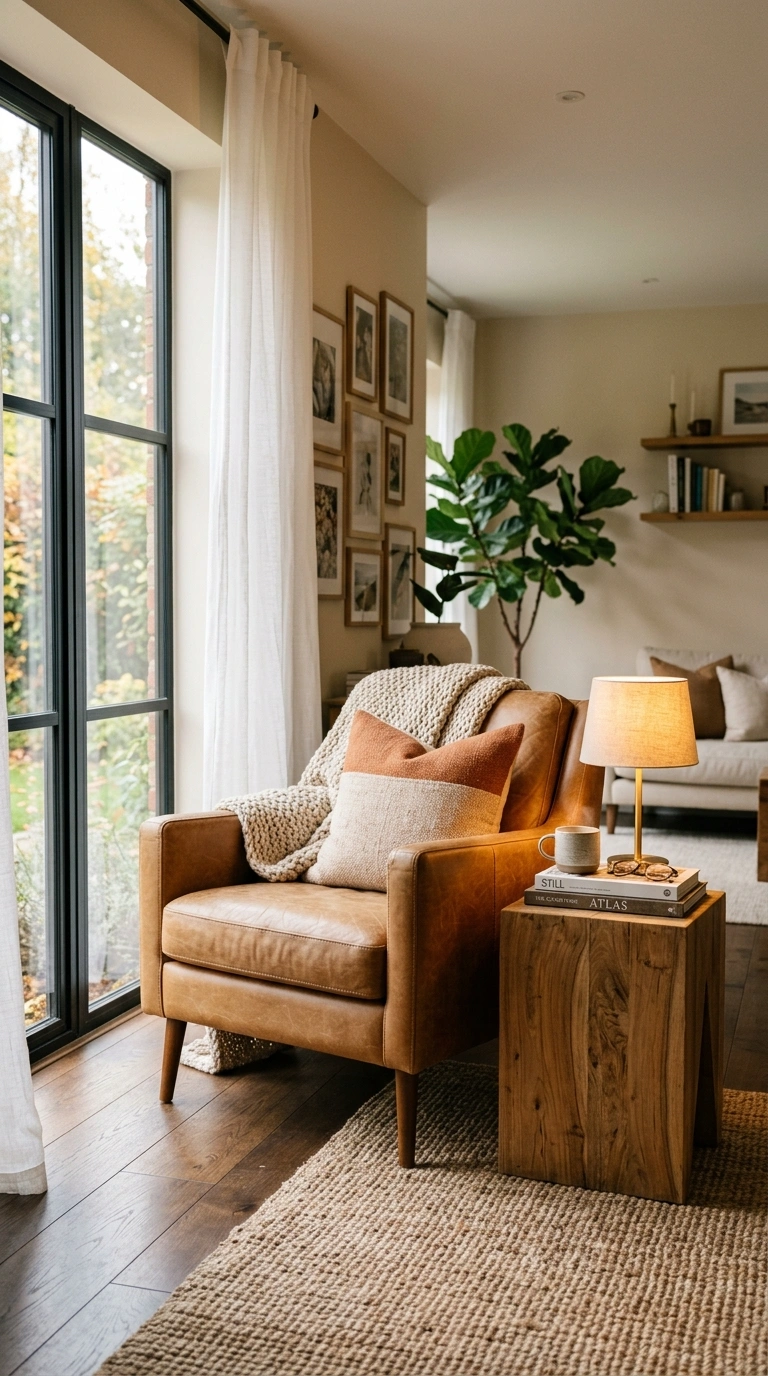
A camel leather accent chair brings a rich, warm brown tone and a different material texture than fabric upholstery, working as a strong single statement piece in an otherwise neutral room.
| Tier | What You Get | Approx. Cost |
|---|---|---|
| Budget | Faux leather accent chair, camel tone | $200-$400 |
| Mid-Range | Genuine leather accent chair, standard construction | $500-$900 |
| Investment | Full-grain leather chair, solid wood frame | $1,000-$2,500+ |
Leather develops a natural patina over years of use, which genuine leather does more visibly than faux leather, adding character rather than looking worn.
4. Textured Rug Layering
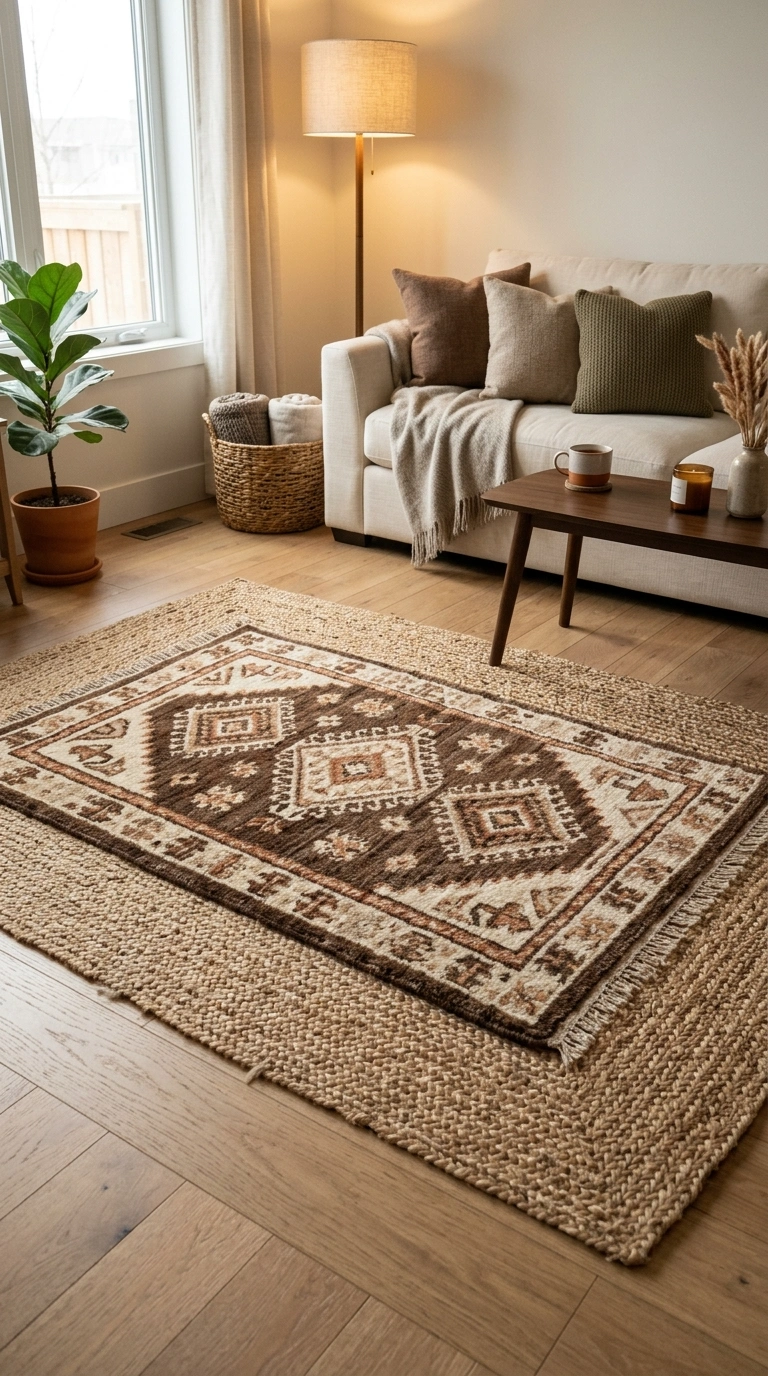
Layering two rugs, a natural fiber base with a smaller patterned or textured rug on top, in coordinating brown and beige tones, adds visual depth that a single flat rug can’t achieve.
The sizing formula: the top rug should cover roughly two-thirds of the base rug’s surface area, with the base rug’s edge showing evenly around all sides. This proportion is what makes the layering look intentional rather than like a rug that simply doesn’t fit the room.
Cost range: $100-$300 for a natural jute or sisal base, plus $150-$400 for a smaller patterned wool rug on top.
5. Mixed Wood Tone Furniture
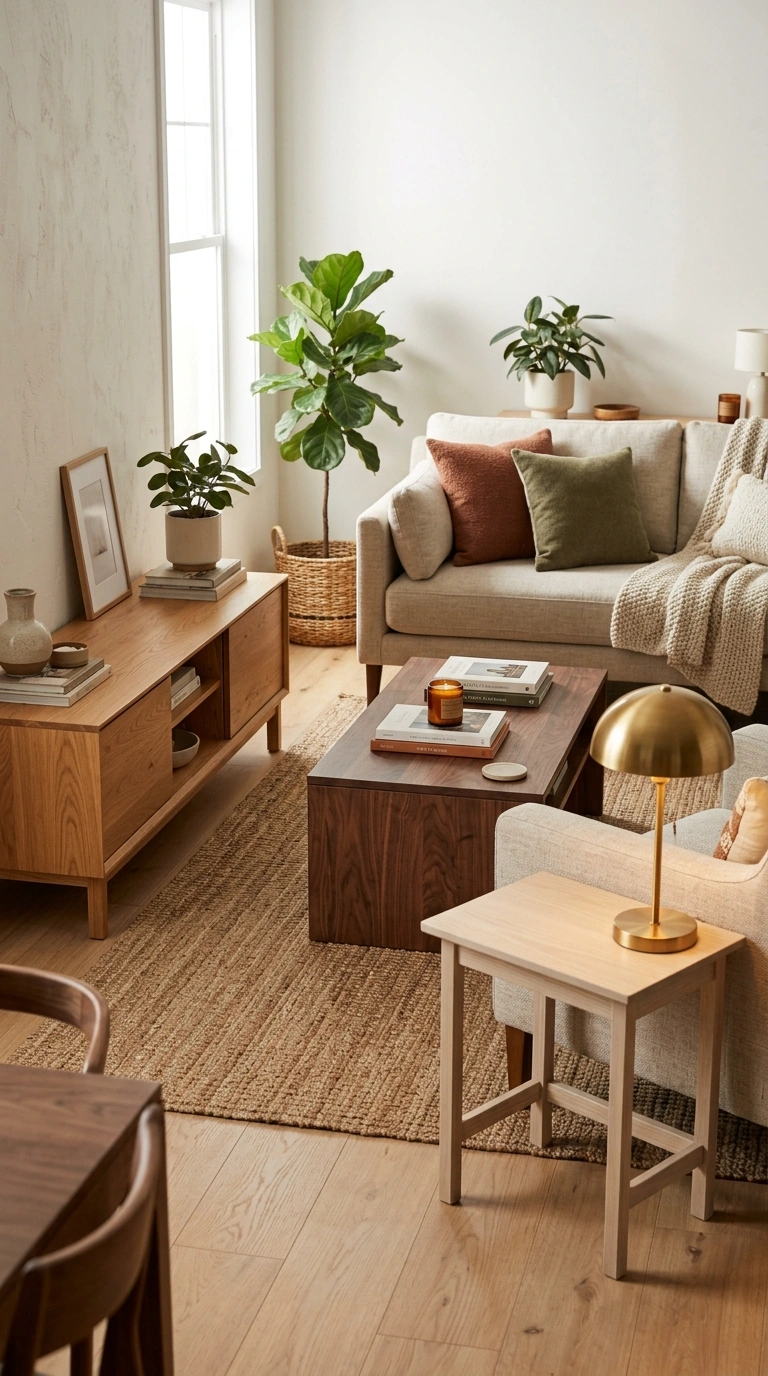
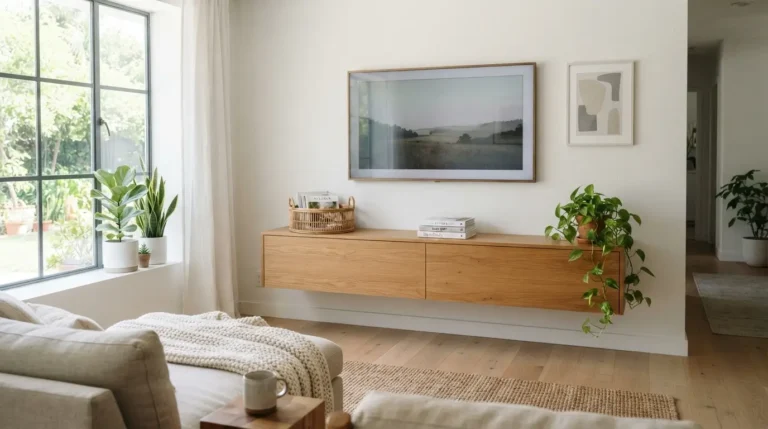
A living room with several wood furniture pieces, like a coffee table, media console, and side tables, looks more collected when the tones vary slightly rather than matching exactly.
The mixing rule: choose one dominant wood tone to cover 60-70% of your wood furniture (the largest pieces, like a media console), then mix in one or two secondary tones for smaller pieces, like a side table or a picture frame.
A perfectly matched wood furniture set, all from the same collection, often reads as more generic than a room where tones vary slightly within the same warm family.
6. Bouclé Beige Sectional
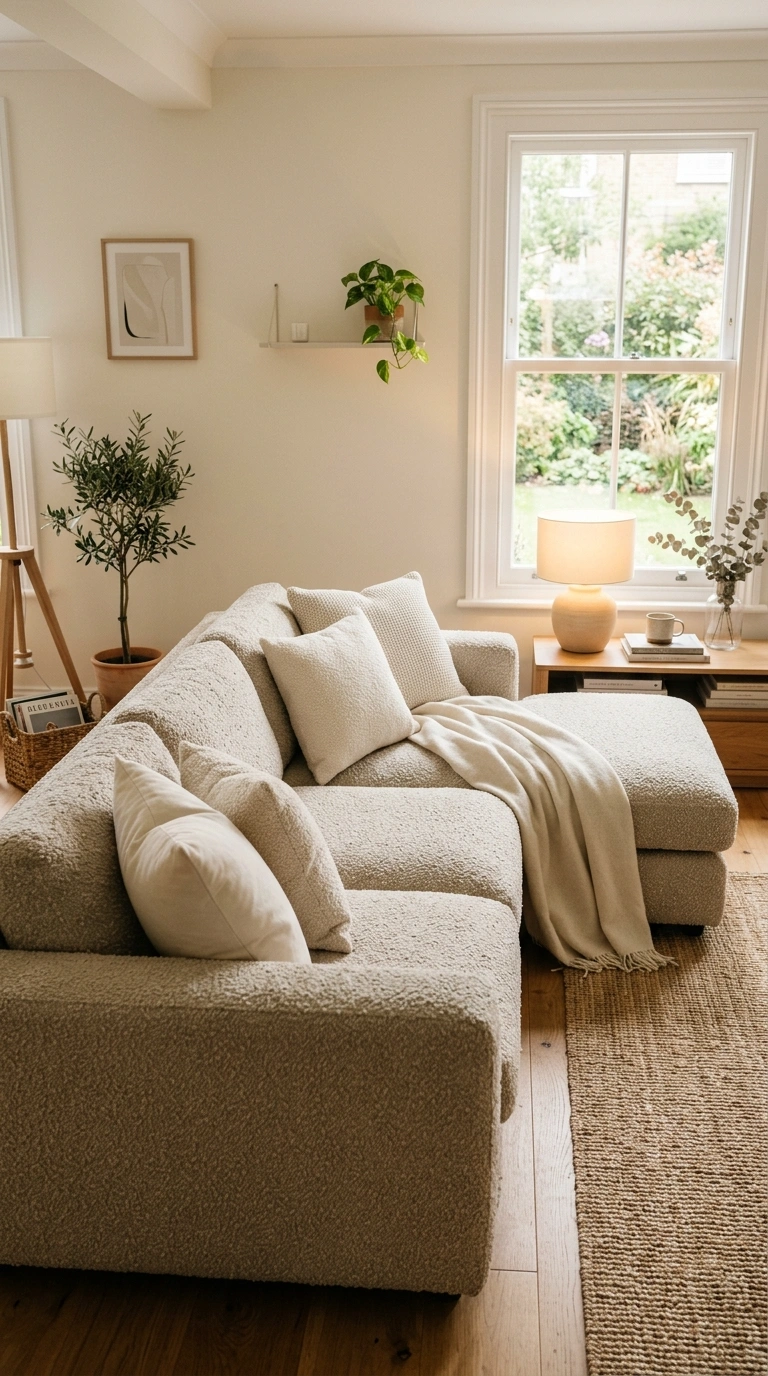
A bouclé-upholstered sectional in warm beige or oatmeal adds tactile softness at a large scale, since the nubby texture reads differently than smooth linen or cotton across a big piece of furniture.
| Tier | What You Get | Approx. Cost |
|---|---|---|
| Budget | Bouclé-look polyester blend sectional | $800-$1,500 |
| Mid-Range | Genuine bouclé fabric sectional, standard frame | $1,800-$3,000 |
| Investment | Custom bouclé sectional, premium frame and fill | $3,500-$6,000+ |
A quick care note: bouclé’s looped texture can snag on pet claws or buttons over time. If you have pets, choose a tighter, more tightly-looped bouclé weave, which resists snagging better than looser, oversized-loop versions.
7. Rattan and Wicker Accent Pieces
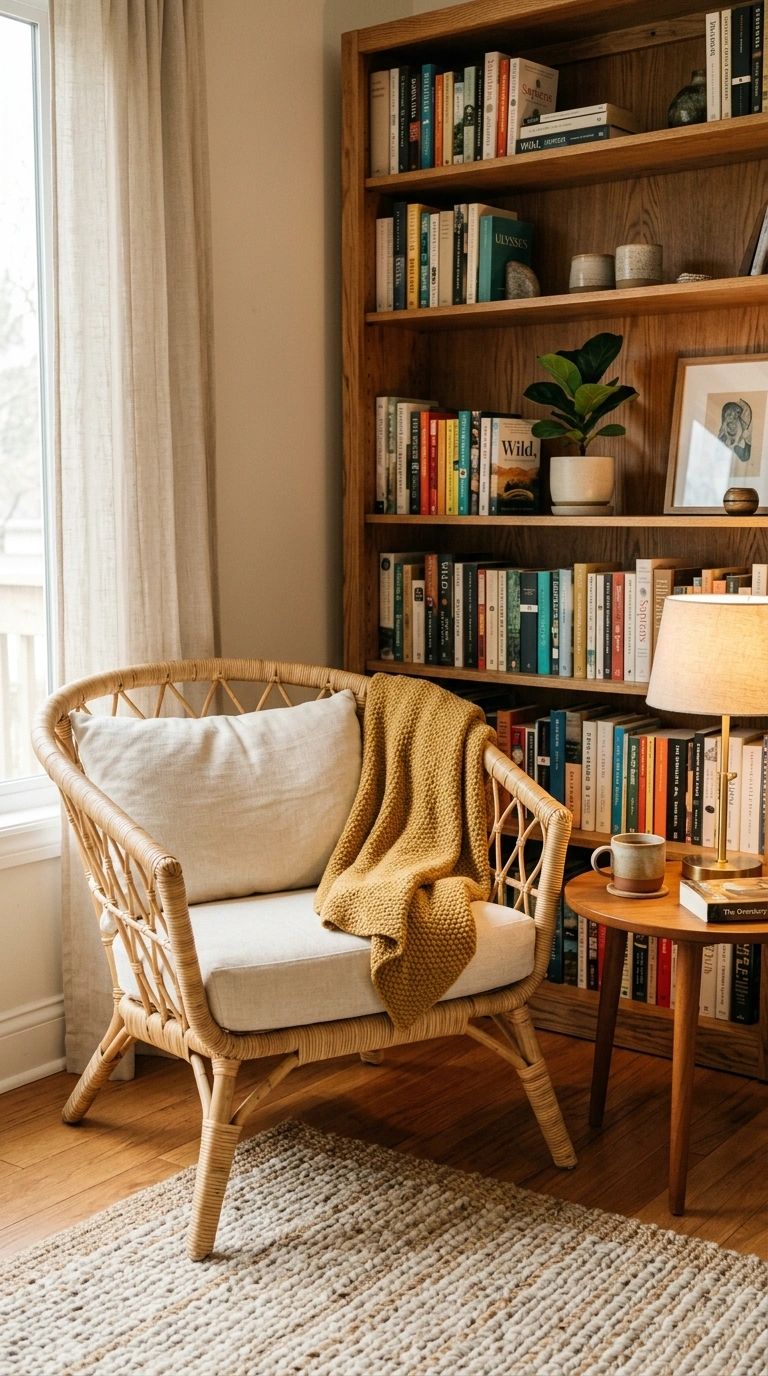
Rattan or wicker accent furniture, like a side chair, magazine rack, or pendant light, brings warm, natural texture into a brown and beige room without adding any new color at all.
Works well if: your room already leans toward a warm, organic material palette (wood, linen, leather) that rattan naturally complements.
A quick care note: natural rattan can dry out and become brittle in very low-humidity climates or near direct heating vents. Keep pieces at least a few feet from radiators or heat registers, and consider a light application of furniture oil annually in dry climates.
Cost range: $80-$300 depending on the piece.
8. Brown Velvet Throw Pillows
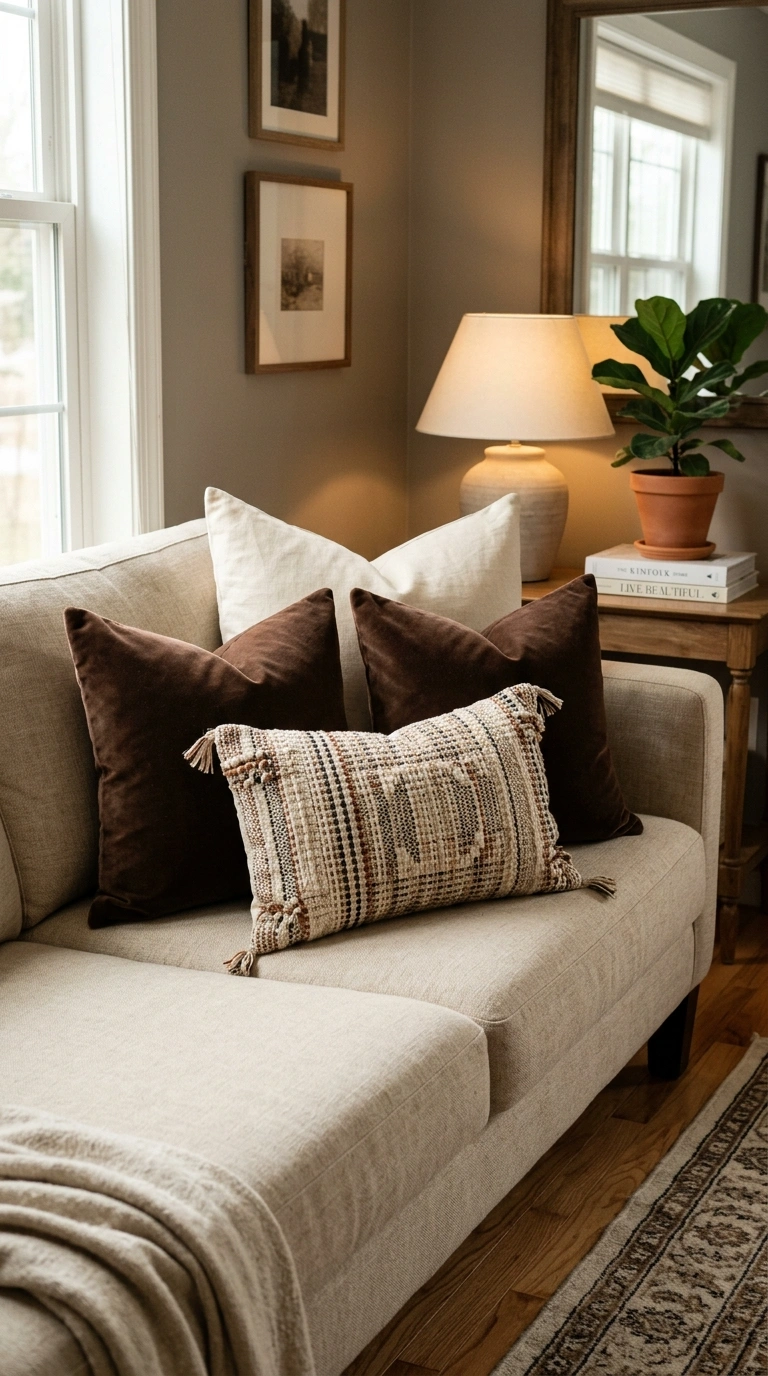
Velvet throw pillows in deep brown or cognac tones add a soft sheen and richness to a beige sofa, and it’s one of the fastest, lowest-cost ways to bring the palette into a room you’re not ready to fully redecorate.
Arrangement formula:
- Two larger pillows in a base neutral tone, tucked toward the back
- One or two velvet brown pillows in a slightly deeper tone, layered in front
- One textured lumbar pillow in a woven or knit pattern, placed at the front center
Cost range: $20-$50 per pillow, making a full arrangement of 4-5 pillows a $100-$220 refresh.
9. Warm Taupe Wall Paint
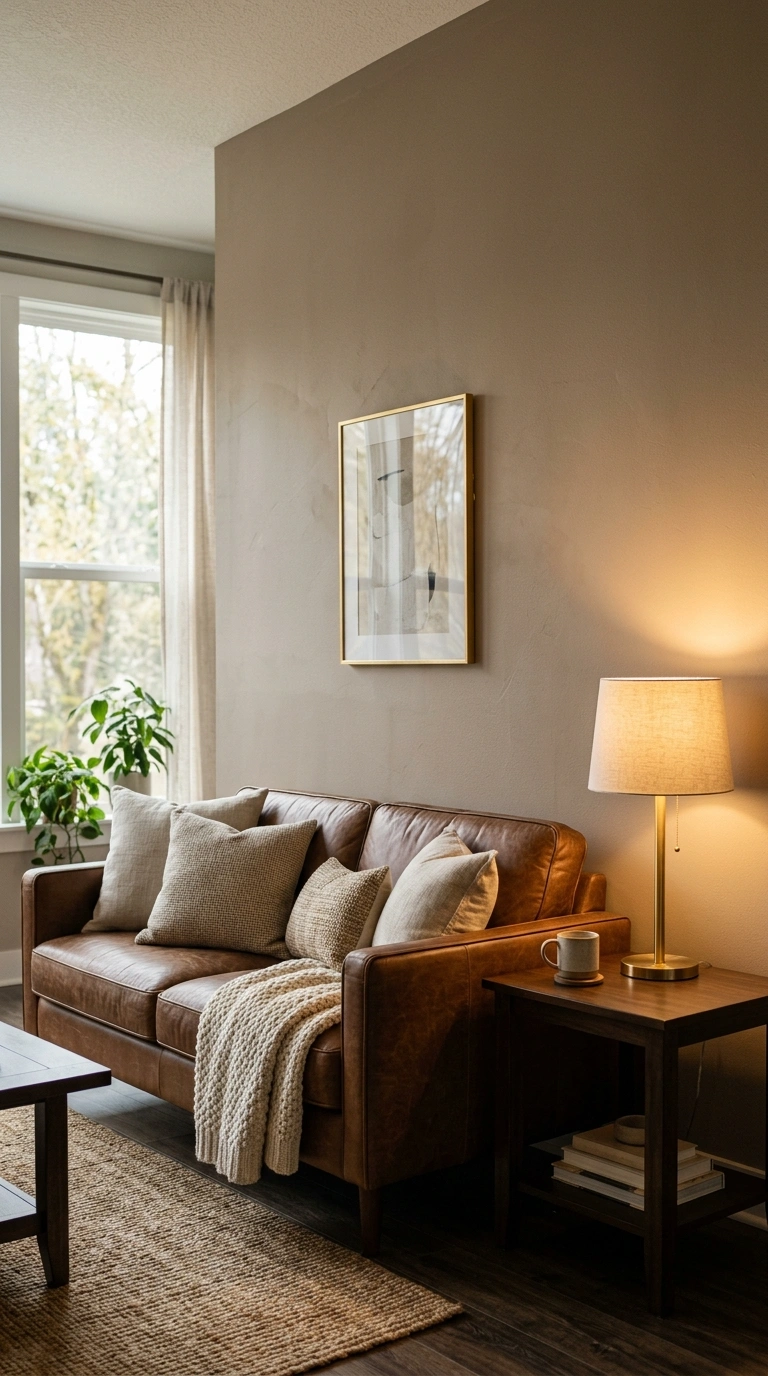
Taupe, a blend of brown and gray, works as a foundational wall color for this palette, but the undertone matters more than most people expect when pairing it with wood and leather furniture.
| Undertone | How to Spot It | Best Paired With |
|---|---|---|
| Warm taupe (more brown/beige base) | Looks cozy and grounded in daylight | Warm wood tones, brass, leather |
| Cool taupe (more gray base) | Can look slightly purple or ashy in certain light | Cooler wood tones, chrome, black metal |
Testing tip: paint a large swatch and view it at multiple times of day, since taupe shifts undertone more dramatically under changing light than most other neutrals.
10. Linen Beige Curtains
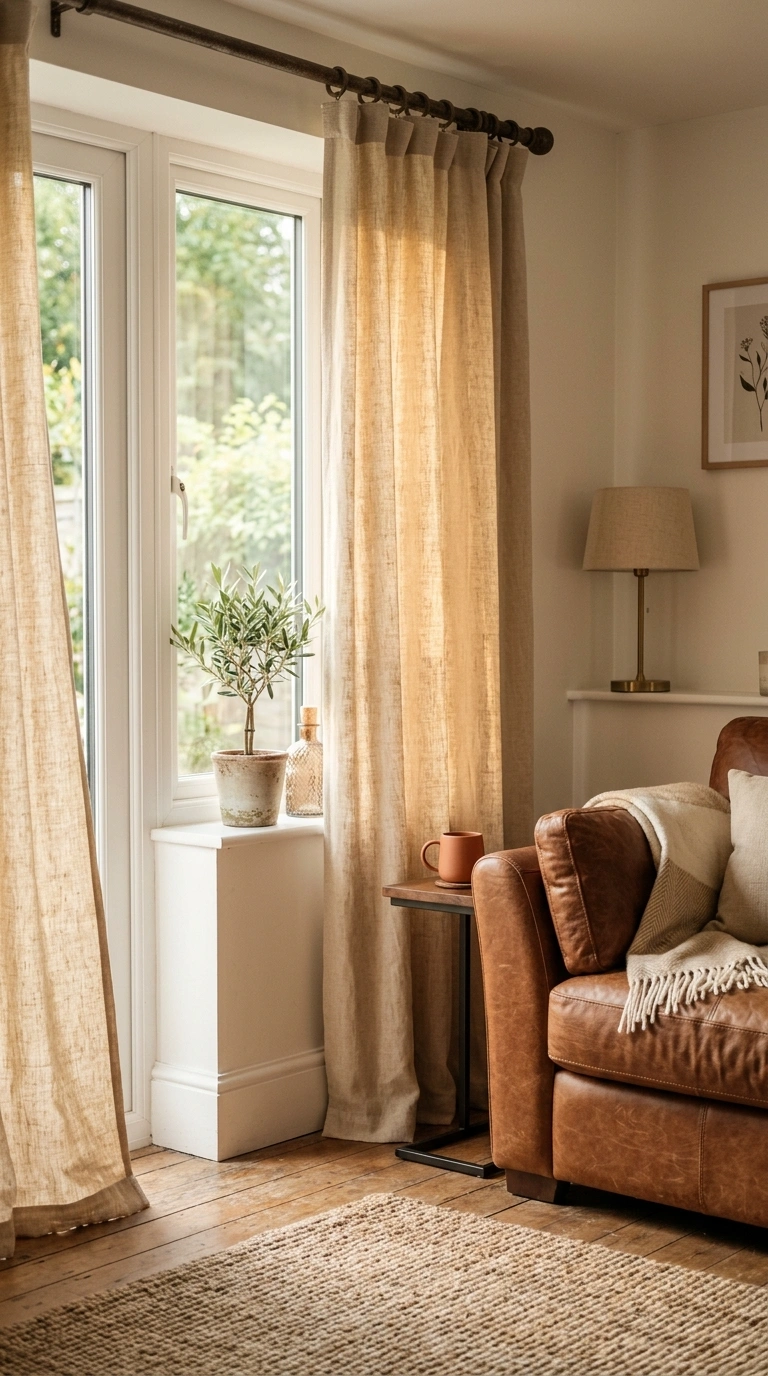
Curtains in a soft, textured linen, in warm beige or oatmeal, filter daylight gently and add a layer of texture at the windows that blends into a brown and beige palette without competing with furniture.
Cost range: $40-$120 per panel, depending on fabric weight and length.
A quick care note: linen wrinkles visibly and can fade in strong, direct sunlight over time. In south- or west-facing rooms, a linen-blend fabric holds color better over the long run than 100% natural linen.
11. Brown Leather Ottoman Coffee Table
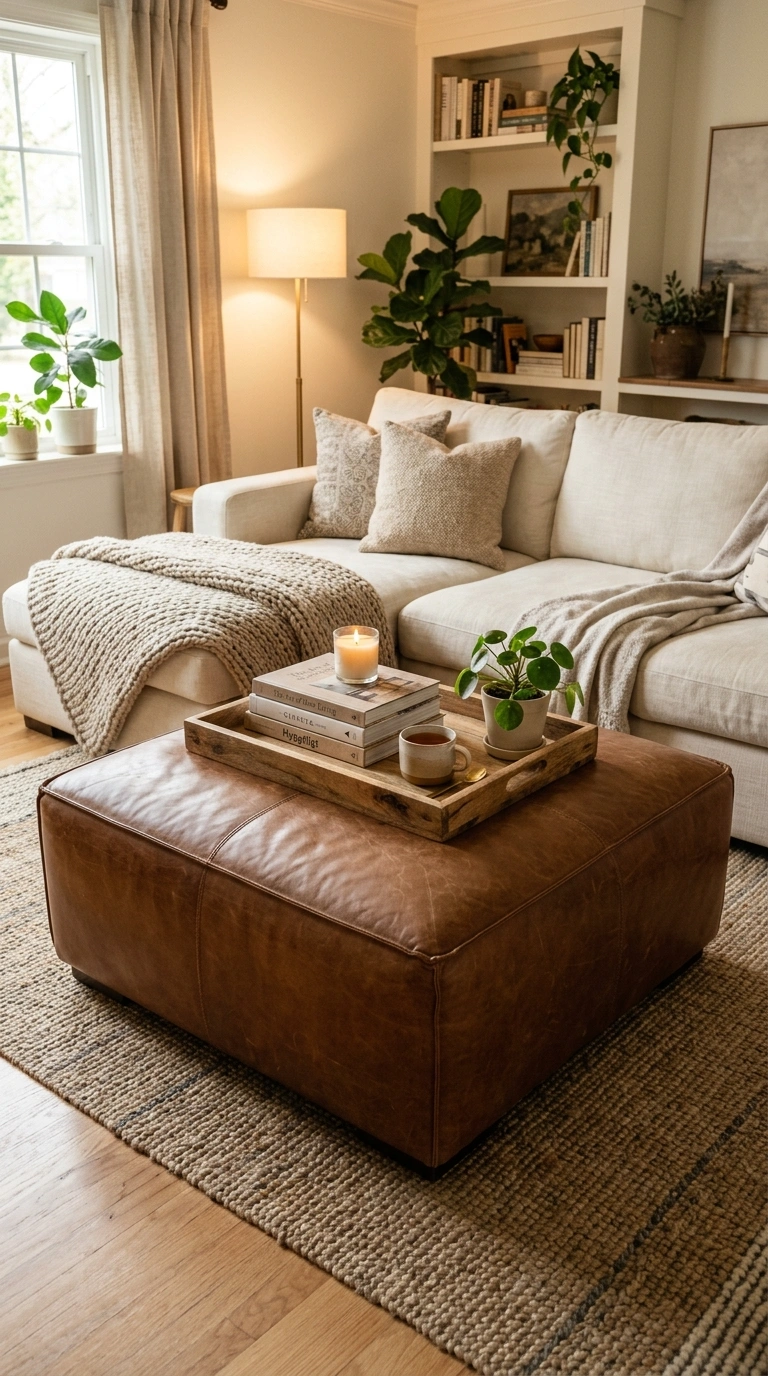
A large leather ottoman, used in place of a traditional hard-surface coffee table, adds softness, warmth, and a place to prop up your feet, all while fitting naturally into a brown and beige palette.
Works well if: you want a softer, more casual living room feel, and don’t need a hard surface for setting drinks or plates regularly.
Skip it if: you frequently use your coffee table as a hard work or dining surface, since an ottoman requires a separate tray for that purpose.
Cost range: $300-$900 depending on size and leather quality, often paired with a simple wood or metal tray on top for functional surface use.
12. Jute Rug Base Layering
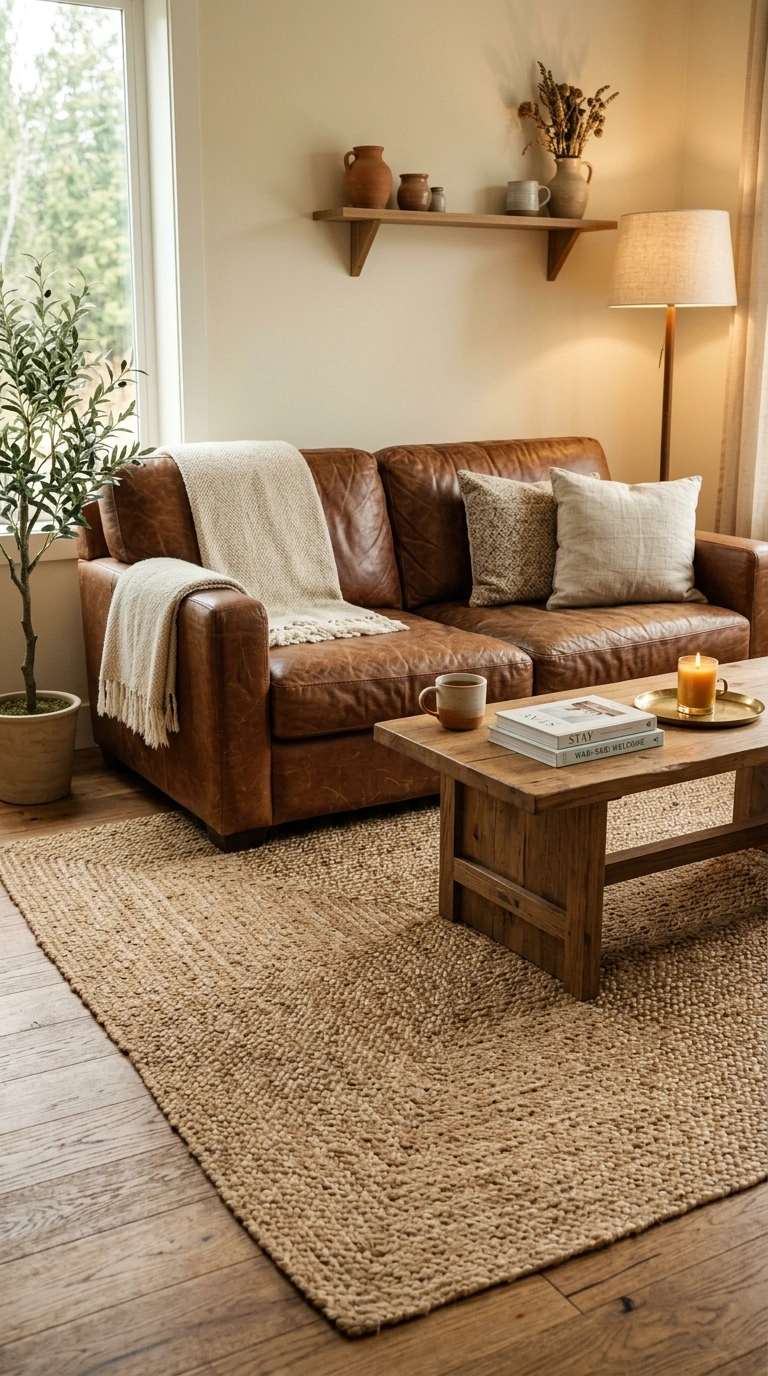
A natural jute rug as the room’s base layer adds texture and warmth underfoot at a lower cost than wool, and it pairs naturally with the earthy tones already in a brown and beige room.
Cost range: $100-$300 for a large jute rug, sized to sit under the front legs of your main seating.
Jute rugs are more textured and less soft underfoot than wool, so many people layer a smaller, softer rug on top in the main walking or seating area rather than using jute as the sole floor covering.
13. Cream Bookshelf Styling
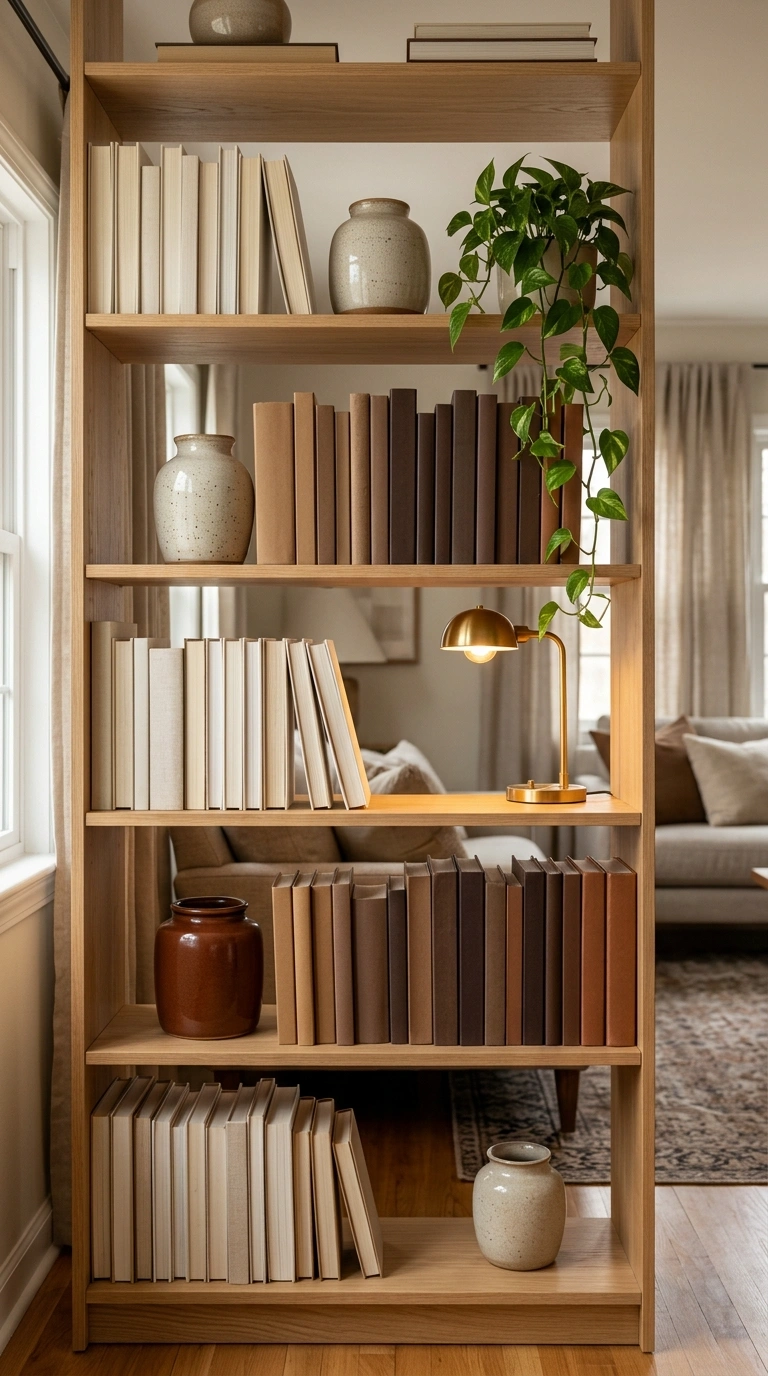
Styling an open bookshelf with a mix of cream and brown-toned book spines, ceramics, and a few plants turns ordinary storage into a genuine decor feature.
Styling checklist:
- Group books by cover color rather than by author or genre, clustering cream and brown spines together
- Stack some books horizontally, topped with a small object like a candle or vase, rather than only shelving vertically
- Leave roughly 20-30% of shelf space empty, so the styling reads as curated rather than crowded
- Add one or two ceramic pieces in a contrasting texture, like a matte stoneware vase, for visual variety
14. Brass and Brown Accent Combo
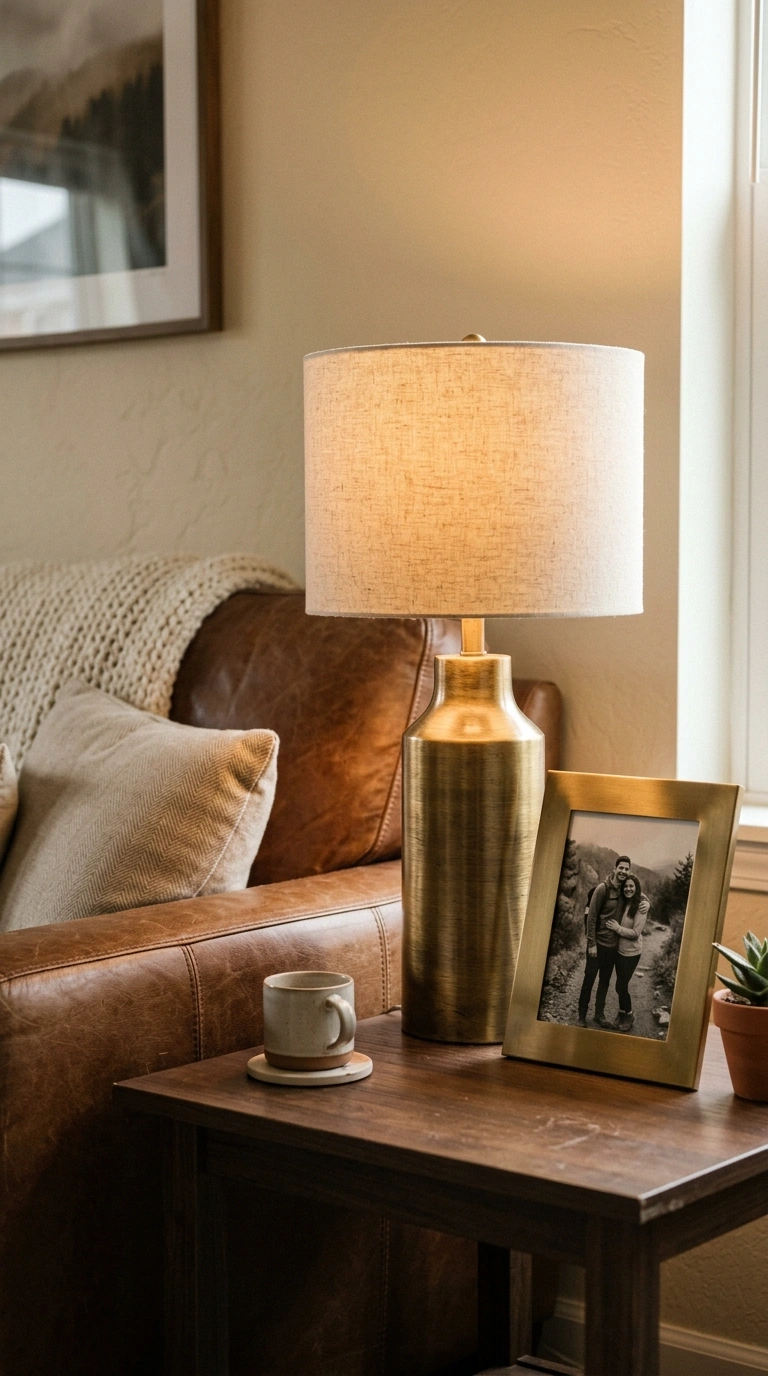
Brass hardware and accents, paired with brown leather and wood tones, add warmth and a subtle elegance without introducing any new color into the room.
The 60-30-10 approach:
| Element | Percentage | Where to Use |
|---|---|---|
| Brown and beige base tones | 90% | Furniture, walls, textiles |
| Brass accents | 10% | Lamp bases, drawer pulls, picture frames, curtain rods |
Even at a small percentage of the room’s overall visual weight, brass accents noticeably lift a brown and beige room away from feeling flat or overly muted.
15. Chunky Knit Beige Throw
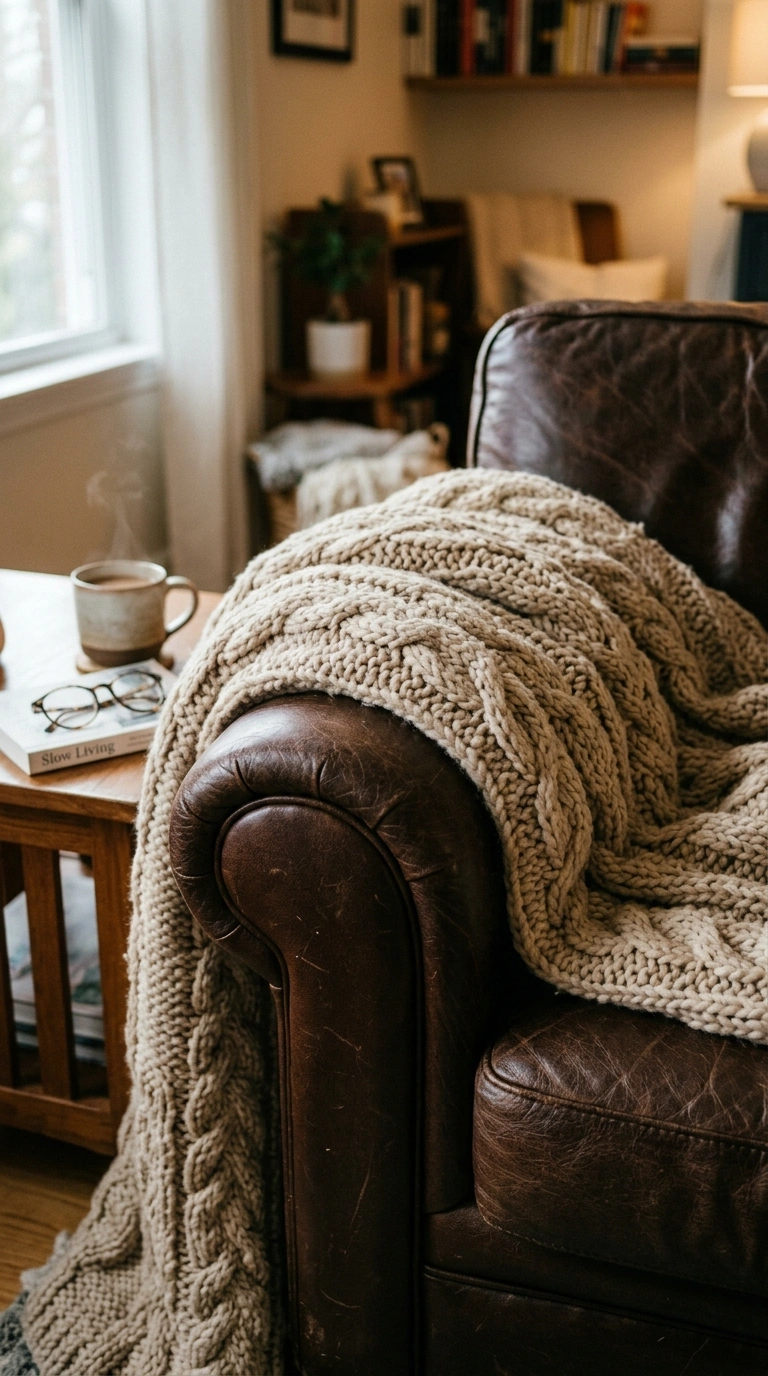
A chunky cable-knit or waffle-weave throw in warm beige or oatmeal, draped over the arm of a sofa or chair, adds instant texture and a sense of coziness that smooth upholstery alone doesn’t achieve.
Cost range: $30-$90 depending on material, with acrylic blends at the lower end and chunky wool or alpaca at the higher end.
Styling tip: drape the throw loosely, folded once and hung over the arm rather than perfectly folded on a seat cushion, for a more natural, lived-in look.
16. Brown-Toned Gallery Wall
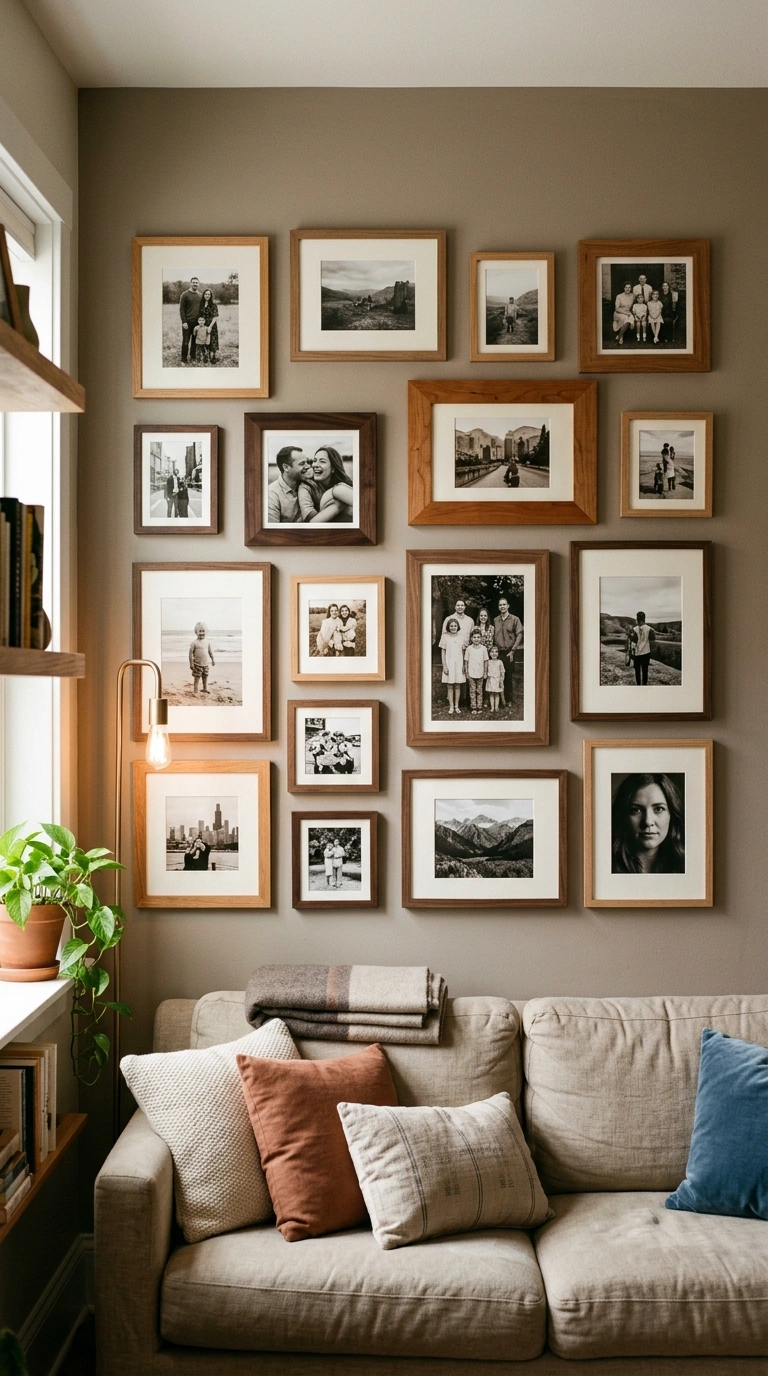
A gallery wall using frames in varied brown wood tones, paired with black-and-white or sepia-toned photography and prints, adds personal character without introducing a jarring new color.
Building it step by step:
- Choose frames in 2-3 coordinating brown wood tones, rather than a single exact match.
- Use black-and-white, sepia, or muted botanical prints rather than brightly colored art.
- Arrange the layout on the floor first to test spacing before hanging anything.
- Keep matting consistent (white or cream) across all pieces for cohesion.
Cost range: $50-$180 depending on frame quality and print sourcing.
17. Woven Storage Baskets
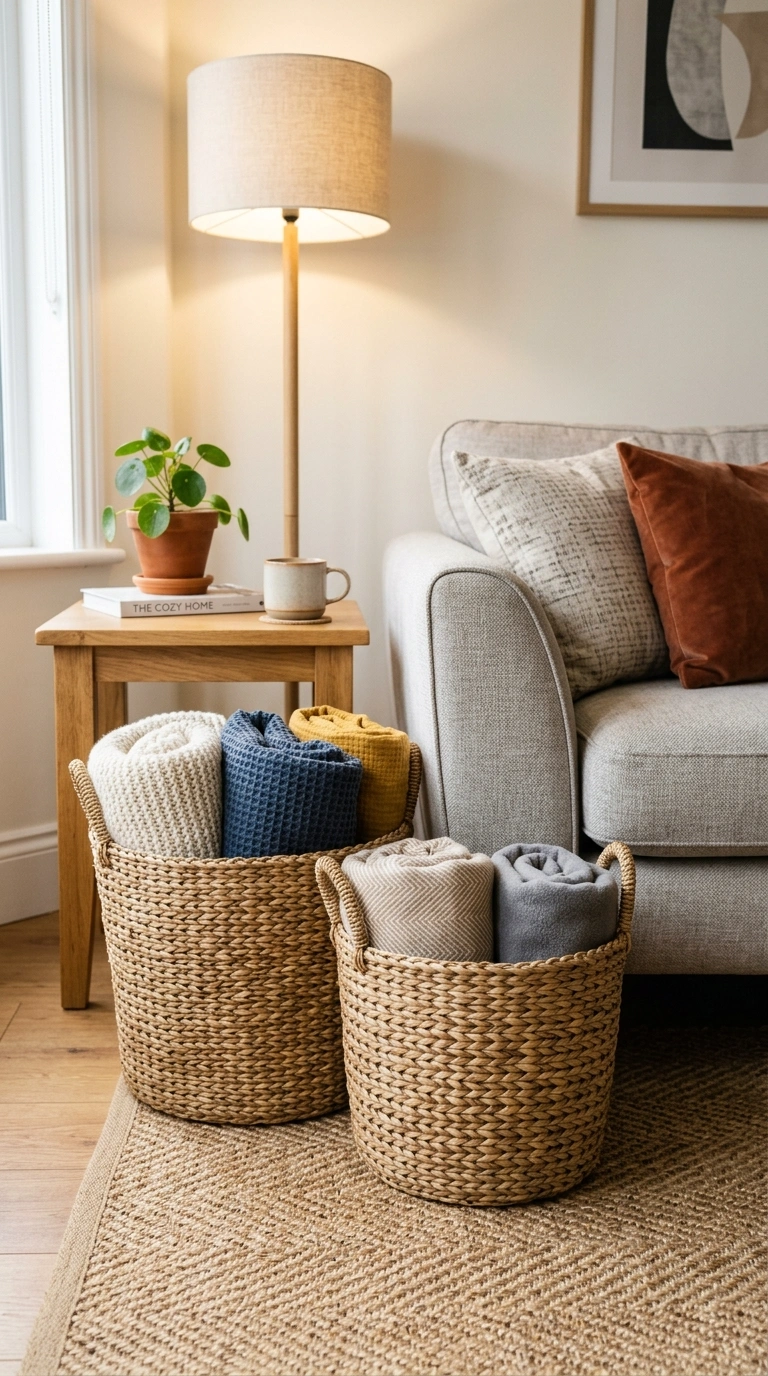
Baskets in natural seagrass, rattan, or jute add genuine texture to a living room while solving real storage needs, like extra blankets, magazines, or children’s toys.
Cost range: $20-$70 depending on size, with a large floor basket typically costing more than a small side-table basket.
Using 2-3 baskets in slightly varying but coordinating textures throughout the room reinforces the layered, collected feel, rather than looking like a single matching storage set bought all at once.
18. Textured Grasscloth Wallpaper
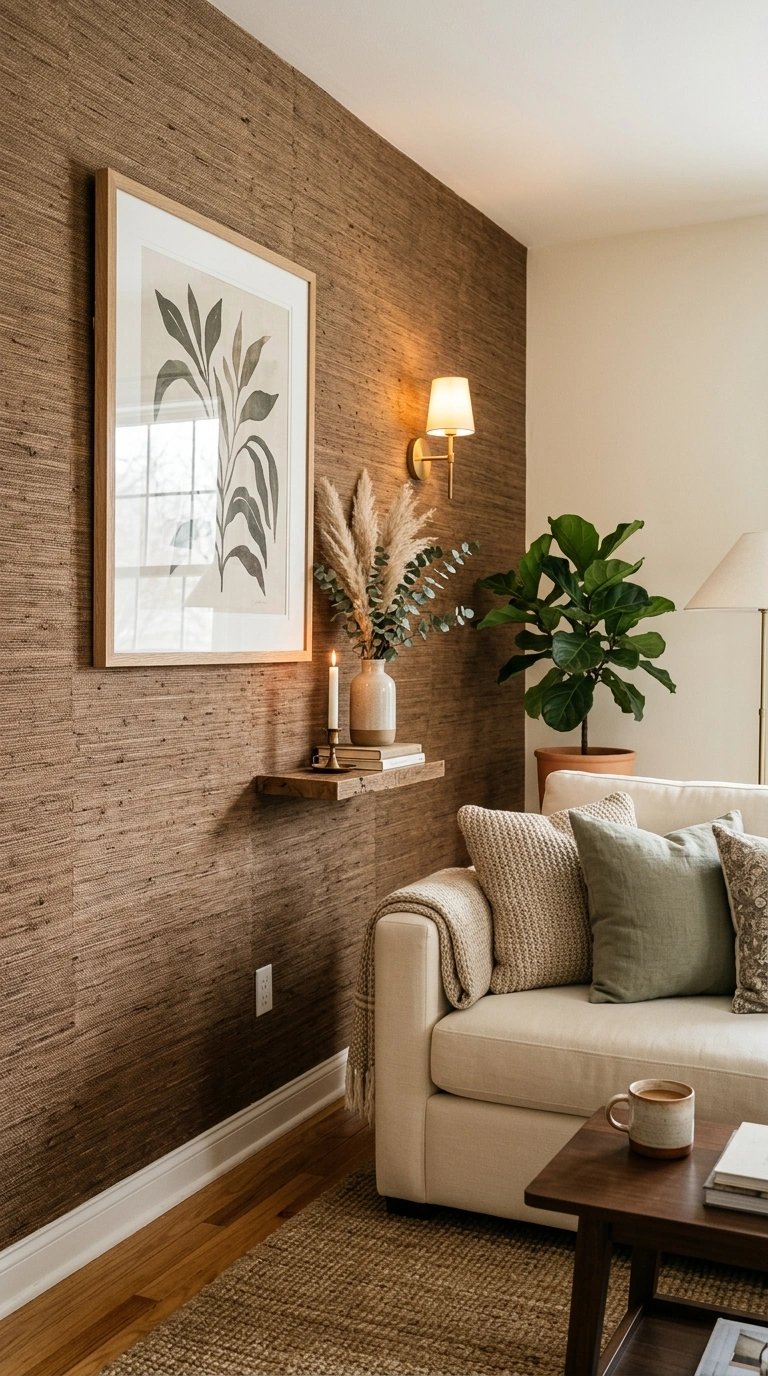
Grasscloth wallpaper in warm brown or beige tones adds a subtle textural pattern to a wall without needing a bold print or paint technique.
Before you commit, know this:
- Grasscloth is more delicate than vinyl wallpaper and can tear more easily during installation
- It’s more sensitive to humidity than most wallpaper, so it works better in a living room than in a bathroom or steamy kitchen
- Seams are more visible than printed wallpaper, since the natural fiber grain doesn’t perfectly match at the edges
Cost range: $8-$20 per square foot for material, plus professional installation, which is recommended given how easily the material can tear.
19. Beige Drapery with Brown Trim
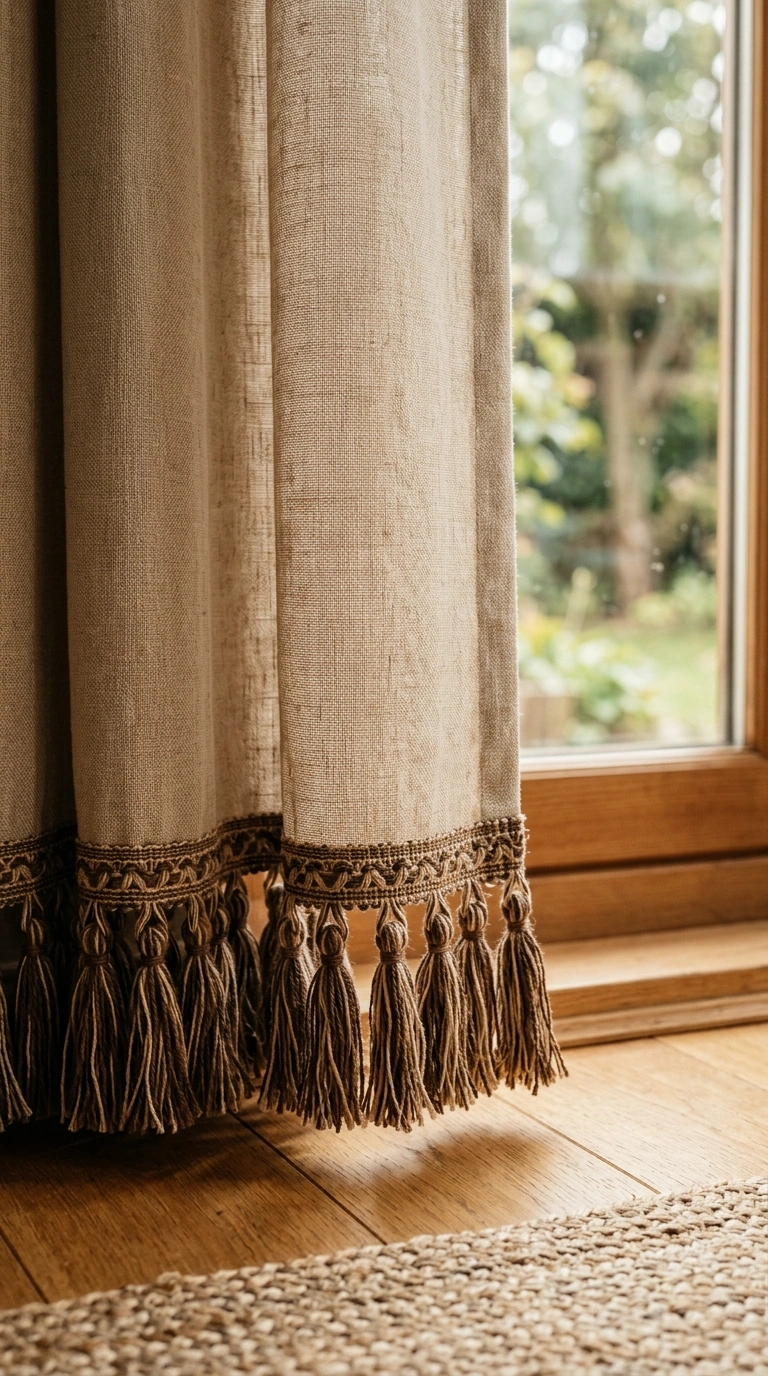
Adding a contrasting brown trim, tape, or tassel fringe along the edge of plain beige curtain panels brings a custom, designer-made feel to ready-made curtains.
DIY vs. buy:
| Option | Approx. Cost |
|---|---|
| DIY: sew or iron-on trim added to existing curtain panels | $15-$40 for trim materials |
| Buy: pre-made curtains with integrated trim detail | $90-$220 per panel |
Adding trim to curtains you already own is one of the more cost-effective upgrades on this list, transforming existing panels rather than requiring a full new purchase.
20. Warm Stone or Ceramic Lamp Bases
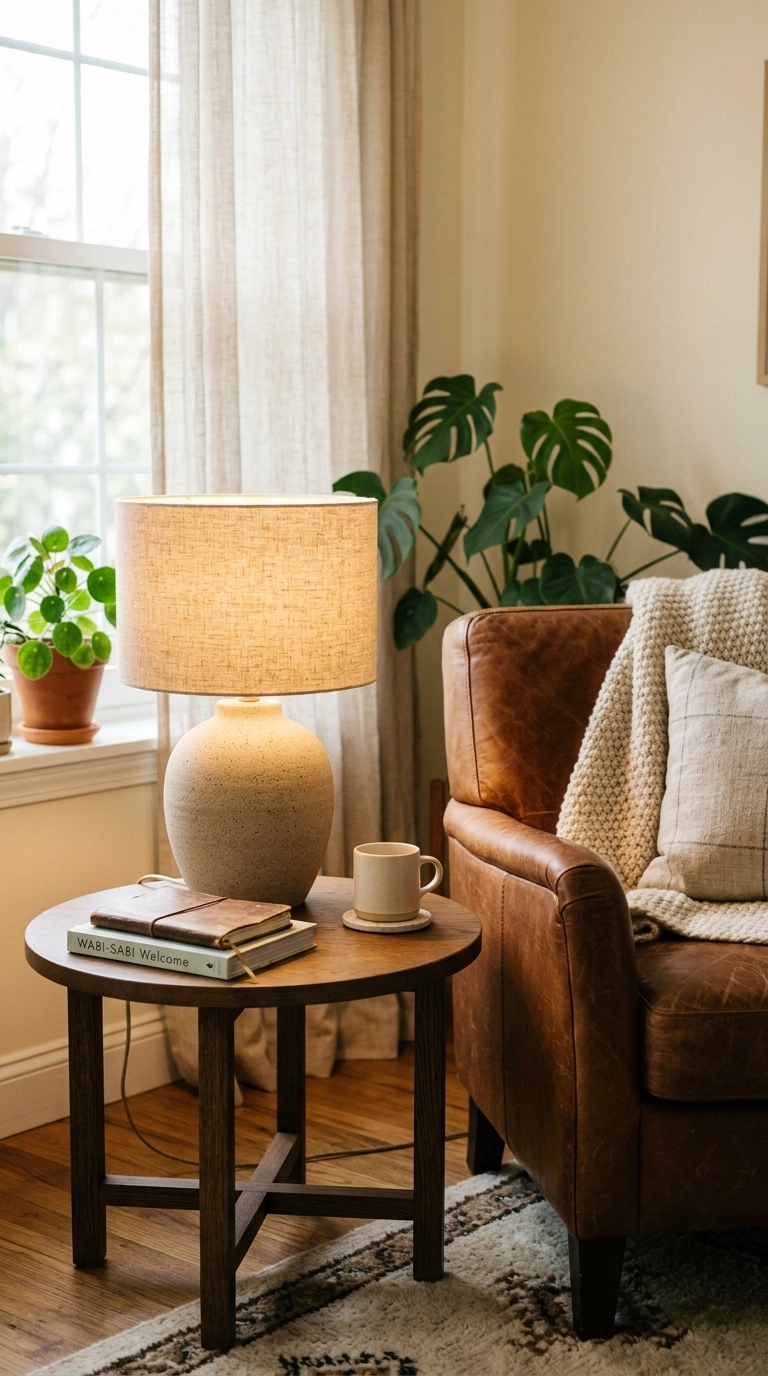
Swapping a plain metal or glass lamp base for one in textured ceramic or natural stone adds material variety to a side table without changing the room’s color palette at all.
| Base Material | Texture It Adds |
|---|---|
| Matte ceramic | Soft, slightly rustic texture |
| Textured stoneware | Organic, hand-thrown feel |
| Natural stone or travertine | Cool-to-the-touch, subtly veined surface |
Cost range: $30-$90 per lamp, and pairing two lamps in the same finish reinforces the room’s overall material story.
21. Greenery in Terracotta Pots
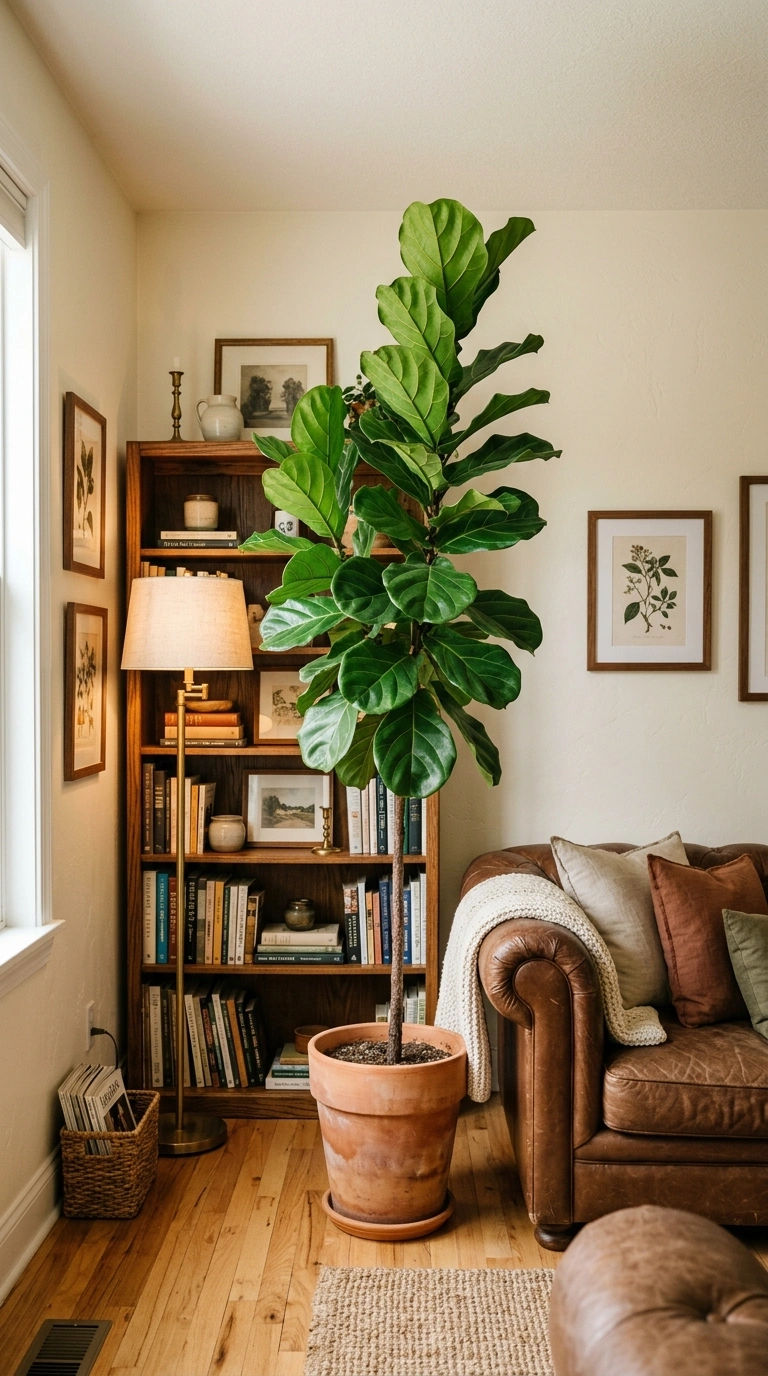
Real or high-quality faux plants in warm terracotta pots soften hard furniture edges and add organic texture, fitting naturally into a brown and beige room’s earthy palette.
| Plant | Why It Works in a Living Room |
|---|---|
| Fiddle leaf fig | Adds height and a strong sculptural silhouette |
| Snake plant | Low-maintenance, tolerates variable light |
| Pothos, trailing from a shelf | Soft, cascading texture near a bookshelf or console |
Cost range: $20-$80 depending on plant size, plus $10-$30 for a terracotta pot in a coordinating warm tone.
Pick 2-3 techniques from this list, starting with the tonal beige layering method since it underpins nearly everything else here, before adding new furniture or paint. A brown and beige living room built from a single flat tone will always read flatter than one built from layered depths, mixed materials, and a few well-chosen textures, even when the overall palette looks nearly identical from a distance.
Save your favorite brown and beige living room ideas to Pinterest so you have them ready when you’re ready to style your own space.
FAQs
What makes a brown and beige living room feel warm instead of flat?
Layering three tonal depths of the same neutral family, mixing wood tones instead of matching them exactly, and adding warm metal accents like brass all contribute more to a warm brown and beige living room than the specific paint color chosen.
What colors pair well with brown and beige in a living room?
Cream, ivory, and ivory-toned accents balance an all-brown room, while brass or warm gold metals and touches of terracotta add richness without introducing an entirely new color family.
Is an all-brown living room too dark?
It can be, without balance. Keeping roughly 40% of the room in cream or ivory tones, through walls, a rug, or a second seating piece, prevents an all-brown palette from feeling heavy or cave-like.
How do I make a beige living room look expensive, not boring?
Focus on tonal layering (three depths of beige, not one flat shade), mix in natural textures like jute, bouclé, and leather, and concentrate your budget on one statement piece, like a leather chair, rather than spreading it evenly.
What rug size works best under a brown or beige sofa?
For rug layering, the top rug should cover about two-thirds of the base rug’s surface area. For a single rug under seating, it should extend at least 18-24 inches beyond the front legs of your main sofa or sectional.