Genius Closet Layout Ideas for Small Spaces: 19 Smart Designs
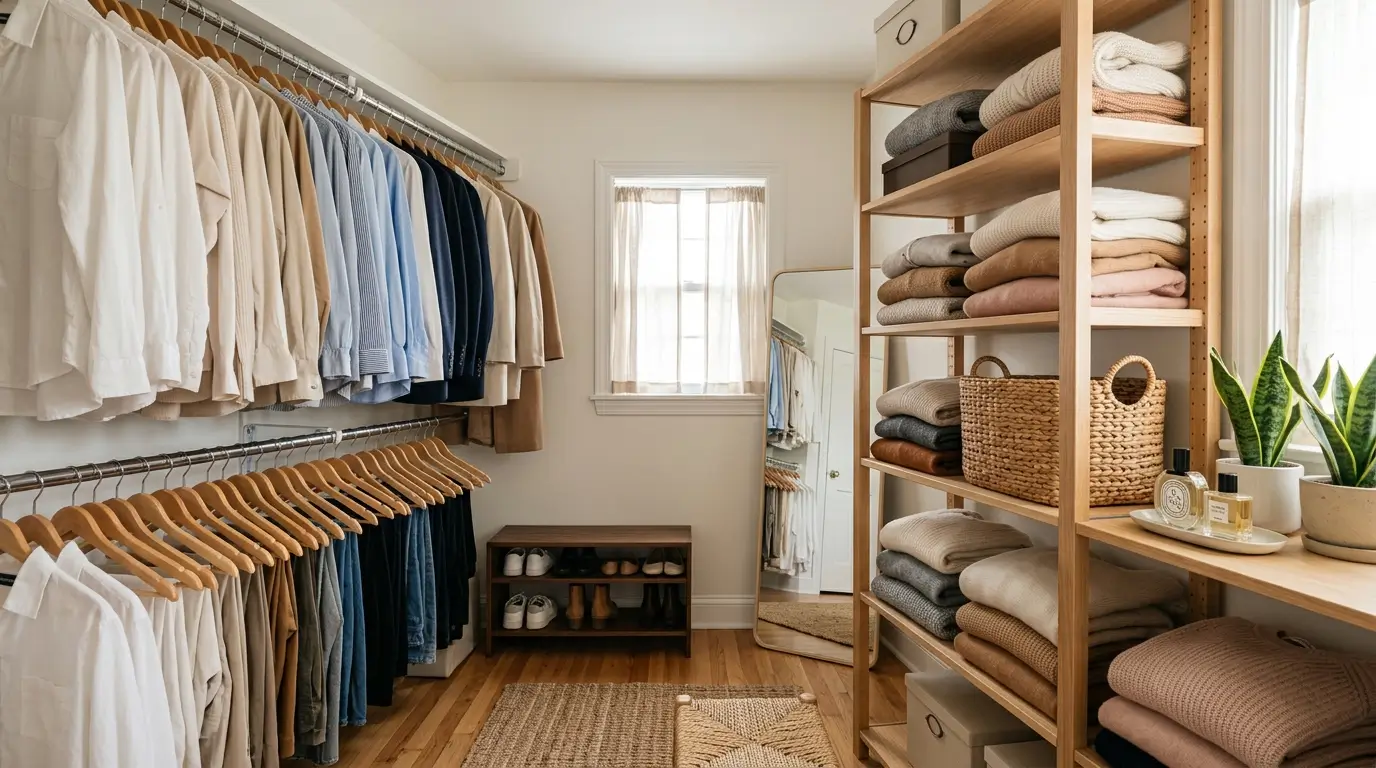
Open any small closet and you will usually find the same problem, one long rod holding everything from winter coats to summer dresses, with shoes piled underneath and nothing else to show for the space. A small closet is not actually short on room, it is usually just missing a plan. Once you break the space into zones instead of one big open box, you would be surprised how much more it can hold, and how much easier it becomes to find what you are looking for in the morning. The 19 layouts below are all things you can build into a closet that is already small, whether it is a narrow reach-in, a shallow hallway closet, or a tiny bedroom nook. None of them require knocking down walls. They just ask you to rethink how the space is divided.
1. Double Hanging Rod
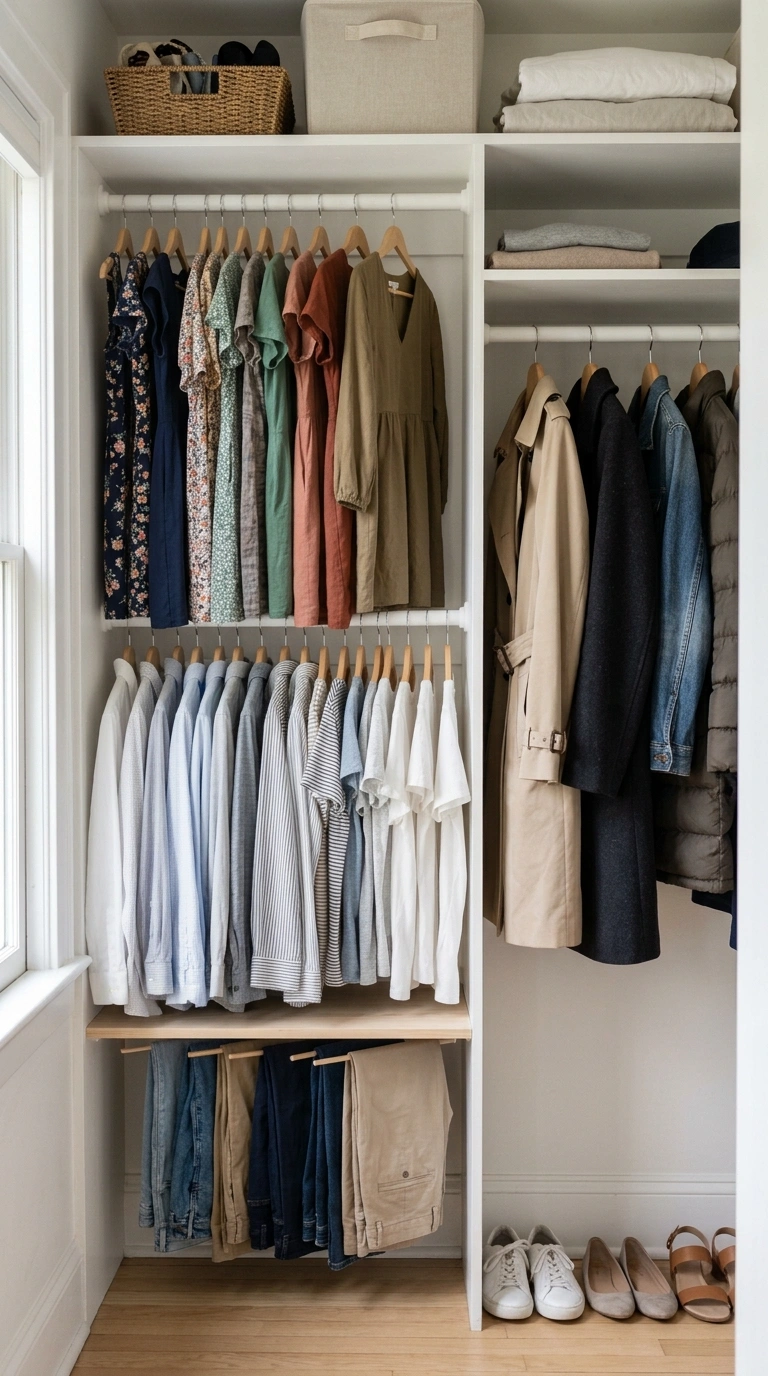
Splitting one tall hanging section into two shorter rods, stacked one above the other, effectively doubles your hanging space without adding a single inch to the closet footprint. This works best for shirts, folded pants on hangers, and shorter dresses, since these items do not need the full height that a single long rod provides. Mount the top rod high enough for shorter items to clear the floor, and set the bottom rod so it clears the top of a dresser or shoe rack below it. Reserve one section of the closet, usually a third of the width, as a single tall rod for dresses, coats, and anything long. This layout works in nearly every reach-in closet and is one of the easiest upgrades a closet organizer company or a simple DIY kit can install in a weekend.
2. Corner Shelf Unit
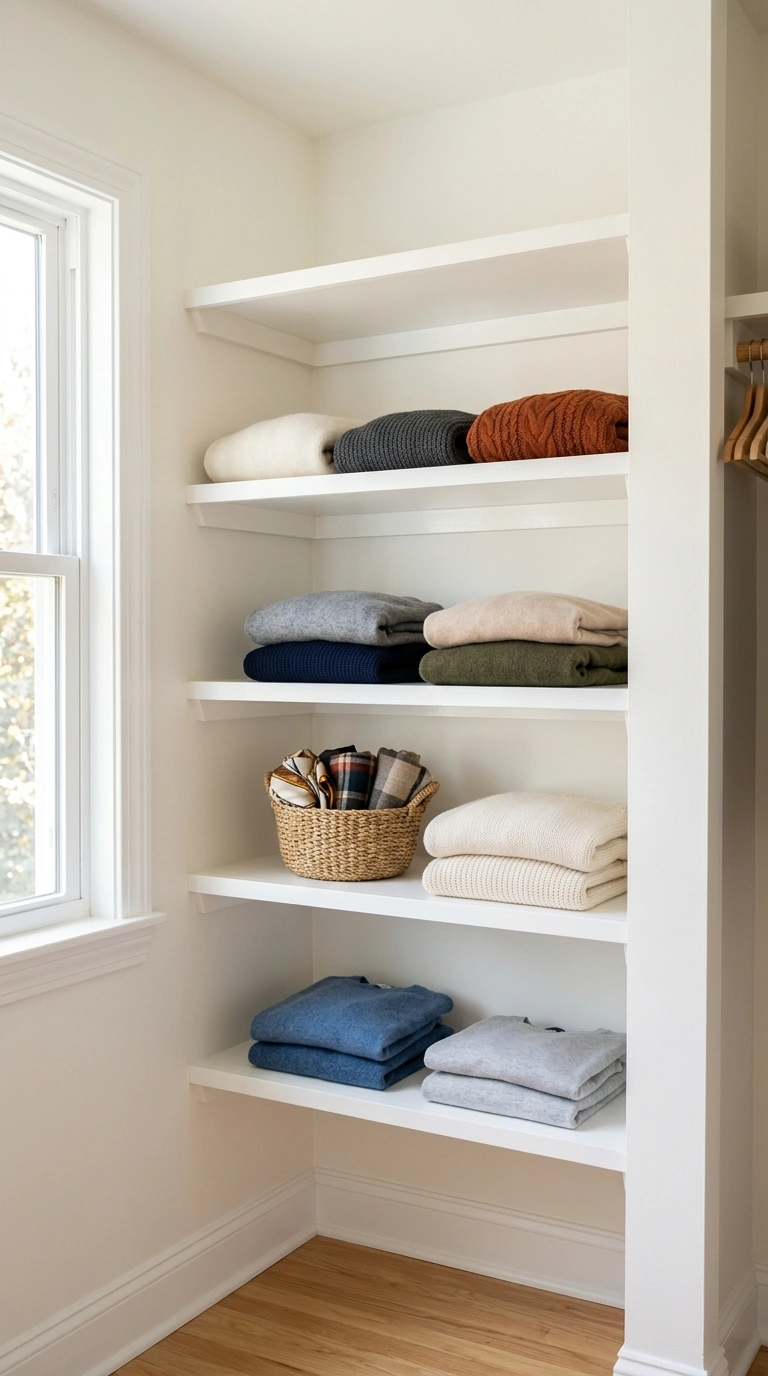
If your closet has an awkward corner where two hanging rods meet, a set of narrow corner shelves can turn that dead space into a spot for folded sweaters, bags, or shoe boxes. Choose shelves that are slightly angled or L-shaped so they follow the corner rather than jutting out into the walking space. This layout works particularly well in walk-in closets where the corners tend to go unused because clothes rods cannot wrap around them cleanly. Stack four or five shallow shelves rather than two or three deep ones, since shallow shelves make it easier to see and grab items without digging. A woven basket on one shelf keeps smaller accessories like scarves or belts corralled instead of loose and messy.
3. Pull-Out Drawer System
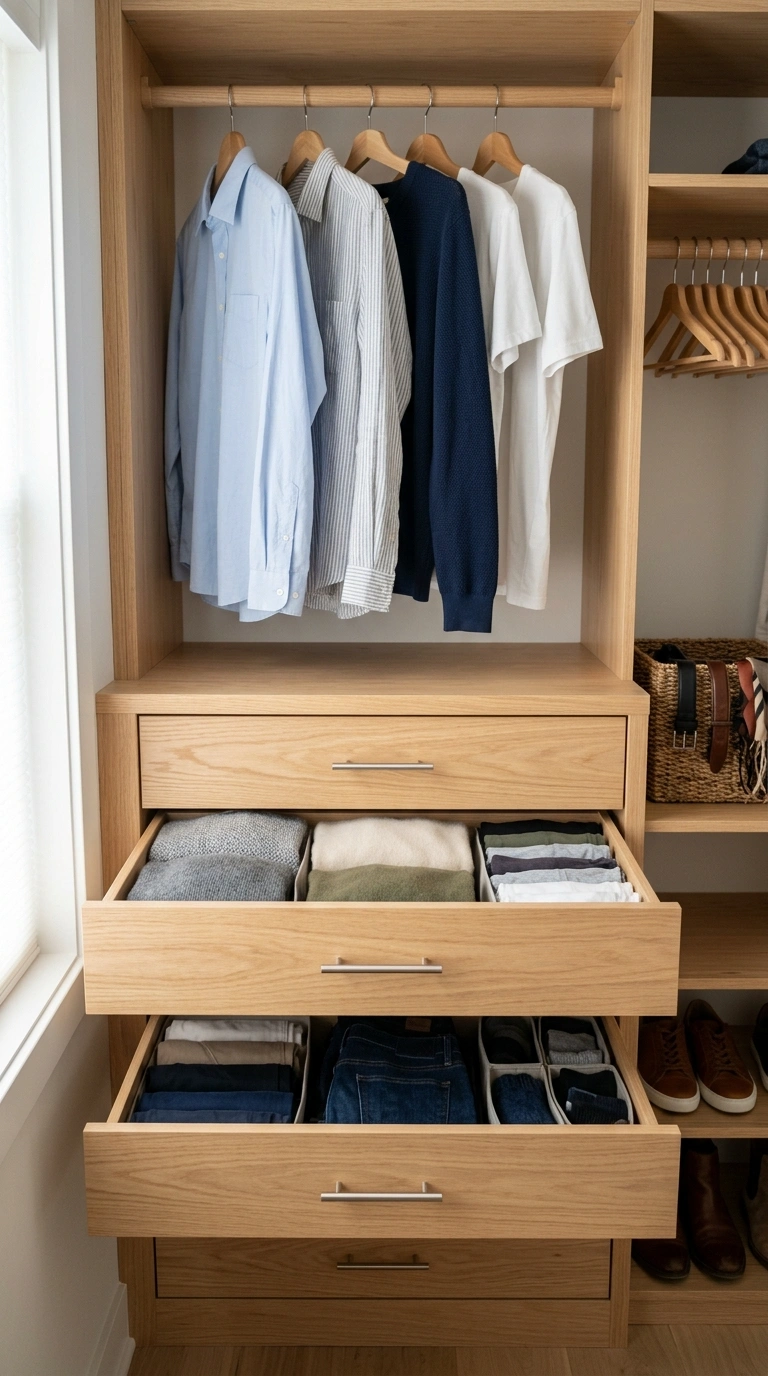
Built-in pull-out drawers underneath a hanging rod make use of space that would otherwise sit empty below shorter garments like shirts or folded pants. Choose drawers in a light wood or white laminate finish so the closet interior feels bright rather than boxed in. This layout is ideal for underwear, folded t-shirts, and accessories that do not need to be seen at a glance, since drawers keep them hidden and dust-free. Place the drawer unit under the shorter of your two hanging rods, leaving the taller section open for dresses or coats above open shelving instead. This system works especially well in small closets because it adds real storage volume without taking up any extra floor footprint beyond what the closet already has.
4. Overhead Storage Shelf
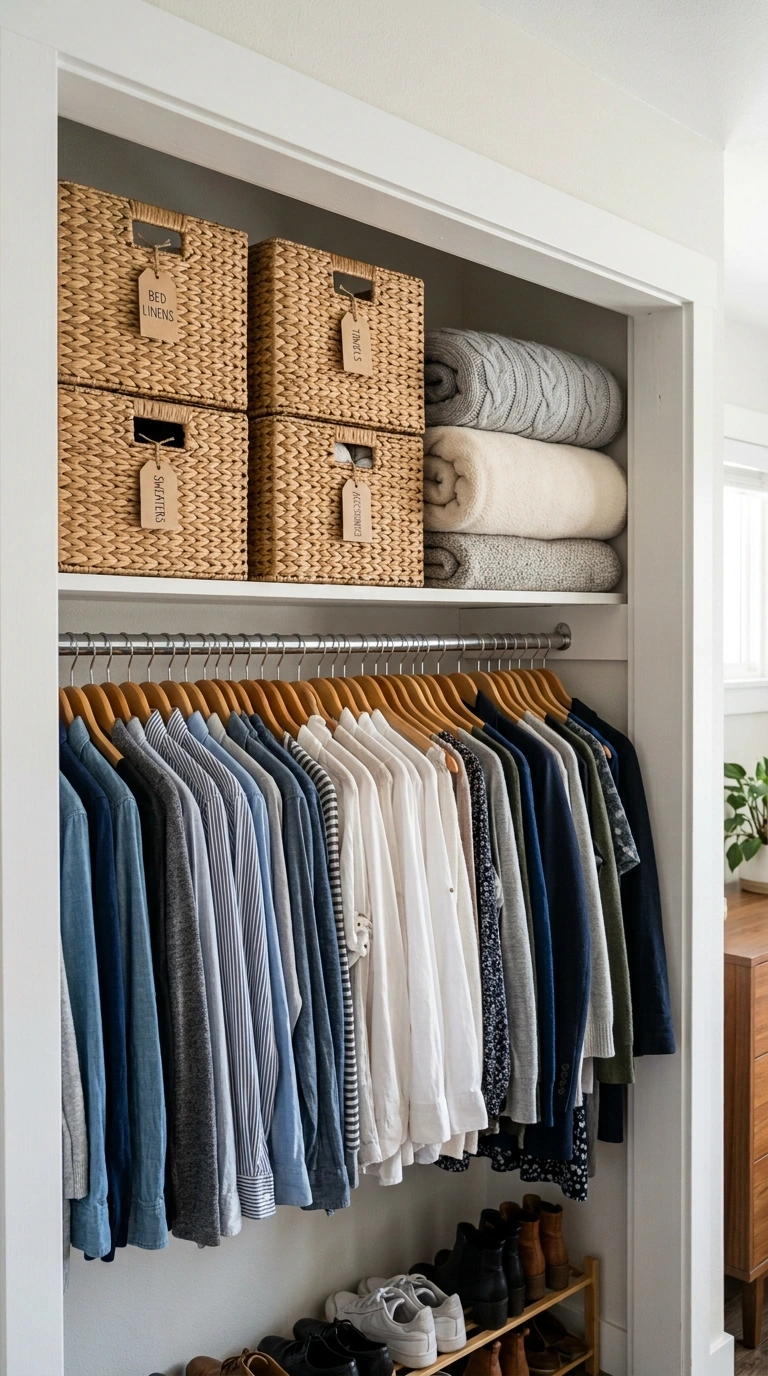
A single shelf running the full width of the closet above the main hanging rod captures storage space that most small closets waste completely. Use this shelf for items you do not need daily, like out of season clothing, extra bedding, or luggage, stored in matching labeled bins so the shelf looks tidy from below. Mount the shelf high enough that it does not interfere with the hanging rod beneath it, usually leaving at least a foot of clearance for garment bags. This layout works in literally every closet type, from a narrow reach-in to a full walk-in, since almost every closet has unused air space above the main rod. Choose a clean white or wood shelf that matches the rest of the closet trim for a finished look.
5. Door-Mounted Organizer
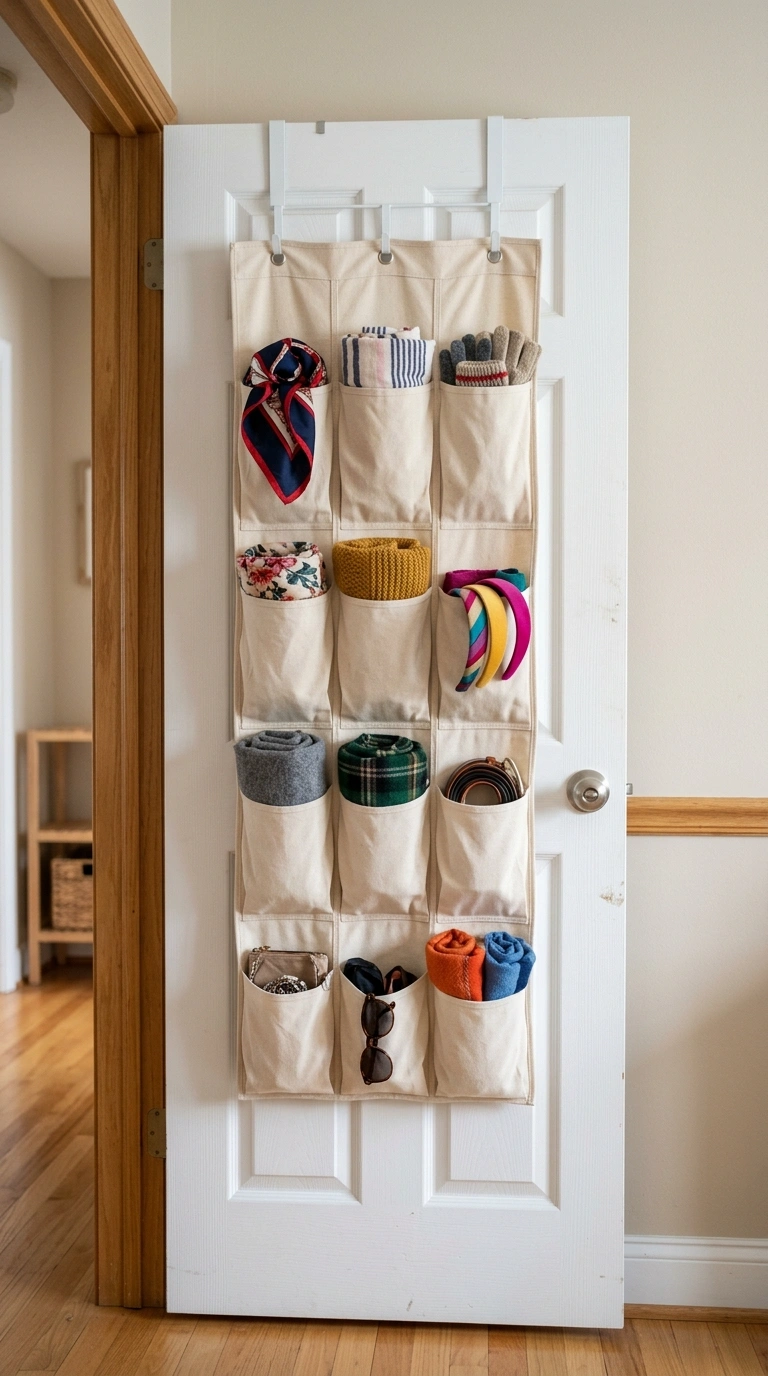
The back of a closet door is one of the most overlooked storage spots in a small space, and a fabric or wire pocket organizer mounted there can hold shoes, accessories, or small folded items. Choose an organizer with clear pockets if you want to see contents at a glance, or a fabric one in a neutral color that blends into the door itself. This layout is especially useful in closets too small for a dedicated shoe rack, since the door pockets can hold six to twelve pairs without using any floor space at all. Mount the organizer so it hangs slightly above the floor, giving the door enough clearance to close fully. This is one of the simplest layout additions and needs no tools beyond the hooks that come with the organizer.
6. Slim Shoe Rack
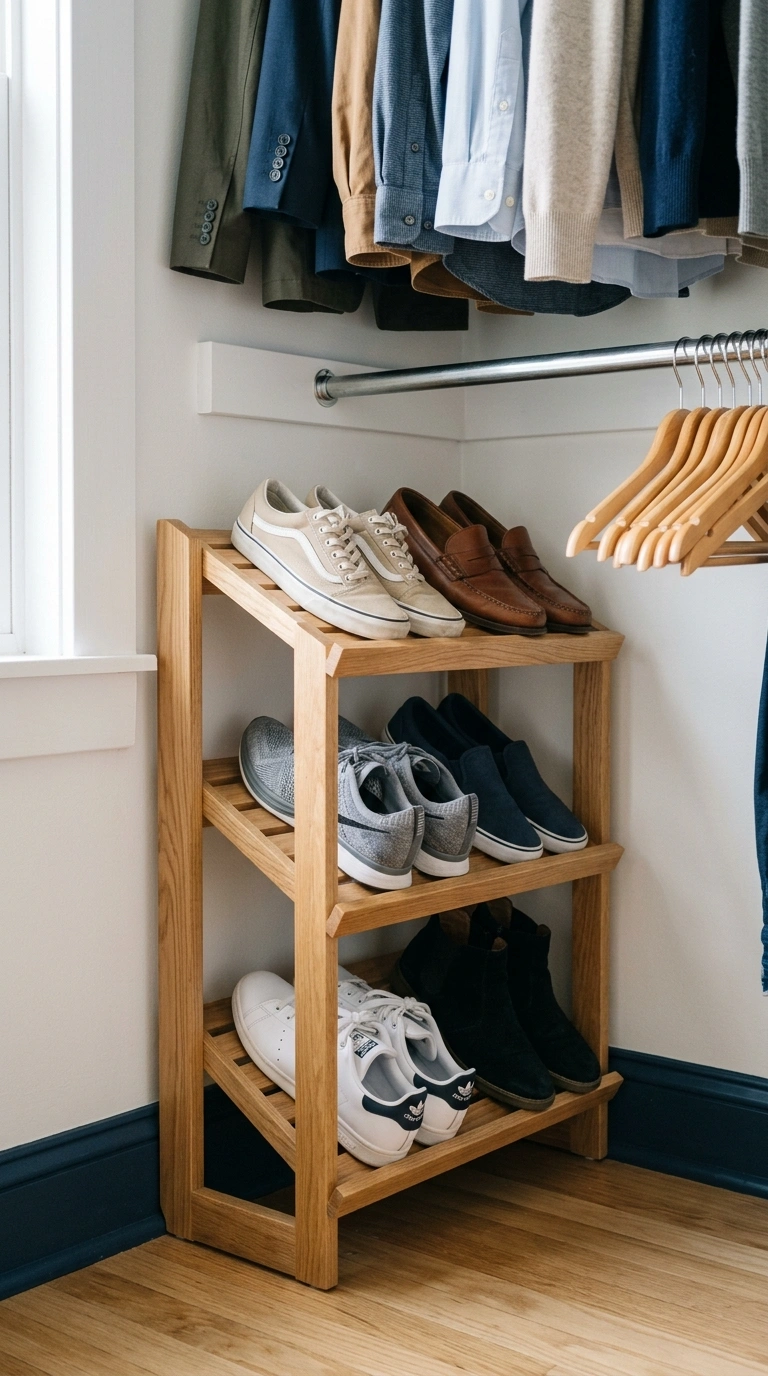
A narrow, angled shoe rack tucked against one side wall of the closet keeps pairs visible and easy to grab without eating into your hanging or shelf space. Choose a rack with slanted shelves so shoes sit at an angle, showing the full shoe rather than just the toe, which also makes the small footprint feel more like an intentional display. This layout works especially well below a shorter hanging rod, where the space between the floor and the bottom of hanging shirts often sits empty. Keep the rack limited to everyday shoes, and store off-season or special occasion pairs in labeled boxes on a higher shelf instead. A slim rack like this fits into closets as narrow as twelve inches wide, making it one of the most space efficient shoe solutions available.
7. Open Shelving Wall
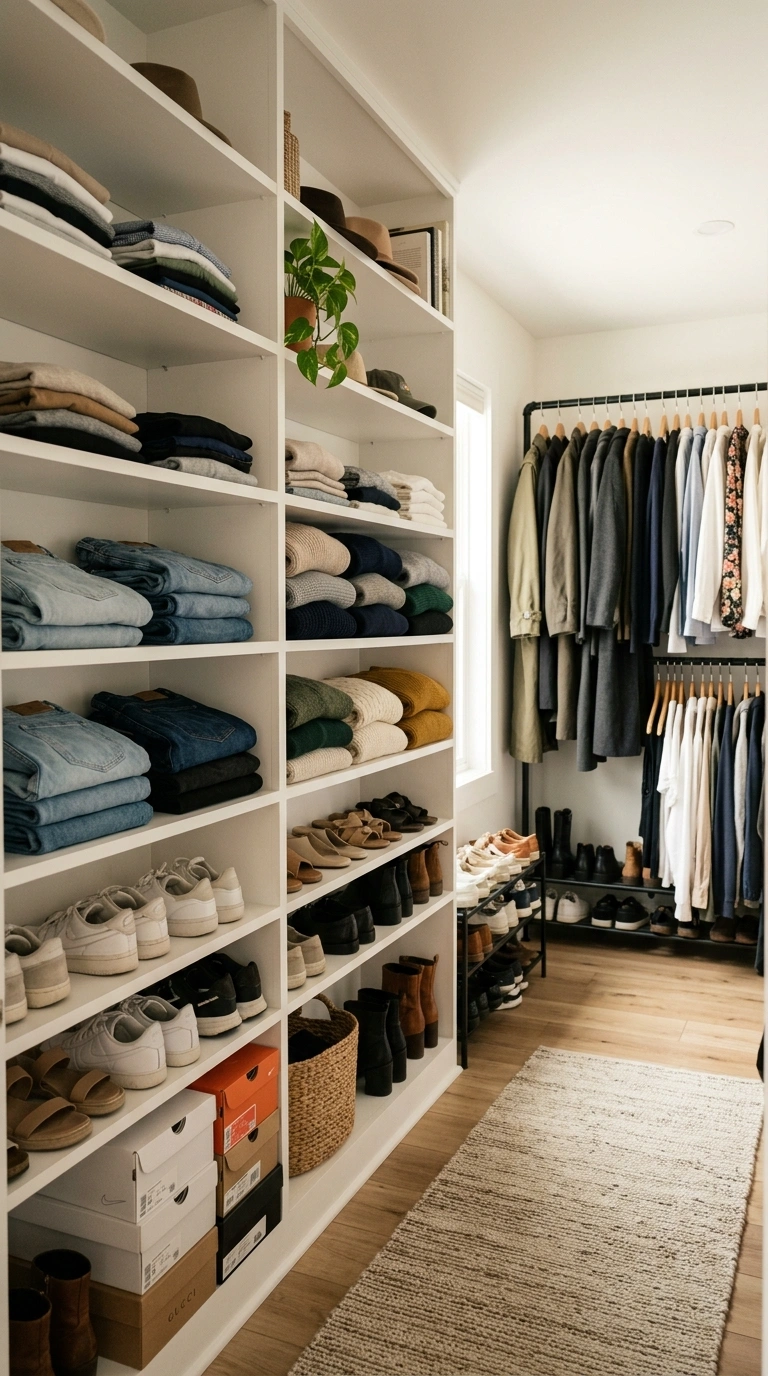
Replacing one full wall of hanging rods with open shelving turns a small closet into something closer to a boutique display, with folded sweaters, stacked jeans, and shoe boxes all visible at a glance. Choose shelves spaced about twelve inches apart so folded stacks do not get too tall and topple over. This layout works best when paired with a hanging section on the opposite wall, giving you a mix of folded and hung storage in one small footprint. Use baskets on the lower shelves for bulkier items like sweaters, and keep the top shelves for lighter things like hats or bags. This design also makes it much easier to see your full wardrobe at once, since nothing is buried behind a row of hanging clothes.
8. Color-Coded Zones
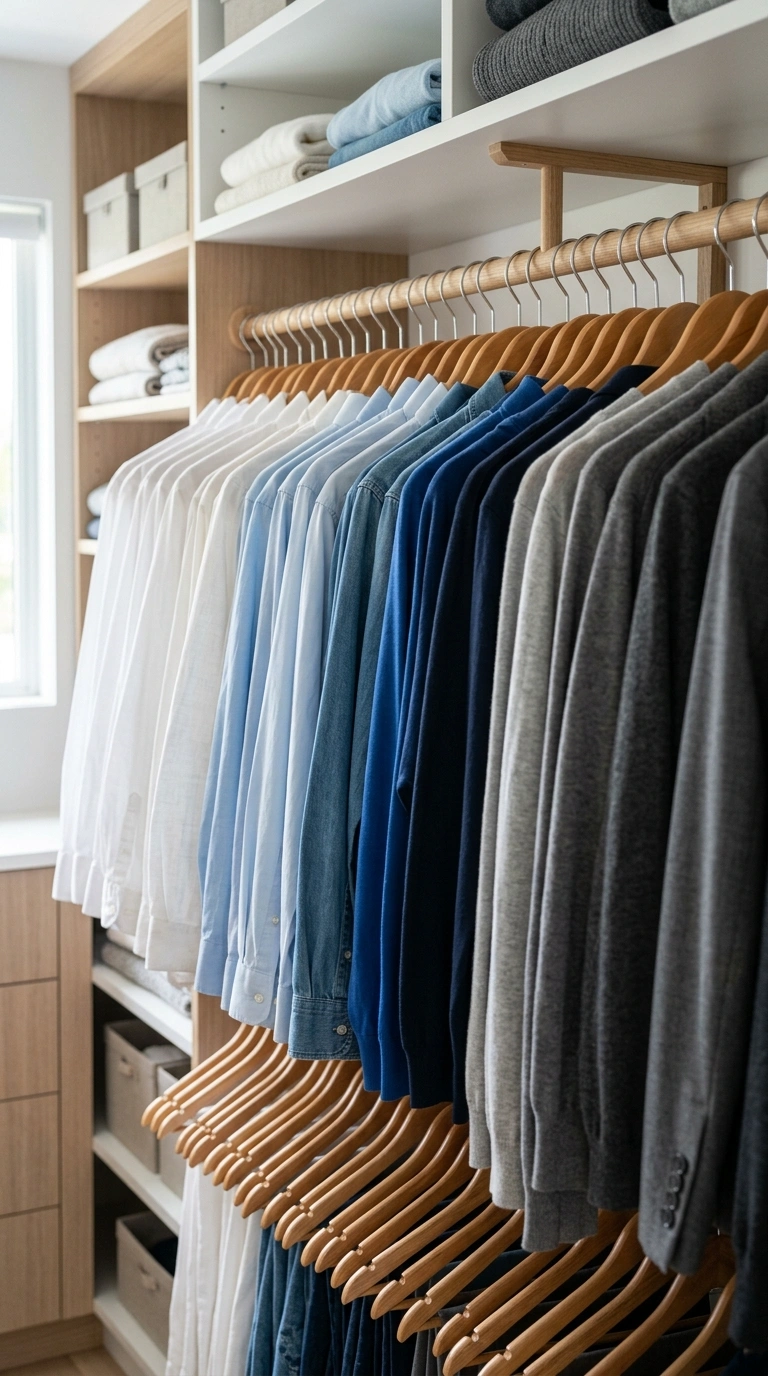
Organizing a small closet by color rather than by category, like all whites together, all blues together, and so on, is a simple layout trick that makes the whole space look more intentional even without adding new shelving. This works especially well in closets where hanging space is limited, since a color gradient draws the eye smoothly across the rod instead of highlighting how few items actually fit. Arrange lighter colors toward one end and darker tones toward the other for a natural fade effect. This layout pairs beautifully with matching wooden or velvet hangers, since uniform hangers make the color arrangement look even more polished. It is one of the few layout ideas that costs nothing beyond a bit of time spent rearranging what you already own.
9. Angled Corner Rod
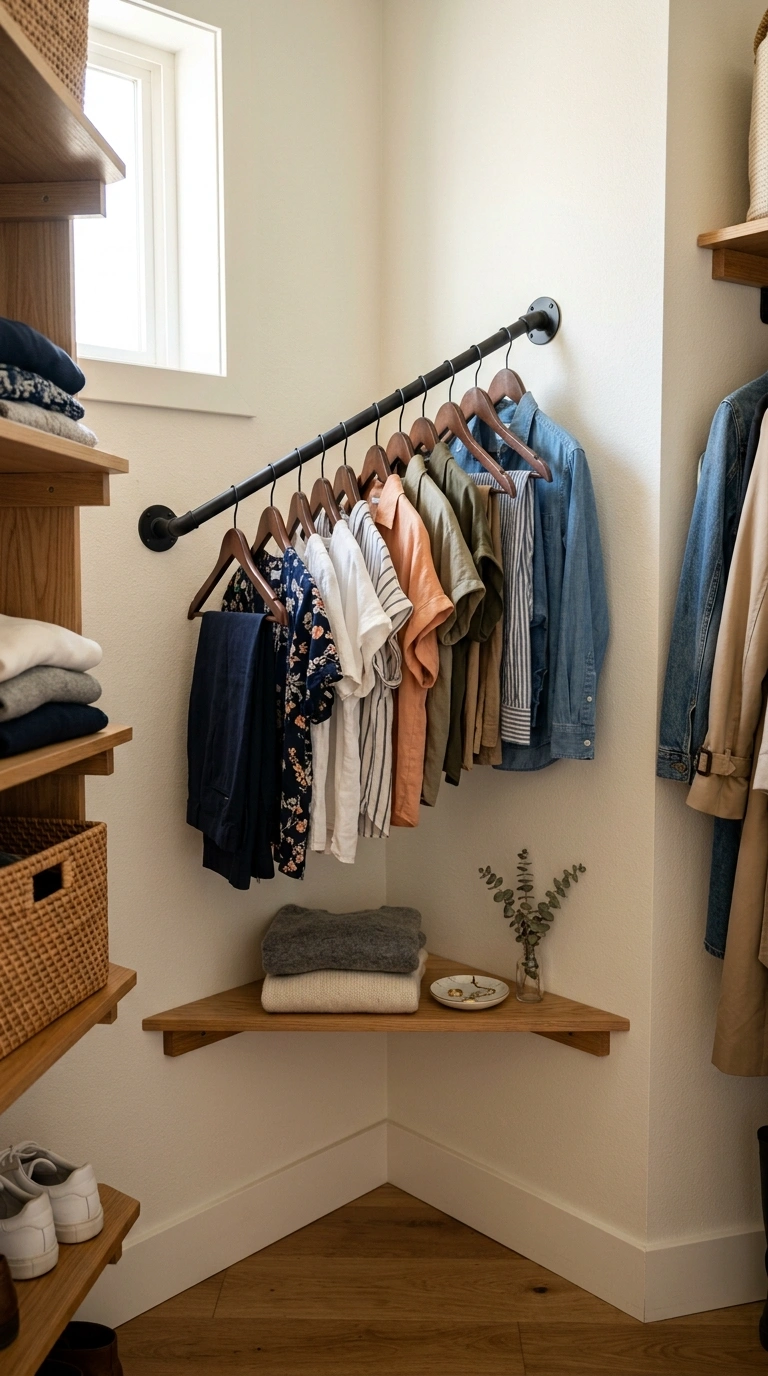
In closets with an L-shaped or corner layout, a rod mounted diagonally across the corner uses space that a straight rod would otherwise waste completely. This layout works particularly well in walk-in closets with an awkward angle where two walls meet, since a standard straight rod would either leave a gap or run into the adjacent wall. Hang shorter items like blouses or folded pants on the angled section, since the diagonal space naturally tapers and cannot fit longer garments comfortably. Pair the angled rod with a small shelf tucked into the tightest part of the corner for folded items or accessories. This is a layout best handled by a closet installer or a flexible closet system kit, since the angle needs to be measured carefully to avoid wasted gaps.
10. Stackable Bins
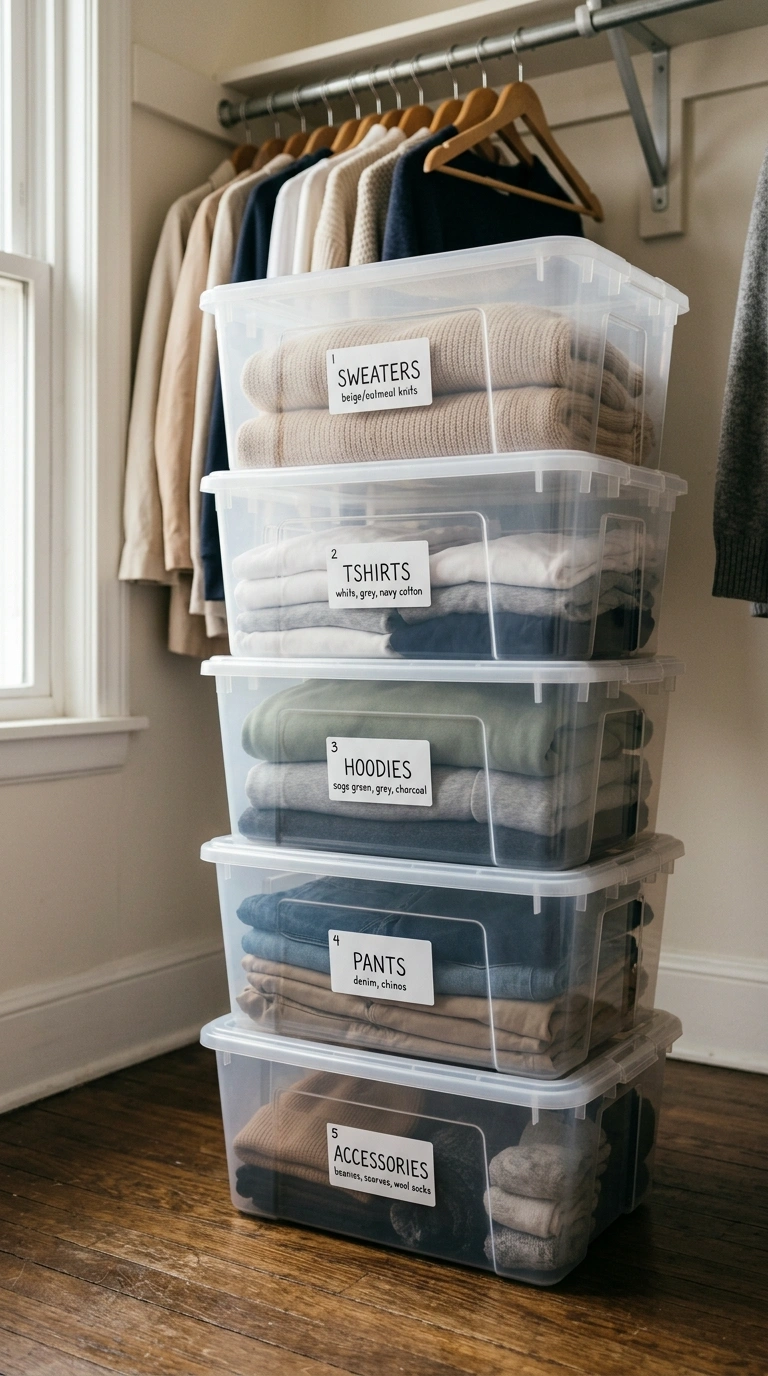
Clear or woven stackable bins placed on a closet floor or lower shelf give you flexible storage that can grow or shrink depending on the season, without needing any built-in shelving at all. Choose bins in a uniform size and color so a stack of four or five still looks tidy rather than like a storage unit. This layout works well in closets with extra floor space below a single hanging rod, especially in closets that only need half their width for hanging clothes. Label each bin by category, like workout gear, accessories, or off-season items, so you do not need to open every bin to find what you need. This is one of the most budget friendly layout ideas, since bins can be added or removed as your storage needs change over time.
11. Belt and Scarf Hooks
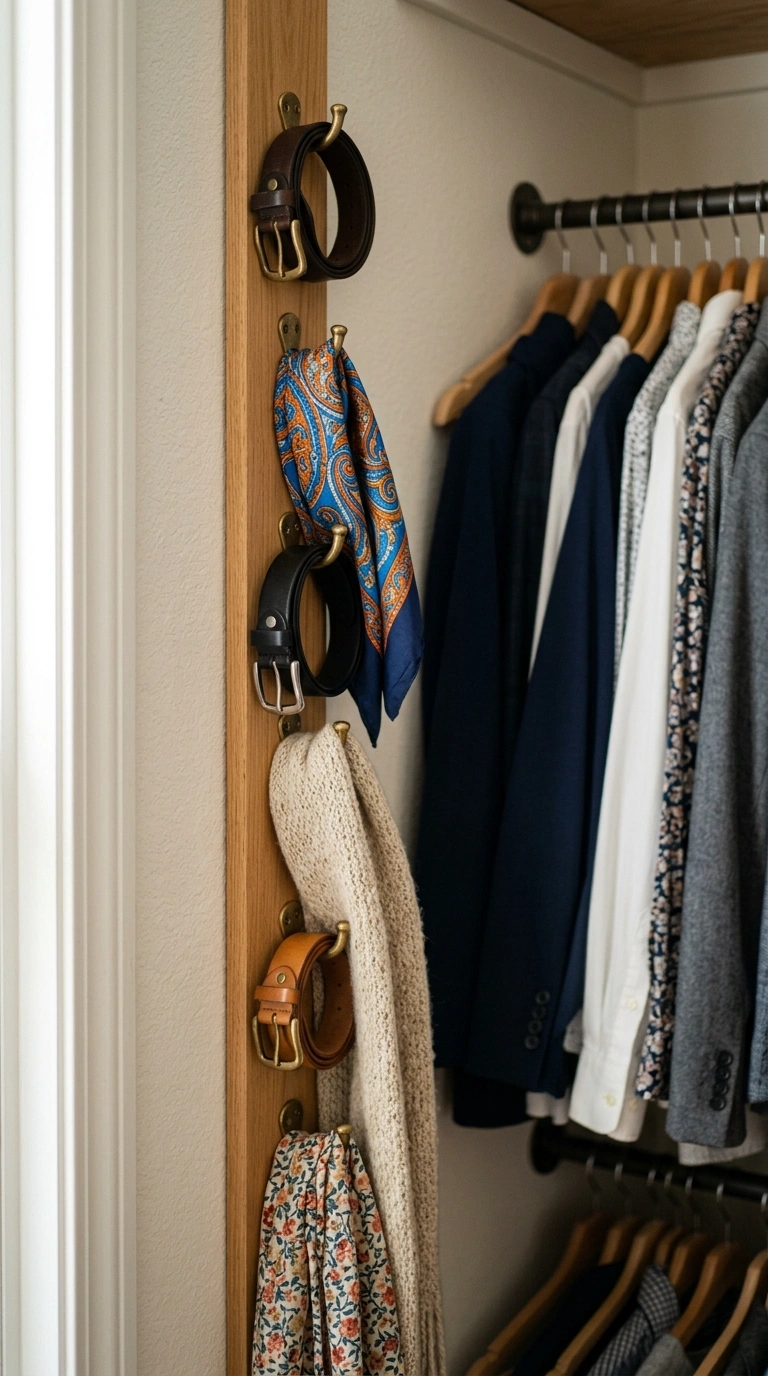
A row of small hooks mounted on the side wall of the closet gives belts, scarves, and even bags a dedicated spot instead of a tangled pile at the bottom of a drawer. Space the hooks about three inches apart so each item hangs separately and stays easy to spot. This layout works especially well in the narrow strip of wall space beside a hanging rod, which is usually too small for a shelf but perfect for a row of hooks. Choose hooks in a slim, low profile design so they do not snag on clothing as you move things around. This small addition keeps accessories visible and wrinkle-free, and it frees up drawer space for items that actually need to be folded.
12. Floating Shelf Ledge
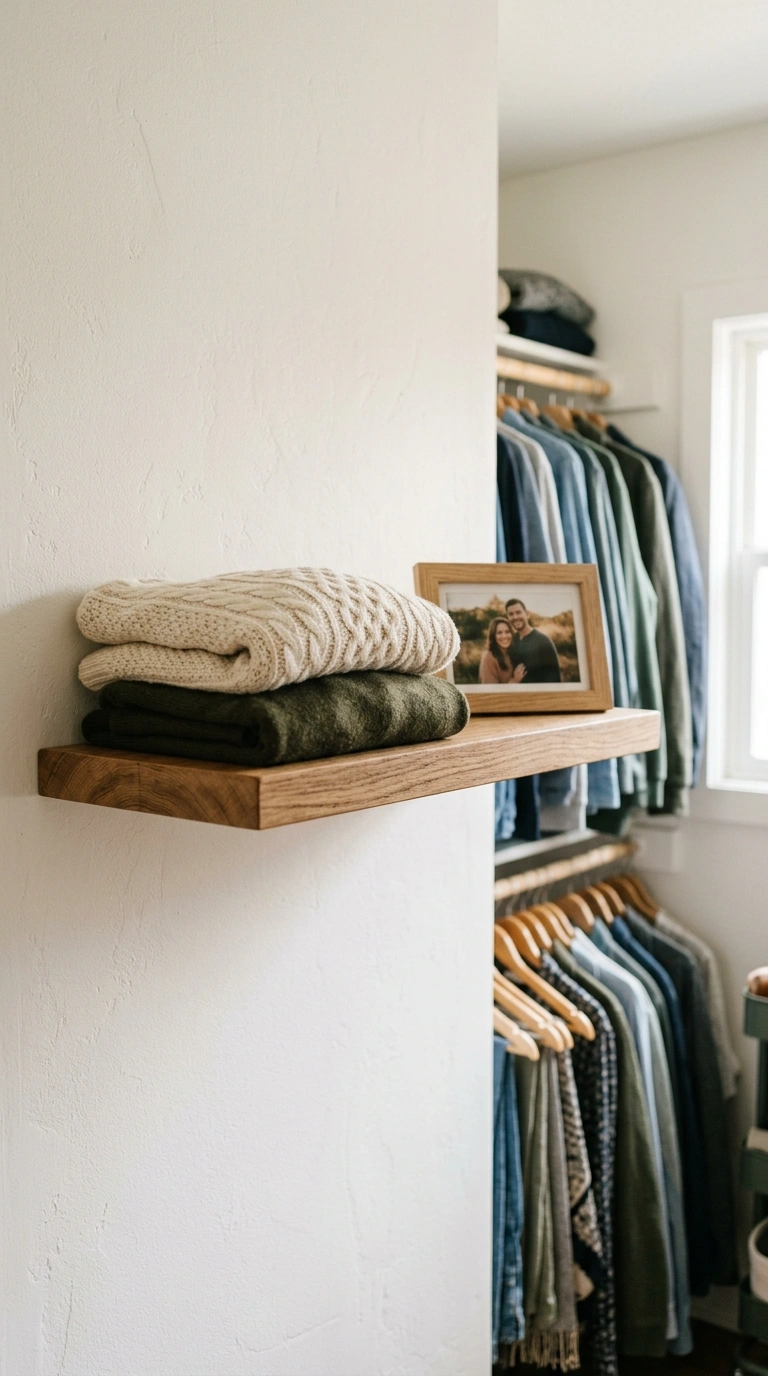
A single floating shelf mounted at eye level, separate from the main shelving system, gives you a spot to display a few folded sweaters, a stack of books, or a small tray of jewelry, turning a purely functional closet into one with a bit of personality. This layout works best in walk-in closets with enough width to spare a small section for display rather than pure storage. Choose a shelf in a natural wood tone to add warmth against what is often an all-white closet interior. Keep the styling simple, just two or three folded items and one small object like a candle or a framed photo, so the shelf does not become another catch-all surface. This is a layout idea that adds character without sacrificing much storage capacity.
13. Underbed Drawer Pairing
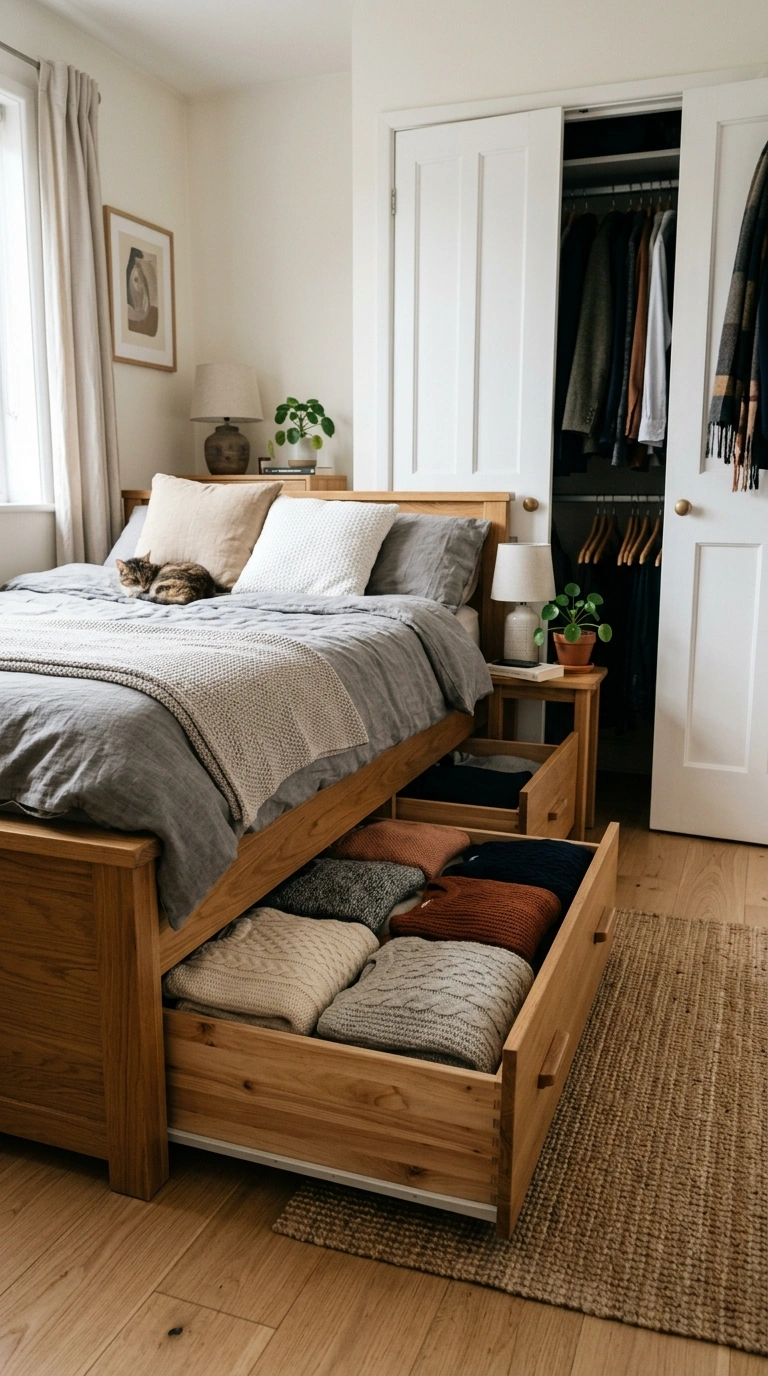
When closet space runs out completely, pairing your closet system with underbed drawers in the same room extends your storage without needing any extra square footage. Use the underbed drawers for bulkier items like out of season sweaters or extra linens, freeing up the closet itself for everyday clothing and shoes. Choose drawers with wheels so they slide out easily rather than needing to be dragged across the floor. This layout works especially well in small bedrooms where the closet alone simply cannot hold everything, and it keeps rarely used items out of sight without taking up shelf space that daily items need more. Label each underbed drawer clearly so you are not left guessing what is inside months later.
14. Vertical Divider Panels
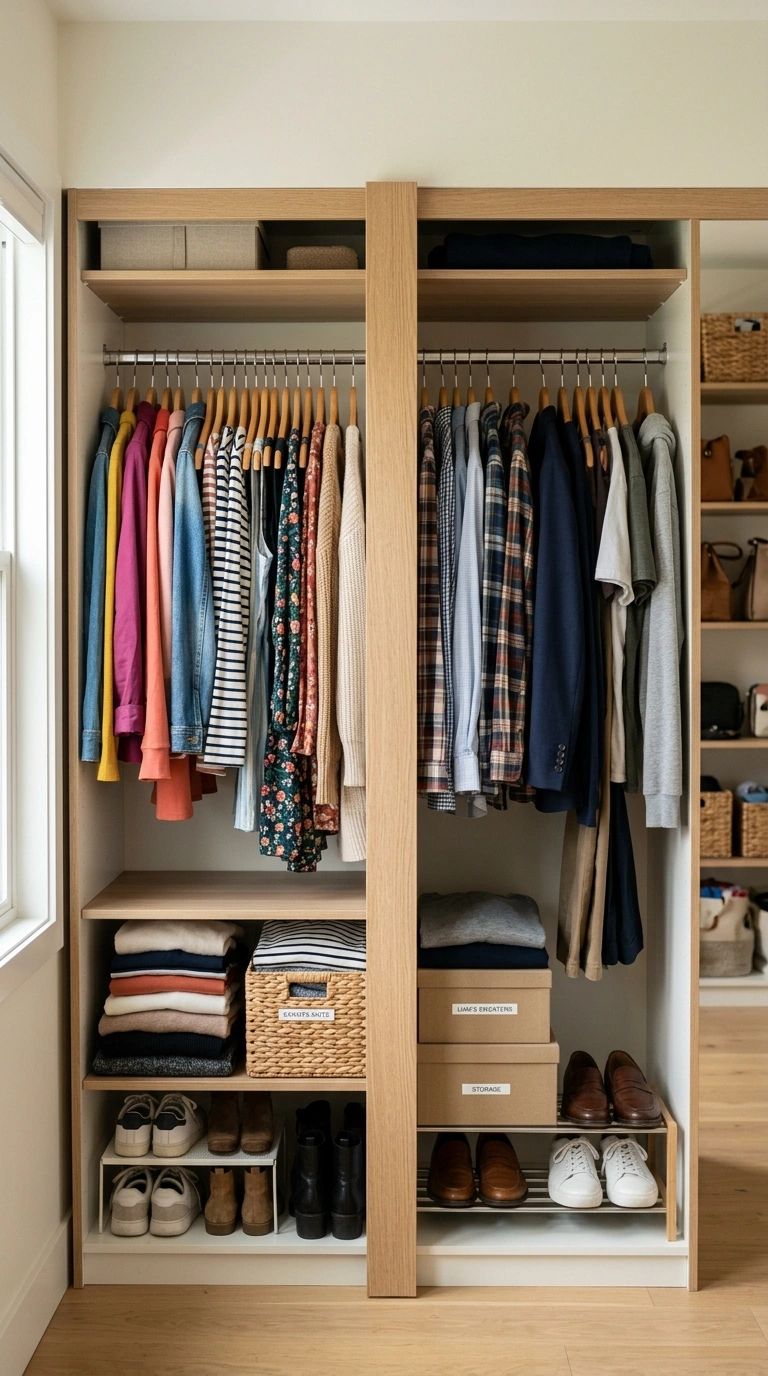
Thin vertical panels installed between hanging sections keep different clothing categories, like work clothes and casual clothes, from blending into one messy row along the rod. This layout works well in closets shared by two people, where a divider panel clearly marks where one person’s clothes end and the other’s begin. Choose simple wood or laminate panels that match the closet’s existing shelving so the dividers look built-in rather than added on. Beyond just organization, the panels also help keep hangers from sliding into one crowded clump at one end of the rod, which happens often in closets without any visual breaks. This is a small structural addition that makes a noticeable difference in how organized the closet feels day to day.
15. Mirror Door Feature
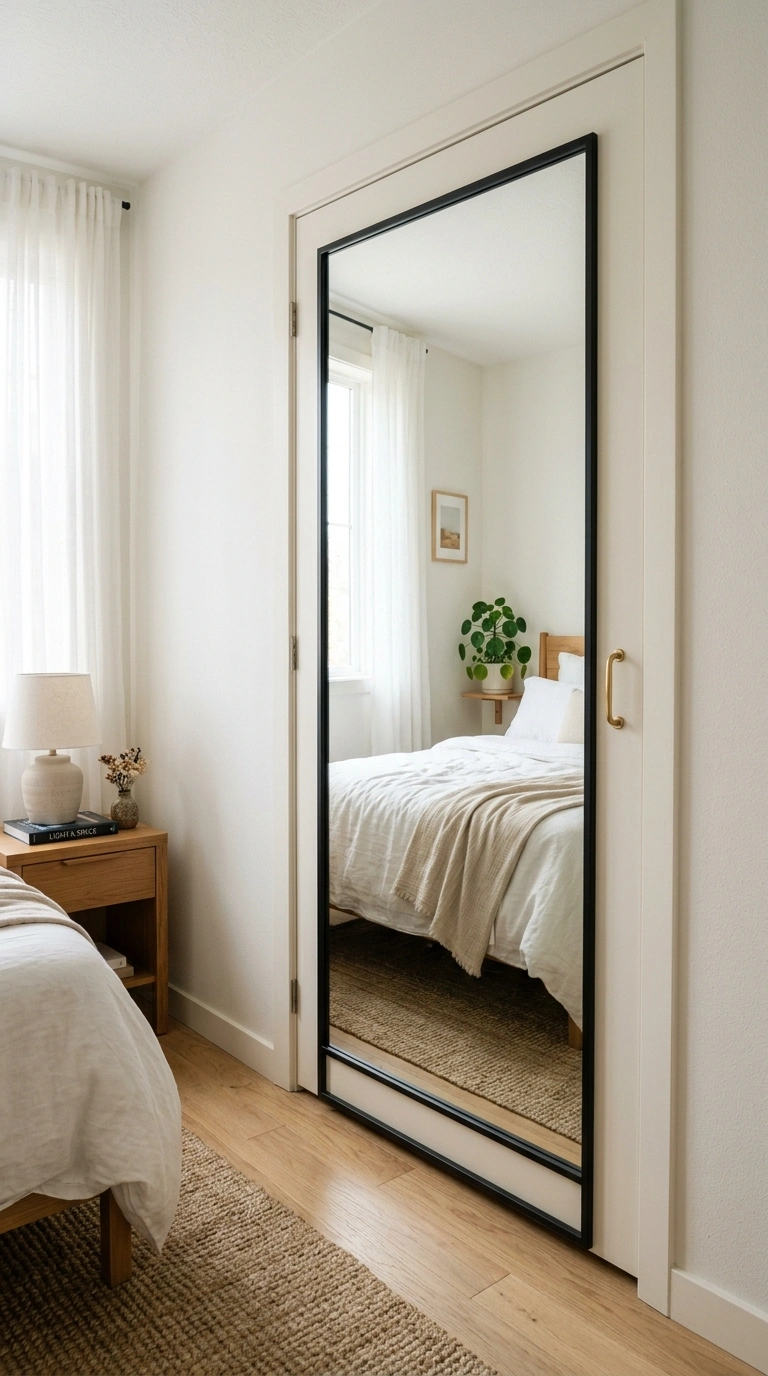
Installing a full length mirror on the inside of the closet door, or as the door itself if it is a sliding style, adds function without taking up any interior closet space at all. This layout is especially useful in small bedrooms that do not have room for a separate freestanding mirror elsewhere. Choose a mirror with a slim frame in a finish that matches your closet hardware for a cohesive look. Beyond the practical benefit of checking your outfit before leaving the room, a mirrored door also reflects light back into the closet, making the whole space feel brighter and larger than it actually is. This is one of the easiest additions to make, since many mirrored closet doors can be installed as a direct swap for existing doors.
16. Basket Wall Grid
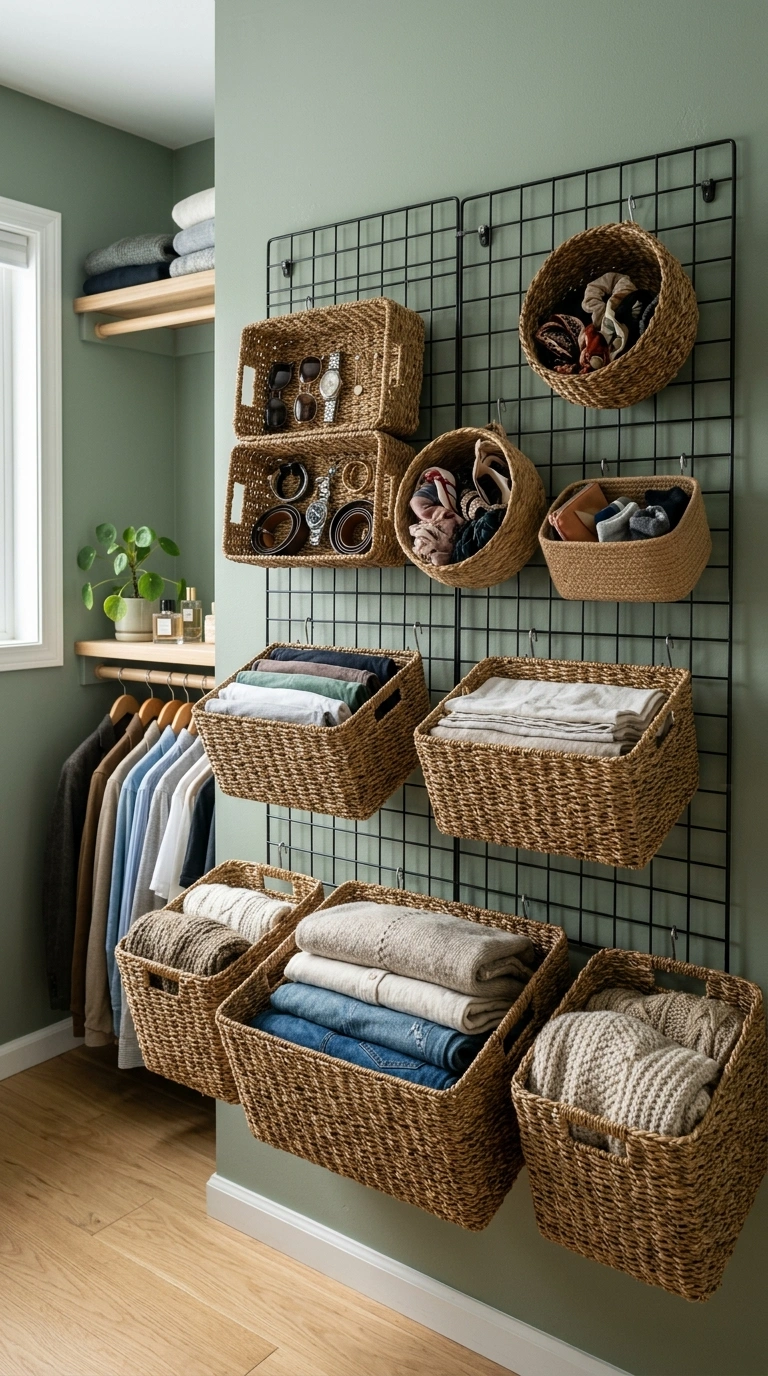
A wall-mounted wire grid with hanging baskets attached at different heights turns one flat closet wall into a fully customizable storage system that can be rearranged as your needs change. Choose baskets in varying sizes, some deep for folded clothes and some shallow for accessories, and clip them onto the grid in a layout that suits your current wardrobe. This layout works especially well in closets that feel too small for built-in shelving but still have a flat wall going unused. The open wire design keeps the whole system feeling light rather than bulky, which matters in a small space where a solid shelving unit might feel too heavy. Move baskets around seasonally, swapping a deep basket for bulky sweaters with a shallow one for lighter summer items.
17. Jewelry Drawer Insert
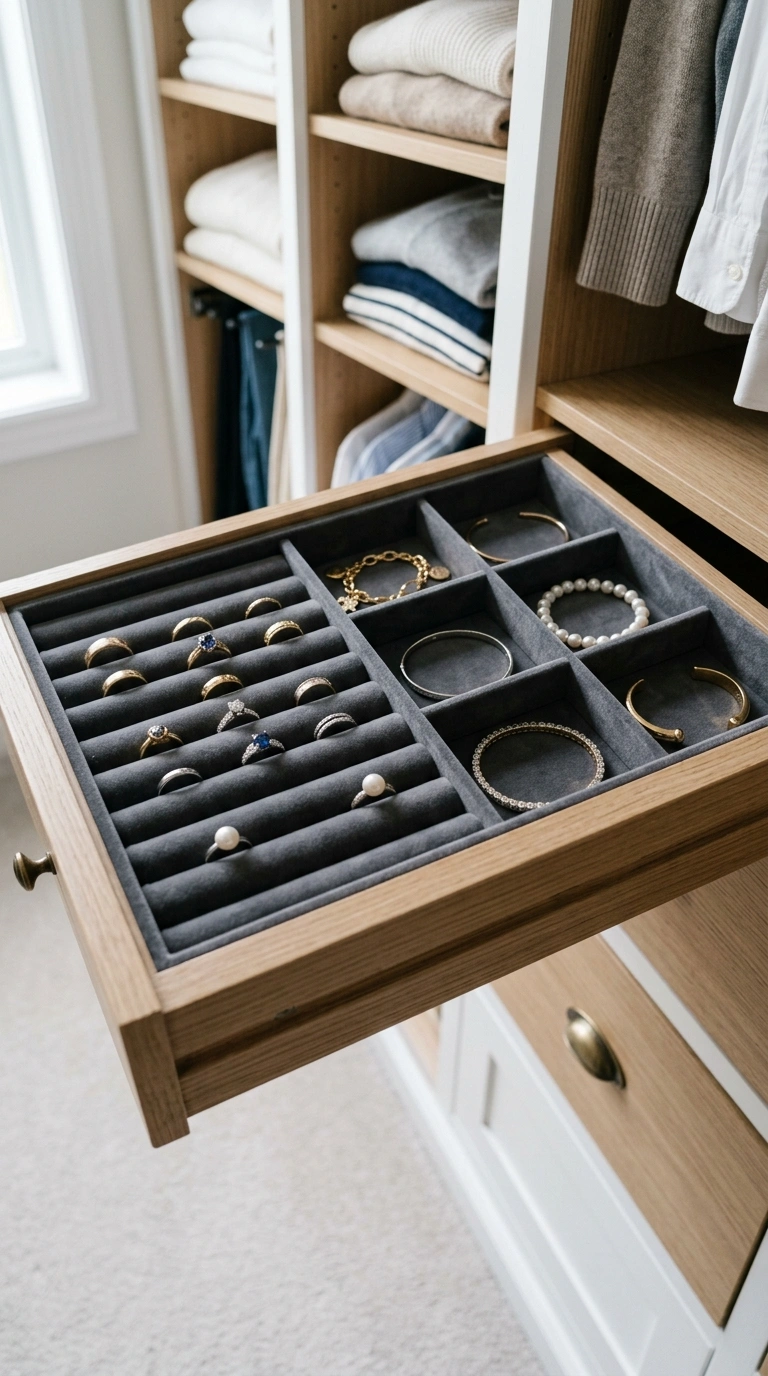
A shallow drawer fitted with a velvet-lined jewelry insert, tucked into an otherwise standard closet drawer stack, keeps small accessories organized without needing a separate jewelry box taking up dresser space. Choose an insert with a mix of compartment sizes, small slots for rings, slightly larger ones for bracelets, so nothing gets tangled or lost at the bottom of a drawer. This layout works well as the top drawer in a closet’s built-in drawer system, since it is the drawer people reach for first when getting dressed. Beyond function, an organized jewelry drawer also protects delicate pieces from scratching against each other, which happens often when everything is tossed into one open tray. This is a small detail that makes the whole closet feel more finished.
18. Fold-Out Ironing Nook
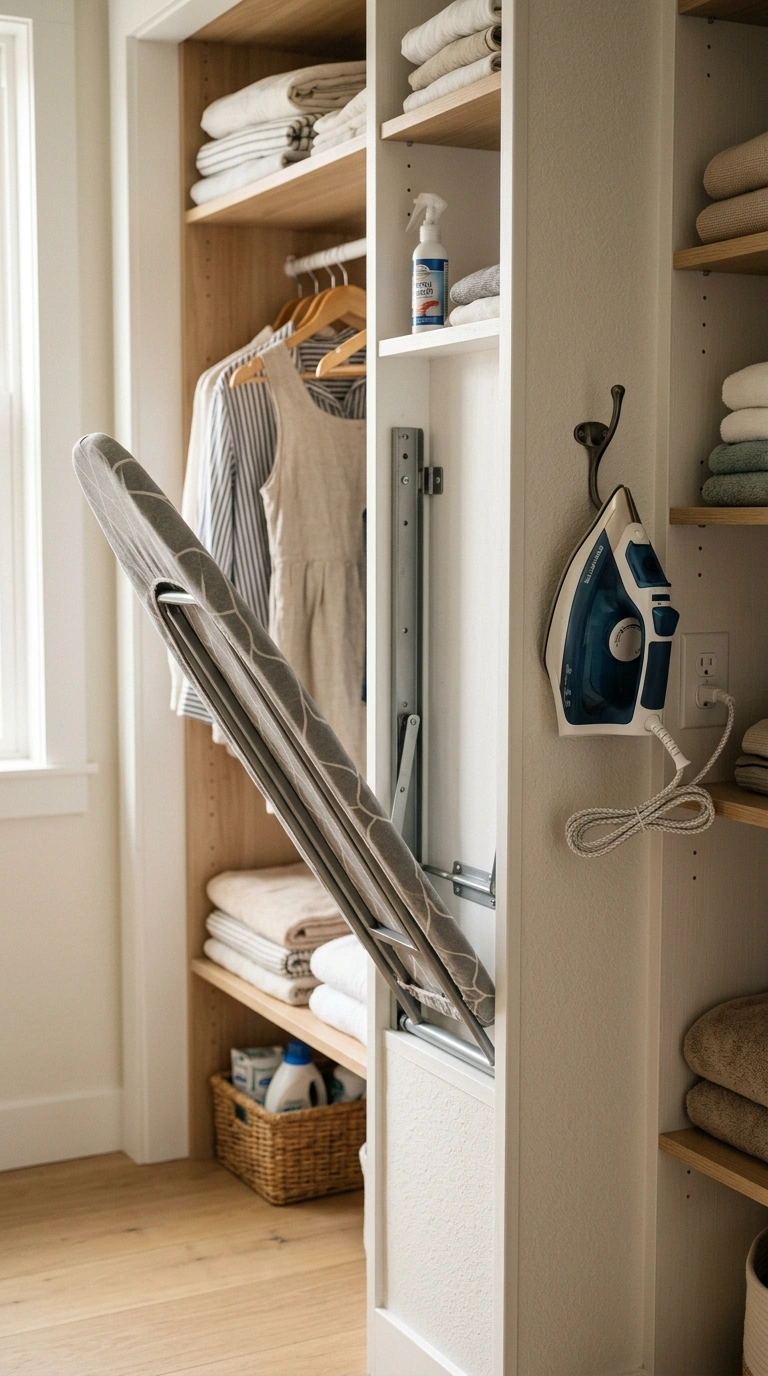
A slim, fold-down ironing board built into the side wall of a closet turns unused vertical space into a fully functional mini laundry station that tucks away completely when not in use. This layout works best in closets with at least a few inches of flat wall space that is not already committed to hanging rods or shelves. Choose a fold-out unit that includes a small hook or shelf nearby for the iron itself, so the whole setup stays contained in one spot. This is especially useful in small homes without a dedicated laundry room, since it saves you from dragging out a full sized ironing board every time you need to press a shirt. Once folded up, the unit sits flat against the wall and takes up almost no visible space at all.
19. Multi-Level Shoe Shelf
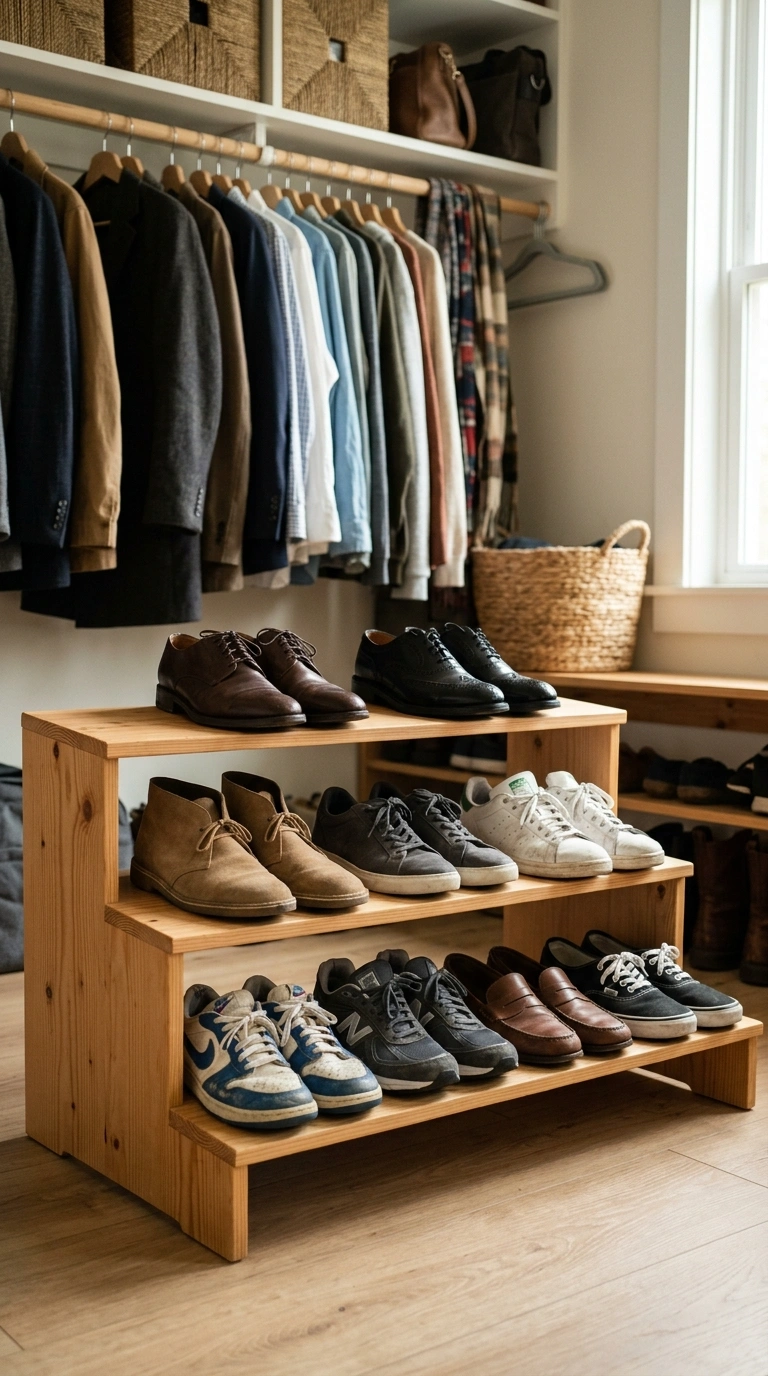
A tiered shoe shelf with three or four staggered levels lets you store twice as many pairs in the same footprint as a single flat shelf, since each level is angled to show the shoe without stacking pairs directly on top of each other. Choose a shelf unit in a slim metal or wood frame that fits into the narrow gap often found at the bottom of a closet, below the shortest hanging items. This layout works particularly well for closets shared by more than one person, since the extra levels can hold noticeably more pairs without the shelf taking up any additional width. Arrange shoes by type, sneakers on one level and dress shoes on another, so mornings do not turn into a search through mismatched pairs.
A small closet does not need to feel like a losing battle. Once you break the space into a few clear zones, hanging, folded, shoes, and accessories, everything finds its own spot and stays there. Pick two or three of these layouts that match how you actually get dressed, and your closet will start working with you instead of against you.