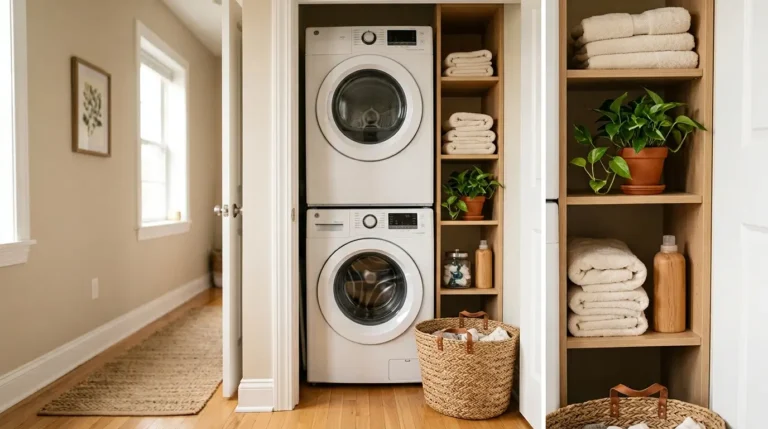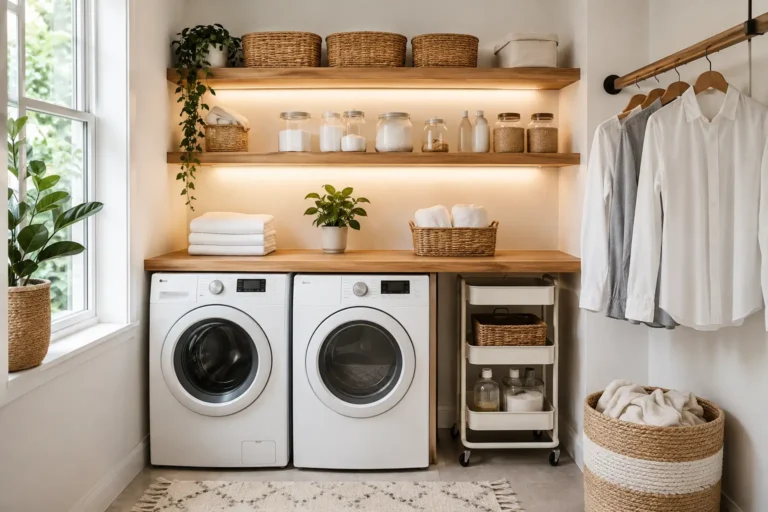
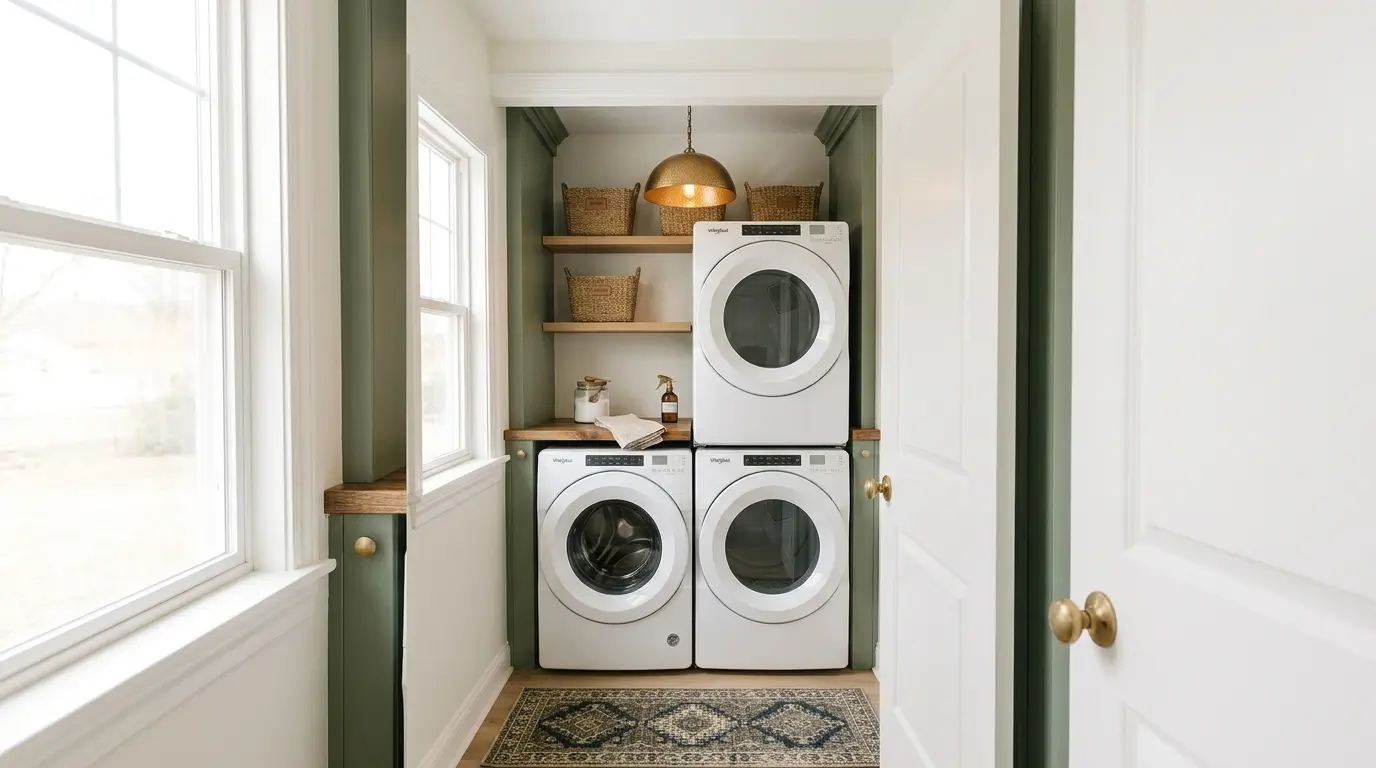
18 Laundry Closet Ideas That Blend Style and Function
A laundry closet doesn’t have to look like an afterthought just because it’s small and purely functional. The right materials, colors, and finishes can make this space feel as considered as any other room in the house, without sacrificing what actually needs to happen there.
This guide covers 18 real laundry closet ideas that combine genuine style with real function, and each one includes something practical: a cost range, a care note, an install step, or an honest pros-and-cons breakdown, so the aesthetic choices hold up to the space’s actual daily use.
A laundry closet gets more humidity, lint, and daily wear than almost any other small space in the home. Choose finishes accordingly.
1. Patterned Statement Floor Tile
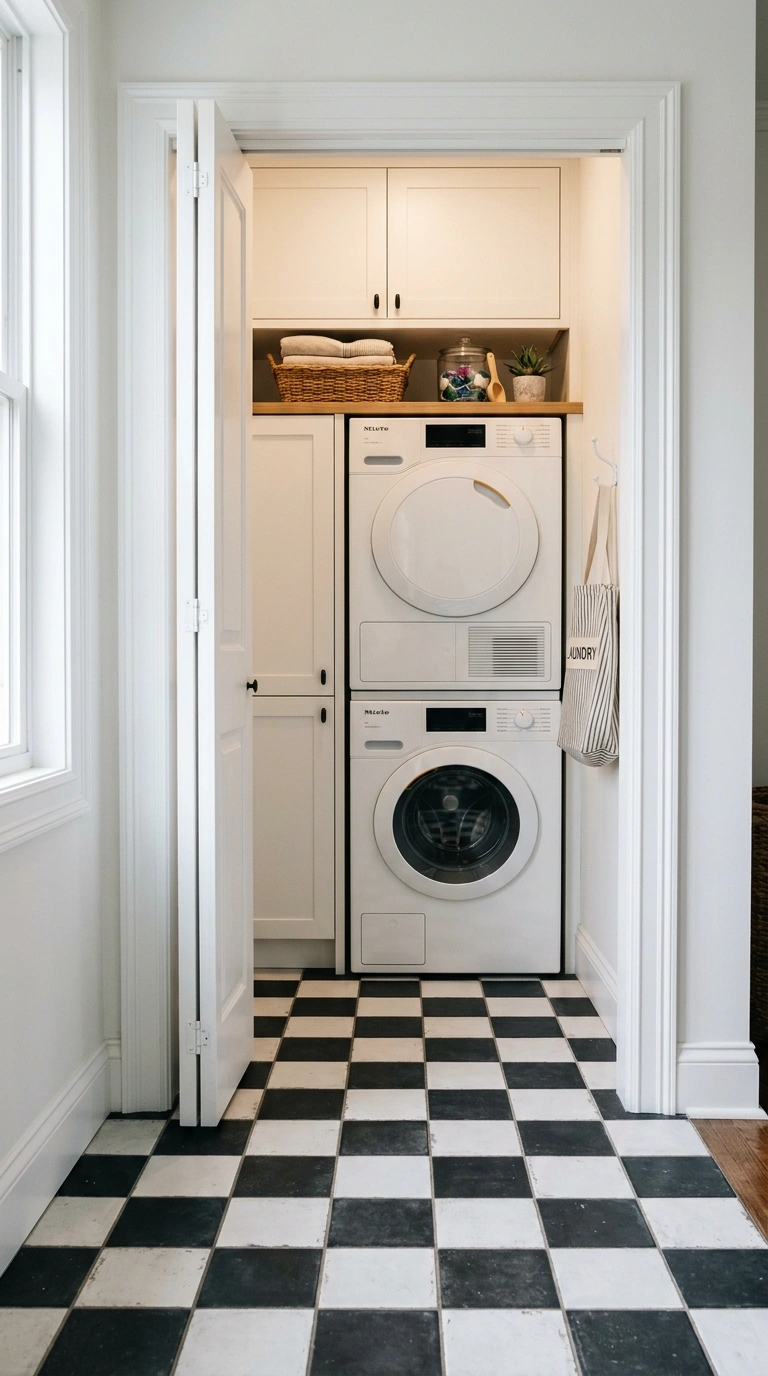
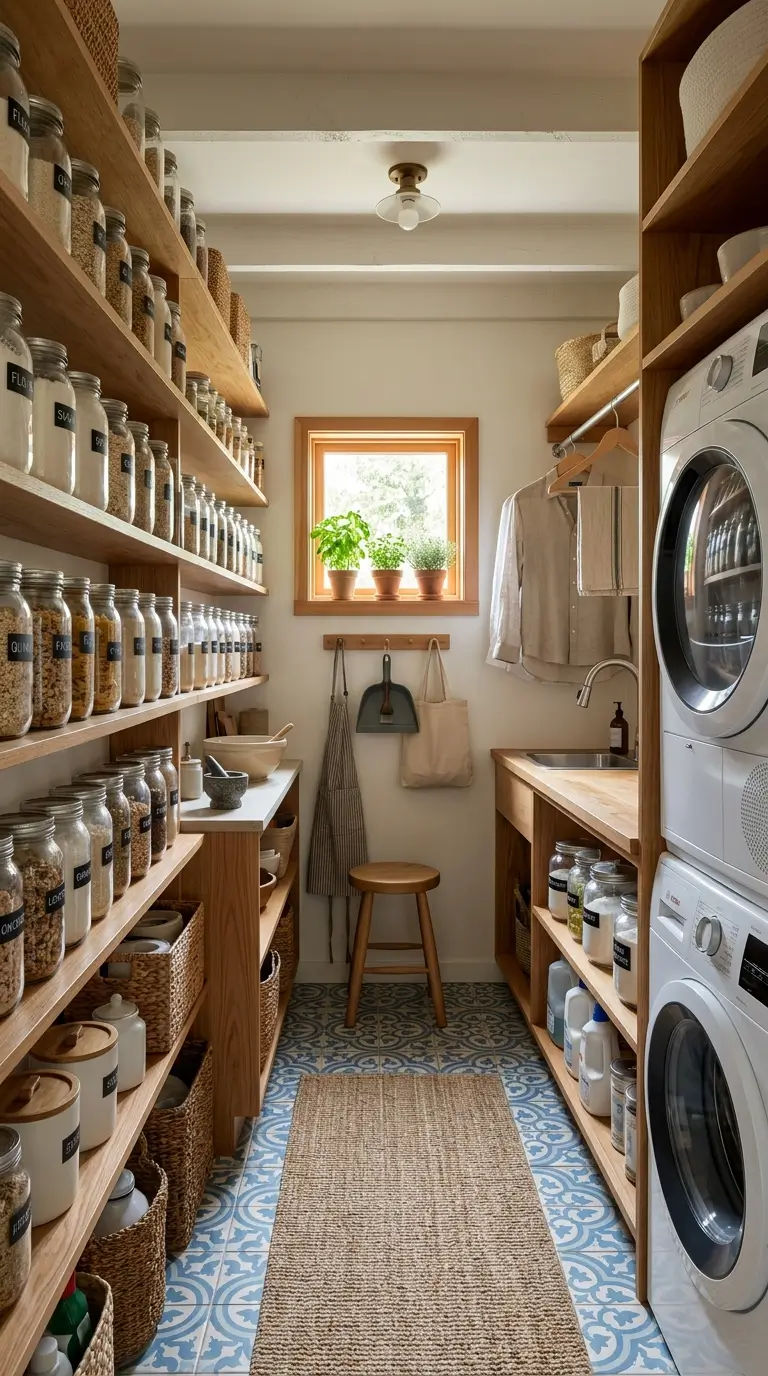
A bold patterned tile floor, like a checkerboard or encaustic cement pattern, turns a purely utilitarian floor into a genuine design feature, and a small laundry closet is actually an ideal spot to try a pattern that might feel like too much in a larger room.
| Tile Type | Durability for Laundry Use |
|---|---|
| Porcelain patterned tile | Excellent, handles moisture and wear well |
| Encaustic cement tile | Good, but needs sealing to resist moisture and staining |
| Vinyl-look patterned tile | Very good, most water-resistant, lowest cost |
Cost range: $8-$25 per square foot depending on material, though a laundry closet’s small footprint keeps total project cost manageable even with a higher-end tile choice.
2. Wallpapered Accent Wall
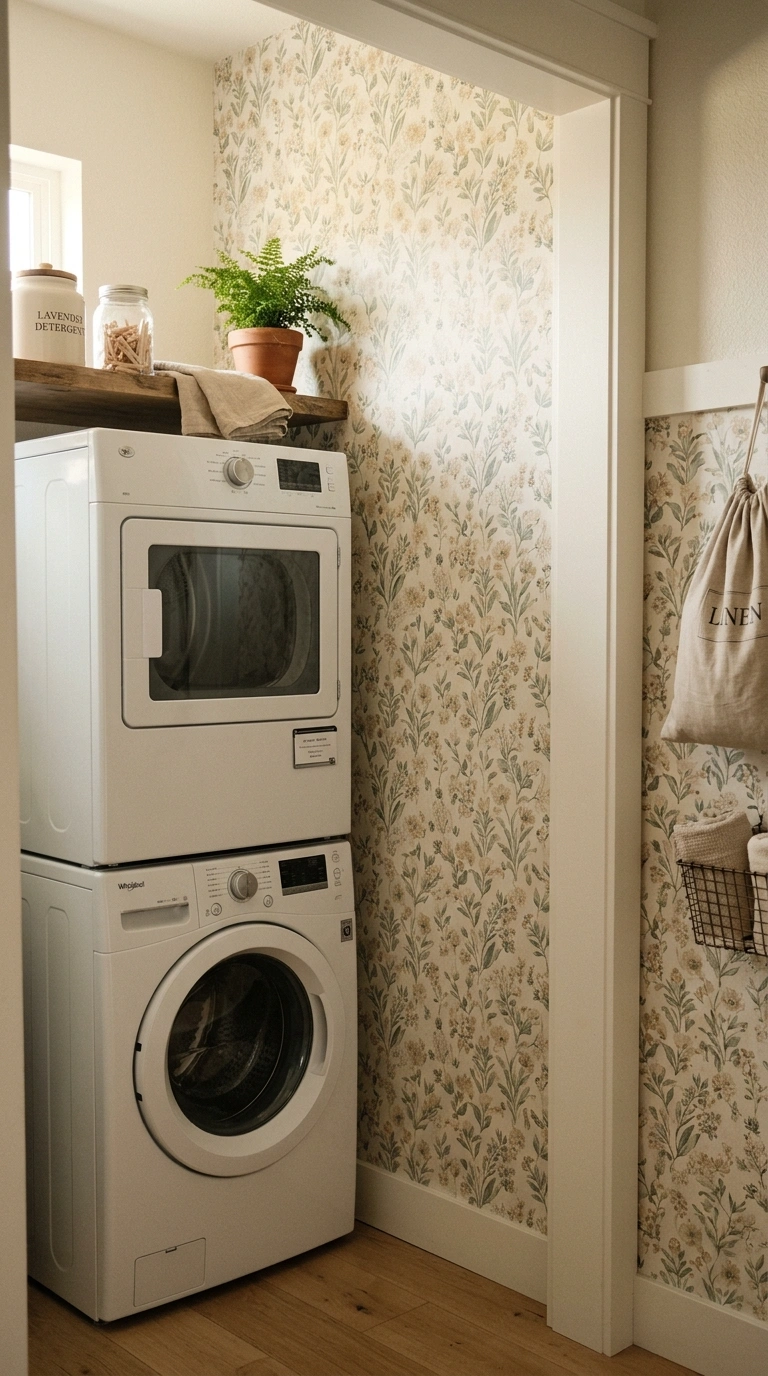
Wallpaper on the wall behind or beside the machines brings personality and pattern to a space that’s otherwise dominated by appliance finishes and plain drywall.
A quick care note: laundry closets run warmer and more humid than most rooms due to dryer heat and occasional steam. Choose a vinyl-coated or moisture-resistant wallpaper rather than a delicate natural-fiber option like true grasscloth, which can warp or discolor in these conditions over time.
Cost range: $25-$70 per roll, with most laundry closets needing just one roll given the limited wall space.
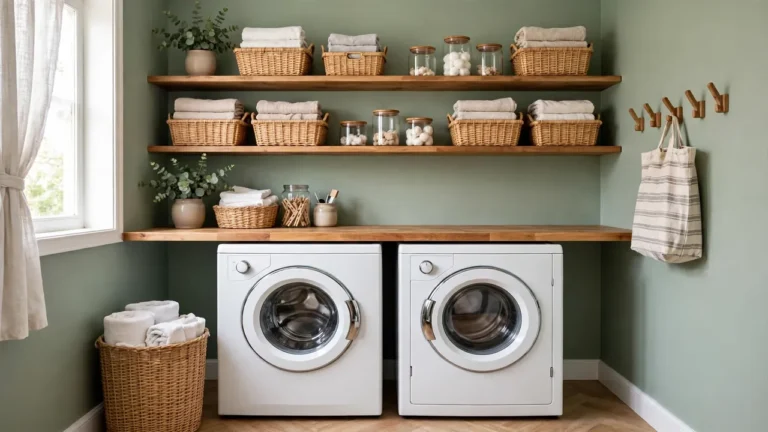
3. Styled Open Shelving With Matching Baskets
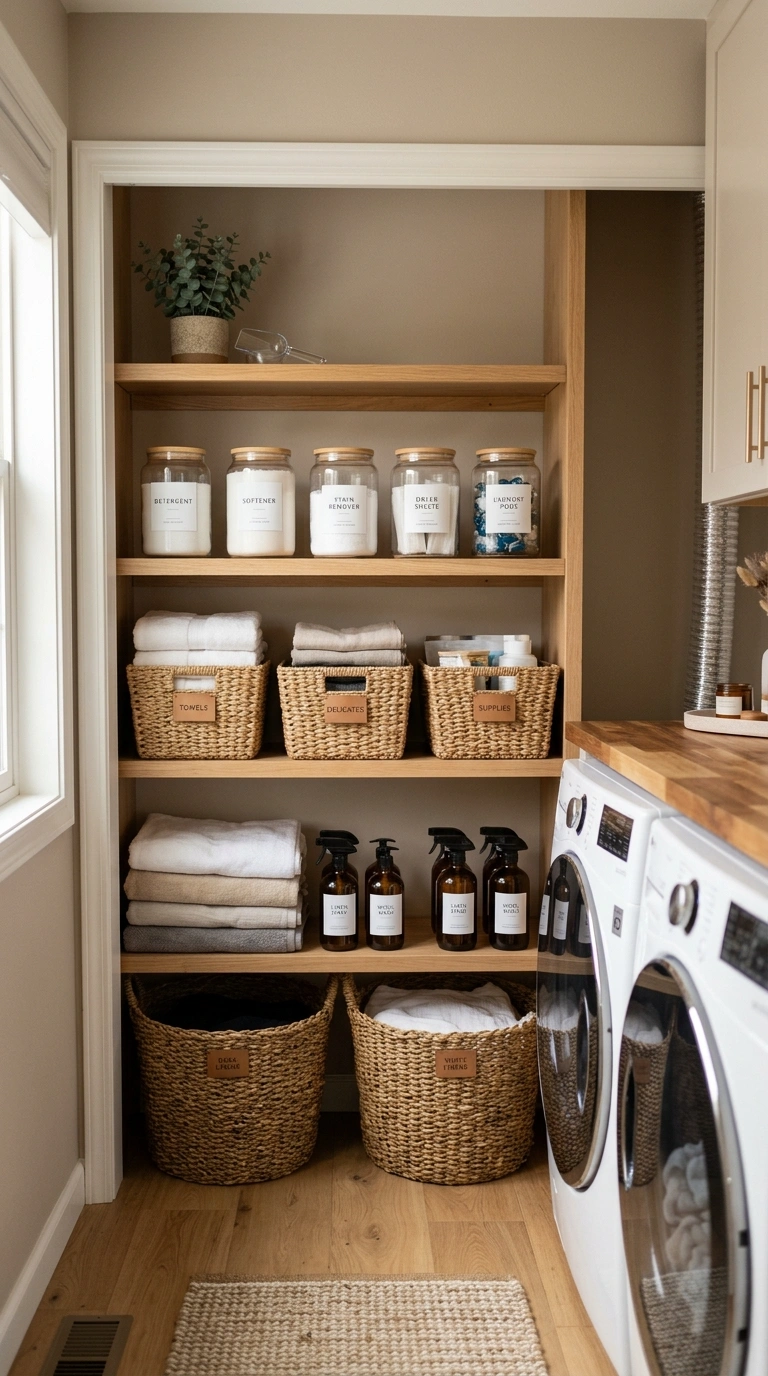
Open shelving becomes a genuine style feature, not just storage, when the baskets, bins, and supplies on it are chosen to coordinate rather than being whatever mismatched containers happened to be on hand.
Styling checklist:
- Choose baskets and bins in the same material family (all rattan, or all matching solid colors)
- Decant detergent and supplies into matching containers where practical
- Leave roughly 20-25% of shelf space visually open, rather than packing every inch
Cost range: $60-$180 for shelving, plus $30-$80 for coordinated baskets and containers.
4. Cohesive Cabinetry Color Palette
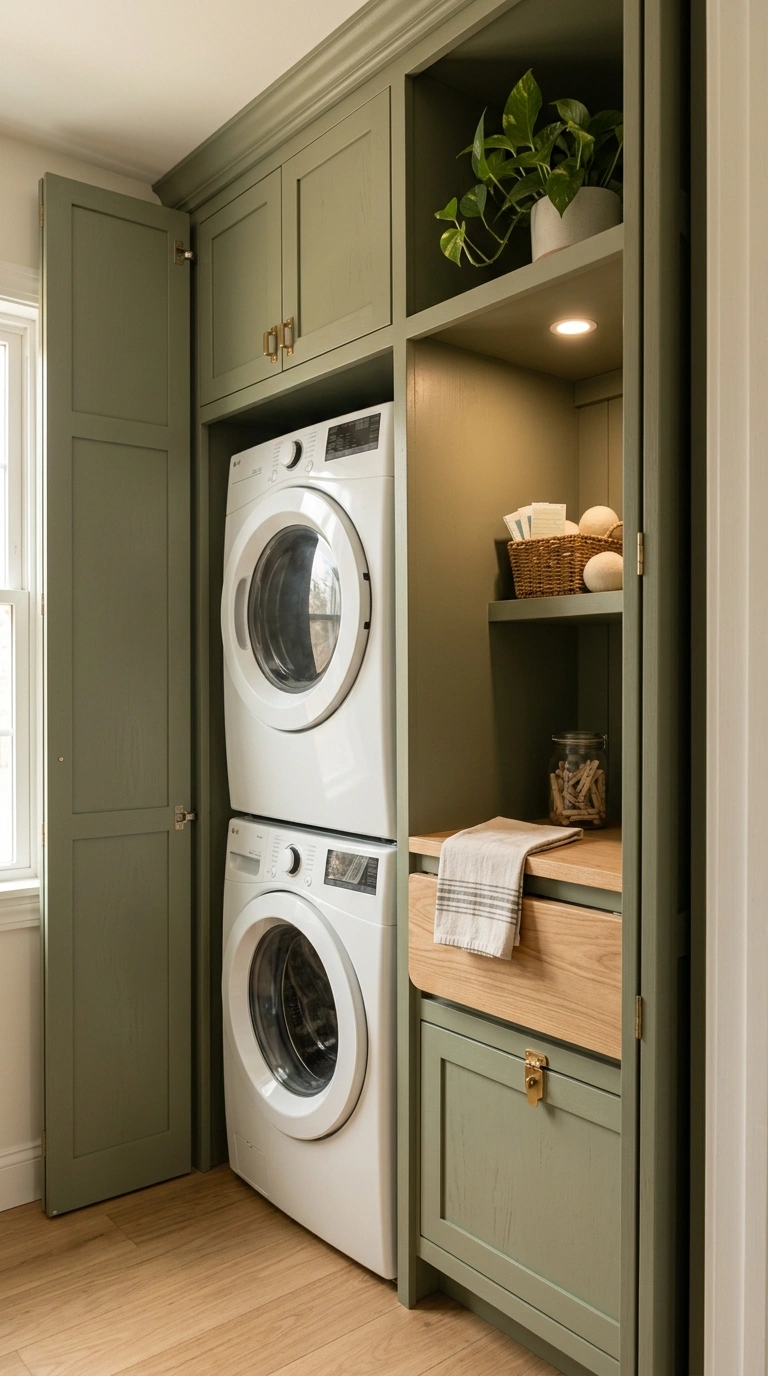
Choosing a cabinetry color that’s intentional, rather than defaulting to plain white or leftover builder-grade cabinets, makes a laundry closet feel like a designed room rather than a purely functional afterthought.
Undertone consideration: since laundry closets often have limited natural light, warmer cabinet tones (soft sage, warm terracotta, or a warm off-white) tend to feel more inviting under artificial light than cooler, starker tones, which can read flat without daylight to warm them up.
Cost range: $150-$400 in paint for a DIY repaint of existing cabinets, or $2,000-$6,000+ for new cabinetry.
5. Statement Pendant or Sconce Lighting
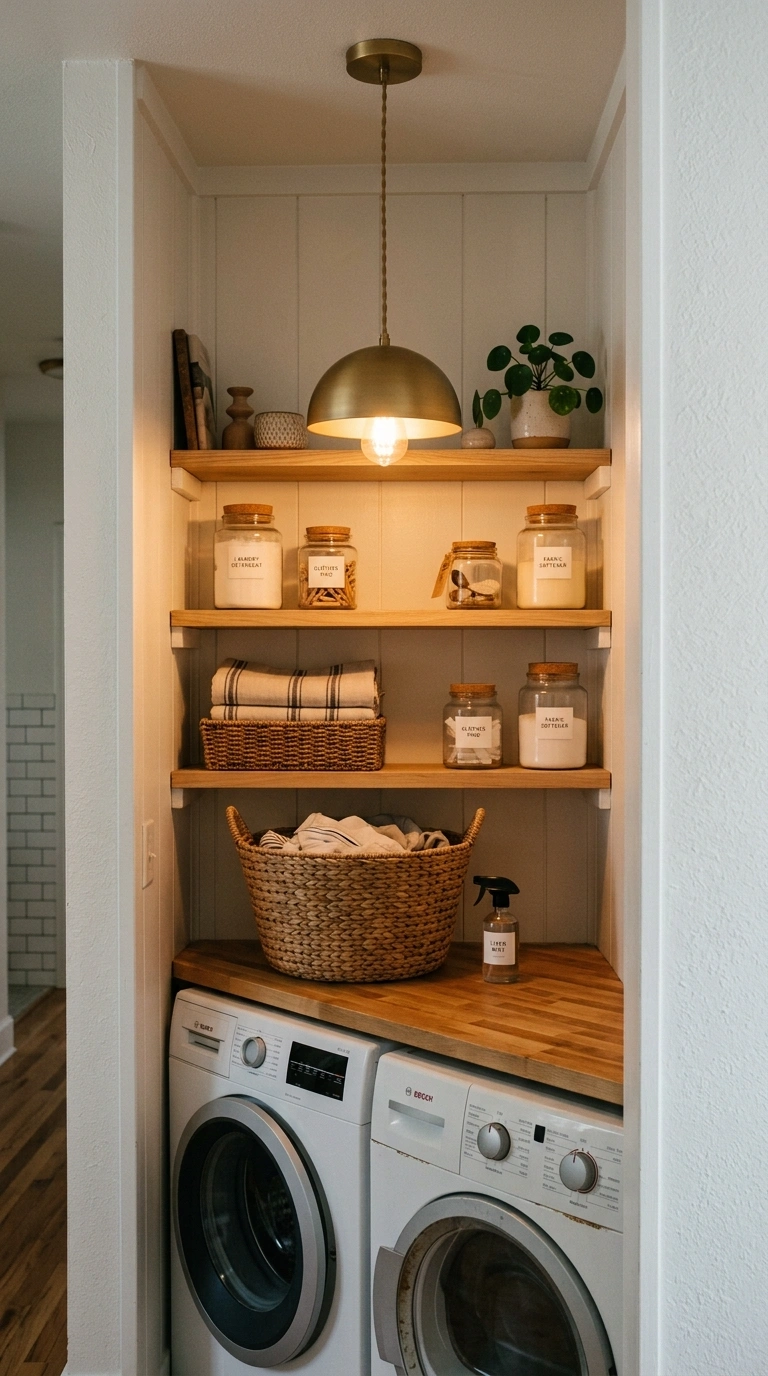
Swapping a builder-grade overhead light for a small statement pendant or sconce is one of the fastest ways to make a laundry closet feel considered, since lighting fixtures are highly visible in a small, enclosed space.
Cost range: $40-$150 for a quality small pendant or sconce fixture, plus installation if you’re not comfortable with basic electrical work.
Choose a fixture rated for damp locations, since laundry closets generate more ambient humidity than a typical hallway or bedroom.
6. Butcher Block Folding Counter
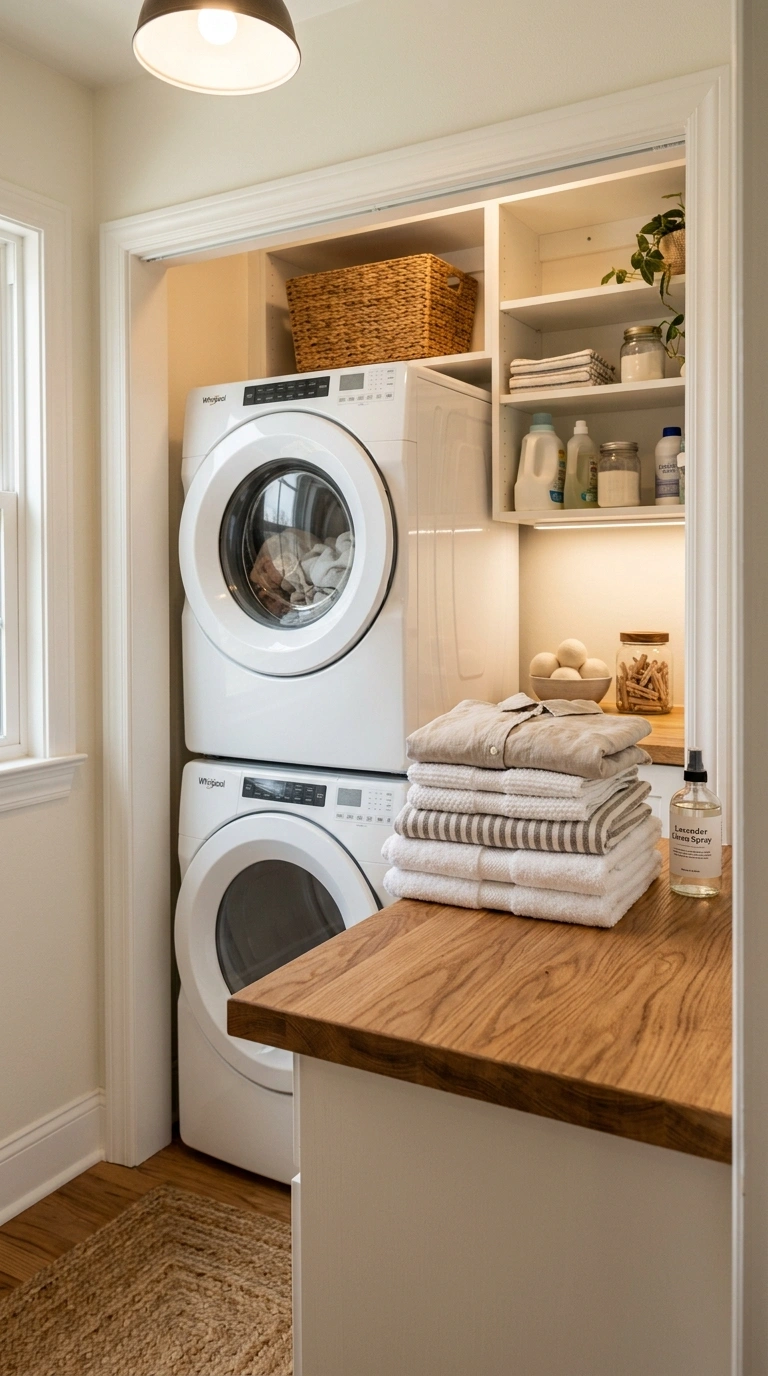
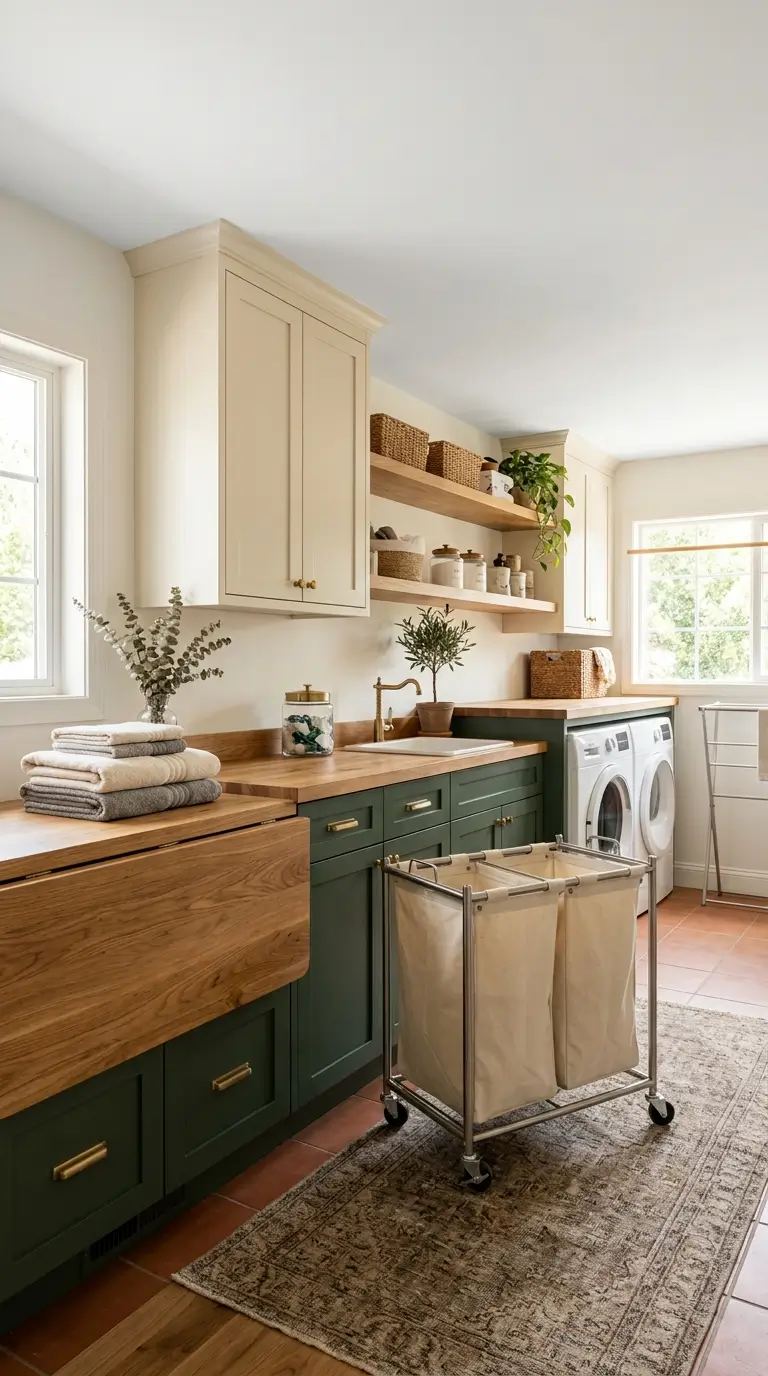
A butcher block counter installed above the machines or along an adjacent wall brings warm, natural material into the space while providing genuine folding surface area.
Care checklist:
- Oil every 1-3 months, more frequently given regular exposure to dryer heat
- Wipe spills and condensation promptly to prevent warping
- Avoid placing hot items (like a fresh-from-the-dryer item) directly on unprotected wood
Cost range: $35-$70 per square foot installed, a genuine investment but one that adds both function and visual warmth.
7. Brass or Matte Black Hardware Accents
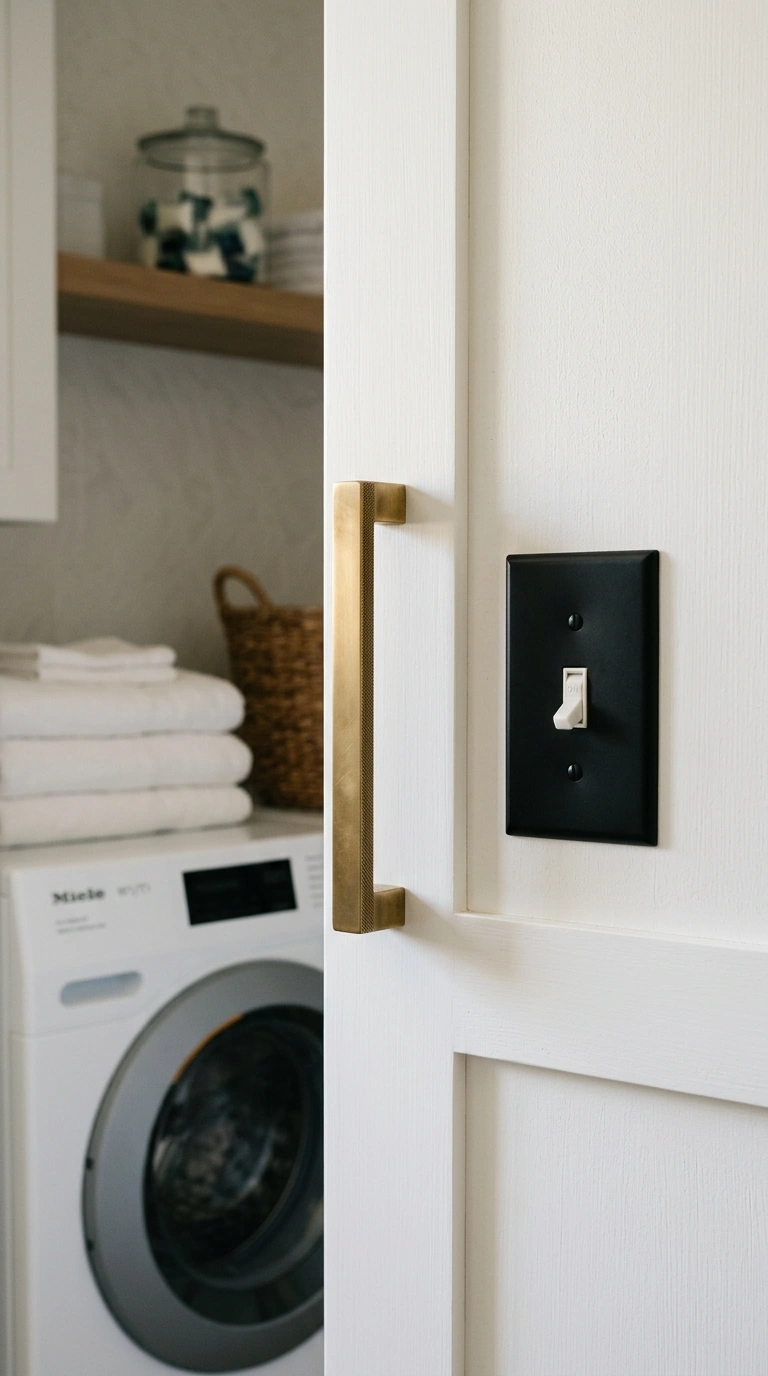
Swapping plain builder-grade cabinet pulls and light switch covers for brass or matte black versions adds a small but noticeable design detail throughout the space.
The pairing ratio:
- 70% your dominant metal choice (cabinet hardware, light fixture)
- 30% a secondary complementary metal (a hook, a small accent)
Cost range: $3-$10 per cabinet pull, so a full laundry closet hardware swap typically totals $30-$80.
8. Framed Art or Leaning Mirror
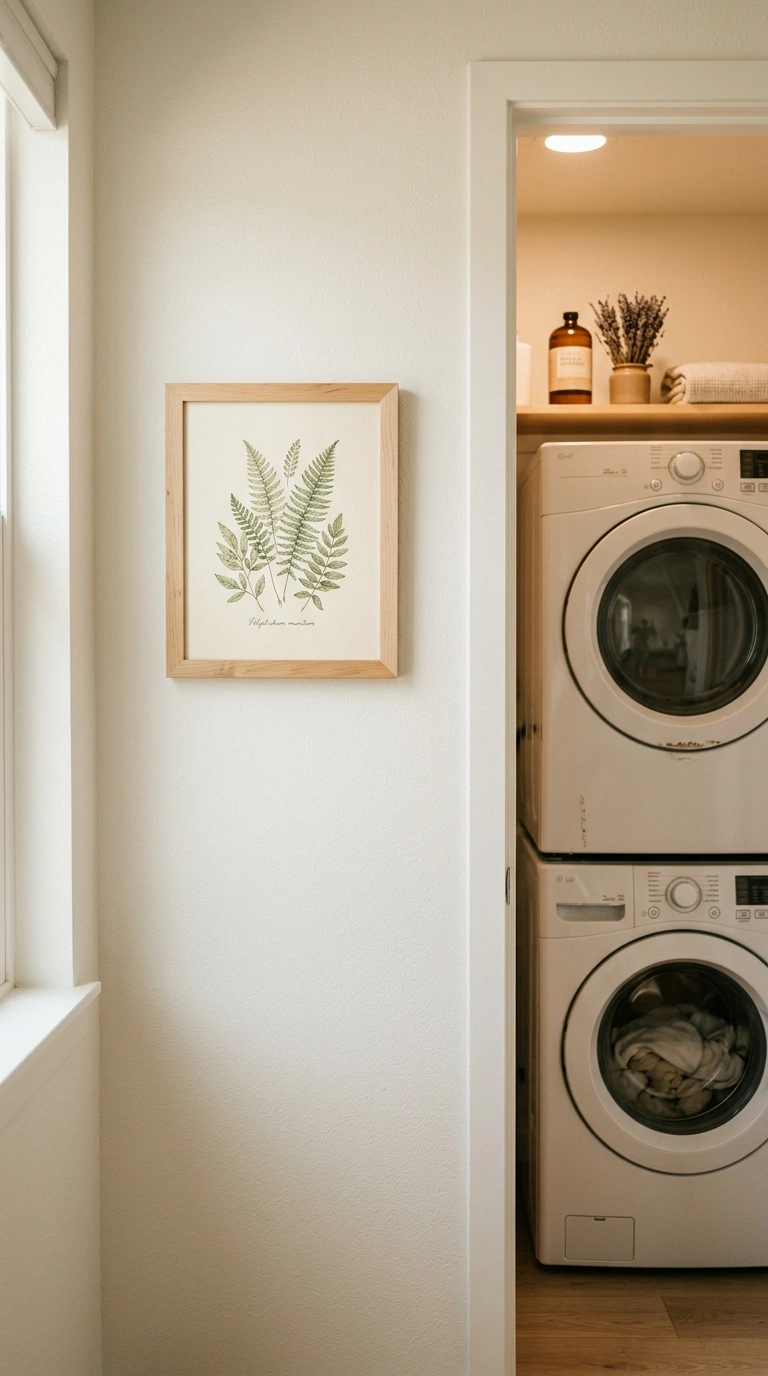
A single small framed print or a leaning mirror on an empty wall section brings personality to a space that’s easy to treat as purely utilitarian and decor-free by default.
Sizing guide: keep the piece modest, generally under 16-20 inches in either dimension, given the typically limited wall space in a laundry closet.
Cost range: $20-$70 depending on frame quality and print sourcing.
9. Woven Runner Rug
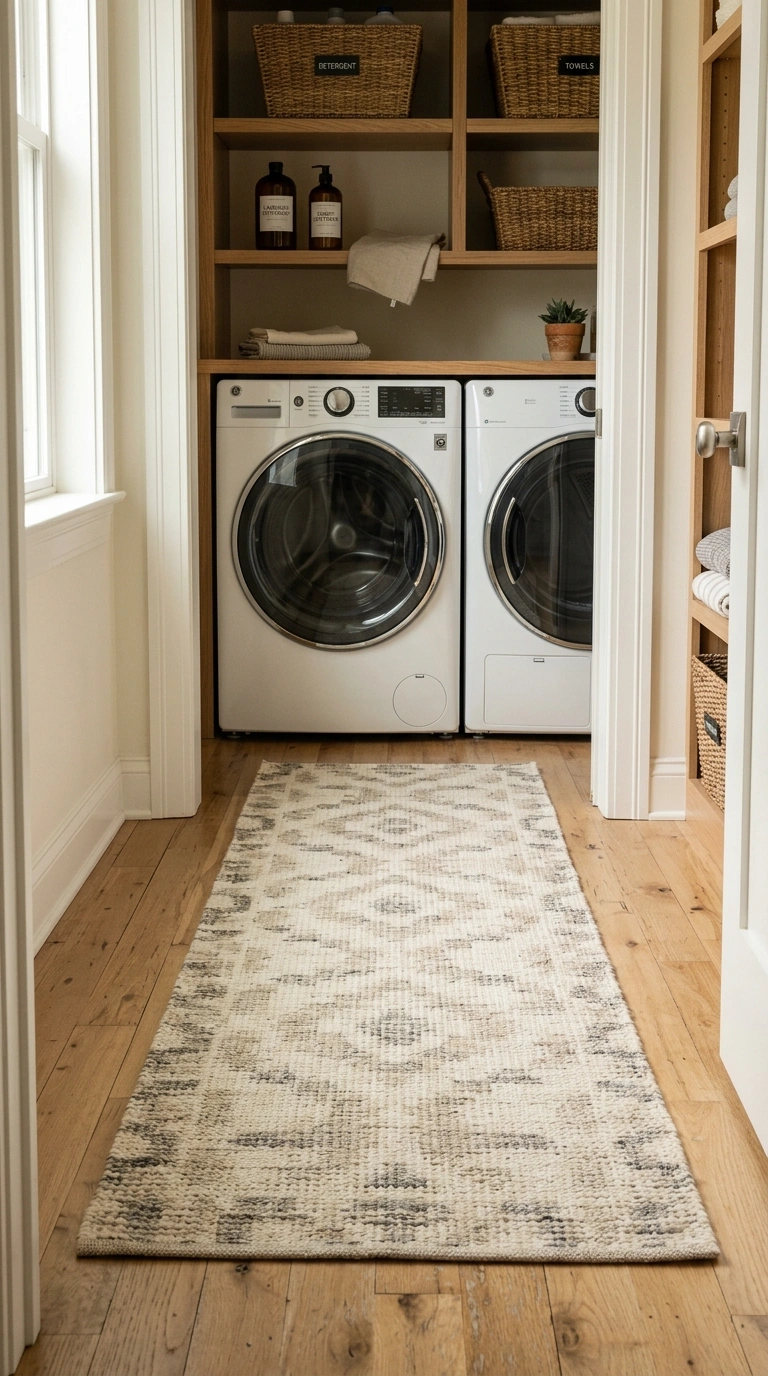
A natural fiber or washable flatweave runner adds warmth and texture underfoot, softening what’s often an all-hard-surface room of tile, appliance fronts, and cabinetry.
A quick durability note: given the lint, occasional water drips, and daily foot traffic in a laundry space, a washable flatweave or synthetic runner typically holds up better long-term than a natural jute rug, which is more prone to staining in a spill-prone environment.
Cost range: $30-$90 depending on length and material.
10. Personality Sign or Chalkboard
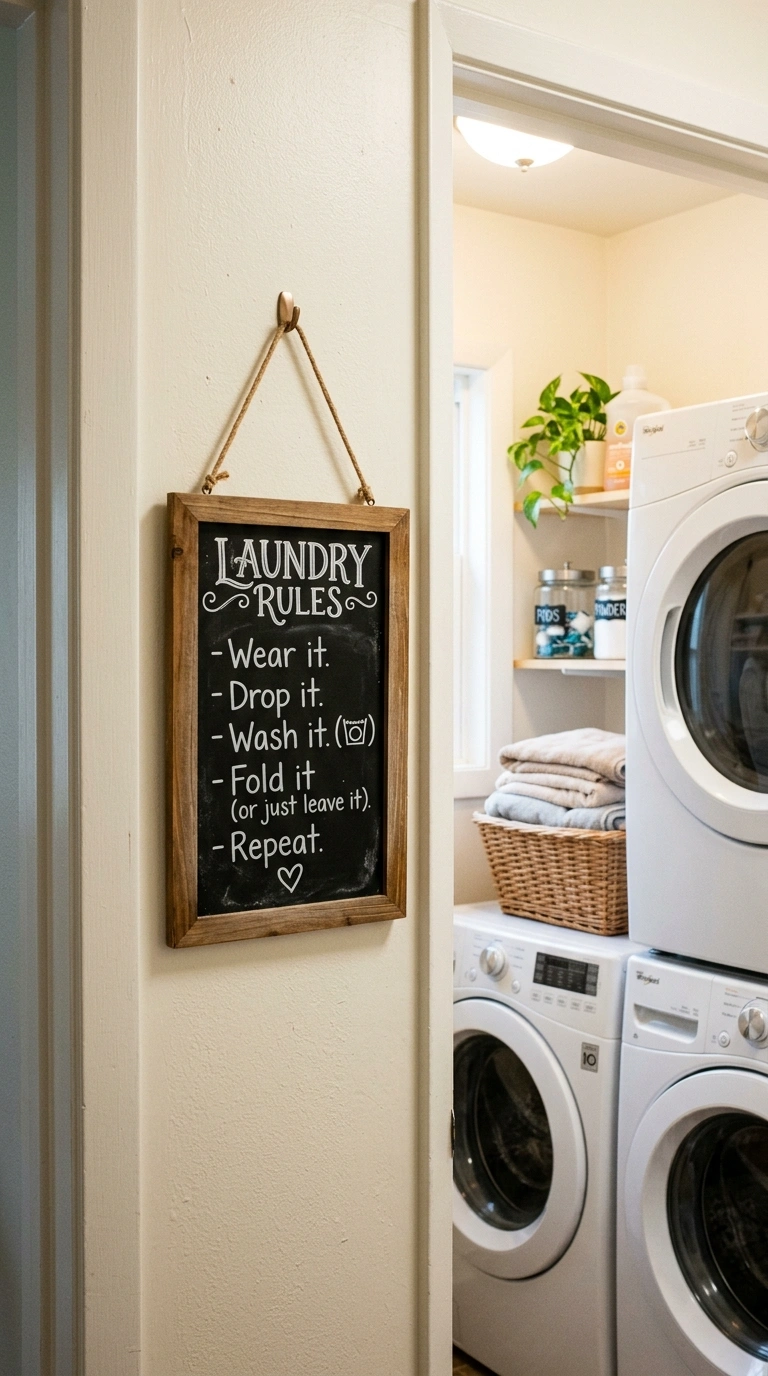
A small sign or chalkboard with a bit of laundry-related humor or a simple label brings a lighter, more personal touch to a space that can otherwise feel purely transactional.
DIY vs. buy:
| Option | Approx. Cost |
|---|---|
| Pre-made framed sign | $15-$40 |
| DIY: small chalkboard-painted panel | $10-$20 |
11. Two-Tone Cabinetry
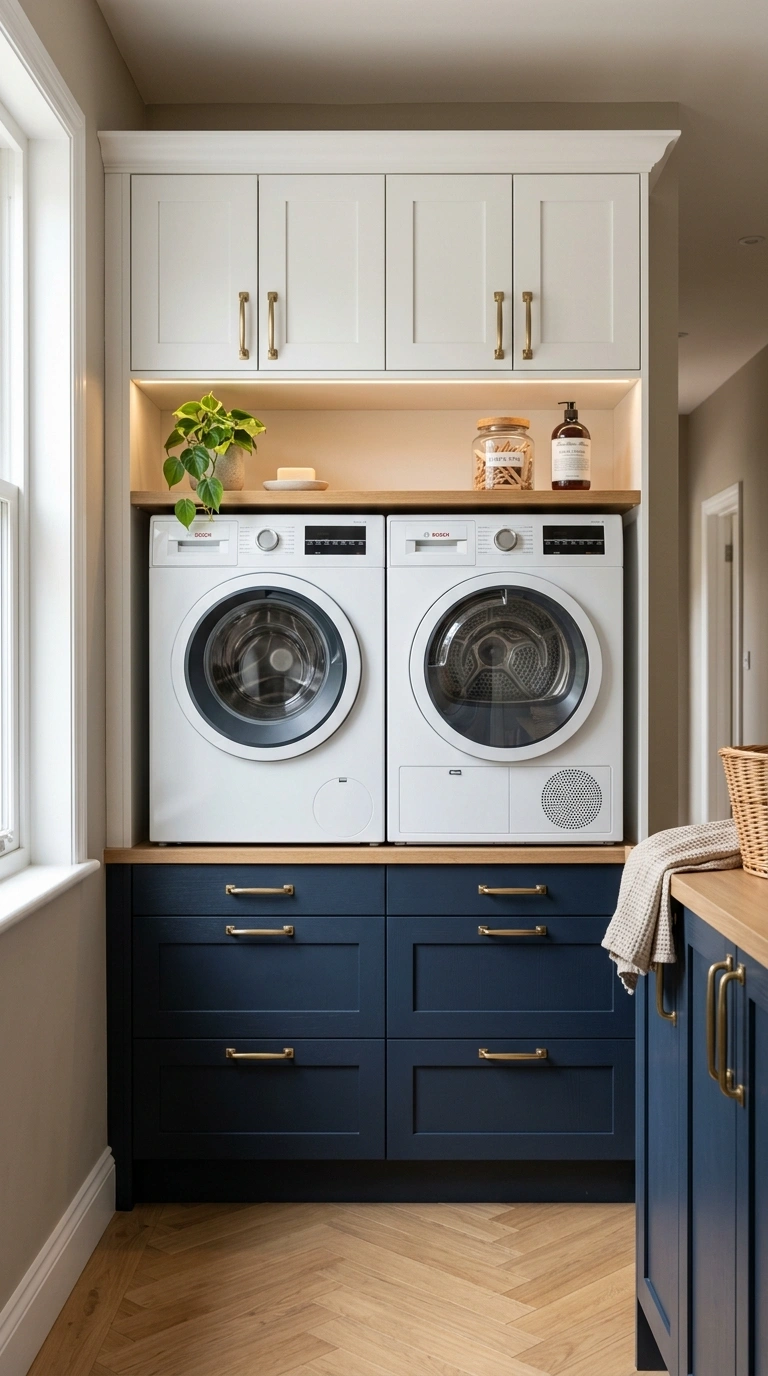
Using two different cabinet colors, like a deeper tone on lower storage with a lighter tone above the machines, adds visual depth and zoning to a laundry closet’s cabinetry, similar to the technique used in full kitchens.
| Approach | Visual Effect |
|---|---|
| Darker lowers, lighter uppers | Grounds the space, classic look |
| One accent color on a single cabinet section | Contained pop of color, easy to change later |
Cost range: $200-$500 in paint and supplies for a DIY two-tone repaint of existing cabinetry.
12. Decorative Hooks as Function and Display
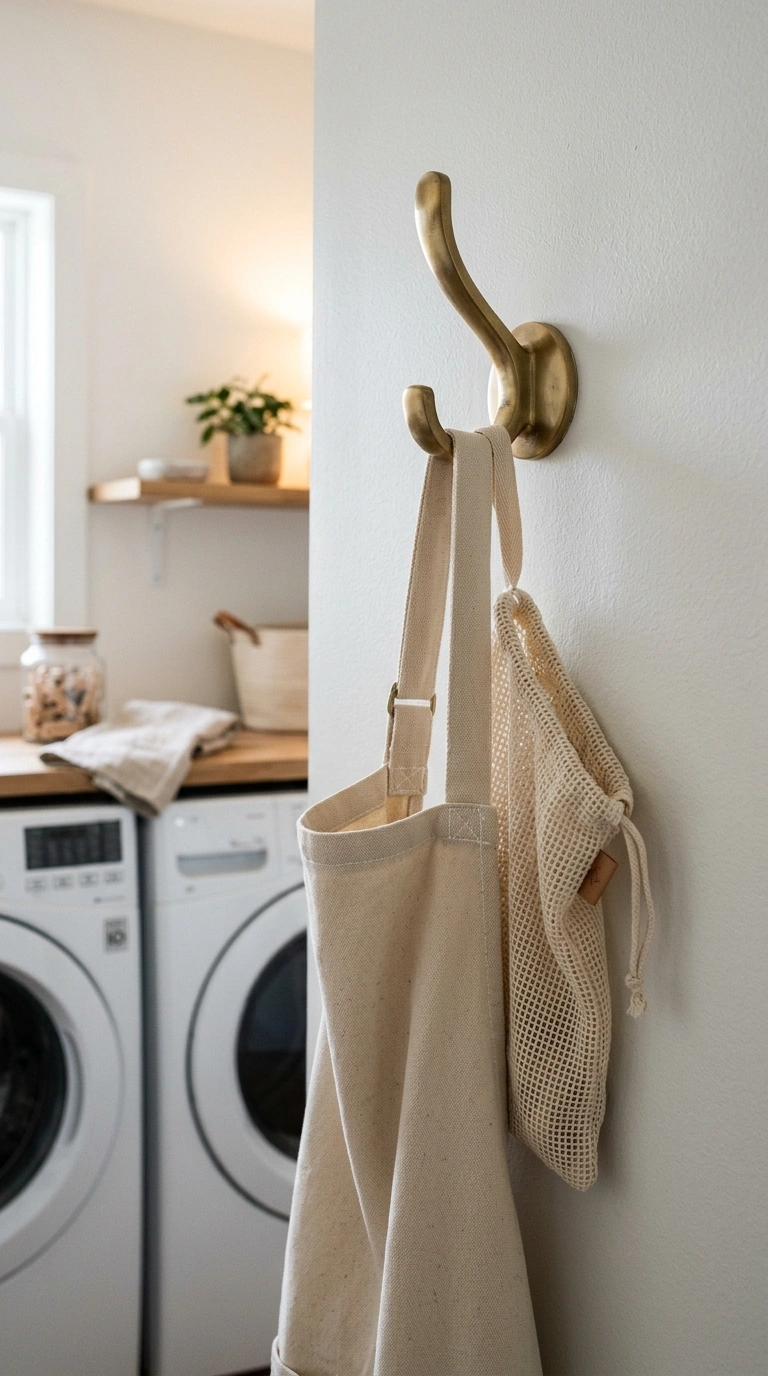
Hooks chosen for their finish and shape, rather than plain utilitarian versions, hold aprons, mesh laundry bags, or a spray bottle while doubling as a small styling detail on an otherwise blank wall.
Cost range: $8-$25 per hook depending on material and finish, with brass or ceramic options costing more than basic plastic or chrome versions but adding noticeably more visual interest.
13. Coordinated Label System for Bins
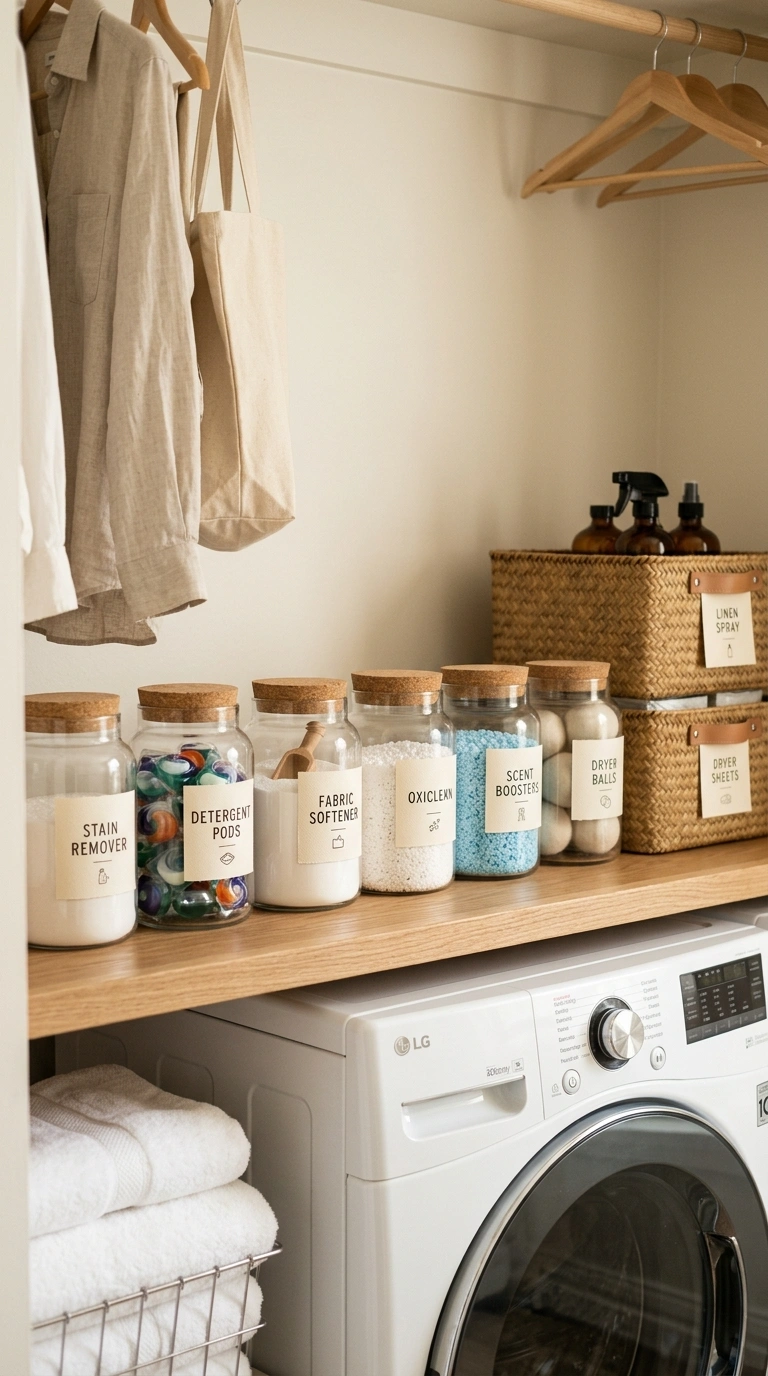
A consistent labeling system, using the same font, material, and placement across every bin and jar in the space, turns basic organization into a genuinely styled detail.
DIY steps:
- Choose one label style (printed vinyl, hand-lettered chalkboard tags, or engraved tags) and use it consistently across every container.
- Group and label by category: detergent, stain treatment, dryer accessories, seasonal items.
- Replace labels as needed rather than letting handwriting styles or label materials drift over time.
Cost range: $10-$30 for a full labeling system covering 6-8 containers.
14. Warm Wood Open Shelving
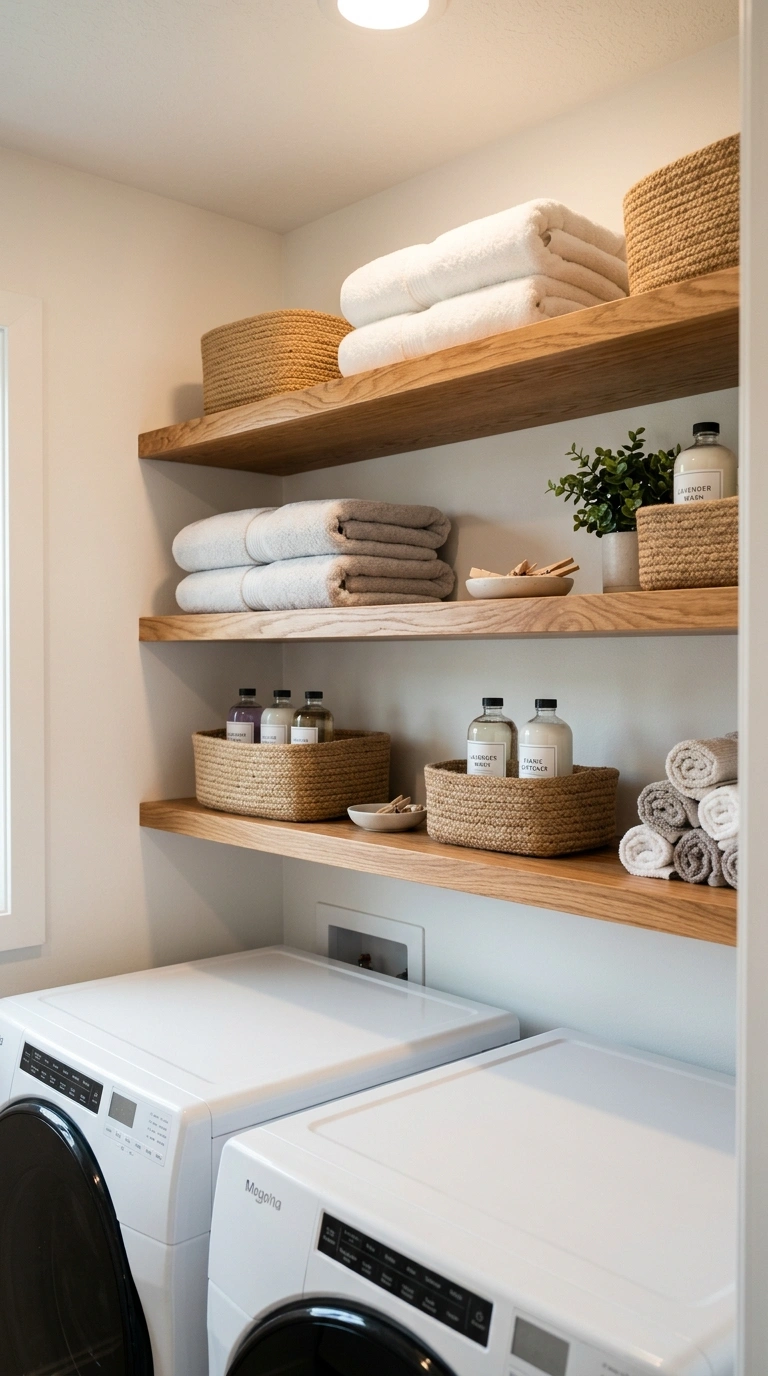
Open shelving in warm, natural wood tones, rather than white laminate or wire shelving, brings genuine material warmth to a space that’s otherwise dominated by cool, hard appliance and cabinet finishes.
Basic install steps:
- Locate wall studs, since loaded shelving needs solid anchoring.
- Mount brackets and shelves spaced 12-14 inches apart for standard supply storage.
- Choose a wood with visible grain (oak or pine) rather than a painted finish, to maximize the material warmth this idea is meant to add.
Cost range: $70-$200 for a set of 2-3 shelves in solid wood.
15. Statement Tile Backsplash
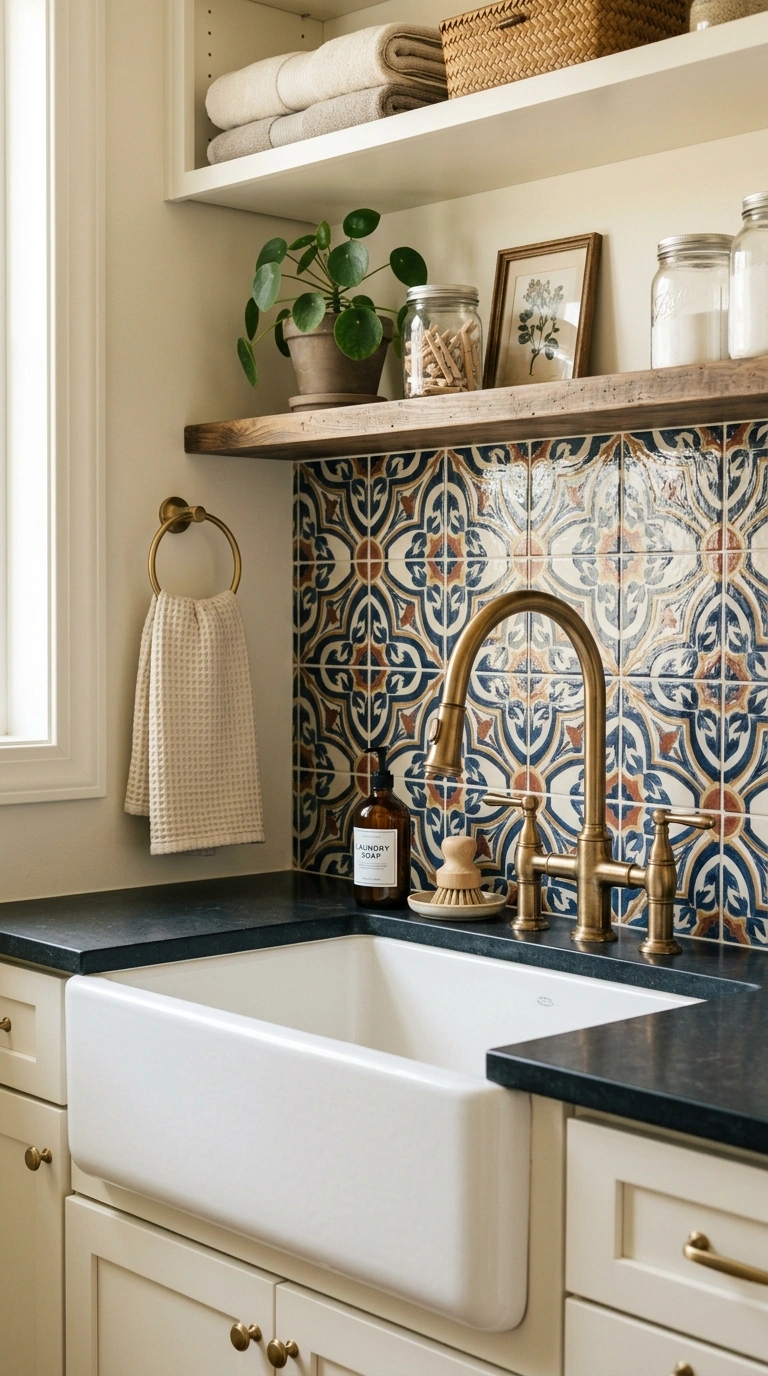
A tile backsplash behind a utility sink or along the wall behind the machines brings the same design-forward thinking often reserved for kitchens into a laundry space.
Cost range: $10-$25 per square foot for the tile, with a laundry closet’s typically small backsplash area keeping total project cost modest even with a higher-end pattern.
Choose a pattern or color that either complements or intentionally contrasts with your cabinetry, rather than defaulting to plain white subway tile purely because it’s the safest choice.
16. Fabric Skirt for Concealed Storage
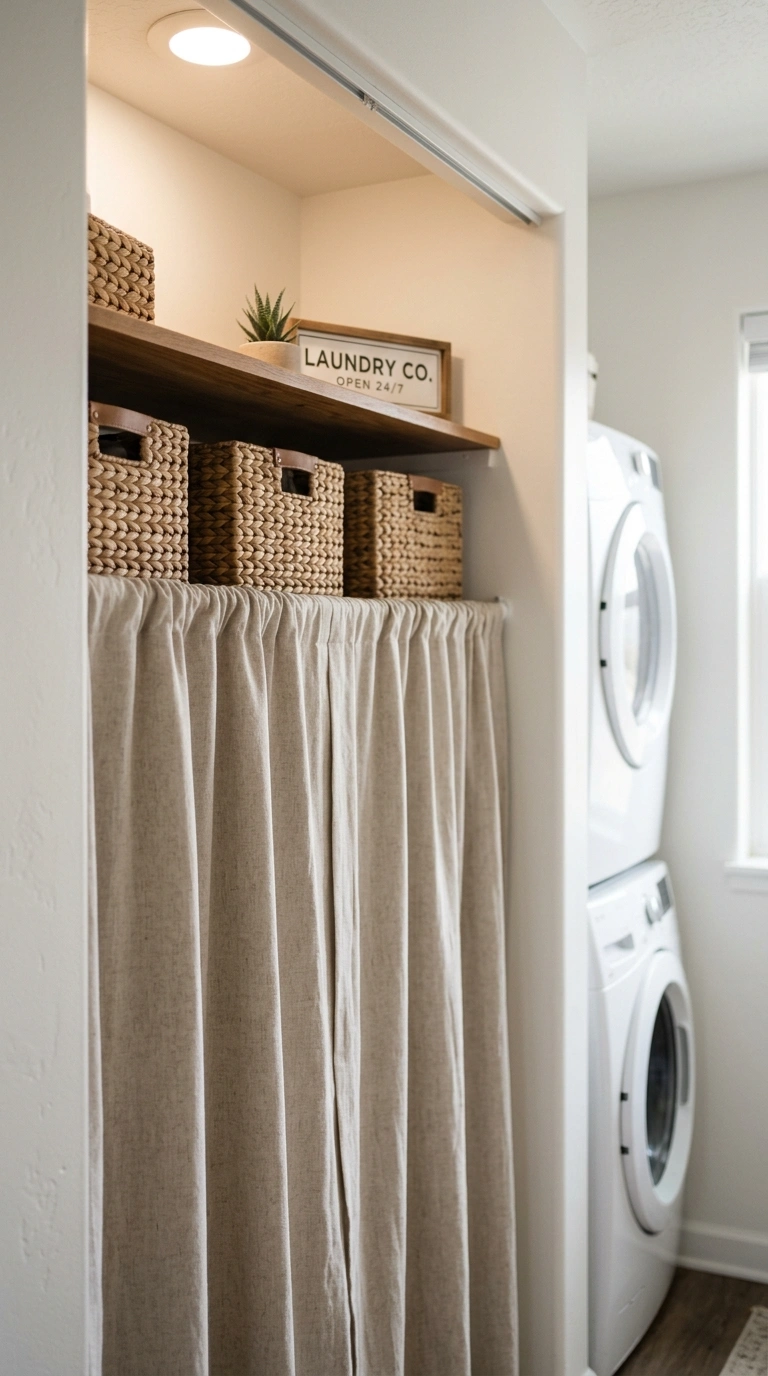
A simple fabric curtain or skirt, hung beneath an open shelf or utility sink, conceals less attractive storage (cleaning supplies, extra detergent stock) while adding a soft textile element to an otherwise all-hard-surface room.
DIY steps:
- Measure the width and drop needed to cover the open storage area.
- Choose a durable, washable fabric given the space’s humidity and occasional splashes.
- Mount using a simple tension rod or curtain wire, secured at both ends.
Cost range: $20-$50 in fabric and hardware for a DIY version.
17. Fresh or Faux Plant Styling
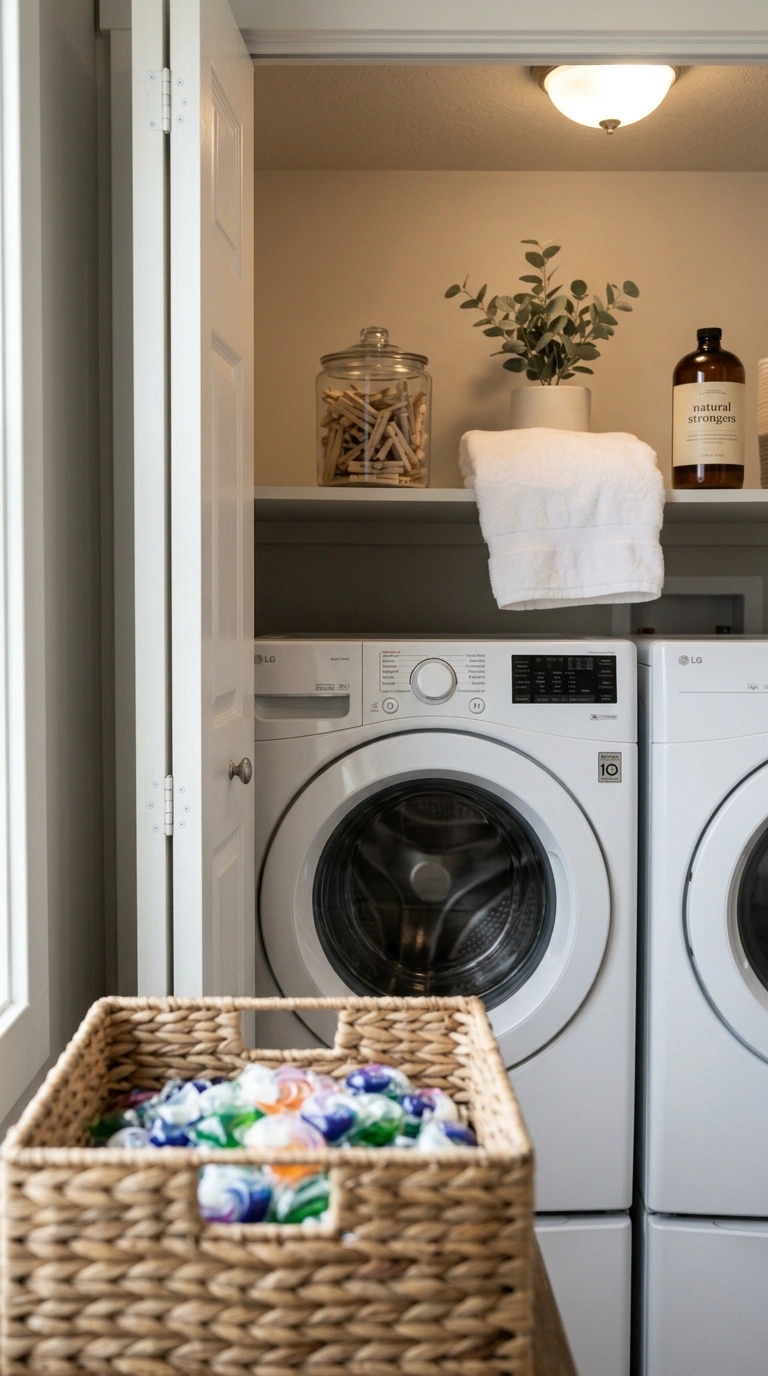
A small plant on a shelf or windowsill brings life and color to a space that’s otherwise entirely functional, softening the room’s overall feel.
| Plant | Why It Works in a Laundry Space |
|---|---|
| Pothos (real or faux) | Tolerates variable light and occasional neglect |
| Faux eucalyptus | Zero care requirements, consistent appearance regardless of humidity or heat |
| Air plant | No soil needed, tolerates humidity well if real |
Cost range: $8-$30 depending on real versus faux and pot choice.
18. Color Story Matching an Adjacent Room
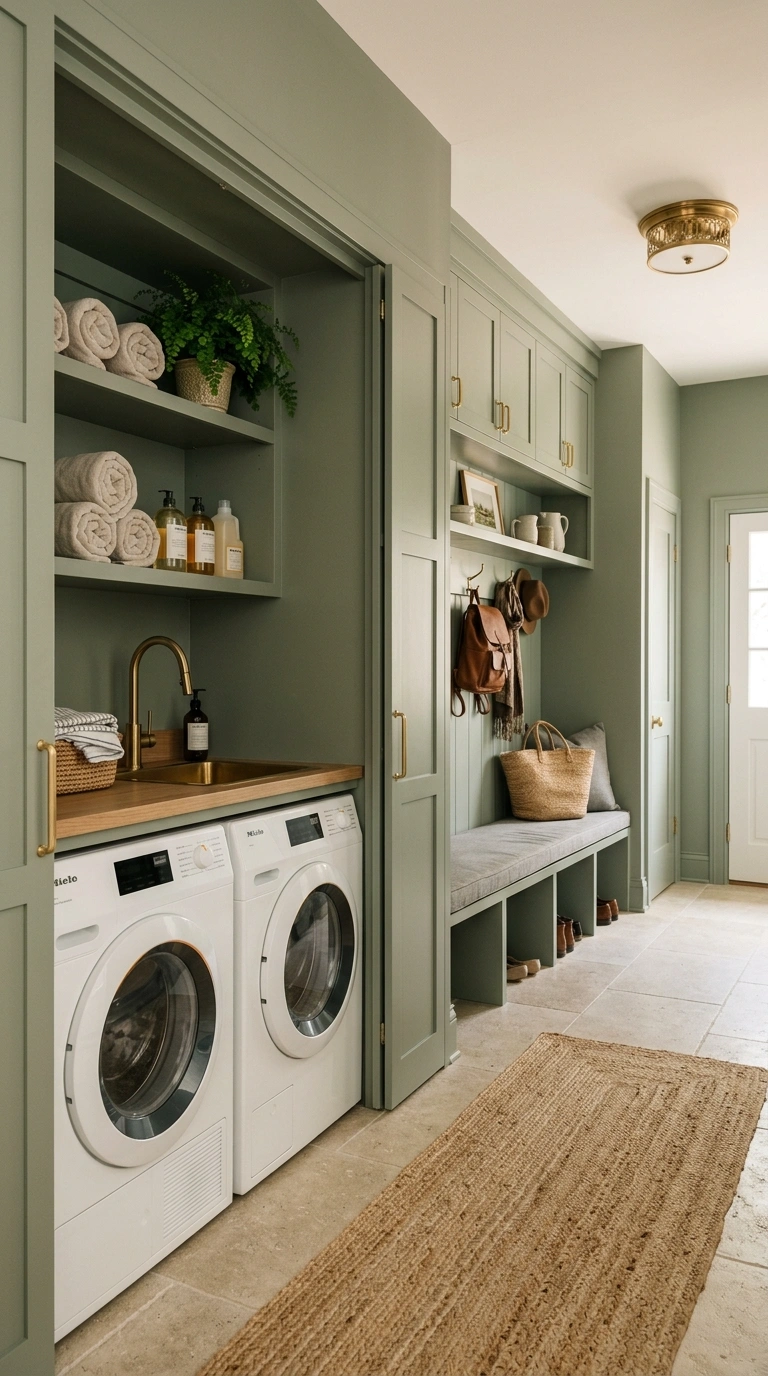
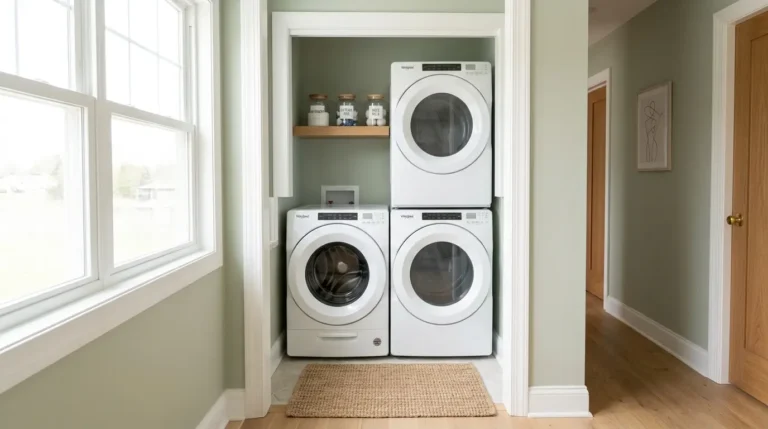
Tying the laundry closet’s color palette to an adjacent hallway, mudroom, or kitchen, rather than treating it as a fully separate design decision, creates a more cohesive feel throughout the connected spaces.
A simple coordination approach:
- Pull one accent color directly from the adjacent room’s palette, using it on laundry closet cabinetry or a wall
- Match metal hardware finishes across both spaces (the same brass or black used in both areas)
- Continue the same flooring material, or a closely coordinating one, if the spaces are visually connected without a door between them
Cost range: no significant added cost, since this is a planning and color-selection approach rather than an additional purchase.
Start with one or two ideas that address both style and a genuine functional gap, like statement lighting that also actually illuminates the space well, or a coordinated bin system that both looks good and keeps supplies organized. In a laundry closet, style choices that don’t hold up to daily heat, lint, and moisture will look worse over time than if you’d chosen the plainer, more durable option from the start.
Save your favorite laundry closet ideas to Pinterest so you have them ready when you’re ready to style your own space.
FAQs
Can I really make a laundry closet look designed instead of purely functional?
Yes. Statement lighting, a cohesive cabinetry color, and coordinated storage bins are all achievable laundry closet ideas that add genuine style without requiring a full renovation or sacrificing daily function.
What materials should I avoid in a laundry closet due to heat and humidity?
Delicate natural-fiber wallpaper like true grasscloth, unsealed natural fiber rugs like jute, and unprotected wood surfaces near the dryer vent are all more prone to damage in a laundry closet’s warmer, more humid environment.
What’s the fastest way to add style to an existing laundry closet?
Swapping cabinet hardware to brass or matte black, adding a statement light fixture, and building a coordinated label system for bins are all quick, low-cost updates that don’t require any construction.
Is patterned tile practical for a laundry closet floor?
Yes, porcelain or vinyl-look patterned tile handles moisture and daily wear well, making a laundry closet an ideal, contained spot to try a bold pattern that might feel like too much in a larger room.
Should my laundry closet match the rest of my home’s style?
It doesn’t have to, but tying the color palette and hardware finishes to an adjacent visible space, like a mudroom or hallway, creates a more cohesive feel throughout connected areas of the home.