23+ Stunning Entryway Decor Ideas To Try Now
You walk in with grocery bags in one hand and your keys in the other, and the first thing you see is a pile of shoes. That is the moment an entryway either helps you or gets in your way. It is usually the smallest spot in the house, yet it has to hold coats, bags, mail, and muddy boots. It also has to look nice for guests. The good news is that you do not need a big hall to make it work. A slim table, a bench, a few hooks, and one good mirror can fix most problems. The ideas below cover narrow halls, tiny apartments, and wide foyers. Some use storage, some use paint or tile, and some only need a rug. Pick the ones that match your space and your budget, and try the easiest one first.
1. Slim Console Table
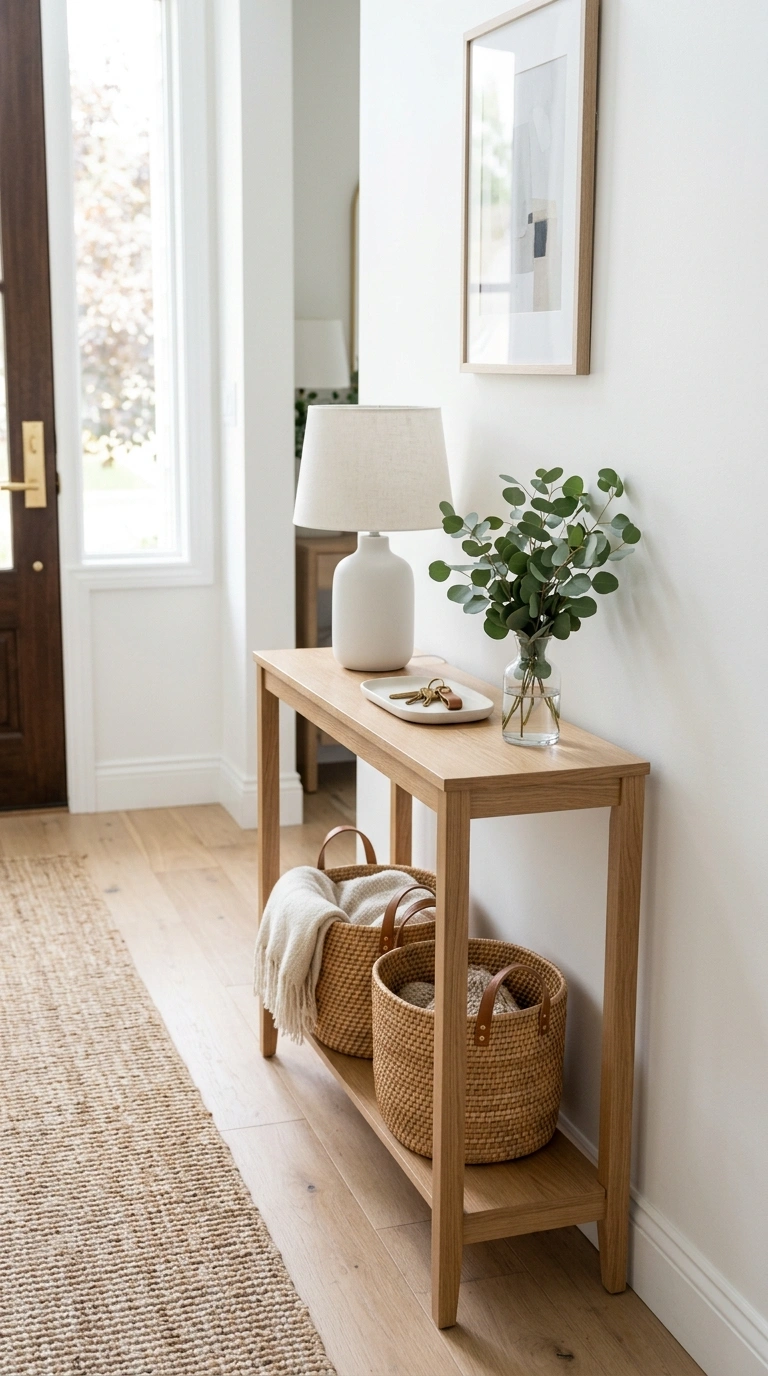
A slim console table gives a small entry a real landing spot. Look for one that is about 10 to 12 inches deep so it does not block the walkway. Wood, black metal, or a white painted finish all work well in a neutral entry. Put a small tray on top for keys and sunglasses, then add a lamp or a little vase with a few branches. A ceramic bowl works well for loose change. If the table has a low shelf, slide in two woven baskets, one for mail and one for scarves or gloves. Keep the top mostly clear. I like to use only three things, one tall, one wide, and one small, so the table looks neat but never empty. If there is no outlet nearby, pick a battery lamp with a warm bulb. Set the table against the longest wall, and leave at least three feet of open floor in front so people can walk past with bags.
2. Bench With Baskets
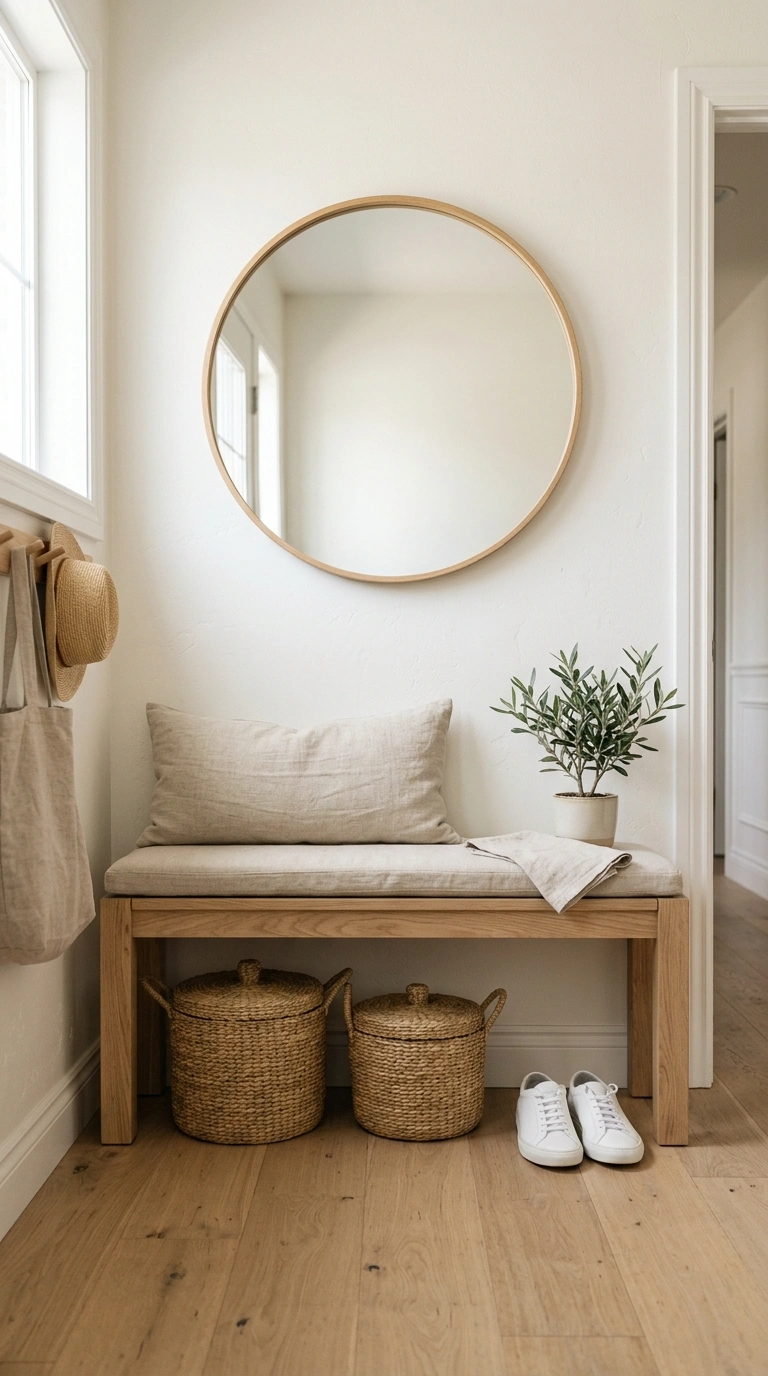
A bench gives you a place to sit while you pull on boots, and it hides storage underneath. Pick a simple wooden bench in oak, pine, or painted white, about 16 to 18 inches high. Slide two or three woven baskets beneath it and put one pair of shoes in each, so nothing spills into the room. Baskets with lids keep out dust, and baskets with handles are easier to pull out. Add one cushion in a washable cotton or linen cover so the seat feels soft. A muted stripe or a plain oatmeal color looks calm and fits most homes. Set the bench under a mirror or a row of hooks so the whole wall feels planned. If the top is flat, keep only one folded throw on it, since too many pillows make it hard to sit down. Wash the cushion cover every few weeks, and swap the shoes in the baskets with the seasons.
3. Peg Rail Coat Wall
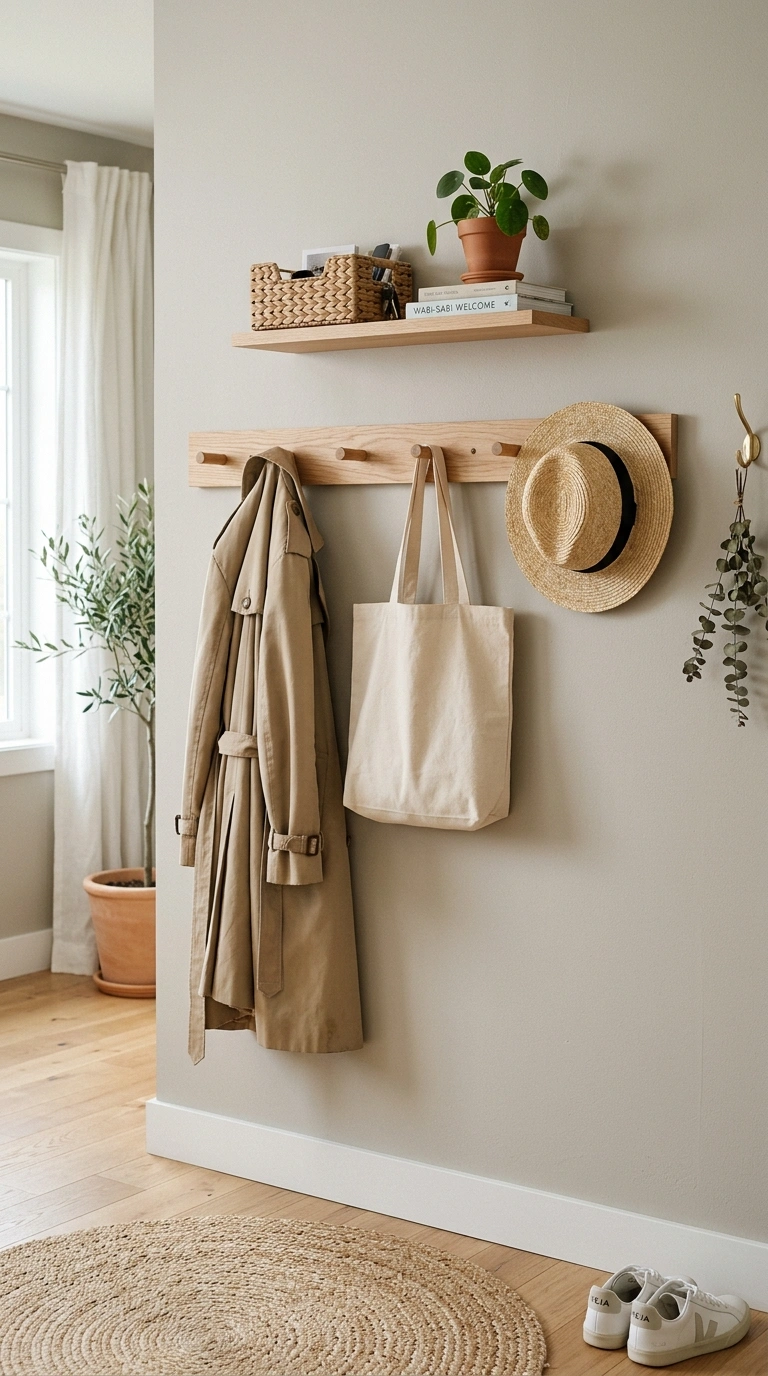
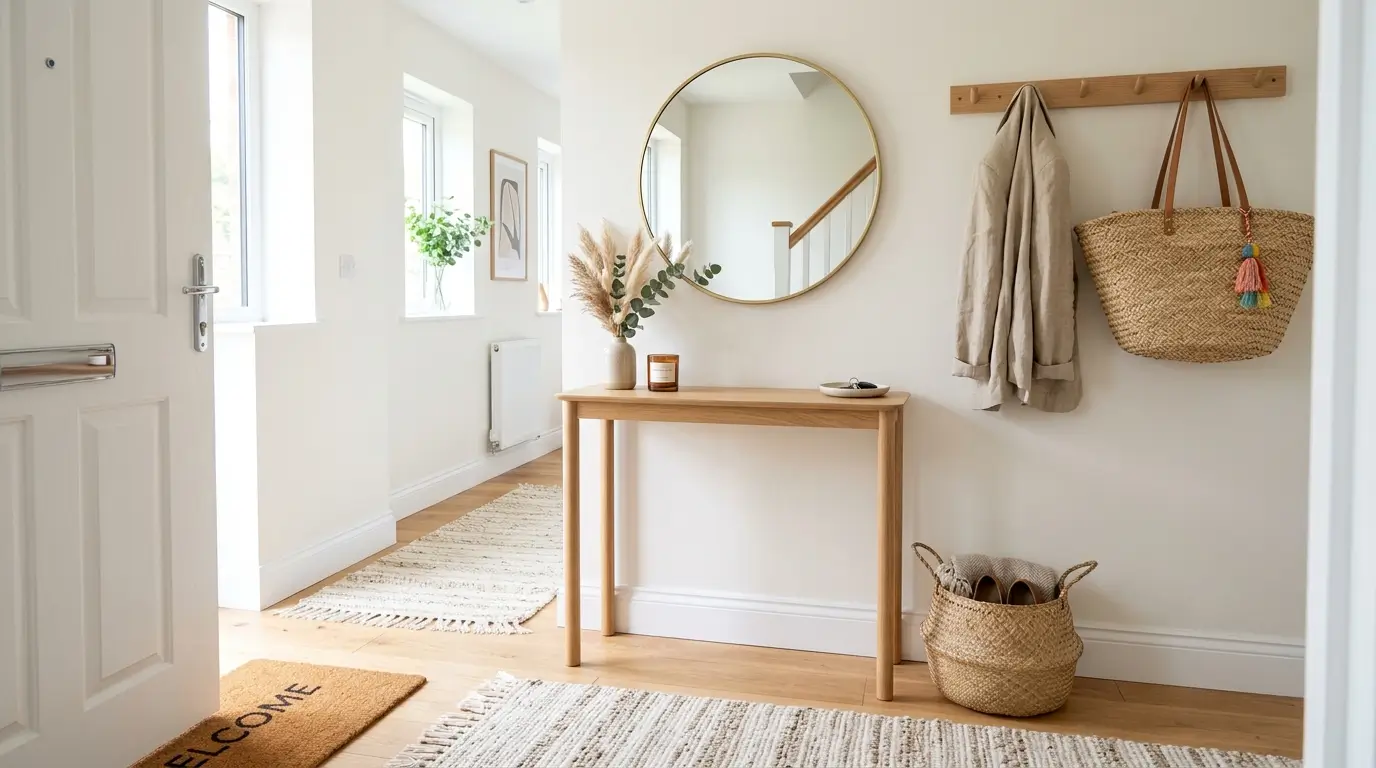
A peg rail is a long wooden board with round pegs, and it might be the most useful thing you can hang by a door. Use a board in pine, oak, or beech, about 30 to 48 inches long. Paint it the same color as the wall for a quiet look, or leave the wood natural for some warmth. Screw it into wall studs or use strong anchors, because wet coats get heavy. Hang it about 60 inches from the floor for adult coats. If kids live in the house, add a second, lower rail around 40 inches so they can reach it alone. Pegs work best when each one holds one item, so try a jacket on the first, a tote bag on the second, and a straw hat on the third. Leave a few pegs empty for guests. A small shelf above the rail can hold baskets for gloves and caps. Tidy the pegs once a week so the wall stays calm.
4. Arched Floor Mirror
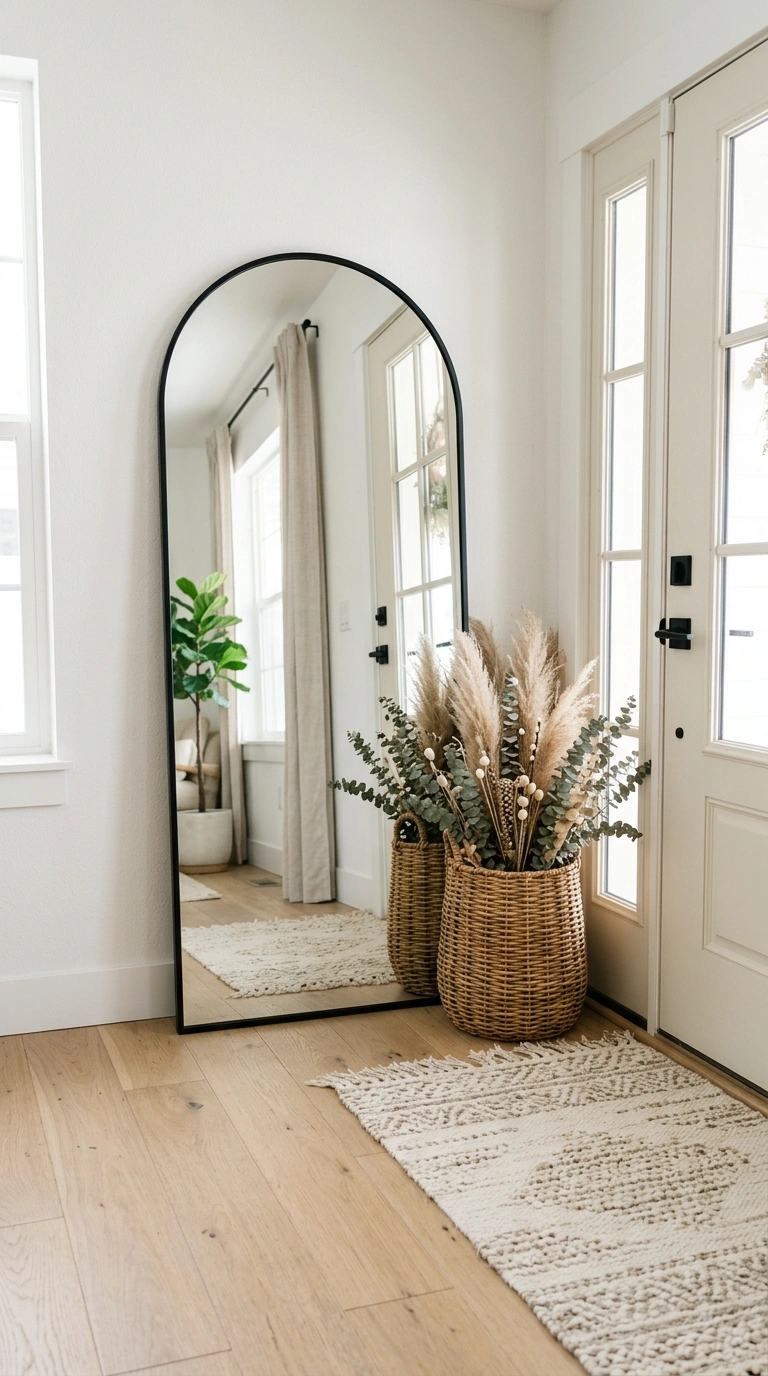
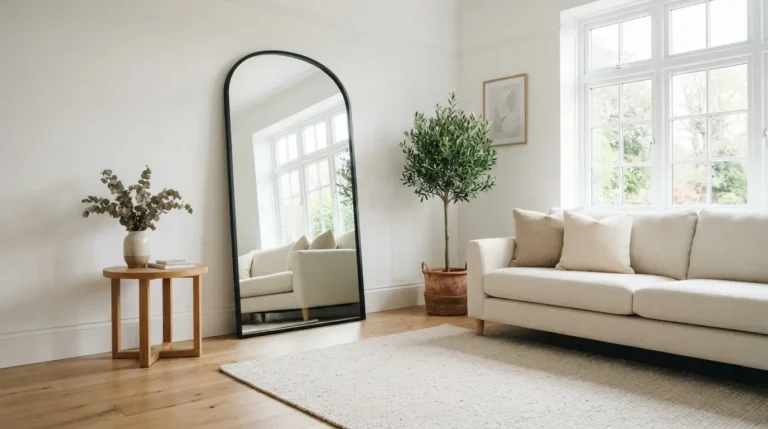
A tall arched mirror makes a small entry feel bigger and gives you a spot for a last check before you leave. Choose a floor mirror at least 60 inches tall with a thin frame in black metal, light oak, or brass. Lean it against the wall beside the door instead of hanging it, which is easier and works well in rentals. Put a rubber pad or a strip of removable putty under the frame so it cannot slip, and add a small wall strap if kids or pets share your home. Place the mirror where it catches light from a window, because bright reflections make a narrow hall feel wider. Skip the spot if the mirror would reflect a messy closet. Beside it, set a tall basket with a few dried stems, or a slim plant in a plain pot. A small runner rug in front of the mirror finishes the corner. Wipe the glass often, since it collects fingerprints from everyone passing by.
5. Narrow Hallway Runner
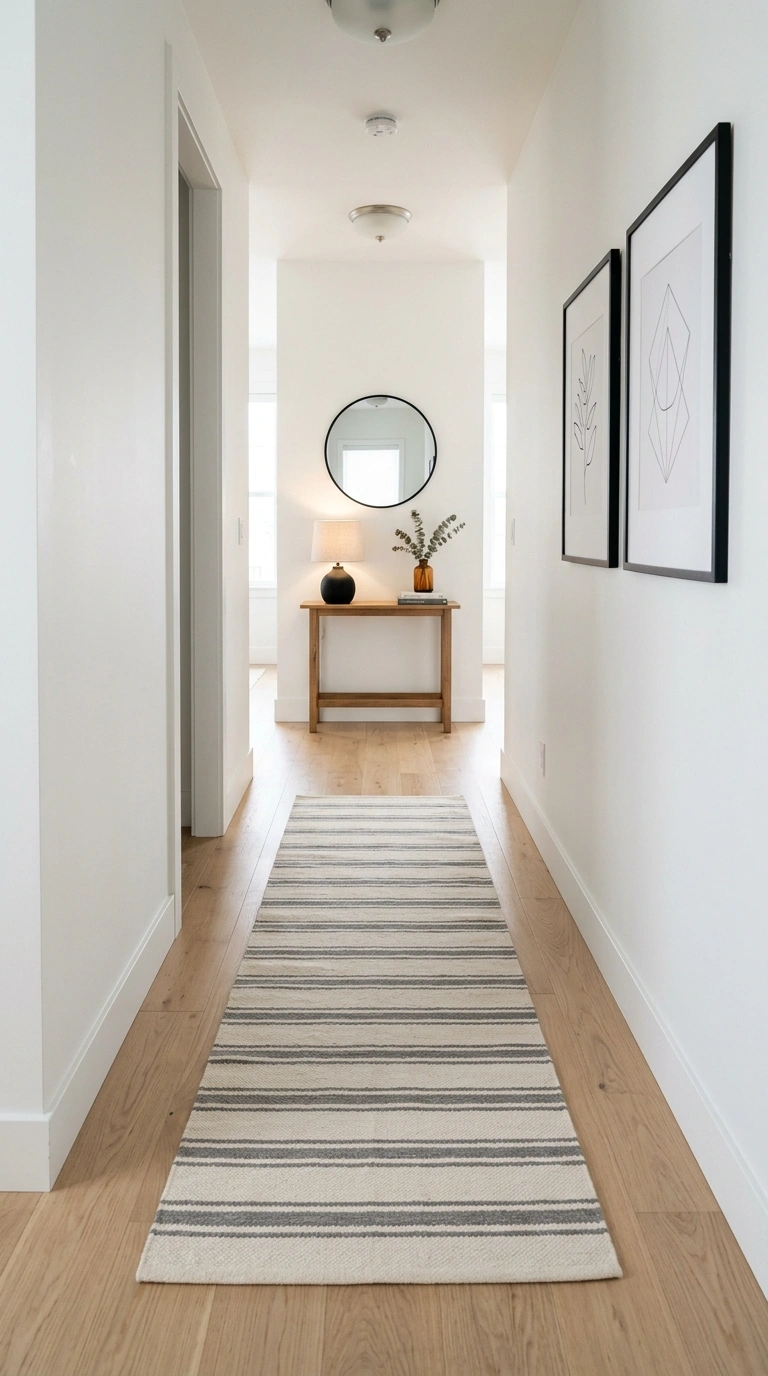
If your entry is really a long, thin hall, a runner rug does a lot of the work. Choose one about 2 feet wide and long enough to leave 3 to 6 inches of bare floor on each side. A flat woven wool or low pile jute runner is easy to sweep and will not trip anyone. Stripes lead the eye down the hall, and a soft cream and gray stripe fits most homes. Slide a thin rug pad underneath so it stays flat. A rug with a faded pattern hides shoe dirt better than a solid color. Start the runner a few inches inside the front door so the door still swings open fully. Hang one or two framed prints on the wall above it, and place a small table at the far end to give the eye a place to land. Vacuum twice a week and shake the rug outside once a month. If mud is common, pick a runner that fits in your washing machine.
6. Closed Shoe Cabinet
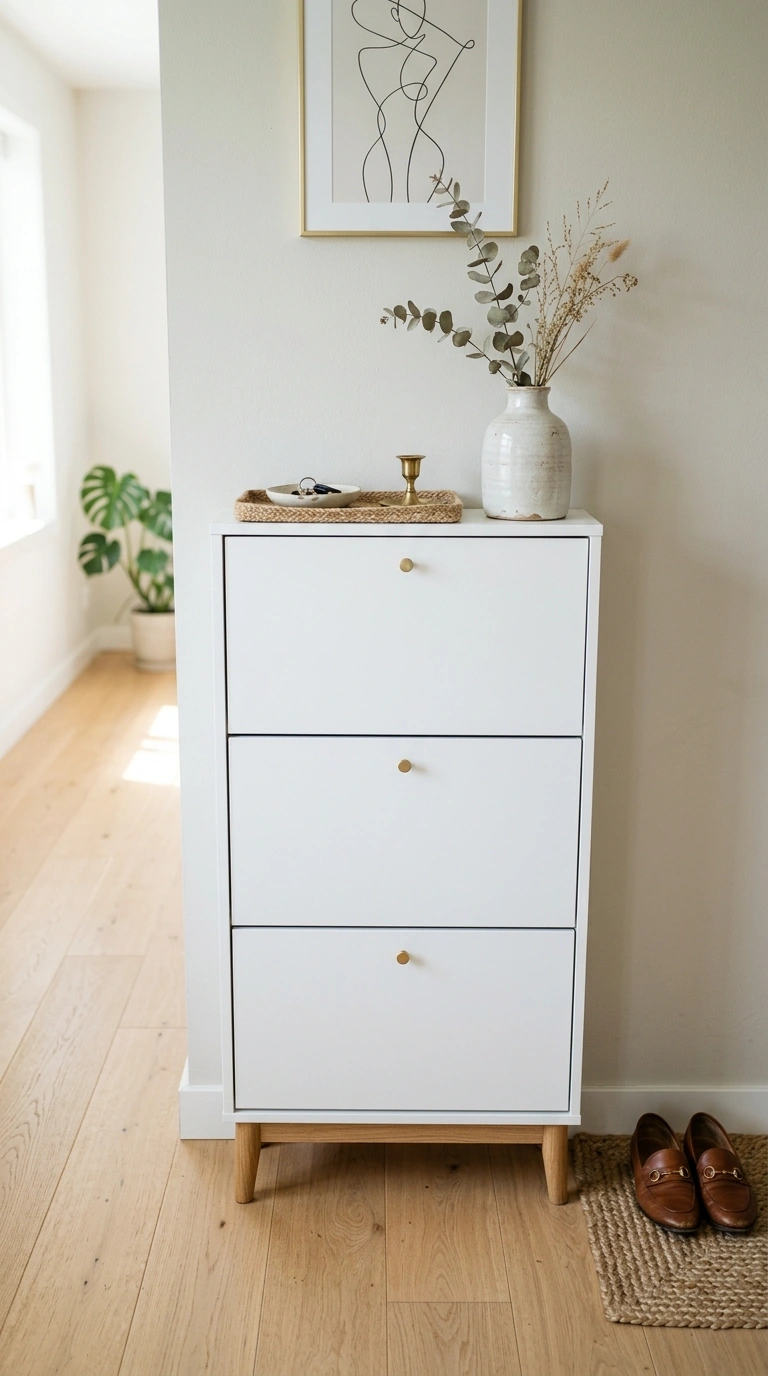
Shoes are the main reason an entryway looks messy, so a closed shoe cabinet solves a lot. Look for a narrow cabinet, about 8 to 12 inches deep, with tilt out doors or plain flat doors in white, oak, or soft gray. The flat top becomes a display spot for a tray, a small lamp, or a vase. Inside, keep everyday shoes in the front rows and move off season pairs to a bin in a closet. Do not cram in too many pairs, because the doors will not close and the cabinet will bulge. A cabinet on short legs lets you see the floor, which makes a small entry feel lighter. Tuck a cedar block inside to keep smells fresh. Leave two pairs on a mat near the door for people who are only running in and out. If you paint the cabinet the same color as the wall, it will nearly disappear, which is nice in a tiny space.
7. Board And Batten Wall
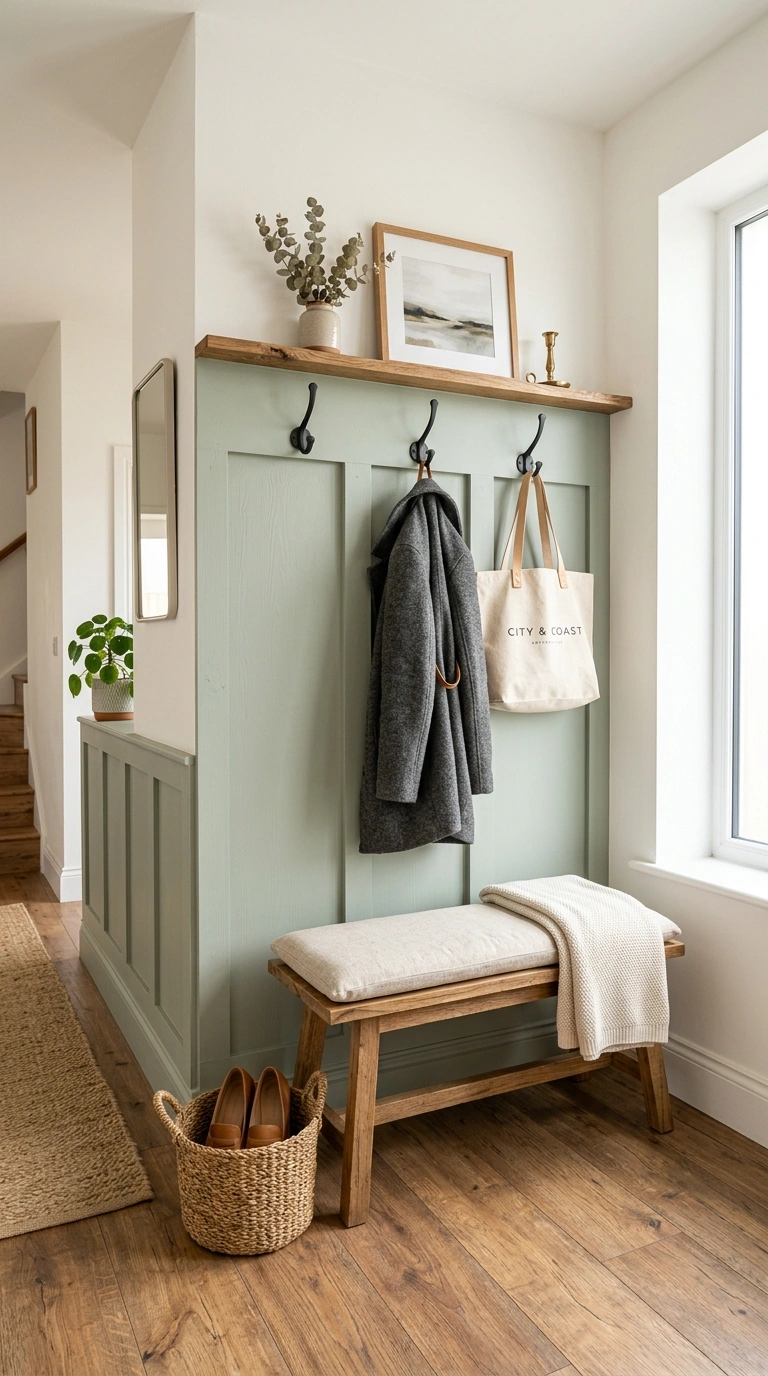
Board and batten is a wall style made with flat boards and thin vertical strips, and it makes a plain entry look built in. You can do it in a weekend with MDF strips, construction adhesive, a level, and a small hammer. Space the strips about 8 to 12 inches apart and check each one with the level. Fill the nail holes with caulk, then paint the whole wall in one color. Soft greige, warm white, and muted sage green all look good, and a satin finish wipes clean easily. Run the boards up to about 48 to 60 inches high, which is a good height for hooks. Add a thin shelf along the top edge and hang the hooks below it. The trim gives the hooks something strong to grab, and coats look neat against the smooth boards. If you rent, ask your landlord first, or try the same look with peel and stick wood trim. Lay out the spacing with tape before you glue anything.
8. Umbrella Stand Corner
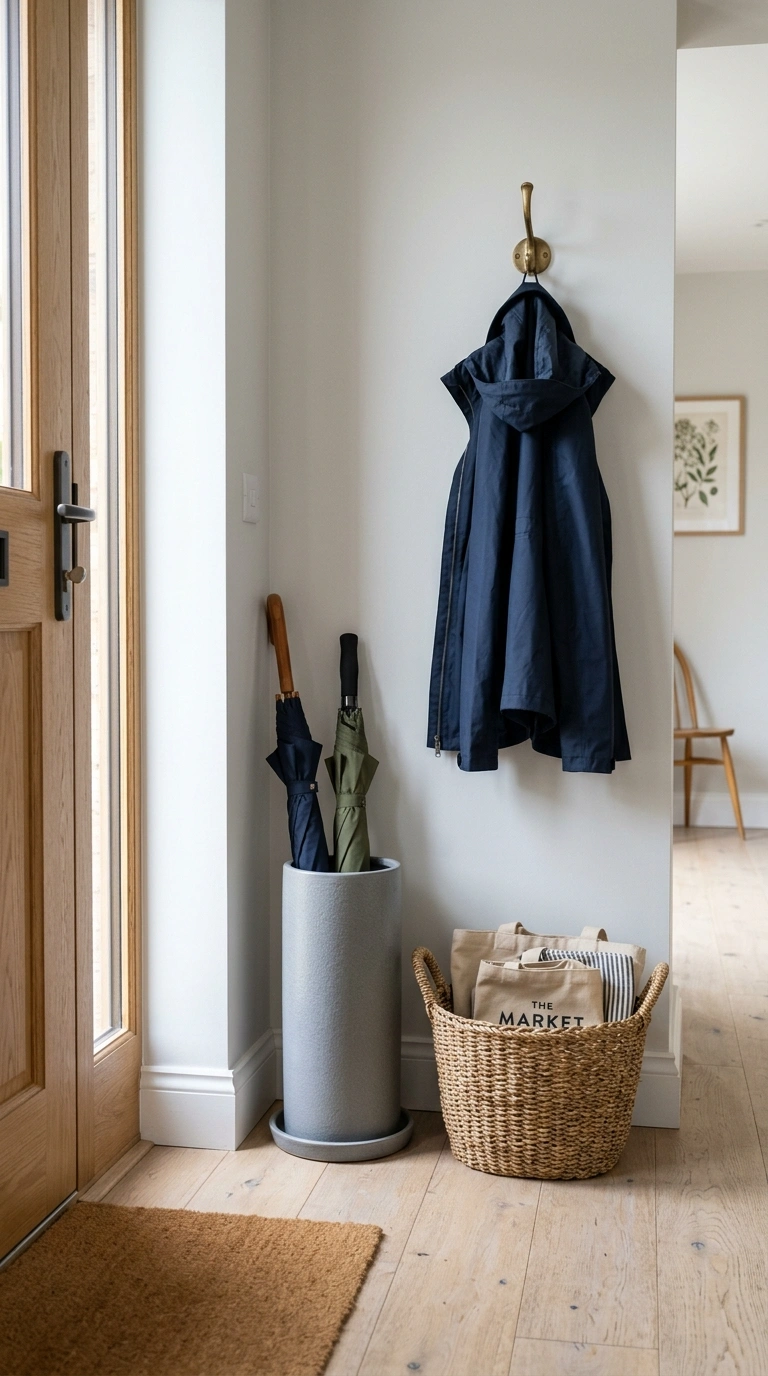
An umbrella stand is a small thing, yet it can make a corner feel finished. A tall ceramic or metal stand in a matte finish looks good beside a door, and a wide mouth makes it easy to drop in a wet umbrella. Stone gray, cream, and dark bronze fit almost any home. If you own more than two long umbrellas, pick a stand at least 18 inches tall so they do not tip. Set a saucer or small tray under it to catch drips. Beside the stand, lean a walking stick or hang a dog leash on a hook, and add a tall woven basket with two folded tote bags. A single wall hook above can hold a rain jacket. Keep only the umbrellas you actually use, and toss any with bent ribs. In dry months, fill the stand with tall dried grasses or a bundle of long branches so it still looks nice.
9. Woven Pendant Light
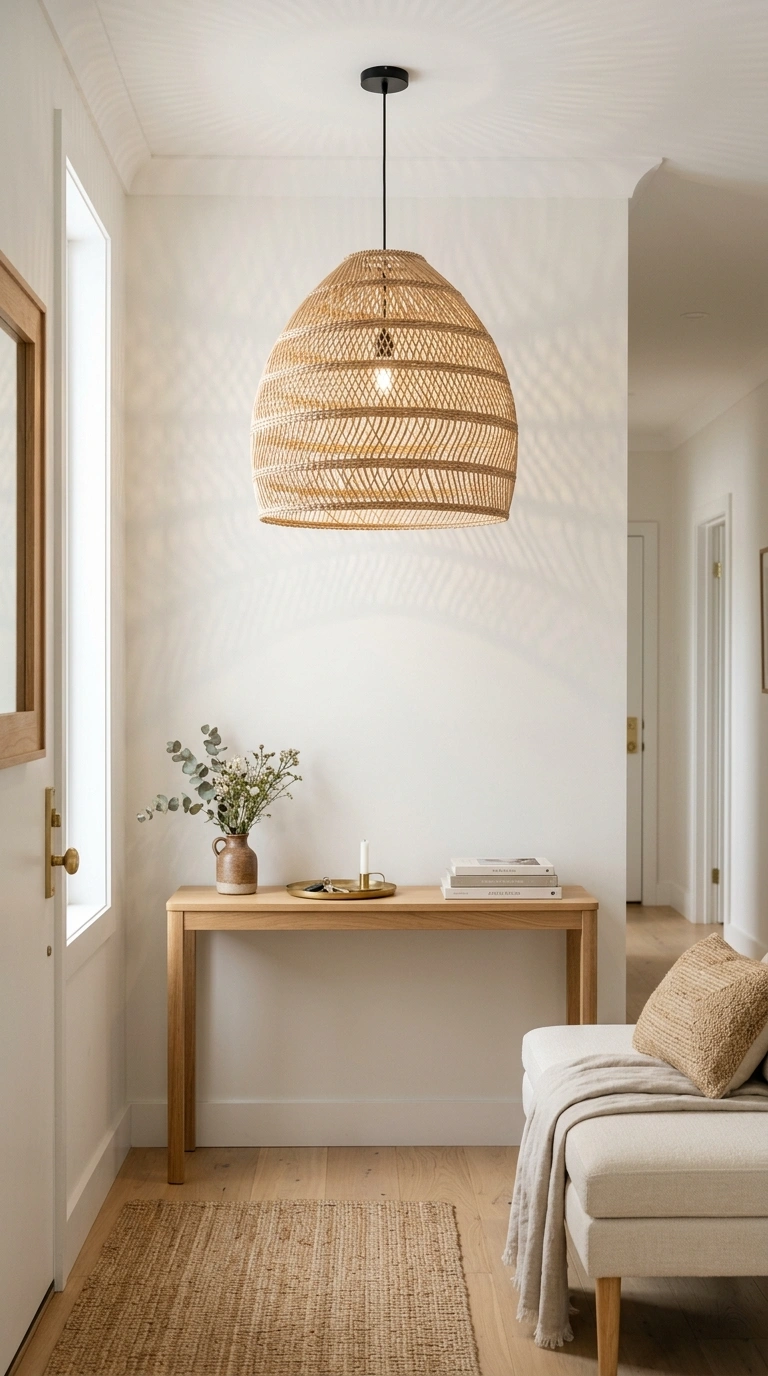
Lighting is often the missing piece in an entry, and a woven pendant is a cozy answer. A rattan, seagrass, or bamboo shade throws soft, patterned light onto the walls and ceiling, which feels warm at night. Choose a size that fits the room, about 14 to 18 inches wide for a small entry and 20 to 24 inches for a large foyer. Hang it so the bottom sits at least 7 feet above the floor. If you rent, buy a plug in pendant kit with a cord and a ceiling hook, and tuck the cord into clips along the wall. Use a warm white bulb, around 2700 Kelvin, so wood and skin tones look natural. A dimmer or a smart plug lets you lower the light in the evening. Pair the pendant with a plain console or bench, and keep the other decor simple so the shade stands out. Dust it every few weeks with a soft brush.
10. Tall Plant Corner
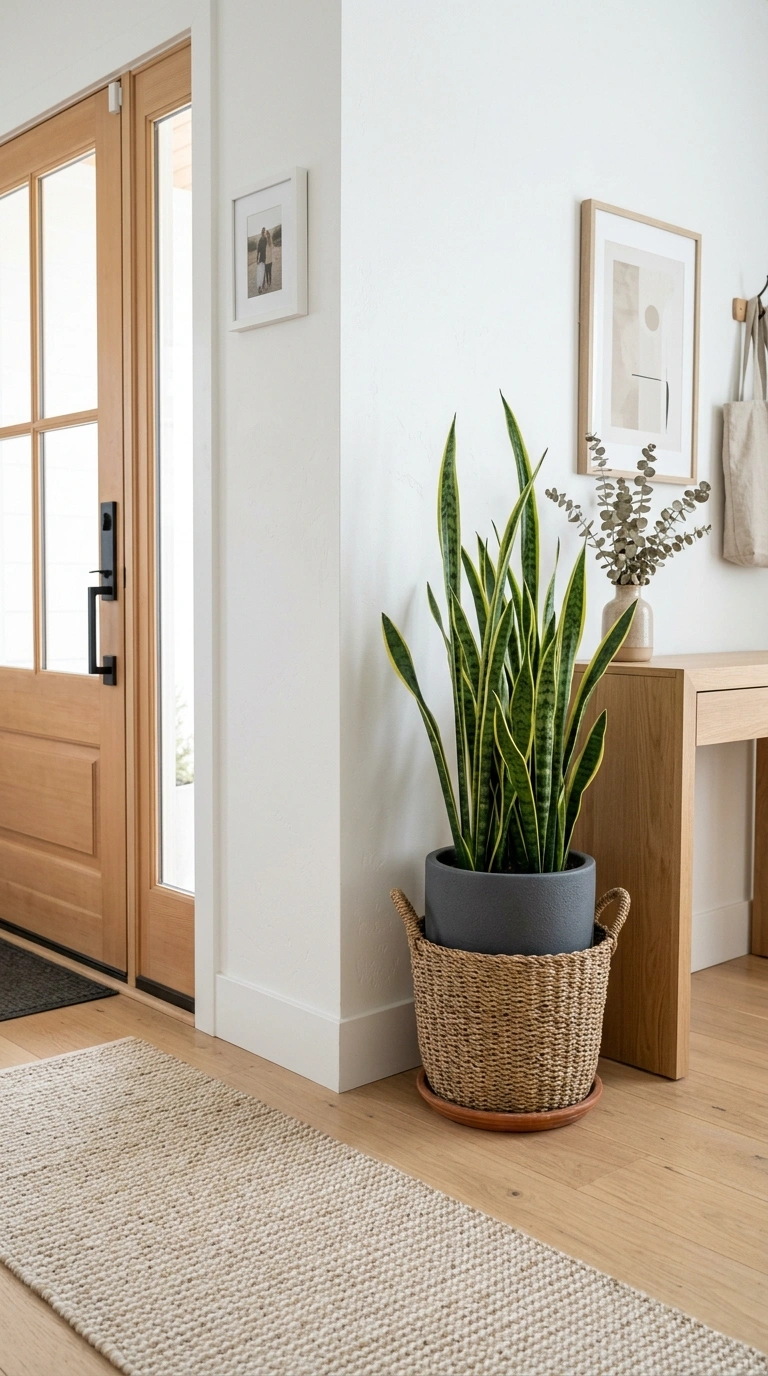
A tall plant near the door makes visitors feel welcome before anyone says hello. If your entry has no window, pick a plant that handles low light, like a snake plant, a ZZ plant, or a cast iron plant. In a bright entry, an olive tree or a fiddle leaf fig looks lovely. Choose a pot a little wider than the plant so it looks steady, and set it in a woven basket or a matte ceramic planter. A saucer underneath keeps water off the floor. Place the plant in a corner, about a foot from the wall, so the leaves have room to grow. Turn the pot a quarter turn each week so it grows evenly. If you cannot keep plants alive, a tall faux plant with a realistic trunk is a fair stand in. Wipe faux leaves with a damp cloth, and check real plants for dry soil. Keep the floor around the pot clear so the corner looks planned.
11. Wall Mail Station
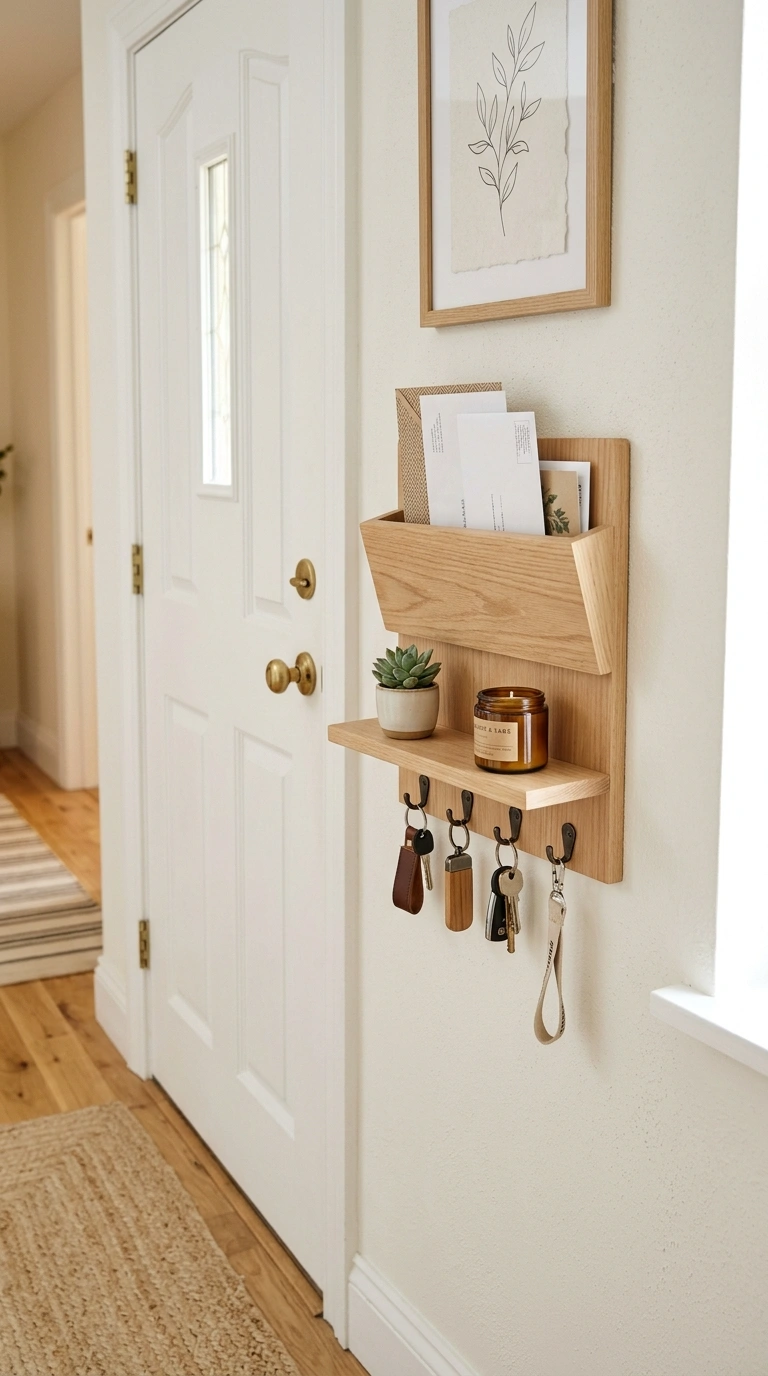
Mail and keys pile up quickly, so give them a home on the wall. A small wall organizer with a mail slot, a key rail, and one shelf takes almost no floor space. Choose one in wood, black metal, or white, and hang it beside the door at about eye level. Use the shelf for one plant, a small clock, or a candle in a glass jar. Sort your mail right when you walk in and drop the junk straight into a recycling bin. A small hook can hold a dog leash, a tote, or a face mask. This idea suits tiny apartments where there is no room for a table. If you rent, use strong adhesive strips rated for at least five pounds, and press them firmly for thirty seconds. Add a small framed print above the organizer so the spot looks like decor instead of a storage station. Empty the slots each weekend so the mail never spills over.
12. Mudroom Locker Wall
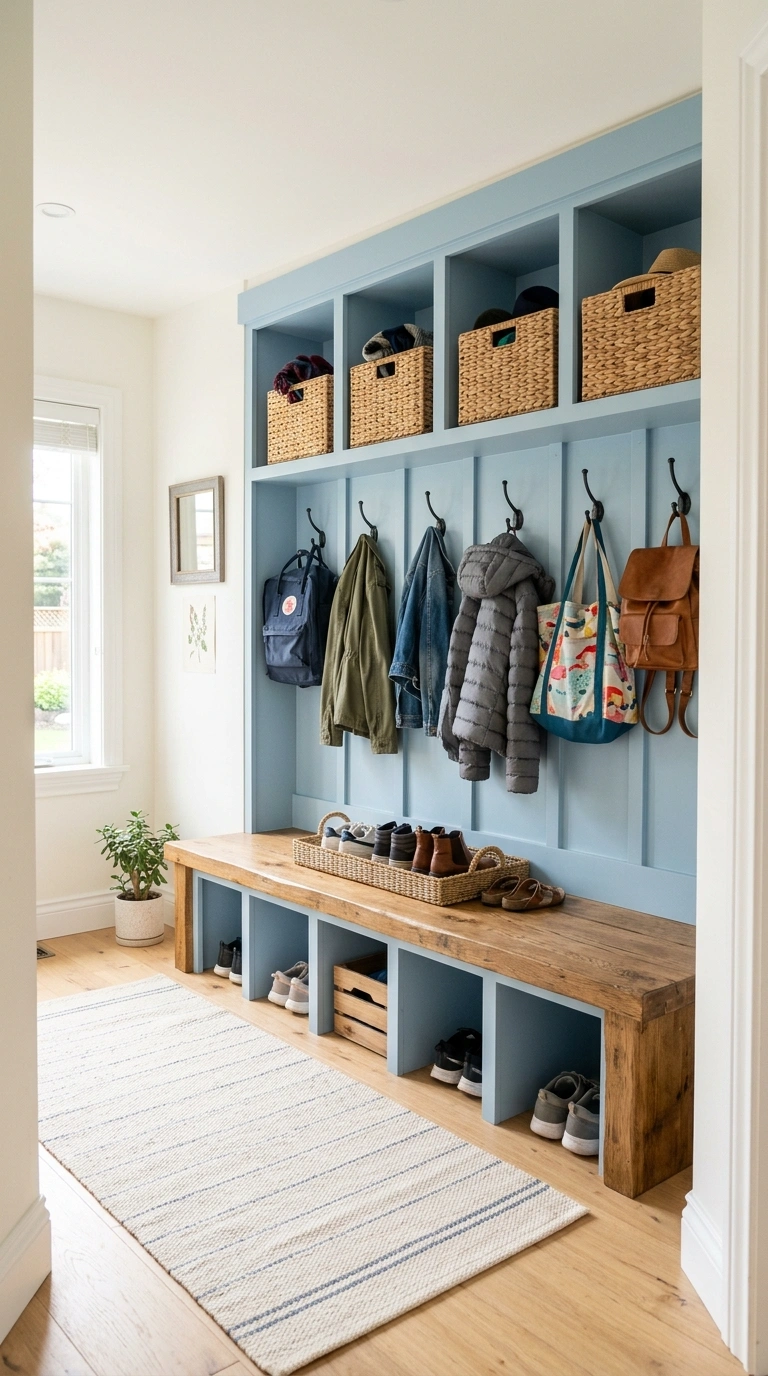
When several people share one door, a locker wall gives everyone a place to drop their things. Build or buy a set of open cubbies with hooks above and a bench below, and give each person one slot. Paint the frame in soft blue, warm white, or deep green so it looks like furniture. Set a basket in each cubby for hats and gloves, and hang backpacks on the hooks above. A simple shoe tray under the bench keeps wet boots off the floor. A flat woven cotton rug that can be shaken out works best here. Add a small mirror at the end of the wall for last minute checks. Use a different colored basket for each person so kids know where their things go. Keep one extra basket on top for anything that must leave the house the next morning. Empty the cubbies on Sunday so the wall stays neat all week.
13. Painted Front Door
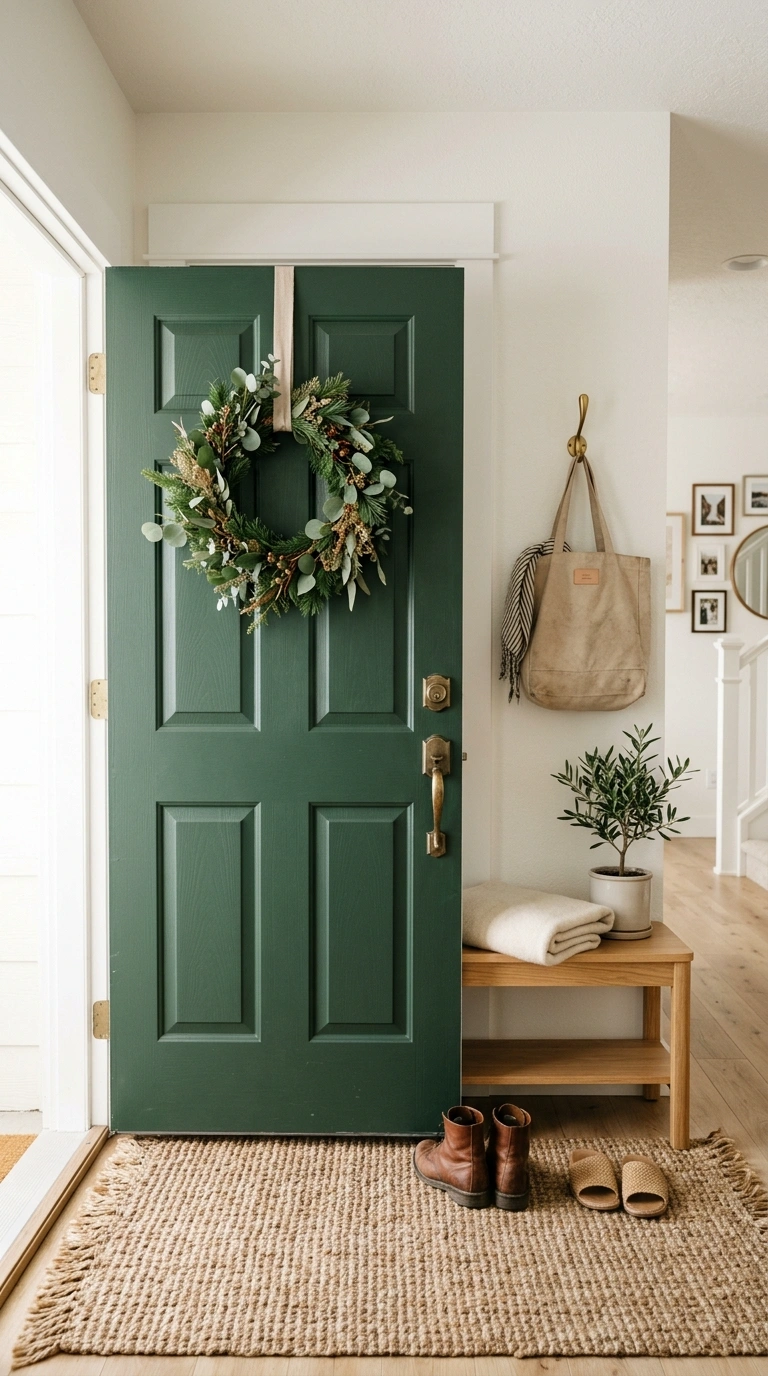
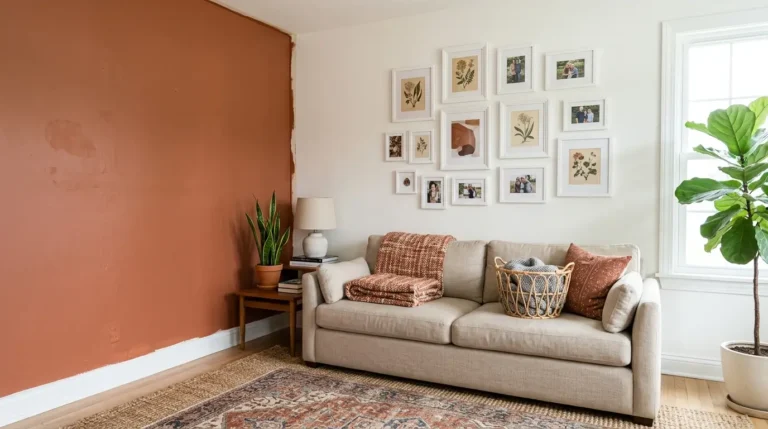
The inside of your front door is a wall that many people ignore. Paint it in a rich color like deep green, navy, or warm terracotta, and the whole entry gets more personality. Use a semi gloss paint so fingerprints wipe away. Wash the door with soapy water and lightly sand it first, then add a primer if the old paint is glossy. Take off the handle, or tape around it carefully, so you get clean edges. Two thin coats look better than one thick coat. Paint the door frame in a soft white so the color stands out. Then add a simple wreath, a hook for a bag, and a small bench beside it. If you rent, ask before painting, or use a peel and stick door wrap instead. Match your entry rug to one color in the paint. Let the door dry for a full day before closing it tightly so it does not stick to the frame.
14. Vintage Chair Corner
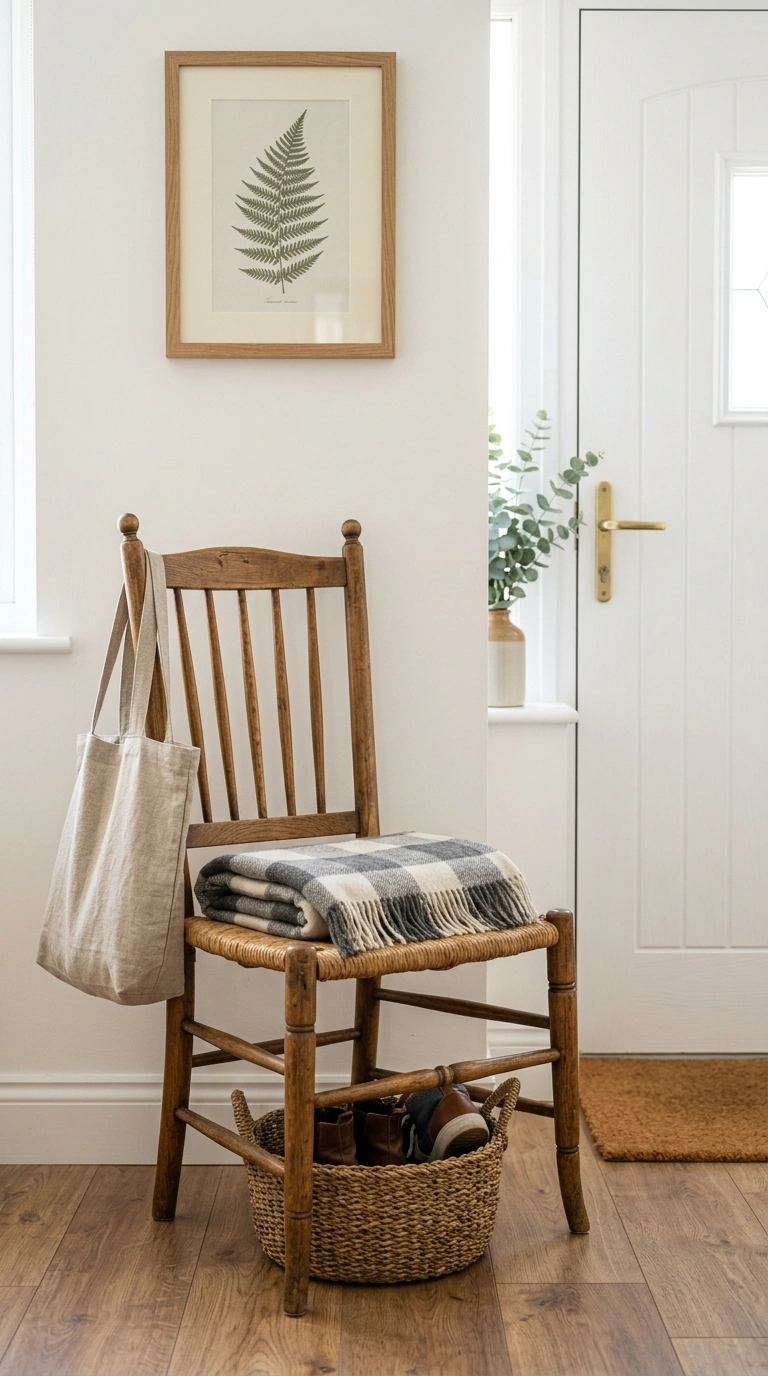
One old wooden chair can make an entry feel personal. Look for a simple chair with a woven seat or a carved back at a thrift store or yard sale. Clean it, tighten any loose screws, and sand the finish lightly if it feels rough. Leave it natural for a rustic look, or paint it soft white or black for a cleaner one. Place it beside the door and drape a wool coat or a linen tote over the back. A folded blanket on the seat makes it feel welcoming, and a basket underneath can hold shoes. If you want the chair to look styled rather than used, set a small stack of two books on the seat. Add felt pads under the legs so the floor stays free of scratches. Make sure the chair is sturdy enough to sit on when you tie your shoes. Hang one framed print above it, and the corner is done.
15. Under Stairs Nook
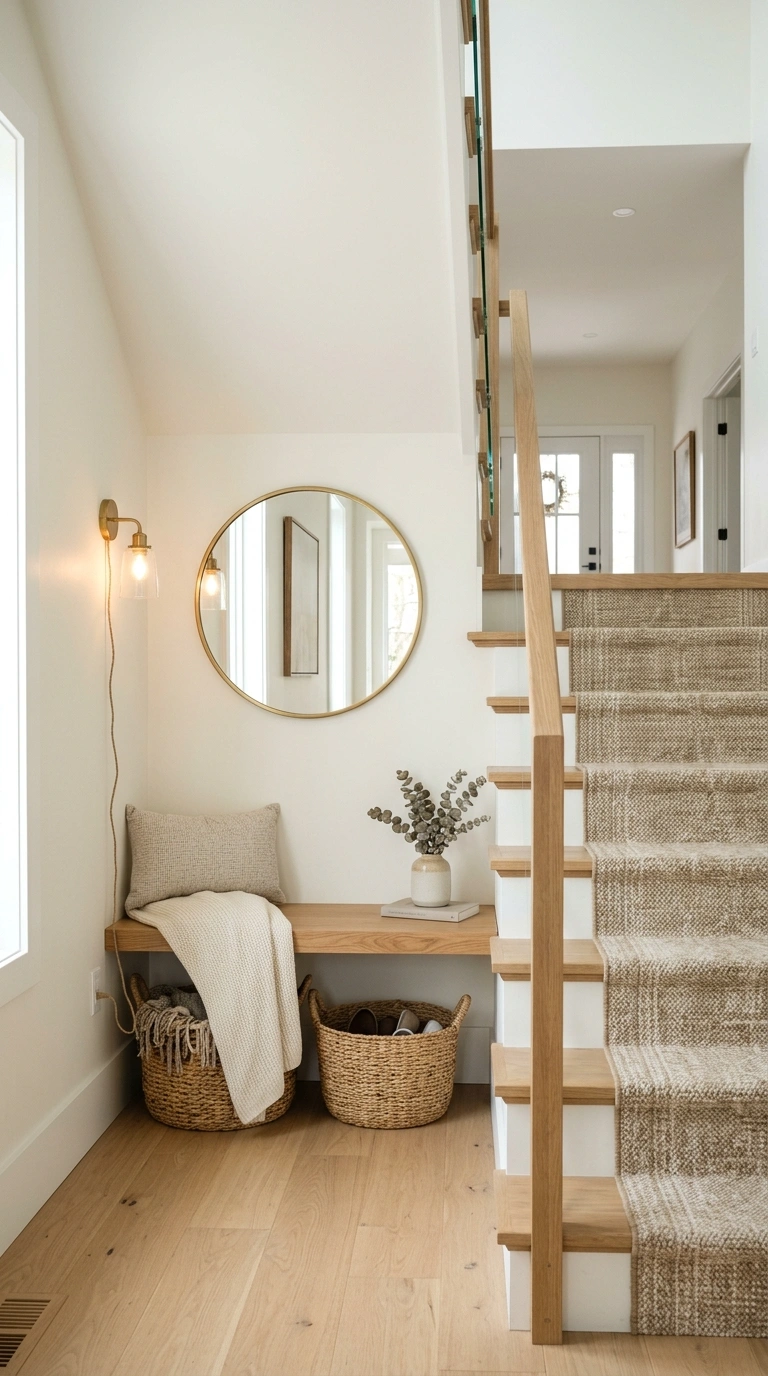
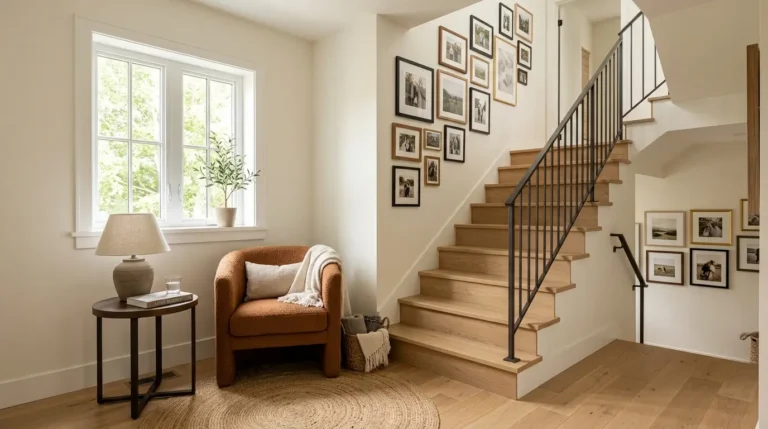
The space under a staircase is often wasted, but it makes a great entry. Measure the low spot first, and choose a bench or low console that fits the shortest part. Tuck taller pieces where the ceiling rises. A narrow bench with two baskets fits well, and one or two wall hooks can hold coats on the tall side. Paint the underside of the stairs the same color as the wall so the nook feels calm and clean. A small sconce or a battery puck light glows softly in the dim spot. Add a runner rug that follows the stairs, and hang a round mirror on the side wall to bounce light around. If the nook is deep, put a shelf along the back wall for baskets and books. Keep the pieces low and simple so nobody bumps their head on the slope. Stack shoes neatly in a basket, and rotate them each season.
16. Boot Tray Setup
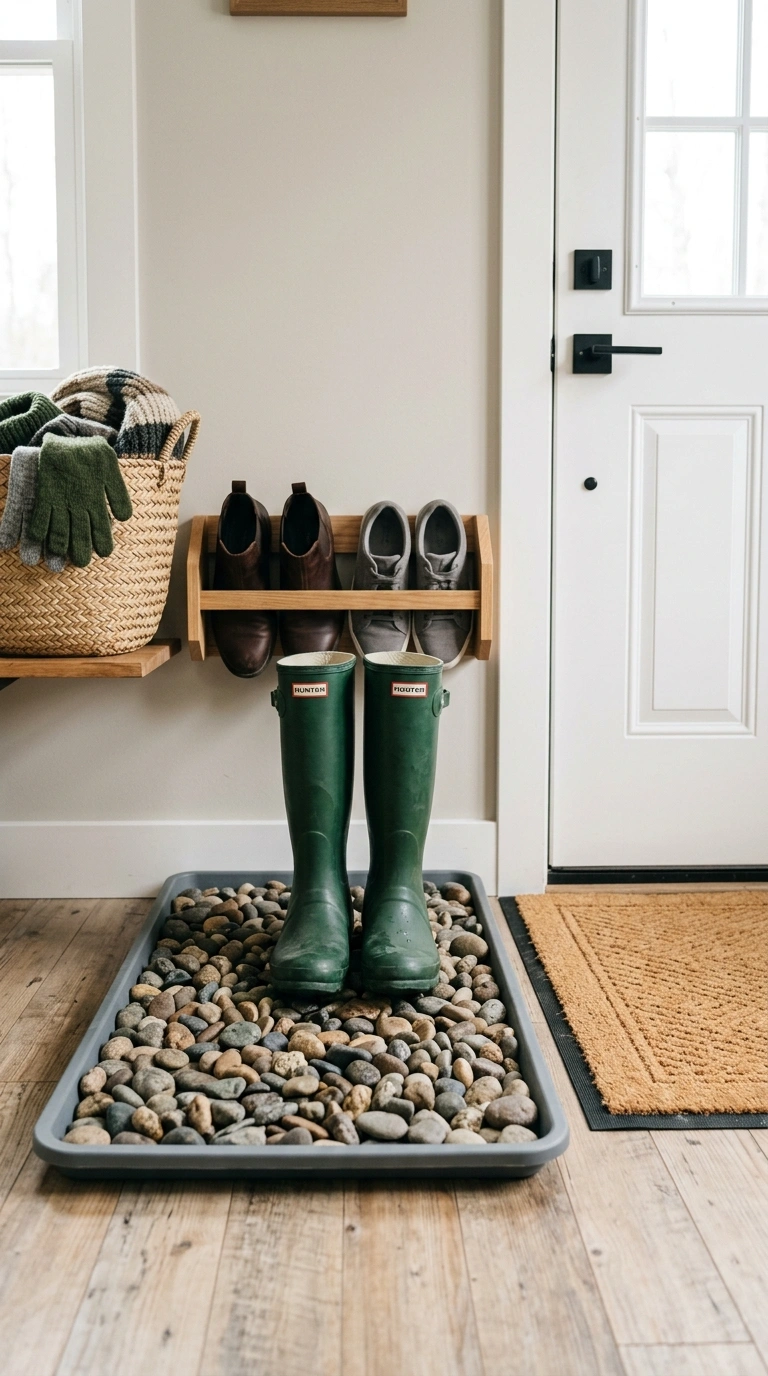
In rainy or snowy months, a boot tray does more than any pretty accessory. Pick a tray in rubber or a stone look plastic, at least 24 inches wide, with a raised edge. Fill it with a layer of smooth river rocks so water drains underneath and boots dry faster. Set the tray on the floor beside the door, and put a doormat just outside to catch the first layer of dirt. A wooden shoe rack above the tray holds dry pairs. Keep only the pairs you wear that week, and store the rest in a closet. A basket nearby holds gloves, hats, and scarves, and a small wall hook holds a dog towel. Rinse the tray once a week in the tub or with a hose. A tray in gray, black, or clay looks tidy on most floors. If you have small kids, look for one with rounded corners so nobody gets scraped.
17. Wall Sconce Pair
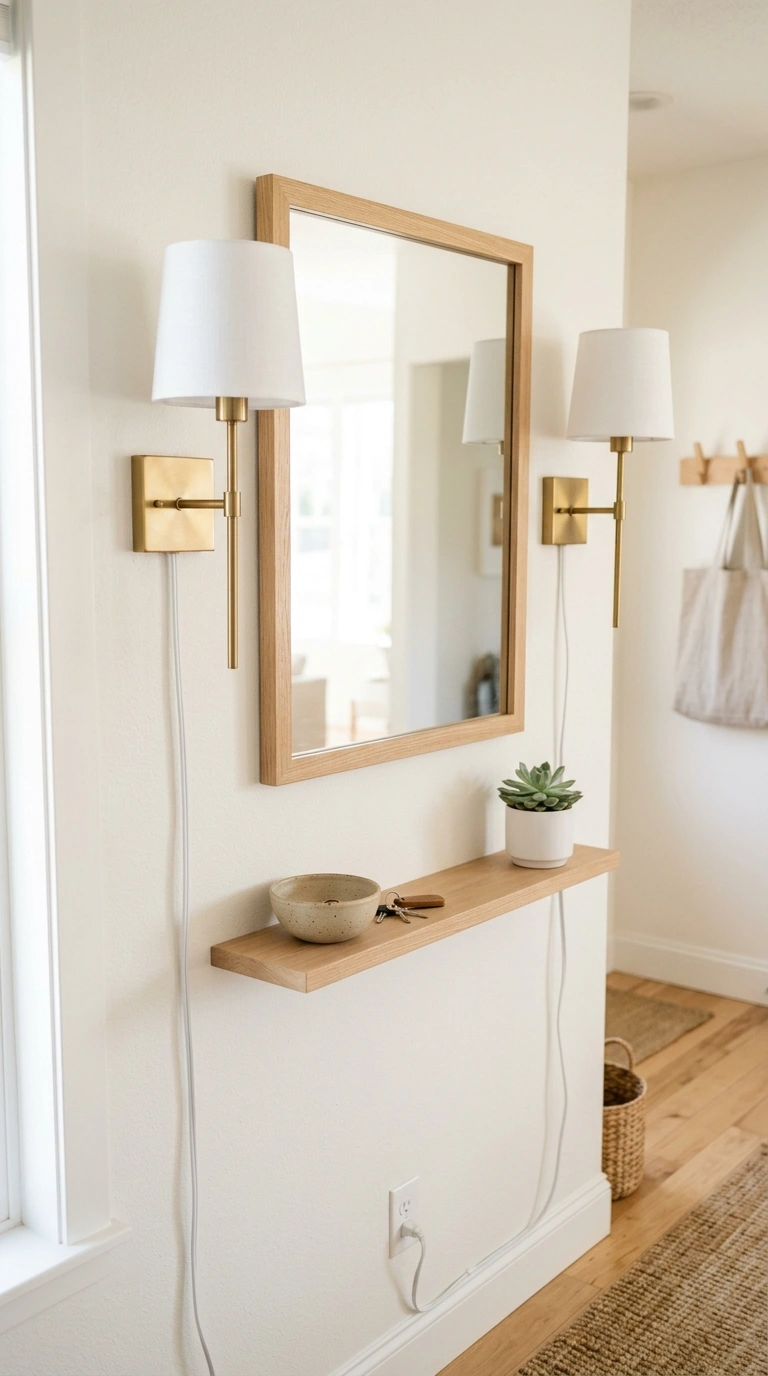
Two wall sconces beside a mirror give an entry a soft glow without using any floor space. Plug in sconces work well for renters, since you can hang them with one small screw and hide the cord in a cord cover painted the wall color. Choose a simple shape in brushed brass, matte black, or white ceramic, with a fabric or glass shade to spread the light. Hang them about 60 to 66 inches from the floor, one on each side of the mirror and about 4 inches from the frame. Use warm bulbs at 2700 Kelvin and low wattage so the light stays gentle. A tiny switch on the cord makes them easy to turn on when you come in. In a narrow hall, hang one on the long wall and repeat it every few feet. Add a small shelf below with a bowl for keys. Wipe the shades with a dry cloth, and evenings at the door will feel warmer.
18. Sheer Door Panel
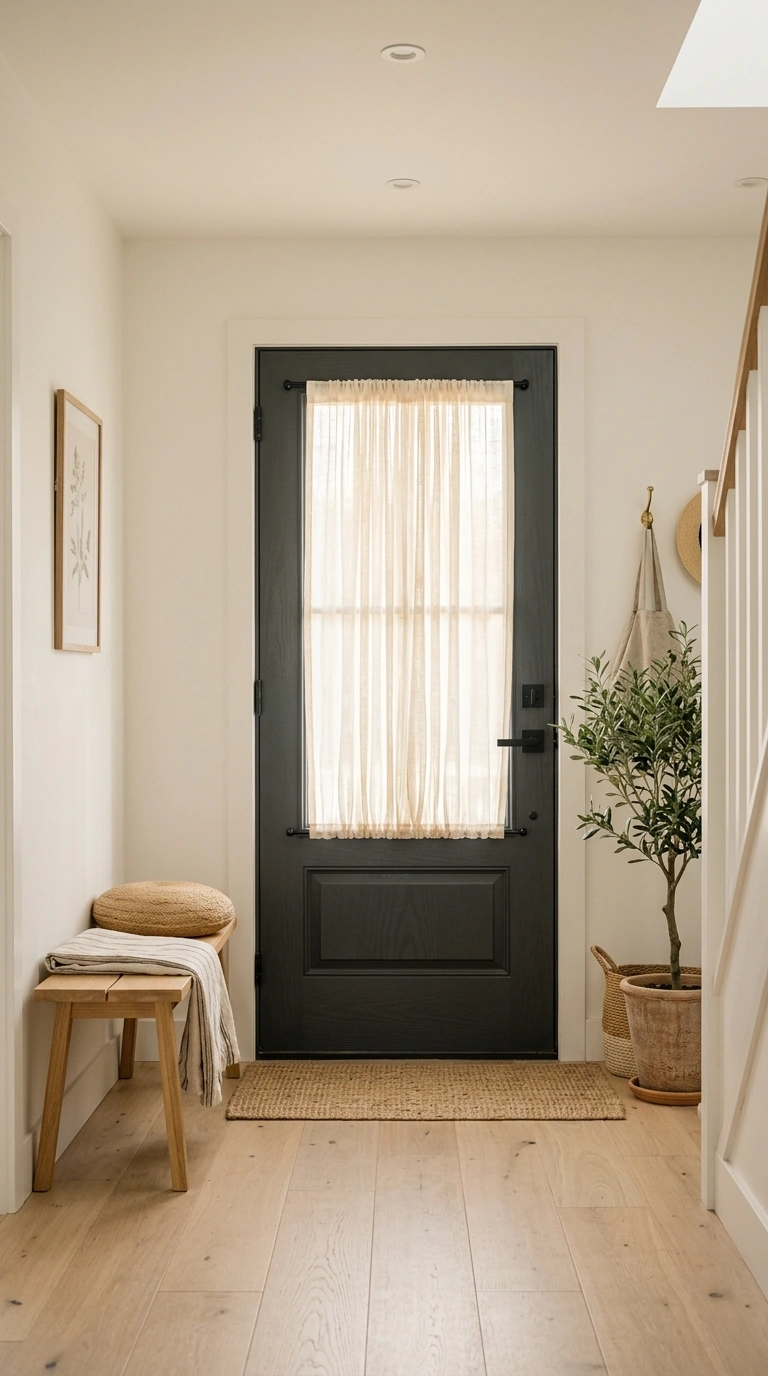
If your front door has glass, you likely want light without a view from the street. A sheer door panel does exactly that. Use a thin white or cream cotton voile or light linen, and hang it on a small tension rod or a pair of mini brackets that sit inside the door frame. Cut the fabric about 2 inches longer than the glass and hem the edges with iron on tape. The sheer softens the light, keeps some privacy, and adds a gentle texture to the entry. Choose a fabric that lets light through, and skip dark colors that block it. Place a wooden bench and a plant nearby to add warmth. If your door has only a small window, a half curtain on a cafe rod works well too. Wash the fabric every few months to remove dust and pollen. Make sure the panel stays clear of the lock and handle, so nothing snags when the door opens.
19. Ladder Shelf Corner
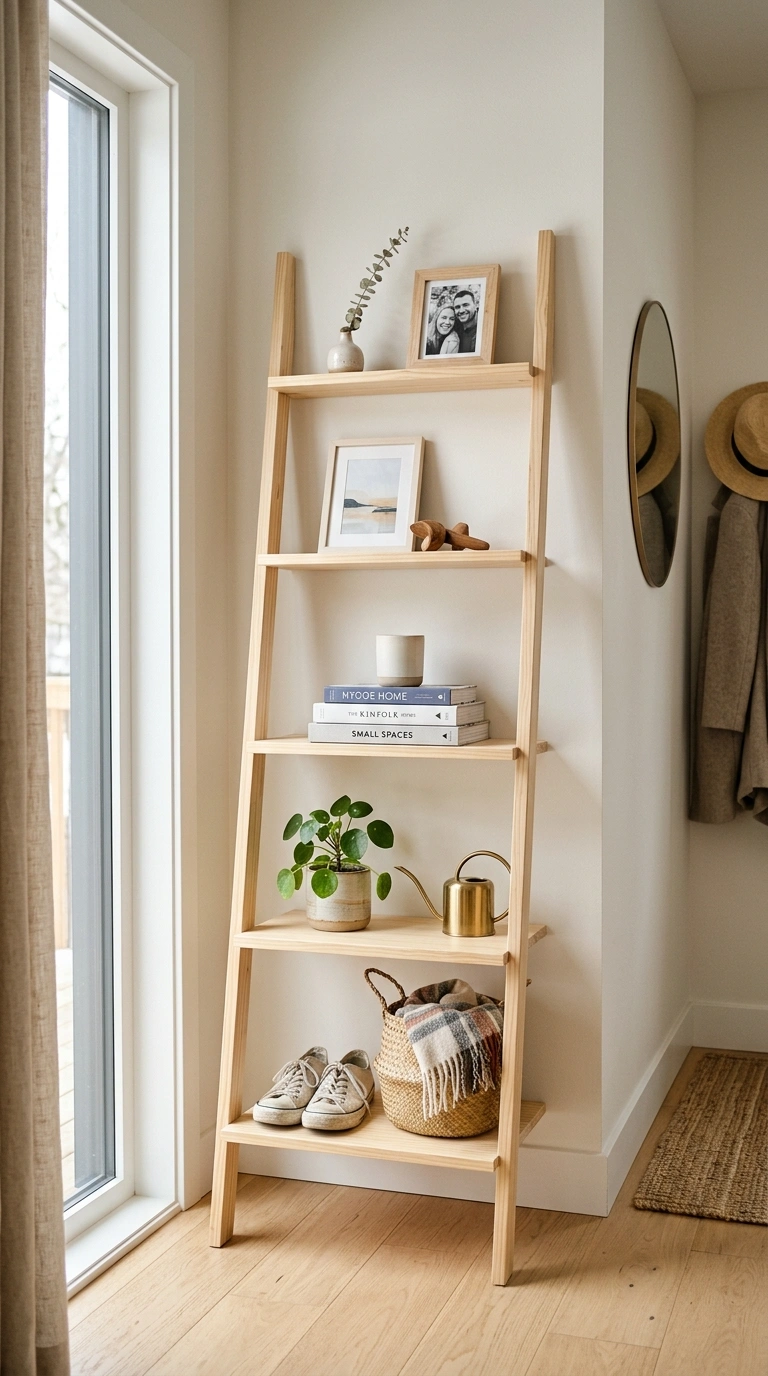
A leaning ladder shelf adds storage in a spot where you cannot drill. Pick one in light wood or black metal, about 5 feet tall, with four or five shelves. Lean it in a corner or beside the door, and put the heaviest items on the lowest shelves for balance. Use the bottom shelf for a pair of shoes or a basket of scarves. The middle shelves suit a plant, a small stack of books, or a candle in a jar. The top shelf is best for something light, like a framed photo or a tiny vase. Keep the shelves half empty so the ladder looks airy. Attach a small safety strap to the wall if kids or pets share your home. A shallow ladder, about 12 inches deep, leaves plenty of room to walk past. Dust the shelves every week, and swap the decor with the seasons so the corner never gets stale.
20. Renter Friendly Entry
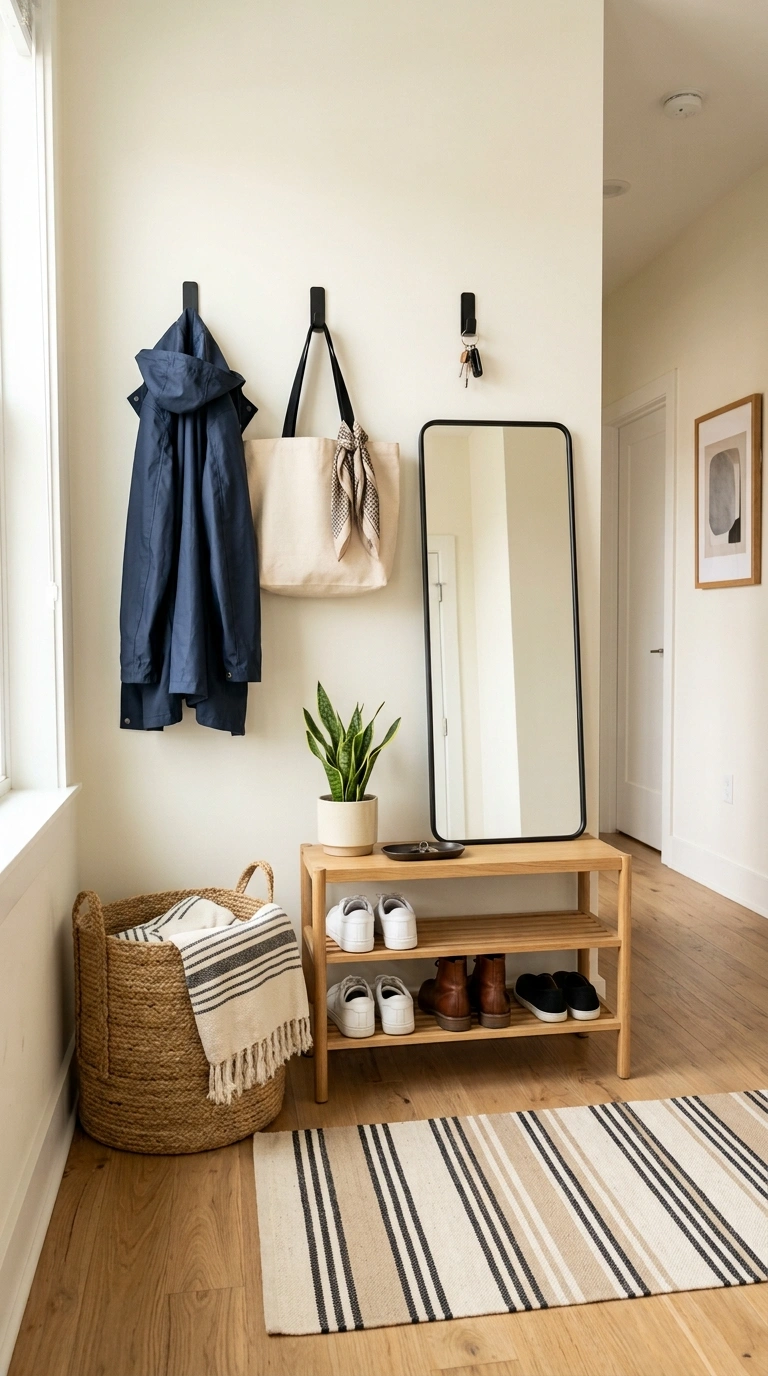
Renters can build a good looking entry without making a single big hole in the wall. Start with adhesive hooks rated for 10 pounds or more, and press them along the wall at different heights. Add a leaning mirror and a small table on top of a rug to mark the spot, then a slim wood shoe rack for footwear. A tall floor basket holds blankets or umbrellas. If the wall is bare, try a sheet of removable wallpaper in a soft stripe on just the small section behind the table. Add a plug in lamp for warmth and keep the cord neat with clips. Choose a rug with a rubber backing so it stays put. When moving day comes, pull each adhesive strip slowly straight down along the wall so the paint stays intact. Stick to a color palette of two or three tones so everything looks matched, and your entry will come along to the next home.
21. Round Foyer Table
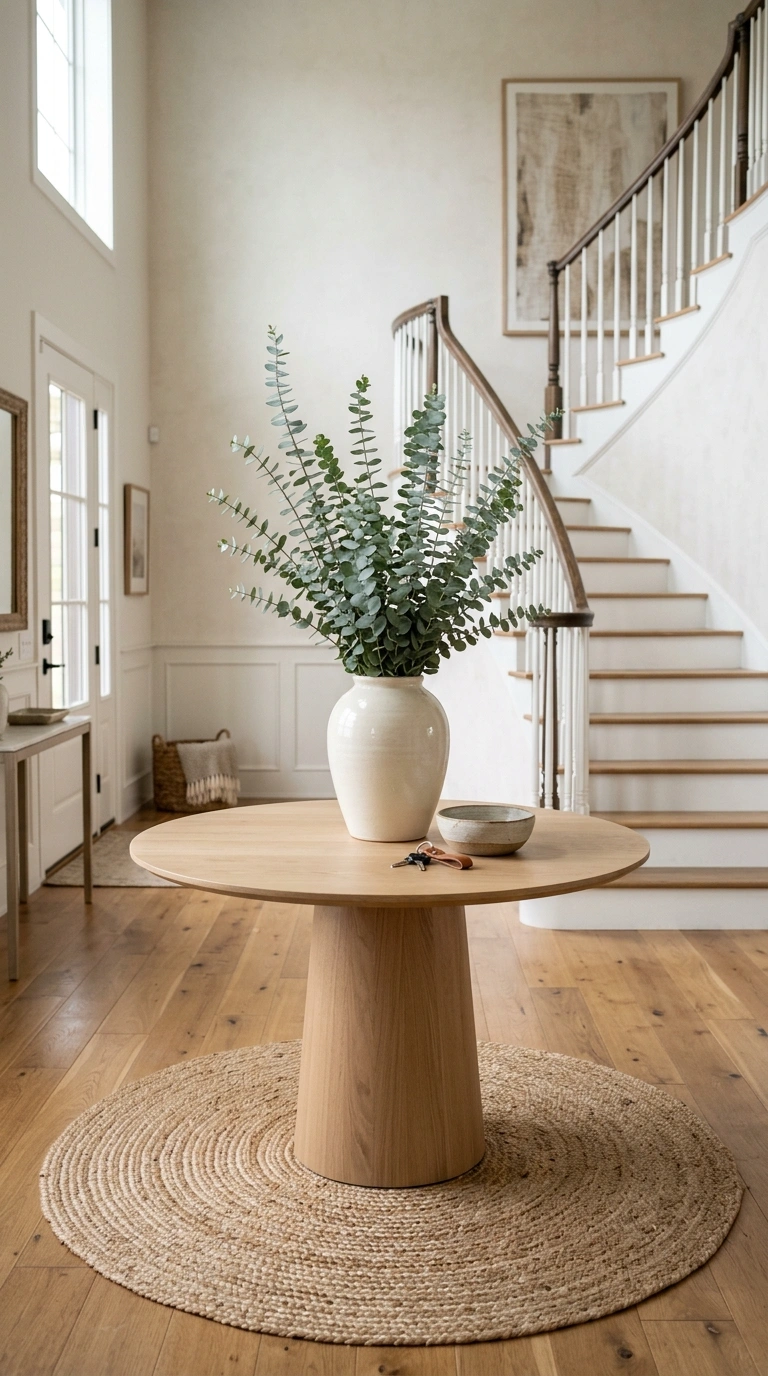
If your foyer is large, a round table in the middle makes it feel like a proper welcome. Choose a pedestal table in wood or marble, about 36 to 42 inches wide, so people can walk around it easily. Keep at least three feet of clear space on all sides. Set a large vase on top with branches from the yard, like eucalyptus, cherry, or magnolia, and change them each season. Add a small bowl for keys off to one side so the table stays useful. A round rug underneath in soft jute or wool creates a nice frame. If the ceiling is high, make the arrangement tall so it stays in proportion. If you do not like changing flowers, use dried pampas or olive branches instead. Put a tray under the vase to protect the surface from water rings. Guests will touch this table on the way in, so wipe it down often, and keep the floor beneath it free of shoes.
22. Open Closet Nook
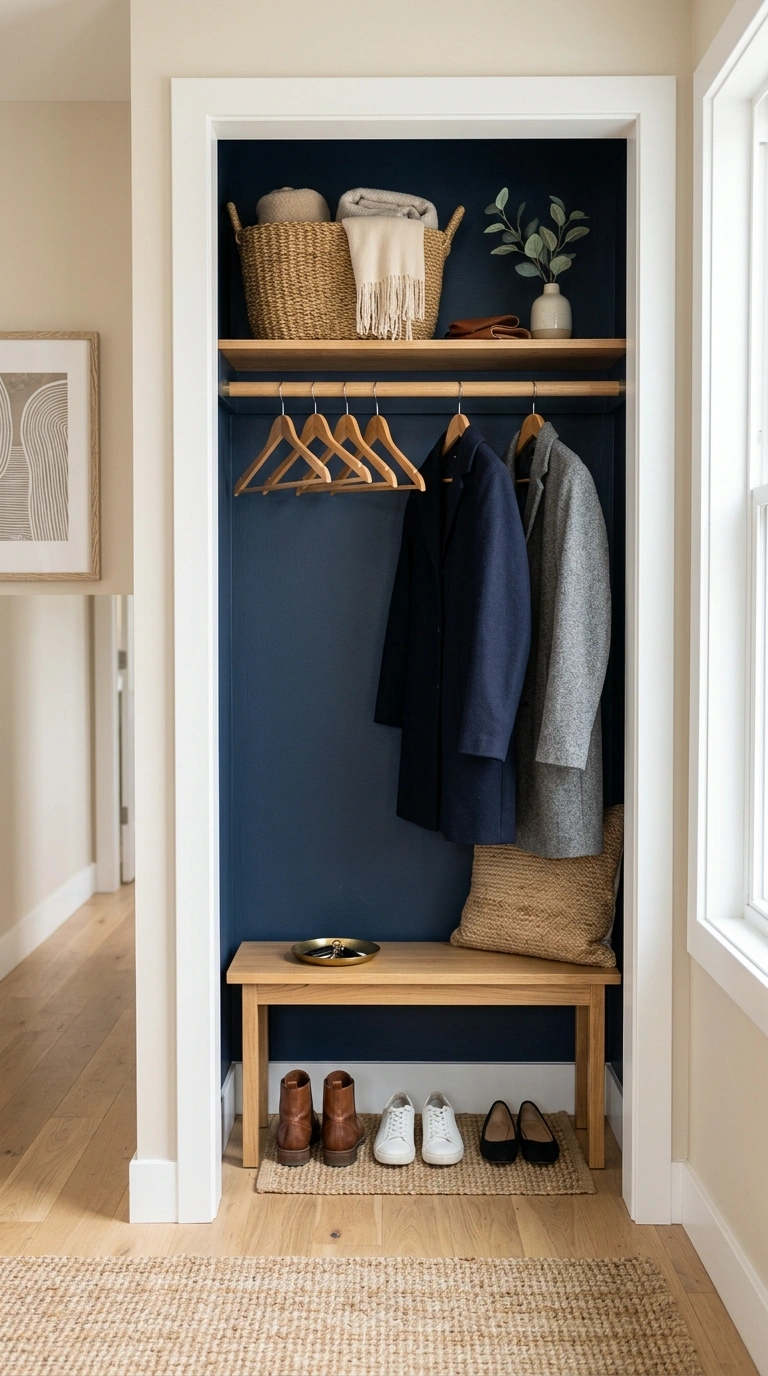
If your entry has a small coat closet, try taking off the door and turning it into a display. This works best when the closet is shallow, about 24 inches deep. Paint the inside a deep color, like navy or forest green, for contrast with a light wall. Add a wooden rod, a shelf above, and a row of matching hangers in wood or black. Hang only the coats you wear often. Place a low bench or shelf on the floor for shoes, and a basket on the top shelf for hats. A plug in puck light or a small light strip makes the inside glow. If you would rather keep the door, at least paint the inside and add hooks to the inner face. Keep the color palette to three tones so it feels calm. Remove the door hinges carefully and fill the holes with wood filler. Store the door in a garage in case you ever want to put it back.
23. Checkered Tile Floor
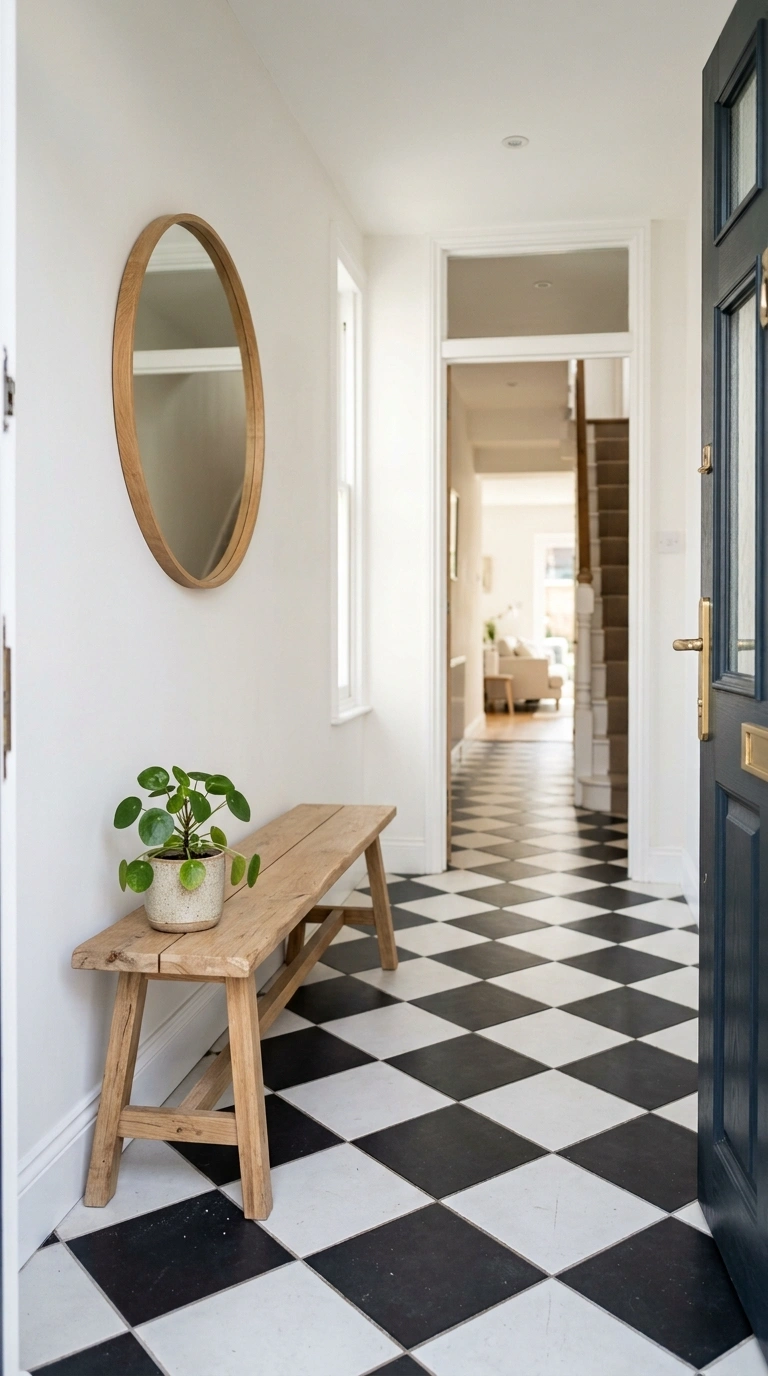
Tile is a great way to help an entry survive dirt and still look nice. A black and white checkerboard pattern in 8 or 12 inch squares feels clean and classic, and it hides shoe marks better than plain white. If you cannot lay real tile, use peel and stick vinyl squares, which cut easily with a knife and go down in one afternoon. Sweep the floor, fill any cracks, and press each square firmly. Set a plain wooden bench and a wall mirror on top of the pattern and keep the walls a soft white so the floor becomes the star. Choose a matte finish so the floor is not slippery when wet. Skip the rug or use a small one so the pattern still shows. For a softer look, try cream and warm gray squares. On real tile, gray grout lines hide dirt best. Mop with a mild cleaner and wipe up puddles fast.
Where To Begin
Start with the smallest change that solves your biggest daily problem. If shoes pile up, add a cabinet or a tray. If keys go missing, hang a wall organizer. One good fix will make the other ideas easier to try. Your entryway does not have to look perfect. It only needs to work for the people who use it, and feel good when they walk in.
Frequently Asked Questions
How do I decorate an entryway with no closet?
Use the wall and the floor together. Put a row of hooks or a peg rail on the wall, and place a bench or shoe cabinet below it. A tall basket or an umbrella stand can hold the odds and ends. Keep the colors simple so the corner looks planned instead of crowded.
What should I put on an entryway table?
Start with a tray for keys, then add one lamp or a small vase and a bowl for small items. Three things are usually enough. Leave open space so you have room to set down mail and bags.
What color should I paint an entryway?
Soft colors like warm white, greige, and pale sage make a small entry feel larger. For more drama, deep green or navy on one wall looks rich. Try a sample first, because entryways often have very little natural light.
How do I make a narrow entryway look wider?
Hang a large mirror on the long wall so it reflects light. Use a light color on the walls, and pick furniture that is only 10 to 12 inches deep. A runner rug with stripes that run along the hall also pulls the eye forward.
What size rug should go in an entryway?
The rug should be big enough for both feet when a person stands at the door, so at least 2 by 3 feet. In a hall, use a runner that leaves a few inches of bare floor on each side. Add a non slip pad and make sure the door can open over the rug.