24 Mirror Styling Tips That Make Rooms Look Bigger
The cheapest change I ever made to my flat was moving a mirror. It had been hanging on a dark wall next to the kitchen doorway for two years, reflecting nothing but a closed cupboard. One afternoon I took it down and hung it on the opposite wall, straight across from the window. The room did not get a single inch bigger, but it looked like it had. That is the thing about mirrors. Where you put one matters far more than what it costs or how fancy the frame is. A mirror in the right place doubles your light and stretches your sightlines. A mirror in the wrong place just shows you a wall. These twenty four tips cover placement, size, framing, and styling, with the practical details you need to get it right the first time.
1. Mirror Facing The Window
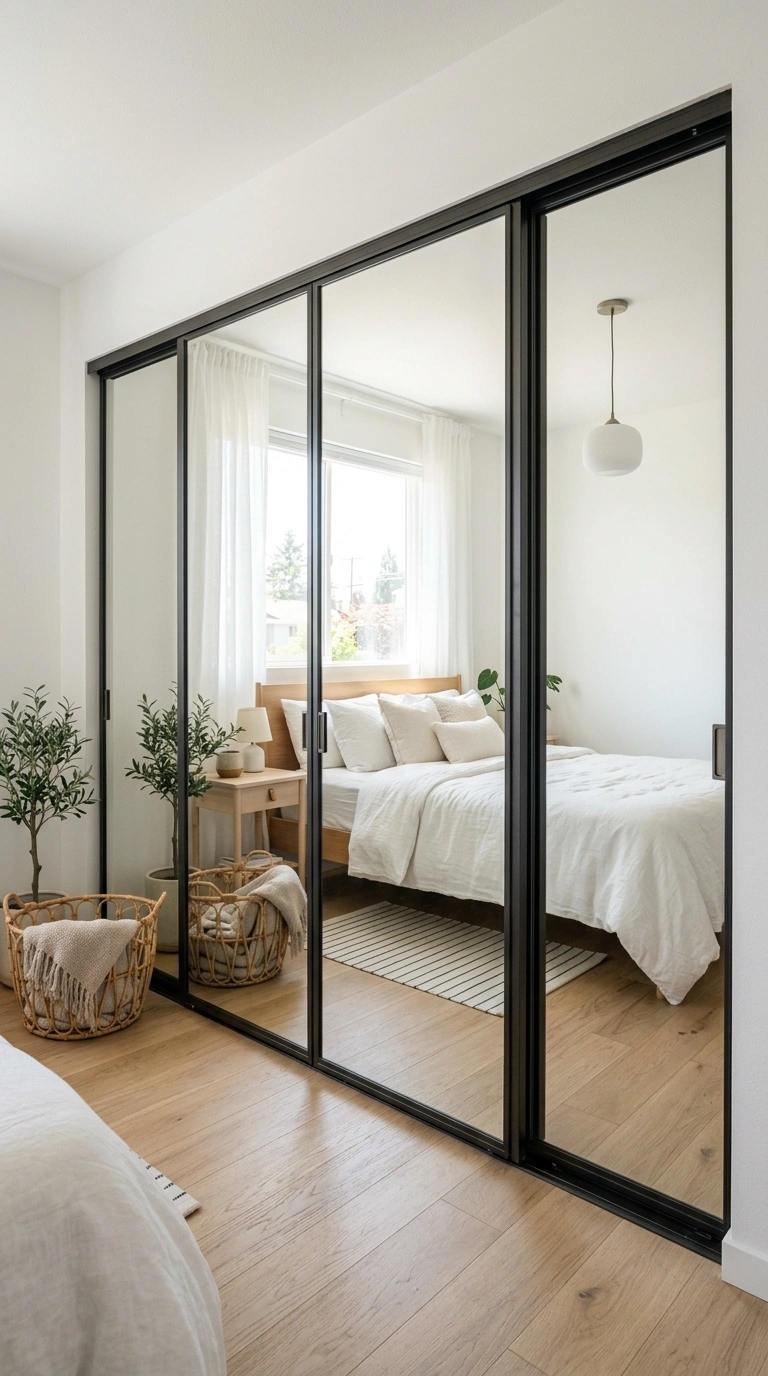
This is the single most effective mirror trick, and it costs nothing if you already own a mirror hanging in the wrong place. Hang or lean a mirror on the wall directly across from your largest window so it catches the daylight and bounces it back into the room. The reflection also shows whatever is outside, whether that is trees, sky, or a neighbor’s garden, which reads as a second window to your eye. Size matters here. Aim for a mirror at least half the width of the window so the reflection is wide enough to register. Keep the center of the mirror at roughly the same height as the center of the window so the two line up visually. Before drilling anything, hold the mirror up and check what it reflects. If the angle shows a radiator or a clutter of cables, shift it a foot left or right. Ten minutes of testing saves you a badly placed hole.
2. Oversized Leaning Arch Mirror
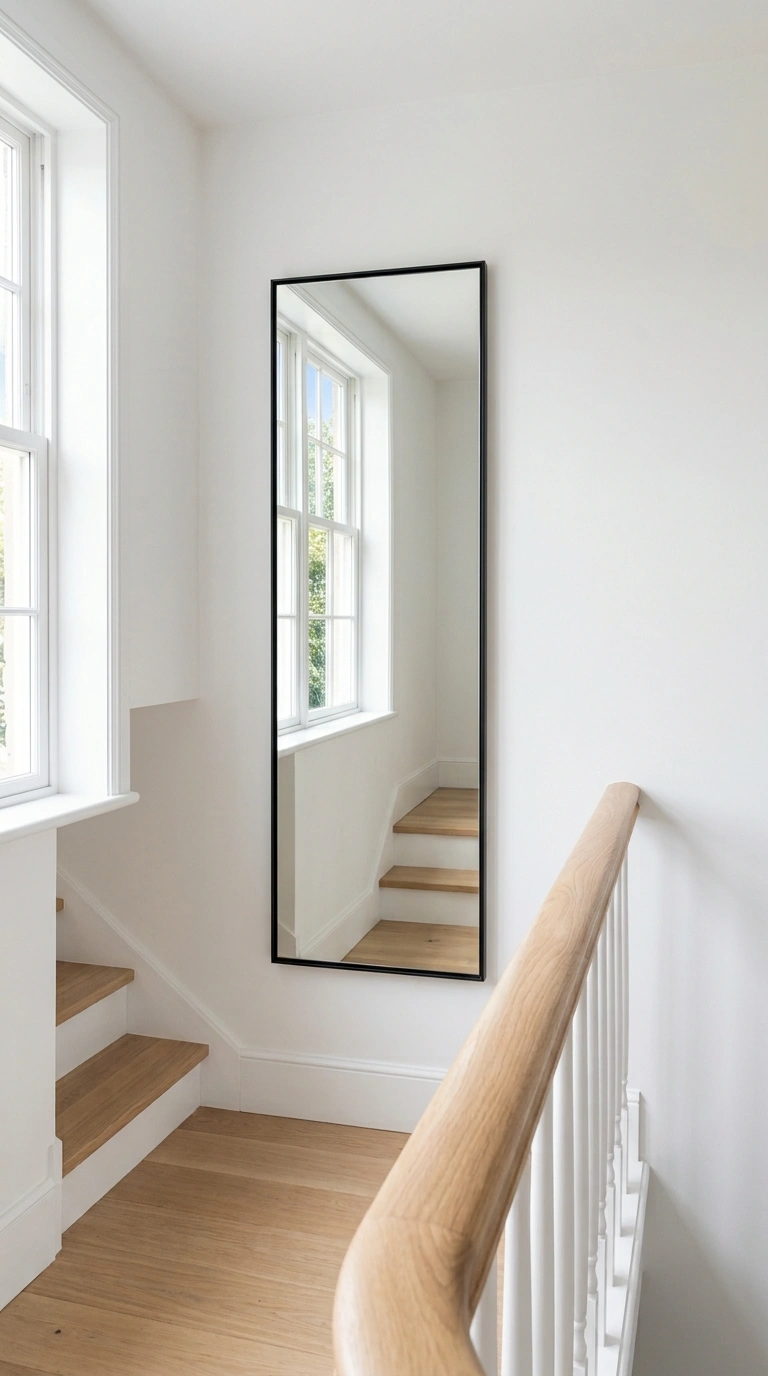
A tall arch mirror leaned against the wall rather than hung on it makes a room feel taller instantly, because the curve pulls your eye upward and the height stretches the wall. Choose one at least five feet tall, with a thin black, brass, or natural wood frame depending on your room. Lean it in a corner or against a flat wall behind a chair, tilting the top back by about two inches so it reflects the room and ceiling rather than the floor. Safety is the one thing you cannot skip. Use an anti tip strap screwed into the wall stud behind it, especially with children or pets in the house. Keep the floor in front clear, since anything in the way is what the mirror will show. A small plant to one side and a stack of two books at the base is all the styling it needs. The mirror itself is the feature.
3. Large Round Statement Mirror
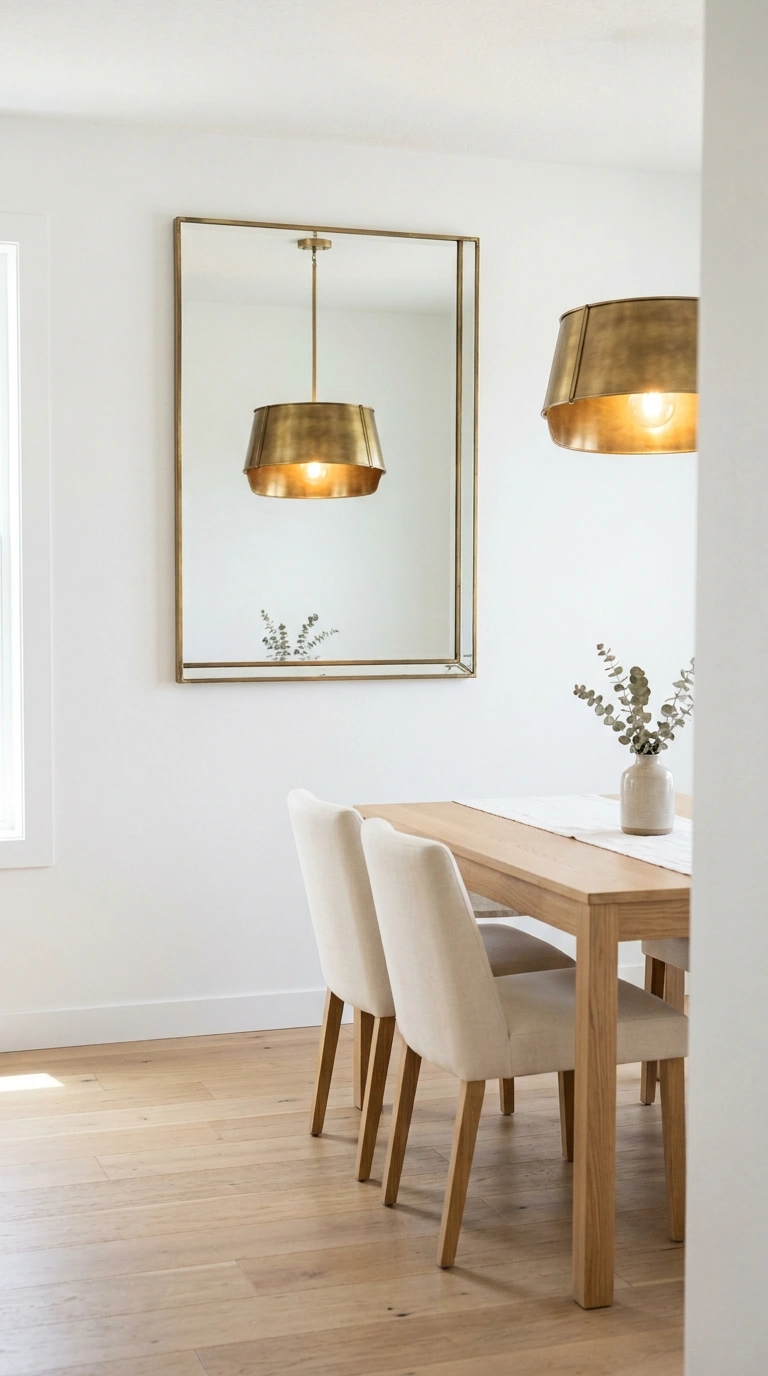
One large round mirror softens a room full of straight lines and works particularly well above a sideboard, a sofa, or a bed. Round shapes have no corners to compete with rectangular furniture, so they feel calm even when they are big. Go larger than feels comfortable. A round mirror of about thirty two to forty inches across reads as intentional, while a small one on a big wall looks lost. Center it above the furniture below, with roughly six to eight inches between the top of the furniture and the bottom of the mirror. Thin frames in matte black or brushed brass suit modern rooms, while a rope wrapped or rattan edge suits natural styled spaces. Hang it with two D rings and two wall anchors rather than one central hook, since round mirrors are heavy and a single fixing lets them tilt. Check the level twice, because a crooked circle is very obvious.
4. Full Height Wall Mirror
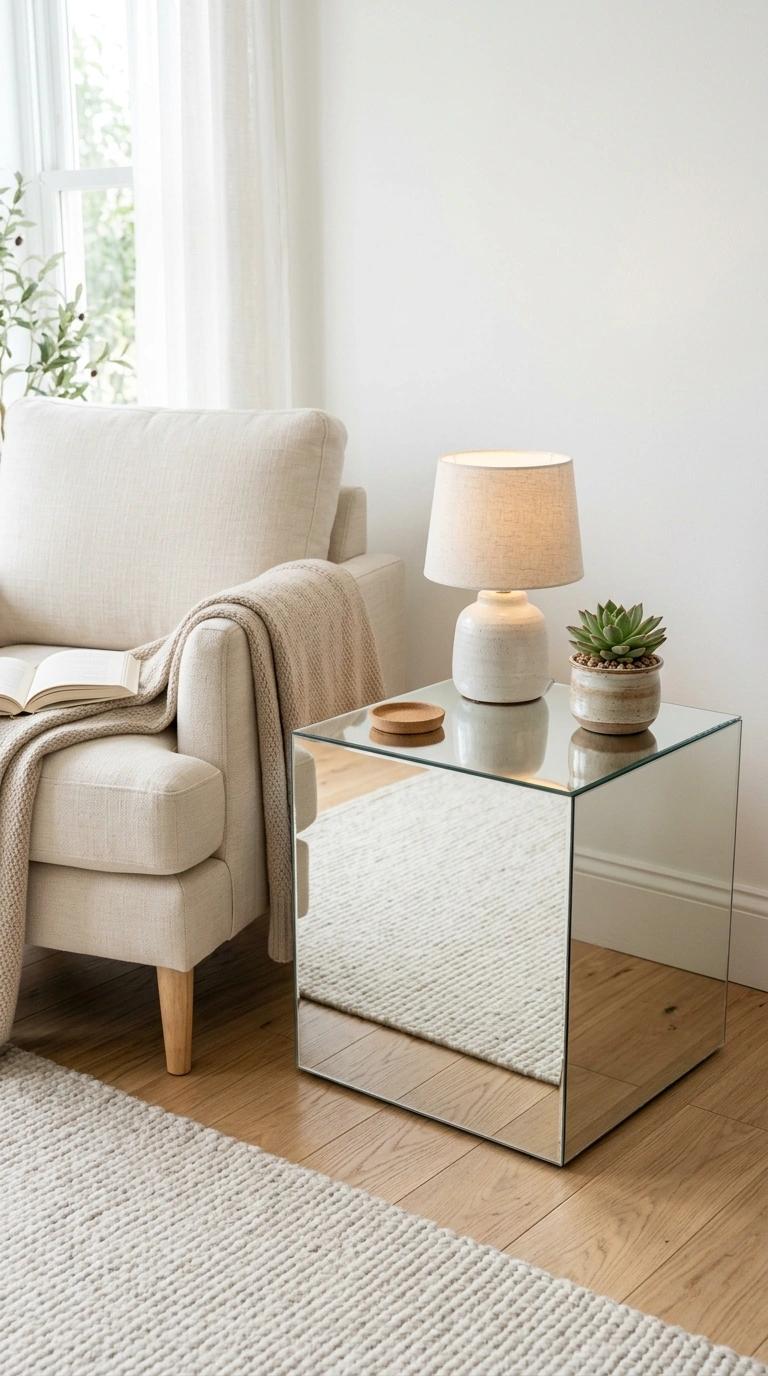
Covering one entire wall, or one full section of wall, with mirror is the most dramatic way to double a small room. It works best in narrow spaces like a slim dining area, a small home gym, or the end wall of a tight hallway, where the depth it adds is exactly what the room lacks. Use large mirror panels fitted edge to edge by a professional, or a series of identical full length mirrors mounted flush side by side. Choose the wall opposite your best feature, so the reflection shows the window, the sofa, or an open doorway rather than a blank surface. Keep the reflected side of the room genuinely tidy, since a mirrored wall doubles the mess as efficiently as it doubles the light. Clean it with a microfiber cloth and a little diluted vinegar in water, wiping in straight lines rather than circles so no streaks are left behind.
5. Mirror Behind Console Table
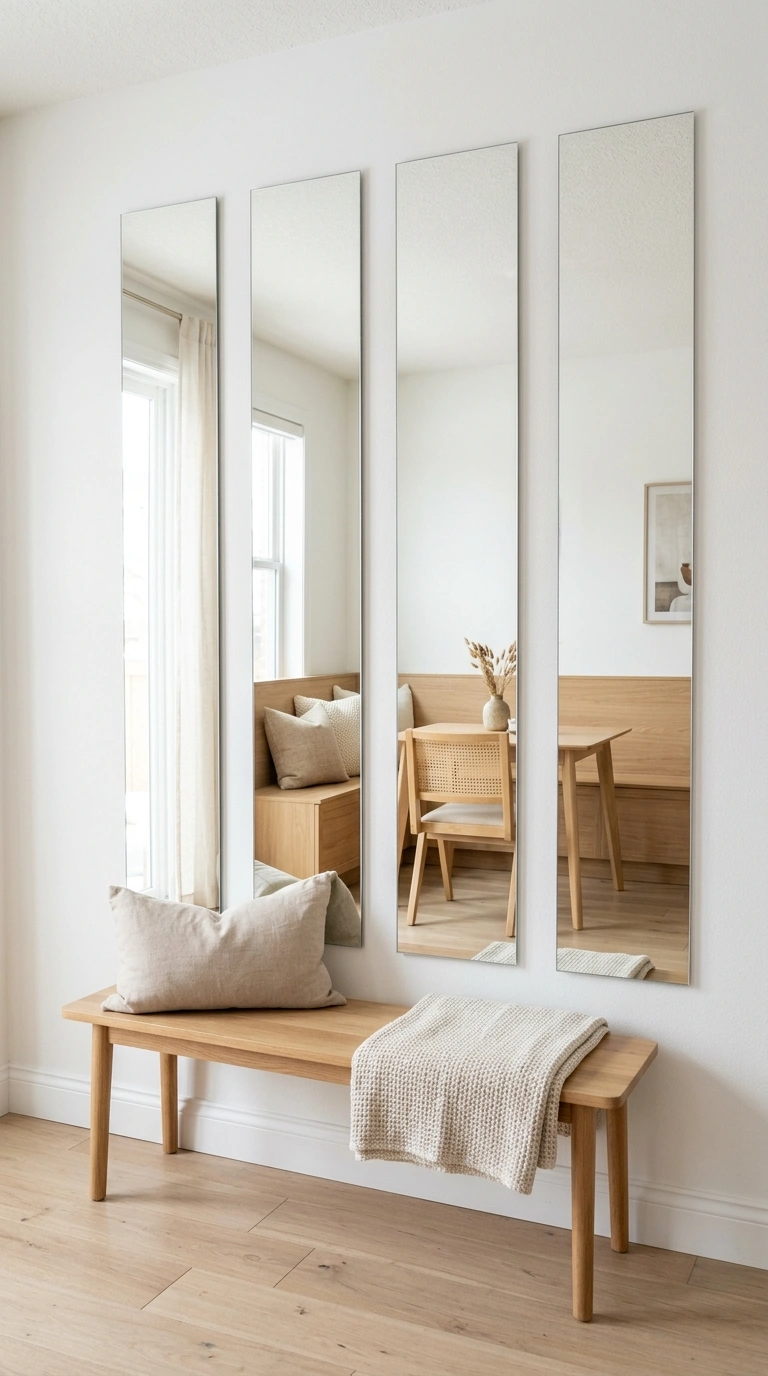
A mirror above a console table creates a proper entry moment and makes a cramped hallway feel like a real room. Match the mirror width to roughly two thirds of the console width so it sits within the furniture’s footprint rather than overhanging it. Hang the bottom edge about eight inches above the table top, which leaves room for a lamp and a vase without the objects blocking the glass. On the console, keep three items only. A small table lamp on one side, a low bowl or tray for keys in the middle, and a short vase of stems on the other. The mirror reflects the lamp at night, which effectively doubles the light in a space that often has no window at all. Rectangular mirrors suit long consoles and arched mirrors suit narrow ones. Keep the frame finish matching the table legs or a nearby door handle so it looks connected.
6. Window Style Grid Mirror
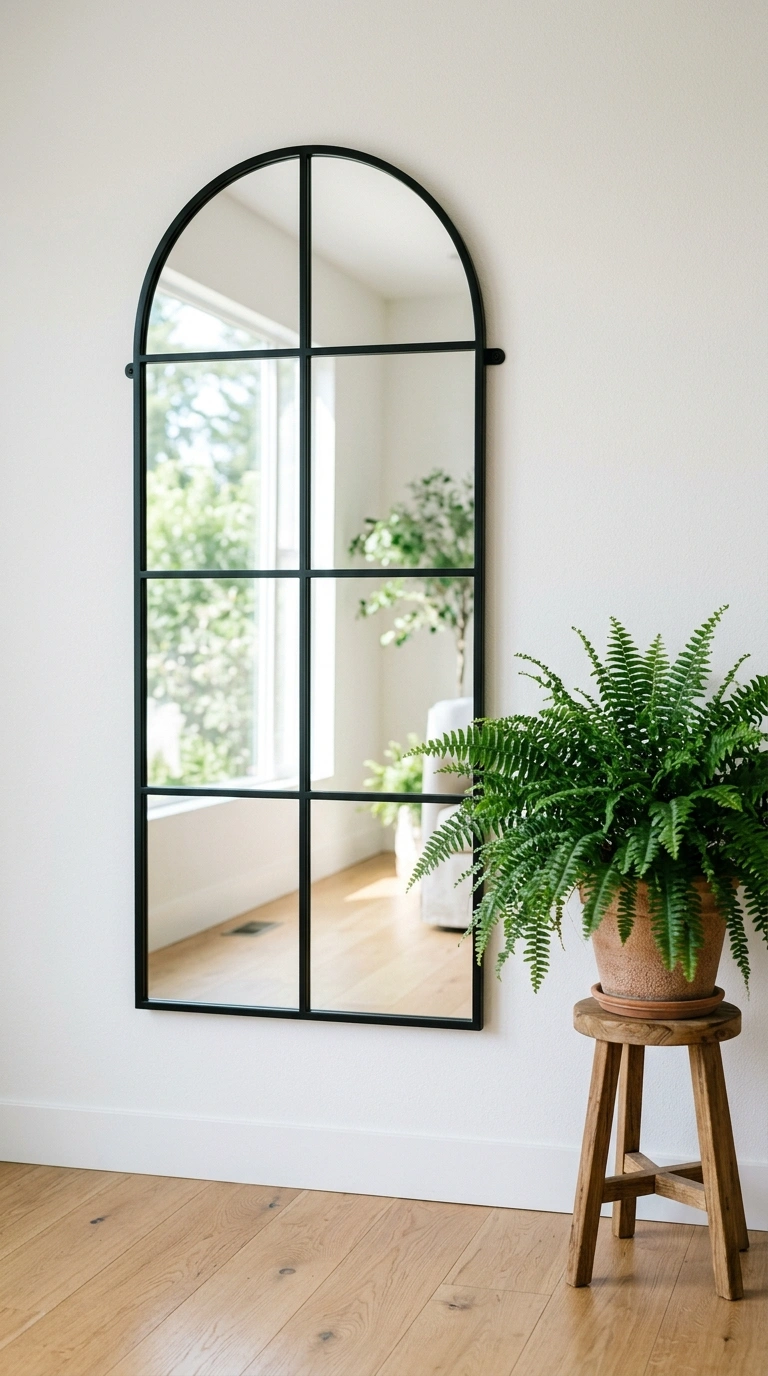
A mirror divided into panes by a black grid frame looks so much like a window that your eye reads it as one, which is why it works brilliantly in rooms with only one real window. Hang it on a wall with no window at all, ideally where daylight from the real window falls across it, so the panes catch the light and the illusion holds. These come in arched and rectangular shapes, usually with a black metal frame and three to six panes. Size it like a window rather than like art, so at least three feet tall, and hang it at true window height with the top edge roughly level with your real window frames. Style it as you would a window, with a plant on a stand to one side or a pair of simple curtain panels hung either side. Skip curtains if the wall is narrow, since they will crowd the frame.
7. Small Mirror Gallery Cluster
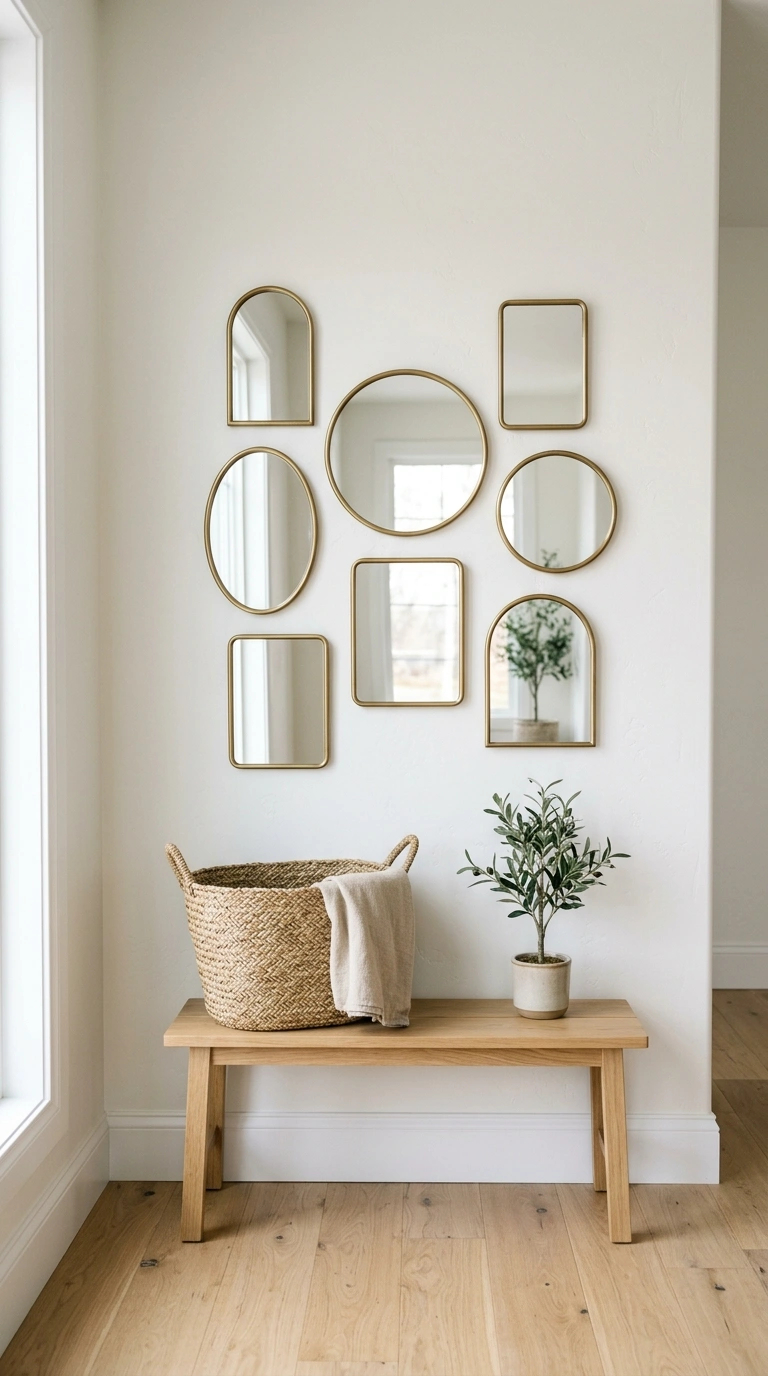
Several small mirrors hung as a cluster give you the reflected light of one big mirror with much more character, and it is the best way to use the mismatched mirrors most of us already own. Group five to nine mirrors of different shapes in the same frame finish, usually brass, black, or natural wood, so the collection reads as one piece. Lay them out on the floor first and shuffle until you like the arrangement, then trace each shape onto paper and tape the templates to the wall before hammering anything. Keep the gaps between mirrors consistent at about two to three inches, which is what stops a cluster looking accidental. Hang the group so its overall center sits at eye level, around fifty seven inches from the floor. This suits stairwells, narrow walls beside a door, and the space above a low bench, where a single large mirror would be too heavy a shape.
8. Twin Matching Mirrors
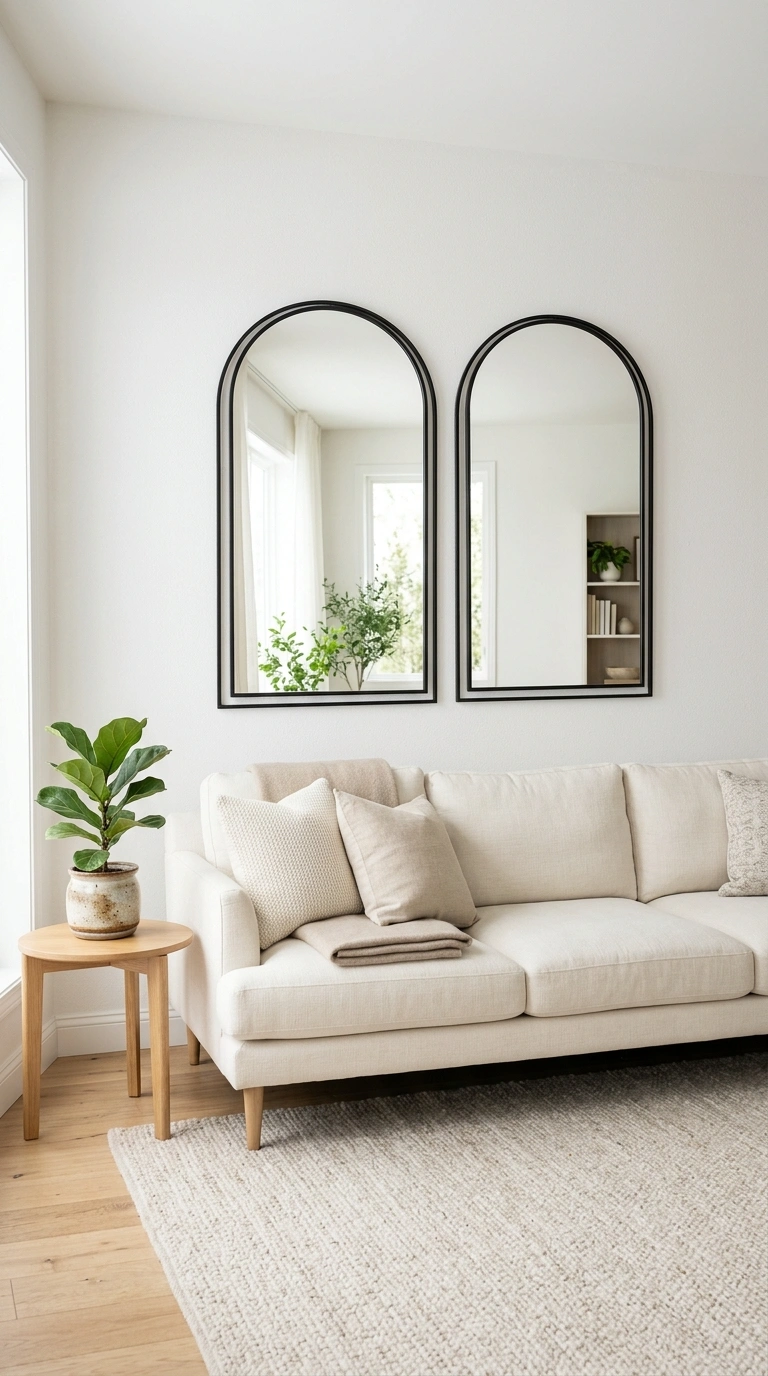
Two identical mirrors hung side by side bring a sense of order to a room and make a wide wall feel deliberate rather than empty. Use them above a long sofa, either side of a bed in place of art, or flanking a doorway in a hallway. Space them so the gap between the two is smaller than the width of each mirror, which keeps them reading as a pair rather than two separate objects. Measure the total width of both plus the gap, then center that whole block on the wall or on the furniture below. Arched or rectangular shapes both work, and a slim frame in a single finish keeps the look quiet. Matching mirrors also double whatever sits between them, so if they flank a lamp or a plant, that item appears three times. This is a simple way to make one good accessory carry a whole wall.
9. Narrow Hallway Mirror
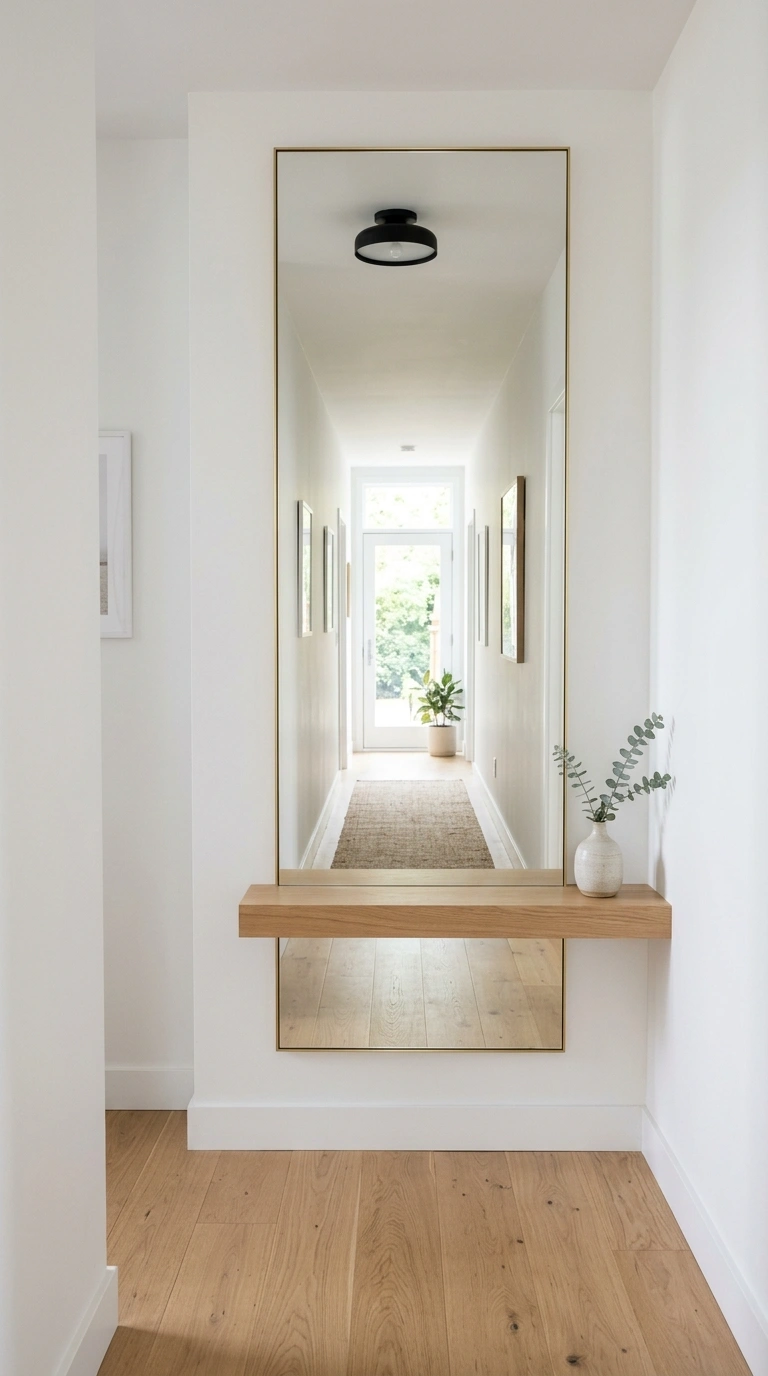
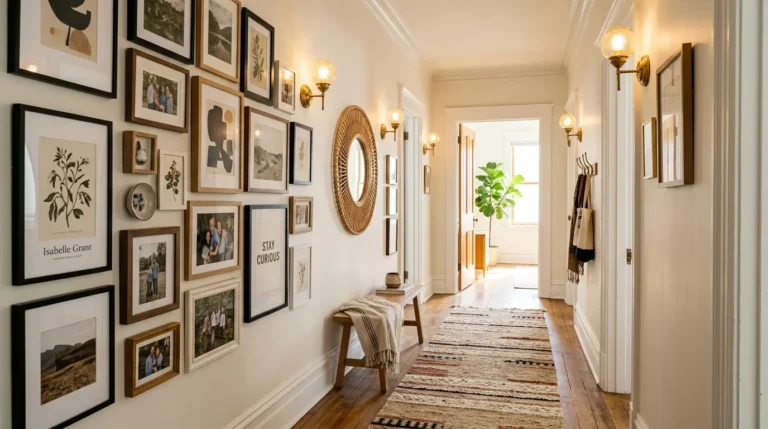
Hallways are usually the darkest and tightest part of a home, and a mirror on the long wall changes both problems at once. Hang a tall narrow mirror vertically on the side wall rather than on the end wall, because reflecting the length of the corridor makes it feel wider, while reflecting the end wall just shows you the end wall. Keep the frame thin so the mirror does not project far into the walking space, and mount it high enough that shoulders and bags do not knock it. If your hallway has a light fitting, position the mirror where it catches that light. A slim console or a narrow shelf underneath gives the mirror a visual base and stops the wall feeling bare below it. Use heavy duty wall anchors, since hallway walls take more knocks than any other wall in the house.
10. Mirror Above Fireplace Mantel
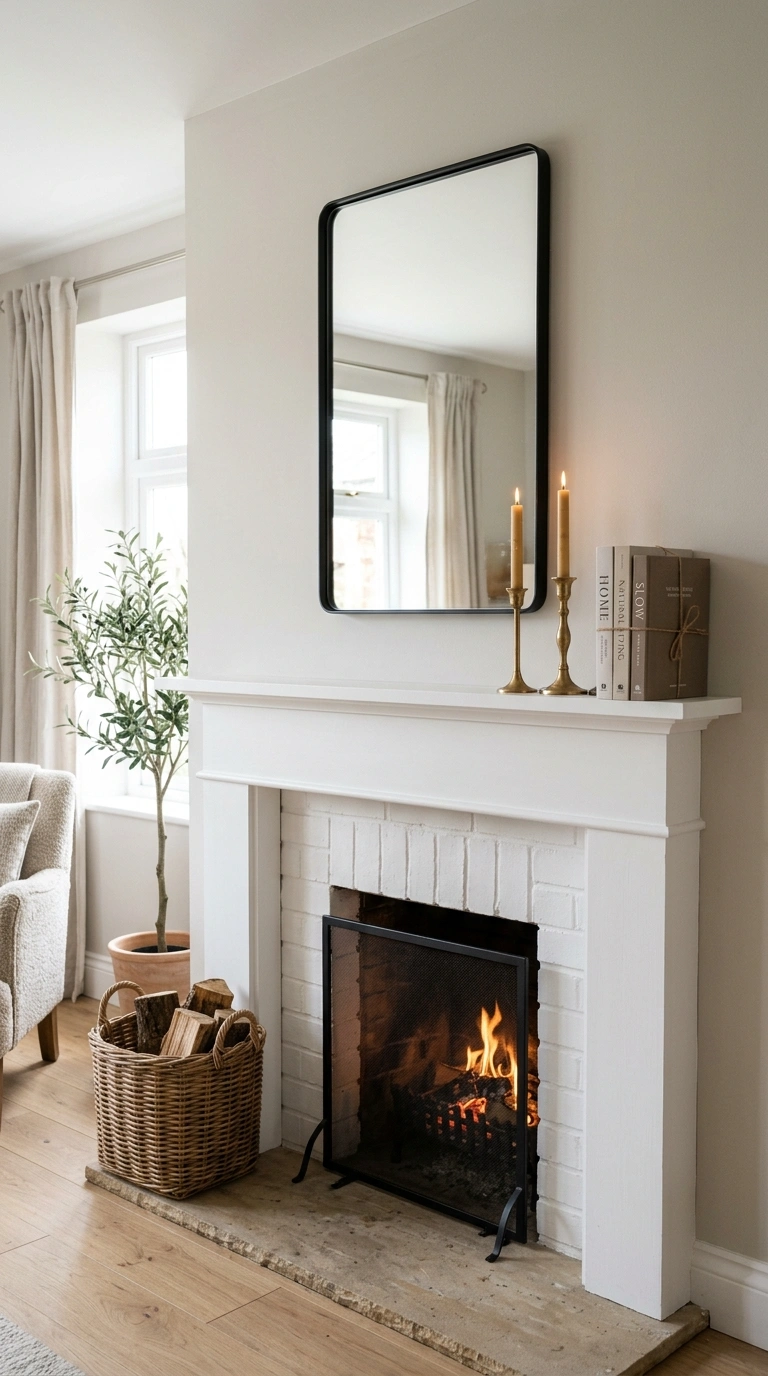
A mirror above the mantel is a classic for good reason, since it reflects the light from the window opposite and gives the fireplace the tall proportion it usually needs. Pick a mirror narrower than the mantel shelf, ideally about two thirds of its width, and leave four to six inches between the shelf and the bottom of the frame. Height is where most people get this wrong. If the mirror sits too high it reflects only the ceiling, so check the reflection from a seated position on your sofa, since that is where you will actually be looking at it. Heavy ornate frames suit period fireplaces and slim black or brass frames suit simple modern ones. Keep the mantel styling low so it does not block the glass. Two candlesticks and a small stack of books at one end is enough. Never hang a mirror with a plastic or resin frame directly above an open fire.
11. Mirror Behind Dining Table
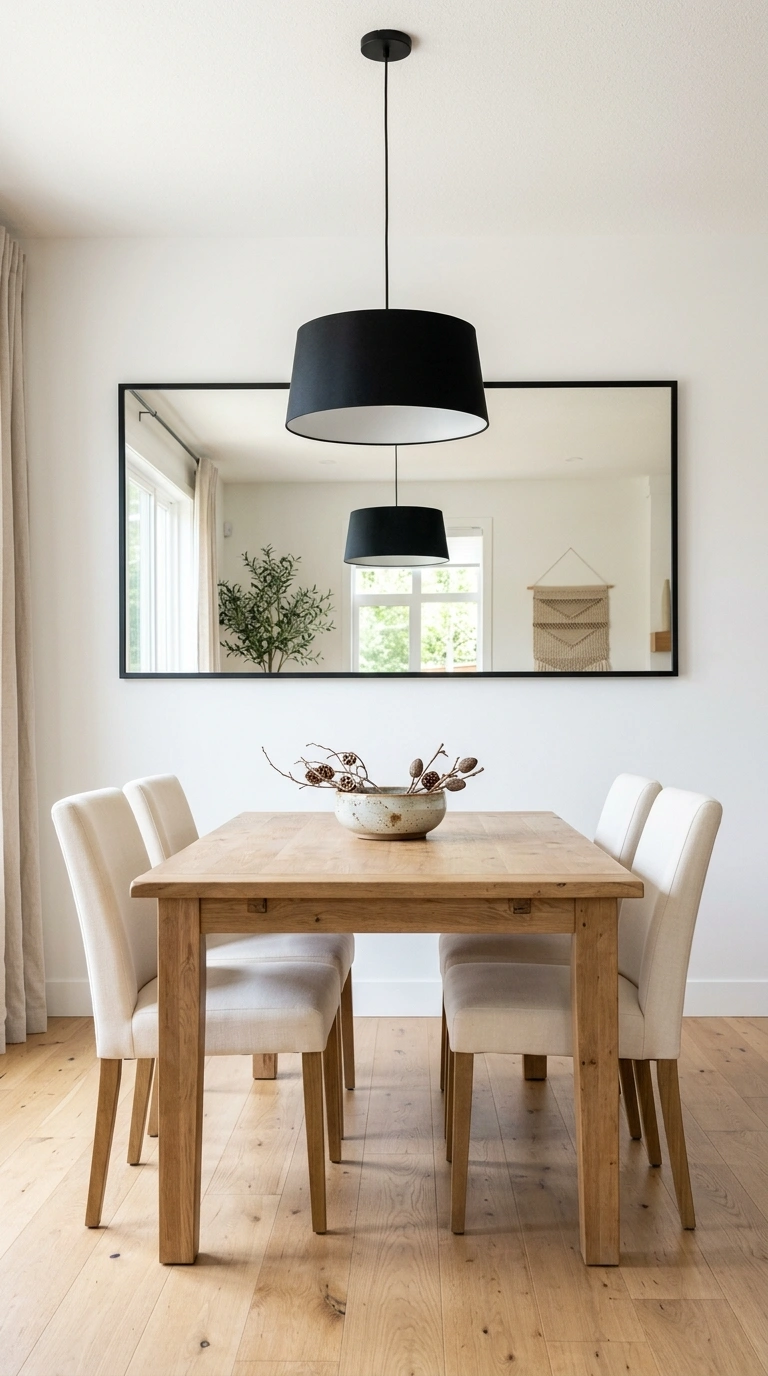
A large mirror on the wall beside or behind a dining table makes a small eating area feel like it has twice the seating space, and it is one of the few places where a very big mirror never feels excessive. Hang it on the long wall next to the table rather than at the end, so the reflection stretches across the width of the room. Keep the bottom edge above chair back height, usually around forty inches, so scraping chairs do not chip the glass. A rectangular mirror mounted horizontally suits a long table best. The real bonus comes at night, when candles or a pendant light are reflected and the room glows from two directions. Keep the reflected wall clear of clutter, because a mirror facing a crowded sideboard shows every single item twice. Clean it more often than you expect, since dining rooms collect fingerprints and cooking film faster than any other room.
12. Antique Gold Frame Mirror
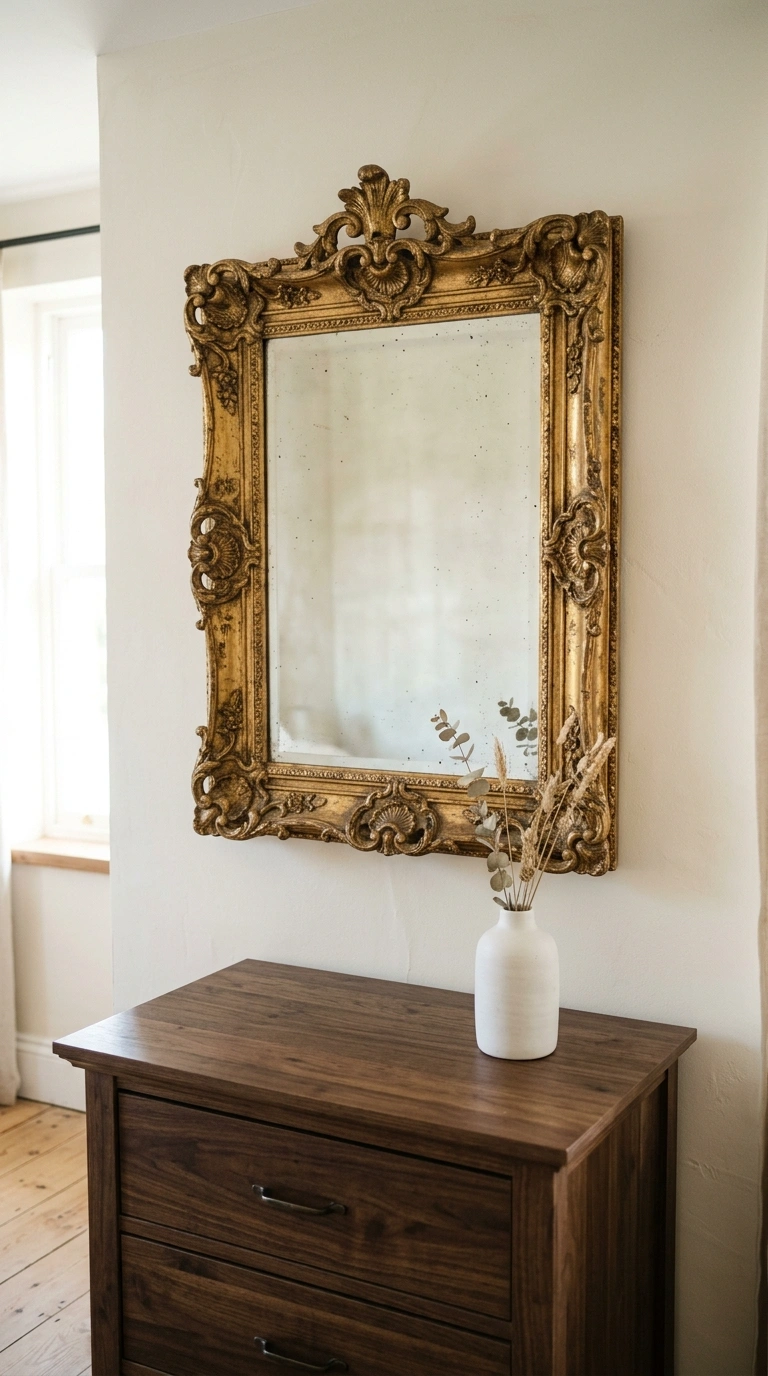
One antique gold framed mirror adds age and warmth to a room that feels too new, and the aged finish stops the gold looking flashy. Hunt for these secondhand, where carved or moulded frames with slightly worn gilding cost a fraction of new reproductions. Place it where the light will catch the texture of the frame, so on a wall at an angle to the window rather than directly opposite. It suits a bedroom above a wooden dresser, a hallway above a painted bench, or a living room leaning on a shelf. Keep everything around it plain, since an ornate frame does not need company. Do not try to clean the gilding with liquid, as water lifts old gesso. Dust it with a soft dry brush instead. If the mirror glass is spotted and foggy, leave it. That soft cloudiness is part of the charm and it still reflects plenty of light.
13. Mirror Behind Open Shelving
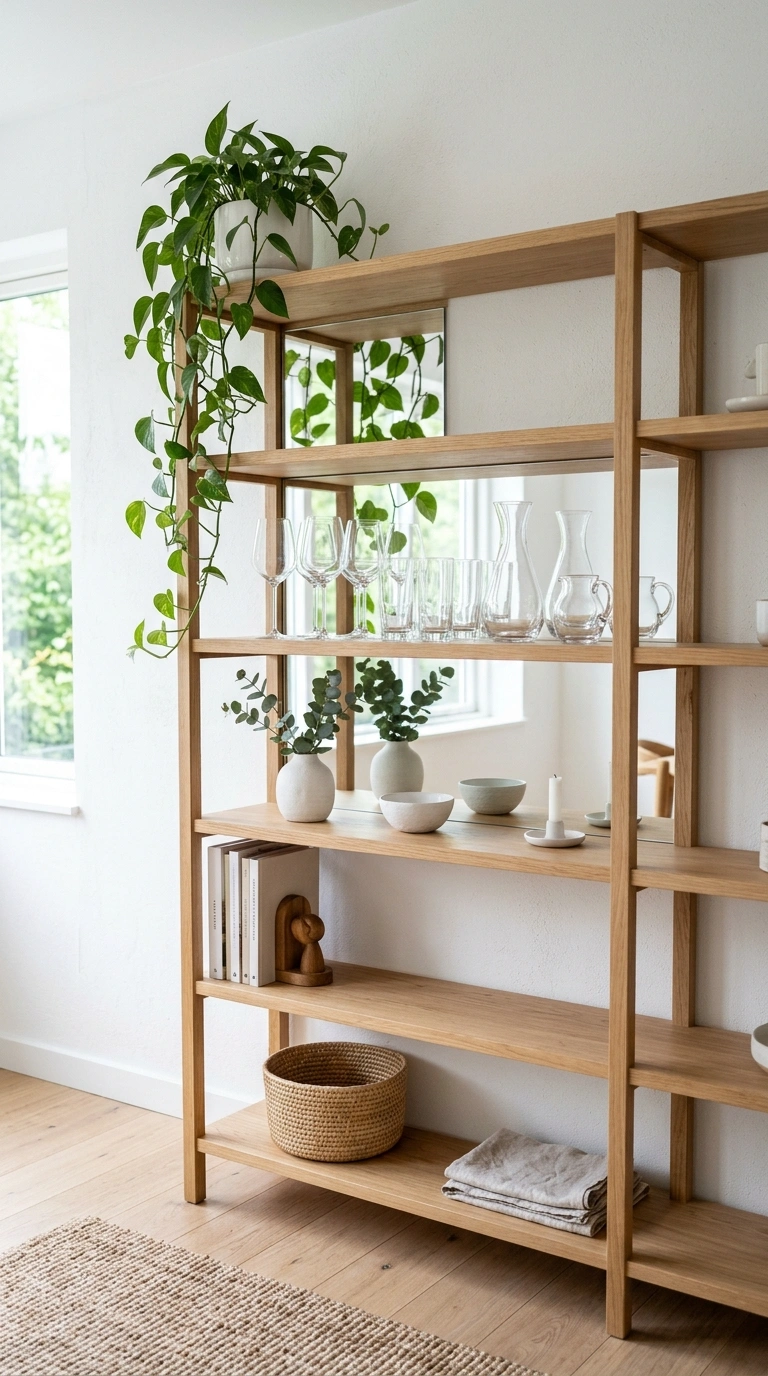
Mounting a mirror on the wall behind open shelves adds depth to a bookcase and makes the objects on it look layered rather than flat against a wall. Fix the mirror to the back panel of the unit, or hang it on the wall before pushing the shelving into place, sized to fill one or two shelf sections rather than the whole back. It works especially well behind glassware, ceramics, and small plants, since the reflection catches light through and around them. Leave space in front of the mirrored section so the reflection is visible, which means styling that shelf more sparsely than the others. This is a good solution for an alcove or a dark corner unit where nothing seems to show up. Use adhesive mirror tiles or a lightweight frameless panel rather than heavy glass, since shelving backs are rarely strong enough for real weight.
14. Sunburst Mirror Accent
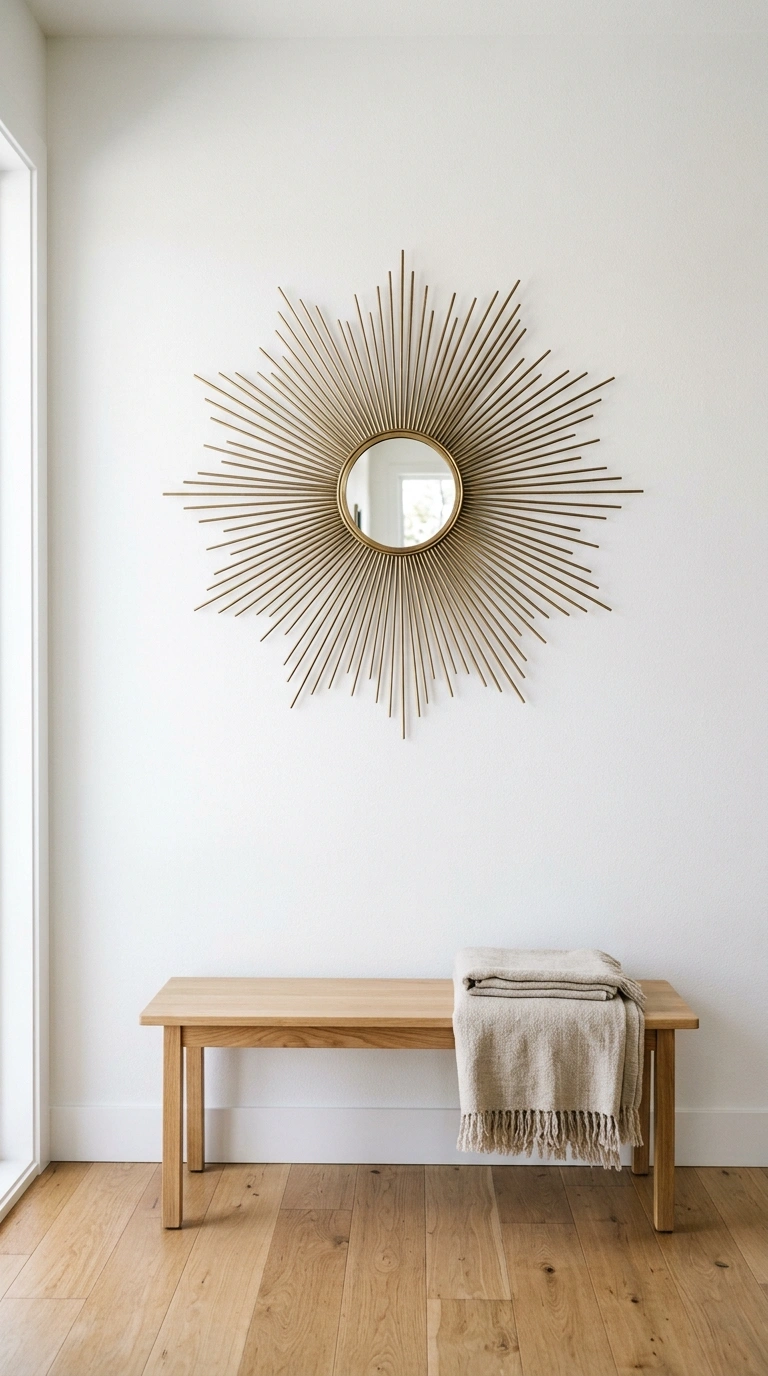
A sunburst mirror works where a plain mirror would look too quiet, because the spokes fill a large area of wall with only a small amount of actual glass. Hang one above a console, a bed, or a bench, centered on the furniture below. Since the spokes create the size, measure the full diameter including them and treat that as the mirror’s real width when checking proportions. Brass and gold spokes bring warmth, while black or natural wood versions suit calmer rooms. The reflective center is small, so do not rely on a sunburst to bounce much light. Its job is to fill the wall and add shape. Keep the wall around it completely bare, as the spokes need breathing space to read properly. Dust between the spokes with a soft paintbrush every few weeks, because dust gathers there faster than anywhere else and dulls the finish quickly.
15. Mirror Above Bed Headboard
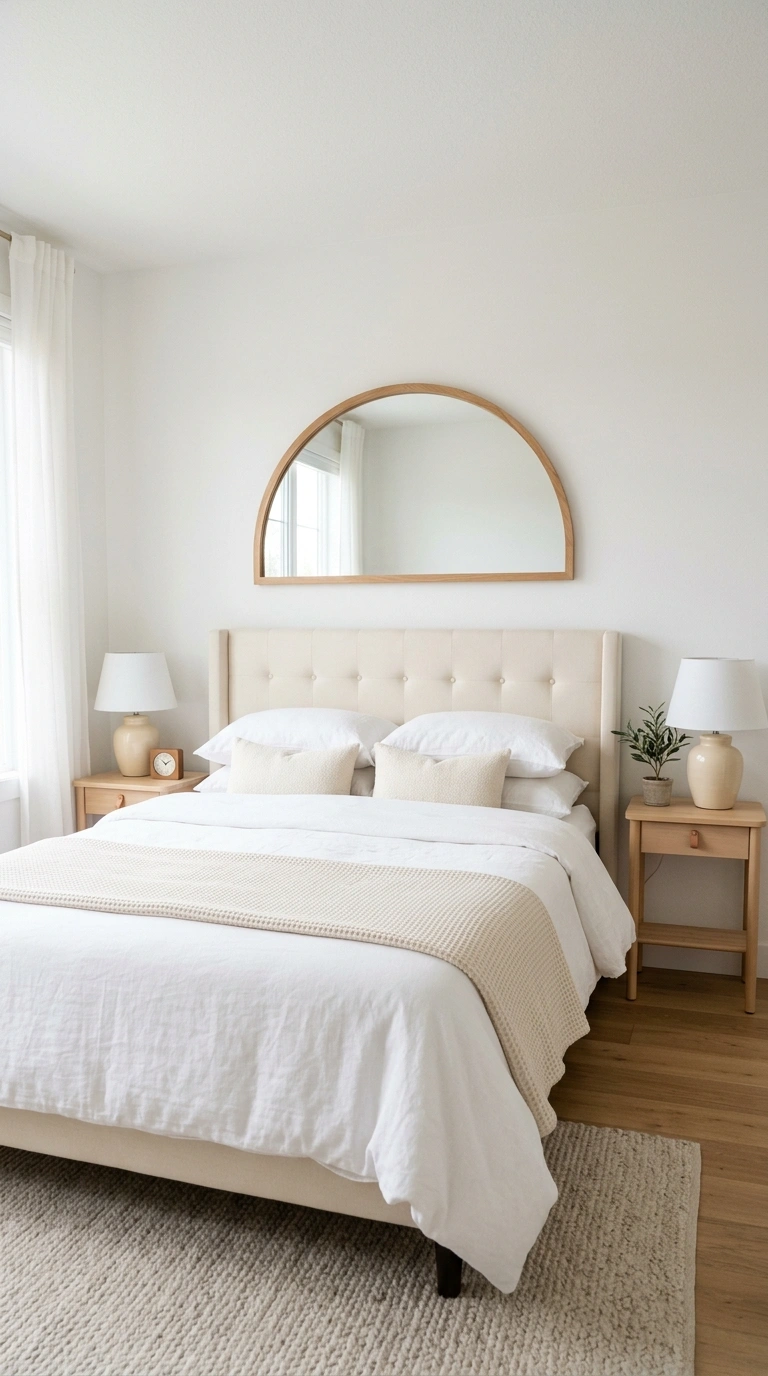
A mirror above the bed makes a small bedroom feel taller and reflects the window light across the room, which matters most in bedrooms that only get morning or evening sun. Choose a wide horizontal mirror or an arched one, sized to about two thirds of the bed width, and hang it centered on the headboard. Height should leave about eight to ten inches between the top of the headboard and the bottom of the frame. Security is more important here than anywhere else in the house. Use two heavy duty anchors rated well above the mirror weight, fixed into studs wherever possible, and check the fixings once a year. If a heavy mirror above the bed makes you uneasy, and it does bother plenty of people, use a lightweight acrylic mirror panel or hang the mirror on the wall opposite the bed instead, which reflects just as much light.
16. Mirror Reflecting Indoor Greenery
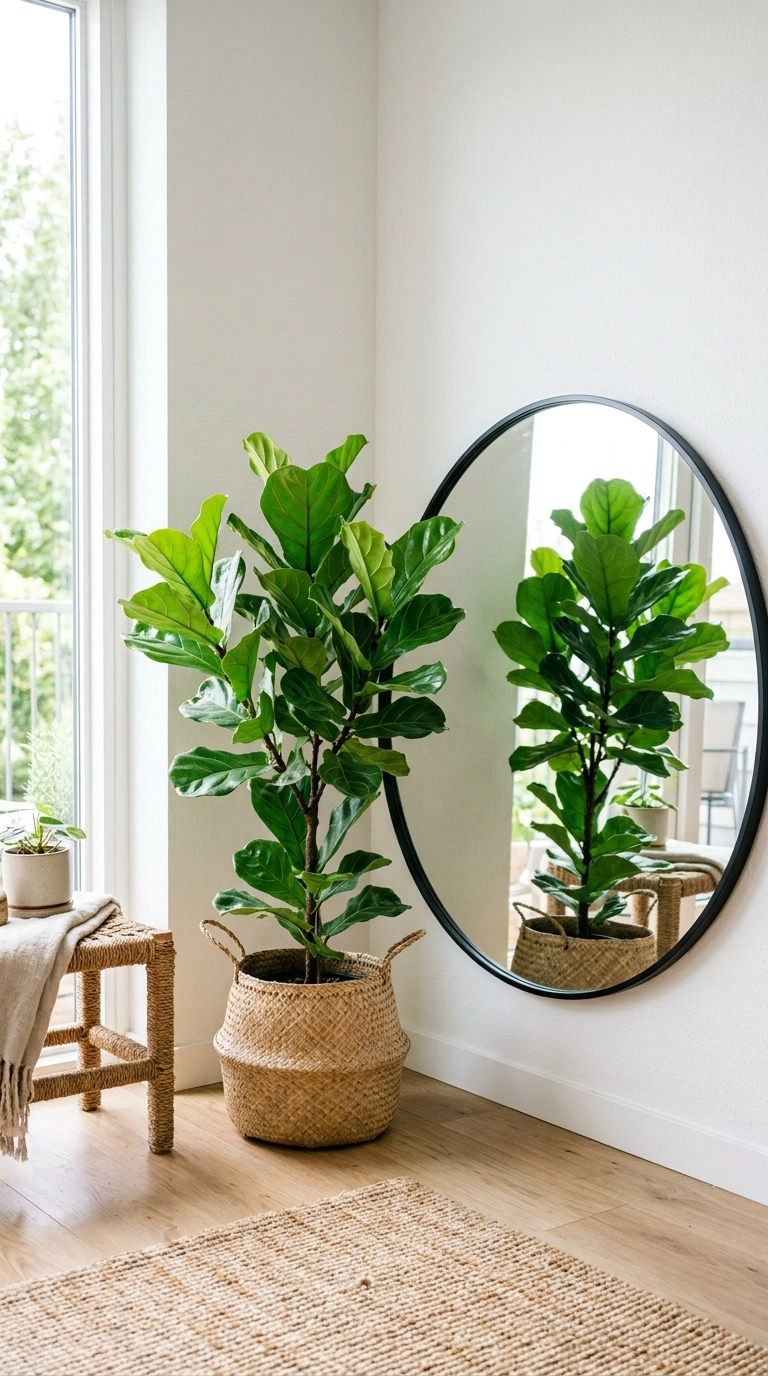
Placing a mirror where it reflects a plant rather than a blank wall is the easiest way to make a mirror feel like it belongs in the room. Set a large leafy plant, such as a fiddle leaf fig, a monstera, or a tall palm, so it sits to one side of the mirror’s reflection rather than directly in front of it. The greenery appears twice, which fills the room with life for the price of one plant. This works well in a corner, where a leaning mirror behind a plant makes the corner look like it continues past the wall. Choose a plant with an open airy shape rather than a dense one, since dense foliage in a reflection reads as a dark mass. Keep the plant pot in a neutral ceramic or basket so the reflection stays calm. Wipe the leaves occasionally, because dusty leaves look far worse doubled.
17. Dark Corner Mirror Lamp
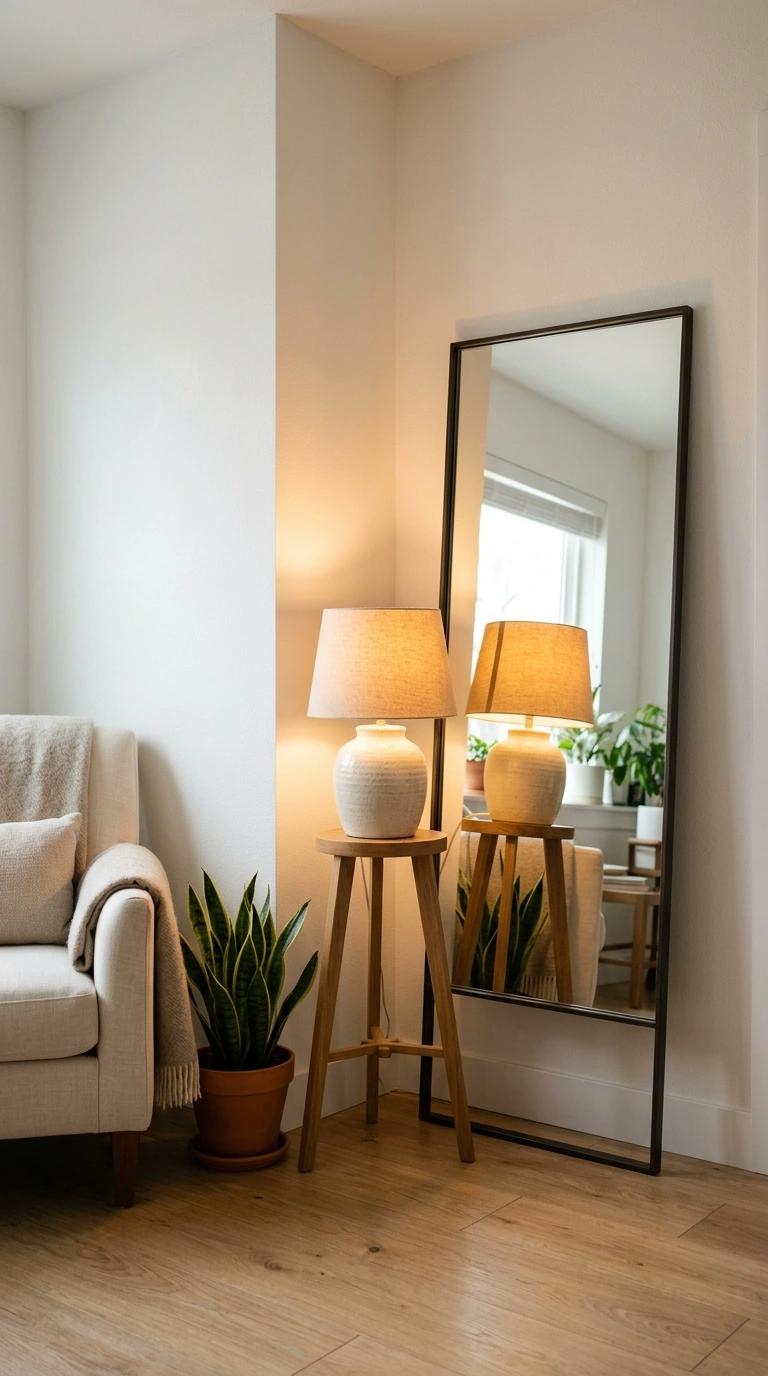
The darkest corner of a room is where a mirror does the most work, and pairing it with a lamp turns a dead space into a bright one. Hang or lean a mirror in that corner, then place a table lamp or a floor lamp so the light sits in front of the glass rather than behind it. The reflected bulb gives you a second glow and the corner stops reading as a black hole in the evening. Warm bulbs around 2700 kelvin look best reflected, since cool white light bounces harshly off glass. A small side table or plant stand under the mirror anchors the arrangement. This is a rental friendly idea too, because a leaning mirror and a plug in lamp need no drilling at all. It also works beautifully behind a reading chair, where the reflected light adds brightness without shining into your eyes.
18. Mirror Behind Bar Cart
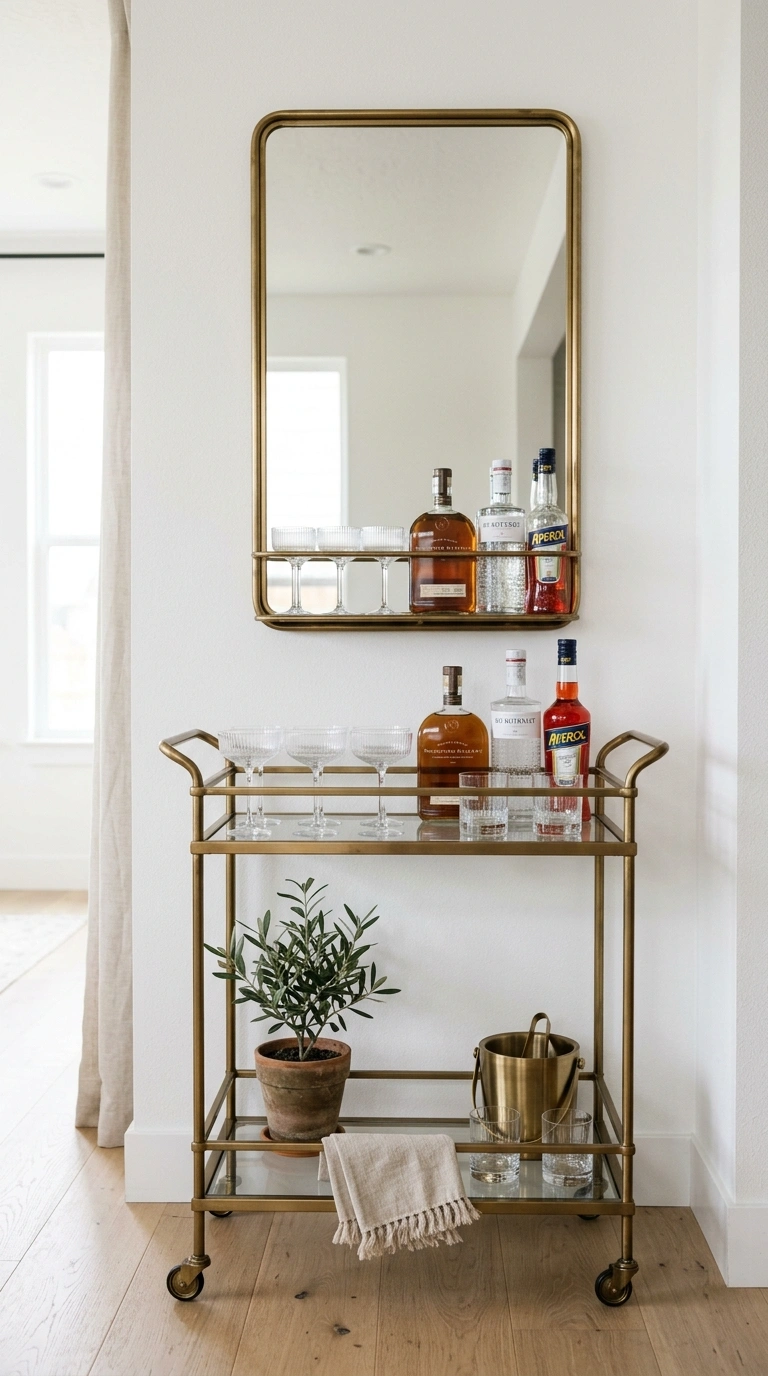
A mirror behind a bar cart or a drinks tray makes the glassware sparkle and turns a small corner into a proper feature. Hang a rectangular or arched mirror on the wall directly behind the cart, sized close to the cart width, with the bottom edge about six inches above the top shelf. The reflection catches the bottles, glasses, and metal finish, so a modest collection suddenly looks generous. Keep the cart styling tidy, since everything is doubled here. A few bottles standing at the back, glasses in a row, one small plant, and a folded linen napkin is plenty. Brass frames suit warm brass carts and black frames suit dark metal ones. If the wall is in a hallway or dining corner with a lamp nearby, even better, because the mirror will pick up that light in the evening and give the whole corner a soft glow.
19. Frameless Bathroom Wall Mirror
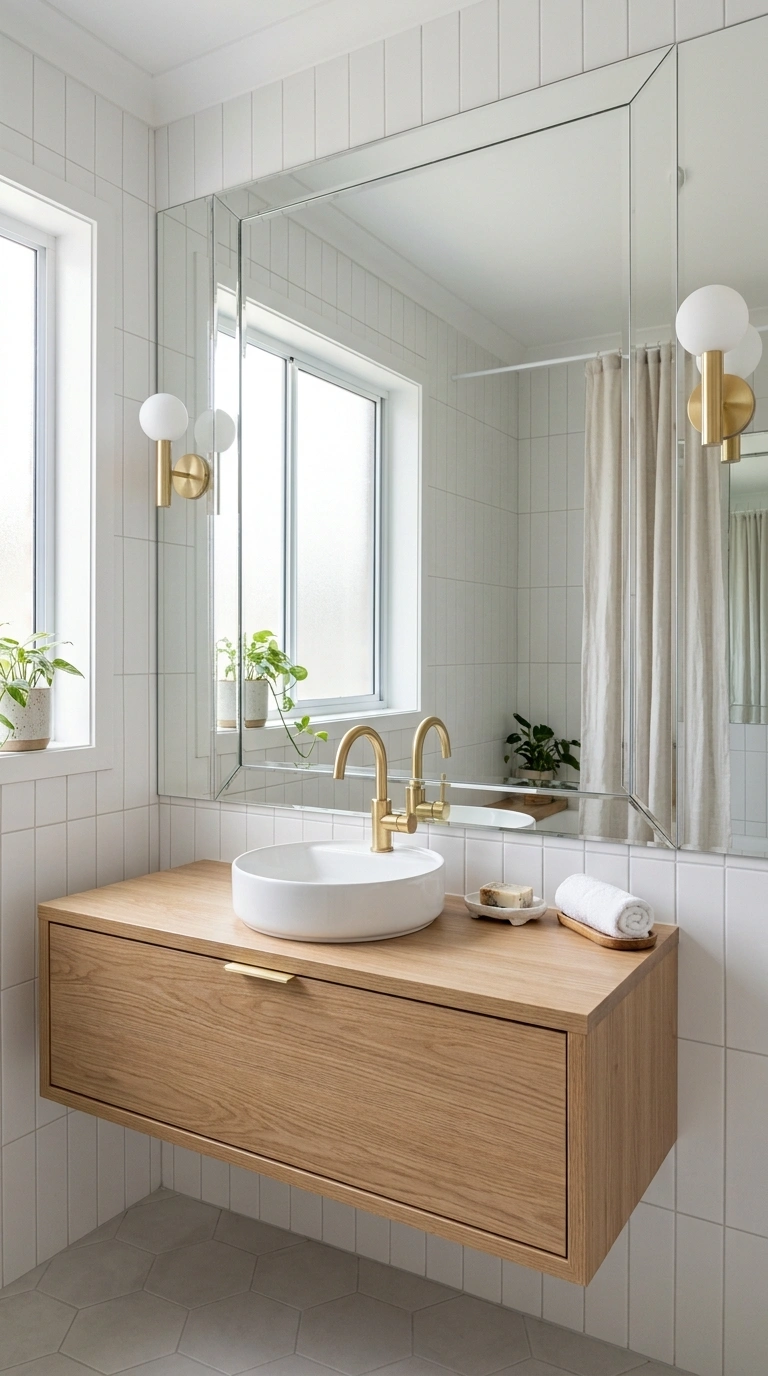
In a small bathroom, a large frameless mirror running the full width of the vanity makes more difference than any other change. Because there is no frame, the glass reads as part of the wall rather than as an object hung on it, so the room feels wider rather than more crowded. Match the mirror width to the vanity exactly, or run it wall to wall if the vanity sits in an alcove. Fix it with proper mirror clips or mirror adhesive rated for damp rooms, not standard hooks. Mount wall lights either side rather than above, since side lighting is both more flattering and better at spreading light around a small space. Choose a mirror with polished bevelled edges, as they catch light and look far more finished than raw cut glass. Squeegee it after showers to prevent water marks, which build up quickly on frameless glass with no frame to hide the edges.
20. Mirrored Closet Door Panels
Fitting mirrors to closet doors gives you a full length mirror without using any wall or floor space, which is the whole point in a small bedroom. For sliding doors, use fitted mirror panels ordered to the exact door size. For hinged doors, mount one long rectangular mirror centered on each door, leaving an even border of door visible around it. Keep the panels identical so the run looks built in rather than added. Use mirror adhesive plus safety backing film, which holds the glass together if it ever cracks, and check the door hinges can take the extra weight, since mirror glass is heavier than most people expect. Because these mirrors face into the room, they reflect the bed and window across the entire wall. Keep that side of the room reasonably clear, and try to position the bed so the reflection is not the first thing you see when waking.
21. Staircase Landing Mirror
The wall on a staircase landing is usually tall, awkward, and completely bare, and a mirror fixes it better than art does. Hang a tall vertical mirror on the landing wall where the natural light from the stairwell window can reach it, which brightens the whole stairwell rather than just that one spot. Center the mirror on the wall rather than at standing eye level, because you will see it from several heights as you climb. A slim frame keeps it from feeling bulky in a tight space. Fix it into studs with heavy duty anchors, since stairwell walls are hard to reach for repairs and this is not a place you want a mirror shifting. Keep anything else on that wall to a minimum. One mirror on a large landing wall looks considered, while a mirror plus several frames on the same wall looks crowded from below.
22. Mirror Reflecting Ceiling Light
Positioning a mirror so it catches your pendant light or chandelier doubles the most decorative thing in the room and makes evenings feel brighter. Work out where the fitting appears in a mirror’s reflection before you hang anything, by holding a hand mirror at different points on the wall and watching for the light to come into view. The best position is usually on the wall opposite or diagonal to the fitting, with the mirror mounted fairly high. This is worth doing in dining rooms and hallways, where the light fitting is often the nicest feature and gets seen from one angle only. Warm dimmable bulbs reflect much more attractively than bright cool ones. Keep the glass spotless, since a reflected light source shows up every smear. This costs nothing beyond moving a mirror you likely already own, and it changes how the room feels after dark.
23. Mirrored Side Table
A mirrored side table reflects the floor and the surroundings, so it half disappears, which is exactly what you want when a small room has too many visible legs and surfaces. Use one beside a sofa or armchair in place of a solid wooden table. It takes up the same physical space but reads as lighter, since your eye passes over it rather than stopping. Choose a simple shape with clean edges over anything heavily bevelled or mirrored in smoked glass, which looks dated quickly. Style it with two or three items only, such as a small lamp, a coaster, and a low plant. Mirrored surfaces show every fingerprint and every ring, so keep a microfiber cloth in a nearby drawer and accept that this piece needs wiping more often. One mirrored item per room is the limit, otherwise the look tips from light into glitzy.
24. Slim Mirror Panel Strips
Narrow vertical mirror strips fixed in a row give you the light bouncing effect of a mirrored wall with a much softer, more graphic result. Use three to five slim panels, each around eight to twelve inches wide and as tall as the wall allows, mounted with even gaps of two to four inches between them. The vertical lines pull the eye upward, which makes low ceilings feel higher. This works well in a dining nook, along a hallway, or on the wall behind a sofa. Frameless panels with polished edges look cleanest, though slim black frames give a more structured look. Measure and mark the wall carefully before fixing anything, because uneven gaps in a repeating pattern are impossible to ignore once installed. Use mirror adhesive plus small clips at top and bottom for safety. Keep the opposite wall simple, since the panels will repeat whatever sits across from them several times over.
Frequently Asked Questions
Where should I place a mirror to make a room look bigger?
The wall directly opposite your largest window is almost always the best spot, since the mirror reflects daylight and the view outside back into the room. In corridors, hang the mirror on the long side wall rather than the end wall so it reflects the length of the space. Always check what the mirror reflects before drilling, because a mirror showing clutter or a blank wall does nothing.
What size mirror should I buy?
Bigger than feels natural is usually right. Above furniture, aim for about two thirds of the width of the piece below. On a bare wall, a mirror smaller than about two feet across will look lost unless it is part of a group. For rooms where you want a real sense of added space, choose something at least four feet tall or a full width mirror over a vanity.
How high should a mirror be hung?
Center the mirror at eye level, roughly fifty seven to sixty inches from the floor, when it hangs alone on a wall. Above furniture, leave six to eight inches between the top of the piece and the bottom of the frame instead, and let the furniture set the height. In living rooms, check the reflection while sitting down, since that is where you will usually be.
Can too many mirrors make a room feel worse?
Yes. Mirrors facing each other create a tunnel effect that feels unsettling, and several mirrors on different walls make it hard to read the shape of the room. One large mirror per room, or one grouping, is usually the right amount. If you want more reflective surfaces, get the extra shine from glass or metal accessories instead of another mirror.
How do I hang a heavy mirror safely?
Find the wall studs with a stud finder and fix into them wherever possible, using two fixings rather than one so the mirror cannot tilt. On plasterboard with no stud available, use heavy duty toggle anchors rated at least twice the mirror weight. For leaning mirrors, always add an anti tip strap to the wall. Check all fixings once a year, especially above beds and seating.
Final Thoughts
Mirrors are the one decor item that pays you back in light. Before you buy a new one, try moving the mirrors you already have and see what changes. Once you find the spot that catches your window, everything else about styling it is easy.