21 Genius Small Closet Layout Ideas to Maximize Storage
If your closet feels like a black hole where clothes go to disappear, you are not alone. Most small closets have more storage potential than they use, because the builder layout wastes the sides, the top shelf sits too high to reach comfortably, and the floor becomes a pile zone. The fix is not a bigger closet. It is a smarter layout. With double hanging rods, the right shelf heights, and a few well-chosen organizers, a tiny reach-in closet can hold as much as a closet twice its size.
The small closet layout ideas below work for standard reach-in closets, shallow closets with sliding doors, and small walk-ins. Each one is practical and affordable, and none of them require tearing out walls or hiring a contractor. You can work through them one weekend at a time, starting with the layout changes that give you the biggest storage gain for the least effort.
1. Install Double Hanging Rods to Split the Height
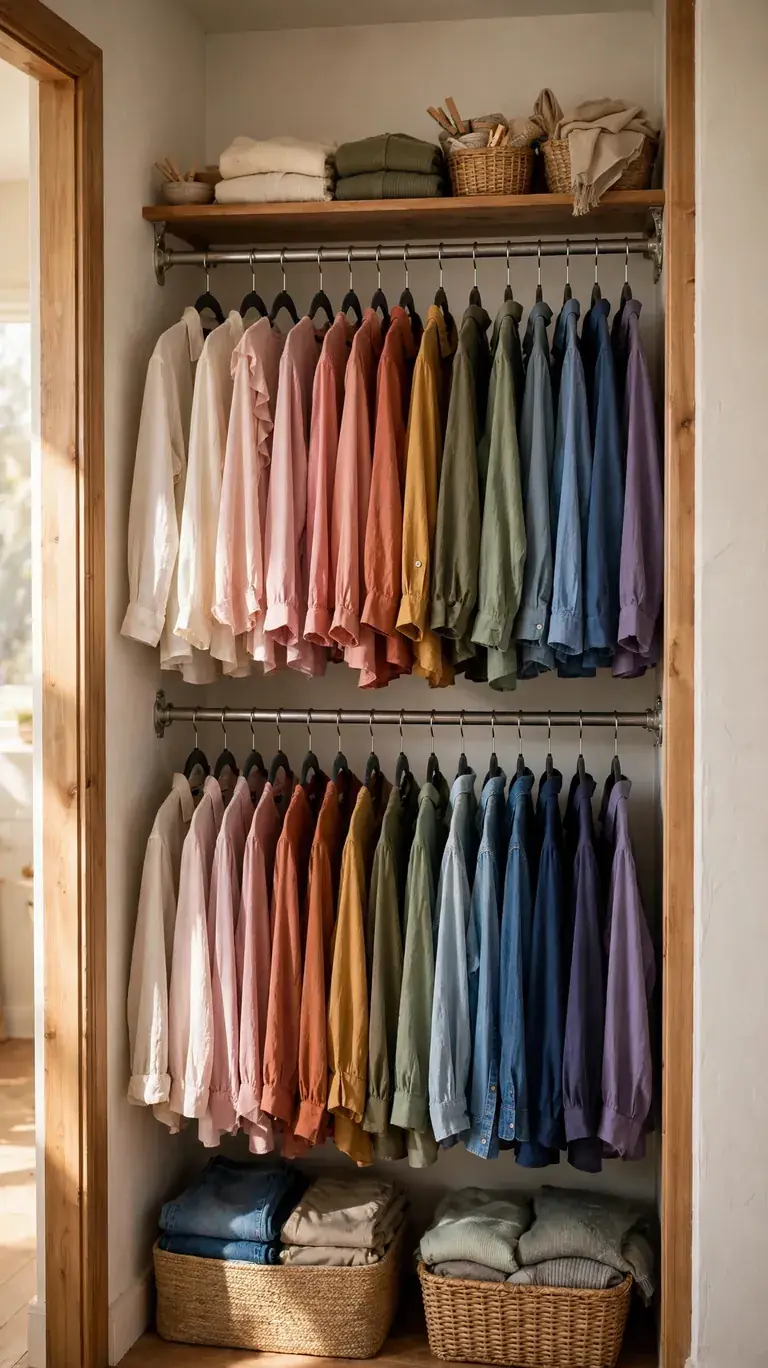
Most closets come with a single rod hung at eye level, which leaves a huge dead zone underneath and wastes the upper half of the closet. Splitting that single rod into two stacked rods instantly doubles your hanging capacity. Shirts, blouses, and folded-over pants fit comfortably on rods that are about 40 to 42 inches apart, so a standard 80-inch-tall closet fits two full tiers of hanging clothes with room to spare.
The trick is hanging the top rod high enough that you can still reach it and the bottom rod low enough that clothes do not drag. A top rod around 72 inches from the floor and a bottom rod around 36 to 38 inches from the floor works for most people. Use sturdy wall-mounted brackets or a freestanding double-rod unit if you rent. Keep your most-worn items at chest height and the out-of-season or less-used pieces on the higher rod so your daily routine stays fast.
2. Add a High Shelf for Out-of-Season Storage
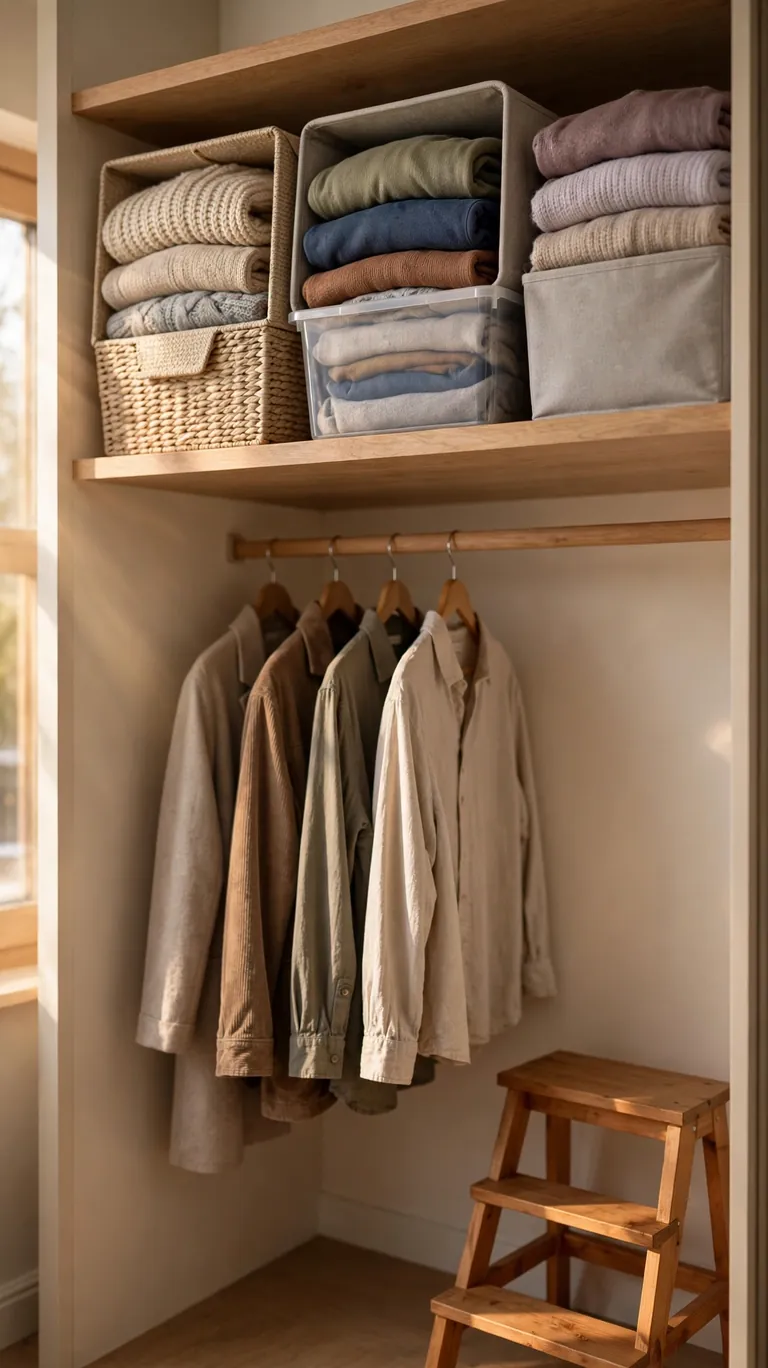
The shelf that sits above the rod in most closets is usually the most wasted space in the house. It collects dust and a random tote nobody can identify. Reclaim it with labeled bins that hold out-of-season clothes, spare bedding, or shoes you do not wear daily. Clear bins or bins with printed labels both work, but pick one system and stick with it so you can find things without climbing up.
Measure the depth of that top shelf before buying bins, because many closets have a shallow 12-inch shelf that fits only low-profile bins. Stack no more than two bins high so you can pull them down safely. A small folding step stool kept in the closet or nearby makes the top shelf genuinely usable instead of a decoration. Rotate the bins twice a year when you swap seasons, and the top shelf becomes part of your wardrobe instead of a storage attic.
3. Use the Back of the Door for Hidden Storage
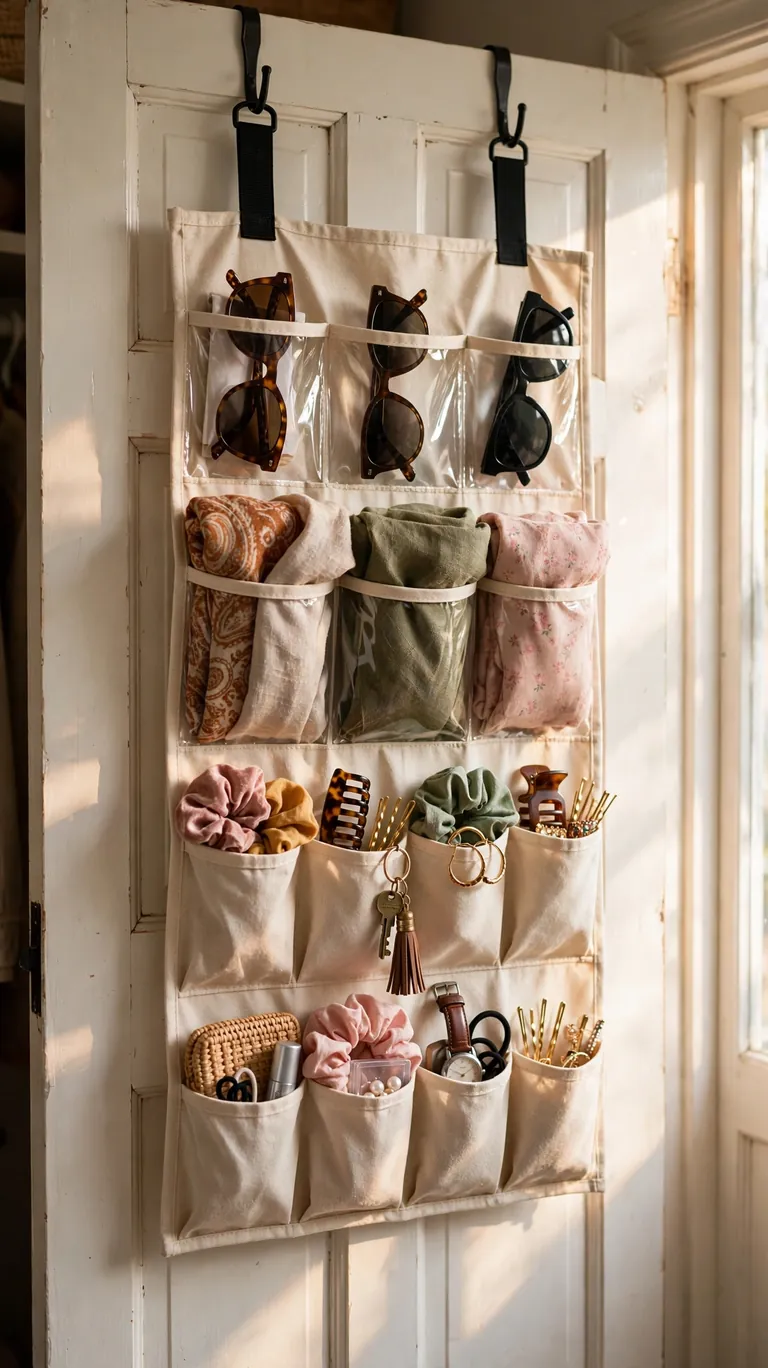
A closet door is free wall space that most people never touch. An over-the-door organizer with hooks, pockets, or a narrow shoe rack adds a surprising amount of storage without taking up a single inch of floor or rod space. This is one of the easiest upgrades for renters, since most organizers hang on simple brackets with no screws required.
Choose the organizer based on what you need most. Narrow pockets are perfect for accessories, scarves, sunglasses, and belts. Wire hooks hold robes, pajamas, or tomorrow’s outfit. A slim shoe rack on the door frees up the floor space where shoes usually pile up. Just check the door’s swing clearance first, because an organizer on a door that swings into a narrow hallway can block the walkway.
4. Line the Walls with Narrow Shelf Towers
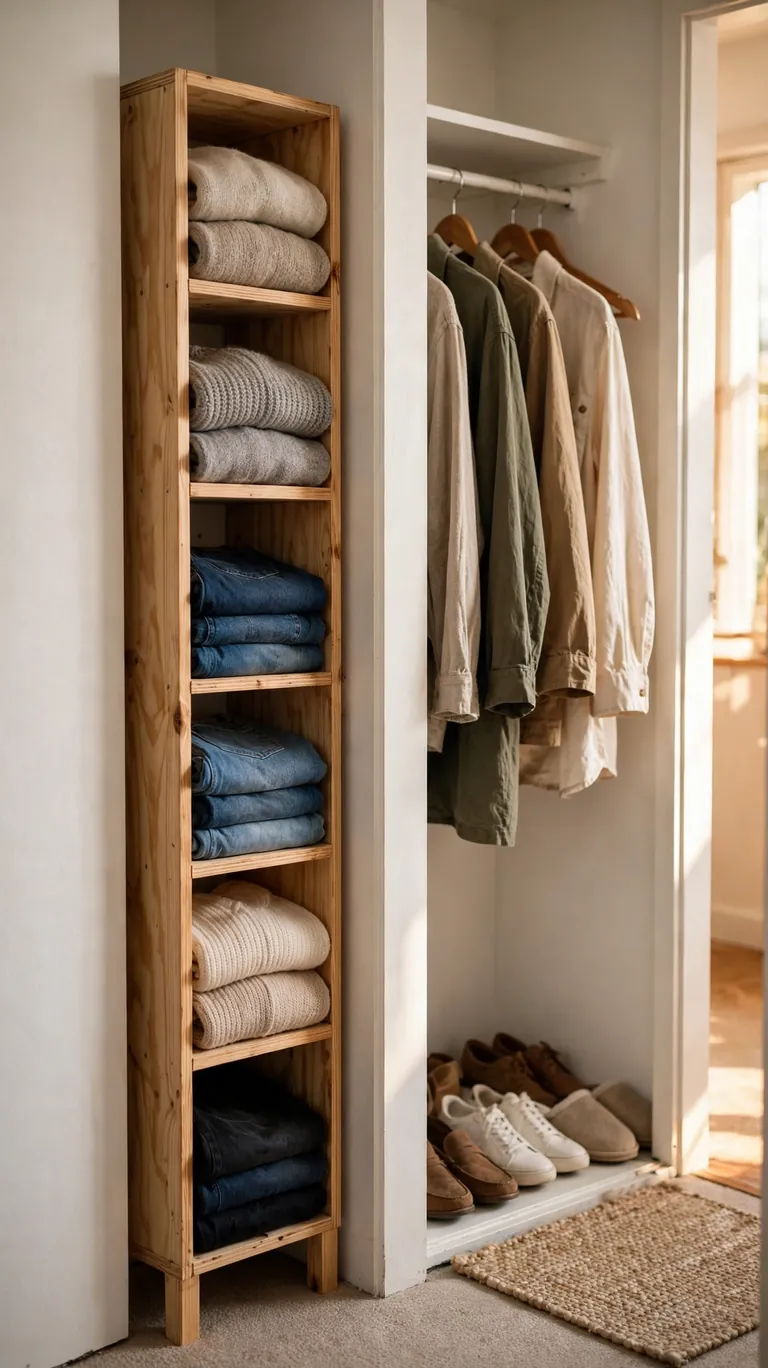
The sides of a closet are often dead space, especially in reach-in closets where the rod ends six to eight inches before the wall. A narrow shelf tower or a stack of small cubbies fits right into that gap and gives you folded clothes, bags, or shoe storage where nothing lived before. Freestanding towers between 8 and 12 inches wide slide into most side gaps without blocking the rod.
Use the tower for the items that get lost on flat shelves. Folded jeans, sweaters, and t-shirts stack neatly in cubbies, and open cubes make it easy to see everything at a glance. If the tower is taller than your shelves, reserve the top cubes for rarely used items like travel bags or formal accessories. A tension-mounted or freestanding unit keeps this renter-friendly, and it pulls out easily when you need to vacuum behind it.
5. Swap Bulky Hangers for Slim Velvet Ones
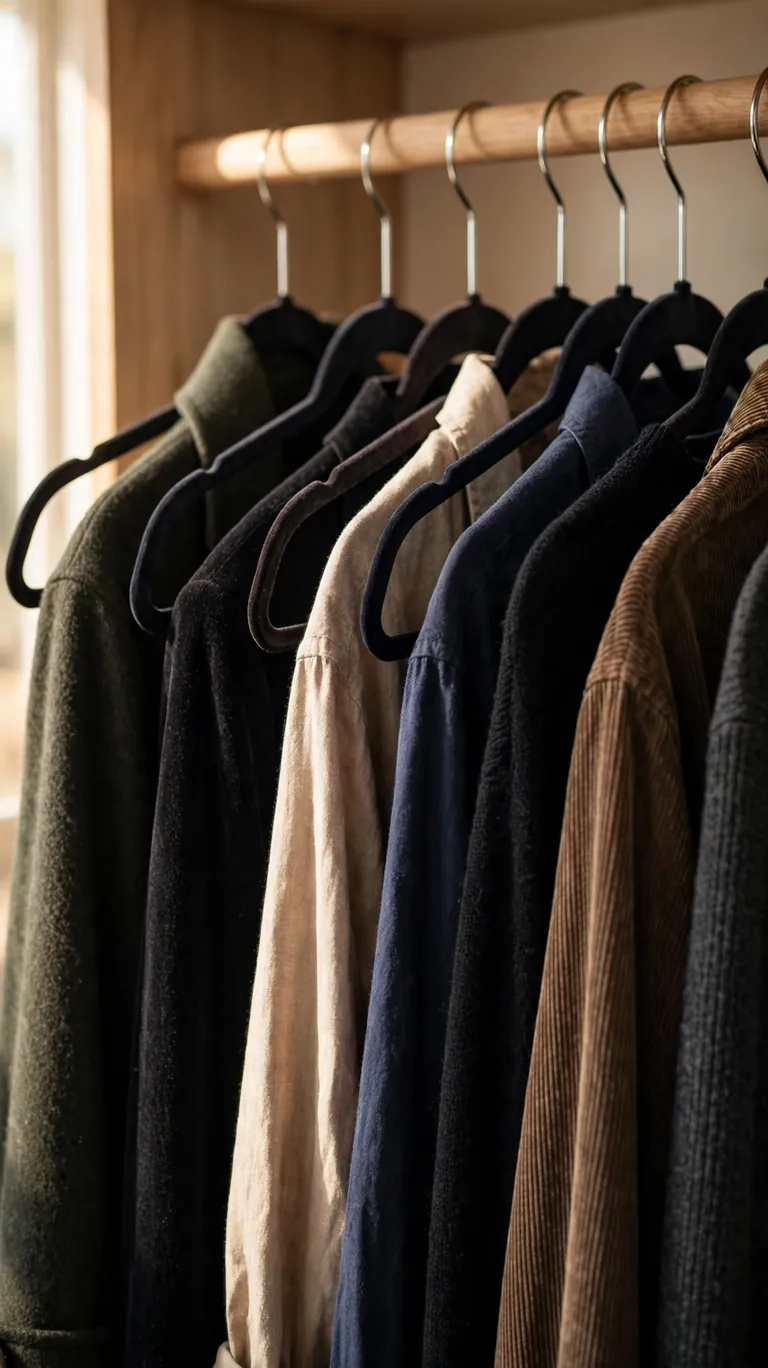
Plastic tube hangers and wooden hangers each eat about an inch and a half of rod space, while slim velvet hangers take up less than half an inch. Switching a full closet of fifty hangers to slim ones can free up a foot or more of rod space, which is enough room for another ten to fifteen garments. It is a boring upgrade that pays off immediately.
The velvet coating also grips clothes, so silk blouses and wide-neck tops stop sliding onto the floor. Replace your hangers in one go rather than mixing types, because mixed hanger styles make a closet look messy and the uneven spacing wastes the space you just gained. Donate or recycle the old hangers the same day so they do not creep back onto the rod.
6. Zone the Closet by Category, Not by Person
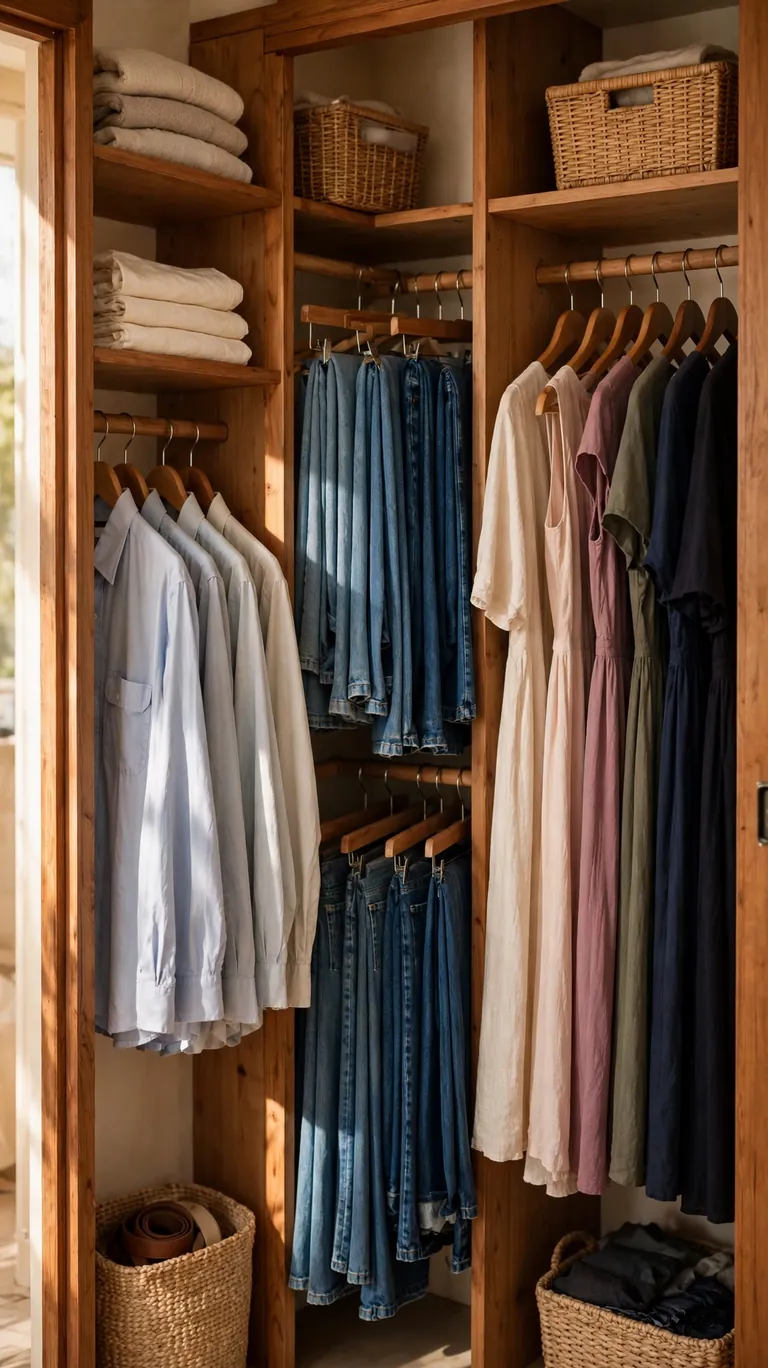
Closets get messy when zones have no logic and everything migrates everywhere. Grouping by category, all work shirts together, all jeans together, all dresses together, keeps the closet intuitive and makes getting dressed faster. Within each category, hang items left to right from lightest to darkest so the rod reads like a gradient and outfits practically suggest themselves.
This layout trick shines in shared closets, where each person gets category zones instead of splitting the closet down the middle. One person takes the left double-rod section, the other takes the right, and shared items like coats get a defined end section. Label nothing if the zones feel obvious, but a tiny bit of order in placement beats any labeling system. When every item has a zone, putting laundry away takes minutes instead of a full afternoon.
7. Add a Second Closet Rod on the Side Wall
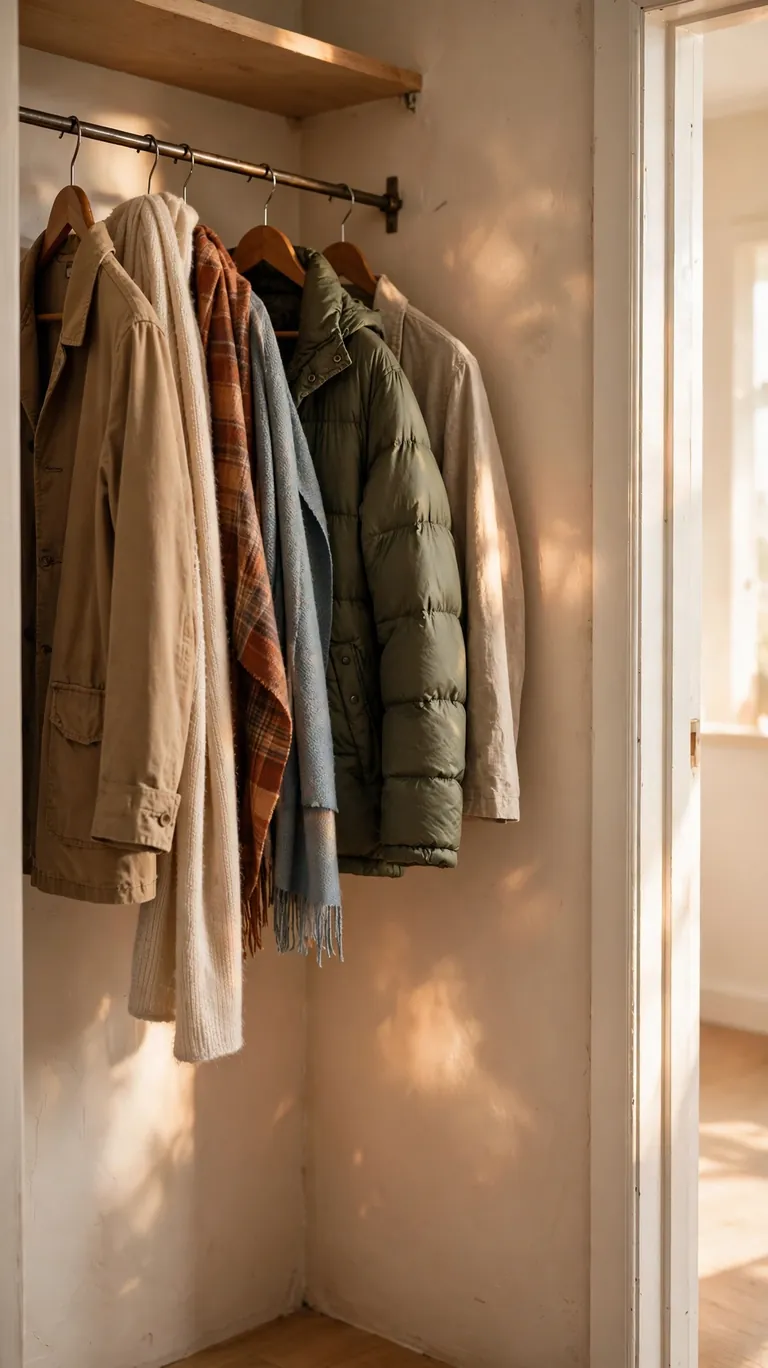
In reach-in closets, the side walls next to the door frame are usually empty, but they can hold a short rod for jackets, scarves, or frequently worn items. A wall-mounted rod just 18 to 24 inches long fits on most side walls and gives you a dedicated spot for the pieces you grab daily. This keeps your main rod from becoming a crowded mess of half-worn items.
Mount the rod at a height that matches its job. A rod for jackets works at about 60 inches from the floor, while a scarf and accessory rod can sit lower at around 45 inches. If you rent, a strong tension rod wedged into the side wall works for lighter items like scarves and tank tops. Keep this side rod to current favorites only, so it stays a grab-and-go station instead of a second overflow closet.
8. Store Shoes on a Tilted or Tiered Rack
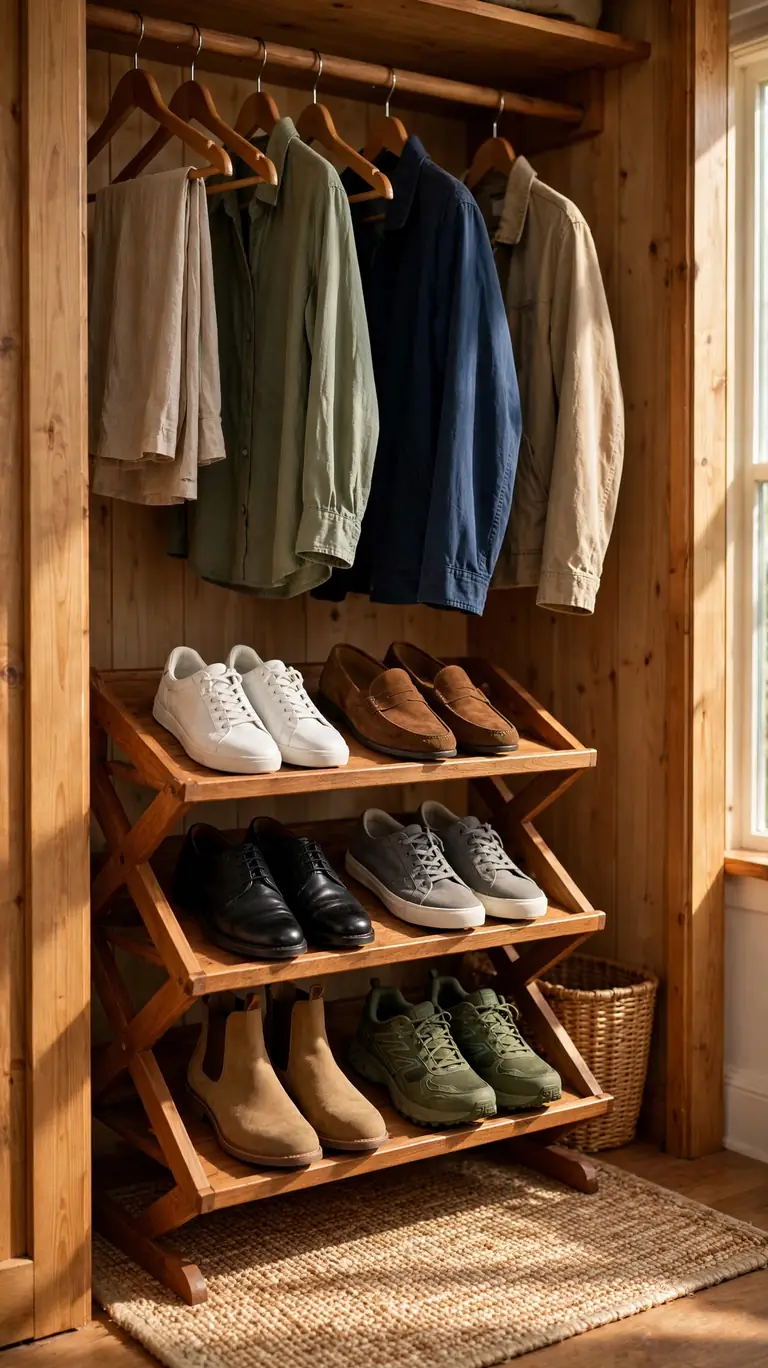
Shoes piled on the closet floor eat space and make pairs hard to find. A tiered shoe rack angled or stepped lets you see every pair at a glance and fits into the narrow footprint under a hanging rod. Two-tier and three-tier racks in the 24 to 36 inch width range fit most closet floors, and the open design keeps shoes ventilated.
Place the rack where it gets the least foot traffic inside the closet, usually against one side wall under the shortest hanging items. Store everyday shoes at the top tier for easy grabs and rotate seasonal or dress shoes to the bottom. If you have more shoes than the rack holds, that is useful information: move the overflow to a hall closet or under-bed box and keep the bedroom closet for the shoes you actually wear. A visible, limited shoe collection stays tidy far longer than a hidden pile.
9. Use Shelf Dividers to Keep Stacks from Toppling
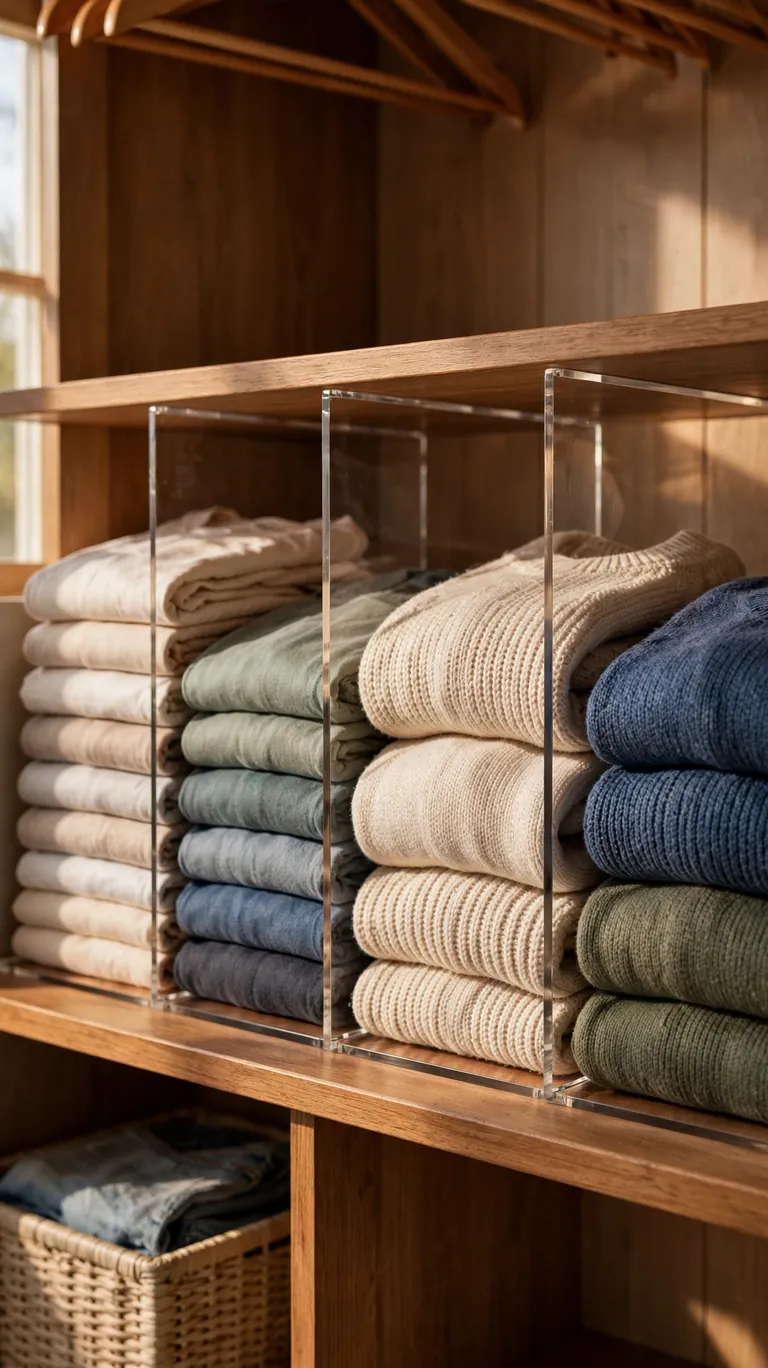
Tall stacks of folded clothes look tidy for about a day before they lean, slide, and collapse into each other. Simple shelf dividers, the acrylic or wire kind that clip onto the shelf, turn one long shelf into neat compartments where each stack stands on its own. Sweaters, jeans, and t-shirts all fold into stackable rectangles that fit between dividers perfectly.
Space the dividers about 8 to 10 inches apart, which fits most folded garments without squeezing. File-fold your clothes instead of flat-stacking them if you want even better visibility: items stand upright like files in a drawer, so you can see every piece without lifting the stack. Dividers also stop the “one shelf for everything” habit, because each compartment quietly enforces a category, gym clothes in one, pajamas in another, and nothing migrates.
10. Hang a Valet Rod for Outfit Planning
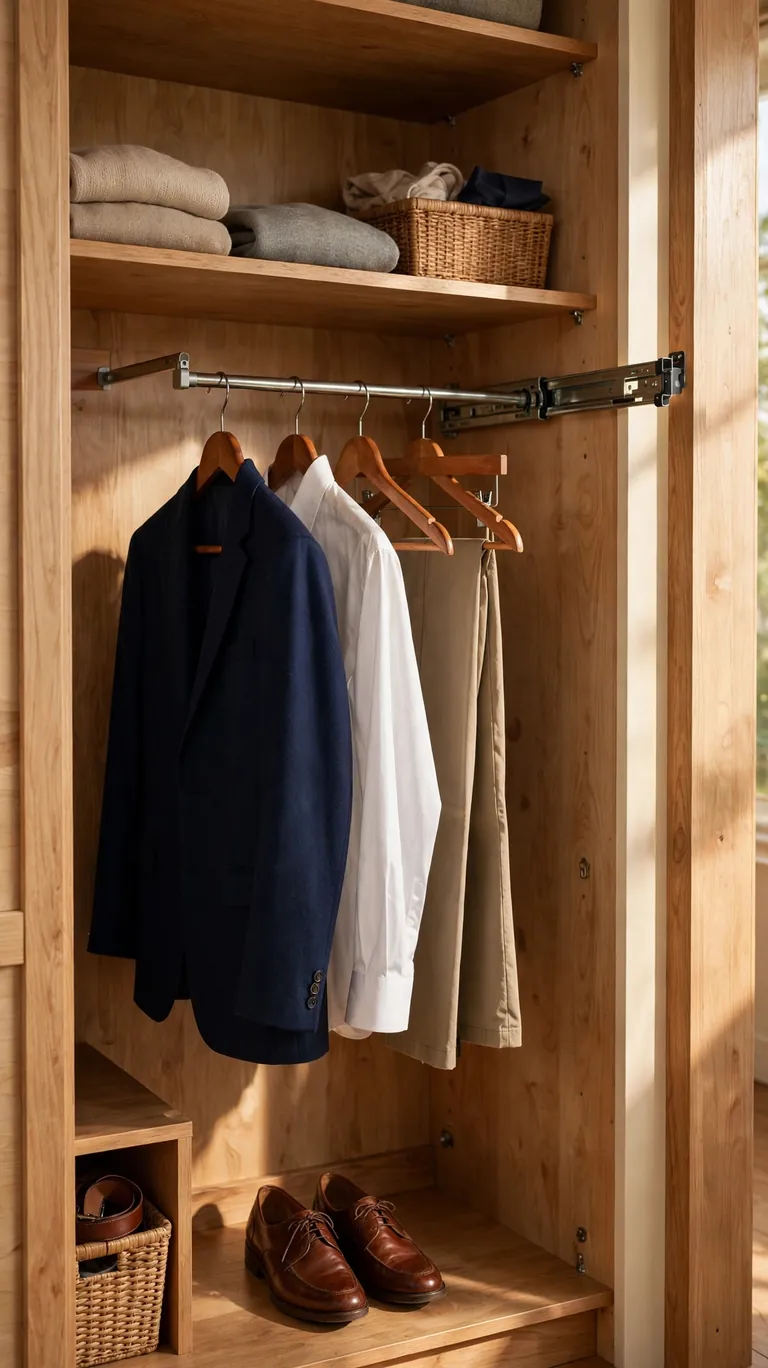
A pull-out valet rod is a small metal arm that mounts inside the closet and slides out when you need it. It gives you a temporary hanging spot for tomorrow’s outfit, a steamer session, or clothes that need airing before they go back on the main rod. Because it tucks away flush when not in use, it adds function with zero permanent space cost.
Mount it near the closet opening at a comfortable reaching height, around 60 to 66 inches from the floor. Use it the night before to lay out a full outfit, which makes rushed mornings noticeably calmer. It is also the perfect landing spot for the “worn once, not dirty yet” clothes that otherwise end up draped over a chair. One valet rod usually handles this job, but a second one on the opposite side works well in shared closets.
11. Put Drawers Under the Hanging Clothes
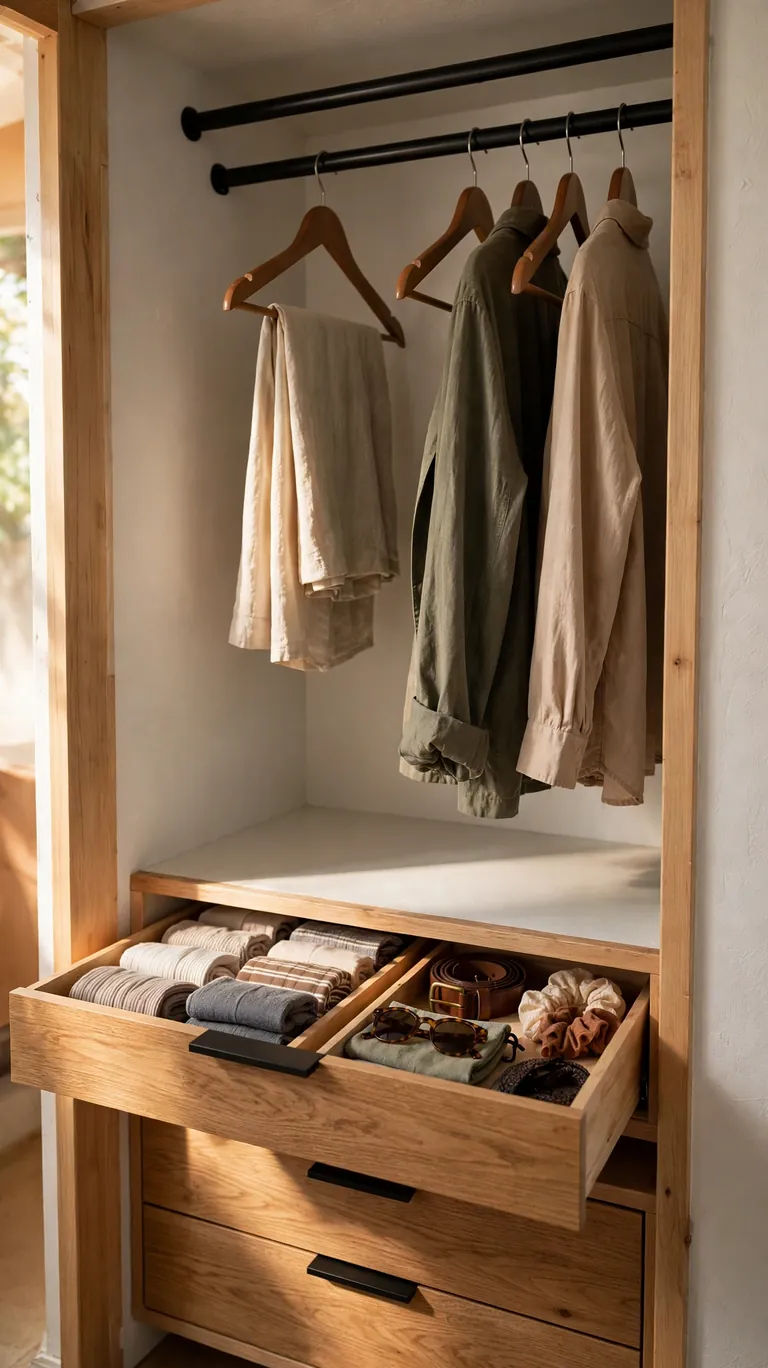
The floor space beneath a double rod is prime real estate that usually goes to shoe piles or nothing at all. A low drawer unit, either freestanding or built from stackable cubes, turns that space into proper storage for underwear, socks, workout gear, and accessories. Two or three shallow drawers beat one deep drawer, because shallow drawers keep small items visible instead of buried.
Measure the height under your lower rod before buying, since you need clearance to open the drawers and see inside. Rolling drawer carts on casters work especially well because you can pull the whole unit out to reach the back of the closet. Keep the top of the drawer unit clear or use it as a staging surface for folding laundry. This layout puts your most-used small items at the easiest reaching height in the whole closet.
12. Install Hooks on Every Usable Wall Inch
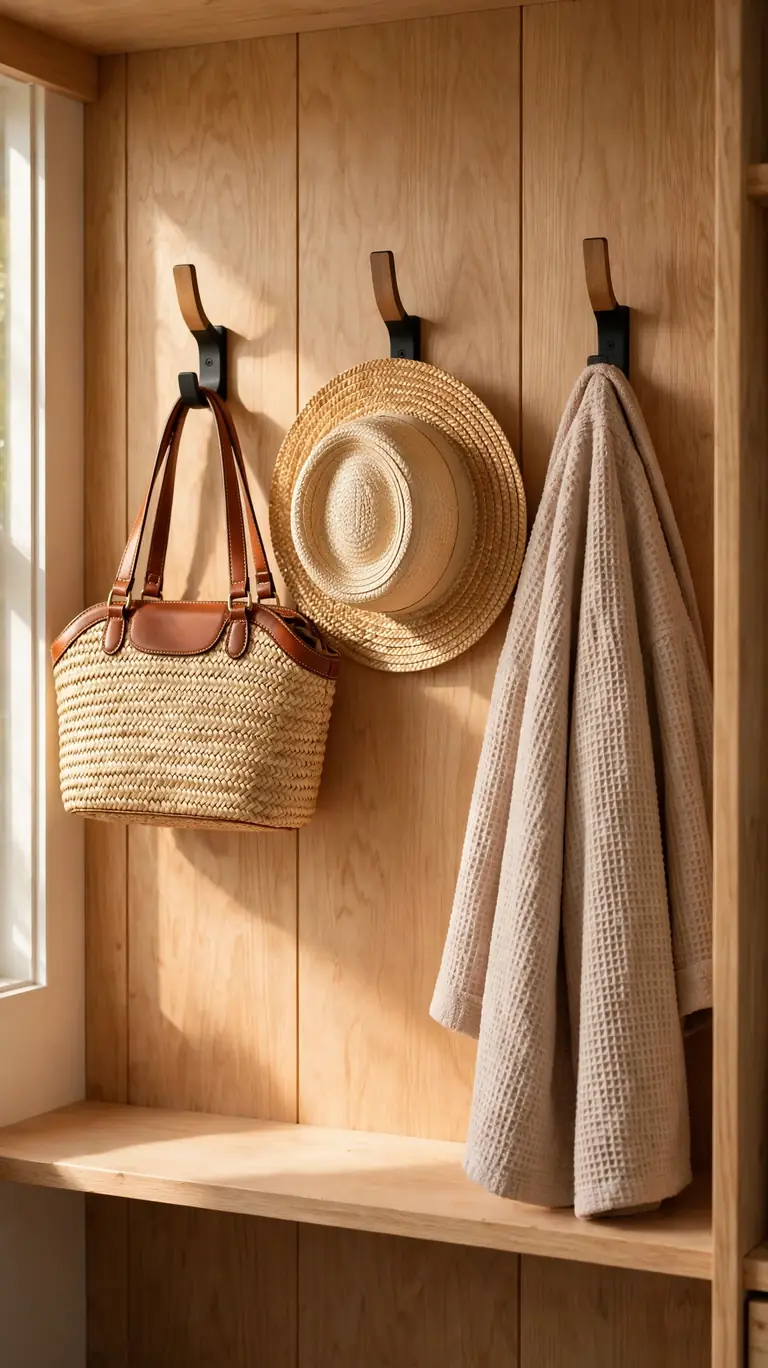
Hooks are the cheapest closet upgrade and one of the most useful. A row of hooks on an empty wall section holds bags, hats, robes, belts, and tomorrow’s outfit, keeping them off the floor and off the rod. Adhesive hooks work for light items and renters, while screw-in hooks handle heavier bags and coats without budging.
Group hooks by purpose rather than scattering them randomly. Three hooks in a vertical line near the door make a great grab station for your bag, jacket, and keys. A horizontal row higher up works for hats and scarves you want visible. Leave a little space between hooks so items do not overlap into a tangled mass. When a hook stays empty for a month, that tells you the spot is wrong, so move it somewhere the habit actually lives.
13. Create a Dedicated Accessories Wall
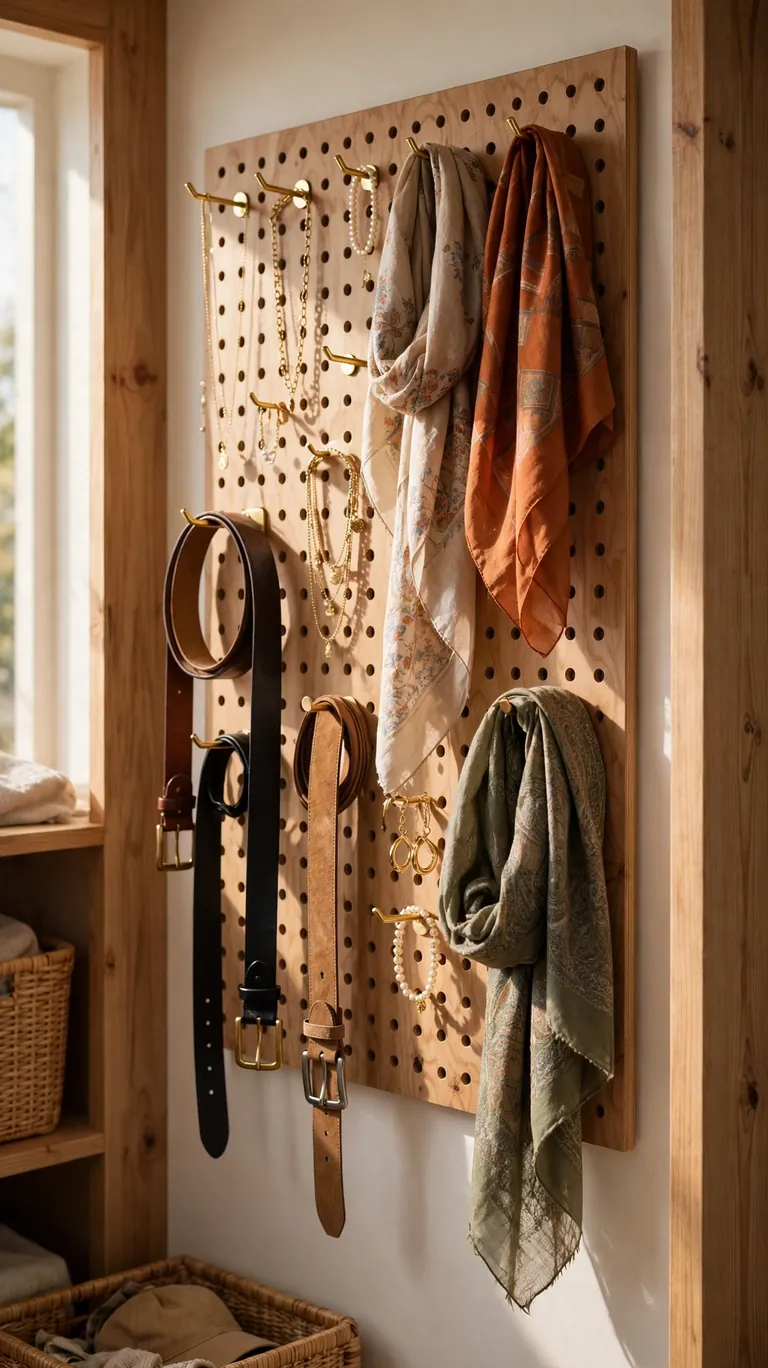
Belts, scarves, ties, and jewelry disappear into drawers and tangled piles, but a dedicated accessories wall keeps them visible and easy to grab. A pegboard, a mounted tie rack, or a series of small hooks on one wall section turns accessories into a display that doubles as decor. Seeing everything at once also stops you from buying duplicates of things you already own.
Pegboard is the most flexible option because you can rearrange the hooks whenever your collection changes. Mount it on the inside of a walk-in wall or a wide side wall in a reach-in, and keep it at eye level so nothing hides. Store daily pieces front and center and push occasion pieces to the edges. This wall works best when it holds only accessories, so resist the urge to hang bags or clothes there and dilute the system.
14. Use Clear Bins for the Awkward Middle Shelf
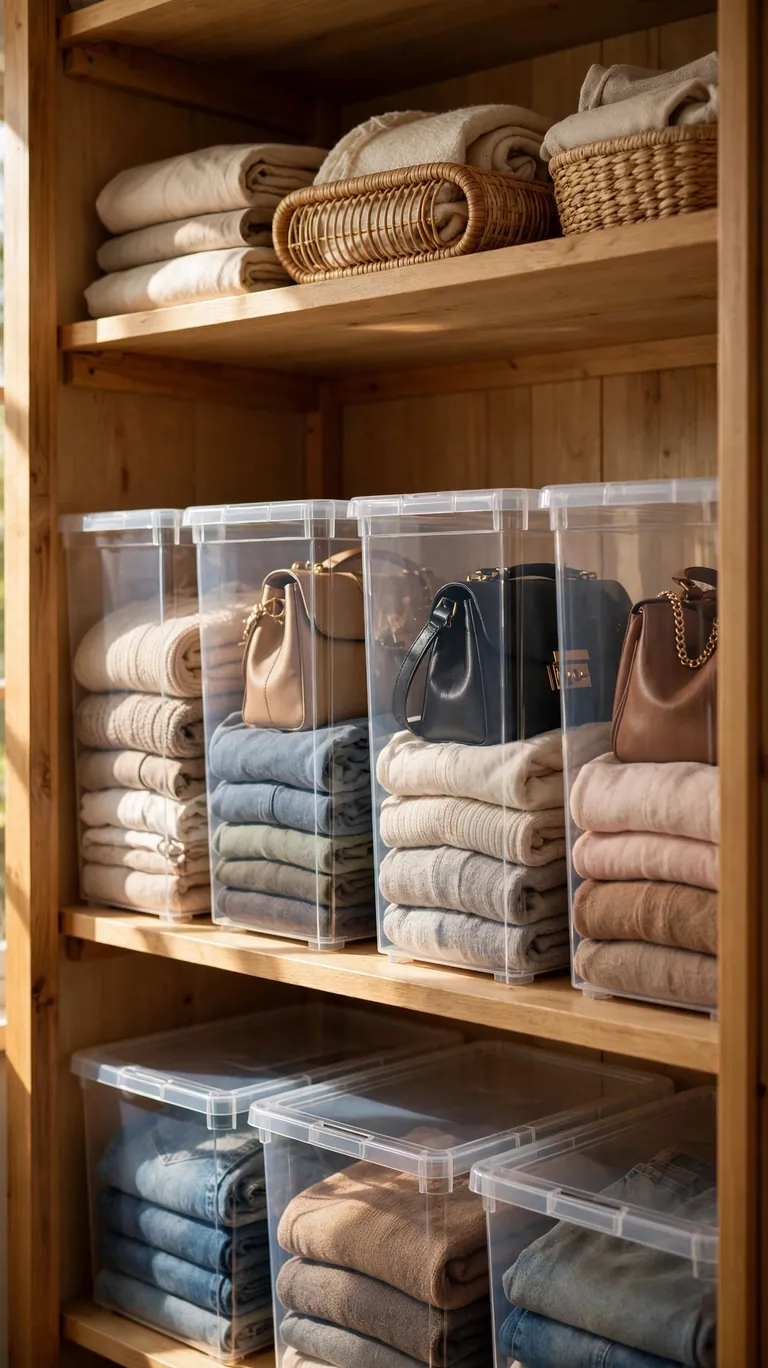
Every closet has a middle shelf that is too high for daily clothes and too low for out-of-season storage, and it usually becomes a junk shelf. Clear bins give that shelf a job: swimsuits, gym accessories, travel gear, or handbags each get a labeled bin, and the transparency means you can see what is inside without pulling everything down. Uniform bins in one size look tidy and stack cleanly.
Pick bins with lids if the shelf is above eye level, because lids keep dust off and make stacking safe. For shelves at eye level or below, open-front bins work faster since you can reach in without removing a lid. Label the front of each bin even if it is clear, because labels are faster than scanning contents. Limit yourself to the bins that fit the shelf with a little breathing room, and anything that does not fit gets relocated instead of crammed on top.
15. Add Lighting So You Can Actually See Everything
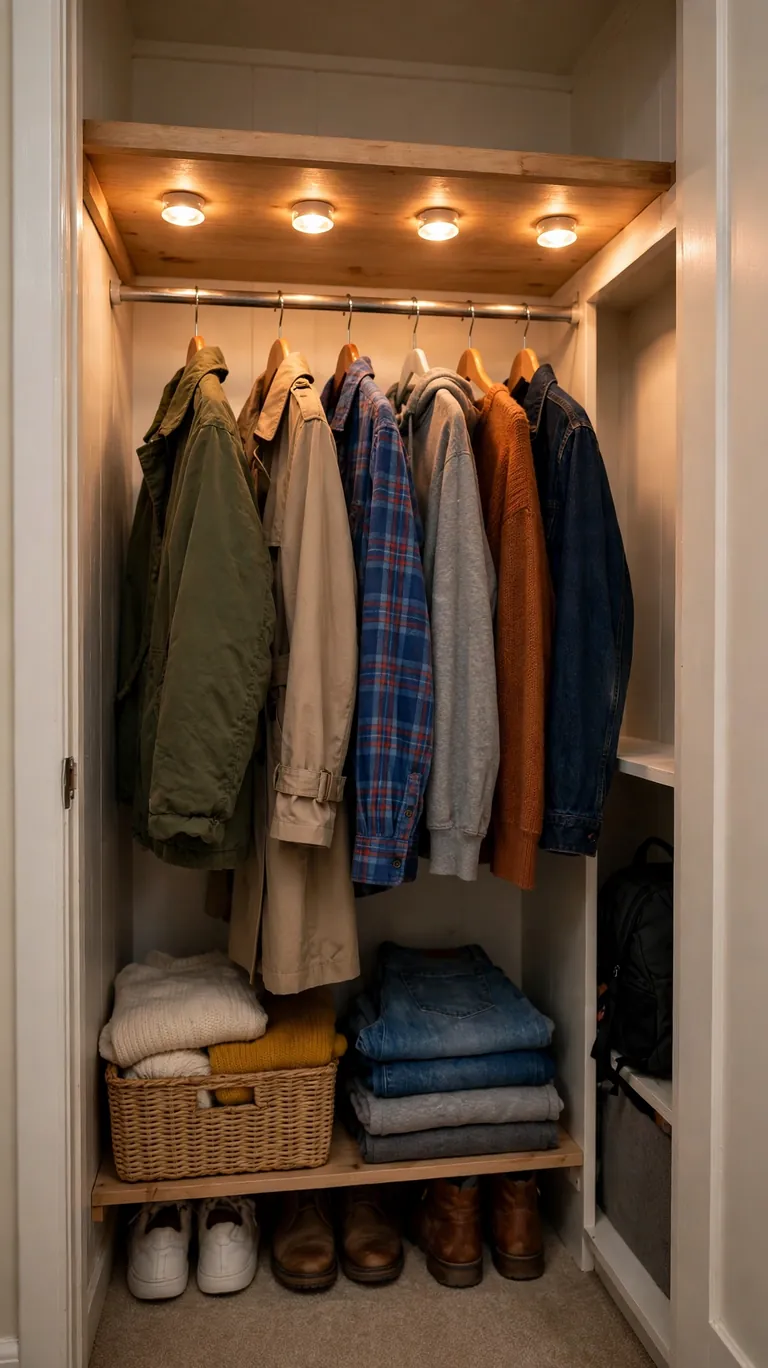
A dark closet hides clothes, which means you wear the same ten outfits and forget the rest. Battery-powered LED puck lights or motion-sensor strip lights cost little and install in minutes with adhesive backing, no electrician needed. Good lighting makes colors accurate, so you stop discovering at noon that your “black” pants were navy.
Place lights where shadows fall: under the top shelf to light the rod below, along the inside of the door frame, or on the ceiling for walk-ins. Motion-sensor lights are worth the small premium because your hands are usually full of hangers. Warm white light around 3000K shows clothing colors most naturally, while cool daylight bulbs can make fabrics look washed out. Replace batteries on a schedule, because a dead light is worse than no light, it trains you to stop looking.
16. Corral Small Items with Drawer Organizers
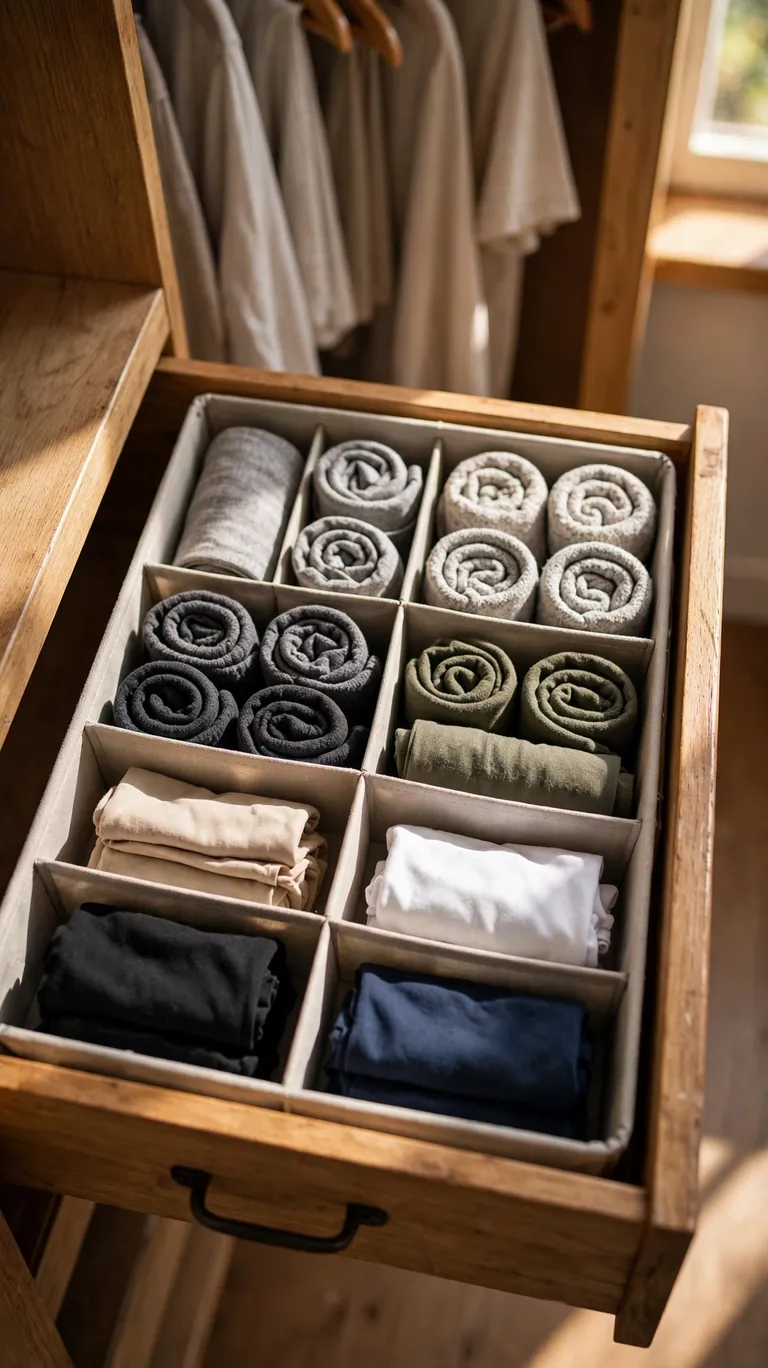
Socks, underwear, and accessories turn any drawer into a swamp without dividers. Simple fabric or bamboo drawer organizers split a drawer into compartments so each category has its own lane. The difference is immediate: you see every pair of socks at once instead of digging through a rolled-up pile.
Match the organizer to the drawer depth, shallow trays for accessories and jewelry, deeper compartments for socks and underwear. Roll clothes instead of folding them flat in these compartments, because rolled items stand upright and stay visible. Assign one compartment per category and resist overfilling, since a stuffed compartment defeats the whole system. When a category outgrows its lane, it is a signal to declutter, not to buy a bigger organizer.
17. Hang Seasonal Clothes on a Separate Section
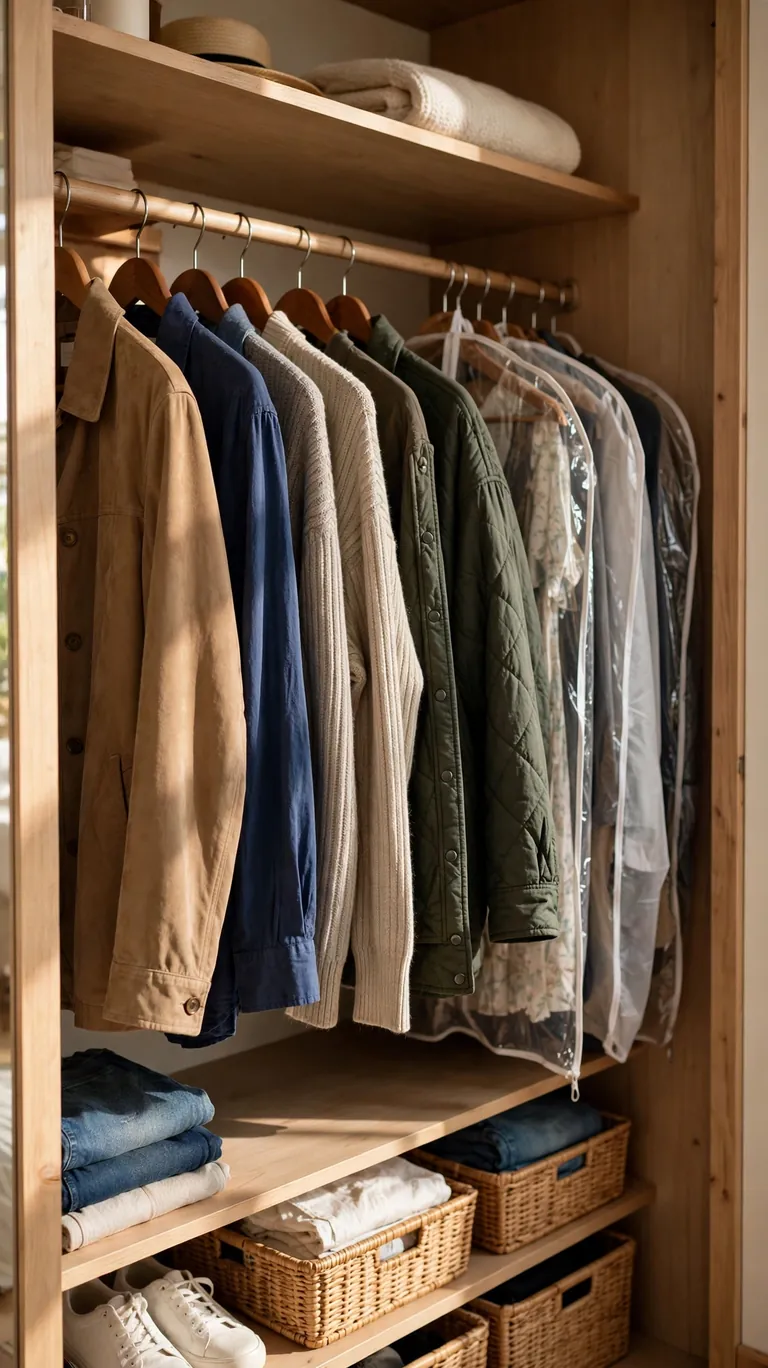
Mixing winter coats with summer dresses on one rod makes every morning a treasure hunt. Dedicating one end of the closet, or one rod tier, to the current season and pushing off-season pieces to the far end or the top shelf keeps your daily choices front and center. You interact only with clothes you can actually wear today.
Do the seasonal swap twice a year and treat it as a mini declutter at the same time. Anything you did not wear all season gets donated or stored elsewhere, which keeps the closet from growing silently. Use garment bags for the off-season section to protect against dust, and keep them zipped so the stored clothes stay fresh. This habit alone can make a small closet feel twice as big, because the working wardrobe is all you ever see.
18. Use the Floor for Rolling Storage Carts
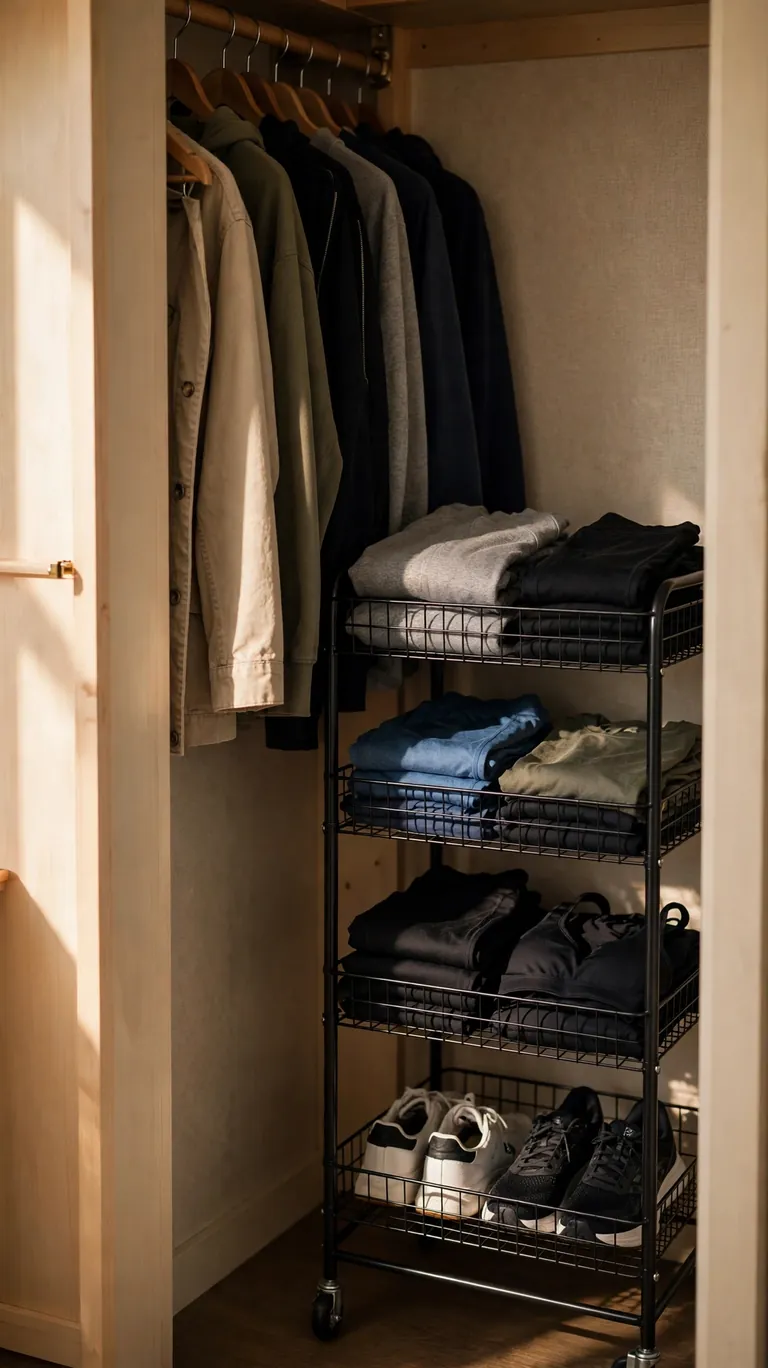
A slim rolling cart, the kind with three or four tiers, slides into the narrow gap between the closet wall and your hanging clothes and pulls out when you need it. It is perfect for shoes, folded gym clothes, laundry supplies, or a small hamper on the bottom tier. Because it rolls, you can access the deep corners of the closet that usually become dead space.
Choose a cart narrow enough to clear your hanging clothes, usually 10 to 12 inches wide, and tall enough to use the vertical space without blocking the rod. Assign each tier a job and keep it consistent so the cart stays organized instead of becoming a rolling junk drawer. The bottom tier works well for a laundry bag, which means dirty clothes go straight into the system instead of onto the floor. Lock the casters if the closet floor is uneven so the cart stays put.
19. Fold Bulky Sweaters Instead of Hanging Them
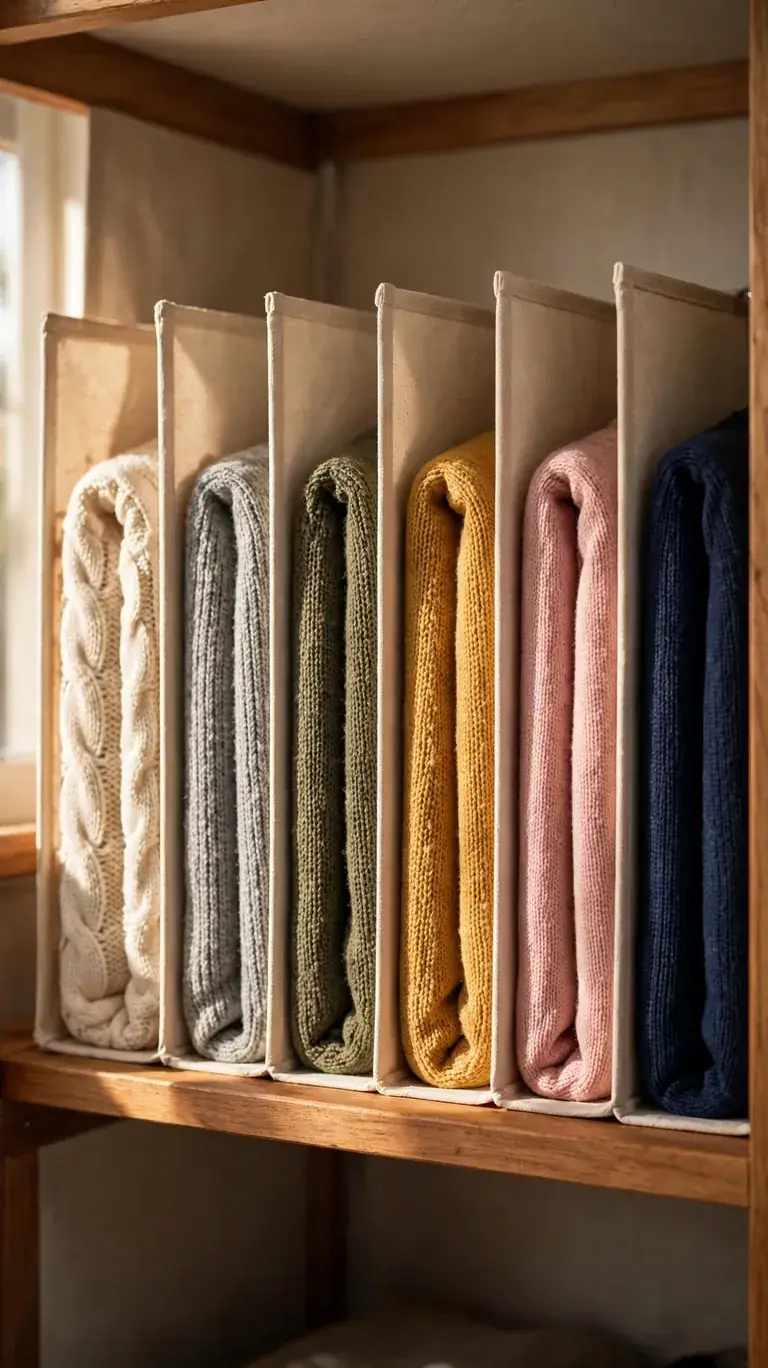
Hangers stretch out heavy knit sweaters and eat rod space, while folding keeps their shape and frees the rod for things that truly need hanging. A dedicated sweater shelf with dividers holds a surprising number of folded knits, and file-folding them upright lets you see every color without unstacking. Chunky winter knits that would hog three inches of rod each become a neat six-inch stack on a shelf.
Keep no more than four or five sweaters per stack so the bottom ones do not get crushed and forgotten. Store the current season’s sweaters at easy reach and move off-season knits to the high shelf in bins. If a sweater is too bulky to fold neatly, it is a candidate for vacuum storage elsewhere. Your rods will thank you, and your sweaters will keep their shoulders instead of developing hanger bumps.
20. Mirror the Layout on Both Sides for Couples
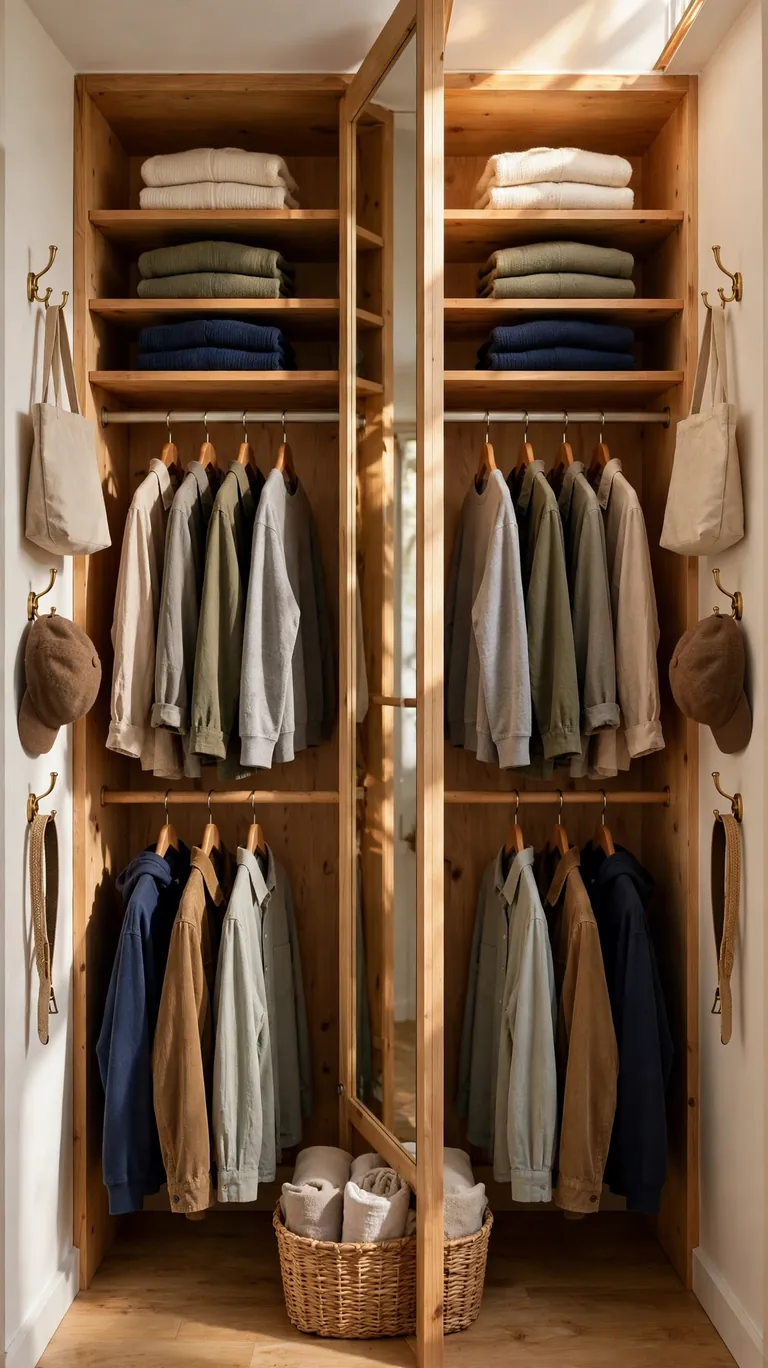
Shared small closets fail when both people use the whole space randomly. Mirroring the layout, each person gets an identical double-rod section with their own shelf and drawer space, removes the daily negotiation. Symmetry makes the closet feel fair and keeps each person’s system independent, so one person’s mess never swallows the other’s clothes.
Divide the closet vertically rather than by rod height, because splitting top and bottom between two people always feels unequal. Give each side the same accessories: a set of hooks, a shelf section, and drawer space. Shared items like coats or guest bedding get a defined middle zone that both people agree on. When the layout is mirrored, putting laundry away is obvious for both people, and the closet stays balanced instead of drifting toward whoever is messier.
21. Do a Quarterly Reset to Protect the Layout
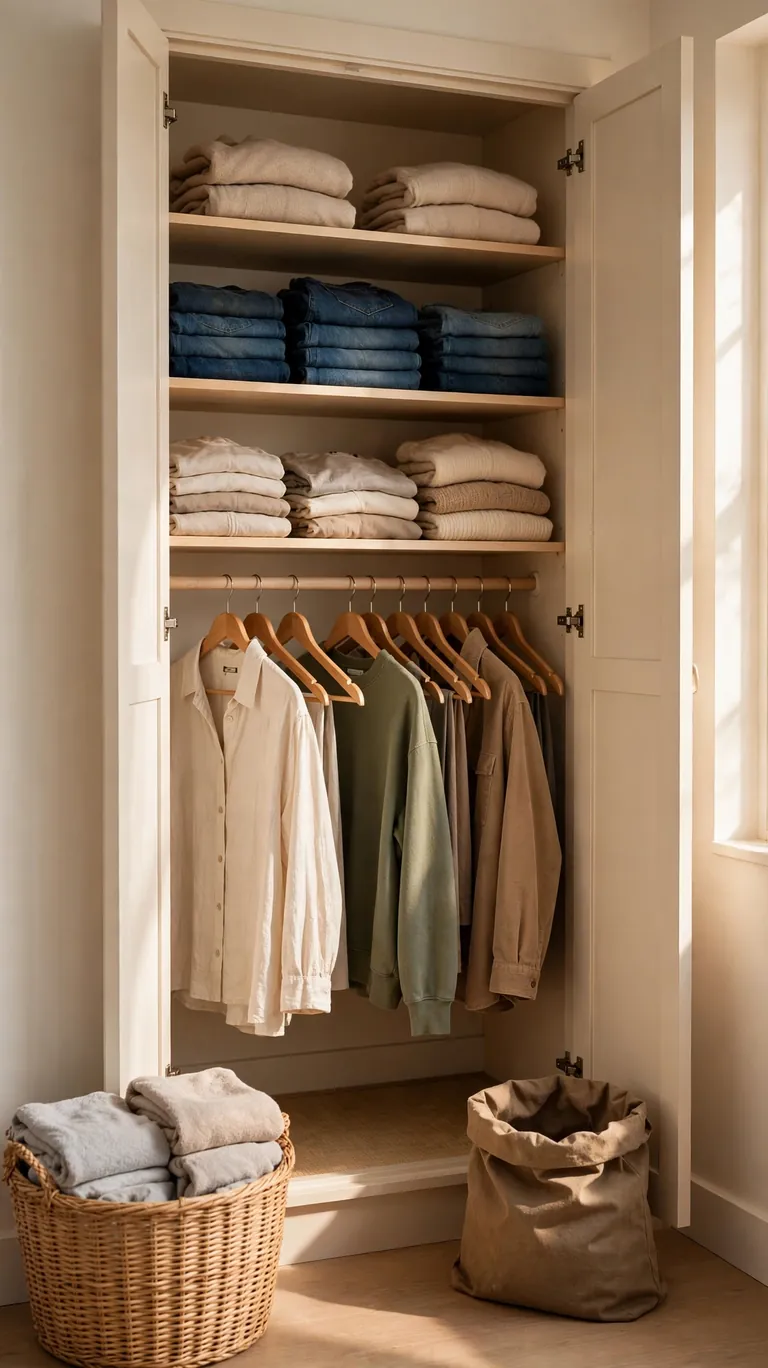
Even the best layout drifts. Clothes migrate to the wrong zones, bins fill with mystery items, and the floor slowly reclaims its pile status. A quarterly reset, about thirty minutes with a laundry basket and a donation bag, restores the layout before the drift becomes chaos. Pull everything out of one zone at a time, return each item to its assigned spot, and pull out anything you have not worn in three months.
Make the reset a routine, not a project: set a calendar reminder for the start of each season and pair it with the seasonal clothing swap. Wipe the shelves, check that hooks and rods are still secure, and replace any organizer that broke or stopped fitting your needs. The reset also catches the slow creep of new purchases, because every new item has to earn a spot in the layout. A closet that gets maintained quarterly never needs a dreaded full-day overhaul.
Frequently Asked Questions
How do I maximize storage in a very small reach-in closet?
Start with the highest-impact changes: install double hanging rods to split the closet’s height, swap bulky hangers for slim velvet ones, and add a narrow shelf tower or drawers in the side gaps. Use the door back for hooks or an organizer, and put out-of-season items in labeled bins on the top shelf. These five changes alone can roughly double what a small reach-in holds, and all of them are renter-friendly.
What is the best layout for a small walk-in closet?
Zone the walk-in by use: hanging clothes on double rods along the longest wall, folded items and shoes on the shorter walls, and accessories on a dedicated wall or the door back. Keep daily-wear items at chest height in the most reachable zone, and push off-season and occasion pieces to the top shelf or the far end. Good lighting matters even more in a walk-in, because dark corners become dead storage fast.
How deep should closet shelves be for folded clothes?
Twelve inches is the sweet spot for folded clothes, deep enough for a folded sweater or jean stack but shallow enough that nothing hides in the back. Deeper shelves around 14 to 16 inches work for bins and handbags. If your shelves are deeper than 16 inches, use the back zone for rarely used items and keep daily pieces at the front, or add pull-out baskets so the back stays reachable.
Should I use drawers or shelves in a small closet?
Use both, but assign them by item type. Drawers win for small, soft items like socks, underwear, and accessories because compartments keep them visible and sorted. Shelves win for folded clothes, bags, and bins because you can see everything at a glance. In a very small closet, a low drawer unit under the hanging rod plus shelves on the side walls gives you the best of both without wasting floor space.
How often should I declutter my closet to keep the layout working?
A quick seasonal check, four times a year, is enough for most people. Each time you swap seasonal clothes, pull out anything you did not wear that season and anything that no longer fits or feels like you. This keeps the layout from slowly overfilling, which is the main reason organized closets stop working. If you shop often, add a one-in-one-out rule so new purchases replace something instead of stacking on top.
Conclusion
A small closet is not a storage problem, it is a layout problem. The ideas in this article all work from the same principle: every inch of the closet should have a job, from the top shelf down to the floor. Double rods split the height, slim hangers reclaim rod space, door backs and side walls become storage, and zones keep every category where you can find it. None of these changes require a renovation budget or a contractor, and most of them take an afternoon at most.
Start with the changes that match your biggest pain point. If hanging space is the bottleneck, install the double rod first. If the floor is a disaster zone, bring in the shoe rack and drawer unit. If you can never find anything, zone by category and add lighting so you can actually see what you own. Then protect the layout with a quick seasonal reset, because the best closet system is the one you maintain.
The payoff goes beyond extra storage. A closet where everything is visible and reachable makes getting dressed faster and calmer, cuts down on duplicate purchases, and keeps your clothes in better shape. Pick three or four ideas from this list, set aside a weekend, and turn the closet you complain about into the closet that actually works for your life.