23 Genius Small Home Library Ideas for Cozy Reading Spaces
You do not need a whole room to build a home library. Small home library ideas work best when they fit around your actual life, a single wall, a spare corner, the awkward nook beside the stairs, or even a wide hallway. A cozy reading space is really just three things working together: books within arm’s reach, a chair you never want to leave, and light that makes the page easy on your eyes. This list gives you 23 practical ways to pull that together in a small space, from floor to ceiling shelving and floating shelves to reading chairs, task lighting, and storage tricks that keep a big book collection from taking over the room.
The ideas below are built for real homes, not showrooms. Many cost little, use furniture you may already own, and can be done in a weekend. Whether you have one small shelf or an entire wall to fill, you will find a setup that suits your space, your budget, and the way you actually read. Start with the ideas that solve your biggest problem first, whether that is seating, storage, or light, and build from there. By the end of this list, your corner should feel like the kind of place where you accidentally read for two hours.
1. Turn One Wall into Floor-to-Ceiling Bookshelves
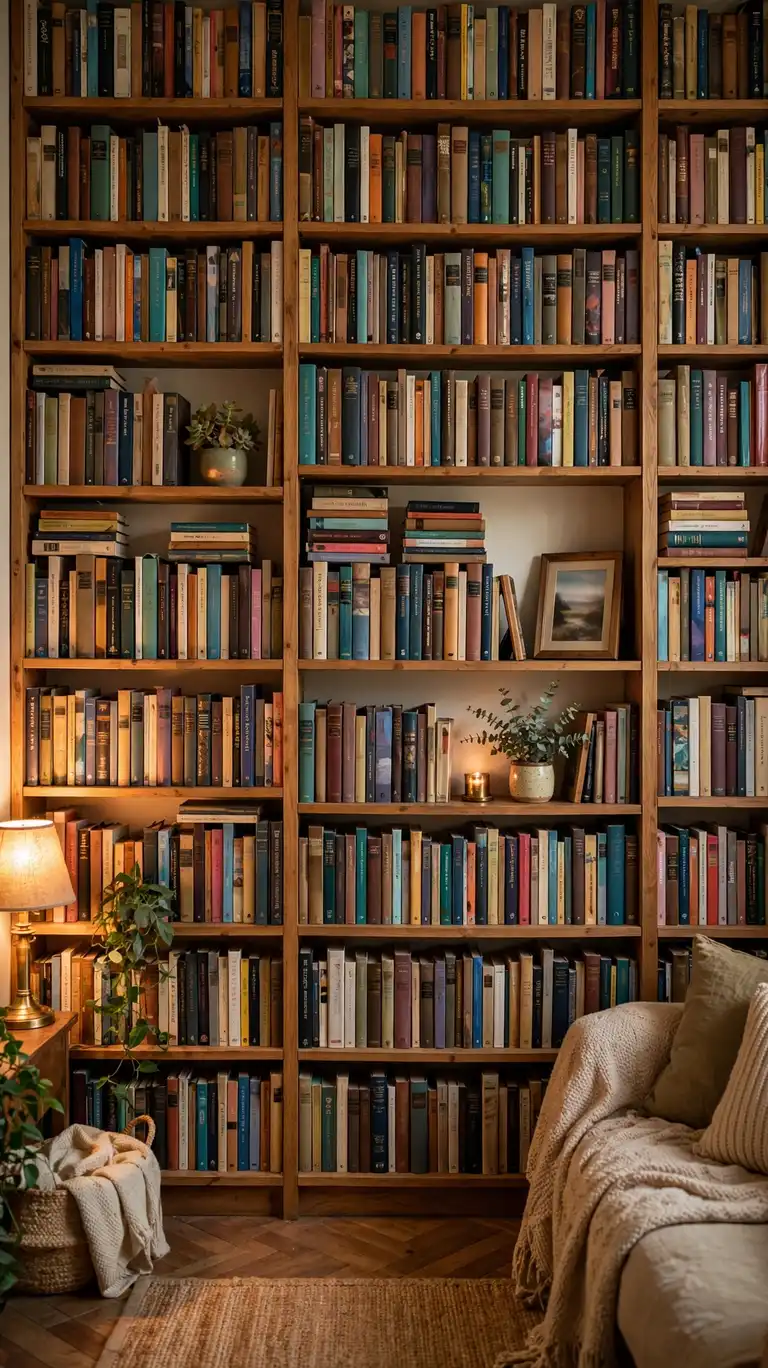
A full wall of shelving is the single best use of space in a small room because it holds hundreds of books while eating up almost no floor area. Standard bookcases that reach toward the ceiling free up the rest of the room for seating and walking space. You can build the look with a run of matching tall bookcases placed side by side, or have a simple frame built around them so it reads as one built-in piece. Leave the bottom shelves for heavy art books and the top shelves for books you reach for less often, with your current reads right at eye level.
Before you fill every shelf, plan for breathing room. A wall of books can feel heavy, so leave a few open sections for a small plant, a framed photo, or a decorative box. This breaks up the visual weight and makes the library feel styled rather than stacked. Anchor at least one or two tall cases to the wall studs with brackets, because a fully loaded bookcase is heavy and tipping is a real risk, especially with kids or pets around. Once it is anchored and styled, this wall becomes the natural focal point of the whole room.
2. Add a Deep, Curl-Up Reading Chair
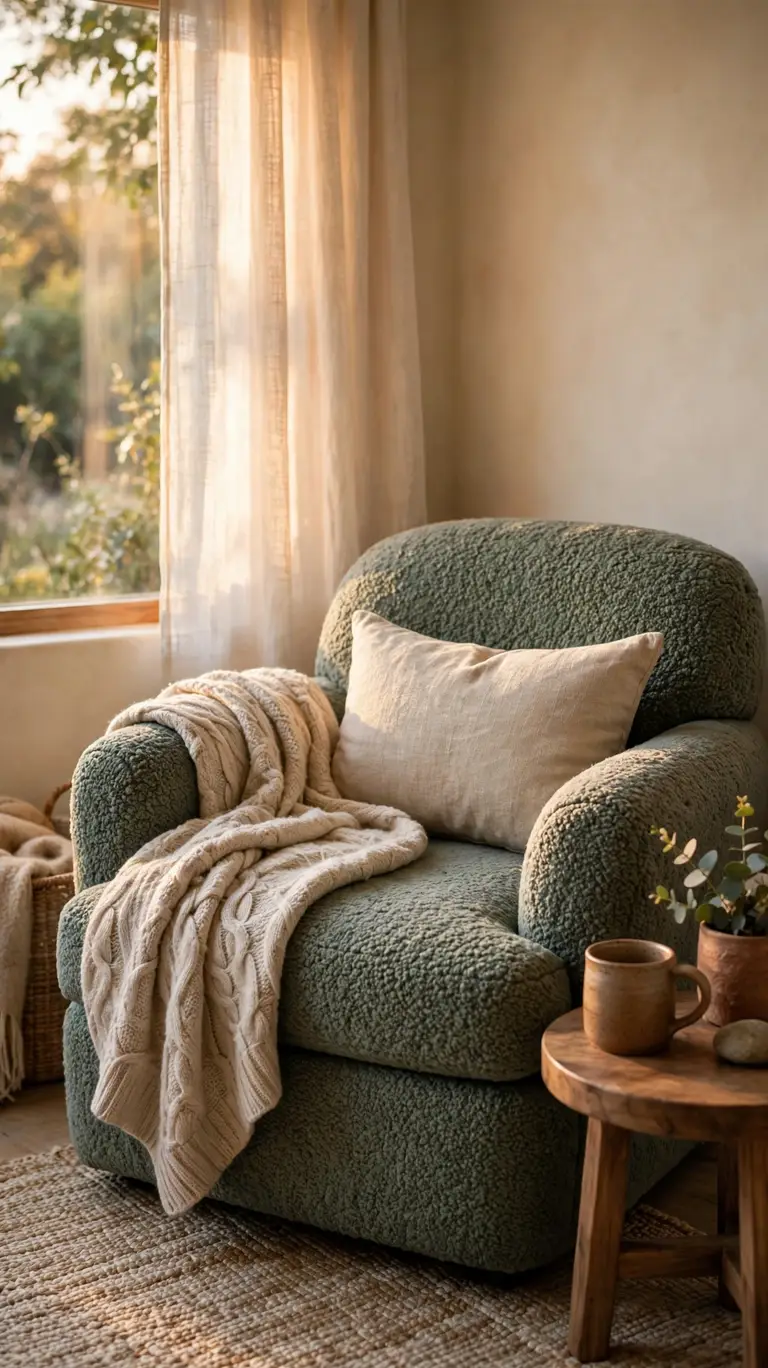
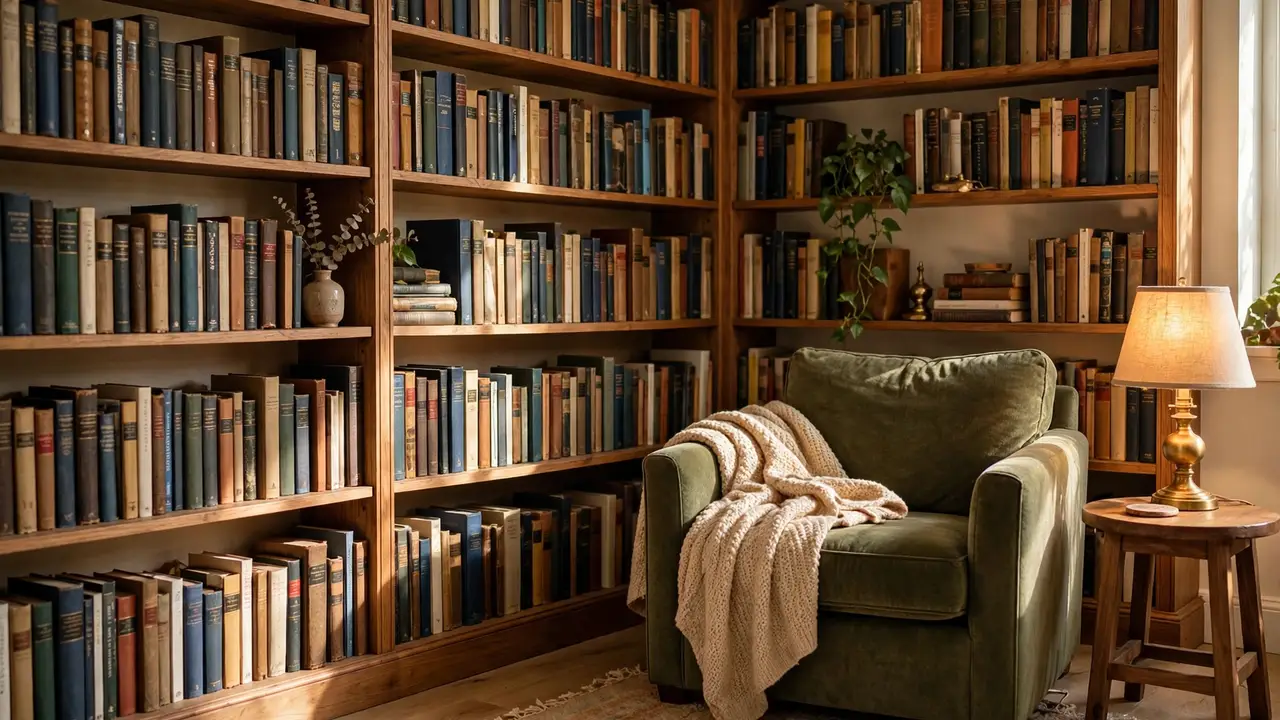
The chair is where your reading space succeeds or fails, so make it the first thing you choose, not the last. Look for a chair with a seat deep enough to tuck your feet under you, arms you can lean on, and fabric that feels good against bare skin. A high back or wing sides make it feel cocoon-like and block a bit of room noise. If you already have a stiff armchair you love the look of, add a thick cushion to the seat and a lumbar pillow before you decide it is not comfortable enough for long reads.
Position the chair where it catches the best light you have, near a window for daytime reading and near your floor lamp for evenings. Leave enough space beside it for a small table within arm’s reach, since getting up to set down your coffee breaks the spell. A matching ottoman takes the setup from good to perfect, because most people read with their feet up. Choose a fabric that stands up to daily use and does not mind a little wear, because this chair is going to get a lot of it.
3. Install Floating Shelves Around the Chair
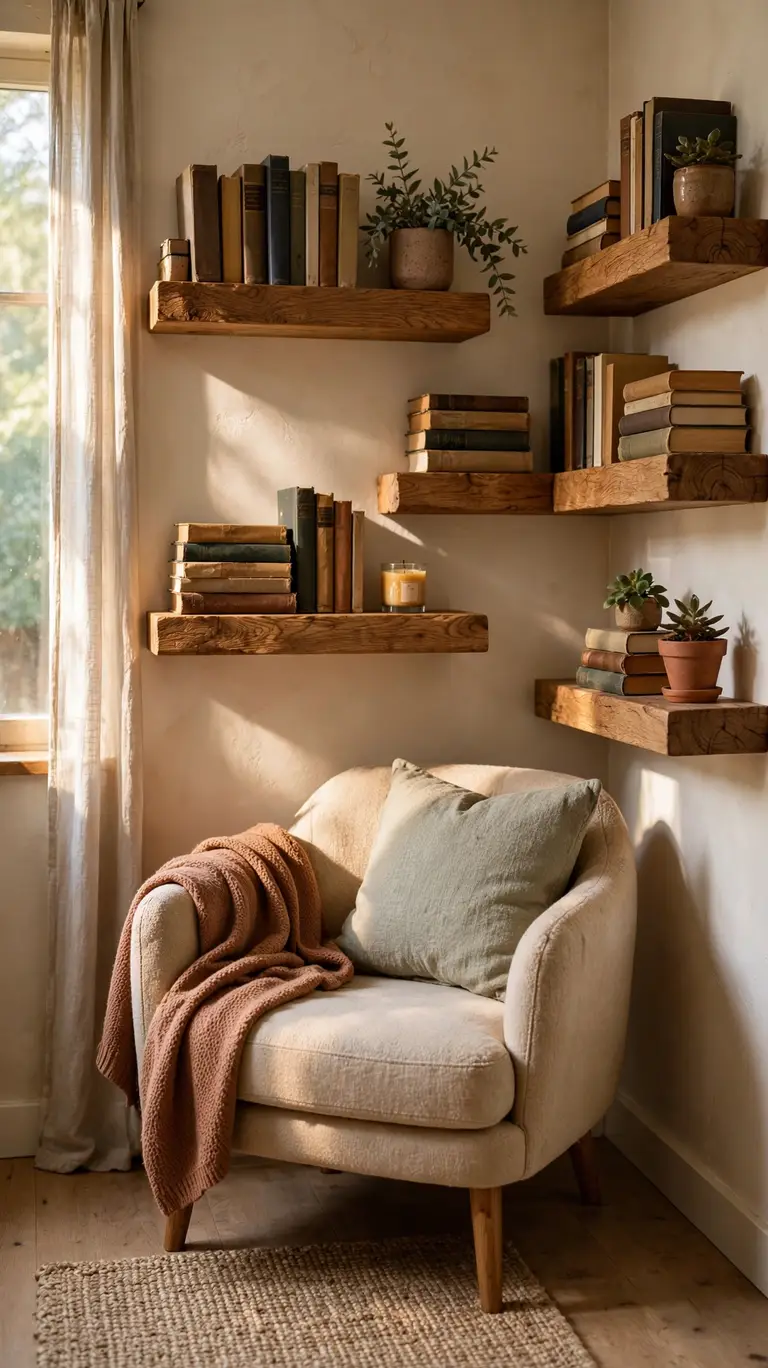
Floating shelves are ideal for small libraries because they add book storage without adding any furniture footprint at all. A short row of floating shelves above or beside your reading chair keeps your current stack, a bookend, and a small lamp within reach while leaving the floor completely clear. Two or three chunky shelves hold a surprising number of books, and they double as display space for a plant or a candle.
Install the shelves at a height you can comfortably reach from a seated position, usually a little above shoulder height for the top shelf. Use sturdy brackets rated for the weight of books, since books are far heavier than most people estimate, and fasten into studs wherever possible. Arrange the books by the ones you are reading or re-reading often, and keep the look calm by leaving some open space. If the shelves wrap around a corner, even better, because corner shelving uses dead space that would otherwise sit empty.
4. Use a Ladder Shelf for Narrow Corners
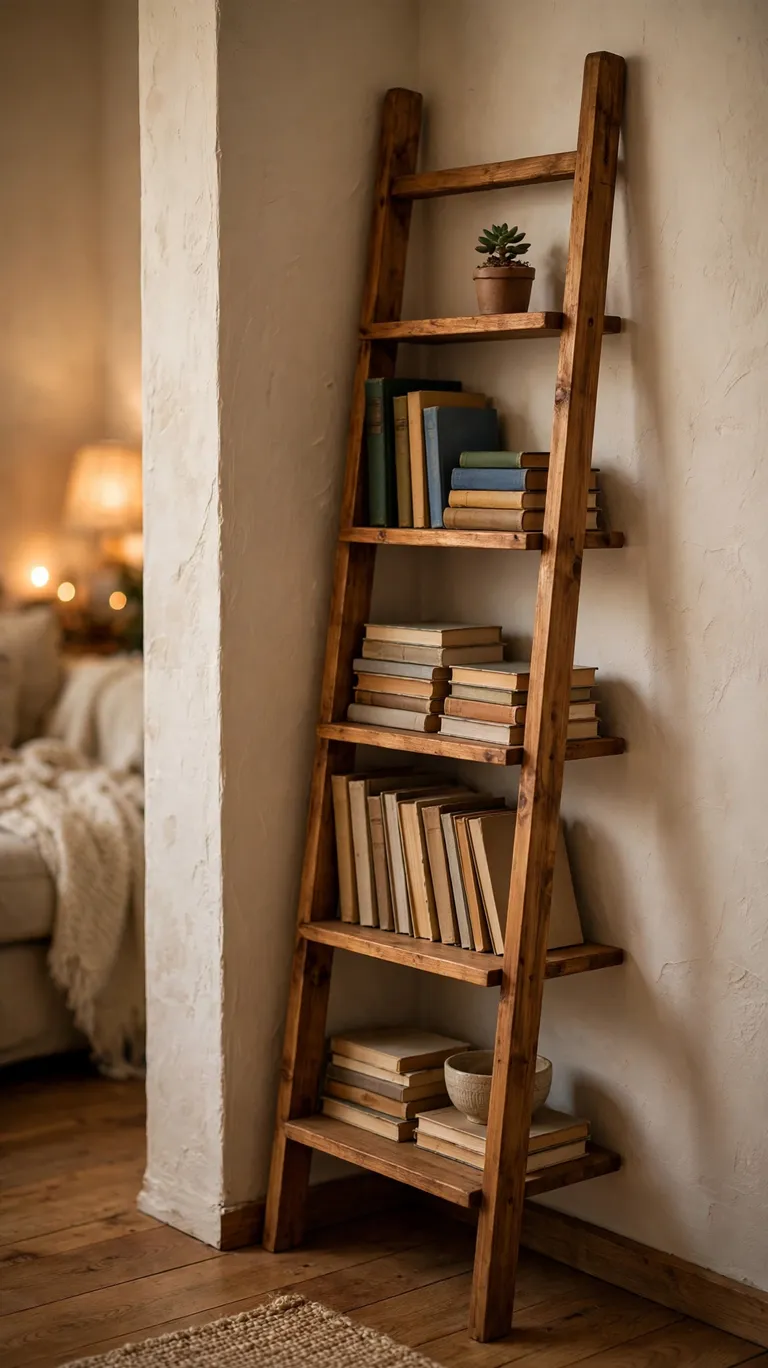
Ladder shelves lean against the wall and fit into corners and narrow gaps where a standard bookcase would feel bulky. The graduated shelves are shallow, which suits paperbacks, small hardcovers, and stacked magazines perfectly. Because the design is open and airy, it keeps a small corner feeling light instead of boxed in. They also look good from the side, so you can use one to divide space without creating a visual wall.
Style each shelf with a mix of books and a few decorative items, since the open sides make everything visible. Keep heavier books on the lower, deeper shelves and lighter items up top for stability. Anchor the top to the wall with a small bracket, because leaning shelves can creep forward when loaded. A ladder shelf works especially well next to a reading chair, where it functions as your personal mini library within arm’s reach.
5. Layer Warm Task Lighting Beside the Seat
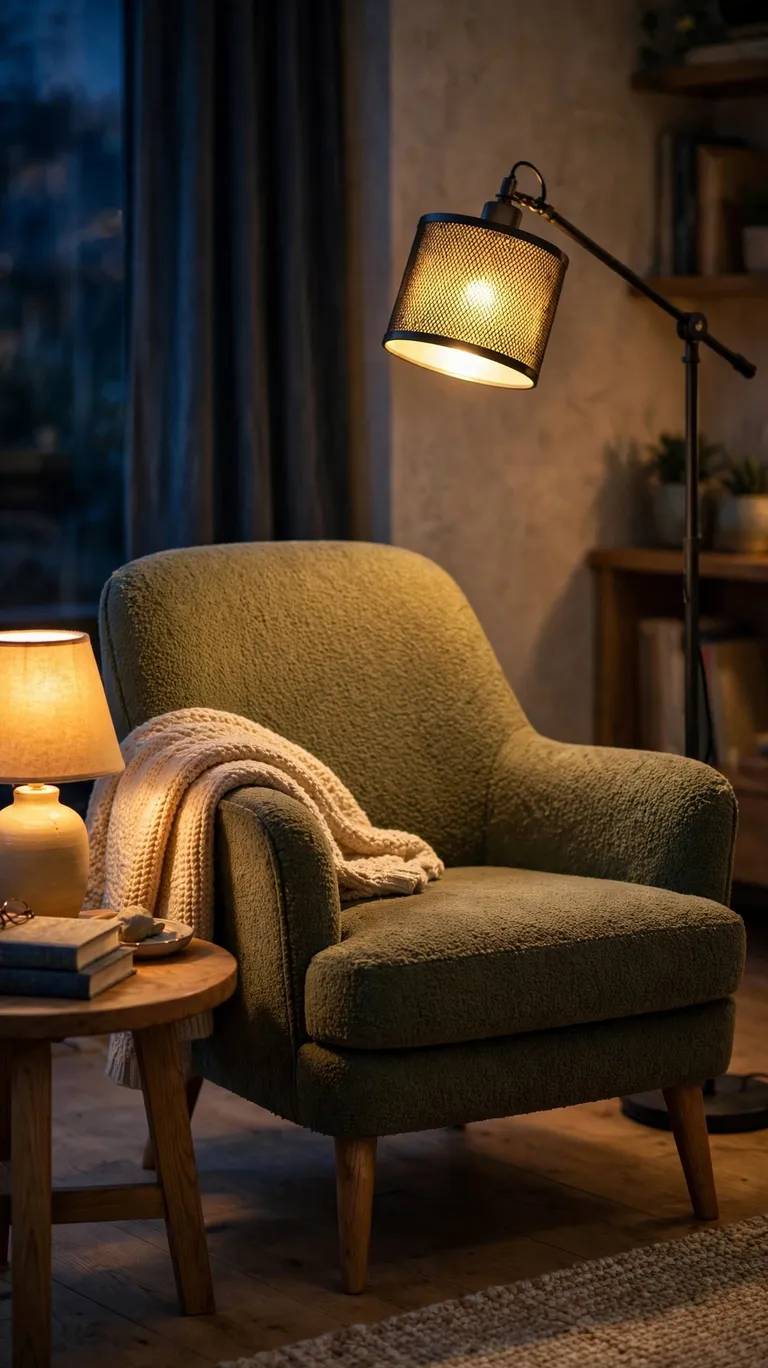
Good light is what separates a reading corner from a corner with a chair in it. A floor lamp with an adjustable arm placed behind or beside the chair puts light directly on your page without lighting up the whole room. Choose a warm white bulb that reads like lamplight, and aim it over your shoulder so it lights the book without shining in your eyes. A dimmable lamp is worth the small extra effort because it lets you match the light to the time of day.
Add a second, softer layer of light somewhere nearby, a small table lamp on the side table or a battery candle on a shelf, so the corner glows instead of glaring. This layered setup keeps your eyes comfortable during long sessions and makes the nook feel inviting even when you are not reading. If your chair faces a dark wall, the lamp light bouncing off it creates a lovely ambient wash. Position cords along the wall or under a small rug so they do not become a tripping hazard.
6. Convert the Closet into a Reading Nook
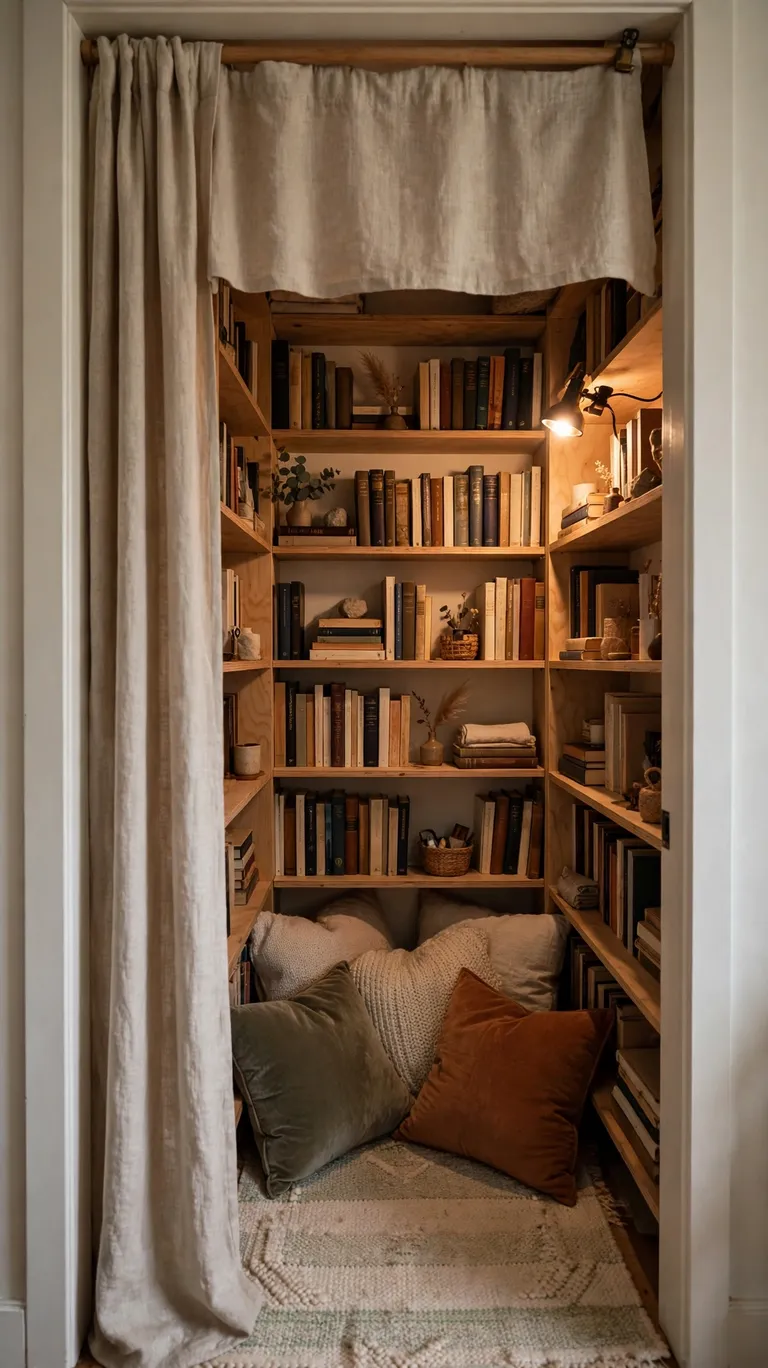
A spare closet is often the perfect hidden library waiting to happen. Remove the doors, paint the inside a cozy color, and add shelving on the back and side walls for your books. A low bench or a floor cushion with a thick pad turns the closet floor into seating, and a small clip lamp or a battery-operated wall light gives you reading light without any wiring. It feels like a secret little room, which most readers absolutely love.
Keep the depth in mind: closets are narrow, so use the side walls for shelves and leave the center clear for sitting. Add a small curtain or fabric panel instead of doors so you can close it off when you want the cozy feeling and open it up when you need light. This works especially well for kids and teens, who tend to adopt closet nooks as their favorite spot in the house. Line the floor with a soft rug or a pile of cushions to make sitting on the floor comfortable for long stretches.
7. Build Shelving Around the Doorway
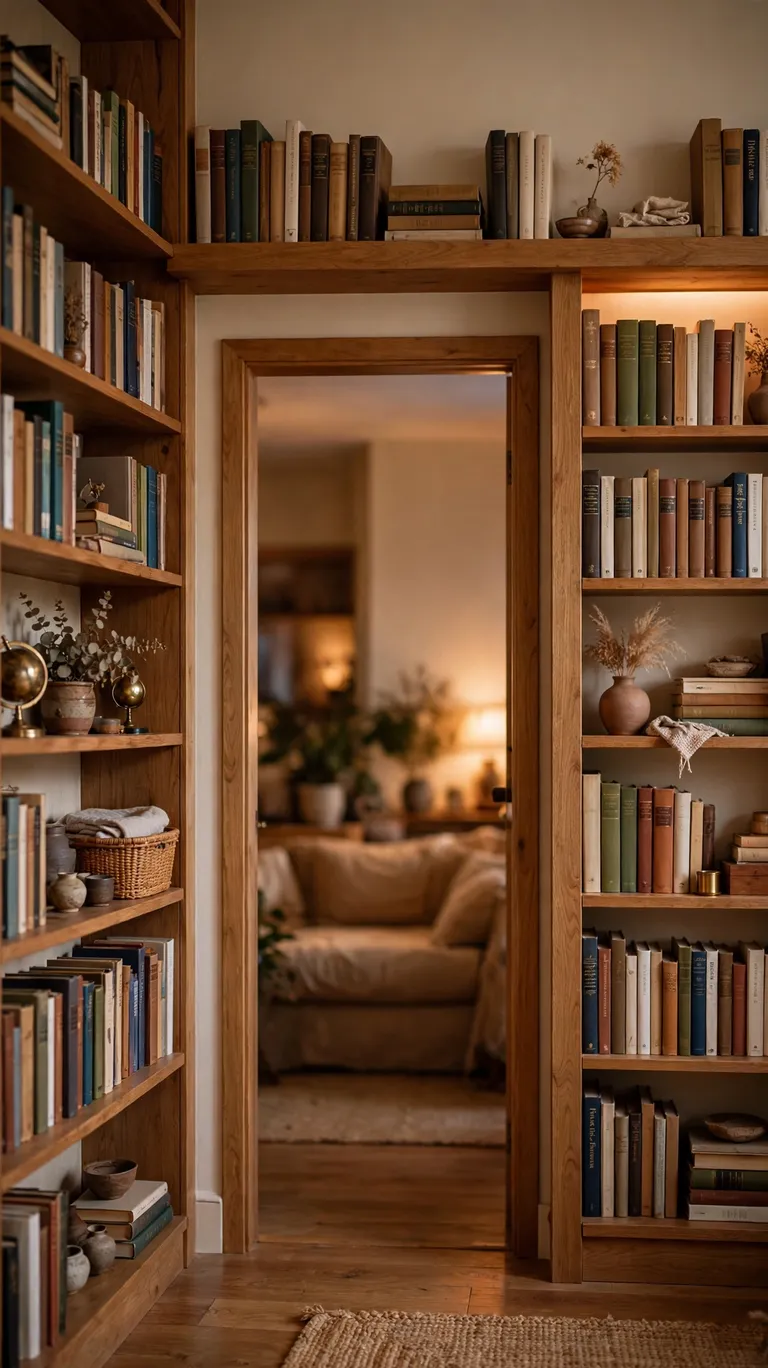
The wall space around a doorway is easy to overlook, and in a small room it can hold a lot of books. Bookcases on either side of a door frame, plus a shelf spanning above the door, turn a plain doorway into a library archway. This works best on interior doors in bedrooms and living rooms where the trim is simple and the wall space beside the door is at least as wide as a narrow bookcase.
Measure carefully before buying cases, since doorways are rarely perfectly centered. Keep the shelves above the door for lighter paperbacks and decorative boxes, and use the side cases for your everyday books. Paint the cases to match the door trim for a built-in look, or leave them as a contrasting accent if you want the library feel to stand out. This setup is especially smart in hallways and entry rooms, where it turns transitional space into a destination.
8. Add a Window Seat with Book Storage
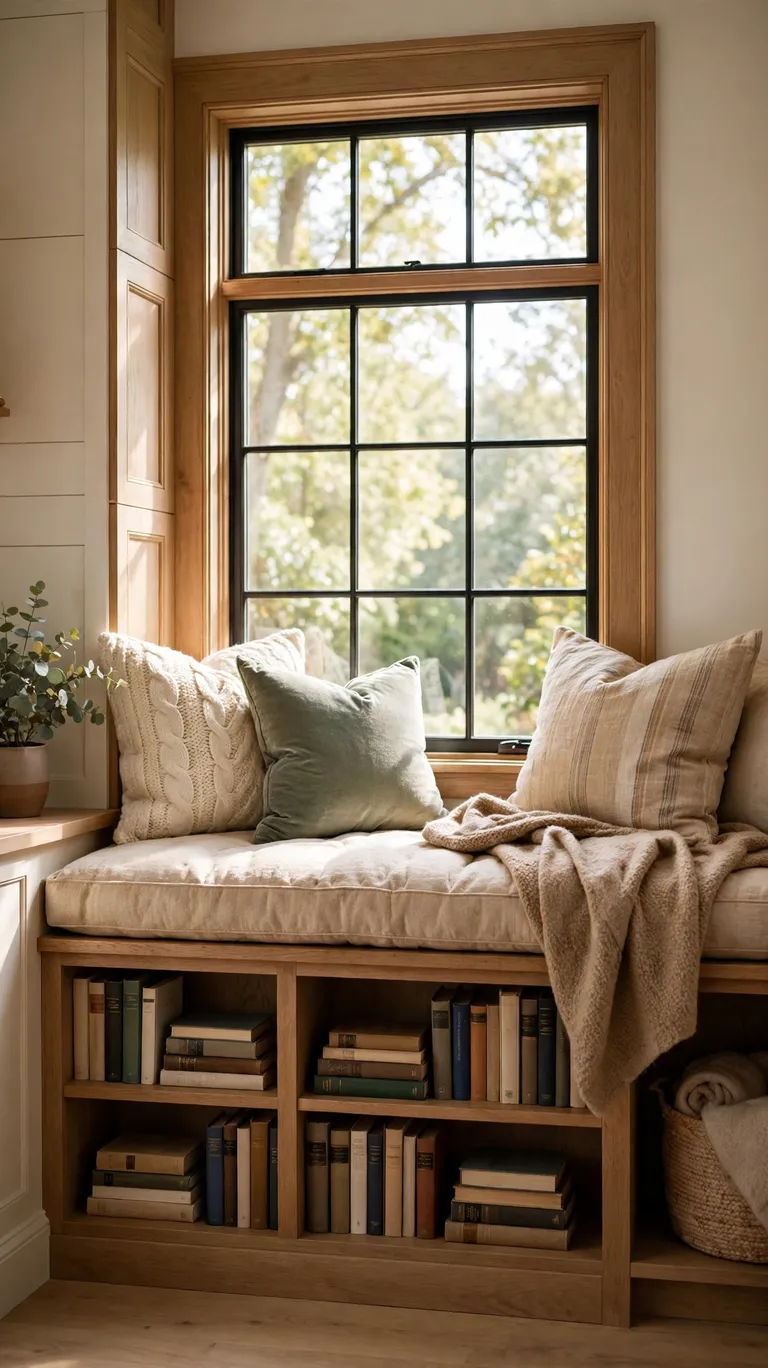
A window seat gives you the best reading light there is, and if you build book storage into it, it pulls double duty. A simple bench under the window with open shelves underneath or beside it holds books, throws, and reading glasses within reach of the seat. Add a thick cushion and a row of pillows along the wall side so you can lean back comfortably, and you have a reading spot that doubles as extra seating when guests visit.
Make the seat at least as deep as a dining chair so you can sit cross-legged or stretch out. If the window is drafty, add a weather-seal strip before you commit to long reading sessions there. Store your current reads in the shelves closest to the seat and overflow books farther out. A window seat works in bedrooms, living rooms, and even wide hallways, and it is one of the few library ideas that adds value to the room beyond reading.
9. Try a Rolling Book Cart
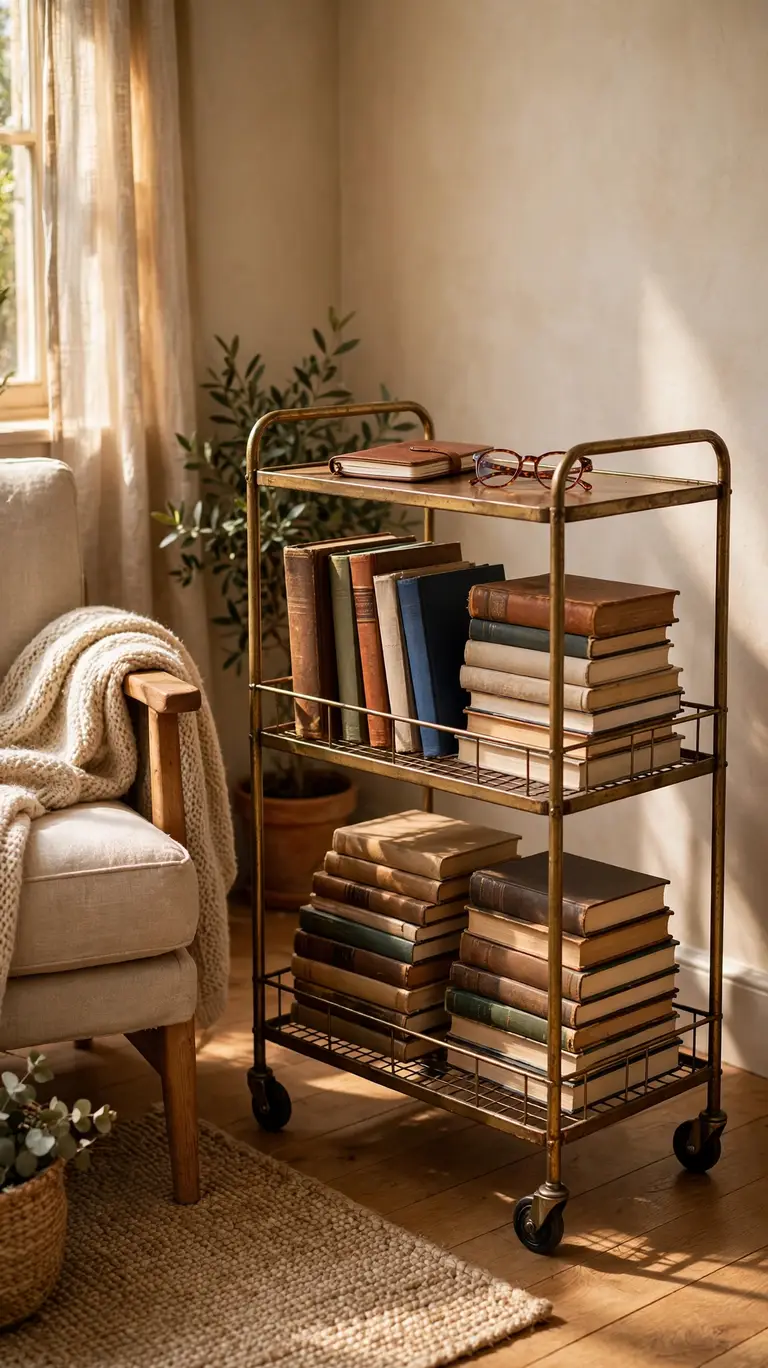
A rolling book cart is the perfect library for people who read in different spots. Load it with your current reads, a bookmark, reading glasses, and a small notebook, then wheel it to the chair, the sofa, or the porch depending on the day. When you are done, it tucks into a corner or a closet and takes up almost no space. Two-tier carts hold plenty, and the rails keep books from sliding off when you move it.
Organize the cart by priority: the top shelf for what you are reading now, the bottom for what is up next. A small tray or pouch hooked on the side holds your lamp, if you use a clip-on reading light, and your phone out of the way. This is also a great solution for renters who cannot install shelving. Because it is mobile, the cart keeps your reading life tidy no matter where in the house you end up sitting.
10. Style Books by Color for a Calm Look
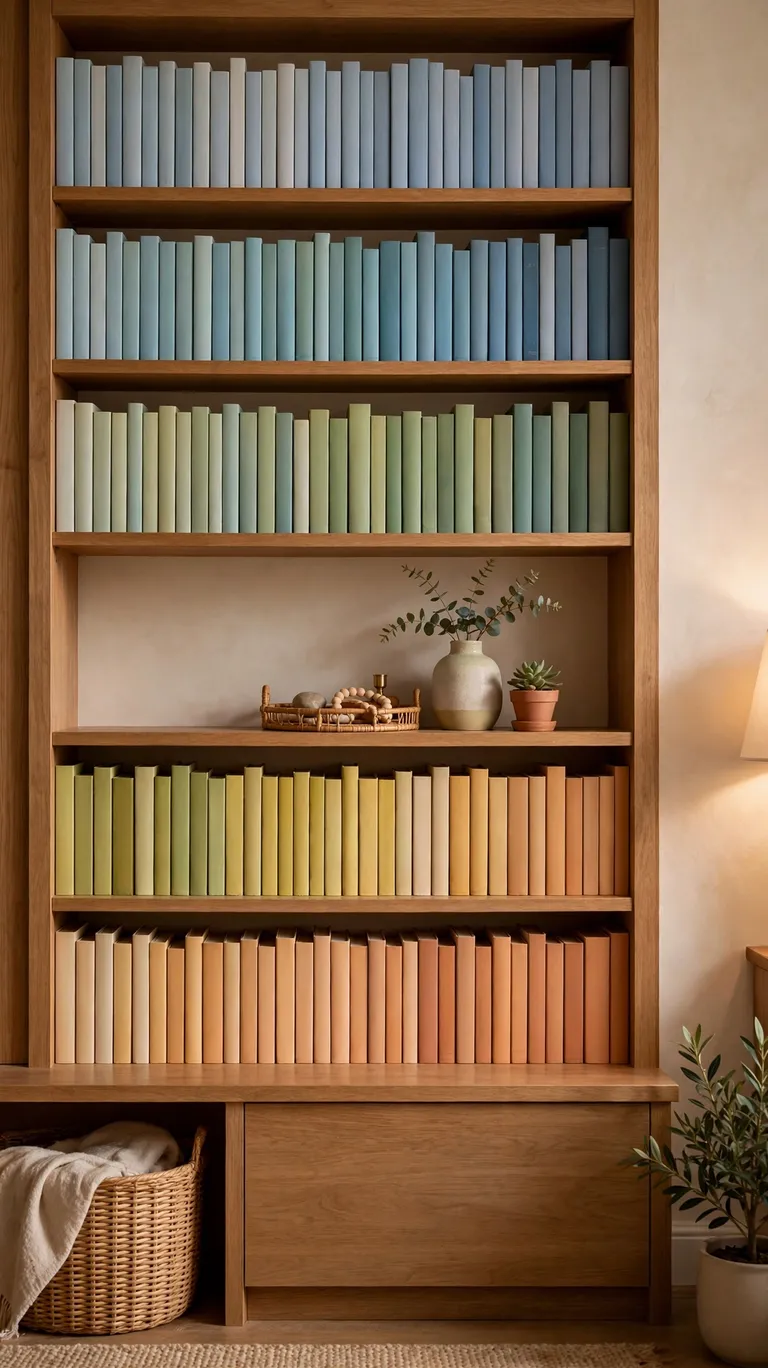
Organizing books by spine color creates a calm, cohesive look that makes a small library feel intentional instead of cluttered. Group books into color families, warm tones together, cool tones together, and let the gradient flow across the shelves. This works best on open shelving where the books are a major visual element, and it photographs beautifully. It is also surprisingly easy to maintain once you get into the habit.
Keep a small practical zone separate if you reference books often, since color order makes finding a specific title slower. Many readers split the difference: a color-styled section for display shelves and a normal alphabetical section for heavily used books. Dust the shelves as you rearrange, since books sitting in place for months collect it. This styling choice does not change how you read, but it changes how the whole room feels, which matters in a small space.
11. Add a Soft Rug to Anchor the Corner
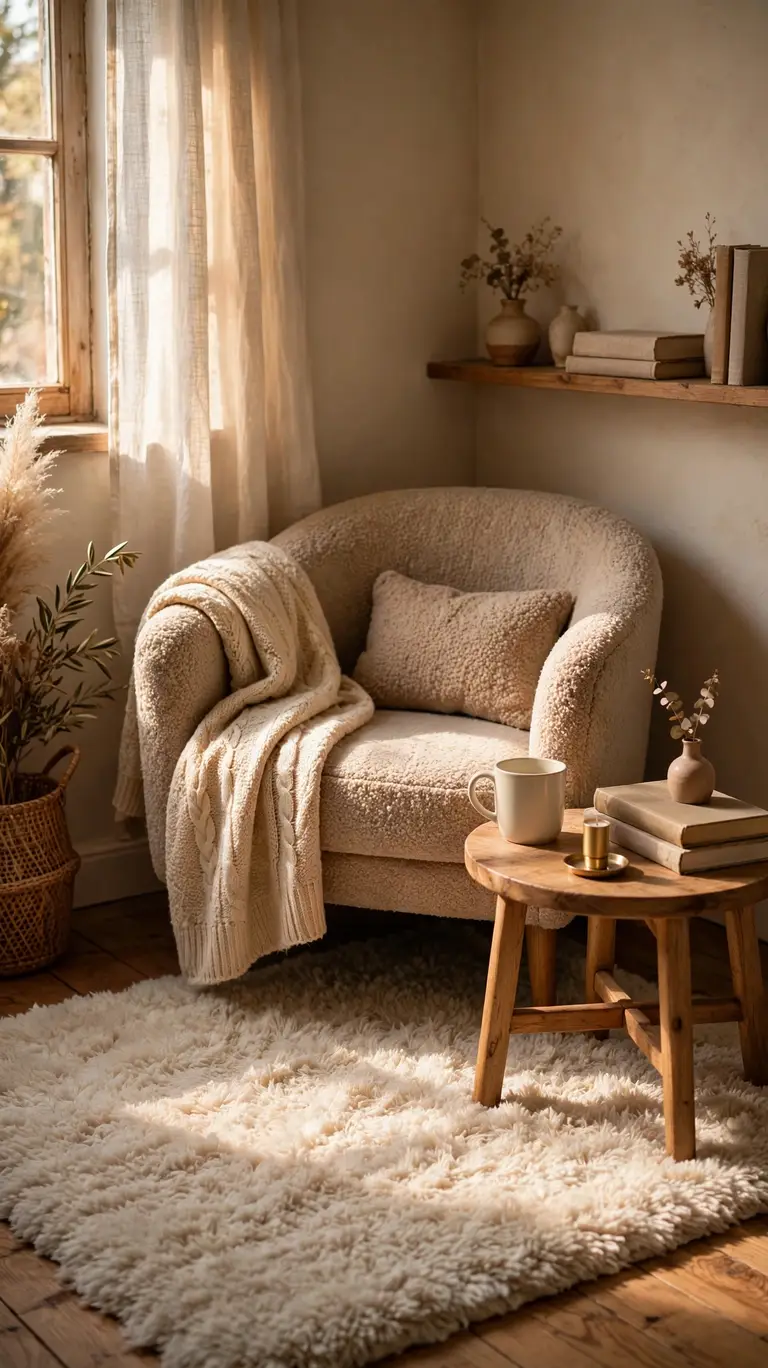
A rug is the fastest way to define a reading corner in an open room. Place your chair, side table, and a small bookshelf on a soft rug and the area instantly reads as its own little zone. Choose something plush enough to feel good under bare feet, since you will likely be sitting with your shoes off. A low-pile or flatweave rug is easier to clean if you eat or drink while reading, and it still feels cozy.
Size the rug so the front legs of your chair sit on it, which visually anchors the furniture. In very small rooms, a round rug works well because it softens the hard corners of the space. Layer a smaller sheepskin or a quilted throw over the rug for extra warmth in winter. The rug also dampens sound, which makes the corner feel quieter and more private even in a busy house.
12. Hang a Curtain to Create a Reading Alcove
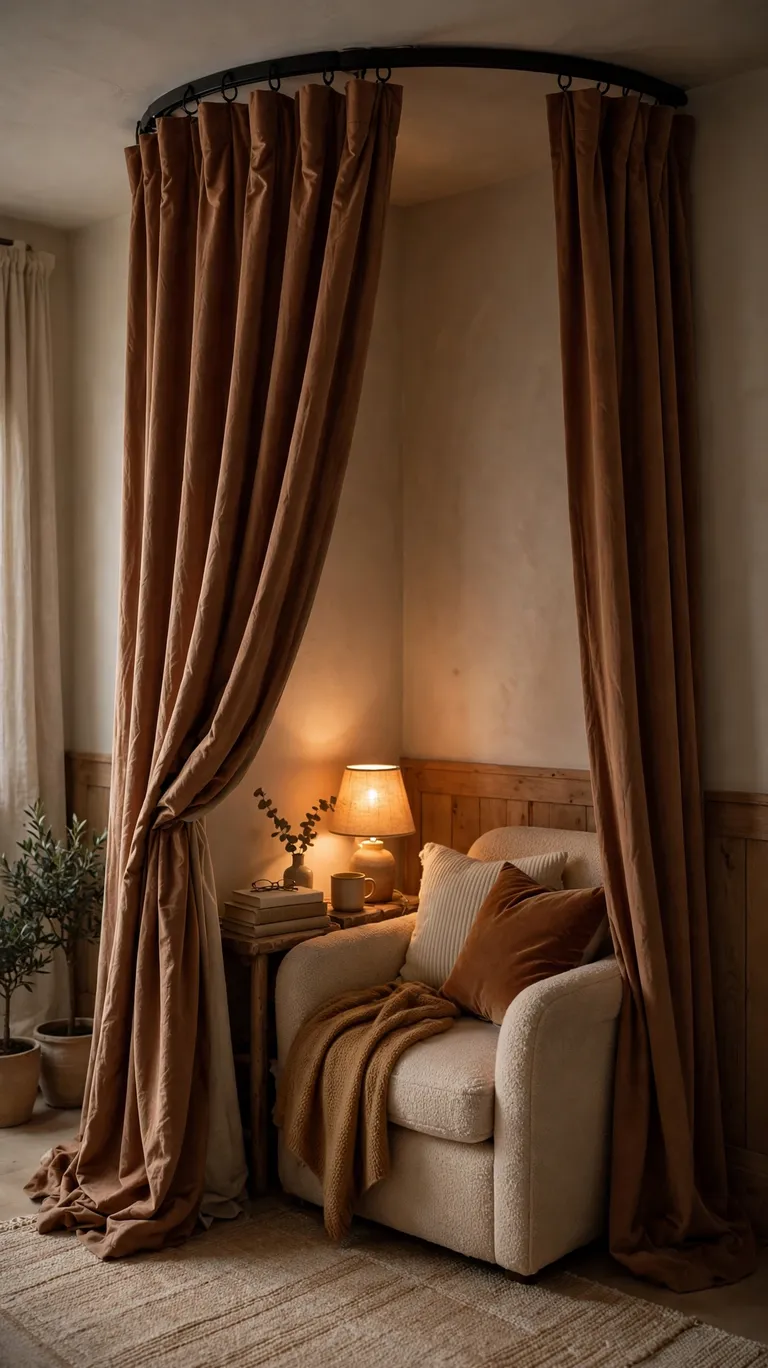
A ceiling-mounted curtain rod and a heavy curtain can carve a private reading alcove out of any room in about an hour. Hang the curtain across a corner or along one side of your reading chair, and you can pull it closed for a cocoon feeling or leave it open when you want light. Thick fabric blocks visual clutter and muffles sound, which helps you focus. It is one of the cheapest ways to make a small space feel like a separate room.
Choose a fabric you love looking at, since the curtain will be a major visual element. Linen or cotton in a warm neutral works in most rooms, and a heavier velvet or wool blend adds real sound softness. Mount the rod as close to the ceiling as possible so the fabric falls full-length, which looks better and blocks more light. This trick works especially well in shared bedrooms and studio apartments where a private corner is hard to come by.
13. Use the Space Under the Stairs
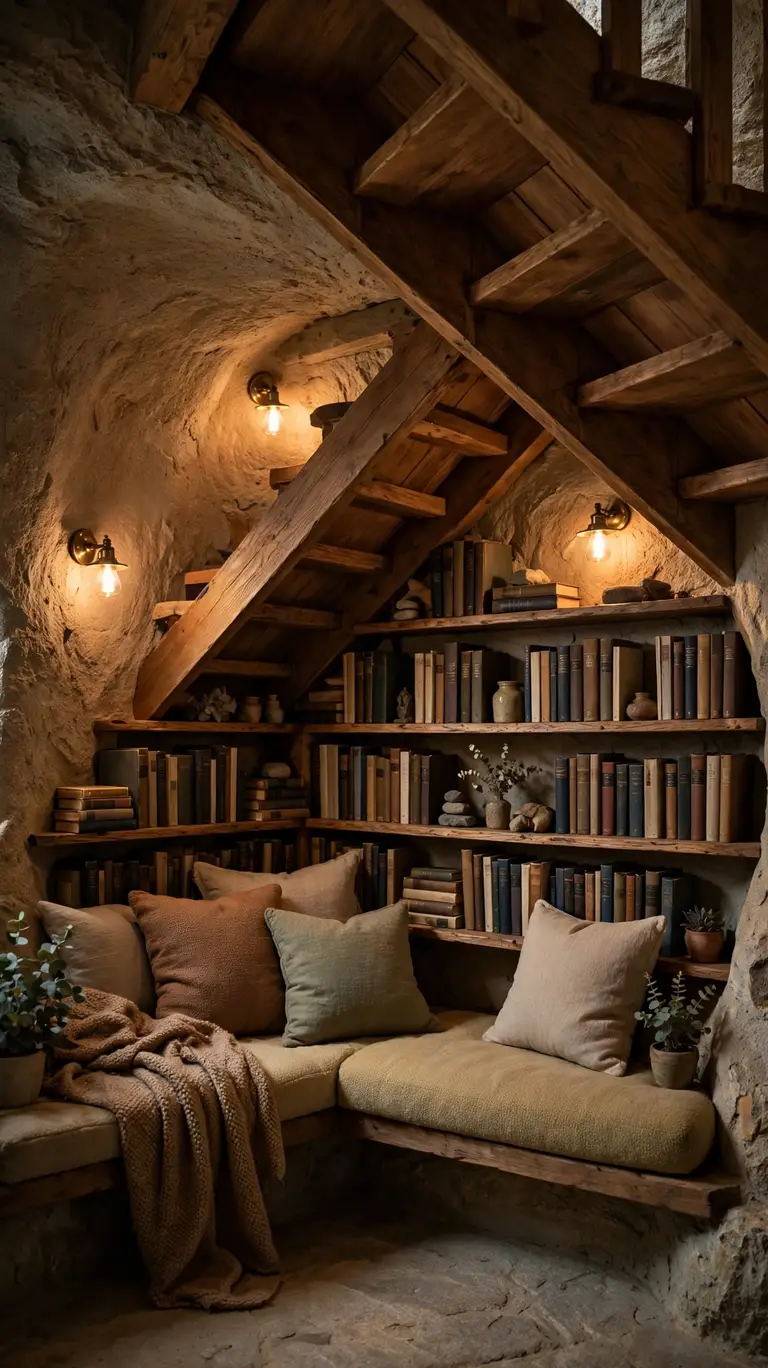
The space under the stairs is often the most underused square footage in a house, and it is naturally suited to a small library. Line the back wall with shallow shelves for books, add a comfortable cushion or a small upholstered bench for seating, and install a warm wall light or two along the slope. The slanted ceiling feels cave-like in the best way, and the enclosed shape is naturally cozy.
Work with the slope rather than fighting it: put short shelves and storage under the lowest part and your seating where the ceiling is tallest. Add a small curtain or a sliding panel if the space is open to a busy hallway, so you can close yourself in. Because under-stair areas can be dark even in daytime, lighting is essential, so use two light sources rather than one to avoid shadows. Measure the height carefully before buying any furniture, since standard chairs rarely fit under a stair slope.
14. Install Picture Ledge Shelves for Book Covers
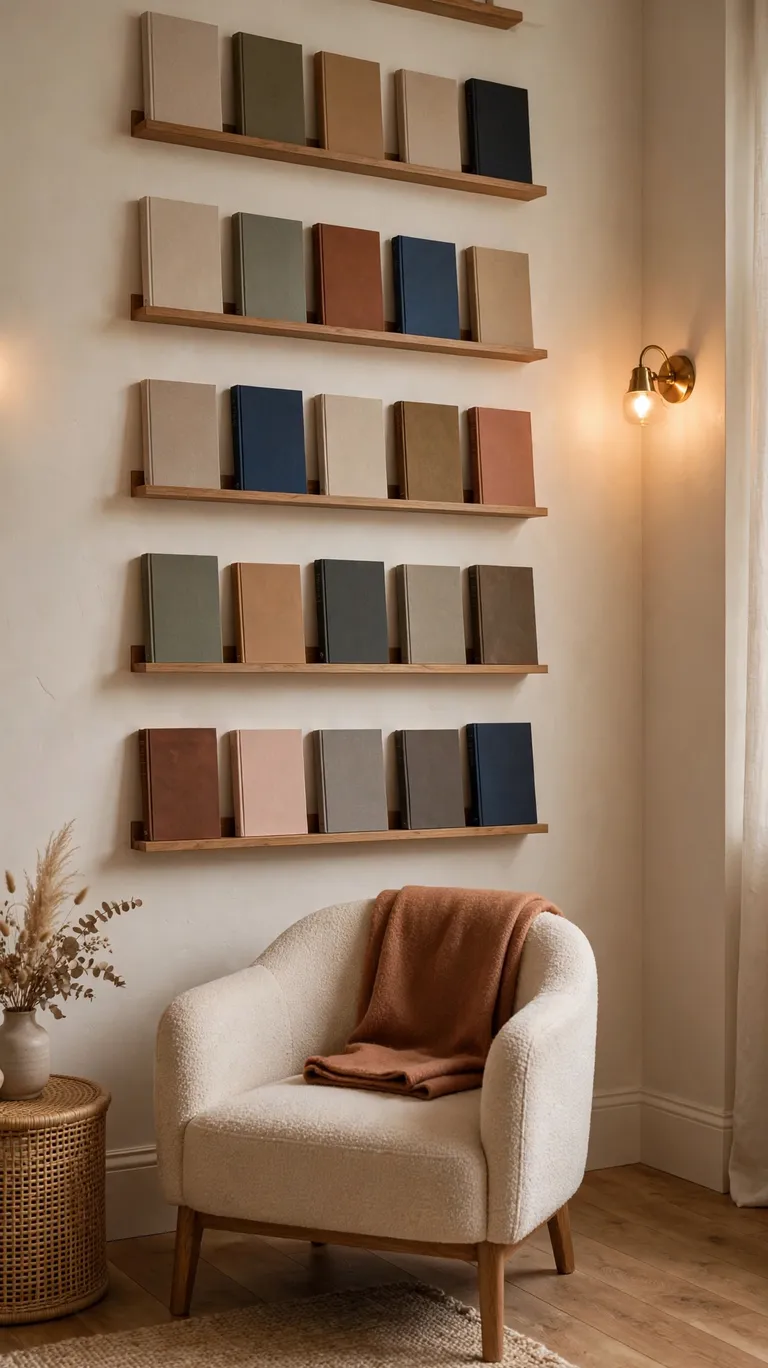
Picture ledge shelves display books facing out, so their covers become the decoration. A few narrow ledges on the wall behind or beside your reading chair show off beautiful editions and your current reads like a mini bookstore display. This is perfect for coffee table books, art books, and children’s books with lovely illustrations, which deserve to be seen rather than spine-shelved.
Ledges hold fewer books than a bookcase, so use them for a rotating display rather than permanent storage. Swap the featured books every few weeks to keep the wall feeling fresh. Space the ledges so taller books fit on at least one row, and use a small lip or rail to keep books from sliding off. This is an affordable project, just a few boards and brackets, and it adds a gallery feel to your reading corner.
15. Choose a Storage Ottoman as a Side Table
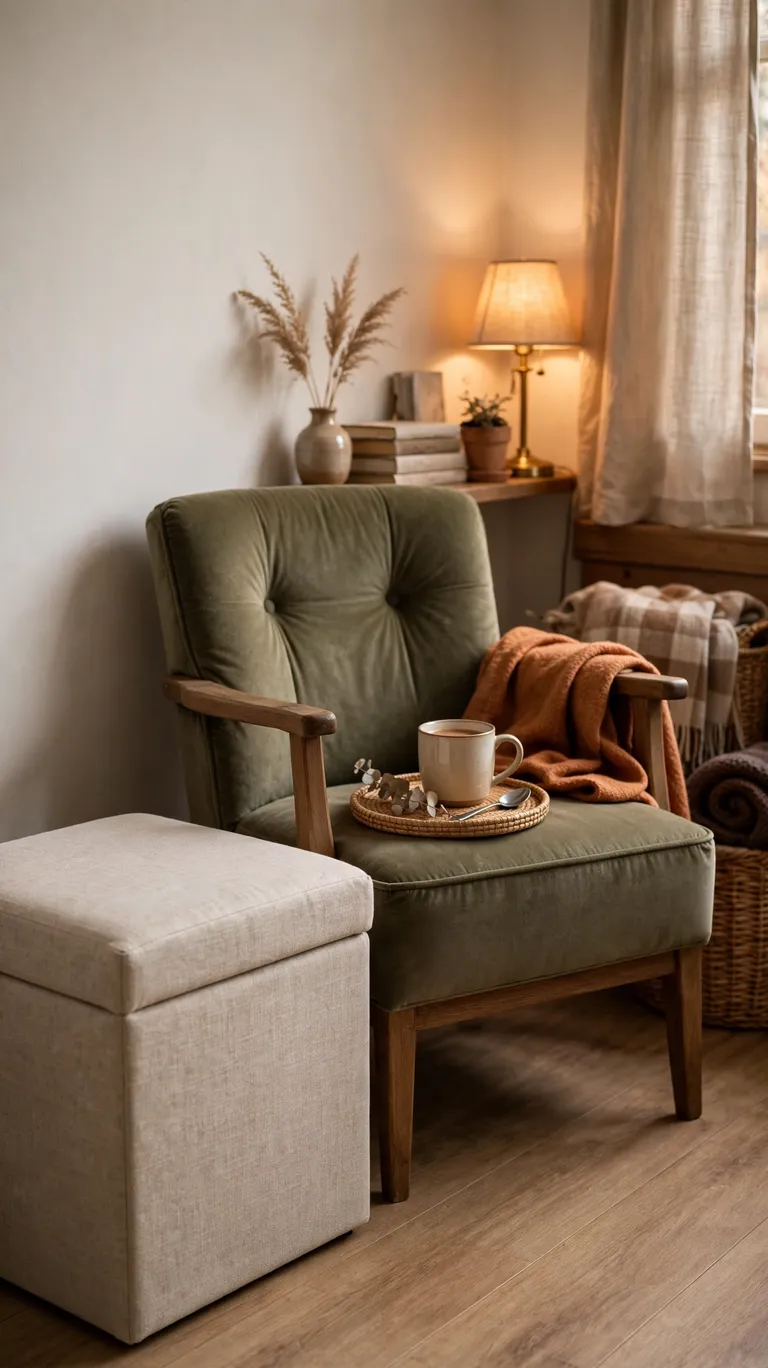
A storage ottoman beside your reading chair gives you a footrest, a side table, and hidden storage in one piece of furniture. Tuck your current reads, a spare blanket, and reading glasses inside the lid, and use the top for your tea when your feet are elsewhere. In a small room, every piece of furniture should do at least two jobs, and an ottoman does three.
Pick one with a flat, firm top so it works as a table surface, or add a small tray on top to steady mugs. Choose a size that matches your chair height so it works comfortably as a footrest. A fabric ottoman in a warm tone doubles as extra seating when friends visit. Because everything inside is hidden, the ottoman keeps the reading corner looking tidy even when your reading pile grows.
16. Add Greenery for a Fresh Library Feel
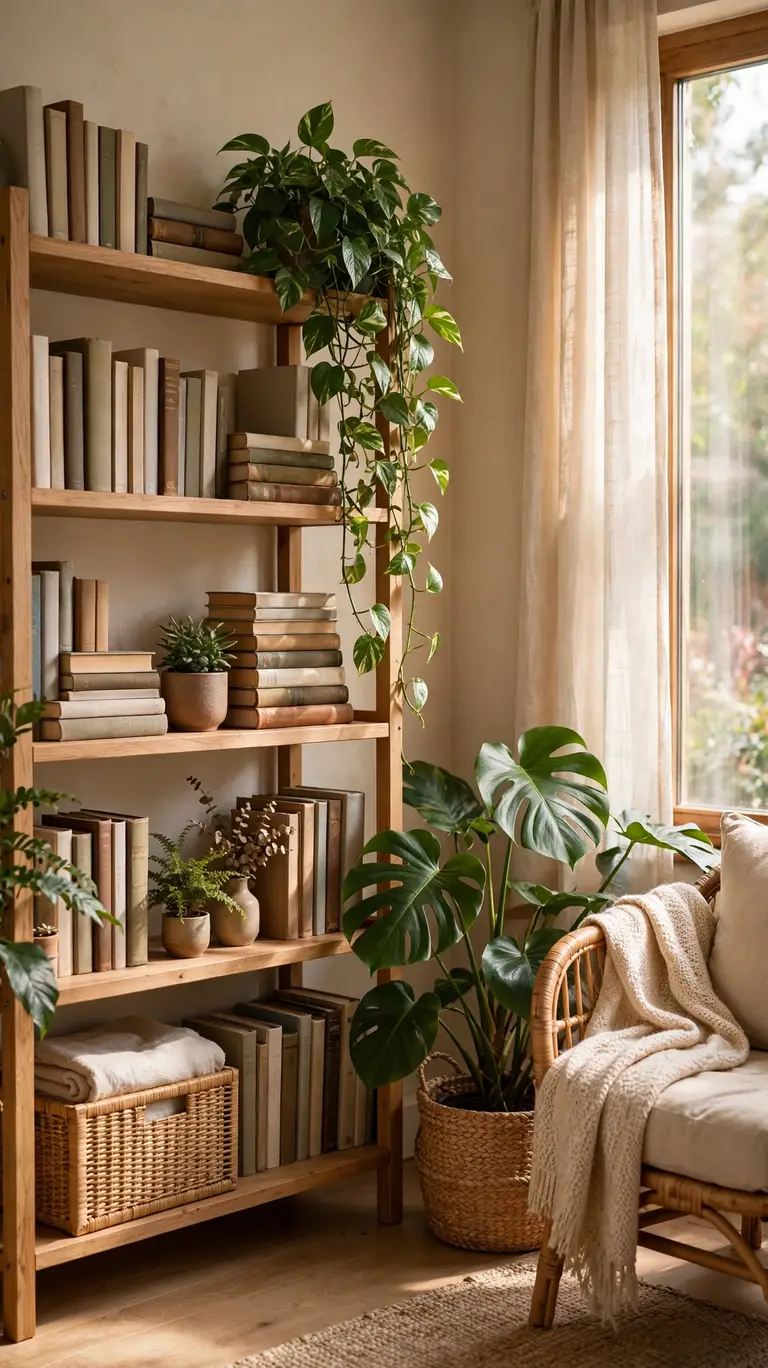
A plant or two makes a book corner feel alive instead of stuffy. Place a trailing plant on top of a bookcase, a small potted plant on a shelf between books, and a larger floor plant in an empty corner nearby. The green breaks up rows of spines and adds a natural softness that makes the space feel calm. Choose low-maintenance plants that tolerate indoor light, since reading corners are often in the dimmer parts of a room.
Be practical about placement: keep plants away from direct contact with book spines, since watering accidents and damp leaves can damage paper. Use pots with saucers or self-watering inserts, and wipe leaves occasionally so they stay dust-free. If the corner gets almost no natural light, choose plants that tolerate low light or use a small grow bulb in your lamp. Even one healthy plant changes the feeling of a reading space noticeably.
17. Create a Reading Spot for Two
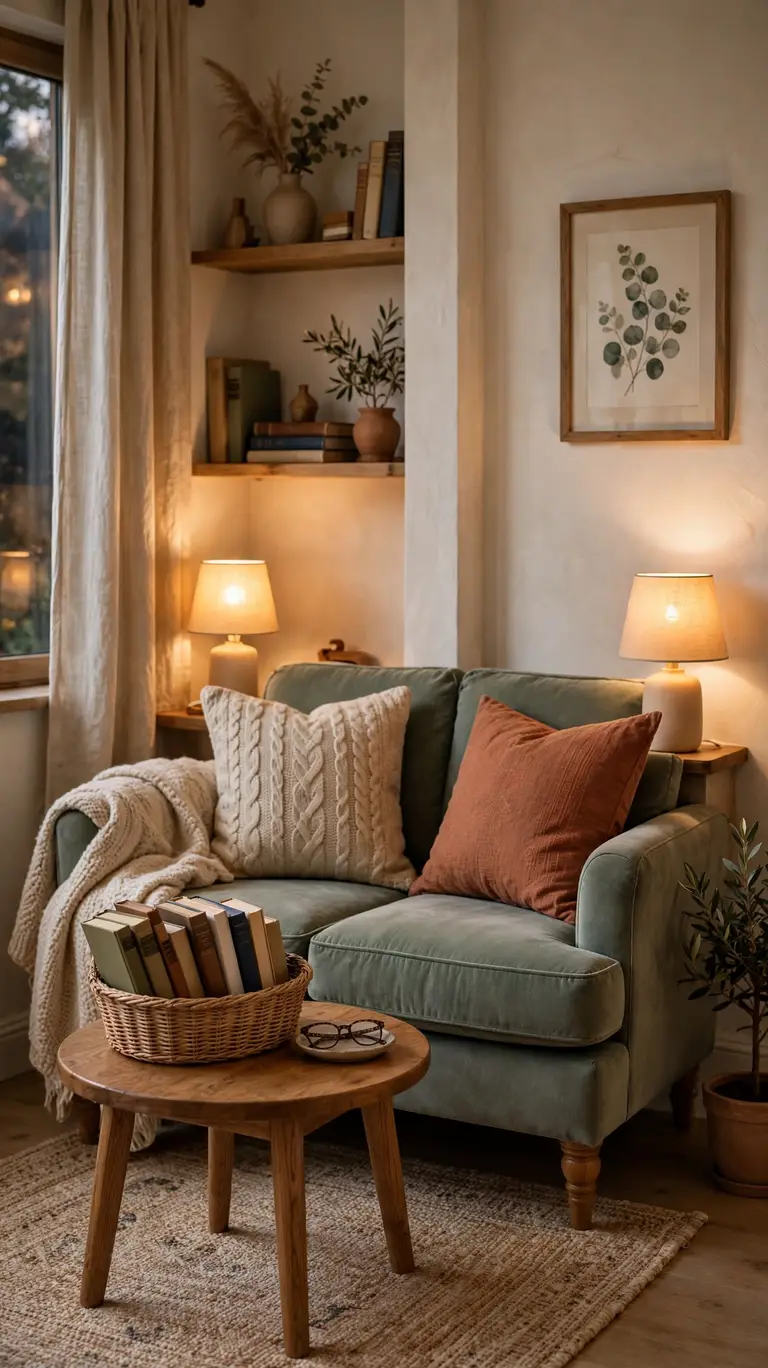
Reading is often a shared activity, especially in families, so consider seating for two. A small loveseat, a wide bench with cushions, or two chairs angled toward each other with a shared side table turns the library into a place for reading together. Kids can sprawl next to a parent with their own books, and couples can read side by side in the evening. The shared setup also makes the corner feel more like a room and less like a solitary perch.
Arrange the seating so both readers get good light, which may mean two small lamps instead of one big one. Keep a shared basket of books between the seats for easy swapping. If space is tight, a bench with a cushion takes up less room than two chairs and doubles as storage underneath. This setup invites reading as a habit the whole household shares, which is the real goal of a home library.
18. Use Vertical Space with Stacked Crates
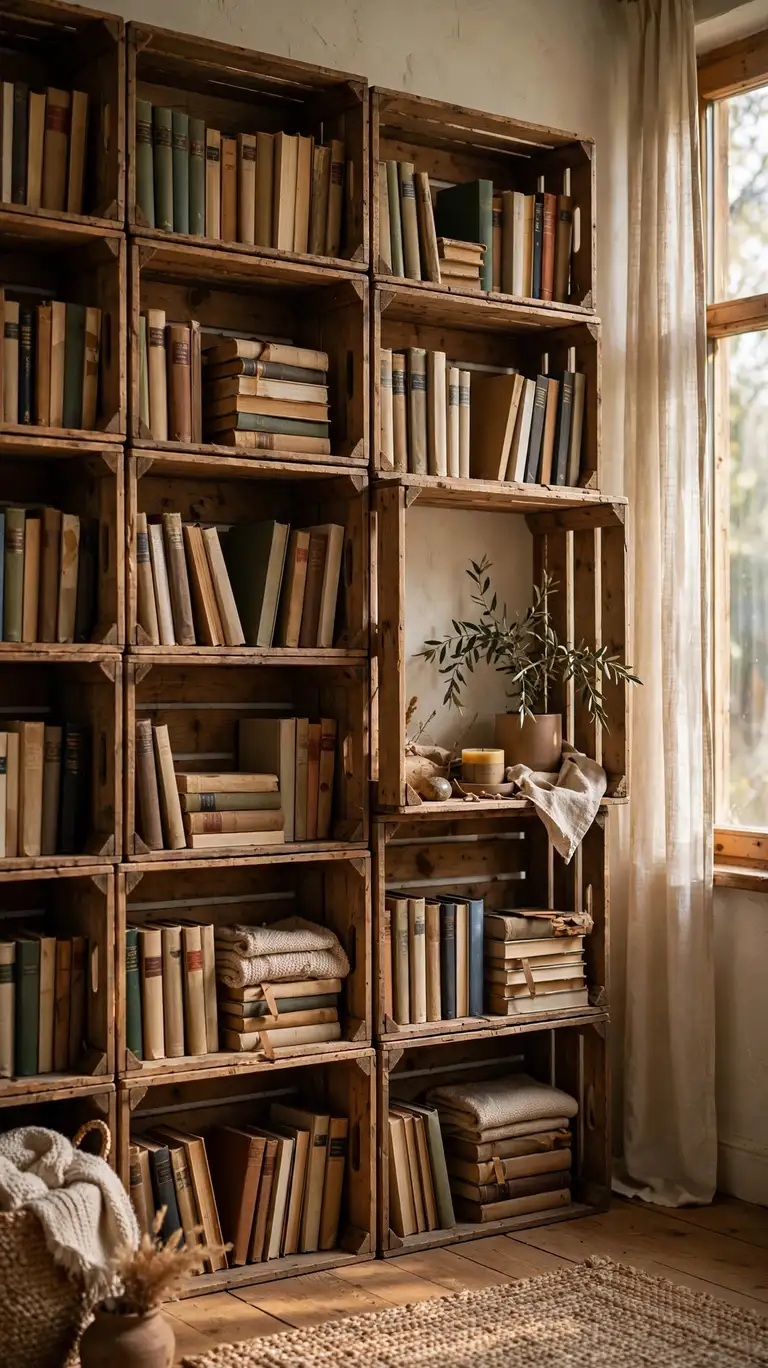
Wooden crates stacked on their sides make flexible, affordable bookshelves that fit almost any small space. Stack them two or three high against a wall, secure them to each other and to the wall with small brackets, and each cube becomes a little book cubby. You can arrange them in a straight column, a staircase pattern, or a loose cluster depending on your wall. The look is casual and warm, and the whole project costs very little.
Sand and seal the crates before loading them with books, since rough wood can snag covers and pages. Place heavier books in the bottom crates for stability, and anchor the stack to a stud so it cannot tip. Leave one or two cubes open for a plant or a storage box to keep the look balanced. Because crates are modular, you can rearrange or expand the shelves as your collection grows, which makes this ideal for renters and growing libraries.
19. Add a Clip-On Reading Light to the Chair
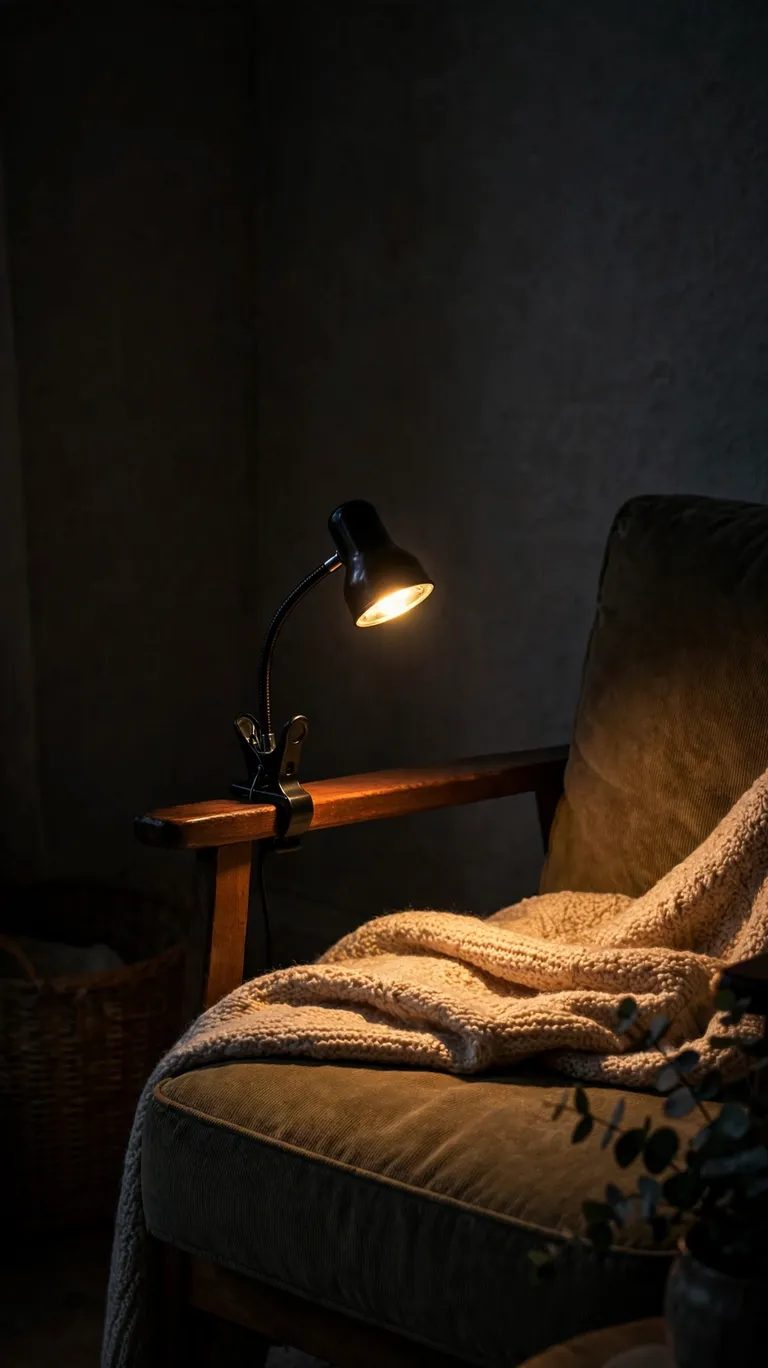
A clip-on reading light is the simplest lighting upgrade you can make. It clamps to the arm of your chair, the headboard, or a shelf edge and puts a focused pool of light exactly on your book. This is perfect for shared rooms where a big lamp would bother someone else, and for small corners where a floor lamp would crowd the space. Many models are battery-powered and rechargeable, so there are no cords at all.
Choose a light with adjustable brightness and a warm color temperature, since cool white light feels harsh in a cozy space. Look for a flexible neck so you can aim the light precisely at the page. Keep the charger or spare batteries in your side table so the light never goes dead mid-chapter. Pair it with your main lamp on dim for layered light, or use it alone for late-night reading when the rest of the house is asleep.
20. Build a Mini Library on a Wide Hallway Wall
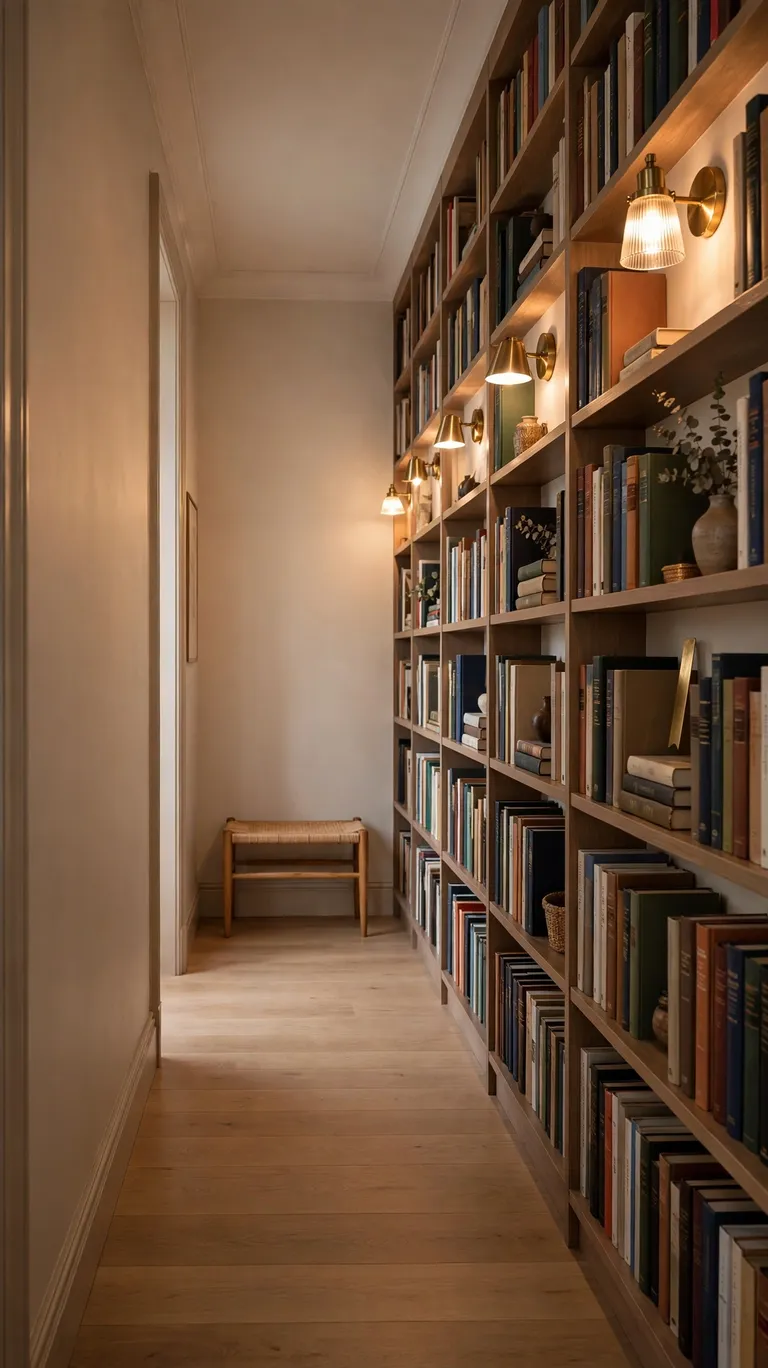
A wide hallway has long empty walls that are perfect for a slim library run. Shallow bookcases or wall-mounted shelves along one side of the hall hold a large collection without blocking the walkway. Choose cases no deeper than a foot so the hall still feels open, and keep the tops styled with a few small objects so it reads as intentional design rather than storage overflow. Add a small bench or a single chair at the end of the hall to create a reading spot.
Keep the walking path clear and well lit, since hallways are traffic routes first. Use consistent shelf spacing and book heights for a tidy look, because a long visible run shows every inconsistency. If the hallway is dark, add picture lights or a row of small wall sconces above the shelves so the books are visible and the hall feels brighter. This turns one of the most boring spaces in a house into one of the most loved.
21. Keep a Cozy Throw Blanket Within Reach
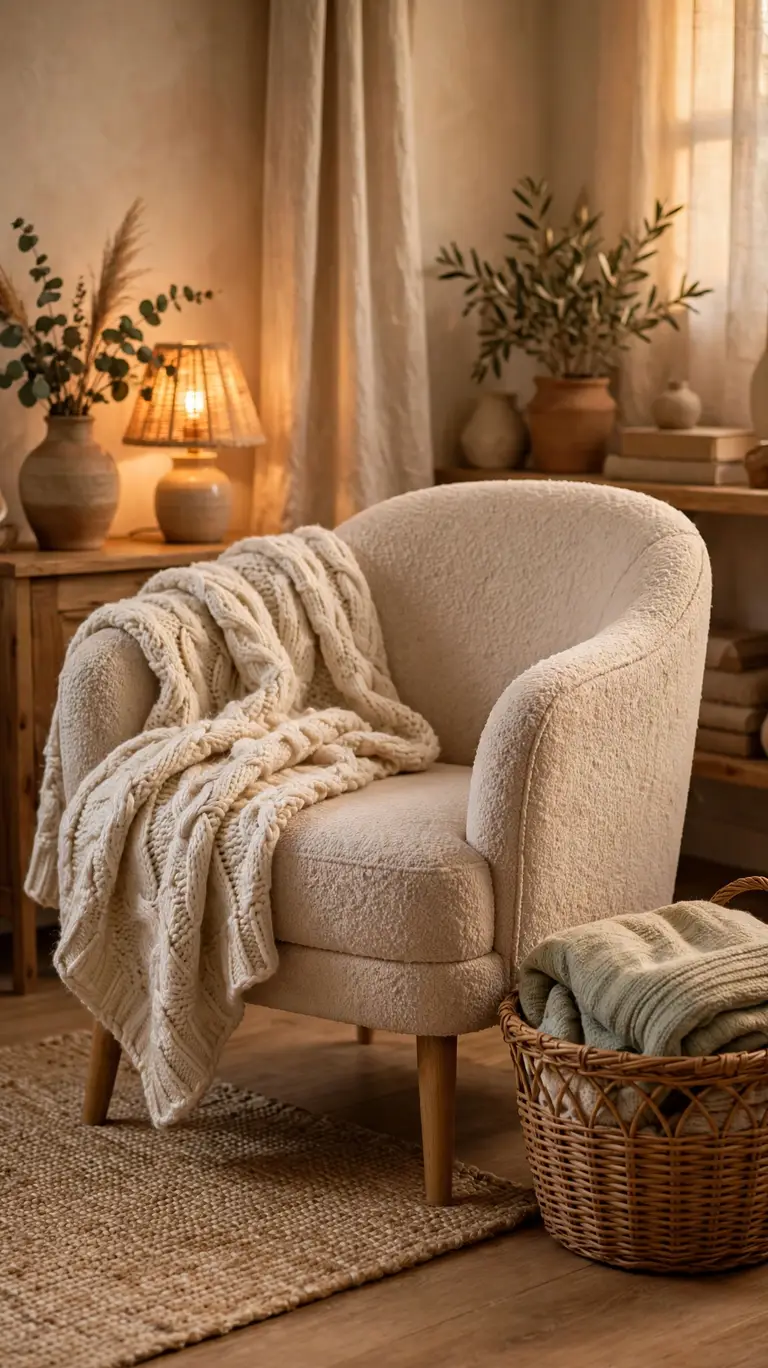
A throw blanket draped over your reading chair is both decoration and essential equipment. The right blanket, something soft, warm, and washable, turns an ordinary chair into a nest. Keep it folded over the arm or back of the chair so it is always within reach, and choose a weight that suits your climate, chunky knit for cold winters, light cotton for mild ones. Readers who stay warm stay reading longer, so this small detail matters more than it seems.
Rotate blankets seasonally if you like a fresh look, and keep a second one nearby for a reading partner. A basket beside the chair holds the blanket neatly when it is not in use and adds to the cozy styling. Wash the blanket regularly, since it will become the most-used textile in the house. This is one of the cheapest upgrades on this list, and it is the one guests always comment on.
22. Dedicate One Shelf to “Currently Reading”
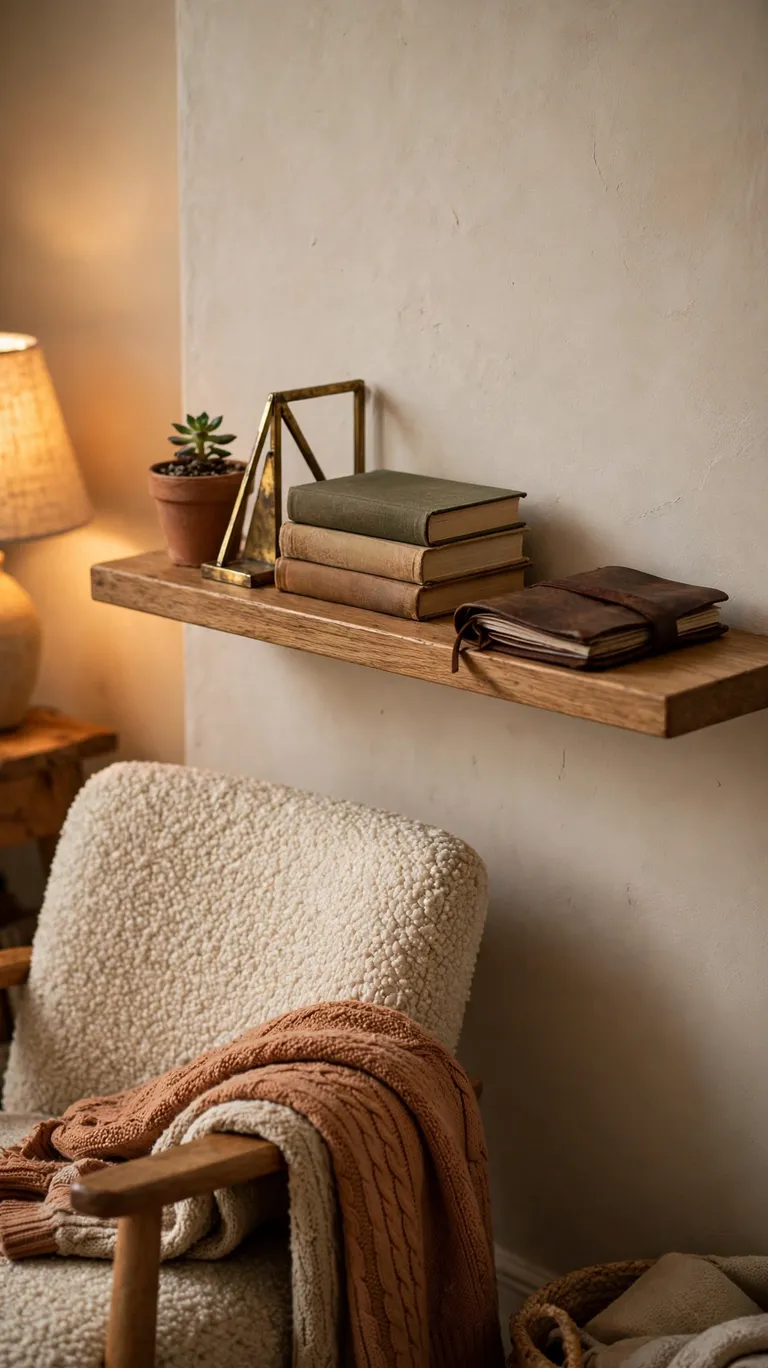
Give your current and next reads their own small shelf, and your library will feel organized no matter how big the collection gets. A single shelf near your chair holds the book you are reading now, the one you will start next, and a small notebook or reading journal. This keeps your active reads visible and separate from the main collection, so you never lose your place in a pile. It also makes the corner feel personal and alive.
Restock the shelf from your main collection as you finish books, and return finished ones to their proper spots. Add a small bookend, a candle, or a tiny plant to keep it styled rather than purely functional. If you track your reading, keep your journal or tracker on this shelf too. This simple habit turns a big, possibly overwhelming collection into a focused, inviting reading queue.
23. Finish with Scent and Sound for Atmosphere
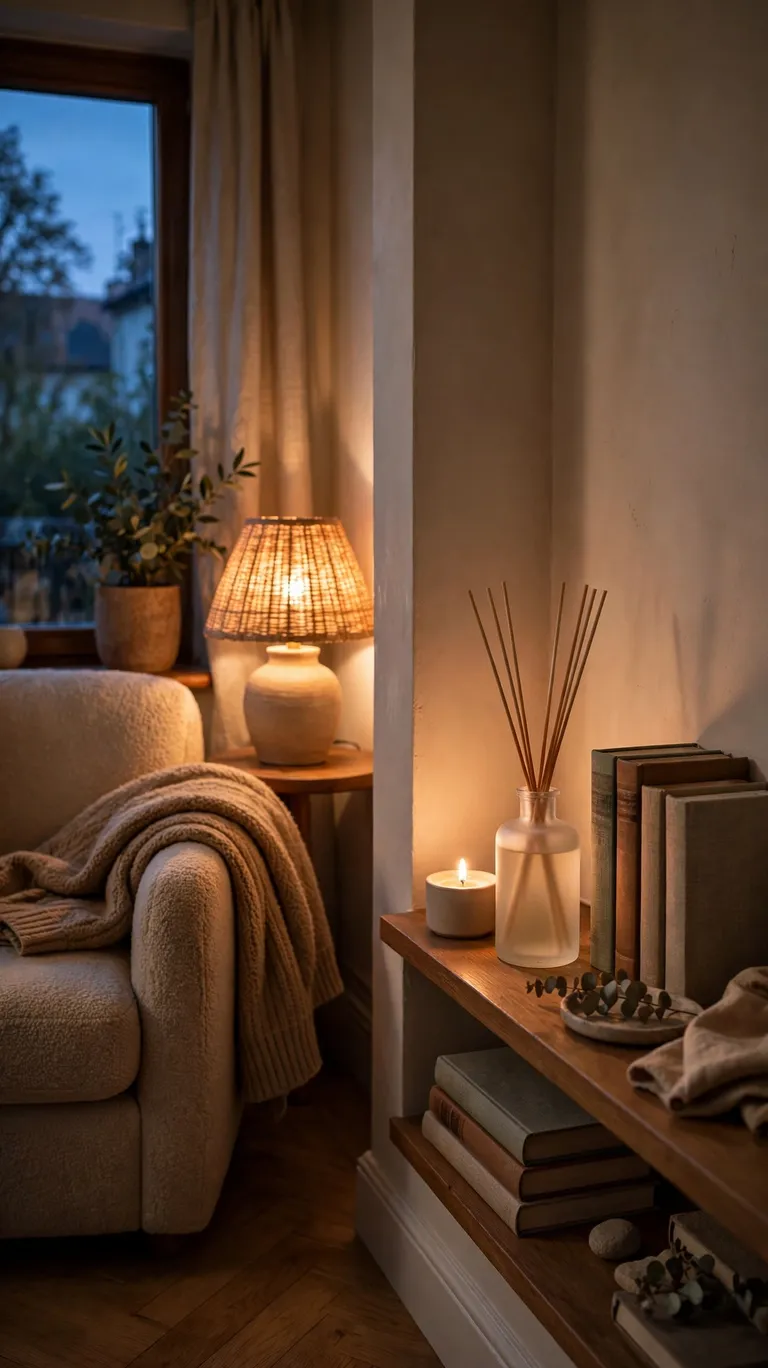
The final layer of a cozy library is atmosphere, and scent and sound do more for it than any furniture. A candle, a reed diffuser, or a small simmer pot with citrus and spice gives the corner its own signature smell, which makes sitting down to read feel like an event. Choose scents you associate with comfort, vanilla, cedar, coffee, or fresh linen, and keep them subtle rather than overpowering. Never leave a lit candle unattended, and consider flameless options if you read with kids or pets nearby.
Sound matters too. A small speaker playing soft rain sounds, a crackling fireplace track, or quiet instrumental music can mask household noise and deepen the sense of retreat. Keep the volume low enough that it fades into the background. Together, a pleasant scent and gentle background sound tell your brain it is time to settle in, which is exactly what a home library should do. This is the finishing touch that makes your small library feel like a destination.
Frequently Asked Questions
How many books do I need to start a small home library?
You can start with as few as ten books you love. A small home library is defined by how you use it, not by how many volumes you own. Begin with your current reads, a few favorites you return to, and books you have not read yet but want to. Add shelves as the collection grows rather than buying a huge bookcase on day one, since an empty bookcase looks sad and a full small shelf looks inviting.
Where is the best place for a small library in a small house?
The best spot is wherever you naturally sit and relax, usually near your favorite chair or the sunniest window. Corners, wide hallways, the space under stairs, and spare closets all work well because they are often underused. Pick a location that already has decent light or can easily take a lamp, and avoid damp basements or garages, since moisture damages books quickly.
How do I keep a small library from looking cluttered?
Give the shelves breathing room by leaving some open space between book groups and mixing in a few decorative objects. Stick to one or two shelf styles in the same finish so the storage looks intentional. Corral small items in boxes or baskets, and keep your active reading pile to one dedicated shelf. Regular quick dusting and re-shelving finished books keeps the whole setup looking calm.
What is the best lighting for a small reading corner?
Layered lighting works best: a main task light aimed at your book, plus a softer ambient source like a small lamp or battery candle nearby. Warm white bulbs feel cozy and are easy on the eyes, and a dimmable lamp lets you adjust for time of day. Natural daylight from a window is ideal for daytime reading, so place your chair to catch it when you can.
Can I build a home library on a tight budget?
Yes, easily. Start with crates, thrifted bookcases, or floating shelves, which all cost little. Shop secondhand for a comfortable chair, since comfort matters more than matching style. Use clip-on or battery lights instead of rewiring anything, and add coziness with a throw blanket and a rug you may already own. Build the collection slowly from used bookstores and library sales, and your library will grow without straining your wallet.
Conclusion
A small home library is one of the most rewarding corners you can build in your house, because it pays you back every single day. The ideas in this list all share the same goal: making reading easy, comfortable, and inviting in whatever space you have. Start with the essentials, a chair you love, light that works, and your books within reach, then add the layers that make it yours, the rug, the blanket, the plants, the scent that tells you it is time to settle in. You do not need to do all twenty-three ideas. Pick the three or four that solve your biggest problems, whether that is storage, seating, or light, and your corner will already feel transformed.
Remember that a library is a living thing. Your collection will change, your reading habits will shift, and the corner should flex with you. Rearrange the shelves when a new stack arrives, swap the display books when your mood changes, and let the space evolve instead of trying to perfect it once. The best home libraries are the ones that get used hard: spines cracked, blankets washed, chairs worn soft. Build the corner, keep a book within reach, and give yourself permission to disappear into it for an hour. That is the whole point, and it is entirely within reach even in the smallest home.