20 Charming Farmhouse Dining Room Ideas for a Cozy, Timeless Look
A farmhouse dining room feels cozy and timeless when you layer natural wood, soft neutrals, and a few well-loved vintage touches around a table built for gathering. The short answer to getting the look is this: start with a sturdy wood dining table as the anchor, surround it with comfortable seating in mixed finishes, add warm lighting overhead, and finish with textiles and simple decor that make the room feel lived in rather than staged. Nothing here needs to be expensive or perfect. In fact, the slightly worn and weathered pieces are what give farmhouse style its charm, so you can shop secondhand, repurpose what you already own, and let the room come together slowly.
The ideas below cover every layer of the room, from the big pieces like tables and seating to the small details like table runners, wreaths, and candlelight that make it feel finished. Pick the ones that fit your space and your budget, start with whatever bothers you most about the room right now, and work your way down the list. A farmhouse dining room is never really done, and that is part of the fun. It grows with your family, your gatherings, and the seasons.
1. Start With a Classic Farmhouse Table and Bench Set
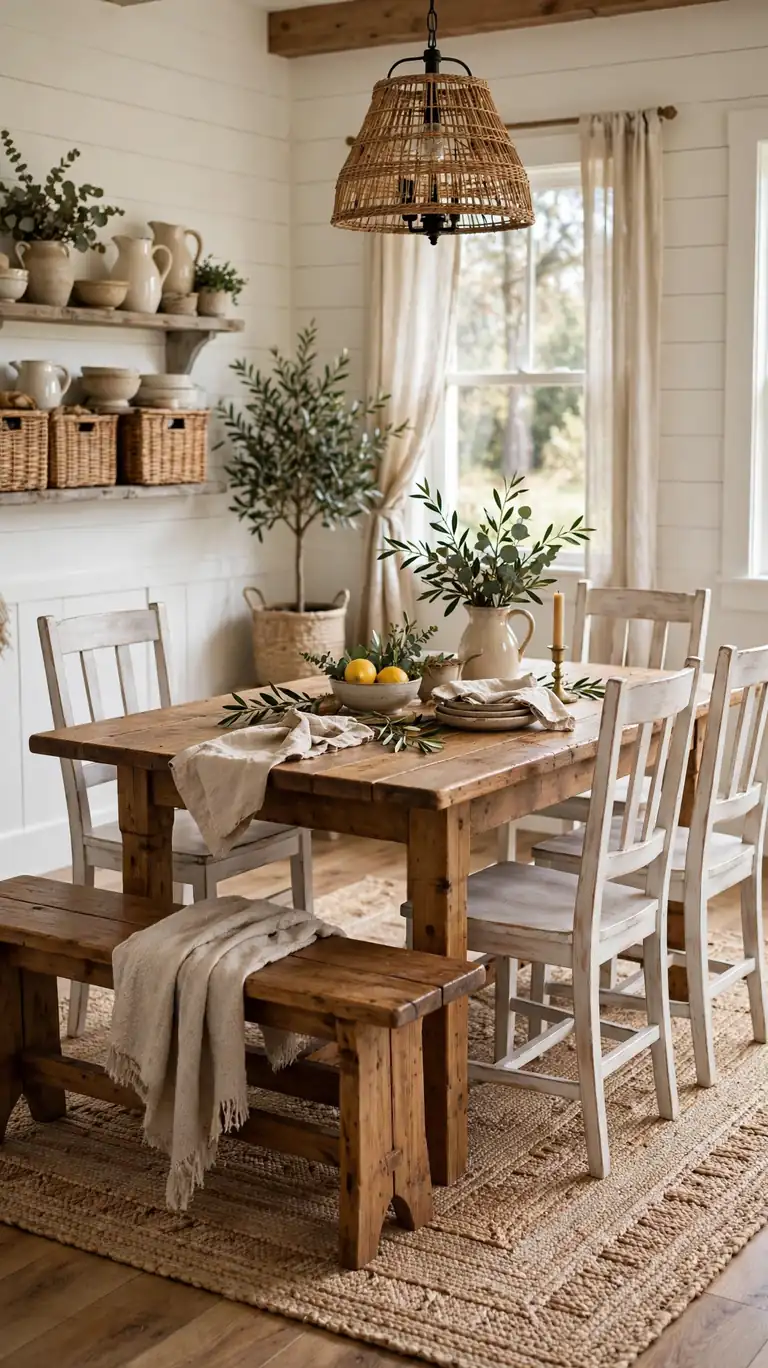
A farmhouse table paired with a long bench is the fastest way to get the look and the most practical seating choice for a busy household. Benches slide fully under the table when not in use, which saves floor space in smaller dining rooms, and they seat more people than individual chairs when guests drop by. Look for a table with a thick top and turned or chunky square legs, since those silhouettes read farmhouse instantly without any extra styling.
Keep the finish natural or lightly stained so the wood grain shows through, and skip anything too glossy. A matte or satin finish looks more authentic and hides everyday wear better. If you already own a table you like, adding just the bench gives you most of the look for very little money, and kids tend to love bench seating more than chairs anyway.
2. Choose a Rustic Reclaimed Wood Dining Table
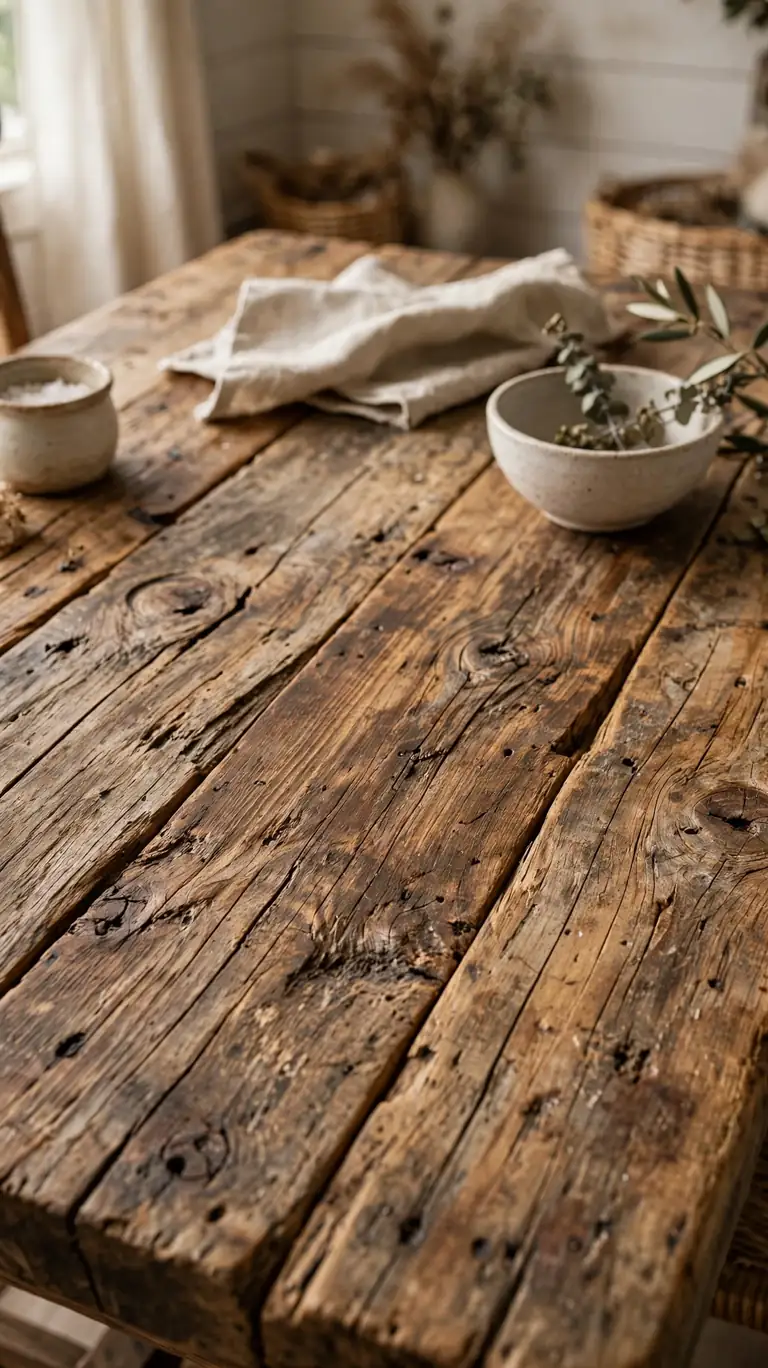
A reclaimed wood table brings character that new furniture simply cannot copy. Every nick, nail hole, and color variation tells a story, and that patina is exactly what makes a farmhouse dining room feel timeless instead of decorated. You can find genuine reclaimed tables at salvage shops and local makers, or choose new tables built from reclaimed-look boards if you want the style with a smoother, more even surface.
Live with the imperfections instead of fighting them. A few water rings or small scratches will blend right in over time, which takes the pressure off daily use. Protect the top with a simple beeswax finish or a matte furniture oil, and wipe up spills reasonably quickly. The table will only look better as it ages, which is the whole point of choosing wood with history.
3. Mix and Match Whitewashed Dining Chairs
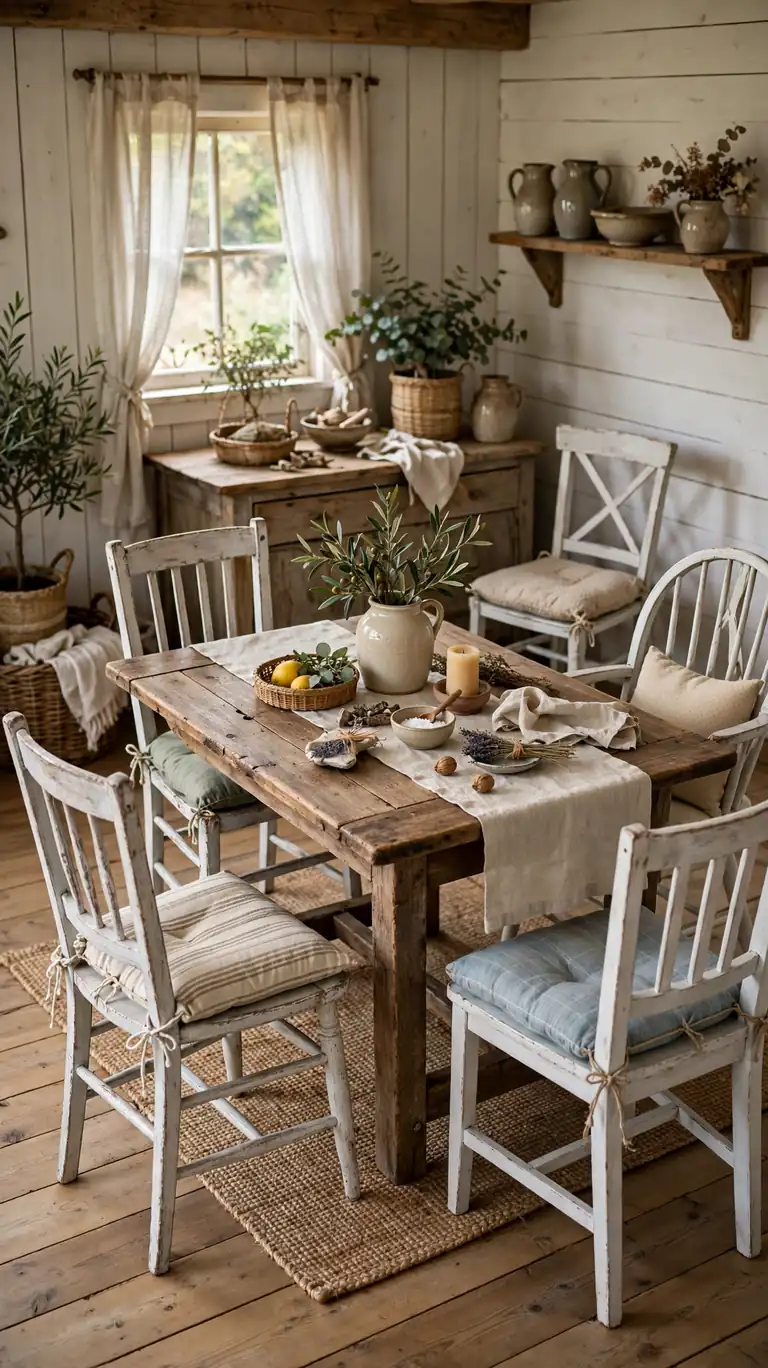
Matched chair sets can feel stiff, while mixed chairs feel collected and charming. Whitewashed chairs are the glue that holds a mixed set together, because the soft, faded finish unifies different chair shapes into one calm palette. You can gather them over time from thrift stores, which makes this one of the most budget friendly ideas on the list.
To keep the mix from looking accidental, repeat one element across all the chairs. It might be the whitewashed finish itself, a similar seat height, or the same style of cushion tied to each seat. Place the two most similar chairs at the heads of the table for a sense of order, and let the rest mix freely along the sides. The result looks curated rather than chaotic.
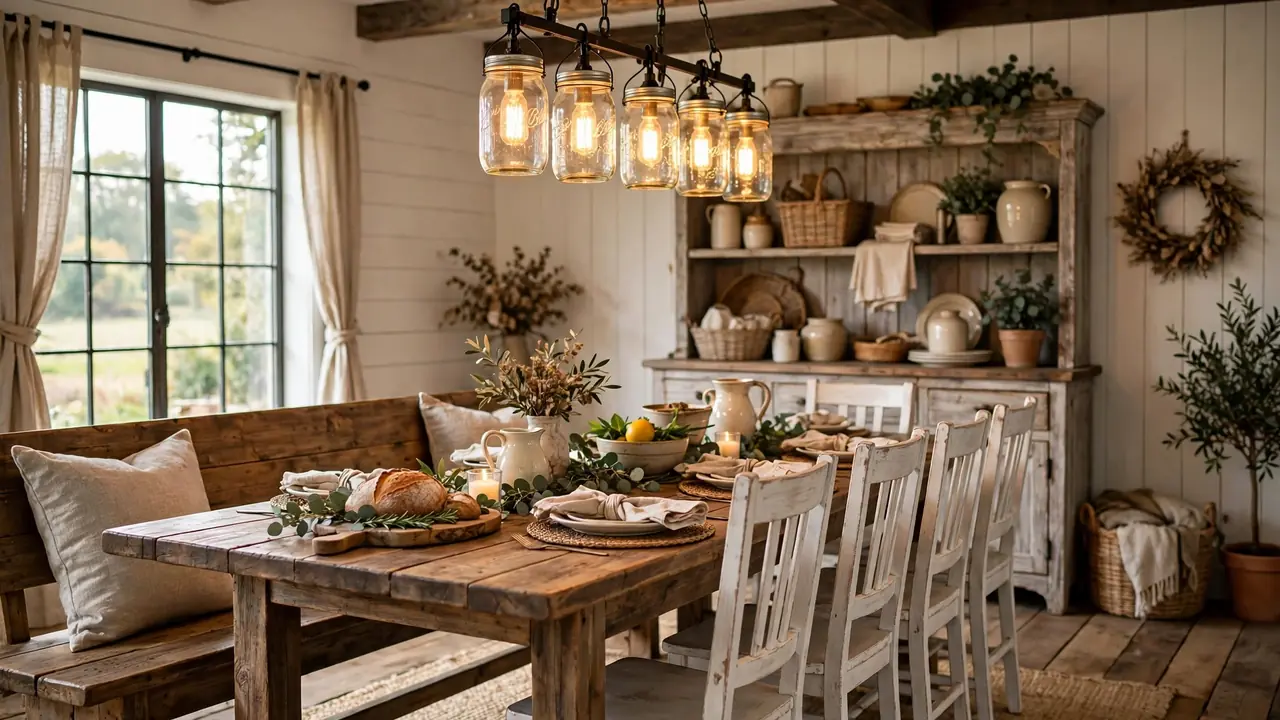
4. Hang a Mason Jar Chandelier Over the Table
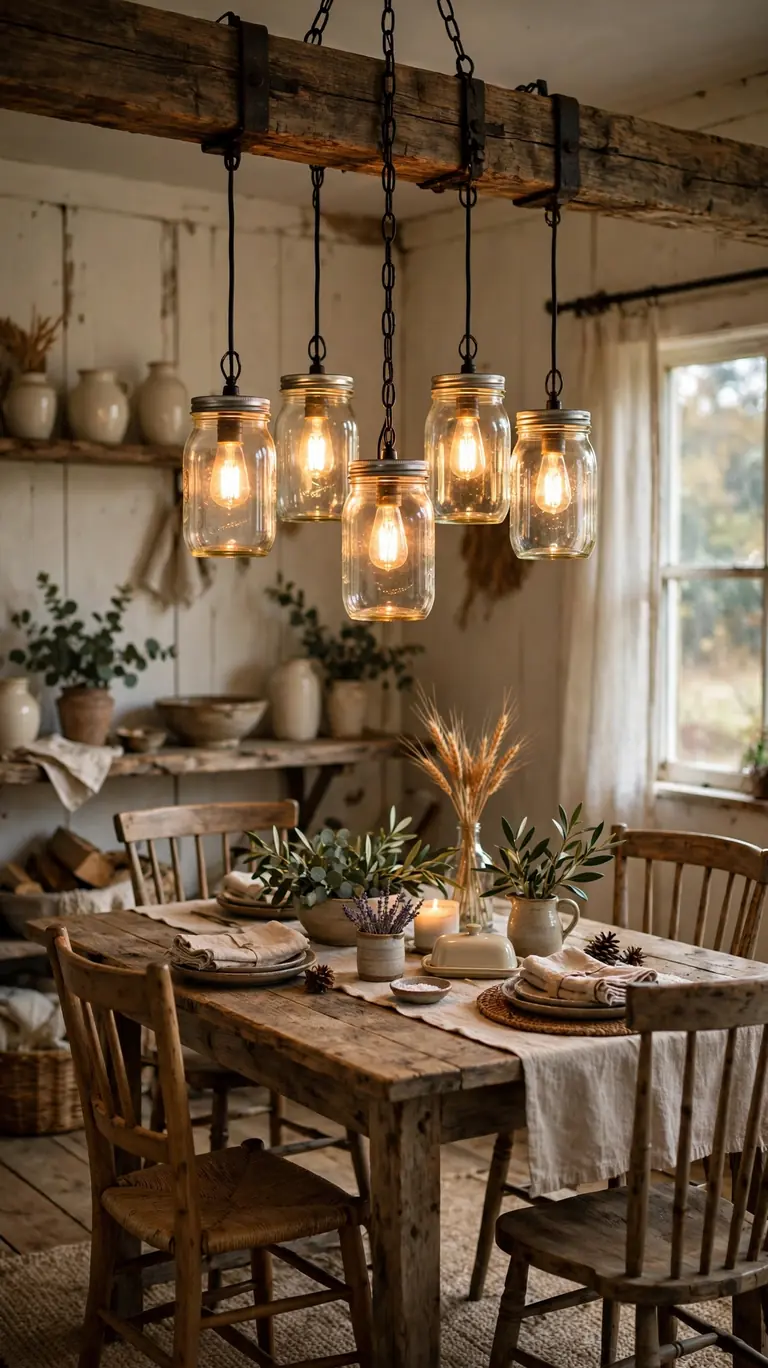
Few light fixtures say farmhouse like a mason jar chandelier. A cluster of jars hanging from a simple wood or metal frame casts a warm, dappled glow over the table, and it becomes the natural focal point of the room. You can buy them ready made or build one from a kit if you are comfortable with basic wiring.
Hang it so the bottom of the jars sits about 30 to 34 inches above the tabletop. That height keeps the light where you need it without blocking sightlines across the table. Use warm LED bulbs shaped like vintage filaments for the cozy glow without the heat or energy cost of old style bulbs. This one fixture changes the mood of every dinner you serve.
5. Add a Sliding Barn Door for Character
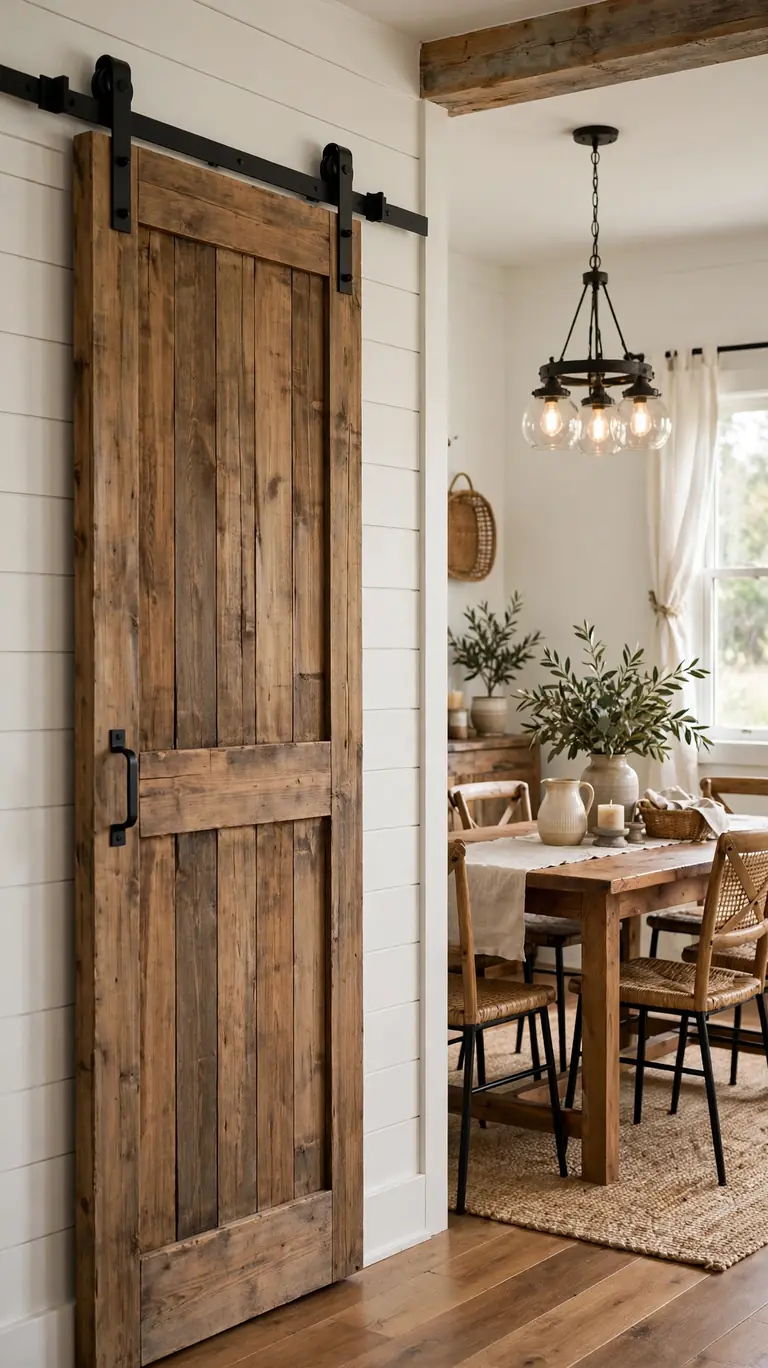
A sliding barn door adds instant farmhouse character and solves real space problems at the same time. Because it slides along a wall instead of swinging open, it is perfect for tight dining rooms where a standard door would bump into the table or chairs. The chunky hardware and wide planks become a design feature in their own right.
Choose a simple Z or X brace pattern for the classic look, and stain or paint it to complement your table rather than match it exactly. A slightly darker door against lighter walls creates a nice focal point. Make sure the wall beside the opening is clear of light switches and art so the door has room to slide fully open. It is a weekend project with a big visual payoff.
6. Install a Shiplap Accent Wall
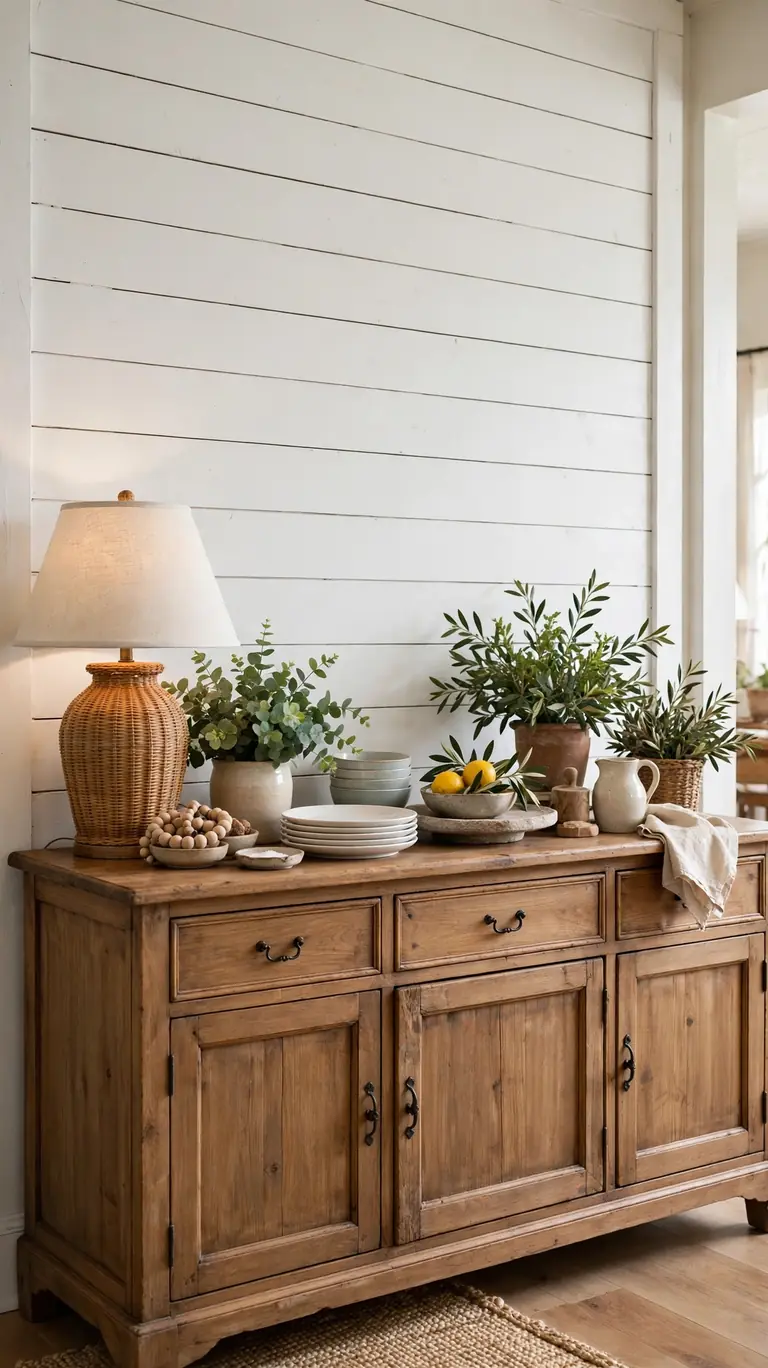
Shiplap is the backdrop that makes everything else in a farmhouse dining room look better. One accent wall behind the sideboard or hutch adds texture and warmth without overwhelming the room, and the horizontal lines draw the eye across the space, which can make a narrow dining room feel wider. Painted white or cream, it bounces light around beautifully.
You do not need real shiplap boards to get the look. Plywood cut into strips with small gaps works well, and there are peel and stick options for renters or anyone avoiding power tools. Keep the remaining walls a soft solid color so the texture has room to breathe. This is one of those changes guests notice immediately but cannot quite name.
7. Style an Open Shelving Hutch
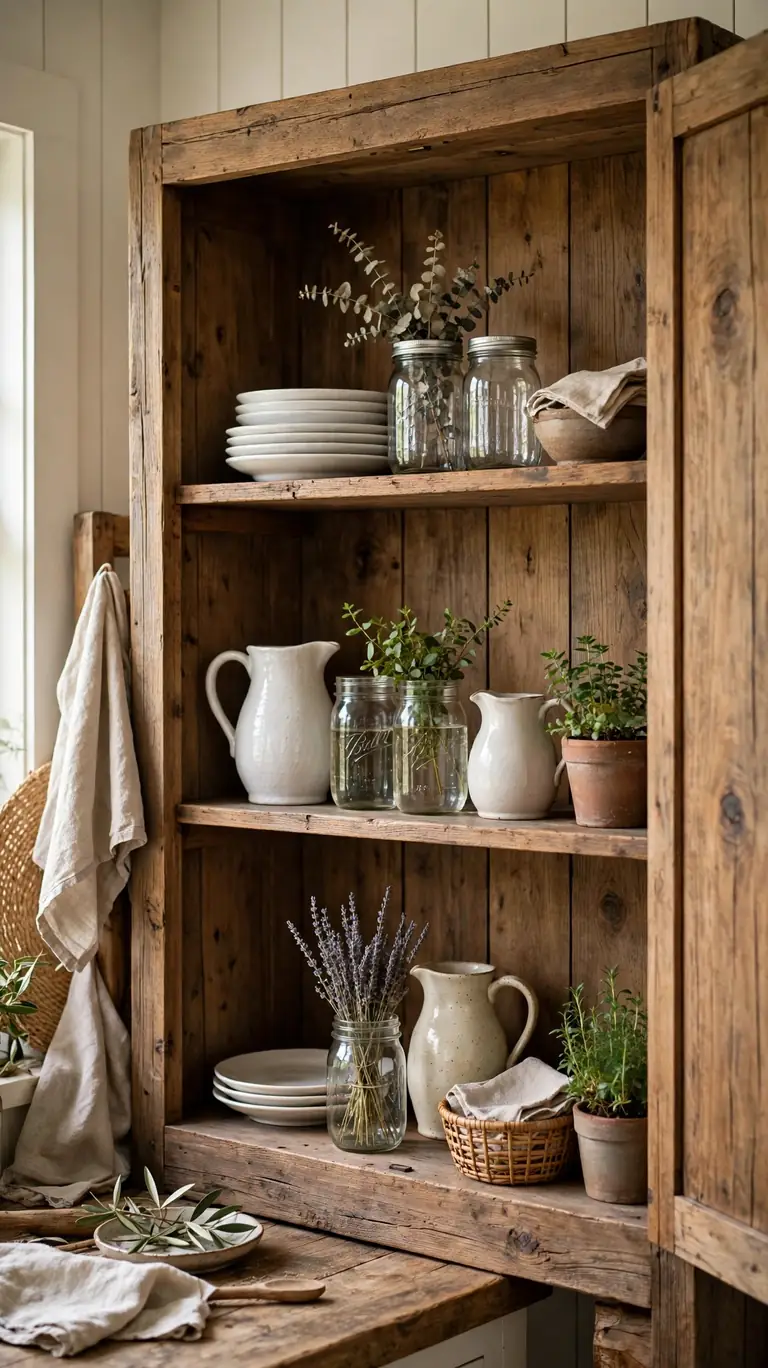
An open hutch turns your everyday dishes into decor. Stack white plates and bowls, line up mason jars and pitchers, and the hutch becomes a display that is also completely functional. Because everything is visible, it encourages you to keep the prettiest pieces you own, which is a lovely shift away from hiding good dishes in closed cabinets.
Style it in odd numbered groupings and leave some breathing room between stacks so it looks curated, not crowded. Mix in a small plant, a framed print, or a wooden cutting board leaning against the back for texture. Wipe the shelves down every couple of weeks since open storage collects dust. The payoff is a dining room that feels personal and welcoming.
8. Place a Vintage Sideboard Against the Wall
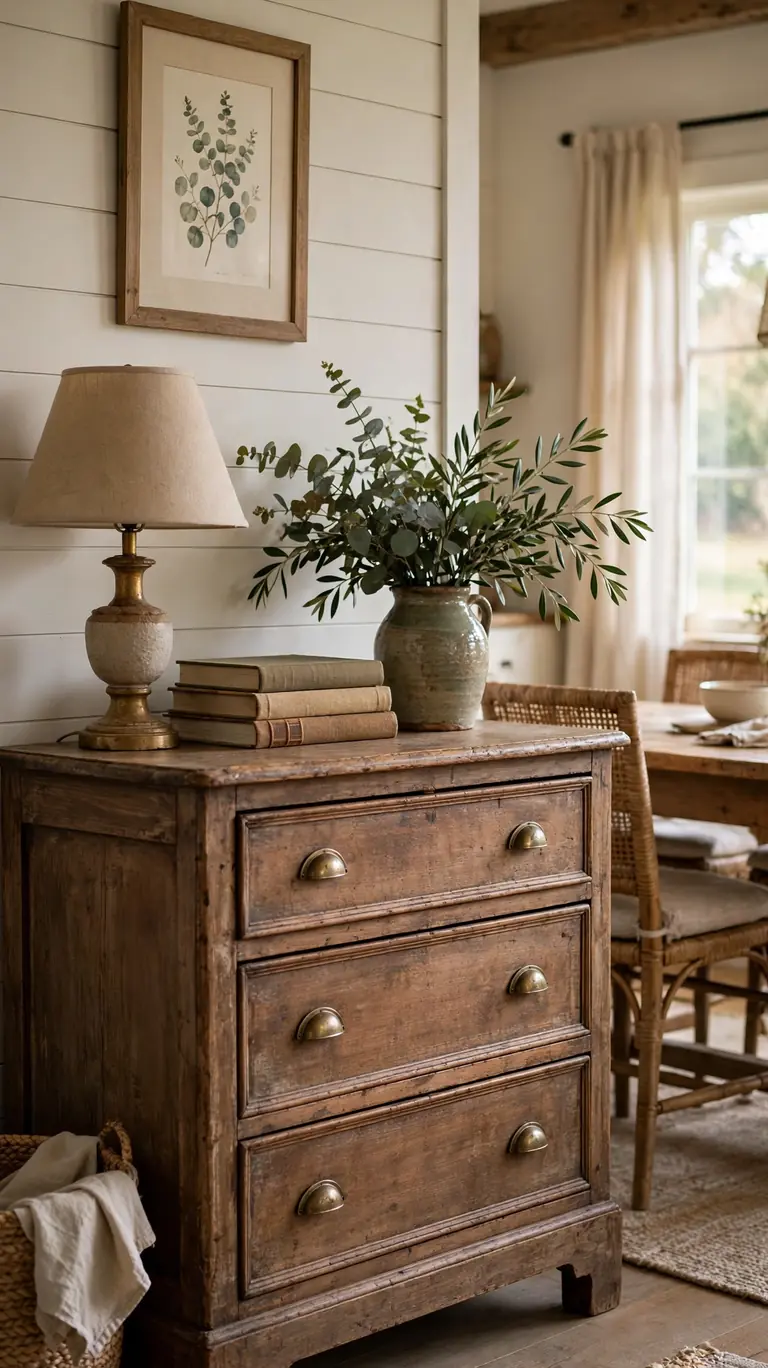
A vintage sideboard gives your dining room storage, a serving surface, and a big dose of character all at once. Use it to hold table linens, serving pieces, and the candles you only bring out for guests, and top it with a lamp, a stack of cookbooks, and a small vase of greenery. It becomes the hardest working piece of furniture in the room after the table.
Look for solid wood pieces with dovetailed drawers at flea markets and estate sales, since older construction tends to be sturdier than new budget furniture. Do not worry about a perfect finish. A few scratches and a faded top are part of the farmhouse appeal. If the wood is very dry, a coat of furniture oil brings back the richness without a full refinishing job.
9. Layer a Linen Table Runner
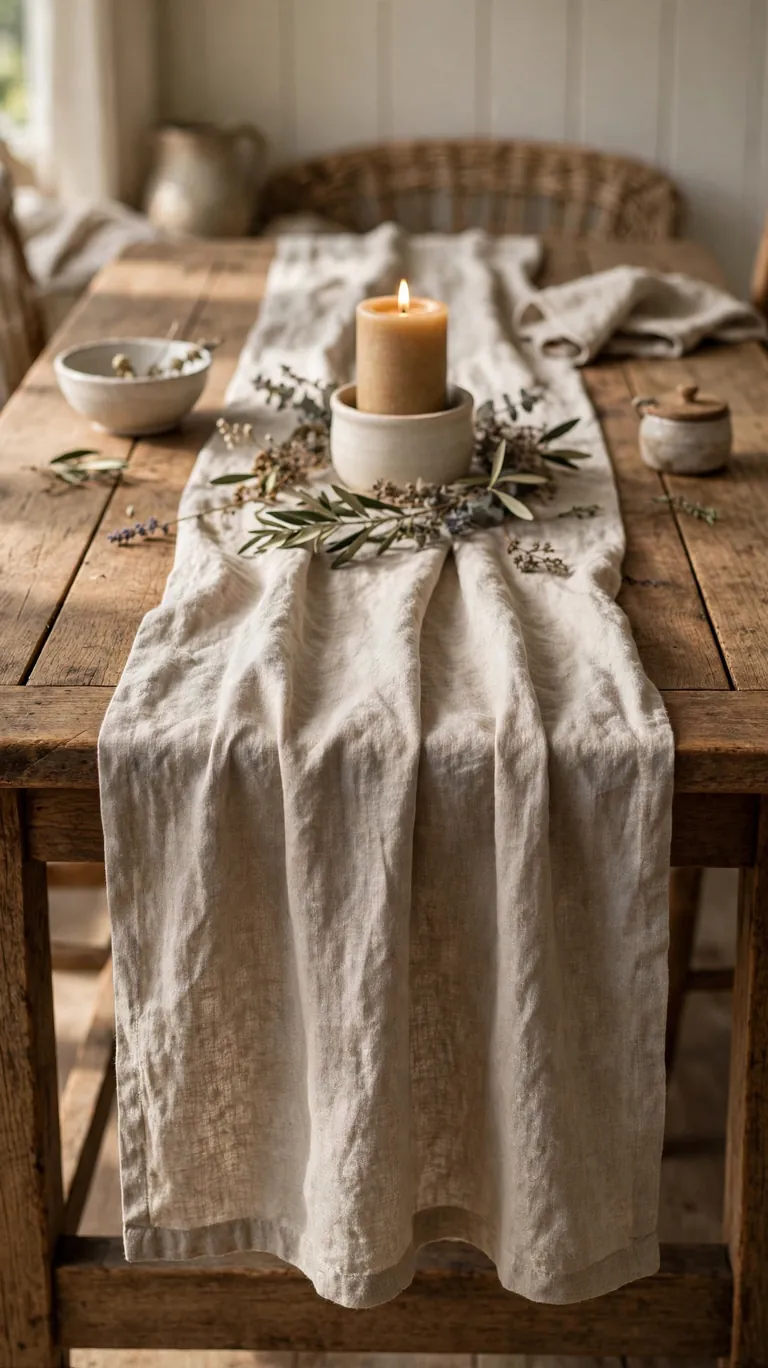
A linen table runner softens a wood table and adds a layer of texture that makes the whole room feel more finished. Natural linen in cream, oatmeal, or soft gray works with every season and every centerpiece, so it is the hardest working textile in the dining room. Let it hang a few inches past each end of the table for a relaxed, unfussy look.
Wrinkles are part of linen’s charm, so skip the ironing and embrace the lived in texture. Choose a runner wide enough to hold your centerpiece with room to spare, usually around 14 to 16 inches for a standard table. Wash it in cold water and line dry when you can, since linen gets softer and better looking with every wash.
10. Ground the Space With a Woven Jute Rug
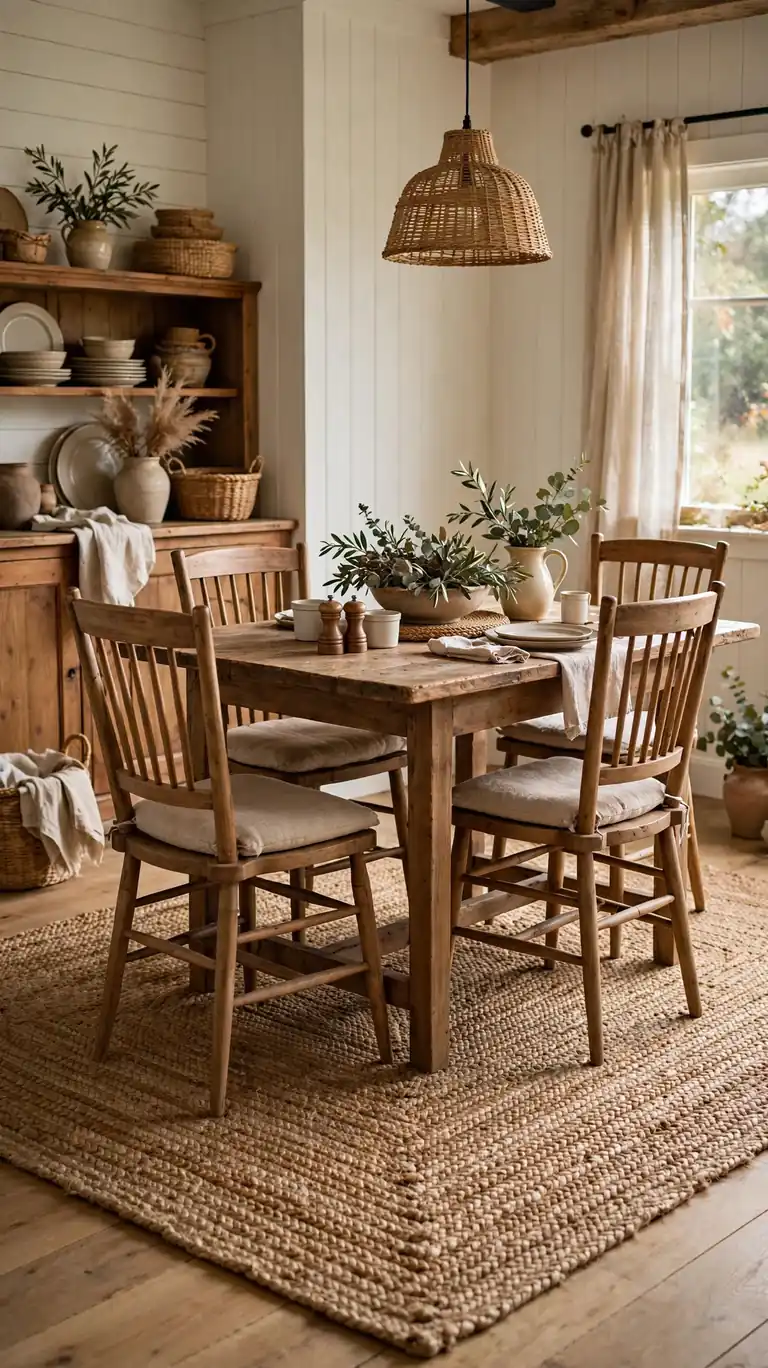
A dining table can feel like it is floating in the middle of the room, and a woven jute rug fixes that instantly. The natural fiber adds warmth and texture underfoot, and its neutral tone works with any wood finish or chair color. Jute is also one of the most affordable rug materials, so you can go big enough to fit the table and chairs comfortably.
Size it so the rug extends at least 24 inches past the table on all sides, which keeps chair legs on the rug when people pull out to sit. Choose a tight, flat weave rather than a chunky braided style, since flat weaves are easier to clean and chairs slide more smoothly on them. Shake it out regularly and spot clean spills quickly, and it will hold up well to daily meals.
11. Bring In Galvanized Metal Accents
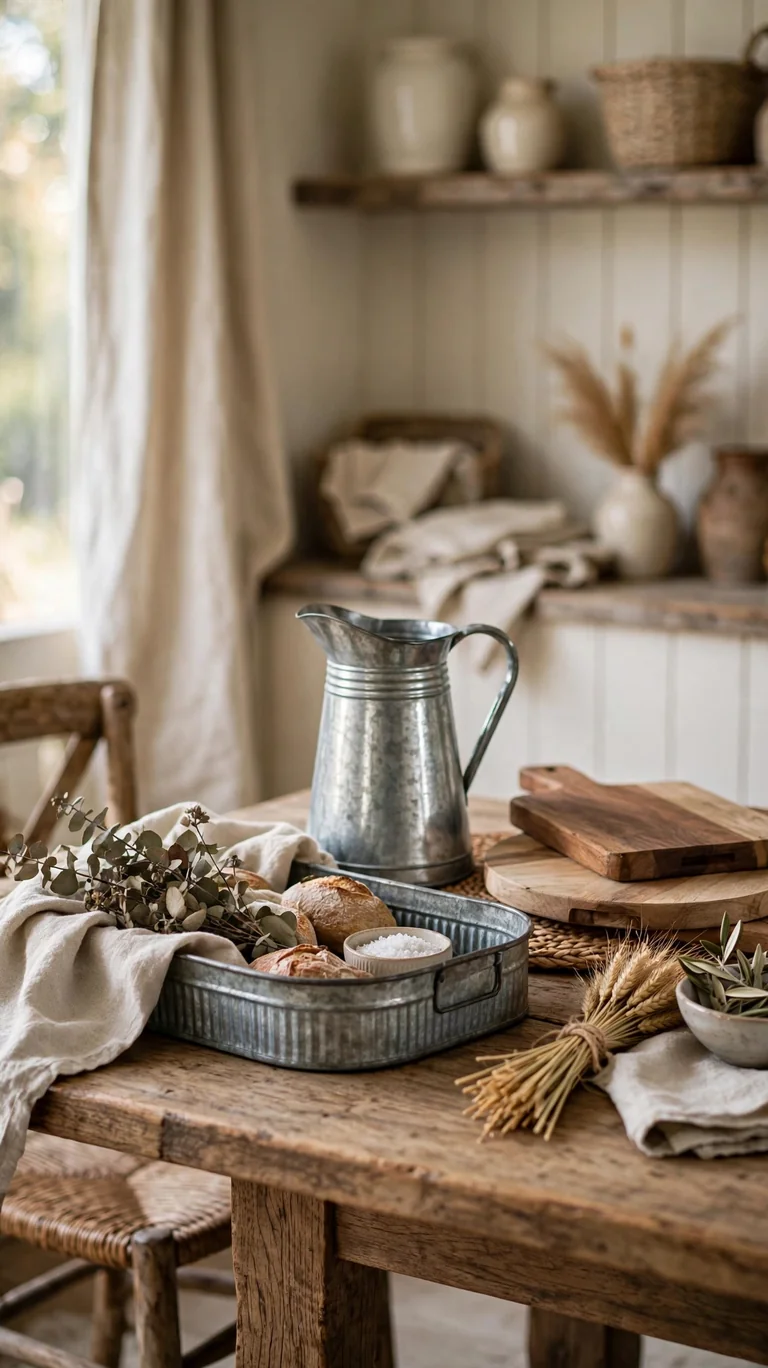
Galvanized metal is the farmhouse material that keeps wood tones from feeling too heavy. A metal tray on the table, a set of metal pendant shades, or a galvanized pitcher holding utensils adds a cool, silvery contrast that brightens the room. The slightly industrial edge keeps the style feeling fresh rather than fussy.
Use it in small doses. Two or three metal pieces spread around the room are plenty, since too much can tip the look toward industrial. A galvanized bucket as a planter, metal frame around a mirror, or simple metal sconces on the wall all work beautifully. The zinc finish does not rust easily indoors, so these pieces stay looking good with almost no maintenance.
12. Hang an Oversized Farmhouse Wall Clock
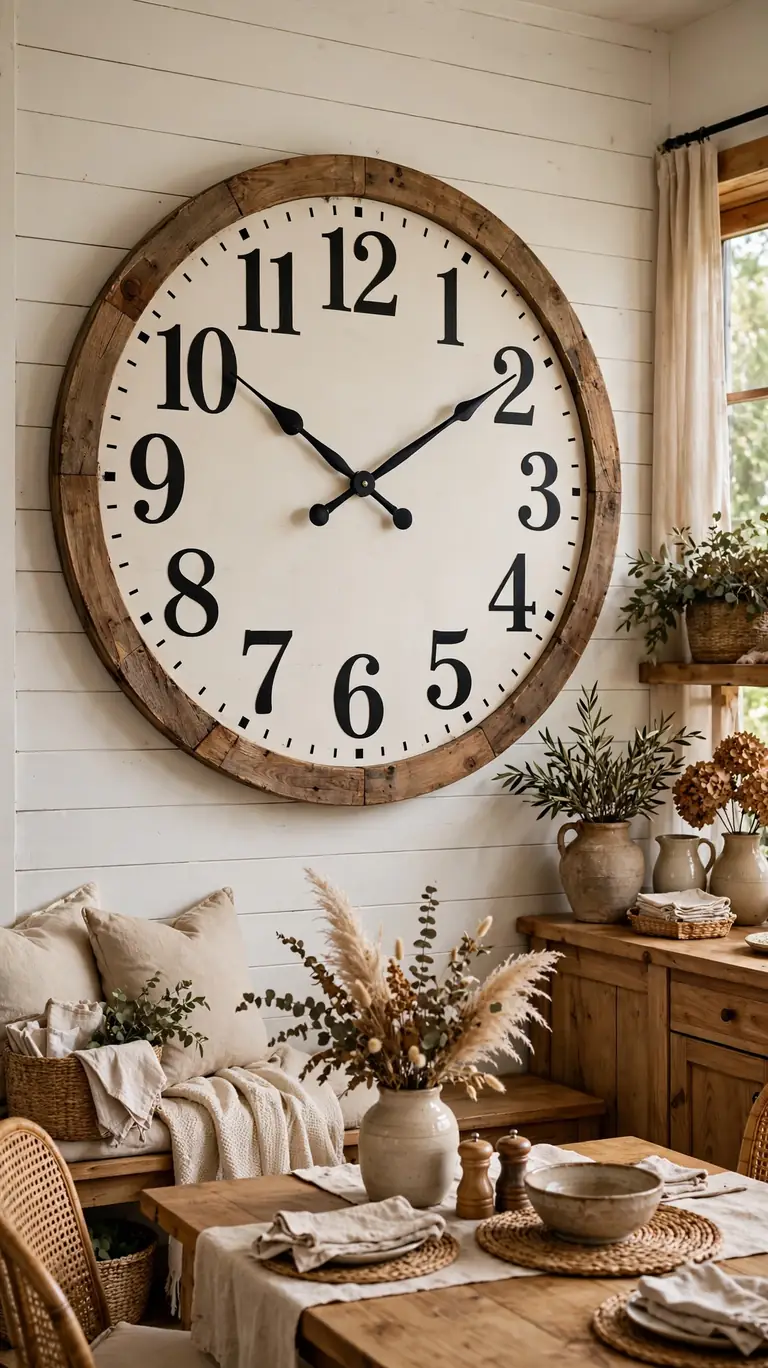
A big wall clock fills empty wall space the way few other pieces can, and it is genuinely useful in a dining room where family meals run on a schedule. Choose a simple face with large numerals and a wood or metal frame, and go bigger than you think. A clock that is 24 inches or more across reads as intentional decor rather than an afterthought.
Hang it where it can be seen from the table but not where it competes with a chandelier or pendant lights. Above the sideboard or on the wall opposite the windows are both good spots. Keep the style simple and readable. Ornate faces fight with the relaxed farmhouse feel, while a clean, bold design complements it perfectly.
13. Add an Antique Mirror to Bounce the Light
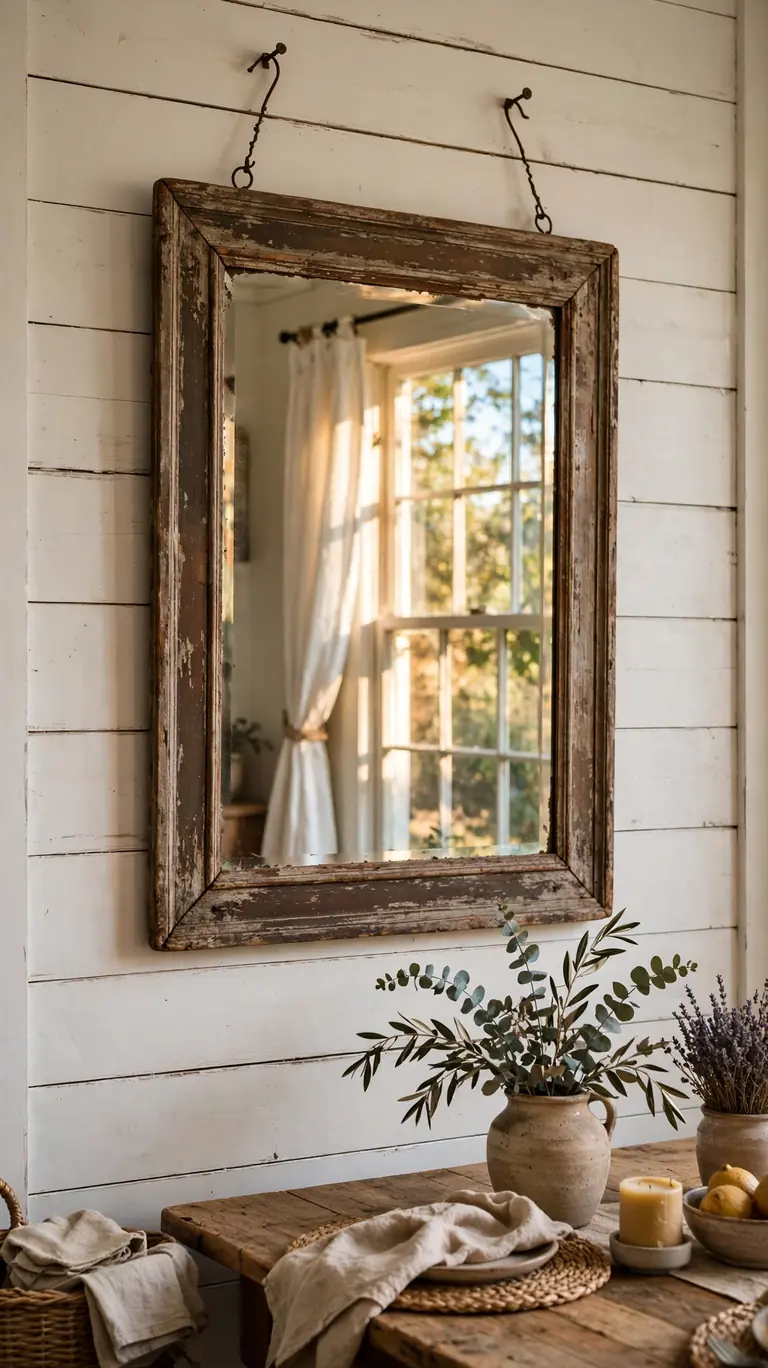
An old mirror with a weathered frame does double duty in a farmhouse dining room. It bounces natural light around the room, which makes the space feel bigger and brighter, and the aged frame adds the kind of patina that new decor cannot fake. Hang it opposite a window to double the daylight, or above the sideboard to reflect the warm glow of a lamp.
Do not worry about a spotty or foxed mirror surface. Those imperfections are part of the antique charm and soften the reflection in a flattering way. If you find a great frame with a damaged mirror, a glass shop can cut a replacement to fit for a modest cost. Lean larger pieces against the wall on top of the sideboard instead of hanging them if the piece is heavy.
14. Decorate With a Cotton Stem Wreath
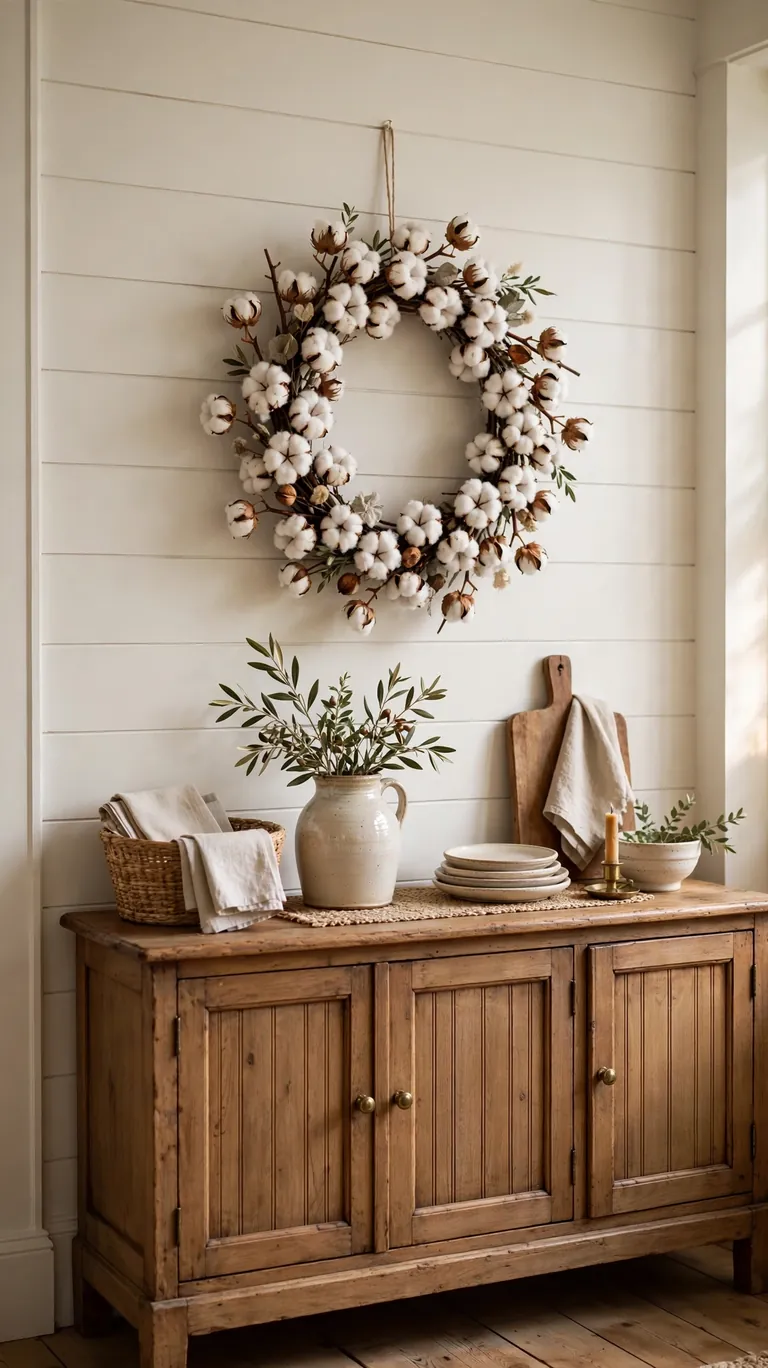
A cotton stem wreath is farmhouse decor at its simplest and sweetest. The soft white bolls against bare brown stems look beautiful against shiplap, wood, or painted walls, and the neutral palette means it works in every season. Hang one on the dining room wall, on the back of a door, or above the sideboard for an instant cozy touch.
Real cotton stems last for years if you keep them out of direct sun and dust them occasionally with a soft brush. Fluff the bolls gently when you first hang the wreath so it looks full rather than flat. For a fuller look, layer the cotton wreath over a simple grapevine base. It is a small piece with an outsized effect on the room’s warmth.
15. Drape a Wooden Bead Garland
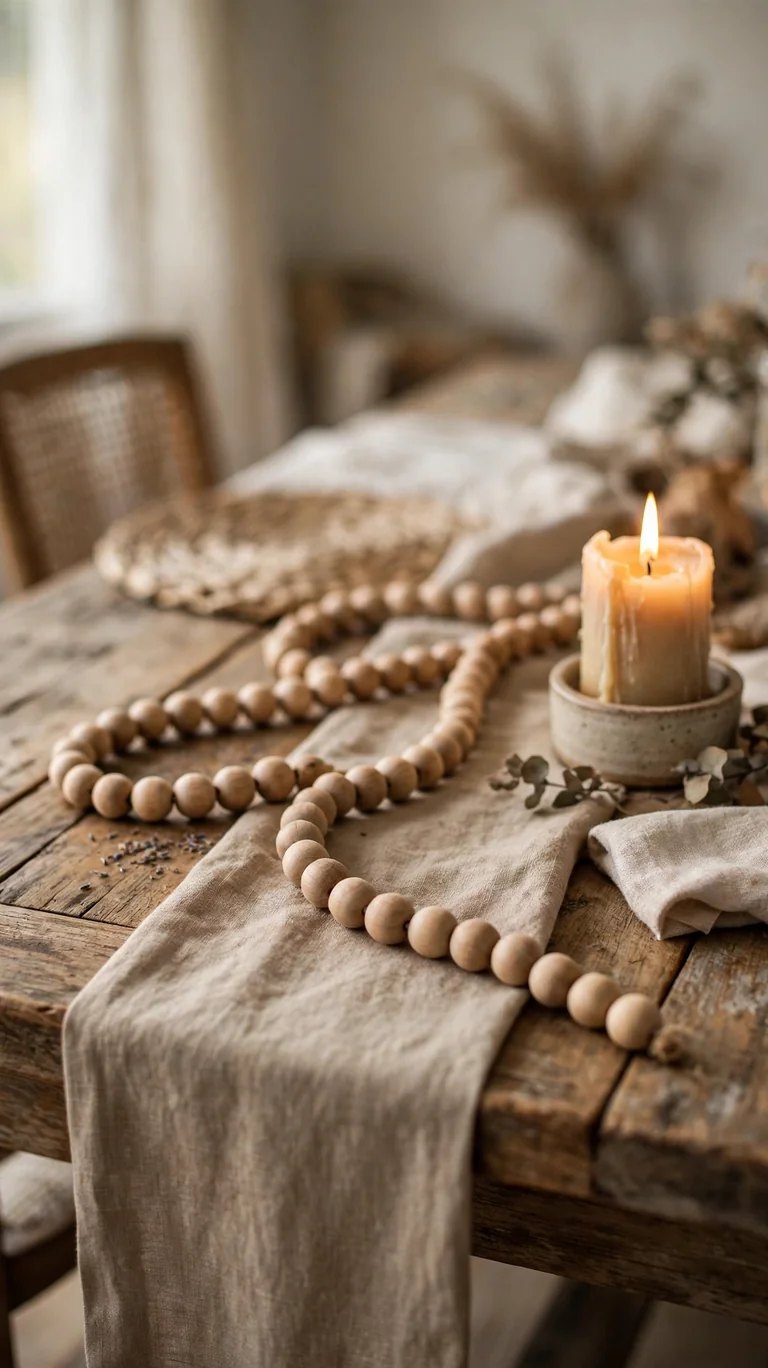
A wooden bead garland is the little detail that makes a table or sideboard look styled. Drape it across the table runner, coil it in a dough bowl, or hang it from a hook on the hutch. The natural wood beads add texture and a handmade feel, and they are endlessly reusable across seasons and occasions.
Choose unfinished wood beads for the most versatile look, since they pick up the tones of whatever sits nearby. A garland around 5 to 6 feet long works for most tables, and longer strands can wrap around a lantern or trail down the sideboard. Wipe the beads with a dry cloth now and then to keep them looking fresh. Simple, affordable, and surprisingly impactful.
16. Build a Lantern and Candle Centerpiece
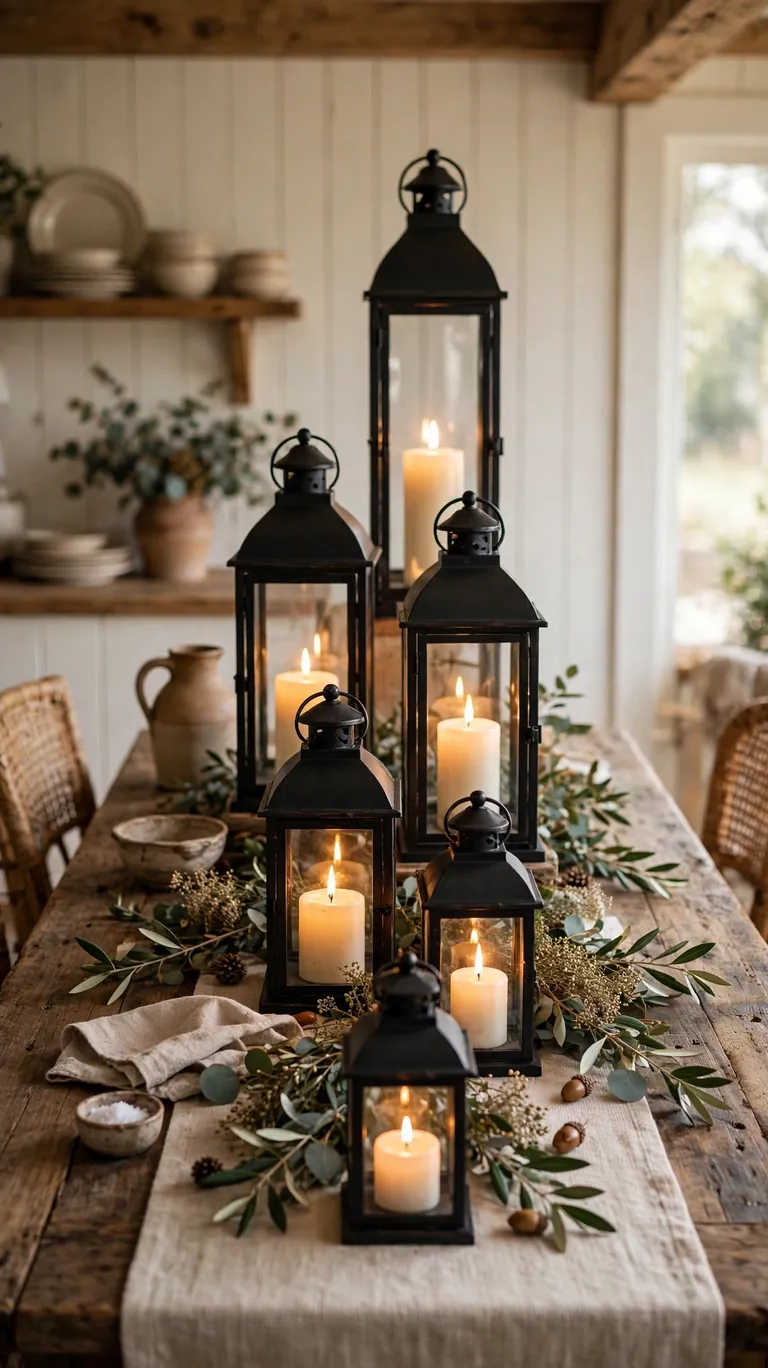
Candlelight is what turns a dining room from nice to magical, and a lantern centerpiece makes it effortless. Group two or three lanterns of different heights down the center of the table, and fill them with pillar candles or LED candles. The varying heights create visual interest, and the warm glow flatters everyone at the table.
Use LED candles if you have small children or want to leave them glowing during a party without worry. Real candles give a lovelier flicker, so use them when you can supervise. Keep the lanterns low enough that guests can see over them, and cluster them on a tray or runner so the arrangement looks intentional and is easy to move when you need the full table.
17. Run Fresh Greenery Down the Table
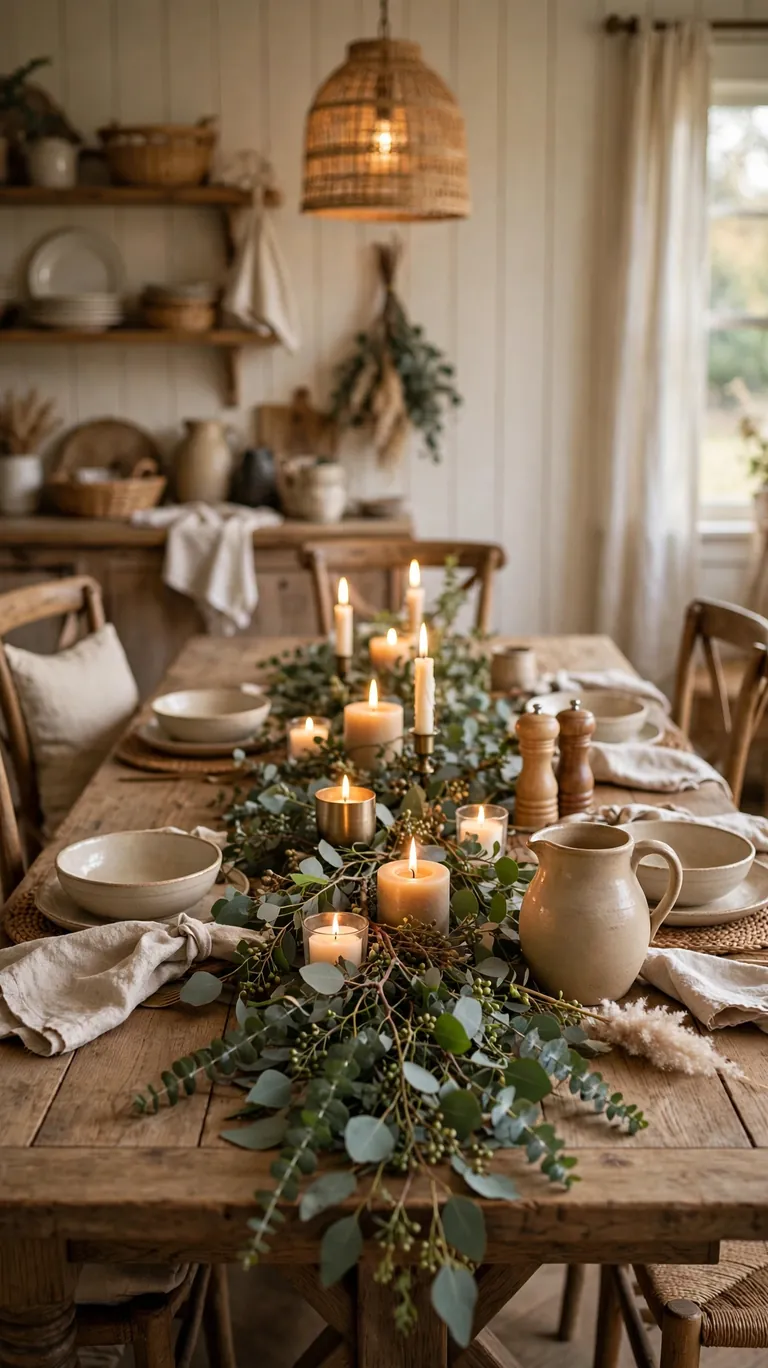
Nothing freshens a farmhouse table like a loose runner of greenery. Eucalyptus, olive branches, or even clippings from the yard laid down the center of the table add life, color, and a wonderful scent. It costs almost nothing, takes five minutes to arrange, and instantly makes an everyday dinner feel like an occasion.
Lay the stems directly on the table or on top of your runner, overlapping them so there are no bare gaps. Tuck in a few candles or small pumpkins, pinecones, or citrus depending on the season. Mist the greenery lightly to keep it fresh for a few days, or let it dry in place for a rustic dried arrangement that lasts for weeks.
18. Dress the Windows With Plaid Curtains
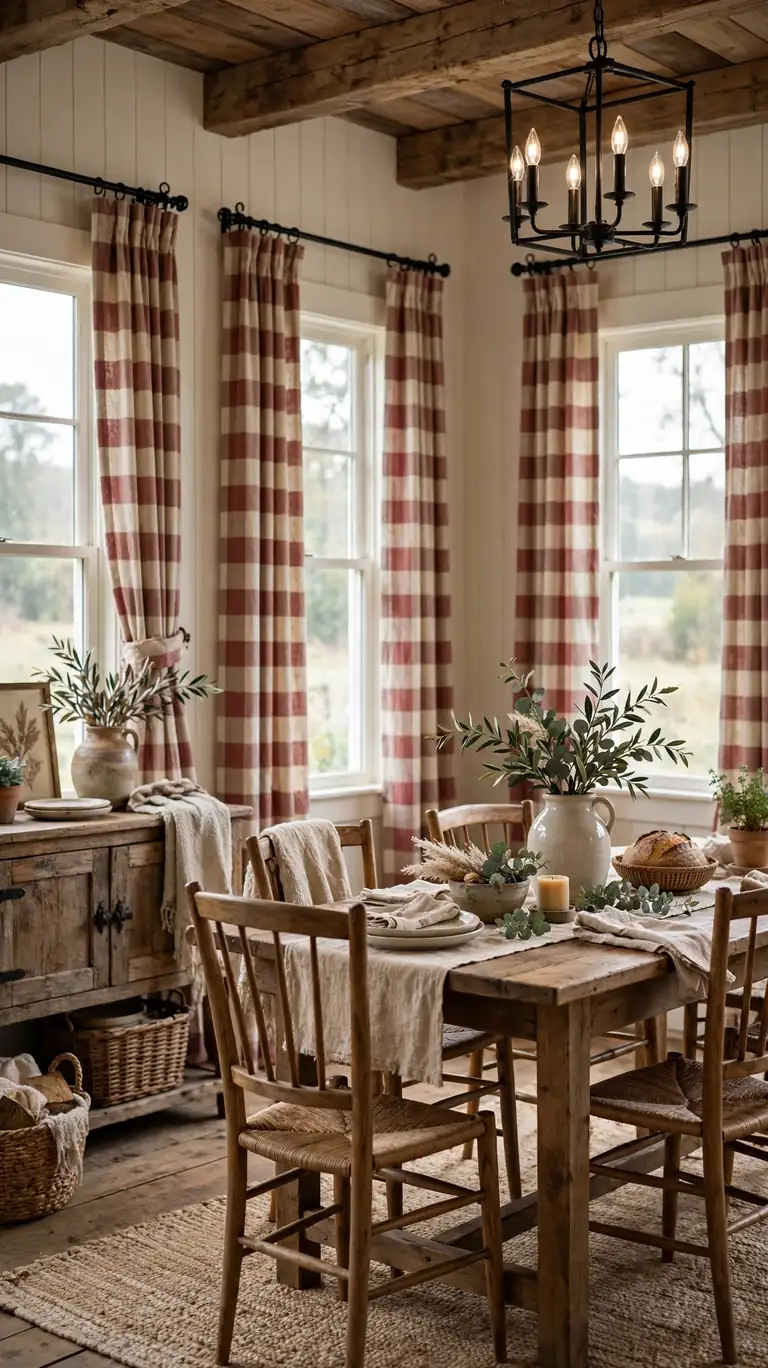
Bare windows can make a dining room feel cold, and plaid curtains are the farmhouse fix. A classic buffalo check or a soft tartan in muted reds, greens, or neutrals adds pattern and warmth without overwhelming the room. Hang them high and wide so the windows look larger and the daylight pours in around them.
Choose a cotton or linen blend that lets some light filter through, since heavy blackout curtains can make a dining room feel dark during the day. Keep the pattern scale in mind. Large checks suit bigger rooms, while smaller plaids work better in cozy spaces. Tie them back during the day for a relaxed look that shows off the view.
19. Hang Pendant Lights Low Over the Table
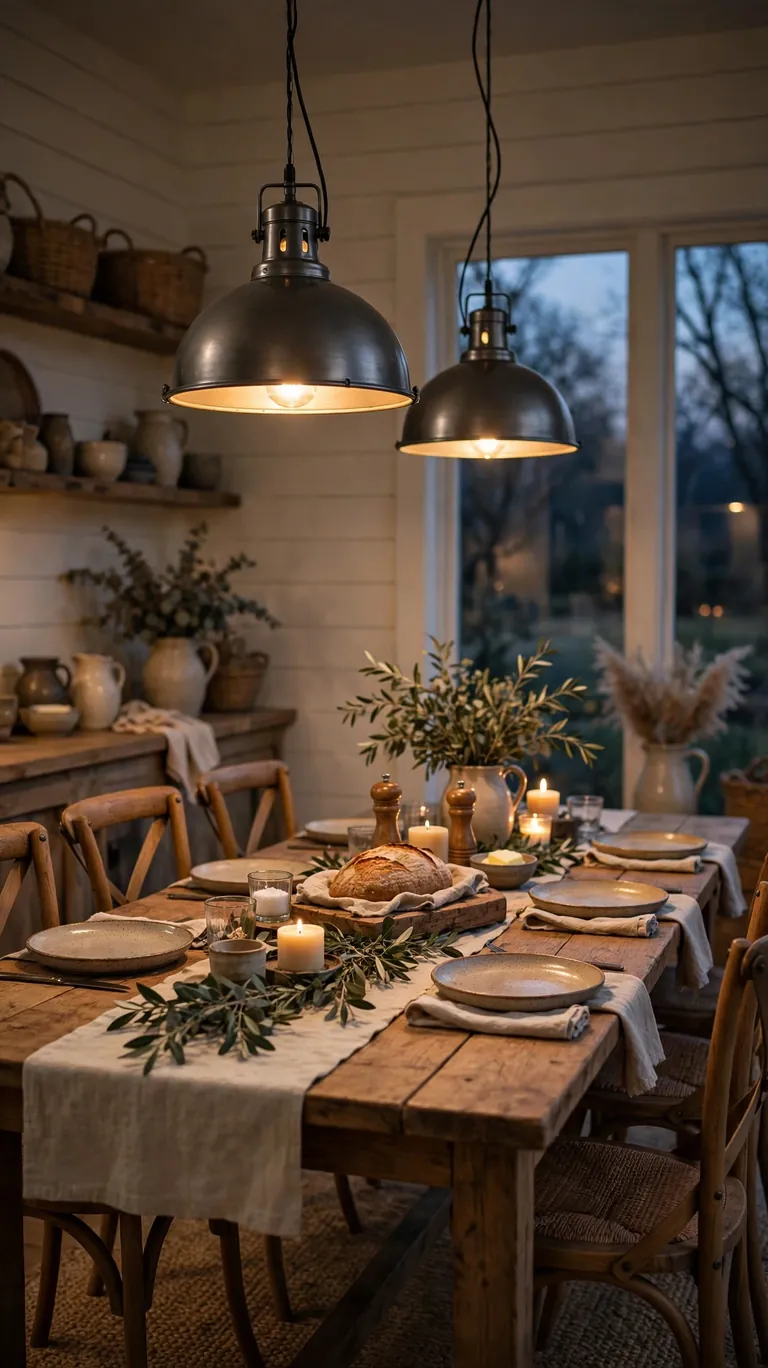
A pair or trio of pendant lights hung low over the dining table creates a pool of warm light exactly where you need it. Metal dome shades, seeded glass, or simple linen drum pendants all suit farmhouse style, and hanging two or three in a row suits a long rectangular table much better than a single central fixture. The repetition itself becomes a design feature.
Hang them 30 to 34 inches above the tabletop, and space them evenly along the table’s length. Put them on a dimmer switch so you can go from bright homework light to low dinner party glow. Match the finish loosely to your other metals rather than matching exactly. Mixed but harmonious finishes feel more collected and authentic.
20. Swap Centerpieces With the Seasons
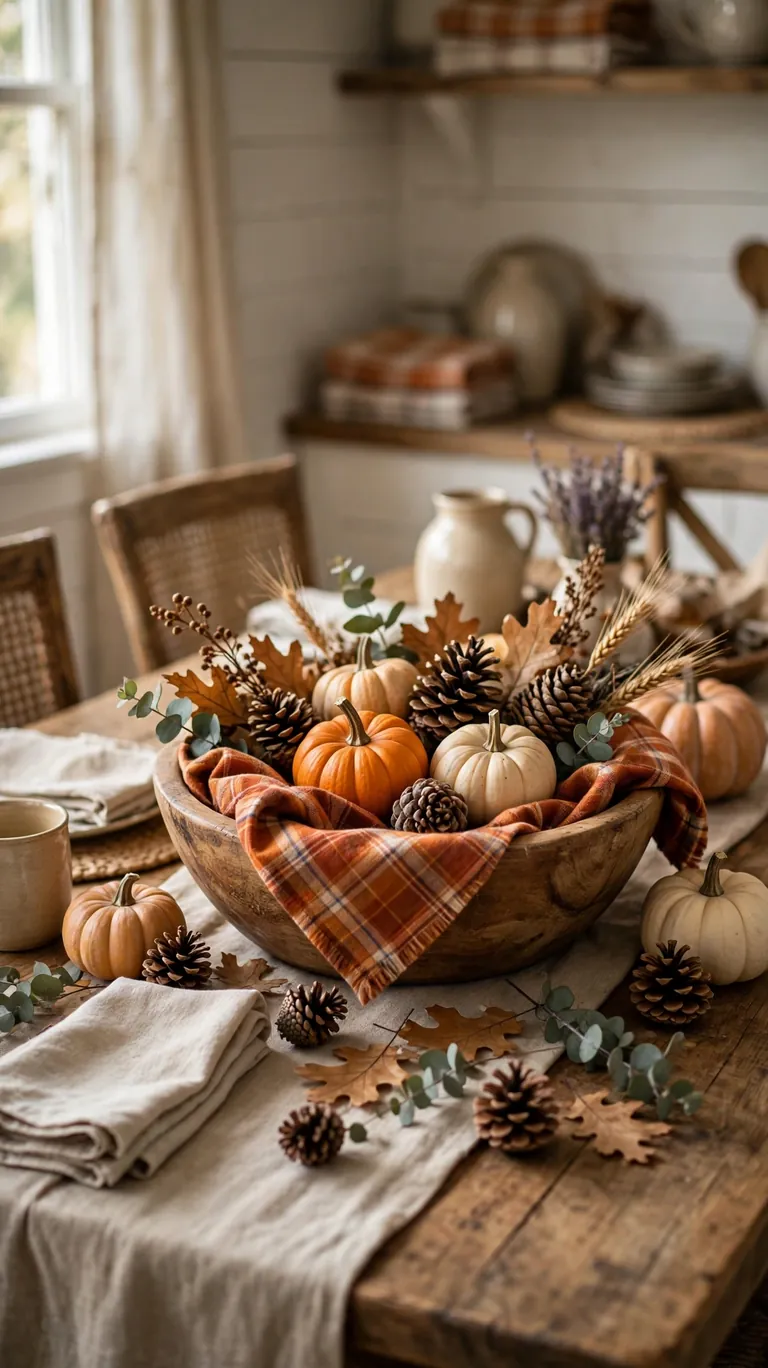
The easiest way to keep a farmhouse dining room feeling fresh all year is to change the centerpiece with the seasons. Spring gets fresh flowers and pastel linens, summer gets citrus and bright greenery, fall gets pumpkins and warm plaids, and winter gets evergreens, pinecones, and candlelight. The room itself stays the same, but it never feels stale.
Keep a dedicated storage bin for seasonal dining decor so the swap takes minutes instead of an afternoon of hunting through the attic. Invest in a few good neutral bases, like a dough bowl, a wooden tray, and linen runners in cream and gray, and let inexpensive seasonal accents do the changing. This simple rhythm gives you four fresh looks a year for very little money or effort.
Frequently Asked Questions
What colors work best in a farmhouse dining room?
Warm whites, soft creams, gentle grays, and natural wood tones form the classic farmhouse palette. These neutrals keep the room feeling bright and timeless, and they give you a calm backdrop for seasonal color. Add muted accents like sage green, dusty blue, or warm terracotta through textiles and decor, and keep the bolder colors to small, swappable pieces so the room never feels dated.
How do I mix and match dining chairs without it looking messy?
Pick one unifying element and let everything else vary. It could be the same finish, like all whitewashed wood, the same seat height, or the same style of cushion on every chair. Place the two most similar chairs at the heads of the table to create a sense of order, and keep the overall palette to two or three tones. The goal is collected, not chaotic, and a shared finish does most of the work.
What size dining table fits a small farmhouse dining room?
Leave at least 36 inches between the table edge and the walls so chairs can pull out comfortably, which usually means a table around 60 inches long for a compact room. A round table can work well in a square room since it has no corners to bump into. If you host often, consider an extendable table that stays small day to day and grows for gatherings.
How do I keep a farmhouse dining room from looking cluttered?
Give every decorative item a job or a home. Open shelving looks best with breathing room between pieces, and table surfaces should hold one intentional arrangement rather than several small ones. Store the overflow in a closed sideboard or hutch cabinet, and follow a simple rule: if adding something does not make the room feel cozier, it does not belong. Editing is as important as decorating.
What lighting works best over a farmhouse dining table?
Warm, layered light at the right height. A chandelier or a row of pendants hung 30 to 34 inches above the table gives you focused light for meals, while a dimmer switch lets you shift from bright to cozy. Add a secondary source like a lamp on the sideboard or candles on the table for depth. Warm white bulbs around 2700K keep the wood tones glowing and the room inviting.
Conclusion
A farmhouse dining room comes together one thoughtful layer at a time, and that is exactly why the style feels so warm and personal. The table anchors the room, the seating invites people to stay awhile, and the lighting, textiles, and small vintage touches do the quiet work of making it feel like home. You do not need to buy everything at once or get it perfect on the first try. Some of the most charming dining rooms are the ones that grew slowly, one thrifted chair and one good find at a time.
Start with the pieces that matter most to how you actually live. If family dinners are the heart of your home, invest in the table and the chairs first, and let the decor follow. If you love hosting, prioritize lighting and serving storage so gatherings feel easy. Then add the layers that make you happy, the runner, the wreath, the candles, the greenery down the middle of the table. A cozy, timeless farmhouse dining room is not about following rules. It is about building a room where people want to gather, linger, and come back to, season after season.