23 Sunroom Flooring Ideas to Transform Your Space
The best sunroom floors are the ones that can take strong sunlight, big temperature swings, and the steady traffic of a room that lives halfway between indoors and out. Porcelain and ceramic tile top the list because they are tough, easy to wipe clean, and come in styles that mimic wood, stone, and patterned cement. Luxury vinyl plank is a close second for comfort underfoot and budget, while natural stone, brick, and terracotta bring character that only gets better with age. Whatever you choose, the winning move is picking a floor that tolerates sun and moisture instead of fighting it.
Before you fall in love with a sample, think about how you actually use the room. Do you walk through barefoot every morning with coffee, or is it mostly a pretty sitting area? Do kids and dogs track in dirt, or does it stay clean? Your answers point you toward the right texture, the right maintenance level, and the right budget. A busy family entry needs something you can mop in minutes, while a quiet reading nook can handle a softer floor. The 23 ideas below cover every style and situation, from budget-friendly vinyl to statement stone, so you can find the floor that fits your sunroom and your life.
1. Classic Porcelain Tile
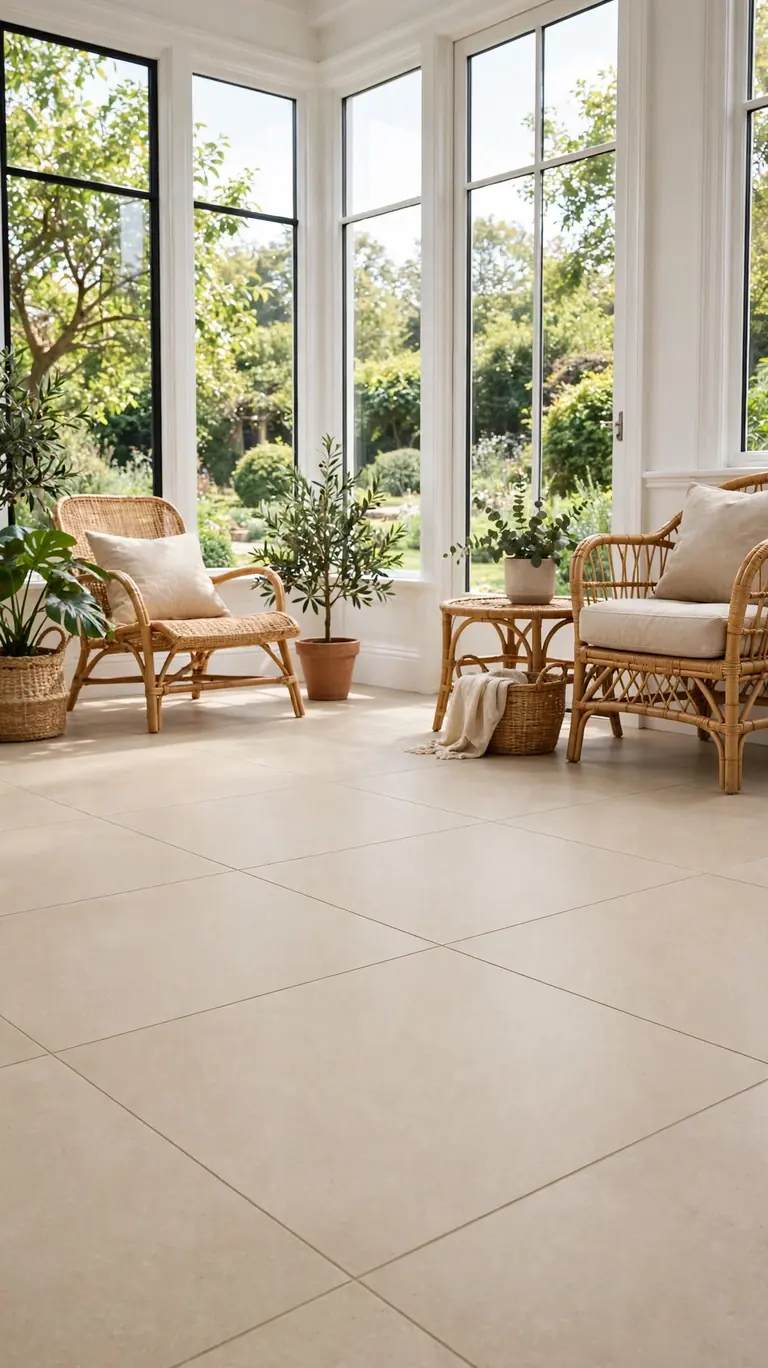
Porcelain tile is the workhorse of sunroom flooring for good reason. It is dense, hard, and shrugs off the moisture that drifts in through open doors and tracked-in shoes. It comes in just about every color and pattern you can imagine, from quiet neutrals to bold encaustic looks, so you will not have to compromise on style to get durability. Choose a matte or lightly textured finish if the room gets wet feet often, since glossy tiles can feel slippery when damp.
Grout is the one part that needs a little planning. Light grout shows dirt faster, so a mid-tone grout is the practical pick for a high-traffic sunroom. Seal the grout lines after installation and plan to reseal them every couple of years, and the floor will keep looking fresh with nothing more than regular sweeping and mopping. Porcelain also pairs beautifully with radiant heat underneath, which is worth knowing if cold floors bother you in the shoulder seasons.
2. Textured Ceramic Tile
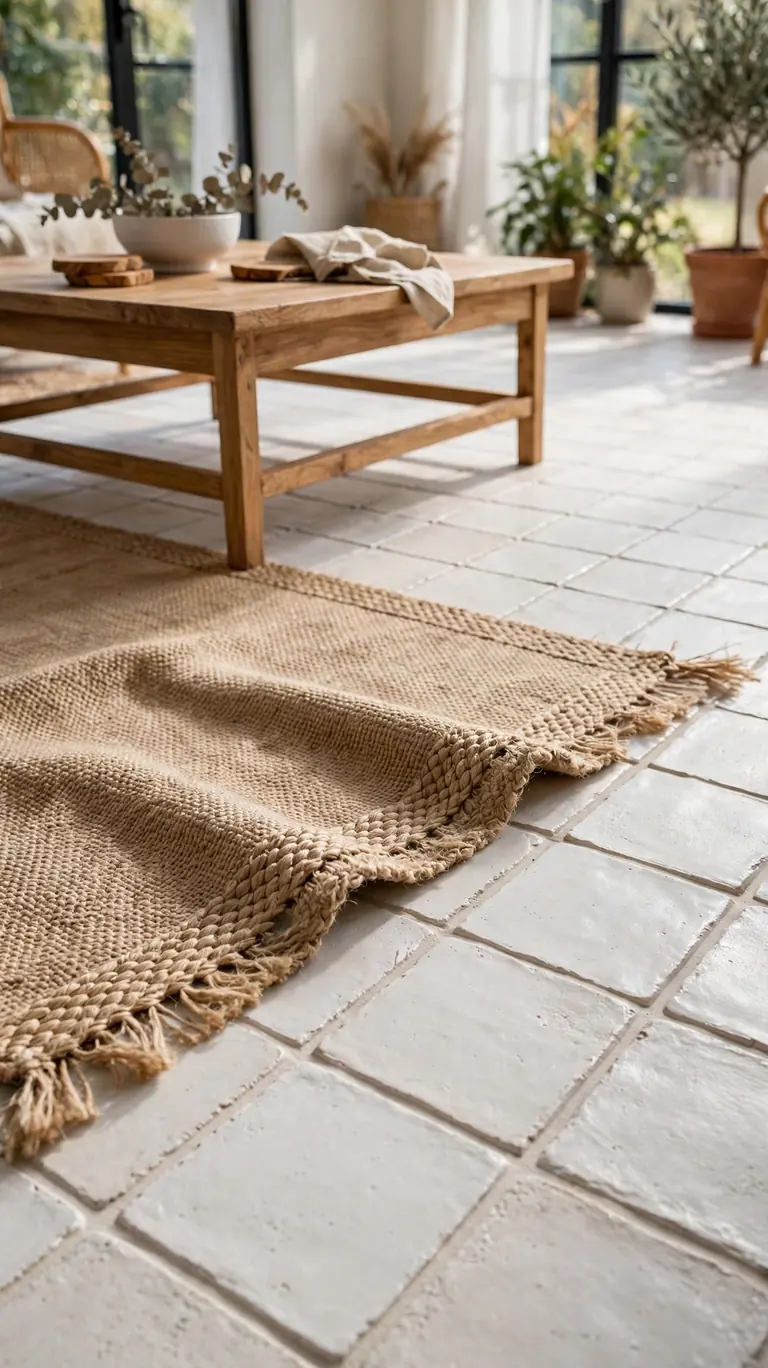
If you love the look of handmade tile, textured ceramic brings that artisan feel to a sunroom floor. The slight variation in each tile catches the light in a way flat tile never does, and the texture does a quiet job of hiding dust and footprints between cleanings. It is a lovely choice for Mediterranean, coastal, or farmhouse-style sunrooms where you want the floor to feel crafted rather than manufactured.
Because ceramic is a touch softer than porcelain, it suits sunrooms that are more sitting room than mudroom. Smaller tiles mean more grout lines, which actually helps with grip underfoot, so consider a classic square or subway layout instead of oversized slabs. Pick a glaze color that echoes something else in the room, like your cushions or planters, and the whole space will feel pulled together without much effort.
3. Natural Stone Slabs
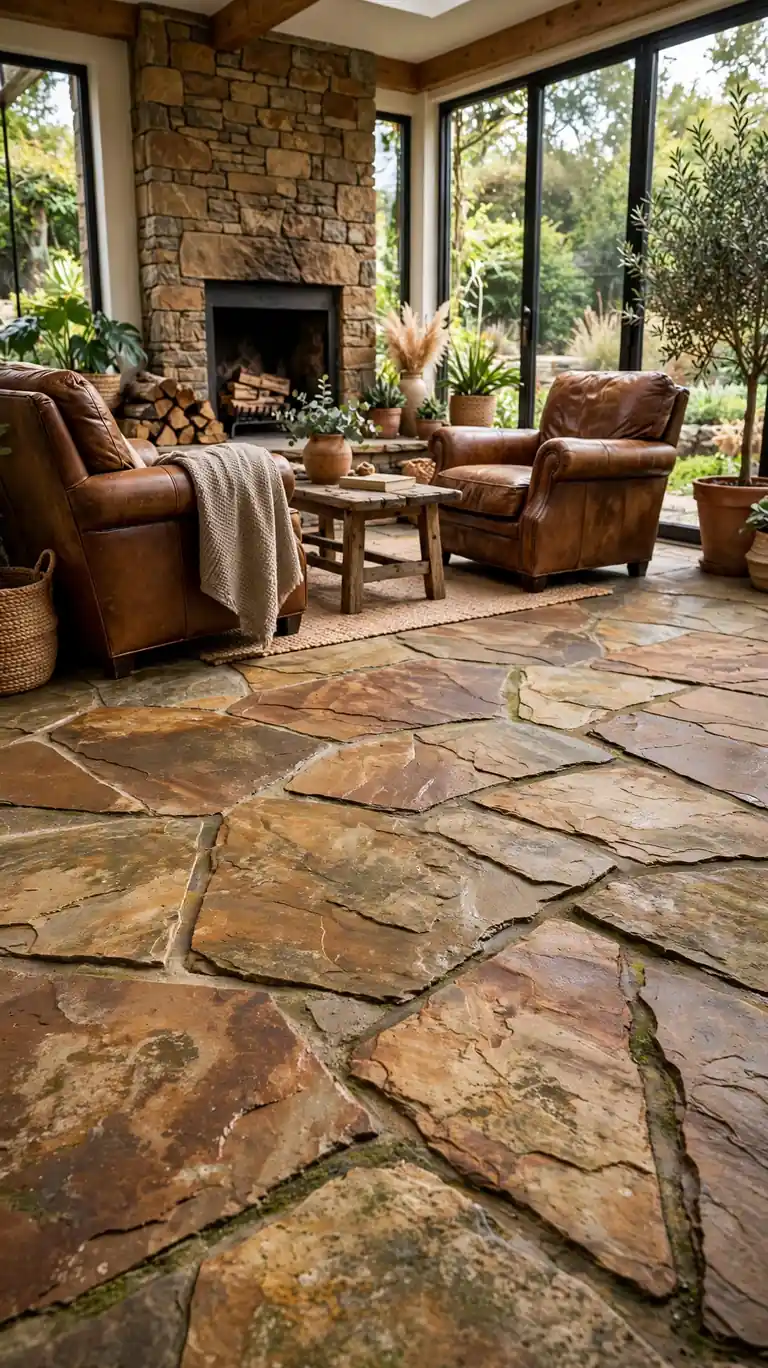
Few floors feel as grounded as natural stone. Flagstone, limestone, and sandstone slabs bring one-of-a-kind variation that manufactured products cannot copy, and their earthy tones connect a sunroom to the garden outside. Stone stays naturally cool underfoot, which feels wonderful on hot afternoons when the glass walls turn the room into a greenhouse.
Stone does ask for a little care. It is porous, so a quality stone sealer is a must, and you will want to reapply it on the schedule the sealer maker recommends. Irregular slab edges need an experienced installer to keep the surface level enough for furniture, so this is not the best pick for a first DIY project. Done well, though, a stone floor can outlast just about everything else in the house.
4. Terracotta Tile
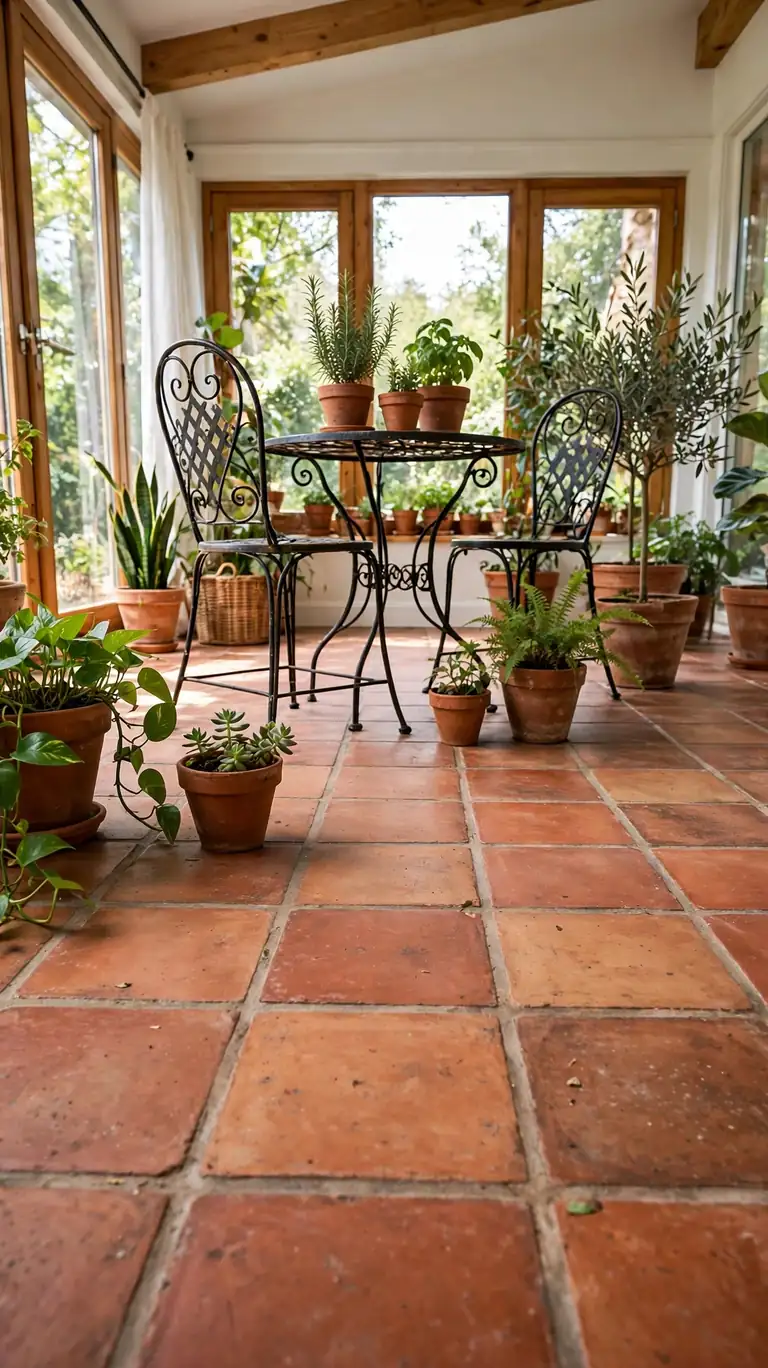
Terracotta tile gives a sunroom instant warmth and old-world charm. The rich orange-brown tones glow in sunlight and pair beautifully with green plants, which most sunrooms have in abundance. Saltillo-style tiles with their handmade variation look especially at home in Spanish, Mediterranean, and Southwestern-style spaces.
Terracotta is porous, so sealing is non-negotiable if you want to avoid stains from plant water and spilled drinks. The good news is that sealed terracotta is easy to maintain with a damp mop and a pH-neutral cleaner. Embrace the variation from tile to tile instead of fighting it. That handmade character is exactly what makes terracotta feel special, and no two floors will ever look alike.
5. Luxury Vinyl Plank and Tile
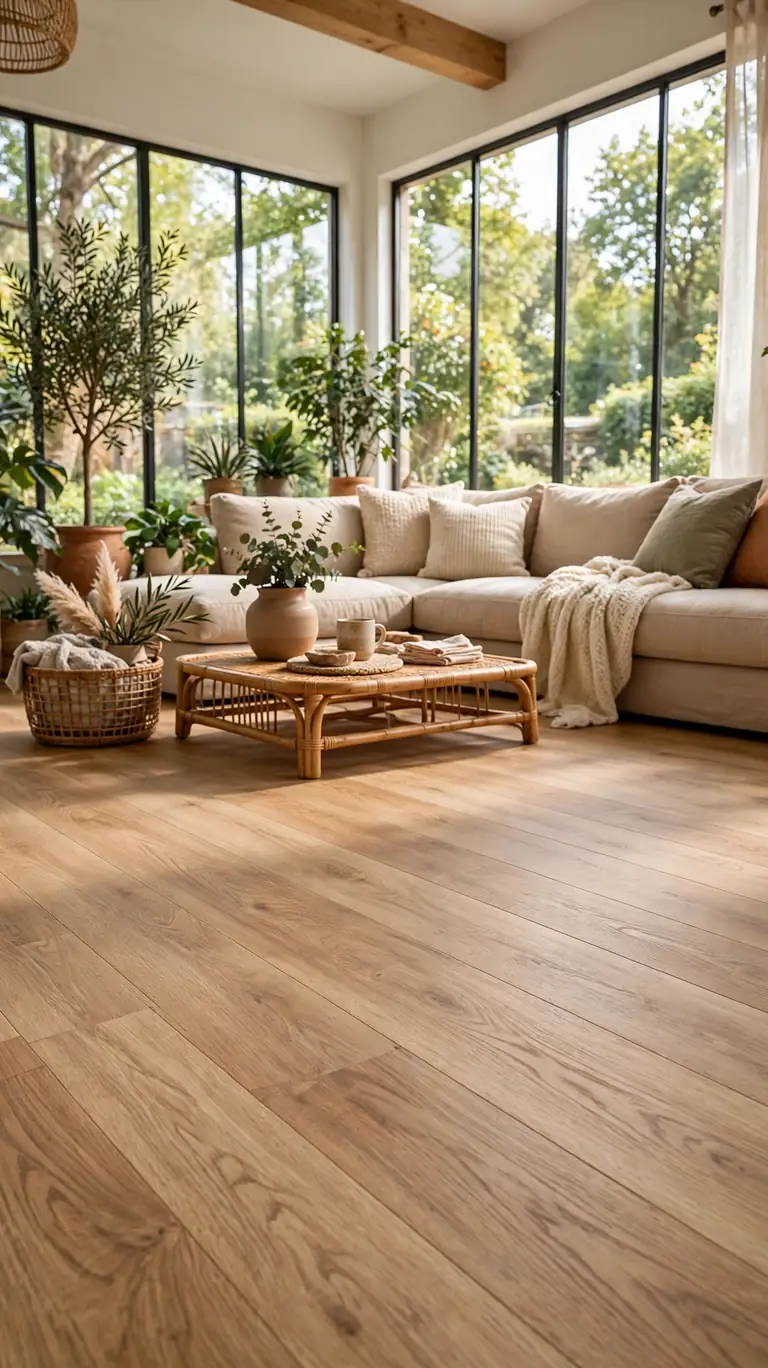
Luxury vinyl is the comfort pick. It is softer and warmer underfoot than tile or stone, which matters if you like walking barefoot, and the click-lock installation is friendly for confident DIYers. Modern vinyl looks convincingly like wood or stone, and the water-resistant construction handles the damp shoes and plant watering that come with sunroom life.
When you shop, look at the wear layer thickness, since a thicker wear layer generally stands up better to heavy traffic and sun exposure over time. Strong direct sun is a consideration for any vinyl product, so check the manufacturer’s guidance on sun exposure and consider window treatments for the harshest afternoon light. Keep a few spare planks from the same batch, and a damaged piece can be swapped out without redoing the whole floor.
6. Water-Resistant Laminate
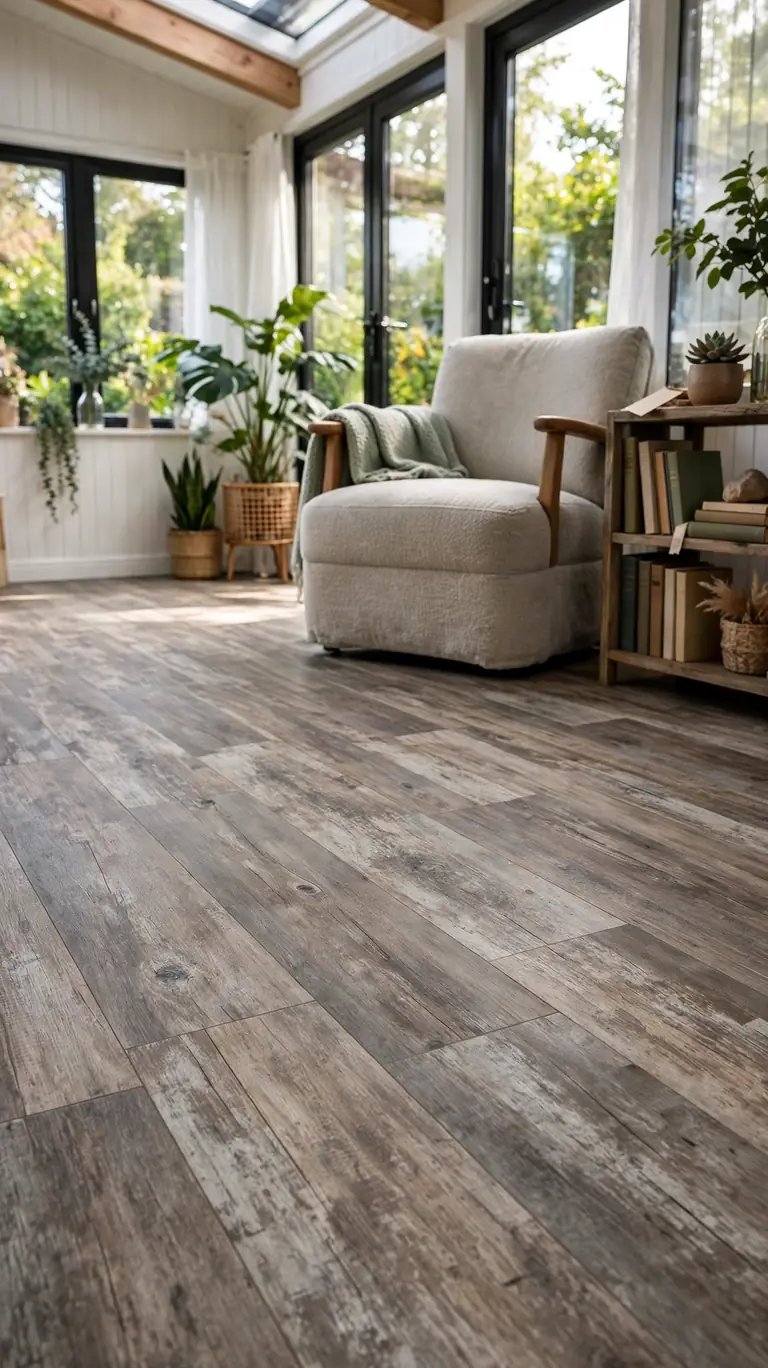
Laminate has come a long way, and water-resistant lines are now realistic contenders for sunrooms. You get the look of real wood planks at a fraction of the cost, with a tough surface that resists scratches from pet claws and dragged furniture. The click-together installation goes down fast over a level subfloor, which keeps labor costs reasonable too.
Moisture is still the thing to respect. Choose a product specifically rated as water-resistant, and wipe up standing water promptly rather than letting it sit. Let the planks acclimate in the room for a couple of days before installation so they adjust to the temperature and humidity. With those basics covered, laminate gives you a warm wood look that handles daily life without constant worry.
7. Engineered Hardwood
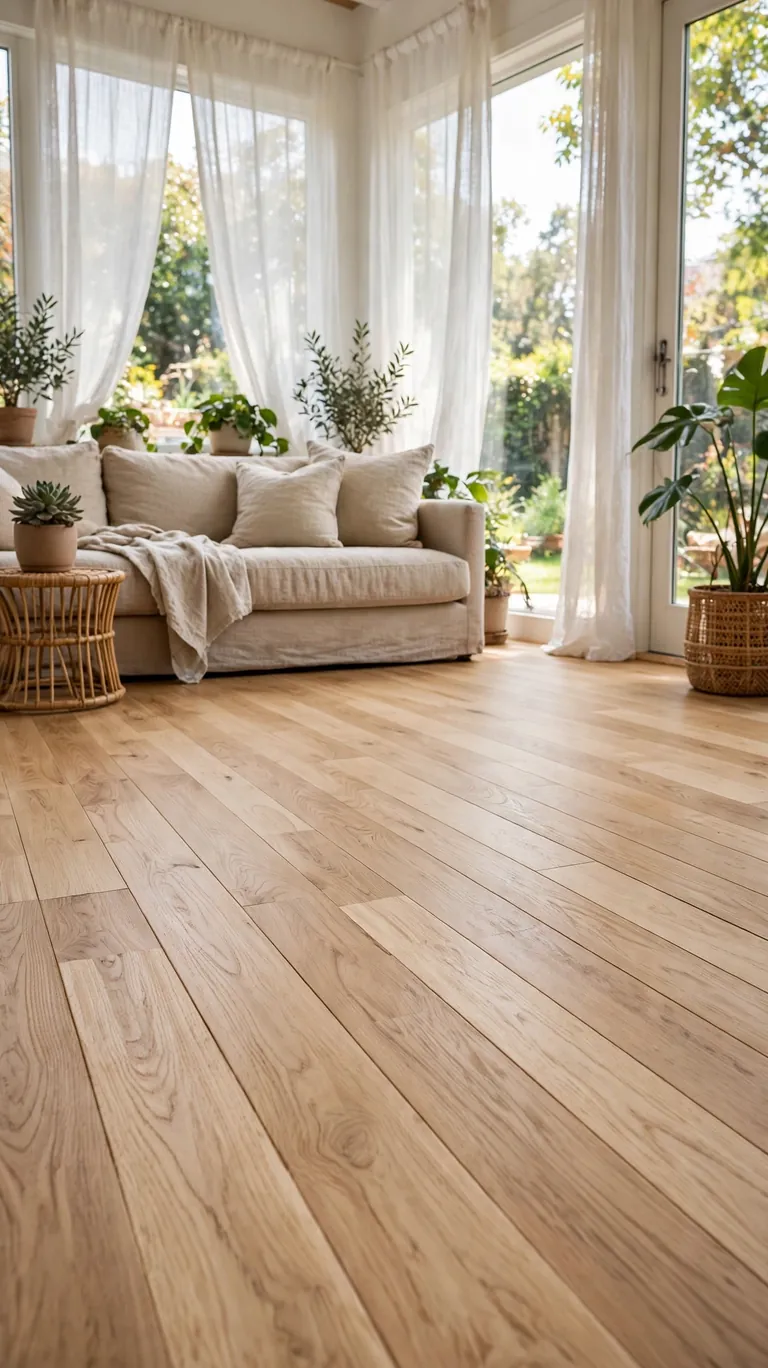
If your heart is set on real wood, engineered hardwood is the smarter way to get it in a sunroom. The layered construction with a real wood veneer over a stable core handles humidity swings better than solid wood, which can gap or cup when conditions change. You still get the genuine grain and warmth that only real wood delivers.
Go for lighter stains, since they tend to show sun-related color changes less noticeably than very dark finishes. Place rugs or furniture in the sunniest patches to even out exposure, and keep up with the finish maker’s recommended maintenance. Engineered wood costs more than vinyl or laminate, but for a sunroom that flows directly off the living room, the visual continuity can be worth every penny.
8. Stained Concrete
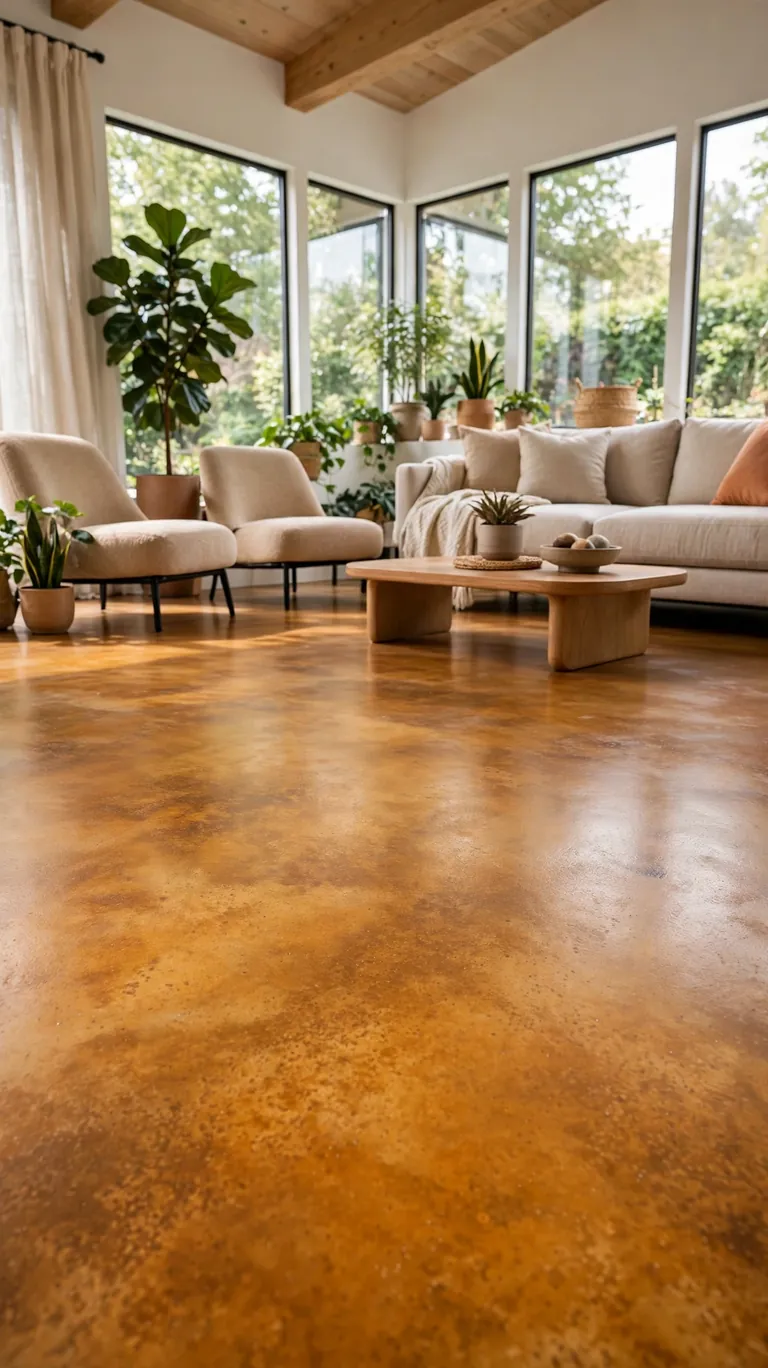
If your sunroom sits on a concrete slab, staining it might be the simplest transformation on this list. Acid or water-based stains soak into the concrete and create mottled, variegated color that hides dirt beautifully. The result looks custom and artistic, and there is no flooring to buy, only stain and sealer.
Prep is everything. The slab needs to be clean and free of old coatings for the stain to take evenly, so do not skip the cleaning and etching steps. Finish with a matte concrete sealer to protect the color and make mopping easy. Stained concrete feels cool underfoot, so layer a washable rug in the seating area if you want softness where you sit.
9. Painted Concrete
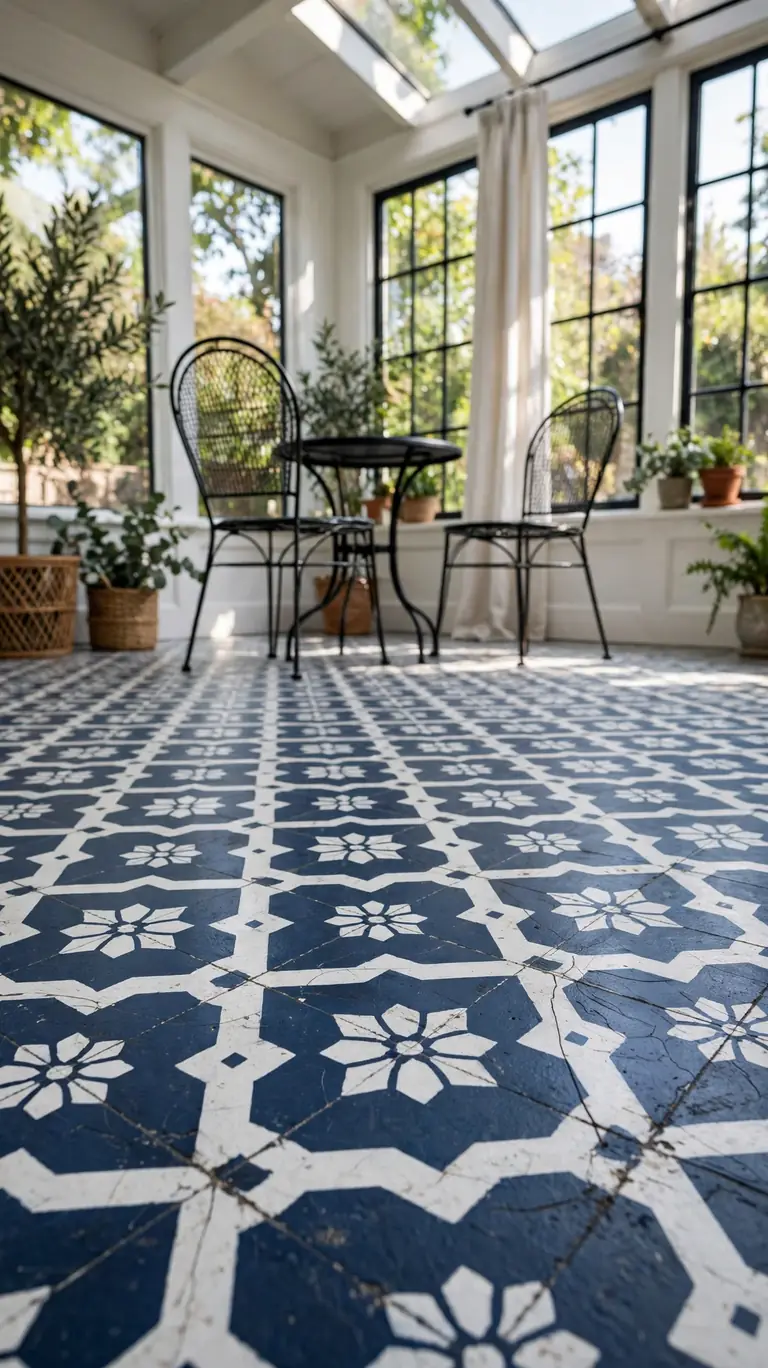
Painted concrete is the budget hero of sunroom floors. A coat of porch and floor enamel can take a dull gray slab from sad to stunning in a weekend, and stenciled patterns let you fake the look of expensive tile for very little money. It is the perfect project when you want a big visual change without a big invoice.
Use paint made for floors, not wall paint, since it needs to stand up to foot traffic and sun. Clean and etch the concrete first so the paint bonds well, and plan on two coats for solid coverage. Touch-ups are easy, which is part of the charm. When a spot gets scuffed, you dab on a little paint instead of calling a contractor. A fresh stencil pattern every few years keeps the room feeling new.
10. Brick Pavers
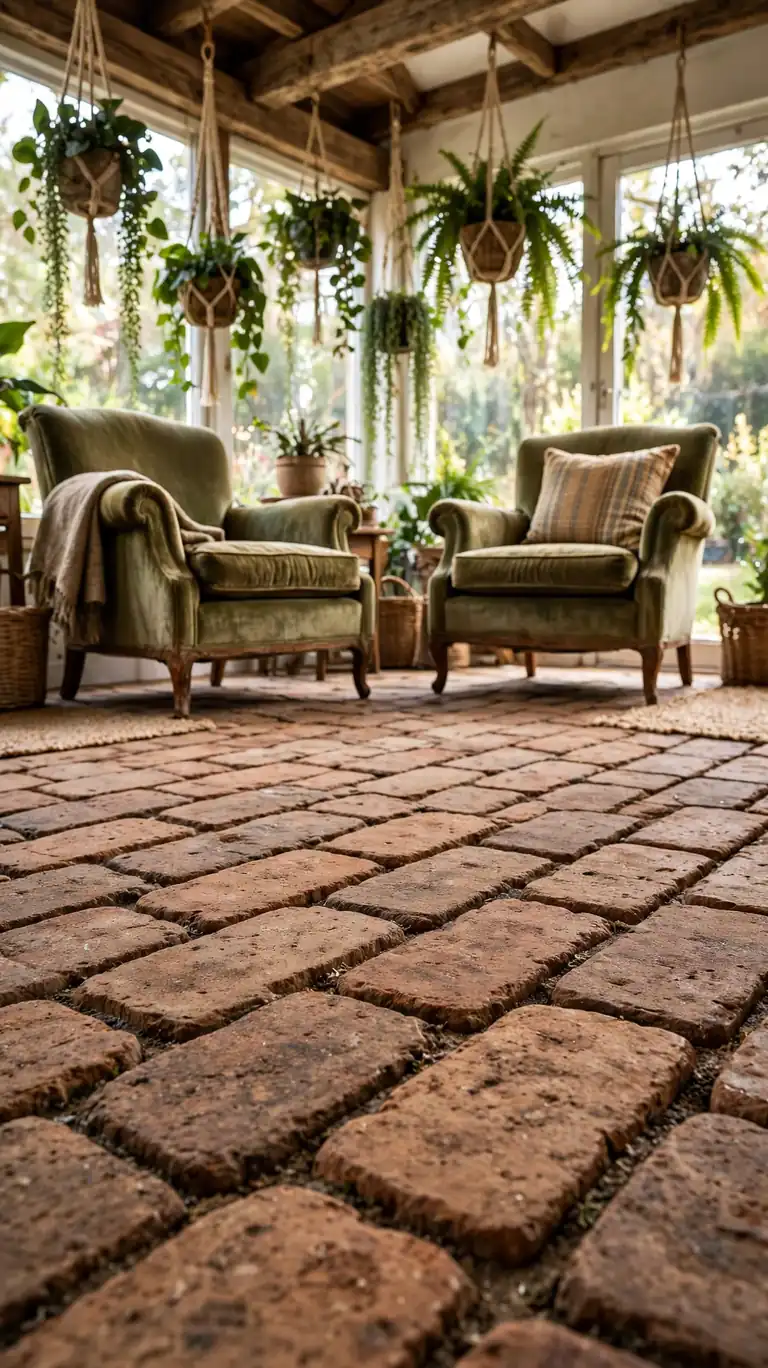
Brick pavers bring old-world character that feels right at home in a sunroom. The warm red-brown tones glow in natural light, and the small-scale pattern adds texture that large tiles cannot match. Whether your style is farmhouse, colonial, or rustic modern, brick grounds the room with a sense of history.
Pavers can be set in mortar for a permanent floor or sand-set for a more casual feel, and sealing them makes cleanup much easier. The surface is not perfectly smooth, so use felt pads under furniture and expect a little texture underfoot. That texture is also a plus for grip. In a room where wet shoes are common, a floor that is not slippery is genuinely practical.
11. Cork Flooring
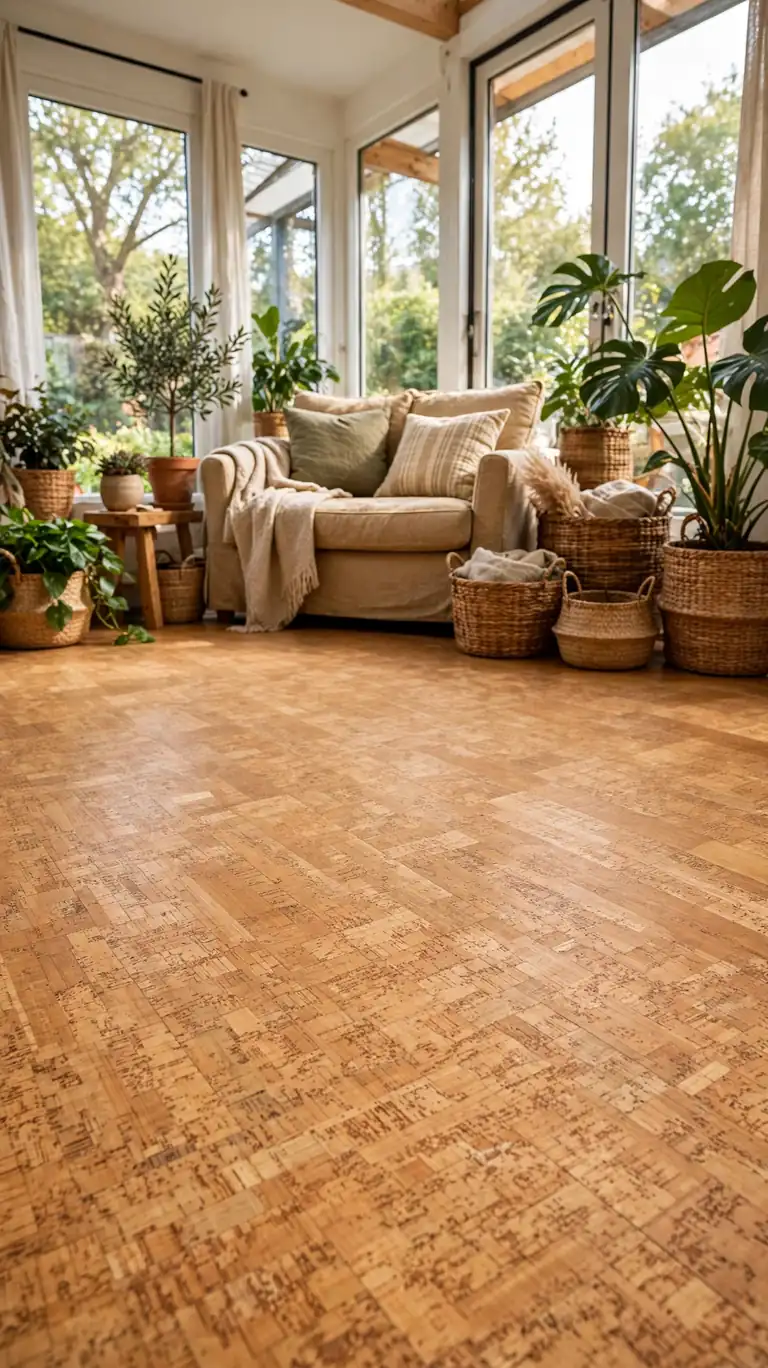
Cork is the softest natural floor on this list, and your feet will notice the difference immediately. It is warm, quiet, and slightly springy underfoot, which makes it lovely for a sunroom reading nook or yoga corner. The honey-toned, subtly patterned surface adds organic texture without shouting for attention.
Cork needs a good seal to handle sunroom life, since it can absorb moisture if left unprotected. Strong direct sun can also shift its color over time, so this floor works best in sunrooms with some shade or window treatments during peak afternoon hours. With proper sealing and sensible sun management, cork gives you a comfortable, eco-friendly floor that feels nothing like tile.
12. Bamboo Flooring
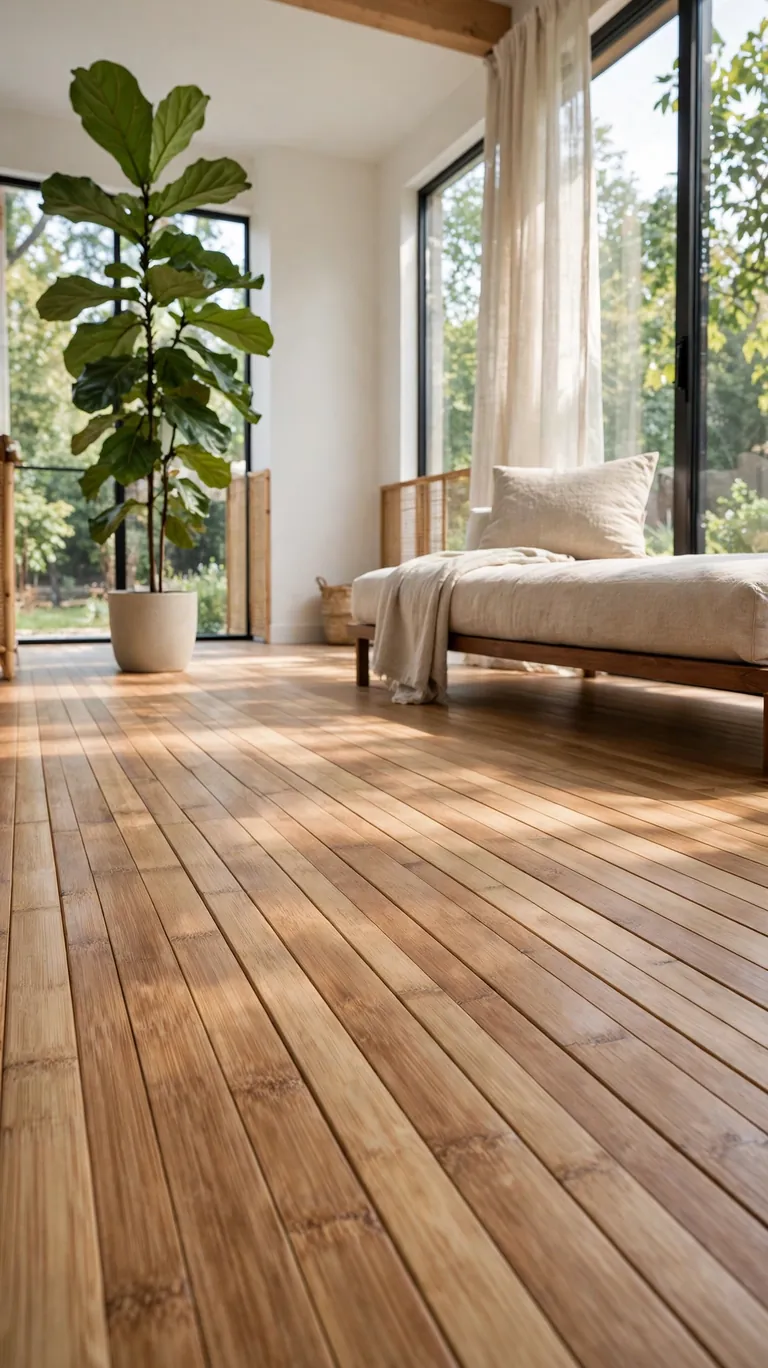
Bamboo offers a clean, modern wood look with a slightly exotic feel. Strand-woven bamboo is the densest and hardest option, and it stands up to daily traffic well. The long, linear grain suits contemporary sunrooms, and the light natural color keeps bright rooms feeling airy.
Like any plant-based floor, bamboo likes stable conditions. Let it acclimate in the room before installation, and wipe up spills promptly rather than leaving water standing. An area rug under the main seating group adds comfort and reduces wear in the highest-traffic zone. If you want the warmth of wood with a fresher, more modern grain pattern, bamboo deserves a spot on your shortlist.
13. Outdoor-Rated Carpet Tiles
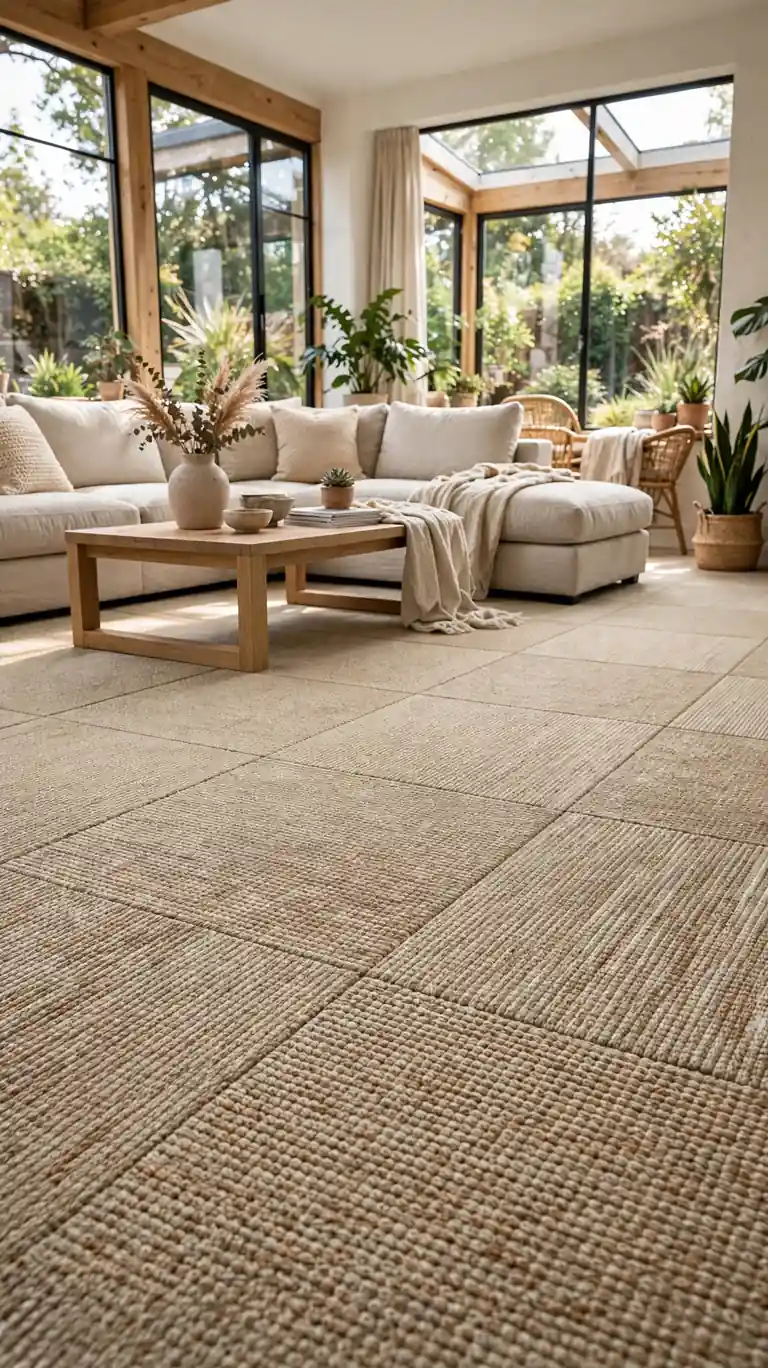
Carpet tiles made for outdoor or high-moisture use solve the softness problem without the risks of regular carpet. They bring warmth and sound absorption to a glass-heavy room, which can otherwise feel echoey. The tile format is the real advantage. If one tile gets stained beyond cleaning, you pull it up and replace just that tile.
Stick to low-pile, solution-dyed options that resist fading and dry quickly. A neutral tone that hides dirt will look better longer than a pale solid color. Arrange the tiles in a simple grid or a subtle checkerboard for a bit of pattern. They vacuum like regular carpet and can be hosed off outside if needed, which makes them one of the most forgiving floors here.
14. Indoor-Outdoor Rugs Over Hard Floors
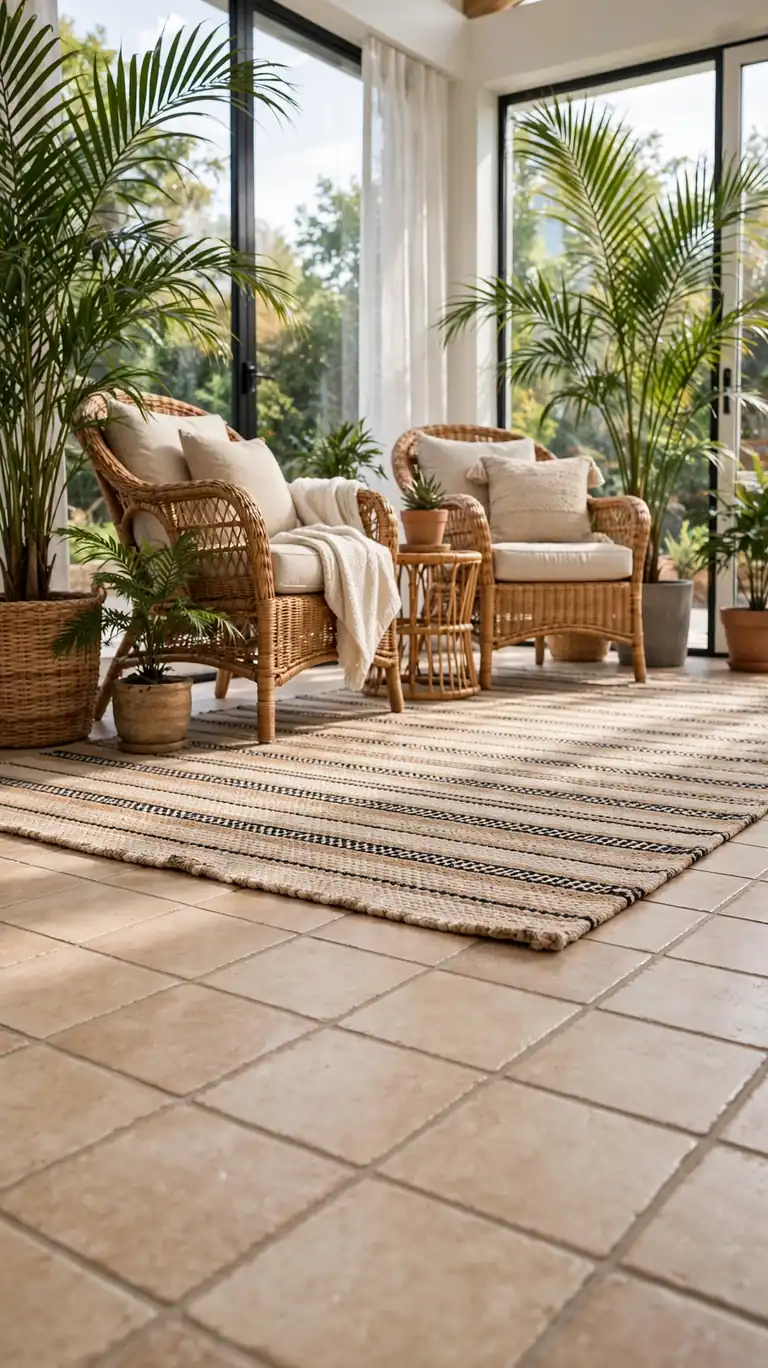
Sometimes the smartest flooring idea is not a floor at all, but what you put on top of one. A large indoor-outdoor rug over tile or concrete gives you softness, color, and pattern with zero commitment. You can change the whole mood of the room by swapping the rug, which no permanent floor can offer.
Choose rugs made for outdoor use so they handle sun and the occasional wet shoe without mildewing. Layer a flat rug pad underneath made for outdoor use to keep it from sliding. Rotate the rug once or twice a year so sun exposure stays even, and shake it out or hose it down when it gets dusty. This approach is perfect if you rent, or if you just like changing your decor with the seasons.
15. Patterned Encaustic-Look Tile
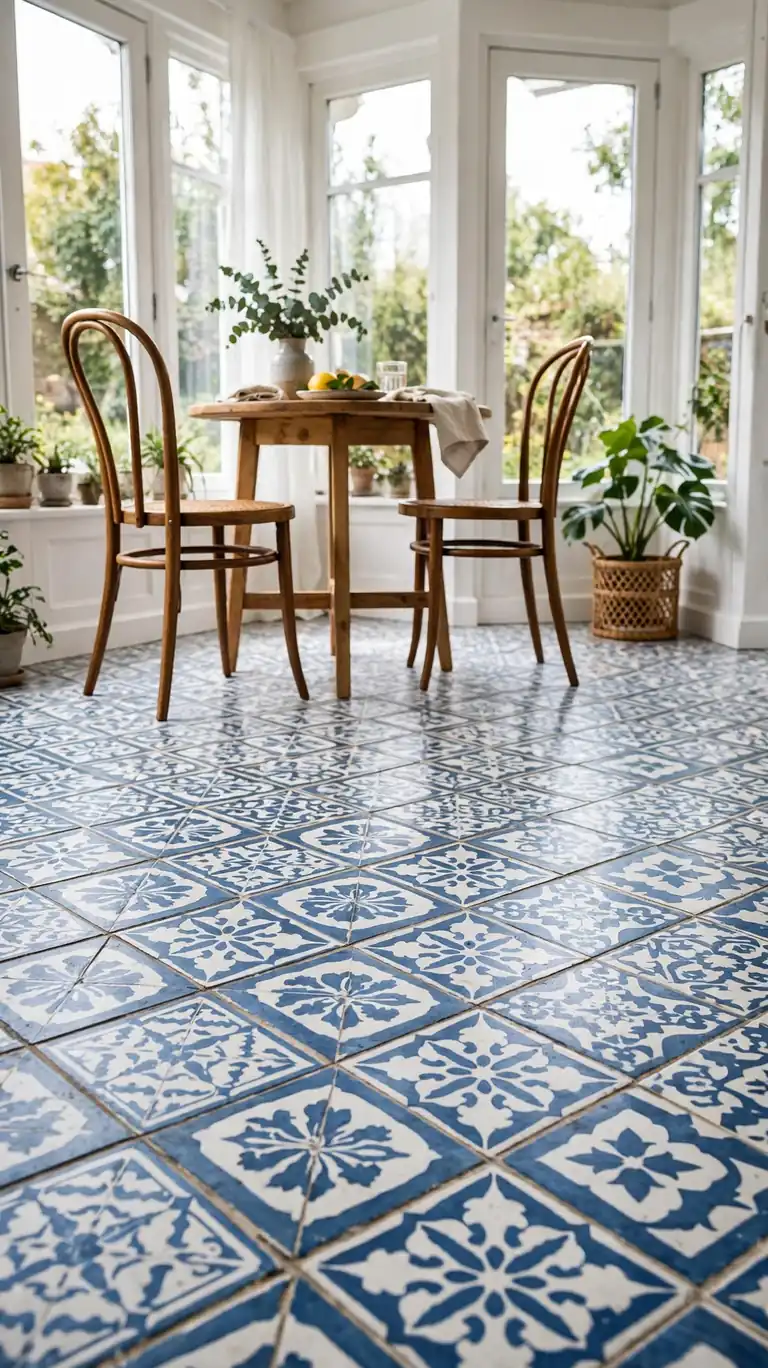
Patterned tile turns the floor into the star of the room. Encaustic-look porcelain gives you the intricate Moroccan and Mediterranean patterns of real cement tile with the easy care of porcelain. A bold floor like this means you can keep furniture and walls simple and still have a room with tons of personality.
Because the pattern is busy, it hides dirt and wear remarkably well, which is a practical bonus. Lay the pattern thoughtfully, centering it in the room so the design feels intentional rather than random. Keep the rest of the palette quiet and pull one or two colors from the tile into your cushions or planters. The result feels collected and designer-level without a designer budget.
16. Wood-Look Porcelain Tile
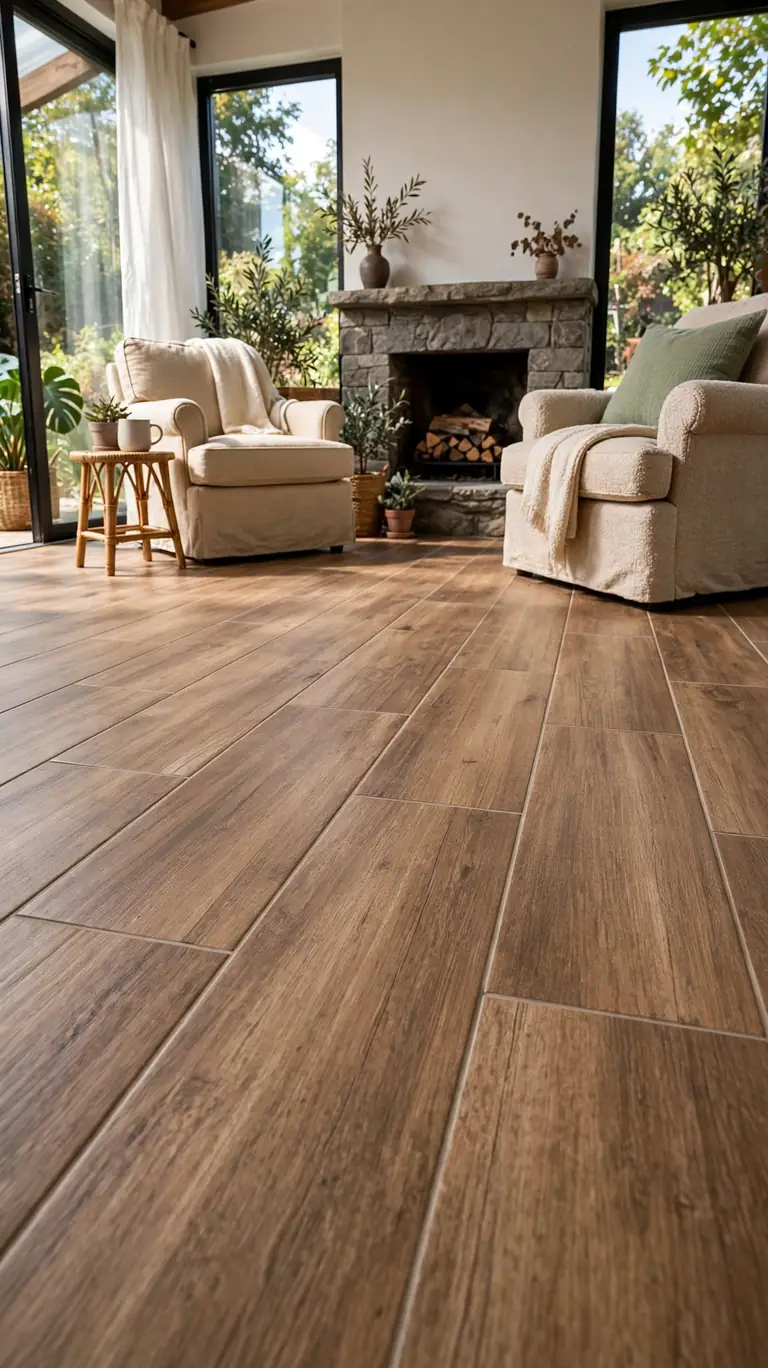
Wood-look porcelain tile is the best of both worlds for sunrooms. You get the warm, inviting look of wood planks with the toughness and moisture tolerance of tile. The long plank shapes lay out just like real hardwood, and modern printing makes the grain surprisingly convincing, even up close.
This is the floor to choose when you love wood but worry about sun and moisture. It will not fade unevenly the way real wood can, and it mops clean in seconds. Use a narrow grout joint in a color close to the tile so the planks read as continuous wood. It is one of the most popular sunroom floors for a reason. It looks like wood and behaves like tile.
17. Slate Tile
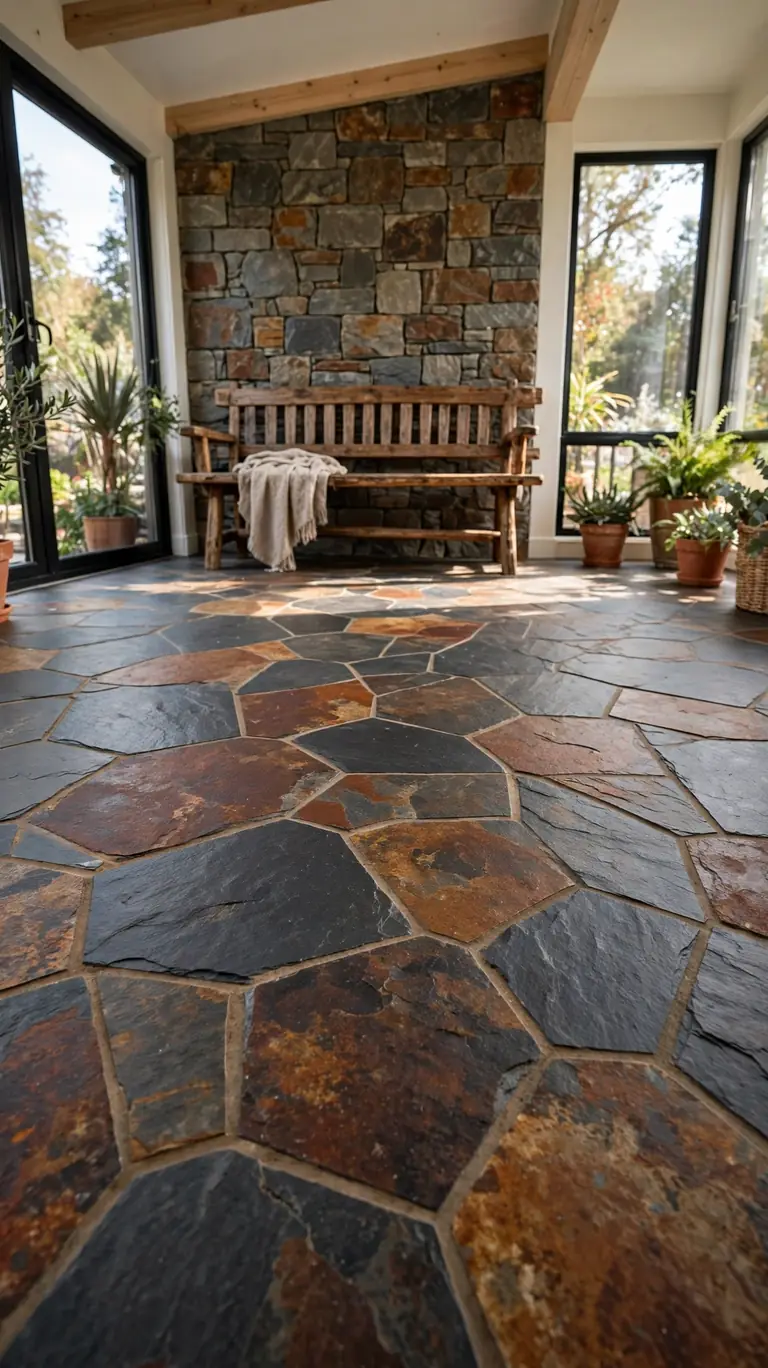
Slate brings drama and natural texture to a sunroom floor. The cleft surface has a rugged, tactile quality, and the color range from charcoal to rust to green gives you rich options that plain tile cannot match. It feels substantial and earthy, like an extension of the outdoors brought inside.
The textured surface provides good grip, which is welcome in a room that sees wet feet. Slate is a natural stone, so seal it to protect against stains and make maintenance easier. Expect some color variation from tile to tile. That is not a flaw. It is the whole point of natural stone, and it is what keeps a slate floor interesting for decades.
18. Travertine-Look Tile
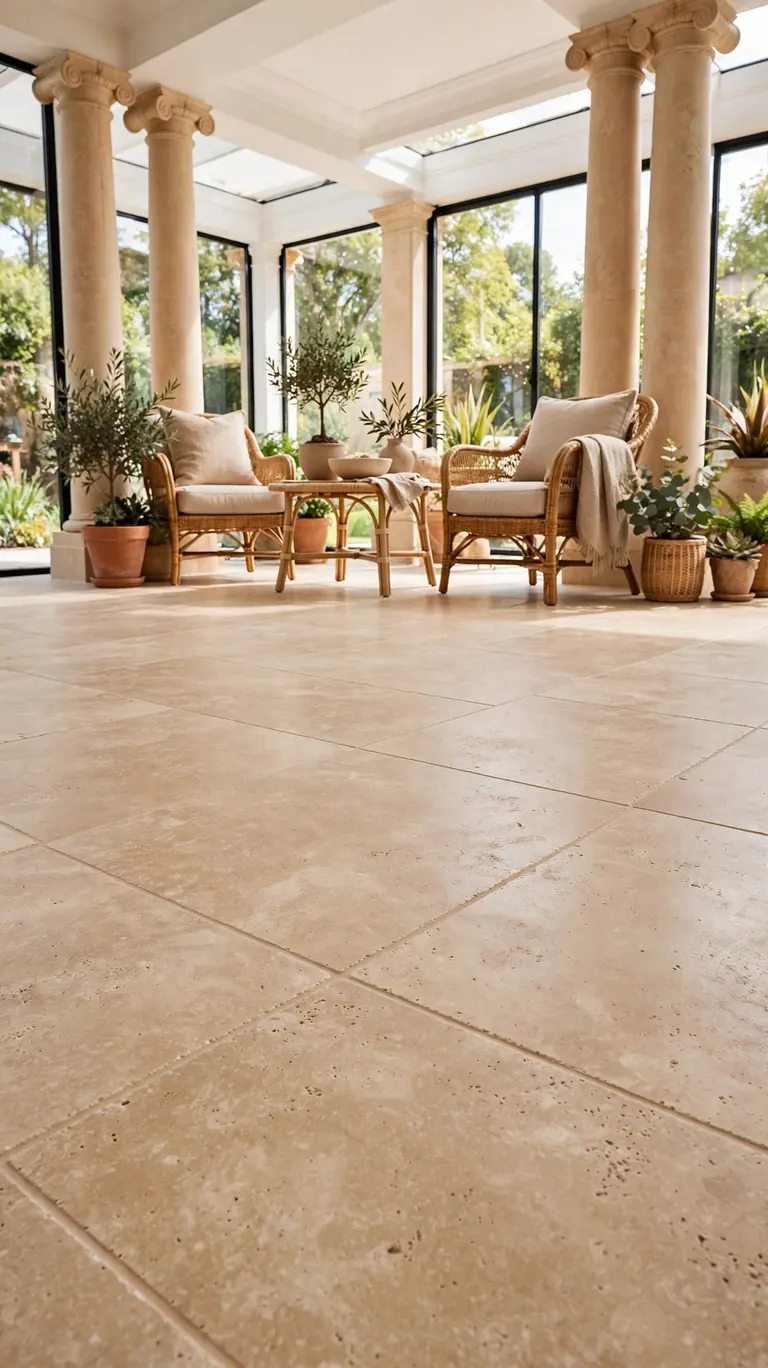
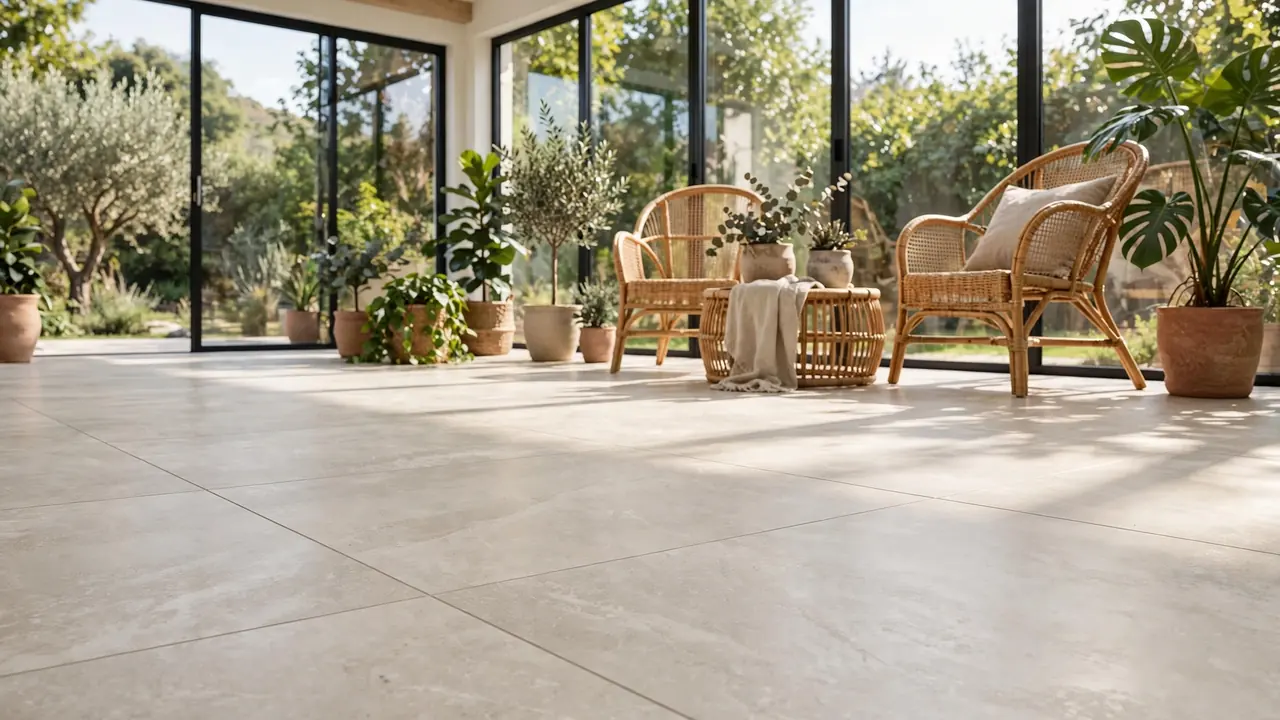
Travertine has a timeless, sun-baked elegance that suits sunrooms perfectly, and travertine-look porcelain gives you that look without the maintenance worries of the real stone. The soft beige tones and subtle pitting pattern feel warm and Mediterranean, and they pair beautifully with wrought iron furniture and leafy plants.
Real travertine is porous and needs diligent sealing, which is why the porcelain version is such a practical alternative. You get the same classic appearance with a surface that wipes clean and does not demand special cleaners. Choose a honed or matte finish rather than polished for better slip resistance. It is an easy way to get a high-end stone look on a realistic maintenance schedule.
19. Epoxy-Coated Concrete
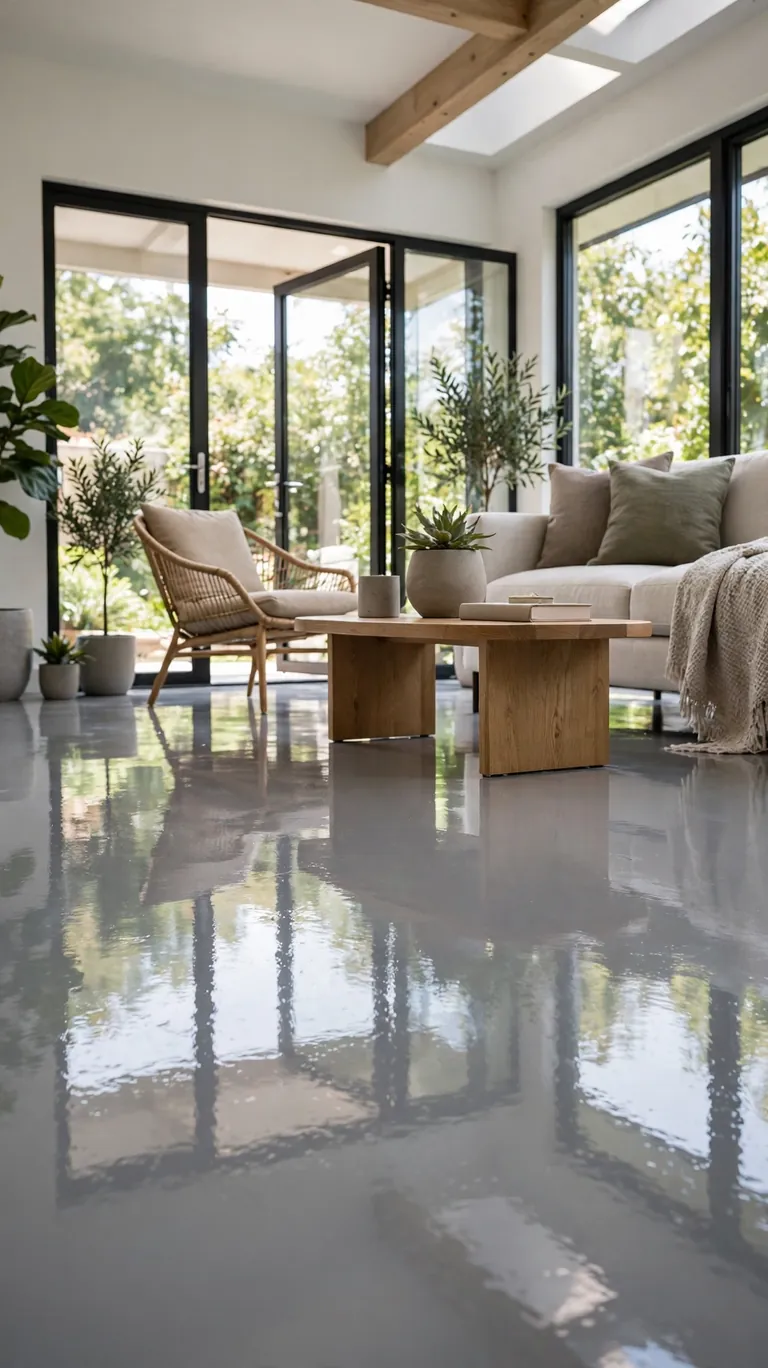
Epoxy coating turns a plain concrete slab into a seamless, glossy (or matte) floor that looks thoroughly modern. The coating creates one continuous surface with no grout lines to clean, and it resists stains from plant water, soil, and spilled drinks. Solid colors, subtle metallic effects, and decorative flakes are all on the table.
This is a project where professional installation usually pays off, since surface prep and application affect how long the coating lasts. The result is a floor that handles sunroom life with almost no maintenance beyond sweeping and damp mopping. If your style leans contemporary and you want a floor that looks sleek without fuss, epoxy is worth pricing out.
20. Interlocking Rubber Floor Tiles
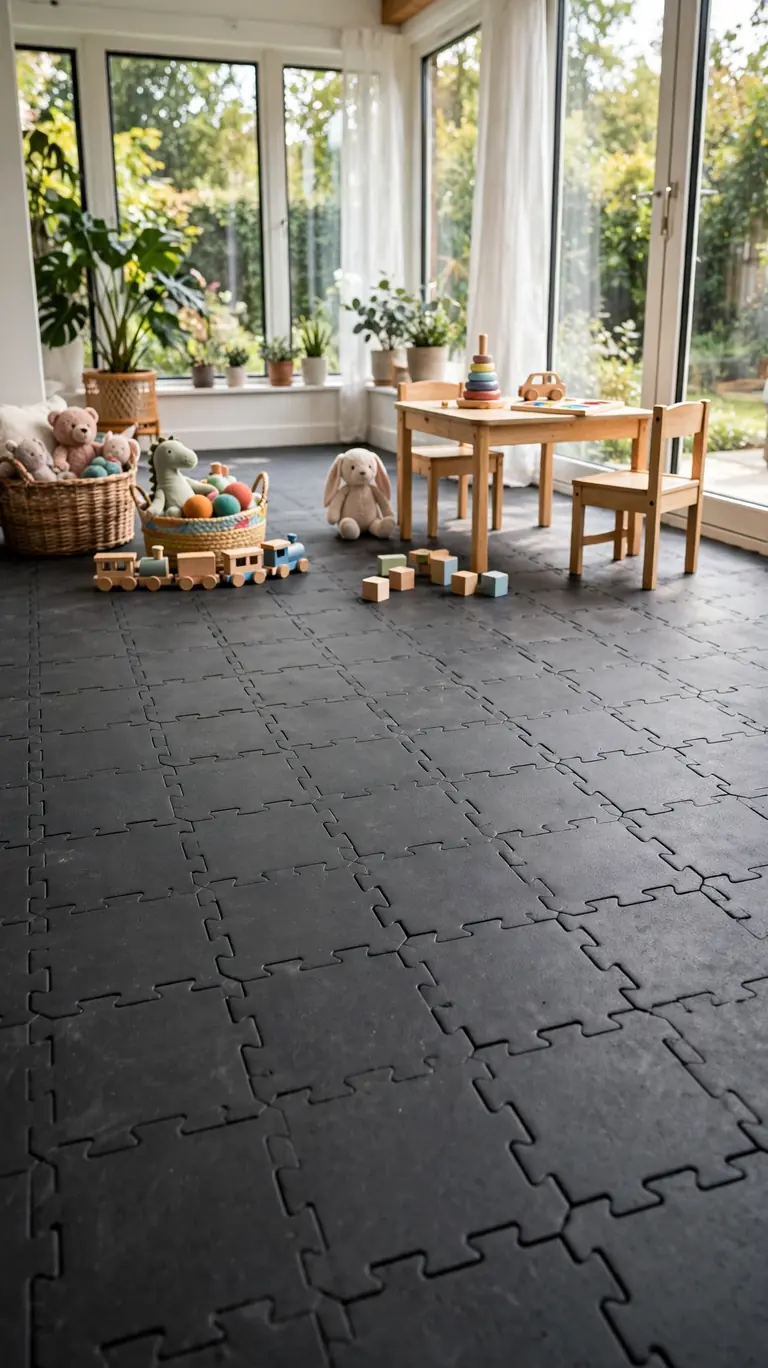
Rubber tiles are the practical pick when your sunroom doubles as a playroom, home gym, or pet zone. The interlocking tiles go down without adhesive, feel cushioned underfoot, and shrug off the spills and scuffs that would stress other floors. If a tile gets damaged, you lift it out and click in a new one.
Choose a tight interlock pattern so the seams stay neat, and pick a color with some mottling to hide dust. Dark charcoal is the forgiving classic. This is not the floor for a formal sitting room, but for a hardworking family sunroom it is hard to beat. It is comfortable, quiet, nearly indestructible, and easy to change later since it is not glued down.
21. Whitewashed Wood Planks
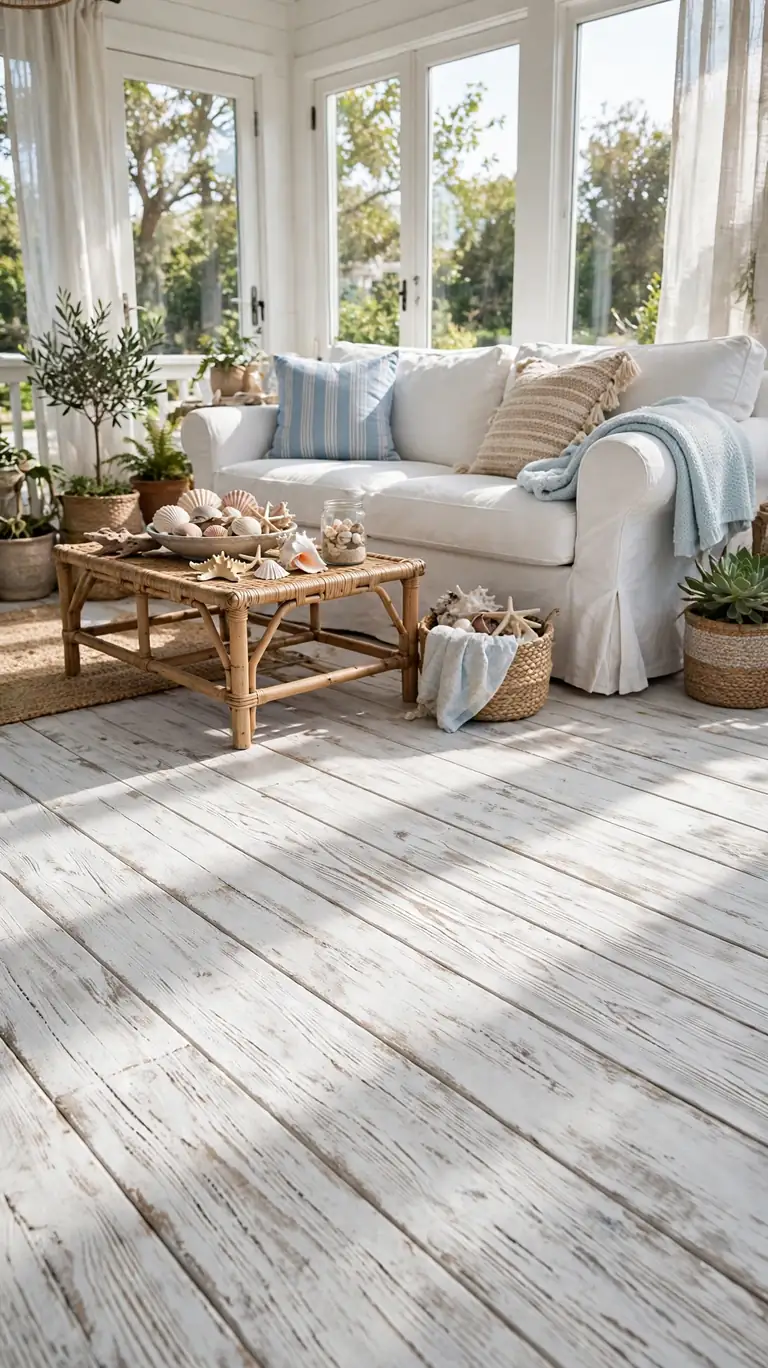
Whitewashed planks give you a breezy, coastal feel that makes a sunroom feel like a beach house, wherever you actually live. The pale finish brightens the room and lets the natural light do the talking. It works on engineered wood or even laminate planks with a whitewashed finish, so you can get the look at several price points.
Keep in mind that very light floors show dirt more readily, so this choice suits sunrooms that stay relatively clean or owners who do not mind frequent sweeping. A good entry mat at the door catches most of the tracked-in dirt before it reaches the floor. Pair whitewashed planks with natural textures like jute, linen, and rattan, and the room will feel effortlessly relaxed.
22. Herringbone Layout With a Contrasting Border
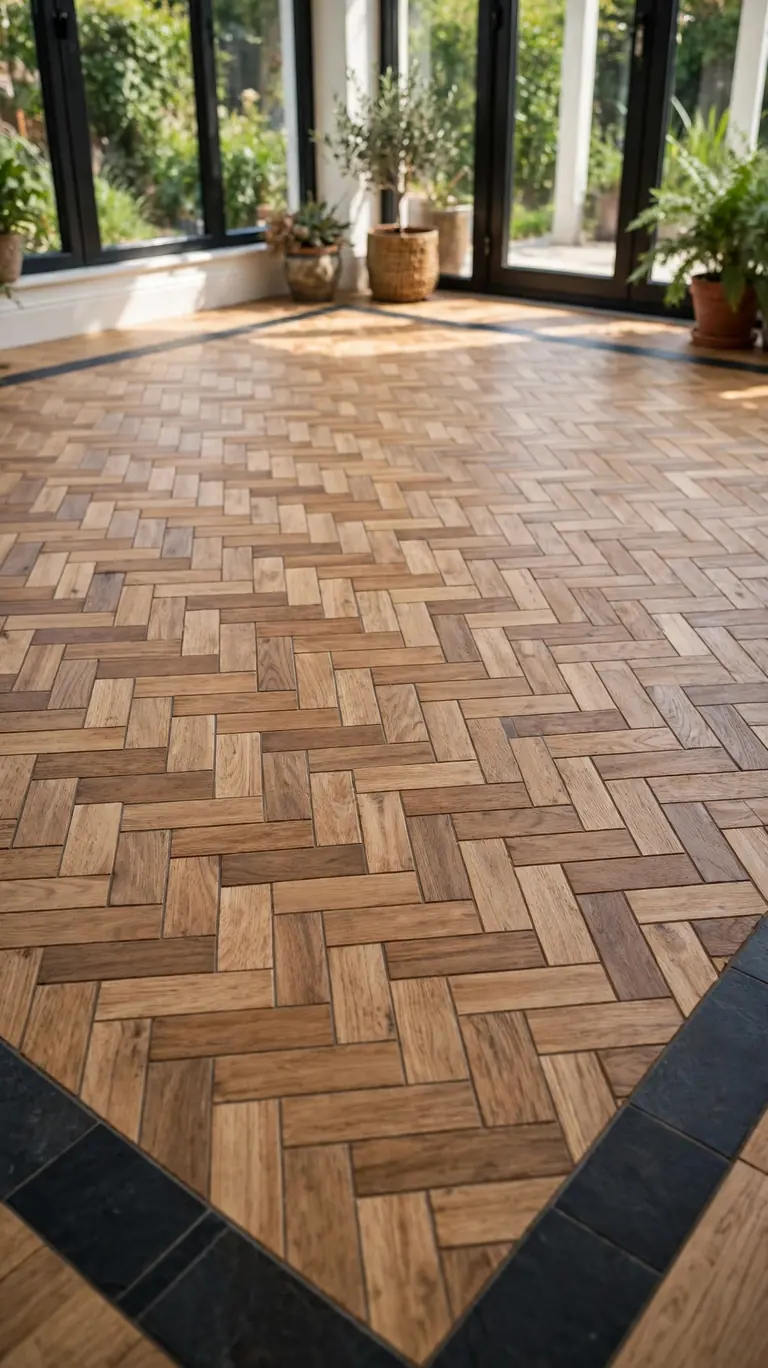
Sometimes the idea is not a new material but a new layout. Laying planks or rectangular tiles in a herringbone pattern turns an ordinary floor into a design feature, and adding a contrasting border around the perimeter frames the room like a rug. This works beautifully with wood-look tile or luxury vinyl planks.
Plan the layout carefully before anything gets installed. Herringbone needs to be centered in the room to look right, and the border width should be consistent all the way around. This layout uses more material because of the angled cuts, so order extra. The payoff is a floor with genuine craftsmanship character that guests will notice and compliment.
23. Large-Format Tile Over Radiant Heat
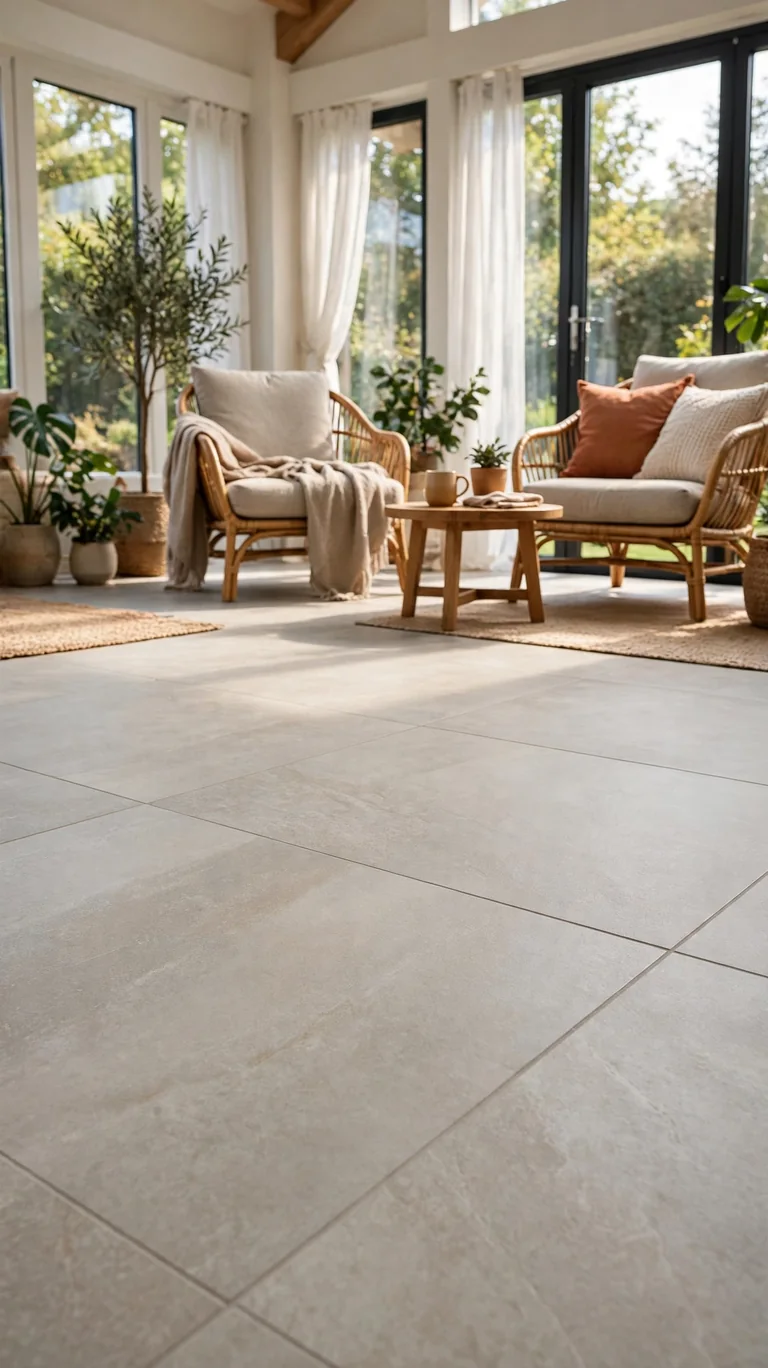
Large-format tiles with minimal grout lines give a sunroom a clean, modern, expansive feel. Fewer grout lines mean less maintenance and a calmer visual, which suits the relaxed purpose of the room. Light gray, warm beige, and soft white are all safe choices that keep the space feeling open.
Pairing the tile with radiant floor heat solves the one real drawback of tile in a sunroom: cold floors in the shoulder seasons. Electric radiant mats install under the tile and warm the floor to a comfortable temperature on chilly mornings. Have a qualified electrician handle the wiring, and enjoy a sunroom that stays usable comfortably from early spring through late fall.
Frequently Asked Questions
What is the best flooring for a sunroom?
Porcelain tile is the most popular all-around choice because it handles sunlight, moisture, and heavy traffic while coming in endless styles. Luxury vinyl plank is a strong alternative if you want something softer and warmer underfoot. The best floor for your sunroom depends on how you use the room, your budget, and how much maintenance you are willing to do, so weigh comfort against durability before you decide.
Can you put hardwood floors in a sunroom?
Solid hardwood is risky in a sunroom because the strong sun and humidity swings can cause it to fade, gap, or cup over time. Engineered hardwood is a safer way to get real wood, since its layered construction handles moisture changes better. If you love the wood look but want maximum peace of mind, wood-look porcelain tile or quality luxury vinyl plank gives you the appearance without the worry.
What flooring holds up best in strong direct sun?
Tile, stone, brick, and concrete handle strong sun with the least fuss, since they are not prone to the fading and heat sensitivity that affect softer floors. For vinyl, laminate, and wood products, check the manufacturer’s guidance on sun exposure and consider shades or window film for the harshest afternoon light. Using rugs in the sunniest spots and rotating them periodically also helps keep any floor looking even.
Is tile too cold for a sunroom floor?
Tile can feel cold underfoot, especially in spring and fall when the sun is weaker. Area rugs and indoor-outdoor rugs add warmth exactly where you sit and walk. For a more permanent fix, radiant floor heating installed under the tile keeps the floor comfortably warm on chilly mornings. Many sunroom owners find the coolness is actually a plus in summer, when the room runs warm.
How do I keep my sunroom floor from fading?
Start by choosing fade-tolerant materials like porcelain tile, stone, or concrete for the sunniest rooms. Window treatments, UV-filtering window film, and thoughtful furniture placement all reduce direct exposure on vulnerable floors. Rotate rugs and move planters occasionally so no single patch of floor takes all the sun. Regular cleaning also matters, since dirt ground into a floor can make fading look worse than it is.
Conclusion
A sunroom floor works harder than almost any other floor in the house. It takes the full force of the sun, the moisture of an indoor-outdoor lifestyle, and the daily traffic of the family’s favorite room, all while being expected to look beautiful. That is why the material matters more here than in most rooms. Tile, stone, and concrete handle the conditions with ease, while vinyl, laminate, and engineered wood bring comfort and warmth when you choose products rated for the job. There is no single right answer, only the right answer for how you live.
Start with your non-negotiables. If the room is a busy pass-through for kids and dogs, prioritize a floor you can mop in minutes. If it is a quiet retreat, you can lean toward comfort and texture. Set a realistic budget that includes installation and any extras like radiant heat or sealing, then order samples and live with them in the actual light for a few days. Floors look very different under your sunroom’s glass at 8 a.m. than they do in a showroom. Take your time with the decision, install it well, and your sunroom floor will quietly do its job for years while you enjoy the sunshine overhead.