25 Cozy Shed Bedroom Ideas for a Charming Private Escape
Yes, a shed can become a genuinely cozy private bedroom. The practical path is straightforward: insulate the walls, roof, and floor so the space holds temperature; add real ventilation with a window that opens or a small fan; run safe electrical wiring for lighting, outlets, and a modest heater; then furnish it like the small bedroom it is, with a space-smart bed, warm textiles, and layered light. A shed bedroom works beautifully as a guest room, a teen retreat, or a quiet reading escape, as long as you treat comfort basics as seriously as the decorating.
The ideas below cover the whole project, from the unglamorous must-dos like moisture control and insulation to the fun parts like loft beds, reading nooks, and personal style. You will find options for tiny sheds and generous ones, for rustic cabin looks and clean modern ones, and for budgets that favor clever repurposing over big spending. Pick the ideas that match your shed, your climate, and who will actually sleep there, and you will end up with a private escape that feels like a destination rather than a storage building with a mattress in it.
1. Insulate the Walls, Roof, and Floor First
Nothing else on this list matters until the shed holds temperature. Bare shed walls swing from freezing to stifling, and no amount of throw pillows fixes that. Insulate the walls and roof with a proper insulation material fitted between the framing, then cover it with plywood, paneling, or drywall so the insulation stays protected and the room looks finished. Do not skip the floor either, since cold rises straight through an uninsulated shed floor on chilly nights.
Seal the gaps while you are at it. Drafts around the door, windows, and where the walls meet the roof will undo good insulation fast, so add weatherstripping and caulk the obvious leaks. If your shed sits close to the ground, a vapor barrier under the floor helps keep ground moisture from creeping up. This is the least exciting step and the most important one, because a well-insulated shed bedroom feels like a real room in every season instead of a tent with walls.
2. Build a Loft Bed to Double Your Floor Space
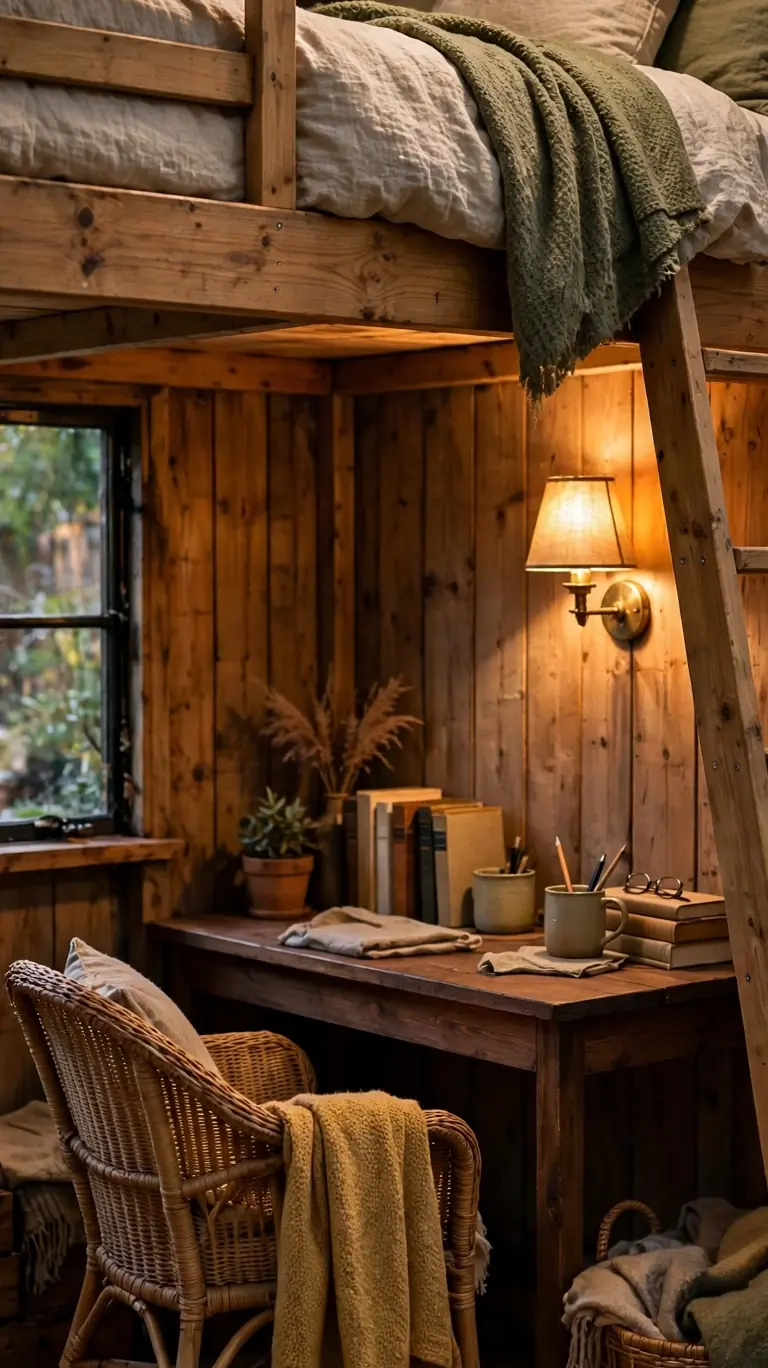
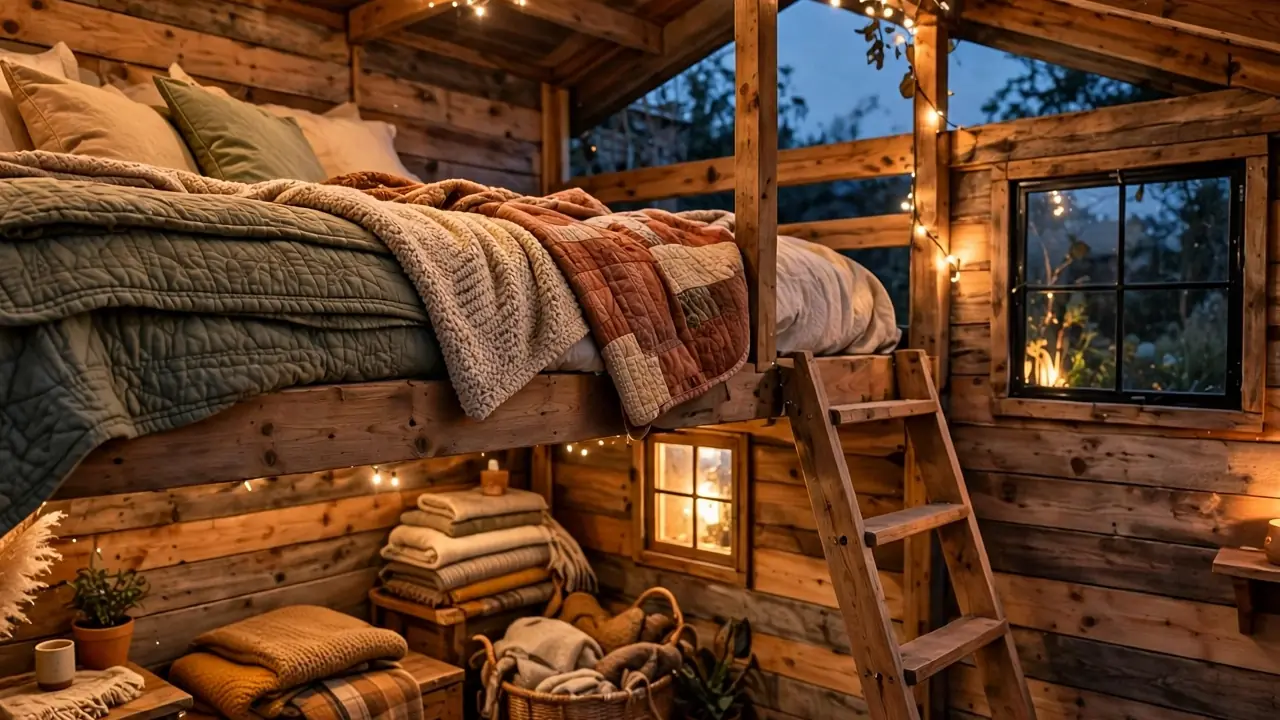
A loft bed is the single best trick for a small shed bedroom. Raising the sleeping area to loft height frees the entire footprint below for a desk, a reading chair, or storage, which effectively doubles what a tiny shed can do. Build the loft frame from sturdy lumber anchored securely to the wall studs, and use a proper guard rail on the open side. A full-size mattress fits most shed lofts comfortably, and a twin works in the narrowest buildings.
Make the climb pleasant rather than an afterthought. A real staircase with storage drawers built into the steps is the gold standard, but a wide, sturdy ship-style ladder with deep treads works well in tight sheds. Put a small light up in the loft, a wall-mounted sconce or a clip light, so nobody is fumbling in the dark at bedtime. The space underneath stays open and usable, which is what turns a cramped shed into a room that feels generous.
3. Use a Daybed as a Sofa by Day and a Bed by Night
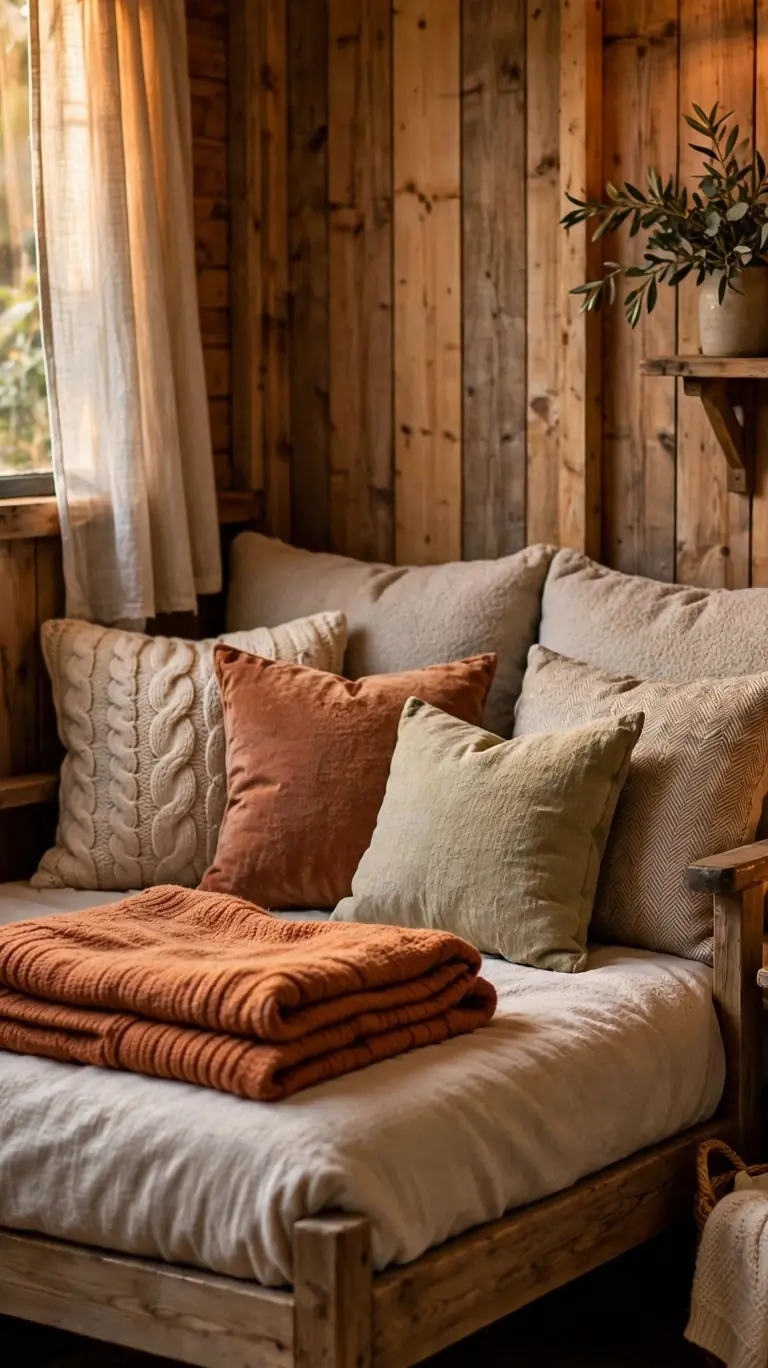
A daybed is perfect for a shed that needs to be a hangout space as well as a bedroom. Dressed with a tailored cover and plenty of cushions, it reads as a sofa during the day, which makes the shed feel like a lounge rather than a one-purpose room. At night, pull off the daytime cushions and it is a proper twin bed. This dual role is ideal for teen retreats and guest rooms that sit empty between visits.
Choose a daybed frame with a trundle or built-in drawers underneath and you have solved two problems at once. The trundle adds a second sleeping spot for friends, while drawers swallow extra bedding, board games, or off-season clothes. Keep the bedding simple, a fitted sheet, a warm duvet, and a folded throw, so the day-to-night switch takes under a minute. The easier the changeover, the more the space actually gets used.
4. Try a Fold-Down Murphy Bed for Maximum Flexibility
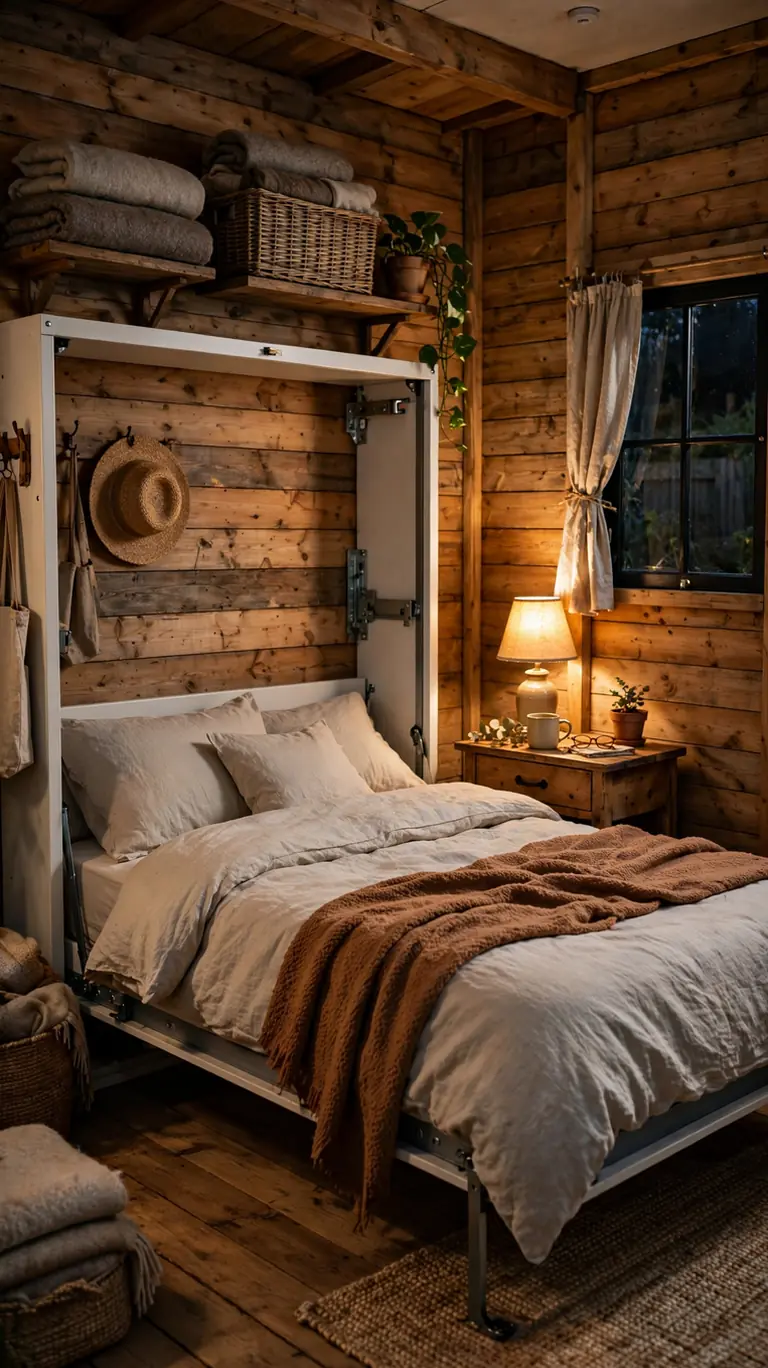
A murphy bed gives you a full-size sleeping surface that disappears into the wall when you do not need it. Folded up, the shed becomes a craft room, a home office, or an open hangout space. Folded down, it is a real bed with a real mattress. This is the smartest choice when the shed has to serve two lives, like a guest room that doubles as your art studio most of the year.
Mount the mechanism to solid wall framing, not just paneling, since a murphy bed carries real weight and movement. Keep the bedding strapped or tucked so the fold-up motion stays smooth, and leave enough floor clearance in front for the bed to swing down fully. When the bed is up, the wall face can hold a fold-down desk or artwork, so the room looks intentional in both modes. It takes more planning than a regular bed, but nothing else frees this much floor space.
5. Add a Skylight Right Over the Pillow
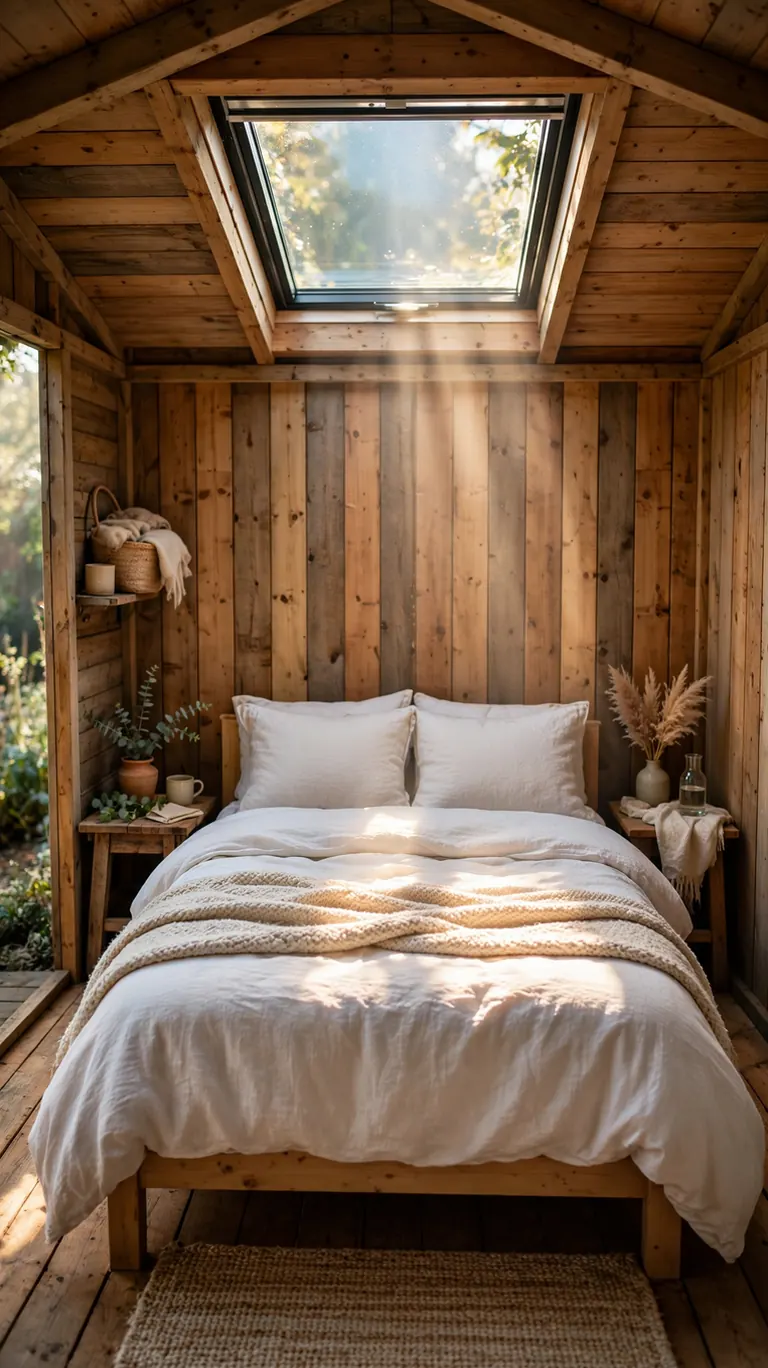
Waking up to daylight overhead is one of the loveliest things about a shed bedroom, and a skylight delivers it. Positioned above or near the bed, a skylight floods the sleeping area with natural light during the day and gives you stars at night, which makes the small room feel connected to the outdoors. It also cuts down on how much artificial lighting you need, since sheds are often darker than house rooms.
Choose a skylight that opens if you can, because it doubles as ventilation, letting warm air escape on summer nights. Add a blind or shade made for the unit so you can darken the room for sleeping in and on bright summer mornings. Make sure the flashing and sealing are done properly during installation, since a leaking skylight will ruin everything below it. Done right, it becomes the defining feature guests remember.
6. Frame the Bed With a Big Window
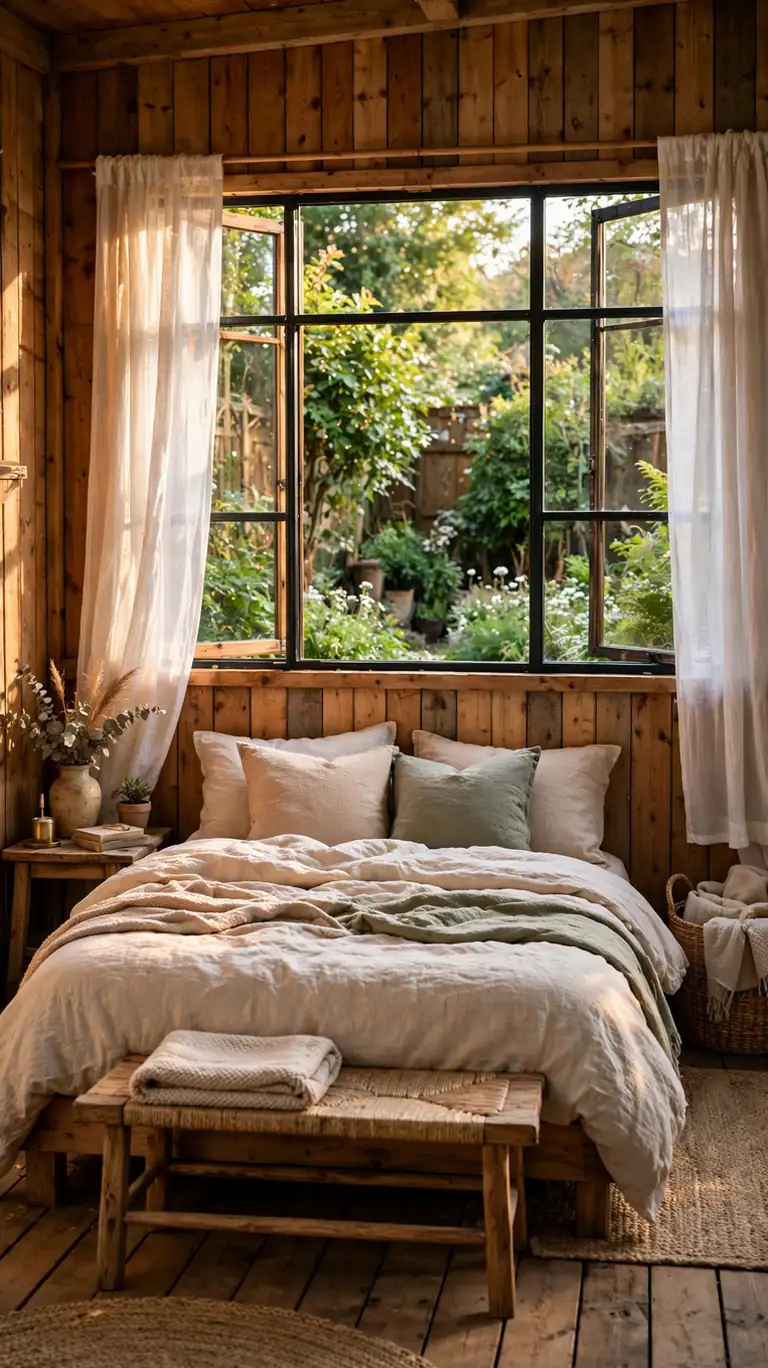
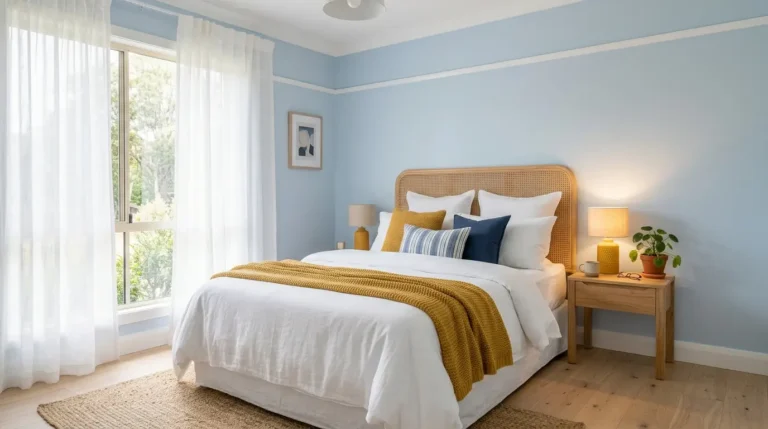
If a skylight is not in the cards, a generous window behind or beside the bed gives you nearly the same payoff. Morning light on the pillows makes the room feel alive, and a view of the garden turns the bed into the best seat in the yard. In a shed, where wall space is limited, the window wall becomes the headboard wall, and that is a design decision rather than a compromise.
Keep the window treatment simple and functional. Sheer curtains soften the light during the day, and a blackout layer behind them handles sleep and privacy at night. Place a low bench or a pair of baskets at the foot of the bed to catch the view without blocking it. A window seat built under a wide sill is even better, giving you a second perch for reading that costs almost no floor space.
7. Line the Walls With Warm Wood Planks
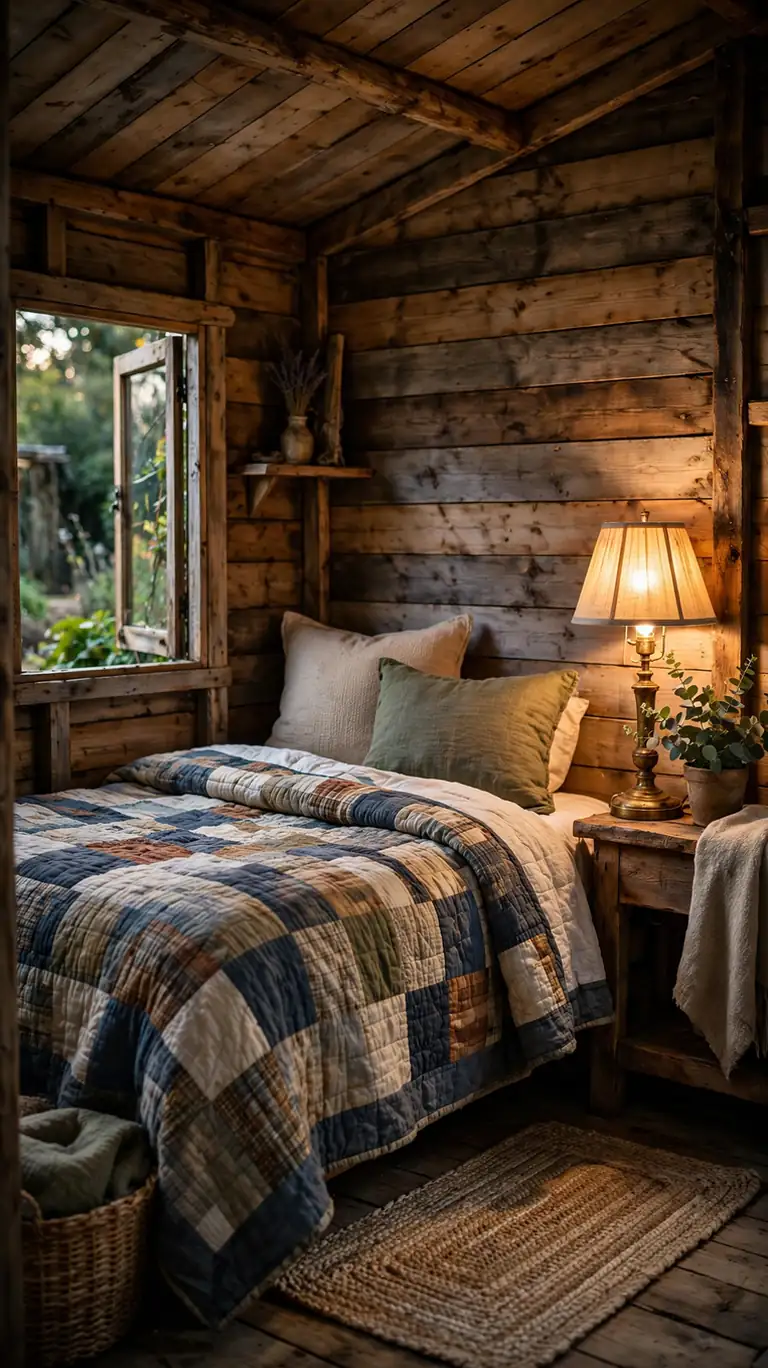
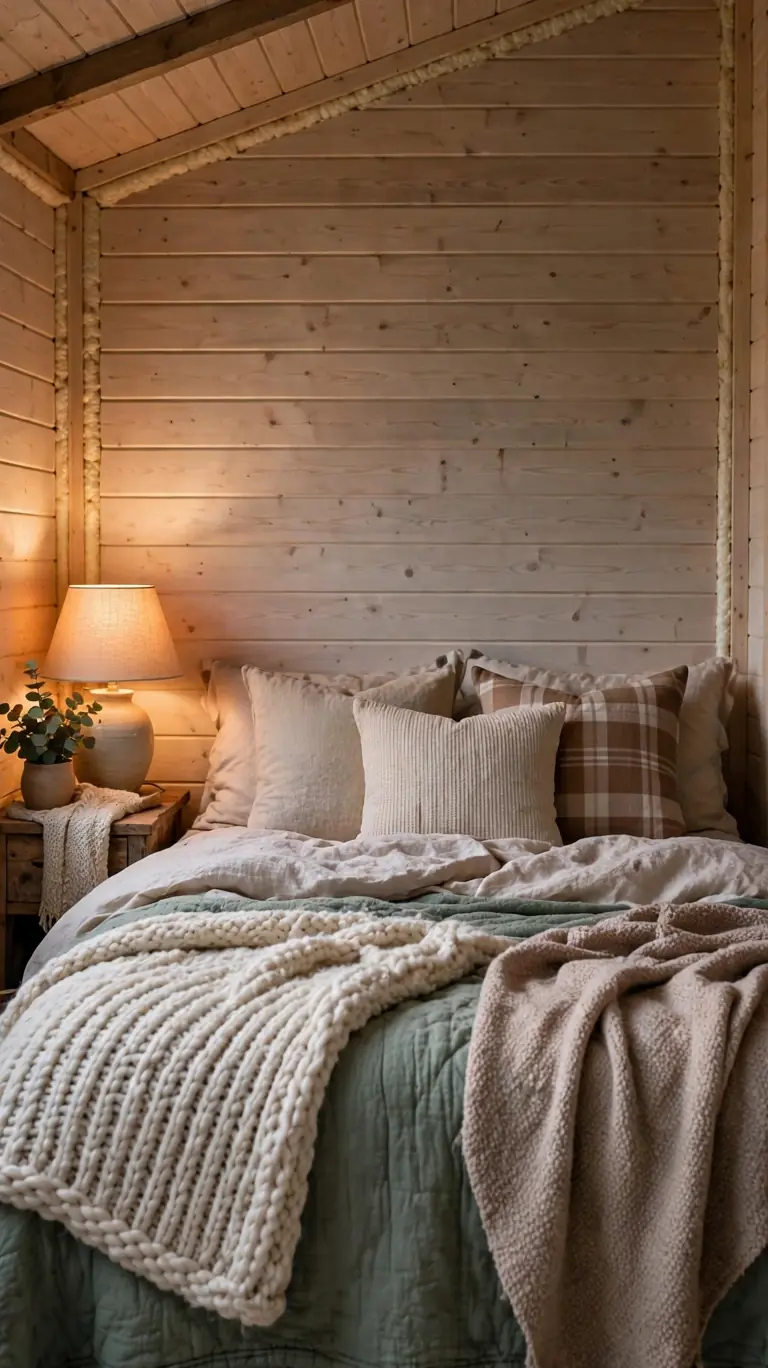
Wood plank walls are the fastest way to make a shed bedroom feel like a cabin retreat. Horizontal or vertical planks in a warm tone wrap the room in texture that drywall cannot match, and they forgive the slight unevenness that most shed framing has. You can use tongue-and-groove boards, shiplap-style planks, or even plywood cut into strips, finished with a clear sealant or a light stain.
Keep the ceiling lighter than the walls so the small room does not feel like a box. A white or pale painted ceiling with warm wood walls gives you contrast and brightness at once. Let the wood be the star and keep furniture simple, since busy walls plus busy furniture overwhelms a small space. The result reads as intentional and handcrafted, which is exactly the charm people want from a backyard escape.
8. Go Bright and Modern With White Paint
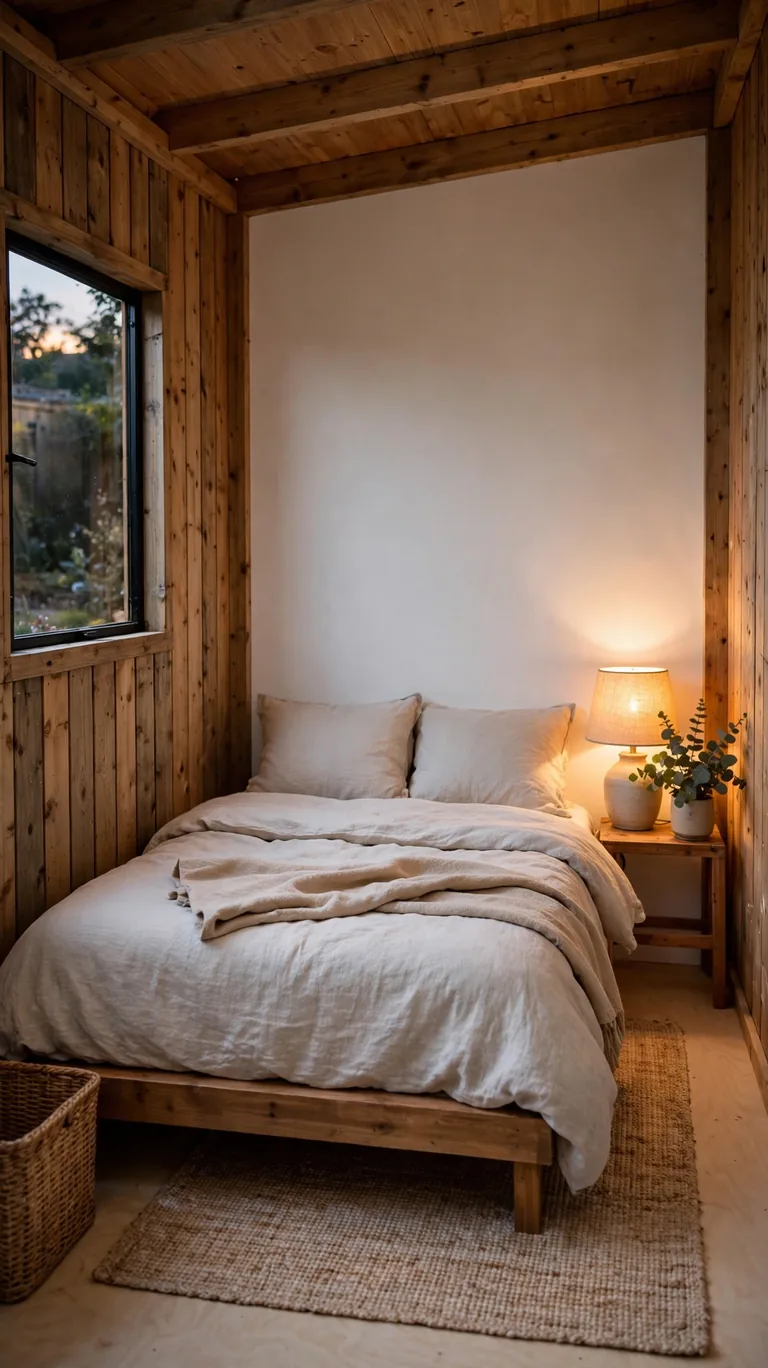
Not every shed bedroom should look like a cabin. A coat of crisp white paint on walls and ceiling makes a small shed feel twice as big, bouncing light into every corner. This is the best choice for sheds with limited windows or low ceilings, where dark finishes would close the space in. White also gives you a blank canvas, so bedding, art, and textiles carry the personality.
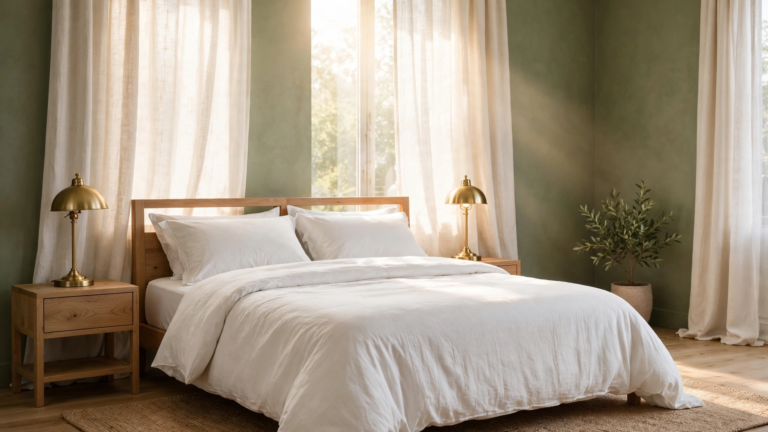
Warm the white up so it does not feel clinical. A natural wood bed frame, a jute rug, and linen bedding in soft neutrals add texture without adding visual weight. One painted accent, like a soft sage door or a dusty blue dresser, keeps the room from feeling flat. Modern does not mean cold here, it means clean lines, good light, and everything in its place, which suits a small private escape perfectly.
9. Layer Textiles Like You Mean It
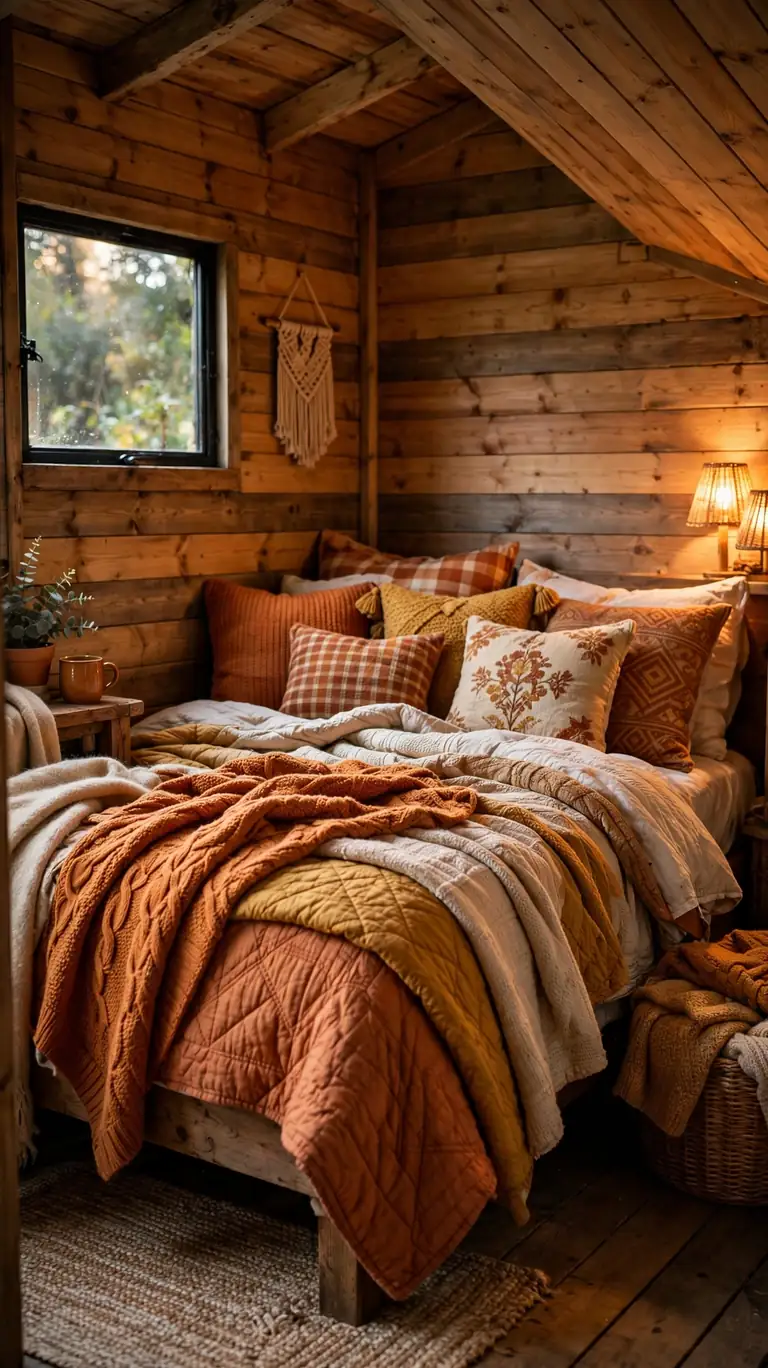
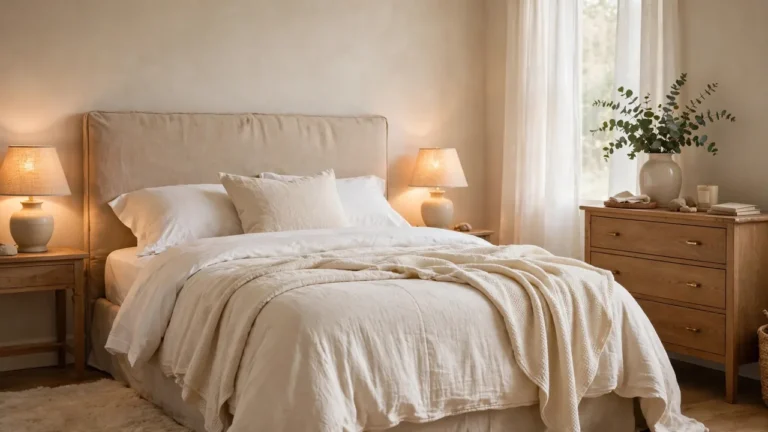
Cozy is a textile game, and a shed bedroom needs more layers than a house bedroom because the building itself is thinner. Start with good sheets, add a warm duvet or quilt, then pile on a knit throw and a couple of extra pillows. The layers do real work, trapping warmth on cold nights and letting sleepers adjust through the seasons, while also making the bed look irresistibly inviting.
Do not stop at the bed. A soft rug underfoot, curtains with some weight to them, and a throw draped over the reading chair all add the softness that keeps a small wood-walled room from feeling hard. Stick to a simple color story, two or three tones drawn from the bedding, repeated across the rug, curtains, and cushions, so the layers feel collected rather than chaotic. Washable fabrics are the smart pick, since a backyard bedroom sees more dust and pollen than a house one.
10. Light It in Layers, Not Just One Bulb
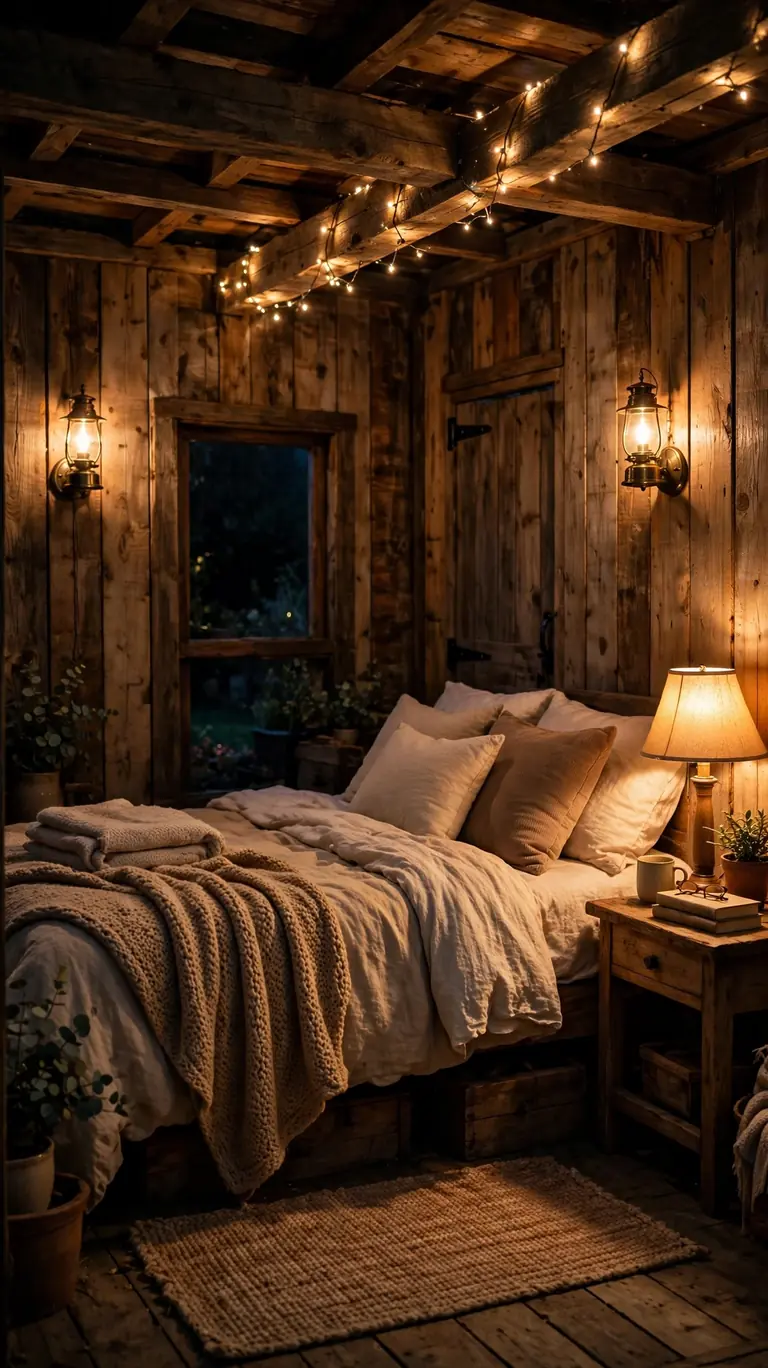
One harsh overhead bulb will kill the cozy mood faster than anything else. A shed bedroom needs layered lighting: a warm bedside lamp for reading, a soft overhead or string lights for general glow, and maybe a small light in the loft or nook if you have one. Each layer on its own switch or with a simple plug-in dimmer lets you shift from bright getting-ready light to low evening wind-down light.
Warm white bulbs, around 2700K, flatter wood tones and skin alike, while cool white can make a shed feel like a workshop. String lights along a beam or headboard add a gentle sparkle that costs almost nothing to run. If the shed wiring is limited, battery-operated LED lamps and rechargeable lanterns fill the gaps nicely. The goal is a room where every light feels chosen, so the small space glows instead of glaring.
11. Choose Safe, Shed-Friendly Heating
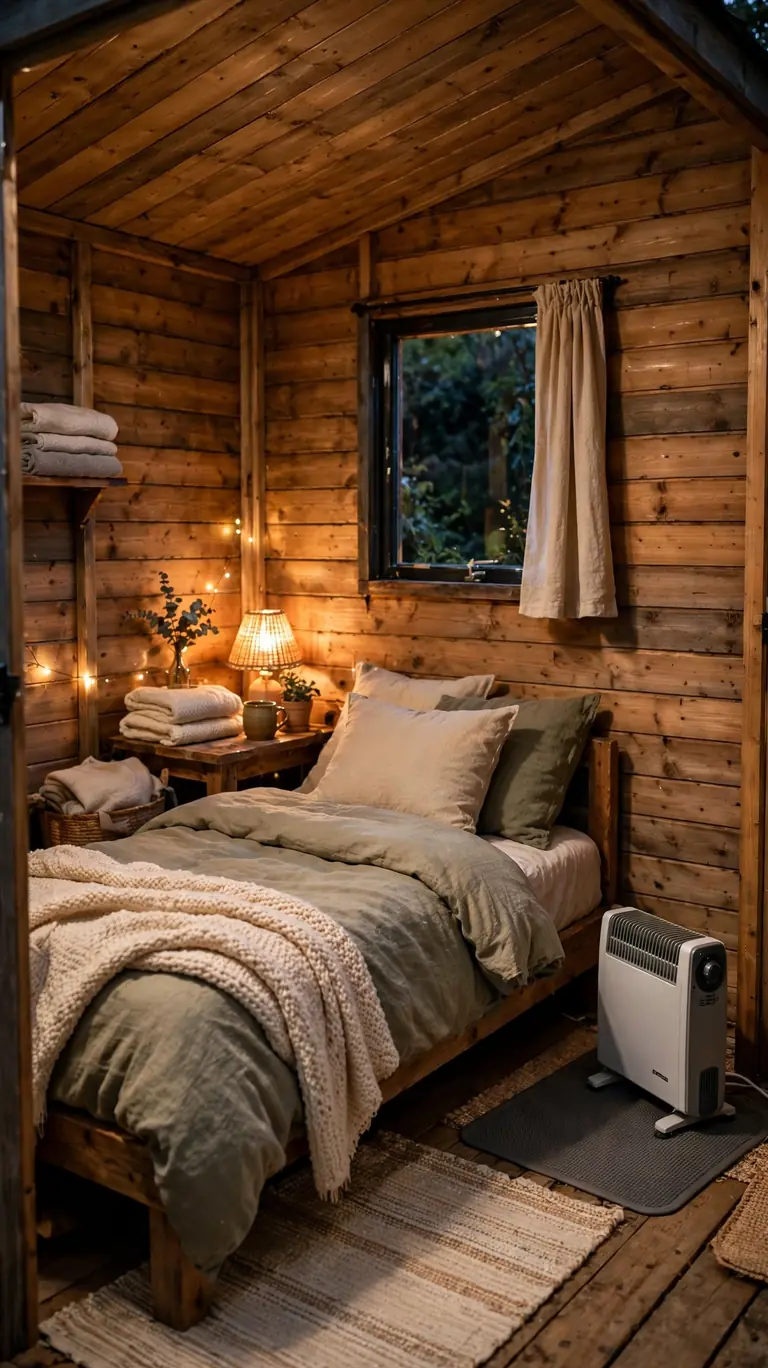
A shed bedroom needs a heat source matched to the space and used safely. A small electric oil-filled radiator or a wall-mounted panel heater with a thermostat gives steady, gentle warmth without open flames or fumes, which matters in a small, well-sealed room. Size the heater to the shed’s square footage so it warms the space without constantly cycling, and keep it clear of bedding, curtains, and furniture.
Never use unvented fuel-burning heaters or open-flame devices for overnight heat in a small enclosed space, and keep a working smoke alarm and carbon monoxide alarm in the shed bedroom regardless of your heat source. A thick rug and draft sealing do quiet work alongside the heater, holding warmth where it belongs. If you only use the shed bedroom in mild seasons, you may not need dedicated heat at all, but plan for the coldest night someone might actually sleep there.
12. Hide Storage Under the Bed
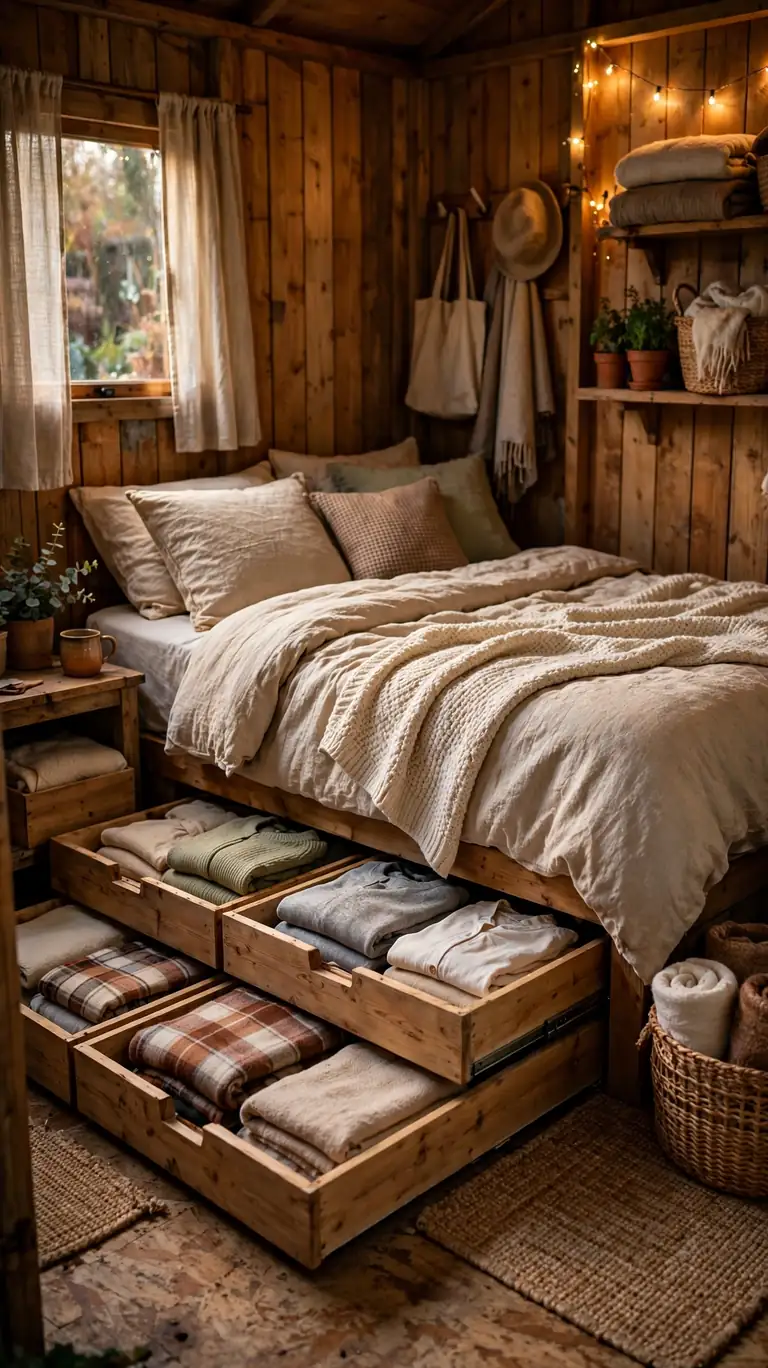
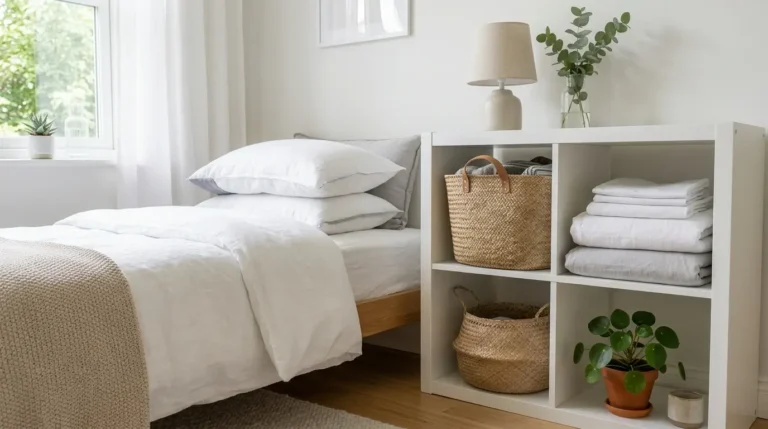
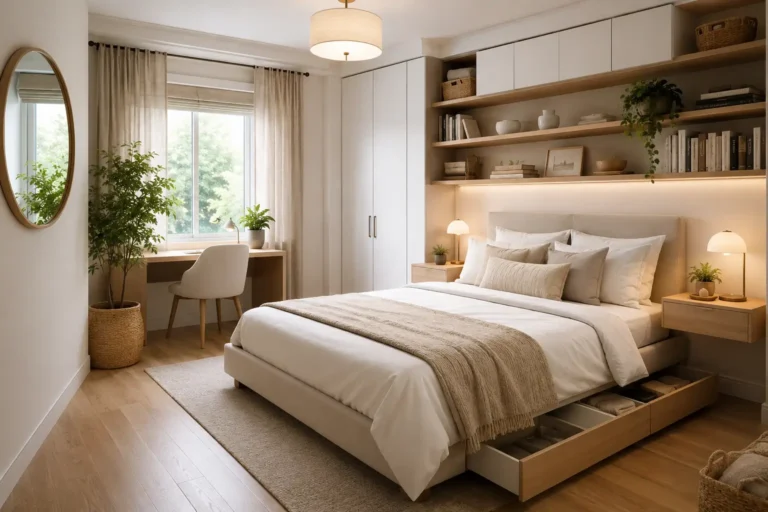
In a shed bedroom, the space under the bed is prime real estate. Low-profile drawers on wheels, lidded bins, or a platform bed with built-in compartments turn that dead zone into the room’s main dresser. Extra bedding, off-season clothes, and guest supplies all fit neatly out of sight, which keeps the small room feeling calm instead of cramped.
Keep the under-bed storage organized with a simple system so it actually gets used. One bin for spare sheets and pillowcases, one for seasonal layers, one for personal items if it is a teen’s room. Label the bins or use clear ones so nobody has to drag everything out to find a blanket. Raising the bed on risers or choosing a taller frame buys you deeper storage, and a bed skirt or the drawers themselves keep it all looking tidy.
13. Carve Out a Tiny Wardrobe Corner
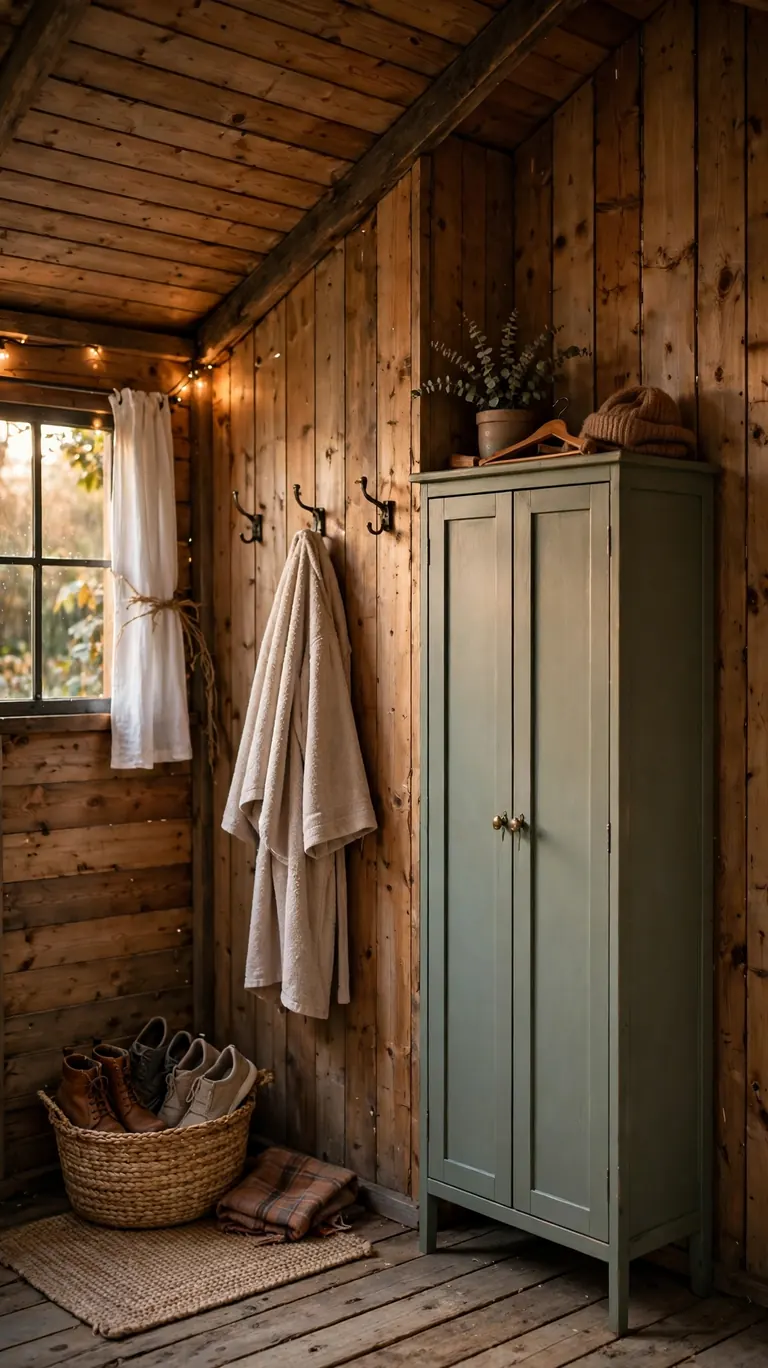
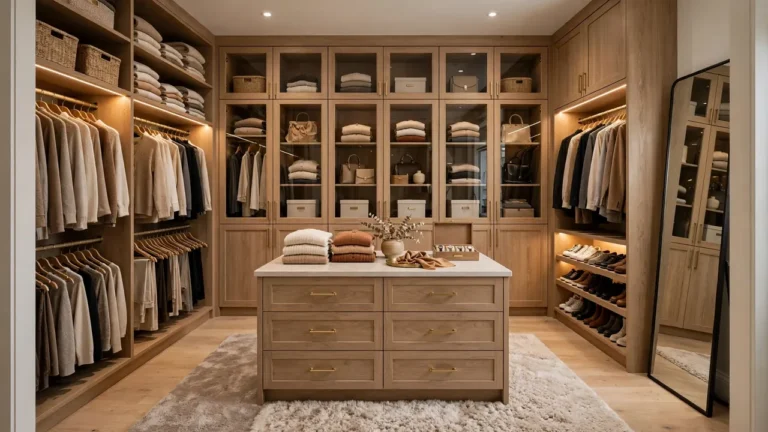
Even a private escape needs somewhere to hang clothes. A slim armoire, a narrow wardrobe, or even a curtained alcove with a hanging rod gives the room a proper place for outfits, which keeps clothes off the bed and the floor. In the tightest sheds, a wall-mounted rod with a curtain panel creates a closet in about two feet of wall.
Make the wardrobe corner work harder with hooks and baskets. Wall hooks hold tomorrow’s outfit, a robe, and a bag, while a small basket underneath catches shoes. A full-length mirror on the wardrobe door or the wall beside it is a thoughtful touch that makes the small room feel bigger and saves guests from trekking to the house to check their look. Keep it compact and the corner earns its footprint.
14. Make Privacy a Design Feature
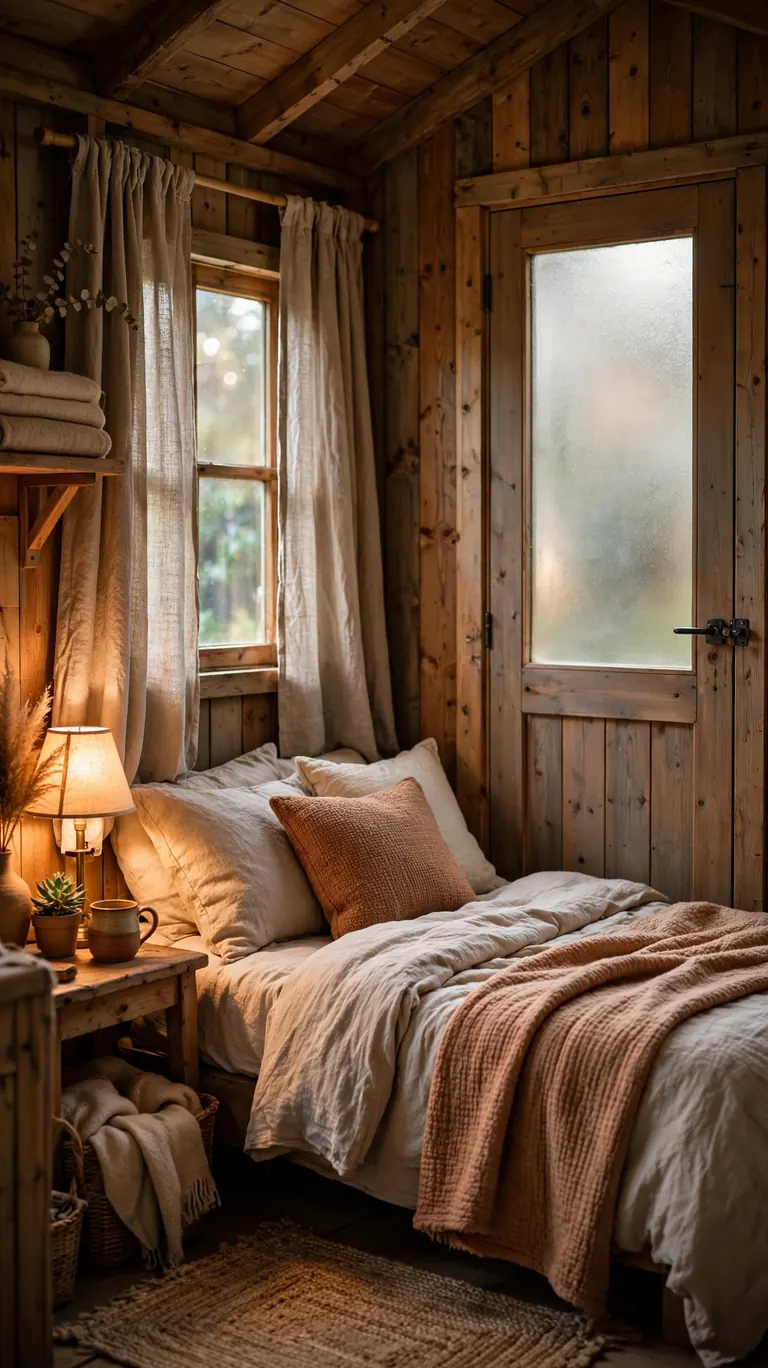
A shed bedroom sits in the backyard, often visible from the house or the neighbors, so privacy needs to be designed in from the start. Layered window treatments do the heavy lifting: sheers for daytime softness, plus curtains or shades that fully close at night. Frosted film on lower window panes or on the door glass keeps sightlines out while still letting light in during the day.
Think about the door too. A solid door with a working lock gives guests and teens the sense of a truly private space, which is the whole point of a separate bedroom. Outside, a simple trellis with climbing plants or a few tall potted grasses near the windows adds a living screen that looks good from both sides. Privacy done well does not feel defensive, it feels considered, like the room was always meant to be its own little world.
15. Set Up a Guest-Ready Welcome Station
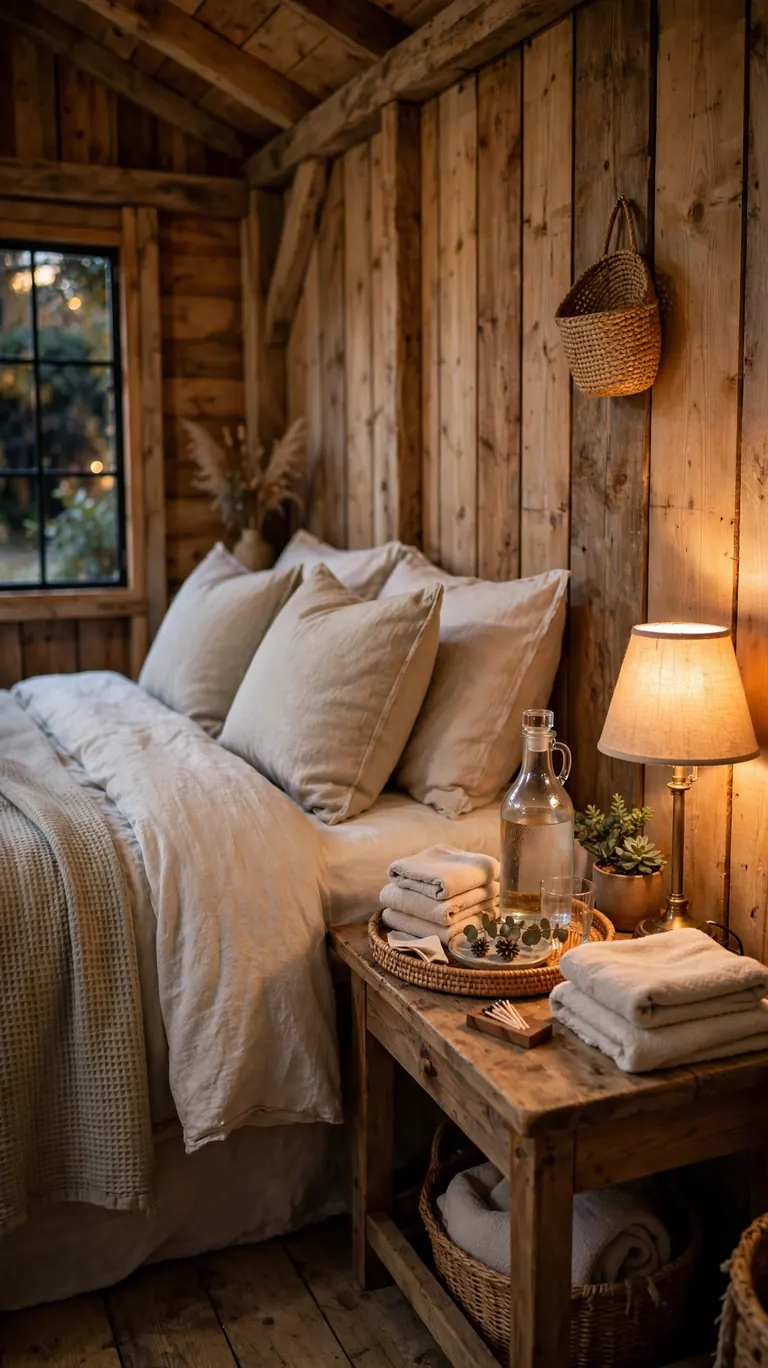
A shed guest room earns its keep when visitors feel genuinely looked after. A small welcome station on the nightstand or dresser, folded towels, a carafe of water with a glass, the Wi-Fi details on a little card, and a spare phone charger, covers everything a guest needs without a trip back to the house. These small touches cost almost nothing and make the separate bedroom feel like a boutique stay.
Add the practical bits guests always forget. A basket with travel-size toiletries, an extra blanket folded at the foot of the bed, and a small flashlight for the walk back from the house at night. If the bathroom is in the main house, a robe and slippers by the door make the nighttime trip much more pleasant. Guests remember how a place made them feel, and a thoughtful station says they were expected and wanted.
16. Design a Teen Retreat With Zones
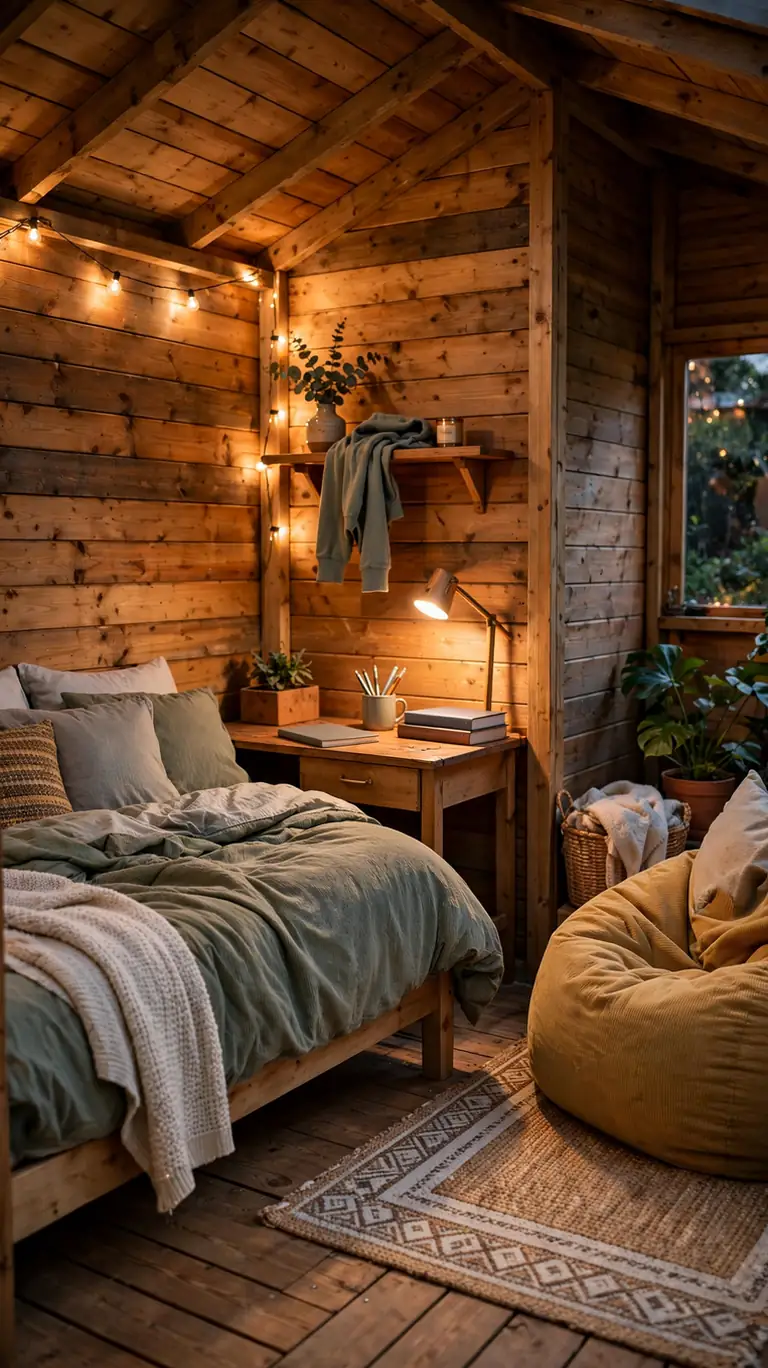
A shed bedroom makes a fantastic teen retreat because it offers exactly what teenagers want: their own space with a door that closes. Design it in zones so it works for more than sleeping. A bed zone, a small desk zone for homework or gaming, and a hangout zone with a beanbag or floor cushions give the room a real sense of territory. Even in a small shed, a rug can define the hangout zone without any walls.
Let the teen have a real say in the decor, within reason. Their posters, their color choices, and a pinboard for photos make it feel like theirs rather than a guest room they are borrowing. Good lighting for the desk, enough outlets for charging, and a lock on the door are the non-negotiables. A space that respects their independence gets treated with more care, and it keeps the main house quieter for everyone else.
17. Warm the Floor With Rugs
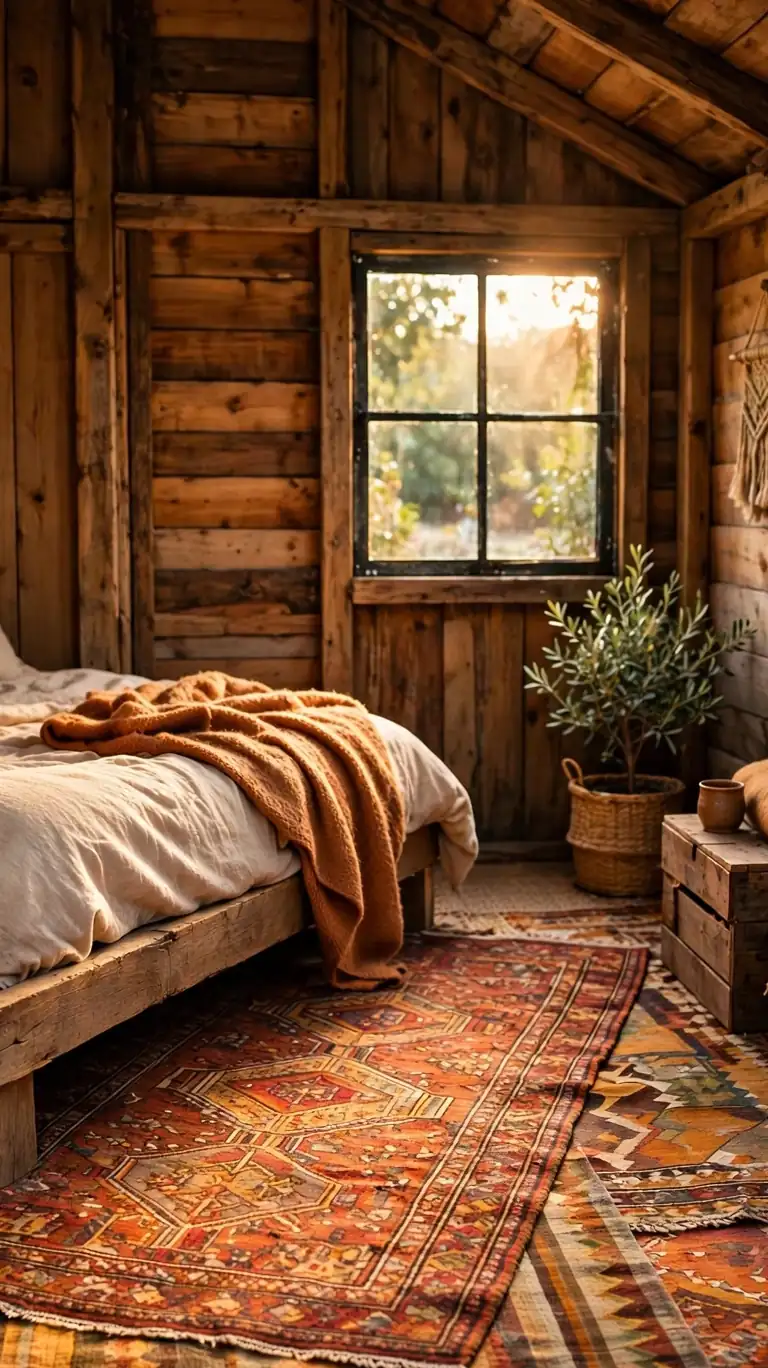
Shed floors are cold, hard, and unforgiving, which is exactly why rugs matter more here than in a house bedroom. A large rug under and around the bed softens every step, insulates against a chilly floor, and visually anchors the sleeping zone in an open-plan shed. Layer a smaller patterned rug over a bigger neutral one for extra warmth and a collected look.
Choose rugs that can handle real life. Washable low-pile rugs are the practical pick for a backyard bedroom that tracks in more dust, and they are easy to shake out or hose down. In damp climates, avoid thick rugs that trap moisture against the floor, and lift them occasionally to check underneath. A warm floor underfoot on a cold morning is one of those small luxuries that makes the shed bedroom feel like a proper retreat.
18. Add a Mini Deck or Step-Out Landing
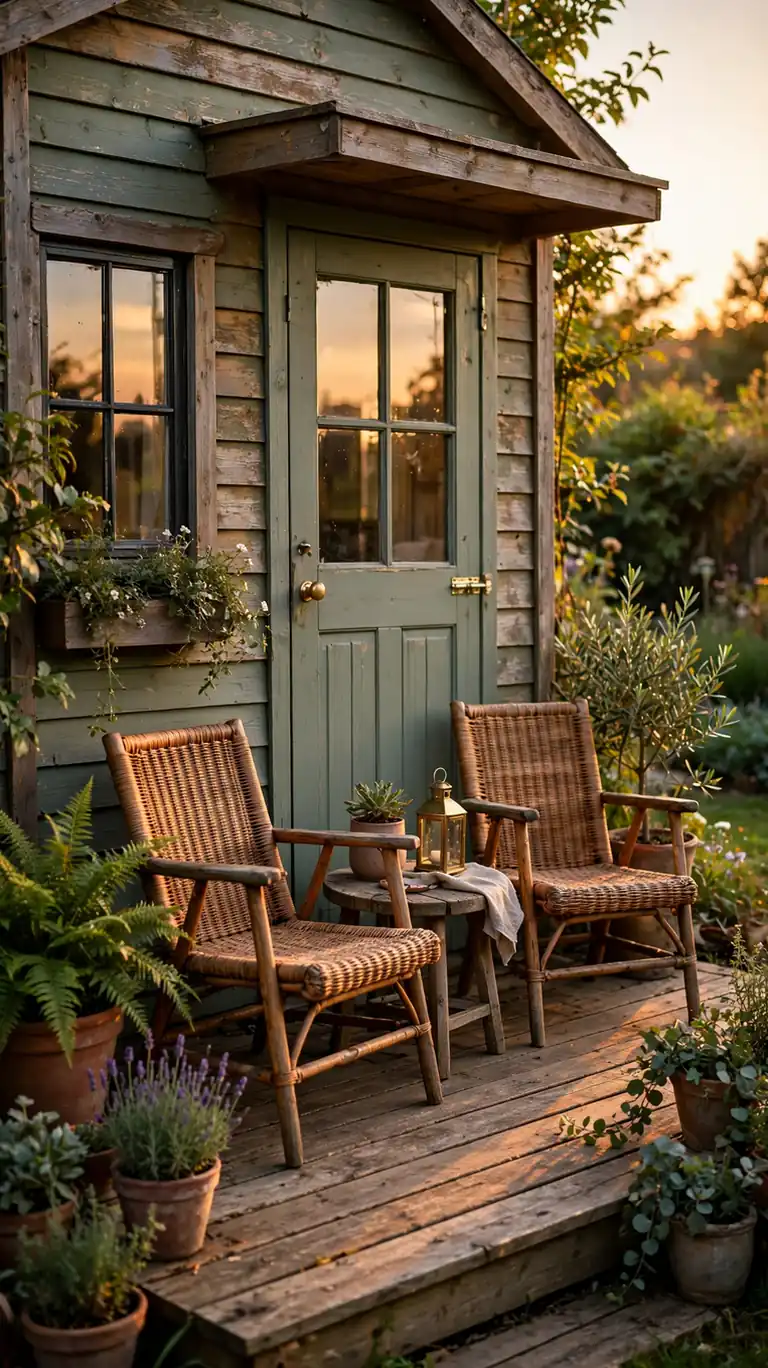
The space right outside the door is part of the bedroom experience. A small deck, a gravel pad with a bench, or even just a wide step with a couple of chairs gives sleepers somewhere to have morning coffee without going back to the house. It extends the usable space for almost no cost and makes the shed feel like a cabin rather than an outbuilding.
Keep it simple and sturdy. A level platform of deck boards or pavers, a weatherproof chair or two, and a small side table are all you need. String lights overhead turn it into an evening spot, and a couple of potted plants soften the edges. Make sure the landing stays clear and well-lit for safe nighttime trips, and keep the path back to the house visible. The indoor-outdoor flow is what makes a shed bedroom feel like an escape.
19. Block the Light for Real Sleep
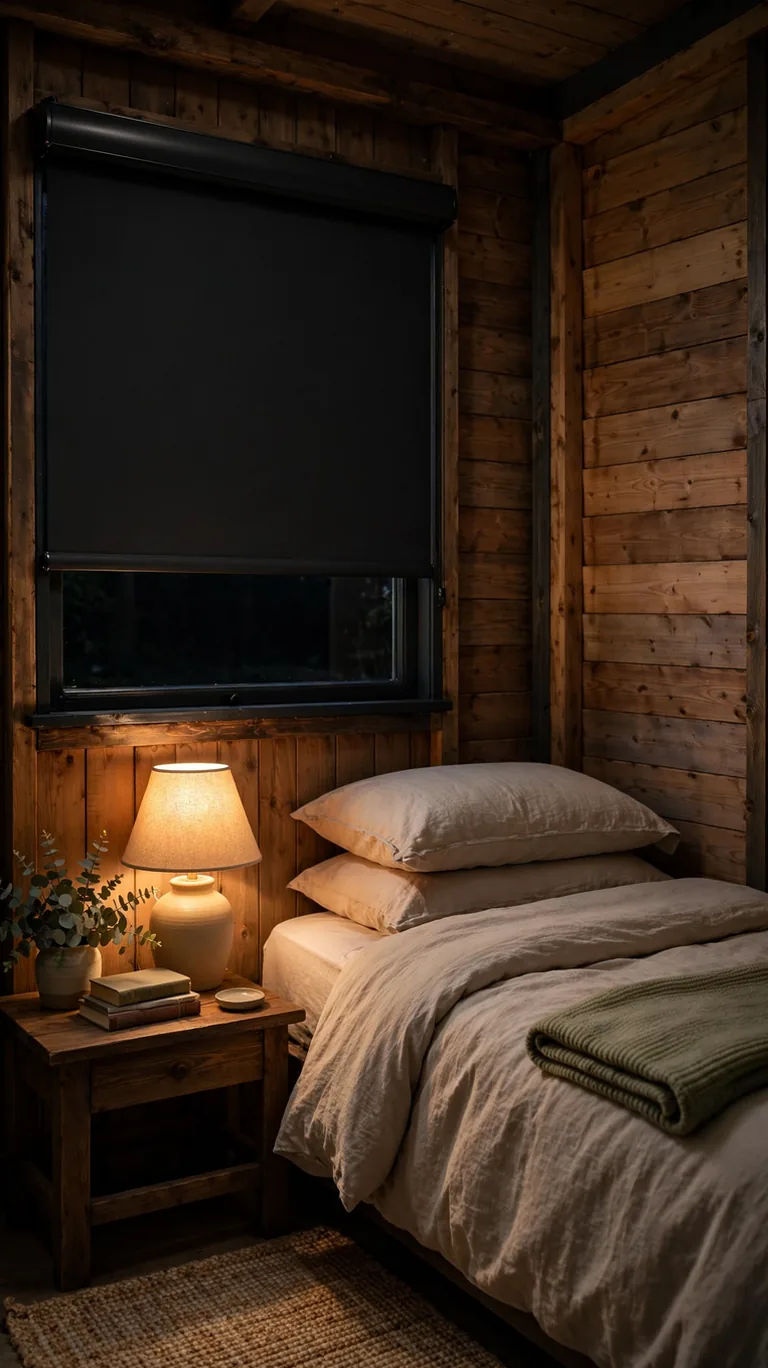
Sheds often sit in bright, open yards with no neighboring buildings to shade them, which means summer mornings arrive early and bright. Blackout roller shades or lined curtains on every window let sleepers actually sleep in, and they double as privacy at night. This matters most for guest rooms, where visitors did not bring their own sleep masks and should not need them.
Fit the shades snugly inside the window frames to cut the light leaks around the edges, which are what really wake people up. A dark shade behind a decorative curtain gives you the best of both, looks during the day and darkness at night. If there is a skylight, get a fitted blind for it too, since overhead morning light is the hardest to ignore. Good sleep is the whole point of a bedroom, so this unglamorous detail deserves real attention.
20. Keep Air Moving With Real Ventilation
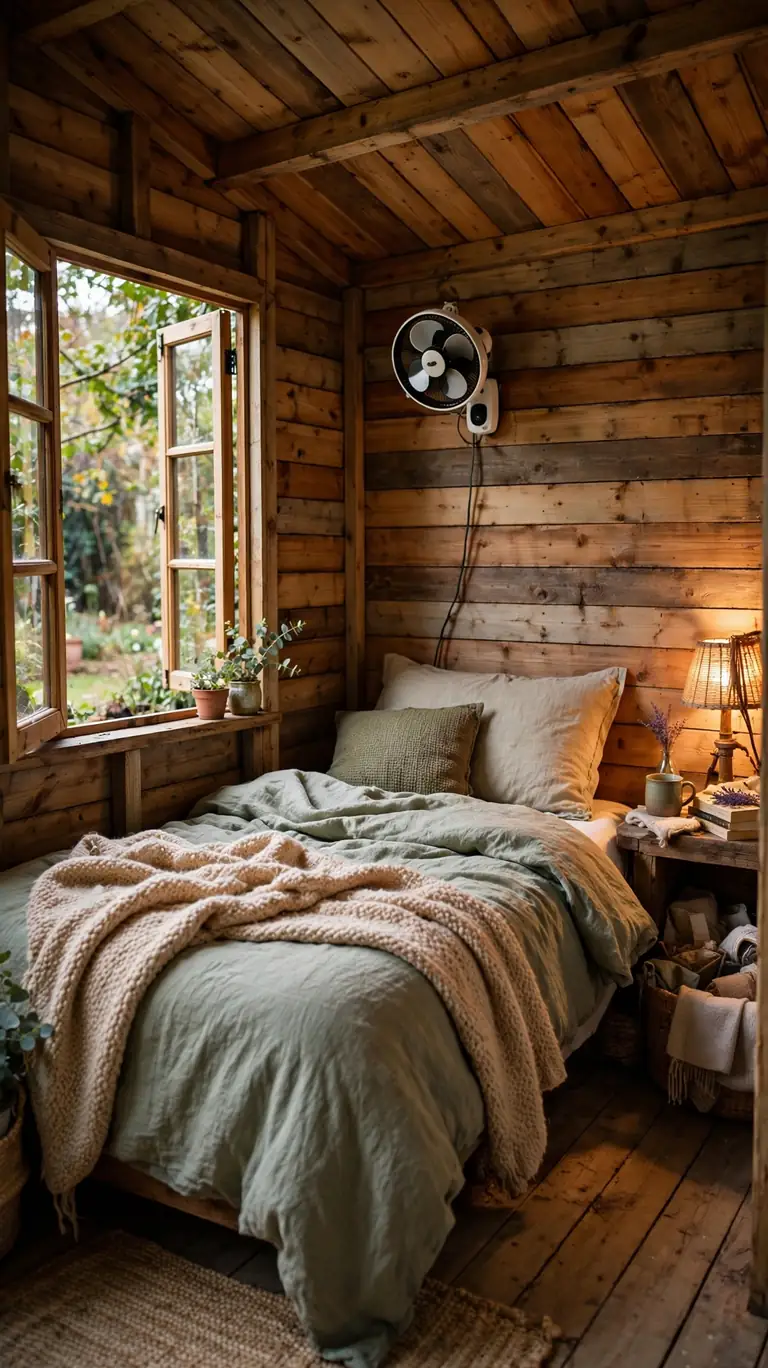
A small, well-sealed shed bedroom can feel stuffy fast, especially with the door closed overnight. Real ventilation solves it. At least one window that actually opens is the baseline, ideally positioned to catch a cross-breeze with the door or a second opening. A small, quiet fan keeps air circulating on still nights and makes warm weather sleeping far more comfortable.
For year-round use, consider a proper vent as well as the window. A simple wall vent or a small through-wall fan moves stale air out even when the windows are shut against the cold. This is not just about comfort, either. Moving air helps control the moisture that builds up from breathing overnight in a small space, which protects both the sleepers and the building. Fresh air is one of the cheapest comfort upgrades you can make.
21. Win the Fight Against Moisture
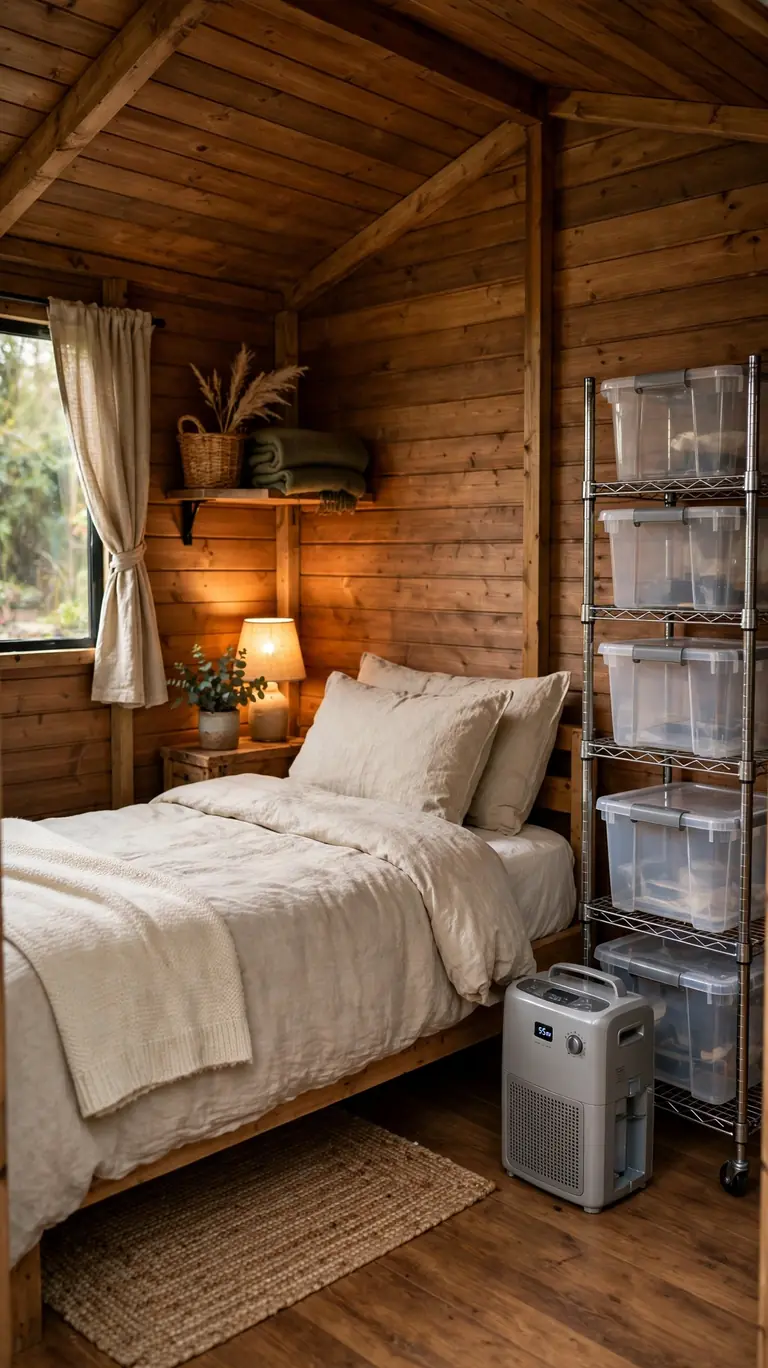
Moisture is the quiet enemy of every shed bedroom. Condensation forms where warm indoor air meets cold shed surfaces, and it leads to musty smells, damp bedding, and damage to the structure over time. The defenses are straightforward: insulate so surfaces stay closer to room temperature, ventilate so humid air escapes, and keep a small dehumidifier running in damp seasons or climates.
Build the habits into the room’s design. Never push the bed or storage hard against exterior walls, leave a small air gap so surfaces can breathe. Store bedding and clothes in closed bins rather than open piles during humid months, and air the room out regularly on dry days. Check the roof and walls for leaks after heavy rain, since a small drip becomes a big problem behind a finished wall. A dry shed bedroom smells fresh and stays healthy, which is non-negotiable for a sleeping space.
22. Add a Cozy Tea and Coffee Corner
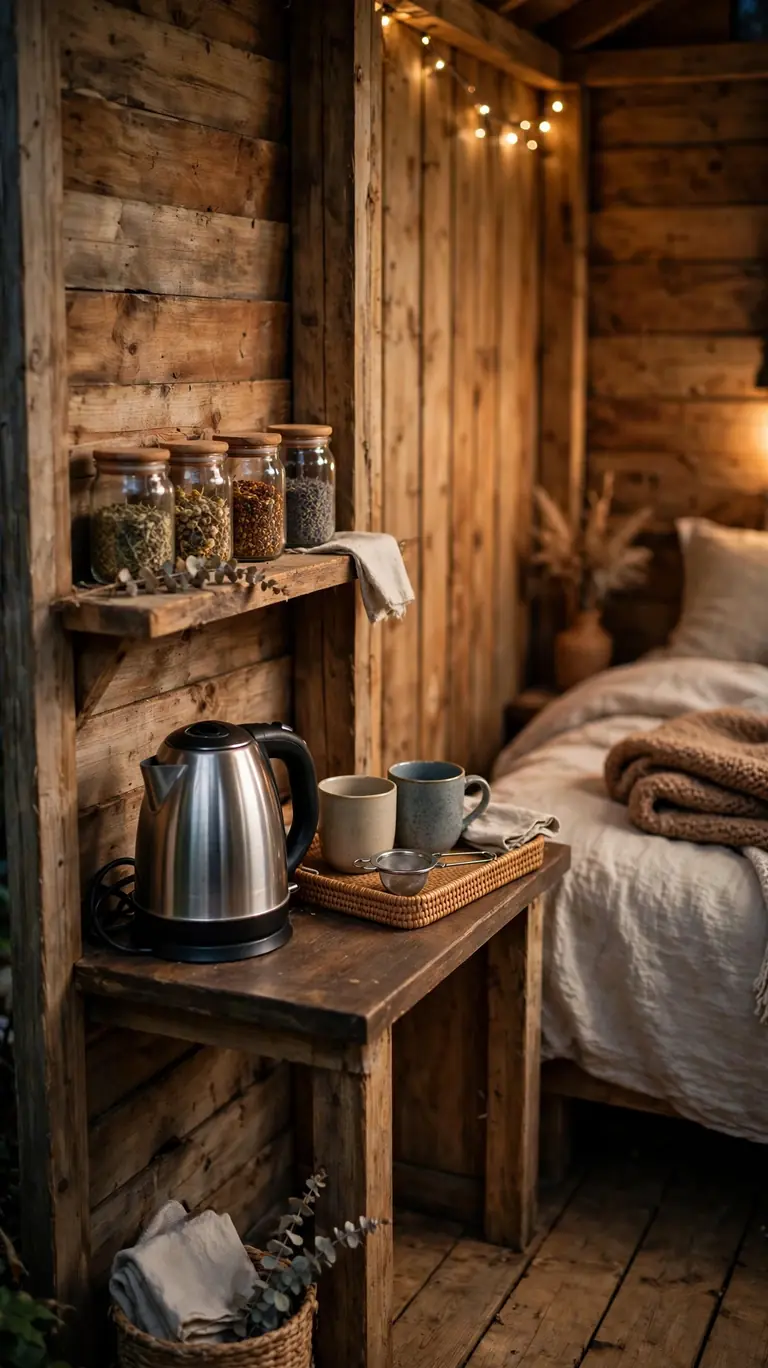
A tiny beverage station turns a shed bedroom into a true morning retreat. A small tray with an electric kettle, a couple of mugs, and a selection of teas or instant coffee means nobody has to trek to the house kitchen before they are ready to face the day. It is a small luxury that makes the private escape feel complete and self-sufficient.
Keep the setup compact and safe. A stable shelf or small table near an outlet holds the kettle and supplies, and a tray keeps everything contained and easy to tidy. Store the kettle unplugged when not in use, and keep water away from bedding and electronics. A little lidded bin for used mugs or a small basin for rinsing keeps the corner from getting cluttered. Morning coffee steps from the pillow is the kind of detail guests talk about.
23. Create a Reading Nook by the Window
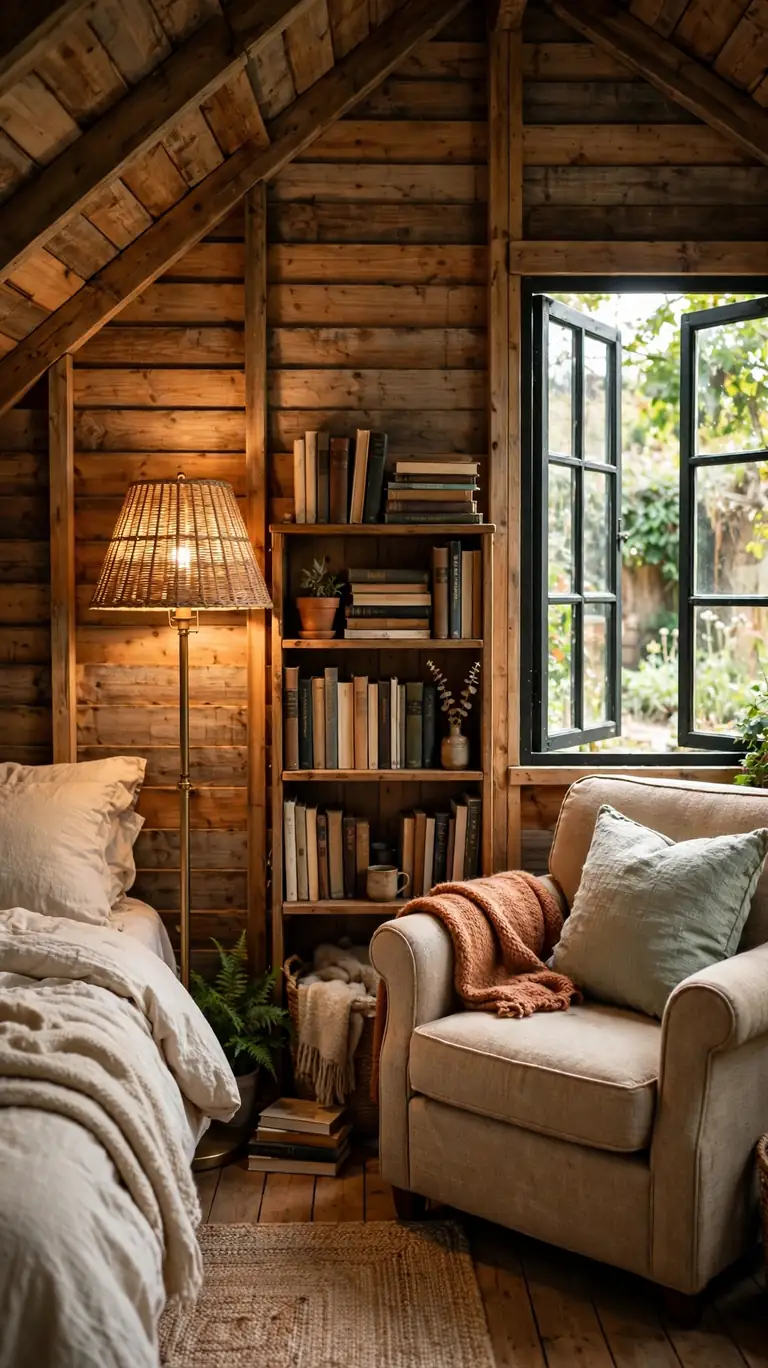
Every private escape deserves a reading nook, and a shed bedroom’s best window is the natural spot for one. A comfortable armchair or a wide cushioned bench, a good reading lamp, and a small shelf or basket of books create a corner that invites long, unhurried afternoons. It gives the room a second purpose beyond sleeping, which is what makes it feel like a retreat rather than just a bed in a shed.
Angle the chair to catch the natural light without glare on the page, and add a soft throw for chilly evenings. A small side table holds tea and a phone, so the reader never has to get up. If floor space is tight, a wall-mounted folding seat or a deep windowsill cushion does the job in a fraction of the room. The nook does not need to be big, it needs to be comfortable enough that someone actually lingers there.
24. Bring in Plants That Thrive Indoors
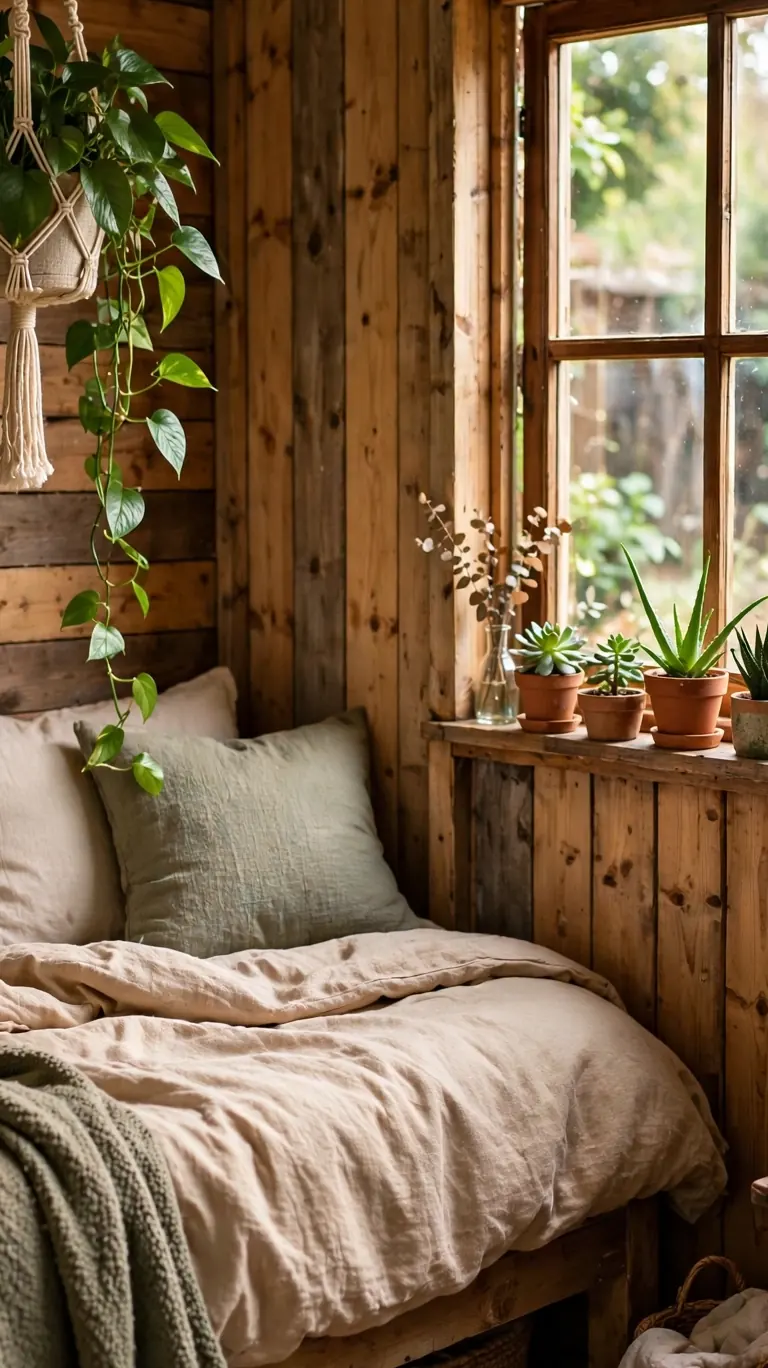
Plants soften a shed bedroom like nothing else, adding life and color to wood walls and small windows. Choose forgiving indoor plants that tolerate the light you actually have: pothos and snake plants for low light, spider plants and herbs for bright windowsills. A hanging planter keeps greenery off the limited surfaces, and a small cluster on the sill frames the view nicely.
Keep the plant care realistic for the space. Self-watering pots or a simple watering schedule written on a little card helps guests keep things alive, and saucers under every pot protect wood sills and floors. Avoid anything fussy or anything with strong fragrance in a small sleeping space, since scent concentrates overnight. A few healthy green plants make the room feel cared for and alive, which is exactly the mood a private escape should have.
25. Finish With Personal Style, Not a Theme
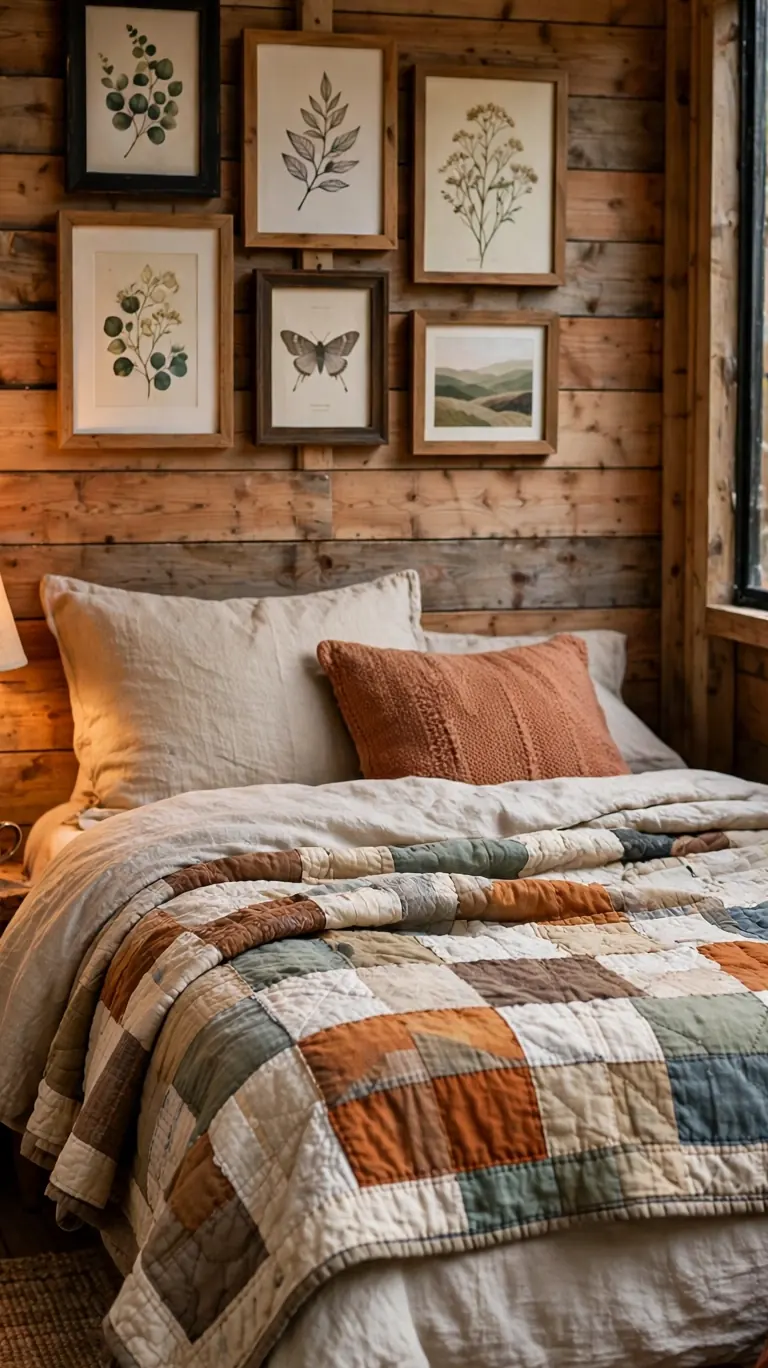
The best shed bedrooms feel personal rather than decorated, like a room that grew around someone’s taste instead of a showroom. A small gallery wall of framed prints, a handmade quilt, books you actually read, and one or two objects with a story behind them give the room character no matching set can fake. Let the style emerge from things you love rather than forcing a cabin or boho theme from a catalog.
Keep the personal touches scaled to the small space. Three well-chosen frames beat ten crowded ones, and one meaningful object on the dresser beats a shelf of knickknacks. Rotate pieces seasonally if you like, a different throw, a new print, fresh flowers from the garden, so the room stays feeling alive. A shed bedroom with genuine personality is the one guests ask to stay in again, because it feels like somewhere, not just something.
Frequently Asked Questions
Is it practical to sleep in a shed year-round?
It can be, but only if you treat it like a real bedroom and not a tent with walls. That means proper insulation in the walls, roof, and floor, a safe heat source with a thermostat for cold months, real ventilation for fresh air, and moisture control so the space stays dry and healthy. Electrical work should be done safely, with proper wiring for lighting, outlets, and heating, and working smoke and carbon monoxide alarms are a must. Before converting a shed for regular overnight sleeping, check your local building and zoning rules, since requirements for habitable outbuildings vary widely by area and sleeping spaces have stricter standards than storage sheds.
How do I keep a shed bedroom warm in winter?
Start with insulation and draft sealing, since no heater can overcome a leaky shell. A small electric oil-filled radiator or wall-mounted panel heater with a thermostat gives steady, safe warmth sized to the room. Layer the bed generously with a warm duvet, quilts, and throws so sleepers stay comfortable even if the room cools overnight, and put a thick rug on the floor to cut the chill underfoot. Keep the heater clear of bedding and curtains, and never use unvented fuel-burning heaters for overnight heat in a small enclosed space.
How do I keep a shed bedroom cool and fresh in summer?
Ventilation is the first answer. A window that opens, ideally paired with a second opening for cross-breeze, plus a small quiet fan, handles most warm nights. Shade helps a lot too, so consider the sunniest wall when placing the bed and use light-colored roofing or shade from planting where practical. Keep bedding light in summer, with breathable cotton sheets and a lighter coverlet instead of the winter duvet. Airing the room out in the cool of the morning and closing it against afternoon heat is a simple routine that works surprisingly well.
What kind of bed works best in a small shed?
It depends on how the room gets used. A loft bed is the best all-rounder for very small sheds, since it frees the floor below for a desk or seating. A daybed suits rooms that double as hangouts, working as a sofa by day. A murphy bed is ideal when the shed serves two purposes and the bed needs to disappear. For the simplest setup, a low platform bed with deep under-bed drawers gives you sleeping and storage in one footprint. Match the bed to the room’s second job and you will use the space far more.
How do I make a shed bedroom feel private and secure?
Start with the fundamentals: a solid door with a working lock, and window coverings that fully close at night. Layered treatments work best, sheers for daytime softness over blackout shades or lined curtains for night. Frosted film on lower panes or door glass keeps light coming in while blocking sightlines. Outside, planting or a trellis near the windows creates a natural screen, and a well-lit path back to the house makes nighttime trips feel safe. True privacy is what turns a shed with a bed into a genuine private escape.
Conclusion
A shed bedroom is one of the most rewarding small-space projects you can take on, because it turns square footage you already own into something nobody expected: a private escape with a door that closes and a view of the garden. The secret is taking the unglamorous parts as seriously as the pretty ones. Insulation, ventilation, moisture control, and safe electrical work are what make the room comfortable and healthy in every season, and they are the foundation everything else rests on. Get those right and the decorating becomes pure pleasure.
Start with how the room will actually be used. A guest room needs the welcome touches, good blackout, and a clear path to the house. A teen retreat needs zones, a desk, and decor they chose themselves. A reading escape needs the nook, the light, and the quiet. Then work through the ideas here in the order that solves your biggest problem first. If the shed is freezing, insulate before you buy a single pillow. If it is dark, fix the windows and lighting before anything else. Build the comfort, then layer the charm, and you will end up with a charming private escape that gets used constantly, the little bedroom in the backyard that everyone wants to claim.