14 Inspiring Yoga Room Ideas for a Peaceful Home Retreat
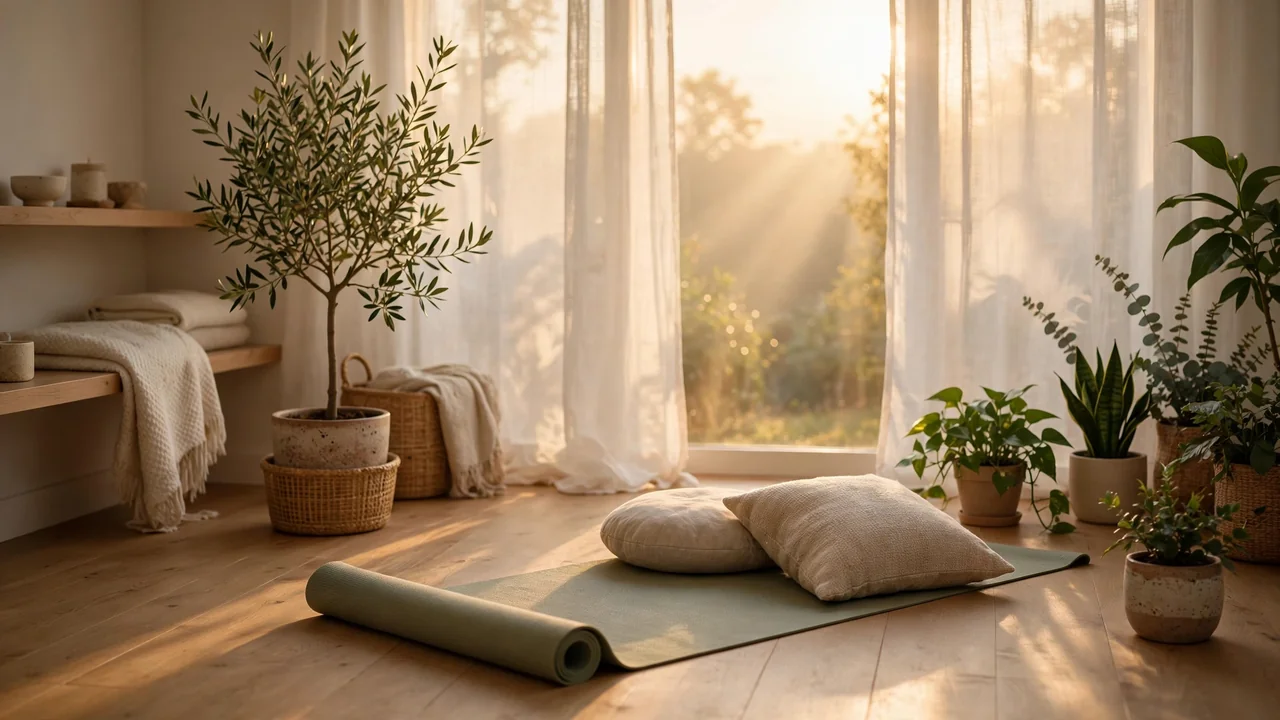
A peaceful home yoga room comes down to a few simple choices: a quiet spot you can call your own, a comfortable mat, soft natural light, calming colors, and as little clutter as possible. You do not need a spare bedroom or a big budget. A corner of a bedroom, a section of the living room, or even a wide hallway nook can become a dedicated practice space when you set it up with intention. The ideas below walk you through every piece, from picking the right location and lighting to adding plants, storage, and personal touches, so you can build a retreat that fits your home and your routine.
What makes a yoga room feel truly peaceful is how it engages your senses. Soft daylight or warm lamps instead of harsh overheads, natural textures like wood and jute underfoot, a hint of calming scent, and walls in restful colors all tell your nervous system it is time to slow down. Keep the space clean and uncluttered so your mind has room to settle, and add only items that support your practice: your mat, props, a meditation cushion, and a few meaningful objects. Work through these ideas, start with the ones that solve your biggest frustration, and you will have a home retreat you actually look forward to using every day.
1. Claim a Quiet, Dedicated Corner
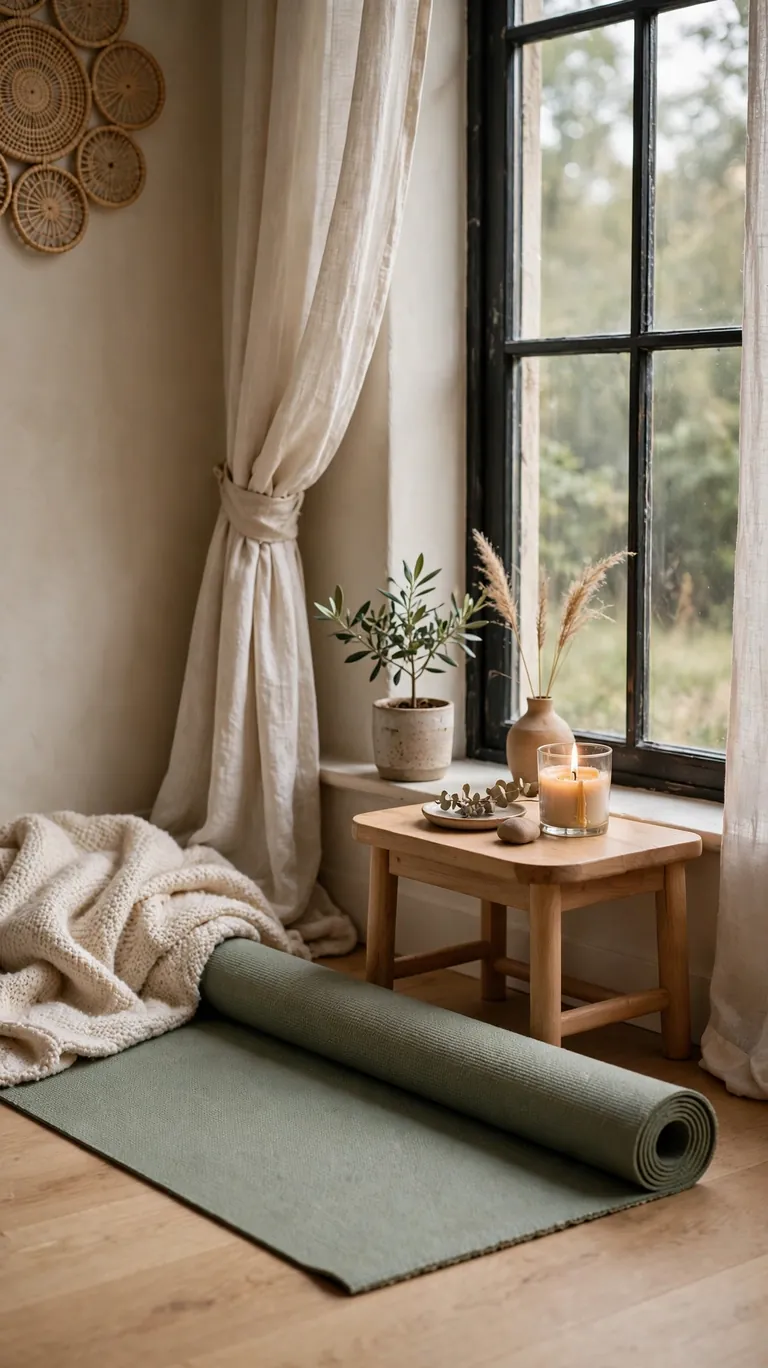
The single most important yoga room idea is giving your practice a permanent home, even if it is small. When your mat has a set spot, you skip the daily setup and teardown, which removes the biggest excuse for skipping practice. Look for the quietest corner you can find, away from the TV, the front door, and high-traffic walkways. A spare bedroom is ideal, but a bedroom corner, a section of a home office, or a wide landing all work beautifully.
Once you have chosen the spot, treat it as sacred. Keep other household clutter from creeping in, and let family members know this corner is for quiet time. A small rug under the mat can define the zone visually, which helps your brain switch into practice mode the moment you step onto it. Consistency of place builds consistency of habit, and that is worth more than any decor item.
2. Paint or Dress the Walls in Calming Colors
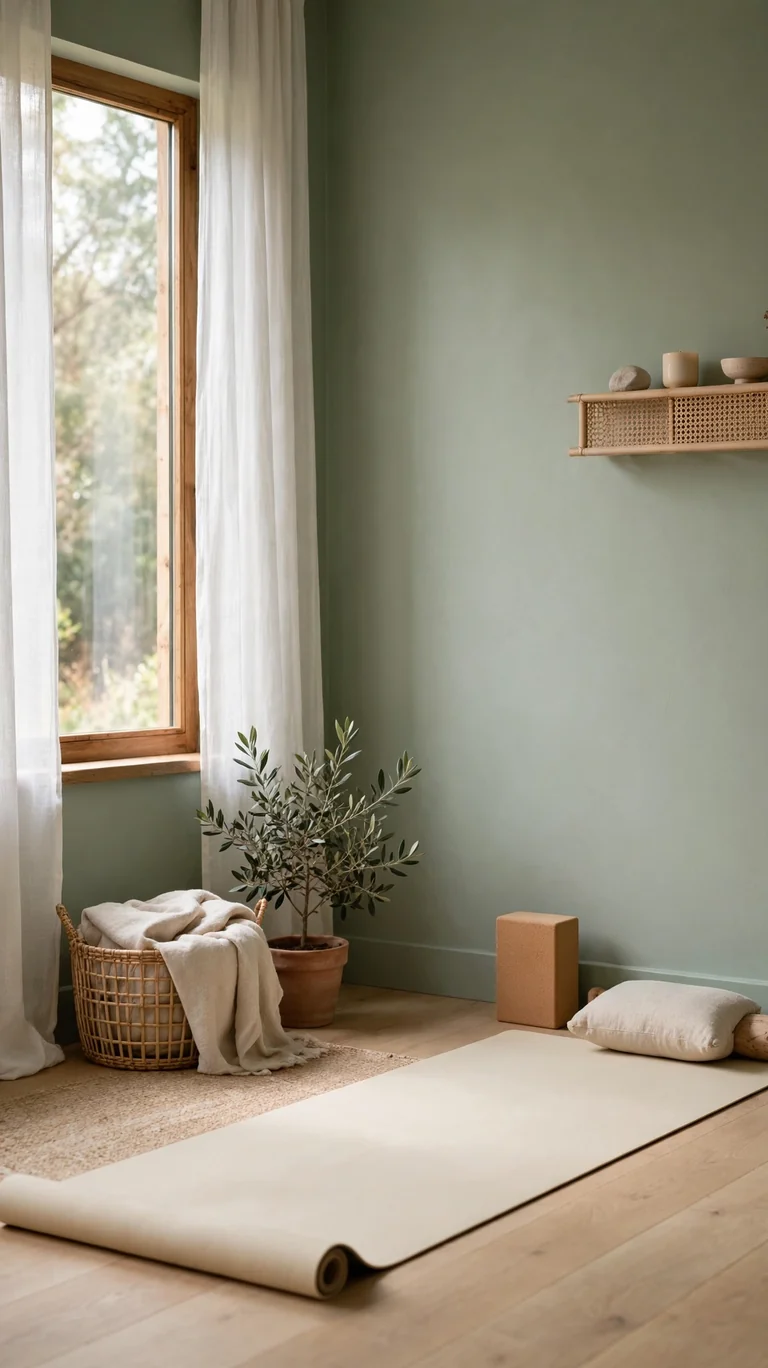
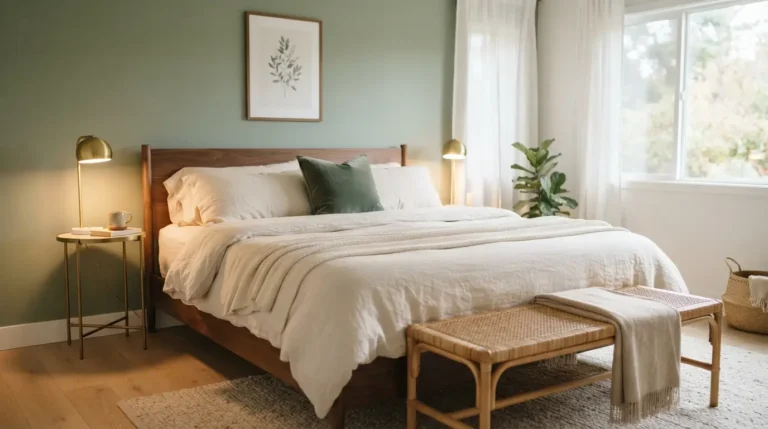
Color sets the emotional tone of your yoga room before you even unroll your mat. Soft, muted tones like warm white, pale sage, dusty blue, or light clay create a restful backdrop that does not compete with your focus. If painting is not an option, you can get the same effect with light curtains, a large neutral tapestry, or even just keeping the walls bare and uncluttered.
Avoid loud patterns and high-contrast colors in this space, since they keep the eye busy when you are trying to turn inward. If you crave a little personality, add it through texture rather than bold color: a woven wall hanging, natural wood frames, or a single piece of serene artwork. The goal is a room that feels like a deep breath the moment you walk in.
3. Invest in a Mat You Love
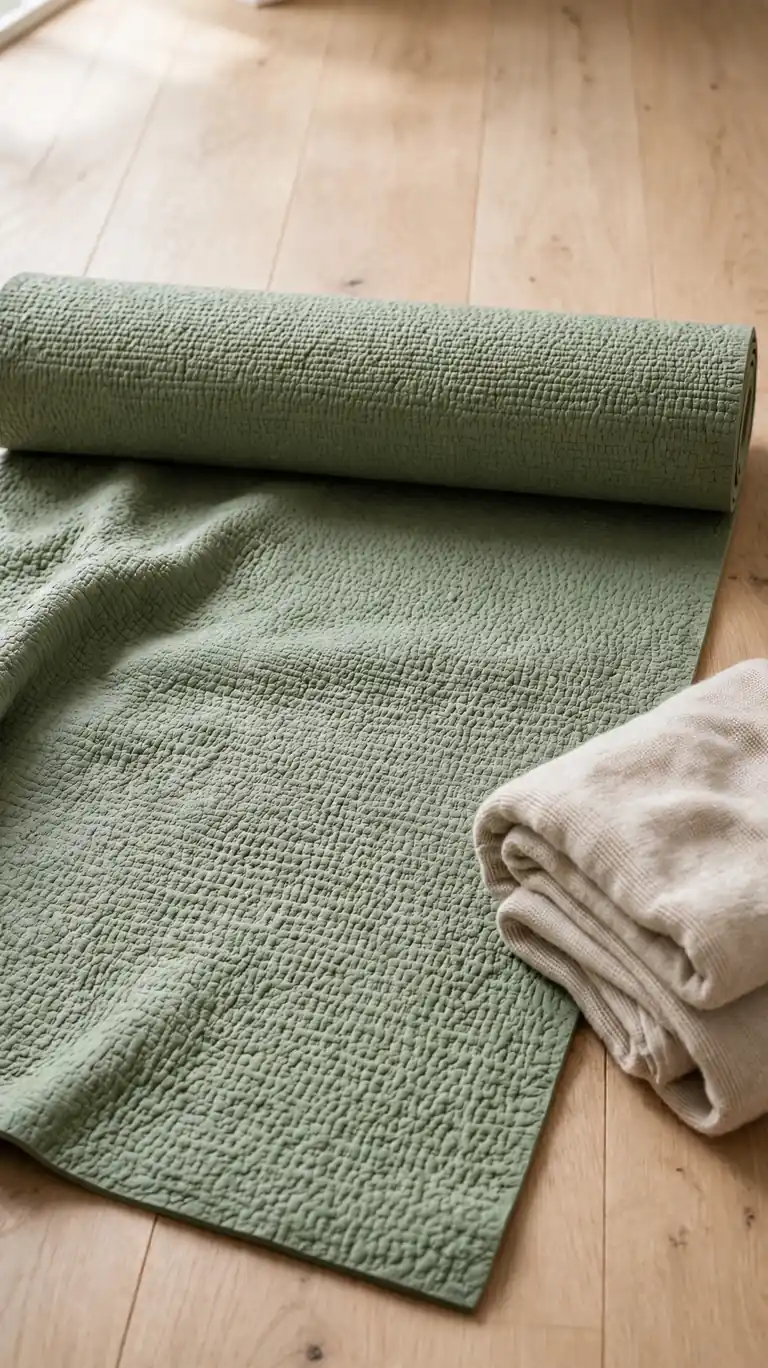
Your mat is the foundation of the whole room, so choose one that feels good under your hands and feet. A thicker mat with a textured, non-slip surface gives you confidence in standing poses and cushions your knees in seated ones. Unroll it in your space and leave it there if you can, since a mat that is always ready removes friction from your routine.
Keep a second, lighter travel mat or a folded blanket nearby for guests or for layering extra cushioning under sensitive joints. Wipe your mat down regularly with a damp cloth and mild soap, and let it air dry flat so it stays fresh. A mat you love is one you will step onto more often, which is the whole point.
4. Layer Natural Light With Soft Lamps
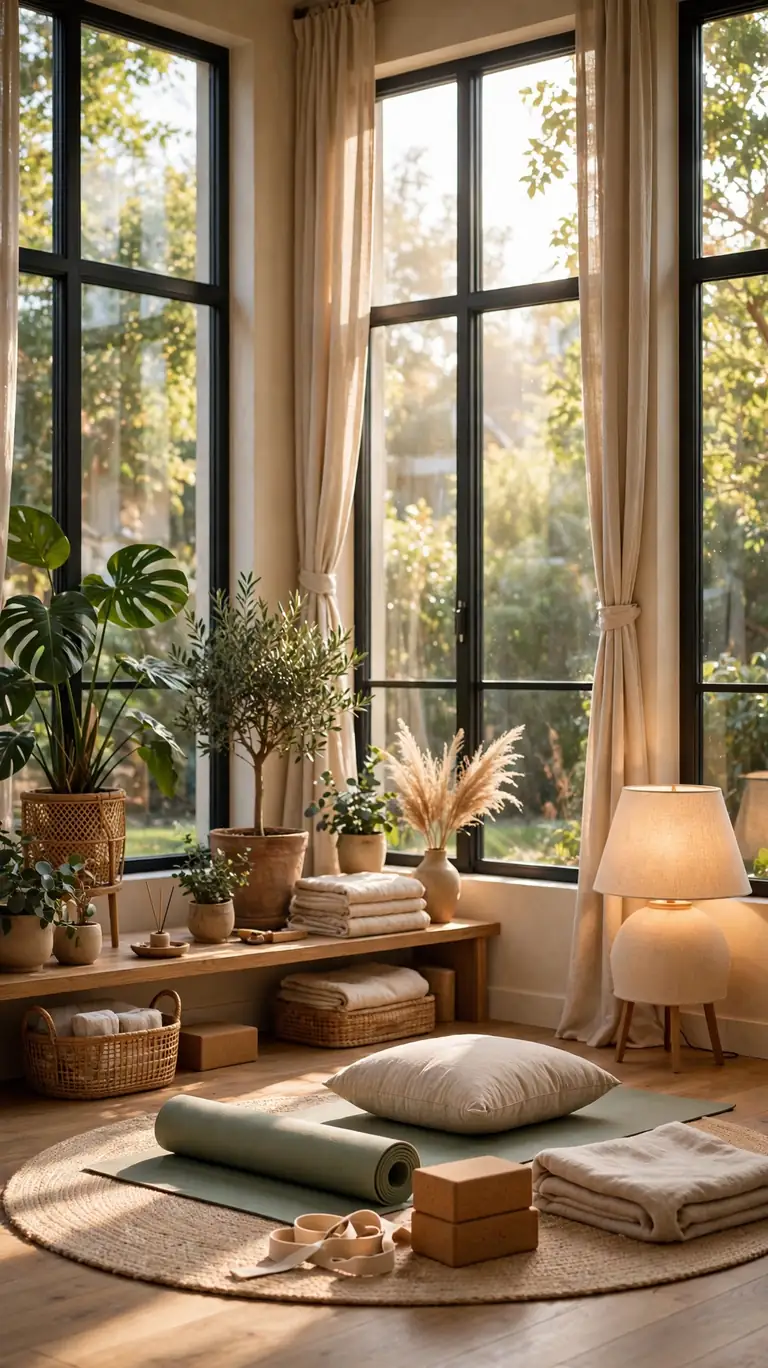
Harsh overhead lighting is the enemy of a peaceful yoga room, so plan your light in layers. Daylight is the best option, so position your mat near a window when you can. Sheer curtains soften direct sun while keeping the room bright, and they give you privacy without blocking the light you want.
For early mornings and evenings, add warm, low lighting: a floor lamp with a fabric shade, a small table lamp, or a string of warm fairy lights along a shelf. Aim for light around the warm end of the spectrum, which feels cozy rather than clinical. Being able to dim or soften the light lets you match the mood to your practice, bright for energizing flows and low for restorative sessions.
5. Bring In Living Plants
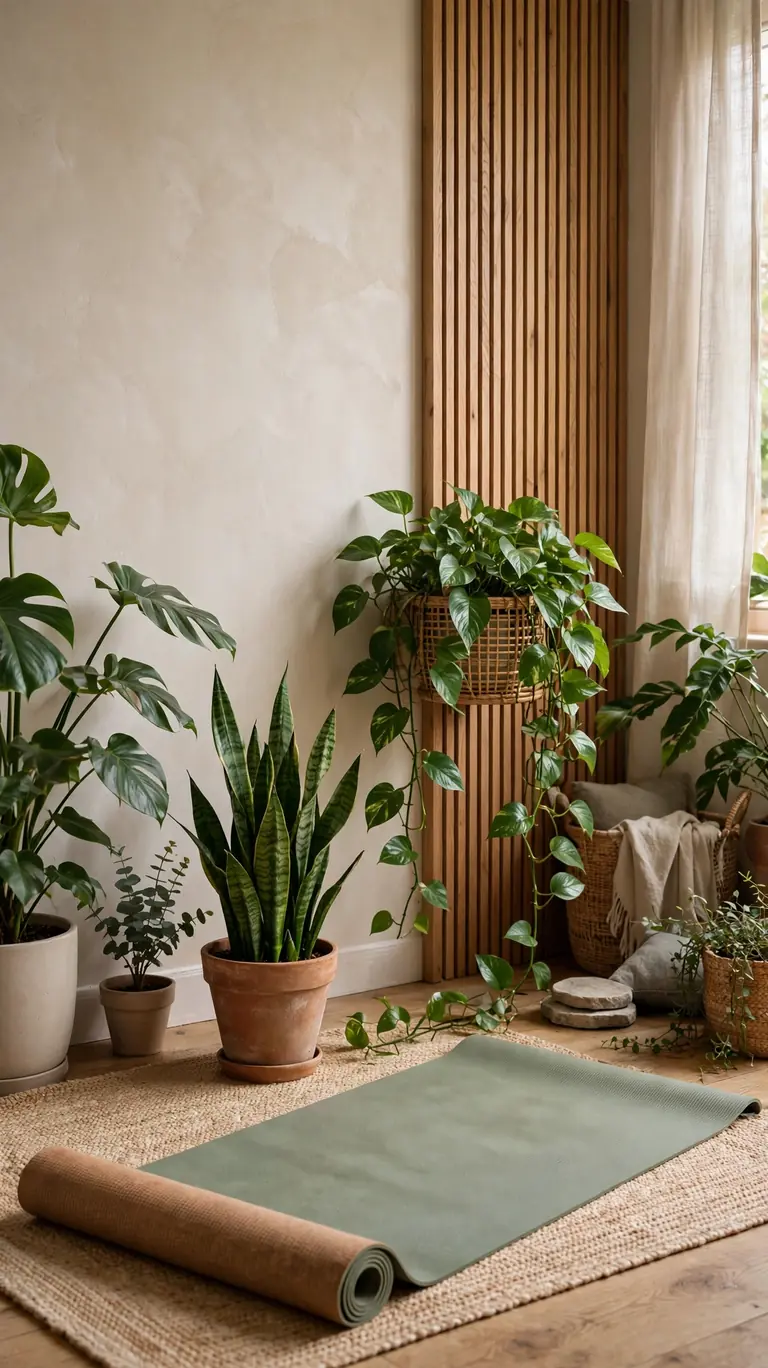
Plants make a yoga room feel alive in a way no decor object can match. A few leafy plants in the corners soften hard edges, improve the feeling of the air, and give your eyes something restful to land on during meditation. Choose easy-care varieties that suit your light, like pothos, snake plants, or peace lilies, so they thrive without demanding much attention.
Group plants at different heights for a lush look: a tall floor plant in one corner, a trailing plant on a shelf, and a small one on a side table. Keep them a little back from your mat so leaves do not brush you mid-pose. Watering your plants can even become part of your pre-practice ritual, a quiet moment of care before you turn that care inward.
6. Layer Natural Textures Underfoot and Around You
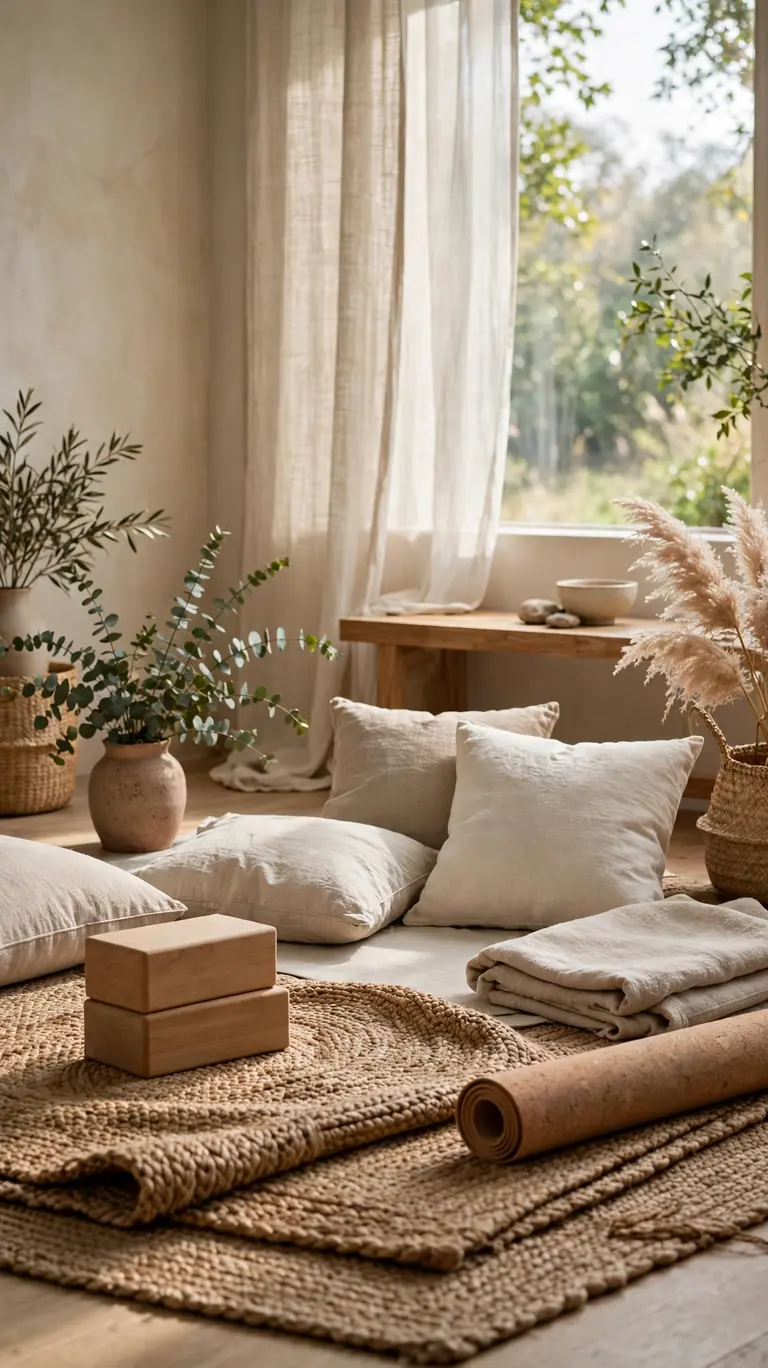
Natural textures tell your senses to relax, which is exactly what a yoga room should do. A jute or cotton area rug under your mat warms up hard floors and defines your practice zone. Linen or cotton cushions, a chunky knit throw for savasana, and wooden props add tactile variety that synthetic materials cannot match.
Keep the palette of these textures simple so the room feels cohesive rather than busy. Two or three natural materials, like wood, jute, and linen, are plenty. Choose textures you enjoy touching, since you will be in close contact with them every session. This layer of softness is what turns a spare corner into a retreat.
7. Create a Small Meditation Corner
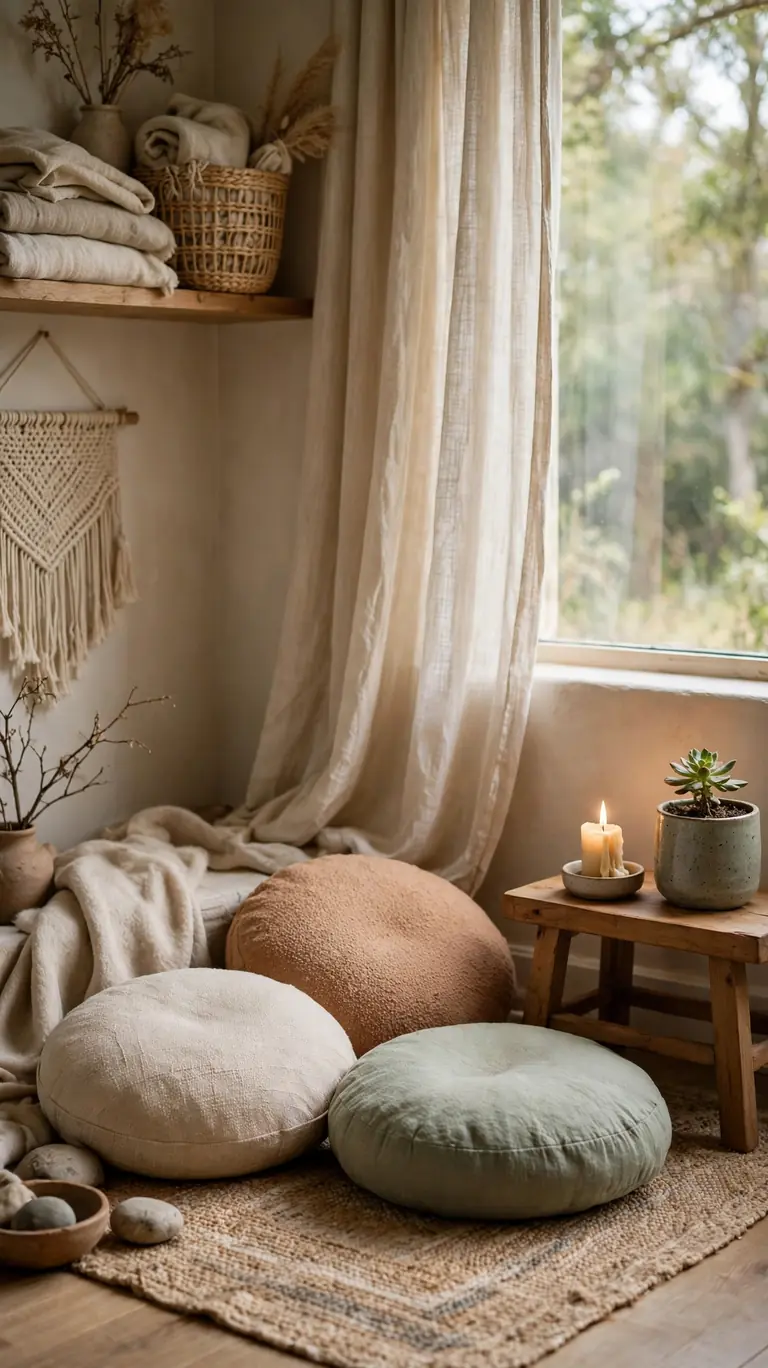
A dedicated meditation spot within your yoga room gives your practice a natural beginning and end. All it takes is a comfortable cushion or two, a low stool or small table, and a candle or small plant. Sit here for a few breaths before you start moving, and return here to close your practice, and the corner becomes an anchor for your routine.
Keep this nook simple and uncluttered so it invites stillness. A folded blanket for your knees, a timer or small clock if you like timed sits, and nothing else is plenty. Facing a window or a blank wall works better than facing the room’s busy areas. Over time, just sitting down in this spot will cue your mind that it is time to settle.
8. Add Simple, Beautiful Prop Storage
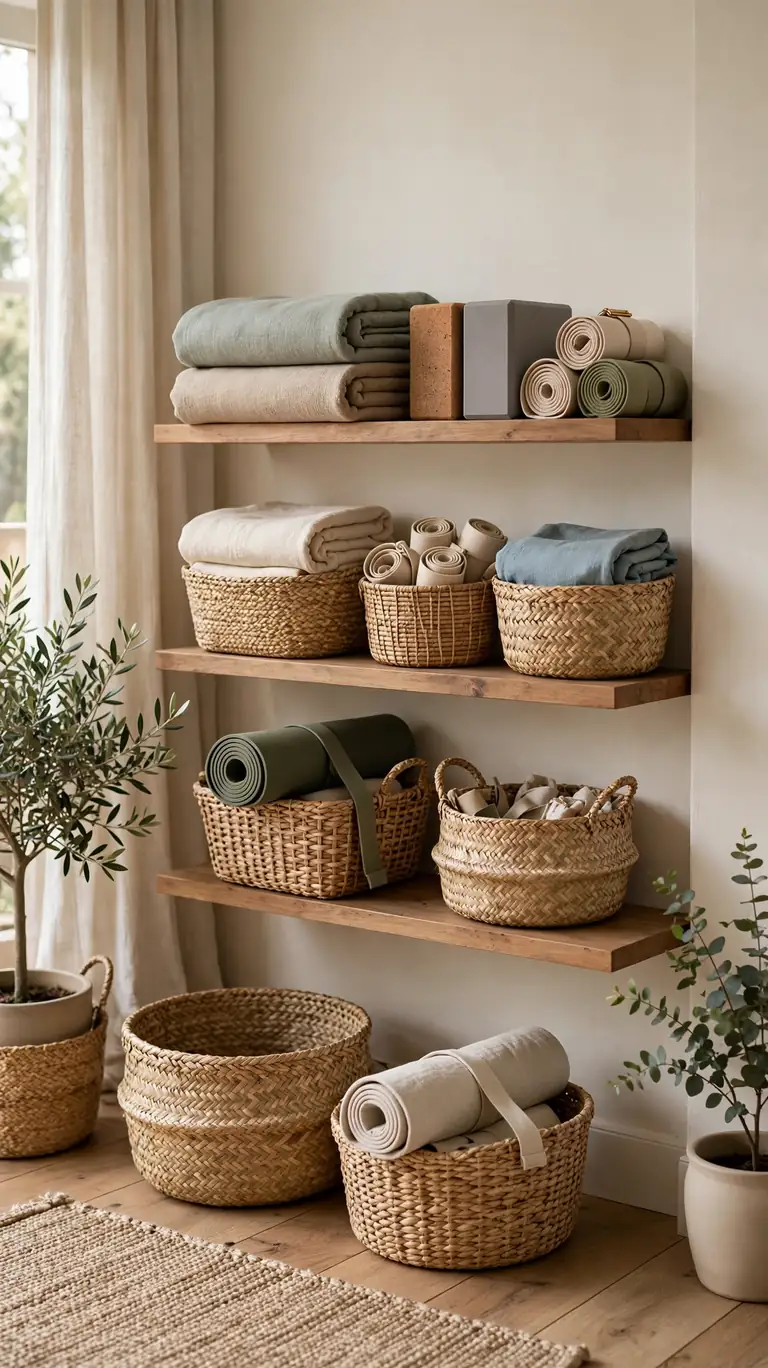
Yoga props only help if you can reach them, so give blocks, straps, blankets, and bolsters a proper home. Woven baskets are perfect: they hide clutter, add natural texture, and keep everything within arm’s reach of your mat. A low wooden shelf or a small cubby unit works just as well and keeps the floor clear.
Store props by how often you use them, with daily items at the top or front. Fold blankets neatly and roll straps so the storage looks inviting rather than messy. When everything has a place, cleanup takes seconds, and the room stays as calm after practice as it was before. Good storage is what keeps a small yoga space from feeling crowded.
9. Introduce a Calming Scent
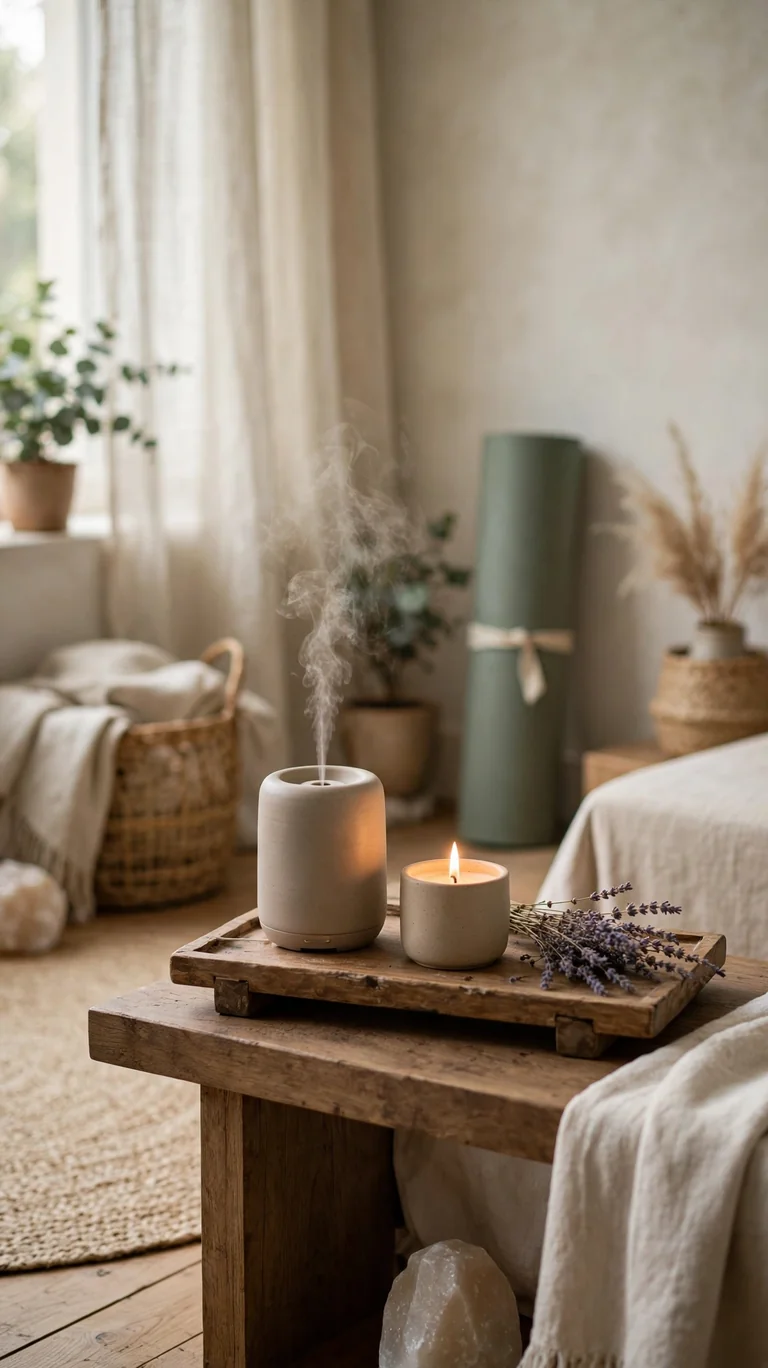
Scent is a powerful shortcut to calm, and it takes almost no space in a yoga room. An essential oil diffuser with a gentle scent like lavender or eucalyptus, a beeswax candle, or a small bowl of dried herbs on a side table all work beautifully. Choose one scent and stick with it, since your brain will start to associate it with practice time.
Keep scent subtle rather than strong, especially in a small room. A diffuser you can run for the length of your session, or a candle you light as a ritual start and blow out at the end, gives you control. Always place candles safely away from fabric and never leave them burning unattended. That small ritual of scent becomes a signal to your mind: practice has begun.
10. Hang One Meaningful Focal Point
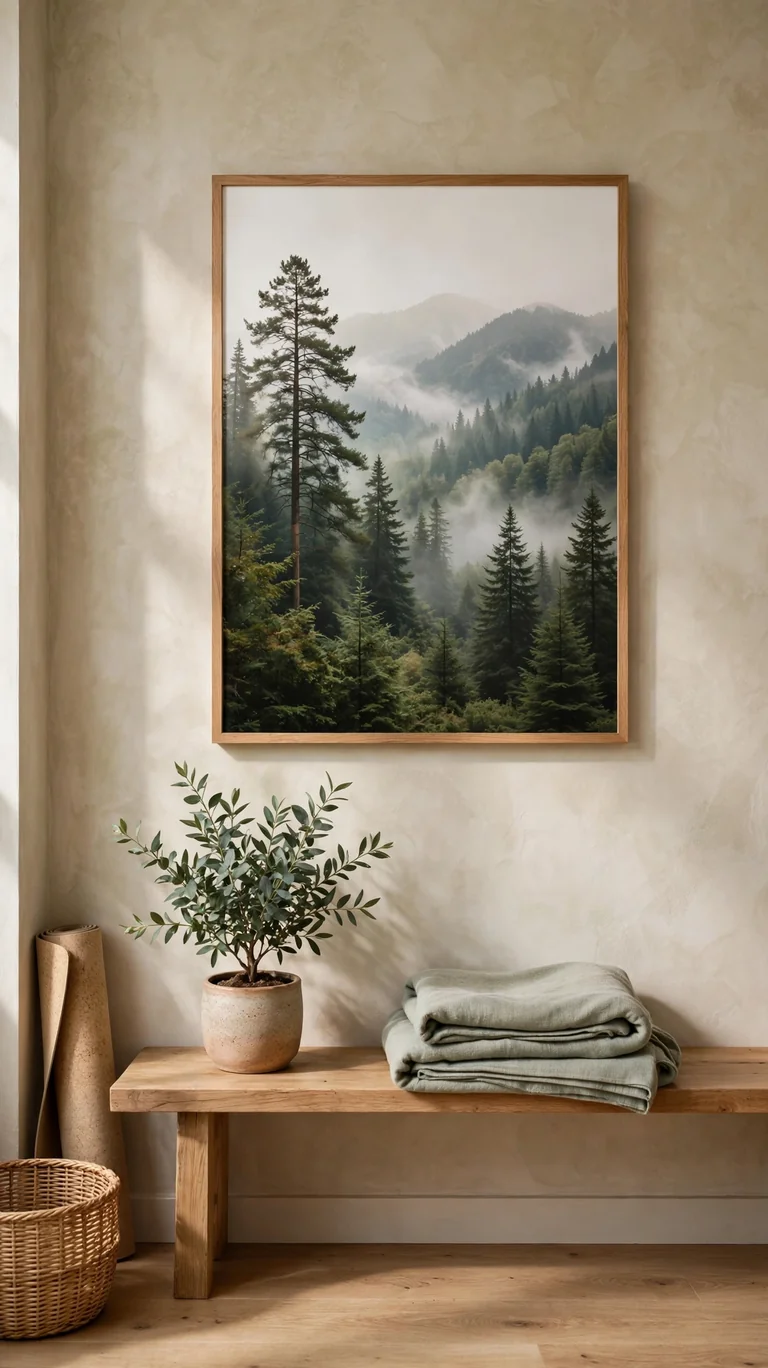
Every peaceful room benefits from a single place for the eyes to rest. In a yoga room, that might be a large framed nature photograph, a simple piece of line art, a wall hanging with a calming pattern, or a small shelf with a statue or meaningful object. One strong focal point beats a gallery wall here, since the goal is rest, not stimulation.
Hang it where you will see it during practice, such as the wall you face in standing poses or above your meditation corner. Keep the frame simple and the colors in line with the room’s calm palette. This focal point becomes a visual anchor you can return to whenever your attention wanders, both on and off the mat.
11. Consider a Mirror for Alignment
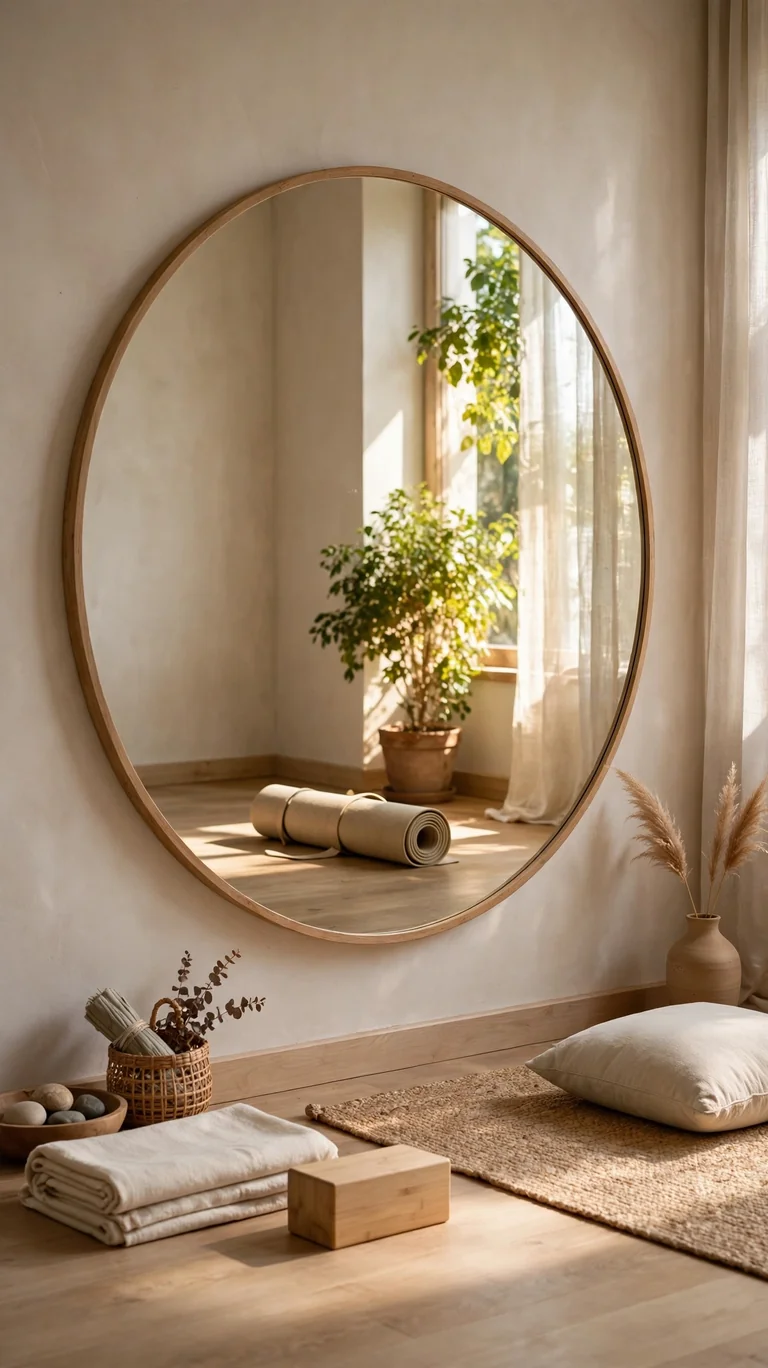
A mirror is a practical addition if you want to check your alignment during home practice. A full-length mirror on one wall lets you glance at your form in standing poses and transitions, which builds body awareness faster than practicing blind. Choose a simple frame that matches the room, and mount it securely at a height where you can see your full posture.
If mirrors feel distracting or make the space feel less serene, skip this idea entirely. Some practitioners find mirrors pull attention outward when yoga is about turning inward. You can also use a smaller leaning mirror that you turn to the wall during meditation or restorative practice. Let your own preference decide, since the room should serve your practice, not the other way around.
12. Keep It Beautifully Minimal
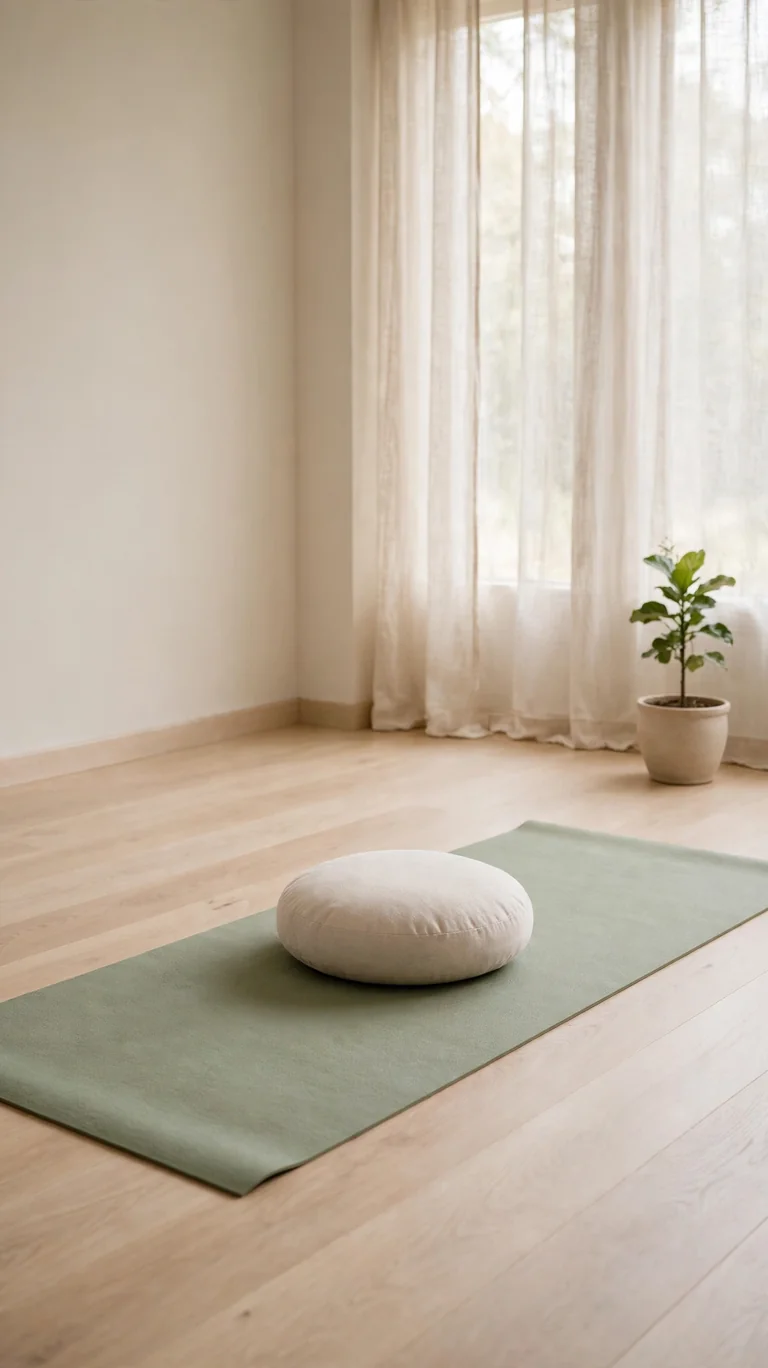
The most peaceful yoga rooms are the least cluttered ones. Every extra object is something your eyes and mind have to process, so be strict about what earns a place here. Your mat, your props, your meditation cushion, a plant or two, and a few meaningful items are enough. Everything else belongs in another room.
Build a quick reset habit: after each session, roll or fold your mat, return props to their baskets, and blow out the candle. Two minutes of tidying keeps the room perpetually inviting, which makes tomorrow’s practice more likely. Minimalism in a yoga room is not about style, it is about giving your mind the empty space it needs to settle.
13. Set Up Sound for Music or Guided Practice
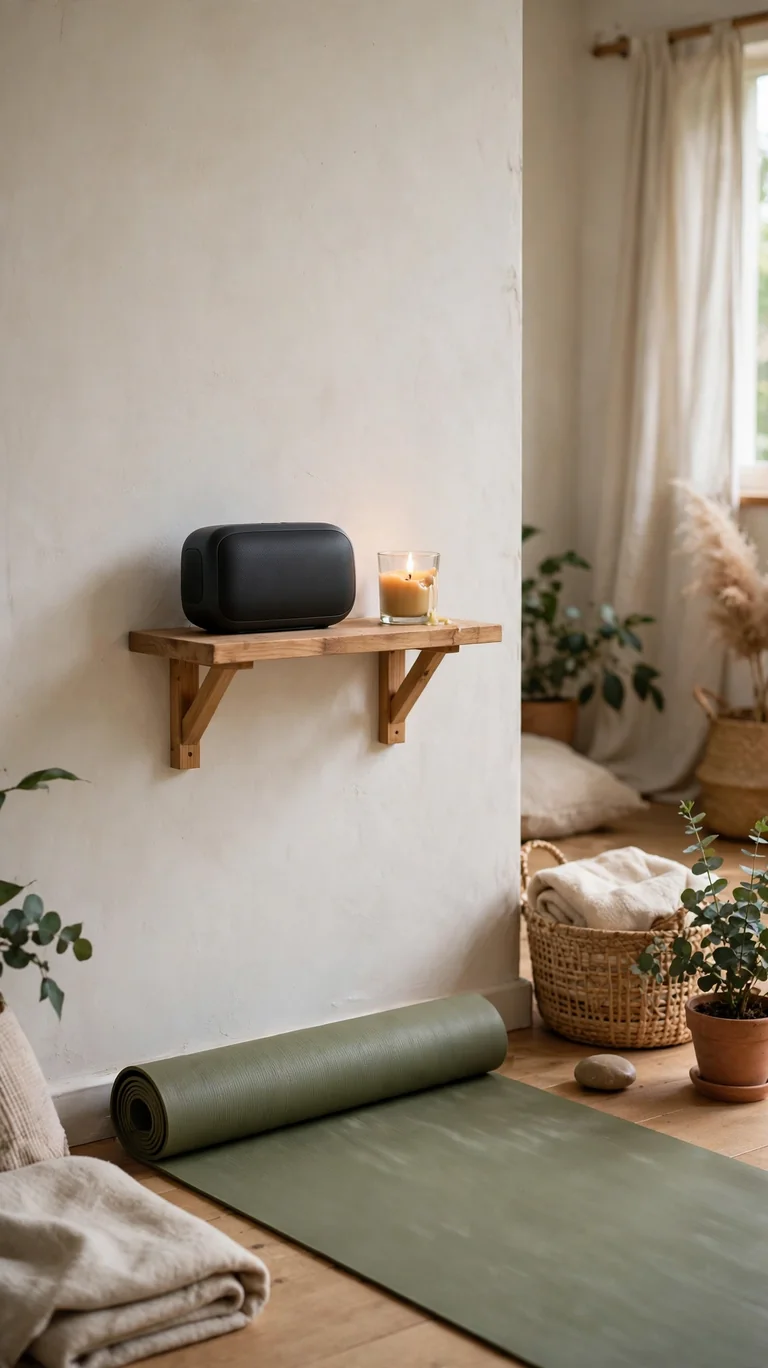
Sound shapes the atmosphere of your yoga room as much as light does. A small speaker on a shelf lets you play gentle ambient music, nature sounds, or a guided meditation without your phone buzzing beside your mat. Keep the speaker small and the volume low, since background sound should support your practice, not lead it.
Create one or two go-to playlists so you are not scrolling for music when you should be breathing. Many practitioners also like a small singing bowl or chime to open and close their session, which adds a lovely ritual element. Whatever you choose, keep the tech minimal and tucked away so the room stays calm even when the sound is off.
14. Add Personal Touches That Inspire You
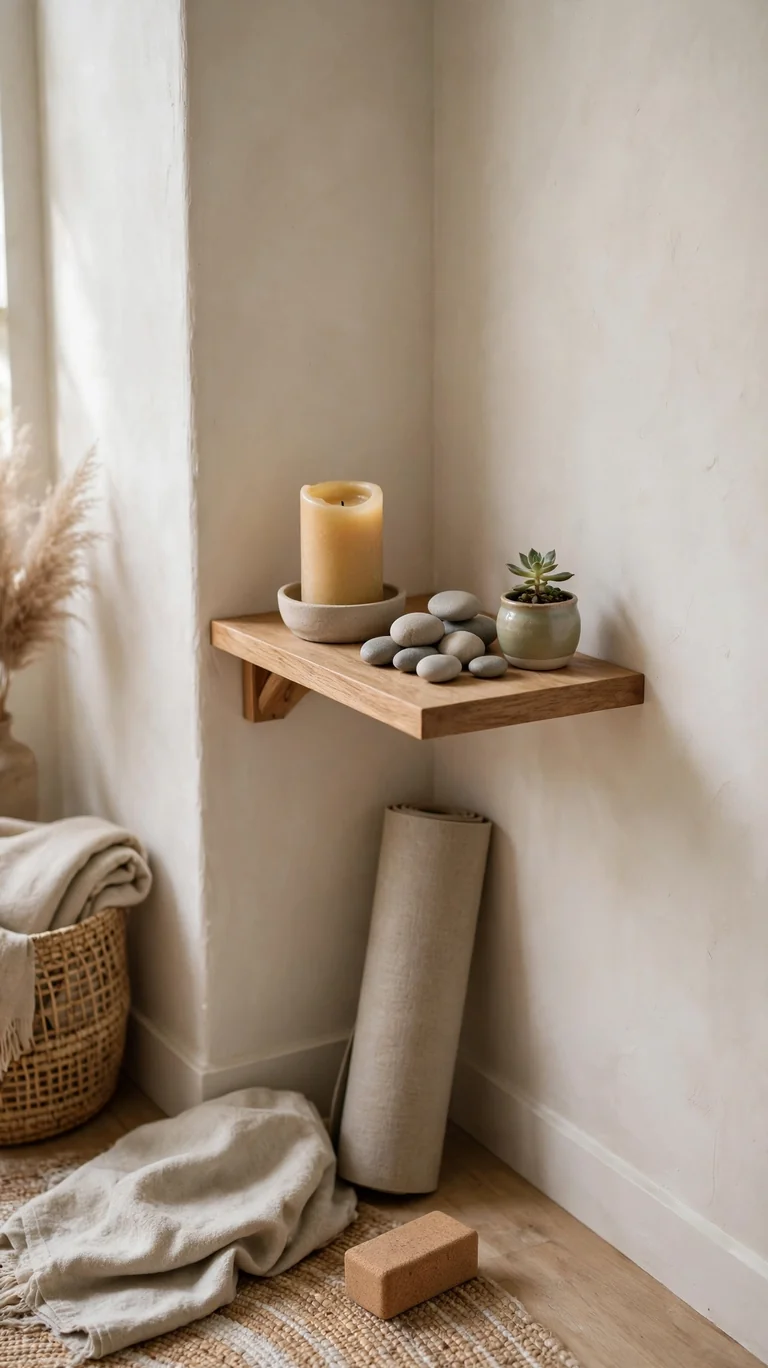
The final layer of a yoga room is what makes it yours. A small shelf or tray with objects that inspire you, a favorite quote in a simple frame, stones from a meaningful trip, or a photo that makes you smile, turns a nice room into your retreat. These personal touches remind you why you practice every time you walk in.
Keep personal items few and intentional so they stay special. Three meaningful objects beat a crowded shelf, and rotating them seasonally keeps the space feeling fresh. This is the difference between a room that looks like a yoga studio and one that feels like your sanctuary. Let it reflect you, and you will never want to practice anywhere else.
Frequently Asked Questions
How much space do I need for a home yoga room?
You need less than you think. A standard yoga mat is about 6 feet long and 2 feet wide, and adding a couple of feet on each side for comfortable movement means a 6 by 8 foot area works well for most practices. A corner of a bedroom, a section of a living room, or a spare room all work. What matters more than size is that the space is quiet, uncluttered, and consistently available for your practice.
What is the best flooring for a yoga room?
A hard, stable surface like wood, laminate, or tile is ideal because it gives your mat a firm base and keeps standing poses steady. If your room is carpeted, use a thicker mat or place a firm mat-sized board under your yoga mat for better stability. A washable area rug under the mat adds warmth and defines the space, just make sure it lies flat and does not bunch up during practice.
How do I make a yoga room feel calm on a budget?
Start with decluttering, which costs nothing and makes the biggest difference. Then add impact with low-cost changes: sheer curtains to soften window light, a warm-toned lamp instead of overhead lighting, a couple of easy-care plants, and a woven basket to hide props. Paint is one of the cheapest transformations if the walls feel harsh. Focus on light, clutter, and one or two natural textures before buying anything else.
Should a yoga room have a mirror?
It depends on your practice style. A mirror helps you check alignment in standing poses and can speed up learning when you practice alone. But some people find mirrors distracting or make the room feel less peaceful, since they pull attention outward. A good compromise is a leaning mirror you can turn to the wall during meditation or restorative sessions. Try practicing with and without one and keep whatever serves you better.
How do I keep my yoga room from becoming a storage dumping ground?
Give the room a clear identity by keeping your mat set up and the space visibly in use. Use closed storage like baskets and cabinets so there is no open surface tempting you to pile things on. Make it a household rule that the yoga corner is not overflow storage, and do a two-minute reset after each session so the room always looks inviting. A space that is clearly loved and used tends to stay respected.
Conclusion
A home yoga room does not need to be large, expensive, or perfect to change your practice. What it needs is intention: a quiet spot that is always ready, light that flatters rather than glares, colors and textures that calm your senses, and freedom from clutter. The fourteen ideas above give you a complete path from an unused corner to a genuine retreat, and you can start with just the first few. Claim your spot, lay down your mat, and soften the light, and you already have the bones of a peaceful practice space.
The real magic happens when the room starts shaping your habits. A dedicated space removes the daily decision of where to practice, a tidy room invites you in instead of stressing you out, and small rituals like lighting a candle or sitting in your meditation corner tell your mind it is time to slow down. Over weeks and months, these details compound into a practice that feels less like a task and more like coming home to yourself.
Start small and let the room grow with you. Add the plants when you are ready, build the meditation corner when seated practice calls to you, and bring in personal touches as you discover what inspires you. There is no finish line here, only a space that keeps getting more yours. Your peaceful home retreat is waiting, and it is closer than you think: it is the quiet corner you walk past every day, ready to become the best part of your home.