25 Stunning Plywood Ceiling Ideas for a Stylish Home
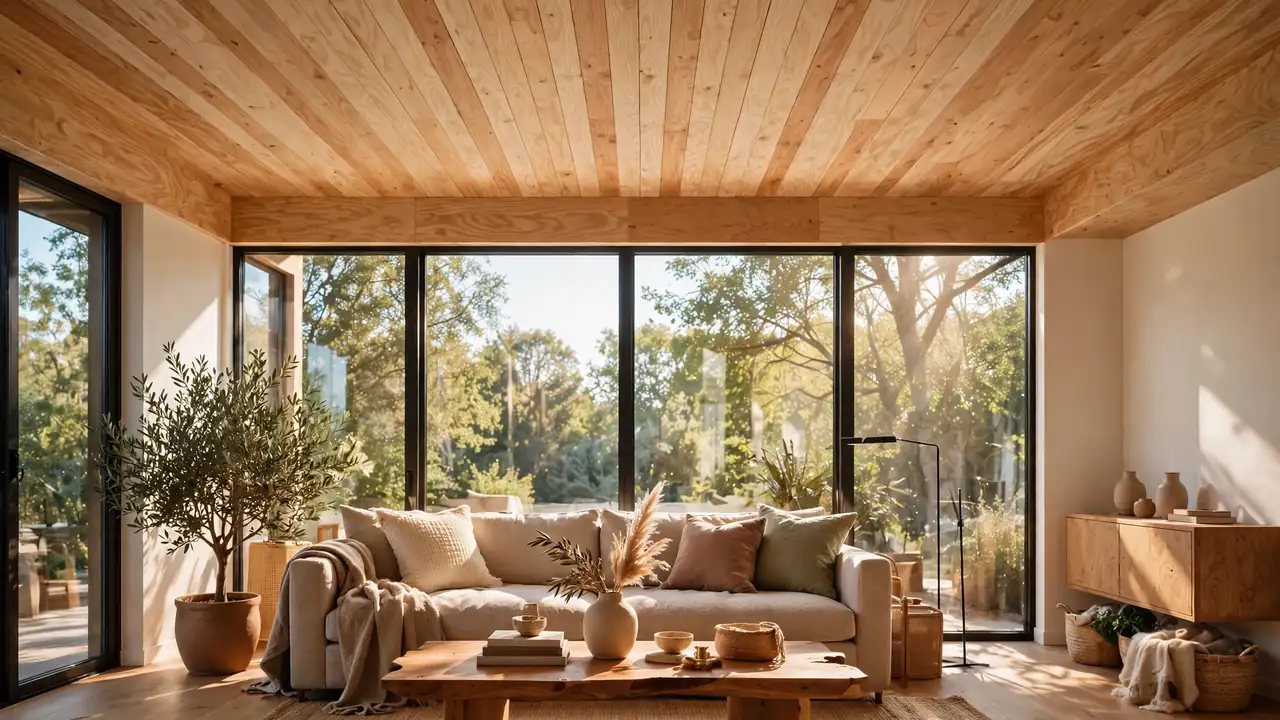
Plywood ceilings are having a real moment, and it is easy to see why. They bring warmth, texture, and character to rooms that feel flat and unfinished with plain drywall overhead. Whether you love the look of natural wood grain, a crisp painted finish, or a dramatic dark stain, plywood gives you designer-level impact without the cost of solid wood paneling. The ideas below cover every style and every room, from cozy bedrooms to covered porches, so you can find a look that fits your home and your skill level. If you have been searching for plywood ceiling ideas that are actually practical to pull off, you are in the right place. Each one includes finishing tips, lighting pairings, and honest advice about where it works best, so you can plan with confidence instead of guessing.
A ceiling is the largest uninterrupted surface in most rooms, which means it sets the tone more than people expect. Plywood works so well here because it is light enough for overhead installation, comes in large sheets that speed up the work, and takes almost any finish beautifully. You can go as simple as clear-sealed birch planks or as bold as a matte black statement ceiling, and the material cost stays a fraction of solid wood paneling. Start with the ideas that match your room and your comfort level, plan your lighting before anything goes overhead, and take your time with the finish. A little care up there pays off every time you walk into the room.
1. Natural Birch Plank Ceiling
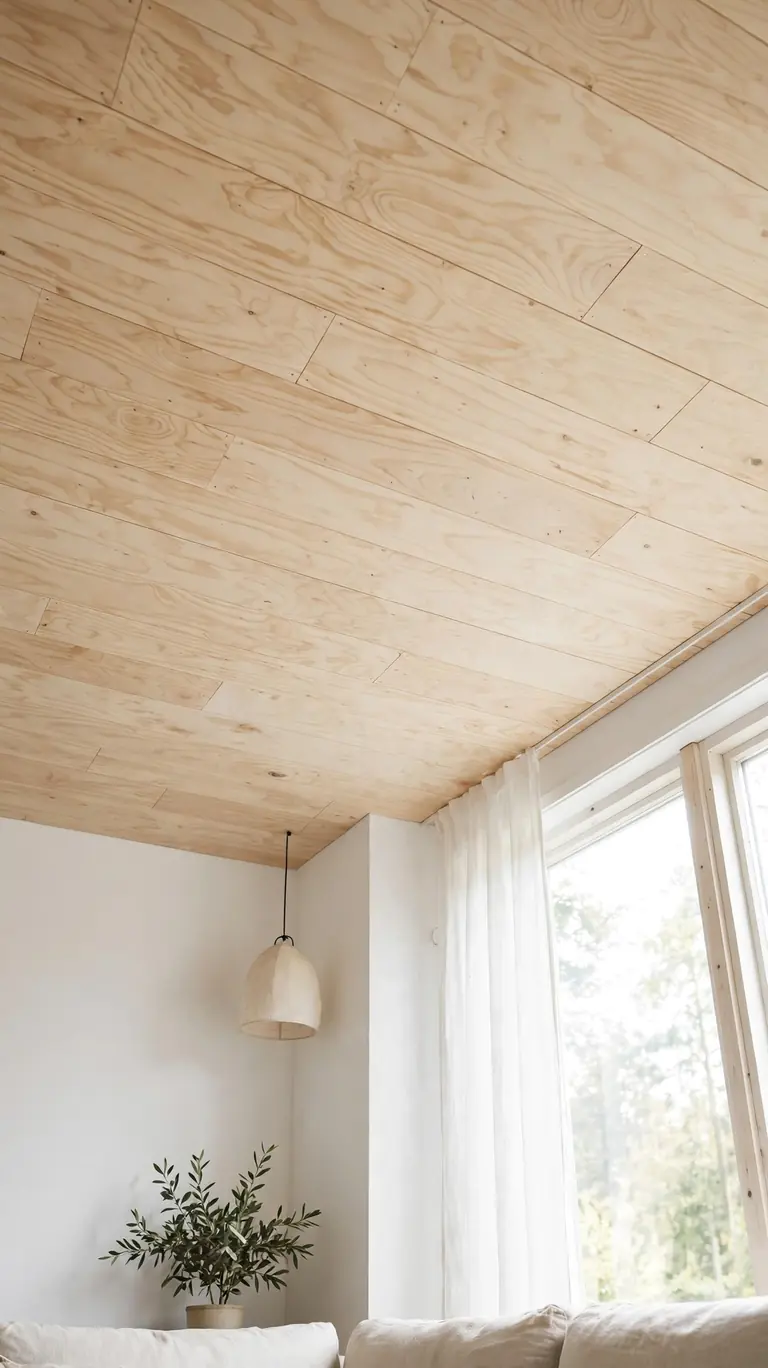
Start with the classic for a reason. Natural birch plywood planks run across a living room ceiling give you that light, airy Scandinavian feel without painting a thing. The pale wood keeps the room feeling open, which is perfect if your ceilings are on the lower side. Finish the planks with a clear matte sealant so the grain shows through but the wood is protected from everyday humidity and dust.
Pair this look with white or very light gray walls so the ceiling becomes the warm focal point. Add a simple pendant light or a couple of surface-mounted fixtures, since recessed cans can get lost visually against busy grain. If you are installing over existing drywall, thin plywood panels keep the weight manageable and the project weekend-friendly. This is one of the most forgiving plywood ceiling ideas because small gaps and imperfect cuts read as part of the rustic charm rather than mistakes.
2. Dark Walnut-Stained Plywood
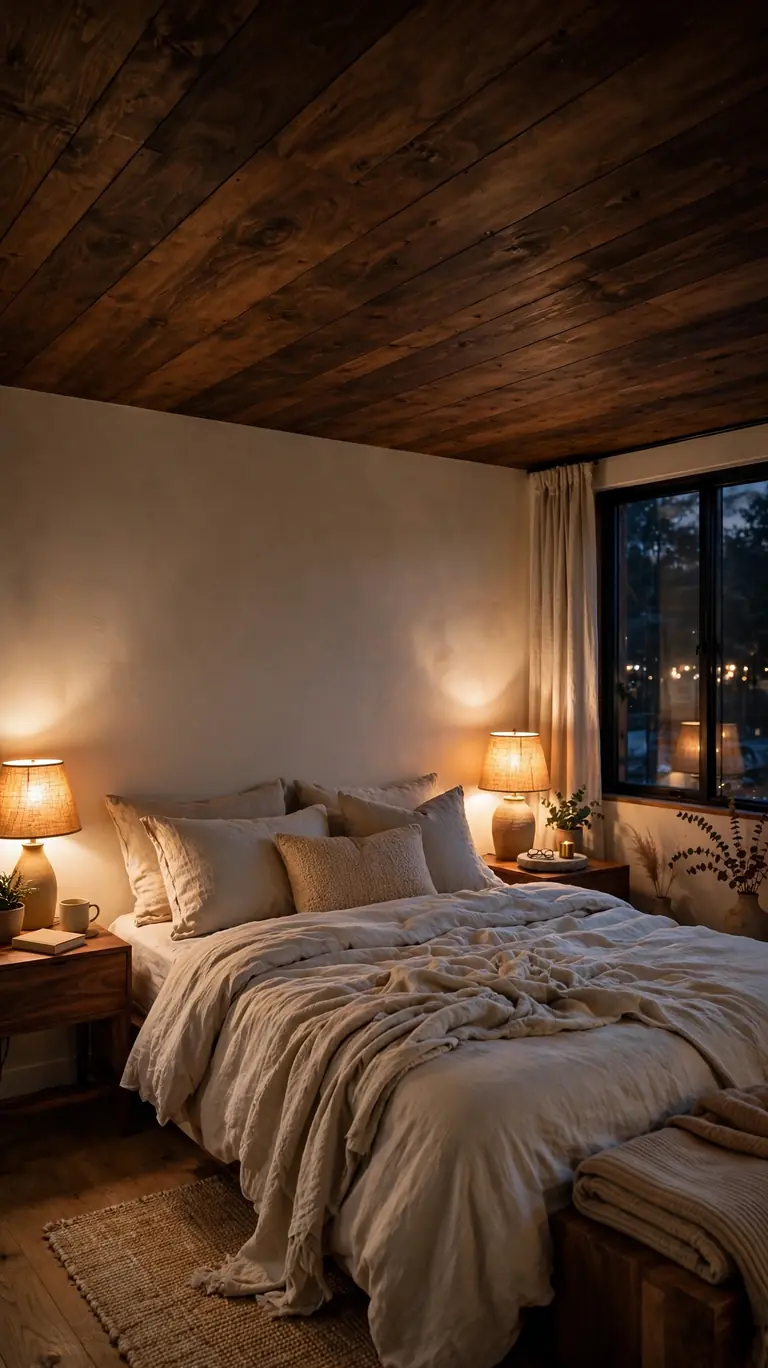
A dark walnut stain turns a bedroom ceiling into something that feels like a boutique hotel. The deep brown tones add intimacy and calm, which is exactly what you want overhead in a room made for rest. Choose a stain with warm undertones rather than cool ones, because cool darks can feel gloomy while warm darks feel enveloping. Always test the stain on a scrap piece first, since plywood absorbs color differently than solid wood.
Lighting matters more here than with light ceilings. Plan for a layered setup with bedside lamps, a statement chandelier, and maybe a dimmer so you can control the mood. Keep walls and bedding in lighter neutrals to balance the dark overhead plane, and let the floor echo a mid-tone wood so the room does not feel top-heavy. If you are nervous about going dark in a small room, try it in a powder room or home office first to see how the tone feels in your light.
3. Whitewashed Plywood Ceiling
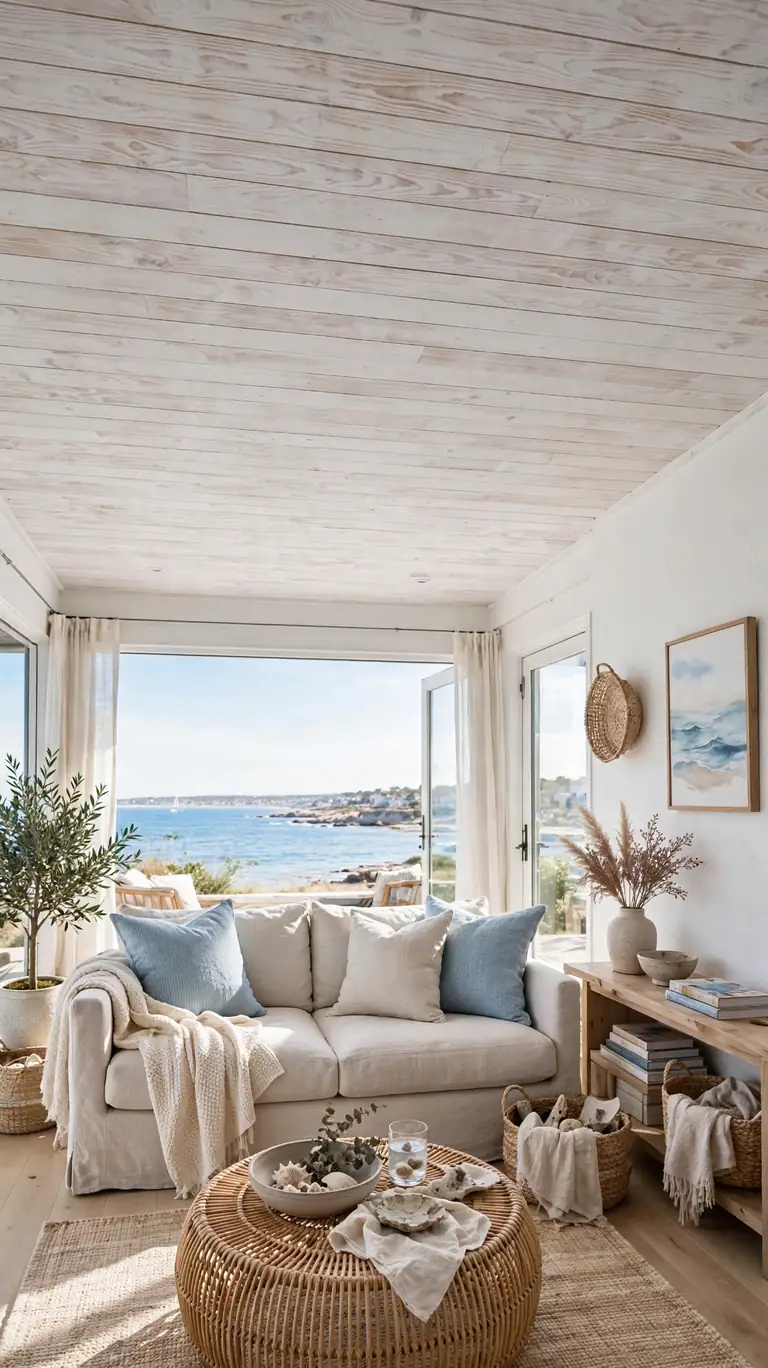
Whitewashing gives you the best of both worlds: the texture of wood grain with the brightness of a white ceiling. It is a lovely choice for coastal, farmhouse, or cottage-style homes where you want character without visual weight. The technique is simple. Brush on a thinned white paint or pickling wash, then wipe back the excess so the grain peeks through. Two light coats usually look better than one heavy one.
This finish works beautifully in rooms with lots of natural light, because the sun plays across the grain and changes the look through the day. Pair it with crisp white walls and natural fiber rugs for a relaxed coastal vibe, or with sage green walls for a softer farmhouse feel. Because whitewash is lighter than paint, it is forgiving on ceilings with slight waves or patches. Just seal it with a matte topcoat so it wipes clean and does not yellow over time.
4. Crisp Painted White Plywood
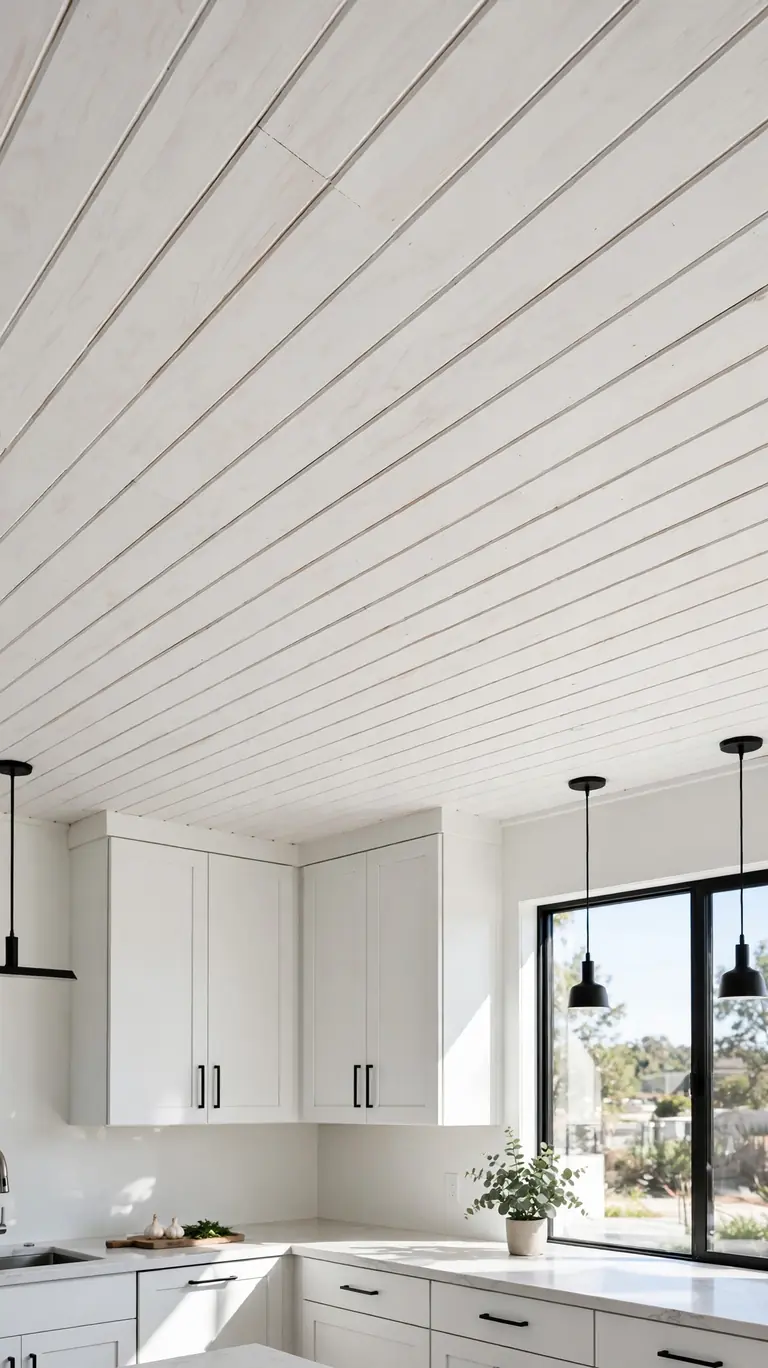
Sometimes you want the paneling look without the wood color, and a painted white plywood ceiling delivers exactly that. The seams between planks create subtle shadow lines that give the ceiling more interest than flat drywall, while the white paint keeps everything bright and clean. Use a high-quality primer first, because plywood can bleed tannins through paint if you skip that step. Two coats of a ceiling-rated paint in a matte or flat sheen hide imperfections best.
This approach is ideal if you already have plywood up from a renovation and want a polished finish fast. It also works well in kitchens and bathrooms, where painted surfaces handle moisture better than raw wood. Choose a slightly warm white rather than a stark blue-white so the room feels inviting. Add classic crown molding at the edges and the ceiling reads as intentional millwork rather than a budget shortcut.
5. Slatted Plywood Strips With Shadow Gaps
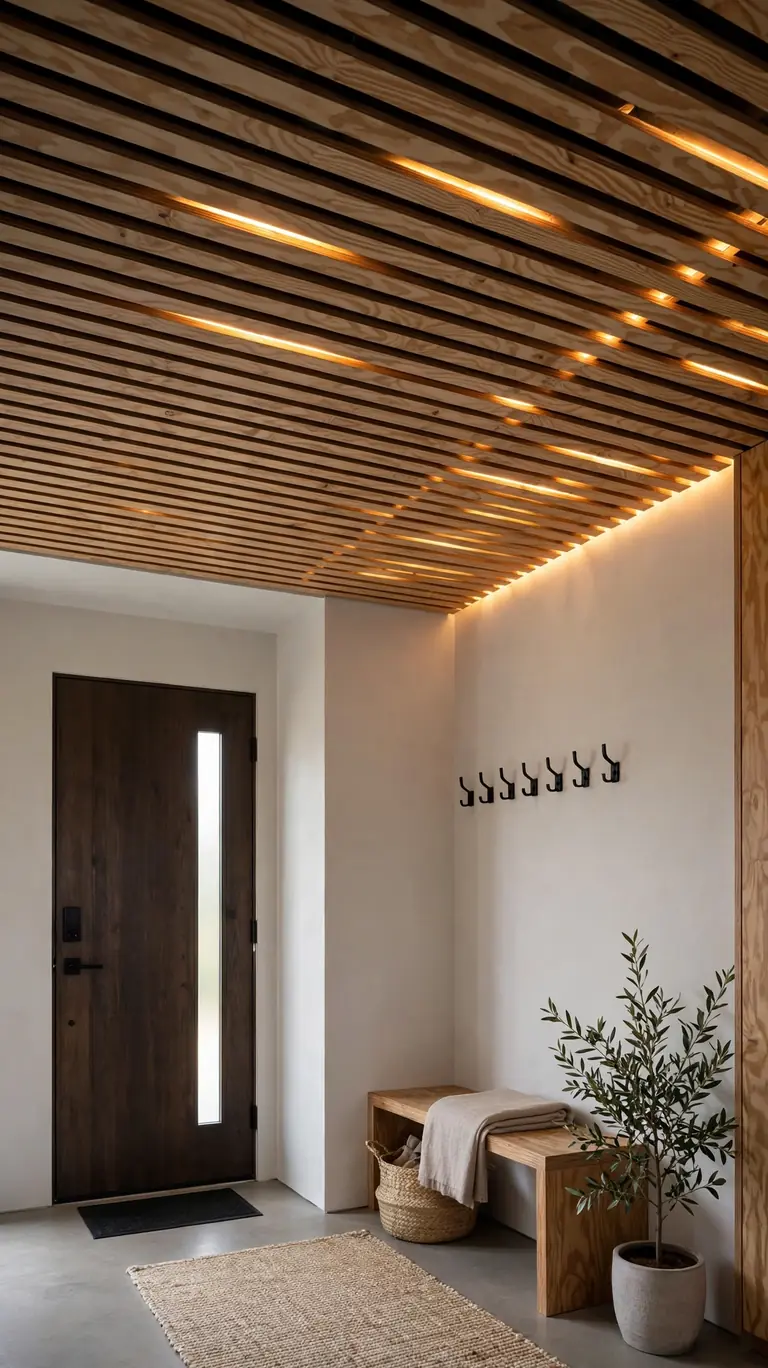
Slatted ceilings are the modern showstopper, and plywood makes them surprisingly achievable. Narrow strips of plywood mounted with small gaps between them create rhythm and texture that draws the eye across the room. Paint the backing surface dark (charcoal or black) so the gaps read as deep shadow lines, which gives the ceiling real depth. Keep the strips consistent in width, because even spacing is what makes this look feel designed rather than improvised.
This style shines in entryways, home offices, and media rooms where you want a strong architectural feature. Run the slats in one direction to make a narrow room feel longer, or angle them for a bolder statement. Integrated strip lighting tucked behind the slats creates a gorgeous glow at night and turns the ceiling into the room’s main event. Plan your lighting wiring before the slats go up, since retrofitting behind them is a headache you do not want.
6. Herringbone Plywood Panel Pattern
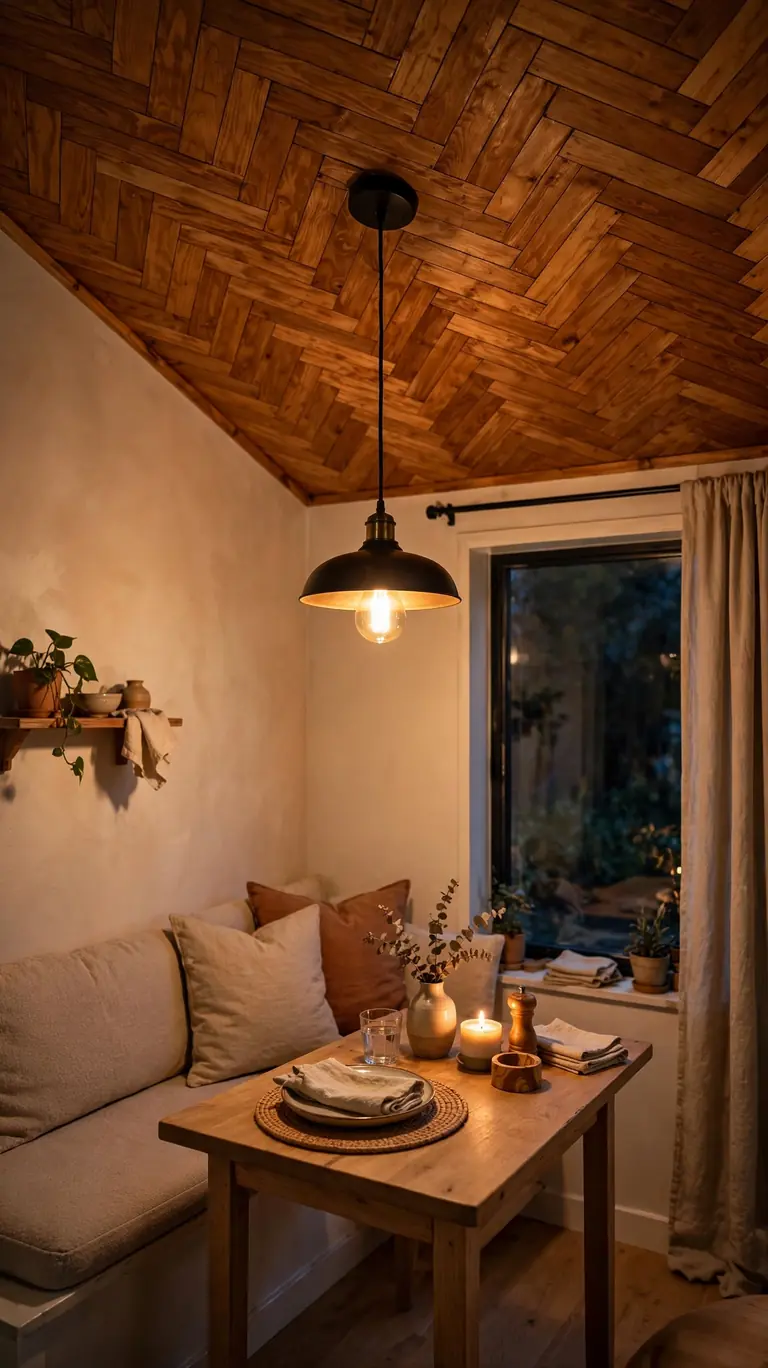
Herringbone is not just for floors. Laying plywood pieces in a zigzag pattern overhead creates a ceiling that guests will absolutely notice. It works best in smaller spaces like dining nooks, powder rooms, or entryways, where the pattern can be appreciated up close. Cut your pieces to a consistent size and dry-lay a section on the floor first to get the rhythm right before anything goes overhead.
Because the pattern itself is busy, keep the stain or paint simple. A single warm tone lets the geometry do the talking. Make sure your starting point is centered in the room, since herringbone draws attention to alignment. This is a more advanced project, so budget extra time and material for test cuts. The payoff is a ceiling that looks completely custom and high-end, built from one of the most affordable sheet goods at the store.
7. Coffered Plywood Ceiling
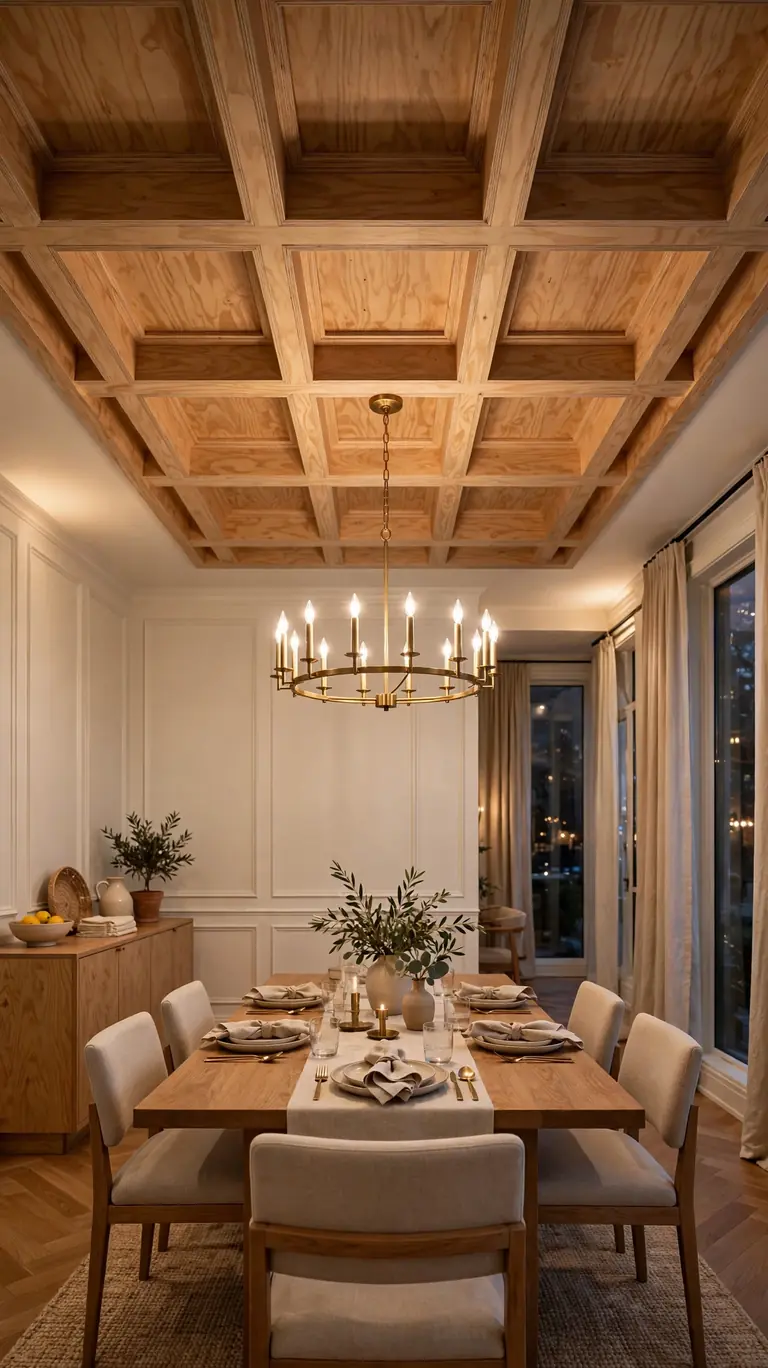
Coffers, those recessed square or rectangular panels, bring a formal, crafted feeling to dining rooms and libraries. Plywood is perfect for the recessed panels, while solid wood or plywood strips form the grid beams. Paint the whole thing one color for a unified classic look, or stain the recessed panels a touch darker than the grid for contrast. The depth of the coffers adds real architectural interest that flat ceilings simply cannot match.
Measure carefully and build the grid first, checking that every line is level before the panels go in. Slightly oversized coffers look more modern, while smaller, tighter grids feel traditional. Add a small piece of trim inside each coffer for a finished, furniture-like detail. In rooms with chandeliers, center a coffer on the fixture and consider a small medallion where they meet for an extra layer of polish.
8. Plywood Faux Beams Over Drywall
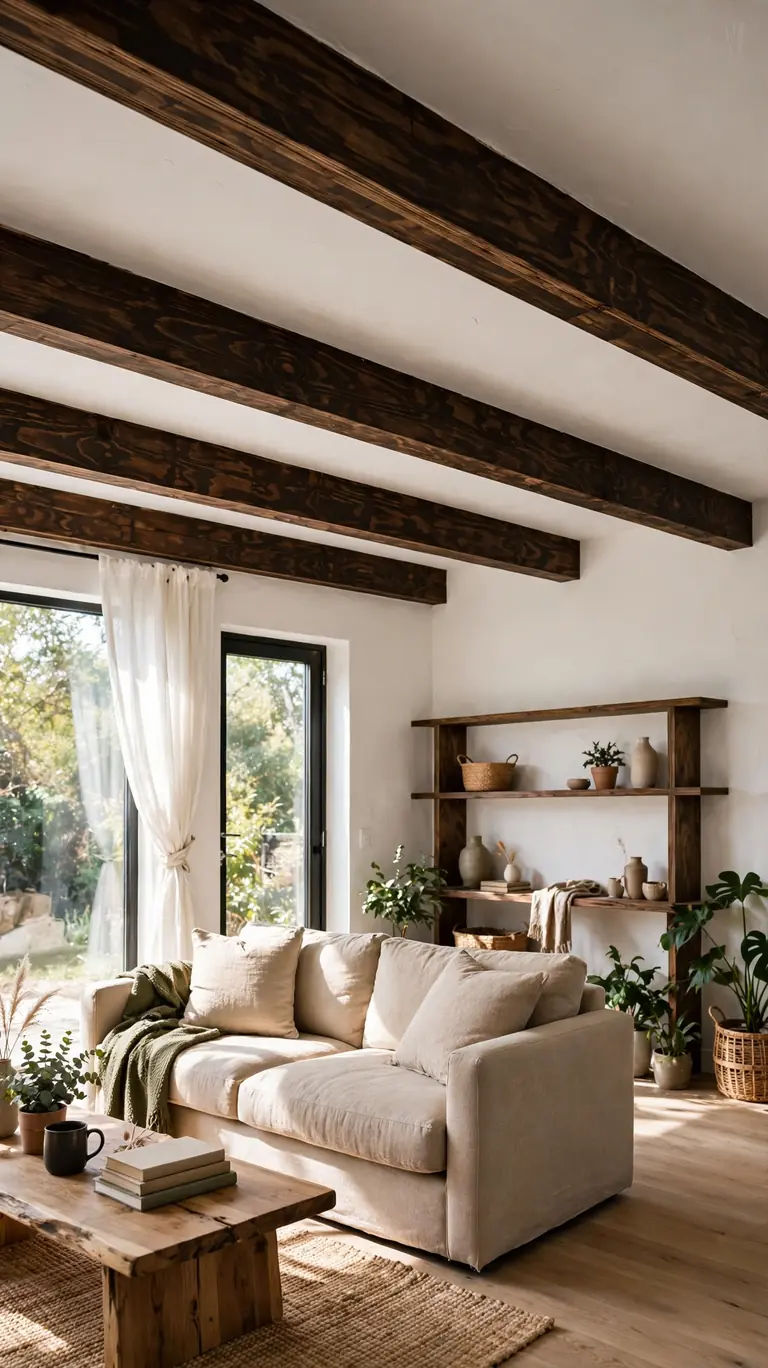
If a full plywood ceiling feels like too much, faux beams give you the wood warmth in measured doses. Build hollow beam boxes from plywood and stain or paint them, then mount them across a white or light ceiling. The contrast between dark beams and a light ceiling is timeless and works in living rooms, kitchens, and bedrooms alike. Hollow boxes keep the weight low, which matters when you are fastening overhead.
Space the beams evenly and run them perpendicular to the room’s longest dimension to make the space feel wider. In kitchens, align a beam with the island below for a pulled-together look. You can even hide wiring inside hollow beams, which makes adding pendant lights over an island much easier. This is one of the most renter-friendly-feeling upgrades for homeowners, since the drywall ceiling underneath stays untouched.
9. Tongue-and-Groove Plywood Porch Ceiling

Covered porches are practically begging for a wood ceiling, and plywood planks with a tongue-and-groove or shiplap profile are the traditional choice. A warm stain turns a porch into an outdoor room that feels finished and welcoming, especially with a ceiling fan and string lights overhead. If your porch is exposed to weather at the edges, choose an exterior-rated plywood and a finish made for outdoor use so the ceiling stands up to humidity.
The classic move is a soft blue or haint blue paint on porch ceilings, a Southern tradition that looks fresh against warm wood trim. Or keep the wood natural and paint only the beams or trim for contrast. Either way, make sure the ceiling has proper ventilation behind it so trapped moisture does not become a problem. A plywood porch ceiling is also a great place to mount outdoor-rated recessed lights for evening gatherings.
10. Plywood Ceiling Framing a Skylight
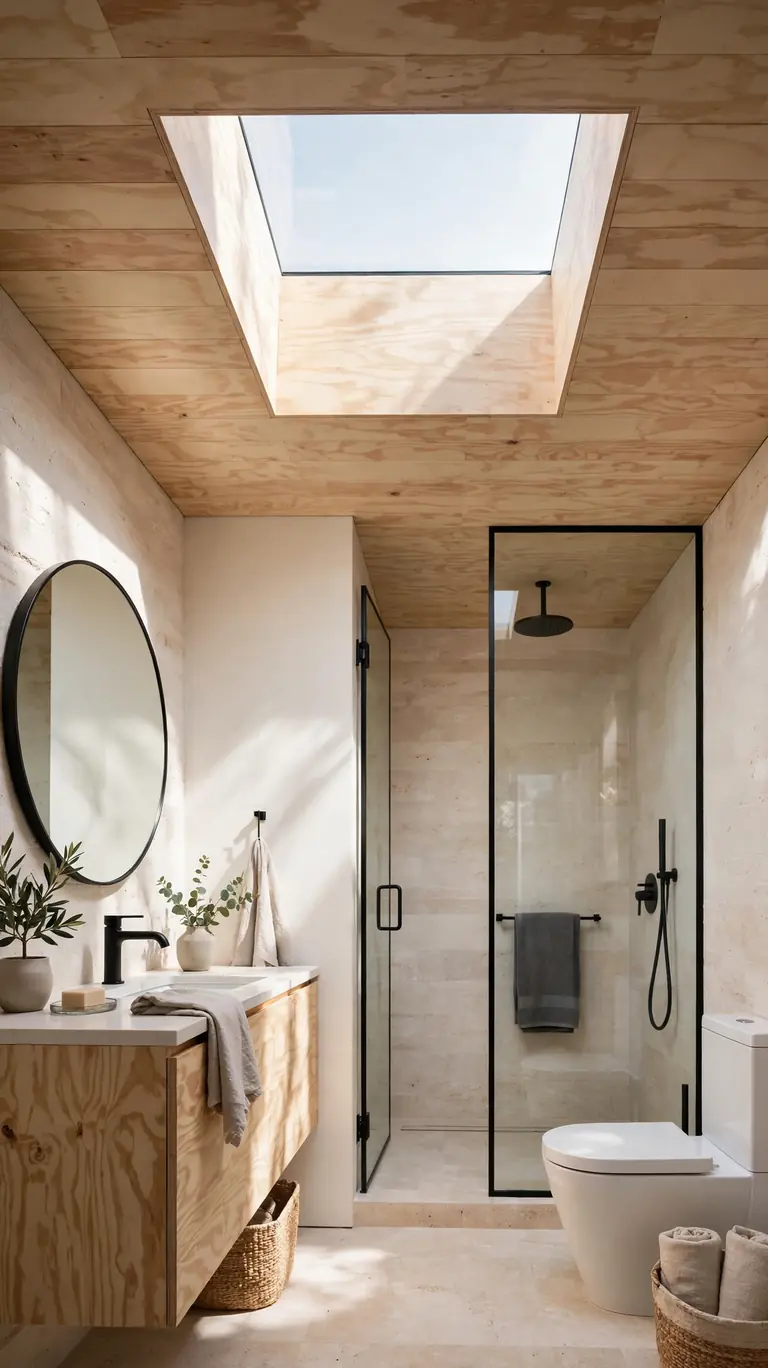
A skylight surrounded by plywood feels like a deliberate design feature instead of just a hole in the roof. Run planks or panels up to and around the skylight shaft, and let the natural light wash across the wood grain. The contrast between bright daylight and warm wood is genuinely beautiful, and it makes the skylight feel integrated rather than added on. Keep the finish light, since the area around a skylight gets strong light that will highlight every color choice.
Frame the skylight opening with simple plywood trim to hide the shaft edges and give it a finished edge. If you are working with an existing skylight, you can add the plywood ceiling around it without touching the unit itself. This treatment works in bathrooms, kitchens, and stairwells, anywhere a skylight brings in light. Pair it with light walls so the brightness bounces around and the wood glows instead of going dark.
11. Rustic Reclaimed-Look Stained Planks
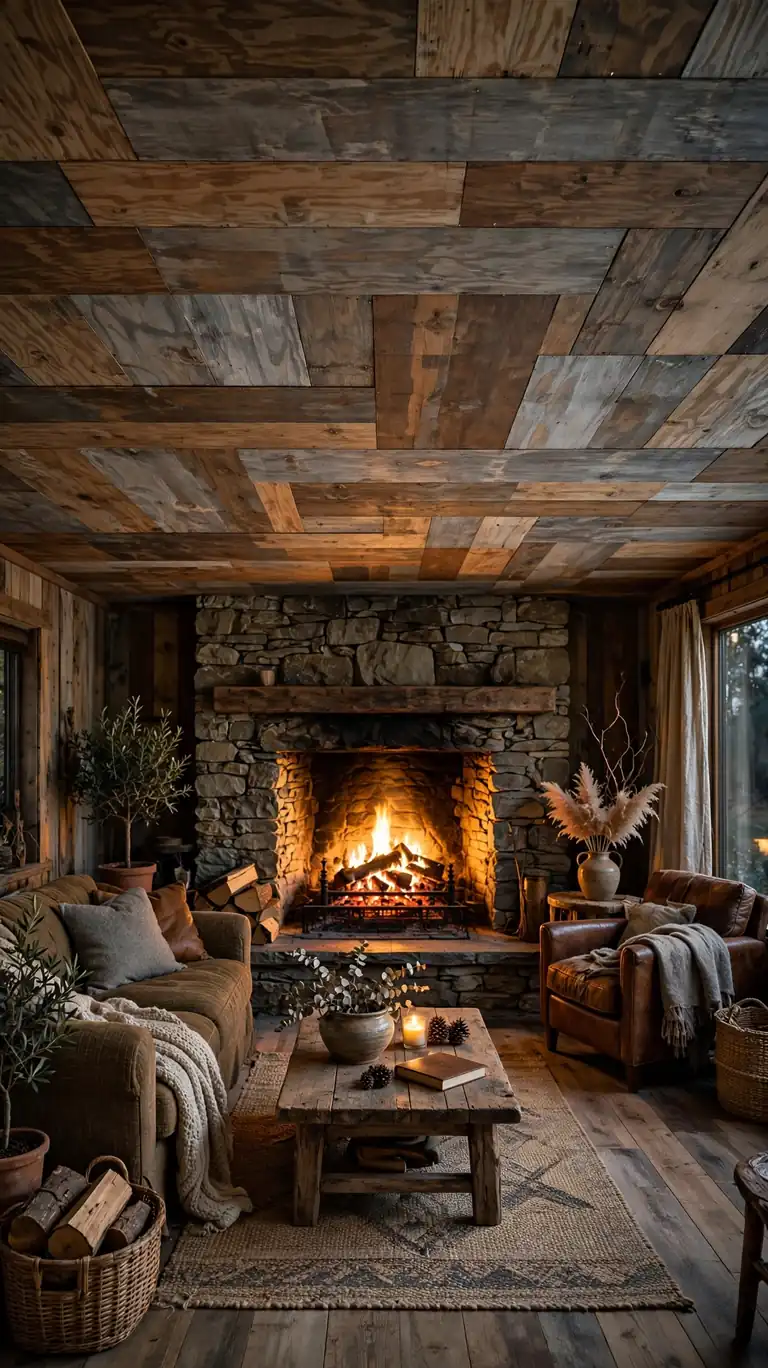
You can get the reclaimed wood look without hunting down actual salvaged lumber. Stain plywood planks in varied brown and gray tones, mixing a few shades across the ceiling so it reads as collected-over-time rather than fresh from the store. Dry-brushing a lighter tone over a darker base adds the weathered effect. The key is variation: too uniform and it looks new, too random and it looks messy.
This style belongs in cabins, farmhouses, and rustic-modern living rooms where texture is the whole point. Keep the rest of the room simple, because the ceiling is doing a lot of visual work. Linen upholstery, simple black metal light fixtures, and a jute rug let the ceiling shine. Seal everything well, since the layered stains need protection to stay looking good. Guests will assume you spent a fortune on reclaimed beams, and you do not have to tell them otherwise.
12. Two-Tone Ceiling With Dark Inset
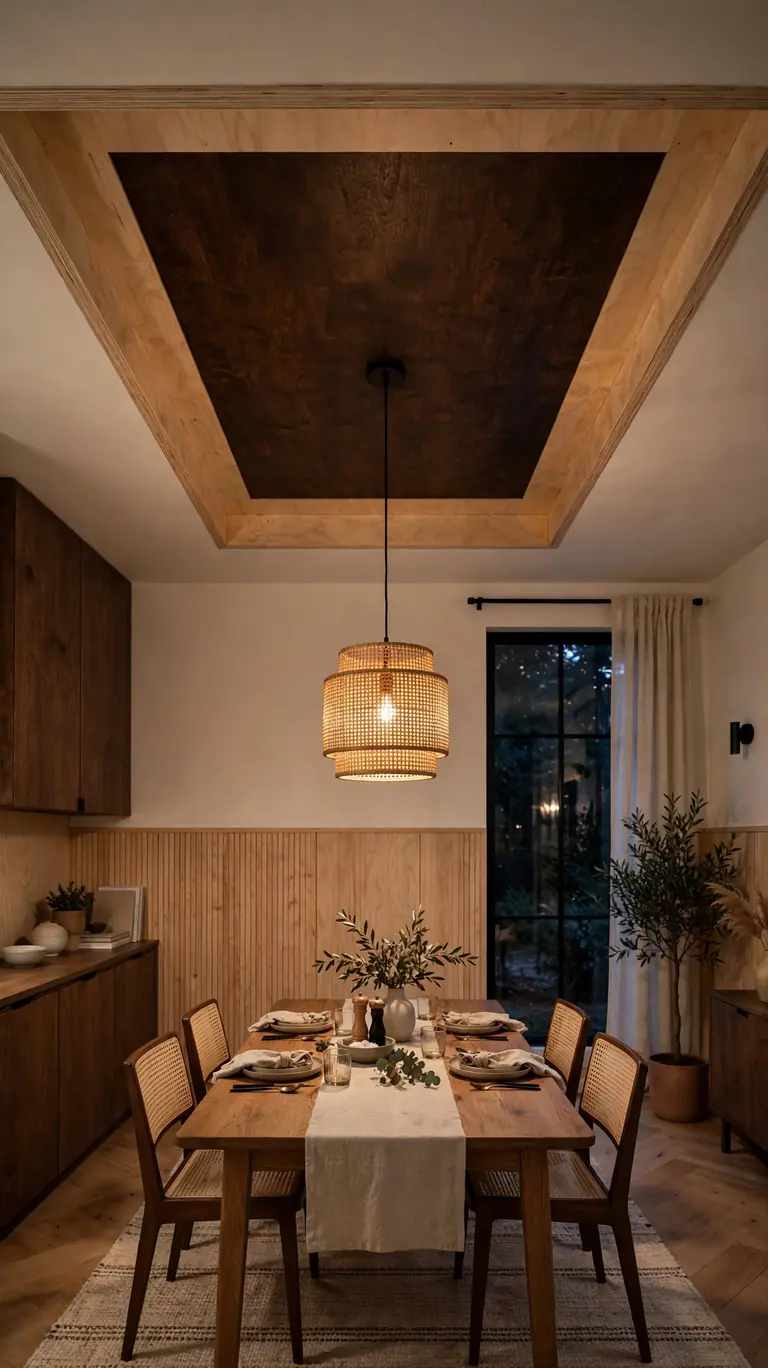
A two-tone ceiling creates drama with paint and stain instead of architecture. Stain or paint a central rectangular inset in a deep tone, then keep the surrounding border light. The effect is similar to a tray ceiling but achieved with finish alone, which makes it far more budget-friendly. Use painter’s tape and a level line to get crisp edges, because the whole trick depends on clean boundaries.
This works wonderfully over dining tables and beds, where the dark inset defines the zone below it. Match the inset color to something else in the room, like the dining chairs or the headboard, so it feels connected. Add a statement light fixture centered in the inset and the composition looks completely intentional. It is also easy to change later: a weekend of repainting gives you a whole new look without any demolition.
13. Dramatic Painted Black Ceiling

Black ceilings are bold, and on plywood they look incredible. The paint settles into the grain and seams, giving the black real depth instead of a flat void. This is a fantastic choice for media rooms, moody home offices, and modern dining rooms where you want intimacy and focus. Use a matte or eggshell sheen, since glossy black overhead shows every flaw and reflects light in strange ways.
Balance is everything with a black ceiling. Keep walls light or mid-tone, bring in plenty of lighting (dimmers are your friend), and add warm wood furniture or brass accents to keep the room from feeling cold. The plywood seams become subtle texture lines that keep the black from feeling like a cave. If full black scares you, try it in a small room first. Powder rooms and reading nooks are perfect testing grounds.
14. Plywood Ceiling With Recessed Lighting
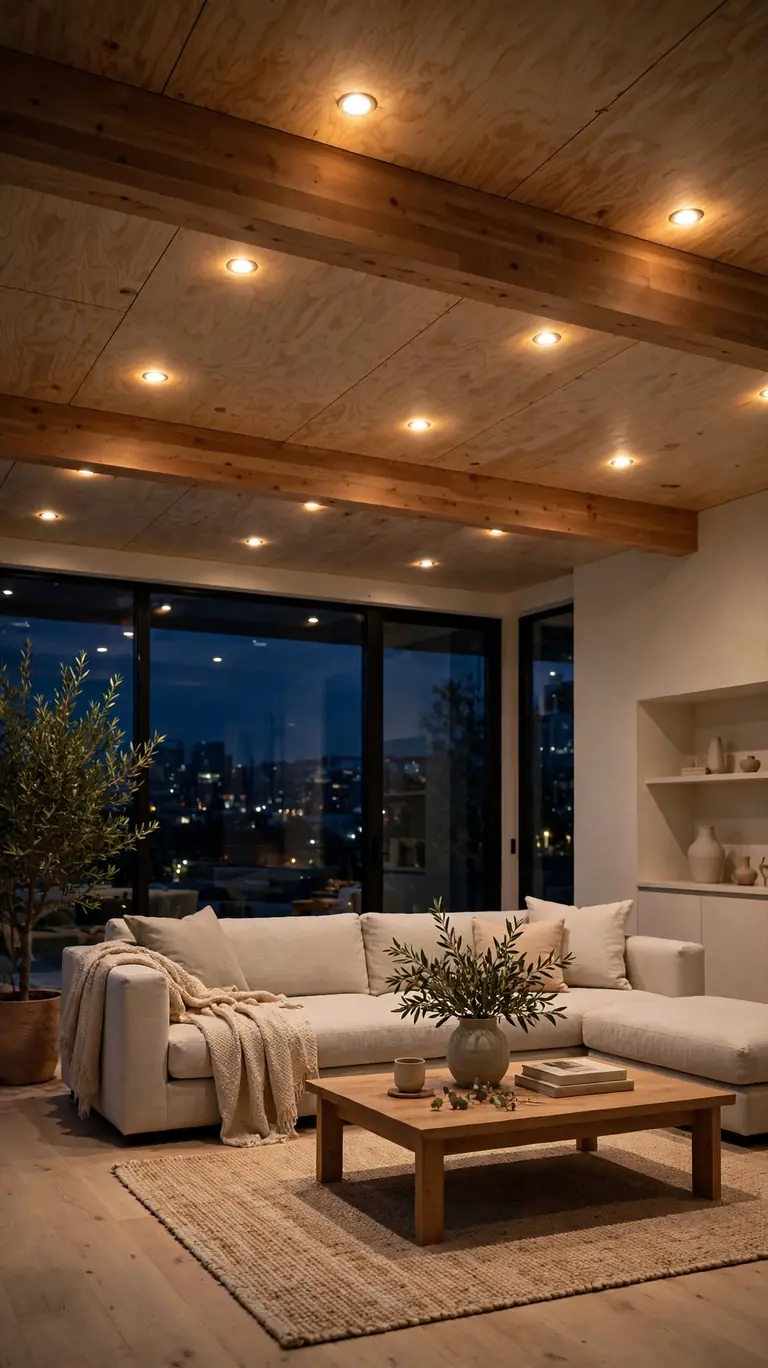
Recessed lights and plywood ceilings are a natural pair, but they need planning. The cans or wafer lights sit flush in the wood, giving you clean modern lighting without visible fixtures cluttering the ceiling. Lay out your light positions before installing any panels, and make sure you know the exact thickness of your plywood so the lights sit correctly. Wafer-thin LED lights are ideal here because they need very little depth above the ceiling.
Space the lights evenly and keep them a consistent distance from walls so the pattern looks deliberate. Warm white light (around 2700K to 3000K) flatters wood tones; cooler light can make plywood look gray and lifeless. Put the lights on a dimmer so you can shift from bright task lighting to a soft evening glow. The result is a ceiling that looks simple by day and absolutely glows at night.
15. Curved Coved Plywood Ceiling Edge
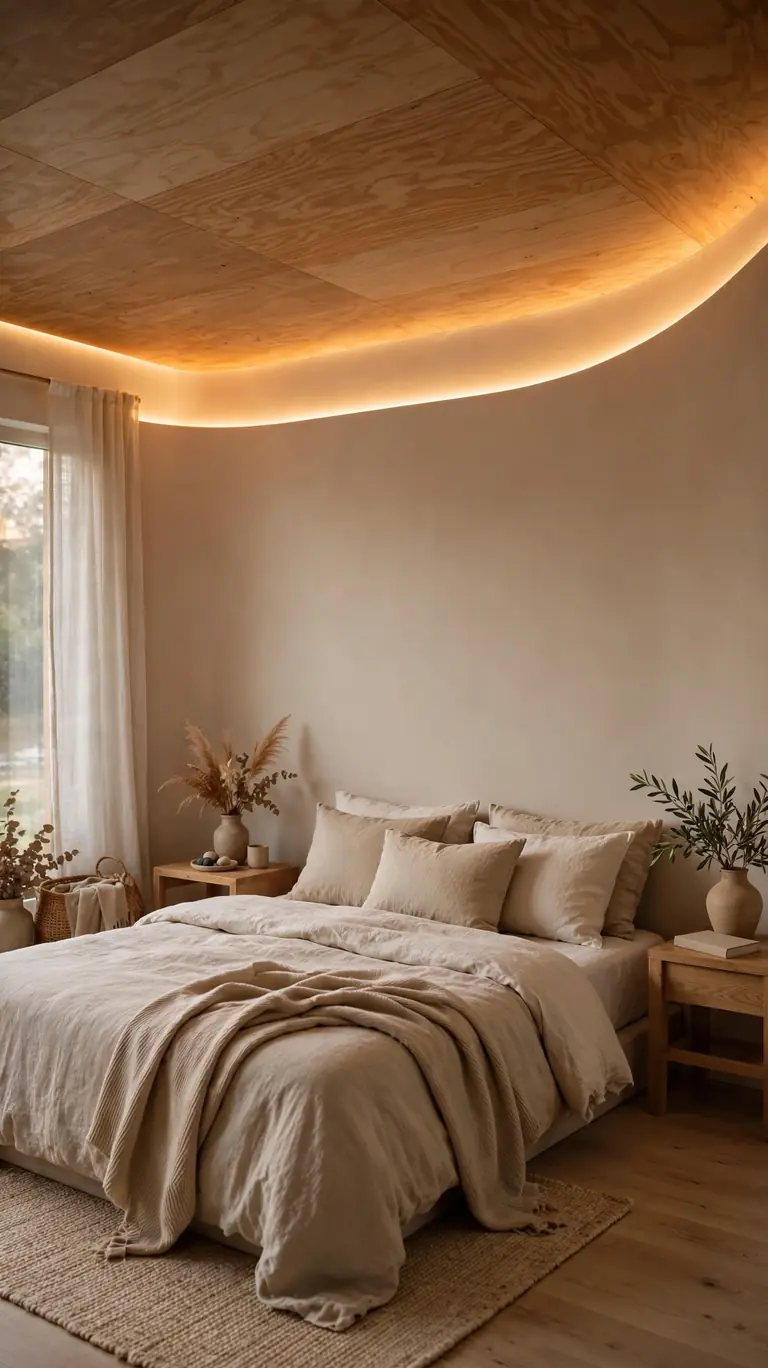
Instead of a hard corner where wall meets ceiling, a curved cove softens the whole room. Thin plywood is flexible enough to bend into a gentle curve when scored or steamed, creating a seamless transition that feels custom and calm. This detail is common in high-end modern homes, and plywood makes it far more attainable. The curve catches light beautifully, especially with a hidden LED strip tucked into the cove.
Plan the radius before you start, because consistent curves depend on a simple jig or form. Paint or stain the cove to match the ceiling for a seamless look, or use it as an accent in a contrasting tone. Cove lighting in the curve washes the ceiling with indirect light, which makes the room feel larger and more serene. This is a detail that elevates bedrooms and living rooms from nice to genuinely memorable.
16. Plywood Medallion Around a Chandelier
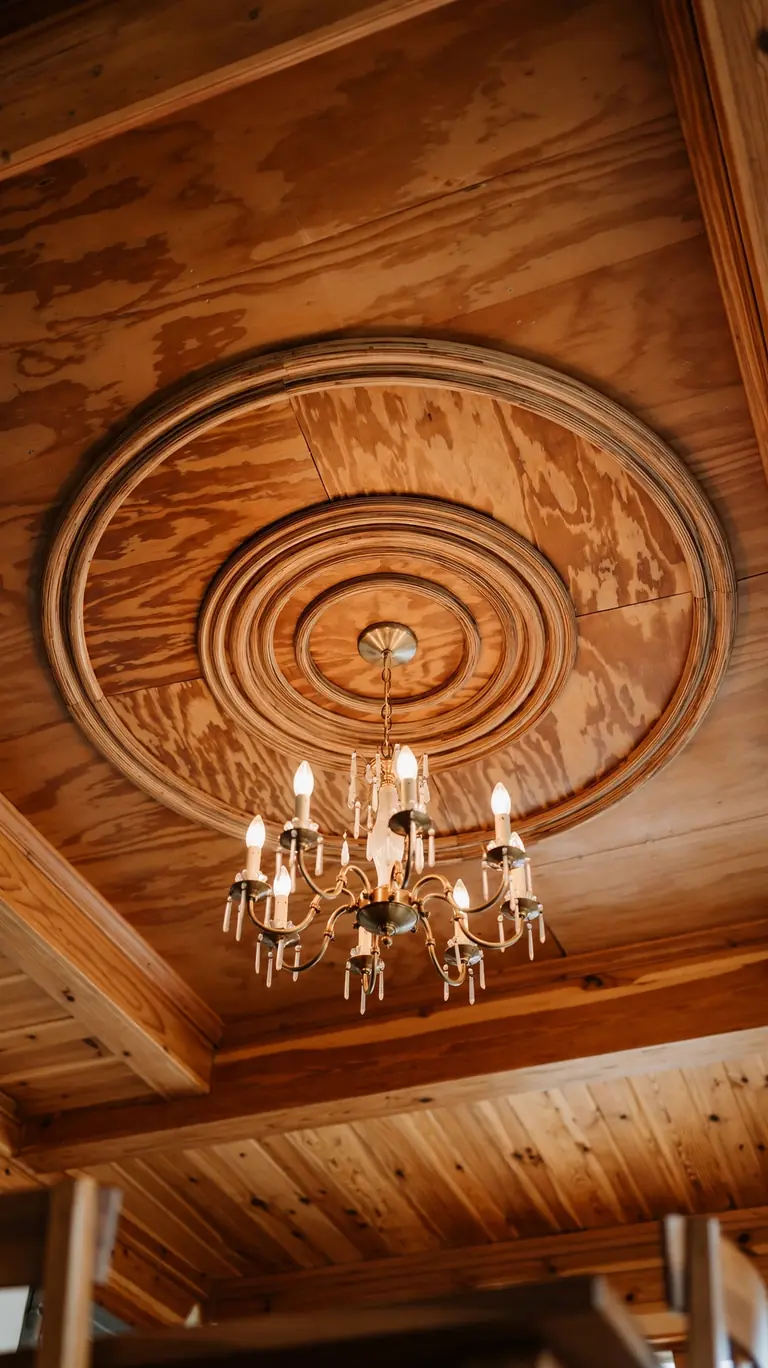
A ceiling medallion gives your chandelier a proper frame, and a plywood one adds warmth that plaster medallions cannot. Cut a large circle or an interesting geometric shape from plywood, finish it to complement the room, and mount it centered on the fixture. The medallion draws the eye up and makes even a simple chandelier feel grand. Stain it to match wood beams or furniture for a coordinated look.
Size matters here: the medallion should be noticeably wider than the chandelier’s canopy but not so large it overwhelms the ceiling. In rooms with patterned or slatted ceilings, keep the medallion simple so it does not fight the background. This is a one-afternoon project with outsized impact, perfect for dining rooms and entryways. A clear sealant keeps the finish rich, and the whole thing can be removed later without damaging the ceiling if you change your mind.
17. Shiplap-Style Plywood Ceiling
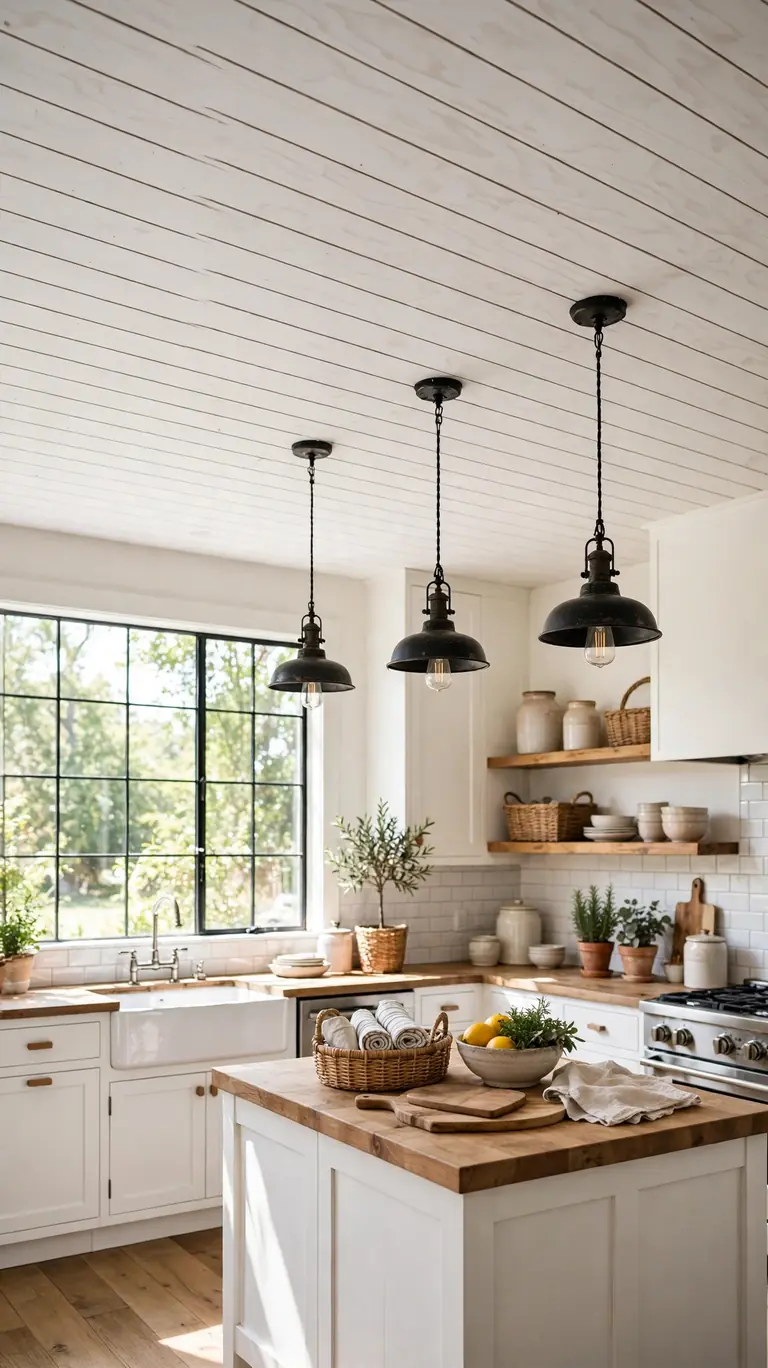
Shiplap ceilings are a farmhouse staple, and plywood planks with a small reveal between them nail the look. The horizontal lines add subtle pattern overhead without competing with the rest of the room. Run the planks the length of the room to stretch it visually, or across the width for a cozier feel. A nickel-gap of about an eighth of an inch gives you that classic shadow line.
White is the traditional choice, but soft gray, pale blue, or warm greige all work beautifully. The painted finish makes this one of the most durable plywood ceiling ideas for kitchens and mudrooms, where wipeability matters. Caulk the perimeter where the ceiling meets the walls for a crisp finished edge. Pair shiplap ceilings with simple trim and classic fixtures, and the room will feel timeless rather than trendy.
18. Mixed-Width Plywood Planks
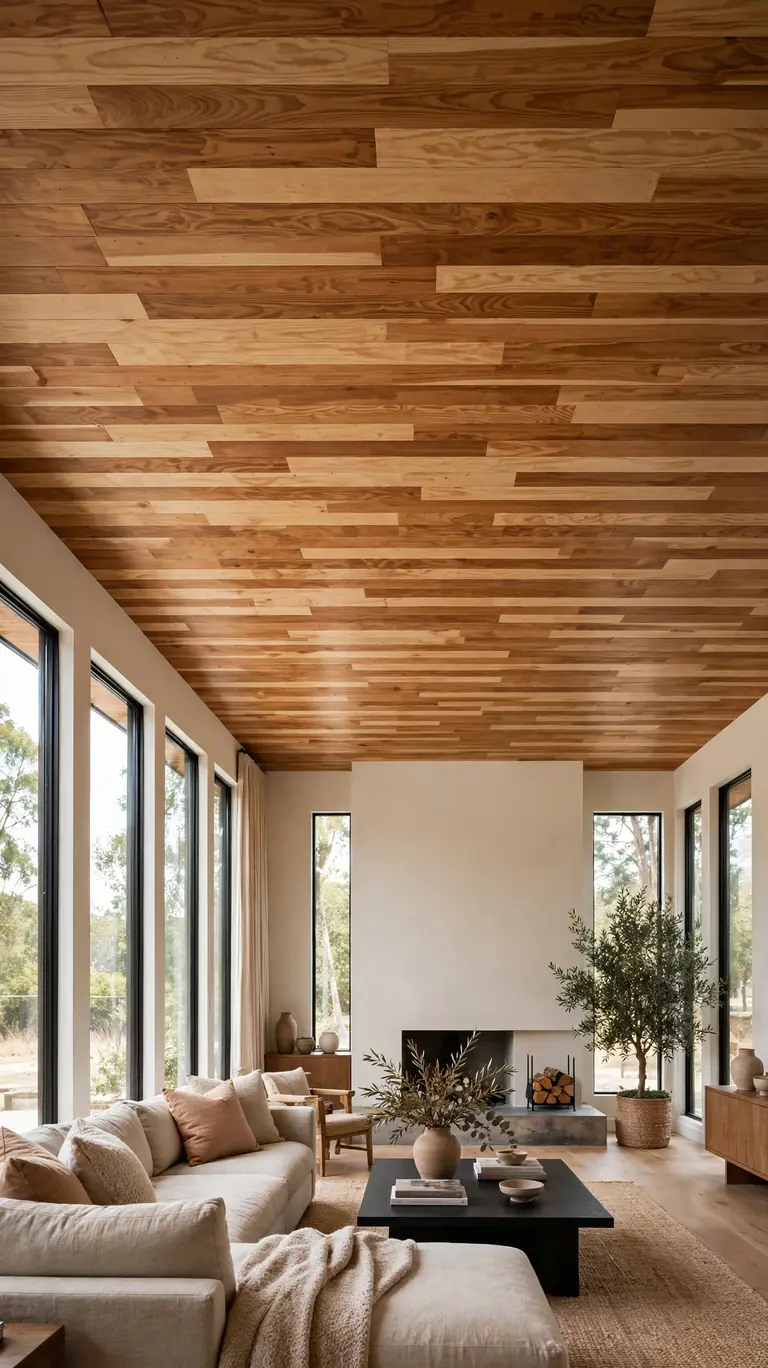
Uniform planks are safe, but mixed widths feel collected and artisanal. Combine two or three plank widths in a random-feeling (but actually planned) pattern across the ceiling. The variation breaks up the monotony and gives the ceiling a handcrafted quality that reads as expensive. Sketch the layout on paper first, because true randomness is harder than it looks and a little planning prevents awkward clusters of the same width.
Keep the finish consistent across all widths so the pattern reads as intentional design, not leftover scraps. A single stain color unifies everything while the widths provide the interest. This approach is forgiving of imperfect walls, since the varied rhythm distracts from slight irregularities. It works in great rooms, open-plan living spaces, and bedrooms where you want the ceiling to feel rich and layered.
19. Plywood Ceiling Over the Kitchen Island
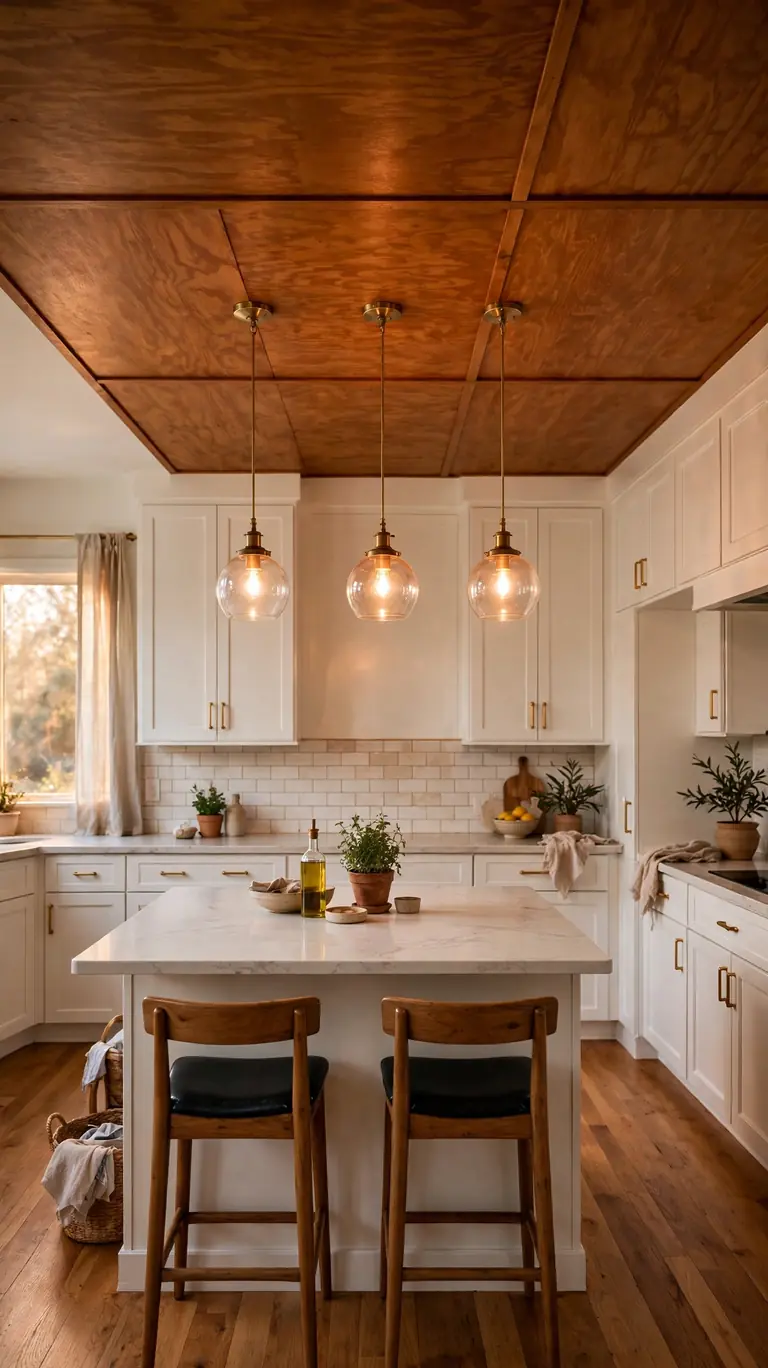
You do not need to cover the whole kitchen ceiling to make an impact. A plywood panel or section directly over the island creates a defined zone that anchors the room’s hardest-working spot. Stain it warm to contrast with white kitchen cabinets, and hang pendants from it for a layered, designed look. The wood overhead makes the island feel like its own little room within the kitchen.
Keep the panel slightly larger than the island footprint so the proportions feel generous. If your kitchen has recessed lights elsewhere, let the island zone be pendant-only for contrast. Make sure the finish can handle kitchen life: a good sealant protects against steam and the occasional splatter. This is also a smart way to hide a soffit or bulkhead, turning an awkward architectural leftover into a feature.
20. Warm Honey-Stained Bedroom Ceiling

Honey-toned stain is the cozy middle ground between pale natural wood and dark walnut. It brings golden warmth overhead that makes a bedroom feel sunny even on gray mornings. The warm tone flatters skin tones and bedding colors alike, which is a real plus in a room where you start and end your day. Choose a stain labeled honey, amber, or golden oak and test it in your room’s actual light before committing.
Pair a honey ceiling with soft white walls and layered textiles in cream, rust, and sage for a warm modern look. Keep the ceiling fan or light fixture simple and dark so it stands out against the warm wood. Because honey tones reflect warm light, the room will feel brighter than the stain color suggests. This is one of the most universally flattering plywood ceiling ideas, and it suits everything from boho to transitional bedrooms.
21. Plywood Ceiling With Track Lighting
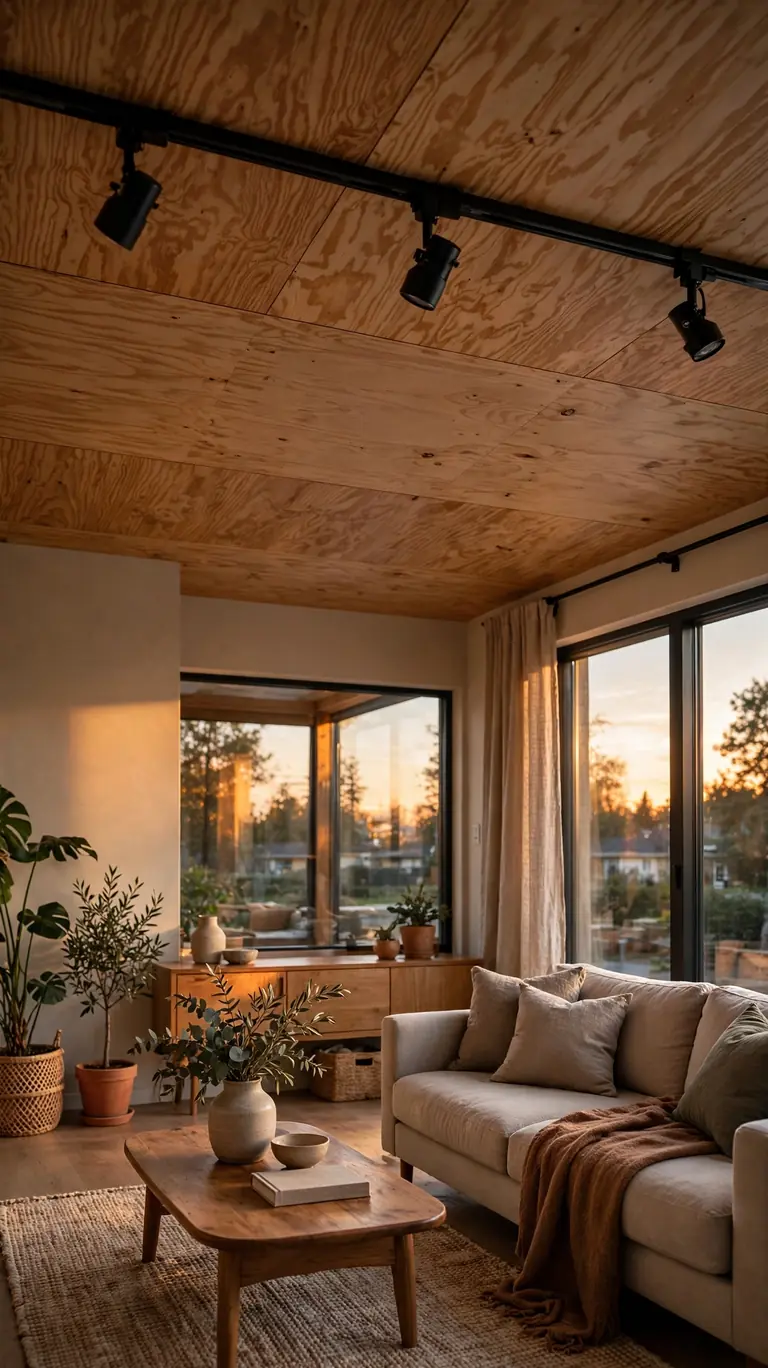
Track lighting on a plywood ceiling is a practical match made in heaven. The track mounts directly to the wood, the heads aim wherever you need light, and the whole system looks intentional against the warm background. This is ideal for art walls, reading corners, and kitchens where you want to redirect light as needs change. Black tracks pop against light wood, while white or wood-toned tracks blend into darker stains.
Plan the track layout around how you actually use the room, not just symmetry. Aim heads at artwork, work surfaces, and seating areas, and keep one head washing the ceiling itself for ambient bounce. Because tracks are surface-mounted, this is one of the easiest lighting upgrades to add to an existing plywood ceiling. Put the track on a dimmer and you get gallery-style flexibility in a living room or studio space.
22. Geometric Plywood Panel Inlay
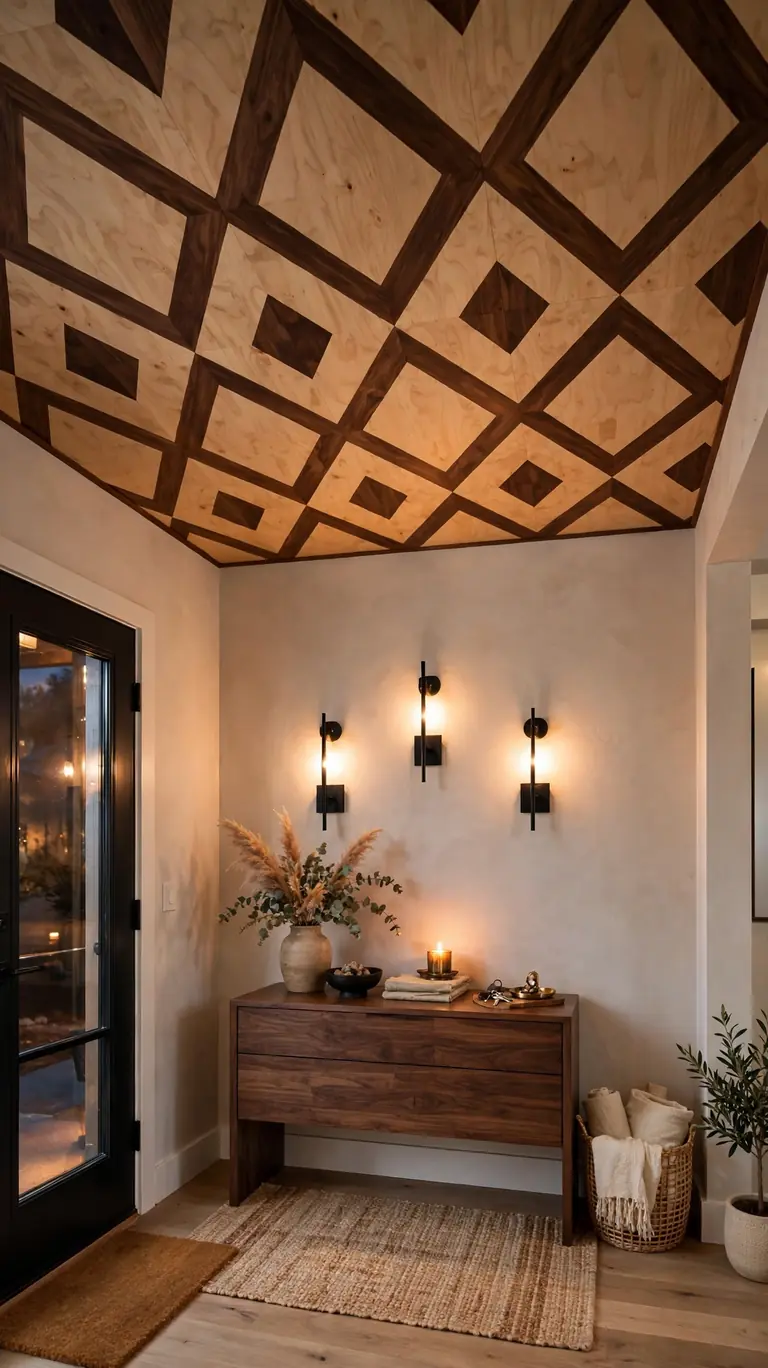
For a truly custom look, inlay geometric shapes into a plywood ceiling. Think large-scale diamonds, hexagons, or a border pattern cut from contrasting stained plywood and set into the field. The inlay becomes a piece of art overhead, perfect for entryways, dining rooms, and home offices where you want a signature moment. Keep the geometry bold and simple, because fine detail gets lost when viewed from floor level.
Use two tones that relate to each other, like a medium walnut inlay in a natural birch field, so the contrast is clear but harmonious. Map the design full-size on paper or with painter’s tape on the ceiling before cutting anything. This is an advanced project, so consider hiring a finish carpenter for the inlay work if your skills are more paint-and-simple-trim level. The result looks like something from a design magazine, built from humble sheet goods.
23. Plywood Tray Ceiling
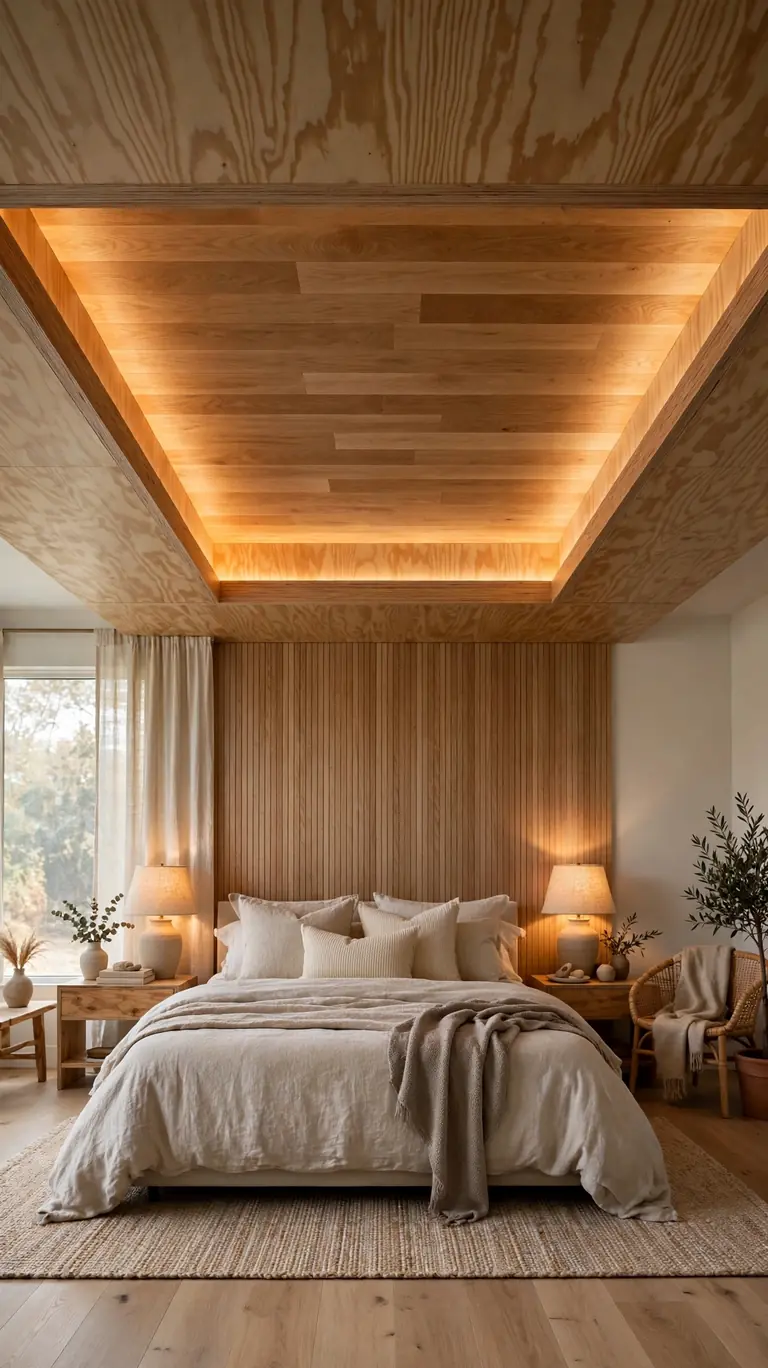
A tray ceiling, with its recessed center and stepped edges, gets a warm twist in plywood. Line the recessed center with wood planks and paint the stepped border to match the walls, or reverse it with a painted center and wood steps. The layered edges catch light and shadow, giving the ceiling dimension that flat ceilings lack. This treatment is made for master bedrooms and dining rooms where a little formality feels right.
Build the tray frame first and make sure it is perfectly level, since the stepped edges will highlight any sag. Add cove lighting in the tray’s inner step for a soft glow that makes the wood look like it is floating. Keep the rest of the room’s trim simple so the tray stays the star. A plywood tray ceiling delivers the custom-millwork look at a fraction of what solid wood would cost.
24. Plywood Ceiling in a Home Office Nook
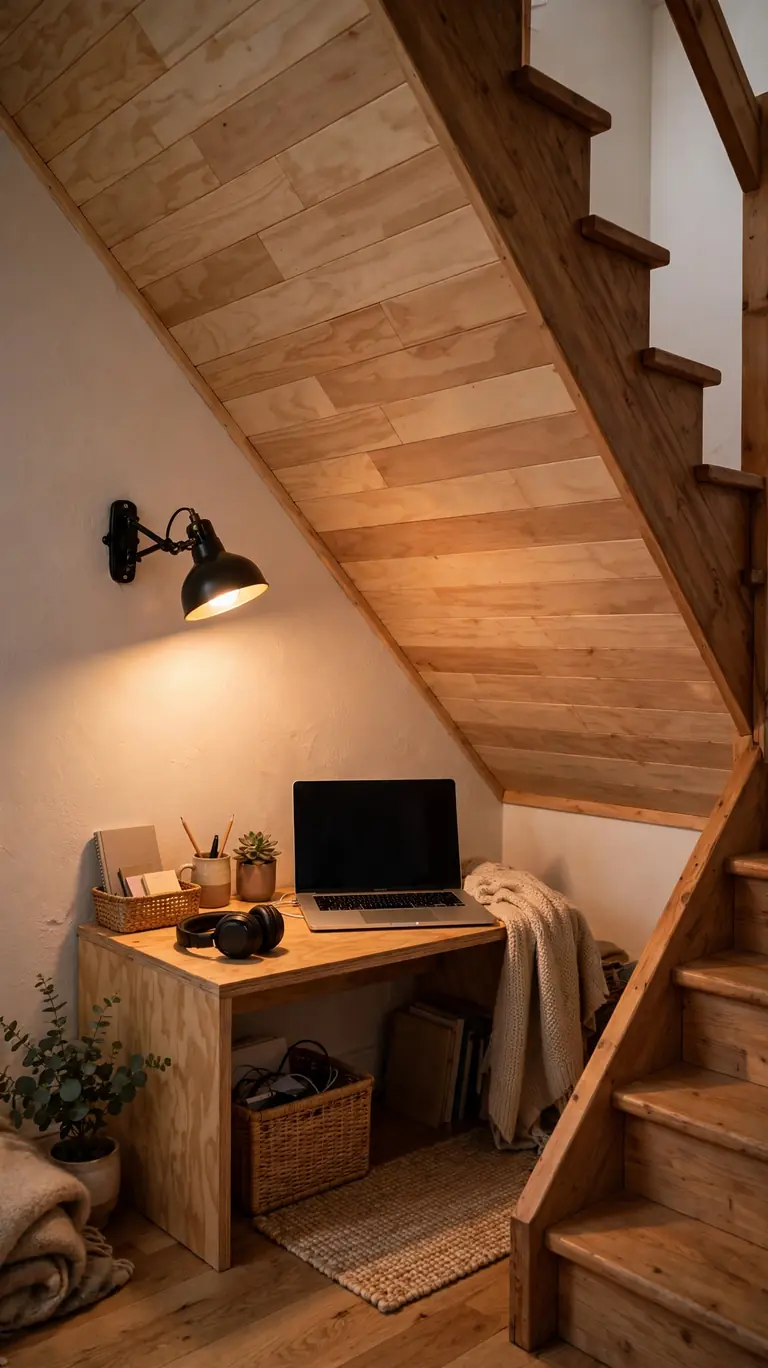
Small spaces deserve great ceilings too. A plywood ceiling in a home office nook or under-stair workspace makes the little zone feel deliberate and cozy instead of leftover. The wood overhead defines the workspace within an open room, almost like a room within a room. A light stain keeps the nook feeling open, which matters when square footage is tight.
Add a simple wall-mounted light or a small pendant so the desk gets proper task lighting without a bulky floor lamp. Because the area is small, this is a perfect first plywood ceiling project: one sheet or a few planks, an afternoon of work, and a big payoff. Match the stain to your desk or shelving for a pulled-together look. It is a small upgrade that makes working from home feel a little more special every single day.
25. Partial Plywood Ceiling Accent
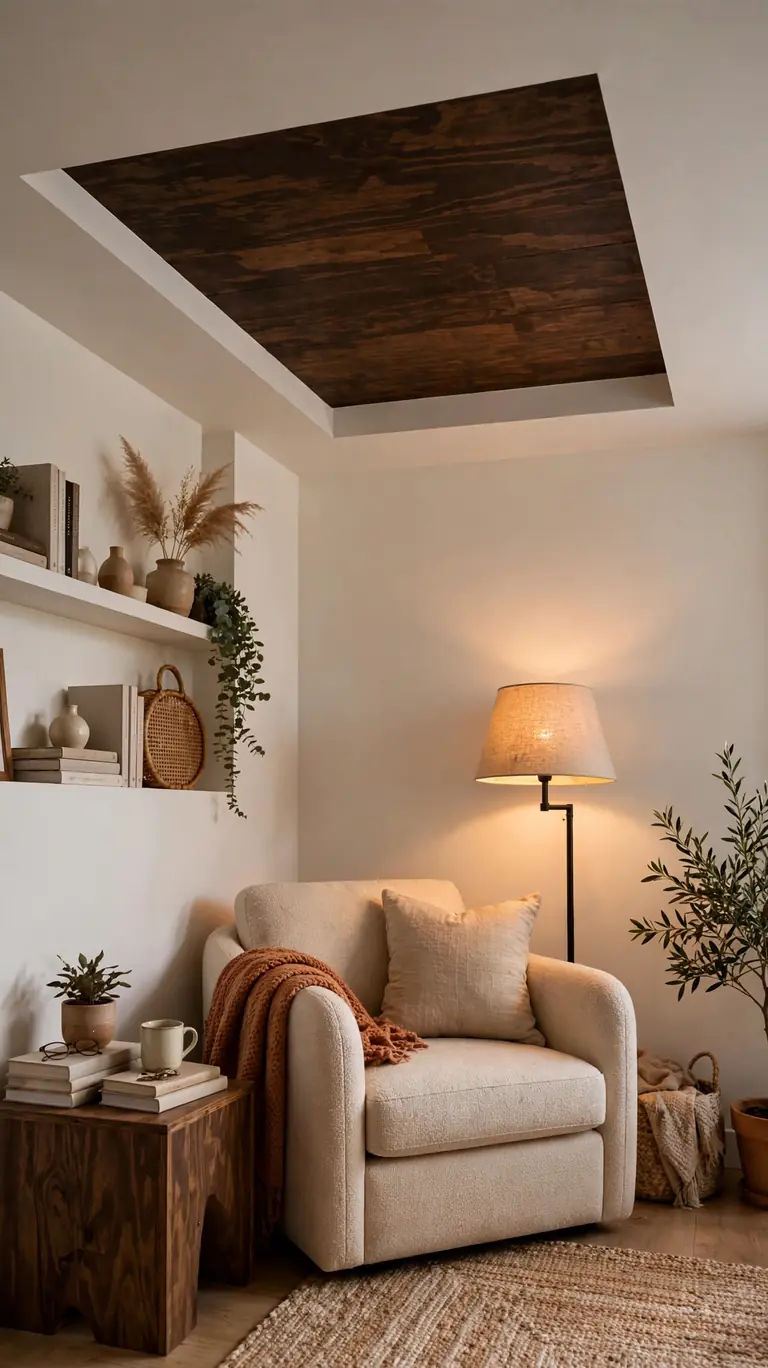
If committing to a full ceiling feels like too much, a partial accent gives you the look with less work and less cost. Cover just one section, like the area over a reading chair, a dining nook, or the bed, and let it float as a wood panel within a painted ceiling. The contrast between wood and paint defines the zone below it beautifully. Keep the edges clean with simple trim so the accent looks intentional, not unfinished.
This is the lowest-commitment entry point into plywood ceilings, and it is perfect for renters-turned-owners who are still finding their style. You can stain the accent panel to match furniture or go bold with a dark tone against a white ceiling. Add a pendant or wall sconce nearby to spotlight the wood. If you love it, expanding to the full ceiling later is always an option. If not, you have still added real character for very little effort.
Frequently Asked Questions
Is plywood a good material for ceilings?
Yes, plywood is a solid choice for ceilings when you use the right type and finish it properly. It is lighter than solid wood planks, comes in large sheets that speed up installation, and takes stain and paint beautifully. Use interior-rated plywood for indoor ceilings and exterior-rated for porches or covered outdoor areas. Always seal or paint it to protect against moisture and everyday wear, and make sure it is fastened securely to joists or strapping overhead.
What is the best finish for a plywood ceiling?
The best finish depends on the look you want and the room it is in. Clear matte sealant preserves natural wood grain for Scandinavian or rustic styles. Stains in honey, walnut, or gray tones add color while letting grain show through. Painted finishes in white or bold colors give a clean, modern look and handle moisture better, which suits kitchens and bathrooms. Whatever you choose, apply a proper primer or sealant first so the finish lasts and looks even.
How do you install a plywood ceiling over drywall?
Most plywood ceilings go up over strapping (thin wood strips) screwed into the ceiling joists, which gives you a flat, level surface to fasten panels to. This also creates a small gap that helps with minor unevenness in the existing ceiling. Panels are typically screwed or nailed to the strapping, with seams covered by trim or left as a design feature. Because you are working overhead with sheet goods, this is a two-person job, and checking that everything is level as you go saves headaches later.
Can you put recessed lighting in a plywood ceiling?
Yes, and it looks great, but it takes planning. Lay out light positions before installing panels, and choose wafer-thin LED lights that need minimal depth above the ceiling. Make sure your electrician or you (if you are qualified) handles the wiring before panels go up, since retrofitting is difficult. Warm white light flatters wood tones best. Always follow local electrical safety practices and consider hiring a licensed electrician for the wiring itself.
How do you maintain a plywood ceiling?
Maintenance is simple. Dust it with a microfiber mop or soft brush a few times a year, since ceilings collect more dust than people expect. For painted ceilings, wipe marks with a damp cloth and touch up paint as needed. For stained or sealed wood, avoid harsh cleaners and reapply sealant every few years in kitchens or bathrooms where moisture is higher. Check porch and outdoor ceilings yearly for signs of moisture damage and reseal when the finish starts looking dull.
Conclusion
A plywood ceiling is one of those upgrades that changes how a whole room feels, and it does it without the price tag of solid wood or custom millwork. From the light simplicity of natural birch planks to the drama of a painted black ceiling, the range of looks you can get from this humble material is genuinely impressive. The ideas in this guide were chosen to be practical first: real finishes you can apply yourself, real patterns that work in real rooms, and real advice about lighting and pairing so the result looks designed, not improvised. Start with the style that matches your home and your comfort level, whether that is a bold slatted statement or a simple partial accent over your favorite chair. Take time with the finish, plan your lighting before anything goes overhead, and do not rush the layout. A ceiling is the one surface you see from everywhere in the room, so the care you put in pays off every single day. Pick your favorite idea, gather your materials, and give your home the warm, finished feeling it deserves.