16 Clever Cat Food Station Ideas to Keep Your Home Organized
A tidy feeding corner makes life easier for both you and your cat. Instead of bowls sliding across the kitchen floor, spilled kibble underfoot, and water rings on the wood, you get one contained station that looks intentional and takes seconds to clean. The best cat food station ideas work for small apartments as well as big homes, and they all share the same goal: keep the food in one neat spot, protect your floors, and make daily feeding and cleanup as simple as possible.
In this list you will find sixteen practical setups, from pull-out feeding drawers and cabinet conversions to entryway stations and laundry room corners. Each one is doable with ordinary furniture and supplies, and each one keeps organization at the center so your home stays calm and your cat always knows where dinner lands.
1. Turn a Lower Kitchen Cabinet into a Feeding Cubby
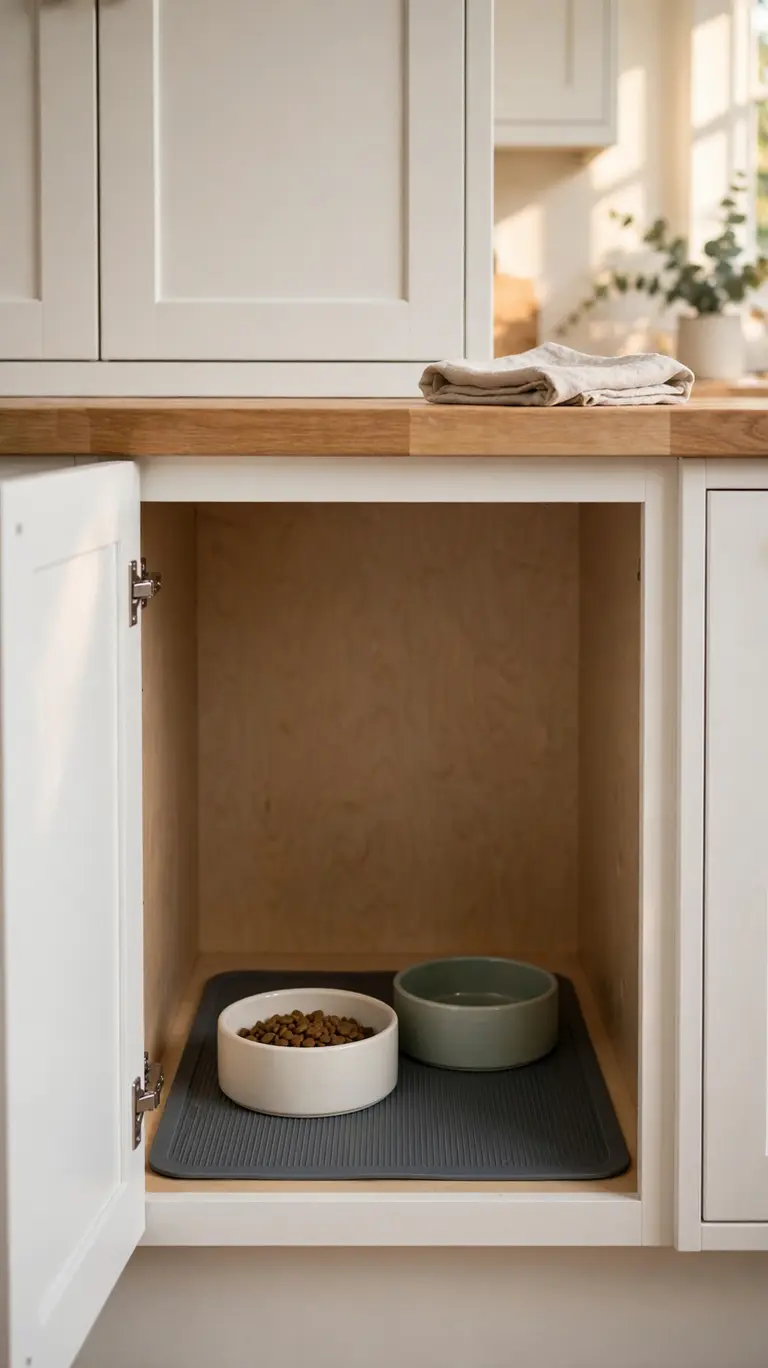
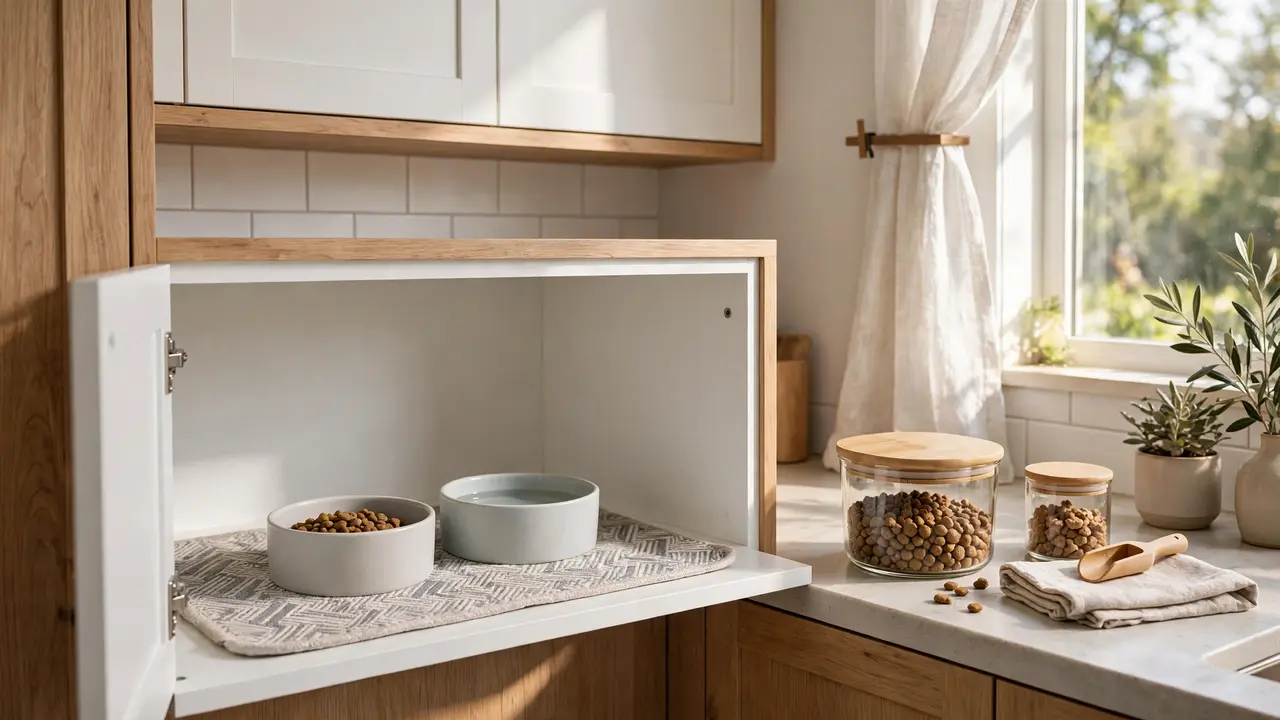
An unused lower kitchen cabinet makes an ideal feeding cubby, because it is already out of the way and the cabinet box contains spills. Remove the door or leave it open during mealtimes, then line the bottom with a washable mat or a cut piece of vinyl flooring remnant. Place the food and water bowls on the mat and you have a tidy station that keeps kibble off your floors and looks like it was always meant to be there.
The trick is picking a cabinet you do not need for storage, like the dead corner cabinet that is hard to reach anyway. Keep the bowls shallow and the mat slightly larger than the bowls so splashes land on the mat, not the wood. Wipe the mat down every few days and wash it weekly, and the cabinet stays fresh. This setup works especially well for one or two cats, and guests will never guess your feeding station is hiding behind a cabinet door.
2. Use a Pull-Out Drawer as a Hidden Feeding Station
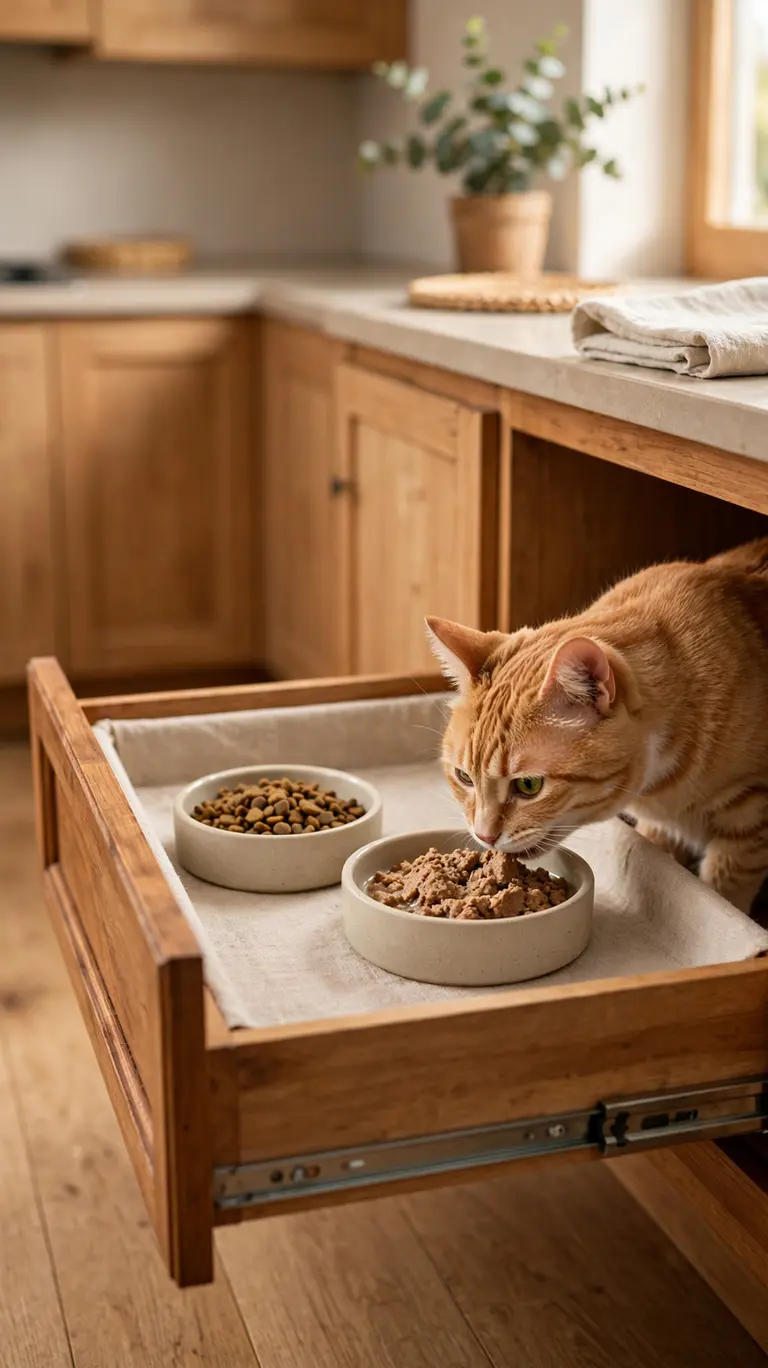
A deep kitchen drawer can become a feeding station that disappears completely when meals are over. Line the drawer with a non-slip mat, set in the bowls, and slide it out for feeding time. When your cat finishes, slide it closed and the whole setup vanishes, which is perfect for small kitchens where a permanent feeding corner would be in the way.
Choose a drawer near the floor or one of the deeper pot drawers so the cat can reach the bowls comfortably. Keep the mat fresh by airing the drawer after meals and washing the liner regularly. This works best in households where someone is home for meals, since the drawer only opens at feeding time. For water, many people keep a small separate water bowl out full-time and use the drawer just for meals.
3. Set Up a Corner Station with a Washable Mat
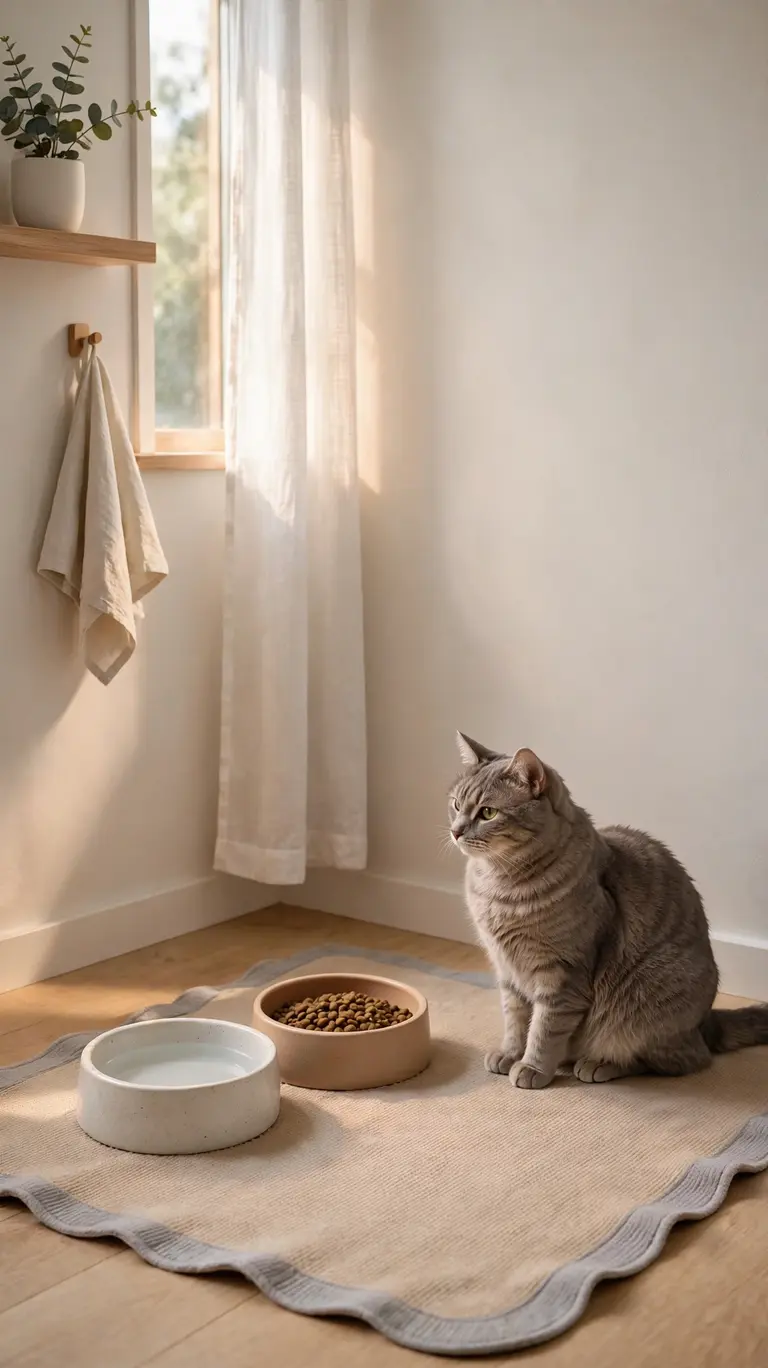
The simplest feeding station is a washable mat in a quiet corner with the bowls on top. Pick a corner that is out of foot traffic but easy for the cat to reach, and use a large mat with a lip or raised edge to catch water and stray kibble. This basic setup solves the two biggest feeding messes, sliding bowls and scattered food, with almost no cost or effort.
Look for mats made for pet feeding with a non-slip bottom so they do not drift across hard floors. Wash the mat in the laundry every week or two, and wipe the bowls daily. Even this simple station feels intentional when the mat matches your decor and the corner is consistent, so your cat always knows where to go. It is also the easiest station to move if you rearrange furniture or want feeding out of the kitchen for a while.
4. Convert a Bookshelf Cube into a Feeding Center
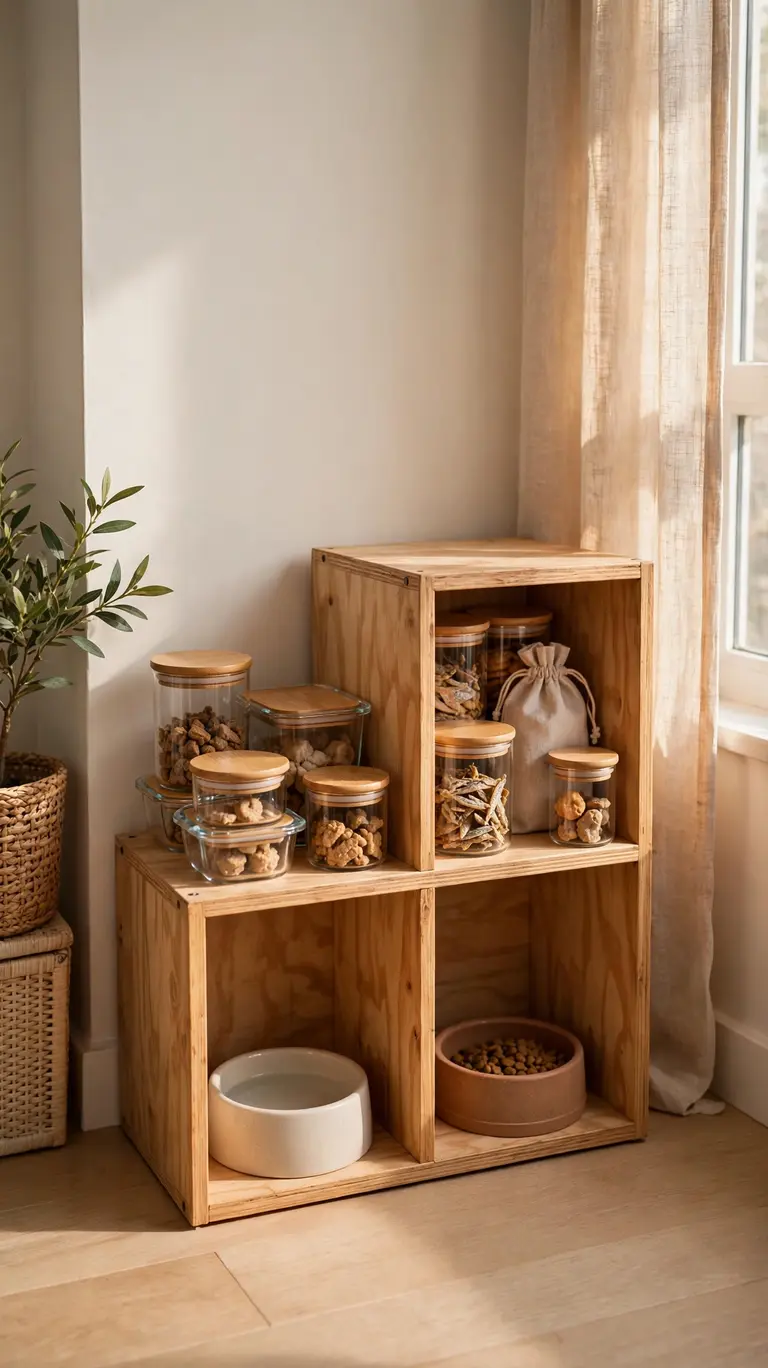
A small cube bookshelf, the kind with open squares, makes a surprisingly good feeding center. Put the bowls in the bottom cube on a mat, and use the upper cubes for sealed food containers, treats, spare mats, and cleaning supplies. Everything feeding-related lives in one piece of furniture, which keeps the kitchen or hallway from collecting scattered supplies.
Pick a shelf with a low bottom opening so the cat can step in easily, and anchor the unit to the wall if it is tall. Use airtight containers on the upper shelves to keep food fresh and out of reach of curious paws. This setup is great for multi-cat homes too, because you can put bowls in two bottom cubes, one per cat, which reduces mealtime tension. Choose a finish that matches your room and it reads as furniture, not pet equipment.
5. Tuck a Feeding Nook Under a Console Table
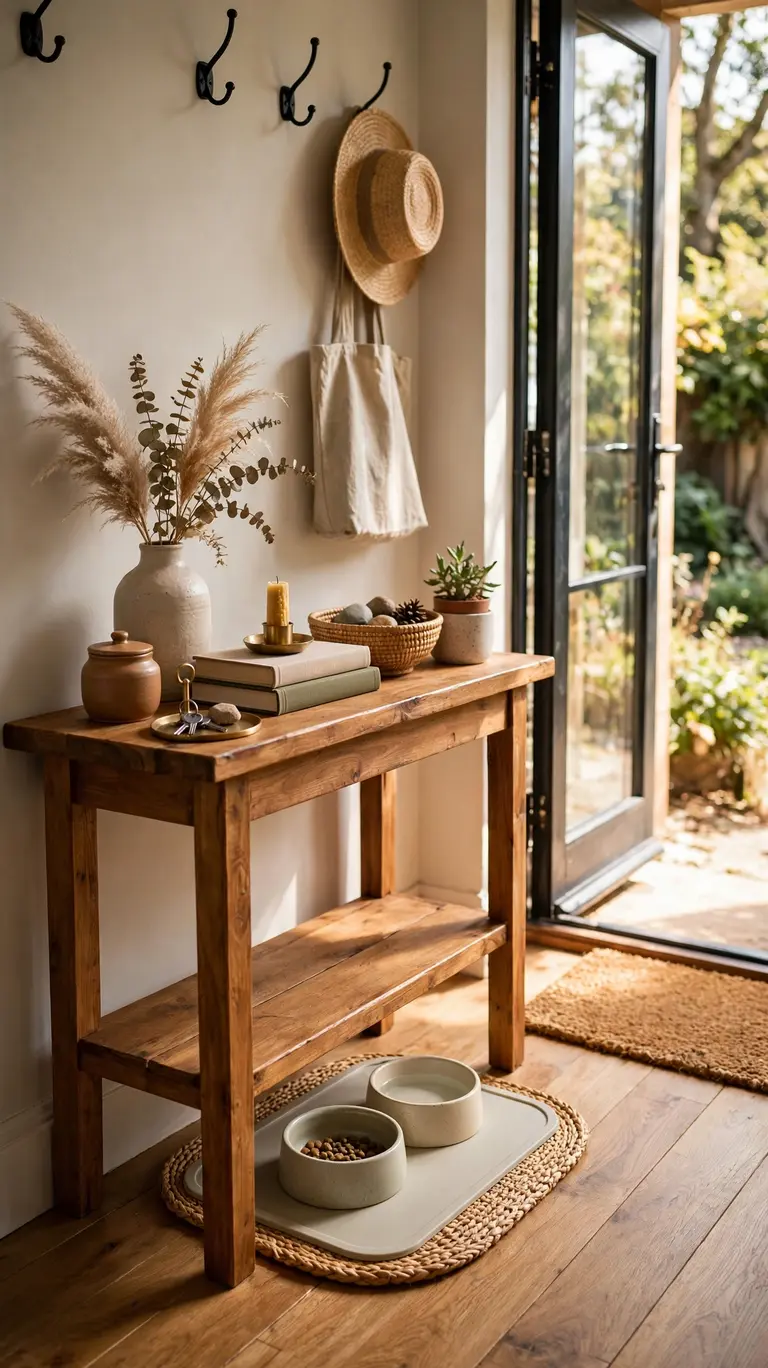
The space under a console or entryway table is often wasted, but it is the perfect size for a feeding nook. Slide a tray with the bowls under the table, and the tabletop still works for keys, mail, and decor. The table frames the feeding area and keeps the bowls from drifting into walkways.
Use a tray with a raised edge so water and kibble stay contained, and pick a spot where the cat will not be startled by the front door opening and closing. This works best with tables that have an open bottom rather than a closed cabinet, since the cat needs easy access. A washable runner or mat under the tray protects the floor and ties the nook into the room. It is a clever use of space that costs nothing if you already own the table.
6. Create a Feeding Spot Beside an Entryway Bench
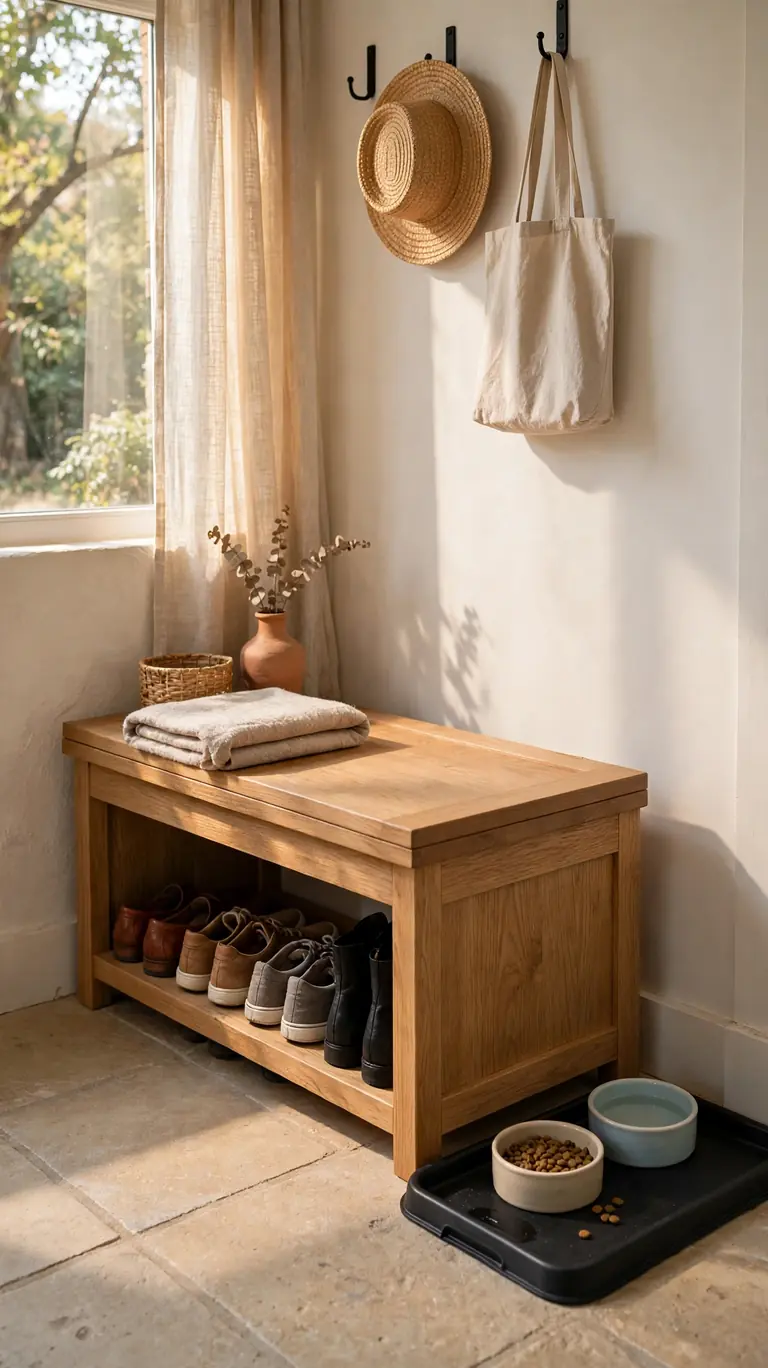
An entryway bench with storage underneath gives you two wins: a place to sit and put on shoes, and a hidden feeding spot beside or beneath it. Put a spill tray with the bowls next to the bench, and store extra food and mats inside the bench. The entryway is often underused between arrivals, so the feeding station does not compete with daily activity.
Keep the feeding area on the side of the bench that gets the least foot traffic, and use a mat that can handle the grit that comes in from outside. This setup suits cats that like routine and quiet, since entryways are calm most of the day. Make sure the bowls are not right in the path of the door swing. A bench with a lift-up lid keeps supplies dust-free and out of sight, which makes the whole corner look tidy even with a full feeding setup.
7. Raise Bowls on a Platform Tray for Comfort
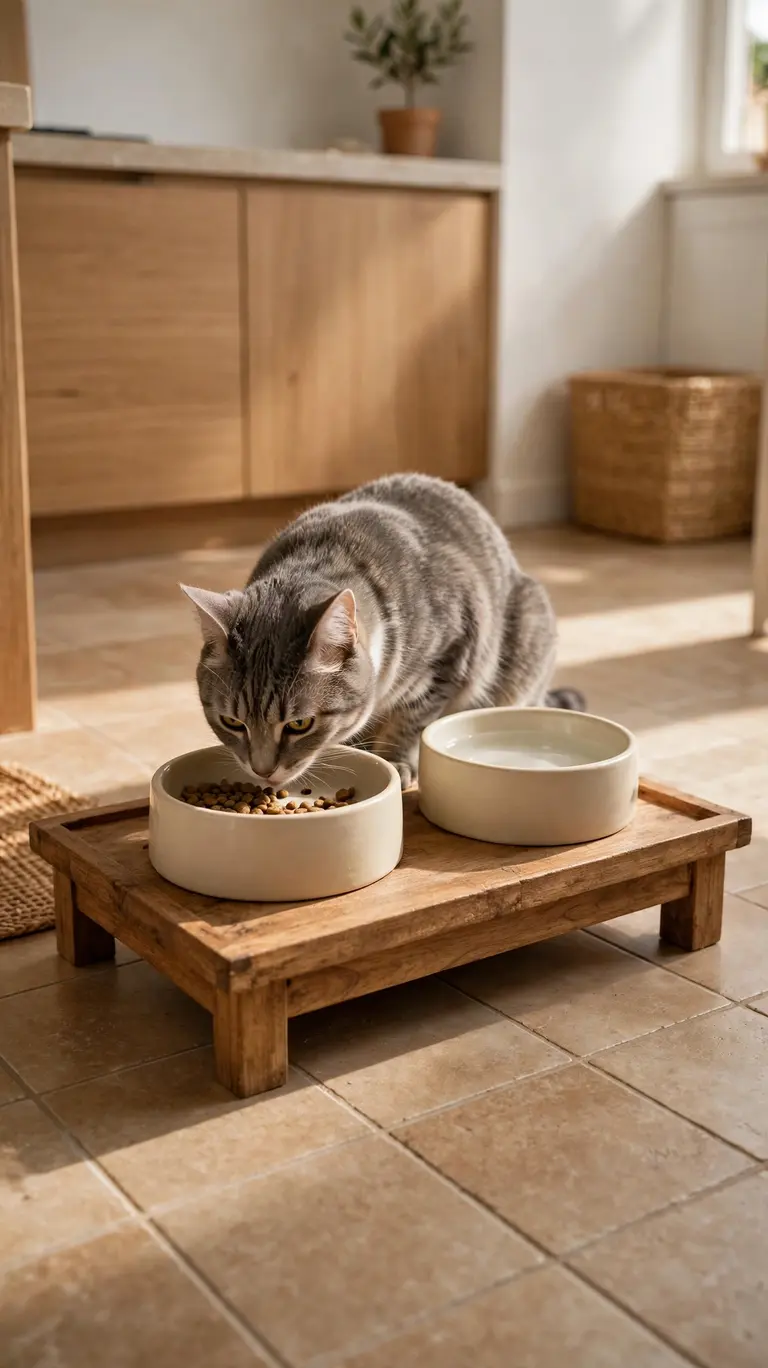
A low raised platform, just a few inches high, can make eating more comfortable for cats, especially older ones or cats that eat fast. Put a sturdy tray on short legs or a low wooden box, then set the bowls on top. The slight elevation means less neck strain and fewer gulped meals, and the tray catches anything that misses the bowls.
Keep the platform low and stable so it does not wobble when the cat leans on it. A tray with a lip is ideal because it contains spills on all sides. You can make one from a shallow baking sheet on small blocks, or buy a purpose-made raised feeder. Either way, the station looks tidy because the bowls, the mat, and any mess all live on one contained surface. Wash the tray weekly along with the bowls.
8. Claim a Laundry Room Corner for Feeding
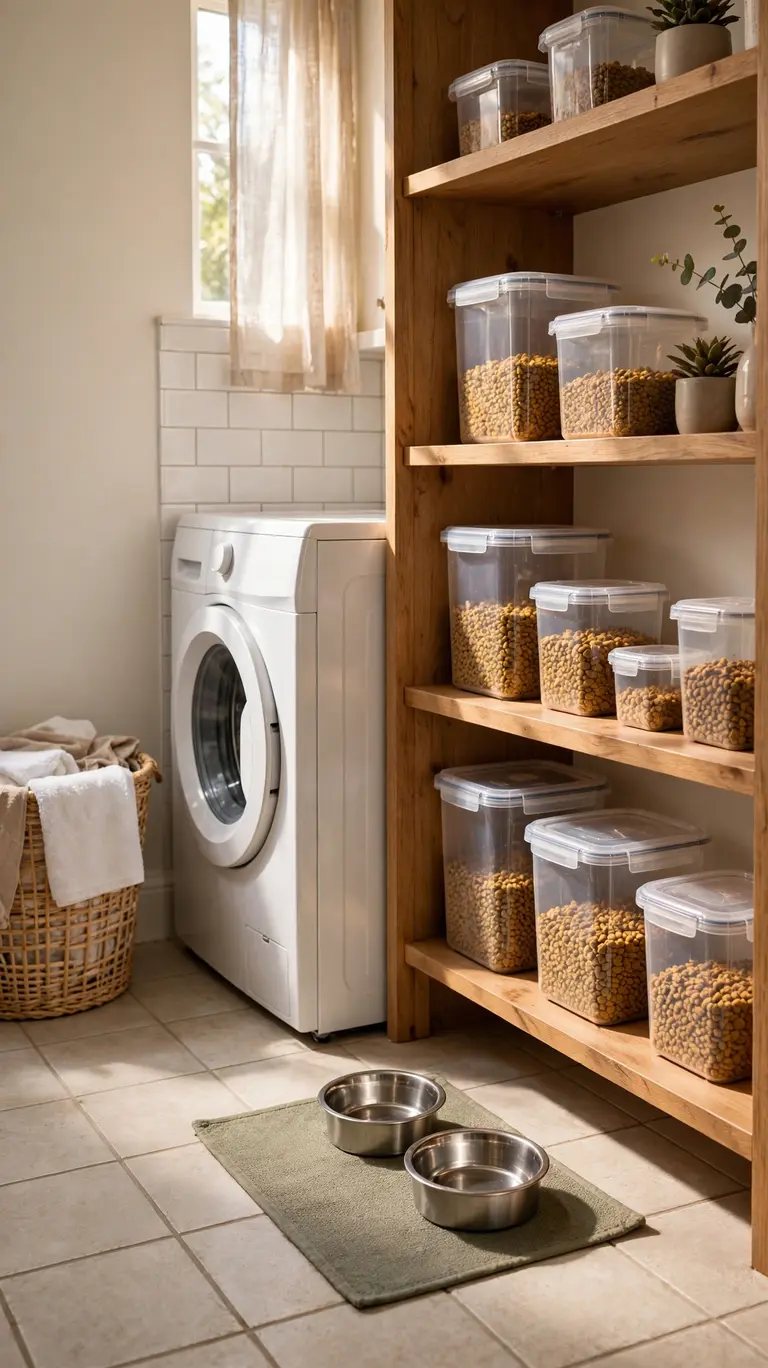
Laundry rooms are often the most underused room in the house, which makes them great for a feeding station. The floors are usually tile or vinyl that handles spills, and the room is quiet most of the day. Set a mat and bowls in a corner away from the machines, and store food on a shelf or in a cabinet nearby.
The one thing to watch is noise, since washers and dryers can startle a nervous cat. Feed at times when the machines are off if your cat is skittish, or choose the corner farthest from the appliances. The wipeable floors are a real advantage here, and the room’s utility vibe means a feeding station looks completely natural. Keep a small trash bin nearby for empty cans and wrappers so cleanup is a one-trip job.
9. Roll Out a Serving Cart as a Mobile Feeding Station
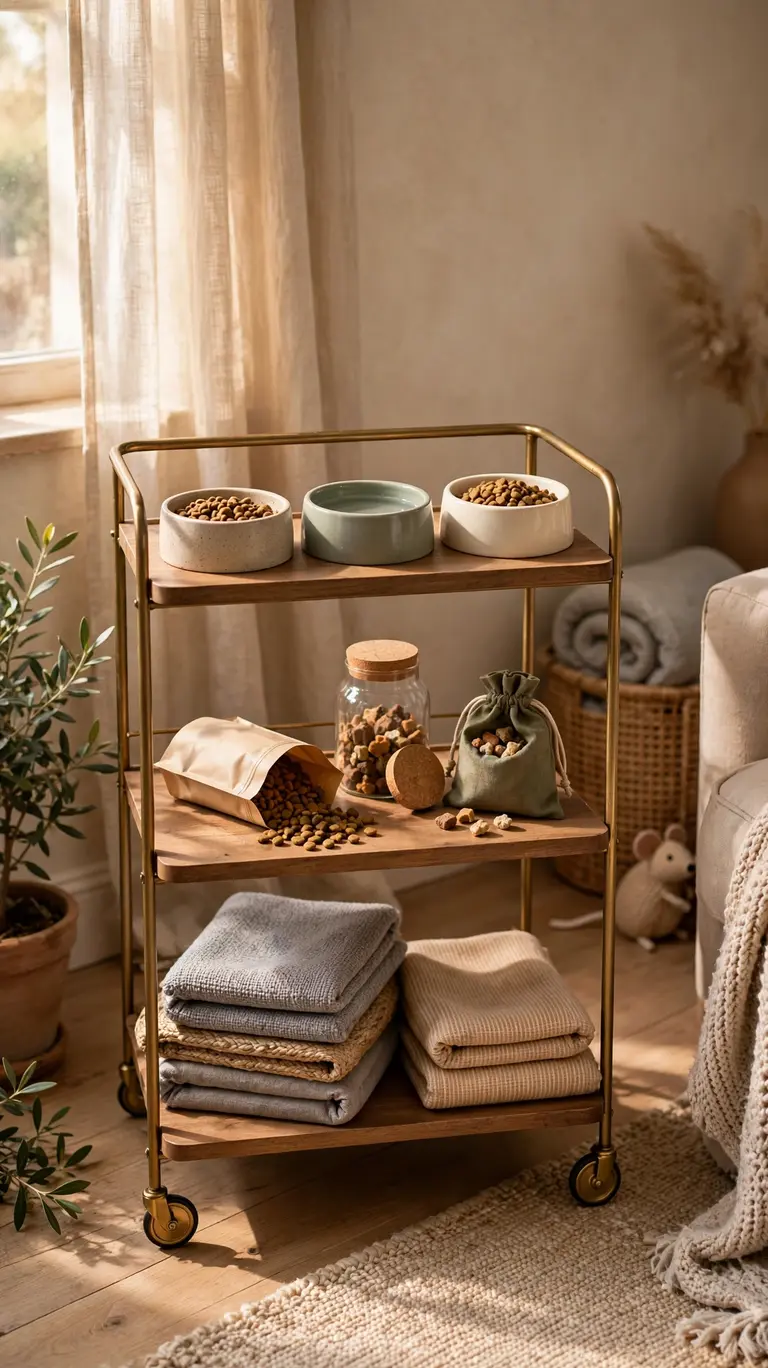
A small rolling serving cart turns feeding into a mobile station you can move wherever works best. Put the bowls on the top tier on a mat, store food and treats on the middle shelf, and keep spare mats and cleaning supplies below. Roll it to the feeding spot at mealtimes and tuck it into a closet or corner afterward.
This is ideal for small apartments where a permanent station would crowd the kitchen. Choose a cart with a lip or rail on each tier so nothing slides off when you roll it. Lock the wheels during meals so the cart stays put while the cat eats. The cart also makes deep cleaning easy, because you can roll the whole station out and wipe the floor underneath. It is one of the most flexible feeding setups you can build.
10. Hide Supplies in a Storage Ottoman Station
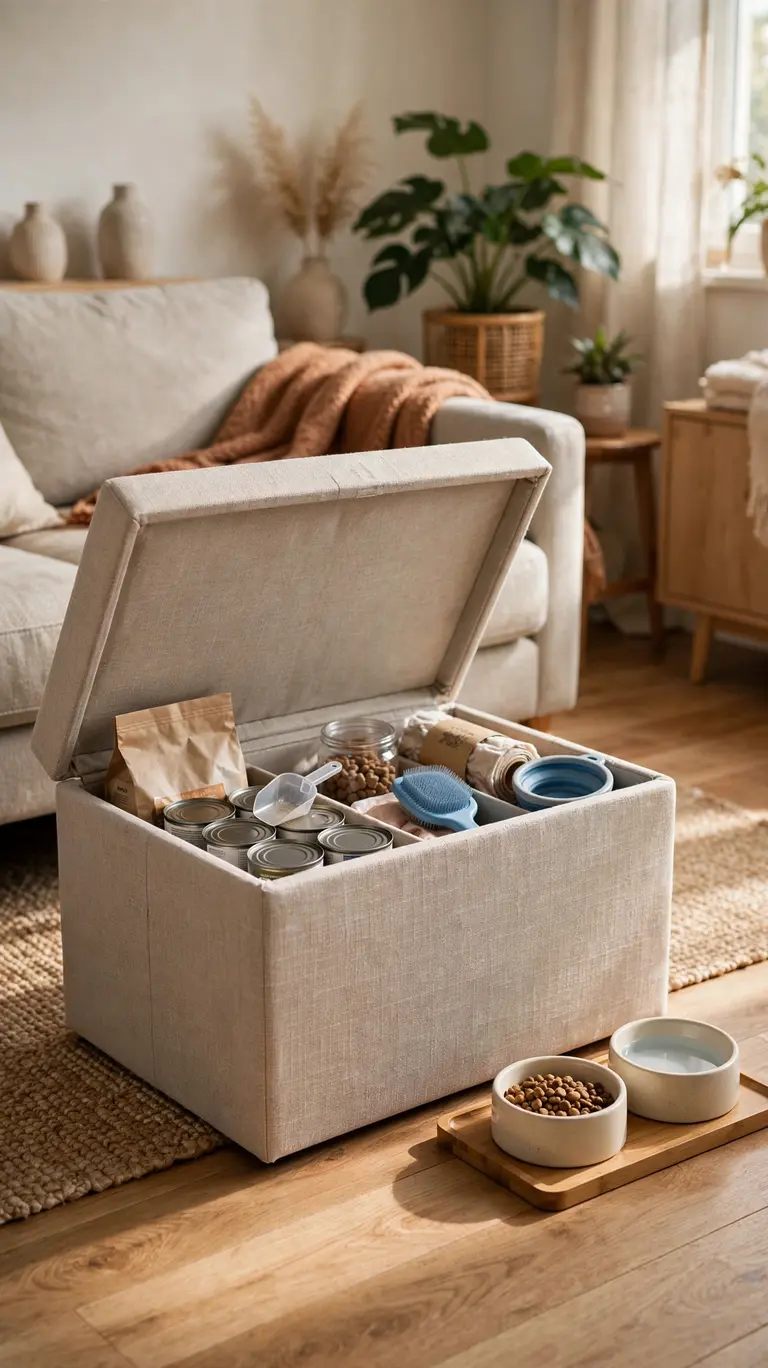
A storage ottoman does double duty as seating or a footrest and as a hidden supply cabinet for feeding. Keep food, treats, spare mats, and cleaning wipes inside the ottoman, and set the bowls on a tray beside it. When guests come over, everything except the bowls disappears into the ottoman and the room looks perfectly tidy.
Pick an ottoman with a washable or wipeable surface since it lives near food. Use small bins or bags inside to keep supplies sorted, because a deep ottoman can become a jumble fast. This setup works well in living rooms and bedrooms where you want the feeding station nearby but not on display. The bowls on a tray beside the ottoman are easy to pick up and wash, and the whole station takes up no more space than the ottoman itself.
11. Use a Wide Windowsill as a Feeding Nook
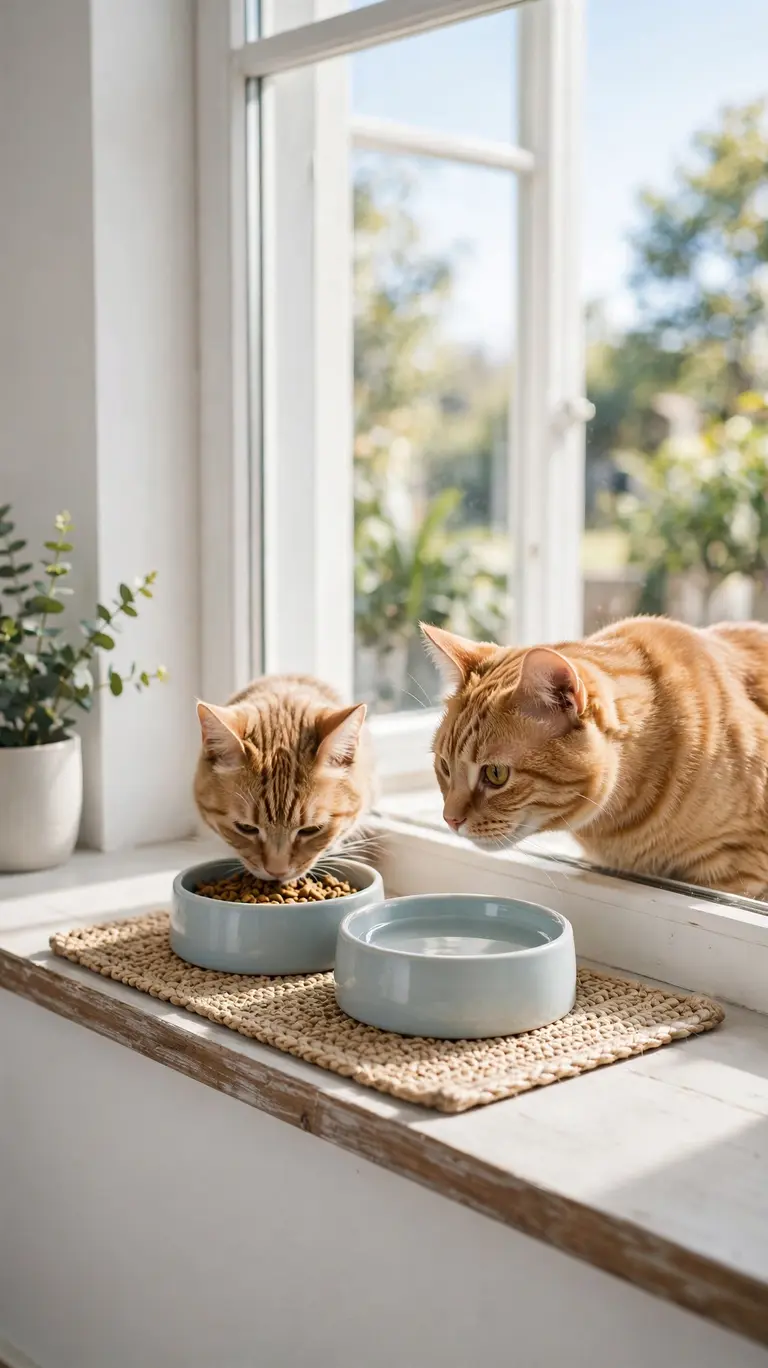
A wide, sturdy windowsill makes a charming feeding nook with a built-in view. Many cats love eating where they can watch birds and street life, and a windowsill station keeps the bowls off the floor entirely. Put a small mat on the sill, add the bowls, and make sure the sill is wide and stable enough that nothing can be knocked off.
Check that the window is secure and the screen is intact before setting up here, and avoid sills over radiators or in direct harsh sun that could spoil wet food fast. This works best for cats that are confident jumpers and for windows on the ground floor or with safe landings. A windowsill nook frees up floor space and gives the cat a favorite spot that doubles as entertainment. Wipe the sill regularly since food crumbs collect in the corners.
12. Pair a Two-Bowl Tray with Labeled Containers
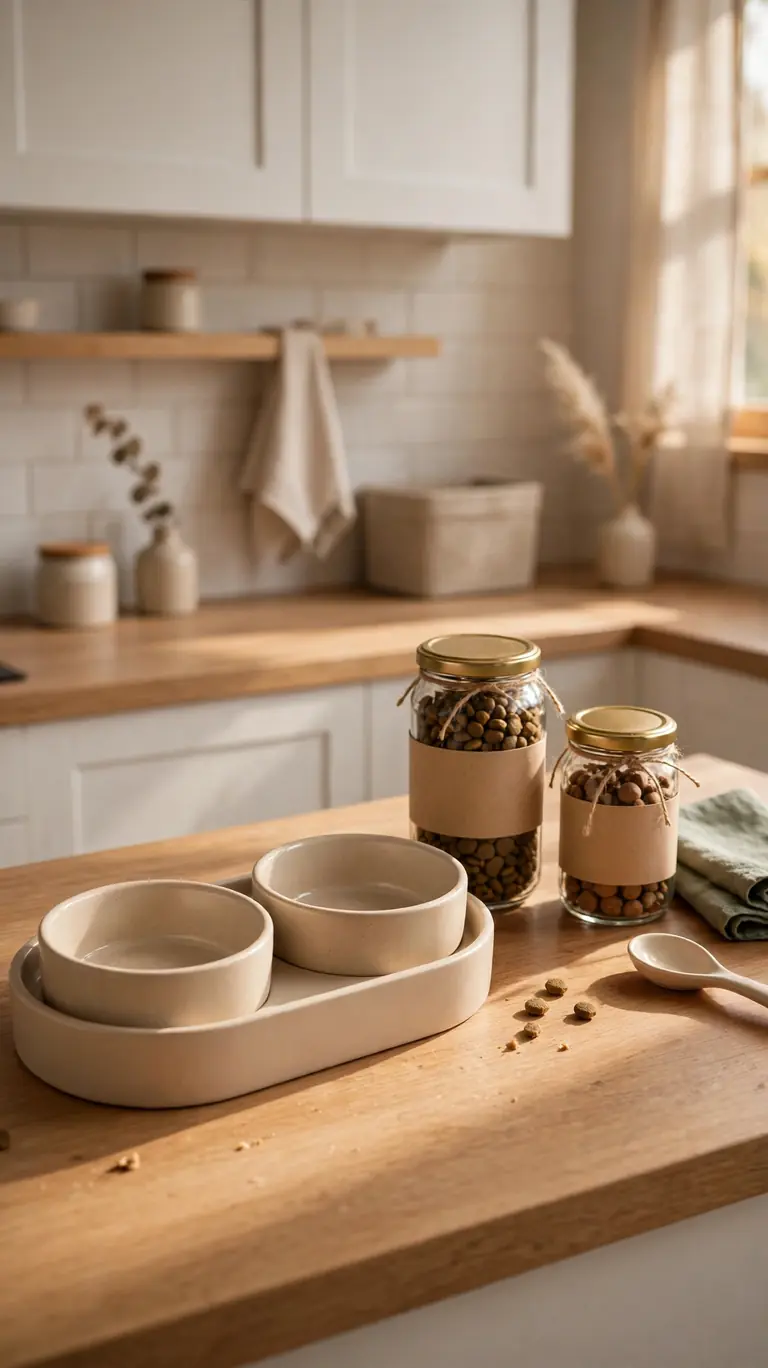
A matching two-bowl tray with labeled food containers turns feeding into a system instead of a scramble. Keep the tray with the daily bowls in the feeding spot, and store kibble, wet food, and treats in labeled airtight containers on a nearby shelf or counter. Labels mean anyone in the house can feed the cat correctly without guessing portions or grabbing the wrong bag.
This is especially helpful in multi-person households where feeding duties get shared. Write the cat’s name and the portion on each label if you have more than one pet. Airtight containers keep food fresh and stop the cat from chewing through bags. The tray keeps the bowls together and contained, and the labeled containers make the whole setup look organized and intentional rather than improvised.
13. Set Up a Hallway Alcove Station
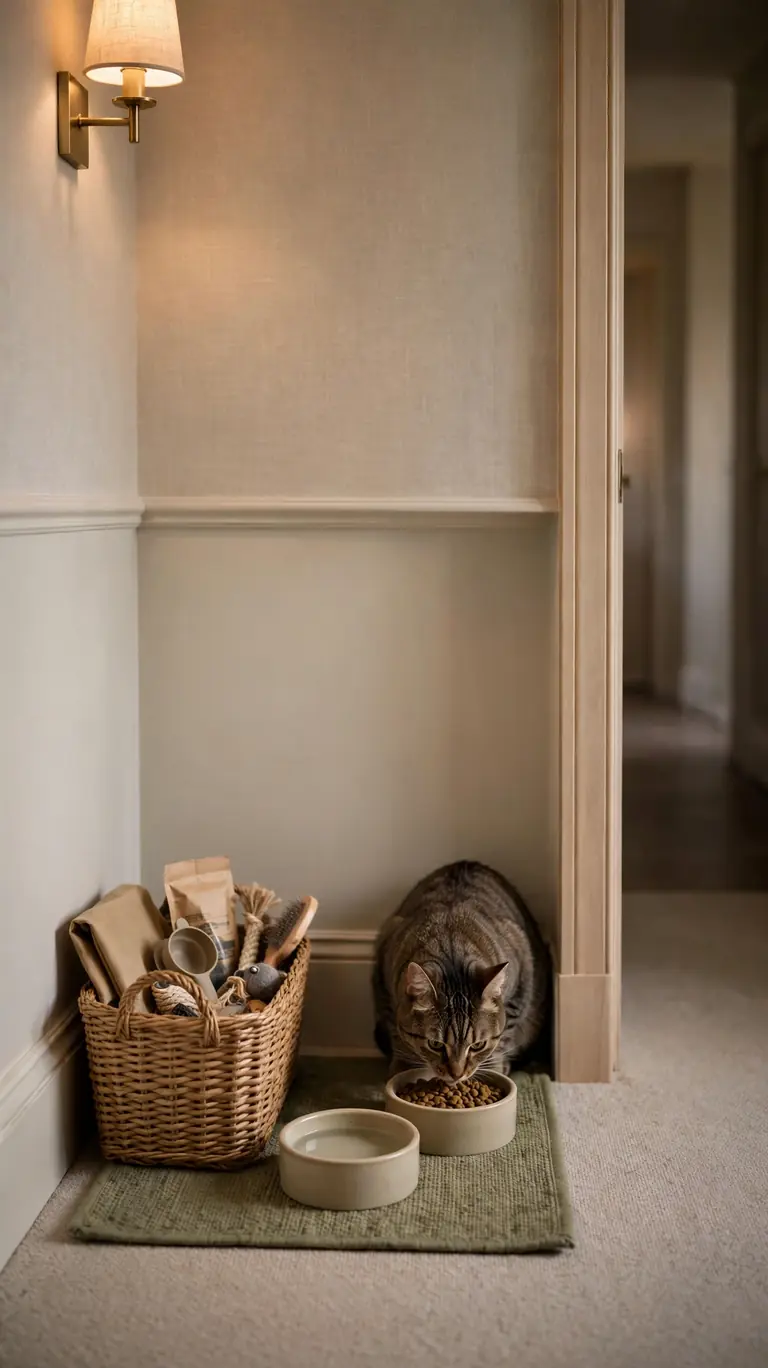
Hallway alcoves and the dead space beside doorways are perfect for a quiet feeding station. These spots are out of the main traffic flow but still central enough that the cat feels part of the household. A small mat, two bowls, and a basket for supplies is all it takes to claim an alcove.
Keep the setup narrow so it does not block the hallway, and choose a spot with decent light so you can see when the bowls need refilling or cleaning. Alcoves near bedrooms work well for cats that like to eat away from kitchen noise. A small basket or bin beside the mat holds spare food and a cloth for quick wipe-downs. This is one of the easiest stations to set up because it uses space that was doing nothing.
14. Stack Bins into a Compact Feeding Station
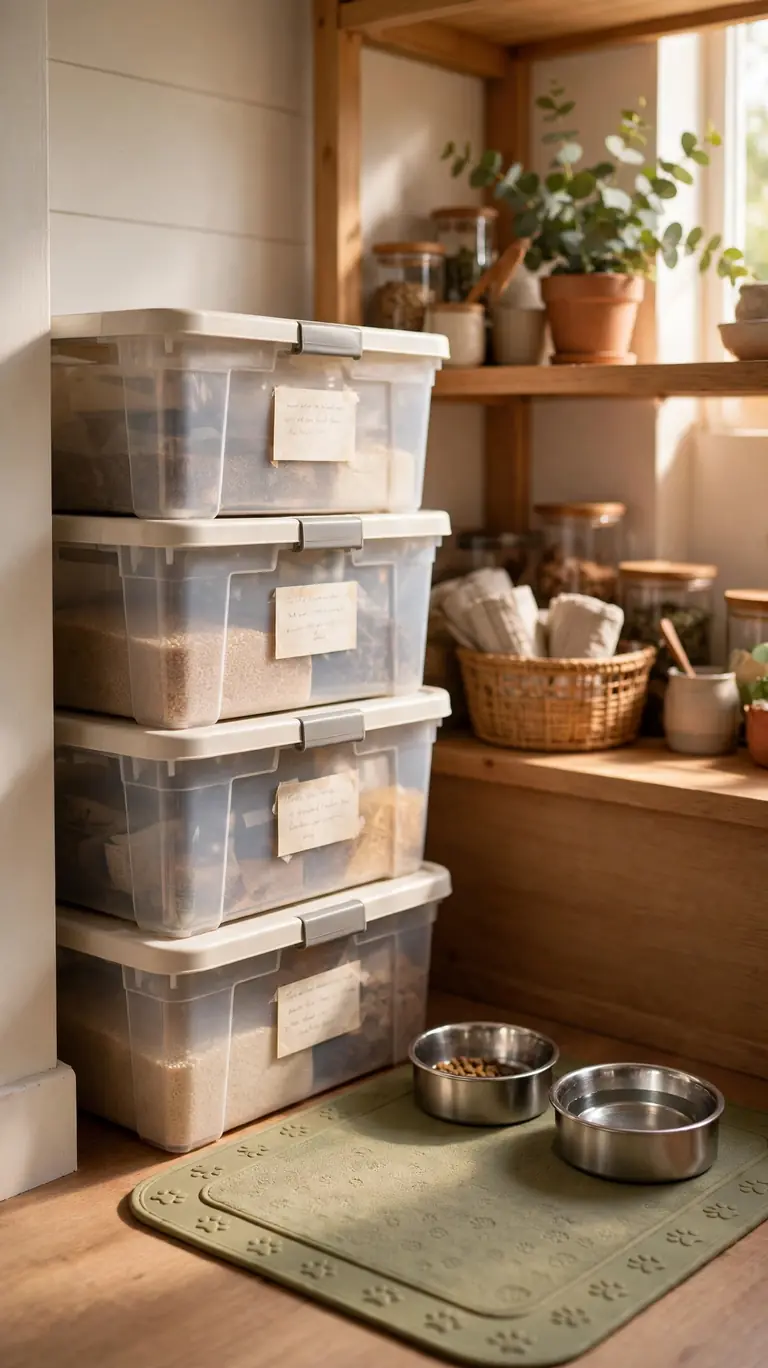
Stackable storage bins can build a compact feeding tower that fits in a pantry corner or closet. Use the bottom bin or the floor beside the stack for the bowls on a mat, and fill the upper bins with food, treats, and supplies. Label each bin so you can grab what you need without digging.
Choose sturdy bins that lock together so the stack cannot topple if the cat leans on it. Keep the stack low, three or four bins at most, so it stays stable and reachable. This is a great solution for renters and small homes because the whole station can be disassembled and moved in minutes. The bins keep food sealed and organized, and the feeding spot beside them stays neat because everything has a labeled home.
15. Create a Dining-Zone Station with a Placemat Tray
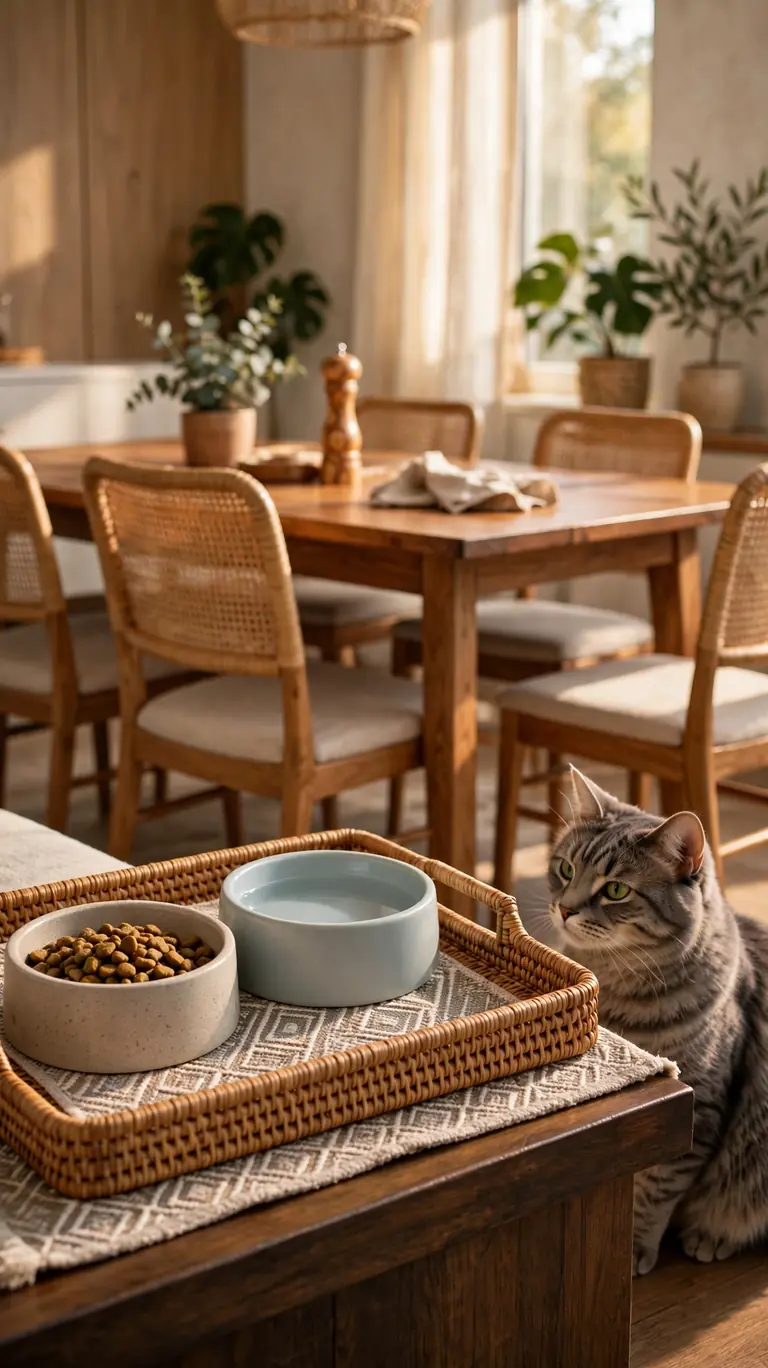
If your cat likes to be near you at mealtimes, set up a feeding station at the edge of the dining area with a decorative placemat tray. The tray defines the cat’s spot and protects the floor, while the placemat style lets it blend with your dining decor. This works well for social cats that get anxious eating alone in another room.
Pick a spot that is out of chair traffic but still in the room, like against a sideboard or in a corner of the dining area. Use a tray that is easy to carry to the sink for washing. This setup acknowledges that the cat is part of family mealtimes without letting bowls wander across the dining floor. Keep a small cloth nearby for quick cleanups, and the dining zone stays as tidy as the rest of the room.
16. Keep a Backup Grab-and-Go Feeding Kit Ready
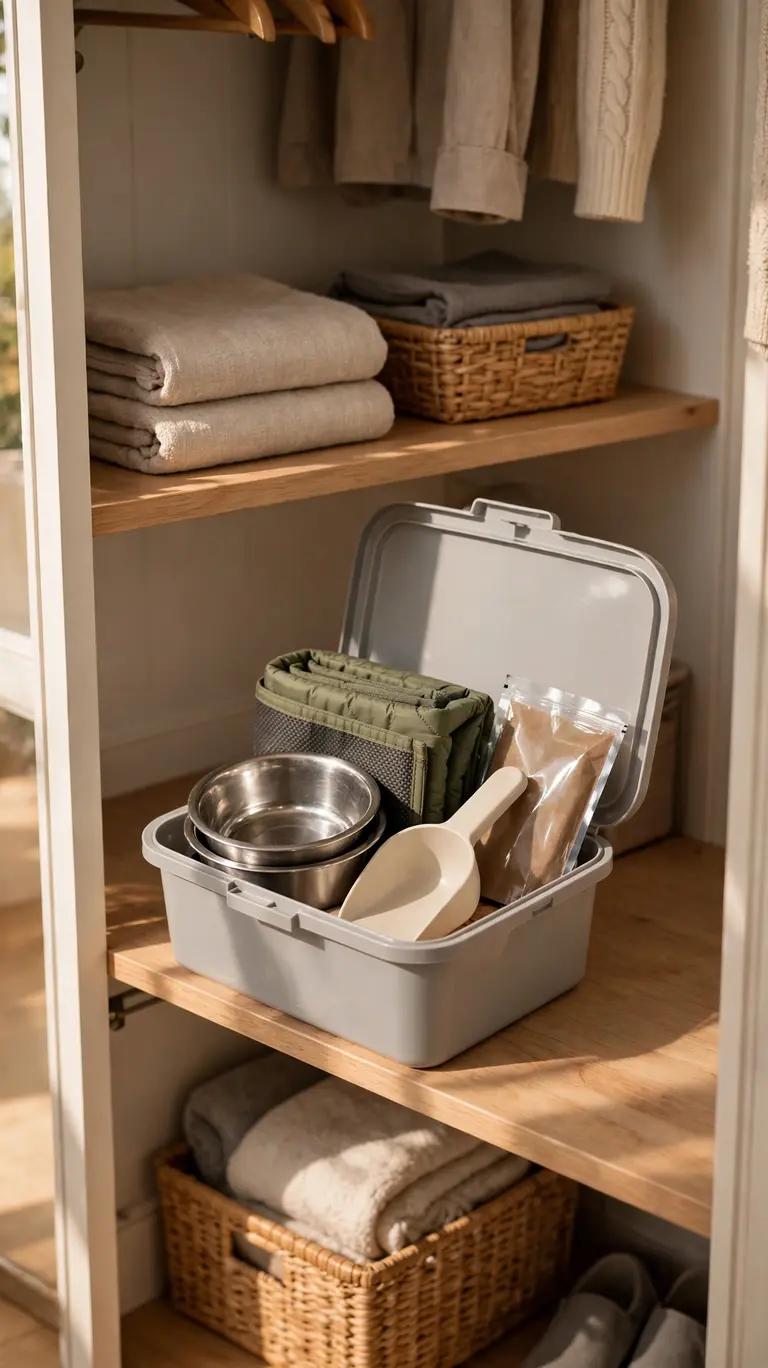
A backup feeding kit is the organized pet owner’s secret weapon. Pack a small tote with spare bowls, a folded travel mat, a food scoop, and a sealed portion of food, and keep it in a closet or the car. If you travel, have a sitter, or need to feed the cat in a different room during renovations, the kit means you are ready in seconds.
Refresh the food in the kit every month or two so it stays fresh, and keep a printed feeding schedule in the tote for sitters. The kit also doubles as an emergency kit if you ever need to leave home quickly. It takes up almost no space, but it removes the last-minute scramble of gathering bowls and food. Think of it as the final piece of a fully organized feeding system.
Frequently Asked Questions
Where is the best place to put a cat food station?
Choose a quiet, low-traffic spot that is easy for the cat to reach and easy for you to clean. Kitchens, laundry rooms, and hallway corners all work well. Keep the feeding area away from the litter box, since most cats prefer not to eat near it, and avoid spots right next to noisy appliances if your cat startles easily.
How do I keep the area around the bowls clean?
Use a large washable mat with a raised edge under the bowls to catch spills and stray kibble. Wipe the bowls daily and wash the mat weekly. A tray with a lip works even better for containing messes, and keeping the station in one consistent spot makes cleanup a quick routine instead of a hunt.
Should food and water bowls be kept together?
Many cats prefer their water bowl a little distance from their food, since in the wild water near a kill site can be contaminated. Try placing the water bowl a few feet away from the food station and see if your cat drinks more. Either way, keep both spots consistent so the cat always knows where to go.
How can I hide a cat feeding station from guests?
Use furniture that conceals the setup, like a pull-out drawer, a cabinet cubby, or a rolling cart you can tuck away. Storage ottomans and console tables also hide supplies while keeping bowls accessible. For the bowls themselves, a quick pickup into a nearby cabinet takes seconds before guests arrive.
What is the easiest feeding station for a small apartment?
A washable mat in a quiet corner with two bowls is the simplest option and takes up almost no space. If you want it hidden, a rolling serving cart or a pull-out drawer station disappears when meals are over. Both options keep the apartment tidy without dedicating permanent floor space to feeding.
Conclusion
A well-organized cat food station does more than contain messes. It gives your cat a consistent, calm place to eat, which most cats genuinely prefer, and it saves you the daily frustration of sliding bowls, scattered kibble, and water rings on the floor. The ideas in this article all share the same principle: contain the feeding area, keep supplies close, and choose a spot that suits your cat’s temperament and your home’s layout.
Start with the simplest change that fits your space. A washable mat in a quiet corner takes five minutes to set up and immediately improves the situation. From there, you can build toward a fuller system with labeled containers, a dedicated furniture piece, or a hidden drawer station. The goal is not perfection, it is a routine that works for both you and your cat day after day.