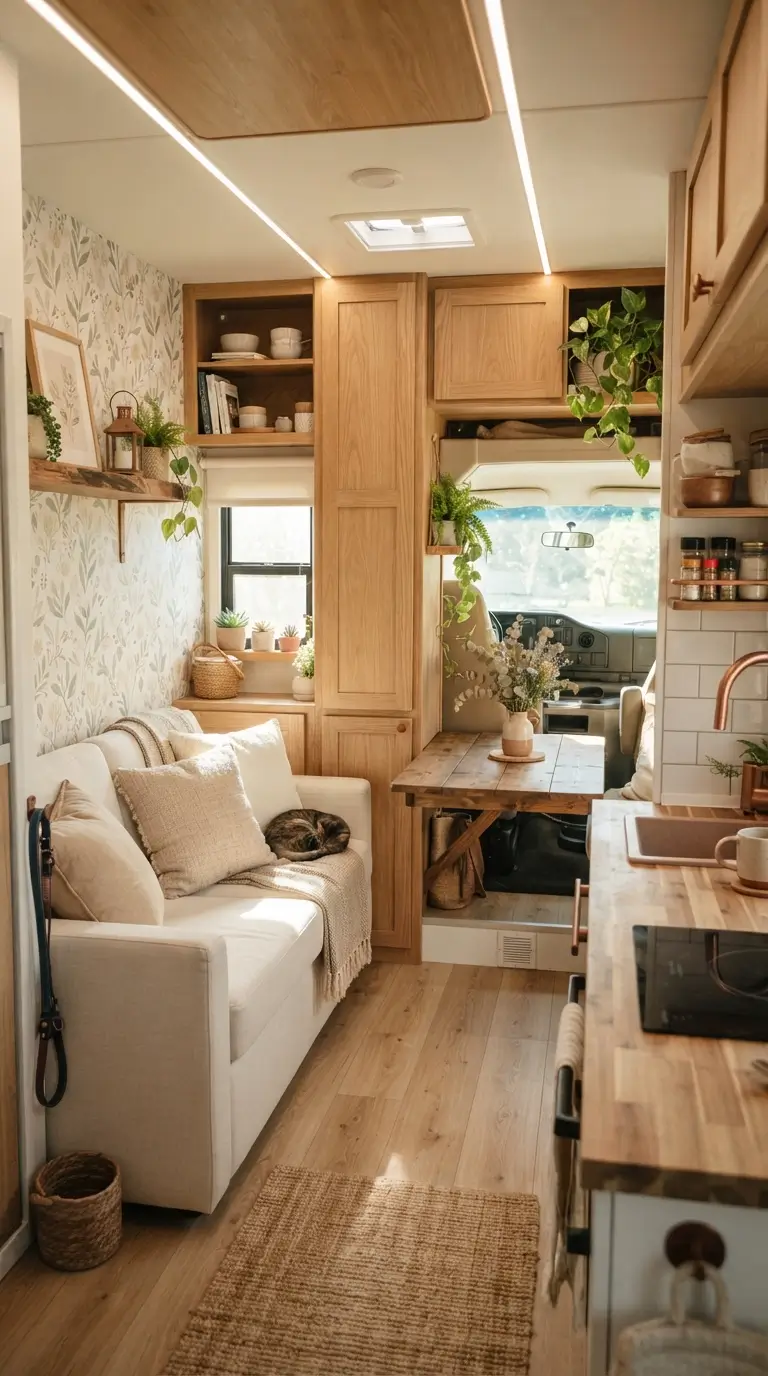
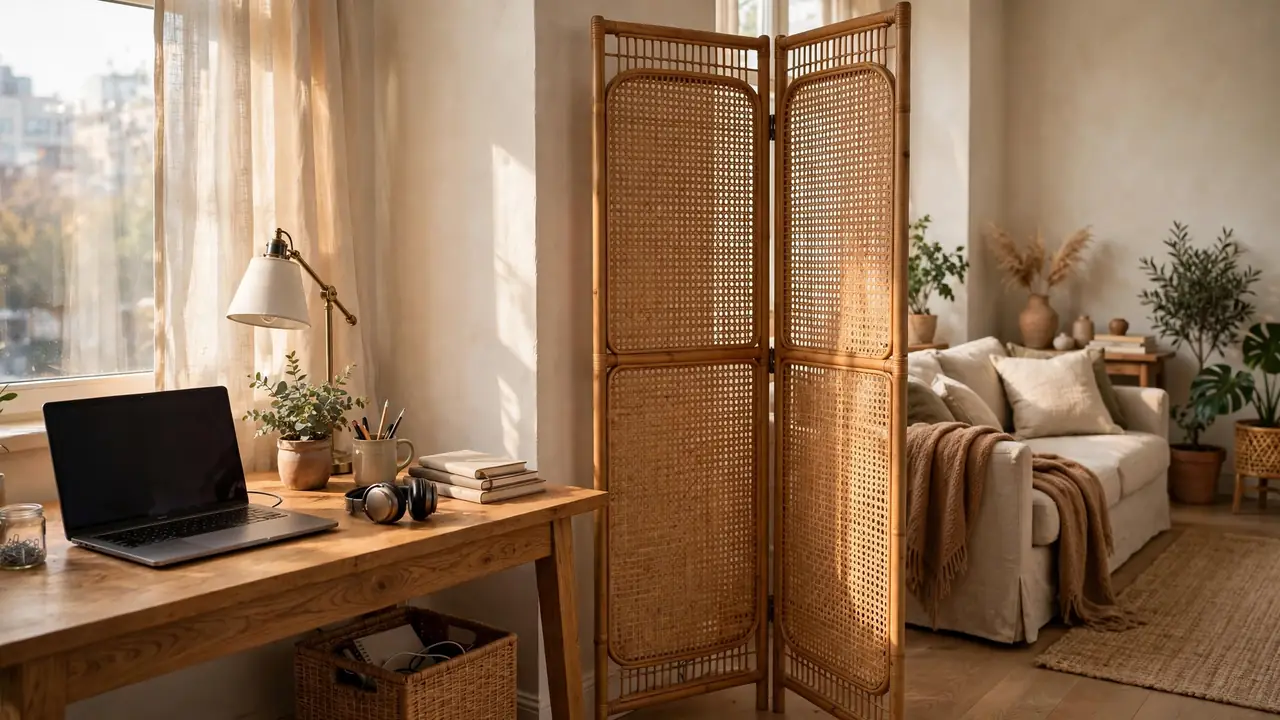
21 Stylish Room Divider Office Ideas for Small Spaces
If you work from home in a small apartment or studio, you don’t need a spare room to have a real office. You just need a smart divider. The right divider draws a line between work and rest, hides your desk setup when the day ends, cuts down on noise and visual clutter, and can even add storage at the same time. In this guide you’ll find 21 room divider office ideas that actually work in small spaces: screens, bookcases, curtains, glass panels, plants, and clever DIY setups, each one chosen because it’s practical, renter friendly, and easy to live with. Whether you’re carving a corner out of your bedroom, splitting a studio into zones, or just trying to make video calls look professional, there’s a setup here that fits your space, your style, and your budget. Read through, pick the divider that solves your biggest frustration first, and you’ll have a dedicated workspace by the weekend.
1. Freestanding Folding Screen Behind Your Desk
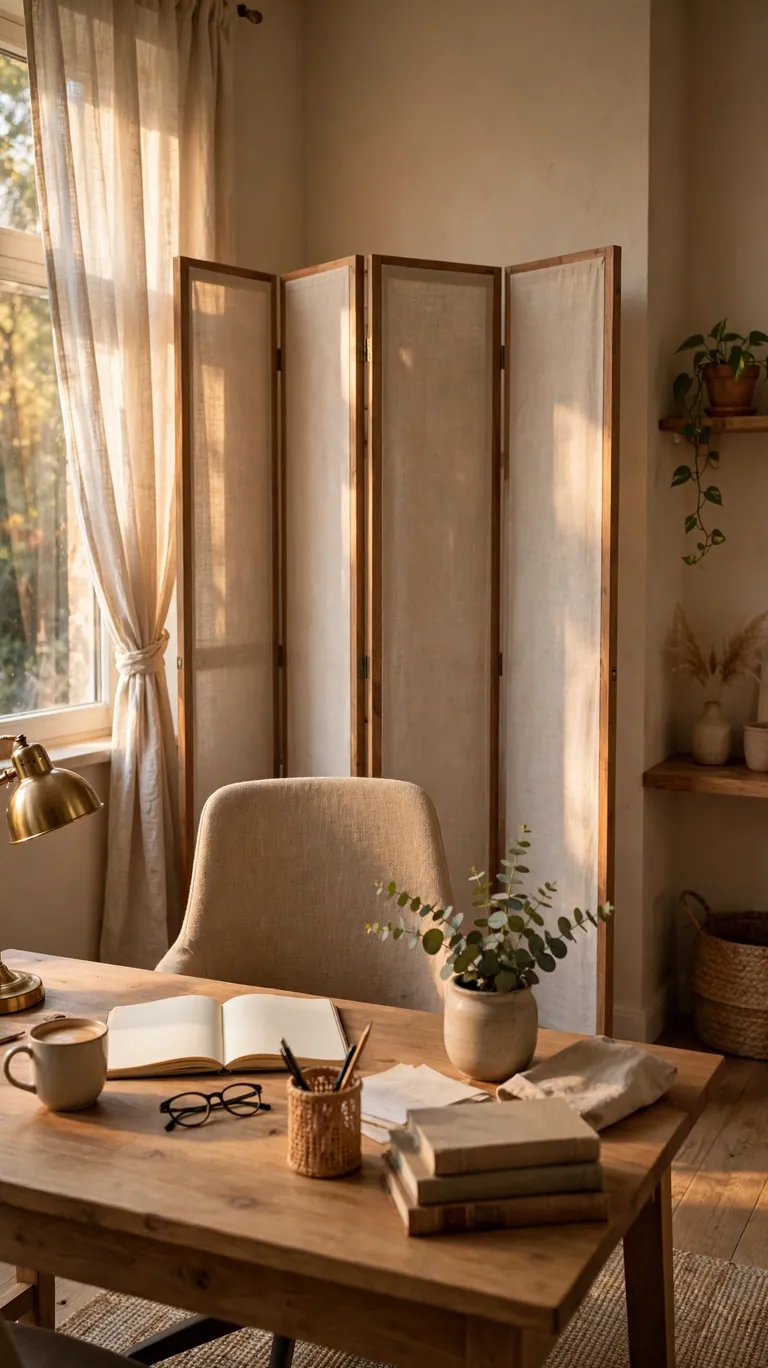
A classic folding screen is the easiest way to give your desk a backdrop. Place it directly behind your chair or behind the desk itself, and it instantly creates a visual wall that separates your work zone from the rest of the room. It also gives video calls a clean background, which matters more than people expect. Look for a three or four panel screen tall enough to block the sightline from your bed or sofa, usually around 60 to 70 inches works well.
The best part is how flexible a folding screen is. Angle the panels to fit an awkward corner, fold it flat and slide it behind furniture when guests come over, or move it with you when you switch apartments. Wood and fabric screens add warmth to a small room, while a painted screen can act as an accent piece. Avoid very busy prints in a small space, since a calm pattern keeps the corner feeling open rather than crowded.
2. Open Bookcase as a Functional Divider
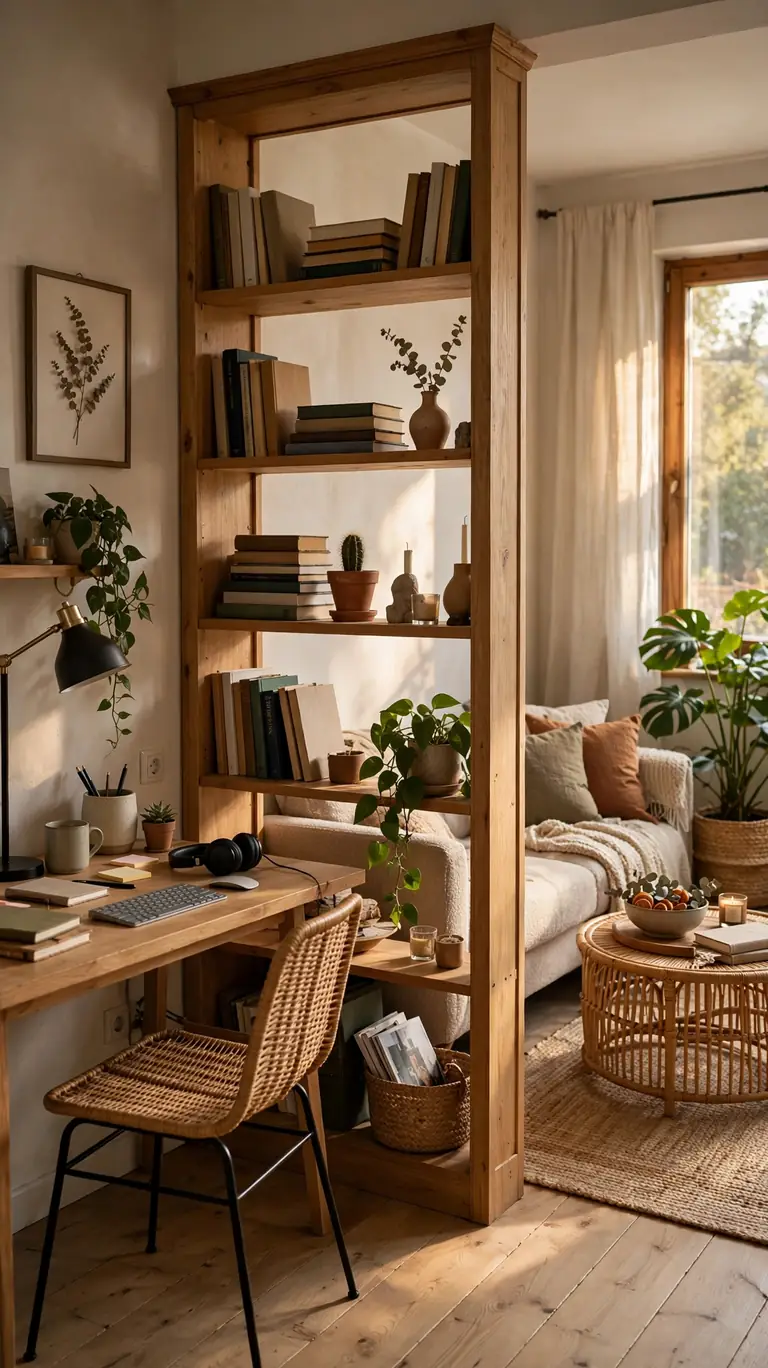
An open-back bookcase does double duty: it divides the room and holds your office supplies, books, and decor. Position it perpendicular to the wall, with one side facing your desk and the other facing the living area. Keep the shelves styled from both sides so it looks good from every angle, and leave a few cubbies open so light and air pass through.
Because it stores things, this divider earns its floor space. Use the lower shelves for printer paper, notebooks, and tech accessories, and the upper ones for plants and books. If you rent, a freestanding bookcase needs no mounting and moves with you. Choose a unit that is at least as tall as your seated eye line when you’re at the desk, so it genuinely breaks up the view between your workspace and the rest of the room.
3. Ceiling-Mounted Curtain Panel
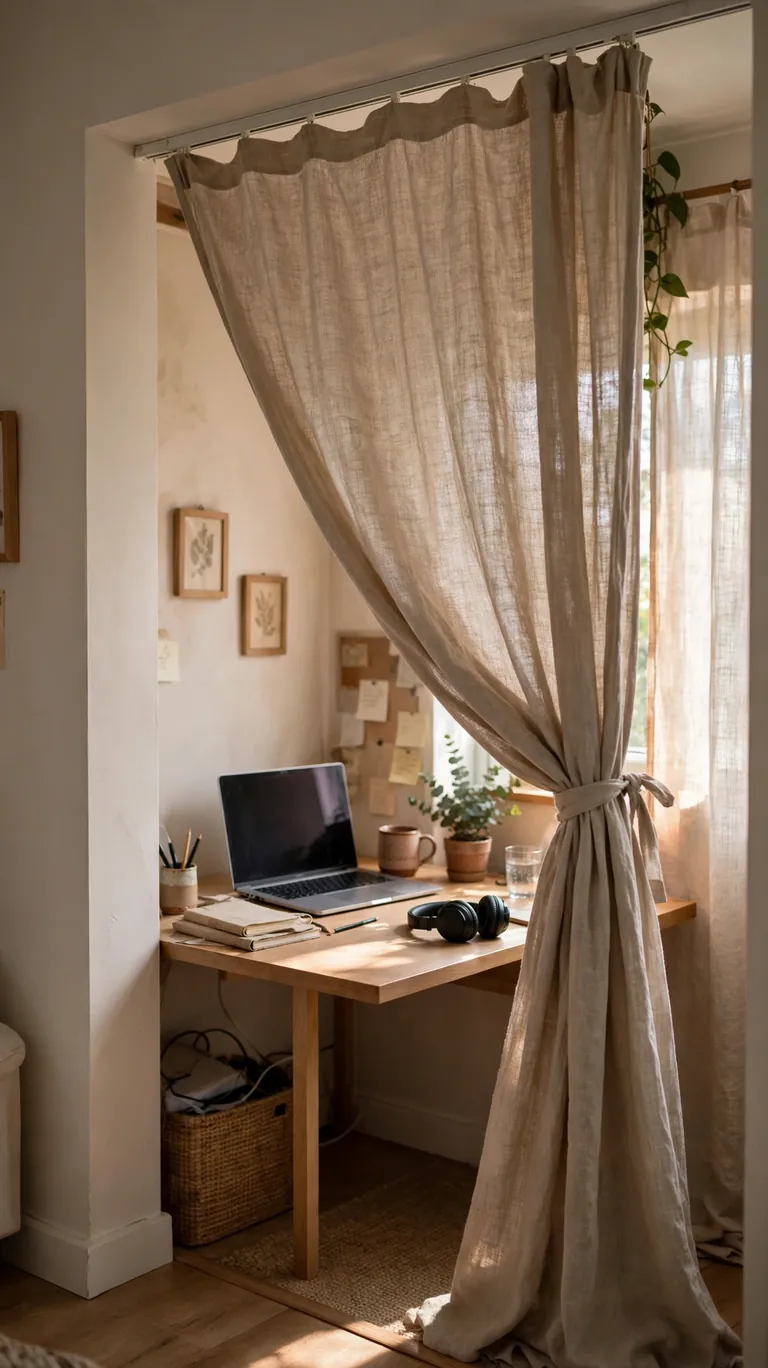
A curtain hung from a ceiling track or a tension rod gives you an office that can appear and disappear. Mount the track where you want the boundary, slide heavy curtains closed when you start work, and pull them open in the evening to reclaim the full room. Linen or cotton panels in a neutral tone keep the space feeling calm, while a darker fabric absorbs sound a little better.
This is one of the most renter friendly options because many ceiling tracks install with adhesive or pressure mounts, and even a screwed track leaves only tiny holes. Hang the curtain close to the ceiling and let it fall to just above the floor for a tailored look. If your desk faces a window, use a lighter fabric so you still get daylight while keeping the visual separation you need to focus.
4. Glass Partition Panels for Light Flow
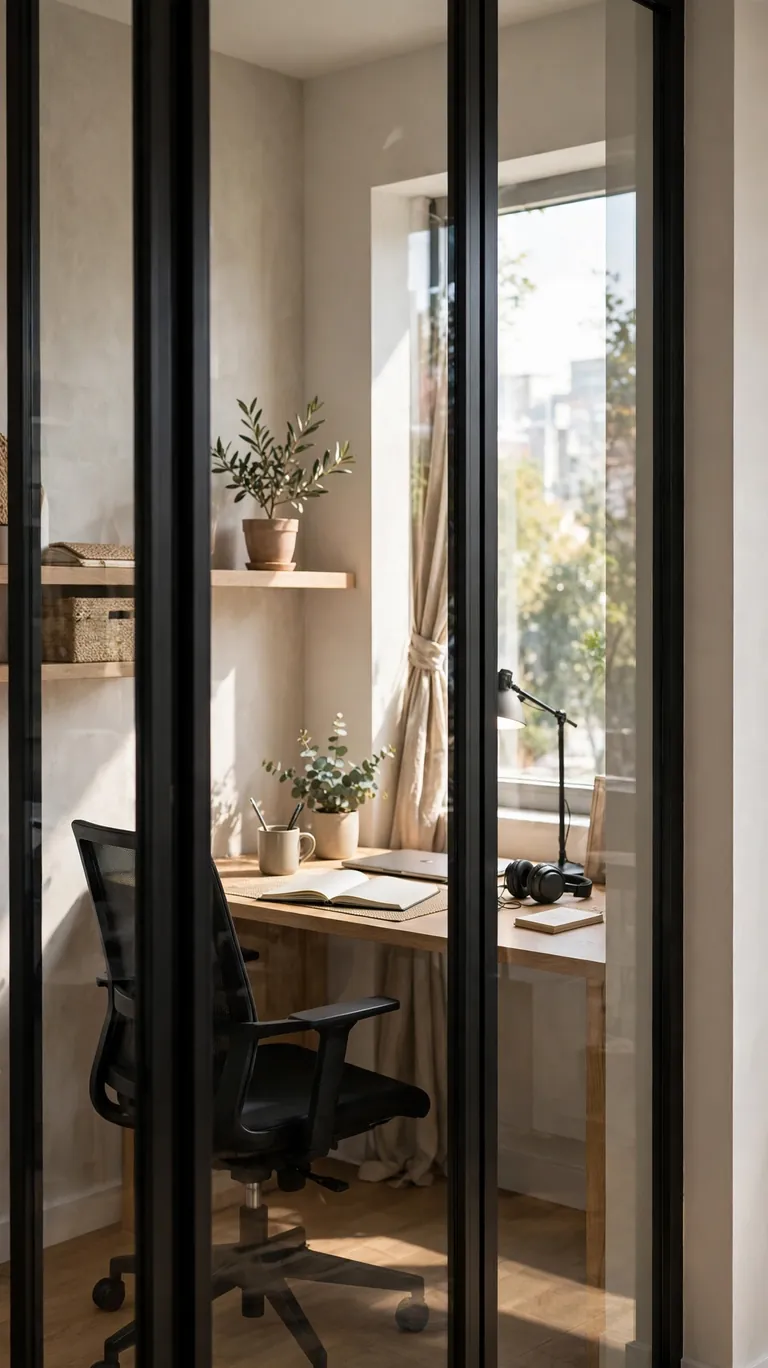
In a small space, a solid divider can make the room feel like a box. Glass panels solve that by creating a boundary without blocking light. Use framed glass panels, a glass room divider screen, or even repurposed window frames to section off your desk area. You get the psychological feeling of a separate office while the whole apartment still reads as one bright room.
Frosted or ribbed glass gives you privacy for video calls and hides desk clutter from the living area, while clear glass keeps everything open. If you use clear panels, keep the desk behind them tidy or add a small plant to soften the view. Freestanding glass dividers need no installation, and their slim profile takes up almost no floor space, which is exactly what a studio apartment needs.
5. Pegboard Divider Wall
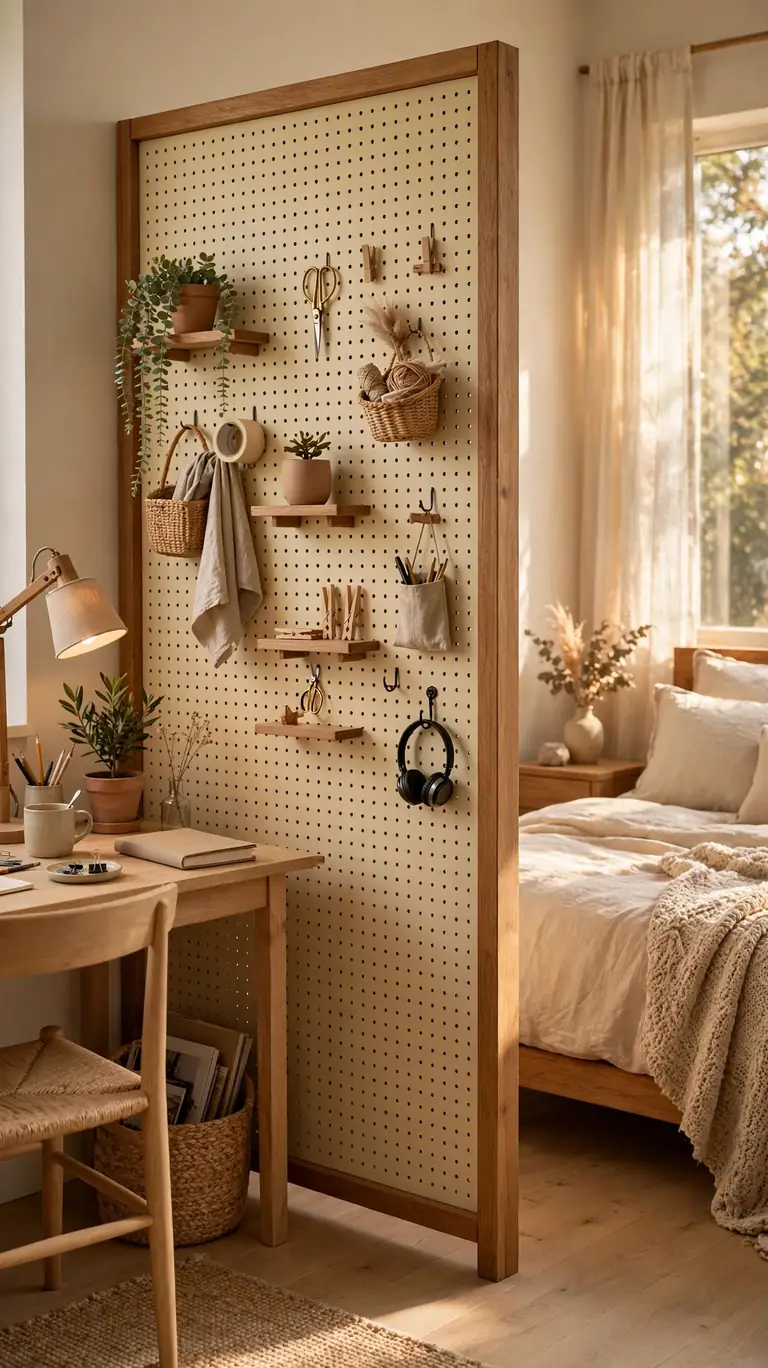
A pegboard mounted on a freestanding frame turns a divider into vertical office storage. Hang it between your desk and the rest of the room, then load it with hooks, small shelves, and baskets for pens, headphones, cables, and notebooks. Everything you need stays within arm’s reach, and the board itself blocks the view of your work setup from the living space.
Build the frame from simple lumber so it stands on its own, or use two narrow bookcases as the base and mount the pegboard between them. Paint the pegboard a color that matches your decor so it reads as intentional design, not workshop storage. This idea works especially well in a corner office setup, where the pegboard forms one wall of your little zone and your desk tucks into the other.
6. Tall Plant Cluster as a Living Divider
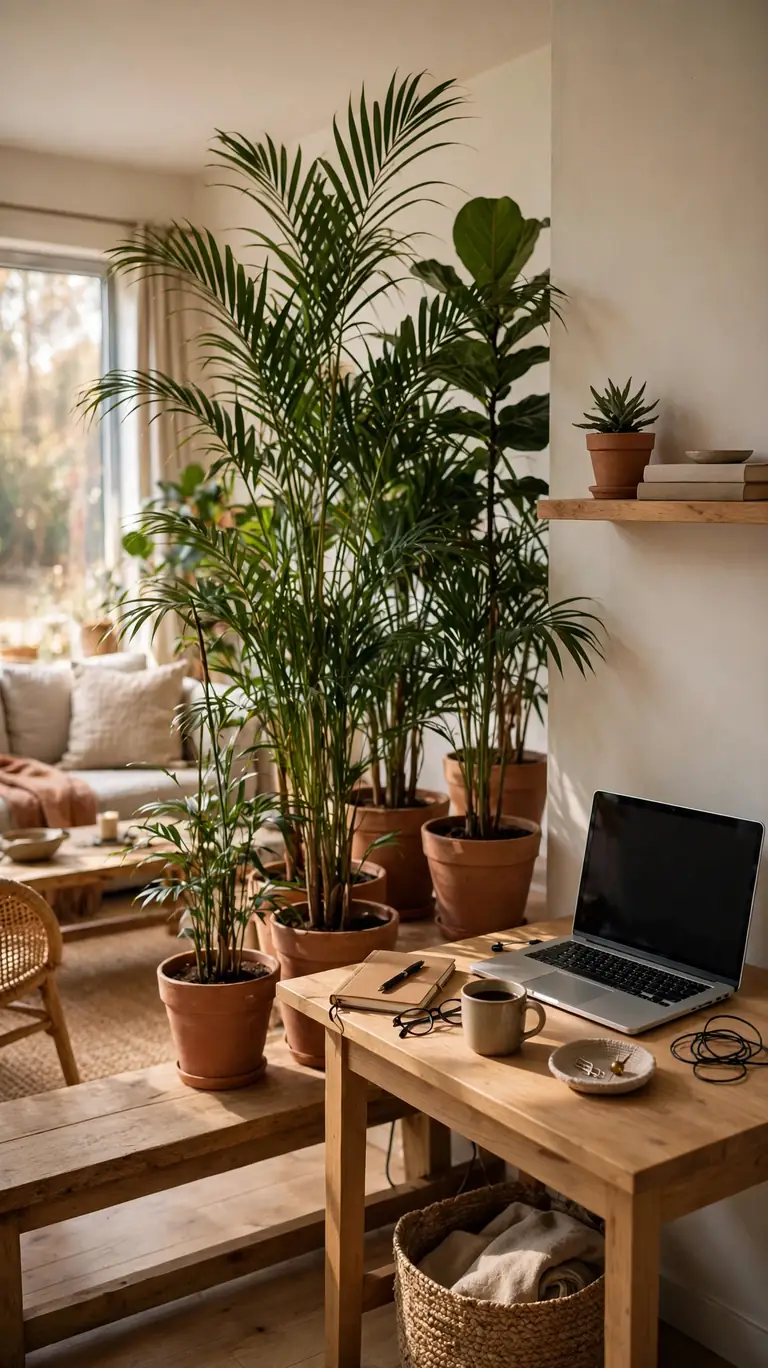
A cluster of tall plants creates a soft, living boundary between your desk and the rest of the room. Group plants of different heights on a low bench or in matching pots along the line where you want the division. Snake plants, fiddle leaf figs, and tall palms are popular picks because they grow upright and fill vertical space without taking over the floor.
Plants don’t block sound, but they do something no screen can: they make the workspace feel fresh and calm, which helps with long workdays. Use a row of identical pots for a clean look, or mix pots in one color family for something more relaxed. Put the tallest plants in the middle and shorter ones at the ends so the divider looks layered rather than like a flat wall of green.
7. Rolling Storage Cabinet Divider
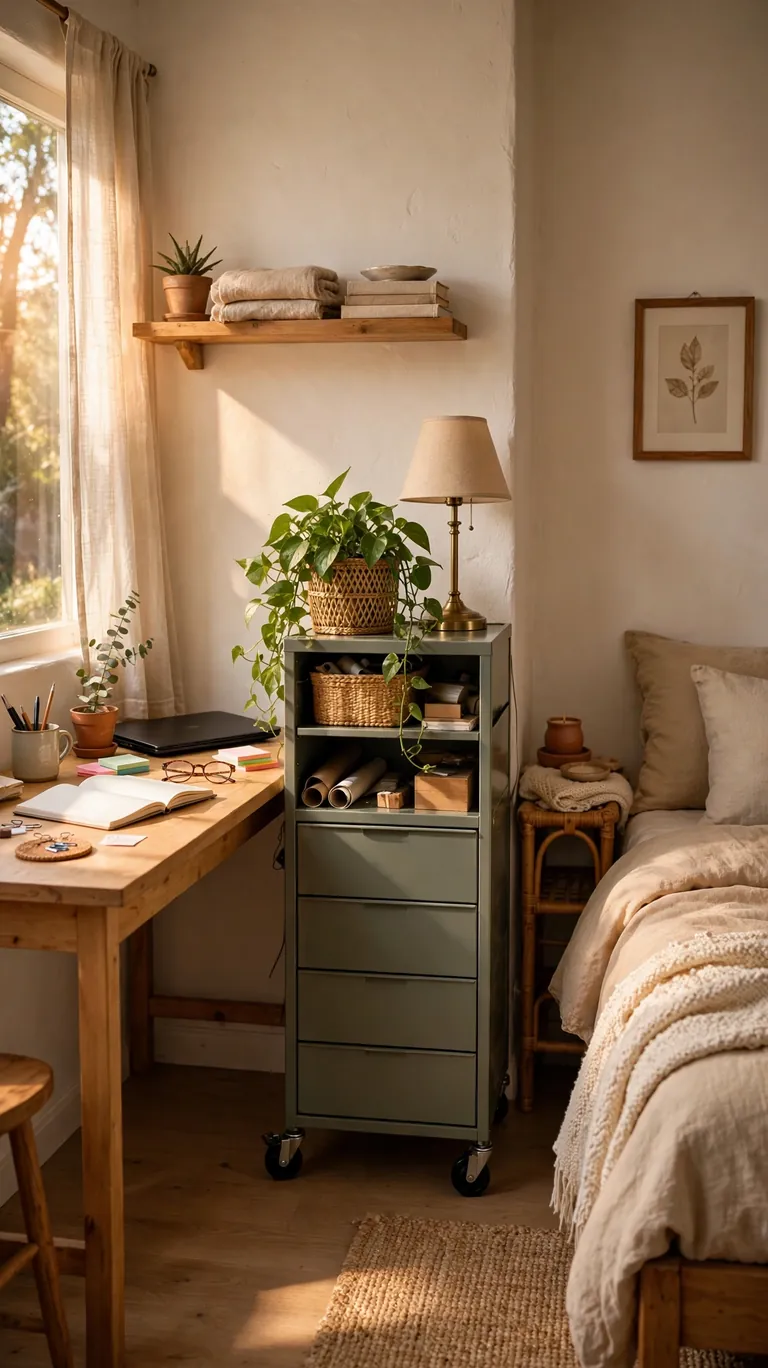
A rolling cabinet or low dresser on casters makes a divider you can reposition in seconds. Roll it out to separate your desk from the bedroom when you work, then push it back against the wall at night. The cabinet stores office supplies, files, and tech gear, so your small space stays tidy without extra furniture.
Choose a cabinet that reaches about waist to chest height so it defines the zone without towering over the room. Top it with a plant or a desk lamp to make it feel like part of the decor. This is a great pick for studios where the same square footage has to serve as an office by day and a living room by night, since the whole boundary moves with one push.
8. Shoji-Style Panel Screen
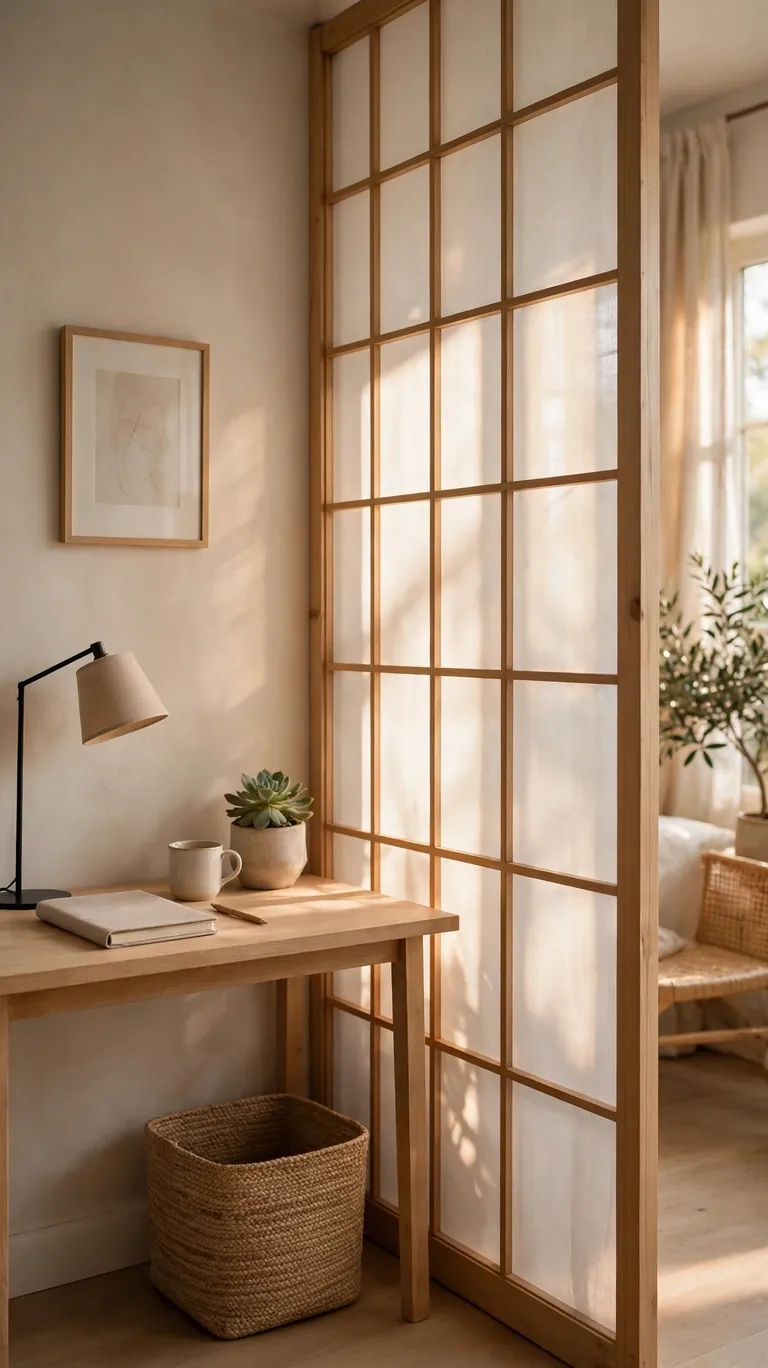
Shoji-style screens bring a calm, minimal look that suits small apartments perfectly. The light wood frames with translucent paper or fabric panels divide the space while letting a soft glow pass through, so your office corner never feels dark or boxed in. Place one between your desk and the bed or sofa to create a quiet visual boundary.
Real shoji screens are lightweight, which makes them easy to move and reposition. If you need more privacy, look for versions with a frosted or fabric backing rather than thin paper. The horizontal and vertical grid pattern adds structure to a small room without visual weight. Keep the rest of your desk setup simple and uncluttered to match the screen’s minimal mood.
9. Closed-Back Bookcase Facing the Living Area
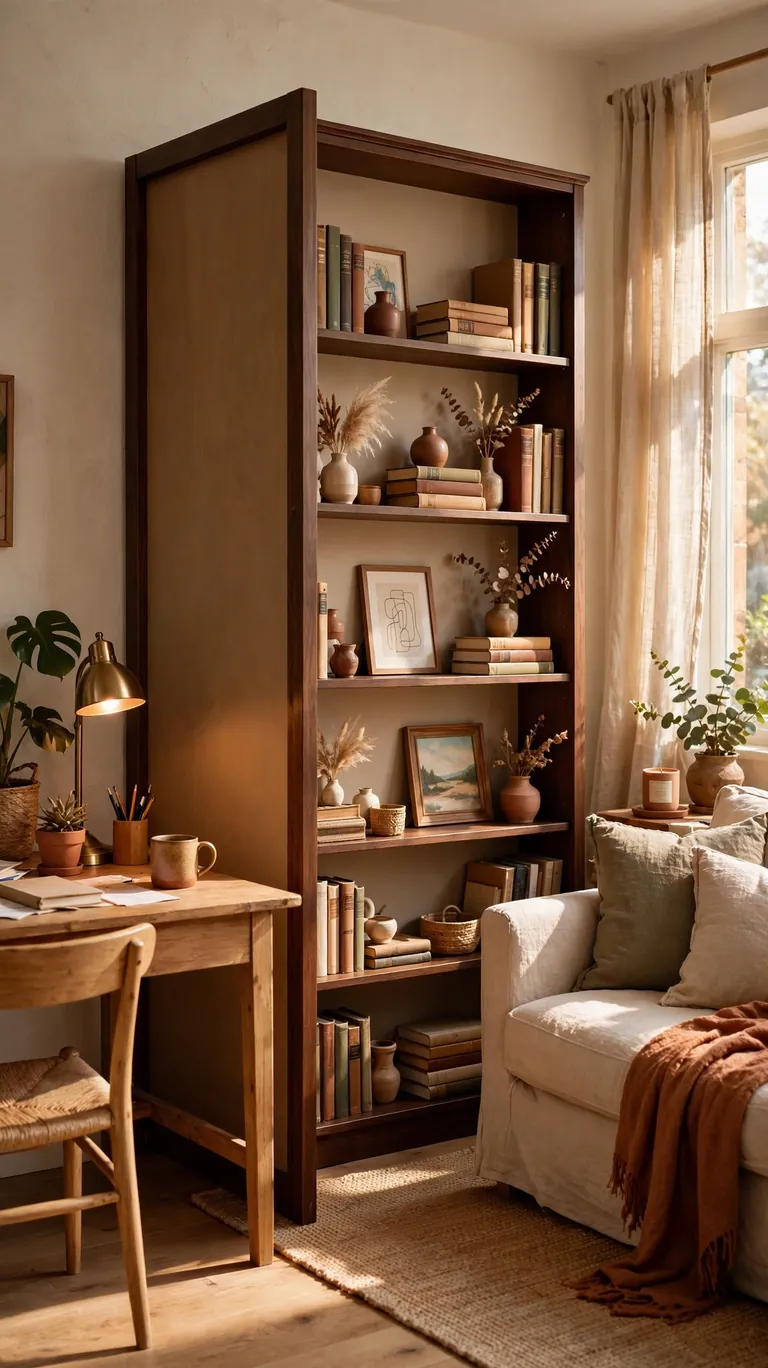
If your desk backs up against your bed or sofa, a closed-back bookcase facing outward hides your entire work setup. Position the bookcase between the desk and the rest of the room with the finished back panel toward the living space. From the couch, you see a neat piece of furniture; from the desk, you get a wall of storage.
Style the outward-facing side with books, framed art, or baskets so it looks like a deliberate part of the room. The desk side can be purely functional: shelves for your printer, filing boxes, and supplies. Because the back is solid, it also dampens a little sound. This setup works best when the bookcase is tall enough that you can’t see the desk over it from across the room.
10. Macrame or Hanging Textile Panel
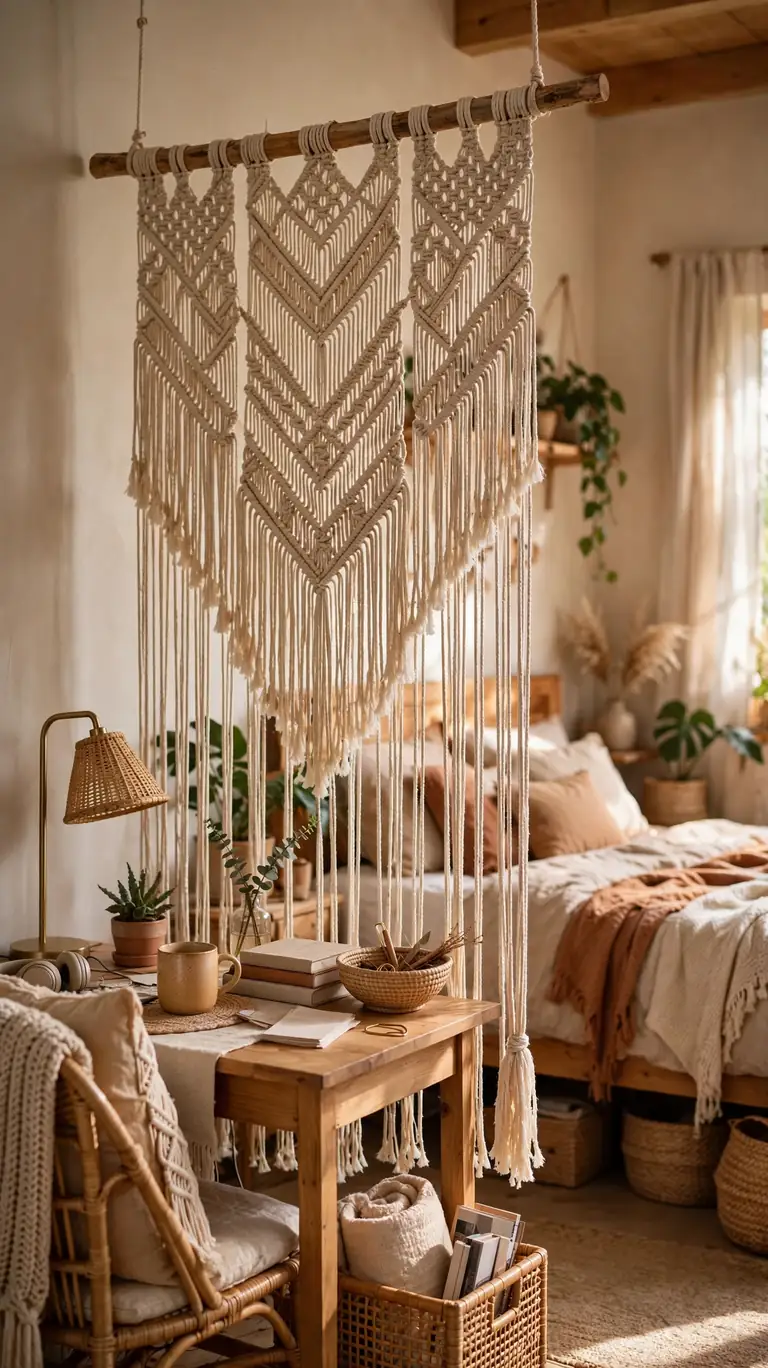
A large macrame wall hanging or a textile panel hung from the ceiling adds a soft, artistic boundary that suits boho and relaxed interiors. It won’t block sound, but it clearly marks where the office begins and the living space ends. Hang it from a curtain rod or a wooden dowel mounted between two walls, or suspend it from the ceiling with hooks.
Textile dividers are light, affordable, and easy to swap when you want a change. Choose a piece that reaches at least to your seated eye level so it actually reads as a divider. Pair it with a rug under your desk to ground the office zone further. This is a lovely option for renters because it hangs like art and leaves no trace when you move.
11. Sliding Panel on a Ceiling Track
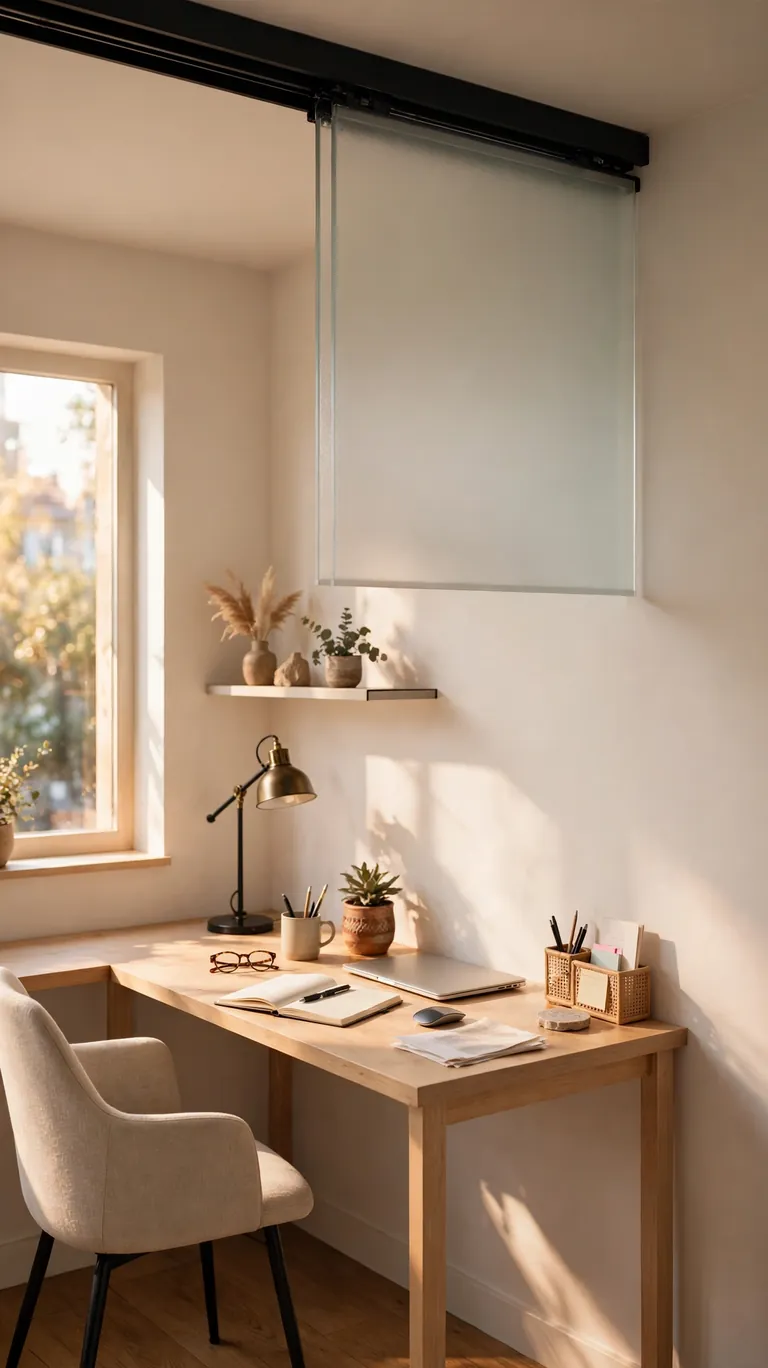
A single wide sliding panel on a ceiling track gives you a modern, door-like divider without any construction. Slide it closed to shut off your office corner during work hours, and slide it open to let the apartment breathe in the evening. A panel in frosted acrylic, fabric, or light wood keeps things bright while still giving you a real sense of enclosure.
Measure your space carefully before buying, since the panel needs room to slide to one side. If a full track feels like too much, a tension-mounted sliding panel works between two walls in a narrow room. This idea suits people who want their office to feel like a separate room during the day but don’t want to lose the openness of a small apartment at night.
12. Cube Storage Unit as a Room Divider
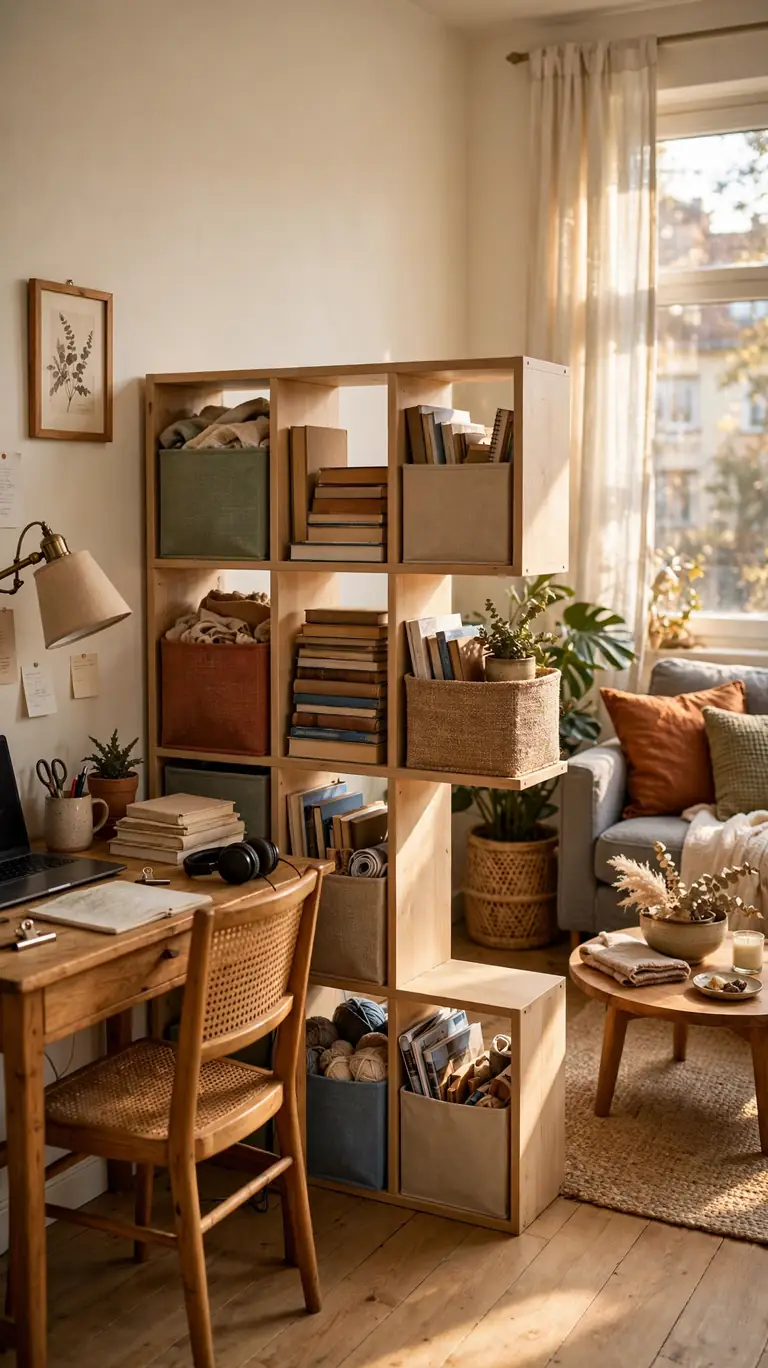
A cube storage unit turned sideways makes one of the most practical dividers for a small home office. Set it perpendicular to the wall at the edge of your desk zone, fill the cubes with fabric bins, books, and office supplies, and you’ve got storage plus separation in one piece. Leave a few cubes open on the living-room side for decor so it doesn’t look like pure office furniture.
These units are affordable, sturdy, and easy to find in sizes that fit small spaces. A two-by-four unit on its side is tall enough to divide a seating area from a desk without blocking light over the top. Add labels to the bins so supplies stay organized, and keep the top clear or styled with one plant and a small lamp. When you move, it doubles as regular storage in your next place.
13. Frosted Acrylic Panels
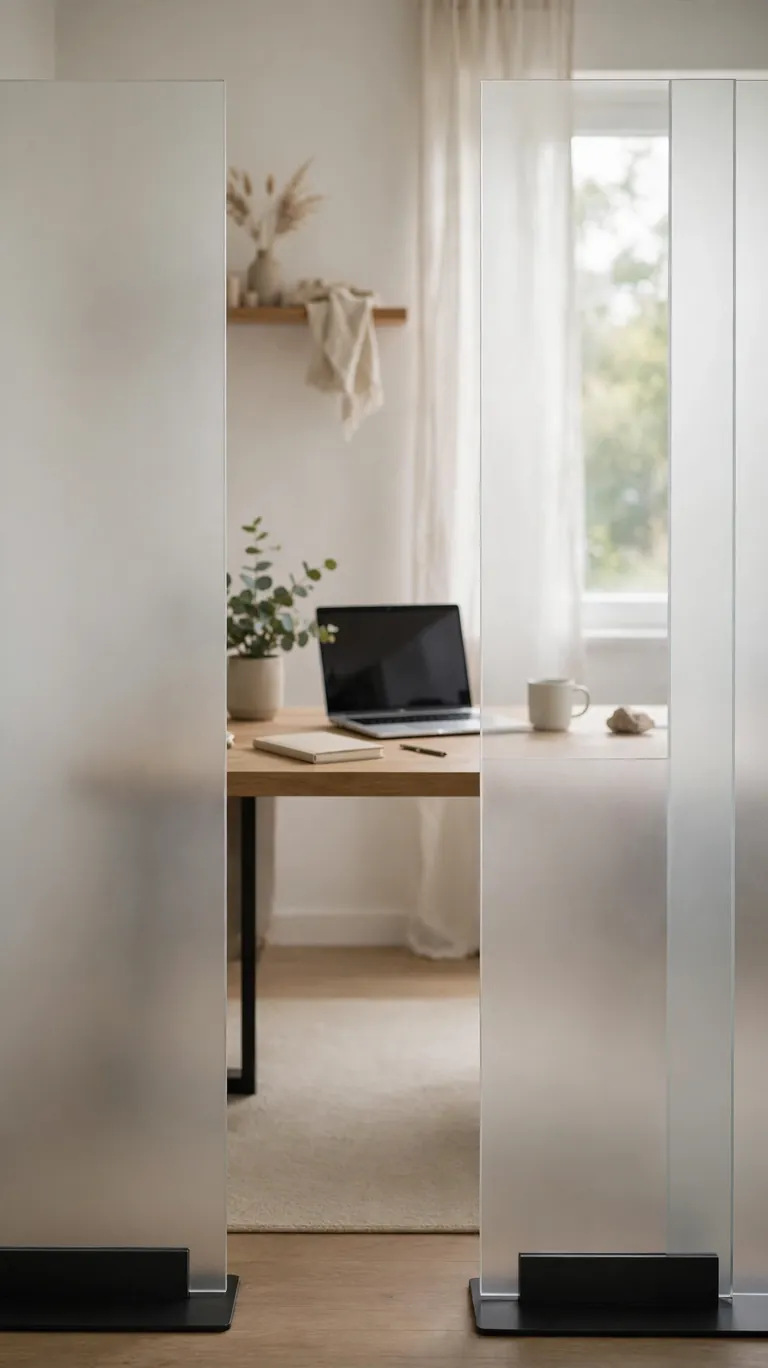
Frosted acrylic panels give you the light flow of glass with more privacy and a lighter, more modern feel. They hide the clutter of cables and papers while still letting daylight through, which keeps a small office corner from feeling gloomy. Freestanding acrylic screens come in folding styles, or you can mount panels in a simple frame for a custom look.
Acrylic is lighter and less fragile than glass, which makes it easier to move around a small apartment. Wipe it down with a soft cloth to keep it clear, since dust shows more on frosted surfaces. This divider works well in a minimalist or modern space, where its clean lines blend into the decor instead of competing with it.
14. Divider with a Built-In Fold-Down Desk
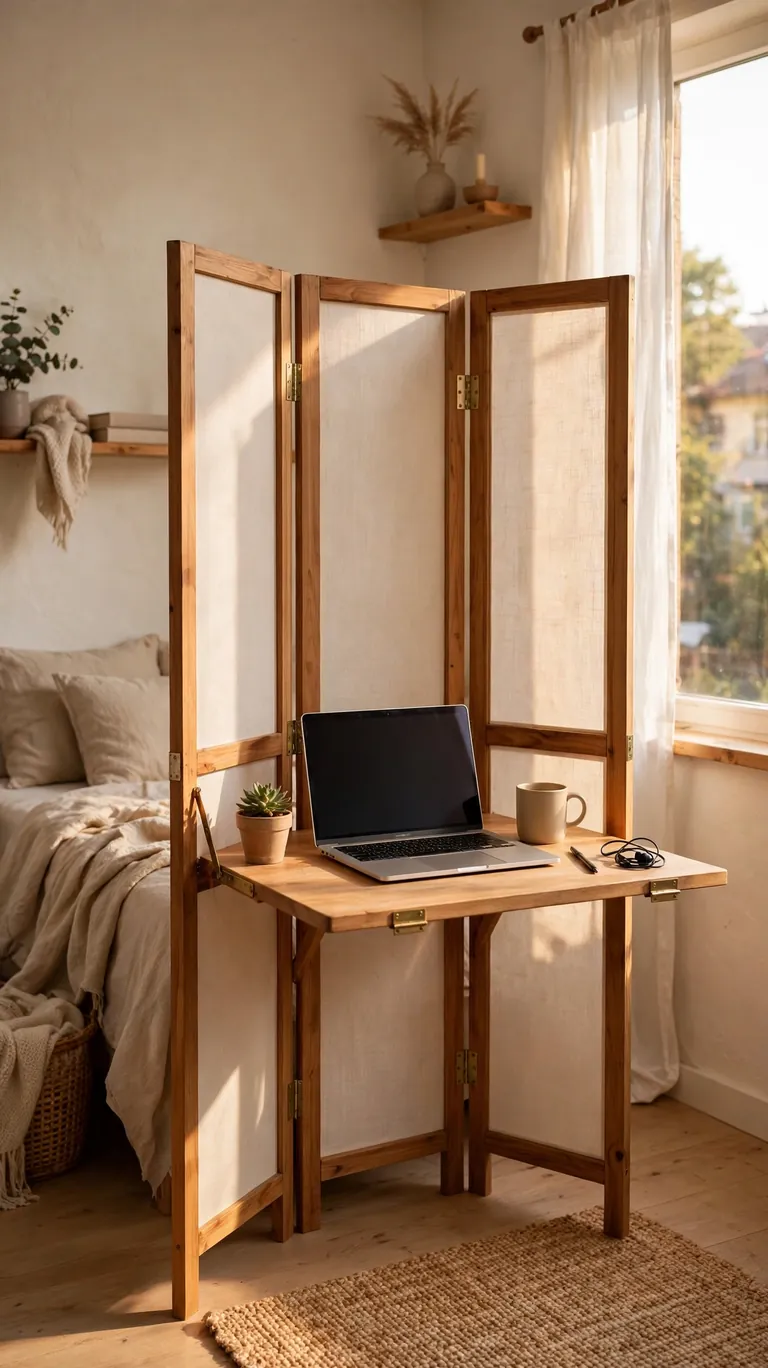
If floor space is truly tight, choose a divider that includes the desk itself. A folding screen or panel with a fold-down work surface gives you a full office setup that collapses flat against the divider when you’re done. Open it in the morning, work, then fold it away and your living space is back.
Look for sturdy designs that can hold a laptop and a few essentials without wobbling. Some versions include small shelves or pockets for supplies, so everything you need lives on the divider itself. This is the ultimate small-space solution because the office takes up almost no permanent footprint, and the divider still separates your work zone from the rest of the room when it’s folded up.
15. Tension Rod Curtain Between Two Walls
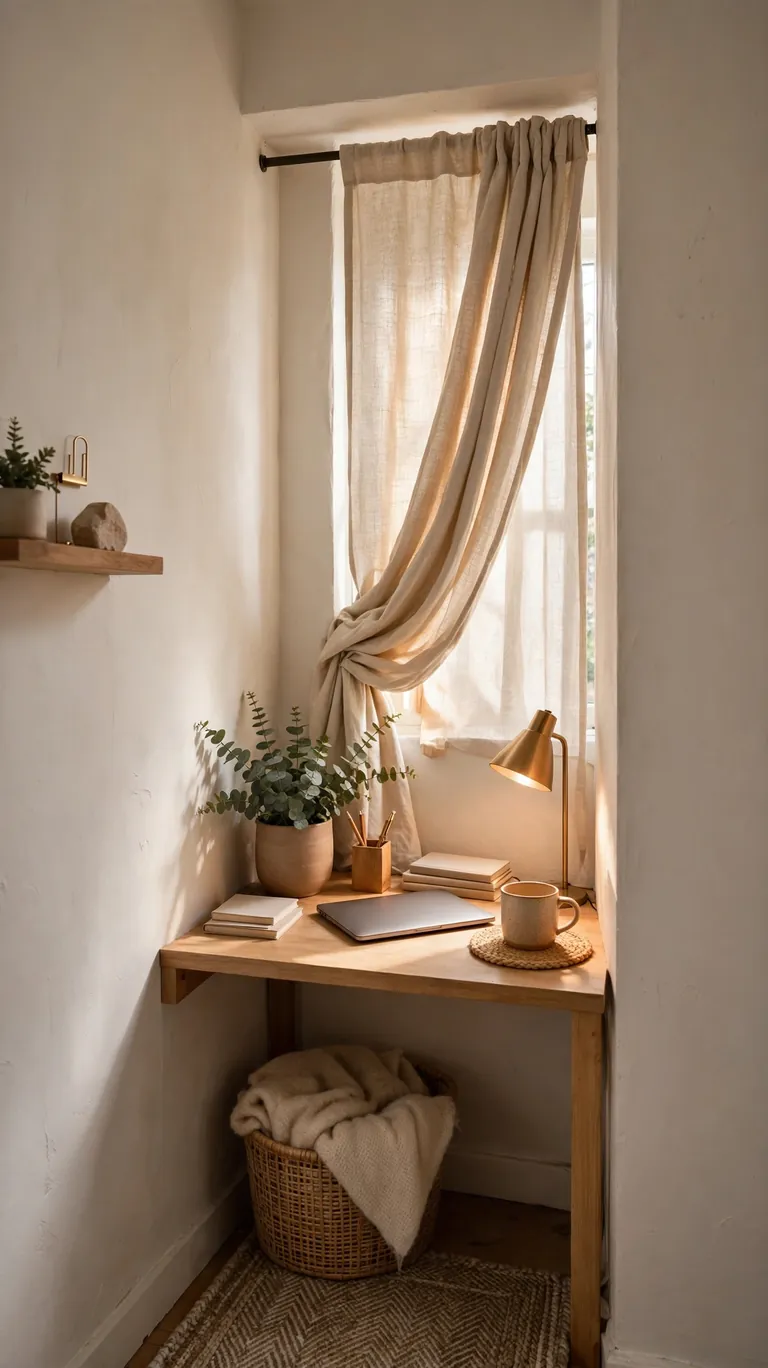
When your desk sits in an alcove or between two walls, a simple tension rod and curtain is the fastest divider you can install. No drilling, no tools, and it takes about ten minutes. Choose a curtain that complements your bedding or sofa so the closed curtain looks like a deliberate design choice rather than a makeshift fix.
This works best in a true nook where the rod spans a short distance. Hang the curtain high and wide so it covers the whole opening, and pick a fabric with some weight so it hangs straight instead of billowing. In the evening, pull it aside to make the room feel whole again. It’s simple, cheap, and completely reversible.
16. Open Metal Grid Shelving Divider
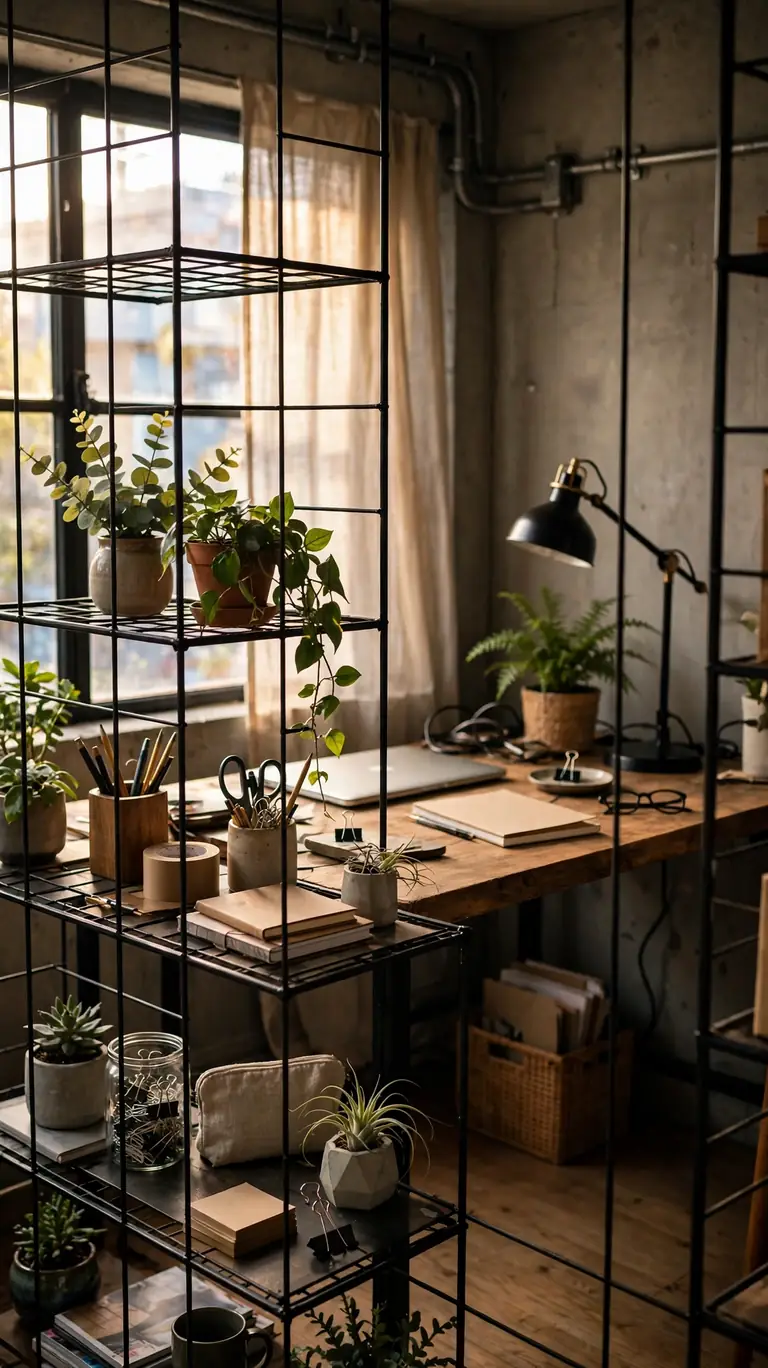
An open metal shelving unit, like a wire rack or an industrial grid shelf, divides your space while keeping everything airy. Use it to store office supplies, binders, and plants, and hang small baskets or hooks from the grid for extra organization. Light passes through the open frame, so the room stays bright.
This style suits modern and industrial interiors, where the metal frame looks intentional. Keep the shelves tidy since everything is visible from both sides. If the wire look feels too utilitarian, weave a few trailing plants through the grid or add fabric bins to soften it. It’s a hardworking divider that costs less than most furniture pieces.
17. Foldable Acoustic Panels
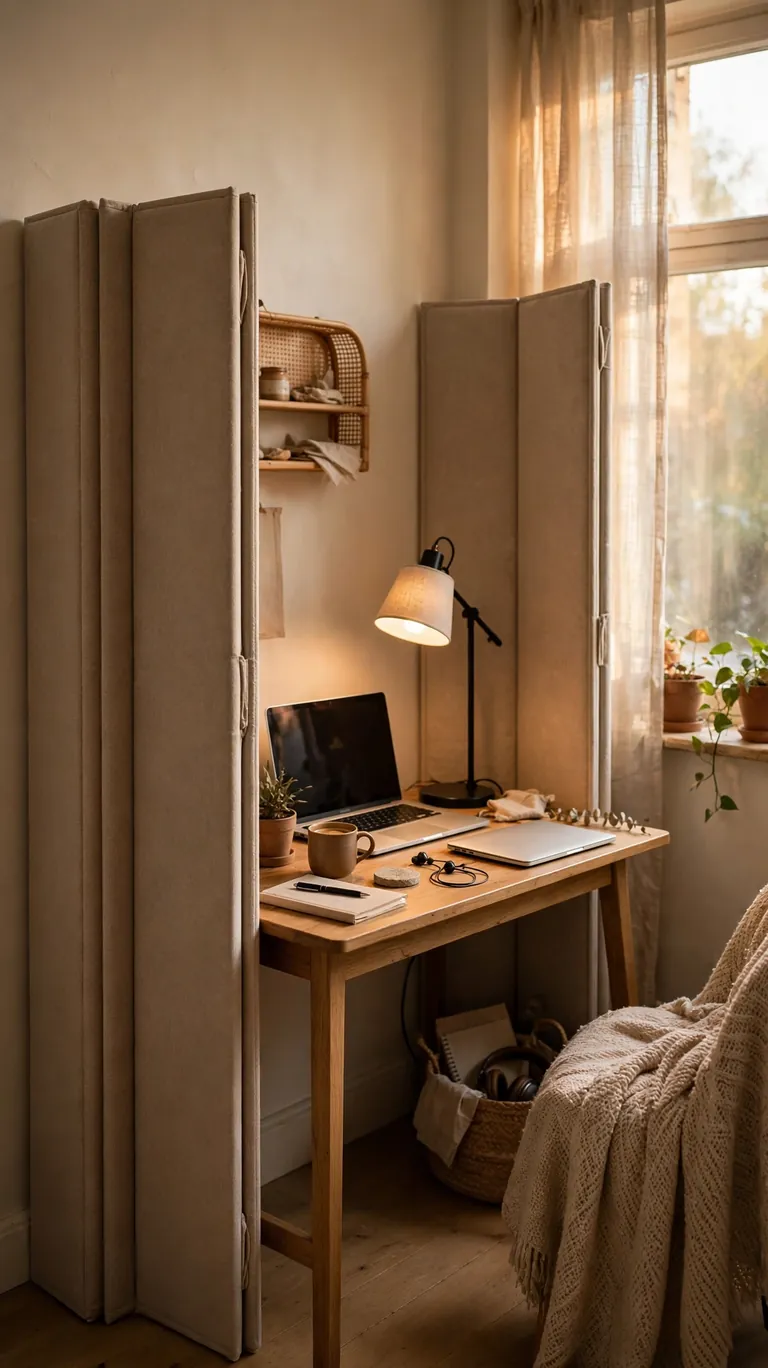
If noise is your biggest problem, foldable acoustic panels are worth the investment. They absorb sound better than fabric screens or bookcases, which helps if you take calls while a partner watches TV nearby. Set two or three panels around your desk to create a quieter pocket, and fold them away when the workday ends.
Many acoustic panels come in attractive fabric colors and patterns, so they don’t have to look like office equipment. Place them close to the noise source for the best effect, and pair them with a rug and soft furnishings, which also absorb sound. In a small apartment, even a small reduction in echo and background noise makes focusing noticeably easier.
18. Rattan or Wicker Screen for Texture
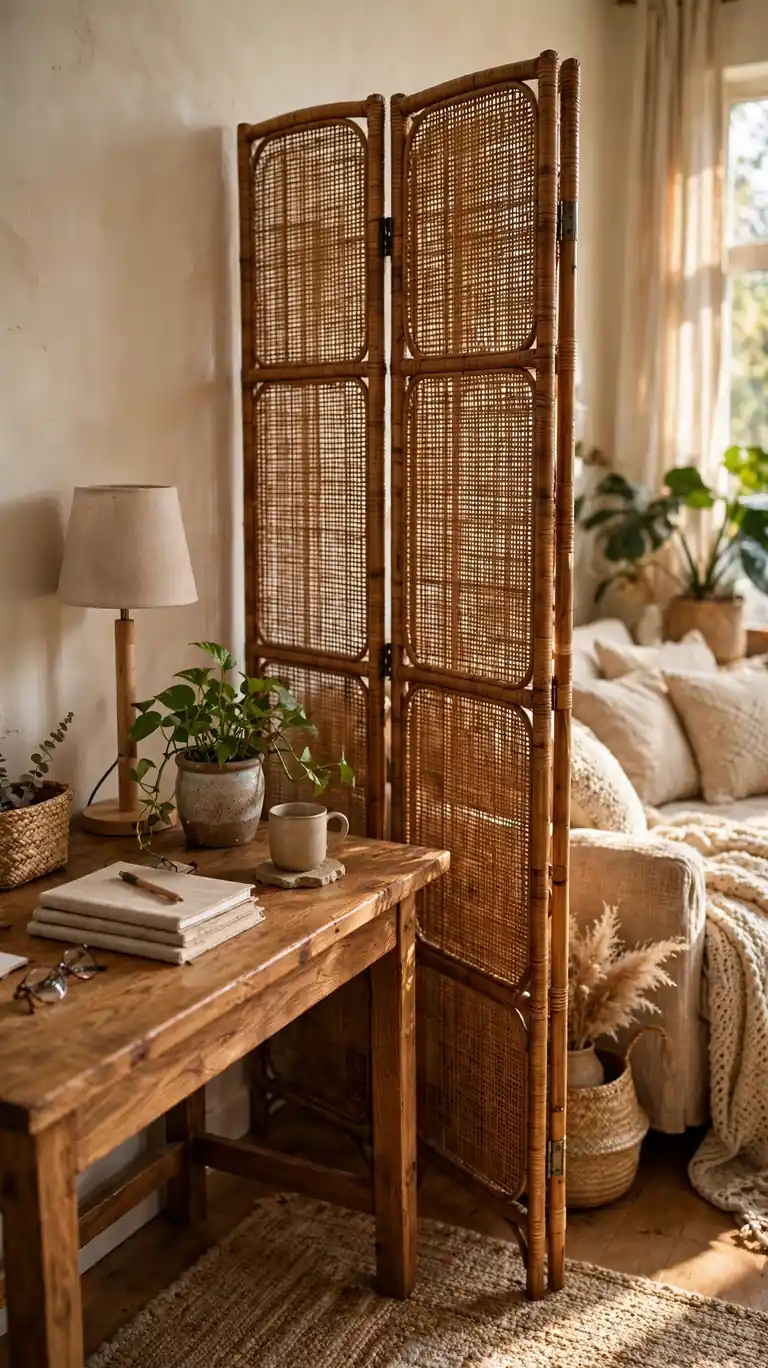
A rattan or wicker screen adds warmth and texture that flat fabric dividers can’t match. The woven pattern lets a little light and air through while still giving you privacy, and the natural material makes a small office corner feel cozy rather than cramped. It works beautifully with wood desks, plants, and neutral decor.
Rattan screens are lightweight and easy to reposition, which is handy in a small space that serves multiple purposes. The weave pattern hides minor wear well, so it’s a practical long-term piece. Keep the rest of the corner simple so the texture of the screen becomes the focal point. In a studio, this kind of screen can make your office zone feel like a deliberate design feature.
19. Half-Height Divider to Keep Sightlines Open
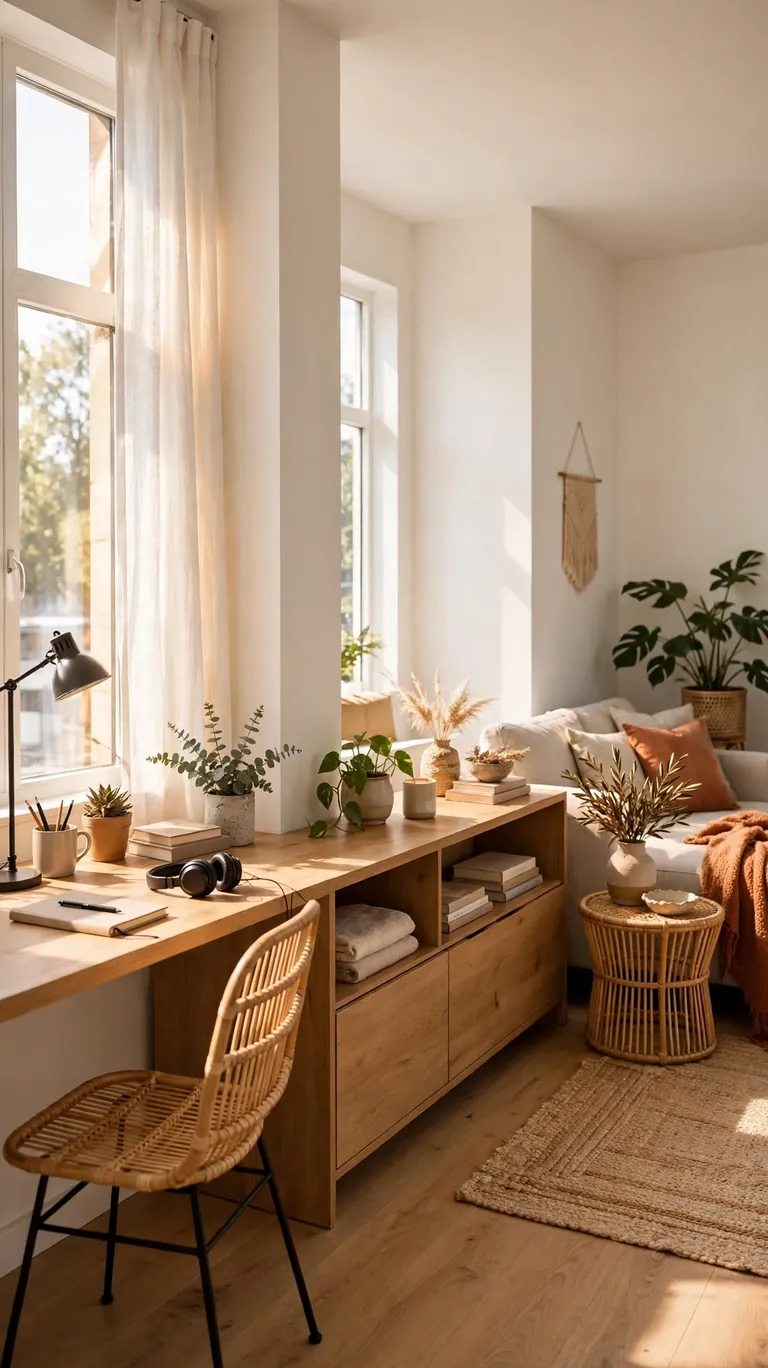
A half-height divider, like a low console, a short bookcase, or a bench with storage, marks the edge of your office without closing off the room. You can see over it from the sofa, which keeps a small apartment feeling open, but it still clearly defines where work happens. This is a good compromise when a full screen would make the space feel cramped.
Top the divider with items that signal the transition: a lamp on the office side, a plant, or a stack of books. Use the storage inside for office supplies so the piece earns its place. This approach works especially well in open-plan studios where you want zones, not walls, and where natural light needs to travel across the whole space.
20. Chalkboard or Whiteboard Divider
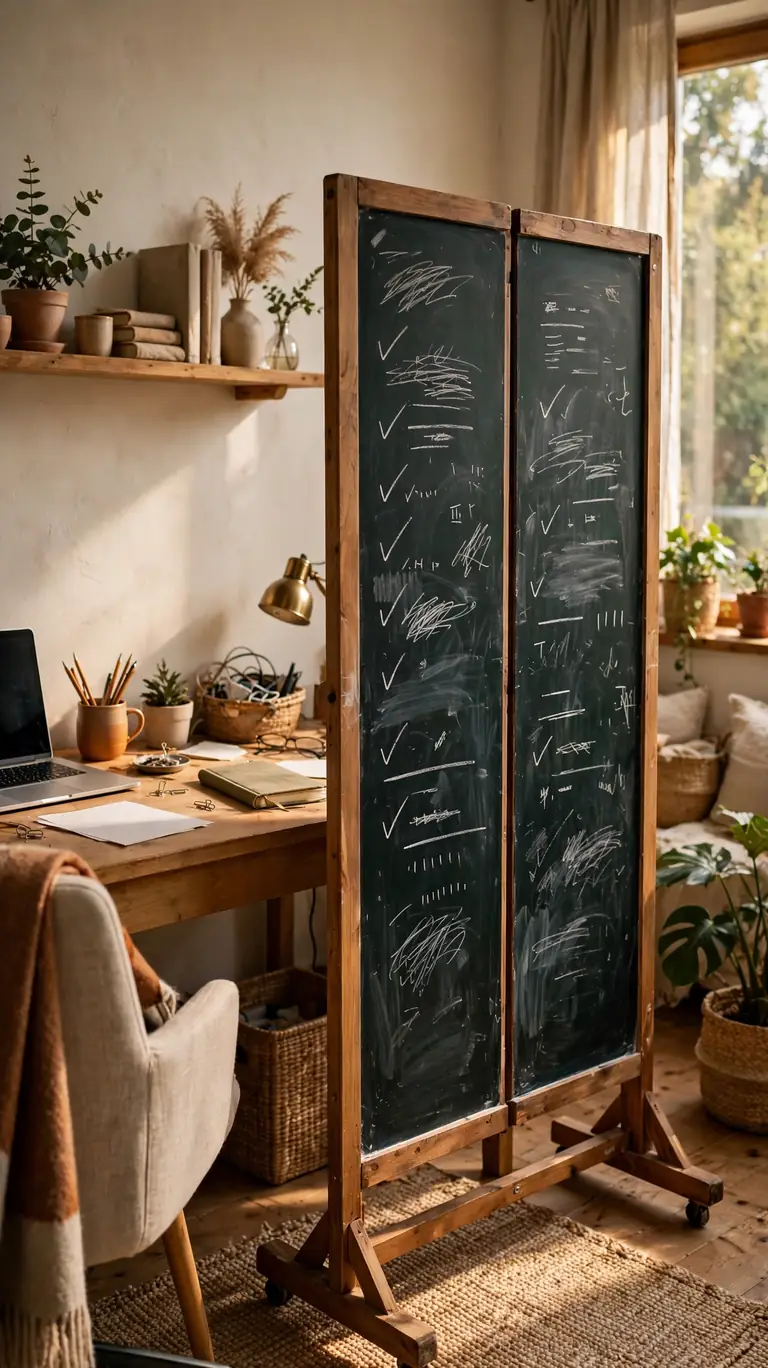
A chalkboard or whiteboard panel divider gives you a planning surface and a room boundary in one. Use the desk side for to-do lists, project timelines, and brainstorming, and keep the outward side clean or decorated so it looks good from the living area. Freestanding double-sided easel boards work well, or mount a board on a folding frame.
This is ideal for visual thinkers who like their plans where they can see them. Use low-odor markers on whiteboards and keep a small tray for pens and an eraser attached to the frame. If the board faces the living space, choose a framed chalkboard with a decorative border so it reads as decor rather than office equipment when you’re off the clock.
21. Repurposed Vintage Doors as a Divider
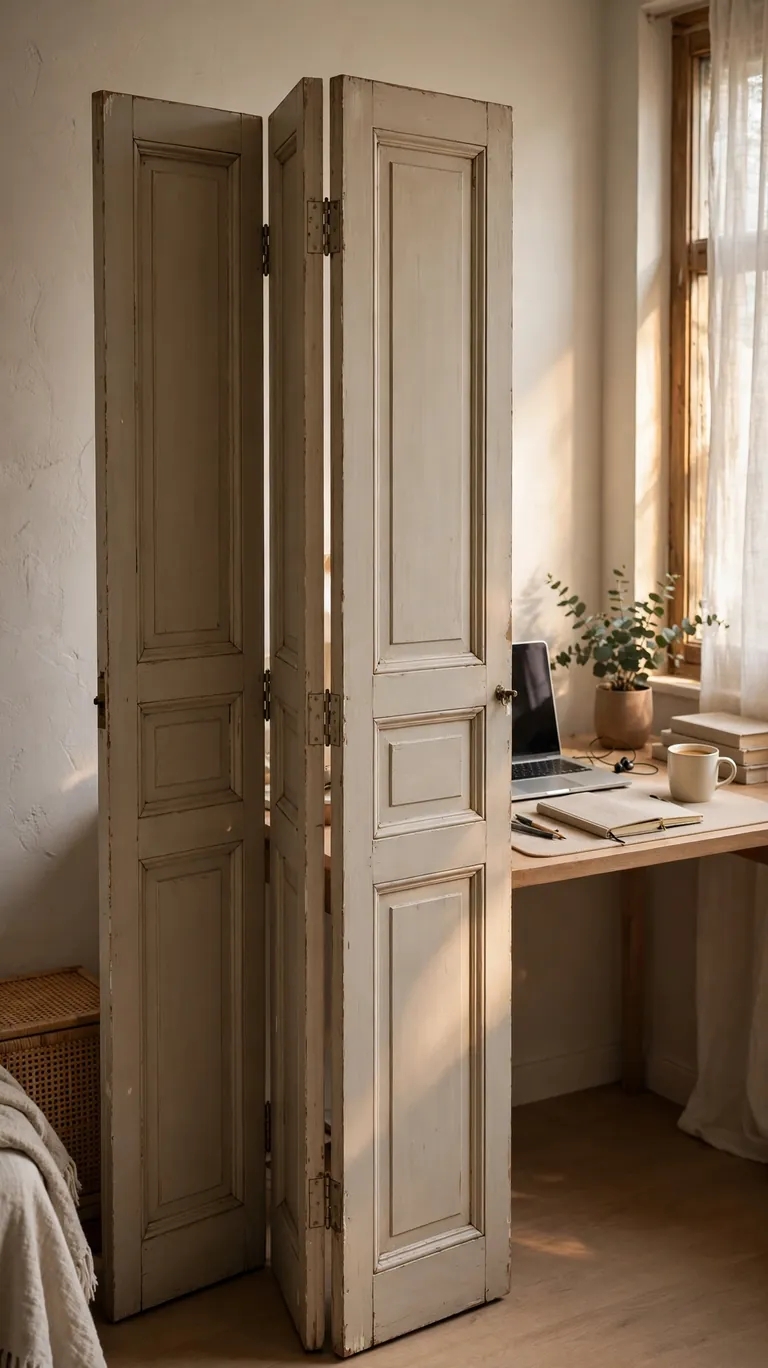
Old doors hinged together make a divider with real character. Find two or three vintage doors, connect them with hinges, and stand them between your desk and the rest of the room. Paint them one color for a cohesive look, or leave the patina for a rustic feel. Doors with glass panes or louvers let light through while still blocking the view.
This is a fun weekend project that costs less than most store-bought screens. Sand any rough edges, make sure the doors stand stable (add small feet if needed), and seal the paint so it doesn’t chip. Each panel is narrow enough to fold flat for moving. In a small apartment, a divider with this much personality can become the defining piece of your whole office corner.
Frequently Asked Questions
What’s the best room divider for a very small apartment office?
A folding screen or a curtain on a ceiling track is usually the best starting point. Both take up almost no floor space, cost little, and can be moved or removed in seconds. If you also need storage, an open bookcase or cube unit divider gives you separation plus shelves without requiring extra square footage.
How tall should a room divider be for a home office?
Aim for a divider that blocks the sightline between your desk and the rest of the room when you’re seated. For most setups, that means 60 to 72 inches tall. If you want the space to stay bright and open, a half-height divider around 36 to 42 inches works, since it defines the zone without closing off light.
Can I use a room divider without damaging rental walls?
Yes. Freestanding screens, bookcases, tension rods, and rolling cabinets need no drilling at all. Ceiling tracks and curtain rods can often be mounted with adhesive or pressure fittings, and any small screw holes from a mounted track are easy to fill before you move out. Always check your lease before drilling.
Do room dividers actually help with work focus?
They help more than you’d expect. A divider reduces visual distractions, signals to your brain that you’re in work mode, and gives video calls a clean background. It won’t soundproof a room, but combined with a rug and soft furnishings, even a fabric screen takes the edge off background noise and makes focusing easier.
How do I keep a divided office corner from feeling cramped?
Keep the divider light in color or translucent so daylight passes through, and don’t push your desk flush against it. Leave a little breathing room on all sides, use a rug to define the zone, and keep the desk surface clear. Good lighting, especially a desk lamp plus natural light, makes a small divided corner feel like a proper office instead of a closet.
Conclusion
You don’t need a spare bedroom to have a home office that feels real. As these 21 ideas show, the right divider can carve a focused, comfortable workspace out of a corner, an alcove, or half of a studio, and it can do it without construction, without a big budget, and without making your apartment feel smaller. The trick is choosing a divider that matches how you actually live: a folding screen if you need flexibility, a bookcase if you need storage, a curtain if you need your space back every evening, or glass and plants if light matters most. Start with the problem that bothers you most, whether that’s visual clutter, noise, or the feeling that work never really ends, and pick the divider that solves it. Set it up, live with it for a week, and adjust. A small-space office doesn’t have to be perfect on day one. It just has to give you a place to sit down, focus, and then walk away from when the day is done, and a good divider is what makes that boundary real.