17+ Inspiring Upright Piano Room Ideas for a Stylish Home
An upright piano deserves better than being shoved into a corner and forgotten. If you’ve been searching for upright piano room ideas, you’re probably trying to solve two problems at once: how to make the piano look like it belongs in your home’s style, and how to build a room (or a corner of one) around it that feels inviting instead of awkward. The good news is that an upright piano is one of the easiest statement pieces to style, because its shape does most of the work for you. It has clean lines, a strong silhouette, and a natural sense of presence.
The secret is treating the piano like the anchor of the room rather than an obstacle in it. That means giving it a defined zone with a rug, lighting it properly so it feels intentional, and styling the wall above and around it the way you would any other focal point. You don’t need a grand piano budget or a dedicated music room to pull this off. Most of the ideas below work in a regular living room, a family room, or even a bedroom corner, and they rely on things like mirrors, lamps, plants, and storage that you may already own. Whether your piano is a family heirloom, a secondhand find, or a brand-new purchase, these 18 ideas will help you build a stylish, practical space around it that you’ll actually want to spend time in.
1. Anchor the Piano Against a Solid Interior Wall
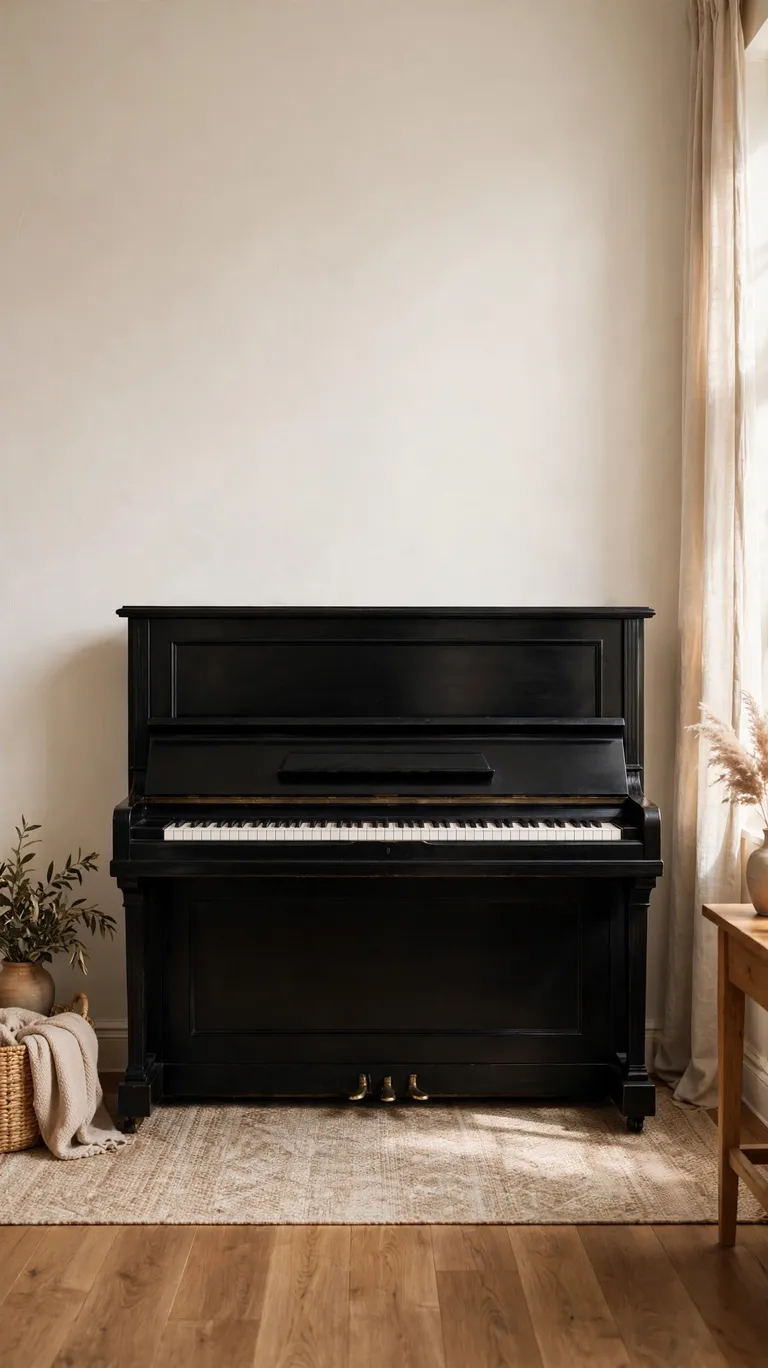
The single most important decision you’ll make is where the piano goes. Upright pianos sound best and stay in tune longer when they sit against an interior wall rather than an exterior one, because exterior walls swing in temperature and humidity with the weather. Pick the longest uninterrupted wall in the room if you can. Centering the piano on that wall gives it the visual weight of a fireplace or a media console, and it instantly reads as intentional rather than squeezed in.
There’s a practical bonus too. A solid wall behind the piano reflects sound back into the room instead of letting it leak through a window, so your playing actually sounds richer. If your only option is a wall with a window, hang a heavy curtain on that window and place the piano beside it rather than directly in front of it. Leave a few inches of breathing room between the piano’s back and the wall so air can circulate, which helps the wood and strings handle seasonal changes more gracefully.
2. Layer a Rug Under the Piano and Bench
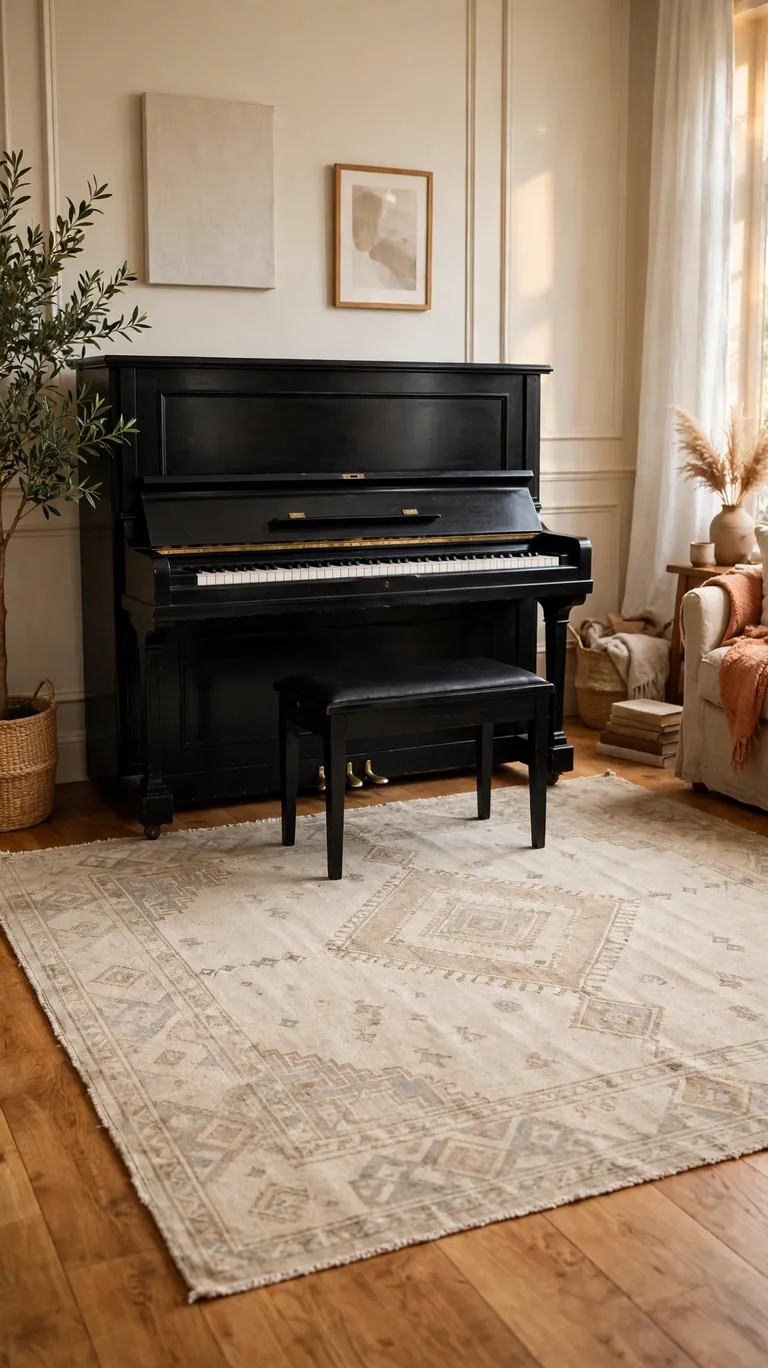
A rug does two jobs under a piano. First, it defines the piano’s zone in an open room, signaling to the eye that this area is a deliberate setup and not just where the piano happened to land. Second, it protects your floors from the piano’s casters and the bench’s legs, which can dent hardwood and snag carpet over time. Choose a rug that’s big enough to extend past the bench on all sides, so the whole arrangement sits on it comfortably.
For style, a flat-weave or low-pile rug works best because the bench legs won’t sink into it and wobble. Pattern-wise, something with a bit of texture or a subtle vintage pattern looks great under the dark, glossy lines of most upright pianos. If your piano is black, a lighter rug creates beautiful contrast and keeps the corner from feeling heavy. Measure your piano’s footprint plus the bench before you shop, and don’t be afraid to layer a smaller decorative rug over a larger neutral one for extra depth.
3. Style the Top of the Piano Like a Console Table
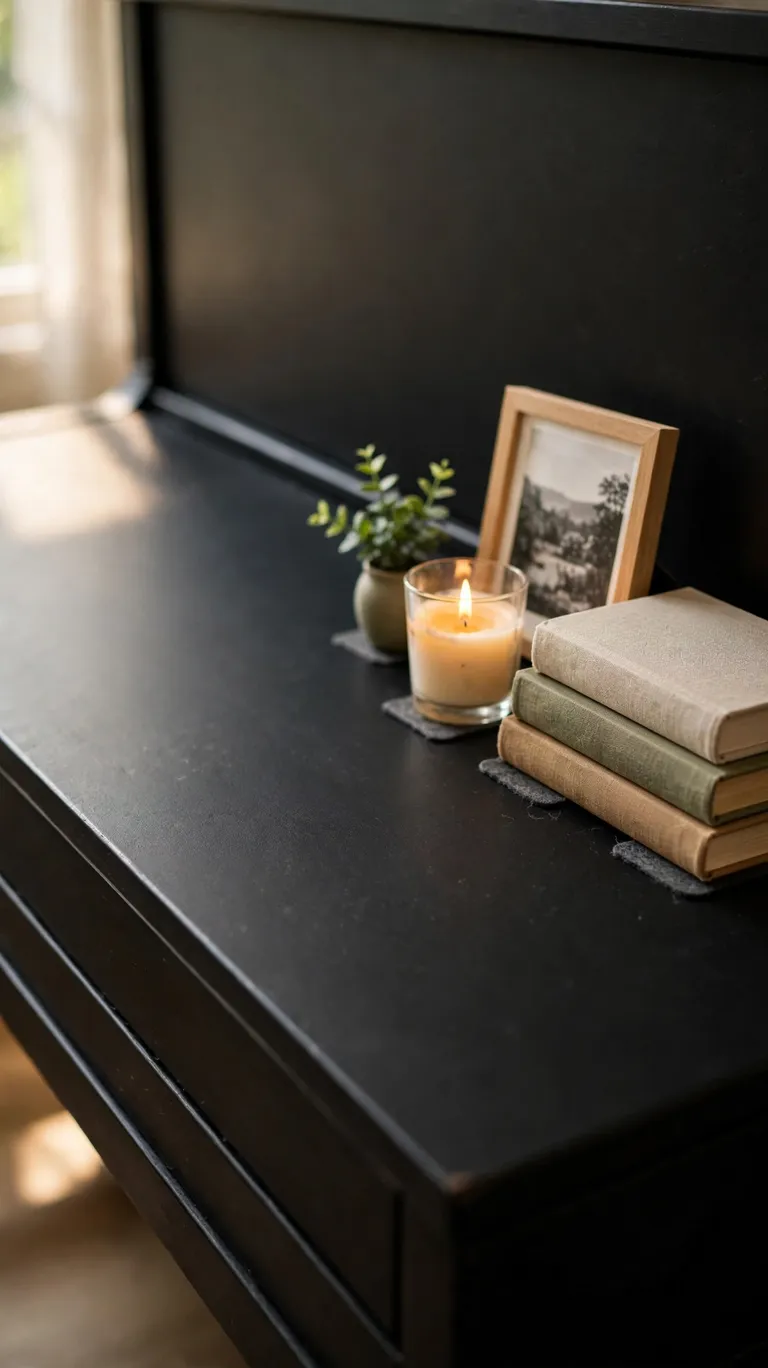
The flat top of an upright piano is a natural display surface, so treat it the way you’d style a console table. A small stack of beautiful books, a framed photograph, a candle, and a tiny potted plant are all you need. The key is keeping it minimal: three to five objects in varying heights, grouped toward one end so the other end stays clear for sheet music or a metronome. Resist the urge to line the whole top with knickknacks, because clutter fights the piano’s clean lines.
Think about function alongside looks. A small tray or shallow bowl near the bench end is perfect for catching a phone, reading glasses, or a pencil during practice sessions. If the piano gets played daily, keep the styling light and easy to shift, since you’ll be setting music and books up and down constantly. For a pianos that see less action, you can lean into a fuller display. Either way, felt pads under every object protect the finish from scratches, which is the one detail people always forget until it’s too late.
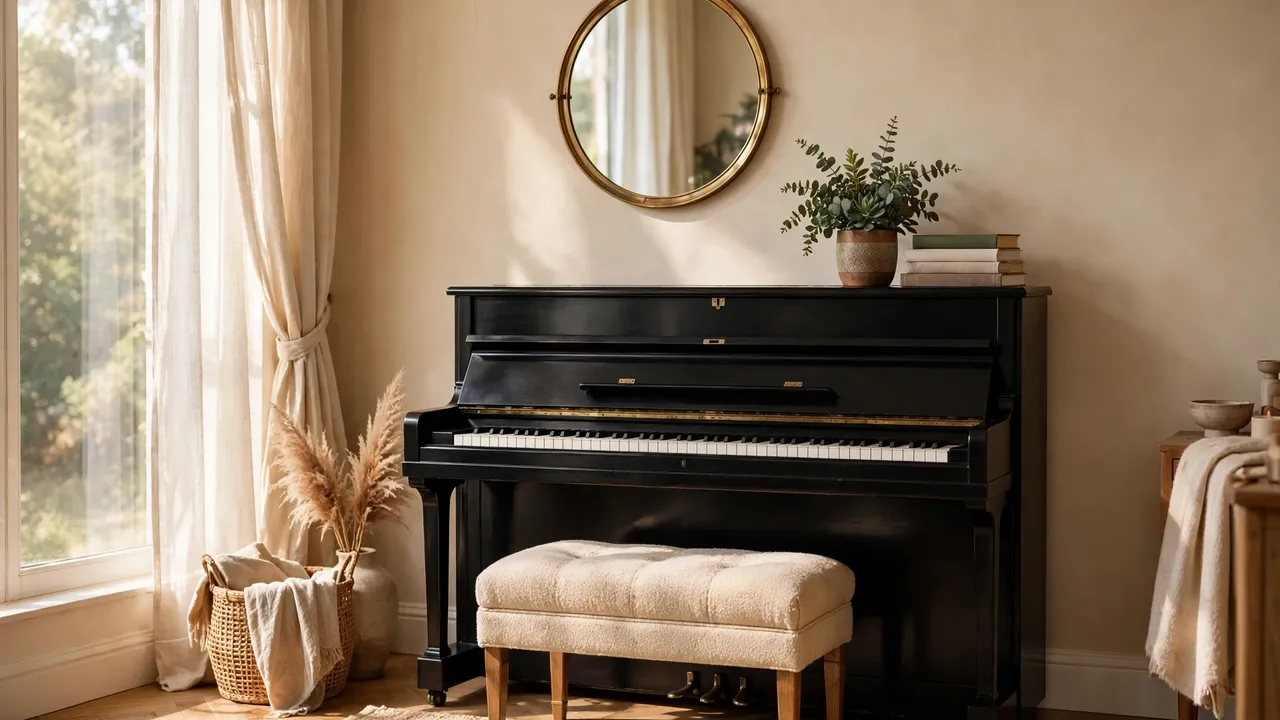
4. Hang a Statement Mirror Above the Piano
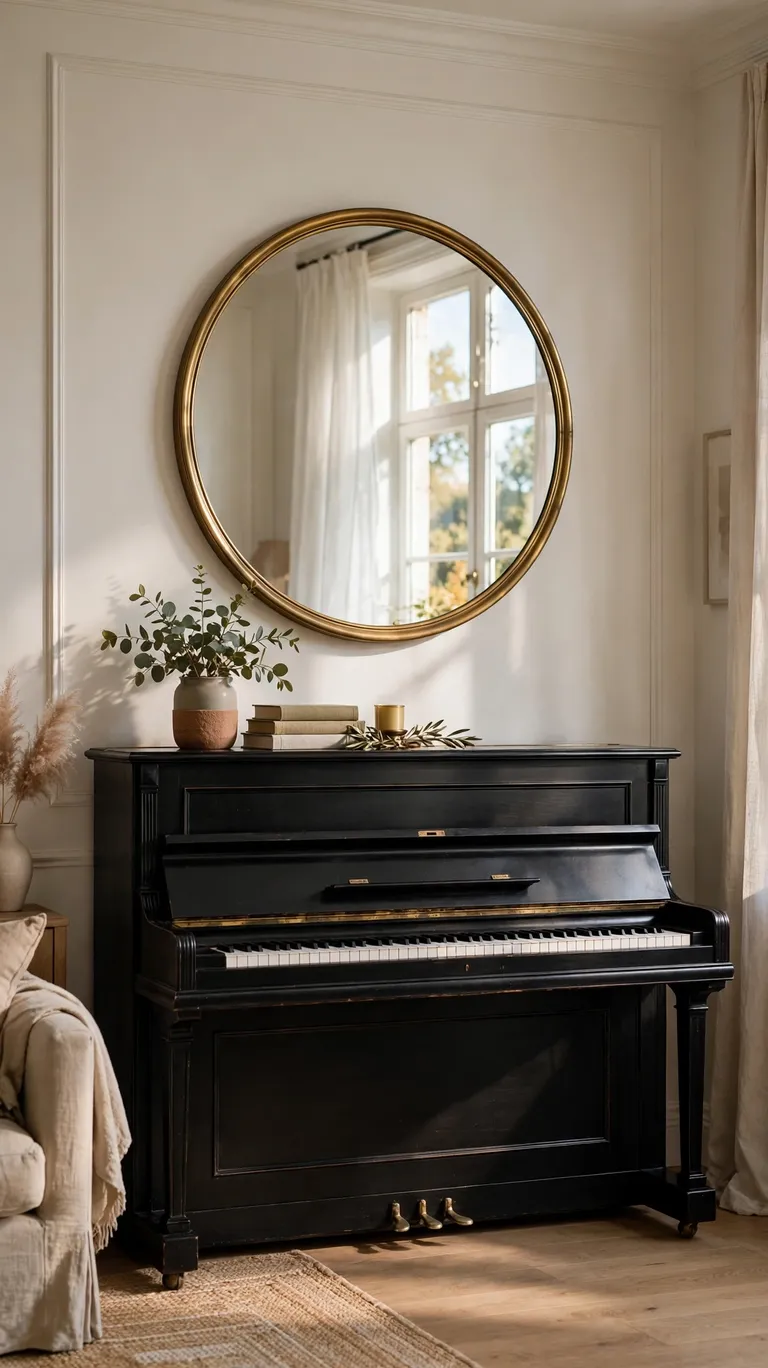
A mirror above an upright piano is one of those tricks that looks custom but costs very little. The piano’s top sits at roughly console-table height, so a mirror hung 6 to 10 inches above it fills the vertical wall space perfectly and draws the eye up. Round mirrors soften the piano’s rectangular shape beautifully, while an arched mirror adds a touch of elegance that pairs well with traditional instruments. Either way, the reflection bounces light around and makes the whole corner feel bigger.
Be strategic about what the mirror reflects. Hang it so it catches a window or a pretty part of the room rather than a blank ceiling or a doorway. If your piano sits opposite a window, a mirror above it will double the natural light in the space, which makes practice sessions feel brighter and more pleasant. Use proper wall anchors rated for the mirror’s weight, since a falling mirror above a piano is a disaster for both. When in doubt, have a second person help you position it before you commit to the hardware.
5. Swap In an Upholstered Bench with Storage
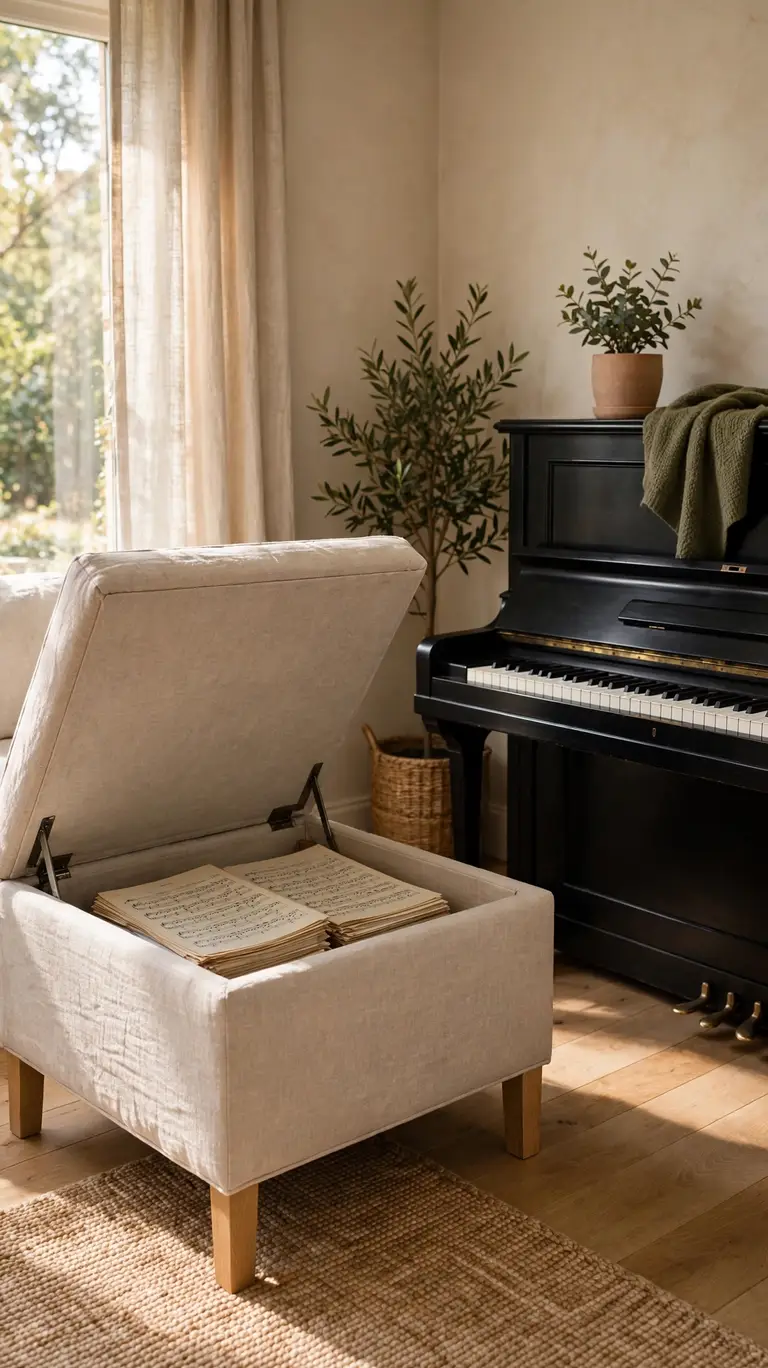
The standard wooden piano bench that came with your instrument is fine, but an upholstered bench with a lift-up seat changes how the whole area feels. The padding makes long practice sessions genuinely more comfortable, and the hidden storage inside swallows sheet music, method books, and metronomes that would otherwise pile up on the piano’s top or the floor. Look for one in a fabric that ties into your room’s palette, like a neutral linen or a soft velvet in a muted tone.
Make sure the bench height matches your piano before you buy, since playing posture matters and a bench that’s too tall or too short will bother your back and wrists over time. Most upright piano benches sit around 19 inches high, and many adjustable options exist if multiple players of different heights share the instrument. If you love your original bench, a thick custom cushion with ties achieves most of the comfort upgrade for less money, and a lidded basket tucked underneath handles the storage part.
6. Add a Dedicated Piano Lamp
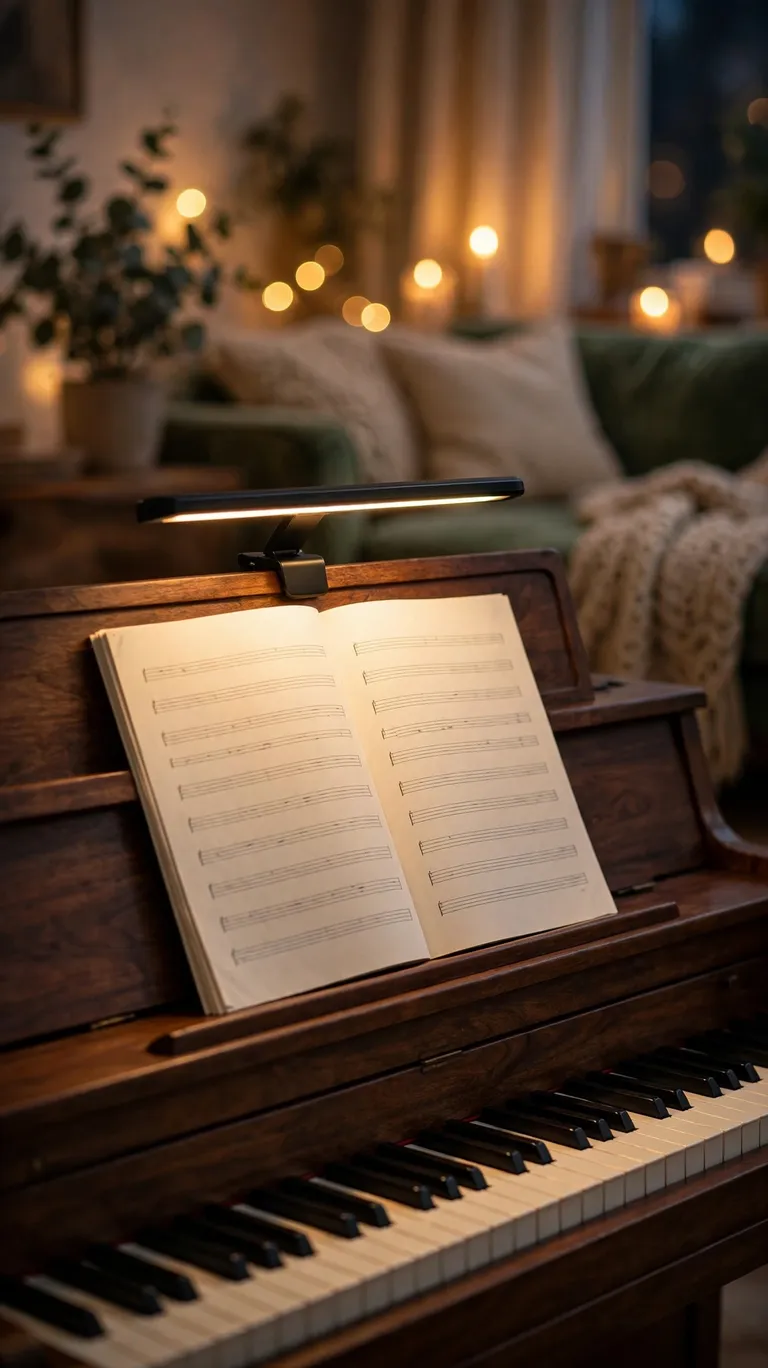
Reading sheet music in dim light is a fast track to eye strain and sloppy practice, so a dedicated piano lamp is one of the most practical upgrades you can make. Clip-on LED piano lamps are inexpensive, attach right to the music desk, and throw light exactly where you need it without spilling glare across the room. If you prefer a more decorative look, a small picture light mounted on the wall above the piano or a slim brass lamp sitting on the piano’s top works just as well.
Choose a warm white bulb (around 2700K to 3000K) rather than a harsh daylight one, because warm light flatters both the room and the piano’s finish while still being bright enough to read by. Position the light so it illuminates the music from above and slightly in front, which cuts shadows from your hands. A lamp with a dimmer is worth the small premium, since you can turn it low for evening ambiance when nobody’s playing and bright when it’s practice time.
7. Build a Gallery Wall Beside the Piano
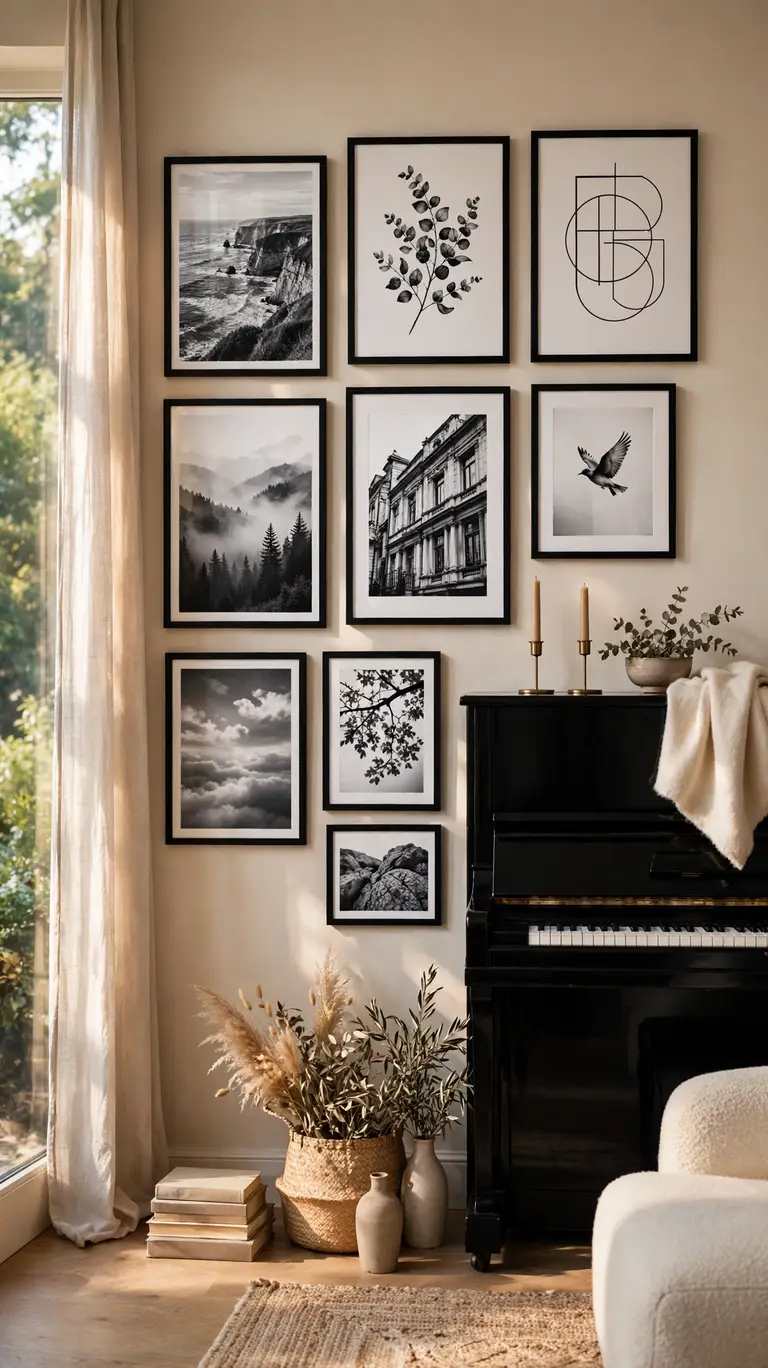
The wall space beside an upright piano is prime real estate for a gallery wall, and it solves the “what do I put next to this big dark rectangle” problem in one move. Mix framed sheet music covers, black-and-white photography, small abstract prints, and maybe a vintage concert poster for a look that feels collected rather than decorated. Keep the frames in a tight color family (all black, all brass, or all natural wood) so the variety of art still feels cohesive.
Lay the arrangement out on the floor first and photograph it before you hang anything, which saves you from a wall full of unnecessary nail holes. Start the gallery at roughly the piano’s top height and build upward and outward from there, keeping the closest frame a few inches from the piano’s edge. If drilling into the wall feels like a commitment, picture ledges are a renter-friendly alternative that let you layer frames and swap art seasonally without touching a drill.
8. Tuck a Cozy Listening Chair Next to the Piano
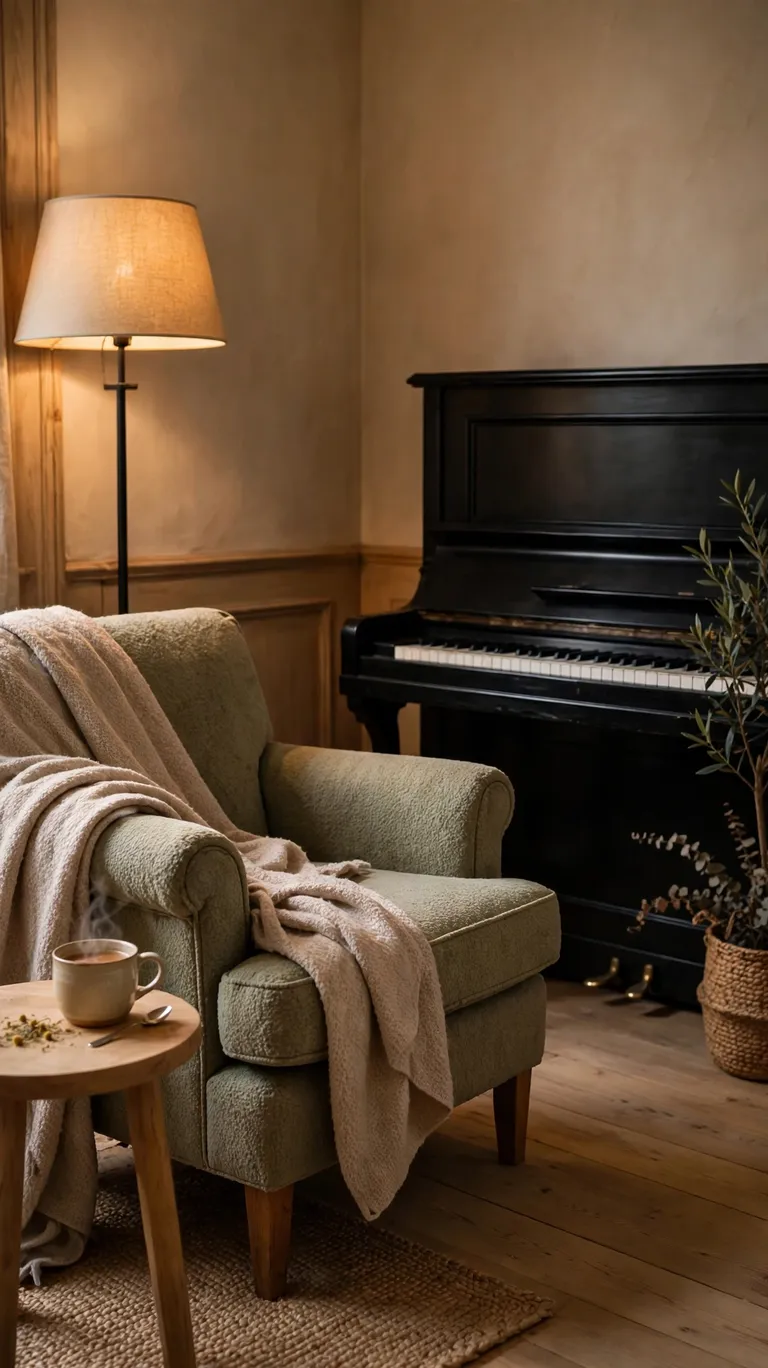
Every piano corner benefits from a place to sit and listen, and it doesn’t take much space. A comfortable armchair angled toward the piano, paired with a small side table for a cup of tea, turns the area into a destination instead of a pass-through. This is especially lovely in households where one person plays and others like to be nearby, because it gives the listener a proper seat instead of a perched spot on the bench’s edge.
Choose a chair with a relatively low profile so it doesn’t block the view of the piano or crowd the wall art. A small round side table works better than a square one in tight corners, since there are no sharp corners to bump into in the dark. Add a soft throw blanket over the chair’s arm and a floor lamp behind it, and you’ve built a reading nook that doubles as front-row seating for impromptu living room concerts. It’s the kind of corner guests gravitate toward during parties.
9. Soften the Sound with Curtains or Soft Furnishings
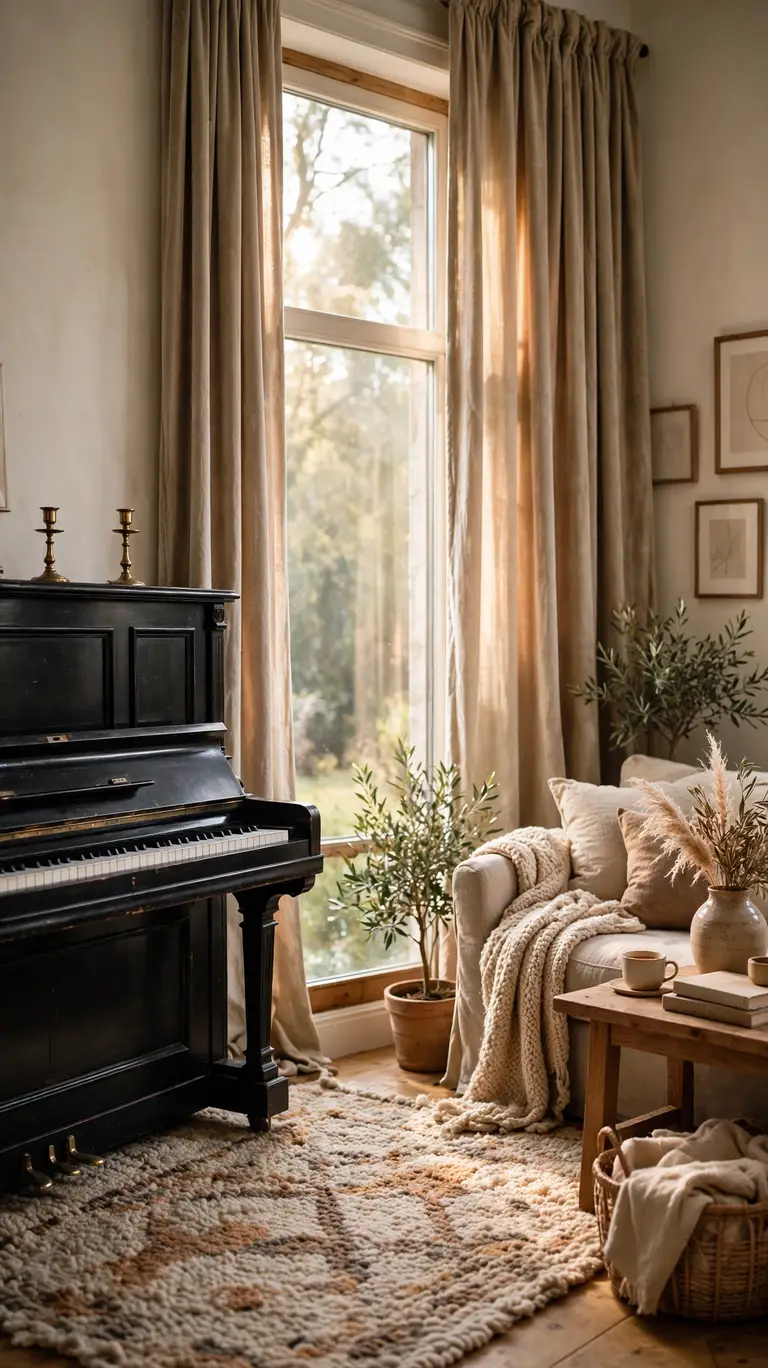
Upright pianos can sound harsh in rooms full of hard surfaces, with sound bouncing off bare walls, hardwood floors, and windows. Soft furnishings absorb those reflections and make the piano sound warmer and more balanced. If the piano sits near a window, floor-length curtains in a heavy fabric like velvet or lined linen make the biggest single difference. A thick rug underneath (see idea 2) handles the floor reflections, and an upholstered chair or ottoman nearby helps too.
You don’t need acoustic panels or professional treatment for a home piano. The goal is simply breaking up hard, parallel surfaces. Bookshelves filled with books are excellent natural diffusers, which is why pianos and bookcases are such a classic pairing. Even a fabric wall hanging or a tapestry behind the piano can take the edge off a bright, echoey tone. Play a few scales before and after adding soft pieces and you’ll hear the difference immediately, usually a rounder bass and less harshness in the upper register.
10. Balance the Silhouette with a Tall Plant
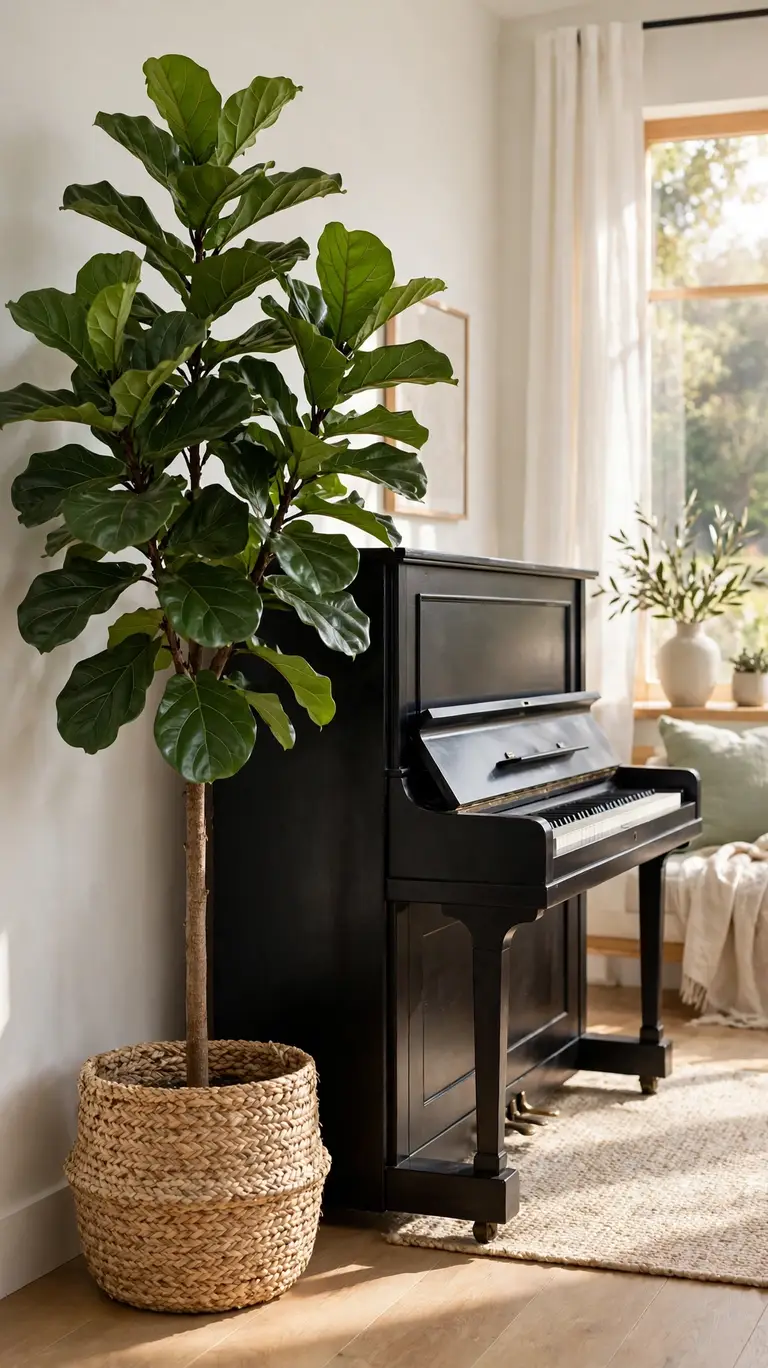
An upright piano is a big, dark, rectangular object, and a tall plant beside it is the simplest way to soften that geometry. Something with height and movement, like a fiddle leaf fig, an olive tree, or a kentia palm, draws the eye upward and adds life to a corner that can otherwise feel static. Place the plant on the side opposite your gallery wall or listening chair so the arrangement feels balanced rather than lopsided.
Pick a plant that suits your light conditions honestly, because a struggling plant next to a beautiful piano helps no one. Low-light corners do well with snake plants or ZZ plants in a tall planter that adds the height artificially. Use a planter in a material that echoes something else in the room, like ceramic, woven seagrass, or aged brass, so the plant feels styled rather than plopped. A plant stand that lifts the pot a foot off the floor is a cheap way to get extra height without buying a bigger plant.
11. Display Sheet Music and Books as Decor
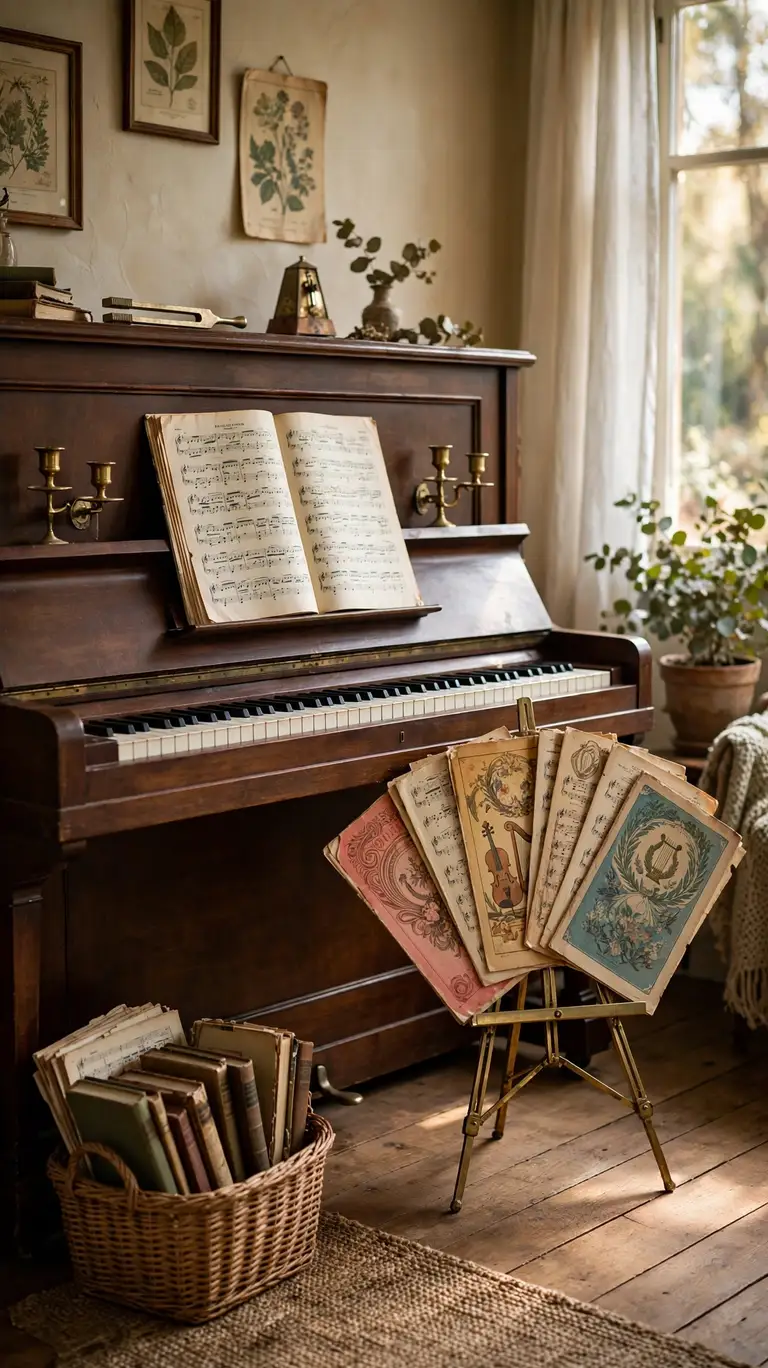
Sheet music is genuinely beautiful, so let it work as decor instead of hiding it in a drawer. An open book of music on the piano’s music desk looks inviting and signals that the instrument gets played, which is charming in a way a bare piano isn’t. Prop a favorite vintage score or a pretty method book against the wall on top of the piano, or fan a few covers in a small brass easel beside it.
For storage that doubles as styling, line up music books on a nearby shelf with their spines facing out, organized by color or size for a tidy look. A woven basket on the floor beside the bench holds oversized folios and keeps them within arm’s reach during practice. If you have antique sheet music with gorgeous cover art, frame one or two pieces and hang them as part of your gallery wall. The whole approach costs nothing, uses what you already own, and makes the piano corner feel alive and personal.
12. Create a Kid-Friendly Practice Corner
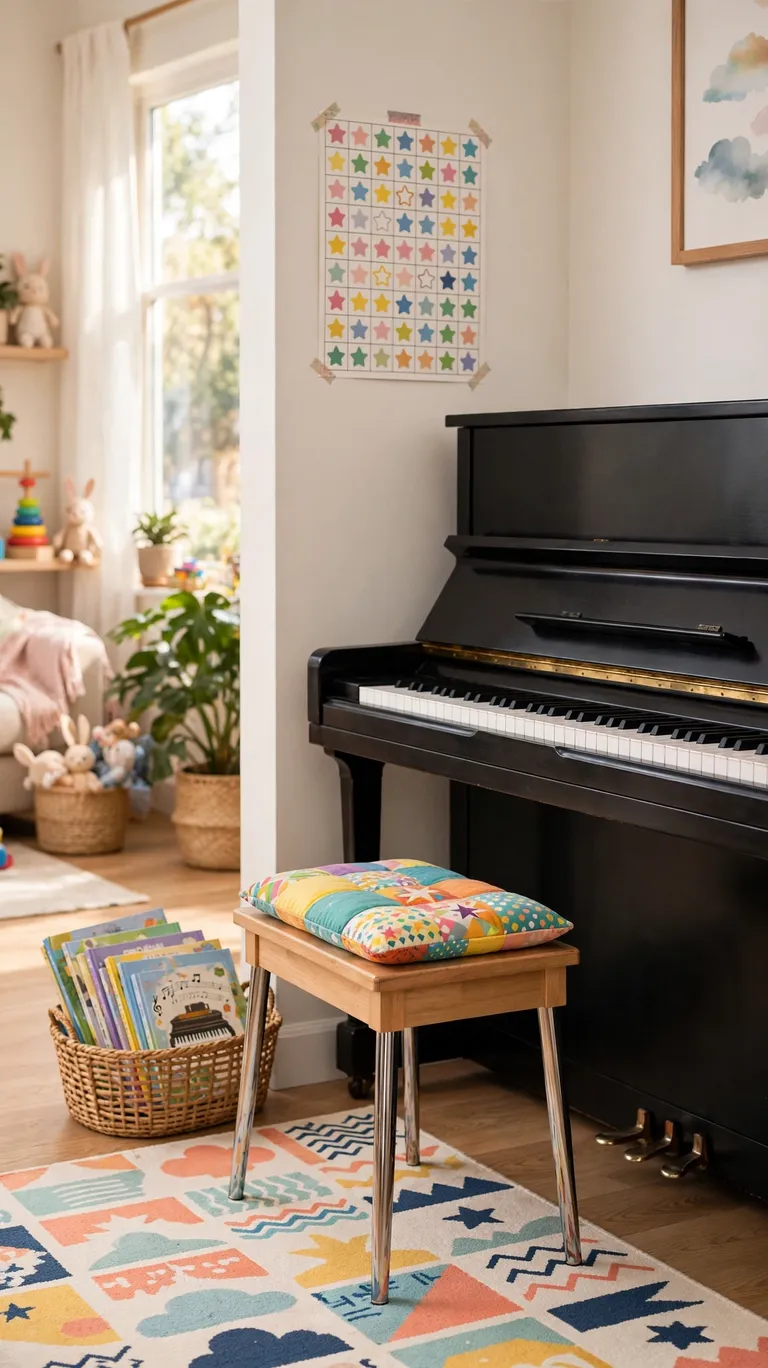
If kids are learning on the piano, a few thoughtful touches make practice time something they don’t dread. A sturdy, adjustable bench or a firm cushion lets small feet reach the pedals properly, which matters more for their progress than most parents realize. Keep their current lesson books in a low basket or on a small shelf right beside the piano so setup takes seconds, because every minute of hunting for books is a minute of lost motivation.
Make the corner welcoming rather than stern. A small rug with a fun pattern under the bench, a sticker chart on the wall beside the piano, and a little timer on top of the instrument turn practice into a routine instead of a battle. Good lighting is non-negotiable for young readers, so make sure the piano lamp (idea 6) is part of this setup. Keep a pencil and a small notebook on the piano’s top for the teacher’s notes, and the corner practically runs itself.
13. Add Floating Shelves Above or Beside the Piano
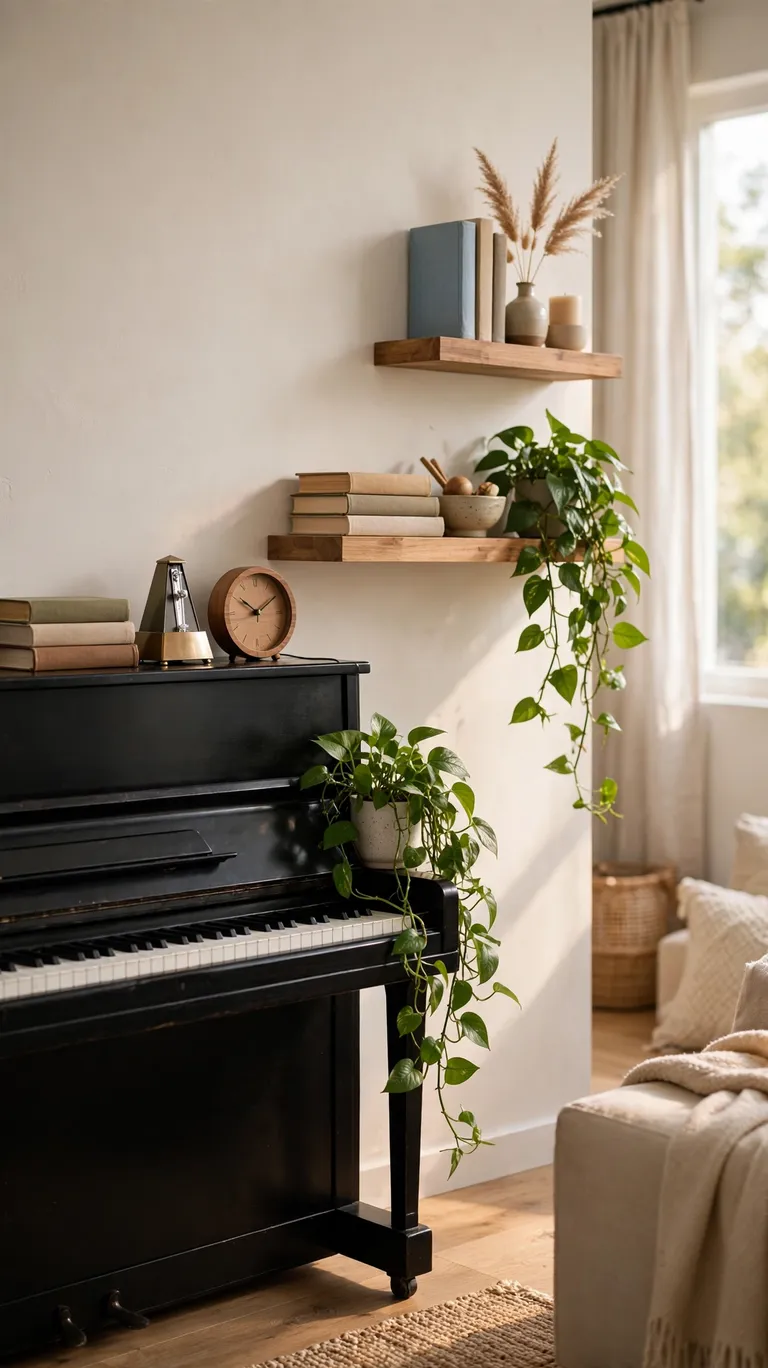
Floating shelves near the piano solve the eternal problem of where to put metronomes, lesson books, small speakers, and decorative objects without cluttering the piano’s top. Two or three shelves mounted on the wall beside the piano, staggered at different heights, hold the practical stuff while leaving room for a trailing plant or a framed photo. Keep the heaviest items on the lowest shelf and the lightest, most decorative pieces up high.
If you’re mounting above the piano, leave at least 12 to 18 inches of clearance so the shelves don’t crowd the instrument or risk anything falling onto the keys. Use a stud finder and proper anchors, since shelves loaded with books get heavy fast. Style each shelf with a mix of function and beauty: books upright with a bookend, a small clock, a candle, a tiny plant. The shelves pull the piano into the room’s larger storage story and make the whole wall feel designed.
14. Coordinate the Piano’s Finish with Your Palette
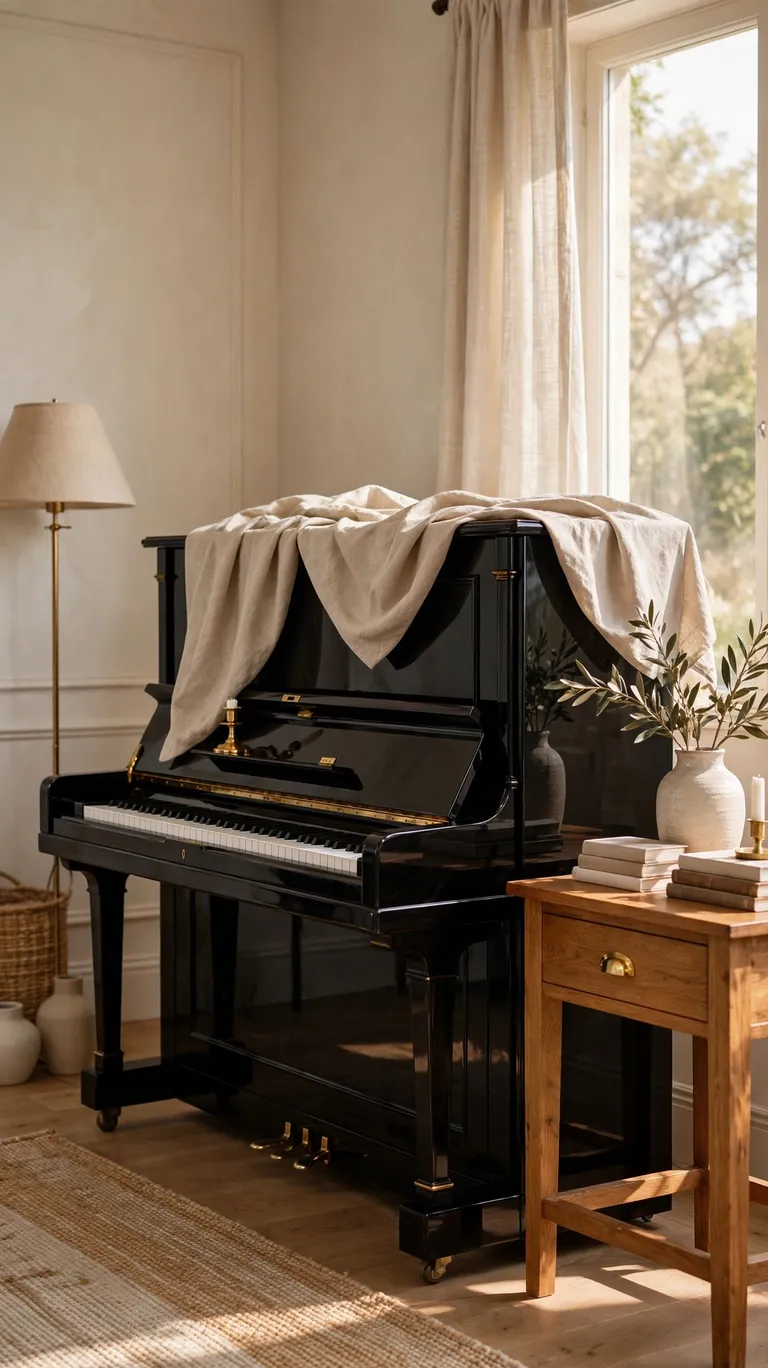
Most upright pianos come in black, dark walnut, or mahogany, and the smartest styling move is to work with that finish rather than against it. A black piano looks sharp against light walls and pairs beautifully with brass, warm wood tones, and soft neutrals. A walnut or mahogany piano sits more naturally in warm, traditional rooms, so echo those wood tones in a side table, picture frames, or the bench to make it feel connected to the space.
If your piano’s finish clashes badly with your room, you have options short of refinishing. A high-quality piano cover in a neutral fabric tones down a glossy black instrument in a soft, modern room, and it protects the finish from dust and sunlight at the same time. Removable touches like a runner cloth across the top or a tailored bench cover in your room’s accent color bridge the gap without touching the instrument itself. Never paint a piano on a whim, since it permanently affects both value and sound, but a cover or cloth is completely reversible.
15. Frame the Piano with Matching Wall Sconces
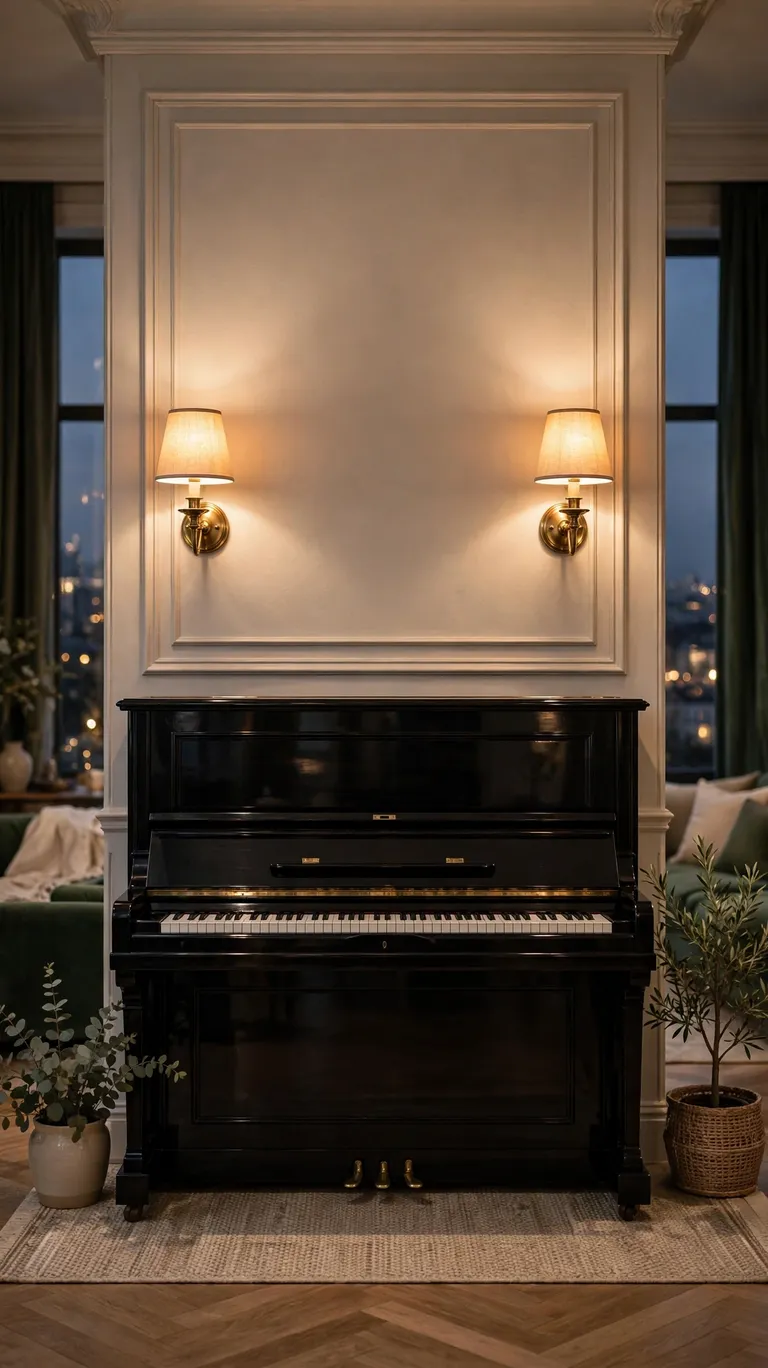
A pair of wall sconces flanking the piano is one of the most polished looks you can achieve, and it works whether your style is traditional or modern. The symmetry gives the piano the presence of a mantel or a headboard, turning it into a true focal point. Hardwired sconces are ideal, but plug-in sconces with cord covers are a renter-friendly alternative that look just as good once the cords are tidied.
Mount the sconces at roughly eye level when seated, which usually means the center of the shade sits 60 to 66 inches from the floor. Keep them a foot or more from the piano’s edges so the light washes the wall rather than glaring off the piano’s top. Choose shades that direct light up and down for the prettiest effect, and put them on a dimmer so the piano corner can shift from bright practice lighting to soft evening ambiance. Matching the sconce finish to your curtain rods or picture frames ties the whole wall together.
16. Use the Piano to Zone an Open Space
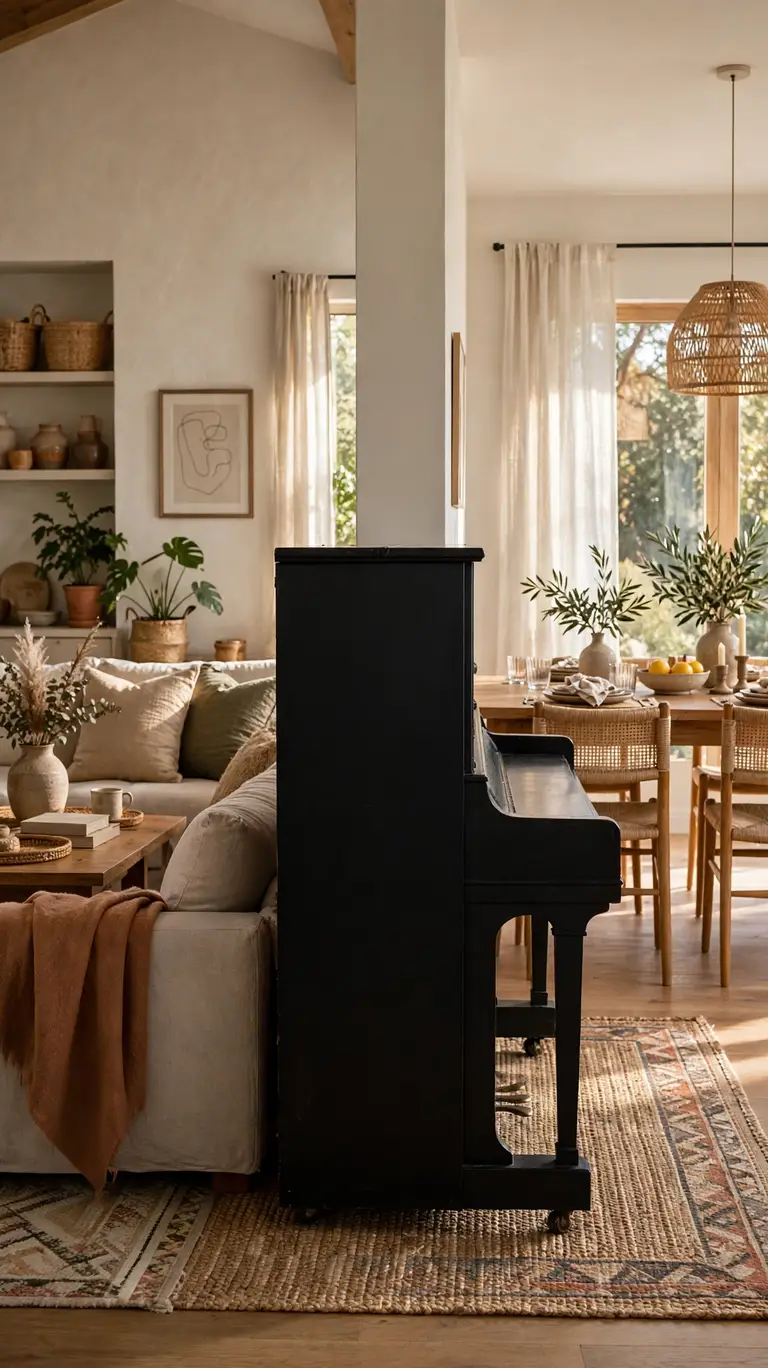
In an open-plan living area, an upright piano makes an excellent room divider. Placed with its back to the seating area, it creates a natural boundary between, say, the living zone and a dining or play zone, without the visual bulk of a bookshelf or screen. The piano’s back is usually finished wood, so it looks intentional from both sides, and you can style the back-facing side with a console-height arrangement like a narrow bench or a row of plants.
This trick works best when you anchor the piano’s new “room” with a rug underneath and a light source nearby, so each side of the divider feels like its own complete space. Make sure there’s enough clearance behind the piano for the lid and for anyone playing, since cramming it too close to a sofa makes practice uncomfortable. The result is a layout that feels zoned and purposeful, and the piano gets a starring role instead of hugging a wall.
17. Refresh the Look with Seasonal Styling Swaps
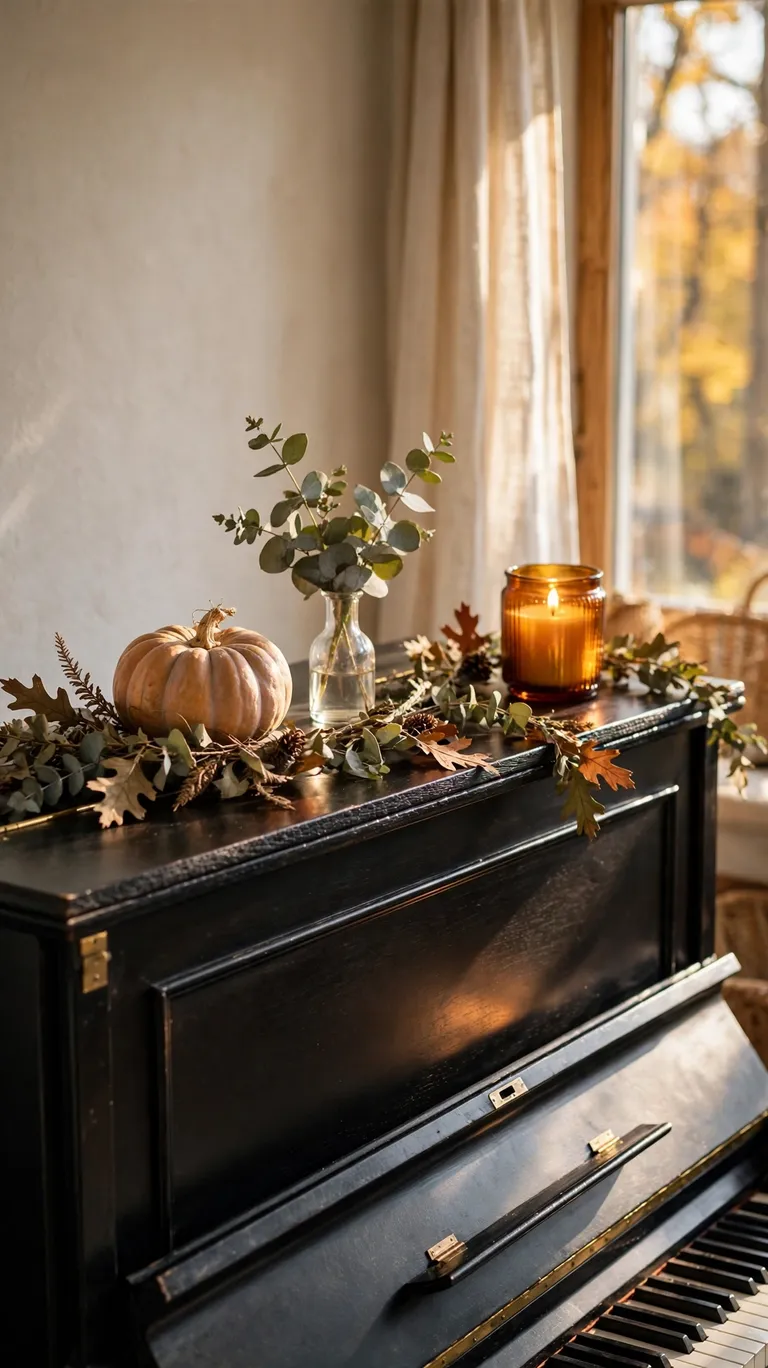
The top of your piano is the perfect spot for small seasonal updates that keep the room feeling fresh all year. In fall, swap in a small pumpkin, a sprig of eucalyptus in a bud vase, and a candle in an amber glass. For the holidays, a simple garland draped along the piano’s top edge with a few ornaments tucked in looks festive without overwhelming the instrument. Spring calls for fresh flowers and lighter textiles, and summer might just mean clearing everything back to a single plant and a stack of books.
The trick is keeping a small box of seasonal pieces stored near the piano area so the swap takes ten minutes, not an afternoon. Stick to three or four items per season so the piano never looks cluttered, and always keep one side clear for actual playing. A seasonal wreath hung on the wall above the piano, swapped out four times a year, gives you the biggest visual change for the least effort. These little refreshes make the whole room feel cared for without a full redecorating project.
18. Keep Clutter Contained with Nearby Closed Storage
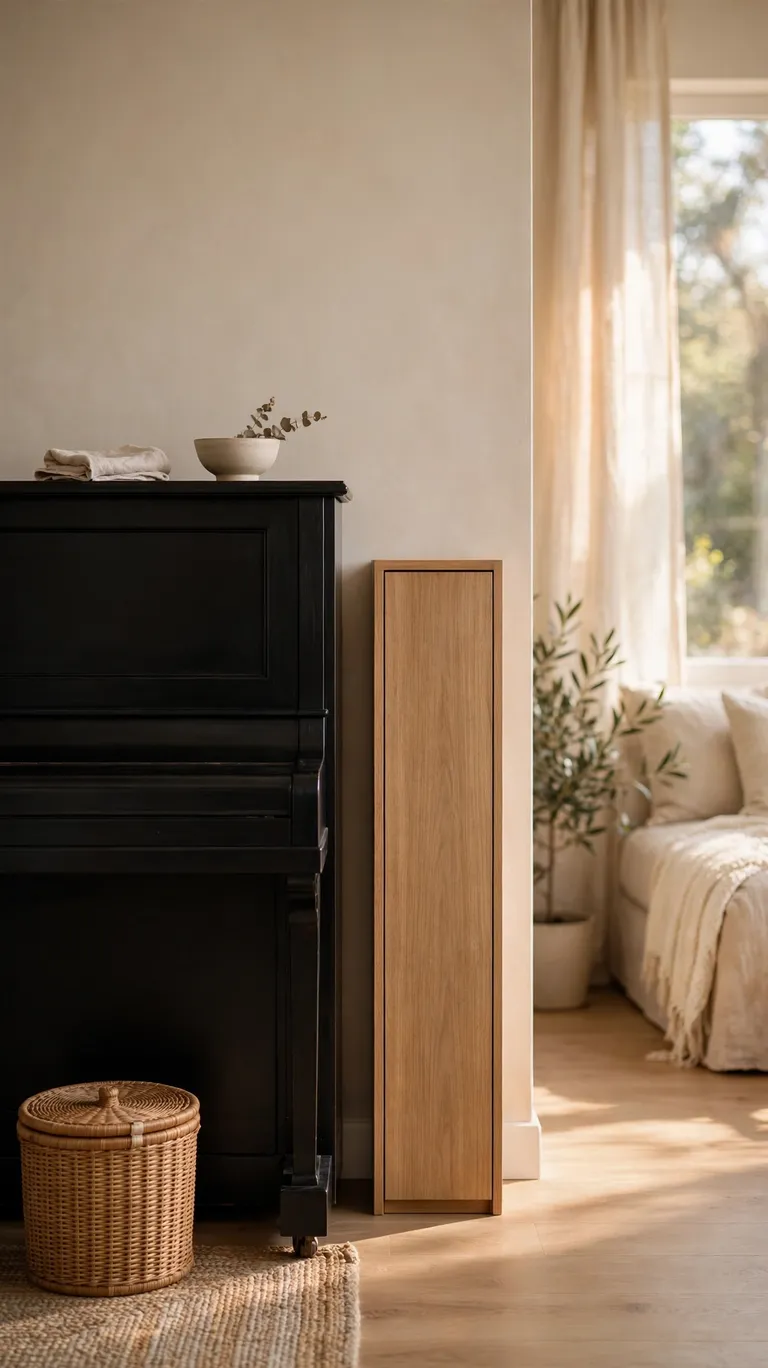
Nothing ruins a beautiful piano corner faster than drifting clutter: method books sliding off the top, loose sheet music on the bench, cables from a keyboard or speaker snaking across the floor. The fix is closed storage within arm’s reach. A small cabinet, a lidded ottoman, or even a pretty lidded basket beside the piano gives every stray item a home, and “closed” is the key word, because open shelves near a piano just become another surface for mess.
Audit what actually accumulates around your piano for a week and size the storage to that reality. Most households need space for a handful of books, a metronome, pencils, and maybe a tablet or small speaker. A narrow cabinet with doors tucked beside the piano handles all of it and can double as a surface for a lamp or plant. Run any cables along the back of the piano and secure them with adhesive cord clips so they disappear. A tidy piano corner gets played more, simply because sitting down to it feels pleasant instead of like clearing a desk.
Frequently Asked Questions
Where is the best place to put an upright piano in a living room?
The best spot is against a solid interior wall, ideally the longest uninterrupted wall in the room, with a few inches of space behind the instrument for air circulation. Interior walls keep temperature and humidity steadier than exterior walls, which helps the piano stay in tune. Avoid placing it directly in front of a window or a heating vent, since sunlight and dry heat are both hard on the wood and strings over time.
How do I decorate around a piano without making it look cluttered?
Treat the piano like a console table and follow the rule of three to five objects in varying heights, grouped toward one end. Keep one side of the piano’s top clear for music and daily use, and use felt pads under everything to protect the finish. If clutter keeps creeping back, add closed storage nearby, like a lidded basket or small cabinet, so books and accessories have a proper home.
What kind of rug should go under an upright piano?
Choose a low-pile or flat-weave rug large enough to extend past the bench on all sides, so the piano and bench both sit fully on it. Low pile keeps the bench stable and makes the rug easy to clean. A pattern or texture that contrasts with the piano’s finish, like a light vintage rug under a black piano, defines the zone beautifully and protects your floors from caster dents.
How can I improve the acoustics around my piano cheaply?
Add soft furnishings to break up hard surfaces: heavy curtains on nearby windows, a thick rug underneath, upholstered seating close by, and a bookshelf full of books against a bare wall. These absorb and diffuse sound reflections that make a piano sound harsh or echoey in a bare room. You don’t need professional acoustic panels for a home setup; everyday soft pieces make a noticeable difference.
Should the piano be the focal point of the room?
It can be, but it doesn’t have to be. If you want it as the focal point, center it on the main wall, add symmetrical sconces or art above it, and light it well. If you’d rather it blend in, tuck it on a secondary wall, style it in the room’s existing palette, and let another piece like a fireplace or large window hold the spotlight. Either approach works as long as the placement looks deliberate rather than leftover.
Conclusion
An upright piano is one of those rare pieces of furniture that’s both a musical instrument and a design asset, and the room around it should honor both jobs. The ideas above all come back to a few simple principles: give the piano a proper place against a solid wall, define its zone with a rug, light it well for both playing and ambiance, and style the surfaces around it with the same care you’d give any other focal point. None of this requires a renovation or a designer budget. A mirror, a lamp, a plant, and a bench with storage cover most of the transformation.
Start with the changes that solve your biggest frustration. If the corner feels dark and forgotten, add lighting and a mirror first. If it feels cluttered, sort out storage before you buy a single decorative object. If the piano sounds harsh in a bare room, curtains and a rug will change your daily experience more than any accessory. Then layer in the personal touches: the gallery wall, the seasonal swaps, the listening chair that makes the corner somewhere you actually linger.
The real payoff is subtle but meaningful. A piano corner that’s comfortable, well-lit, and beautiful gets played more, and a piano that gets played becomes part of the household’s daily life instead of expensive furniture. Whether you’re practicing scales, hosting an impromptu singalong, or just enjoying how the styled corner looks as you walk past, the effort pays you back every day. Take it one idea at a time, and enjoy building a space around your piano that feels unmistakably like home.