22 Fresh Hutch Decorating Ideas to Elevate Your Home
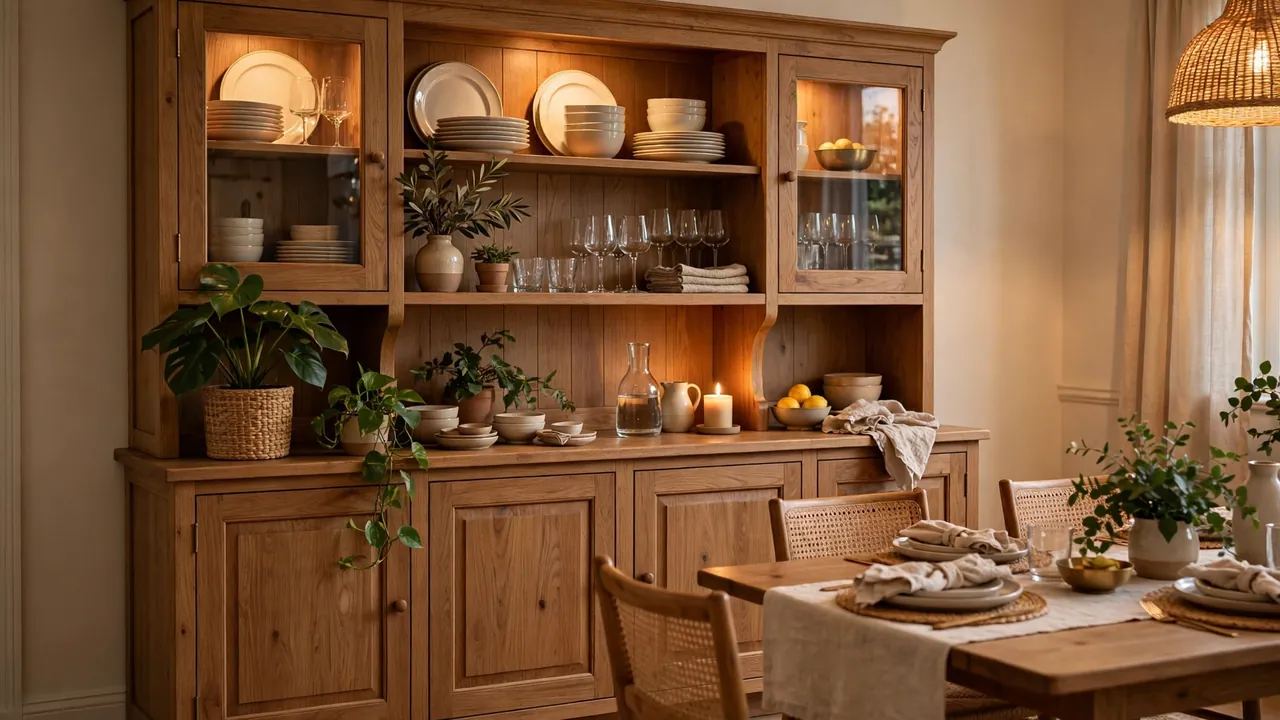
A hutch is one of the hardest working pieces of furniture in a home, and it deserves better than being a dusty shelf for dishes nobody uses. The best hutch decorating ideas start with a simple mindset shift: treat the hutch like a styled vignette, not a storage unit. That means editing down what you display, mixing everyday pieces with a few special ones, and giving everything room to breathe. You do not need a brand new hutch or expensive accessories to make it shine. Most of the time, a little rearranging, a fresh backdrop, and better lighting are all it takes to turn a forgotten piece into the prettiest corner of the room.
Whether your hutch lives in the dining room, kitchen, entryway, or living room, these 22 ideas will help you style it with confidence. You will find ways to show off dishes and glassware without it looking cluttered, tricks for adding color and texture, and small upgrades (like paint or puck lights) that make a big difference. Pick the ideas that fit your space and your style, start with the easiest ones, and watch your hutch go from background furniture to a genuine focal point.
1. Start With a Complete Clean Slate
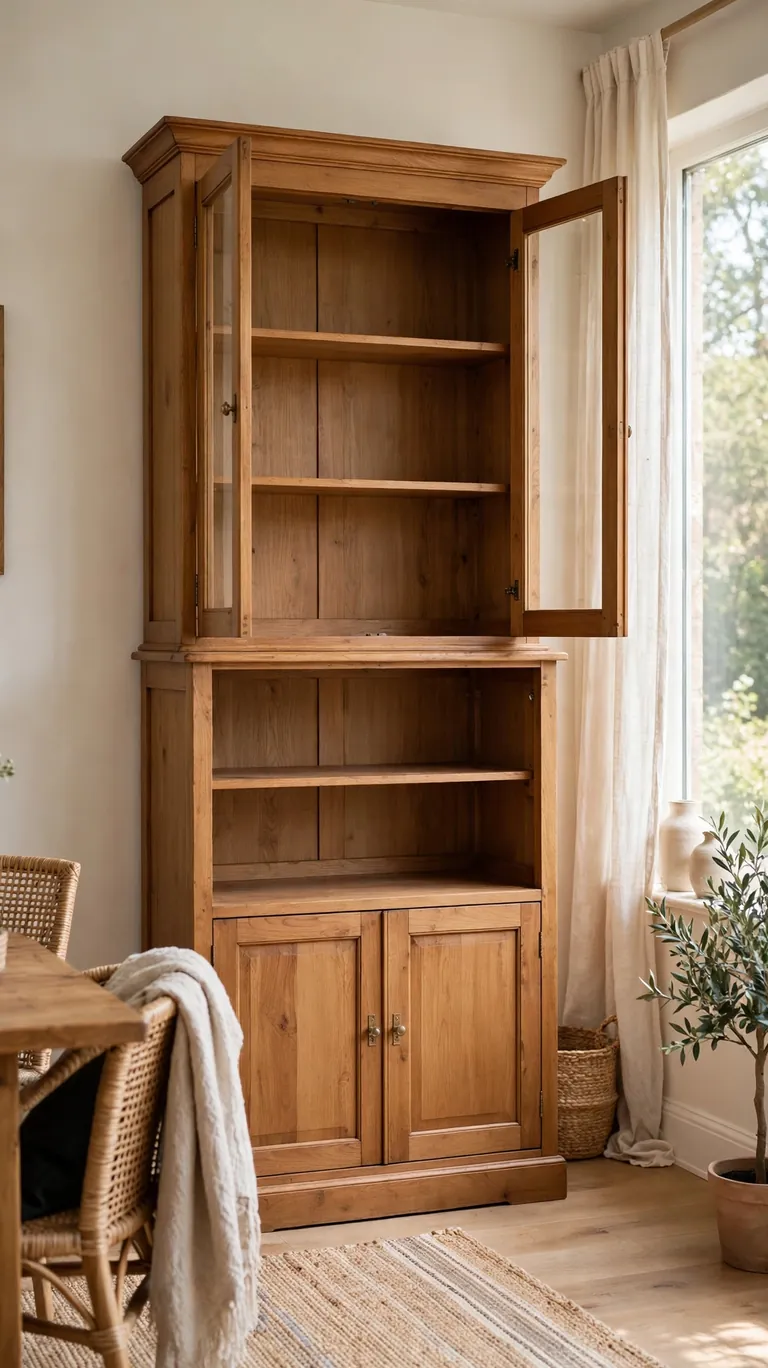
The fastest way to fall back in love with your hutch is to empty it completely. Take every single item off the shelves, out of the cabinets, and off the top, then clean the whole piece inside and out. This blank canvas moment lets you see the hutch with fresh eyes, and it makes you honest about what actually deserves to be displayed. You will be surprised how many items you have been keeping out of habit rather than love.
Once everything is off, sort ruthlessly into three groups: pieces you love and want to show, pieces that should live behind closed doors, and pieces that can go entirely. Broken items, duplicates, and things that do not fit your current style get boxed up or donated. Starting from zero means every item you put back earns its spot, which is the real secret behind every beautiful hutch you have ever admired.
2. Style With Everyday Dishes, Not Just the Good China
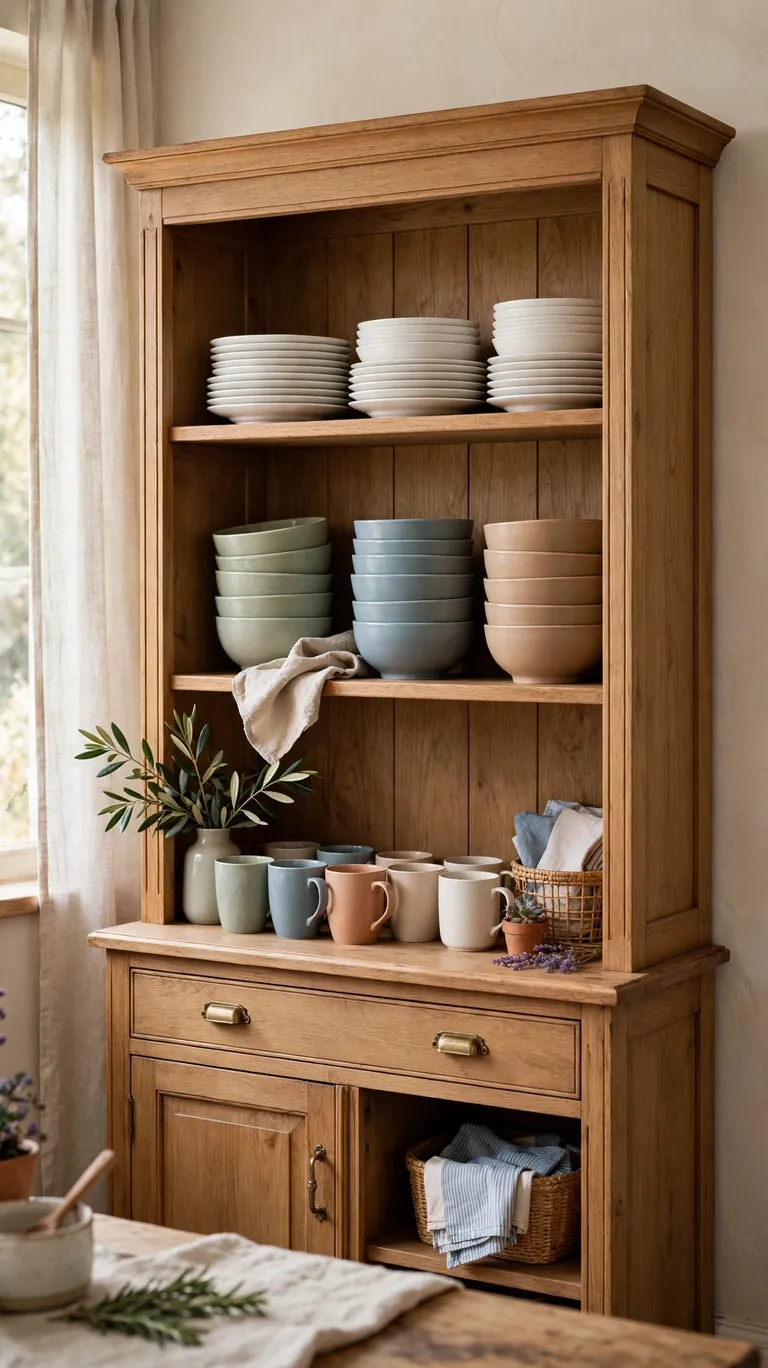
One of the freshest shifts in hutch decorating is using the dishes you actually eat from instead of saving the display for special occasion sets. Stacks of white everyday plates, a row of cereal bowls, and a cluster of mugs look inviting and honest, and they remind everyone that the hutch is part of real life. When your prettiest daily pieces are on display, you use them more and enjoy them more.
The trick is keeping the everyday dishes looking intentional rather than random. Stick to one or two colors for the stacks so the shelves read as calm and coordinated, and line the plates up neatly with the edges aligned. Tuck less attractive necessities (plastic containers, chipped mugs you cannot part with) behind the closed cabinet doors below. This balance of display and discretion is what makes a hutch feel both beautiful and functional.
3. Give the Back a Fresh Coat of Paint or Wallpaper
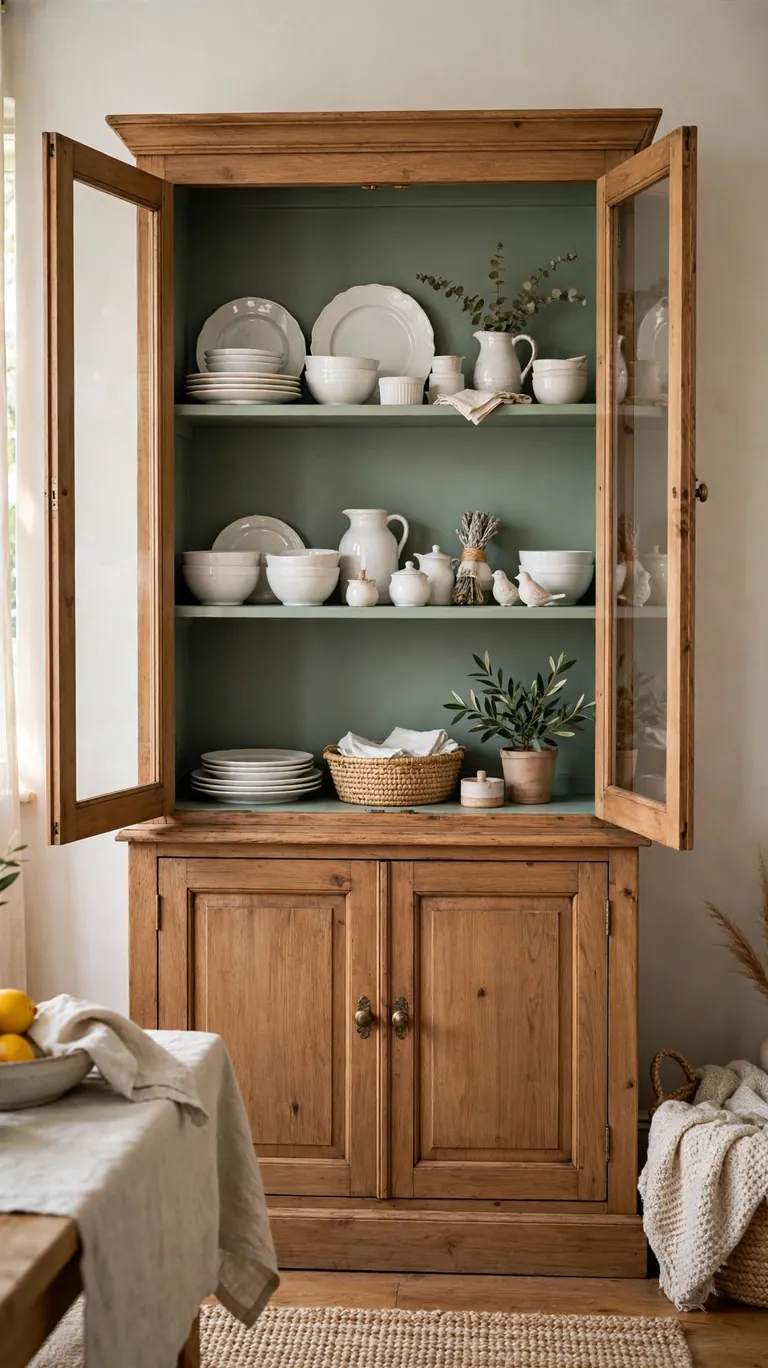
If your hutch feels dull no matter how you arrange it, the problem might be the backdrop. Painting the inside back panel of a hutch in a contrasting color (a soft sage, a warm cream, a deep charcoal) instantly adds depth and makes everything in front of it pop. It is a small paint job, usually just one panel, but the change feels dramatic, like getting a whole new piece of furniture.
Removable wallpaper is another great option, especially if you rent or like to change things often. A subtle pattern, like a soft stripe or a small botanical print, adds interest without competing with your dishes and decor. Measure the back panel carefully, cut the paper to fit, and smooth it on starting from the top. Because the panel is flat and small, this is one of the easiest wallpaper projects you can try, and it is completely reversible.
4. Group Items in Odd Numbers
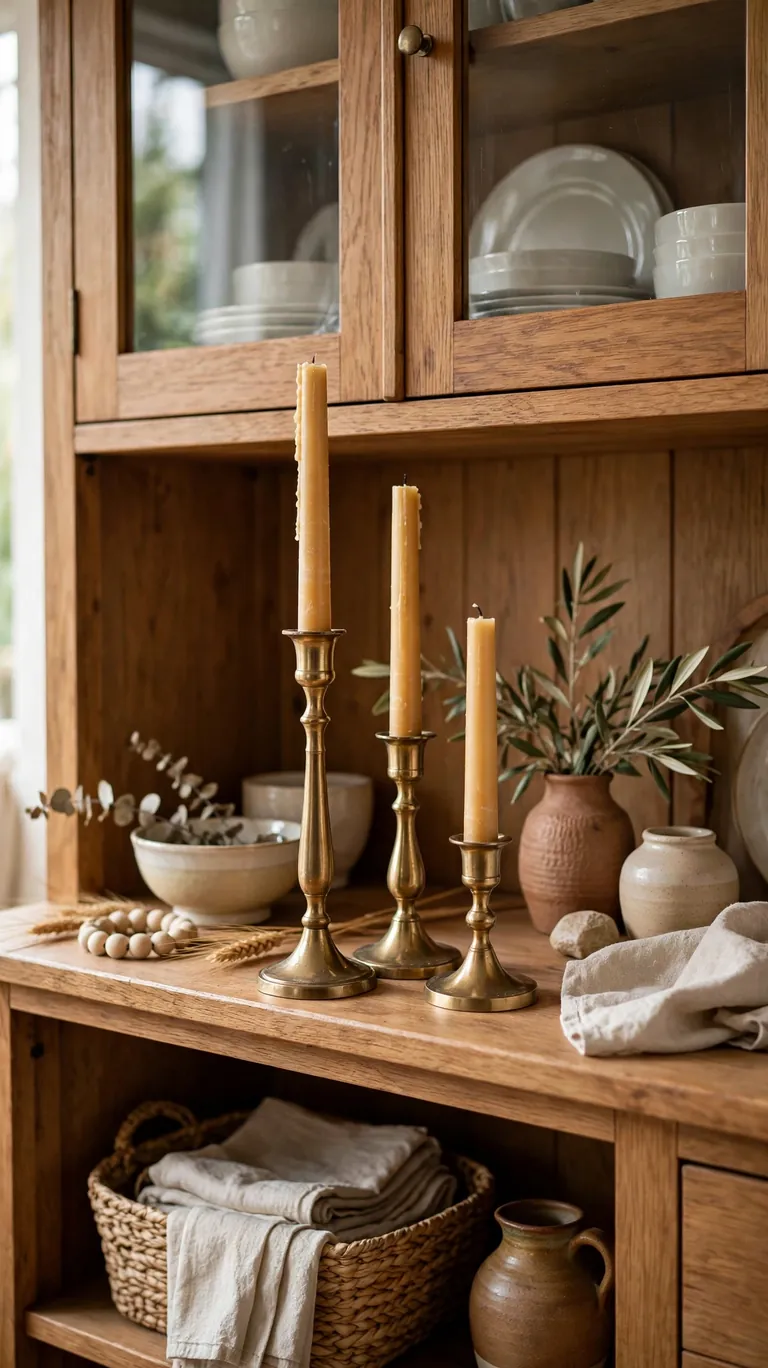
Stylists swear by odd-numbered groupings, and hutches are no exception. Three candlesticks, five small bowls, or a cluster of three vases looks naturally pleasing in a way that even numbers rarely do. Odd groups create a little asymmetry that keeps the eye moving, which is exactly what makes a styled shelf feel lively instead of stiff and formal.
Start small to see the effect. On one shelf, arrange three items of different heights (tall, medium, short) close together, then step back and look. Compare it to a shelf with two or four evenly spaced items, and you will see the difference immediately. Once you have the hang of it, use odd groupings across the whole hutch, varying the number of items per shelf so the overall look stays interesting and a little bit playful.
5. Mix Heights So the Eye Travels Up and Down
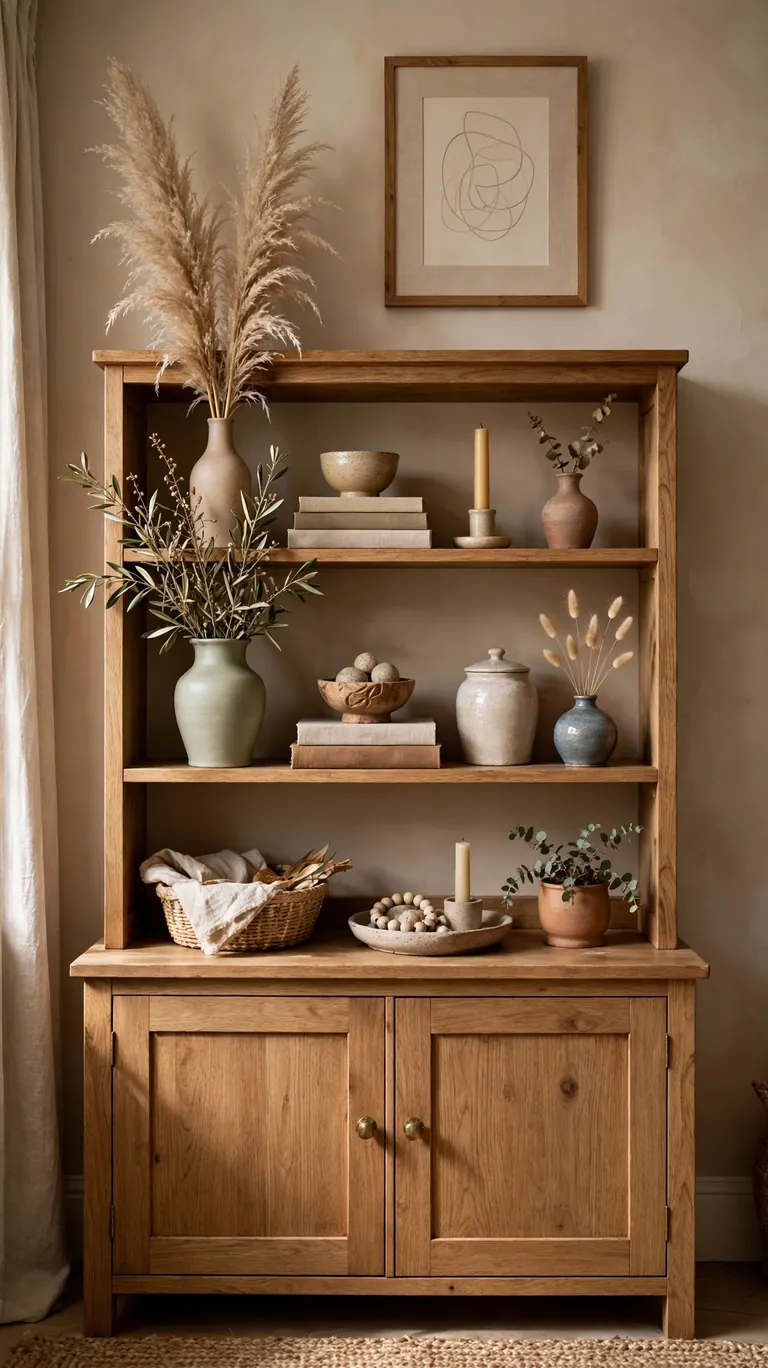
A common hutch styling mistake is lining up items that are all the same height, which makes the shelves look flat and boring. The fix is simple: vary the heights deliberately on every shelf. Pair a tall pitcher with a short stack of bowls, or place a medium vase next to a low candle. The up and down rhythm is what gives a hutch its visual energy.
If you are short on tall pieces, cheat with risers. A small stack of books, a wooden box, or an upside down bowl can lift a shorter item so it plays better with its neighbors. Cake stands are especially useful for this, since they add height and a pedestal shape at the same time. Think of each shelf as a little skyline, and you will never have a flat looking hutch again.
6. Anchor Each Shelf With One Larger Piece
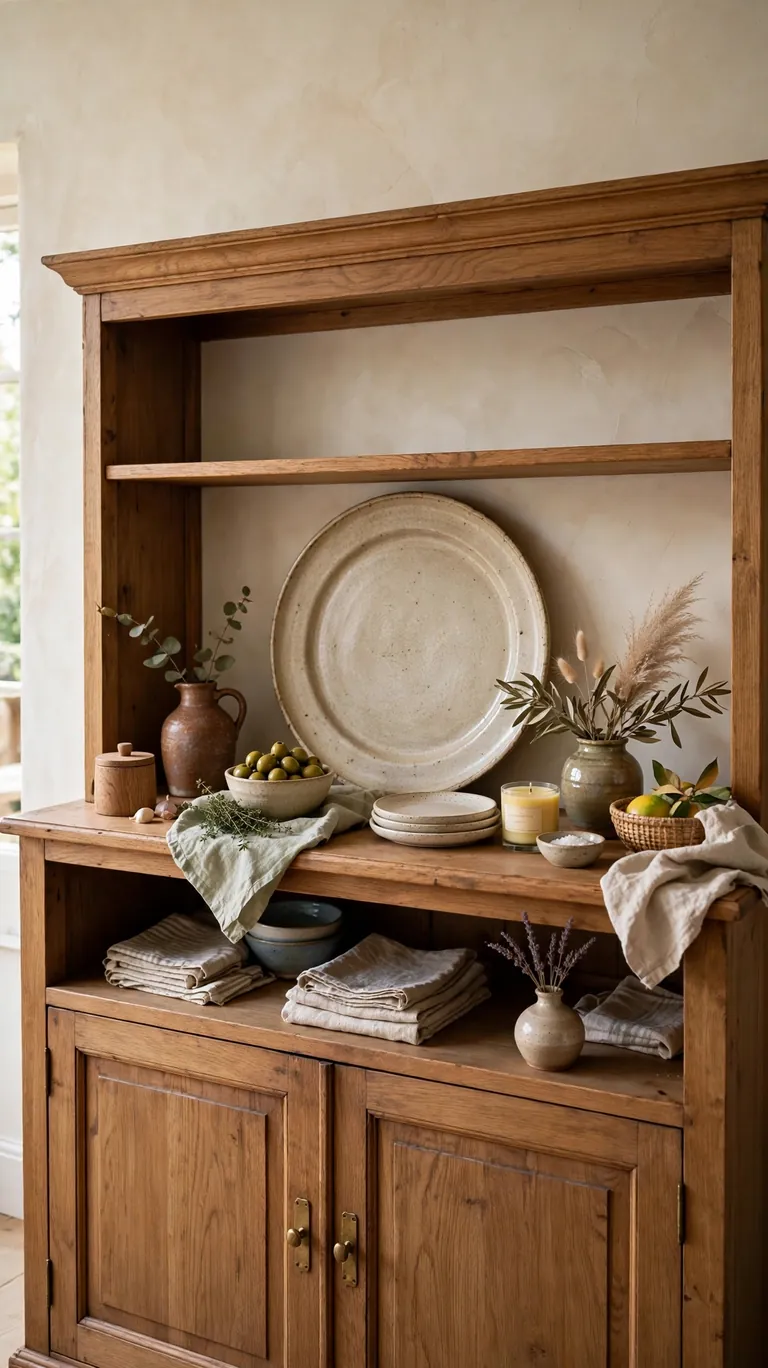
Every shelf needs an anchor, one larger item that gives the arrangement weight and structure. This could be a big serving platter, a framed piece of art leaned against the back, a large vase, or a stack of oversized bowls. The anchor goes on first, usually slightly off center, and everything smaller gets arranged around it. Without an anchor, shelves tend to look scattered no matter how pretty the individual pieces are.
Choose anchors in proportion to the shelf. A huge platter on a shallow shelf will look crowded, while a tiny frame on a wide shelf will get lost. Lean art or mirrors against the back panel for an easy, no hardware anchor that adds depth. Once the anchor is in place, the smaller pieces almost arrange themselves, because they have something to relate to.
7. Weave in Greenery for Instant Life
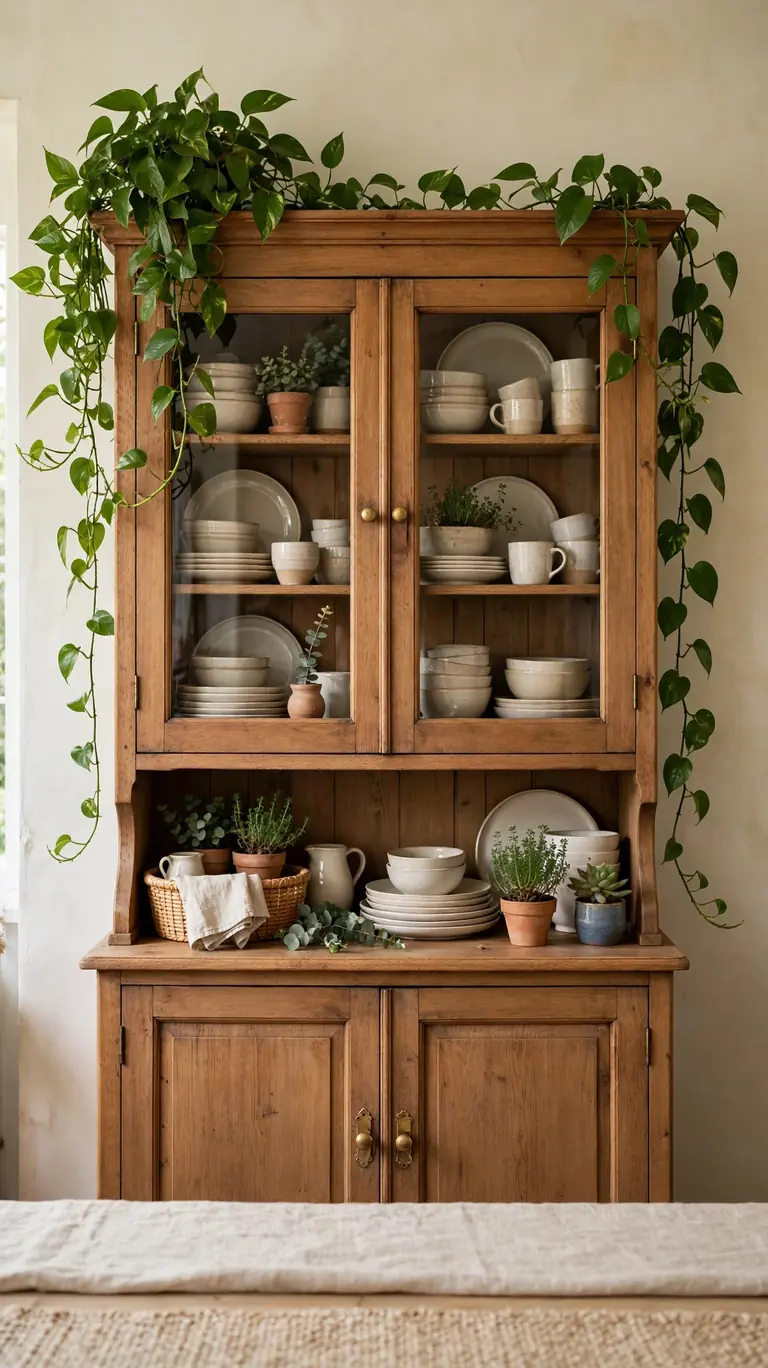
Nothing freshens a hutch faster than something alive. A small potted plant on the top of the hutch, a trailing pothos spilling from an upper shelf, or a simple vase of eucalyptus stems on a lower shelf adds color and softness that dishes and frames cannot. Greenery also breaks up the hard lines of wood and ceramic, making the whole arrangement feel more relaxed.
Choose plants that suit the light where your hutch sits. Low light corners do well with pothos, snake plants, or ZZ plants, while bright spots can handle herbs or ferns. If real plants are not your thing, good quality faux stems in a pretty vase give you the same visual lift with zero maintenance. Even one small plant makes a hutch feel cared for and current.
8. Balance Open Display With Closed Storage
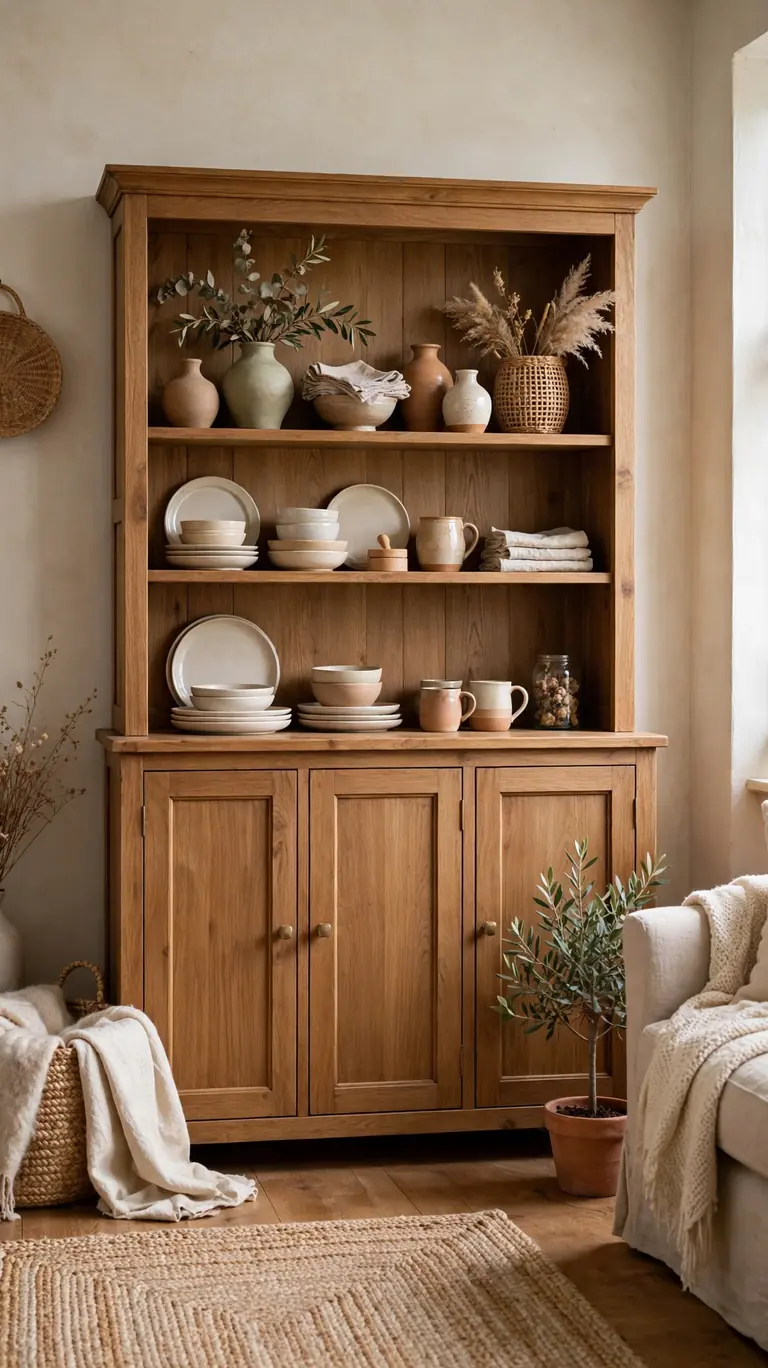
The prettiest hutches are not the ones with every shelf full. They are the ones that balance open display with the mystery of closed storage. Use the open shelves for your most attractive pieces, and let the cabinets and drawers below handle the practical stuff: extra linens, serving pieces you use rarely, and anything that does not photograph well. This editing is what separates a styled hutch from a crowded one.
If your hutch has glass doors, treat those shelves as display too, but keep them sparser than fully open shelving, since glass adds visual noise of its own. For hutches with solid doors, the hidden storage is your secret weapon. Knowing you have a place for the less pretty items makes it much easier to keep the visible shelves looking intentional and calm.
9. Show Off a Collection of Glassware
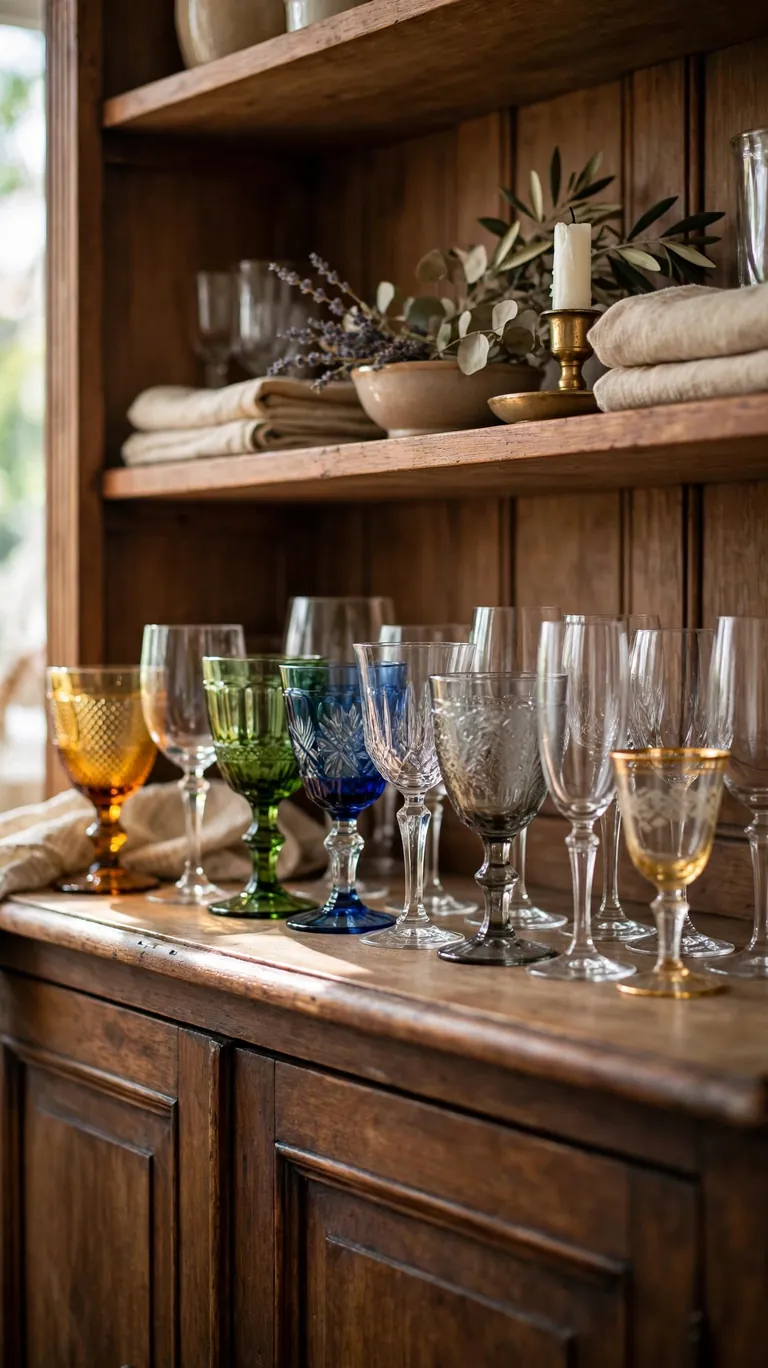
Glassware is one of the prettiest things you can display on a hutch, because it catches the light and adds sparkle without adding visual weight. A row of wine glasses, a collection of vintage goblets, or a set of apothecary jars looks beautiful lined up on a shelf, especially against a painted or wallpapered back. Clear glass works with any color scheme, so it is a safe anchor for the whole arrangement.
Group glassware by type rather than scattering single pieces around. All the wine glasses together, all the tumblers together, and the arrangement reads as a collection instead of clutter. If your glassware is not a matching set, that is fine. Similar shapes in different sizes look even more collected and interesting than a perfect set. Just keep the shelves dusted, since glass shows dust faster than almost anything else.
10. Add Small Lights to Make It Glow
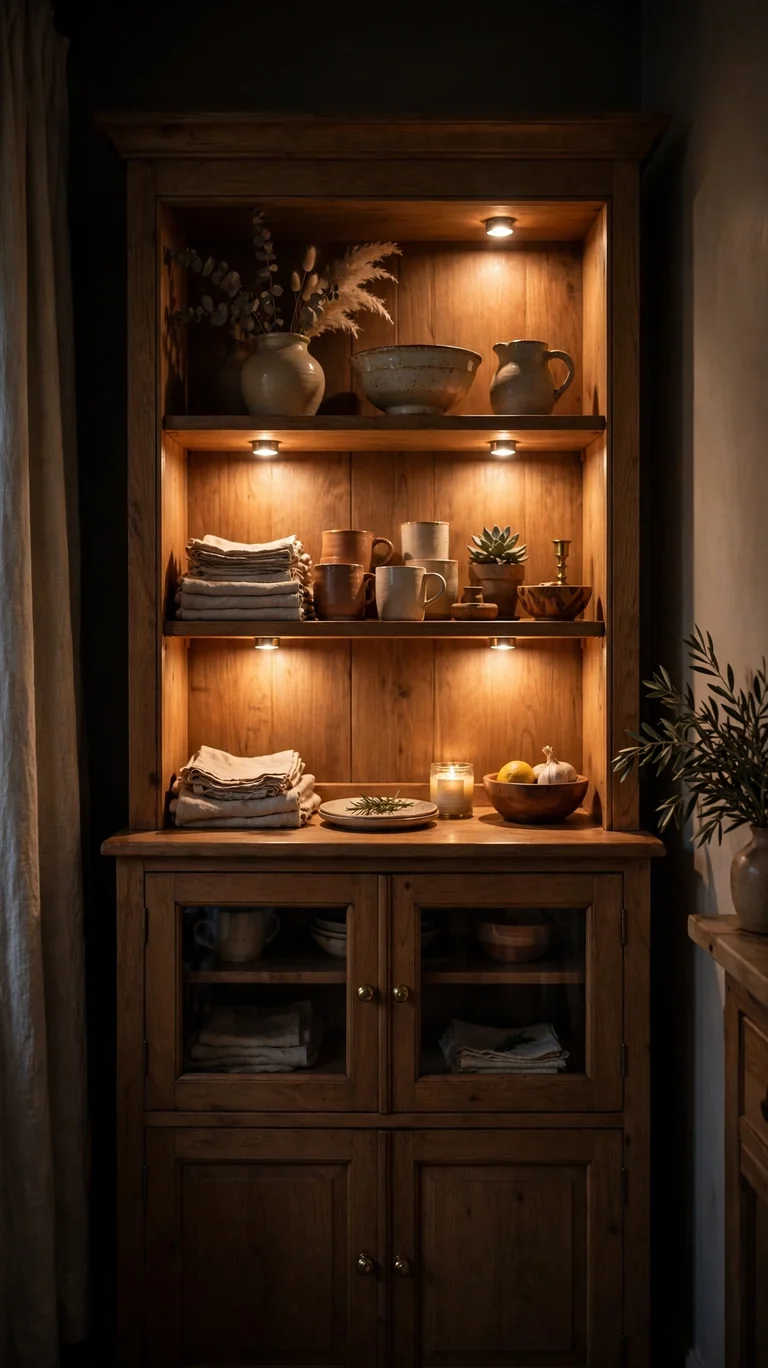
Lighting is the upgrade most people never think of, and it changes a hutch completely after dark. Small battery operated puck lights stuck under the top of each shelf wash your dishes in a warm glow that makes the whole piece feel special. Many come with remotes and timers, so you can set them to turn on at dinner time without ever touching them.
If you prefer a softer look, drape a short strand of warm fairy lights along the back of a shelf or around a large vase. The tiny lights add a festive sparkle that works year round, not just at the holidays. Keep the light warm (not blue white) so the wood tones and ceramics look their best. A lit hutch becomes a glowing focal point in the evening, which is when you are most likely to actually enjoy it.
11. Lean Into a Row of Cookbooks
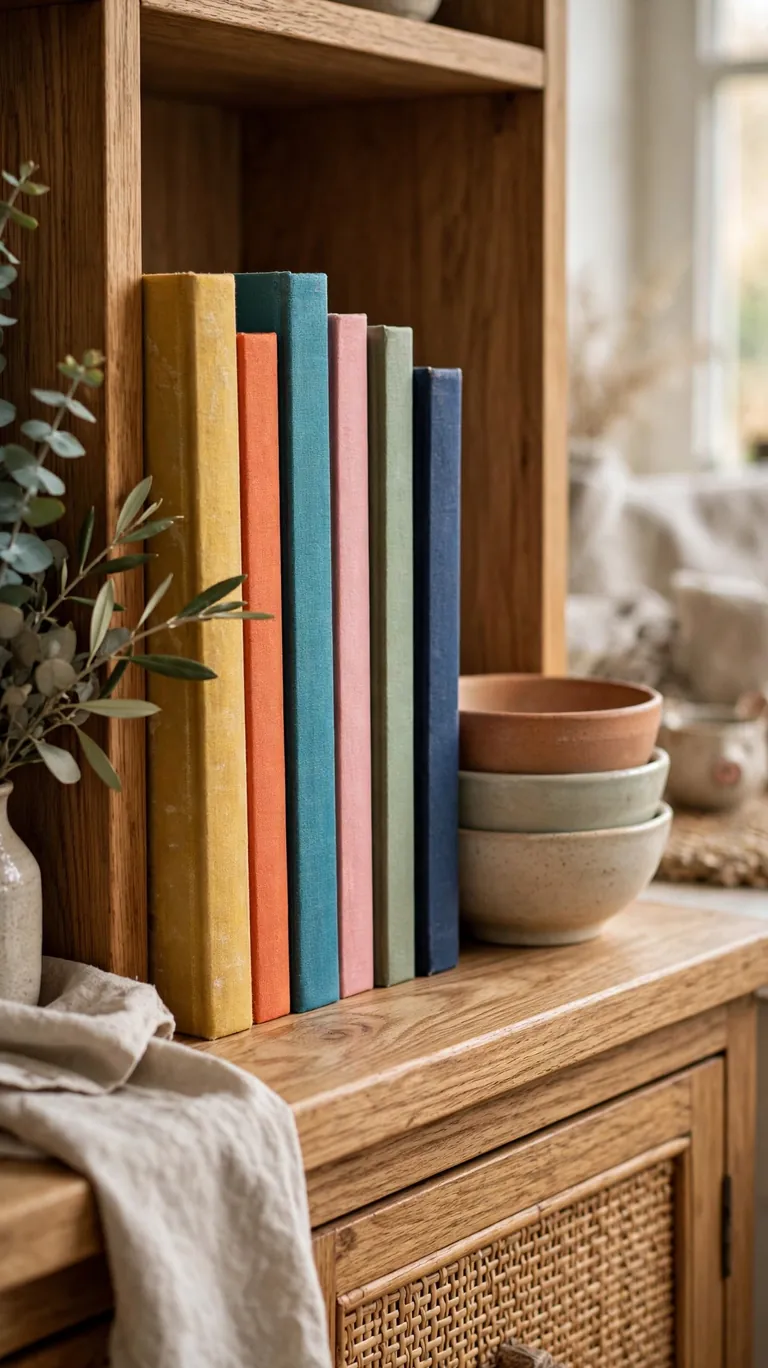
Cookbooks are made for hutch styling. Their colorful spines add personality, their varying heights create natural rhythm, and they are genuinely useful to have near the kitchen or dining room. Line a row of your favorites along one shelf, either standing upright with a bookend or stacked horizontally in a low pile. Either way, they instantly make a hutch feel personal and lived in.
For the prettiest effect, turn the most attractive covers facing out and tuck plainer spines toward the middle of the row. If you have more cookbooks than shelf space, rotate them seasonally, grilling books in summer, baking books in fall, which keeps the hutch feeling fresh without buying anything new. A small stack of cookbooks also makes a perfect riser for a candle or a small plant.
12. Refresh It Seasonally With Small Swaps
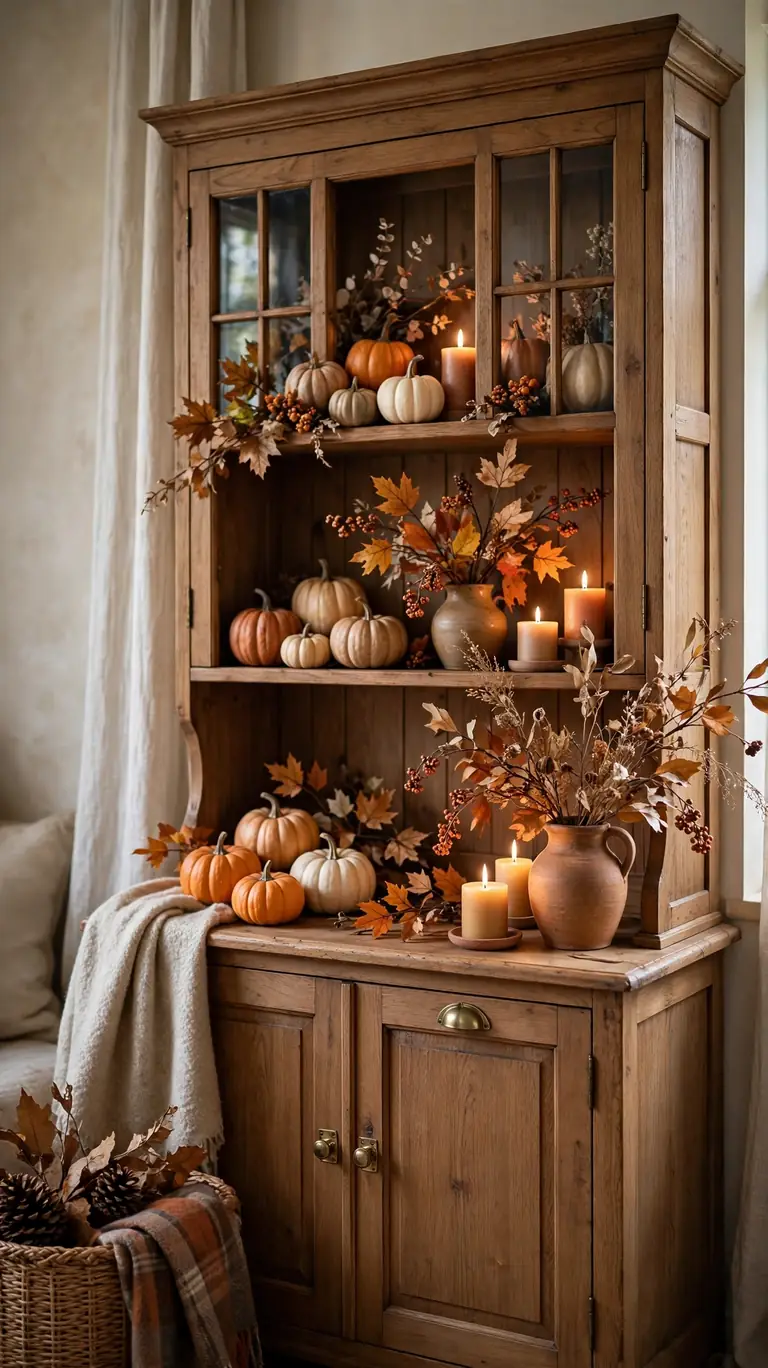
You do not need to redecorate the whole hutch to make it feel new. A few small seasonal swaps keep it fresh all year with almost no effort. In spring, add a vase of fresh branches and swap in lighter textiles. In fall, tuck in some small pumpkins or warm toned candles. At the holidays, a simple garland along the top and a few ornaments in a bowl do the whole job.
Keep a small bin of seasonal accents so the swap takes ten minutes, not a weekend. The big pieces (your dishes, your anchors, your plants) stay put year round, and only the small accents change. This rhythm keeps the hutch from going stale, and it gives you a fun little ritual that marks the changing seasons in your home.
13. Use Trays to Corral Small Items
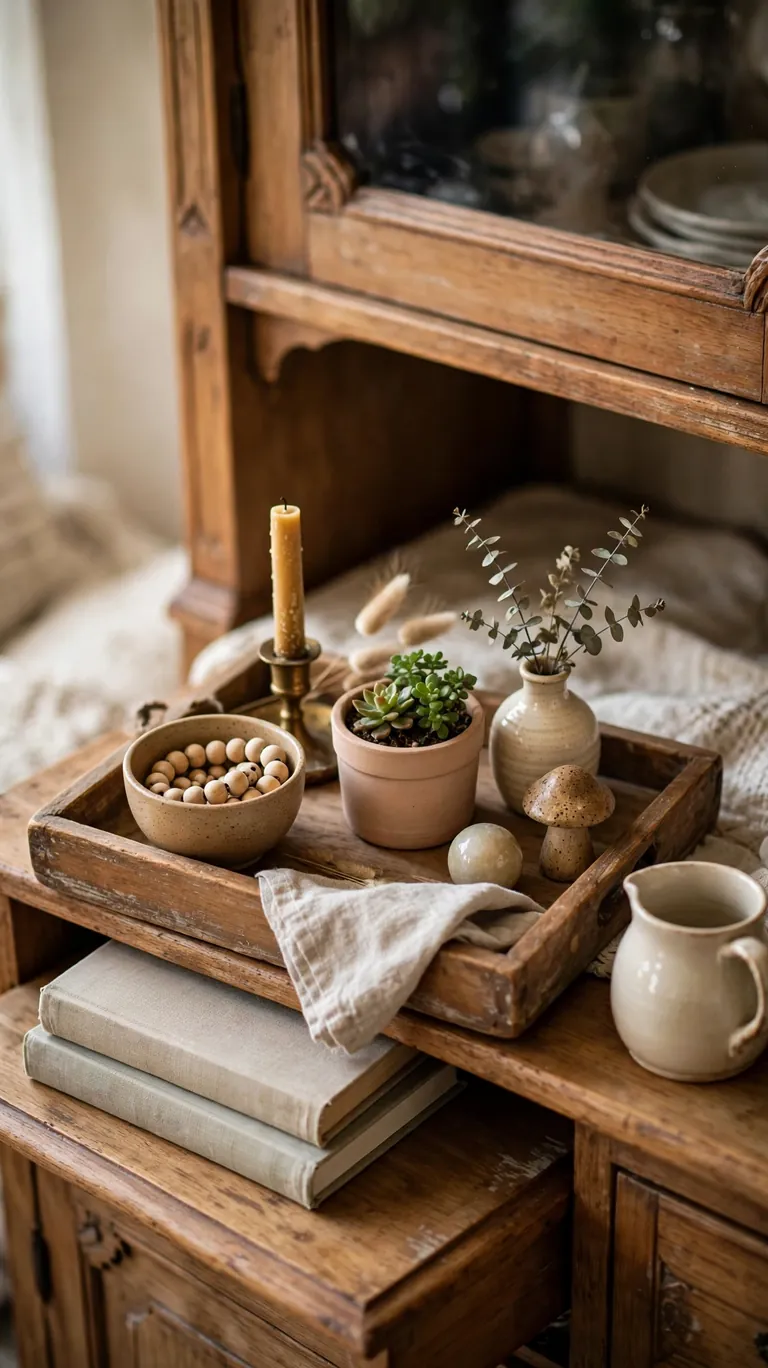
Small items scattered across a shelf look like clutter, but the same items on a tray look like a styled vignette. A tray gives a group of little things (salt and pepper shakers, a small candle, a bud vase) a defined boundary, which makes them read as intentional. This one trick can rescue the messiest shelf on your hutch.
Choose trays that suit your style: a wooden tray for a rustic look, a mirrored tray for glamour, a simple white ceramic tray for modern minimalism. Keep the tray to about a third of the shelf width so it does not dominate. Once you start using trays, you will find excuses to add them everywhere, because they make styling so much easier.
14. Add Texture With Baskets and Linens
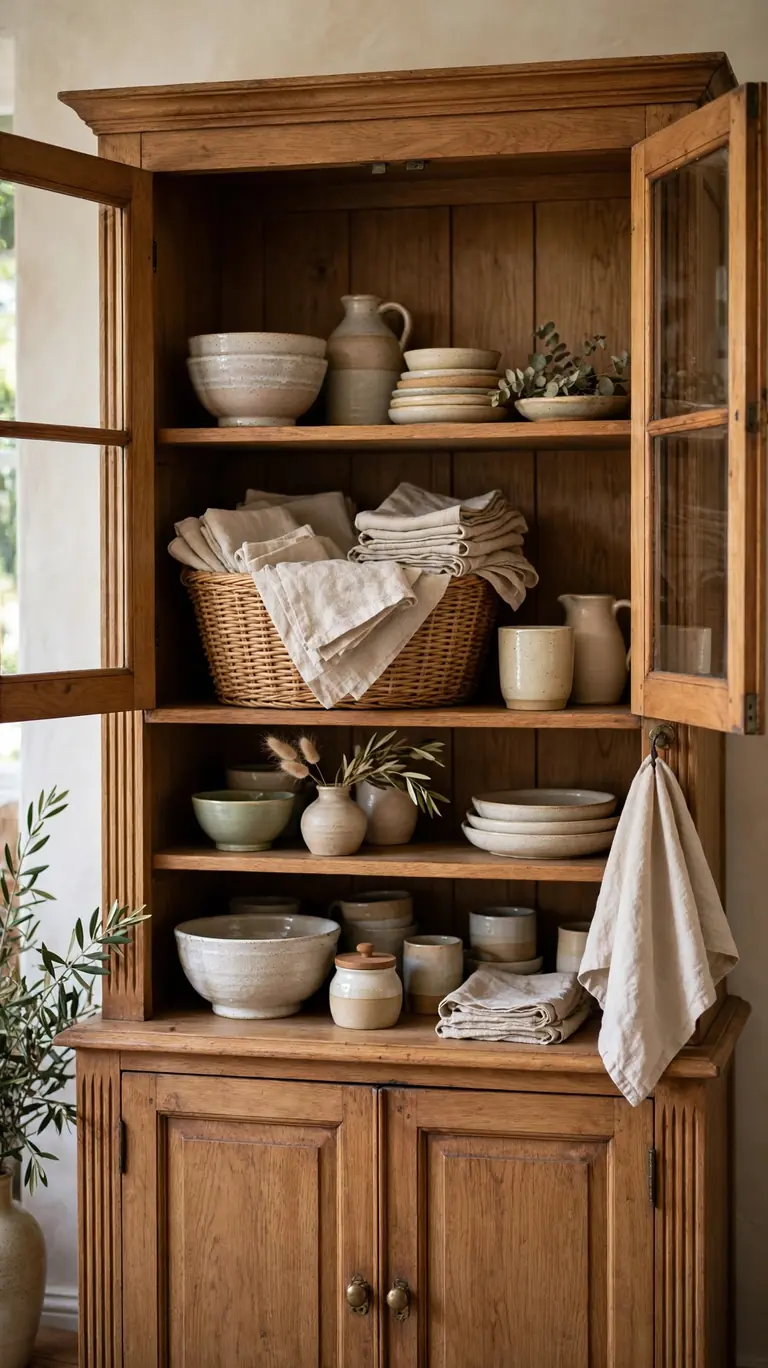
Hutches can start to feel hard and cold when every surface is wood, glass, or ceramic. Texture fixes that. A woven basket tucked on a lower shelf, a folded linen table runner draped over a stack of plates, or a set of cloth napkins rolled in a crock adds the softness that makes a hutch feel warm and inviting. These textile touches are also easy to swap when you want a change.
Baskets do double duty as hidden storage. A lidded basket on an open shelf can hold the napkins, the placemats, or the candle refills that would otherwise look messy. Choose natural materials like seagrass, wicker, or cotton for the coziest effect, and repeat the texture in two or three spots so it feels deliberate rather than random.
15. Hang or Lean Art Inside the Hutch
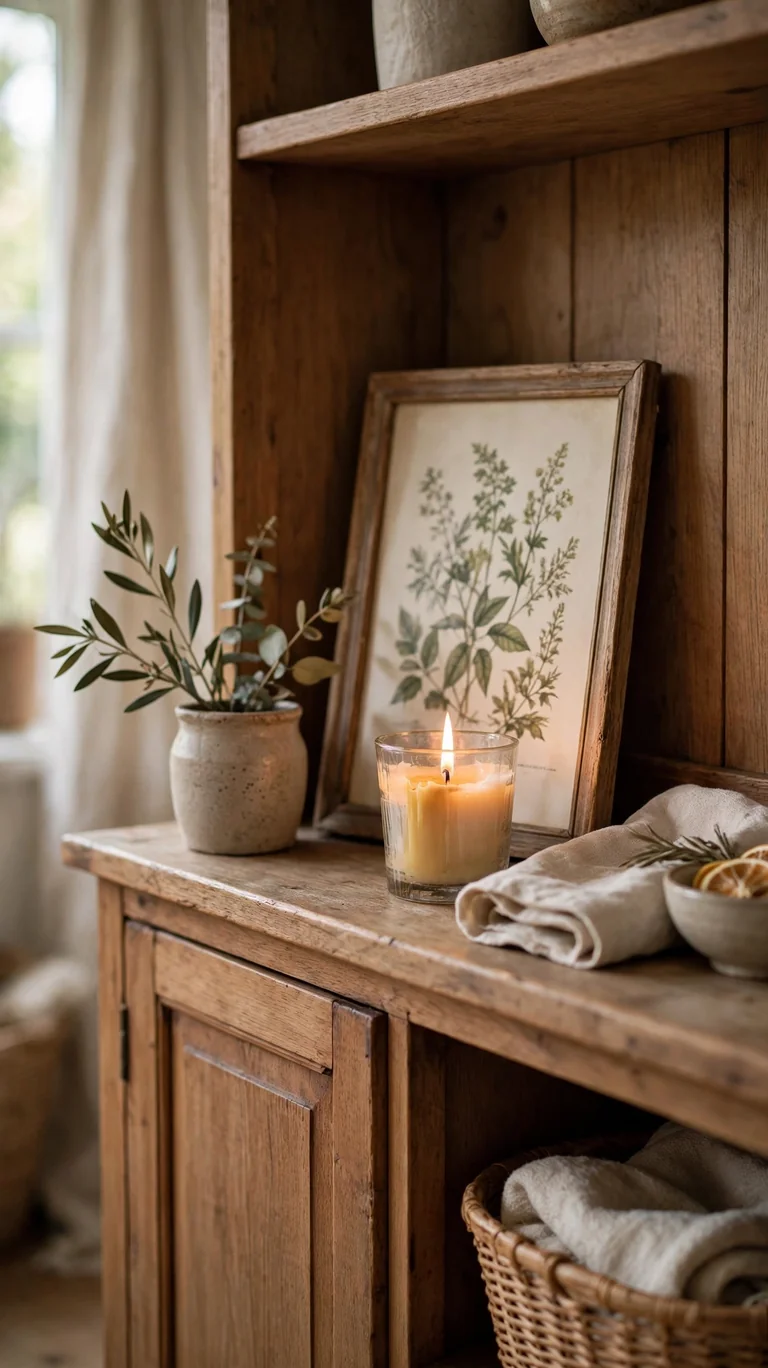
Art does not have to stay on the walls. A small framed print leaned against the back of a hutch shelf adds color, personality, and a layer that dishes alone cannot provide. It breaks up the repetition of plates and bowls and gives the eye something unexpected to land on. Even a small 5 by 7 frame can change the whole feel of a shelf.
Pick art that echoes your color scheme so it feels connected rather than random. A botanical print, a simple landscape, or a favorite family photo all work beautifully. Lean the frame at a slight angle against the back panel, and place a small item in front of it (a candle, a tiny plant) to make the layering feel natural. This is one of the easiest ways to make a hutch look professionally styled.
16. Try a Two Tone Paint Treatment
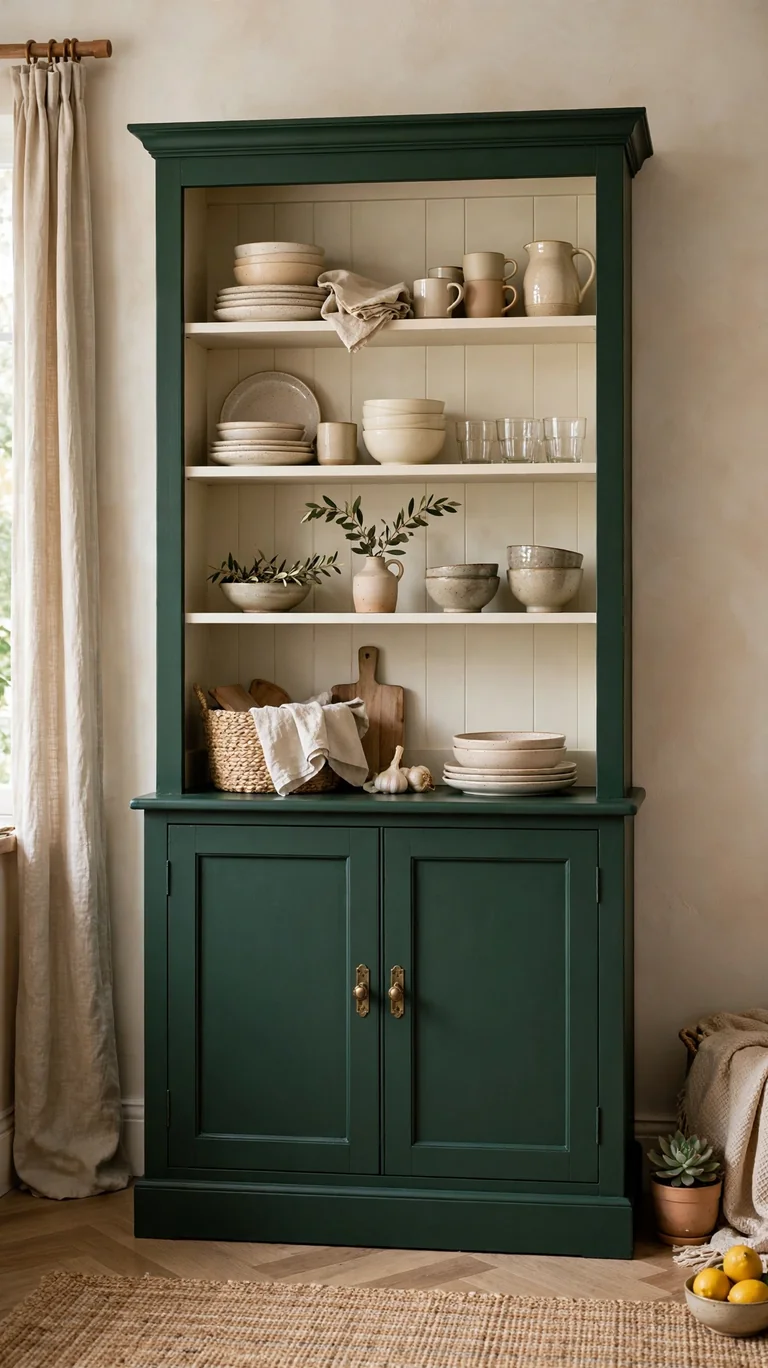
If your hutch feels dated, paint might be the freshest idea of all. A two tone treatment, where the frame is one color and the interior or the top is another, gives a hutch a custom furniture look for the cost of two small cans of paint. Classic combinations include a soft white frame with a warm wood top, or a deep green body with cream interior shelves.
Prep is what makes painted furniture look good, so clean the piece well, sand lightly, and use a primer before your color coats. A satin finish wipes clean easily and looks rich without being shiny. Take your time with the taping where the two colors meet, since crisp lines are what sell the custom look. This is a weekend project with a before and after that will genuinely surprise you.
17. Style the Top of the Hutch, Not Just the Shelves
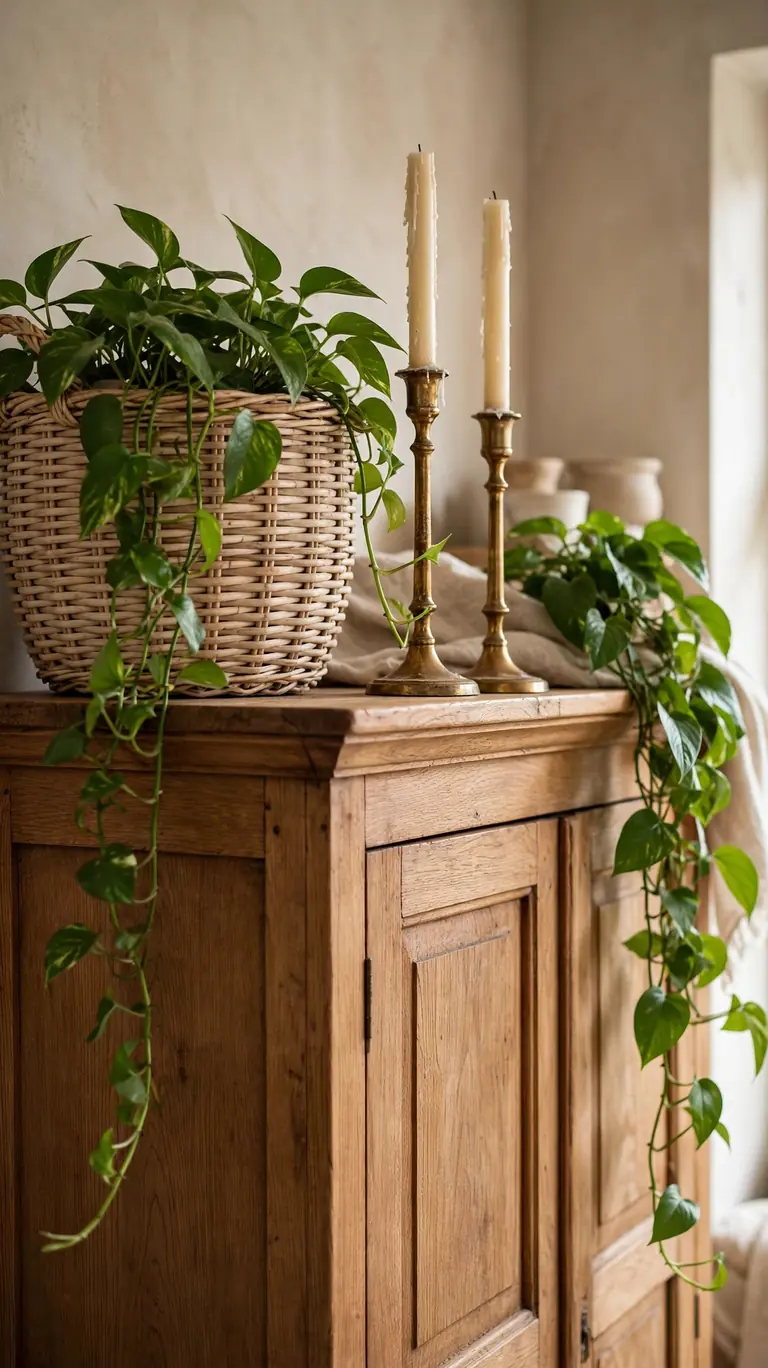
Most people decorate the shelves and forget the top, which is a missed opportunity. The top of a hutch is prime real estate for larger pieces that would overwhelm a shelf: a big basket, a pair of tall candlesticks, a large piece of pottery, or a trailing plant. Because it sits above eye level, the top can handle bolder, bigger items without feeling crowded.
Keep the top simpler than the shelves, though. One to three larger items is plenty, and they should relate to what is below in color or material. A common mistake is using the top as overflow storage, which drags the whole piece down. If it looks cluttered, take everything off and start with just one statement piece. Less really is more up there.
18. Turn One Section Into a Coffee or Bar Station
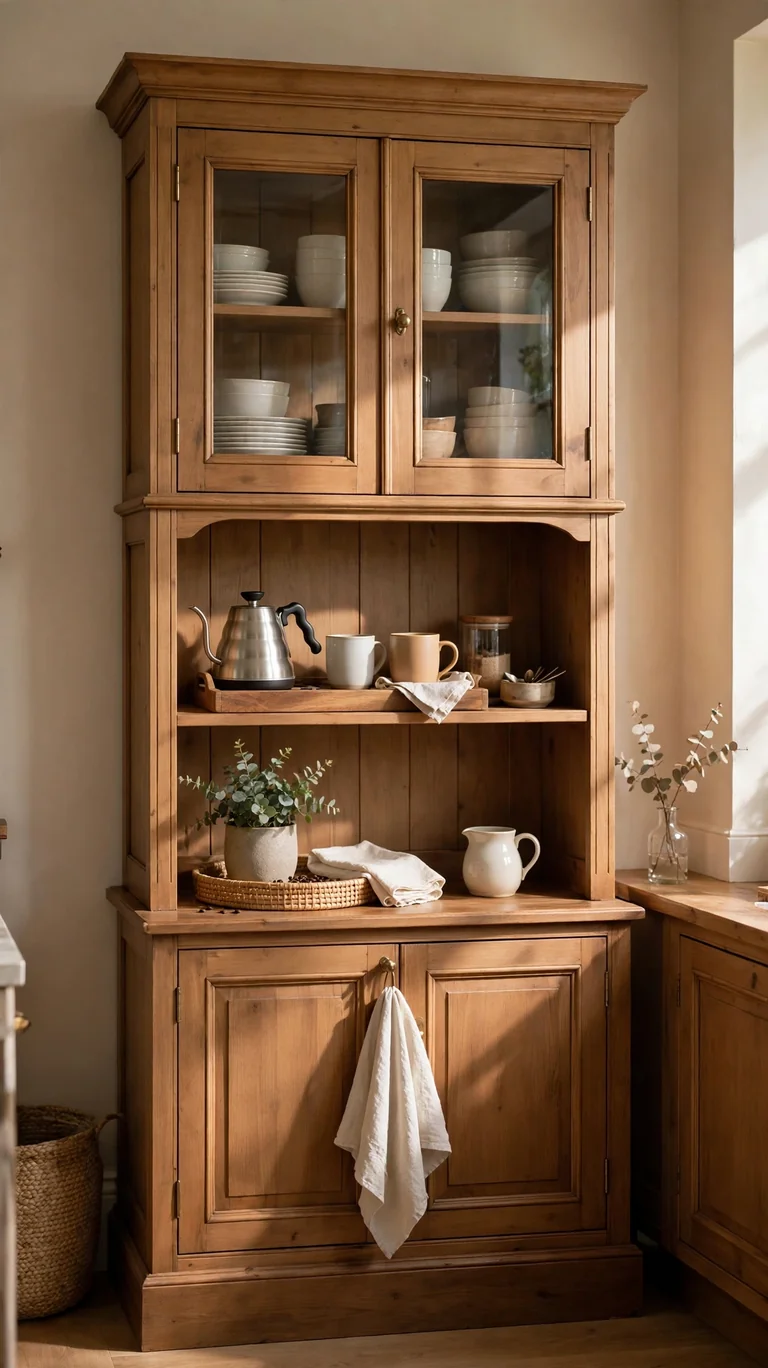
A hutch does not have to be all display. Dedicating one section to a coffee or bar station makes it genuinely useful every single day. Clear a lower shelf or the cabinet top, add a tray with your coffee maker or a few favorite bottles, and style around it with mugs or glasses. Suddenly the hutch earns its floor space in a way that pure decor never could.
Keep the station tidy by containing everything on a tray or a small riser. Mugs hang from hooks under a shelf, bottles line up in a neat row, and a small plant or candle keeps it from looking purely utilitarian. This works especially well in dining rooms and living rooms, where guests can help themselves without anyone running to the kitchen.
19. Mix In Heirlooms and Personal Pieces
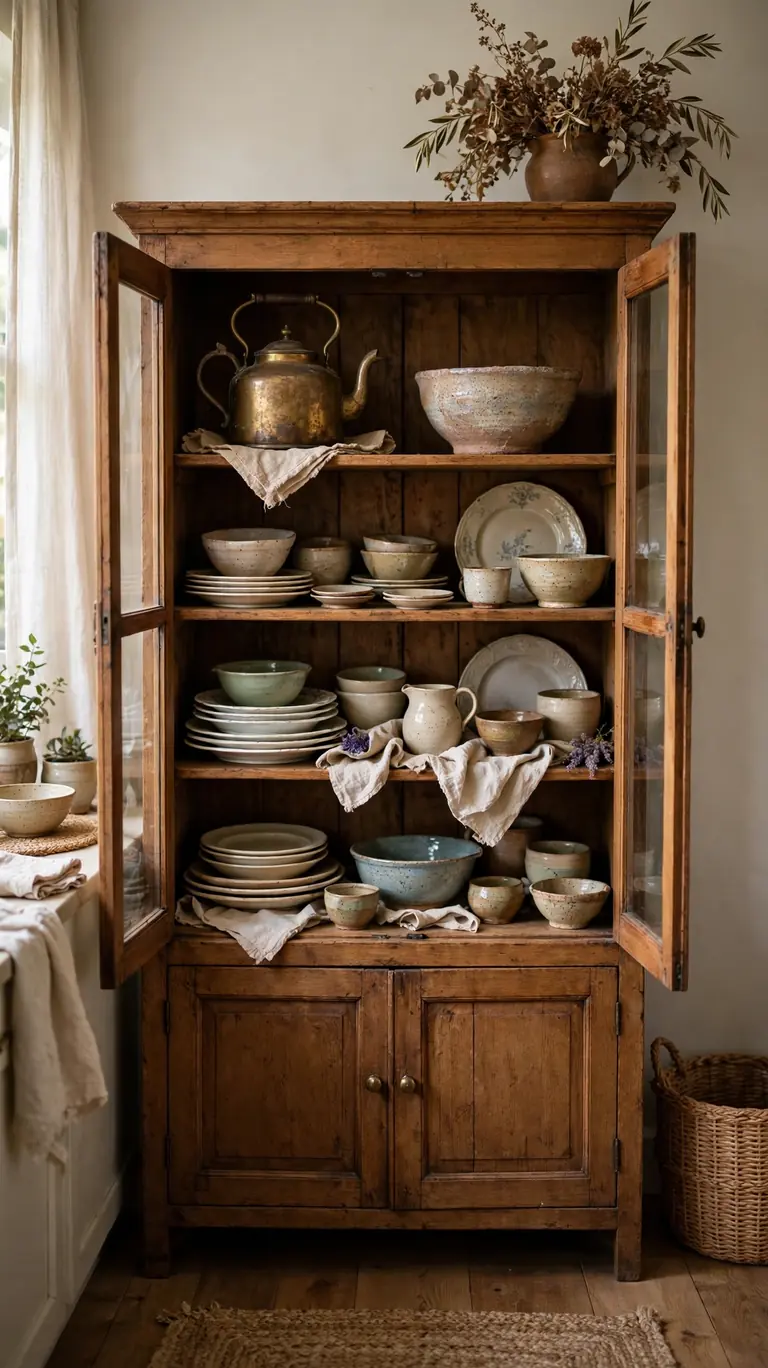
The hutches people love most are the ones that tell a story. Mix in a few personal pieces among the dishes and decor: your grandmother’s teapot, a souvenir from a favorite trip, a handmade bowl from a local artist. These items add meaning that no store bought accessory can match, and they make the hutch feel like yours rather than a showroom.
You do not need many. Two or three meaningful pieces per hutch is enough to give it soul. Give each one a prominent spot where it can be seen and appreciated, not buried behind taller items. When guests ask about them (and they will), you get to share the story, which is the whole point of displaying things you love.
20. Use a Mirror to Add Depth and Light
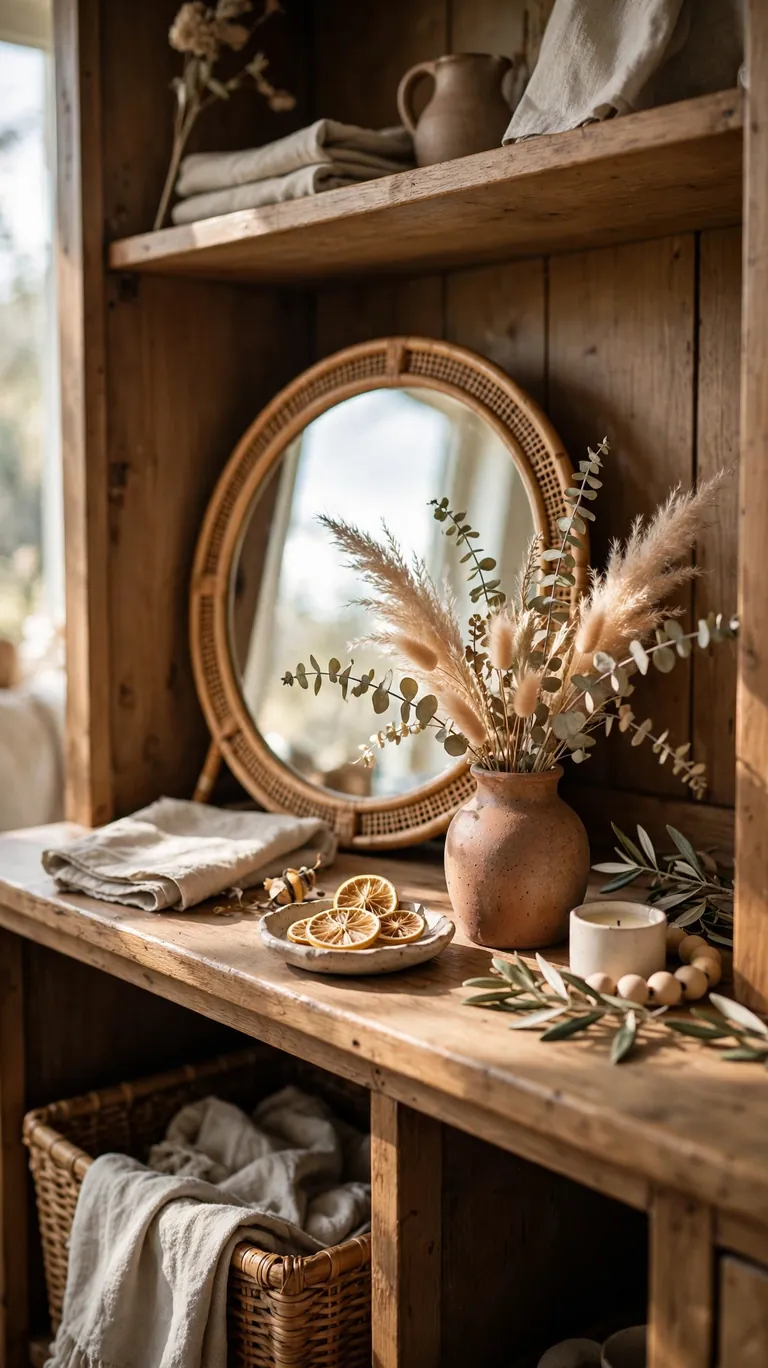
A mirror inside a hutch is a classic stylist trick for good reason. Leaned against the back of a shelf, a mirror reflects light, makes the shelf feel deeper, and doubles the visual impact of whatever sits in front of it. It is especially effective in darker corners or in hutches with deep shelves that tend to look shadowy.
You do not need a big mirror. A small round or arched mirror tucked behind a vase or a stack of bowls does the job beautifully. Choose a frame that matches your hardware or your color scheme so it blends in. The reflection adds a layer of interest that flat art cannot, and it makes the whole hutch feel brighter without adding a single light.
21. Add Candles for Warmth and Glow
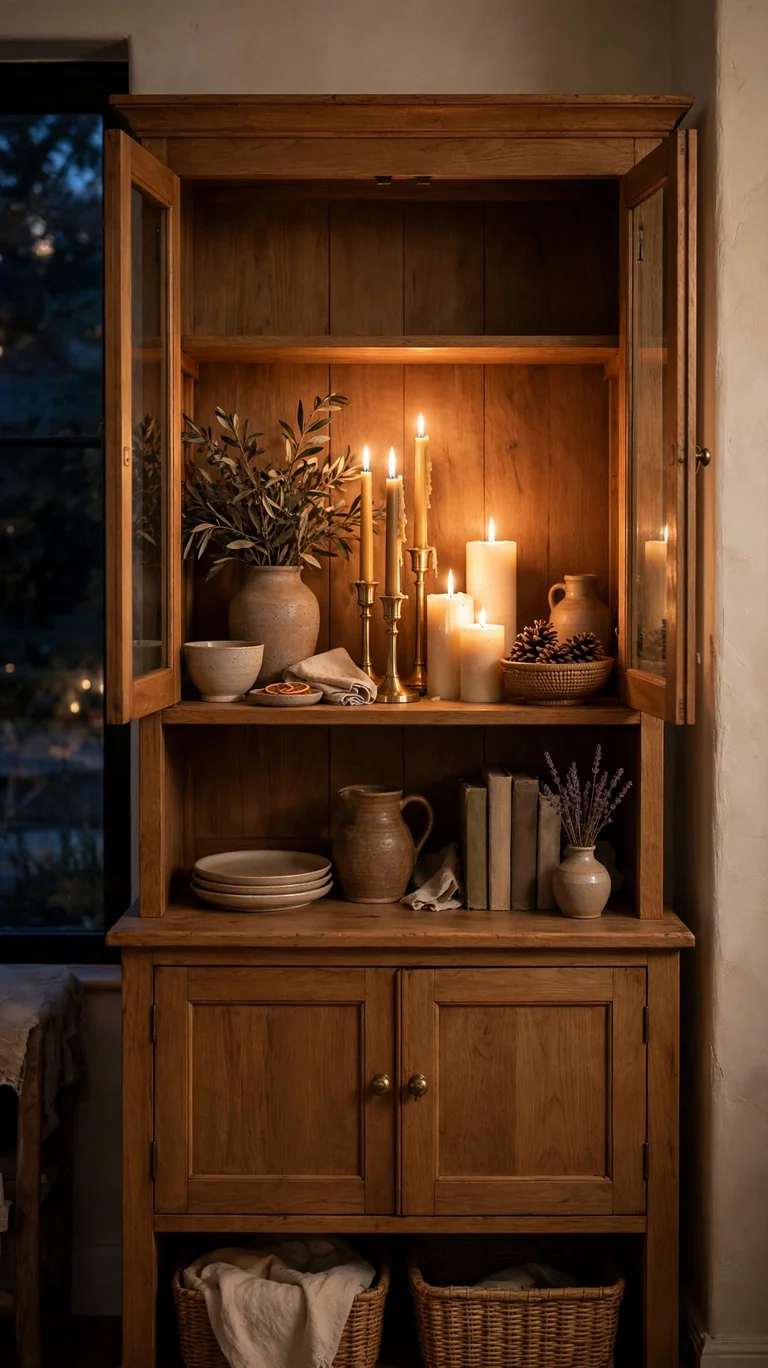
Candles are the finishing touch that makes a hutch feel alive. A pair of taper candlesticks on the top, a cluster of pillar candles on a lower shelf, or a few tea lights in pretty holders add warmth, scent, and a soft flicker that electric light cannot quite match. They signal that the hutch is part of a home that gets lived in and enjoyed.
Vary the heights and group them in odd numbers, just like any other decor. Keep candles away from anything flammable (dried flowers, paper, fabric) and never leave them burning unattended, especially on high shelves. If you have kids or pets, battery operated flameless candles give you the same warm glow with zero worry. Light them at dinner and watch the whole room change.
22. Keep It Editable and Rotate Often
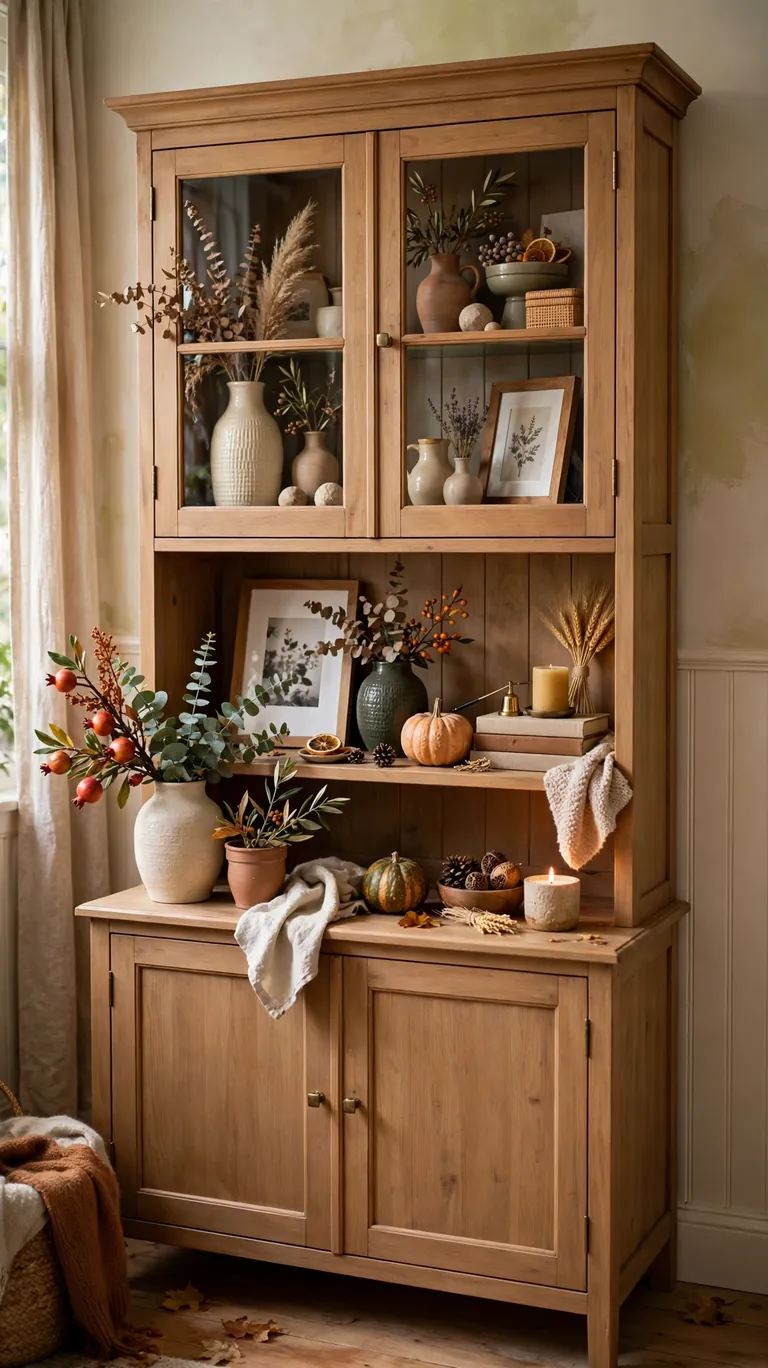
The freshest hutches are never finished. They get edited and rotated regularly, which is what keeps them looking current instead of frozen in time. Every few months, swap a few pieces between the hutch and other rooms, retire anything that feels tired, and bring in something new from a thrift store or your own closets. This rotation habit is the real secret of people whose homes always look effortlessly styled.
Think of your hutch as a gallery with changing exhibits rather than a permanent installation. Keep a small stash of backup pieces (extra vases, frames, candles) so you always have something to swap in. The five minute refresh, moving three things and removing one, can be more powerful than a full restyle. A hutch that evolves with you will never feel dated.
Frequently Asked Questions
What should I put on top of a hutch?
The top of a hutch suits larger, bolder pieces that would overwhelm a shelf: a big basket, a pair of tall candlesticks, a large vase, or a trailing plant. Keep it to one to three items that relate to the decor below in color or material. Avoid using the top as overflow storage, since clutter up high drags down the whole piece.
How do I style a hutch without making it look cluttered?
Edit ruthlessly and give everything breathing room. Group small items on trays so they read as one vignette, vary heights so the eye moves naturally, and leave some empty space on every shelf. Hide less attractive necessities behind closed doors, and follow the rule of odd-numbered groupings. If a shelf still feels busy, remove one more item and see if it improves.
Should a hutch match the dining room table?
It does not have to match exactly, and in fact a hutch that coordinates rather than matches often looks more interesting. Shared wood tones, complementary colors, or similar hardware finishes are enough to tie the pieces together. A painted hutch next to a wood table is a classic combination that adds character. What matters most is that the scale feels right for the room.
Can I use a hutch in a room other than the dining room?
Absolutely. Hutches work beautifully in entryways (for keys, mail, and seasonal decor), living rooms (for books, games, and barware), home offices (for supplies and pretty storage), and even bathrooms (for towels and toiletries). The styling ideas here apply anywhere. Just adjust what you display to suit the room’s purpose, and the hutch will feel right at home.
How often should I restyle my hutch?
A light refresh every season keeps it feeling current, and that can be as simple as swapping a few small accents. Do a deeper edit once or twice a year, taking everything off and only putting back what you love. If the hutch starts to feel invisible to you, that is the sign it is time for a change. Regular small updates beat rare total overhauls.
Conclusion
A well styled hutch does something special for a room. It turns everyday dishes into decor, gives heirlooms a place of honor, and adds the kind of layered, collected feeling that makes a house feel like a home. The ideas here all point to the same simple truth: the best hutches are edited, not filled. Start with a clean slate, choose pieces you genuinely love, and give everything room to breathe, and the styling almost takes care of itself.
You do not need to do all 22 ideas at once, and you do not need to buy a single new thing to start. Empty the shelves this weekend, put back only your favorites, and try one new trick, like painting the back panel or adding small lights. That one change will show you how much potential your hutch has been hiding. Then keep the habit of editing and rotating, because a hutch that evolves with you is a hutch you will love for years. Your forgotten furniture is about to become your favorite corner.