22 Creative Closet Curtain Ideas for a Stylish, Space-Saving Upgrade
Yes, a curtain can be the smartest upgrade your closet ever gets. If your closet has no doors, a pair of broken bifolds, or a layout where swinging doors eat up precious floor space, a curtain solves all three problems at once: it hides the clutter, softens the room, and costs far less than new doors. A simple tension rod and a curtain panel can take a closet from eyesore to design feature in under an hour, with no tools or carpentry skills needed.
Beyond the practical win, a curtain gives you a decorating choice that doors never could. You can pick a fabric that matches your bedding, hang a bold pattern that works like wall art, or swap the whole look seasonally without touching a paintbrush. The 22 ideas below cover every style and budget, from renter-friendly no-drill installs to luxe floor-to-ceiling panels, plus the small details (rods, rings, and tie-backs) that make the whole thing look intentional. Pick the one that fits your closet and your room, and you’ll wonder why you didn’t do it sooner.
1. Swap Bifold Doors for a Linen Curtain
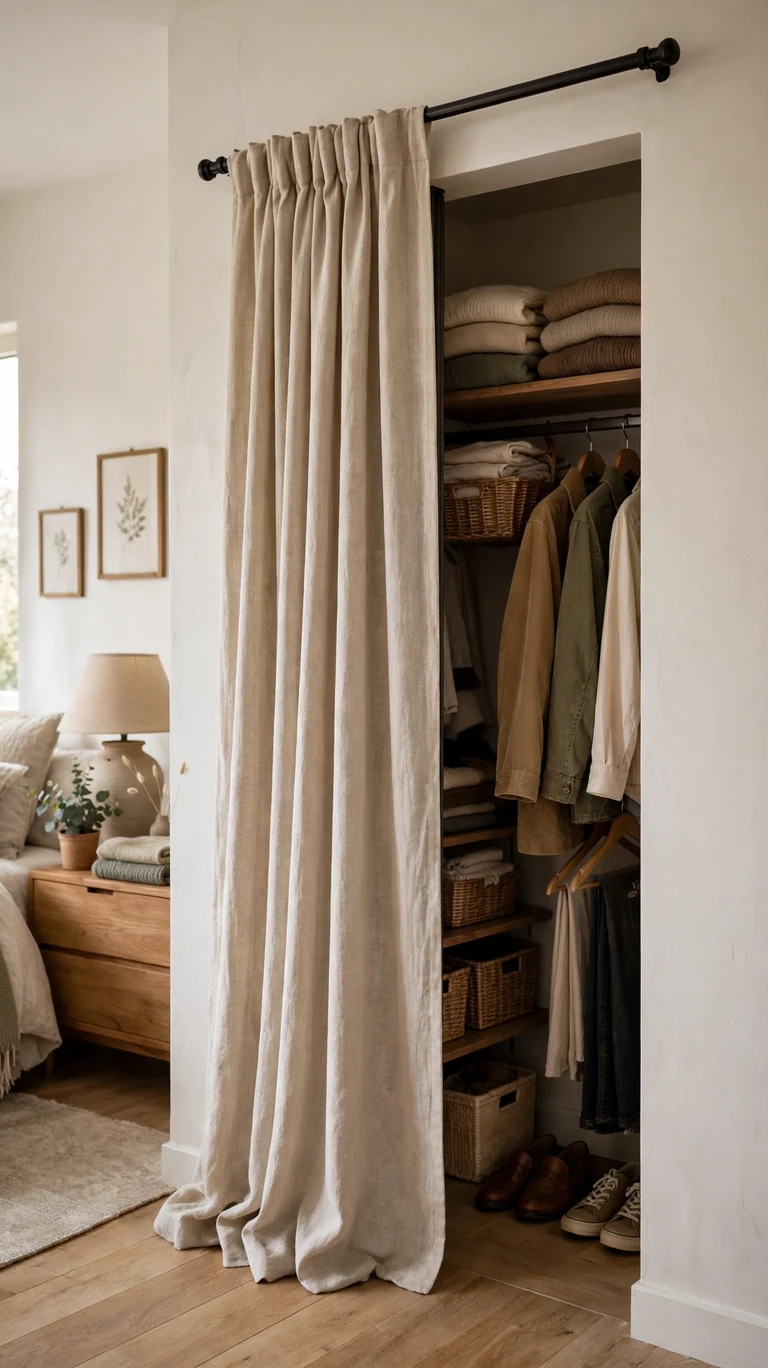
Bifold doors are often the first thing to break in a bedroom, and replacing the whole track system is a hassle nobody wants. Taking the doors off and hanging a linen curtain in the opening gives you the same coverage with a fraction of the effort. Linen has a relaxed, slightly textured look that suits almost any bedroom style, and it hangs beautifully without fussy pleating.
Choose a panel that’s a few inches wider than the opening on each side so no gaps show at the edges. A medium-weight linen (or linen-look fabric) drapes better than thin cotton and hides what’s behind it more effectively. If the opening is wide, use two panels that meet in the middle so you can pull one side open to grab clothes without exposing the whole closet.
2. Use a Tension Rod for a No-Drill Install
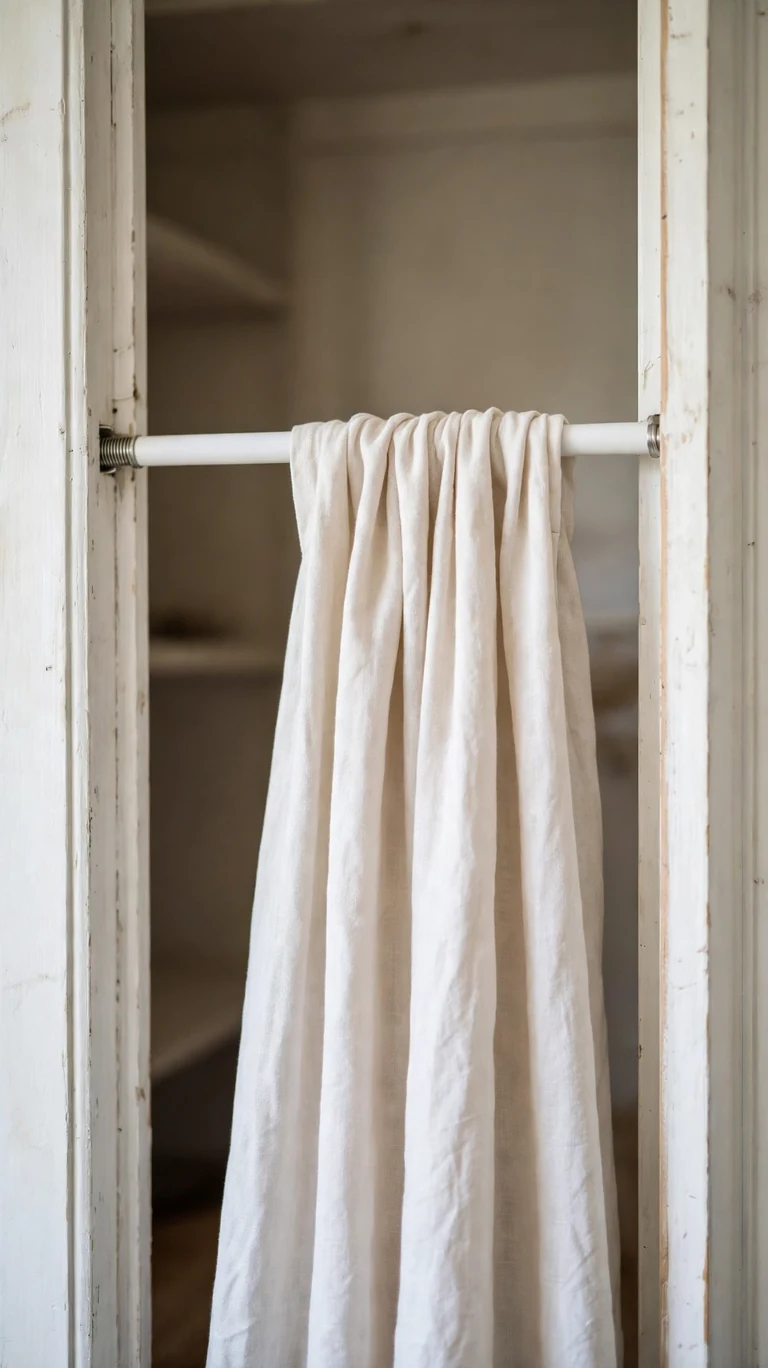
A tension rod is the renter’s best friend for closet curtains because it needs zero holes and zero hardware. You twist it to fit snugly inside the closet opening or door frame, and it holds itself in place with pressure. When you move out, it comes down in seconds and leaves no trace behind.
Measure the inside width of your opening and buy a rod that covers that range, since tension rods are sold by adjustable span. Place it a couple of inches inside the frame so the curtain hangs flush and doesn’t catch on the trim. Keep the curtain lightweight (linen, cotton, or sheer) because heavy velvet panels can overwhelm a tension rod’s grip over time.
3. Try Floor-to-Ceiling Panels for a Luxe Look
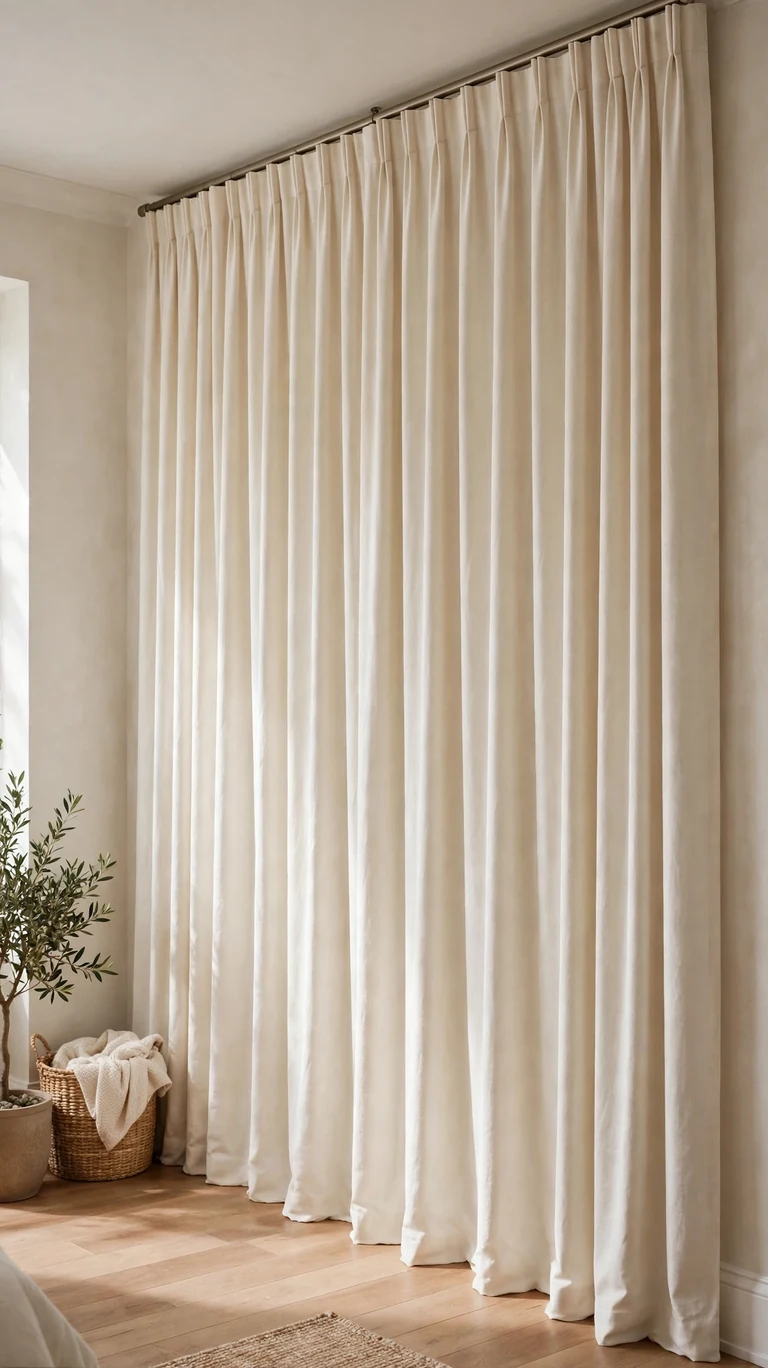
Hanging your curtain from just below the ceiling instead of at the top of the closet frame makes the whole wall feel taller and more dramatic. This trick borrows from high-end drapery styling, and it works just as well on a closet as it does on a window. The long, uninterrupted line of fabric draws the eye up and makes small bedrooms feel grander.
Mount a slim curtain rod or ceiling track 2 to 3 inches below the ceiling, and choose panels that just kiss the floor. You’ll need to buy longer panels than standard (look for 96-inch lengths), but the payoff is a custom, tailored look. Keep the fabric simple and solid so the drama comes from the scale, not a busy pattern.
4. Layer a Sheer Panel Over Storage Bins
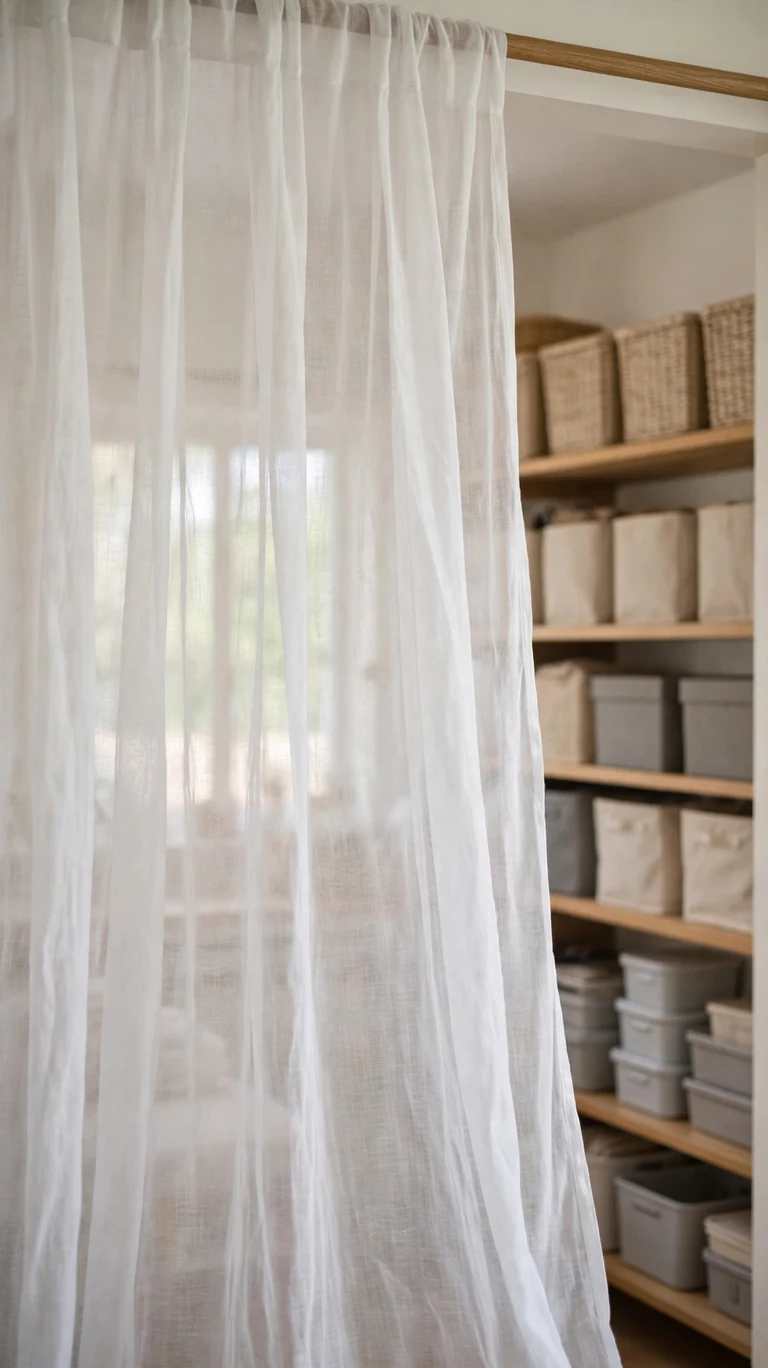
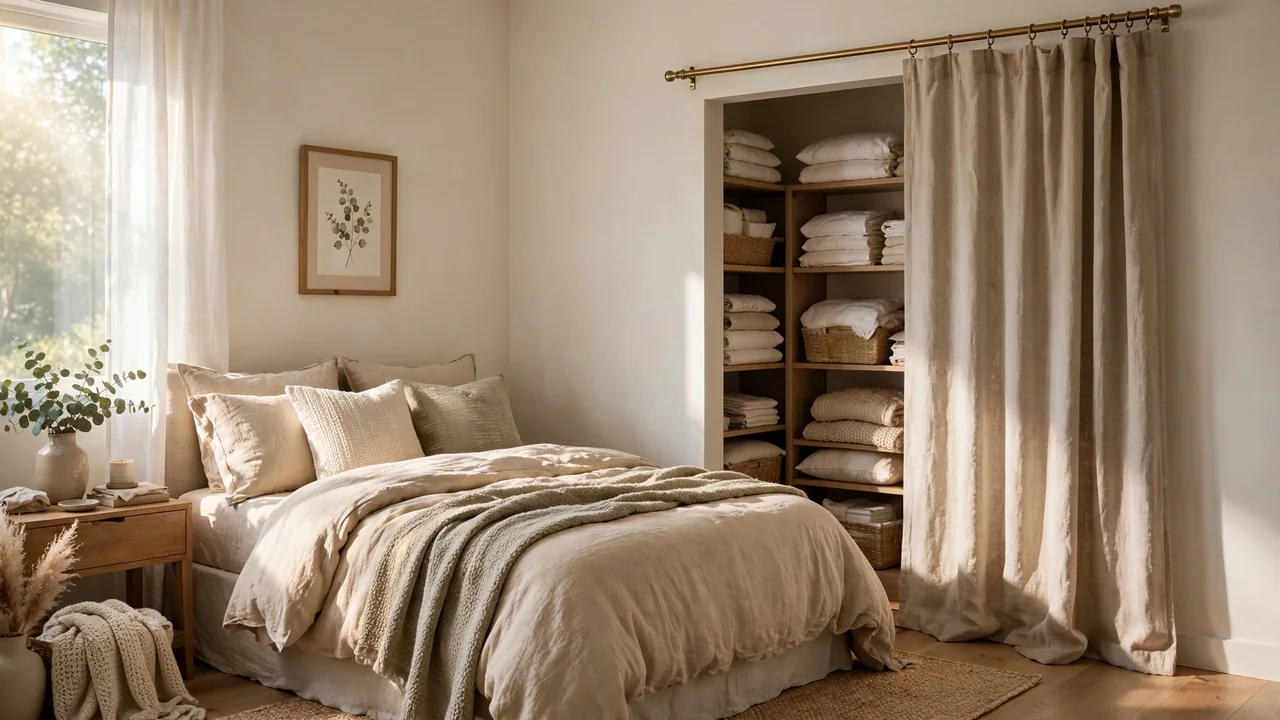
Not every closet needs to be fully hidden. If your closet holds neatly organized bins and baskets that actually look good, a sheer curtain softens the view without blocking it completely. The sheer diffuses the visual clutter into a soft blur, which reads as calm and intentional rather than messy.
Hang the sheer on its own rod in front of the shelving, and keep what’s behind it reasonably tidy since silhouettes will show through. White or ivory sheers work best because they brighten the closet interior and let you see enough to find things. This approach is perfect for linen closets, craft storage, or any closet where you access items constantly and don’t want to wrestle a heavy curtain every time.
5. Hang a Blackout Curtain to Protect Clothes From Sun
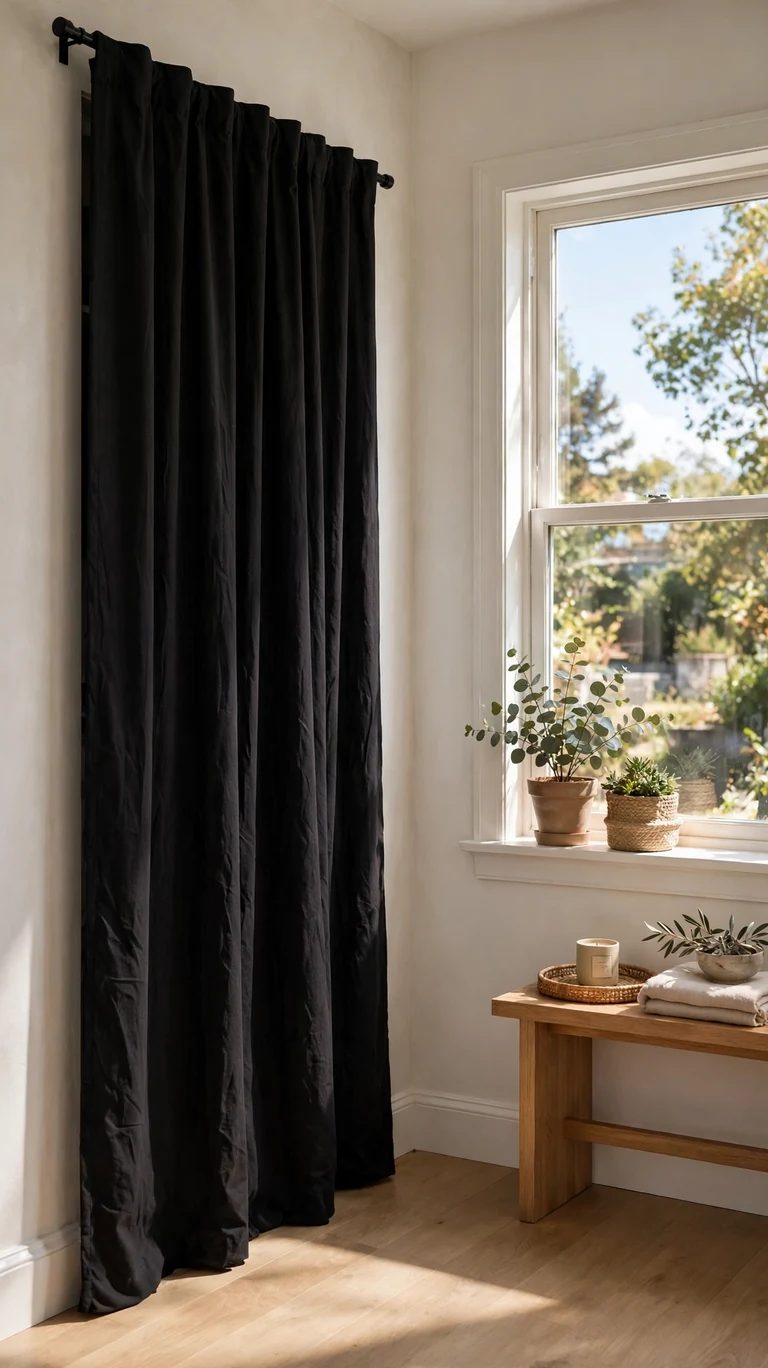
If your closet sits across from a sunny window, ultraviolet light can quietly fade your favorite clothes over months of exposure. A blackout curtain over the closet opening blocks that light completely while also hiding the interior. It’s a practical upgrade disguised as a style choice.
Pick a blackout panel in a color you actually like, since it will be a prominent visual element in the room. Many blackout curtains come with a soft fabric face (linen-look or twill) so they don’t scream “blackout” from across the room. Hang it on a sturdy rod since blackout panels are heavier than standard curtains, and make sure it fully covers the opening with a little overlap on each side.
6. Choose a Bold Pattern as a Room Accent
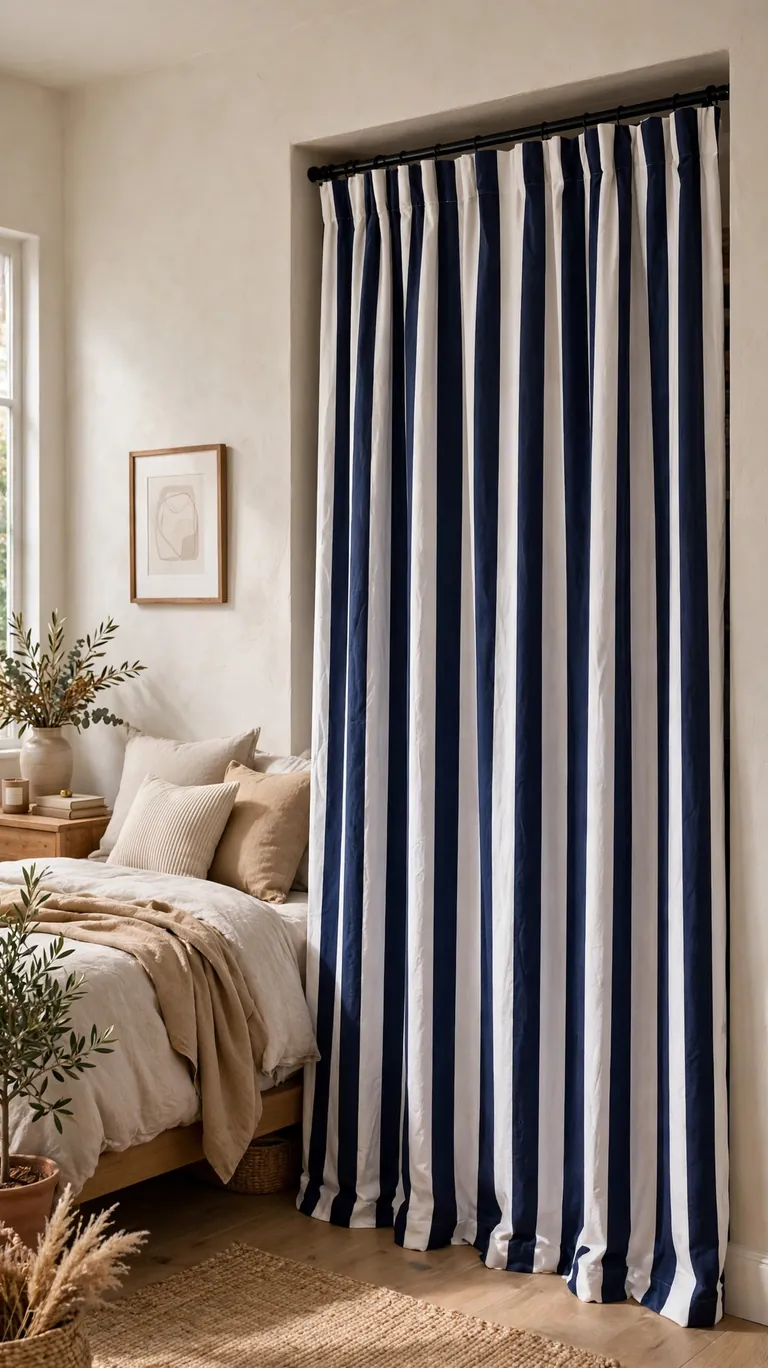
A closet curtain is essentially a large, flat canvas in your bedroom, so why not treat it like art? A bold stripe, a large-scale floral, or a graphic geometric pattern turns the closet into a focal point instead of something to hide. This works especially well in neutral bedrooms that need one confident dose of personality.
Keep the rest of the room relatively quiet so the curtain can carry the visual weight without competition. Pull one color from the pattern into a throw pillow or a small rug to make the choice feel deliberate. If you’re nervous about commitment, remember that a curtain is one of the easiest things in a room to swap, so a bold pick here is low-risk decorating.
7. Go Boho With a Beaded Curtain
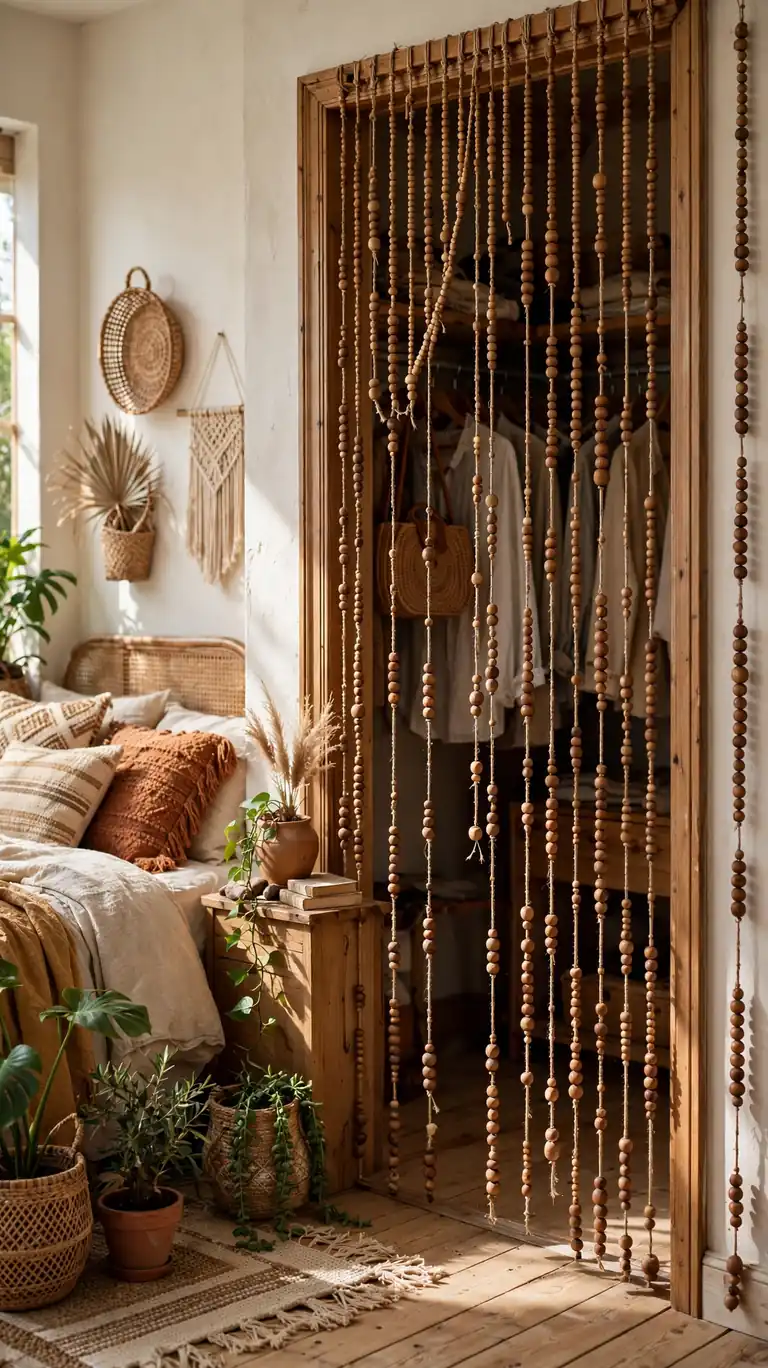
Beaded curtains bring instant texture and movement to a closet opening, and they suit boho, eclectic, and playful kids’ rooms perfectly. Unlike fabric, they don’t need washing or ironing, and they let air circulate freely, which is a real plus for closets that tend to smell musty. The gentle clatter when you walk through adds a sensory detail that fabric can’t match.
Choose wooden beads for a warm, natural look or colorful acrylic strands for something livelier. Hang the beaded panel from a rod mounted inside the frame so the strands fall straight and don’t snag on the trim. Beaded curtains hide less than fabric, so they’re best for closets that stay reasonably organized or for spaces where you don’t mind a peek inside.
8. Add a Macramé Hanging for Texture
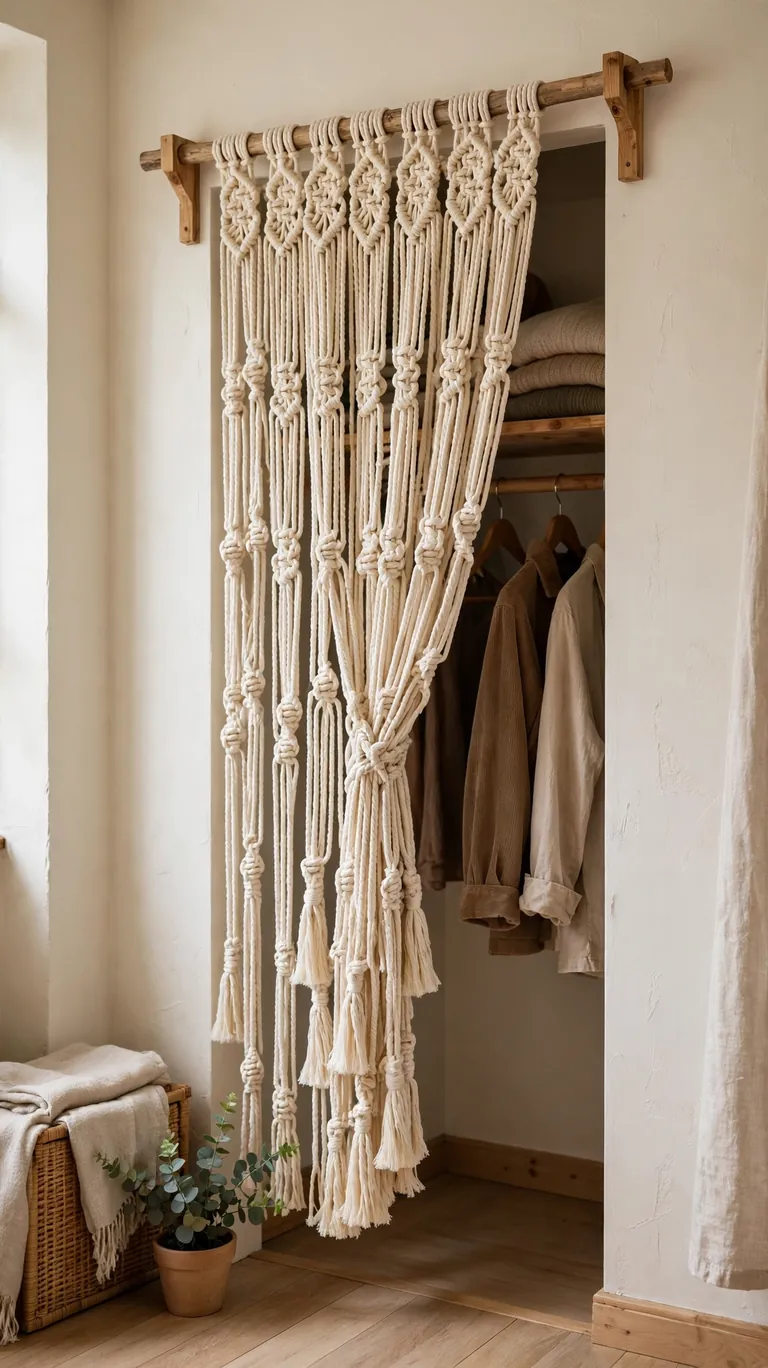
A macramé curtain or large macramé wall hanging used as a closet cover adds handcrafted texture that makes a bedroom feel warm and personal. The knotted cotton cords create beautiful shadows and depth, and the natural cream color works with everything from modern minimal to full bohemian. It’s a statement piece that happens to also hide your clothes.
Because macramé is openwork, it won’t fully conceal a messy closet, so pair it with tidy shelving or matching storage boxes behind it. Hang it from a wooden dowel or a slim brass rod for the best look, and keep it out of high-traffic paths where it could get snagged. A quick shake outdoors every few months keeps the dust from settling into the knots.
9. Install a Ceiling Track for a Smooth Glide
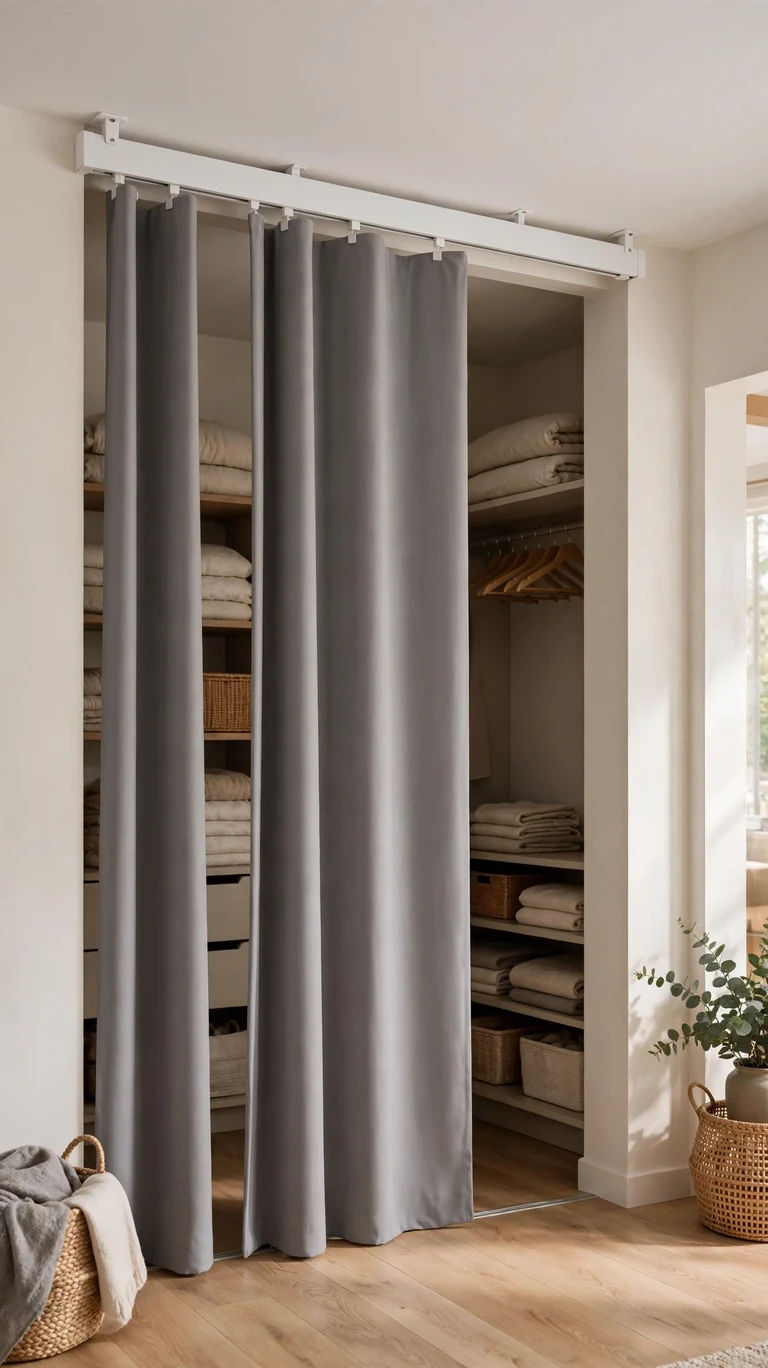
Ceiling-mounted curtain tracks are the secret behind those effortless hotel-style drapery looks, and they work brilliantly on closets. The track mounts flat to the ceiling so there’s no visible rod, and small gliders let the panels slide open and closed with one finger. It’s the smoothest-operating option on this list and ideal for closets you open many times a day.
You can bend some tracks around corners, which means one continuous track can cover an L-shaped closet or wrap a corner nook. Choose a track rated for your curtain weight, and have panels made or hemmed so they hang about half an inch off the floor. The clean, hardware-free look suits modern and minimalist bedrooms especially well.
10. Use Cafe Curtains on Open Shelving
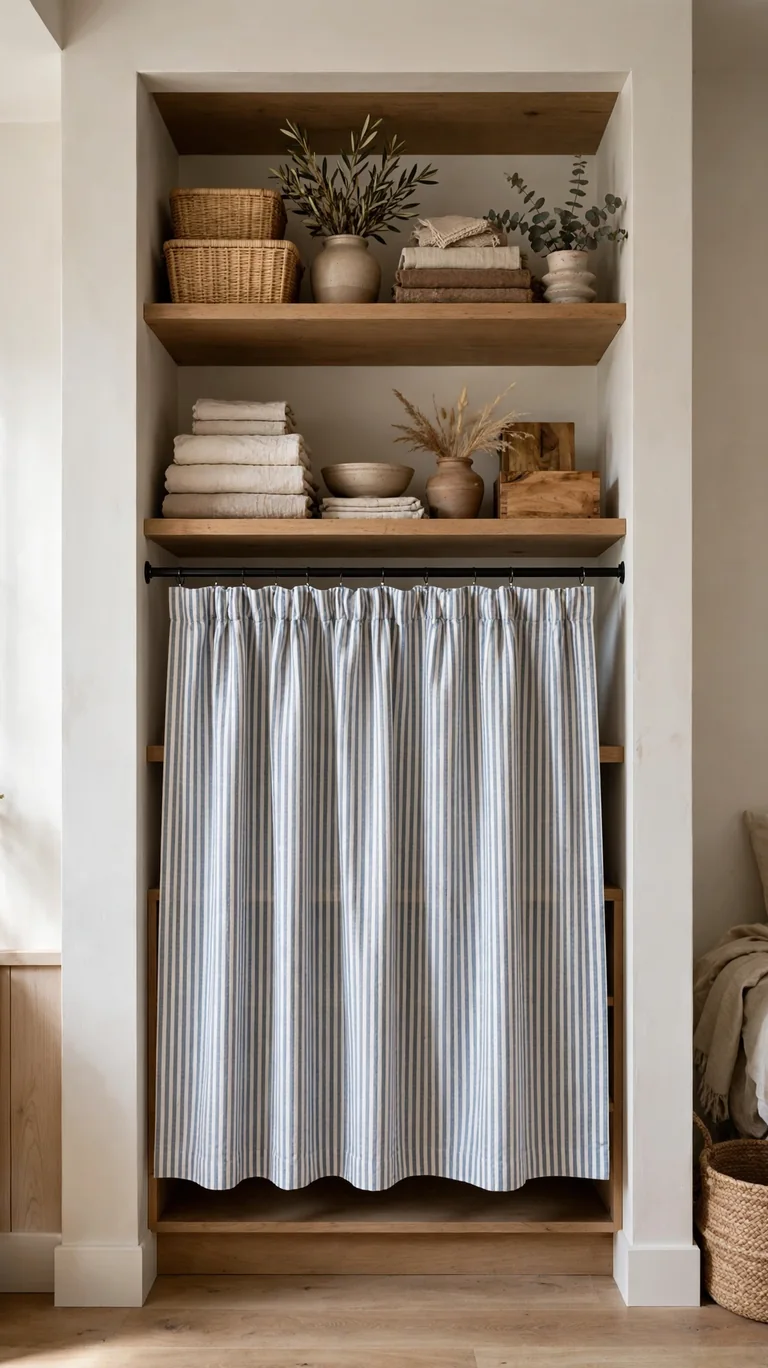
Cafe-length curtains (the short ones that cover just the lower half of a window) are a charming solution for open closet shelving. Hang a short curtain across the lower shelves to hide shoes, bins, and folded clothes while leaving the upper shelves open for display. It gives you the tidy look of closed storage with the easy access of open shelving.
Mount a slim tension rod or a small cafe rod across the shelf opening at whatever height divides “hide” from “display.” A simple cotton or linen panel in a stripe or gingham adds cottage charm, while a solid neutral keeps it modern. This trick also works beautifully inside deep closets to separate the hanging section from stacked storage below.
11. Tie Back Curtains to Frame the Closet
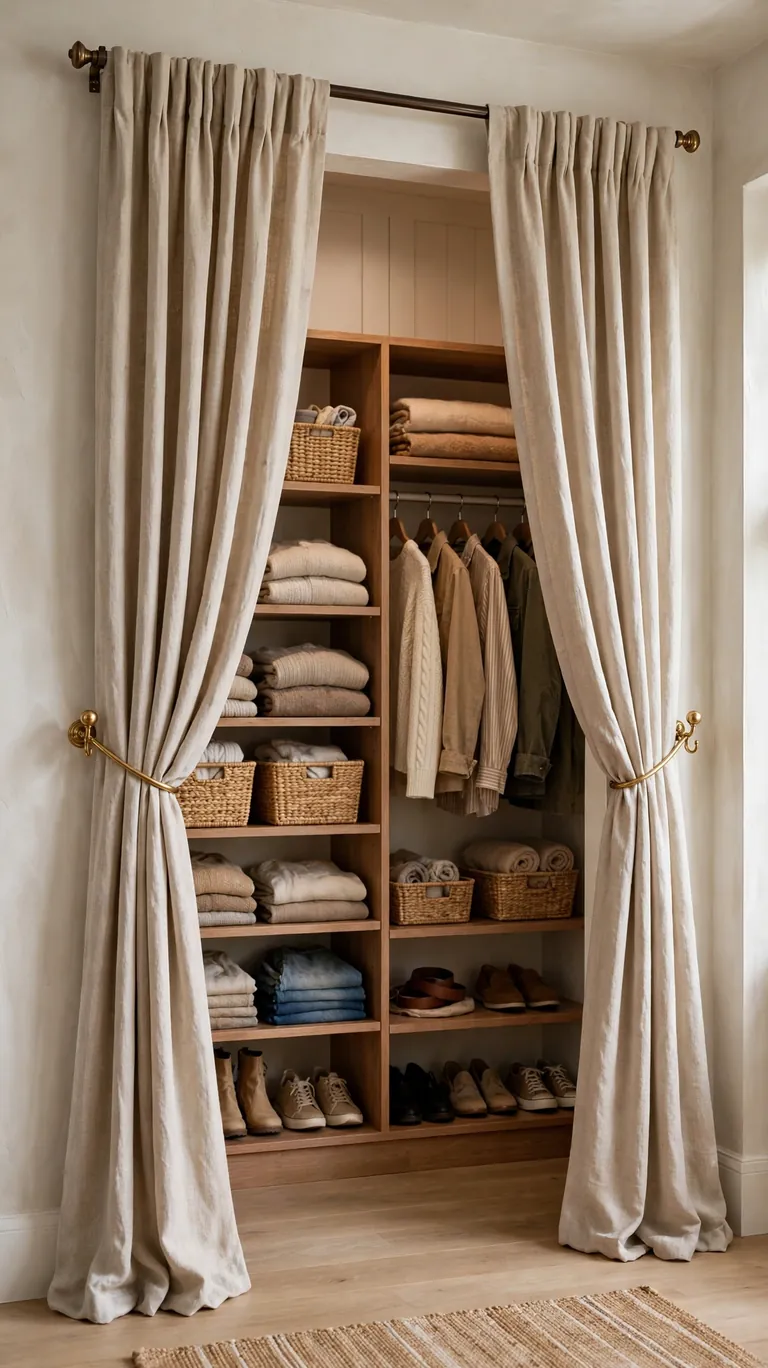
Tie-backs turn a closet curtain from a flat cover into a styled, intentional feature. When the curtain is pulled to the sides and held with fabric ties, rope, or brass hooks, the closet opening gets a soft, framed look like a stage. It’s the best of both worlds: the closet stays accessible during the day and looks dressed rather than bare.
Position the tie-back hooks about two-thirds of the way down the opening for the most flattering drape. Match the tie-back material to your room’s hardware (brass hooks with brass lamps, for example) for a pulled-together feel. When you want full coverage at night or when guests come over, just release the ties and let the panels fall closed.
12. Pick Velvet for a Cozy, High-End Feel
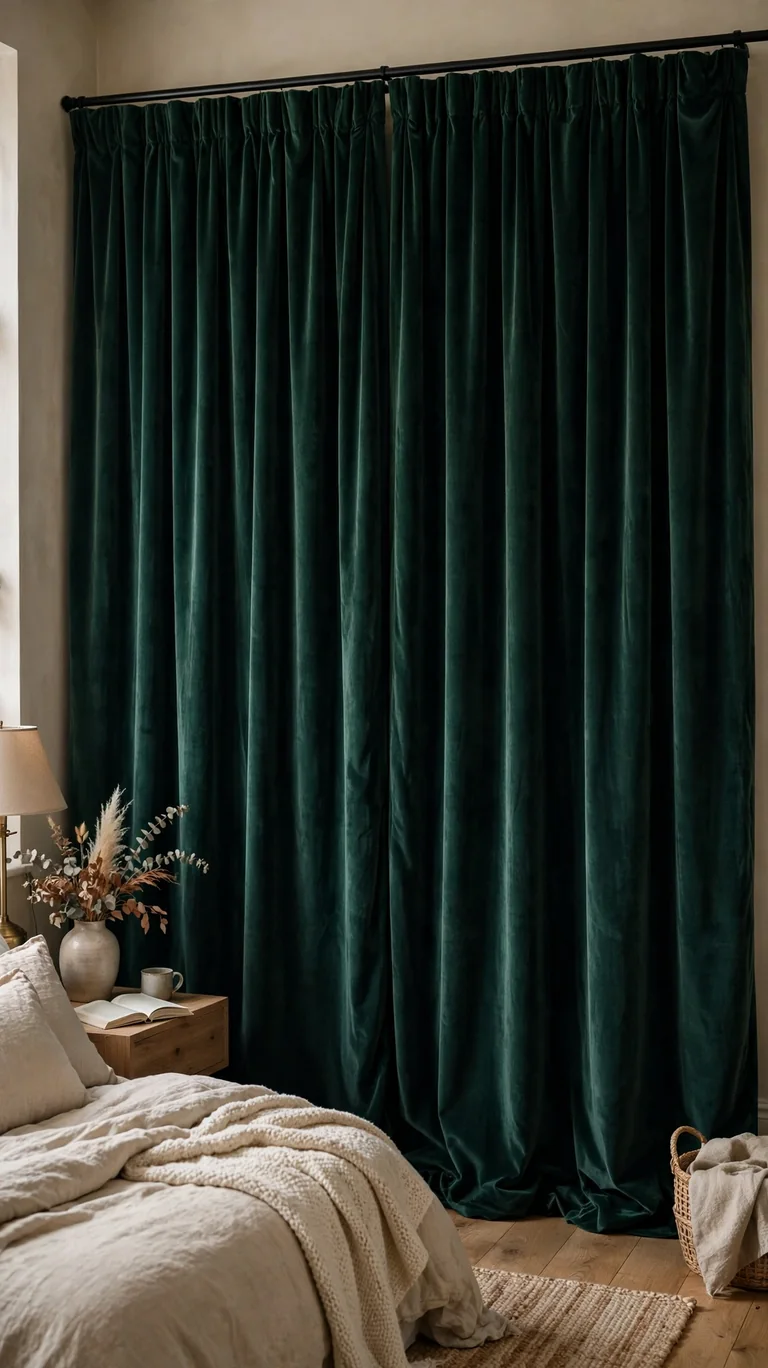
Velvet curtains on a closet bring a richness that makes the whole bedroom feel more luxurious. The fabric absorbs light instead of reflecting it, which gives the closet wall a deep, moody softness that flat cotton can’t match. Jewel tones like emerald, sapphire, or rust look stunning, but even a warm gray velvet elevates the room.
Velvet panels are heavy, so mount them on a sturdy rod with solid brackets anchored into studs or good wall anchors. Keep the panels dusted with a soft brush or a lint roller, since velvet shows dust more than other fabrics. In small bedrooms, one velvet closet curtain can deliver the cozy drama of an upholstered wall for a fraction of the cost.
13. Try a Two-Tone or Color-Blocked Look
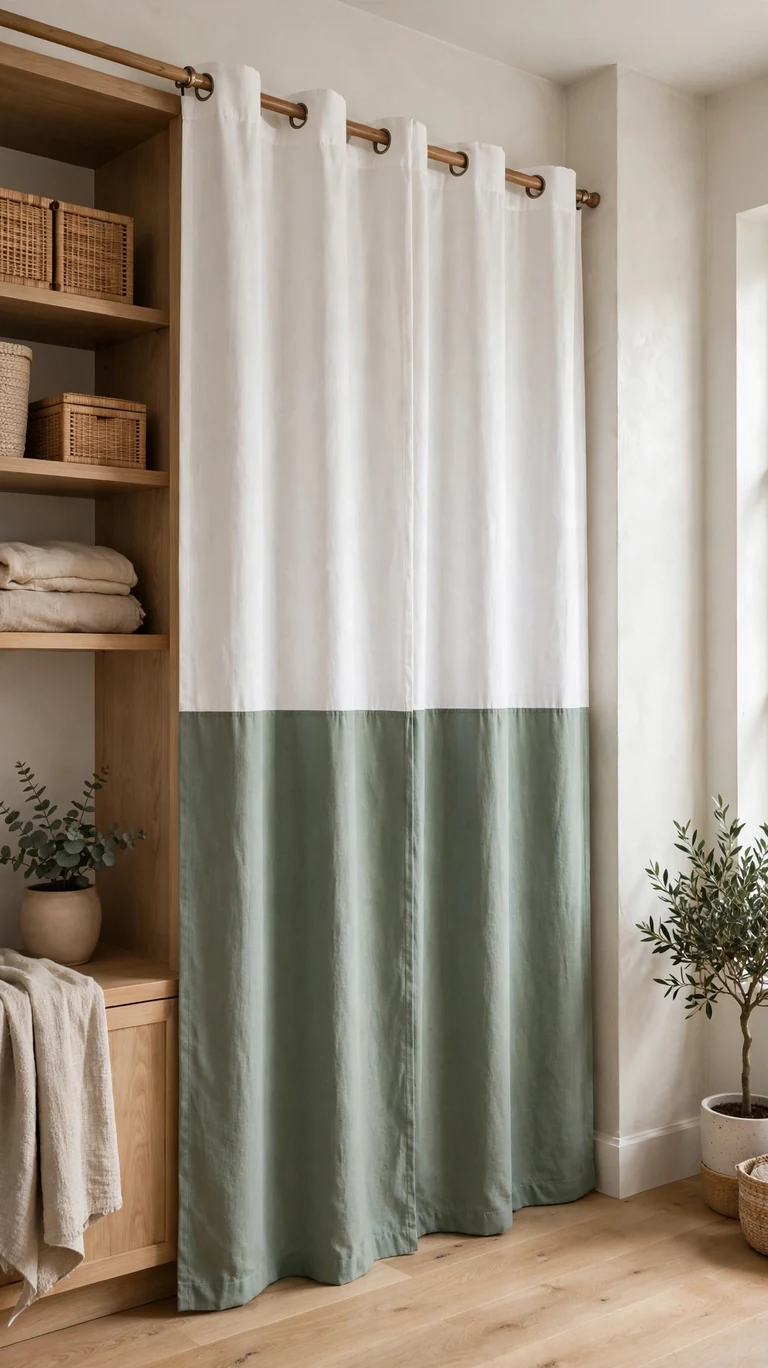
Color-blocked curtains (two fabrics joined horizontally or vertically) give your closet a custom, designer feel without a designer price. A classic combo is a solid color on top with a contrasting band at the bottom, or two complementary solids split down the middle of paired panels. It reads as intentional and modern, especially in kids’ rooms and creative spaces.
You can buy color-blocked panels ready-made or make your own by sewing (or iron-on hemming) two fabrics together. Keep the color pairing simple: two tones from the same family, or one neutral plus one accent pulled from your bedding. The horizontal seam should fall at a pleasing height, roughly a third of the way up from the floor for the most balanced look.
14. Sew (or No-Sew) a Drop Cloth Curtain
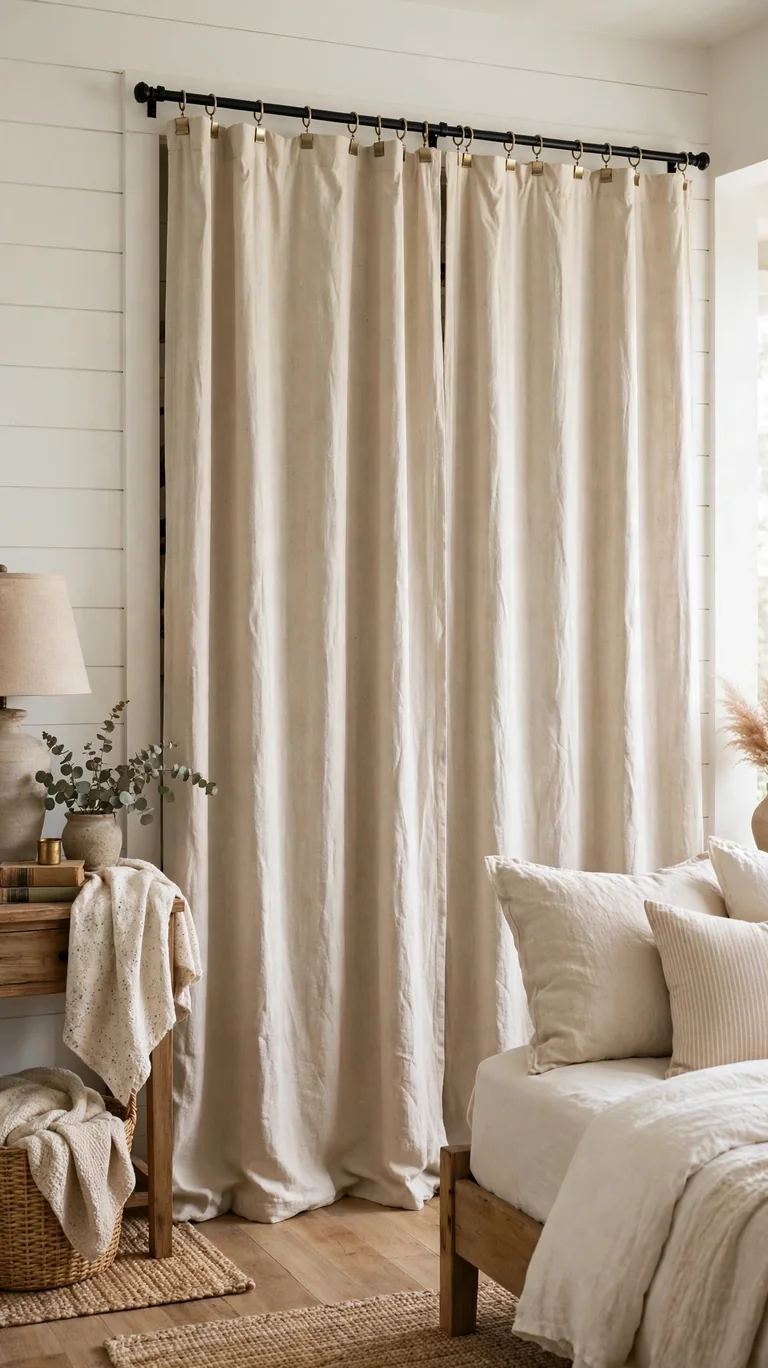
Painter’s drop cloths are a beloved budget hack for curtains because the heavy cotton canvas looks like expensive Belgian linen at a fraction of the price. The natural oatmeal color and subtle texture suit farmhouse, rustic, and minimalist bedrooms, and the fabric is sturdy enough to hang beautifully for years.
Wash and dry the drop cloth first to soften it and remove the sizing, then hem the edges with a sewing machine or iron-on hem tape for a no-sew version. Clip rings give it an easy, casual hang that suits the fabric’s workwear character. If the cloth has a printed logo or seam lines you don’t love, face that side toward the closet interior.
15. Add a Valance to Hide the Hardware
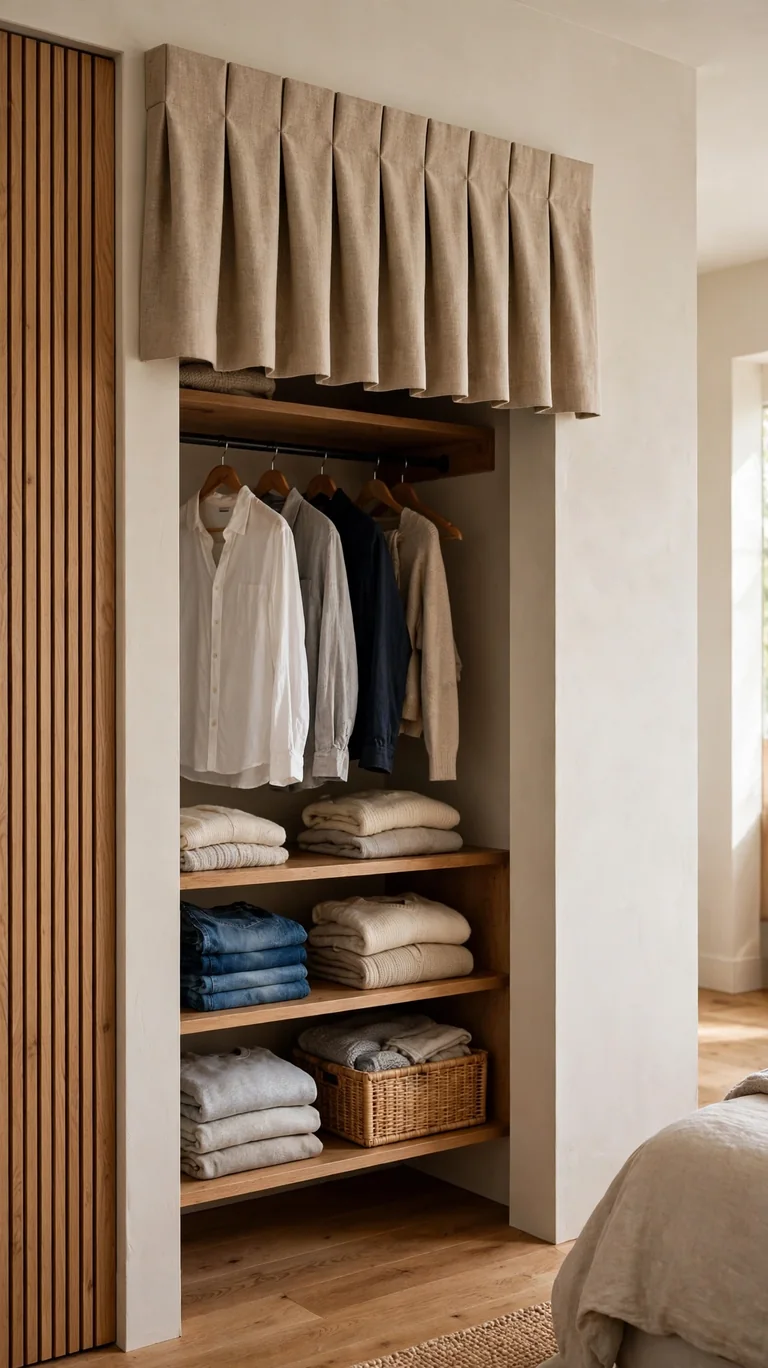
A valance (a short fabric skirt across the top of the opening) hides the rod, track, or tension hardware and gives the whole installation a finished, tailored look. It also covers the gap between the top of the curtain and the ceiling, which can otherwise look unfinished. Even a simple flat valance in the same fabric as the curtain makes everything look custom.
Mount the valance on its own slim rod placed a few inches in front of the main curtain rod so the two layers don’t bunch. A straight, tailored valance suits modern rooms, while a softly gathered one leans traditional or cottage. Keep the valance relatively short (10 to 14 inches) so it frames the opening without eating into the curtain’s coverage.
16. Match Curtains to Your Bedding or Walls
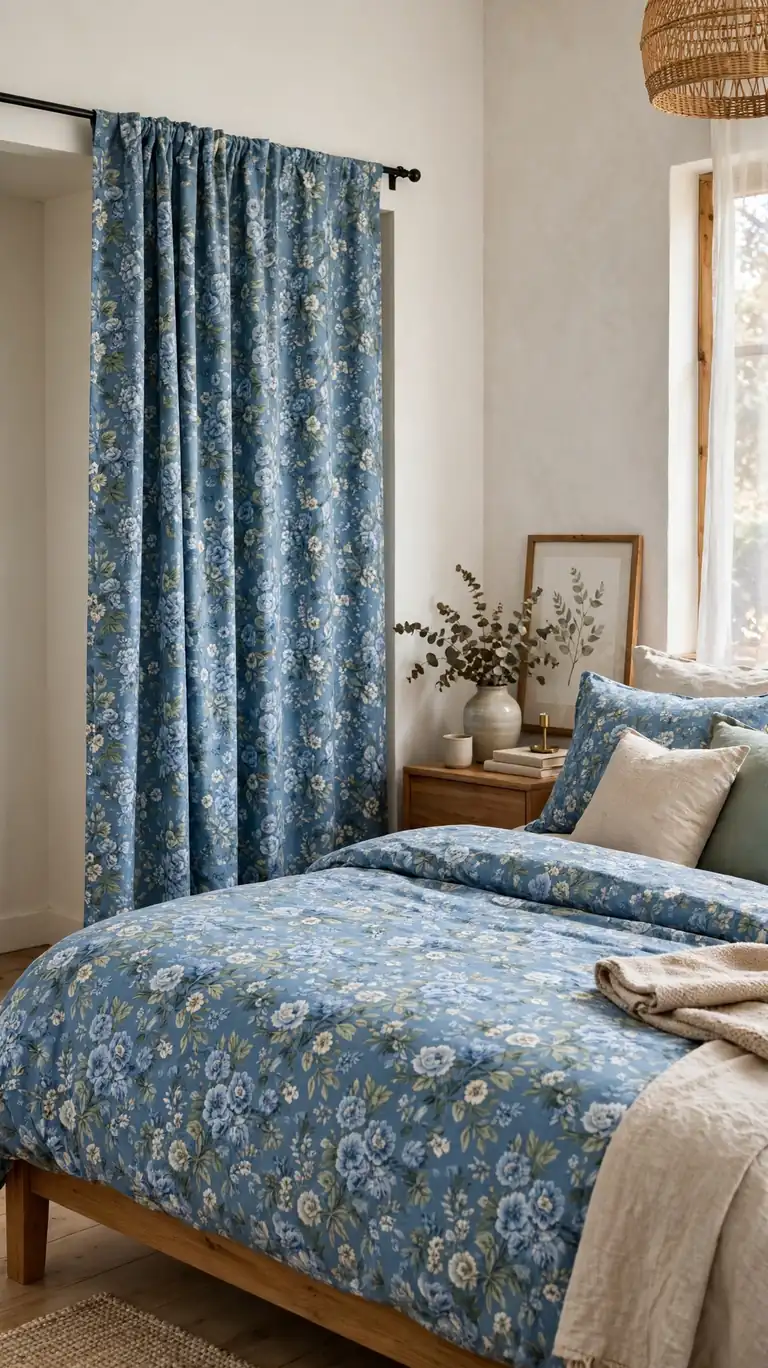
The easiest way to make a closet curtain look like it was always meant to be there is to match it to something else in the room. A curtain in the same fabric as your duvet cover, or in the exact wall color, makes the closet visually disappear into the room’s palette. The eye reads it as part of the architecture rather than an add-on.
If you can’t find an exact match, go one shade deeper or lighter than the walls for a tone-on-tone effect that’s nearly as seamless. For bedding matches, check whether the bedding brand sells matching curtain panels, since many do. This approach is especially smart in small bedrooms where every visual interruption makes the space feel choppier.
17. Use Grommet-Top Panels for Easy Sliding
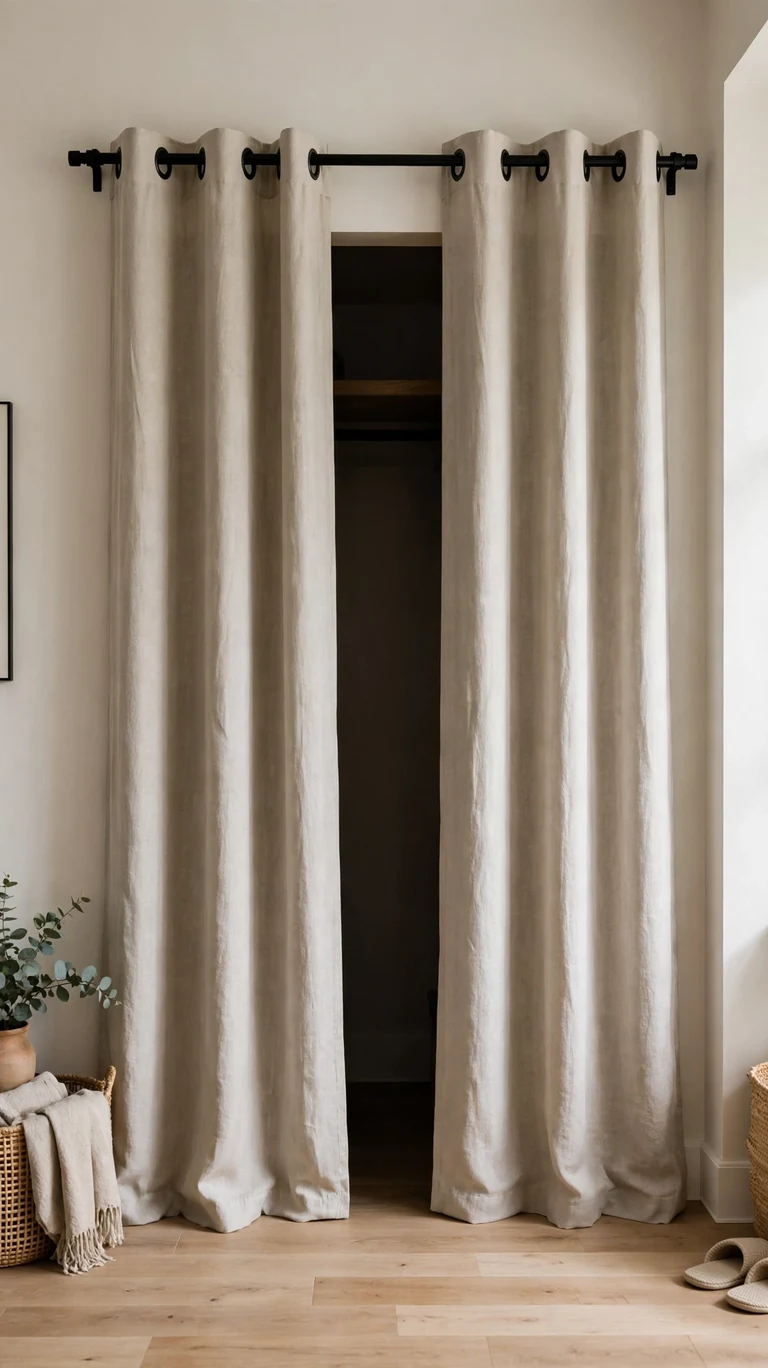
Grommet-top curtains (with metal rings punched along the top edge) slide along a rod with almost no friction, which makes them perfect for a closet you open constantly. The wide, even folds they create look neat and modern with zero styling effort, and the metal grommets add a subtle industrial detail.
Choose grommets in a finish that matches your other hardware (matte black, brushed nickel, or brass) so the detail feels coordinated. Because grommet panels stack into fairly deep folds when open, allow extra width so the open curtain doesn’t eat too much of the doorway. They work best on a smooth, straight rod without finials that could block the glide.
18. Curtain Off a Walk-In Closet Entryway
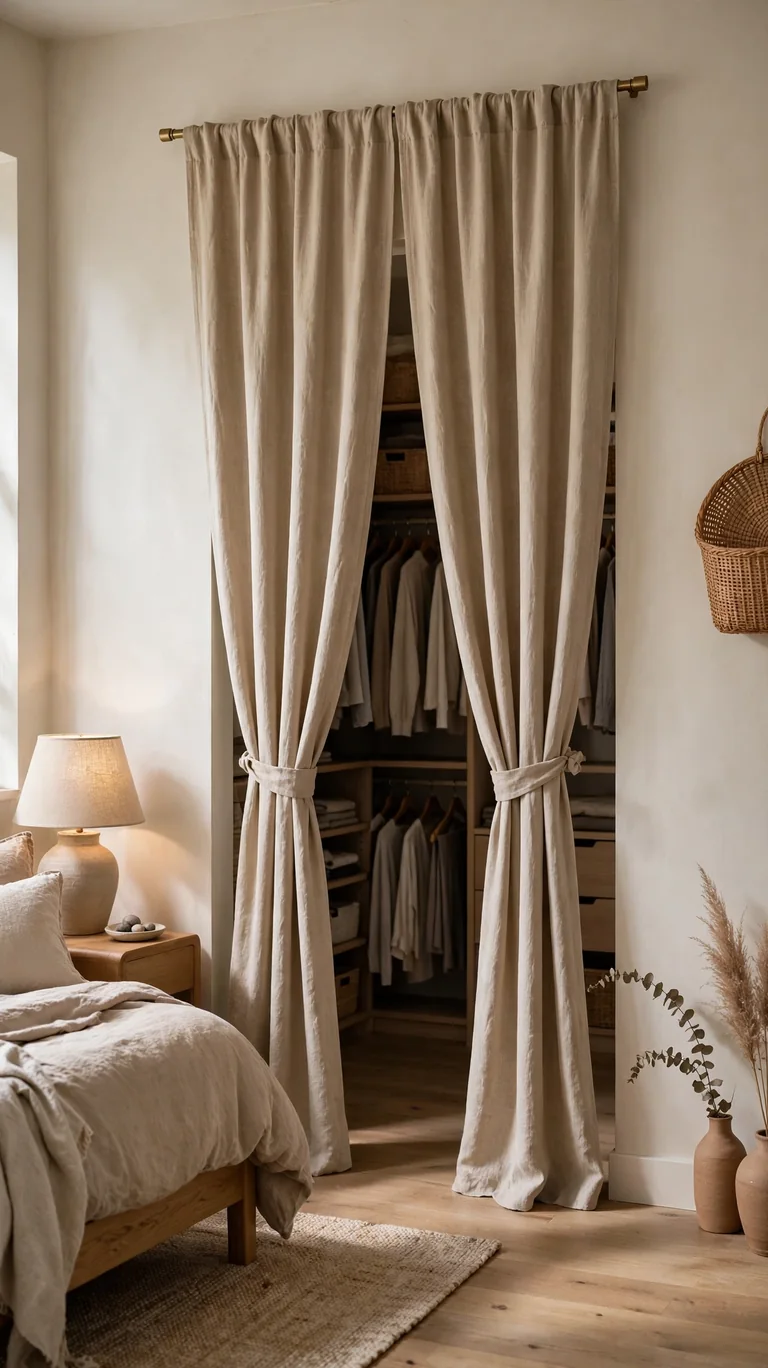
Walk-in closets often have no door at all, just an open entryway that spills visual clutter into the bedroom. A curtain across that entry gives you privacy while changing and hides the interior when you want the bedroom to feel calm. It’s also warmer in winter, since it blocks drafts from the closet space.
For a walk-in entry, mount the rod or track on the bedroom side of the opening so the curtain hangs flat against the wall. Use two panels that meet in the middle for easy walk-through access, and choose a fabric substantial enough to hang straight rather than billowing into the walkway. A curtain here can also muffle sound slightly, which is a nice bonus in shared bedrooms.
19. Hang Curtains Inside Deep Closets as Dividers
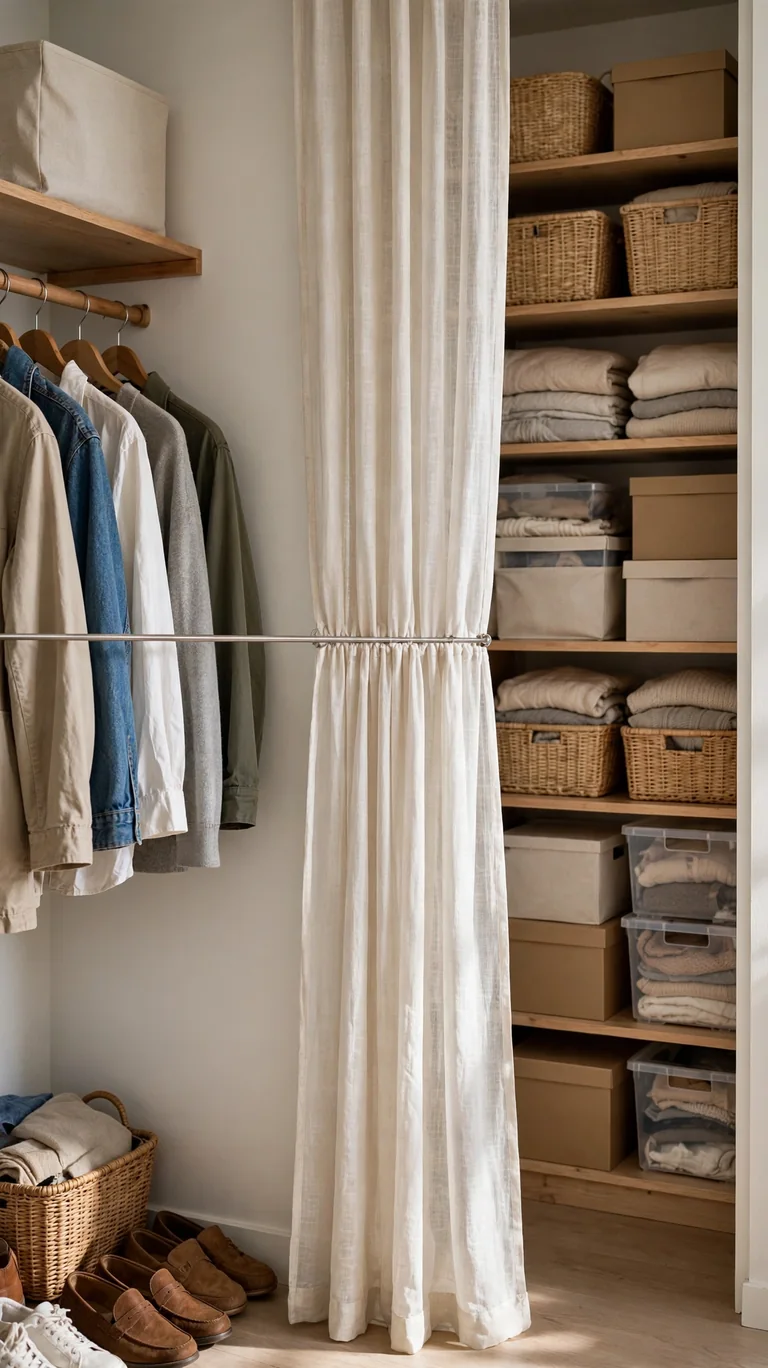
Deep reach-in closets often become a jumble because everything is visible at once. Hanging a short curtain inside the closet to divide it into zones (work clothes on one side, off-season storage on the other) makes the space feel organized and easier to navigate. It’s like giving your closet rooms within the room.
Use a tension rod inside the closet at whatever point divides the zones, and hang a simple panel that reaches from the rod to just above the floor or shelf below. Label-free organization gets easier when each zone has its own visual boundary. Light-colored fabric keeps the closet interior feeling bright, which matters in deep closets that don’t get much ambient light.
20. Swap Curtains Seasonally for a Fresh Look
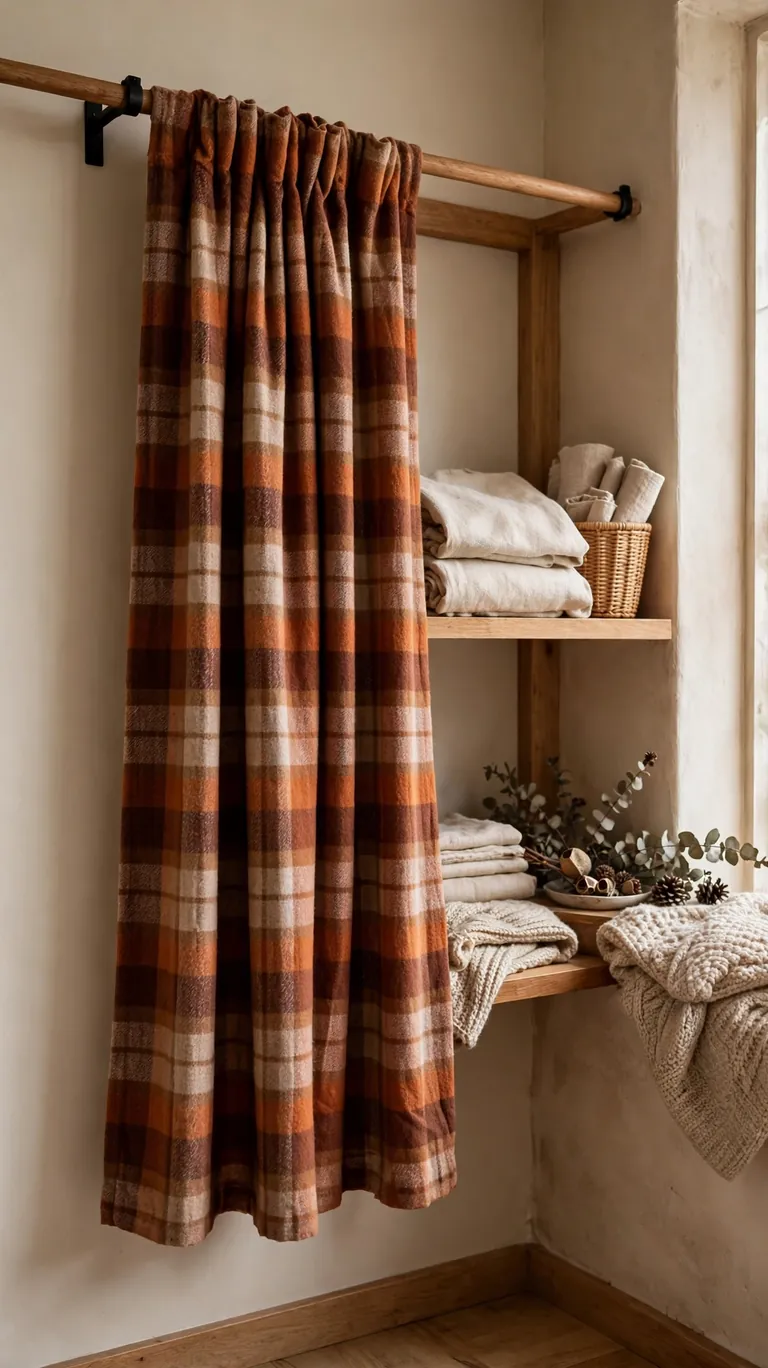
One of the best arguments for closet curtains over doors is how easily you can change them. Swap a light linen panel for a cozy flannel or velvet one when the weather turns, and the whole bedroom gets a seasonal refresh for the cost of one curtain. It’s the highest-impact, lowest-effort seasonal update in the room.
Store the off-season curtain folded in a labeled bag or bin so the swap takes minutes. Choose seasonal fabrics that suit the climate: breathable cotton or sheer for summer, heavier weaves for winter. Even changing just the tie-backs or adding a seasonal valance can signal the shift if you don’t want to store full panels.
21. Repurpose a Tablecloth or Flat Sheet
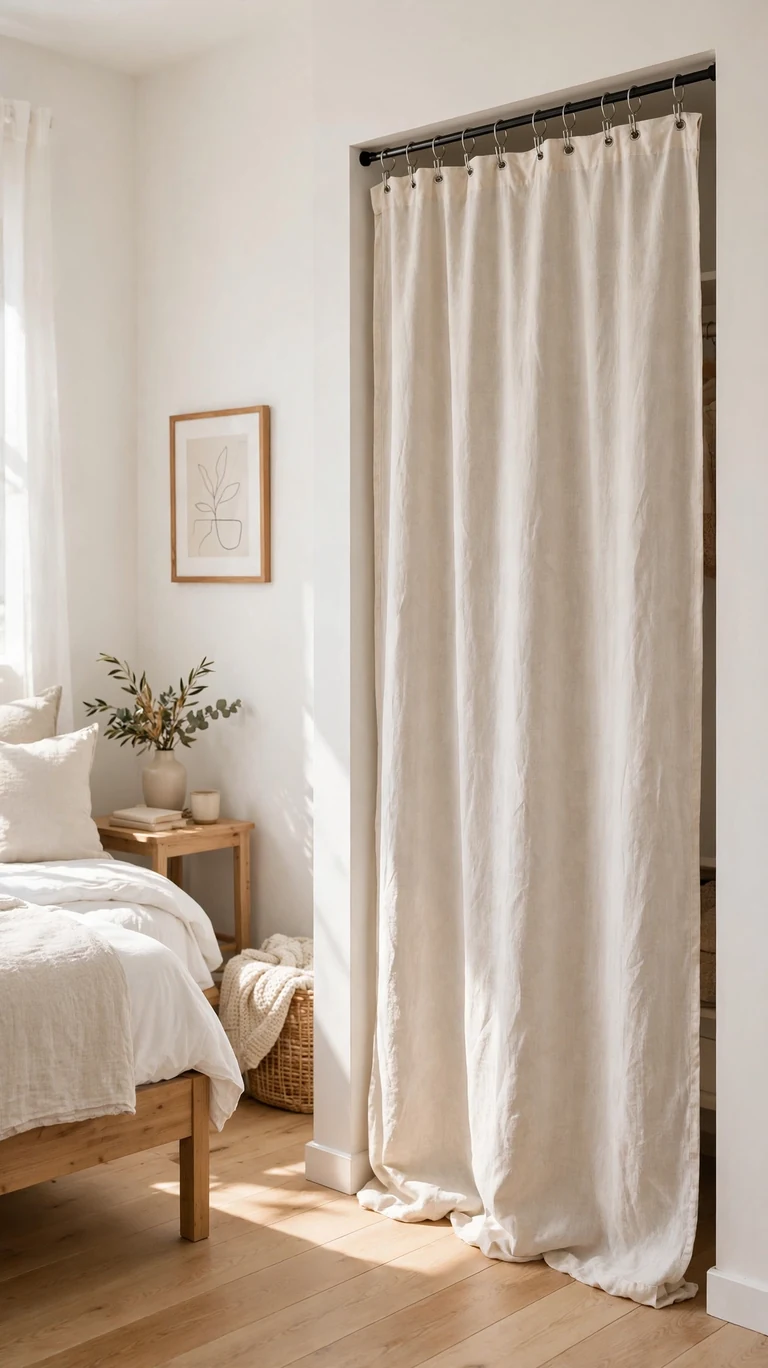
A flat sheet or a pretty tablecloth can become a closet curtain in minutes, which makes this the fastest idea on the list. If you already own a sheet in a color you love, clip it to rings or a rod and hang it up. No shopping, no sewing, no waiting for delivery.
Look for sheets with a decent thread count and some body, since flimsy fabric will look limp and let silhouettes show through. A flat sheet’s finished top hem often works perfectly as a rod pocket already. For tablecloths, choose ones without heavy center creases, and give them a quick press before hanging so they drape smoothly.
22. Add Clip Rings for a Custom, Tailored Hang
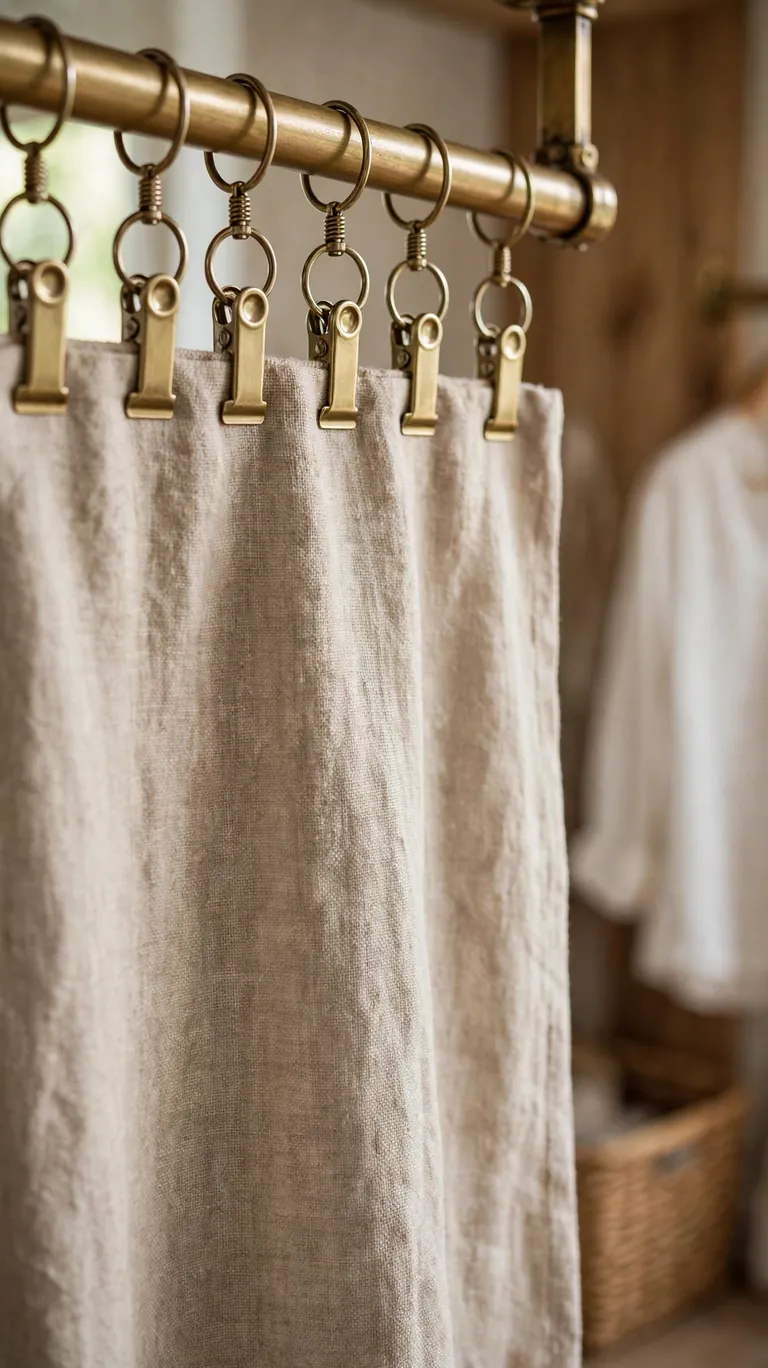
Clip rings (small metal rings with clips that grip the fabric top) are the easiest way to make any flat fabric look like a proper curtain. They let you hang sheets, tablecloths, drop cloths, or fabric yardage without sewing a single hem, and you can adjust the length in seconds by moving the clips. The result looks relaxed and intentional, like casual European drapery.
Space the clips evenly (about 4 to 6 inches apart) so the fabric gathers into soft, regular folds. Choose ring and clip finishes that match your rod for a cohesive look. Because the clips grip rather than pierce, you can reposition or swap fabrics endlessly, which makes this the most flexible hanging method for anyone who likes to change things up.
Frequently Asked Questions
What kind of rod works best for a closet curtain?
It depends on your walls and your lease. A tension rod is the easiest option since it needs no drilling and holds itself in place with pressure, which makes it ideal for renters and standard door-frame openings. For a more permanent and sturdier setup, a wall-mounted curtain rod with brackets (anchored into studs or good drywall anchors) handles heavier fabrics like velvet or blackout panels. For the smoothest glide and a hardware-free look, a ceiling-mounted track is the premium choice, especially for wide openings or closets you open many times a day.
How do I measure for a closet curtain?
Measure the width of the opening, then add 4 to 8 inches of total extra width so the curtain covers the edges with a little overlap on each side. For length, measure from where the rod will sit down to where you want the curtain to end; most people aim for the panel to just touch the floor or hover about half an inch above it. If you want a fuller, more gathered look, buy panels whose combined width is 1.5 to 2 times the opening width. Always measure twice before ordering, since curtain panels are harder to return once they’ve been hung and steamed.
Will a curtain keep closet dust out as well as a door?
A curtain reduces dust noticeably but won’t seal a closet the way a solid door does. Tightly woven fabrics like canvas, velvet, or blackout material block far more dust than sheers or open weaves, and a curtain that overlaps the opening on all sides performs better than one that’s exactly the opening’s width. If dust is your main concern, choose a heavier panel and keep it closed when you’re not actively using the closet. For most bedrooms, the difference is small enough that the style and space savings easily win out.
Can I use a curtain on a walk-in closet?
Absolutely, and it’s one of the best uses for a closet curtain. Hang two panels that meet in the middle across the walk-in entry so you can walk through easily, and mount the rod or track on the bedroom side of the opening for the neatest look. Choose a fabric with enough body to hang straight rather than billowing, and make sure the panels are wide enough to fully close when you want privacy. A curtain on a walk-in also softens the transition between the bedroom and the closet, which makes the bedroom feel calmer.
How do I keep a closet curtain looking neat instead of messy?
Three details make the difference: proper width, proper length, and tidy hardware. Make sure the curtain is wide enough to cover the opening with overlap (too-narrow panels that strain across the gap always look messy), and hem or adjust so it hangs straight without pooling excessively. Keep the rod level and the rings or clips evenly spaced so the folds fall regularly. Finally, give the fabric a quick steam or shake-out when you first hang it, and re-steam after washing. A well-fitted curtain reads as intentional design, not a cover-up.
Conclusion
A closet curtain might be the hardest-working small upgrade in your bedroom. It hides the clutter, saves the floor space that swinging doors would steal, and gives you a decorating moment that a plain door never could, all for less money and effort than almost any other change you could make. Whether you go with a simple linen panel on a tension rod or a dramatic floor-to-ceiling velvet installation, the formula is the same: cover the opening, choose a fabric you love, and sweat the small details like rod placement and panel width.
Start with the problem you’re actually solving. If the doors are broken, remove them and hang a curtain this weekend. If the closet is just visually noisy, a sheer or a matched-to-the-walls panel will quiet it down. If you’re renting, a tension rod keeps everything damage-free. And if you love to redecorate, the seasonal swap trick means your closet can change its look as often as you do. Pick one idea from this list, hang it up, and enjoy the rare home project that’s finished before lunch and loved for years.