13 Kitchen Island Lighting Ideas for a Warm, Inviting Kitchen
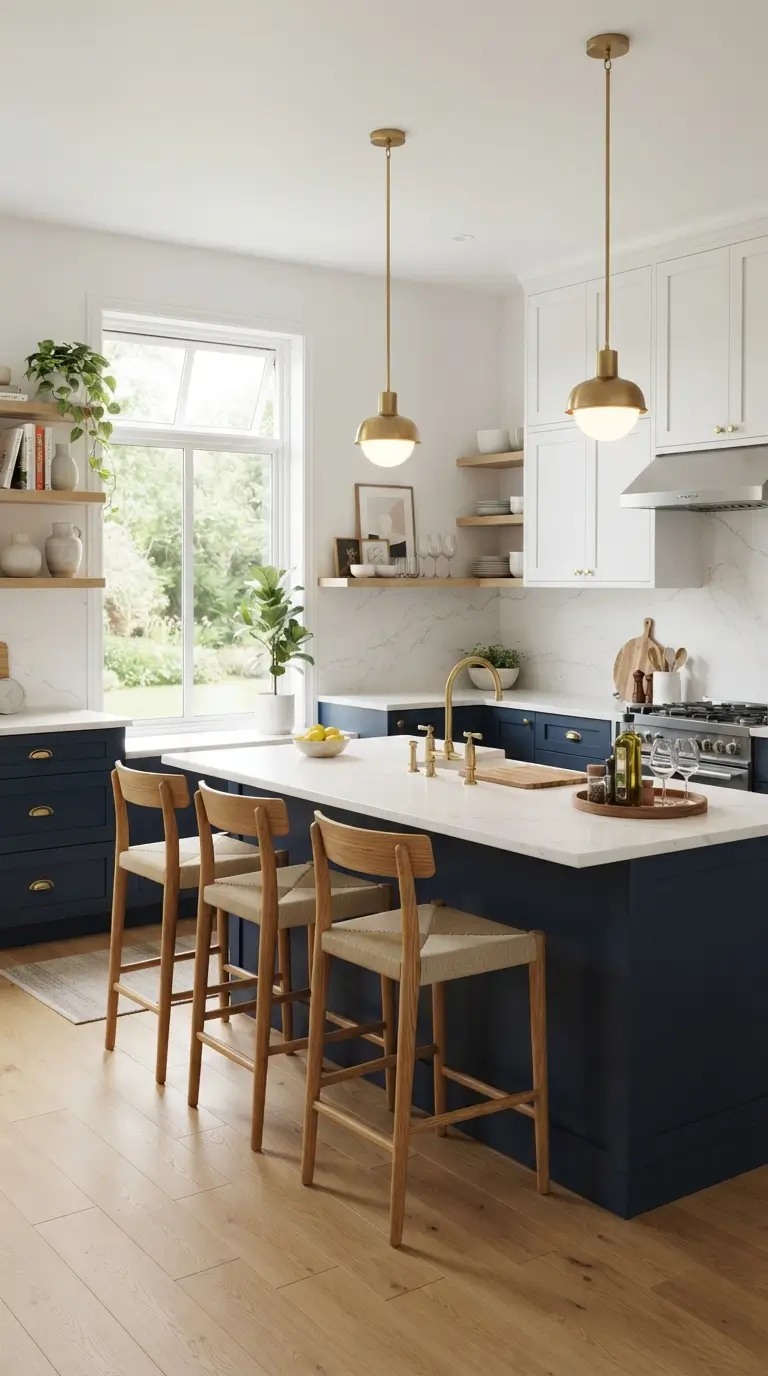
Kitchen island lighting is one of the few design decisions in a home that’s both highly visible and genuinely functional, which means getting the sizing, spacing, and color temperature wrong is much more noticeable than picking the “wrong” throw pillow.
This guide covers 13 real kitchen island lighting ideas, and each one includes something practical: an exact sizing or spacing guide, a cost range, or a comparison table, so you can commit to fixtures that actually fit your island instead of guessing from a single product photo.
Before you shop for any specific style, know the one rule that applies to all of them: pendant lights should hang with their bottom edge 30-36 inches above the island countertop, regardless of which style you choose.
1. Cluster of Mini Pendants
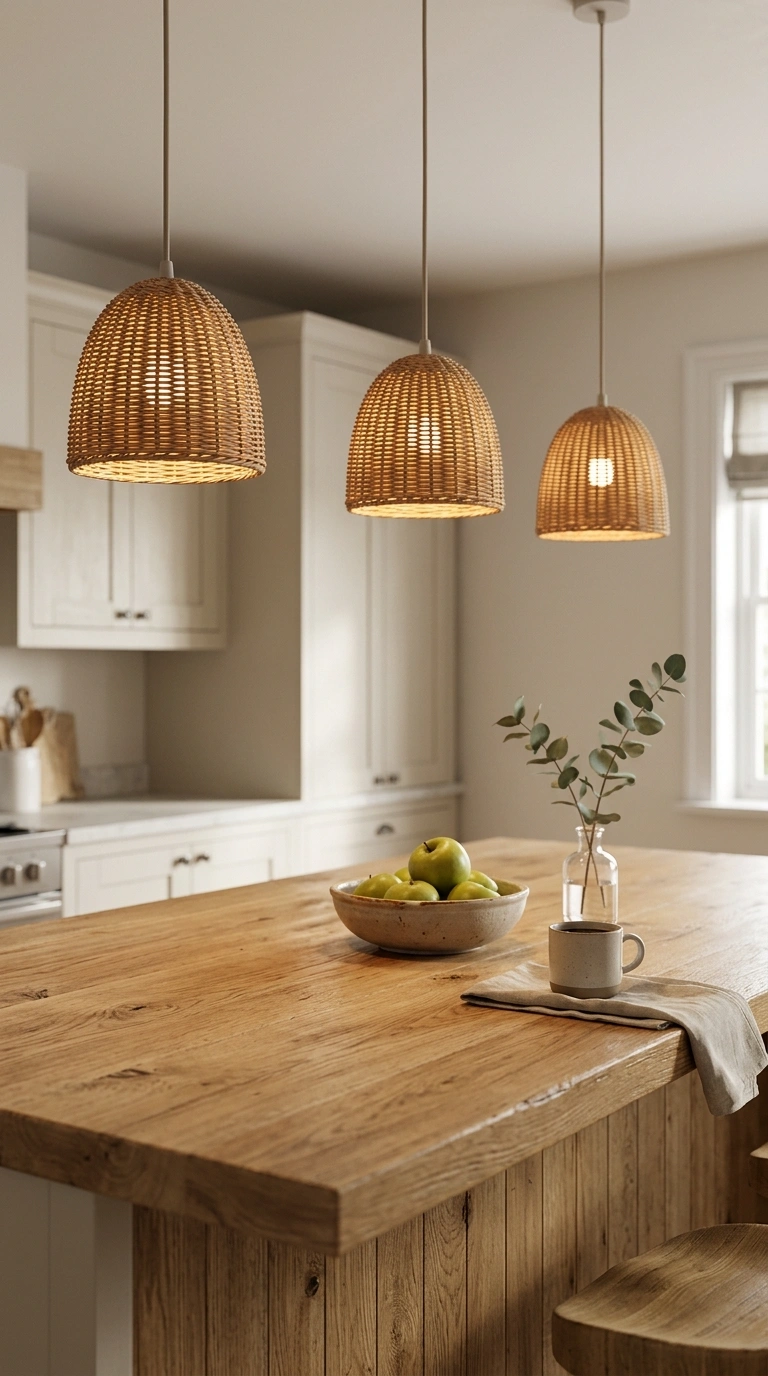
Three or more small pendants in a row is the most common kitchen island lighting choice, and getting the spacing right matters more than the specific fixture you pick.
Sizing and spacing guide:
| Island Length | Recommended Number of Pendants | Spacing Between Centers |
|---|---|---|
| Under 6 feet | 2 pendants | 24-30 inches |
| 6-8 feet | 3 pendants | 24-30 inches |
| 8+ feet | 3-4 pendants | 26-32 inches |
Center the group over the island rather than centering it on the room, since an island is rarely perfectly centered in a larger kitchen layout.
2. Linear Chandelier for a Long Island
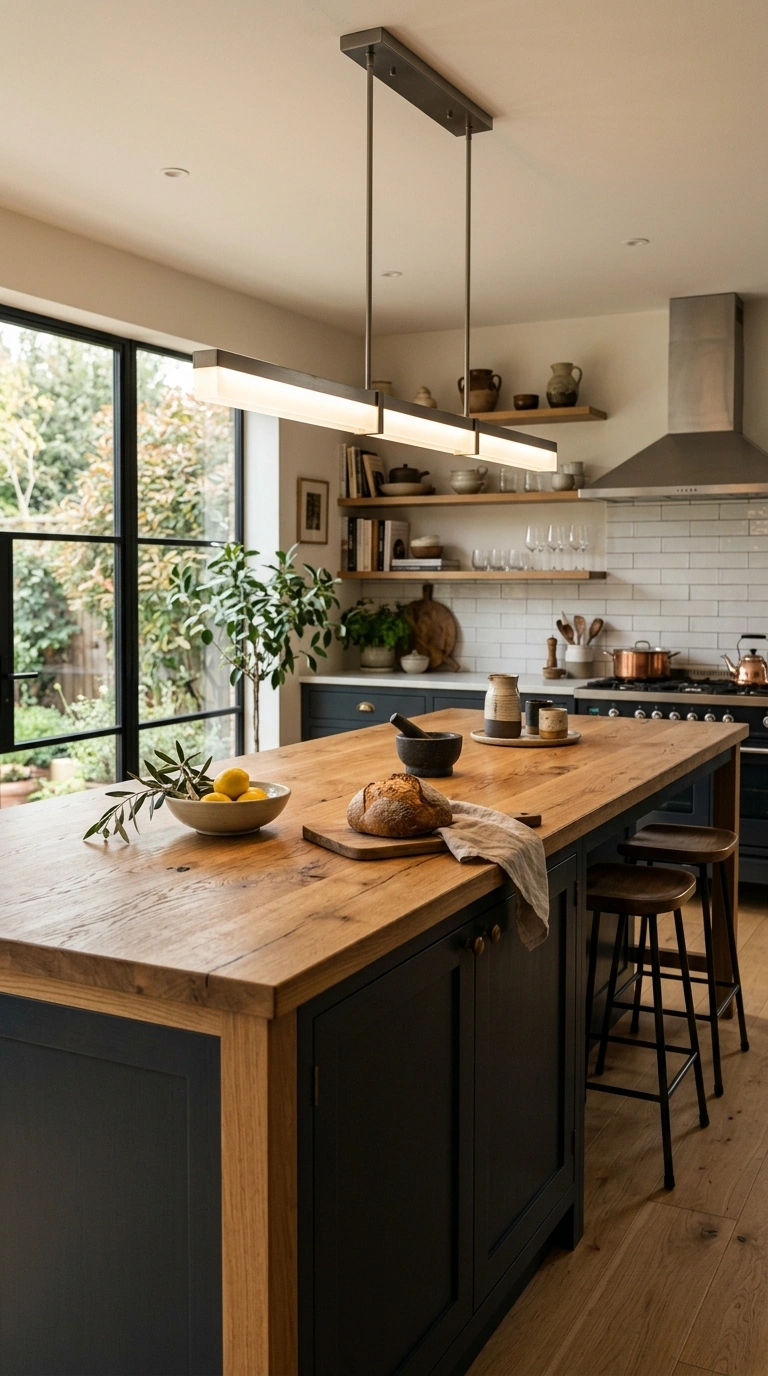
A single linear chandelier, essentially a horizontal fixture with multiple bulbs along one bar, works especially well over a long island where individual pendants would need an awkward number of fixtures to look balanced.
Sizing rule: the fixture should run roughly one-half to two-thirds the length of the island, so an 8-foot island pairs well with a fixture between 4 and 5.5 feet long.
Cost range: $200-$800 depending on finish and number of bulbs, generally less expensive than buying 4-5 individual pendants of similar quality.
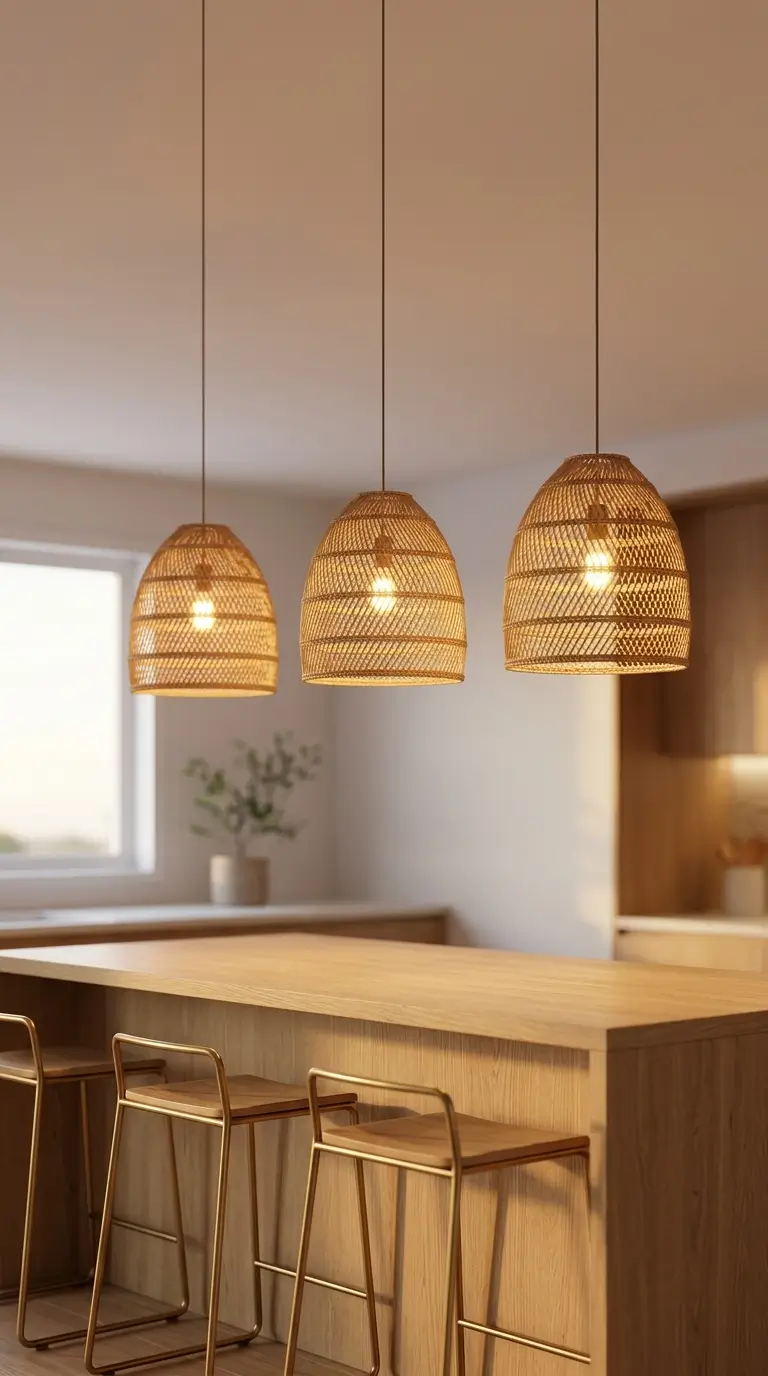
3. Woven Rattan Pendants
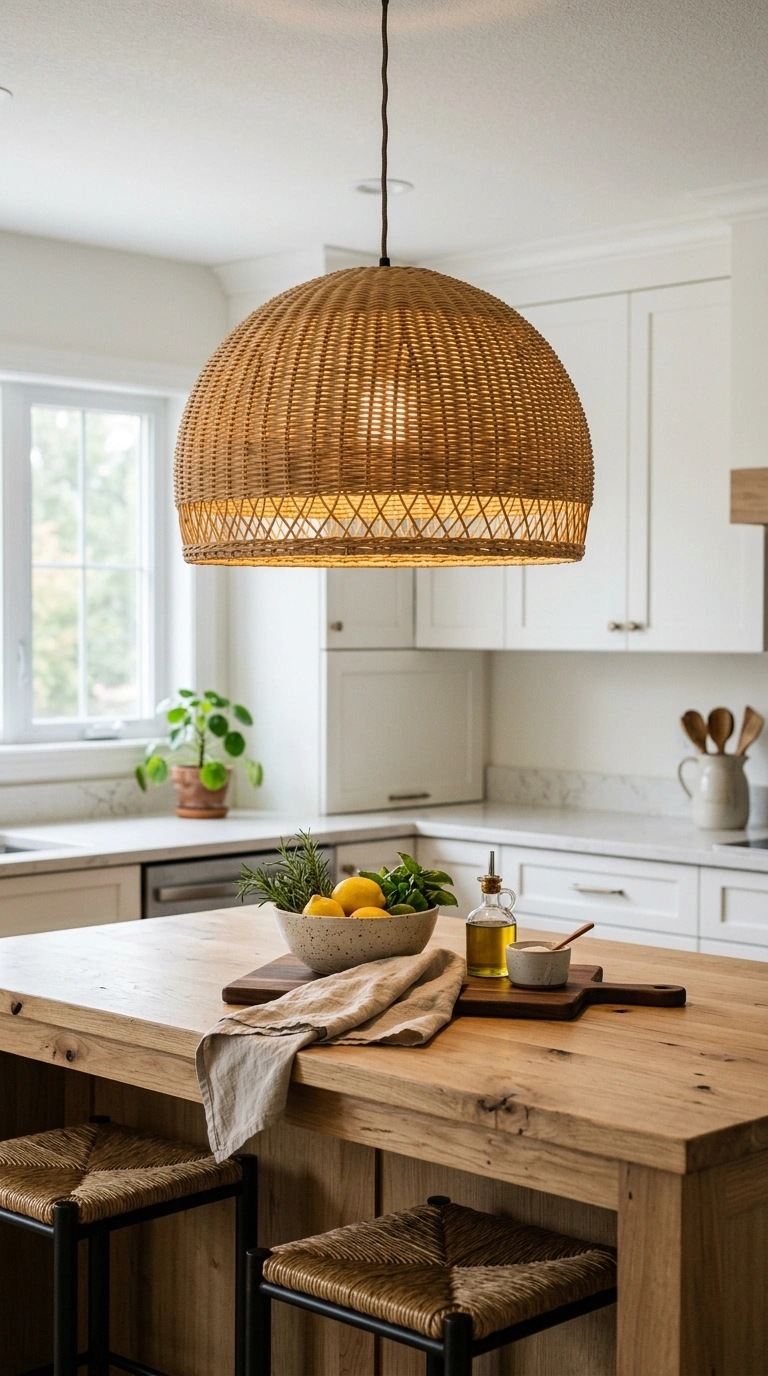
Woven rattan or seagrass pendants bring warm, natural texture overhead, and the material itself does most of the work in creating a soft, diffused glow rather than a sharp, direct light.
| Tier | What You Get | Approx. Cost |
|---|---|---|
| Budget | Small single rattan pendant | $50-$100 |
| Mid-Range | Larger woven pendant, quality construction | $120-$250 |
| Investment | Oversized statement rattan chandelier | $300-$600+ |
Because woven materials filter light rather than direct it sharply, pair rattan pendants with a slightly higher-wattage bulb than you’d use in a solid-shade fixture, to compensate for the light lost through the weave.
4. Statement Oversized Single Pendant
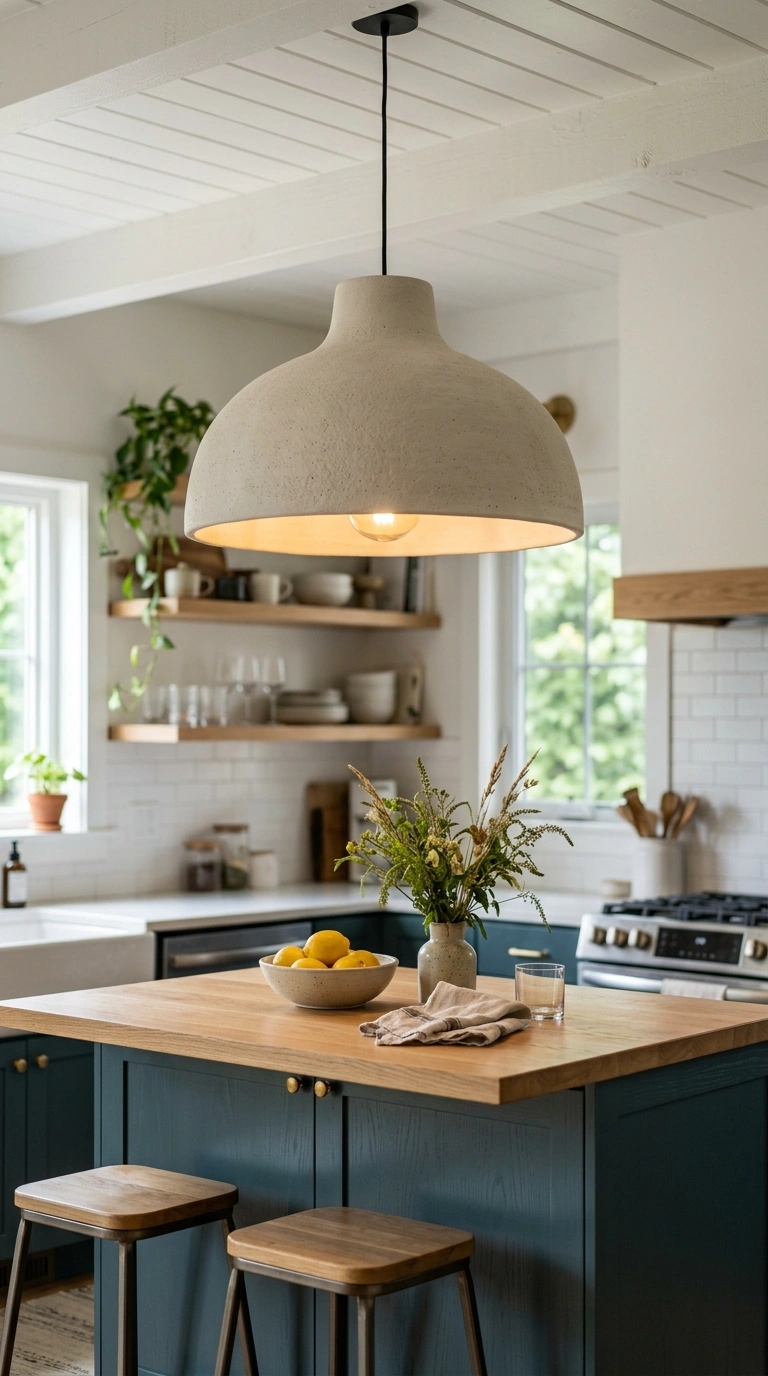
A single, deliberately oversized pendant centered over the island creates a bold focal point, working best on shorter islands where multiple smaller fixtures would feel cluttered.
Sizing guide: the pendant’s diameter should measure roughly one-third to one-half the width of the island for balanced proportion; a fixture that’s too small on a large island reads as an afterthought rather than a statement.
Cost range: $150-$600 depending on material and brand, with handblown glass or designer ceramic pieces at the higher end.
5. Glass Globe Pendants
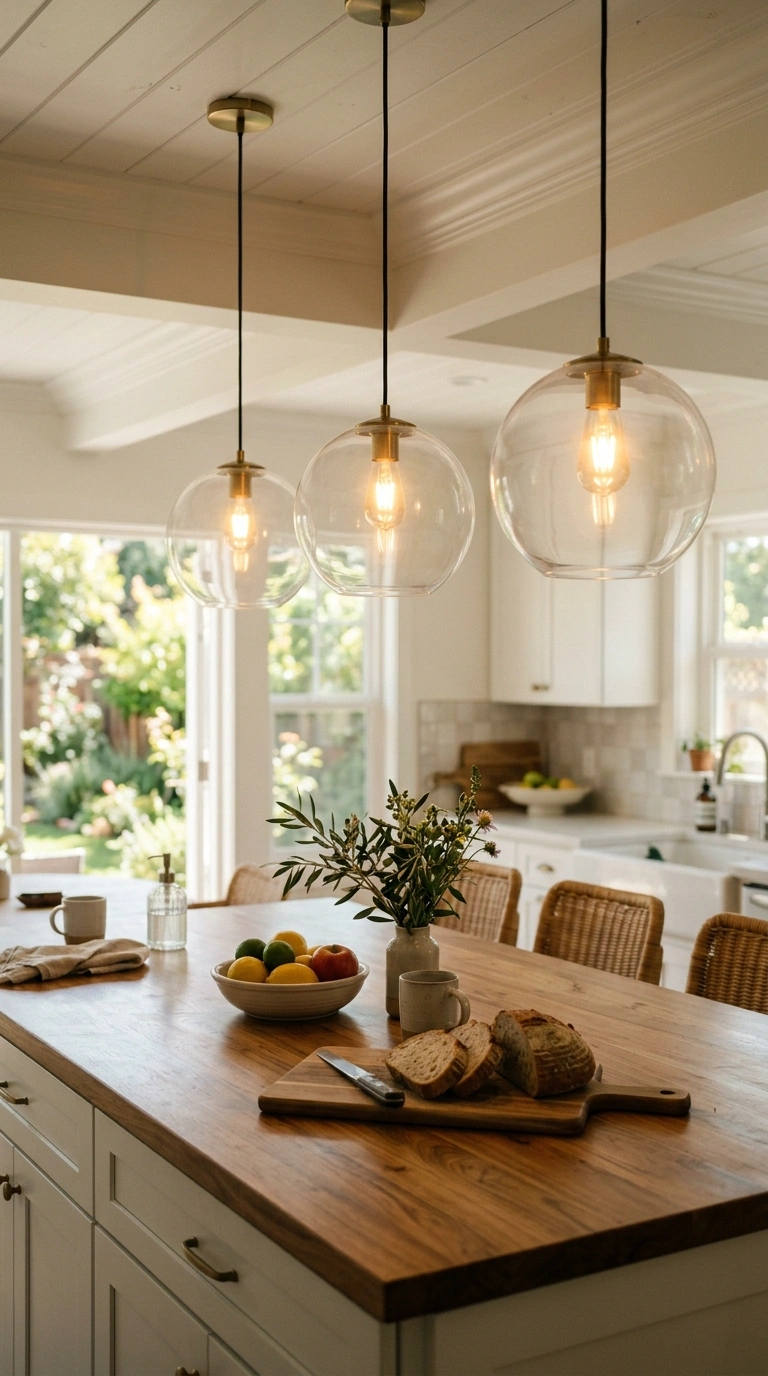
Clear or lightly frosted glass globe pendants let light spread in every direction rather than being directed downward, creating a softer overall glow in the room beyond just the island surface.
A quick care note: clear glass shows dust, grease splatter, and fingerprints more visibly than a solid or frosted shade, especially this close to cooking activity. Plan on wiping globes down every few weeks, more often if your island sits close to the range.
Cost range: $40-$150 per pendant depending on glass quality and size.
6. Layered Recessed and Pendant Lighting
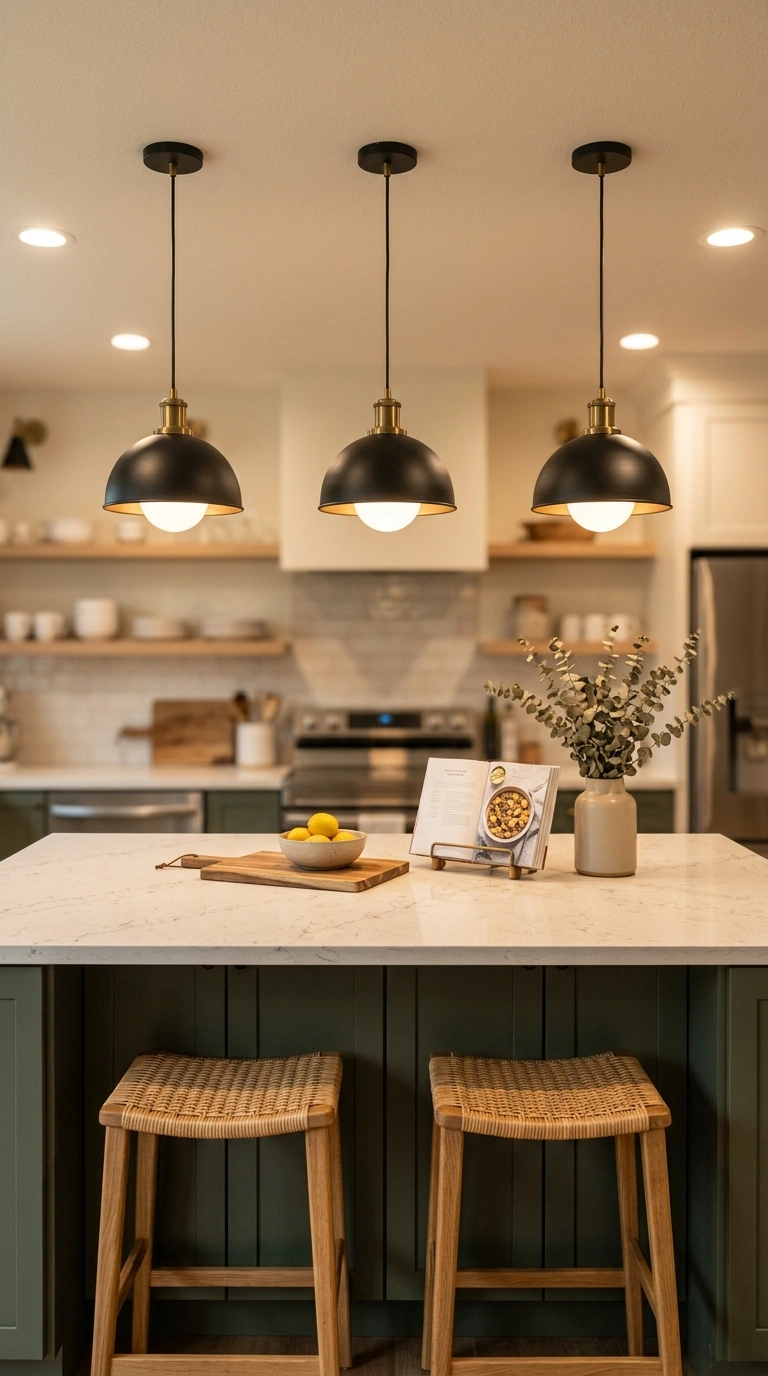
Pendants alone often aren’t enough to properly light an entire island for food prep, since their light is concentrated in a narrow pool. Adding recessed can lights on either side fills in the shadows pendants leave behind.
A simple layering checklist:
- Pendants provide the visual centerpiece and focused task light directly over the counter
- Recessed cans on either side fill in ambient light across the full island surface
- Both layers connect to separate dimmer switches, so you can run bright task light while cooking and a softer glow for evening use
7. Vintage Cage Pendant Lighting
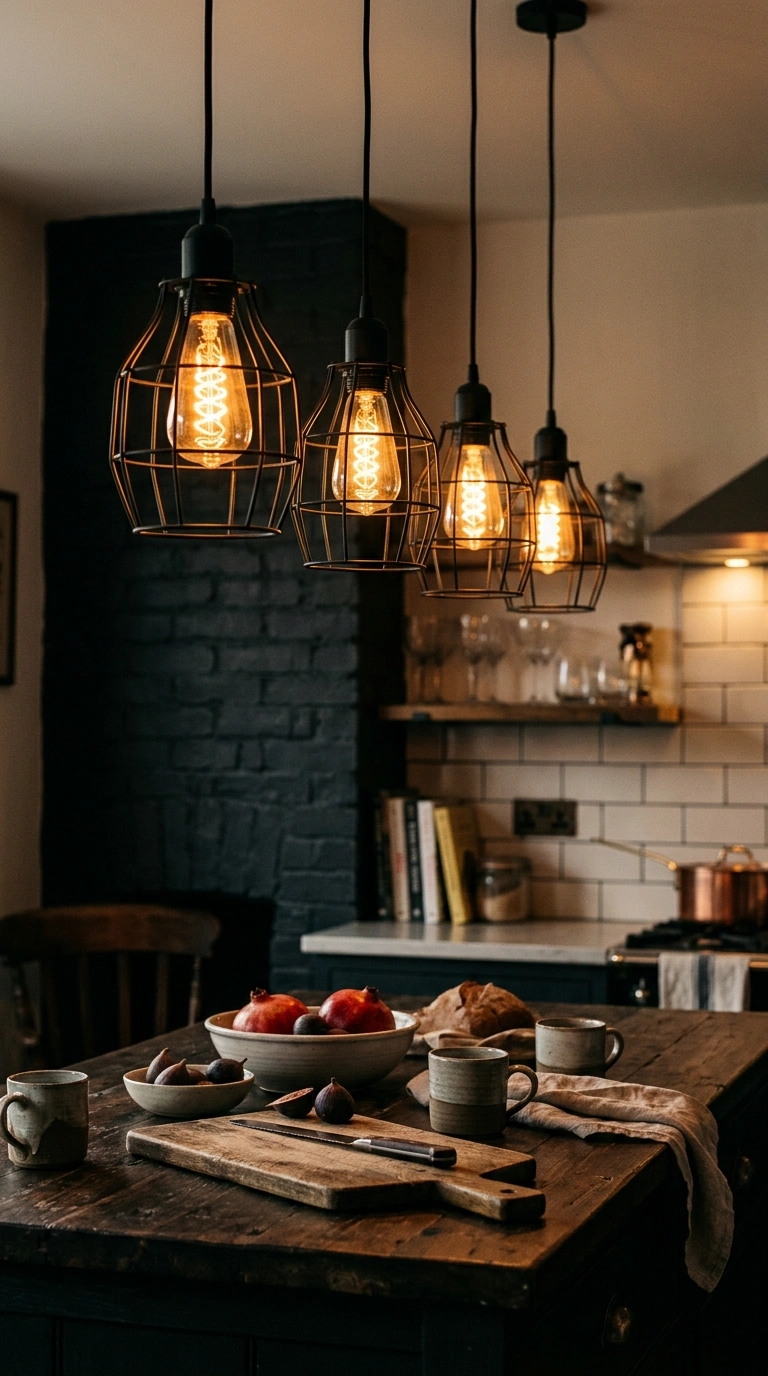
A pendant with an exposed wire cage around an Edison-style bulb brings warm, industrial-vintage character, with the bulb’s visible filament doing much of the styling work rather than a solid shade.
Cost range: $40-$150 per pendant, and pairing the cage design with a warm amber-tinted Edison bulb (rather than a clear or cool-white LED) reinforces the vintage warmth this style is meant to deliver.
8. Mixed Metal Pendant Finishes
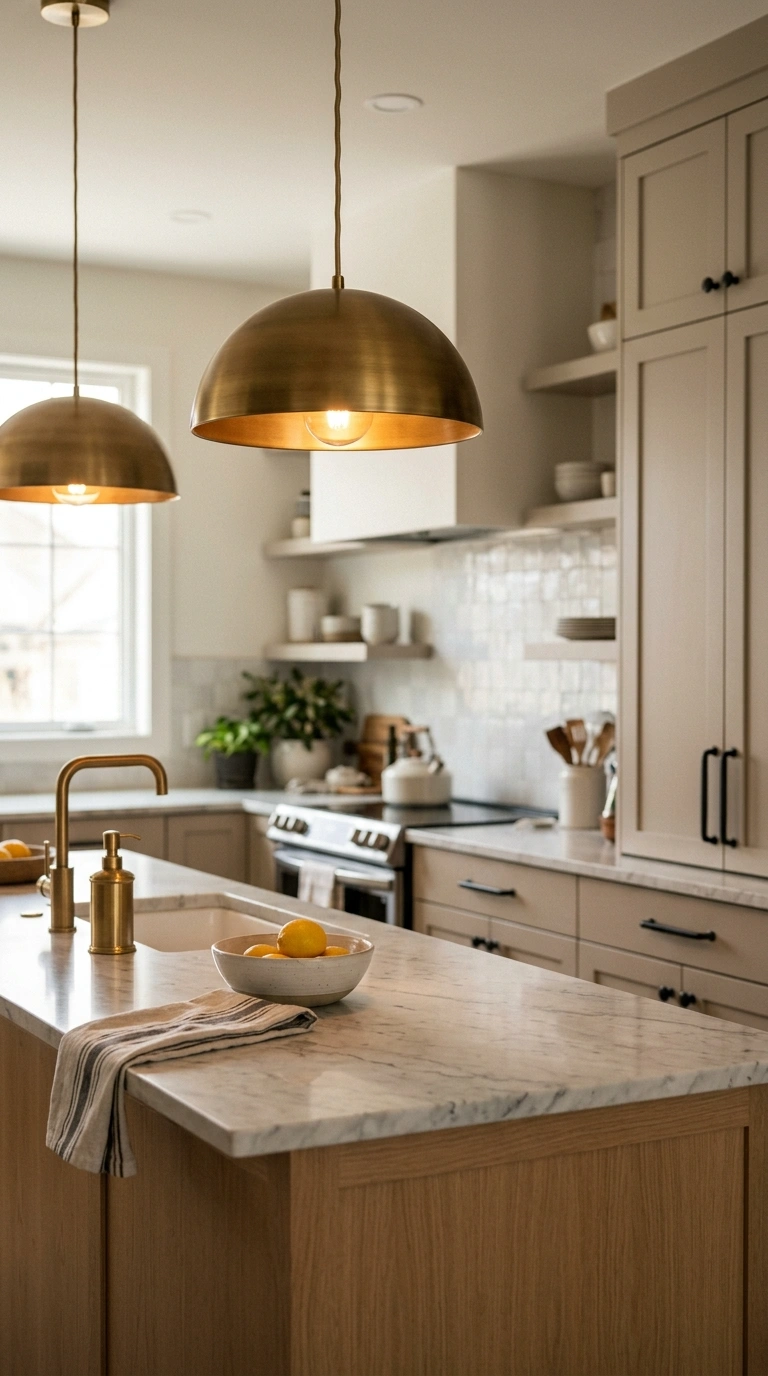
Rather than matching every metal finish in the kitchen exactly, pairing pendant fixtures in a complementary but not identical metal (brushed brass pendants with matte black cabinet hardware, for example) adds intentional depth.
The pairing ratio:
- 60% your dominant metal (typically cabinet hardware and faucet)
- 40% your pendant fixture finish
Choosing pendants in the secondary metal, rather than forcing an exact match to every other fixture in the room, is what makes mixed metals read as a deliberate choice rather than a mismatched afterthought.
9. Amber or Smoked Glass Pendants
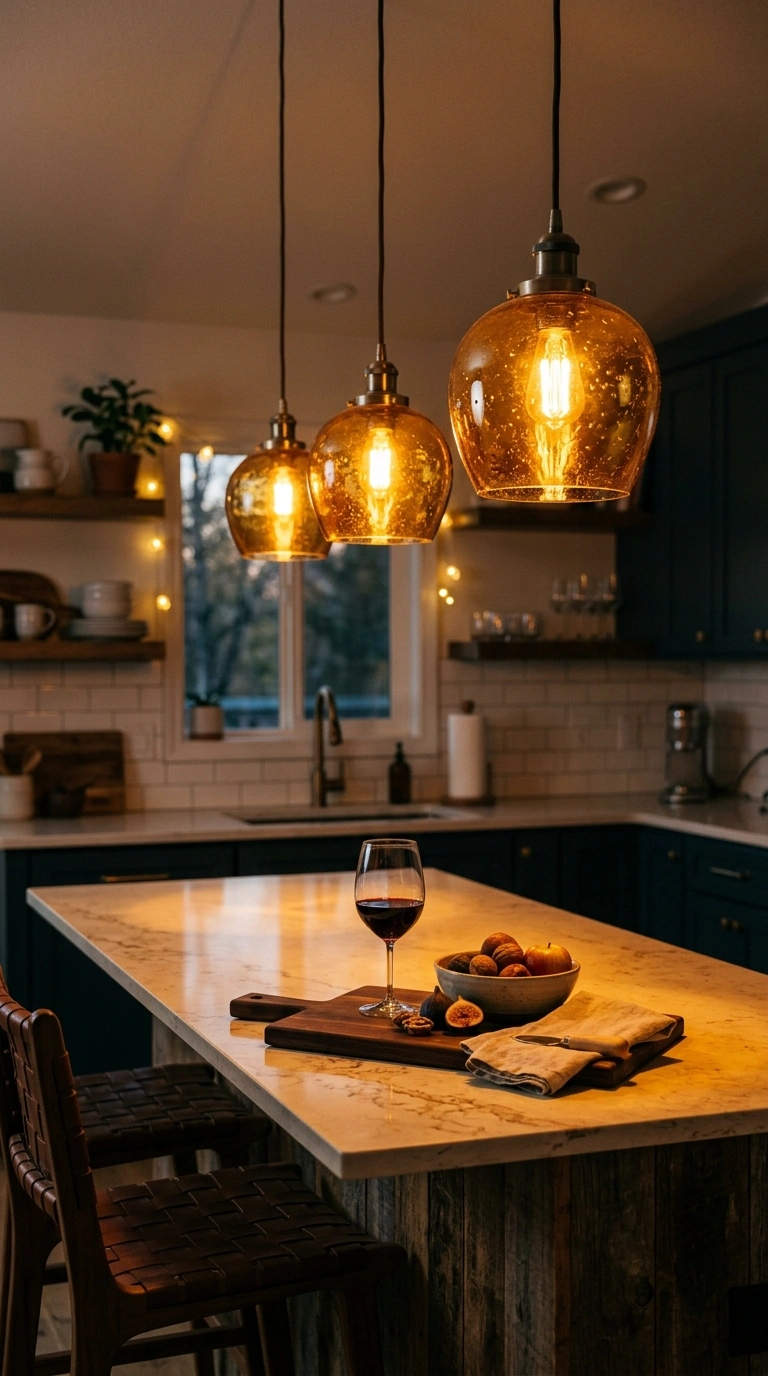
Amber or lightly smoked glass shades tint the light itself with a warm, golden cast, creating a noticeably cozier evening glow than clear glass or a metal shade of the same design.
| Glass Tone | Light Quality Effect |
|---|---|
| Clear glass | Neutral, true-to-bulb color |
| Amber glass | Warm, golden-toned glow, flattering for evening use |
| Smoked glass | Moodier, dimmer overall output, best paired with additional ambient light |
Cost range: $50-$180 per pendant depending on glass thickness and fixture quality.
10. Under-Cabinet Task Lighting Paired With Pendants
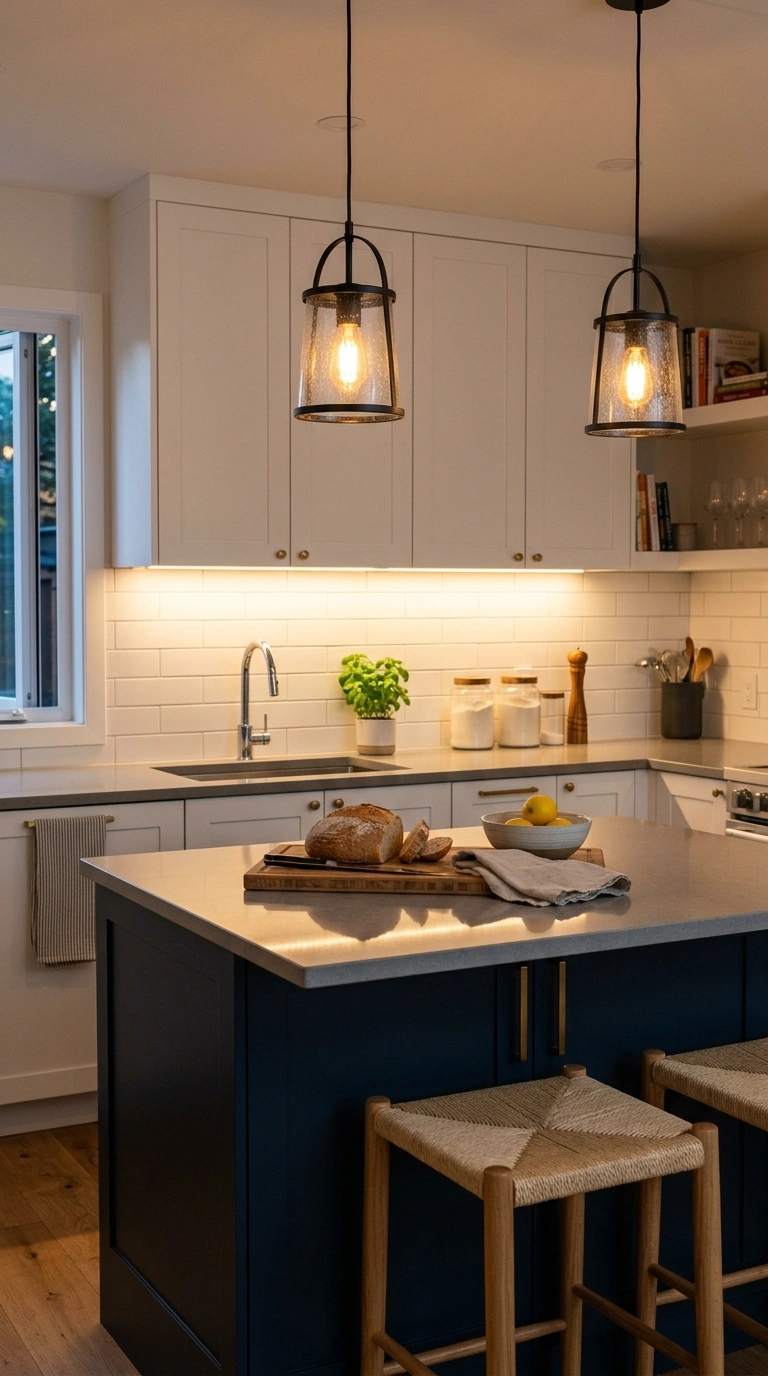
Under-cabinet LED strips, installed beneath upper cabinets near the island or along adjacent counters, fill in task lighting that pendants alone can’t reach, especially useful on islands positioned away from other ambient light sources.
Basic install steps:
- Measure the length of cabinet underside needing coverage.
- Choose a warm color temperature (2700-3000K) to match your pendant lighting rather than a cooler white strip that will clash.
- Clean the mounting surface and apply the adhesive-backed strip, or hardwire with an electrician’s help for a more permanent installation.
Cost range: $20-$60 for a plug-in LED strip kit, or $150-$300 including electrician labor for a hardwired version.
11. Drum Shade Pendants
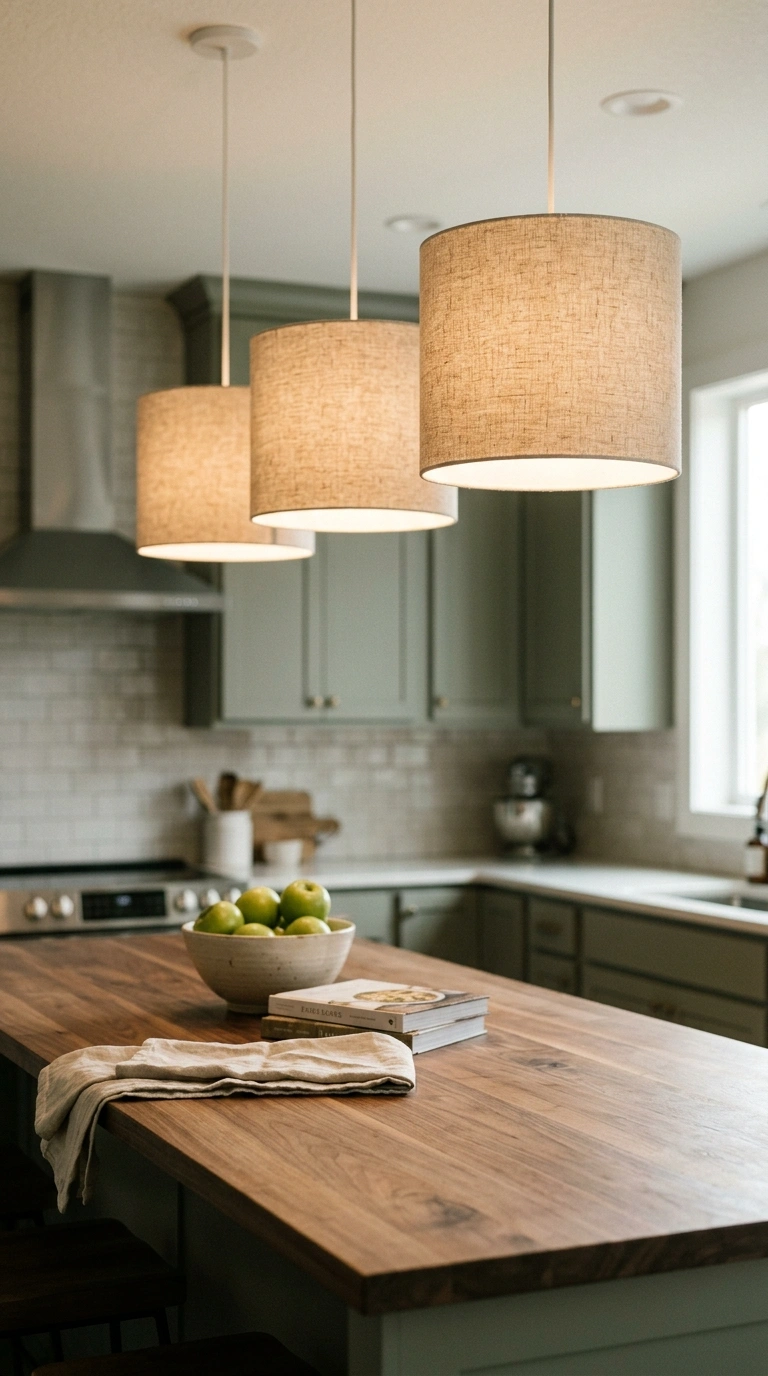
A drum shade pendant, with its cylindrical fabric or metal shade, directs light both downward and through the shade’s sides, creating a softer, more diffused pool of light than an open, exposed-bulb fixture.
Sizing guide: drum shades work best at 12-16 inches in diameter for a standard island; anything smaller can look visually lost, while anything larger starts competing with the island’s own footprint.
Cost range: $60-$220 depending on shade material and metal finish.
12. Adjustable Swing-Arm Pendants
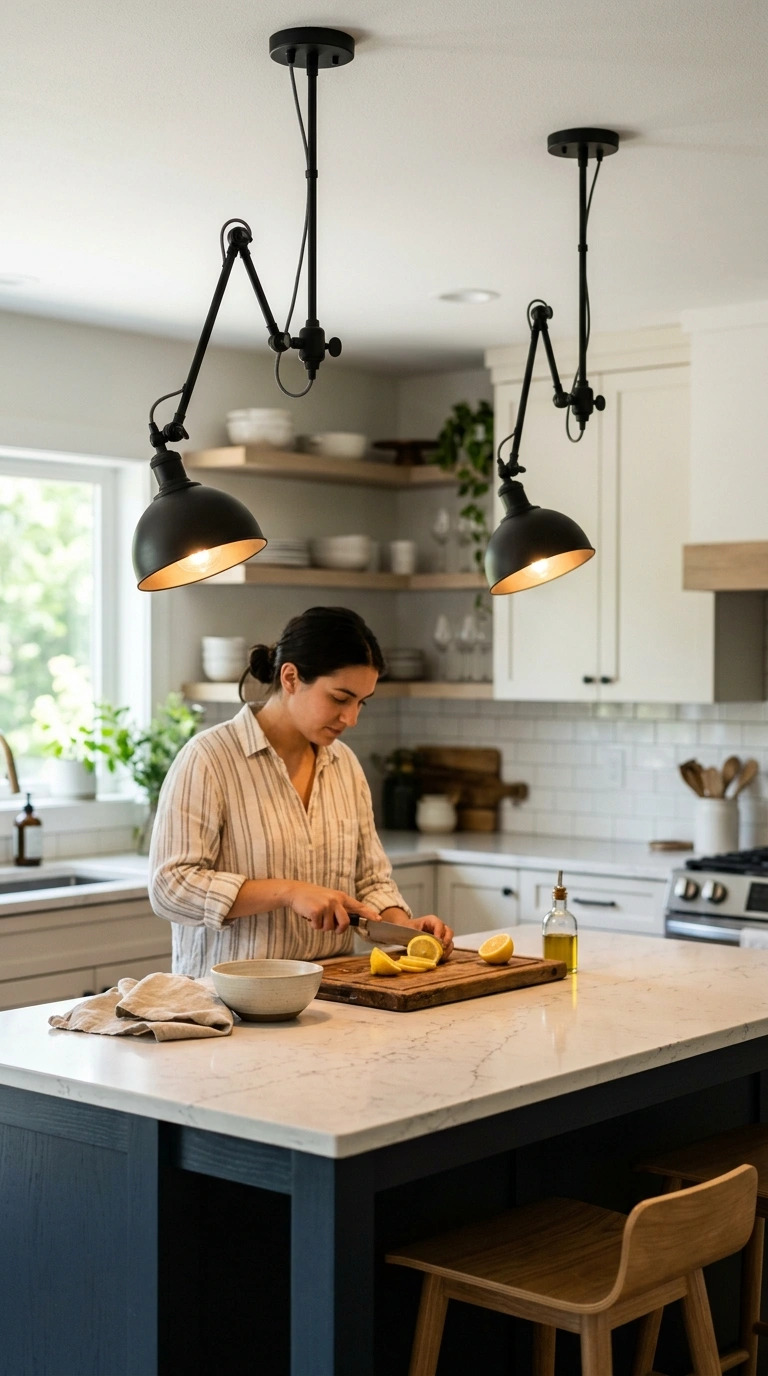
Swing-arm or adjustable-height pendants let you redirect or reposition the light source, which is useful for an island that serves multiple functions, like food prep during the day and casual dining at night.
Pros and cons versus fixed pendants:
| Option | Pros | Cons |
|---|---|---|
| Adjustable swing-arm pendant | Flexible light direction, adapts to multiple uses | Higher cost, more visible hardware |
| Fixed pendant | Simpler installation, cleaner visual line | No flexibility once installed |
Cost range: $80-$250 per fixture, generally more than an equivalent fixed pendant due to the additional hardware.
13. Choosing the Right Color Temperature
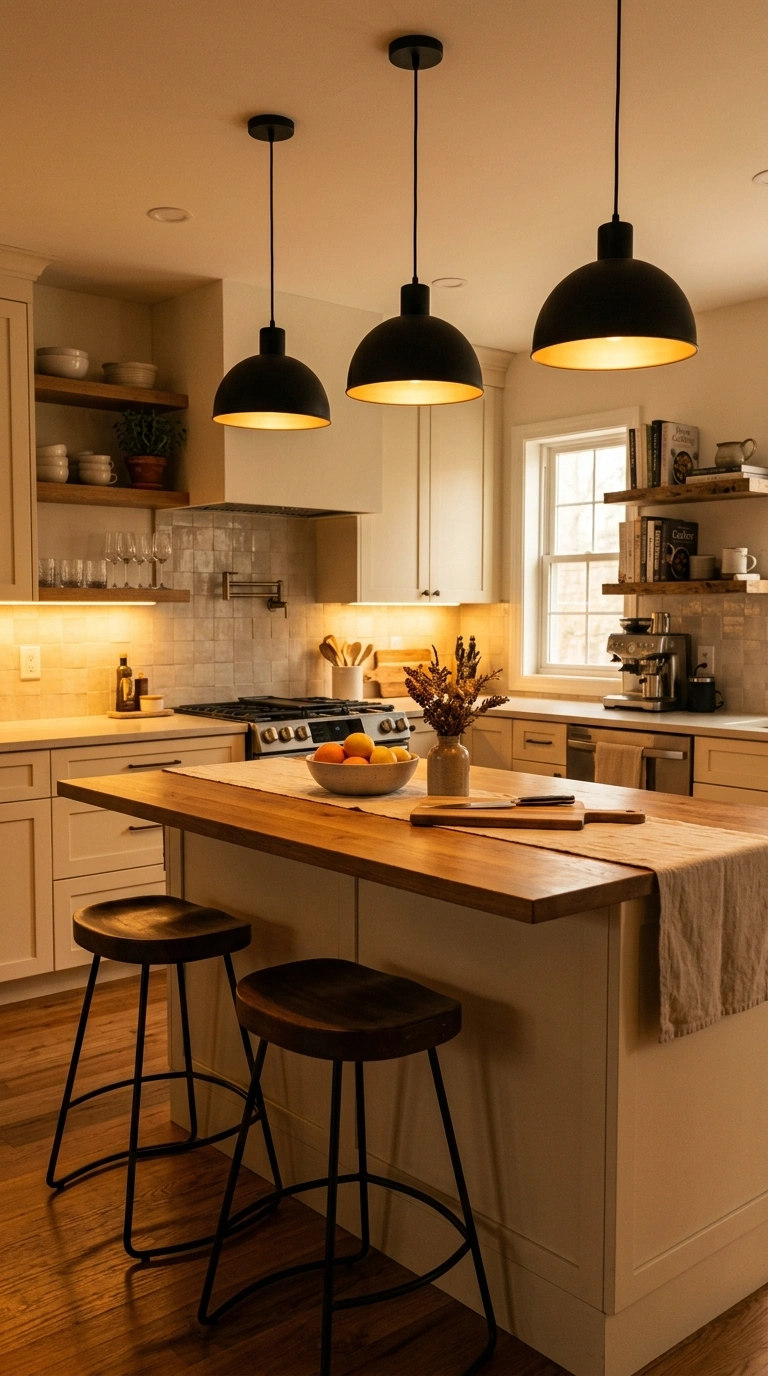
The single most common kitchen island lighting mistake isn’t the fixture style at all, it’s choosing a bulb color temperature that clashes with the mood you’re going for.
| Color Temperature | Effect | Best For |
|---|---|---|
| 2700K | Warm, amber-toned, cozy | Evening-focused kitchens, traditional style |
| 3000K | Warm-neutral, still inviting but slightly brighter | Most versatile choice for mixed day/night use |
| 4000K+ | Cool, crisp, closer to daylight | Task-focused, modern kitchens, not recommended for a cozy feel |
For a genuinely warm and inviting kitchen, stick to 2700-3000K across every fixture in the room, including under-cabinet lighting; mixing color temperatures between fixtures is a common and very fixable mistake that makes a kitchen feel visually inconsistent even when every individual fixture looks good on its own.
Measure your island’s exact length and choose your fixture count, spacing, and hanging height before you fall in love with a specific style online, since the right proportions matter more to the final look than the fixture itself. Stick to a consistent warm color temperature across every light source in the kitchen, and the room will feel cohesive even if you mix a few different fixture styles.
Save your favorite kitchen island lighting ideas to Pinterest so you have them ready when you’re ready to shop.
FAQs
How high should pendant lights hang above a kitchen island?
The bottom edge of the pendant should sit 30-36 inches above the island countertop, which keeps the light functional for food prep without the fixture hanging low enough to block sightlines across the island.
How many pendant lights do I need over my kitchen island?
Islands under 6 feet typically need 2 pendants, 6-8 foot islands work well with 3, and islands longer than 8 feet often look best with 3-4 pendants spaced 24-32 inches apart, center to center.
What color temperature is best for kitchen island lighting?
2700-3000K is the most reliably warm and inviting choice for kitchen island lighting, and staying consistent at this temperature across pendants and any under-cabinet lighting avoids a common mismatched-lighting mistake.
Should all my kitchen light fixtures match the same metal finish?
Not necessarily. Pairing a dominant metal (roughly 60% of the room’s fixtures and hardware) with a complementary secondary metal on the pendants (about 40%) often reads as more intentional than forcing an exact match everywhere.
Is one large pendant better than a cluster of smaller ones?
It depends on your island’s size. A single oversized pendant works well on shorter islands as a bold focal point, while a cluster of 2-4 smaller pendants suits longer islands better, since one giant fixture over a long island can look undersized or oddly placed.