14 Bay Window Ideas to Copy This Year
A bay window is one of those features that a lot of homeowners aren’t quite sure what to do with. It sticks out a little from the rest of the wall, it catches more light than a regular window, and it often gets left with nothing but a plain curtain rod and an empty patch of floor beneath it. That’s a missed chance, because a bay window is basically a free bonus room waiting for a purpose. It can become a reading spot, extra storage, a breakfast nook, or even a home office corner, depending on the room it’s in and what your household actually needs. Here are 14 ways to finally put that space to good use.
1. Built In Window Seat
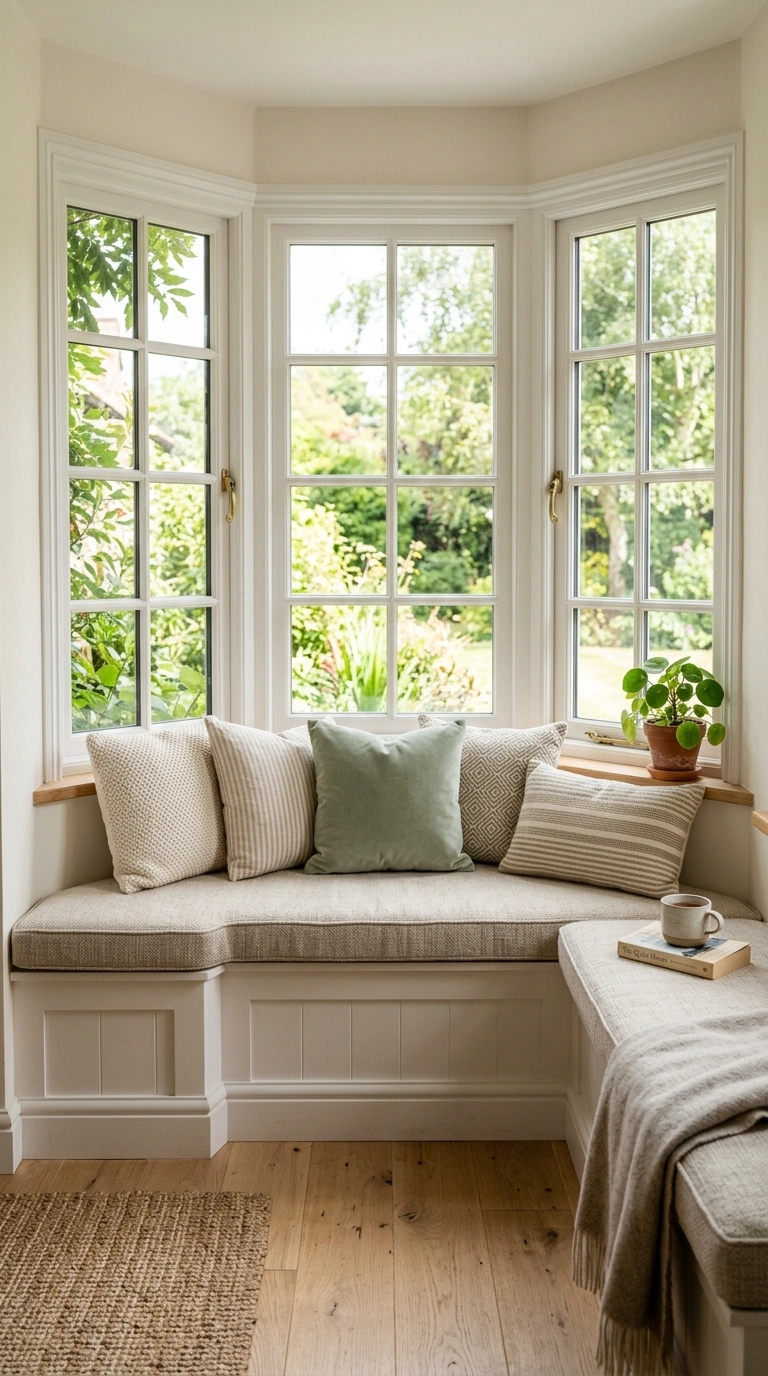
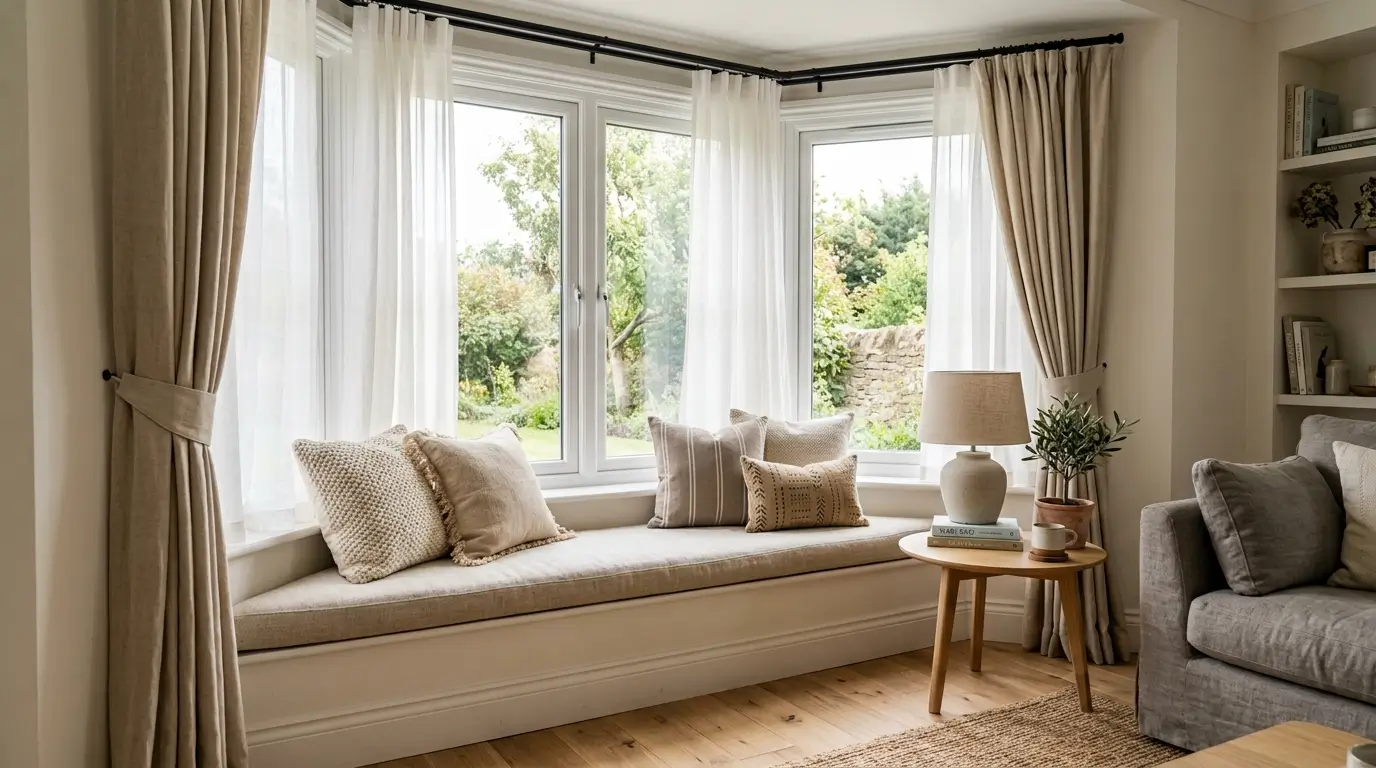
A built-in bench that fits the exact shape of the bay window turns wasted floor space into one of the coziest spots in the house. Have the seat built to match the angles of the window precisely, with a cushion cut to fit on top, rather than trying to squeeze in a standard-sized piece of furniture. Choose a cushion fabric that can handle daily use, like a woven cotton or performance fabric, especially if kids or pets will be using the seat often.
Add a row of throw pillows along the back for extra comfort while reading or lounging. If your budget allows, build in a bit of extra padding along the sides too, since the window frame itself can be cold or hard to lean against otherwise. This is the single most requested upgrade for bay windows because it makes the whole space genuinely useful every single day.
2. Layered Curtain Panels
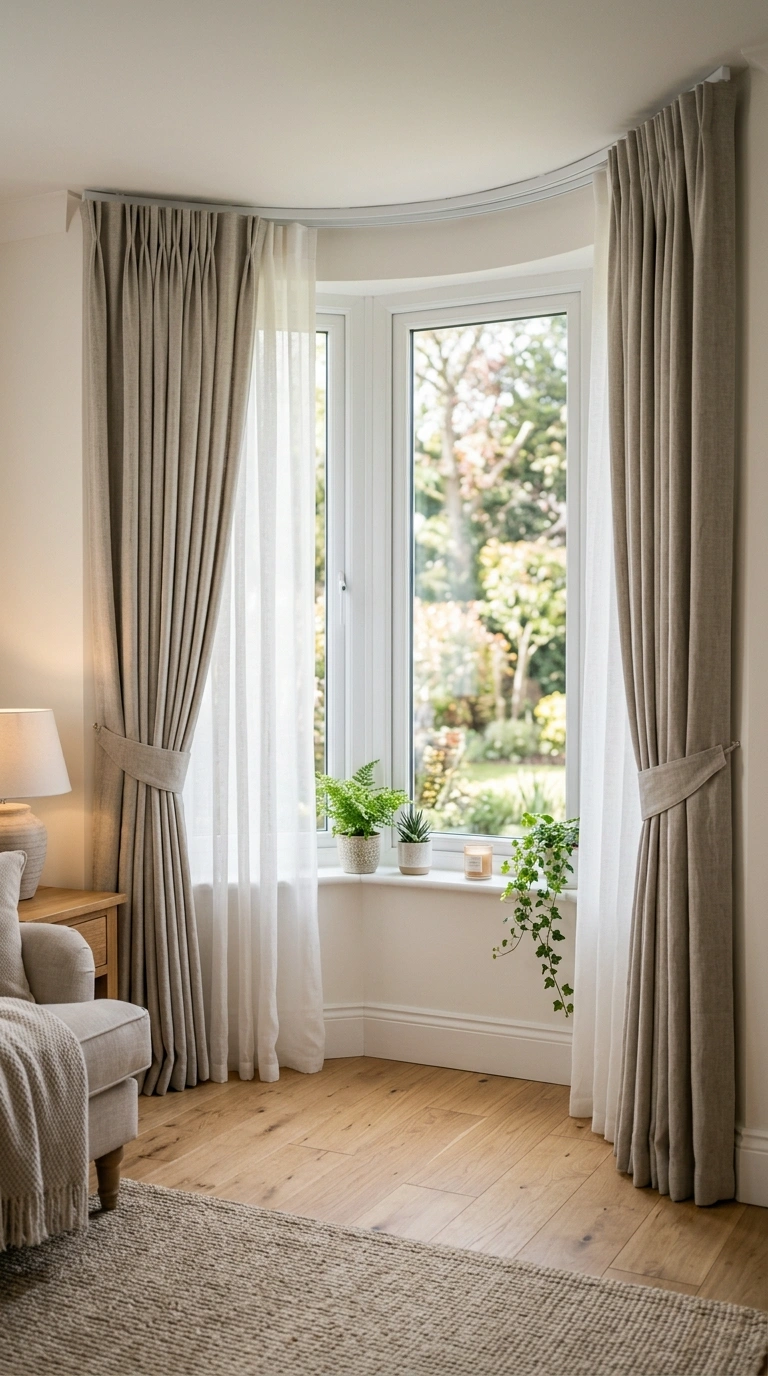
Bay windows often have three separate window sections, which means curtains need a bit more planning than a single, straight window would. Use a flexible curtain track that bends around the angles of the bay, then hang sheer panels closest to the glass with a heavier curtain layer in front for privacy and light control. This layered approach lets you keep the sheers closed during the day for soft light and add the heavier panels at night.
Choose fabrics in a similar color family so the layers blend rather than clash, like a white sheer under a soft linen drape. Curtain rings that glide smoothly around the bends matter more than they might seem, since a track that sticks will make opening and closing the curtains a daily hassle. Done right, this setup gives a bay window a soft, finished look from every angle.
3. Cushioned Reading Nook
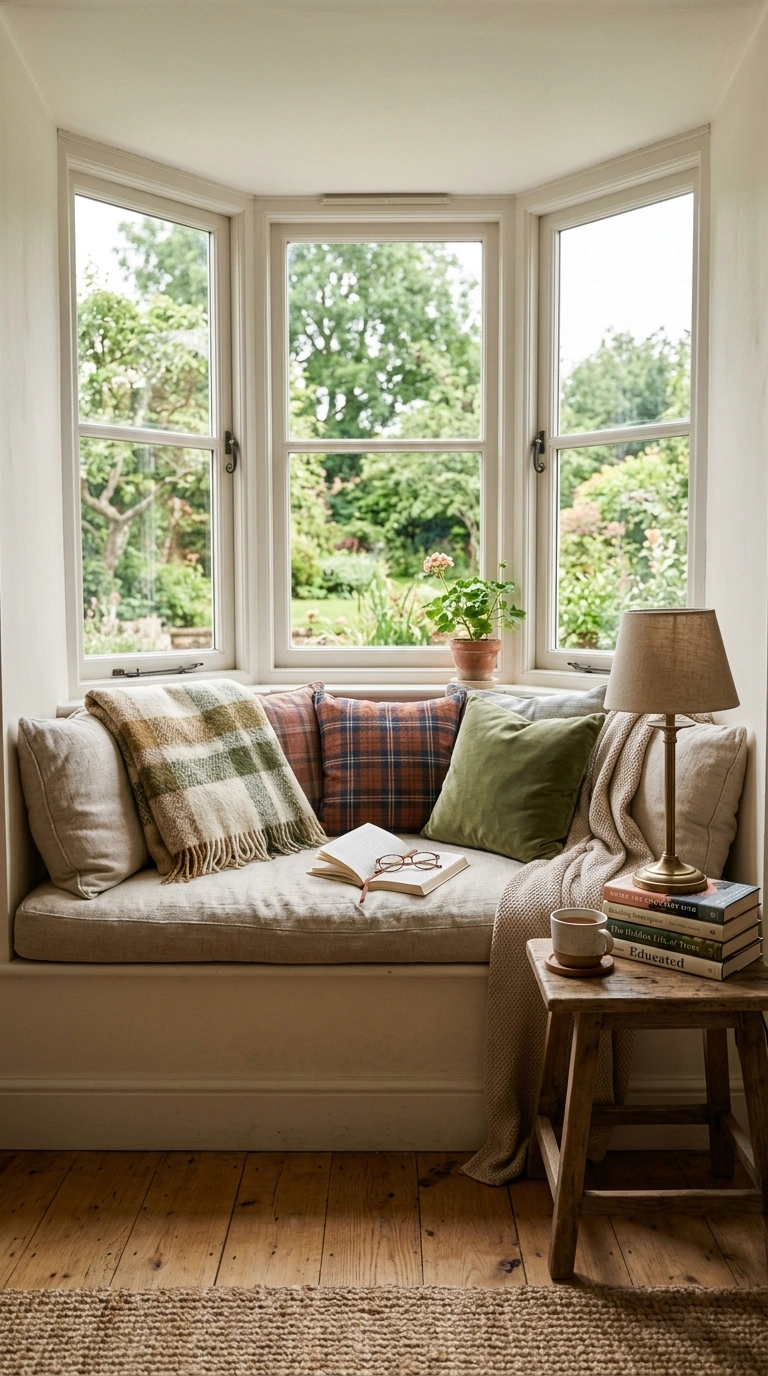
If a full built-in bench isn’t in the budget, a simple cushioned bench or even a stack of floor cushions in the bay window area creates a reading nook with almost no construction needed. Choose a bench sized to fit snugly against the window, then top it with a thick cushion and a couple of throw pillows. A small side table nearby holds a lamp, a cup of tea, or a stack of books within easy reach.
Add a floor lamp or a plug-in wall sconce if the window doesn’t get enough evening light for reading after dark. This setup works in a bedroom, a living room, or even a home office, and it can be assembled in an afternoon without hiring anyone. It gives the bay window a clear purpose instead of leaving it as unused floor space.
4. Bay Window Bookshelf
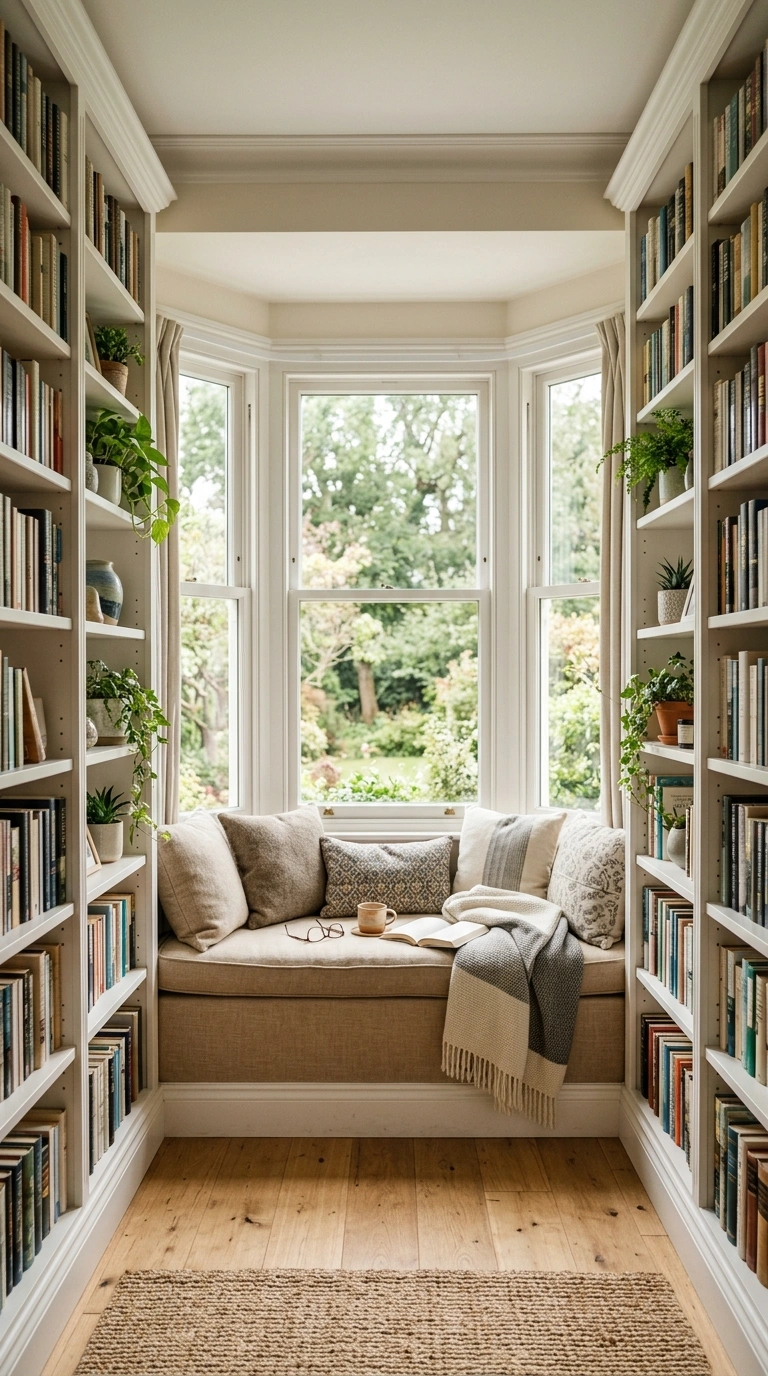
Built-in bookshelves flanking either side of a bay window make use of the wall space that often gets ignored in this kind of layout. Have shelves built floor to ceiling on each side, painted to match the trim, so they look like part of the original room rather than an add-on. Fill them with a mix of books, a few framed photos, and small plants to keep the shelves from feeling too uniform or too sparse.
This setup works especially well in a living room or home office, where the extra storage and display space gets used often. Leave the window seat area itself clear of shelving so light can still pour into the room unobstructed. The combination of shelving and window seat together creates one of the most functional corners a room can have.
5. Hanging Plant Corner
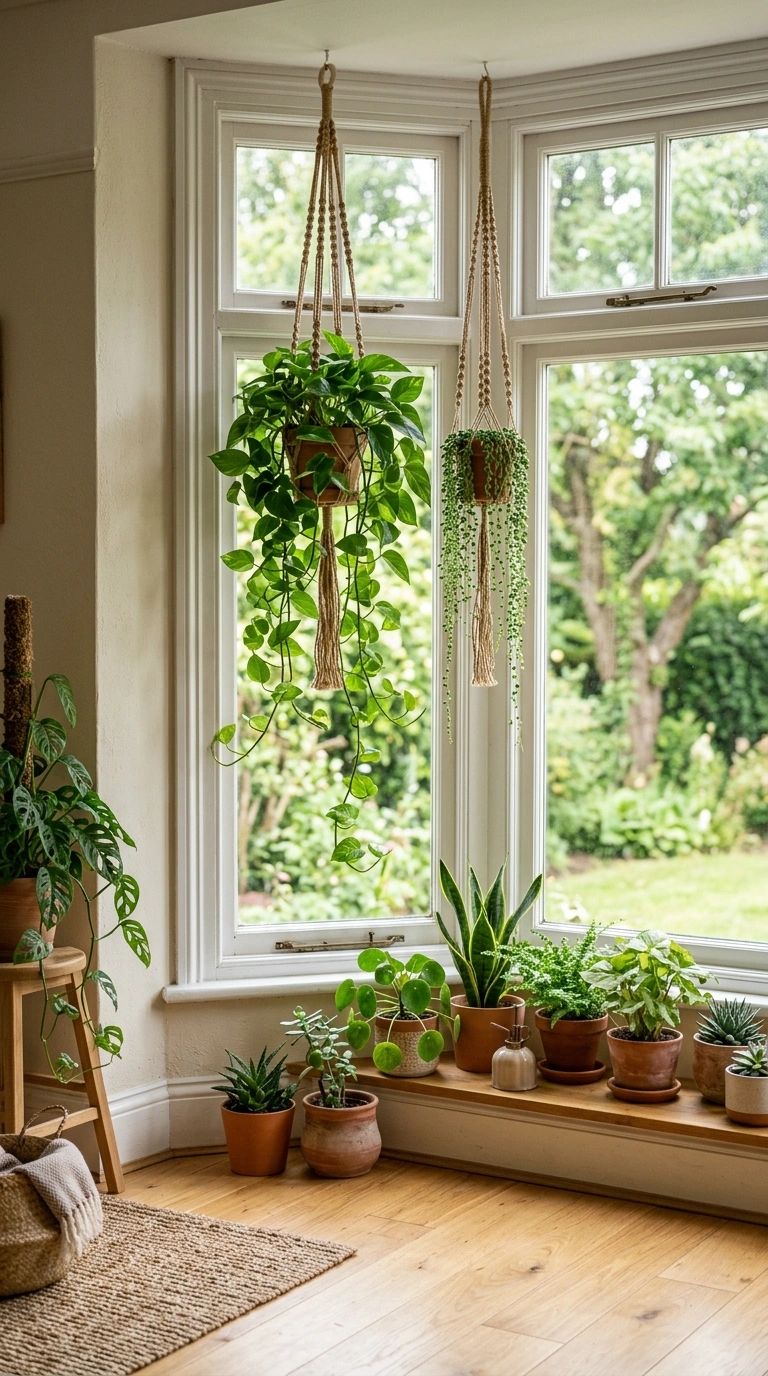
The extra light a bay window lets in makes it a natural spot for plants that need more sun than the rest of the room typically gets. Hang two or three plants in macrame holders or simple ceramic hangers at varying heights within the window frame, choosing trailing varieties like pothos or string of pearls that drape nicely as they grow. Keep a few potted plants on the windowsill itself for a fuller, greener look.
Rotate the pots occasionally so all sides of each plant get even light, since bay windows sometimes cast light unevenly depending on which direction they face. This idea turns a bay window into a mini indoor garden and adds life and color to a spot that might otherwise sit empty. It works in kitchens, living rooms, and even bathrooms with enough natural light.
6. Window Seat Storage
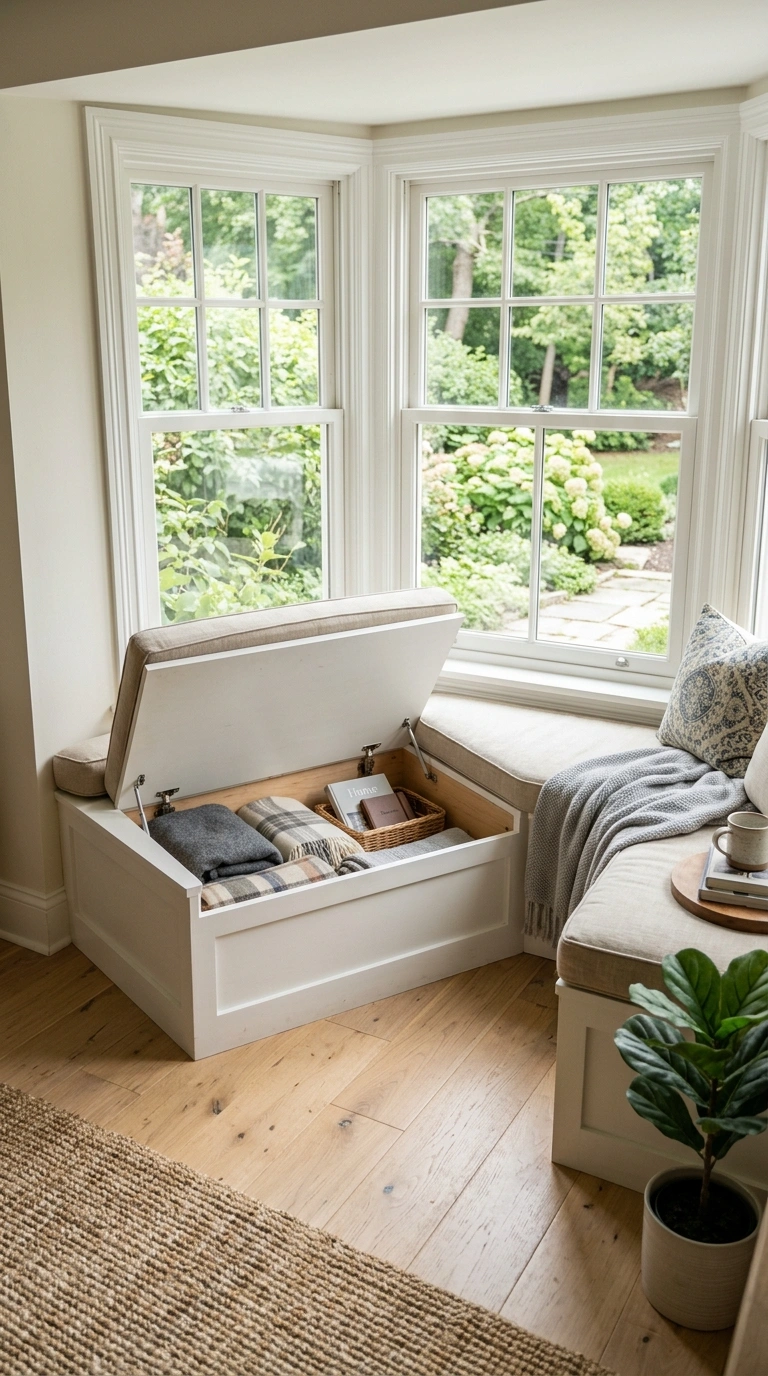
A built-in bench with a lifting lid or pull-out drawers underneath solves two problems at once, seating and storage, in a house that’s often short on both. Use the hidden space for extra blankets, out-of-season clothing, or kids’ toys that need a home but don’t need to be seen every day. Choose a hinge with a soft-close mechanism if you’re building a lid-style seat, since it prevents little fingers from getting pinched.
Top the storage bench with the same cushion and pillow setup you’d use for any window seat, so it looks like a cozy reading spot rather than a piece of furniture built purely for function. This is especially useful in smaller homes or kids’ bedrooms, where every bit of storage matters. It’s proof that a bay window can be both beautiful and genuinely practical at the same time.
7. Sheer Curtain Layer
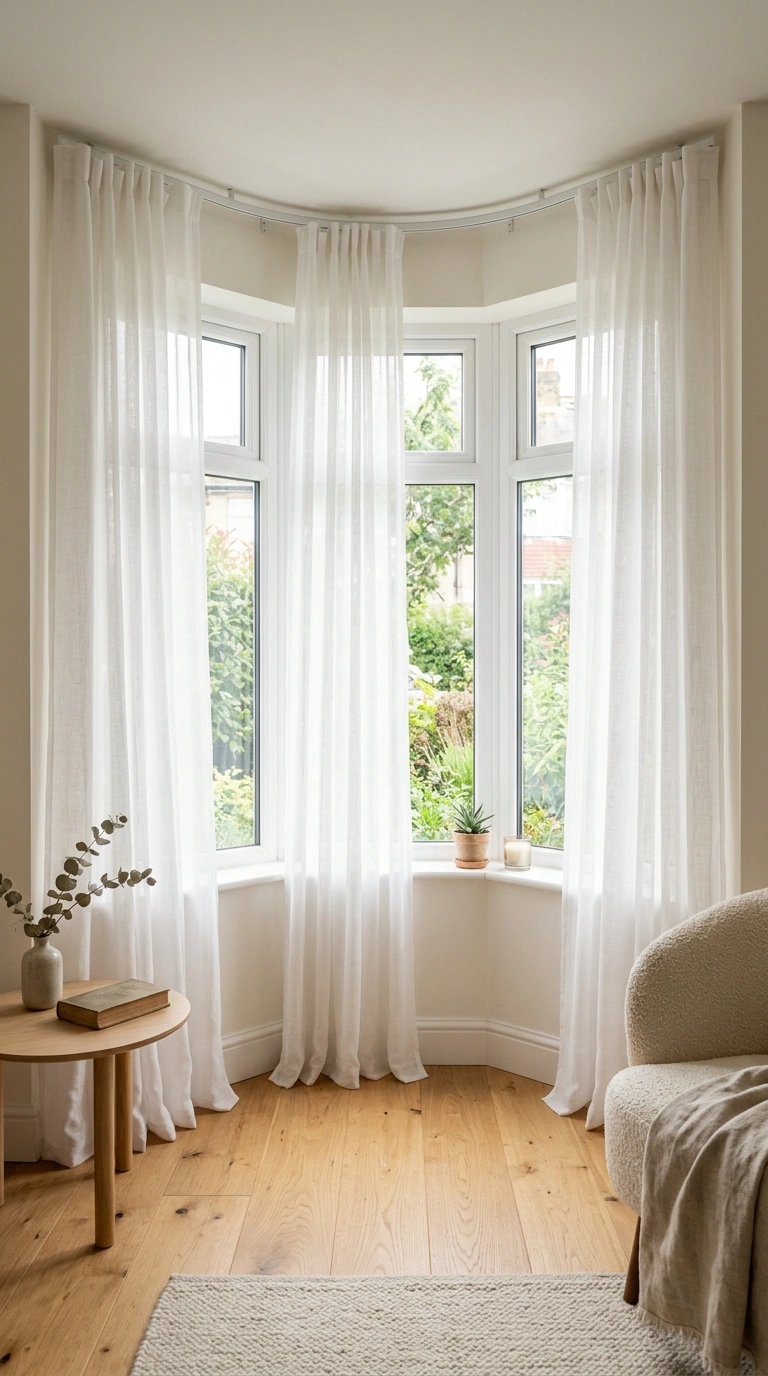
Sometimes the simplest option is the best one, and a single layer of sheer white or cream curtains across a bay window lets in soft, diffused light while still offering a bit of privacy. This works especially well in rooms that don’t face a busy street, where full blackout coverage isn’t really necessary. Sheer fabric also softens the hard lines of the window frame itself, giving the whole area a gentler look.
Hang the curtains on a bendable track that follows the shape of the bay, and let the fabric pool just slightly at the floor for a relaxed, unfussy look. This option costs less than layered curtains and takes less time to install, making it a good choice for anyone who wants a quick, budget-friendly update. It photographs beautifully with morning light streaming through.
8. Bay Window Breakfast Nook
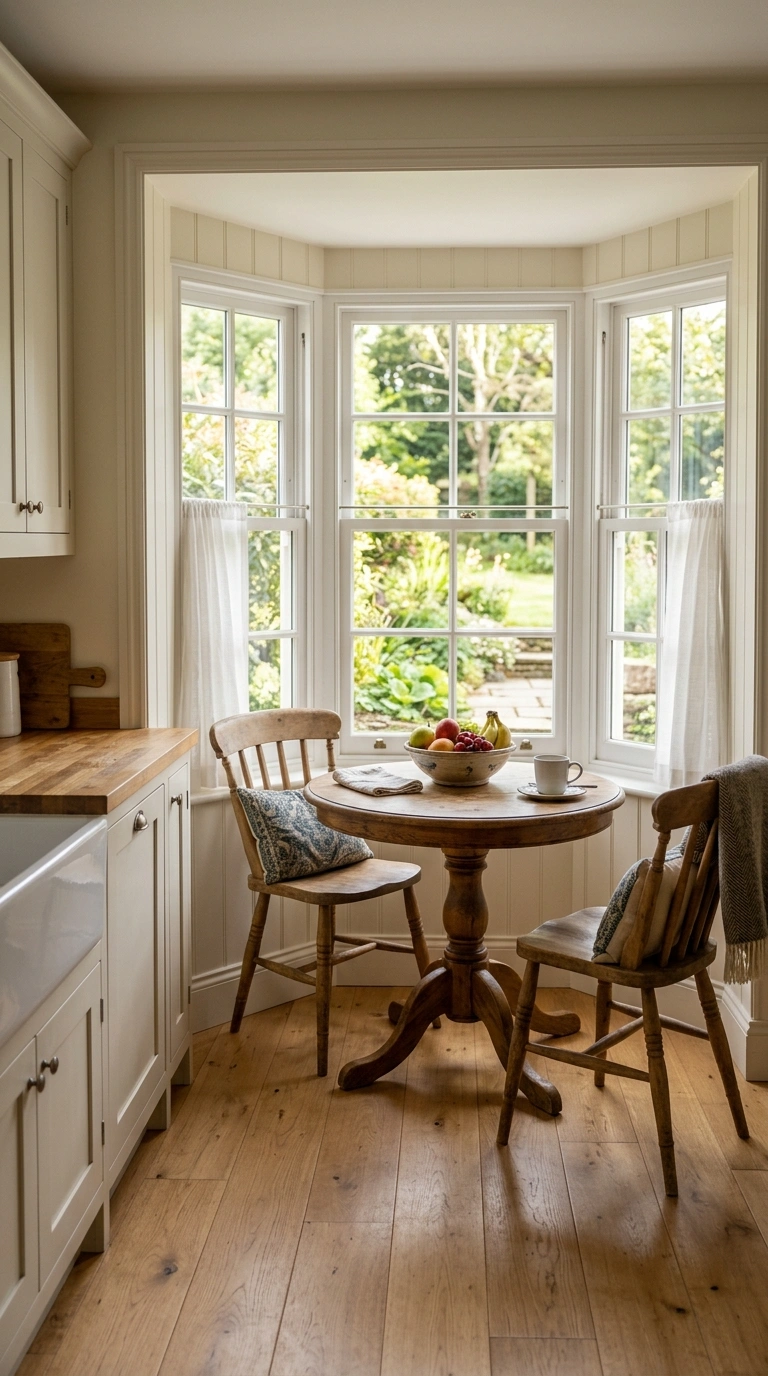
In a kitchen or dining area, a bay window is a natural spot for a small breakfast table, especially one with a round or oval top that fits the curved footprint of the window. Pair it with two or three chairs, or a small bench on the window side for extra seating without crowding the space. This setup makes the most of the morning light that pools into bay windows, which tend to face east in a lot of homes.
Keep the table simple, a small vase of flowers or a bowl of fruit, so the view outside stays the real focal point. This idea works particularly well in smaller kitchens that don’t have room for a full dining set elsewhere in the house. It turns an oddly shaped corner into one of the most-used spots in the whole home.
9. Wood Shutters Style
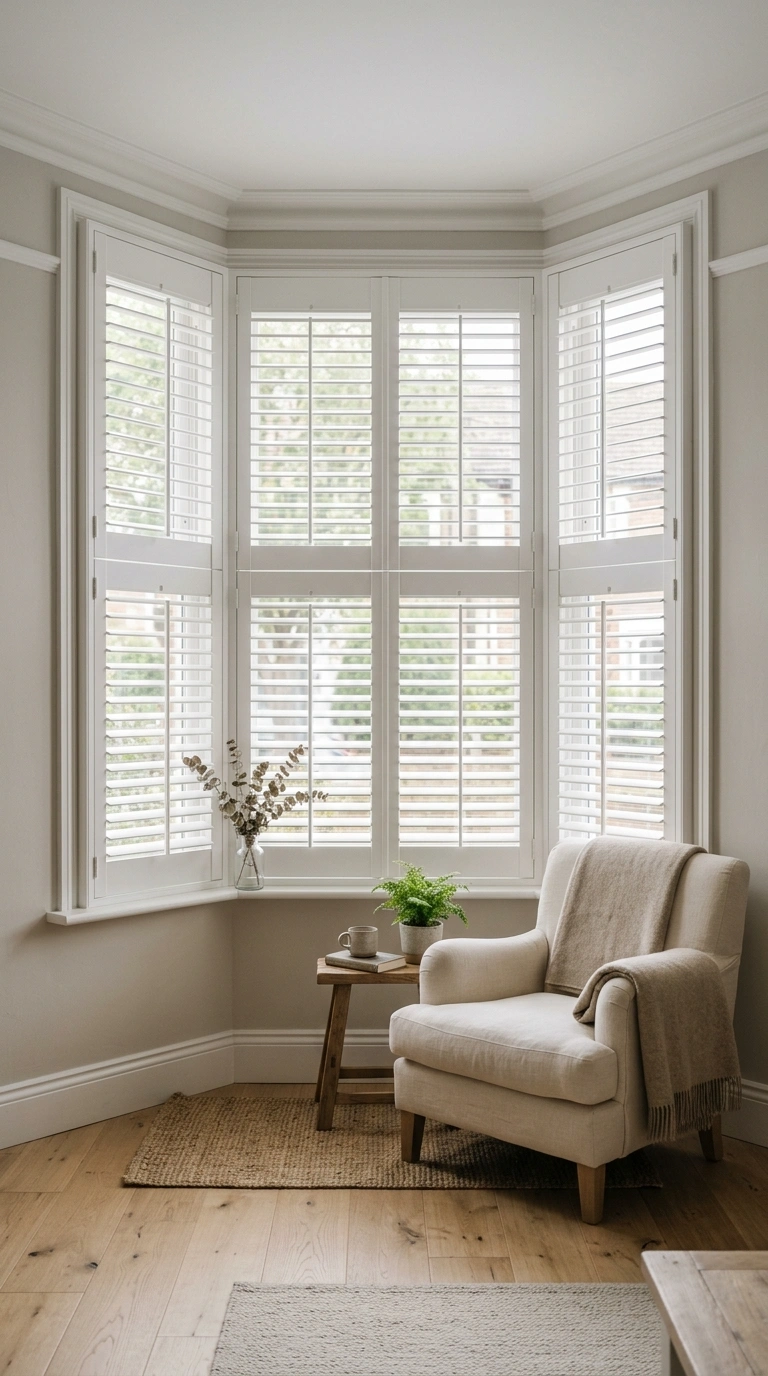
Plantation-style wood shutters give a bay window a clean, classic look that works well in almost any home style, from farmhouse to more traditional interiors. Because bay windows have angled sections, shutters need to be custom measured and installed for each individual pane rather than bought as a single standard-sized unit. The adjustable slats let you control light and privacy throughout the day without needing curtains at all.
Choose a white or off-white finish for a classic look, or a stained wood finish if the rest of the room leans more rustic. Shutters also tend to last longer than fabric curtains and require very little maintenance beyond an occasional wipe-down with a cloth. This is a higher-upfront-cost option, but one that many homeowners find worth it for the clean, tailored look it gives a bay window.
10. Bay Window Vanity
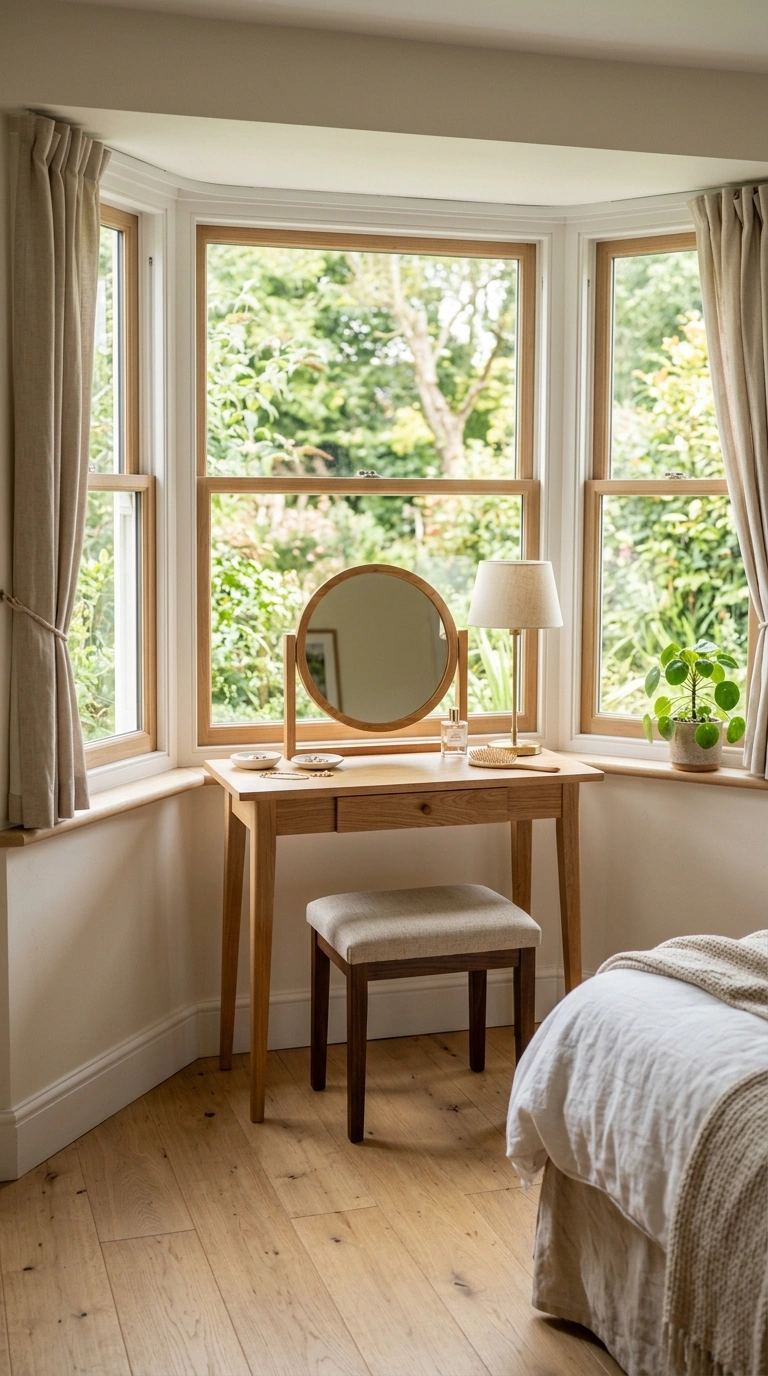
In a bedroom, a small vanity table tucked into a bay window makes use of natural light in a way an interior wall never could, which matters a lot when applying makeup or getting ready in the morning. Choose a slim table or desk that fits the width of the window without blocking too much light, paired with a simple stool or chair that can tuck away when not in use.
Add a mirror on the table itself, or skip a hanging mirror altogether and let a large tabletop mirror do the job instead, since a wall-mounted one might block the window view. Keep a small tray for makeup or jewelry on top, along with a small lamp for use after dark. This setup gives a bedroom a genuinely useful getting-ready spot without taking over the whole room.
11. Cozy Blanket Basket
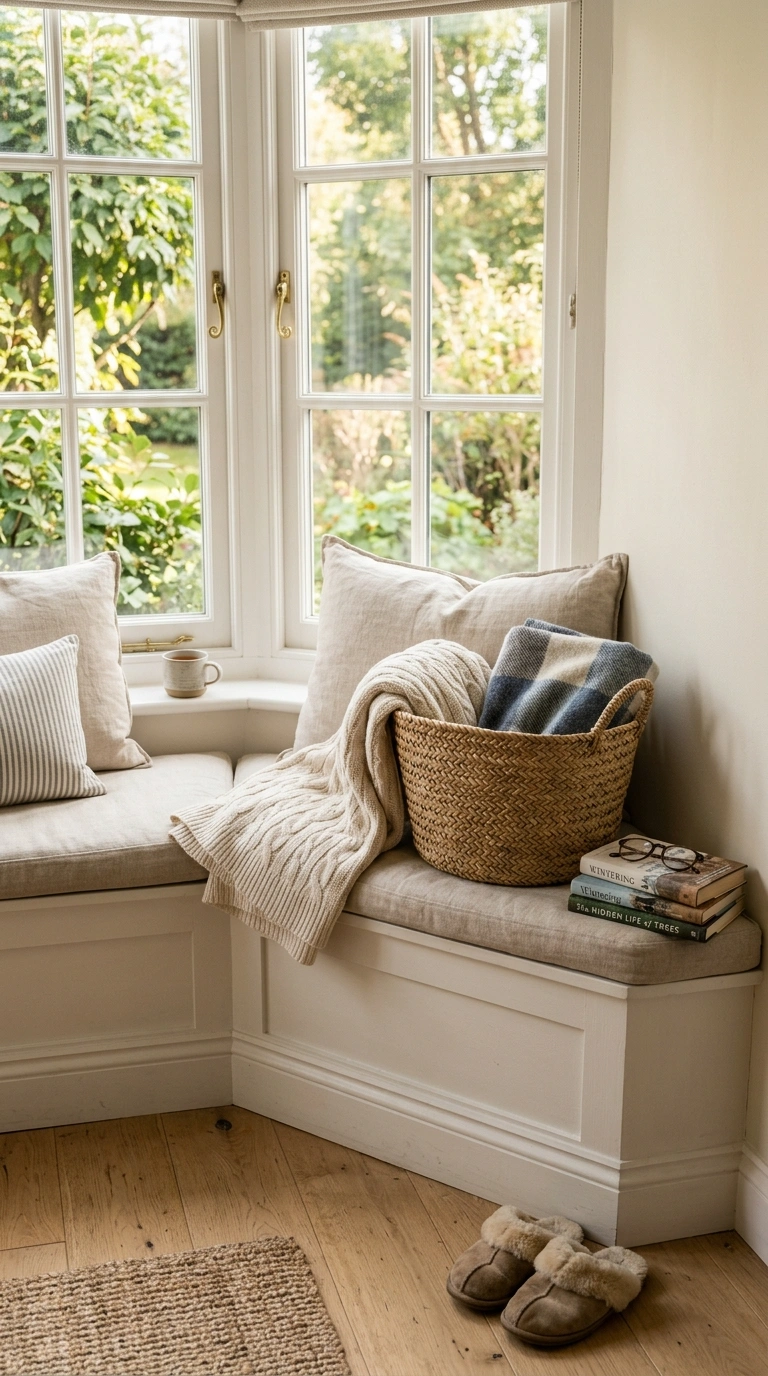
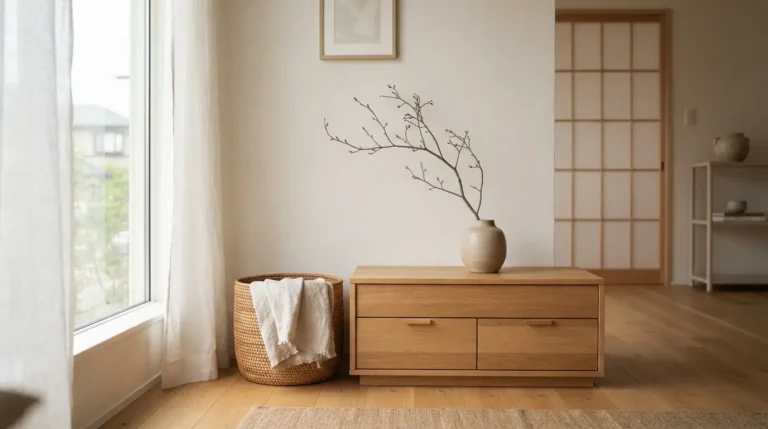
A large woven basket tucked into the corner of a bay window seat area holds extra throw blankets and keeps them within reach on a cold day. This is a simple addition, but it finishes off a window seat in a way that feels intentional rather than half done. Choose a basket with handles for easy carrying, and pick one in a natural fiber like seagrass or rattan to add texture next to the softer cushions.
Fold two or three blankets loosely inside rather than stacking them too neatly, since a slightly relaxed, tumbled look reads as more welcoming than a stiff, folded stack. This small addition costs very little but rounds out a window seat nicely, giving it that lived-in, ready-to-curl-up feeling that makes the whole corner more inviting.
12. Bay Window Desk
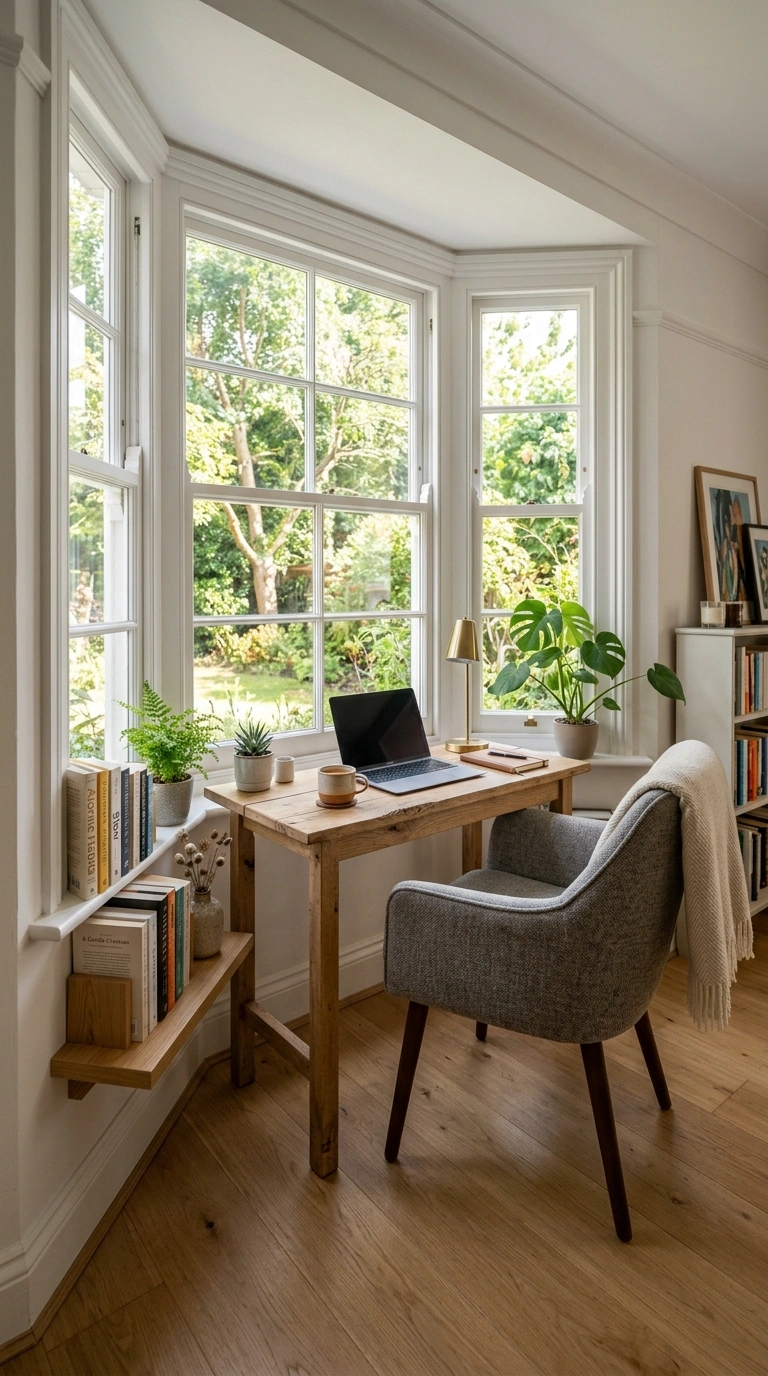
A bay window makes a genuinely great home office corner, since the extra natural light helps with both mood and reducing eye strain during a long workday. Choose a narrow desk that fits the width of one window section, or a custom-built desk that follows the full curve of the bay for more surface area. Position the desk so you’re facing into the room rather than directly into the window, which helps cut down on screen glare.
Add a comfortable chair and a small shelf or two nearby for books and supplies. This setup works especially well in a spare bedroom or a corner of a living room where a full home office isn’t practical. It makes good use of a spot that might otherwise just be an empty stretch of floor near the window.
13. Roman Shade Trio
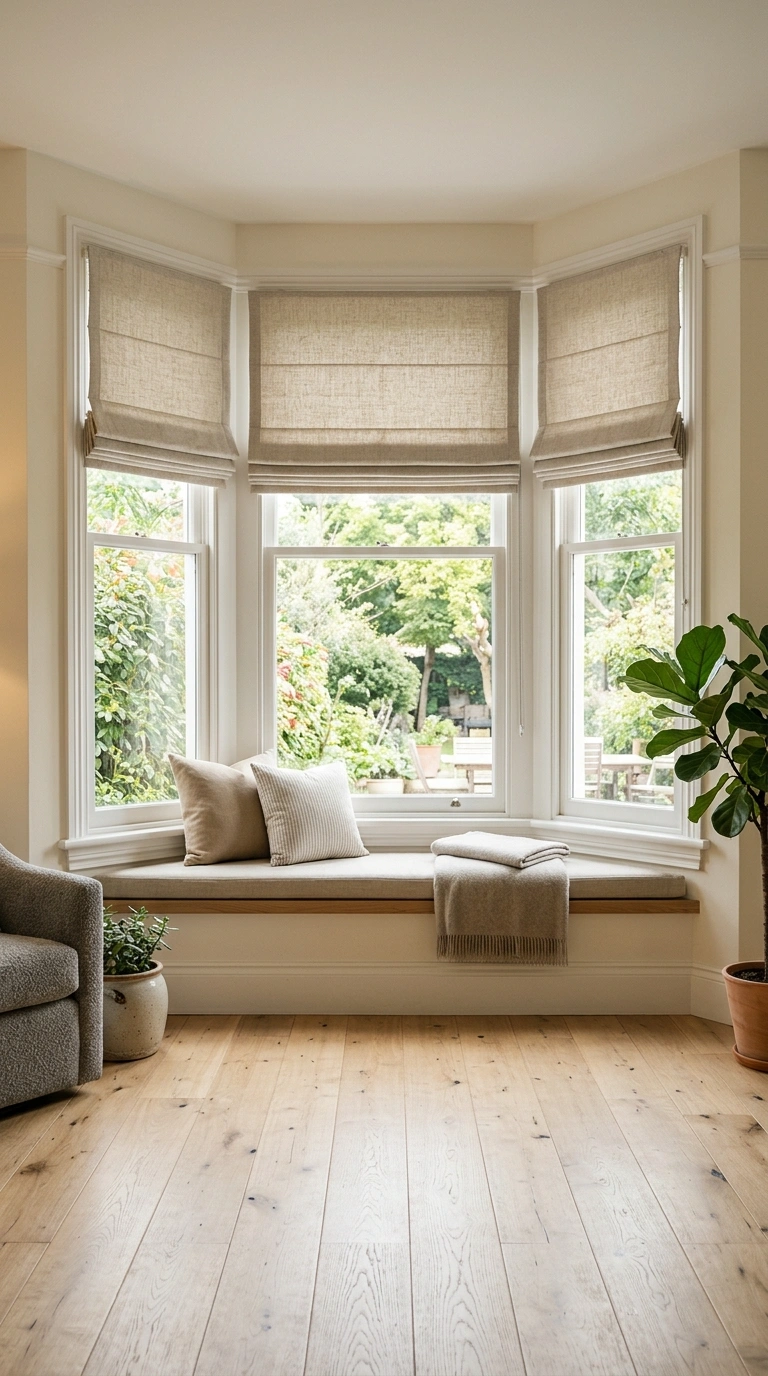
Because bay windows usually have three separate panes, three matching roman shades, one per section, create a tailored, put-together look that a single curtain panel across the whole bay can’t quite match. Choose a fabric with a subtle texture or pattern, and have each shade custom measured to fit its individual window section precisely. Cordless shades are worth the extra cost if there are kids or pets in the home, since they remove a safety hazard.
Raise or lower each shade independently depending on the light and privacy needed throughout the day, which gives you more control than a single curtain rod would. This option tends to look especially clean and modern, and it works well in rooms where you want to control light without adding the bulk of full-length curtains.
14. Bay Window Pet Bed
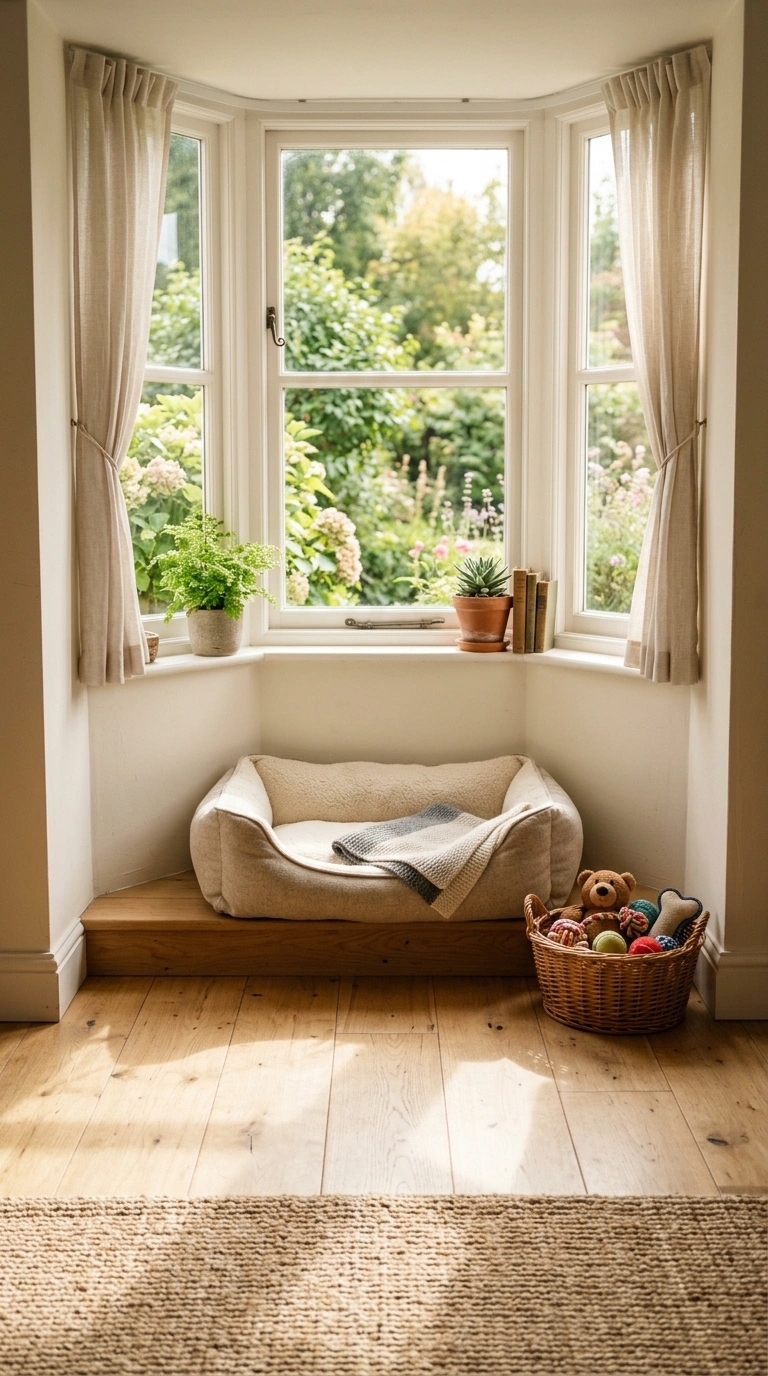
A low, padded bed tucked into the base of a bay window gives pets their own sunny spot to nap during the day, and it’s one of the more charming, photograph-worthy uses for this kind of window. Choose a bed with a removable, washable cover, since pet beds near windows tend to collect fur and need regular cleaning. Keep the bed low profile so it doesn’t block the view or the light coming through.
Add a small basket nearby for toys, which keeps them from scattering across the rest of the room. This idea works especially well in a living room or a sunny hallway bay window that doesn’t get much other use. It turns an overlooked spot into a genuinely happy corner for a dog or cat, and most pets will claim it within the first day.