25 Indoor Plant Ideas to Bring Fresh Greenery Into Your Home
I have a confession to make. For years, every plant I brought home slowly gave up on me. I overwatered, I underwatered, and I put sun loving plants in dark corners. Then a friend gave me a pothos and told me to basically ignore it, and something clicked. That plant is still alive five years later, trailing across my bookshelf. Plants changed my home more than any furniture ever did. They soften hard corners, clean the air, and make rooms feel alive and cared for. You do not need a green thumb to enjoy them. You just need the right plant in the right spot. These 25 indoor plant ideas will help you add fresh greenery to every room, even if you have killed a cactus before.
1. Fiddle Leaf Corner
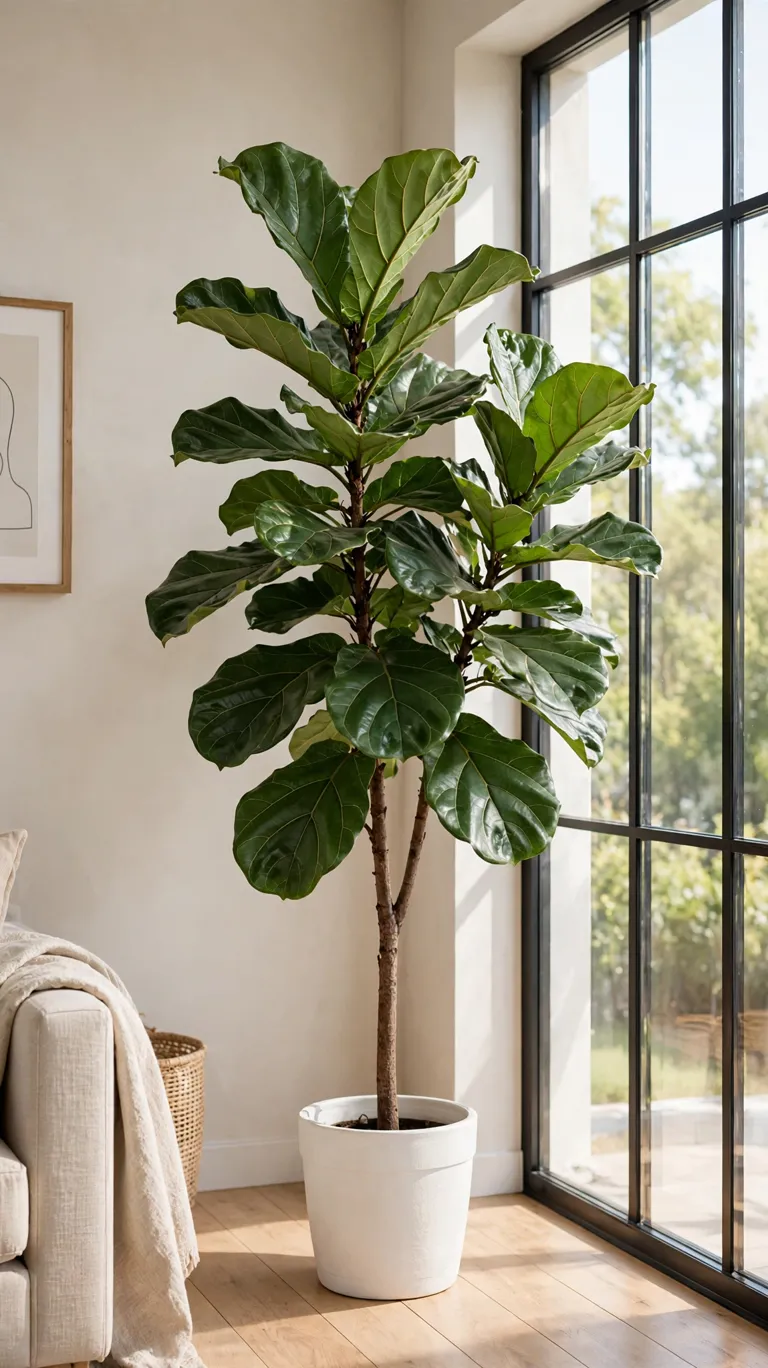
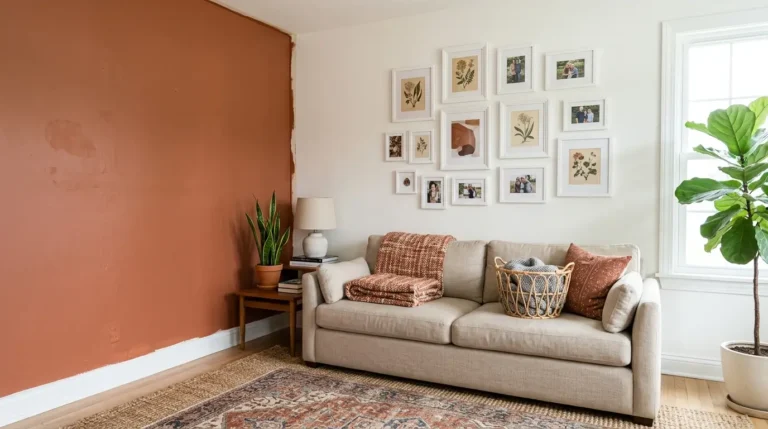
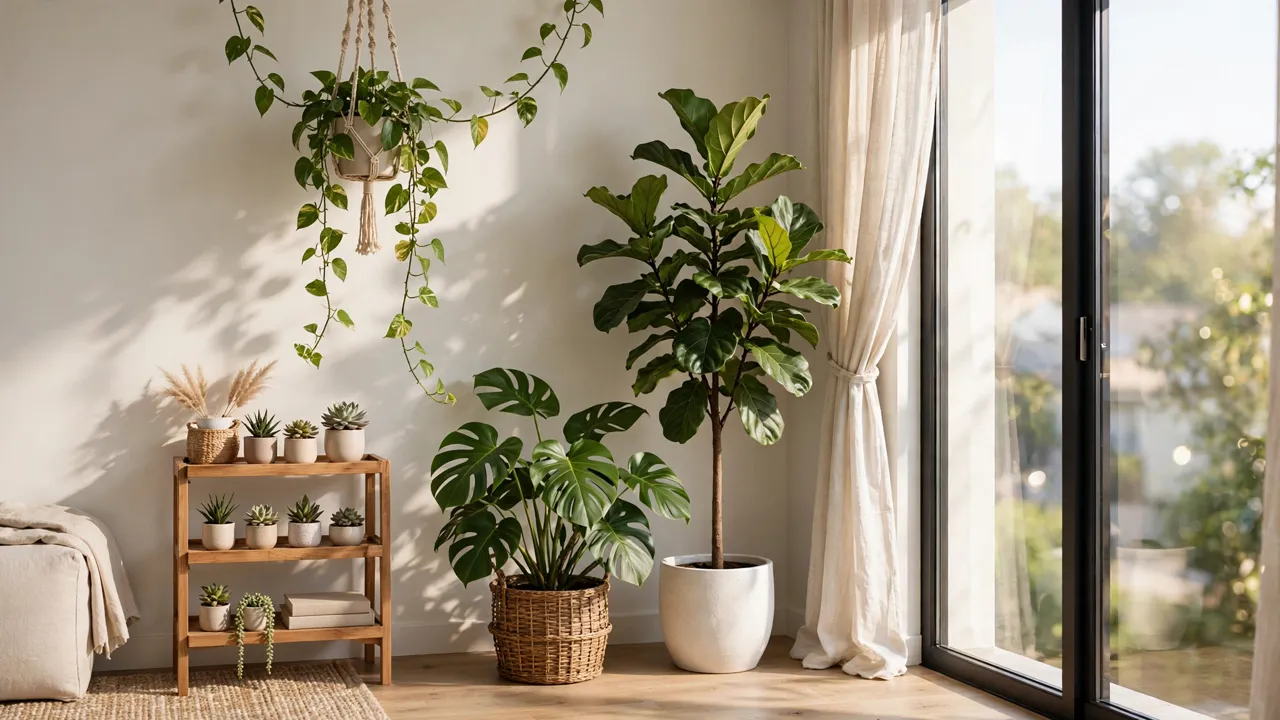
A fiddle leaf fig in an empty corner makes a bold, beautiful statement. This plant has big, violin shaped leaves that look almost sculptural. Choose a plant about four to five feet tall and set it in a simple ceramic pot in white, sand, or soft gray. Place it in a corner near a bright window, since fiddle leaf figs love lots of indirect light. The tall green shape fills vertical space that furniture cannot, and it turns a dead corner into the prettiest spot in the room.
These plants have a fussy reputation, but they are fine if you learn their rhythm. Water only when the top two inches of soil feel dry, and keep the plant away from cold drafts and heating vents. Wipe the leaves with a damp cloth once a month so they can breathe and shine. Turn the pot a quarter turn each week for even growth. If a few lower leaves drop at first, do not panic, since the plant is just adjusting to your home. Give it a month to settle before you judge it.
2. Hanging Pothos Vines
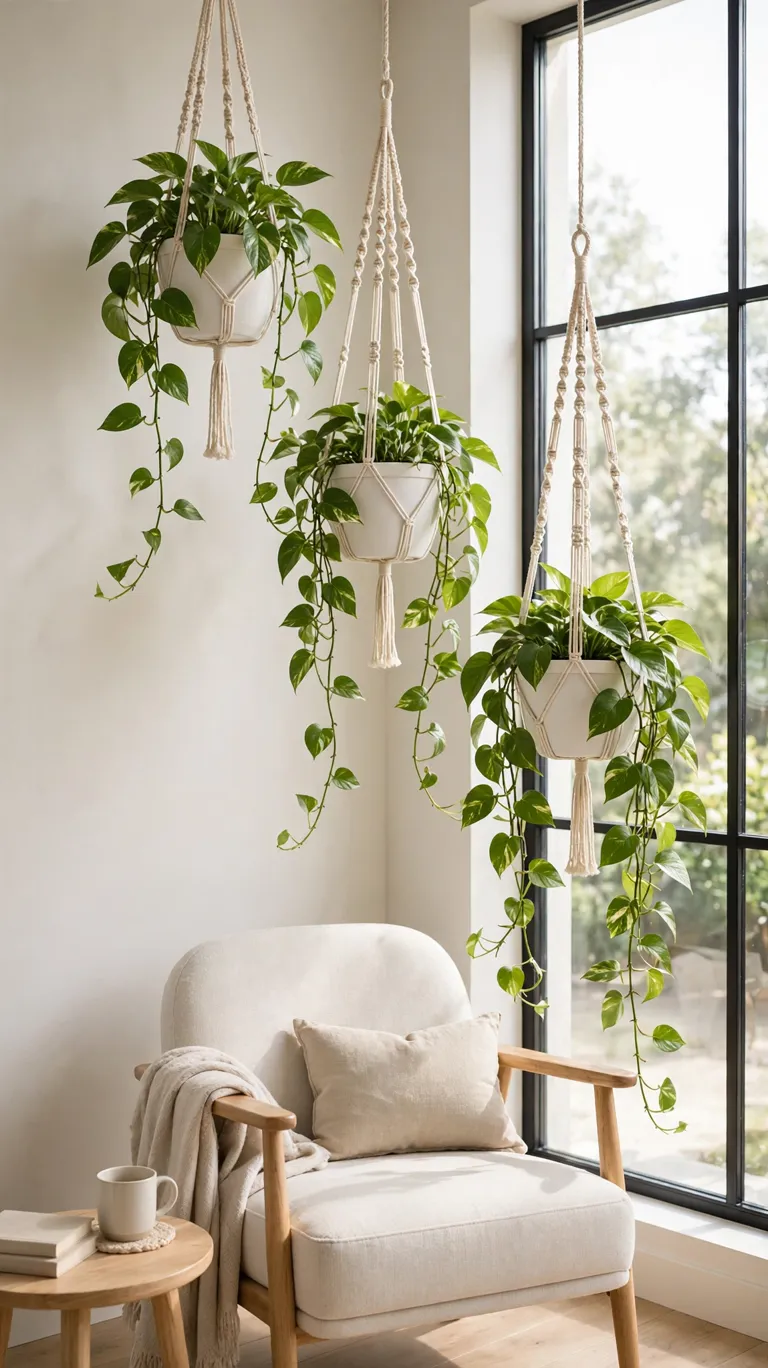
Trailing pothos vines in hanging planters add green life at eye level and above. Pothos is nearly impossible to kill, grows fast, and looks lovely spilling over the edge of a pot. Hang two or three planters at different heights near a window or in a bright corner. Use simple white ceramic hanging pots or woven baskets with sturdy cords. The long vines soften hard lines and make ceilings feel lower and cozier in a good way.
Hang the planters where you will see them daily but not bump your head, like beside a window or over a reading chair. Water when the soil feels dry about an inch down, and trim vines that get too long. The cuttings root easily in water, so you can grow free plants for other rooms. Dust the leaves now and then since hanging plants collect dust faster. If the leaves turn yellow, you are probably watering too much, so let the soil dry out more between waterings. This is the perfect first plant for nervous beginners.
3. Windowsill Herb Row
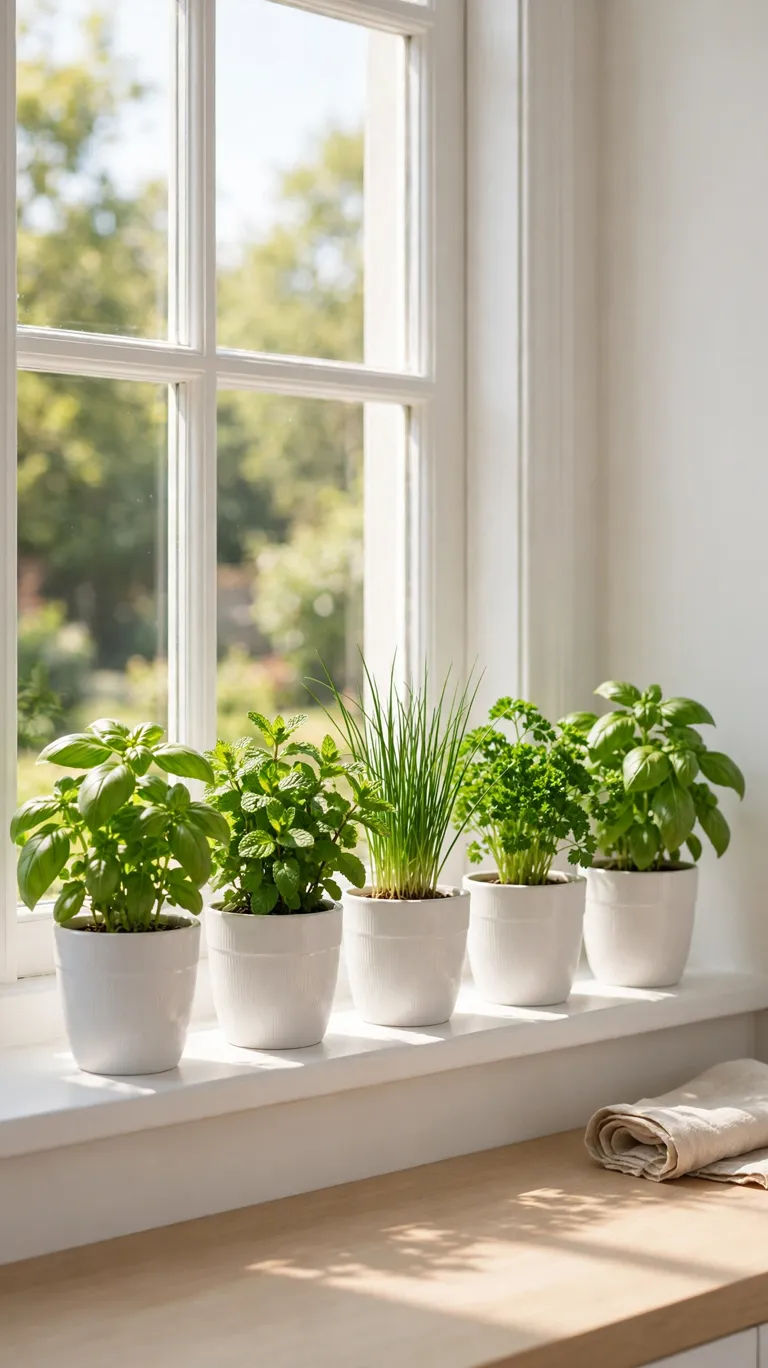
A row of small herb pots on a sunny windowsill is pretty and useful. Plant basil, mint, chives, and parsley in matching four inch pots, and line them up along the sill. The green row looks charming from both inside and outside the house. You will cook more fresh food when herbs are right there, because snipping a few leaves is easier than opening a spice jar. Morning light on the leaves is a lovely way to start the day.
Most kitchen windowsills fit four to six small pots. Use pots with drainage holes and small saucers to protect the wood or paint. Water in the morning so leaves dry by night, which prevents disease. Pinch basil regularly to keep it bushy instead of tall and thin. If your window gets very hot afternoon sun, move delicate herbs back a few inches or add a sheer curtain. Replace tired plants each season, since herbs are happiest when young and fresh. This little row pays for itself in flavor.
4. Snake Plant Pair
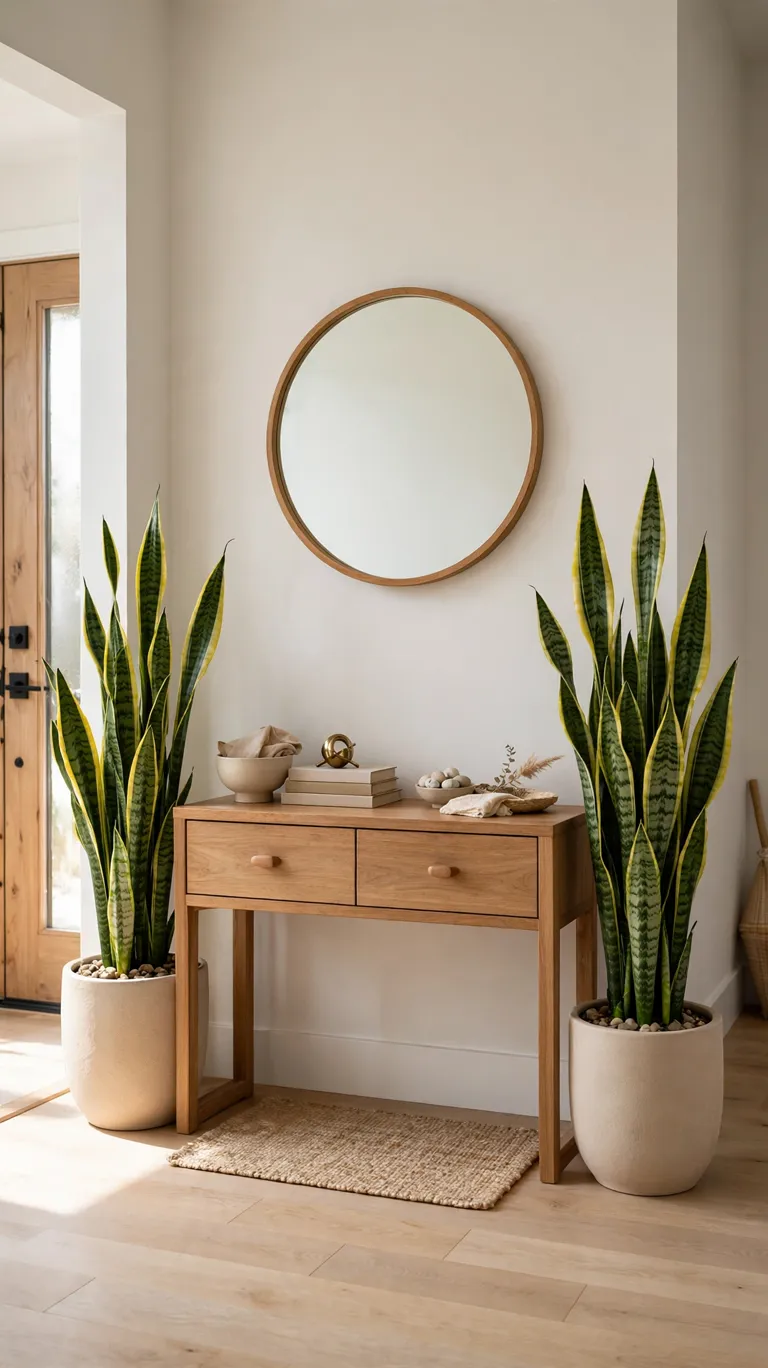
Two snake plants flanking a console table or doorway create perfect symmetry. Snake plants have tall, stiff leaves with green and yellow patterns that look modern and clean. They need almost no care, which makes them ideal for busy people and dark hallways. Choose two plants of similar height, about two to three feet tall, in matching pots. Place one on each side of a table, fireplace, or front door for a balanced, pulled together look.
These plants survive low light, missed waterings, and dry air without complaint. Water only when the soil is fully dry, which might be every three or four weeks in winter. Too much water is the one thing that kills them, so when in doubt, wait. Wipe the tall leaves now and then since dust shows on them. They also release oxygen at night, which makes them nice bedroom plants. If you want greenery with zero stress, a snake plant pair is the safest choice on this list.
5. Monstera Statement Pot
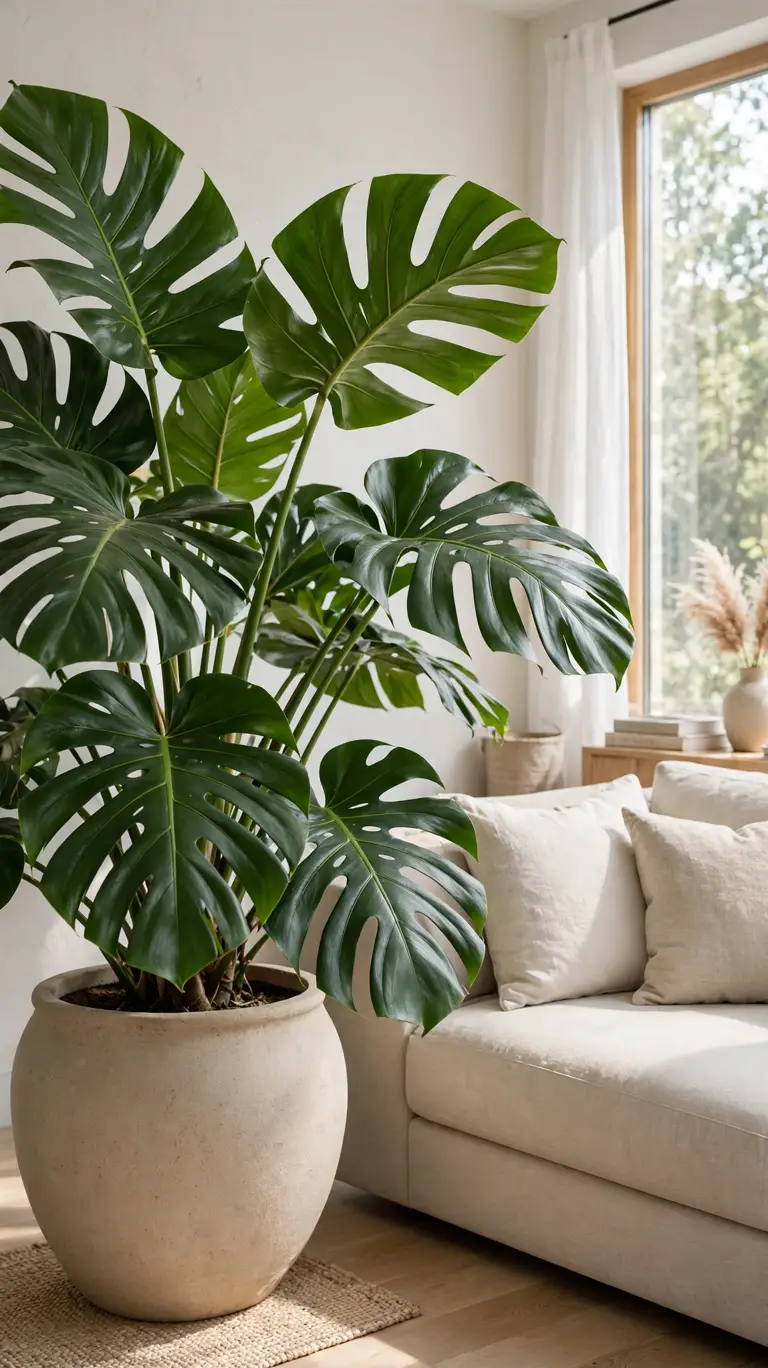
A monstera in a big pot becomes living art in your living room. The huge split leaves look tropical and dramatic, and one plant can fill a large empty space. Choose a healthy plant with several fenestrated leaves, and pot it in a large ceramic planter about fourteen inches wide. Set it near a bright window but out of harsh direct sun, which can burn the leaves. Give it room to spread, since monsteras grow wide as well as tall.
Water when the top two inches of soil dry out, and mist the leaves or wipe them clean monthly. Monsteras like a moss pole to climb, which also keeps the plant tidy and upright. Feed it lightly once a month in spring and summer with houseplant fertilizer. If the leaves stay solid without splits, the plant probably needs more light, so move it closer to a window. New leaves unfurl slowly like a scroll, which is genuinely fun to watch. This plant makes guests stop and stare.
6. Floating Shelf Garden
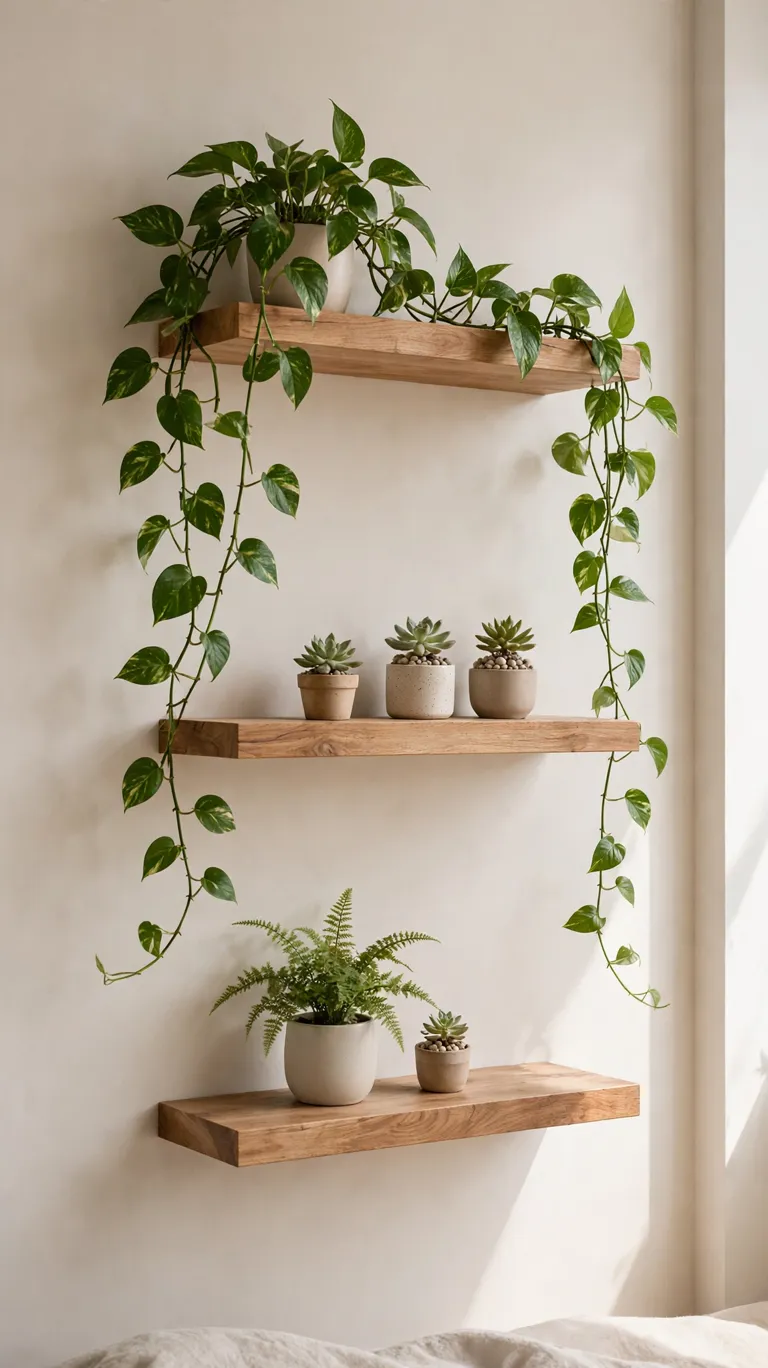
Two or three floating shelves filled with small potted plants turn a blank wall into a garden. Mount sturdy wood shelves on a living room or bedroom wall, and arrange small plants in a mix of pots. Use trailing pothos on the top shelf so vines spill down, compact succulents and ferns in the middle, and one medium plant at the end for balance. The layered green wall looks lush and full without taking any floor space.
Check that your shelves and wall anchors can hold the weight of watered plants, since soil gets heavy. Use lightweight plastic nursery pots inside pretty ceramic covers to reduce weight. Water carefully over the sink or with a small watering can that has a narrow spout to avoid drips on the wall. Rotate plants every few weeks so all sides get light. This vertical garden is perfect for small apartments where floor space is precious. It also keeps plants away from curious pets.
7. Bathroom Fern Nook
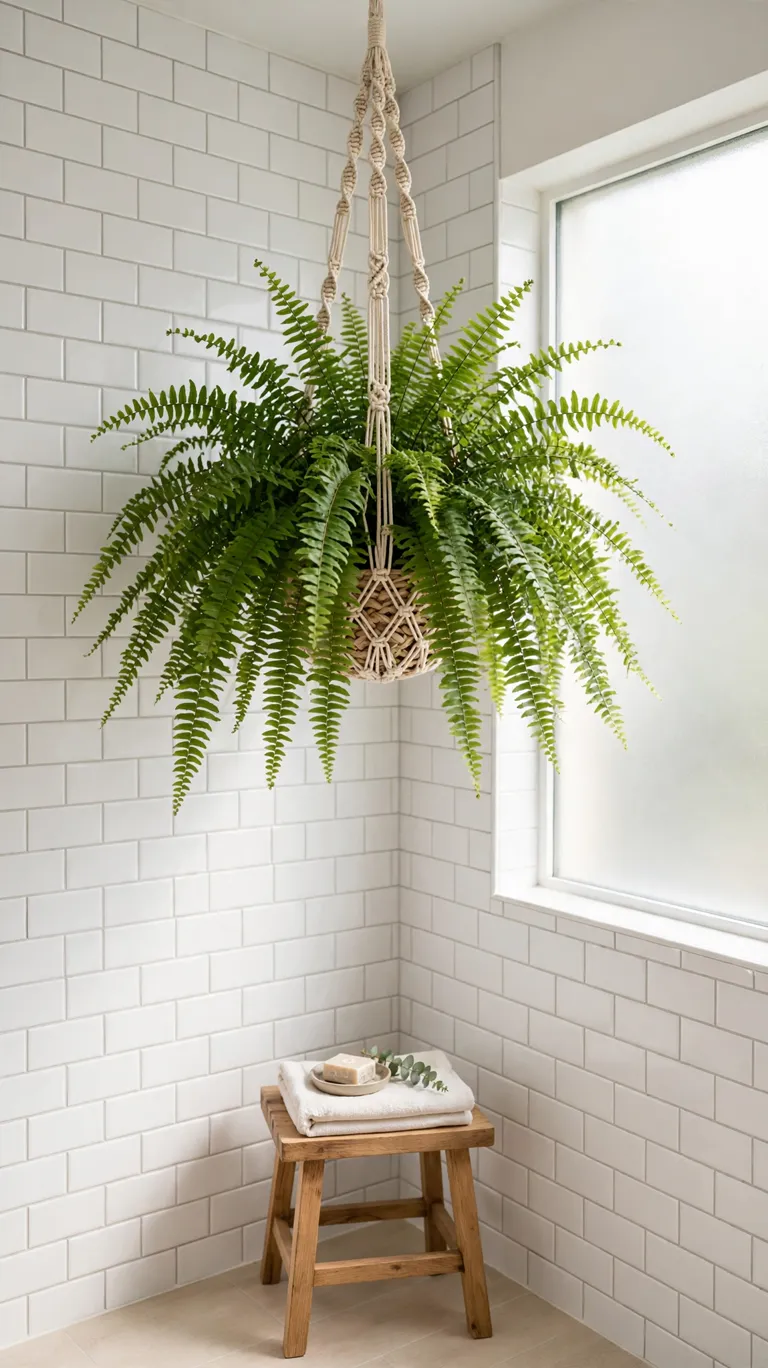
Ferns love bathrooms, and bathrooms love ferns. The warm steam from showers creates the humid air that ferns crave. Place a Boston fern in a hanging planter or on a high shelf in a bathroom with a window. The soft, arching fronds look beautiful against tile, and the green softens all the hard surfaces. Even a small bathroom feels like a spa with one lush fern in the corner.
Keep the soil lightly moist but not soggy, and mist the fronds every few days if your bathroom has a fan that dries the air. Ferns need bright indirect light, so a frosted window is perfect. Trim brown fronds at the base to keep the plant looking fresh. If the fern drops leaves, it may need more humidity or less direct sun. A pebble tray with water under the pot adds moisture around the plant. This is one of the easiest ways to make a plain bathroom feel luxurious.
8. Bookshelf Trail Plant
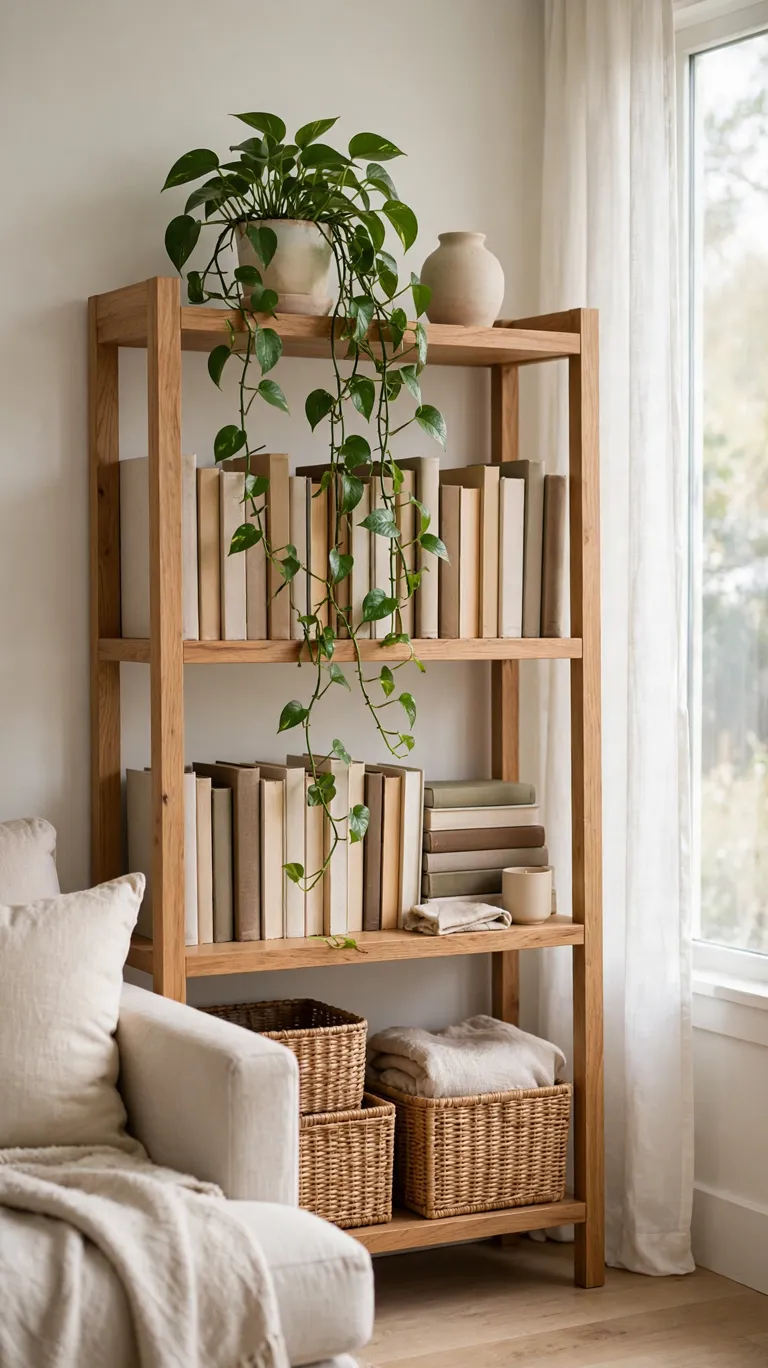
Let a trailing plant spill across your bookshelf for an effortlessly styled look. Set a pothos or philodendron in a pretty pot on the top shelf, and let the vines drape down over the books. The green trails soften the straight lines of book spines and make the shelf look collected and alive. Tuck a few vines between books so they weave through the shelf naturally. It is a trick designers use, and it costs almost nothing.
Water the plant in place with a small can, and put a saucer under the pot to protect the wood. Trim vines when they reach the floor or start looking thin at the top. You can pin vines along the shelf edge with small clear hooks to guide their direction. Dust the leaves when you dust the books. If the shelf is far from a window, choose a pothos, which tolerates low light better than most trailers. This one plant makes a whole bookcase look intentional and loved.
9. Kitchen Counter Sprouts
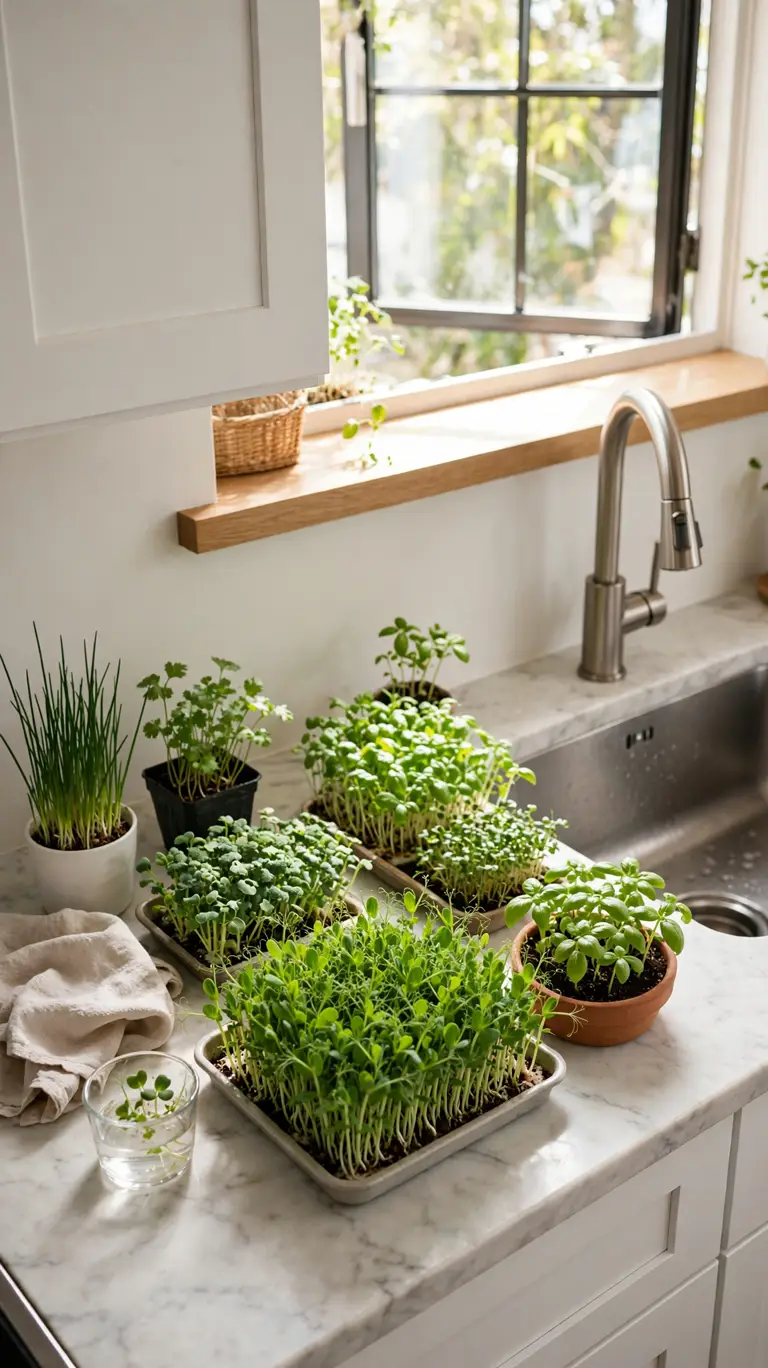
Small pots of sprouts and microgreens on the kitchen counter are fresh decor you can eat. Grow basil, cilantro, or sunflower sprouts in shallow trays or small pots near the sink. The bright green shoots look cheerful and alive, and you can snip them onto salads and sandwiches. A sunny windowsill above the sink is the perfect spot, since you will remember to water them when you wash dishes.
Sprouts grow fast, often ready in one to two weeks, so start a new tray every week for a steady supply. Keep the soil moist but not waterlogged, and give them as much light as possible. If they grow tall and pale, they need more sun. Use organic seeds meant for sprouting, and rinse harvested greens well. When a tray is done, compost the roots and start fresh. This living counter decor connects your kitchen to real food in the simplest way.
10. Bedside Table Plant
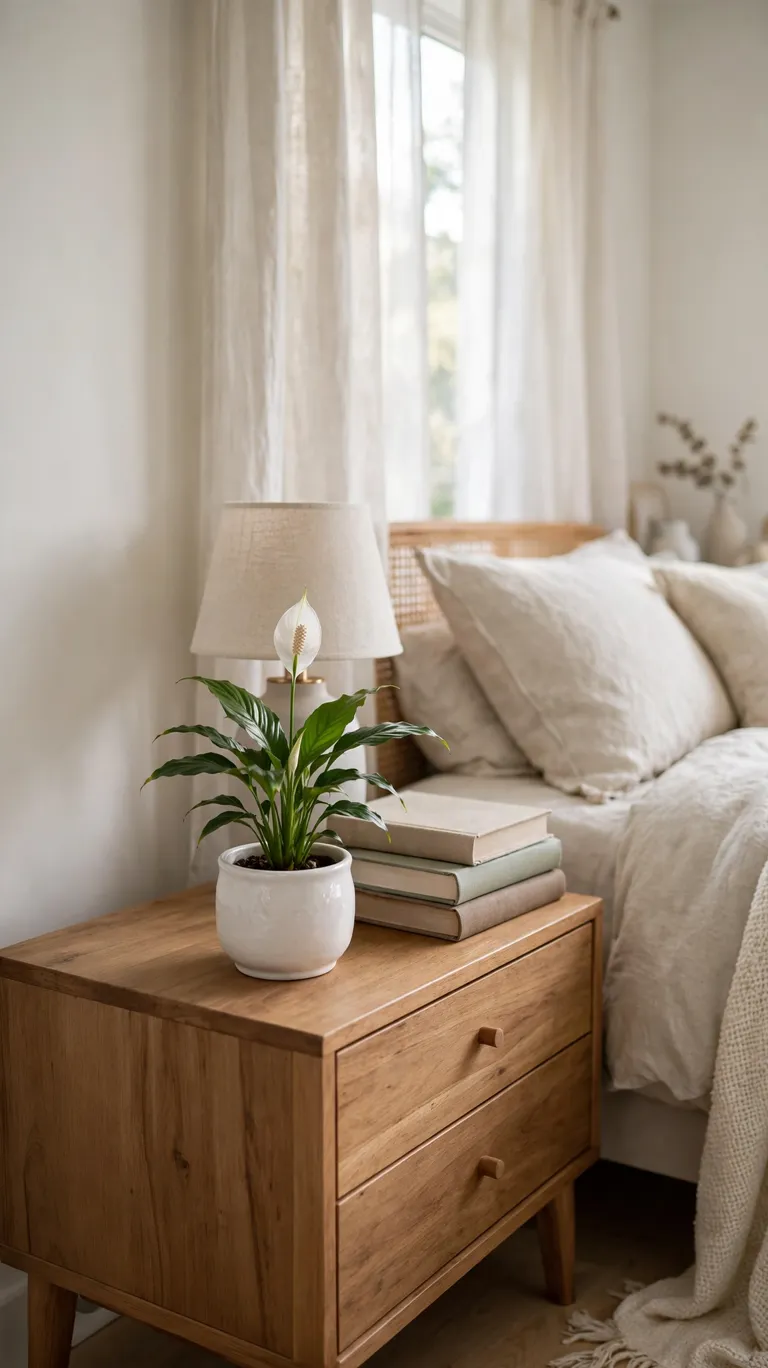
A small plant on your nightstand makes waking up nicer. Choose a compact plant like a small peace lily, a baby rubber plant, or a tiny fern in a pretty pot about five inches wide. It sits beside your lamp and book, adding a touch of life to your morning routine. The green color is calming first thing in the morning, much nicer than staring at a phone. Keep the plant small so it does not crowd the table or knock over in the dark.
Pick a plant that tolerates the lower light most bedrooms get. Water lightly, since small pots dry out at different speeds than big ones. Wipe the leaves when you dust the bedroom. If you tend to forget watering, a small snake plant or ZZ plant survives neglect happily. Avoid plants with strong scents in the bedroom, since they can bother light sleepers. This tiny bit of greenery makes the bedroom feel cared for and peaceful.
11. Basket Floor Plant
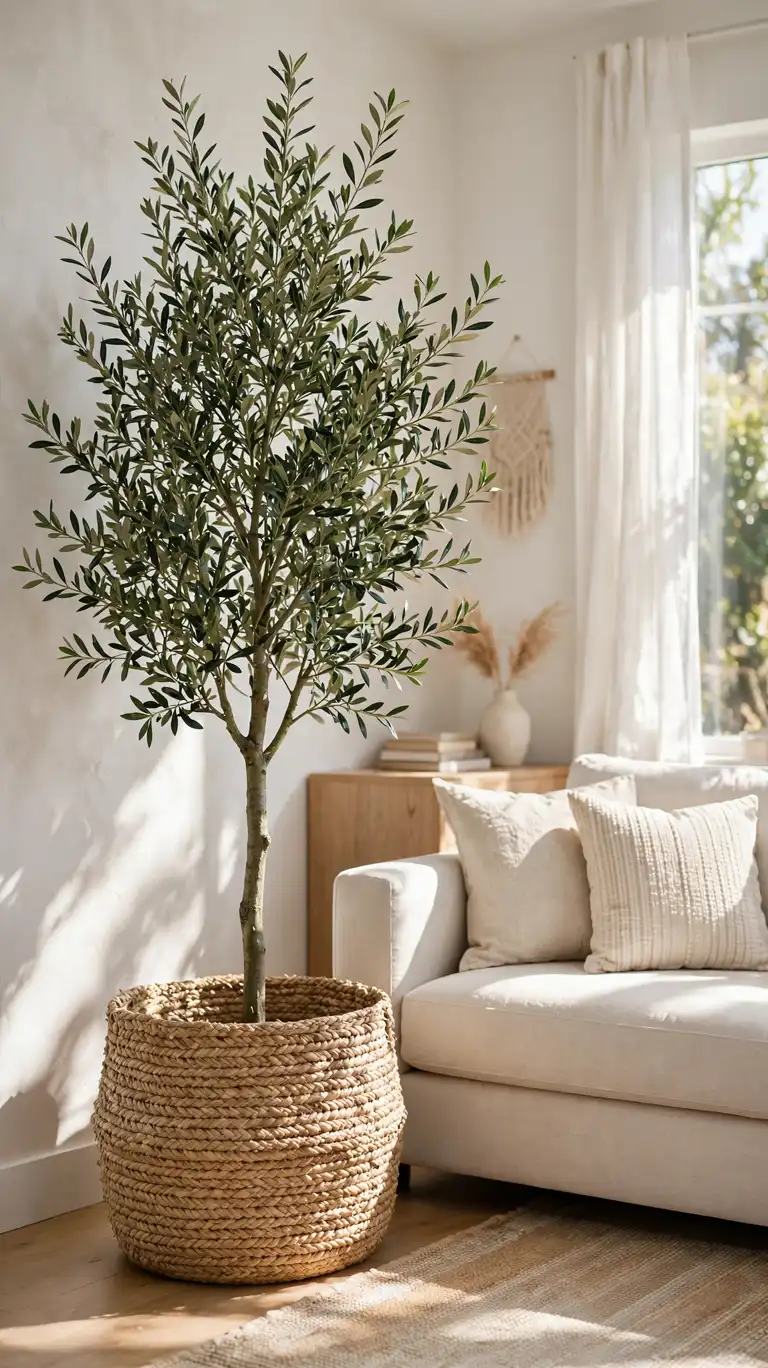
A large plant in a woven basket makes a warm, textured statement on the floor. Choose a tall plant like an olive tree, a bird of paradise, or a large dracaena, and set the nursery pot inside a big seagrass basket. The basket hides the plain plastic pot and adds natural texture that ceramic cannot match. Place it in a living room corner or beside a sofa where it can be admired. The mix of green leaves and woven fiber looks relaxed and expensive at the same time.
Put a waterproof saucer or plastic liner inside the basket to protect it from water damage. Water the plant in the sink or shower when possible, then return it to the basket once it drains. Check the basket yearly for wear, and replace it if the weave loosens. Baskets with handles are easier to move for cleaning. This floor plant anchors a seating area the way a floor lamp does, but softer and more alive. It is an instant upgrade for any empty corner.
12. Ladder Plant Shelf
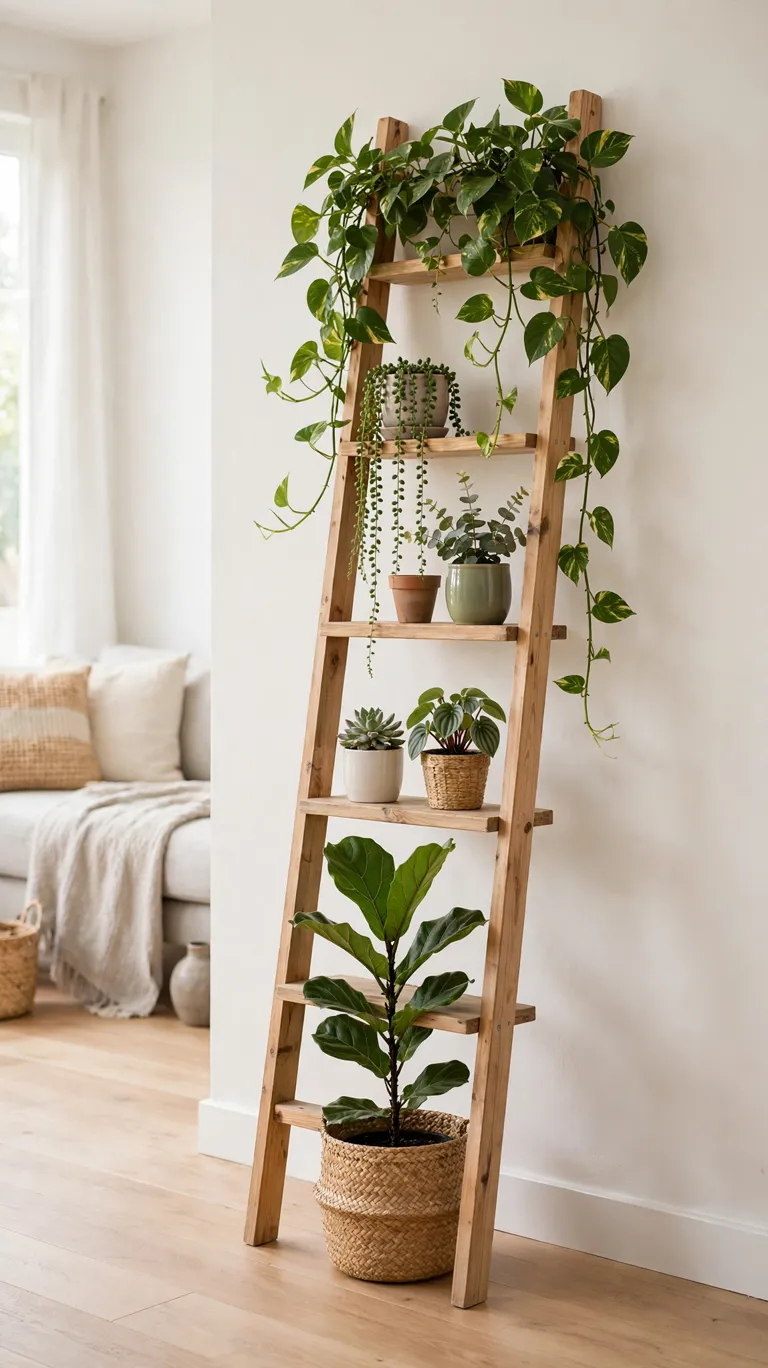
A wooden ladder shelf displays a whole collection of plants in a small footprint. Lean a ladder style shelf against a bright wall and fill each rung with potted plants. Put tall plants on the bottom, medium ones in the middle, and small trailers on top so vines spill down. The ladder shape looks charming and casual, like a little plant shop in your home. It holds many plants without needing much floor space.
Make sure the ladder sits steady and cannot tip, especially with kids or pets around. Anchor it to the wall if it feels wobbly. Water plants over a tray or take them to the sink, since drips will mark the wood rungs. Group plants with similar light and water needs on the same shelf to make care simple. Rotate the whole ladder’s plants monthly so each one gets its turn in the best light. This display turns plant care into a fun daily ritual instead of a chore.
13. Glass Terrarium Table
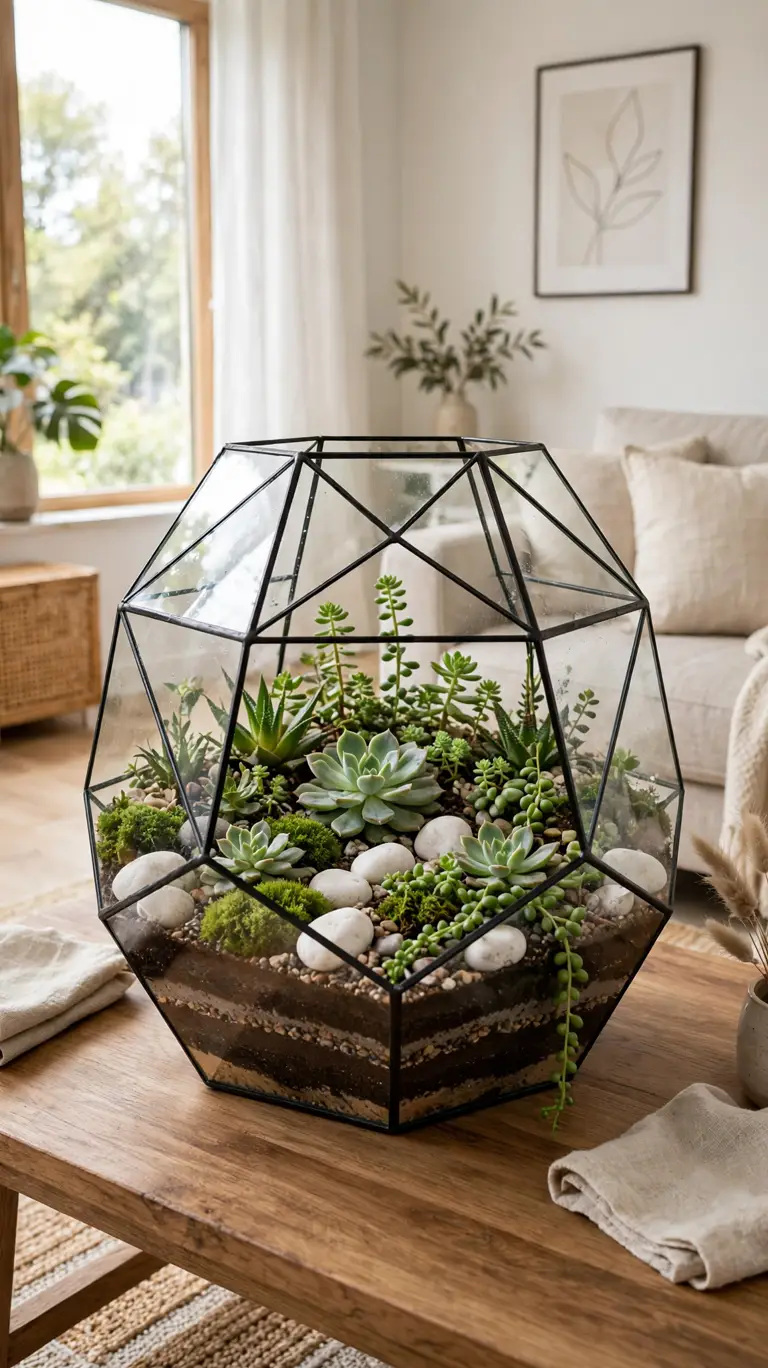
A glass terrarium on a coffee table or side table is like a tiny world under glass. Fill a large glass bowl or geometric terrarium with small succulents, moss, and a few smooth stones. The clear walls show off the layers of soil and roots, which looks fascinating up close. Set it where guests will see it, since everyone loves peering into a terrarium. It needs almost no care, which makes it perfect for busy tables.
Use cactus soil for good drainage, and add a layer of small pebbles at the bottom. Water succulents sparingly, just a spoonful every two weeks, since glass holds moisture. Keep the terrarium in bright indirect light, but not hot direct sun, which can cook the plants inside glass. Wipe the glass clean monthly so it stays crystal clear. If a plant outgrows the space, move it to a pot and replace it with a smaller one. This little ecosystem is decor and hobby in one.
14. Macrame Hanging Planters
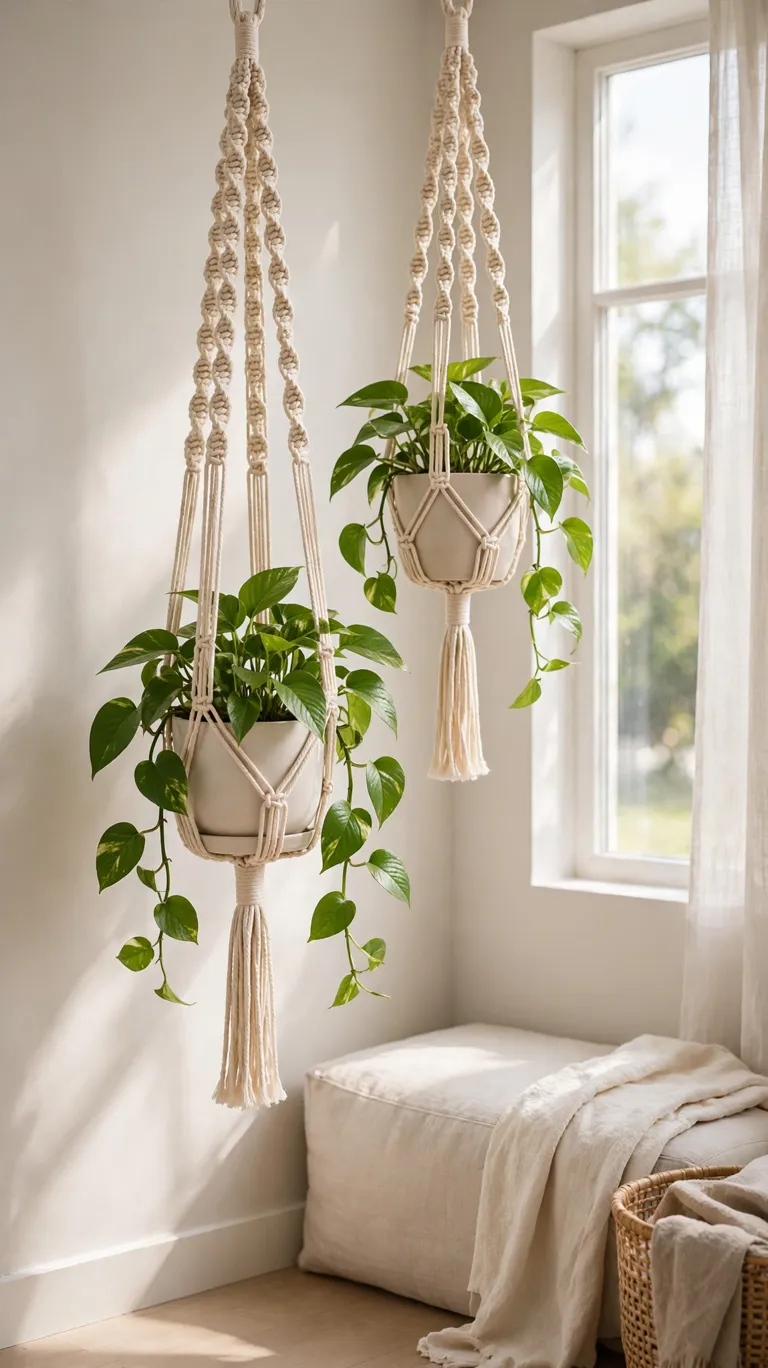
Macrame plant hangers bring soft, handmade texture to your plant display. These knotted cotton hangers hold small to medium pots and hang from ceiling hooks or wall brackets. The creamy rope looks beautiful against green leaves, and the handmade feel warms up modern rooms. Hang two or three at different lengths near a bright window for a pretty grouped look. They turn plain pots into decor worth noticing.
Check that your ceiling hook is screwed into a joist or uses a strong anchor, since a watered plant gets heavy. Choose hangers sized for your pots so the plant sits secure and level. Water carefully, since drips fall straight down, and use pots with attached saucers. Cotton macrame can be washed gently if it gets dusty. If you craft, making your own hanger is a fun weekend project with cheap cord. These hangers make even a basic pothos look styled and special.
15. Desk Succulent Trio

Three small succulents on your desk make work feel calmer. Choose a mix of shapes, like a round echeveria, a spiky haworthia, and a trailing string of pearls, in tiny pots about three inches wide. Line them along the back of your desk or cluster them on a small tray. They need almost no attention, which is perfect for a workspace where plants are often forgotten. The little green shapes give your eyes a rest from the screen.
Succulents need bright light, so keep them near a window or under a desk lamp during the day. Water only when the soil is completely dry, which might be every two or three weeks. Too much water rots them fast, so err on the dry side. Use pots with drainage holes and sandy cactus soil. If a succulent stretches tall and pale, it needs more light, so move it closer to the window. This trio is the lowest maintenance greenery you can own.
16. Entryway Plant Bench
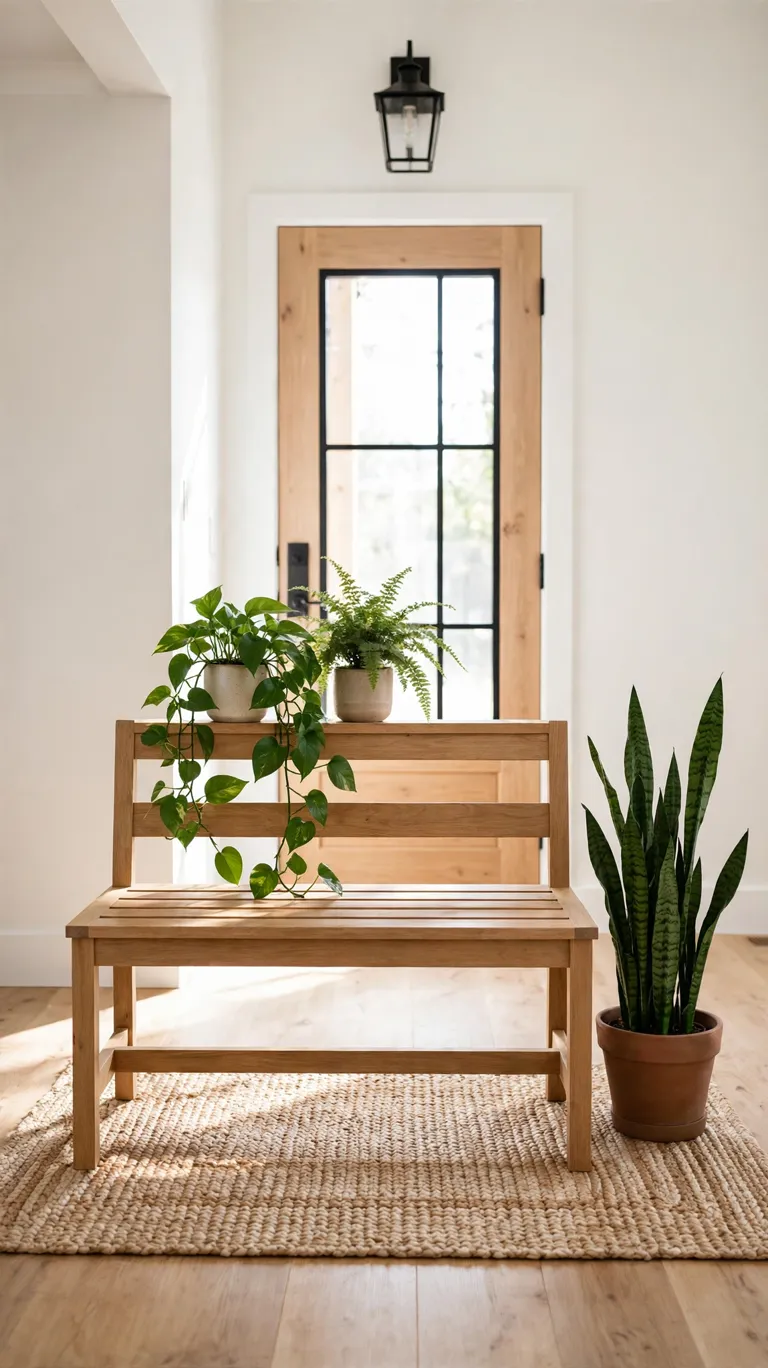
A bench with plants in your entryway greets everyone with green warmth. Place a simple wooden bench near the front door, and style it with two or three potted plants of different heights. Add a tall snake plant on the floor beside the bench and smaller pots on top. The plants soften the hard entryway and make coming home feel good. It is the first thing guests see, and it sets a fresh, cared for tone for the whole house.
Entryways often have low light, so choose tough plants like snake plants, ZZ plants, or pothos. Water lightly since these spots are easy to forget. Keep the bench clear enough to actually sit and put on shoes, since function comes first. A small tray under the pots protects the wood bench from water rings. Wipe leaves when you clean the entryway floor. This green welcome costs little but makes your home feel loved from the very first step inside.
17. Stairway Plant Ledge
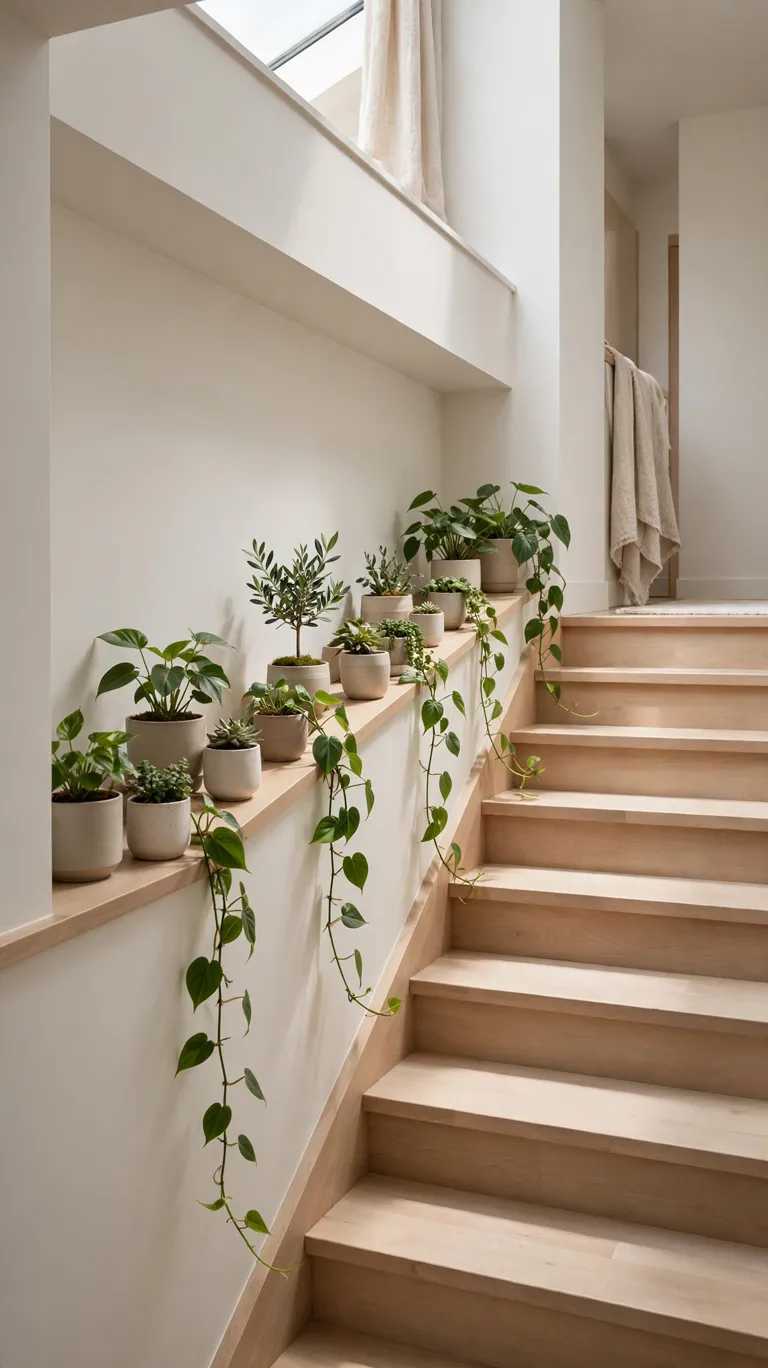
The ledge along a staircase is a forgotten spot that plants can make beautiful. If your stairs have a wide ledge or a landing with space, place a row of small to medium potted plants along it. Trailing plants look especially good here, since vines can drape down the stairwell. The green line draws the eye up and turns a plain passage into a feature. It is a lovely surprise in a part of the house nobody thinks to decorate.
Make sure pots sit steady and cannot be knocked off by passing feet or wagging tails. Use heavy ceramic pots for stability, and keep vines trimmed so they do not become a tripping hazard. Water carefully with a small can to avoid spills on the stairs. Choose plants that tolerate the light levels your stairwell gets, which is often medium to low. A pothos or philodendron usually thrives here. This unexpected garden makes climbing the stairs a little happier every day.
18. Dark Corner ZZ
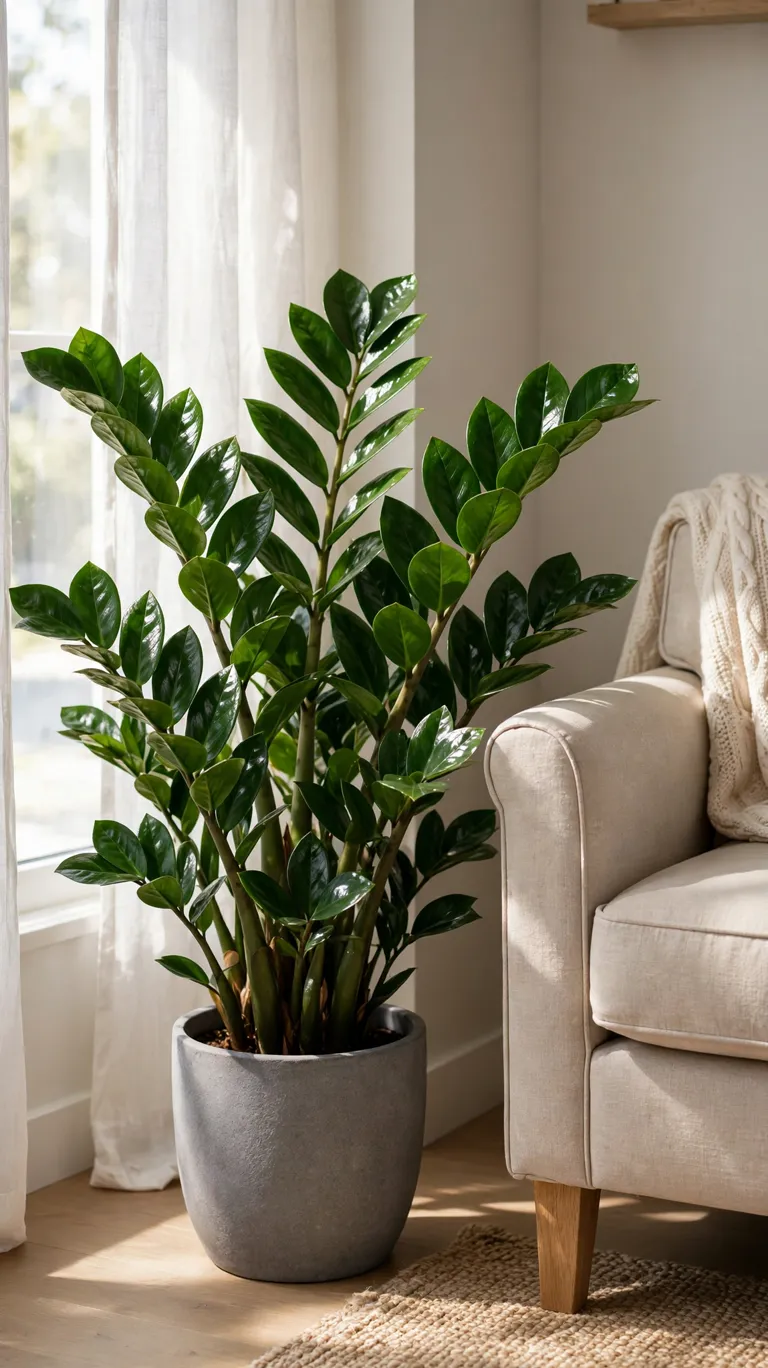
The ZZ plant is the hero of dark corners where nothing else survives. Its glossy, deep green leaves grow upright and look polished even in low light. Place a medium ZZ plant in a simple pot in that sad corner of the living room or hallway that never gets sun. It will not just survive there, it will look good doing it. The shiny leaves reflect what little light exists and brighten the spot naturally.
Water only when the soil is bone dry, since ZZ plants store water in their thick stems and roots. In a dark corner, that might mean watering once a month or less. Overwatering is the only real danger, so always let it dry out fully. Dust the glossy leaves occasionally to keep them shiny. It grows slowly, so buy the size you want rather than waiting. If every plant you have tried in that corner has died, the ZZ plant is your answer. It asks for almost nothing and gives a lot.
19. Peace Lily Table
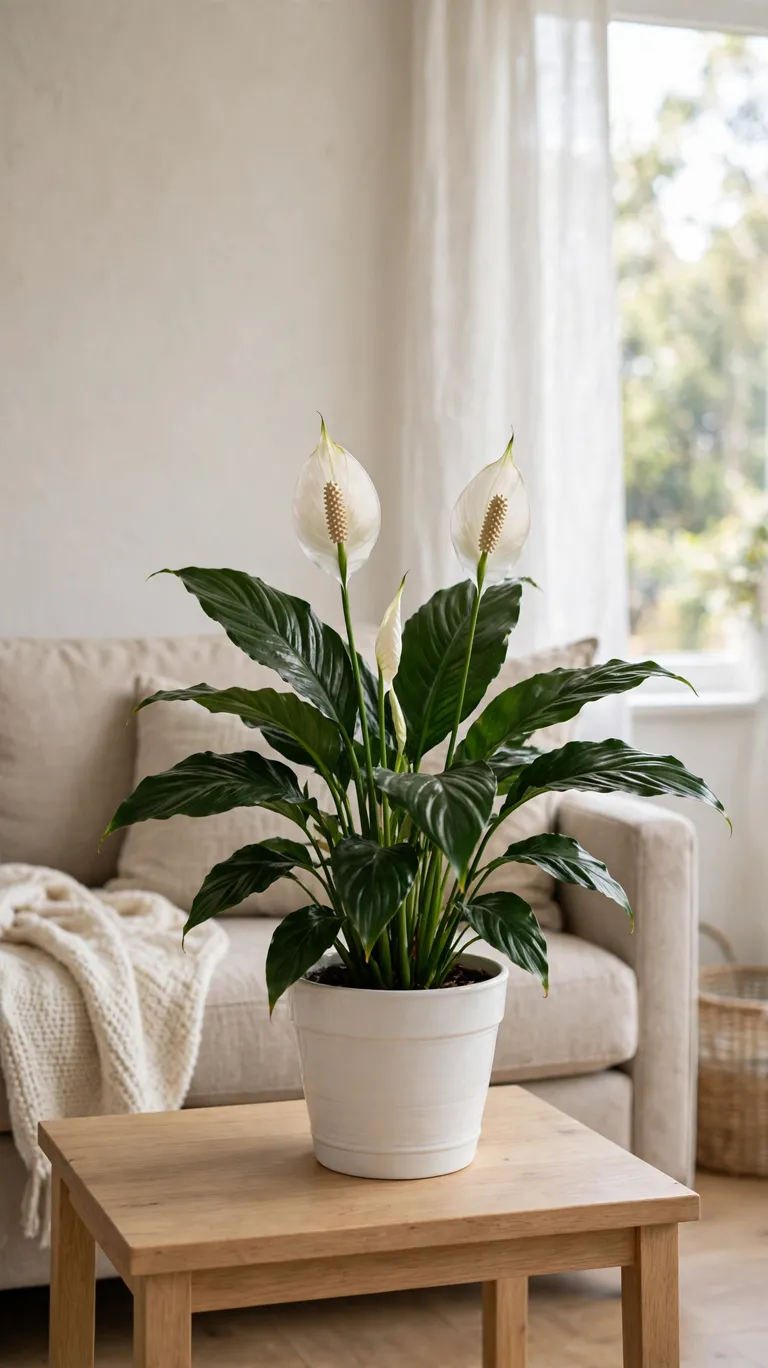
A peace lily on a side table adds elegant white blooms to your greenery. The dark green leaves and white sail shaped flowers look graceful in living rooms and bedrooms. Place it on a side table or plant stand where it gets bright indirect light. The flowers appear for weeks at a time, giving you blooms without the fuss of flowering plants that need constant care. It is one of the few houseplants that flowers reliably indoors.
Keep the soil evenly moist but not soggy, and the plant will tell you when it is thirsty by drooping slightly. It perks back up within hours of watering, which makes it great for beginners who need clear signals. Wipe the big leaves clean monthly. Peace lilies like humidity, so mist them or group them with other plants. Note that the leaves are toxic if chewed, so keep it away from pets and small children. Few plants give this much beauty for this little effort.
20. Clustered Plant Group
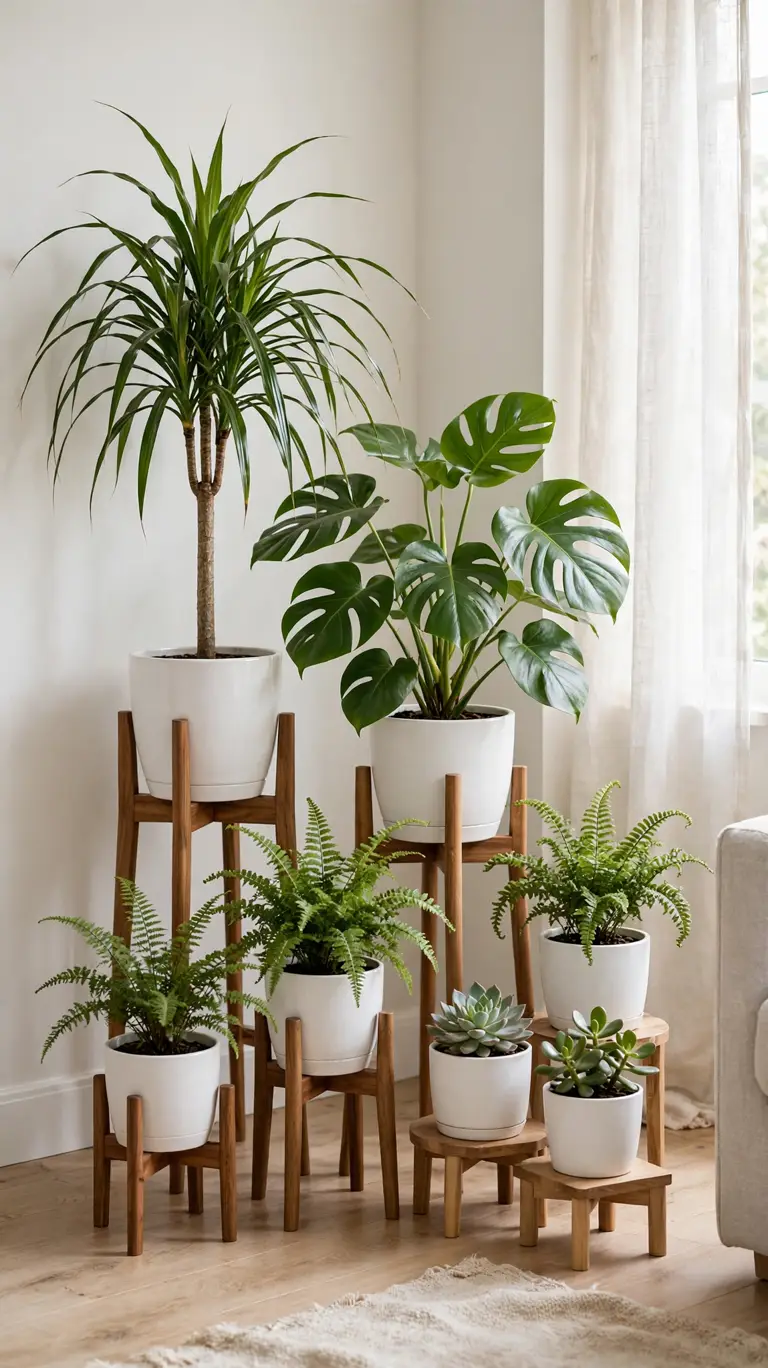
A cluster of plants at different heights looks lush and intentional. Gather five to seven plants in varied sizes, from a tall floor plant to tiny succulents, and group them in one corner or along a wall. Use pots in the same color family, like all white or all terracotta, so the group feels united. Vary the heights with plant stands, stacked books, or small stools under some pots. The result looks like a tiny indoor jungle that took real styling skill, but it is just grouping.
Odd numbers of plants look best, so aim for five or seven rather than six. Mix leaf shapes, pairing broad leaves with feathery ferns and spiky succulents for contrast. Water each plant according to its own needs, which is easier when you check them as a group each week. Turn the whole cluster’s pots regularly for even growth. This is the fastest way to make a big impact with plants you may already own. Just pull them together and watch the corner come alive.
21. Wall Pocket Planters
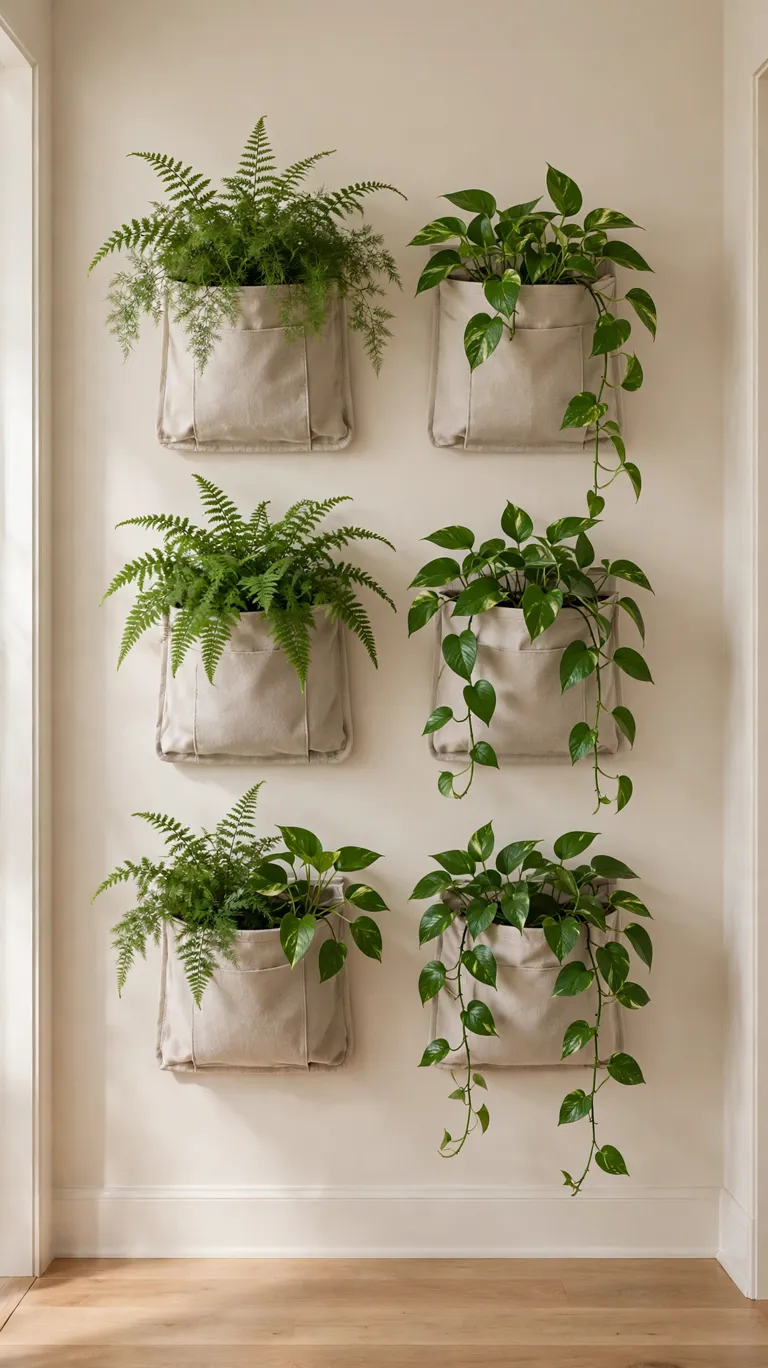
Wall mounted pocket planters turn a plain wall into living art. These fabric or ceramic pockets hang on the wall and hold small plants like ferns, pothos, and philodendrons. Mount a set of three to six pockets in a grid or a scattered pattern on a living room or hallway wall. The plants grow out of the wall like a vertical garden, which looks stunning and saves all your floor and shelf space.
Line fabric pockets with plastic to protect the wall from moisture, and water slowly so nothing drips. Choose plants that stay small and do not need frequent repotting. Check the wall mounts are secure, since watered plants are heavier than they look. Mist the plants regularly, since wall planters dry out faster than pots. This living wall becomes a conversation piece that guests always notice. It is perfect for plant lovers who have run out of surfaces.
22. Tiered Plant Stands
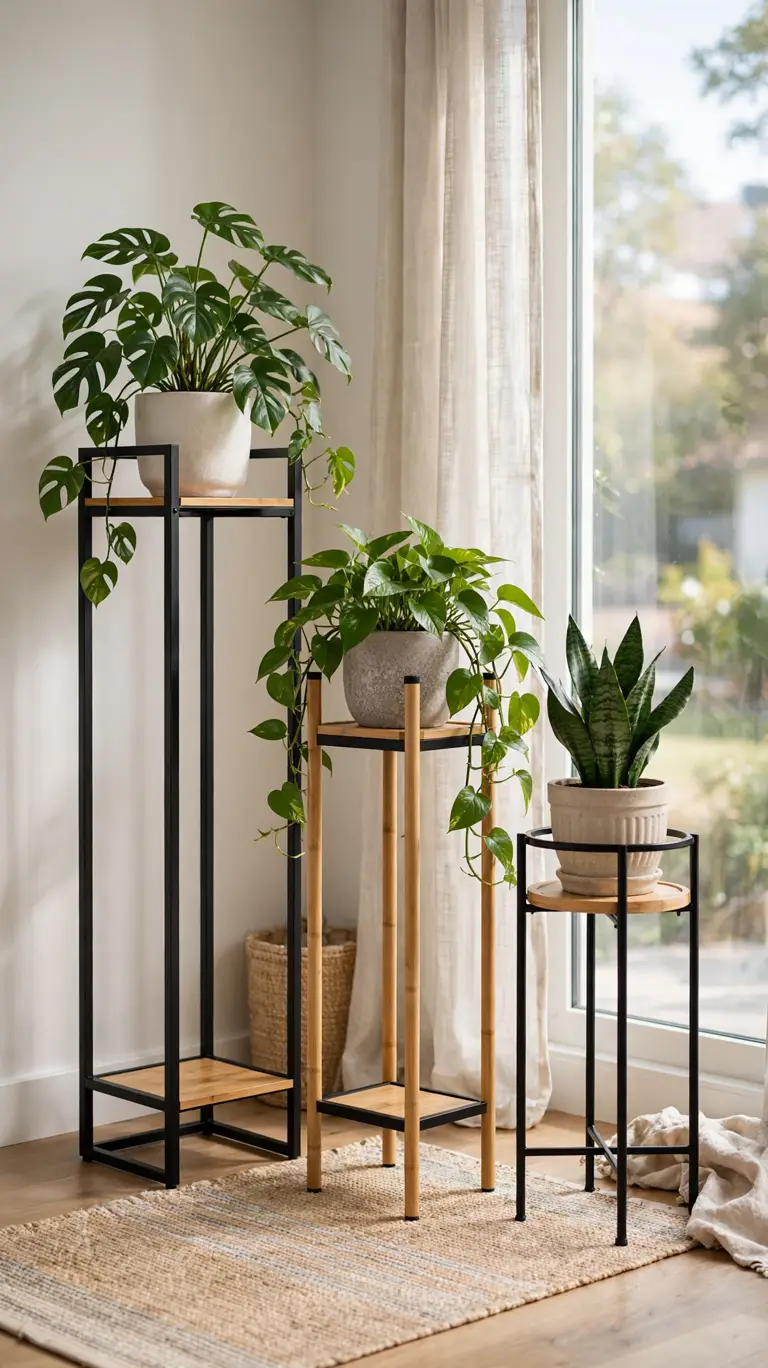
Plant stands at different heights create a beautiful layered display. Buy or make two or three simple stands, one tall, one medium, and one short, and place a potted plant on each. Group them together in a bright corner so the greens cascade at different levels. The varying heights look much more interesting than plants all sitting on the floor. Bamboo, metal, or wooden stands all work, as long as the style matches your room.
Make sure each stand is sturdy and rated for the pot’s weight, especially the tall ones. Put the heaviest plant on the lowest stand for stability. Water plants on their stands with a saucer underneath to catch drips. Rotate the stands occasionally so each plant gets good light. This tiered look works beautifully beside a window or a reading chair. It turns three ordinary plants into a styled arrangement that looks like it came from a home magazine.
23. Potted Citrus Tree
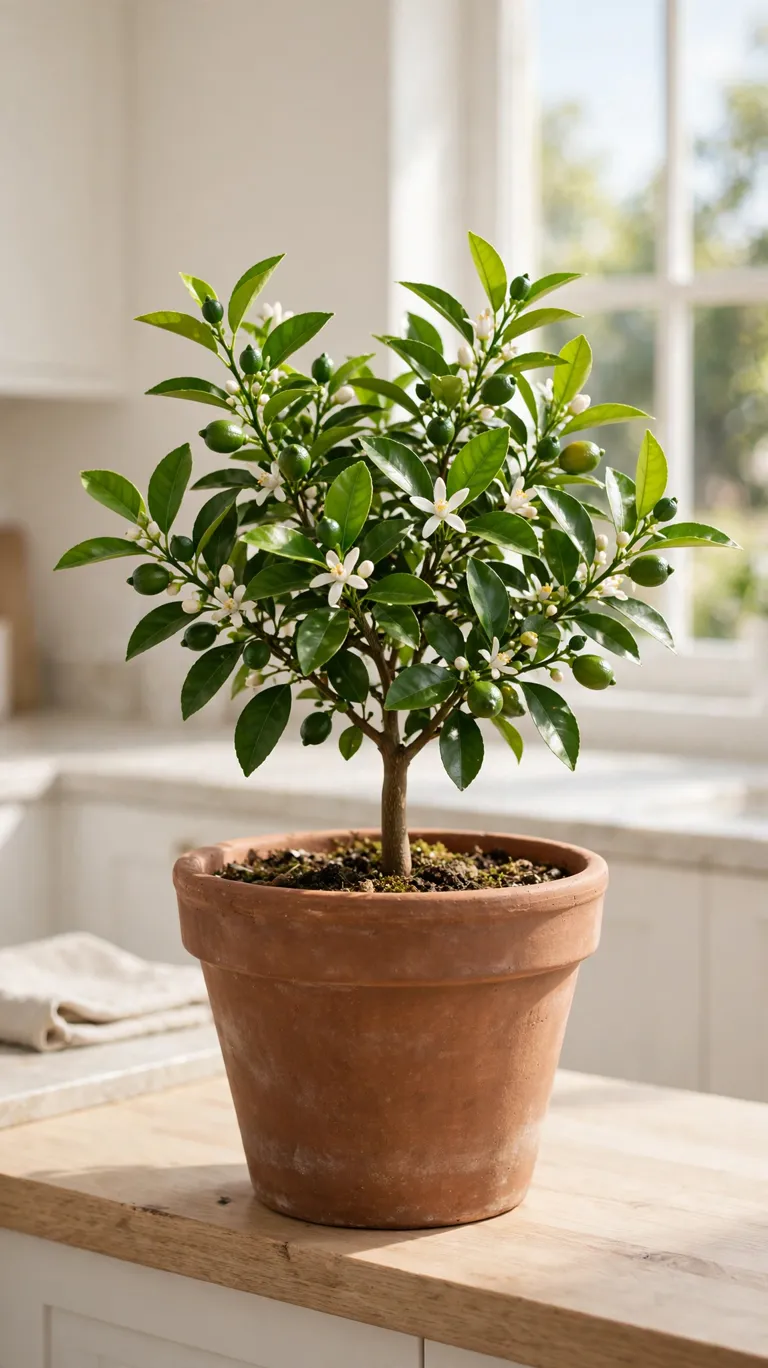
A small citrus tree indoors feels like a little bit of sunshine. Dwarf lemon or calamondin trees grow well in bright indoor spots and even produce real fruit. Plant one in a large terracotta pot, about twelve inches wide, and place it in your sunniest window. The glossy leaves smell wonderful when brushed, and tiny white blossoms fill the room with scent in spring. Watching actual lemons grow on your windowsill never gets old.
Citrus trees need as much light as you can give them, ideally six hours of bright sun daily. A south facing window is best, or add a grow light in winter. Water when the top inch of soil dries, and feed monthly in the growing season. They dislike cold drafts, so keep them away from doors that open often. If leaves drop, check light and water first, since those are the usual causes. A fruiting tree is the most rewarding indoor plant you can grow.
24. Shower Shelf Ferns
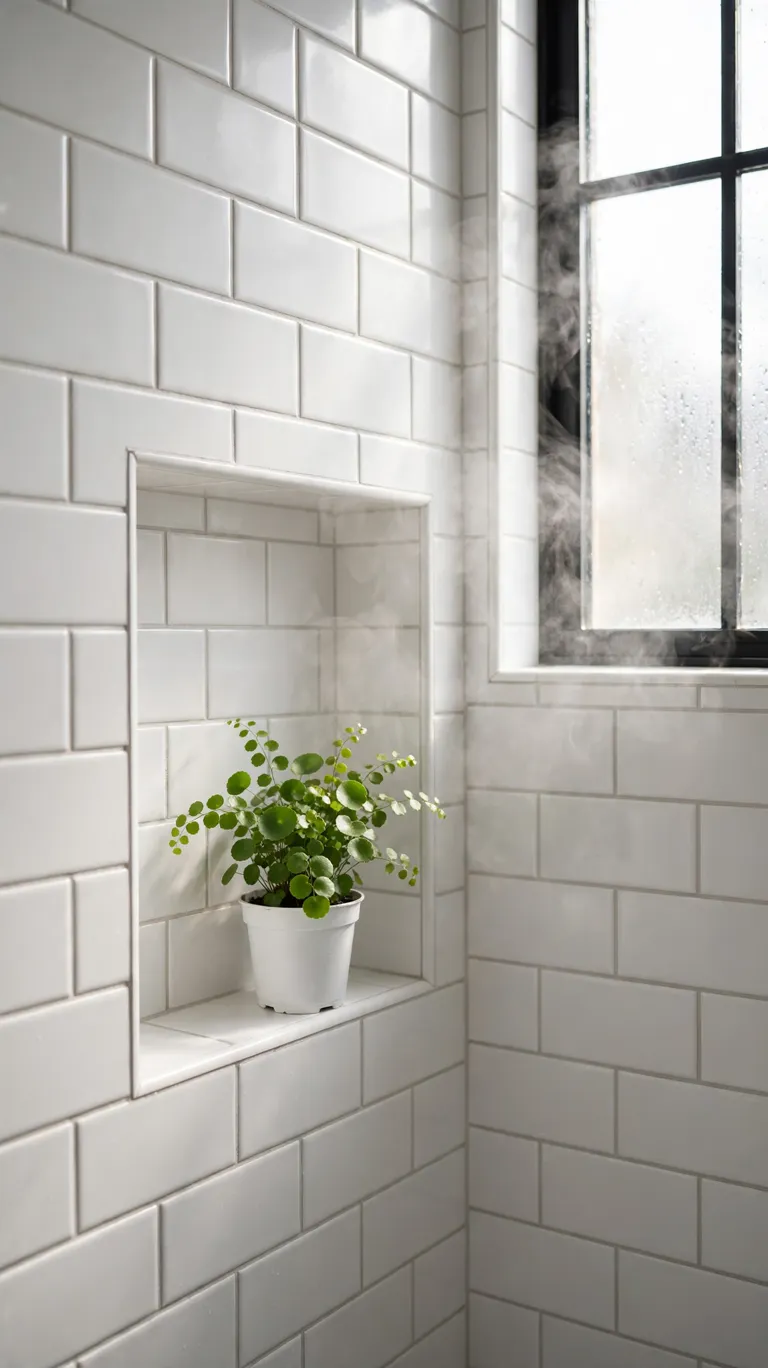
Small ferns on a shower shelf thrive in the steamy air. If your shower has a built in shelf or you add a hanging caddy, place a small fern in a plastic pot there. The daily steam keeps it humid and happy with no extra work from you. The green fronds look gorgeous against white tile, turning an ordinary shower into a little jungle. It is an unexpected touch that makes the bathroom feel special.
Choose a fern variety that stays small, like a button fern or a small Boston fern. Use a plastic pot that will not rust or stain, and make sure it drains so roots do not sit in water. Keep it out of the direct stream of the showerhead, since pounding water damages fronds. Trim any brown edges to keep it neat. If the fern outgrows the shelf, move it to the bathroom counter and start a new small one. This is the lowest effort plant spot in the whole house.
25. Palm Corner Statement
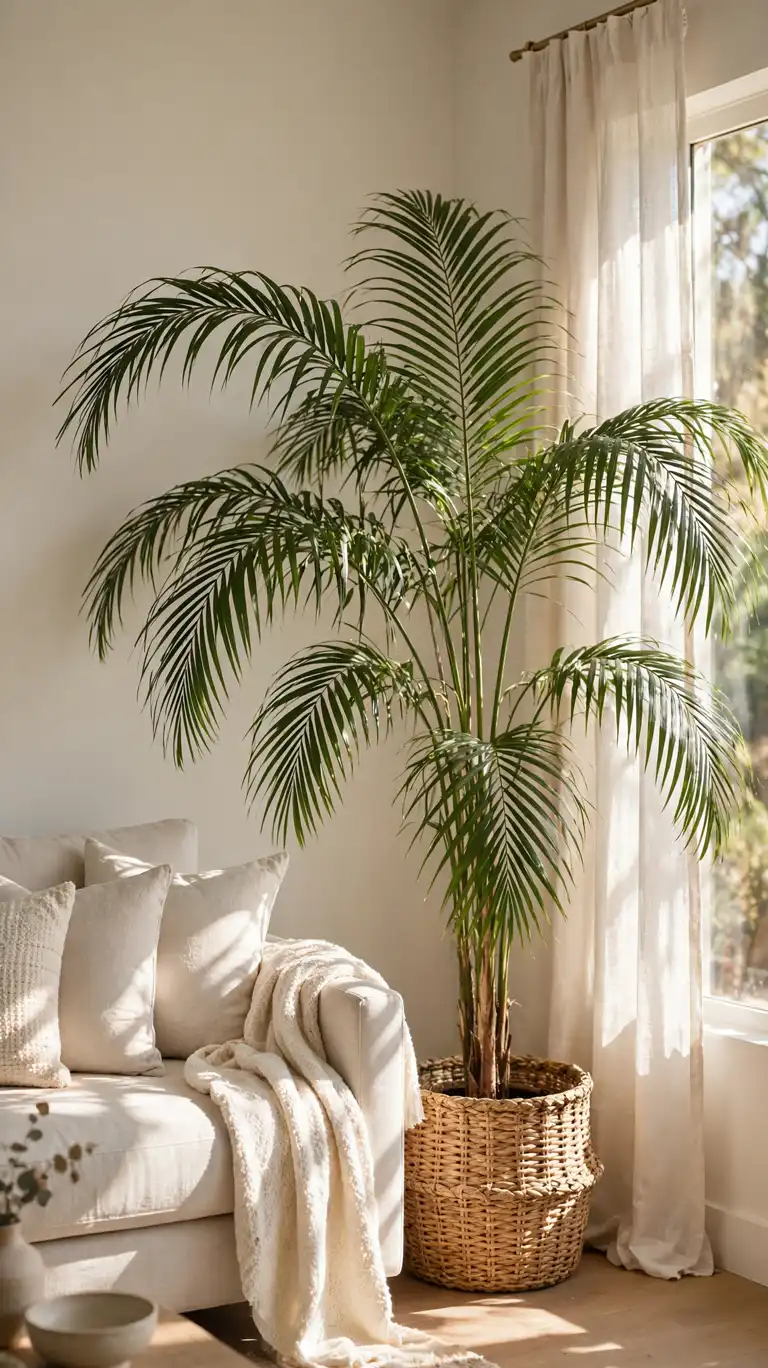
A tall palm in the corner brings vacation vibes to your living room. Parlor palms and kentia palms have soft, arching fronds that look graceful and tropical. Choose a plant about four feet tall in a simple woven basket or ceramic pot, and place it in a bright corner with indirect light. The palm fills vertical space beautifully and makes the whole room feel relaxed, like a calm resort. It is a big impact plant with a gentle personality.
Palms like consistent moisture, so water when the top inch of soil feels dry, but never let the pot sit in water. They appreciate humidity, so mist the fronds or run a small humidifier nearby in dry winters. Keep them away from heating vents that dry the air. Trim only fully brown fronds, and never cut green ones. A healthy palm grows slowly and steadily for years. This one plant can carry a whole corner, making it perfect for minimalists who want maximum effect.
Which indoor plants are best for beginners?
Start with pothos, snake plants, ZZ plants, and spider plants. These four survive low light, missed waterings, and beginner mistakes without drama. They are cheap, easy to find, and grow well in normal home conditions. Once you keep one alive for six months, you will have the confidence to try fussier plants like fiddle leaf figs or monsteras.
How much light do indoor plants really need?
Most houseplants want bright indirect light, which means near a window but out of harsh direct sun. A spot a few feet from a south or east facing window is ideal. Low light plants like snake plants and ZZ plants handle darker corners. If your plant stretches tall and pale or drops leaves, it probably needs more light, so move it closer to a window gradually.
How often should I water my indoor plants?
There is no single schedule, since it depends on the plant, pot size, and season. The best rule is to check the soil with your finger. If the top inch or two feels dry, water thoroughly until it drains from the bottom. Most houseplants die from too much water, not too little. When in doubt, wait a day. Plants recover from slight dryness much easier than from rot.
Are indoor plants safe around pets and kids?
Some are, some are not. Spider plants, parlor palms, and Boston ferns are safe choices. Peace lilies, pothos, and philodendrons are toxic if chewed, so keep them out of reach. Check each plant before you buy, and hang or shelve anything questionable. Many plant lovers keep a mix, with safe plants low and toxic ones high where paws and little hands cannot reach.
Why do my indoor plants keep dying?
The most common causes are overwatering, too little light, and wrong plant for the spot. Start by checking your watering habit, since soggy roots kill more plants than anything else. Next, look at the light where the plant sits. Finally, match the plant to your lifestyle. A busy person who travels should pick snake plants and ZZ plants, not ferns that need daily misting. Right plant, right spot, and most plants thrive.
Conclusion
You do not need a green thumb to fill your home with plants. You just need to start with one forgiving plant in a good spot and learn as you go. Each new leaf is a small victory. Pick your favorite idea from this list, bring home one plant this week, and enjoy watching your home come alive.