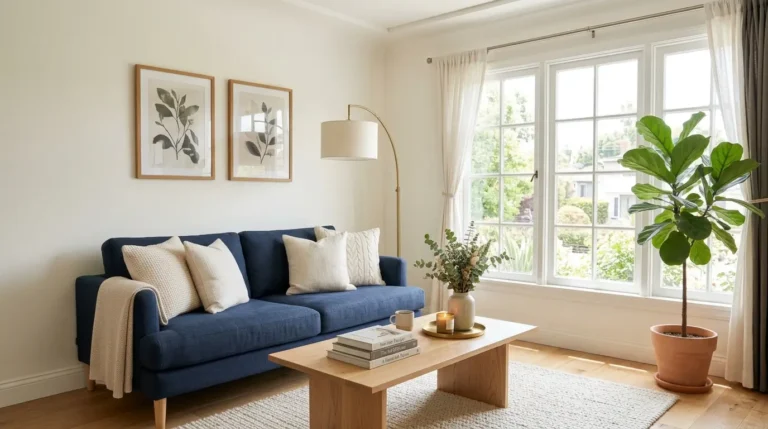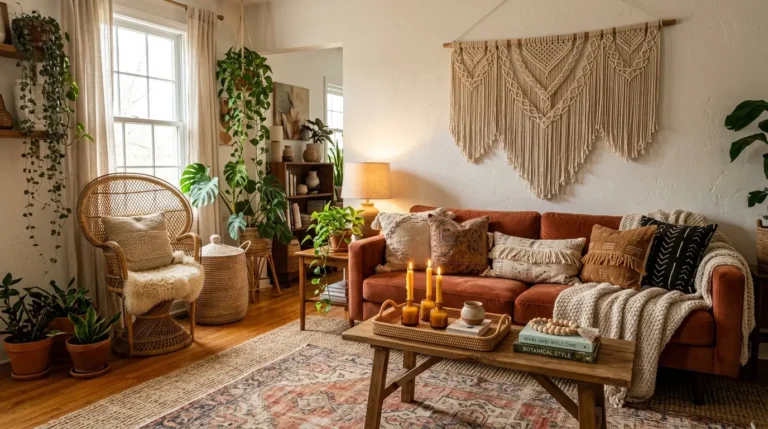
21 Living Room Ottoman Ideas for a Cozy and Stylish Space
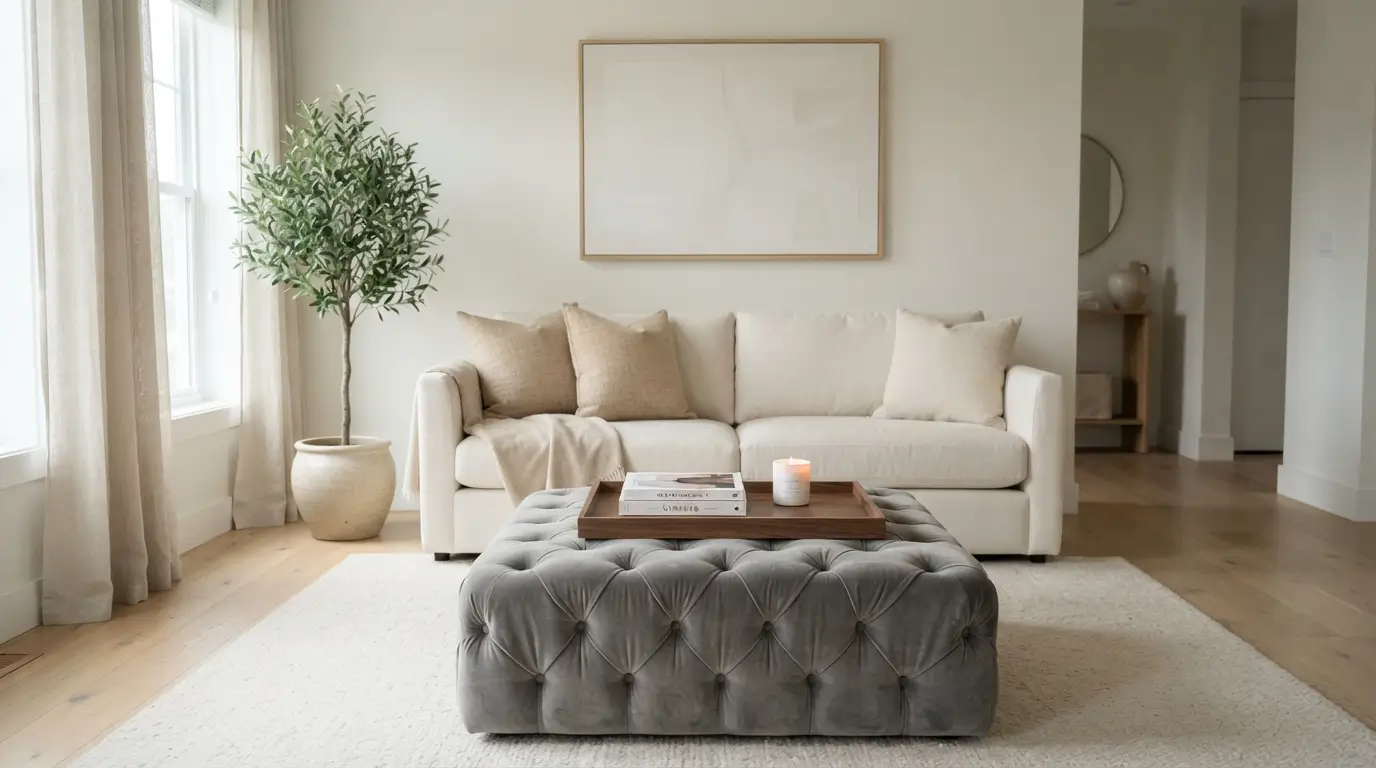
My ottoman started as a last minute purchase. I needed something to fill the empty spot between my sofa and the window, and the store had one soft grey cube left on clearance. Six years later it is the piece my family uses the most. It holds blankets, it becomes a footrest during movies, it turns into extra seating when my sister visits with her kids, and it works as a coffee table when I lay a wooden tray on top. That one small purchase taught me how much a single ottoman can do in a room. Below are twenty one ottoman ideas I have either used myself or watched work beautifully in other homes. Some are cozy, some are practical, and a few are just really pretty. Pick the one that fits how your living room actually gets used.
1. Tufted Velvet Storage Ottoman
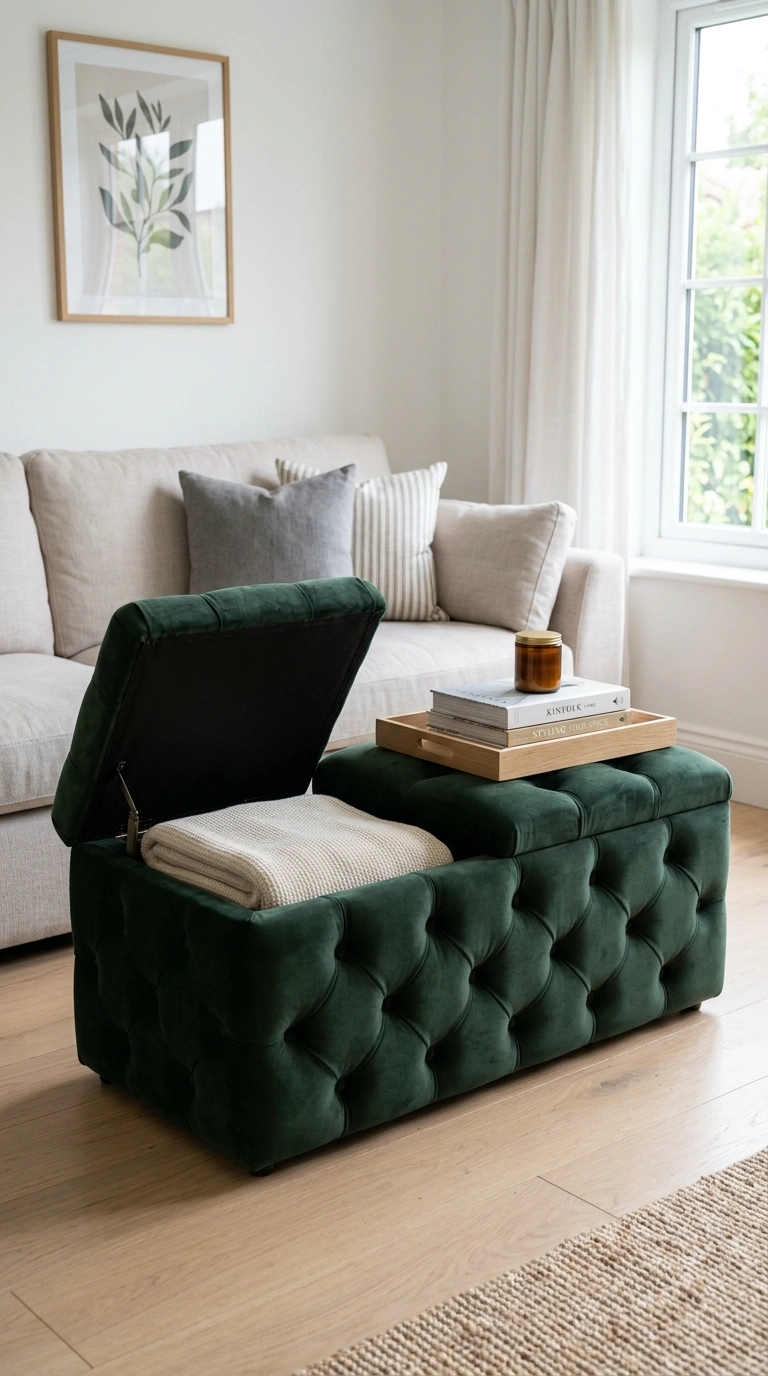
A tufted velvet ottoman with a hinged lid gives you softness and storage in the same footprint, which is why it works so well in living rooms that never have enough closed storage. Place it directly in front of the sofa where a coffee table would normally sit, leaving about eighteen inches of walking space on all sides. Choose velvet in a deep shade like forest green, dusty rose, or charcoal so the tufting catches light and shows off its texture. Inside, store the things that usually end up on your floor: throw blankets, remote controls, board games, and kids’ books. To keep the top usable, set a flat wooden or lacquer tray in the center and rest a small stack of books and a candle on it. The tray gives you a hard surface for drinks and stops the velvet from getting stained. If your sofa is neutral, let the ottoman carry the color. If your sofa is bold, pick a soft grey velvet instead so the room stays calm.
2. Round Rattan Ottoman
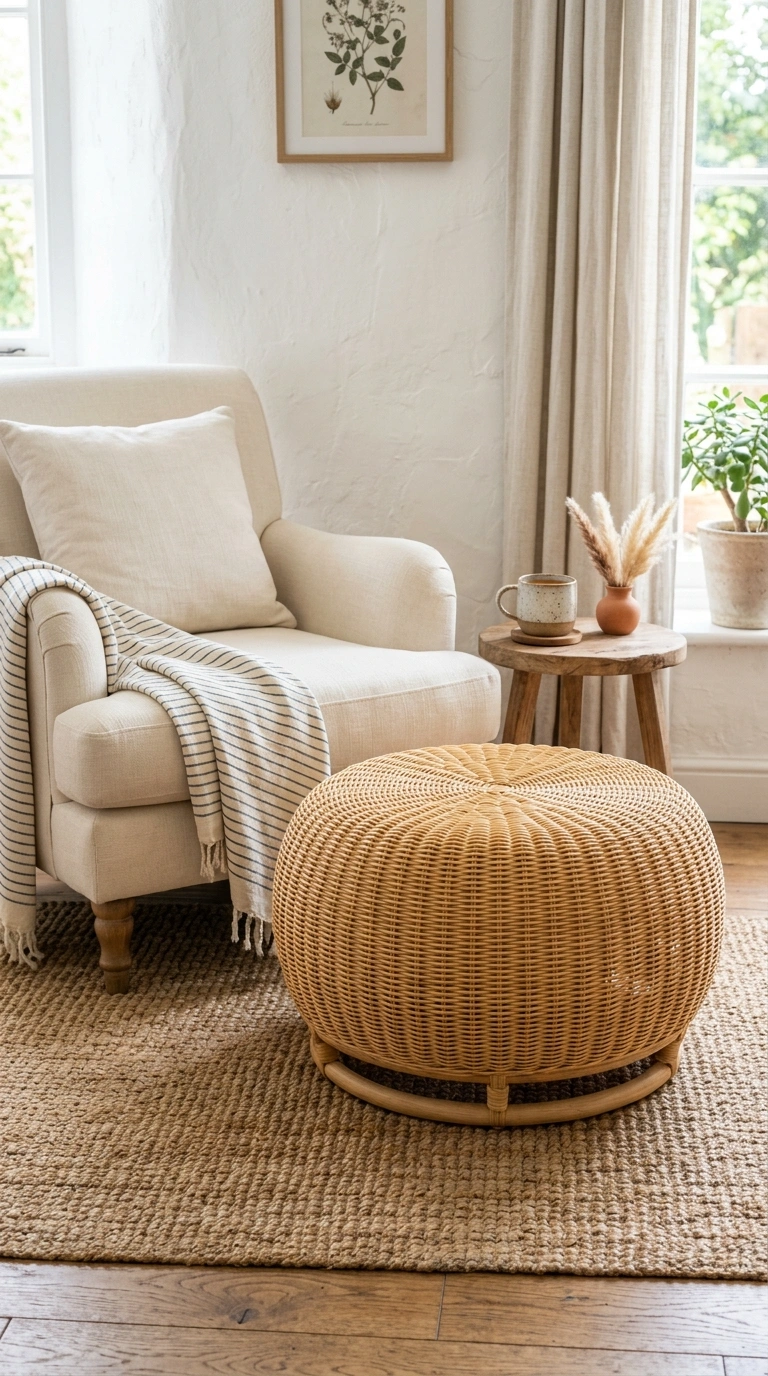
A round rattan ottoman brings warmth and softens a living room full of straight lines. Rooms with a boxy sofa, square windows, and a rectangular rug often feel a little stiff, and one round natural fiber piece fixes that instantly. Set it beside an armchair or in the gap between two seats rather than dead center, so it reads as a relaxed extra rather than a formal coffee table. Look for one with a woven top and a low wooden frame in a light honey tone, since darker rattan can look heavy in small rooms. Drape a thin cotton throw over one edge to break up the weave and add a color you already have in your cushions. Rattan can feel rough on bare feet, so keep a folded blanket or a small flat cushion on top if you plan to use it as a footrest. It is light enough to move with one hand, which makes it perfect when you rearrange for guests.
3. Leather Cube Pair
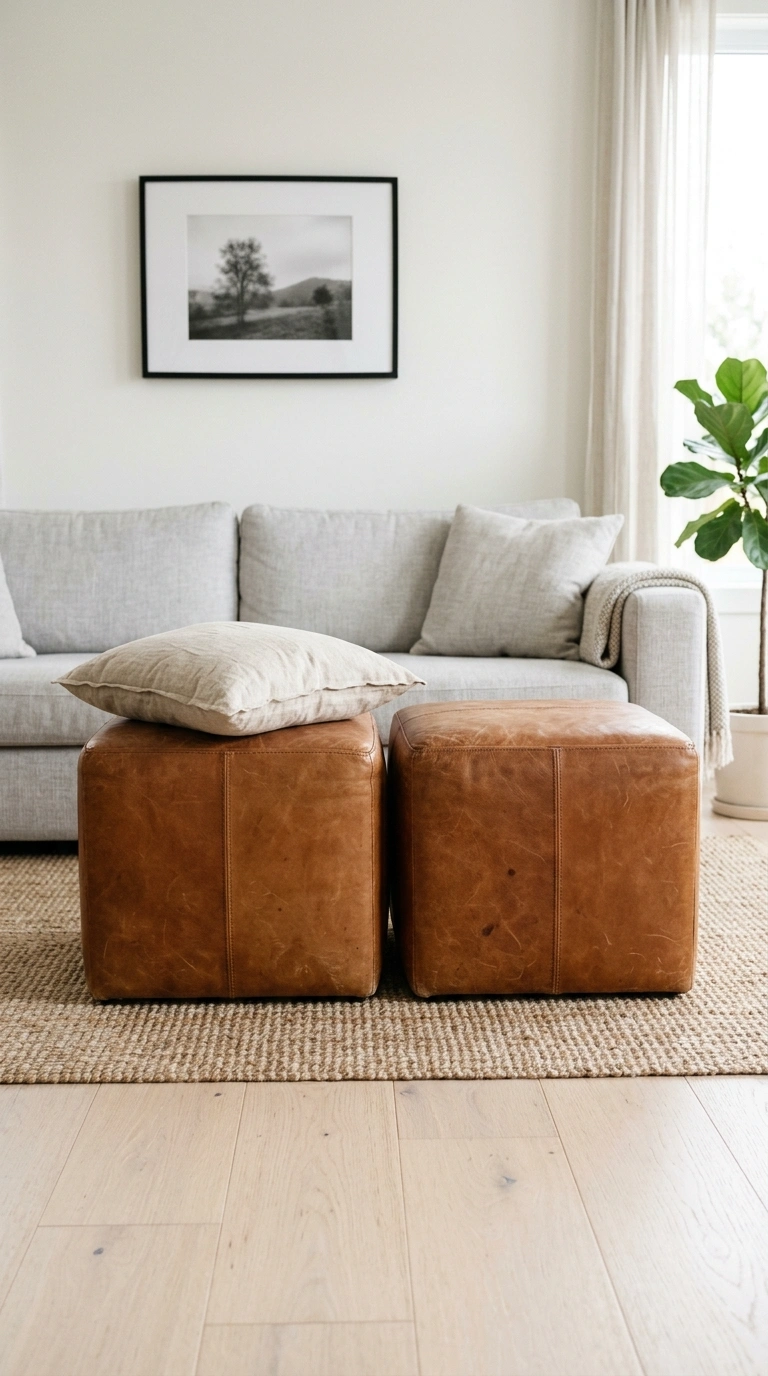
Two matching leather cube ottomans give you flexibility that one large piece never will. Slide them together under a console table or in front of the sofa when you want the look of a single long bench, then pull them apart when friends arrive and you need two seats. Tan or cognac leather works with almost every wall color and only gets better as it ages, softening into a warm patina instead of looking worn out. Cubes around sixteen to eighteen inches tall sit comfortably next to standard sofa height. Keep the styling simple, since leather already has plenty of character. A single linen cushion on one cube is enough. Wipe them down with a dry cloth weekly and condition the leather twice a year to stop cracking in dry rooms. If real leather is out of budget, good quality faux leather in a matte finish photographs almost identically and handles spills better, which matters if you have young kids or pets that climb on furniture.
4. Oversized Chaise Ottoman
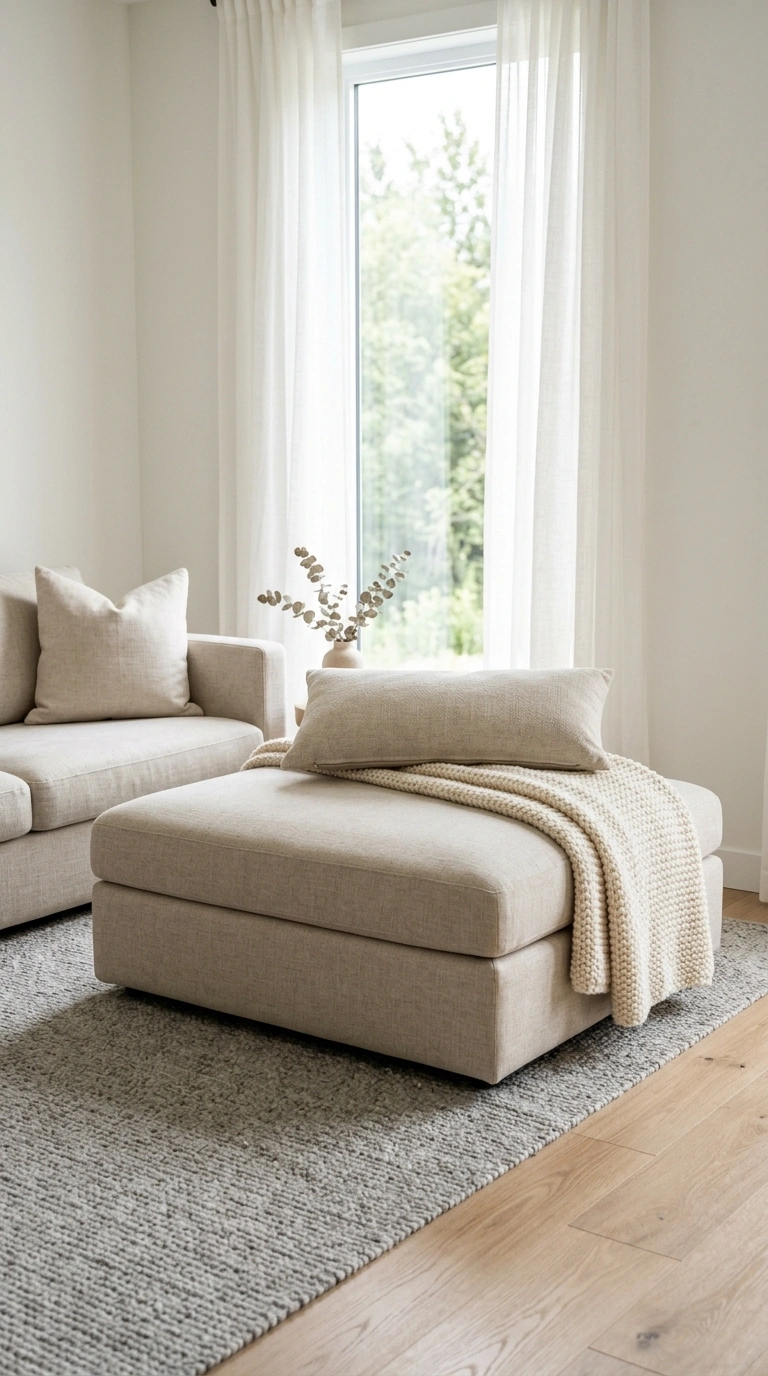
An oversized rectangular ottoman placed at the end of a sofa turns a regular seat into a lounging spot without buying a sectional. Match the height to your sofa cushions exactly, usually seventeen to nineteen inches, so your legs stretch out flat with no awkward gap or step. Push it flush against the sofa arm or the front edge depending on your layout. Upholster it in the same fabric family as your sofa rather than an exact match, since a slightly different tone looks intentional instead of like a factory set. A large ottoman can swallow a small room, so measure first and leave at least two feet of clear floor around it. Style it with one long lumbar cushion and a chunky knit throw folded in thirds along one side. In evenings this becomes the spot everyone fights over, so pick a fabric you can actually clean. Performance weave in oatmeal or greige handles daily use and still looks soft in photos.
5. Woven Jute Pouf
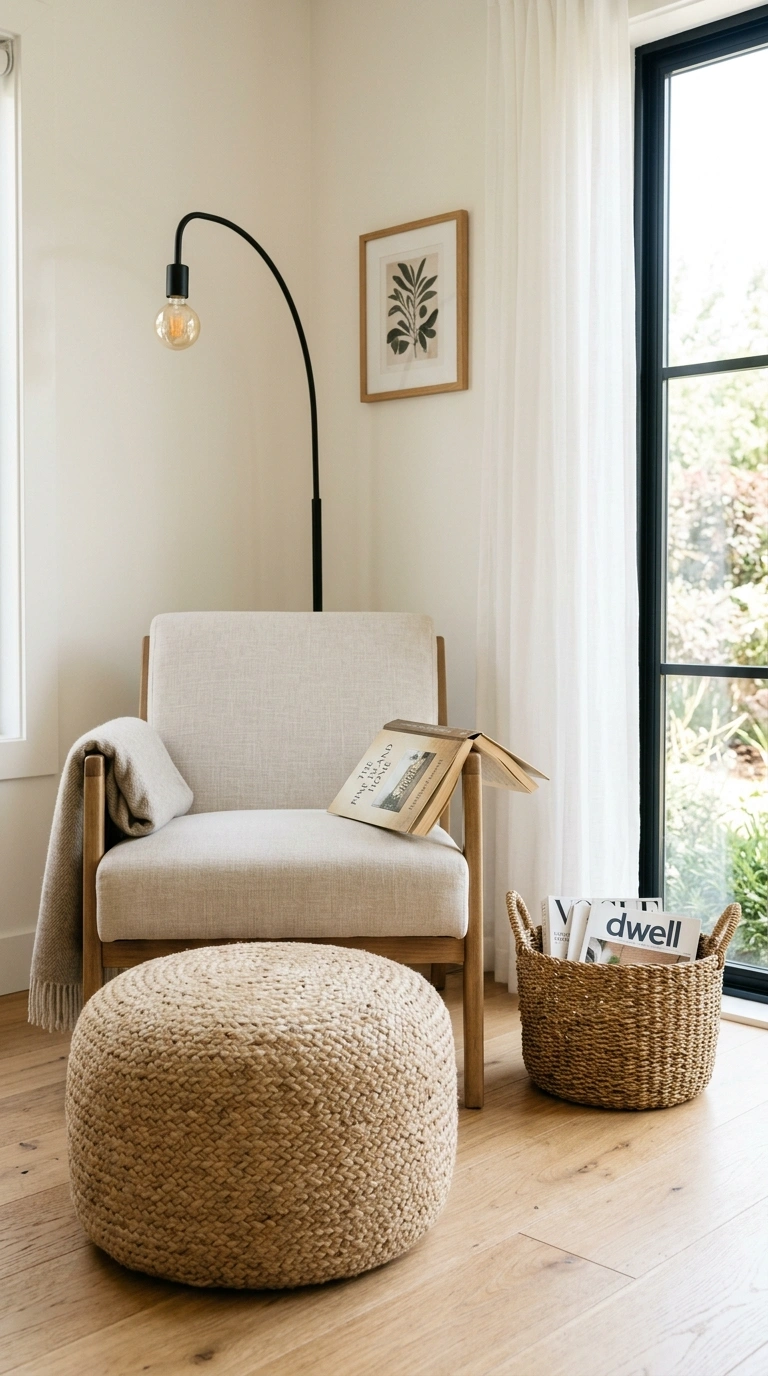
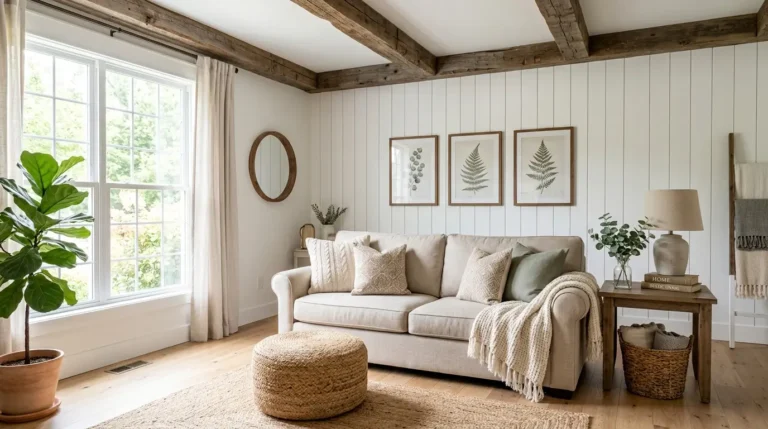
A woven jute pouf is the easiest ottoman to add because it costs little, weighs almost nothing, and fits into corners other furniture cannot. Set one next to a reading chair beside a floor lamp, or tuck two near a window where kids can sit and look outside. The natural fiber adds texture that stops a neutral room from feeling flat, especially when your sofa and rug are both plain. Jute comes in cream, oatmeal, and mixed grey tones, and the braided rope style holds its shape better over time than loosely stuffed versions. Keep it away from direct sunlight so the fibers do not fade unevenly. Shake it outside once a month and vacuum the top with a brush attachment to lift out dust. Because jute is firm, it works better as a seat or footrest than as a table. If you want to rest a cup on it, add a small round wooden tray that sits flat across the top.
6. Tray Topped Ottoman
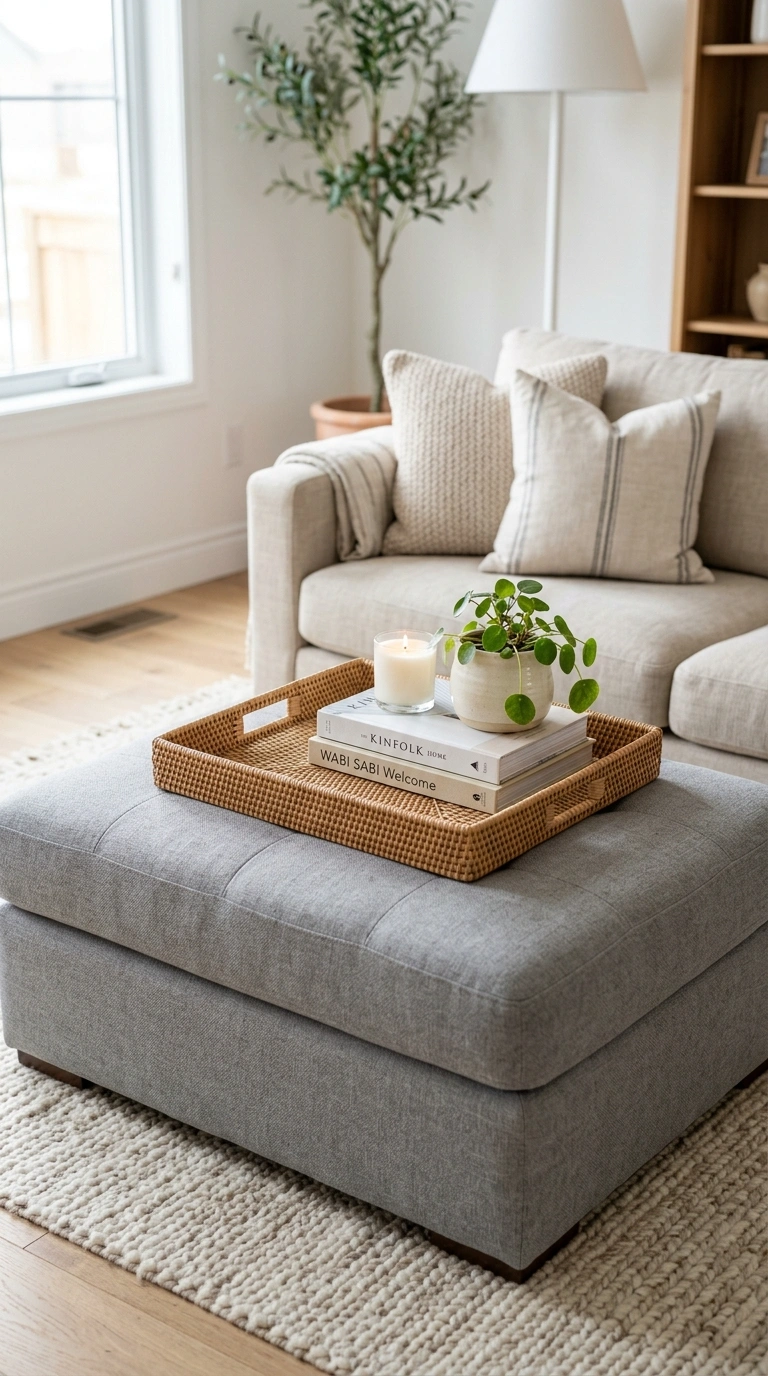
Turning an ottoman into a real coffee table is all about the tray. Pick a flat tray at least eighteen inches wide with a low lip and a solid bottom, in wood, rattan, or brushed metal depending on your room. Center it on the ottoman and build a small arrangement that leaves room for a mug or a bowl of snacks. Two hardcover books laid flat, a short candle, and a tiny plant in a ceramic pot is enough. Resist filling the whole tray, because an empty corner is what makes it usable rather than decorative. This idea rescues soft ottomans that would otherwise be impractical, since it protects fabric from rings and crumbs and gives guests a clear place to set drinks. Choose a tray with handles so you can lift the whole arrangement off in one motion when you want to put your feet up. This is a same day change if you already own a tray sitting unused in a cupboard.
7. Boucle Curved Ottoman
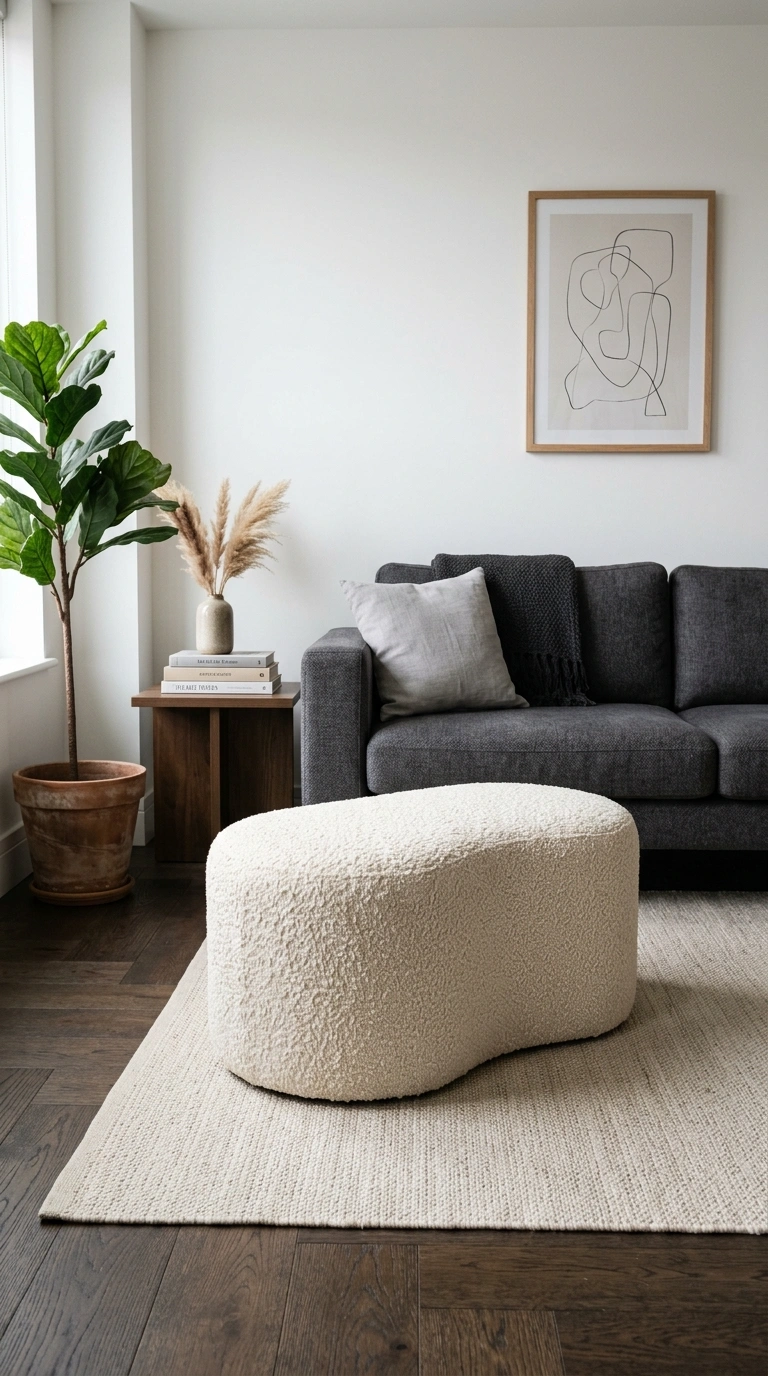
A curved boucle ottoman is the piece that makes a living room feel finished and current without any effort. The looped cream fabric catches shadow beautifully, so even a plain white room gains depth. Kidney shapes, ovals, and soft pill shapes all work, and they look best paired with something structured like a straight arm sofa or a square coffee table. Place it slightly off center in front of the sofa, or angle it near a corner chair to soften the walking path through the room. Cream boucle does show marks, so choose a version with a removable washable cover or treat it with fabric protector before it enters daily use. Keep styling almost nonexistent here. The shape is the feature, and a cushion or throw would hide it. If your floors are dark wood, the pale fabric will pop even more. For colored rooms, look for boucle in mushroom or soft caramel, which hides everyday wear far better than white.
8. Matching Armchair Footstool
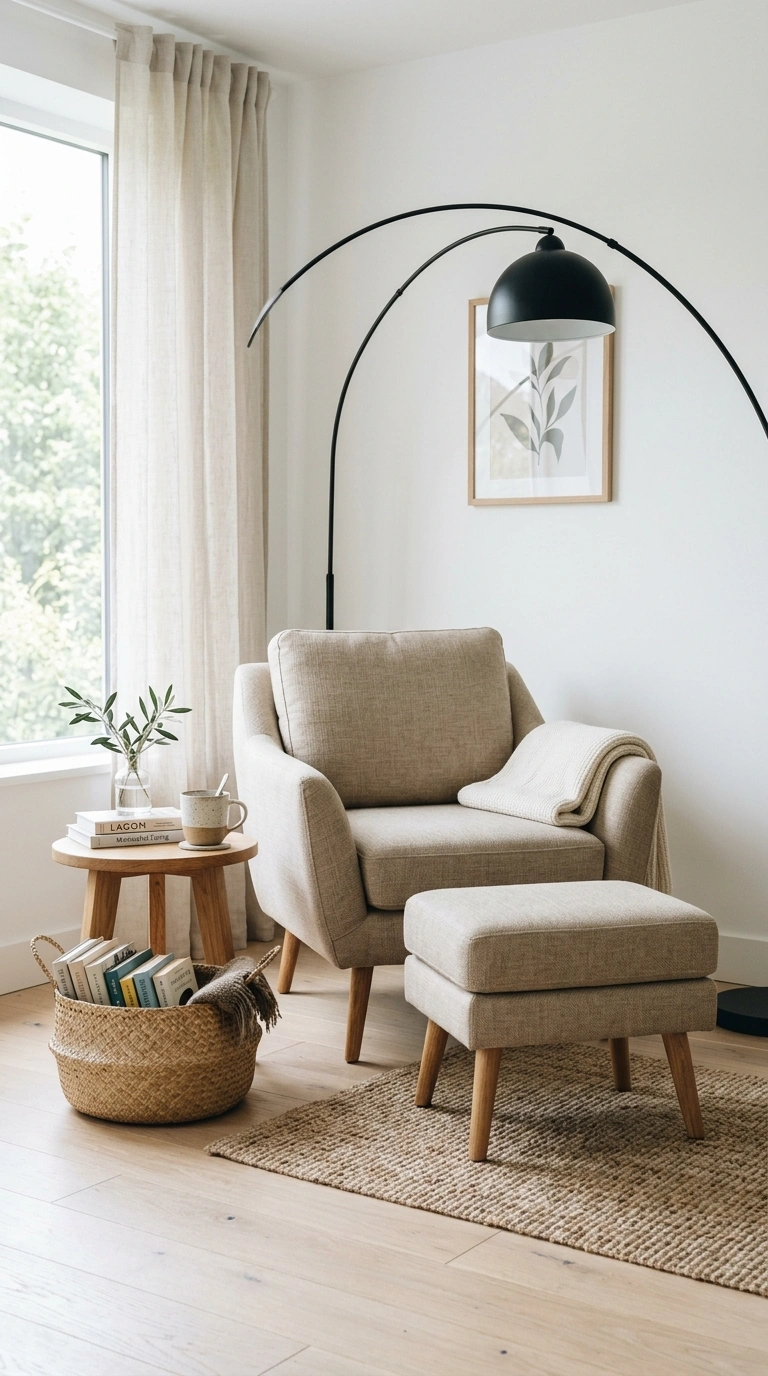
A small footstool that matches your armchair creates a proper reading corner, and it is the most comfortable seat in most homes. Buy the pair together if you can, since matching fabric and leg finish is what makes it look like a designed corner rather than two random pieces. Position the footstool about ten inches in front of the chair so you can stretch out but still stand up easily. Height matters more than size here, because a footstool taller than the chair seat will push your knees up and get uncomfortable after twenty minutes. Around fifteen inches is right for most chairs. Add a floor lamp behind one shoulder, a small side table for a cup, and a basket of books on the floor. The whole corner takes an afternoon to set up and it changes how you use your evenings. When guests come, the footstool slides out and becomes a spare seat with no rearranging required.
9. Under Console Ottomans
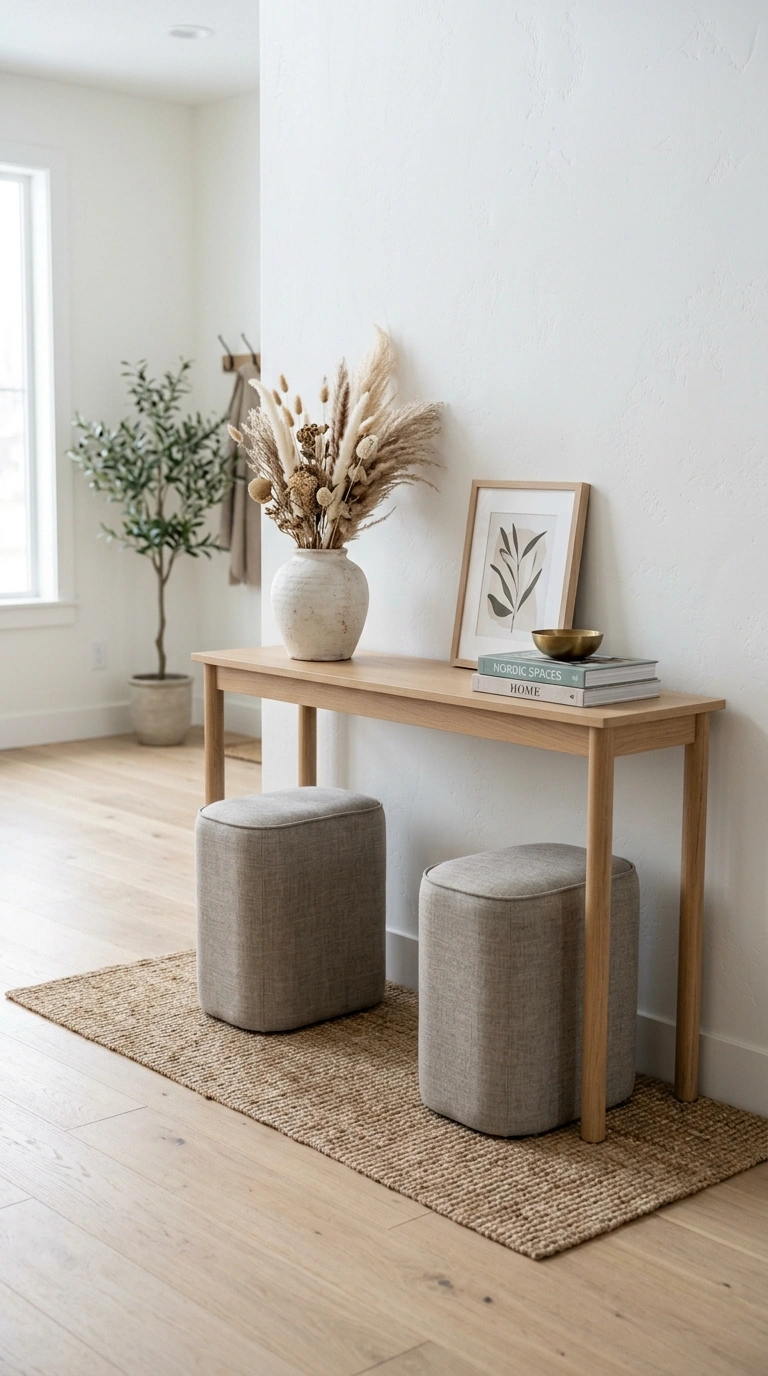
The narrow gap under a console table is usually wasted, and two slim ottomans fill it perfectly. Measure the height from the floor to the underside of the console, then subtract an inch so they slide in and out without scraping. Rectangular shapes work better than round ones here because they sit flush and look tidy from across the room. Upholster them in a fabric that echoes your curtains or cushions so they blend into the console rather than competing with it. When you are hosting, pull them out and place them near the sofa for overflow seating. The rest of the time they disappear. This idea is especially useful behind a floating sofa or in an entry area that opens into the living room. For a low budget version, buy two plain fabric storage cubes and slip a matching cushion on top of each, which raises the height slightly and makes them look upholstered.
10. Bold Patterned Ottoman
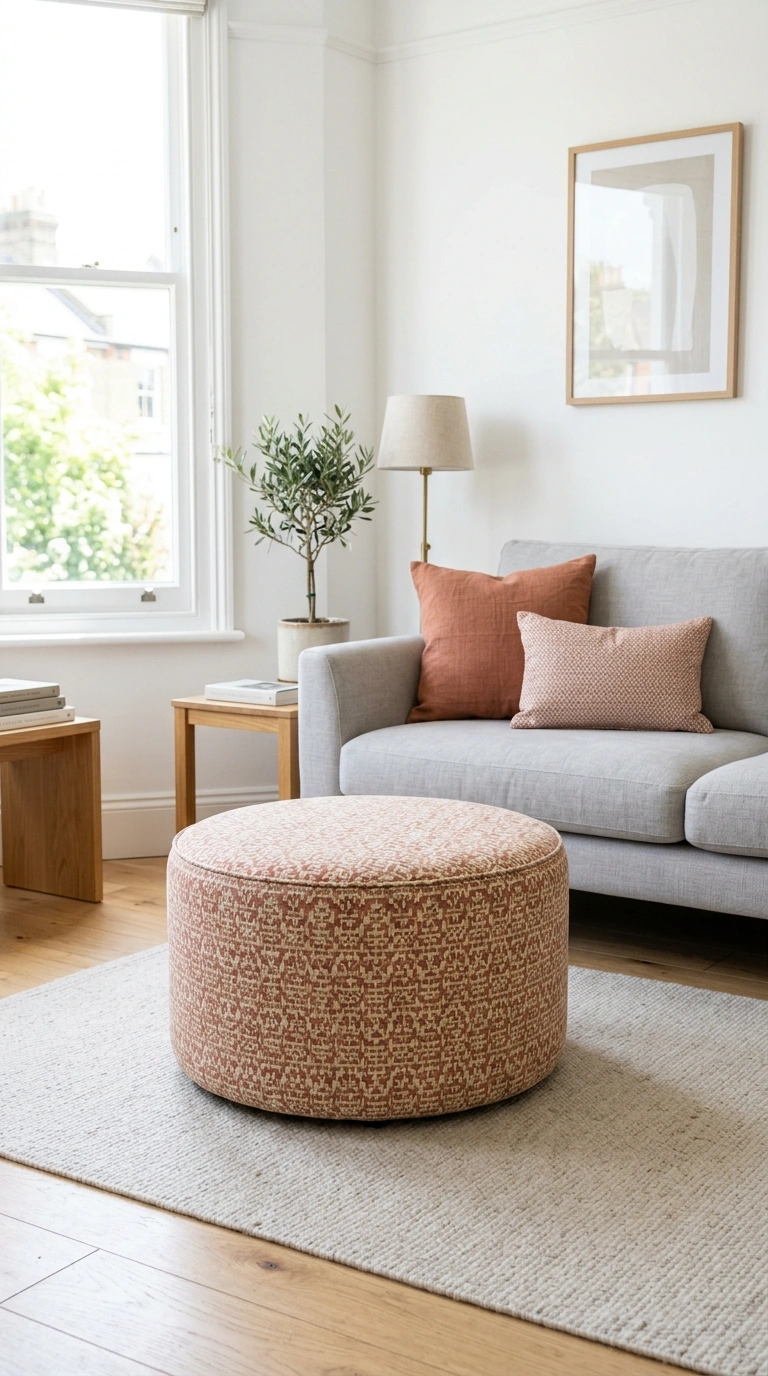
If your living room is full of solid colors, one patterned ottoman brings the whole scheme to life. Go for a geometric weave, a block print, or a subtle stripe rather than a large floral, since smaller repeating patterns stay easy to live with. Pull one or two colors from the pattern and repeat them in cushions on the sofa so it feels connected instead of dropped in. A patterned ottoman works best as the only patterned item at floor level, so keep your rug plain or very lightly textured. Round shapes soften a busy print and are more forgiving in small rooms. Place it where the light hits, usually near a window, so the pattern is visible rather than lost in shadow. Because pattern hides marks well, this is a smart choice for families. Choose a fabric with a tight weave and a stain resistant finish, and vacuum it with an upholstery brush every couple of weeks to keep the colors sharp.
11. Wood Base Ottoman
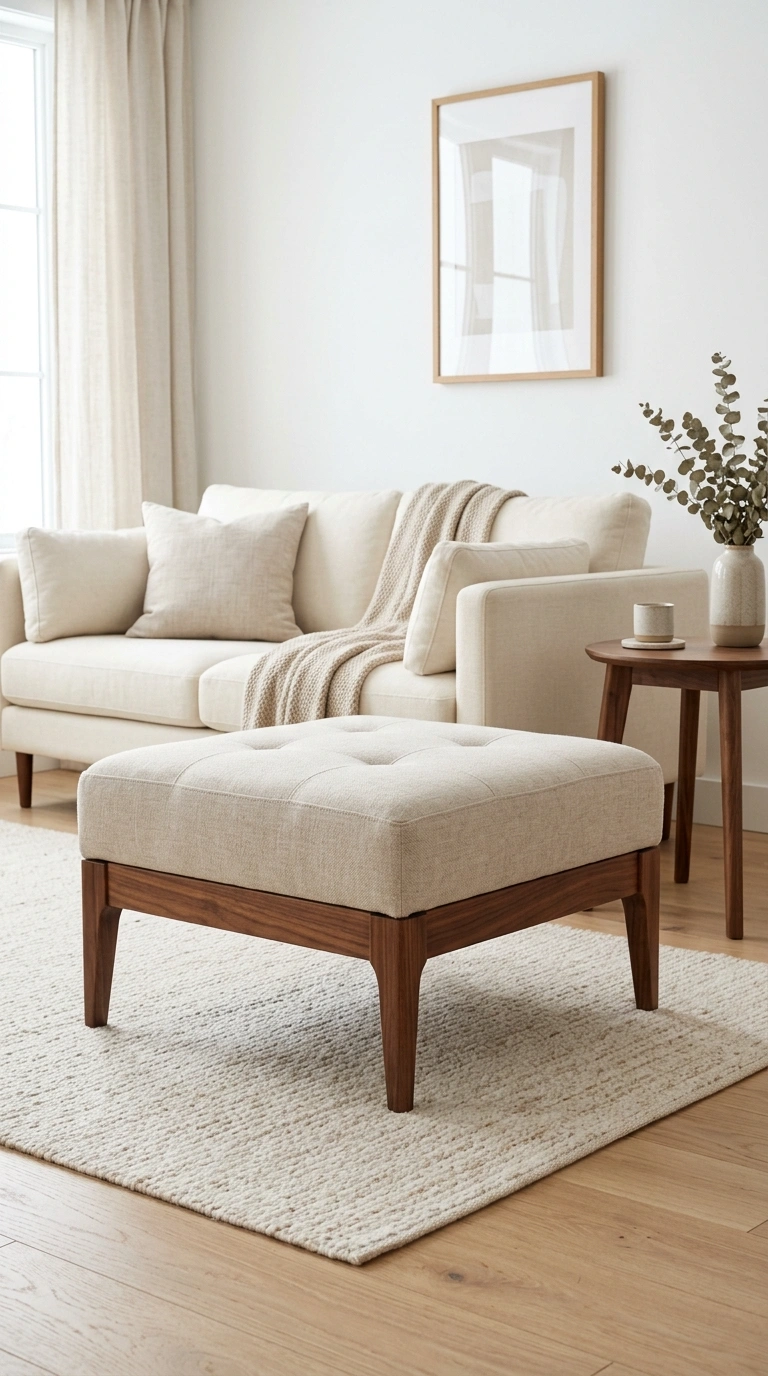
An upholstered top on an exposed wooden base gives you cushioned comfort without the heavy look of a fully covered block. The visible legs let light and floor show through, which makes small living rooms feel more open. Choose a wood tone that already exists somewhere in the room, like your side table, shelves, or floor, so it reads as part of a set. Walnut and oak both work, and tapered legs suit mid century rooms while turned legs suit traditional ones. Keep the upholstery simple in a solid linen or wool blend, because the base is already providing visual interest. This style sits well in front of a sofa or at the foot of a large window. Check that the legs are bolted rather than glued, since ottomans get sat on and pushed around far more than people expect. Felt pads under each leg protect wooden floors and let you slide the piece with one hand when cleaning.
12. Vintage Trunk Ottoman
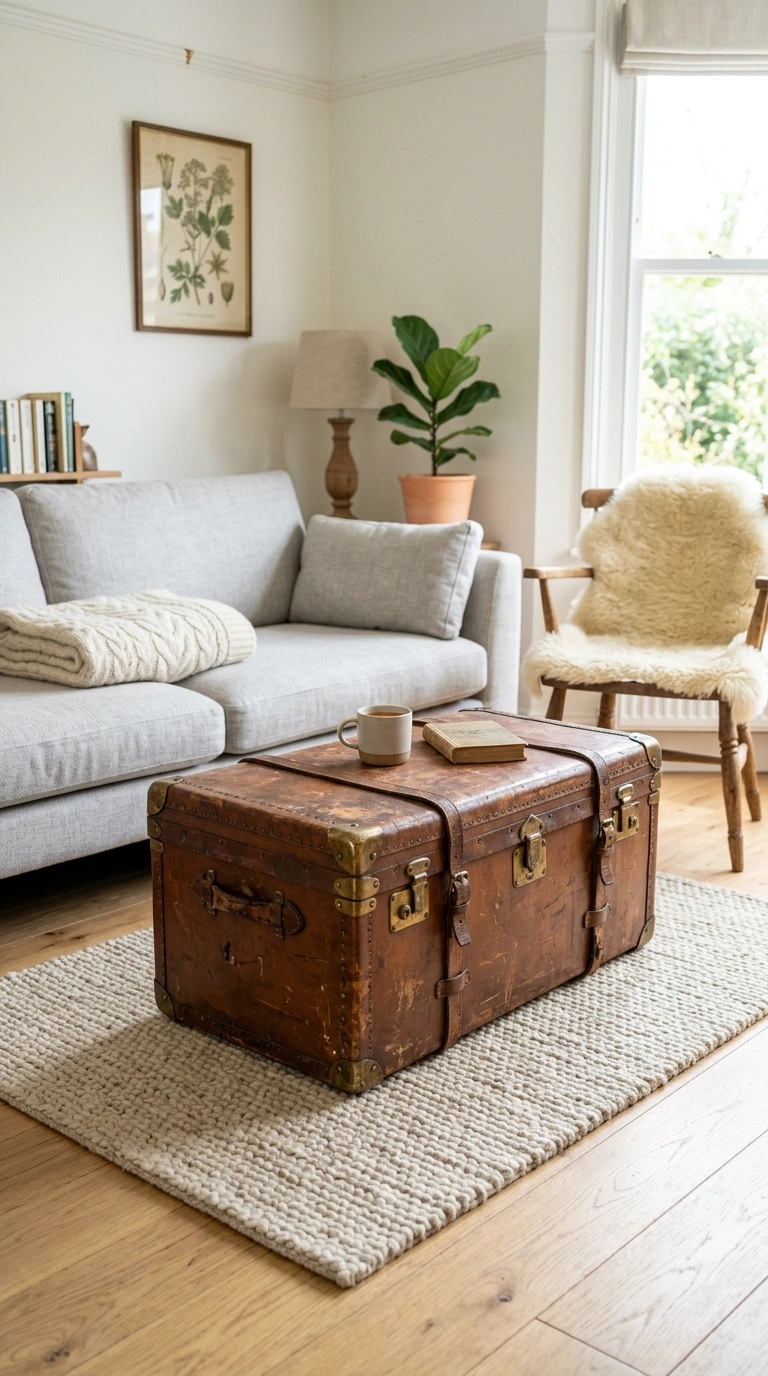
An old trunk with a flat lid makes a wonderful ottoman and costs less than most new furniture if you find it secondhand. The worn leather straps, brass corners, and slightly faded wood bring a history that new pieces cannot fake. Set it in front of the sofa where its rectangular shape works as a natural coffee table. Inside, store bulky things you rarely need, like spare bedding, winter throws, or holiday decorations. Before using it, wipe the interior with a damp cloth, let it dry fully, and line the bottom with a folded sheet to protect fabric from rough wood. If the lid is uneven, a flat tray solves the drink problem. Add one soft element nearby, such as a sheepskin over a chair or a chunky rug underfoot, so the trunk does not make the room feel cold. Hunt at flea markets and estate sales, where trunks are often overlooked because people cannot picture them as living room furniture.
13. Skirted Slipcover Ottoman
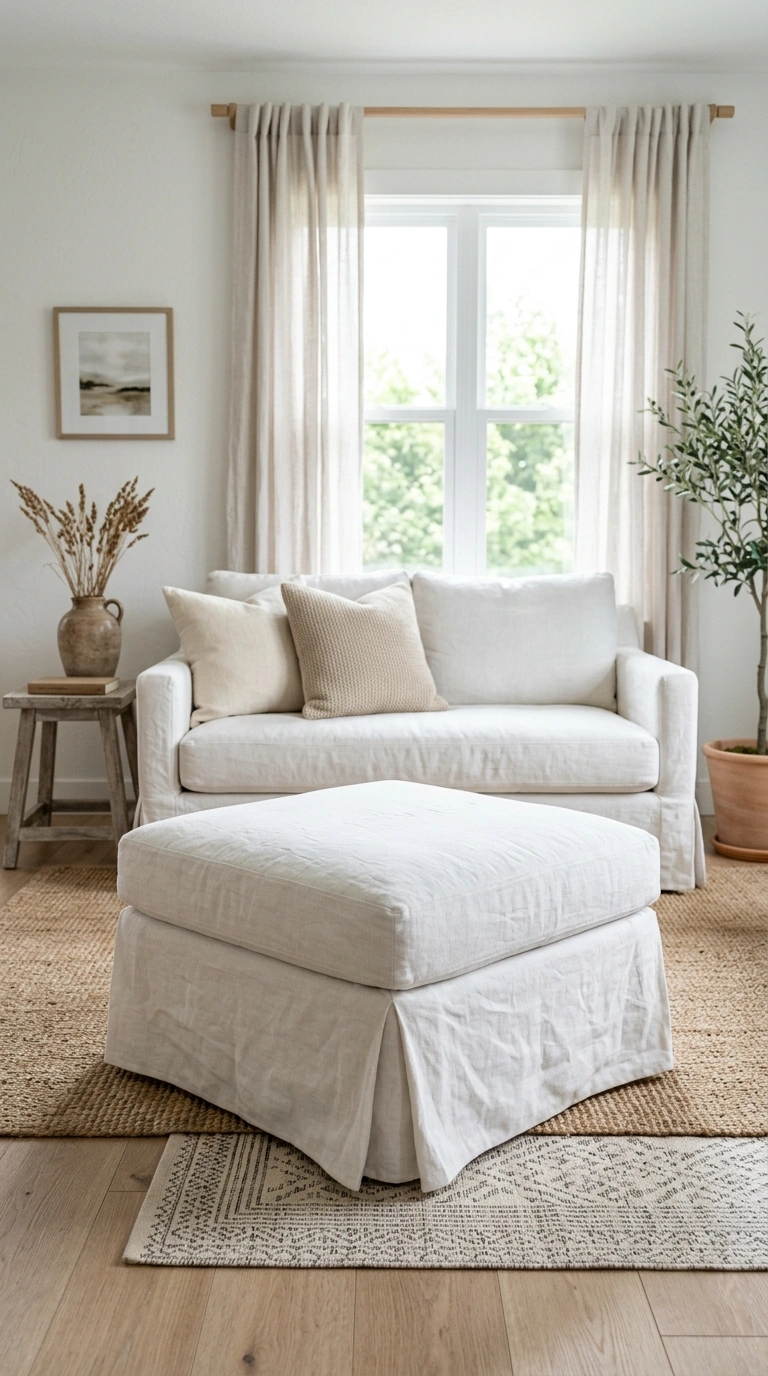
A skirted ottoman with a loose slipcover brings a relaxed cottage feel and solves the stain problem at the same time. The fabric falls to the floor and hides the legs, which gives the piece a soft grounded look that suits rooms with curtains, layered rugs, and lots of cushions. Look for slipcovers in washed linen or cotton canvas in white, oatmeal, or pale blue, and always buy a spare if one is offered. Slight wrinkles are part of the charm, so there is no need to iron it perfectly. Place it in front of a sofa with a matching skirt or in a sunroom style space where the light is soft. Wash the cover on a cool cycle and put it back on while it is still slightly damp so it settles smoothly. This is the most practical ottoman for homes with toddlers or dogs, since the entire surface comes off and goes in the machine.
14. Long Bench Ottoman
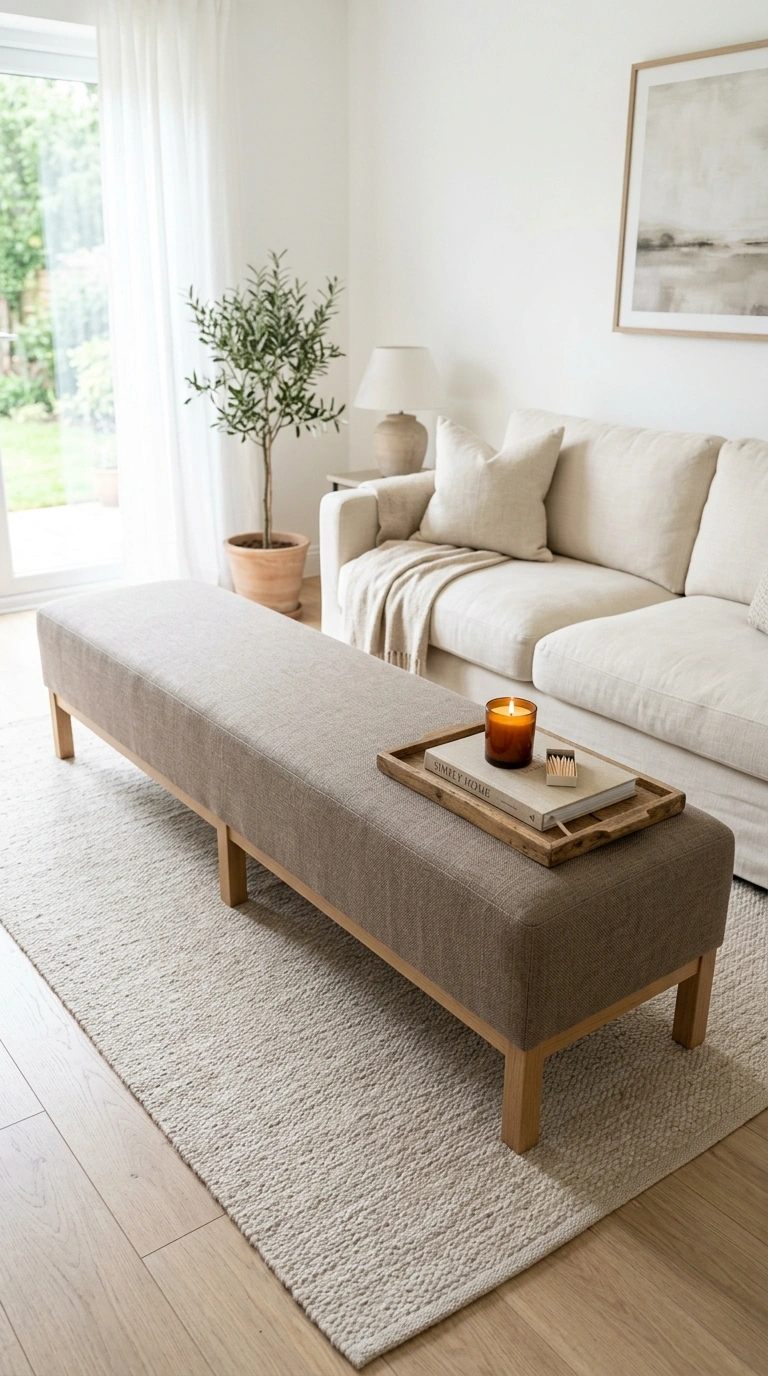
A long, low bench ottoman running parallel to the sofa gives you a coffee table, a footrest, and seating for three in one piece. Aim for a length that is about two thirds the width of your sofa, which keeps the proportions balanced. Height should sit an inch or two below the sofa cushion so it never blocks the view across the room. Upholster it in a durable flat weave rather than a plush fabric, since people will sit on it and a firm surface is more comfortable than a squishy one. Style with one tray placed off to one side rather than in the middle, leaving the other end free for someone to sit down. This layout works especially well in narrow living rooms where a big square coffee table would block movement. Slim benches are also easier to walk around, which makes the whole room feel less crowded even though you added furniture rather than removed it.
15. Nested Ottoman Duo
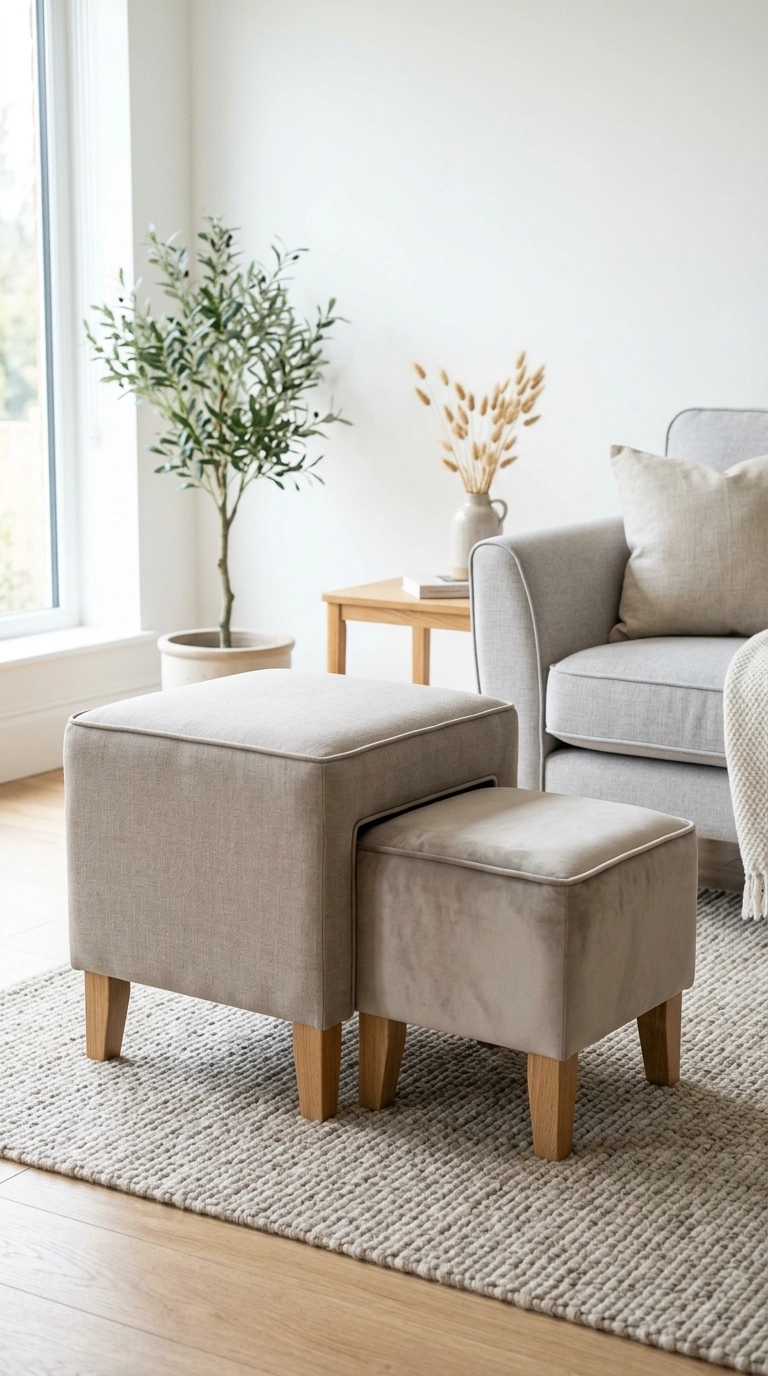
A nested pair, where a small ottoman tucks under or beside a larger one, gives you two heights and endless arrangements. Use the tall one as a side table next to your chair and the short one as a footrest, then slide them together when you want the look of one piece. Pick the same fabric in two tones, or the same tone in two textures like linen and velvet, so they clearly belong together. This setup suits rooms where the furniture layout changes often, such as spaces that double as playrooms or work areas. Keep the smaller piece light enough for a child to move safely. Place them on a rug so they do not slide apart on hard floors. The trick that makes this look deliberate is repeating one detail on both pieces, such as matching wooden legs or the same piping color along the seams, even when the fabrics differ.
16. Rolling Caster Ottoman
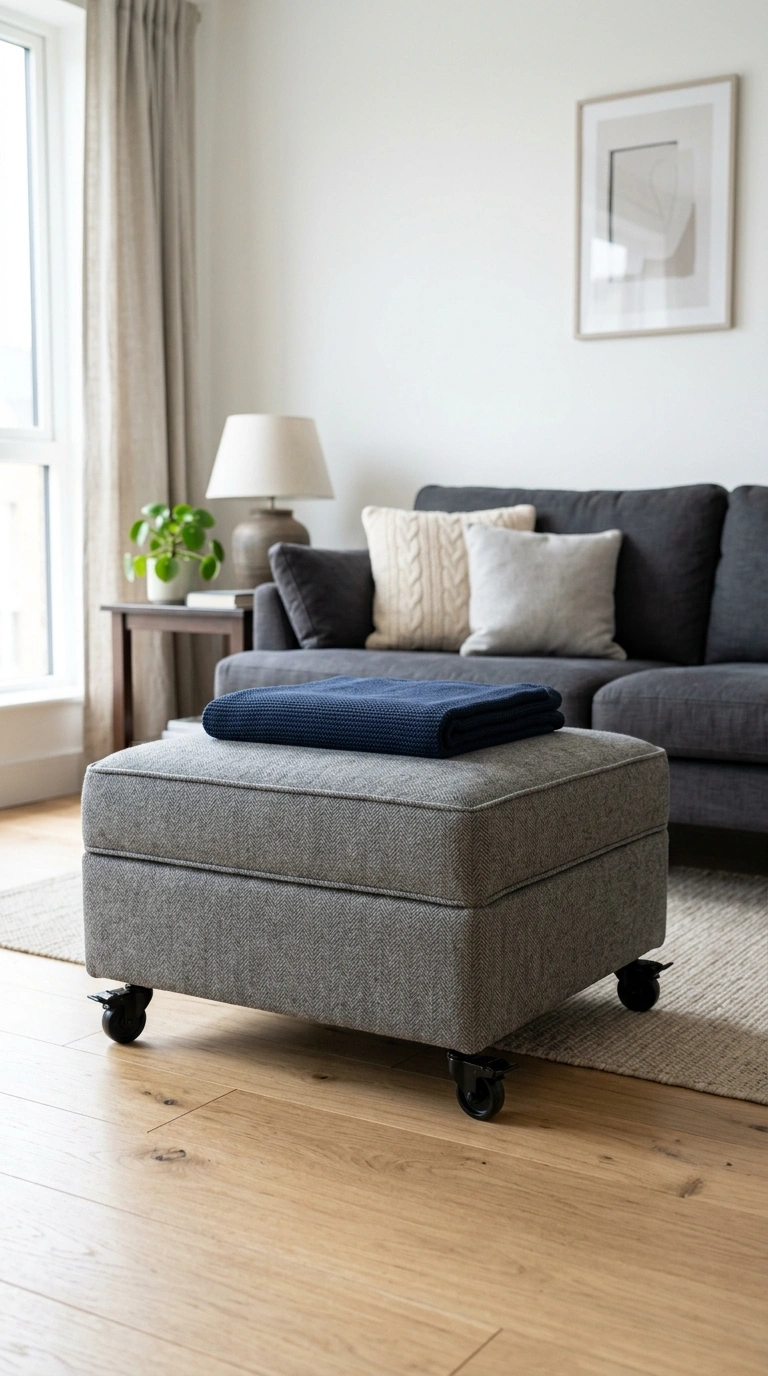
An ottoman on casters is the answer for living rooms that need to change shape often. Wheels mean you can roll it to the sofa for movie night, push it to the window for extra seating, and move it aside in seconds when the kids want floor space. Look for locking casters so it stays put when someone sits down, and choose rubber wheels rather than hard plastic if you have wood or tile floors. A square or rectangular shape with a sturdy frame handles the movement best. Keep the upholstery on the firmer side, since soft ottomans on wheels feel unstable. Grey tweed, dark denim, or a tight wool blend all hold up well. If your current ottoman is a simple box, you can add casters yourself with a drill, four plates, and an hour of work. Just check the height afterwards, because wheels usually add two to three inches, which may change how it pairs with your sofa.
17. Two Tone Ottoman
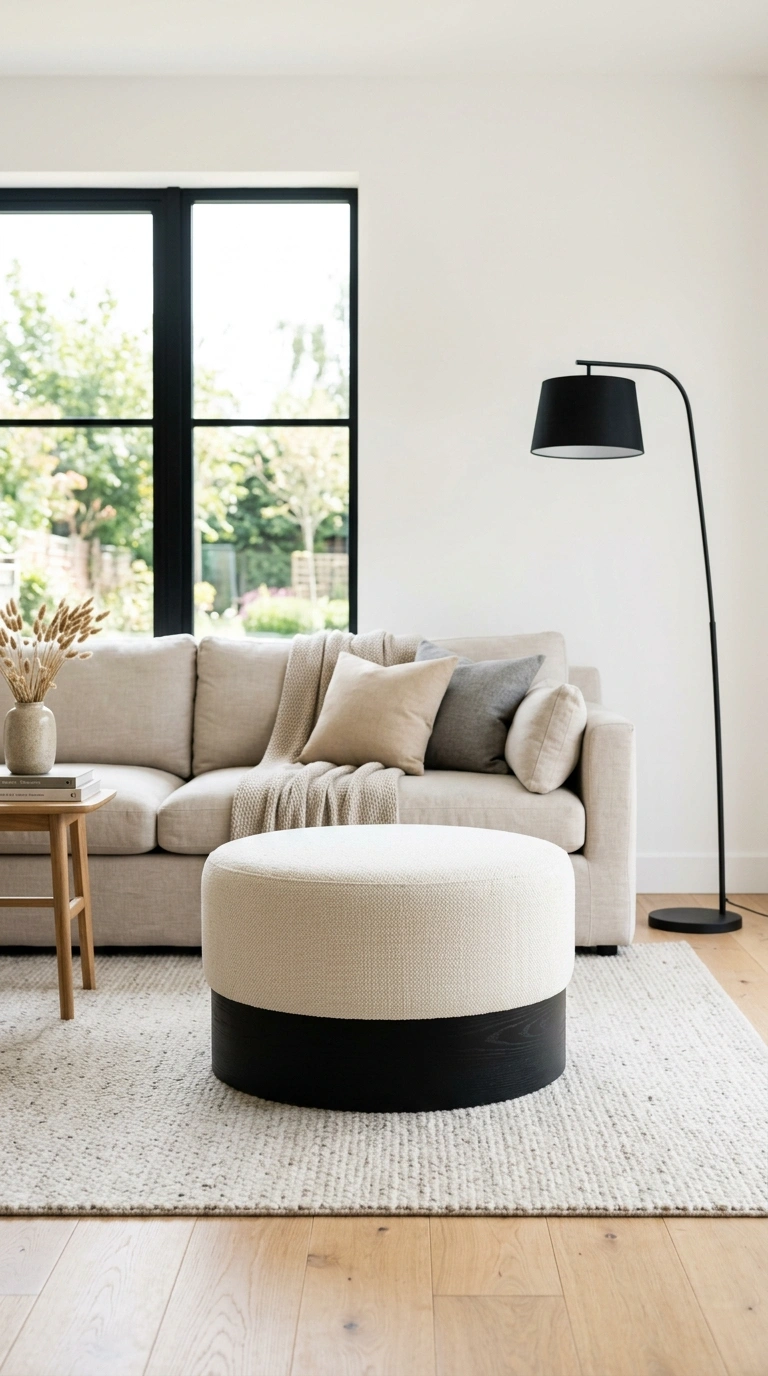
A two tone ottoman, where the top and base are different colors or materials, looks custom without costing extra. Common combinations include a cream upholstered top over a dark wooden base, a leather top over a woven rattan body, or a light fabric top with a contrasting piped edge. The split draws the eye and gives a plain room a point of interest at floor level. Match the lower tone to something dark you already own, like a metal lamp base or black window frames, so it ties in rather than floating alone. Place it centrally where both tones are visible from the main seating. Avoid adding a throw over the top, since covering it hides the whole reason you chose it. If you want to try this idea cheaply, paint the wooden base of a plain ottoman in a dark matte shade and leave the cushion top as it is. A weekend project and a small can of paint is all it takes.
18. Washable Family Ottoman
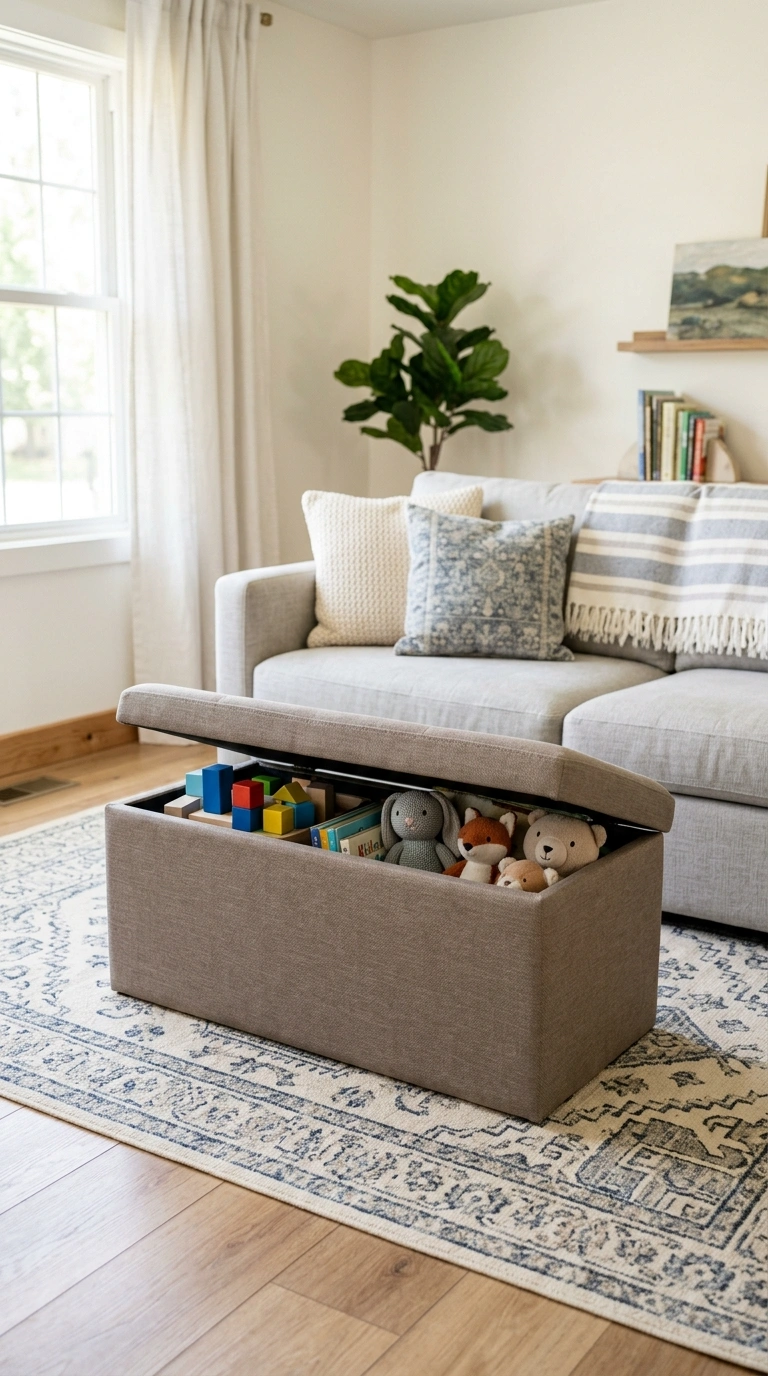
Family living rooms need an ottoman that can survive juice, crumbs, and daily jumping, and performance fabric makes that possible. Look for tightly woven polyester blends labeled as stain resistant, or a boucle style performance weave that hides marks between cleanings. Mid tone colors like taupe, warm grey, and soft olive are the most forgiving, since very pale fabric shows spills and very dark fabric shows dust and pet hair. Choose a version with storage inside so toys disappear at the end of the day. A flat firm top matters here too, because kids will stand on it whatever you say. Keep a small handheld vacuum nearby and run it over the top every few days. For spills, blot rather than rub and use plain water first before any cleaner. Pair it with a washable rug underneath so the whole zone can be cleaned in one go. Practical choices like this are what let a nice looking room survive real life.
19. Window Seat Ottoman
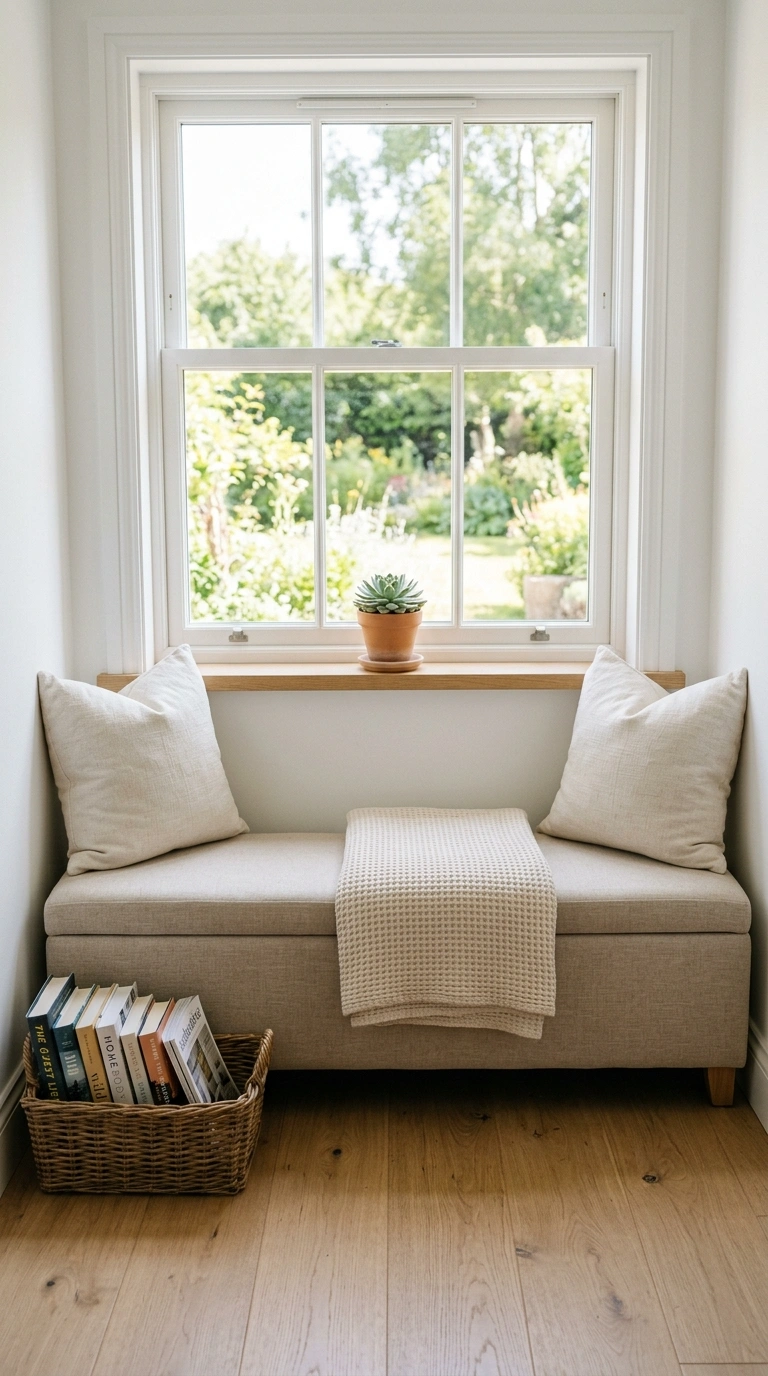
A bench ottoman placed under a living room window creates a seat that makes the whole room feel more generous. Choose a length that comes close to the window width without extending past the frame, and a height around eighteen inches so it feels like a real seat. Push it against the wall, then add two cushions at either end and a folded throw in the middle. If the window is low, the view becomes the feature, and this corner turns into a favorite reading spot in daylight. Pick a fabric that can handle sun exposure, since direct light fades soft colors over a few seasons. Linen blends in natural tones hold up better than dyed velvet here. Add a small plant on the windowsill and a floor basket at one end for books. This idea works best in rooms where the window wall is otherwise empty, and it costs nothing in floor space because that strip was already unused.
20. Fireplace Side Ottoman
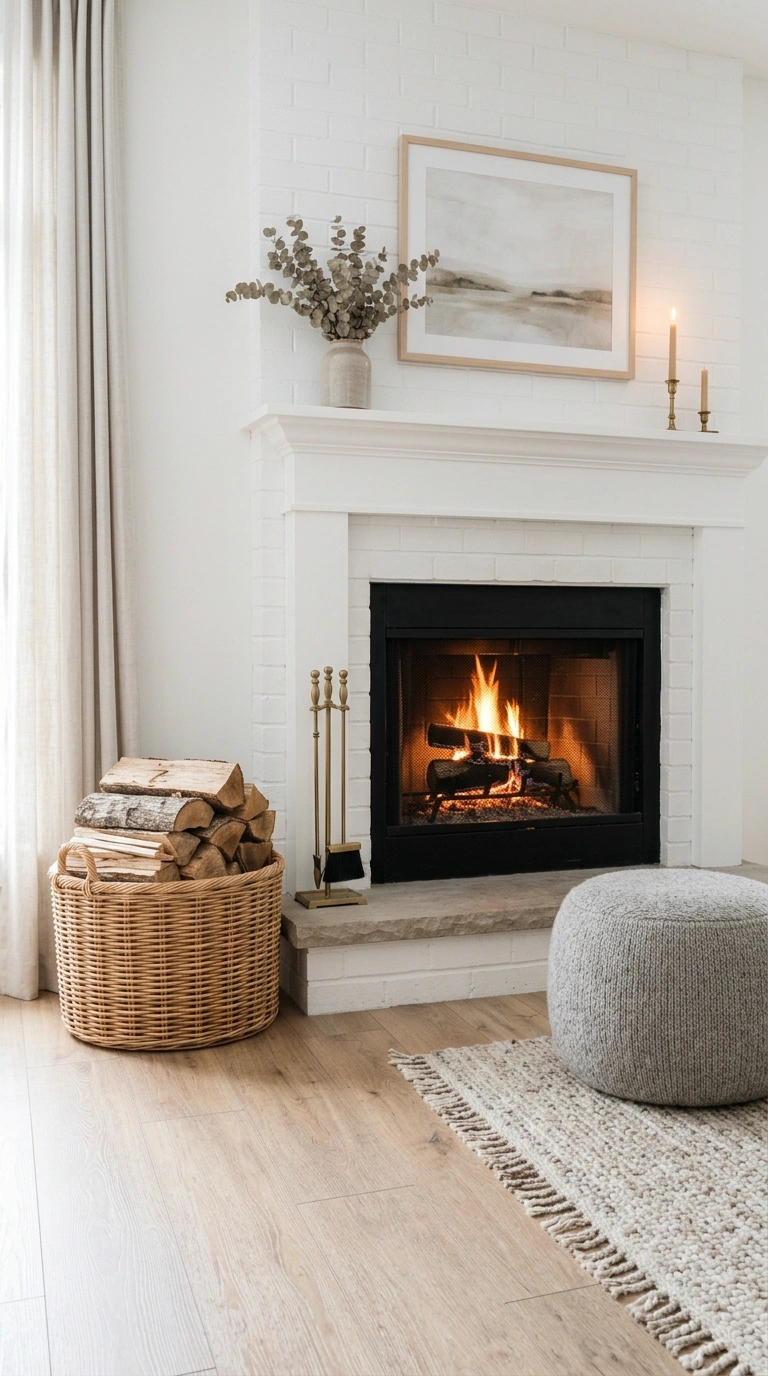
The space beside a fireplace is often left bare, and a single ottoman placed there fills it in a way that feels warm rather than staged. Choose something low and soft, like a round upholstered pouf or a small wool covered stool, and set it slightly angled toward the hearth. It becomes the spot people sit when the room is full, and a footrest for whoever has the nearest chair. Keep a safe distance from the fire opening, at least three feet for an open fire, and avoid loose fringe or long throws that could catch a spark. Natural wool and thick cotton are safer choices than synthetic fabrics near heat. Add a basket of logs on the other side of the hearth so the two sides balance visually. In warmer months, the ottoman still earns its place as extra seating, which is more than most fireplace decorations can claim.
21. Sectional Corner Ottoman
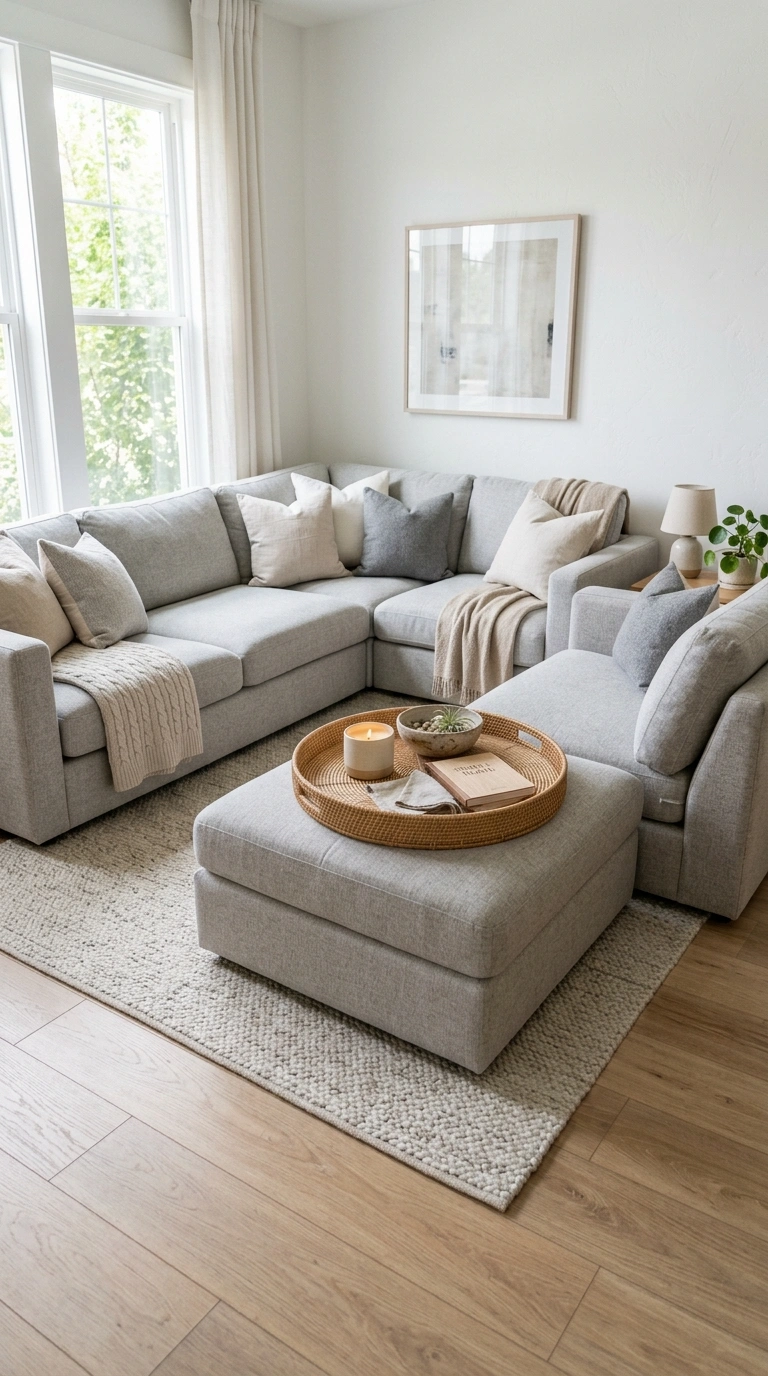
If you have an L shaped sectional, the open corner where the short arm ends is the natural home for a matching ottoman. Sit it flush against that end so the sofa reads as a continuous U shape, which instantly makes the seating area feel more enclosed and cozy. Match the height to the seat cushion within an inch, and choose the same fabric if the manufacturer sells one, since a close but wrong match looks like a mistake. If an exact match is not available, go with a clearly different but complementary fabric, such as a nubby wool against a smooth cotton. Add a large round tray in the middle of the arrangement so drinks and snacks have a home. Leave a clear path behind the ottoman rather than blocking the route into the room. This setup is ideal for families who watch television together, because everyone gets a place to put their feet without anyone stretching across a coffee table.
Frequently Asked Questions
What size ottoman should I get for my living room?
A good rule is to pick an ottoman that is about two thirds the length of your sofa and roughly one inch lower than the seat cushion height. Most sofas sit between seventeen and nineteen inches high, so an ottoman in that range works for both footrest and seating. Leave at least eighteen inches of walking space around it.
Can an ottoman replace a coffee table?
Yes, and it often works better in family rooms because there are no hard corners. Add a flat tray with a low lip so drinks and snacks have a stable surface, and choose an upholstery fabric that can be cleaned easily. If you need frequent hard surface space, a wooden top ottoman or a firm topped storage version is the safer choice.
What fabric is best for an ottoman with kids and pets?
Performance weaves and tightly woven polyester blends handle daily use best because spills sit on the surface long enough to blot. Mid tone colors hide marks better than white or very dark shades. Removable washable slipcovers are the most practical option of all, since the whole cover goes into the machine.
How do I style an ottoman so it does not look messy?
Keep it to three items on a single tray, such as two books, a candle, and a small plant, and leave one corner of the tray empty. Everything should sit within the tray rather than directly on the fabric. If the ottoman is round, use a round tray so the shapes agree.
Should my ottoman match my sofa?
It does not need to match exactly, and a close but imperfect match usually looks worse than a clear contrast. Choose either the same fabric from the same range, or a completely different texture in a color that already appears in your cushions or curtains. Repeating one detail, like leg finish or piping color, is what makes the pairing look intentional.
Final Thoughts
An ottoman is one of the few pieces that earns its space in almost any living room. Start with how your room actually gets used, whether that is storage, extra seating, or somewhere to put your feet after work, and pick the idea that solves that first. The styling can come later.