19 No Grass Front Yard Ideas You’ll Love
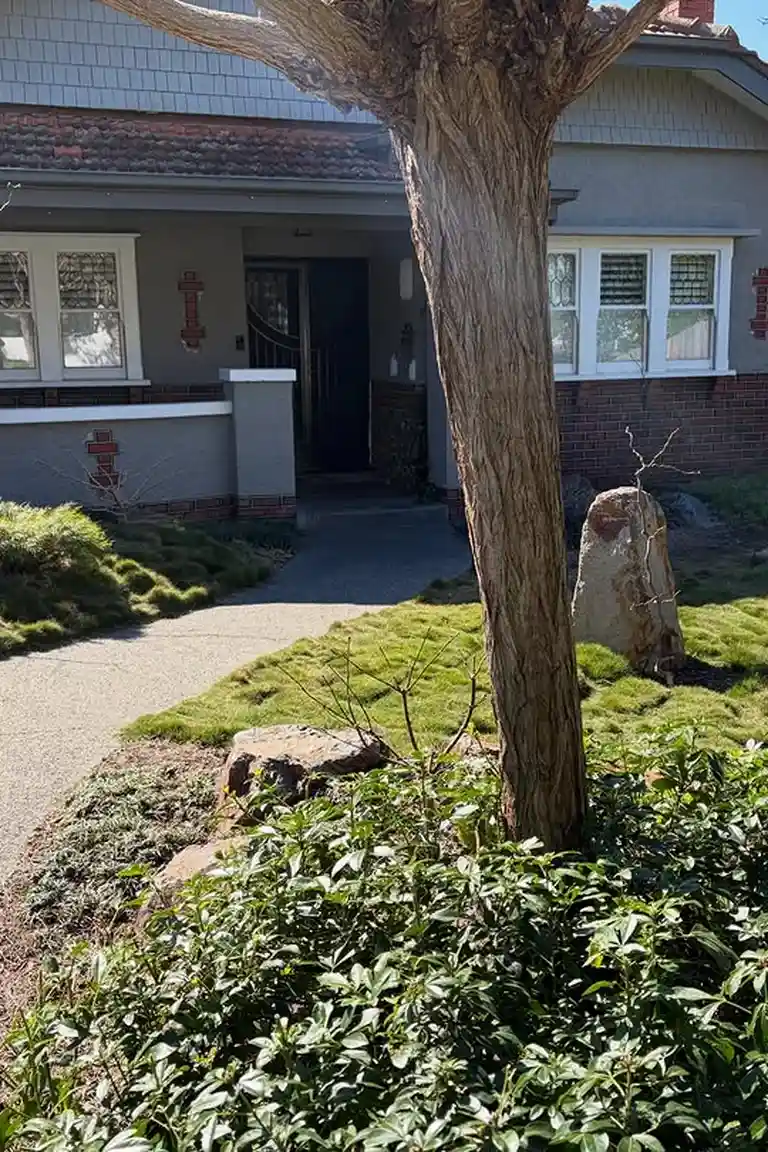
Saturday morning used to start with the mower, the sprinkler timer, and the brown patch by the sidewalk that never quite recovered. A traditional lawn asks for water, fertilizer, and hours of your weekend, and it still looks tired by August. There is a simpler way to keep a front yard welcoming.
These no grass front yard ideas replace thirsty turf with gravel, stone, native plants, and garden beds that hold their shape with far less wo
rk. You still get color at the door, a clear path for guests, and a yard that looks cared for in every season. The trick is picking a design that fits your climate, your budget, and the amount of time you honestly want to spend outside.
Read through the list, note the styles that suit your house, and start with the one that solves your biggest lawn headache first. The best part is that most of these designs cost less to keep than a lawn does over time.
1. Decorative Gravel with Structured Planting Beds
Source: Instagram
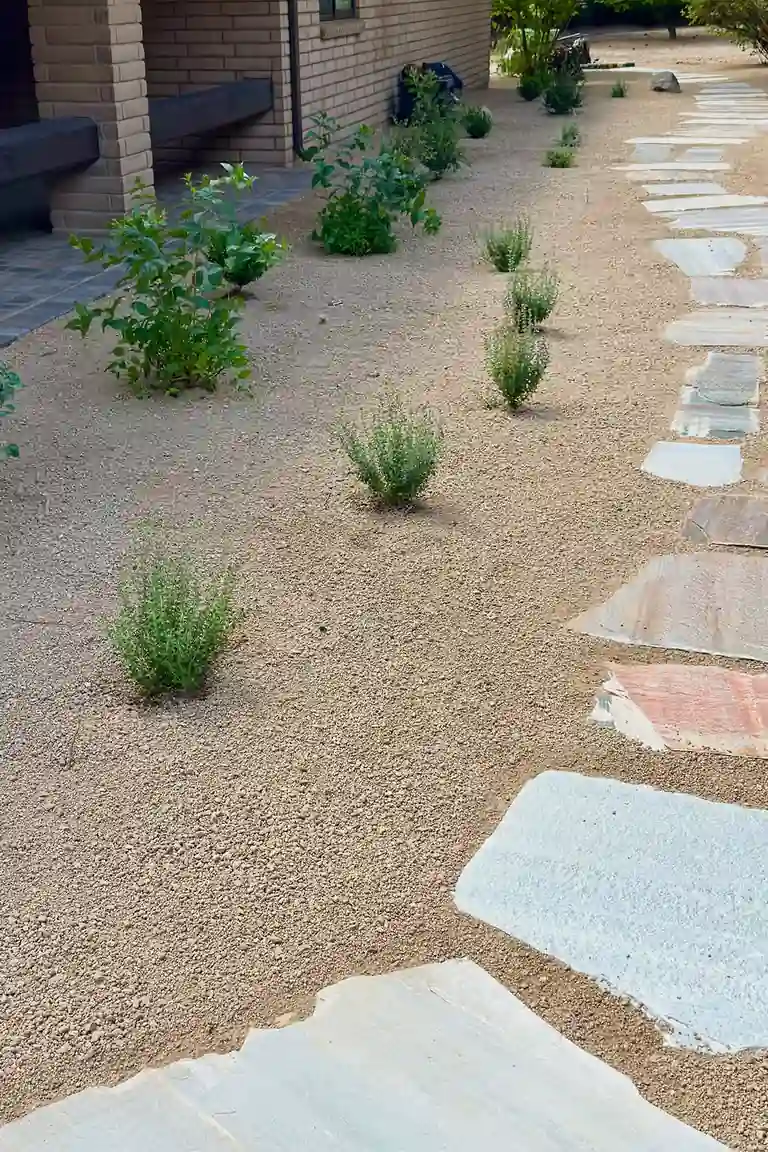
Start with measurements, not plants. Mark beds about four feet deep along the house and the walkway, and leave the gravel field between them at least six feet wide so the yard reads as open ground, not a narrow path.
Spread gravel two to three inches deep over landscape fabric, and edge every bed with steel or stone so the stones stay put.
Plant in odd groups of three or five, using one tall shrub, two mid sized grasses, and low ground cover at the front. This gravel front yard stays tidy because every plant has a clear spot and the gravel does the work of mulch.
2. Flagstone Pathway with Creeping Ground Cover
Source: Instagram
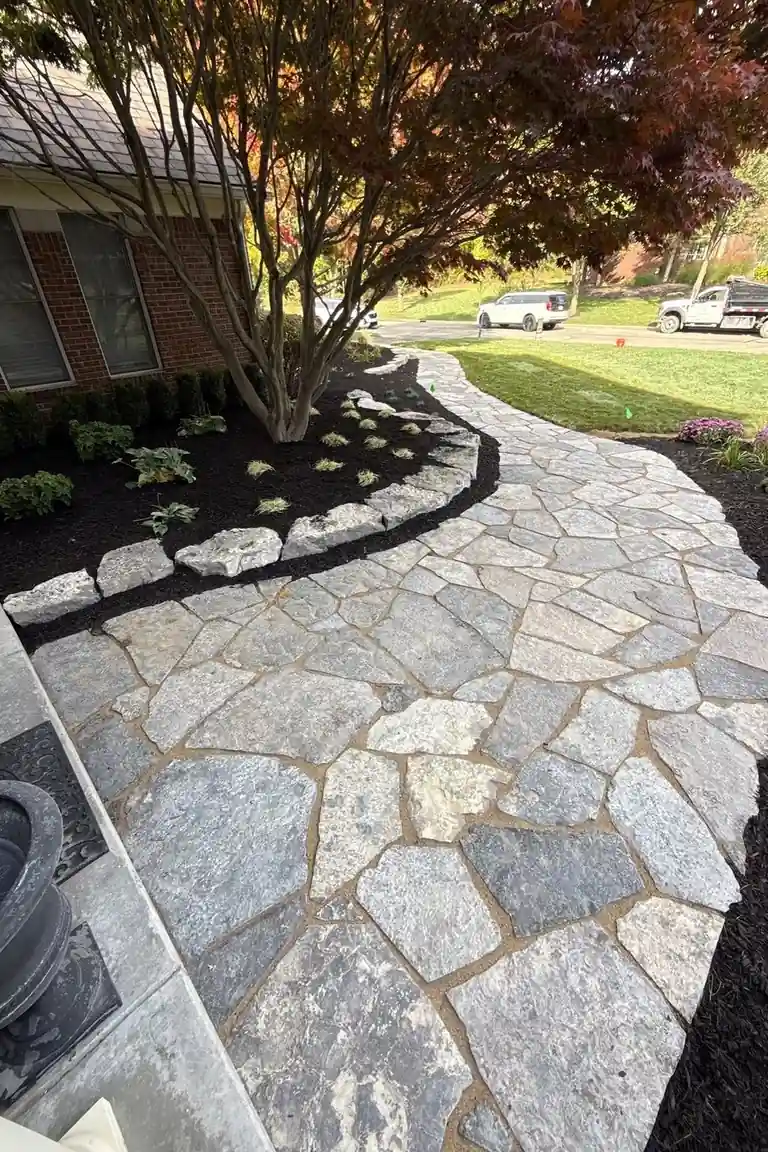
Walk it in your mind first. You step off the sidewalk onto wide flagstones, and soft green ground cover fills every joint under your feet. Lay stones at least eighteen inches across so two people can pass, and set them on a compacted sand base so they sit level.
Plant creeping thyme or low sedum between the joints, and water the joints until the plants root. The path feels finished from day one, and it gets better each year as the cover thickens. Keep the stones near the door a little closer together, since that is where foot traffic is heaviest and bare joints show fastest.
3. Native Plant Landscaping
Source: Instagram
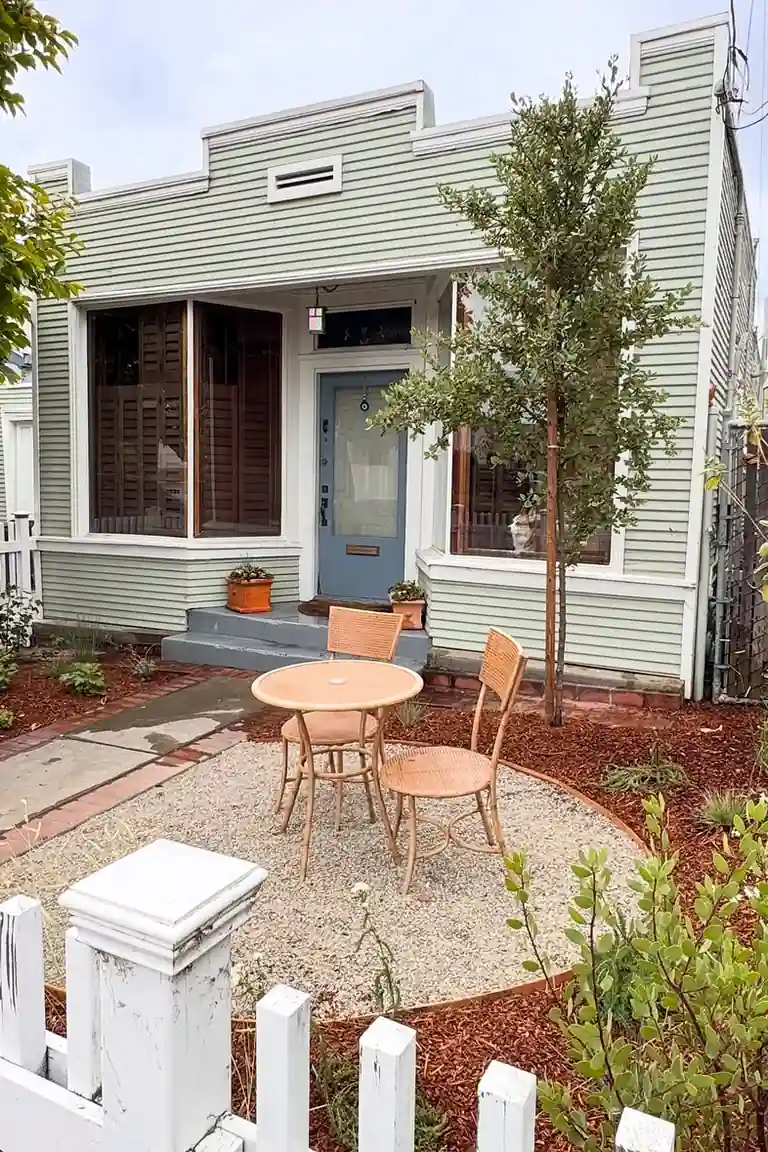
Question: what grows well with almost no help? Answer: the plants that already grow wild near your home. Question: where do you start? Answer: at your local nursery, asking for natives suited to your soil and sun.
Native shrubs, grasses, and perennials handle local rain patterns and local pests better than imported show plants, and they feed birds and pollinators at the same time. Group them the way they grow in nature, in drifts rather than single specimens lined up like soldiers. This front yard landscaping without grass looks a little wild on purpose, and a mowed edge or stone border keeps it looking intentional from the street.
4. Modern Concrete Paver Grid
Source: Instagram
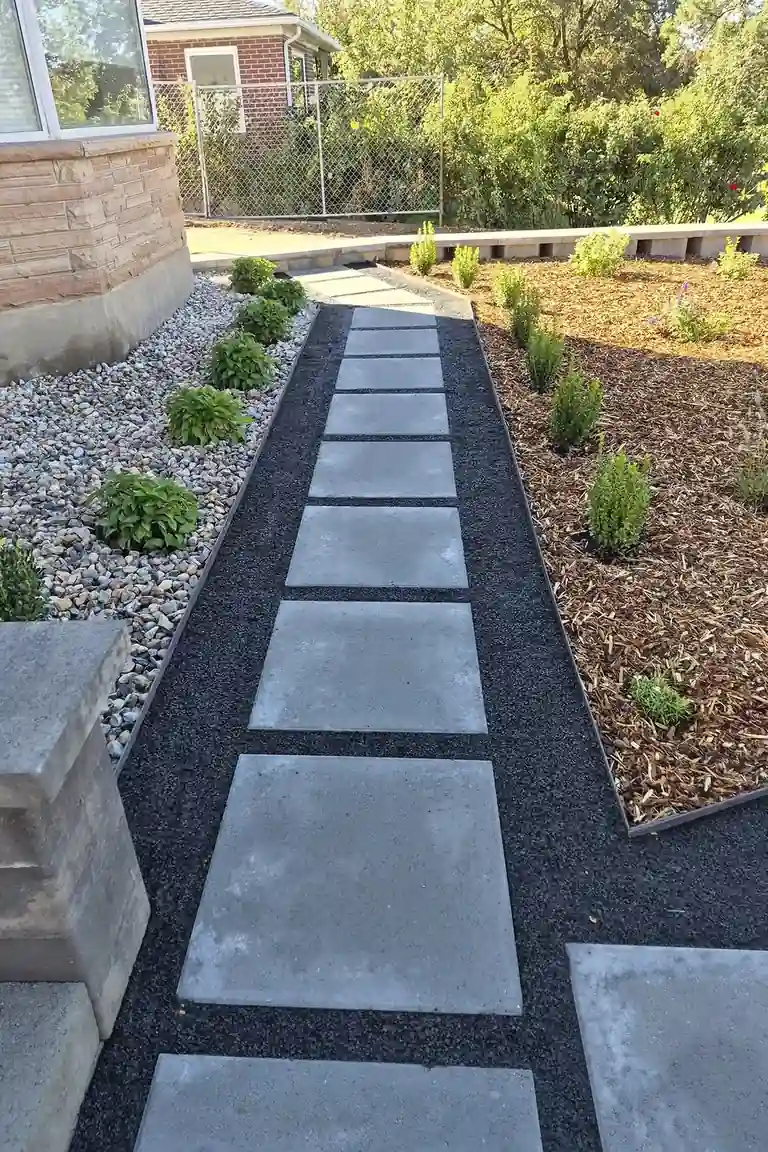
Step one: draw the grid on paper before you buy anything. Step two: pick one paver size and one joint width, and use them everywhere, since mixing sizes breaks the clean look. Step three: lay the pavers on a compacted base with narrow joints filled with fine gravel or sand.
Step four: leave every third or fourth cell open for a single grass clump or a low shrub, so the grid reads as a pattern, not a parking lot. Step five: run a strip of darker pavers along the walkway edge to guide the eye toward the door.
| Grid rule | Why it matters |
|---|---|
| One paver size | Keeps the pattern calm |
| Narrow joints | Stops weeds from settling |
| Open cells | Adds green without clutter |
5. Low-Maintenance Rock Garden
Source: Instagram
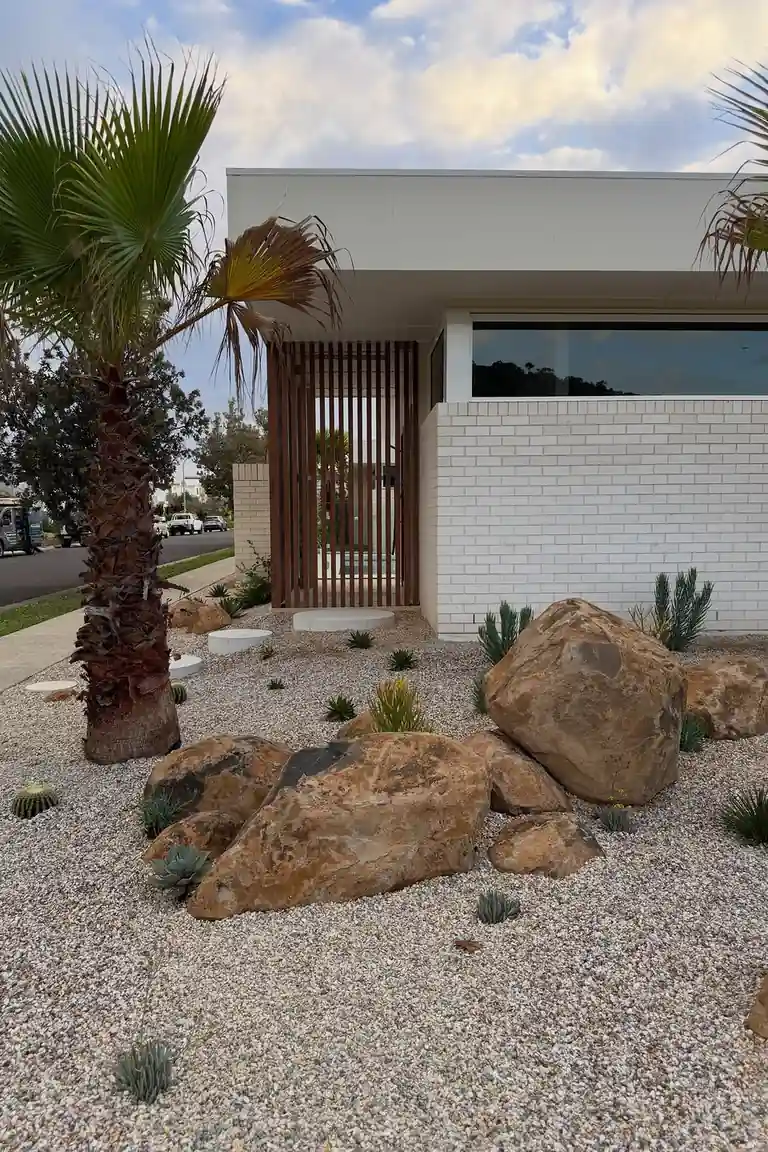
Small stones. Big boulders. Almost no watering. A rock garden works when the stones do most of the talking and the plants stay in supporting roles.
Set three large boulders first, at different heights, and build smaller rocks around them so the group looks like it belongs there. Tuck in sedum, hens and chicks, and one dwarf pine, then fill the gaps with gravel that matches the boulder color. This rock landscaping suits sunny slopes and dry corners where lawn always struggled. Weed fabric under the gravel and a stone edge at the border keep upkeep to a quick rake and a yearly weed pull.
6. Mulch and Perennial Garden Beds
Source: Instagram
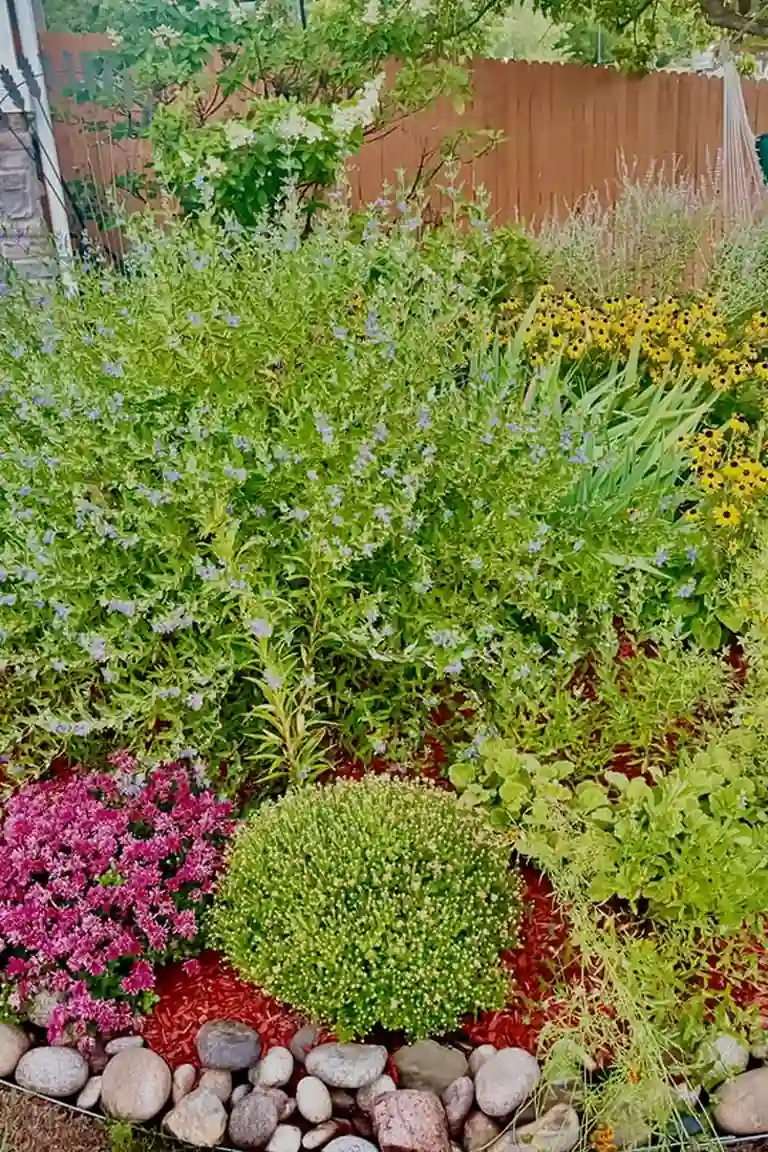
The problem is bare soil. Bare soil grows weeds, dries out fast, and looks unfinished. The fix is simple. Shape wide beds along the front of the house, plant perennials that return every year, and cover every inch of open soil with three inches of shredded bark mulch.
Good picks include daylilies, hostas for shade, and coneflowers for sun, and they fill in thicker each season so weeds lose ground. Refresh the mulch once a year in spring. This grass-free landscaping costs less than stone work, and it gives you real flower color without replanting annuals every May.
7. Desert-Inspired Front Yard
Source: Instagram
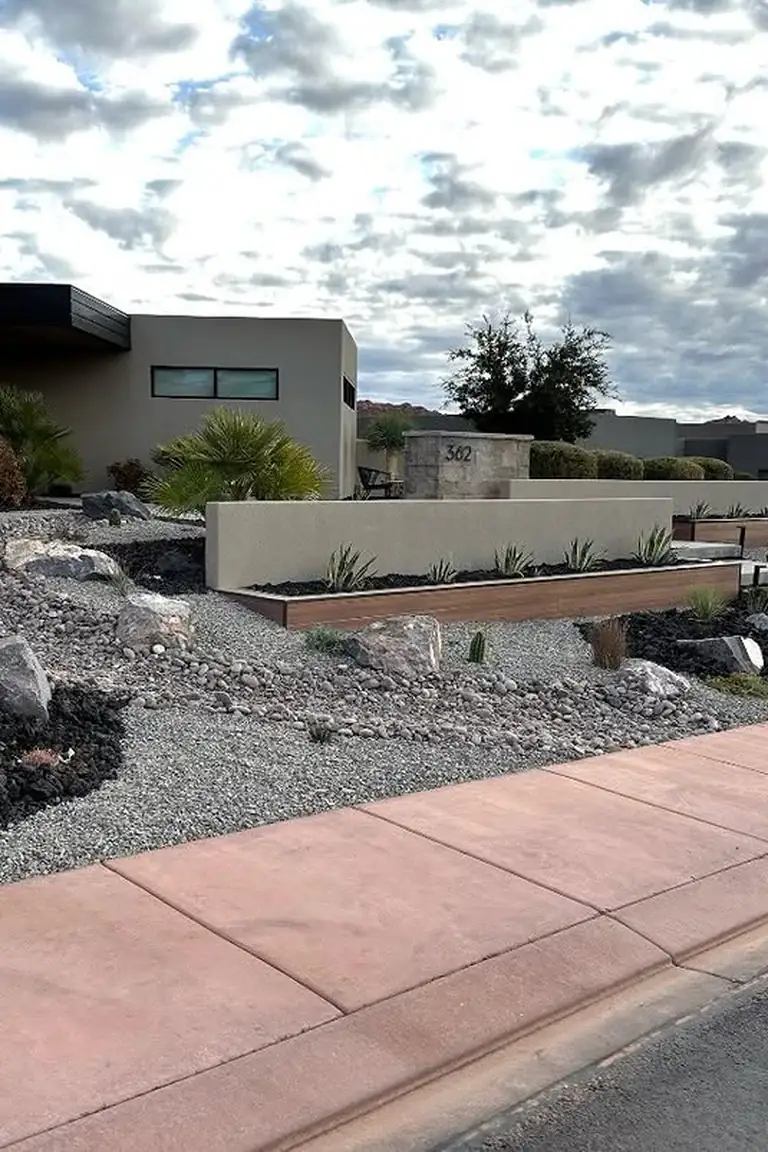
Hot sun, little rain, and a yard that still looks alive. That is the desert brief, and it starts with accepting the climate instead of fighting it. Use decomposed granite as the ground plane, and add agave, yucca, and red hot poker in sculptural groups, with one palo verde or mesquite tree for filtered shade.
Keep plant numbers low and give each one room, since desert plants look best with space around them. A few large rocks and a simple gravel path finish the scene. These no lawn landscaping ideas suit dry regions and water restricted neighborhoods, and they need almost no mowing, feeding, or weekly care.
8. Mediterranean Courtyard Style
Source: Instagram
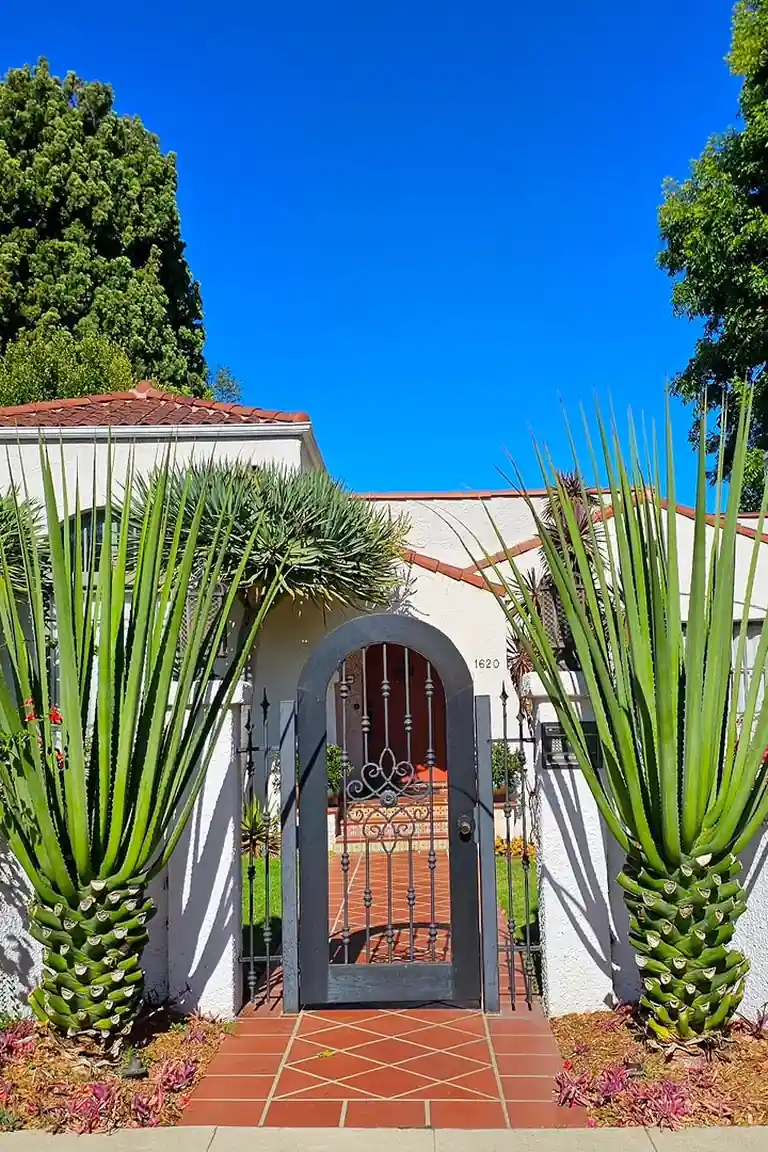
Close your eyes and smell it first. Warm terracotta pots, lavender along the walk, olive leaves silver in the sun, and a gravel court that crunches softly underfoot. That sensory mix is the Mediterranean front yard, and it works in any mild climate with good drainage.
Use pale gravel or warm toned pavers for the ground, and add potted citrus or olive trees flanking the door, plus rosemary and lavender hedges that release scent when brushed. A low stucco or stone wall at the street edge gives the yard a courtyard feel and hides the boundary without a tall fence. Terracotta, cream, and sage green carry the whole palette.
9. Cottage Flower Garden Without Lawn
Source: Instagram
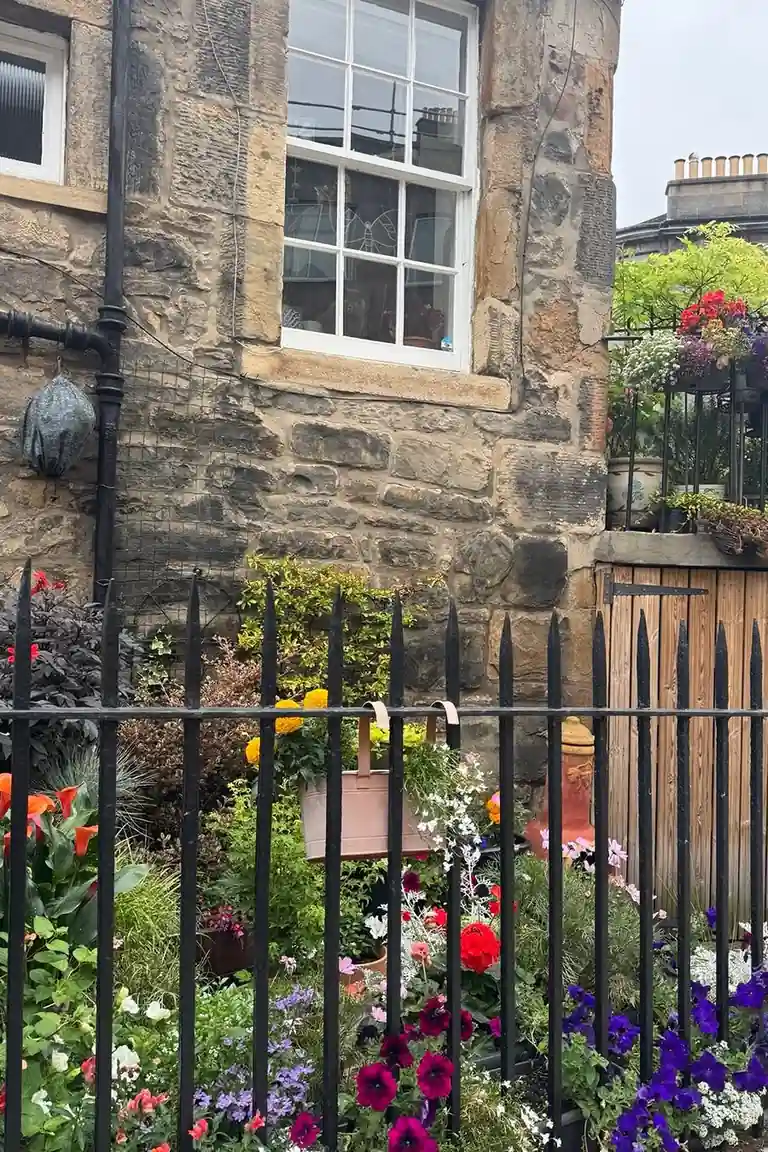
Spring brings the first tulips along the path. Summer fills the beds with roses, foxgloves, and daisies spilling over the edging. Fall leaves asters and sedum standing while the rest of the street fades.
A cottage front yard skips the lawn entirely and lets flowers take the whole space, with a narrow stone or brick path winding through the middle so guests can still reach the door. Keep one simple structure, such as a small picket fence or a rose arch, so the abundance reads as a garden and not a tangle. This style suits older homes and anyone who loves to garden a little every week.
| Season | What shows |
|---|---|
| Spring | Tulips along the path |
| Summer | Roses, foxgloves, daisies |
| Fall | Asters and sedum standing |
10. Artificial Turf Used Selectively
Source: Instagram
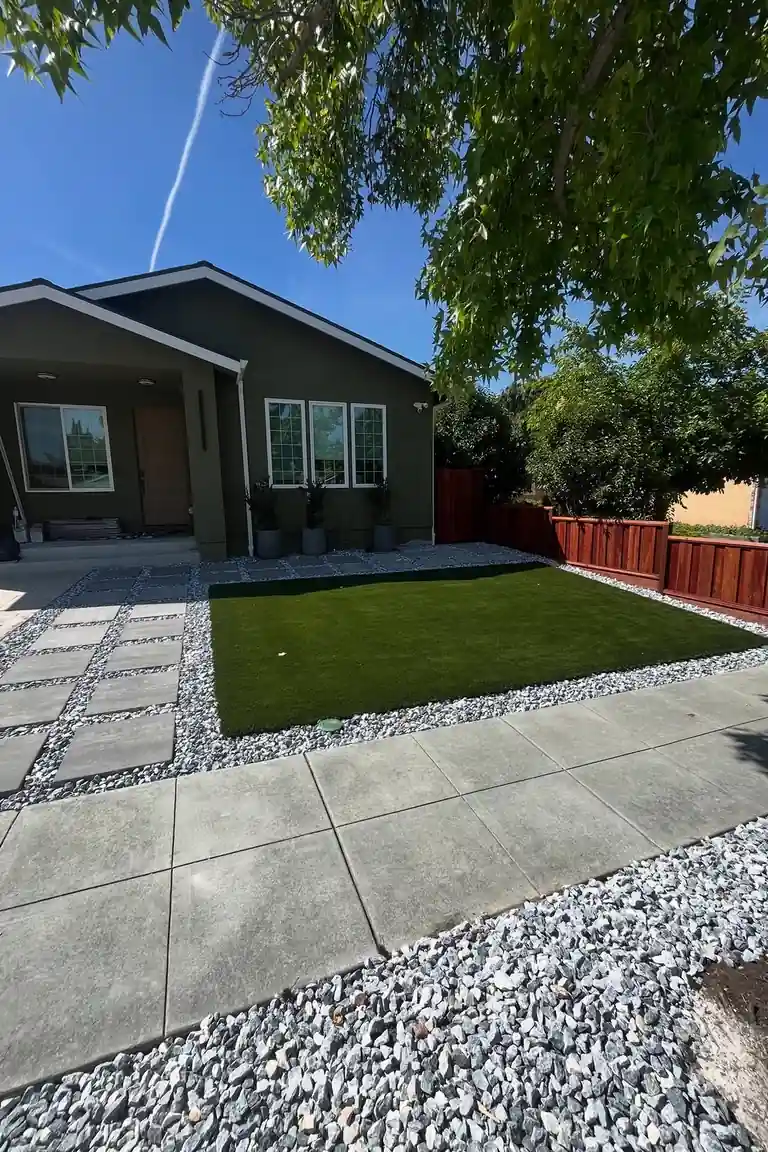
Here is where turf helps. Here is where it hurts. A small, well edged rectangle of artificial turf beside the porch gives kids and dogs a green play spot without watering a whole yard.
A whole front yard of plastic grass, on the other hand, looks flat, holds heat in summer, and fools nobody up close. Use turf only where you truly need a soft green surface, and surround it with real planting beds, gravel, or pavers so the eye has somewhere natural to rest. This low-maintenance front yard trick works best as one accent, never as the entire design.
11. Stepping Stones with Moss Joints
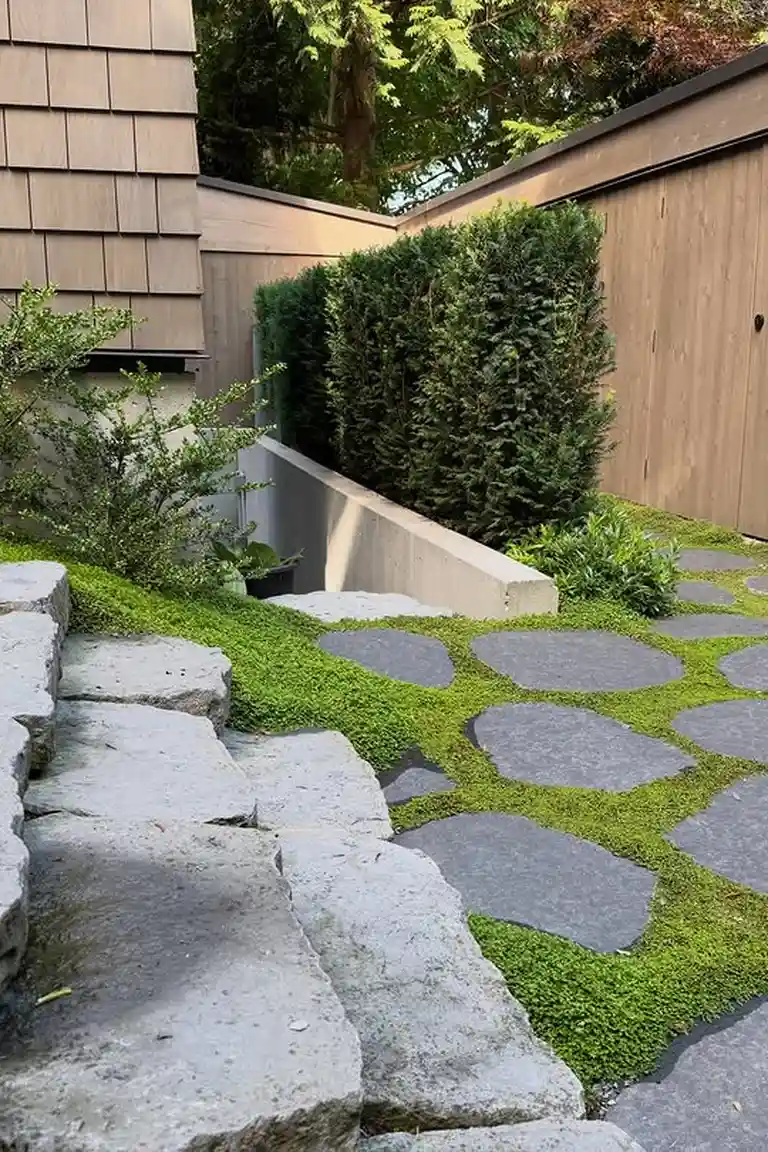
Source: Instagram
Do set the stones first and let the joints follow. Do keep joints about two inches wide, since moss needs room to knit together. Do water the joints gently until the moss takes hold, and do choose a shady or partly shaded path, because moss dries out in full hot sun.
Do not pour concrete between the stones, do not use tiny pebbles that wash away, and do not expect moss to survive where cars drive over it. The result is a soft, quiet path that looks like it has been there for decades,.
12. Dry Creek Bed Landscaping
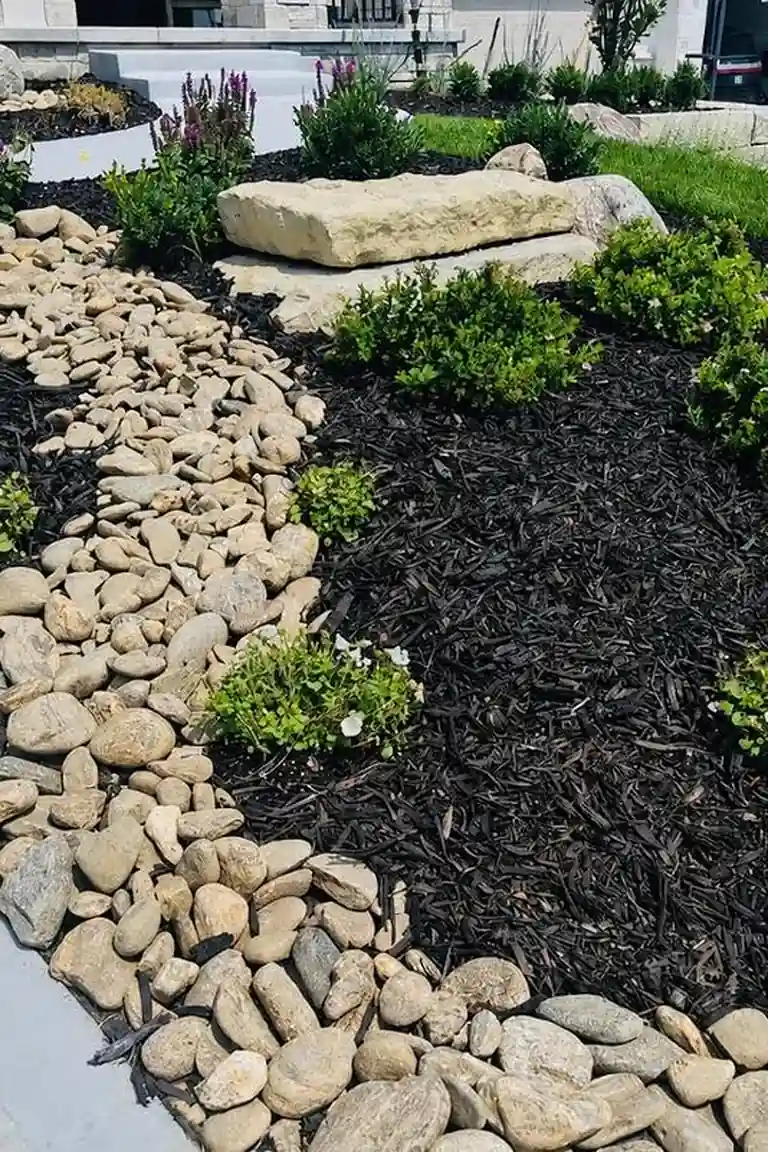
Source: Instagram
Before: rain ran off the slope, cut a muddy channel, and left silt on the walkway. After: a shallow swale lined with river rock carries the same water gracefully, and the yard looks designed even when it is dry.
Dig the channel along the natural low line, never against the house foundation, and line it with landscape fabric before placing stones. Use large rocks at the bends, medium stones along the sides, and small gravel in the middle, then plant ornamental grasses and shrubs at the edges so the creek looks like part of the garden.
13. Raised Planting Beds
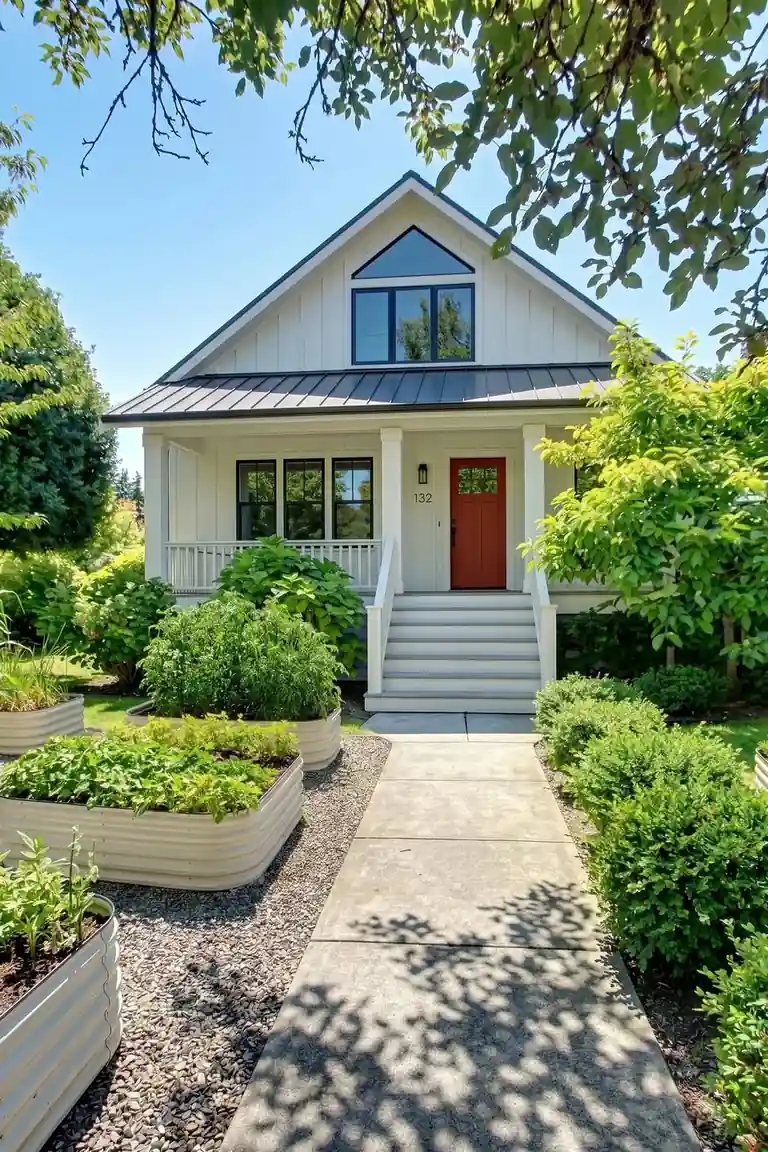
Source: Instagram
You need timber or stone, good soil, and a level spot. You do not need perfect ground, since that is the whole point of raising the bed. Build beds about twelve inches high and no wider than four feet, so you can reach the middle from either side without stepping in.
Fill them with a mix of topsoil and compost, and plant shrubs, perennials, or small trees that suit your sun. Raised beds warm up early in spring, drain better than flat ground, and give the front yard a clear structure that reads as intentional.
14. Large-Format Stone Slabs
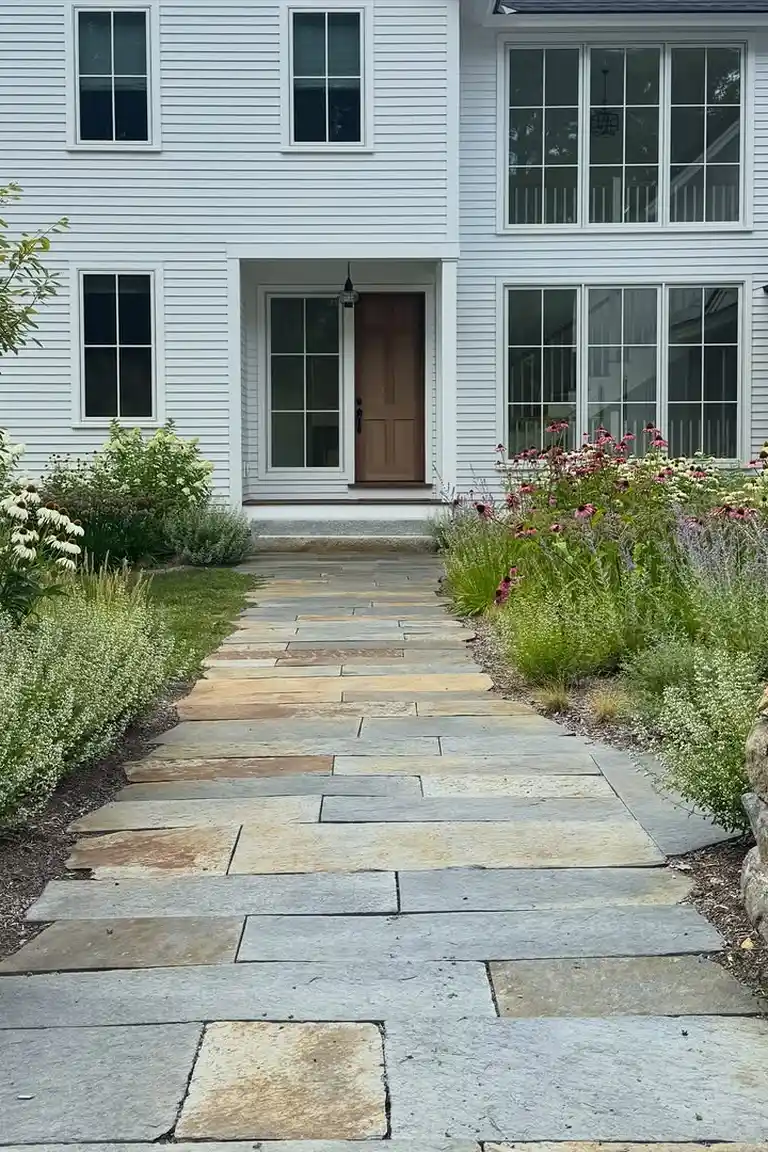
Source: Instagram
Think big. One slab covers what six small pavers would, and that single change lifts front yard curb appeal and makes a small yard feel larger and calmer. Large-format slabs need fewer joints, so weeds have fewer places to start and the ground plane reads as one surface instead of a patchwork.
Set the slabs on a well compacted base, keep gaps narrow and even, and fill them with fine gravel that matches the stone tone. Place one slab as a landing at the bottom of the porch steps, then run the rest toward the street in a simple straight or staggered pattern.
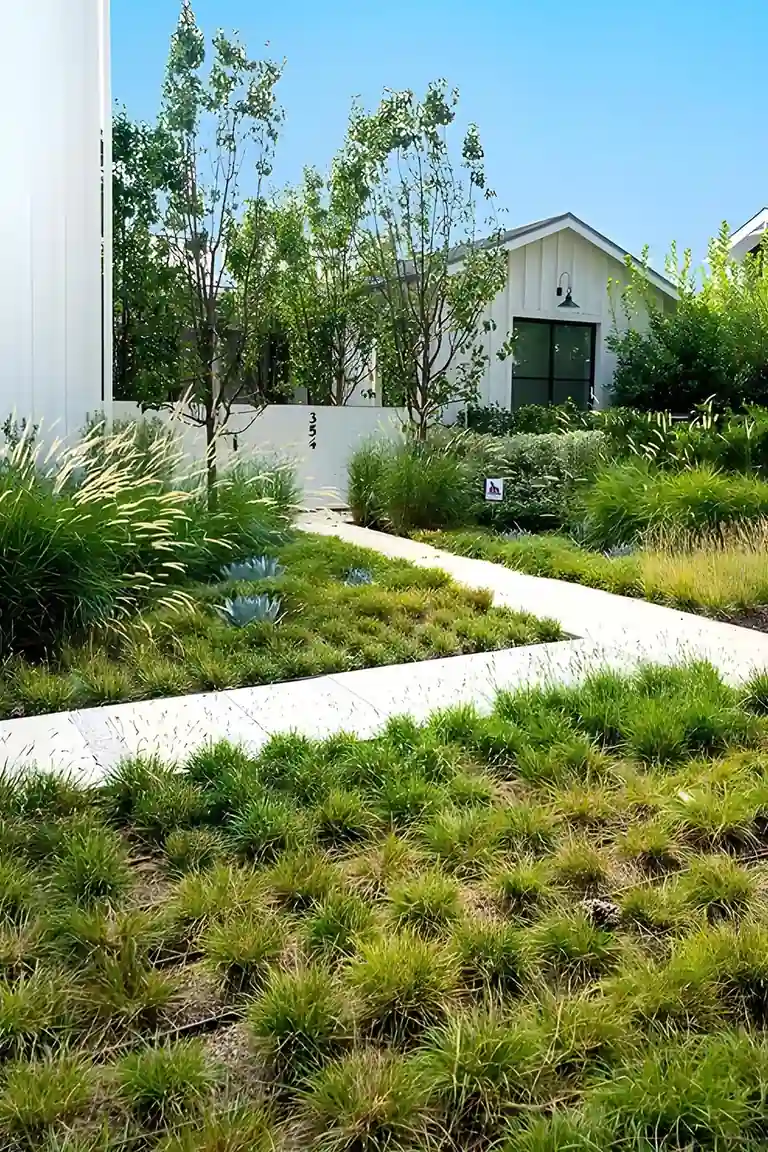
15. Minimalist Garden with Ornamental Grasses
Source: Instagram
One grass. That is the whole palette, repeated with confidence. A minimalist front yard uses three or four kinds of ornamental grasses in large sweeps, with a single stone or a single sculptural shrub as the only accent.
Plant the tallest grasses at the back near the house, mid sized ones in the middle, and low ones along the path, so the yard has layers without clutter. Drought-tolerant plants like feather reed grass, blue fescue, and fountain grass hold their shape through dry spells and need only a yearly cutback. The yard feels calm, modern, and honest about how little work it needs.
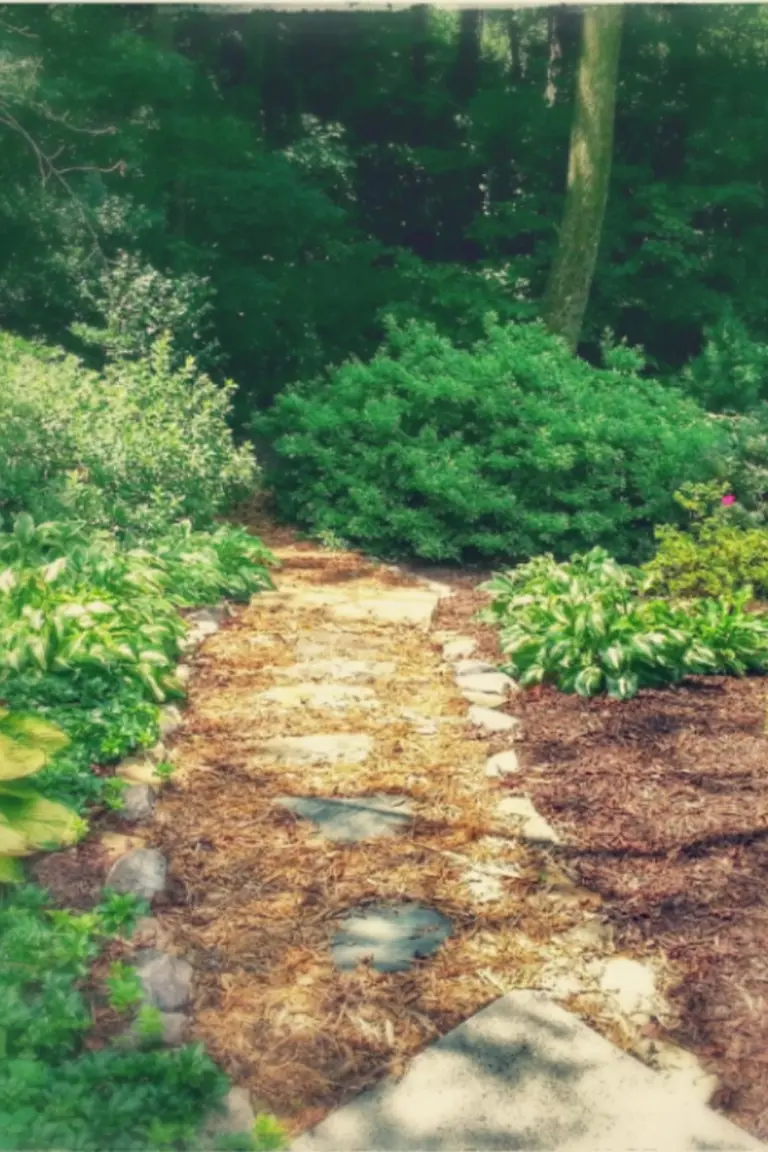
16. Shady Wood Chip Woodland Edge
Source: Instagram
Shade changes everything. Where trees block the sun, lawn thins out and moss takes over, so stop fighting for grass and work with the shade instead. Spread wood chips as a soft ground plane, and plant ferns, hostas, and woodland perennials that thrive without direct sun.
Add a simple log or stone edge where the wood chips meet the walkway, so the chips stay in place after rain. A curved path through the planting keeps the yard from feeling like a dark corner, and a bench or a single stone lantern gives guests a reason to pause.
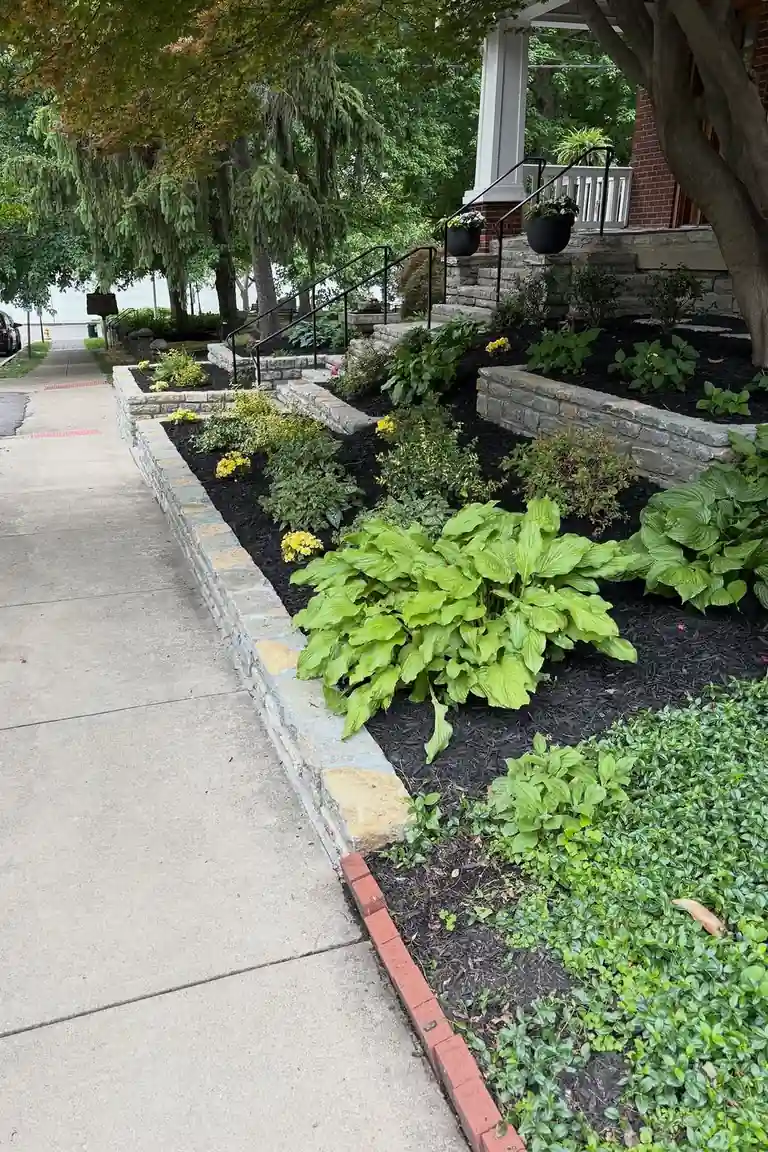
17. Terraced Slope with Stone Retaining Walls
Source: Instagram
Top first, then down. A steep front yard becomes usable when you break it into two or three level terraces held by low stone walls, each no higher than knee height so the structure stays safe and simple. Start at the top near the house with a planting bed, then step down to a gravel or paver landing, then to a lower bed by the street.
Each terrace needs drainage behind the wall, usually gravel and a drain pipe. Plant each level differently, shrubs above, perennials in the middle, ground cover below, and the slope reads as a designed garden instead of a problem.
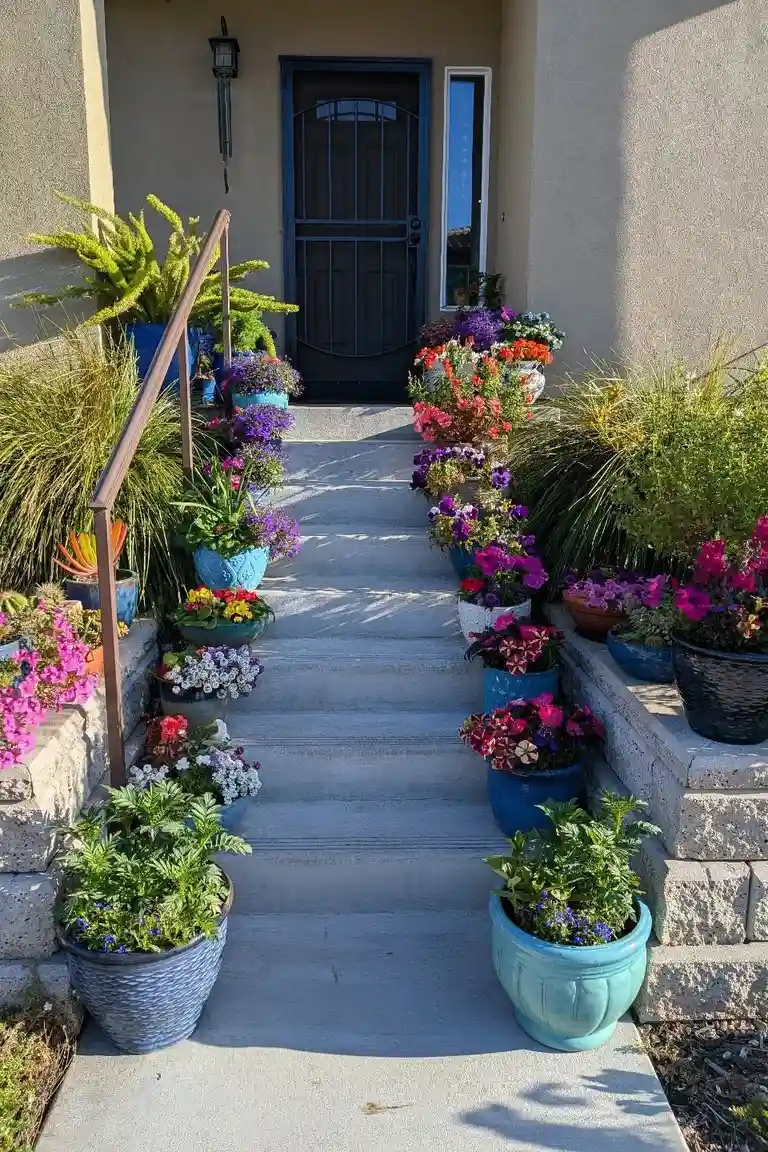
18. Narrow Entryway Paver Ribbon with Pots
Source: Instagram
Five feet wide. That is all you have, and it is enough. A narrow entry needs one clear idea, not five competing ones, so run a single ribbon of pavers from the sidewalk straight to the door, about three feet wide, and flank it with large pots instead of planted beds.
Pots give you color without digging, and you can swap the planting each season. Keep the paver color close to the house trim so the path feels like part of the building, and leave the full width of the path clear, since pots that creep inward turn a walkway into an obstacle course.
19. Front Yard Patio Extension
Source: Instagram
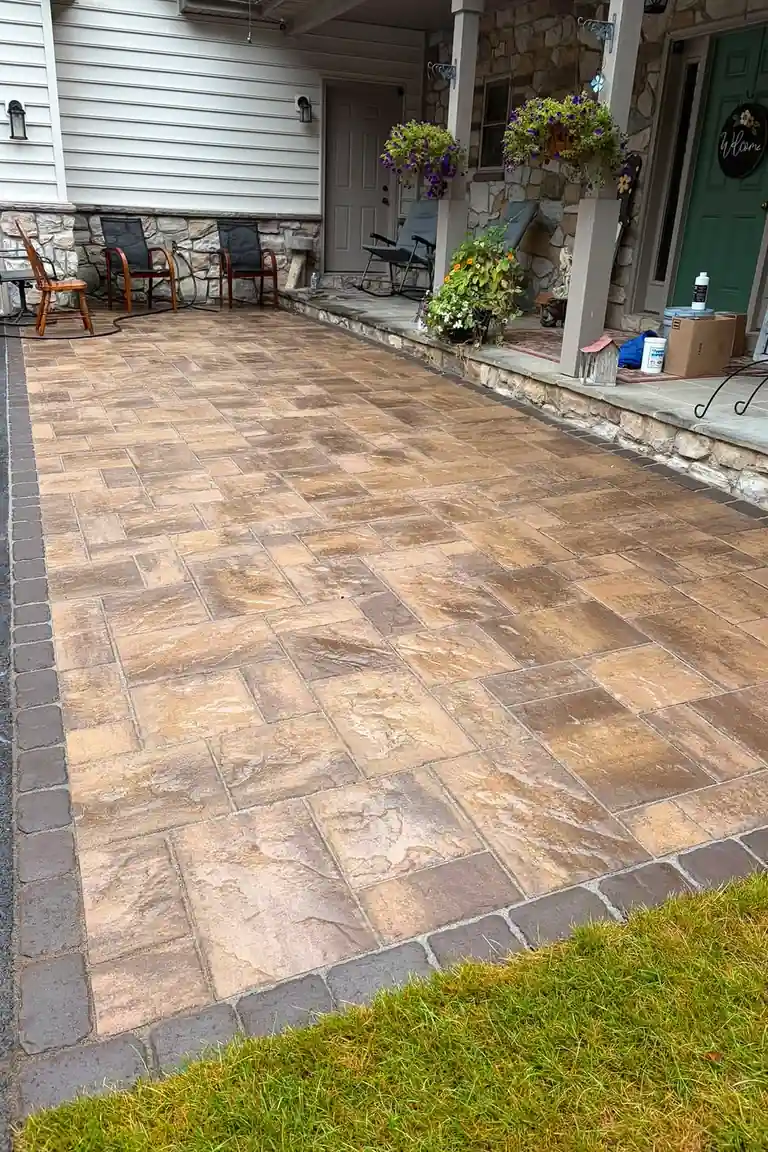
Extend the porch until it becomes the yard. Lay pavers or stone across the whole front area to create an outdoor room, then furnish it like one, with a bench, two chairs, and a small table for morning coffee. Frame the patio with planting beds on two sides only, so the space feels open toward the street and guests can see the house.
Add one small tree in a corner for shade, and string lights or a single lantern for evenings. Keep a clear path from the sidewalk to the door through the patio, never blocked by furniture.
Final Thoughts
Picking the right grass-free design comes down to four honest questions. What climate do you live in, and how much rain does your yard really get. What budget can you spend now, and what can you add later in phases. How many hours of sun hit the front yard, and which spots stay shaded.
How much weekend work do you truly want, from weekly deadheading to a yearly rake. These no grass front yard ideas all share one goal, a front yard that looks cared for without a lawn demanding your Saturdays. Save this list to your landscaping board on Pinterest, and pull it out when you are ready to trade the mower for a yard you enjoy more.