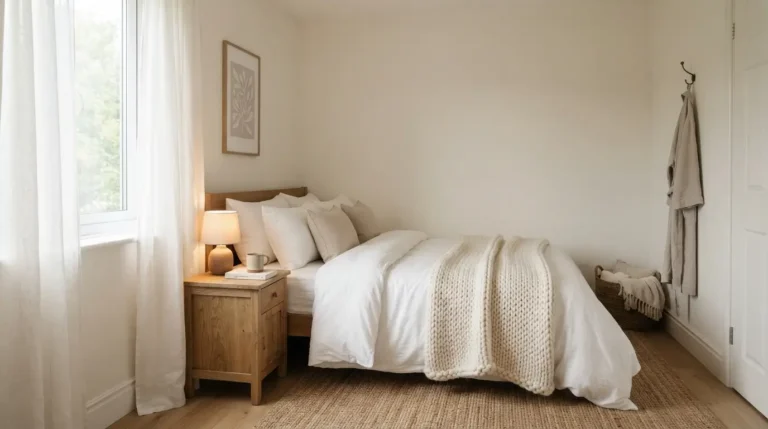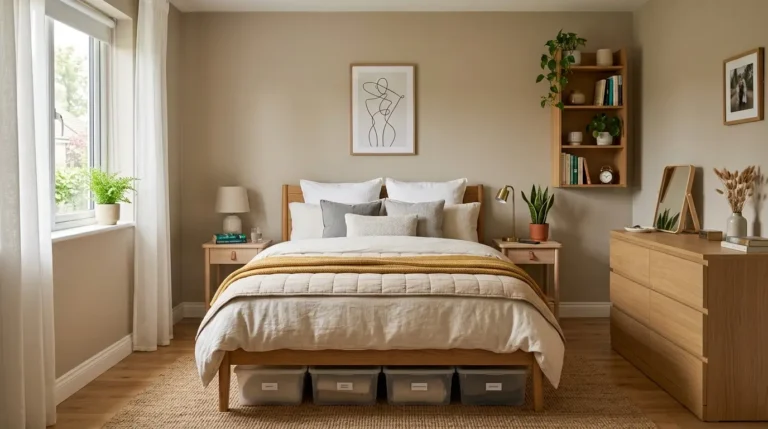
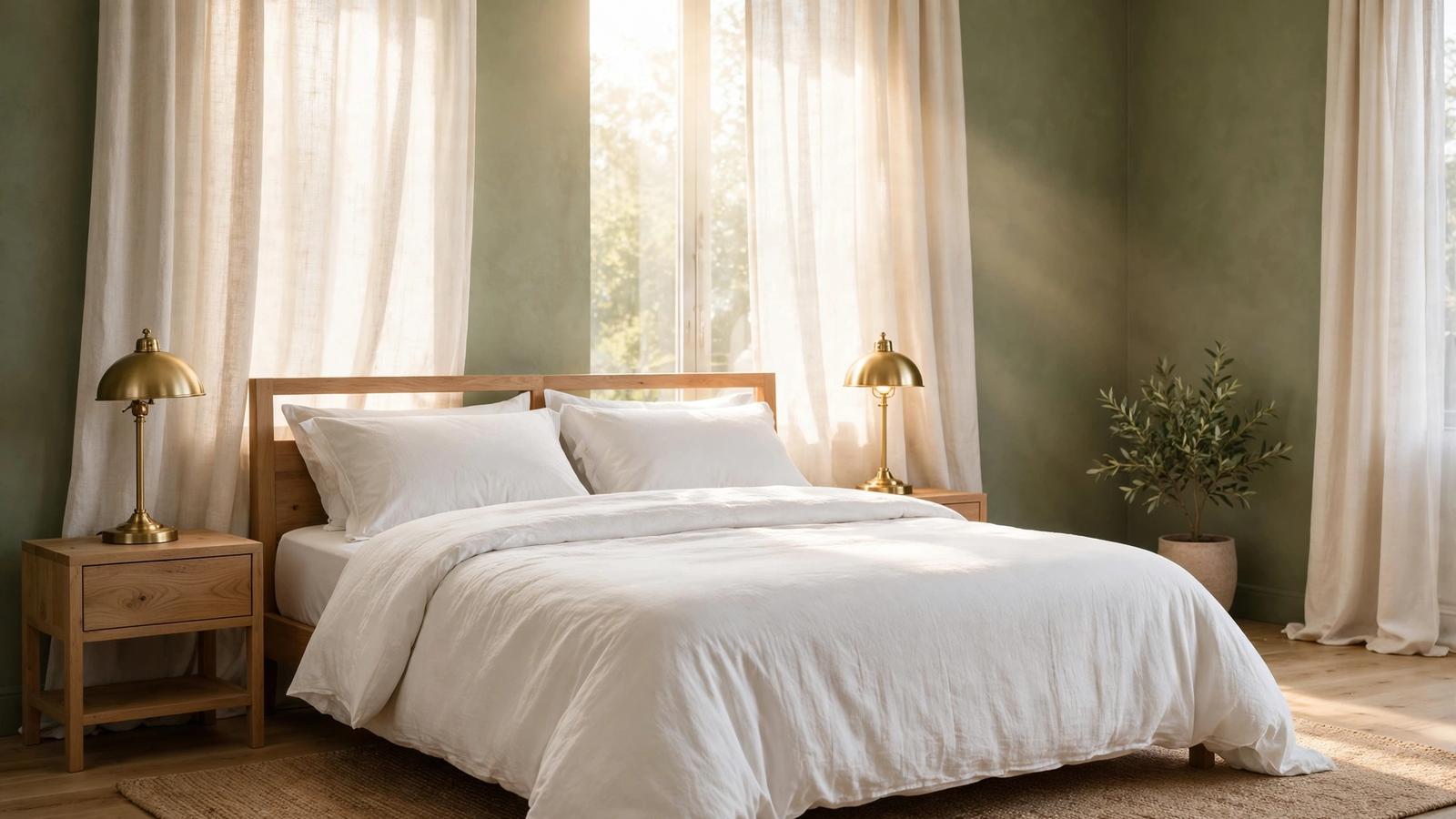
23 Olive Green Bedroom Ideas for a Cozy, Elegant Space
Picture olive green on a quiet morning. The first light comes through the window and the color sits soft and earthy, like crushed leaves mixed with warm sunlight. It is not bright and it is not dull. It is the kind of green that feels grown, not painted, and it brings a calm, grounded feeling into a bedroom the moment you wake up. Olive green works because it acts like a neutral with a heartbeat. It pairs with cream, wood, brass, and linen without fighting them, and it can feel elegant in a master suite or cozy in a small guest room. Whether you want just a hint of green in your bedding or walls washed in olive, this shade forgives mistakes and flatters almost every style. Below are twenty three ideas you can try, from paint colors to pillows to plants, each one simple enough to start this weekend.
1. Olive Painted Walls
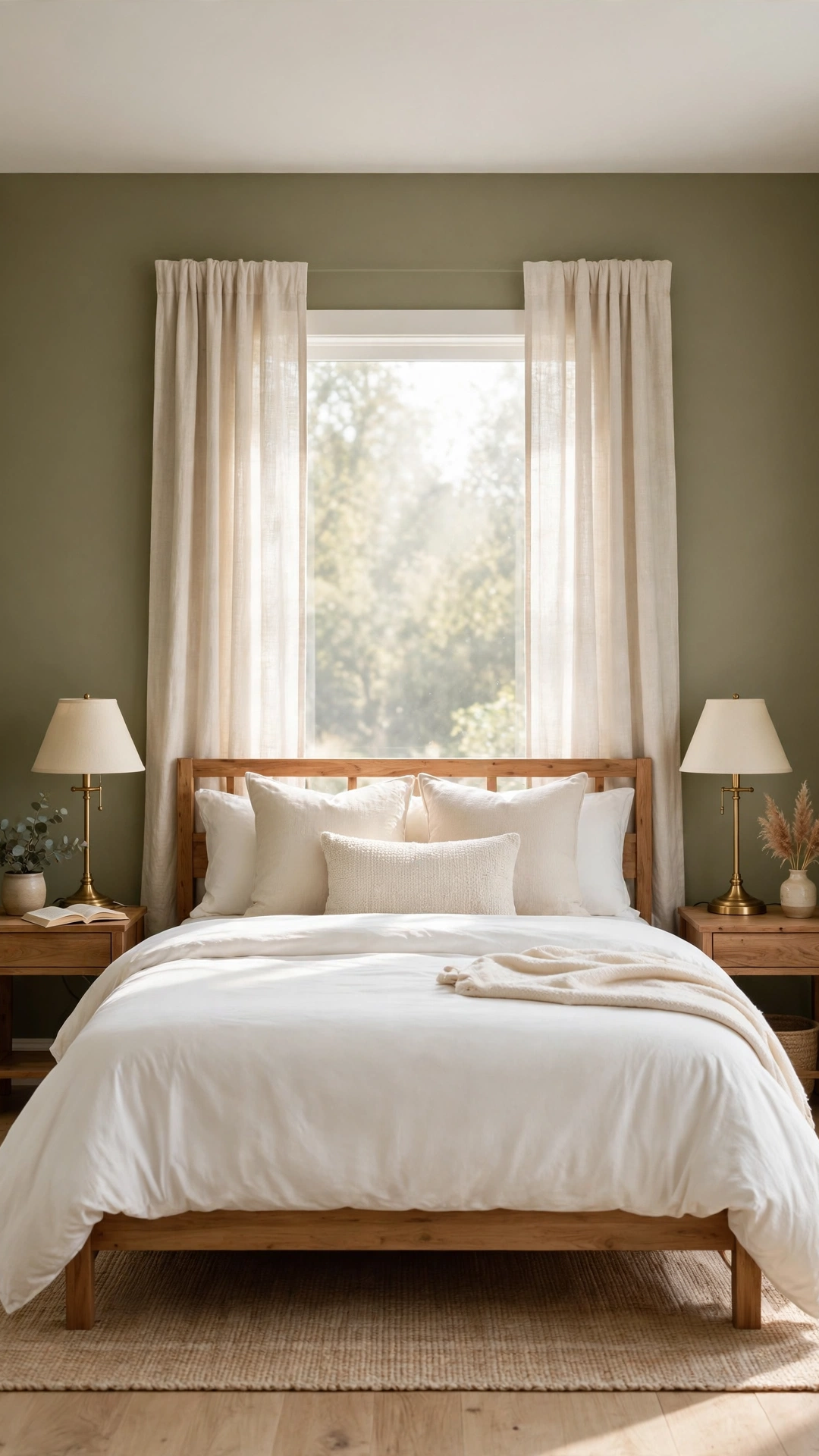
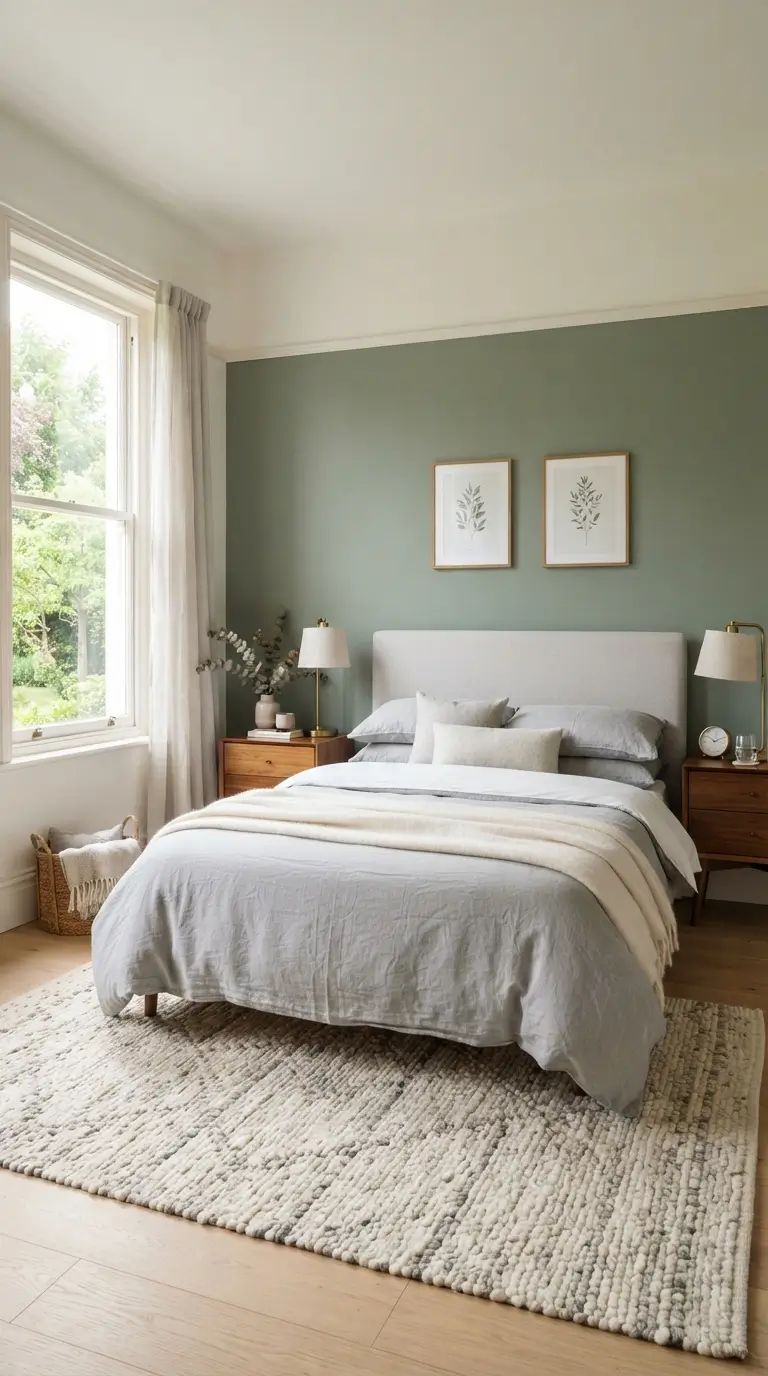
Painting all four walls in a soft olive tone is the boldest of these olive green bedroom ideas, and it is also one of the most rewarding. Olive painted walls wrap the room in warmth, the way a good sweater feels, and they make white bedding look crisp and intentional instead of plain. Choose a muted olive with a warm base, not a gray one, so the color glows at golden hour instead of going flat. Test a large swatch on the wall and look at it in morning, noon, and evening light before you commit, because olive shifts a lot with the sun. If you are nervous, paint one bedroom first, like the guest room, and live with it for a week. Keep the ceiling a warm white and let the baseboards match the walls for a seamless look that decorators love. Two coats with a quality roller will cover well, and you can finish a small bedroom in a single weekend. Style with natural wood furniture and cream textiles so the green stays rich without feeling heavy.
2. Accent Wall Behind Bed
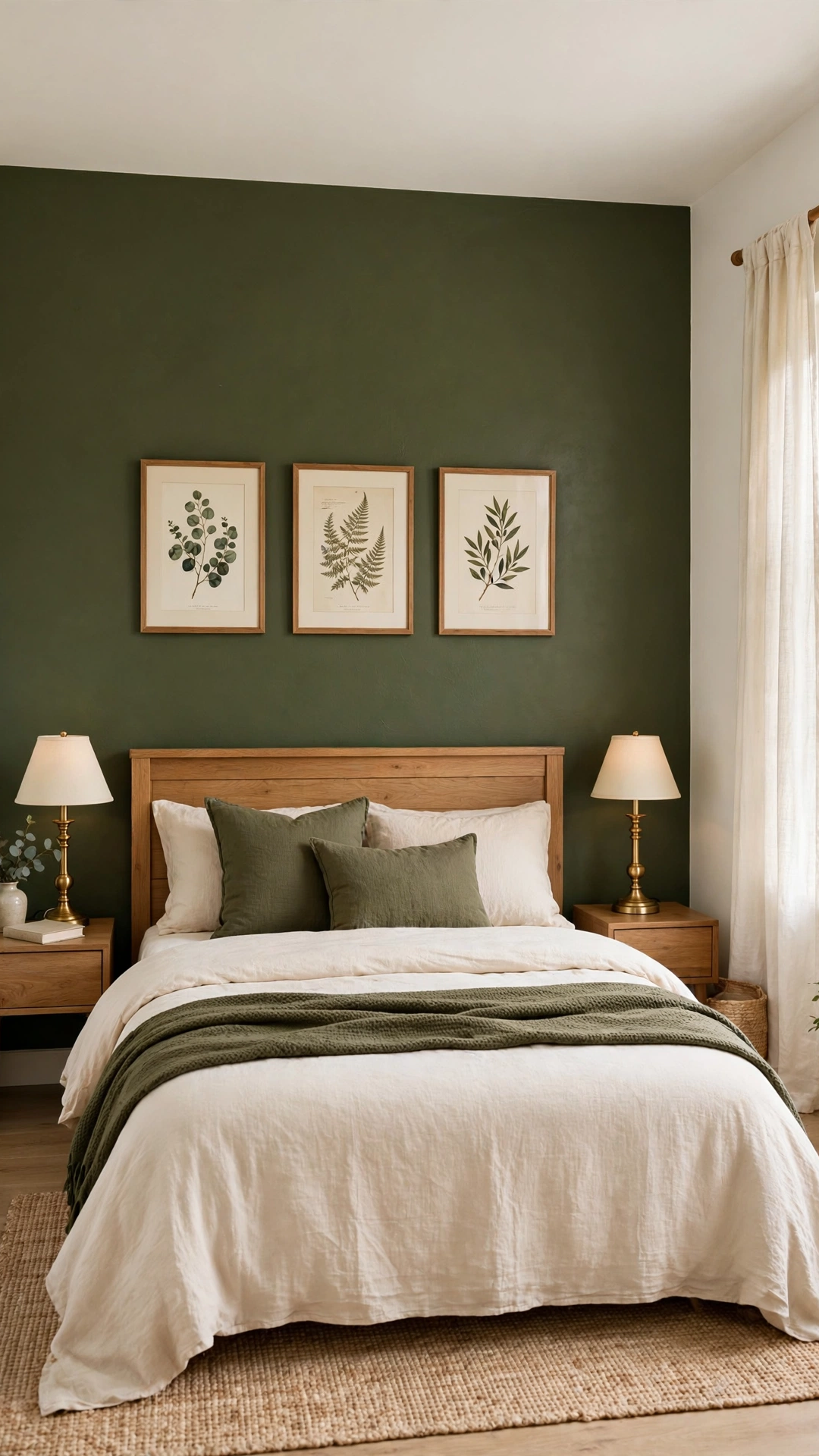
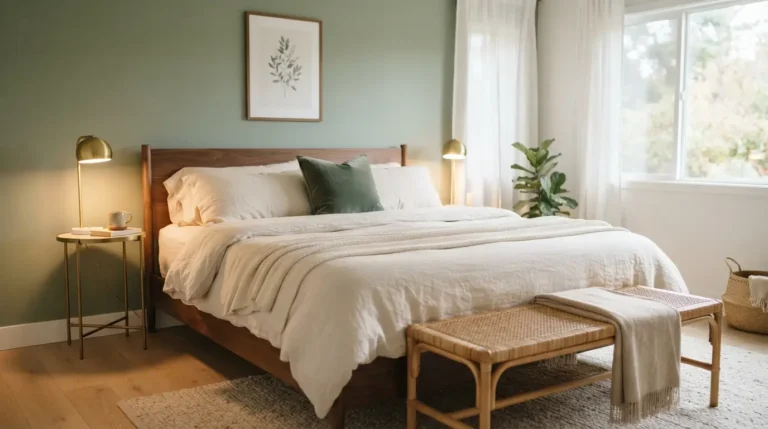
If painting the whole room feels like too much, a single accent wall behind the bed gives you the olive moment without the commitment. This is the trick to use when you love olive green bedroom walls but want to keep the rest of the room light and airy. Paint the headboard wall in a deep olive while the other three walls stay warm white or soft cream, and the bed instantly becomes the star of the room. The accent wall frames the headboard the way a good frame flatters a painting, so even a simple wooden bed looks styled. Choose an olive that is two shades deeper than what you would pick for all four walls, since a small dose can handle more drama. Mask the edges carefully and cut in with a steady hand for crisp lines. You can paint an accent wall in one afternoon, then hang the bedding and art back up before dinner. It is the fastest version of olive green bedroom decor with the biggest visual payoff.
3. Olive Duvet Bedding Set
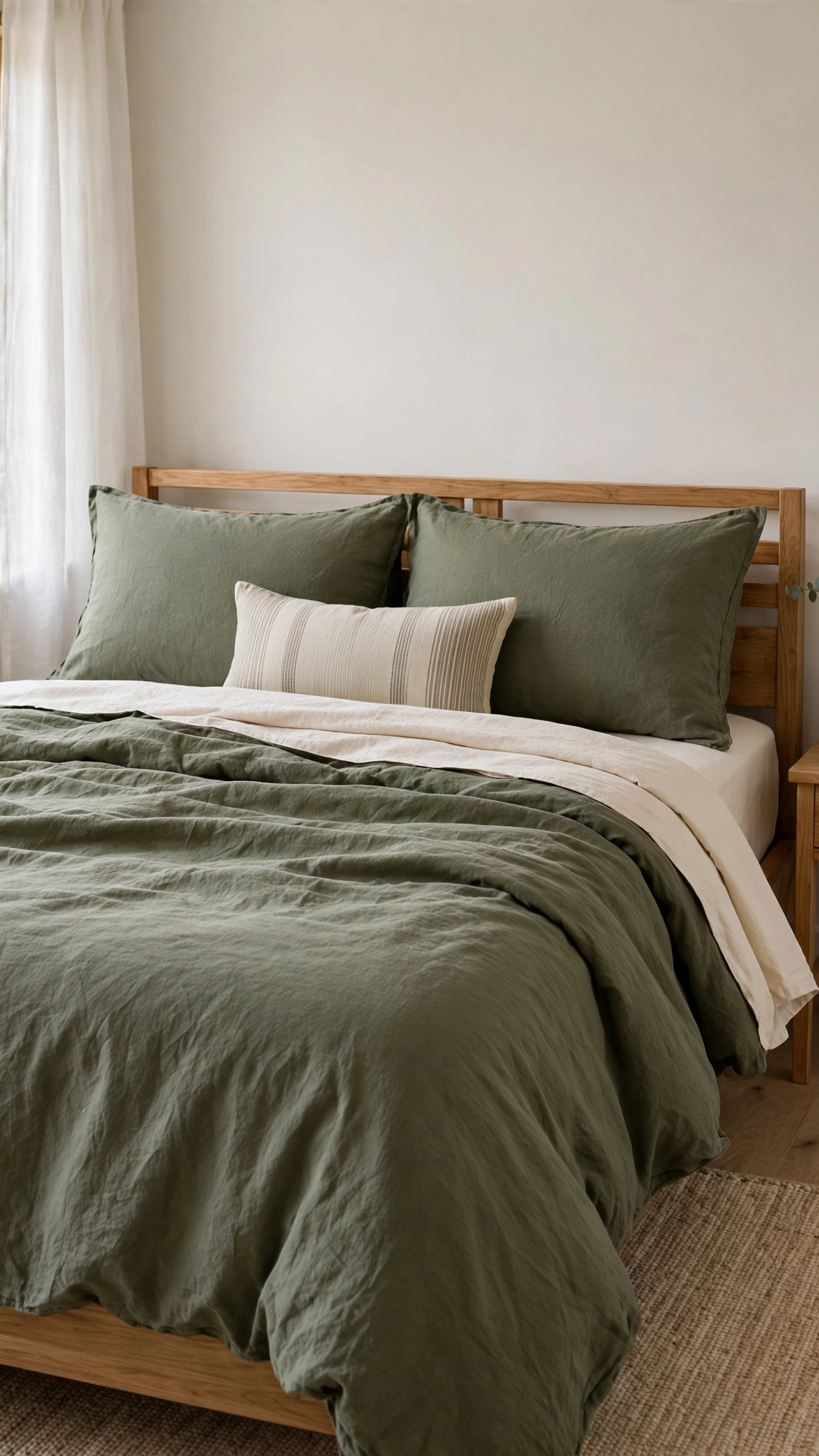
An olive duvet cover is the easiest way to bring this color into a bedroom you cannot or do not want to paint. Look for a full bedding set that includes the duvet cover, pillow shams, and maybe a lumbar pillow, so the color looks layered and finished instead of thrown on. A washed cotton or stonewashed linen duvet in olive feels relaxed and a little bit French, while a smooth sateen finish in the same shade reads more polished and classic. Keep the fitted sheet in cream or white so the bed does not feel too dark when you pull the covers back. These olive green bedding ideas work in any season because the color sits comfortably between warm and cool. Wash and dry the set before putting it on the bed so it softens up, and fluff the duvet with two plump inserts if you want that hotel thick look. This one swap can change the whole mood of the room by lunchtime.
4. Linen Sheets Set
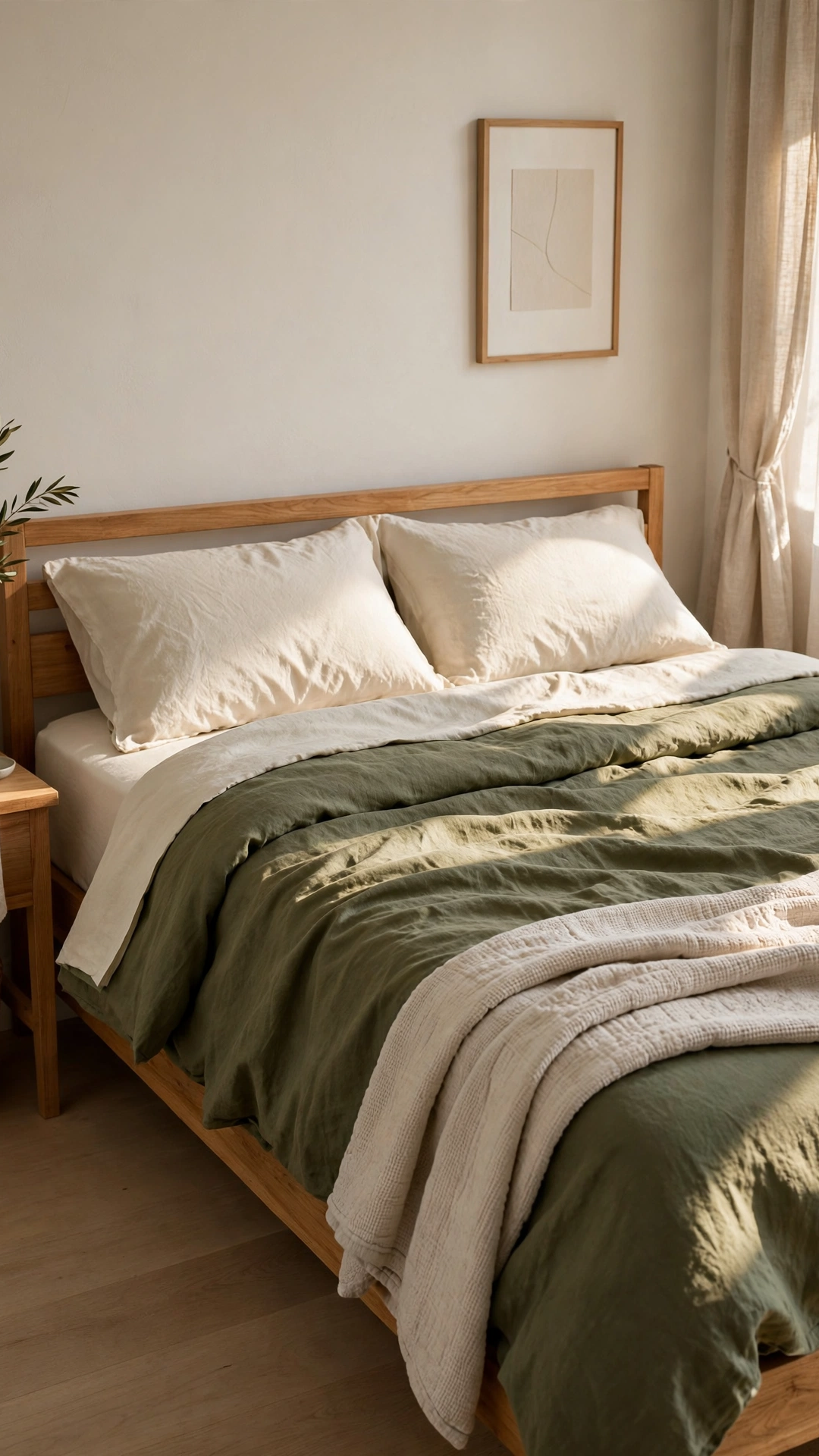
Linen sheets in olive or a neighboring tone like sage green bedroom ideas often feature are a quiet luxury that you feel every single night. Natural linen has a rumpled, lived in texture that suits olive perfectly, because both have an earthy, unfussy character. Choose a pure linen or linen cotton blend in a soft olive, and pair it with cream or white pillowcases if you want the bed to breathe a little. The beauty of linen is that it gets softer with every wash, so these sheets become a long term investment in better sleep. For styling, fold the top sheet back in a wide cuff so the olive shows as a band of color across the bed. Add a lightweight quilt at the foot for cooler nights. If your budget is tight, start with just the pillowcases in olive linen and keep the rest of the bed neutral. You can order them today and have the bed remade in fresh olive by tonight.
5. Cozy Throw Blanket
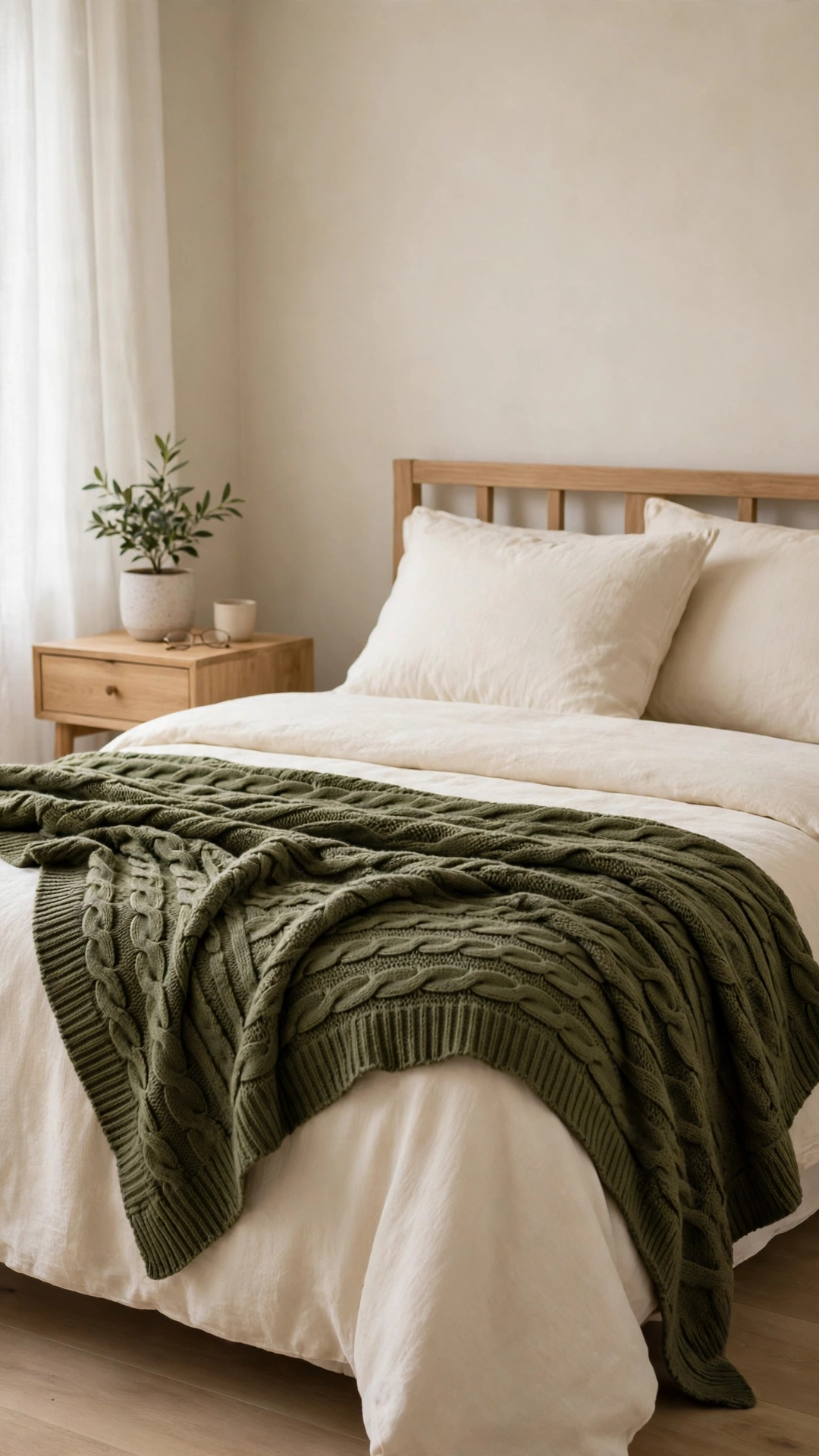
A chunky knit throw blanket in olive draped across the foot of the bed adds instant coziness and a punch of color for very little money. This is the kind of olive green bedroom decor that costs less than a dinner out and changes the room the minute you place it. Look for a cable knit, waffle weave, or pom pom edge throw in a warm olive tone, and drape it casually so one corner hangs lower than the other for that effortless blogger look. Fold it in thirds lengthwise first, then lay it across the lower third of the bed, which keeps it from looking messy. A throw also protects your duvet from pets and afternoon naps, so it is practical as well as pretty. Keep a second one in the reading corner if you have the space. You can pick one up on a shopping run today, wash it once for softness, and have a warmer, more inviting bed before bedtime.
6. Mixed Throw Pillows
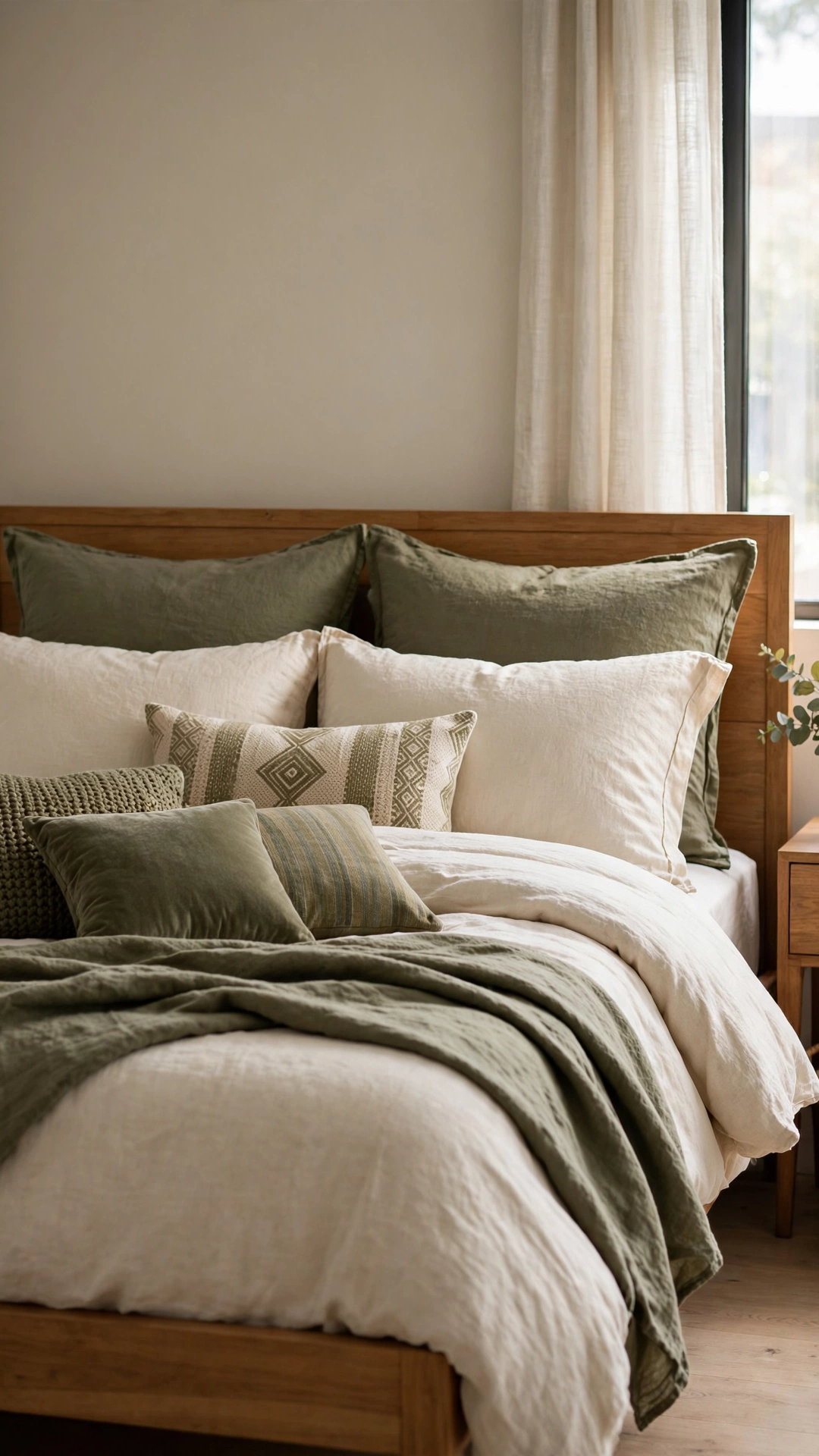
Throw pillows are where olive green gets playful, because you can mix tones and textures without any real rules. Start with two larger euro shams in a solid olive, then add two standard pillows in cream or oatmeal linen in front of them. Finish with one small lumbar pillow in a pattern that pulls the olive together, like a subtle stripe or a faded botanical print. Mixing two or three olive tones, say a deep olive with a softer sage, keeps the bed interesting instead of flat. Keep the total at five or fewer pillows so the bed still looks sleepable and not like a furniture store display. Buy pillow inserts one size up from the covers for that full, plump look everyone loves. Arranging them takes ten minutes: shams against the headboard, sleeping pillows in front, lumbar at the front. It is a same day update with zero tools required.
7. Cream Curtain Panels
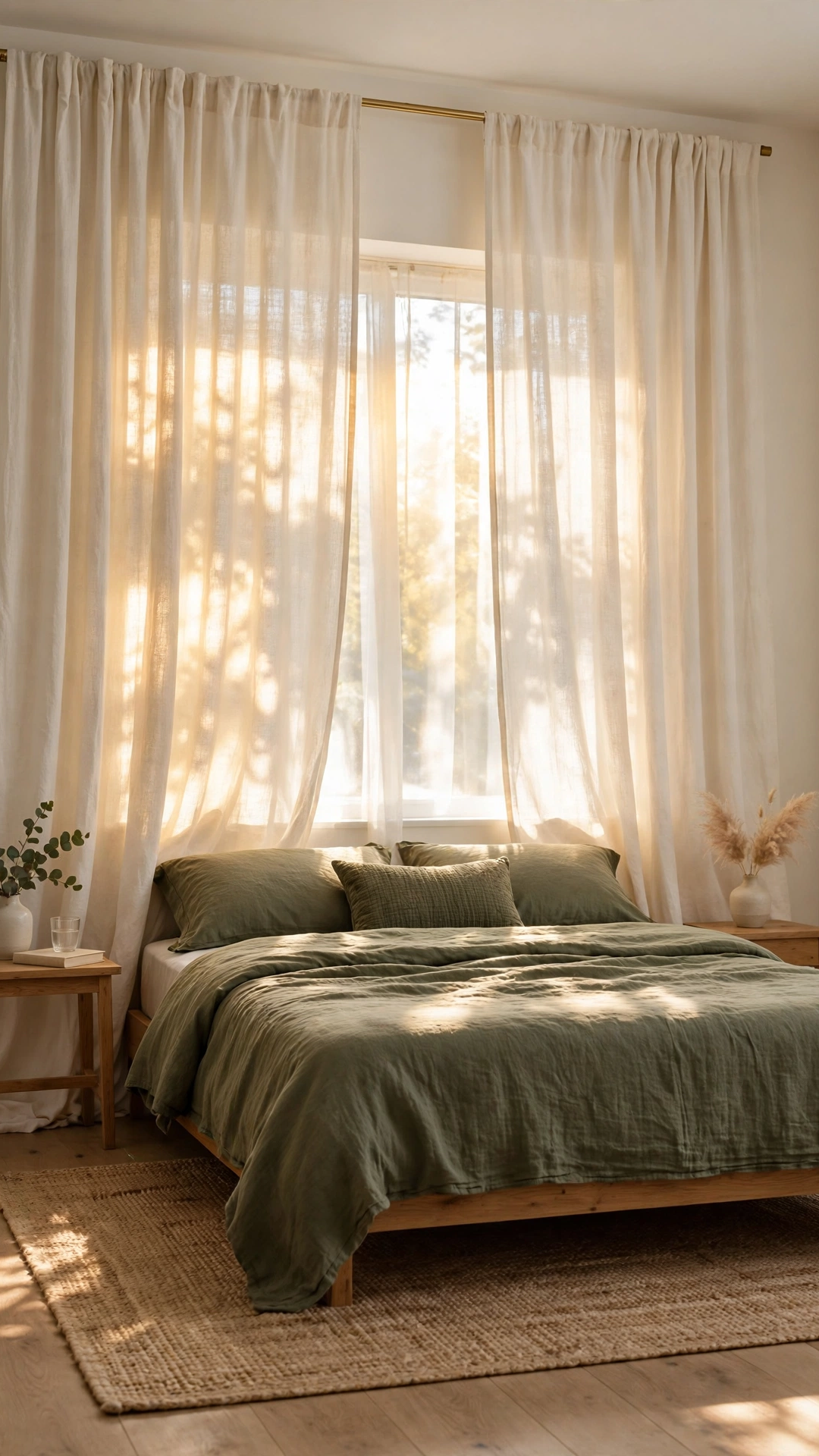
Cream or ivory curtain panels are the perfect partner for olive walls or bedding because they soften the room and let the green stay the hero. Choose a linen or linen look fabric in a warm cream, and hang the rod wide and high so the window looks bigger and the light pours in. When morning sun filters through cream linen, it casts a golden glow that makes olive walls look absolutely rich. Make sure the panels are long enough to just kiss the floor, which reads far more elegant than curtains that float above it. If your walls are olive, cream curtains keep the room from feeling cave like; if your bedding is olive, they echo the light tones and tie everything together. You can hang a pair of panels in under an hour with a basic rod and brackets. Steam out the wrinkles, tie one side back loosely, and enjoy how much calmer the room feels.
8. Olive Upholstered Headboard
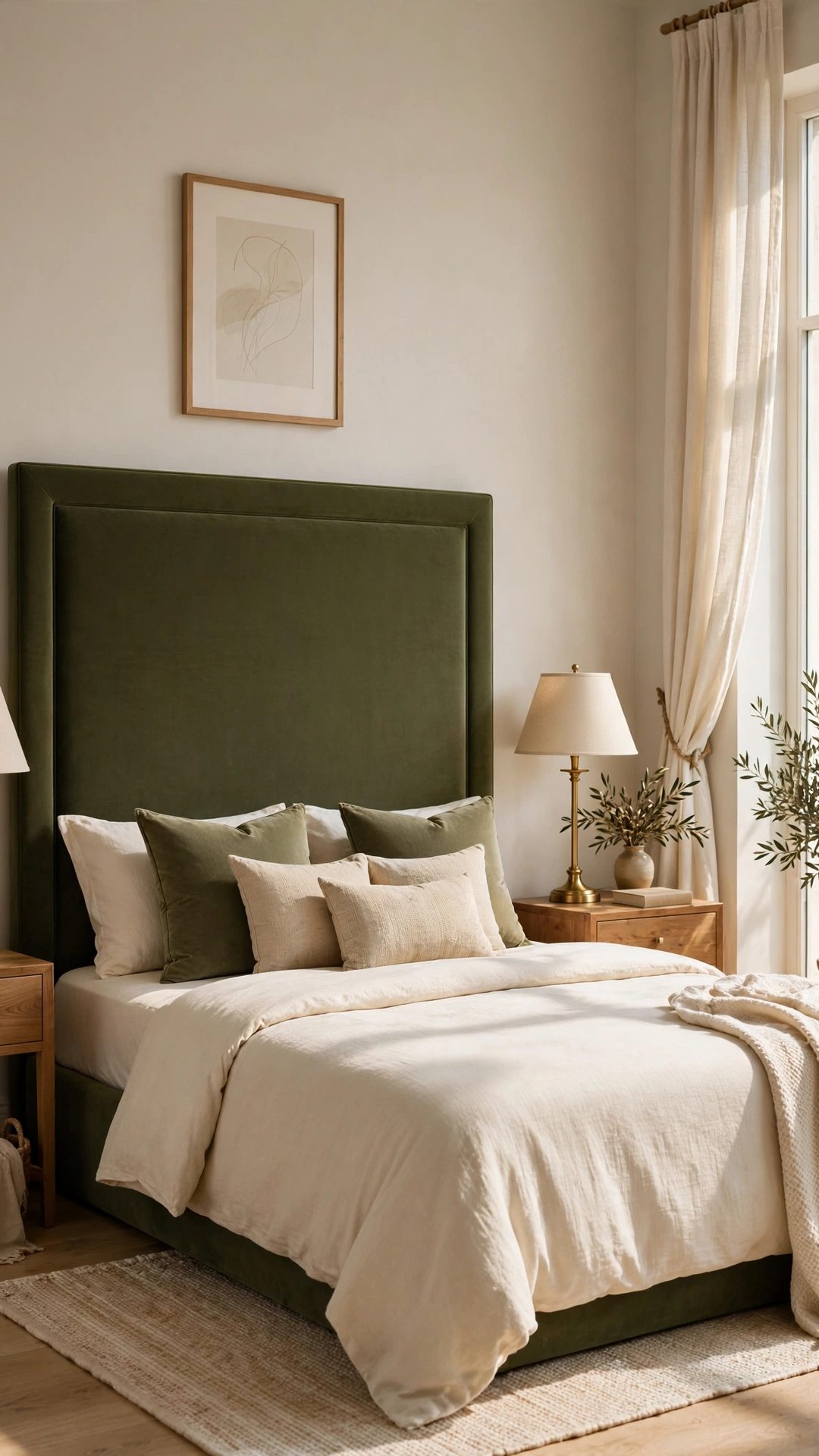
An upholstered headboard in olive fabric turns the bed into a piece of furniture you actually want to look at. Choose a performance velvet or a nubby boucle in olive, both of which catch the light and make the color look deep and expensive. A tall, simple shape like a rectangle with clean edges works in almost every bedroom, while a channel tufted version leans more modern and soft. The headboard sits against your accent wall or plain wall and gives you something comfortable to lean on while you read. Measure your bed width before you order and add two to three inches on each side for a proper fit. Many upholstered headboards come with simple leg mounts that attach to a standard bed frame in minutes. If you love the look but not the price, slipcover kits and DIY reupholstery over a plywood base are very doable weekend projects that cost far less.
9. Wooden Nightstand Pair
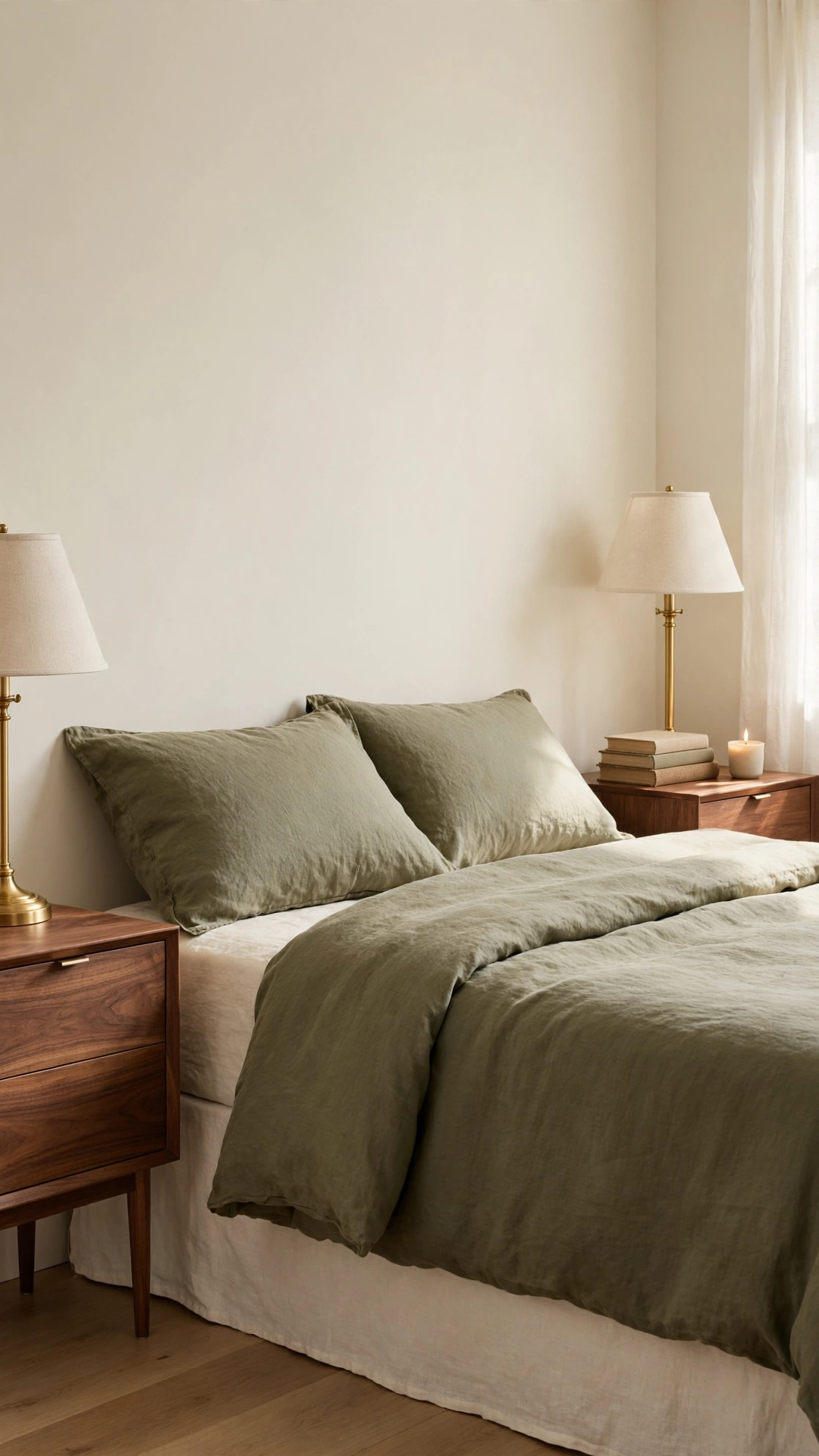
Warm wooden nightstands balance olive green beautifully, because wood and olive are both nature colors that calm each other down. Look for a medium walnut, honey oak, or acacia finish rather than gray washed wood, which can make olive look muddy. A pair of matching nightstands flanks the bed symmetrically and gives each side a landing spot for water, books, and a lamp. Choose nightstands with at least one drawer so clutter stays hidden, since olive looks best in a tidy room. The wood tone should be a little warmer than you think, because olive has yellow undertones that love warmth. If you already own nightstands you like, a coat of furniture stain or even a careful sand and oil can shift the tone without buying new. Style the tops with a small stack of books, a candle, and one small plant, leaving enough empty space for a glass of water.
10. Brass Table Lamps
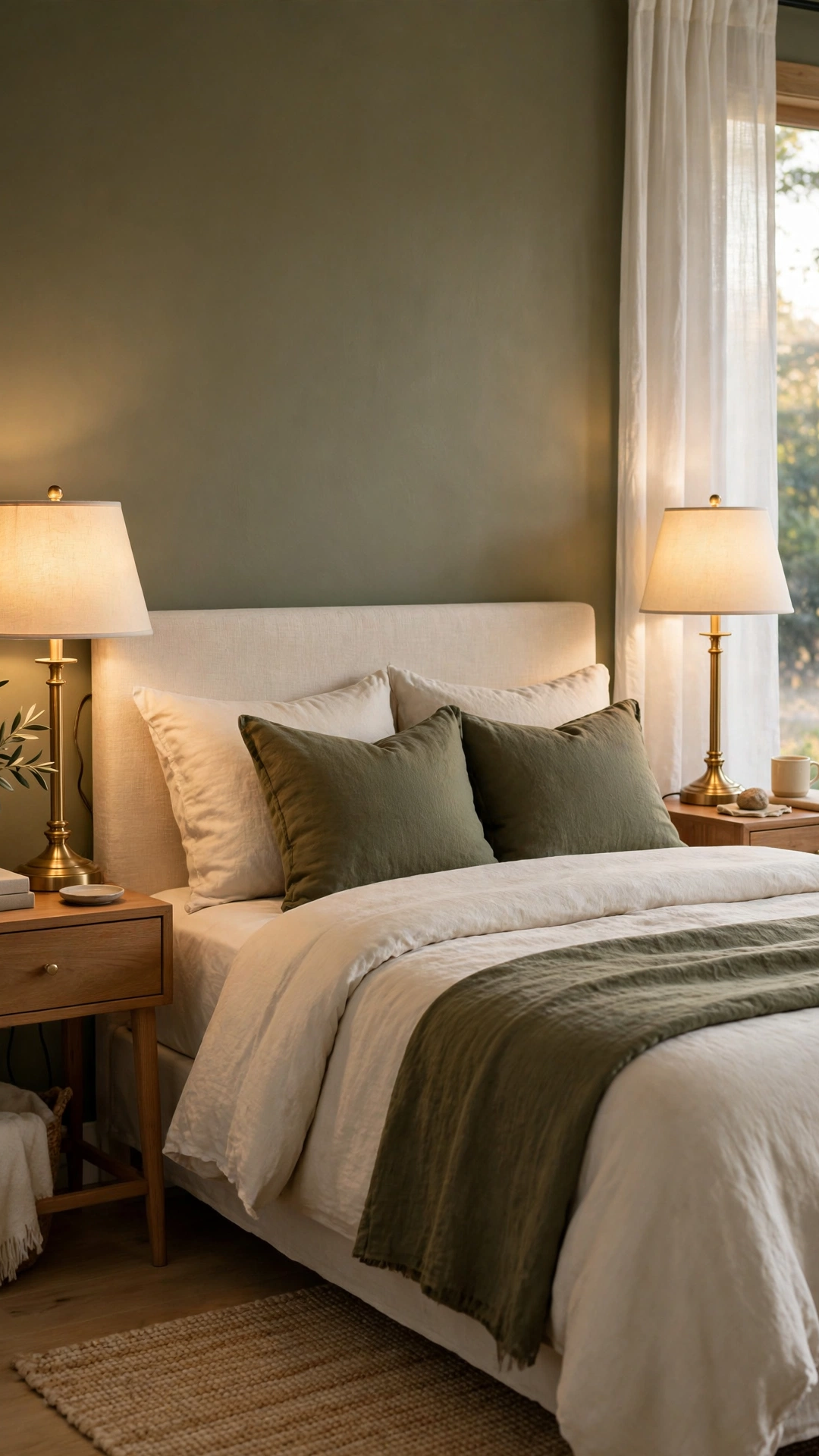
Brass table lamps on the nightstands add the jewelry that olive green bedrooms need. The warm metal glows against the earthy green and keeps the room from feeling flat, especially in the evening when the lamps are on. Pick a lamp with a simple brass base, a classic urn or stick shape, and a drum shade in cream or natural linen so the light stays soft. Place one on each nightstand at roughly the same height so the bedside looks intentional. Use warm white bulbs around 2700K, because cool daylight bulbs can make olive walls look a little sickly. If brass feels too shiny, an aged or brushed brass finish reads softer and more vintage. Plug in timer plugs so the lamps turn on at dusk automatically, which makes the bedroom feel welcoming when you walk in. Two matching table lamps are a one hour project that upgrades the whole room.
11. Jute Area Rug
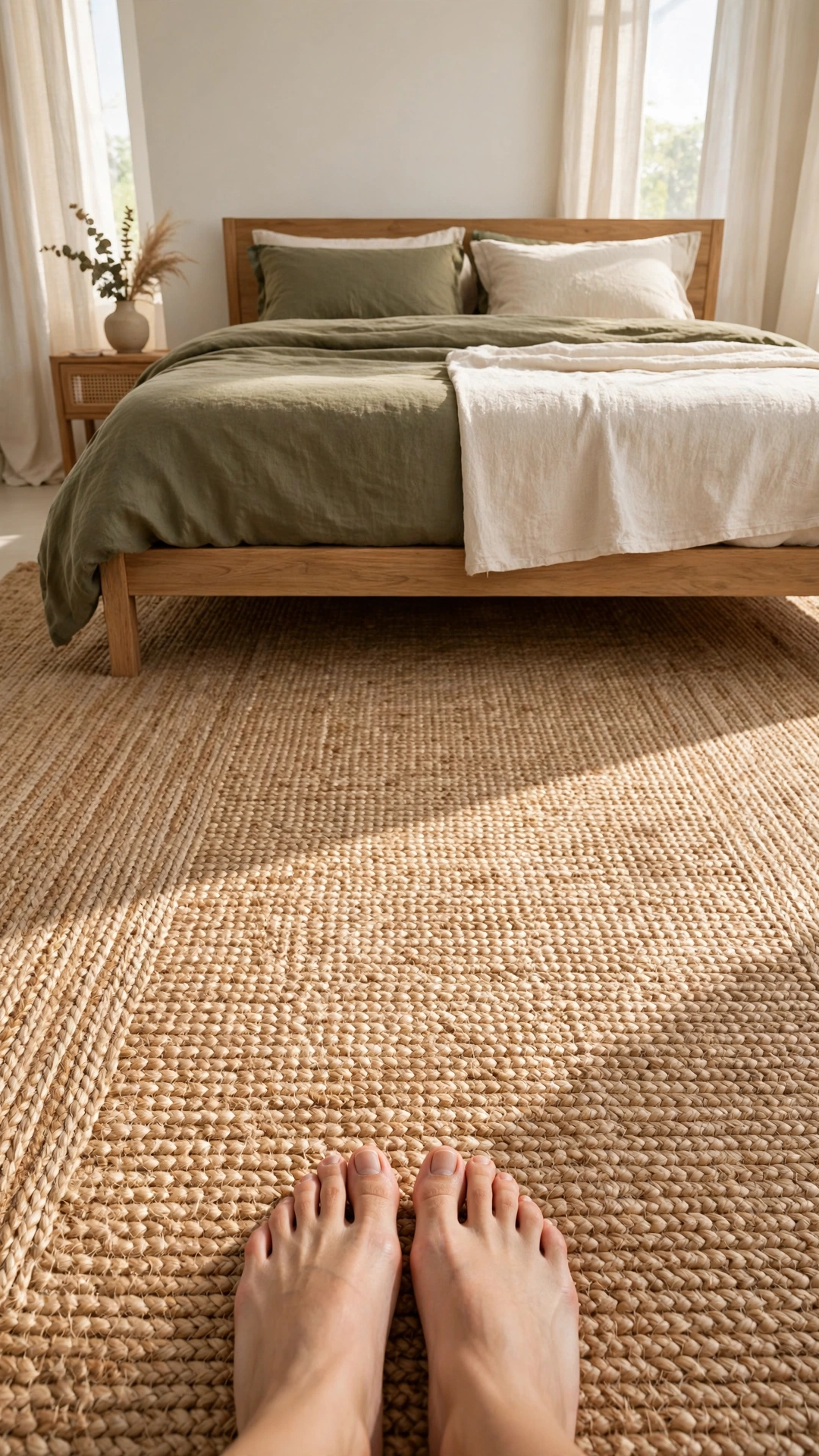
A natural jute or cream wool rug under the bed grounds an olive bedroom and adds the texture the color craves. Olive is a soft, matte color, so it pairs best with rugs that have visible weave and organic feel rather than shiny or busy patterns. Choose a rug large enough that it extends at least two feet past each side of the bed, so your feet land on something soft every morning. A flat weave jute rug keeps the look casual and coastal, while a thick cream wool rug leans cozier and more traditional. Layer a smaller vintage style rug over the jute at an angle if you want more pattern without overwhelming the room. Vacuum the rug well before placing it and use a rug pad underneath to stop slipping. This is a same day change that makes the room feel finished from the floor up, and it softens footsteps beautifully.
12. Framed Wall Art
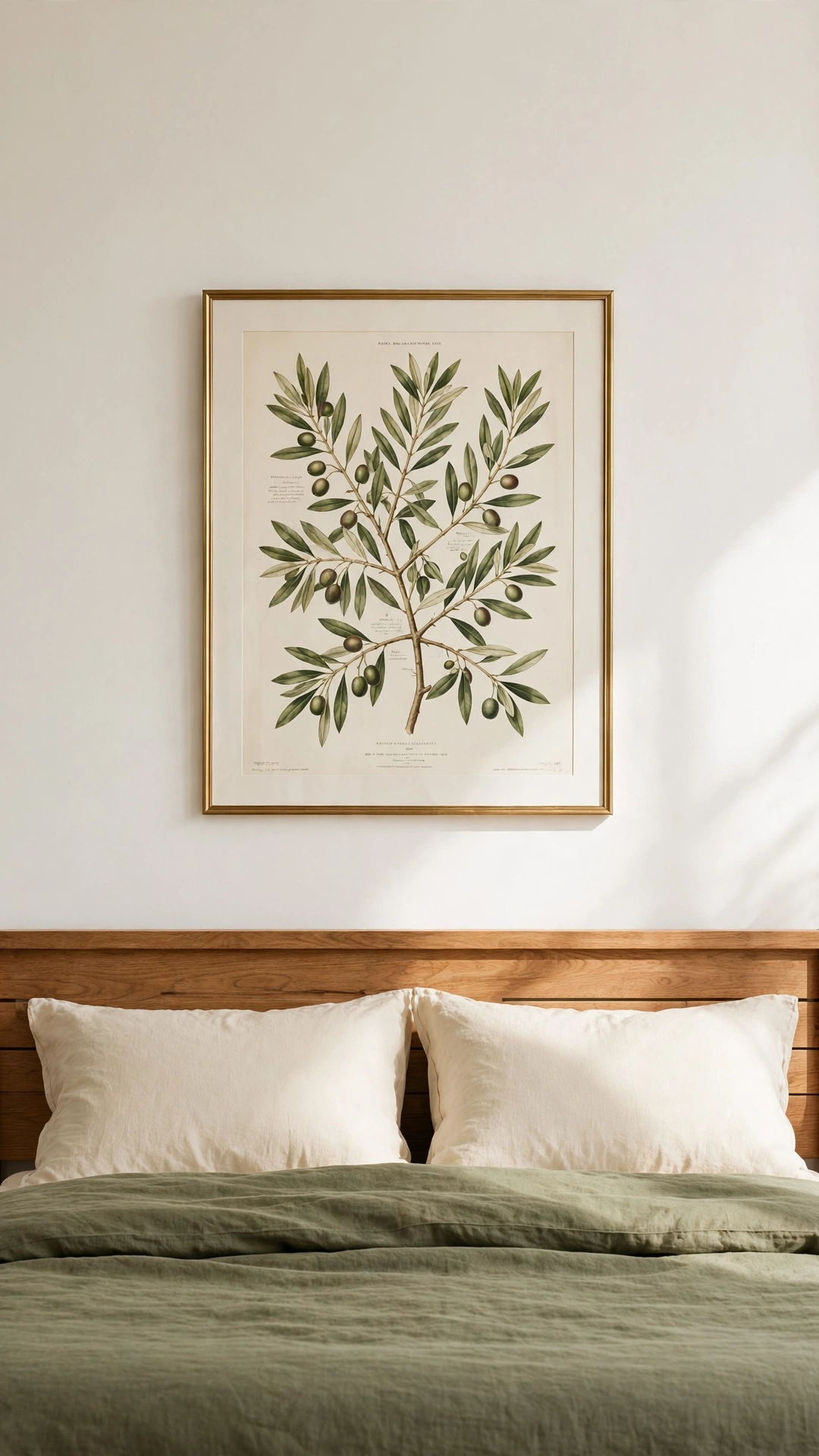
Art above the bed is what keeps olive walls from feeling empty, and it is your chance to pull the whole color story together. Choose one large piece or a pair of medium frames, hung centered over the headboard, with the bottom of the frame about six to eight inches above the headboard top. Botanical prints, soft landscapes, or abstract pieces in cream, olive, and warm beige tones will echo the room without matching it too perfectly. Thin wood or brass frames suit olive better than heavy black ones, which can feel harsh. If you already own art you like, new mats in warm white and simple frames can make old pieces look fresh. Hang with proper anchors and a level, and step back to check the placement from the doorway. You can shop, frame, and hang a piece in a single afternoon, and the wall above the bed goes from forgotten to finished.
13. Potted Bedroom Plants
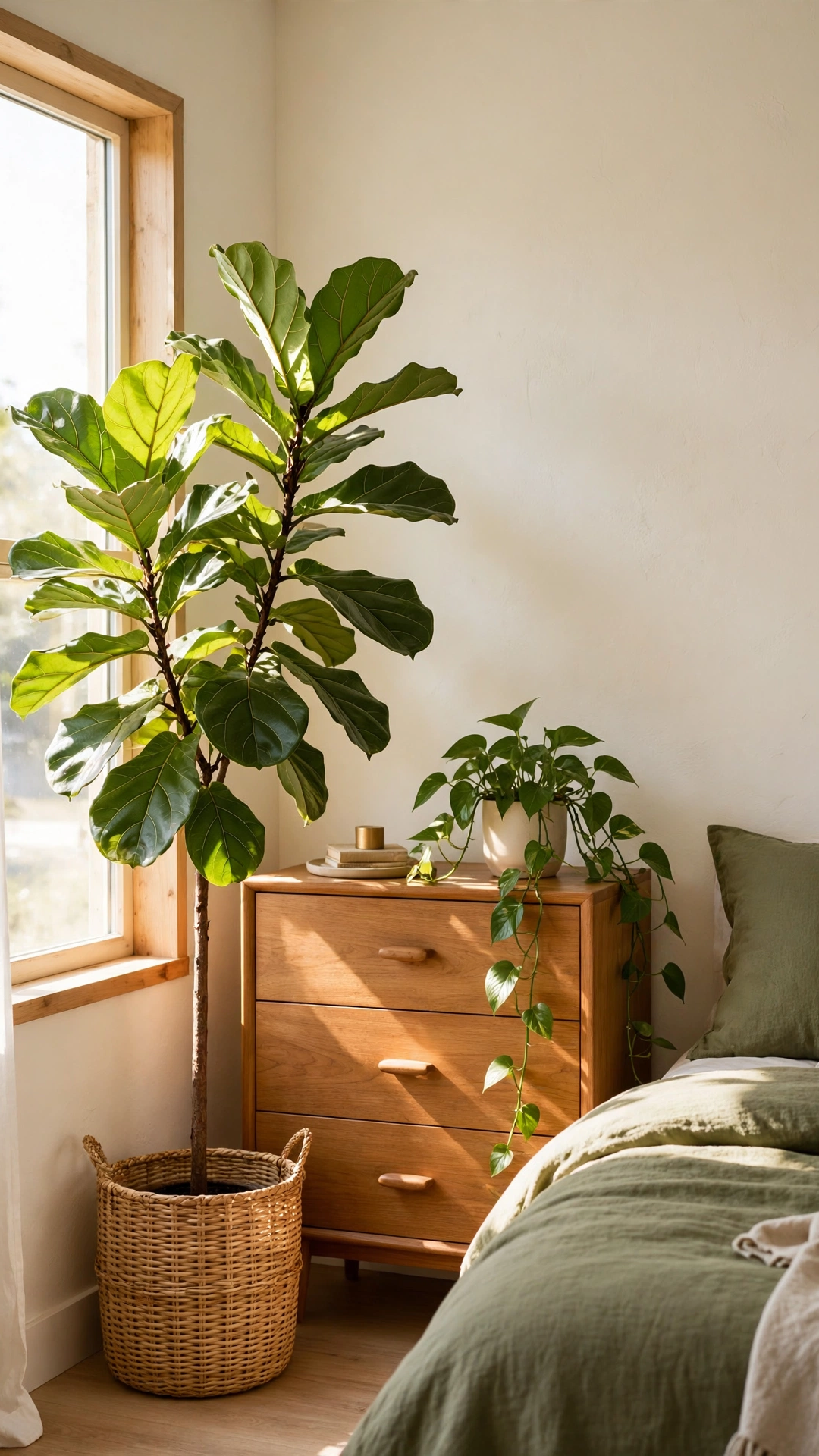
Real plants and olive green were made for each other, because the green of leaves deepens the olive on your walls or bedding in the most natural way. Place a tall fiddle leaf fig or olive tree in a woven basket in the corner near the window, and add a smaller trailing pothos or fern on the dresser or a plant stand. The contrast of fresh leaf green against muted olive fabric looks layered and alive, like the room is breathing. Choose low light friendly plants if your bedroom does not get strong sun, and always use pots with drainage trays to protect your floors and furniture. Group plants in odd numbers and vary the heights for a styled but natural look. Watering day can be your weekly reset ritual, ten quiet minutes that keep both the plants and the room feeling cared for. A plant run today means a livelier bedroom by tonight.
14. Bed Foot Bench
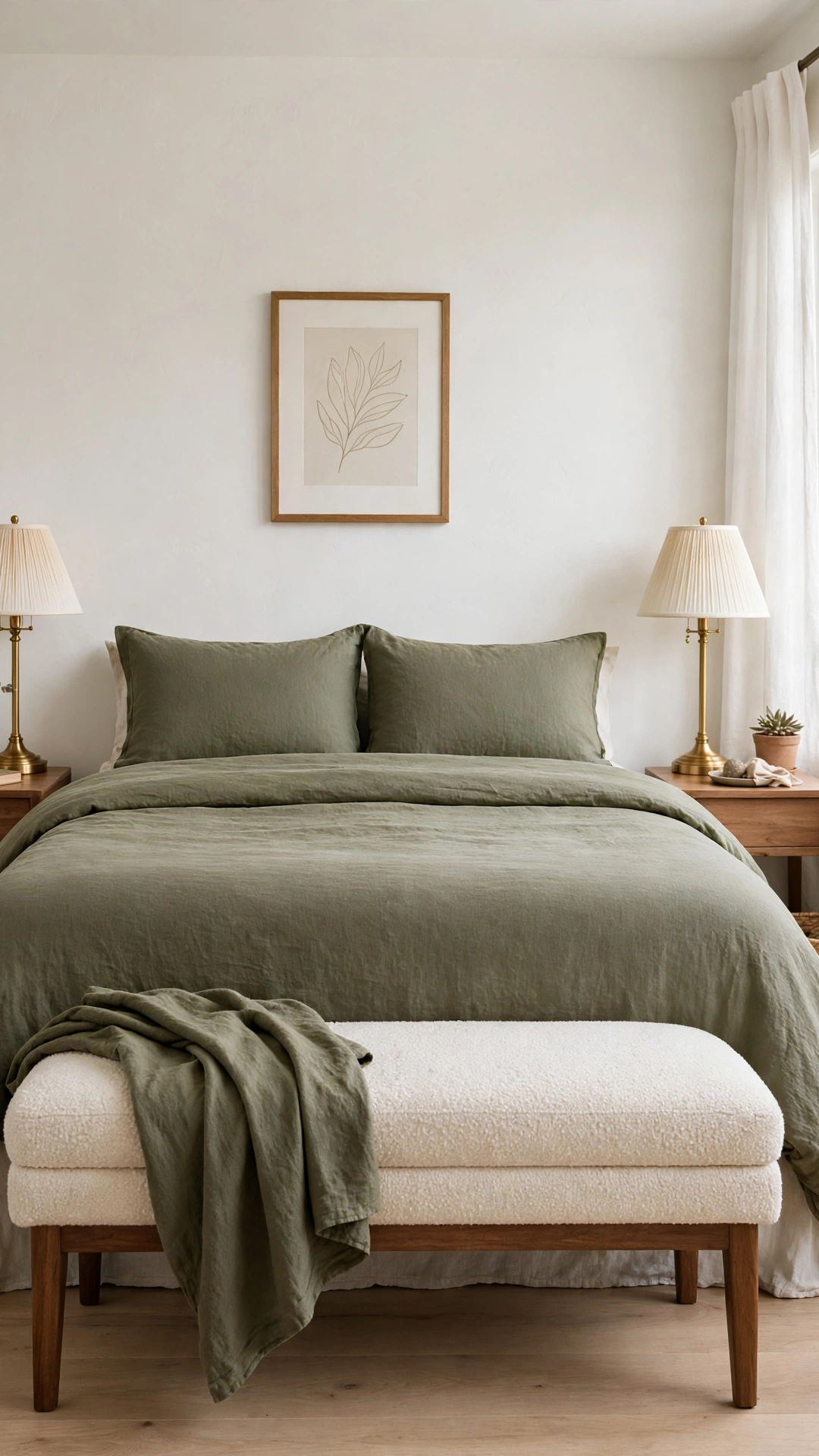
A bench at the foot of the bed gives an olive bedroom that finished, hotel like feeling and adds a spot to sit while you put on shoes. Choose an upholstered bench in cream bouclé or natural linen so it lightens the foot of the bed, or pick one in a deeper olive velvet for a tone on tone look. A bench with a wood base in warm walnut ties in beautifully with wooden nightstands. Make sure the bench is a few inches narrower than the bed width and about the same height as the mattress top or slightly lower. Use the top to drape a folded throw or display a tray with a candle, but keep it mostly clear so it stays useful. If floor space is tight, a slim backless bench still gives you the look without blocking walkways. Measure first, order today, and assembly usually takes less than thirty minutes with basic tools.
15. Styled Dresser Top
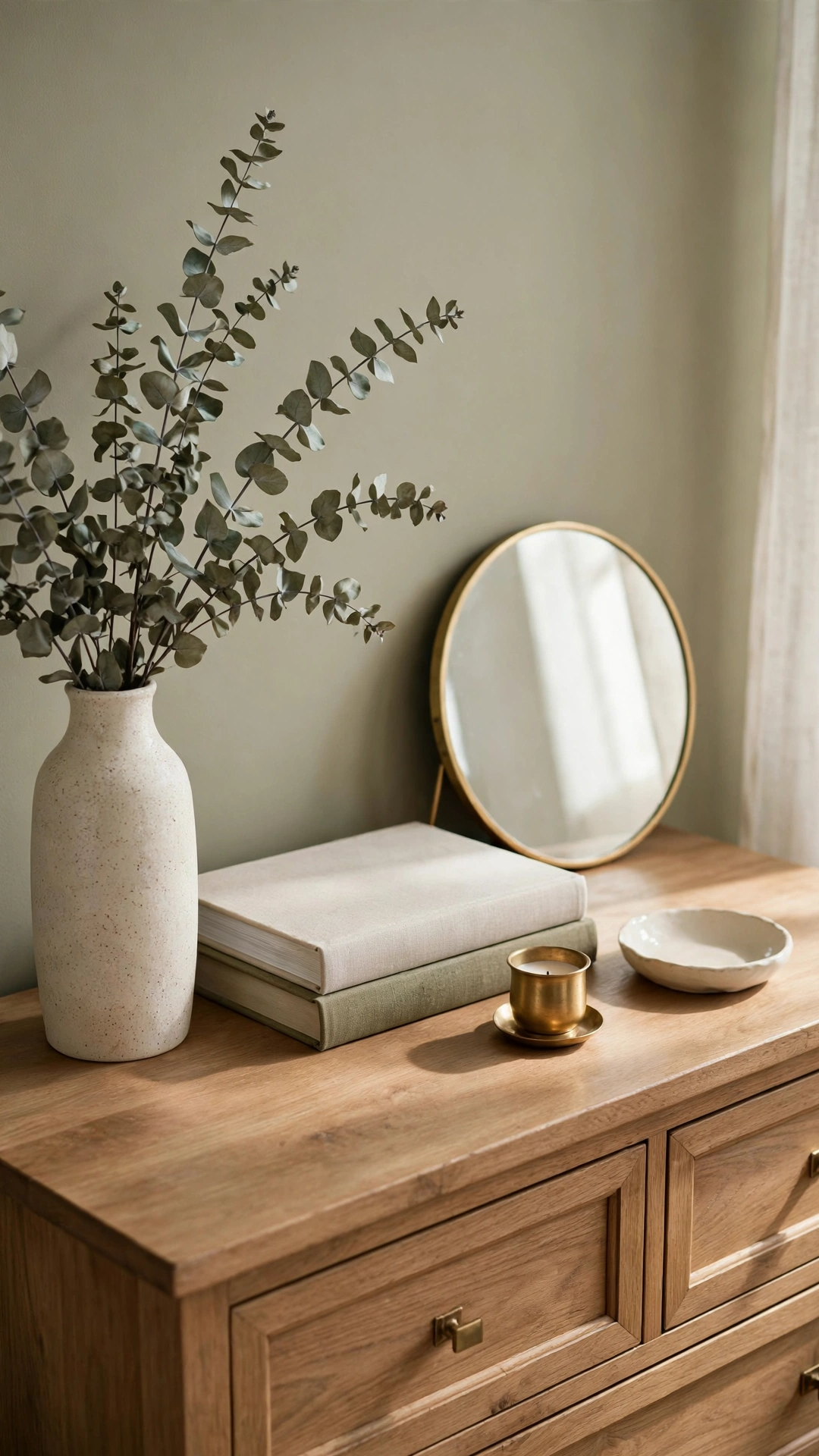
The top of your dresser is a small stage, and styling it well makes an olive bedroom feel thoughtful instead of just furnished. Start with a clear surface, then build a simple trio: a tall element like a vase with dried pampas grass or eucalyptus, a medium element like a stack of two coffee table books, and a small element like a candle or a little ceramic dish for jewelry. Keep the palette tight with cream, wood, brass, and one olive accent so it echoes the room. A small round mirror leaning against the wall behind the grouping adds depth and bounces light around. Leave at least a third of the surface empty, because breathing room is what makes styling look expensive. This takes twenty minutes with things you likely already own, plus maybe one new vase. Step back and edit until it feels calm, not crowded. Once you love the arrangement, take a photo so you can recreate it easily after dusting.
16. Round Bedroom Mirror
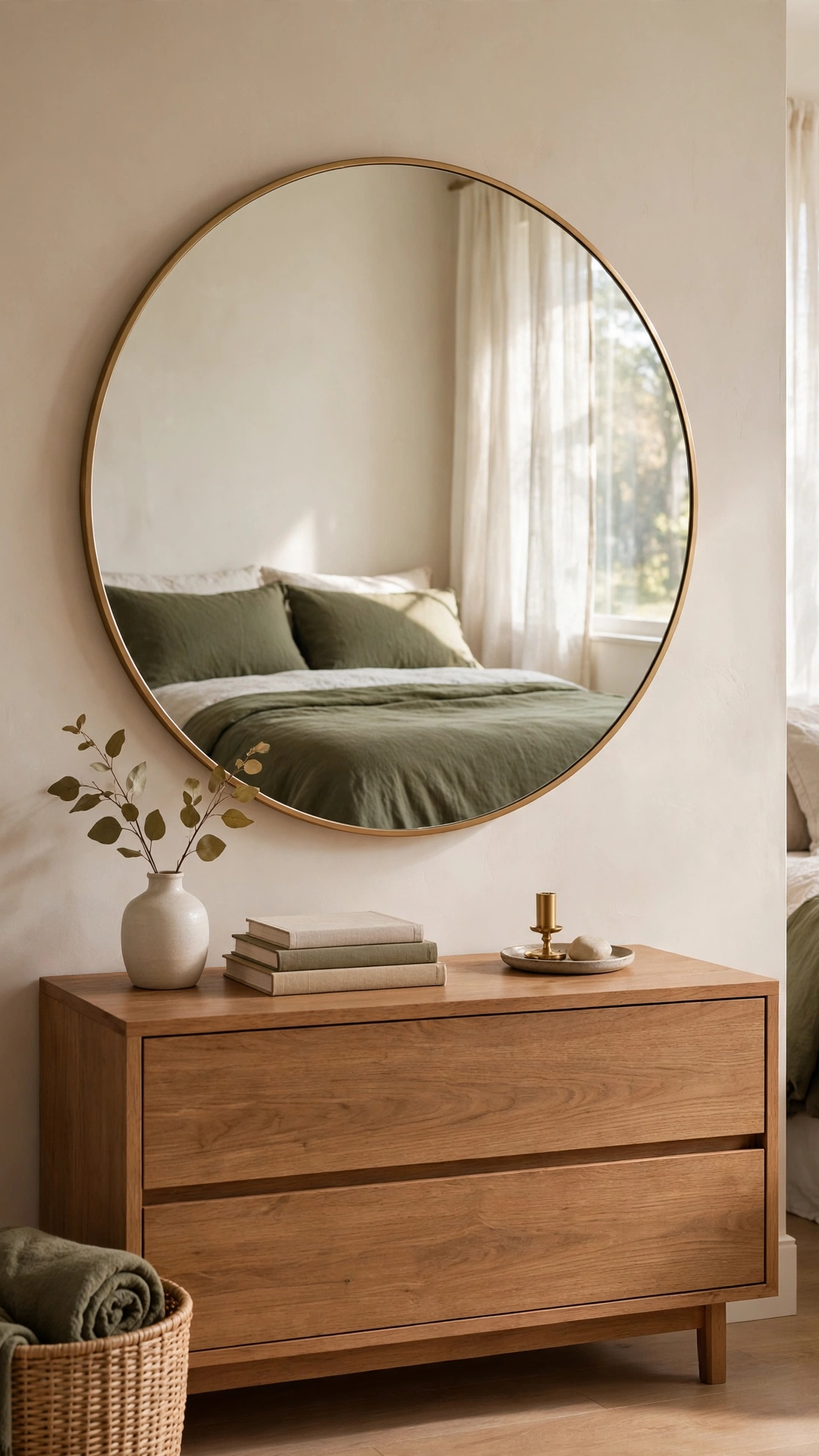
A round mirror in a thin brass or warm wood frame softens all the rectangles in a bedroom and makes olive walls glow by bouncing light around. Hang one over the dresser or lean a large round mirror against the wall in a corner for a relaxed, modern feel. The curved shape is a gentle contrast to the straight lines of the bed and nightstands, and it keeps the room from feeling boxy. In a small bedroom, a mirror nearly doubles the sense of space and light, which helps darker olive tones feel airy. Hang it at eye level or slightly above the dresser, centered on the piece below. If you lean it, secure the top to the wall with a discreet strap or hook for safety. Clean it with a microfiber cloth so it sparkles, and watch how the olive tones look richer with that extra reflected daylight. A mirror is also handy for quick outfit checks, so it earns its place twice over.
17. Subtle Pattern Wallpaper
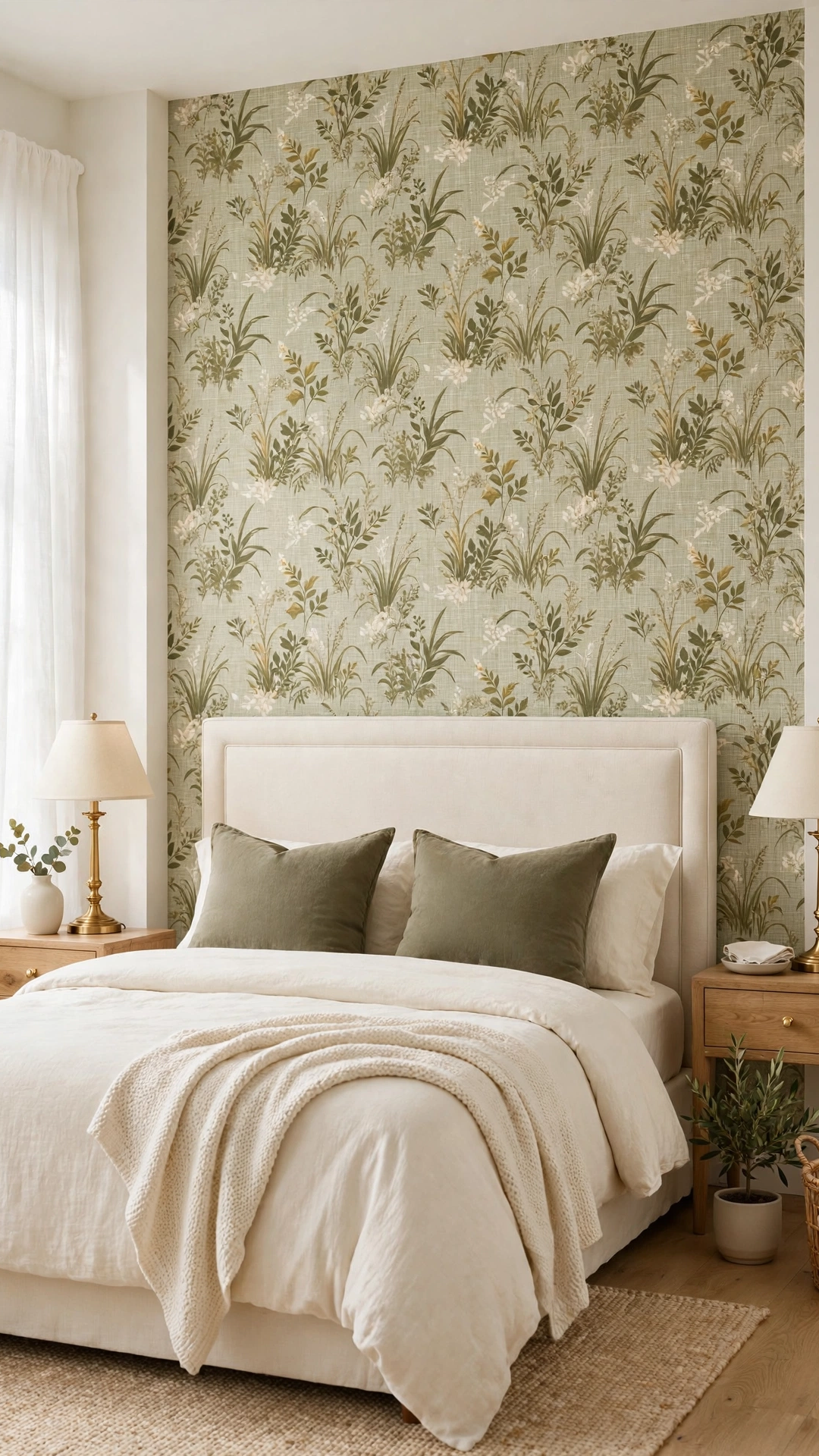
Wallpaper with a subtle olive pattern is a lovely middle ground between paint and plain walls. Look for grasscloth, a soft linen texture print, or a faded botanical in olive and cream that reads as texture from a distance. Hang it on one wall, usually behind the bed, and paint the remaining walls a warm white that matches the wallpaper background. The pattern adds movement and interest that flat paint cannot, while staying calm enough for a bedroom. Peel and stick versions have made this a renter friendly project you can finish in a weekend with a smoothing tool and a sharp blade. Order samples first and tape them to the wall for a few days to see how they look in your light. A single wallpapered wall behind an olive or cream headboard creates depth that photographs beautifully and feels custom. Keep the rest of the decor simple so the wallpaper stays the star of the room.
18. Two-Tone Wall Design
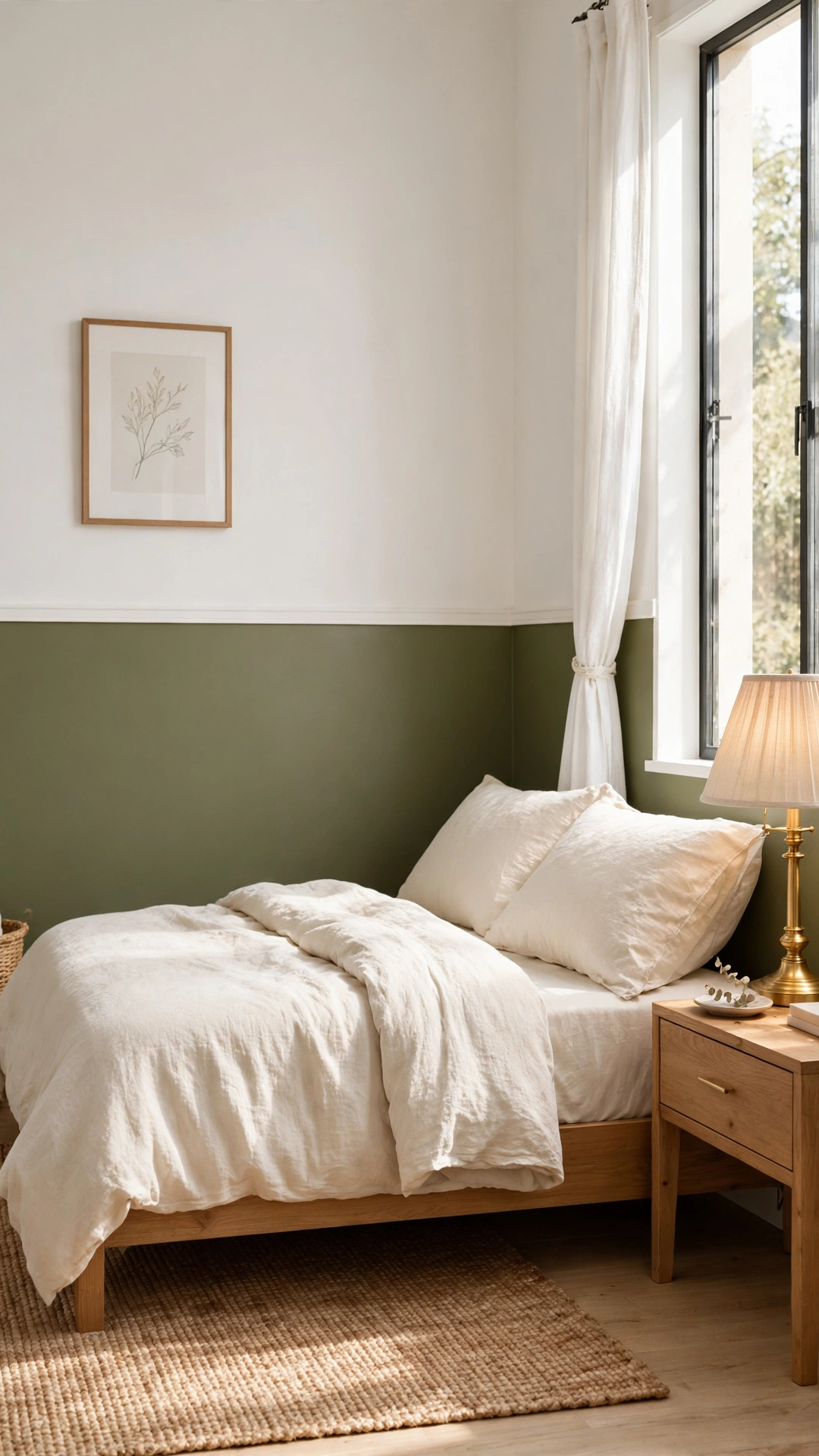
A two tone wall, with olive on the bottom and warm white on top, gives a bedroom a tailored, classic feeling that works in both old and new homes. The dividing line usually sits at chair rail height or about a third of the way up the wall, and a thin trim piece or painted stripe can make the transition crisp. This approach lets you enjoy rich olive where it grounds the furniture, while the lighter upper wall keeps the room bright and open. It is especially flattering in bedrooms with lower ceilings, since the eye reads the white top as extra height. Paint the lower section first, let it dry fully, then mask a straight line with quality painter tape before rolling the top color. Adding the trim molding takes a bit more effort but elevates the whole look. The result feels like a designer detail for the cost of two paint cans.
19. Olive White Palette
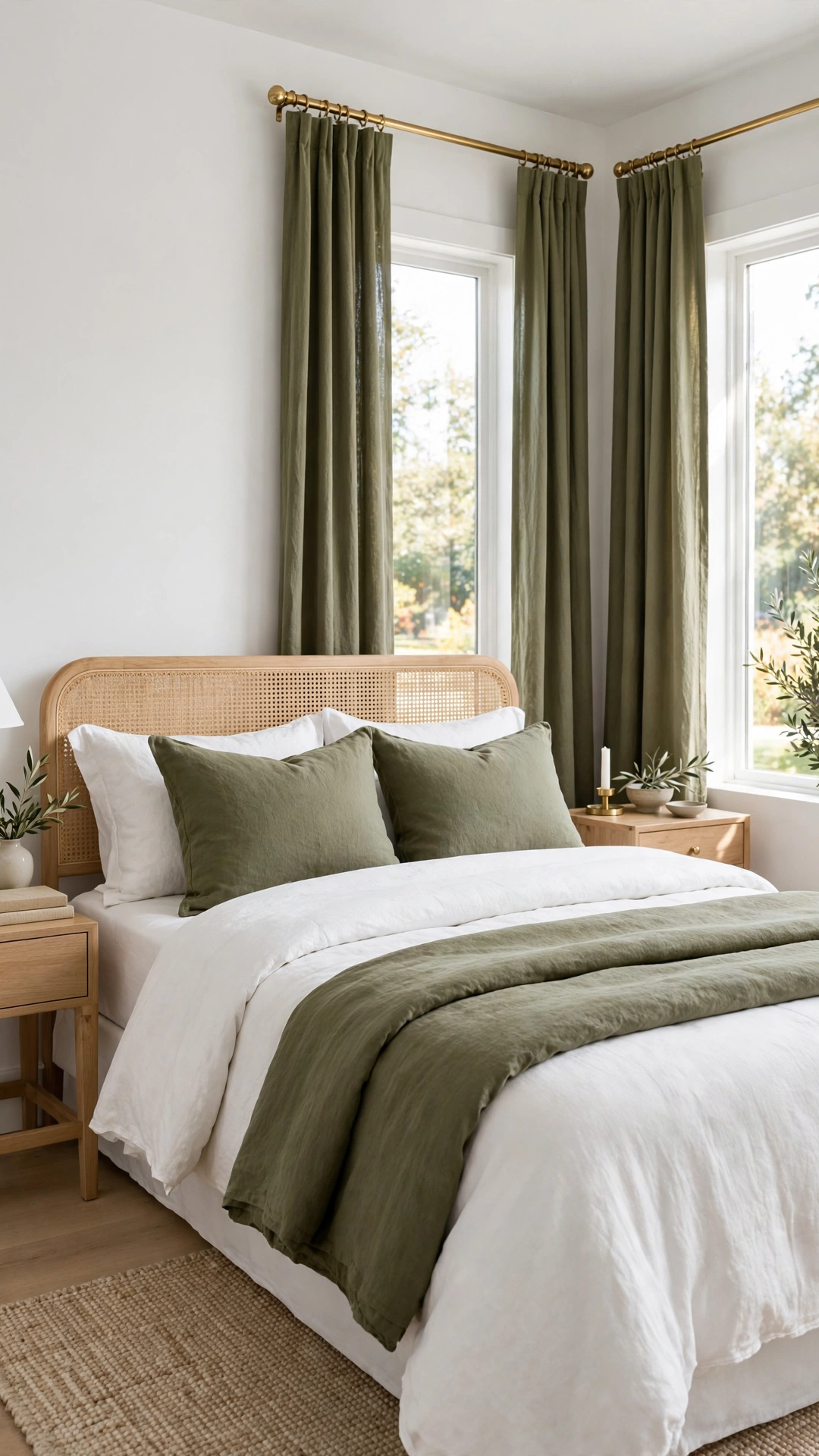
Building the whole room on an olive and white palette is the simplest formula for a bedroom that always looks fresh. Keep the big surfaces light with white or warm white walls and bedding, then layer olive in through the duvet, curtains, throw pillows, and art. The white keeps everything bright and clean while the olive adds the depth and personality, and you can shift the balance with the seasons by swapping textiles. This palette suits every style from farmhouse to modern, because it is really just a warm neutral scheme with a green twist. To keep it from feeling flat, mix in natural textures like wood, linen, jute, and a touch of brass. It also makes shopping easy, since white basics are everywhere and olive accents are simple to find. Start with white bedding you own and add three olive pieces this week for a whole new room. It is a forgiving formula that is hard to get wrong, even for beginners.
20. Small Reading Nook
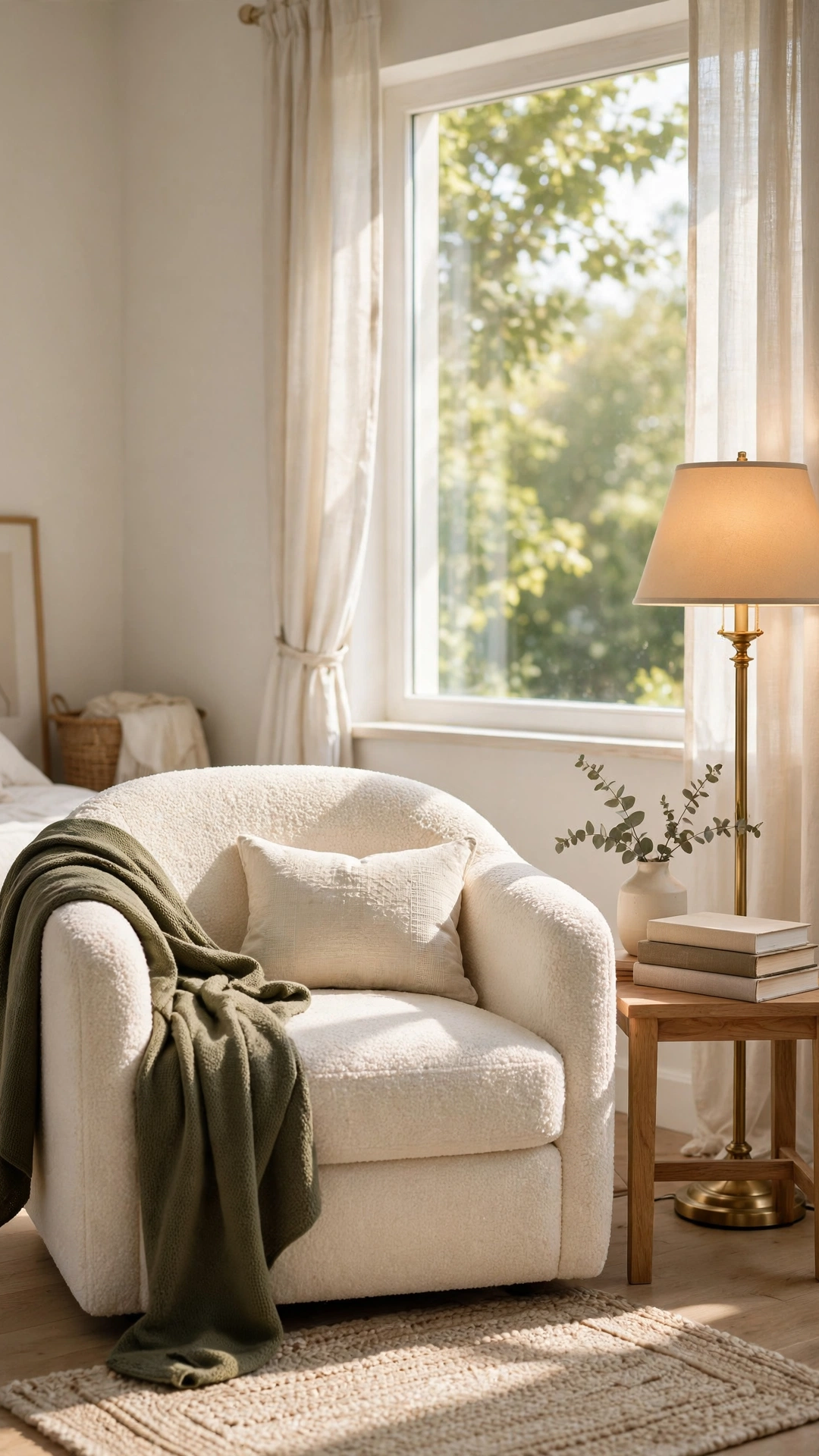
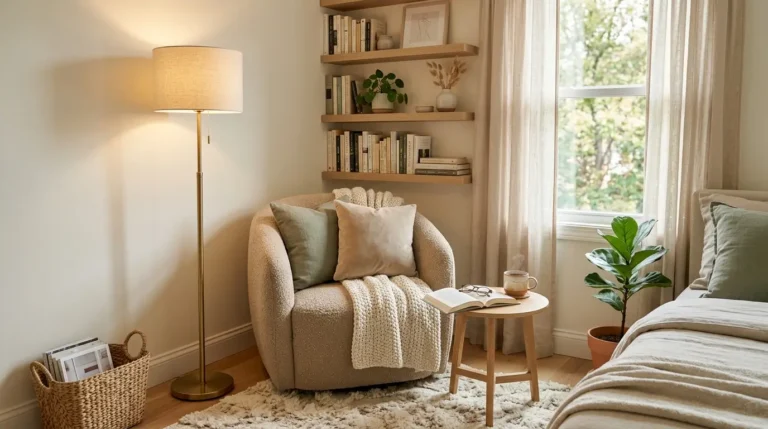
A little reading corner turns an olive bedroom into a retreat, not just a place to sleep. Tuck a comfortable armchair in cream or oatmeal fabric into a corner near the window, add a small side table and a floor lamp with a warm bulb, and drape an olive throw over the chair arm. The olive throw ties the nook to the rest of the room without any effort. A small bookshelf or a stack of books on the side table makes it feel intentional, and a soft rug under the chair defines the zone. Even a three by three foot corner is enough if you choose a slim chair. This is the spot for slow Sunday mornings with coffee and a novel, and it photographs as the coziest corner of the house. You can pull it together today with a chair you already own plus one new throw and a lamp.
21. Painted Wainscoting Panels
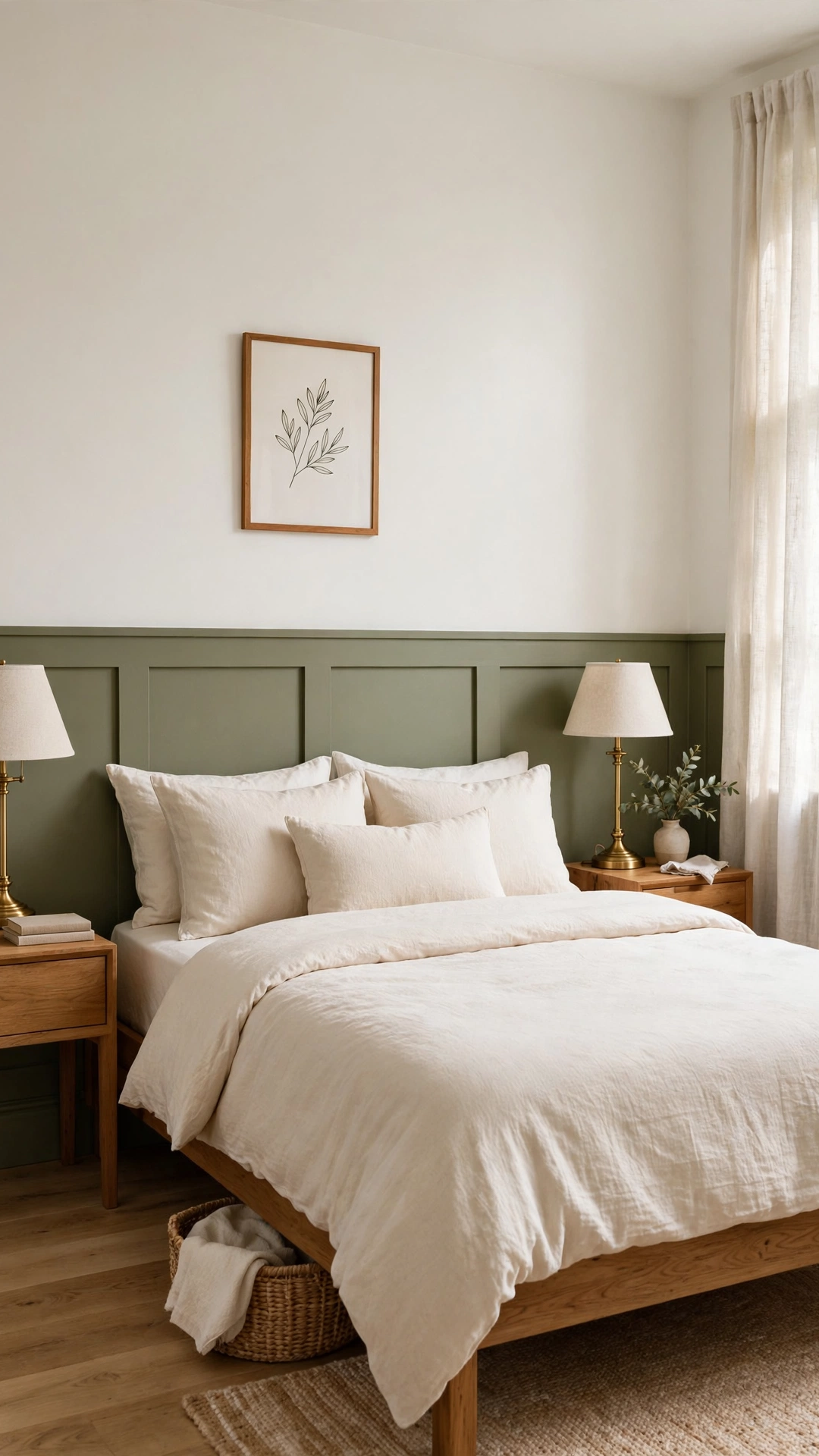
Painting wainscoting or board and batten in olive is a charming way to add architecture and color at the same time. The paneled lower wall in a rich olive with warm white above feels classic and cottage like, and it gives the room a built in, custom character that plain walls lack. This suits bedrooms with simple furniture, since the wall itself becomes the decoration. You can create the look with thin wood trim strips, a level, and wood glue, then paint everything in a satin finish that wipes clean. Keep the upper wall a soft warm white so the contrast stays gentle. It is a bigger weekend project than a simple paint job, but the materials cost very little and the result looks far more expensive than it is. Pair it with simple cream bedding and let the walls do the talking. When friends ask who did the work, you get to smile and say you did it yourself.
22. Layered Bedding Textures
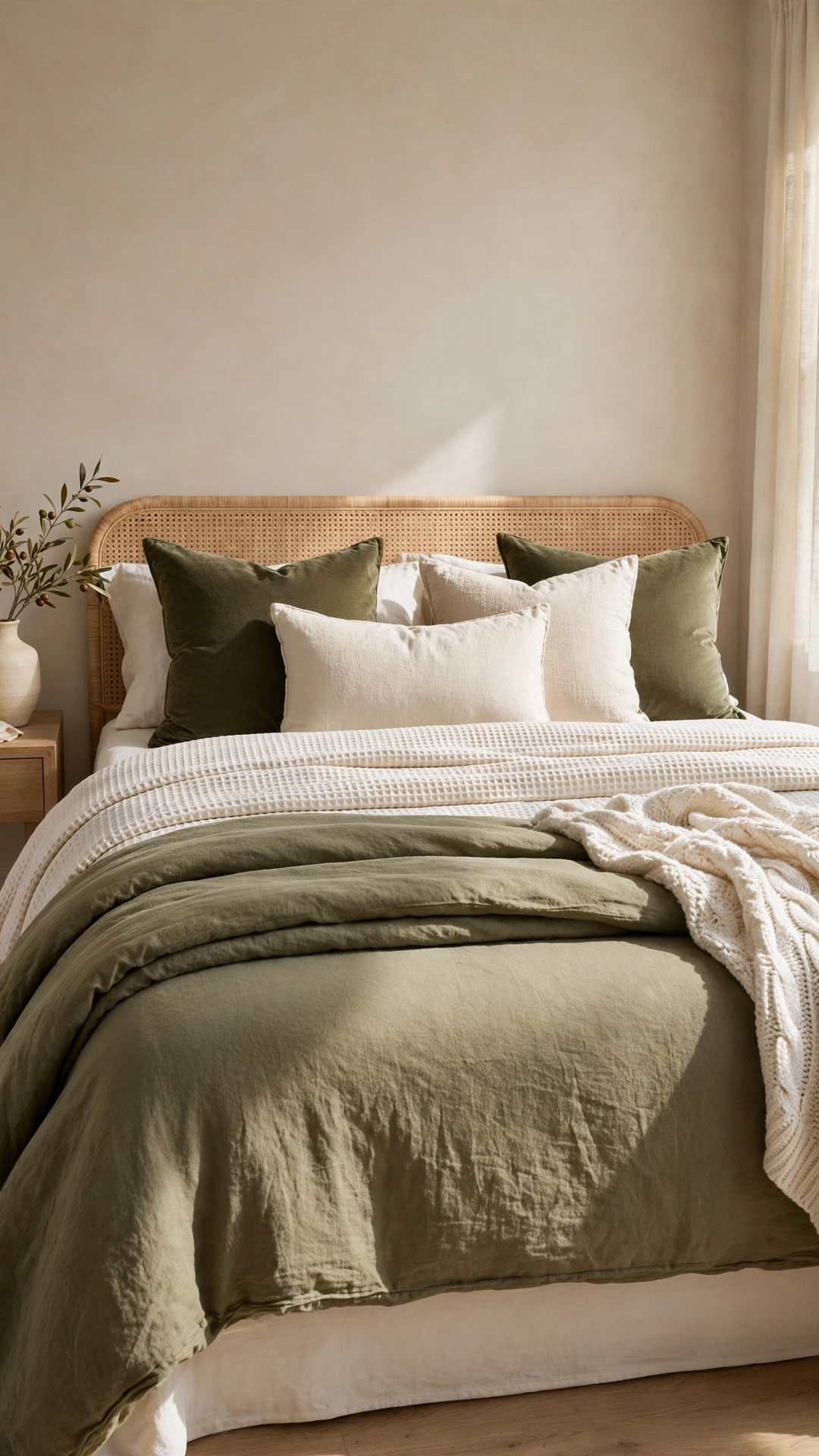
Layering different bedding textures in olive and cream tones makes a bed look irresistibly touchable. Start with olive or cream sheets, add a quilt or coverlet in a contrasting texture like matelassé or waffle weave, then fold a duvet in a soft solid across the lower half. Top it with a knit throw and a mix of linen and velvet pillows, and the bed gains that cloud like depth you see in styled photos. The trick is keeping the colors close, all within the olive, cream, and warm beige family, so the textures provide the interest instead of the colors competing. Smooth, nubby, and plush fabrics side by side catch the light differently, which is what makes the bed look rich. Build the layers from the mattress up and step back after each one to check the balance. You can assemble this look in one afternoon with pieces you already own.
23. Styled Bedside Table
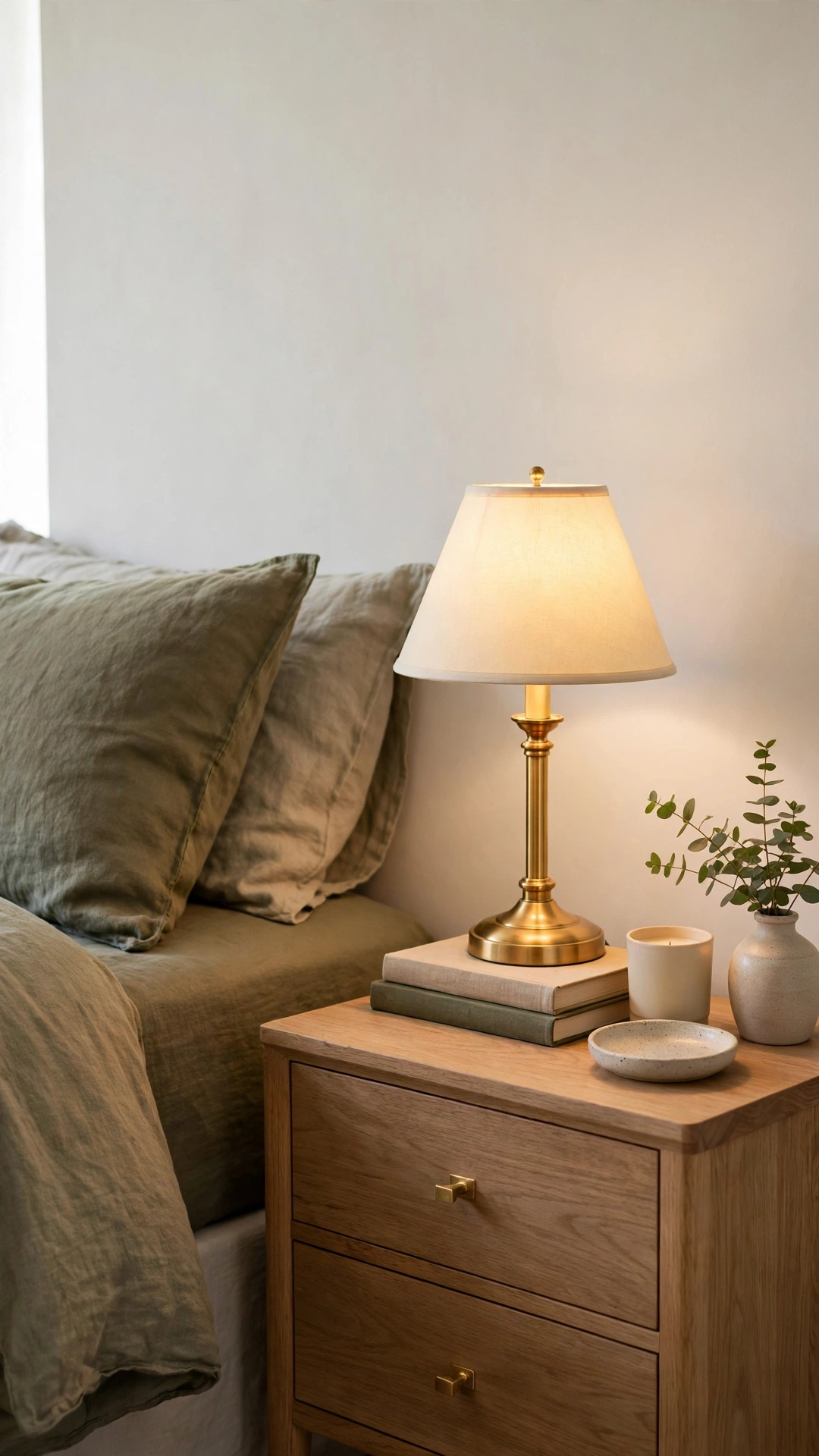
Your bedside table deserves the same care as the rest of the room, since it is the last thing you see at night. Clear everything off and start fresh with just the essentials: your table lamp, a small stack of one or two books, a candle or a tiny vase with a stem of eucalyptus, and a pretty dish for jewelry or lip balm. If your bedding is olive, echo it with a small green plant or an olive colored book spine on the nightstand. Keep cords hidden with a clip behind the table and choose a lamp shade that casts a warm pool of light. The goal is a surface that looks calm and useful, not a storage shelf. This ten minute reset costs nothing and makes the whole bedroom feel more intentional. Do both nightstands the same way so the bed looks balanced and peaceful from the doorway.
Frequently Asked Questions
Which colors pair well with olive green in a bedroom?
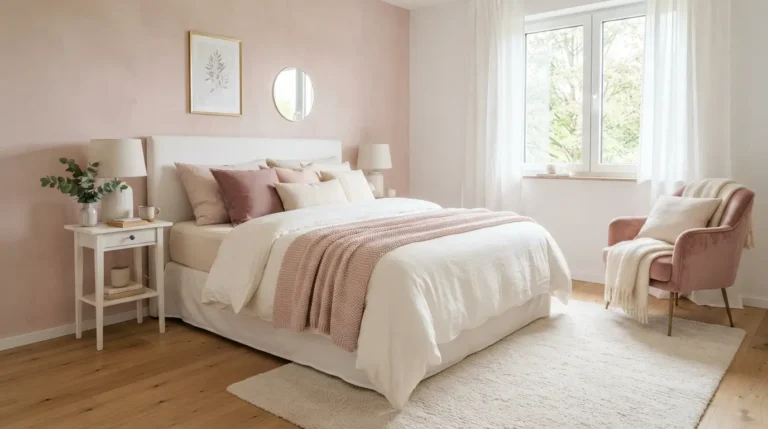
Olive green loves warm neutrals like cream, ivory, oatmeal, and warm white, which keep it soft and elegant. Natural wood tones, especially walnut and honey oak, bring out the earthy side of olive beautifully. For metals, brass and aged gold are the best match because their warmth flatters the yellow undertones in olive. If you want contrast, dusty blush, terracotta, and muted mustard all sit happily next to olive without clashing. Keep black to small accents like frames or hardware, since large black pieces can feel harsh against the softness of olive.
Does olive green work in a small bedroom?
Yes, olive green can work wonderfully in a small bedroom if you use it thoughtfully. On walls, choose a lighter, warmer olive and keep the ceiling and trim bright white so the room still feels open. If you are nervous about dark walls, use olive in the bedding, curtains, and pillows instead, and keep the walls light. Mirrors, good lighting, and uncluttered surfaces all help a small olive bedroom feel cozy rather than cramped. The key is balance: let olive be the warmth, and let light colors and natural light do the heavy lifting for spaciousness.
Should I use warm or cool lighting with olive walls?
Warm lighting is the clear winner with olive walls. Look for bulbs around 2700K, which cast a golden glow that makes olive look rich and inviting. Cool white or daylight bulbs can make olive appear dull or slightly gray, which is not the cozy feeling most people want in a bedroom. Table lamps with fabric shades in cream or linen diffuse the light softly and flatter the wall color. If you have overhead lighting, put it on a dimmer so you can lower it in the evening for a calm, restful mood that suits a bedroom perfectly.
What bedding colors pair best with olive green?
Cream and warm white bedding are the safest and prettiest partners for olive, whether olive is on your walls or in your duvet. Oatmeal, natural linen, and soft beige add warmth and texture without competing. If olive is your wall color, a white or cream duvet keeps the bed light and fresh; if olive is your bedding color, cream sheets underneath soften the look. For a bolder mix, dusty rose or terracotta pillows add a lovely contrast. Avoid stark cool grays and icy blues, which can clash with the warm undertones that make olive so appealing.
Which paint finish should I choose for olive bedroom walls?
An eggshell or satin finish is the best choice for olive bedroom walls. Eggshell has a soft, low sheen that looks elegant and hides small wall imperfections, which makes it ideal for most bedrooms. Satin is slightly shinier and more washable, so it is a good pick if you have kids or pets. Avoid flat paint in deep olive tones, since it can look chalky and shows touch marks easily, and skip high gloss, which is too shiny for large wall areas. Use the same finish on all walls for a consistent look, and paint the ceiling in flat warm white.
Conclusion
Olive green is one of those rare colors that feels both calm and full of character, and it asks very little of you in return. Start with one idea that fits your budget and your weekend, whether that is a throw blanket or a full wall of paint, and let the room grow from there. The best olive bedrooms are built slowly, one thoughtful layer at a time.