20 Blue and White Living Room Ideas for a Fresh, Timeless Look
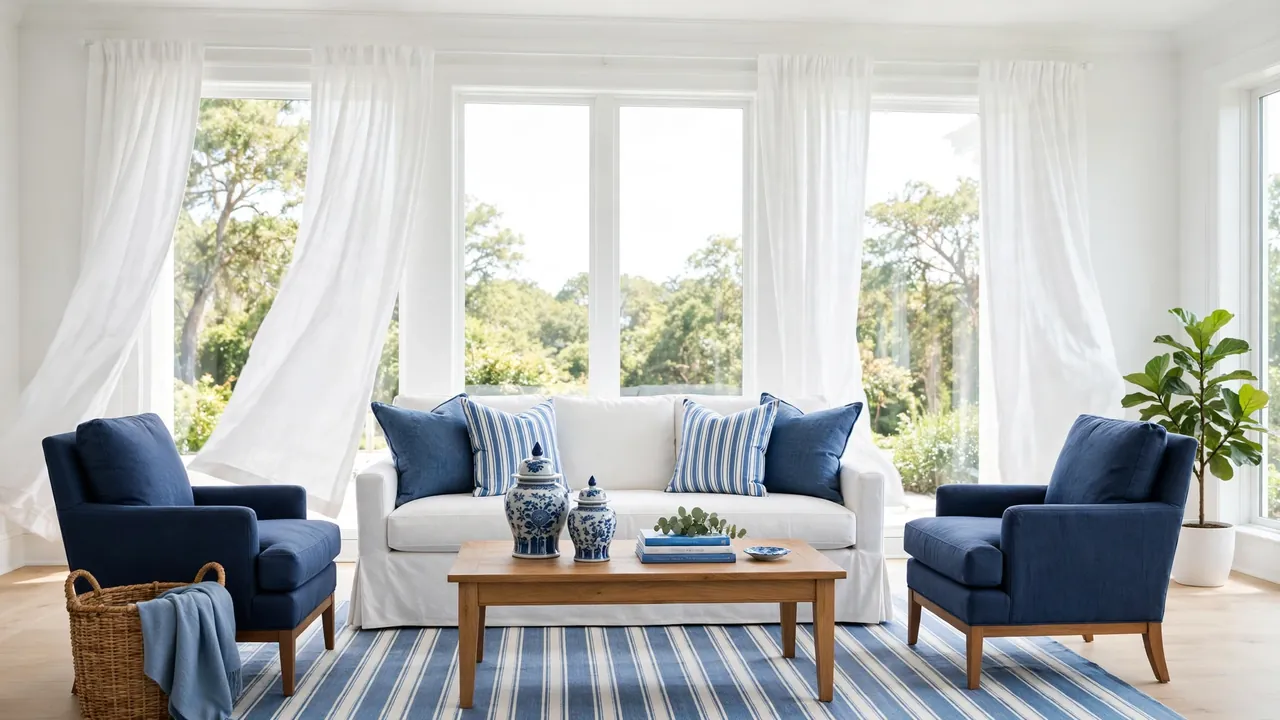
Blue and white is one of those color combinations that never really goes out of style, and for good reason. It feels crisp and calming at the same time, and it works just as well in a breezy coastal cottage as it does in a classic colonial or a clean modern space. The simplest way to get the look right is to start with a white base, like your walls, sofa, or rug, then layer in blue through textiles and one or two statement pieces. Repeat both colors at least three times around the room so the scheme feels intentional instead of accidental.
What makes this palette so forgiving is how many shades of blue you can play with. Navy brings drama and depth, powder blue feels soft and airy, and brighter cobalt adds energy without tipping into chaos. You can mix two or even three blues as long as you keep the whites consistent, which keeps everything hanging together. Below you’ll find 20 practical ideas, from quick textile swaps you can do this weekend to bigger moves like accent walls and wallpaper, so you can build the look at whatever pace suits your home and budget.
1. Anchor the Room with a White Sofa and Blue Pillows
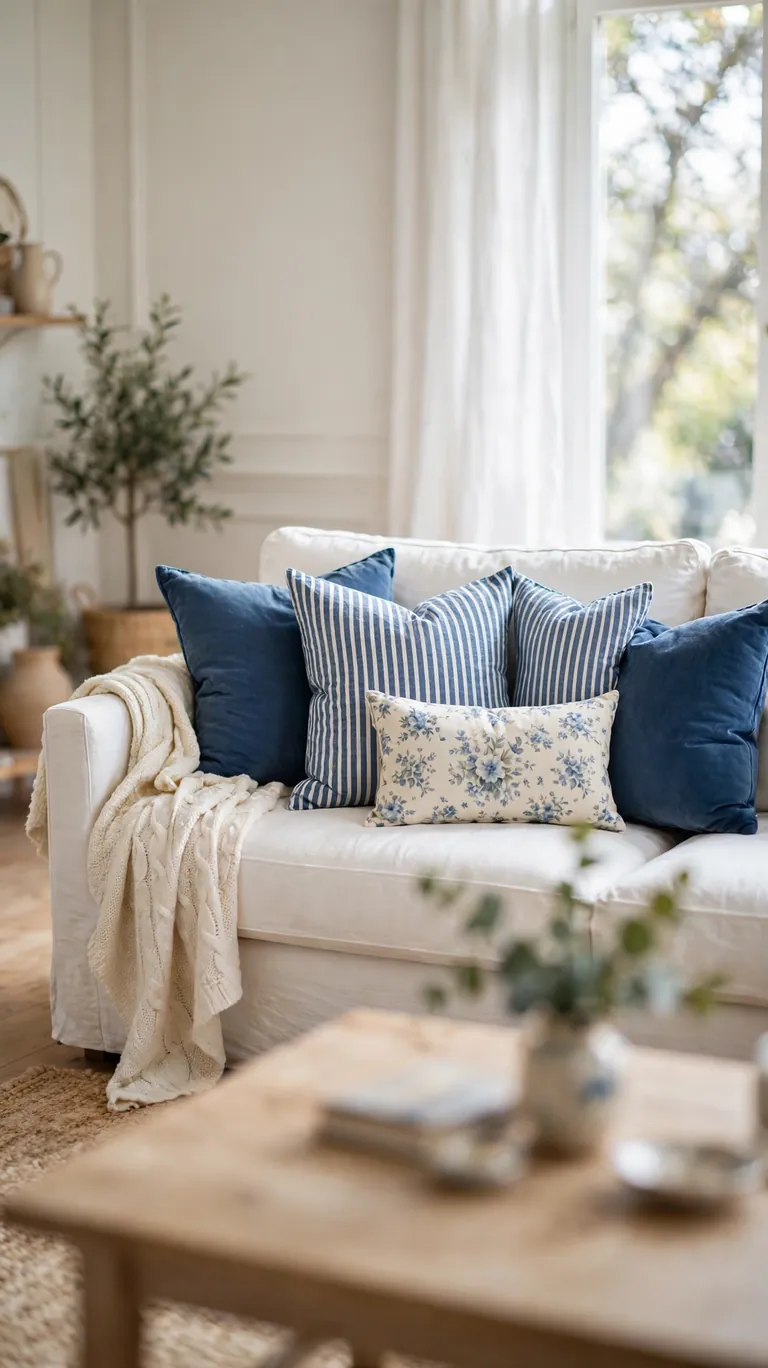
A white or off-white sofa is the hardest-working base for a blue and white scheme. It reflects light, makes the room feel bigger, and lets your blue accents do all the talking. If you’re worried about upkeep, choose a slipcovered or washable performance fabric option, and keep a throw blanket handy for everyday lounging so the cushions stay fresh.
Once the sofa is in place, layer blue pillows in at least two shades and two patterns, like a navy solid paired with a blue and white stripe. Odd numbers look best, so try three or five across the sofa. Finish with one lumbar pillow in a small-scale print to tie the whole arrangement together.
2. Paint One Navy Accent Wall
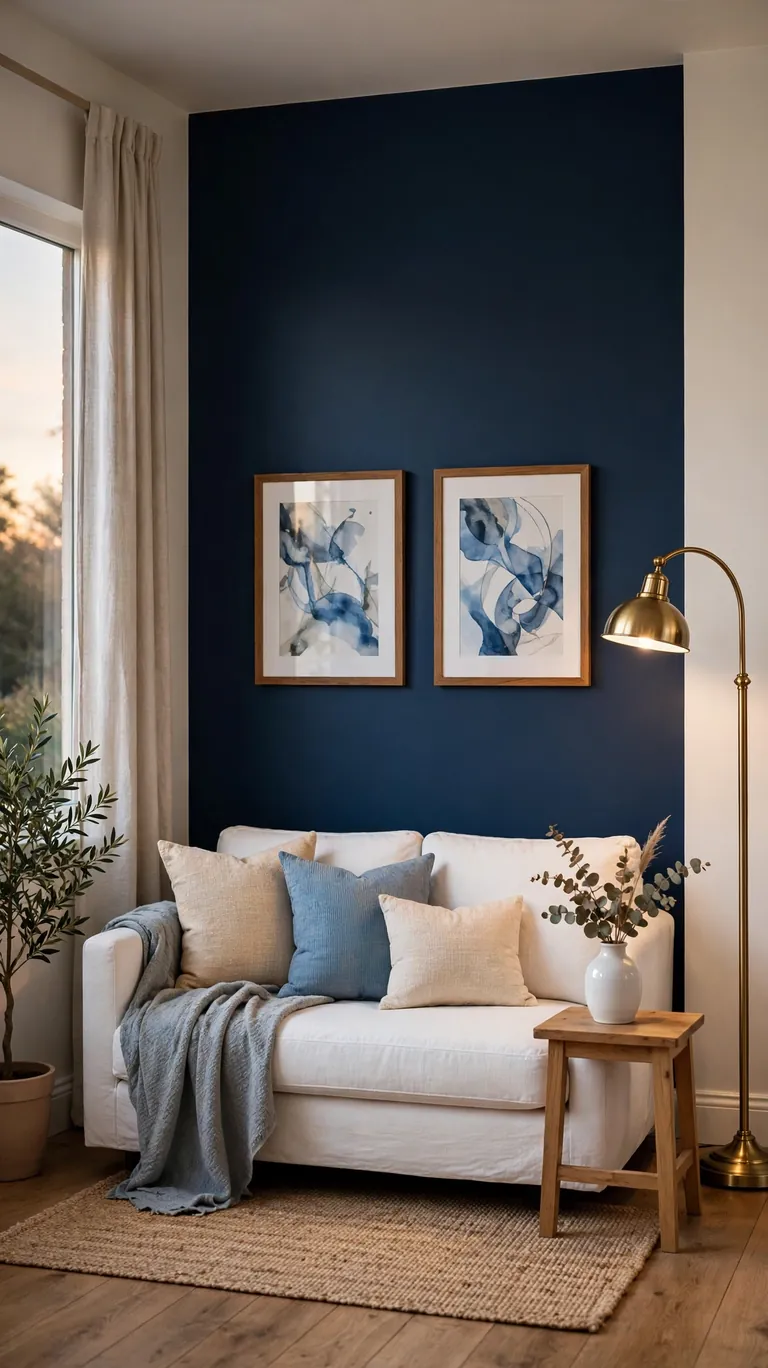
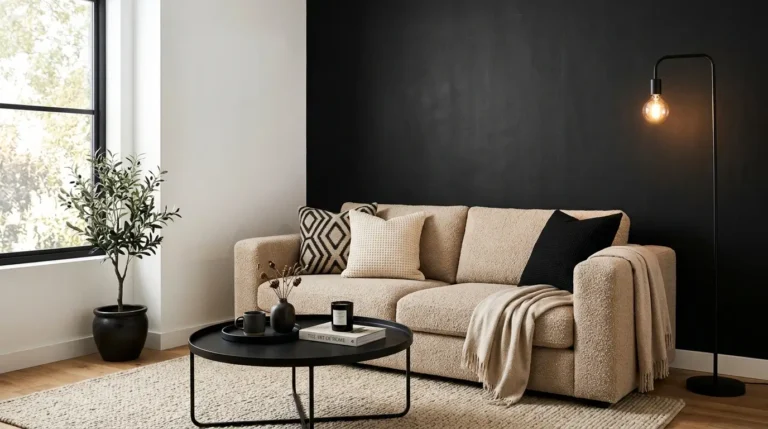
If your room feels flat, a single navy accent wall adds instant depth without overwhelming the space. The wall behind the sofa or fireplace is the natural choice because it’s already a focal point. Use a matte or eggshell finish so the color looks rich rather than shiny.
Keep the other three walls a warm white so the navy has room to breathe, and repeat the navy elsewhere in small doses, like a throw, a tray, or a row of book spines. This repetition is what makes the accent wall feel like a plan instead of a random choice.
3. Hang Blue and White Patterned Curtains
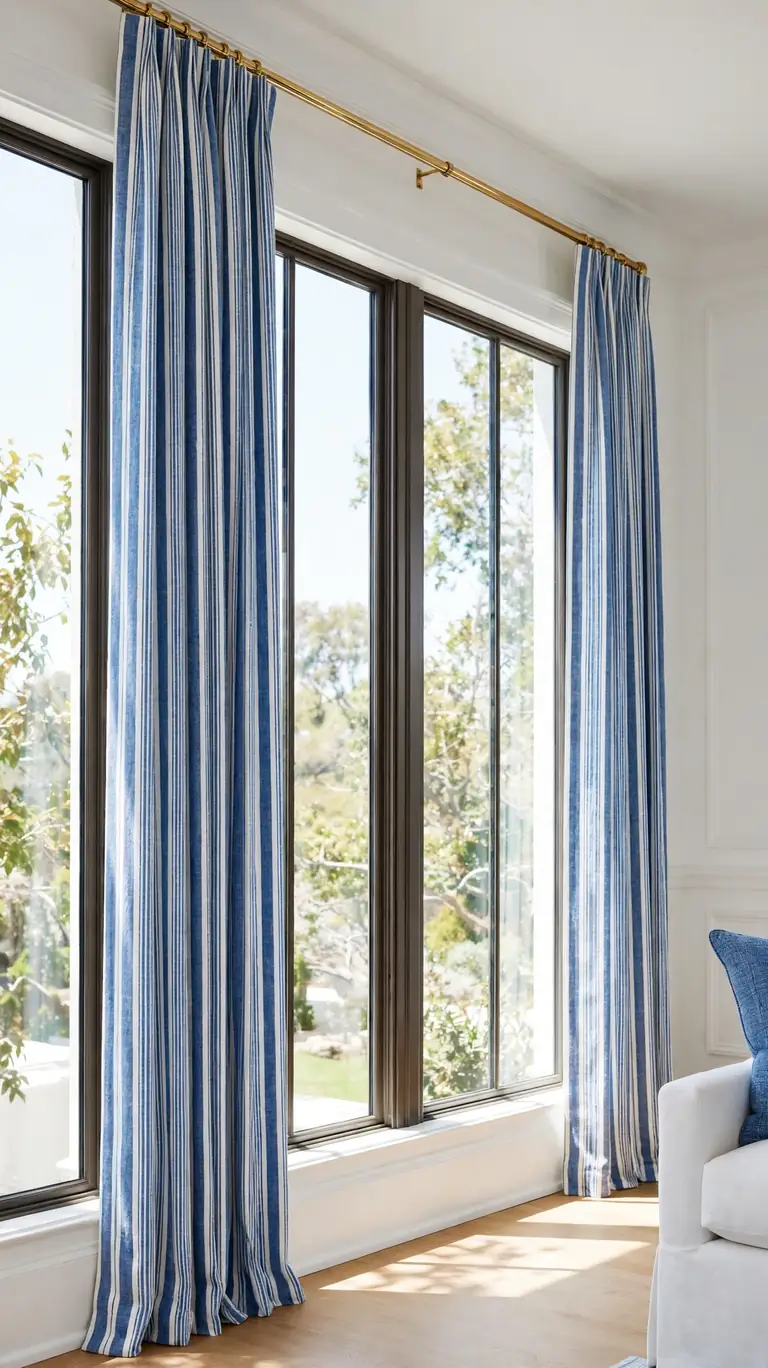
Curtains are one of the fastest ways to commit to the palette because they cover so much visual space. A blue and white stripe, block print, or small floral reads classic without trying too hard. Hang the rod 4 to 6 inches above the window frame and let the panels just kiss the floor for a tailored look.
If your walls are already blue, flip it and choose mostly white curtains with a thin blue border or trim. Lined panels hang better and block light, which matters if the room doubles as a TV space. Tie-backs in natural jute or rope add a relaxed coastal touch.
4. Ground the Space with a Striped Rug
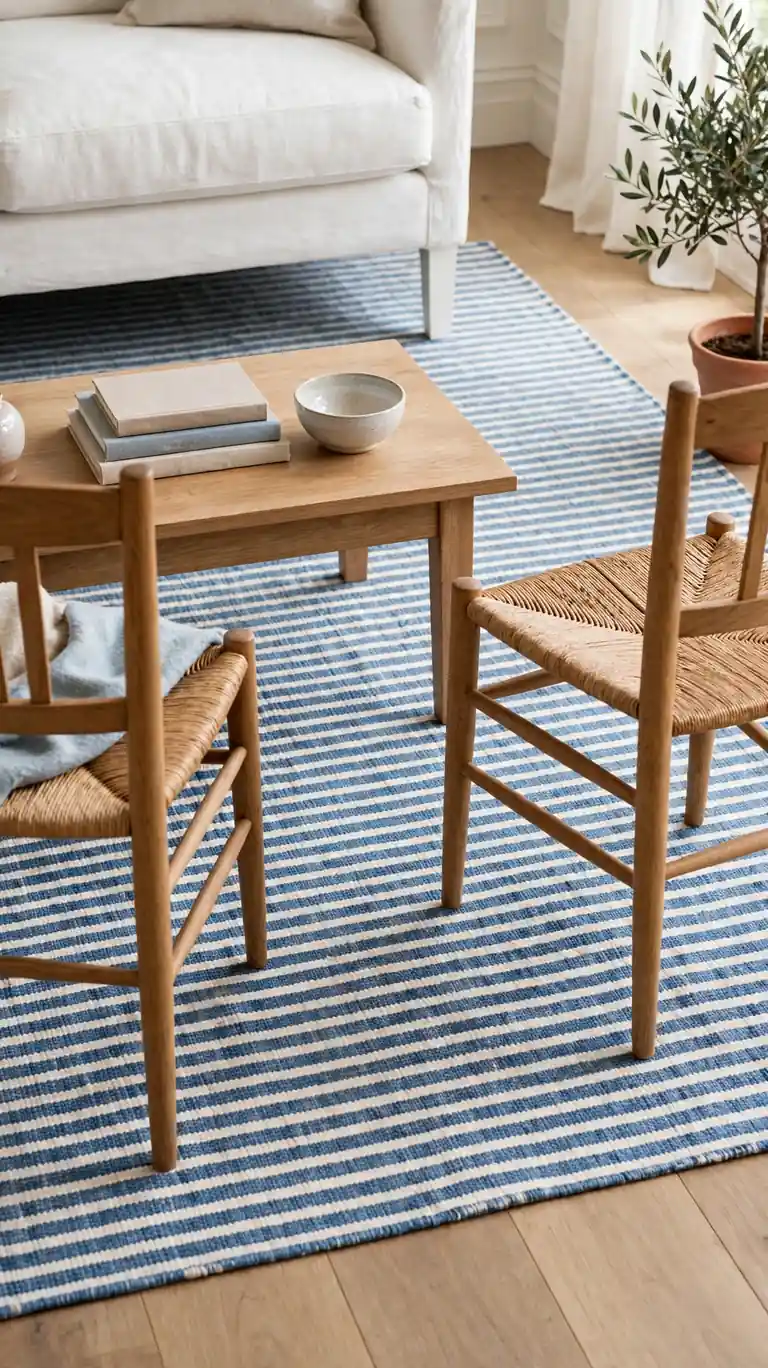
A blue and white striped rug anchors the seating area and sets the color ratio for the whole room. A good rule of thumb is to pick a rug large enough that the front legs of the sofa and chairs all sit on it, which usually means an 8×10 for a standard living room. Flat-weave cotton rugs are affordable and easy to shake out, while wool holds up better in high-traffic homes.
Match the stripe scale to your room: wide stripes feel bold and modern, while thin ticking stripes feel quiet and traditional. If the rug is the busiest pattern in the room, keep pillows and throws simpler so nothing fights for attention.
5. Add a Blue Armchair as a Statement Piece
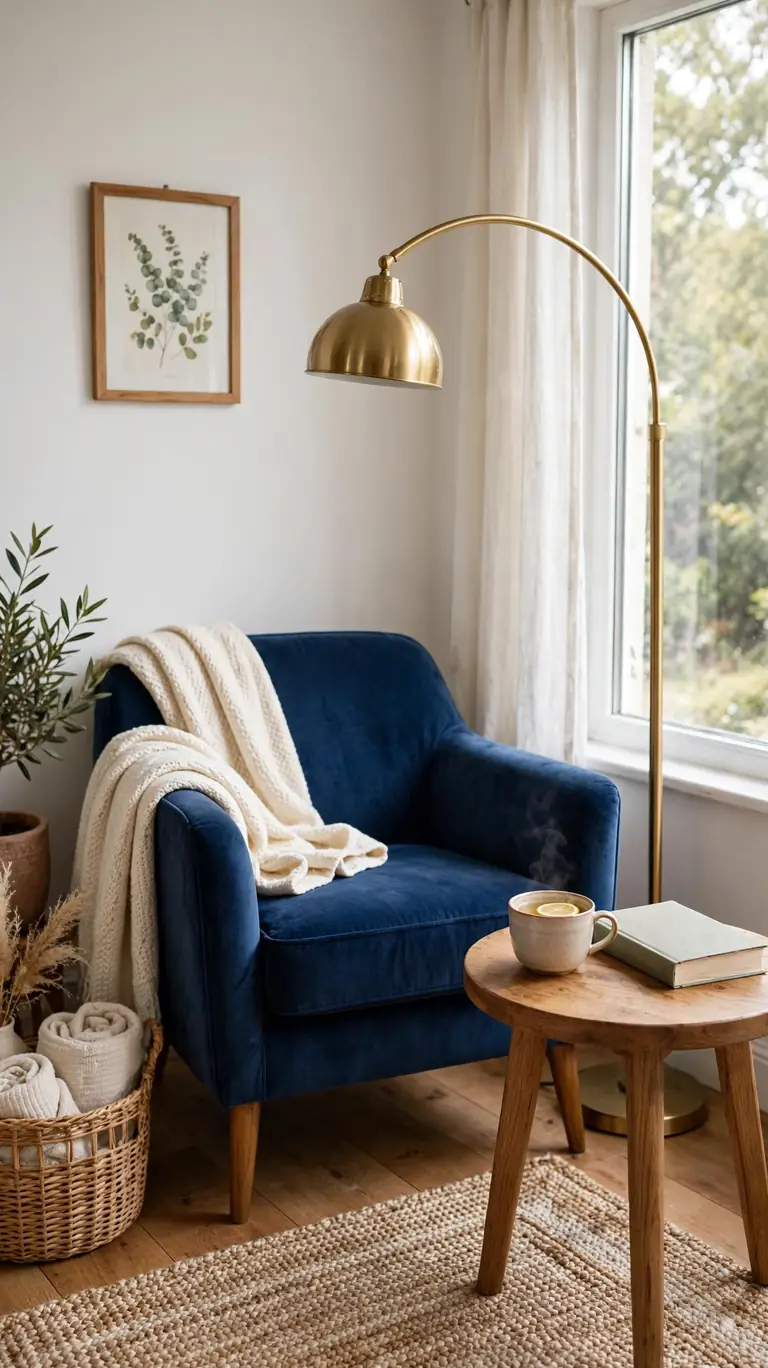
One blue armchair gives the room a clear focal point and a cozy reading spot in a single move. Place it at an angle near a window or beside the fireplace, with a small side table and a floor lamp to complete the corner. Navy works beautifully in traditional rooms, while a brighter cobalt or denim blue suits casual spaces.
Before you buy, check the chair’s scale against your sofa. The seat height should be within a couple of inches of the sofa’s so conversation feels comfortable. A patterned chair, like a blue floral or ikat, can carry the room’s pattern while everything else stays solid.
6. Build a Gallery Wall in Blue and White
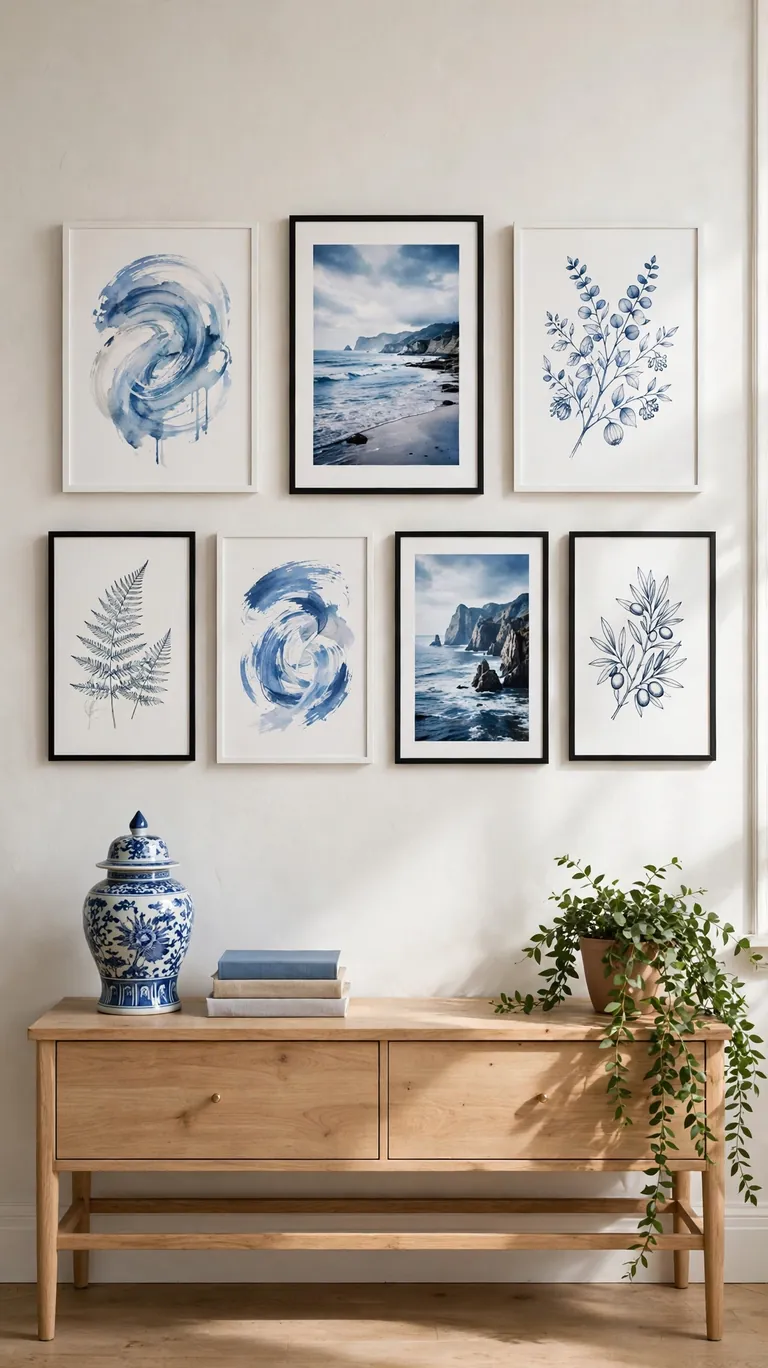
A gallery wall is the easiest way to fill a big blank wall without buying one expensive piece of art. Collect 5 to 9 frames in white, natural wood, or thin black, and fill them with blue and white prints: abstract brushstrokes, coastal photography, botanical sketches, or simple line art. Lay the arrangement on the floor first and snap a photo before you hang anything.
Keep 2 to 3 inches between frames for a relaxed feel, or go tighter for a salon-style look. Start hanging from the center piece outward, and keep the center of the whole arrangement at eye level, about 57 inches from the floor. Mixing frame sizes adds interest, but repeating one frame color keeps it cohesive.
7. Paint the Trim or Molding Blue
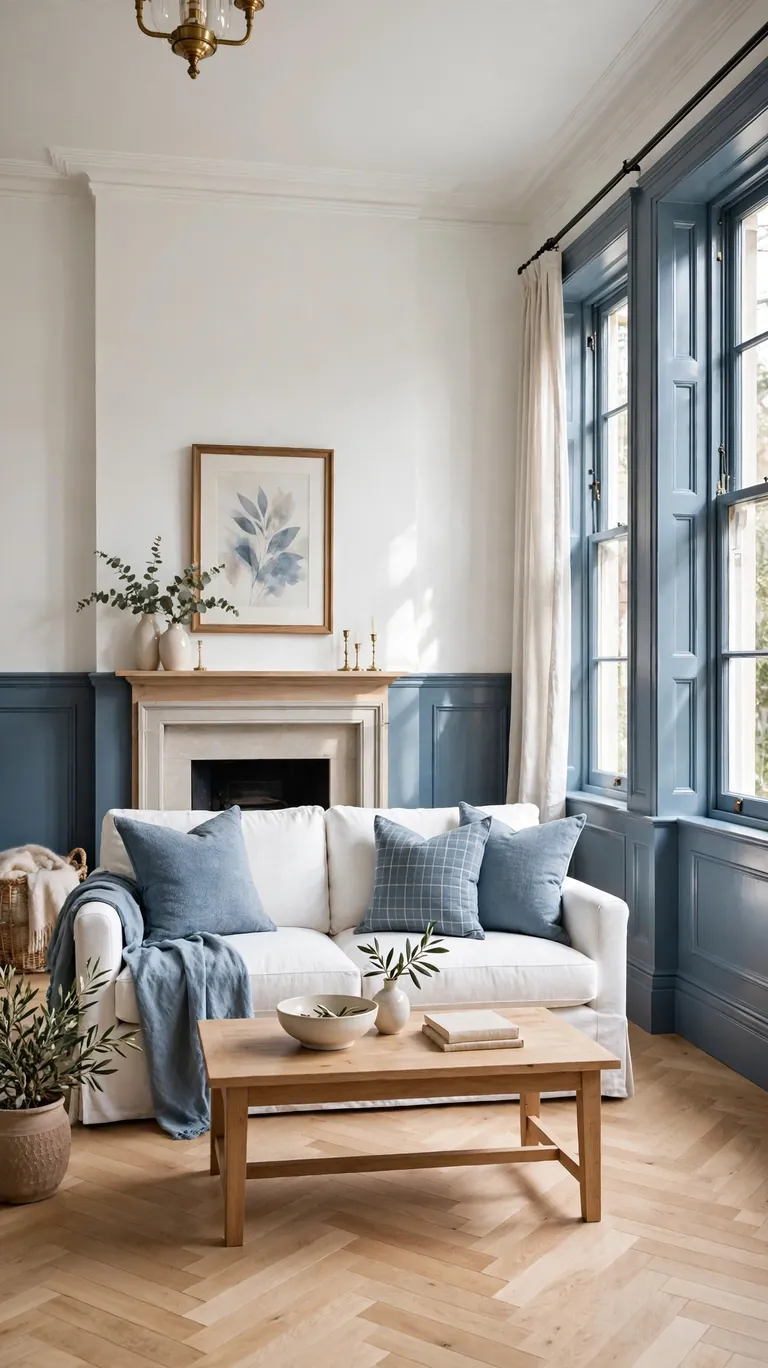
For a look that’s classic but unexpected, paint your trim, molding, or built-ins a dusty blue while keeping the walls white. It reads as custom and high-end, especially on wainscoting or a bookcase wall. A satin finish on trim is practical because it wipes clean and catches the light nicely.
This works best when the blue is muted rather than electric, think slate, denim, or powder blue. Test a large swatch and live with it for a few days, since trim color affects the whole room. If full trim feels like too much, try it on one element first, like the mantel or a single window frame.
8. Drape Coastal Throw Blankets
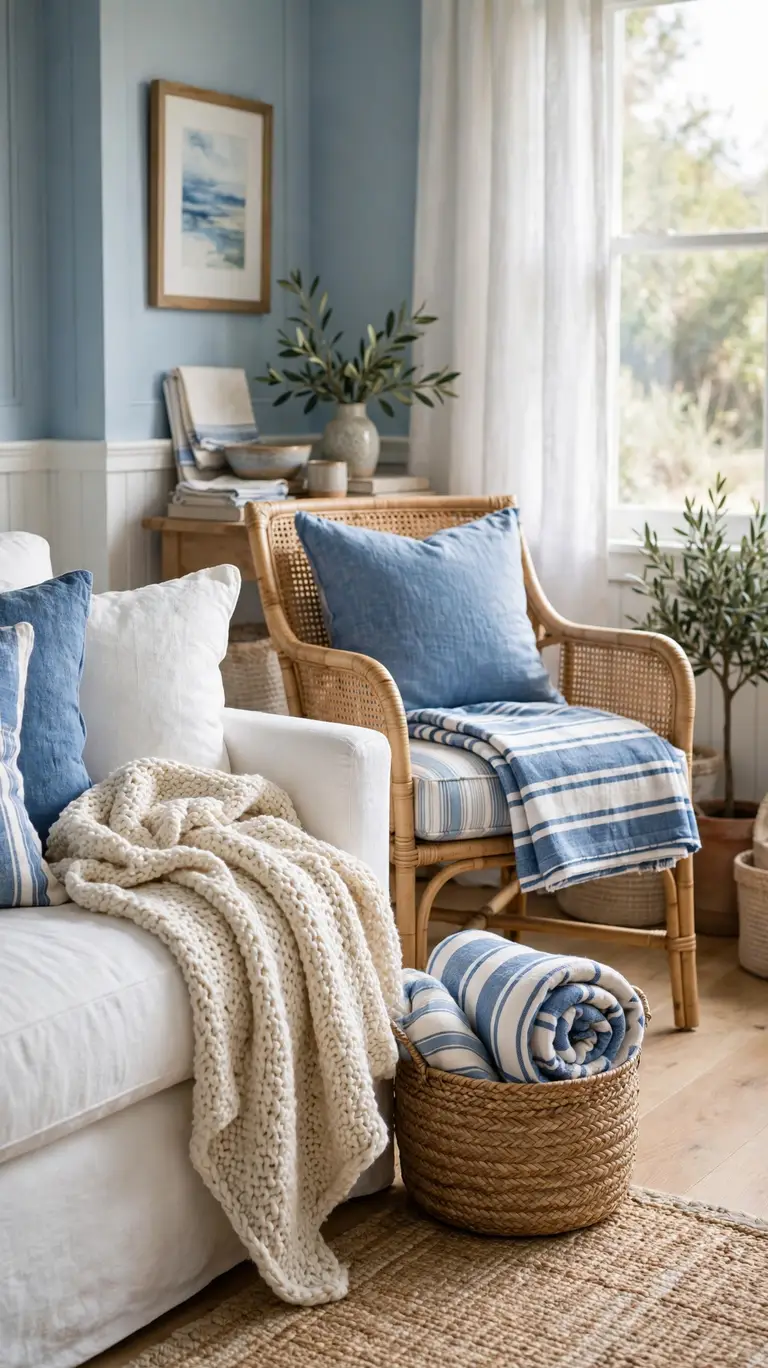
Throw blankets are the lowest-commitment way to test the palette, and they add the texture a blue and white room needs to feel inviting. Drape one over the arm of the sofa and fold another across the back of a chair. Cotton, linen, and lightweight wool all work well, so pick what feels good against skin since these get used daily.
Vary the textures rather than matching everything: pair a chunky knit in cream with a flat-weave stripe in blue. Toss, don’t arrange. A throw that looks casually placed feels welcoming, while a perfectly folded one can feel stiff. Wash them regularly so the whites stay bright.
9. Style Blue and White Porcelain Pieces
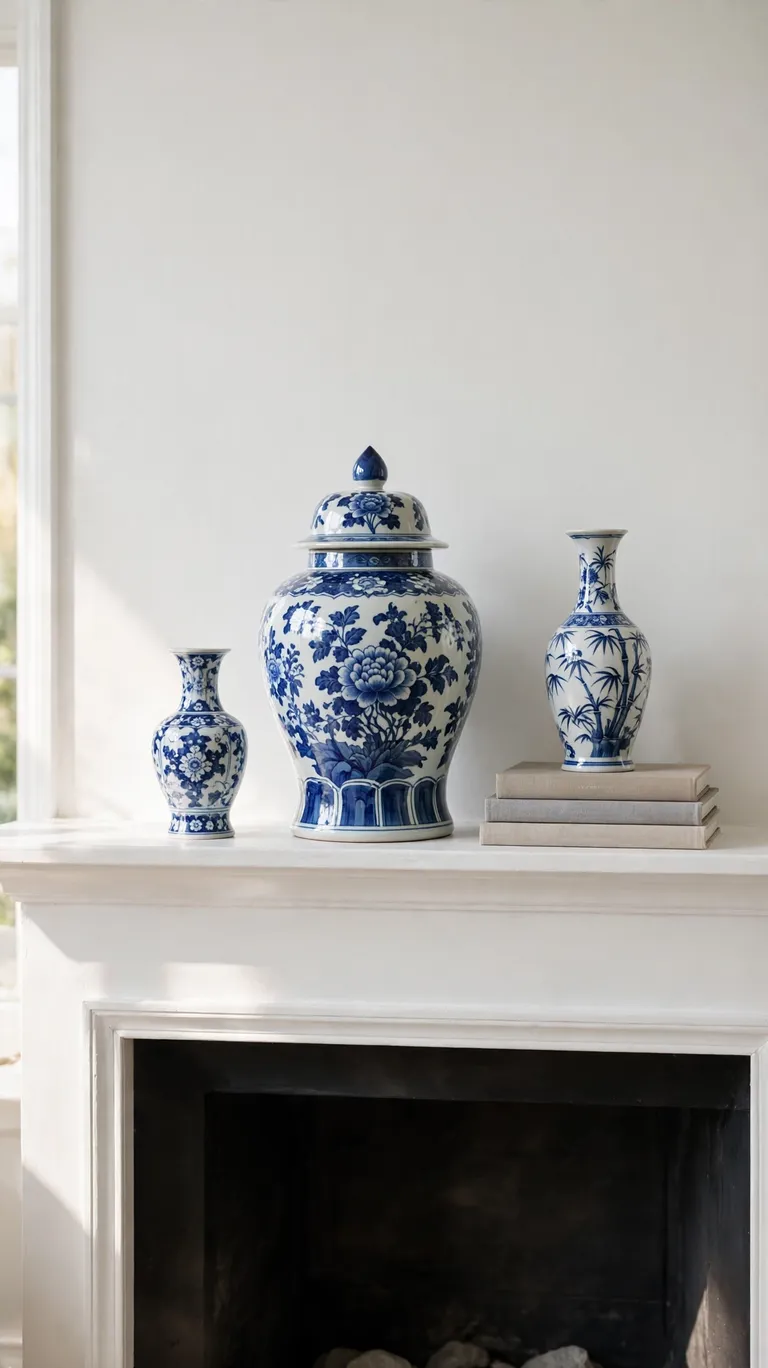
Blue and white porcelain, like ginger jars, vases, and bowls, is the classic finishing touch for this palette. Group them in odd numbers on a mantel, console, or bookshelf, mixing tall and short shapes. You don’t need antiques; new pieces in classic shapes give the same effect for much less.
Let the porcelain be the star by giving it breathing room. One large ginger jar on a stack of books makes more impact than five small pieces crowded together. If you collect over time, stick to the same blue tone so new finds blend with old ones.
10. Use Table Lamps with Blue Bases
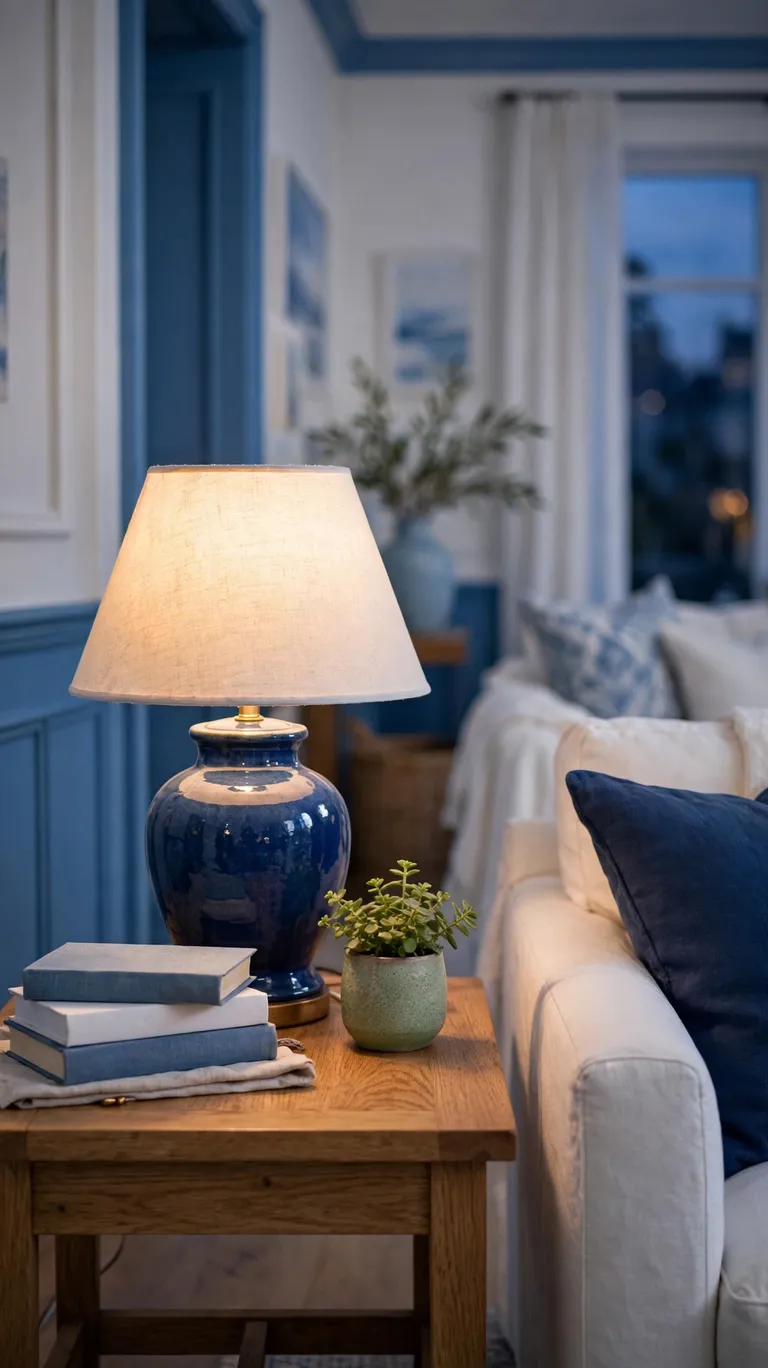
Lighting is often an afterthought, but blue lamp bases pull the color scheme onto side tables where decor tends to thin out. Look for ceramic, glass, or porcelain bases in solid blue or blue and white patterns, topped with simple white or linen shades. The shade matters: white shades cast the most light, which keeps the room feeling bright.
Place matching lamps on either side of the sofa or on matching side tables for symmetry, or use a single statement lamp on a console. Make sure the bottom of the shade sits at about eye level when you’re seated, so you don’t get glare.
11. Try Slipcovered Furniture with Blue Textiles
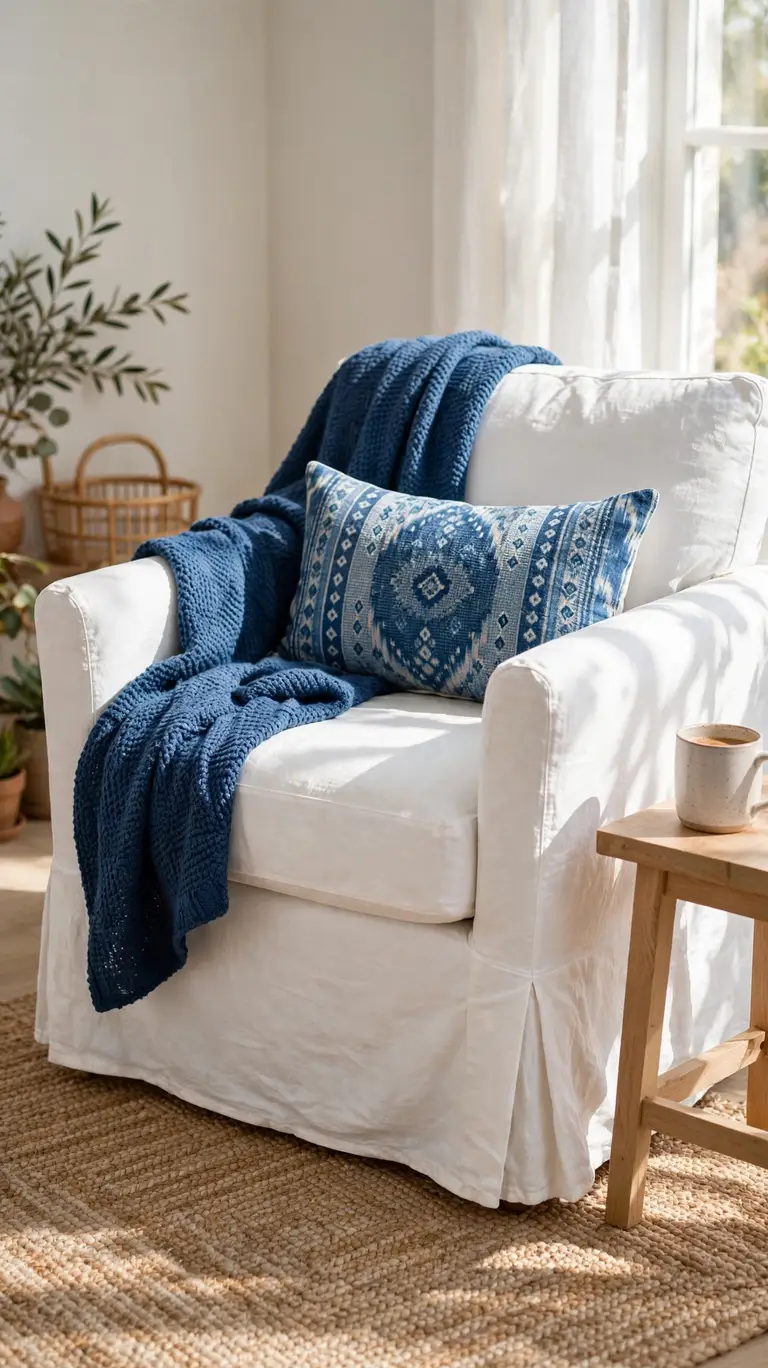
Slipcovers are a practical hero for blue and white rooms, especially in homes with kids or pets. A white slipcovered sofa or chair gives you the crisp look without the fear, since covers can be removed and washed. Choose a relaxed linen-look slipcover for casual rooms or a tailored skirted style for traditional ones.
With the big pieces in washable white, you can be braver with blue textiles: a bold indigo throw, patterned lumbar pillows, or a blue lumbar roll. Rotate the textiles seasonally to keep the room feeling fresh without buying new furniture.
12. Tuck in a Blue Ottoman or Pouf
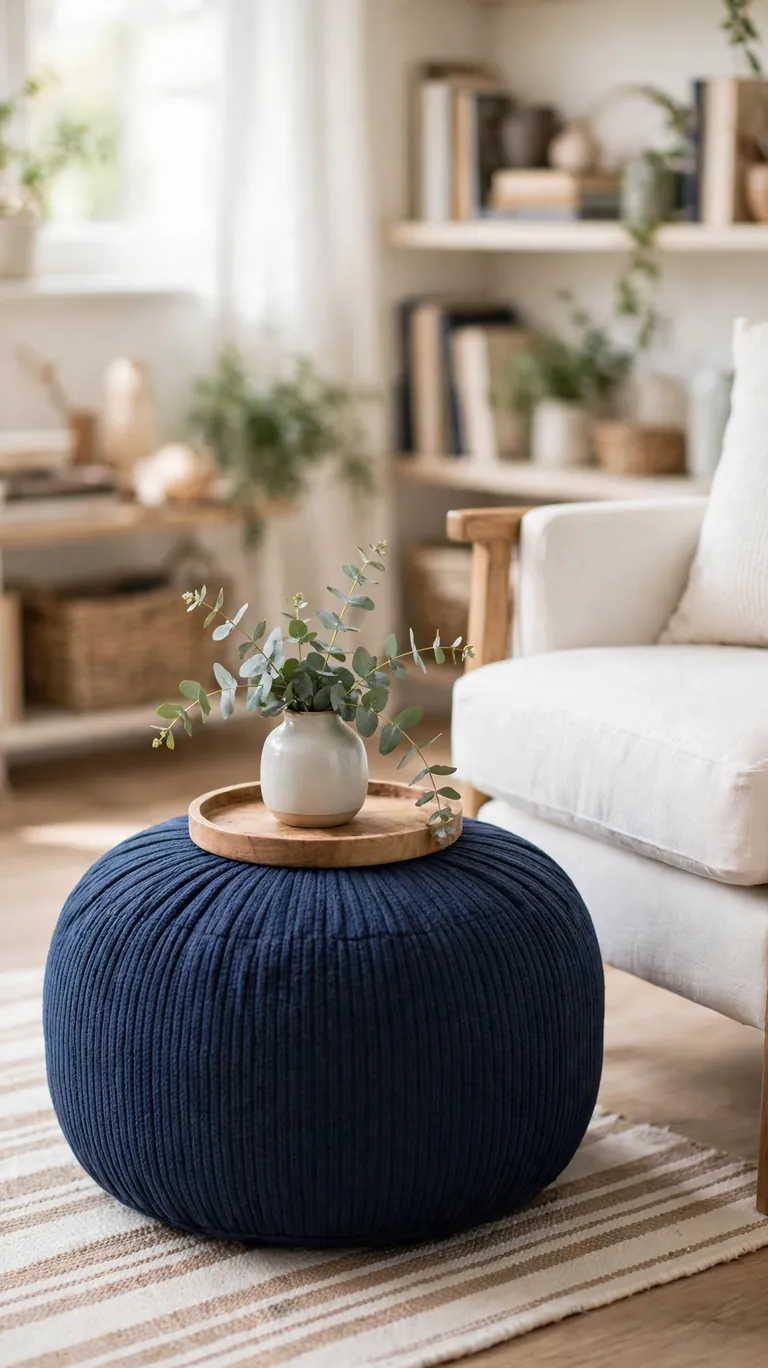
A blue ottoman or pouf is the hardest-working small piece you can add. It serves as a footrest, extra seating, and a color anchor all at once. Tuck one under a console table, float it beside an armchair, or place a tray on a flat ottoman to turn it into a coffee table.
Round poufs soften rooms full of straight lines, while a rectangular ottoman suits a structured layout. If you choose a patterned fabric, keep the surrounding textiles solid so the pouf stands out. Storage ottomans add hidden space for throws and remotes, which keeps the room tidy.
13. Install Blue Roman Shades
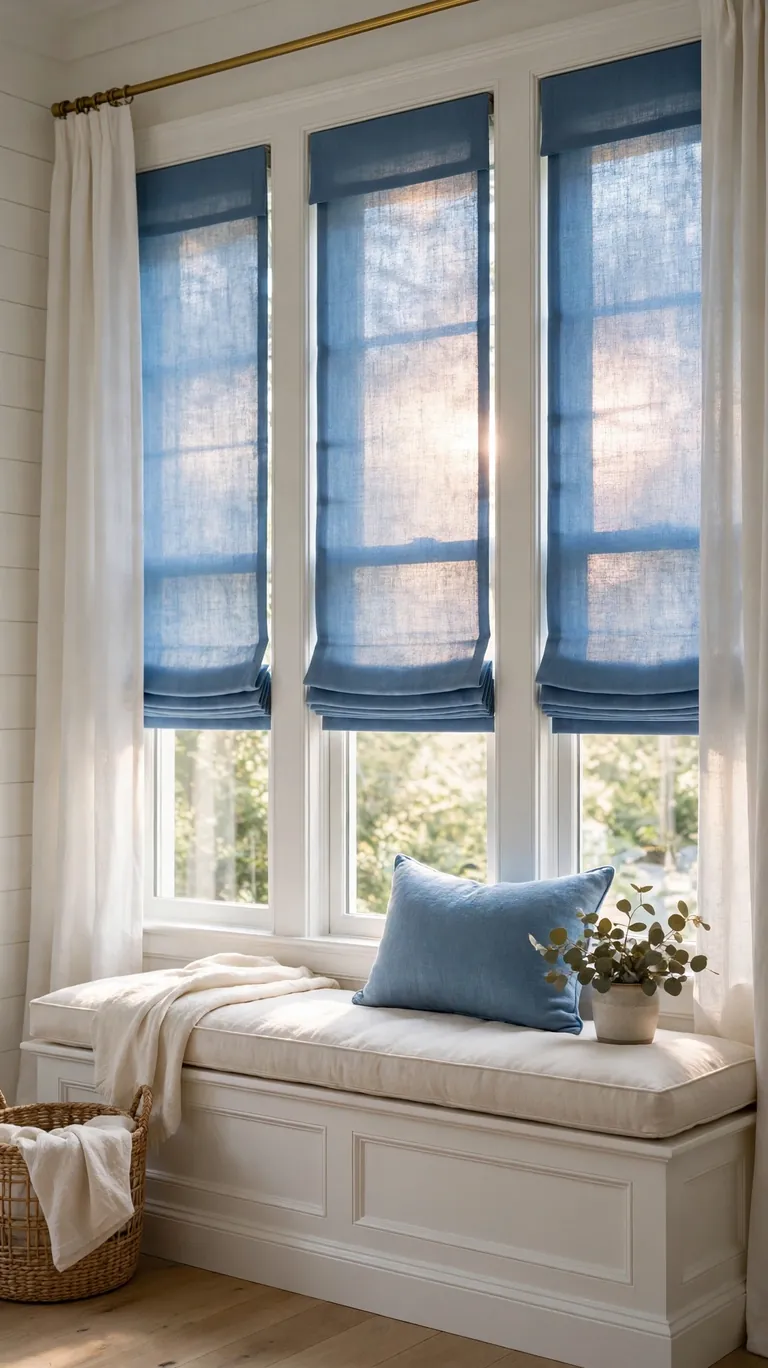
Roman shades give you the tailored look of drapery with a smaller footprint, which makes them ideal for windows behind furniture or in tight spots. A blue shade, solid or subtly patterned, frames the view and adds color at window height where the eye naturally goes. Inside-mount shades look cleanest on trimmed windows.
For the best function, choose lined shades if the window gets strong sun; the lining protects the fabric and improves insulation. Pair them with simple white curtain panels on the sides if you want softness without covering the shade’s pattern. Cordless lift mechanisms are safer and look neater.
14. Style Your Bookshelves in Blue and White
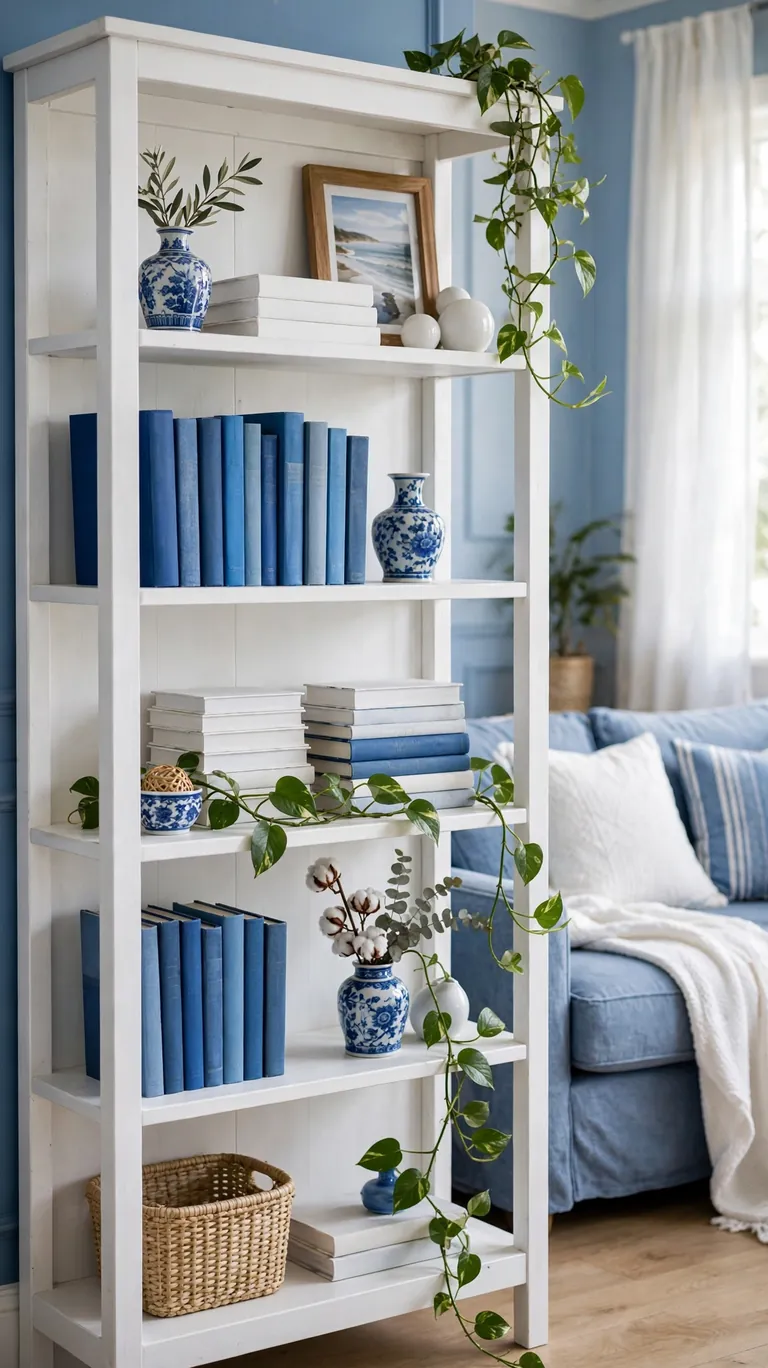
Bookshelves are free decorating real estate, and styling them in your palette ties the whole room together. Group books by color, turning blue spines outward and stacking white or neutral books horizontally. Leave some breathing room; shelves packed edge to edge look cluttered no matter the color.
Mix in blue and white objects between the books: small vases, boxes, framed photos, and a trailing plant. Aim for roughly two-thirds books and one-third decor. Step back and squint; if any shelf looks noticeably heavier than the rest, move one item until it balances.
15. Go Bold with a Blue Velvet Sofa
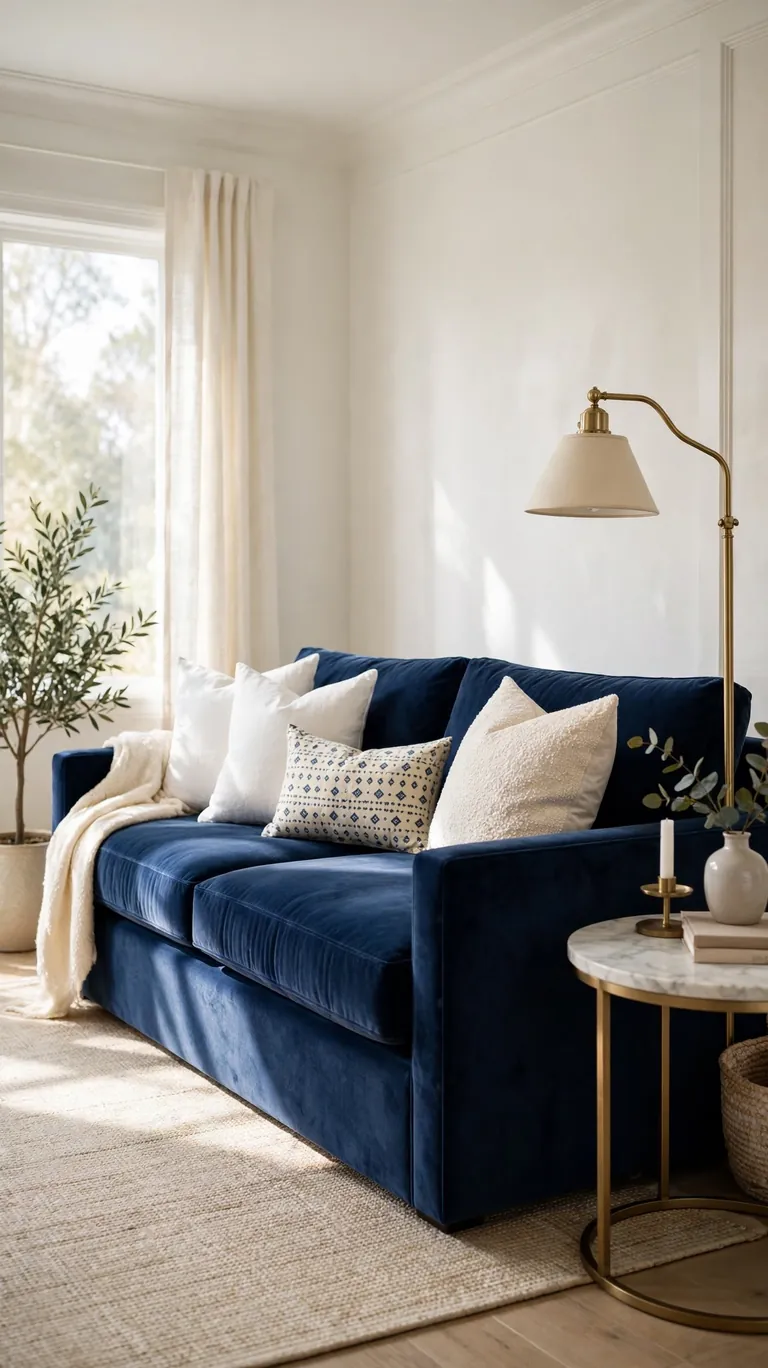
If white sofas make you nervous, flip the formula and make the sofa the blue moment. A blue velvet sofa in navy or sapphire is dramatic yet timeless, and velvet’s texture keeps it from feeling flat. It becomes the room’s anchor, so keep walls and rug light to balance its visual weight.
Style it with white and cream pillows to keep the look fresh, and add one patterned pillow to break up the solid expanse. Velvet shows wear less than you’d expect if you vacuum it with an upholstery attachment and brush it occasionally. In small rooms, a blue loveseat gives the same effect with a lighter footprint.
16. Dress a White Fireplace with Blue Decor
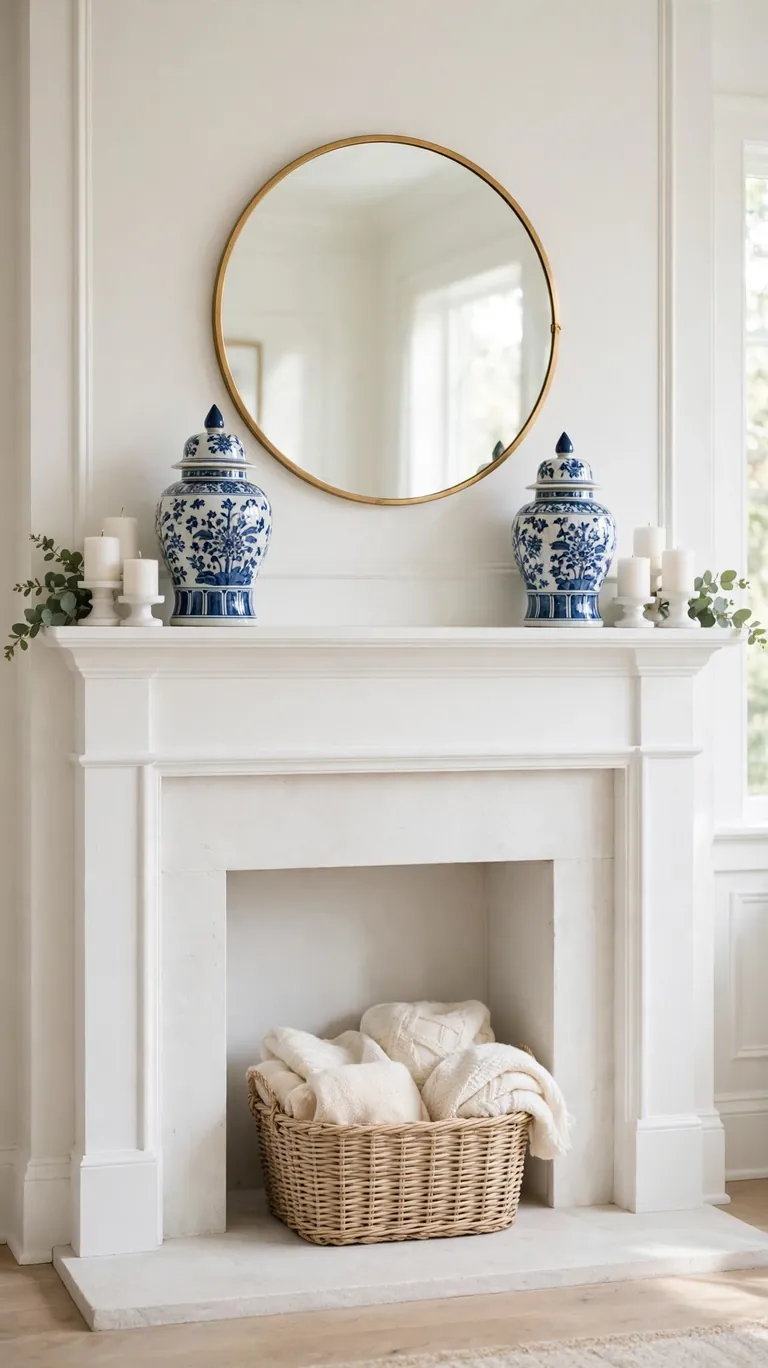
A white fireplace mantel is a natural stage for blue and white styling. Start with a large anchor in the center, like a mirror, artwork, or a pair of ginger jars, then build outward symmetrically. Symmetry feels calm and traditional here, which suits the palette.
Change the mantel with the seasons while keeping the blue and white base: greenery and white candles in winter, fresh flowers in spring. Keep the hearth simple, a basket of throws or a stack of white logs, so the mantel remains the focus. If your fireplace isn’t white, a coat of heat-safe white paint transforms it in a weekend.
17. Mix Pillow Patterns the Easy Way
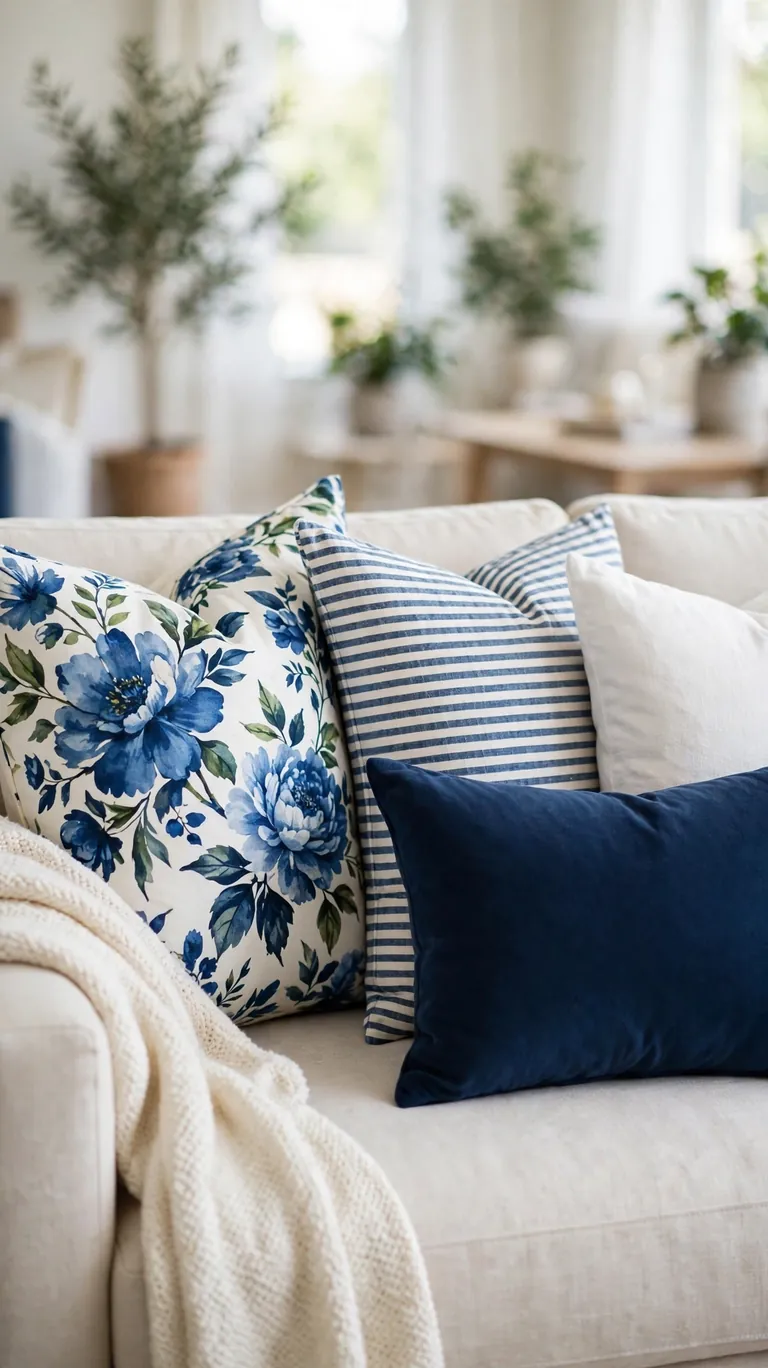
The secret to mixing patterns is varying the scale: one large-scale print, one medium stripe or check, and one small-scale texture or solid. In blue and white, try a big floral, a classic stripe, and a solid navy or white. This formula works every time and keeps the mix from looking chaotic.
Distribute the patterns around the room instead of clustering them all on the sofa. Put the stripe on the armchair, the floral on the sofa, and the solid on the ottoman. Repeating each pattern at least twice makes the room feel connected rather than random.
18. Add a Blue and White Wallpaper Accent
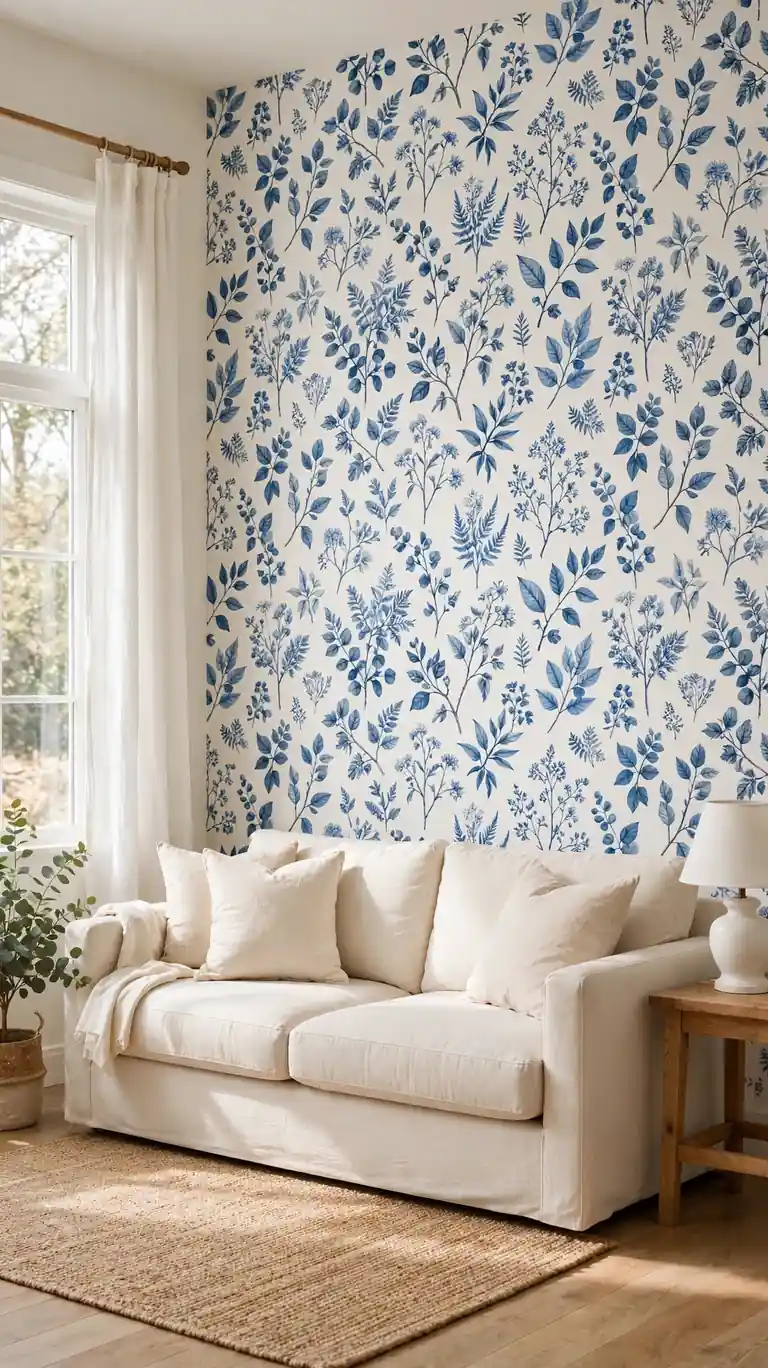
Wallpaper makes a bigger statement than paint, and a blue and white pattern, like chinoiserie, trellis, or botanical, turns one wall into art. It’s ideal for the wall behind the sofa, the back of built-in shelves, or a reading nook. Peel-and-stick options make it renter-friendly and easy to change later.
Because wallpaper is busy, keep everything else in the room calm: solid upholstery, simple curtains, minimal clutter. Order samples and tape them up for a few days to see the pattern in morning and evening light. One accent wall is plenty; covering all four walls in a bold pattern can overwhelm a living room.
19. Let Plants Pop Against Blue and White
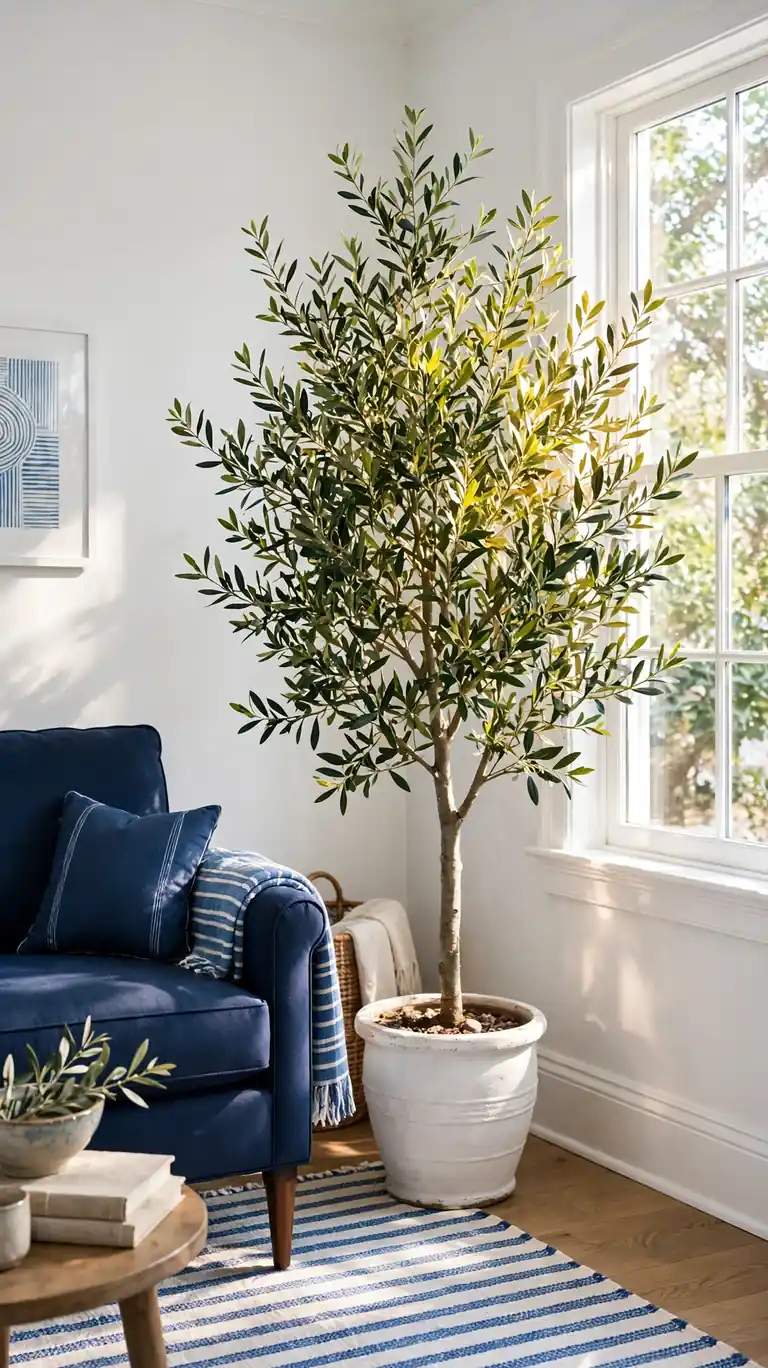
Green plants are the perfect third color for a blue and white room. They add life and soften all the crisp lines, and green sits beautifully next to navy. A tall olive tree or fiddle-leaf fig in a white pot fills an empty corner, while smaller plants work on shelves and side tables.
If you’re not confident with plants, start with forgiving ones like pothos, snake plants, or ZZ plants, which tolerate low light and irregular watering. White or natural woven pots keep the palette clean. Just one or two plants make a difference; you don’t need a jungle.
20. Keep It Fresh with Seasonal Swaps
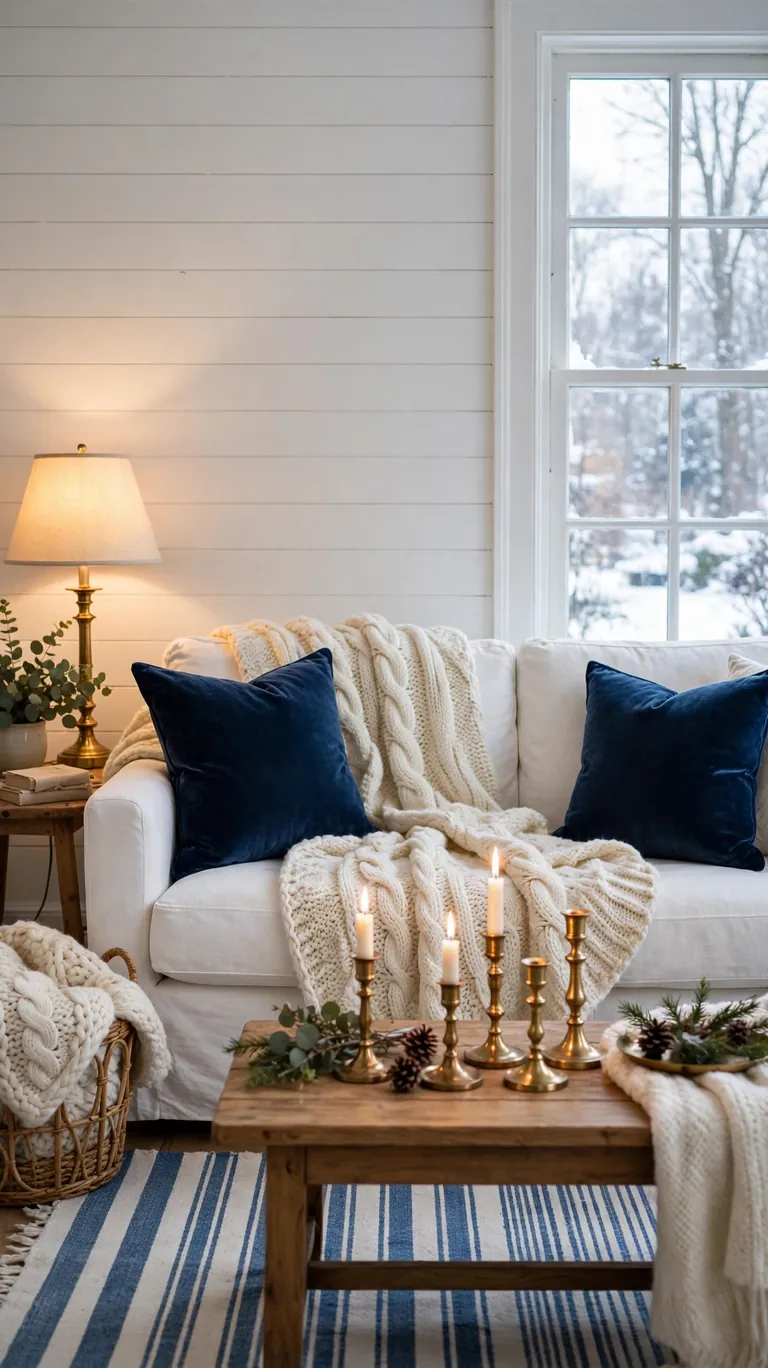
The beauty of a blue and white base is how easily it adapts through the year. In summer, lean coastal with linen throws, jute textures, and seashell accents. In winter, add navy velvet pillows, chunky cream knits, and warm metallic touches like brass candlesticks.
Store off-season textiles in labeled bins so swaps take an afternoon, not a weekend. Keep the big pieces, sofa, rug, curtains, the same year-round and change only pillows, throws, and small decor. This keeps the room feeling current without constant spending.
Frequently Asked Questions
What shade of blue works best in a living room?
Navy is the safest all-rounder because it reads as a neutral and pairs with almost everything. If your room is small or dark, lean toward mid-tones like denim or slate blue so the space doesn’t feel heavy. Powder blue works best as an accent rather than a main color, since large areas of pale blue can wash out in bright light.
How do I keep a blue and white room from feeling cold?
Warmth comes from texture and secondary materials, not from abandoning the palette. Choose warm whites with a creamy undertone instead of stark blue-whites, add natural wood tones through furniture or floors, and layer in cozy textures like wool, linen, and jute. Warm-toned lighting (2700K bulbs) also makes a big difference in the evening.
Can blue and white work in a small living room?
Absolutely. In fact, it’s one of the best palettes for small spaces because white reflects light and blue adds depth without visual clutter. Keep large surfaces white, bring blue in through a rug, curtains, or one accent chair, and use a mirror opposite the window to bounce light around. Avoid too many competing patterns, which can make a small room feel busy.
What other colors go well with blue and white?
Natural wood tones, brass or gold metals, and greenery from plants are the classic companions. Beige, linen, and jute add warmth without breaking the palette. A small amount of black, like picture frames or a lamp, adds crisp contrast. If you want a third accent color, soft greens and warm terracotta both play nicely with navy.
How do I mix blue and white patterns without it looking busy?
Vary the scale of your patterns: pair one large print with one medium stripe and one small texture or solid. Stick to two or three blues max, and give the eye places to rest with solid white or cream pieces between patterns. If in doubt, step back and remove one patterned item; restraint is what keeps the mix looking curated.
Conclusion
Blue and white endures because it gives you the best of both worlds: the freshness of a light, airy room and the grounding effect of real color. Whether you go all in with a navy accent wall and a velvet sofa or start small with striped pillows and a coastal throw, the palette rewards consistency more than spending. Pick your whites, pick your blues, and repeat them around the room until the whole space feels like it was planned that way.
If you’re starting from scratch, begin with the pieces you touch every day: the rug under your feet, the sofa you sit on, and the curtains that frame your light. Get those three right and the smaller decor choices almost make themselves. And remember, this is one of the easiest looks to refresh. A swap of pillows and throws can take your living room from breezy summer coastal to cozy winter classic in a single afternoon, which is exactly why blue and white never gets old.