15 Small Bedroom Ideas That Make Your Room Feel Bigger
Small bedrooms can feel cramped, but the right design choices make them feel open, calm, and twice their size. The trick is not buying more things. It is choosing pieces, colors, and layouts that keep sightlines clear and let light move freely through the room.
If your bedroom feels tight, start with light wall colors, add a large mirror, and clear the floor of bulky furniture. These three moves alone can make a small room feel noticeably bigger. Then layer in smart storage, cohesive colors, and vertical thinking to keep everything else working in your favor.
Below, you will find 15 practical ideas you can use right away, whether you rent or own. None of them require knocking down walls or spending a fortune. Each one is about working with the space you have and making it feel generous, restful, and completely yours. Pick a few to start with, live with them for a week, and you will be surprised how different the room feels.
1. Paint Walls in Light, Airy Colors
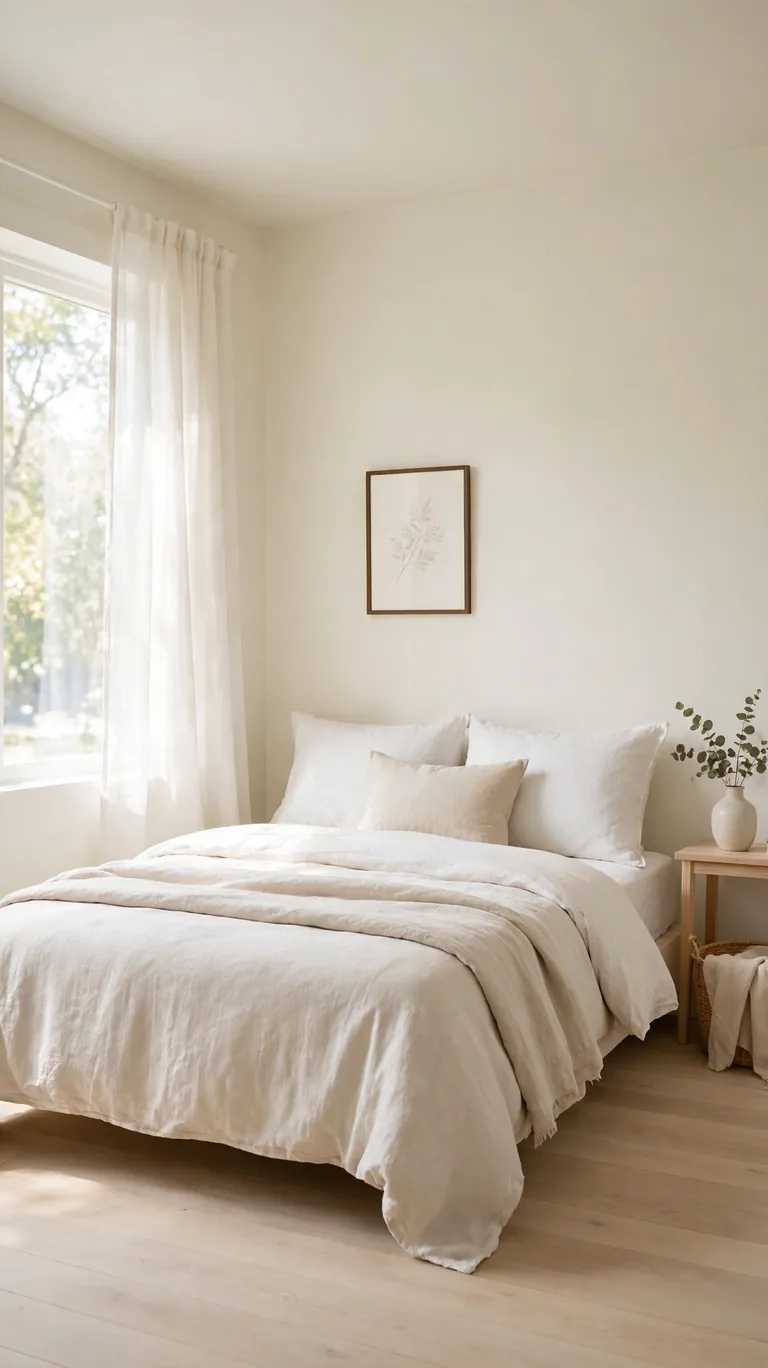
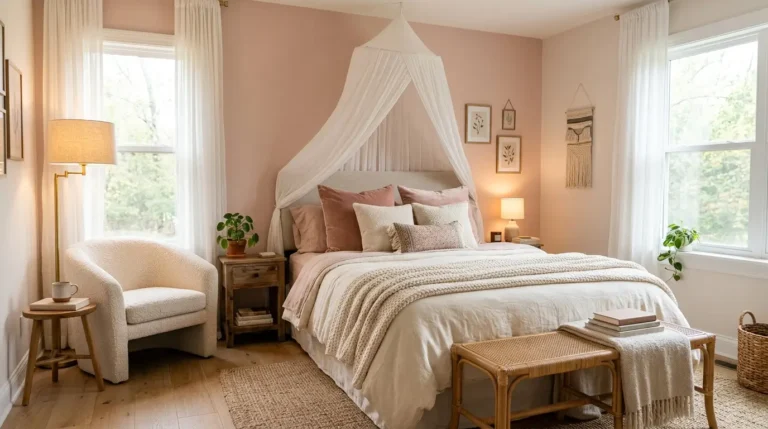
Light colors reflect more light around the room, which makes walls feel farther apart than they really are. Soft whites, warm creams, pale grays, and gentle pastels all keep a small bedroom feeling open instead of closed in. You do not need to go stark white if that feels cold. A creamy off-white or a barely-there blue can feel just as spacious while adding a little warmth.
Paint the ceiling the same color as the walls, or one shade lighter, to blur the line where the wall ends. This simple trick erases the visual boundary overhead and makes the ceiling feel higher. If you are renting and cannot paint, you can get a similar effect with light-colored removable wallpaper or even large fabric panels hung on the walls.
2. Hang a Large Mirror to Double the Space
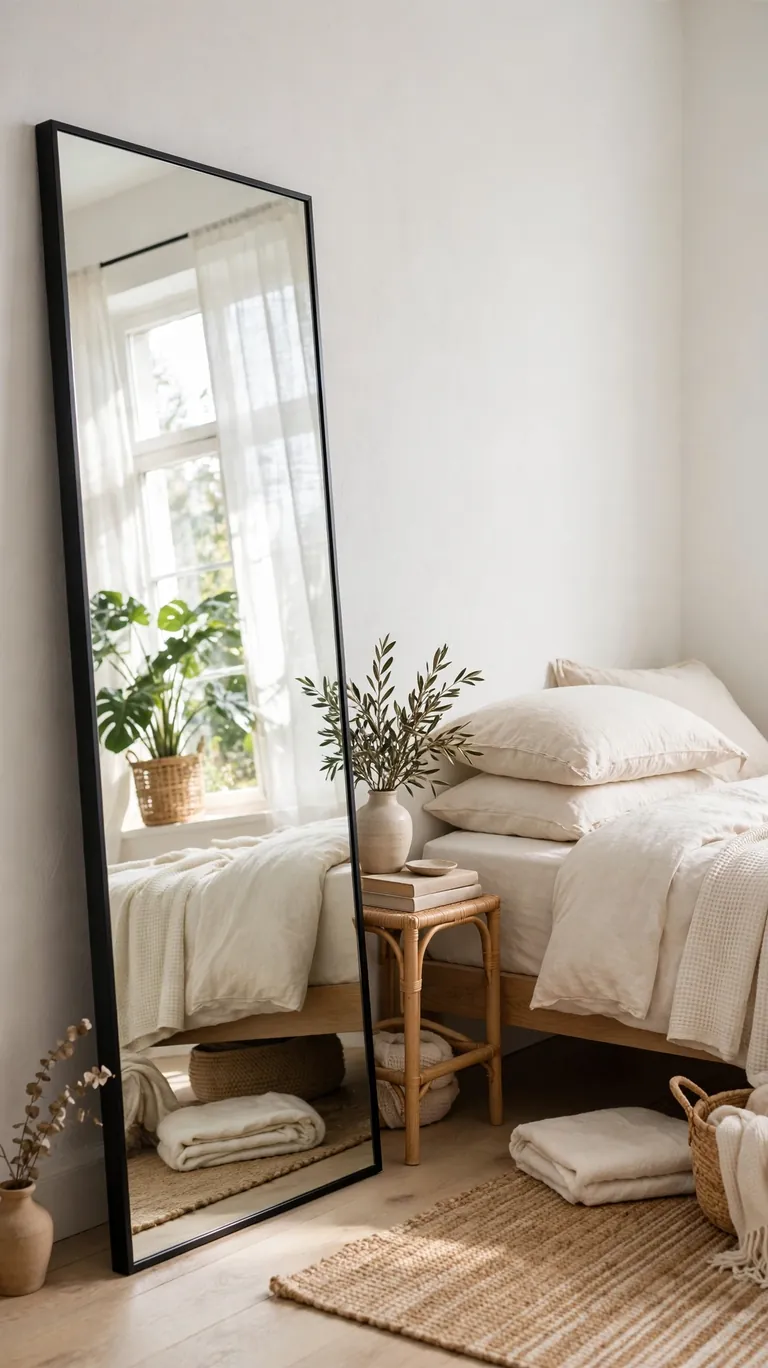
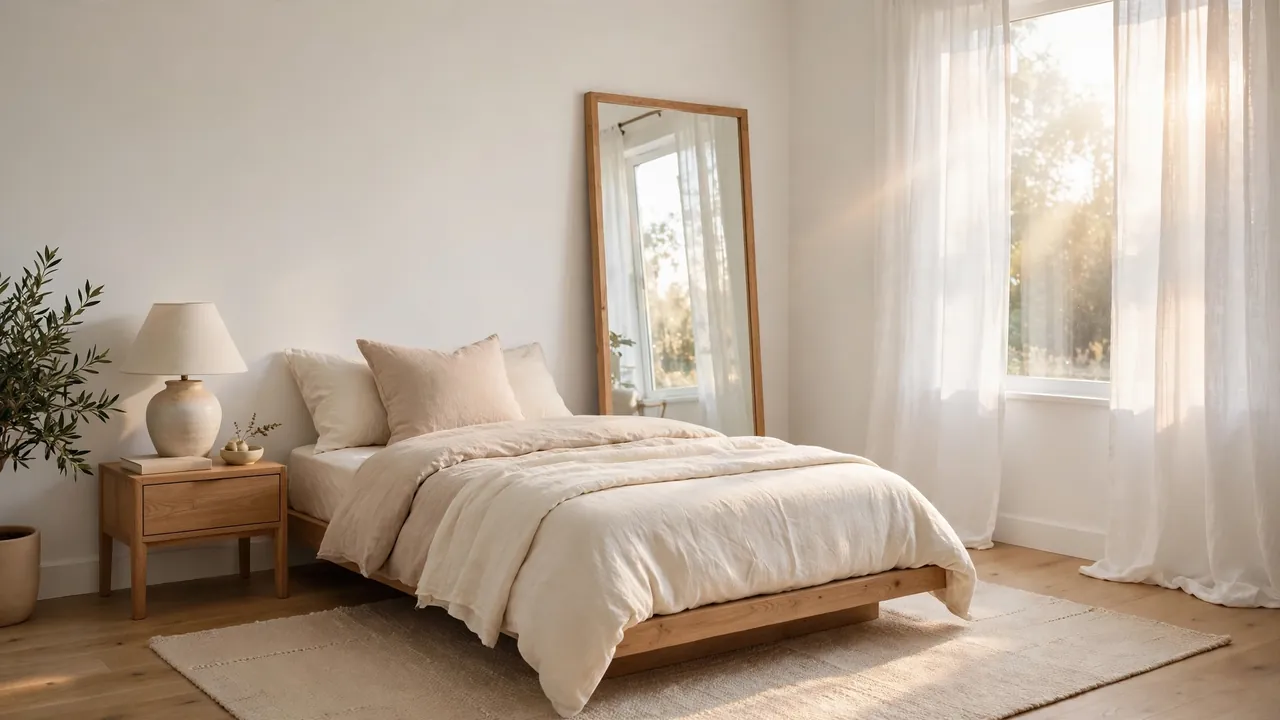
A mirror is the fastest way to make a small bedroom feel bigger. It bounces light around the room and creates the illusion of extra depth, almost like a second window. Hang one large mirror rather than several small ones. A single full-length mirror leaning against the wall or a wide mirror above the dresser has the most impact.
Place the mirror where it reflects something pleasant, like a window, a plant, or a pretty lamp. That way it multiplies the nicest part of your room instead of a blank wall. Keep the frame slim and simple so the mirror itself does the visual work. In a very small room, a mirrored closet door can handle this job without taking up any extra wall space at all.
3. Choose a Low-Profile Bed Frame
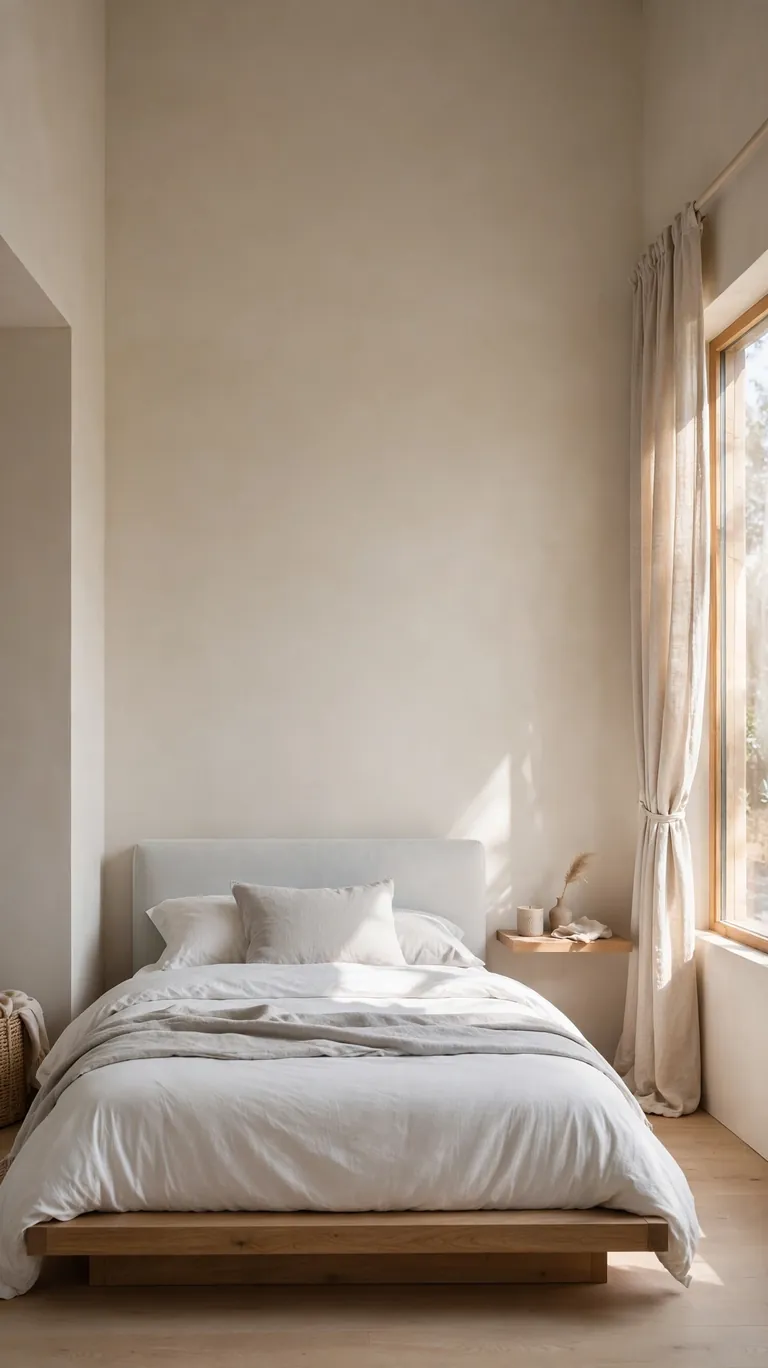
Tall, bulky bed frames eat up visual space in a small bedroom. A low-profile frame sits closer to the floor and leaves more wall visible above the mattress, which makes the whole room feel taller and airier. Platform beds and simple slatted frames work especially well because they look clean and unfussy.
Skip the tall headboard if your room is very tight. A low upholstered headboard, or even a row of large cushions against the wall, gives you a comfortable backrest without looming over the bed. Your eye reads the extra open wall as extra room, and that small shift changes how the whole space feels when you walk in.
4. Hang Curtains High and Wide
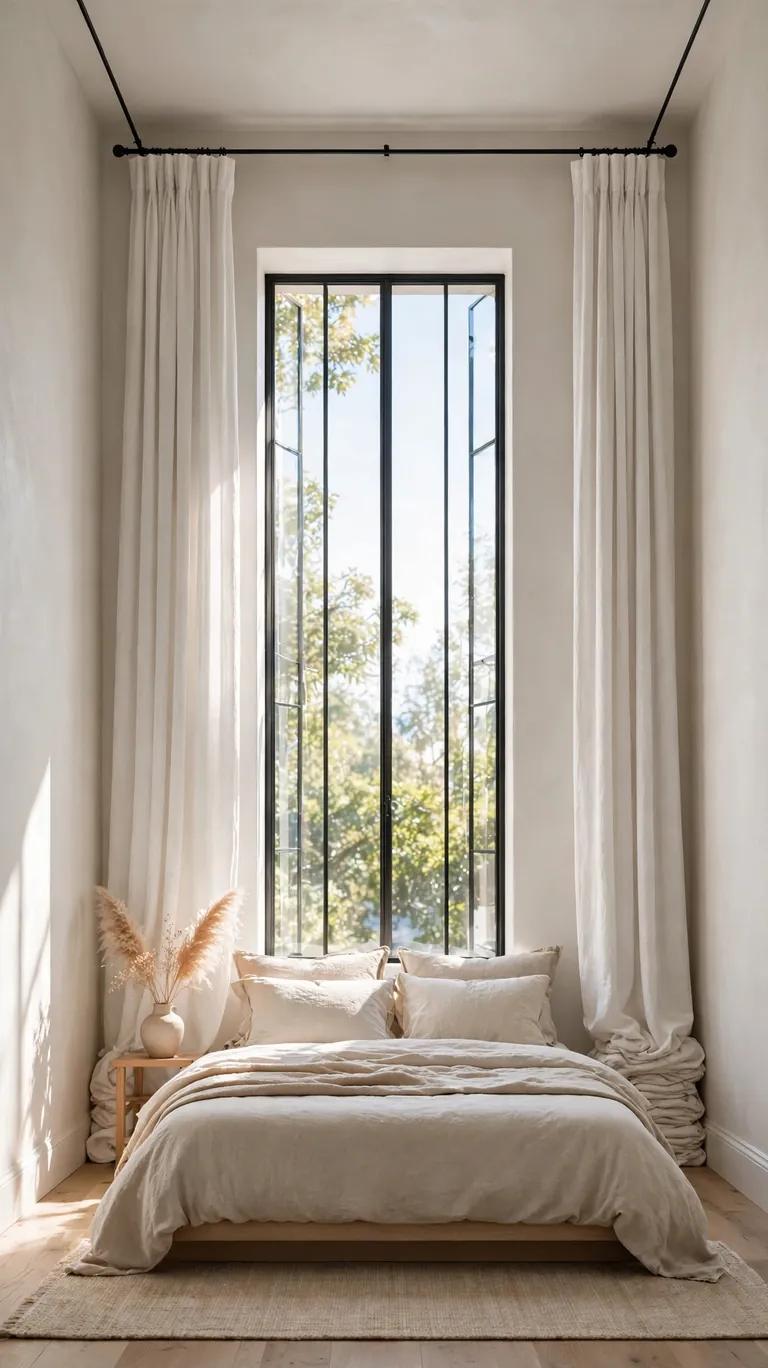
Curtains hung right at the top of the window frame make the window look smaller than it is. Mount the rod close to the ceiling and extend it well past the window on both sides. When the curtains are open, they stack over the wall instead of the glass, so you see the full window and the room feels wider.
Use lightweight fabrics that let daylight filter through. Heavy, dark drapes close a room in, while airy linen or cotton panels keep things bright. If privacy is a concern, layer a sheer panel underneath a slightly heavier one. You get the best of both worlds: daylight during the day and coverage at night, without the visual weight.
5. Pick a Bed With Built-In Storage
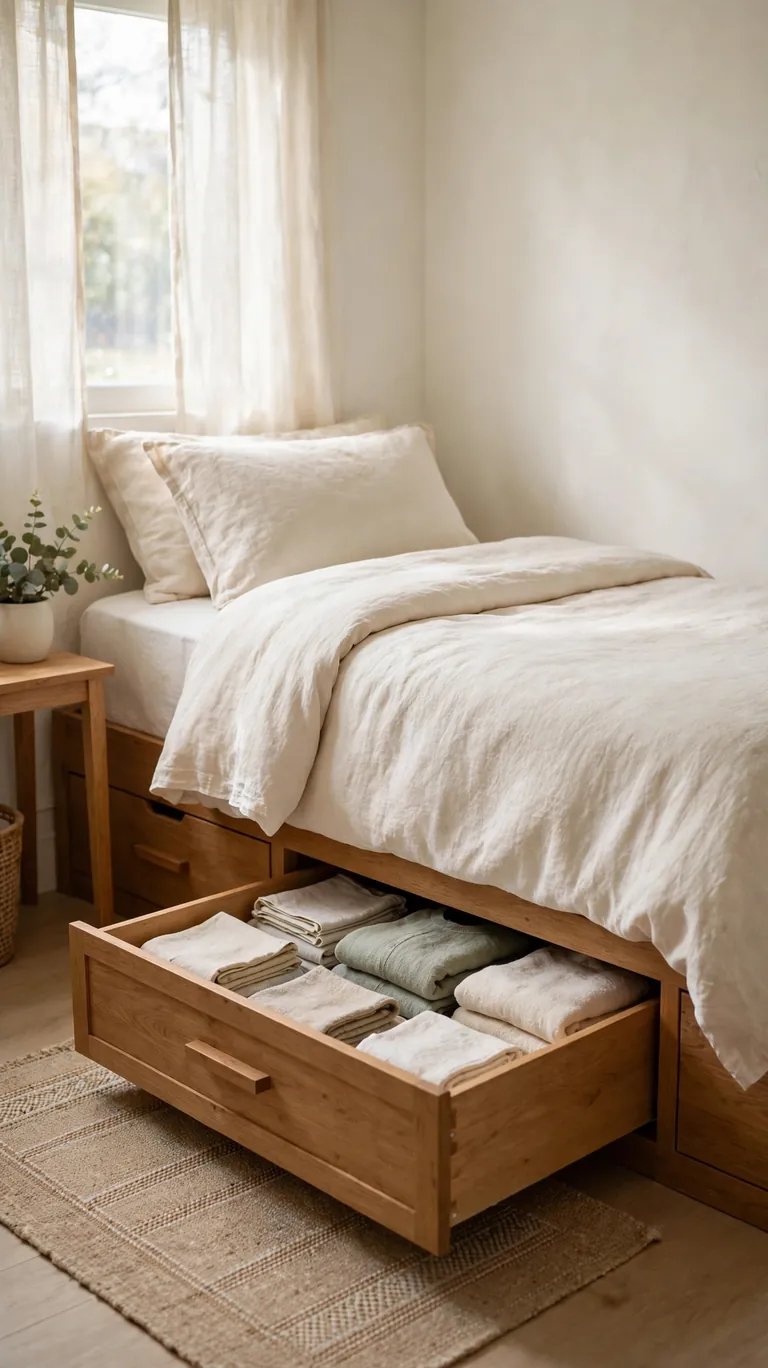
In a small bedroom, every piece of furniture should earn its place. A bed with drawers underneath, or an ottoman-style frame that lifts for full under-bed access, hides an enormous amount of clutter. Think off-season clothes, extra bedding, shoes, and bags, all out of sight.
When clutter disappears behind closed drawers, the room instantly feels calmer and larger. You can also use the freed-up closet space more loosely instead of cramming everything in. If a storage bed is not in the budget, low-profile rolling bins under a raised frame do a similar job. The key is that storage stays hidden and the floor around the bed stays clear.
6. Keep Your Color Palette Cohesive
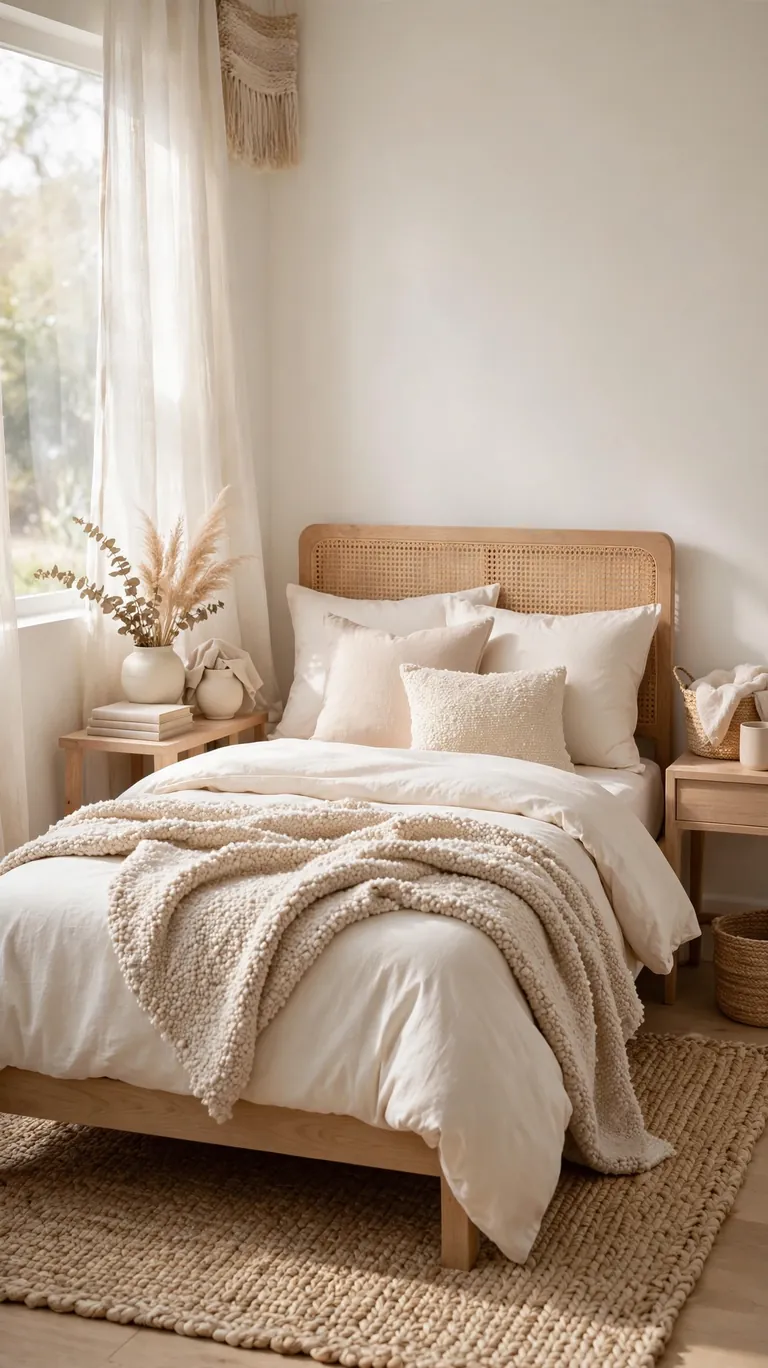
Too many competing colors chop a small room into visual pieces, and each piece feels smaller. A cohesive palette of two or three tones that flow from walls to bedding to furniture makes the room read as one continuous space. Neutrals with one soft accent color are a safe and pretty combination.
This does not mean everything has to match exactly. Vary textures instead of colors: a nubby throw, smooth cotton sheets, and a woven rug in the same tonal family add interest without breaking the flow. When your eye glides across the room without stopping on sharp contrasts, the space feels larger and more peaceful.
7. Float Your Nightstands
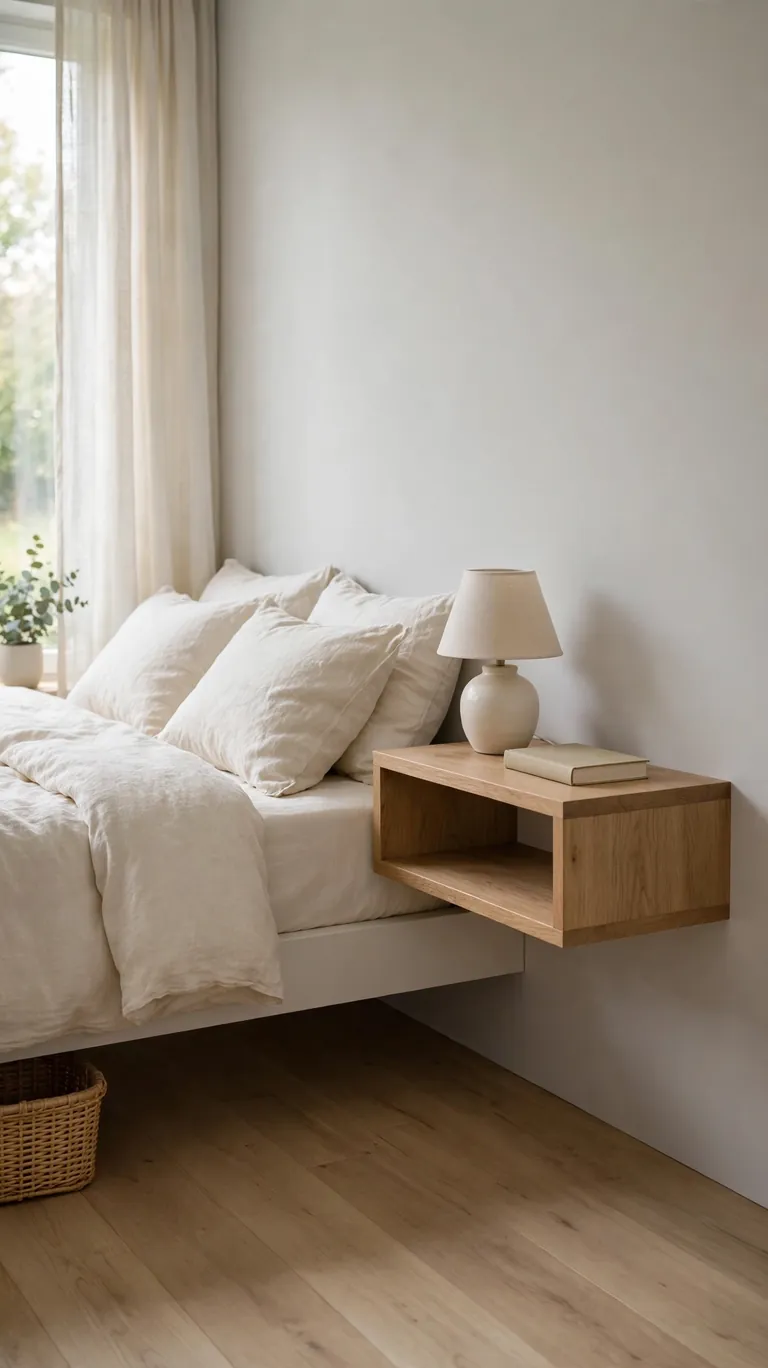
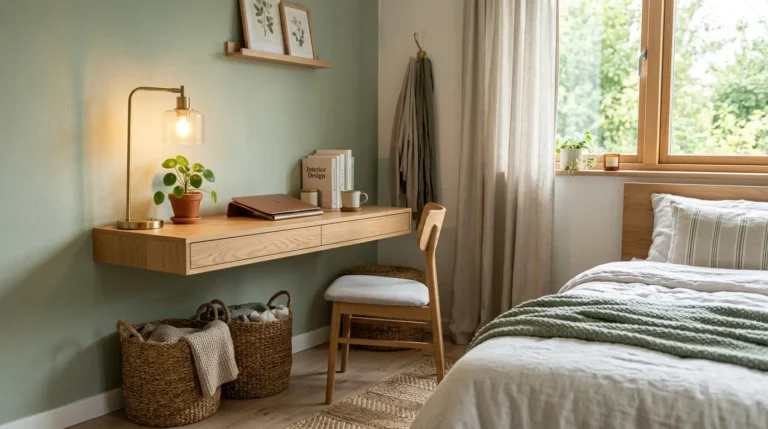
Bulky nightstands crowd the floor on both sides of the bed. A floating shelf or a wall-mounted nightstand gives you a spot for your lamp, book, and phone without touching the floor at all. The visible floor underneath tricks your eye into seeing more square footage.
If you need more storage than a shelf offers, try a slim rolling cart that tucks beside the bed. It holds the same essentials and slides away when you want the room to feel extra open. Wall-mounted sconces above the nightstand area free up the surface even more, so a tiny shelf can hold everything you actually need.
8. Think Vertically With Tall Storage
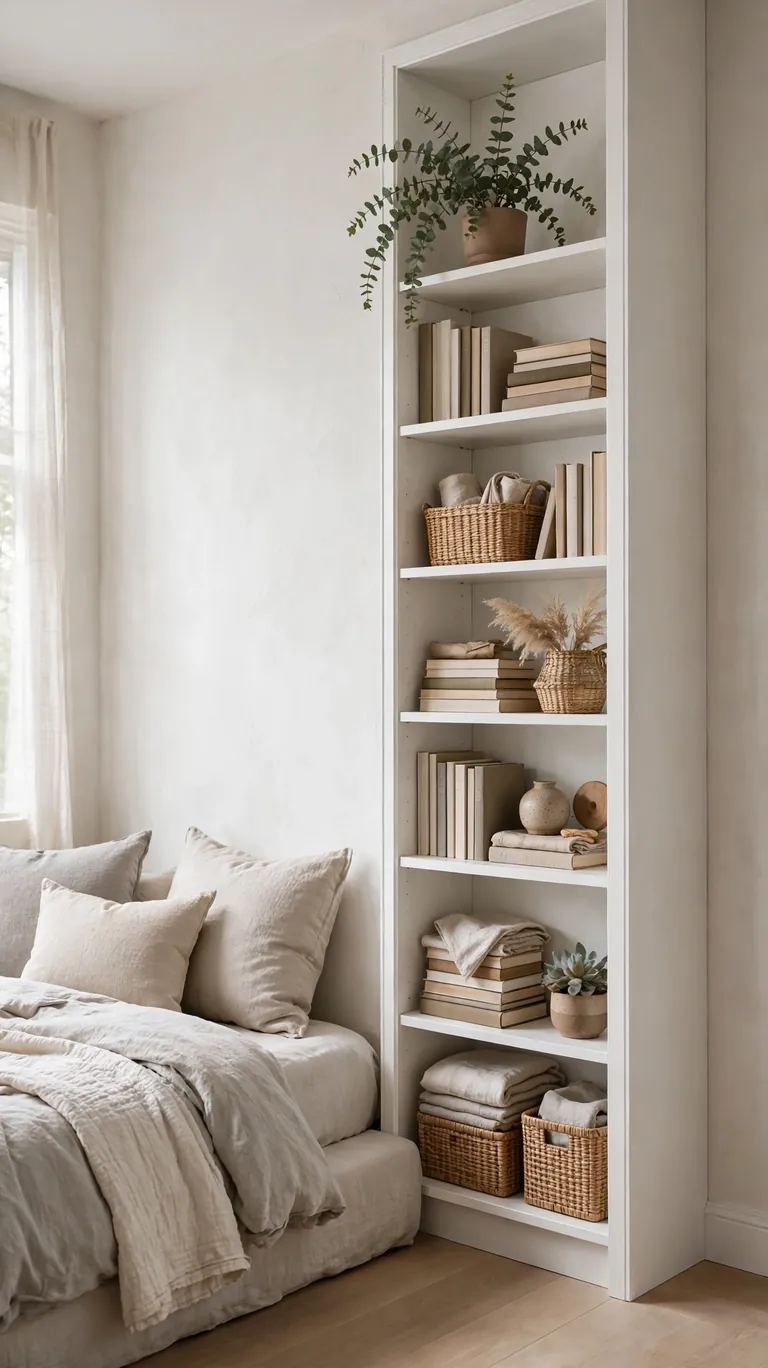
When floor space is limited, the walls are your best friend. A tall, narrow bookcase or wardrobe draws the eye upward and uses air space that would otherwise go to waste. Vertical storage holds just as much as a wide dresser while taking up a fraction of the footprint.
Keep the top shelves for things you rarely need and everyday items at arm level. Open shelving can work if you keep it tidy, but closed cabinets are more forgiving in a small room because they hide visual clutter. Either way, one tall piece beats three short ones scattered around the room.
9. Let in Natural Light With Sheers
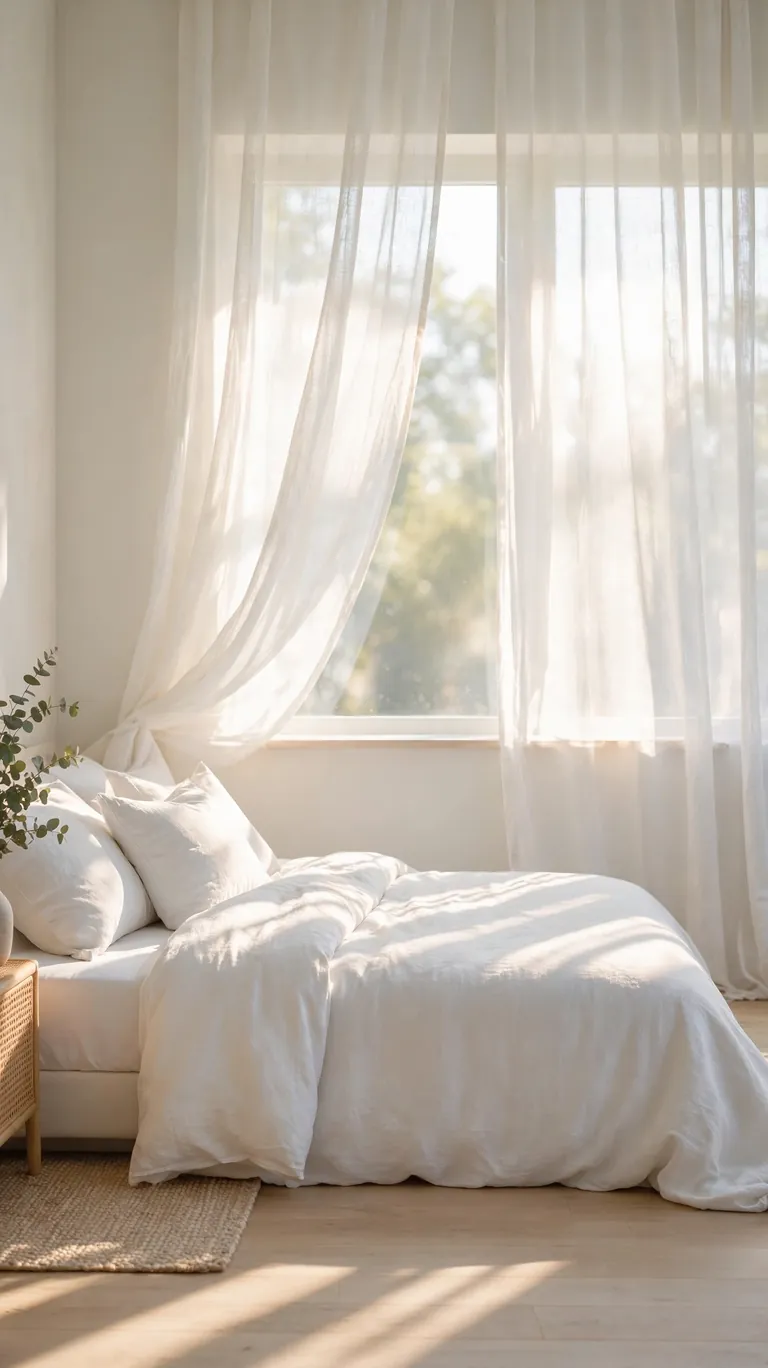
Natural light is a small room’s best friend, and anything that blocks it shrinks the space. Sheer curtains soften harsh sunlight while letting most of it through, so the room stays bright all day. Bright rooms feel bigger. Dark rooms feel smaller. It is that simple.
Keep windowsills clear and avoid placing tall furniture directly in front of windows. Even a few inches of clearance lets light spill past the piece and into the room. Clean your windows inside and out too. It sounds minor, but grimy glass can noticeably dim the light coming in, and sparkling glass makes the whole room feel fresher.
10. Keep More Floor Visible
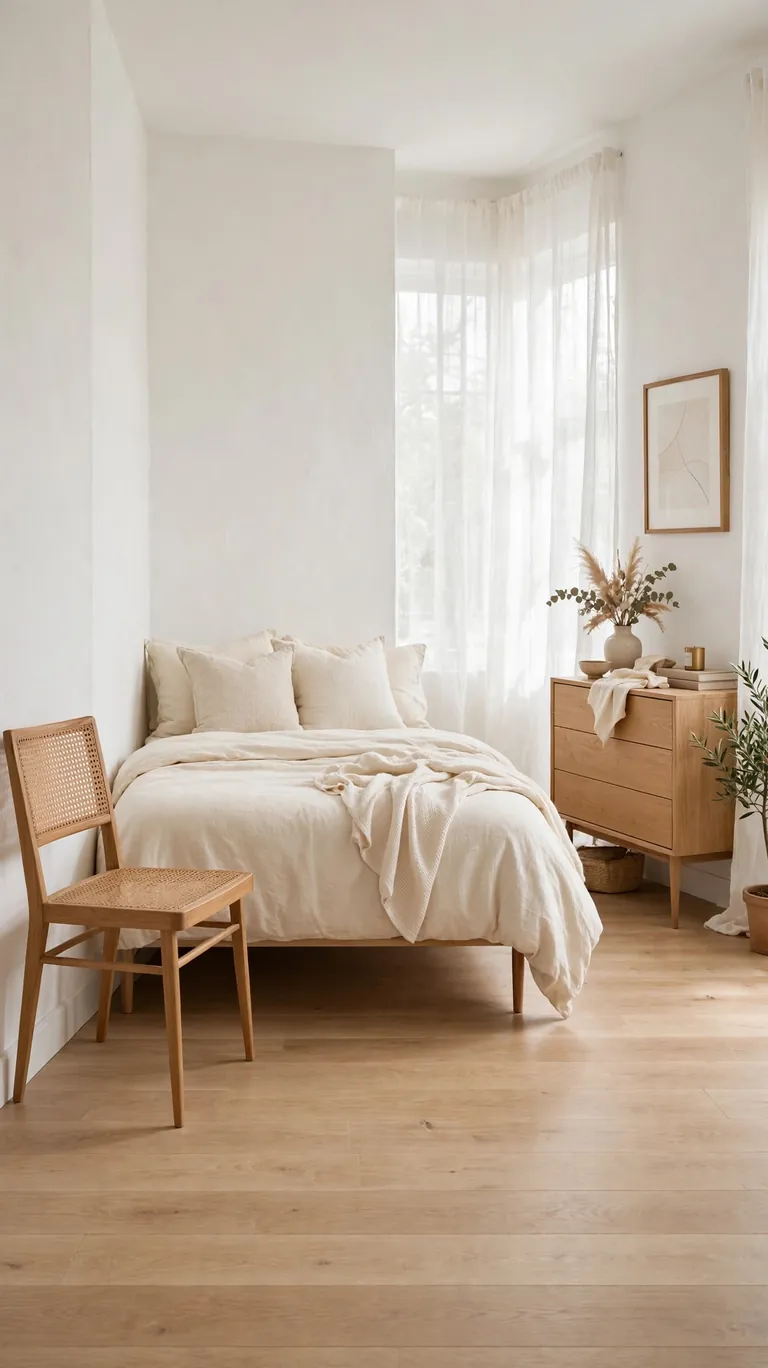
The more floor you can see, the bigger a room feels. Choose furniture with legs instead of pieces that sit flat on the ground. A bed frame, dresser, and chair with slim legs let your eye travel underneath them, which reads as extra space.
This is also why floating shelves and wall-mounted pieces work so well in small bedrooms. They keep the floor plan open and airy. Resist the urge to fill every corner. A little breathing room between pieces does more for the sense of space than one more storage unit ever will.
11. Use One Large Rug Instead of Small Ones
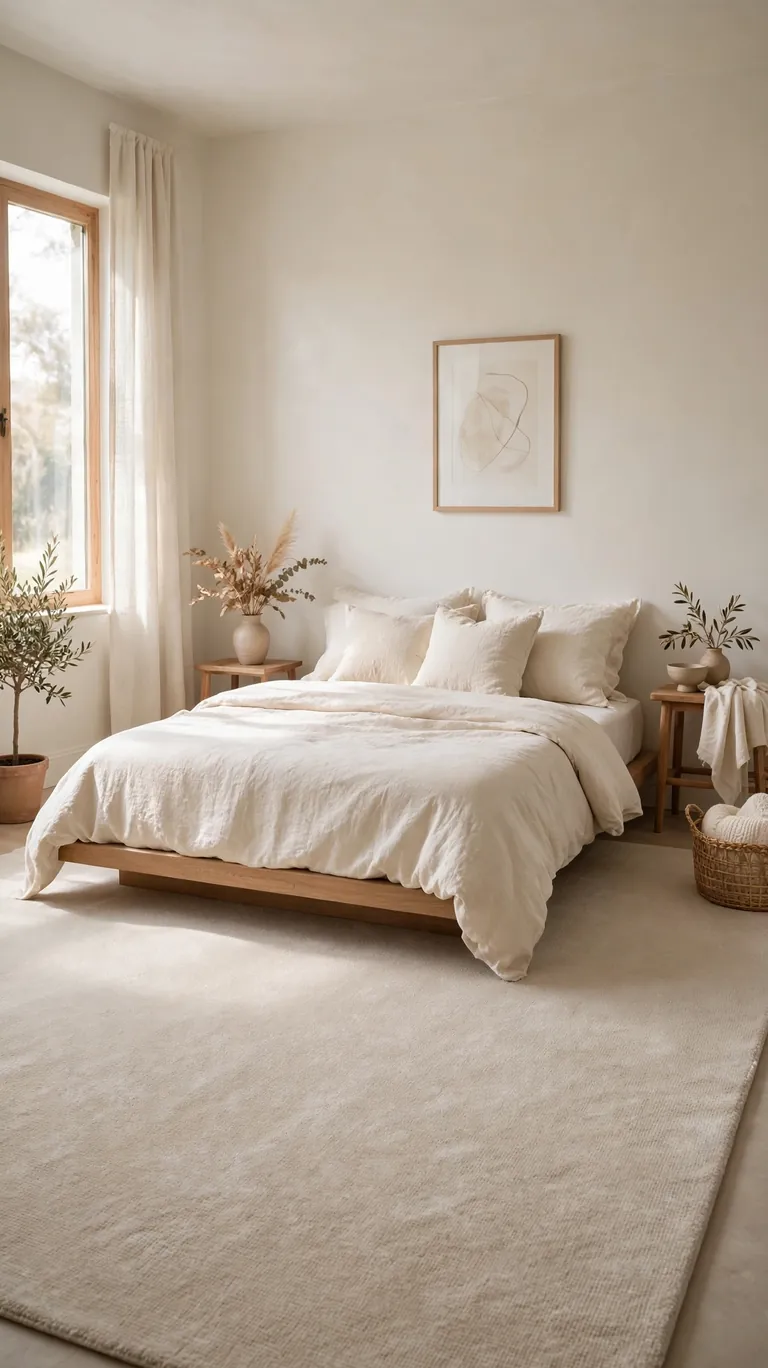
Several small rugs break the floor into patches, and each patch makes the room feel more divided. One large rug that extends under the bed and out on both sides unifies the floor into a single surface. Your eye reads that continuity as spaciousness.
Choose a rug in a light or neutral tone that sits close to your wall and bedding colors. A low-pile rug is easier to clean and keeps the profile slim so doors and drawers still clear it. If a full-size rug is too much right now, even a generous runner along one side of the bed beats two tiny mats.
12. Hide Clutter With Closed Storage
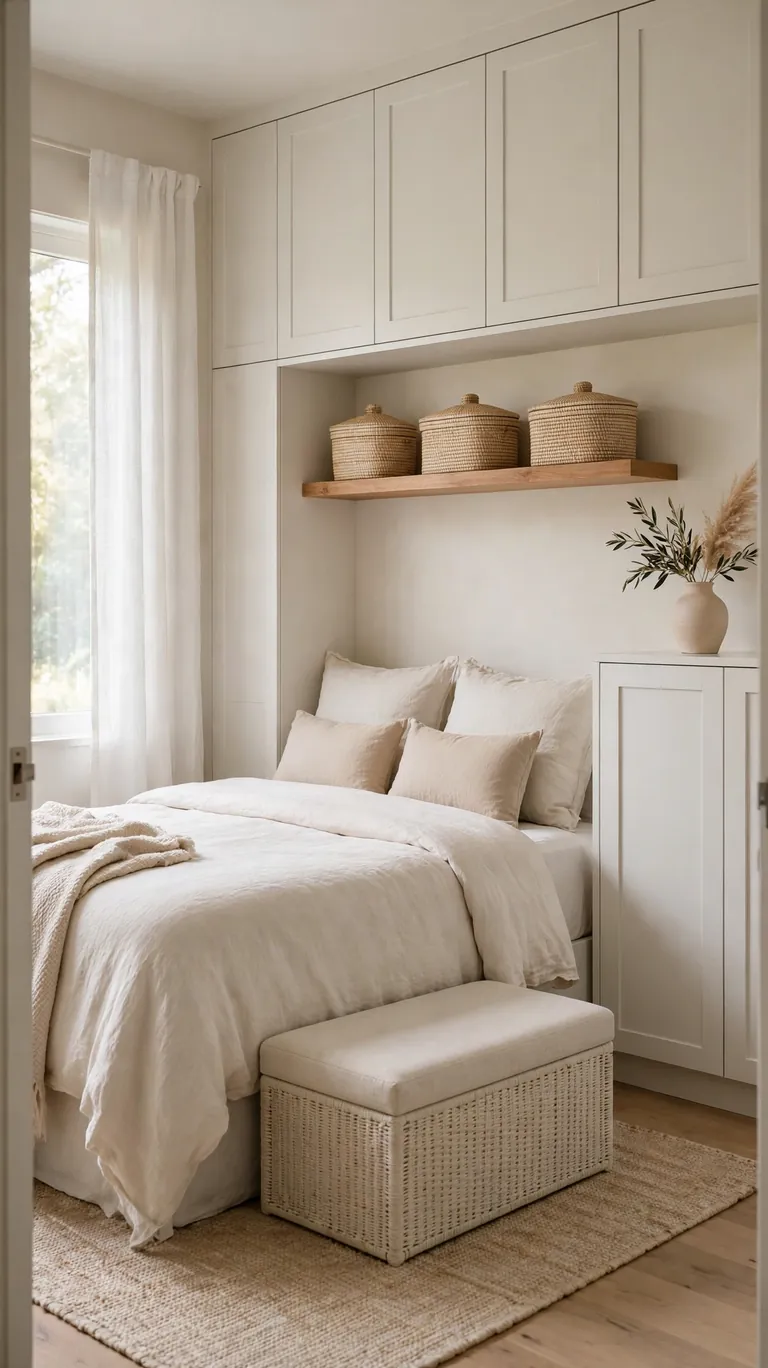
Open storage looks charming in photos, but in a real small bedroom it quickly becomes visual noise. Every visible object is something your brain has to process, and a busy room feels smaller. Closed storage, like lidded baskets, cabinets, and drawers, keeps the room looking calm.
Do a quick sweep and ask what can live behind a door or inside a basket. Chargers, books, and everyday bits and pieces all have a way of spreading across surfaces. Corral them into pretty containers and the room will feel instantly tidier and bigger. The goal is not minimalism. It is simply giving everything a home.
13. Hang One Large Piece of Art
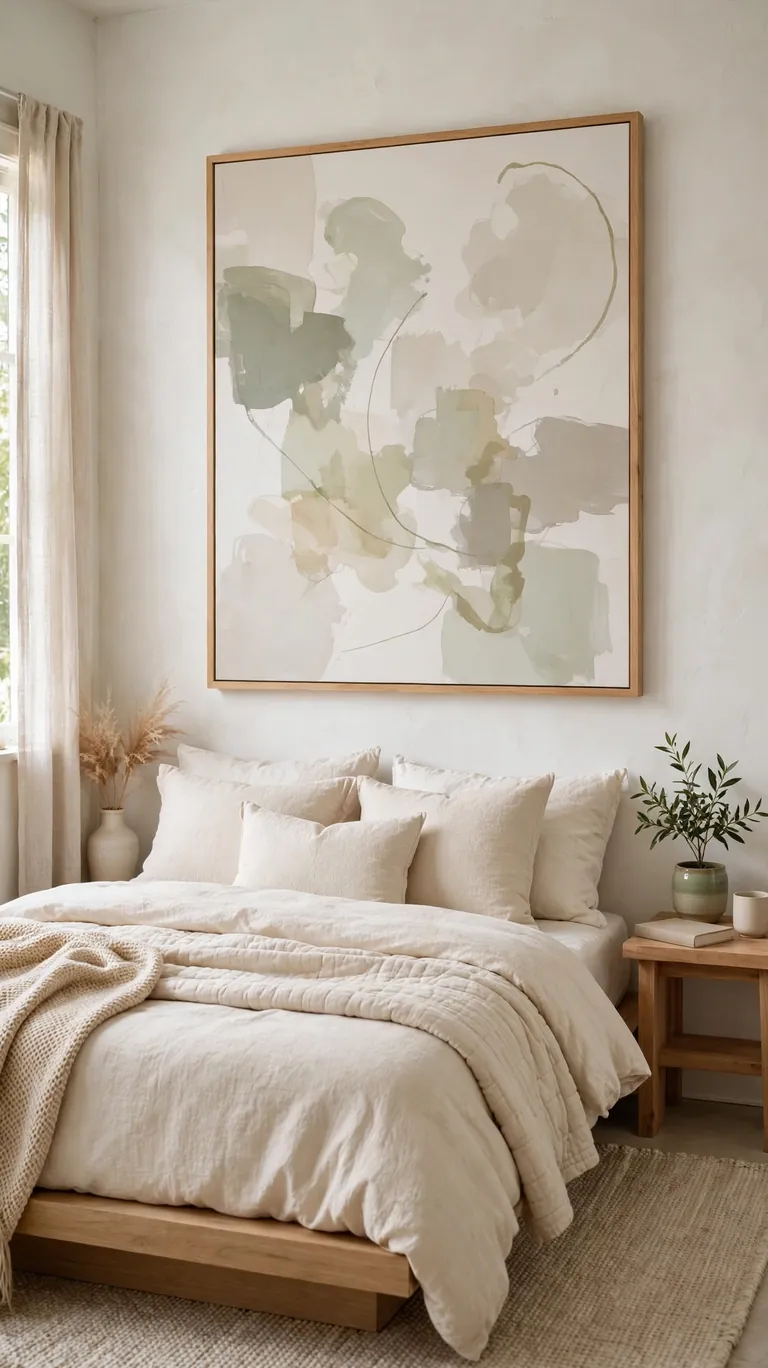
A gallery wall of many small frames can make a small bedroom feel busy. One generous piece of art above the bed or dresser gives the room a clear focal point and a sense of scale. Big art in a small room feels confident, and it draws the eye up and across instead of letting it bounce between clutter.
Pick something with light tones or a calming scene to support the airy feeling. Hang it so its center sits roughly at eye level when you are standing. If you love the gallery look, keep it to one tight cluster on a single wall and leave the other walls quiet so the room can breathe.
14. Try Glass or Acrylic Furniture
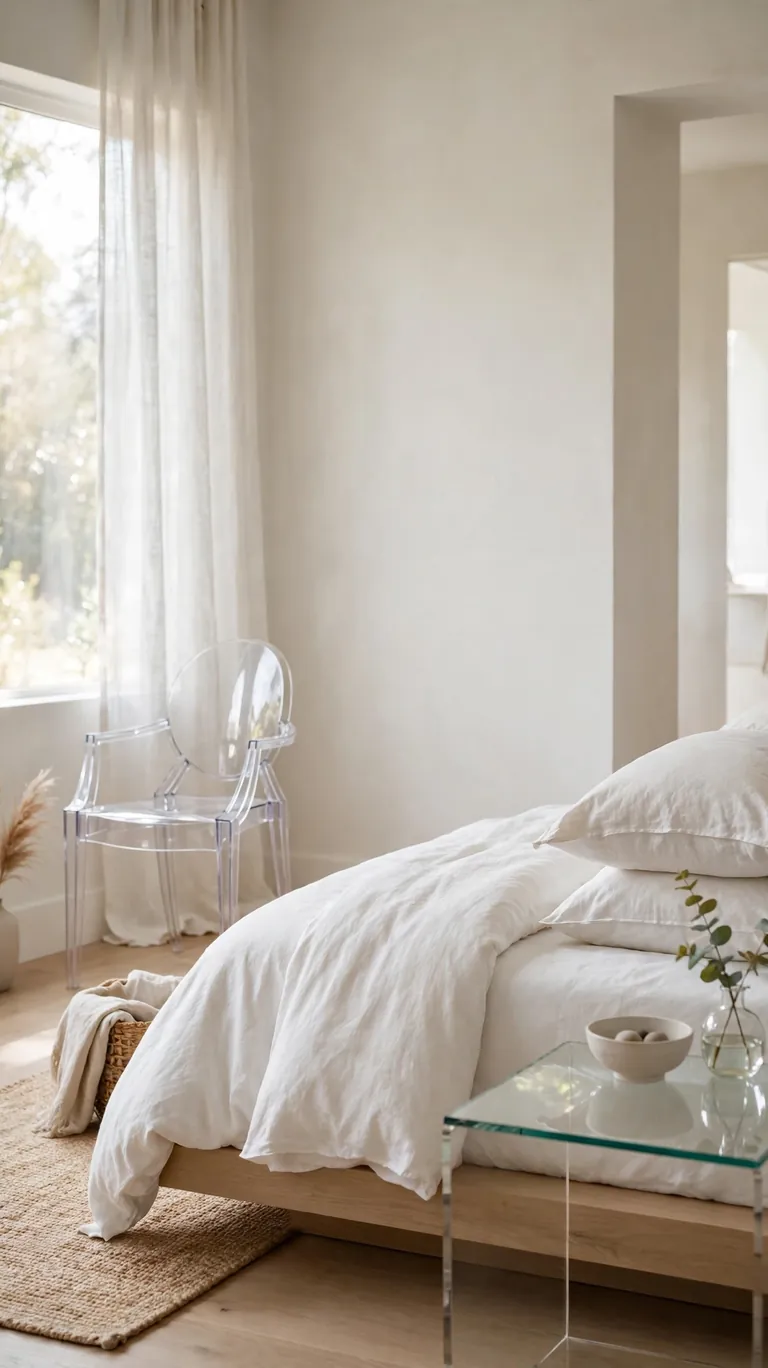
Furniture you can see through barely registers visually, which is perfect for tight spaces. A glass-top side table, an acrylic chair, or a lucite tray on the bed gives you function without visual bulk. The room keeps its open sightlines and feels less furnished than it is.
Use transparent pieces for the extras rather than the mainstays. Your bed and dresser can stay solid while a clear chair in the corner or a glass lamp base lightens the overall look. These pieces also reflect light, which adds to the bright, open feeling you are building.
15. Layer Your Lighting Instead of Relying on One Lamp
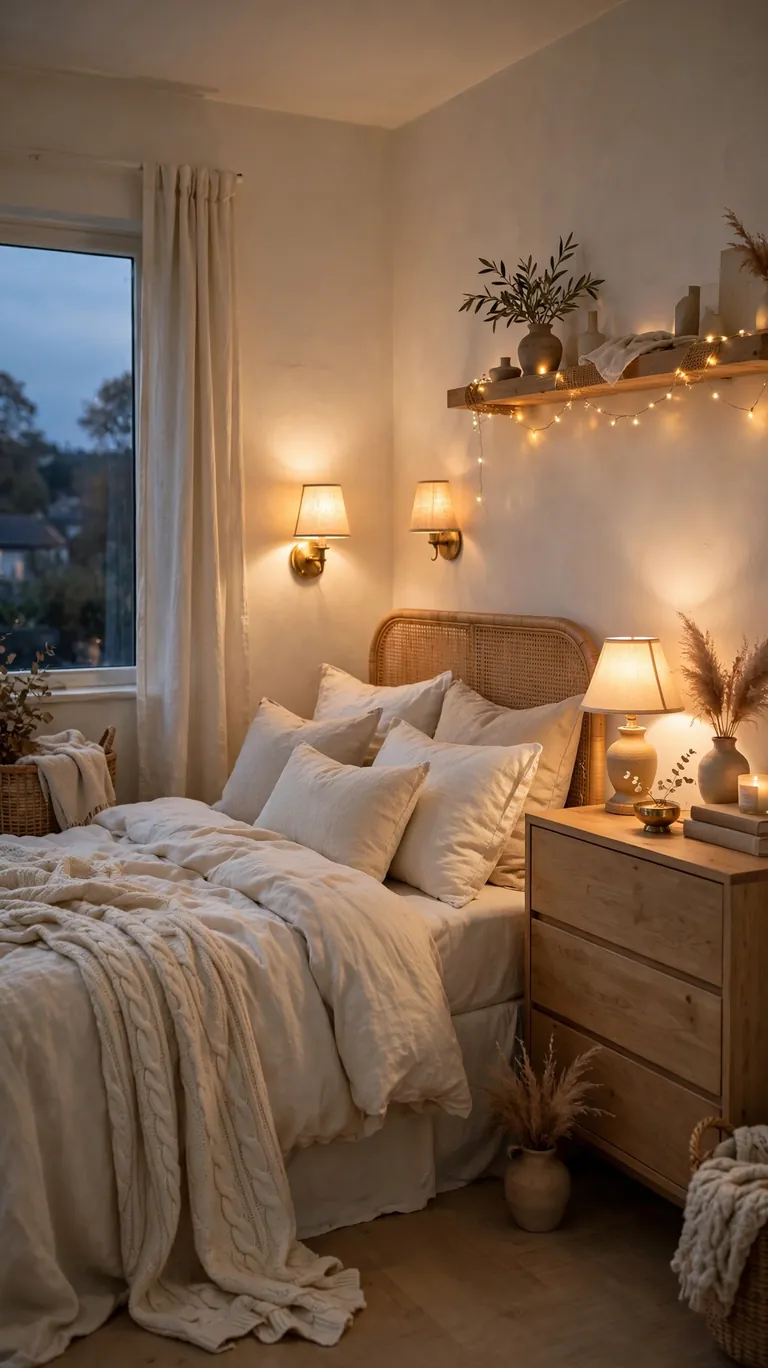
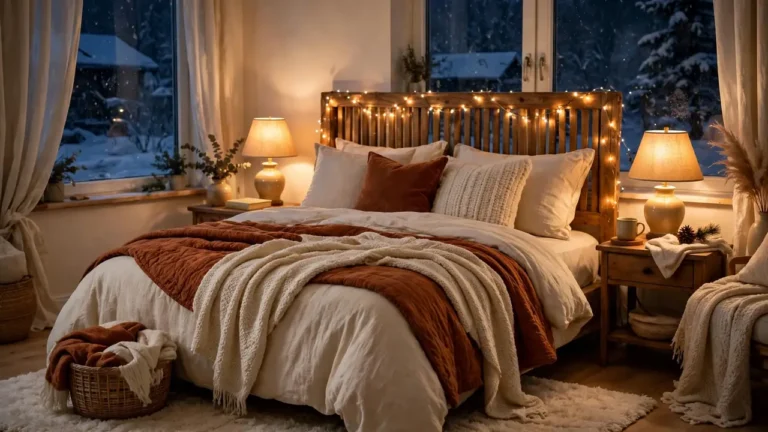
A single overhead light creates harsh shadows and flat corners, which makes a small room feel cave-like. Layered lighting, a mix of ambient, task, and accent light, fills the room evenly and makes every corner feel intentional. Wall sconces, a small table lamp, and soft string lights can work together beautifully.
Put your main lamp on a dimmer or use warm-toned bulbs so the room feels cozy at night instead of stark. Light the corners, because dark corners visually shrink a room. A tiny picture light over your artwork or a small lamp on the dresser keeps the whole space glowing and generous.
Frequently Asked Questions
What is the best color for a small bedroom?
Light, warm neutrals are the safest choice. Soft whites, warm creams, pale grays, and light beiges reflect the most light and make walls feel farther apart. If you want color, keep it pale and airy, like a whisper of blue or sage. Paint the ceiling the same color to blur the boundary and make the room feel taller.
Should I use a big rug or a small rug in a small bedroom?
One large rug is better than several small ones. A generous rug that slides under the bed and extends out on both sides unifies the floor into one continuous surface, which reads as more space. Small rugs chop the floor into pieces and make the room feel divided. Stick to light or neutral tones that blend with your palette.
Do mirrors really make a room look bigger?
Yes, they are one of the most effective tricks for small spaces. A large mirror reflects light and creates the illusion of depth, almost like adding another window. Hang it where it reflects something pleasant, such as a window or a plant. One big mirror works better than a cluster of small ones.
How do I add storage without making my bedroom feel crowded?
Choose storage that stays hidden or goes vertical. A bed with built-in drawers, closed cabinets, lidded baskets, and one tall narrow wardrobe hold a lot without adding visual clutter. Keep everyday surfaces mostly clear. When clutter is out of sight, the room automatically feels calmer and larger.
Can dark colors work in a small bedroom?
They can, but they need balance. A dark accent wall can add depth and coziness if the other walls stay light and the room gets good natural light. Keep bedding and furniture on the lighter side so the dark color does not close the room in. In a very tiny or dim bedroom, though, light colors are the safer bet.
Conclusion
Making a small bedroom feel bigger is not about square footage. It is about the choices you make with color, light, furniture, and storage. Light walls, a large mirror, and furniture with visible legs do most of the heavy lifting. Cohesive colors, hidden storage, and layered lighting handle the rest. Together, these ideas turn a tight room into a space that feels open, calm, and restful.
Start with the changes that cost nothing. Clear the clutter, pull furniture a few inches away from the windows, and take down anything that blocks the light. Then move on to the bigger wins like paint, curtains hung high and wide, and a bed with built-in storage. You do not have to do everything at once. Even three or four of these ideas can completely change how your room feels.
The best small bedrooms feel intentional, not compromised. When every piece has a purpose and the palette flows, a small room can feel like a cozy retreat you never want to leave. Pick the ideas that fit your space and your budget, and enjoy watching your bedroom grow without moving a single wall.