20 First Apartment Living Room Ideas for Small Spaces
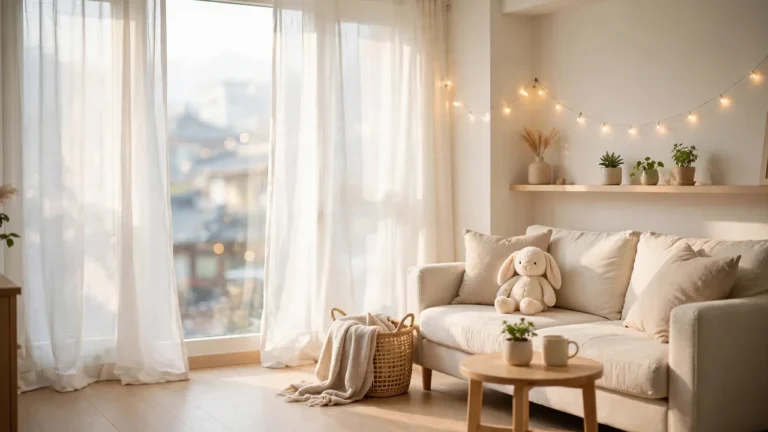
You signed the lease, carried the boxes up, and now the living room is four bare walls and a floor lamp with no shade. What you want is a room that feels warm when friends visit and calm when you come home tired, in a space where you never turn sideways to pass the sofa.
Small rooms forgive a tight budget. The first apartment living room ideas in this list stick to pieces that earn their floor space, layouts with a clear walkway, and renter friendly changes you can undo on moving day. Start with what bothers you most, and add the rest one paycheck at a time.
1. Choose a Compact Sofa on Legs
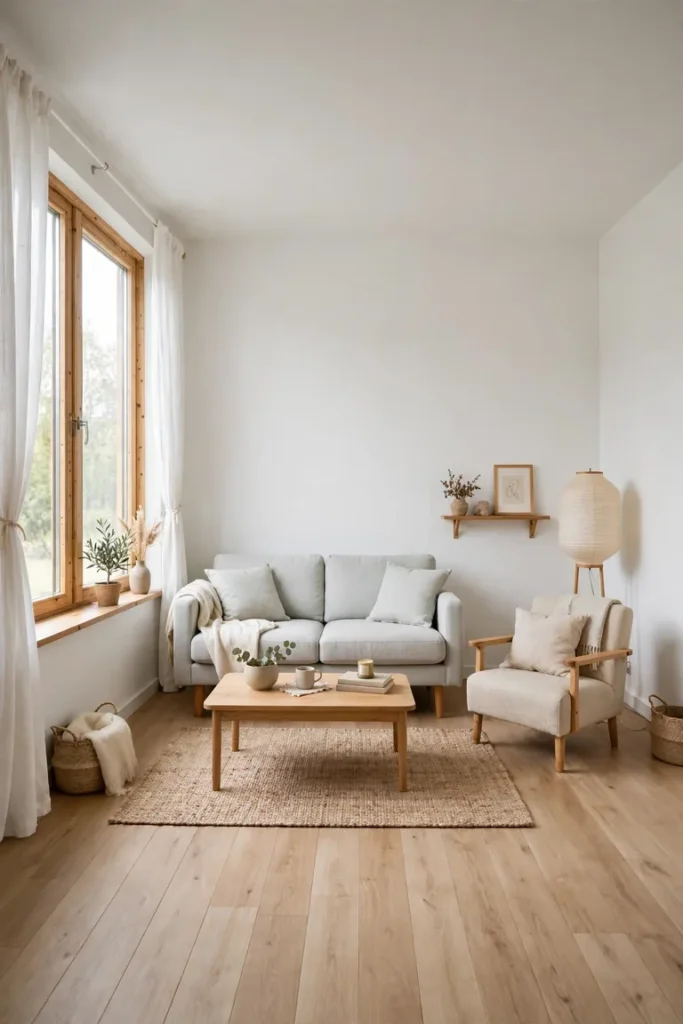
Start with the sofa, because every other choice in the room answers to it. In a small living room, a compact sofa around 72 inches wide seats two or three people without eating the whole wall, and raised legs keep floor visible underneath, which keeps the room feeling open. Budget lines carry plenty of choice at this standard small living room furniture size.
What to look for:
Arms: slim, not wide and rolled, so more of the width is seat.
Seat depth: deep enough to sit back in comfortably.
Fabric: spot clean weave, for coffee and movie nights.
Legs: raised and sturdy, with floor showing on every side.
2. Anchor the Seating With a Right Sized Rug
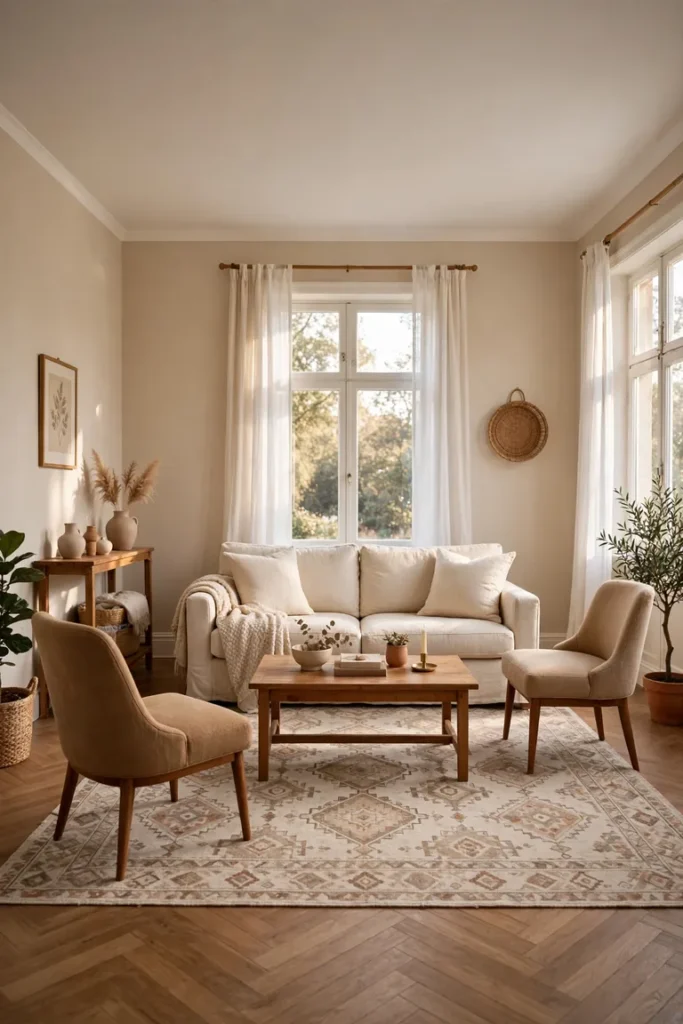
A rug that is too small makes the seating look like it is floating apart. The front legs of the sofa and chairs belong on the rug, and that one rule decides the size before style or color does.
- Living zone: 5 by 8 feet covers most small seating groups.
- Bigger floor: 8 by 10 if the room allows it without touching the walls.
- Pile: low and flat weave, easy to clean and cheap to replace.
- Tone: patterned or slightly darker than the floor, so crumbs stay quiet.
Roll it up on moving day and the whole zone moves with you.
| Too small: 4 by 6 | Right fit: 5 by 8 or 8 by 10 |
|---|---|
| Front legs sit off the rug, and the seating looks scattered. | Front legs sit on the rug, and the group reads as one zone. |
| The rug reads as a bath mat dropped in the middle of the room. | The rug defines where the living area starts and ends. |
3. Use a Storage Ottoman as the Coffee Table
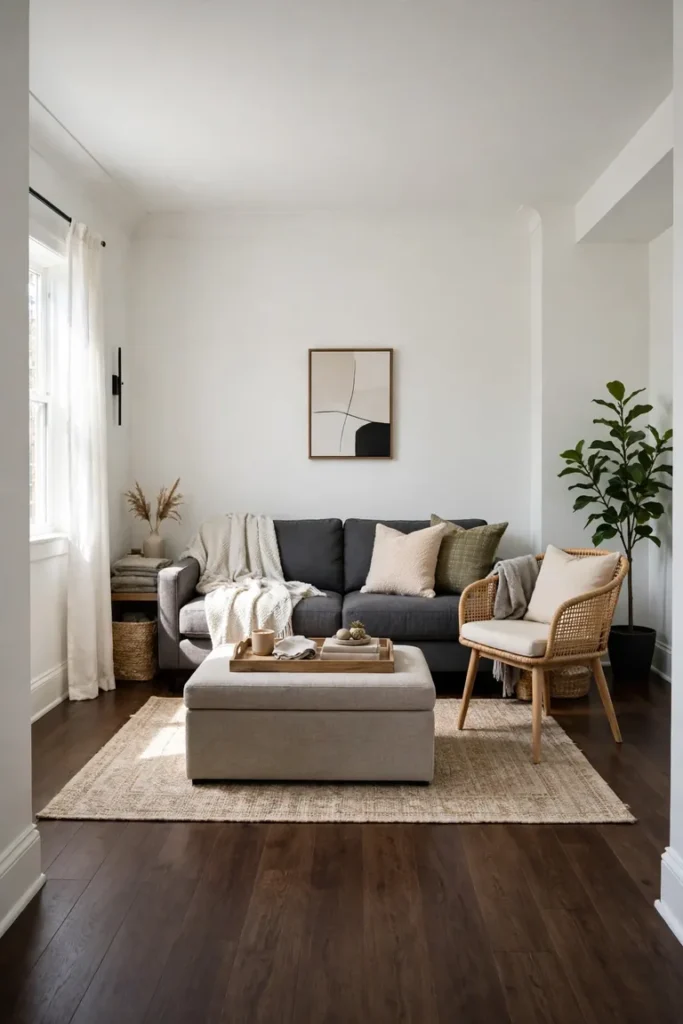
Trade the hard coffee table for a storage ottoman and the middle of the room starts working harder.
The lid hides remotes, chargers, and the blanket that otherwise lives on the sofa arm. A tray on top holds drinks steady, and the padded edge is kinder to shins in a tight walkway.
It also seats one more guest when friends visit, then slides against the wall when you want floor space for a workout or a board game on the rug. Few pieces of budget-friendly living room decor cover this many jobs at once.
4. Hang a Large Mirror Opposite the Window
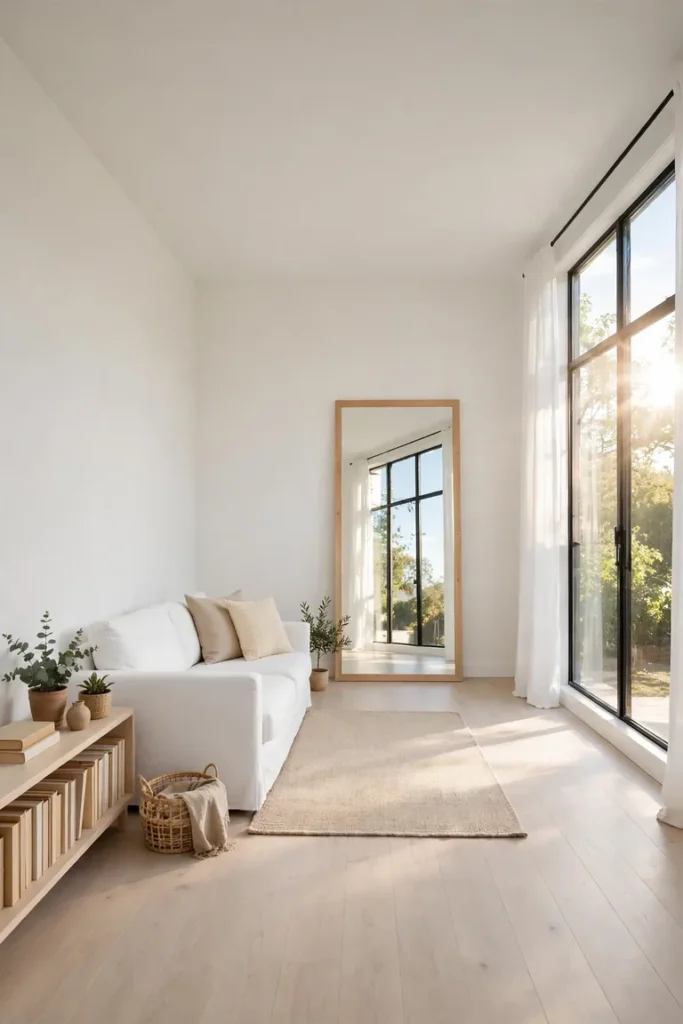
A large mirror placed opposite or beside the window bounces daylight into the corners the sun never reaches, and the room reads bigger without gaining an inch. Lean a tall mirror against the wall if your lease bans nails, or hang it with the anchor your wall type needs, keeping the frame simple and the glass at least two thirds the width of the piece below it, so it looks planned rather than leftover.
Check the reflection before you fix it in place. A mirror facing the sofa doubles the room. A mirror facing the kitchen counter doubles the dishes.
Tip: Prop the mirror on the floor for a day before hanging it. If the reflection bothers you at sofa height, shift it a foot to either side.
5. Layer the Lighting Instead of One Ceiling Light
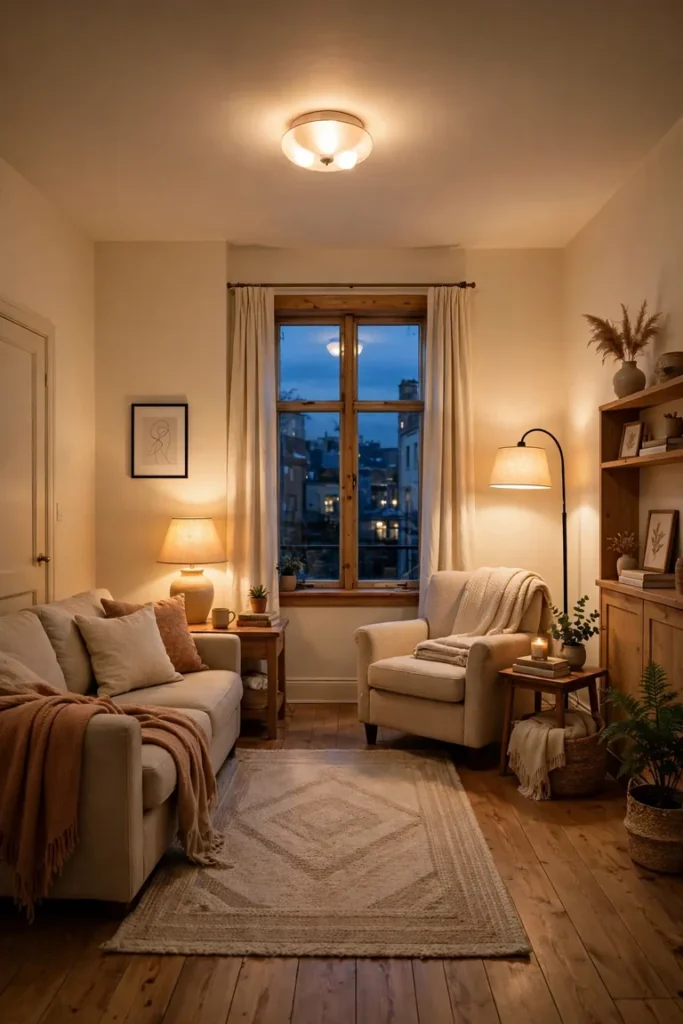
Most first apartments rely on one ceiling light, and it flattens everything it touches. Layer the light instead, in this order:
- One lamp beside the sofa, at reading height.
- One low light near the TV or in the far corner.
- The ceiling light only for cleaning and lost earrings.
Warm bulbs in every lamp keep the tones consistent from corner to corner. Secondhand lamps with new shades cost very little, and a plug in dimmer makes any lamp feel twice as expensive after dark.
One ceiling light washes the whole room in the same flat glare, and every corner looks tired.
A reading lamp by the sofa and one low lamp in the corner give warm pools of light where life happens.
6. Float the Furniture and Keep a Clear Walkway
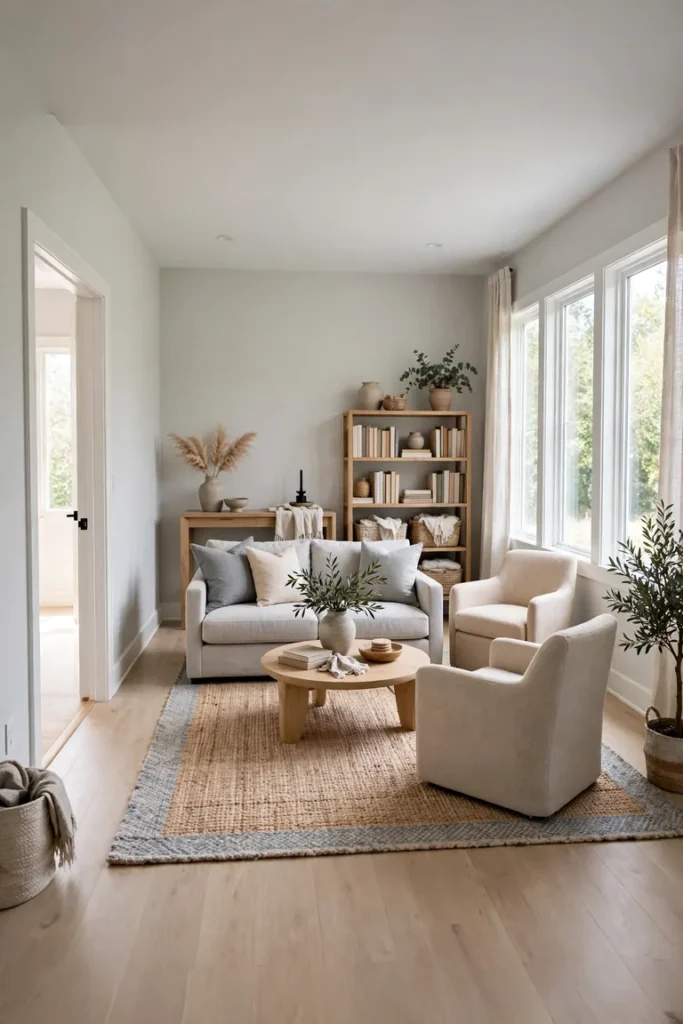
Pushing every piece against the walls feels like it saves space, but it leaves a dead empty middle and a cramped edge. Pull the sofa a few inches off the wall and group the seating on the rug instead, and the room gains a defined center while the walls breathe. Then protect the path through it: roughly 30 inches from the door to the seating and on to the kitchen, wide enough to carry a laundry basket without turning sideways.
If you bump something on that walk, that piece is too deep or in the wrong spot.
- Pull the seating onto the rug, a few inches off the walls.
- Mark the path from the door to the kitchen and keep it near 30 inches wide.
- Walk the path carrying a laundry basket and move anything you bump.
7. Mix Compact Pieces Instead of a Full Furniture Set
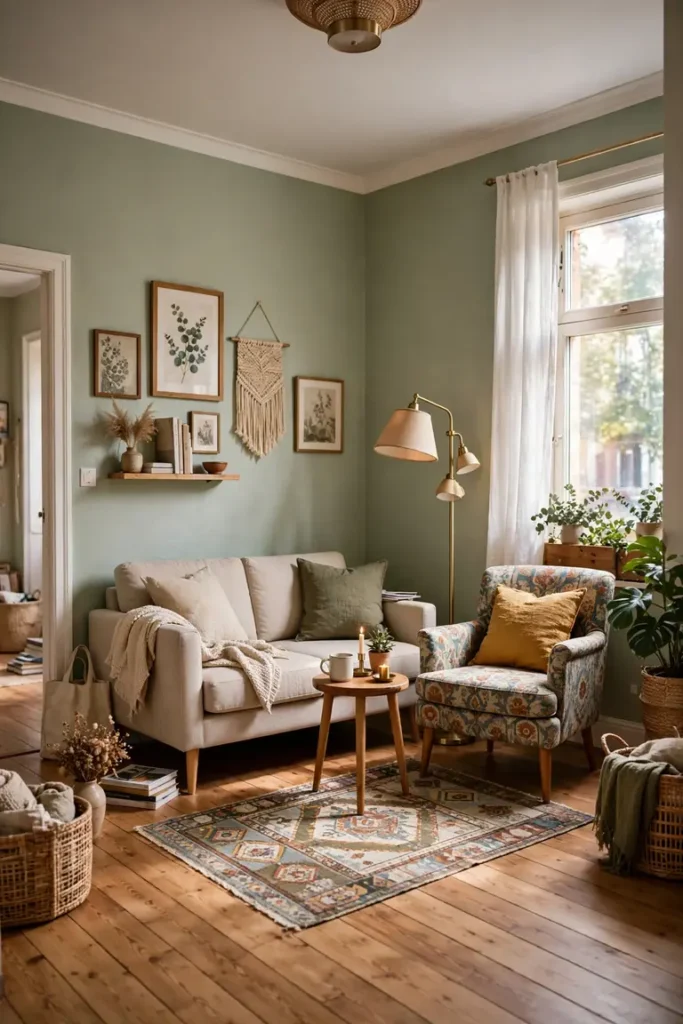
A matching sofa, loveseat, and armchair set is sized for a suburban family room, and in a first apartment it fills every wall before you add a single lamp. Buy the pieces separately instead. A compact sofa plus one accent chair in a different fabric gives the same seats with far less bulk.
The thread that ties the mix together, pick one:
Legs: the same wood tone on the sofa and the chair.
Color: one shade repeated in both fabrics.
Finish: matching metal on the lamp and the side table.
Secondhand chairs pair well with a new budget sofa and add more character than any set.
Buy a compact sofa and one separate accent chair, tied together by leg tone or one shared color.
Fill every wall with a matching three piece set sized for a house, then squeeze the rest around it.
8. Take Storage Vertical With Tall Narrow Shelves
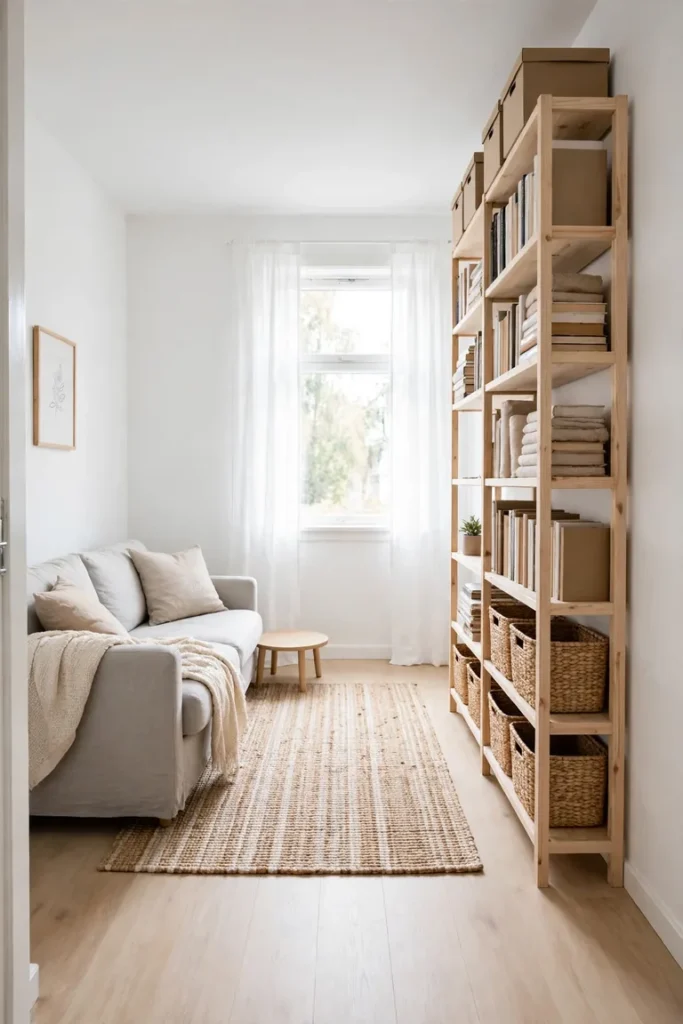
Floor space runs out fast, but wall height is free. A tall narrow bookcase stores the same books, games, and baskets as a wide low one while taking half the footprint, and the anti tip strap in the box is not optional in a rental, where a tipping shelf means a lost deposit.
Load it by weight and use: heavy books low, everyday items at hand height, light decor and spare blankets up top, and one shelf left partly empty on purpose. A shelf with breathing room looks styled. A shelf packed edge to edge looks like overflow storage.
- ☑ Anti tip strap fixed to the wall
- ☑ Heavy books and boxes on the lowest shelves
- ☑ Baskets corral the small loose items
- ☑ One shelf left partly empty on purpose
9. Hang Curtains High and Wide
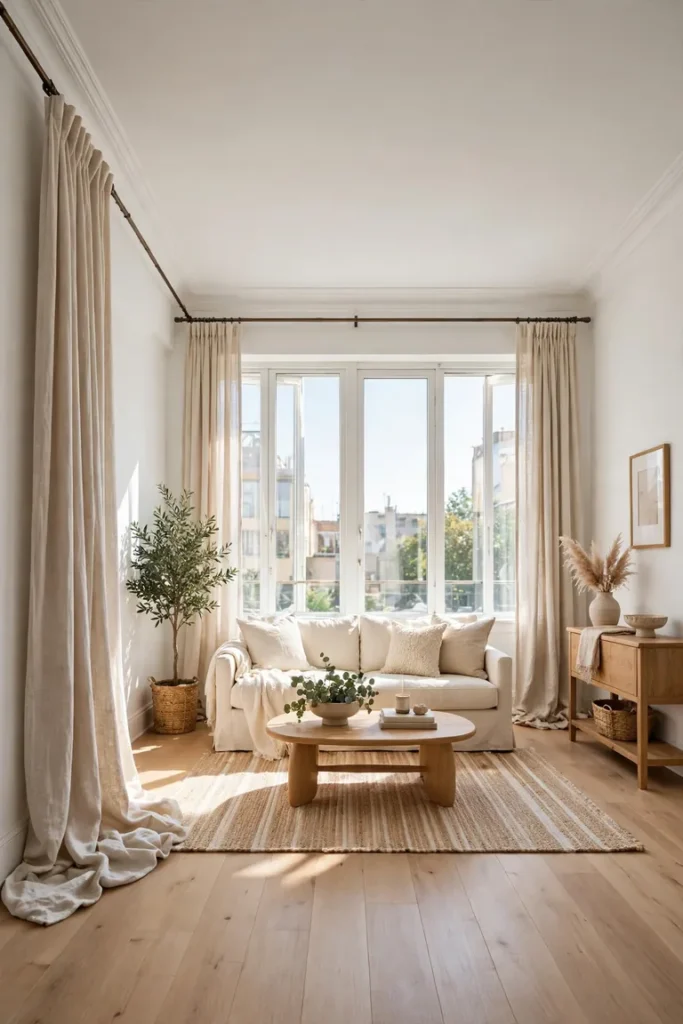
Curtains hung just above the frame make a window look smaller than it is.
Mount the rod close to the ceiling and wider than the frame, so the panels stack on the wall and the full glass stays uncovered. The wall reads taller, and more daylight gets in.
Panels that end at the floor look finished even in cheap fabrics, and a plain linen look weave in warm white washes well and hides dust between laundry days. This is renter-friendly decorating at its cheapest: one rod, four screws, a different room.
10. Build on a Light Neutral Palette With One Accent
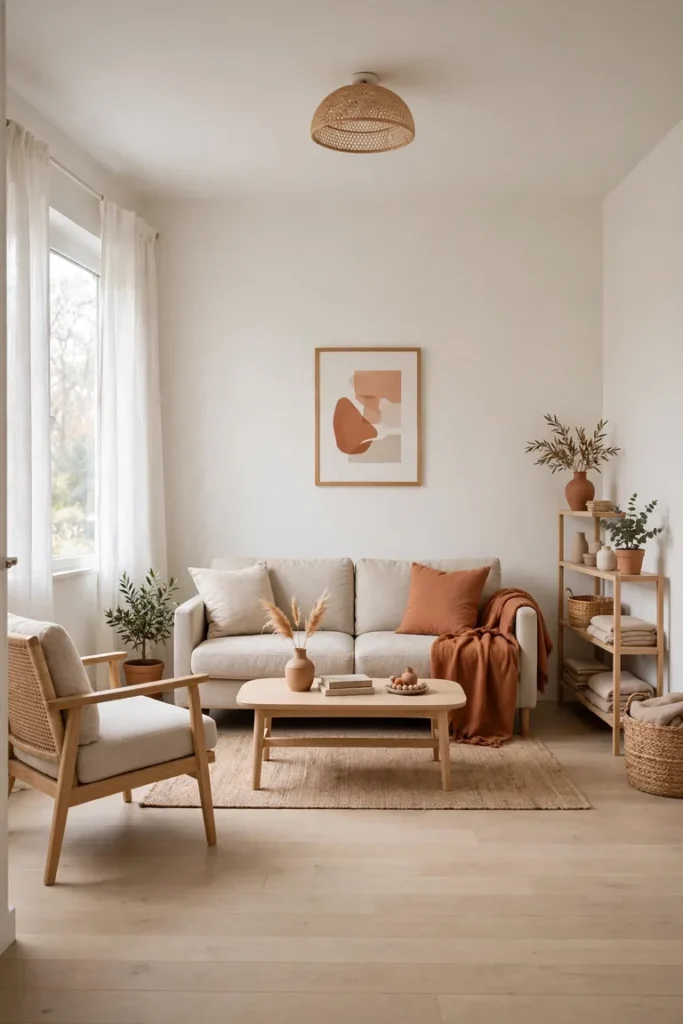
A small room stays calm when most of it shares one light family. That base reflects daylight and lets pieces swap in and out without a color fight.
- Base: warm whites, soft beige, and pale wood on the big pieces.
- Accent: one color, repeated three times, in a cushion, a throw, and a print.
- Easy swaps: terracotta, muted sage, and dusty blue all show up constantly in thrift stores.
Repetition is what makes the accent look planned rather than random, and changing those three pieces later gives the room a new scheme for a few dollars.
- ▸Base: warm white, soft beige, and pale wood across the big pieces.
- ▸Accent: one color repeated three times, in a cushion, a throw, and a print.
- ▸Change later: swap the three accent pieces and the room feels new.
11. Pick a See Through Coffee Table to Cut Visual Weight
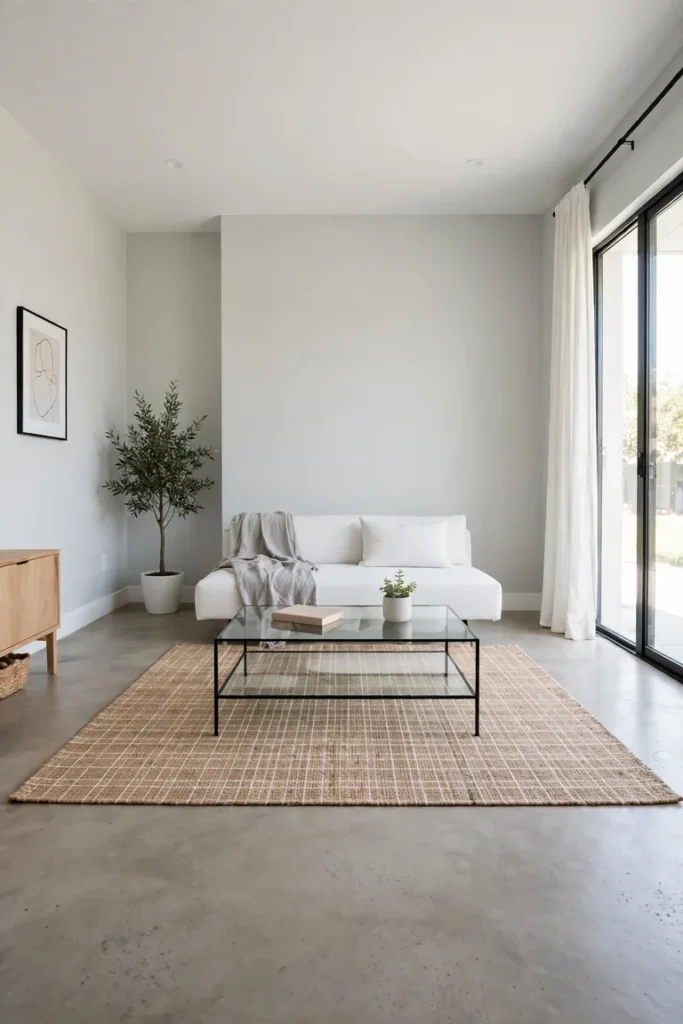
A solid wood coffee table can swallow the center of a small rug visually, even when its footprint is fine. A clear top keeps sight lines open, so the rug and the floor show through and the seating area feels larger for it. Choose it in three checks:
- Top: glass or clear acrylic, so nothing underneath is hidden.
- Frame: slim legs, metal or light wood, with no chunky apron.
- Surface: one tray, one book, one small plant, nothing more.
If glass feels cold, a slim metal frame with a light wood top splits the difference.
12. Turn a Dead Corner Into a Reading Spot
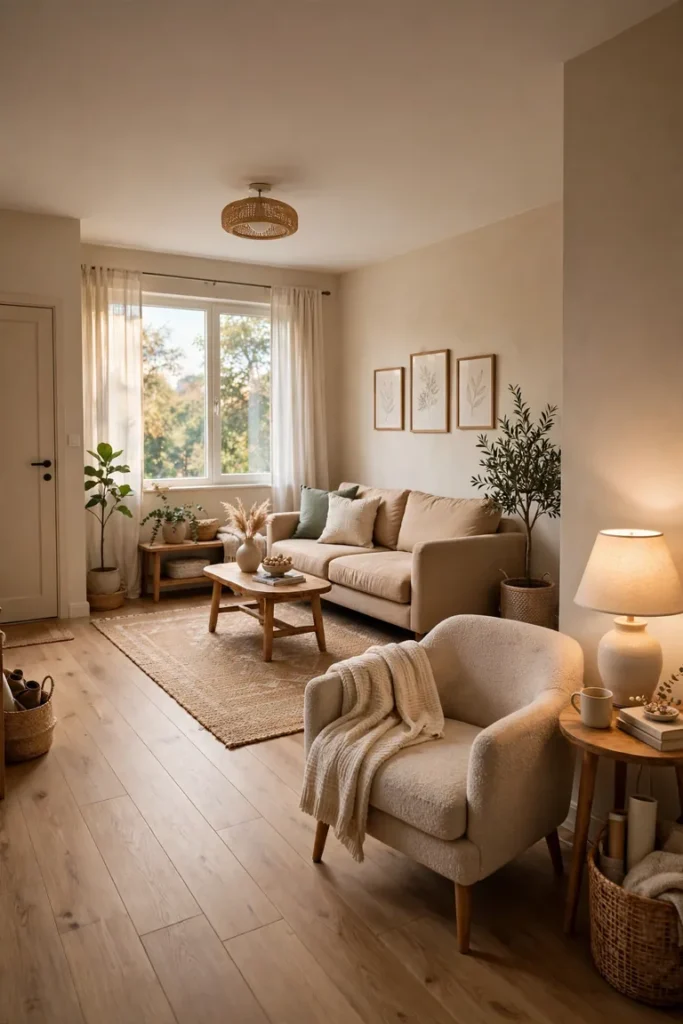
Every small living room has one corner that collects nothing but dust and a phone charger. Claim it with a compact chair or a floor cushion stack, a small side table, and the lamp you already own, and dead square footage becomes the seat everyone fights over. Angle the chair toward the room, not into the corner, so whoever sits there joins the conversation instead of facing a wall, and borrow the pieces from elsewhere in the room for one weekend before buying anything new.
A washable throw over the arm finishes it and hides wear on a secondhand find.
Tip: Borrow the lamp and side table from elsewhere in the room for one weekend before buying anything. If nobody sits there, the corner was never the problem.
13. Use Nesting Tables That Spread Out Only When Needed
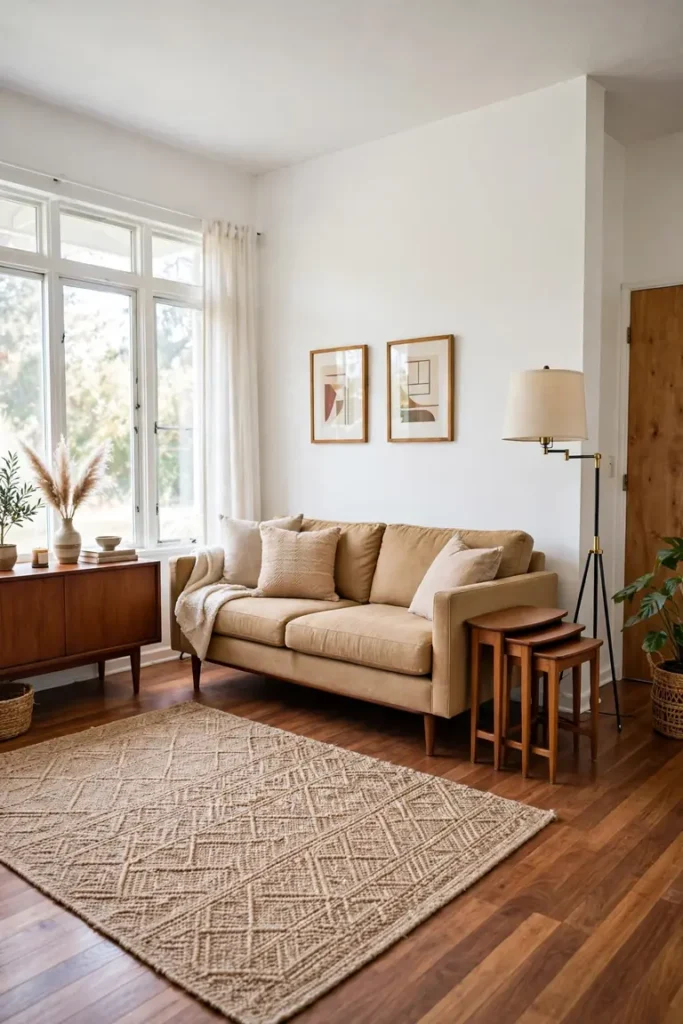
A fixed side table beside every seat wastes floor most days. Nesting tables solve it differently: the small ones tuck under the largest and take almost no room, then spread out when guests need somewhere for a mug or a plate.
How the set earns its keep:
Everyday: three tables stacked into one small square beside the sofa arm.
Guest mode: pulled apart so every seat gets a surface.
Between visits: staggered heights work as plant stands or a laptop perch.
Fit check: the tallest table should clear your sofa arm height.
Wood, metal, and glass sets all exist at starter prices.
14. Layer Plants at Three Heights
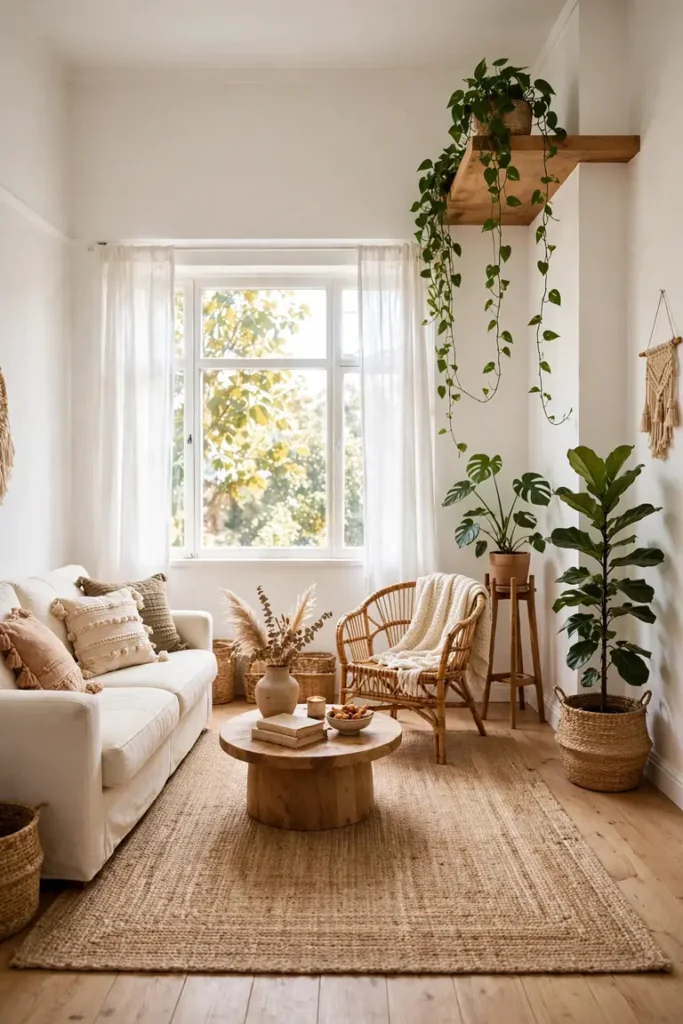
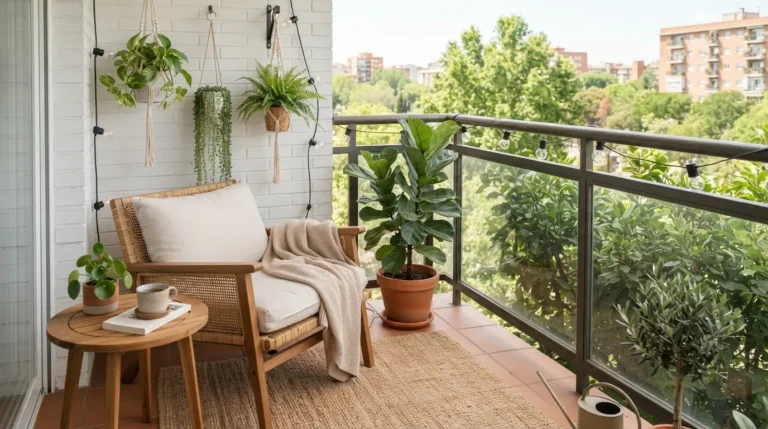
Plants soften a boxy room faster than decor, and they cost little when you start small. Place them at three heights: one trailing plant on a high shelf, one medium pot on a table or stand, and one floor plant only if a corner can spare the footprint. Low light rooms do better with pothos and snake plants than with anything that begs for a south window, so start with what your windows can honestly feed.
Match the plant to the light you actually have, not the light you wish for, and if a cat or dog shares the room, check it is pet safe before it comes home.
| Height | What works there |
|---|---|
| High shelf | A trailing pothos that uses zero floor space and softens the top line of the room. |
| Table or stand | One medium pot fills the dead gap beside the sofa or the TV console. |
| Floor | One upright plant, only where a corner can spare the footprint. |
15. Use Picture Ledges for Renter Friendly Wall Decor
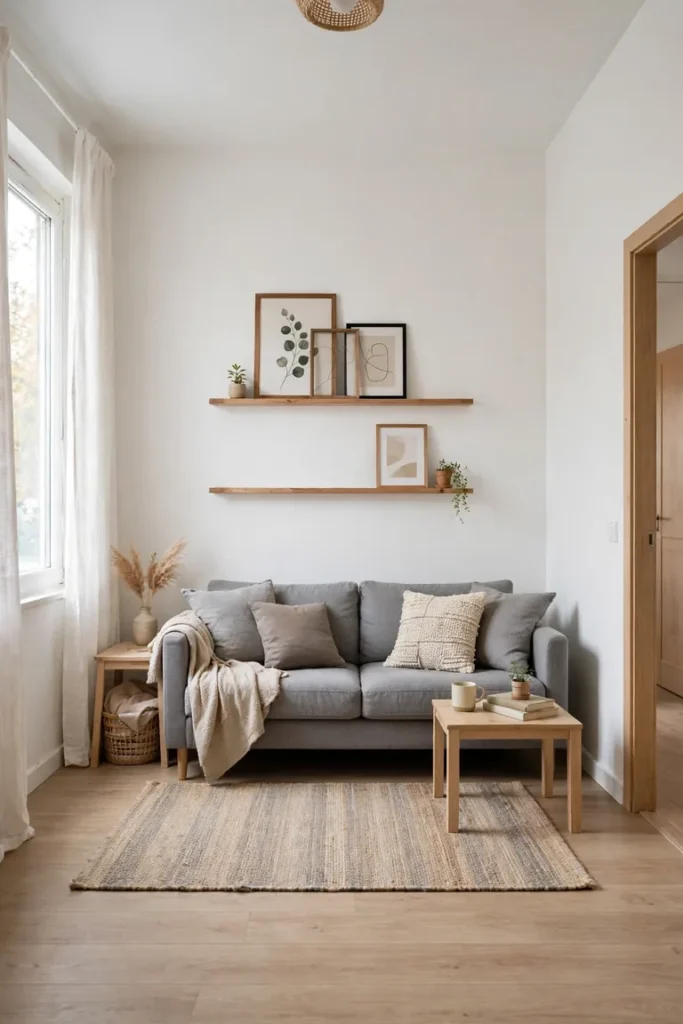
Bare walls make a furnished room feel temporary, but a gallery wall means a dozen holes your landlord will count at checkout.
Picture ledges fix both problems. One ledge needs two screws, and every frame, print, and small plant on it leans in place with no further holes, so the art swaps whenever you like.
Layer a tall frame behind a small one and add a postcard or a concert ticket for something personal. Two ledges above the sofa cover the wall a gallery would, and first apartment decorating ideas rarely come cheaper per square foot of impact.
Bare walls above the sofa, and a gallery plan that means a dozen holes to fill at checkout.
Two ledges on four screws hold layered frames and a small plant, and the art swaps in minutes.
16. Add Cozy Texture in Layers You Can Afford Slowly
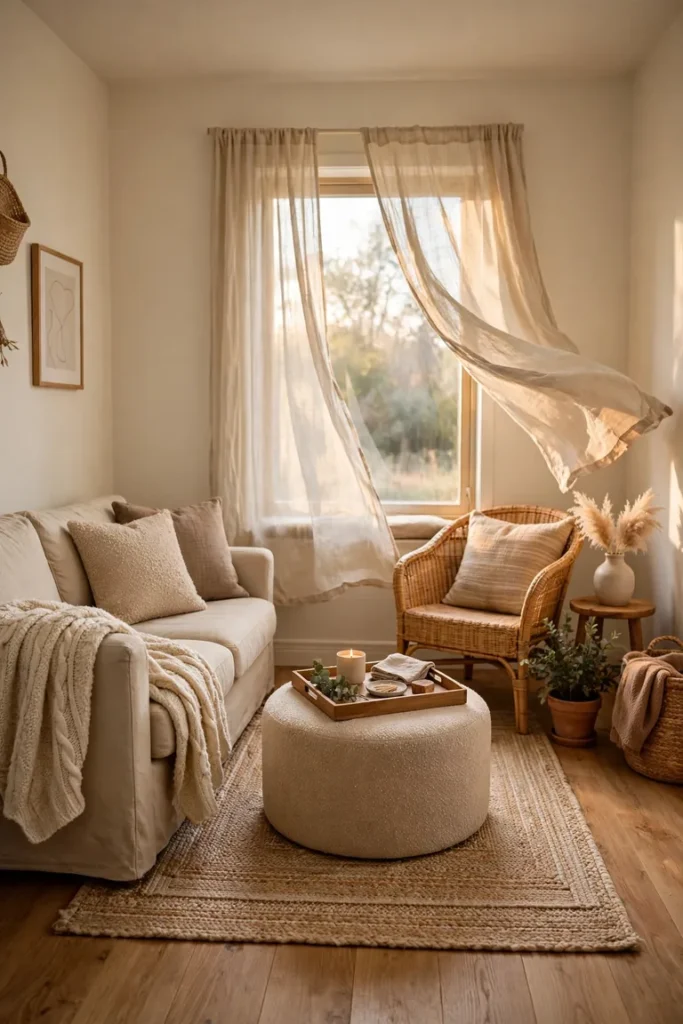
Texture is how a plain room feels warm without dark colors shrinking it. Add it in layers you can buy one at a time, and mix the surfaces rather than matching them.
Throw: a knit or woven one over the sofa arm.
Cushions: covers in two different fabrics with some grain.
Rug: a visible weave you can feel underfoot.
Contrast: one hard surface, a leather or wood tray on soft upholstery.
Each layer costs a few dollars on sale or secondhand, and the room feels finished long before it looks decorated.
- ☑ One throw with a visible knit or weave
- ☑ Cushion covers in two different fabrics
- ☑ A rug you can feel underfoot, not just see
- ☑ One hard surface, a wood or leather tray, for contrast
17. Hide Cords and Daily Clutter in Baskets
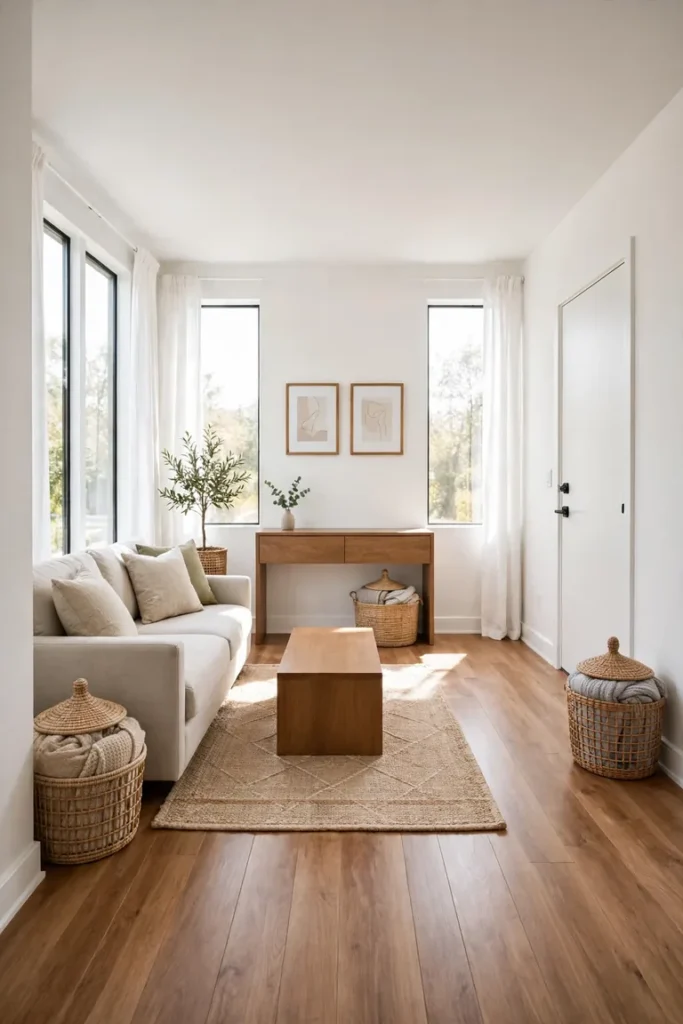
Small rooms show clutter faster because there is nowhere for the eye to rest away from it. Baskets are the cheapest fix, one per clutter zone:
- Beside the sofa: blankets, remotes, and the book you are reading.
- Under the console: chargers and cords, routed along the wall behind the furniture.
- By the door: the things that migrate in from outside.
Lids or high sides matter more than looks. A basket you cannot see into reads as furniture, and the room calms down the same afternoon you set them out.
Use lidded or high sided baskets, one per clutter zone, with cords routed behind furniture.
Pile chargers and remotes in an open bowl on the coffee table where everyone sees the tangle.
18. Float the TV and Use a Slim Closed Console
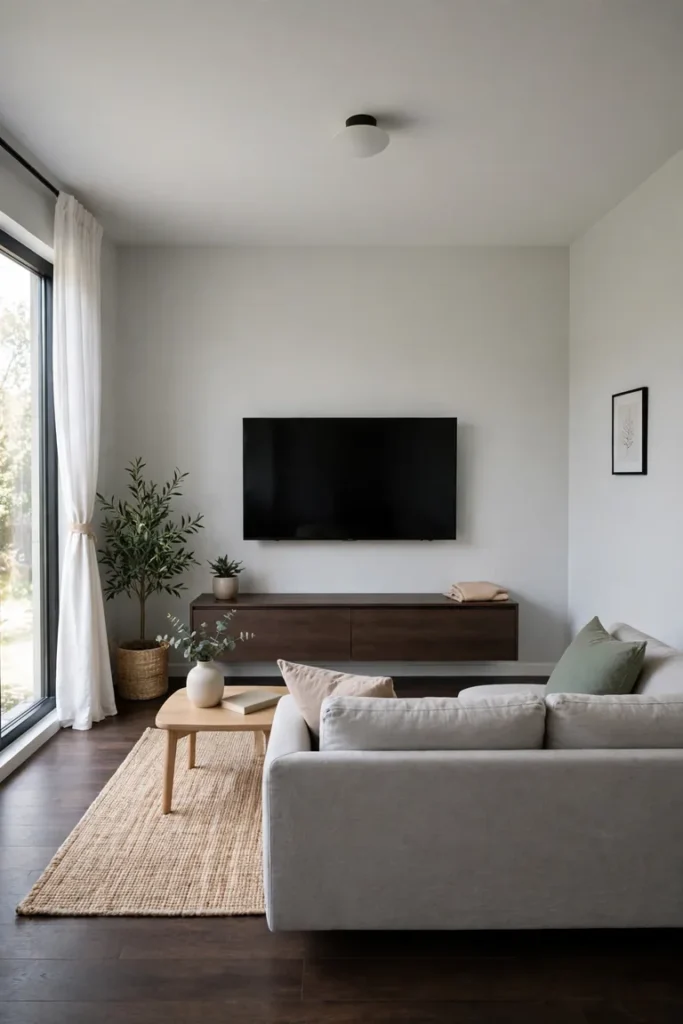
The TV wall eats visual space when a deep media unit juts into a small room. Mount the screen flat if your lease allows it, or stand it on a slim console no deeper than the screen’s own stand requires, with closed doors hiding the router, the game console, and the stack of remotes that otherwise live in the open.
Keep the wall around the screen plain, one ledge or one print at most. A busy TV wall pulls the whole seating area toward it and makes every other corner feel like an afterthought.
- ▸Screen flat on the wall or on the slimmest stand that fits it.
- ▸Closed console doors hide the router, consoles, and remotes.
- ▸The wall around the screen stays plain, one ledge or print at most.
19. Split an Open Room Into Zones
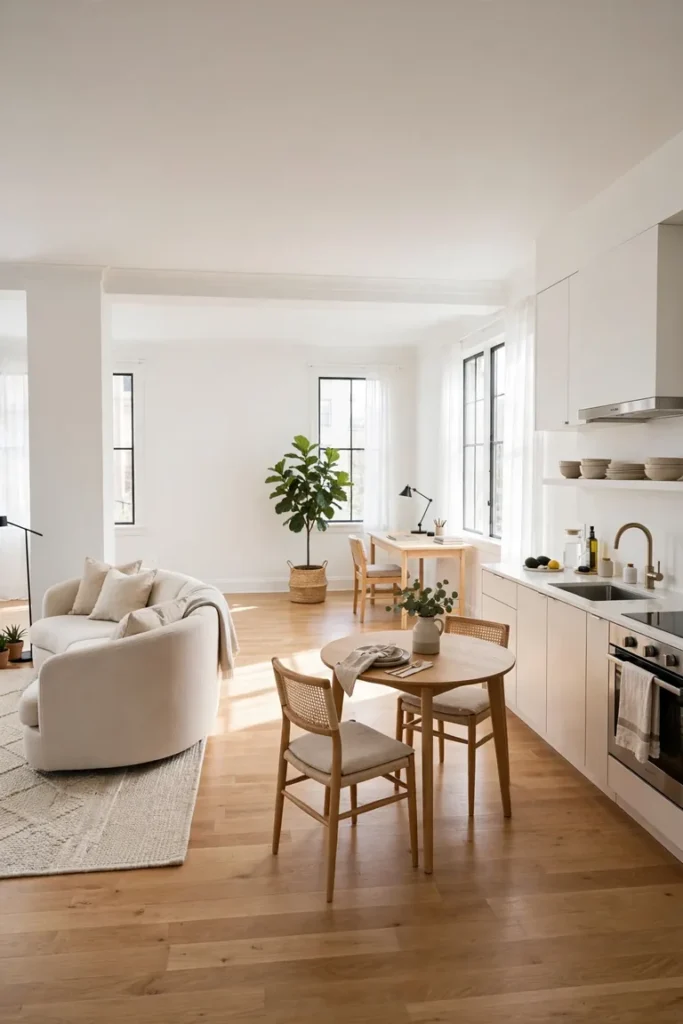
Many first apartments hand you one open rectangle that must hold living, dining, and sometimes working. Zones solve it without walls, set in furniture you already need:
- Living: the rug and the sofa back mark it.
- Eating: a small table and two chairs near the kitchen.
- Working: a desk against the last wall, with its own lamp.
Keep each zone tight and the gaps between them empty. Those gaps are what make the zones read as separate rooms instead of one crowded one, which is why these small apartment living room ideas work in studios and open plans alike.
20. Finish With Secondhand Finds and Swappable Covers
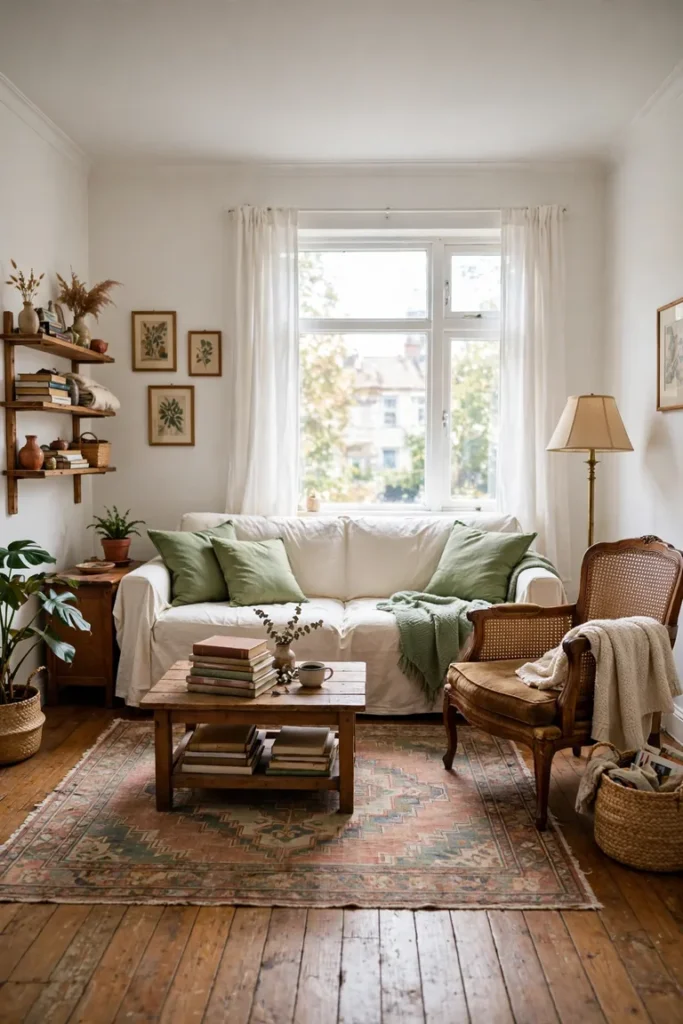
Furnishing a first living room in one shopping trip is how budgets die, so furnish it in passes: the sofa, rug, and lighting first, because they shape the room, and everything else slowly from thrift stores, marketplace listings, and hand me downs you actually like. Swappable covers stretch every find further, cushion covers changing the accent color for a few dollars, a washable throw hiding a worn chair arm, a plain sofa cover giving a dated pattern a new face.
Measure before every secondhand buy and carry the numbers in your phone. The bargain you cannot get through the door is not a bargain.
- Buy the room shapers first: sofa, rug, and lighting.
- Hunt the rest secondhand, with your room measurements in your phone.
- Refresh each find with washable covers and throws.
Final Thoughts
Your first living room does not need to be finished this month, and it does not need to look like anyone else’s. If you take one thing from these first apartment living room ideas, let it be the order: seating that fits, a rug that grounds it, light where you actually sit, and storage that hides the daily mess. Get those four right and even a half empty room feels settled.
Add the pretty layers slowly, as money and good secondhand finds allow. Save this list to your apartment board and work through it one idea per paycheck. That pace is not a compromise. It is how a room ends up truly yours.