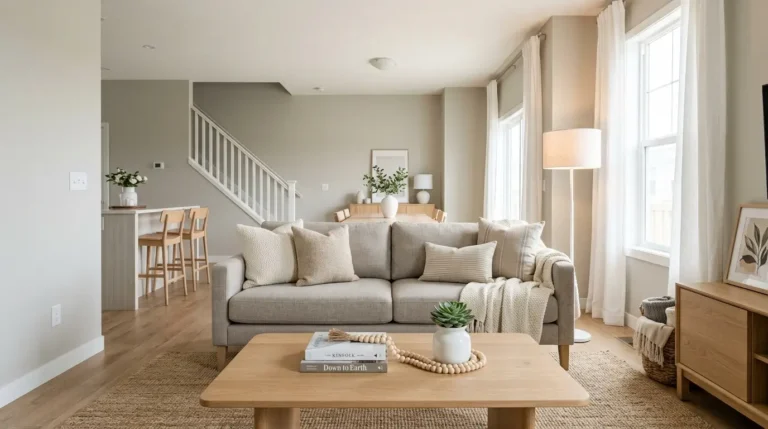
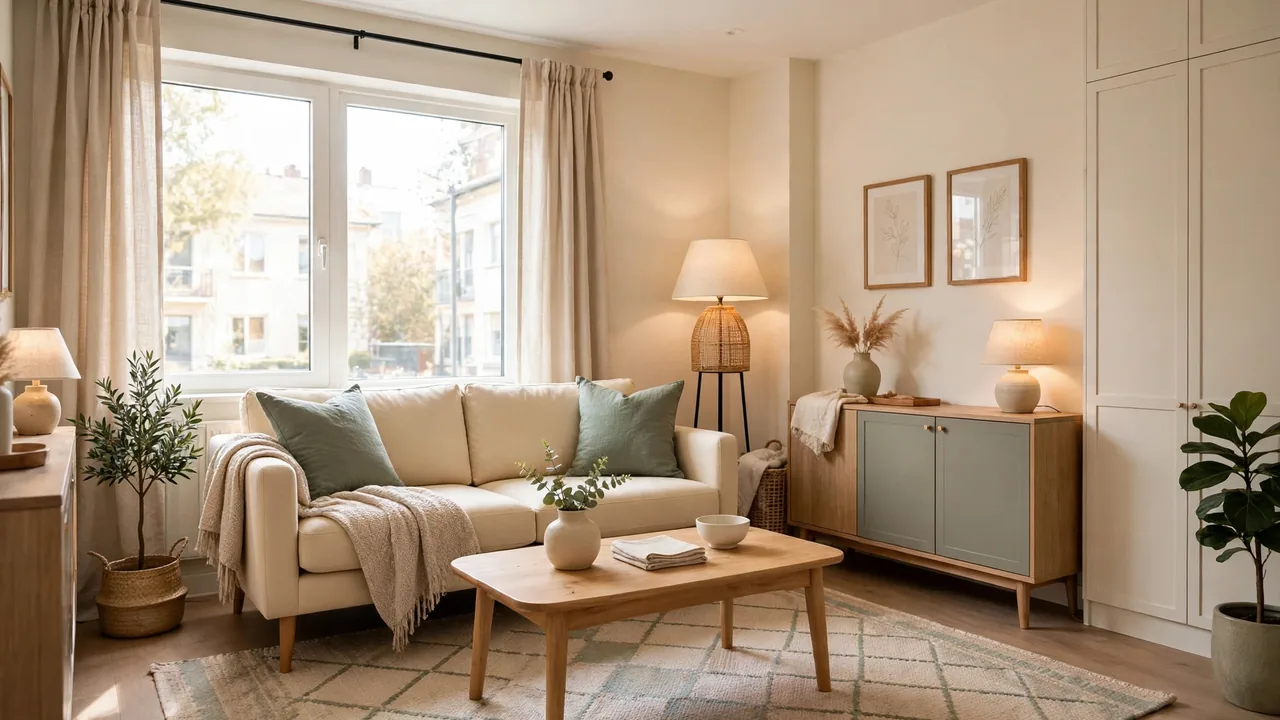
21 Apartment Decorating Mistakes First Timers Make and Simple Fixes for Each
The money is spent, the boxes are empty, and the room still looks wrong. That is where most first apartments land, and it usually is not a taste problem. It is a handful of early choices, made fast and in the wrong order, that keep working against the room long after moving day.
Honest truth: decorating a first place is hard because every decision shows. A sofa that is slightly too big eats the whole living room. One ceiling light flattens everything it touches. None of it needs a big budget to fix, and most of it needs no landlord permission either.
These apartment decorating mistakes are the ones first timers make most, each paired with the simple fix that corrects it. Some fixes take an afternoon and cost nothing but a tape measure and a free hour.
Start with the mistakes you can see from your front door. Those are the ones your room feels every day.
1. Buying Oversized Furniture for a Small Room
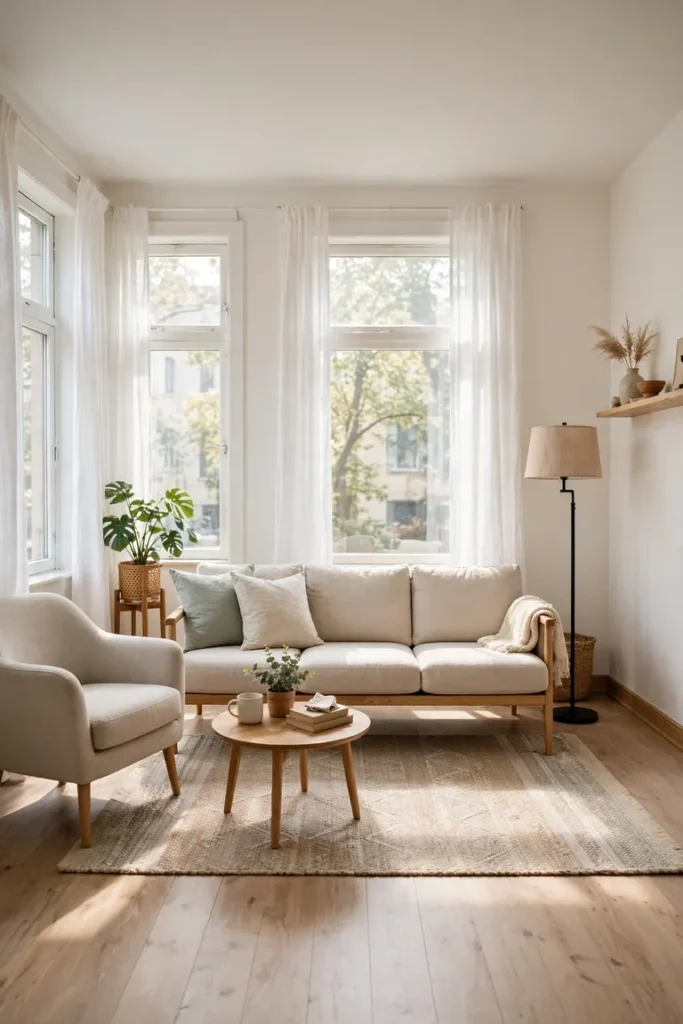
The sofa looked normal in the store. Stores are built to do that, with high ceilings and wide open floors that make every piece seem smaller than it is.
Back home, that same sofa eats the living room. Deep seats, wide arms, and a low heavy base leave no floor visible around it, and a room with no visible floor always reads as cramped, no matter how clean it is.
- Scale down: apartment sofas are often shorter and less deep than standard ones, and they seat the same people
- Legs showing: a sofa or chair on visible legs looks lighter than one that sits flat on the floor
- One big piece max: let only one item in the room be large, and keep everything around it smaller
An oversized sofa fills the wall, touches the side tables, and leaves a narrow strip of floor in front of it.
A slimmer sofa on legs leaves floor visible on all sides, and the same room feels wider right away.
2. Choosing a Rug That Is Too Small for the Seating Area
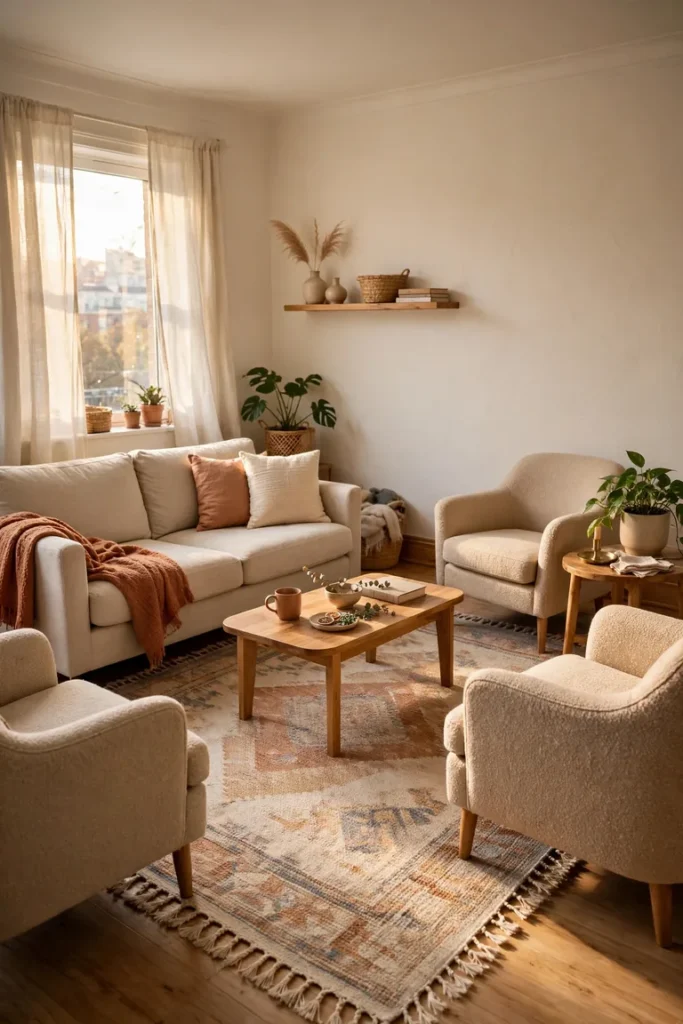
A small rug floating in the middle of the floor, touching nothing, makes the whole seating area look unfinished. It reads as a bath mat that wandered into the living room.
The fix is one rule: the rug should reach under the front legs of the sofa and the chairs around it, so the furniture sits on one shared base. That single change ties the seating together and makes the room feel planned.
If a bigger rug is not in the budget yet, pull the small one fully under the coffee table area and save for the right size, rather than centering it in open floor where its edges show on all four sides.
| Seating setup | Rug that works |
|---|---|
| Two seat sofa with one armchair | About 160 by 230 cm, front legs of both pieces on the rug |
| Three seat sofa with two chairs | About 200 by 290 cm, all front legs on, with floor showing around the edges |
3. Relying on One Overhead Light for the Whole Room
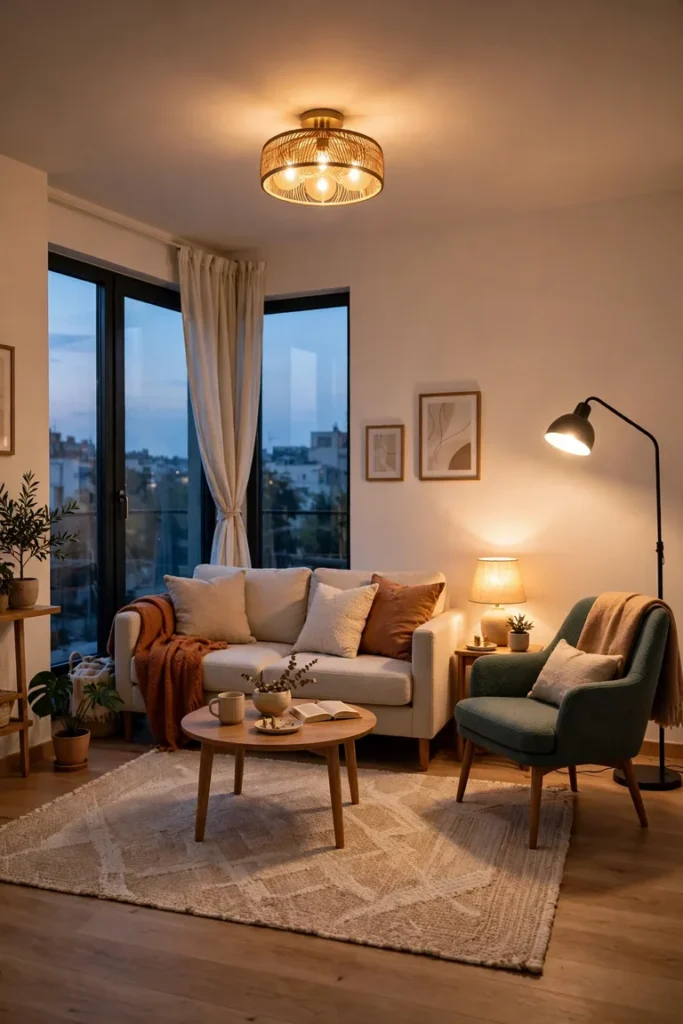
One ceiling light in the center of the room is the fastest way to make a furnished room look flat and a little harsh. Everything gets the same brightness from the same angle, faces included, and the corners fall dark.
Rooms feel warm when light comes from a few heights instead of one. Add a floor lamp or table lamp for the seating area, and one small light where tasks happen, like a desk lamp or a light over the reading chair.
- Low light: a table lamp at seat height, where people actually sit in the evening
- Mid light: a floor lamp in the darkest corner, not beside the ceiling light’s brightest spot
- Task light: one focused lamp for reading, work, or cooking prep
4. Hanging Curtains Too Low and Too Narrow
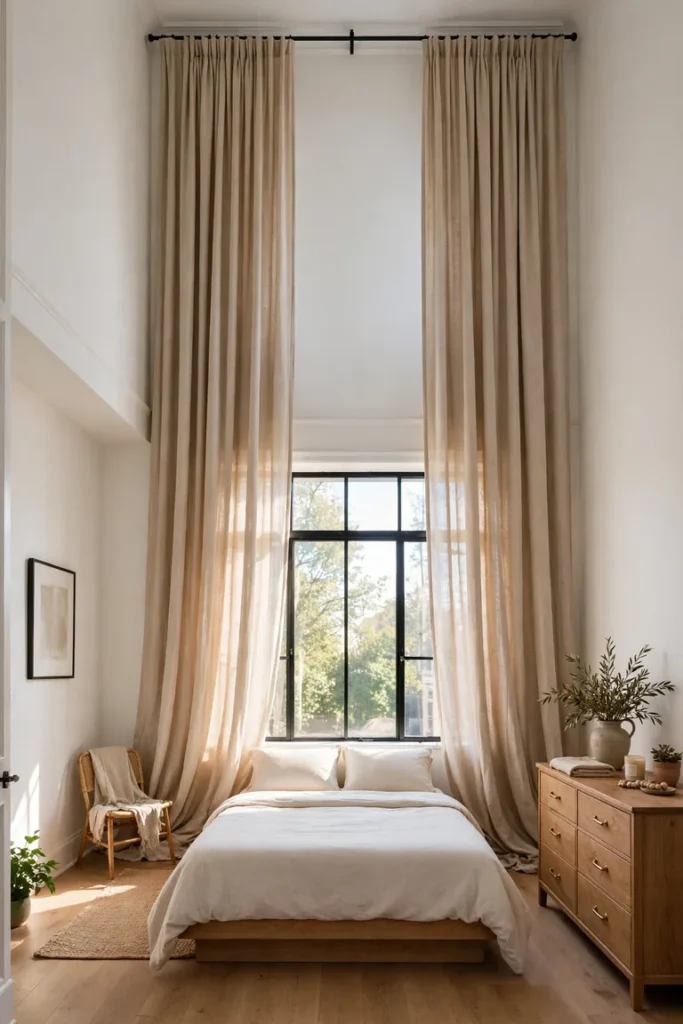
Curtains hung right at the top of the window frame, bunched inside its width, make the window look smaller and the ceiling feel lower. The room loses height it actually has.
Mount the rod close to the ceiling, or as high as your wall allows, not on the window frame.
Extend the rod well past the frame on both sides, so open curtains cover wall, not glass.
Let the panels end at the floor, just touching it, instead of stopping at the sill or mid wall.
Width matters as much as height. Panels stretched flat across the glass look skimpy even at the right height, so pick curtains wide enough to fall in soft folds when they are closed.
Renters can get the same height with no drill rods or adhesive hooks rated for the curtain weight. Hung this way, the window reads taller, more daylight stays uncovered during the day, and plain budget panels look far more expensive than they were.
5. Pushing All the Furniture Against the Walls
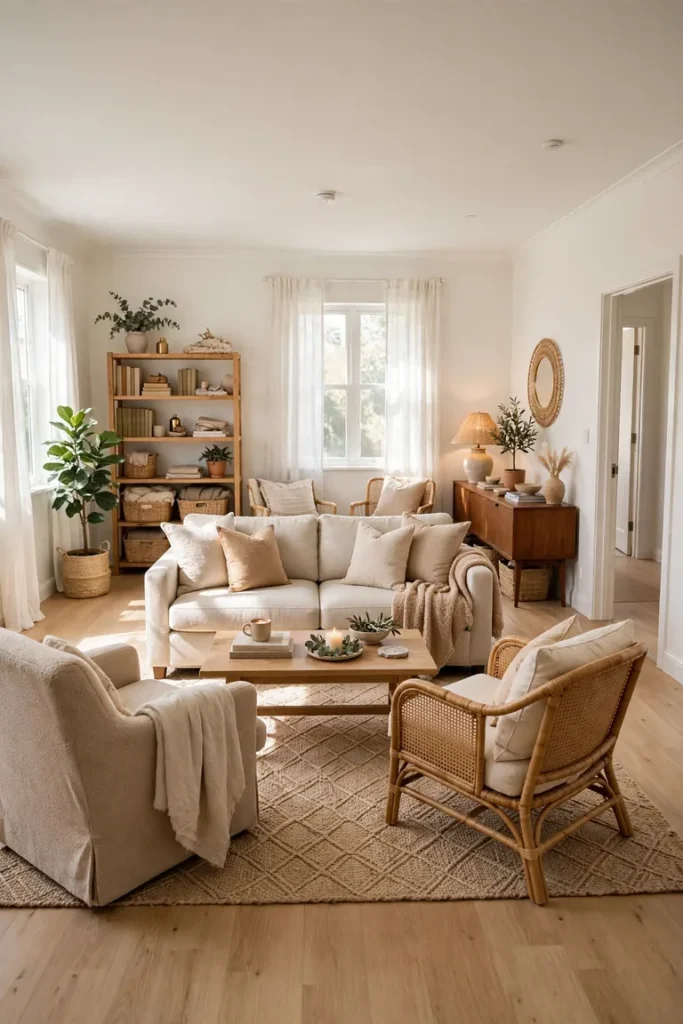
The instinct makes sense: push everything to the edges and the middle stays open. The result is a waiting room, with seats too far apart to talk across and a dead empty center nobody uses.
Pull the seating in instead. Move the sofa and chairs off the walls and group them around the rug and coffee table, close enough for a conversation without raised voices. Even a hand width of space behind the sofa changes how finished the room looks.
Anchor. Start from the rug, not the walls, and build the seating group on it. Walkways. Keep one clear path through the room, along one side. Walls. Let low pieces, like a bookshelf or console, take the wall space instead of the seating.
6. Measuring Nothing Before You Buy
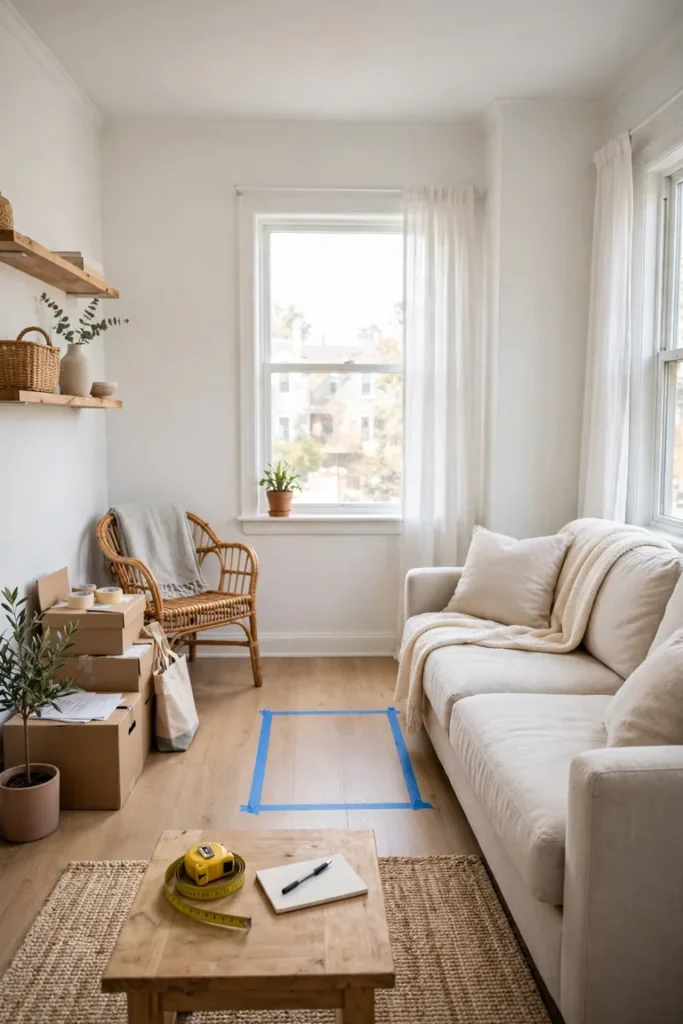
The delivery crew is at the door, the sofa is on its side, and it is not going through. That scene plays out in first apartments every weekend, and it is fully avoidable.
Measure four things before you buy any large piece, and keep the numbers in your phone:
- The room itself, wall to wall, plus the ceiling height if shelves or tall pieces are planned
- Every doorway, hallway corner, and stair turn between the street and the room
- The spot the piece will live in, with space left for doors and drawers to open
- The piece, in its box if it ships flat, not just the display size in the store
💡 Quick Tip
Tape the footprint of a new piece on the floor with painter’s tape and live with it for a day. Walk around it, open doors over it, and the size stops being a guess.
7. Decorating Before Planning the Layout
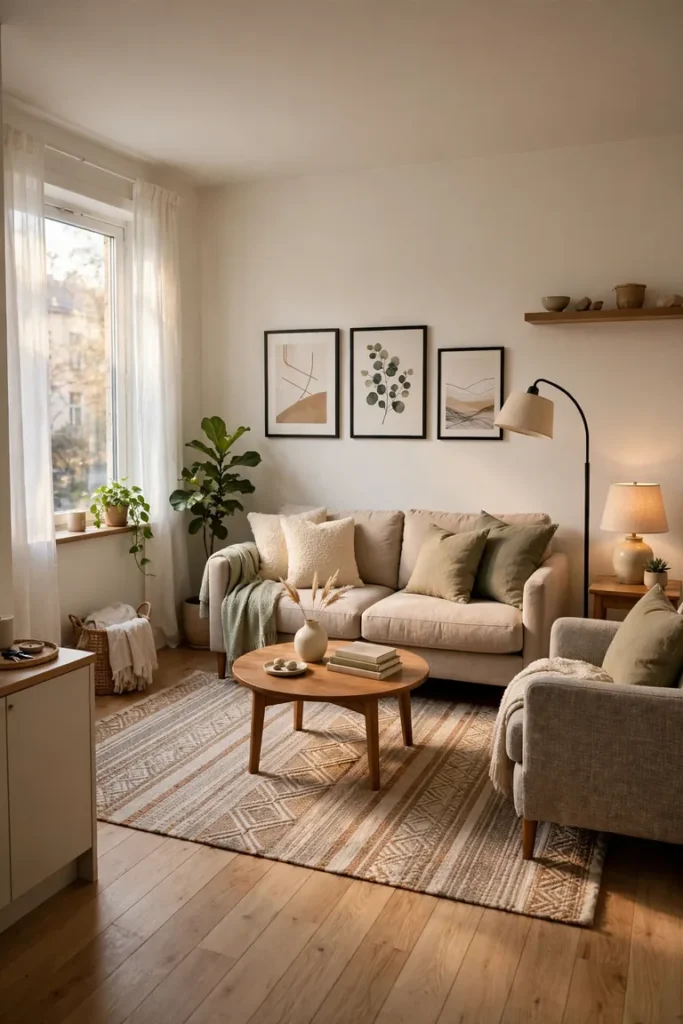
Cushions, art, candles, a plant or two: the fun small stuff is easy to buy, so first timers buy it first. Then the sofa arrives, the layout gets decided in a hurry, and half the decor has no home.
Plan the room on paper before anything is bought. A rough sketch with the big pieces drawn to scale is enough. Where the sofa sits decides where the rug goes, which decides the lamp, and only then do the small pieces have places waiting for them.
First: the three largest pieces and their spots. Second: the rug, lighting, and storage that support them. Last: art, cushions, and decor, chosen for the spaces that are actually left.
Big pieces first, decor last. A layout decided on paper costs nothing to change. A layout decided by deliveries costs returns.
8. Using Too Many Colors With No Base Palette
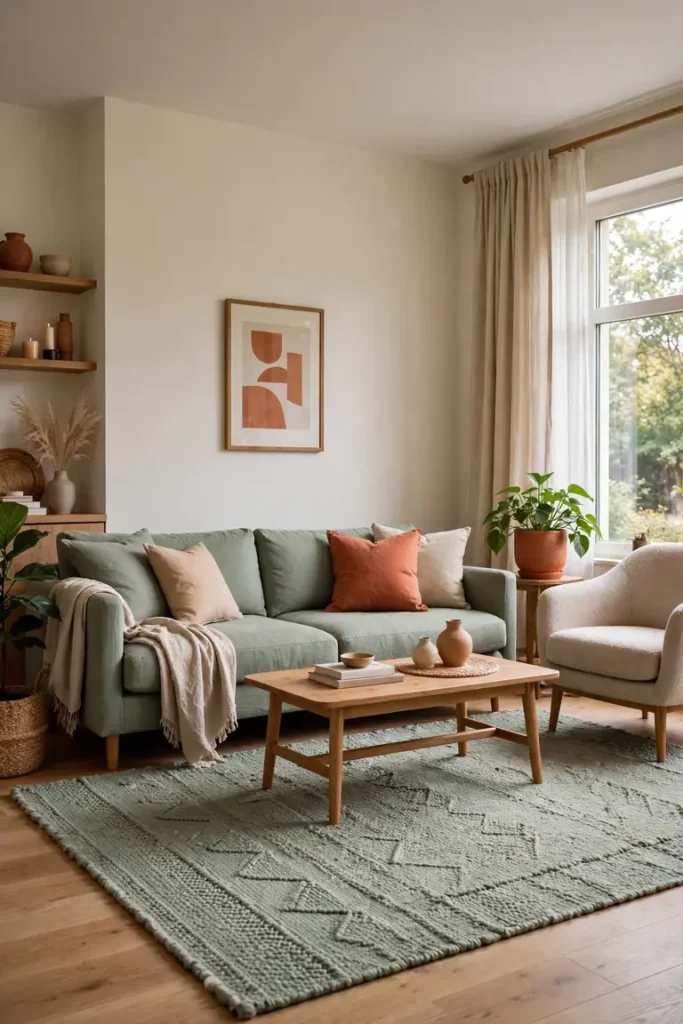
A red cushion, a blue rug, green curtains, and a yellow throw can each look fine in the store and fight each other at home. When every item brings its own color, the room has no calm base for the eye to rest on.
Pick a small palette before you shop and let it lead. One main color family carries most of the room, a second supports it in smaller pieces, and one accent shows up in just a few spots, like a cushion, a print, and a plant pot.
Wood tones and plain neutrals count as part of the base, which is why they calm a colorful room down.
Build the palette in this order
9. Buying a Full Matching Furniture Set
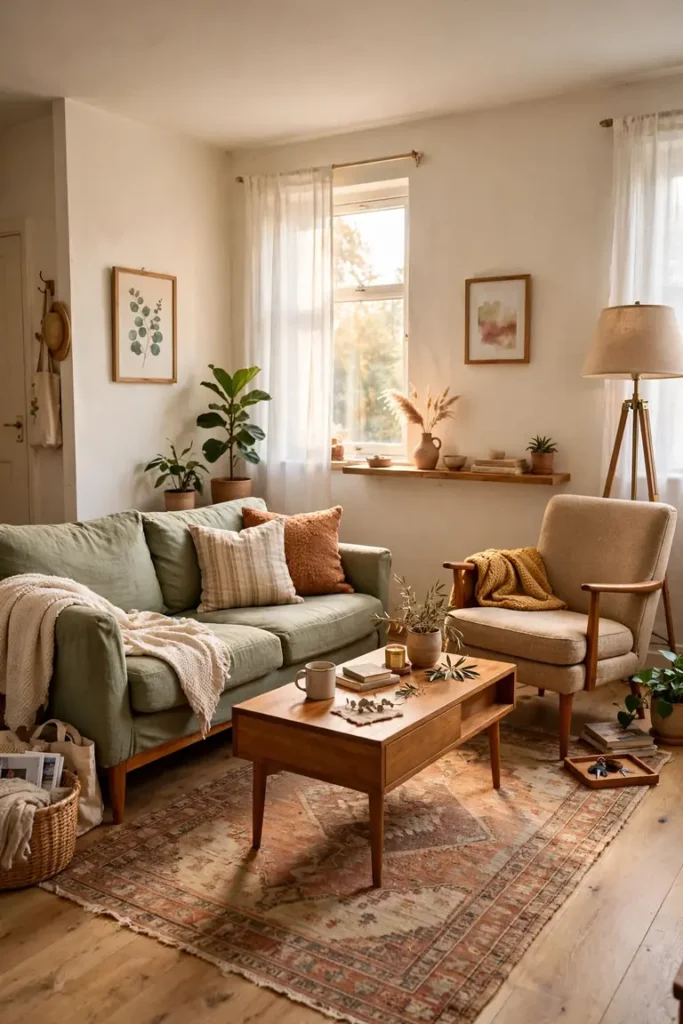
The showroom set is tempting: sofa, loveseat, coffee table, and side tables, all in the same finish, one payment and the room is done. At home it reads flat, like a furniture display nobody lives in.
Rooms feel collected when pieces share something without matching everything. Keep one thread running through the furniture, like similar wood tones or the same leg style, and let shapes and fabrics differ. A fabric sofa with a wood table and one different chair looks planned and personal at the same time.
Bought secondhand or one piece at a time, the mixed route is usually cheaper too.
Repeat one element across pieces, like wood tone or leg style, so the mix still connects.
Let the largest piece be plain, and give smaller pieces the texture and pattern.
Do not buy the sofa, loveseat, and tables as one matching set for a small room.
Do not match every wood finish exactly. Close tones look natural, identical ones look staged.
10. Overcrowding Shelves and Surfaces
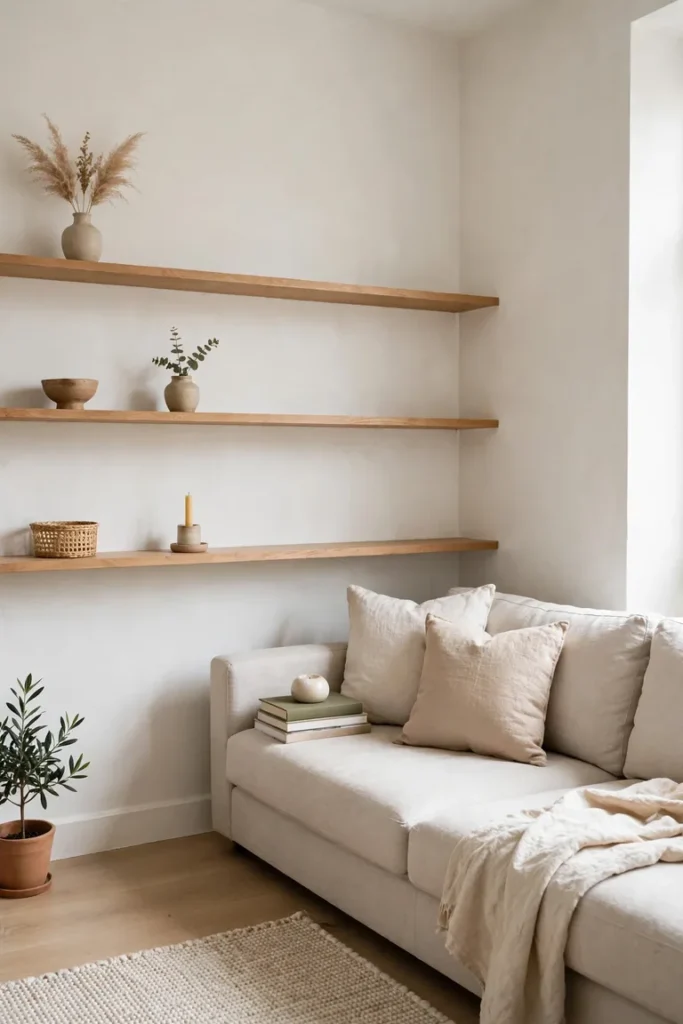
A shelf filled edge to edge stops being decor and becomes storage that happens to be visible. The eye cannot pick out anything, so it reads the whole shelf as clutter, even when each item is nice on its own.
Edit down to groups. Keep a few pieces together with empty space around the group, and let some shelf stay bare on purpose. Books can lie in a short stack with one object on top instead of standing in one long unbroken row.
- Leave roughly a third of each shelf empty
- Group items in twos and threes, not in lines
- Rotate pieces seasonally instead of displaying everything at once
⚠️ Watch Out
If you cannot dust a shelf without moving more than three things, it is overcrowded. Clear it fully, then put back only what earns its place.
11. Ignoring Vertical Space in a Small Apartment
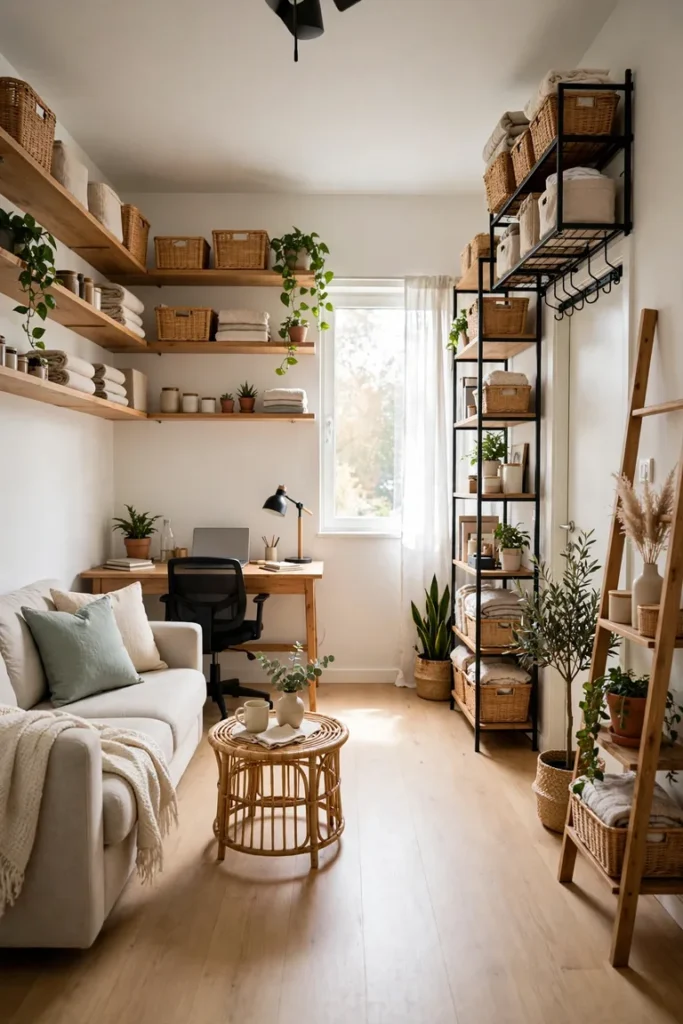
When floor space runs out, most first timers stop and call the room full. The walls above head height are still empty, and in a small apartment that is the cheapest space you own.
Tall, narrow storage takes the pressure off the floor. A high bookcase, wall shelves over a desk or sofa, and hooks near the ceiling line for rarely used items all move clutter up, where it stops crowding the room you walk through.
Renters can lean a tall ladder shelf against the wall instead of fixing one, and use over the door racks on closets and bedrooms.
12. Art Hung Too High and Too Small for the Wall
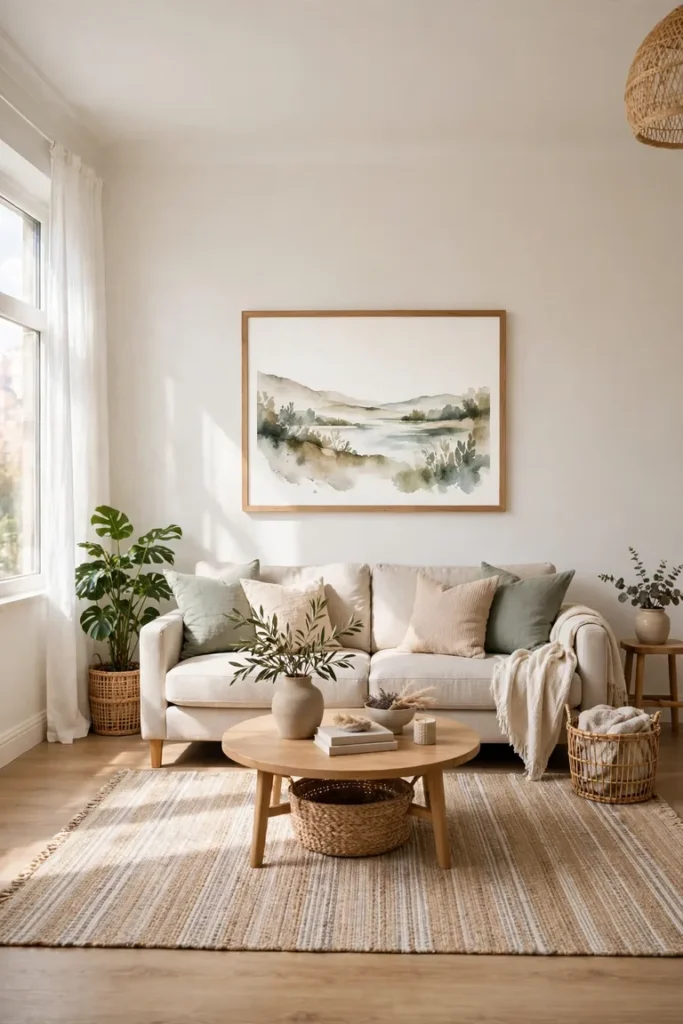
Two art mistakes show up together in first apartments: one small print floating alone over a big sofa, hung closer to the ceiling than to the furniture under it.
Art should connect to what sits below it. Hang the center of the piece at about eye level when standing, and keep the bottom edge a hand span or two above the sofa back or console top, so the art and the furniture read as one group.
For size, the piece or grouping should span a good share of the furniture width below it. One wide print, or a small group of frames treated as one piece, both work better than a single small frame.
Mark eye level on the wall and aim the center of the art there, not the top edge.
Check the gap between the art and the furniture below it. A small gap groups them, a large one separates them.
Tape the frame outline on the wall first and live with it a day before making any hole.
13. No Storage Plan, So Everything Stays on Display
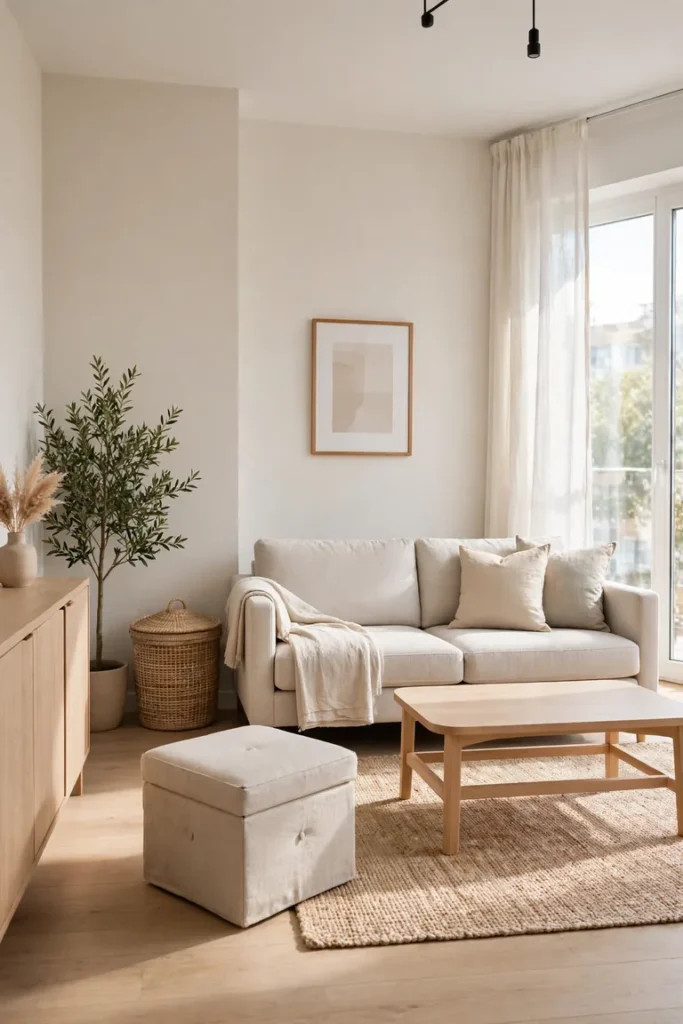
First apartments collect daily life in the open: mail on the table, chargers on the sofa, cleaning bottles under the sink in full view. Without closed storage planned in, every surface becomes a shelf.
Give the everyday items a hidden home first, before buying any decor. A lidded basket by the sofa for remotes and chargers. A closed cabinet or a simple tension rod curtain under an open shelf for cleaning supplies. One drawer or box near the door for mail and keys.
- Living room: one closed piece, like an ottoman or cabinet, for the daily clutter
- Kitchen and bath: baskets and bins inside cabinets, so counters stay mostly clear
- Bedroom: under bed boxes for off season clothes, not piles on a chair
14. One Open Room With No Zones
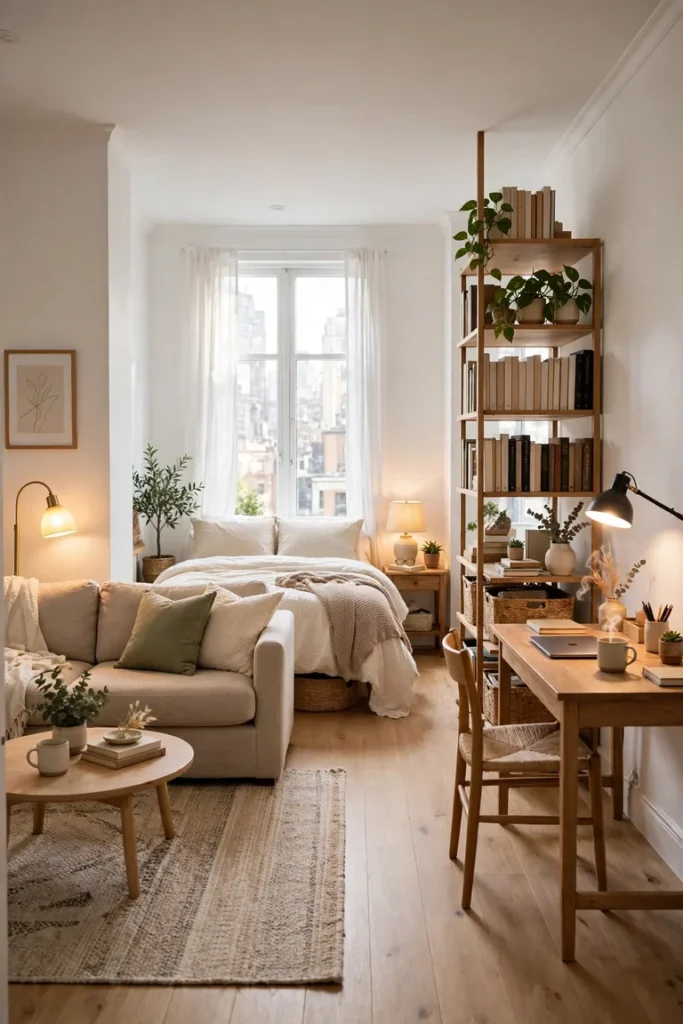
In a studio or an open plan room, one undefined space has to be a living room, office, and dining room at once. With no zones marked, it ends up doing none of them well, and the bed ends up facing the dishes.
Divide the room with what you already own. A rug under the seating marks the living zone. The back of the sofa can face the sleeping area as a soft wall. A bookshelf placed sideways splits work from rest and stores things for both sides.
Light helps too. One lamp per zone, switched separately, lets one corner rest while another works.
Mark each zone with one clear signal
15. Blocking Windows With Tall Furniture
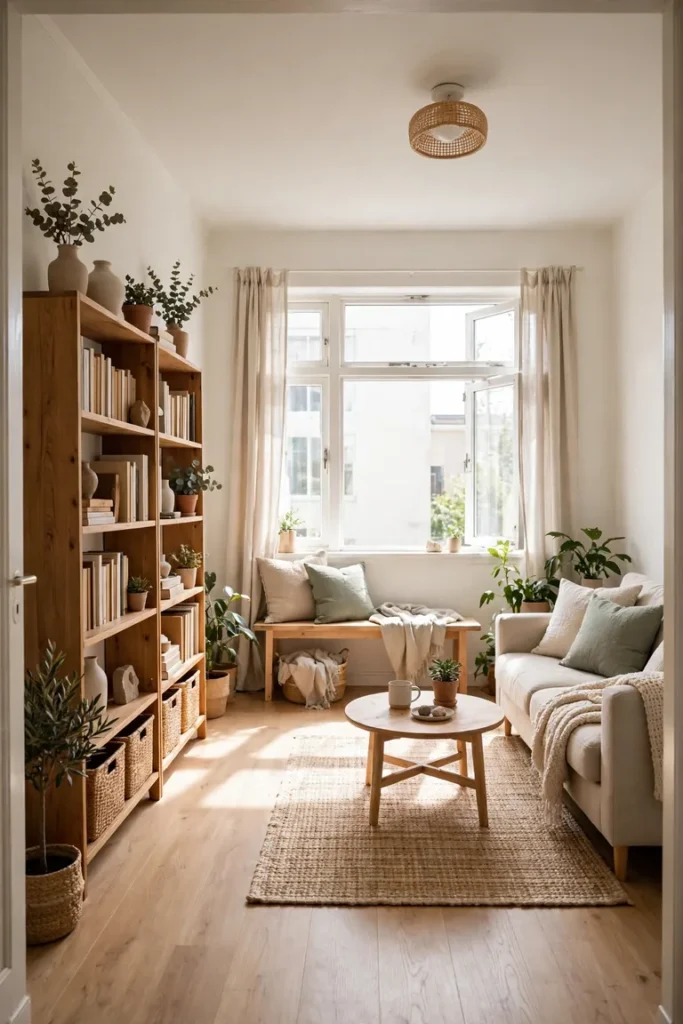
The tallest piece in the room often lands against the easiest wall, which is the window wall. A bookcase or wardrobe in front of the glass cuts the daylight the whole room depends on, and small rooms feel it fast.
Keep the window wall low. Place tall storage on solid walls instead, and let pieces under the windows stay below the sill where possible: a low console, a bench, the back of a sofa that sits lower than the glass.
If a tall piece truly has nowhere else to go, shift it to the side of the window rather than the center, and keep the curtains clear of it so they still open fully.
Daylight is the one upgrade no budget can buy back once it is blocked.
A tall bookcase stands across the window, and the room behind it stays dim until evening.
The bookcase moves to a solid wall, a low bench sits under the glass, and daylight reaches the back of the room.
16. Dozens of Tiny Decor Pieces Instead of a Few Larger Ones
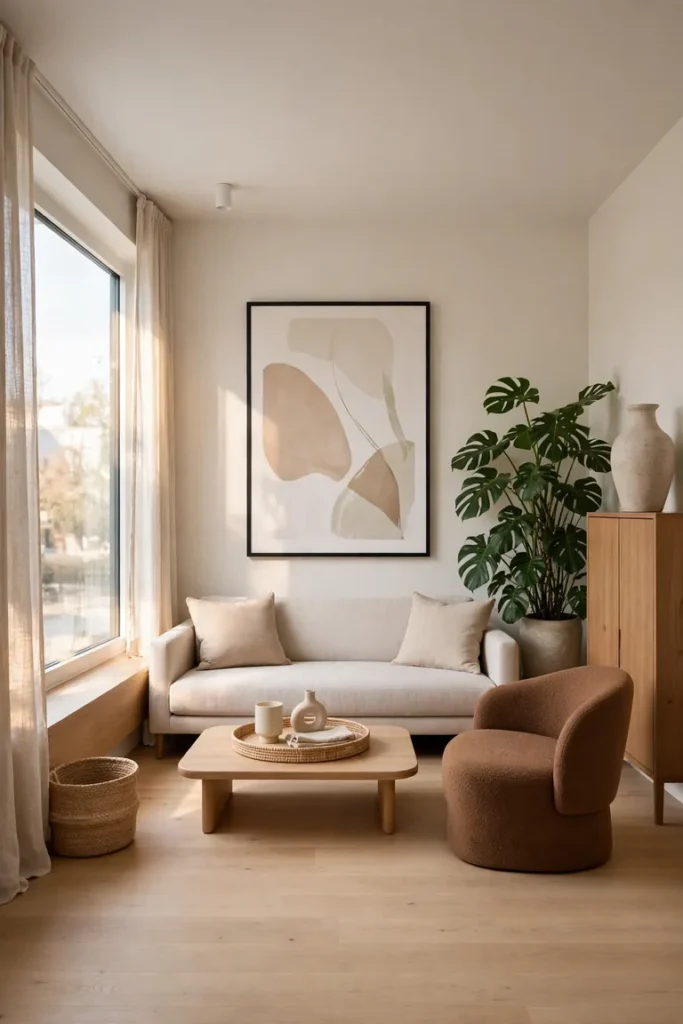
Small decor is cheap and easy to carry home, so first apartments fill up with it: tiny frames, small candles, little bowls, one on every surface. Together they read as clutter, because the eye has nowhere important to land.
Swap quantity for size. A few larger pieces hold a room better than twenty small ones. One big print over the sofa instead of six small frames. One large plant in the corner instead of a row of tiny pots. One wide tray on the coffee table, holding the small things as one group.
You often spend the same money. You just spend it on three pieces instead of fifteen.
| Many small pieces | A few larger pieces |
|---|---|
| Each item competes for attention, and the surface reads busy from across the room. | Each piece holds its own space, and the room reads calm and planned. |
| Dusting and tidying means moving everything, every time. | Fewer pieces means faster cleaning and fewer things to knock over. |
17. Cords and Chargers Running Across Every Surface
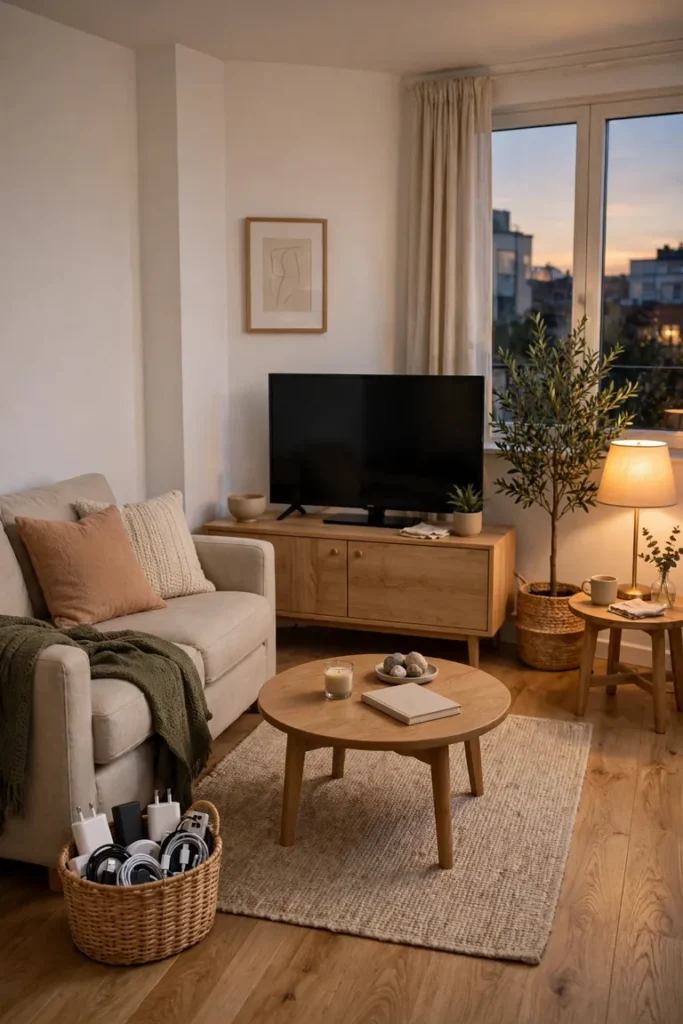
Nothing undoes a styled room faster than a web of black cords: chargers draped over the sofa arm, a power strip in the middle of the floor, cables trailing from the TV to three different devices.
Gather them at the source. Run one power strip behind the furniture where the devices live, route cords along the back edges and down legs, and tie the slack into one short bundle instead of a loose loop. A small box or basket beside the sofa holds chargers out of sight between uses.
An hour of routing, done once, removes the most visible mess in the room.
Chargers drape over the sofa arm and a power strip sits in open floor, cords running in three directions.
One strip hidden behind the sofa, cords routed along the back, and chargers resting in a basket between uses.
18. Buying Trendy Statement Pieces Before the Basics
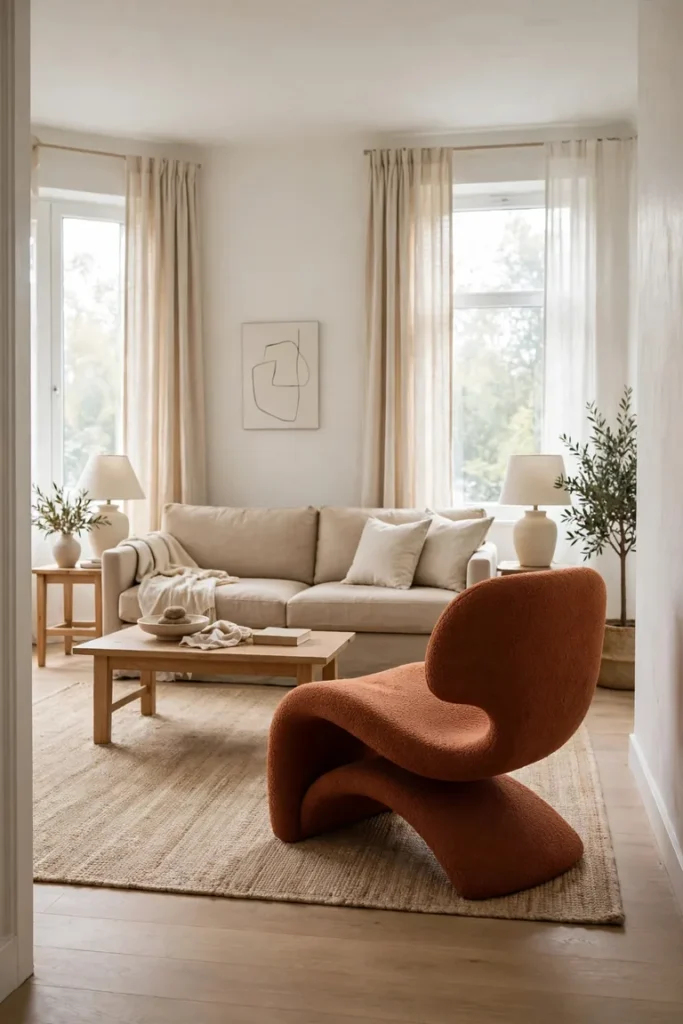
The sculptural chair, the bold patterned rug, the unusual lamp: statement pieces are fun to shop for, so they arrive early. Then the basics are still missing, and the statement piece has nothing calm to stand against, so it just looks loud.
Buy in the opposite order. A solid sofa, a rug that fits, curtains, and plain lighting first. Once the room works, one statement piece has a quiet base that makes it look chosen instead of random.
A bold piece bought later can also be picked against the real room, its actual light, its colors, and its gaps, instead of against a photo of someone else’s home.
- ▸Basics first: seating, a right sized rug, curtains, and two or three lamps.
- ▸Then one statement piece per room, placed where the eye lands first.
- ▸Trends in small, cheap items only: a cushion cover, a throw, a print you can swap later.
19. Mixing Bulb Colors in the Same Room
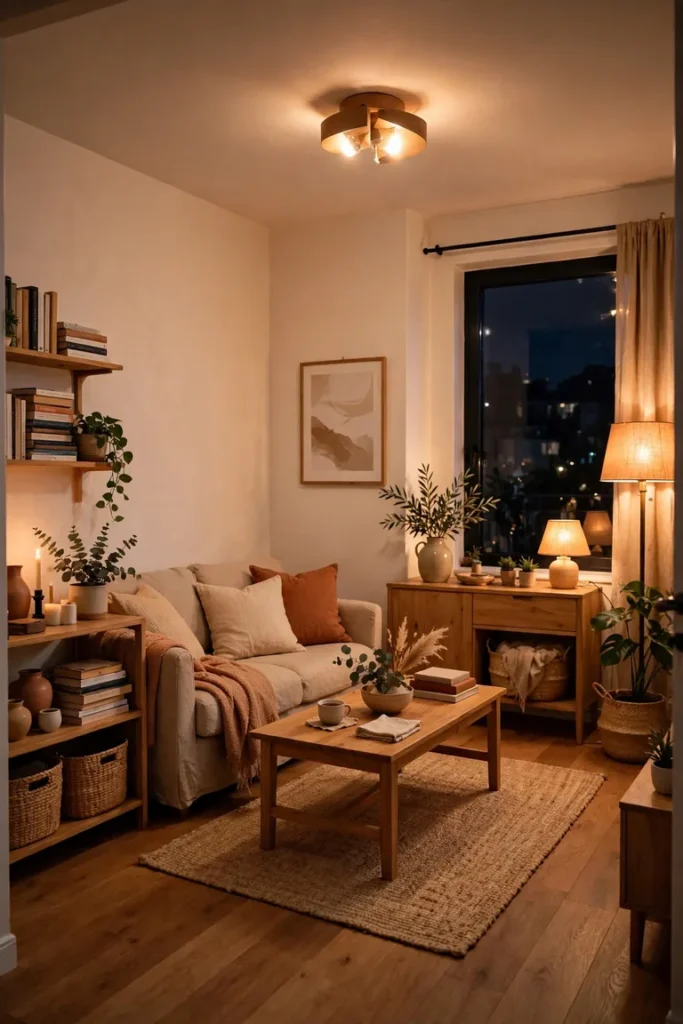
This one hides in plain sight. One lamp gives warm yellow light, the ceiling fitting gives cold blue white, and the room never feels settled, even though each bulb works fine on its own.
Bulbs carry a color tone, from warm and golden to cool and bluish. When tones clash in one room, skin, paint, and fabrics all look slightly off, and the room feels restless without an obvious cause.
Match the bulbs in each room to one warm tone, and replace the odd one out first. In living rooms and bedrooms, warm light is almost always the comfortable choice.
20. No Landing Zone at the Front Door
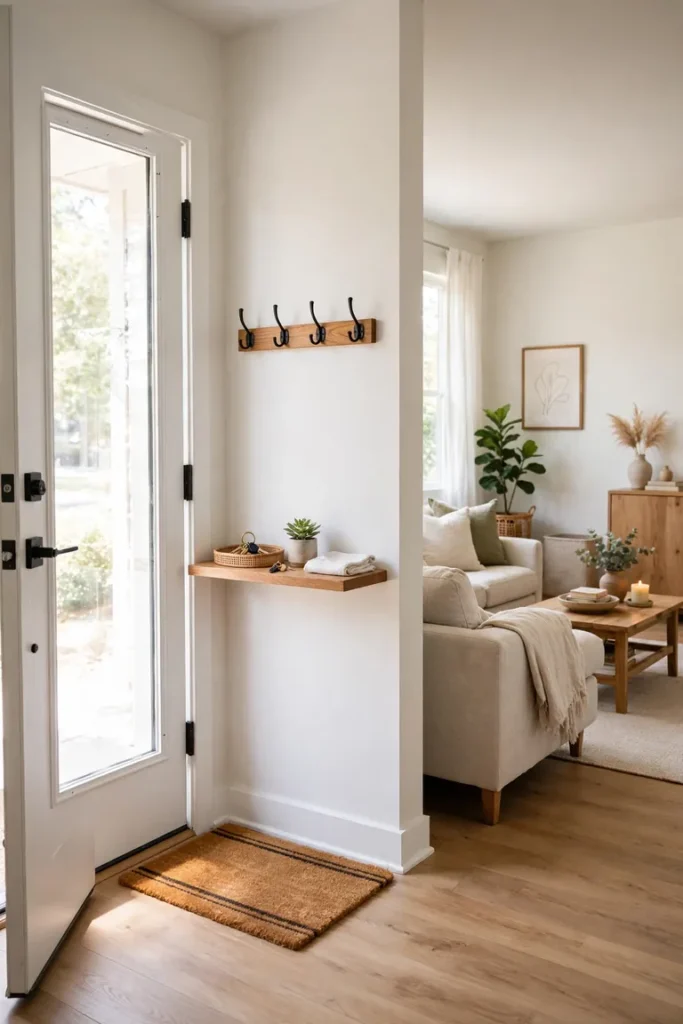
Without a planned spot by the door, arriving home scatters: keys on the kitchen counter, mail on the sofa, coat over a dining chair, bag on the floor. The entry spreads its clutter across the whole apartment within a day.
Build a small landing zone in whatever space the door allows. One hook or a short rail for the coat and bag. A small bowl or tray on the nearest surface for keys and mail. A mat under it all, sized to catch wet shoes.
Even a single shelf with two hooks under it works in the tightest entry, and it costs less than one decor item.
| No landing zone | Simple landing zone |
|---|---|
| Keys, mail, and bags land on the first surface in every room, and mornings start with a search. | Everything lands in one spot by the door, and leaving takes ten seconds. |
| Wet shoes and coats travel deeper into the home, carrying dirt with them. | A mat and hooks hold the dirt at the door, where it is easy to clean. |
21. Buying Seating Online Without Ever Testing Comfort
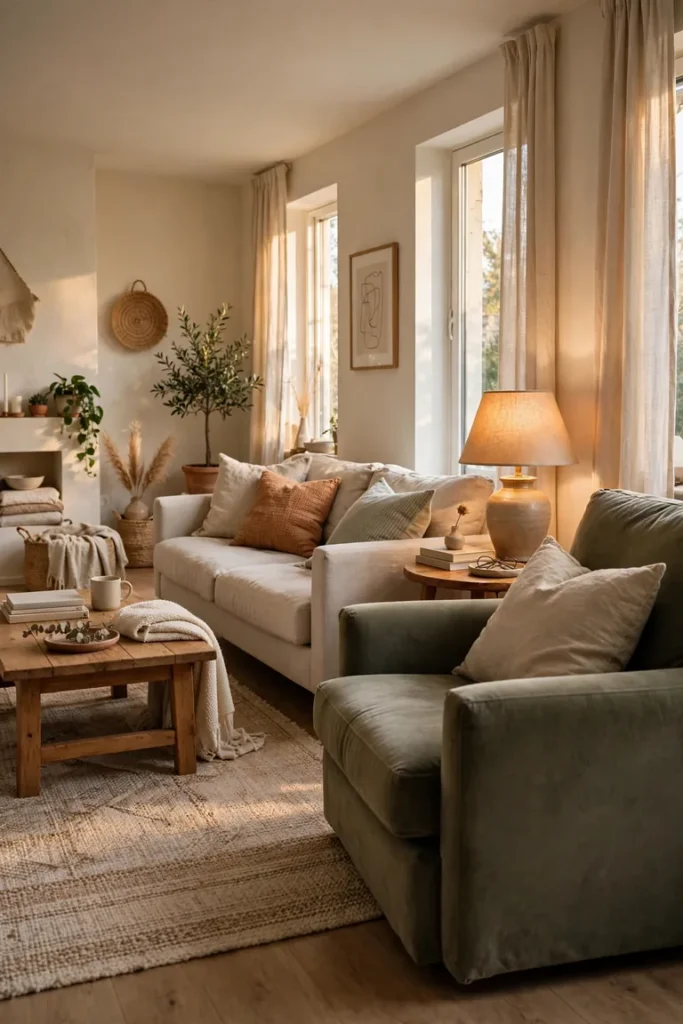
A chair can photograph beautifully and still punish you after twenty minutes. Seat depth, back angle, and cushion firmness decide whether a piece gets used daily or becomes expensive decor, and none of that shows in a product photo.
Test seating in person when you can, even a different model from the same maker, to learn the seat depth that suits you. If you must buy online, read the measurements against a chair you already find comfortable, and favor sellers with a real return window for furniture.
Comfort is the one feature you will feel every single day.
Final Thoughts
Almost every disappointing first apartment is a few small decisions away from feeling right. The fixes in this list ask for almost no money: pull the furniture in, size the rug up, layer the light, edit the shelves, give the daily clutter a hidden home. Work through them in the order your room bothers you most, one fix per weekend.
Keep this list of apartment decorating mistakes saved to your apartment or home board, and check it before your next purchase. The cheapest decorating decision is the one you only make once.