15 Genius Tiny Studio Apartment Hacks for a Functional Home
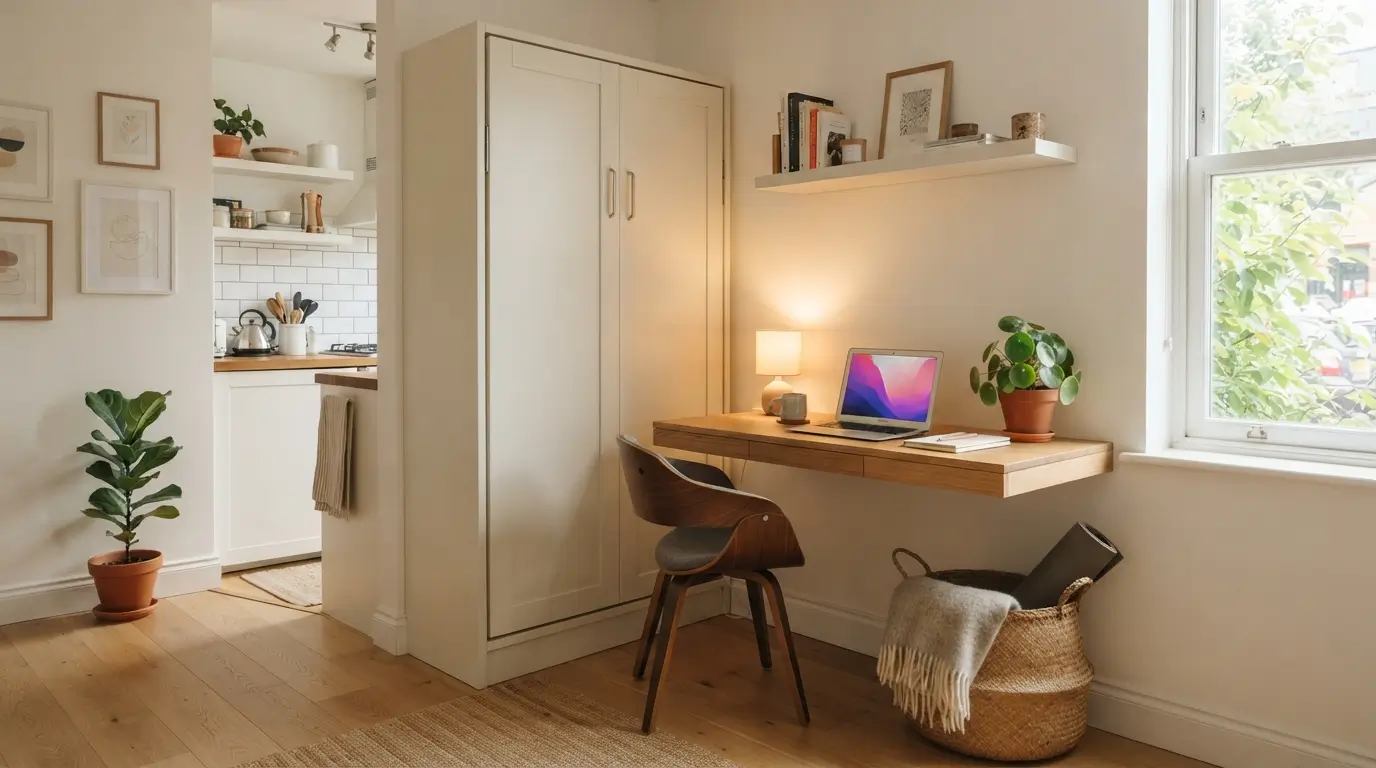
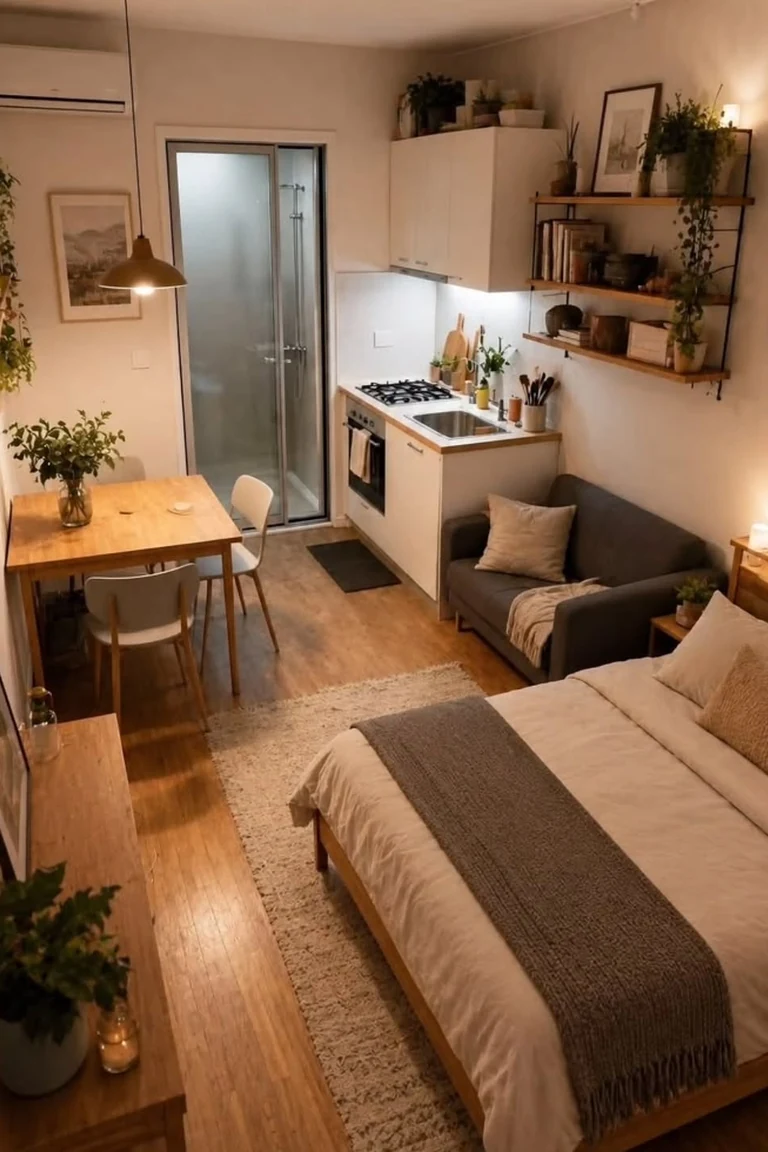
Most tiny studios fail in the same quiet way. The bed stays in the middle of the room all day, the desk ends up next to the stove, and bags, shoes, and laundry find the floor because there is nowhere else for them to go.
It is not that you own too much. It is that one open room has to do the work of a bedroom, a living room, an office, and a kitchen, and regular furniture was not made for that job.
That is why these tiny studio apartment hacks focus on small, practical changes instead of a full makeover. A bed that folds away, a desk that uses a dead corner, and shelves that climb the wall can change how the same square footage feels and works.
You do not need to buy everything at once. Pick the hack that fixes your biggest daily annoyance first, try it for a week, and then add the next one. The list below starts with the biggest space saver and moves through simple storage and layout ideas you can use in a rental.
1. Murphy Bed Wall
A fixed bed can eat the living room before you even wake up.
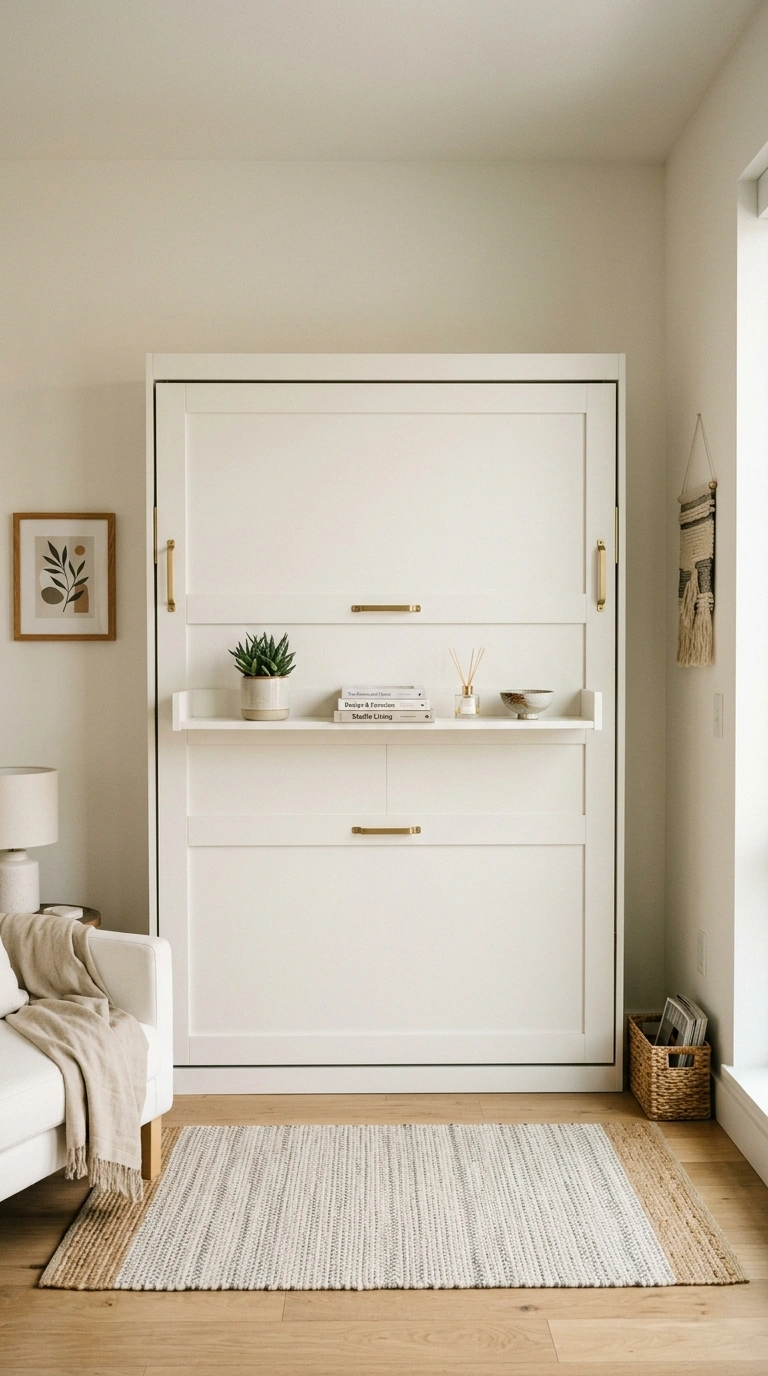
A Murphy bed folds up into a wall cabinet during the day, so the same floor becomes a place to stretch or work. Look for a model with a shelf or a fold down desk on the front panel, so the closed cabinet still does useful work as multifunctional furniture. Paint the cabinet the same color as the wall, so it sits back instead of standing out.
Put it where it can work best:
- Longest open wall, away from doors and windows
- Clear space in front to fold down
- Small rug that slides aside
At night it folds down, in the morning it folds away.
Bed stays out all day, floor space stays taken, and the living area feels small.
Bed folds into the wall, floor opens up, and the closed cabinet works as a shelf or desk.
2. Floating Corner Desk
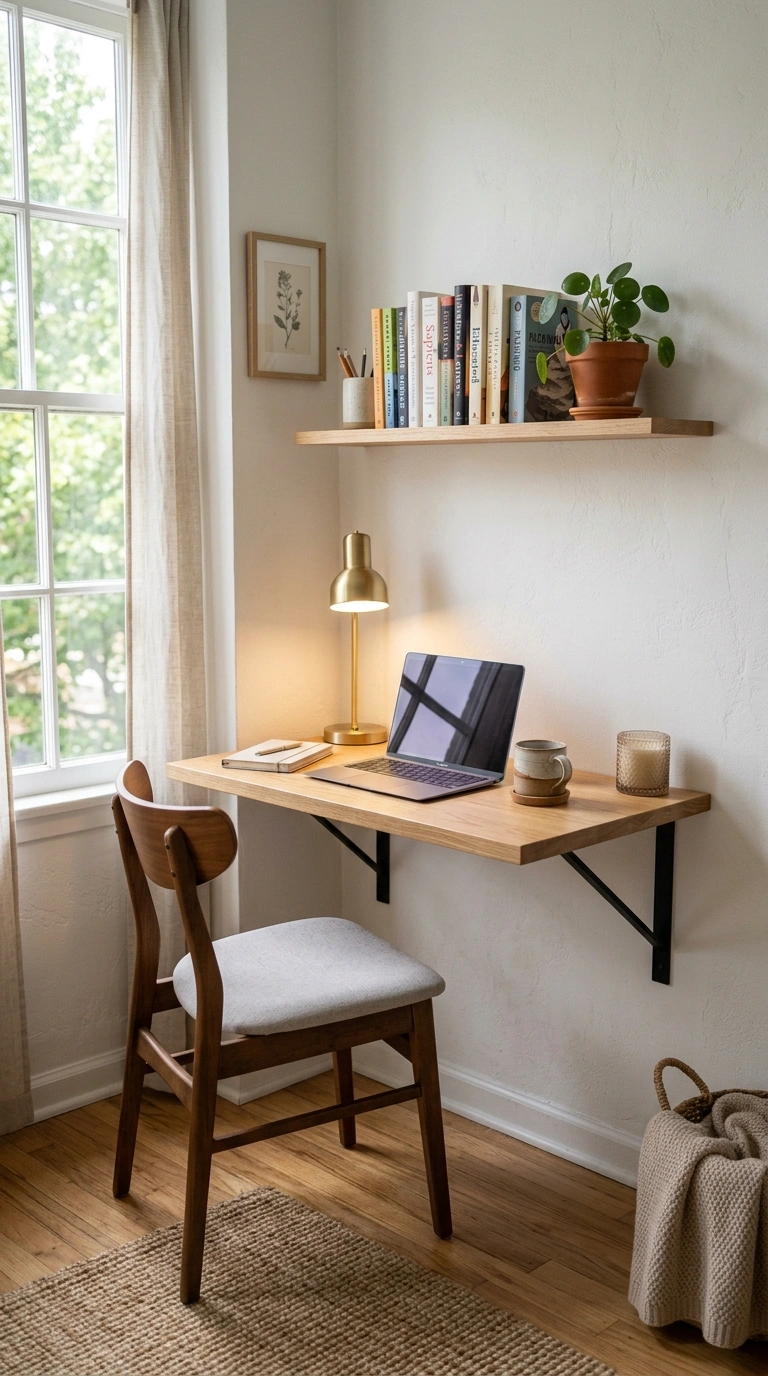
That empty corner near the window can become your office.
A floating desk mounts straight to the wall, so no legs take up floor space. Set it at about 29 inches from the floor, add one slim shelf above for books and supplies, and use a stool that tucks under when work ends. This kind of studio apartment layout keeps work time separate from rest time, even when both happen in one room.
Keep the setup light:
- Laptop, notebook, and one lamp
- Books and chargers on the wall shelf
- Cables tied to the wall
For more corner setups, see 25 Smart Ways to Turn a Bedroom Corner Into a Home Office.
It works best for renters who need a desk but cannot give up a wall.
What to grab first
3. Curtain Room Divider
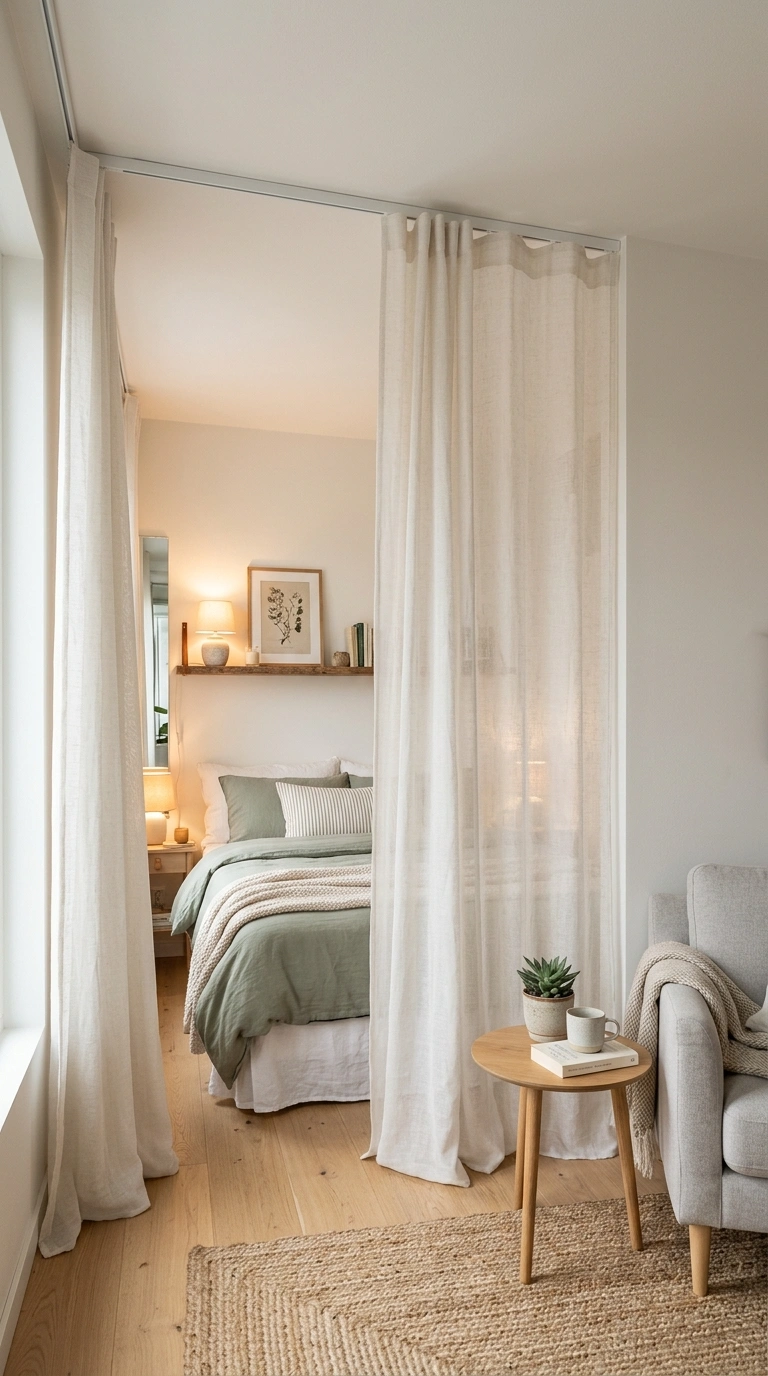
At night the curtain closes, and the bed feels like its own room.
Hang a ceiling mounted track and a soft, semi sheer curtain in a neutral tone, so light still passes through when it is closed. This is one of the simplest small studio apartment ideas for privacy, because you can pull it across at night and open it fully during the day. Choose washable fabric, run the track wider than the bed zone, and keep the hem just above the floor.
For more divider styles, see 21 Smart Bedroom Divider Ideas for Stylish Studio Apartments.
One honest limit: a curtain gives visual privacy, not sound privacy.
4. Under Bed Storage
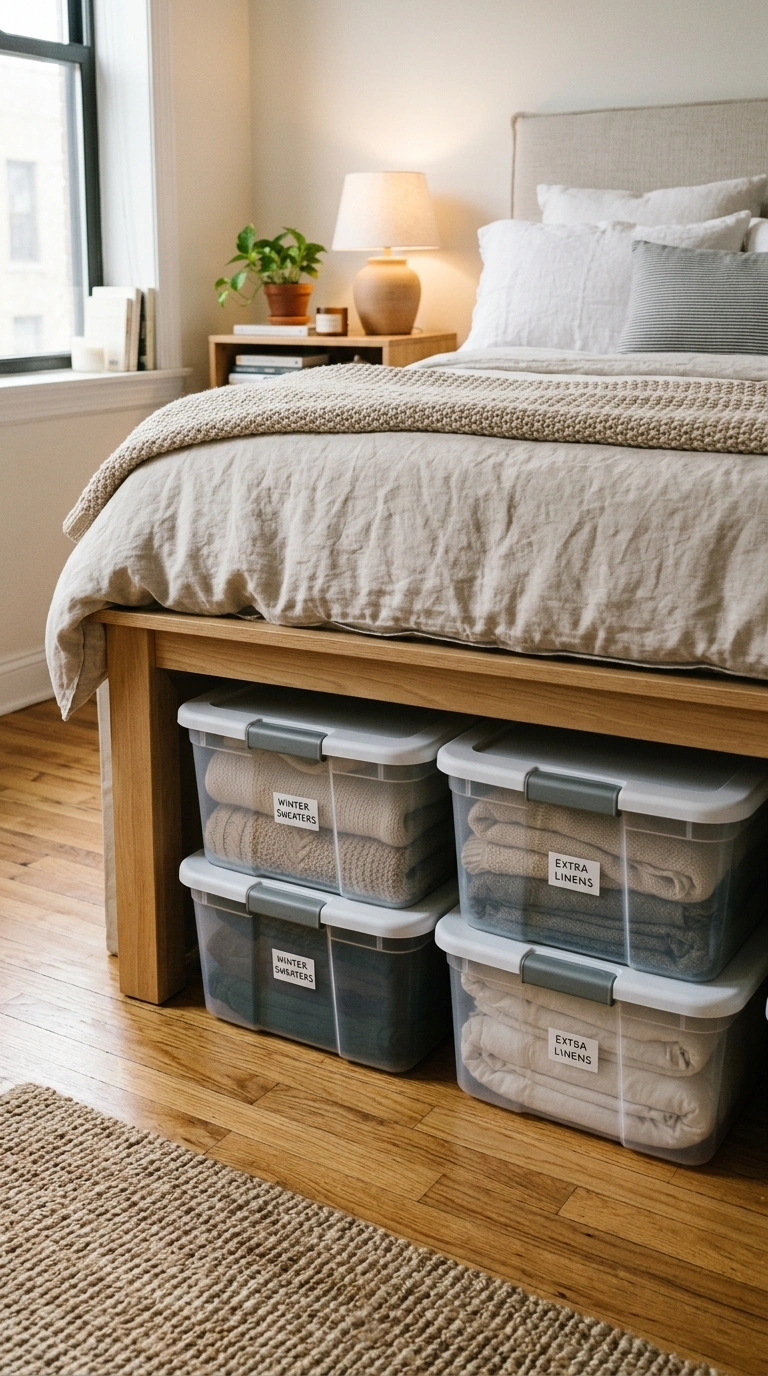
Rule: if you only need it twice a year, it goes under the bed.
That space is often the most wasted storage in a small studio. Use bins with lids that slide easily on a smooth floor, and label each bin so you are not digging through several boxes to find one thing. These tiny apartment storage ideas work best for out of season clothing, extra bedding, and items you use only a few times a year.
Good candidates for under the bed:
- Winter coats and heavy blankets
- Extra sheets, duvets, and guest bedding
- Luggage and bags you do not use daily
Keep everyday clothes in the closet, so you do not pull bins out every morning.
💡 Quick Tip
Measure the clear height under your bed before you buy bins, and leave a small gap at the front so each bin slides out without lifting the mattress.
5. Vertical Wall Shelving
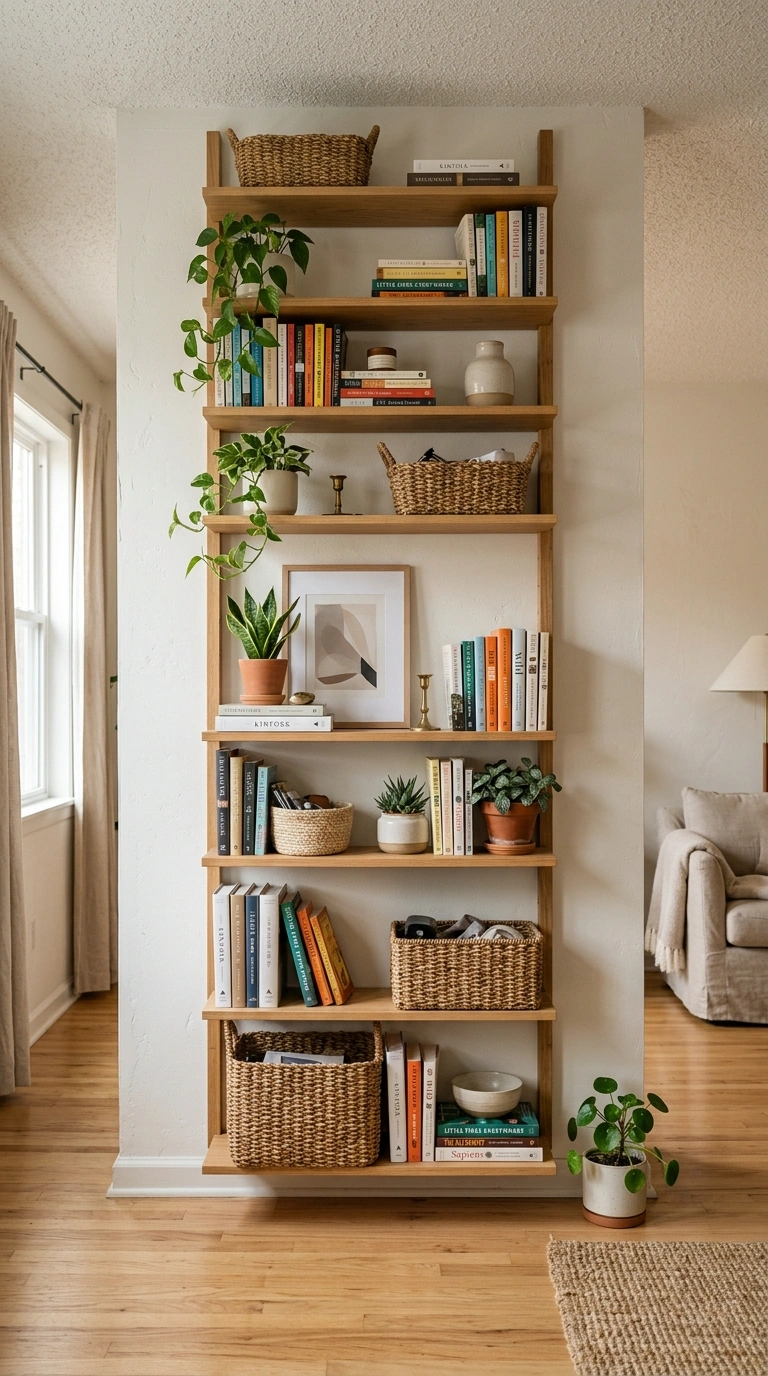
Look up. The wall above your sofa or door is storage you already own.
A tall, narrow shelf that reaches close to the ceiling can hold books, baskets, and decor without taking extra floor space. Keep the unit no more than 12 inches deep, so it does not block a walkway or make the room feel cramped. This space saving furniture works well flanking a window, beside an entry door, or above a desk, where height makes the ceiling feel taller.
Try it in these spots:
- Beside a window, with baskets below
- Above a desk, for books you use often
- On an entry wall, for keys and bags
Leave one shelf partly empty, so the wall looks calm instead of crowded.
6. Multi Purpose Ottoman
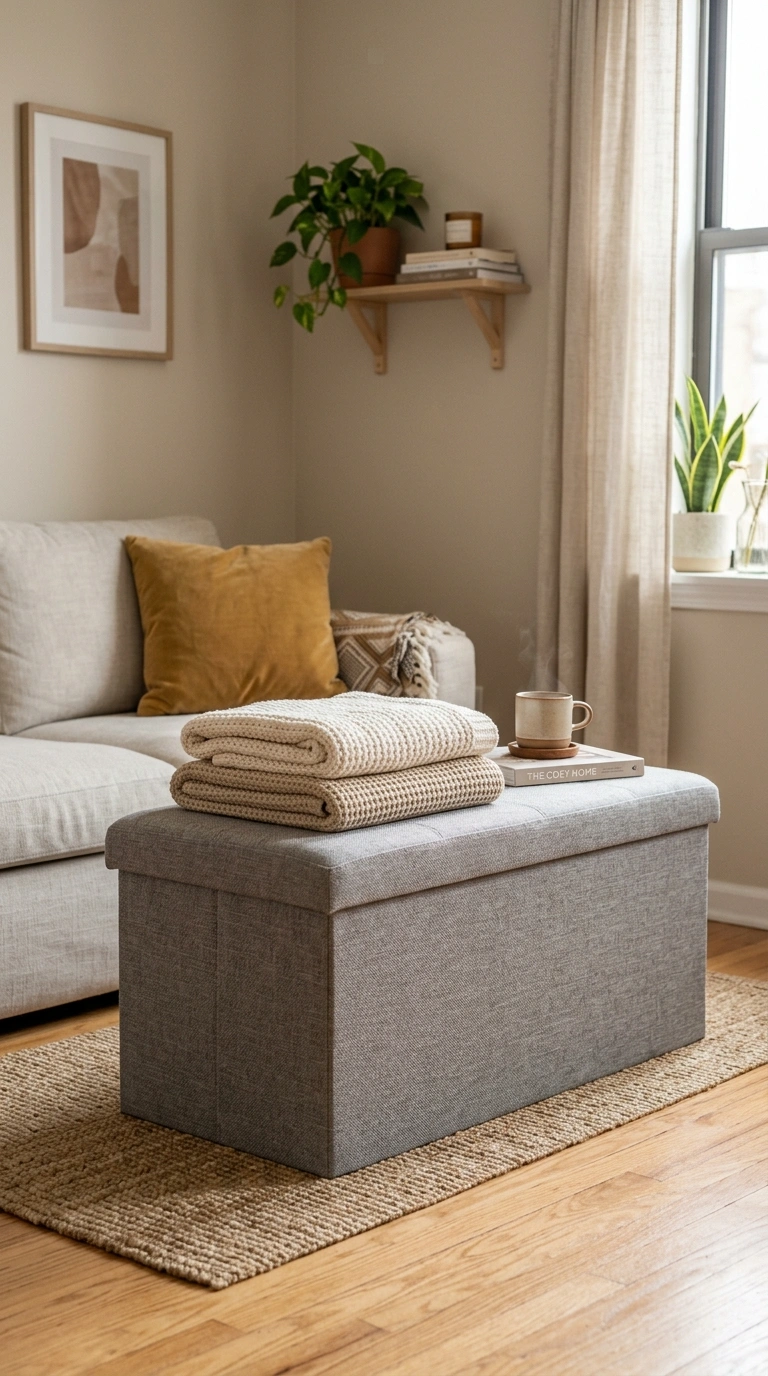
Guests need a seat, blankets need a home, and the coffee table needs a clear top.
A storage ottoman can do all three jobs in one piece of furniture. Choose one with a sturdy lid that can support weight, so it works as an extra seat when friends visit and as a footrest on a normal day. Put a tray on top when you want a coffee table, and keep the top clear the rest of the time so the room does not look crowded.
Store inside:
- Throws and extra blankets
- Board games and magazines
- Seasonal items you use rarely
Put a tray on top for drinks, lift the tray off when you need an extra seat.
| Storage ottoman | Plain footstool |
|---|---|
| Extra seat for guests | Extra seat for guests |
| Hidden storage inside | No hidden storage |
| Works as a table with a tray | Less stable as a table |
7. Loft Bed Platform
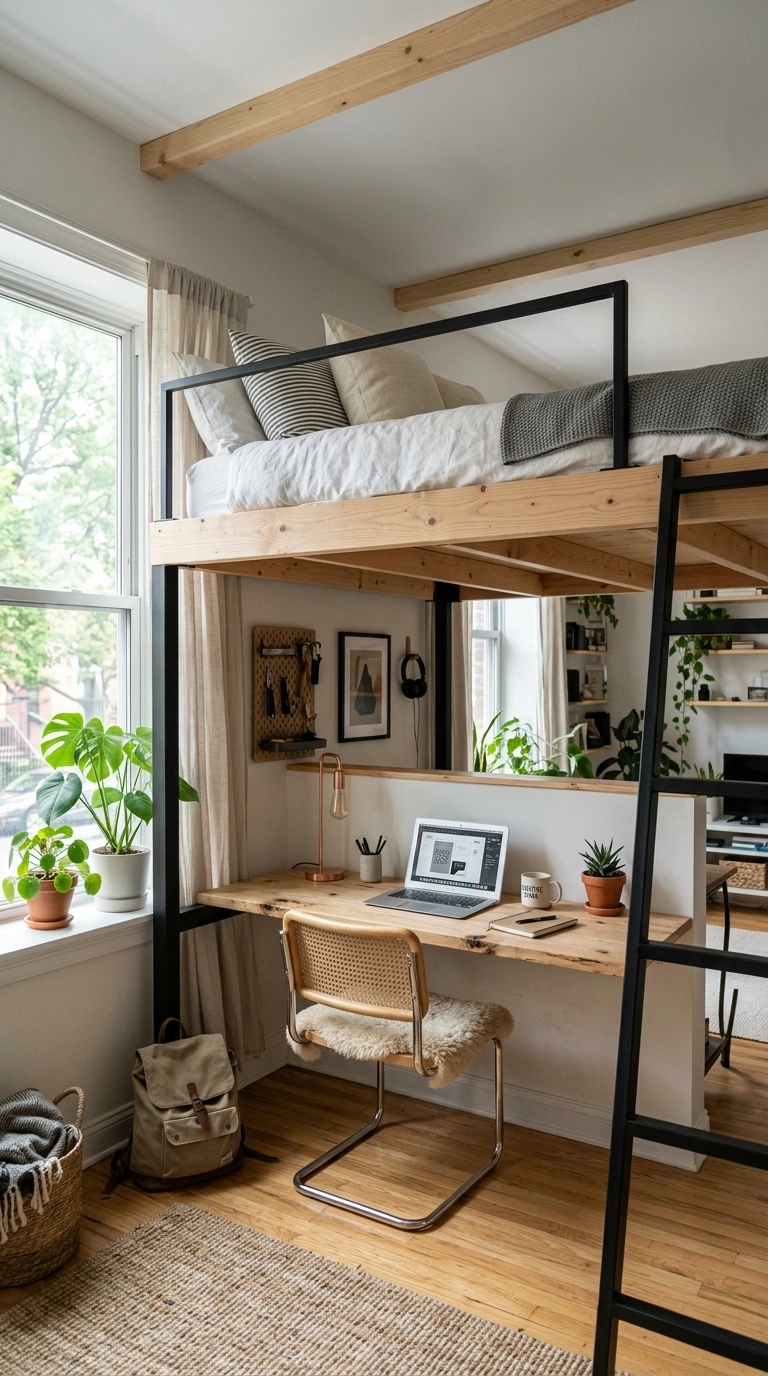
Raising the bed changes the whole floor plan.
A loft bed frees the floor underneath for a desk, a reading chair, or a compact wardrobe, so one bed footprint can hold two zones. Choose a sturdy frame rated for adult weight, with a guard rail and a ladder that feels safe at night. It works best with a high ceiling, where space above eye level would otherwise stay empty.
Check these three things first:
- Sit up in bed without hitting the ceiling
- Fit a chair and desk under the platform
- Keep the ladder clear of doors and walkways
Skip a loft bed if the ceiling is low and you cannot sit up comfortably, because a cramped sleeping spot will bother you every night.
Measure sitting height above and below the platform.
Use a guard rail and a sturdy, well fixed ladder.
A loft bed under a low ceiling.
A wobbly frame or a ladder that blocks a door.
8. Foldable Dining Table
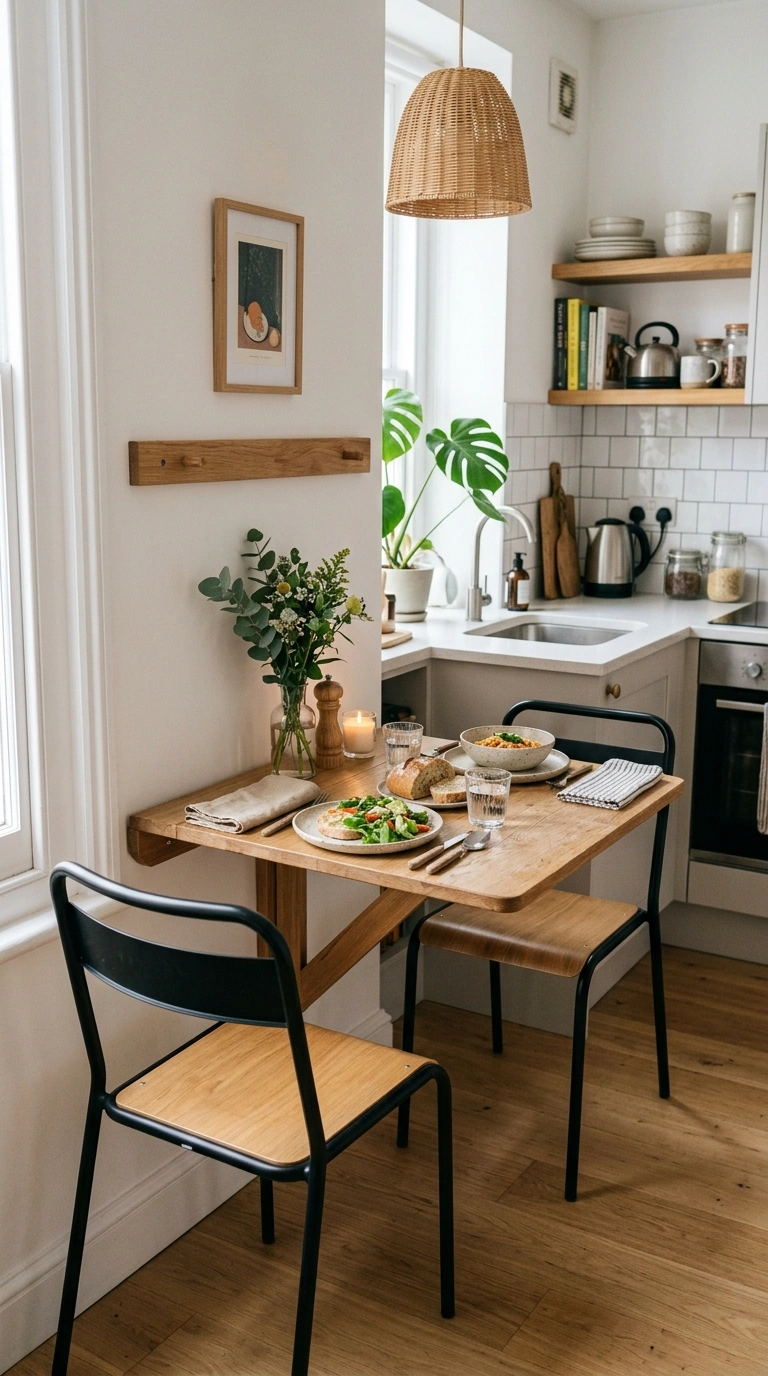
Dinner should not need a permanent table.
A wall mounted drop leaf table or a fold flat table can tuck away completely when you are not eating, so the kitchen floor stays open during the day. Choose a style with strong brackets, and pair it with stacking or folding chairs that store in a closet when not needed. This works well in a studio kitchen, where a full dining table would block movement between the counter and the rest of the room.
Store chairs where they do not block the room:
- Stacking chairs in a closet
- Folding chairs behind a door
- A bench that slides under the table
After dinner, fold it down and the kitchen feels open again.
Fold the table up and lock the brackets in place.
Pull out only the chairs you need for that meal.
Fold the table down after eating and slide the chairs away.
9. Wall Mounted Nightstand
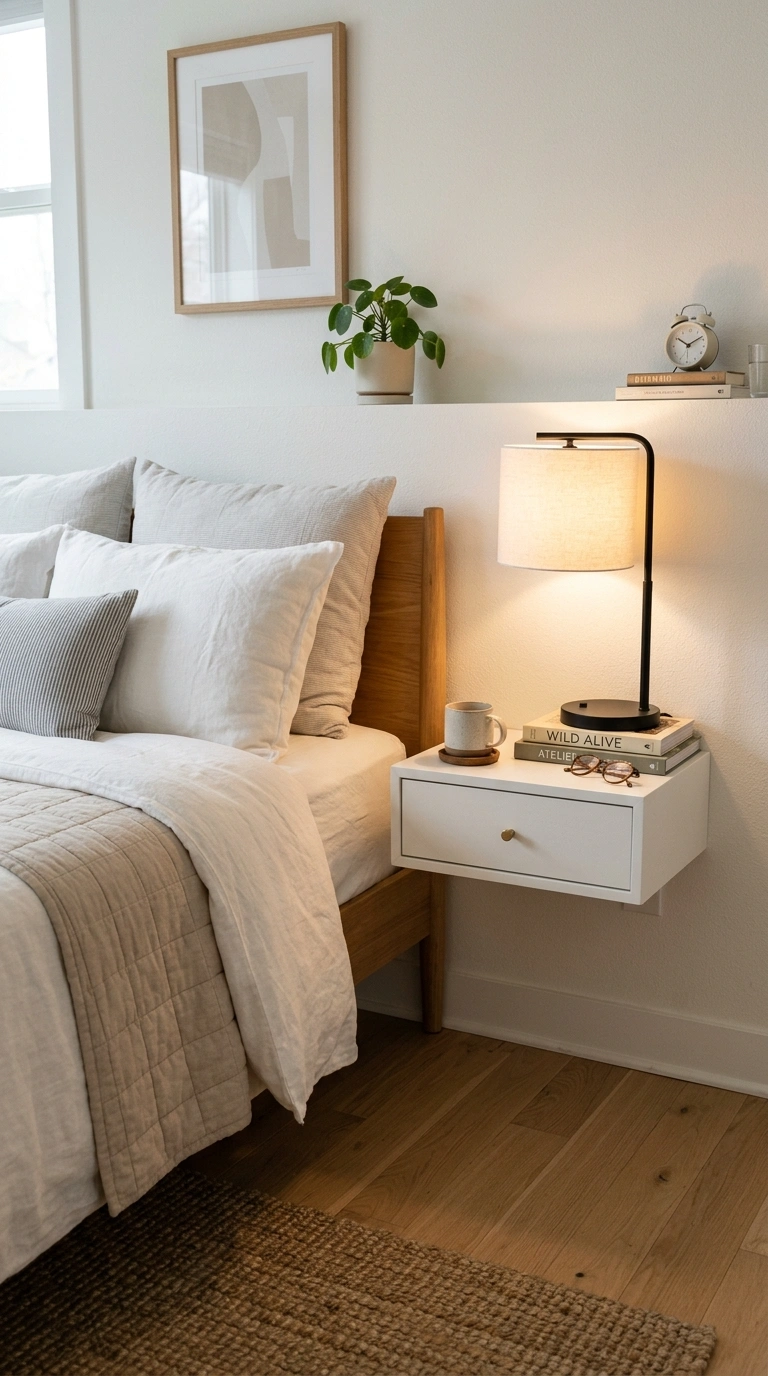
In the dark, you reach for your phone, and there is nowhere safe to put it.
A small wall mounted nightstand beside the bed solves that without taking floor space. Choose a simple floating shelf with a small drawer, mounted so its top lines up with the top of your mattress. That height makes it easy to reach a lamp, a book, and a charger without stretching, and the floor below stays clear for cleaning.
Keep only these on it:
- A small lamp, not a large one
- One book, not a stack
- A phone charger with a short cable
Mount it a little higher than the mattress only if your lamp is tall, so the light falls on the book and not in your eyes.
Match the shelf to your mattress height, then the lamp, book, and charger stay in easy reach.
10. Sliding Closet Doors

Watch how much floor your closet door uses.
A swinging door needs an empty arc of floor just to open, and that arc often bumps into a bed, a chair, or a walkway. Sliding doors run on a track instead, so you can place furniture close to the closet without blocking it. Choose a simple finish that matches your trim or walls, and keep the track clean so the doors glide without sticking.
If you are rethinking the inside too, see 26 Smart Walk-In Closet Layout Ideas That Maximize Every Inch.
Check with your landlord before you change doors in a rental, and keep the old doors safe so you can put them back later.
- ▸Closet beside a walkway, where a swinging door blocks movement
- ▸Closet beside the bed, where space is already tight
- ▸Closet in a narrow entry, where every inch of floor counts
11. Bookshelf Room Divider
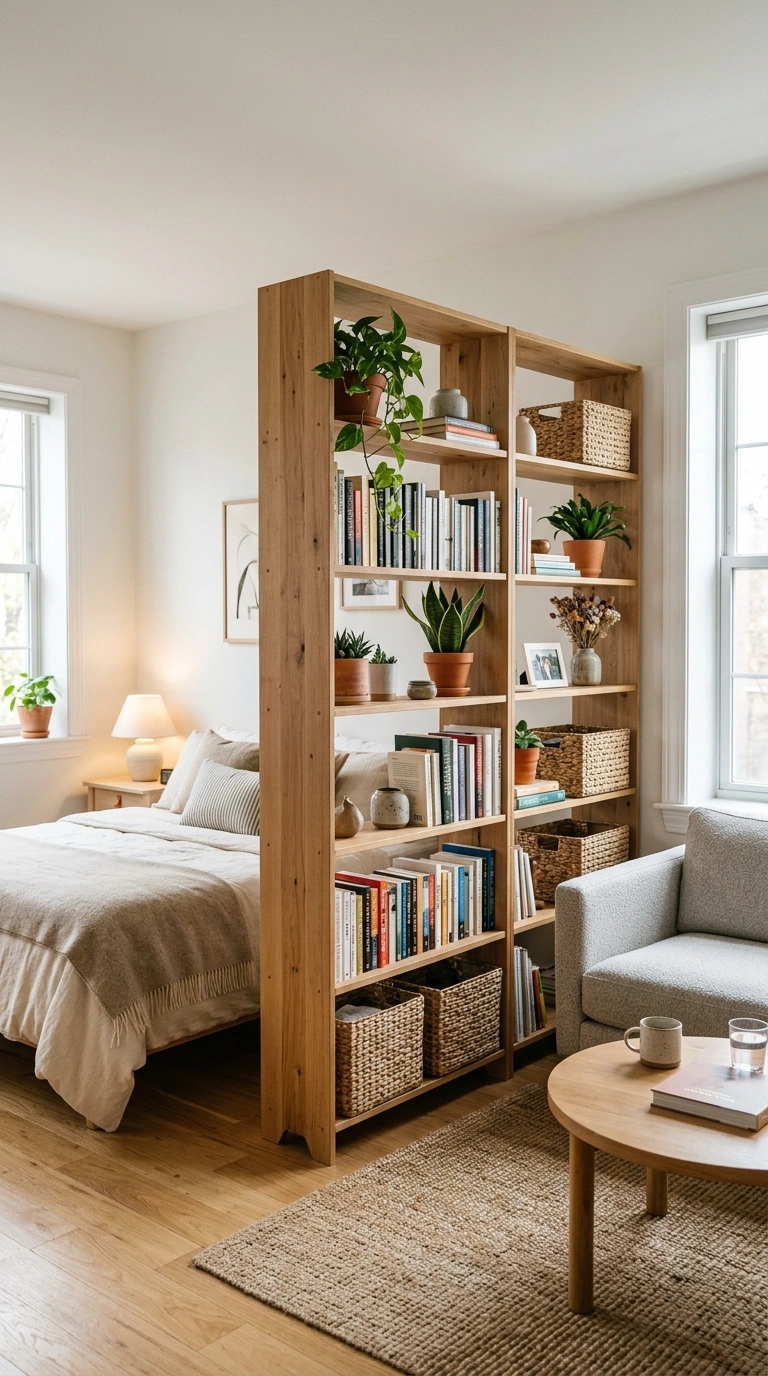
A solid wall would close the room in, but an open shelf does the opposite.
An open backed bookshelf placed perpendicular to a wall can divide a studio into two visual zones while still letting light and air pass through. Choose a tall, narrow shelf and style it from both sides, since the back will be visible from either zone. This works well between a sleeping area and a living space, giving each zone a sense of privacy without closing the room off completely.
Style both sides like this:
- Books and baskets on the lower shelves
- Plants and decor up high
- Gaps left open so light passes through
Anchor the shelf to the wall, so it cannot tip when you reach for a book.
One open room with no clear zones, bed and sofa in full view of each other.
Sleep and living zones feel separate, light still passes through, and storage grows.
12. Mirrored Closet Doors
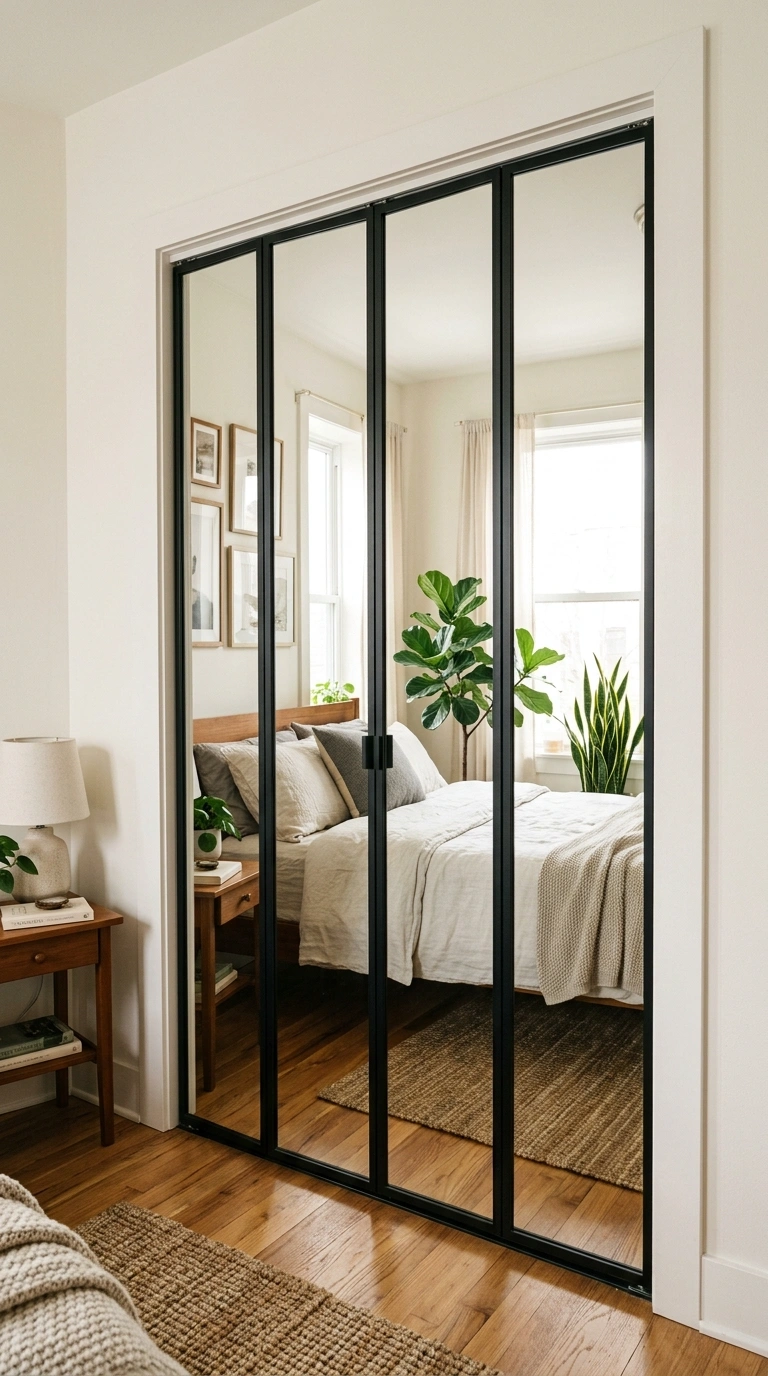
In a dim studio, a mirror does more than show your outfit.
Mirrored closet doors give you a full length mirror for getting dressed while also bouncing light around the room to make it feel larger. Choose doors with a simple frame, sliding or bifold depending on your closet layout and floor clearance. This works well in studios without much natural light, since the mirror spreads whatever light is available further into the room, and it removes the need for a separate standing mirror.
Place them where they help most:
- Facing a window, to spread light
- On a closet in a dim corner
- Where a standing mirror would block a walkway
Keep the frame simple, so the mirror stays the focus and the room stays calm.
⚠️ Watch Out
Check the angle before you fix the doors, so the mirror reflects light and a tidy wall, not clutter, and keep a cloth nearby for fingerprints.
13. Nesting Side Tables
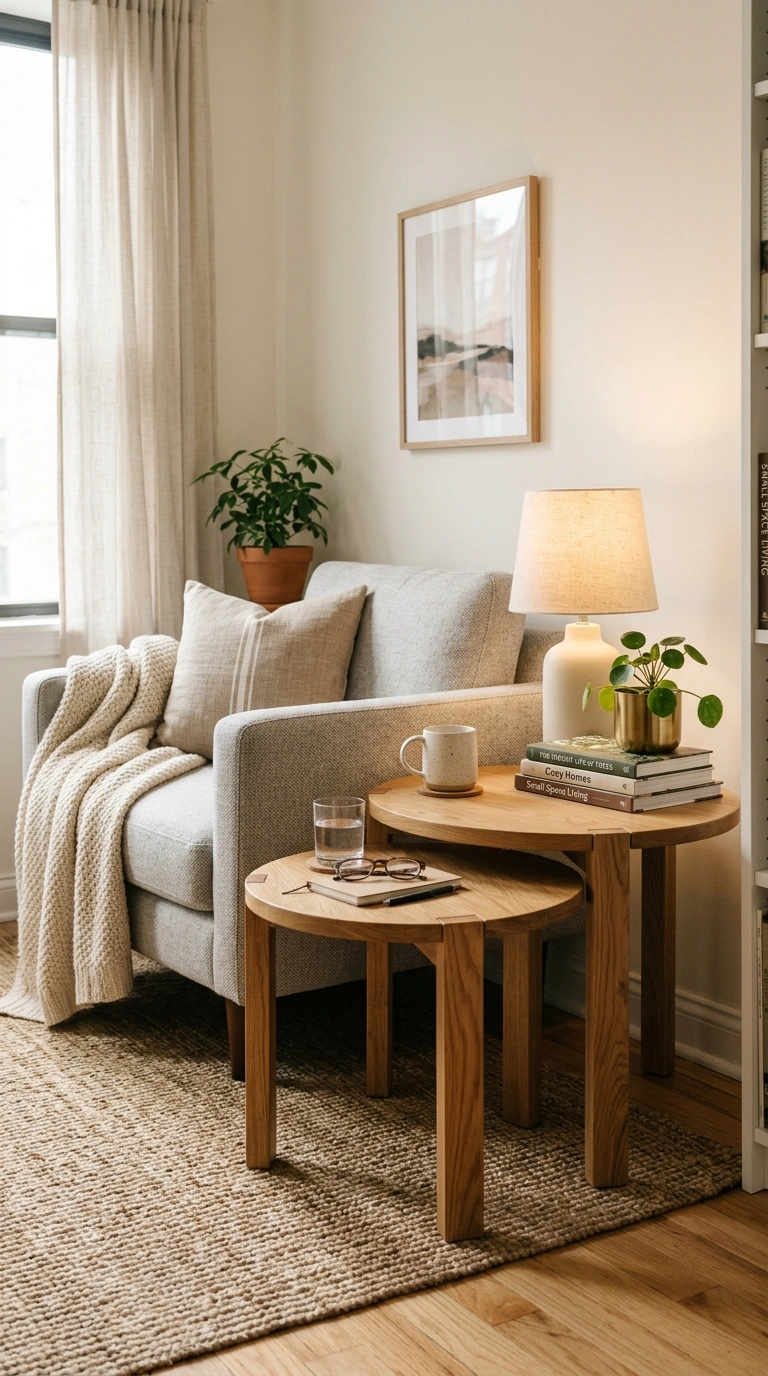
Extra table space is useful only on some days, not every day.
A set of nesting side tables gives you flexible surface space without taking up a full footprint of floor area. Choose two or three tables in graduated sizes, and slide the smaller ones under the largest when you do not need extra surface. This works well beside a sofa or a reading chair, where you might need extra space during a small gathering but not every day.
Use them like this:
- Pull out the small one for a guest drink
- Keep the medium one for a book and phone
- Slide all together when the room needs floor space
They work best for reading corners and small gatherings.
14. Rolling Kitchen Cart
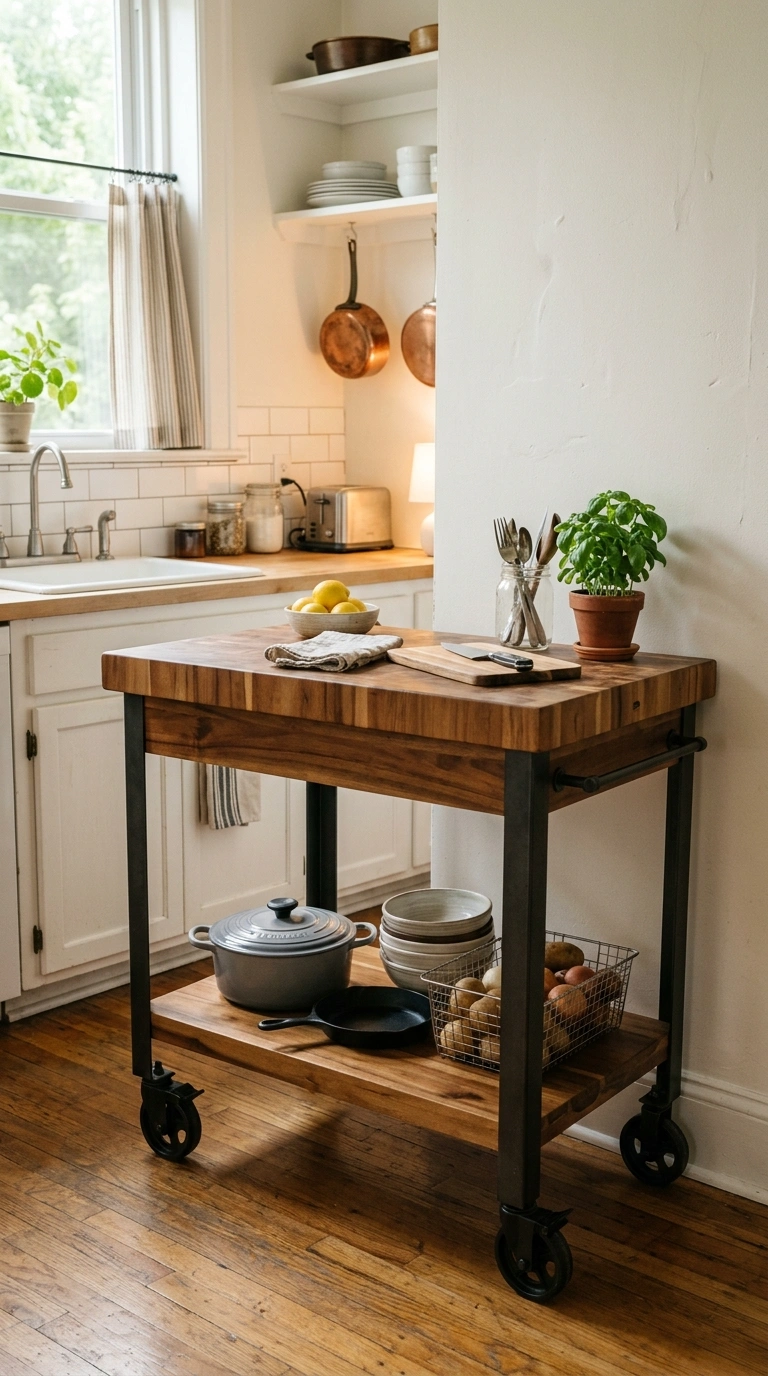
A kitchen with almost no counter space needs help that can move.
A rolling kitchen cart adds counter space and storage without any permanent installation. Choose a cart with an open shelf below and a butcher block or laminate top, and use the wheels to tuck it against the wall when not in use or roll it out for extra prep space while cooking. This works well in a galley kitchen or a studio with limited counter space near the stove.
Use the cart for:
- Prep space while cooking
- Extra storage for pans and tools
- A serving cart when friends visit
When cooking ends, roll it back and the kitchen walkway opens again.
| Rolling cart | Fixed island |
|---|---|
| Moves out of the way | Stays in one place |
| No permanent installation | Needs fitting and space |
| Suits a rental kitchen | Harder to move or remove |
15. Ceiling Hung Storage
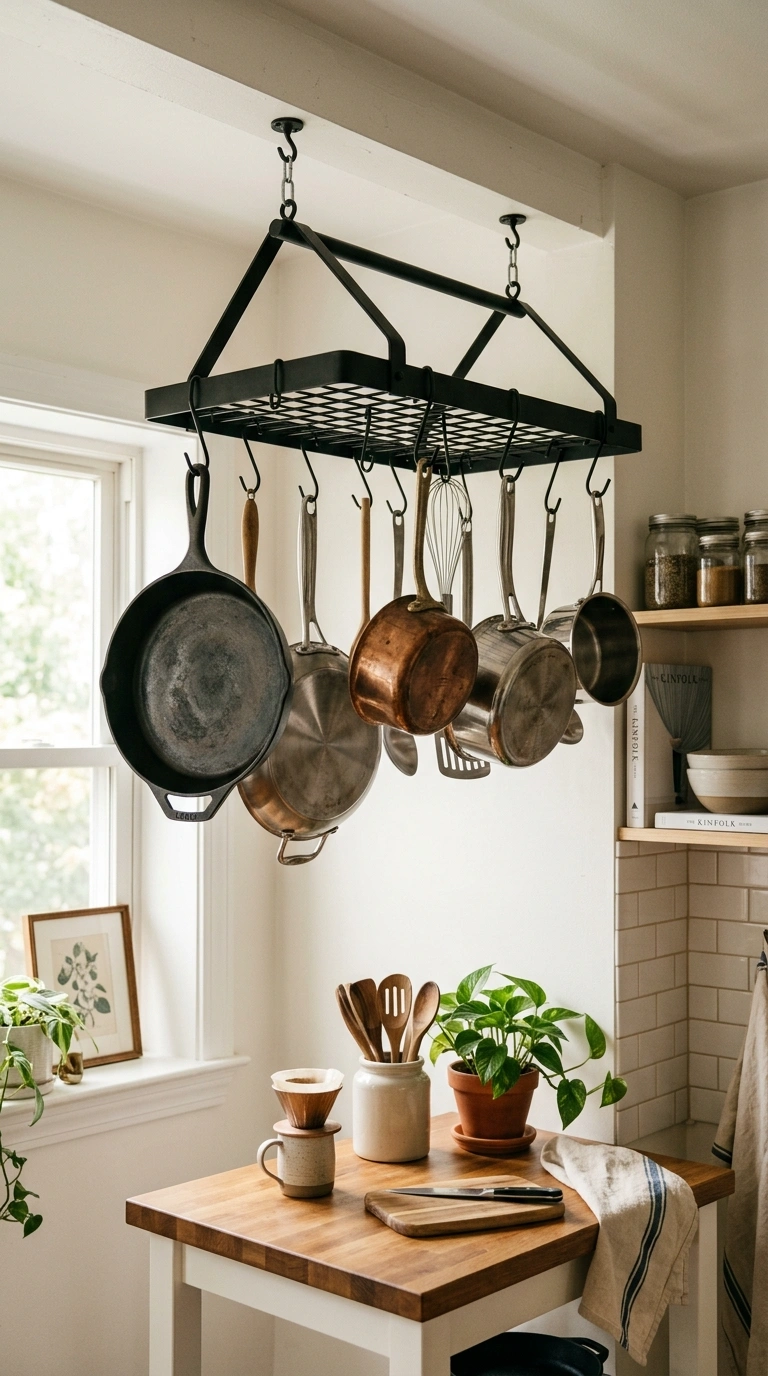
The ceiling is the one surface most studios leave completely empty.
Hanging a storage rack or a basket system from the ceiling in a kitchen corner or an entryway uses vertical space that never gets considered in a studio. Choose a hanging rack for pots and pans in the kitchen, or a ceiling mounted basket for bikes or seasonal gear near the entry. This idea requires checking that your ceiling can support the weight, and using proper mounting hardware rated for the load.
Good candidates to hang:
- Pots and pans in the kitchen
- Bikes or seasonal gear near the entry
- Light baskets only
Do not hang heavy items from a weak ceiling, and keep the rack high enough that you do not bump your head.
FAQs
How can I divide a tiny studio apartment without building a wall?
Use a ceiling mounted curtain track or an open backed bookshelf placed across the room. A curtain gives soft privacy at night and opens fully during the day. A bookshelf divides the space while still letting light and air pass through. Anchor the shelf to the wall so it stays stable.
Is a Murphy bed a good choice for a rental studio?
It can be, if you have a long open wall and permission to mount the cabinet safely. Measure the space in front of the bed so it folds down fully at night, and choose a model with a shelf or a fold down desk on the front panel. Ask your landlord before drilling, and keep the wall fixings strong and secure.
How much ceiling height do I need for a loft bed?
You need enough height to sit up in bed without hitting the ceiling, and enough height below for a chair and a desk. Measure your sitting height in both spots before you buy a frame. If you cannot sit up comfortably, skip the loft bed and use a lower bed with storage underneath instead.
What is the easiest storage hack for a tiny studio?
Start under the bed. Use flat bins with lids that slide easily, label each bin, and store only seasonal clothing, extra bedding, and items you use a few times a year. Measure the clear height under the bed first, and keep everyday clothes in the closet so you do not pull bins out every morning.
How do I make a small studio feel larger without a renovation?
Keep the floor as clear as you can, use vertical shelves, and give each zone a clear job. Fold away furniture when it is not in use, use a mirror to bounce light, and leave some shelf space empty so the room does not look crowded. Small changes to layout often help more than buying new furniture.
Is ceiling hung storage safe in a small apartment?
It can be safe if the ceiling can support the weight and the hardware is rated for the load. Use proper mounts, do not overload the rack, and keep it high enough that you do not bump your head. If you are unsure about the ceiling, ask your landlord or use a lighter rack with fewer items.
Conclusion
A tiny studio does not need more square footage to feel easier to live in. It needs clear zones, furniture that does more than one job, and storage that uses walls and ceiling instead of the floor. These tiny studio apartment hacks work best when you start small. Pick two or three ideas that fix your biggest daily frustration first, then add the next one only when the first feels natural. Save this list for the next time your studio feels crowded, and use it to make the same room feel larger and calmer.