21 Indoor Plant Wall Decor Ideas That Bring Your Walls to Life
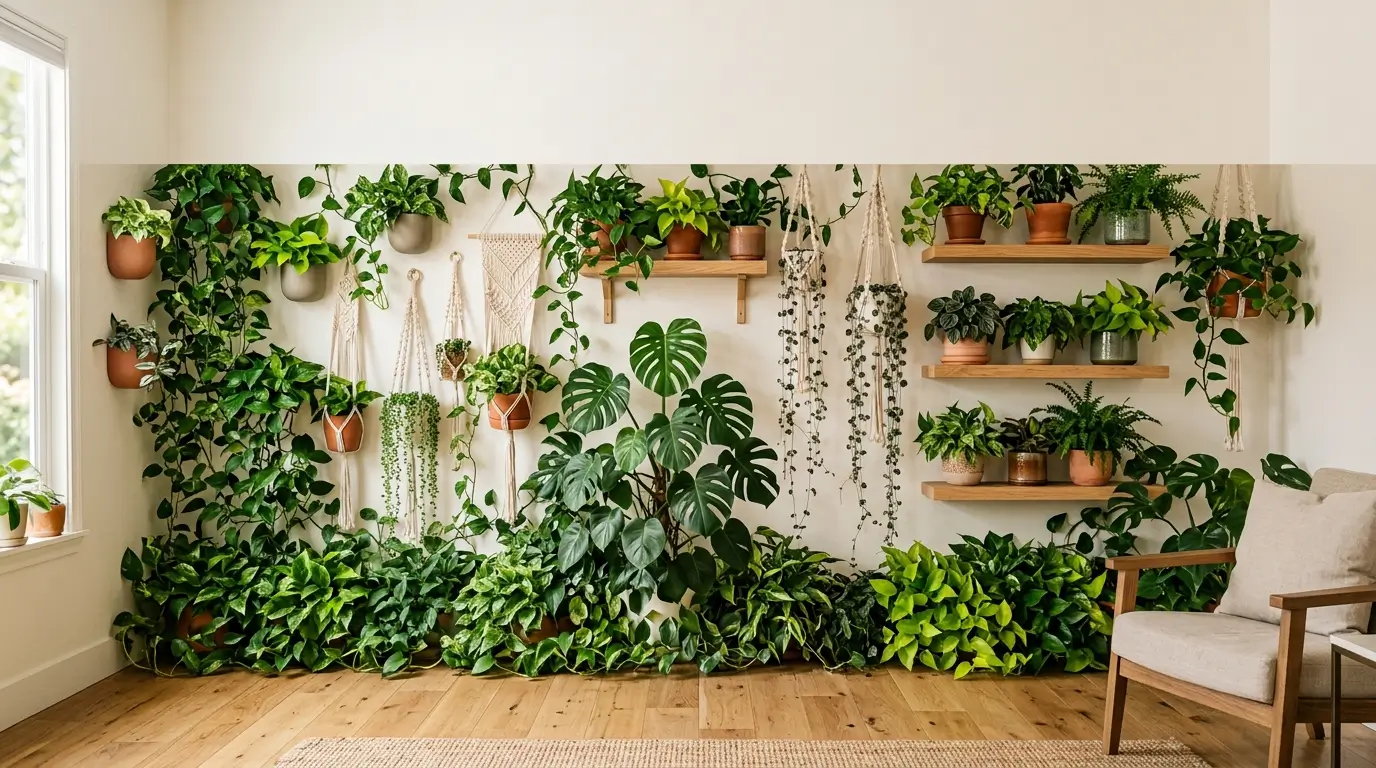
Plant tags say “low,” “medium,” or “bright indirect” light, but those labels only mean something once you know the numbers behind them. Light is measured in foot-candles (fc), and it drops fast as you move away from a window — roughly by half every three feet.
| Light Level | Foot-Candles | Where You’ll Find It | Best Plants |
|---|---|---|---|
| Low light | 50–250 fc | North-facing window, or 8+ feet from any window | Snake plant, ZZ plant, cast iron plant |
| Medium light | 250–1,000 fc | Near an east-facing window, or 4–6 feet from a bright window | Pothos, philodendron, calathea |
| Bright indirect | 1,000–2,000 fc | Within 2–3 feet of a south- or west-facing window, sunlight diffused by a sheer curtain | Monstera, fiddle leaf fig, rubber plant |
| Direct sun | 2,000+ fc | Unobstructed south- or west-facing sill, 6+ hours of sun | Succulents, string of pearls, croton |
Quick tip: Don’t own a light meter? A free smartphone light meter app gets close enough for plant placement. Or use the shadow test: hold your hand 12 inches above the spot — a sharp, crisp shadow means bright light, a soft blurry shadow means medium, and almost no shadow means low.
1. Build a Living Wall With Mixed Trailing Plants
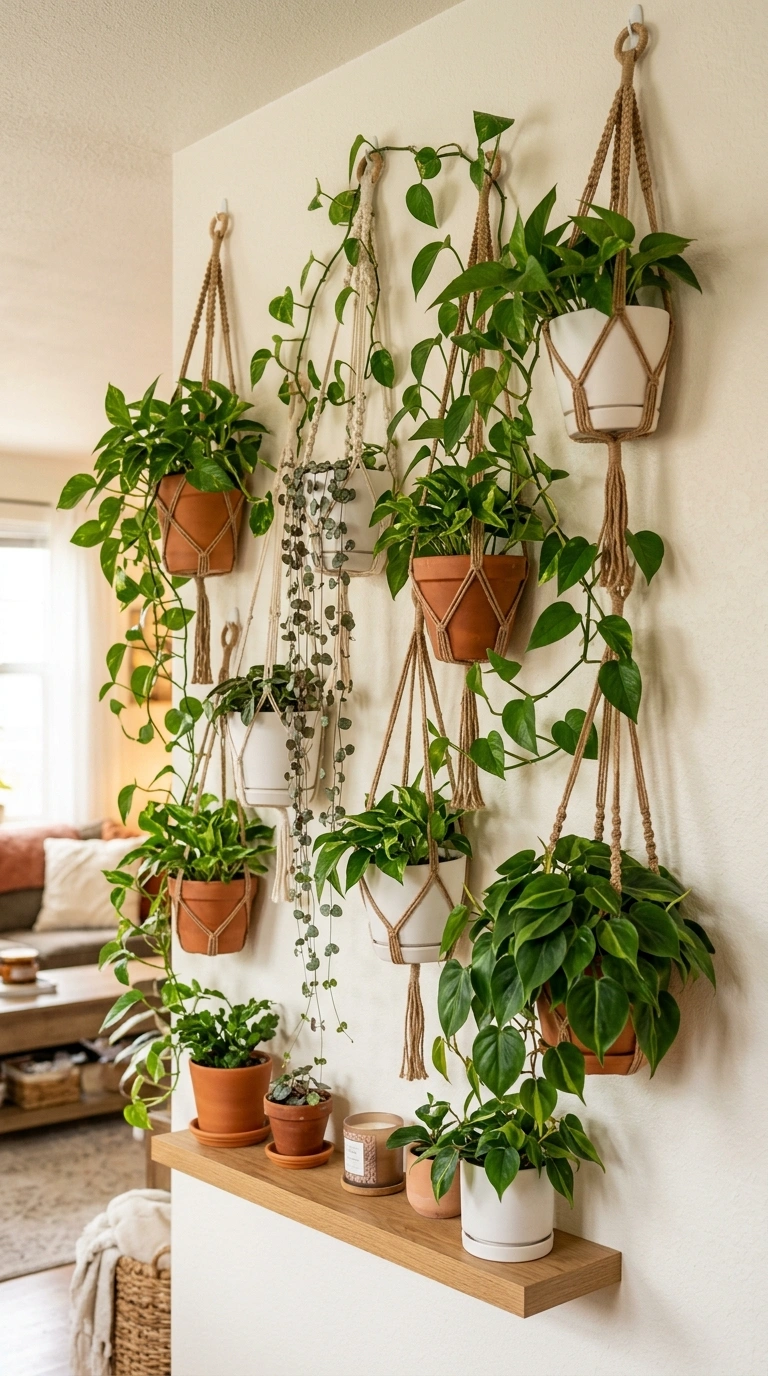
A mixed living wall combines pothos, string of hearts, and philodendron in staggered pots so the vines cascade at different lengths down the wall. All three tolerate medium light (250–1,000 fc), so they can share one wall without one plant starving for light while another burns.
Water each pot only when the top 1–2 inches of soil feels dry, which for most of these is roughly every 7–10 days. Fertilize lightly during spring and summer, about once a month with a diluted balanced liquid fertilizer, and skip feeding entirely in winter when growth naturally slows down.
Quick tip: Group plants by light need, not just by look, so you’re not trying to keep a bright-light plant alive next to one that wants shade.
2. Stack a Vertical Plant Shelf Ladder
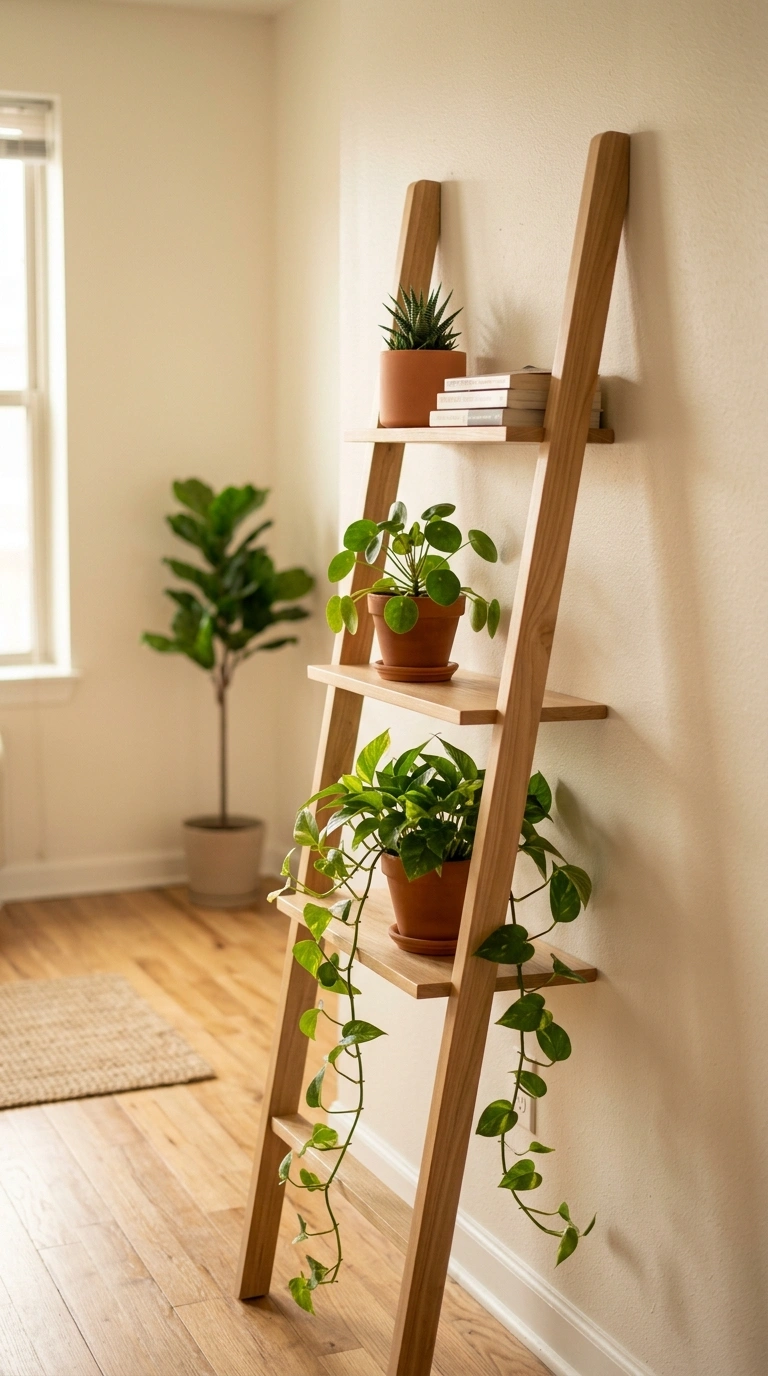
A leaning wood ladder shelf holds several small pots at staggered heights without a single drill hole, which makes it the easiest option for renters. Most ladder shelves are freestanding and rated to hold roughly 5–15 pounds per shelf, so check the manufacturer’s per-shelf limit before loading it with large, watered pots.
If the ladder will hold anything larger than a 6-inch pot, check that it’s listed as furniture-grade rather than a lightweight decorative import, since decorative-only versions often list a much lower per-shelf weight limit in the fine print than their sturdier furniture-store counterparts.
Quick tip: Put your heaviest pot on the bottom shelf. A top-heavy ladder is the most common reason these tip over.
3. Hang a Macrame Plant Corner
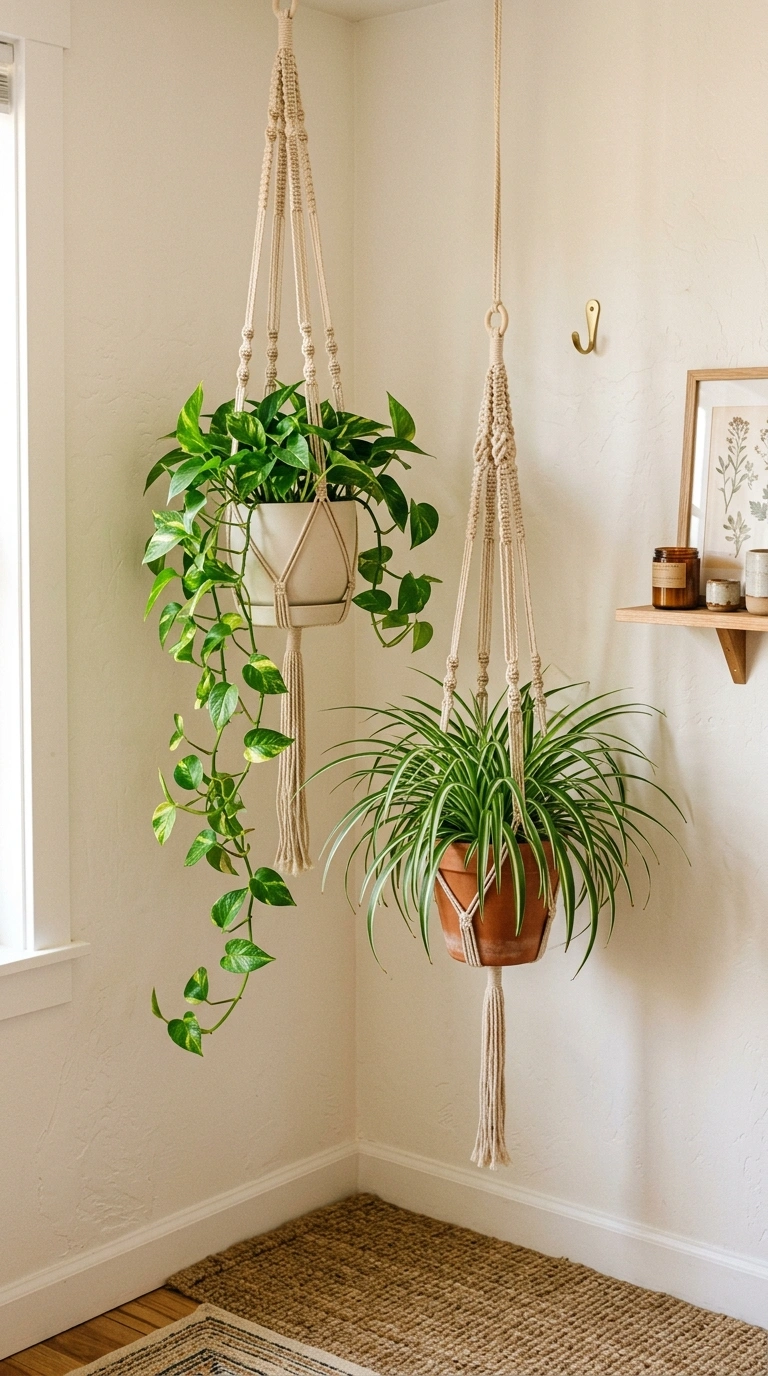
Layer two or three macrame hangers at different lengths in a corner for a boho plant nook that uses zero shelf space. A single ceiling hook screwed into a joist holds up to 25–30 pounds; if you’re not hitting a joist, use a 1/4-inch toggle bolt rated for the combined wet weight of pot, soil, and plant.
Cotton macrame cord can stretch slightly over the first few months under sustained weight, so check the knot and hook connection every few weeks until it settles, rather than assuming it’s secure indefinitely after the first hang.
Quick tip: Take hanging plants down to water them over a sink when possible. It lets excess water drain fully instead of pooling and adding dead weight to the hanger.
4. Install a Grid of Matching Floating Shelves
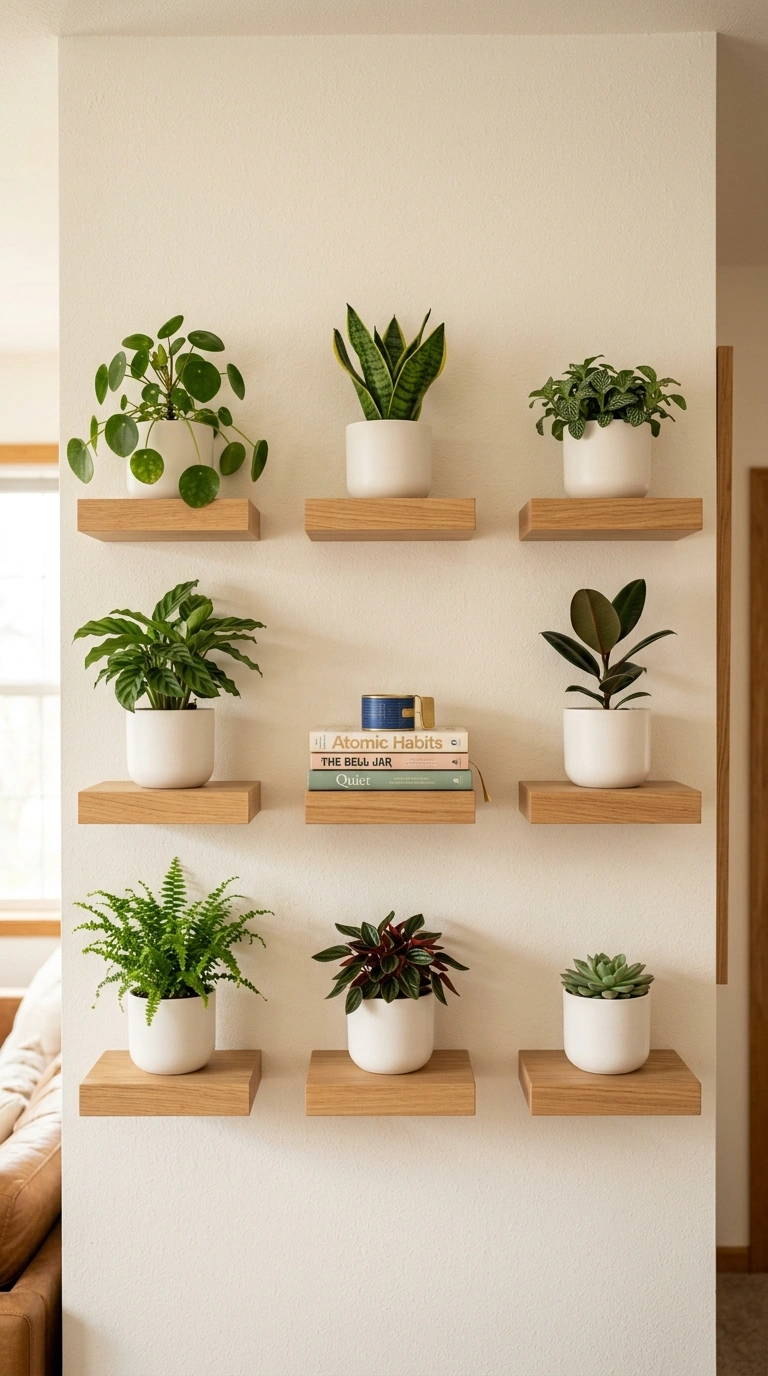
A neat grid of nine floating shelves, each holding one small plant, turns a wall into an organized living gallery. Standard floating shelves rated for books typically hold 15–25 pounds evenly distributed, which comfortably covers most 4–6 inch potted plants.
If you’re renting, look for shelves that mount with a French cleat secured to just one or two studs rather than nine separate wall anchors. It cuts down both the drilling and the patch-up work when you eventually move out, and it’s usually just as sturdy as anchoring each shelf individually.
Quick tip: Anchor at least one bracket per shelf into a stud if you can. It’s the difference between a shelf that holds books and one that only holds a single light pot safely.
5. Frame a Preserved Moss Wall Art Piece
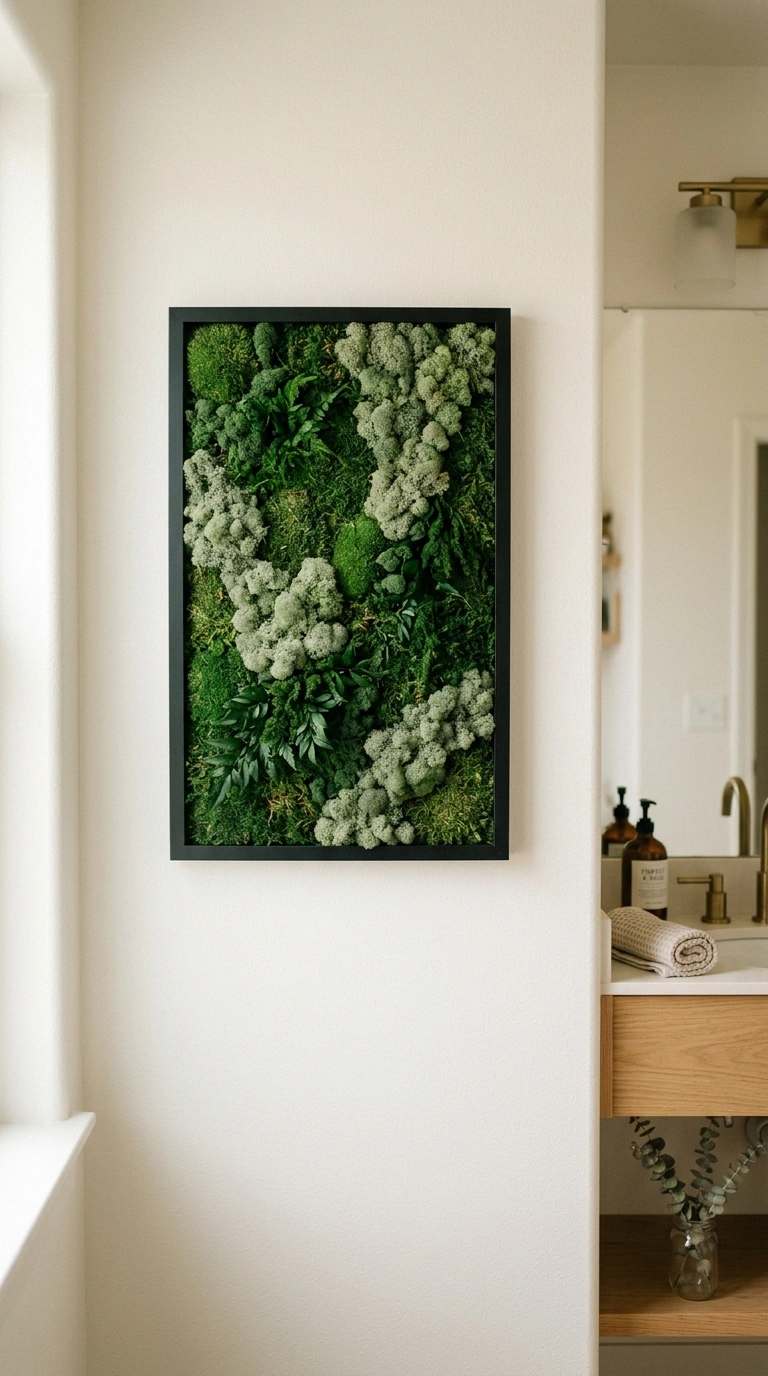
Preserved moss panels need no water or light at all, since the moss is chemically treated to stay soft and green for years, which makes them the only real option for windowless bathrooms or interior hallways. A standard 24×24 inch framed panel weighs 3–6 pounds, light enough for Command strips on a smooth wall.
Preserved moss typically lasts two to three years indoors before it starts to fade or turn brittle at the edges, longer if you keep the panel out of direct sunlight, which will dry it out despite the preservation treatment.
Quick tip: Mix two or three moss shades, like forest green and soft sage, for texture without needing a single real plant to maintain.
6. Create a Humidity-Loving Plant Wall in the Bathroom
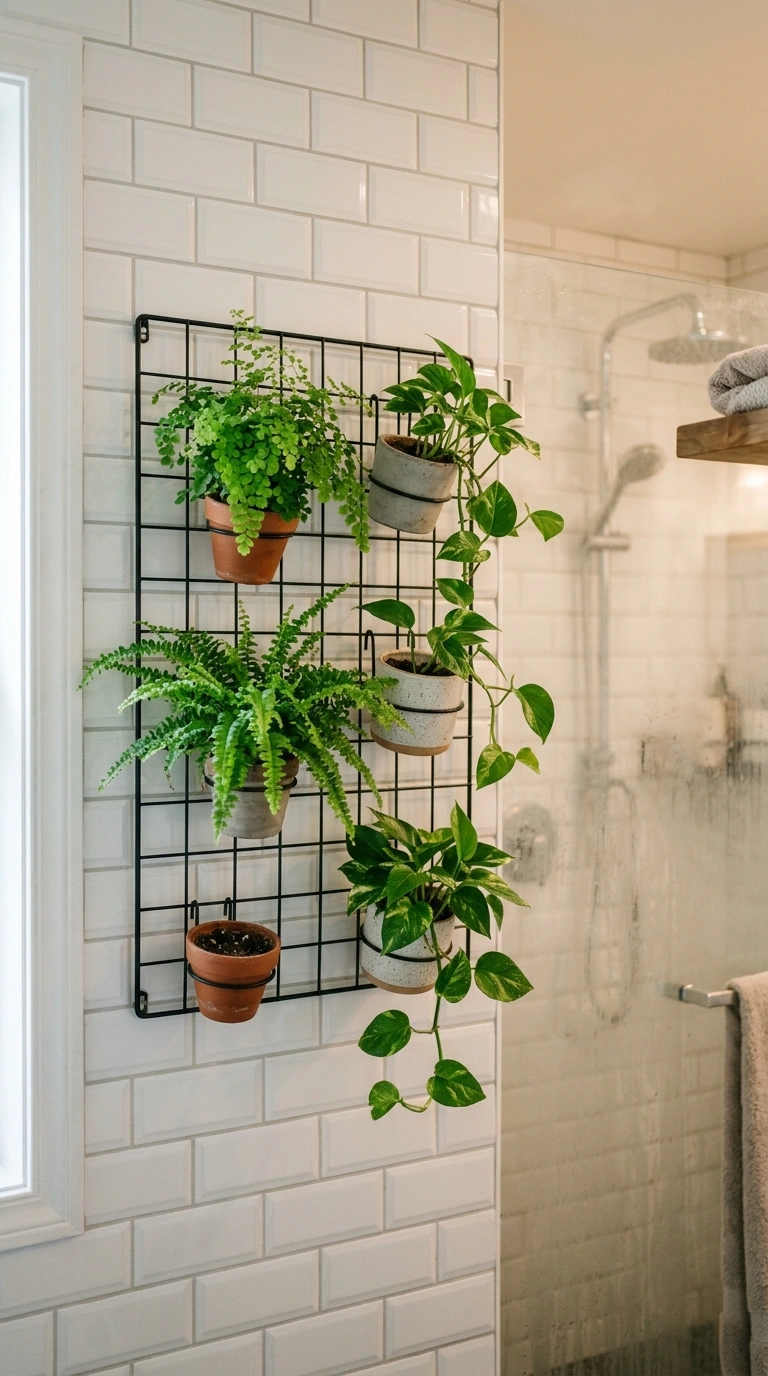
Ferns, orchids, and pothos thrive on the extra humidity a daily shower creates, often 60–80% relative humidity right after use, compared to the 30–40% typical in the rest of the house. Mount plants on the wall opposite the shower, not directly above it.
Run the bathroom fan for at least 20 minutes after showering even with plants in the room. Humidity helps the plants, but stagnant, unmoving damp air encourages mold on grout and drywall regardless of what’s growing nearby, so ventilation and greenery need to work together, not one instead of the other.
What to avoid: Don’t hang plants directly above the tub or shower spray zone. Direct water on the leaves, not just humidity, is what causes rot and fungal spotting, and cramped ventilation behind the pot encourages mold on the wall.
7. Mount a Pegboard Plant Wall System
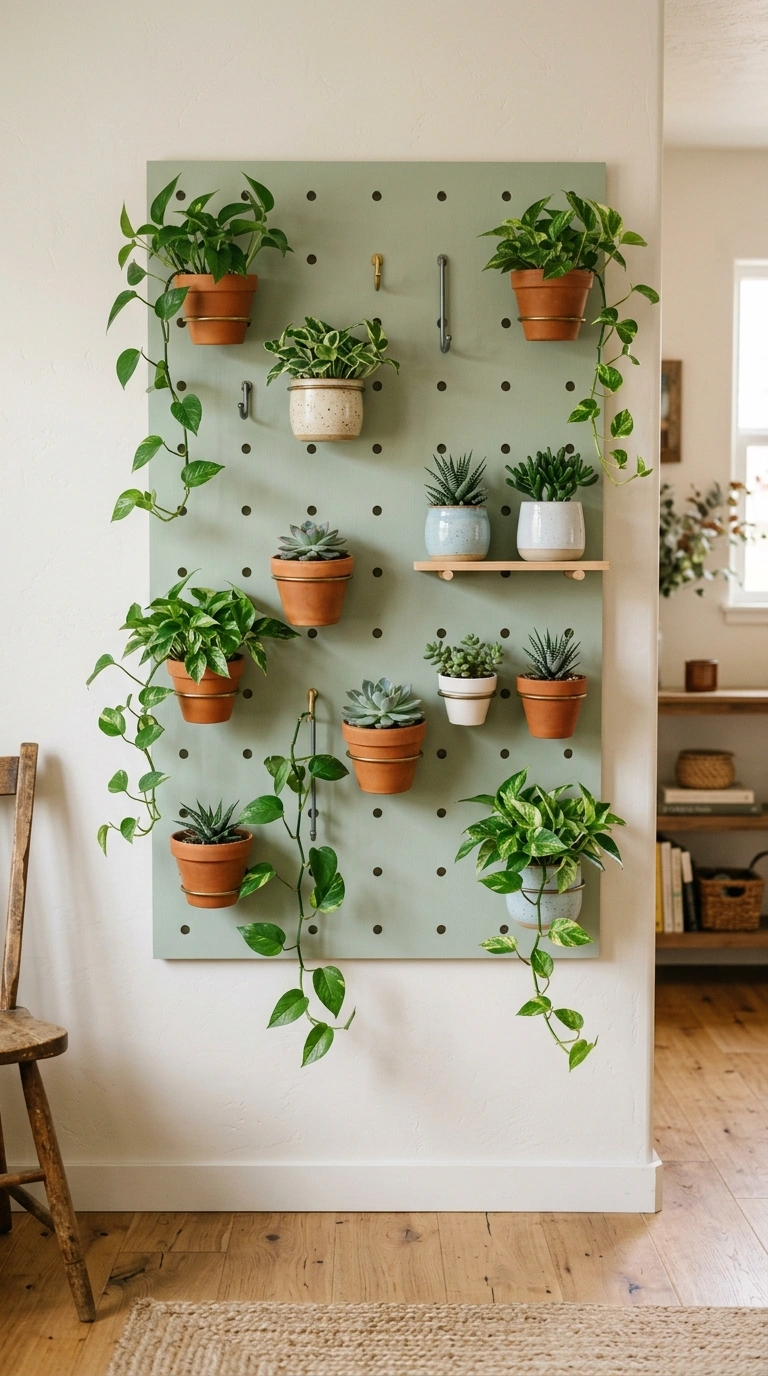
A painted pegboard with adjustable metal hooks lets you rearrange small potted plants without adding new holes every time. Standard 1/4-inch pegboard hooks hold roughly 5–10 pounds each, so distribute heavier pots across multiple hooks rather than a single peg.
Look for pegboard with 1/4-inch holes rather than the thinner 1/8-inch hobby version sold for craft rooms, since the larger hole size accepts sturdier metal hooks rated for pots instead of the lightweight hooks meant for scissors and ribbon spools.
Quick tip: Leave a few pegs empty at first. It’s easier to add plants once you know which spots actually get enough light than to move heavy, rooted pots later.
8. Stagger Floating Shelves at Different Heights
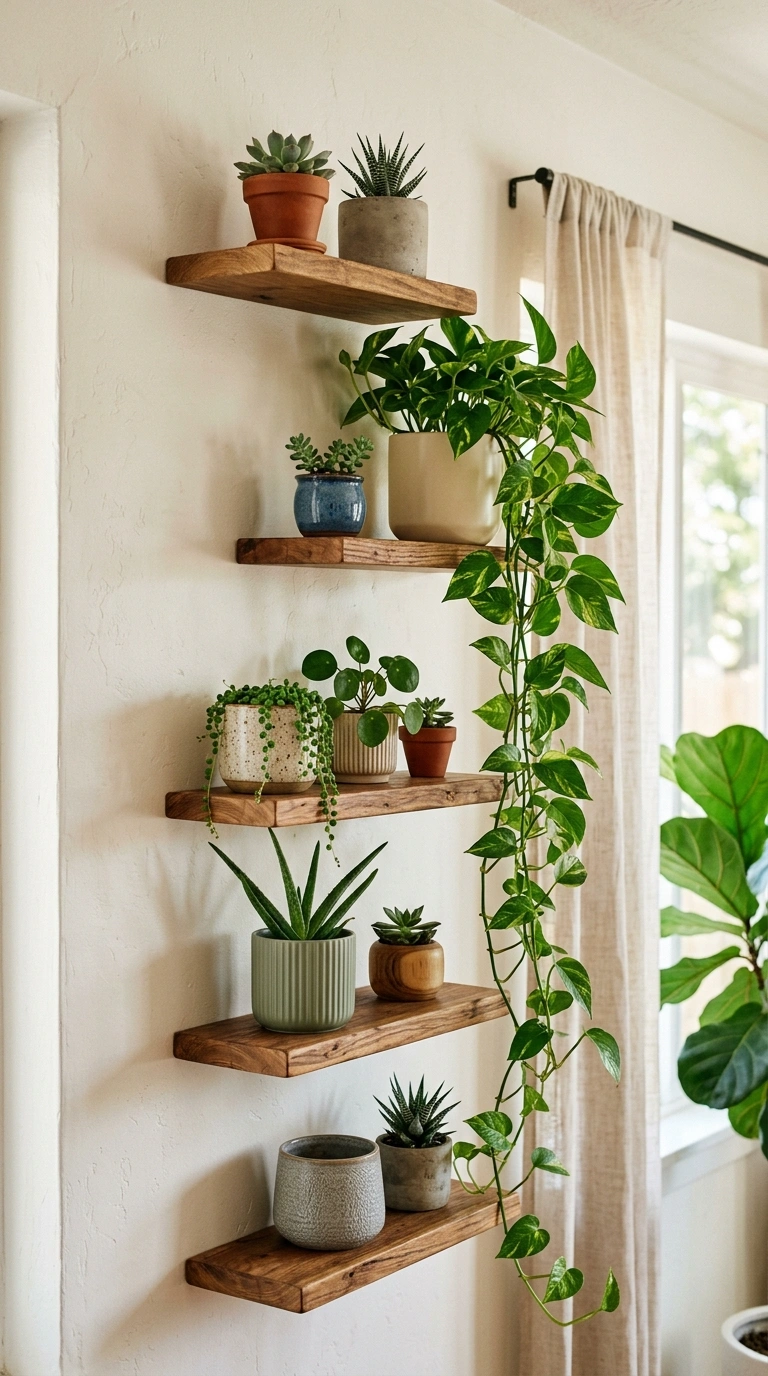
Instead of a neat grid, mount floating shelves at uneven heights and widths for a wall that feels collected over time rather than planned all at once. Space shelves at least 10–12 inches apart vertically so trailing plants on an upper shelf have room to cascade without touching the shelf below.
Leave at least 6 inches of clearance between the top of a tall, upright plant and the shelf directly above it, so leaves have room to keep growing before they start pressing against the next level and bending awkwardly.
Quick tip: Tape the shelf outlines directly on the wall and step back to check the layout before you drill a single hole.
9. Style a Plant Wall Behind the Headboard
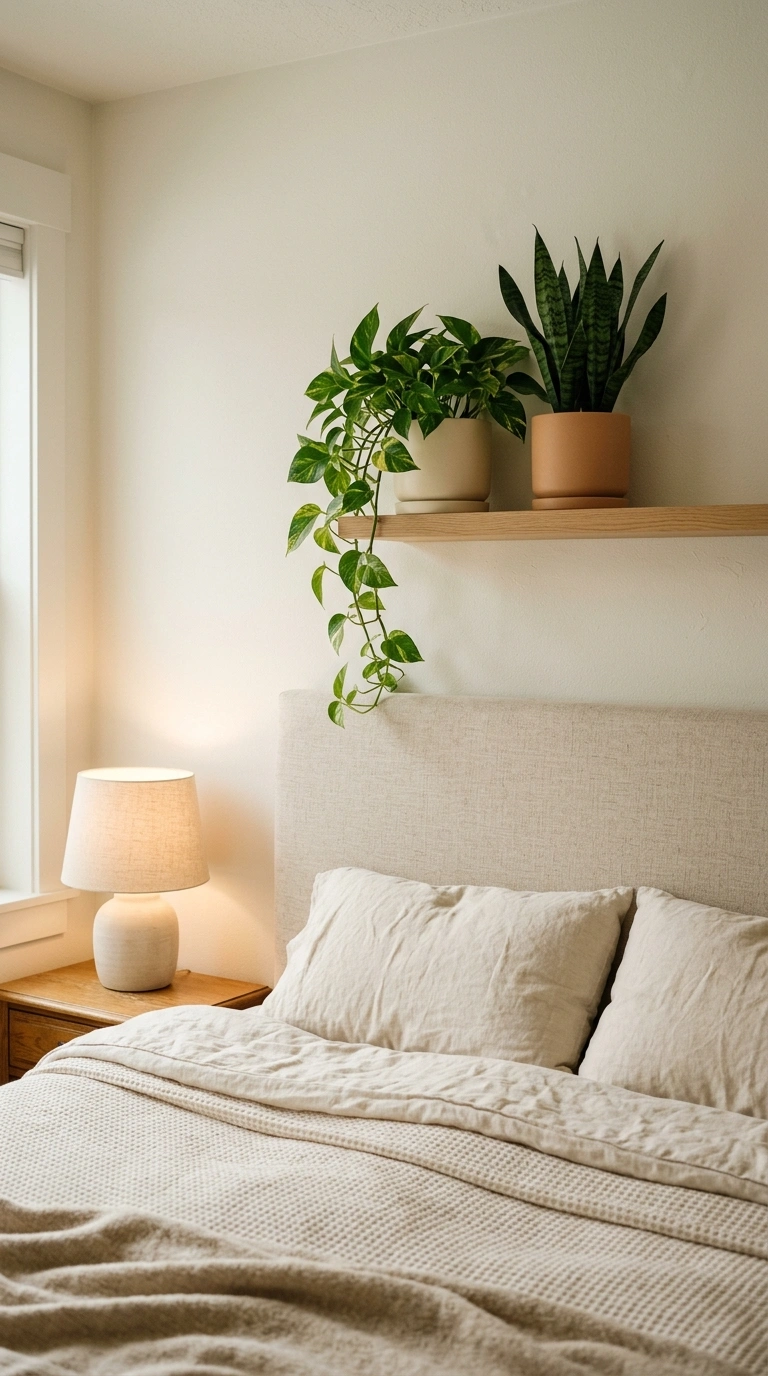
A small cluster of low-light plants mounted above and around the headboard softens a bedroom without crowding the nightstands. Stick to plants rated for medium or low light, since most bedrooms sit farther from windows than the 2–3 feet needed for bright indirect exposure.
Avoid plants that need frequent misting directly beside the bed, since regular water spray that close to pillows and sheets can leave lingering dampness in the fabric and encourage dust mites over time, especially in a room with less airflow than a kitchen or living room.
Quick tip: Skip anything with strong fragrance, like some jasmine varieties, directly beside the bed. Strong scents in an enclosed sleeping space can be more disruptive than relaxing.
10. Grow a Kitchen Herb Wall
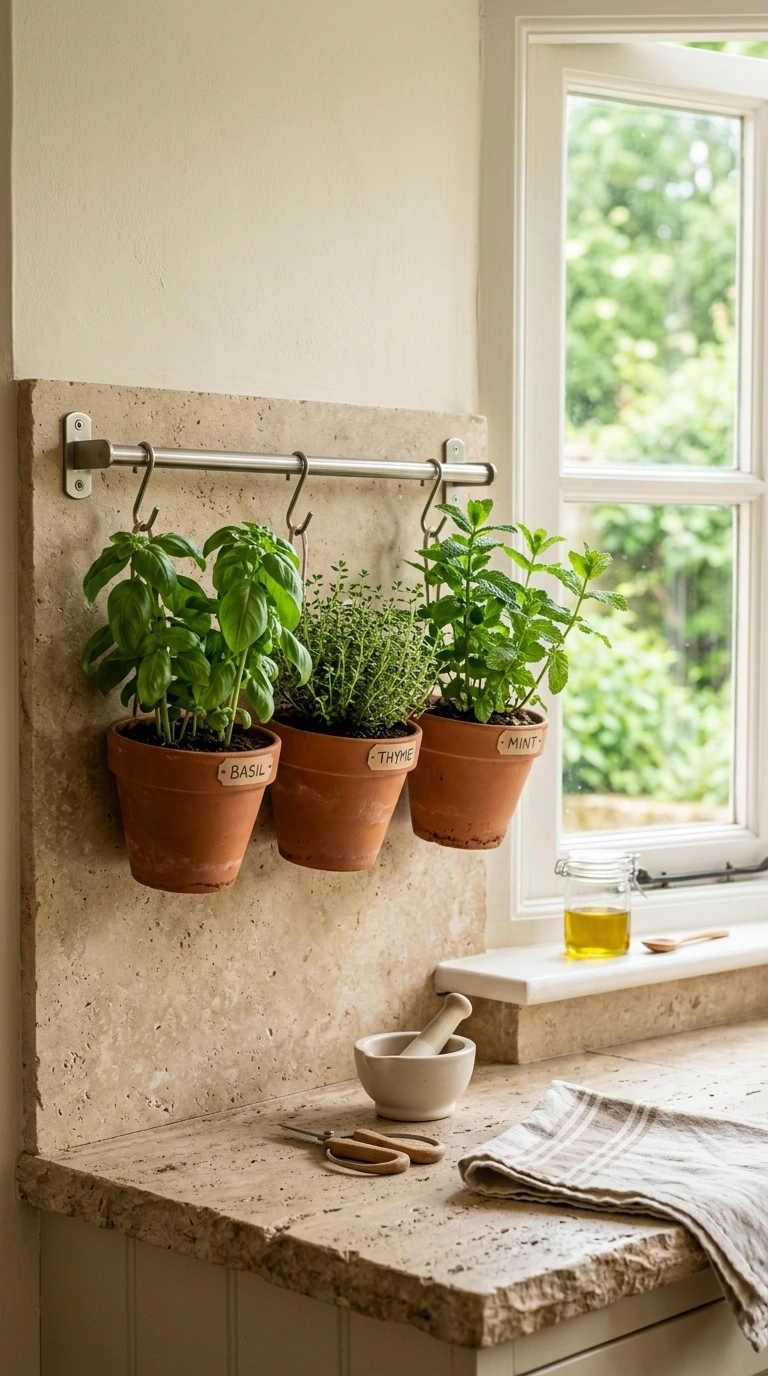
A wall-mounted herb garden near the kitchen window keeps basil, thyme, and mint within reach of the stove while doubling as fresh, fragrant decor. Most culinary herbs need bright indirect to direct light, at least 1,000 fc, or six hours of direct sun for basil specifically, so a north-facing kitchen wall usually isn’t enough without a grow light.
Basil in particular struggles without that much real light and tends to go leggy and bitter-tasting under weaker conditions. If your kitchen window doesn’t get six hours of sun, a small clip-on grow light over just the basil pot solves the problem without needing to light the entire wall.
Quick tip: Snip herbs regularly, even before you need them. Regular trimming keeps plants bushy instead of leggy and encourages new growth.
11. Add Grow Lights to a Low-Light Plant Wall
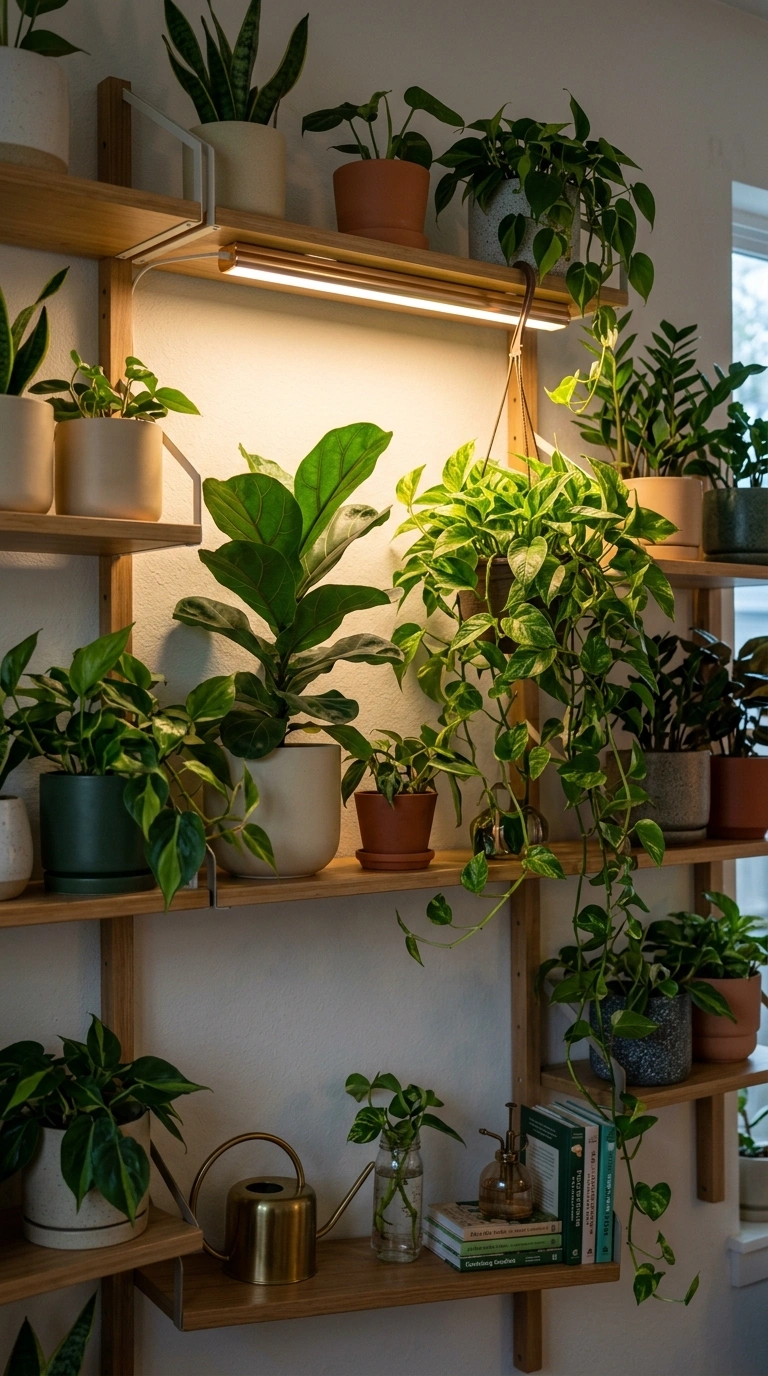
A slim full-spectrum LED grow light mounted 12–18 inches above the shelves lets you keep bright-light plants like fiddle leaf figs on a wall that gets little natural sun. Look for a fixture rated at least 20-30 PAR (photosynthetically active radiation) at plant height, and run it 12–14 hours a day on a timer.
Budget roughly $30–$80 for a decent slim LED grow light bar with a built-in timer. Plan to replace the bulb or fixture every few years, since LED output gradually declines even after the fixture still looks and switches on like it’s working normally.
Quick tip: Choose a warm-toned (around 3000K) full-spectrum LED rather than a harsh purple grow light, so it blends into the room instead of looking like a lab setup.
12. Use Faux Plants for a No-Maintenance Wall
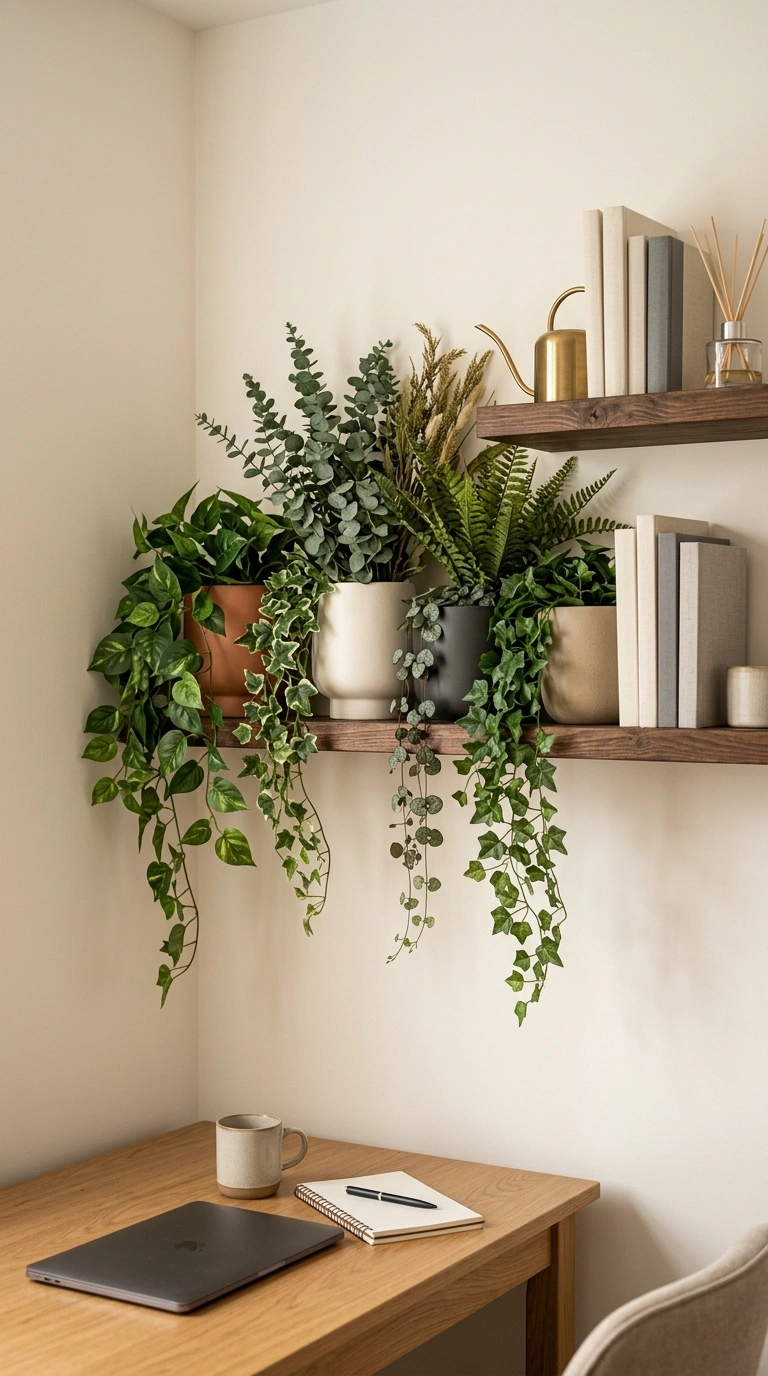
High-quality faux trailing plants and preserved greenery give you the full plant-wall look in rooms with no natural light at all, like a windowless office nook. UV-treated outdoor-grade faux plants hold their color far longer than cheap indoor-only versions, even indoors, since the leaves resist the yellowing that regular plastic develops over a year or two.
Budget roughly $15–$40 per stem for a realistic, UV-treated faux plant from a dedicated faux-plant retailer. Bargain-bin versions from general home stores tend to have an obvious plastic sheen and stiff, uniform leaf shapes that are harder to disguise up close, even if they look fine in a quick photo.
Quick tip: Dust faux leaves every few weeks with a soft, slightly damp cloth. Dust buildup is the fastest way to give away that they’re not real.
13. Mount Wall Planters in a Curved Pattern
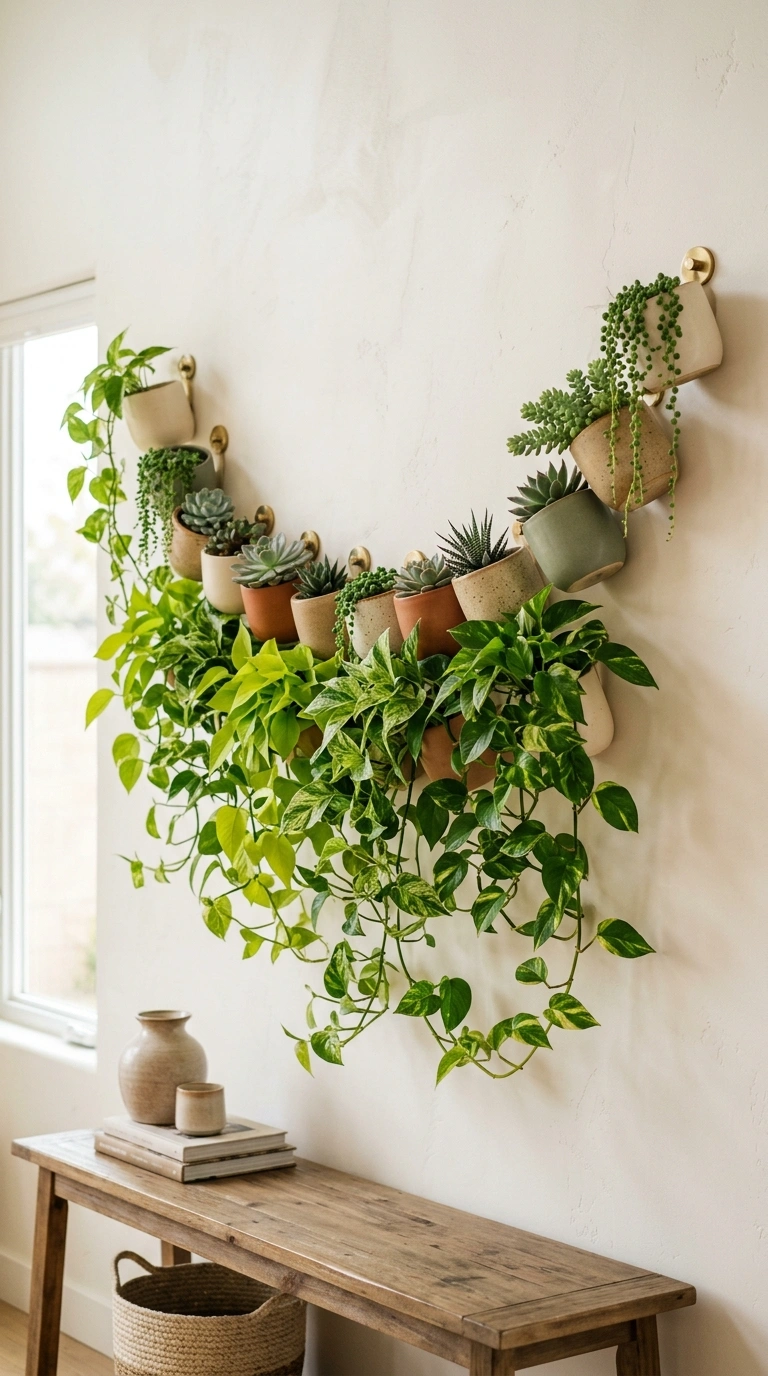
Wall-mounted ceramic planters arranged in a soft curve, rather than a straight line, add movement to an otherwise plain wall. Each planter needs its own anchor point rated for its full watered weight; don’t rely on one shared bracket for multiple pots.
Ceramic wall planters are considerably heavier than plastic or resin versions even before you add soil, so weigh an empty pot at the store if possible, and add roughly a pound per inch of pot diameter once it’s planted and watered to estimate the real mounted weight.
Quick tip: Mark your planter spots with painter’s tape first and step back to check the curve before drilling any holes.
14. Set Up a Self-Watering Vertical Garden
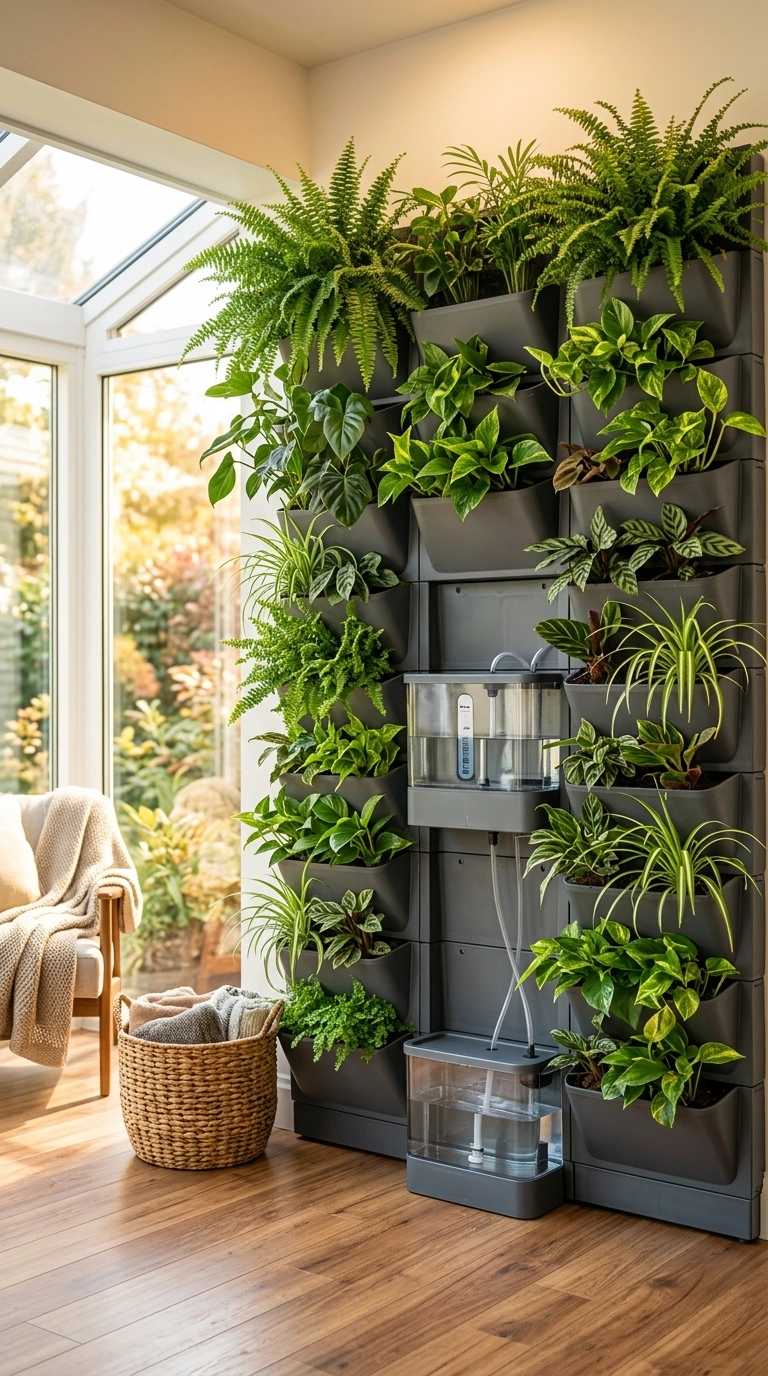
A modular vertical planter system with a built-in water reservoir keeps a full plant wall alive with far less day-to-day upkeep, usually needing a refill only every 1–2 weeks instead of daily hand-watering. These systems work especially well for sunrooms or larger statement walls, but they’re heavy: a filled reservoir wall can weigh 40–80+ pounds per section, so it needs to be mounted into studs, not drywall alone.
Check the reservoir’s water level through its viewing window weekly rather than assuming the system is topped off. A fully dry reservoir defeats the purpose of the system and leaves plants without water just as fast as a forgotten hand-watering schedule would.
What to avoid: Don’t overfill the reservoir past the marked fill line. Standing water with no drainage path is the leading cause of root rot in these systems, and it adds unplanned weight to the mounting hardware.
15. Line a Wall With Woven Basket Planters
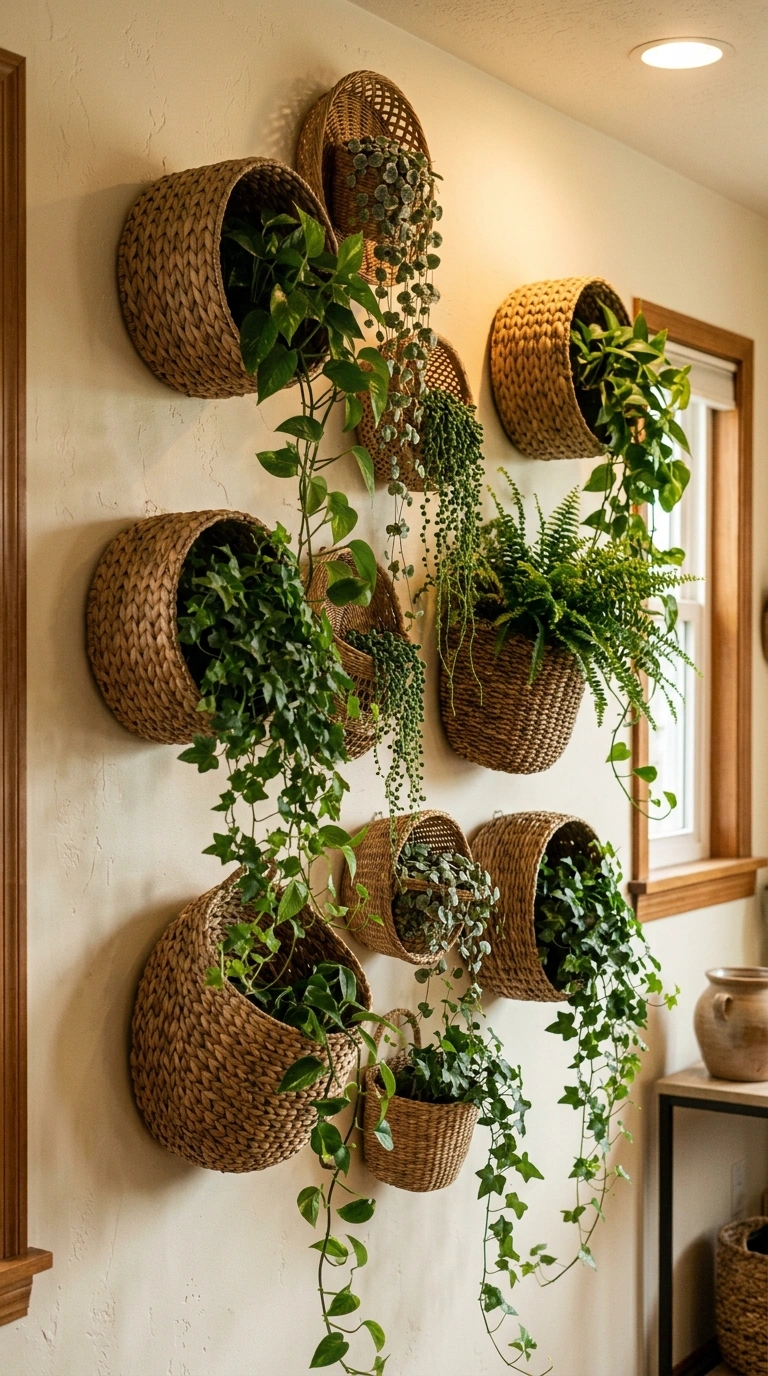
Wall-mounted woven baskets holding plastic plant liners bring a natural, textured look that pairs well with boho or earthy interiors. Always use a plastic liner inside the basket. Woven natural fiber wicks moisture and breaks down within a season or two of direct soil and water contact.
Seagrass and water hyacinth baskets generally hold up better in humid rooms than rattan, which can develop mold faster if it’s ever exposed to consistent moisture from a slow liner leak that goes unnoticed for a few weeks.
Quick tip: Mix basket sizes and weave patterns, like chunky seagrass and fine rattan, so the wall has texture even before the plants fill in.
16. Build a Compact Plant Corner for Small Apartments
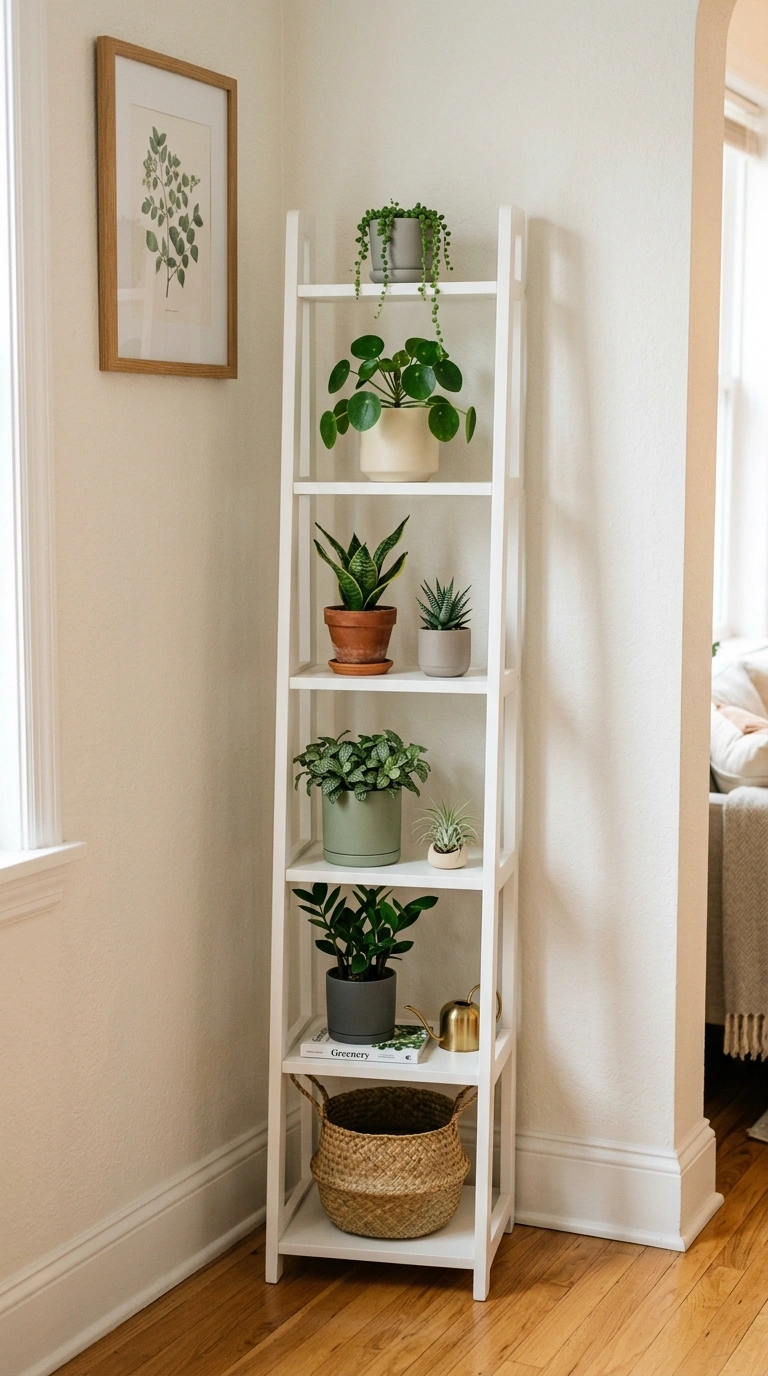
A single narrow shelf unit tucked into an unused corner fits five or six small plants without eating into floor space. In small apartments, a corner near a window typically loses 30–50% of its light compared to a spot directly in front of the glass, so pick plants a light-level category below what the window alone would suggest.
A cheap $10–$15 light meter app reading, taken at plant height rather than at eye level, gives a far more accurate picture of what the corner actually receives than judging brightness by how bright the room looks to your own eyes.
Quick tip: Rotate pots a quarter turn every week so each plant grows evenly toward the light instead of leaning one direction.
17. Pair a Plant Wall With a Large Mirror
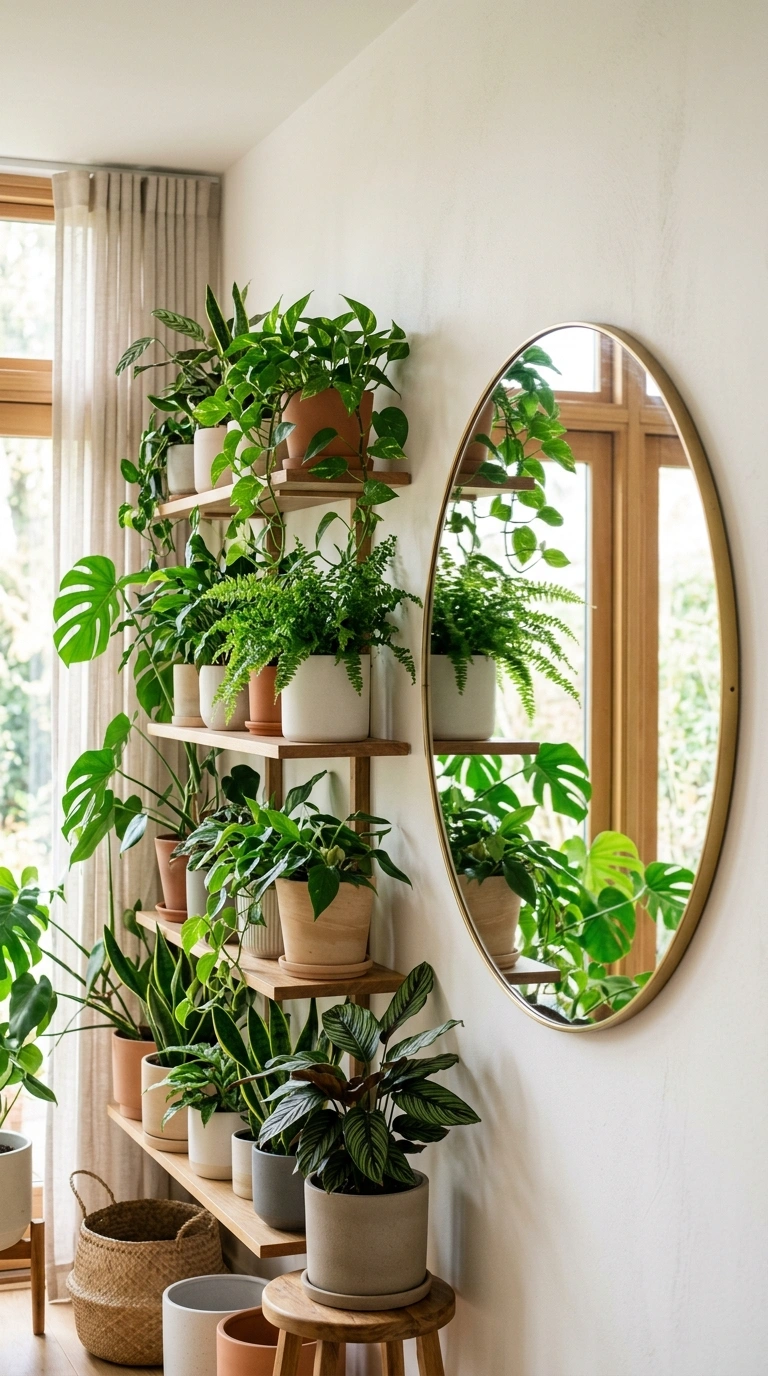
Placing a plant wall beside or opposite a large mirror bounces extra light onto the plants that need it, effectively adding back some of the light lost to distance from the window. This works especially well in small or dim rooms where a full plant wall alone might not get enough light on its own.
A mirror won’t fix a genuinely low-light spot by itself. It can meaningfully boost medium light into the bright-indirect range, but it can’t turn a dark interior corner into a spot where a true sun-loving plant will actually thrive long term.
Quick tip: Angle the mirror slightly to catch window light directly and reflect it onto the plant wall, rather than hanging it flat against the same wall.
18. Create a Statement Wall With Large Tropical Leaves
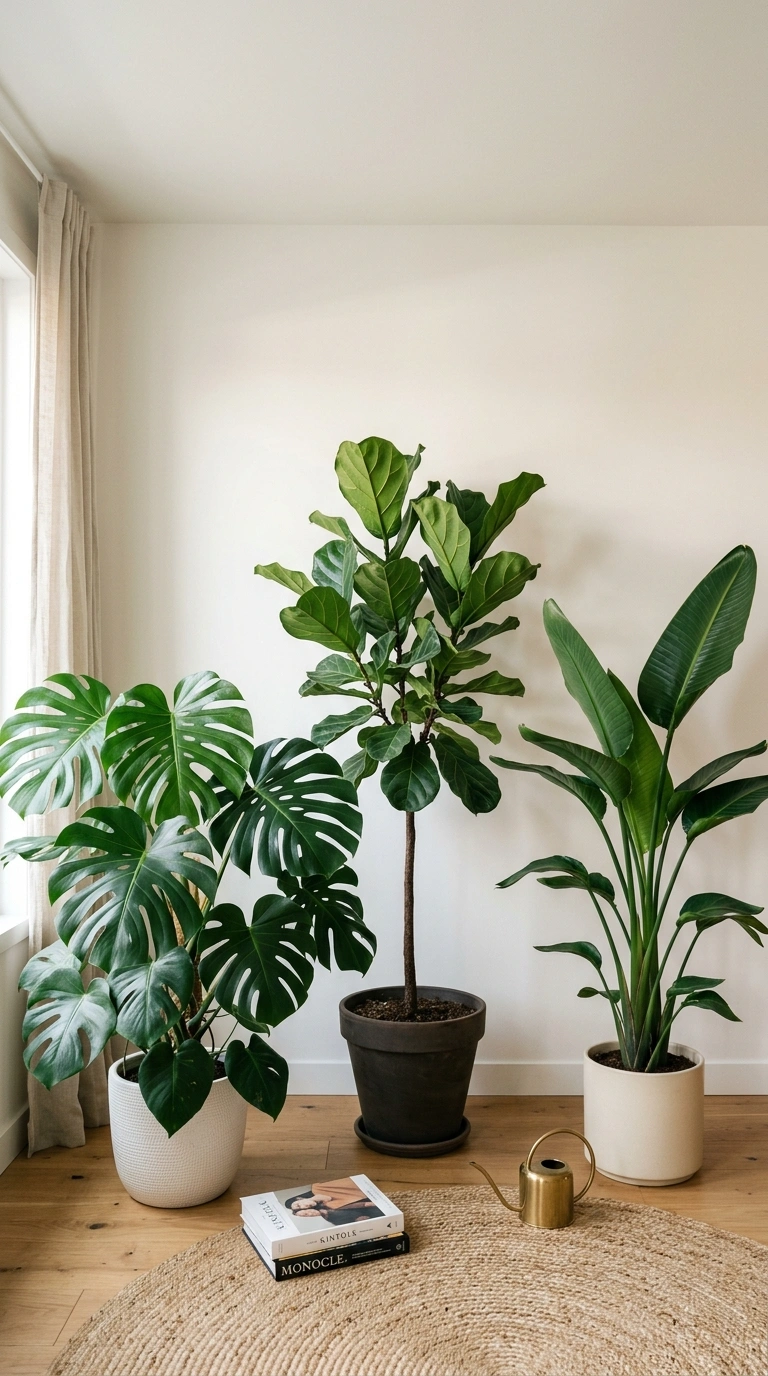
A few oversized plants, like a monstera, fiddle leaf fig, and bird of paradise, need real floor-to-ceiling clearance and bright indirect light (1,000+ fc) to thrive, plus at least 18–24 inches of open space per plant so leaves aren’t crowded or blocking each other’s light.
These larger plants also pull more water than small pots, often needing a full watering can every 5–7 days during summer growth season, so budget the extra maintenance time compared to a wall built from several small succulents instead.
Quick tip: Wipe large leaves with a damp cloth once a month. Dust blocks light absorption on broad leaves more than it does on smaller foliage.
19. Keep It Simple With a Single-Species Wall
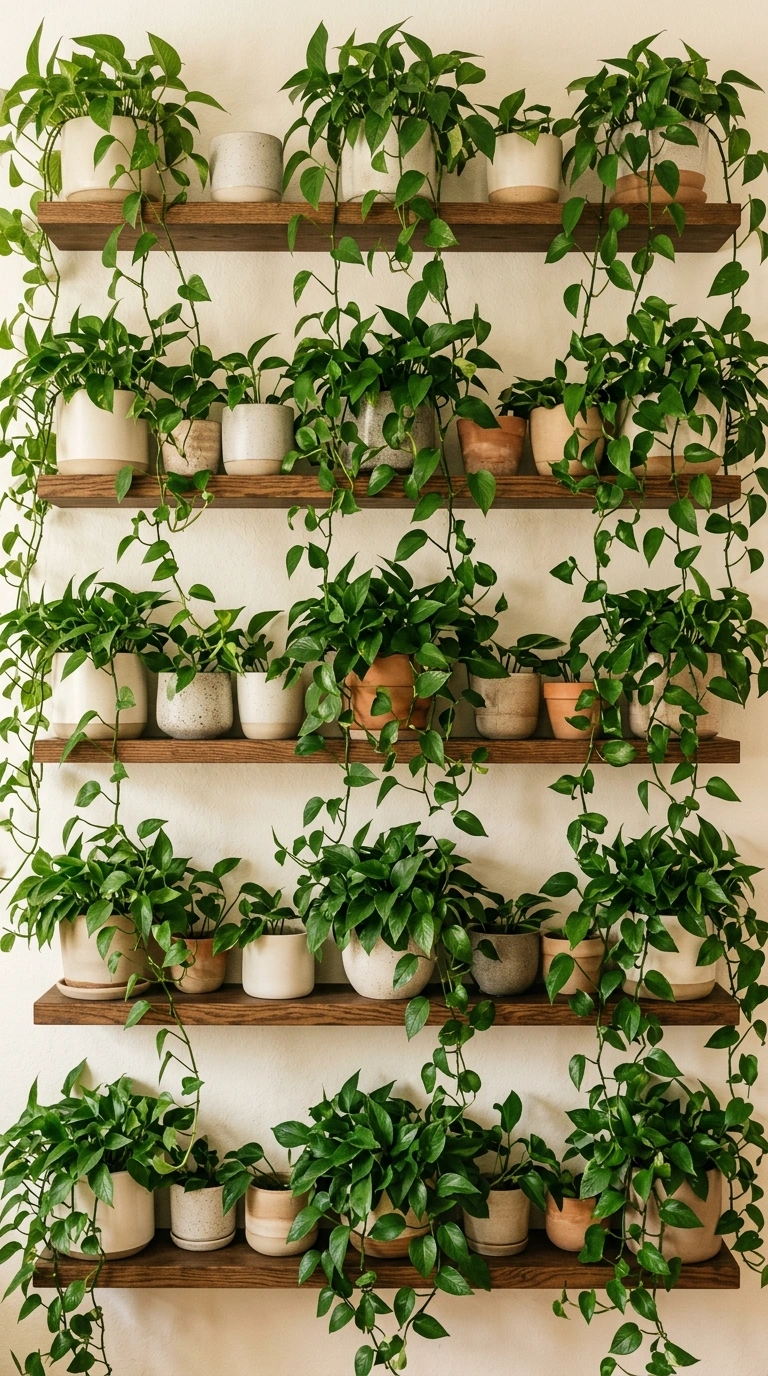
Filling an entire wall with one plant type, like all pothos, creates a clean, cohesive look that’s genuinely easier to care for, since every plant shares the same watering and light schedule instead of you tracking several different routines.
This approach also makes it easy to propagate your own replacements from cuttings instead of buying new plants. Pothos in particular roots readily in a jar of plain water within two to three weeks, which keeps the wall growing without adding to the budget.
Quick tip: Vary the pot sizes even when the plant type stays the same, so the wall doesn’t look like a factory row.
20. Combine a Plant Wall With Framed Art
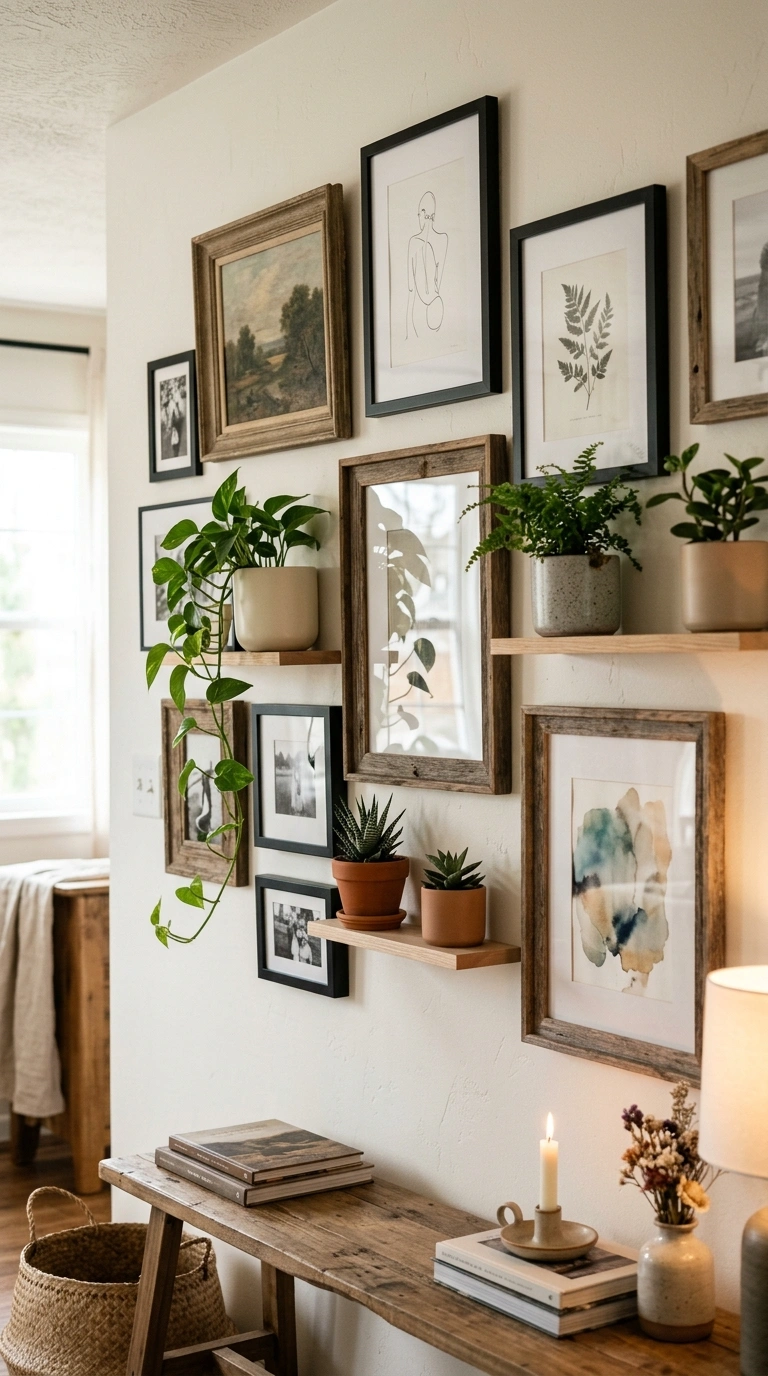
Mixing a few small plants into an existing gallery wall softens the hard edges of frames and adds a living element to flat wall art. Keep plant leaves at least 3–4 inches from any frame glass; condensation from watering can leave moisture marks on glass and warp paper mats over time.
Choose plants with upright or compact growth, like a small snake plant or ZZ plant, over heavy trailing vines in this particular layout, since cascading foliage can visually compete with framed art instead of complementing it the way a more contained plant shape does.
Quick tip: Place plants at varying depths using small wall shelves so leaves sit slightly forward of the frames instead of blocking them.
21. Design an Easy-Care Plant Wall for Kids’ Rooms
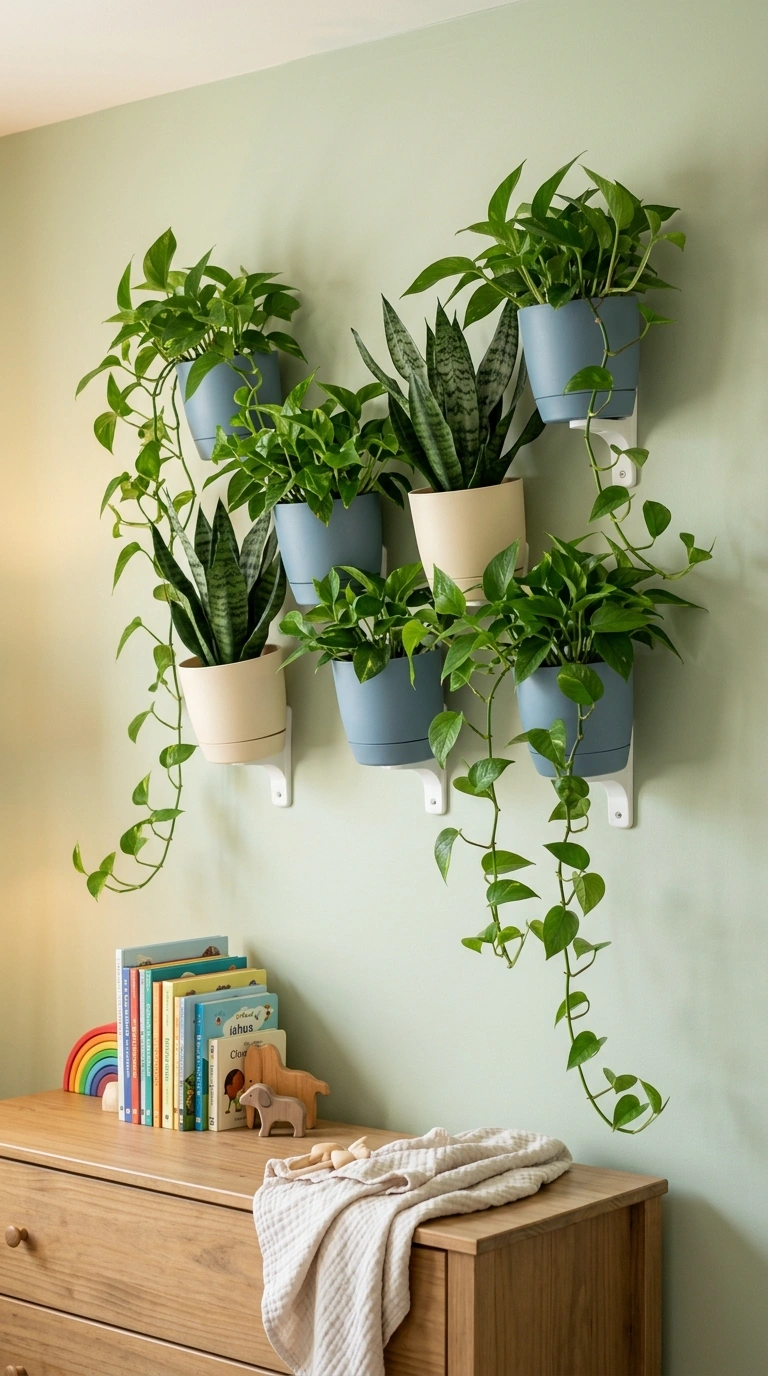
Sturdy, low-maintenance plants like pothos and snake plants mounted above reach height, generally 4+ feet up, bring greenery into a kids’ room without constant supervision. Use lightweight, unbreakable pots secured with a toggle bolt rather than an adhesive strip, since kids’ rooms see more accidental bumps than any other room in the house.
Check the mounting hardware every few months in a kids’ room specifically. Accidental bumps loosen anchors faster here than almost anywhere else in the home, and catching a small wobble early is a lot easier to fix than dealing with a pot that’s already fallen.
What to avoid: Skip anything toxic if pets or very young kids share the room. Pothos and philodendron are common but mildly toxic if chewed; snake plant and spider plant are safer, pet-friendlier options for the same low-light spot.
Know Your Mounting Weight Before You Drill
The second most common plant wall failure is hardware that wasn’t rated for the load, especially once soil is wet. A gallon of wet potting mix weighs close to a pound per cup, so a 10-inch pot can easily hit 8–12 pounds once watered.
| Hardware | Typical Weight Limit | Best For |
|---|---|---|
| Command large picture-hanging strips (set of 4) | Up to 16 lbs, smooth clean surfaces only | Light ceramic pots, framed moss art |
| Plastic expansion anchor | Up to 25 lbs | Small floating shelves, single wall planters |
| Molly bolt | Up to 25–50 lbs | Medium shelves with a few pots |
| 1/4-inch toggle bolt | Up to 90 lbs | Ladder shelves, multi-pot floating shelves, ceiling planters |
What to avoid: Command strips do not bond to textured walls, and 3M does not rate them for load-bearing shelving. If your wall has any texture, or you’re hanging anything heavier than a single light pot, use a toggle bolt into drywall or, better, screw directly into a stud or ceiling joist.
Bringing It All Together
The best plant wall is built for the light you actually measured, not the light you assumed you had, and mounted on hardware rated for the weight once the soil is wet. Get those two things right first, then the layout and plant choice come down to your style.
Start with two or three plants in one of these layouts, confirm they’re thriving after a month, and add more from there. Pick your favorite layout, save it to Pinterest, and start building your own indoor plant wall this weekend.
FAQs
What is the best plant for an indoor plant wall?
Pothos is one of the best plants for an indoor plant wall because it tolerates medium light (250–1,000 foot-candles), needs watering only about every 7–10 days, and trails beautifully from shelves or hangers. Snake plants and philodendron are also reliable low-maintenance choices.
How do you make a plant wall in an apartment without drilling holes?
Use freestanding options like a leaning ladder shelf or a narrow shelf unit, or Command large picture-hanging strips rated for up to 16 lbs on smooth, clean walls. Avoid adhesive strips on textured walls, since they won’t bond properly and can fail.
Can you have a plant wall in a room with no natural light?
Yes, either with a warm-toned full-spectrum LED grow light run 12–14 hours a day on a timer, or with high-quality faux plants and preserved moss that need no light at all. Both options let you keep the plant-wall look in windowless rooms.
How much weight can a wall safely hold for a plant wall?
It depends on the anchor: plastic expansion anchors hold up to 25 lbs, molly bolts hold 25–50 lbs, and a 1/4-inch toggle bolt can hold up to 90 lbs. Always calculate based on the plant’s watered weight, not its dry weight, since wet soil adds several pounds per pot.
What plants work best for a bathroom plant wall?
Ferns, orchids, and pothos thrive in a bathroom because they benefit from the 60–80% humidity a shower creates, compared to roughly 30–40% in a typical room. Mount them on the wall opposite the shower rather than directly above it to avoid direct water spray on the leaves.