17 Stylish Indoor Cat Room Ideas That Won’t Ruin Your Decor
If you share your home with a cat, you already know the struggle of finding a spot for their bed, their scratching post, and their favorite window perch without your living room starting to look like a pet store. It is possible to give your cat a real space of their own while still keeping your home looking pulled together. The trick is choosing pieces and spots that work for both of you, using materials and colors that blend into your existing decor instead of fighting against it. Below are 17 ideas for creating a cat friendly corner, shelf, or nook that your cat will actually use and that you will not feel the need to hide when guests come over. Each one can be added gradually, so you do not need to redo your whole living room in a single weekend to make your home more comfortable for your cat.
1. Window Perch Corner
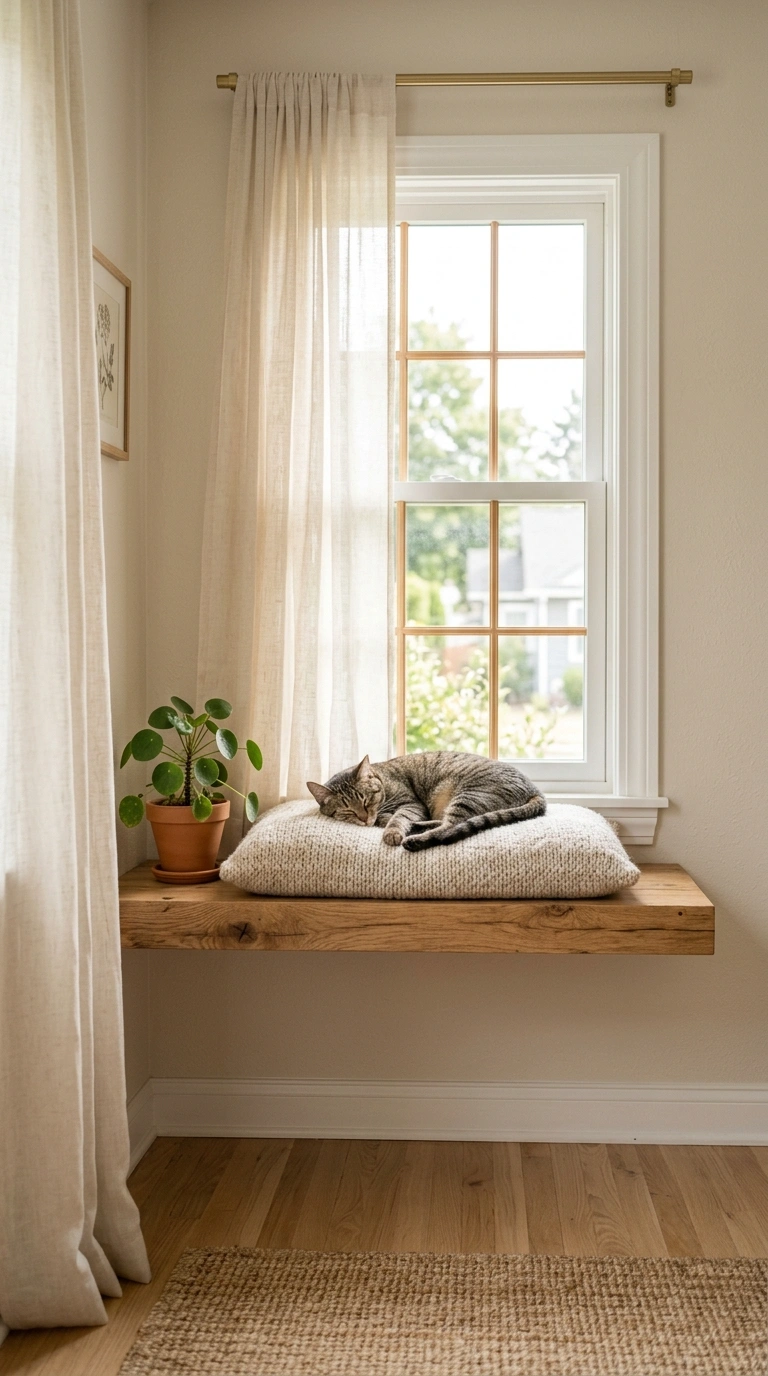
Cats spend a huge amount of their day watching the world outside, so turning one window into a dedicated perch corner gives your cat a spot they will use constantly. Choose a window with a wide sill or add a floating shelf just below the window at a height your cat can easily jump to. Line the shelf with a soft cushion in a neutral tone, like oatmeal or soft gray, so it blends with your existing curtains or wall color.
Keep the area simple, with just the cushion and maybe one small plant nearby that is safe for cats, since too many objects will crowd the space your cat actually wants to lounge in. Sheer curtains nearby soften the light without blocking your cat’s view completely. This idea works especially well in living rooms or home offices with a sunny window that already gets used for a few hours of natural light each day.
2. Wall Mounted Cat Shelves
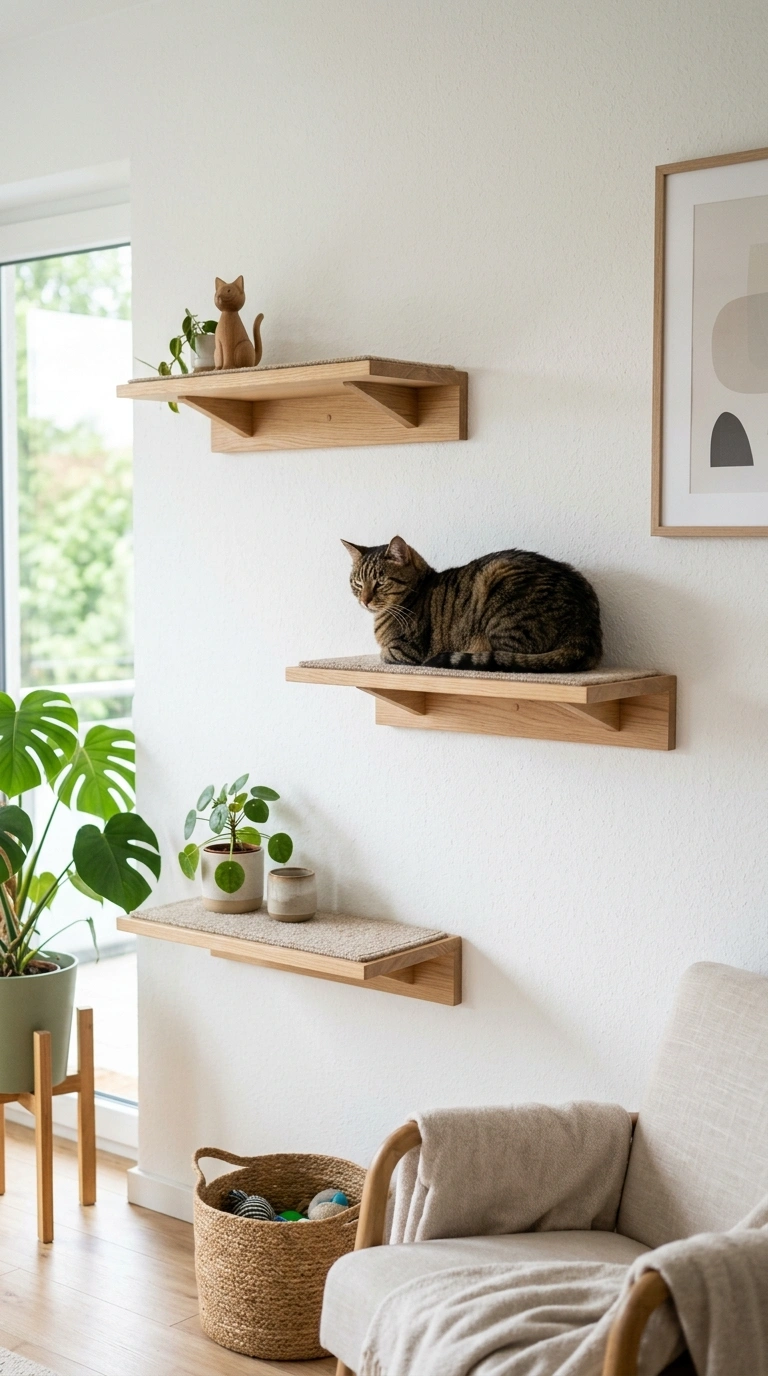
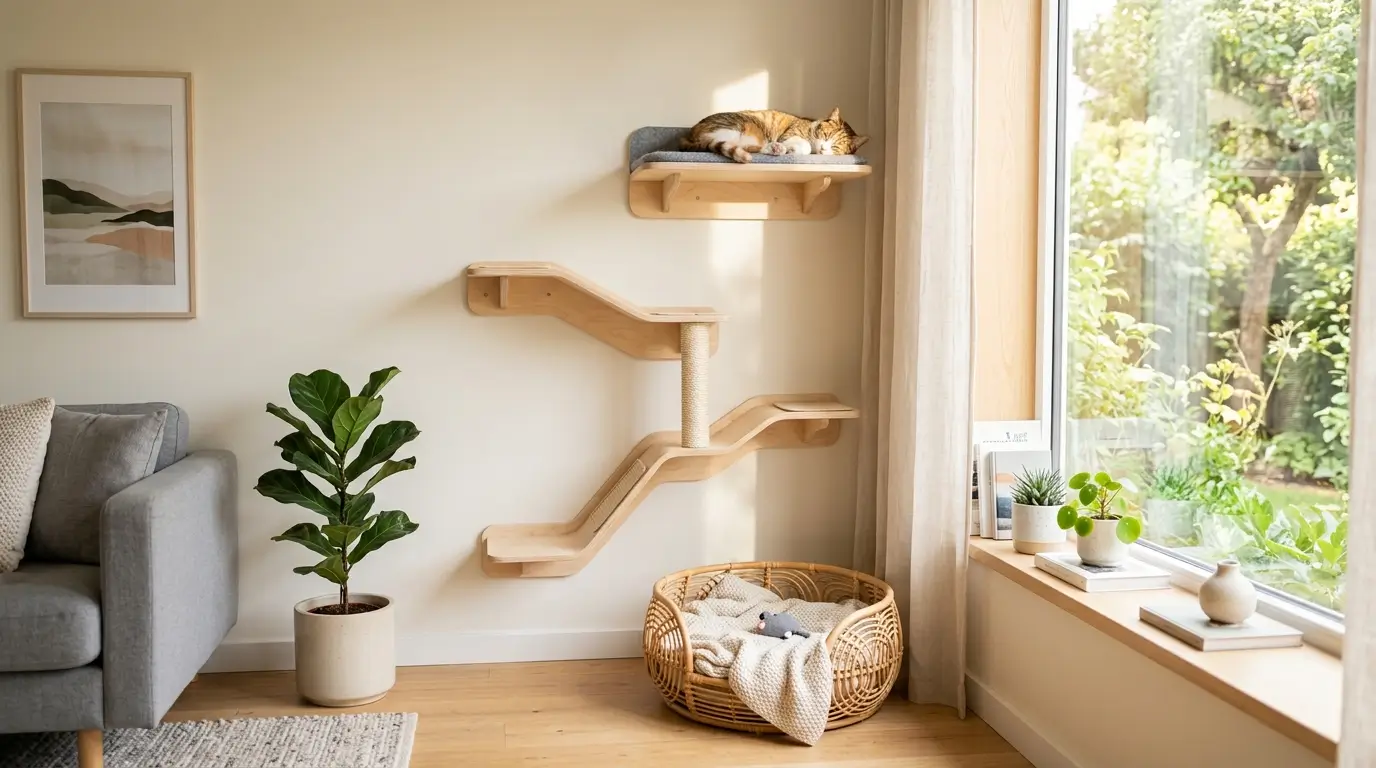
A series of wall mounted shelves, staggered at different heights, gives your cat a climbing path up the wall while taking up zero floor space. Choose shelves in a wood tone that matches your existing furniture, and space them roughly 12 to 15 inches apart vertically so your cat can jump comfortably between each one. Three to five shelves is usually enough to create an interesting climbing route without overwhelming the wall.
Add a thin strip of carpet or a small rug remnant to the top of each shelf for grip, choosing a color that blends with the wood rather than standing out. This idea looks intentional and modern rather than pet specific, especially when the shelves are styled to look like a piece of wall art rather than obvious cat furniture. It works particularly well in living rooms with high ceilings where there is unused vertical wall space.
3. Cat Tree In Corner
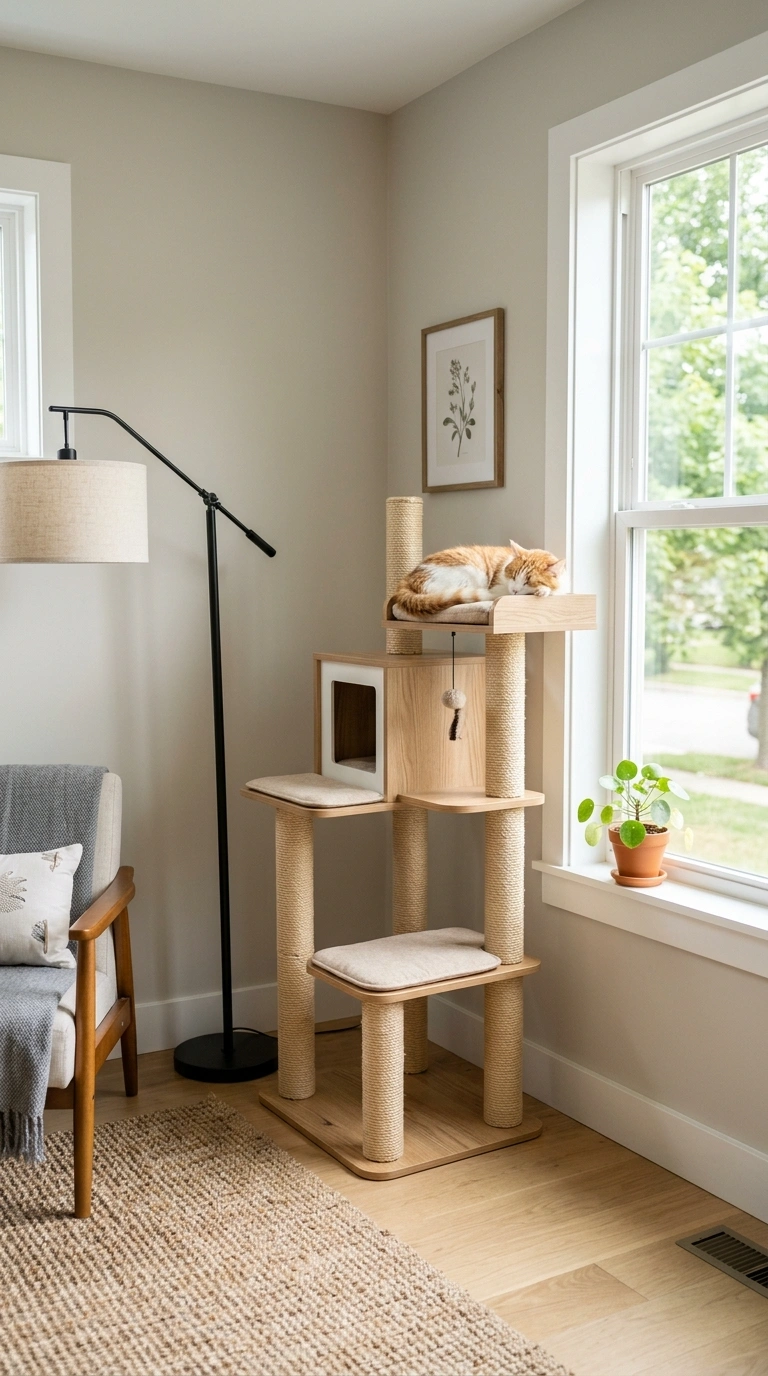
A cat tree does not have to look out of place if you choose one with a design that matches your home. Look for cat trees made from natural sisal rope and light wood rather than the bright carpeted versions, since the neutral materials blend much more easily into a modern or Scandinavian style living room. Place the tree in an underused corner, ideally near a window so your cat gets both climbing space and a view.
Keep the surrounding area simple, with maybe one small plant or a floor lamp nearby, so the tree does not compete with too many other objects for visual space. A cat tree in a soft cream or light wood color, rather than a bold pattern, will photograph as a design piece rather than an obvious pet accessory. This is one of the easiest ways to give your cat a full climbing structure without disrupting your room’s overall look.
4. Hidden Litter Cabinet
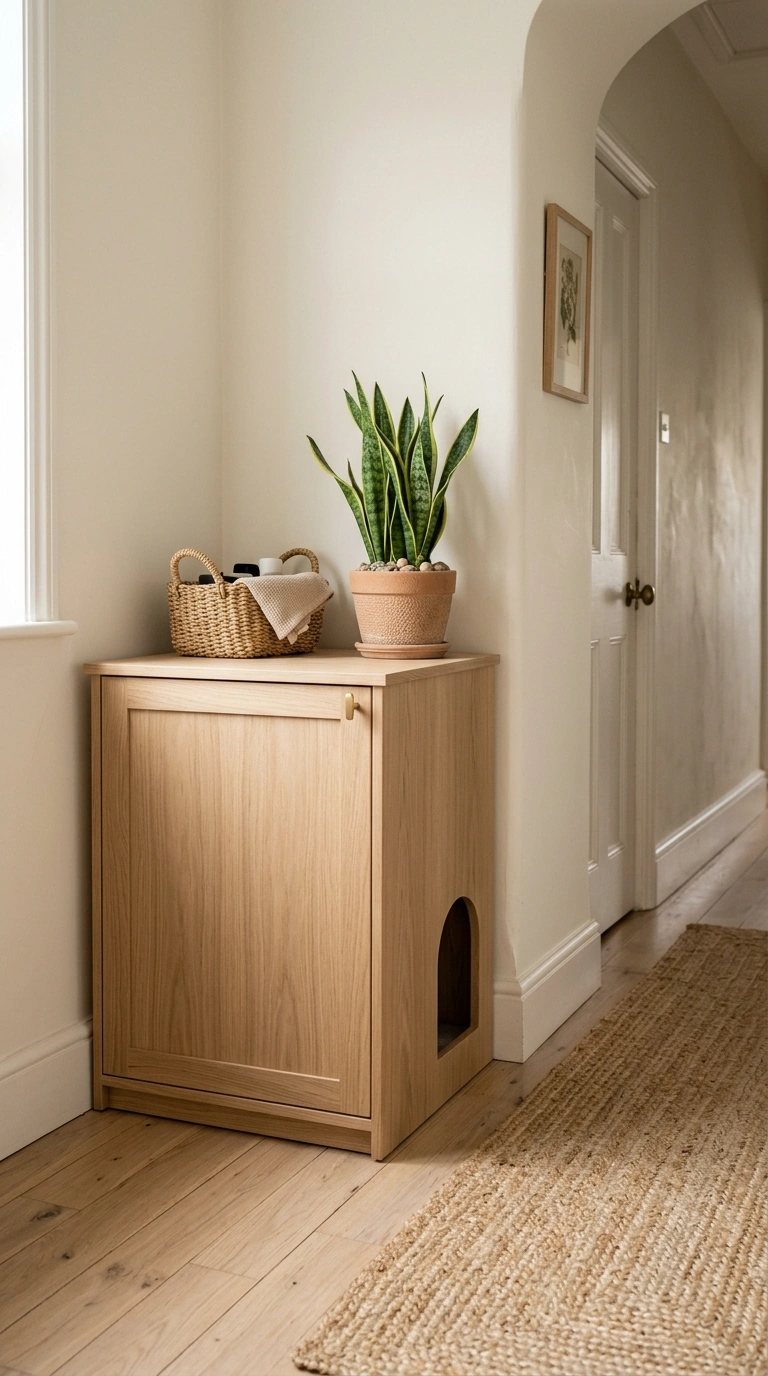
A cabinet designed to hide the litter box turns one of the least attractive parts of cat ownership into something that looks like a regular piece of furniture. Choose a cabinet with a cat sized cutout on one side and a hinged top or front door for easy cleaning access. A simple wood cabinet in a neutral tone works well in a living room, laundry room, or hallway, blending in the way a regular side table would.
Place a small basket on top of the cabinet holding extra litter bags or a scoop, keeping supplies close but out of sight. Adding a small plant or a framed print on top completes the disguise, making the cabinet look like an intentional decor piece rather than a hidden litter box. This idea is especially useful in smaller apartments where there is no separate room to keep the litter box out of the main living space.
5. Woven Cat Bed Nook
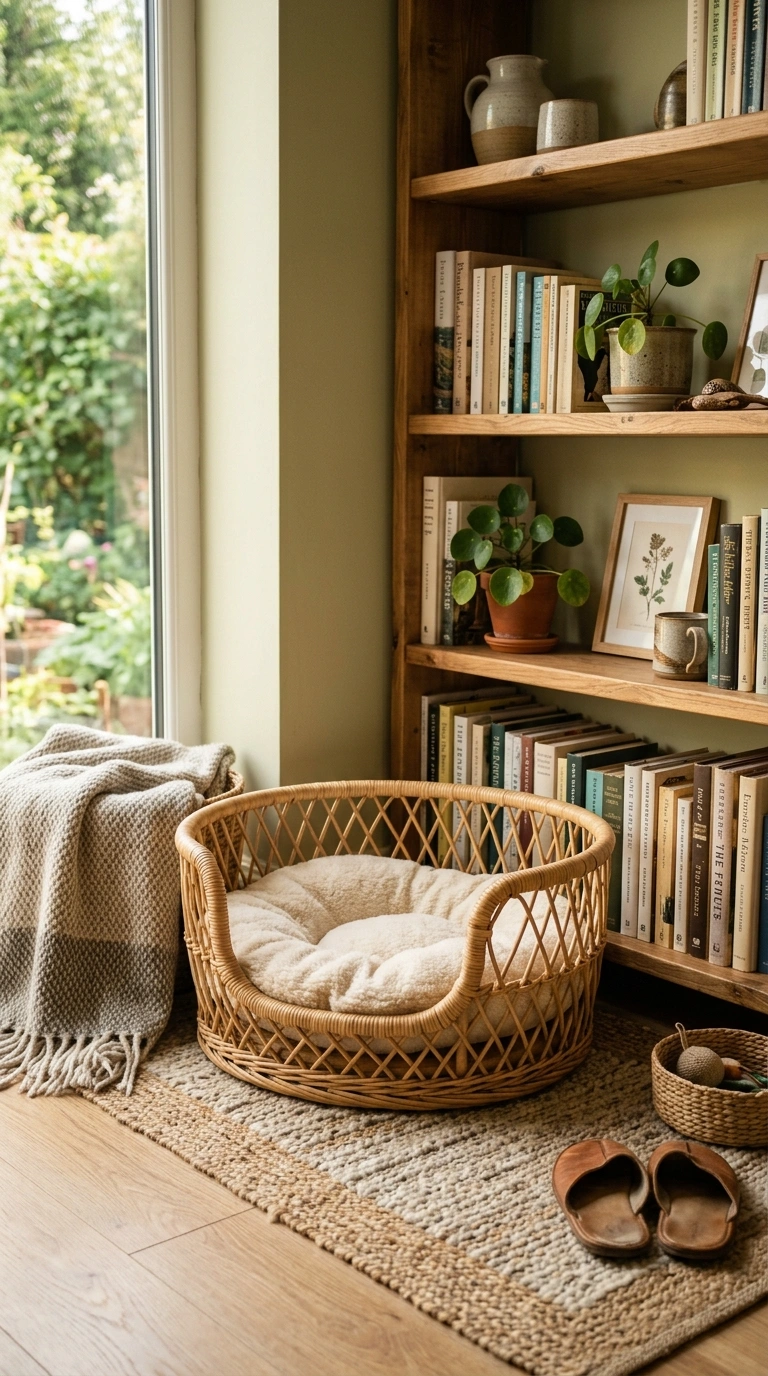
Tucking a woven cat bed into an unused nook, like the empty space beside a bookshelf or under a console table, gives your cat a cozy spot without adding a new piece of furniture to the room. Choose a bed made from natural rattan or seagrass with a soft cushion insert in a neutral color, since the woven texture matches the natural materials already common in home decor.
Add a small folded blanket in a similar tone inside the bed for extra comfort, and place the whole nook somewhere your cat already likes to nap, such as a spot with afternoon sun. Because the bed uses natural materials rather than bright plastic or patterned fabric, it reads as a decor accent instead of an obvious pet item. This idea works well in almost any style of living room since woven textures pair with modern, boho, and traditional decor alike.
6. Cat Tunnel Under Console
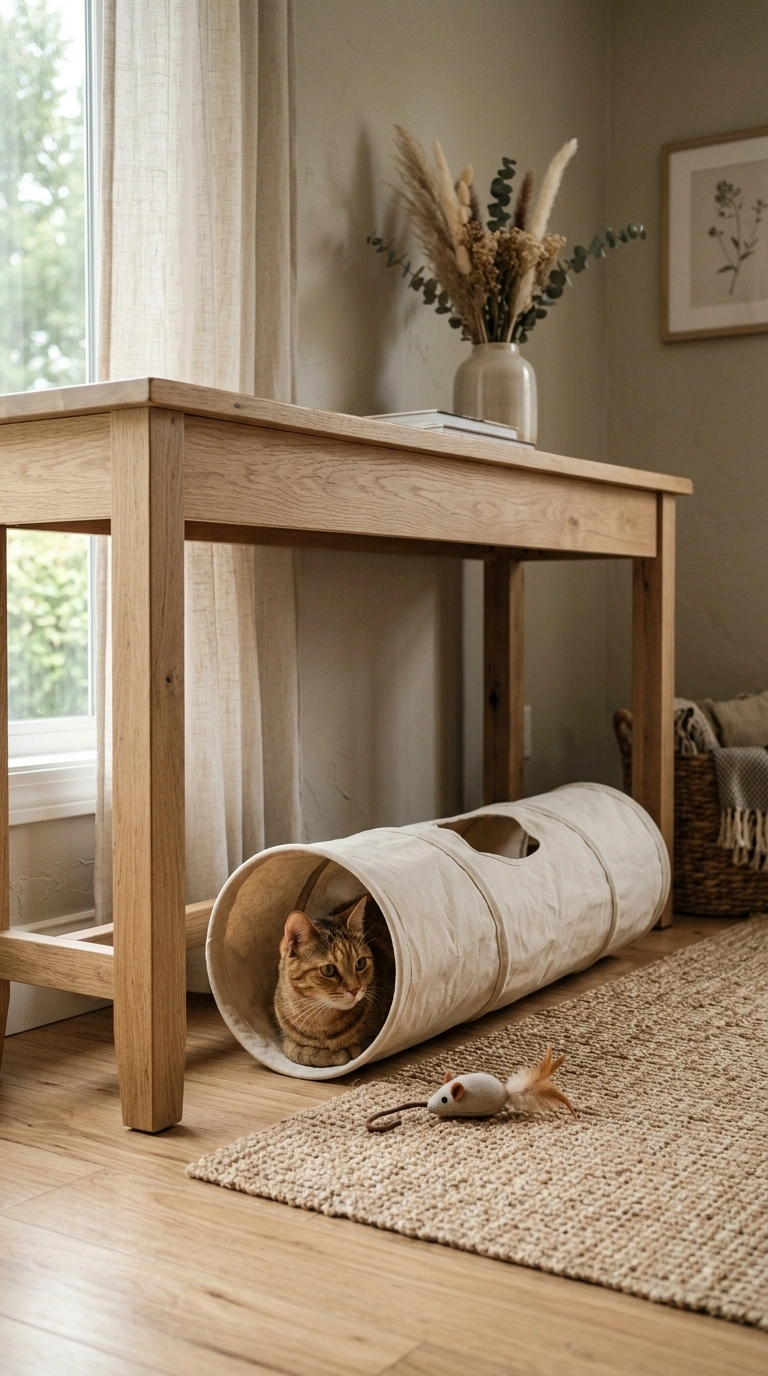
The empty space underneath a console table or open shelving unit is often wasted, but adding a simple fabric or wicker cat tunnel there gives your cat a hidden play spot that stays out of sight most of the time. Choose a tunnel in a neutral canvas or linen fabric rather than a bright patterned one, so it blends into the shadow under the furniture instead of standing out.
This idea works especially well with consoles that have open leg space rather than solid bases, since the tunnel needs enough clearance for your cat to comfortably enter and move around. Add a small toy or two inside to encourage your cat to use the space regularly. From a normal eye level view of the room, the tunnel is barely noticeable, which makes this one of the most decor friendly ideas on this list.
7. Scratching Post Styling
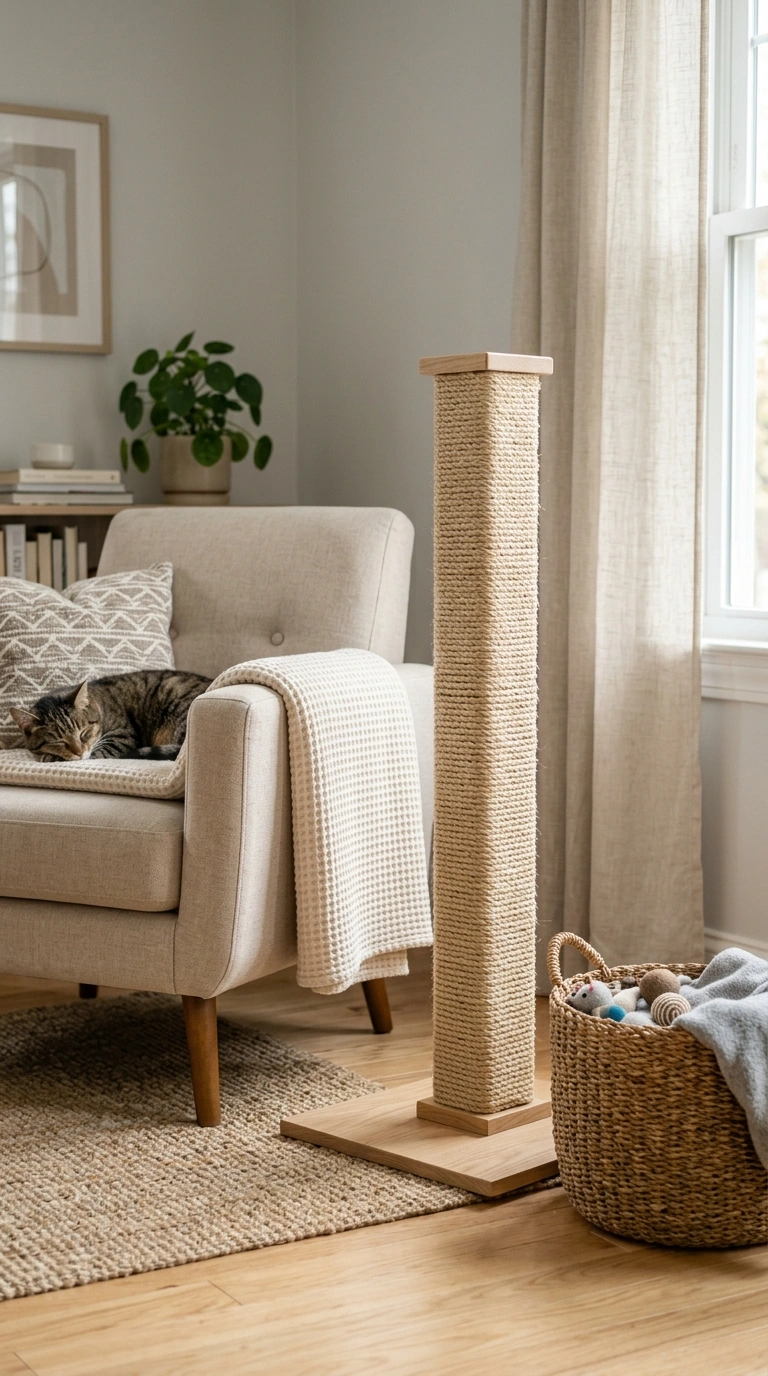
A scratching post does not need to be an eyesore if you choose one wrapped in natural sisal rope rather than bright carpet, and style it like an intentional accent piece. Look for a tall, slim post in a light wood base, and place it beside a chair or sofa where your cat is likely to stretch and scratch after waking up from a nap. The natural rope color works with almost any wall or furniture color already in your home.
Add a small woven basket or a folded throw blanket nearby to visually tie the post into the rest of the seating area, so it looks like part of the furniture grouping rather than a separate pet item placed awkwardly in the corner. This idea keeps your furniture protected while giving the post a spot in the room that feels planned rather than added as an afterthought.
8. Cat Ladder On Wall
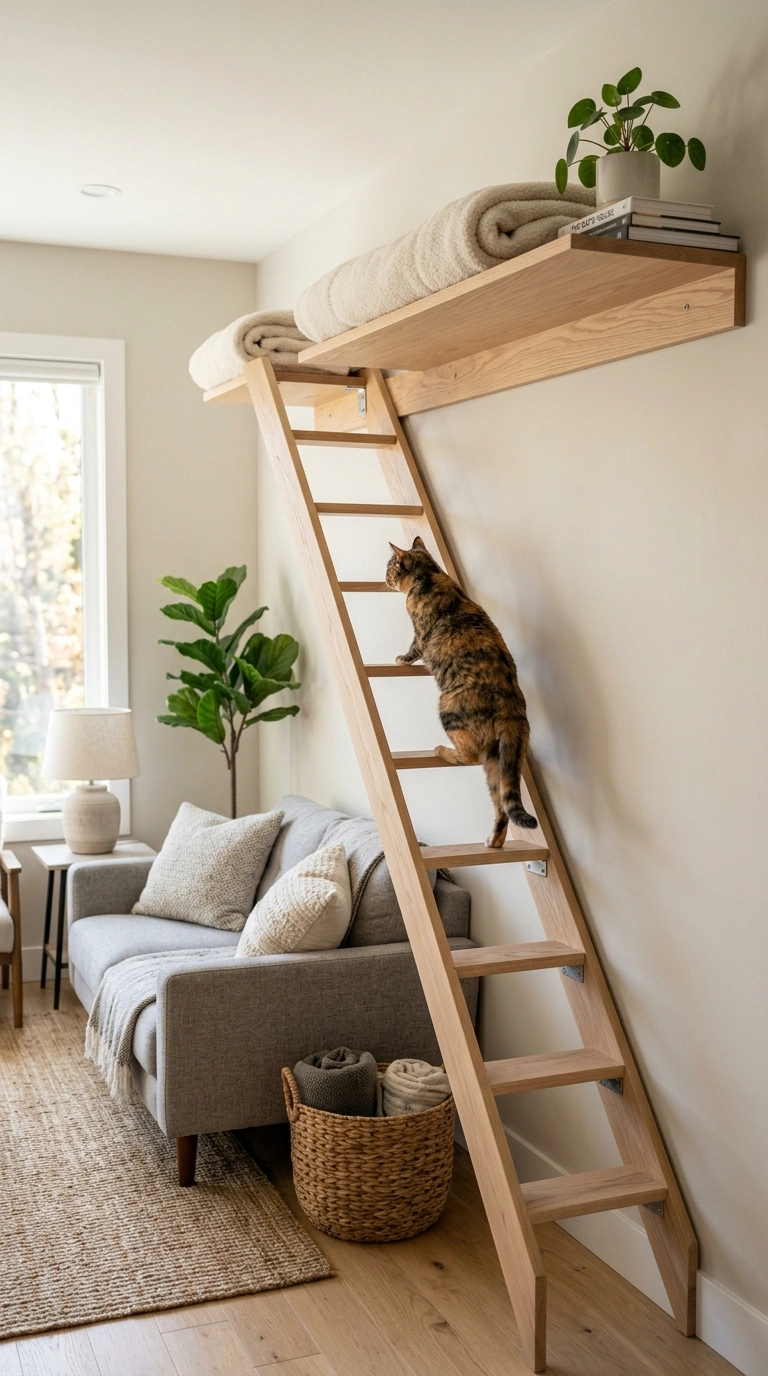
A simple wood ladder, either store bought or made from a few wall mounted rungs, gives your cat a fun climbing path up to a higher perch, like a wall shelf or the top of a bookcase. Choose a ladder in a light or medium wood tone so it reads as a decorative wall feature rather than obvious pet furniture. Space the rungs about 10 to 12 inches apart so your cat can climb comfortably.
Lead the ladder up to a landing spot, like a wide shelf with a cushion, so there is a clear destination at the top rather than a ladder that goes nowhere. This idea adds visual height and interest to a wall that might otherwise be empty, and it tends to become a favorite climbing spot for cats who enjoy being up high where they can watch the room below.
9. Built In Cat Nook
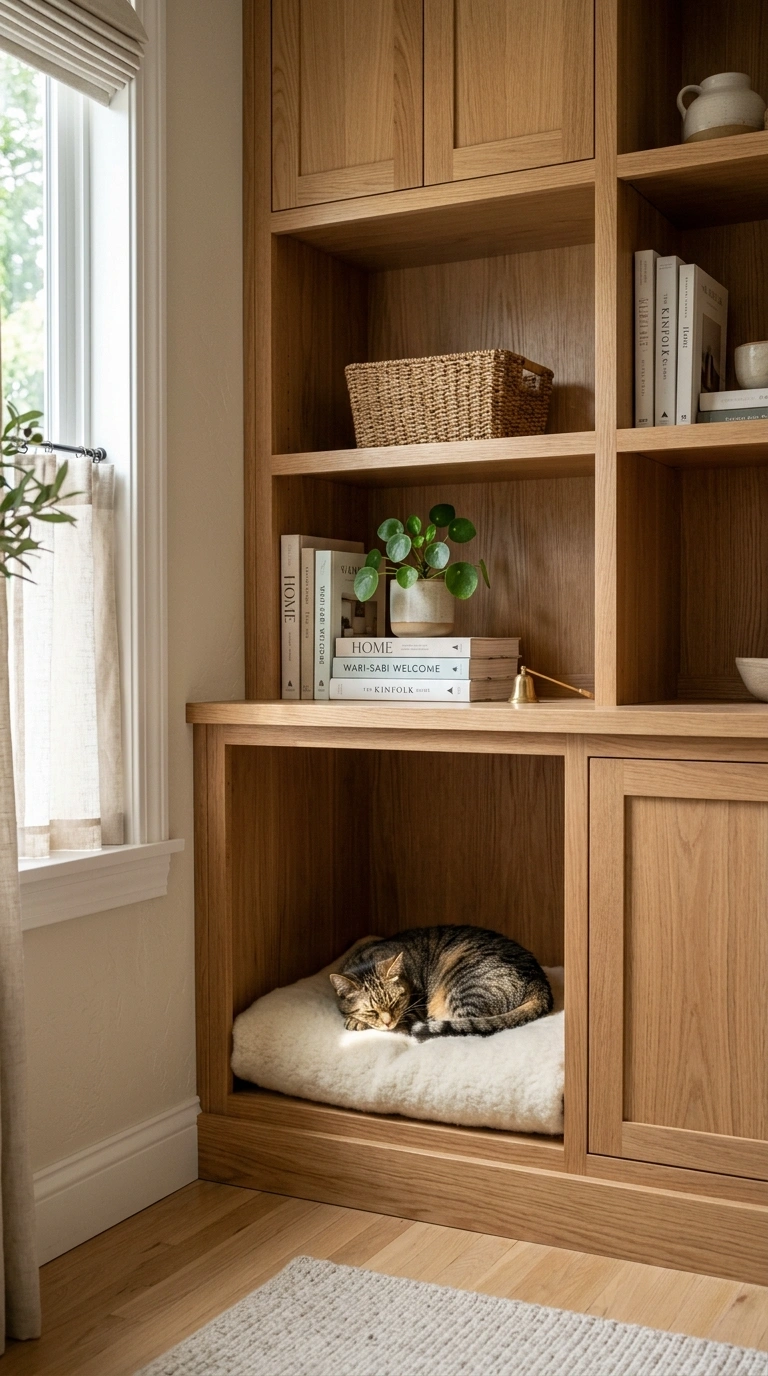
If you are already planning built in shelving or cabinetry, leaving one open cubby at floor level as a dedicated cat nook blends pet space directly into your home’s architecture. Size the cubby to fit a soft cushion or small bed, usually around 18 by 18 inches, and line it with a removable cushion in a color that matches the surrounding wood or paint finish.
Because the nook is built into the same unit as your bookshelves or media storage, it never looks like an added on pet accessory. Add a small strip of trim or molding around the opening to match the rest of the cabinetry for a fully finished look. This idea works best for anyone doing a larger renovation or custom furniture build, since it requires more planning than the other ideas on this list, but the payoff is a cat spot that looks completely intentional.
10. Cat Bed On Windowsill
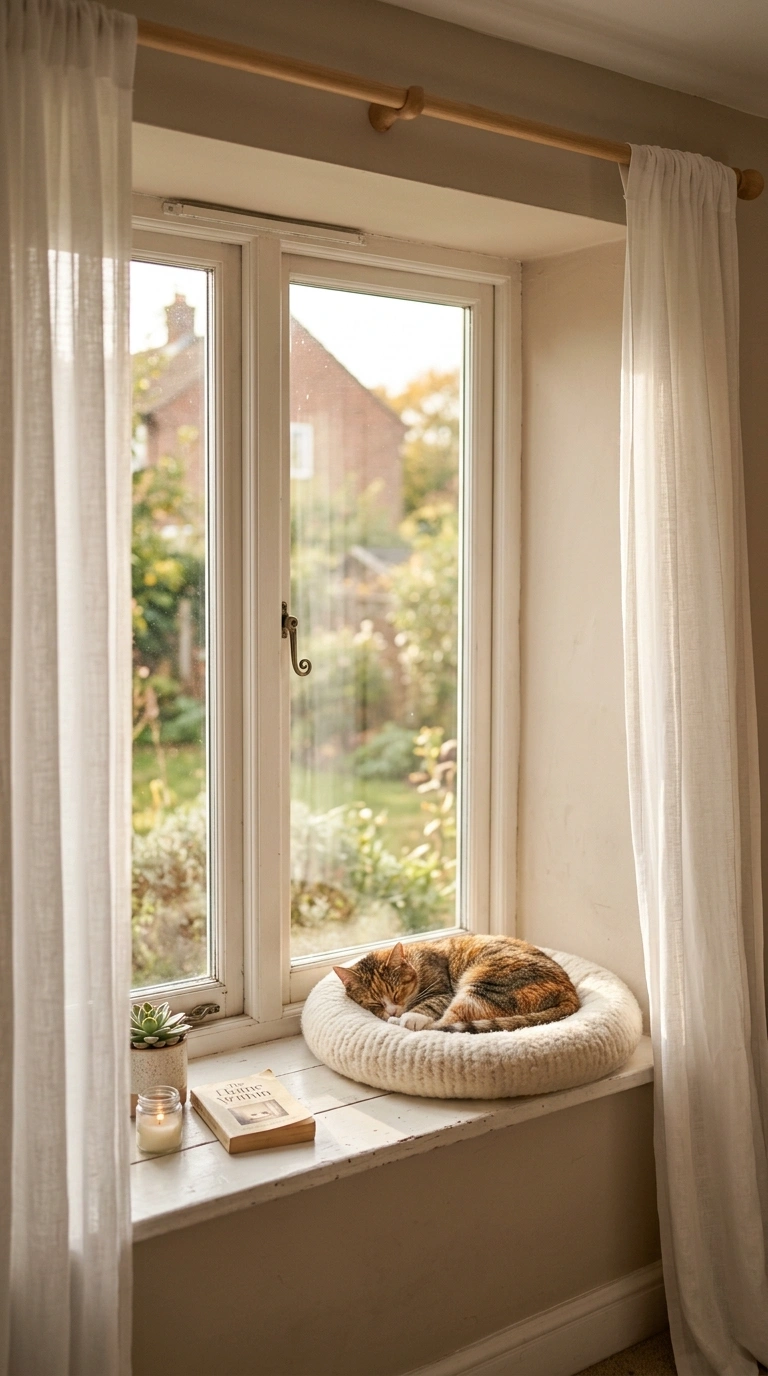
For homes with a deep windowsill, placing a simple flat cat bed there creates an easy sunbathing spot without needing any new furniture at all. Choose a bed with a low profile and a removable cover in a neutral fabric so it can be washed easily and matches your existing curtains or blinds. A bed in cream, soft gray, or light blue tends to blend into most window treatments.
Keep the rest of the windowsill clear of other objects so the space stays comfortable and open for your cat to stretch out fully. If your sill is narrow, a small non slip pad under the bed keeps it from shifting as your cat climbs on and off. This is one of the simplest ideas on this list since many homes already have a sill that just needs a soft cushion added to it.
11. Floating Cat Steps
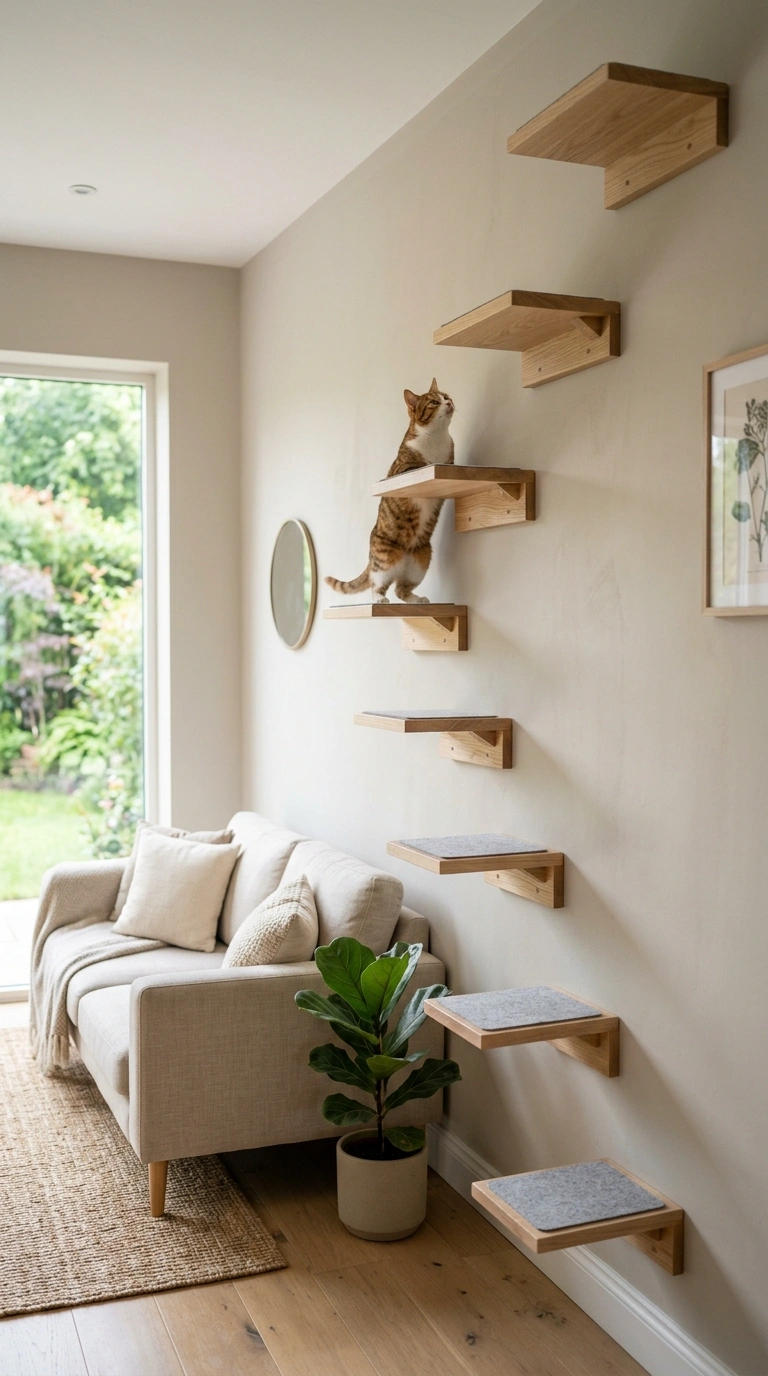
A row of small floating steps mounted at an angle up a wall creates a striking visual feature that doubles as a climbing path for your cat. Choose steps made from the same wood as your other furniture, and mount them in a staggered zig zag pattern rather than a straight line, since the diagonal movement looks more dynamic on the wall and mimics a natural climbing path.
Space each step close enough that your cat can move between them easily, typically 10 to 12 inches apart both vertically and horizontally. This idea works especially well as a feature wall in a living room or hallway, since the steps themselves become an interesting piece of wall art even without a cat currently using them. Choose a wall color that contrasts gently with the wood tone so the steps stand out as an intentional design choice.
12. Cozy Cat Reading Corner
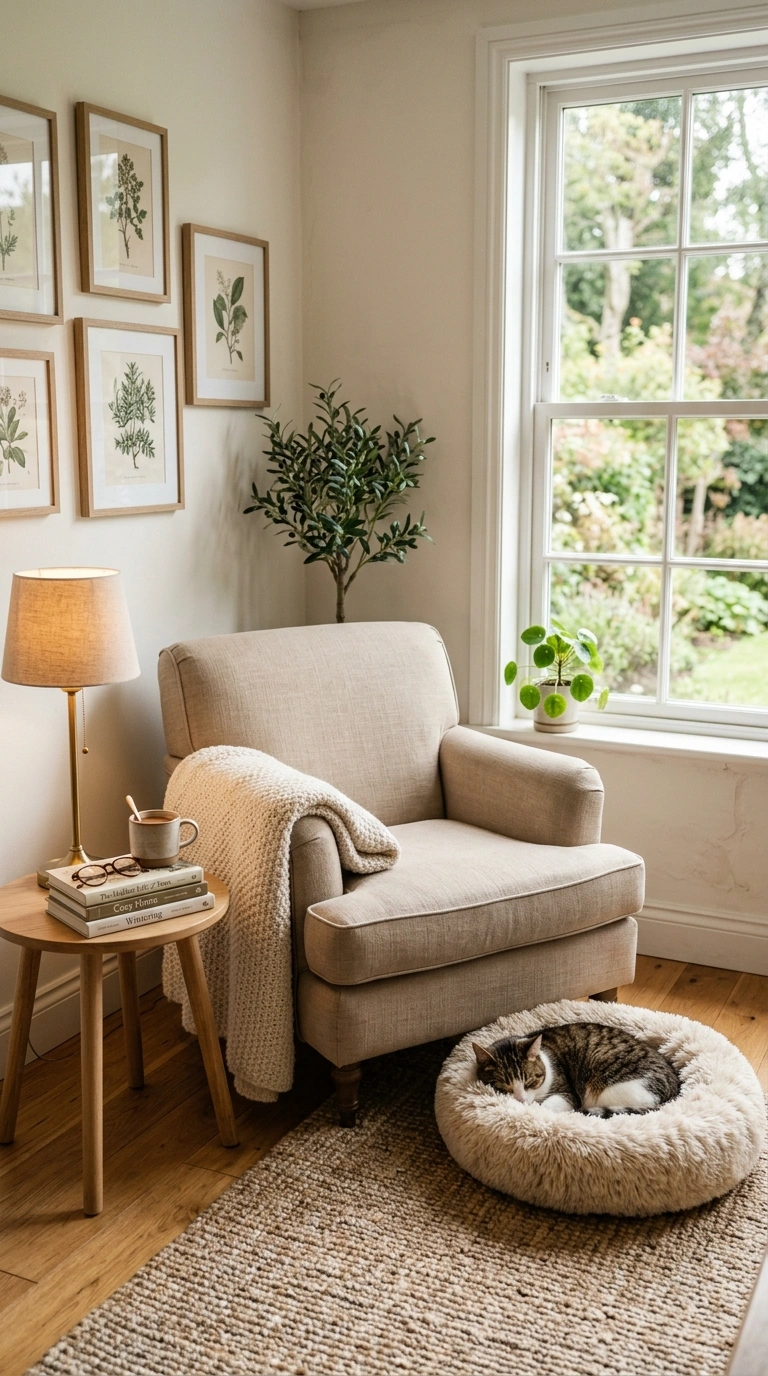
Turning an unused corner into a shared reading nook for both you and your cat creates a space that feels warm and multipurpose rather than pet specific. Add a small armchair with a soft throw blanket, and place a plush cat bed on the floor right beside it, choosing a bed color that complements the chair fabric. A small side table with a reading lamp completes the cozy feel.
This idea works well because the space serves two purposes at once, giving your cat a spot to curl up while you read or relax nearby. Choose fabrics that are easy to clean, like a tightly woven cotton or a performance fabric, since the corner will likely see regular use from your cat as well as you. This nook tends to become one of the most used corners in the whole living room.
13. Cat Play Shelf Wall
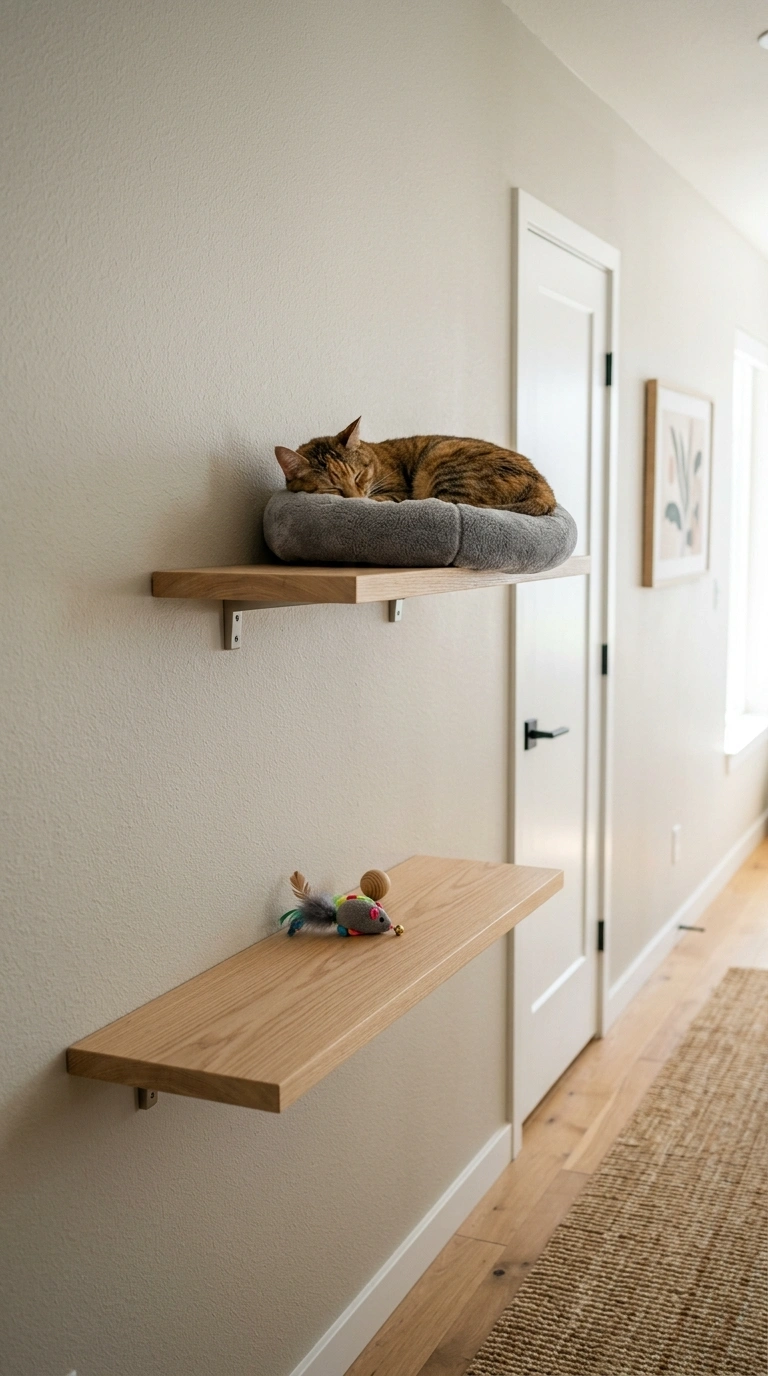
A dedicated wall of two or three wider shelves, spaced further apart than a climbing shelf setup, gives your cat room to sit, stretch out, and play rather than just pass through. Choose shelves at least 12 inches deep so your cat can fully lie down comfortably, and mount them at varying heights between about 2 and 6 feet off the ground. A light wood or matte white finish keeps the shelves looking like intentional wall decor.
Add a small toy or two on one shelf and a soft cushion on another, mixing function with a relaxed, styled look. Because the shelves are wider than a typical climbing step, they photograph well even without a cat currently on them, since they read as a modern floating shelf display. This idea works especially well in a hallway or an accent wall in the living room that could use a bit more visual interest.
14. Rattan Cat Basket Bed
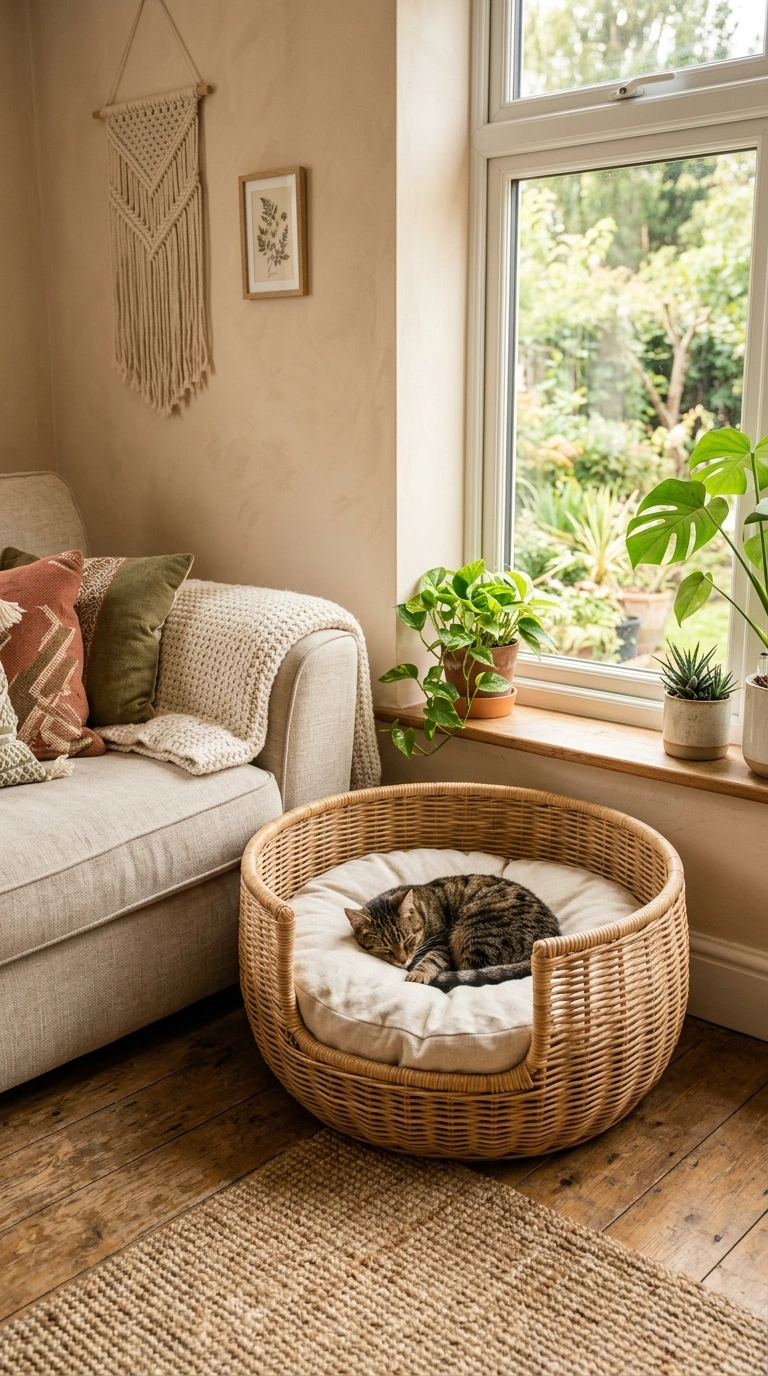
A rounded rattan basket lined with a soft cushion makes a stylish, ready made cat bed that looks like a decor piece even when your cat is not using it. Choose a basket with a low front opening so it is easy for your cat to walk in and out, and line the inside with a plush cushion in a neutral or muted color that complements the natural rattan tone.
Place the basket in a spot with some natural light, like near a window or beside a sofa, since cats tend to gravitate toward warm, sunny areas during the day. The woven texture of the basket pairs especially well with boho or coastal style living rooms where rattan and natural fibers are already part of the design. This is also one of the more affordable ideas on this list, since rattan baskets are widely available and inexpensive.
15. Cat Feeding Station Nook
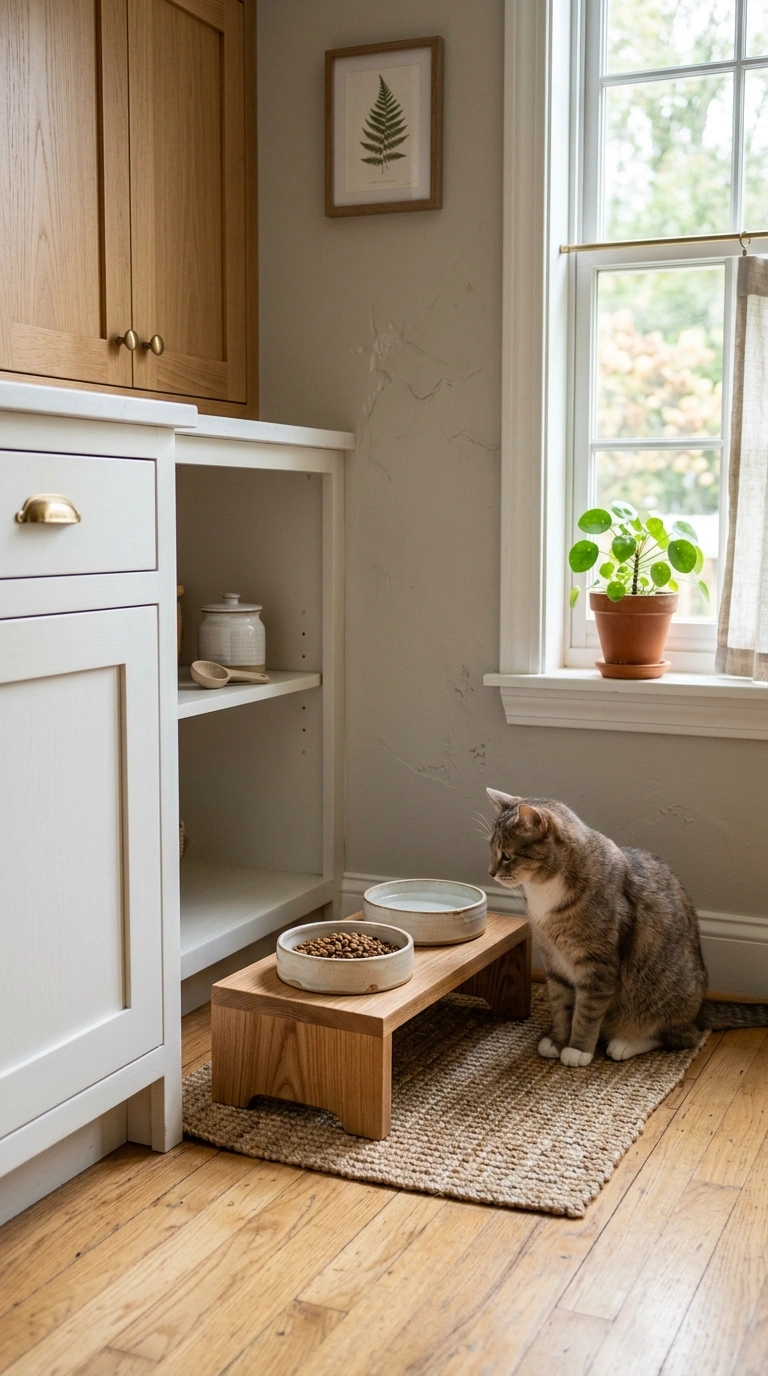
Instead of leaving food and water bowls out in the open on the kitchen floor, tucking them into a small dedicated nook, like the end of a cabinet run or a slim gap beside the fridge, keeps the feeding area contained and tidy. Choose a small wood tray or a raised feeding stand in a finish that matches your cabinetry, and use simple ceramic bowls instead of bright plastic ones.
Add a small mat underneath in a neutral color to catch spills and define the space visually, even in a tight nook. This idea keeps pet feeding supplies from spreading across your kitchen floor while giving the area a clean, considered look. It works especially well in smaller kitchens where counter and floor space are limited, since the nook approach uses a spot that would otherwise go unused.
16. Cat Hammock By Window
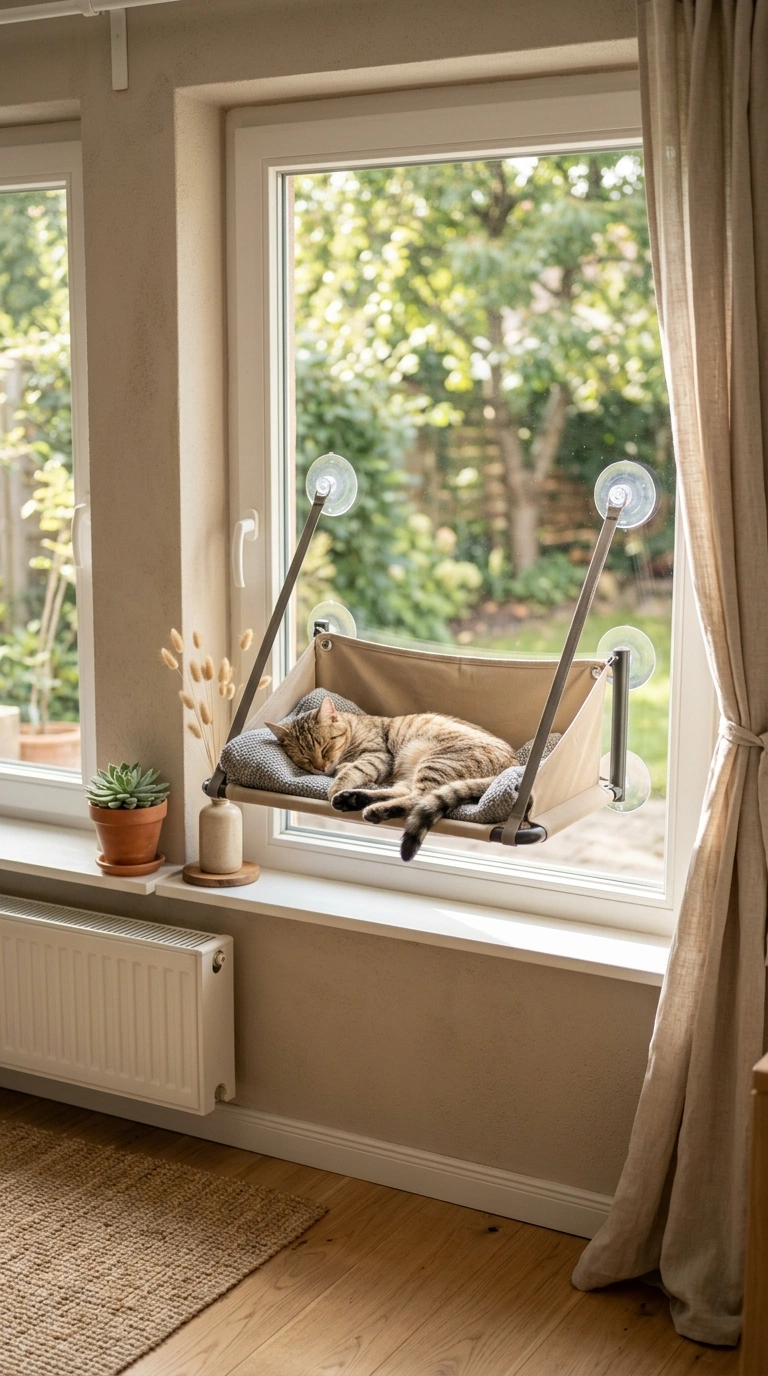
A window mounted cat hammock, held in place with suction cups, gives your cat an elevated, sunny spot to relax while barely taking up any visible space in the room. Choose a hammock with a simple canvas or mesh fabric in a neutral tone, and make sure the suction cups are rated to hold your cat’s weight securely before leaving them unsupervised on it.
Place the hammock in a window that gets consistent afternoon sun, since cats are drawn to warm, bright spots throughout the day. Because the hammock sits against the window rather than out in the room, it stays mostly out of the main sightline when viewed from other parts of the living room. This idea is a fun, space saving option for smaller apartments where floor space for a full cat tree is limited.
17. Multi Level Cat Tower
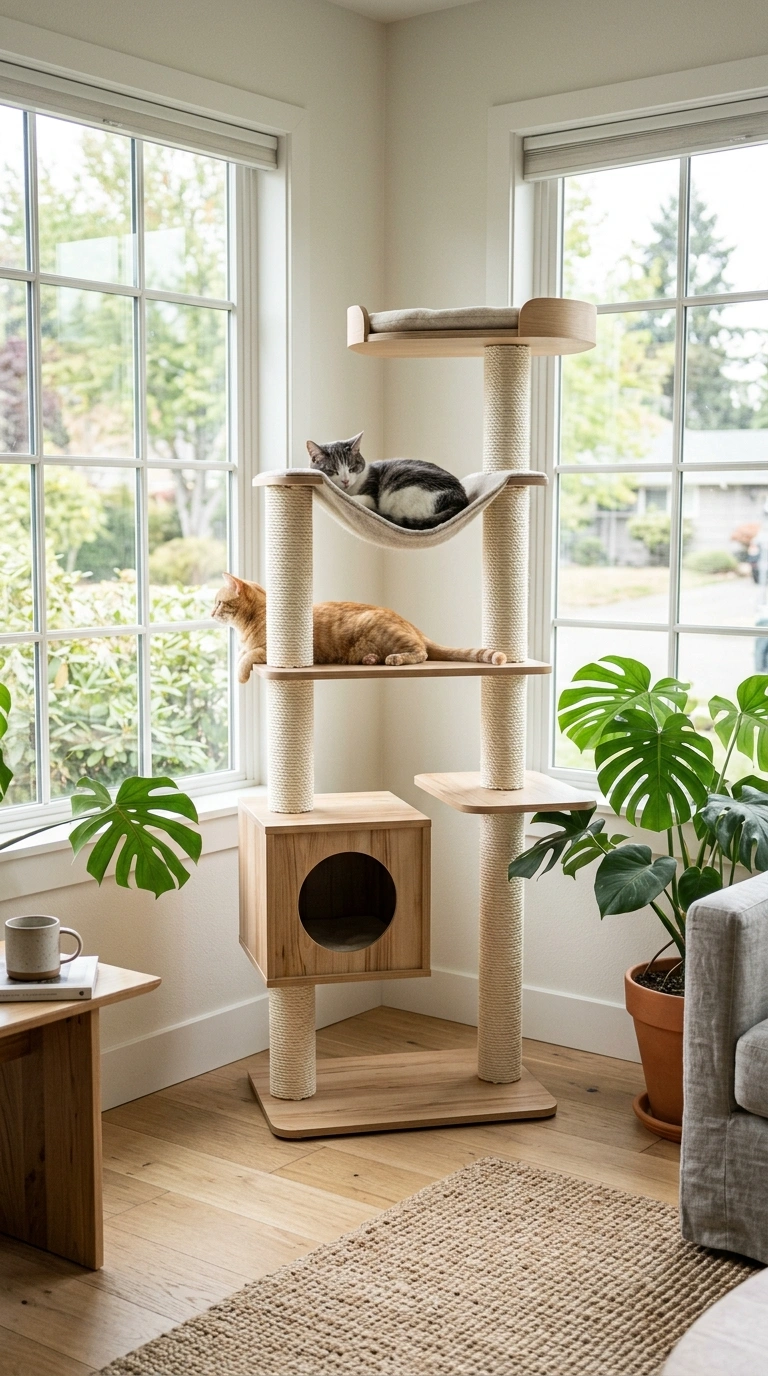
For cat owners who want one statement piece rather than several smaller additions around the room, a multi level cat tower with a modern design can serve as both a climbing structure and a piece of furniture. Choose a tower with clean lines, natural materials like sisal and light wood, and a neutral color palette rather than the traditional bright carpeted towers, since the modern versions blend into a living room the way a bookshelf or side table would.
Place the tower near a window or in a corner with some natural light, and keep the surrounding area simple so the tower itself becomes the focal point rather than getting lost among other furniture. This idea works well for cat owners who want a single, well designed piece rather than scattering smaller cat items throughout multiple rooms, giving your cat a dedicated space that still looks like it belongs in your home.
Giving your cat their own space in your home does not mean sacrificing your style. Small additions like a woven basket bed, a floating shelf, or a cozy window perch can blend right into your existing decor while still giving your cat exactly what they need. Start with one nook or shelf, see how your cat responds, and build out their space from there as your home and your cat’s habits settle in together.
FAQs:
How do I make a cat area blend into my living room decor?
Choose cat furniture in natural materials like rattan, sisal, and light wood rather than bright plastic or heavily patterned fabric. Sticking to a neutral color palette that matches your existing furniture is one of the easiest ways to keep indoor cat room ideas looking intentional rather than out of place.
Where is the best spot for a cat bed in a living room?
Cats tend to prefer warm, sunny spots, so placing a bed near a window that gets afternoon light usually gets the most use. A quiet corner away from heavy foot traffic also works well if your home does not have much direct sun.
Can a litter box really be hidden in a living room?
Yes, a cabinet style litter box enclosure with a small cutout entrance looks like a regular side table or console from the outside. Adding a small plant or decor item on top helps it blend in even further.
What materials work best for cat furniture that still looks stylish?
Natural sisal rope for scratching posts and light wood for shelves or towers tend to blend most easily into modern and boho style homes. Avoiding bright colors and heavy patterns keeps the pieces feeling like part of your decor rather than separate pet items.
Do wall mounted cat shelves damage the wall?
Most wall shelves use standard wall anchors or screws into wall studs, similar to hanging a regular floating shelf, so damage is minimal and comparable to hanging any other piece of wall decor. Always anchor into a stud where possible since cats will put weight and movement on the shelf.