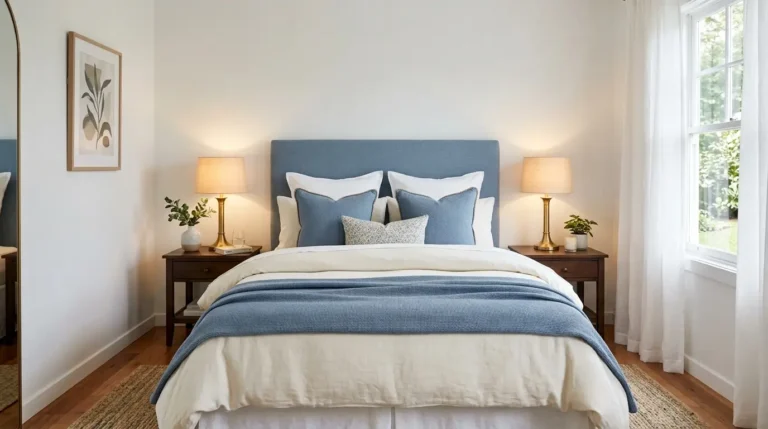
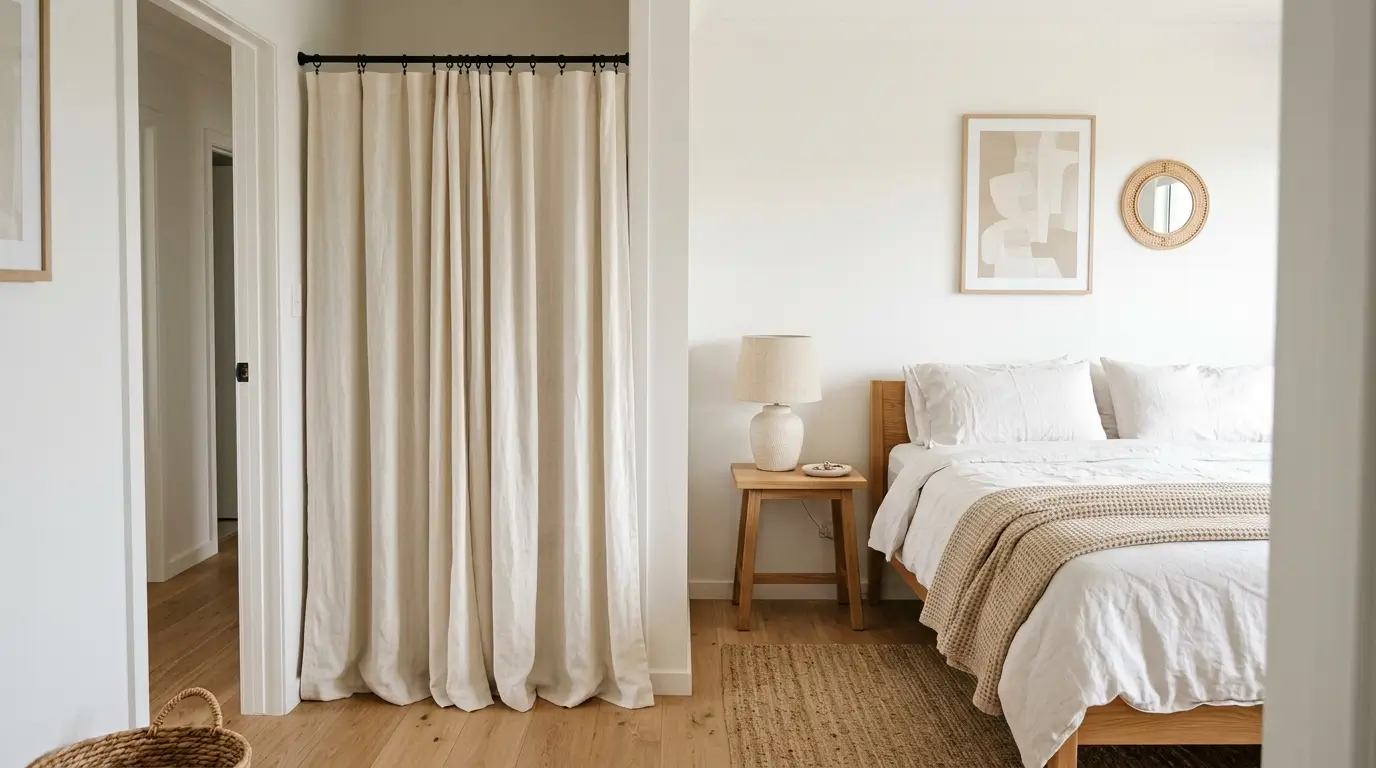
18 Bedroom Door Curtain Ideas for a Stylish and Private Room
Not every bedroom doorway needs a solid door. Some rooms have a doorway too narrow for a door to swing open. Some have an archway with no frame at all. Some have a door that hits the bed every time it opens. And some renters simply cannot drill hinges into a frame without losing a deposit. A curtain solves all of those problems for a fraction of the cost, and it does something a door never can, which is bring fabric, softness, and color into a space that was previously just a gap in a wall. Below are eighteen bedroom door curtain ideas covering everything from full blackout privacy to light decorative panels. Each one includes the fabric, hardware, and hanging details you need, so you can measure this afternoon and hang something by the weekend.
1. Sheer Linen Panel
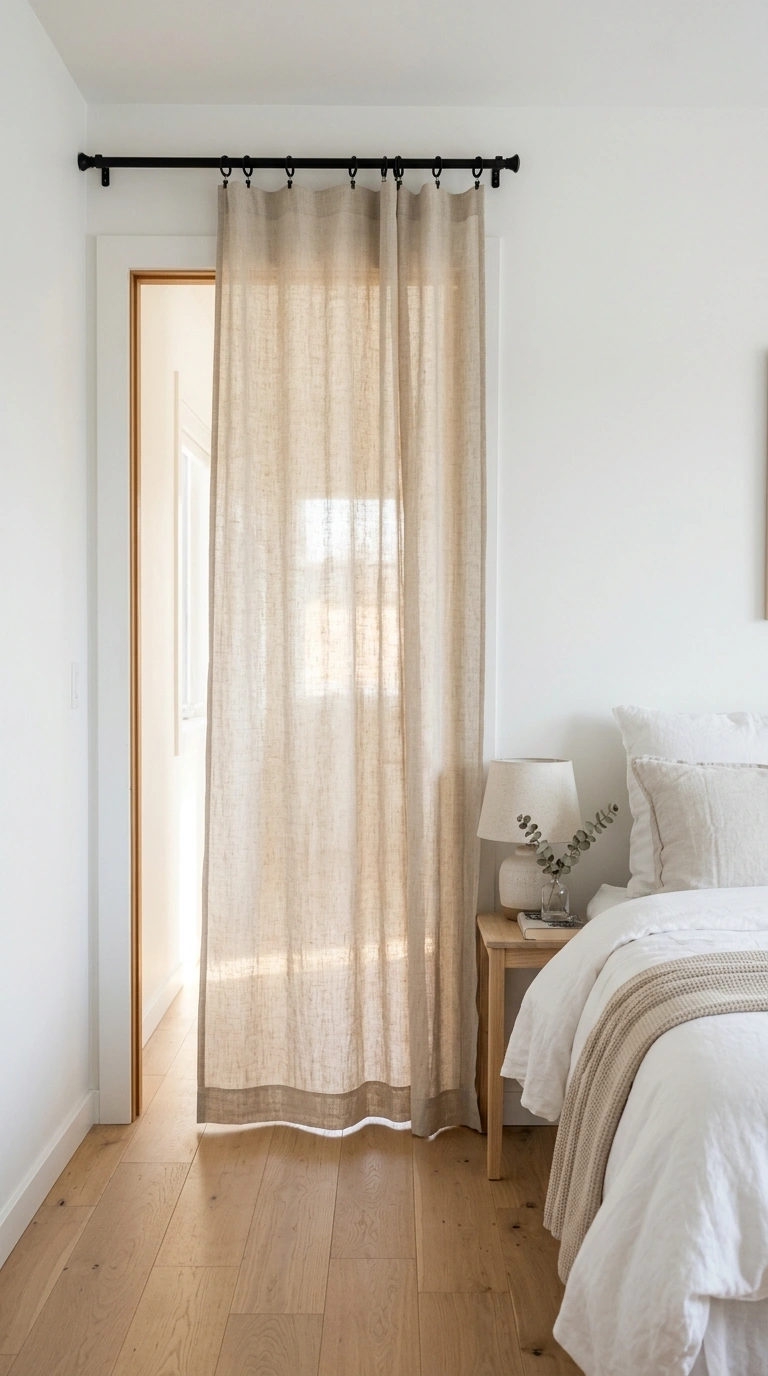
A single sheer linen panel is the gentlest way to divide a bedroom doorway, and it suits rooms where you want a soft separation rather than full privacy. The fabric moves when someone walks past and lets daylight travel between rooms, which keeps a small bedroom from feeling closed off. Choose a panel in white, oatmeal, or pale grey and buy it about one and a half times the doorway width so it has enough fullness to hang in soft folds instead of stretching flat. Hang it on a slim black or brass rod mounted two inches above the door frame, which makes the doorway look taller. Let the hem sit half an inch off the floor so it does not drag or collect dust when you push through. This works best between a bedroom and a private hallway or an ensuite area. For a doorway that faces a shared living space, layer it with a heavier panel behind, which the next idea covers.
2. Blackout Velvet Curtain
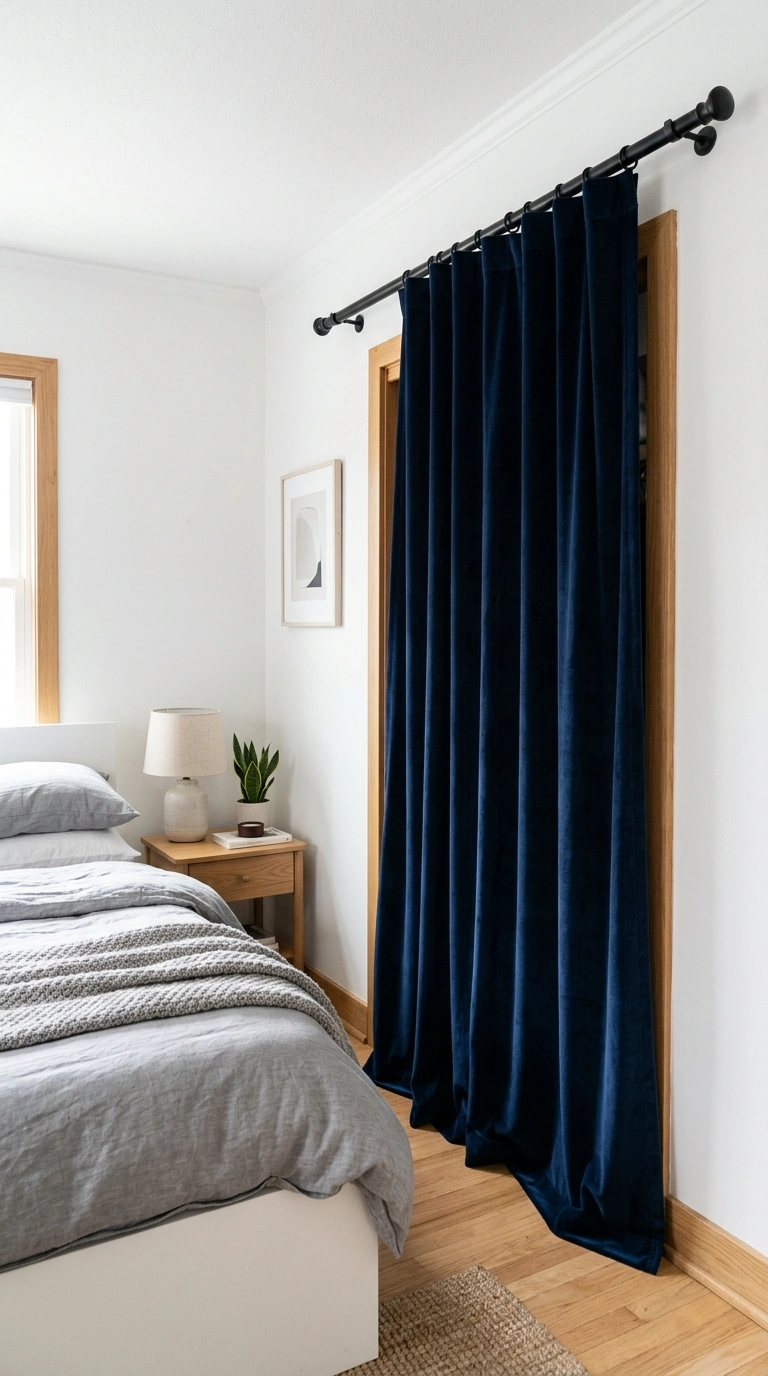
When you actually need darkness and quiet, a blackout lined velvet curtain is the closest a fabric panel gets to a real door. The weight blocks light around the edges, absorbs sound from the rest of the house, and hangs dead straight without billowing every time someone walks past. Choose a velvet panel with a sewn in blackout lining rather than a separate liner, since a single thick panel is easier to pull open with one hand. Deep navy, charcoal, and chocolate brown all work in bedrooms and hide fingerprints near the edge where you grab it. Mount a sturdy metal rod with three brackets rather than two, because velvet is heavy and a center bracket stops the rod from sagging over time. Extend the rod six inches past each side of the doorway so the panel overlaps the wall and light does not spill through the gap. This setup makes a real difference for anyone sleeping during daytime hours.
3. Wooden Bead Strands
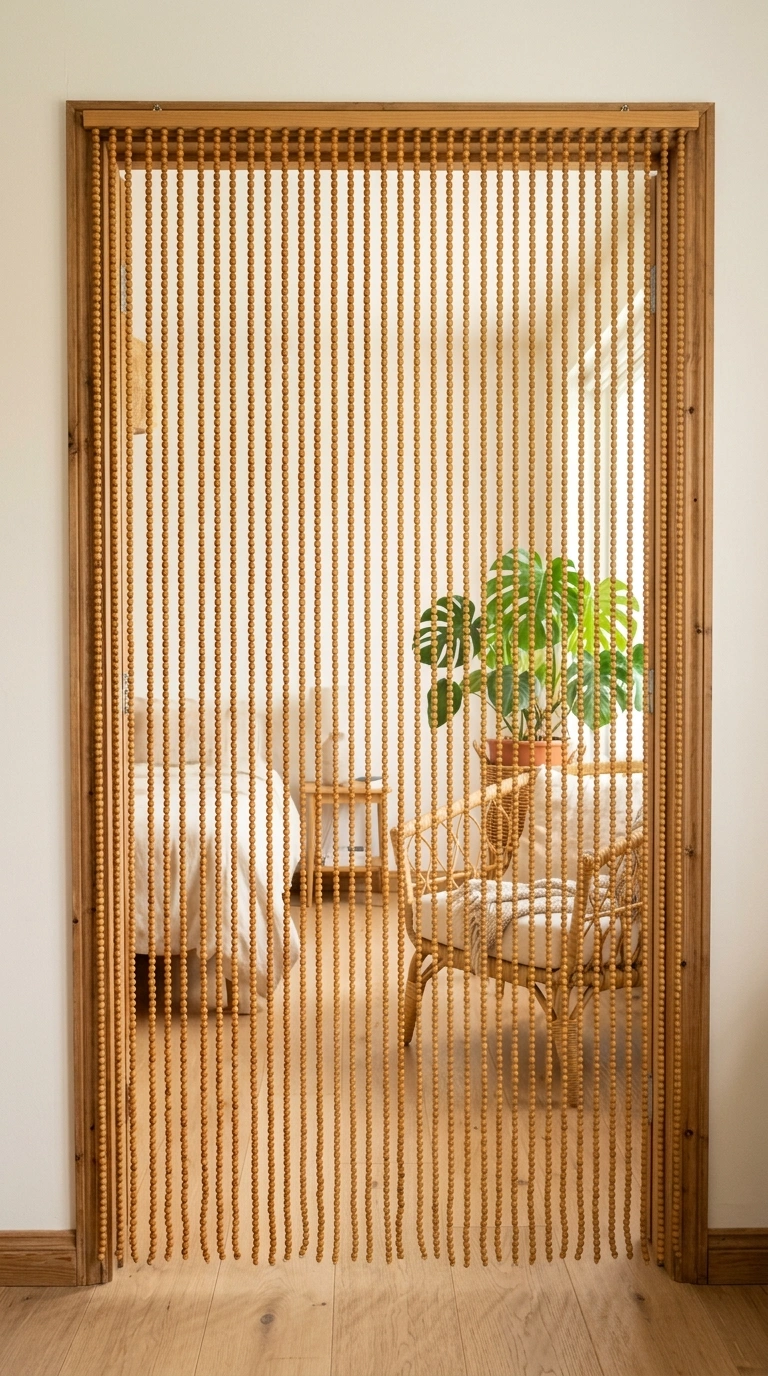
Hanging wooden bead strands across a bedroom doorway gives you a defined entrance without blocking air or light, and the sound they make as you pass through is part of the appeal. Look for panels of natural or honey toned beads strung on strong cord, sized to your exact doorway width so there are no bare patches at the edges. Most come attached to a wooden top rail that screws directly into the top of the door frame, which takes about fifteen minutes with a drill and two screws. Because the strands hang free, they suit warm climates and rooms that need airflow, and they work particularly well in boho or natural styled bedrooms with rattan and plants. They offer very little sound privacy, so keep them for doorways into dressing areas, balconies, or a private corner rather than the main bedroom entrance. Dust them every few weeks by running a dry cloth down each strand, or they will look dull quickly.
4. Double Layered Panels
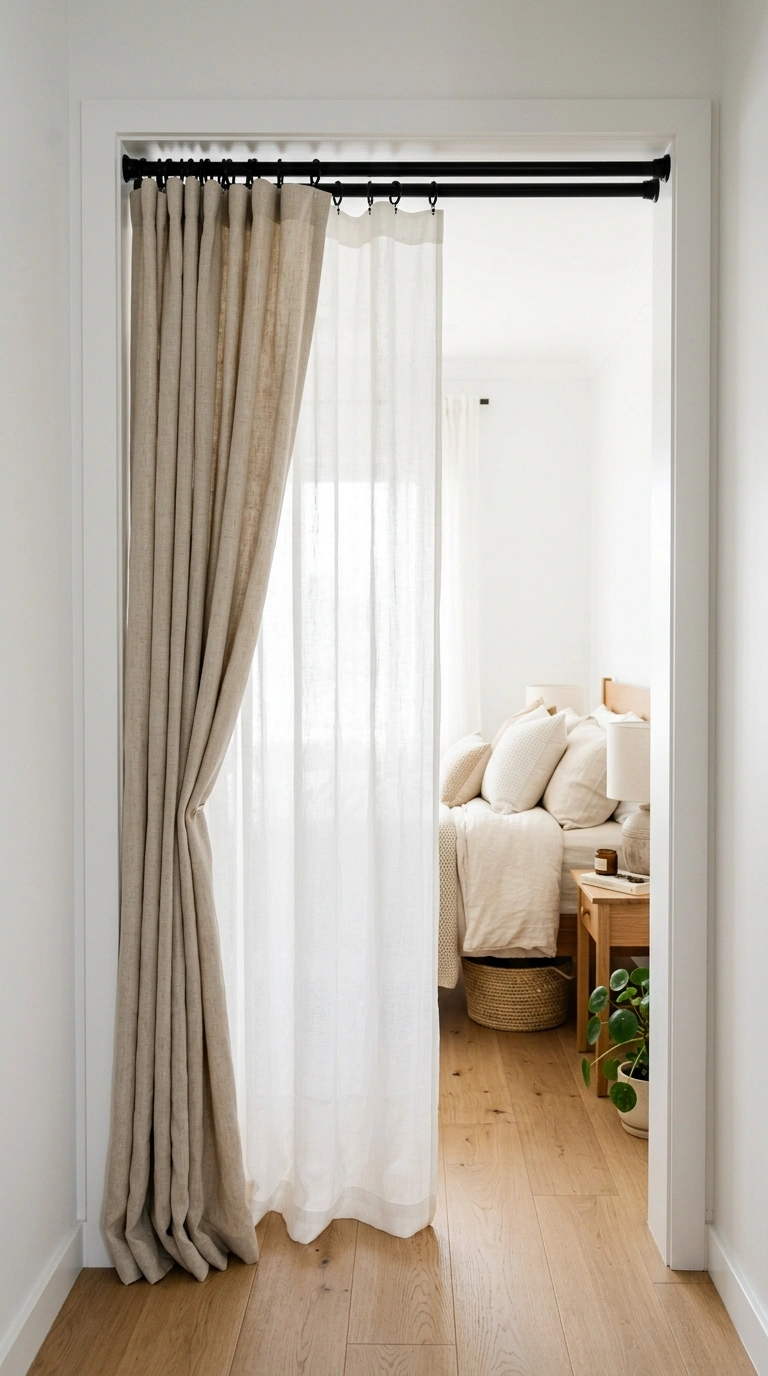
Layering two curtains in one doorway gives you the flexibility a single panel cannot. Hang a sheer panel on the inner rod and a heavier lined panel on the outer rod using a double bracket set, which mounts both rods on the same wall plate above the frame. During the day, pull the heavy panel aside and let the sheer stay closed, so light passes through but the doorway still reads as separated. At night, pull the heavy panel across for full privacy and darkness. Keep both panels in the same color family with different weights, such as cream sheer with an oatmeal linen blend, so the layers look calm rather than busy. Use a metal double rod rather than a tension version, since two panels together are heavier than most tension rods hold. This is the best solution for a bedroom doorway that opens directly onto a living room, because you can adjust privacy through the day.
5. Macrame Fringe Curtain
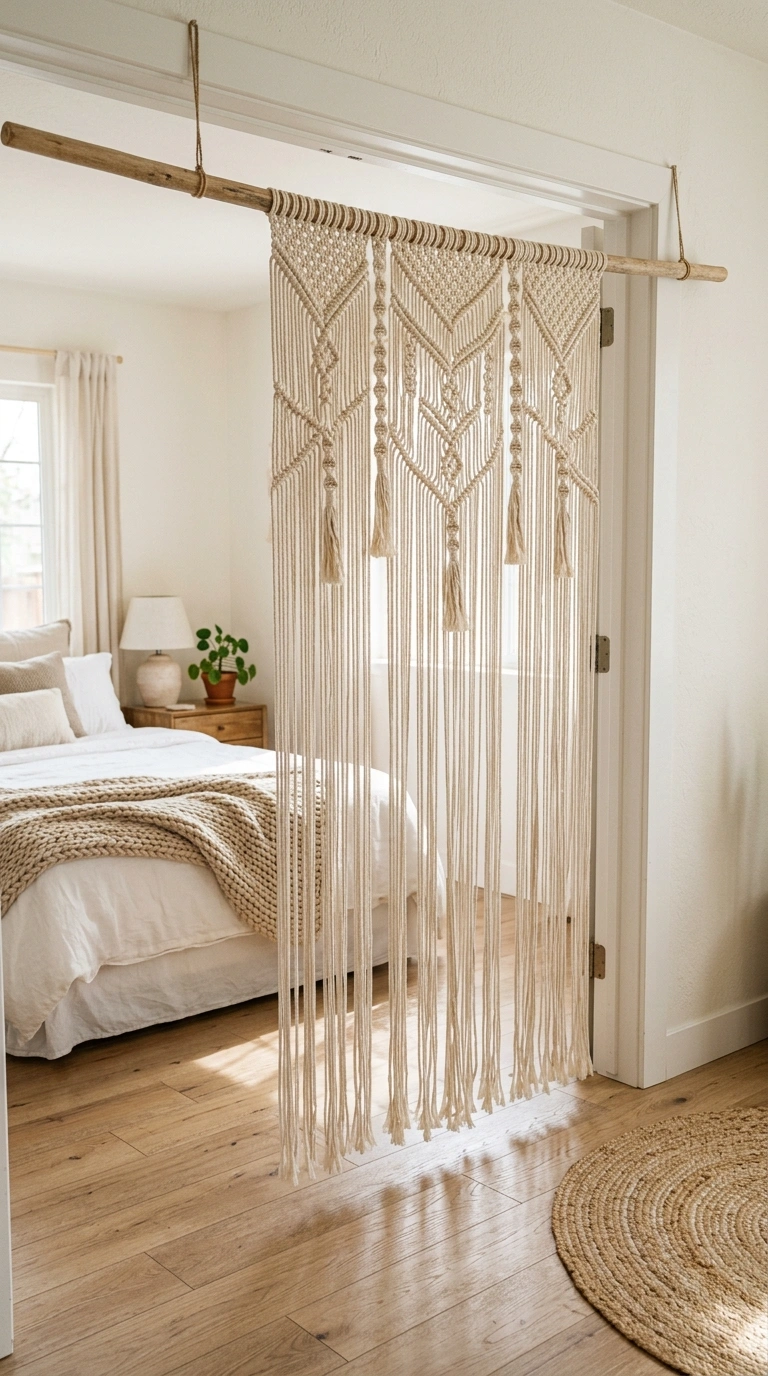
A macrame curtain turns a plain doorway into the prettiest feature in the room, with knotted cotton cord forming patterns that catch light and cast soft shadows on the floor. Choose a natural cream cord version for the classic look, or a soft sage or terracotta if your bedding already carries color. Measure your doorway and buy one slightly narrower than the opening, since macrame panels look best hanging free rather than squeezed. They usually come with a wooden dowel sewn into the top, which you can rest on two simple brackets or hang from the ceiling with two hooks. Because the fringe is open at the bottom, this is a decorative divider rather than a privacy solution. Use it for a doorway between a bedroom and a walk in closet, or in front of a window recess. Brush out the fringe with your fingers after hanging, since the strands flatten in packaging and need shaping.
6. Barn Track Curtain
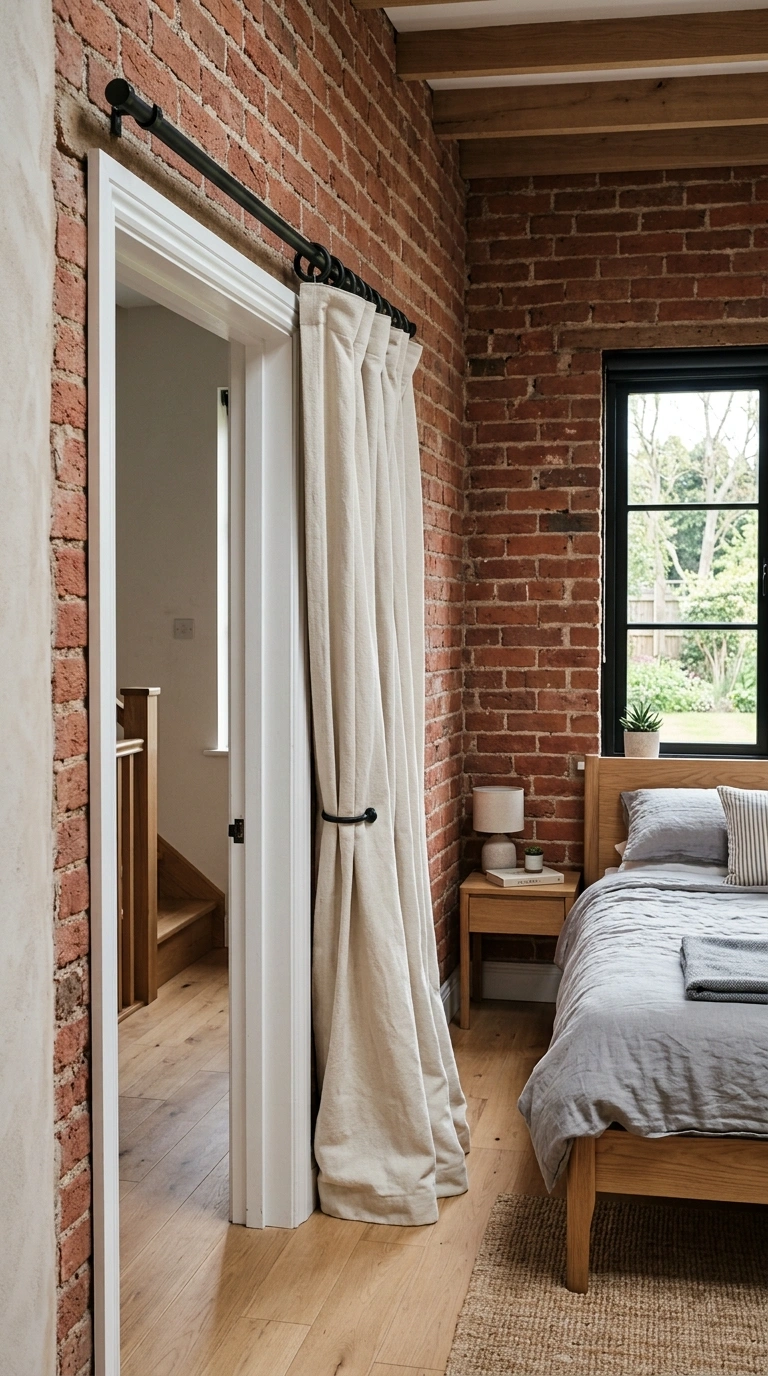
Mounting a curtain on a barn door style track gives you the sliding motion of a real door with the softness of fabric. Fix a black metal track above the doorway, then hang a single heavyweight panel from rolling rings so it glides across smoothly and stops where you push it. This is ideal for bedrooms where a swinging door would hit furniture, and it looks especially good in industrial or farmhouse styled rooms with exposed brick, black window frames, or wooden beams. Use a stiff fabric such as canvas, heavy cotton drill, or a wool blend, because soft fabrics look limp on a track system. The track needs solid fixing into the wall or a mounted timber batten, so check what is behind the plaster before drilling. Add a floor guide at the bottom if the panel swings when you pass. It is the most expensive idea on this list but also the closest thing to a proper door.
7. Tension Rod Panel
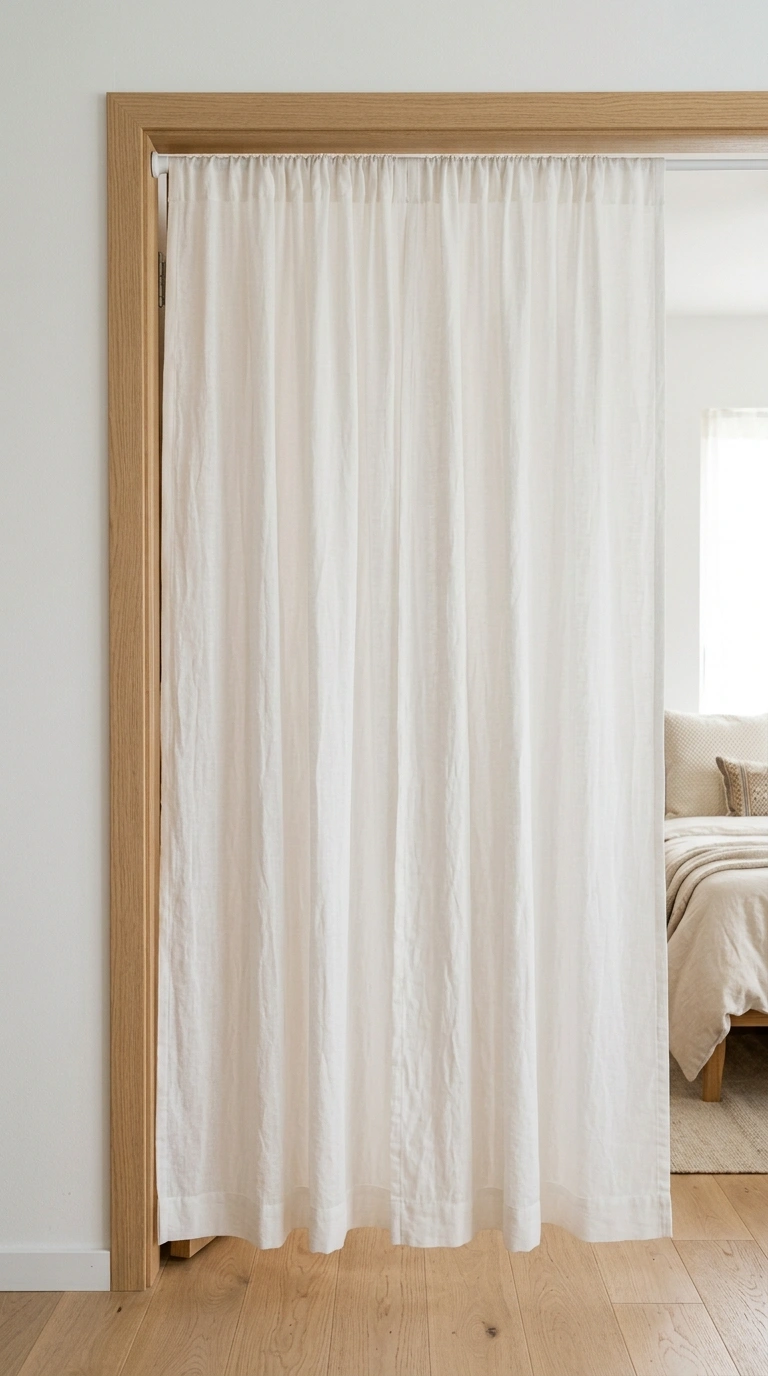
For renters, a tension rod is the answer, since it sits inside the door frame using pressure alone and leaves no holes behind. Measure the inside width of your frame, buy a rod rated slightly wider, and twist it until it grips firmly about two inches below the top of the opening. Keep the curtain light, because tension rods fail under heavy fabric. Cotton, light linen, and polyester blends all work, while velvet and lined blackout panels do not. Choose a rod pocket style curtain rather than rings, since fewer hardware pieces mean less weight and less noise. Add a strip of clear rubber shelf liner behind each end if the rod slips on painted walls. Because the rod sits inside the frame, the panel will be slightly narrower than the opening, so there is a small gap at each edge. That is fine for general privacy and unnoticeable once the curtain is hanging in place.
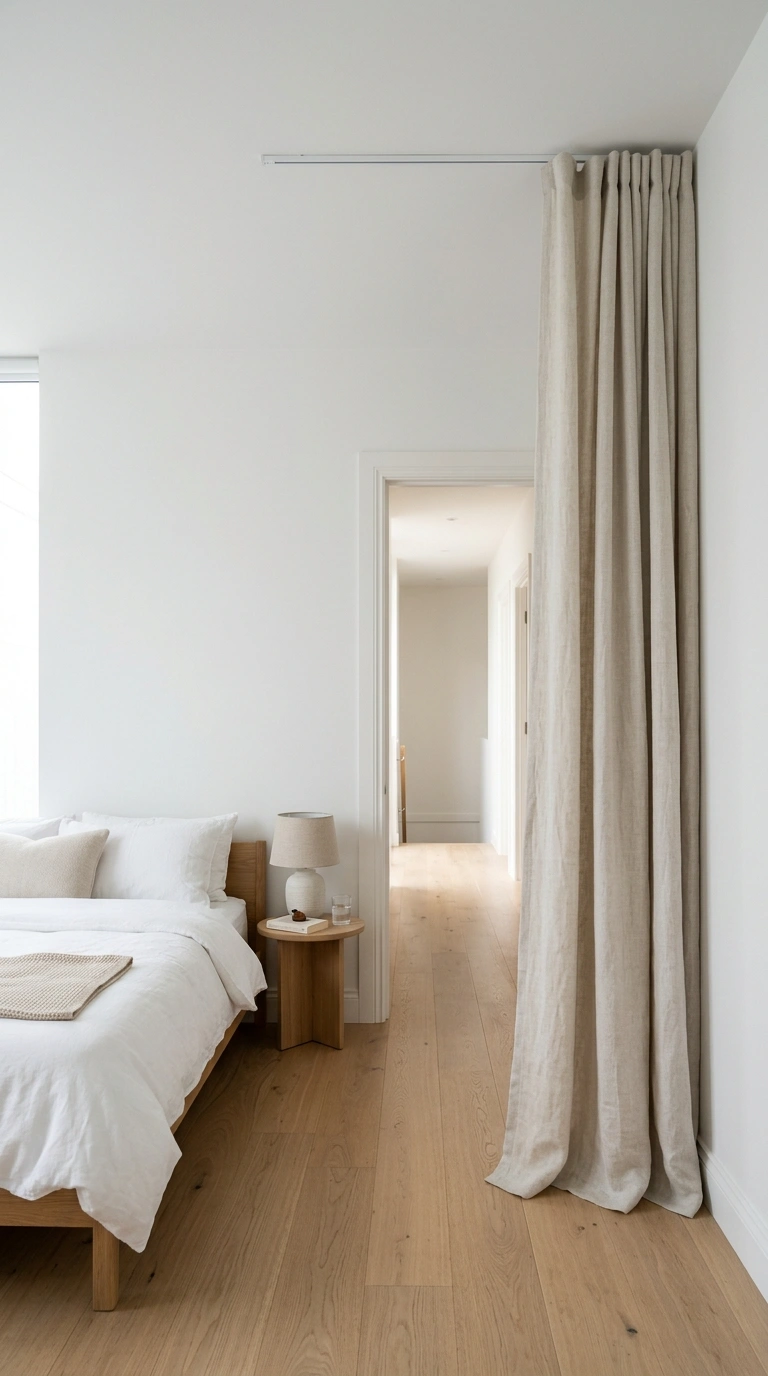
8. Ceiling Mounted Drape
A curtain mounted on the ceiling rather than the door frame makes the doorway look taller and the whole room feel bigger. Fix a slim ceiling track or two ceiling hooks about four inches out from the wall, then hang a floor length panel that falls in one unbroken line from ceiling to floor. The height difference is dramatic, and it works especially well in bedrooms with low ceilings where every inch of visual height helps. Measure carefully, since the hem should clear the floor by about half an inch and there is no adjusting once the panel is cut. Light to mid weight fabrics hang best from ceiling tracks, so choose linen blends or cotton rather than heavy velvet. Screw directly into a ceiling joist wherever possible. This is also the neatest solution for archways with no frame to mount a rod on, because the ceiling gives you a flat surface to work with.
9. Embroidered Cotton Curtain
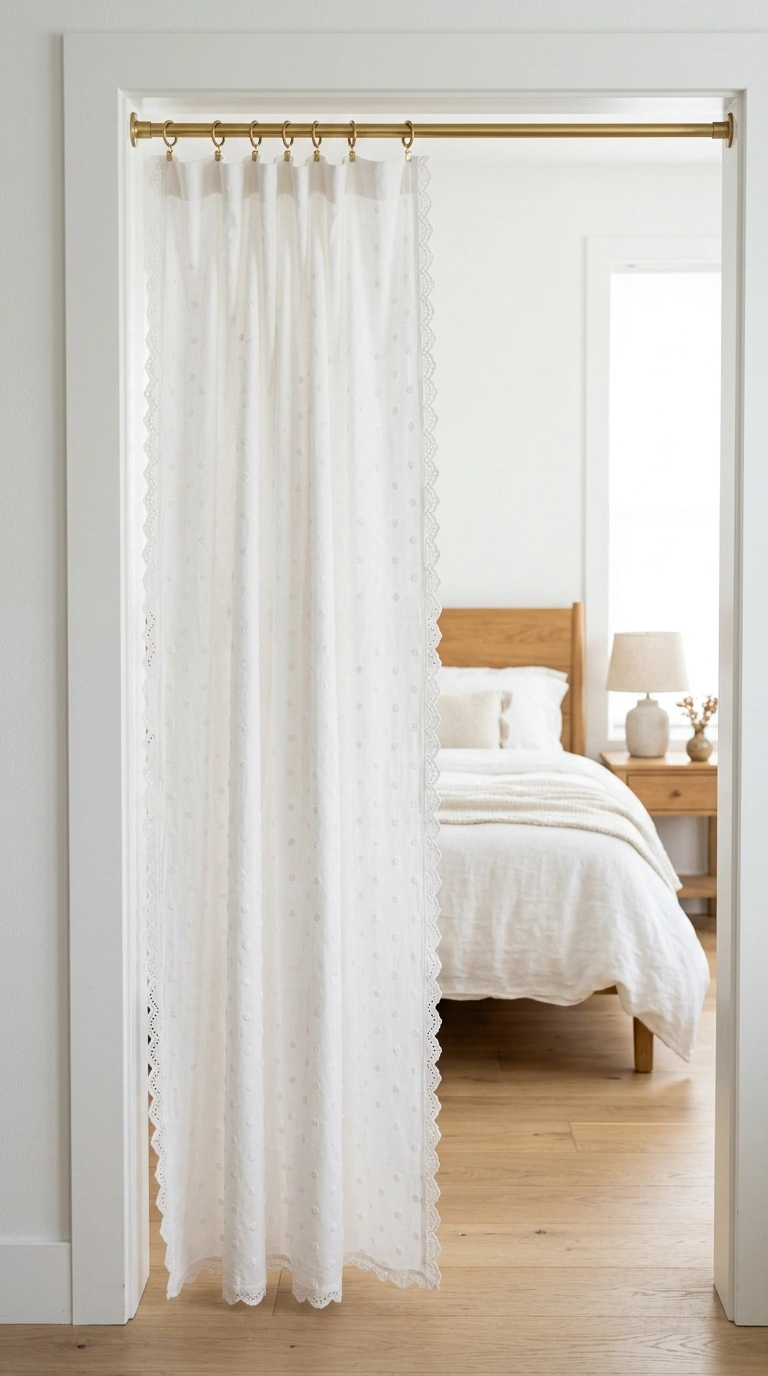
An embroidered cotton panel adds detail to a doorway without bringing in strong color, which makes it easy to live with over years. Look for white or cream cotton with tonal embroidery, such as small dots, scalloped edges, or a simple leaf pattern stitched in the same shade as the base fabric. The texture shows up in daylight and disappears at night, so the doorway never feels overworked. Hang it on a thin brass rod with matching rings, spaced about four inches apart so the folds stay even. Cotton creases easily, so steam the panel while it hangs rather than ironing it flat, which keeps the embroidery from flattening. This style suits soft feminine bedrooms with white bedding, wooden furniture, and pale walls. Wash it separately on a gentle cycle and hang it damp so gravity pulls out the wrinkles. A single panel is usually enough, since embroidery looks better slightly gathered than stretched wide.
10. Half Cafe Curtain
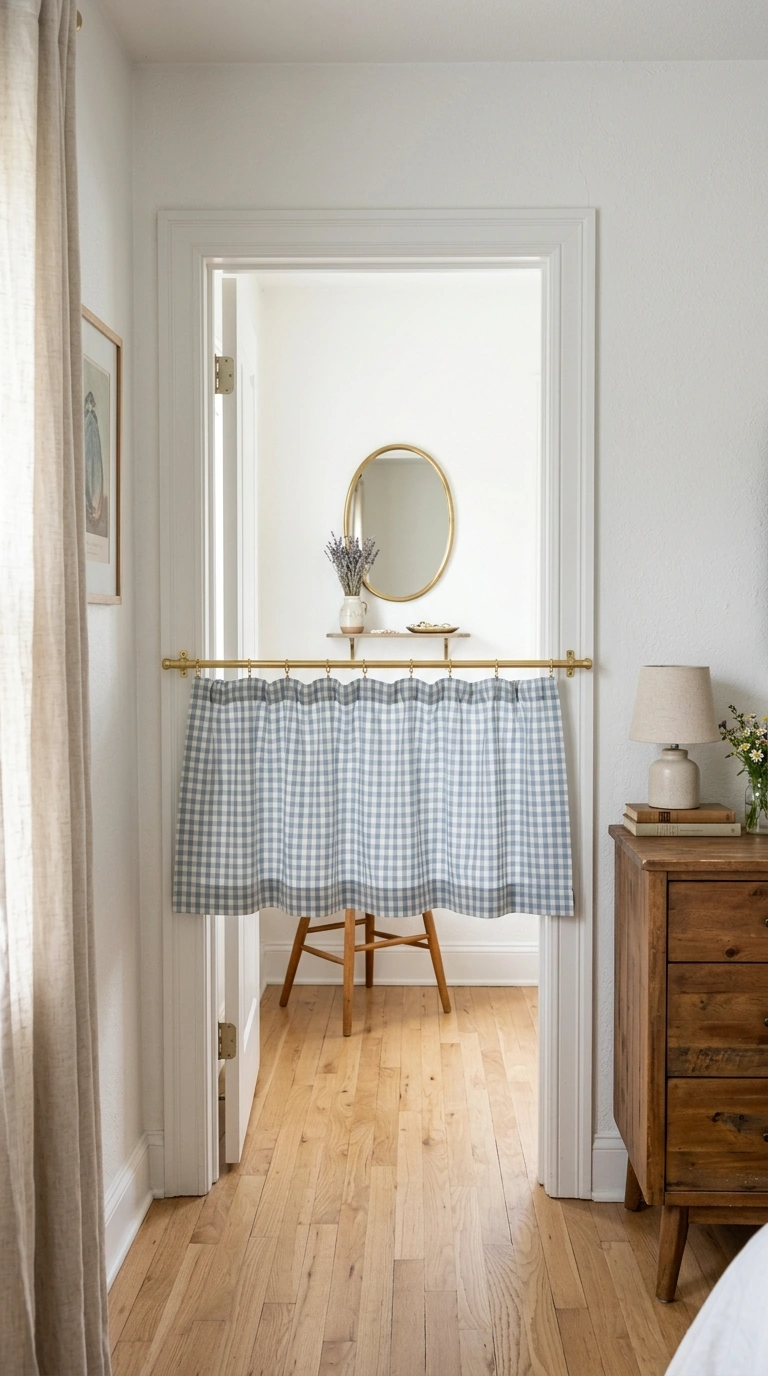
A half length cafe curtain covering only the lower part of a doorway is a clever option for doorways you walk through constantly. You get visual separation at eye level from a seated position while still being able to step through without pushing fabric aside. Mount a slim rod halfway up the frame, then hang a short panel that reaches from that rod to just above the floor. Gingham, stripes, and small florals all suit this look, which sits naturally in cottage and vintage styled bedrooms. Keep the fabric light so it stays flat against the frame. This works beautifully for a doorway into a small dressing area or a laundry nook off the bedroom, where you want to hide clutter without closing the space in. Because the upper half stays open, the room keeps its light and airflow. It is also the cheapest idea here, since you only need about half the usual fabric length.
11. Bamboo Strip Curtain
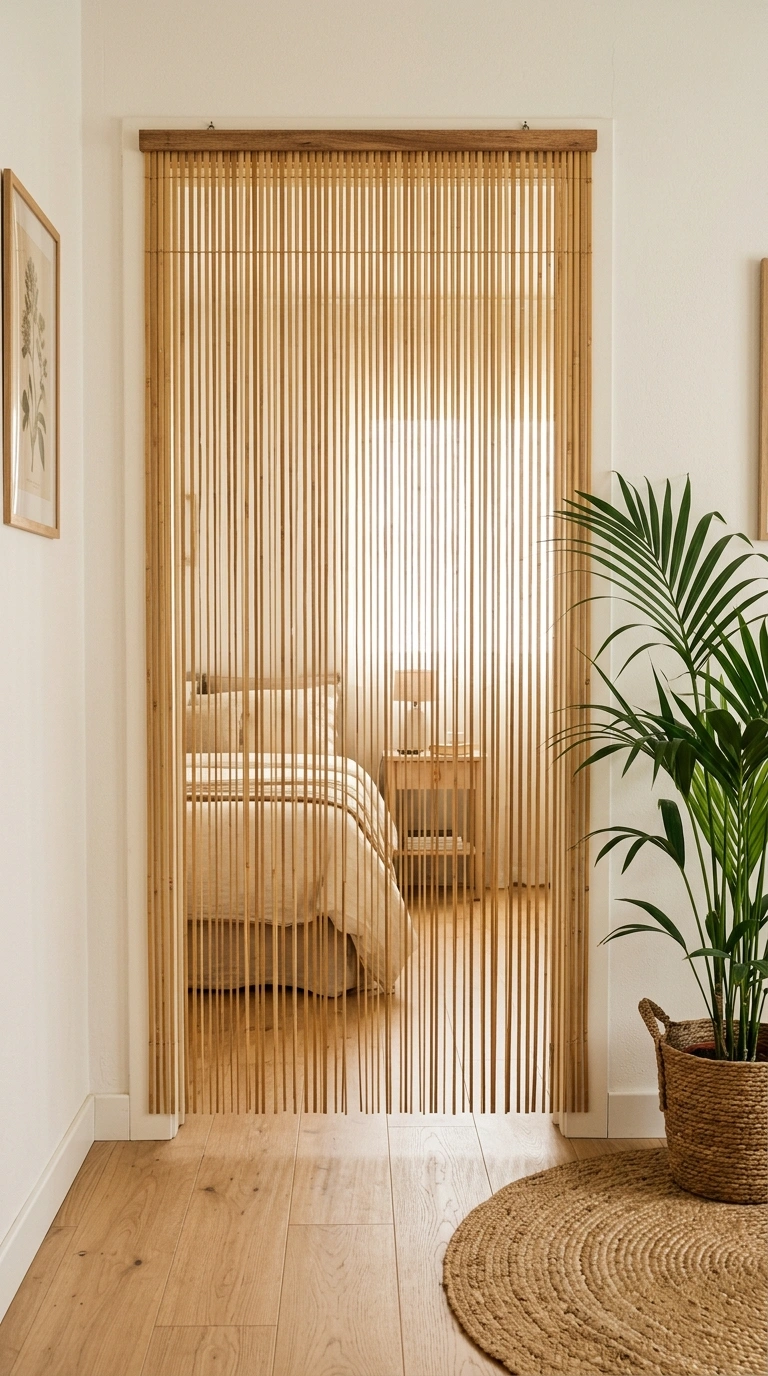
A bamboo strip curtain brings natural texture to a doorway and holds its shape better than fabric in humid rooms. Thin bamboo pieces strung in rows create a semi solid panel that sways slightly when you pass through, and the warm color suits bedrooms with plants, jute rugs, and wooden furniture. Measure your doorway and choose a panel close to the exact width, since bamboo cannot be trimmed narrower without unstringing it. Most versions attach with a top rail that screws into the frame, or come with hooks that hang from a rod. They block sightlines better than beads but still let air move, which makes them a good middle ground. Wipe them with a barely damp cloth rather than soaking, since too much water can warp the strips over time. Keep them out of direct strong sunlight if possible, as the color lightens unevenly on the side that gets the most sun.
12. Tie Back Styling
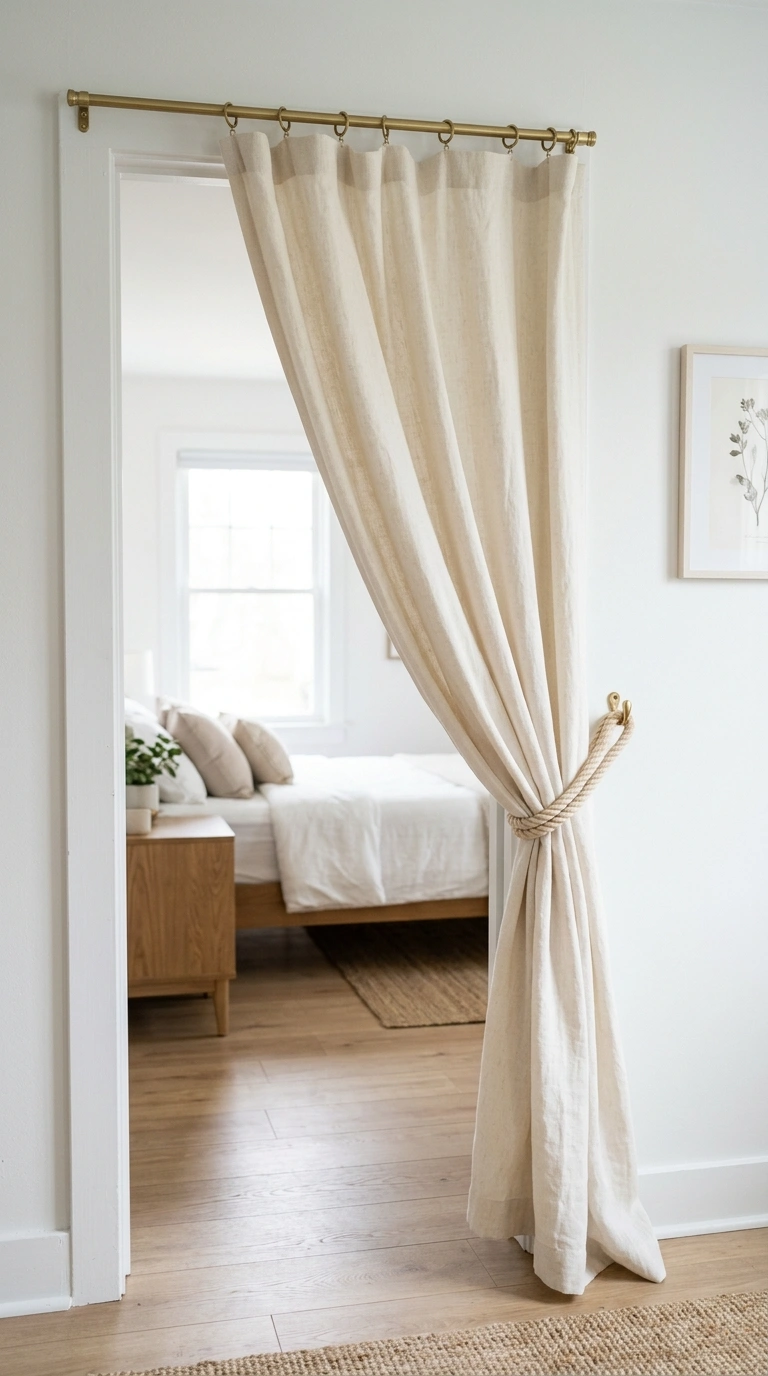
Adding a tie back changes how a doorway curtain looks and works, and it takes ten minutes. Fix a small hook or holdback into the wall about two thirds of the way down the frame on one side, then gather the panel and loop it back with a fabric tie, a braided cord, or a leather strap. The curtain forms a soft diagonal sweep that looks intentional rather than shoved aside, and the doorway stays clear during the day. Match the tie to your room, so leather with wooden furniture, cotton rope with natural textures, and velvet cord with richer fabrics. Choose a metal holdback in the same finish as your curtain rod so the hardware looks like a set. This is the detail that makes a doorway curtain look styled instead of temporary, and it stops the fabric from getting grubby at hand height because you are pulling the tie rather than the panel itself.
13. Color Blocked Panel
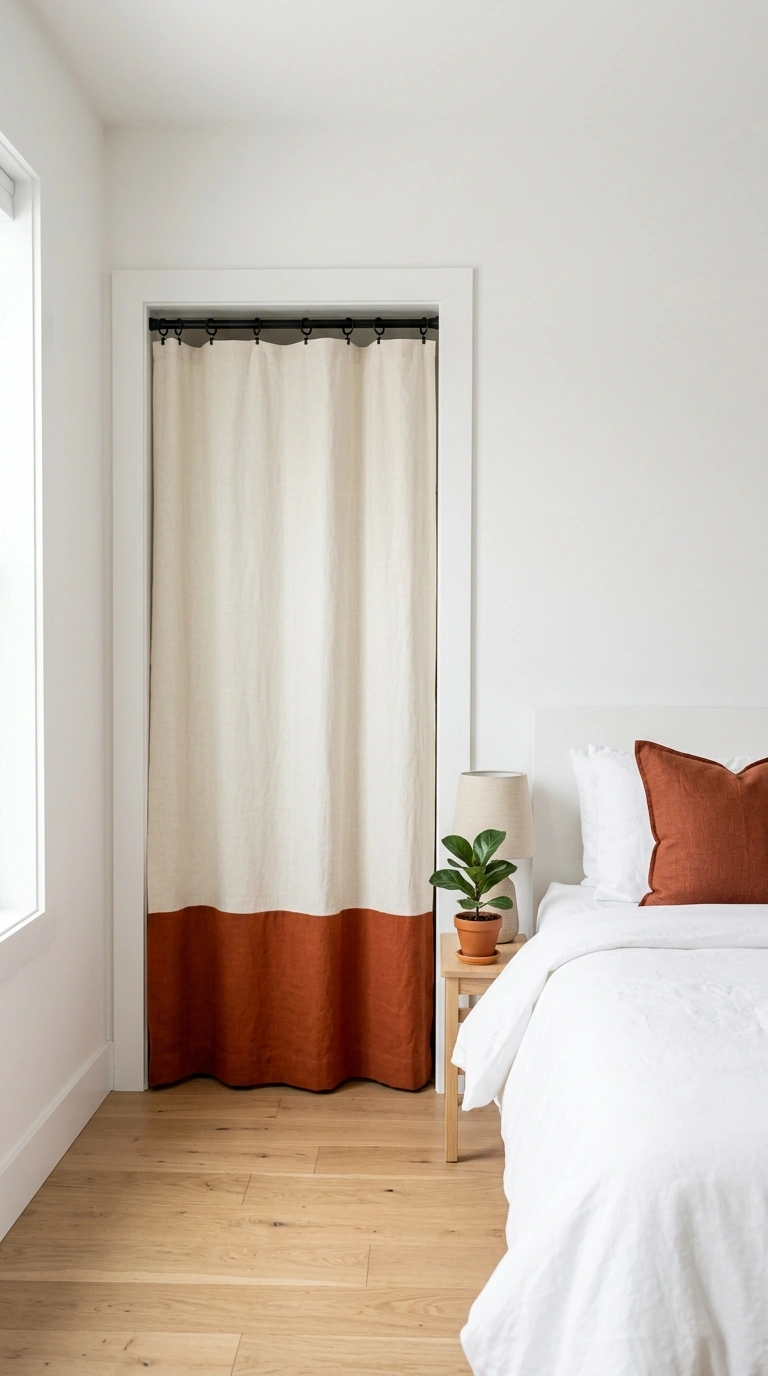
A color blocked curtain, where two solid colors meet in a horizontal band, gives a doorway a modern graphic look with no pattern at all. Common combinations include cream on the top two thirds with a deep rust or olive band along the bottom, which grounds the panel visually and hides the scuffs that always happen near the floor. You can buy these ready made, or sew one yourself by joining two fabric widths with a straight seam. Keep the band low, roughly the bottom quarter of the panel, since a band at the halfway point can look like a mistake. Hang it on rings so the top edge stays flat and the color division reads clearly across the doorway. This suits minimal bedrooms with plain walls and simple bedding, where one strong shape is enough decoration. Pick the band color from something already in the room, like a cushion or a framed print, so it feels connected.
14. Ruffled Cotton Curtain
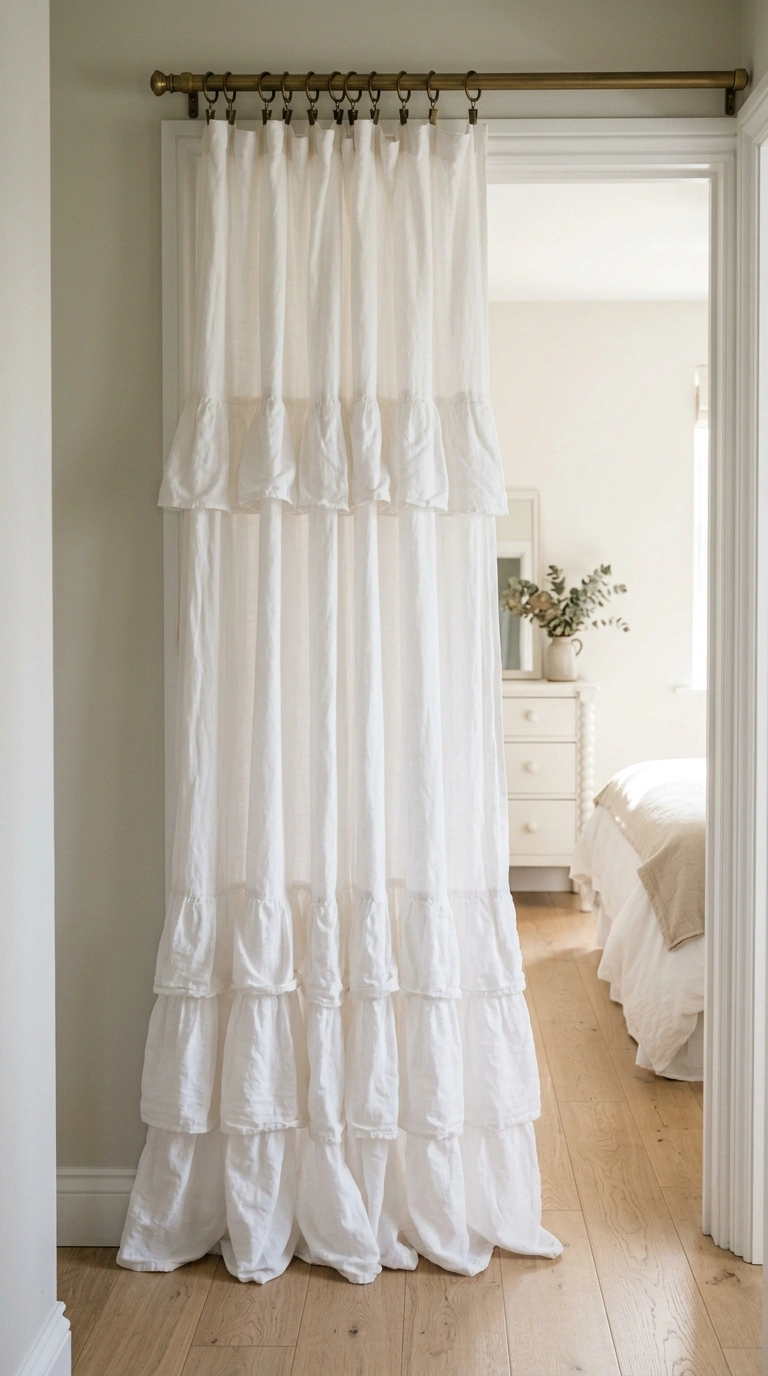
A ruffled cotton curtain brings softness and a little romance to a bedroom doorway, and the texture reads beautifully in natural light. Look for a panel with tiered horizontal ruffles or a single ruffle along the leading edge, in white, blush, or the palest butter yellow. Cotton muslin and washed cotton both ruffle well and get softer with every wash. Hang it on a white or brass rod with clip rings, which lets the top edge fall naturally rather than being squashed into a rod pocket. Buy at least one and a half times the doorway width, because ruffles need fullness or they look flat and sad. Shake the panel out and finger press the ruffles after hanging. Wash on cool and tumble on low, then rehang while slightly damp so the ruffles settle rather than crease. This suits nursery style rooms, children’s bedrooms, and soft cottage bedrooms with painted wooden furniture.
15. Printed Boho Curtain
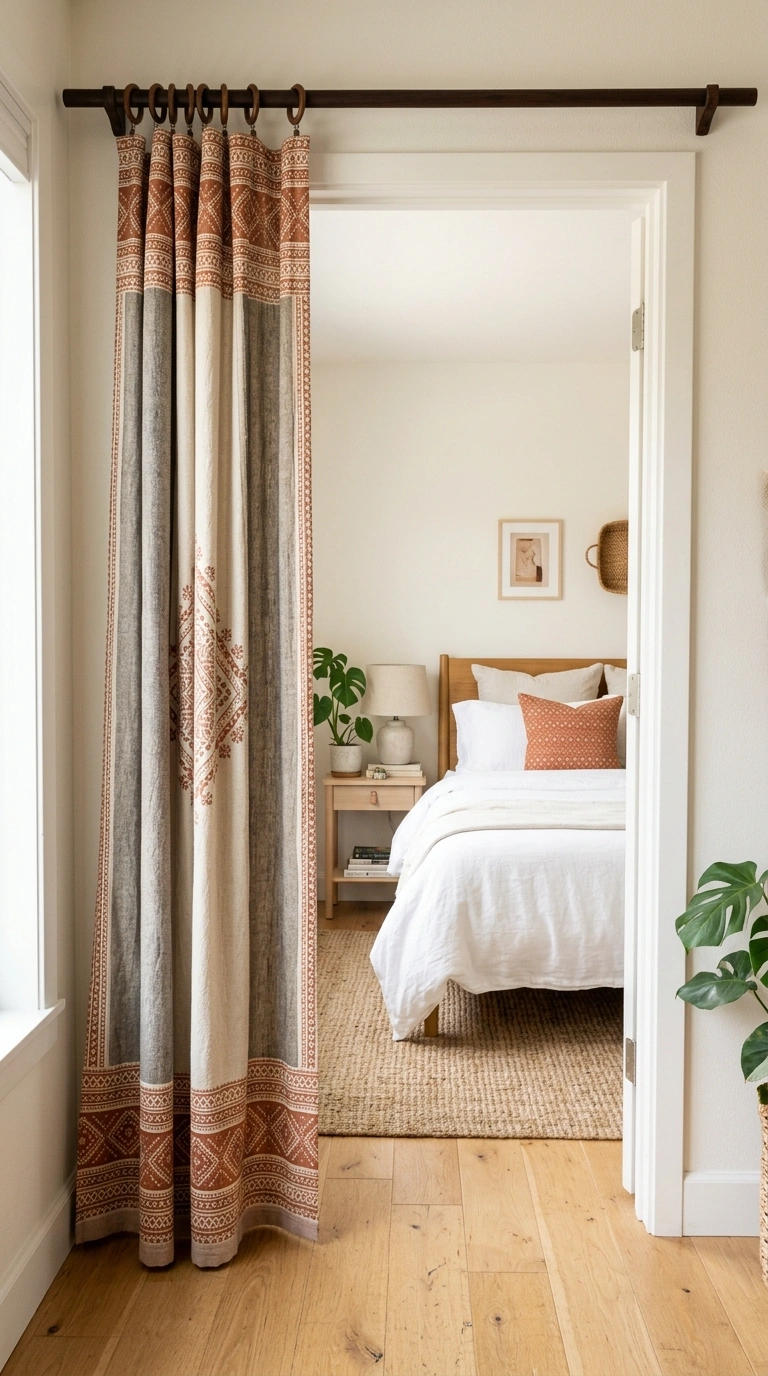
A printed panel in a boho pattern turns a doorway into the focal point of the room, which is useful when the rest of your bedroom is plain. Block prints, mandala patterns, ikat weaves, and geometric borders all work, and cotton is the best base fabric because the print stays crisp and the panel hangs with a slight softness. Choose a print with at most three colors so it does not fight with your bedding. Hang it on a dark wooden or black metal rod, which frames the pattern better than brass does against busy fabric. Pull one color from the print and repeat it in a cushion or a throw so the doorway connects to the rest of the room. Printed cotton fades in strong sun, so if the doorway gets direct afternoon light, rotate the panel occasionally or choose a darker base color. Wash cold and separately the first few times, since block printed cotton often releases dye.
16. Grommet Top Panel
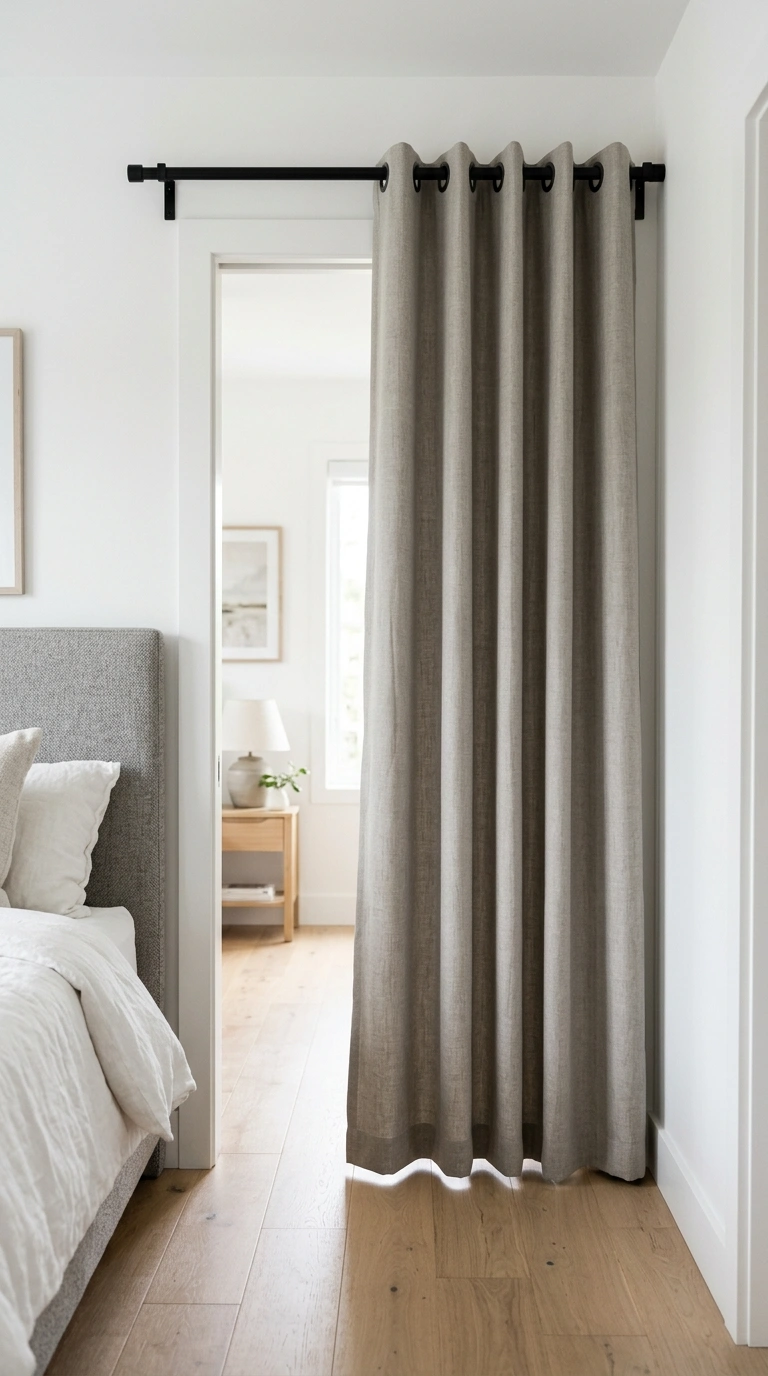
A grommet top curtain, with large metal rings punched straight through the fabric, slides across a doorway more smoothly than any other style, which matters when you are opening and closing it many times a day. The rings glide over the rod with almost no friction and no clicking sound. Choose a panel with grommets in a finish that matches your rod, usually brushed nickel, matte black, or antique brass. The fabric between grommets falls into deep even folds, which gives the doorway a tailored look without any sewing or fussing. Mid weight fabrics work best, so cotton blends, faux linen, and lightweight velvet all hang well. Measure carefully, because grommet panels cannot be shortened at the top and must be hemmed from the bottom. This is the most practical everyday option for a main bedroom doorway, since it looks neat and handles constant use without the fabric bunching up at one end.
17. Thick Sound Dampening Curtain
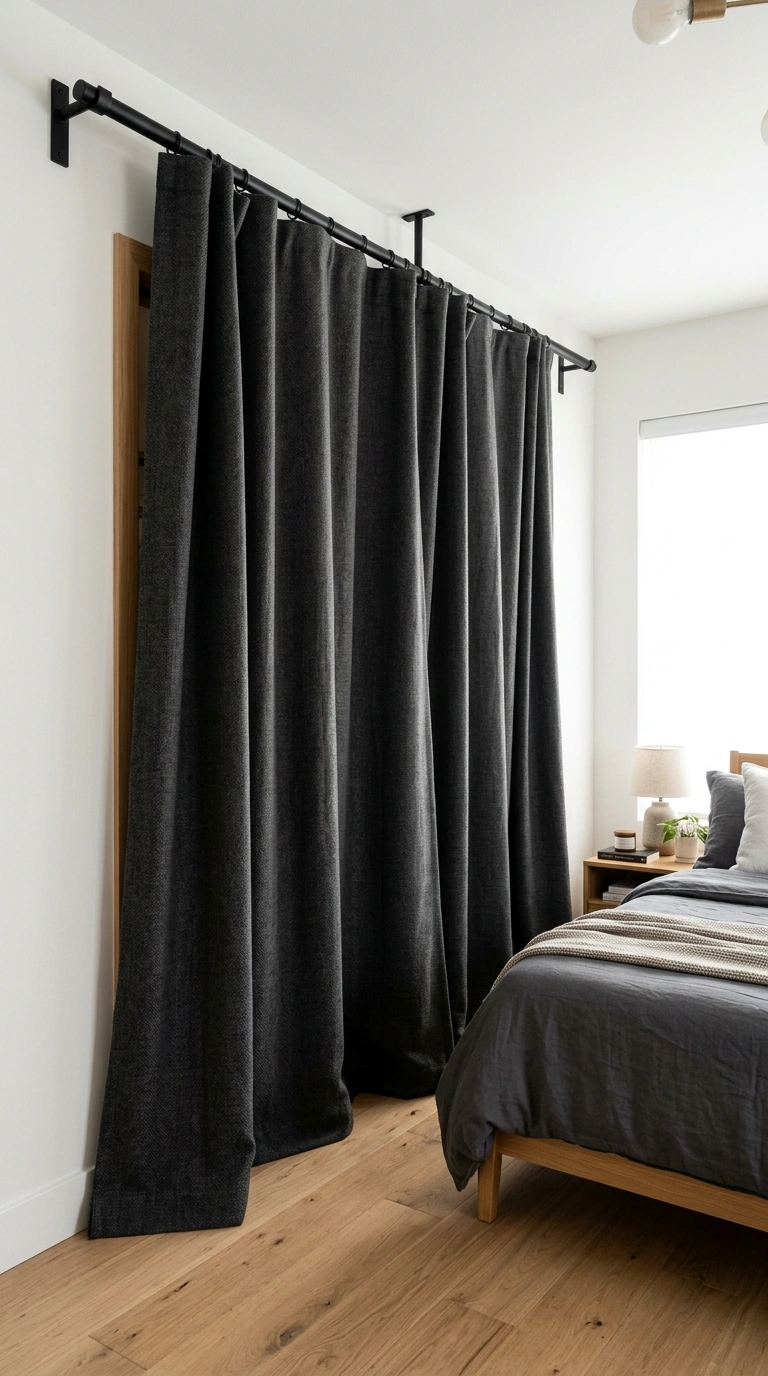
If noise is the real problem, a thick sound dampening curtain across the bedroom doorway makes a noticeable difference. Look for heavyweight panels with a dense felt or triple weave core, which absorb sound rather than just blocking light. The wider and longer the panel, the better it performs, so extend the rod at least eight inches past each side of the doorway and let the hem brush the floor rather than hanging above it. A close fit at the edges is what stops sound sneaking through. Choose a heavy duty rod with a center support bracket, since these panels can weigh several kilos. Mid to dark tones in charcoal, moss, or deep grey suit the thickness of the fabric better than pale shades. Do not expect the results of a solid door, but for a bedroom off a busy hallway or shared living space, it softens footsteps, conversation, and television noise enough to help you sleep.
18. Doorway Valance Topper
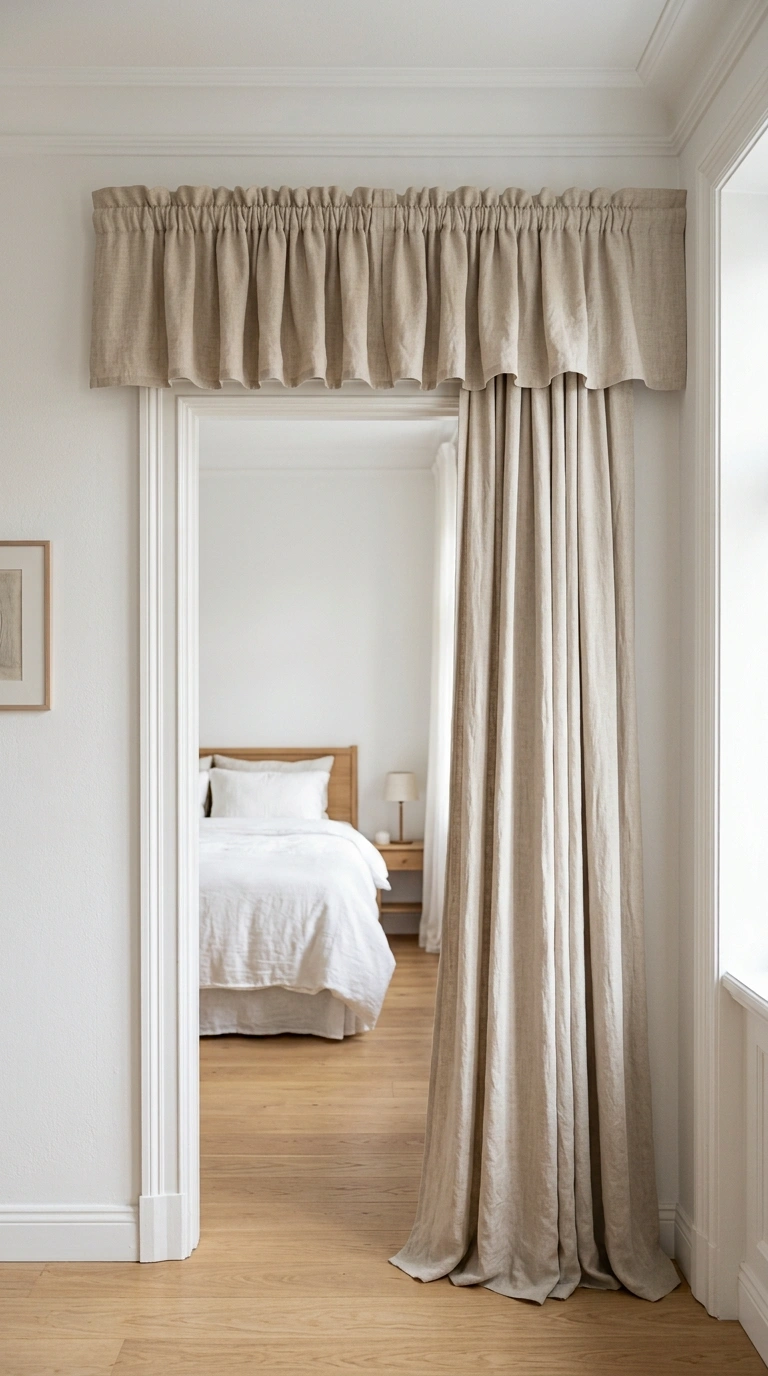
A short valance mounted above the doorway finishes the top edge and hides hardware, which is the detail most people skip. Fix a slim valance rod on brackets a couple of inches above your main curtain rod, then hang a gathered or flat panel about twelve to sixteen inches deep. It frames the doorway like a picture and makes the curtain below look properly installed rather than added as an afterthought. Match the valance fabric to the main panel for a clean look, or use a contrasting texture like a linen valance over a velvet curtain for more interest. In rooms with high ceilings, a deeper valance fills the awkward blank space above the doorway. Keep the valance narrower than the wall space so the ends do not crowd the corners. This also works on its own over an open archway when you want to soften the top edge without closing the passage at all.
Frequently Asked Questions
Can a curtain really replace a bedroom door?
For light and sound, a heavy blackout or sound dampening panel comes surprisingly close, especially if the rod extends well past the frame and the hem reaches the floor. What a curtain cannot do is lock, so it is not the right choice if you need a door that closes securely. For renters, awkward layouts, and archways without frames, it is often the better option.
How wide should a bedroom door curtain be?
Measure the doorway width and multiply it by one and a half to two. That extra fabric is what gives the panel soft folds instead of a flat stretched look. For privacy, also extend the rod six to eight inches past each side of the opening so the curtain overlaps the wall and no gap is left at the edges.
How do I hang a doorway curtain without drilling?
A tension rod fitted inside the door frame holds a light curtain using pressure alone and leaves no marks. Keep the fabric light, since heavy panels cause tension rods to slip. Adhesive rod brackets rated for the panel weight are another option, though they need a clean smooth painted surface and a full day to cure before you hang anything.
What length should the curtain be?
Measure from the rod to the floor and subtract about half an inch so the hem clears the ground. A curtain that drags will collect dust and catch underfoot every time you walk through, and one that hangs several inches short lets light and noise pass under it. For sound or blackout panels, aim for the hem to just brush the floor.
Which fabric is best for a bedroom doorway?
It depends on what you want. Blackout lined velvet for darkness and quiet, sheer linen for softness and airflow, mid weight cotton or faux linen for everyday use, and bamboo or beads for warm rooms that need ventilation. Whatever you choose, pick something washable if the doorway is used many times a day, because the leading edge gets handled constantly.
Final Thoughts
A doorway curtain is a small change that solves a real problem, whether that is privacy, light, noise, or a door that has nowhere to swing. Measure your opening, decide how much privacy you actually need, then pick the fabric weight that matches. The rest is just choosing a color you like waking up to.