24 Bathroom Backsplash Ideas For Every Budget And Style
Water lands on the wall behind your sink whenever you wash your hands, brush your teeth, or rinse a razor. Paint in that spot gets spotted and can start to peel. A backsplash fixes the problem, and it gives the bathroom a bit of personality too. It does not have to be big, and it does not have to cost much. A few square feet of tile, a slab of stone, or even a sealed panel can protect the wall for years. In this list, you will find classic tiles, bold colors, budget picks, and a few surprises. Some suit a small powder room, and some fit a wide double vanity. Read through them with your own sink in mind, then choose the one that matches your budget and how much time you want to spend.
1. Classic Subway Tile
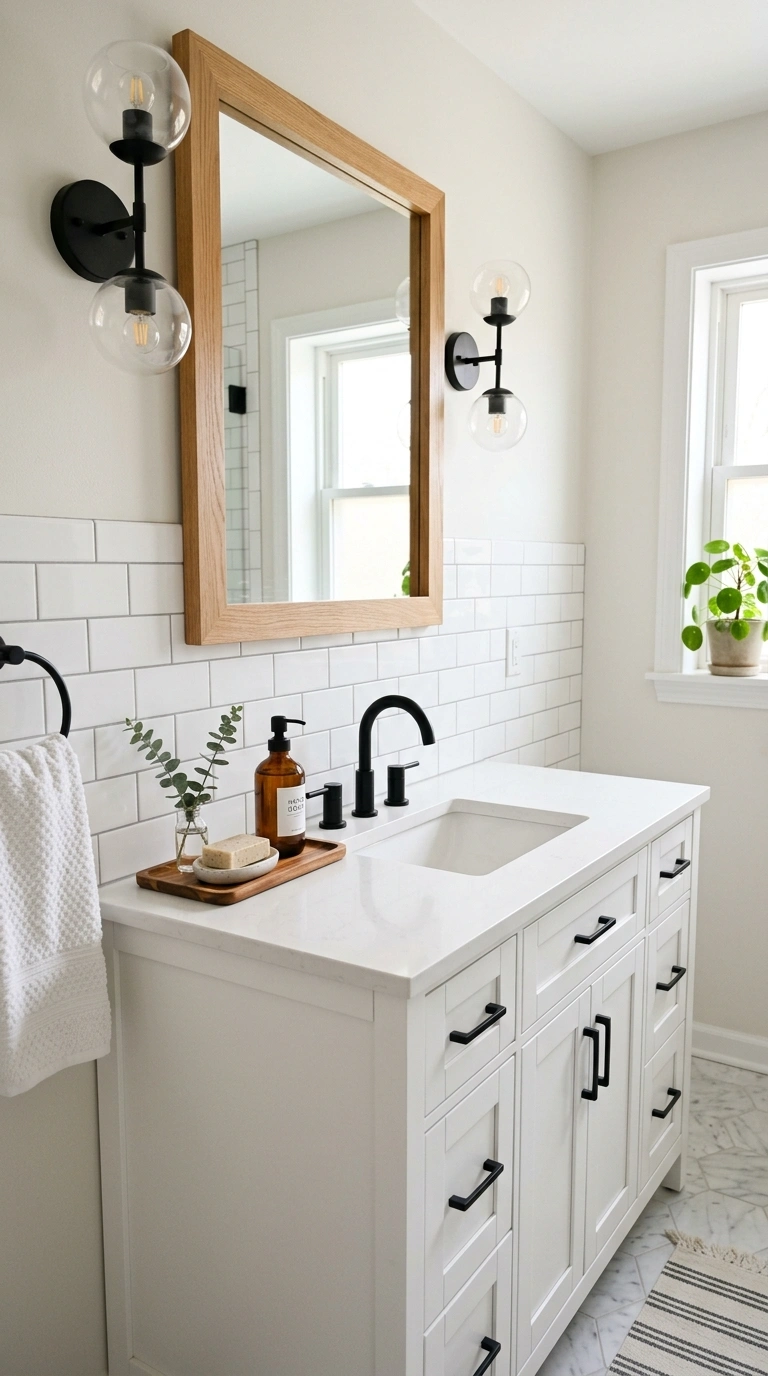
White subway tile is popular for a reason. It is cheap, easy to find, and works with almost every style. Use a 3 by 6 inch tile set in a straight brick pattern, running from the counter up about 4 to 6 inches. For a slightly warmer look, choose a soft ivory glaze, or a tile with a wavy edge that catches the light. The grout makes a big difference here. Light gray grout hides dirt, while bright white grout looks crisp but stains faster. Seal the grout after it cures. Add a thin line of flexible caulk where the tile meets the counter, because grout can crack in that joint. A simple black faucet or a brushed nickel one looks great against the white. Keep the rest of the vanity plain, with a wooden mirror frame and a small tray. If you like a fresh twist, run the same tile all the way up to the ceiling.
2. Handmade Zellige Tile
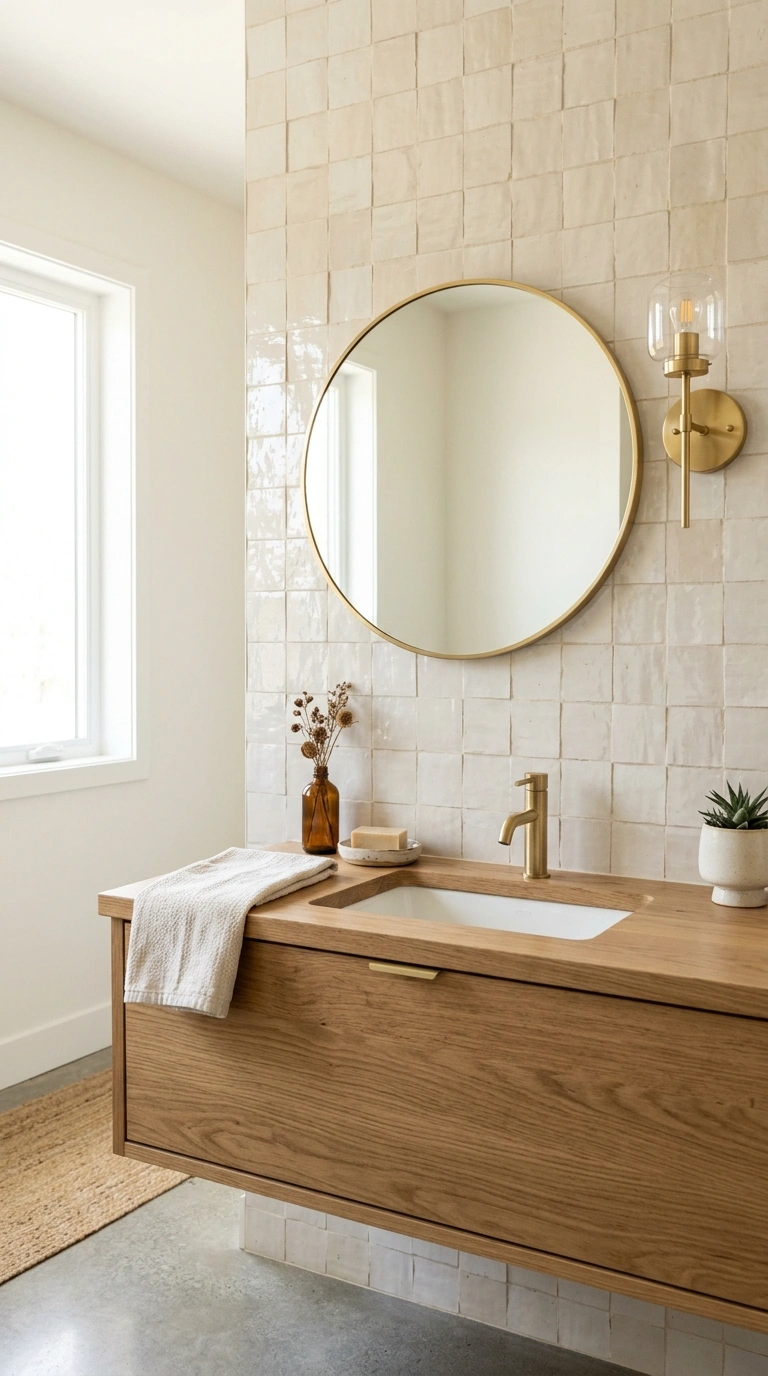
Zellige tile comes from Morocco, and it has small waves and color shifts that make every wall look one of a kind. The tiles are usually about 4 inches square, with a glossy glaze that catches light in soft, uneven ways. Warm white, soft gray, and pale clay look beautiful above a wood or stone vanity. Because the tiles are handmade, the edges are not perfectly even, so hire a tile setter or go slowly and keep the grout lines thin. Pick a grout close to the tile color so the wall reads as one soft surface. A budget option is a machine made tile with a crackle glaze, which gives a similar look for less money. Seal real zellige before grouting, since the clay is a bit porous. Hang a round mirror and a small wall sconce above it, and the whole wall will glow. Order about 10 percent extra tile to cover cuts and breaks.
3. Herringbone Tile Pattern
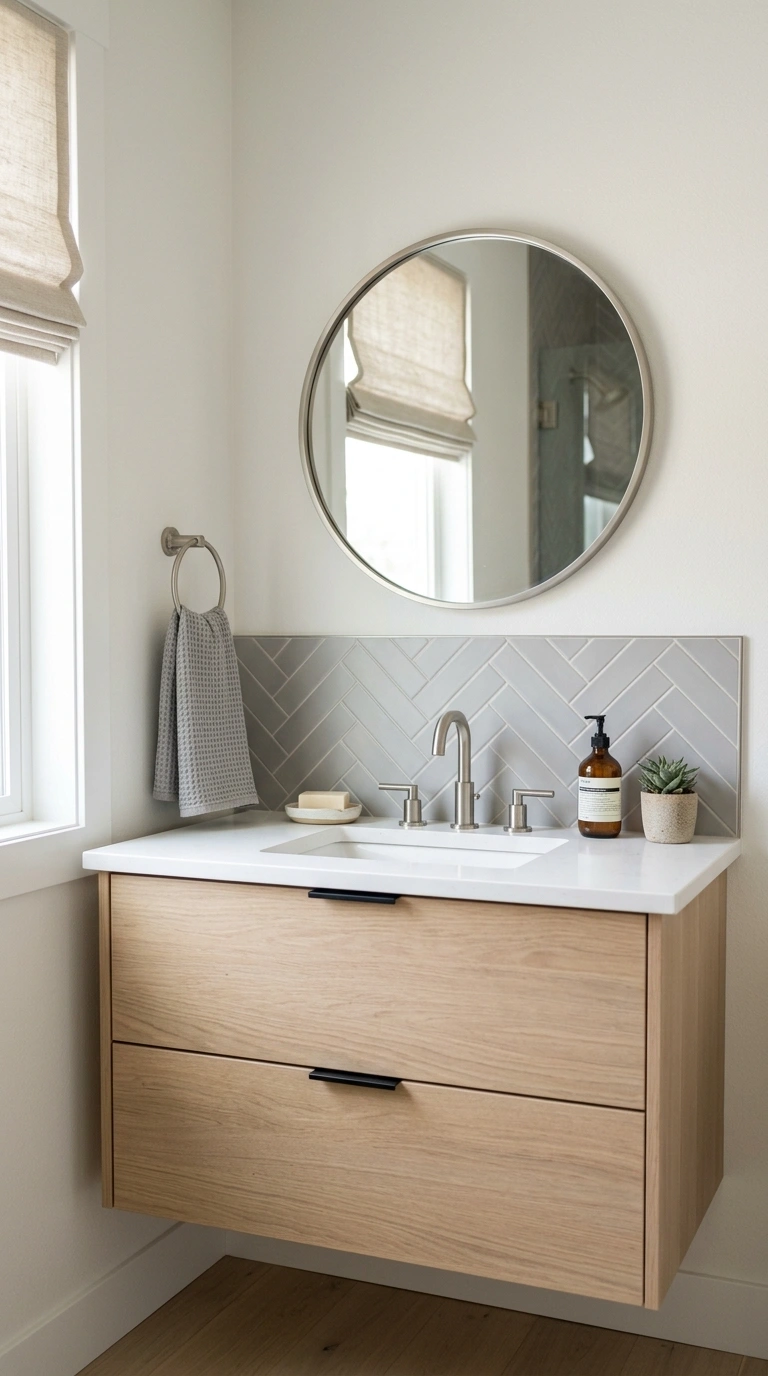
Herringbone is a zigzag pattern made by setting rectangles at an angle, and it adds movement to a plain wall without extra colors. Try a small tile, like a 2 by 6 inch ceramic in white, warm gray, or soft green, on the wall behind a single sink. Keep the grout close to the tile color so the pattern looks smooth. A backsplash about 8 to 12 inches tall shows off the design without going overboard. The edges need precise cuts, so plan the layout on the floor first, starting from the center and working outward. A wet tile cutter gives clean edges. Herringbone looks best with a simple vanity in white oak or painted cream, and a plain round mirror so the tile can do the talking. For a lower cost version, look for mesh backed sheets that already come in the pattern. A weekly pass with a mild cleaner keeps the zigzag looking crisp.
4. Vertical Stacked Tile
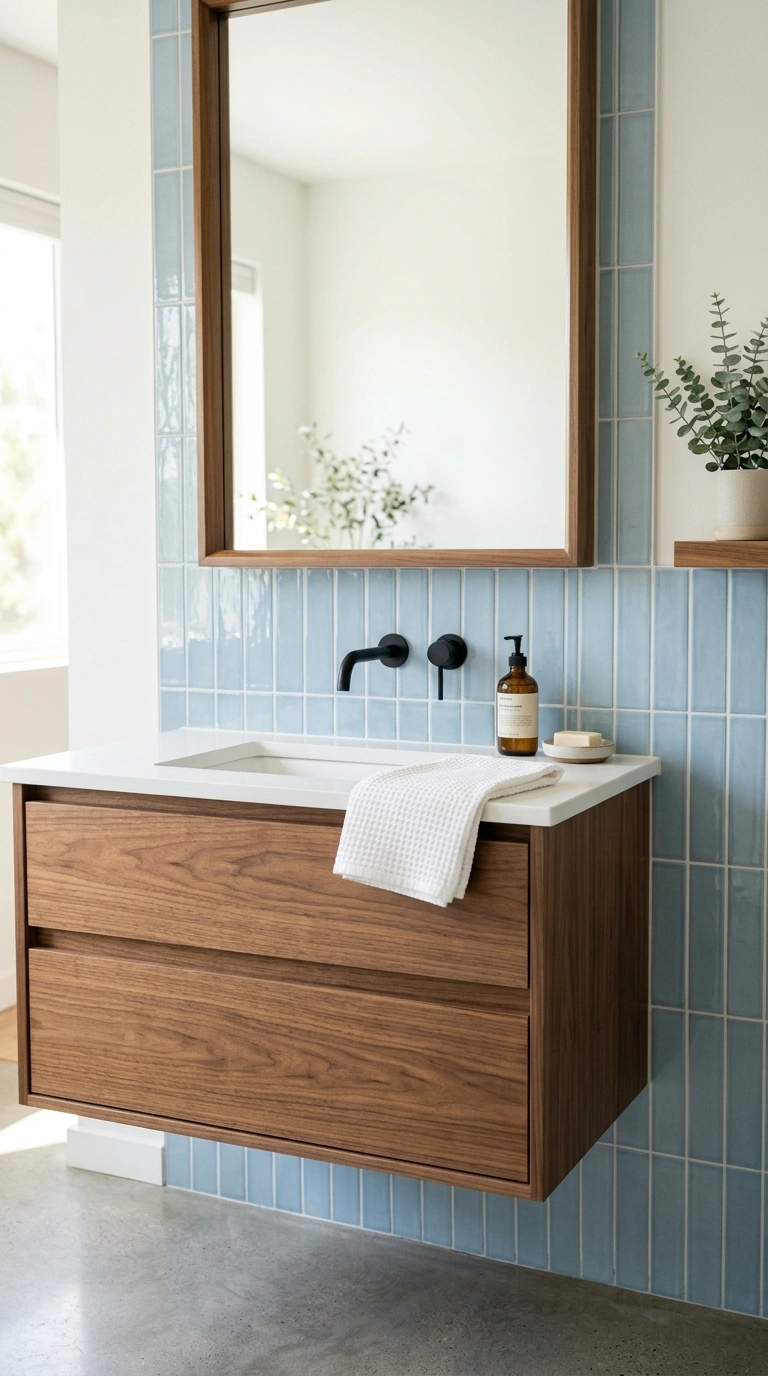
Stacking tiles in straight vertical lines makes a low ceiling feel taller and the whole wall look neat. Use rectangles about 3 by 12 inches or 4 by 16 inches, and set them so the joints line up in a grid. A glossy glaze in soft white, pale blue, or warm sand looks bright, and the clean lines feel modern. Run the tile from the counter to the top of the mirror, or all the way to the ceiling, for a tall column of color. Choose narrow grout lines, about one sixteenth of an inch, and match the grout to the tile. Use a level or a laser line to keep every row straight, because mistakes show quickly in a stacked pattern. A slim wall mounted faucet or a floating vanity in walnut works nicely with this look. Check that the counter is level before you start, and finish the bottom edge with a thin bead of caulk in the same color.
5. Penny Round Tile
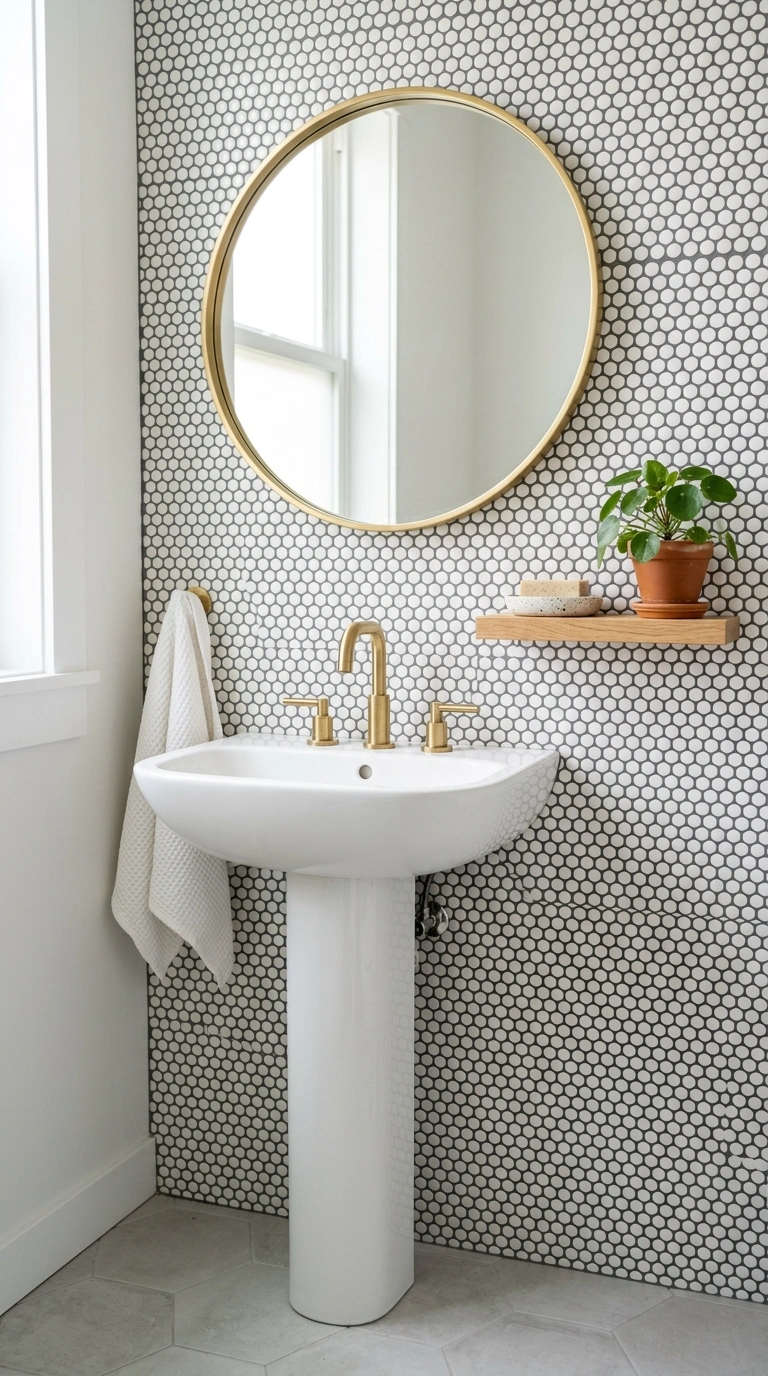
Penny rounds are small circles of tile that come on mesh sheets, so they are easier to install than they look. They give the wall a soft, playful texture. White pennies with charcoal grout look graphic, while cream ones with matching grout look calm and vintage. They suit a bathroom with an old fashioned feel, like one with a pedestal sink or a claw foot tub. Press each sheet into thinset mortar, then push grout into all the small gaps with a rubber float. There are many grout lines, so seal them well. Because of all those lines, penny rounds can look busy on a big wall, so keep the height to about 6 to 8 inches behind the sink. A round mirror with a thin brass frame echoes the circles and ties the wall together. Add a small shelf above the faucet for a soap dish and a tiny plant, and run a damp sponge over the wall every few days.
6. Hexagon Tile Wall
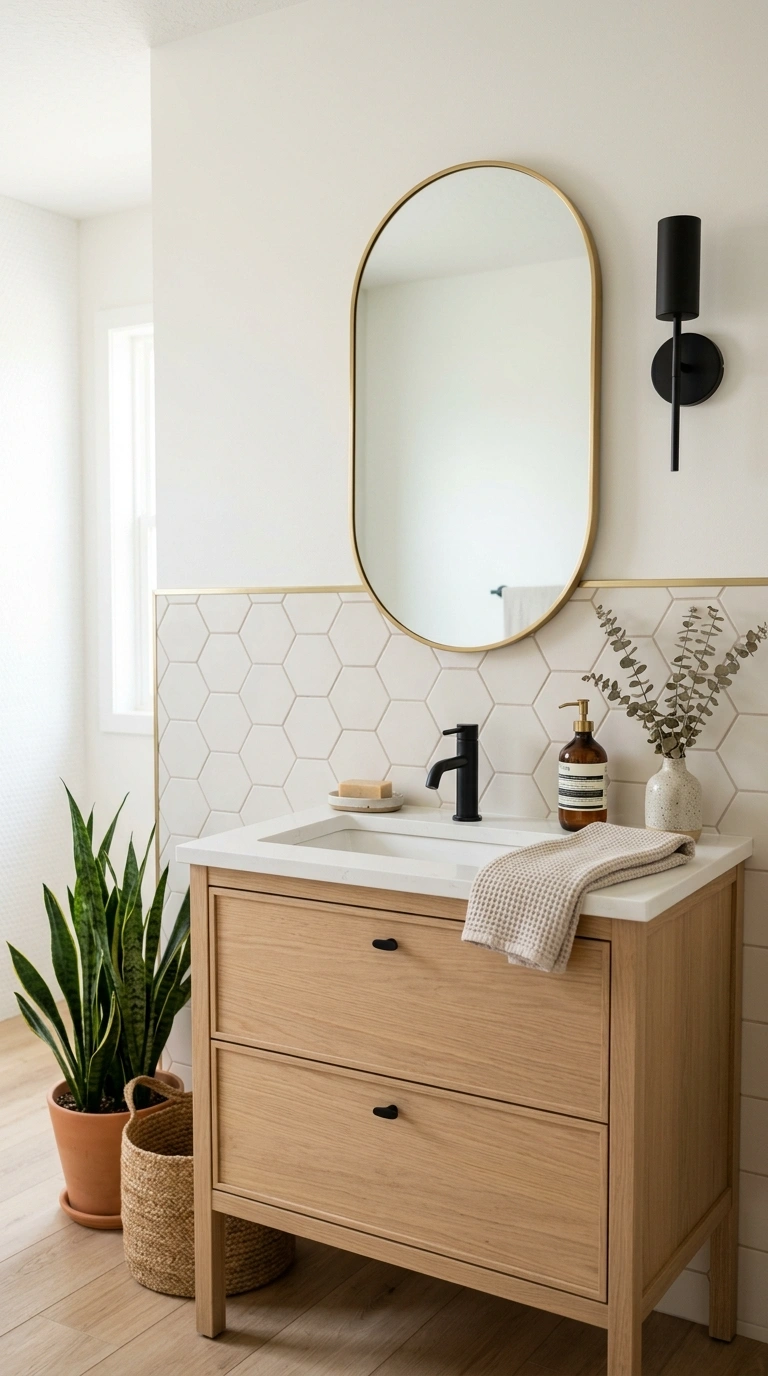
Hexagon tile looks like a honeycomb and fits both modern and older homes. A matte hexagon in soft white, warm gray, or muted green adds gentle pattern without shouting. Try a 2 or 3 inch size for a small bathroom, and a larger 6 inch size for a bigger wall. Set the tile from the counter up about 6 to 10 inches, then finish the top edge with a thin trim or a small ledge, since the shape makes it hard to end in a straight line. Many lines sell half pieces with flat edges just for this reason, so ask about them before you buy. Keep the grout close to the tile color so the surface looks smooth. A wood vanity in oak or ash softens the geometric shapes. Add a simple oval mirror and a wall light in matte black for contrast. Clean the tile with a soft brush and rinse it well.
7. Marble Slab Backsplash
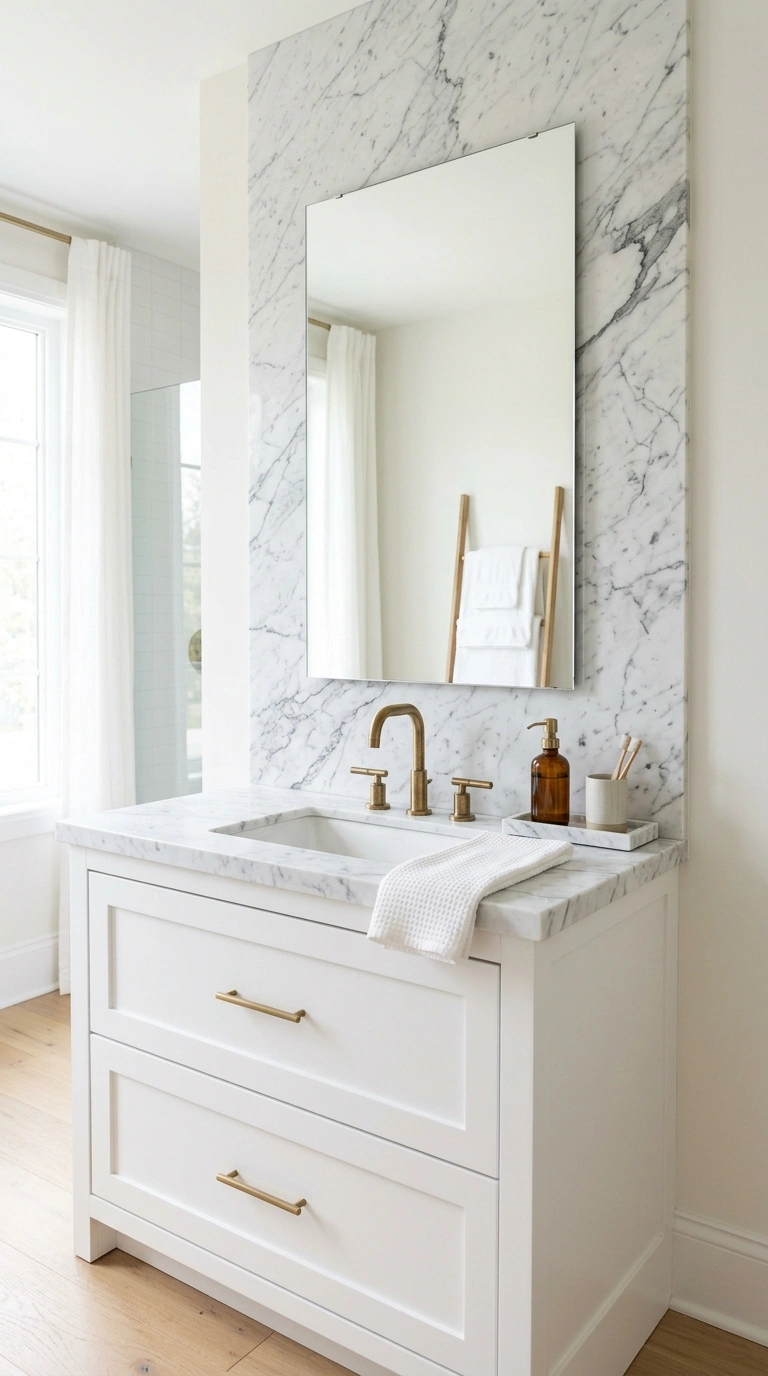
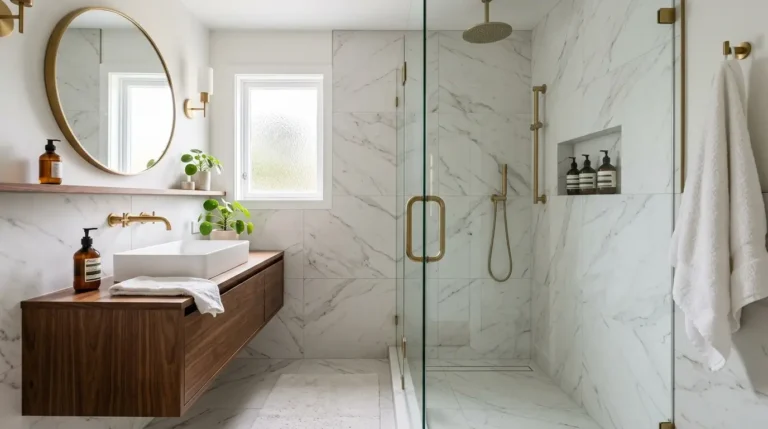
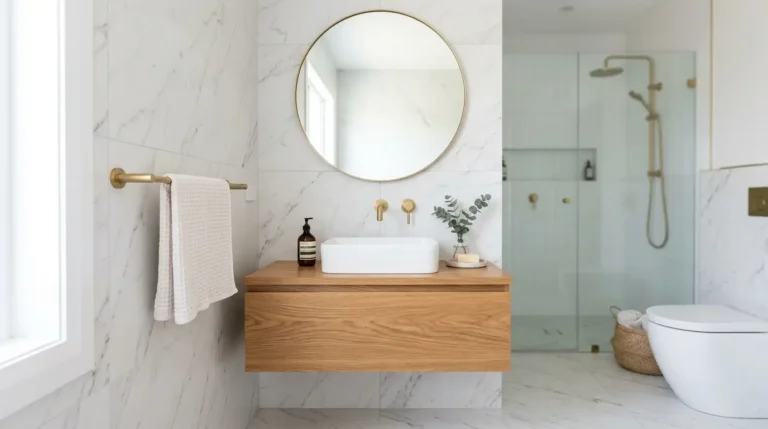
A single piece of marble behind the sink looks like a fancy hotel, and it removes grout lines completely. Choose white marble with soft gray veining, such as Carrara, and ask the stone shop to cut a slab about 4 to 6 inches tall, or a full height piece that reaches the mirror. Have the shop polish the edges too. Seal the stone before installing and once a year after, since marble can stain from toothpaste and hair dye. Set it with the adhesive the stone shop recommends, and use clear caulk where it meets the counter. If a full slab costs too much, ask about remnants, which are leftover pieces sold at a lower price. A remnant is often perfect for a small vanity. Pair the marble with a white or wood vanity and simple brass fixtures. Use a cleaner made for stone instead of vinegar, because acid can dull the surface. Dry off splashes as soon as they land.
8. Matching Slab Splash
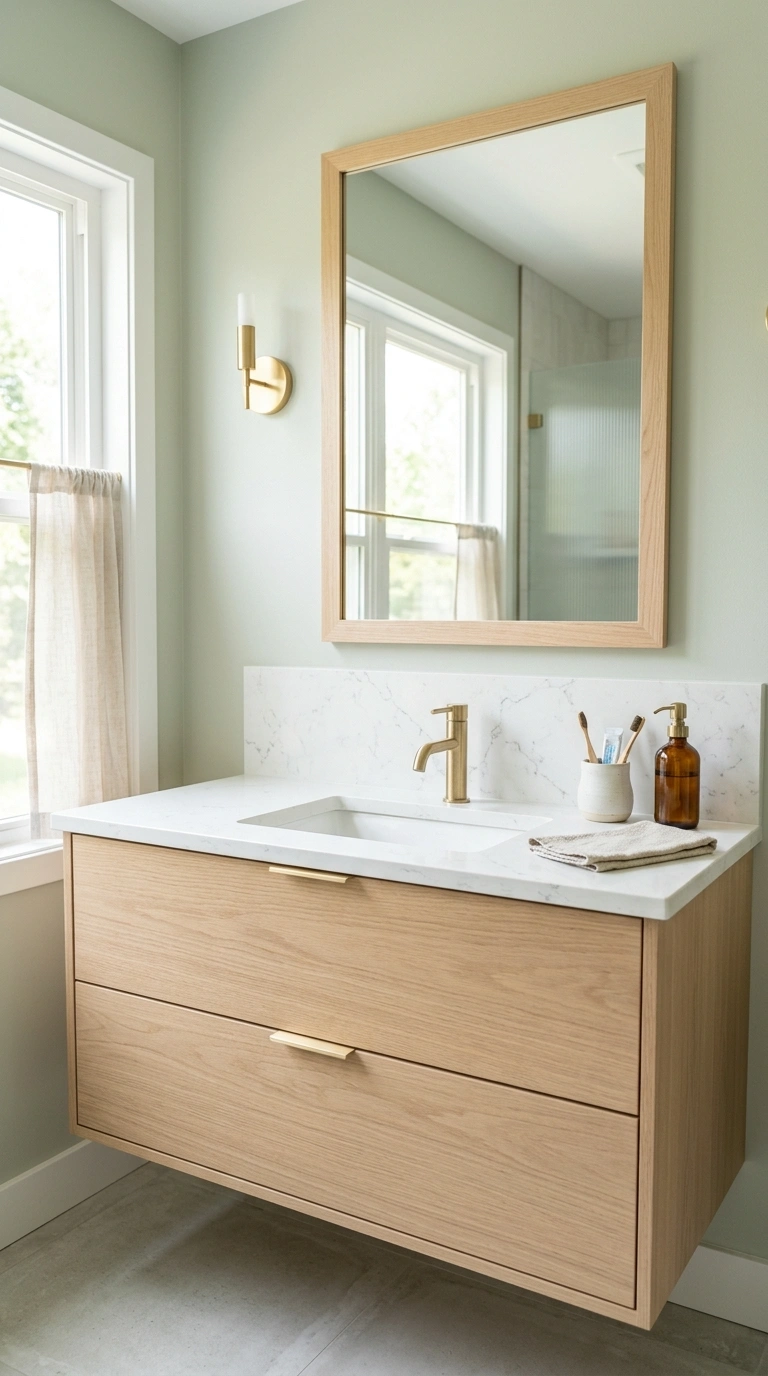
A backsplash that matches the countertop is one of the simplest ways to make a small bathroom look clean. Ask the shop to cut a matching strip from the same quartz or solid surface, about 4 inches tall, and attach it when the counter goes in. If you already have a counter, the same maker may still sell a matching strip. Quartz is a hard, non porous stone that resists water and stains, so it suits a busy family bathroom. White quartz with soft veining looks calm, and warm gray or beige hides hard water spots. Because there is no grout, wiping it takes only a few seconds. Paint the walls in a soft color, like warm white or pale green, and hang a mirror with a light wood frame. Ask that any seams sit in spots that do not show. Add a thin bead of silicone where the strip meets the wall to stop water from seeping behind it.
9. Painted Beadboard Backsplash
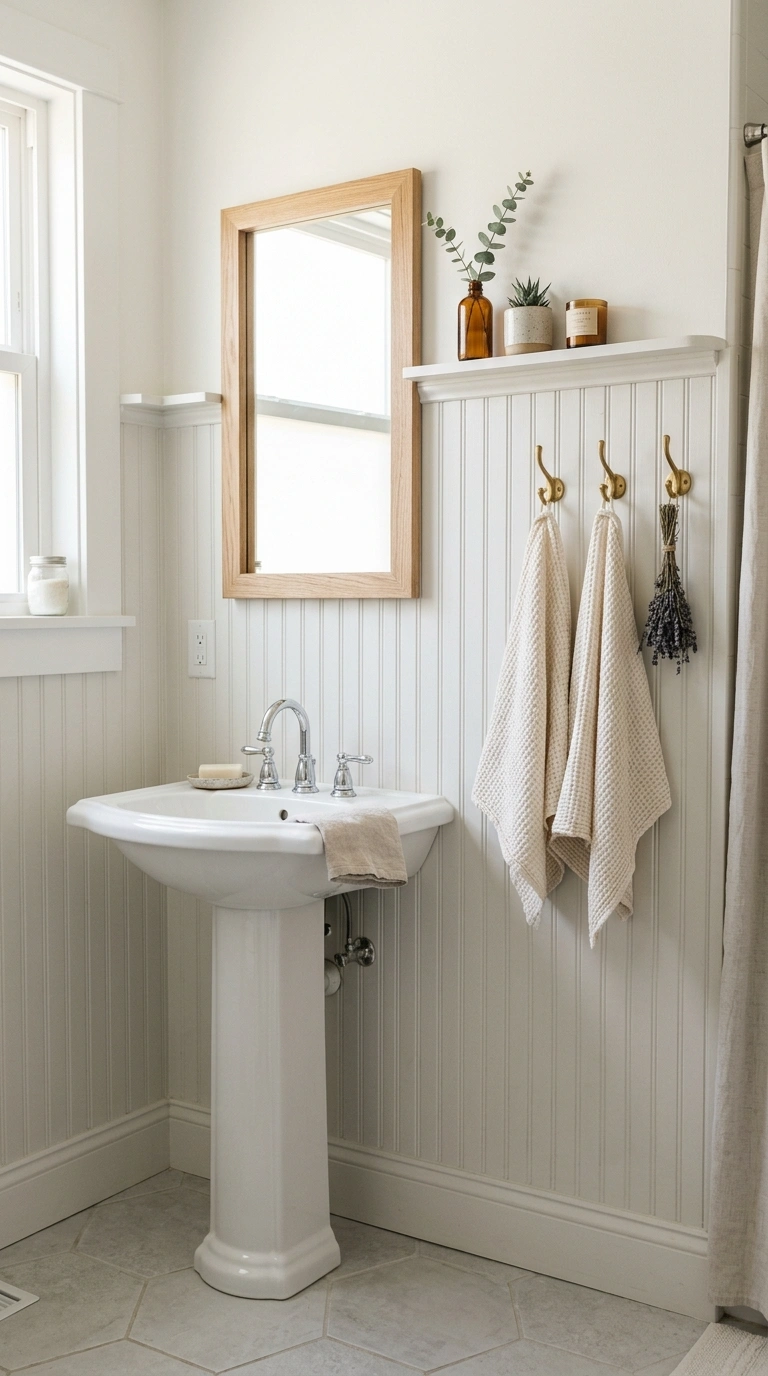
Beadboard is a panel with thin vertical grooves, and it gives a bathroom a cottage feel. Buy a moisture safe PVC or MDF panel made for bathrooms, cut it to about 36 inches high, and glue it to the wall with panel adhesive. Cap the top with a thin shelf or a piece of trim, and caulk every seam. Paint it in a satin or semi gloss finish, using a paint made for bathrooms. Soft white, pale blue, and sage green all feel breezy. Because beadboard is not tile, it needs a little more care near the sink, so dry splashes quickly and touch up the paint if it chips. It is also one of the cheaper ways to cover a big wall, so it suits a budget update. Add a wooden mirror and a small shelf with hooks for towels. Sand lightly between coats, and let the paint cure for a few days before heavy use.
10. Wood Look Tile
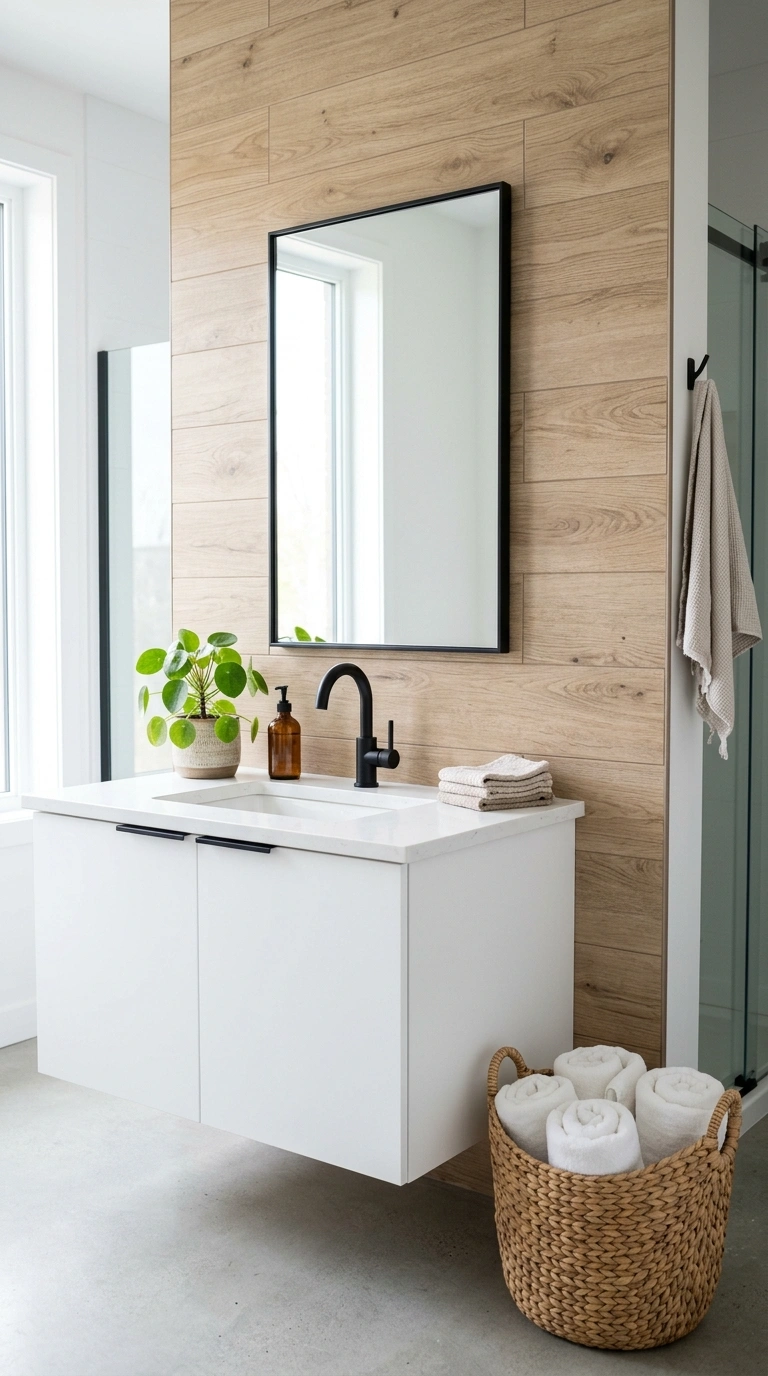
Wood look tile gives you the warm look of planks with the water resistance of ceramic. Pick a light oak or soft gray wood tone in a plank shape of about 6 by 24 inches, and lay it in horizontal rows behind the sink. Since the surface copies real grain, mix pieces from different boxes so the pattern does not repeat too often. Keep the grout thin and close to the plank color. This look is great for a bathroom that feels cold because of white walls and cool tile. A matte finish feels more like real wood and hides water spots. Pair it with a white vanity and black hardware so the mix looks fresh. Add a plant on the counter and a woven basket for towels, so the space feels earthy. Seal the grout once it cures, and clean the planks with a damp cloth. Order a few extra planks in case of cuts or mistakes.
11. Terracotta Tile Splash
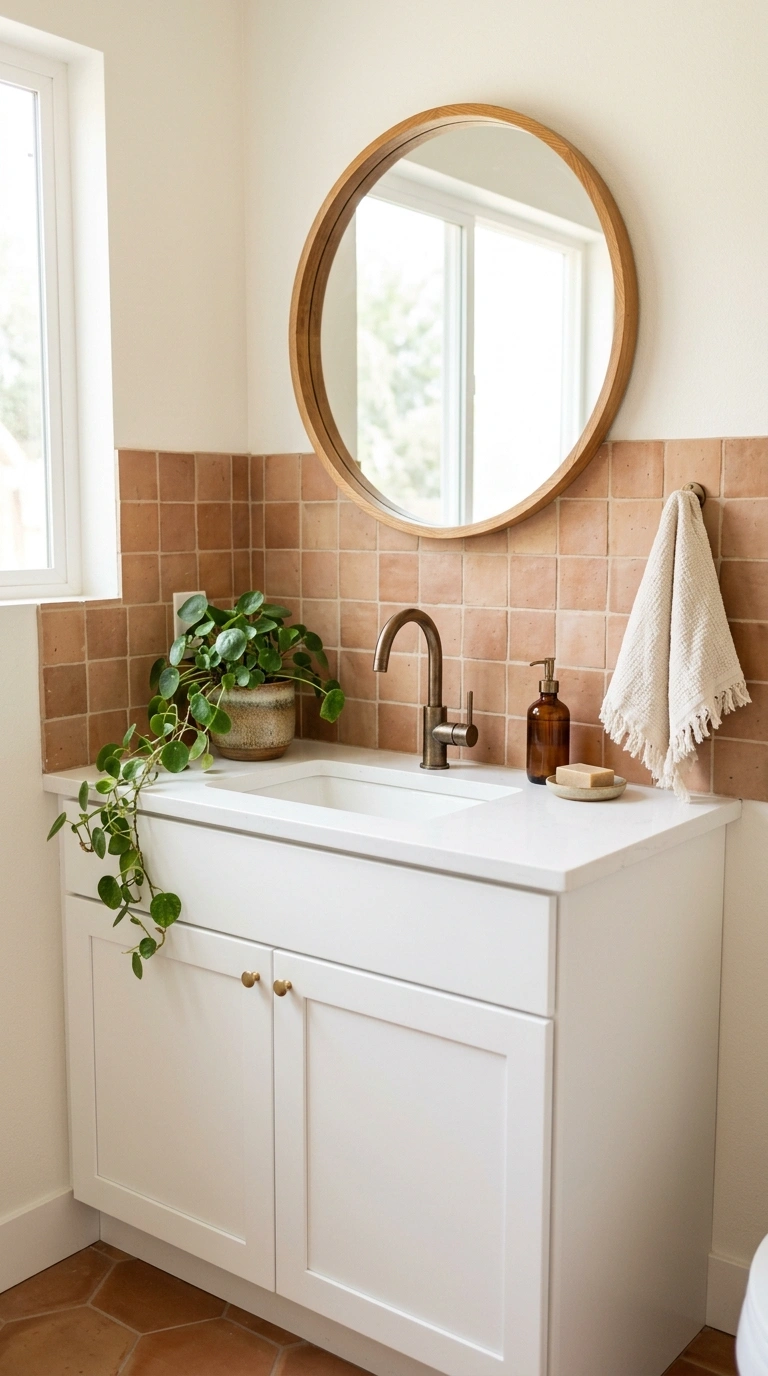
Terracotta tile brings a warm, earthy color that looks great against white walls. Use small squares or hexagons in a soft clay or peachy tone and set them behind a white or wood vanity. Raw terracotta is porous, so look for a glazed or sealed version, and seal the grout as well. Warm pink, burnt orange, and sandy tones each give a different mood. A matte finish feels soft, while a glossy one feels bright. Pair the tile with brass or aged bronze fixtures and a round mirror with a wood frame. Add a cream linen hand towel and a small pot with a trailing plant. Run the tile 6 to 8 inches up from the counter for a pop, or all the way to the mirror for a bolder statement. A slightly uneven finish adds charm, so do not worry about perfect edges. Dry splashes quickly to protect the surface, and rinse the tile with clean water after using cleaners.
12. Sage Green Tile
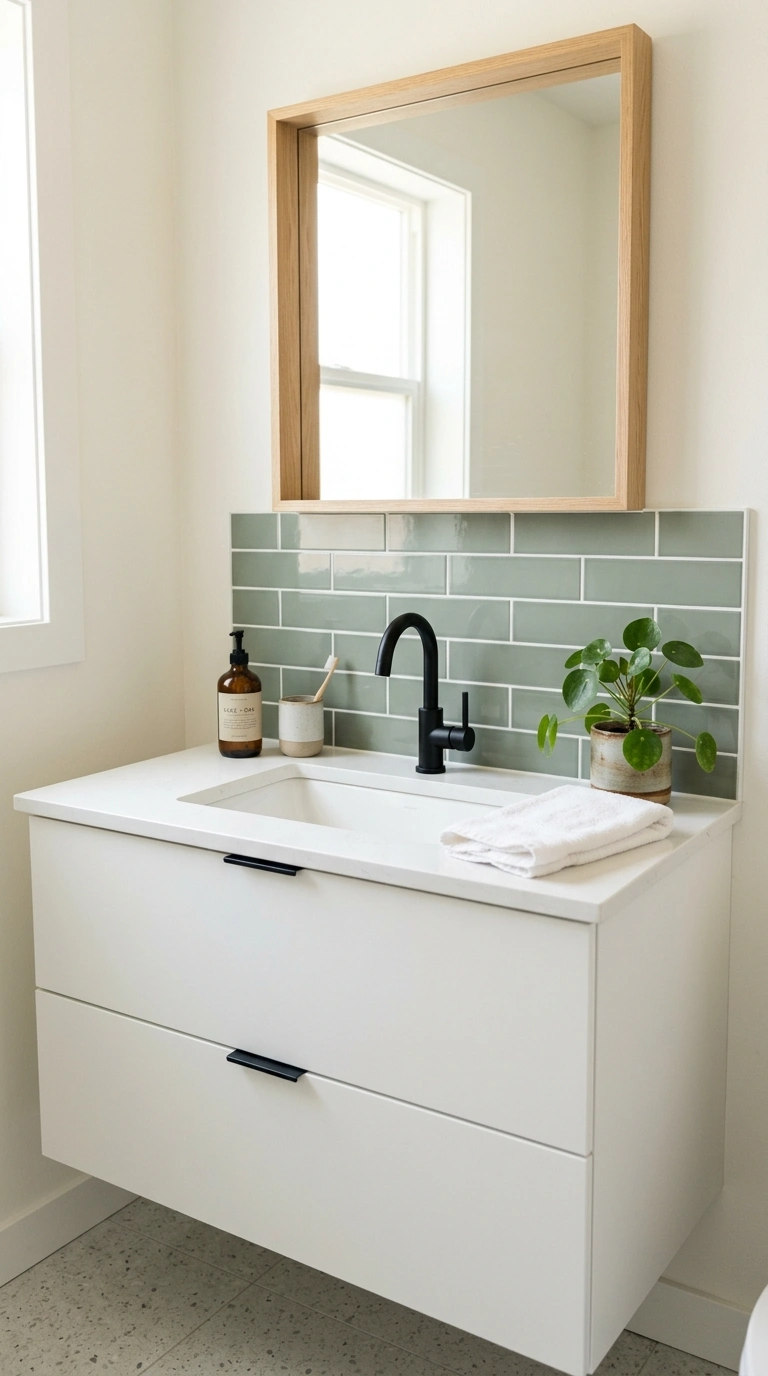
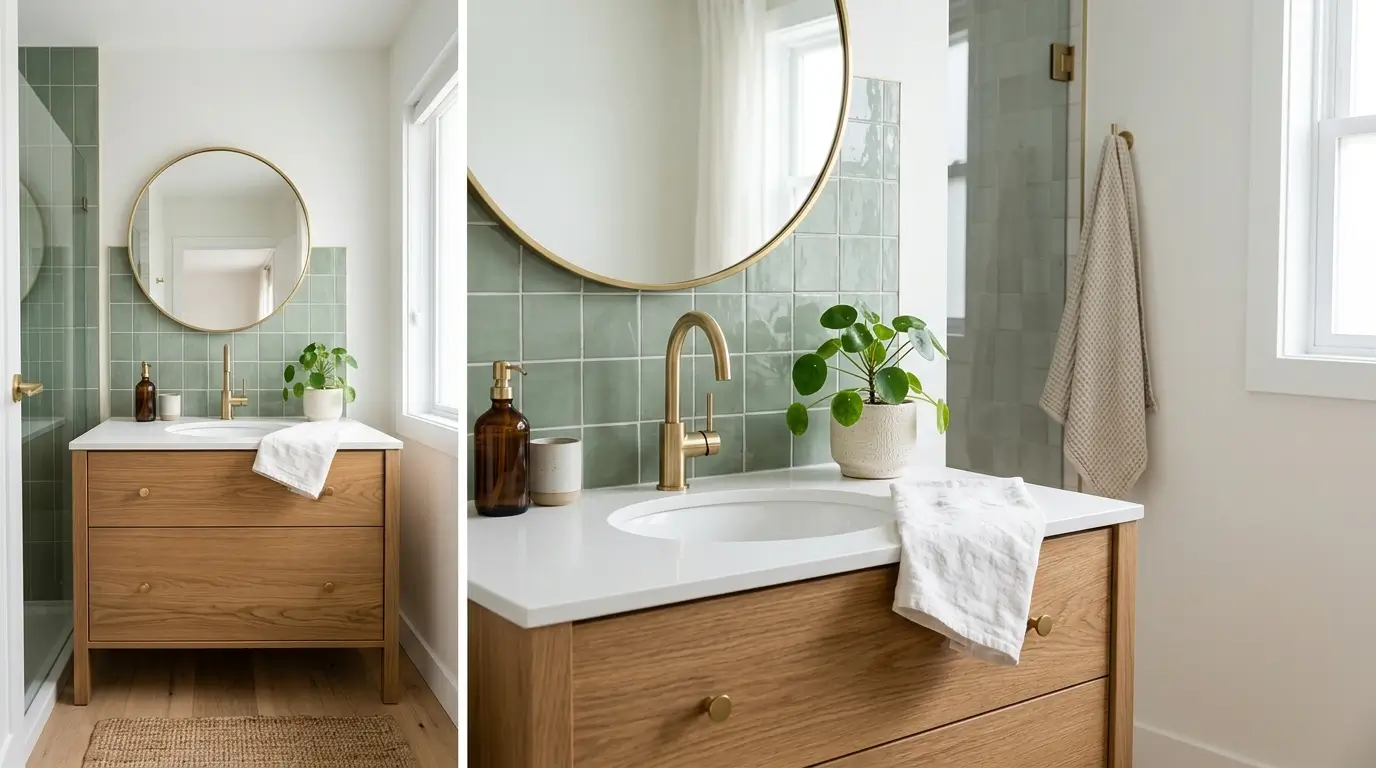
Sage green tile makes a bathroom feel calm, and it goes well with white, wood, and brass. Pick a glossy 3 by 6 inch tile in a muted green and lay it in a straight pattern behind the sink. Choose white grout for a fresh look, or a slightly darker green for a soft blend. A white vanity, a light oak mirror frame, and a matte black faucet keep the balance. Sample a few tiles at home before you buy, since green can look different in daylight and lamp light. Hold the sample against the wall in the morning and again at night. Add a plant and a white towel so the green feels natural. If you love the color but not the cost, paint a small wall in a similar shade for the rest of the room. Start the tile at least 4 inches above the counter, and keep a soft cloth nearby to buff away water spots.
13. Deep Blue Tile
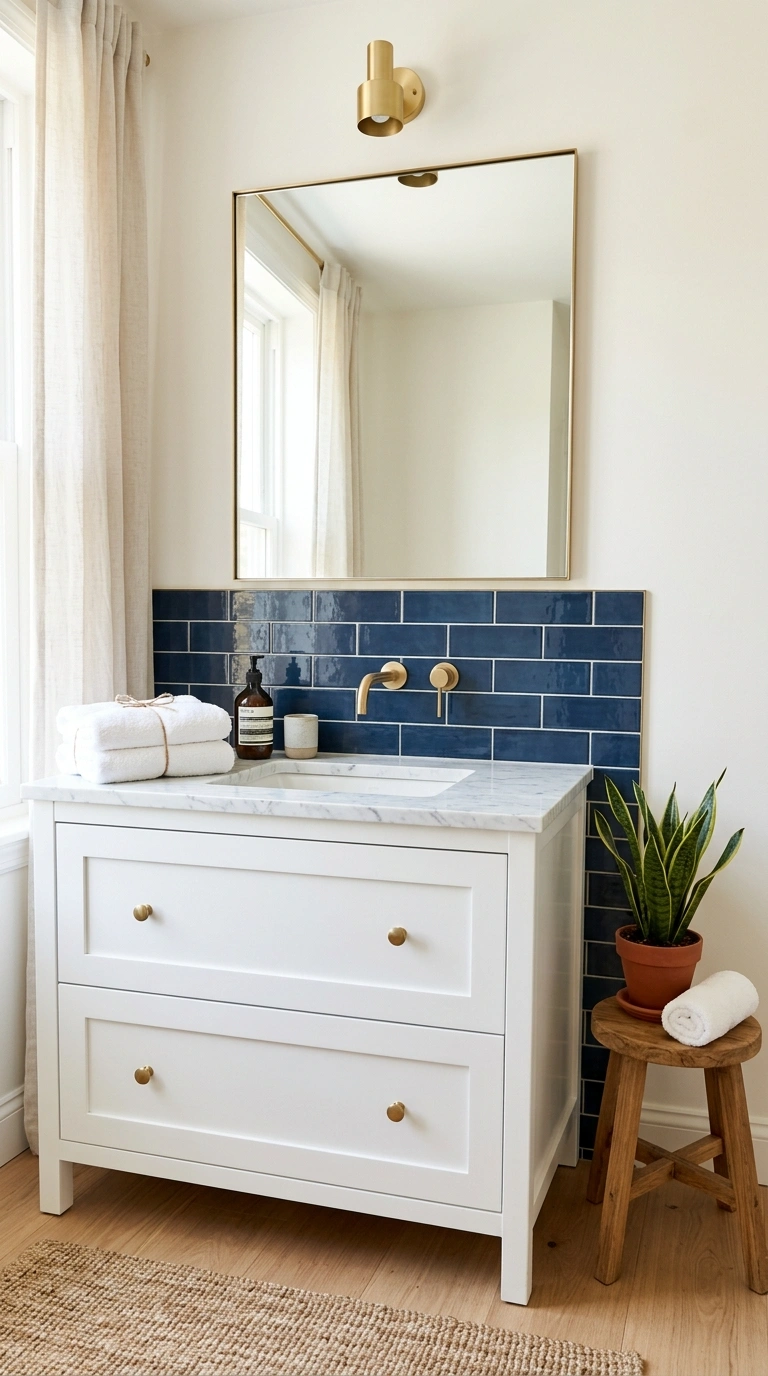
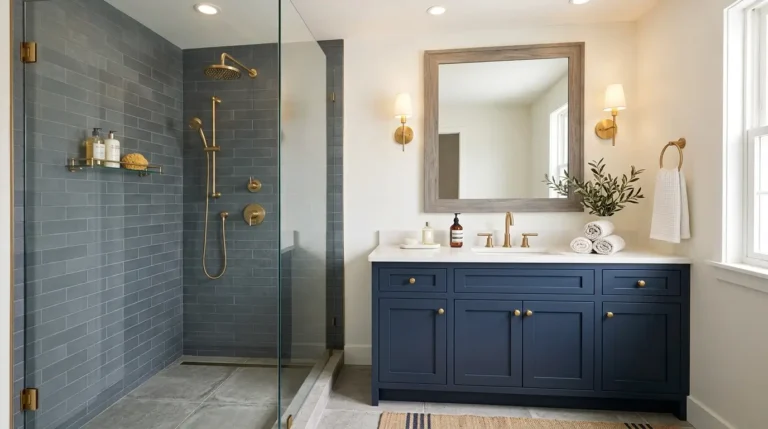
Deep blue tile gives a bathroom a strong, tidy look that still feels friendly. Navy, denim, and teal blue all look rich next to white walls and warm wood. A glossy 3 by 6 inch tile catches light from the window and makes the wall glow. Use it from the counter up to the mirror, or all the way to the ceiling for a bold effect. Choose a light gray or white grout to outline each tile, or use a matching blue for a solid look. A white vanity and a brass faucet stand out well against the blue, and a white marble counter works too. If your bathroom has little light, pick lighter shades like sky blue or pale aqua so the room does not feel closed in. Add white towels and a small wooden stool. Dark glossy tile shows water spots, so keep a small cloth or squeegee nearby and wipe the wall after use.
14. Black Matte Tile
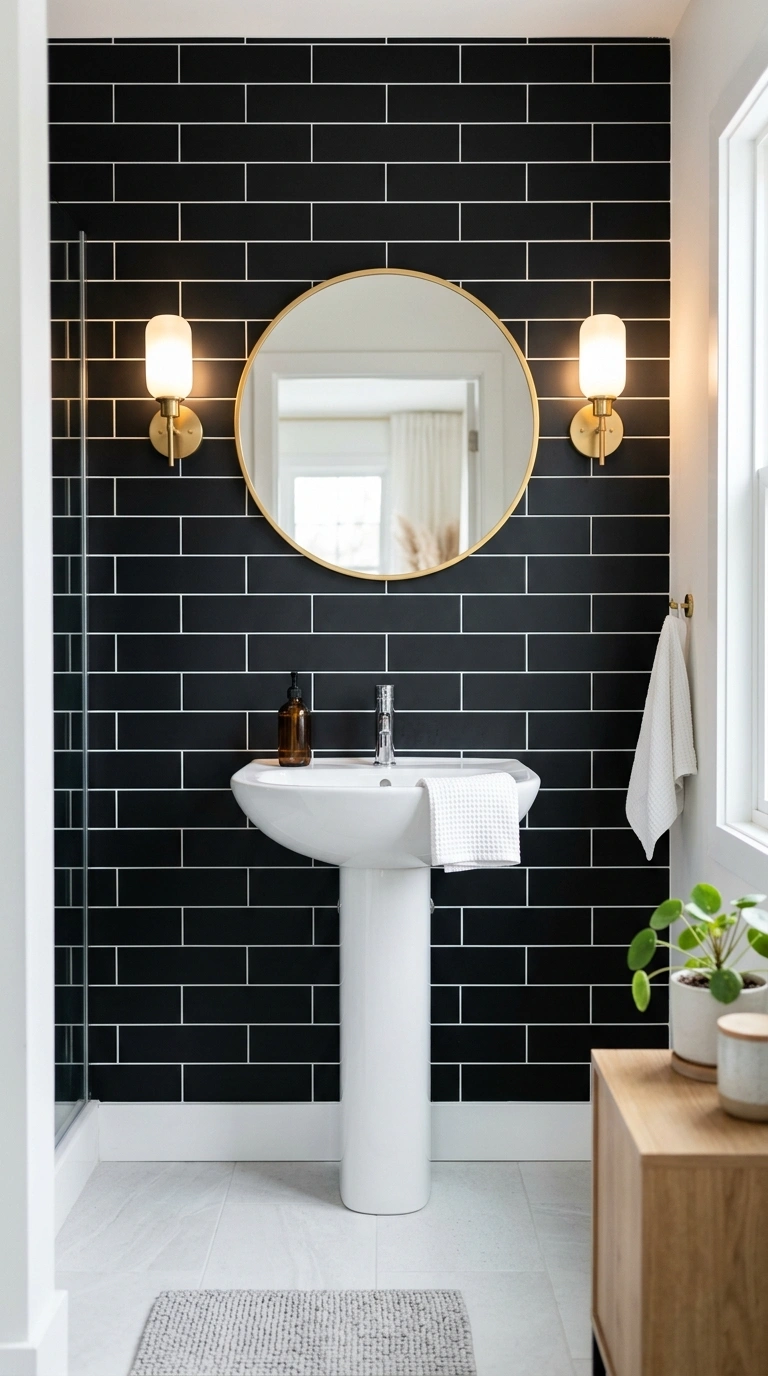
Black matte tile makes a small bathroom feel like a boutique hotel. Use a 3 by 12 inch or 4 inch square tile in a flat black finish and set it behind a white pedestal sink or a light wood vanity. The contrast helps the sink stand out. Pair it with white grout for a graphic look, or black grout for a smooth wall. A brushed brass faucet and a round mirror with a thin gold frame add warmth. Black tile shows dust, hard water marks, and toothpaste splatter, so keep a microfiber cloth nearby and wipe it once a day. Bright lights on both sides of the mirror stop the wall from feeling dark. Keep the rest of the room light, with white walls and a pale floor, so the black looks like a focus point instead of a cave. A matte finish shows fewer fingerprints than a glossy one. If pure black feels too heavy, try a deep charcoal instead.
15. Glass Mosaic Tile
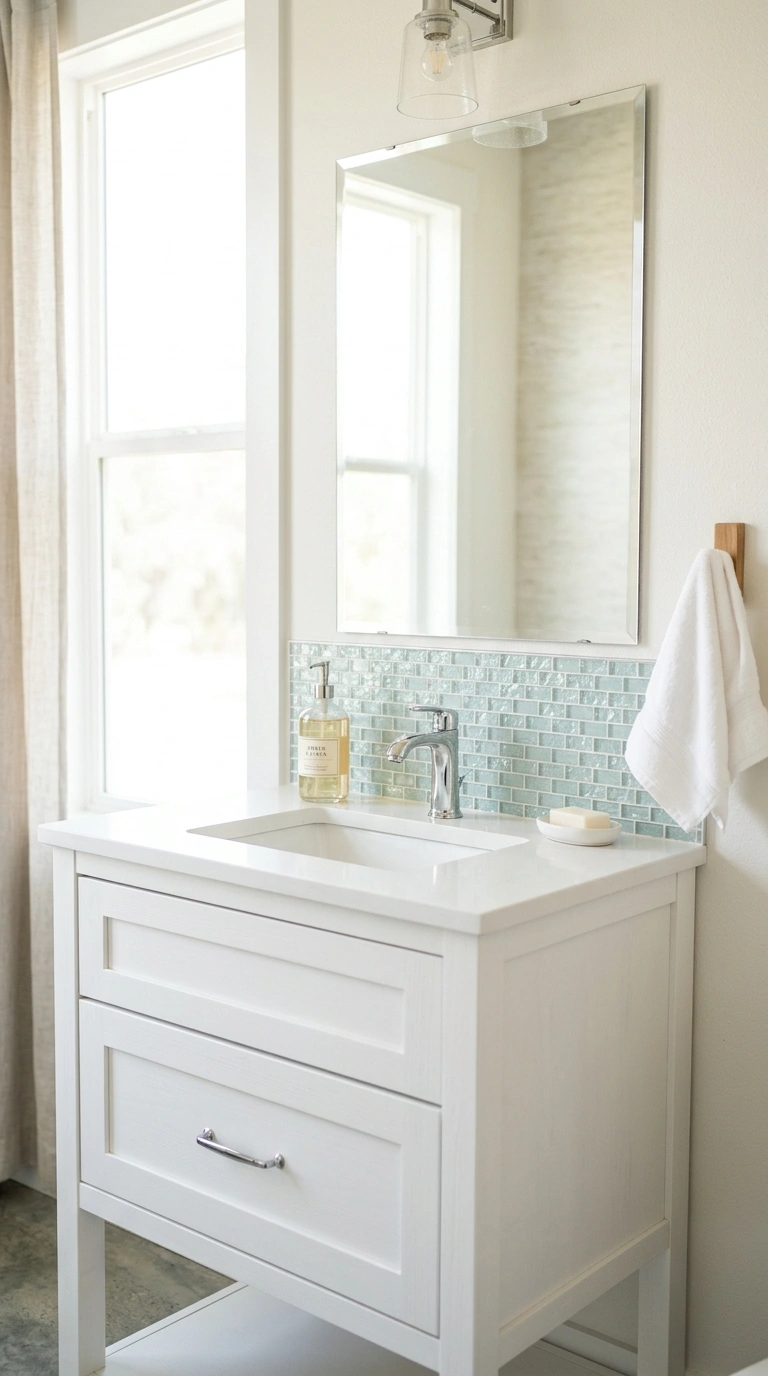
Glass mosaic tile brings shine and depth to a small wall. It comes in sheets of tiny squares, so you can cover the wall quickly and get a pattern without cutting each piece. Pick a soft color like pale aqua, seafoam, or misty gray and let the light play on the surface. Glass is non porous, so water and stains do not soak in. Use white thinset mortar underneath, since darker mortar can show through clear glass and change the color. Keep the grout thin and match it to the tile. Place the mosaic behind the sink, from the counter up about 6 to 12 inches, or wrap it around a window if you have one. Pair it with a simple white vanity and a frameless mirror so the shine does the work. Wear gloves when cutting, because glass edges are sharp, and use a wet saw with a glass blade. Clean it with glass spray and a soft cloth.
16. Patterned Cement Tile
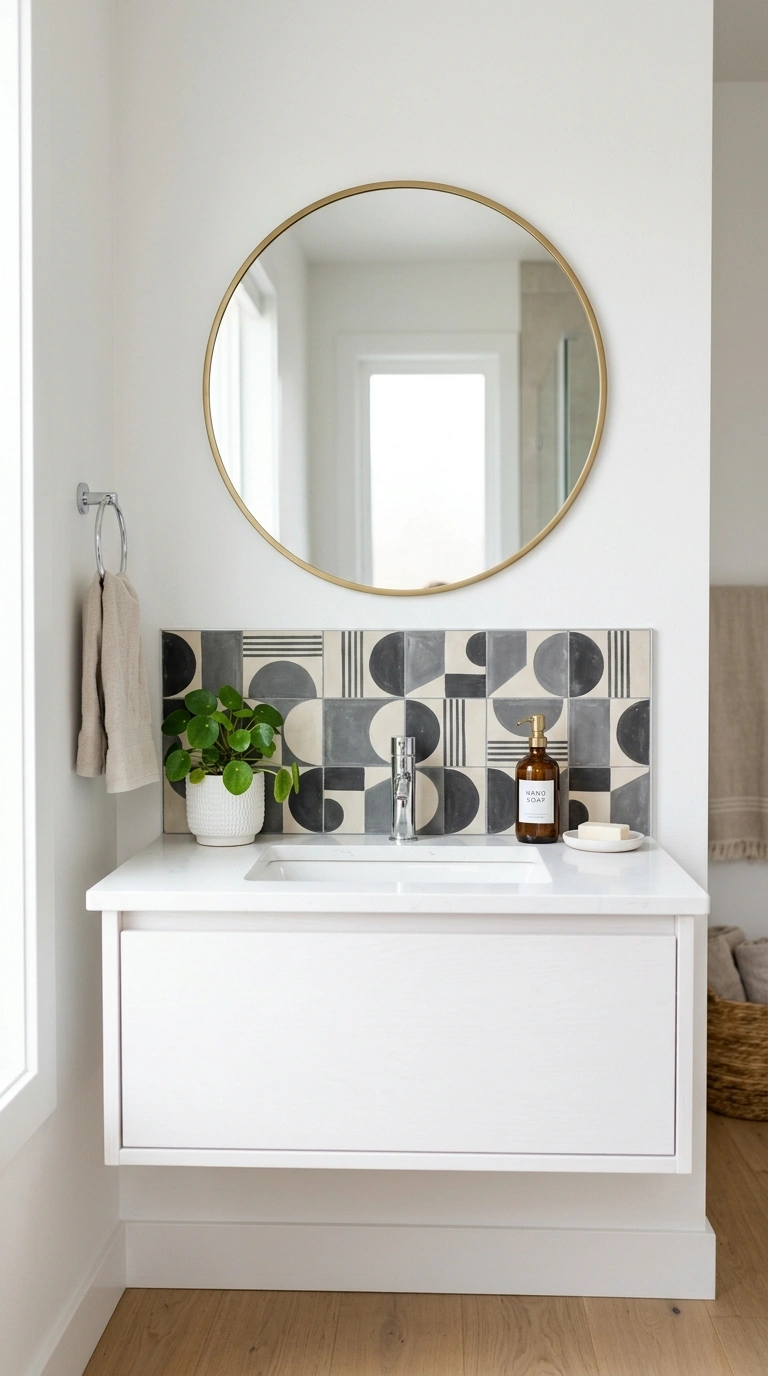
A patterned tile that looks like old cement tile adds color and story to a plain bathroom. Pick a design in gray, black, and cream, or a soft blue and white pattern, and use it only behind the sink so it does not take over the room. Real cement tile needs sealing before and after grouting, and it can stain, so many people choose porcelain tile printed with the same pattern. It is stronger and easy to wipe clean. Keep the rest of the bathroom plain, with white walls, a simple vanity, and a plain mirror. Use a grout that matches the lightest color in the tile so the pattern reads clearly. Start laying tile in the center and work outward so the design lands evenly on both sides of the faucet. If your tiles are 8 inches wide, a strip two tiles high looks tidy. Place a small plant on the counter to soften all those lines.
17. Fish Scale Tile
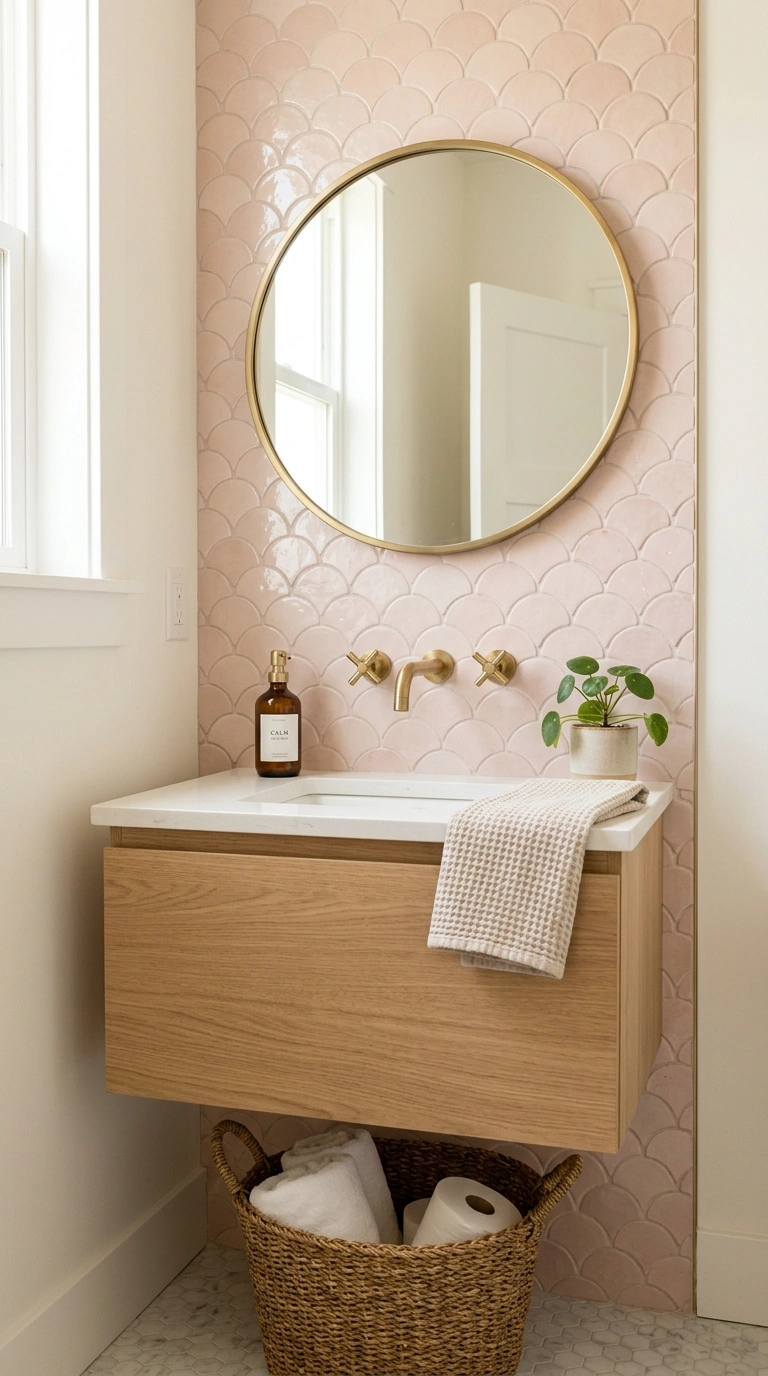
Fish scale tile has curved edges that look like scales, and it brings a soft, wavy pattern to the wall. It comes in sheets, in glossy or matte finishes, and in pale colors like white, blush, or sea green. It looks lovely behind a vanity in a small powder room, where there is only one wall to fill. Because the shape is curved, the pattern feels lively without being loud. The grout lines follow the curves, so use a small float and wipe gently. Set the top edge of the tile a little above the counter and finish it with a slim trim. A round mirror echoes the shapes, and a brass faucet fits the mood. Choose a grout close to the tile color for a soft look. Skip busy wallpaper on the other walls, and paint them a plain warm white so the tile stays the star. Seal the grout, and use a soft brush to clean between the scales.
18. Arabesque Tile Splash
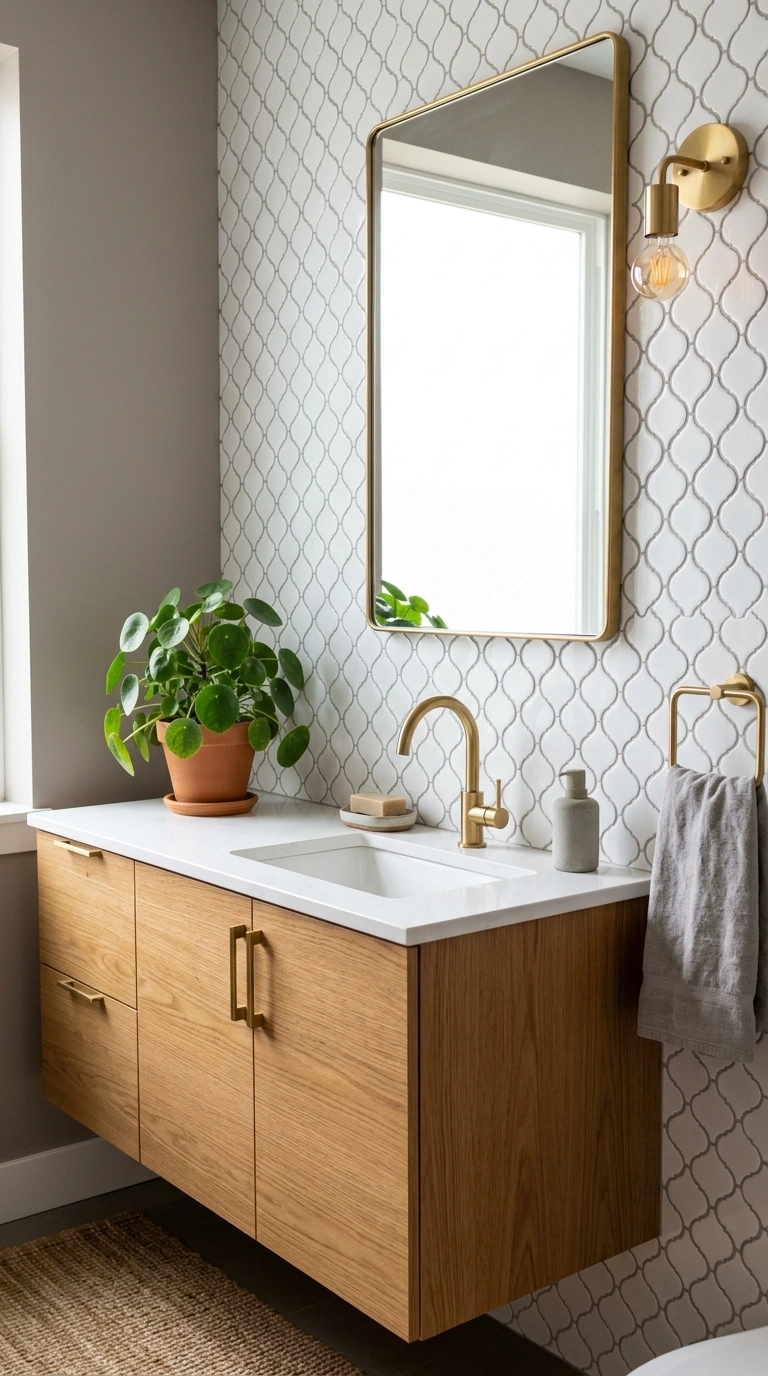
Arabesque tile has a rounded, lantern shape that looks lovely on a wall. It is a good choice for people who love pattern but want a soft feel. Choose a tile in white or pale gray with a gloss finish, or try deep green for something bolder. Lay it in a vertical pattern behind the sink and let it rise all the way to the mirror. The shape gives you a hint of Moroccan style without adding lots of decor. Keep the vanity simple, like a white or natural wood base with a plain mirror. Because of the curved cuts, take time to lay out the tile before you start. Match the grout to the tile so the pattern looks smooth. A small brass wall lamp and a plant on the counter finish the look. Clean the tile with a gentle cleaner and a soft cloth, and use a soft brush to rinse the tiny grooves.
19. Peel And Stick Tile
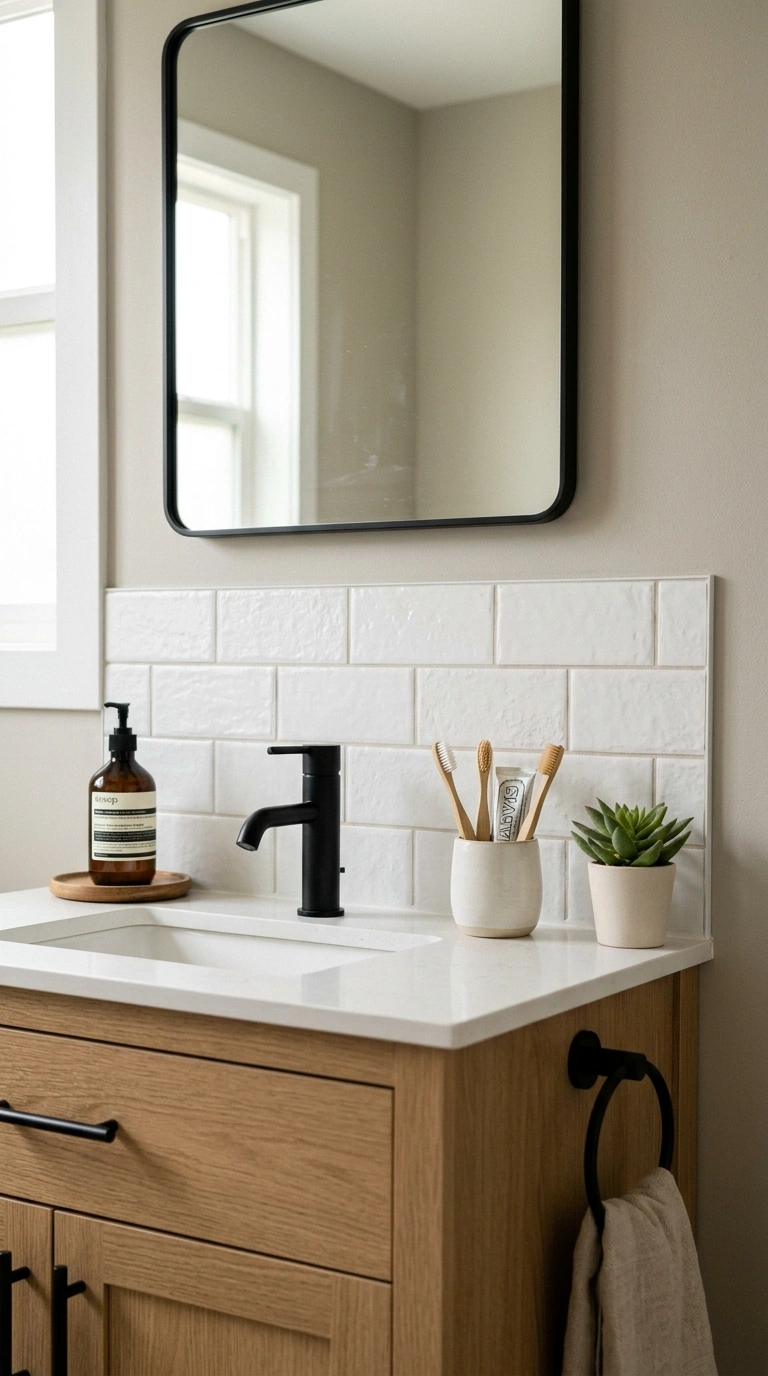
Peel and stick tile is a good choice when you rent or want a quick weekend update. The tiles are thin, sticky on the back, and come in patterns like subway, marble, and geometric shapes. Clean the wall well, let it dry, and press each tile firmly from the center out. Cut around outlets and edges with a small blade. Look for thick, gel style tiles with a raised surface, because they look more like real tile than a flat sticker. Use them behind the sink and near the counter, but keep them out of direct steam, like inside the shower, because heat and moisture can loosen the glue. Smooth walls hold the tiles best, so fill any dents first and let fresh paint cure fully. Seal the top and side edges with clear caulk to stop water from creeping underneath. When you move out, a hair dryer on low heat can soften the glue so the tiles peel off.
20. Full Mirror Backsplash
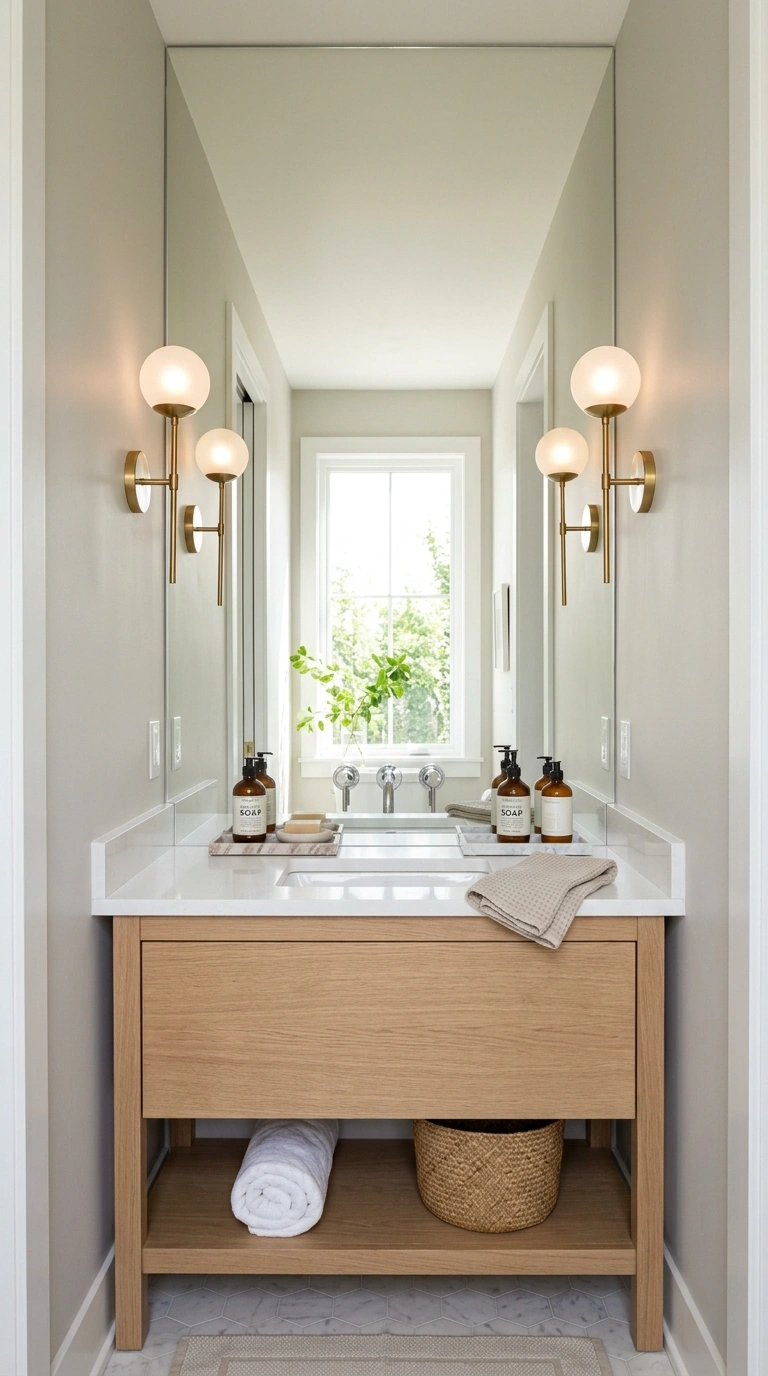
A mirror behind the sink bounces light around and can make a tiny bathroom look twice its size. Ask a glass shop to cut a mirror the width of the vanity, running from the counter all the way up, with polished edges. Have them use an adhesive made for mirrors so it does not eat into the silver backing. A thin black or brass frame adds a finished look, or skip the frame for a clean modern feel. Because a mirror shows every splash, keep a cloth nearby and wipe it after use. Place a wall light on each side and put a small tray on the counter for soap. This works best in a bathroom with a window or bright light, since reflection doubles the brightness. Avoid placing it across from a messy area. Check that the wall is flat and dry before the mirror goes up, and seal the bottom edge with clear silicone where it touches the counter.
21. Terrazzo Look Tile
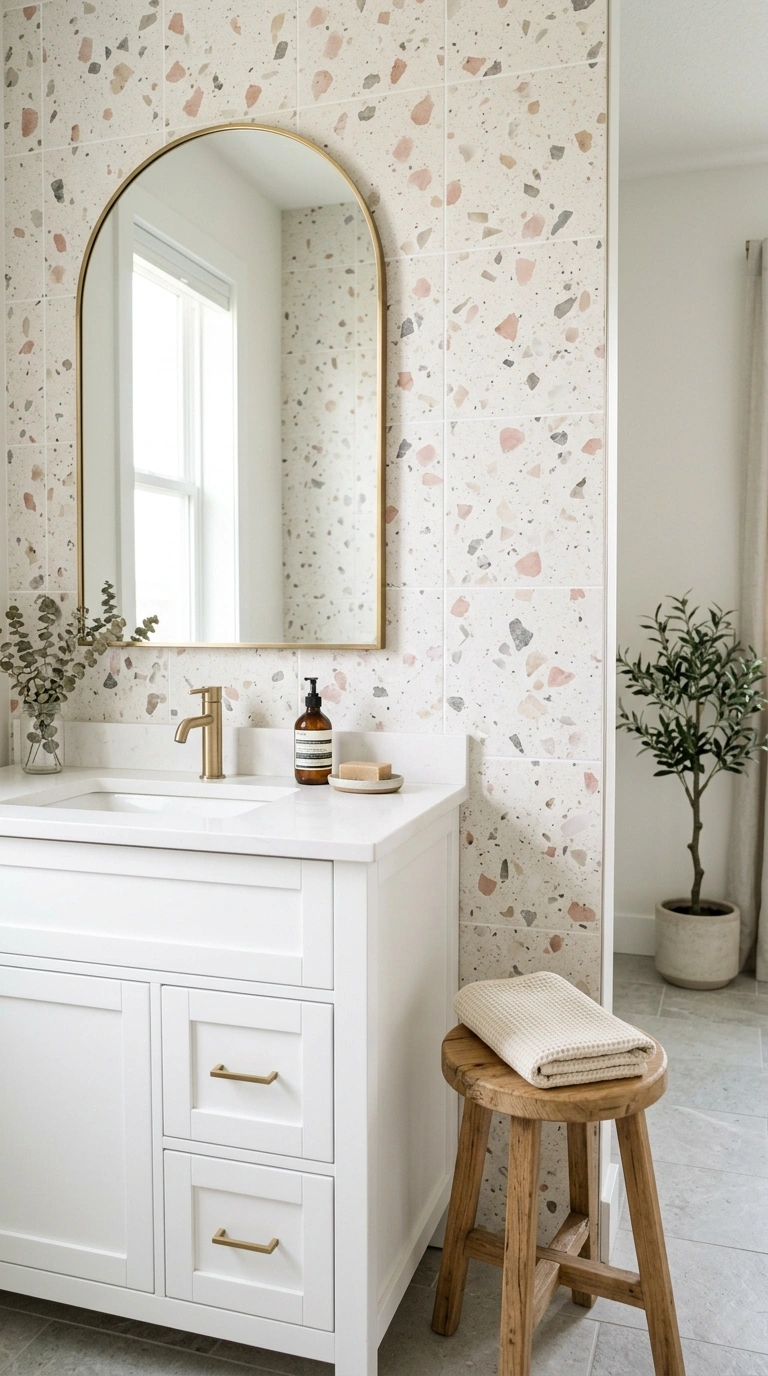
Terrazzo tile has little chips of color scattered across a light background, and it looks playful but tidy. Pick a version with soft pink, gray, and cream chips for a calm feel, or one with green and black chips for more contrast. Use large square tiles about 12 inches wide to keep the pattern from looking busy, and run them from the counter to the mirror. Because the speckles hide small splashes, it is a great pick for a kid’s bathroom. Pair it with a white vanity and a simple faucet so the tile stands out. Round or arched mirrors match the soft look. Look for porcelain terrazzo look tile, since it needs little upkeep and no sealing. Use a light gray grout to match the background. Add a plain wooden stool and a towel in warm cream. A mild cleaner and a soft cloth are enough for daily care, so rinse afterward to avoid streaks.
22. Travertine Tile Splash
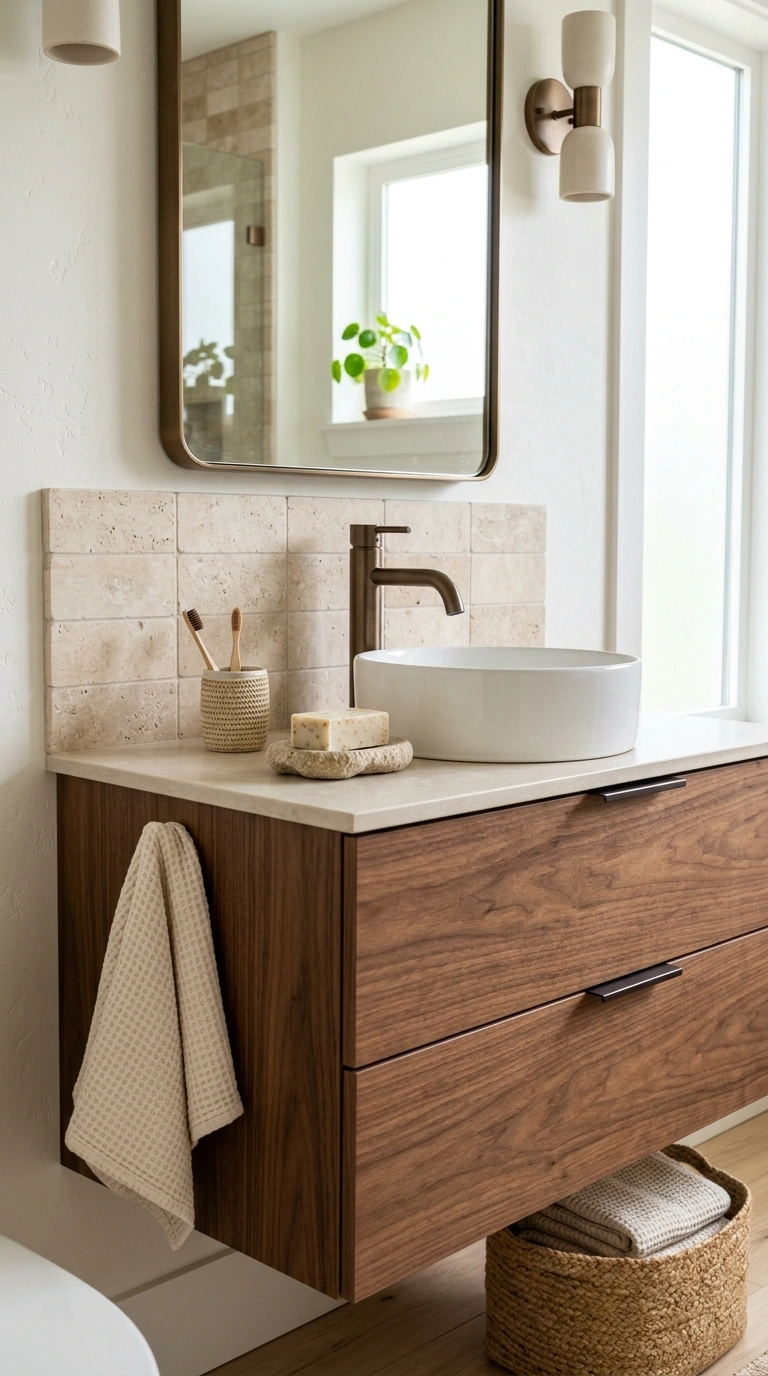
Travertine is a natural stone with soft beige and cream tones and small pits that give it character. It makes a bathroom feel warm and earthy, like a spa. Choose honed and filled tile, which has a smooth matte surface, in squares about 6 inches wide, or in long rectangles for a modern look. Set the tile in a straight or stacked pattern behind the sink. Seal the stone before grouting and once a year after, since travertine is porous and can stain. Use a warm beige grout so it blends in. Pair it with a wooden vanity in walnut or oak, black or bronze fixtures, and cream towels. Because stone needs gentle care, use a cleaner made for natural stone and avoid harsh acids. Add a plant, a bar of soap in a stone dish, and a small linen towel. Dry drips quickly so they do not leave marks that soak into the surface.
23. Tile Around Window
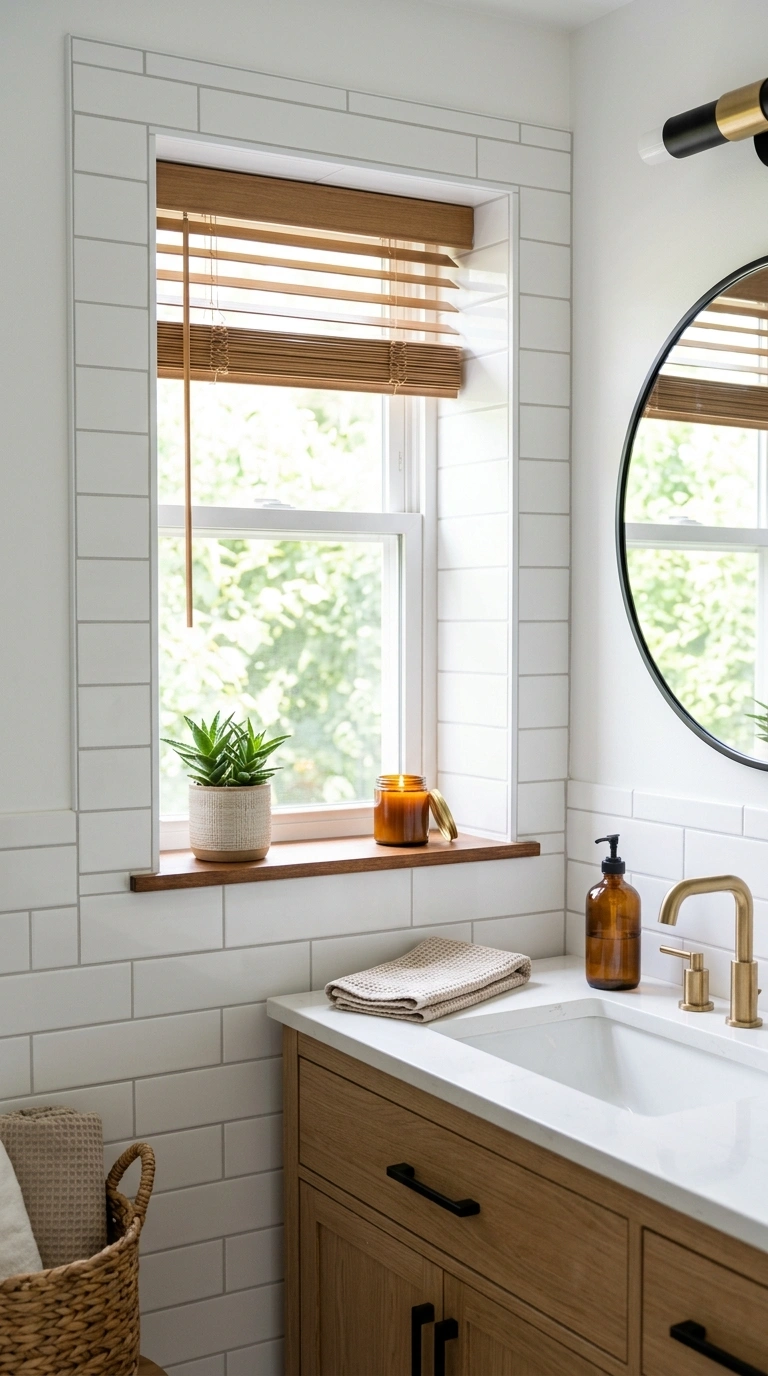
If your vanity sits below a window, wrap the tile around the window frame. It makes the sink area look built in and shows off the daylight. Use a simple white or light gray tile, and run it from the counter up to the window sill, then around the sides. Finish the edges with a matching trim piece so the corners look neat. Add a deep sill in wood or stone, and set a small plant, a bottle of soap, or a candle on it. Choose a window covering that wipes clean easily, like a faux wood blind or a roller shade. A gently rounded edge on the sill is easier to clean than a sharp one. Seal the spot where the tile meets the window frame with paintable caulk, since moisture collects there. Keep the sill mostly clear so light fills the room. Dust and dry the sill each week, and leave the window open for a while after showers.
24. Full Height Tile Wall
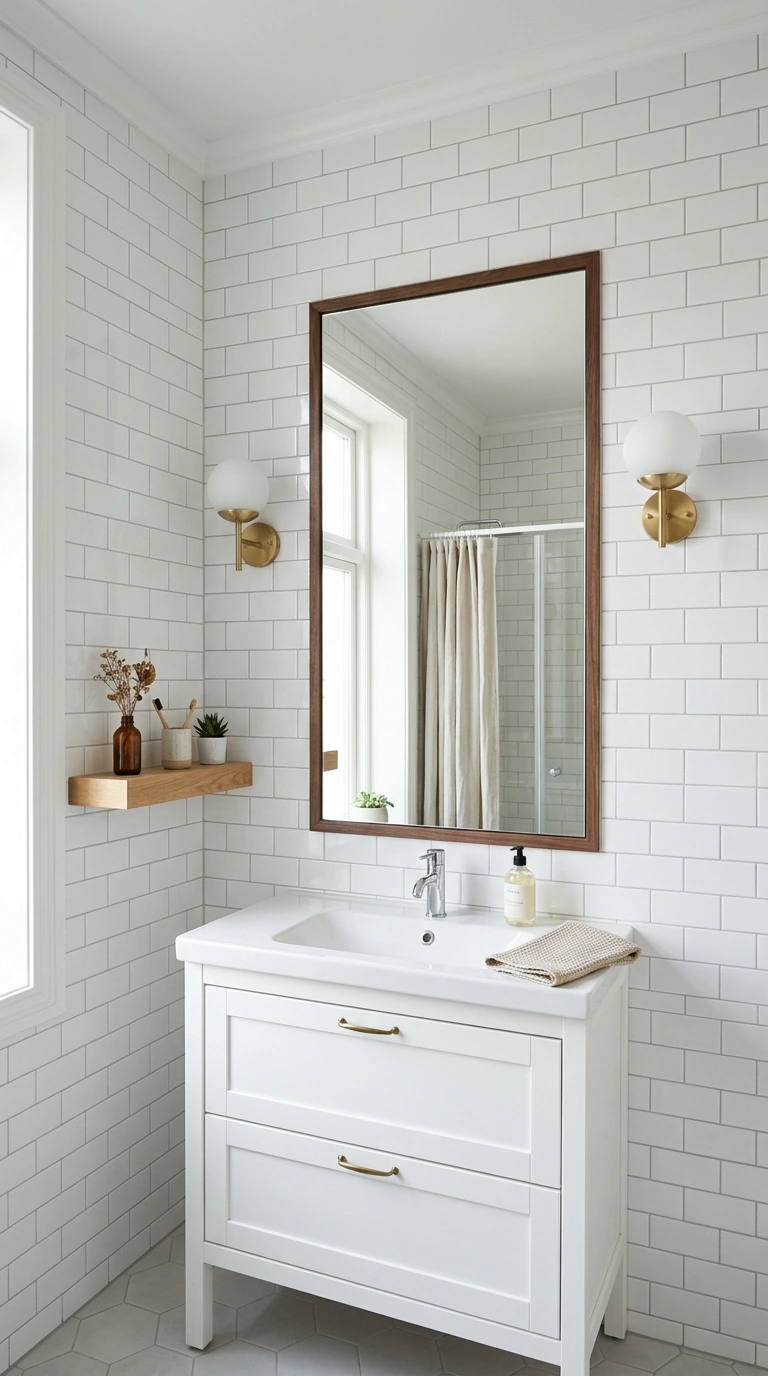
When you tile the whole wall behind the vanity, from counter to ceiling, the bathroom feels finished and easy to clean. Use a tile that is light in color, like white, cream, or pale gray, so it does not shrink the room. A 4 by 8 inch or 3 by 12 inch rectangle in a stacked or offset pattern keeps things simple. Frame the mirror with the tile, or hang a large mirror directly over it. Run the tile past the mirror edges so the wall feels solid. Because you will use more tile, this option costs more, so choose a budget friendly ceramic. Look for trim pieces to finish the top edge, or run the tile right up to the ceiling for a neat line. Use a moisture resistant backer board behind the tile, since walls near sinks get splashes every day. Add wall lights and a small shelf to break up the surface. Check the grout once a year and touch it up when needed.
Choosing Yours
A backsplash is a small project, but it protects the wall and changes how the sink area feels. Think about how much time you have, how wet the spot gets, and what you can spend. Then pick the material that fits. Even a few square feet can make a bathroom feel cared for.
Frequently Asked Questions
How high should a bathroom backsplash be?
The standard height is about 4 inches. If you want more protection from splashes, go up to 6 or 8 inches, or run the tile to the bottom of the mirror. A taller backsplash is also easier to wipe clean than a painted wall.
Do I really need a backsplash in a bathroom?
It is not required, but it protects the wall from splashes, toothpaste, and soap. Paint on a bare wall can stain, bubble, or peel around a sink. A backsplash also makes the wall easier to wipe clean.
What is the cheapest bathroom backsplash?
Peel and stick tile and painted beadboard panels usually cost the least. Basic white ceramic subway tile is also low in cost and lasts a long time. Doing the work yourself saves the most money.
What grout color works best?
A grout close to the tile color gives a smooth, calm look. Gray grout hides dirt better than white. Seal the grout and wipe it often to keep it clean, or ask about epoxy grout, which resists stains well.
Can I use peel and stick tile in a bathroom?
Yes, behind a sink it usually works well as long as the wall is smooth, clean, and dry. Keep it out of the shower and away from any spot with direct hot water. Seal the edges with clear caulk so water cannot get under the tile.