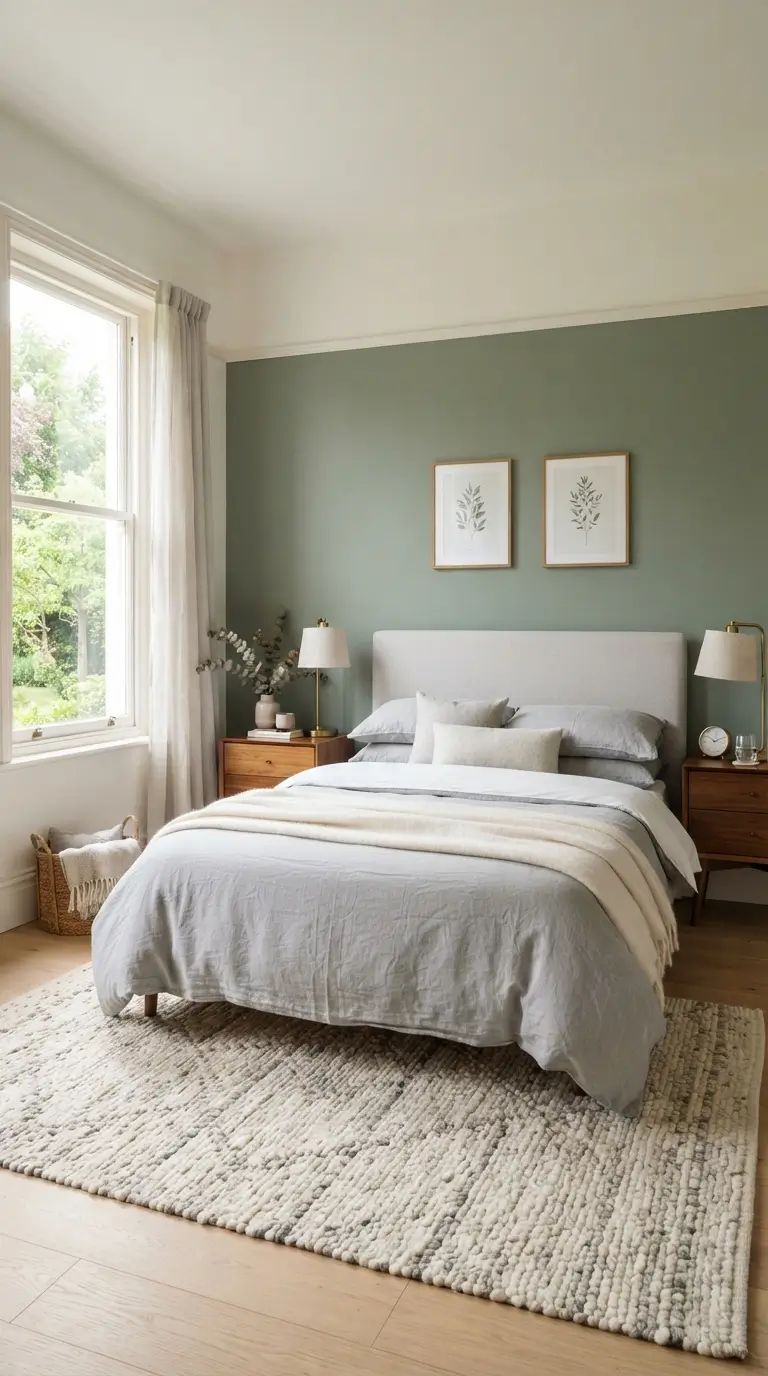
22 Beautiful Sage Green and Grey Bedroom Color Combinations
Grey bedrooms are everywhere right now, but a lot of them end up feeling flat or a little cold once the furniture is actually in the room. Adding sage green is one of the simplest ways to fix that, since the soft green brings in warmth without fighting with the grey or making the room feel too bright. I have pulled together 22 ways to combine these two colors, from small changes like a few pillows to bigger ones like painting an entire accent wall. Some of these ideas work in a rental, since they do not need any paint at all, and others are for anyone ready to commit to a full color change. Read through and pick two or three that fit your own bedroom, rather than trying to do everything on this list at once.
1. Sage Green Accent Wall
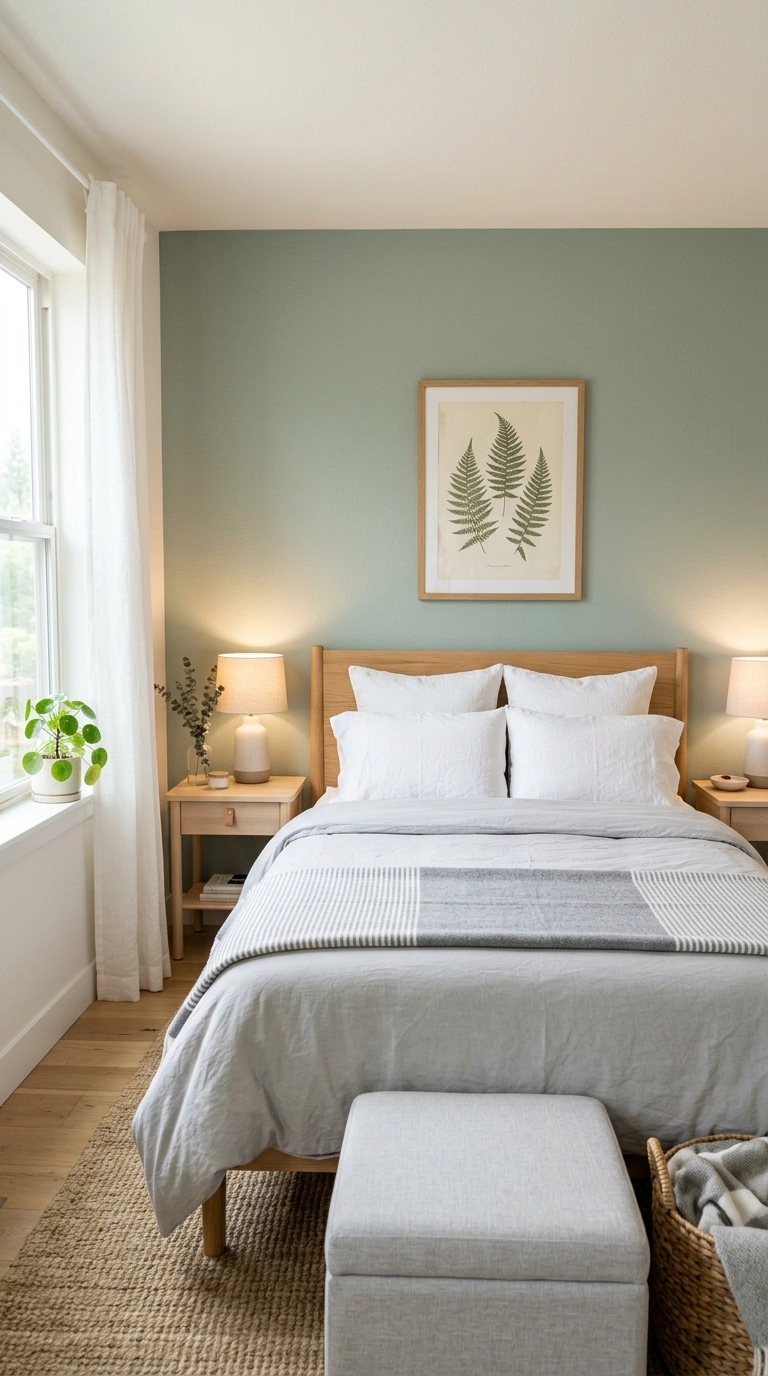
Painting just one wall behind your bed in sage green is one of the easiest ways to bring this color into a bedroom without repainting the whole room. Choose a muted, greyish sage rather than a bright green, and keep your other three walls in a soft grey or off white so the accent wall has room to stand out. Hang your bed against this wall with simple white or grey bedding, so the wall color becomes the main focus of the room. A pair of matching nightstands in a light wood or white finish keep the space feeling balanced on either side of the bed.
If you rent your home, removable wallpaper in a sage green tone gives you the same effect without touching your landlord’s paint. Add a woven wall hanging or a couple of framed botanical prints on the accent wall itself for a bit more texture, and keep your lighting warm rather than bright white to help the green feel cozy in the evening.
2. Grey Linen Bedding, Sage Walls
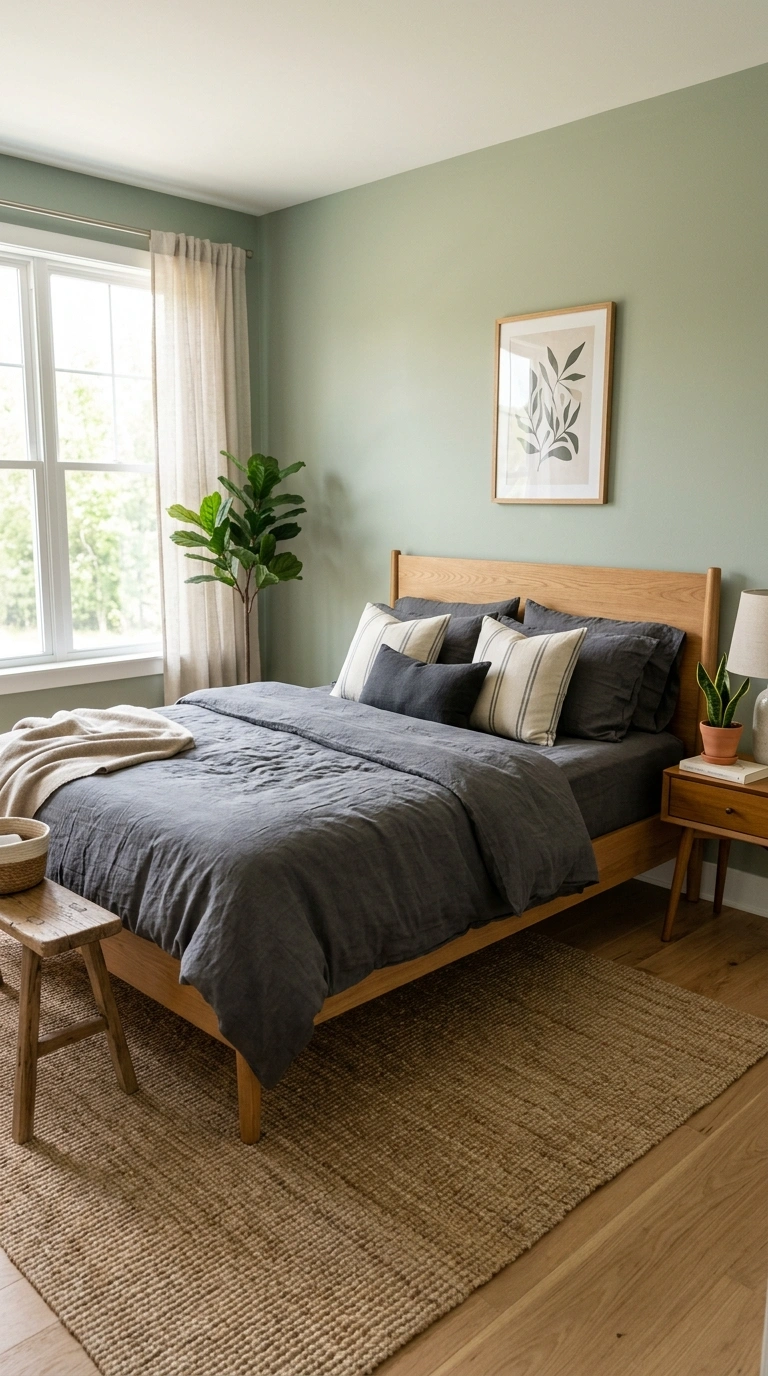
Paint your bedroom walls a soft sage green and dress your bed in grey linen bedding for a combination that feels calm the moment you walk in. Choose a linen duvet cover in a warm charcoal or dove grey, since linen has a relaxed, slightly wrinkled texture that suits this earthy color pairing better than crisp cotton. A few grey and white striped pillows on top keep the bed from feeling too plain.
Wood furniture, like an oak or walnut bed frame and nightstands, warms up the grey and green combination so the room does not feel cold. A jute or wool rug in a natural tone underfoot continues the earthy feeling. This combination works well in bedrooms of any size, but it looks especially good in rooms with a window near the bed, since natural light brings out the subtle color variation in both the linen bedding and the painted walls.
3. Sage Headboard, Grey Walls
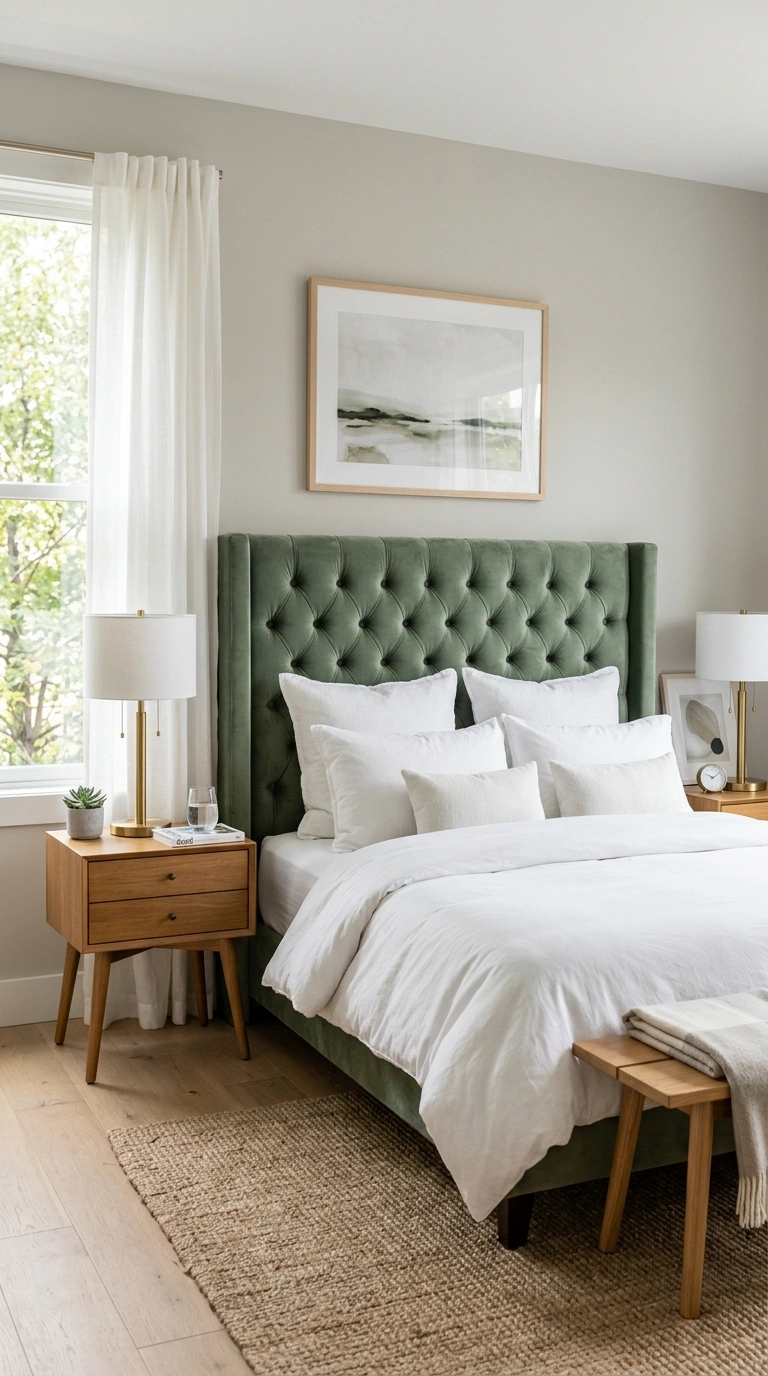
An upholstered headboard in sage green becomes the focal point of a bedroom painted in a soft warm grey. Choose a tall, channel tufted or simple rectangular headboard in a sage green velvet or linen fabric, and keep your walls in a light grey that leans slightly warm rather than cool or blue toned. White or cream bedding lets the green headboard stand out as the main color statement in the room. A pair of brass or wood table lamps on either nightstand add warmth against all the grey and green.
If a full upholstered headboard is not in your budget right now, a slipcover style headboard in sage green fabric gives a similar look for less money and can be changed later if you want a different color. This combination suits bedrooms with simple, uncluttered furniture, since the headboard is meant to be the star of the whole room.
4. Two Tone Sage Grey Wall
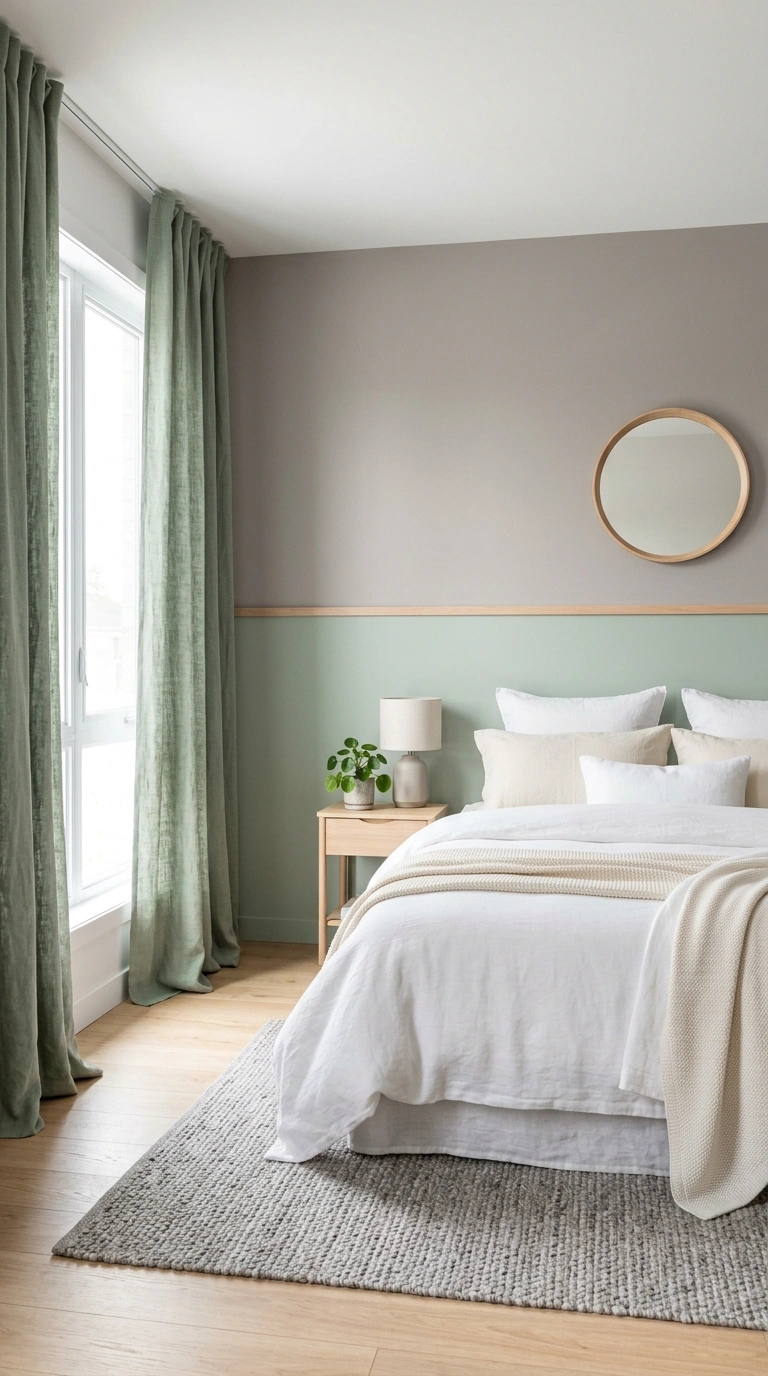
Painting your bedroom wall in two colors, sage green on the bottom half and soft grey on top, gives a room a custom, designed feeling without much extra work. Use painter’s tape to mark a straight line about a third of the way up the wall, then paint the lower section sage green and the upper section a warm light grey. A thin wood trim strip along the line where the colors meet gives the look a more finished, intentional edge.
Keep your bedding in white or cream so it does not compete with either wall color. This two tone technique works especially well in bedrooms with lower ceilings, since the horizontal line can make the walls feel a little taller. It also gives you a chance to try a bolder color like sage green without committing to it across the entire wall, which can feel like less of a risk if you are painting for the first time.
5. Sage Curtains, Grey Bedding
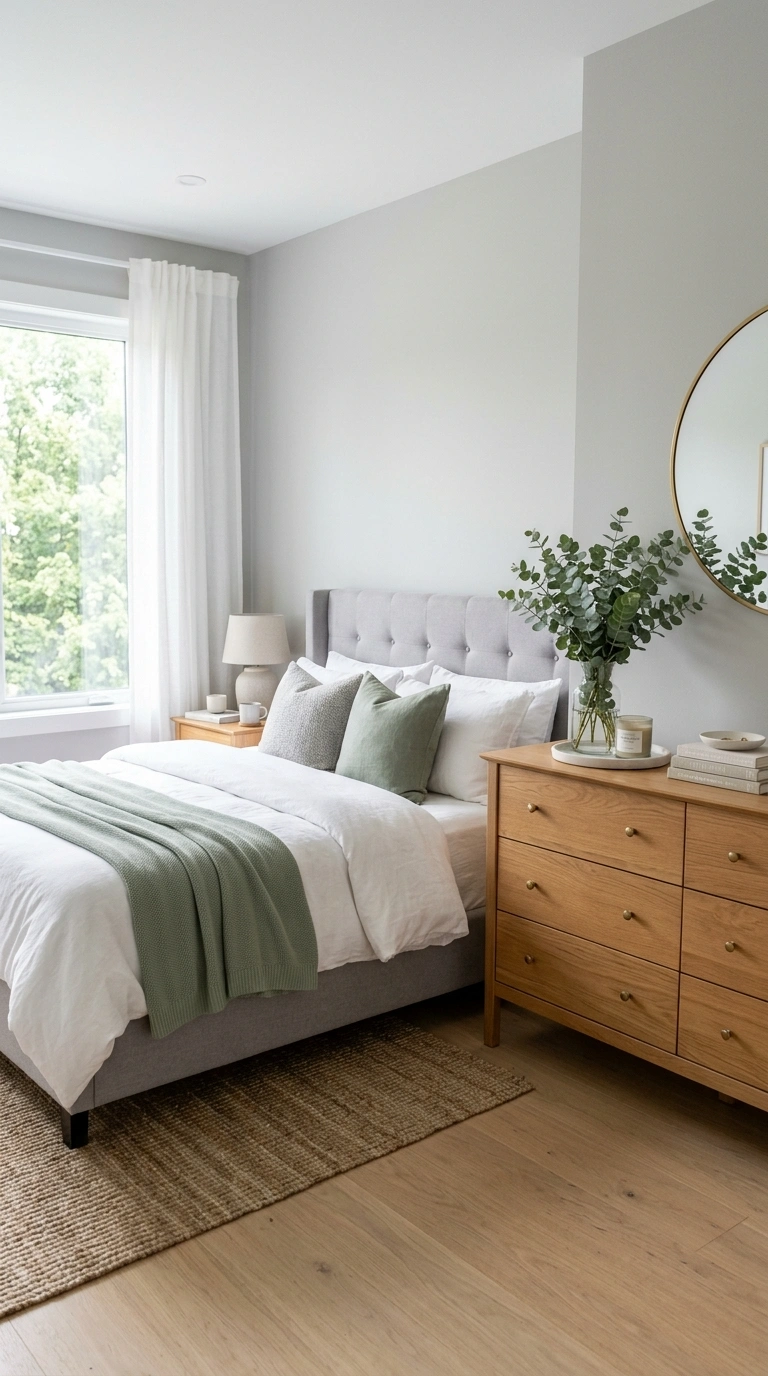
If you are not ready to paint your bedroom walls at all, sage green curtains paired with grey bedding is a simple way to bring both colors into the room through fabric alone. Choose floor length linen curtains in a soft sage green and hang them close to the ceiling rather than right above the window frame, which makes the whole room feel taller. Dress your bed in grey bedding, mixing a charcoal duvet with lighter dove grey pillows for some contrast.
A grey area rug under the bed ties the floor into the same color story as the bedding. This approach is a good starting point for renters or anyone who wants to test out the sage and grey combination before committing to paint. Once the curtains and bedding are in place, you can decide later whether you want to add a painted wall or keep the walls neutral and let the fabric do the work.
6. Grey Wood Bed, Sage Accents
A grey upholstered bed frame paired with a wood dresser and small sage green accents creates a bedroom that feels calm and pulled together without too much color. Choose a bed frame in a soft grey fabric, either linen or a bouclé style texture, and pair it with a wood dresser or nightstands in a warm oak or walnut tone. Bring in sage green through smaller pieces, like a throw blanket at the foot of the bed, a ceramic lamp base, or a vase of eucalyptus on the dresser.
This approach lets you enjoy the sage and grey color pairing without repainting or buying all new furniture, since you are only adding a few smaller items to a room you may already have set up. Keep the walls in a plain white or very light grey so the wood and green accents have room to stand out against a simple background.
7. Sage Nightstands, Grey Room
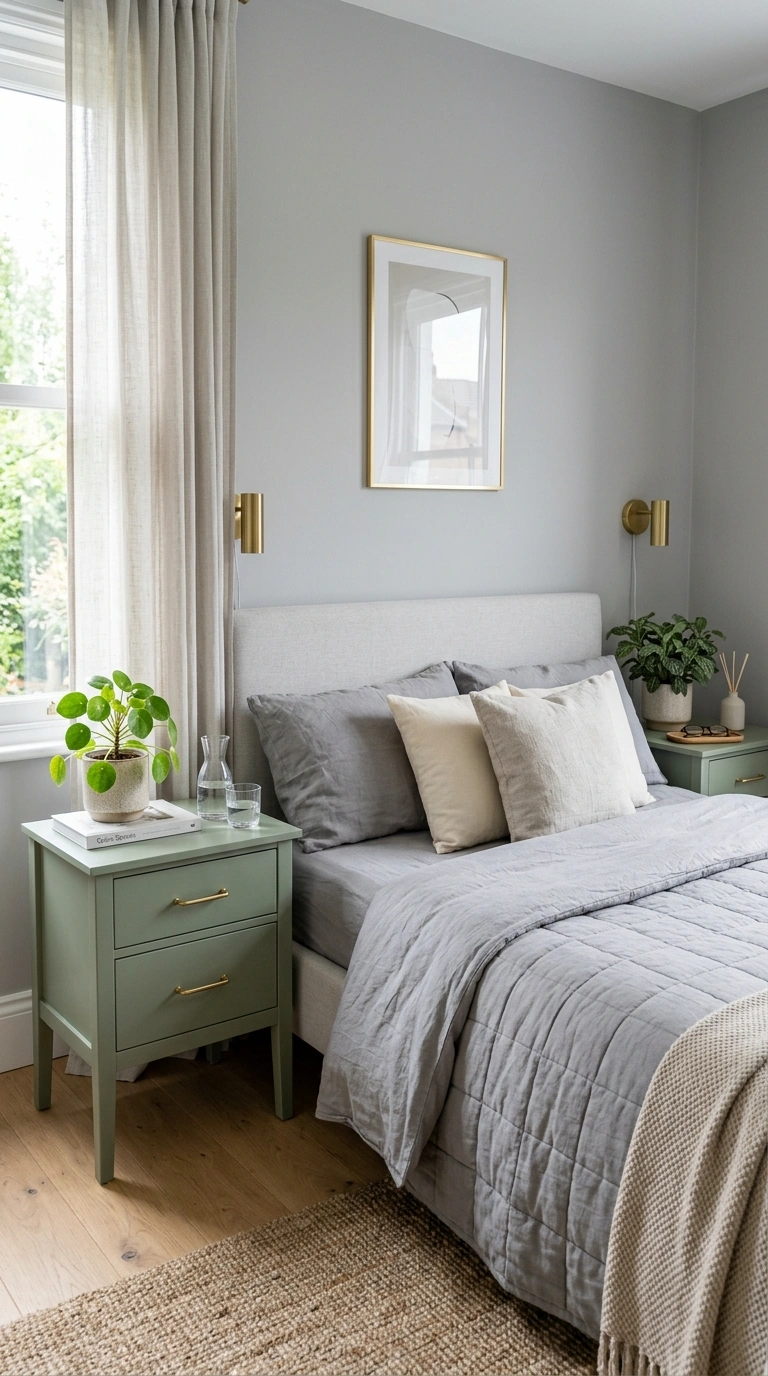
Painting just your nightstands in sage green is a small project that adds a surprising amount of color to an otherwise grey bedroom. Keep your walls and bedding in soft grey tones, then paint two matching nightstands, or even just their drawer fronts, in a muted sage green. Swap the hardware for simple brass or black pulls to finish the update. A small green plant on top of each nightstand repeats the color at eye level near the bed.
This is one of the easiest ideas on this list to try in a single afternoon, since it only involves two small pieces of furniture rather than an entire wall or room. If you like how the sage nightstands look next to your grey walls, it can be a good first step before deciding whether to paint a larger piece of furniture or a wall in the same color later on.
8. Charcoal, Sage Green Pillows
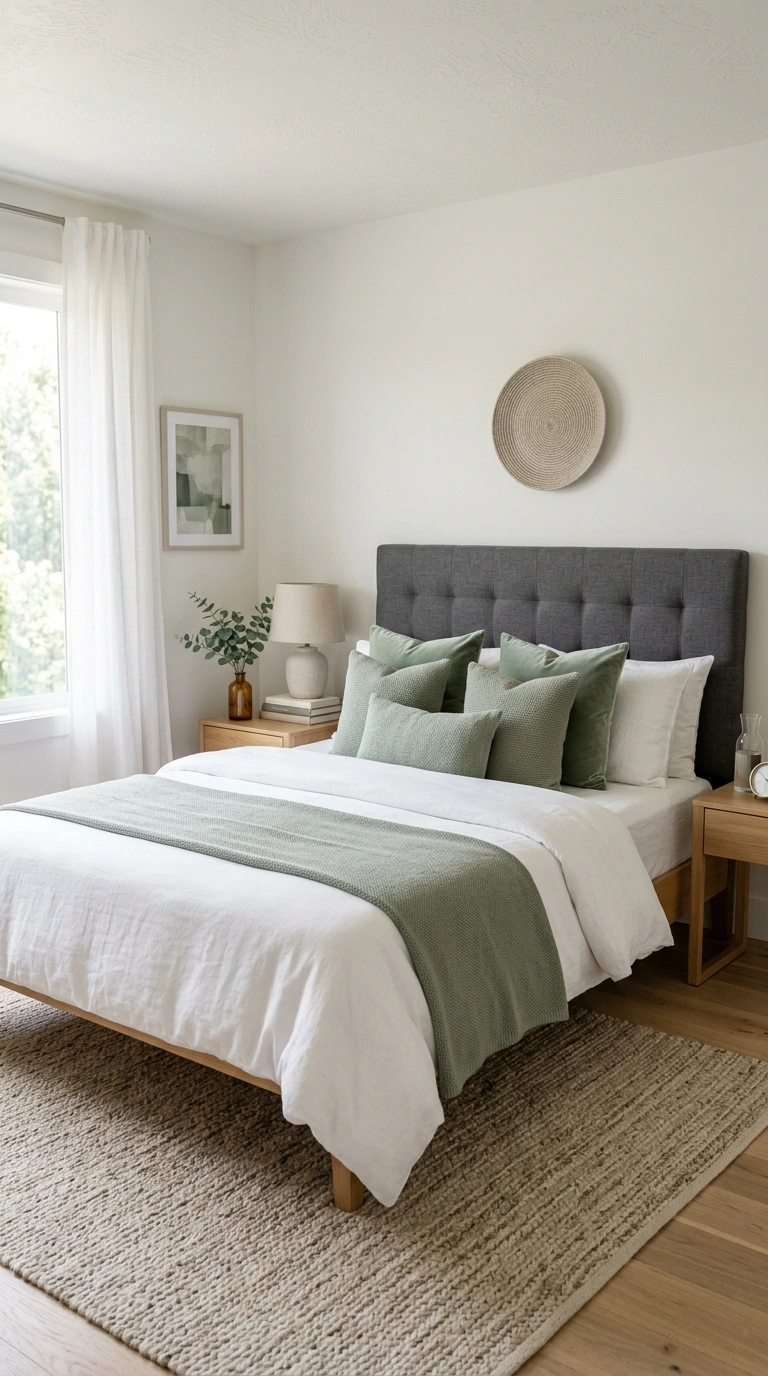
A charcoal grey bed frame or headboard paired with sage green throw pillows gives a bedroom depth without needing to paint anything at all. Choose a charcoal linen or velvet headboard as your anchor piece, then layer three or four pillows on the bed in different shades of sage green, mixing a solid velvet pillow with a woven textured one. Keep your sheets and duvet in a plain white or light grey so the charcoal and green pieces stand out clearly against a simple background.
A sage green throw blanket folded at the foot of the bed repeats the color a second time. This combination is a good option if you already own dark grey or charcoal furniture and want to bring in some green without repainting or buying a new bed. It also makes it easy to change the accent color later, since pillows and throws are simple to swap out.
9. Sage Wainscoting Bedroom
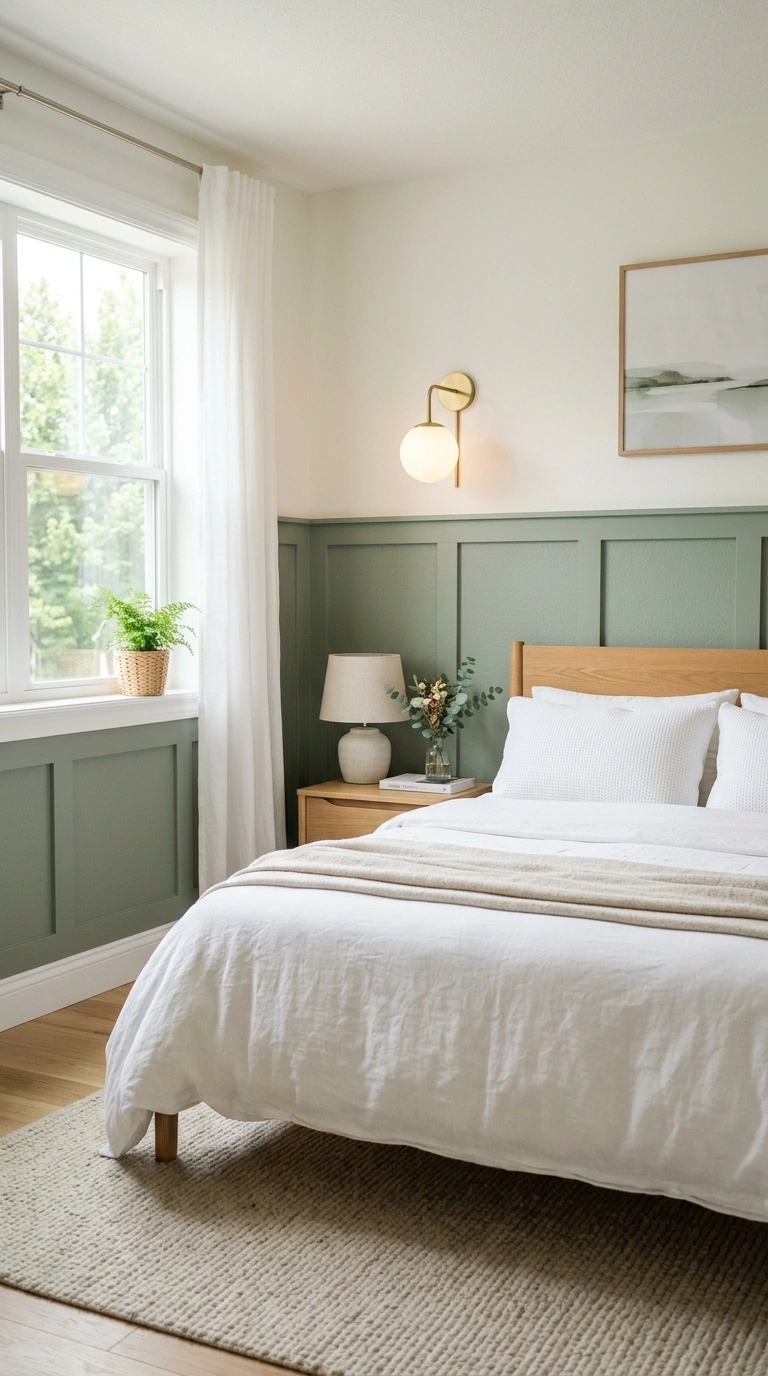
Wainscoting painted in sage green along the lower half of your bedroom walls gives the room a cottage style, architectural feeling that goes beyond simple paint. Install simple picture frame style wainscoting panels up to about waist height, then paint the panels sage green and the wall above in a soft warm white or light grey. This creates a clear, clean line between the two finishes without needing a painter’s tape edge.
White or cream bedding keeps the room feeling bright above the green wainscoting. A brass or black wall sconce mounted just above the wainscoting line adds a nice architectural detail near the bed. This look takes more time than a simple paint job, since it involves installing the panels first, but it gives a bedroom a built in, custom feeling that plain painted walls cannot match, and it works especially well in older homes with existing trim details.
10. Grey Herringbone, Sage Walls
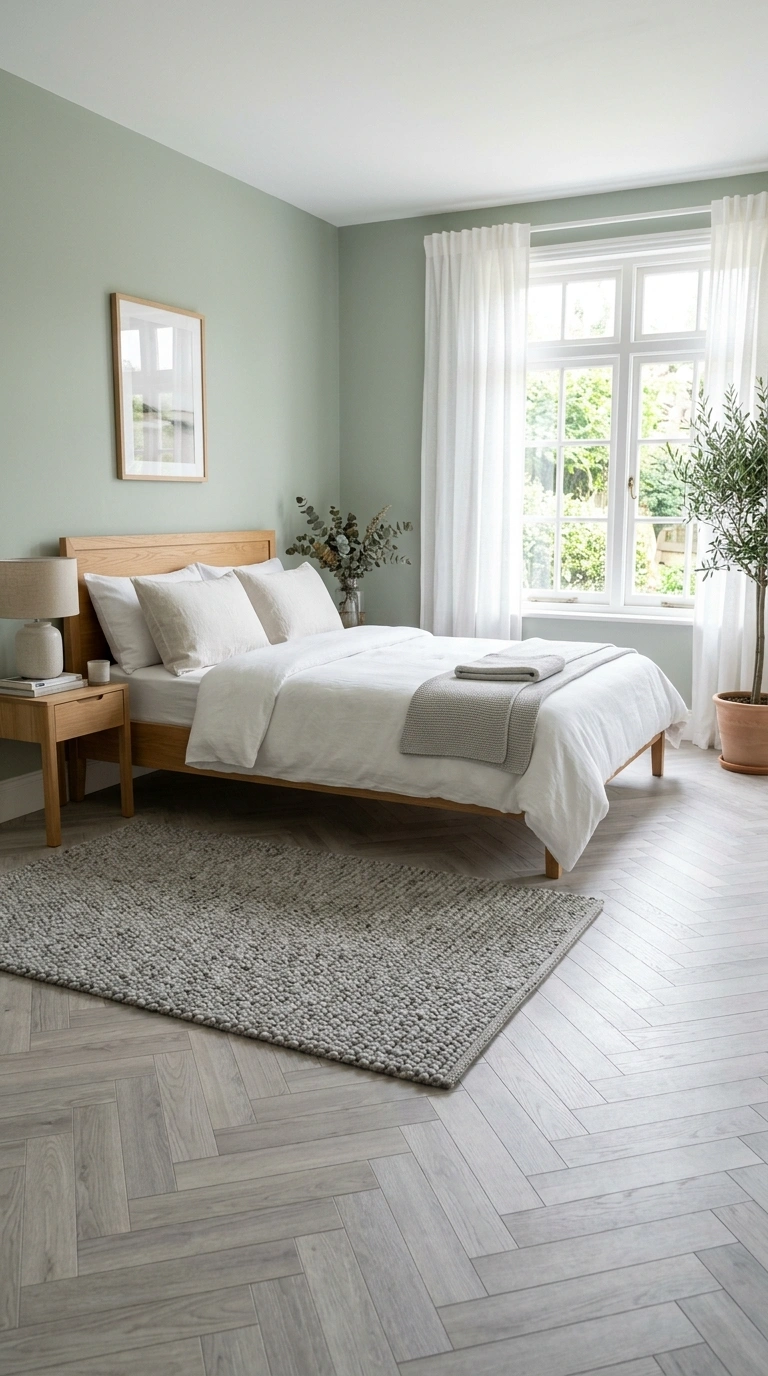
A herringbone pattern floor in a soft grey wood tone gives a bedroom painted in sage green a more elevated, finished look. Choose engineered wood flooring or peel and stick vinyl planks in a light grey wash, laid in a herringbone pattern rather than a straight line, then paint your walls in a muted sage green. Keep your bedding simple, in white or cream, so both the floor pattern and the wall color have room to be noticed.
A grey wool rug placed at the foot of the bed adds softness underfoot without hiding the herringbone pattern completely. This combination works especially well in bedrooms that are being renovated from the studs, since installing a herringbone floor is a bigger project than most other ideas on this list, but it gives the whole room a custom, high end feeling that few other single changes can match.
11. Sage Green Closet Doors
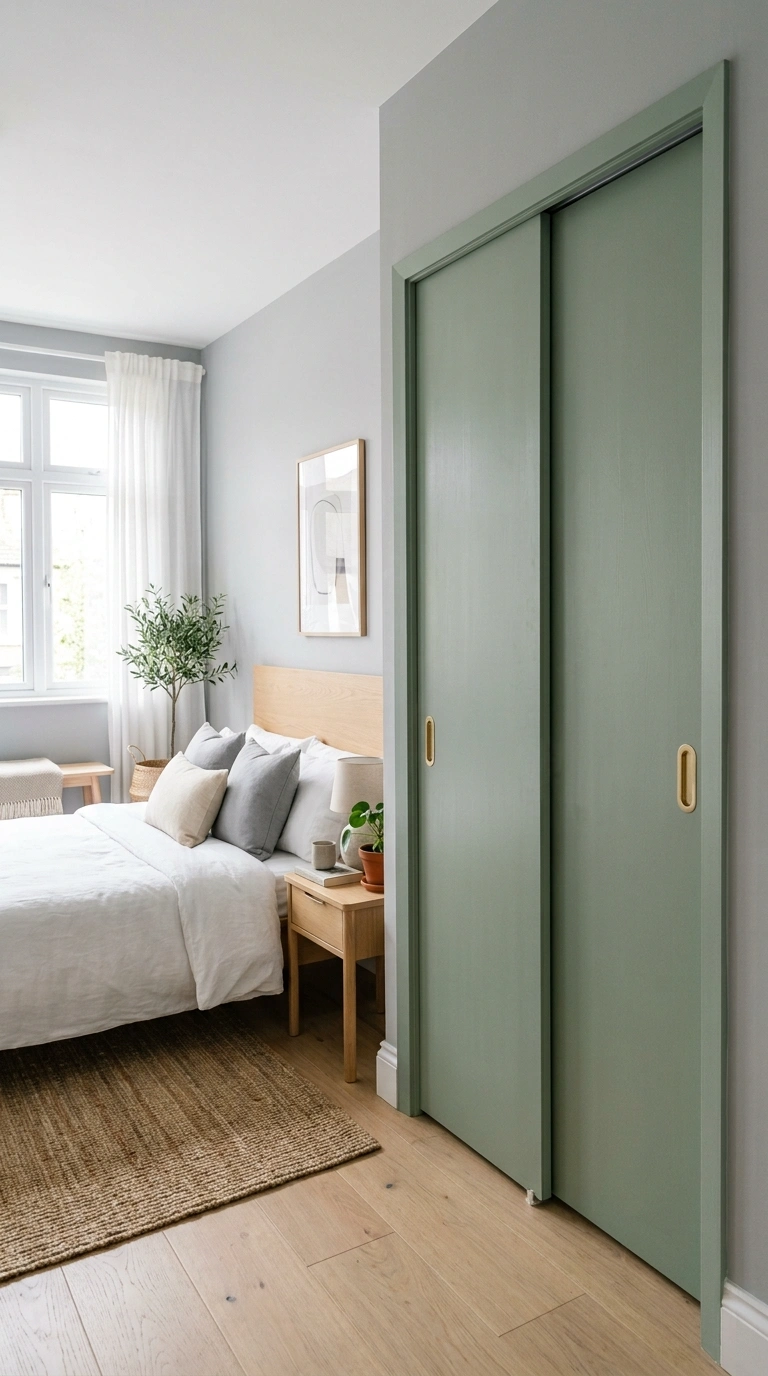
Painting your closet doors sage green is an easy way to bring color into a grey bedroom without touching the walls at all. Keep your bedroom walls in a soft grey, then paint your closet doors, whether they are flat panel or louvered style, in a muted sage green. Swap the door hardware for simple brass or black knobs to finish the look. This works especially well with sliding or bifold closet doors, since their flat surface gives you a clean, large area of color that acts almost like an accent wall.
Keep the rest of your furniture in neutral tones, like white or light wood, so the green doors stand out clearly against a simple room. This is a good option for anyone who wants to try sage green in a lower commitment way, since closet doors are far easier and cheaper to repaint again later than an entire wall would be.
12. Grey Velvet, Sage Wall
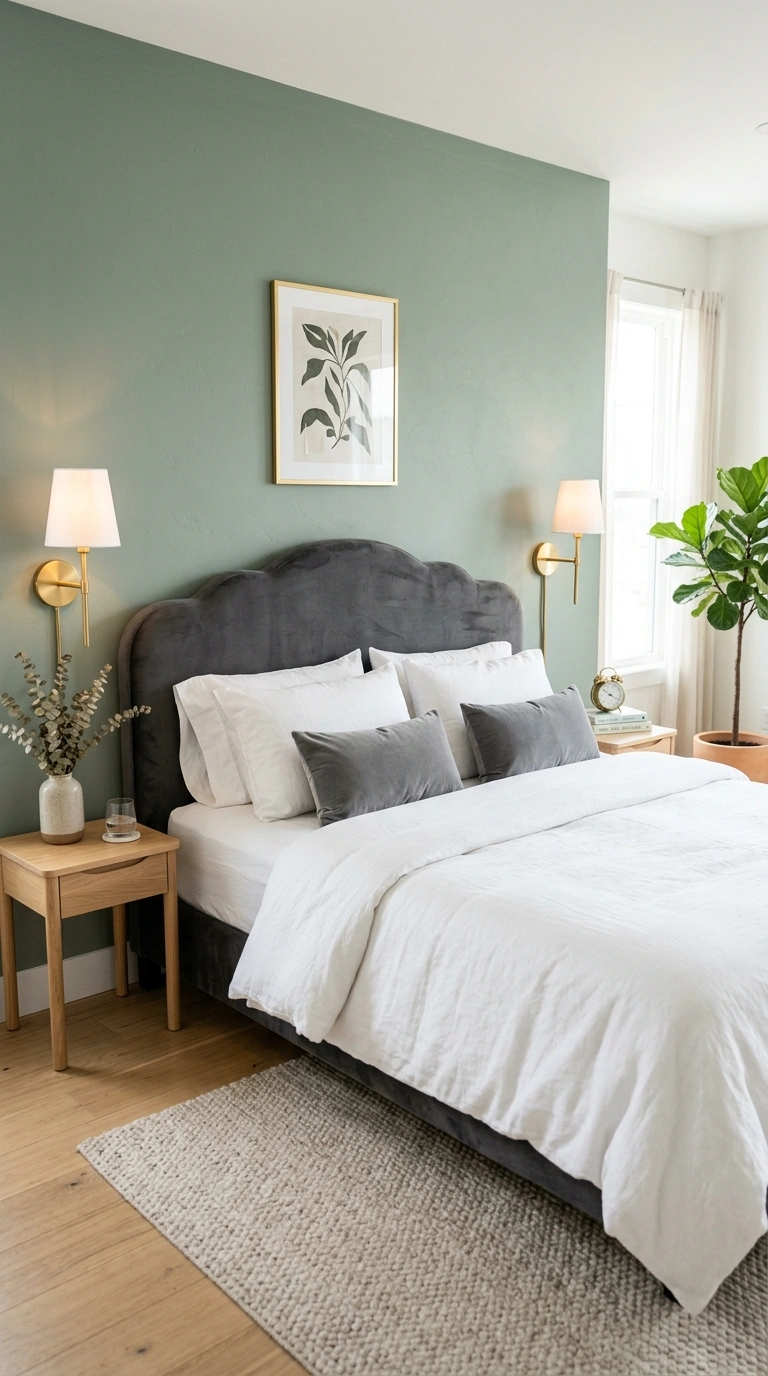
A charcoal grey velvet headboard set against a sage green accent wall gives a bedroom a rich, layered feeling with just two main elements. Choose a curved or channel tufted headboard in a deep grey velvet, and place it against a wall painted in a muted sage green, ideally the wall directly behind the bed. White or cream bedding keeps the space feeling light, letting both the headboard and the wall color stand out clearly.
A pair of brass wall sconces mounted on either side of the headboard add warmth and soft lighting in the evening. This combination feels a little more formal and put together than some of the other ideas on this list, which makes it a nice fit for a primary bedroom rather than a kids’ room or guest space, especially if you already gravitate toward slightly richer, more textured materials like velvet.
13. Sage Ceiling, Grey Walls
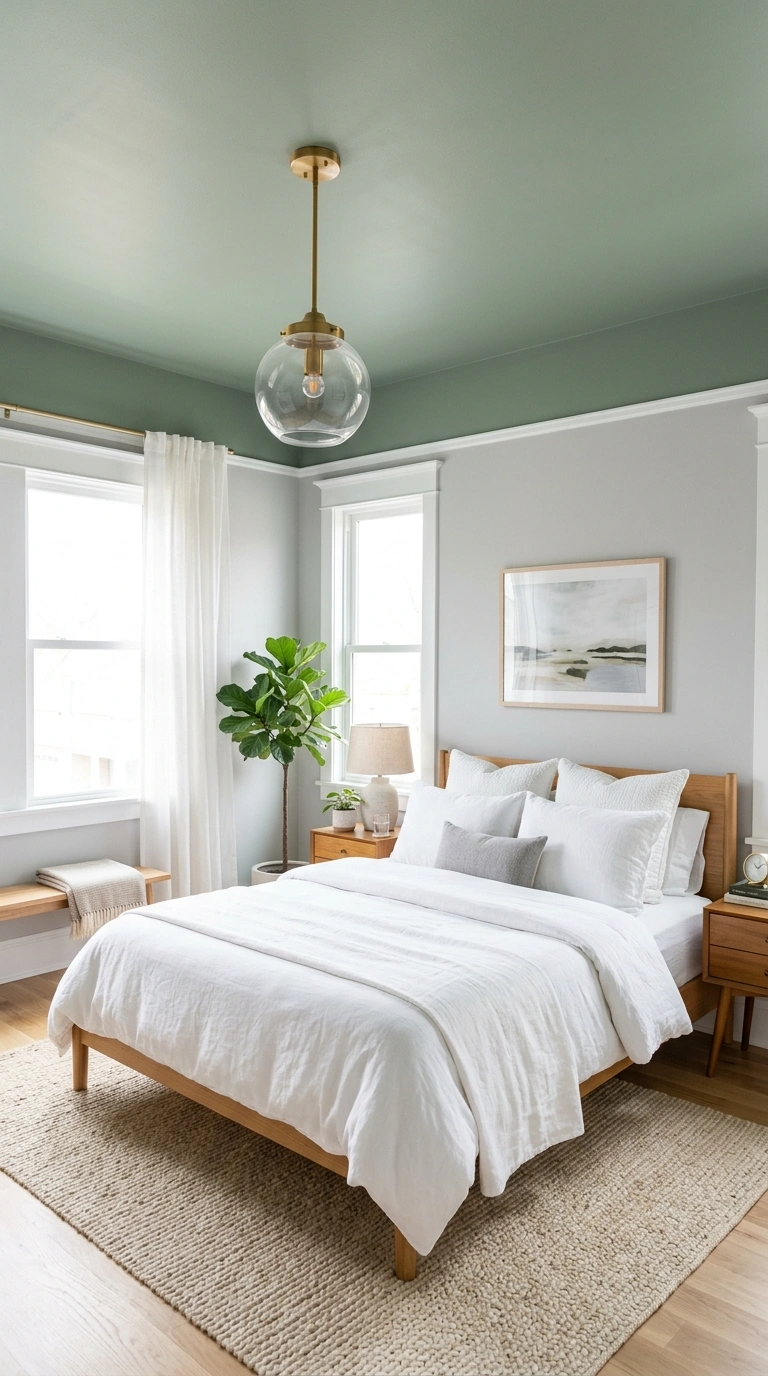
Painting your bedroom ceiling in sage green while keeping the walls a soft grey is an unexpected way to bring in color from an angle most bedrooms ignore. Use a matte or eggshell finish paint on the ceiling in a muted sage tone, and keep your walls in a light warm grey so the ceiling color reads as a deliberate design choice rather than a mistake. White trim around the ceiling edge helps define the line between the two colors clearly.
Simple white or grey bedding keeps the rest of the room calm, since the ceiling is already doing a lot of the visual work. A simple pendant light in brass or black hanging from the green ceiling adds one more layer of detail overhead. This idea works especially well in bedrooms with high or vaulted ceilings, where a painted ceiling has enough visual space to feel intentional rather than closing the room in.
14. Grey Tufted Bench, Sage Room
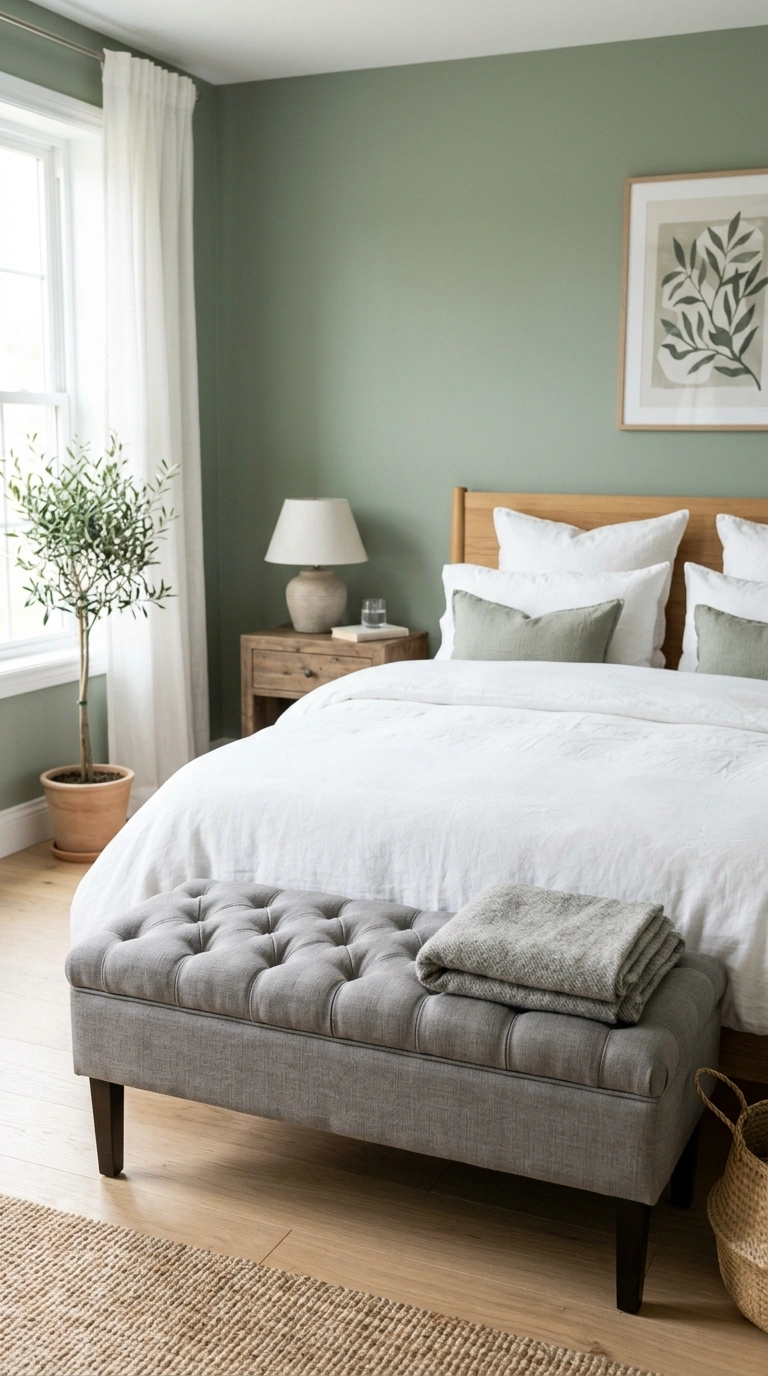
A grey tufted bench placed at the foot of the bed adds both function and color contrast in a bedroom already painted sage green. Choose a bench in a soft grey linen or velvet fabric, tufted or plain, sized to fit the width of your bed frame. Keep your walls in a muted sage green and your bedding in white or cream, so the grey bench reads as a clear accent piece rather than blending into the background.
A folded throw blanket in a slightly darker or lighter shade of grey placed on the bench adds another layer of texture. This is a practical addition as well as a decorative one, since a bench at the foot of the bed gives you a spot to sit while putting on shoes or laying out clothes for the next day, making it a useful piece rather than decoration alone.
15. Sage Green Reading Nook
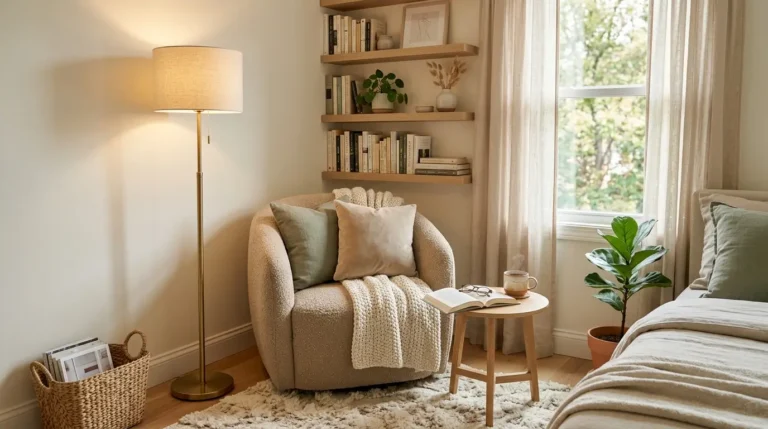
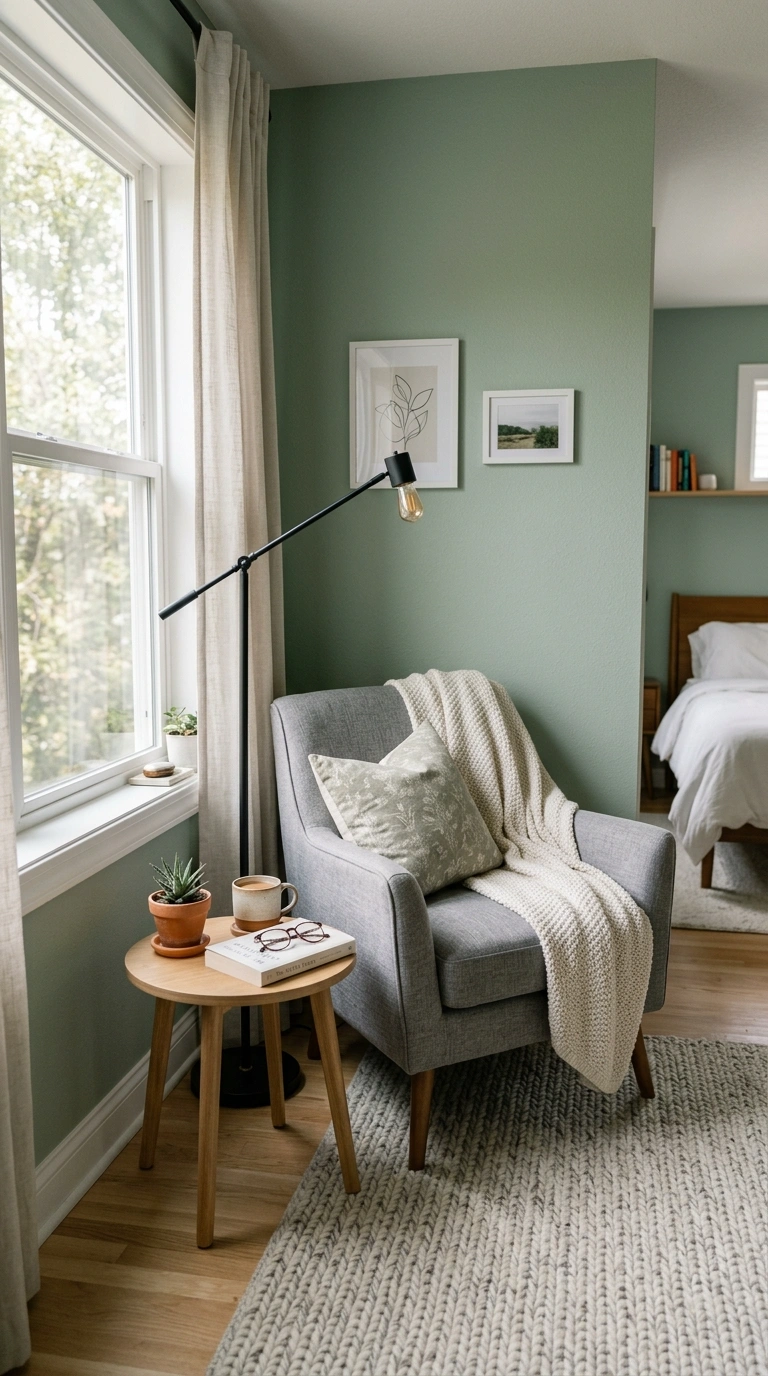
A small reading nook in the corner of your bedroom, painted sage green, gives you a cozy spot separate from the bed itself. Paint just the nook’s corner walls or a small alcove in sage green, leaving the rest of the bedroom in a soft grey, so the nook feels like its own little space within the room. Add a comfortable armchair in a grey or cream fabric, a small round side table, and a floor lamp with a warm bulb for reading in the evening.
A soft wool rug underfoot and a few pillows on the chair in mixed grey and sage tones tie the nook into the rest of the room’s color scheme. This idea works especially well in bedrooms with an awkward corner or unused space, giving that area a real purpose instead of leaving it empty, and it creates a nice photograph opportunity separate from the usual bed centered bedroom shot.
16. Grey Sage Striped Wall
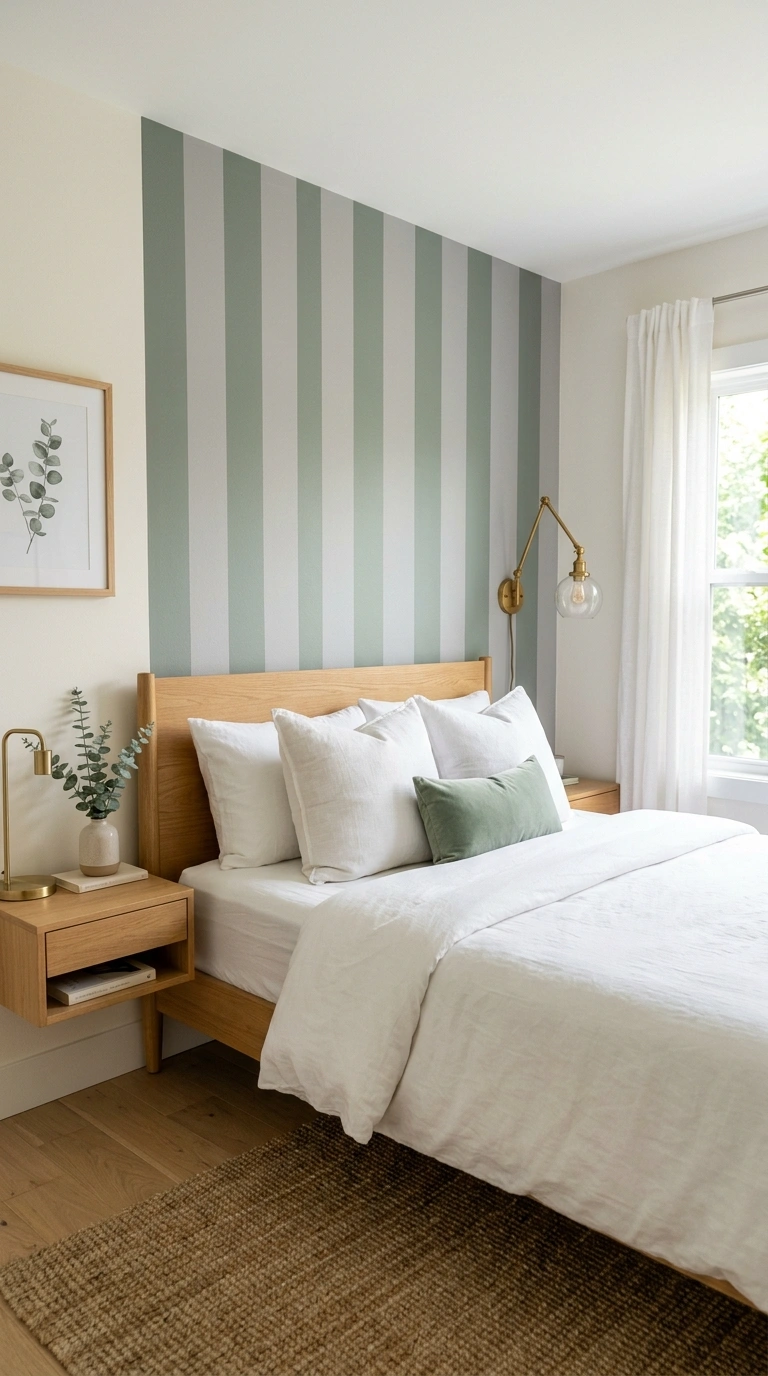
Painted stripes in alternating grey and sage green give a bedroom wall a graphic, custom look without needing wallpaper. Use painter’s tape to mark even vertical stripes, somewhere between four and eight inches wide depending on your wall height, then paint alternating stripes in a soft grey and a muted sage green. Keep this technique to just one wall, ideally behind the headboard, so the rest of the room can stay calm with plain white or grey walls.
White bedding keeps the striped wall as the clear focal point of the room. A simple black or brass wall light mounted on the striped wall adds a bit of shine against the matte stripes. This project takes more time than a single solid color wall, since you need to tape and paint multiple stripes carefully, but it gives a much more custom, high end look than either color used alone.
17. Sage Vanity, Grey Room
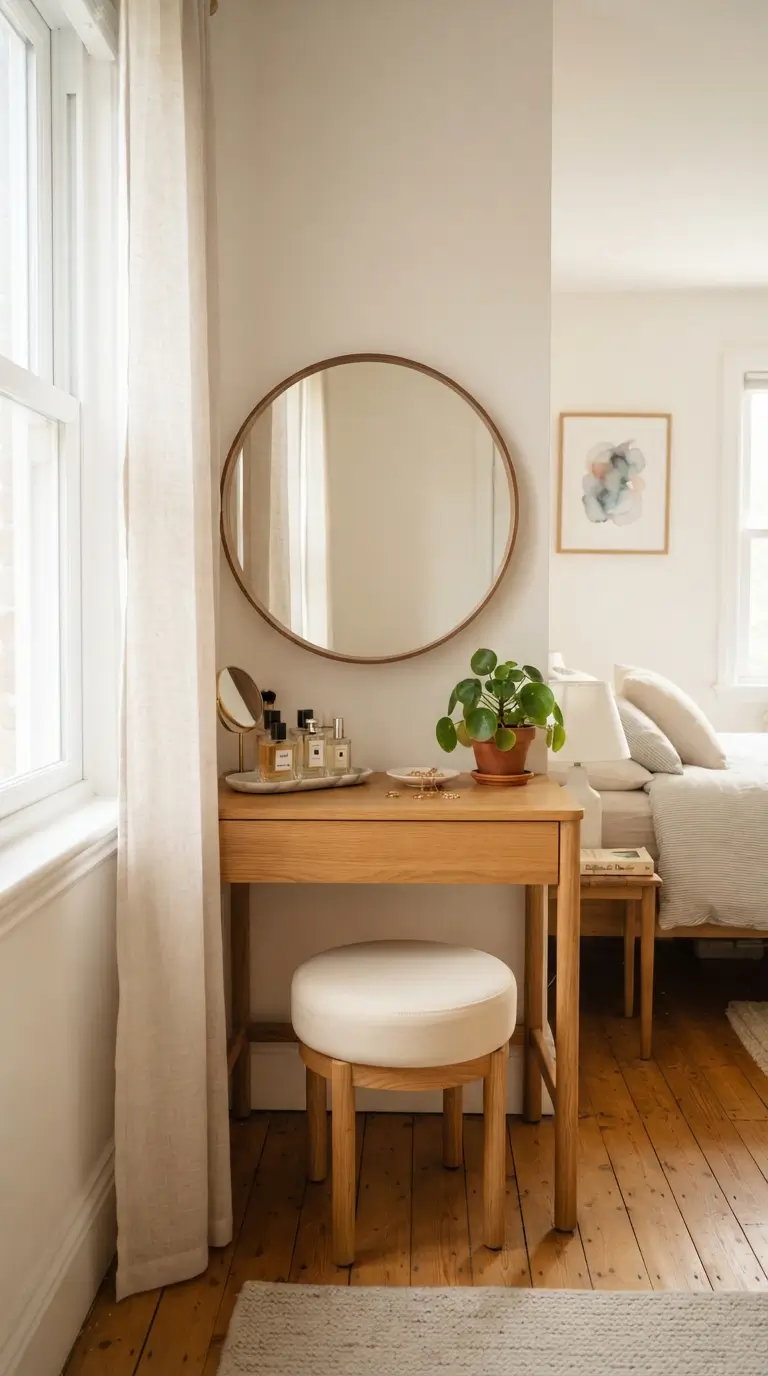
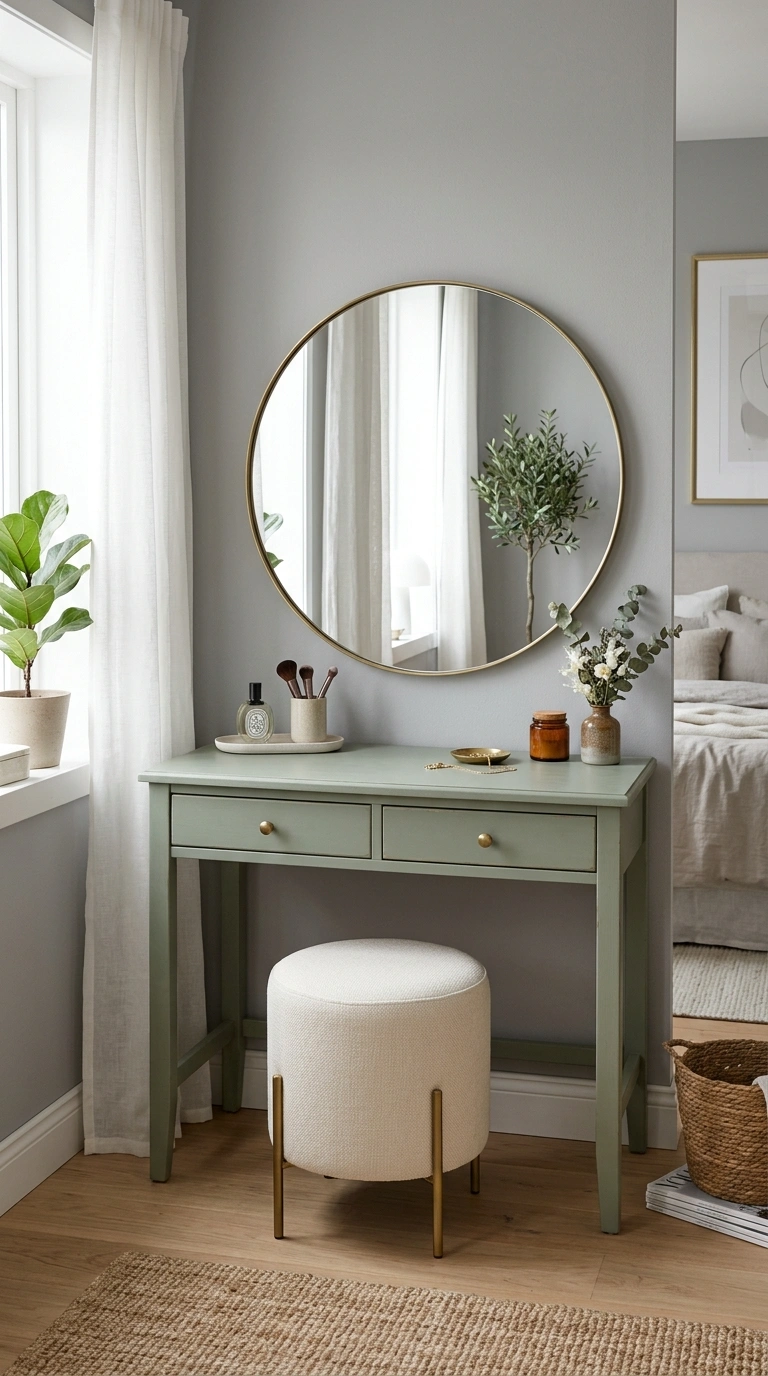
A sage green vanity or dressing table tucked into a corner of a grey bedroom becomes a lovely small focal point beyond just the bed. Choose a vanity with a few drawers, painted in sage green, and pair it with a round or oval mirror in a simple brass or black frame. Keep your bedroom walls in a soft grey and your bedding in white or cream, letting the vanity stand out as a clear pop of color in its corner of the room.
A small upholstered stool in grey or cream sits neatly underneath when not in use. This idea works well for anyone who wants a dedicated spot to get ready in the morning, rather than using the bathroom counter, and it gives you a second area in the bedroom to photograph and style beyond the usual bed and nightstand setup most bedroom photos rely on.
18. Grey Linen Curtains, Sage Wall
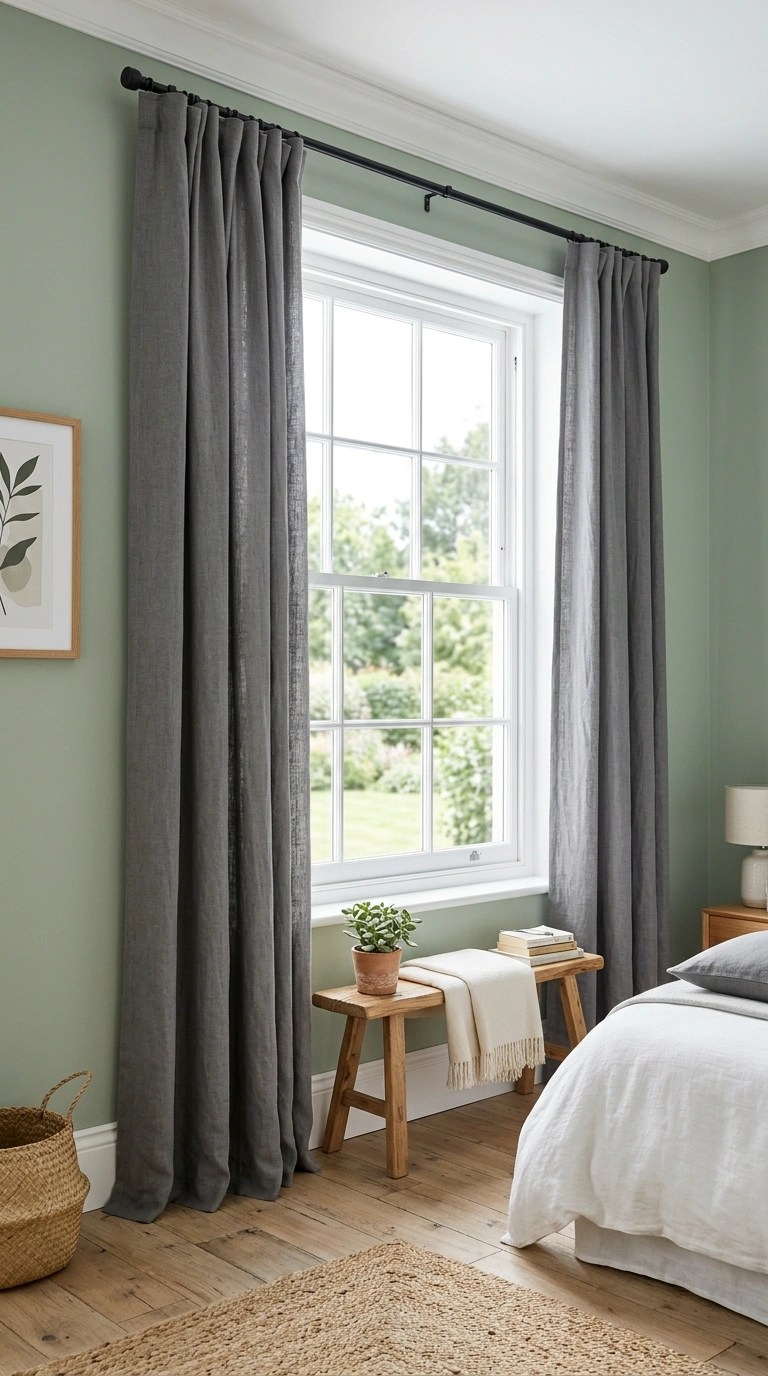
Floor length grey linen curtains framing a window on a sage green wall bring softness and color together in one corner of the bedroom. Paint the wall around your window in a muted sage green, then hang linen curtains in a warm dove grey from a rod mounted close to the ceiling, letting the fabric puddle slightly at the floor for a relaxed, collected look. Keep the rest of your bedroom walls in a plain white or lighter grey so this window wall becomes a clear focal point.
A small bench or chair placed under the window, in a wood or grey fabric finish, gives the corner a cozy, usable feeling beyond just decoration. This combination works especially well in bedrooms with a large window that gets good natural light, since the linen curtains soften harsh sunlight while still letting plenty of light into the room during the day.
19. Sage Built In Shelves
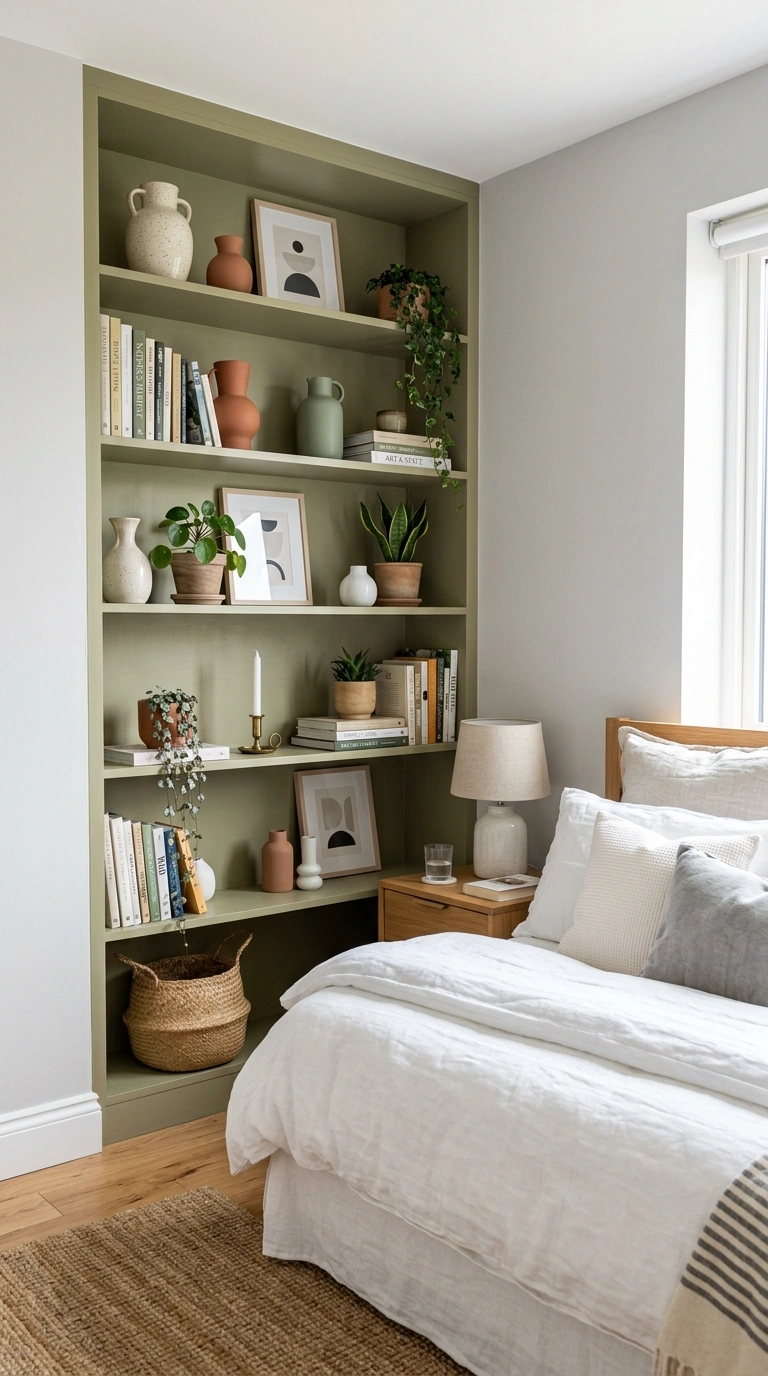
Built in shelving painted sage green on either side of the bed or along one wall gives a bedroom both storage and a strong color statement. Paint the shelf units in a muted sage green while keeping the surrounding wall in a soft grey, so the shelves read as intentional furniture rather than blending into the wall. Style the shelves with a mix of books, a few ceramic vases, and one or two small plants, leaving some open space rather than filling every shelf completely.
White or cream bedding keeps the rest of the room calm next to the busier, styled shelving. This idea works especially well in smaller bedrooms where floor space for a dresser is limited, since built in shelves use vertical space that would otherwise go unused, and it gives the room a custom, architectural feeling that simple furniture alone cannot always achieve.
20. Grey Bed, Sage Trim
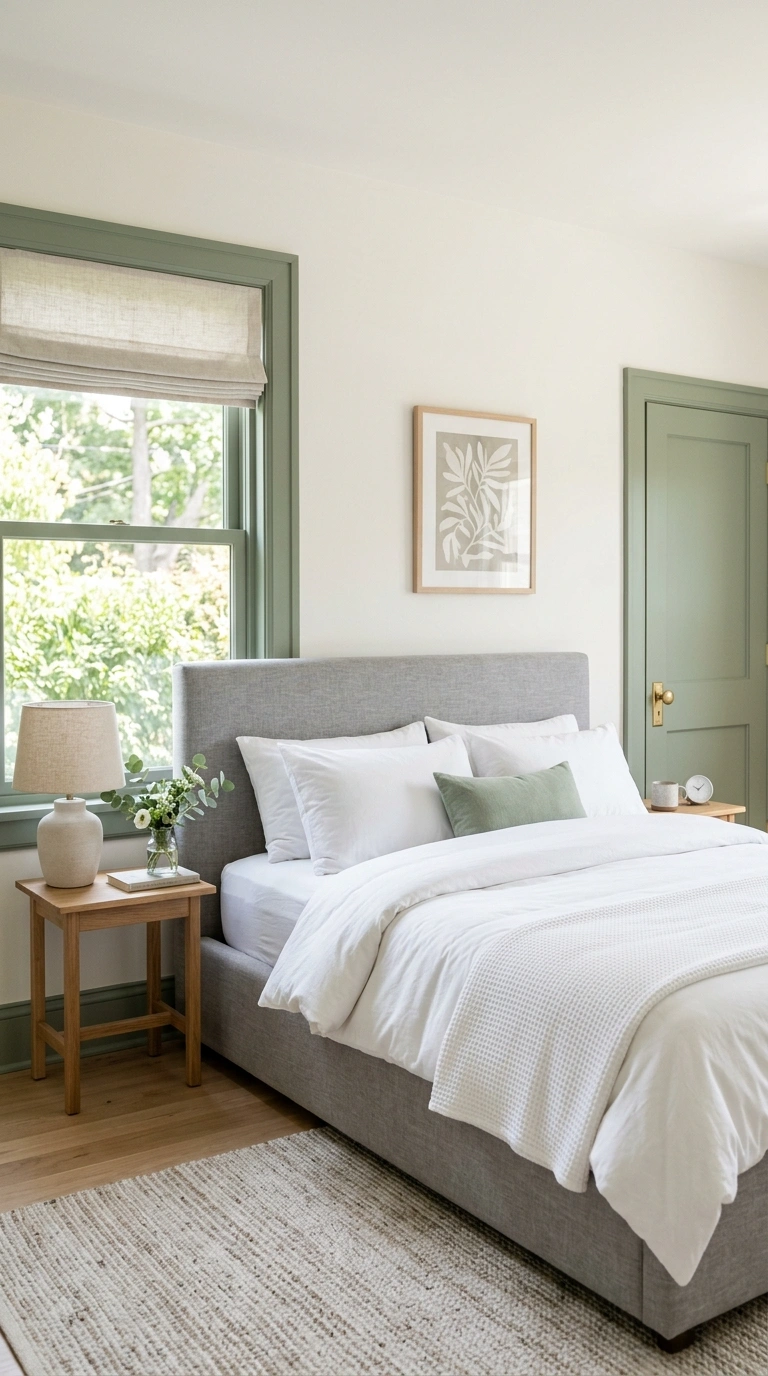
A grey upholstered bed frame paired with sage green painted trim and molding gives a bedroom a subtle but noticeable layer of color. Choose a bed frame in a soft grey linen or bouclé fabric, then paint your existing door and window trim, along with any baseboards, in a muted sage green rather than the usual plain white. Keep your wall color a simple warm white or very light grey so the painted trim has room to stand out clearly around the doors and windows.
White or cream bedding keeps the bed itself feeling soft and simple against the grey fabric frame. This is a smaller, more subtle way to bring sage green into a bedroom compared to painting an entire wall, and it works especially well in older homes with detailed trim work already in place, since the green paint highlights architectural details that plain white trim tends to hide.
21. Sage Green Window Seat
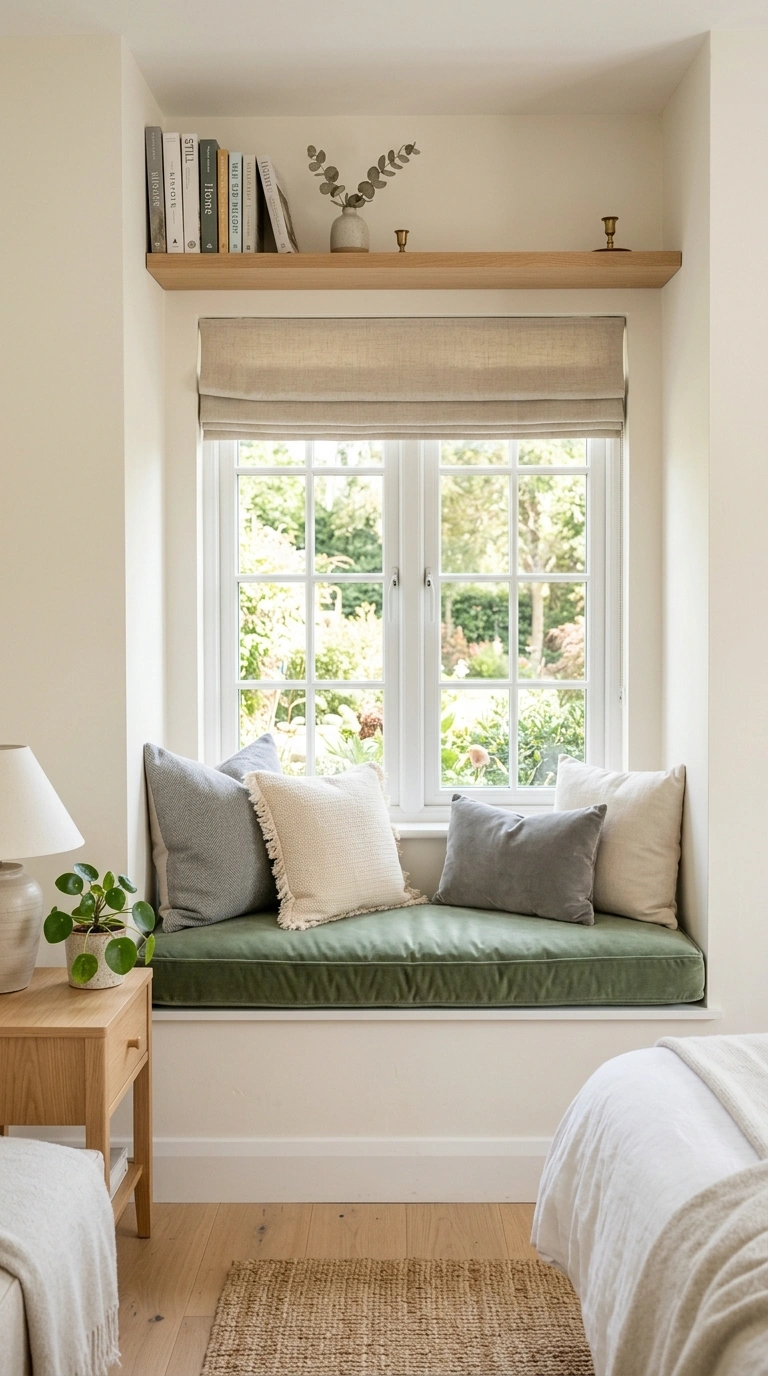
A built in window seat cushioned in sage green fabric turns an ordinary window into a cozy corner of the bedroom. Build or buy a simple bench seat sized to fit under your window, then top it with a cushion in a muted sage green fabric, either velvet or a durable cotton blend. Add two or three throw pillows in mixed grey and cream tones to soften the look further. Keep the walls around the window in a plain warm white or light grey so the green cushion stands out as the clear color moment in that corner.
A small shelf above the window seat holds a few books or a plant, giving the space a little more personality. This idea works especially well in bedrooms with a deep window sill or a bay window, where there is enough space to add real seating rather than just a decorative cushion on the floor.
22. Grey Sage Boho Bedroom
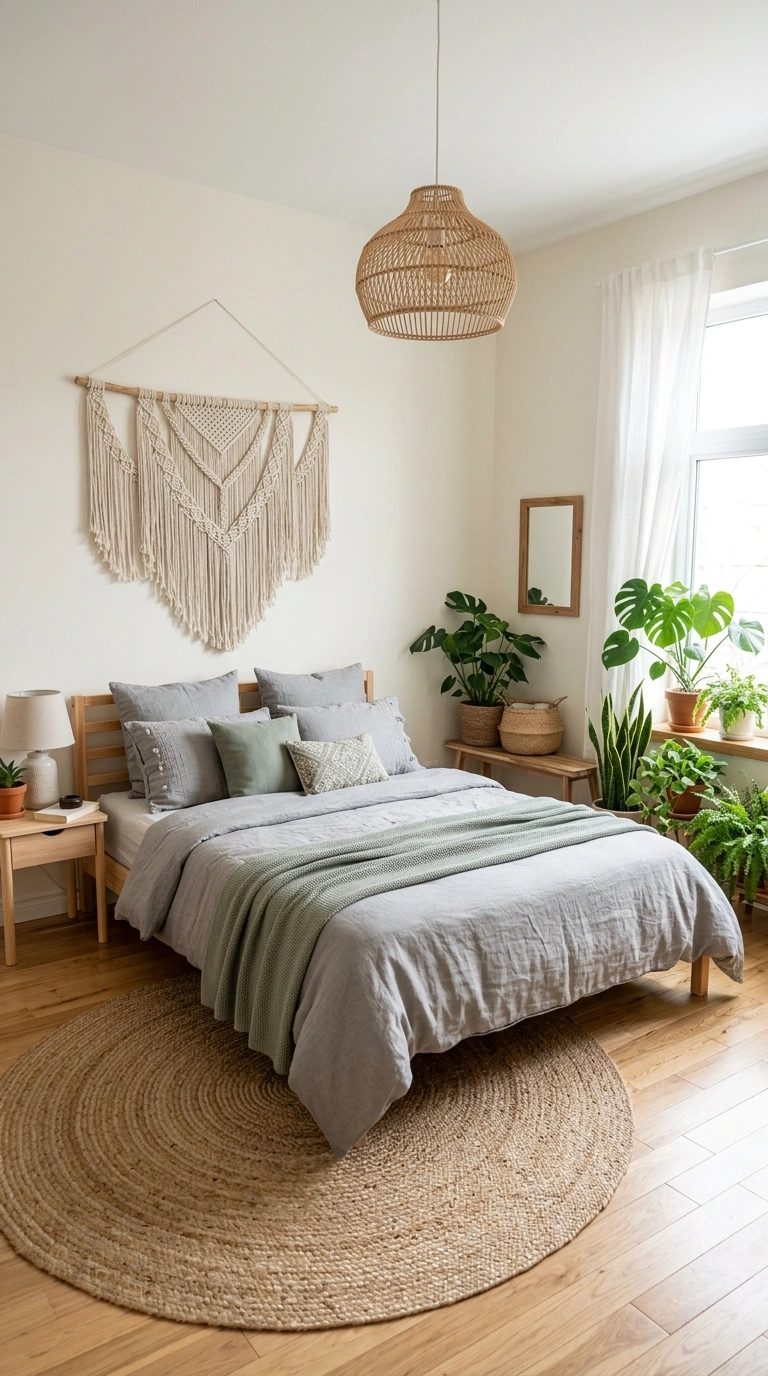
A boho style bedroom combining grey linens with sage green plants and natural textures feels relaxed and lived in rather than overly styled. Dress your bed in soft grey linen bedding, then bring in sage green through a collection of real or faux plants placed on the floor, dresser, and windowsill rather than through paint at all. A woven macrame wall hanging above the bed adds texture in a warm neutral tone that bridges the grey and green colors nicely.
A jute rug on the floor and a rattan pendant light overhead continue the natural, earthy feeling throughout the room. This approach is a good fit for anyone who loves plants and natural materials more than bold paint colors, since the color story here comes mostly from greenery and texture rather than anything on the walls, making it an easy style to build slowly over time using pieces you may already own.
Final Thoughts
Sage green and grey work well together because neither color fights for attention, which makes a bedroom feel calm rather than loud. Start small if you are not sure, a few pillows or a throw blanket, and add more of these ideas over time as you get comfortable with the color pairing.