24 Reclining Sofa Living Room Ideas for Ultimate Comfort and Style
For years I avoided reclining sofas because I thought they only came in one look, big, bulky, and a little dated, like something you would only find in a bachelor’s basement. Then my husband hurt his back and we needed real support for movie nights, so I started actually shopping for one and quickly learned how wrong I was. Reclining sofas now come in slim profiles, beautiful fabrics, and shapes that fit right into a stylish living room without looking like a recliner at all. The trick is choosing the right style for your space and styling around it the same way you would any other sofa. Comfort and good design are not opposites, and a reclining sofa can absolutely be the centerpiece of a room people compliment. Here are 24 ideas to help you plan a living room that looks polished during the day and feels like a hug in the evening.
1. Leather Reclining Sectional
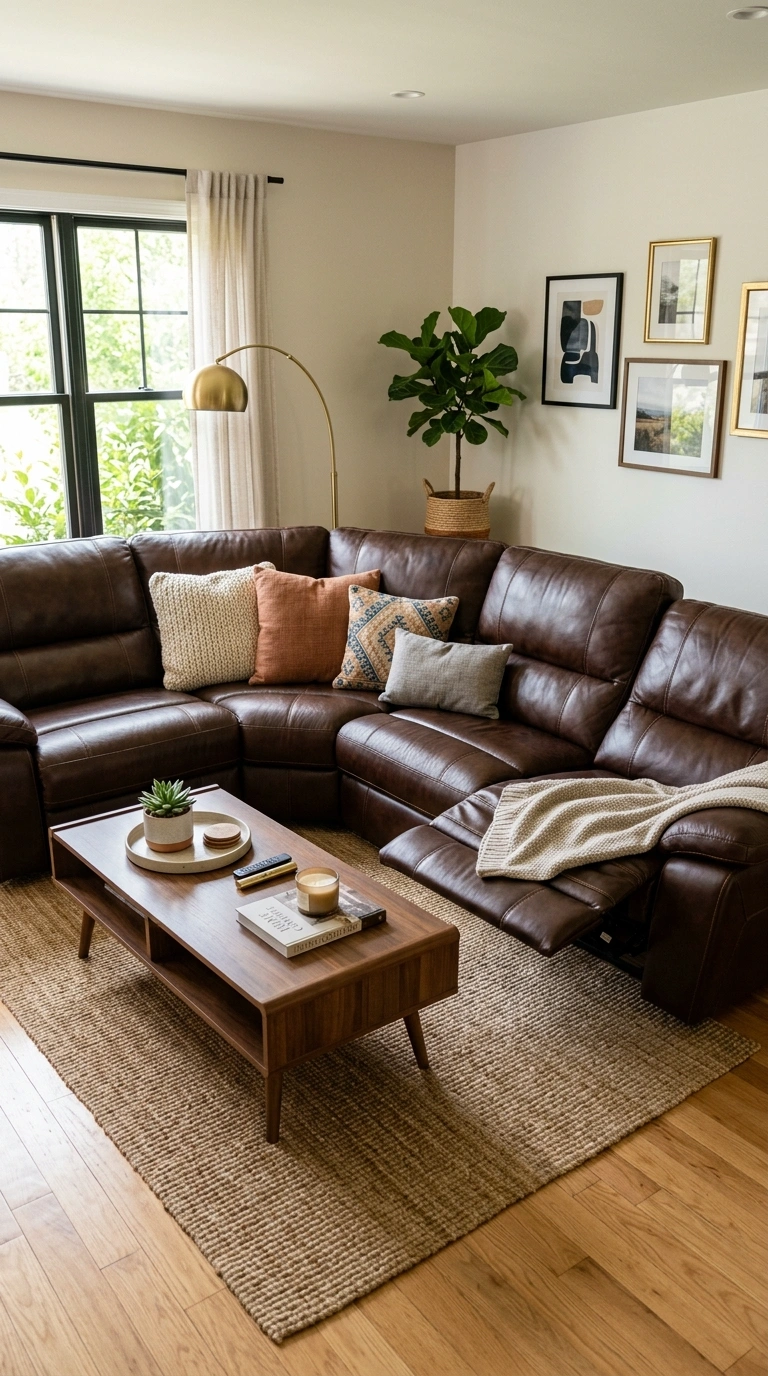
A leather reclining sectional brings a rich, tailored look to a living room while still delivering full recline comfort on multiple seats. Choose a leather in a warm cognac or deep chocolate tone for a classic, timeless feeling, or a cool gray leather for a more modern edge. Position the sectional along the two longest walls of the room, or float it in the center if your space allows, angling the corner toward the television or fireplace for the best sightline. Leather sofas tend to develop a beautiful patina over time, so this is a strong choice for a family room that will see years of daily use from both kids and pets. Add a mix of textured throw pillows in linen or wool to soften the smooth surface of the leather and keep the room from feeling too formal or cold. A low profile coffee table with rounded edges works well in front of a sectional this size, leaving enough walking space around the recline mechanism. Photographed from a corner angle, a leather sectional looks rich, grounded, and effortlessly comfortable.
2. Neutral Fabric Recliner
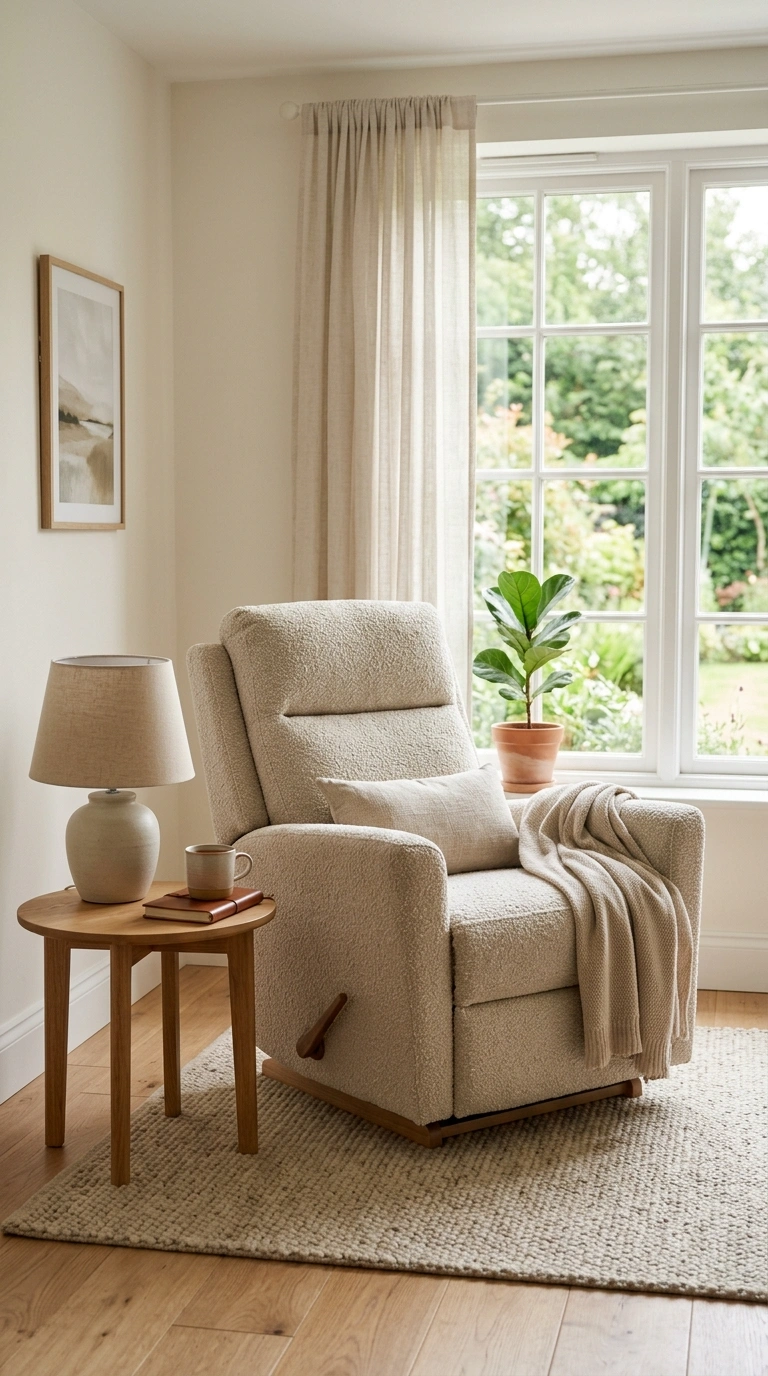
A single reclining chair or sofa in a soft neutral fabric, like oatmeal, greige, or warm ivory, blends easily into almost any existing living room decor. Choose a boucle or chenille fabric for extra texture, since these fabrics add visual interest even in a plain, light color, making the piece feel intentional rather than like a leftover from a big box store. This is a great option if the rest of your living room already has a lot of color or pattern, like a bold rug or gallery wall, since a neutral recliner gives the eye a place to rest. Position it near a window with good natural light for a favorite reading and relaxing spot, paired with a small side table for a lamp and a cup of coffee. Choose a track arm or slightly rolled arm style rather than an overly boxy one for a slightly more elevated silhouette. This idea works beautifully in smaller living rooms too, since a single neutral recliner does not visually compete for attention the way a bold sectional might. Photographed in daylight, a neutral fabric recliner looks calm, soft, and inviting.
3. Dual Recliner Loveseat
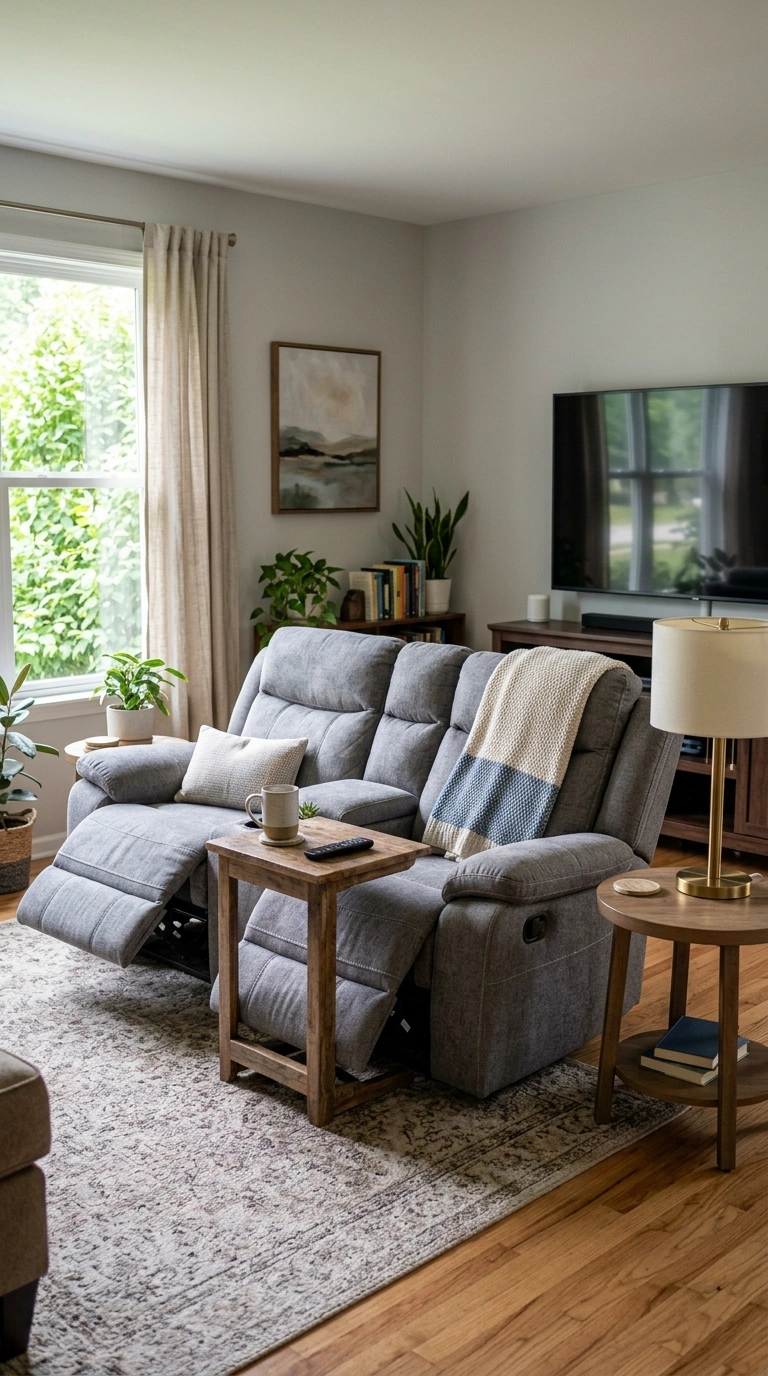
A dual reclining loveseat gives two people their own individual recline controls while still sharing a single, cohesive piece of furniture, making it a wonderful option for couples who want to relax together without needing a full sized sectional. Choose a loveseat with a console or small drop down table built into the center, which is perfect for holding drinks, remotes, or snacks during a movie night. Position the loveseat facing the television with enough space on either side for a slim side table or a floor lamp. This piece works especially well in smaller living rooms, apartments, or as a secondary seating option in a larger family room alongside a regular sofa. Choose a fabric or leather finish that matches or complements your existing sofa if you are adding this as a second piece, or let it stand alone as the main seating in a compact space. A loveseat this size still leaves plenty of room for a proper coffee table and a rug underneath the whole seating arrangement. Photographed straight on, a dual recliner loveseat looks cozy, intimate, and clearly built for real relaxation.
4. Reclining Sofa Nook
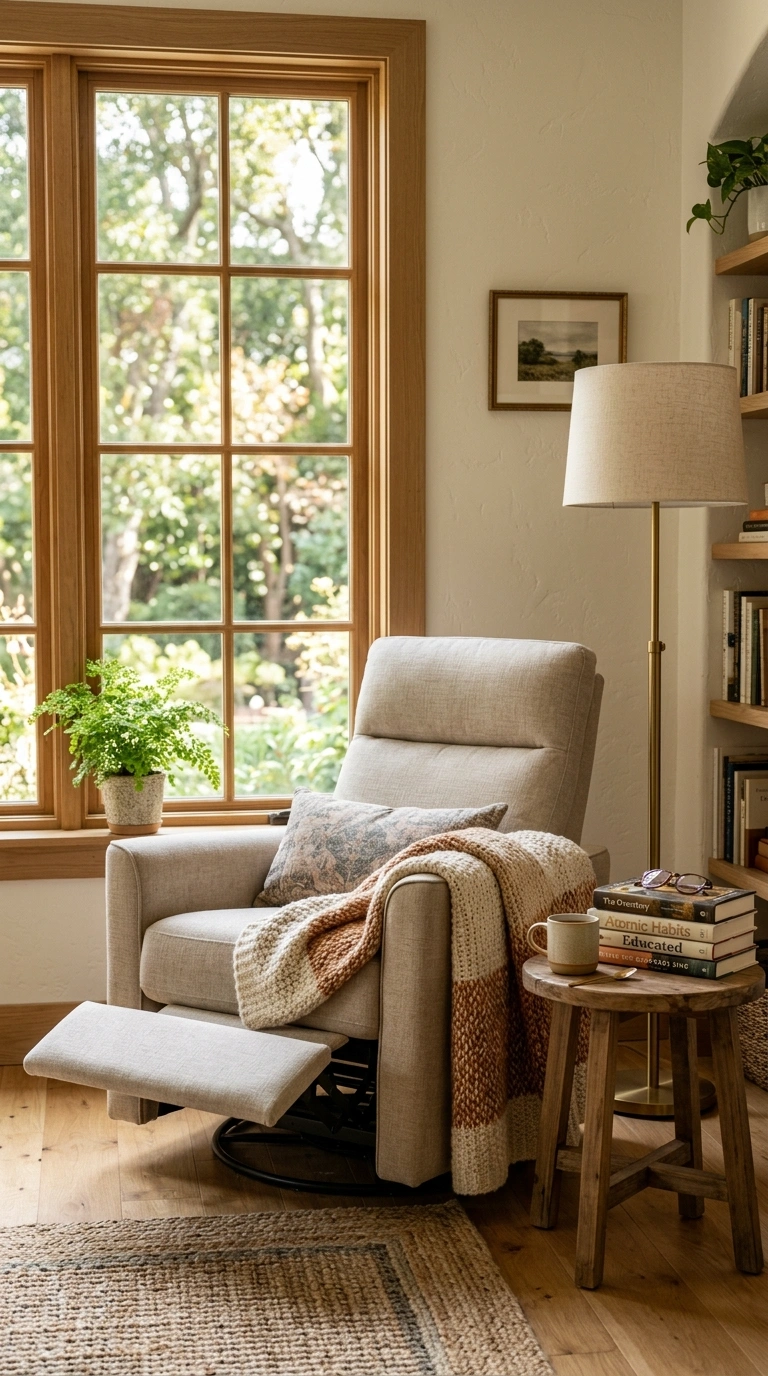
Create a dedicated reading and relaxing nook using a single reclining chair tucked into a quiet corner of the living room, ideally near a window or a built in bookshelf. Choose a chair with a slimmer profile and a swivel base if the corner is tight, since a swivel recliner lets you turn toward the room or toward the window depending on your mood. Add a small round side table just within arm’s reach for a lamp, a stack of books, and a mug, along with a floor lamp positioned slightly behind the chair for good reading light in the evening. A soft area rug underneath the chair helps define the nook as its own little zone, even in an open plan living room without walls to separate it. Layer in a folded throw blanket draped over one arm of the chair for a cozy, lived in touch that also happens to photograph beautifully. This idea works well even in living rooms that already have a main sofa, since it adds a second, more personal seating option. Photographed from a slight angle, a reading nook recliner feels warm, quiet, and inviting.
5. Family Movie Corner
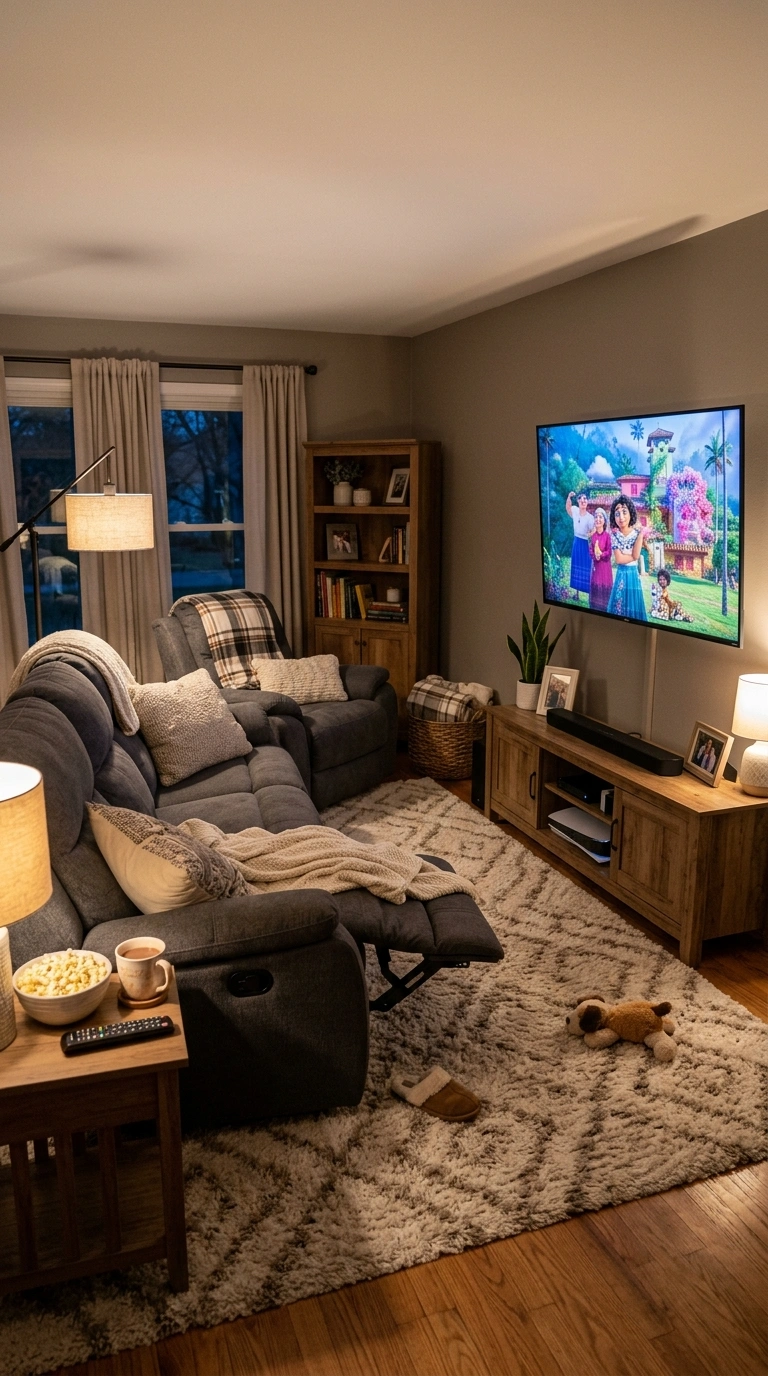
Design one full corner of your living room specifically around movie nights, anchored by a reclining sofa or sectional angled toward the television with clear, unobstructed sightlines for everyone. Choose a sofa with at least three reclining seats if your family is larger, so everyone has their own spot without needing extra chairs pulled in from elsewhere. Add a large, soft area rug underneath the whole seating area to define the space and add comfort for anyone who ends up sitting on the floor during a crowded movie night. Position a media console or low cabinet along the opposite wall to hold the television, keeping cords tucked away and the surface styled with a few simple decor pieces. A large, low coffee table in front of the sofa gives everyone a place to set popcorn bowls and drinks within easy reach. Dim, warm lighting from a floor lamp or wall sconces, rather than a single bright overhead light, makes the whole corner feel more like a proper home theater. Photographed in the evening with soft lighting, a movie corner looks genuinely cozy and welcoming.
6. Reclining Sofa Bay Window
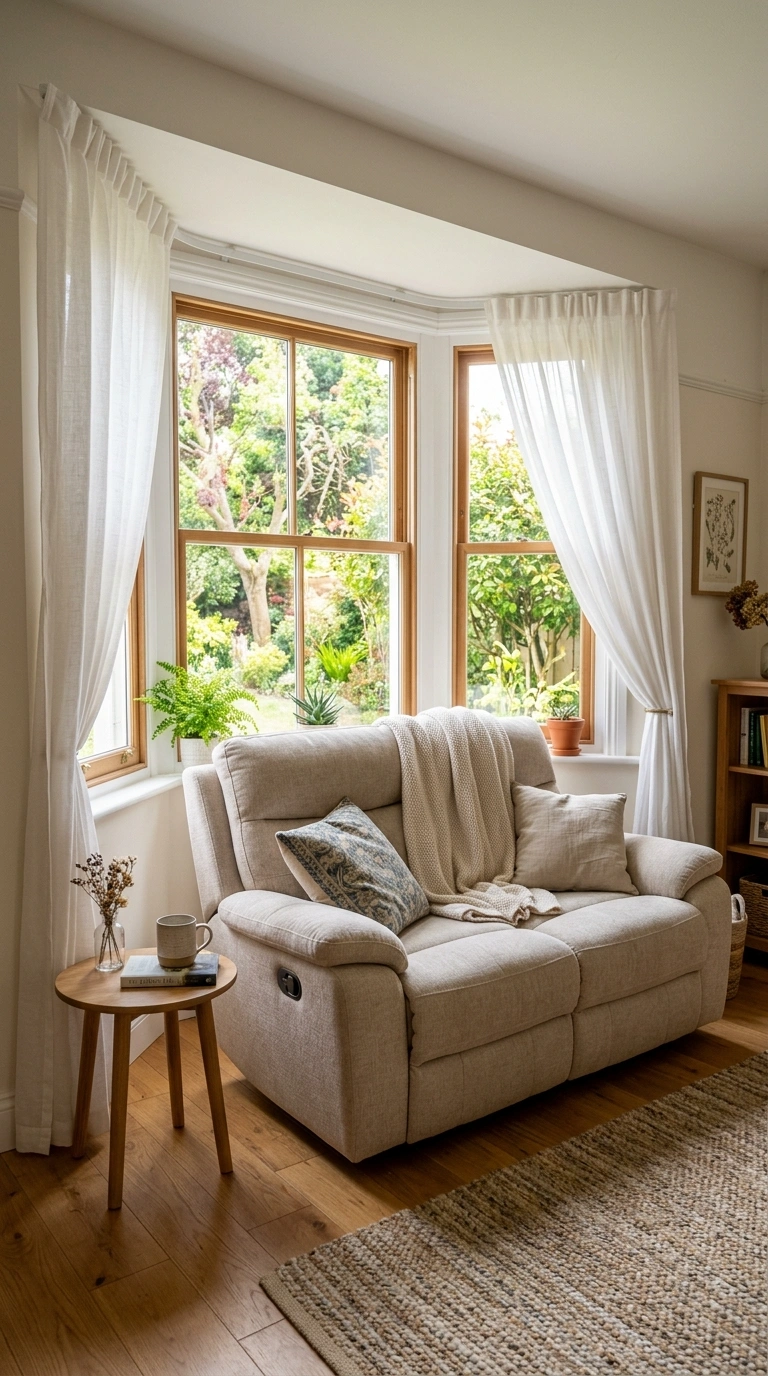
If your living room has a bay window, position a reclining sofa to face it directly, taking full advantage of the natural light and the slightly recessed architectural space. A bay window nook naturally frames a sofa, giving it a sense of place within the room rather than just sitting against a flat wall. Choose a sofa in a lighter fabric to keep the area feeling bright and airy, especially if the window faces a garden or a nice view worth looking at during the day. Add sheer curtains on either side of the window rather than heavy drapes, so natural light can still filter through even when partially closed for evening privacy. A small round table on either end of the sofa gives you a spot for a lamp for evening use, since the natural light from the window will fade once the sun goes down. This layout works especially well in living rooms where the bay window is the main architectural feature, giving the reclining sofa a genuine reason to be positioned there. Photographed with sunlight streaming through the window, this setup looks bright, comfortable, and full of natural charm.
7. Modern Gray Recliner
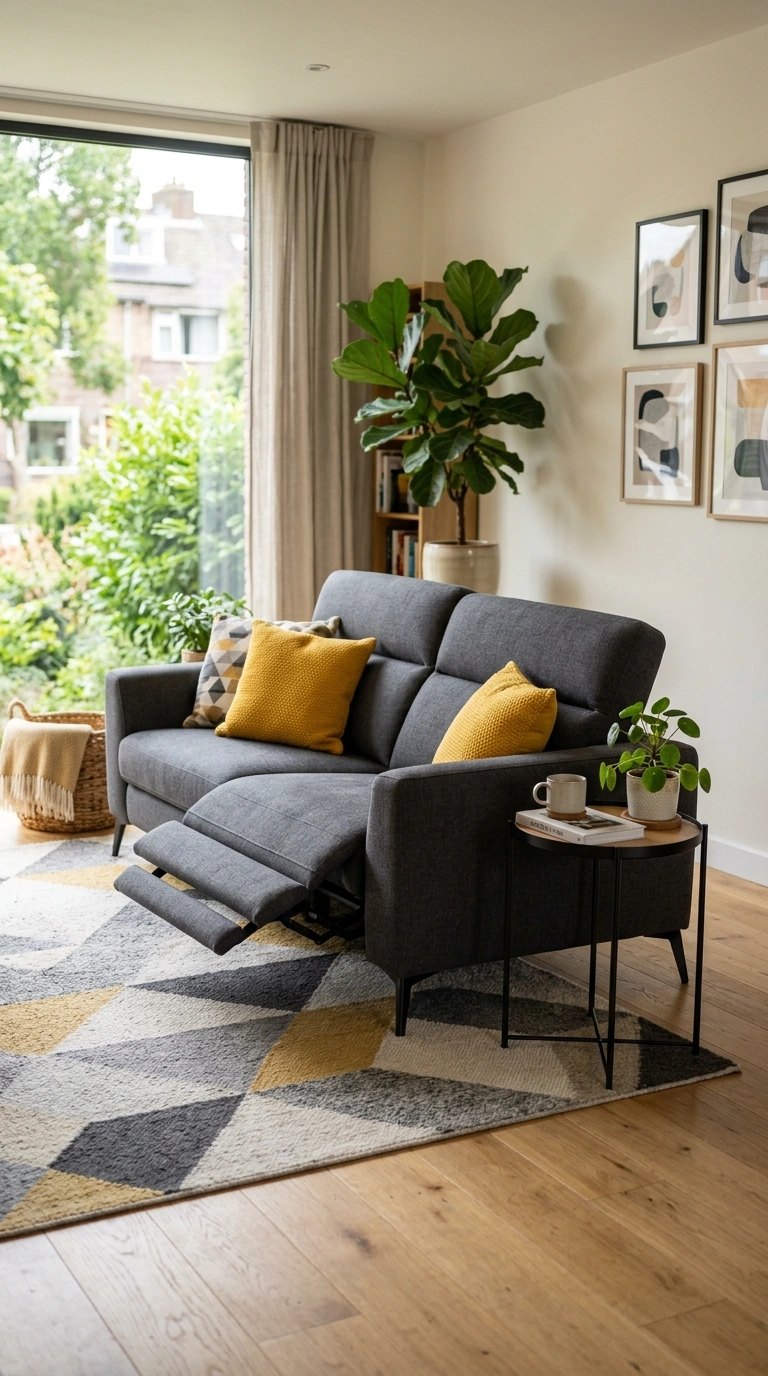
A sleek gray reclining sofa in a low, modern silhouette fits easily into a contemporary living room without looking bulky or old fashioned the way older recliner designs sometimes do. Choose a cool toned gray fabric, like a charcoal or dove gray, paired with slim track arms and simple tapered wood or metal legs rather than a skirted base. This modern shape helps the reclining function stay a hidden feature rather than the most obvious thing about the sofa, so it blends in beautifully with clean lined coffee tables and minimal decor. Pair the gray sofa with a few bold accent pillows in a contrasting color, like mustard or terracotta, to keep the overall look from feeling too monochrome or flat. A simple geometric rug underneath ties the seating area together and adds a bit of pattern without overwhelming the sleek lines of the sofa itself. This style works especially well in open plan living spaces where the sofa needs to look good from multiple angles throughout the room. Photographed against a plain white or light gray wall, a modern gray recliner looks clean, current, and effortlessly stylish.
8. Rustic Cabin Recliner
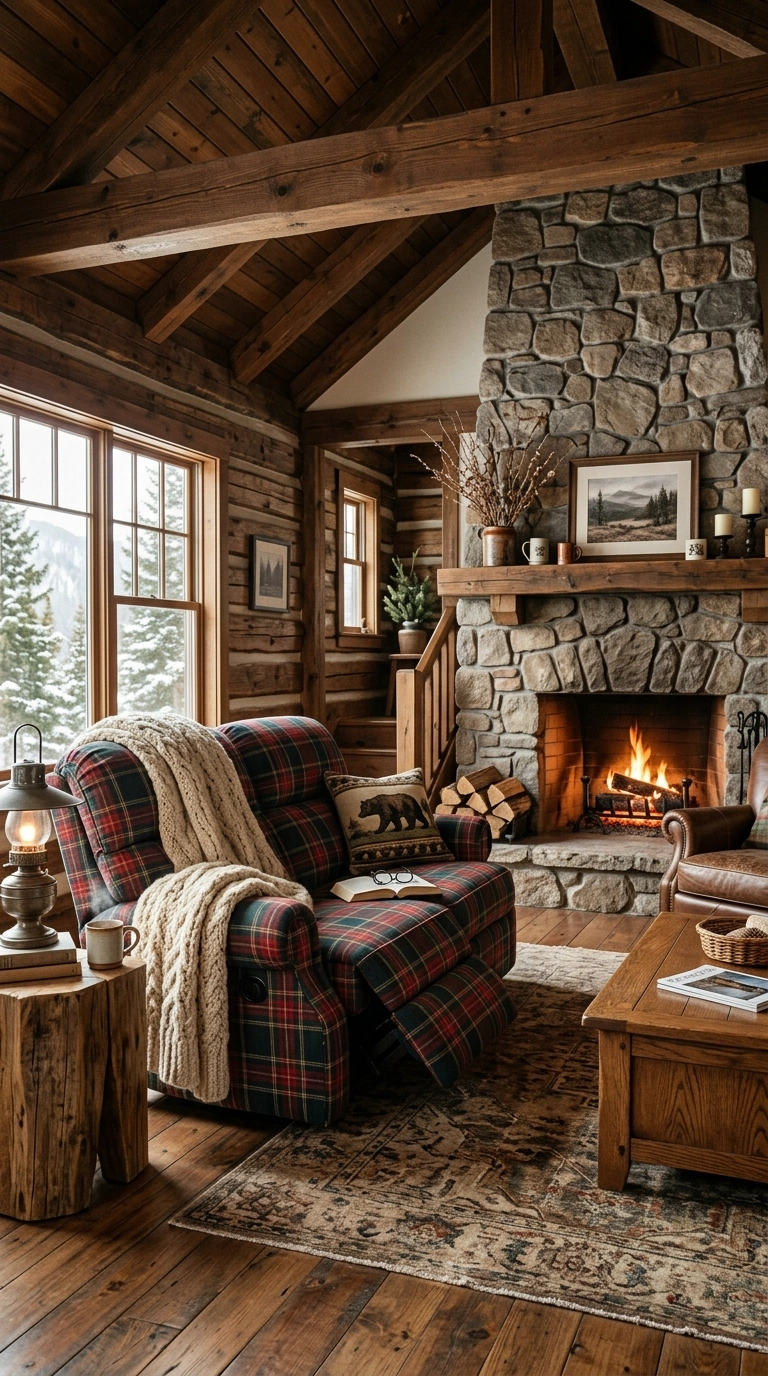
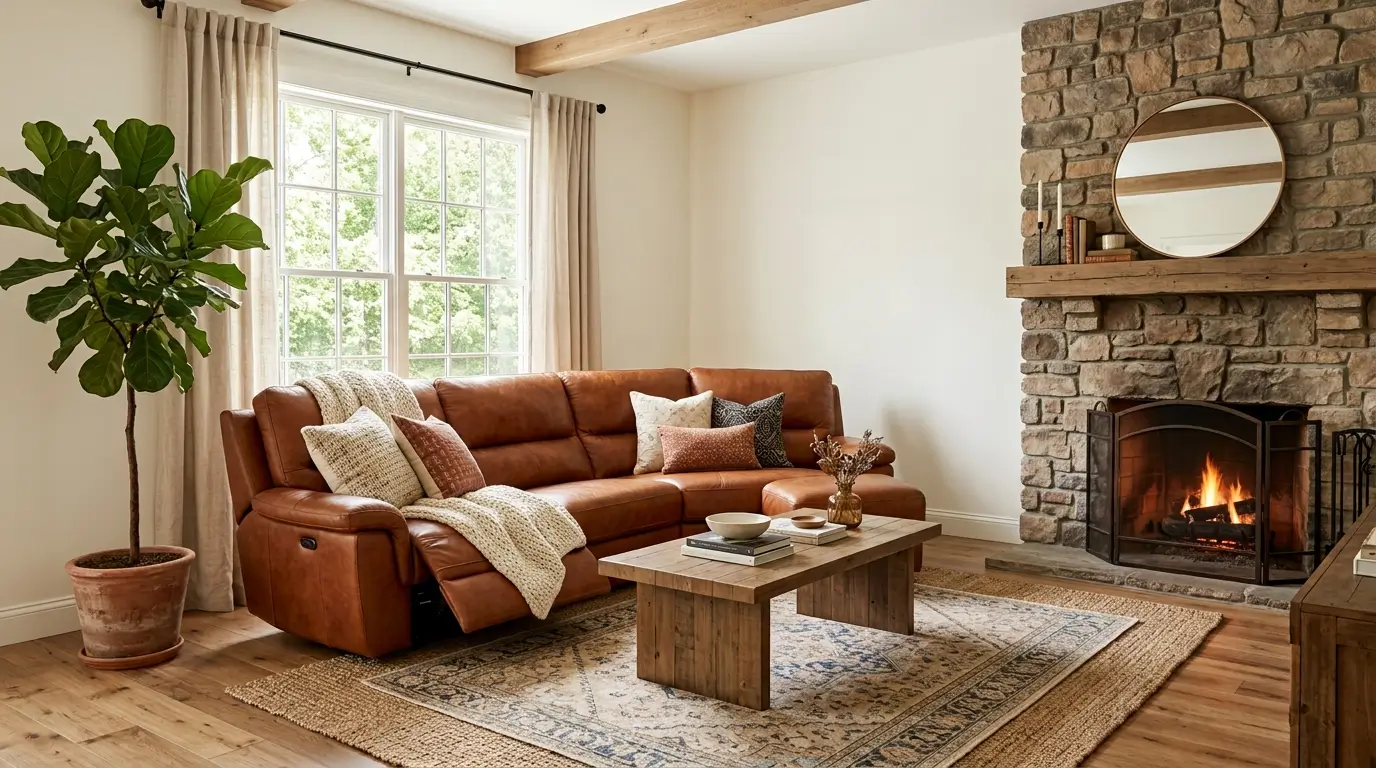
Bring cabin style warmth into your living room with a reclining sofa upholstered in a textured fabric like a nubby wool blend or a plaid pattern, paired with a solid wood frame visible along the arms or legs. This style works beautifully in living rooms with exposed beams, stone fireplaces, or wood paneled walls, where the sofa needs to hold its own against already rustic architectural details. Choose warm, earthy colors like deep red, forest green, or a warm brown for the upholstery, echoing the natural materials found elsewhere in a cabin style space. Position the sofa facing a fireplace if you have one, since this classic layout has always been about gathering around warmth and comfort. Add a chunky knit throw blanket and a few pillows in complementary plaid or solid colors to complete the cozy feeling. A round or oval wood coffee table with a slightly distressed finish fits this style better than a sleek glass or metal option. Photographed near a fireplace with a warm glow, a rustic recliner looks like the ultimate cold weather gathering spot.
9. Velvet Reclining Sofa
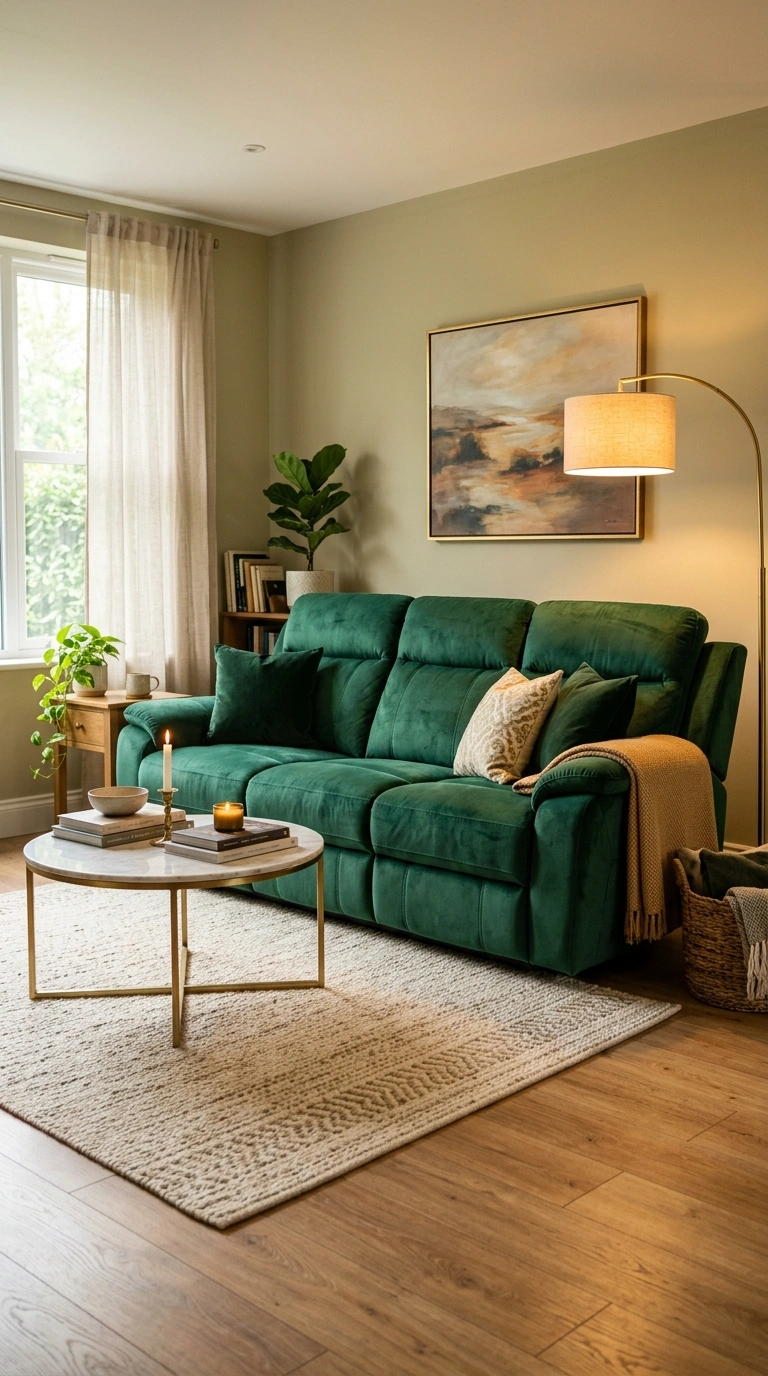
A velvet reclining sofa brings an unexpected touch of glamour to a living room, proving that comfort focused furniture does not need to sacrifice a rich, luxurious look. Choose a jewel tone velvet, like emerald green, sapphire blue, or a deep burgundy, for a dramatic statement piece, or a soft blush or dove gray velvet for a more subtle, elegant look. Velvet fabric catches and reflects light beautifully, adding depth and richness to a sofa silhouette that might otherwise look plain in a flatter fabric. Pair a velvet reclining sofa with brass or gold accents elsewhere in the room, like a coffee table with metal legs or a few decorative objects, to echo the luxurious feeling of the fabric. Keep the surrounding walls and rug relatively simple so the sofa itself remains the clear focal point of the space. Velvet does require a little more care than some other fabrics, so choosing a performance velvet designed to resist stains is a smart choice for a busy family living room. Photographed in soft, warm lighting, a velvet recliner looks rich, elegant, and surprisingly cozy.
10. Reclining Sofa Fireplace
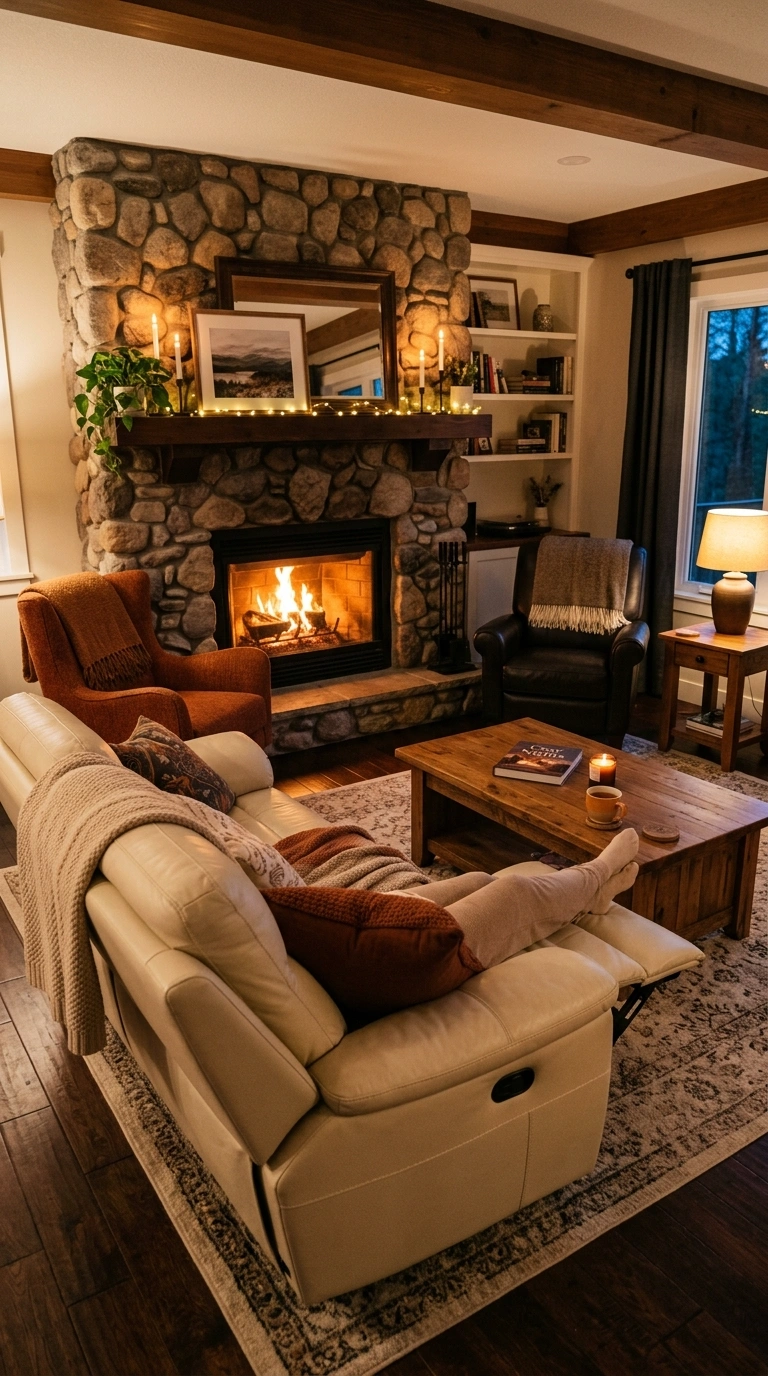
Arrange your reclining sofa directly facing the fireplace, positioning it as the true focal seat in a living room built around warmth and relaxation. This classic layout puts comfort first, since the person or people relaxing in the reclined position get the best possible view of the flames rather than being angled off to the side. Leave enough distance between the sofa and the fireplace, generally at least a few feet, both for safety and to leave room for a coffee table in between. Add a pair of simple accent chairs on either side of the fireplace to complete a balanced seating arrangement, giving guests other spots to sit while the reclining sofa remains the most comfortable seat in the room. A mantel styled with a few simple objects, like candles, a mirror, or framed art, draws the eye upward and completes the whole focal wall. This layout works in both traditional living rooms with a classic brick or stone fireplace and more modern spaces with a sleek linear fireplace design. Photographed with the fire lit, this setup looks like the definition of a cozy evening at home.
11. Open Plan Recliner
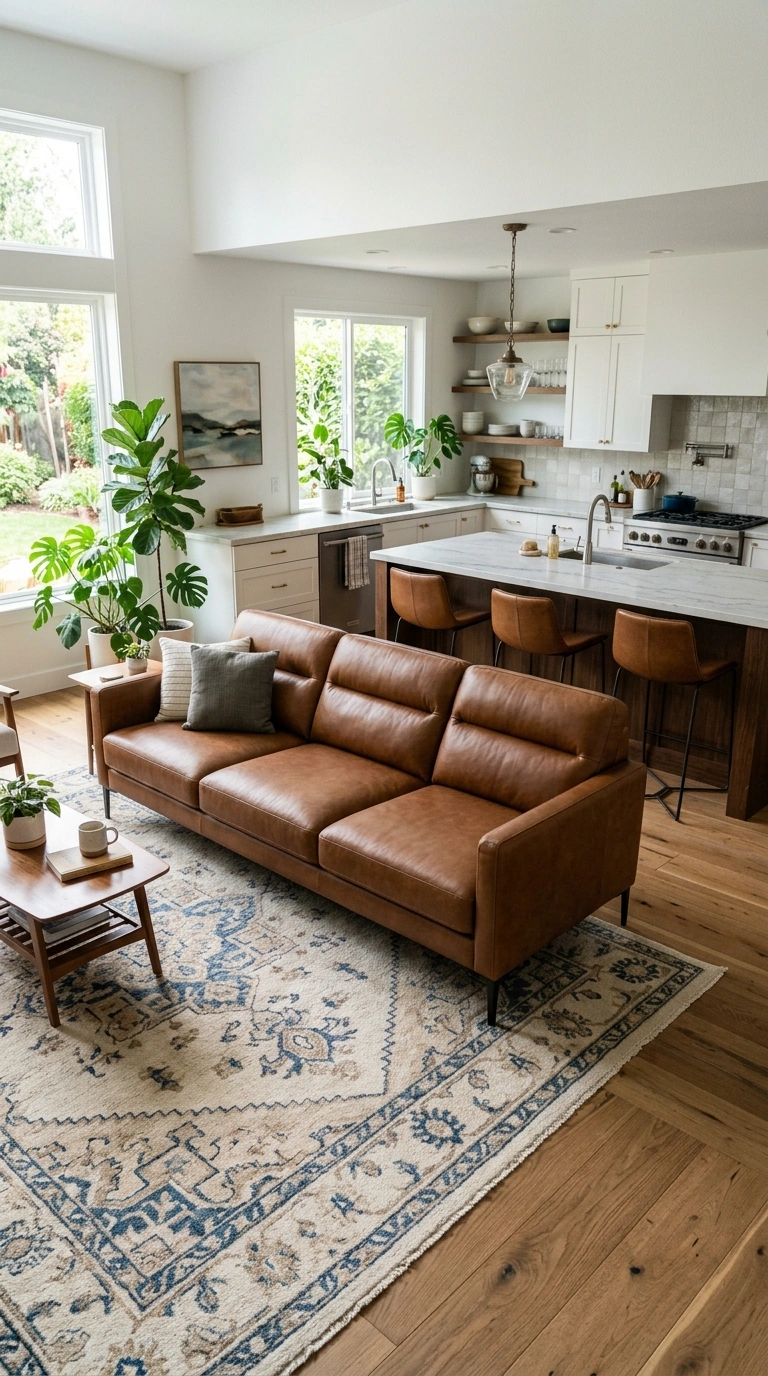
In an open plan living room that flows into a kitchen or dining area, use a reclining sofa with a clean back design, sometimes called a wall hugger or track back, so it can be styled as a room divider without looking unfinished from behind. Position the sofa perpendicular to the kitchen island or dining table rather than pushed against a wall, letting it help define the living area as its own distinct zone within the larger open space. Choose a sofa in a fabric or color that ties together the tones used in the kitchen or dining area, helping the whole open plan space feel cohesive rather than like several separate rooms awkwardly combined. Add a console table or a slim bookshelf behind the sofa to give the back side some purpose and styling, since it will be visible from the kitchen or dining side of the room. A large area rug underneath the sofa and coffee table helps anchor the living area visually within the bigger open space. Photographed from the kitchen looking toward the living area, this layout looks intentional and well planned.
12. Small Space Recliner
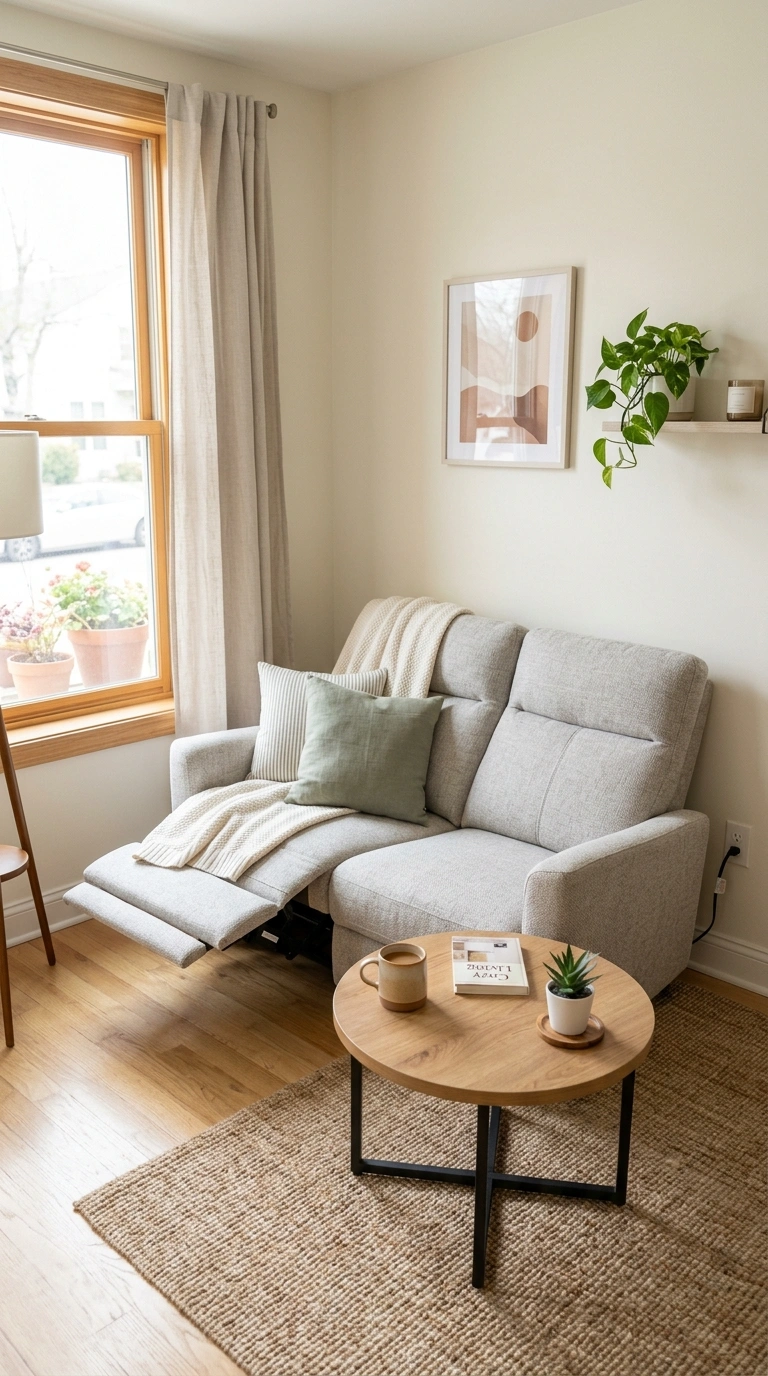
For a smaller living room or apartment, choose a compact reclining loveseat or a single wall hugging recliner that needs only a few inches of clearance behind it to fully recline, rather than the several feet required by traditional rocking recliner mechanisms. These space saving designs let the whole sofa sit closer to the wall, which can make a real difference in a tight room where every inch matters. Choose a slim arm design and a lower back height to keep the piece from visually overwhelming a small space, and consider a lighter fabric color to help the sofa feel less heavy in the room overall. Position the piece so the door and main walking path remain clear even when the footrest is extended, testing this before you commit to a final furniture layout. A small round coffee table or even a pair of stackable nesting tables works better than one large table in a tight space, since they can be tucked away or rearranged as needed. Photographed in a compact room, a well chosen small space recliner proves that comfort does not require a lot of square footage.
13. Reclining Sofa Bookshelf Wall
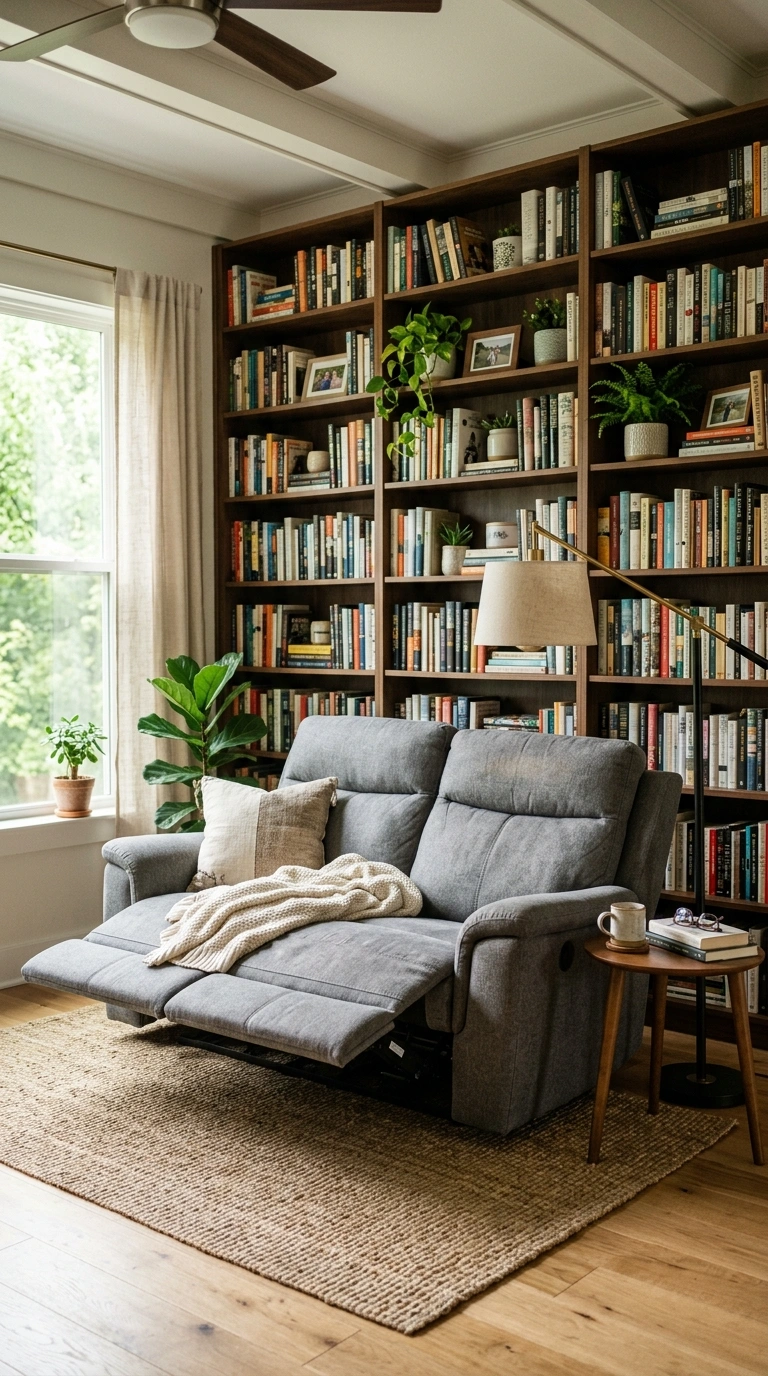
Pair a reclining sofa with a full wall of built in or freestanding bookshelves behind it, creating a cozy library like feeling in the living room. Choose a sofa in a solid, calm color, since the bookshelf wall behind it will naturally bring in a lot of visual texture and color from the spines of the books and any displayed objects. Position the sofa a foot or two away from the bookshelf wall so there is enough clearance for the seat backs to recline slightly, if your chosen style requires that clearance. Style the shelves with a mix of books arranged both vertically and stacked horizontally, along with a few decorative objects, framed photos, and small plants spaced throughout to break up the rows of spines. A floor lamp positioned beside the sofa provides good reading light without needing an overhead fixture, which is especially useful if the bookshelf wall does not have room for wall mounted lighting. This combination creates one of the most inviting corners a living room can have, perfect for both movie nights and quiet reading afternoons. Photographed straight on, a bookshelf wall behind a sofa looks intellectual, warm, and deeply comfortable.
14. Two Tone Reclining Set
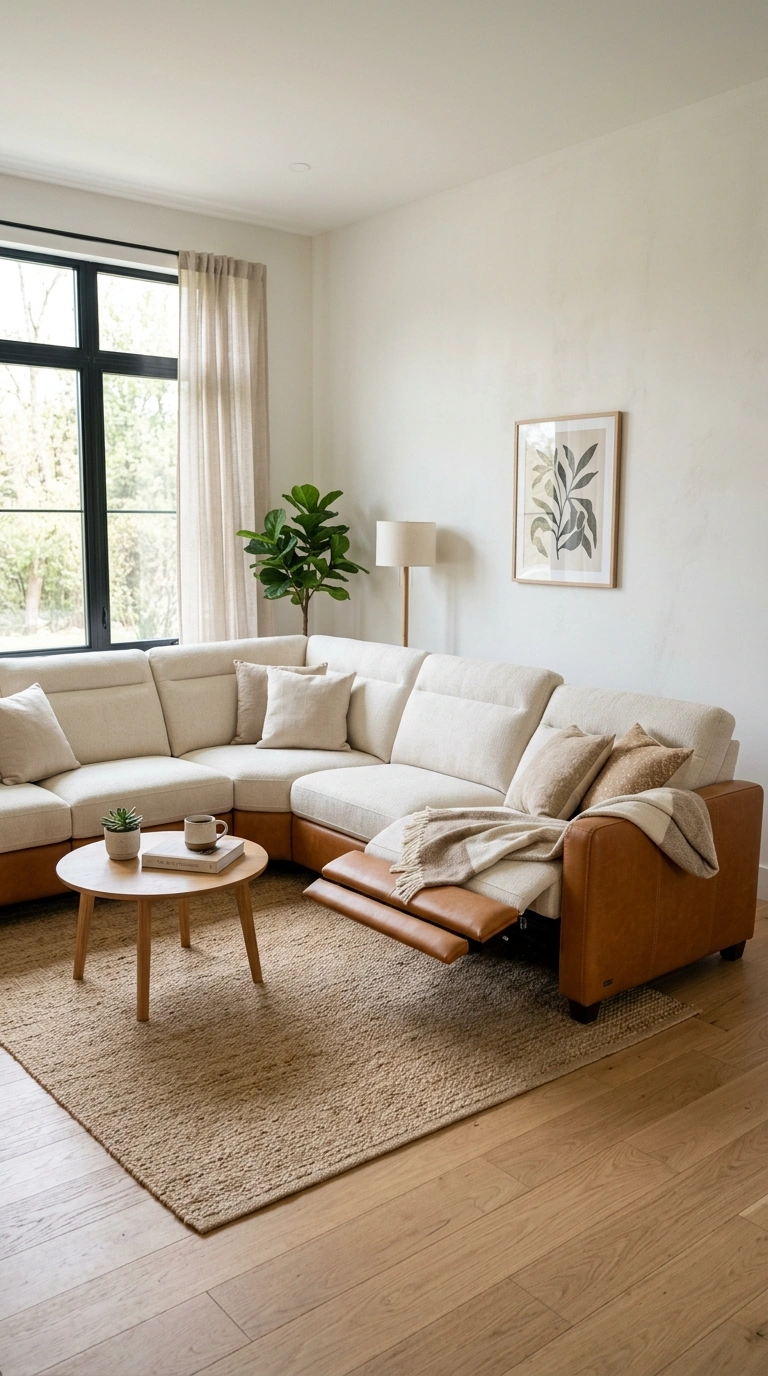
Choose a sectional or matching set with two different but complementary colors or fabrics, like a fabric seat cushion paired with leather arms, or two coordinating fabric tones across an L shaped sectional. This two tone approach adds visual interest to a large reclining piece without needing extra pillows or accessories to break up what might otherwise be a big block of a single color. Many furniture makers now offer this combination as a built in design choice, so look specifically for sectionals described as having contrast piping, mixed materials, or two tone upholstery. Keep the rest of the room relatively simple, with a plain rug and understated wall color, so the sectional’s two tone design remains the most interesting visual element in the space. This idea works particularly well in larger family rooms where a big sectional might otherwise feel like one dominant block of color taking over the whole room. Choose tones that are close in value, like two shades of gray or cream and tan, for a subtle effect, or go bolder with a stronger contrast for more drama. Photographed from across the room, a two tone reclining set looks thoughtfully designed rather than accidental.
15. Reclining Sofa Rug Layer
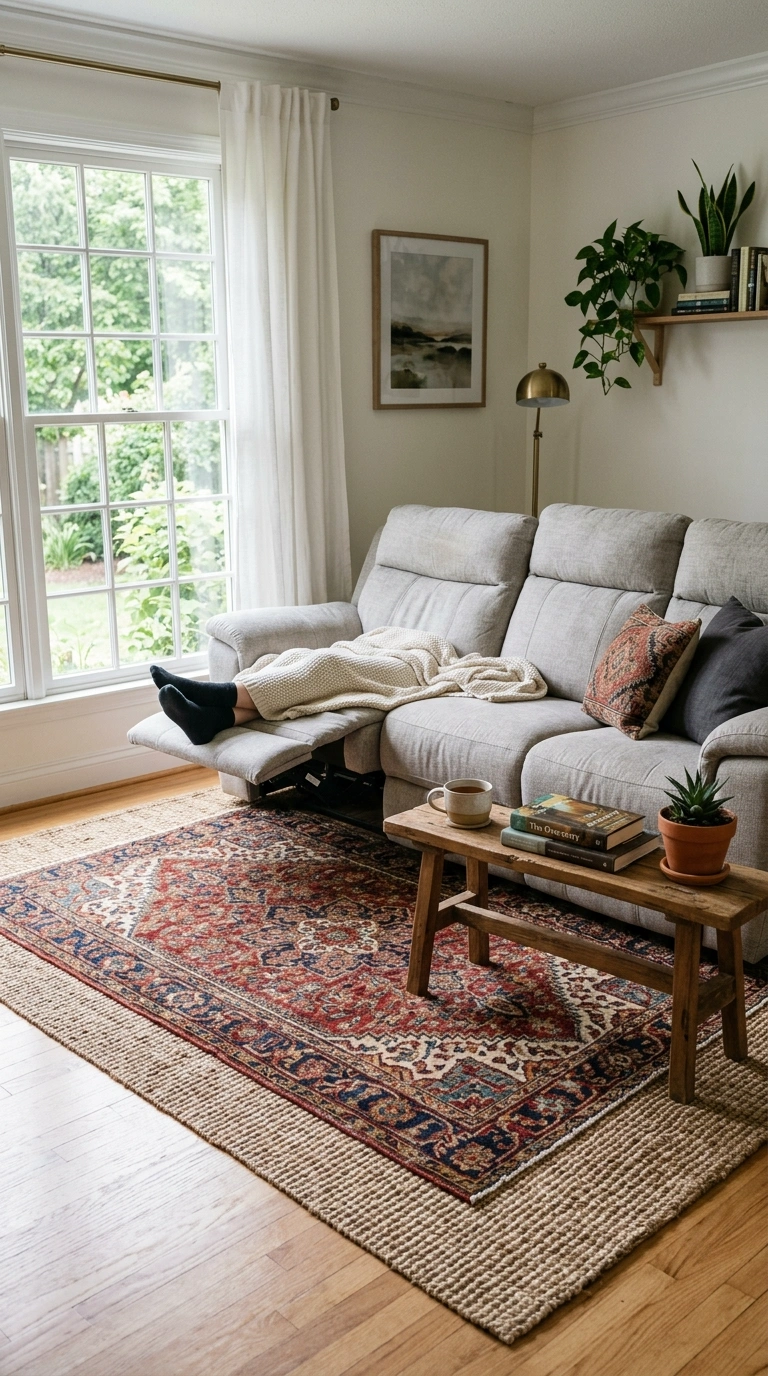
Layer a large, neutral base rug under the entire seating area, then add a smaller, more patterned rug on top near the front of the reclining sofa for extra texture and visual interest. This layered rug technique, borrowed from more eclectic and bohemian interior styles, works especially well with a plain or solid colored reclining sofa, since the rugs underneath can carry pattern and personality that the furniture itself does not. Choose a large jute or flatweave rug as the base layer, sized to fit comfortably under the front legs of the sofa and any accompanying chairs, then add a smaller vintage style or patterned rug angled slightly or centered in front of the seating area. This combination adds warmth and softness underfoot, which is especially appreciated in a room meant for lounging and relaxing with a reclining sofa. Make sure both rugs have a non slip pad underneath, particularly important near a reclining mechanism where people will be shifting their weight and adjusting position frequently. Photographed from above, a layered rug setup adds richness and depth to the whole seating area.
16. Reclining Sectional Corner
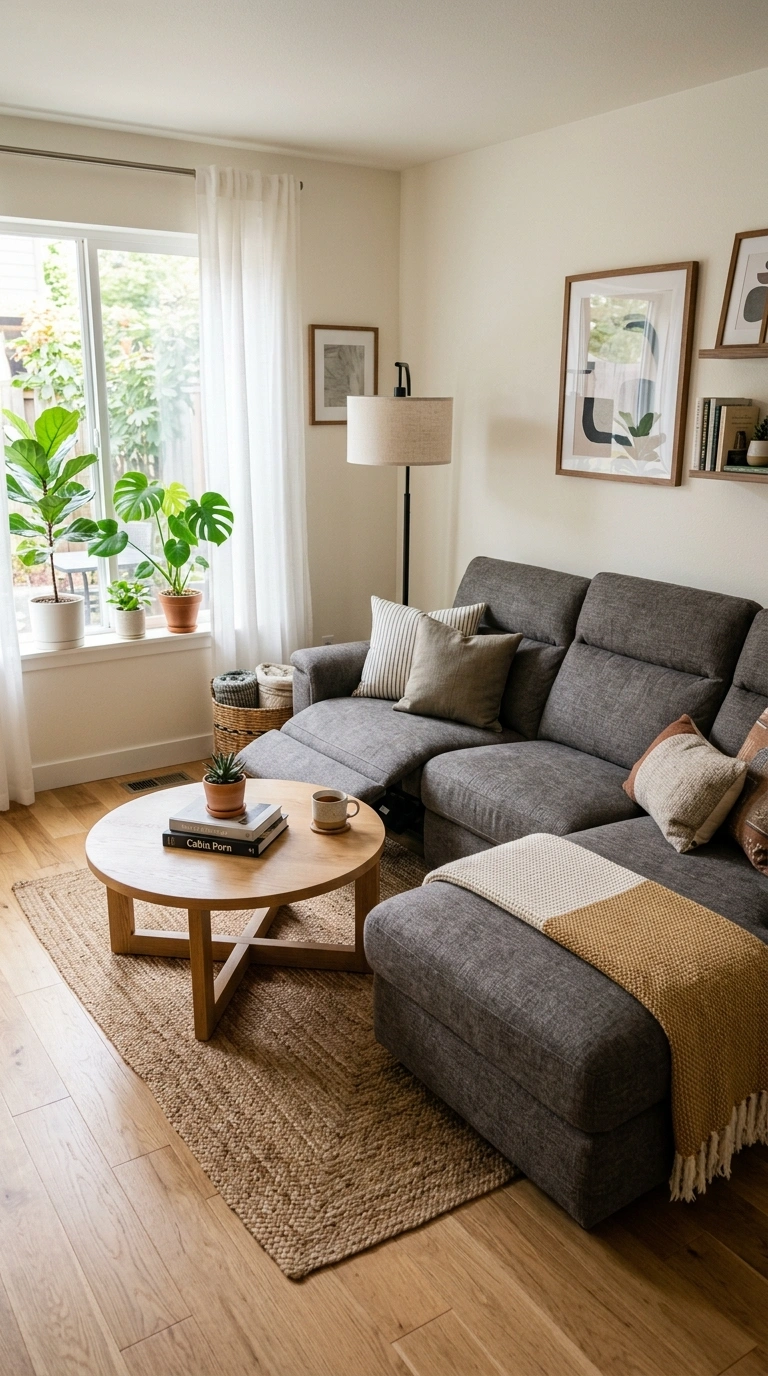
Use an L shaped reclining sectional to fill an empty corner of the living room, creating a wraparound seating arrangement that comfortably fits a larger group while still offering full recline function on multiple seats. Position the sectional so the corner piece sits directly in the room’s actual corner, with the two legs of the L extending out to create a cozy, enclosed feeling for whoever is seated there. Choose a sectional with a chaise on one end for extra lounging space, perfect for stretching out fully during a long movie or a lazy Sunday afternoon. A round or oval coffee table works particularly well with an L shaped sectional, since it avoids the sharp corners that a rectangular table might create in the already angled seating arrangement. Add a floor lamp in the corner behind the chaise end for good lighting without needing extra table space. This layout works especially well in larger family rooms where you want a big, comfortable, gathering focused seating area. Photographed from the opposite corner of the room, a sectional filling a corner looks generous, welcoming, and built for real family life.
17. Wood Frame Recliner
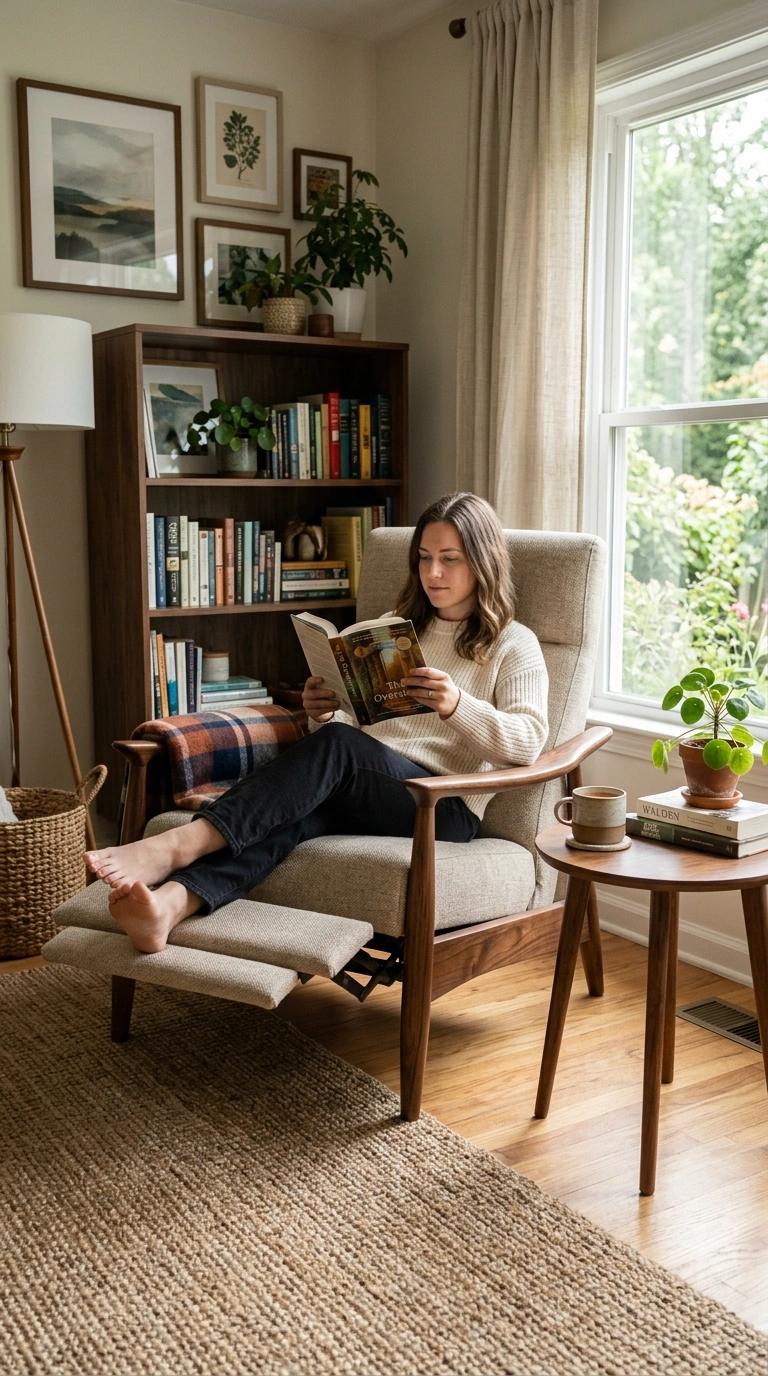
Choose a reclining chair or sofa with visible solid wood legs or arm details, like exposed tapered legs or wood trim along the arms, for a piece that reads more like fine furniture than a typical bulky recliner. This design detail helps a reclining sofa blend more naturally into a living room filled with other furniture that has visible wood elements, like a wood coffee table or a wood framed mirror. Choose a warm wood tone, like walnut or medium oak, that matches or complements other wood furniture already in the room for a cohesive, put together look. The upholstery itself can be in almost any fabric or color, since the wood detailing is what gives the piece its more elevated, less bulky appearance overall. This style works particularly well in mid century modern or Scandinavian inspired living rooms, where clean lines and natural materials are already the dominant design language. Pair the chair or sofa with a simple round side table in a matching wood tone to complete the look. Photographed at an angle that shows off the legs, a wood frame recliner looks like genuine furniture rather than just a comfort focused piece.
18. Reclining Sofa Accent Wall
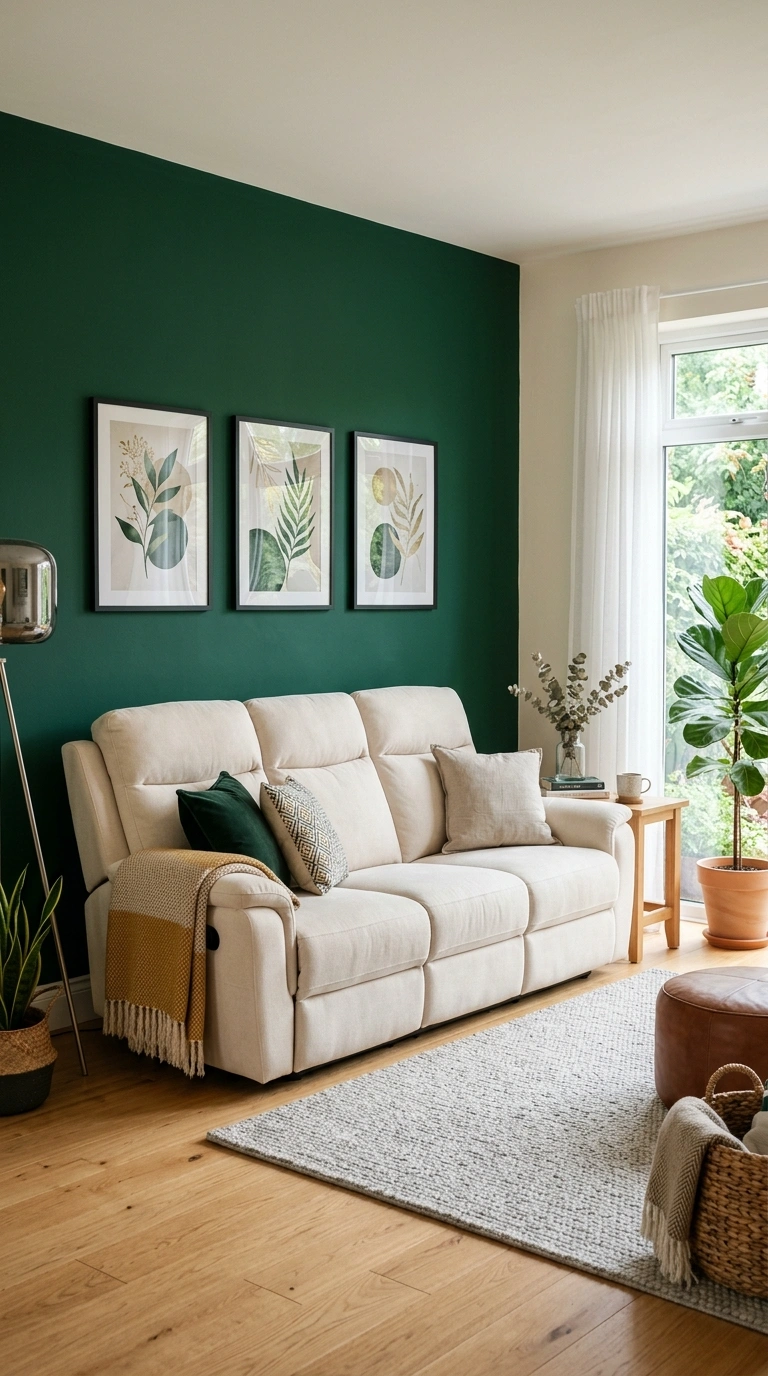
Position your reclining sofa against a bold accent wall, whether painted in a rich color, covered in wallpaper, or finished with wood paneling, to give the whole seating area a strong visual backdrop. This approach works especially well with a reclining sofa in a plain, neutral color, since the wall behind it becomes the source of color and pattern in the room rather than the furniture itself. Choose a paint color or wallpaper pattern that complements the sofa’s fabric tone, like a deep green wall behind a cream colored sofa, or a bold geometric wallpaper behind a solid gray sectional. Hang a piece of art or a mirror above the sofa on the accent wall to complete the vignette, making sure the size is proportional to the width of the sofa below it. This idea is a wonderful way to add personality to a living room without needing an unusual or bold sofa color, which can be helpful if you want the furniture itself to stay more versatile for future redecorating. Photographed straight on, a reclining sofa against a bold accent wall creates an instant focal point the moment you walk into the room.
19. Farmhouse Style Recliner
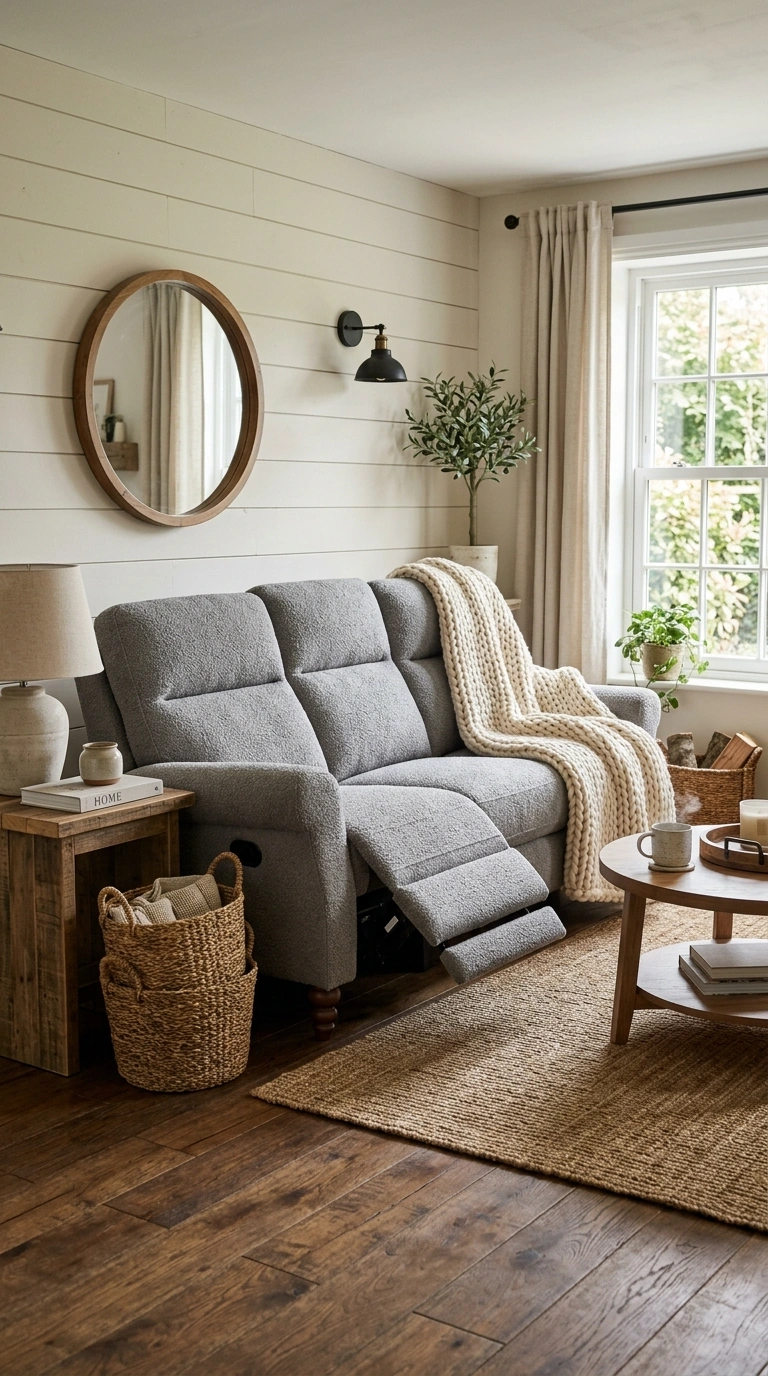
Bring farmhouse charm into your living room with a reclining sofa upholstered in a nubby, textured fabric like a woven boucle or a soft linen blend in a warm cream or soft gray tone. Pair this style with a slightly rolled arm and turned wood legs for a silhouette that feels classic and a little vintage rather than sleek and modern. This style works especially well in living rooms with shiplap walls, exposed wood beams, or a stone fireplace, where the sofa needs to complement an already established rustic, cozy aesthetic. Add a chunky knit or woven throw blanket draped over the back or arm, along with a couple of pillows in a simple gingham or ticking stripe pattern for an authentic farmhouse feeling. A wood coffee table with a slightly distressed or whitewashed finish pairs beautifully with this sofa style, along with woven baskets nearby for extra storage. This look tends to feel especially warm and welcoming in the colder months, when the textured fabrics and warm tones really shine. Photographed in natural daylight, a farmhouse style recliner looks soft, homey, and endlessly comfortable.
20. Reclining Sofa Gallery Wall
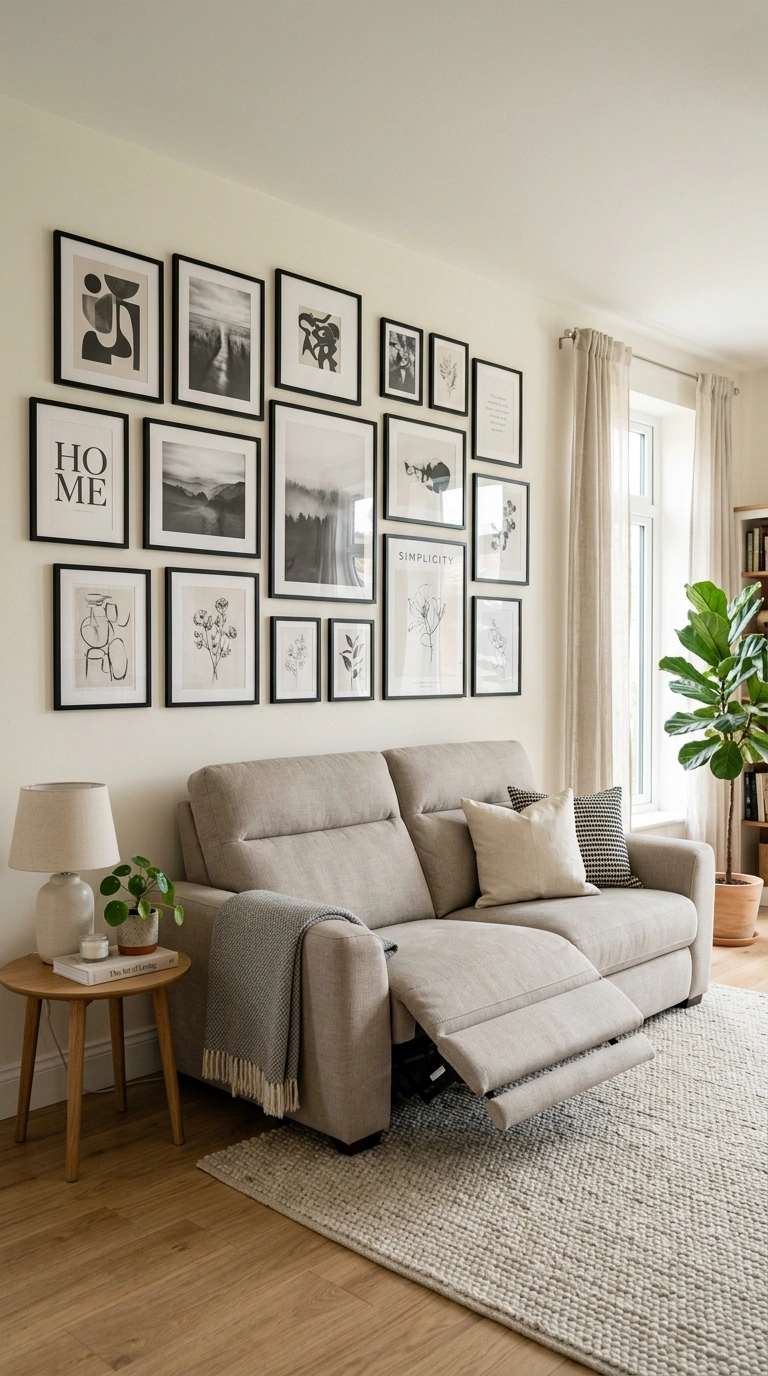
Hang a gallery wall of framed art or photographs directly above your reclining sofa, using the empty wall space behind the seating area as a canvas for a collected, personal display. Choose frames in a mix of sizes but a consistent finish, like all black or all natural wood, to keep the display feeling organized despite the variety in artwork. Lay the frames out on the floor first, arranging and rearranging until the composition feels balanced, before committing to nail holes on the actual wall. Leave about six to eight inches of space between the top of the sofa back and the bottom edge of the gallery wall, which is the general rule of thumb for hanging art above furniture at a comfortable, proportional height. This idea works with any sofa color or style, since the gallery wall itself becomes the main source of personality and visual interest in that part of the room. A gallery wall also gives you an easy way to update the look of your living room over time, simply by swapping out individual frames as your taste changes. Photographed from across the room, a gallery wall above a sofa looks curated and full of character.
21. Minimalist Recliner Setup
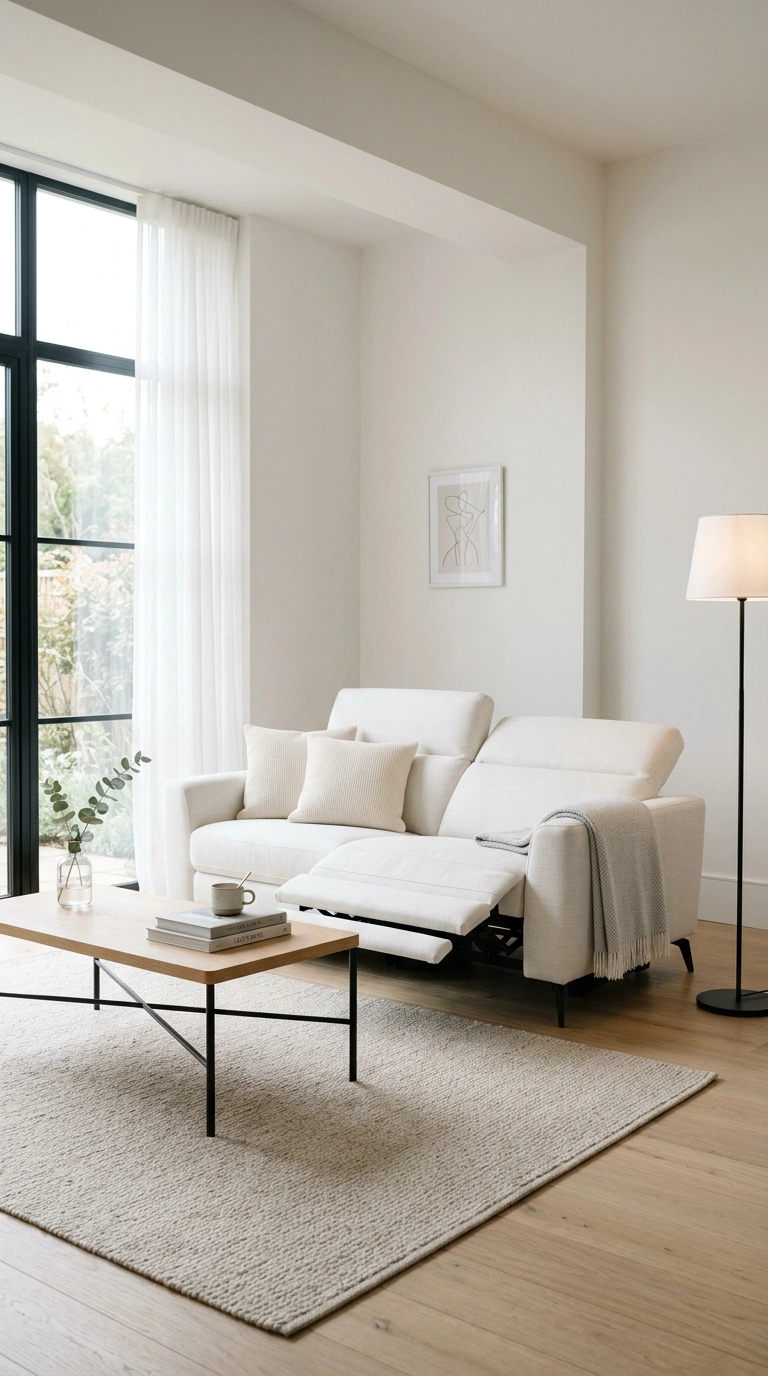
For a calm, uncluttered living room, choose a single reclining sofa in a solid, muted color and pair it with only the essentials, a simple coffee table, one floor lamp, and a plain area rug, avoiding excess decor or accessories. This minimalist approach lets the clean lines of a modern reclining sofa truly stand out, since there is nothing competing for attention elsewhere in the room. Choose a sofa with a low profile back and slim arms, in a neutral tone like white, oatmeal, or soft gray, so the piece feels light and airy rather than heavy or bulky. Keep wall decor to a single, simple piece of art or leave the wall bare entirely if the room already has good natural light and architectural interest. A single plant in a simple pot can add a touch of life and color without breaking the overall calm, restrained feeling of the space. This style works especially well in modern apartments or homes where a clean, breathing room feeling is the main design goal. Photographed in bright, even light, a minimalist recliner setup looks calm, spacious, and effortlessly stylish.
22. Reclining Sofa Plant Corner
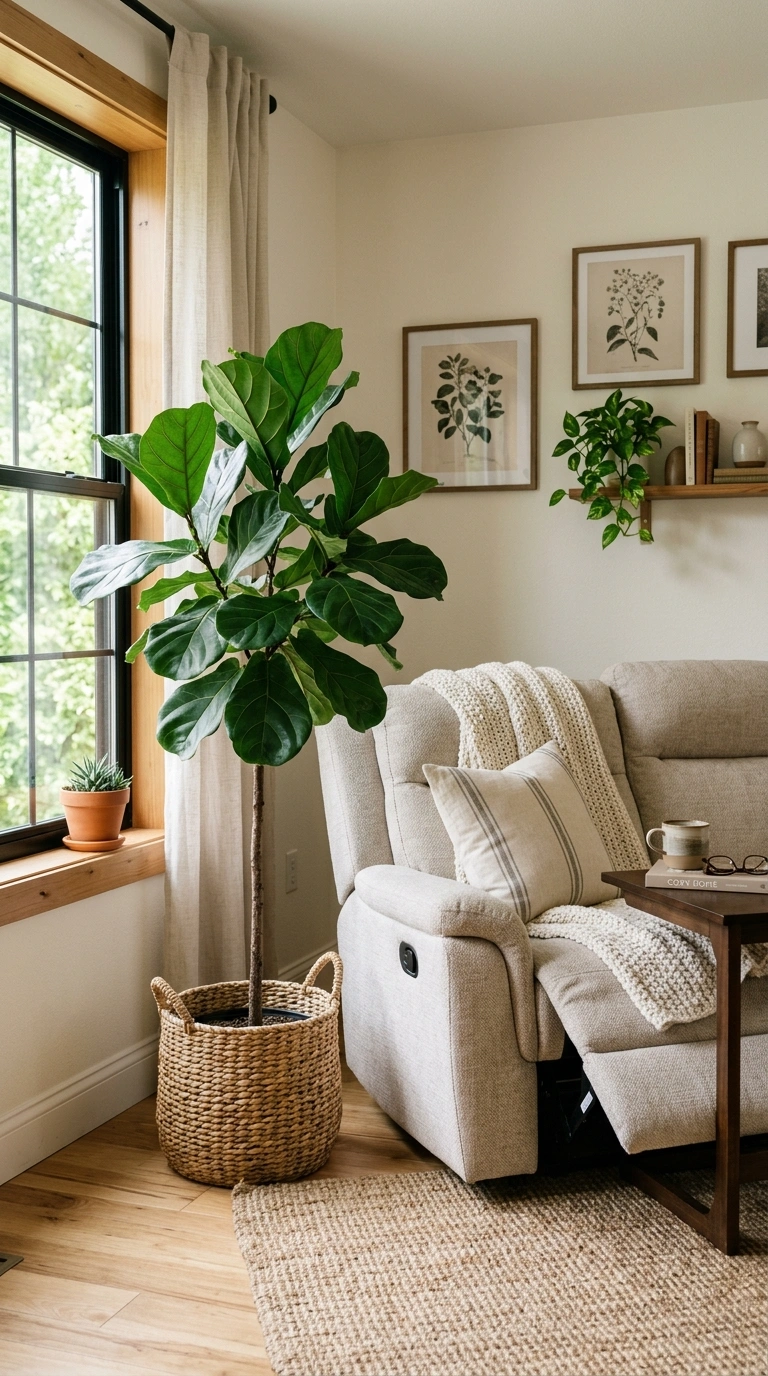
Style the corner beside your reclining sofa with one or two tall plants, like a fiddle leaf fig or a snake plant, to bring some natural life and softness into the seating area. Choose plants in simple, textured pots, like woven baskets or matte ceramic, that complement the color palette of your sofa and rug without competing with them for attention. Position the taller plant in the corner just behind or beside the arm of the sofa, where it can fill empty vertical space that might otherwise feel a little bare and unfinished. A smaller trailing plant on a nearby side table or plant stand adds a second layer of greenery at a different height, creating a fuller, more layered look in that corner of the room. This idea works particularly well in living rooms with good natural light near a window, since most popular houseplants need bright, indirect sunlight to really thrive. If natural light is limited in your space, choose a realistic faux plant instead, since modern artificial greenery has become very convincing and requires no maintenance at all. Photographed beside the sofa, a styled plant corner adds warmth, life, and a fresh, natural feeling to the whole room.
23. Bold Color Recliner
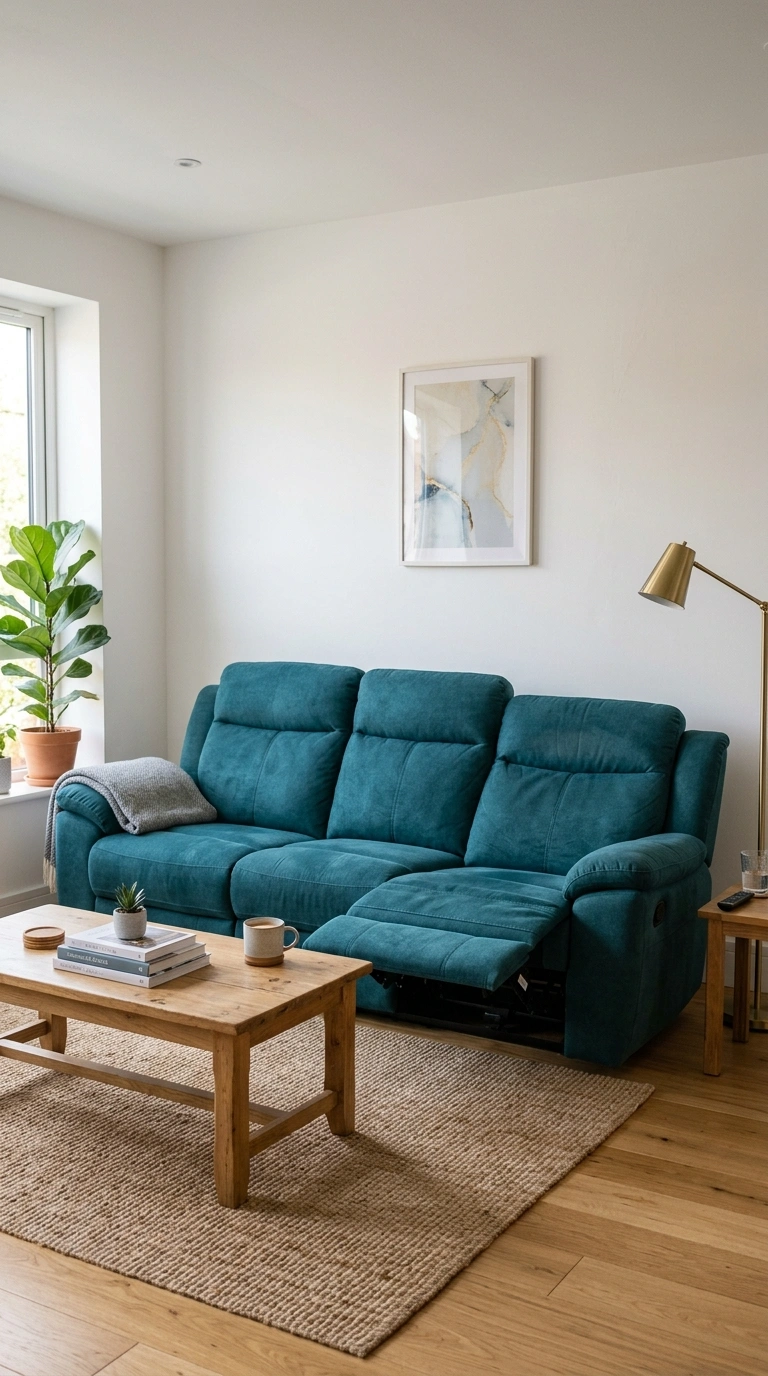
Choose a reclining sofa in a genuinely bold color, like a deep terracotta, mustard yellow, or rich teal, to make the sofa itself the true statement piece of the entire living room. This approach works best when the rest of the room stays fairly neutral, with plain walls, a simple rug, and minimal patterned decor, so the sofa’s color has plenty of room to stand out without competing with other bold elements. Choose a durable, family friendly fabric in your chosen bold color, since a piece this eye catching will likely become the main seating spot in the household and needs to hold up well to daily use. Add just one or two accent pillows in a complementary but slightly different tone, rather than an exact match, to keep the styling from feeling too matched or showroom like. A simple wood or metal coffee table works well in front of a bold colored sofa, since a busier table design might create too much visual competition in the room. This idea takes a bit of confidence, but a bold colored reclining sofa consistently becomes the piece that guests comment on first. Photographed against a plain white or neutral wall, a bold colored recliner looks vibrant, confident, and full of personality.
24. Reclining Sofa Reading Corner
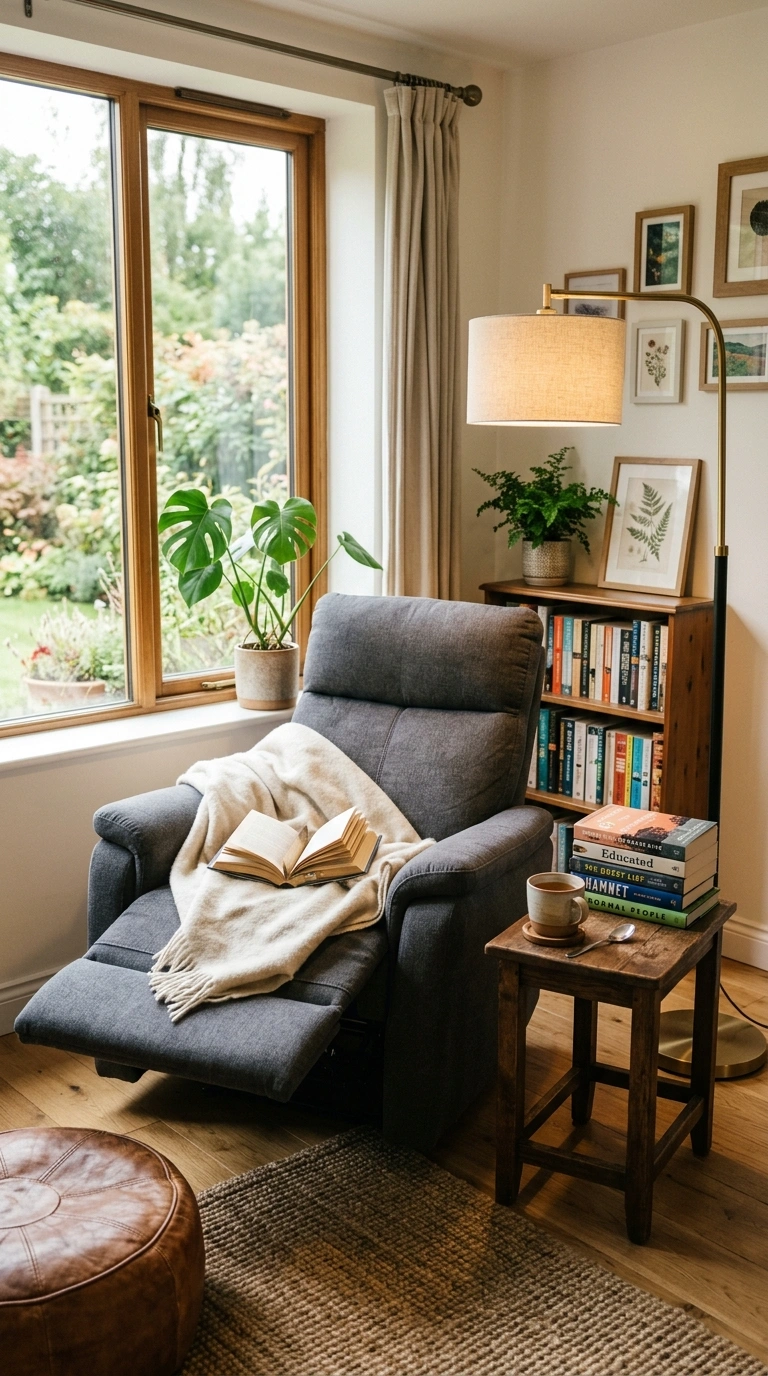
Combine the comfort of a reclining sofa with the charm of a proper reading corner by adding a small bookshelf, a floor lamp, and a side table stacked with a few favorite books right next to the seating area. Choose a spot near a window if possible, so natural light floods the corner during the day, supplemented by a warm floor lamp for evening reading sessions once the sun goes down. Position the reclining sofa or a single reclining chair so it faces slightly toward the window or the room, rather than directly at a television, signaling that this corner is meant for quiet relaxation rather than screen time. A small side table within arm’s reach holds a stack of current reads, a mug, and maybe a small plant, keeping everything a reader might need close at hand without cluttering the rest of the room. Add a soft throw blanket and an extra cushion or two for maximum coziness during long reading sessions. This idea works beautifully even as a secondary seating area in a living room that already has a main sofa arranged around the television. Photographed with soft afternoon light, a reading corner recliner looks peaceful, cozy, and genuinely inviting.
Comfort and style really can live in the same room. Whichever idea from this list speaks to you, remember that a reclining sofa is only as good as the space you build around it, so take your time choosing colors, layout, and a few finishing touches that make the whole room feel like yours.