21 Small Home Library Ideas for Book Lovers
Books stack up faster than most of us plan for. One shelf turns into two, and then there are piles on the floor, the nightstand, and the back of the toilet. If that sounds like your house, you are ready for a home library. The good news is that a library is not a giant room with a wooden ladder and a fireplace, although that is nice too. It can be a wall, a hallway, a corner, or even the space above a door. What matters is that your books have a home and that you enjoy sitting near them. I pulled together 21 library ideas for different rooms and budgets, and each one is written so you can picture it and start planning today.
1. Floor-to-Ceiling Shelves
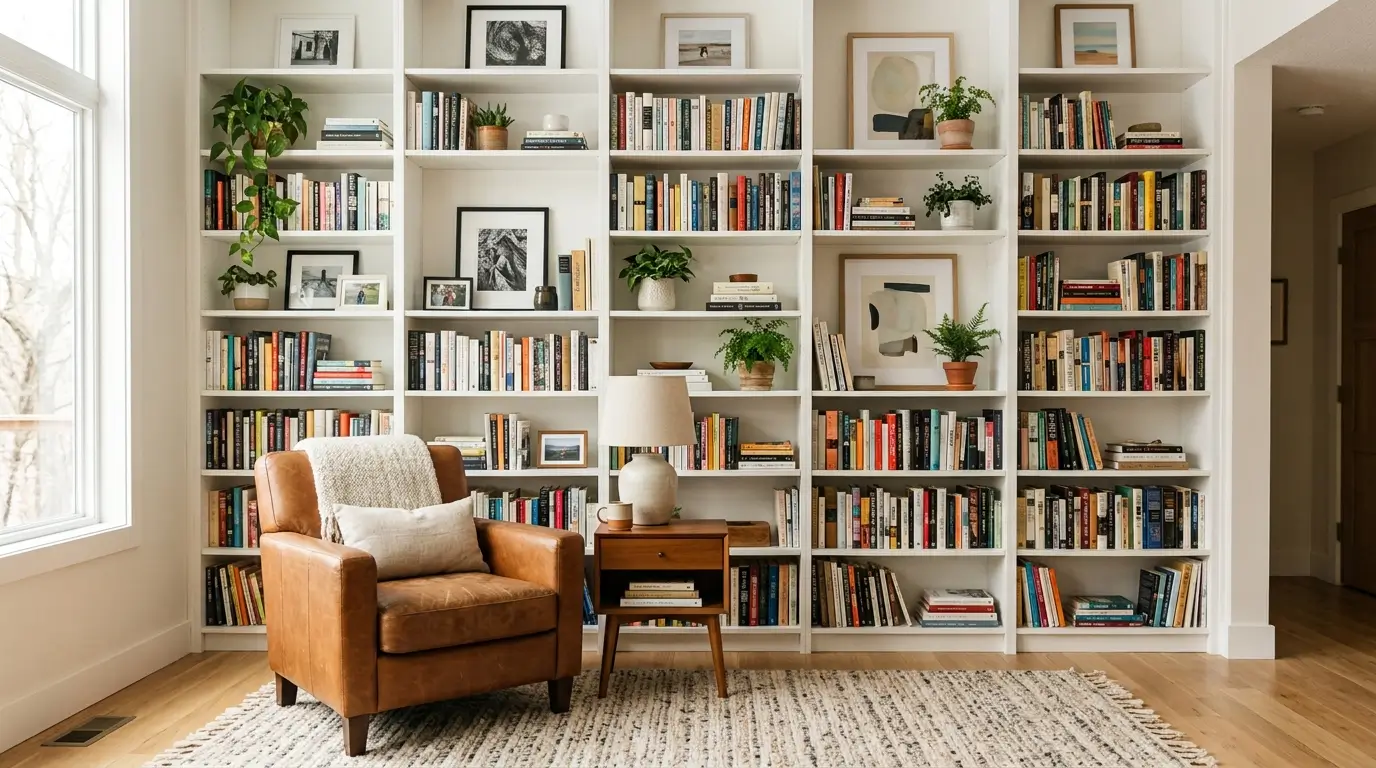
Shelves that run from the floor all the way to the ceiling make a strong first impression and hold a huge number of books. Build them with plywood or use tall ready-made bookcases lined up side by side. Paint everything the same color as the wall, such as warm white or soft gray, so the shelves feel like part of the room.
Fill the lower shelves with heavy books and the upper shelves with lighter ones. Leave some gaps for plants, small frames, and bowls so the wall does not look too crowded. Add a step stool for reaching the top rows. Fix the tall units to the wall with anti-tip brackets for safety. If your ceiling is very high, add crown molding across the top to hide the gap. This idea works well in living rooms, dens, and spare bedrooms, and it can hold hundreds of books without taking much floor space.
2. Rolling Library Ladder
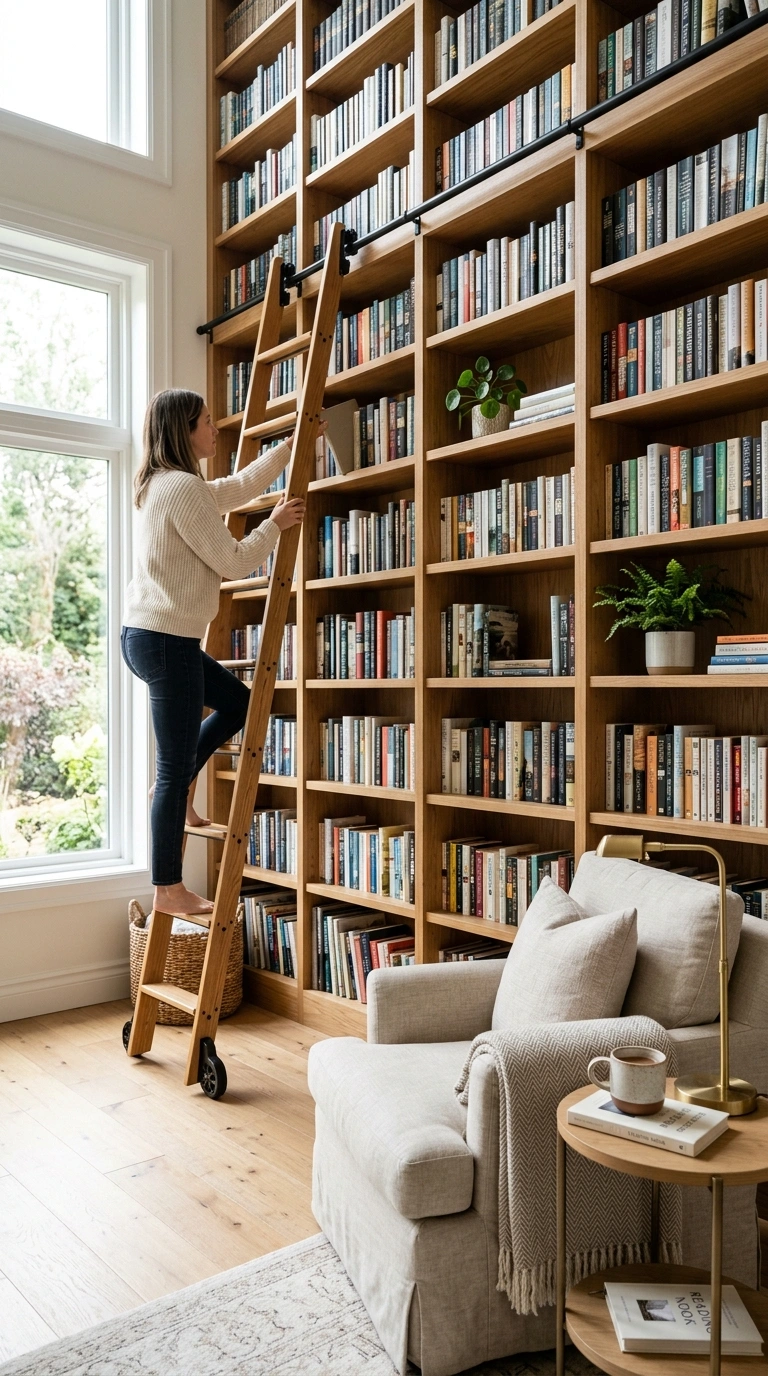
A rolling ladder adds instant charm to a wall of books and helps you reach high shelves. Install a metal rail across the top of the shelves and hang a wooden or black metal ladder from it. Make sure the rail is anchored into solid wood or studs, since it must hold your weight.
This looks best on walls that are at least nine feet high, but a shorter version can work on eight-foot ceilings. Choose a finish that matches your shelves, like natural oak or matte black. Keep the area under the ladder clear so it can roll freely. Test the ladder slowly the first time, and never climb it with heavy items. Even if you only use the ladder for show, it gives a library a classic feel. Pair it with a small side table and a deep chair for a full reading scene. Ask a carpenter to check the rail if you are unsure about your wall. Add rubber stoppers at each end of the track so the ladder never rolls off.
3. Dark Moody Walls
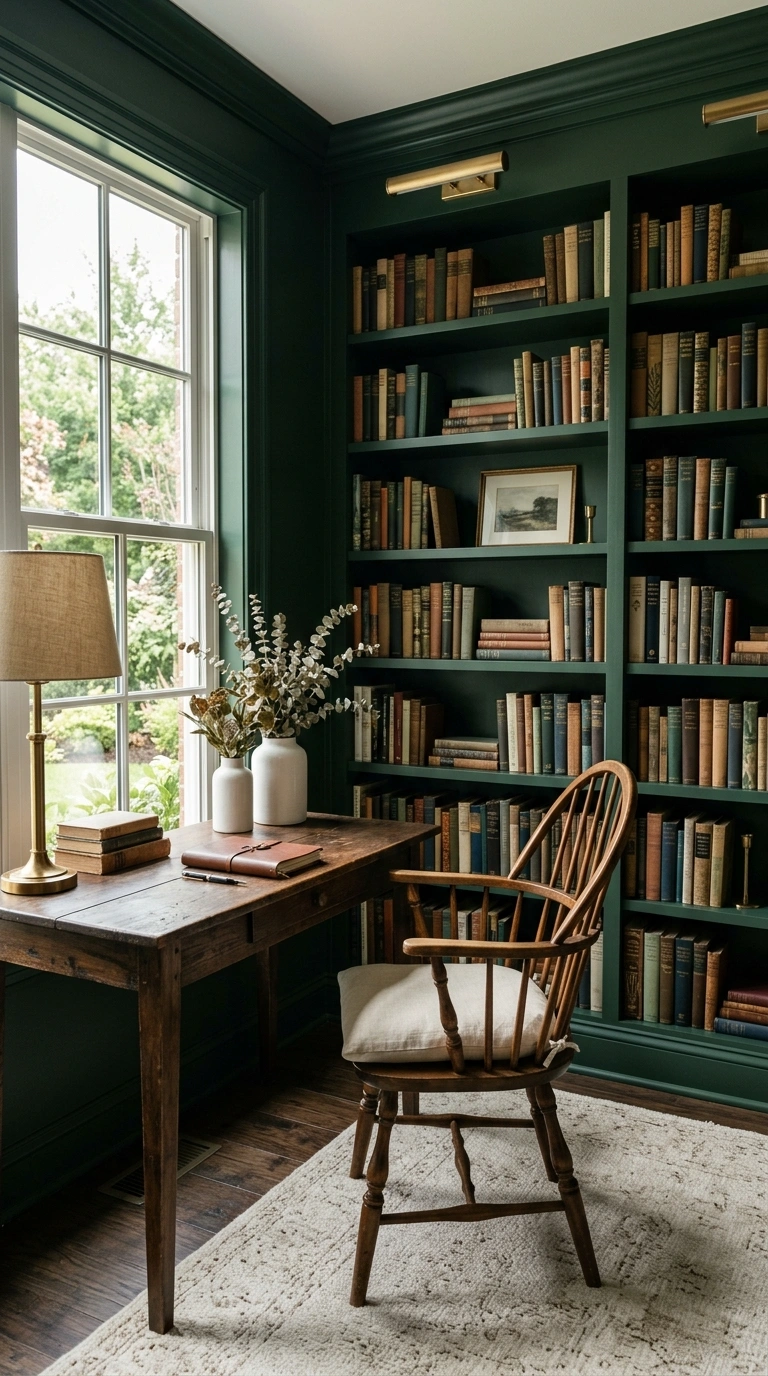
Dark paint makes books stand out and gives a library a warm, rich look. Choose deep colors like forest green, navy, charcoal, or burgundy for the walls and shelves. Use a matte or eggshell finish so the color feels soft, not shiny.
The trick is to keep some light in the room. Add a warm lamp, a light rug, and a few pale objects like white ceramic vases or cream cushions. Use wood tones for furniture to add warmth against the dark walls. Paint the ceiling and trim in the same shade if you want a cozy, wrapped-in-color feeling. Test a large sample on the wall first to see how it looks in your natural light. This idea works well in a small room, because dark colors hide the corners and make a space feel snug and comfortable. Two coats of paint are usually enough, but use a good primer under dark colors. Pick warm-toned bulbs, since cool white light can make a dark room look flat.
4. Doorway Built-Ins
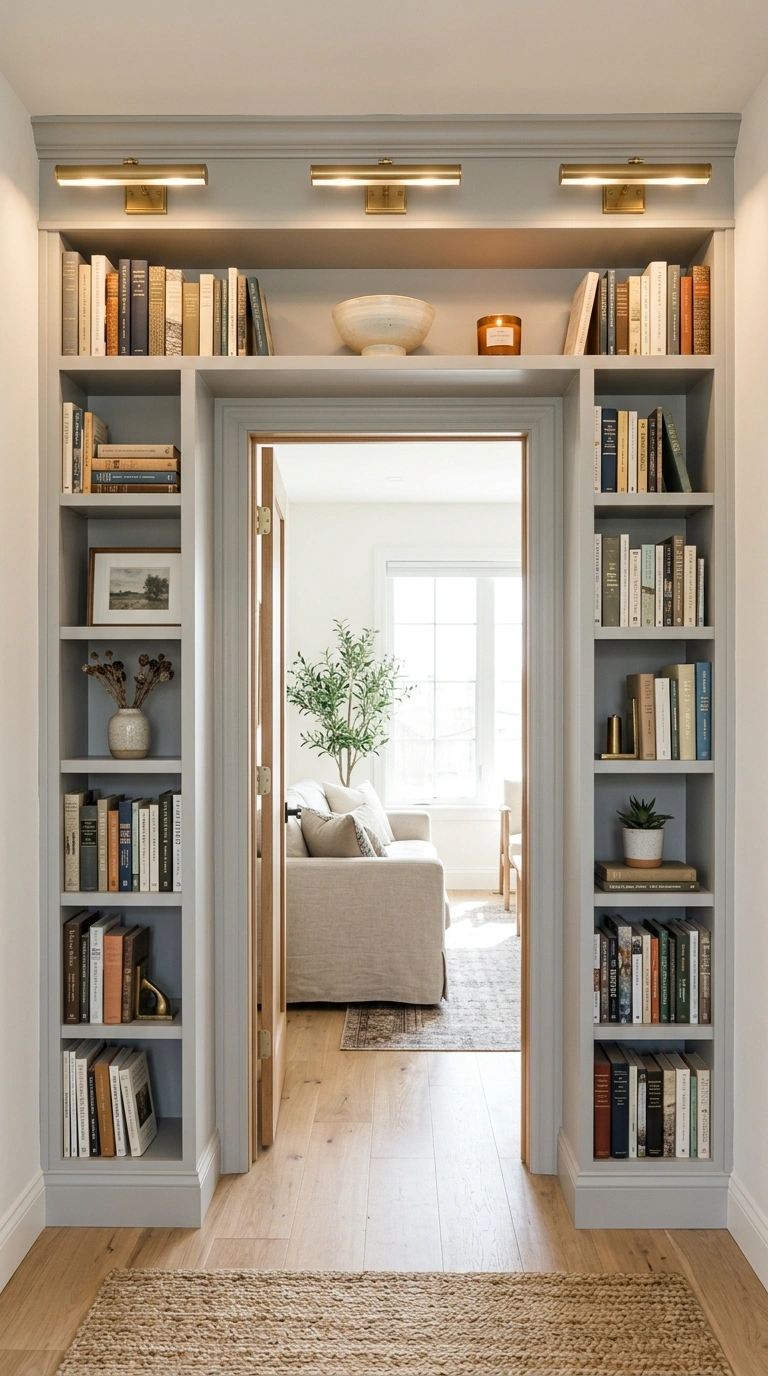
Bookshelves that frame a door or an archway make a home feel custom and grand. Build simple boxes on both sides of the doorway and add a shelf that spans across the top. If you cannot build, arrange three matching bookcases so the middle one sits above the door.
Paint the shelves the same color as the trim or a shade darker for depth. Keep the books arranged in an even way and add small display objects, like a bowl, a candle, or a framed print. Install small picture lights at the top for a soft glow. This idea makes use of wall space that is normally empty, and it creates a visual frame for the entrance. It is especially good for a study or family room, where the doorway is the main feature. Measure the door height so the top shelf clears it by at least two inches. Anchor each unit to the wall studs, and caulk any gaps for a neat, built-in finish.
5. Window Seat Shelves
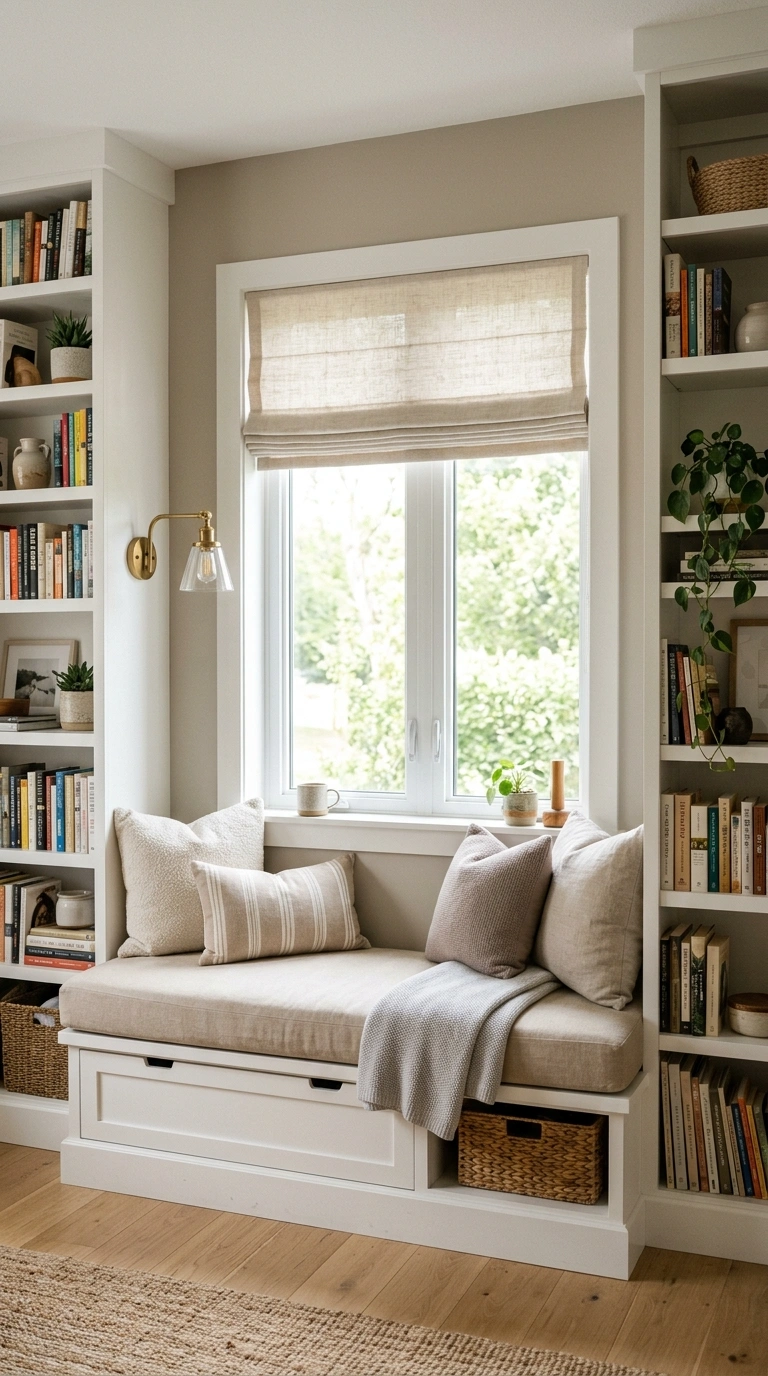
Shelves on both sides of a window with a seat in the middle make a wonderful reading spot and a small library in one. Build a bench under the window, and add shelves that go up on each side, sized to fit your books. Paint the frame in one color for a clean look.
Add a thick cushion on the seat, and pillows in soft neutrals. Store larger books on the bottom shelves and smaller ones above. Install a small wall light on the side for reading after dark. Curtains or blinds on the window help with glare, and a plain linen roman shade works well. This is a smart way to use a short wall, and it works in bedrooms, living rooms, and even hallways. The seat below can also hold extra storage in drawers or lift-up lids. Cut the seat cushion from firm foam so it holds its shape over time. Slide a thin wooden board under it if your bench frame has open gaps.
6. Staircase Book Wall
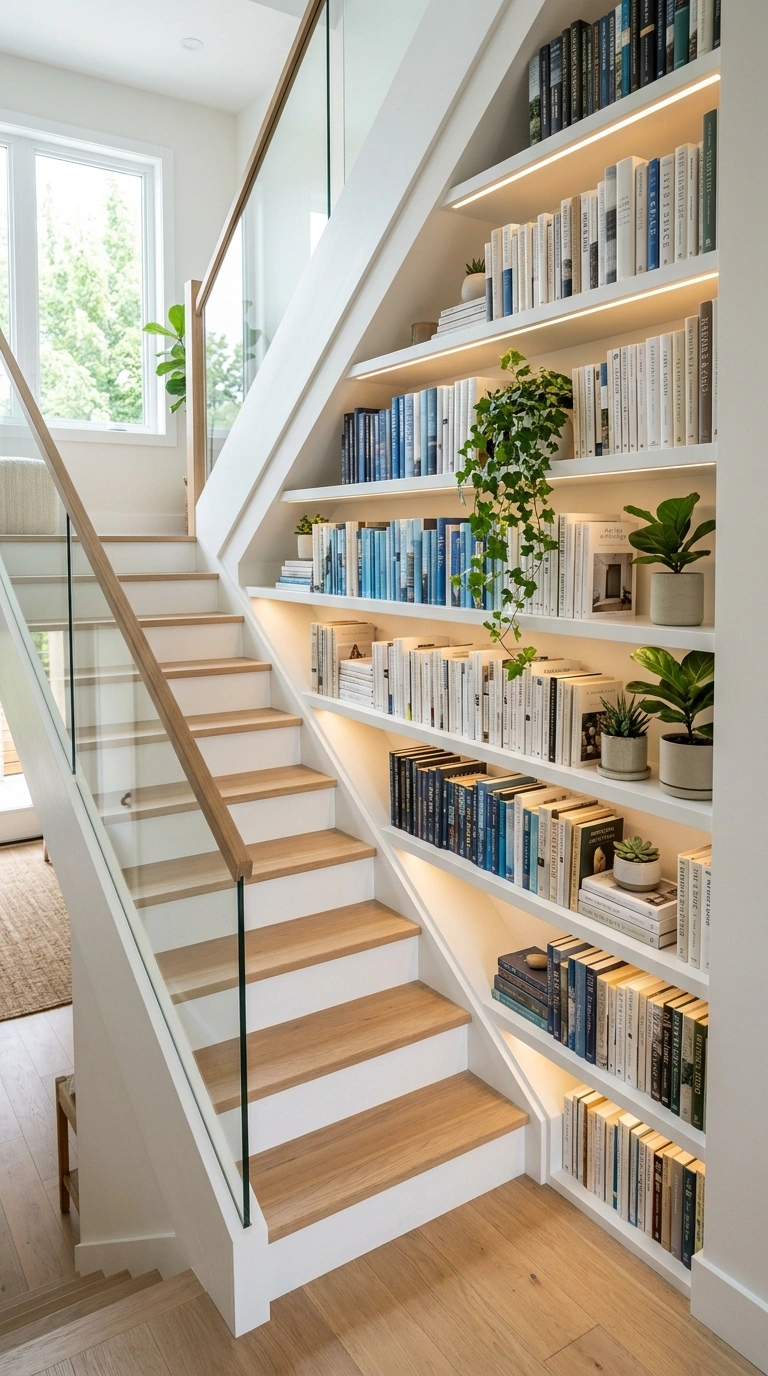
The wall along a staircase is often bare, and it is a perfect place for books. Build shallow shelves that follow the slope of the stairs, or use a series of narrow shelves that step down along the wall. The shelves only need to be about six inches deep to hold most paperbacks.
Paint the wall and shelves in the same light color so the books stand out. Add small lights under the shelves so you can see them while walking up and down. Group books by size for a tidy look, and keep a few gaps for small plants or framed art. Make sure the shelves do not stick out into the walkway. This idea saves floor space and turns a plain stairwell into a special feature that every visitor will notice as they climb. Use a level along the top of each shelf so the books do not slide off. Add a small lip on the front edge to keep them safely in place on the steeper sections.
7. Fireplace Library Room
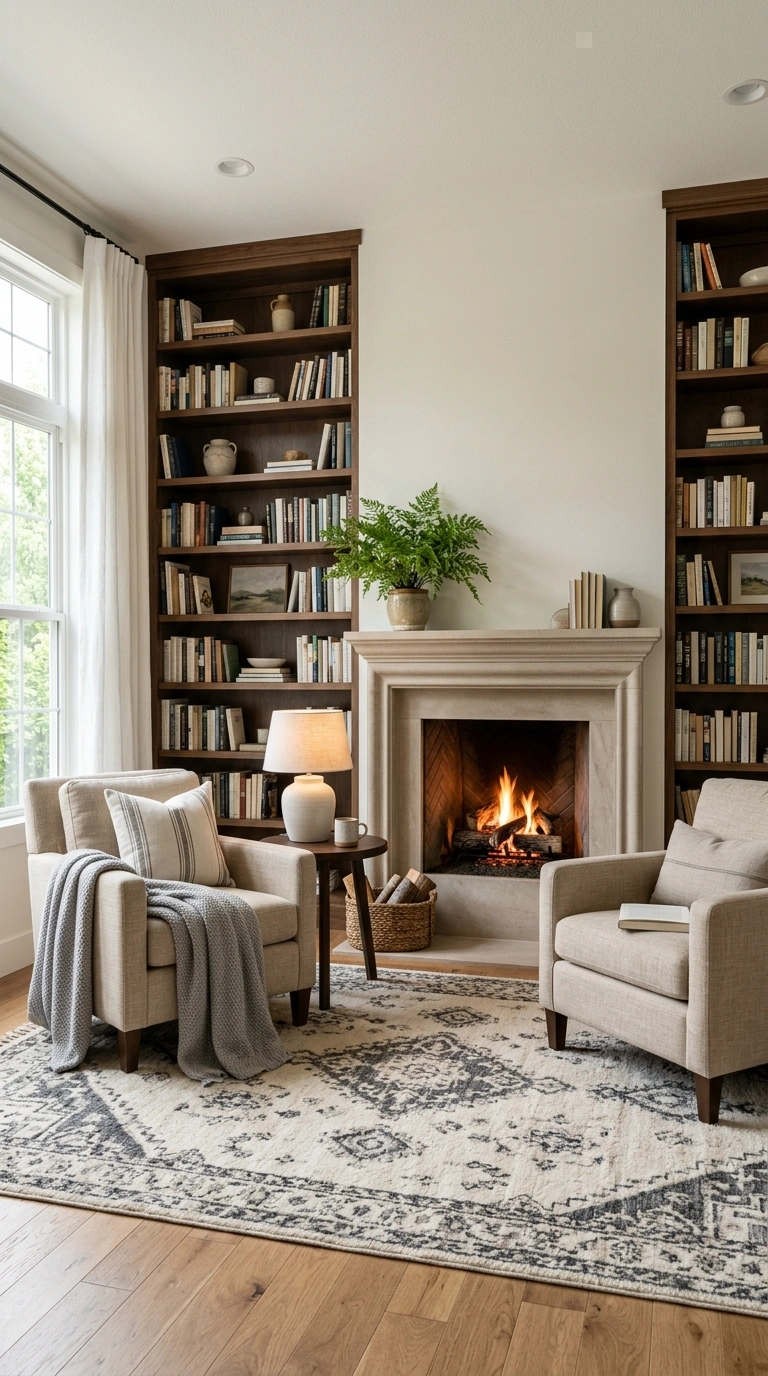
A fireplace makes a natural center for a library because it adds warmth and a focal point. Build tall shelves on each side of the fireplace, and place a pair of chairs in front of it. Use dark wood or painted shelves that match the mantel.
Fill the shelves with books, and add a few pieces of decor such as a small clock, a plant, or a picture. A wool rug in front of the fireplace makes the seating area feel finished. Put a small table between the chairs for drinks and reading glasses. If the fireplace is not working, set candles or logs inside for a cozy look. Use warm bulbs in the lamps to keep the room feeling soft in the evening. This setup is a classic and works in almost any style of home. Keep books at least a few feet from the heat of a working fireplace, since dry heat can crack old covers. A tall lamp on each side gives the room an even, warm glow.
8. Small Wall Library
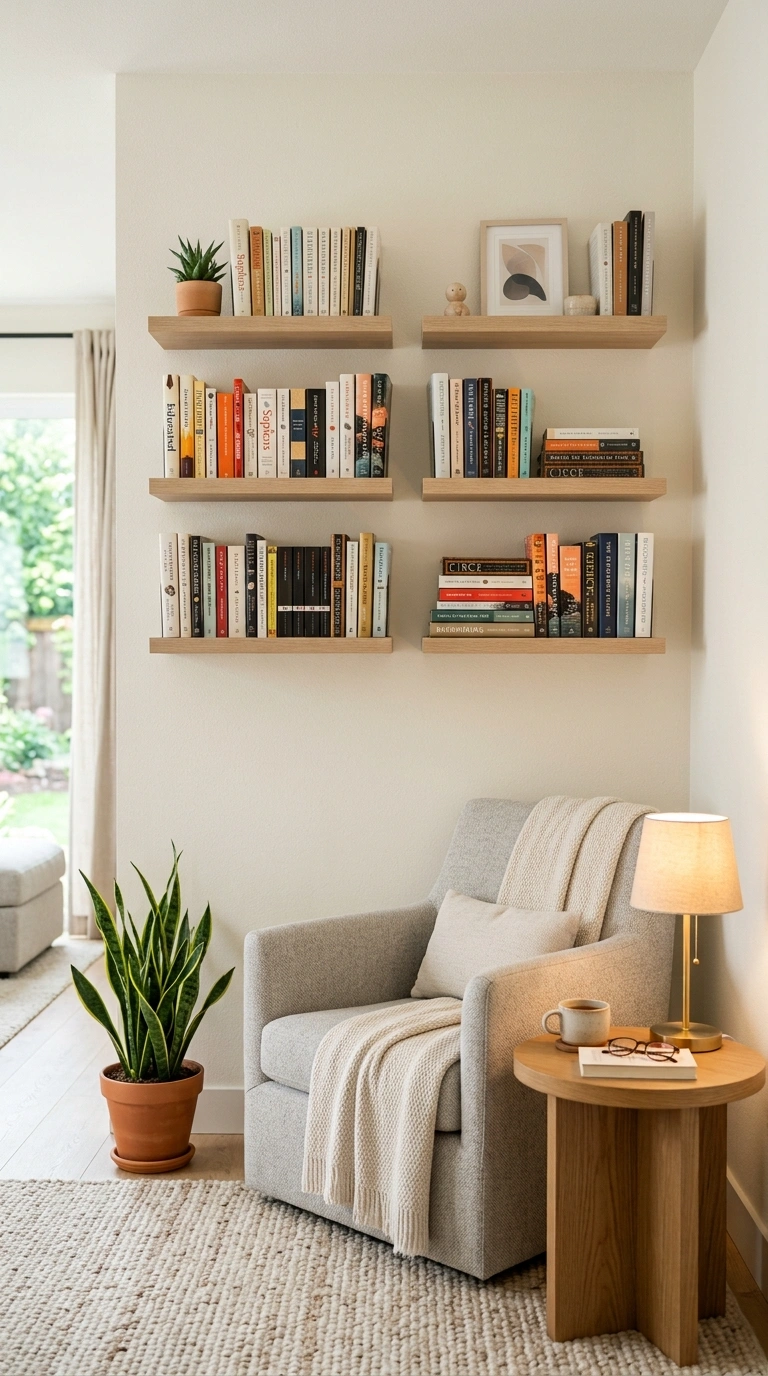
You do not need a whole room to create a library. A single wall with a few shelves can hold plenty of books and still feel special. Choose a wall near a comfortable chair, and hang three or four floating shelves in a neat row or a grid.
Use wood or painted shelves that match the room. Keep the spacing about 12 inches apart so tall books fit. Add a small lamp on a nearby table and a soft rug under the chair. Mix in a couple of decorative items, such as a small plant or a framed print, to keep the wall from looking too heavy. This idea works in apartments, bedrooms, or a corner of the living room. It costs less than a full built-in and takes only an afternoon to put up. Anchor each shelf into a wall stud or use heavy-duty wall anchors. Test the shelves with a stack of books before you fill them completely, and keep the heaviest books on the lowest shelf.
9. Bedroom Book Wall
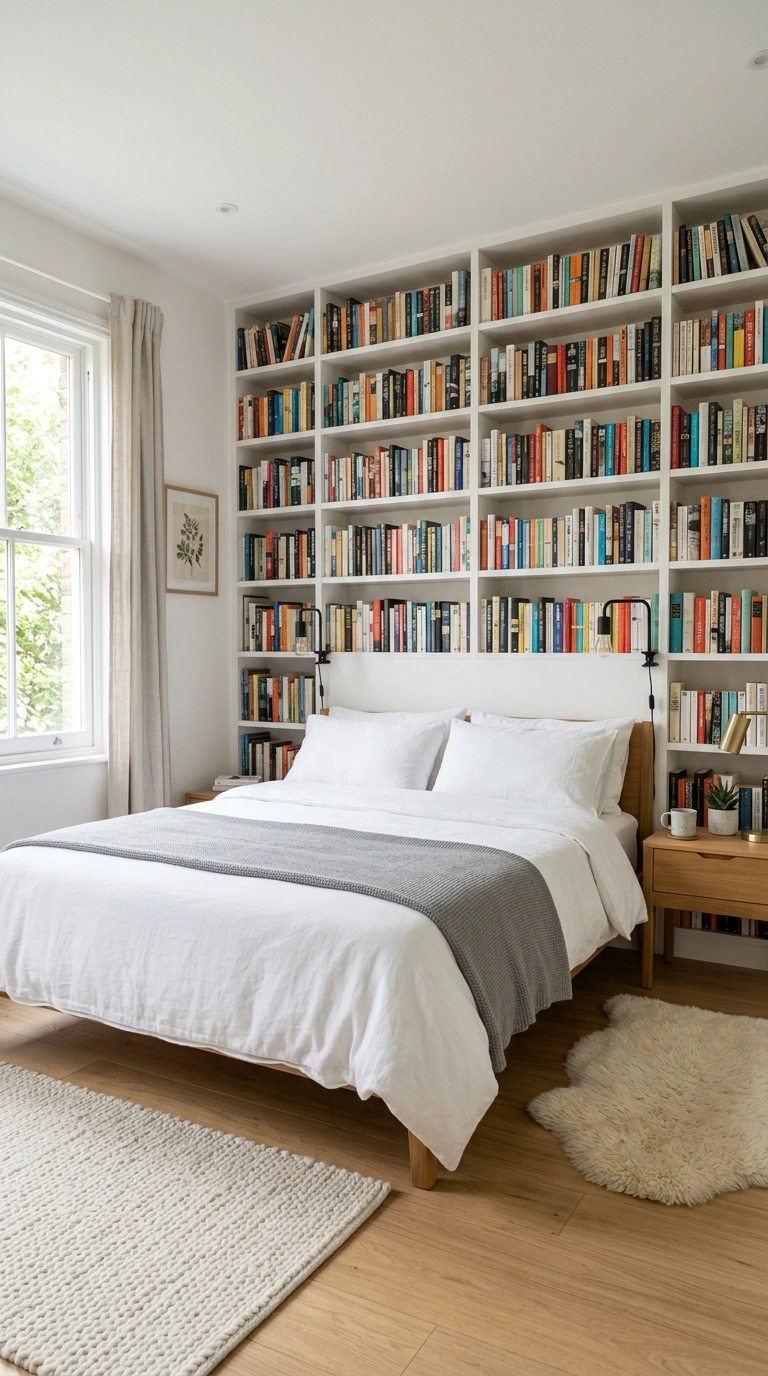
A book wall behind or beside the bed makes a bedroom feel warm and personal. Line the wall with shelves from floor to ceiling, or use a wide low bookcase that runs along the full width of the bed. Painted white or soft beige shelves keep the room calm and bright.
Keep the books you love and are currently reading close to the bed. Add small reading lights clipped to the shelves for nighttime use. Put a soft rug on each side of the bed, and choose bedding in plain colors so the books are the main decoration. Make sure shelves are sturdy and secured to the wall so books cannot fall on you. This idea makes a bedroom feel like a private library and gives you plenty of storage without adding more furniture. Use a dimmable light so the wall does not feel too bright at night. Keep the shelf near the bed only for books you read often, and store the rest in another room.
10. Dining Room Library
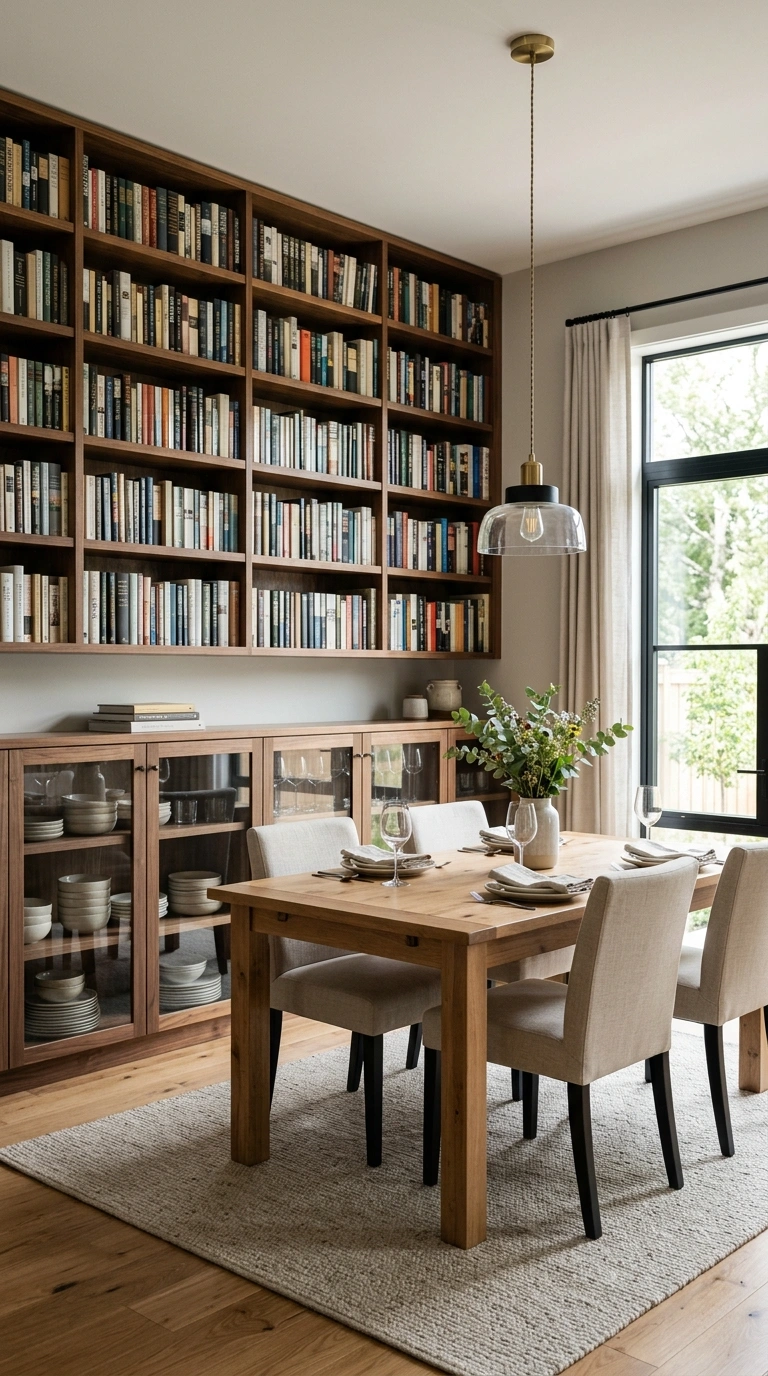
A dining room is often used only a few times a year, so why not turn one wall into a library? Line the wall with tall bookcases, and keep the dining table in the center. The table works as a great place to spread out and read or study.
Choose bookcases in a color that matches the dining chairs or the wall. Add glass-front doors on the lower cabinets to hold china, serving dishes, or extra books. Place a runner or a plain rug under the table to keep it cozy. A pendant light over the table gives warm light in the evening. This idea makes a formal room feel useful every day, and it lets you enjoy your books and your dishes in the same space. Measure the room so you keep at least three feet of space between the table and the shelves. Push chairs in when you are done so the room stays clear and easy to walk through.
11. Glass Door Cabinets
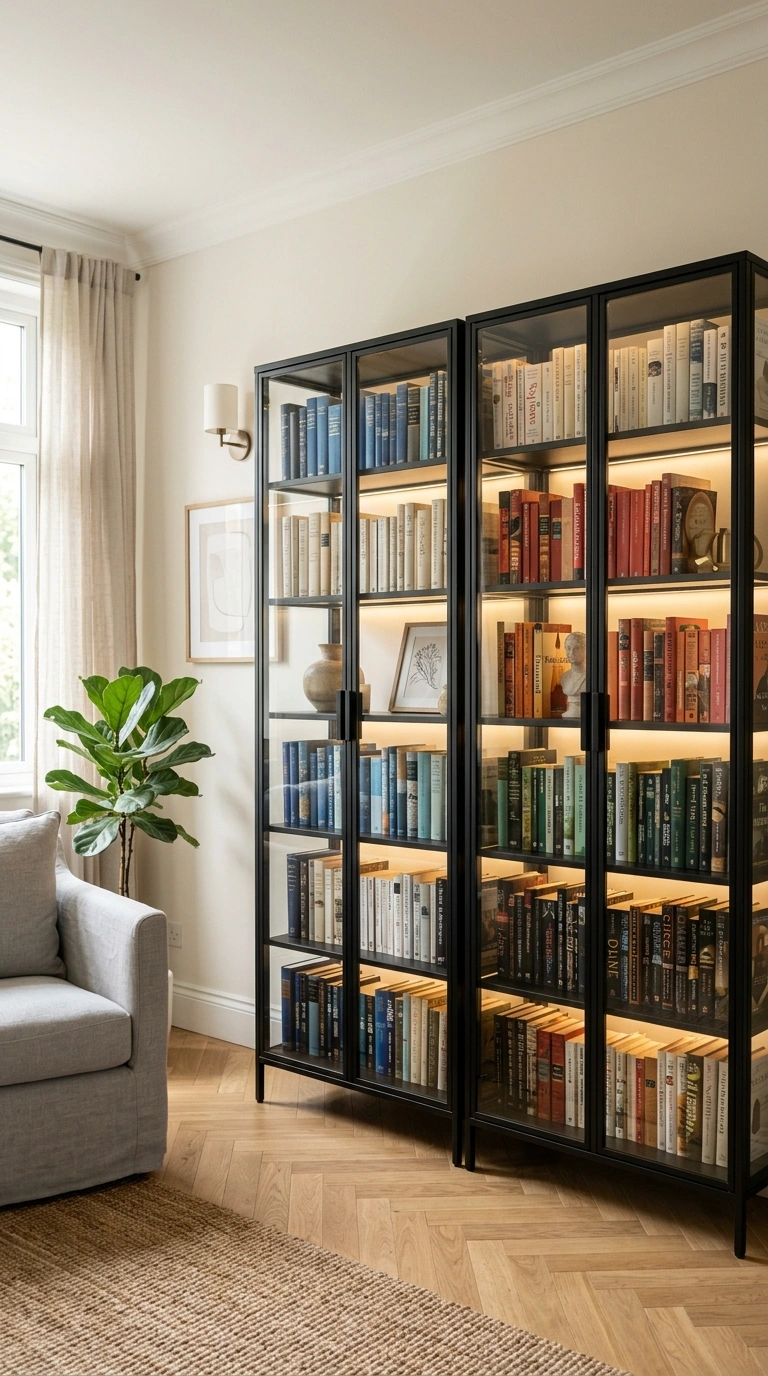
Cabinets with glass doors keep books clean and safe while still showing them off. Choose tall cabinets with thin wood or black metal frames, and line them against a wall. Glass-front units also work well for special books, such as old hardcovers or photo albums.
Arrange the books by height or color, and leave a bit of room at the top so nothing looks crushed. Add small LED lights inside for a soft glow. Keep the cabinet doors clean with a soft cloth and glass cleaner. If you have kids or pets, glass doors also keep small hands away from delicate pages. This idea works well in living rooms, offices, and dining rooms. It gives a library a polished, slightly formal look that suits many styles of decor. Choose glass that is tempered for safety if you have children in the house. Set a small silica gel packet inside the cabinet to help control moisture and keep the pages fresh.
12. Color-Sorted Shelves
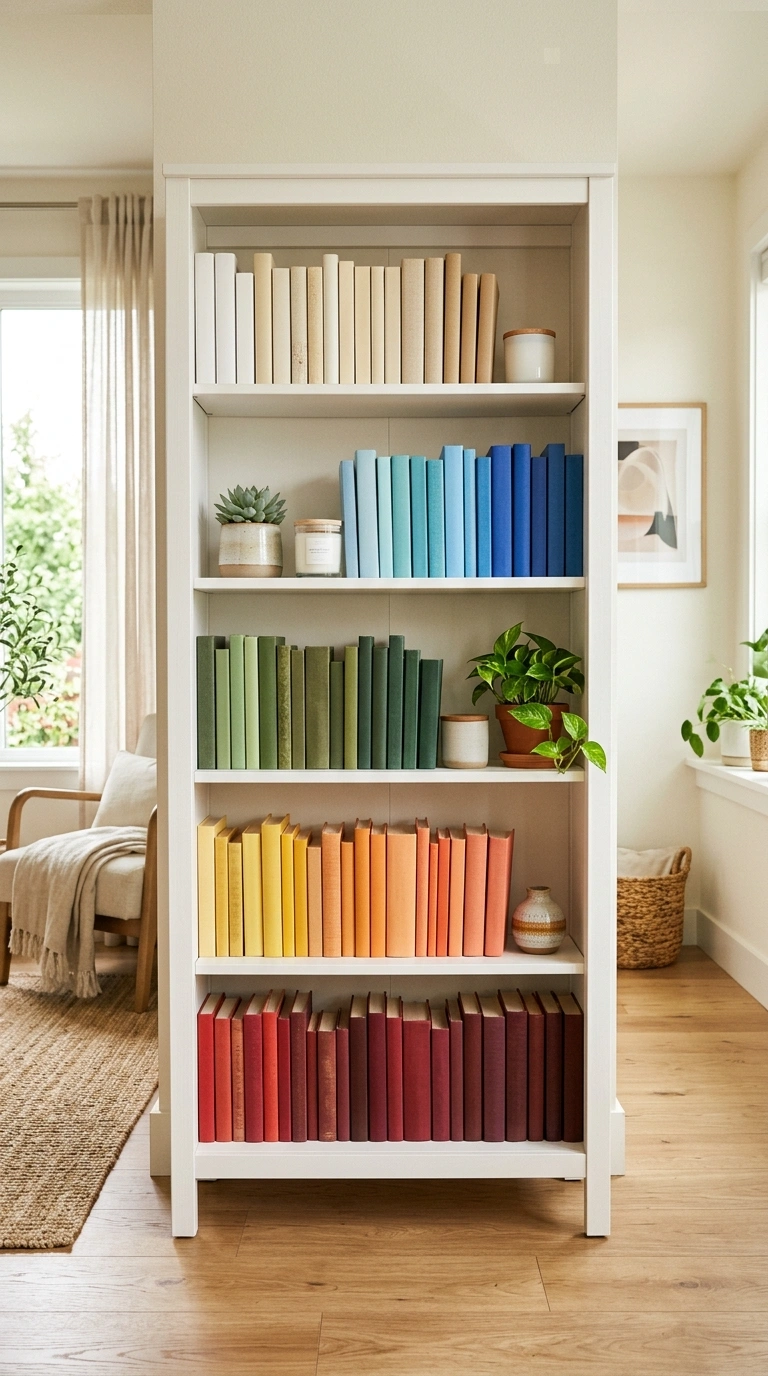
Sorting books by color makes a wall of shelves look like a piece of art. Start by grouping your books into piles, such as white, blue, green, red, and black. Then arrange the piles in a smooth gradient from one end of the shelf to the other.
If some covers are colorful or patterned, turn the spines to face the front, or wrap them in plain paper for a matching look. Add a few small objects between groups, like a candle or a small plant. Use white or light wood shelves so the colors stand out. This look is pretty and works especially well in bright rooms. You can still find books easily by remembering the color of each cover. It is a simple way to make an ordinary bookshelf look intentional and stylish. Take a photo of the shelf before you start, and work one shelf at a time. Keep a small stack of books aside for unusual colors, and place them where they will blend in.
13. Library Desk Corner
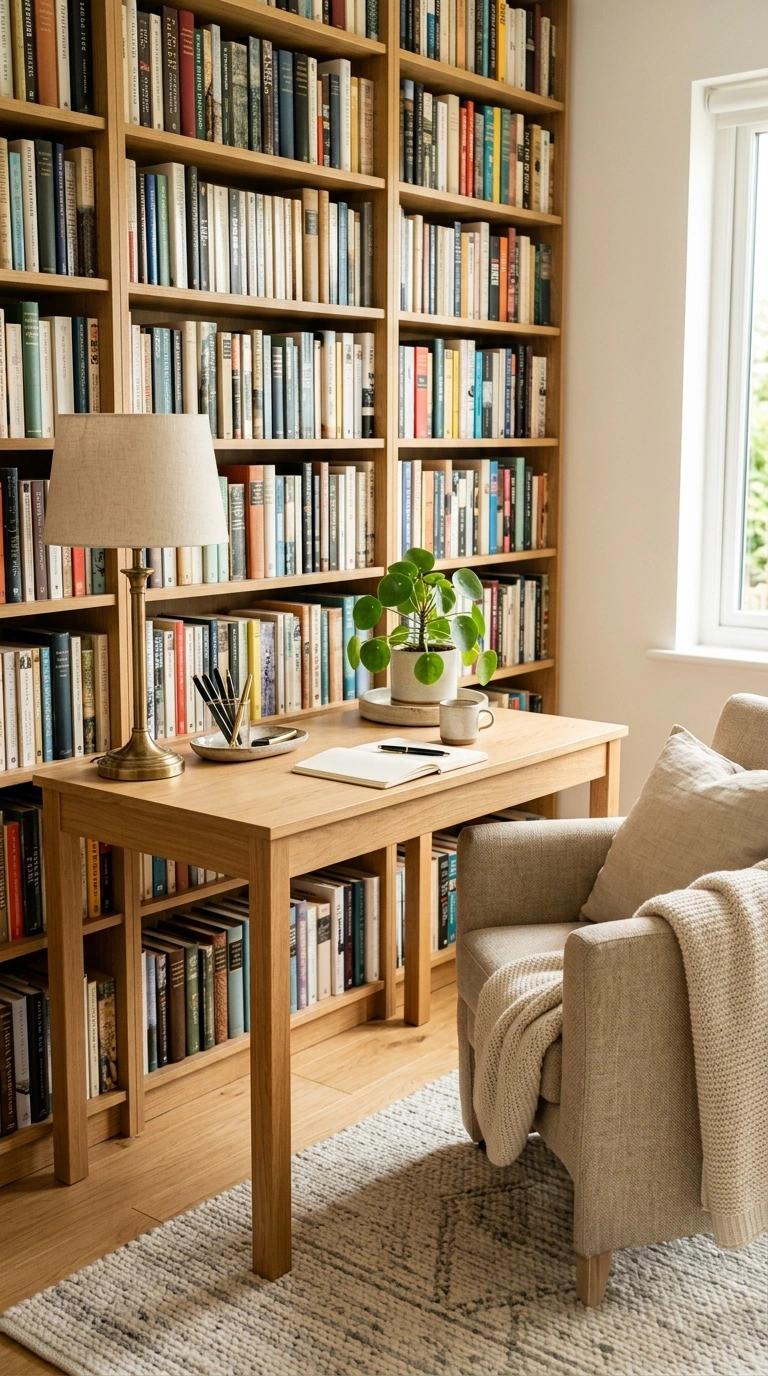
A desk built into a library nook gives you a place to write, work, or study among your books. Place a simple wooden desk in front of a bookshelf wall, and add a comfortable chair with good back support. Choose a desk about 24 inches deep so you have room for a laptop and a notebook.
Set a table lamp on one corner and a small tray for pens and paper clips. Keep the surface clear except for a few key items. Add a small plant or a framed photo for warmth. Put a rug under the chair so it slides smoothly. This idea works in a spare room or a corner of the living room. It keeps your work close to your books and gives you a quiet place to focus on projects. Add a small drawer organizer for cables and stationery. Pick a chair with wheels if you have a hard floor, and add a small pad under it so the floor stays scratch free.
14. Hallway Book Shelves
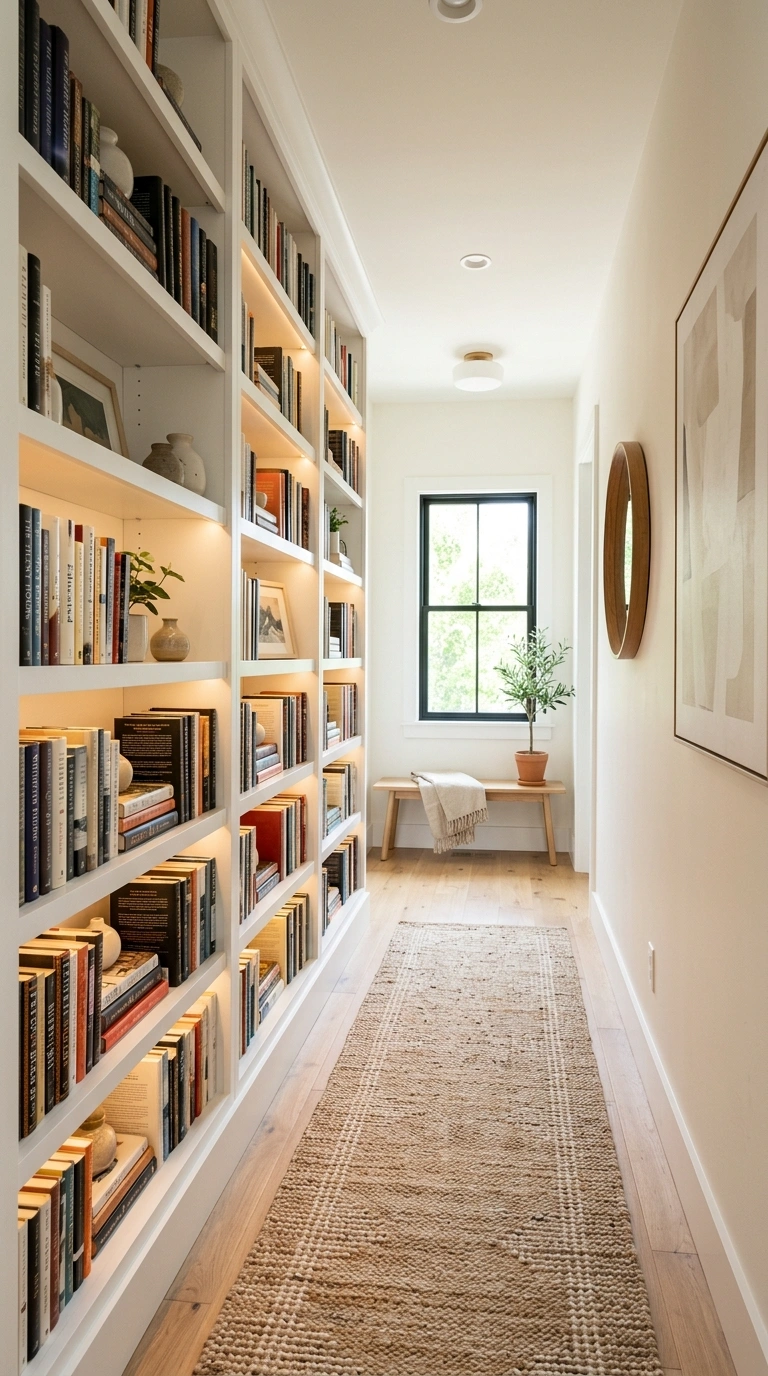
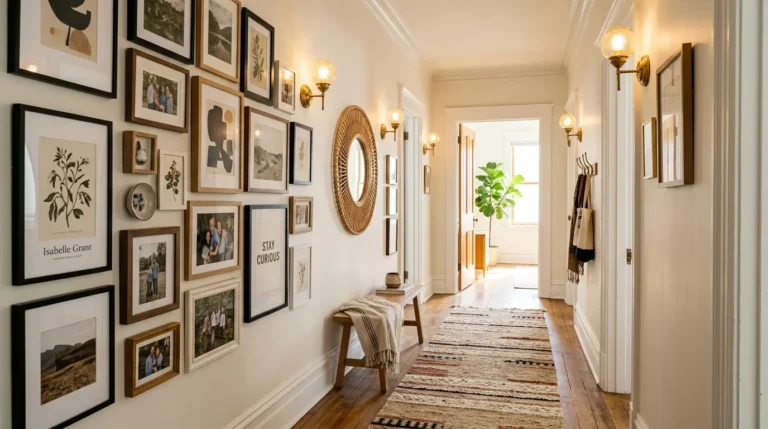
A hallway is a smart place for shelves because it is usually wasted space. Choose narrow shelves about eight inches deep and mount them along one side of the hallway. Books stay in easy reach for anyone walking past.
Paint the shelves the same color as the wall for a subtle look, or in a contrast color for more drama. Add small lights under the shelves to brighten a dark hallway. Keep the floor free of clutter so people can walk easily. A runner rug down the middle adds warmth and reduces noise. If the hallway is wide enough, place a slim bench at one end for sitting and reading. This idea gives you a library feel without using any room, and it makes a plain hallway far more interesting. Hold a tape measure at the widest point where people will walk, and keep at least 36 inches of free space. Round the shelf corners a little to prevent bumps.
15. Picture Ledge Books
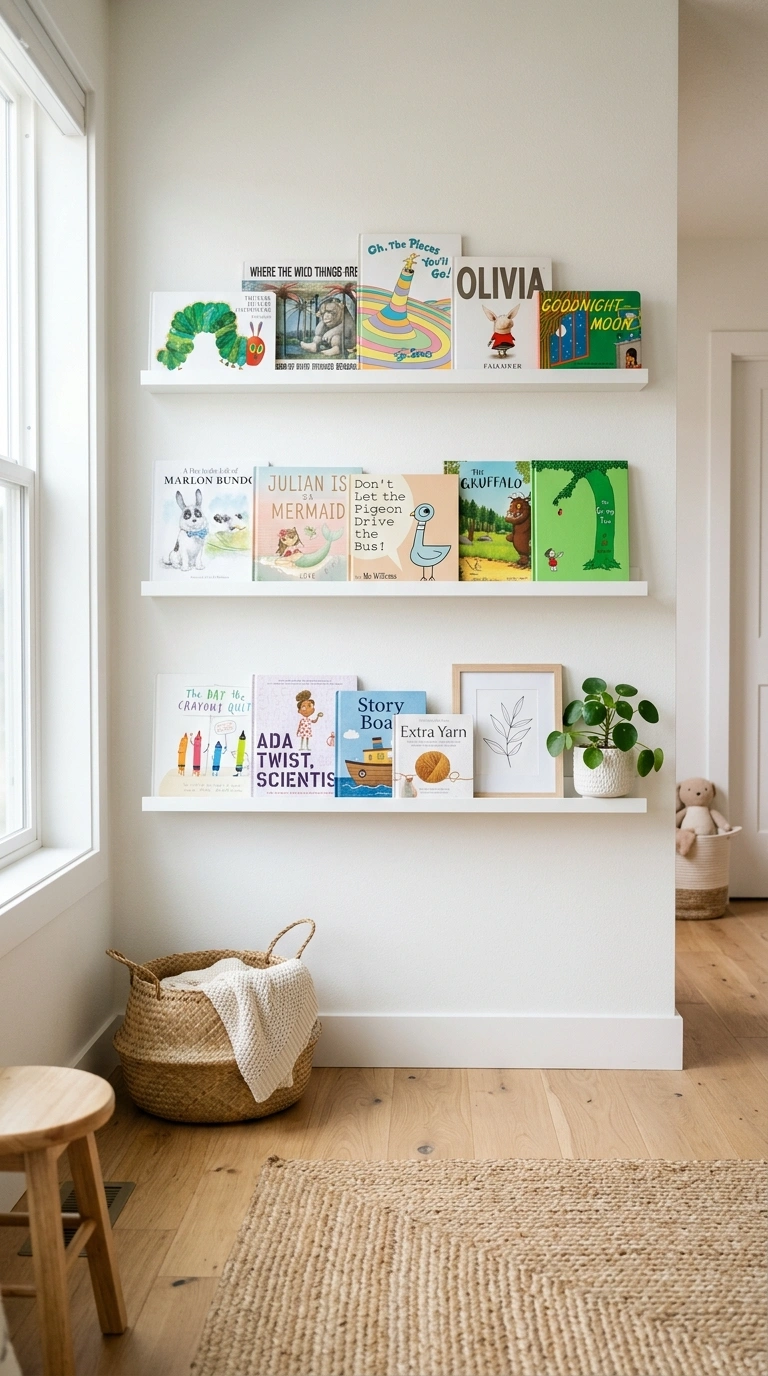
Picture ledges are thin shelves that show the covers of books instead of the spines. Mount two or three ledges on a wall in a row, about 10 inches apart. They work great for children books, art books, and favorite covers.
Lean the books against the wall so their fronts are visible. Add a small framed print or a plant on the ledge for variety. Change the display every month to keep it fresh. Because the ledge is narrow, it only holds a few books, so use it as a feature wall and keep the rest of your collection elsewhere. This idea suits kids rooms, hallways, and small living rooms. It looks tidy, adds color, and makes it easy for kids to grab the book they want. Buy ledges with a small lip so books do not slide off, and screw them into studs. Rotate the covers with the season, such as bright ones in spring and cozy ones in winter.
16. Under-Stairs Library
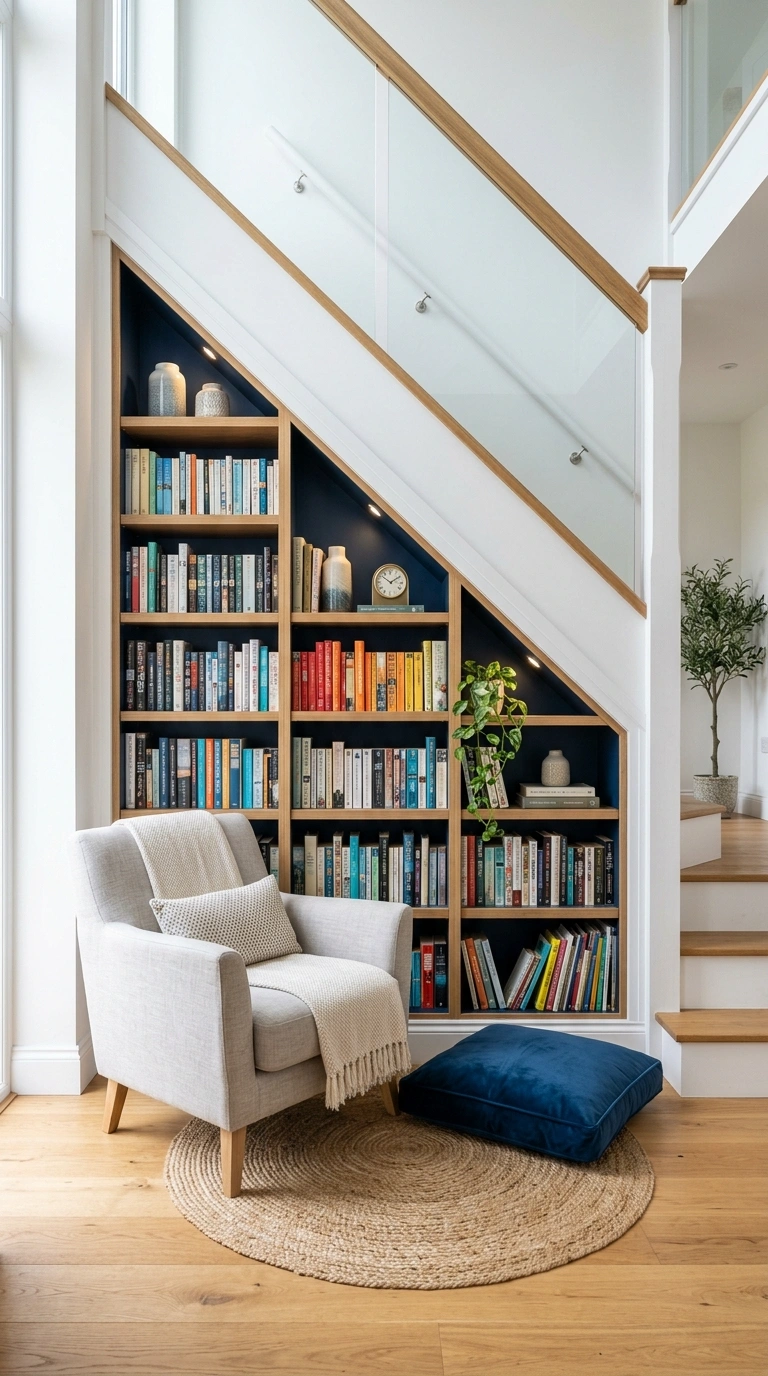
The space under a staircase is perfect for built-in shelves. Cut shelves to follow the angle of the stairs, so the tall shelves sit at the high end and the short ones at the low end. Paint the inside a deep color and leave the front trim white for a clean look.
Add small puck lights inside to make it glow at night. If there is enough room, slide in a low chair or a floor cushion in front of the shelves. Keep the frame simple and the books tidy so the space does not look busy. Use pull-out drawers at the bottom for storing games, blankets, or magazines. This idea takes a dead space and gives it a purpose, and it fits in small homes where every square foot matters. Ask a friend to hold each shelf while you mark the wall so the angles match the stairs. Use a paper template first, and cut the wood only after you check the fit.
17. Basement Library Room
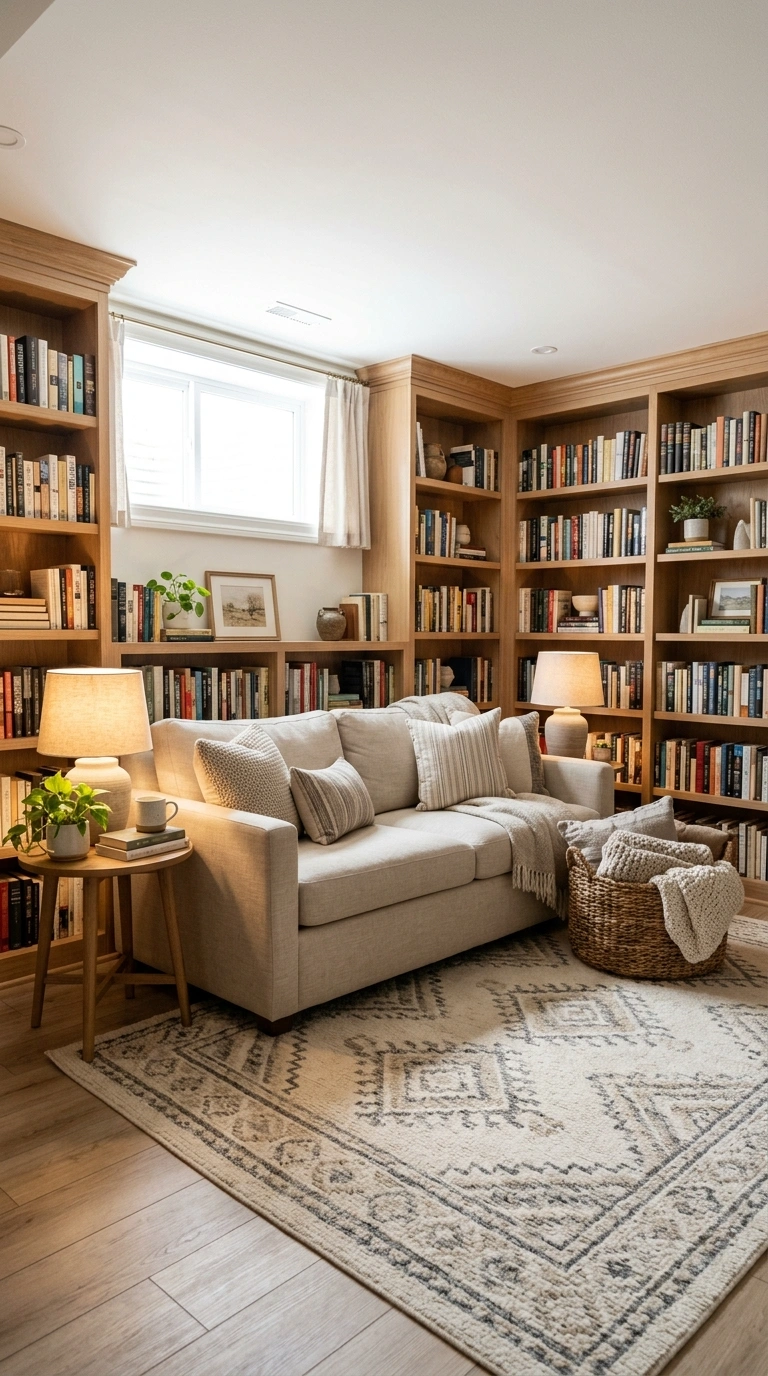
A finished basement can become a quiet library away from the busy parts of the house. Choose light wall paint, like warm white, to make up for the lack of natural light. Add shelves along one or two walls and fill the middle with a comfortable sofa or two armchairs.
Layer the floor with a large rug for warmth and comfort, since basement floors tend to be cool. Use several lamps instead of one bright ceiling light to make the room feel cozy. Add a dehumidifier if the basement is damp, to protect your books from moisture. A small side table and a basket of throw blankets round out the space. This idea gives you a private spot for reading, and it keeps large collections away from the main living areas. Paint the floor or lay a moisture barrier under the rug if the concrete feels cold. Lift the shelves slightly off the floor with small feet, so any moisture does not reach the bottom books.
18. Leather Armchair Pair
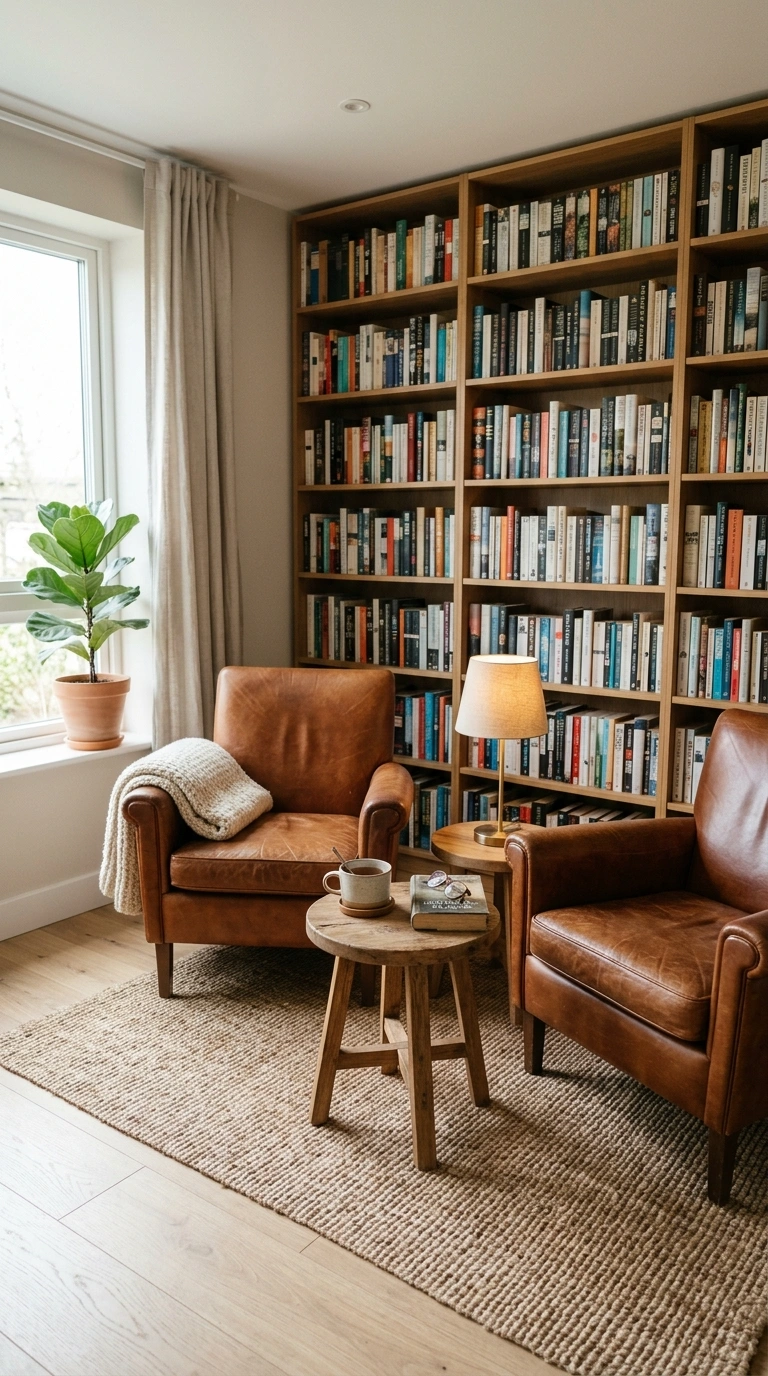
A pair of leather armchairs gives a library a classic, warm look. Choose chairs in cognac, tan, or dark brown, and place them facing each other or side by side near the shelves. Leather ages beautifully and gets softer with use.
Put a small round table between them to hold a lamp and a cup of tea. Add a wool or jute rug beneath the chairs. Toss a knit blanket over one arm for extra comfort. Keep the area around them free so you can move easily. If a full-size chair takes too much room, look for a slim version with low arms. This idea is timeless and works well in living rooms and dens. The chairs invite anyone who walks in to sit down and pick up a book. Condition the leather twice a year with a soft cloth and a product made for leather. Keep the chairs away from strong sunlight and heaters so the surface does not crack.
19. Cabinet Base Storage
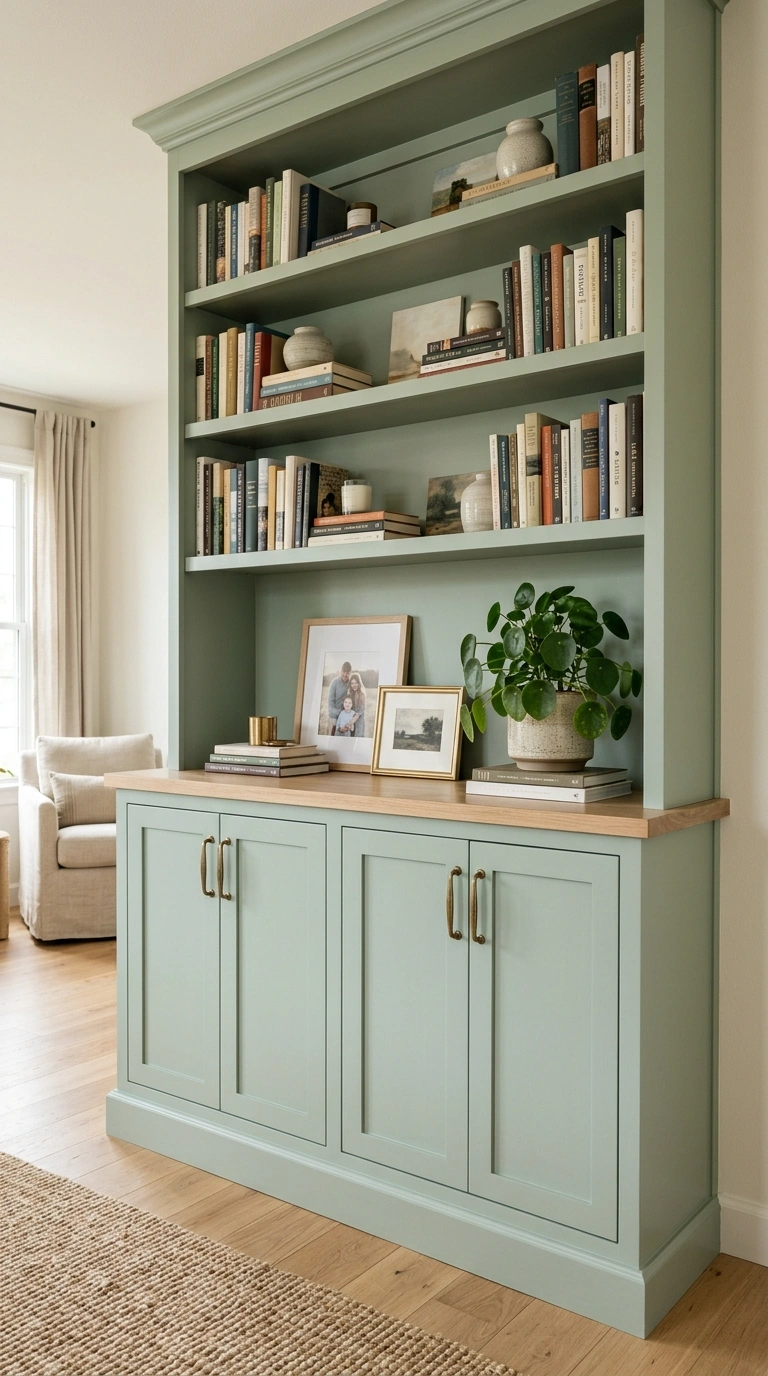
Bookshelves with closed cabinets at the bottom give you hidden storage and a neat look. The doors hide things like board games, blankets, or paperwork, while the upper shelves show off your books. This layout is common in built-in units, and you can also find ready-made versions.
Paint the cabinets and shelves in one color to keep the design simple. Add small brass or black handles for a finished look. Use the top of the cabinets as a display area for framed pictures or a plant, and keep the shelves above for books. Because the cabinets take the weight of heavy items, the shelves above stay light and neat. This idea is great for living rooms and family rooms, where clutter builds up easily and needs a hidden spot. Line the cabinet shelves with cork or felt to keep items quiet and scratch free. Add soft-close hinges if you can, since they make the doors last longer and stop loud slams.
20. Bookshelf Behind Sofa
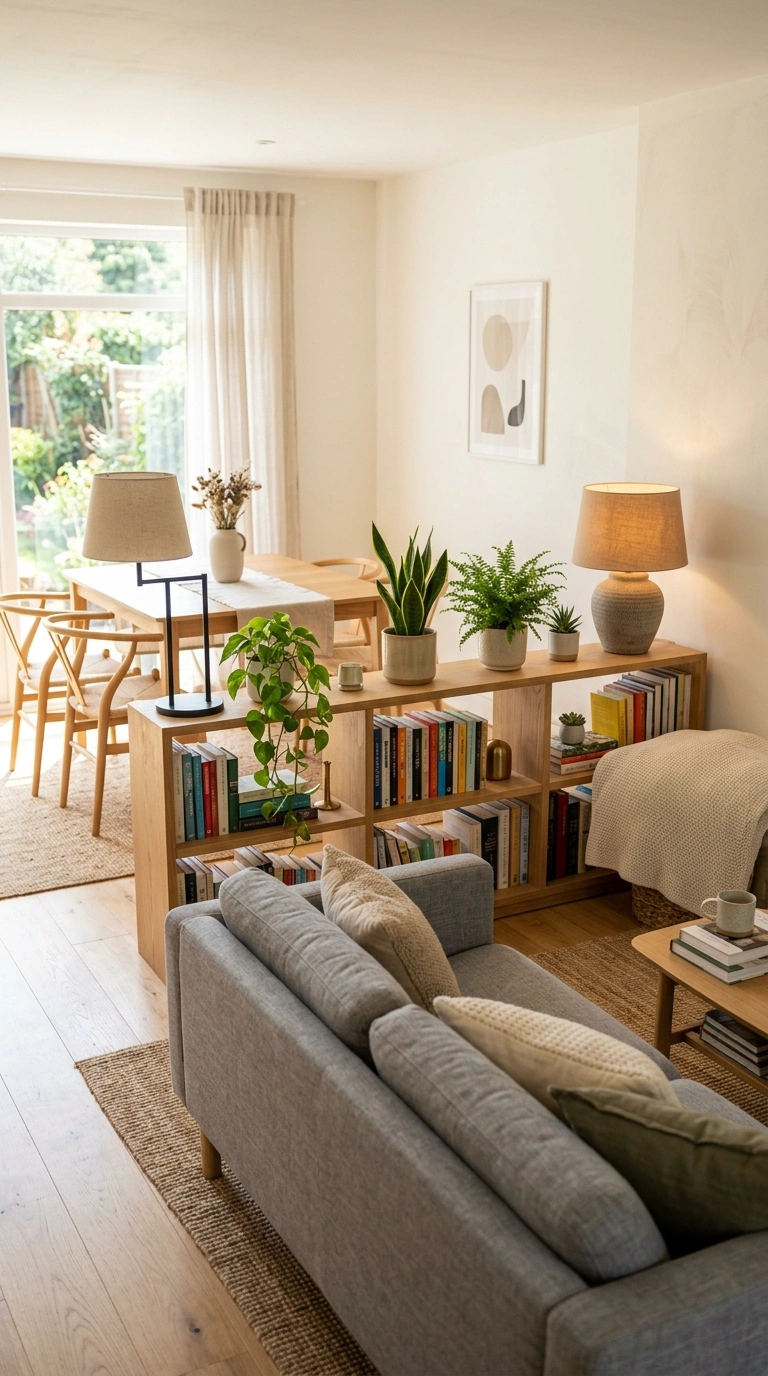
A low bookshelf behind a sofa is a smart way to add a library to a living room without using wall space. Choose a shelf about the same height as the sofa back, and place it right behind the seat so the two look like one piece.
Fill the shelf with books, a few plants, and a lamp or two. The sofa keeps the shelf out of the way, and the books are easy to reach when you turn around. This setup also divides an open room into separate areas, such as a living zone and a dining zone. Keep the top of the shelf neat, with a tray or two and a few decor items. This idea works best in large or open-plan rooms, and it makes the space feel more finished and cozy. Leave a gap of about three inches between the sofa back and the shelf so it does not scratch. Use a low shelf so people sitting on the sofa can still see across the room.
21. Sunroom Book Corner
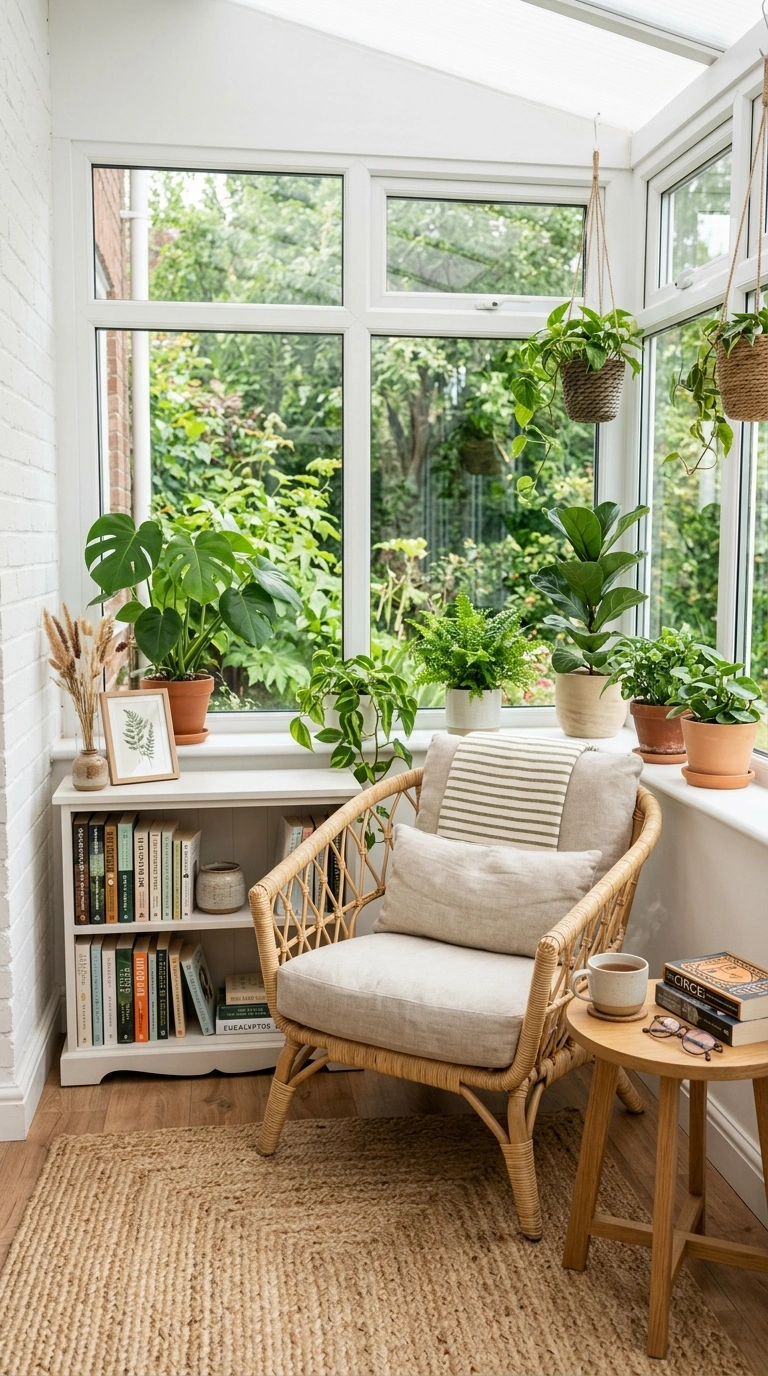
A sunroom filled with plants and daylight is a lovely spot for a small library. Place a low bookcase against a side wall, away from direct sun to protect the book covers. Add a comfortable cane chair or a small sofa, with a soft rug beneath.
Keep the shelves light in color, like white or natural wood, and add baskets for extra storage. Put pots of leafy plants at the window, and a small side table by the chair. Use light curtains or blinds to control the sun when the glare gets strong. This idea combines the calm feeling of a garden room with the coziness of a library. It works especially well in the mornings, when the light is soft and the house is still quiet. Use a thin sheer film on the glass if the sun is very strong. Keep the plants in pots with saucers so water does not reach your books or the wood shelf.
Frequently Asked Questions
How do I start a home library on a budget?
Start with used bookshelves or basic units from a big box store, and paint them if you like. Buy secondhand books from thrift stores and book sales. Add a lamp and a chair, and build slowly over time.
How many books do I need for a home library?
There is no set number. A single shelf of favorite books can be a library if it feels like a special spot. Add more shelves as your collection grows.
How do I protect books from sun and dust?
Keep books away from direct sunlight, which fades the covers. Dust the shelves every few weeks with a soft cloth. Glass-front cabinets help reduce dust, and a dehumidifier helps in damp rooms.
What is the best lighting for a home library?
Use warm lights at different heights, such as a floor lamp, a table lamp, and small picture lights. Avoid a single harsh overhead light. Place a reading lamp beside your favorite chair.
How should I arrange books on shelves?
Group them by subject, size, or color, whichever suits you. Leave some space for small decor items so the shelf does not look crowded. Keep the books you use most at eye level.
Final Thoughts
A home library can be as small as one shelf or as grand as a full room. What counts is that it feels comfortable and works for your books. Start with the space you have and add a good light and a chair. Over time your library will grow, and it will show off your own taste and the stories you love.