23 Simple Reading Nook Ideas You Can Set Up Today
I read my best books in the strangest places. One summer it was the edge of a bathtub, and another time it was a stair step with a pillow behind my back. None of those spots were comfortable for long. A real reading nook fixes that. It does not need a big room or a big budget. All it takes is one seat, one soft light, and a place to rest your book and your tea. Below are 23 nooks that work in real homes, from bay windows to closets to the odd corner nobody knows what to do with. Some need a drill, but many just need a cushion and a lamp. Look through them, and see which one fits the empty spot in your home.
1. Window Seat Cushion
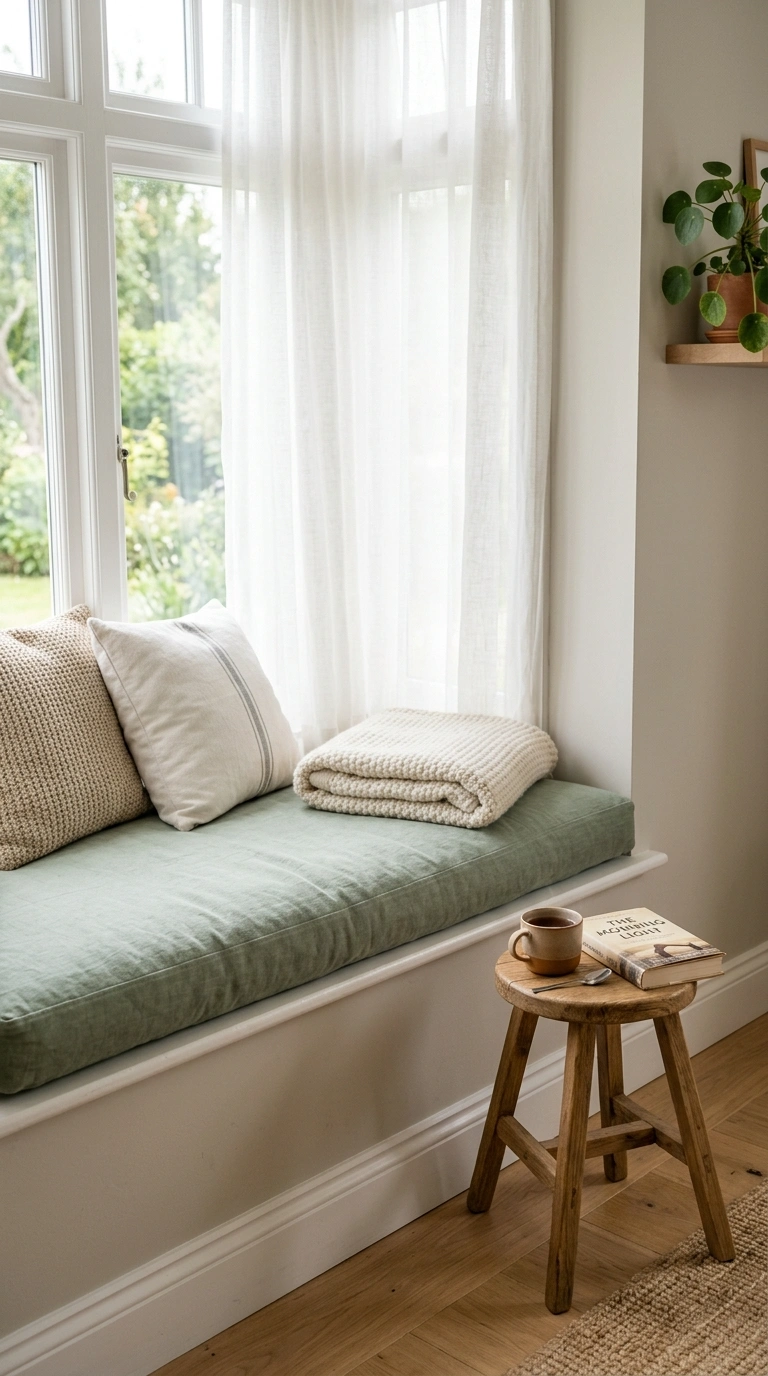
A window seat is the classic reading spot because it gives you daylight and a view. If you have a deep sill, add a custom foam cushion about three inches thick, covered in a washable fabric such as linen or cotton canvas. Choose a solid color like oatmeal, sage, or soft blue so the cushion blends with the room.
Add two or three pillows in different sizes for back support, and a throw blanket folded at one end. Keep a small stool or narrow side table nearby for your cup and book. If the sill is shallow, build a simple wooden box under it to make the seat deeper. Hang sheer curtains on each side so you can filter the light on bright afternoons. Even a plain, narrow window can become a favorite reading spot with one good cushion and a few soft pillows. Measure the sill twice before you order the foam, and ask for a zipped cover so you can wash it. A small tray on the cushion also holds your glasses and phone.
2. Bay Window Bench
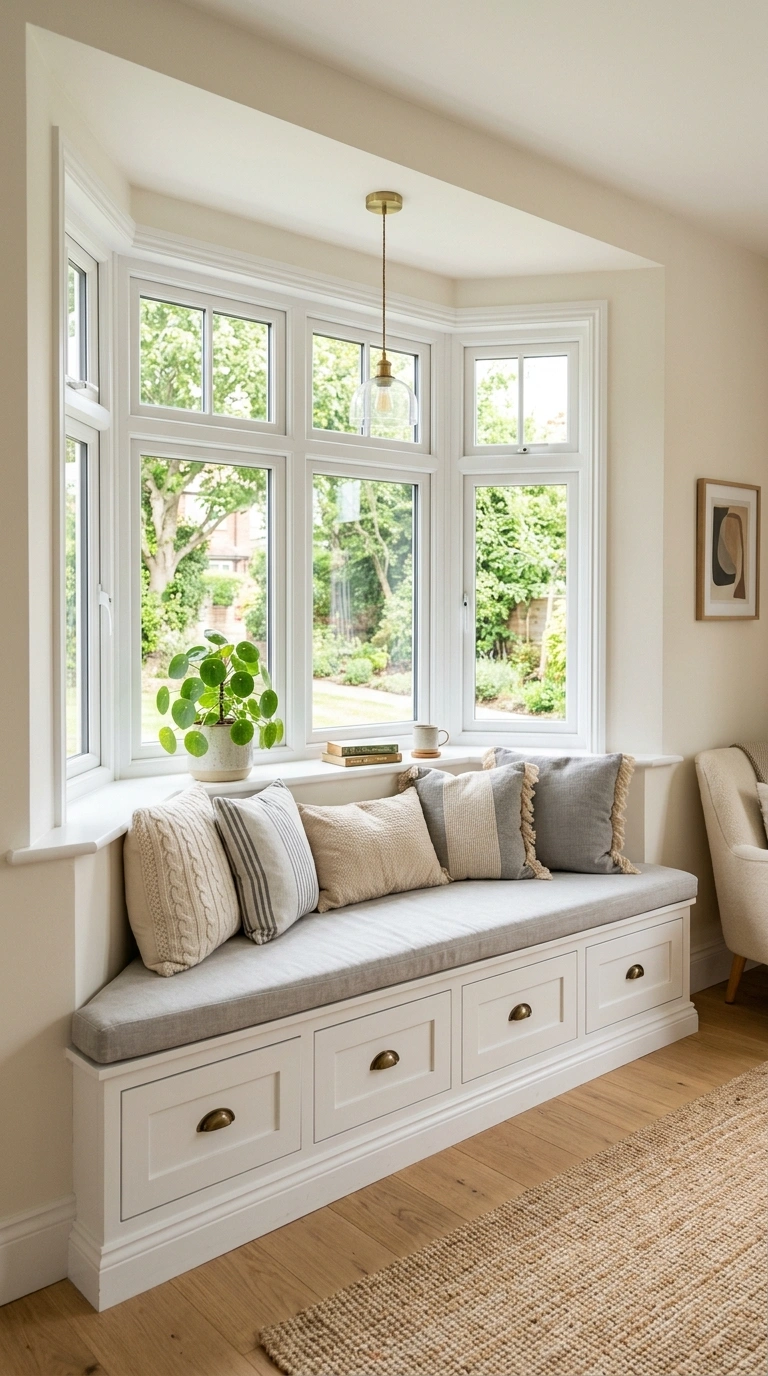
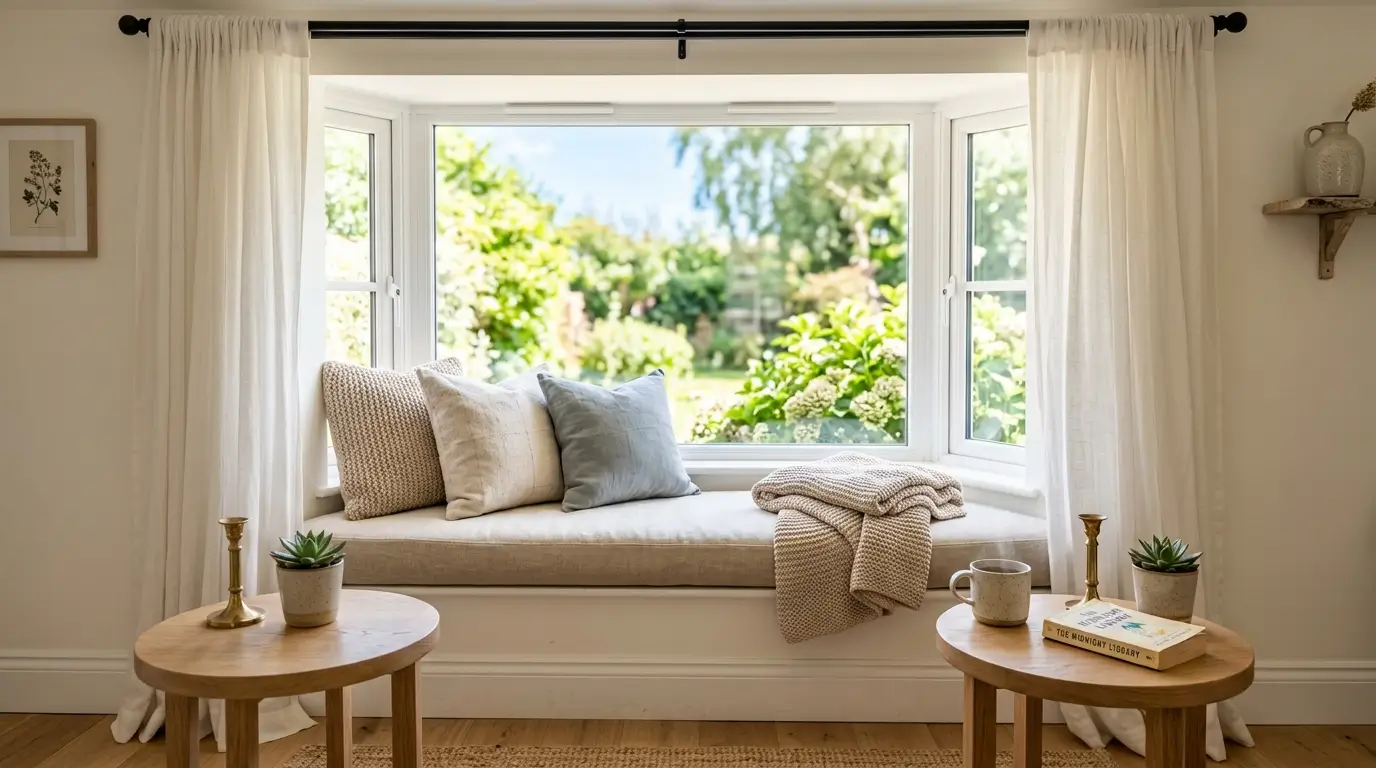
A bay window is already shaped like a little room, so a built-in bench makes it feel finished. Measure each angled wall and build a simple wooden bench with storage drawers underneath. Paint it the same color as your window trim so it looks like part of the house. Top it with a long, tailored cushion and a row of pillows.
The drawers can hold extra blankets, magazines, or kids toys. Add a small pendant light above the middle of the bench for evening reading. If you do not want to build, freestanding benches from a furniture shop can be pushed into the bay for a similar effect. Stack two or three books on a small tray, and keep a plant on the ledge. A bay window nook makes a large living room feel warmer because it creates a separate spot within the space. Measure each angled wall separately, since bay windows are rarely perfect. Cut cardboard templates first so the cushion pieces fit tightly, and sand every edge of the wood before you paint.
3. Under-Stairs Nook
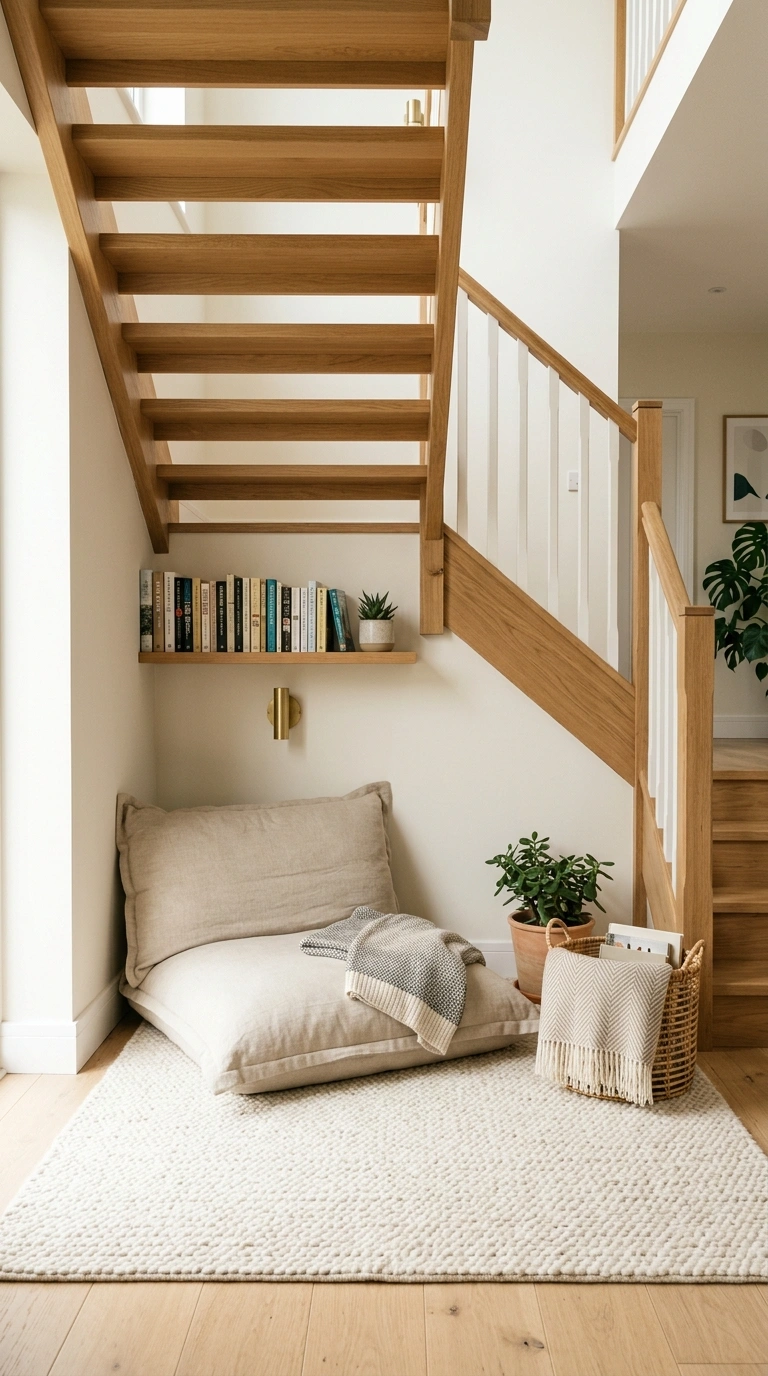
The empty space under the stairs is often wasted, but it makes a lovely reading hideaway. Clear out the area and lay a thick rug on the floor. Add a large floor cushion, a bean bag, or a low daybed mattress with a few pillows. Paint the walls a soft color, or leave them white for a bright feeling.
Install a small wall sconce or a string of warm lights along the underside of the stairs. Add a narrow shelf on the wall for your current reads and a basket for blankets. If the ceiling is very low at one end, place the pillows there and keep the taller side for a small side table. Keep the styling simple so the space does not feel crowded. This kind of nook feels like a secret cave, and kids and adults both love it. Check the ceiling height before you buy furniture, and mark the lowest point with tape on the floor. That way nobody bumps their head while reaching for a book.
4. Bedroom Corner Chair
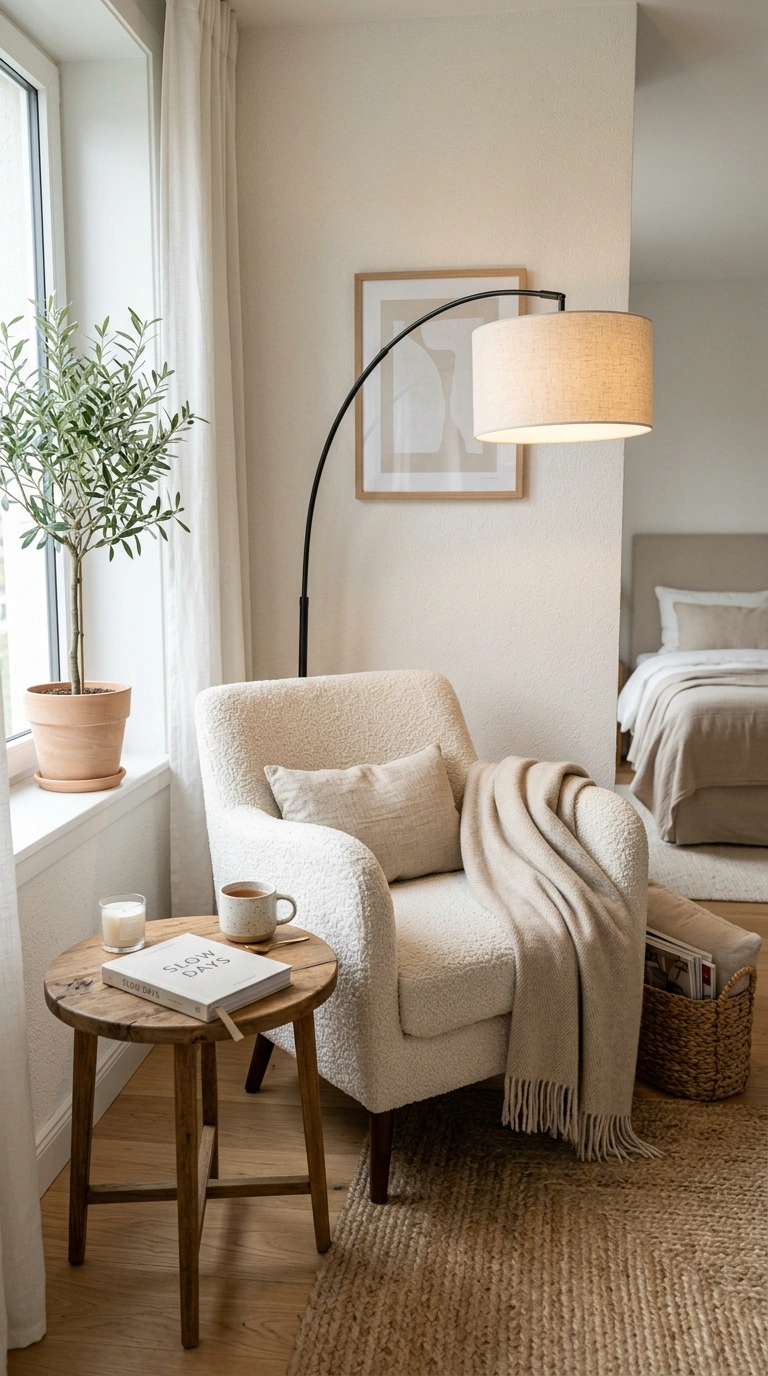
A single comfy chair in a bedroom corner can be a full reading nook. Choose an armchair with a rounded back and deep seat, in fabric like boucle or soft velvet. Set it at a slight angle to the corner so it feels welcoming and not pushed away. Place a small round side table next to it for your book and a warm cup of tea.
Add a floor lamp with a warm bulb behind the chair, arching over your shoulder. A soft throw blanket on the arm and a small pillow make it more inviting. Put a rug under the front legs of the chair to define the spot. If space is tight, choose a chair with slim legs so it does not look heavy. Keep a small stack of books on a ledge nearby. This nook gives you a quiet place away from the bed. Pick a chair you can sit in for an hour without shifting around. If possible, test it in the store with a book in your hands before you buy it.
5. Closet Reading Nook
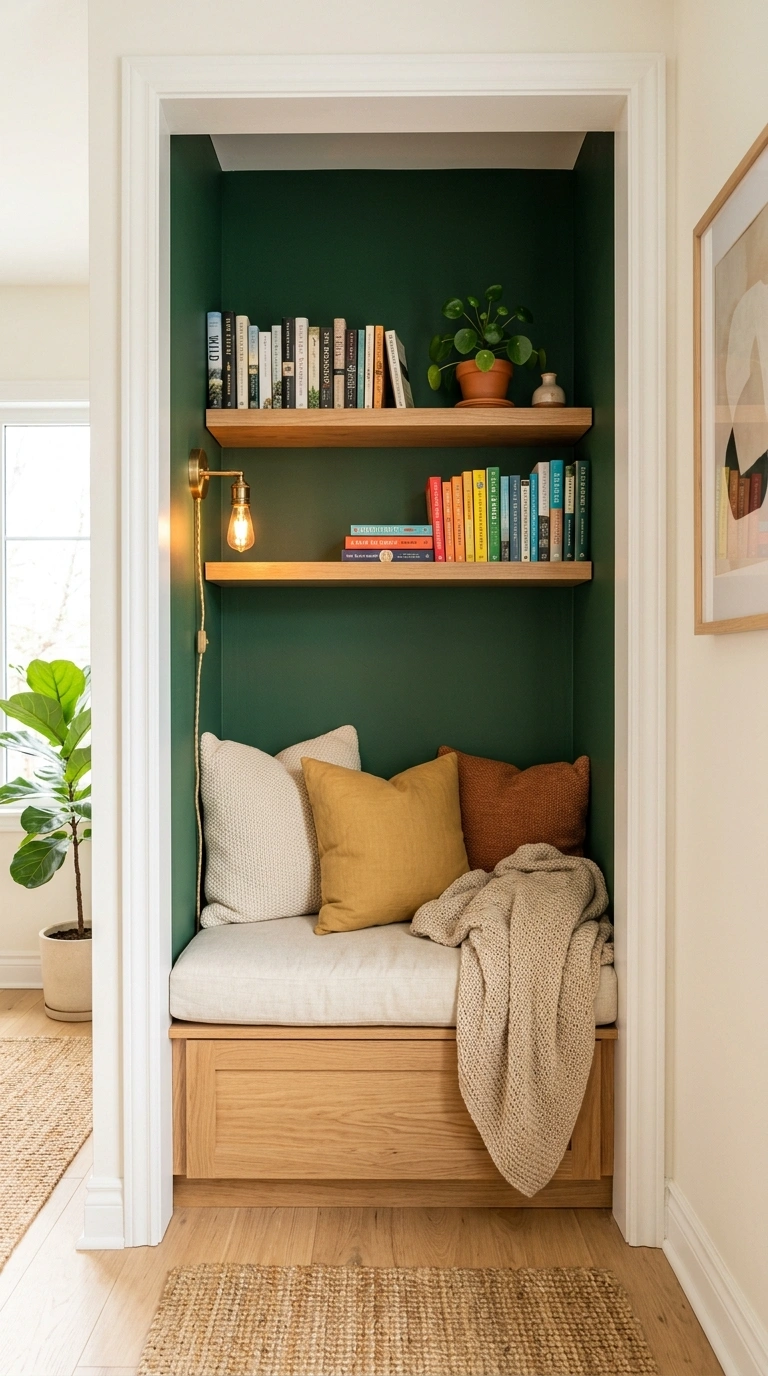
An unused closet can become a private reading room. Take out the doors and the hanging rod, then paint the inside a deep color like forest green or navy for a cozy feel. Fit a small padded bench or a thick floor cushion at the bottom, plus pillows against the back wall.
Add one or two floating shelves on each side for books and a small plant. A battery-powered wall light or a plug-in sconce provides warm light. Hang a curtain across the opening to close it off when you want more privacy. Keep the floor layered with a small rug for warmth. Check the depth of your closet first, because a seat needs at least 24 inches to be comfortable. This is a great way to use a tiny space that would otherwise only hold coats and boxes. Pull the old shelf brackets off carefully and fill the holes with spackle before painting. Let the paint dry fully for a day so the closet does not smell when you sit inside.
6. Alcove Bookshelf Bench
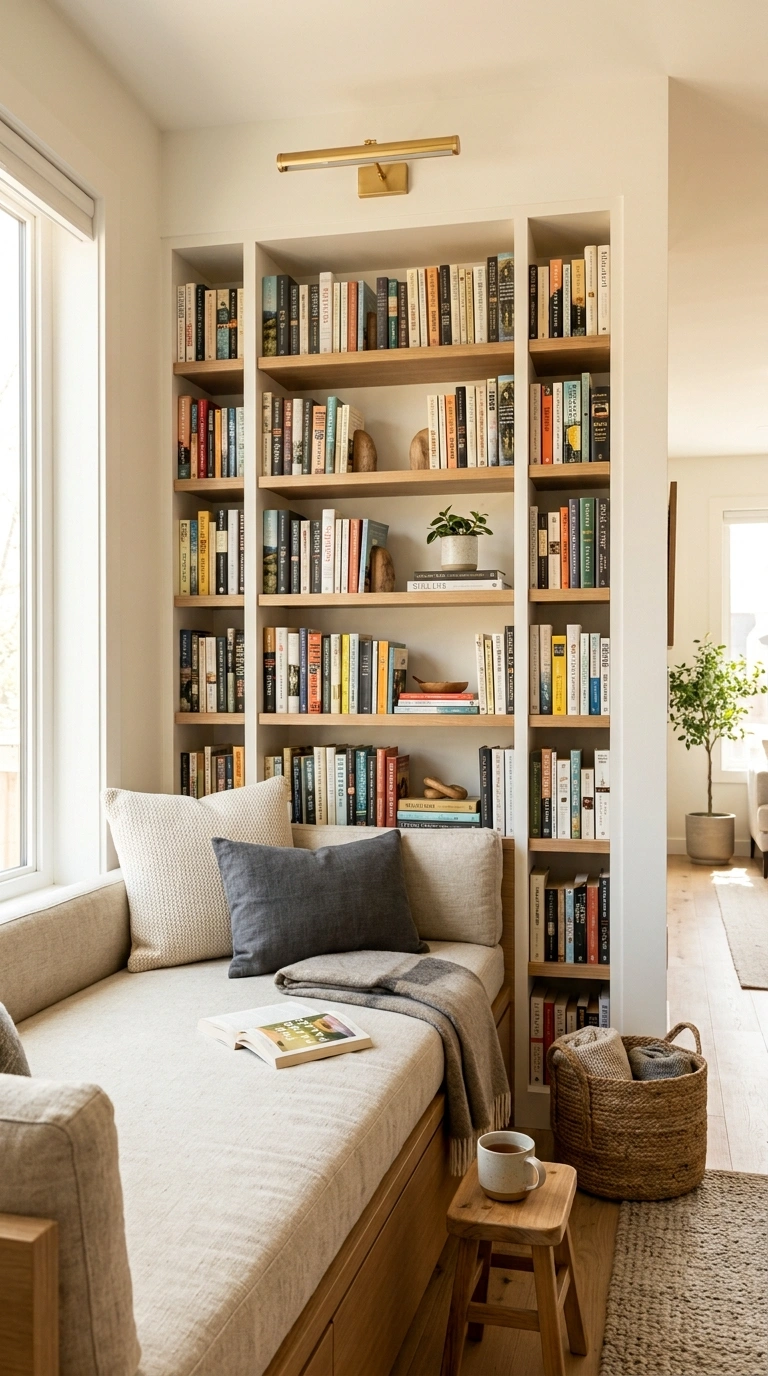
If your home has an alcove beside a fireplace or chimney, fill it with a built-in bench and shelves. Build a simple wood seat at knee height, with open shelves going up the walls on both sides. Paint the whole unit in one color, such as warm white or light gray, so it blends with the wall.
Top the bench with a thick cushion and arrange the books by size or color. Leave a few shelves partly empty and add a vase, small frame, or candle for a lived-in look. Install a small picture light or clip-on lamp on the top shelf so you can read after dark. If you rent, a freestanding bench and stackable shelves can imitate the built-in style. The alcove keeps the seat tucked away, and the shelves make your books part of the decor. Measure the alcove width at the top and bottom, since old walls are often uneven. A thin strip of trim can hide any gaps between the shelf and the wall.
7. Attic Slope Nook
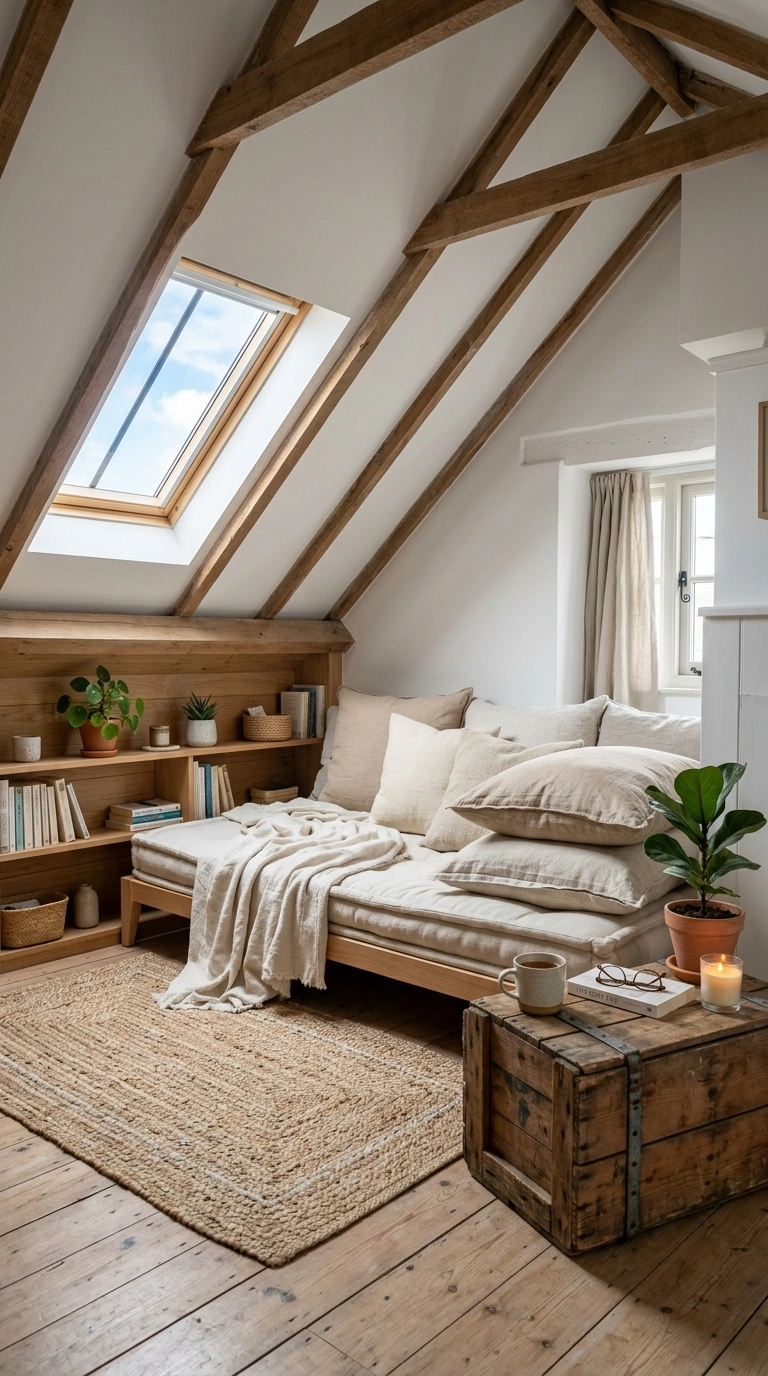
Sloped attic ceilings often leave awkward corners, and a reading nook makes use of them. Push a low daybed or a thick mattress under the slope, and stack cushions along the wall. Add a small skylight or window if you can, since natural light makes the space feel open.
Install a pair of low shelves along the knee wall for books, and hang a fabric canopy or a string of fairy lights for a soft look. Use a woven rug on the floor and a wooden crate as a table. White walls and a light wood floor keep the space bright. Since heat gathers upstairs, add a small fan or open the window in summer. This nook is perfect for a spare room, a kid space, or a quiet corner for adults who want to read in peace. Use low furniture that fits under the slope so you do not waste any of the space. Add a small rug near the edge to protect the floor and keep your feet warm.
8. Hanging Egg Chair
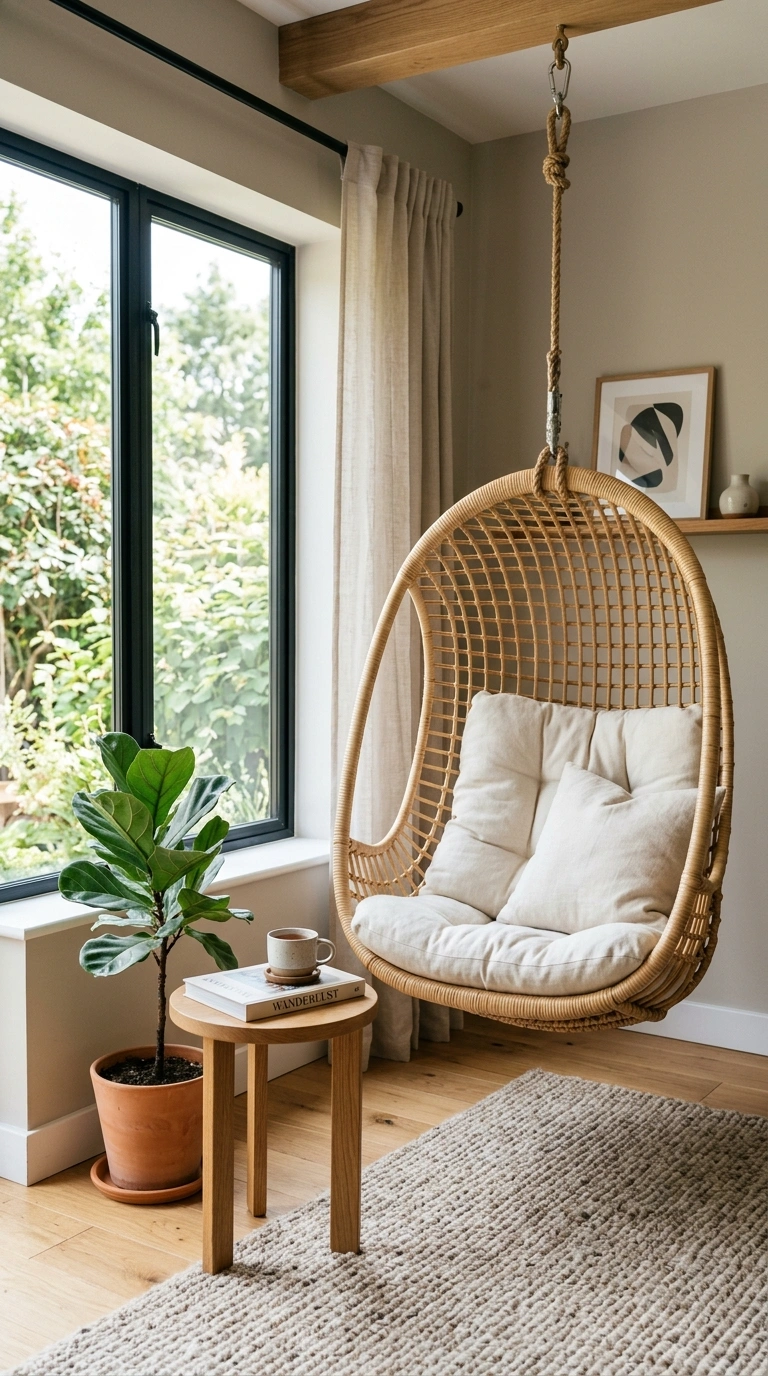
A hanging egg chair gives a playful, floating feeling. Choose a rattan or wicker chair with a thick seat cushion, and hang it from a strong ceiling beam using a heavy-duty hook. If you cannot drill into the ceiling, choose a freestanding stand made for the chair.
Place it by a window or in a bright corner, with a soft rug underneath. Add a small side table within arm’s reach for your book and drink. A pillow in a muted color and a light throw blanket make it comfortable for long sessions. Keep about three feet of clear space on each side so the chair can swing gently. A small plant next to the chair softens the look. This idea suits sunrooms, living rooms, and even balconies, and it makes an ordinary corner feel relaxed and fun. Read the weight limit on the chair and the hook before you hang it. Hang it a few inches above the floor, and test it with a friend sitting in it first.
9. Hallway Dead-End Nook
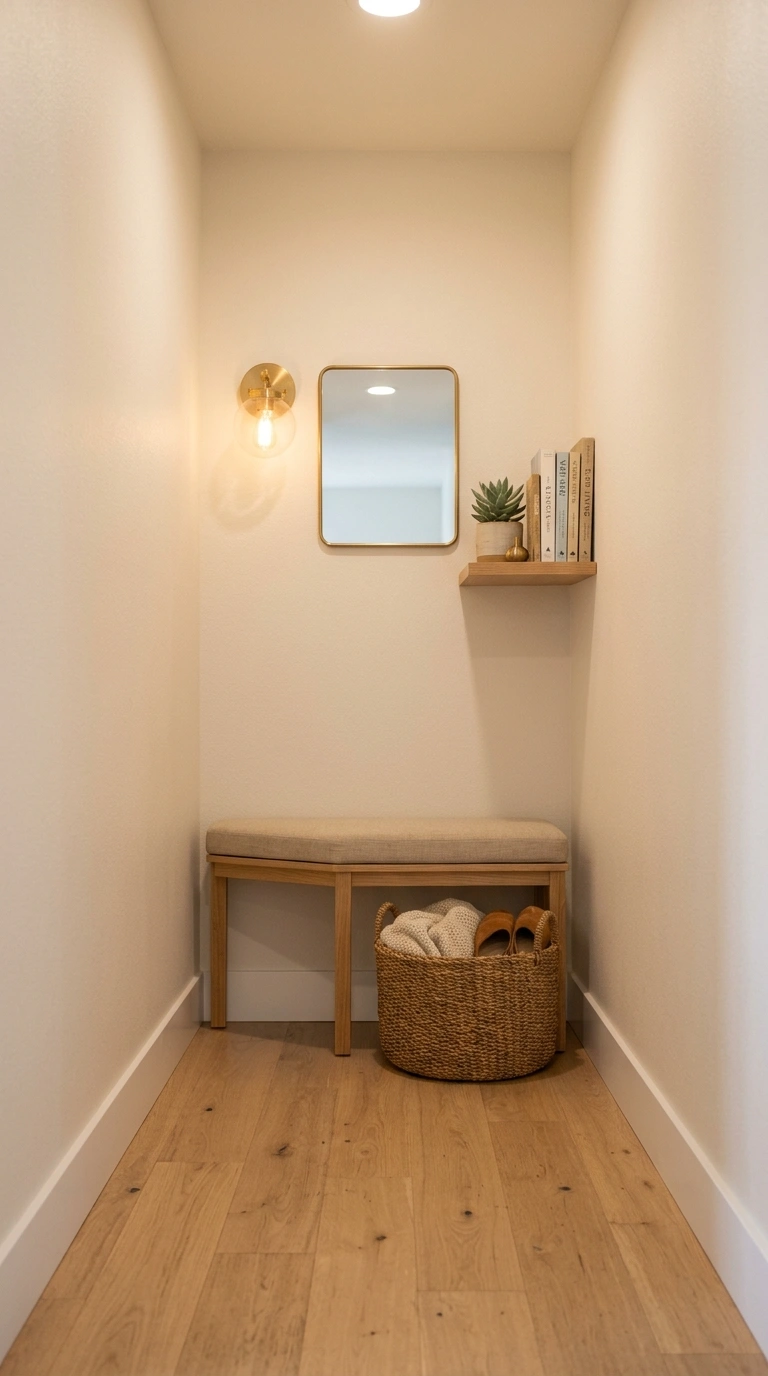
Many hallways end at a blank wall. That plain end can hold a slim bench, a small shelf, and a wall lamp to become a peaceful reading spot. Choose a bench about 16 inches deep so it does not block the walkway, and top it with a long cushion.
Hang a framed picture or a small mirror above it, and add a slim shelf on the side for a few books. A wall sconce with a warm bulb provides gentle light. Keep the rug narrow and low so nobody trips. If the hallway is dark, paint the wall a light warm color to brighten it. A basket for blankets under the bench keeps things tidy. This nook turns a forgotten space into something useful and also makes the hallway feel more welcoming for guests. Measure the hallway width at the narrowest point before you buy anything. If a bench feels too deep, a slim wall shelf with a cushion on the floor is a good backup plan.
10. Curtained Bed Alcove
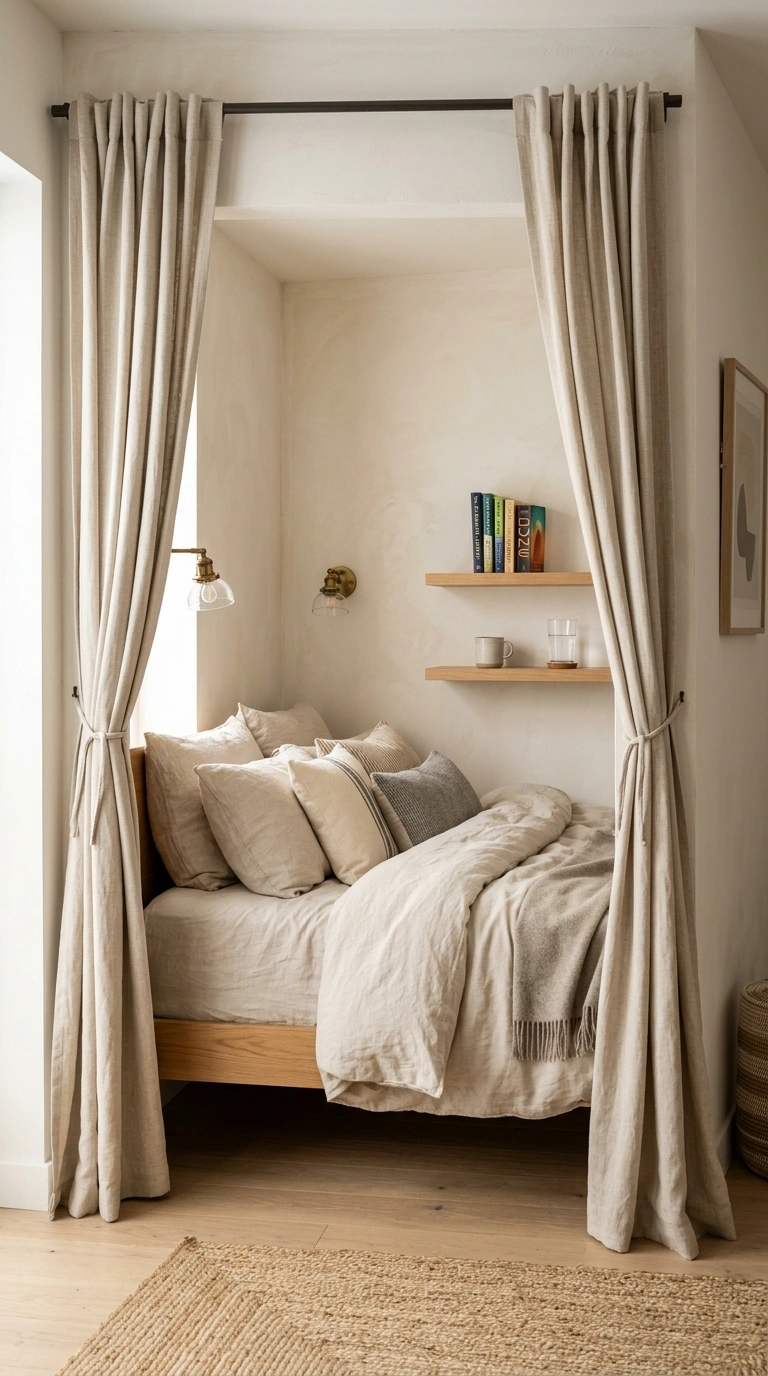
If your bed sits in an alcove, add curtains around it to turn it into a reading cabin. Hang a curtain rod across the front of the alcove and use thick fabric like linen or velvet in a calm color. When the curtains are drawn, the bed becomes a private, quiet nook.
Fill the bed with pillows and a soft throw. Add a small wall-mounted reading light on each side, and a narrow shelf at the head for books and a glass of water. Keep the mattress firm enough to sit on with a back support pillow. Choose a lightweight curtain in summer and a heavier one in winter. This idea works in small studio apartments where the bed already sits in a corner, and it gives you a peaceful hideaway without needing extra floor space. Buy curtain rings with clips so the fabric slides easily along the rod. Wash the curtains twice a year, since they collect dust more than other window coverings do.
11. Floor Cushion Corner
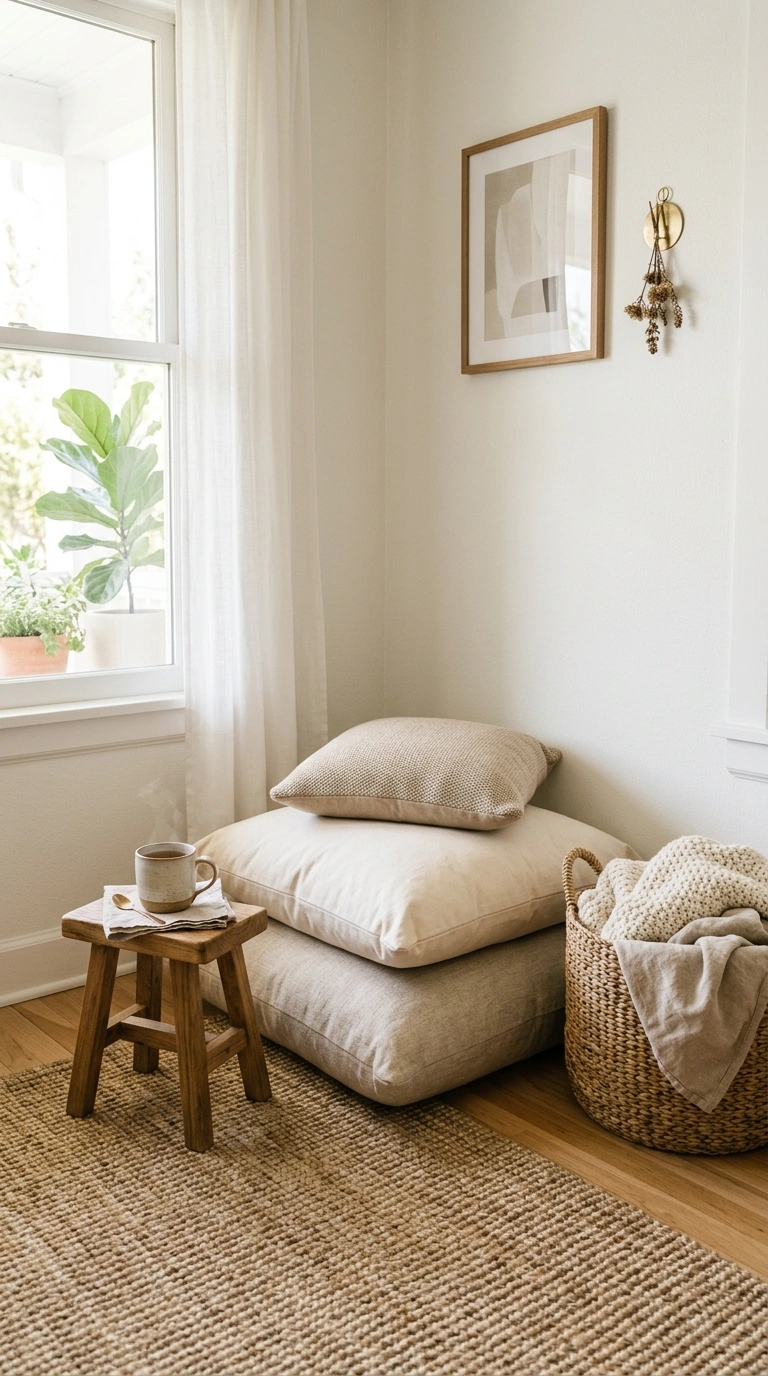
You do not need a chair to have a good reading spot. A pile of large floor cushions in a bright corner is all you need. Choose two or three big square cushions in neutral fabrics such as cream, gray, or tan, and stack them against the wall for back support. Add a smaller pillow or two for extra comfort.
Lay a soft rug or a folded blanket beneath them for warmth. Place a low wooden stool or a stack of books beside the cushions to hold your tea. Lean a large woven basket against the wall for blankets. Choose cushions filled with firm foam so they do not flatten quickly. This nook is easy to move, easy to store, and very affordable. It works great in small living rooms, kids rooms, or any place where a chair would take too much space. Choose covers with zippers so you can wash them when they get dirty. Rotate the cushions each week so they wear evenly and stay comfortable for a longer time.
12. Beanbag and Basket Corner
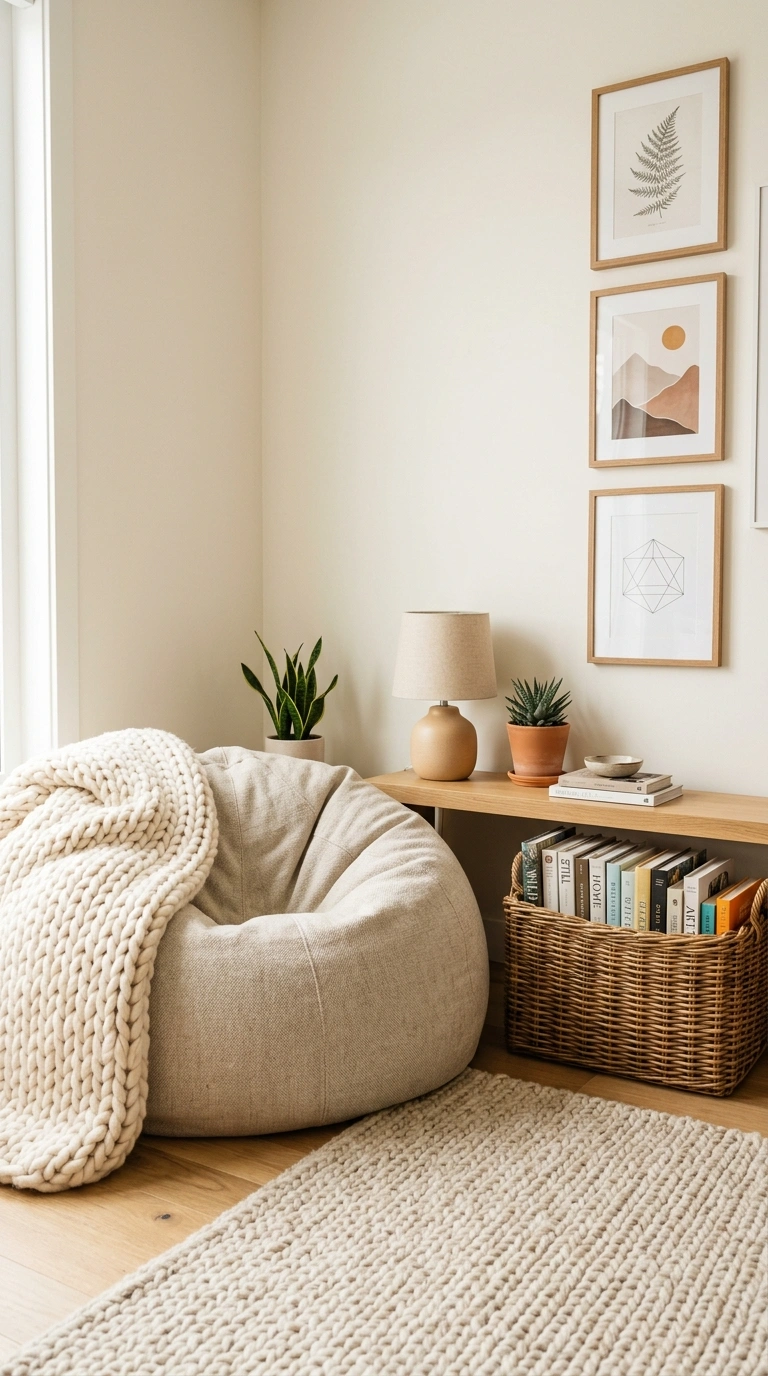
A beanbag is perfect for a fast, low-cost reading corner. Pick a large beanbag with a washable cover, in a soft color like oatmeal or warm gray. Set it in a corner beside a low shelf or a wicker basket filled with books.
Put a small lamp on the shelf and a thick rug under the beanbag. Add a blanket in a chunky knit, draped over the side. A few framed prints on the wall above make the corner look planned instead of random. Keep the basket at arm’s reach so you can swap books without standing up. Since beanbags can flatten, fluff it before each session. This nook is great for teens, kids, and adults who like a relaxed reading position, and it takes almost no time to set up. Pick a bag with a strong zipper and double stitching so it lasts. Keep a small basket beside it for chargers, glasses, and bookmarks so they never get lost in the beans.
13. Sunroom Chaise Lounge
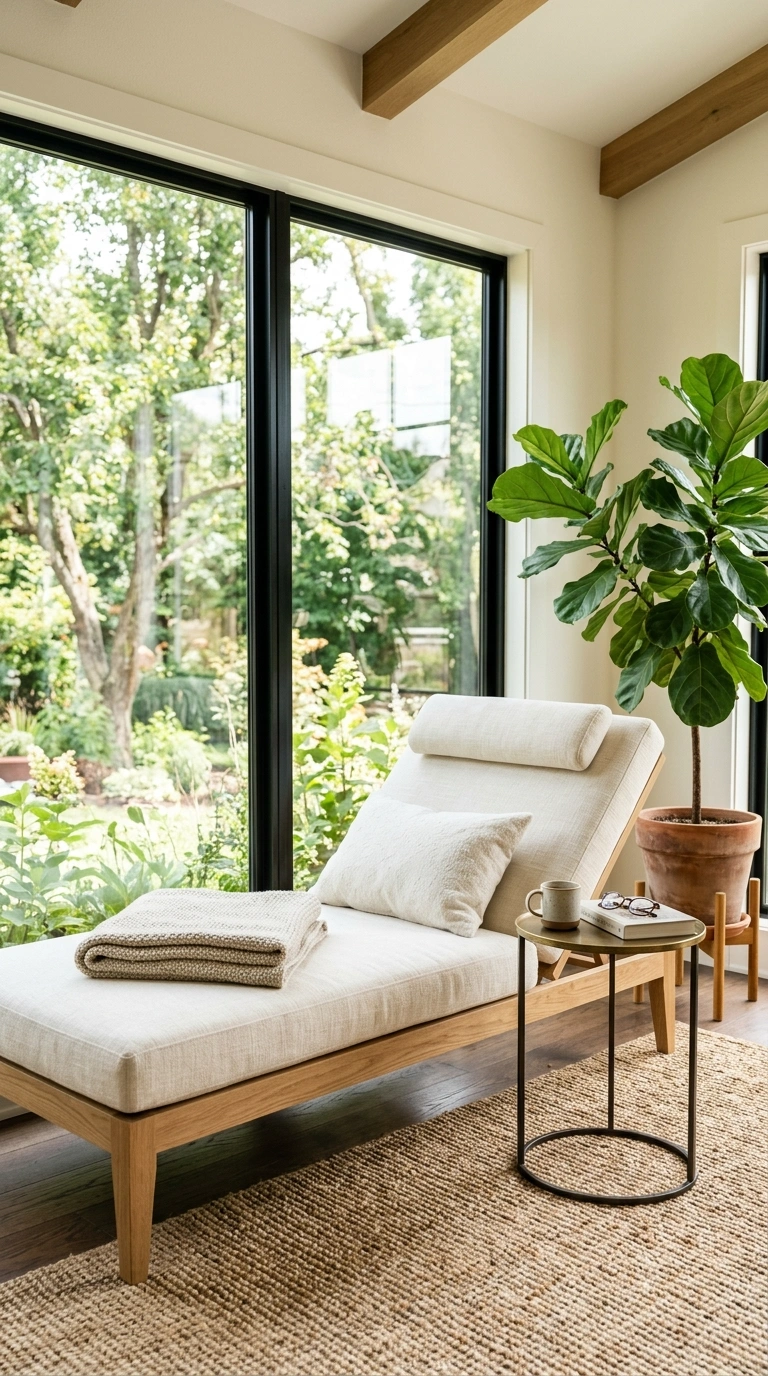
A sunroom filled with natural light is one of the best places to read. Bring in a chaise lounge with a sturdy frame and a thick cushion in a fabric that resists fading, such as outdoor cotton. Place it along the longest window so you can see outside while you read.
Add a small side table in wood or metal, and a pot of leafy greenery beside it. A woven rug in natural jute keeps the floor cozy and protects it from sun and shoes. If the glass gets too warm, hang a light shade or thin curtain. Keep a folded blanket on the end of the chaise for cool evenings. A sunroom nook feels like a mini vacation, and the light is perfect for reading in the morning or afternoon without needing lamps. Choose a cushion cover that is easy to spot clean, since sunrooms get a lot of dust and pollen. Wipe the window sills each week so the light stays bright.
14. Fireplace Side Nook
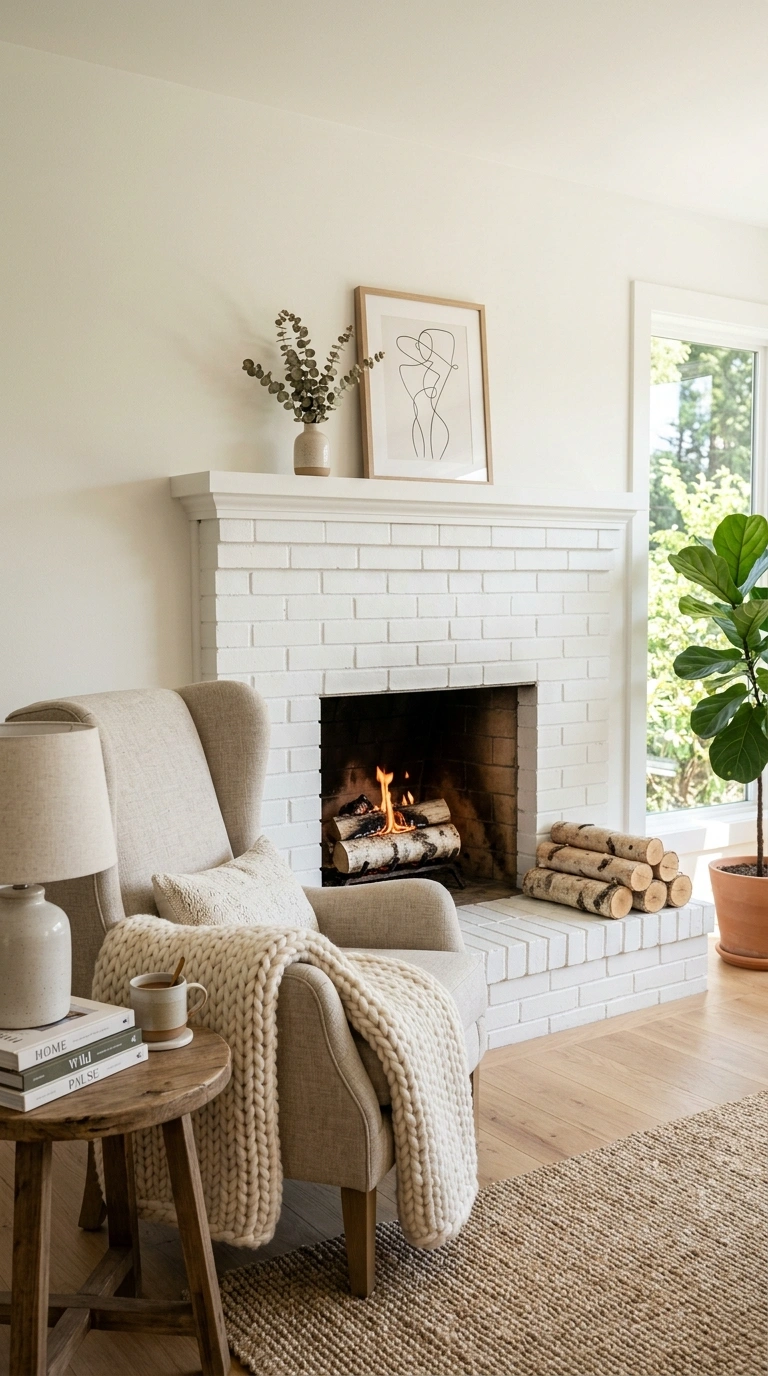
Beside a fireplace is a natural place to read, since the fire gives light and warmth. Place a wingback chair or a soft armchair to one side, angled toward the hearth. Add a small table with a lamp or a candle and a stack of books.
Layer a rug under the chair, and toss a wool blanket over the arm. If your fireplace is not in use, fill it with a stack of birch logs or a group of candles in glass holders to keep the focus warm and inviting. Keep the mantel simple, with a small mirror and a plant. Choose upholstery in tones that match the room, like tan, olive, or charcoal. This spot is especially nice in winter, and it adds a calm, old-fashioned charm to a living room. Never put anything flammable too close to a working fireplace, and keep the chair at least three feet from the hearth. Use a metal screen if you burn real wood.
15. Loft Landing Nook
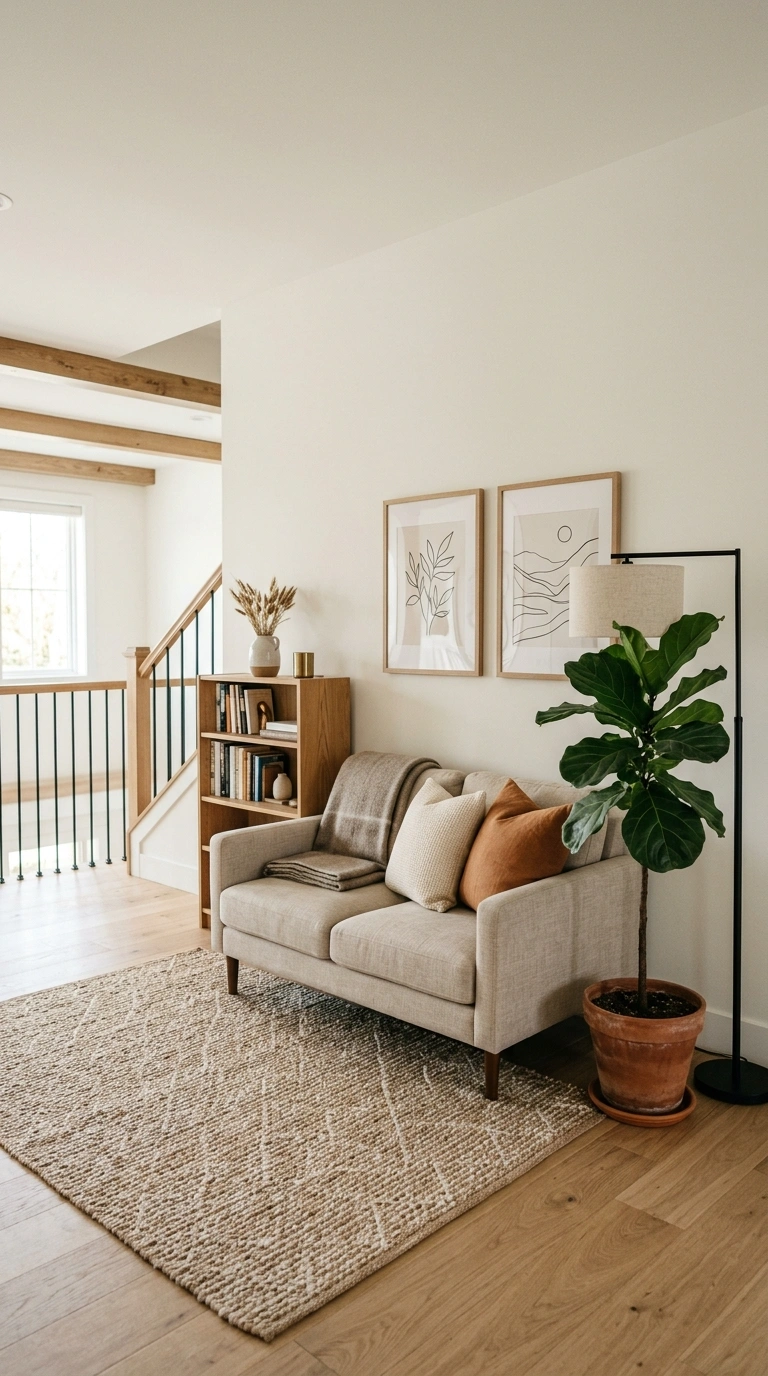
If you have a loft or an open landing at the top of your stairs, turn it into a reading area. Place a small loveseat or an armchair against the wall, with a slim floor lamp beside it. Add a rug to define the space, and a tall plant in the corner.
Hang a couple of framed prints above the seat, and add a small bookshelf on the side. Because this space is open to the rest of the house, keep the colors light and neutral so it feels airy. A woven basket by the seat can hold blankets and magazines. If the landing gets light from a window or skylight, angle the chair toward it. This nook gives you a quiet place away from the noise downstairs and makes an empty landing feel warm and useful. Use a rug pad so the rug does not slide near the stairs. Keep the lamp cord tucked along the baseboard so nobody trips while walking up to the landing.
16. Canopy Reading Tent
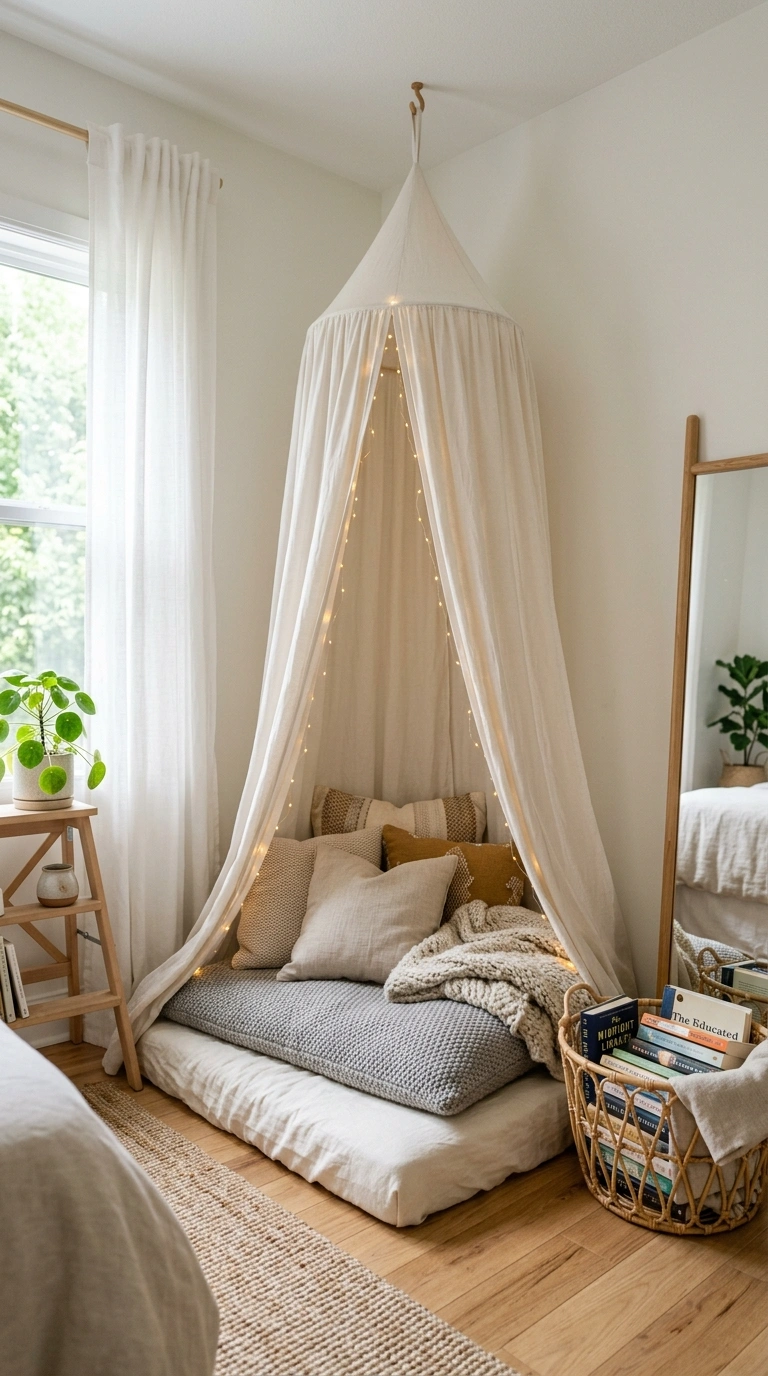
A canopy tent is a fun idea for kids and even adults who love a hideaway. Hang a light cotton or linen fabric from a ceiling hook, and let it fall around a thick floor cushion or a small mattress. Choose white or cream fabric so it stays bright and airy.
Place pillows and a soft blanket inside, plus a small basket of books. String warm fairy lights along the top edge for a glow that works as a night light. Add a small rug under it to define the space. Make sure the fabric is not too close to the lights so it does not heat up. This nook fits perfectly in a corner of a bedroom or playroom. It feels special and private, and it encourages kids to read on their own. Use a strong ceiling hook rated for the weight of the fabric. Wash the fabric once in a while, and take it down if you live in a very humid area.
17. Balcony Reading Corner
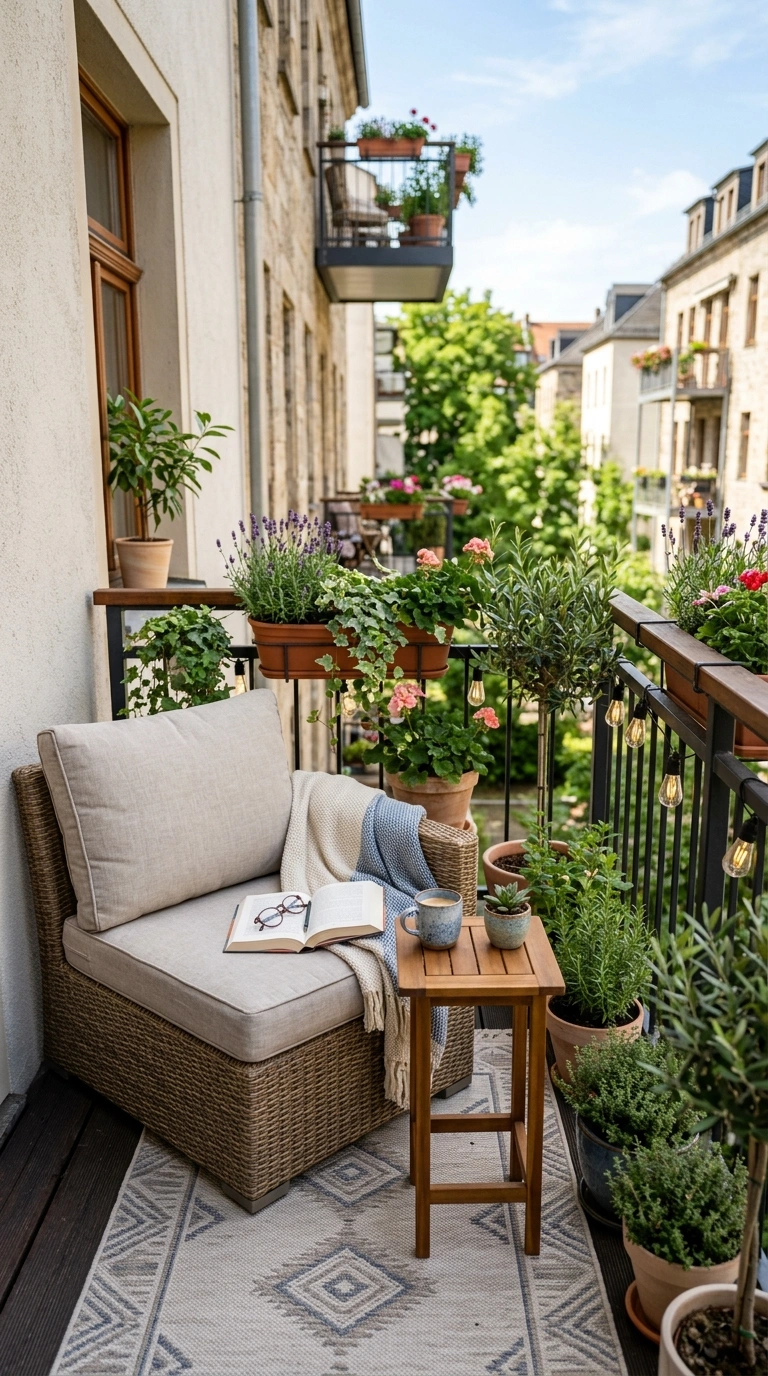
A small balcony can become a lovely outdoor nook. Choose a compact chair or a two-seat bench with weatherproof cushions in a light color. Add a narrow side table, and place a few potted plants along the railing for privacy and color.
Lay an outdoor rug on the floor, and hang a string of lights along the rail. Keep a small storage bin nearby to hold cushions and a blanket when it rains. Pick a spot that gets morning light or shade, depending on your climate. If the balcony is very narrow, use a folding chair and a wall-mounted table. Reading outside in fresh air feels calm and different from reading indoors. It is a perfect way to use a small outdoor space that would otherwise only hold a pile of boxes. Choose furniture with rust-proof legs and quick-dry cushions, since weather is hard on outdoor items. Check the balcony rules in your building before you hang anything over the railing.
18. Built-In Bookcase Seat
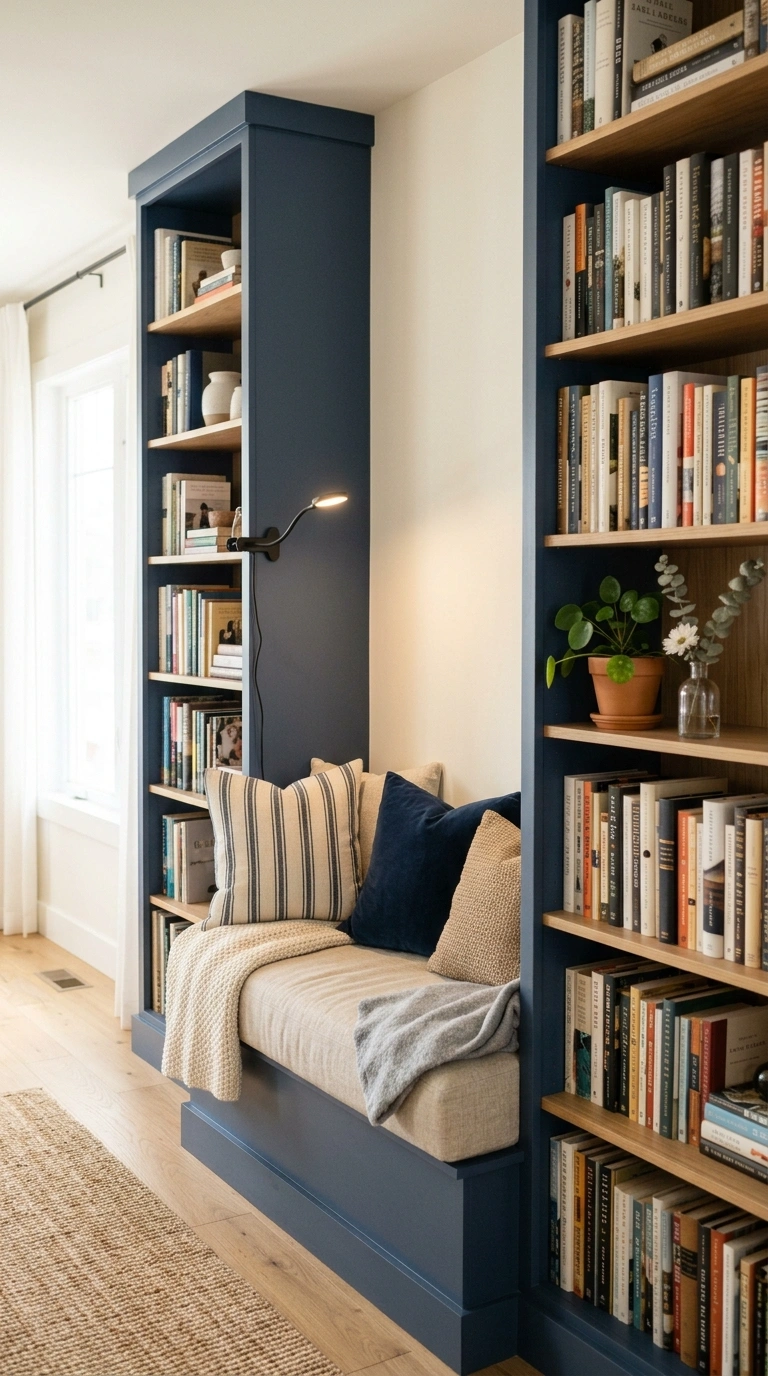
A reading seat built into a bookcase combines storage and comfort in one spot. Set a wide, low seat between two tall bookshelves, or add a bench in the middle of a long wall of shelves. The seat should be about 18 inches high and 20 inches deep.
Add a cushion cut to fit, plus pillows in the corners. A small reading light clipped to a shelf makes it ready for evening use. Paint the whole unit in a matching color, like deep navy, warm white, or soft green. Keep some shelves empty to display a plant, vase, or framed photo. This idea works in living rooms, bedrooms, or home offices. It uses the wall efficiently and feels like a library in a very small space. Measure the seat height against a chair you already like, then copy it. Use a strong plywood base and sand the front edge round so it is kind to your knees.
19. Rocking Chair by Window
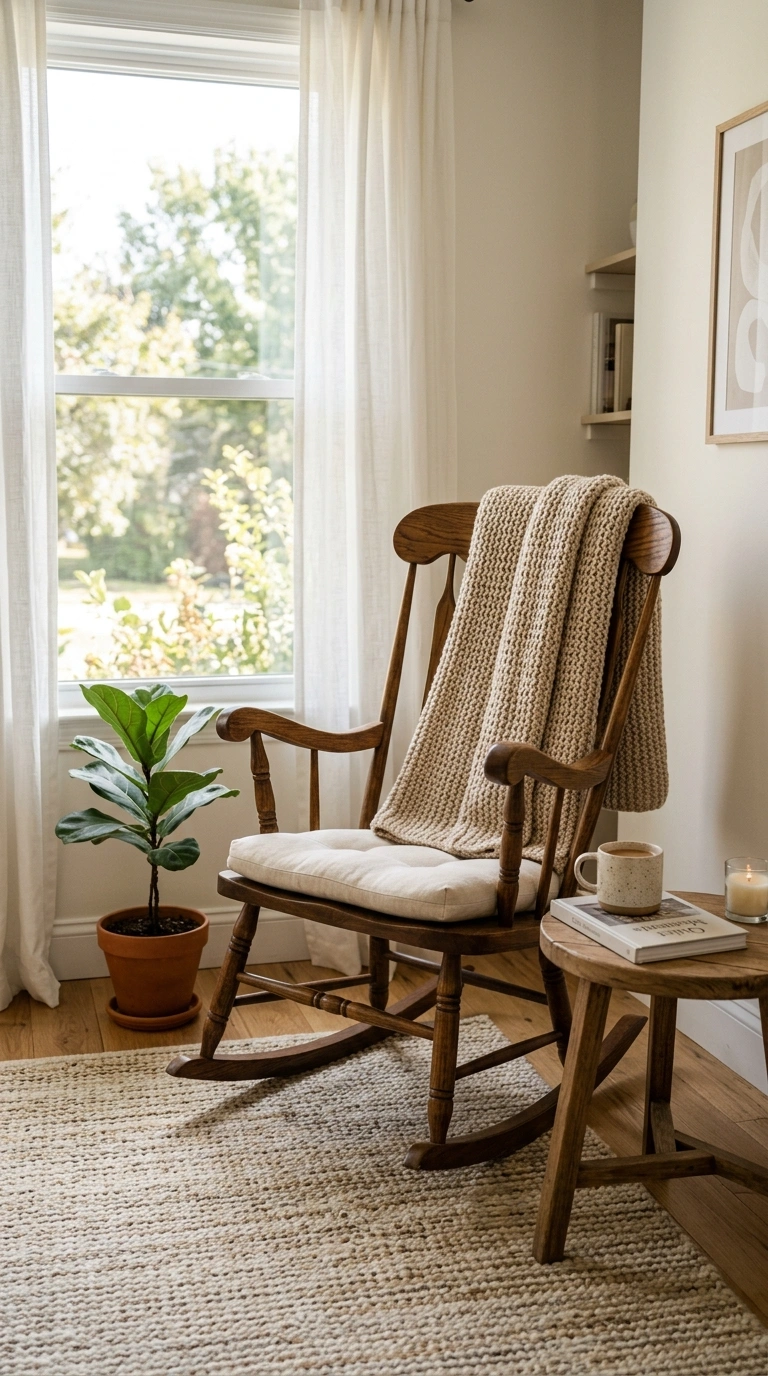
A rocking chair placed beside a window is a gentle, old-fashioned reading spot. Choose a wood rocker with a padded seat, or a modern glider with soft upholstery. Set it near natural light, with a small side table for your book and a warm drink.
Add a knitted blanket on the back and a small pillow for your lower back. A woven rug underneath keeps the chair from scratching the floor. Hang light curtains on the window to soften the sun. Keep a small basket next to the chair for magazines or knitting. This nook suits bedrooms, nurseries, and living rooms. The slow rocking motion helps you relax, and it feels wonderful after a long day. It is also a nice place to sit with a child on your lap. Add small felt or rubber pads under each rocker so the chair does not slide or scratch the floor. Keep the space behind it clear, so it can swing freely.
20. Garden Room Daybed
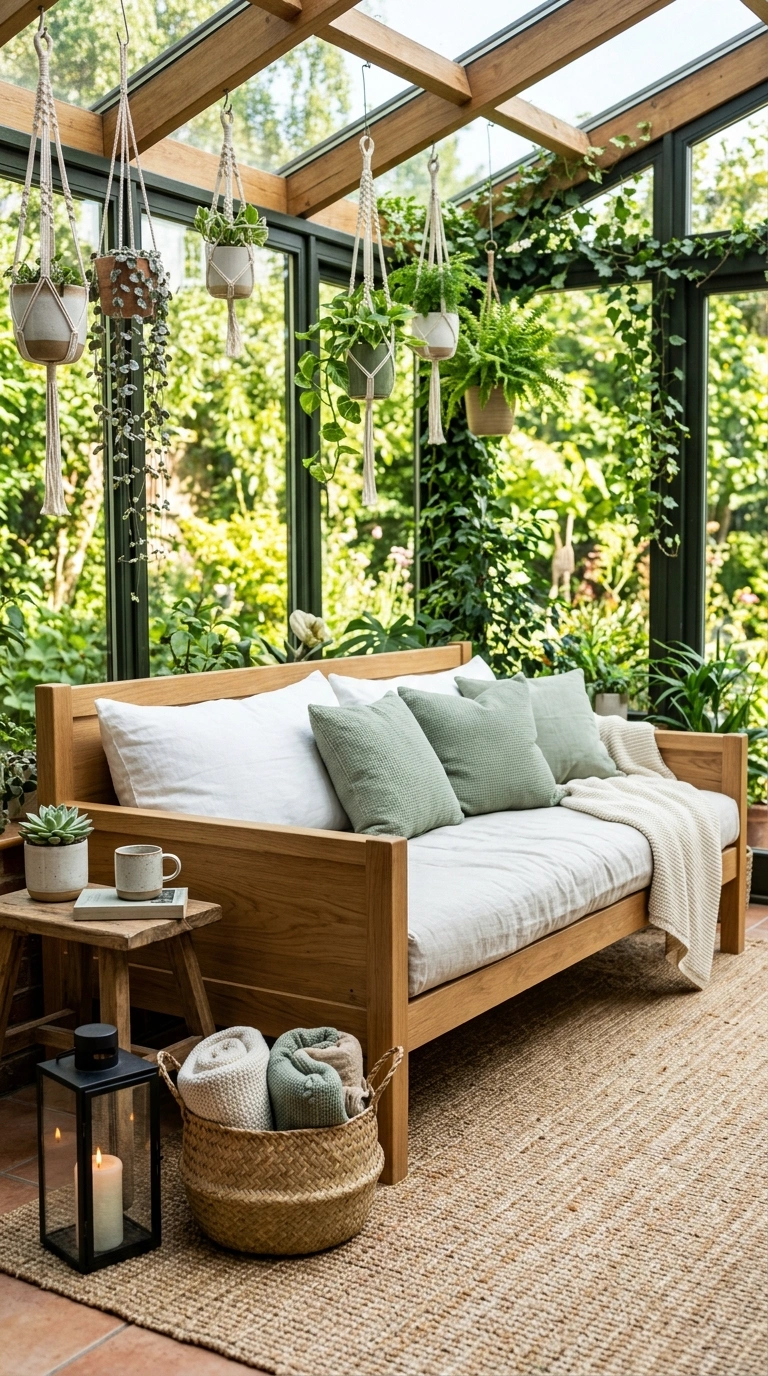
If you have a garden room or a screened porch, a daybed makes a great reading spot. Choose a frame in wood or wrought iron, and cover it with a firm mattress and lots of pillows. Use washable cotton or linen covers in soft colors like white, sage, and tan.
Add a small table next to it for your drink, and a lantern on the floor for evening light. Hang plants from the ceiling or place them along the windows. A thick rug under the daybed adds warmth and defines the space. Keep a basket of blankets nearby for cool days. This nook feels like a private retreat, and you can lie down to read as long as you like. It also doubles as an extra bed for guests when needed. Choose fabrics that do not fade easily, and bring the cushions inside during heavy rain. Add a small fan to keep air moving on hot days so the space stays comfortable.
21. Office Corner Lounge
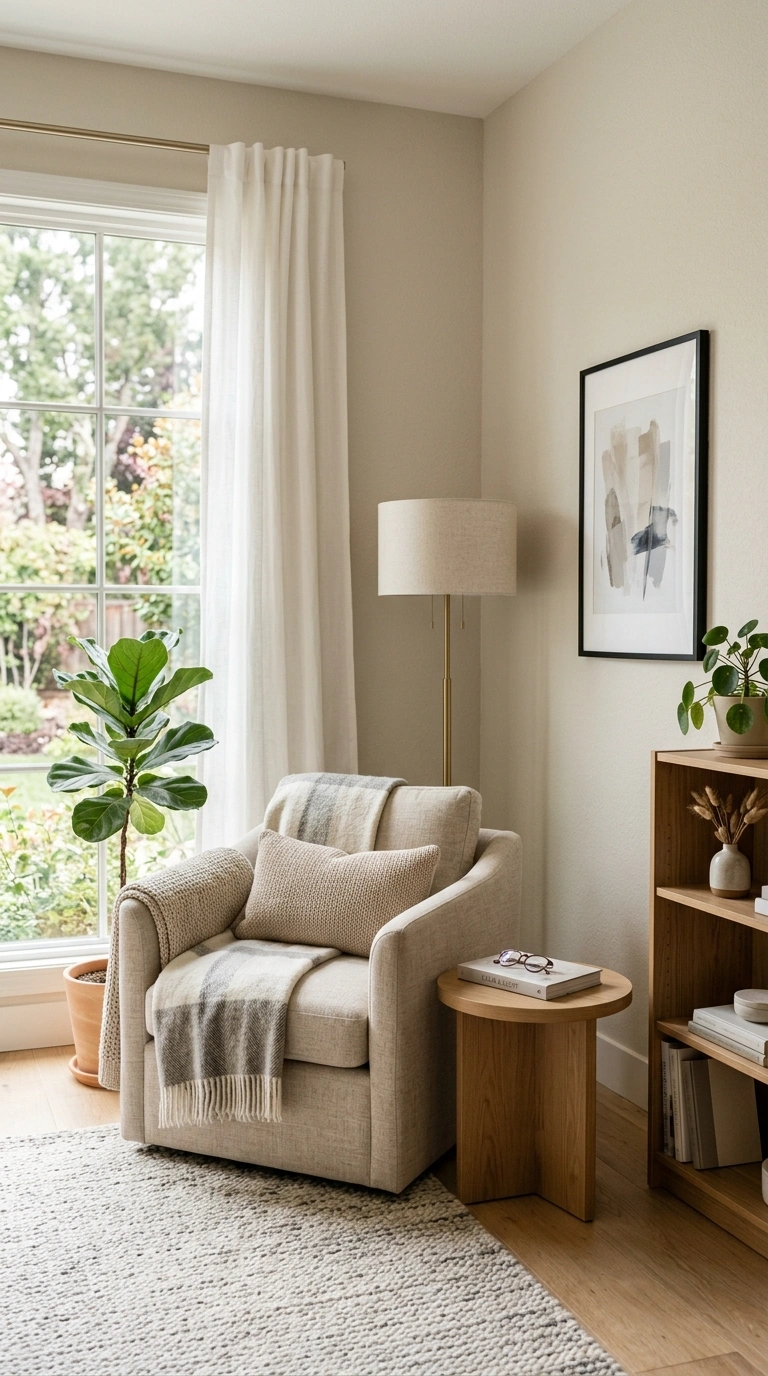
If your home office has extra space, add a reading corner away from the desk. Place a small armchair or loveseat in a corner, with a floor lamp and a small side table. This gives you a break spot that feels different from your work area.
Add a slim bookshelf beside the chair for your favorite reads. Use a soft rug to separate the lounge from the desk zone. Keep the colors calm, like gray, beige, and green, to help you relax. A framed print or a small plant on the wall above the chair makes the spot feel homey. Turn the chair away from the computer so you are not tempted to check email. This nook helps you take real breaks during the day and makes a work-from-home space feel more balanced. Keep only reading materials in the nook, and leave work papers on the desk. A small basket for magazines keeps the corner tidy and makes the break feel more real.
22. Stair Landing Seat
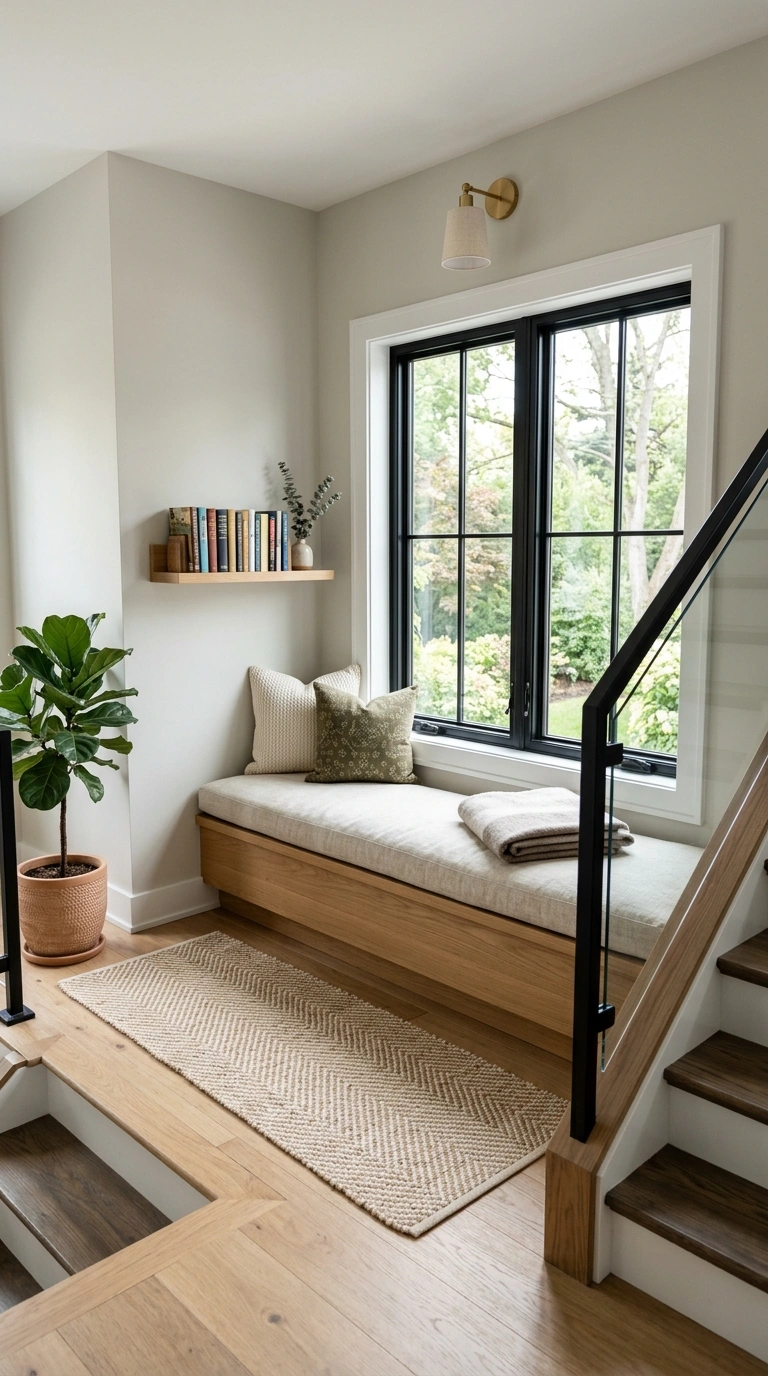
A wide landing halfway up the stairs is an unusual and charming place to read. Build a simple bench along the wall, or set a slim window seat below a landing window. Add a long cushion and a few pillows.
Hang a small wall light above the seat, and keep a short shelf for a few books. Choose light colors for the cushion and walls so the landing feels bright. If the landing has a window, keep the curtains sheer to let in as much light as possible. A small runner on the floor and a plant in the corner make it feel welcoming. This nook is out of the way of daily traffic, so it stays quiet. It also gives an ordinary staircase a friendly personal touch that guests will notice. Check the landing size so the bench does not block the stairs. Attach the seat firmly to the wall, since people may sit on it while putting on their shoes.
23. Kitchen Corner Banquette
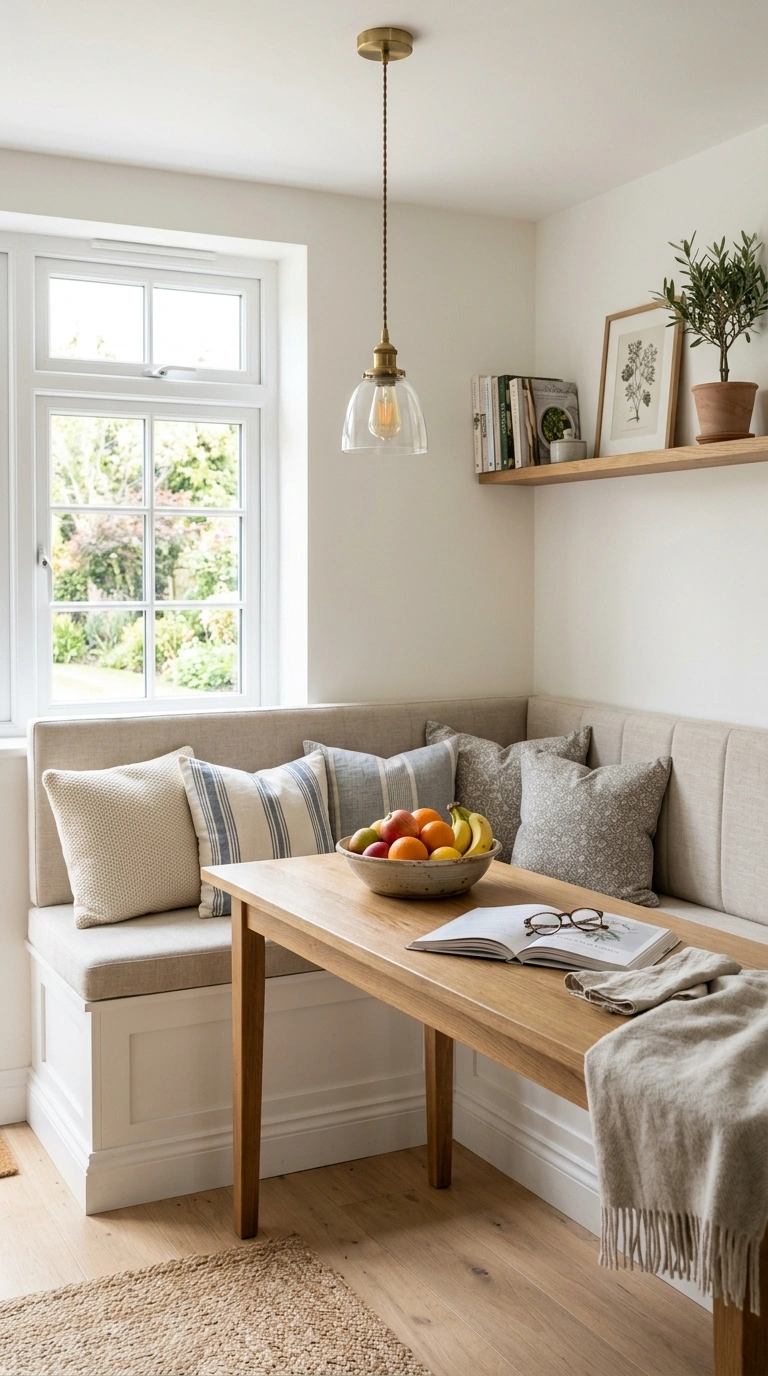
A small banquette in the corner of a kitchen or dining area can double as a reading nook. Build an L-shaped bench with a cushion and backrest, and tuck a narrow table in front. Choose a washable fabric in a color that blends with your kitchen.
During the day it works for meals, and in the afternoon it becomes a cozy spot with a book and a cup of tea. Add a few pillows and a small hanging light above. Hidden storage under the seat holds table linens or extra books. Keep the styling simple, with a small vase or a bowl of fruit on the table. This nook feels warm and welcoming, and it lets you read close to the kitchen without having to go to another room. Choose a wipeable fabric like performance cotton in case of spills. Measure the table height so your knees fit comfortably, and set a small lamp nearby for evening reading.
Frequently Asked Questions
What do you need to make a good reading nook?
You need a comfortable seat, good lighting, and a spot to rest your book and drink. A soft blanket and a rug make the space feel cozy. Keep it away from noise if you can.
How can I make a reading nook in a small space?
Look for unused corners, window sills, closets, or the space under stairs. A single chair, a floor cushion, or a narrow bench with a small lamp is often enough. Wall shelves save floor space.
What kind of lighting is best for a reading nook?
Warm white light between 2700K and 3000K is easy on the eyes. Combine natural light from a window with a floor lamp or wall sconce for evenings. Place the light slightly behind your shoulder.
How do I make a reading nook comfortable?
Choose a seat with good back support and add pillows and a throw blanket. Make sure your feet can rest flat or on a small stool. Use soft fabrics like cotton, wool, or linen.
Can I create a reading nook on a budget?
Yes. A thrifted chair, a few pillows, a used lamp, and a rug can be enough. You can also make cushions from fabric, or paint an old bench. Shop secondhand stores and online marketplaces first.
Final Thoughts
A good reading nook is really about having one spot that feels like yours. It does not need expensive furniture or a perfect design. Pick the space that gets the best light and start with a comfortable seat. Add small touches over time, and soon you will find yourself reaching for a book more often.