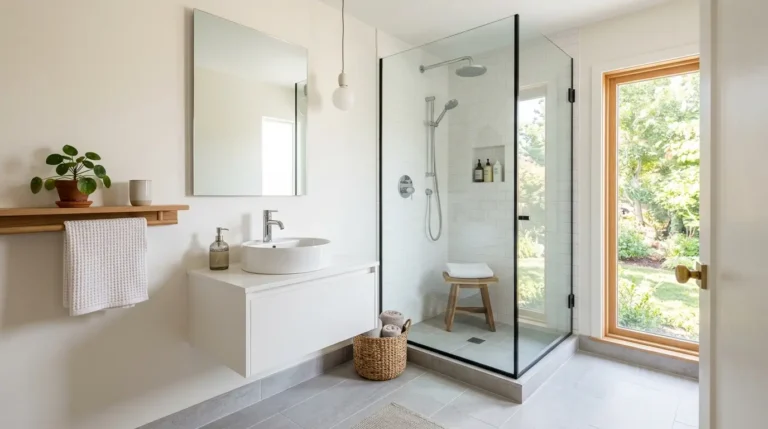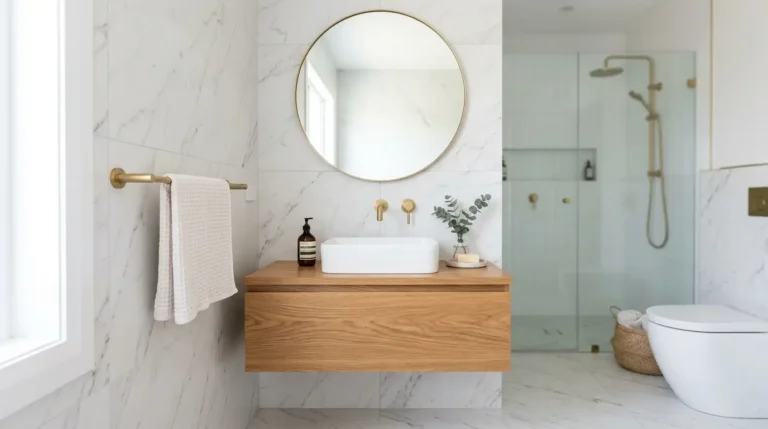
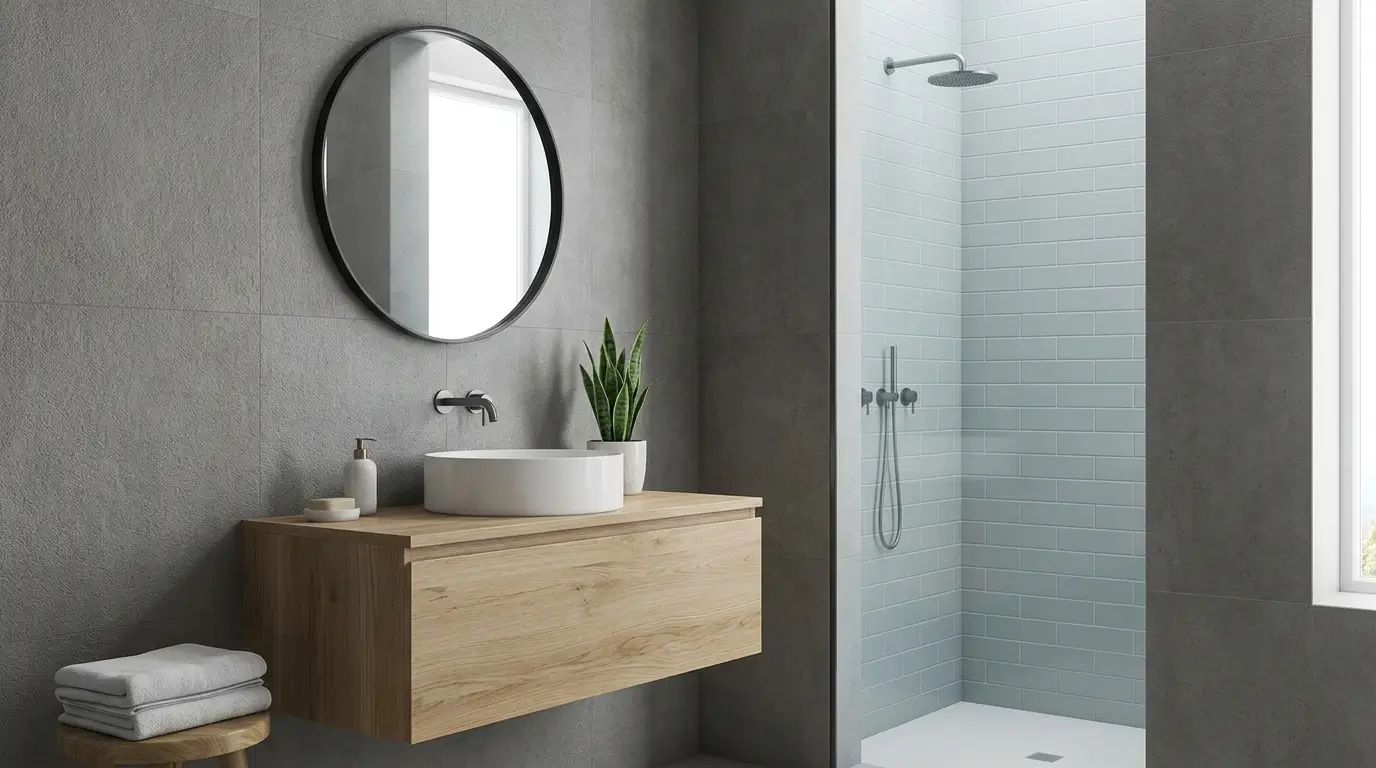
21 Gray and Blue Bathroom Ideas for a Calm, Stylish Space
Some color pairings just make sense the moment you see them together, and gray with blue is one of those. It has the calm, grounded feeling of gray with just enough color from the blue to keep a bathroom from feeling flat or cold. Whether you are working with a full renovation, a fresh coat of paint, or just new towels and a shower curtain, this pairing flexes to fit almost any budget and any size room. Below are 21 ways to bring gray and blue into a bathroom, from bold accent walls to soft, muted textiles, along with a few tips on keeping the room from feeling too cool or sterile. Pick the ones that match your space and your comfort level with color, then build from there.
1. Soften the Room With Gray Walls and Blue Accents
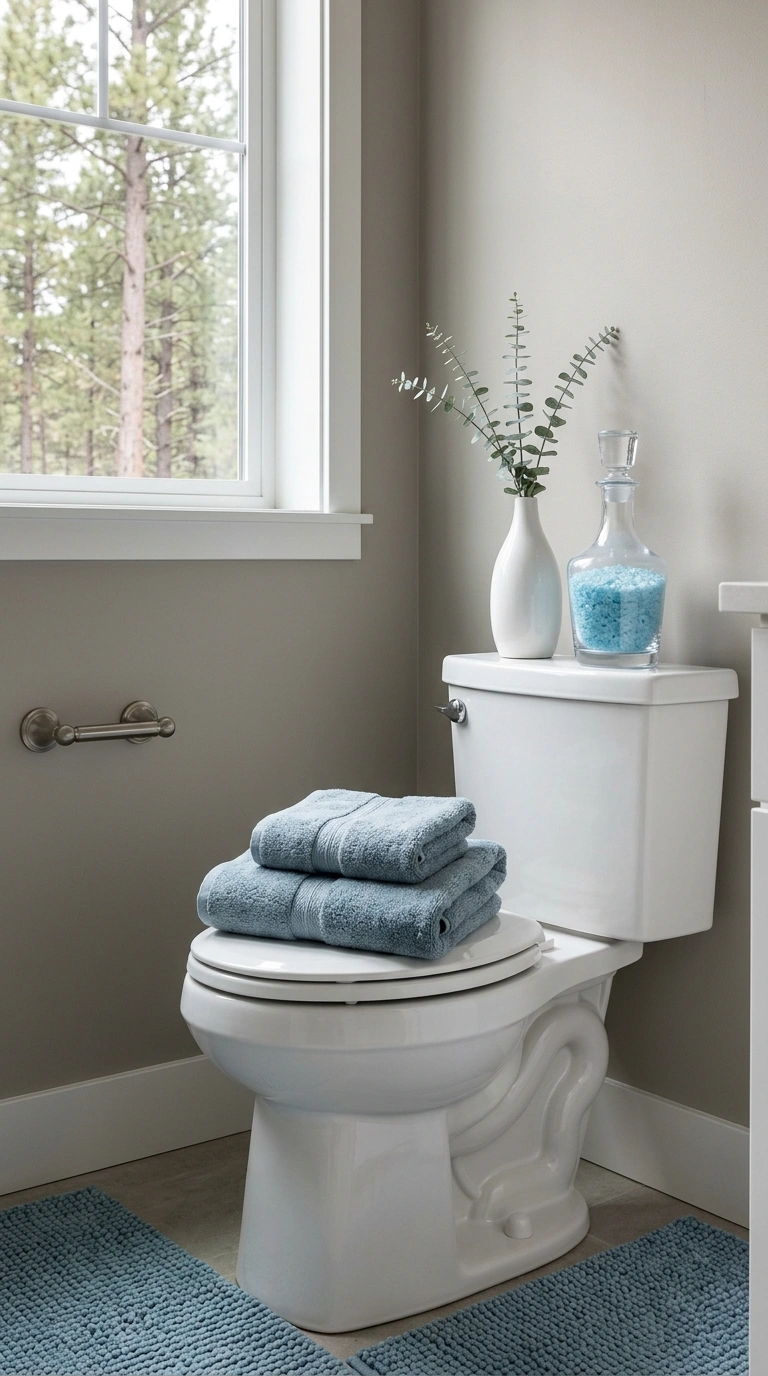
A light gray wall, somewhere between a soft dove gray and a warmer greige, works as an easy base for almost any bathroom. Keep the trim and ceiling white to keep the room bright, then bring in blue through towels, a bath mat, and small accessories like a soap dispenser or tissue box cover. This approach is low commitment since swapping out textiles is far easier than repainting tile or replacing a vanity. It also gives you room to change the blue accent shade seasonally, from a soft powder blue in spring to a deeper navy in cooler months, without touching the walls at all. This is a good starting point for anyone who wants to test the gray and blue combination before committing to anything more permanent.
| Gray shade | Blue partner | Mood it creates |
|---|---|---|
| Soft warm gray | Dusty blue | Calm, cozy |
| Light cool gray | Powder blue | Fresh, airy |
| Slate gray | Navy | Bold, sophisticated |
| Greige | Denim blue | Warm, relaxed |
2. Ground the Room With a Navy Vanity
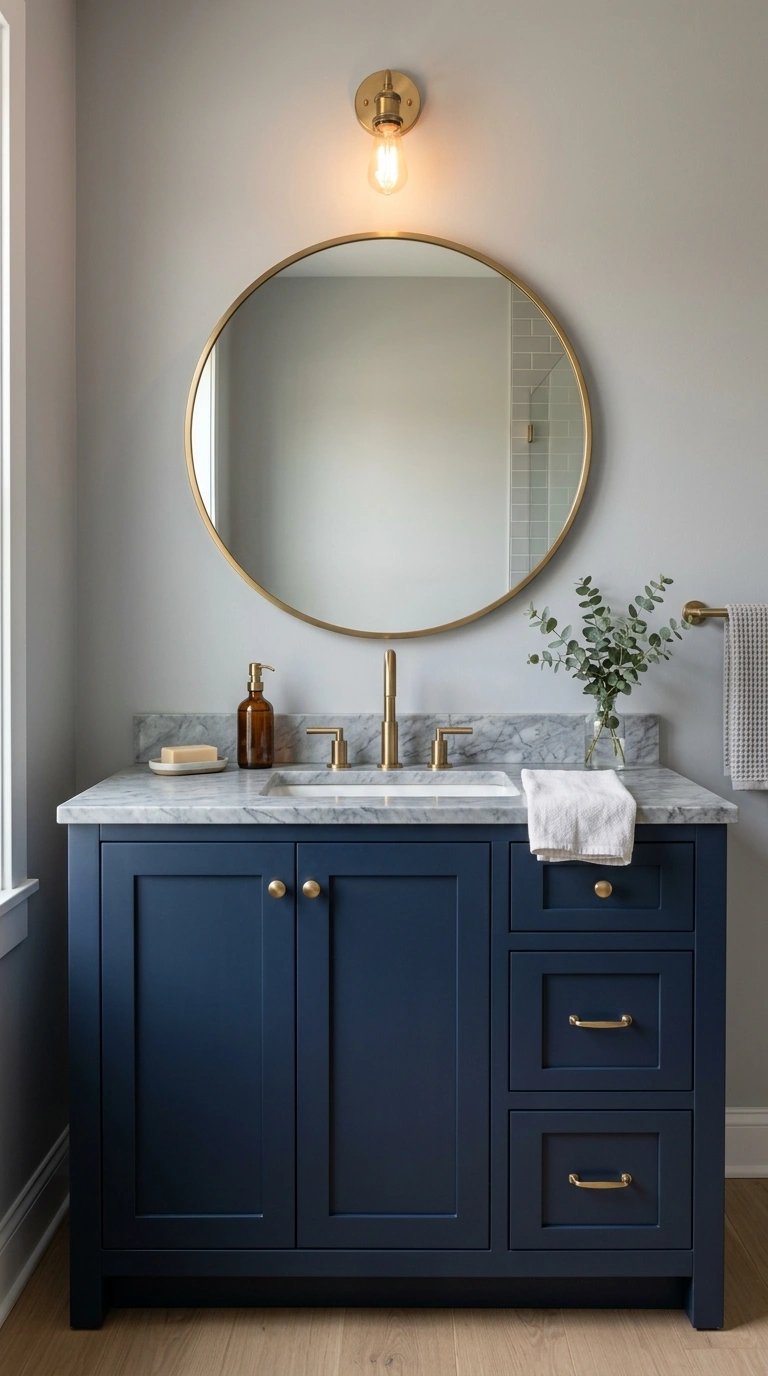
A navy blue vanity brings a rich, grounded feeling to a bathroom, especially when paired with a white or light gray marble-look countertop on top. Choose brushed nickel or brass hardware to keep the cabinet from feeling too heavy, since either metal adds a bit of shine against the deep blue wood. Keep the surrounding walls or tile in a lighter gray so the vanity reads as the clear focal point of the room rather than blending into a busy background. This combination works especially well in a powder room or guest bathroom, where a bold vanity color makes more of a statement than it would in a bathroom you pass through quickly every morning.
3. Lay a Blue and Gray Mosaic Floor
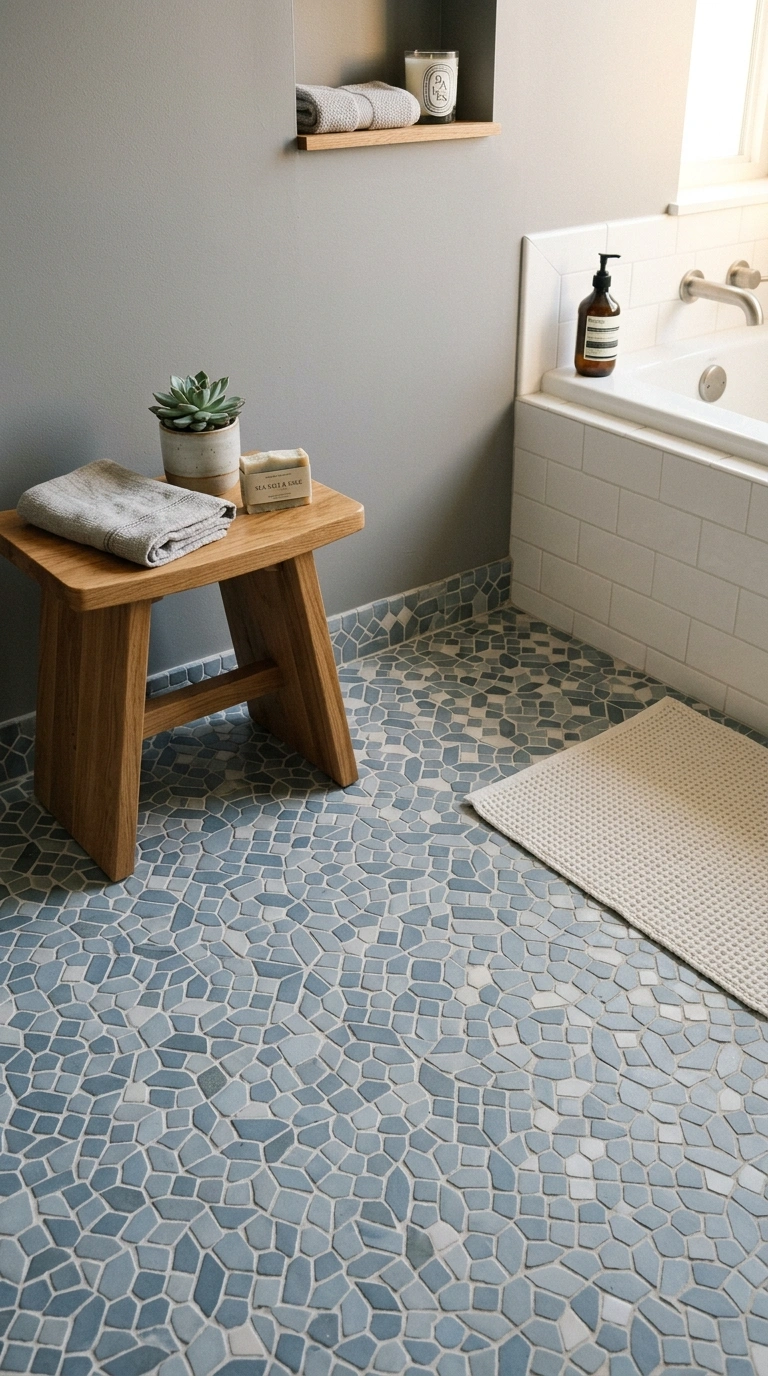
A mosaic floor mixing small gray and blue tiles, whether in a penny round or hexagon shape, adds texture and pattern right at foot level. Pair the busy floor with simple white walls so the tile has room to be the star of the space instead of competing with patterned wallpaper or bold paint. This combination works well in smaller bathrooms, where the floor pattern draws the eye without making the room feel cramped the way a busy wall pattern sometimes can. Choose a matte finish tile rather than glossy for better grip underfoot, especially near the shower or tub where the floor stays wet.
4. Brighten With Gray Subway Tile and Blue Details
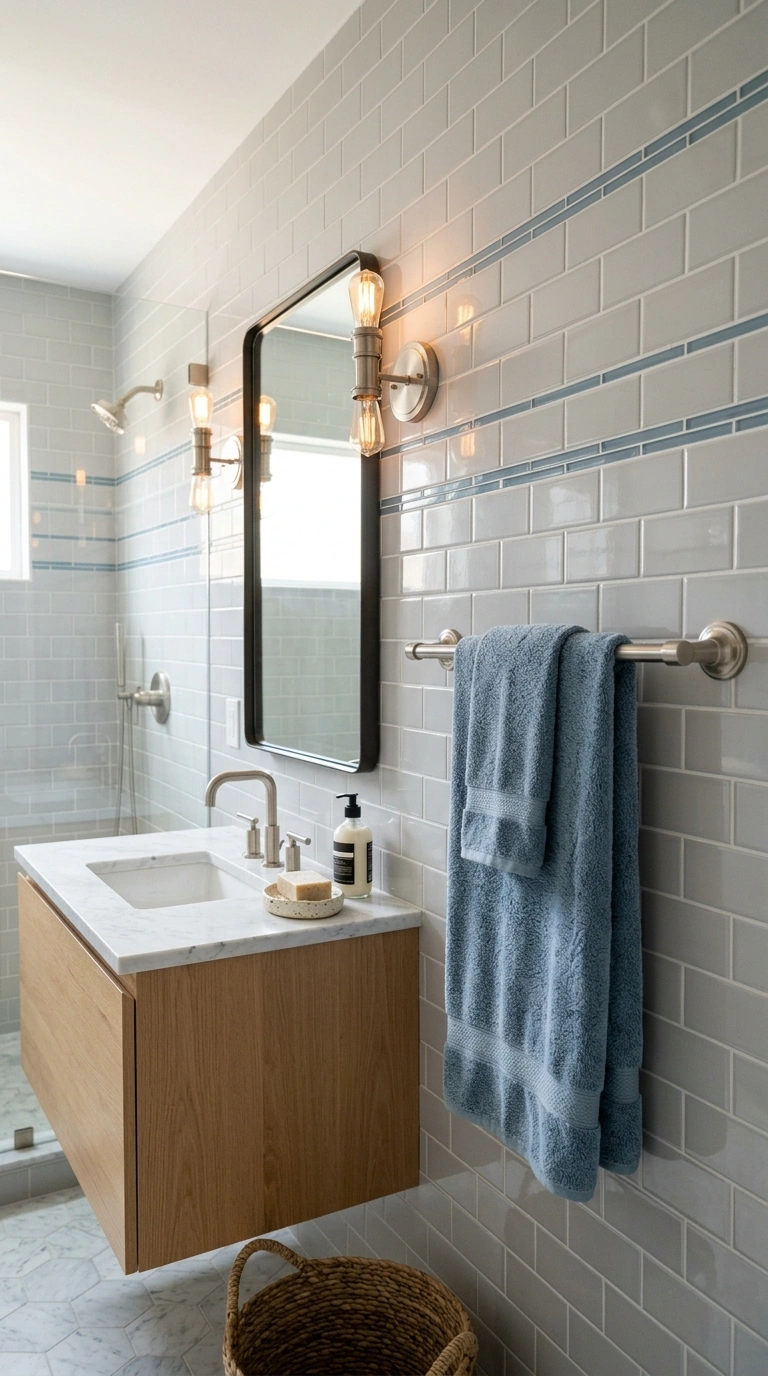
Classic gray subway tile on the walls gives a bathroom a clean, timeless look that works with almost any style of home. Keep the grout white for contrast, then bring in blue through a shower curtain, bath mat, and folded towels stacked on open shelving. This pairing feels fresh and current without leaning into any one trend too heavily, which makes it a safe choice if you plan to keep the tile in place for years while swapping out smaller decor pieces as your taste shifts. A brushed nickel or chrome faucet keeps the look bright and prevents the gray tile from feeling too heavy or cave-like.
5. Go Airy With Powder Blue and Gray
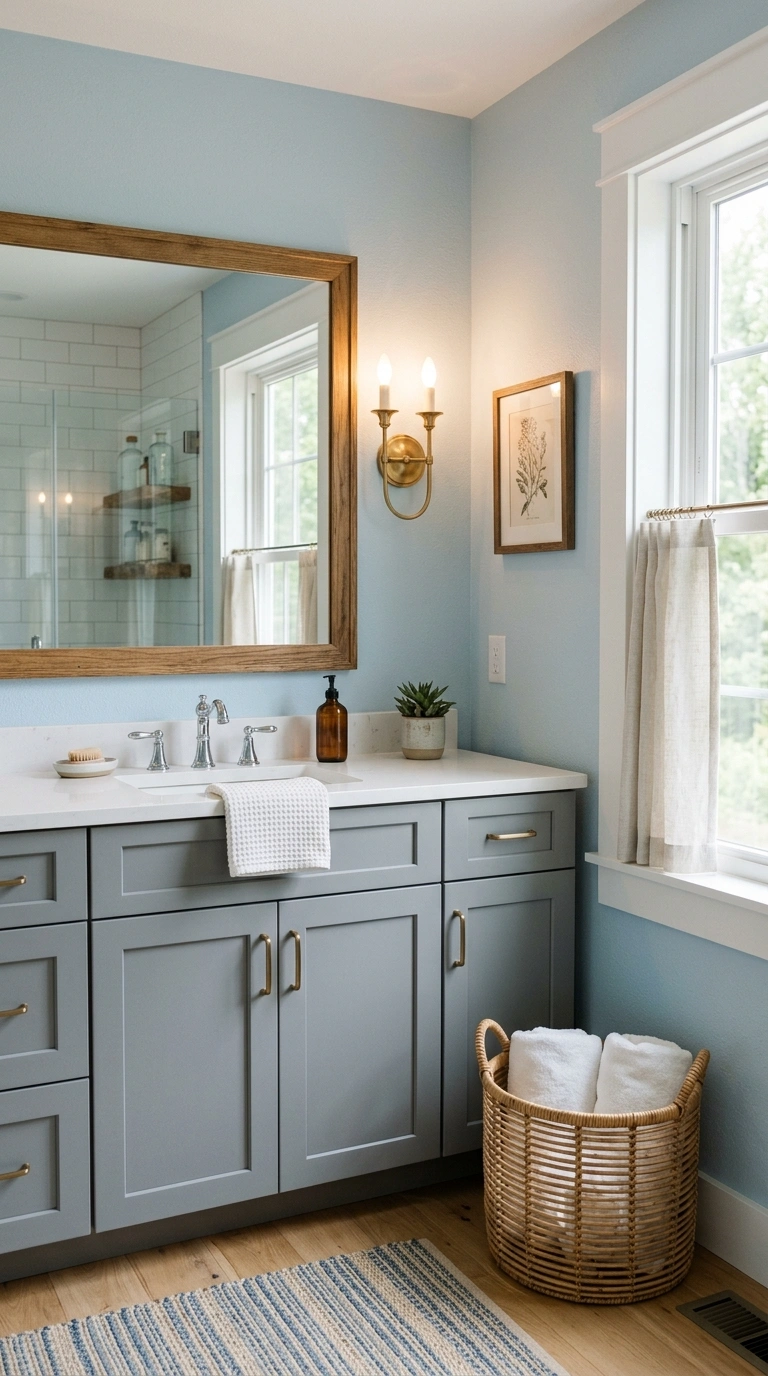
For a small bathroom or one with limited natural light, a very pale powder blue paired with soft dove gray keeps the space feeling open and airy rather than boxed in. Use the powder blue on the walls and a soft gray on the vanity or floor tile, keeping every other surface white to maximize brightness. This combination works especially well in bathrooms with little to no window light, since pale colors reflect what light is available rather than absorbing it the way deeper tones do. Add a simple white or brushed nickel mirror to bounce even more light around the room.
6. Get Bold With Slate Gray and Denim Blue
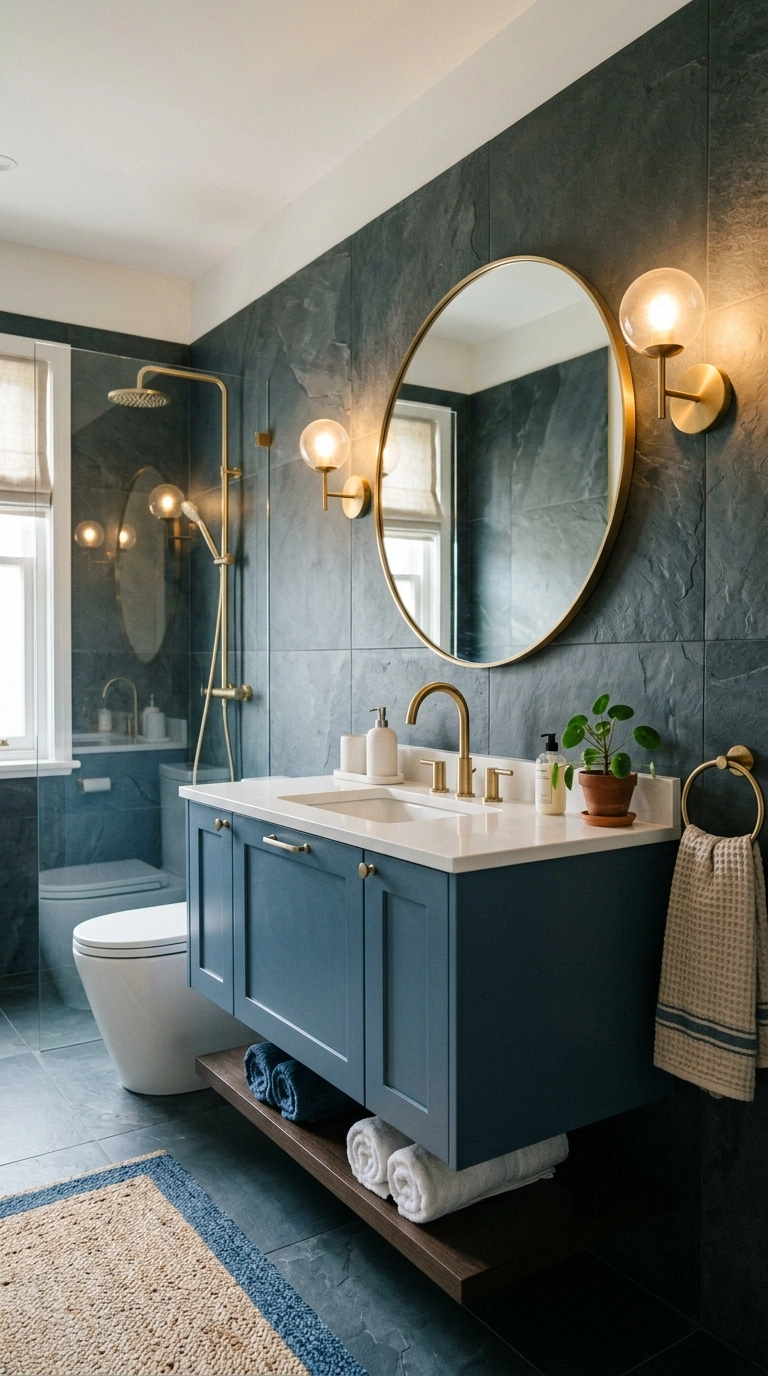
For a larger bathroom that can handle more depth, pairing a deeper slate gray with a rich denim blue creates a moody, more dramatic feel. Use the slate gray on walls or floor tile and bring in the denim blue through a vanity or an accent wall in the shower area. Black fixtures, including the faucet and shower hardware, add contrast and keep the darker palette from feeling flat. This combination works best in bathrooms with good natural light or strong overhead lighting, since two deep colors together can make a small, dim room feel closed in rather than cozy.
What to avoid:
- Using only cool, dark tones with no warm accent, which can feel cold and gloomy; add brass, wood, or white.
- Too many competing blues; pick one or two blue shades and repeat them for a cohesive look.
7. Pair a Blue Vanity With Gray Marble
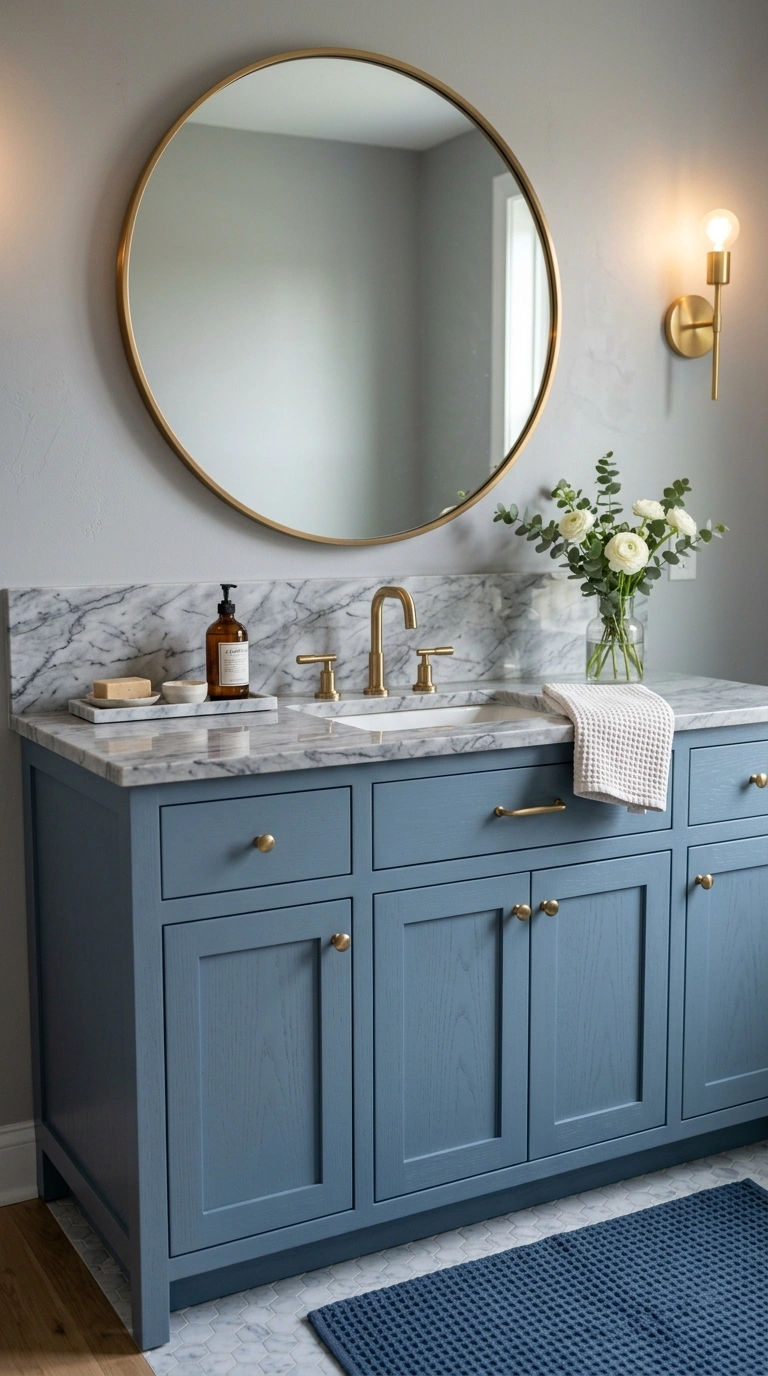
A sky blue or steel blue vanity paired with a gray veined marble countertop is a classic, elegant combination that works in both modern and traditional bathrooms. The cool tones of the marble echo the blue in the cabinet, while brass fixtures warm the whole look up just enough to keep it from feeling too cold. Keep the walls a simple white or very light gray so the vanity and countertop combination gets to be the main focal point when you walk into the room. This pairing photographs especially well in bathrooms with natural light, since the marble veining catches light differently throughout the day.
8. Add Height With Gray Vertical Tile
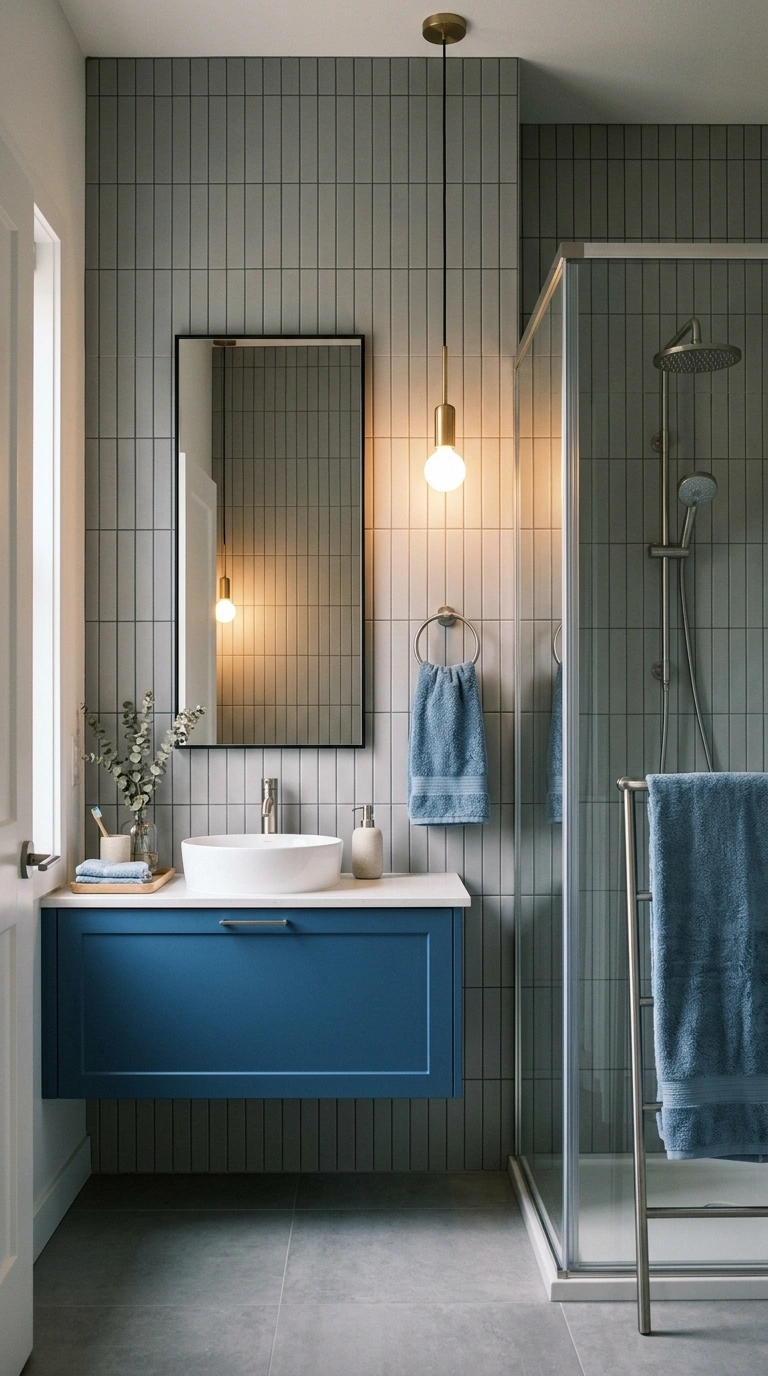
Installing gray tile vertically, whether in a classic subway shape or a fluted, ribbed style, draws the eye upward and makes a bathroom with low ceilings feel taller than it actually is. Use this treatment on an accent wall behind the tub or across the full shower wall, then bring in blue through bath textiles like towels and a shower curtain. This trick works particularly well in older homes with shorter ceiling heights, where every visual cue that adds height helps the room feel less cramped. Stick to a matte or lightly textured tile finish rather than high gloss for a more grounded, calm feeling overall.
9. Bring the Coast In With Blue and Gray
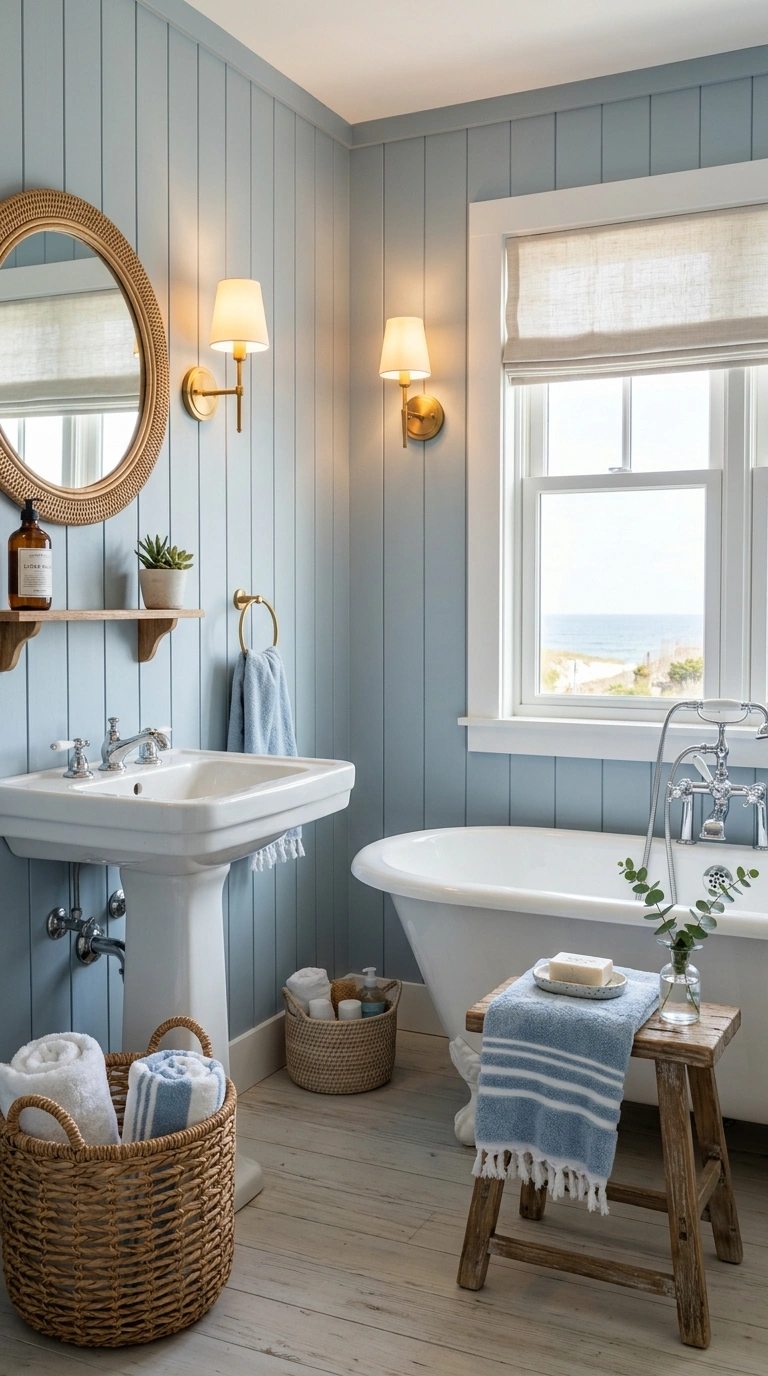
For a relaxed, coastal feeling, lean into driftwood gray tones through wood-look tile or a weathered wood vanity, then bring in ocean blue through towels, a woven rope mirror, and glass jars filled with sand or small shells. Woven baskets and a jute bath mat add natural texture that pairs well with this color scheme, softening what could otherwise feel like a strictly modern palette. This combination works especially well in bathrooms near a window with natural light, since the driftwood and ocean tones feel most at home in a bright, airy space rather than a dark, enclosed one.
10. Split It With Two-Tone Walls and a Blue Vanity
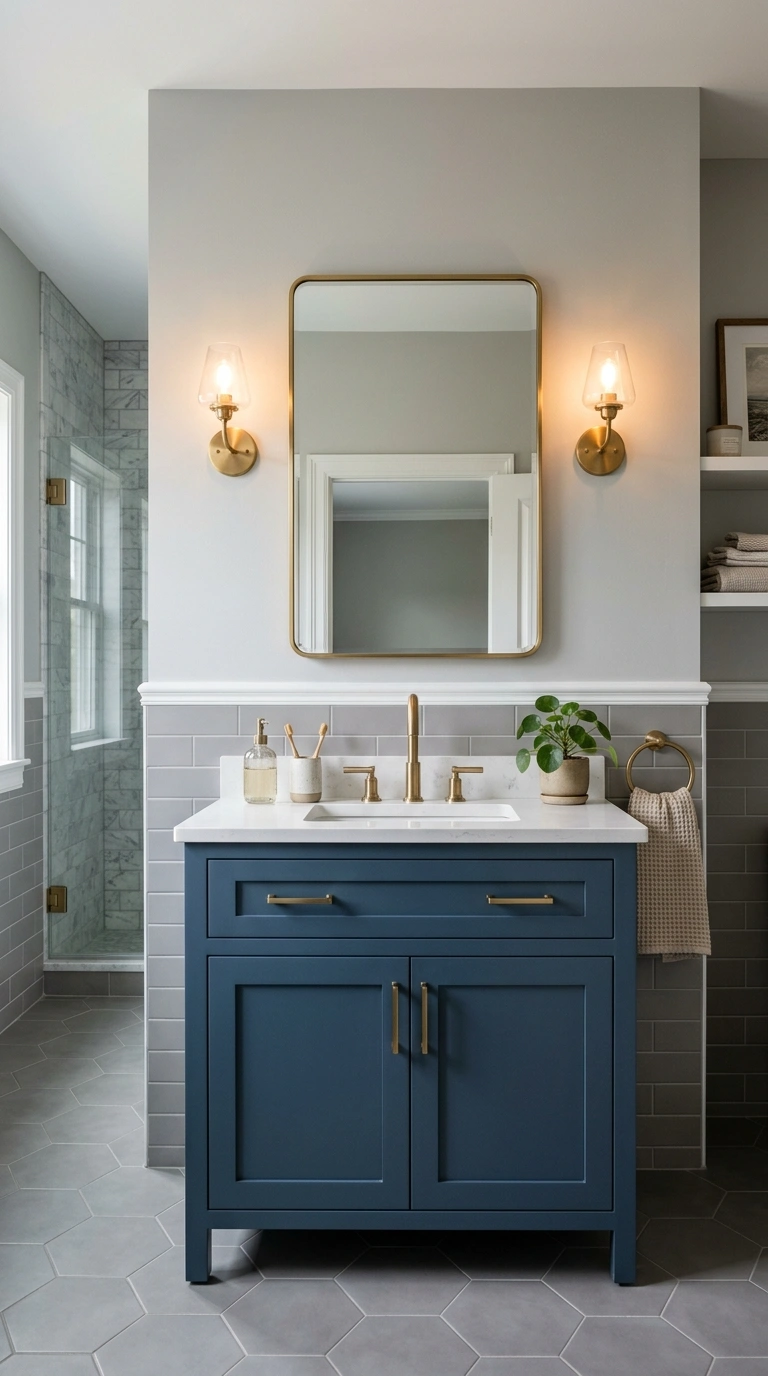
Painting the lower half of the wall gray, either with paint or wainscoting, and leaving the upper half white creates a classic, layered look that adds visual interest without overwhelming a small room. Pair the two-tone walls with a blue vanity as the main color moment in the space. This approach works well for anyone who likes the idea of a bold color but is not ready to commit to painting or tiling an entire wall in it. The wainscoting or paint line also gives the room a slightly more traditional, cottage-style feel compared to a single flat wall color.
11. Paint the Cabinets Blue-Gray
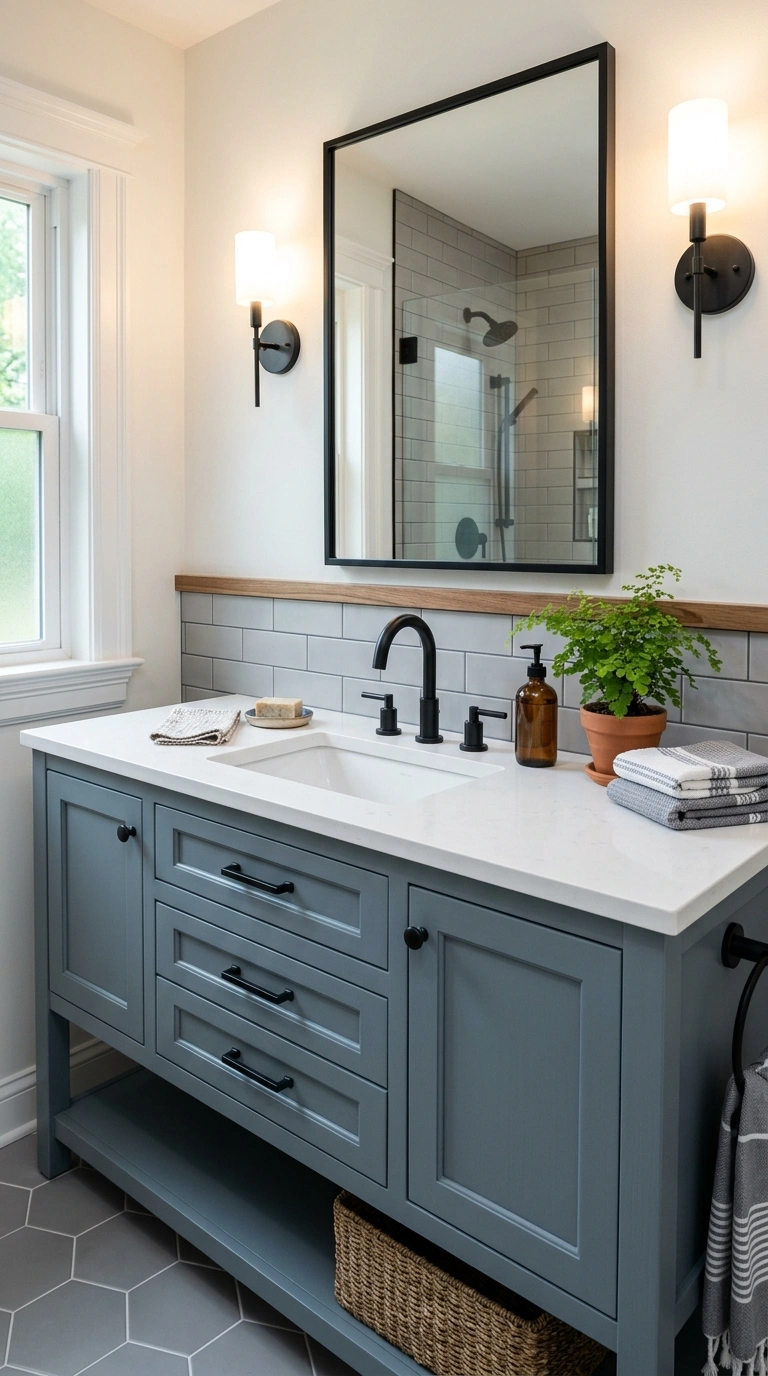
If your bathroom already has wood cabinets in decent shape, repainting them in a blue-gray shade, something between a stormy gray and a muted slate blue, is one of the most cost effective ways to bring this color palette into the room without a full renovation. Keep the walls white or a very pale gray so the cabinet color stands out clearly. Swap out old hardware for brass or matte black pulls to finish the look. This approach works well for anyone updating an older bathroom on a budget, since a cabinet repaint costs far less than replacing the vanity entirely.
12. Mix Gray Floors With Blue Shower Tile
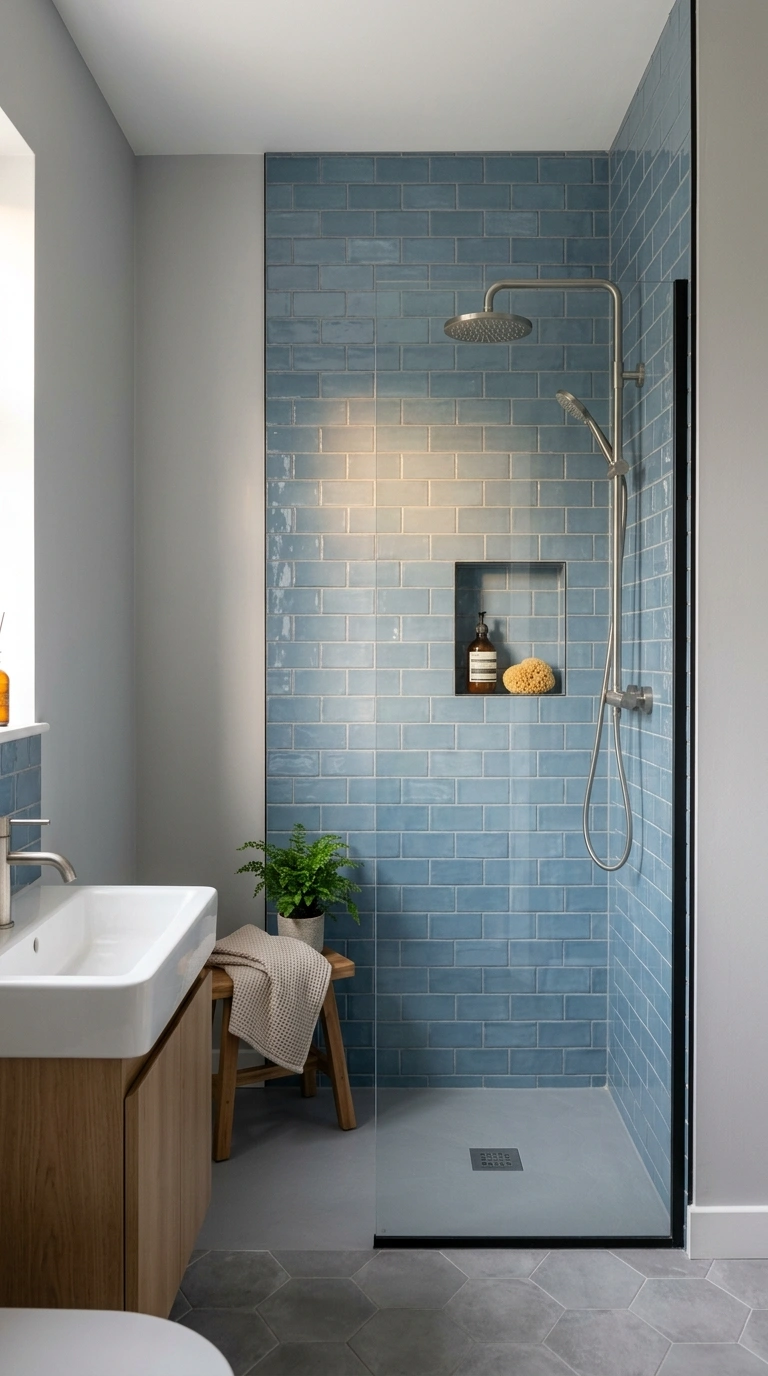
Keep the main bathroom floor in a large format gray tile, then reserve the blue tile for inside the shower or on a small accent wall behind it. This layout keeps the overall room feeling neutral and calm while giving the shower area its own distinct personality. It also makes the blue tile feel more special, since it is reserved for one specific spot rather than spread across every surface. This approach works well for anyone who likes the idea of a bold tile choice but wants to keep resale value in mind, since a neutral gray floor appeals to a wider range of tastes than an all-over blue room would.
A simple way to balance the two colors around the room:
- Gray for the calm base: floors and large wall tile (about 60 percent)
- Blue for the color: shower tile, vanity, or one feature (about 30 percent)
- Navy or deepest blue for the accent pop: towels, art, and small decor (about 10 percent)
13. Warm It Up With Brass and Gold
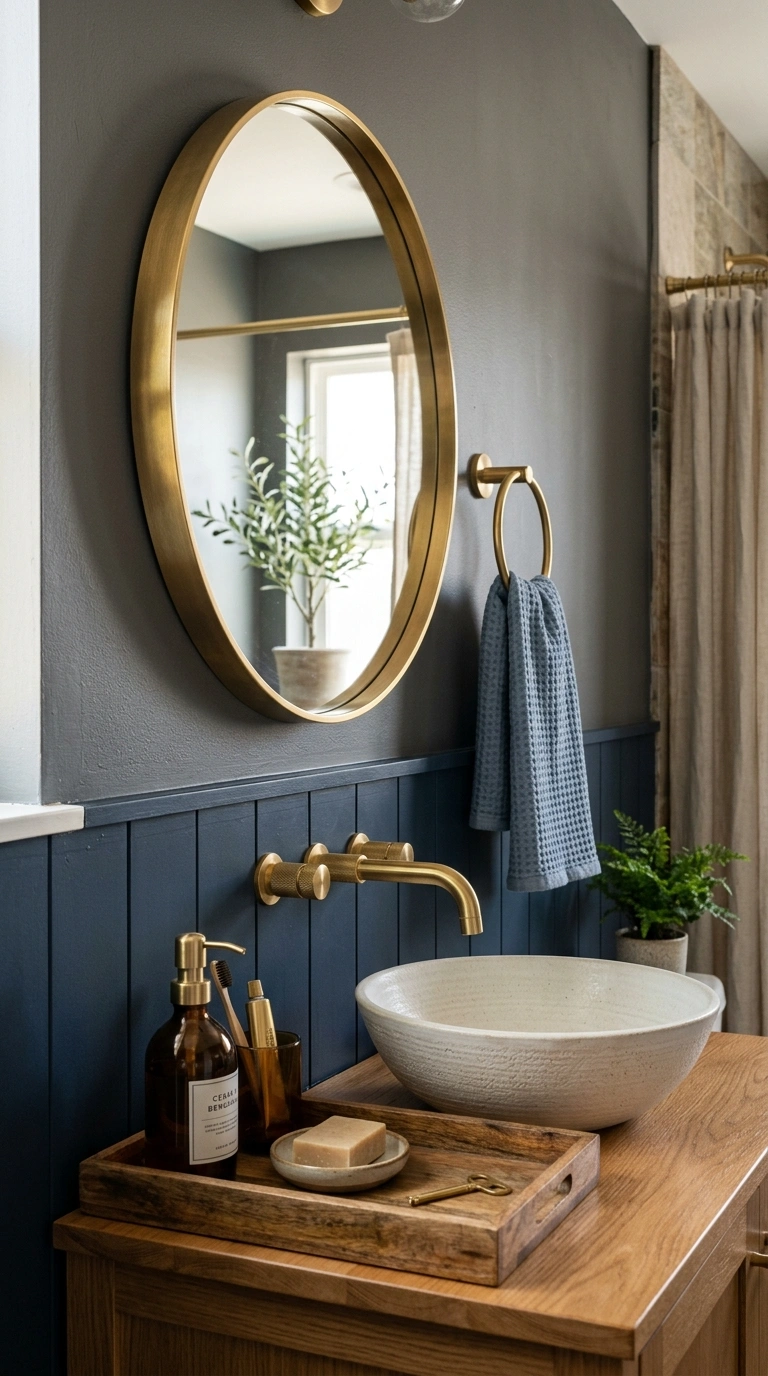
Gray and blue together can feel a little cool on their own, so bringing in brass or gold fixtures, including the faucet, mirror frame, and light fixtures, adds warmth that balances the palette out. Choose a warm-toned brass rather than a cool silver or chrome finish to get the most contrast against the gray and blue surfaces. This small swap makes a noticeable difference in how a room feels, especially in bathrooms with limited natural light, where warm metal tones help prevent the space from reading as flat or sterile under artificial lighting.
Quick tips:
- Add brass or gold in the faucet, hardware, and mirror frame to warm up cool tones.
- Bring in wood, rattan, or a plant to keep the palette from ever feeling cold.
14. Add Pattern With Blue Floor Tile
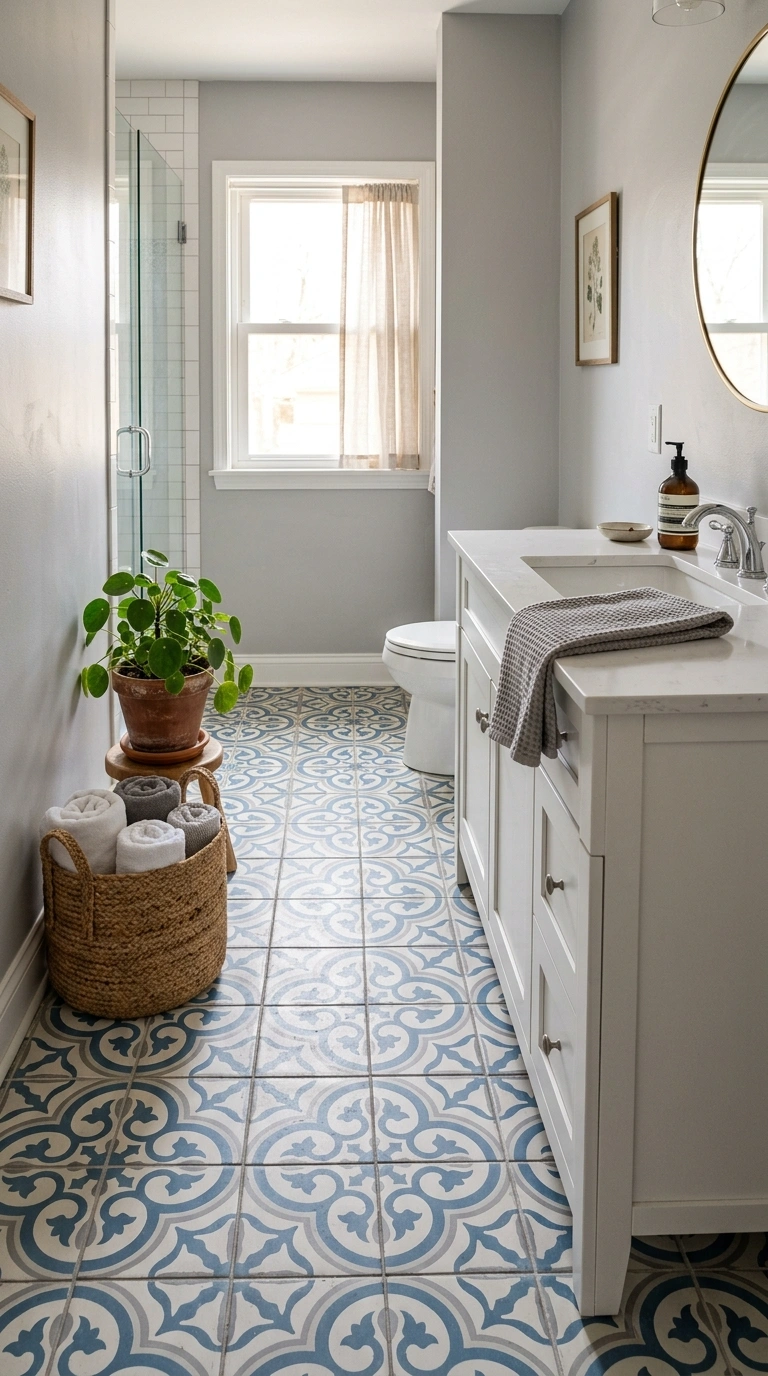
A patterned encaustic-look tile in blue and white on the floor brings personality into a bathroom without needing much else. Keep the walls and vanity simple, sticking to a plain gray or white, so the patterned floor has room to be the star of the room. This approach works especially well in a smaller bathroom or powder room, where a bold floor pattern makes a strong first impression without the cost or commitment of patterned wallpaper across an entire wall. Choose a matte finish for better slip resistance in a wet space.
15. Frame a Tub in Gray With Blue Accents
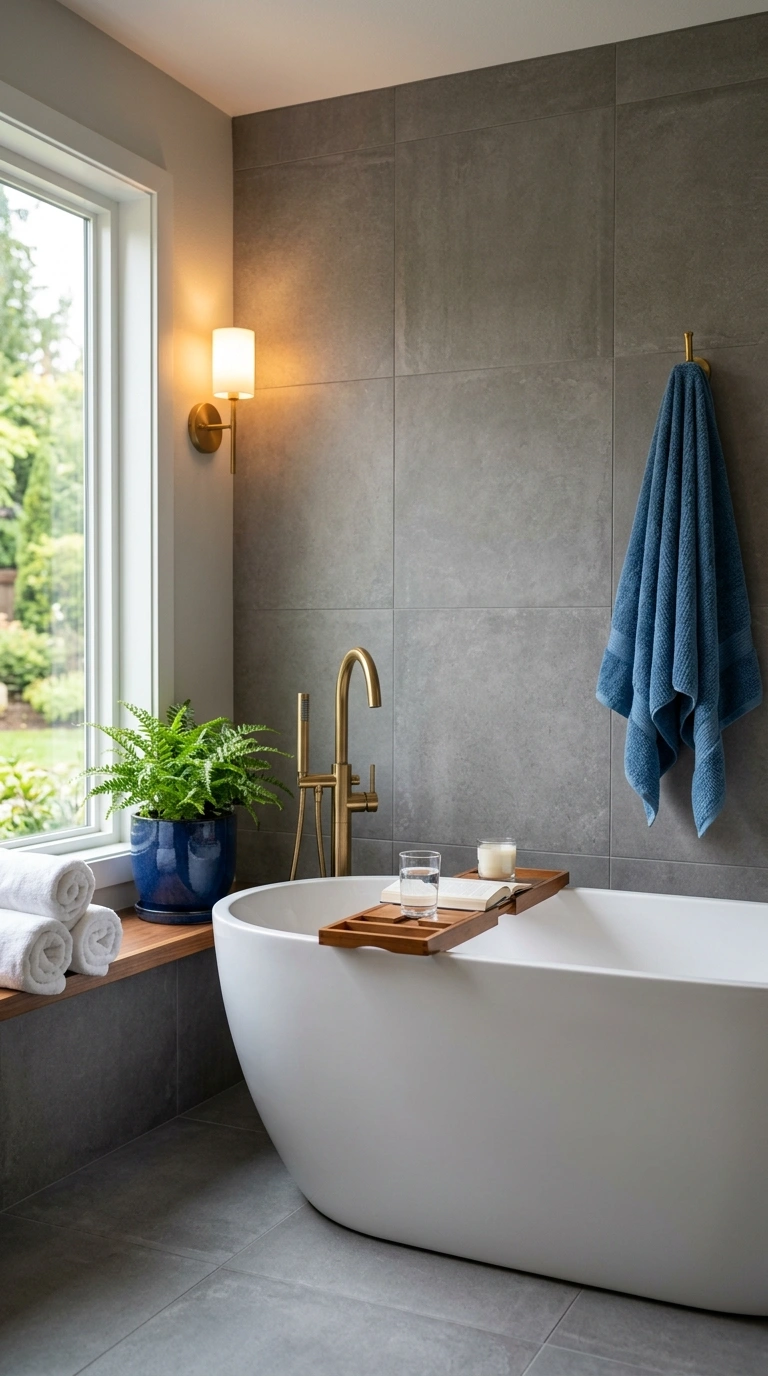
A freestanding tub set against a gray tile surround creates an instant spa-like focal point, especially when paired with blue towels, a robe hook, and a small stool or tray beside the tub for holding a book or candle. Keep the rest of the room simple so the tub area gets to feel like its own little retreat within the larger bathroom. This idea works particularly well in a primary bathroom with enough space to dedicate a corner or wall specifically to the tub, rather than squeezing it in alongside the shower and vanity.
16. Add Shimmer With Blue Glass Tile
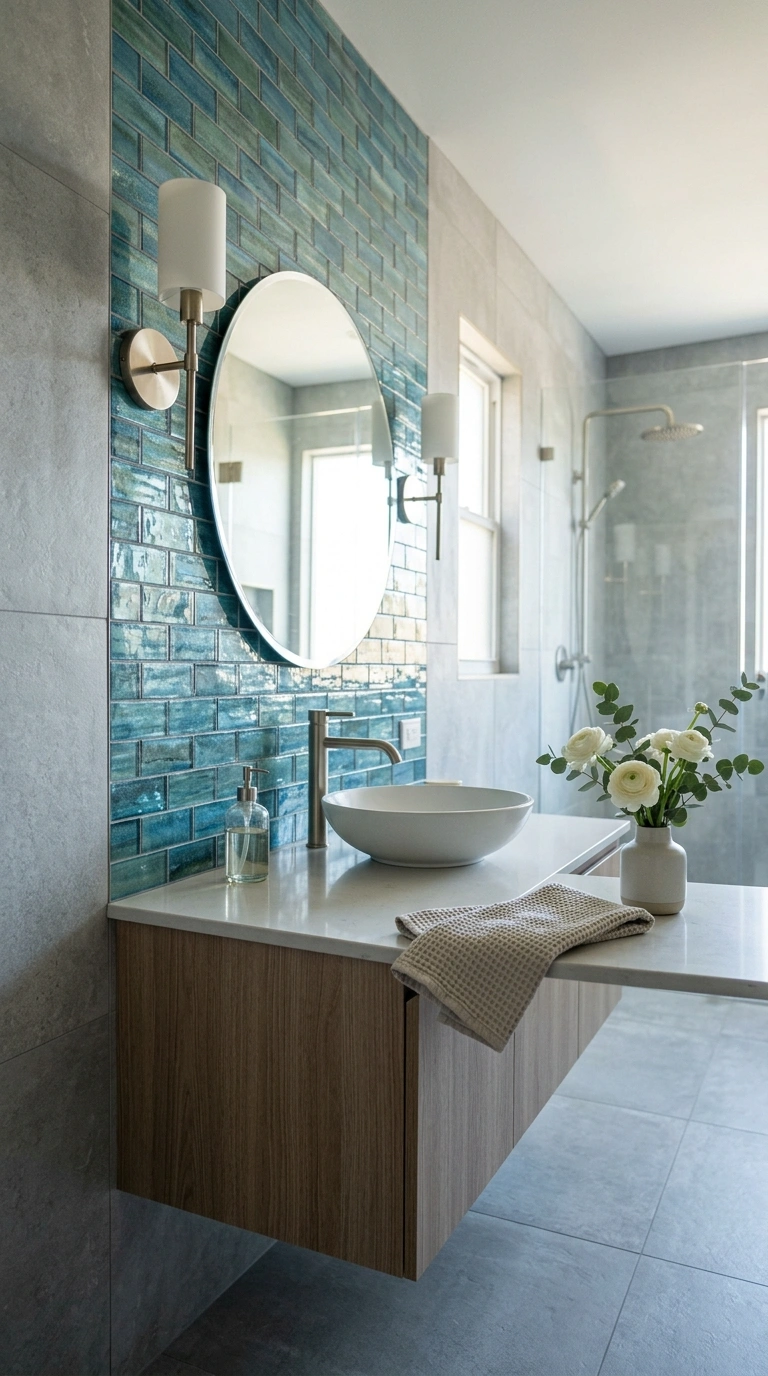
A teal-blue glass mosaic tile used as a shower accent or backsplash catches and reflects light in a way that flat, matte tile cannot. Pair the glass tile with a matte gray tile elsewhere in the room so the shimmer has a quiet background to stand out against rather than competing with other shiny surfaces. This combination works especially well behind a vanity mirror or as a band of tile inside the shower, giving the room a small moment of sparkle without going overboard with shine across every surface.
17. Layer Soft Gray With Dusty Blue Textiles
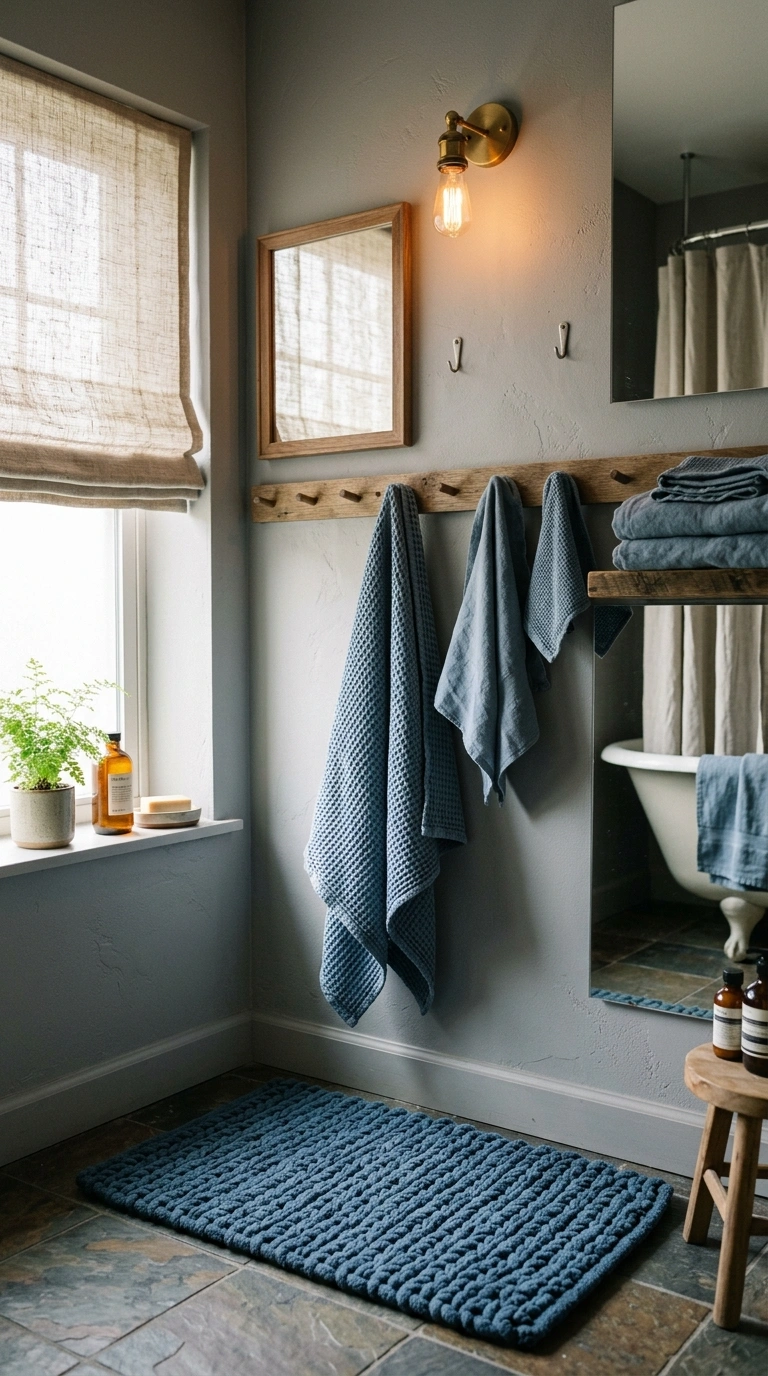
For a softer, more muted take on this color pairing, use a light gray as the wall or tile base, then layer in dusty blue, which is a grayish, slightly faded blue, through towels, a bath mat, and a shower curtain. This combination feels calm and a little vintage compared to brighter, more saturated blues, and it works especially well in a bathroom meant to feel relaxing rather than energizing. Stick to natural fabrics like cotton and linen for the textiles to keep the overall feeling soft and textured rather than flat.
18. Go Dramatic With a Navy Accent Wall
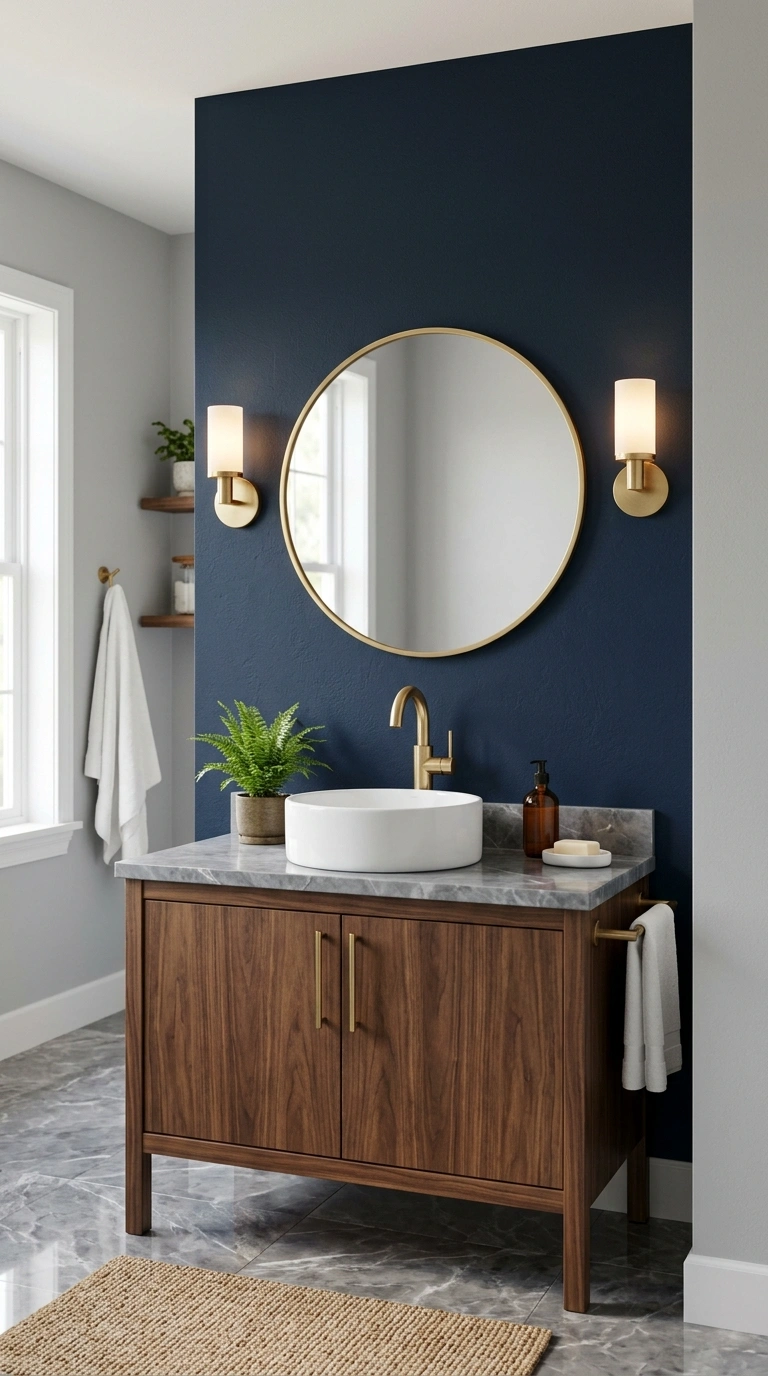
Painting or tiling one wall in a deep navy, while keeping the rest of the room in a light gray with white trim, creates a bold focal point without overwhelming the whole space. This works especially well on the wall behind a freestanding tub or directly behind the vanity mirror, where the dark color has a clear, defined space to live in. Keep lighting bright in a room with a navy accent wall, since dark colors absorb more light than pale ones and can make a room feel dim if the lighting is not strong enough to compensate.
19. Warm It Up With Gray Wood-Look Tile
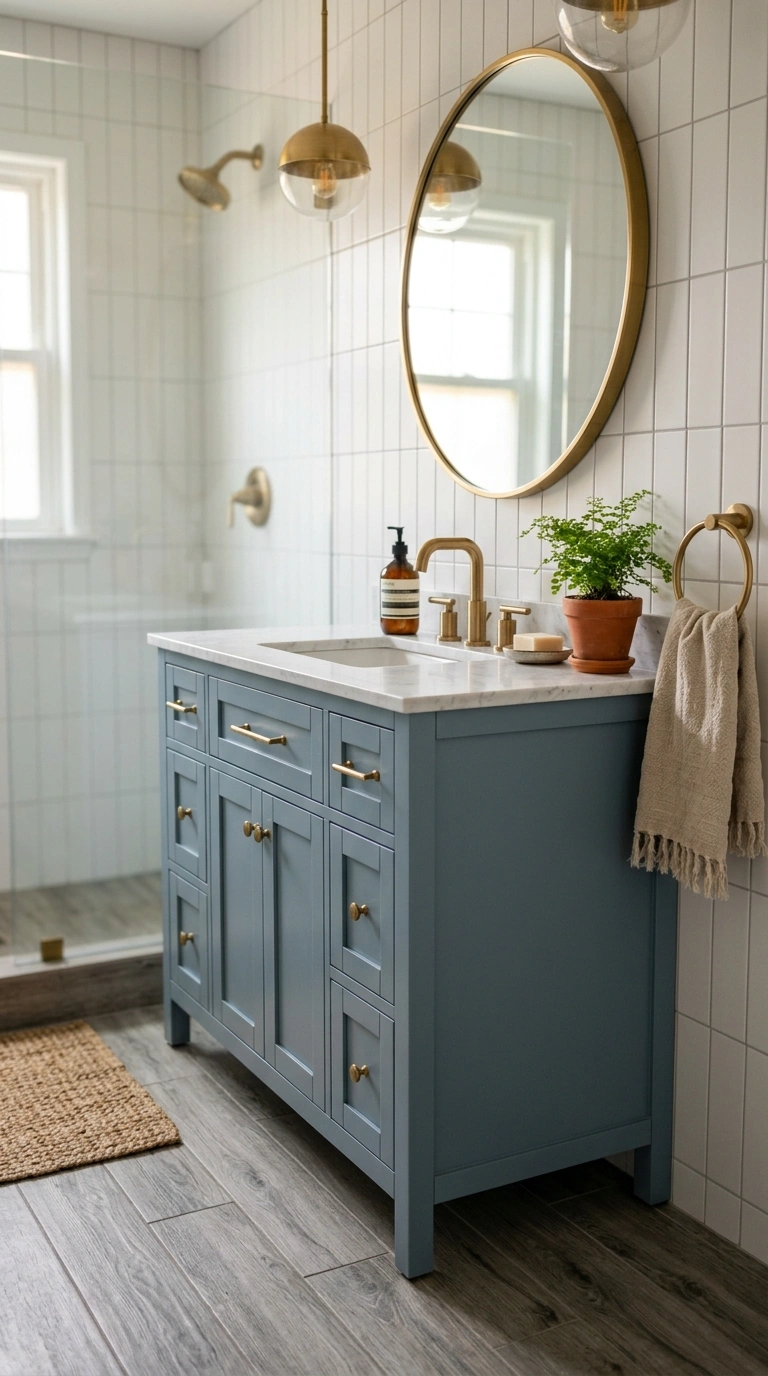
Gray wood-look plank tile on the floor brings warmth and texture that flat gray tile alone cannot offer, while still keeping the cool, calm feeling of the overall palette. Pair the flooring with a blue vanity or blue wall paint to complete the look. This combination works well for anyone who wants the gray and blue palette to feel a little warmer and more livable, since the wood grain pattern softens what could otherwise feel like a strictly modern, cool-toned room. It also mimics the look of real hardwood without the water damage risk in a wet bathroom space.
20. Wrap the Room in Blue and Gray Wallpaper
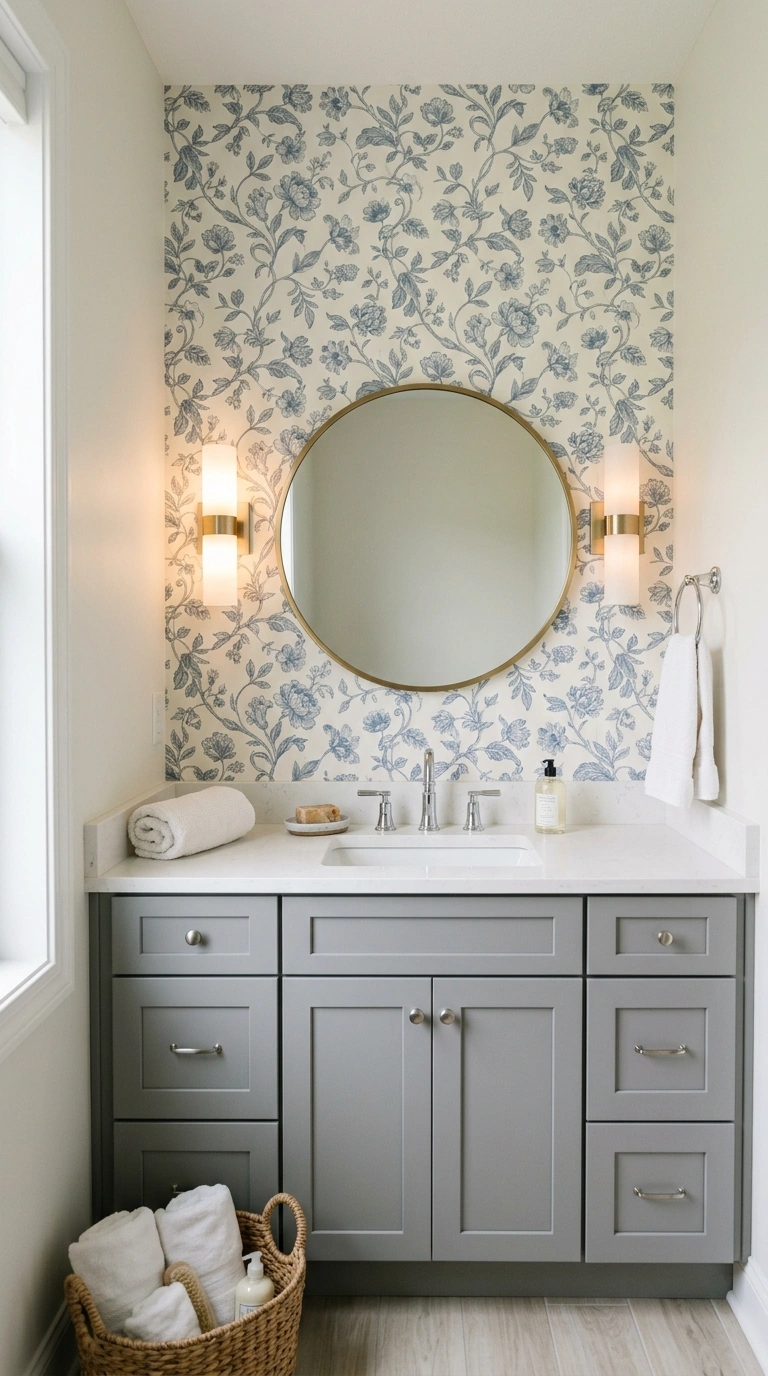
A patterned wallpaper mixing blue and gray, whether in a floral, geometric, or subtle stripe design, brings personality into a bathroom in a way that paint alone cannot. This works especially well in a powder room, where there is less moisture exposure and more opportunity to make a bold style statement, since guests only spend a few minutes in the space at a time. Pair the wallpaper with white trim, a white vanity, and simple chrome or nickel fixtures so the pattern gets to be the clear focal point of the room without competing against other busy elements.
21. Finish With Layered Neutrals and Greenery
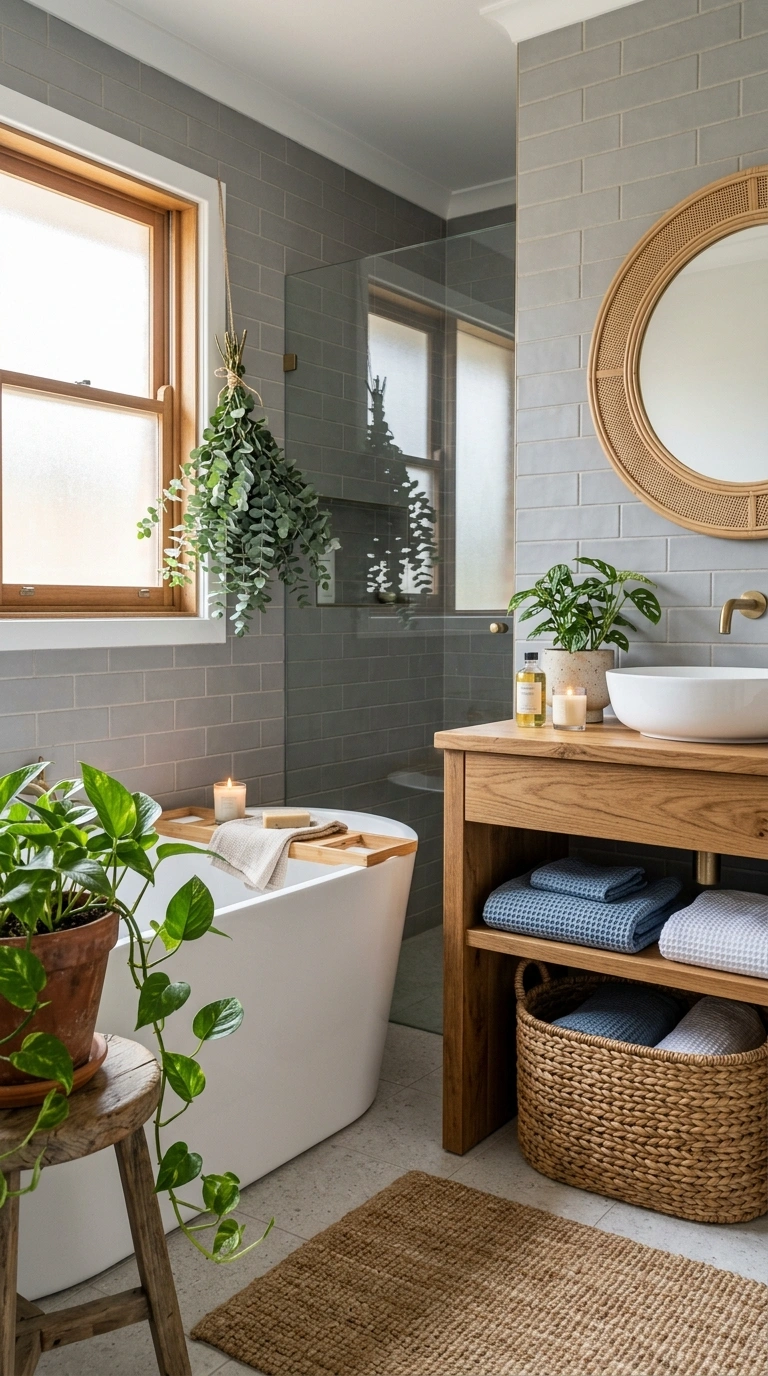
Once the main color scheme is in place, add depth with layers of texture in gray and blue, such as a jute rug, a woven basket for towels, and a small live or faux plant on the counter or windowsill. These small layers keep a gray and blue bathroom from feeling flat or one-note, adding warmth and visual interest without introducing a new color into the mix. This final layer is often what turns a nicely painted or tiled bathroom into a space that actually feels finished and lived in, rather than looking like a showroom display.
Start With One Calming Change
You do not need to redo an entire bathroom at once to bring this color palette into your space. Start with something simple, like new towels, a bath mat, or a fresh coat of paint on one wall, and see how the gray and blue combination feels in your specific room before committing to tile or a new vanity. Small changes add up, and there is no rule that says the whole room needs to happen in one weekend.
Frequently Asked Questions
Do gray and blue go together in a bathroom?
Yes, gray and blue are one of the easiest color pairings to work with in a bathroom. Gray acts as a calm, neutral base while blue adds just enough color and personality without overwhelming the space.
What shade of blue goes best with gray?
It depends on the mood you want. Soft powder blue and dusty blue pair well with lighter grays for an airy feel, while navy and denim blue work better with deeper grays for a bolder, more dramatic look.
How do I keep a gray and blue bathroom from feeling cold?
Bring in warm metal fixtures like brass or gold, add natural textures like wood and jute, and make sure lighting is bright enough to balance the cool tones of the color palette.
Is a blue and gray bathroom timeless?
Yes, this combination has stayed popular for years because it works in both modern and traditional homes, and the shades can be adjusted lighter or darker to match changing trends without losing the overall look.
How do I add gray and blue to a small bathroom?
Stick to lighter shades like powder blue and soft gray, keep trim and ceilings white, and use the color through textiles and small accents rather than covering every surface, which helps the room stay bright and open.