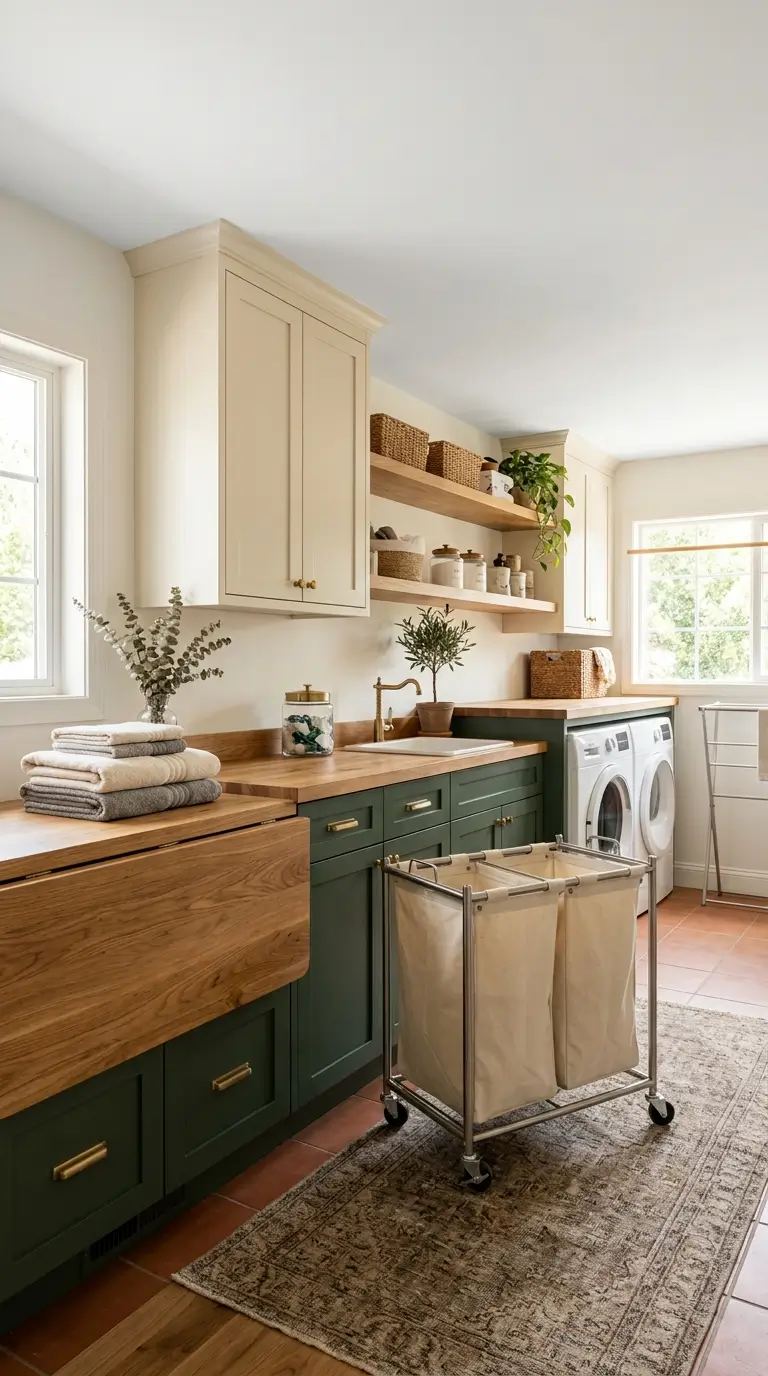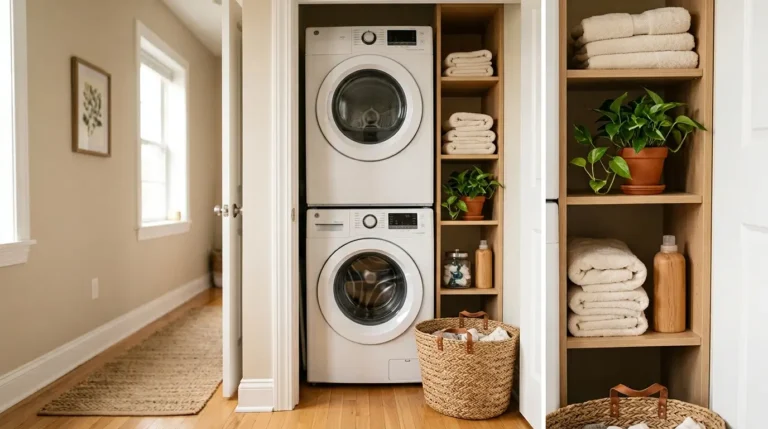
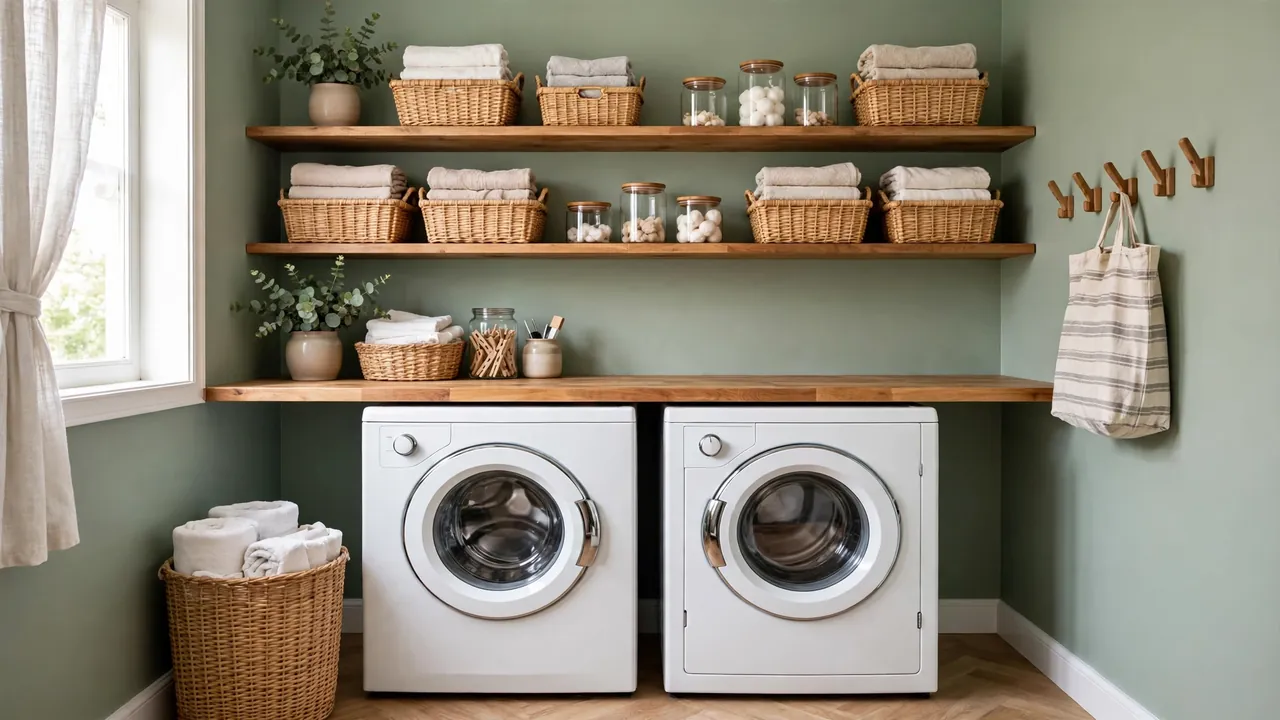
18 Small Laundry Room Ideas That Maximize Every Inch
Small laundry rooms are the most underestimated spaces in the house. Mine was a narrow closet with a washer, a dryer, and approximately zero personality, and doing laundry in it felt like a punishment. But here is the thing I learned: a small laundry room does not need more square footage, it needs smarter inches. Every wall, every gap, every vertical foot is an opportunity. These 18 small laundry room ideas will help you squeeze storage, function, and even a little style out of the tiniest laundry space, whether it is a dedicated room, a hallway nook, or a closet you barely fit into. Every idea here works in a truly small space, because that is the only kind I have ever owned. I have tested every one of these in my own narrow laundry closet, so I know they work when the space is genuinely tight and there is no room to cheat.
1. Go Vertical with Wall Shelving
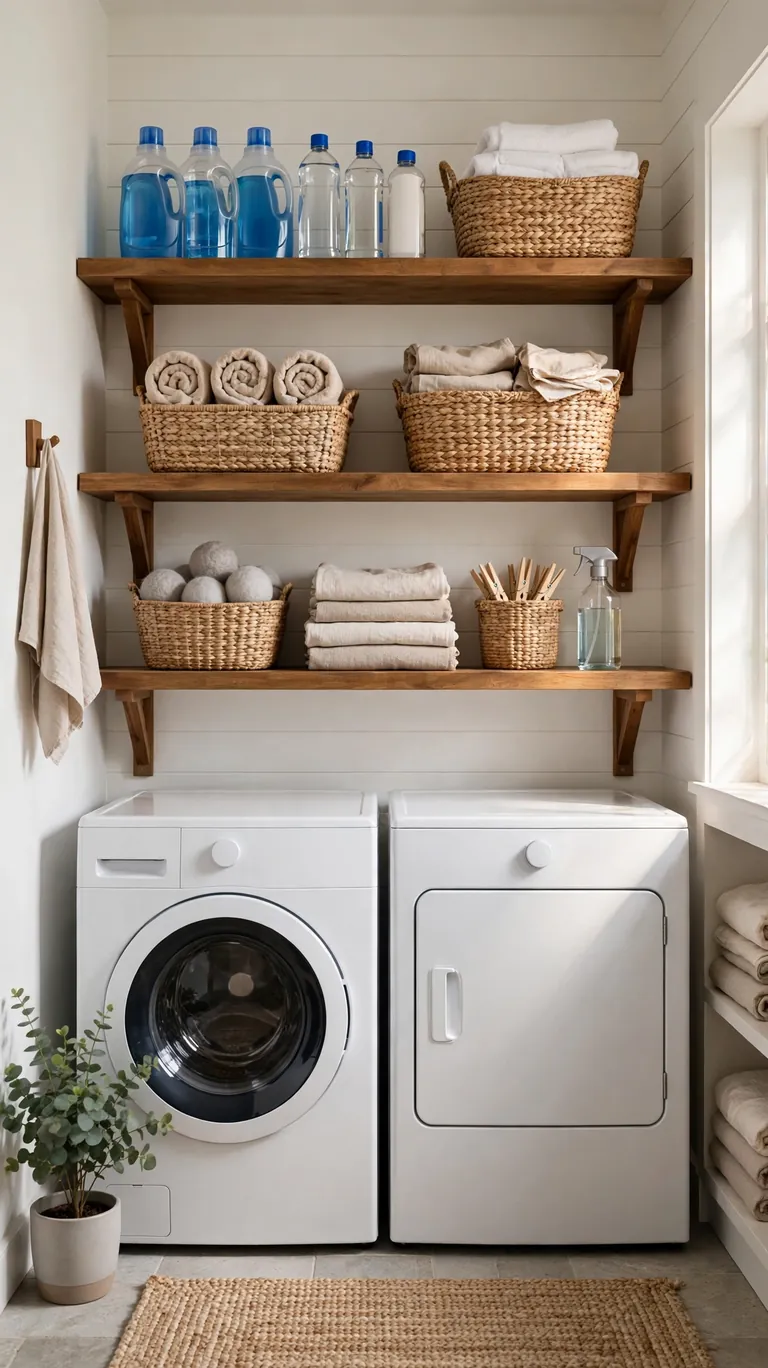
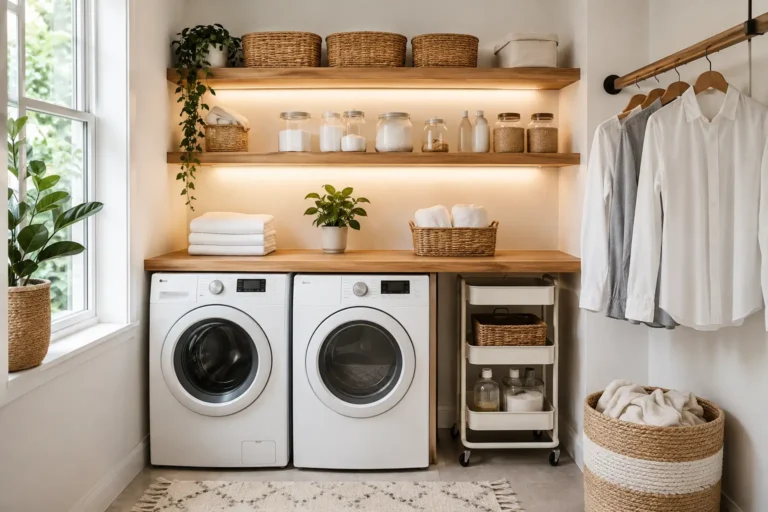
The walls above your washer and dryer are the most valuable real estate in a small laundry room, and most people waste them. I installed two sturdy shelves above my machines, and suddenly the detergent, the stain remover, the dryer sheets, and the spare supplies all had homes. Open shelving works better than cabinets here because you can see everything at a glance, and it costs a fraction of the price.
Mount the shelves into studs or use proper heavy-duty anchors, because laundry supplies are heavier than they look. Keep the everyday items on the lowest shelf where you can reach them without stretching, and put the backups and rarely used things up high. A small step stool tucked beside the machines makes the top shelf actually usable instead of decorative.
2. Add a Countertop Over Front-Loaders
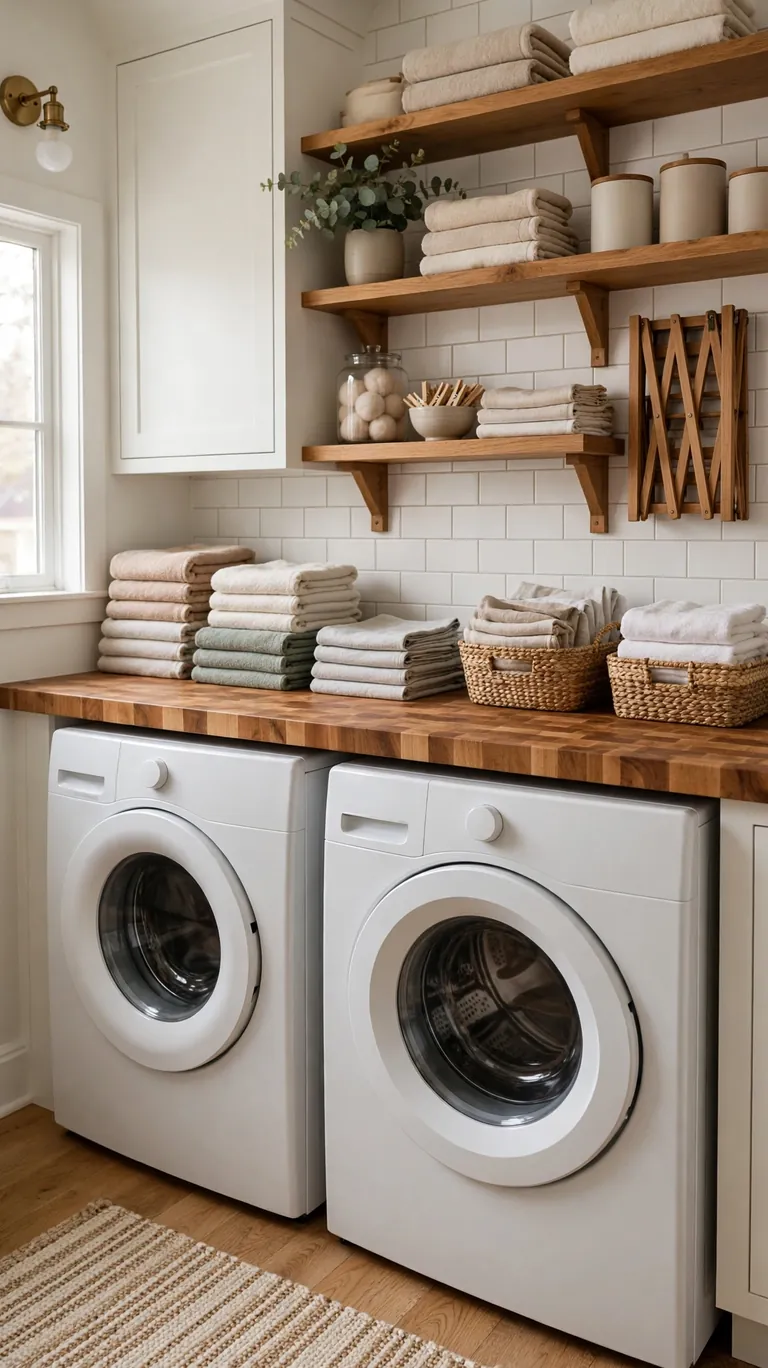
If you have front-loading machines, a simple countertop across the top transforms them into a folding station. I had a piece of butcher block cut to fit mine, and it was the single biggest upgrade to my laundry room. Suddenly I had a place to fold, to sort, and to set the basket down. It also hides the visual clutter of the machines and makes the whole space look finished.
Leave a small gap at the back for hoses and plugs, and make sure the countertop is not resting directly on anything that vibrates loose. Butcher block, plywood with a nice edge, or even a pre-made laminate counter all work. Seal wood tops so they survive the occasional splash. This one addition makes a closet laundry feel like a real room.
3. Install a Fold-Down Drying Table
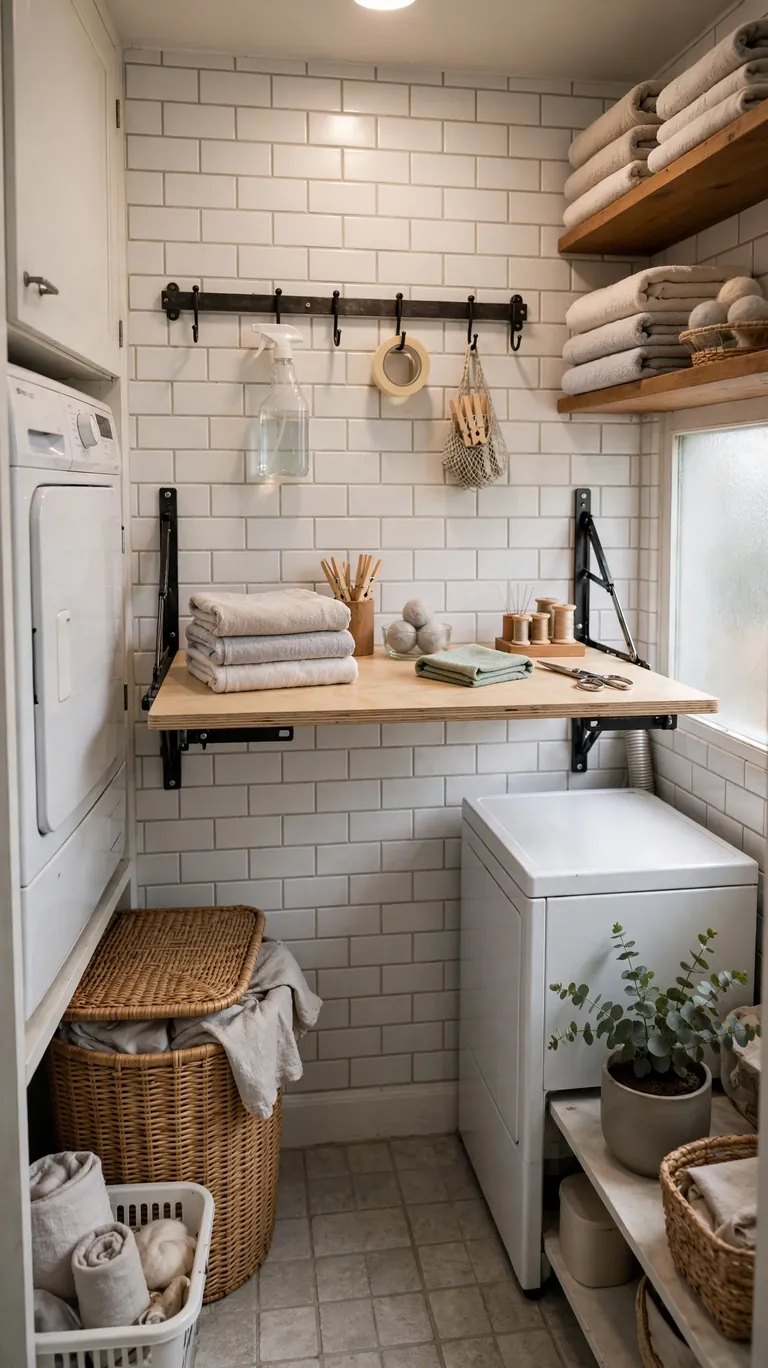
A wall-mounted fold-down table is genius in a small laundry room. Mine folds flat against the wall when I do not need it and drops down to a full folding surface when I do. It is basically a murphy bed for laundry. You get a real work surface without permanently sacrificing a single square foot of floor space.
Mount it at a comfortable folding height, around counter height, and make sure the brackets lock securely. Do not overload it beyond what the hardware is rated for, because a collapsing table full of wet laundry is a mess you only want to imagine once. When it is folded up, the wall behind it can hold hooks or a small shelf, so even the folded state works hard.
4. Slide a Rolling Cart into the Gap
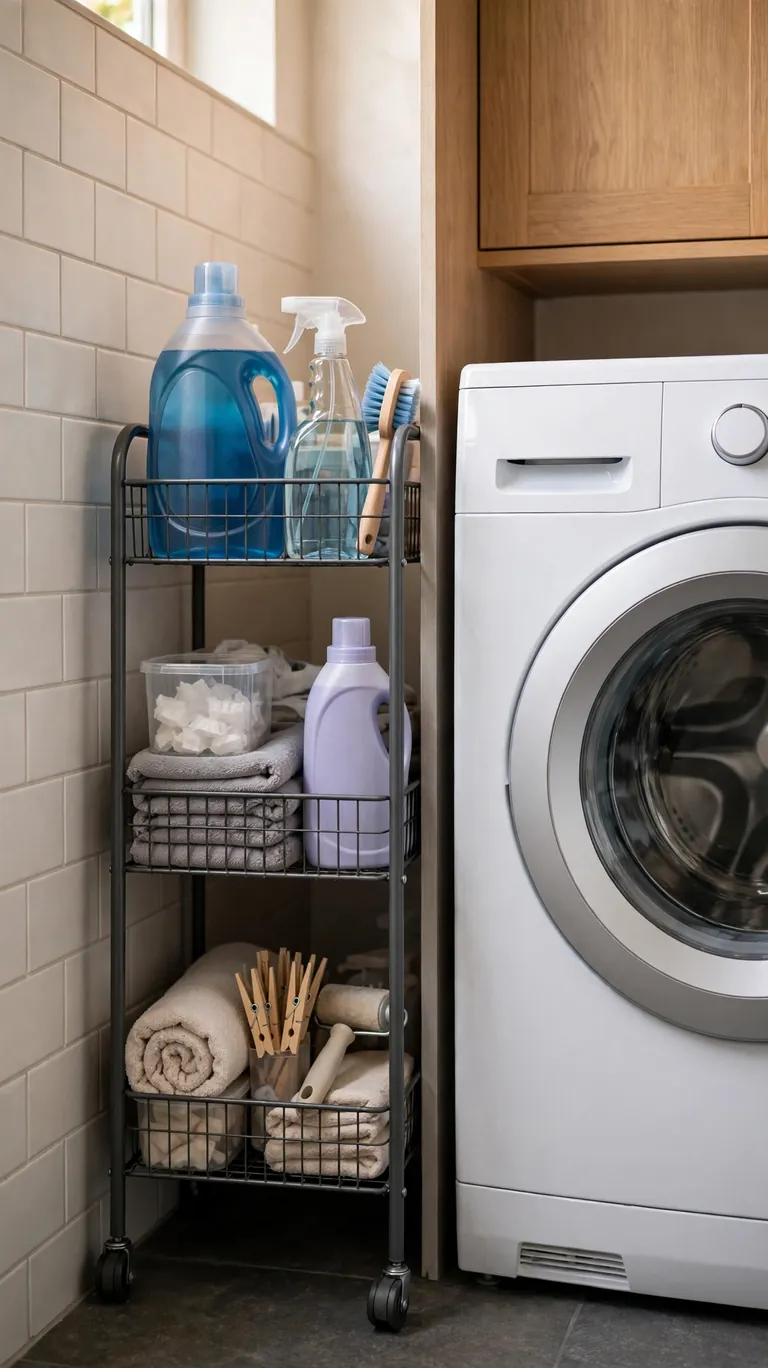
That narrow gap between the washer and the wall is not dead space, it is a storage slot. I bought a slim rolling cart that fits exactly in mine, and it holds detergent pods, stain sticks, dryer sheets, and all the little things that used to clutter the countertop. It rolls out when I need something and disappears when I do not.
Measure the gap before you buy, because these carts come in specific widths and a cart that does not fit is just clutter. Look for one with multiple tiers and a stable base that will not tip when fully loaded. This is one of the cheapest ideas on the list, and it solves the “where do I put all this stuff” problem instantly.
5. Sort with Stacked Baskets or Hampers
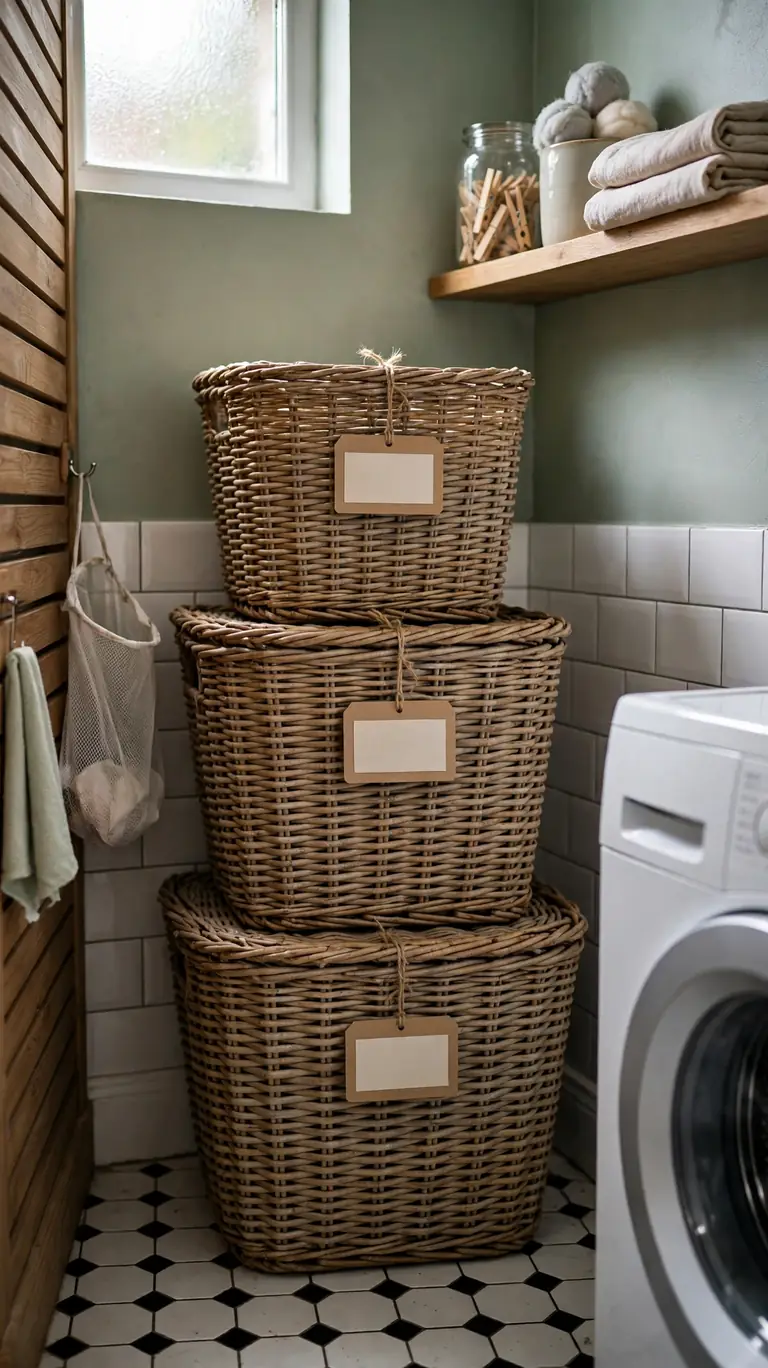
Sorting is half the laundry battle, and stacked baskets make it effortless. I use three stackable baskets labeled lights, darks, and delicates, and the family sorts as they toss. By wash day, the sorting is already done. In a small room, vertical stacking beats three baskets sprawling across the floor.
Choose baskets that are sturdy enough to carry when full, because a flimsy basket of wet towels is a disaster. Mesh or ventilated sides prevent that stale laundry smell. And put the baskets where people will actually use them. A sorting system in the laundry room only works if the dirty clothes make it there, so consider a hamper in the bedroom too.
6. Mount a Wall-Mounted Drying Rack
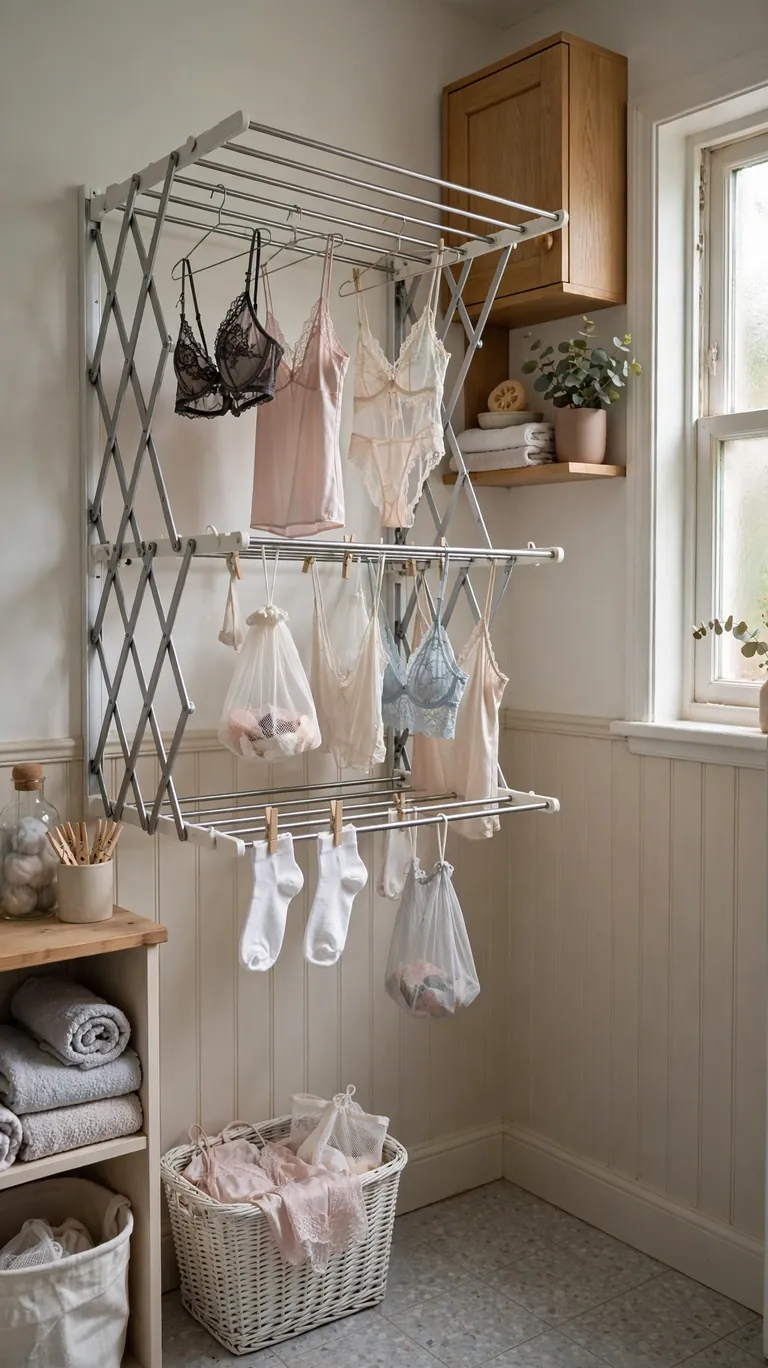
Delicates and air-dry items need space, and a wall-mounted accordion drying rack gives it to you without eating the floor. Mine folds flat against the wall when empty and expands to hold a full load of delicates. It is infinitely better than draping wet clothes over every available surface.
Mount it somewhere with airflow, near a vent or a window if possible, because still damp air slows drying. Do not overload it, because wet clothes are heavy and the rack will sag. This is also perfect for renters, since many models mount with just a few screws that are easy to patch later.
7. Hang Hooks for Delicates and Bags
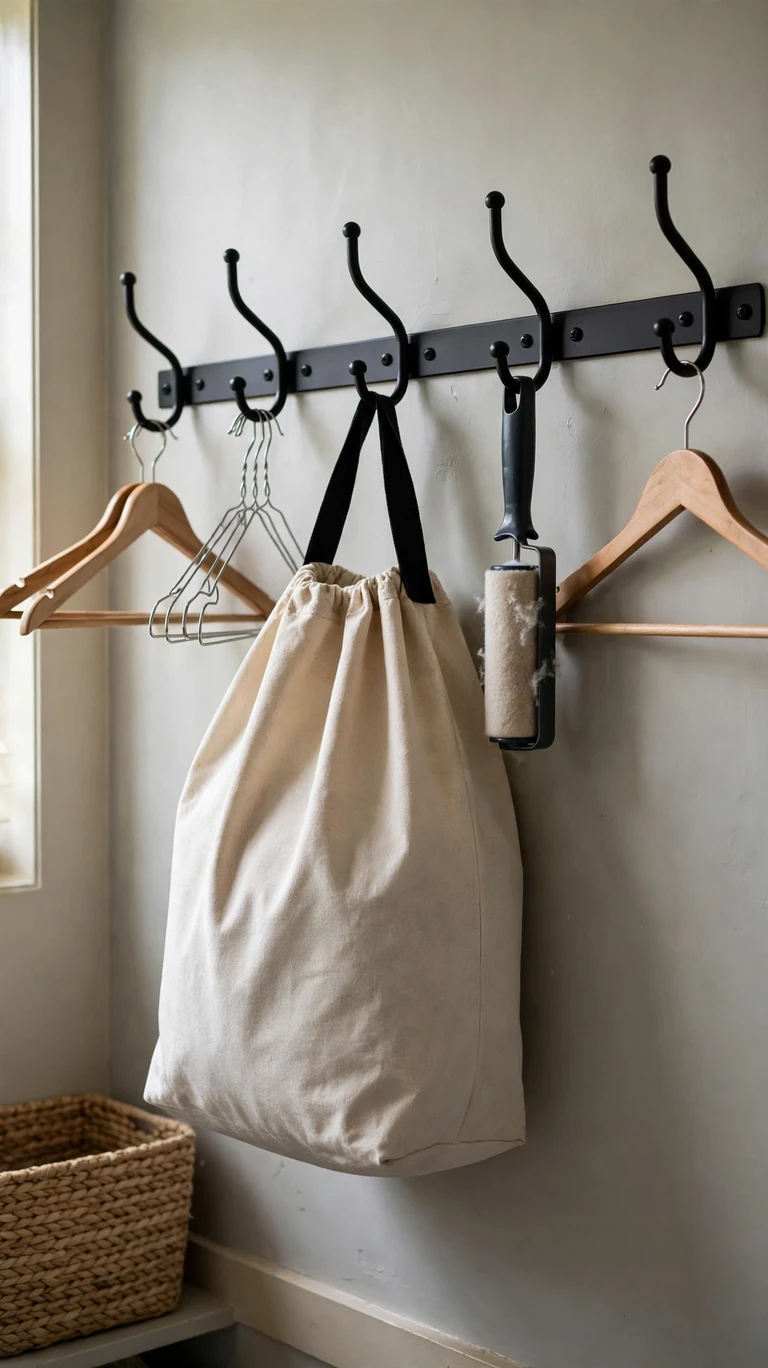
A row of sturdy hooks on any free wall section handles all the odd jobs: delicates drying on hangers, the laundry bag, the lint roller, the ironing spray. I put a row of five hooks on the wall beside my machines, and they are in constant use. Hooks are cheap, easy to install, and they turn blank wall into working wall.
Use hooks rated for real weight, not the tiny decorative ones, because a wet sweater is heavier than you think. Space them far enough apart that items do not overlap and stay damp. And keep one hook permanently free for the “needs attention” item, the stained shirt or the thing that needs mending, so it does not get lost in a clean pile.
8. Hide Supplies Behind a Curtain
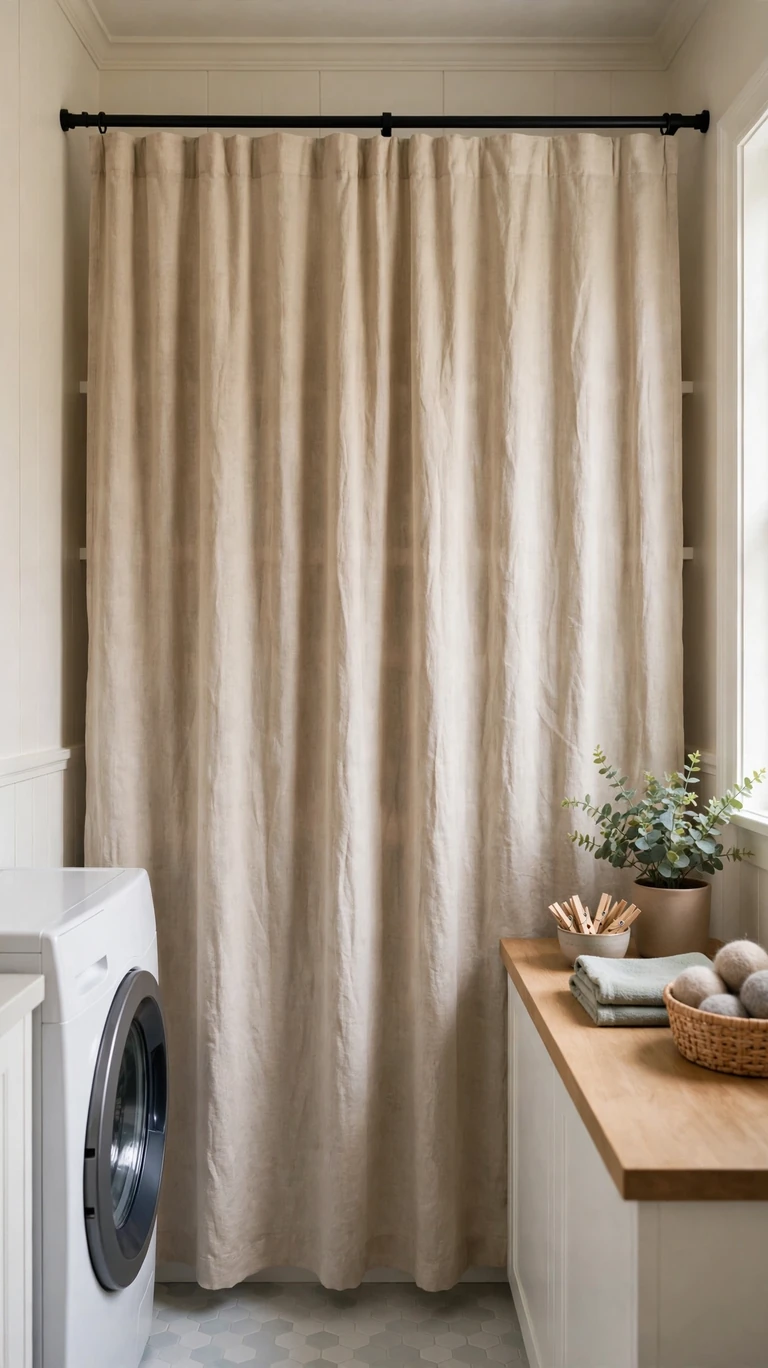
Open shelving is practical, but sometimes you just want the visual noise gone. I hung a simple curtain on a tension rod in front of my supply shelves, and the laundry room instantly looked calmer. It is the cheapest “renovation” possible, and it hides everything from detergent bottles to the ironing board.
Choose a washable fabric in a color you like, because laundry rooms are humid and things get dusty. A curtain also works brilliantly to hide a stacked washer and dryer in a hallway or kitchen nook. When guests come over, you just pull it closed. Out of sight, out of mind, and the room looks twice as tidy.
9. Use the Back of the Door
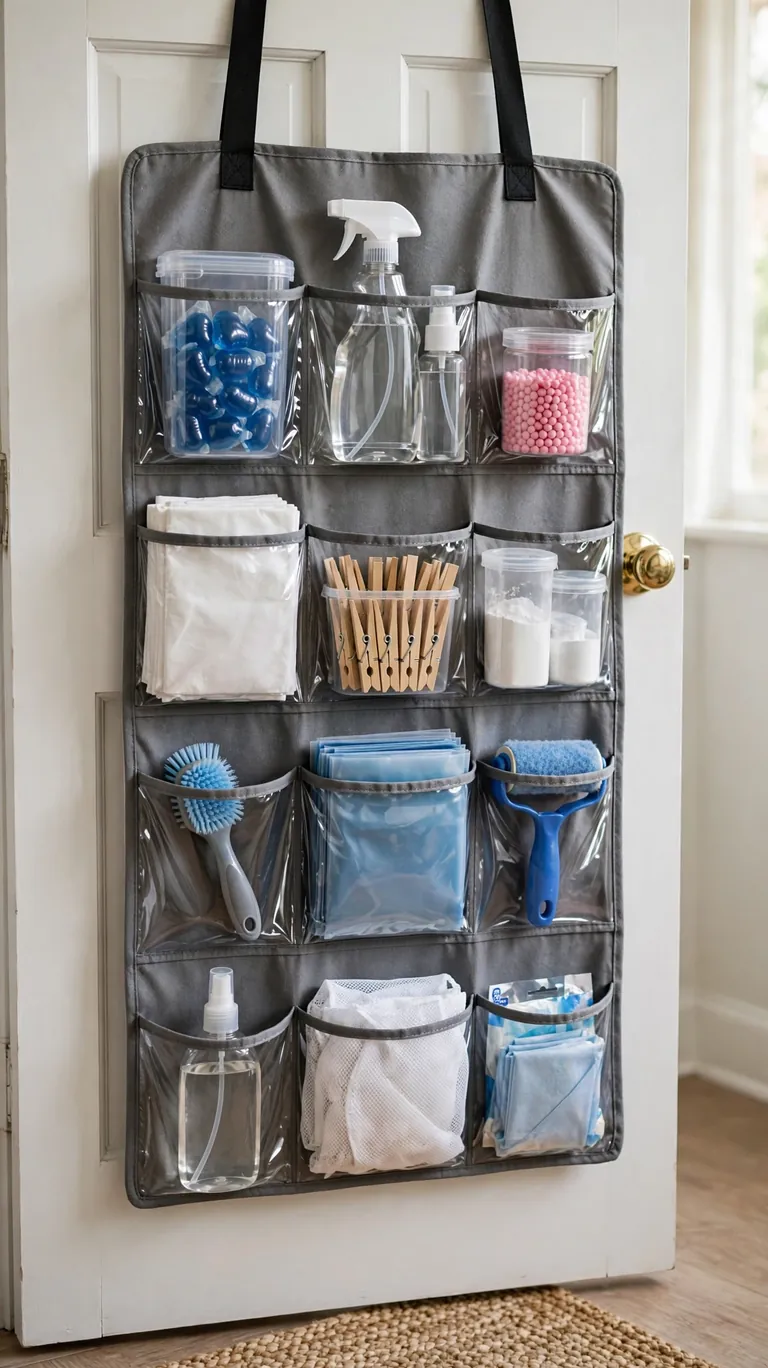
The back of the laundry room door is free storage most people ignore. I hung an over-the-door organizer with clear pockets, and it holds dryer sheets, stain pens, sewing kits, lint rollers, and all the small things that disappear into drawers. Everything is visible and reachable, and it uses zero wall or floor space.
Make sure the organizer does not prevent the door from closing fully, and choose one with sturdy hooks that will not scratch the door. Clear pockets beat opaque ones because you can see what you need without digging. This is a renter’s best friend, since it requires zero holes in the wall.
10. Decant Detergent into Pretty Jars
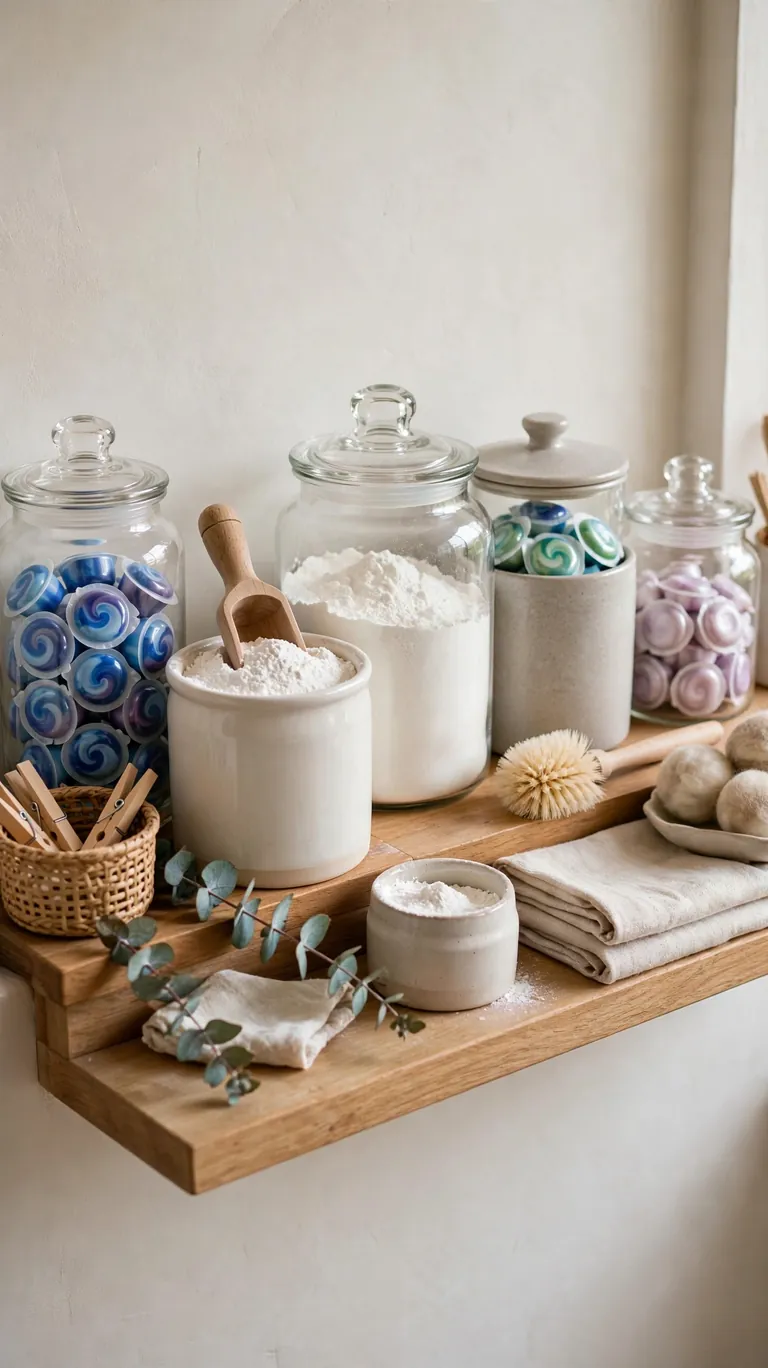
Laundry supplies come in ugly packaging, and decanting them is the fastest visual upgrade. I put detergent pods in a glass jar, powder in a ceramic canister, and clothespins in a small basket. The shelf went from cluttered to styled in ten minutes. It is a small thing, but you look at these supplies every single wash day.
Label everything clearly, especially if kids are around, because a pretty jar of pods looks like candy to a toddler. Keep the original packaging with safety info stored elsewhere, or take a photo of the labels. Choose containers with lids that seal, because humidity makes powder clump and pods stick together.
11. Upgrade the Lighting
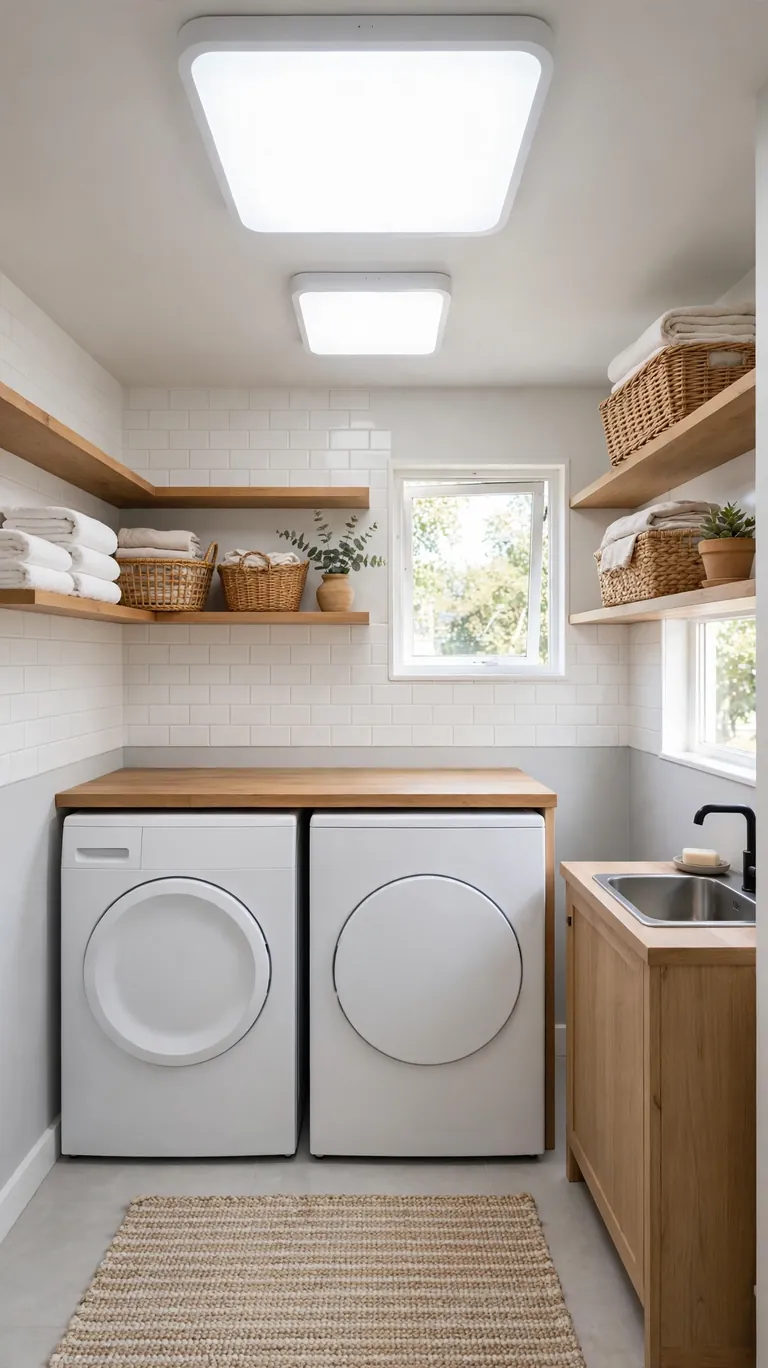
Laundry rooms are notoriously badly lit, and bad lighting makes stain-checking impossible. I swapped my dim builder-grade fixture for a bright daylight LED, and suddenly I could actually see what I was doing. Good light also makes the small space feel bigger and cleaner, which is half the battle.
Choose a daylight-temperature bulb, around 5000K, for the main light, because it shows true colors for stain treatment. If the room has no window, the bright light matters even more. A small battery puck light inside a dark cabinet is a nice bonus. You cannot fix what you cannot see, and that applies to stains most of all.
12. Add a Small Rug or Runner
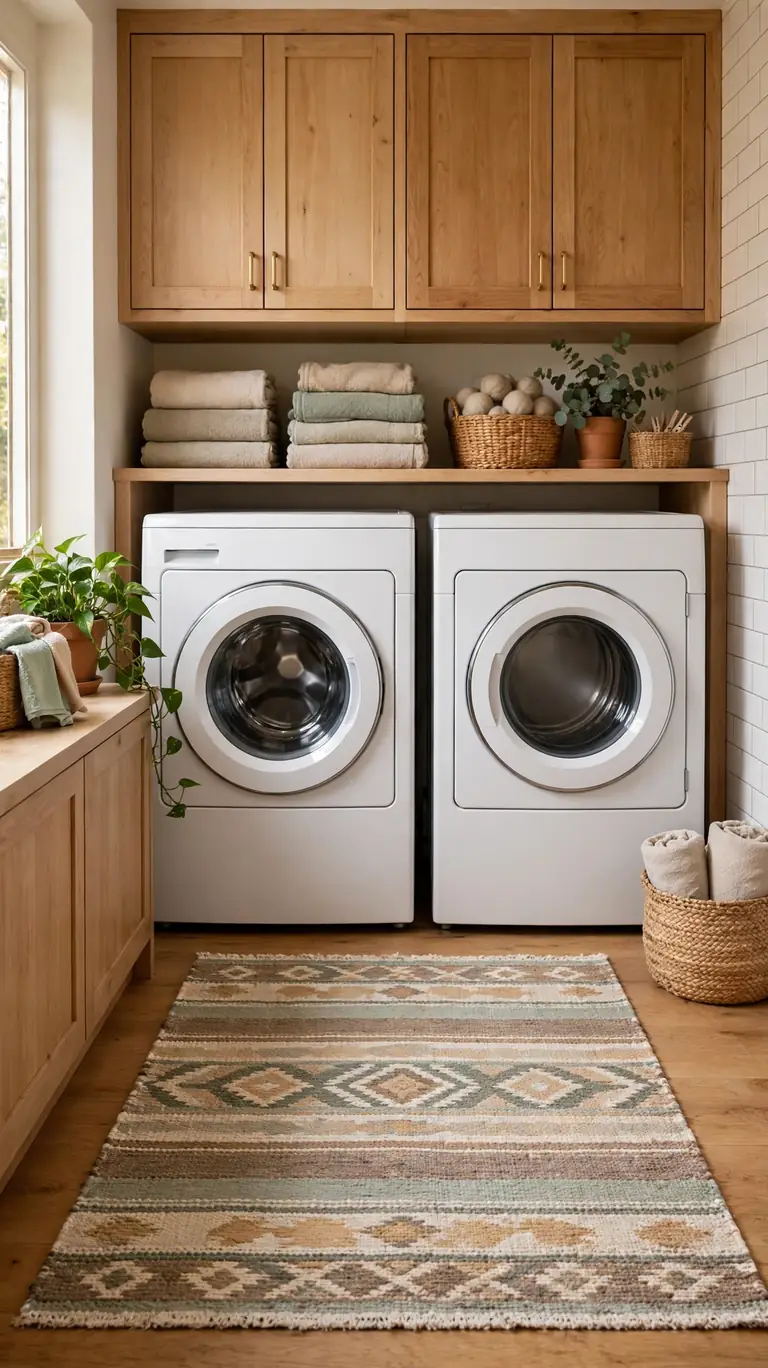
A washable rug in the laundry room makes the space feel intentional instead of industrial. I put a low-pile runner in front of my machines, and it softened the whole room. It also catches the lint and drips that would otherwise end up on the bare floor, and it feels better underfoot during long folding sessions.
Choose a rug you can throw in the wash, because laundry rooms are messy by nature. Low pile is essential so the washer and dryer doors still open and the rug does not become a trip hazard. A runner with a little pattern hides lint between washes, which is a practical blessing.
13. Install a Pull-Out Ironing Board
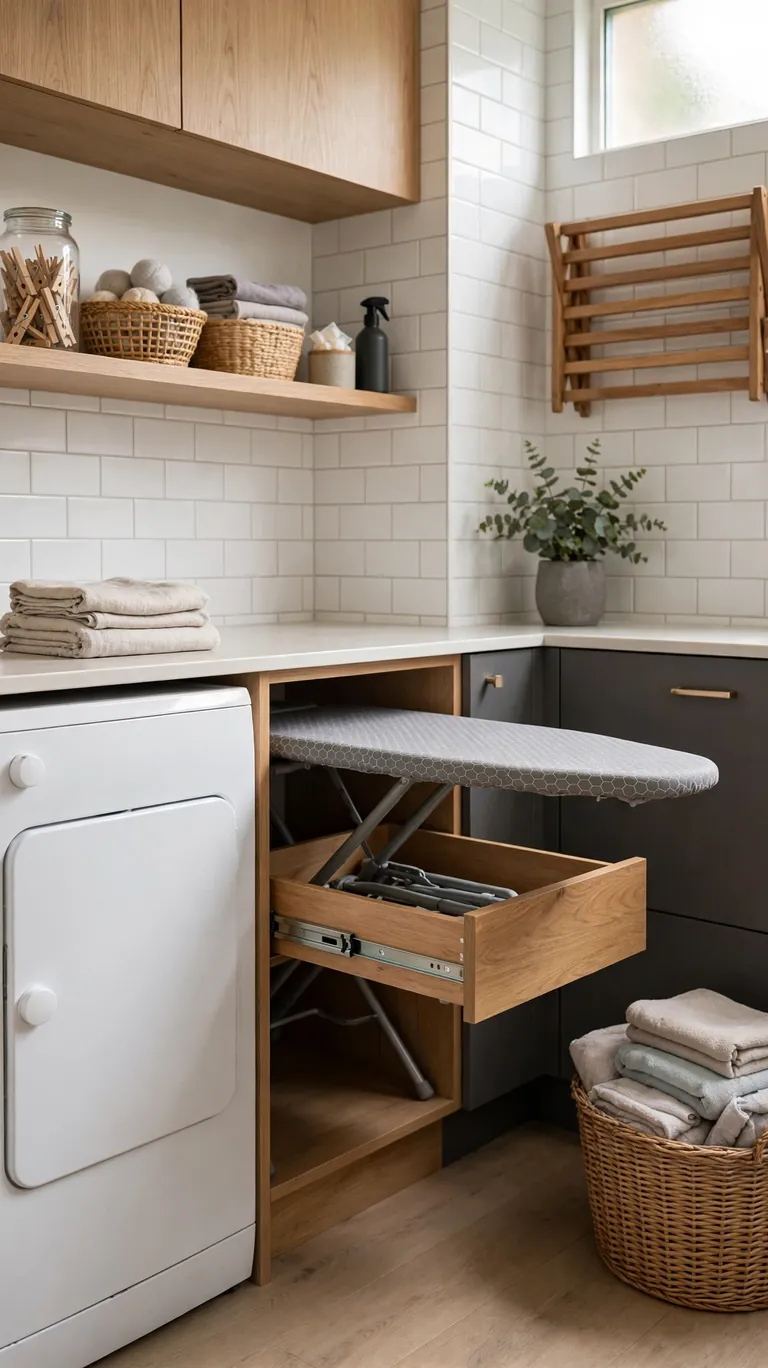
A full-size ironing board eats an absurd amount of space in a small laundry room. I switched to a pull-out board that lives in a drawer, and it changed everything. It slides out when I need it and vanishes when I do not. For quick touch-ups, a small tabletop board on the counter works just as well.
If a pull-out is not in the budget, a wall-mounted fold-down ironing board is the next best thing. Keep the iron stored nearby, ideally on a heat-safe surface, so the whole setup is ready in seconds. The easier ironing is to start, the more likely you are to actually do it instead of wearing the wrinkles.
14. Create a Stain Treatment Station
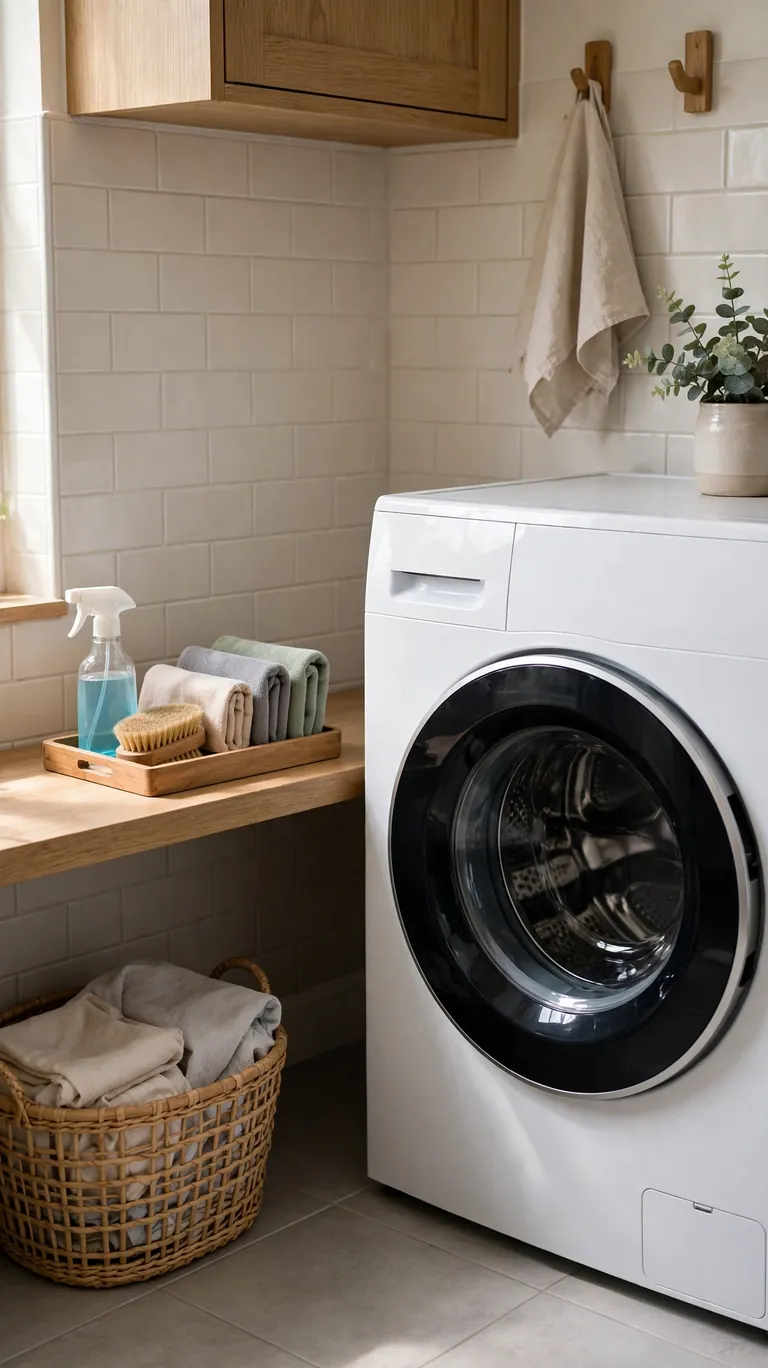
Stains need immediate attention, so give them a dedicated spot. I keep a small tray by the machines with stain remover, a soft brush, white cloths, and a little dish of baking soda. When something stained comes out of the hamper, it goes straight to the tray instead of sitting and setting. This one habit has saved more clothes than any other.
Keep the station stocked and the products fresh, because an empty tray helps nobody. A laminated stain-removal cheat sheet taped inside a cabinet door is surprisingly useful. And treat stains before they go in the dryer, because heat sets most stains permanently. The station makes the right habit the easy habit.
15. Use Pegboard for Flexible Storage
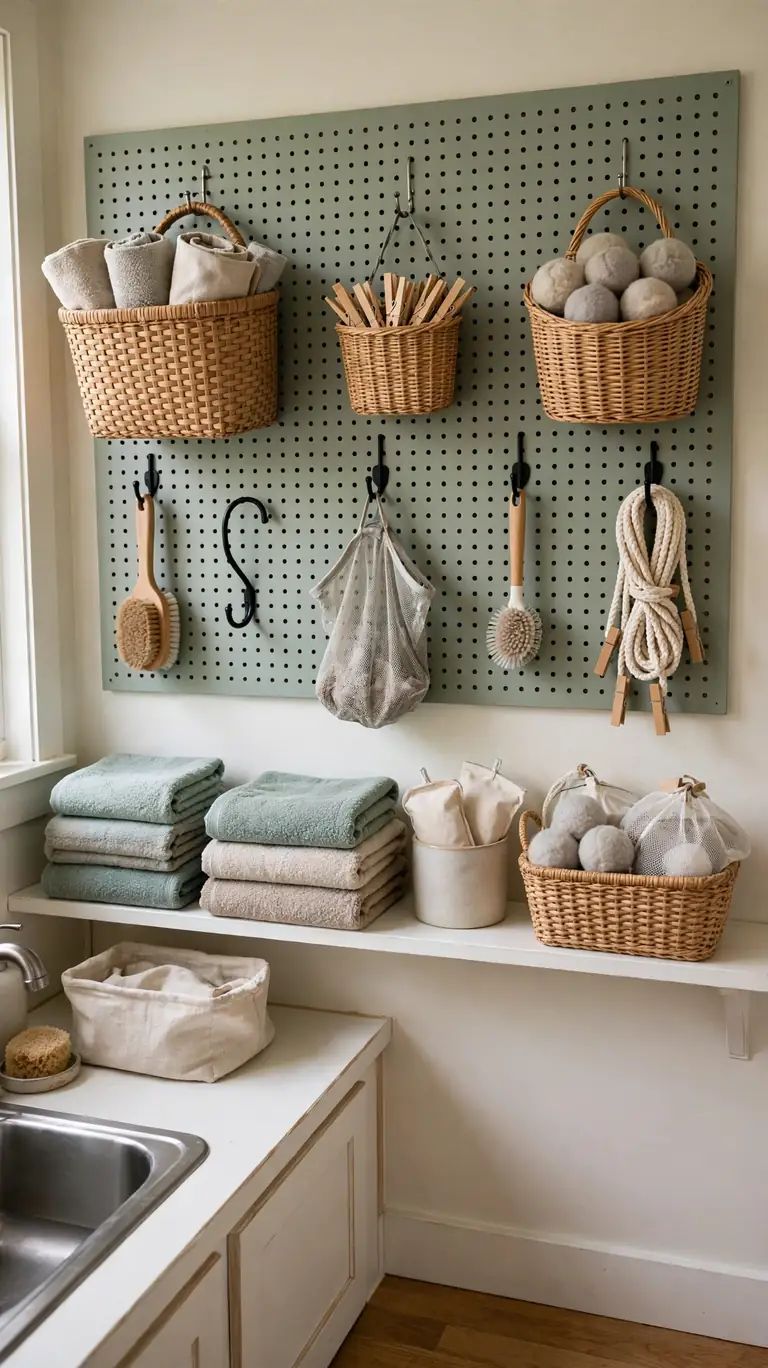
Pegboard is the most flexible storage in existence, and it is perfect for laundry rooms. I mounted a pegboard panel on my largest free wall and hung baskets, hooks, and small shelves on it. When my needs change, I just move the pegs. No new holes, no wasted space, total adaptability.
Paint the pegboard to match your walls so it looks intentional rather than workshop-y. Use a frame around it for a finished look. And do not overload any single hook beyond what it is rated for. Pegboard is wonderful, but it is not magic, and a collapsed shelf of detergent is a lesson you learn once.
16. Add Under-Shelf Baskets
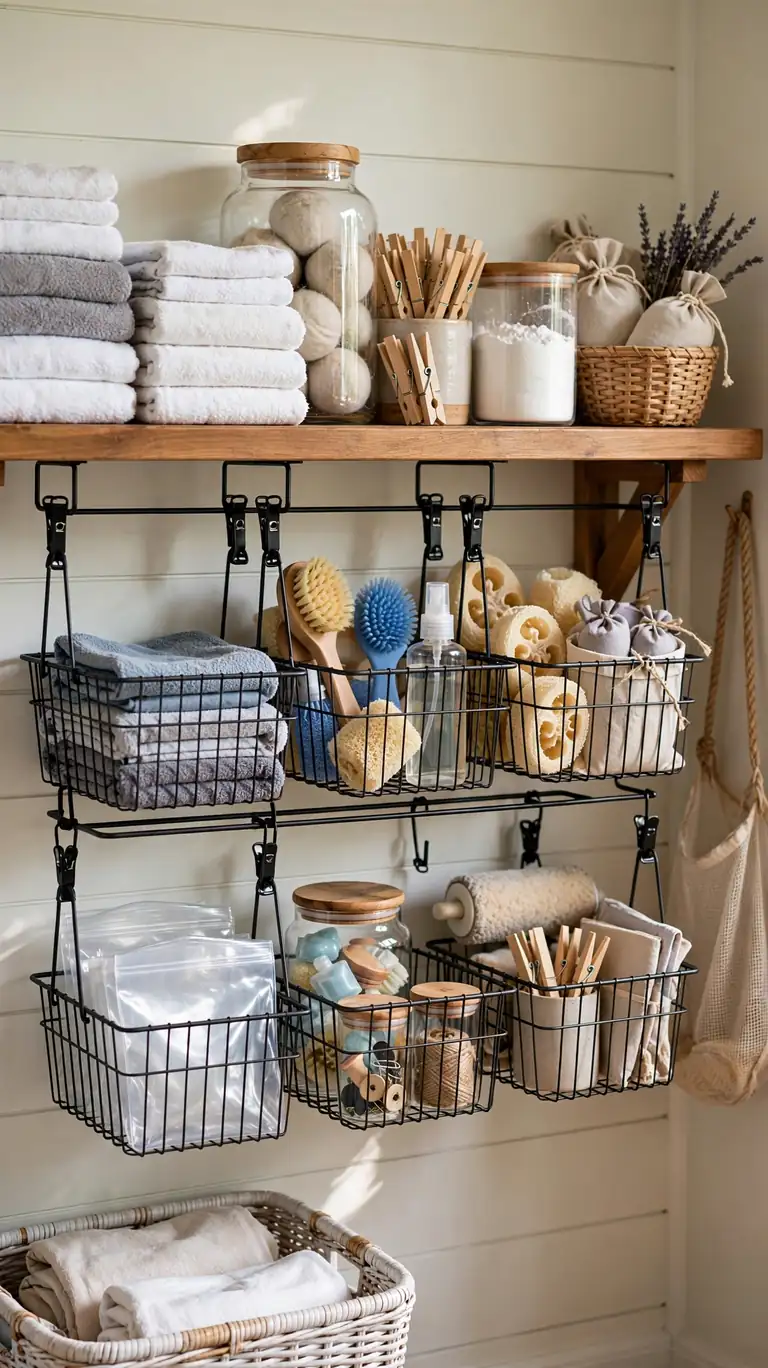
Under-shelf baskets are the secret to doubling your shelf space. They clip onto existing shelves and create a second layer for small items: dryer sheets, delicates bags, spare buttons, the sewing kit. I added three to my laundry shelves and gained the equivalent of another whole shelf without installing anything.
Measure your shelf thickness before buying, because the clips are size-specific. Do not put heavy items in them, they are for light things. And keep them organized by category, because a basket of random small things is just a junk drawer hanging in the air.
17. Paint It a Color You Love
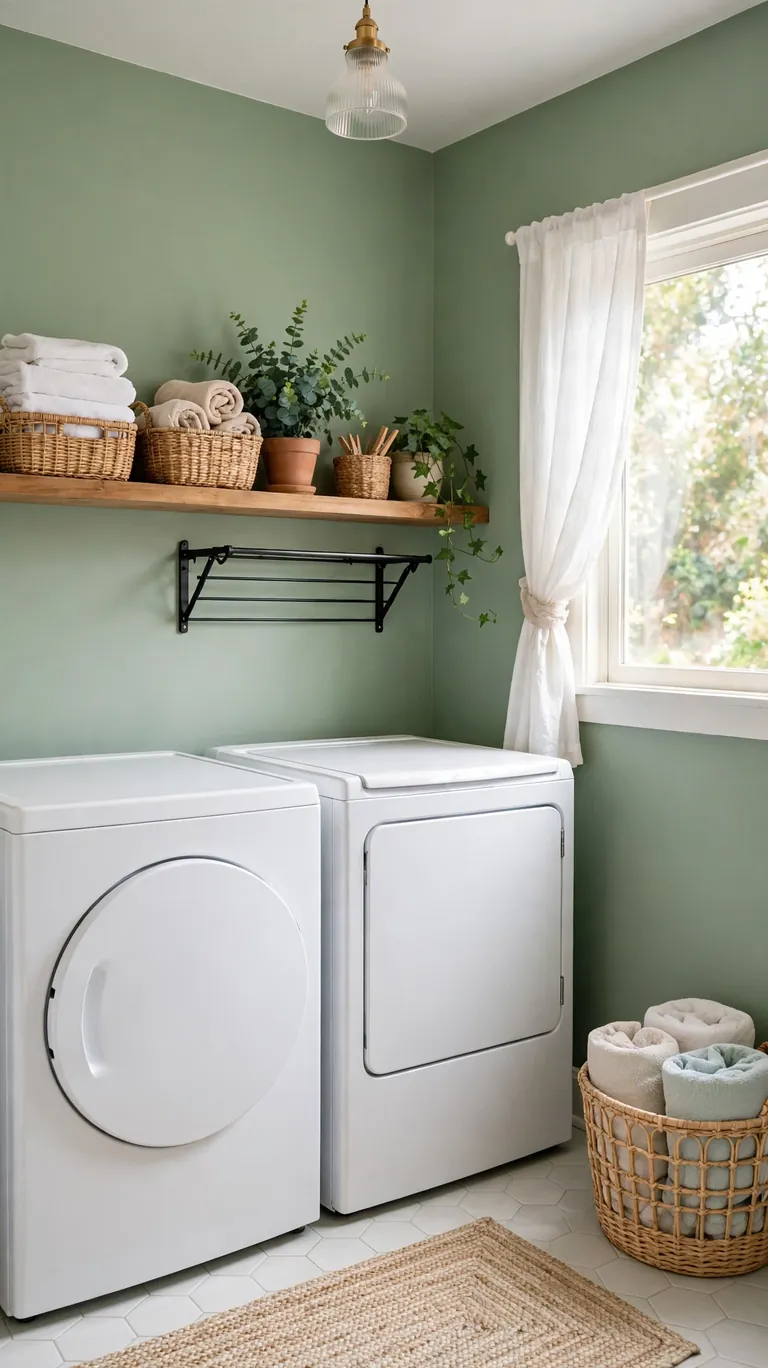
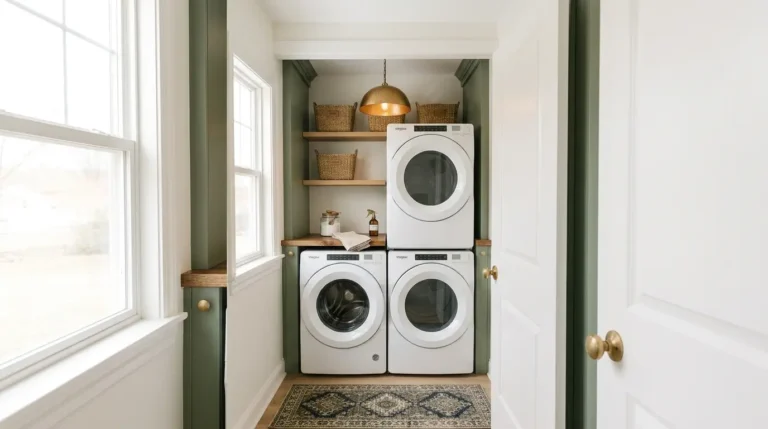
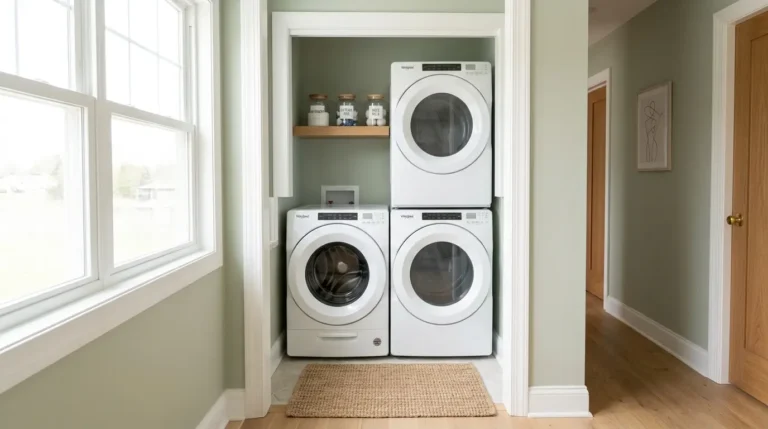
Laundry rooms are usually builder beige, and a coat of paint is the cheapest transformation available. I painted mine a soft sage green, and doing laundry genuinely became less miserable. Color makes the room feel intentional, and in a small space the effect is dramatic. You see the walls every time you walk in, so make them pleasant.
Choose a paint with a satin or semi-gloss finish, because laundry rooms are humid and flat paint shows every splash. Light or mid-tone colors keep a small room feeling open, while a dark moody color can work if the lighting is good. One weekend, one gallon, one completely different room.
18. Keep a Donation Bag Going
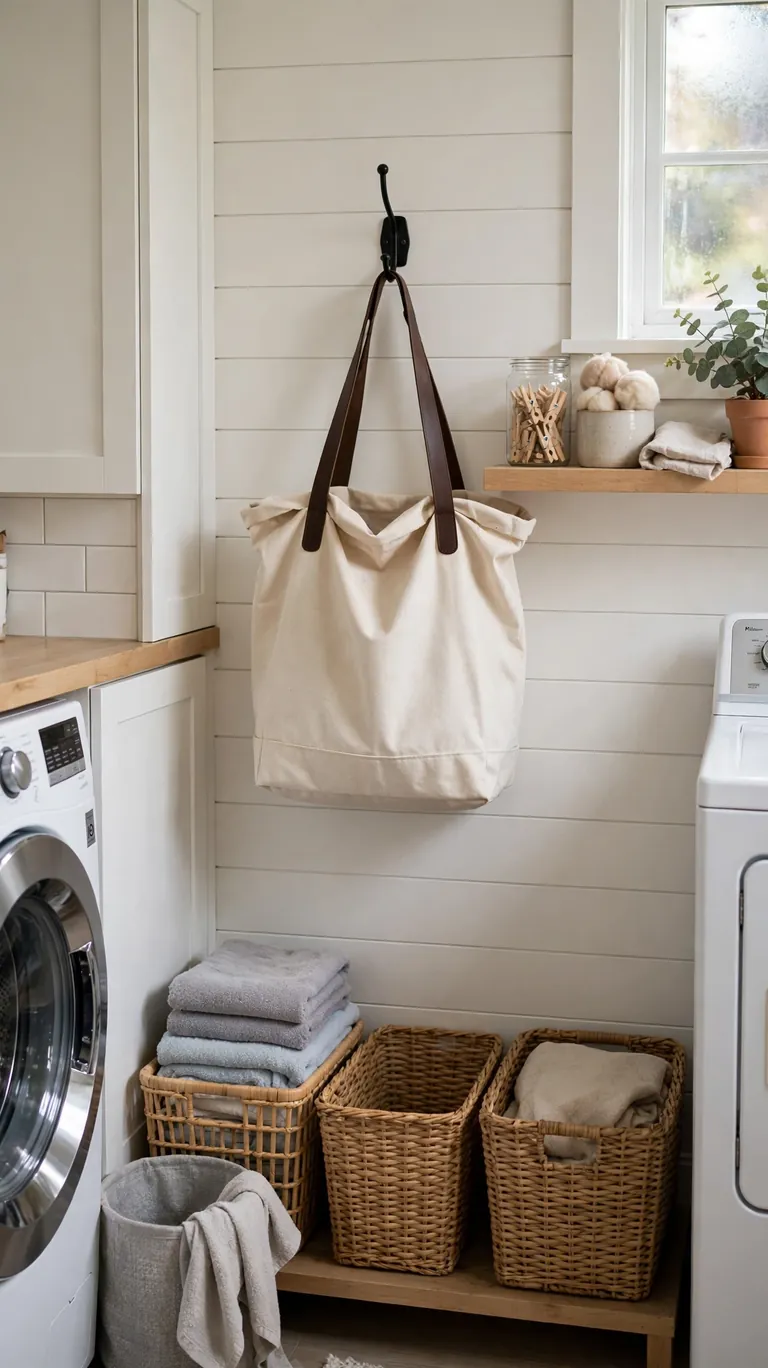
Laundry day is the perfect decluttering moment, because you are already handling every piece of clothing you own. I keep a donation bag hanging on a hook in the laundry room, and anything stained beyond saving, outgrown, or never worn goes straight in. When the bag is full, it goes to the donation bin. No second-guessing, no “maybe” pile.
Use a sturdy bag with handles that is easy to carry when full. Make the rule simple: if you would not buy it again today, it goes in the bag. This habit keeps the laundry volume down over time, because fewer clothes means smaller loads. A small laundry room works best with a streamlined wardrobe, and the donation bag is how you get there.
Frequently Asked Questions
How do I organize a very small laundry closet?
Think in layers: floor, machines, walls, door. The floor holds stacked sorting baskets. The machines get a countertop for folding. The walls get shelves, hooks, and a drying rack. The door gets an over-the-door organizer. Every surface works. Keep only daily-use items in the closet and store backups elsewhere. And be ruthless about what earns space. In a closet laundry, every item must justify its square inches.
What is the best way to add storage without drilling?
Over-the-door organizers, tension rods, rolling carts, and freestanding shelves are all drill-free. Adhesive hooks work for light items, though they struggle in humid laundry rooms, so choose ones rated for bathrooms. A curtain on a tension rod hides clutter without a single hole. Renters can do almost everything on this list without touching the walls, which is the beauty of small-space laundry solutions.
How can I make a laundry room look nice on a budget?
Paint is the biggest bang for the buck, followed by decanting supplies into matching containers and adding a washable rug. These three changes cost very little and completely transform the feel. Thrift the baskets and jars. Use what you have for the rest. A laundry room does not need to be fancy. It needs to be clean, organized, and pleasant enough that you do not dread walking in.
Front-loader or top-loader for a small laundry room?
Front-loaders win for small spaces because you can stack them or put a countertop over them, instantly gaining a folding surface. Top-loaders need clearance above for the lid, which wastes the vertical space. If you are buying new for a tight room, front-loaders are the practical choice. If you already own top-loaders, work around them with wall storage instead. The machines you have are fine. The storage around them is what matters.
How do I keep a small laundry room from smelling musty?
Ventilation is everything. Leave the washer door open between loads so the drum dries out, and run the room’s vent fan during and after wash days. Clean the washer monthly with a hot empty cycle, because buildup is the main source of the smell. Mesh hampers beat sealed plastic ones for airflow. And fix any leaks immediately, because a small drip in a small room becomes a big mildew problem fast.
Conclusion
A small laundry room is not a problem to solve, it is a puzzle to enjoy. Every hook, shelf, and rolling cart is a small victory, and the room gets better with each one. You do not need to do all 18 ideas this weekend. Start with the one that annoys you most, maybe the cluttered supplies, maybe the missing folding space, maybe just the terrible lighting, and fix that first. Then fix the next thing. Before long, your tiny laundry space will work harder than rooms three times its size, and doing laundry will stop feeling like a chore you dread. The best small laundry room is not the biggest one. It is the one where everything has a place, everything is reachable, and you can find the stain remover without digging through a pile. That is a room that earns its keep every single week. And honestly, once the system works, you might even start to like laundry day. Stranger things have happened.