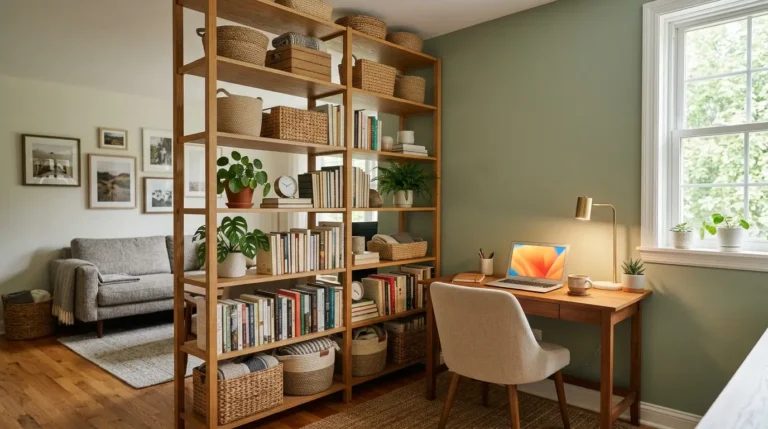
21 Apartment Dog Corner Ideas for the Crate, Bed and Toys
In most apartments, the dog stuff wins. The crate sits in the middle of the living room because there is nowhere else to put it, the bed gets kicked into a walkway, toys live wherever they were last dropped, and the bowls slide around the kitchen floor.
The usual advice does not help much. Give the dog a room of its own, build a custom nook, move to a bigger place. Renters and small space owners need ideas that work inside the floor plan they already have, without drilling into walls they do not own or giving up the corner they read in.
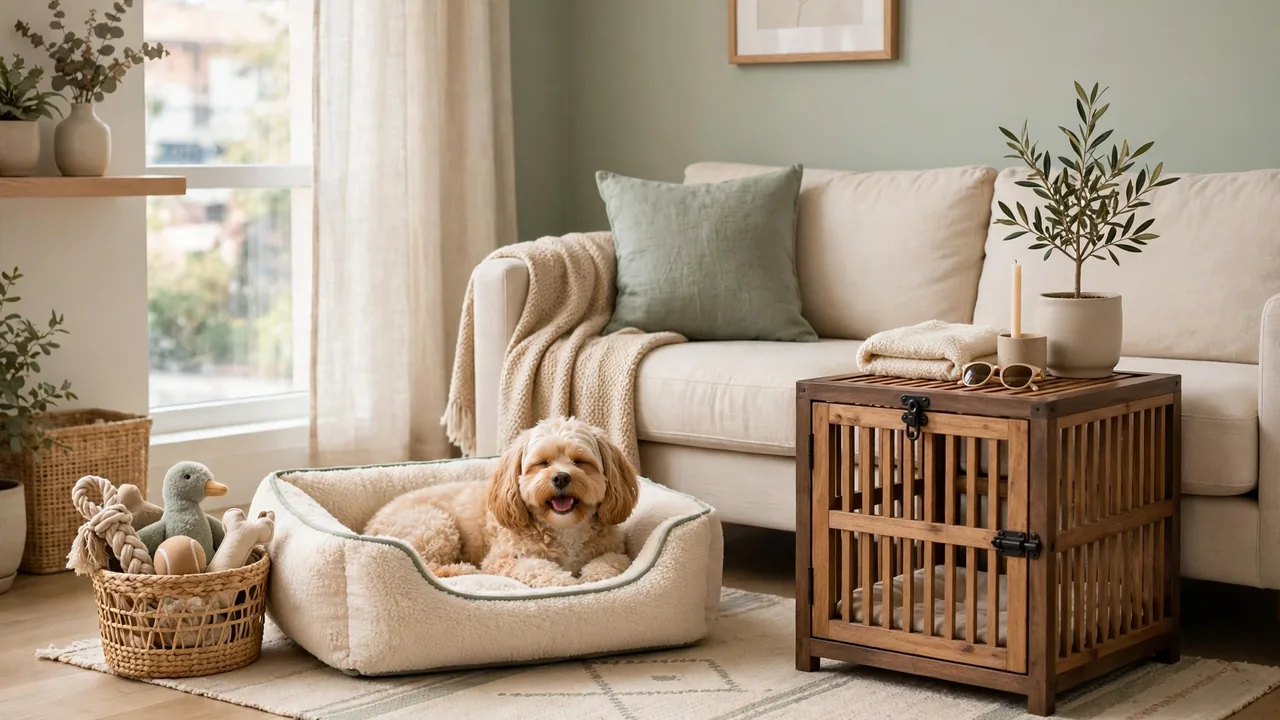
These apartment dog corner ideas treat one corner as the dog’s address in the home. The crate, bed, toys, and bowls each get a planned spot that suits the dog and fits the room around it.
Start with the corner you walk past most. A dog corner works when it is easy for the dog to reach, easy for you to clean, and calm enough for real rest.
1. Crate as a Side Table Beside the Sofa
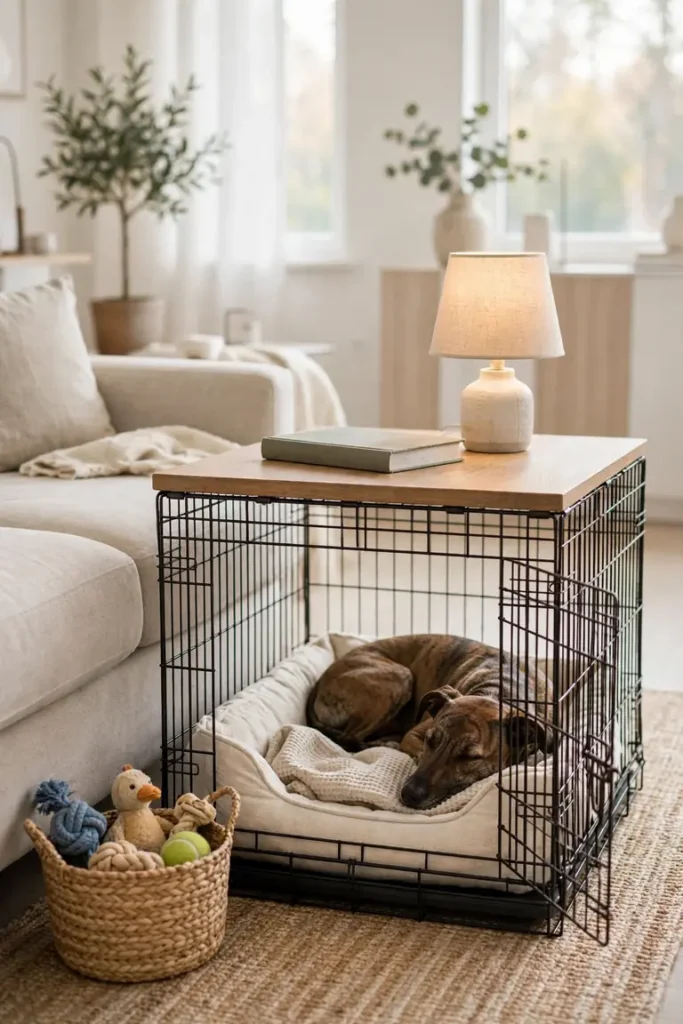
A crate earns its floor space when it does a second job.
Place the crate at one end of the sofa and lay a flat wood board or a crate topper across the top, sized so it cannot slide. That surface becomes your side table for a lamp, a book, and a drink, while the dog rests at the same height as the people on the sofa.
- Top: lamp toward the wall side, nothing heavy near the front edge
- Inside: a flat bed or mat that covers the crate floor fully
- Beside it: one small basket for the toys currently in rotation
Keep the crate door swing in mind before you place anything next to it.
2. Corner Crate Nook With a Washable Bed Inside
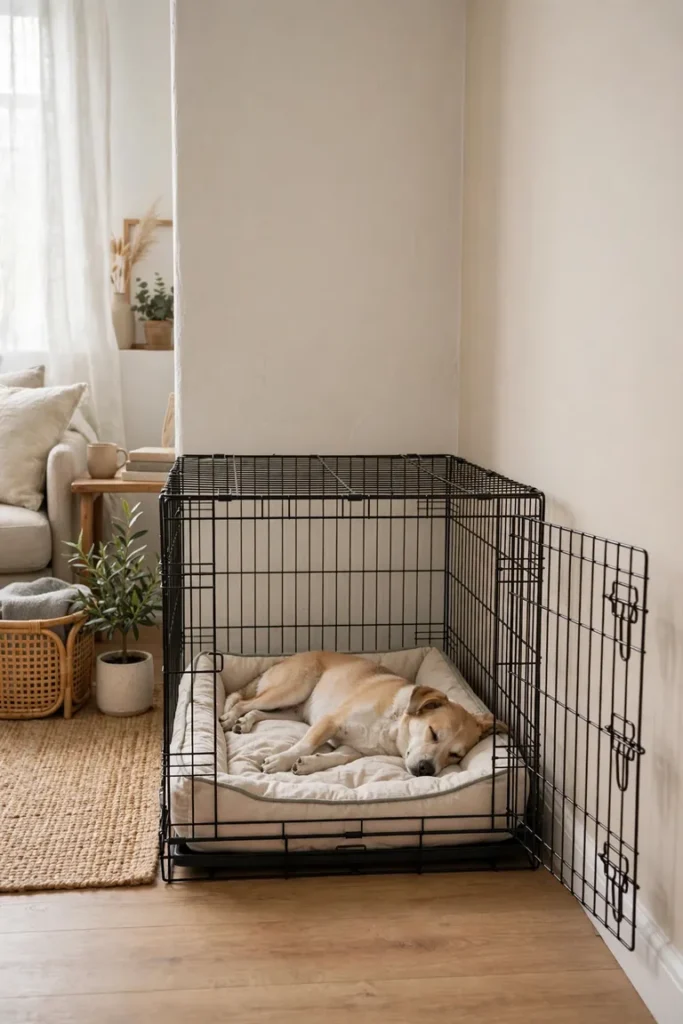
The corner is not the problem. The dead angle behind the crate door usually is.
Turn the crate so the door opens along the wall, not into the room, and leave a hand width of space on the other sides so air can move around it. Inside, use a low bed or mat with a removable cover you can wash weekly, because corner crates collect hair and dust faster than open beds do.
Pick a bed that fills the crate floor edge to edge. A bed that is too small slides into one end and bunches up under the dog, and most dogs end up lying on the hard tray instead.
Wash the cover on the same day each week and it stays a five minute job.
💡 Quick Tip
Size the crate for the dog, not the corner. Your dog should be able to stand, turn around, and lie stretched out. If the corner is too small for that, move the crate, not the dog’s comfort.
3. Low Bed Under a Window With Toy Baskets Below the Sill
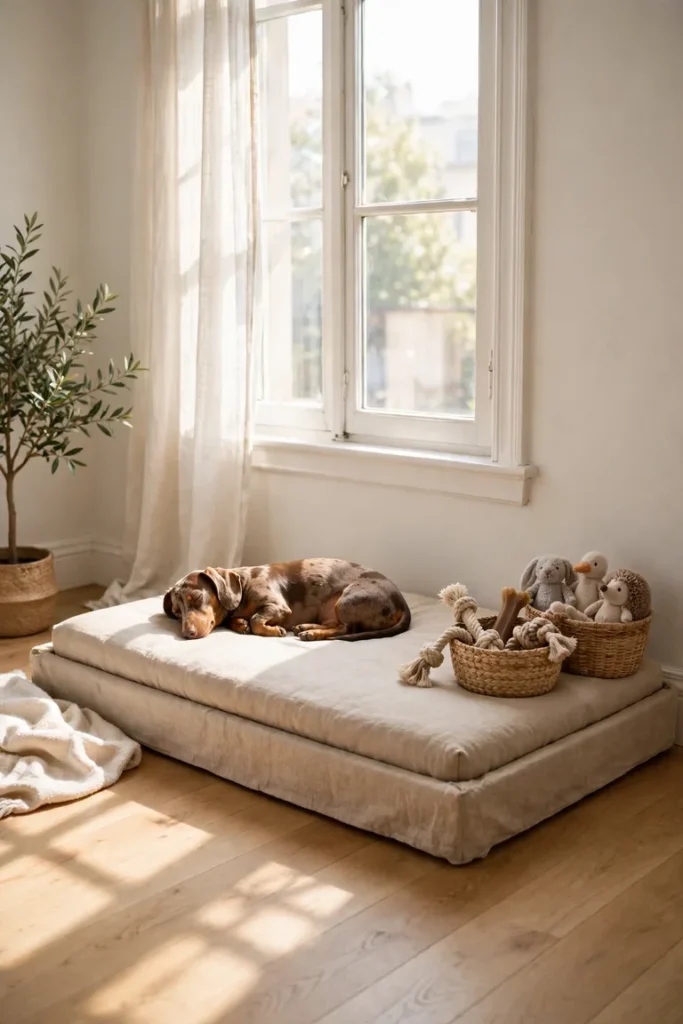
Morning light through a window is where most dogs choose to nap when nobody assigns them a spot.
Set a low bed under the living room or bedroom window, where your dog can watch the street and still feel part of the room. Keep the bed low and flat rather than tall and puffy, so it does not block light or make the window wall look crowded.
Bed spot. Centered under the sill, with space on one side so the dog can get in without stepping over anything. Toy storage. Two small baskets at the bed end, one for chew toys and one for soft toys. Washable layer. A cotton throw over the bed that you can shake outside and wash fast.
4. Spare Closet Turned Into a Dog Den
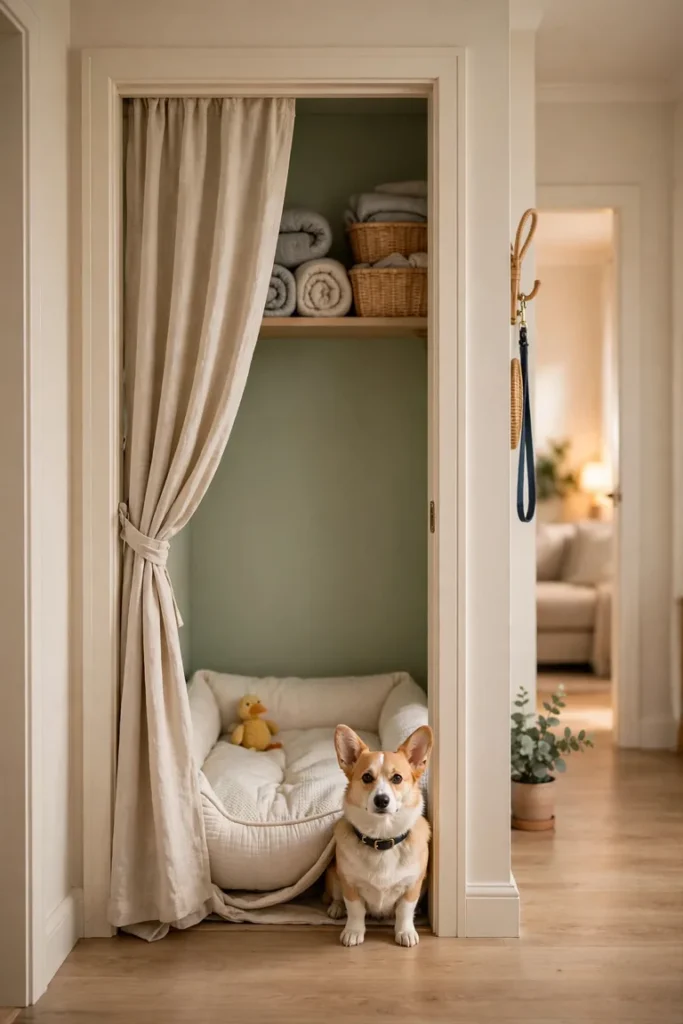
A closet den works because it is already shaped like a den, enclosed on three sides and quiet.
Take the door off its hinges if your lease allows it, or tie it fully open so it can never swing shut on the dog. Put a bed inside with the opening facing the room. A curtain panel can soften the front, but many dogs prefer it open, so test before you commit.
- One bed or crate mat, washable, fitted to the closet floor
- A battery powered soft light if the closet has none
- One toy kept in the den, so the spot stays special
- Nothing else on the floor: no bottles, no shoes
Store the hinges somewhere safe, and the closet goes back in an hour when you move.
What to set up first
5. Entryway Station With a Leash Rail, Hooks, and a Rest Mat
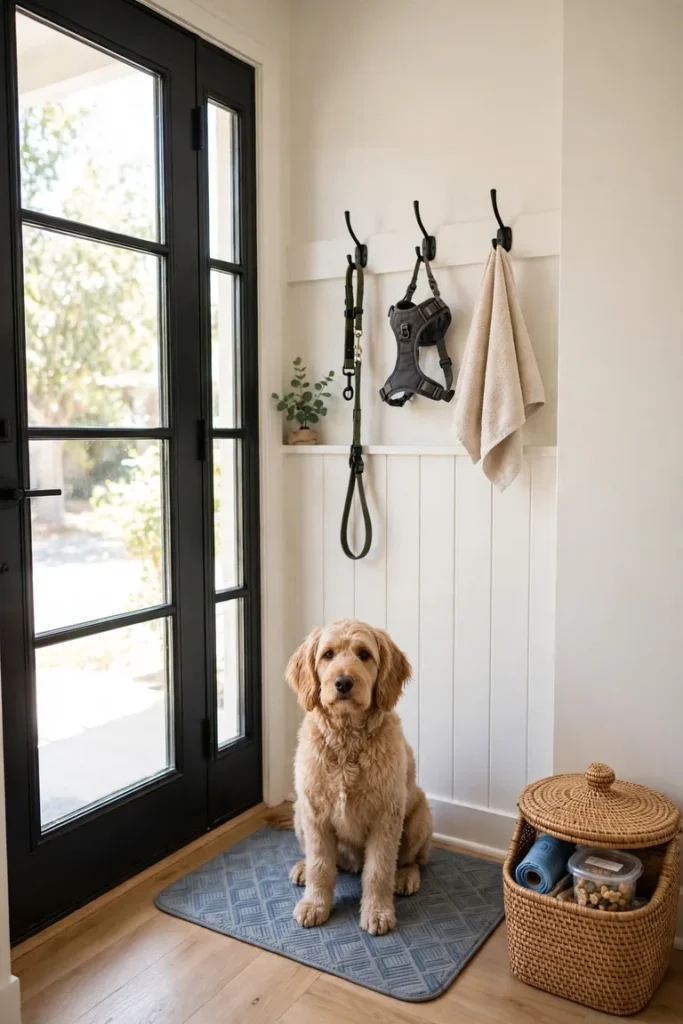
Walks start and end at the front door, so the gear for them should live there too.
- Fit a row of hooks or a short rail at your shoulder height for the leash, harness, and a towel for wet paws.
- Put a washable rest mat on the floor below the hooks, off to one side, so the dog can wait while you lock up or take off your shoes.
- Add one closed basket or a lidded box for treats, waste bags, and a spare collar, so small items stay out of sight.
- Keep the doorway itself fully clear. The mat belongs beside the door swing, never under it.
A dog that knows where to wait makes coming home calmer for both of you.
Hang leashes and the paw towel on hooks the dog cannot reach or chew.
Choose a mat with a backing that grips, so it stays put on hard floors.
Do not place the mat in the door swing or in the middle of the entry path.
Do not store treats in an open bowl at dog height. Curious noses find them fast.
6. Dog Bed Nook Under a Home Office Desk
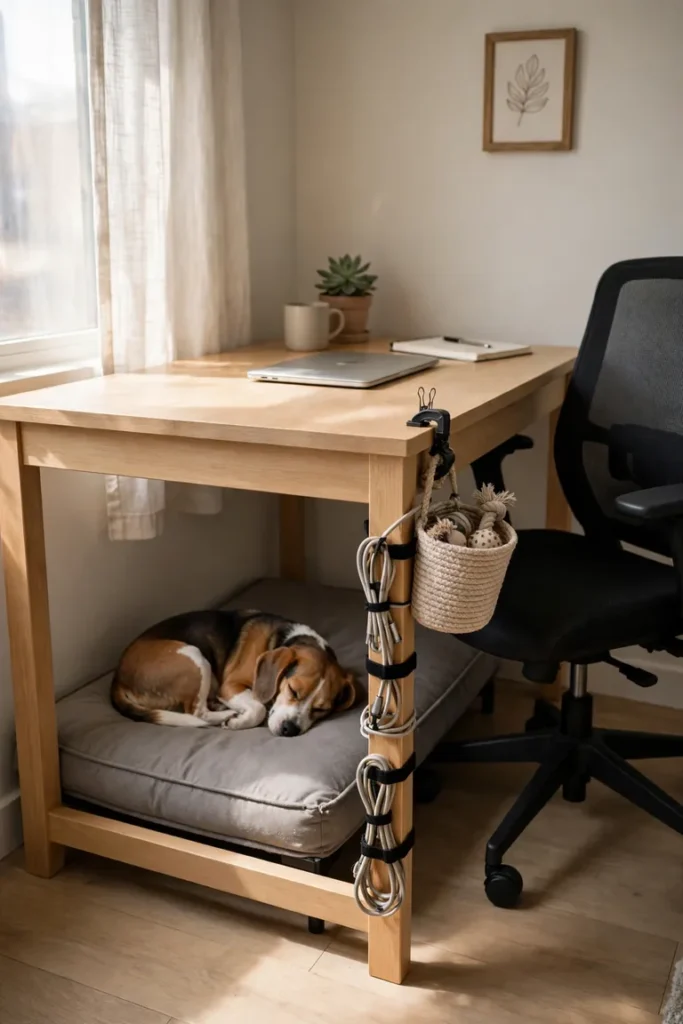
The space under a desk is dead space for you and a quiet cave for a dog, as long as your chair still has room to roll.
Slide a flat bed into the back half of the under desk space, against the wall, and leave the front half open for your feet and the chair wheels. Dogs like being near you while you work, and a bed with a fixed spot ends the habit of lying on cables and power strips.
Lift every cord off the floor and tie the bundle along the desk leg or the wall. A chewing puppy and a loose charger cable should never share a corner, and this one change makes the whole nook safer.
Measure the under desk space and pick a flat bed that leaves the front half open for your chair.
Tie all cords up along the desk leg or wall, off the floor and out of chewing reach.
Clip one small toy basket to the side of the desk, at your height, not the dog’s.
7. Hallway End Crate With a Framed Wall Above It
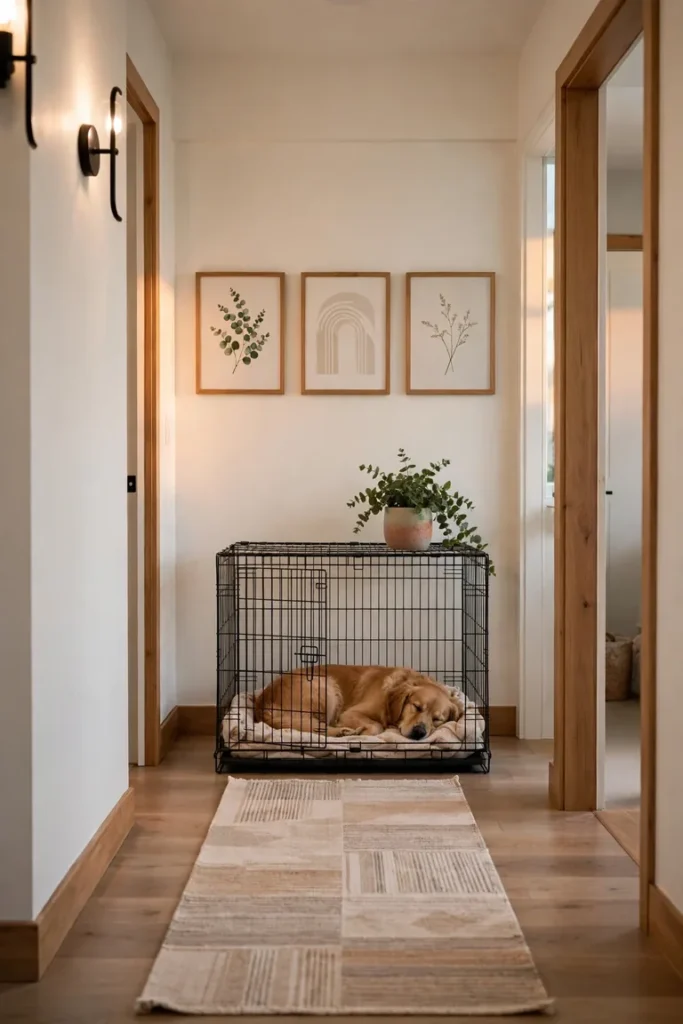
The end of a hallway is often the only wall in an apartment with nothing planned for it, which makes it a natural crate spot.
Set the crate against that end wall with its door opening into the hall, then style the wall above it the way you would style any other wall in the home. Two or three framed prints, a small photo ledge, or one larger print at eye height changes how the whole setup reads.
Frames. Hang them high, above jumping and tail height. Top of the crate. One plant or a small stack of books, nothing that rattles. Floor. A washable runner under the crate, extending past the door.
Guests stop seeing a cage and start seeing a corner you decorated on purpose.
Style the wall, not the crate. Art above it makes the crate read as furniture in a finished corner.
8. Raised Cot Bed in the Sunny Door Corner
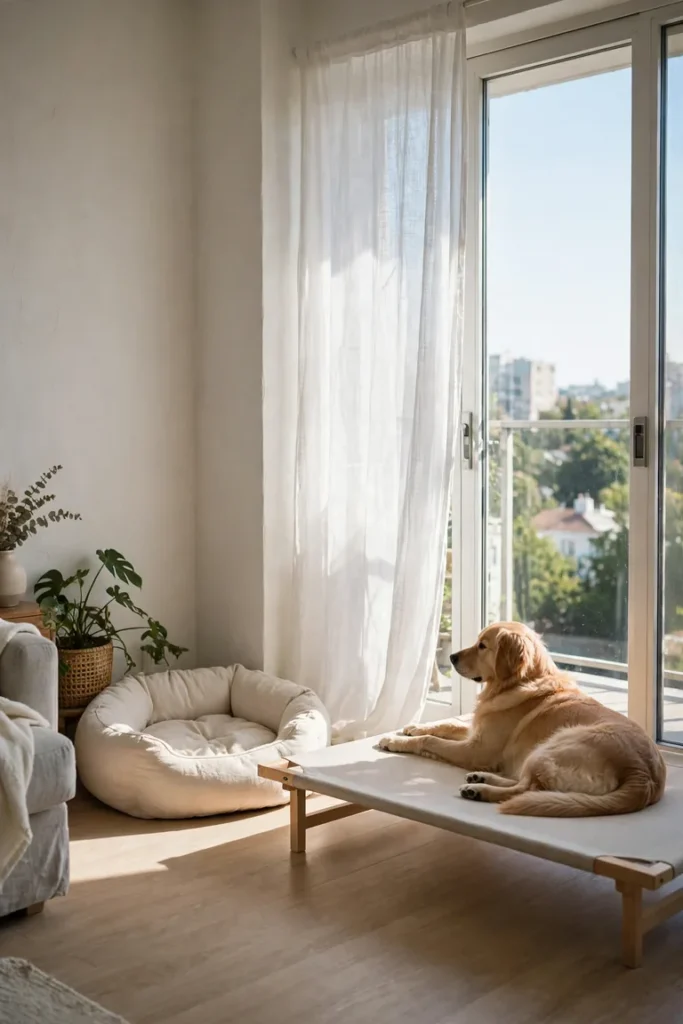
A plush bed holds heat. A raised cot lets air move under the dog, and that difference matters in a sunny corner.
Place a cot style bed near a balcony or patio door where the light and the view are, but set it to one side of the glass, not flat in the middle of the sun patch. Dogs love watching the street from this spot, and the raised fabric keeps them cooler than foam on a warm floor.
Watch the midday sun for a week. If the patch gets hot enough that you would not sit in it, slide the cot a foot toward the shade and add the plush bed there for winter instead.
Same corner, two beds across the year, swapped in a minute.
| Raised cot bed | Plush floor bed |
|---|---|
| Air flows under the fabric, so it stays cooler in a sunny or warm corner. | Foam holds body heat, which suits cold floors and winter months. |
| Wipes clean and dries fast, good for dogs who come in wet or dusty. | Softer for older dogs and sore joints, if the cover washes well. |
9. Storage Ottoman for Toys, With the Bed Beside It
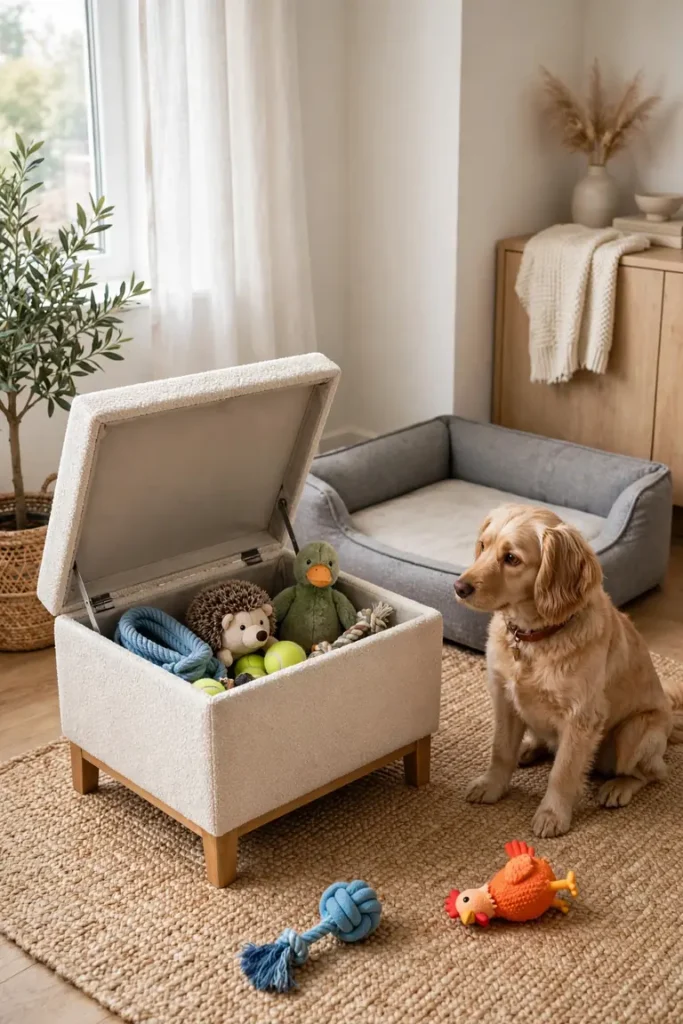
Toy clutter makes a small room look messy faster than anything else in it, and most of it is on the floor for one simple reason: putting it away takes effort.
A storage ottoman fixes that at the source. Set it beside the dog bed, in the corner where play usually happens, and make it the only home for toys that are not in use.
- Inside the ottoman: the full toy rotation, sorted loosely by type
- Out each day: two or three toys only, swapped every few days
- Lid rule: if the lid will not close flat, the toy count is too high
Guests get a footrest, the dog gets a toy box at nose height, and you get your floor back.
Toys spread across the rug, under the sofa, and along every walkway in the room.
Every toy inside one ottoman, two or three out for the day, and a clear floor by the bed.
10. Bottom Cubby of a Bookcase Turned Into a Small Dog Bed
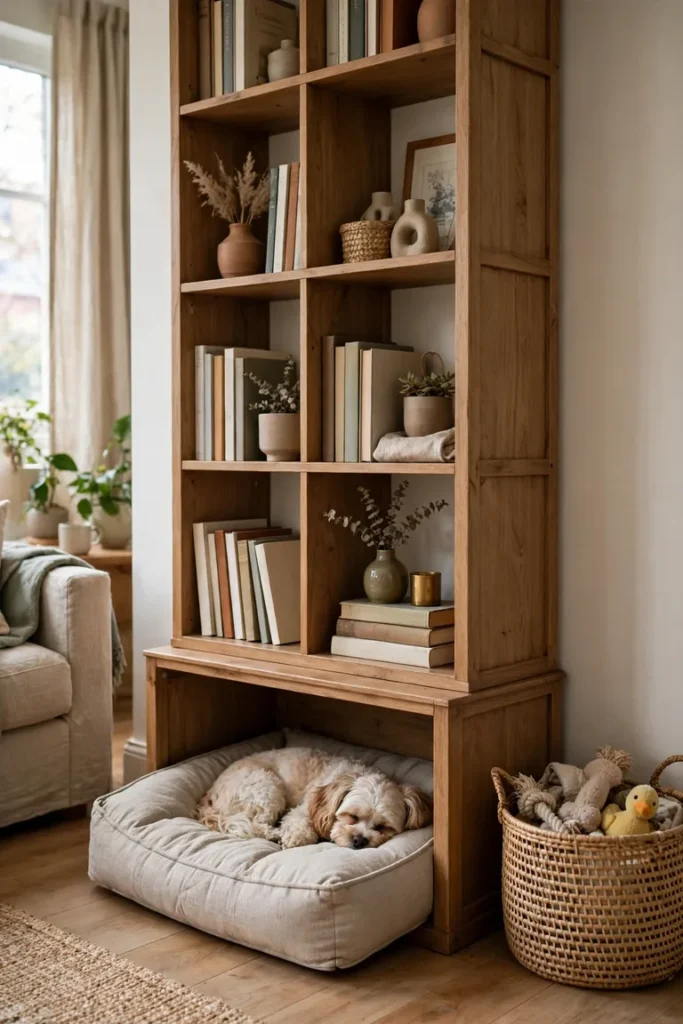
This one is for small dogs only, and it works because the bottom cubby of a bookcase is already dog sized.
Clear the lowest cube of a sturdy bookcase, line it with a washable cushion cut or folded to fit, and let that be the bed. Books, plants, and decor stay in every cube above, so the bookcase still reads as a bookcase and the dog gets a framed little room of its own in the corner.
Anchor the bookcase to the wall first if it is tall. A dog jumping in and out should never rock the unit, and nothing heavy belongs in the cubes directly above the bed.
Keep one toy in the cubby and the rest in a basket beside the bookcase.
- ▸Match the cushion color to the room, and the cubby reads as a planned part of the shelf.
- ▸Leave the cubby opening fully clear. No curtain, no door, so the dog can come and go freely.
- ▸Put breakable decor in the top cubes only, well above tail and jumping height.
11. Dining Corner Feeding Station on a Washable Mat
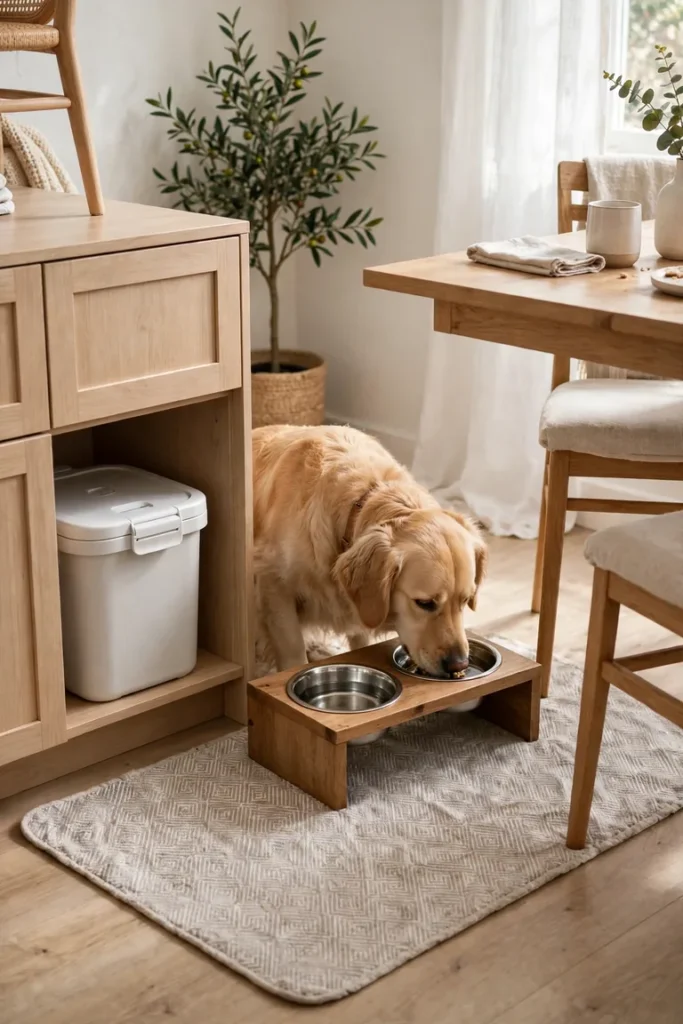
Bowls that live underfoot get kicked, and the splashes around them are what make a dining corner look tired.
Give feeding its own planned corner instead. Set a bowl stand on a large washable mat in the dining area corner, away from table legs and chair paths. The mat defines the zone, catches water drips, and goes in the wash when it starts to look dull.
- Stand: a height that lets your dog eat with its head level
- Mat: wide enough to sit fully under the stand, with room for a wet paw or two
- Food storage: a sealed bin in the nearest cabinet, never an open bag by the bowls
Wipe the stand weekly and the corner stays as tidy as the rest of the room.
12. Crate Styled With a Linen Cover, Front Left Open
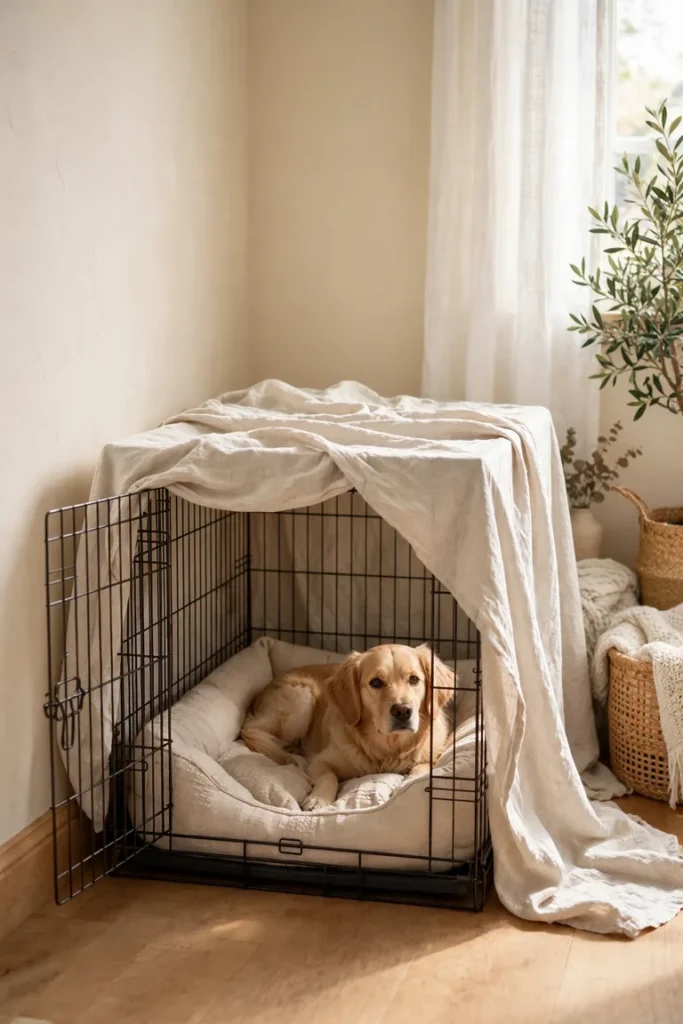
A cover can make a crate look softer. A cover used wrong can also make it hot and stuffy inside, and that trade is never worth it.
Drape a breathable linen or cotton cover over the top and sides only, the way a tablecloth sits, and leave the front panel open so air flows through the door side. In warm rooms, lift the back panel too, so air moves through two open sides.
Skip thick blankets, duvets, and anything with a plastic feel. They trap heat and slide down over the vents while you are out.
Check with your hand inside the crate on a warm day. If the air in there feels warmer than the room, the cover comes up or comes off.
⚠️ Watch Out
Never cover all four sides of a crate, and never cover a crate in a warm room or in direct sun. The front stays open, and puppies who chew fabric should have no cover at all.
13. Bedroom Corner Defined by a Rug, a Bed, and One Basket
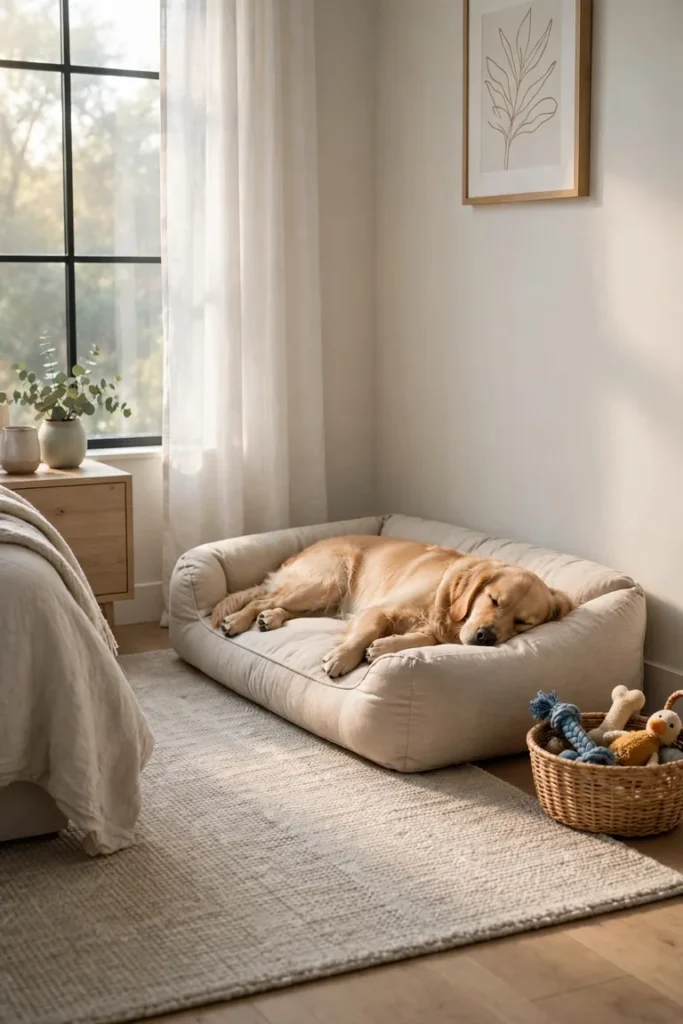
Dogs settle faster in a spot that looks and feels the same every day, and a rug is the easiest way to draw that boundary in a bedroom.
Lay a washable low pile rug in your bedroom corner first, then place the bed fully on it, not half on and half off. The rug catches hair, softens the floor, and tells everyone in the home, this patch belongs to the dog.
- Rug: big enough for the bed plus a stretch out margin on two sides
- Bed: washable cover, placed against the wall side of the rug
- Basket: one toy basket at the rug edge, so toys land on the rug, not the room
Your dog gets a bedroom spot near you, and your side of the room stays yours.
14. Under the Stairs Den for Duplex and Loft Apartments
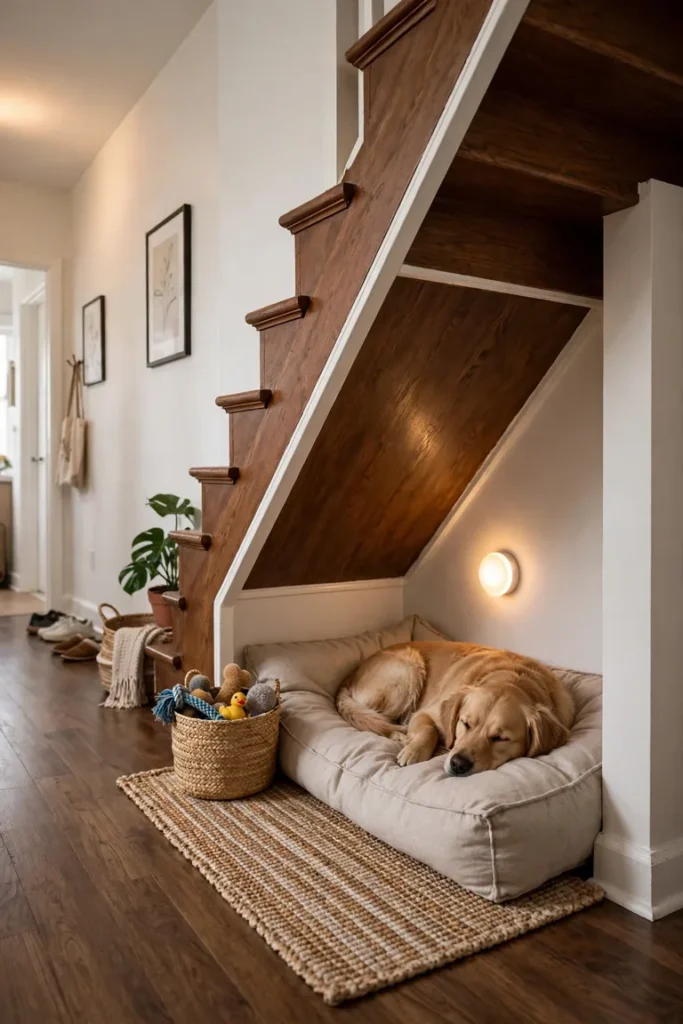
If your apartment has stairs, the sloped space under them is likely holding boxes you never open. It can hold a dog den instead.
Set a low bed along the deepest part of the nook, where the ceiling is high enough for your dog to sit up without ducking. Add a toy bin at the open end and a battery powered soft light on the wall if the nook is dim, so the spot never feels like a dark hole the dog is sent to.
Bedding. Washable, and flat enough for the low side of the slope. Floor. A mat under the bed, because under stairs floors are often cold. Air. Leave the open side fully open at all times. No gate, no curtain pulled shut.
What to grab first
15. Rolling Toy Crate That Parks Under a Console Table
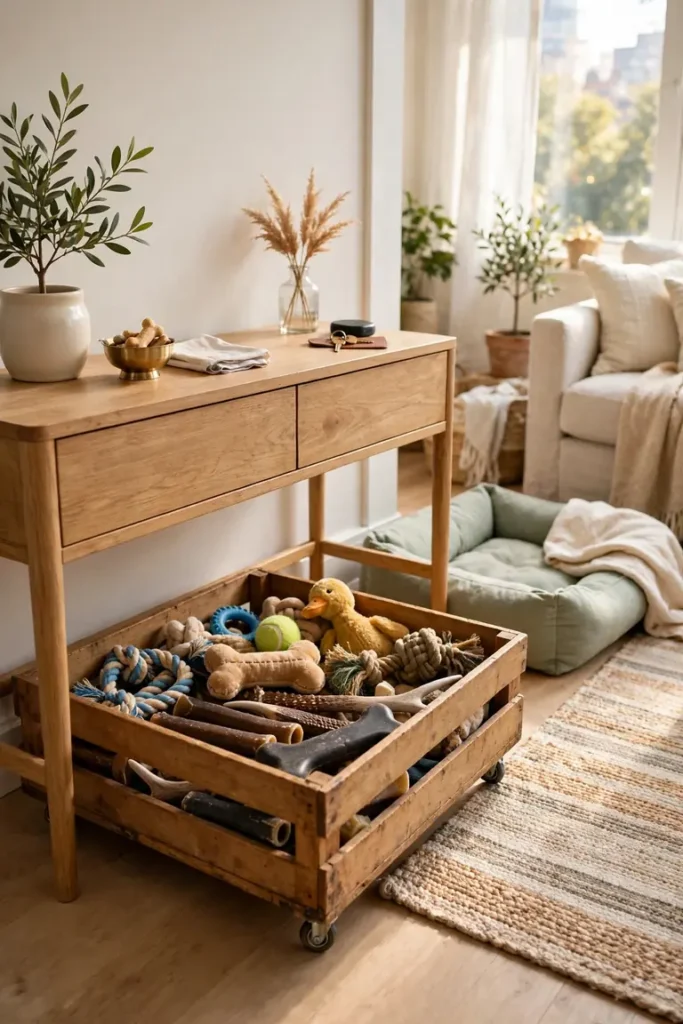
Cleanup fails when the toy box lives in another room. A crate on wheels removes that excuse.
- Choose a low wooden or wire crate with casters, sized to slide fully under your console table or sideboard.
- Load it with the toy rotation, heavier chew toys at the bottom so it rolls steady.
- Park it under the console after each play session, and roll it out to the rug when play starts again.
Because it hides completely, this is the toy storage guests never see, and because it moves, it is the one most people actually keep using after the first week.
One habit keeps it working: toys go back before the evening walk, every day.
If the toy box can roll to the mess, the mess gets cleaned. Wheels turn cleanup into a one minute habit.
16. Wall Baskets Above a Floor Bed for Vertical Toy Storage
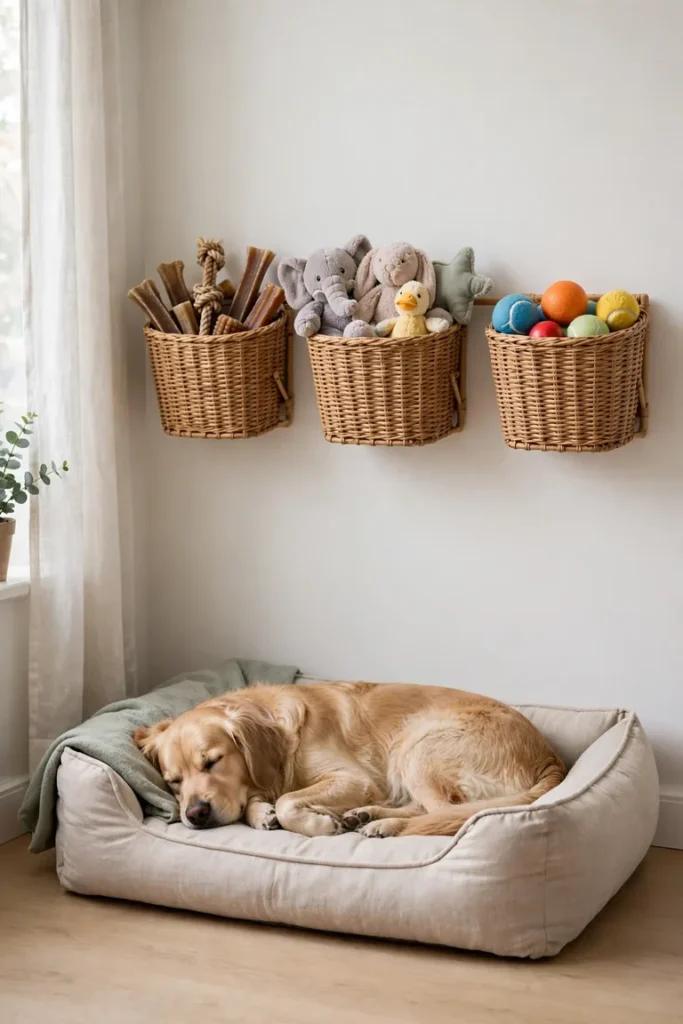
Floor space runs out fast in an apartment. Wall space above a dog bed is usually empty, and it can hold every toy you own.
Renters can swap the fixed baskets for an over the door rack on a nearby door and get the same vertical storage with no holes at all. Keep the bed below the baskets, so the corner reads as one planned dog zone, and check fixings monthly if your dog jumps up at the wall.
Choose baskets with closed sides for small toys. Balls and tiny chews dropped into an open weave basket end up raining onto the bed below, usually at nap time.
Place the floor bed first, then mark the wall line above it at your chest height.
Fix two or three sturdy baskets in a row on solid fixings, never on weak adhesive hooks.
Sort toys by basket: chew toys, soft toys, and balls, so you can grab the right one fast.
17. Kitchen Corner Feeding Spot Kept Apart From the Cooking Zone
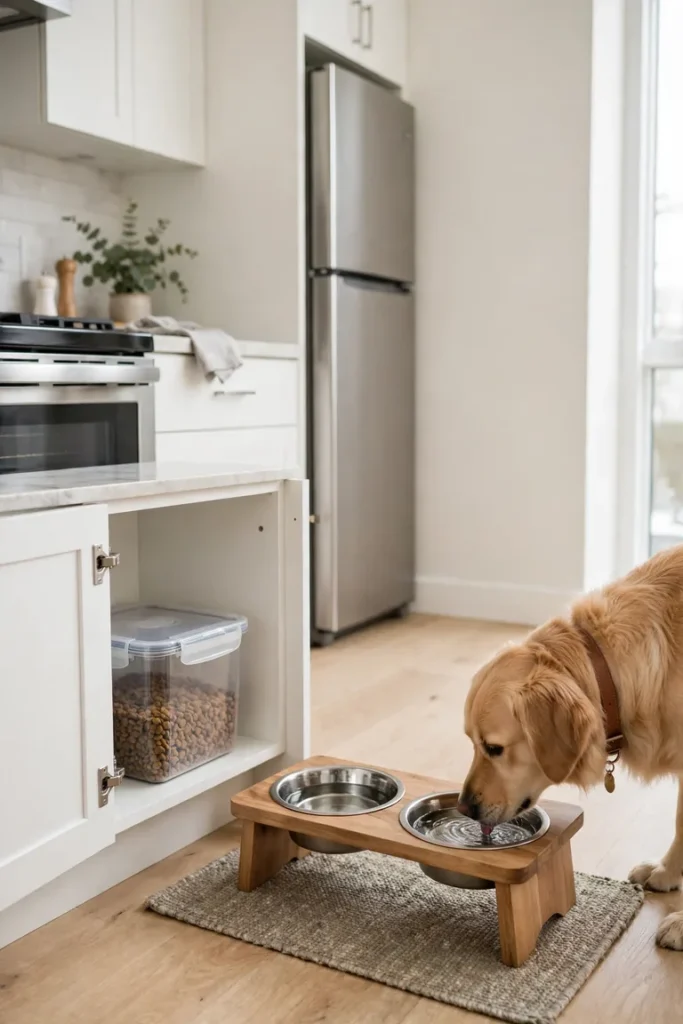
Kitchens collect dog bowls by default, usually right where you stand to cook. Moving the bowls ten feet changes how the whole kitchen feels.
Put the bowl stand in the far corner of the kitchen, away from the stove, the sink splash zone, and the fridge door swing. Food stays in a sealed bin in a low cabinet or a pantry corner nearby, measured out at the counter, then carried to the bowls.
The bed does not belong in the kitchen at all. Dogs rest better away from cooking smells and hot pans, and you cook better without a sleeping dog underfoot.
Keep food in a sealed bin and wash bowls daily, away from your own dishes where you can.
Wipe the floor under the stand often. Spilled water left standing damages many floors.
Do not place bowls beside the stove or under a hot oven door.
Do not let the dog bed drift into the kitchen corner. Rest belongs in a calmer room.
18. Dog Bed Chosen to Match the Sofa Fabric and Color
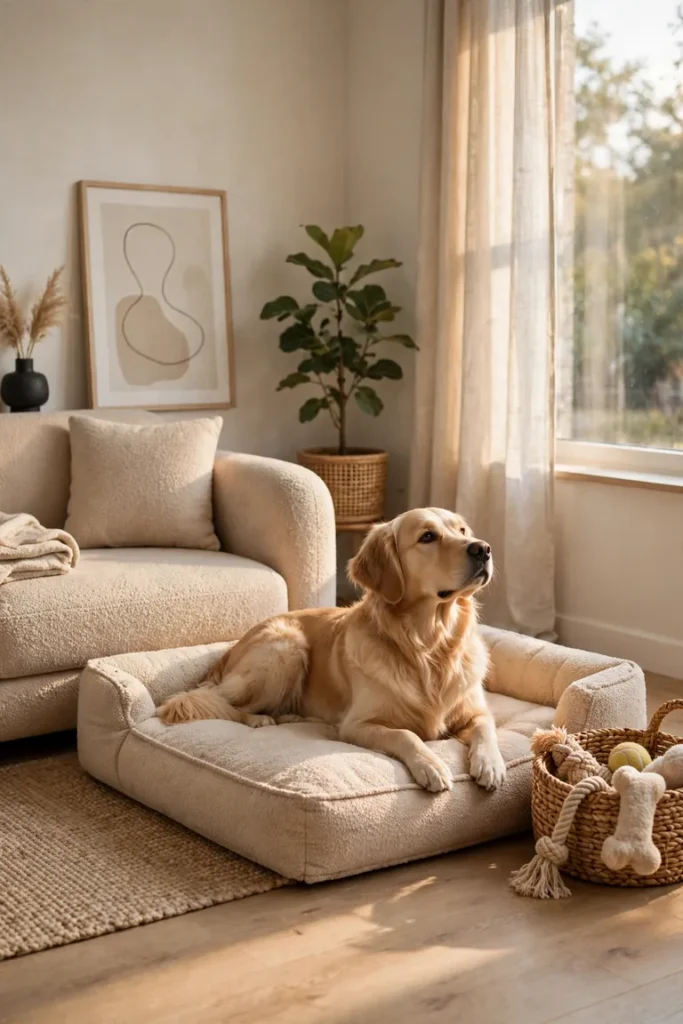
A dog bed clashes when it is bought on its own, with no thought for the sofa it will sit beside for years.
Shop for the bed the way you would shop for a cushion for that sofa. Same color family, a similar fabric feel, and a shape that echoes the seating, a low rectangle beside a modern sofa, a round bed beside a curved chair. In a living room corner, that one choice makes the dog corner look planned rather than added later.
Washable fabric is the rule that outranks color. A matching bed you cannot wash will look worse in a month than a plain one you can.
| Match the sofa | Pick a contrast |
|---|---|
| The bed blends in and the corner feels calm, good for small rooms that already feel busy. | The bed stands out as a feature, good for plain rooms that need one warm accent. |
| Watch out: very light matching fabric shows hair and paw marks fast. | Watch out: a loud pattern beside a patterned sofa will fight for attention. |
19. Fold Away Fabric Crate Corner for Renters Who Host
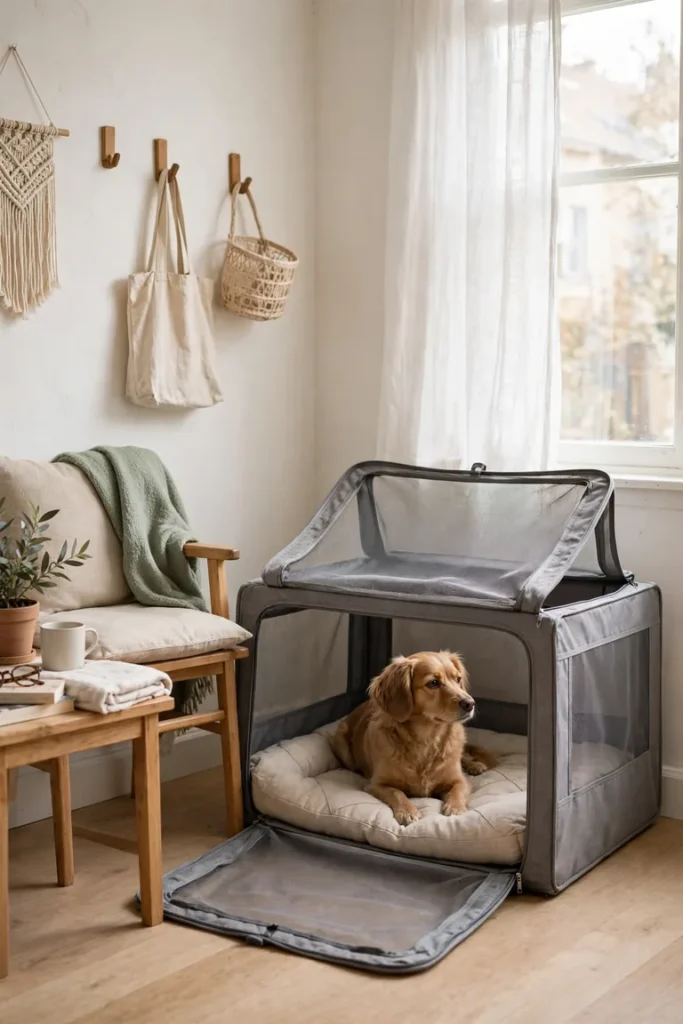
Some corners have two jobs: dog corner most days, guest space when friends stay over. A fold away fabric crate suits that double life.
Set the soft crate in the corner with a bed pad inside and keep the top and front mesh panels open for air while it is in use. When guests come, or when you need the corner back, fold the crate flat and slide it behind a door, under a bed, or into a closet.
Soft crates suit calm, crate trained dogs. A dog who chews or pushes at walls needs a solid crate instead, and no fabric crate should be a dog’s first crate.
A fixed crate filling the corner on the one weekend you need that space for a guest bed.
The crate folds flat in minutes, the corner opens up, and the bed pad moves to the dog’s second spot.
20. Puppy Corner With a Low Pen, a Crate, and a Washable Floor Layer
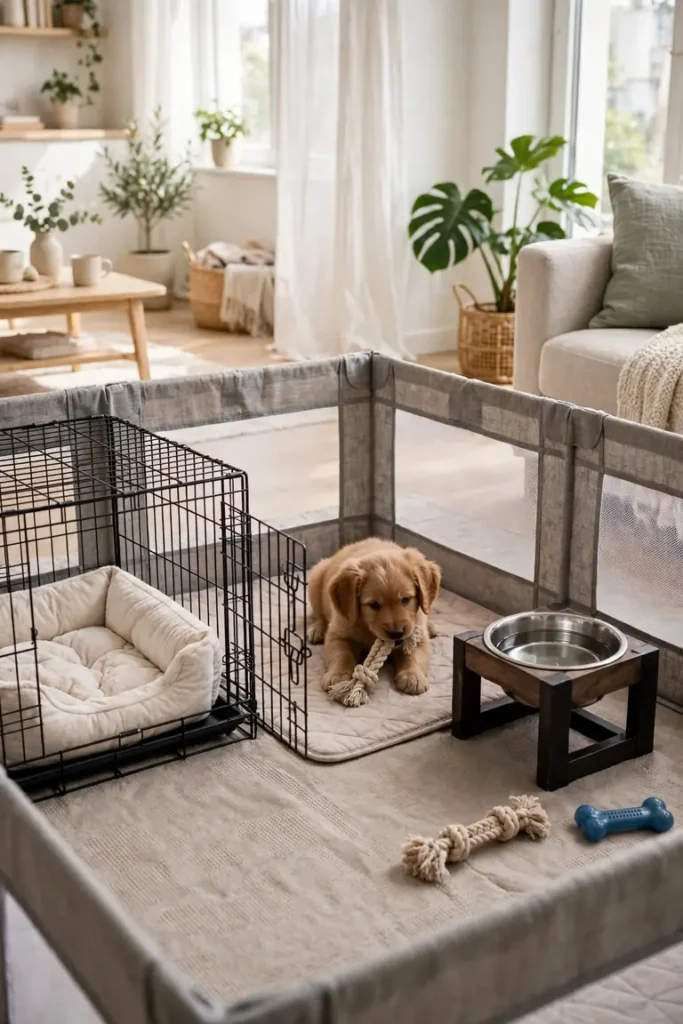
A puppy needs a smaller world than the whole apartment, and a pen in one corner gives them that without shutting them away from the family.
Set the pen on a washable floor layer that extends past the pen edges, because accidents land where they land. Inside, place the crate with its door open and a bed inside, a water bowl in a heavy stand, and two safe chew toys. Keep the pen in a room where people spend time, so the puppy learns the sounds and pace of the home.
As training improves, open the pen for longer stretches, then fold it away and keep the crate corner as the grown up version of the same spot.
💡 Quick Tip
Keep the pen boring at night and fun in the day. Sleep gear stays in the crate side, toys rotate in for play hours, and the puppy learns which part of the corner means rest.
21. Shared Reading Corner, One Armchair and One Dog Bed
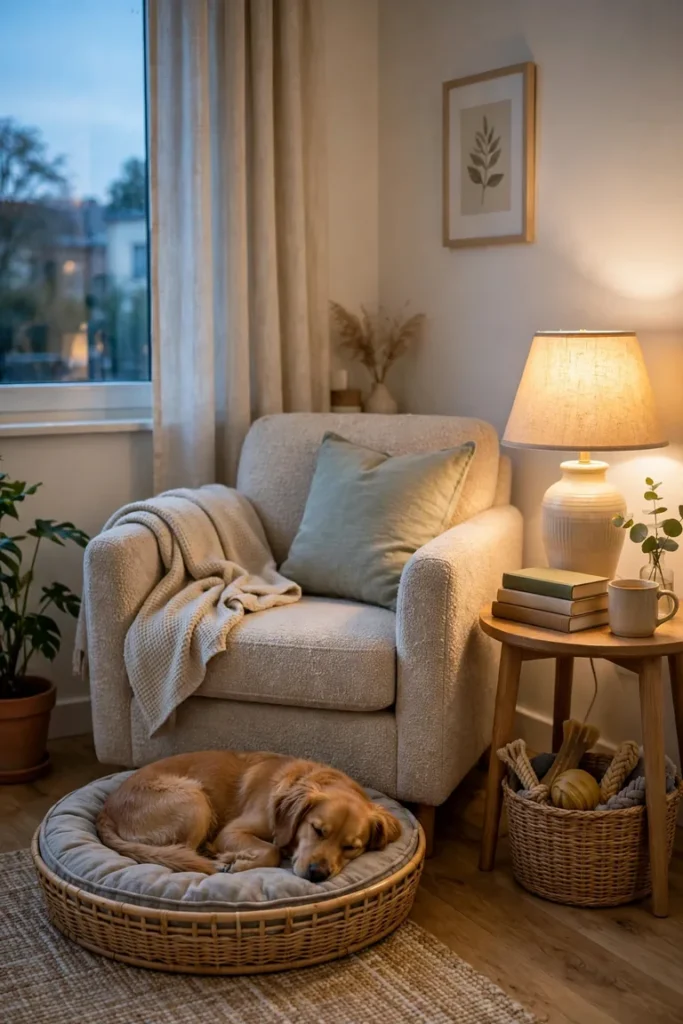
The best dog corners in small homes are often the ones you share, and a reading corner is built for exactly that.
Set your armchair in the corner with a small side table and a lamp, then place a round or bolster bed at the base of the chair, touching it, where your feet and your dog both land. Dogs rest deepest near their people, and a dog who settles beside your chair is not pacing, begging at the kitchen, or claiming the middle of the sofa.
Add one basket under the side table for the evening chew toy, and the corner is complete. It is your spot and the dog’s spot, drawn on the same small patch of floor.
Final Thoughts
A good dog corner is not about buying more gear. It is about giving the gear you already own a planned place: a crate that earns its floor space, a bed in a calm spot your dog would pick anyway, toys that live in one home, and bowls that stay out of walkways. Pick the corner your dog already drifts to, start with the bed, and add the rest one piece at a time.
The best of these apartment dog corner ideas is the one that fits your lease, your floor plan, and your dog’s habits. Save this list to your pet or apartment board, and set up your corner this week.