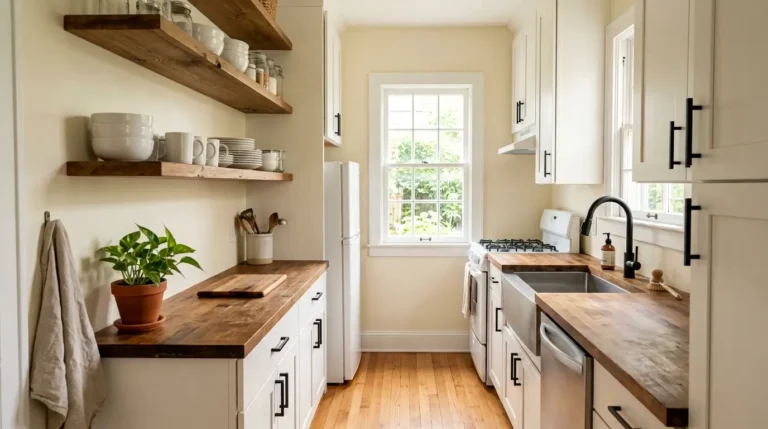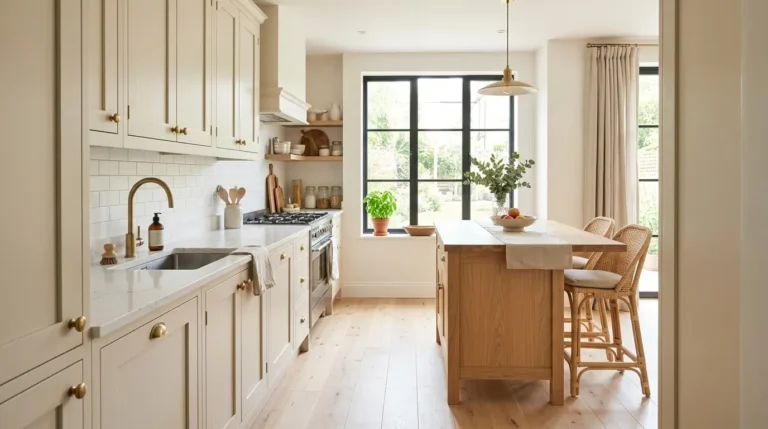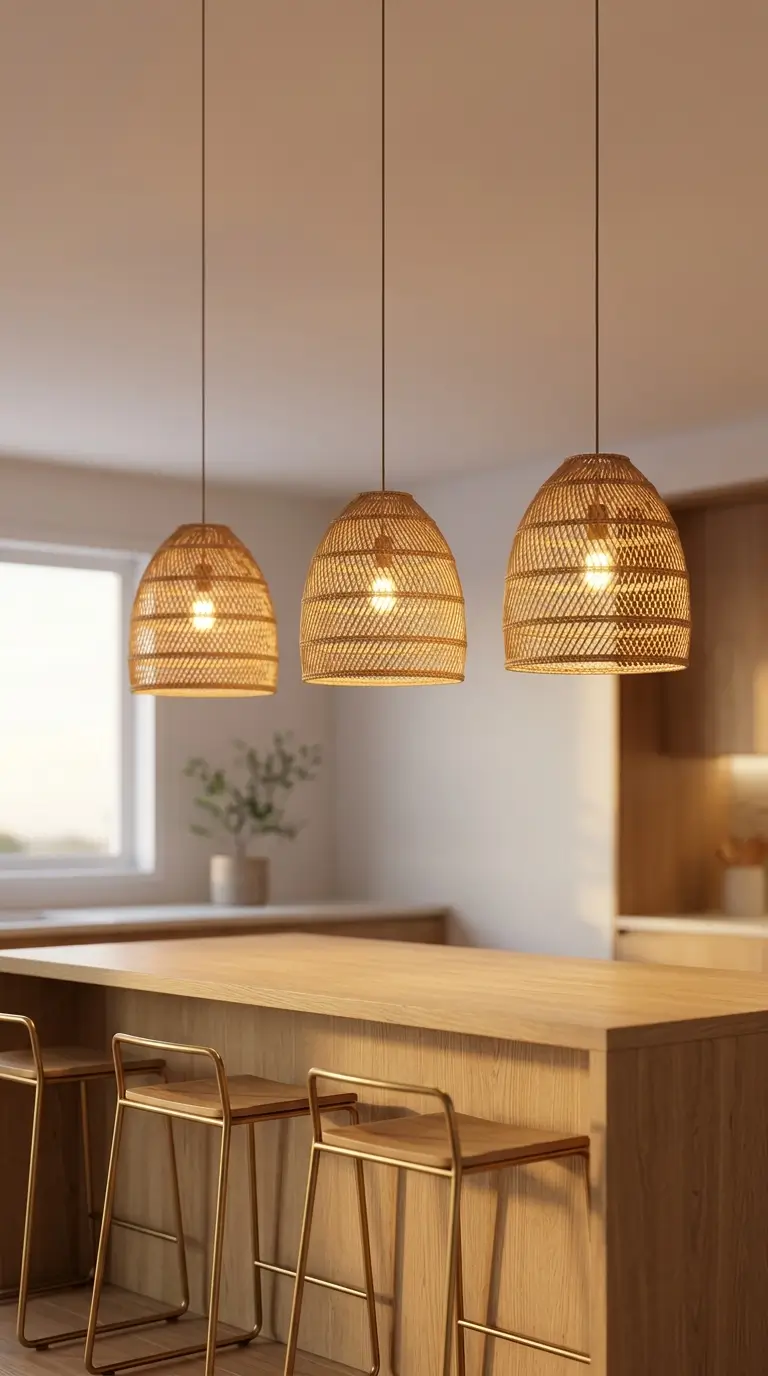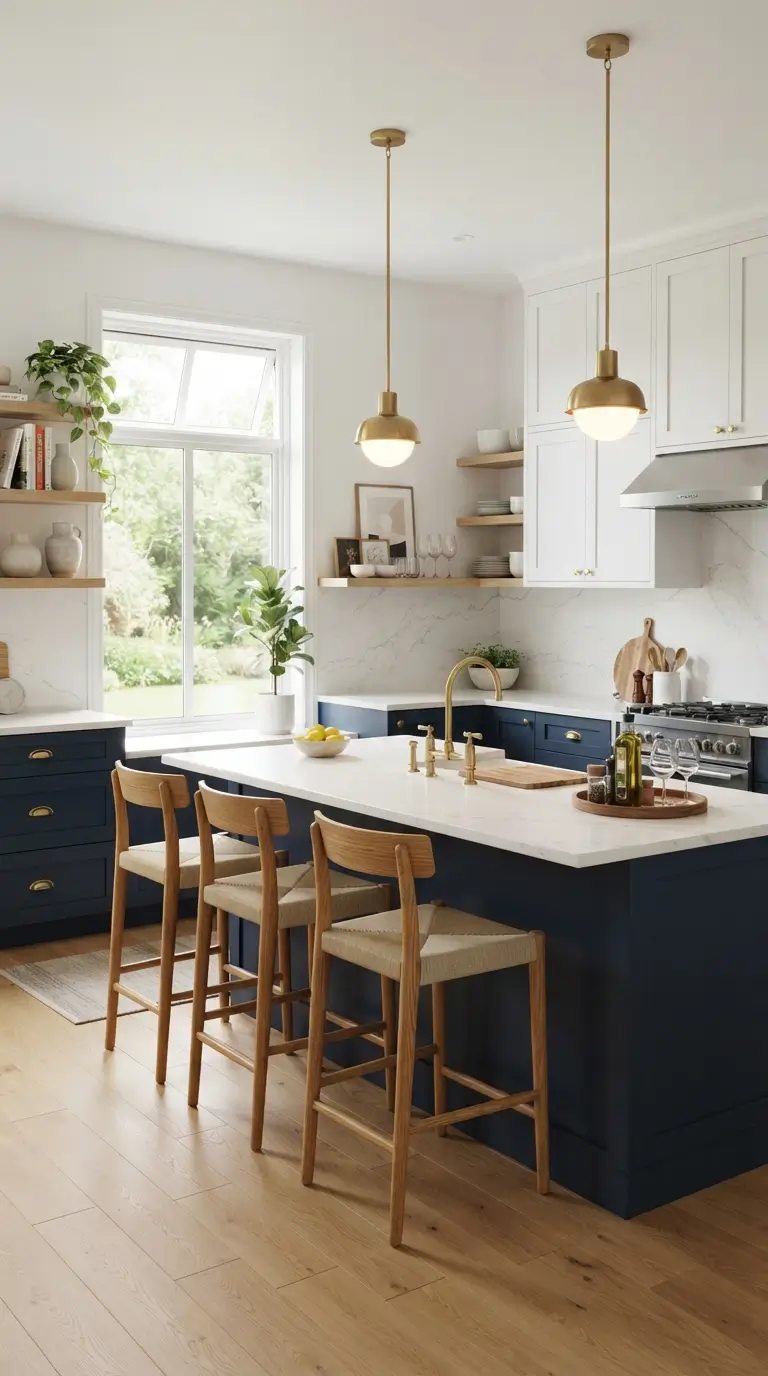
18 Kitchen Counter Styling Ideas That Are Functional
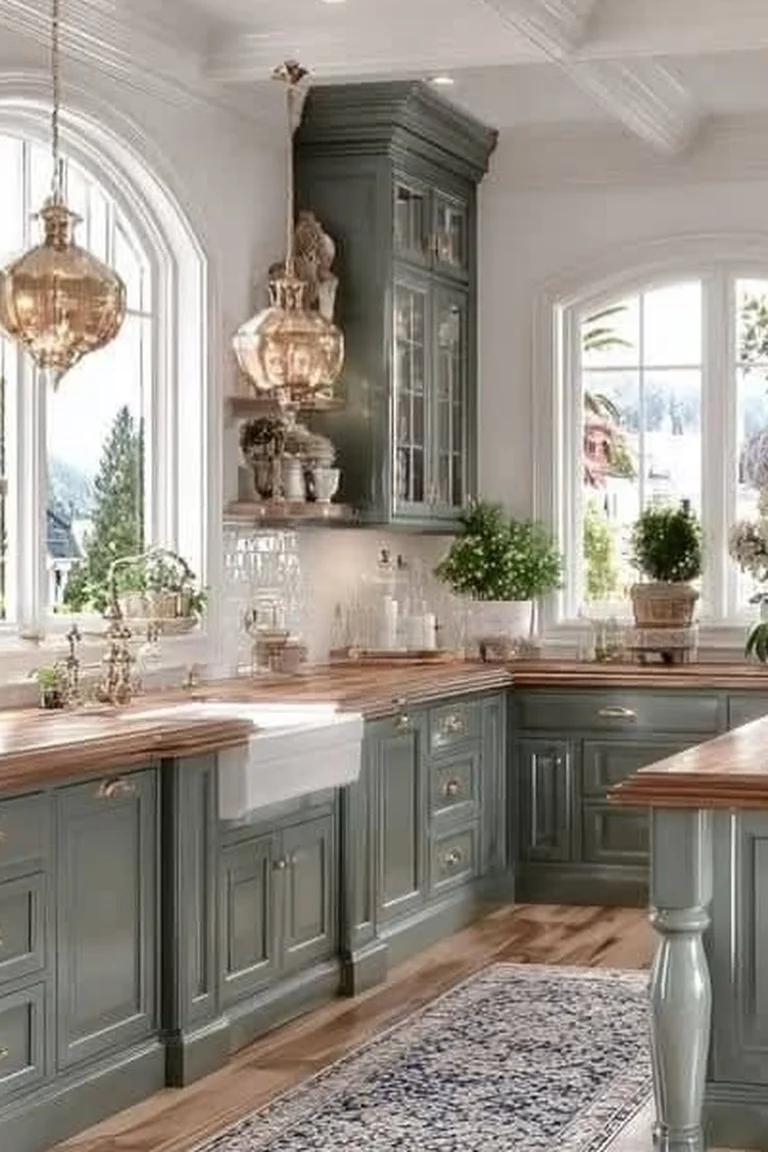
Does your counter look good in photos but fight you at dinner time? Or does it work fine for cooking but look like a storage shelf that exploded? Most kitchens swing between those two problems. Pretty counters lose their charm when you have to move five things to chop an onion.
Working counters lose their calm when every tool stays out all day. The fix is not buying more containers. It is giving each group of items a clear home, keeping daily tools within reach, and leaving one open stretch for actual cooking.
Small moves like a tray under the coffee jars or a board leaning by the stove can change how the whole room feels.
A tray, a hook, or a riser can do more than a full remodel, and none of them block the space where you actually cook. These kitchen counter styling ideas show how to mix good looks with real daily use, so your counter helps you cook instead of getting in your way.
1. Coffee and Tea Station That Follows Your Morning
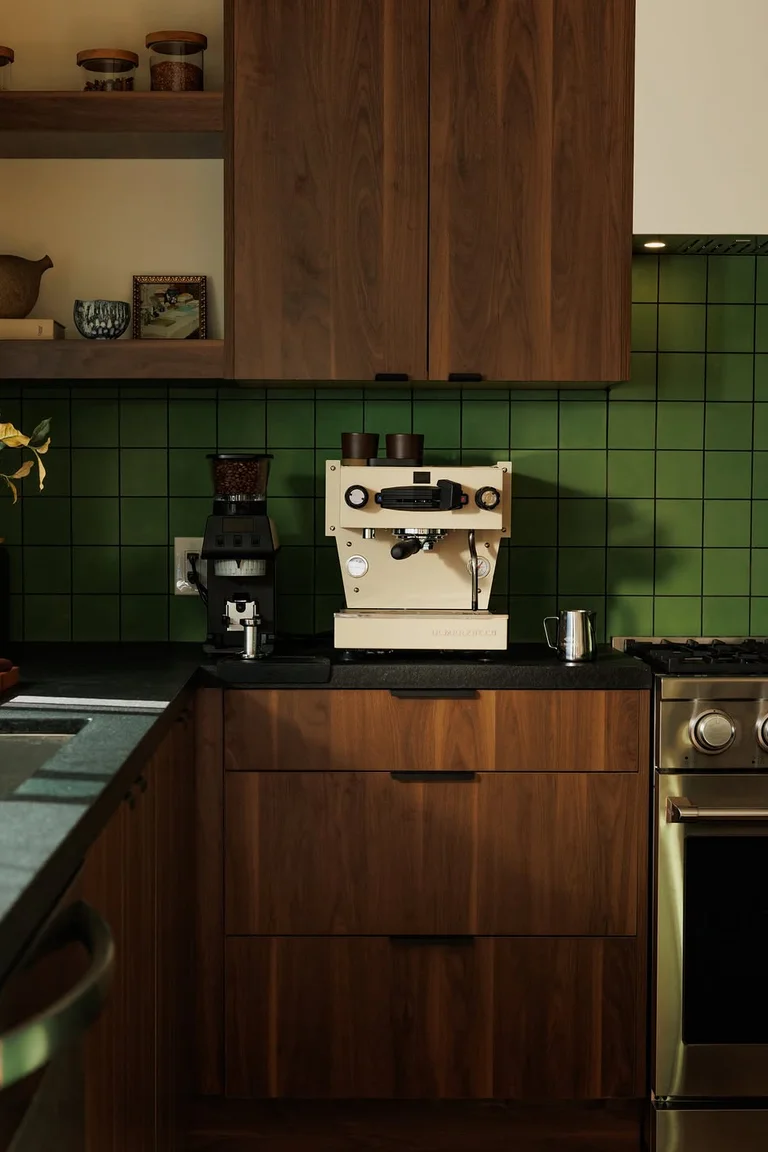
Your first ten minutes in the kitchen set the tone for the day. Put the coffee maker, mugs, sugar, and spoons on one short stretch of counter near the outlet, and keep the beans or tea bags in a closed jar right beside the machine. Pour water, press the button, and reach for a mug without crossing the room.
This kind of kitchen counter decor works because it follows your feet, not a catalog photo. Keep the station narrow so the rest of the counter stays free for breakfast plates. In a tight kitchen, hang mugs on hooks under a cabinet and use a small tray for the jars.
2. Cutting Boards Leaning Like a Backdrop
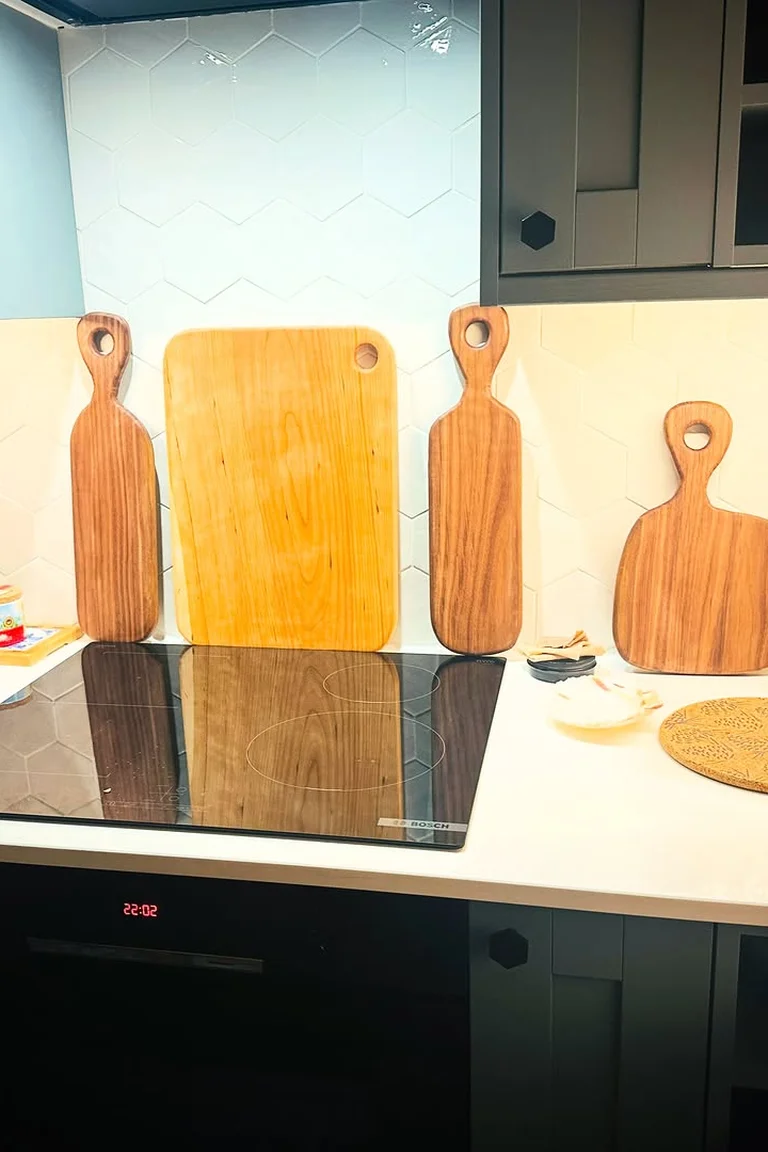
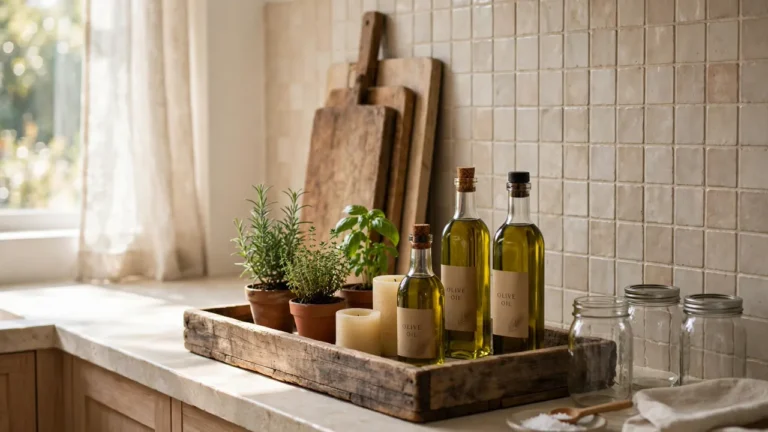
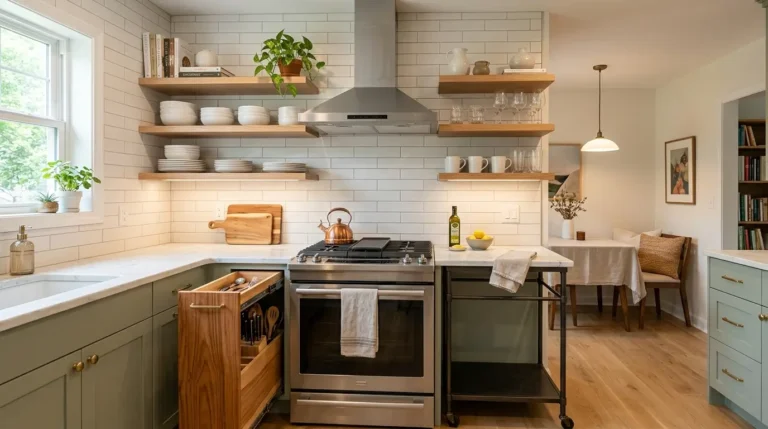
A stack of boards flat in a drawer hides your best tool. Lean two or three wooden boards against the backsplash near the stove instead, tallest at the back and smallest in front.
They act as a warm backdrop while you cook, and you can grab one without opening a drawer with wet hands. Choose boards in oak or walnut tones that sit well with your cabinets, and wipe them down after use so they stay clean enough to display.
Good kitchen countertop organization starts with tools you can see and reach. Short on space? One medium board leaning by the wall does the same job.
3. Utensils You Can Reach While You Stir
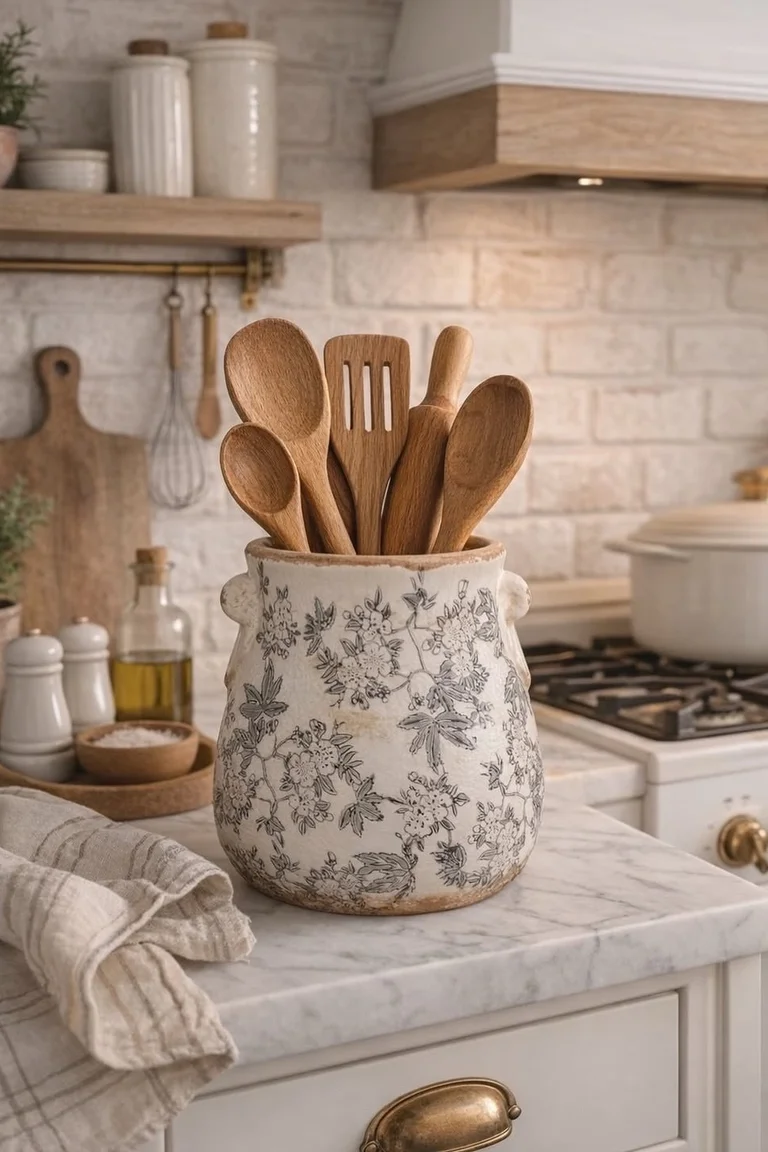
A pot starts to boil over. Do you want to hunt through a drawer? Stand at your stove and reach to your right. That is where the utensil crock belongs, close enough to grab a spoon with one hand while the other holds the pot lid.
Fill it with only the tools you use weekly: a wooden spoon, a spatula, tongs, a ladle, and a whisk.
This is functional kitchen decor at its simplest, because the crock looks tidy and saves a mid-cook scramble. In a small kitchen, mount a rail on the backsplash and hang the same five tools instead of using counter space at all.
4. A Fruit Bowl That Rotates Itself
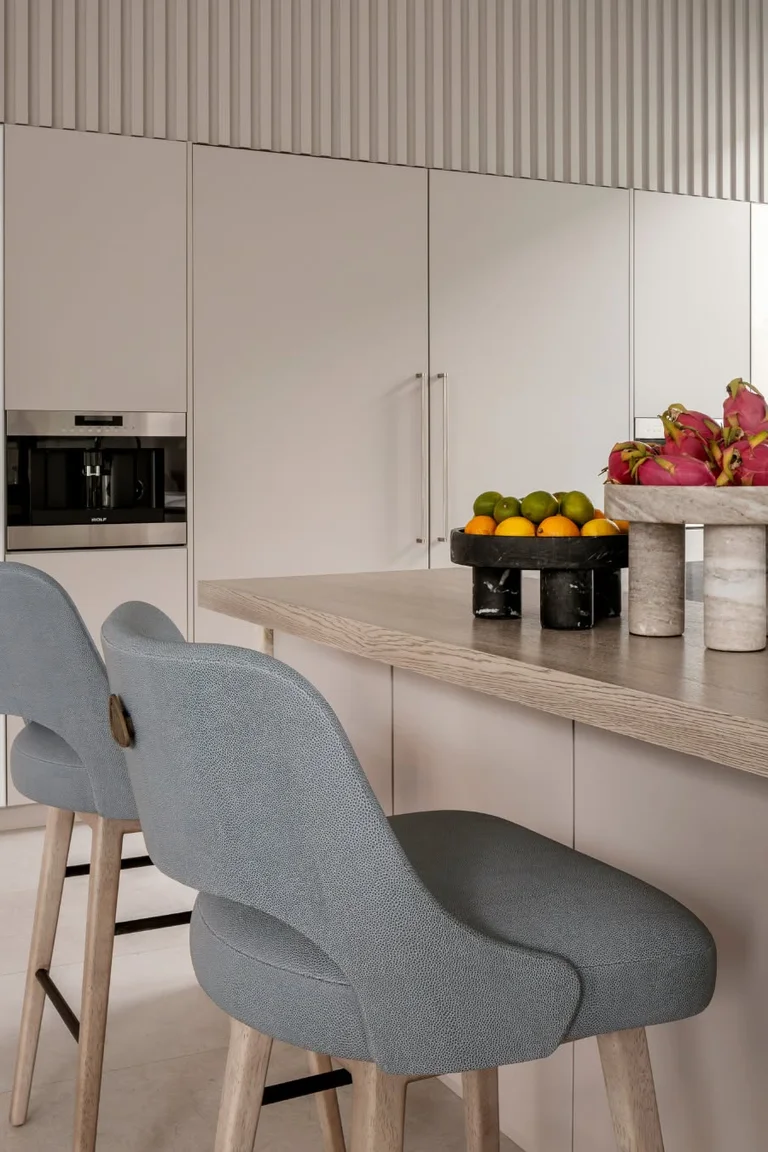
Before: a bowl piled high, with soft fruit hiding at the bottom and good fruit forgotten. After: a shallow bowl that holds only what your family eats in three or four days, placed where you pass it on the way to the fridge. New fruit goes underneath, ripe fruit stays on top, and nothing rots in secret.
This small habit is one of the easiest kitchen counter organization ideas to keep, because it runs on refilling, not on cleaning sprees. Small counter? Use a wall mounted basket or a single tier stand by the sink so the bowl never eats prep space.
5. Herbs You Snip While the Pan Heats
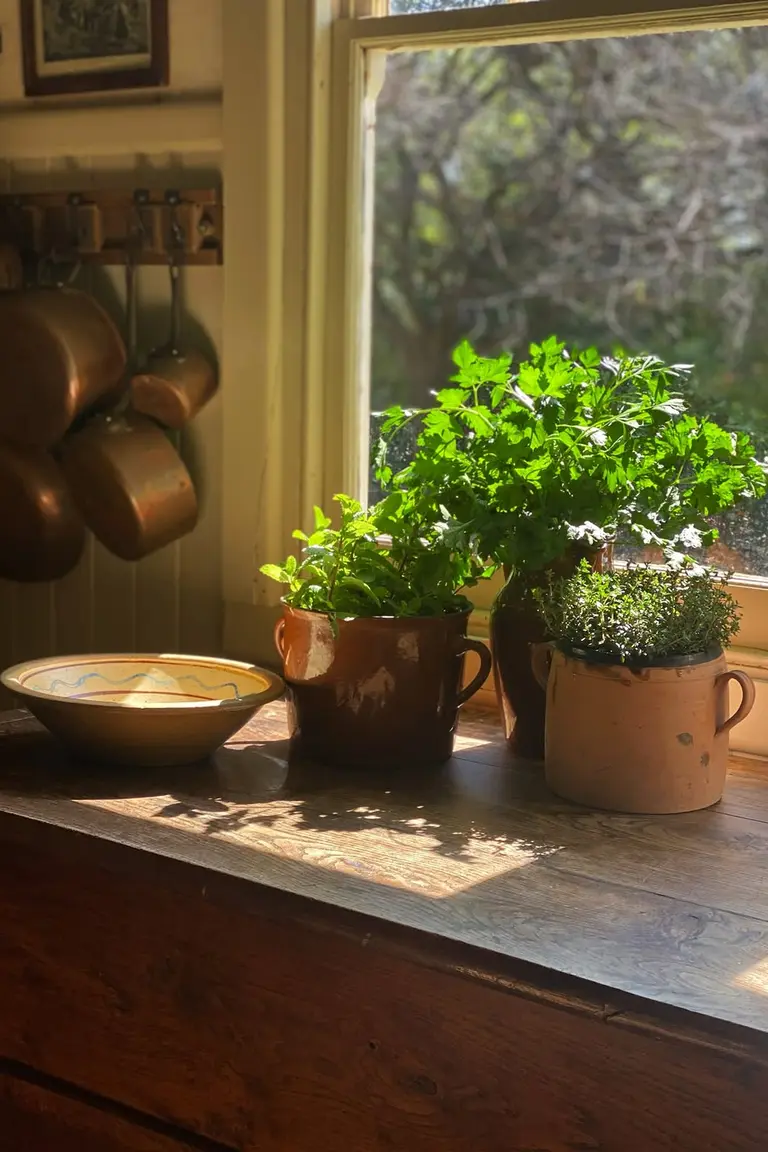
Fresh basil torn over pasta tastes better than dried, but only if the plant survives the week.
Give three or four pots a sunny windowsill spot or a narrow shelf right by the stove, in matching terracotta or cream pots so they read as one group. Water them on the same morning you wipe the counter, and snip from the top so the plants grow bushy.
Smart kitchen styling here means the herbs are dinner tools first and decoration second. If your counter is tiny, grow one pot of basil and one of parsley, and keep the rest on a windowsill in another room.
6. One Tray for Everything You Touch Daily
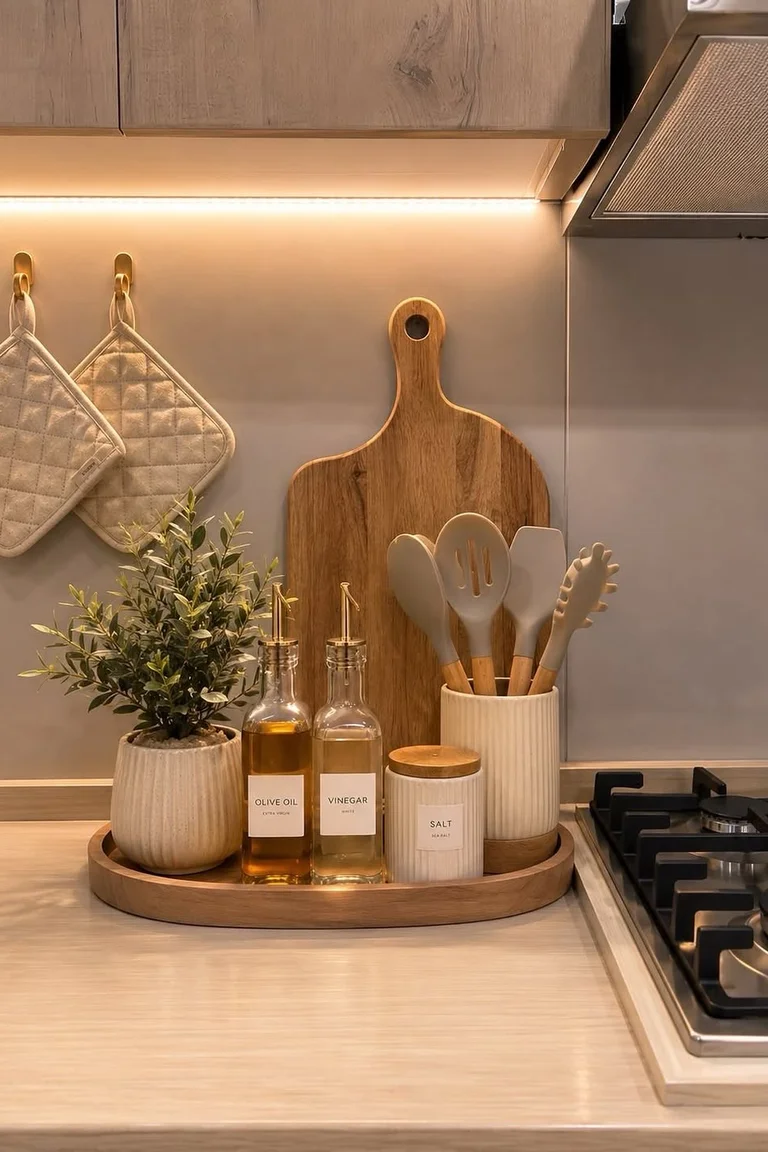
Salt, pepper, olive oil, dish soap, and a hand towel migrate across the counter until the whole surface looks busy.
Corral them on one tray near the stove or sink, and the mess has a border. Pick a tray in wood or matte black that echoes your hardware, and keep it small enough that adding one more bottle means removing one.
These small kitchen counter ideas work best when the tray holds only daily items, not backups. In a narrow kitchen, use a slim rectangular tray along the backsplash so it takes depth, not width, from your prep area.
one border.
7. A Cookbook Open to Tonight’s Recipe
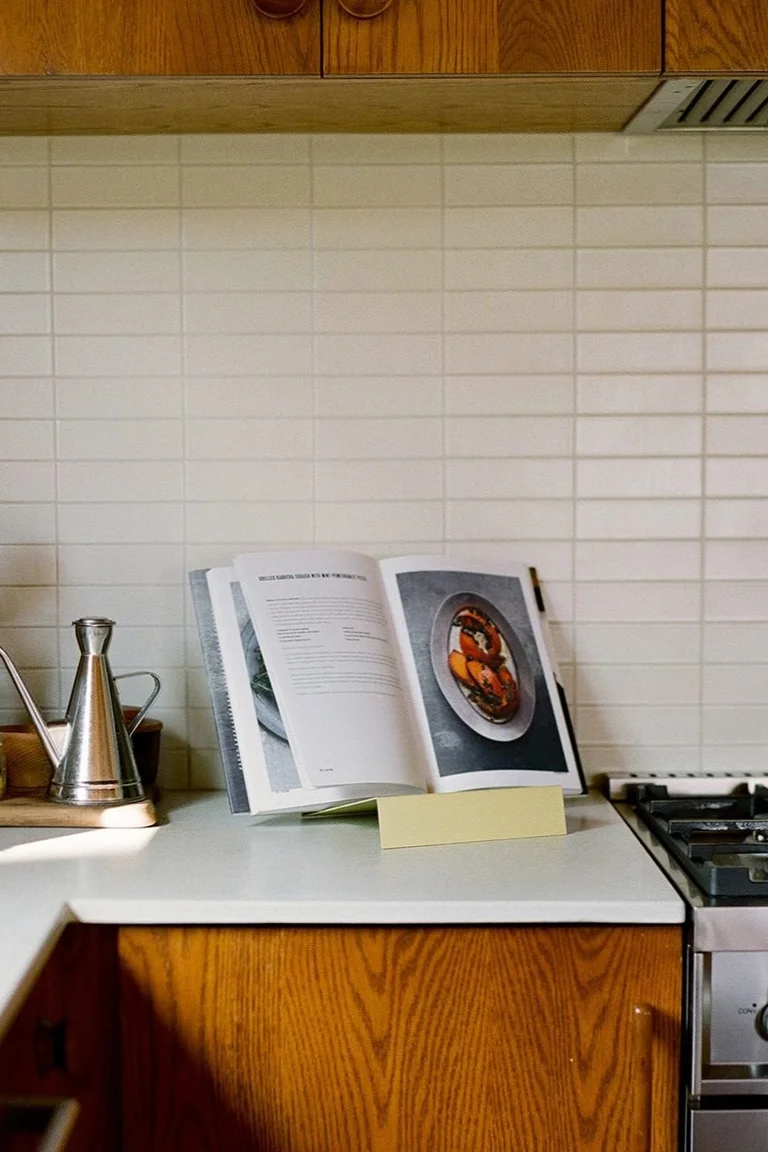
Cookbooks shut in a stack help no one at dinner time. Open tonight’s book on a stand at the end of the counter, away from splashes, with a small dish for a tasting spoon beside it. You can read with messy hands, flip pages with a knuckle, and follow steps without touching your phone.
Neat organized kitchen countertops often come from one open book replacing three closed ones and a tablet. If space is tight, use a folding stand you can put away after cooking, or prop the book against the backsplash on a plate rail. Keep only the book you are using out.
8. Spices Sorted by Height and Label
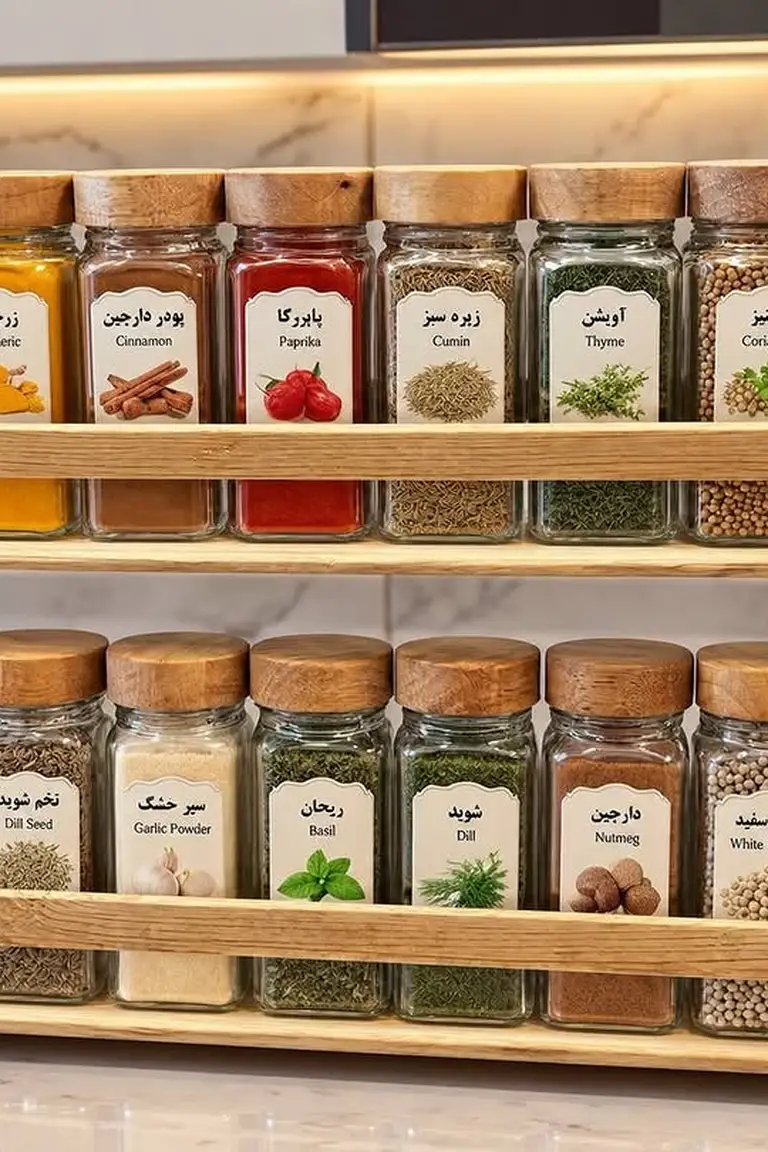
How many times have you bought paprika you already owned? Line spices on a stepped riser or a narrow shelf so every label faces forward, tallest jars at the back. Group them by use: everyday cooking spices together, baking spices together, and rare ones on a higher shelf.
Write clear labels in the same style so you can scan the row at a glance while the pan waits. When counter space is short, move the riser inside a cabinet door or use a turntable in a corner cabinet. The rule stays the same: if you cannot see the label, you will buy it twice.
9. Oil and Vinegar Without the Drips
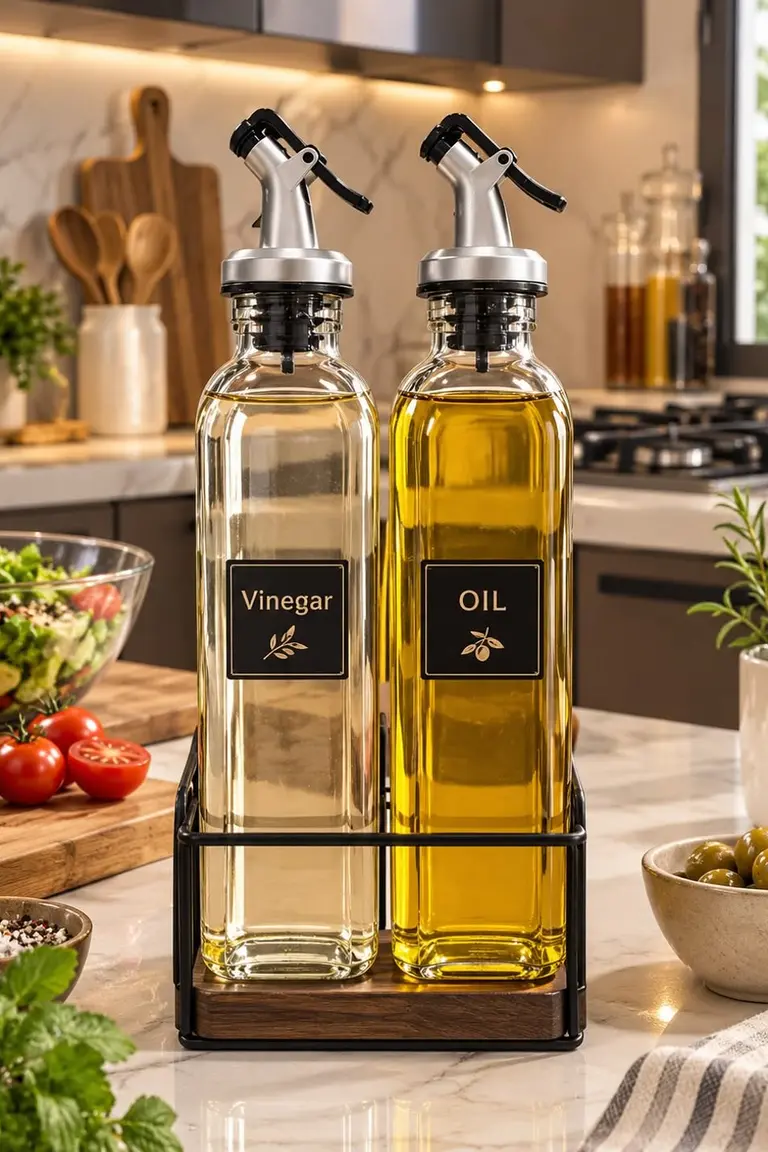
A bottle of olive oil with a sticky neck ruins the look of any counter.
Choose two or three bottles with good pour spouts, set them on a small ceramic dish or tray near the stove, and wipe the necks after each use. Keep cooking oil closest to the stove and finishing oil and vinegar a little farther back, so you reach for the right one without thinking.
The dish catches drips and goes in the dishwasher, which beats scrubbing a sticky counter. Limited space? Keep one good olive oil out and store the rest in the pantry, swapping bottles when you change what you cook.
10. Appliances Parked in Their Own Homes
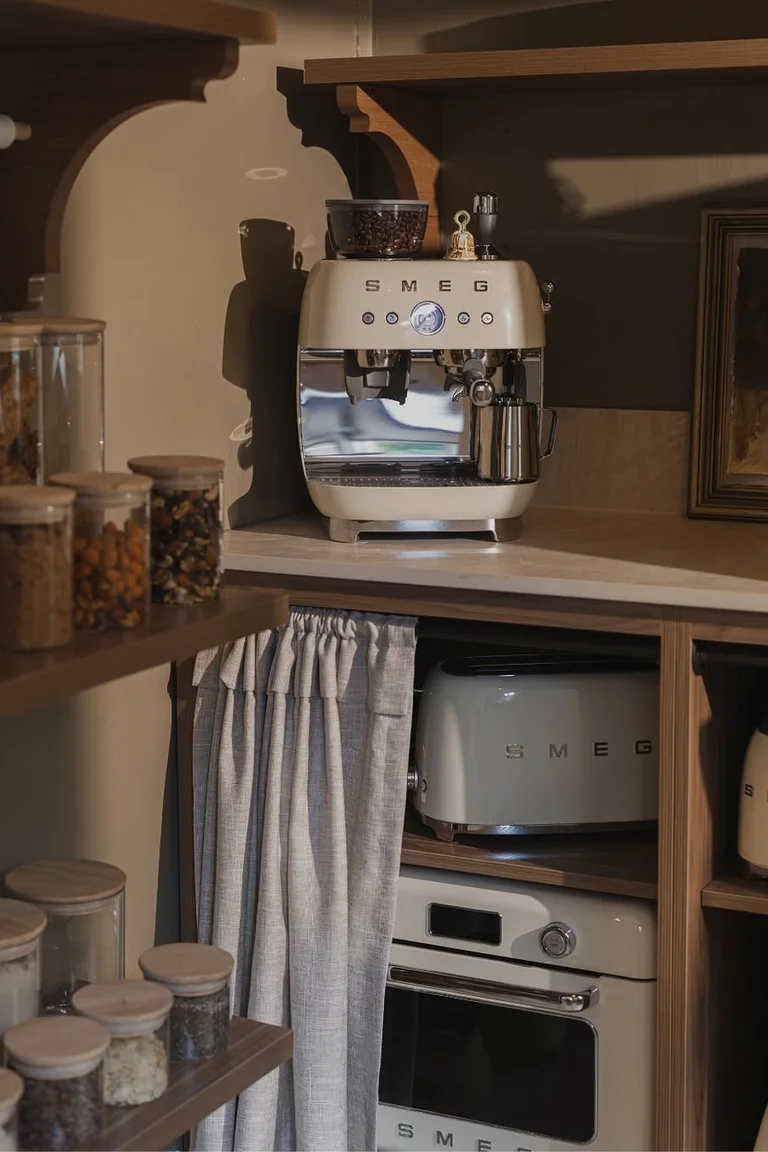
A toaster, a blender, and a coffee machine lined up in a row eat the whole counter. Instead, give each appliance a parking spot: the toaster near the bread box, the blender near the fridge where smoothies start, and the stand mixer in a corner it never leaves. Appliances you use less than once a week belong in a cabinet.
This zone idea keeps the machines you love visible without turning the counter into a store display. In a small kitchen, keep only two daily appliances out and store the rest. A clear stretch of counter next to the parked machines matters more than owning every gadget.
11. Sink Side With One Soap and One Towel
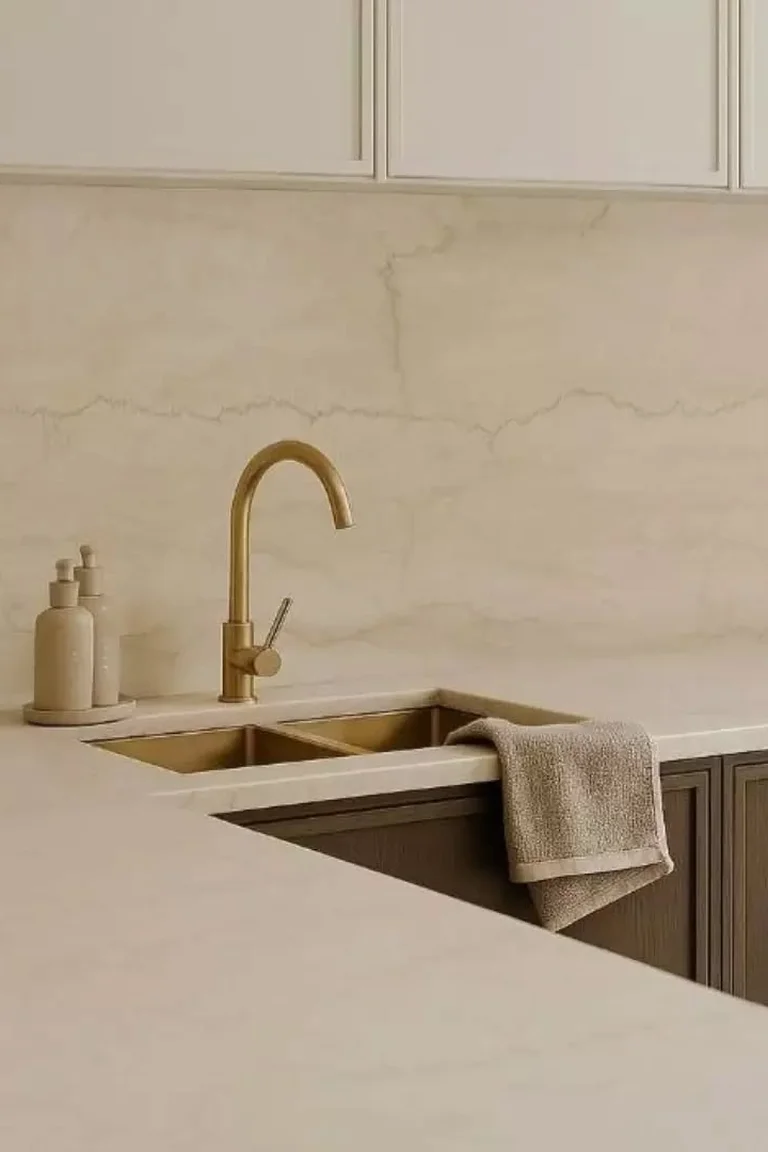
The sink area collects clutter faster than any other spot: three soaps, a sponge pile, a brush, and a towel draped over the tap.
Strip it back to one soap dispenser, one brush, and one hand towel on a ring or small hook. A tiny tray or a sink caddy holds the brush and sponge so water drains instead of pooling.
Wipe the area each night so morning starts clean. If your sink sits in a small kitchen, hang the towel on the cabinet door and skip the tray entirely. Less at the sink means fewer splashes to clean and more room to rinse vegetables.
12. Baking Station Ready for a Rainy Afternoon
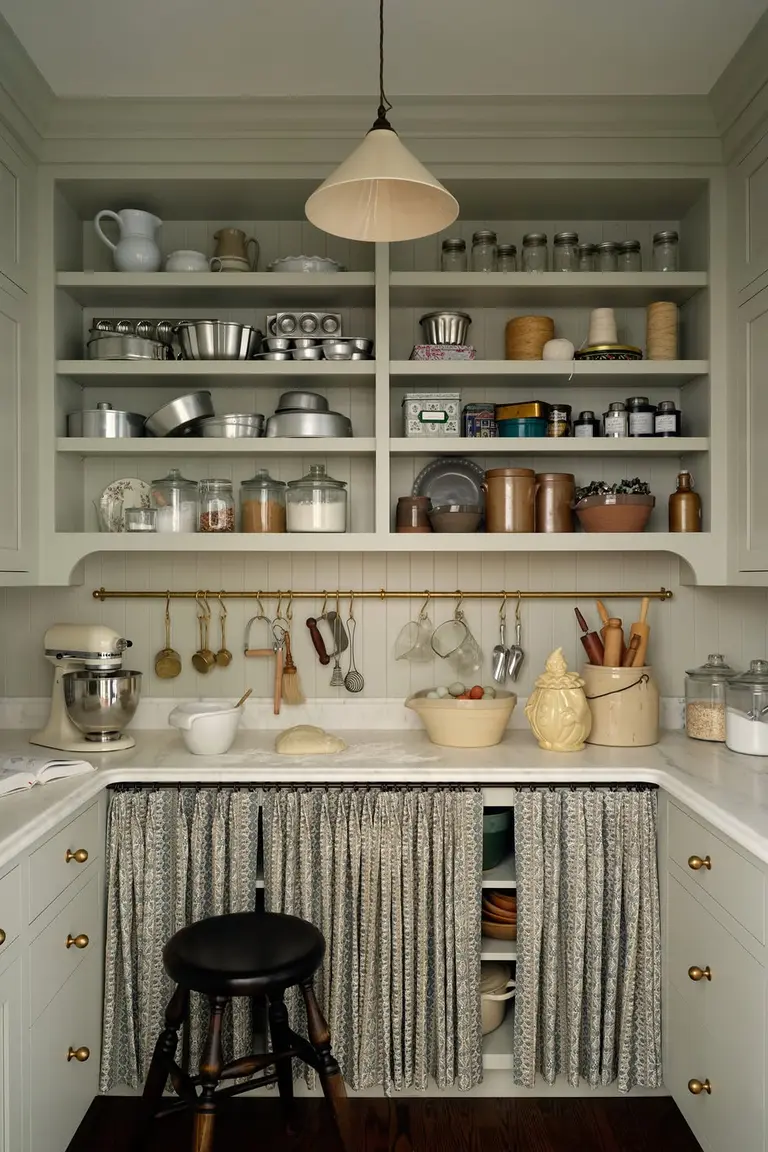
Baking starts with hunting: flour in one cabinet, sugar in another, vanilla somewhere else. Put flour, sugar, baking powder, and vanilla in matching closed jars on one stretch of counter near the oven, with measuring cups and a mixing bowl stacked beside them. When the urge to bake hits, you start mixing instead of searching.
Keep the jars sealed so flour stays fresh and bugs stay out, and label them clearly so kids helping you can find everything. Tight on space? Keep the jars on a shelf above the counter and bring down only the bowl and cups.
13. Breakfast Corner Built for School Mornings
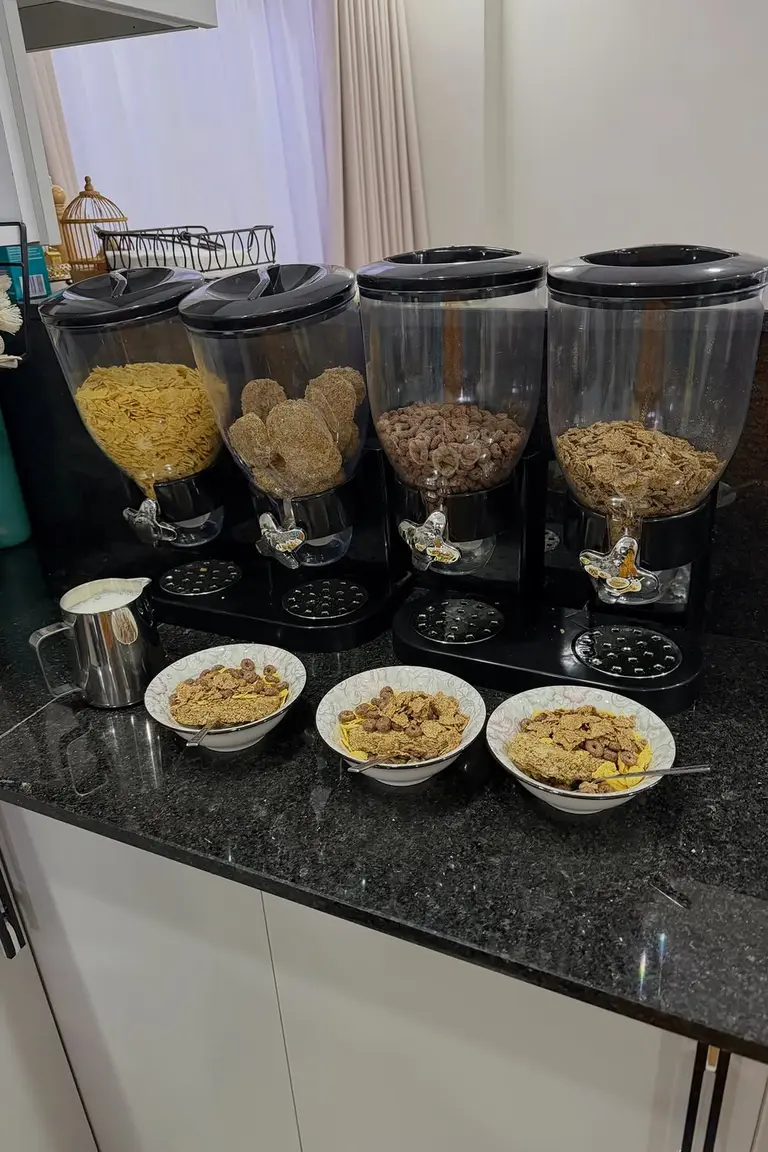
School mornings run on speed, and a scattered breakfast setup slows everyone down.
Claim one corner near the fridge for cereal boxes or a granola jar, bowls stacked above or beside them, milk in the fridge door, and spoons in a small cup. Kids can serve themselves without walking through the cook’s path, and parents can pack lunches at the same time.
In a tiny kitchen, use a single shelf above the counter for bowls and keep the cereal in a cabinet. The goal is simple: breakfast ready in five minutes, with no one asking where the bowls are.
14. Corner Shelves That Use Dead Space
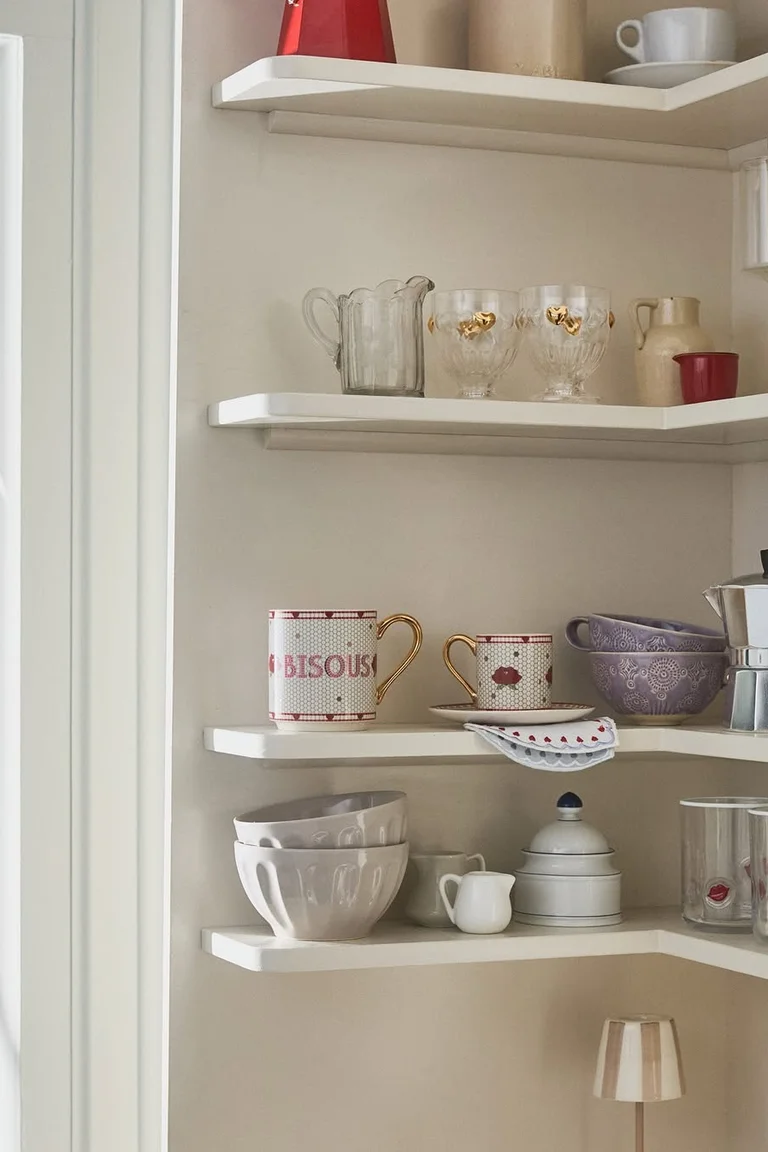
Kitchen corners are where counters go to die: too deep to reach, too awkward to use. Fix that with two small floating shelves in the corner, one for daily mugs and one for small bowls or spice jars. Vertical storage turns wasted air into useful space and frees the counter below for chopping.
Keep the shelves shallow so items sit in one row and nothing hides behind another jar. If you rent and cannot drill, a corner shelf unit that stands on the counter does the same job without holes. Leave the lowest shelf empty enough that you can still set down a hot tray when the oven timer rings.
15. A Drinks Station Guests Can Serve Themselves
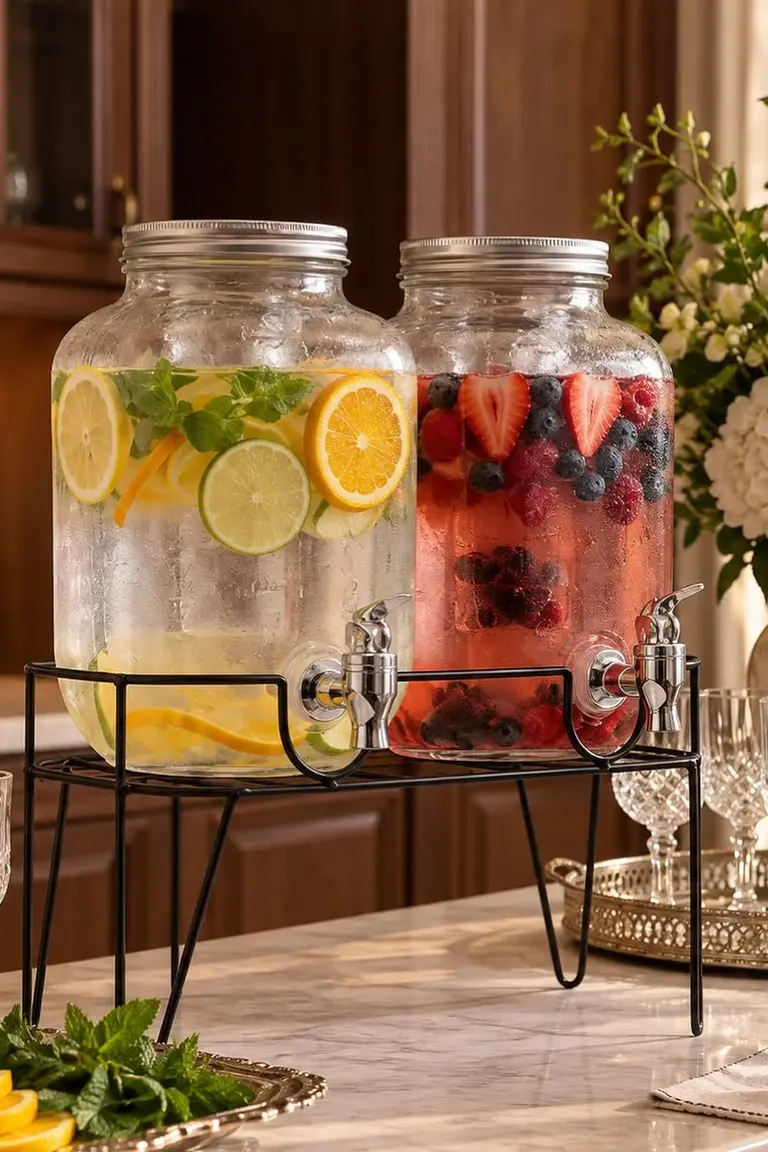
Hosting gets easier when guests do not have to ask for water.
Set a carafe or pitcher, glasses, and a small bowl of lemon slices on the end of the counter farthest from the stove, so visitors help themselves without crossing the cook. Add sparkling water or a juice jug when friends come over, and keep a towel nearby for drips.
This station also helps on normal days: kids grab water after school without opening five cabinets. If counter space is tight, use a rolling cart parked beside the counter and wheel it out only when guests arrive. Self serve means the host cooks while guests pour.
| Spot | What goes there |
|---|---|
| Far end | Pitcher and glasses |
| Beside it | Lemon slices and a towel |
16. Flowers That Earn Their Counter Space
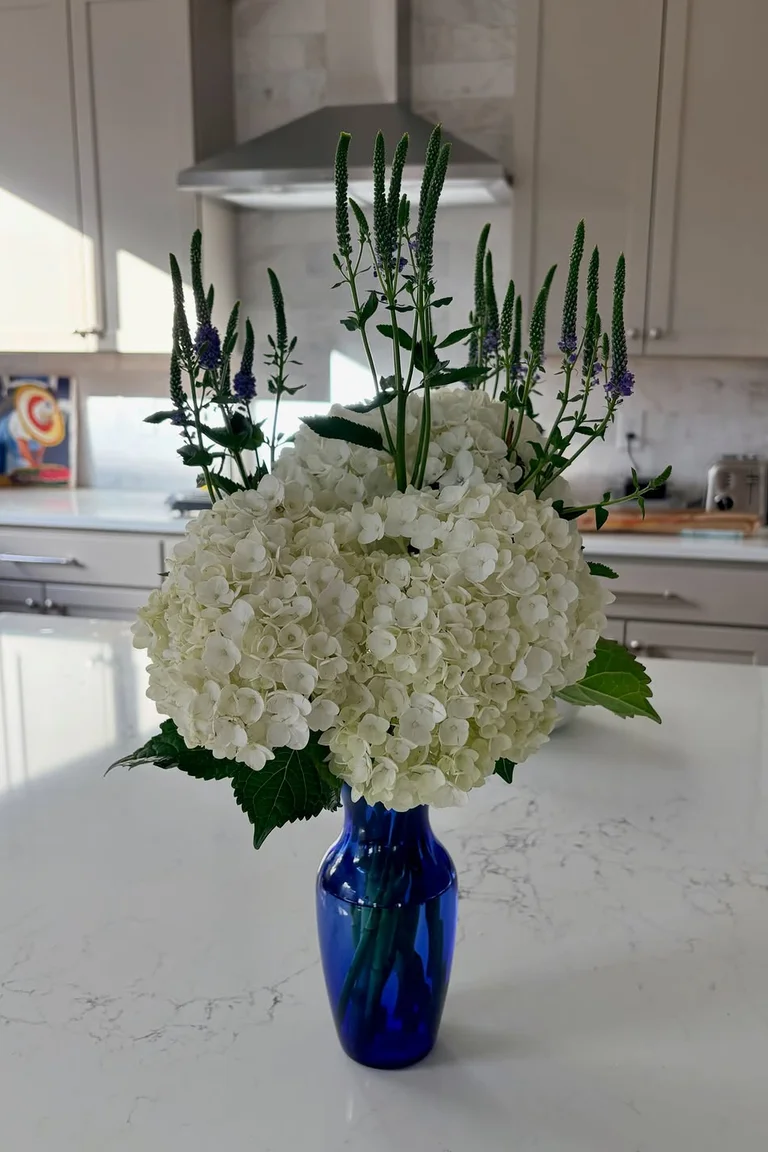
Fresh flowers feel like a luxury, until you remember they cost less than one takeout lunch and lift the whole room.
The trick is making them earn their spot: keep the vase small, the stems short, and the bouquet near the sink where changing water takes ten seconds. When the flowers fade, replace them with a leafy branch from the yard so the vase never sits empty.
In a small kitchen, use a bud vase with a single stem instead of a full bouquet. A living centerpiece that takes seconds to care for deserves its space far more than a dusty decoration.
17. Daily Dishes Within Arm’s Reach
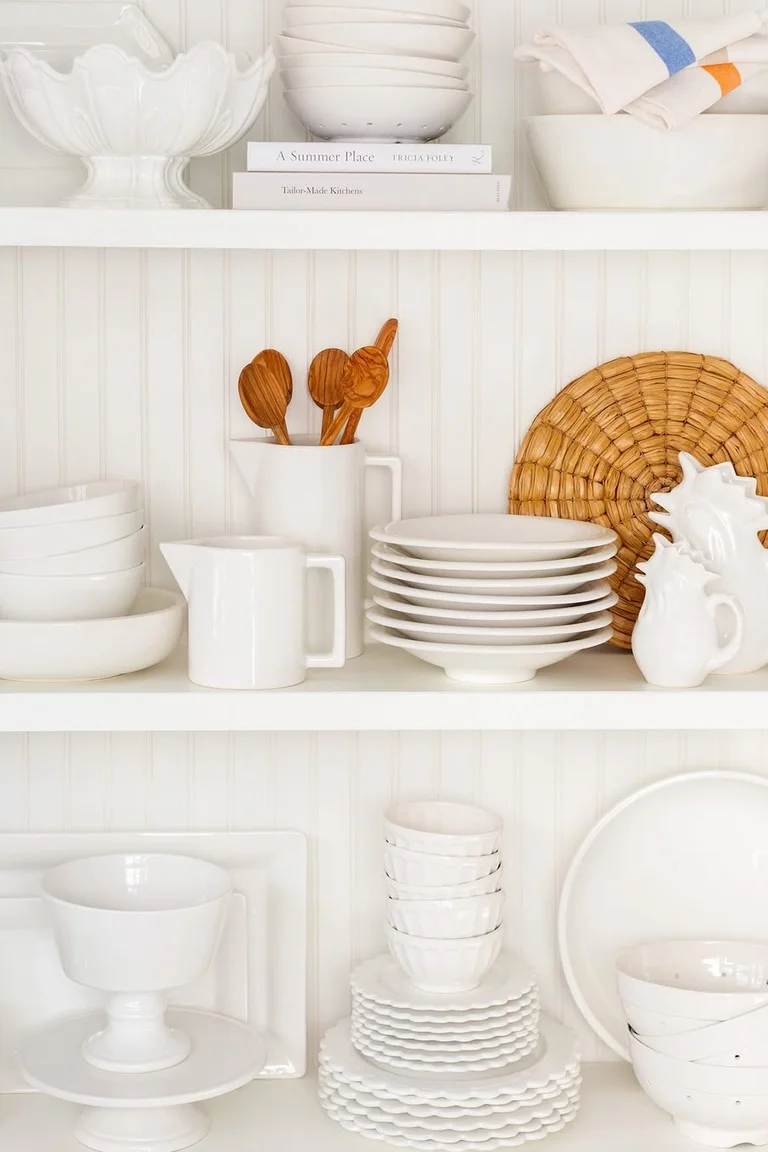
How often do you use the plates at the back of the cabinet?
Stack the four to six plates and bowls your family uses daily on an open shelf or a plate stand on the counter near the dishwasher, so unloading goes straight into place and setting the table takes seconds. Keep serving dishes and holiday plates in a cabinet, since they only come out on special days.
Short on counter? Use a vertical plate rack inside a cabinet door and keep only two bowls out. Reachable dishes mean fewer steps and fewer cabinet doors left open.
18. The Empty Counter Rule
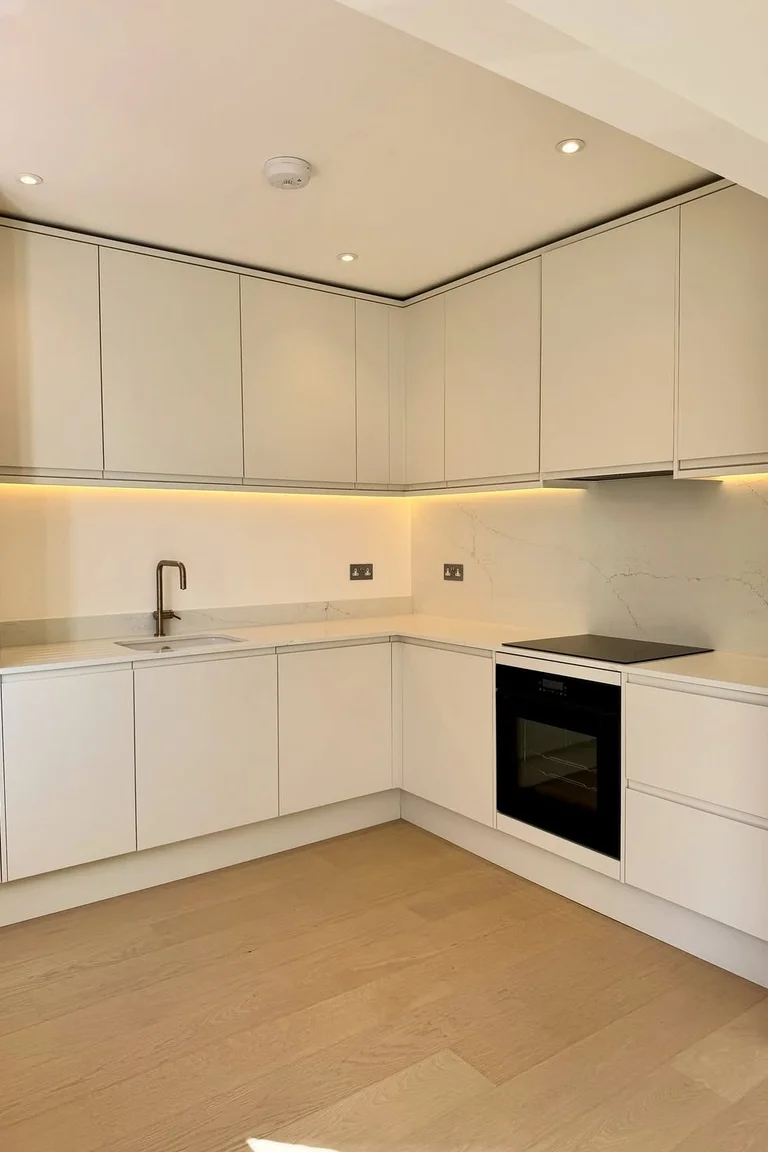
Here is the boldest idea on this list: leave most of the counter empty on purpose. Put daily tools in a drawer with dividers, store small appliances in a cabinet, and hang pans on a rail so the counter holds only one cutting board and a soap dispenser.
Cooking gets easier because you always have room to work, and cleaning takes minutes since there is nothing to move. Start with one section of counter and keep it empty for a week.
If you miss something, bring back only that item. An empty counter is not a bare kitchen. It is a kitchen ready for the next meal.
Final Thoughts
A good counter is not a finished project. It is a habit you repeat each day. Put things back after cooking, wipe the surface before bed, and run a quick weekly check for items that crept out of their homes.
Keep a clear prep zone even when guests bring dishes, and let one tray or basket catch the small things that would otherwise spread.
These kitchen counter styling ideas work best when you start with one corner, not the whole kitchen, and let the habit spread. Save this list to your kitchen board on Pinterest so you can try one idea each week and keep the counter that finally works as hard as you do.